1. Crafting a Mountain Oasis
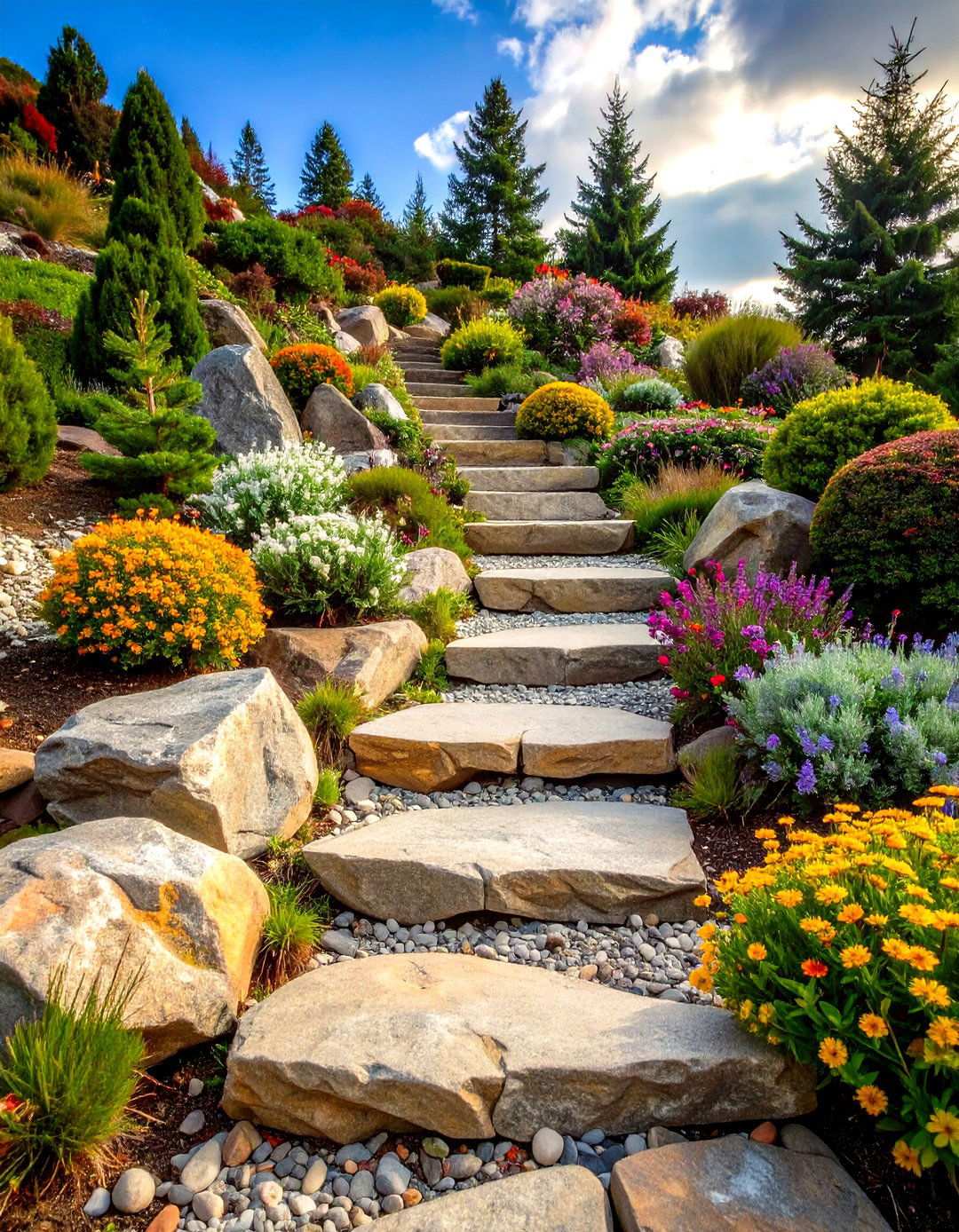
Elevate your outdoor space into a breathtaking alpine retreat with a rock garden design inspired by the rugged beauty of the mountains. Strategically placed giant granite boulders serve as the foundation, while smaller angular stones create a natural-looking landscape of outcroppings and ridges. Hardy plants like saxifrages, sedums, and miniature conifers thrive in the crevices between the rocks, evoking the high-altitude conditions of a mountainous terrain. Meandering pathways made from decomposed granite connect different levels, allowing visitors to explore the varied landscape. Effective use of stone sizes and creative slope design ensures efficient drainage, while dwarf evergreens provide structure and colorful alpines burst into bloom during the warmer months. Do you have a yard with a slope that could be transformed into this dramatic mountain landscape?

As an Amazon Associate I earn from qualifying purchases.
2. The Serenity of a Japanese Zen Garden
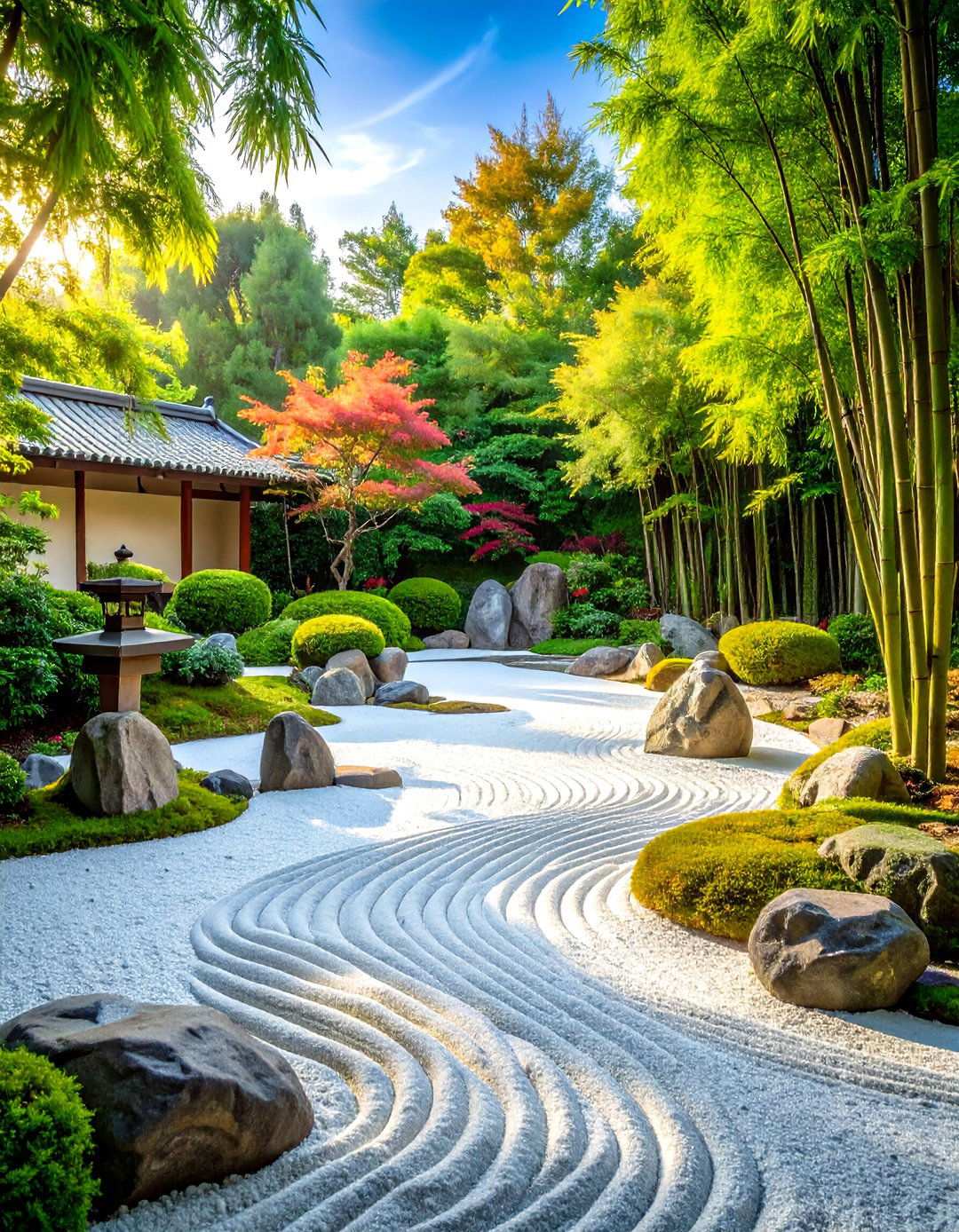
Escape to a tranquil oasis with a minimalist rock garden design that embodies the principles of Zen philosophy. Smooth river stones, carefully raked white gravel, and strategically placed accent boulders come together to create a harmonious space that emphasizes negative space and clean lines. The gravel patterns evoke the gentle flow of water around island-like stone groupings, while moss-covered rocks add a soothing element to the landscape. Bamboo fountains introduce the soothing sounds of water, inviting contemplation and relaxation. A carefully chosen plant palette featuring ferns, hostas, and ornamental grasses complements the stone elements without overwhelming the serene atmosphere. Regular raking not only maintains the garden’s pristine appearance but also provides a mindful activity. Imagine beginning each day with this peaceful morning ritual, surrounded by the tranquility of a Japanese Zen garden.
3. Desert Oasis Sanctuary
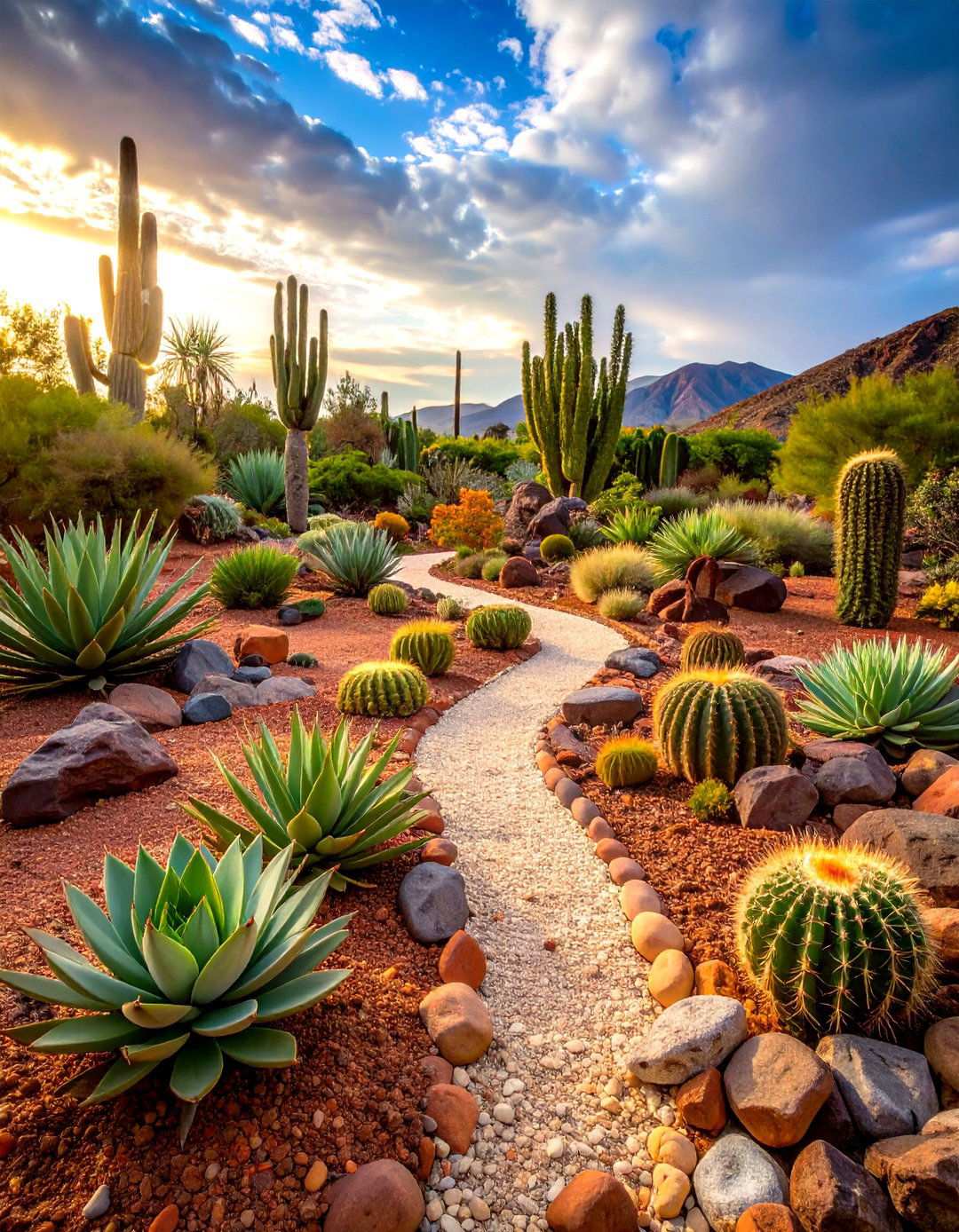
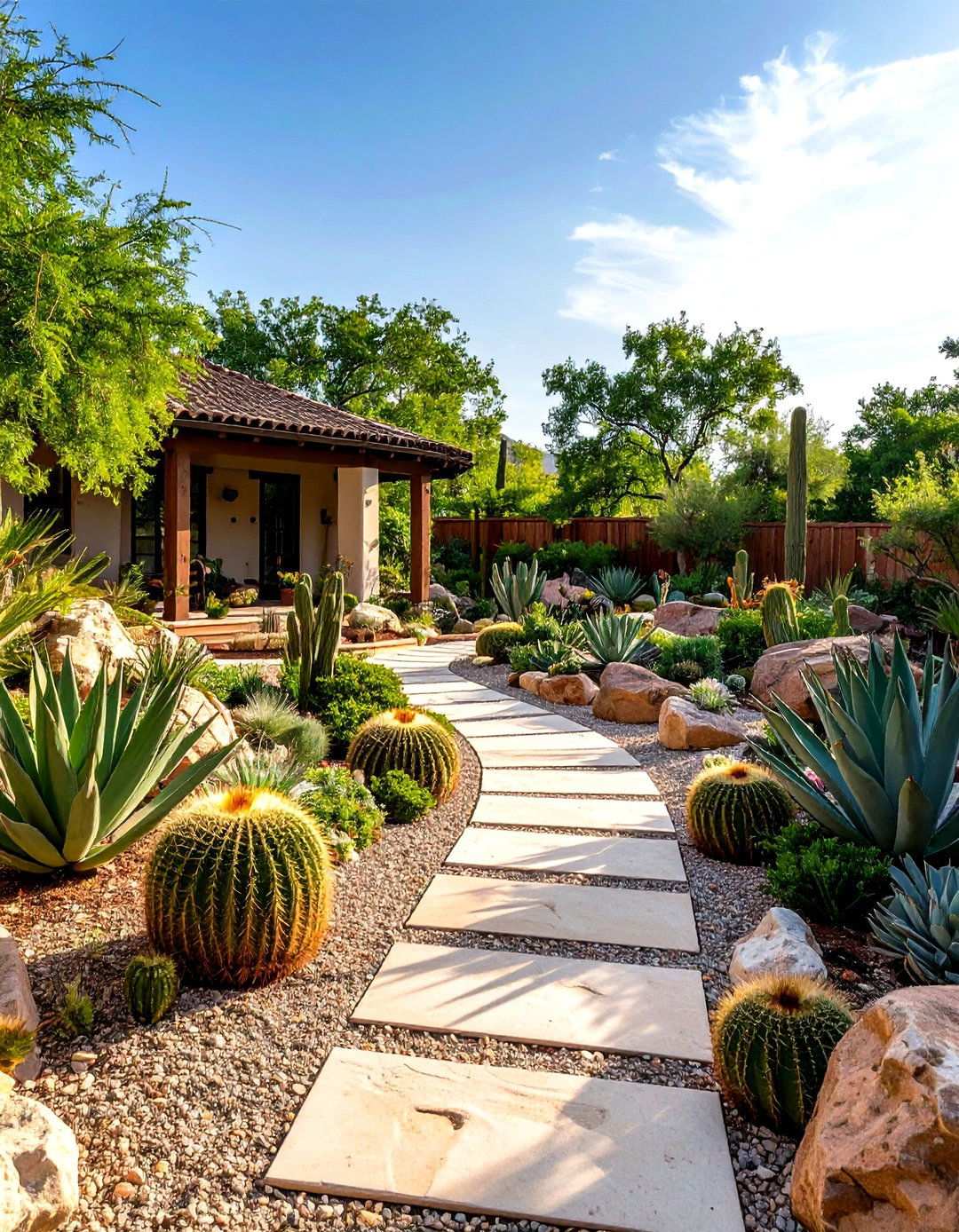
Transform your outdoor space with a water-efficient landscape featuring low-maintenance succulents, vibrant cacti, and decorative stone mulch. Warm-hued lava rock and terra cotta-toned stones evoke the essence of a desert landscape, perfectly complementing striking blue-gray agaves, colorful echeveria, and sculptural barrel cacti. Meandering pathways crafted from decomposed granite connect different planted areas, while strategic boulder groupings provide focal points and afternoon shade for sensitive plants. Pea gravel mulch suppresses weeds and regulates soil temperature, while the carefully curated design showcases a harmonious blend of textures and heights. This self-sufficient approach thrives in sunny locations with minimal irrigation requirements, freeing up precious time for more enjoyable pursuits.
4. Modern Enclave Garden
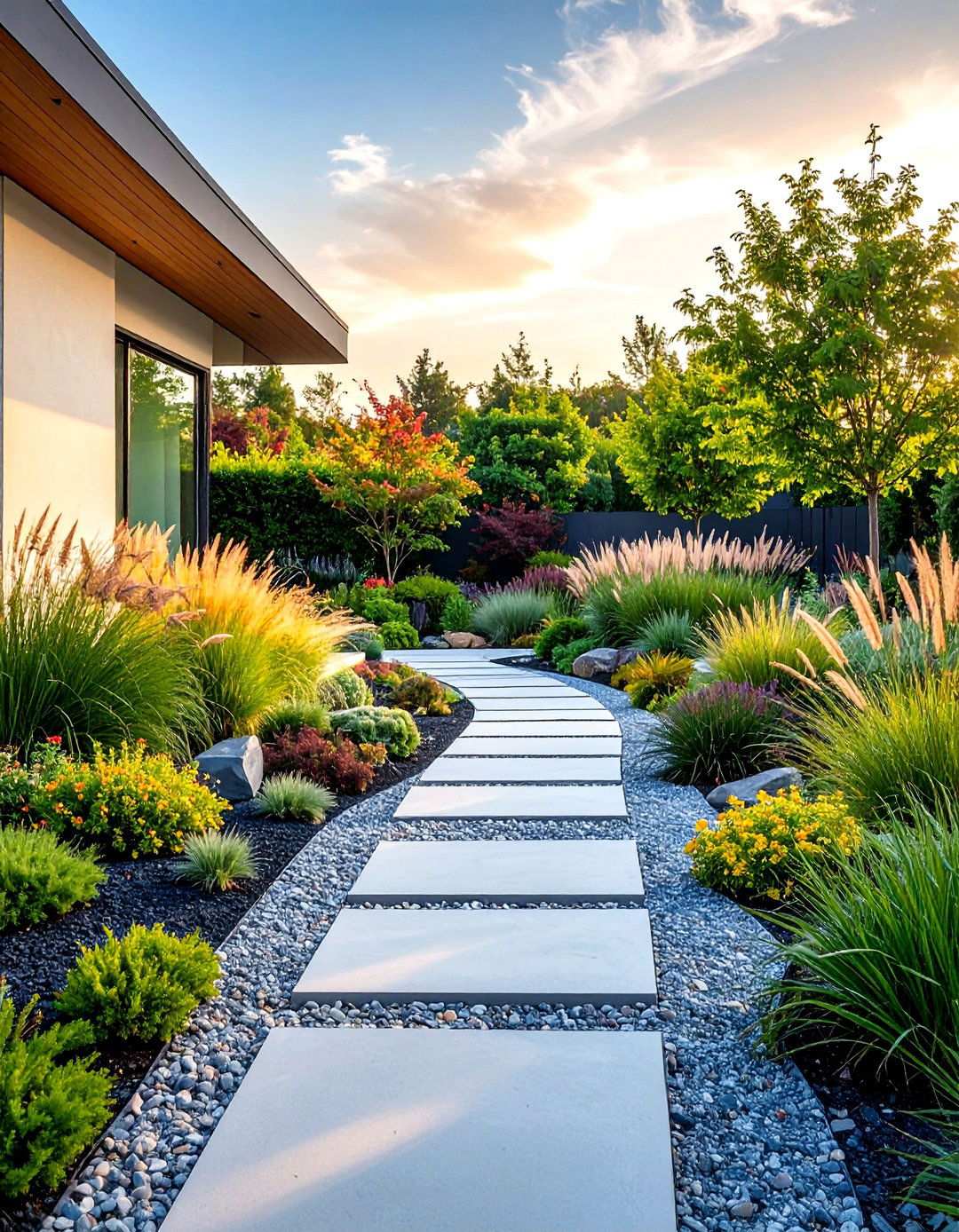
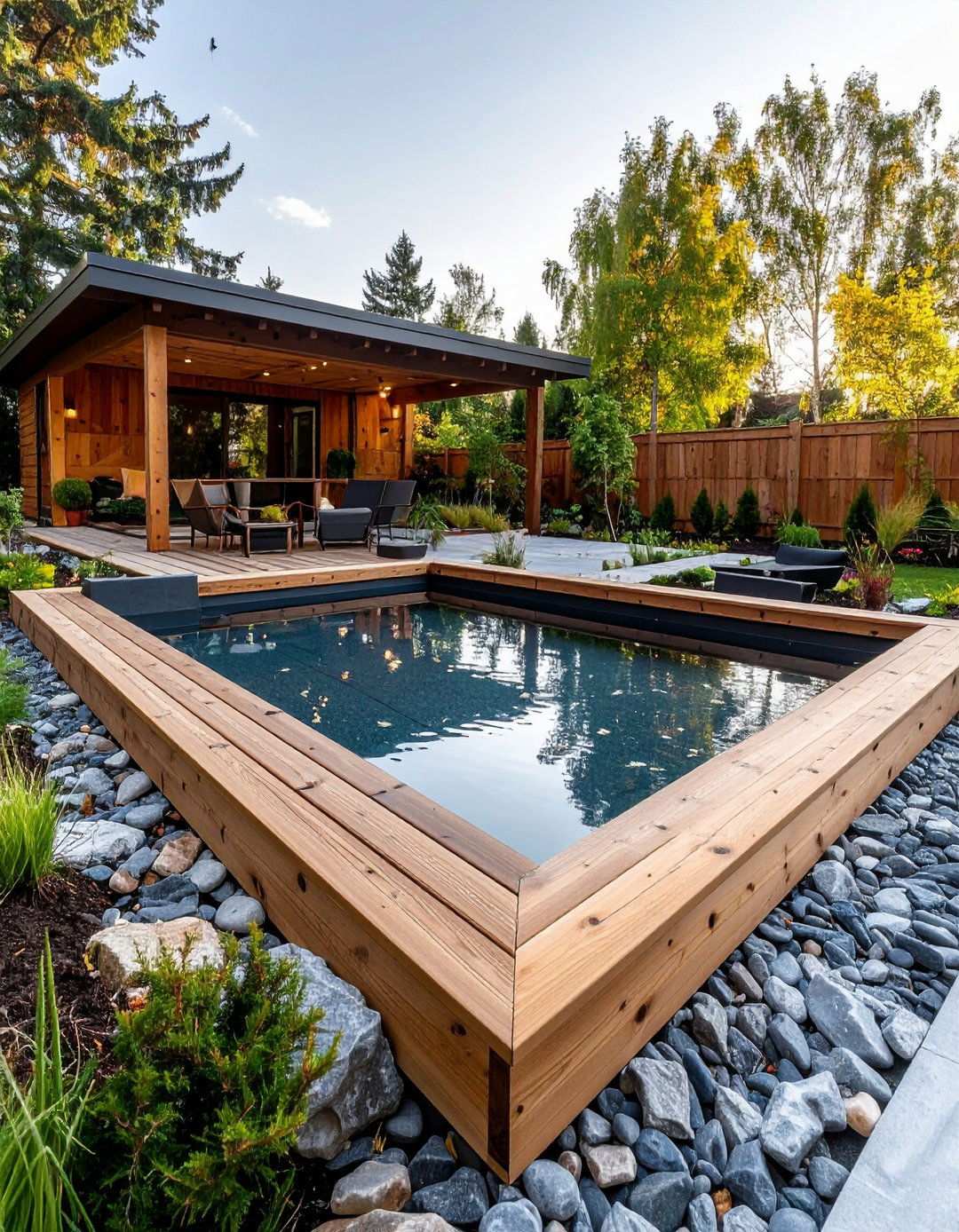
Experience the beauty of clean lines and geometric precision in this contemporary outdoor oasis. Uniform crushed stone, sleek concrete pavers, and thoughtfully placed architectural plantings create a stunning visual harmony. Rectangular planting beds filled with ornamental grasses and single-variety succulents produce striking patterns against the neutral stone backdrop. Steel edging provides a crisp boundary, while large format stones take on a sculptural quality. A monochromatic color scheme emphasizes form over color, with occasional pops of vibrant flowers like lavender or Russian sage adding a touch of whimsy. The incorporation of integrated lighting into stone features extends the enjoyment of this sophisticated outdoor space well into the evening hours. This effortlessly elegant design seamlessly complements modern architecture while requiring minimal maintenance.
5. Hillside Masterpiece Garden
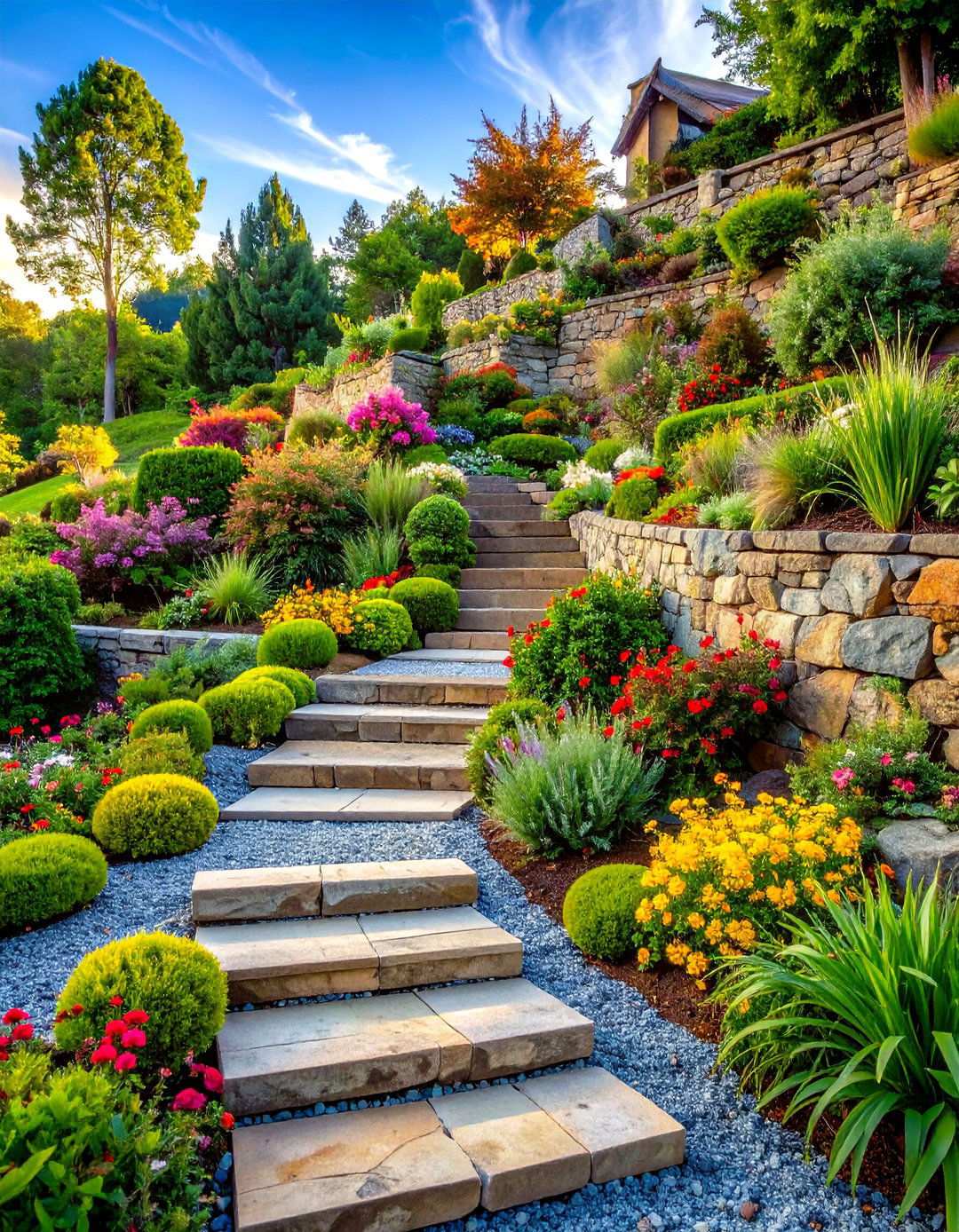
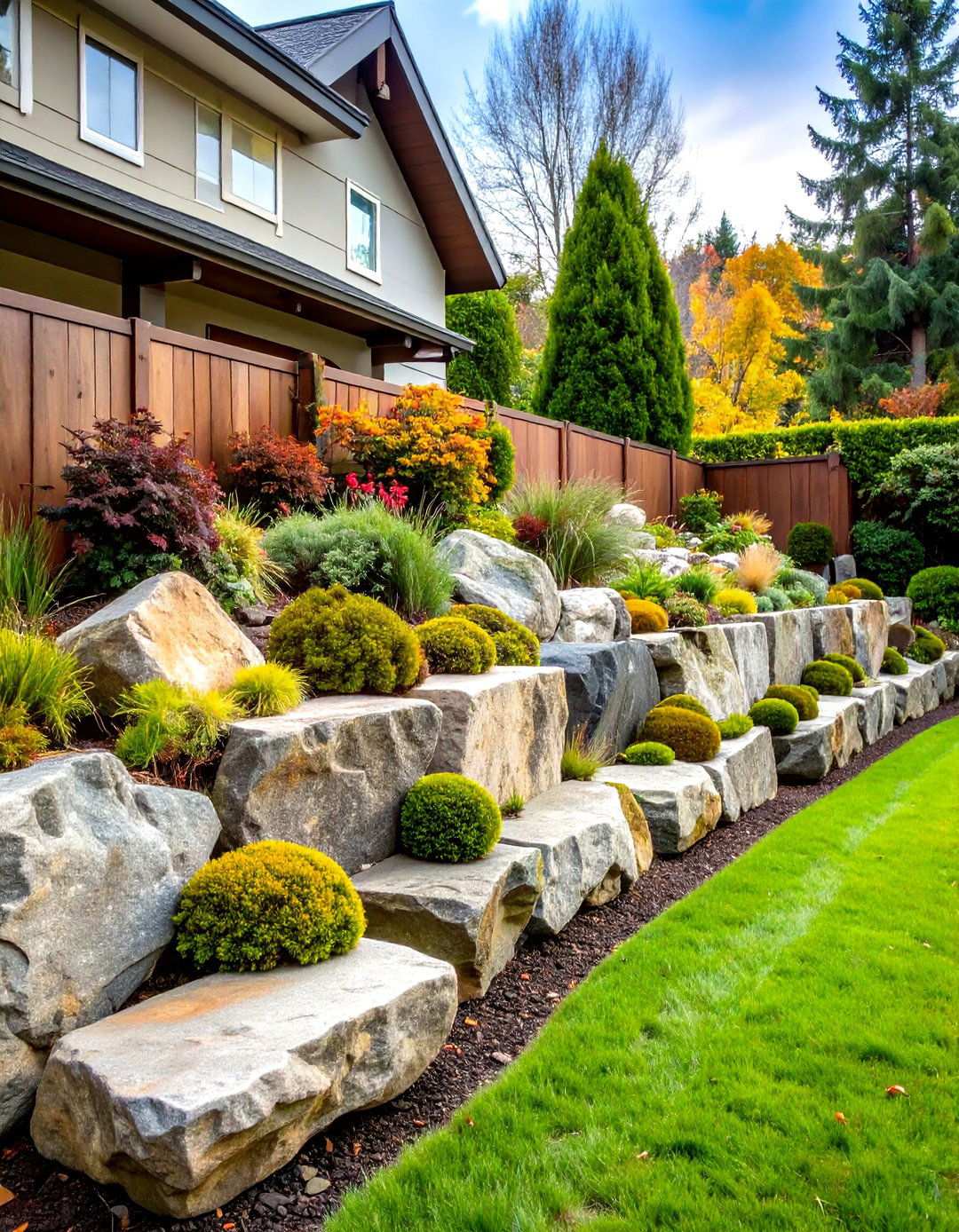
Unlock the full potential of challenging slopes by transforming them into breathtaking multi-level displays using stacked stone retaining walls and drought-tolerant plantings. Each terrace level is a unique microcosm, featuring different plant communities that thrive in their respective environments. Fieldstone walls not only provide structural support but also create a series of microclimates for diverse plant selections. Gravel pathways connect levels and provide access for maintenance, while integrated irrigation ensures consistent moisture delivery across all elevations. This functional design prevents erosion while maximizing planting space on difficult terrain, creating a visually striking and layered effect that adds depth and seasonal interest to your outdoor space throughout the year. By embracing the challenge of a problem slope, you can turn it into the garden’s most striking feature.
6. Transforming Spaces with Water Features
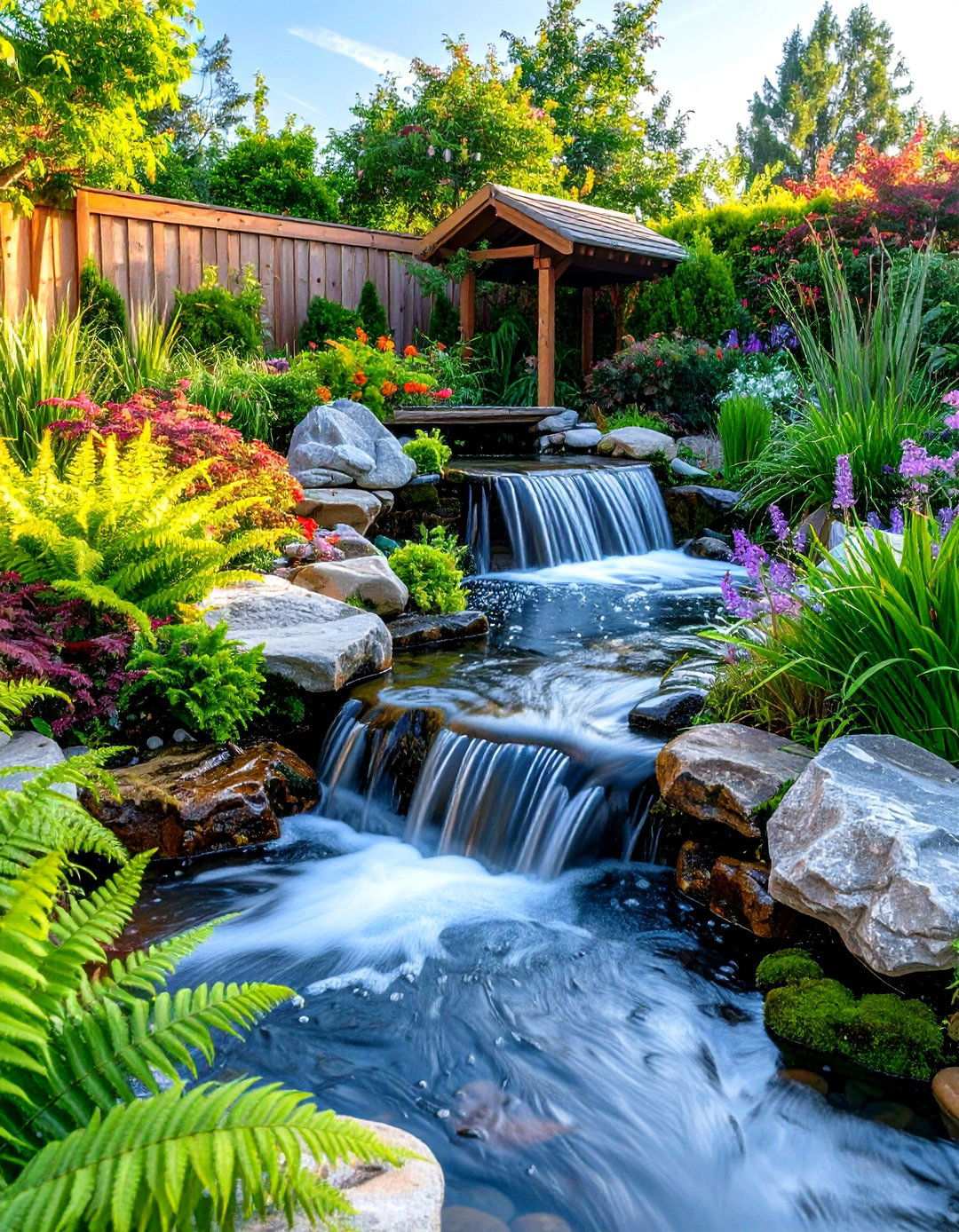
The combination of soothing sounds, strategically selected stones, and moisture-loving plants creates a serene oasis. A natural creek bed, lined with river rocks, guides recirculating water through the landscape, providing habitat for aquatic plants and visiting wildlife. Larger boulders anchor waterfalls and offer inviting seating areas for taking in the display. Ferns, astilbe, and ornamental grasses flourish in the increased humidity, while bog plants thrive in shallow water areas. As the sun sets, underwater lighting illuminates the evening water movement, casting a magical glow over the landscape. By incorporating a water feature, you can seamlessly integrate your outdoor space with the surrounding environment, creating a year-round focal point that invites relaxation and contemplation. This cooling feature extends the enjoyment of your outdoor living space, making it an ideal solution for hot summer months.
7. Aromatic Delights of the Mediterranean Herb Garden
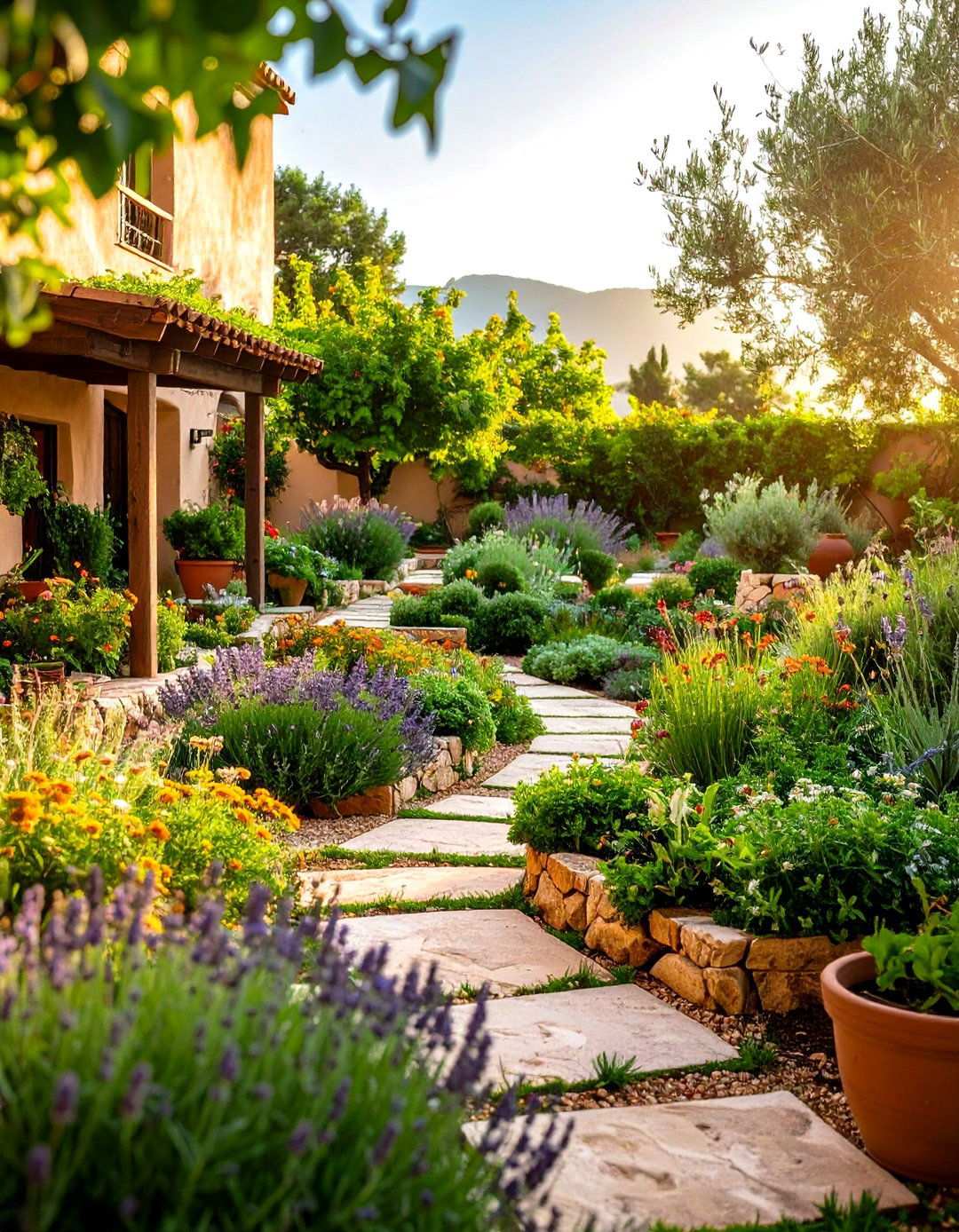
In this practical and visually appealing design, fragrant culinary herbs thrive among the warm tones of limestone and terra cotta stones. Raised stone beds improve drainage for herbs like rosemary, thyme, oregano, and lavender, while crushed stone pathways provide all-weather access. Larger fieldstones create inviting seating areas and support climbing herbs like trailing rosemary, adding an extra layer of texture and interest. By incorporating both sun and partial shade areas, this design caters to the diverse requirements of different herbs, allowing you to grow a wide variety of plants. Gravel mulching retains soil moisture while preventing weed growth, creating a low-maintenance and functional garden that provides fresh ingredients and attracts beneficial pollinators. Regular harvesting not only maintains plant health but also provides continuous culinary rewards, making this garden a true delight for the senses.
8. Portable Rock Gardens in Containers
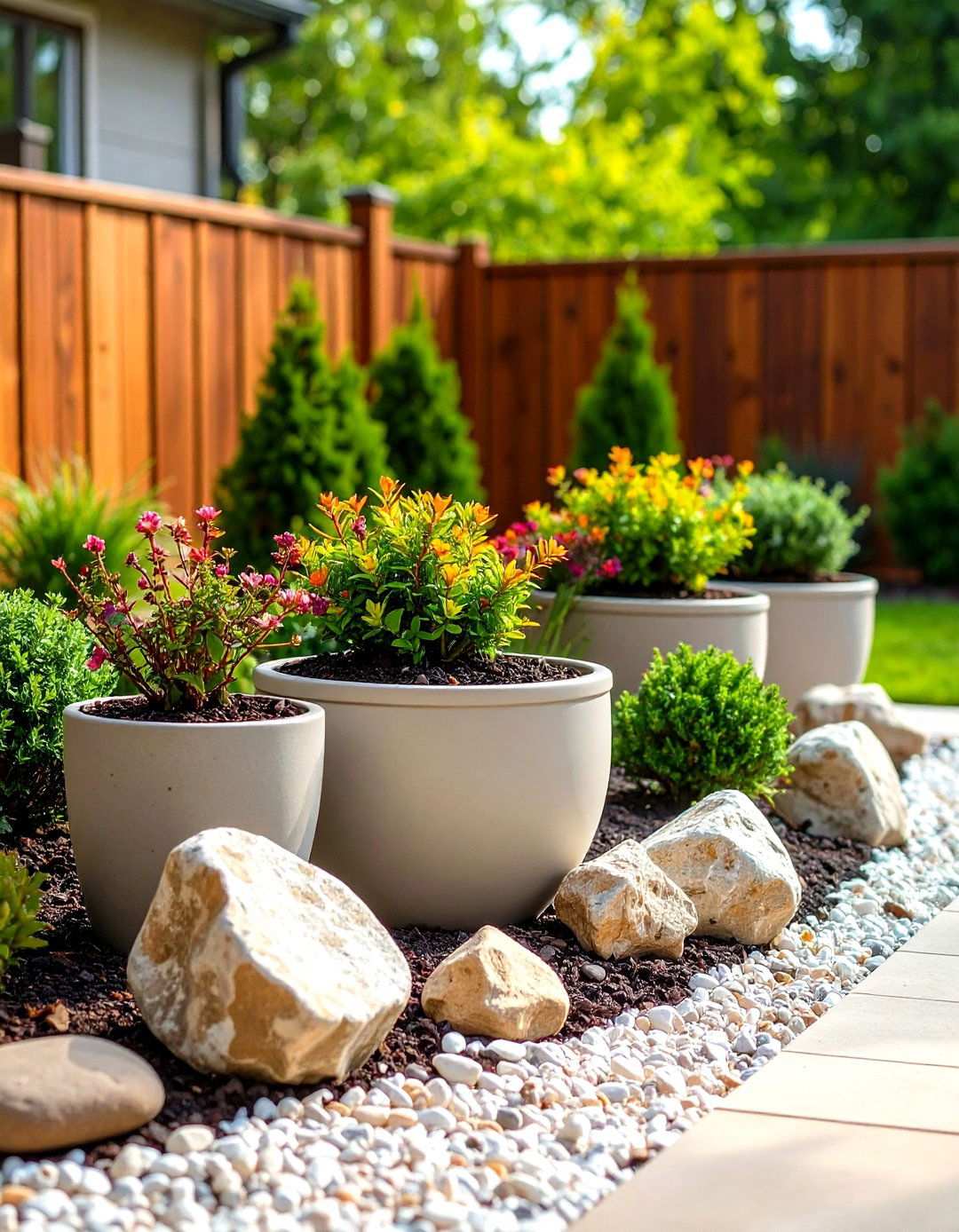
For those with limited space, container gardening offers a unique opportunity to create a beautiful and thriving rock garden. By using stone-filled containers and compact plant selections, you can create miniature landscapes that rival their larger counterparts. Large ceramic or concrete planters house tiny boulders, gravel mulch, and dwarf varieties of popular rock garden plants, creating a layered and visually appealing effect. The controlled environment of the container allows for precise soil and drainage management, making it an ideal solution for patios, balconies, or rental properties where permanent installations aren’t possible. With the flexibility to rearrange your containers seasonally, you can create a unique and ever-changing display that adds visual interest to your outdoor space. By embracing container gardening, you can unlock the secret to rock garden success, even in the most challenging spaces.
9. Artistic Drainage Solutions
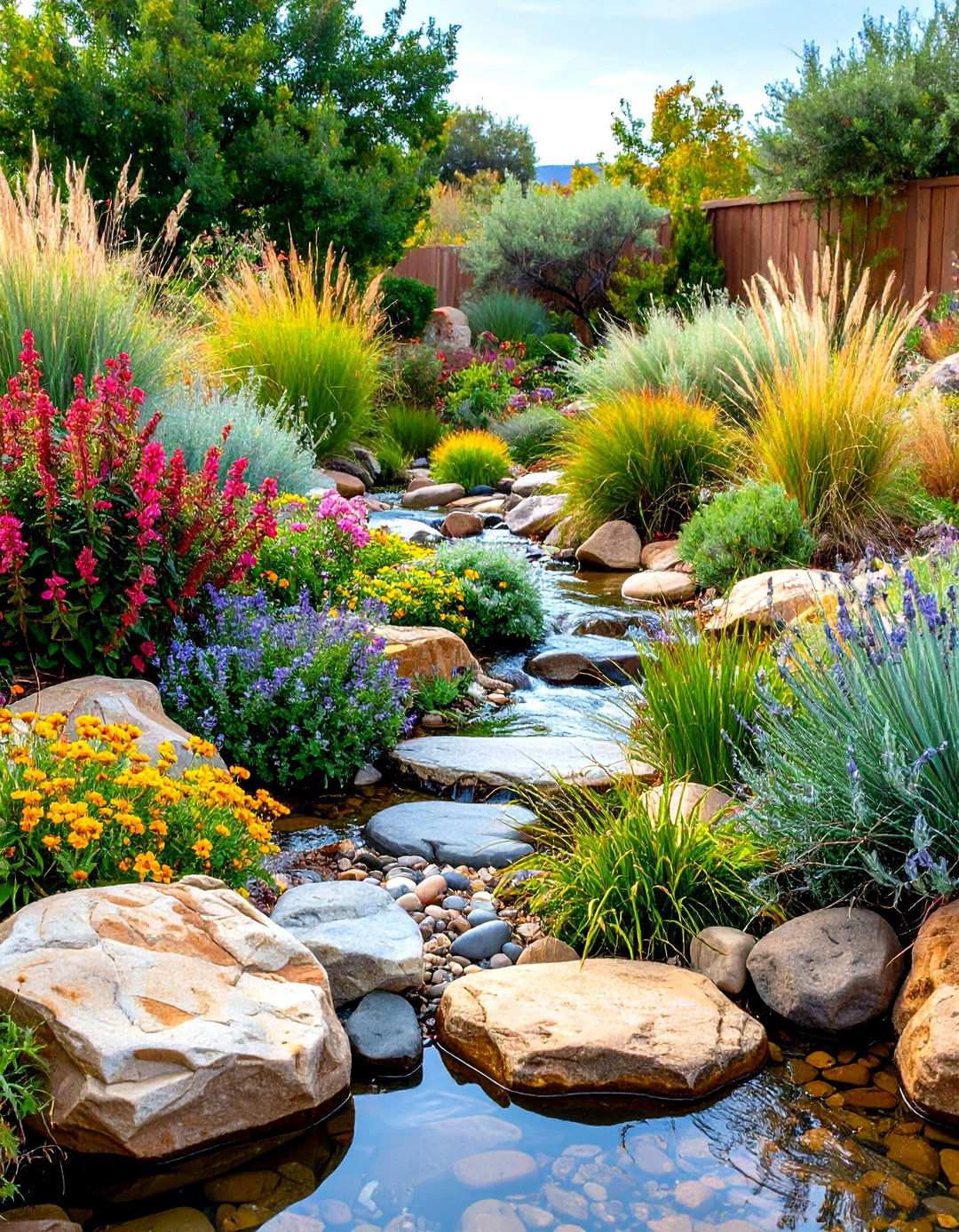
Rounded river stones and drought-tolerant plant species come together in a harmonious union to simulate natural water courses. Strategically placing larger boulders along the streambed creates a realistic water flow pattern, while graduated stone sizes add depth and visual interest. The deliberate placement of native grasses, sedums, and wildflowers on the banks and moisture-loving species in deeper areas that collect water creates a thriving ecosystem. This carefully designed landscape not only provides excellent drainage but also serves as a haven for beneficial wildlife. The naturalistic appearance blends seamlessly with the existing surroundings, making it an ideal choice for gardeners seeking a low-maintenance yet visually striking solution. The dynamic interplay between seasonal leaf drop and seed dispersal enhances the wild, untended aesthetic, inviting exploration and discovery.
10. Alpine Rock Gardens
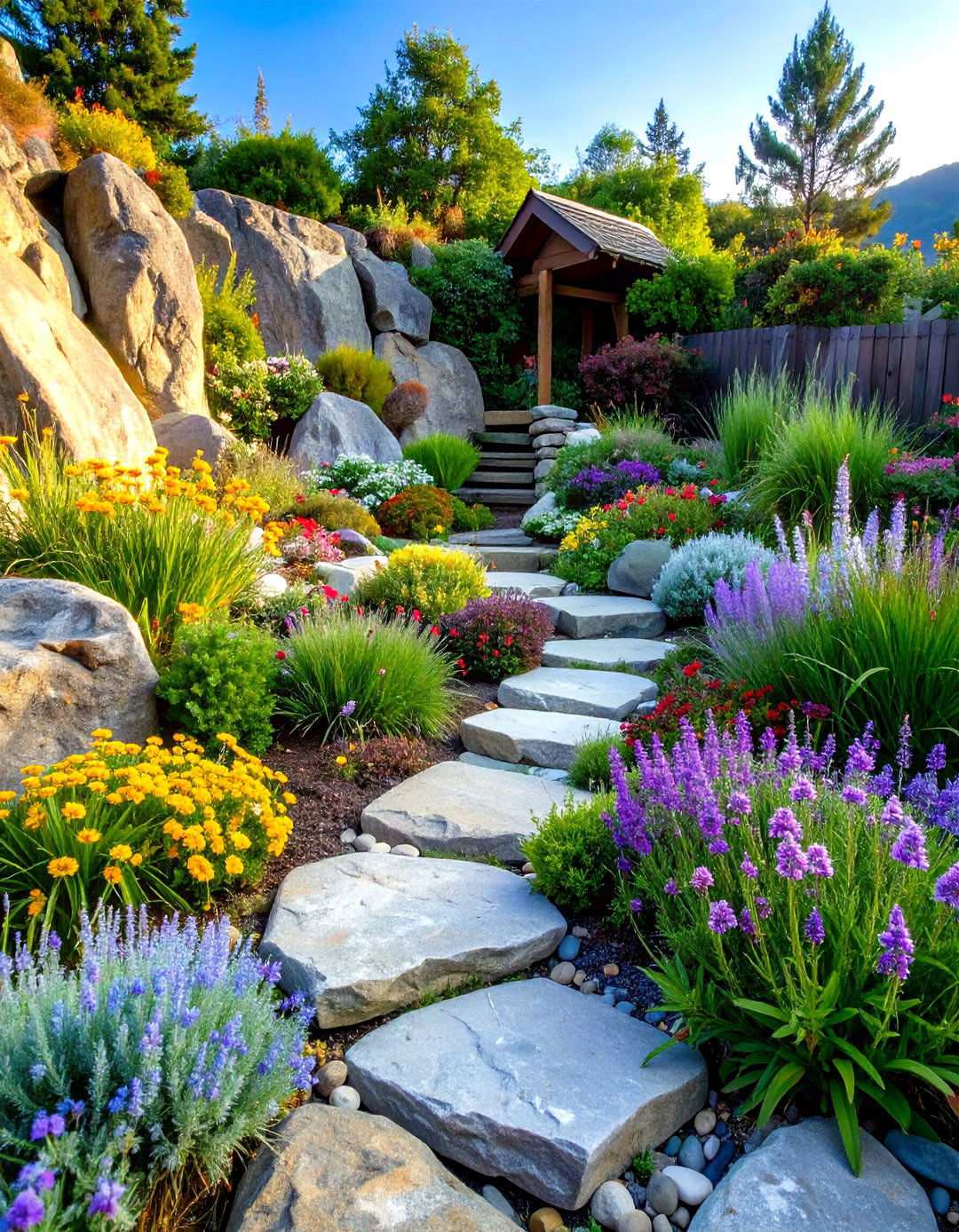
By incorporating extensive rock crevices into the design, gardeners can create a unique and dynamic environment that showcases a wide range of alpine plants. These specialized rock arrangements, complete with carefully crafted soil pockets, provide the ideal growing conditions for plants that thrive in cliff faces and rocky outcrops. This avant-garde technique allows even the most dedicated gardeners to cultivate rare and challenging species that often fail to thrive in traditional garden settings. Each crevice offers a distinct set of growing conditions, with varying soil depth, drainage, and exposure creating a three-dimensional growing space. This innovative approach dramatically increases planting density while yielding stunning visual displays. With regular maintenance, including careful watering and occasional plant replacement, gardeners can reap the rewards of unparalleled plant diversity.
11. Meandering Pathways
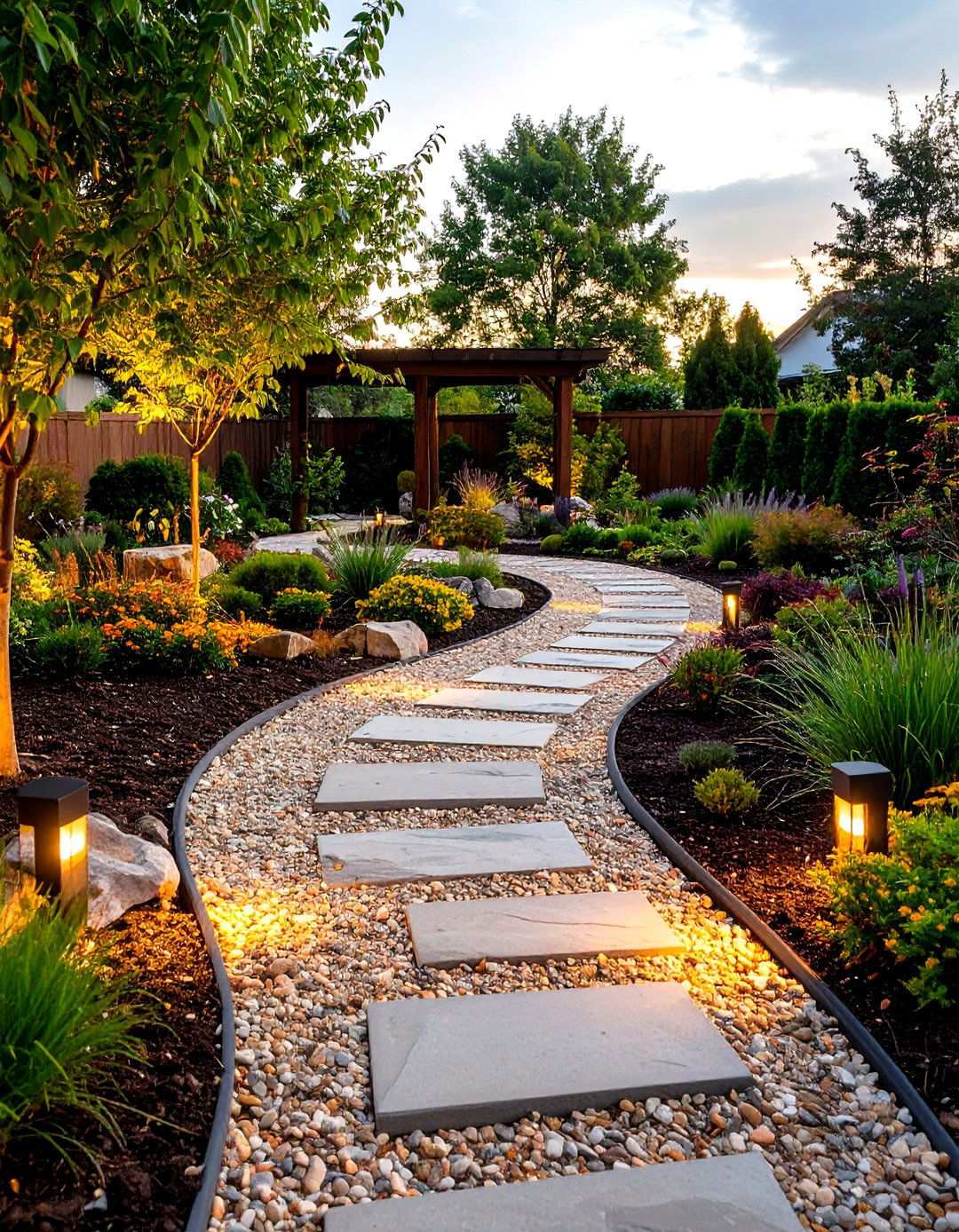
Permeable stone pathways connect disparate garden areas, providing a sense of cohesion and accessibility throughout the landscape. Decomposed granite or crushed stone creates stable walking surfaces that complement the surrounding plantings without competing for attention. Thoughtfully placed border plantings soften pathway edges, while strategic stone groupings serve as rest stops and focal points. This design excels in informal gardens, where meandering paths invite exploration and discovery. Integrated lighting guides evening navigation, highlighting special features and creating a sense of wonder. The low-maintenance approach eliminates the need for mowing, providing year-round access regardless of weather conditions. Regular edging maintains clean lines, while occasional top-dressing refreshes the surface, ensuring the pathway remains a beautiful and functional feature of the garden. By incorporating thoughtful design elements, gardeners can transform their outdoor spaces into inviting and immersive environments.
12. Coastal Rock Garden Design
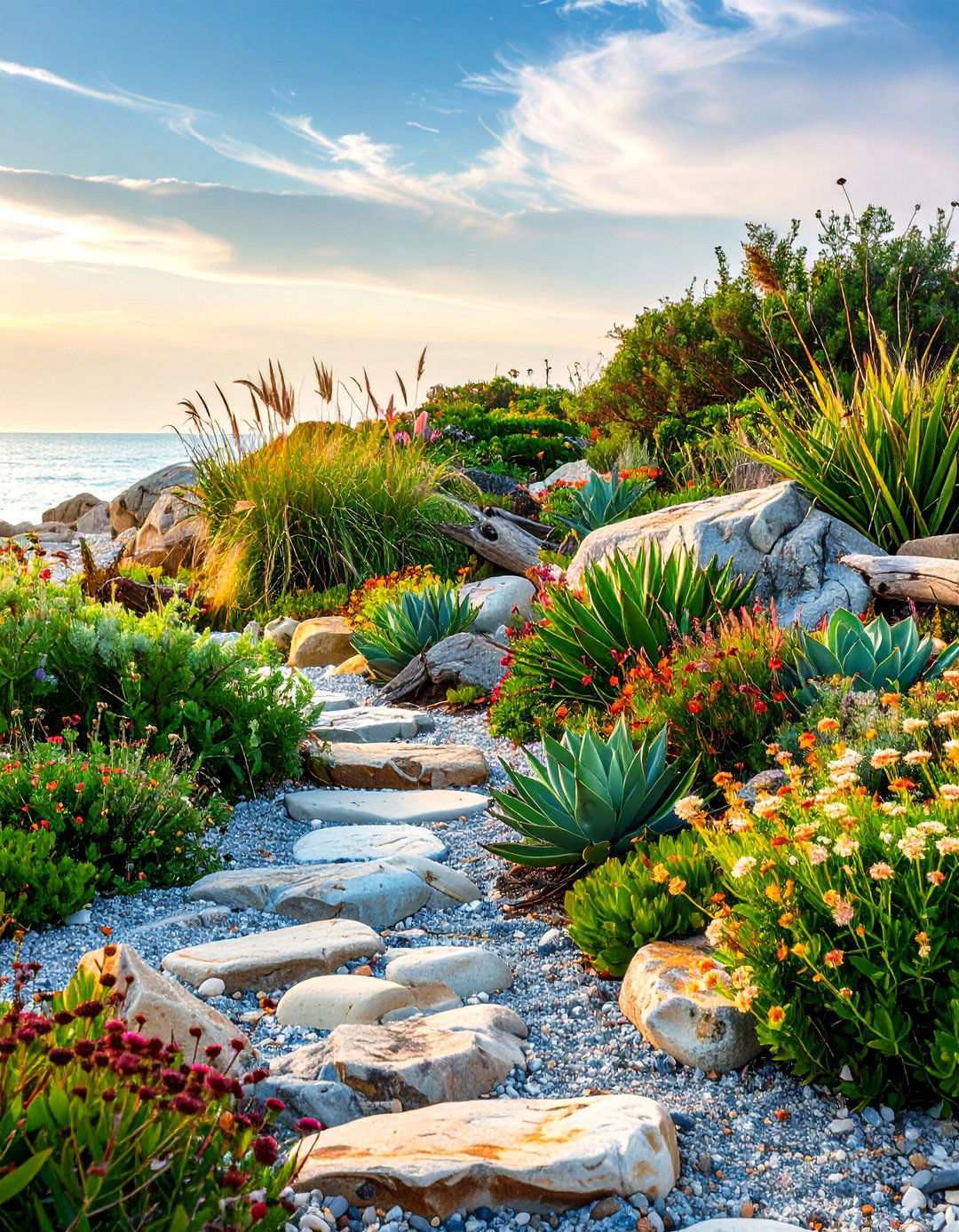
Weathered stones and a selection of beach-inspired plants come together to create a resilient coastal garden that can thrive in challenging conditions. By using natural materials like beach-collected stones and driftwood, this design harmoniously blends with the surrounding environment. A key component of this style is the use of sand-based growing mediums that efficiently drain excess water and tolerate the harsh effects of salt spray and strong winds. Ornamental grasses, which respond beautifully to ocean breezes, add a dynamic element to the garden, emphasizing texture and movement. To protect sensitive plants, raised stone beds are incorporated, providing a more favorable growing environment while celebrating local ecology. This low-maintenance approach requires minimal irrigation, allowing the garden to evolve naturally with the seasons.
13. Prairie Rock Garden Ecosystem
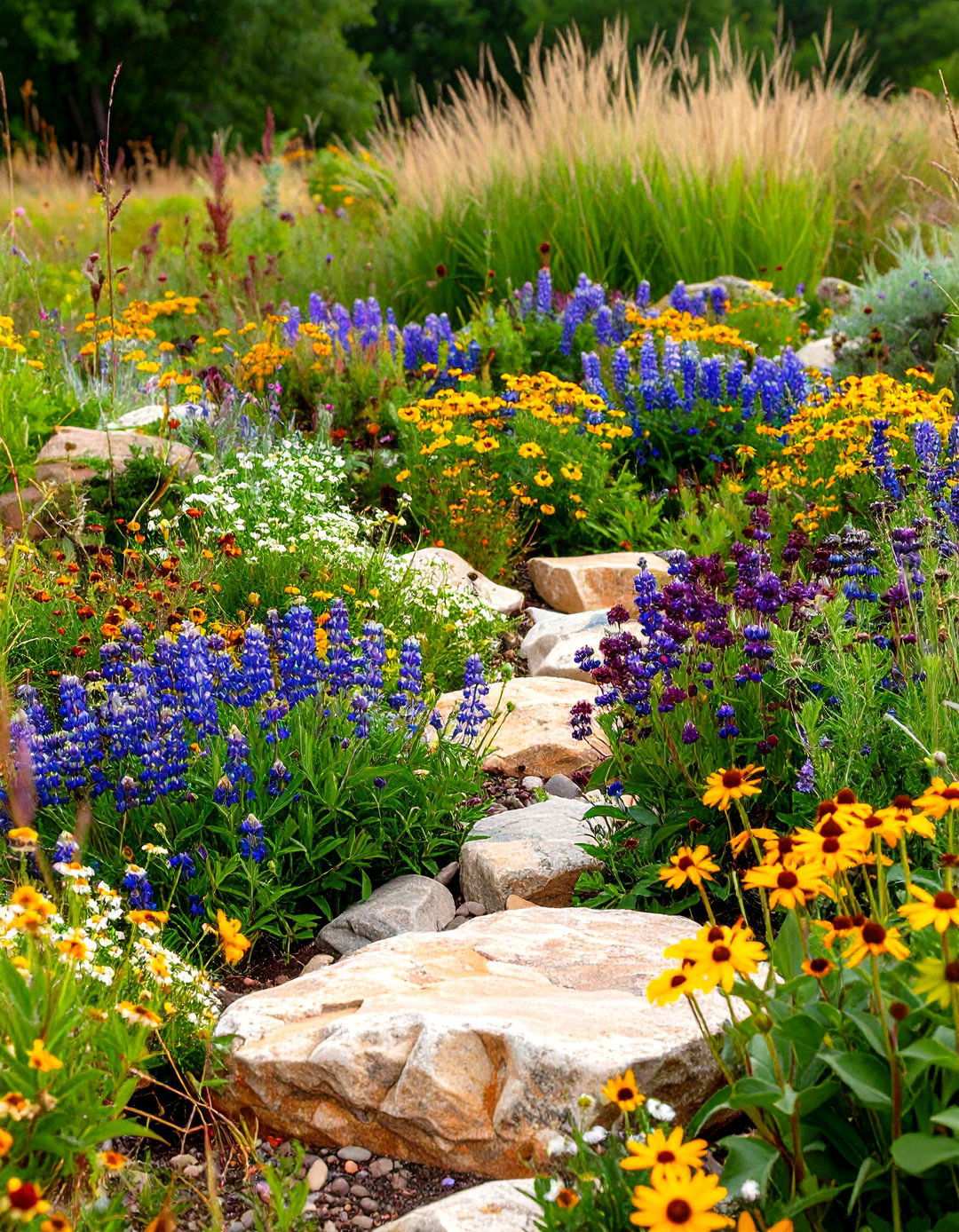
Incorporating native wildflowers and grasses into a garden creates a thriving ecosystem that celebrates regional ecology while minimizing external inputs. By using local limestone or sandstone as a natural complement to indigenous plant communities, this design fosters a sense of authenticity and connection to the land. Deep-rooted prairie species, which thrive in well-drained stone gardens, provide vital habitats for native wildlife and pollinators. A notable aspect of this approach is its reliance on seasonal succession, as different species bloom throughout the growing season, creating a dynamic display of color and texture. By allowing seeds to collect and naturally reseed, the garden maintains its plant populations while allowing for natural evolution. This method requires patience, as established prairie communities develop over several years, providing opportunities for educational exploration and appreciation of local conservation.
14. Woodland Shade Garden Retreat
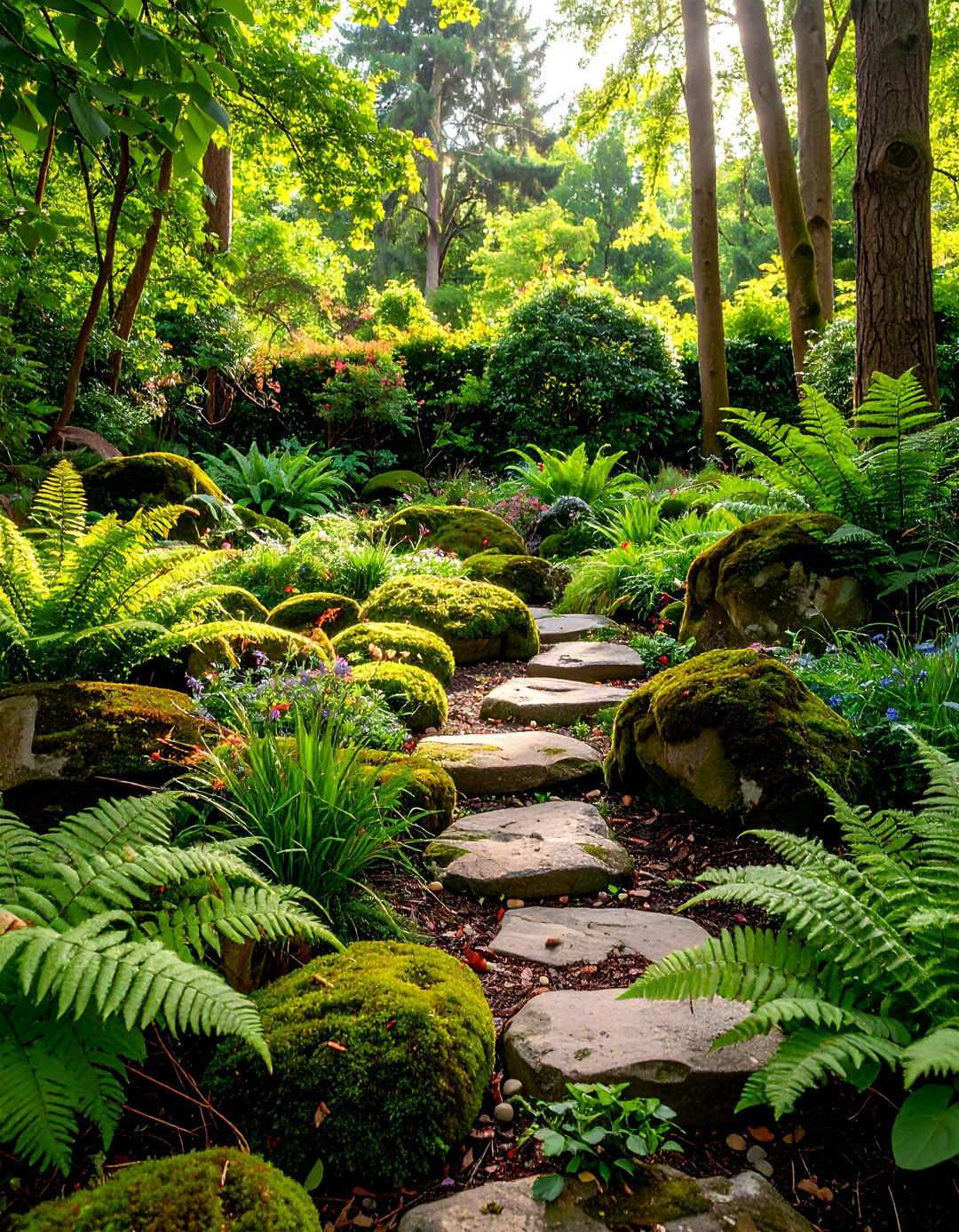
Shaded areas present a unique opportunity to create a captivating garden that draws inspiration from the forest floor. By incorporating moss-covered boulders and fallen log features, this design creates a naturalistic setting for a diverse array of plants, including ferns, wildflowers, and shade-loving perennials. The use of leaf mold and organic mulches helps maintain soil moisture while supporting the growth of diverse plant communities. This approach can be successfully implemented under existing trees or in naturally shaded areas. One of the garden’s most captivating features is its ability to showcase seasonal ephemeral flowers, which provide vibrant color in the spring before tree canopies fully develop. By adopting a layered planting approach that mimics natural forest succession, this design offers year-round interest through varied textures and forms, making even the shadiest areas a haven for beauty and wonder.
15. Xeriscaping Garden
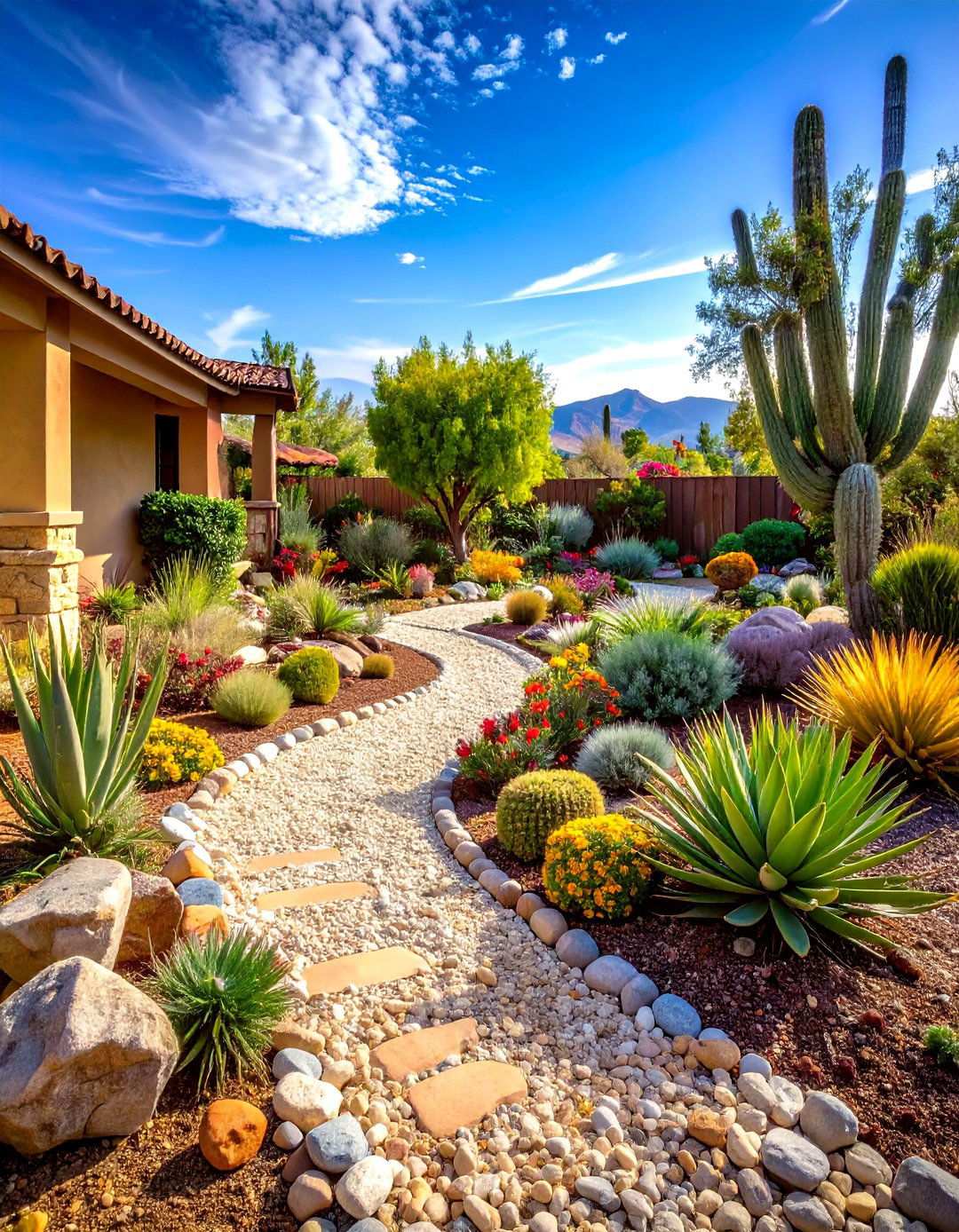
Sustainable landscaping has evolved to incorporate artistic expression through deliberate material and plant placement choices. A palette of crushed stone mulches in diverse hues creates intricate patterns that harmonize with drought-resistant plant collections. This water-efficient approach not only eliminates the need for irrigation but also yields stunning year-round displays. By incorporating native and adapted species, xeriscaping fosters local wildlife habitats while minimizing maintenance requirements. Strategically placed larger specimen plants provide visual structure, while smaller species fill gaps and contribute to seasonal color variations. By prioritizing texture, form, and subtle color nuances over water-dependent flowers, xeriscaping elevates the design’s aesthetic appeal. Furthermore, this approach raises awareness about sustainable gardening practices, encouraging homeowners to adopt environmentally conscious landscaping methods. By embracing xeriscaping, individuals can significantly reduce their environmental footprint while cultivating breathtaking beauty.
16. Boulder Accent Garden
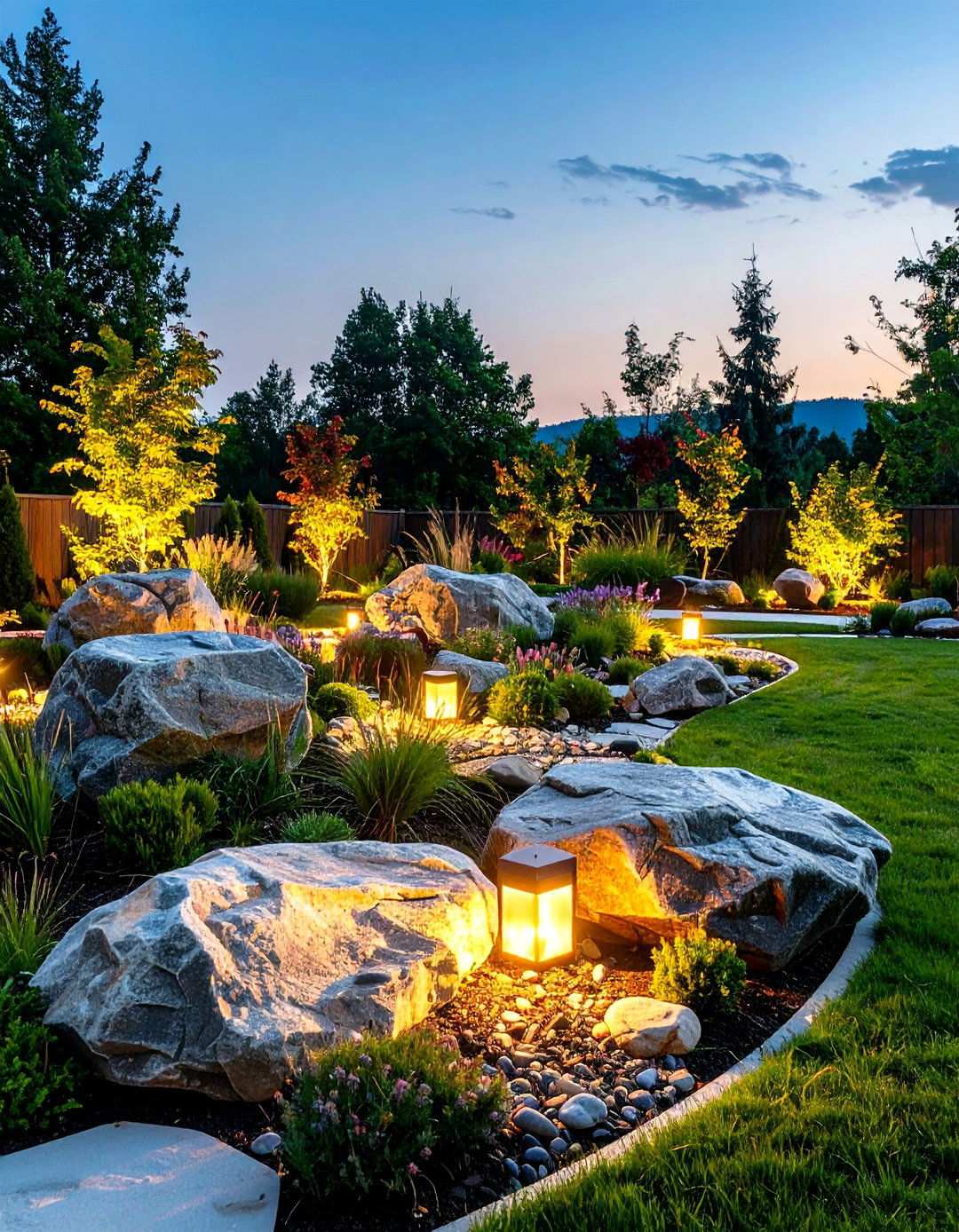
Boulders can transform a landscape by serving as sculptural focal points that anchor surrounding design compositions. Whether a single large boulder or a carefully arranged grouping, these natural formations provide a permanent structure around which seasonal plantings can evolve and change. Professional installation ensures the boulder’s proper placement and stability, creating a natural-looking arrangement that complements the surrounding landscape. The surrounding plantings not only match the boulder’s proportions but also provide seasonal interest through a variety of textures and colors. This versatile approach can be adapted to both formal and informal settings, depending on the boulder’s selection and placement patterns. Once established, the permanent features of a boulder accent garden require minimal maintenance, while strategic lighting can transform the boulder features into captivating evening focal points. By thoughtfully placing a boulder, homeowners can create a dramatic statement in their landscape that showcases their unique personal style.
17. Rock Wall Garden
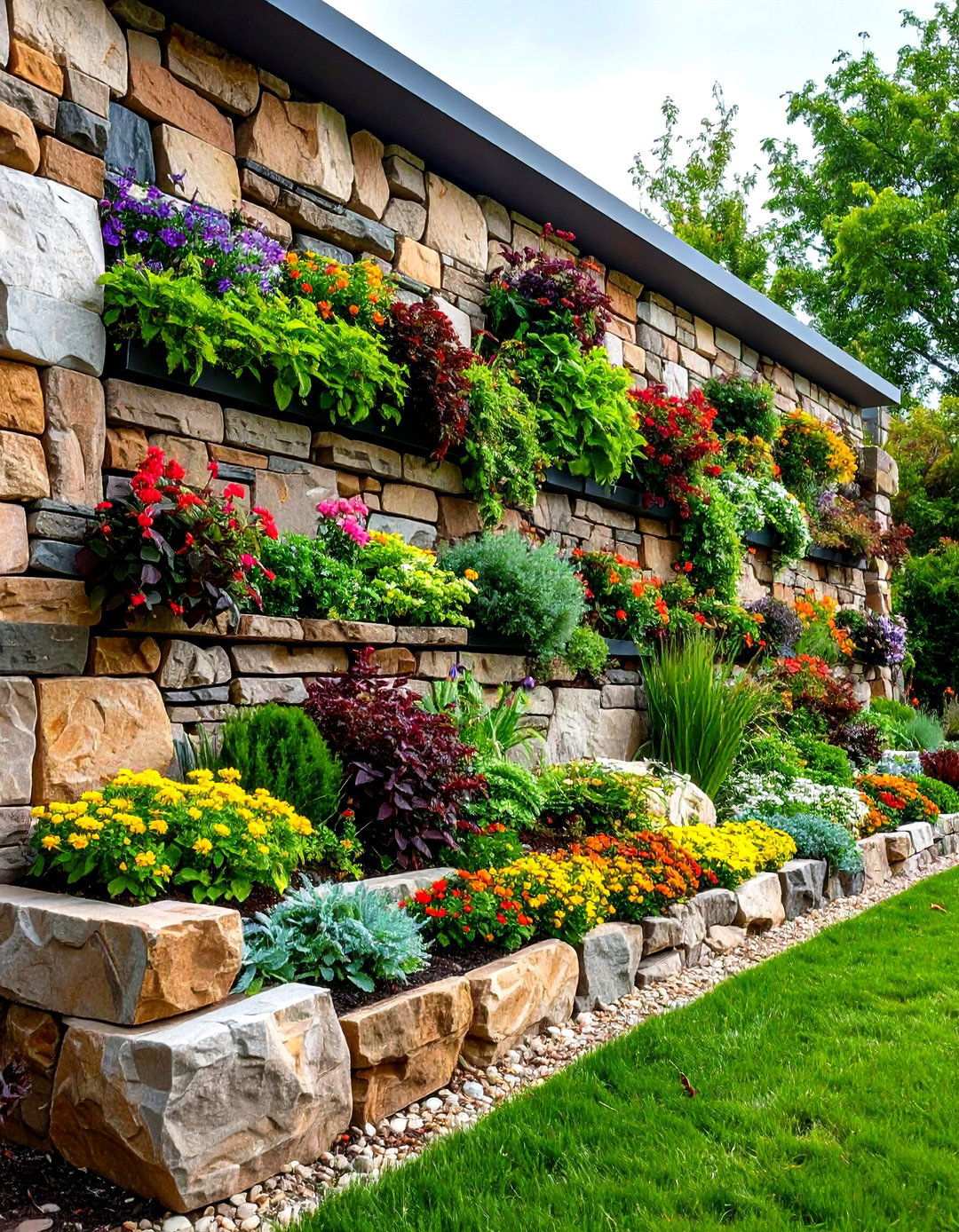
Vertical planting opportunities are multiplied by incorporating rock walls with planting pockets, creating a stunning backdrop feature for garden displays. Carefully constructed stone walls support a diverse range of plant varieties, accommodating cascading plants and vertical garden compositions in limited horizontal space. This technique also provides excellent drainage, making it an ideal choice for plant species with varying moisture requirements. By adjusting the wall’s orientation, gardeners can create diverse growing conditions that cater to both sun-loving and shade-preferring plants. Construction of a rock wall garden demands attention to drainage and structural integrity for long-term success. The vertical element adds dimensional interest to the landscape while creating habitat opportunities for beneficial insects. Regular maintenance involves watering and plant replacement as needed, allowing gardeners to enjoy the benefits of their rock wall garden for years to come. By embracing vertical space, homeowners can turn their limited garden areas into a thriving oasis for extensive plant collections.
18. Elevated Planting Spaces
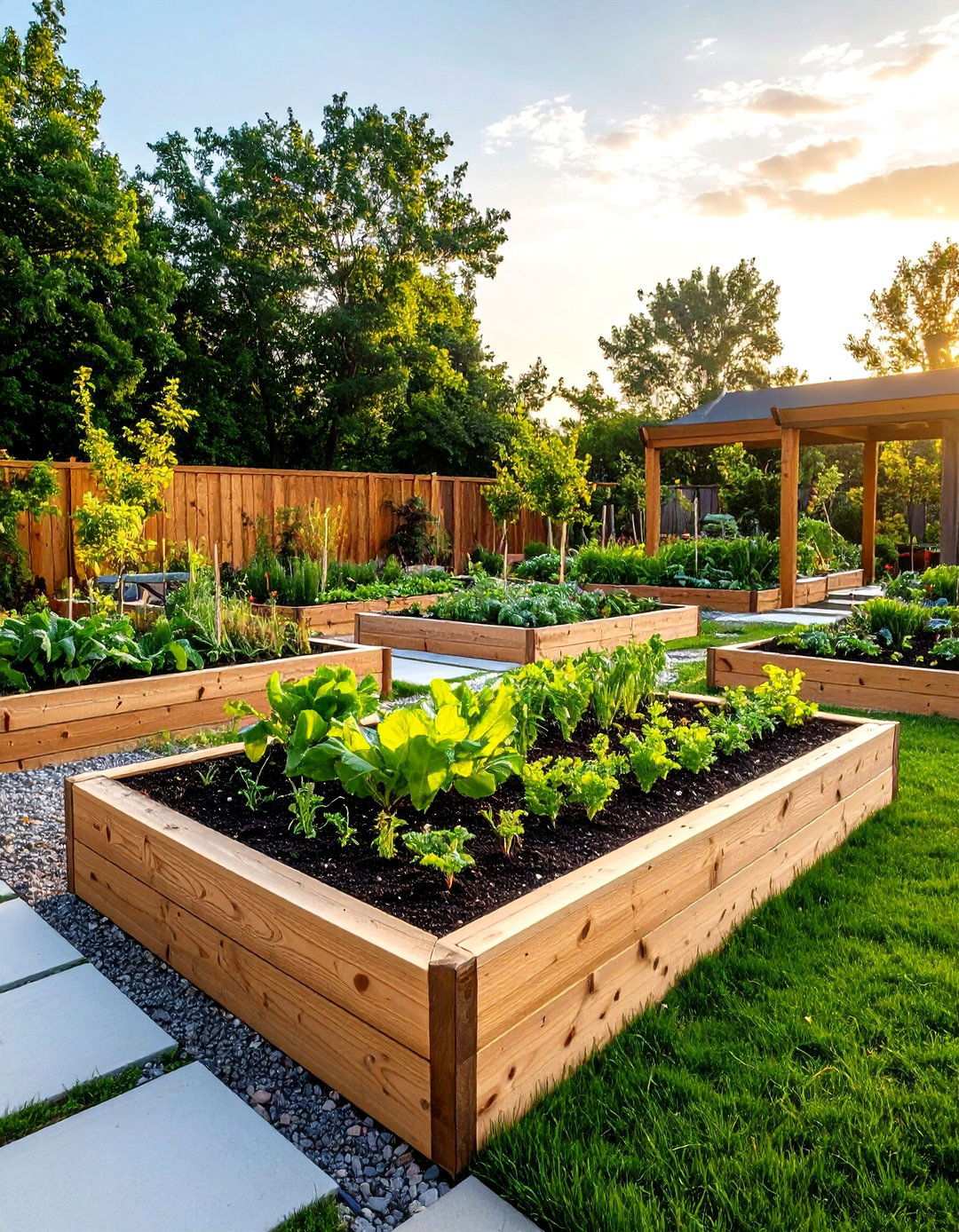
Elevating your garden beds can be a game-changer for gardeners with mobility limitations or poor native soil conditions. By creating organized growing spaces, you can improve drainage and soil conditions through controlled amendments and drainage materials. Stone-edged beds provide a permanent structure that can withstand the test of time. This approach allows for different bed heights to accommodate various plant requirements, while also creating visual interest through varied elevations. Strategically placed pathways between beds provide access while preventing soil compaction, making maintenance and plant management a breeze. Seasonal crop rotation is also essential in maintaining soil health and providing continuous harvests. Organized growing spaces can revolutionize your gardening experience by making it more efficient and enjoyable.
19. Dynamic Grass Landscapes
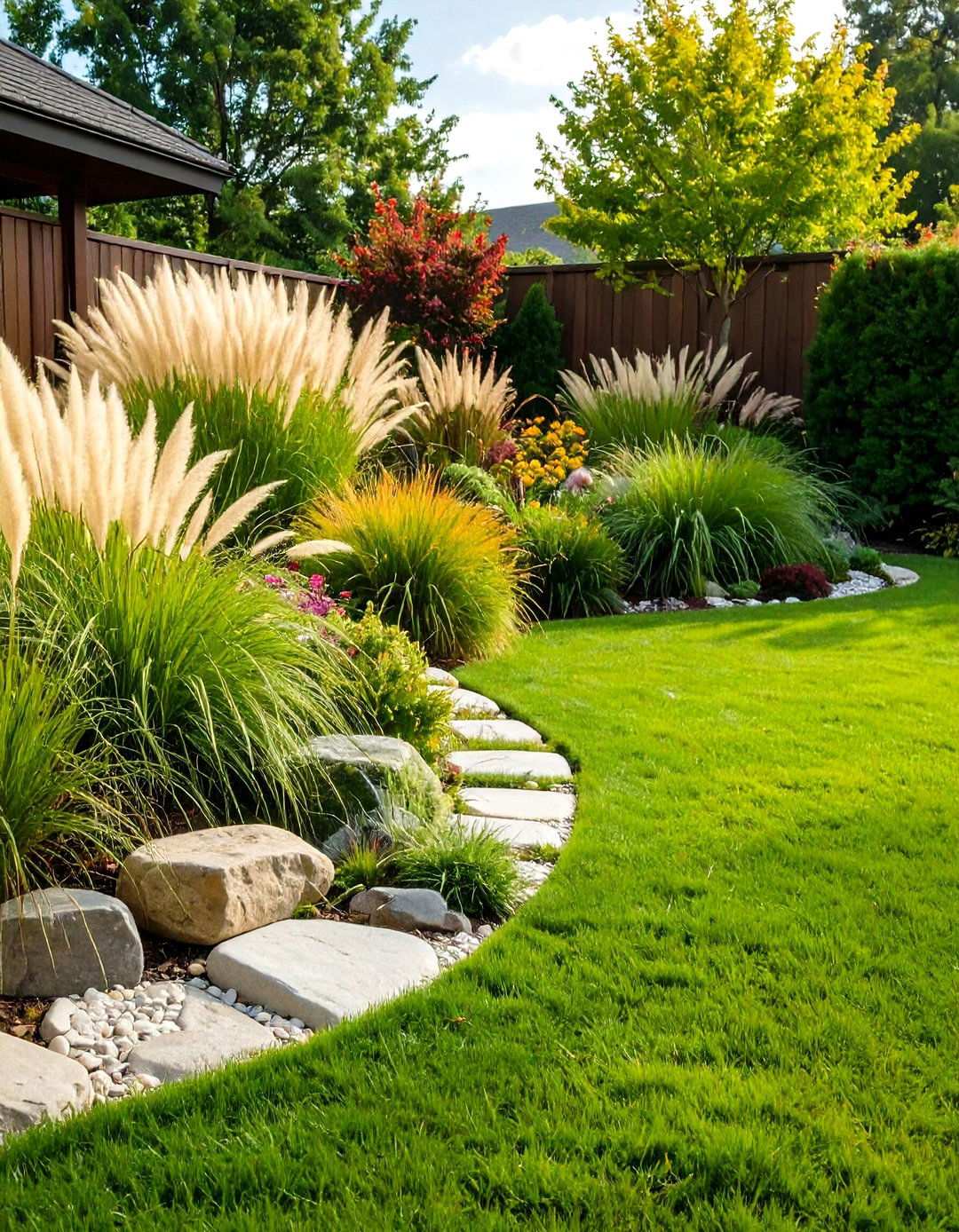
Textural movement and seasonal interest are the hallmarks of a well-designed grass garden. By incorporating diverse grass species complemented by compatible stone materials, you can create dynamic displays that change throughout the growing season. The feathery seed heads and varied foliage colors of these grasses add a touch of whimsy to your landscape. Wind movement also plays a key role in adding kinetic interest to your garden, while providing habitat for birds and beneficial insects. This low-maintenance approach requires minimal water once established, making it perfect for busy gardeners. Strategic stone placement provides contrast and supports taller grass varieties, while seasonal cutting maintains plant health and provides material for winter interest or composting. The naturalistic approach celebrates seasonal changes, requiring minimal intervention to maintain its beauty. A well-designed grass garden can transform your landscape maintenance routine by providing a simple yet elegant solution.
20. Whimsical Cottage Gardens
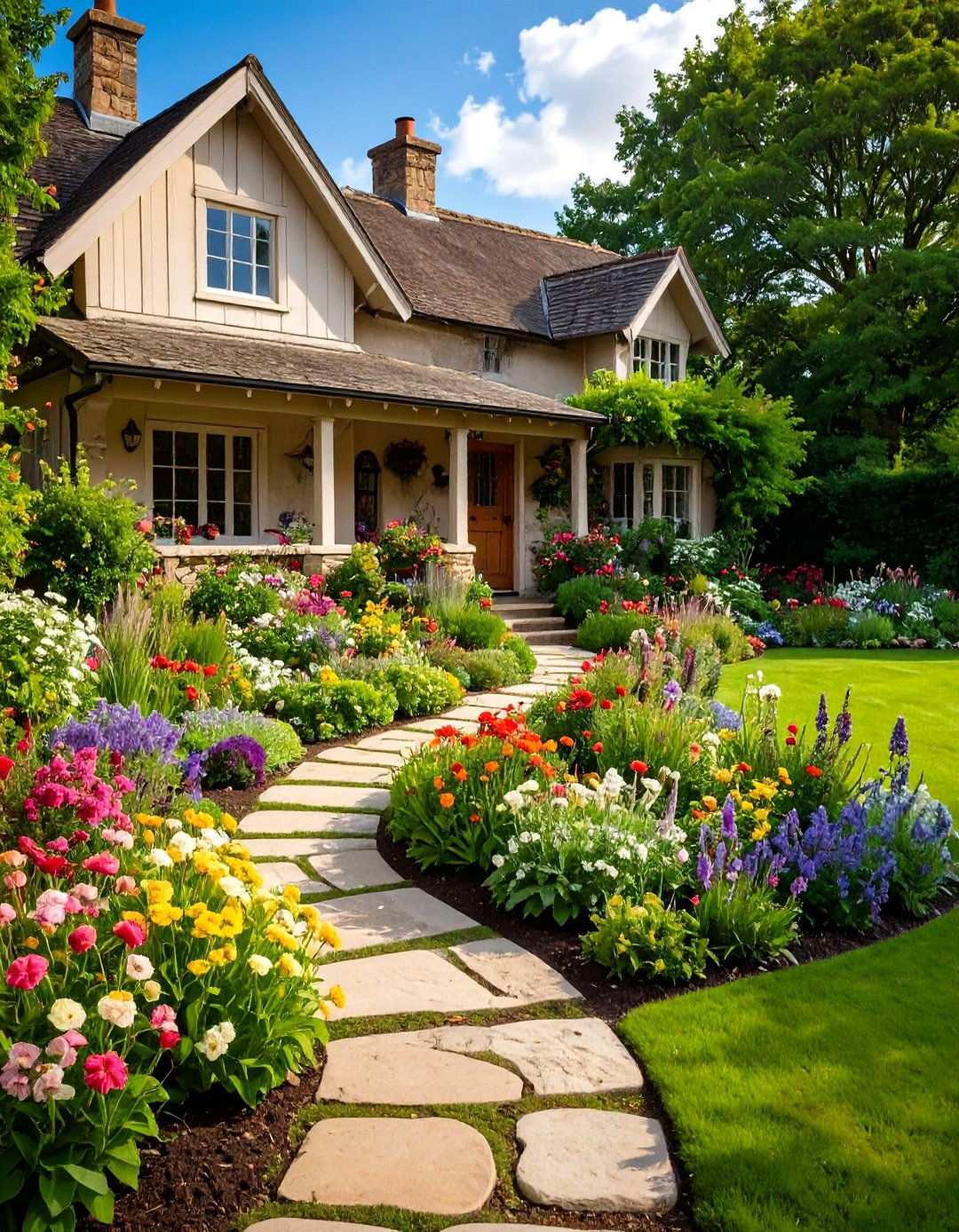
Informal plantings that spill over natural stone edges create a charming and inviting atmosphere in a cottage-style garden. Mixed perennial borders featuring traditional favorites like catmint, lamb’s ear, and cottage pinks create romantic displays that soften hard stone surfaces. Weathered fieldstone and aged materials add authentic character to your garden, while supporting vigorous plant growth. This approach encourages self-seeding and natural plant migration, allowing your garden to evolve over time. Seasonal maintenance involves deadheading and division, rather than rigid control, making it perfect for gardeners who want to relax and enjoy the process. Traditional materials and plant combinations create timeless appeal that improves with age, making your cottage garden a treasured family heirloom. A whimsical cottage garden can create lasting memories for your family by providing a peaceful and charming outdoor space.
21. Elevating Outdoor Spaces with Contemporary Geometric Patterns
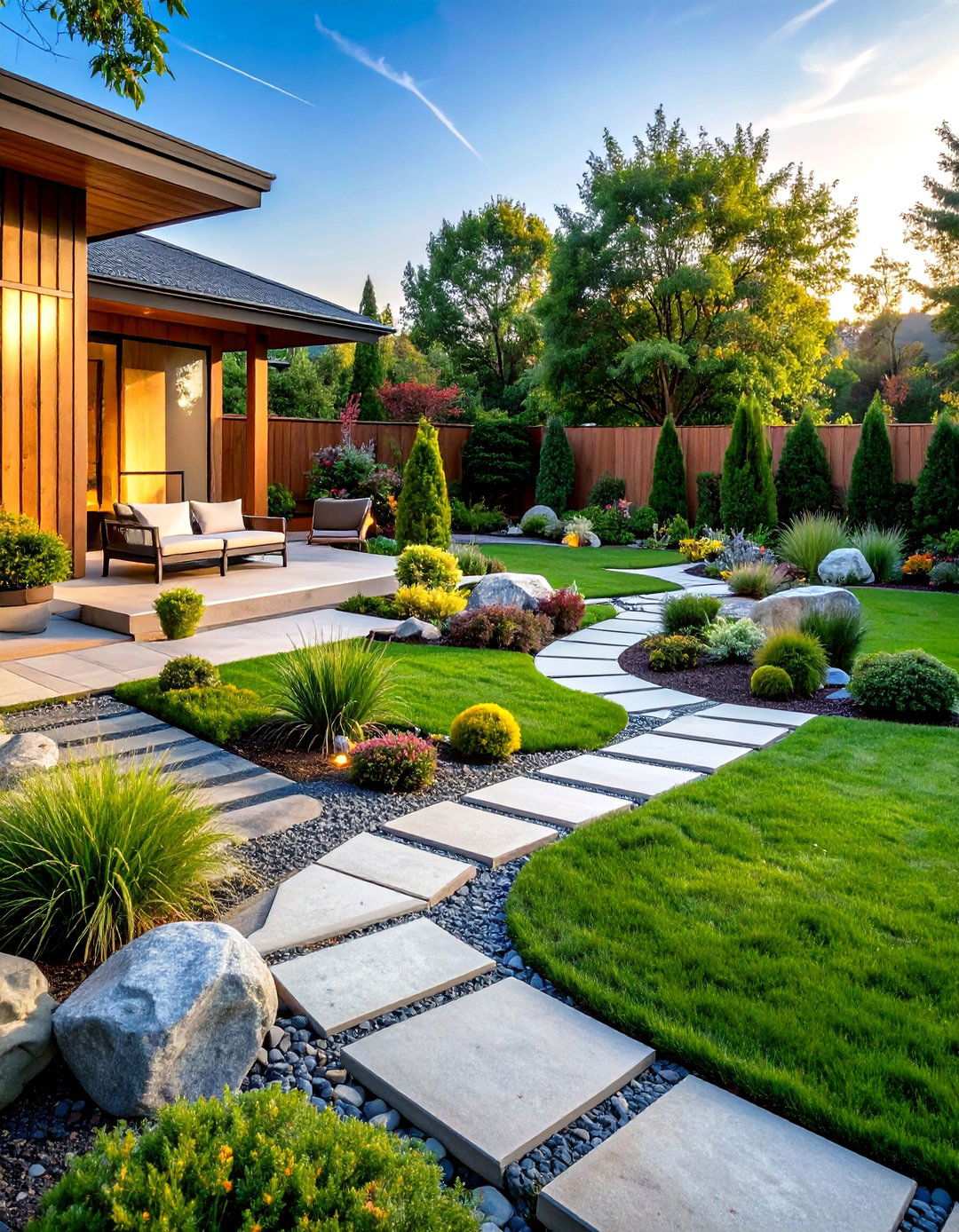
A harmonious blend of bold patterns, architectural plantings, and carefully selected materials creates a sophisticated ambiance that beautifully complements modern building designs. Geometric planting beds and precisely cut stone materials come together to emphasize clean lines and repetitive patterns, giving the space a sense of order and balance. By focusing on a limited palette of single varieties or complementary colors, the visual simplicity is maintained while providing a rich tapestry of seasonal interest. This approach demands meticulous planning and expert installation to achieve professional results. Intuitive irrigation and lighting systems not only support plant health but also extend the usability of the garden, making it an extension of your living space. Regular upkeep ensures that the edges remain crisp and the design’s intended effects stay intact. As a result, the sophisticated aesthetic boosts property values while offering low-maintenance beauty. Moreover, it provides a platform for showcasing contemporary design principles and sustainable practices, making it an educational experience for all.
22. Nurturing Regional Landscapes with Native Plant Communities
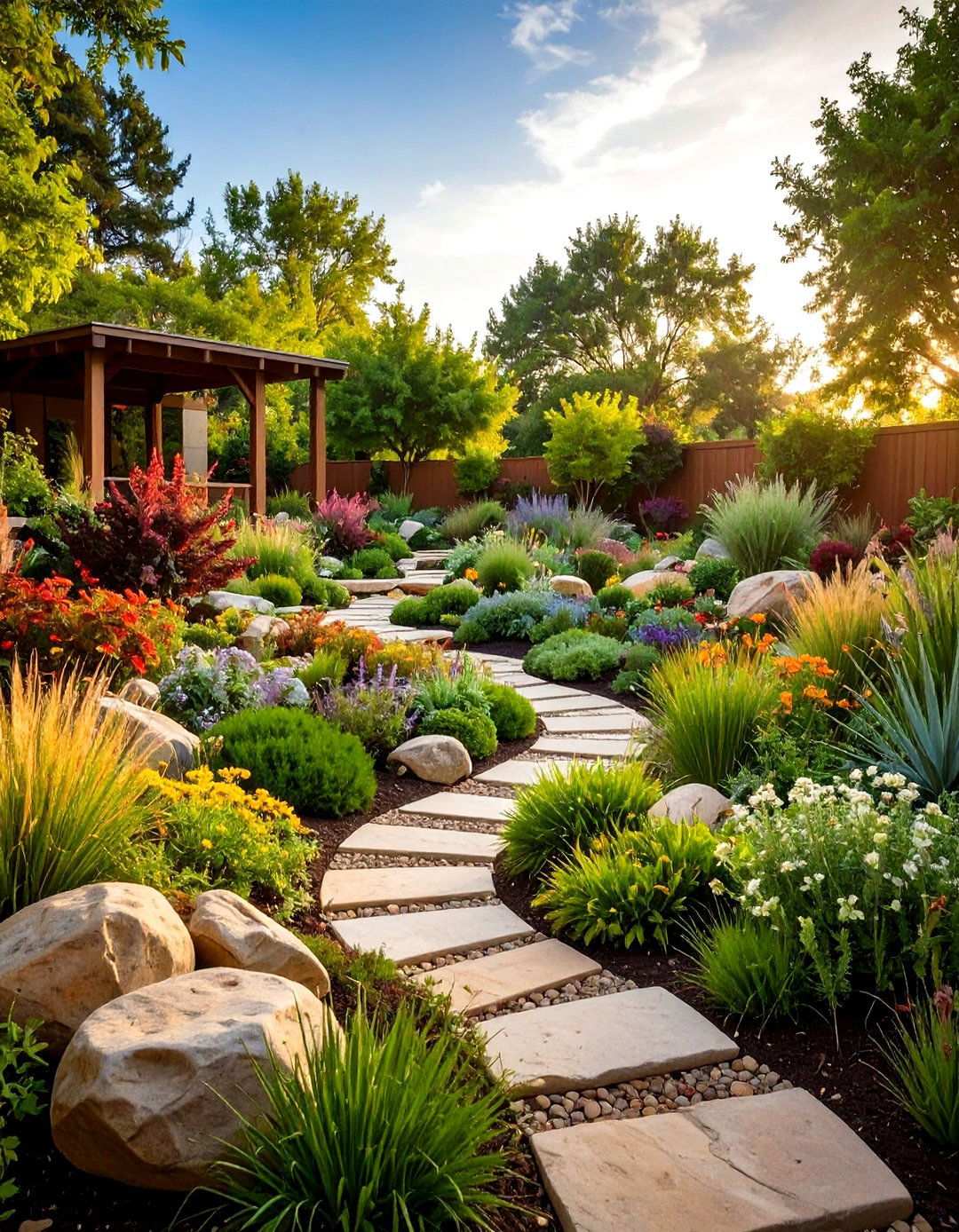
Regional flora plays a vital role in creating authentic landscapes that not only support local ecosystems but also require minimal external inputs. By incorporating indigenous stone materials and native plant communities, the garden reflects the local geology and climate patterns, establishing a harmonious relationship with its surroundings. This approach provides a haven for native wildlife while minimizing maintenance requirements through the use of adapted plant selections. As the seasons change, the garden showcases natural cycles, providing year-round interest through the varied species adaptations. The sustainable approach eliminates the need for fertilizers and pesticides, supporting biodiversity and creating a thriving ecosystem. Additionally, natural reseeding and plant migration result in evolutionary landscapes that improve over time, making each garden unique and dynamic. By embracing native plant communities, you can create a sanctuary for local wildlife while showcasing regional beauty.
23. Celebrating Seasonal Change with Colorful Blooms
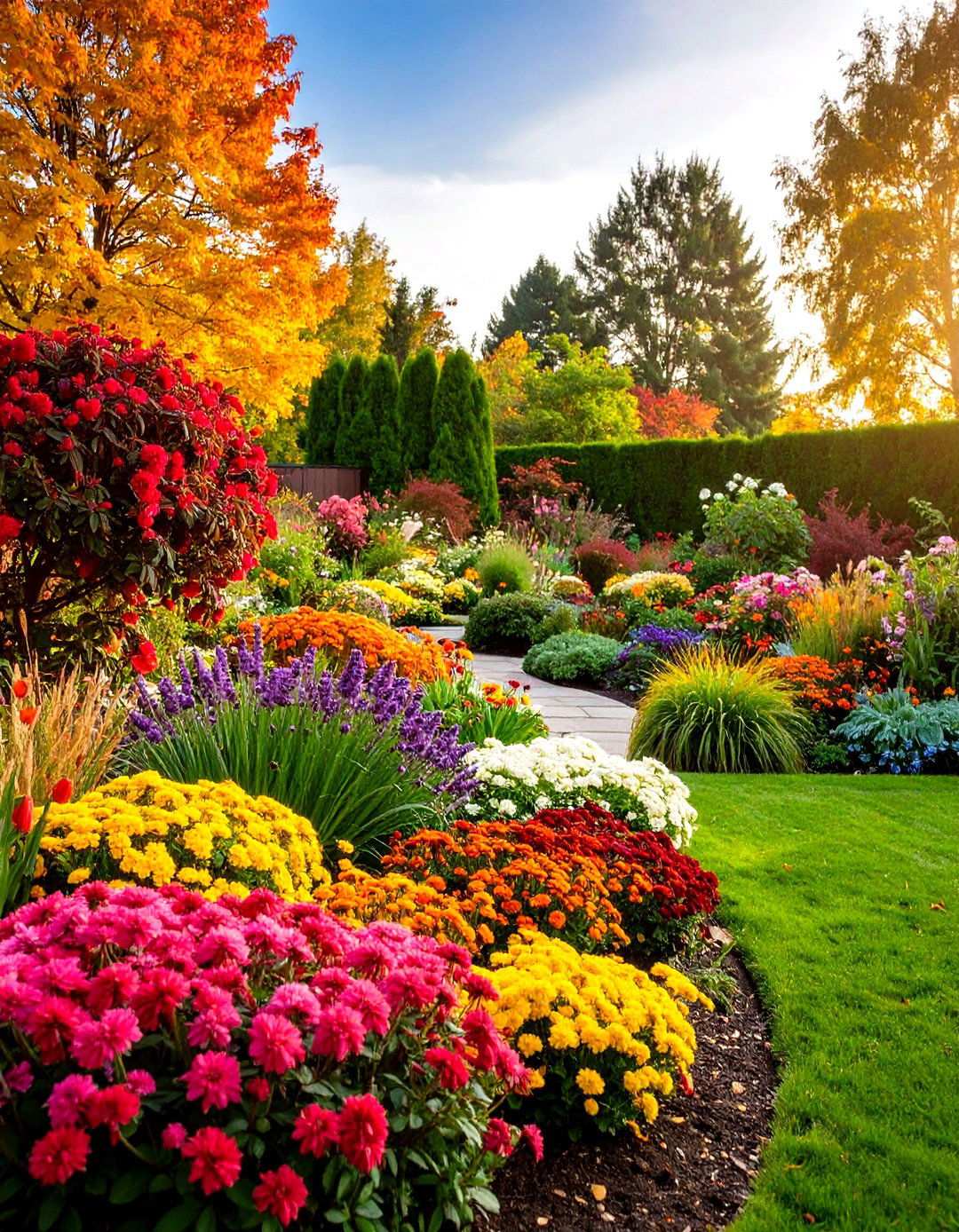
Strategically selecting plants for their bloom times allows for a continuous succession of colors throughout the growing season, all while maintaining the necessary stone garden drainage requirements. Spring bulbs lead the way, followed by summer perennials and autumn-blooming species, each bringing their unique colors and textures to the garden. The permanent stone features provide a sense of continuity and structure, allowing the dynamic displays to take center stage. To achieve this, careful planning is essential, ensuring that the garden doesn’t become overcrowded and loses its charm. By creating different microclimates through stone placement, you can accommodate the varied blooming requirements of each plant, resulting in a truly dynamic display. As the seasons change, the garden rewards attention to its beauty, providing educational opportunities about the life cycles of plants. Regular upkeep involves deadheading and seasonal cleanup, but the end result is well worth the effort – a garden that is always full of surprises and excitement.
24. Scaling Down Rock Gardening
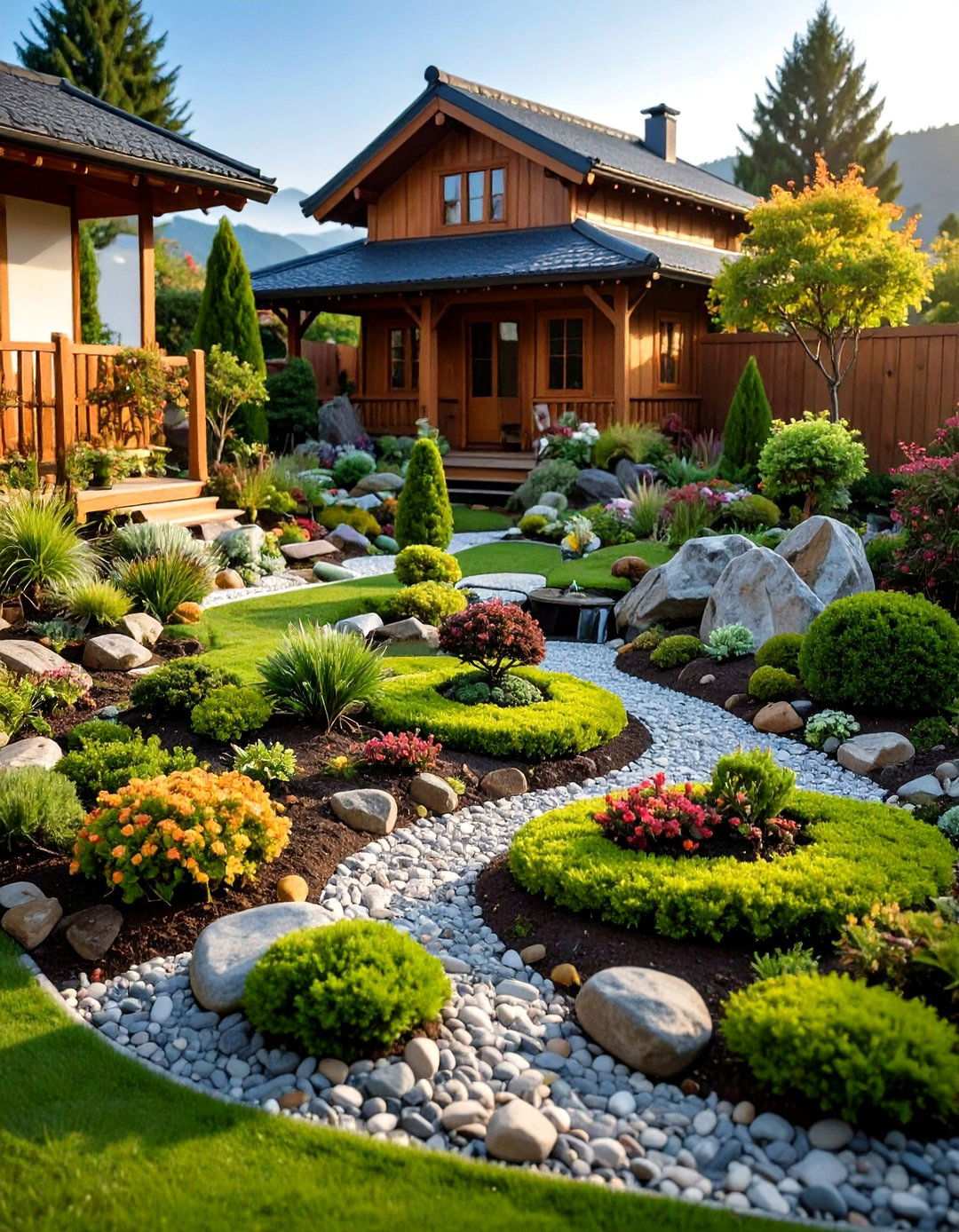
Compact rock gardens offer a unique way to capture the essence of full-sized garden beauty in confined spaces using a carefully curated selection of miniature materials and dwarf plant varieties. In these tiny ecosystems, intricate compositions of tiny alpine plants, miniature bulbs, and small succulents come together to create a visually striking experience that invites close inspection. By adopting this approach, gardeners can successfully cultivate a miniature rock garden in a small yard, container, or even a dedicated display space. One of the key advantages of miniaturized gardening is that the precise drainage and soil requirements become more manageable, allowing gardeners to experiment with a wider range of species that might be challenging to cultivate in larger spaces. The intimate scale of these gardens encourages a deeper appreciation of the subtle characteristics of each plant and the dynamic changes that occur throughout the seasons. By investing in careful design and plant selection, gardeners can achieve maximum impact while keeping construction costs to a minimum. Through regular observation, the unique details of these miniature gardens can be discovered, offering a rewarding experience for gardeners of all skill levels. As a result, small-scale gardening may indeed provide the perfect introduction to the art of rock gardening.