1. Transforming Your Outdoor Space with Serenity
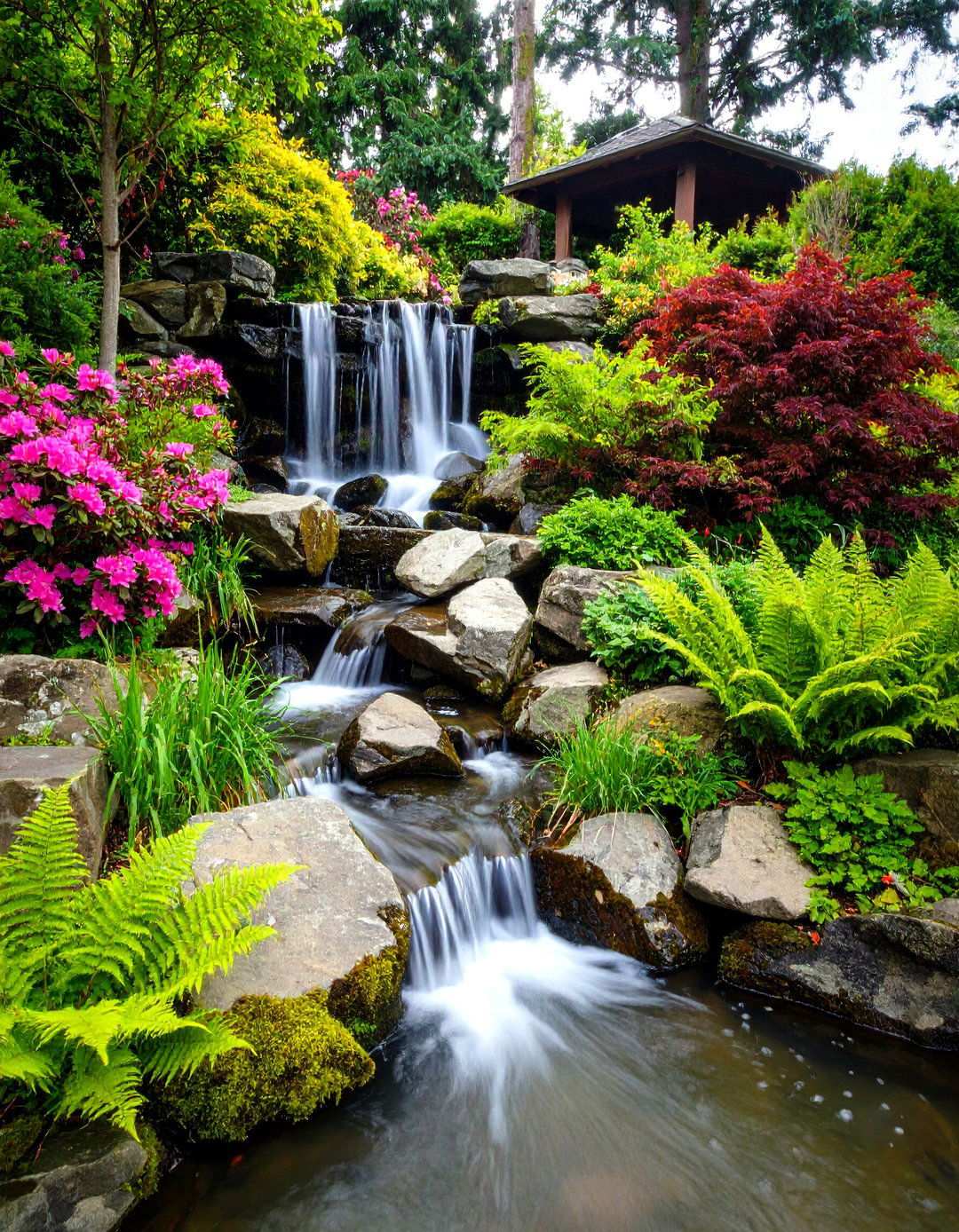
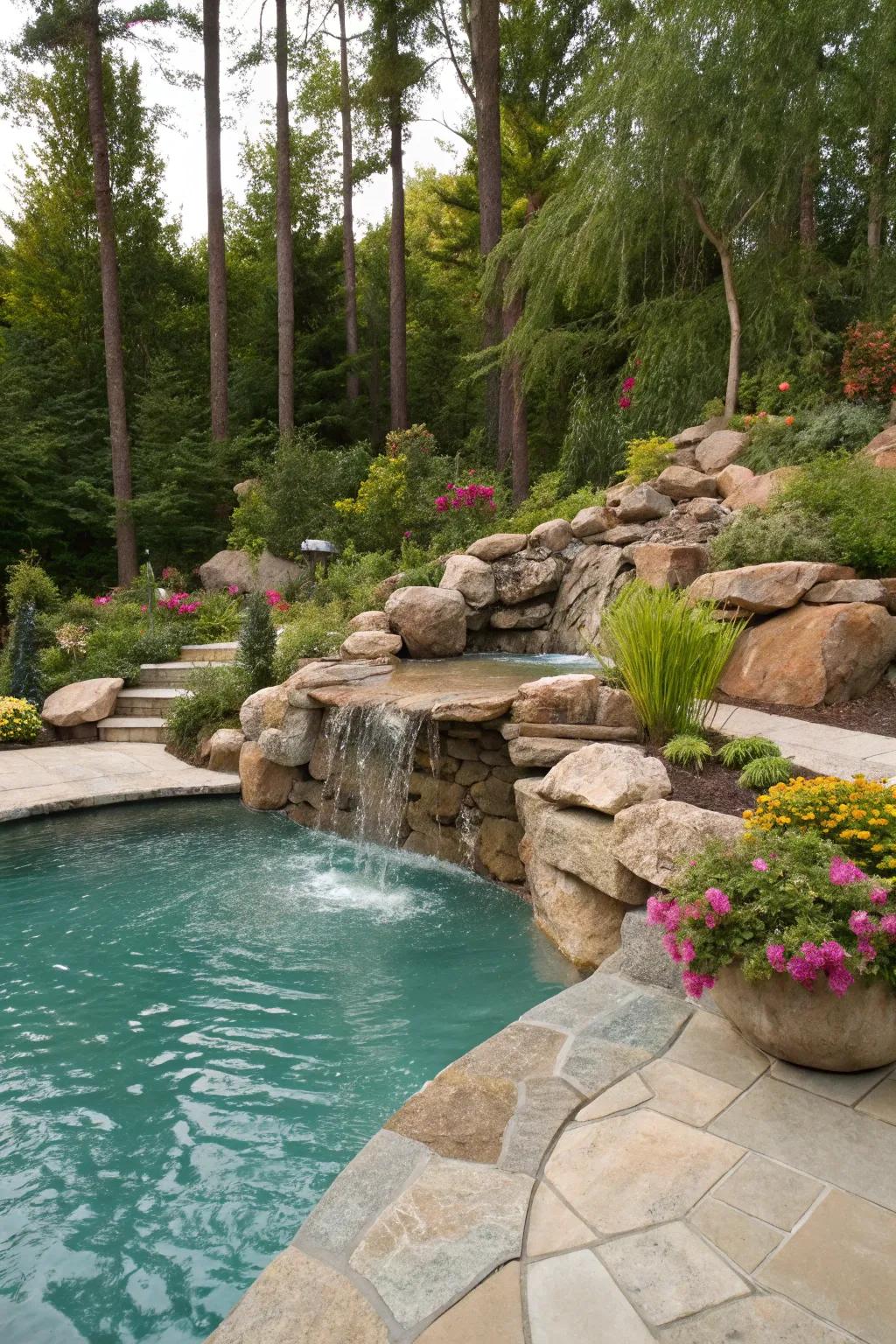
Experience the captivating allure of pondless waterfalls, which seamlessly combine soothing sounds and visual appeal without the upkeep of traditional water features. Perfect for both compact urban patios and expansive gardens, these innovative designs offer endless possibilities tailored to any landscape style and budget. By harnessing the energy of water flowing from an underground reservoir through strategically placed stones and cascades, these recirculating systems create the illusion of water disappearing into the earth. From naturally occurring rock formations reminiscent of mountain streams to sleek contemporary designs boasting clean geometric lines, each approach brings its unique character to your outdoor environment. The versatility of these features extends beyond aesthetics, as they require minimal upkeep while delivering maximum visual impact. They’re also safe for families, energy-efficient, and can be enhanced with lighting for evening enjoyment. Explore these 24 inspiring pondless waterfall ideas to help you create a tranquil oasis in your own backyard.

As an Amazon Associate I earn from qualifying purchases.
2. Elevating Your Outdoor Space with Artistic Expression
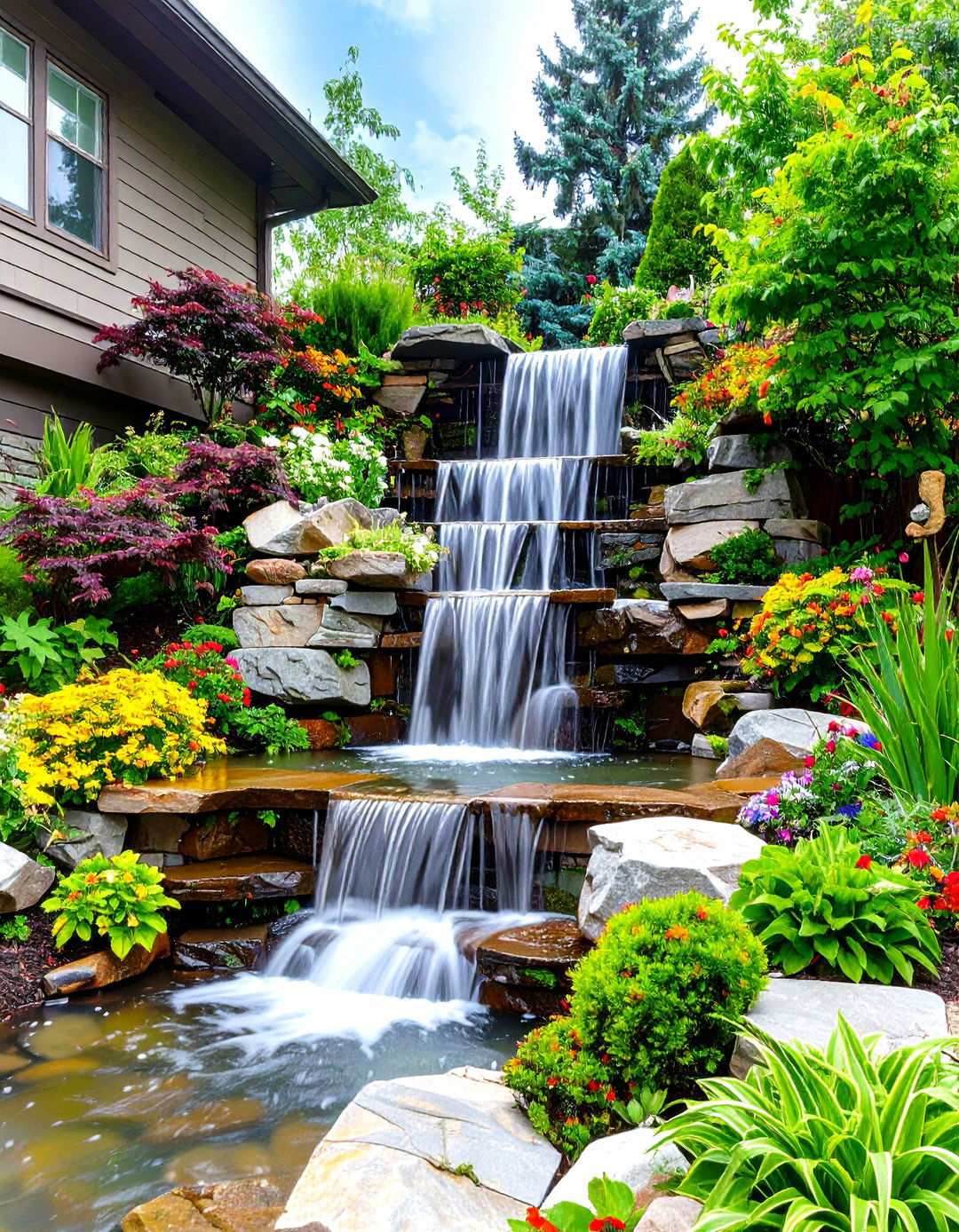
Unleash the beauty of nature with a tiered stone waterfall design that adds dramatic visual flair through multiple levels of carefully arranged stone platforms. Each tier serves as both a structural element and aesthetic feature, with water effortlessly flowing from one level to the next in controlled cascades. For added stability and visual appeal, use flat flagstone or slate pieces to create the tiered platforms, ensuring each level is slightly angled to direct water flow. The spacing between tiers is crucial in determining the sound intensity, while wider gaps produce more dramatic splashing effects. Softening harsh stone edges, incorporate native ferns and moisture-loving plants around each level, providing an opportunity to integrate lighting beneath each cascade, creating a stunning nighttime illumination effect throughout the entire vertical arrangement.
3. Modern Minimalist Waterfall Feature
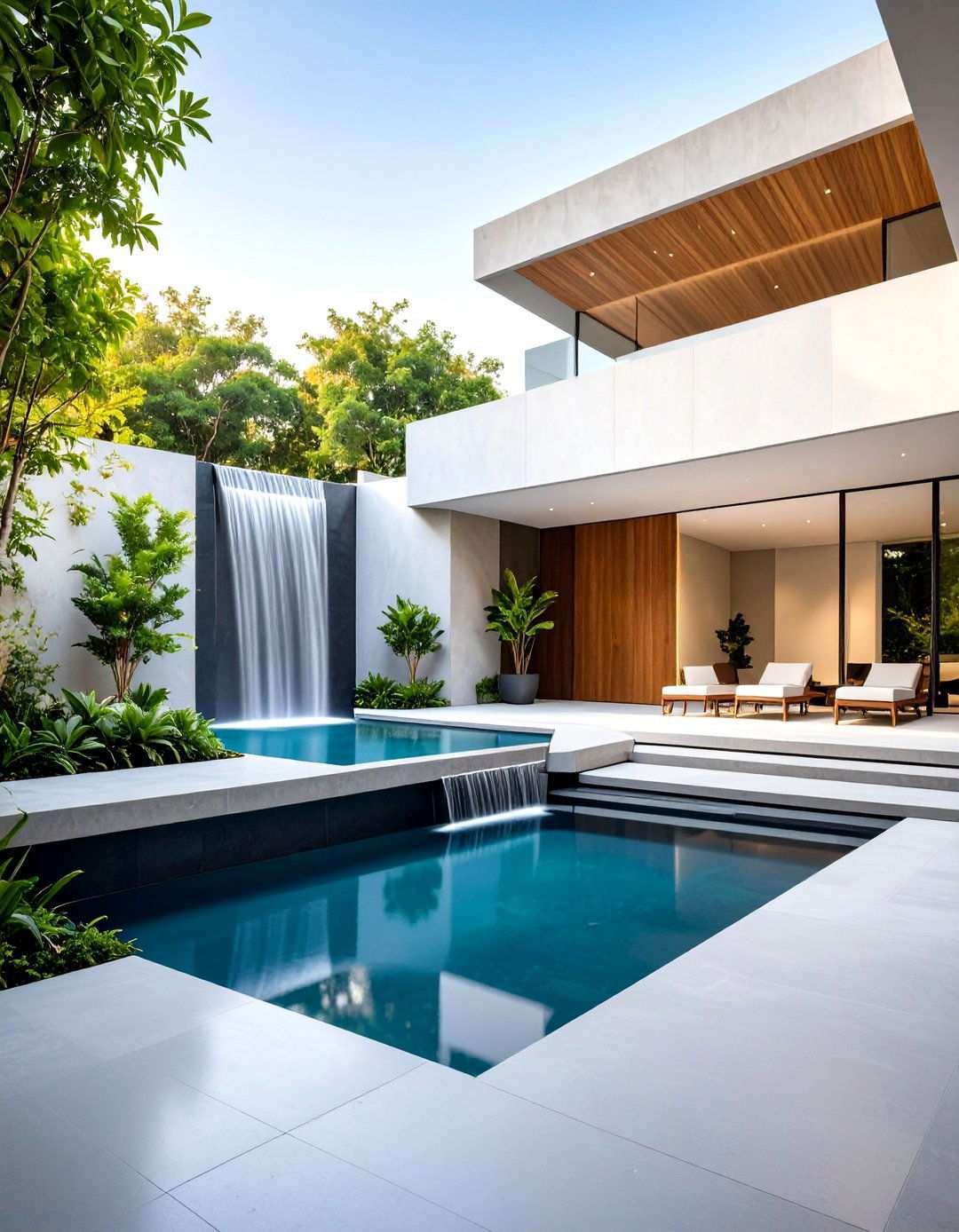
Clean-lined modern waterfalls combine the elegance of polished stone, concrete, or stainless steel with the precision of geometric design. This contemporary aesthetic prioritizes simplicity and architectural flair over natural randomness, often incorporating rectangular or square-cut stones arranged in deliberate patterns. The resulting sharp edges and defined water channels give the feature a sleek, high-tech appearance. A neutral color palette featuring grays, blacks, and whites enhances the sophisticated ambiance, while surrounding architectural plants like ornamental grasses or sculptural succulents complement the streamlined aesthetic. The carefully controlled water flow creates a sheet-like effect, producing a tranquil atmosphere ideal for contemporary home settings where the waterfall serves as an outdoor art installation.
4. Japanese Zen Garden Waterfall
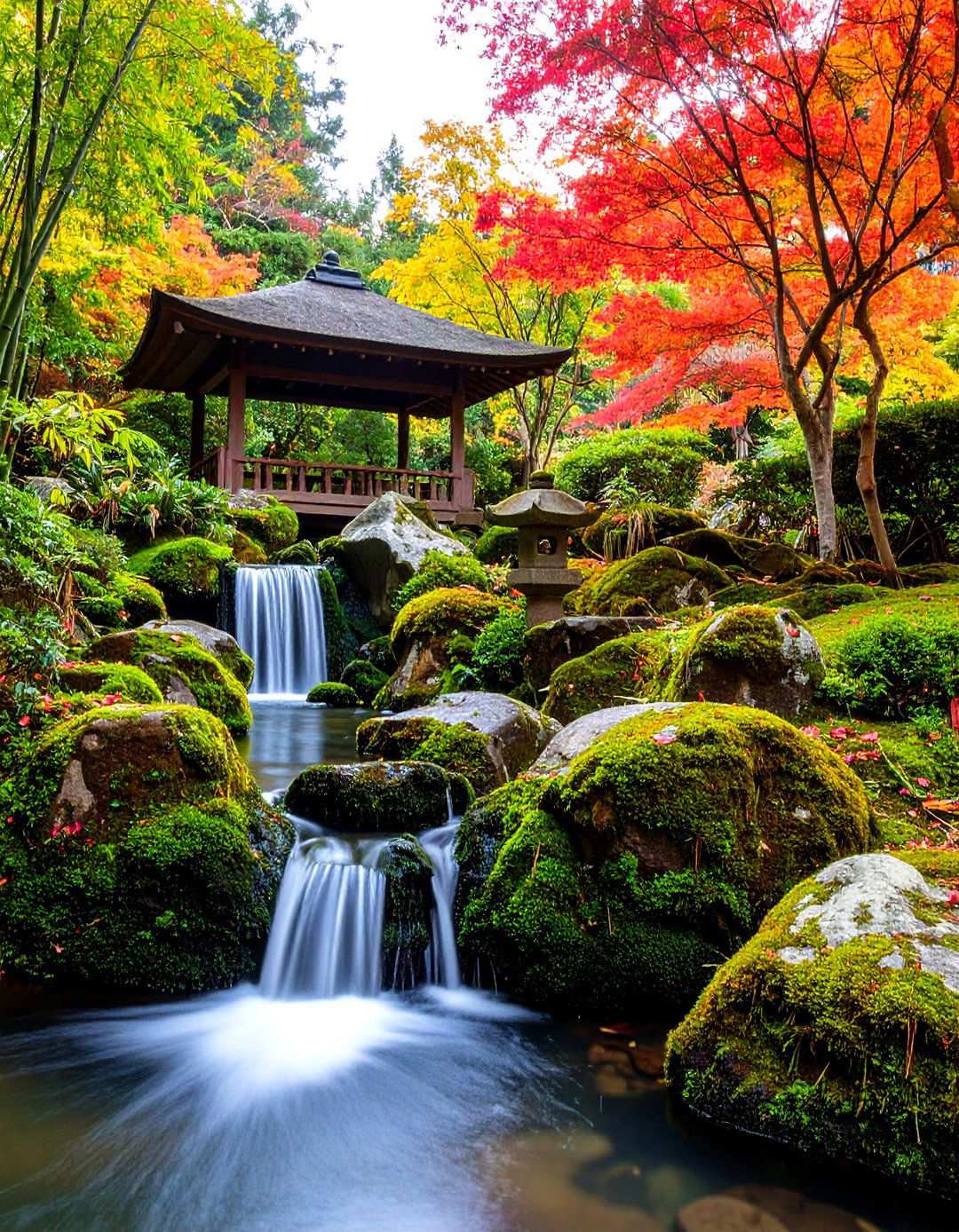
Designing a Japanese Zen garden waterfall involves a thoughtful balance of natural elements, simplicity, and contemplative beauty. This approach emphasizes the strategic placement of carefully chosen river rocks and boulders to create a harmonious composition. Gentle water flow and soft murmuring sounds promote meditation and relaxation, drawing inspiration from traditional Japanese garden philosophy. Surround the waterfall with authentic plants like moss, ferns, and bamboo to complete the serene atmosphere. Incorporating stone lanterns or simple wooden bridges serves as a focal point without overwhelming the tranquil composition. By carefully selecting each element, designers can create a refined and harmonious environment ideal for quiet reflection and spiritual renewal.
5. Compact Corner Waterfall Solution
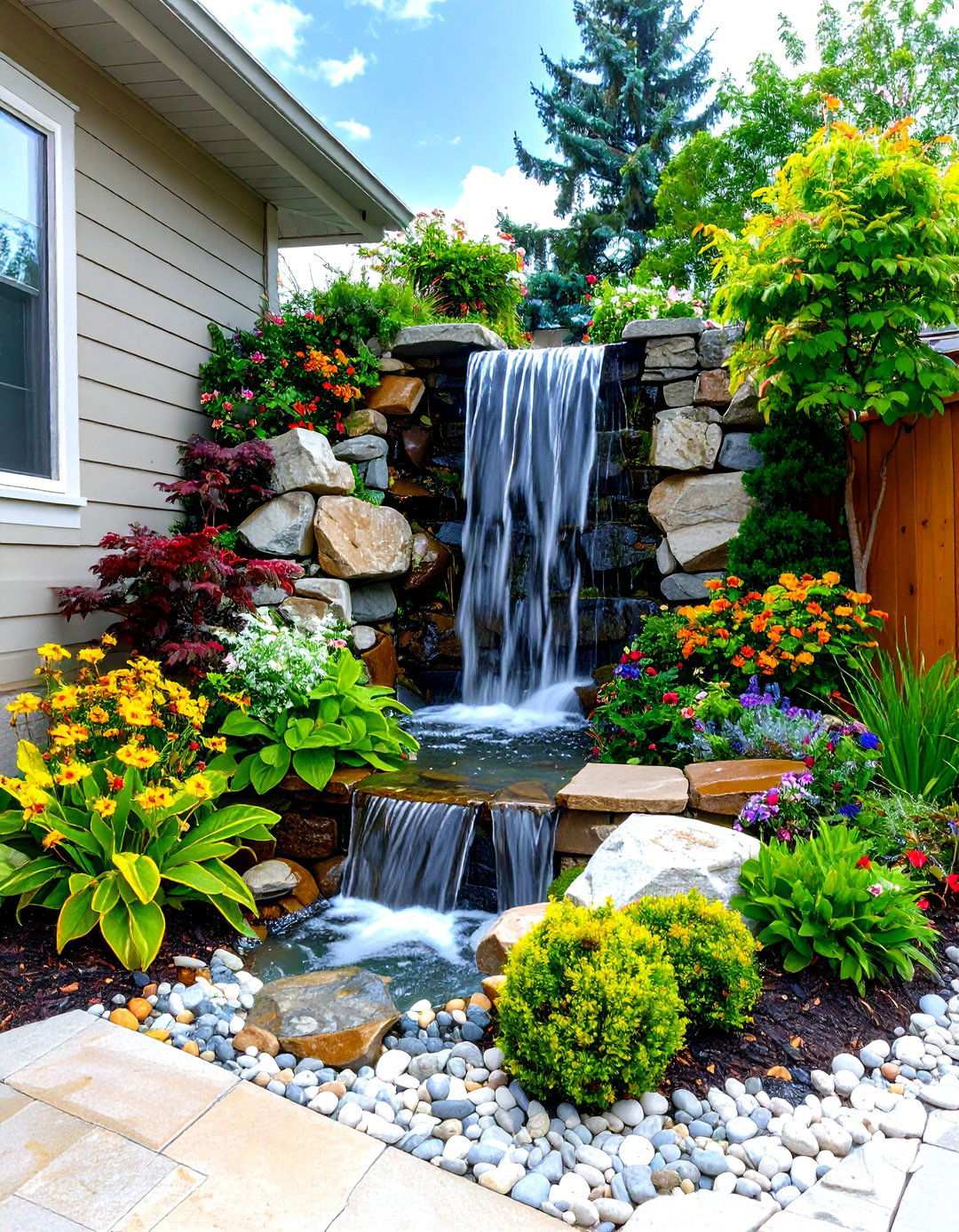
Maximizing limited space is a hallmark of a well-designed corner waterfall. This innovative approach transforms unused areas into captivating focal points, perfect for small patios, narrow side yards, or tight landscape corners where traditional features won’t fit. By leveraging vertical space, a tall, narrow cascade can draw the eye upward while conserving valuable ground area. Selecting appropriately scaled stones and ensuring proper proportion is essential to avoid overwhelming the space. The compact underground reservoir can be hidden beneath decorative gravel or stones that blend seamlessly with the surrounding landscape. Corner installations often benefit from backdrop elements like walls or fencing that can be incorporated into the overall design, making even the smallest spaces suitable for beautiful water features.
6. Patio-Adjacent Waterfall Design
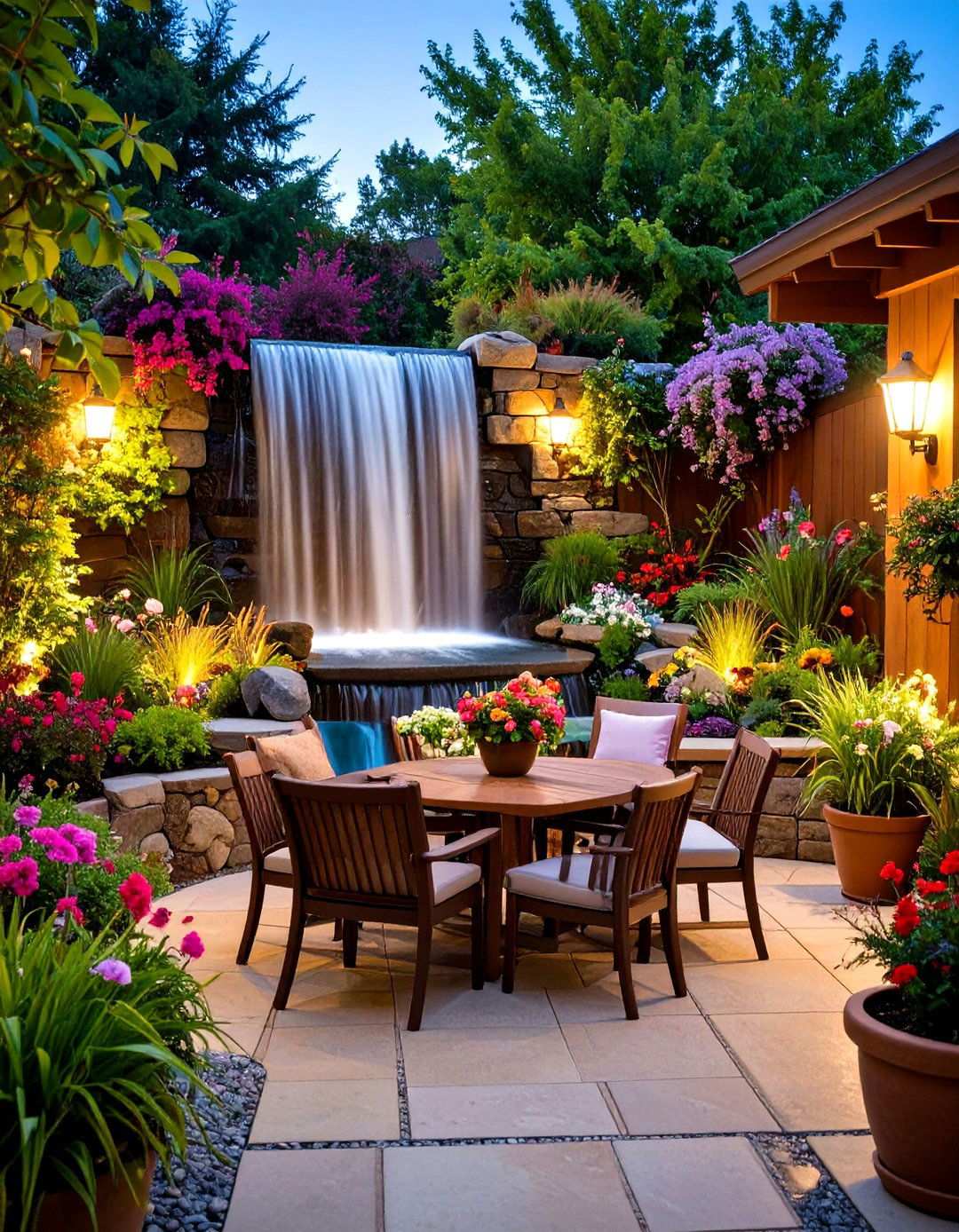
Crafting a seamless transition between indoor and outdoor spaces involves strategically placing your waterfall near a patio area. This deliberate placement allows for effortless viewing from multiple angles, including dining areas, lounging spaces, and interior windows. To create a harmonious atmosphere, design the feature to complement the existing patio materials and outdoor furniture styles, fostering a cohesive outdoor environment. When it comes to sound levels, strike a balance between pleasant background noise and conversation areas, ensuring the water flow remains unobtrusive. Implement subtle lighting that accentuates the evening gatherings and highlights the water movement. For a seamless integration, consider incorporating the waterfall with existing hardscaping elements, such as retaining walls, planters, or decorative borders. Accessibility for maintenance becomes crucial in these high-visibility areas, so plan accordingly for pump access and seasonal care requirements while maintaining the feature’s aesthetic appeal.
7. Front Entrance Waterfall Welcome
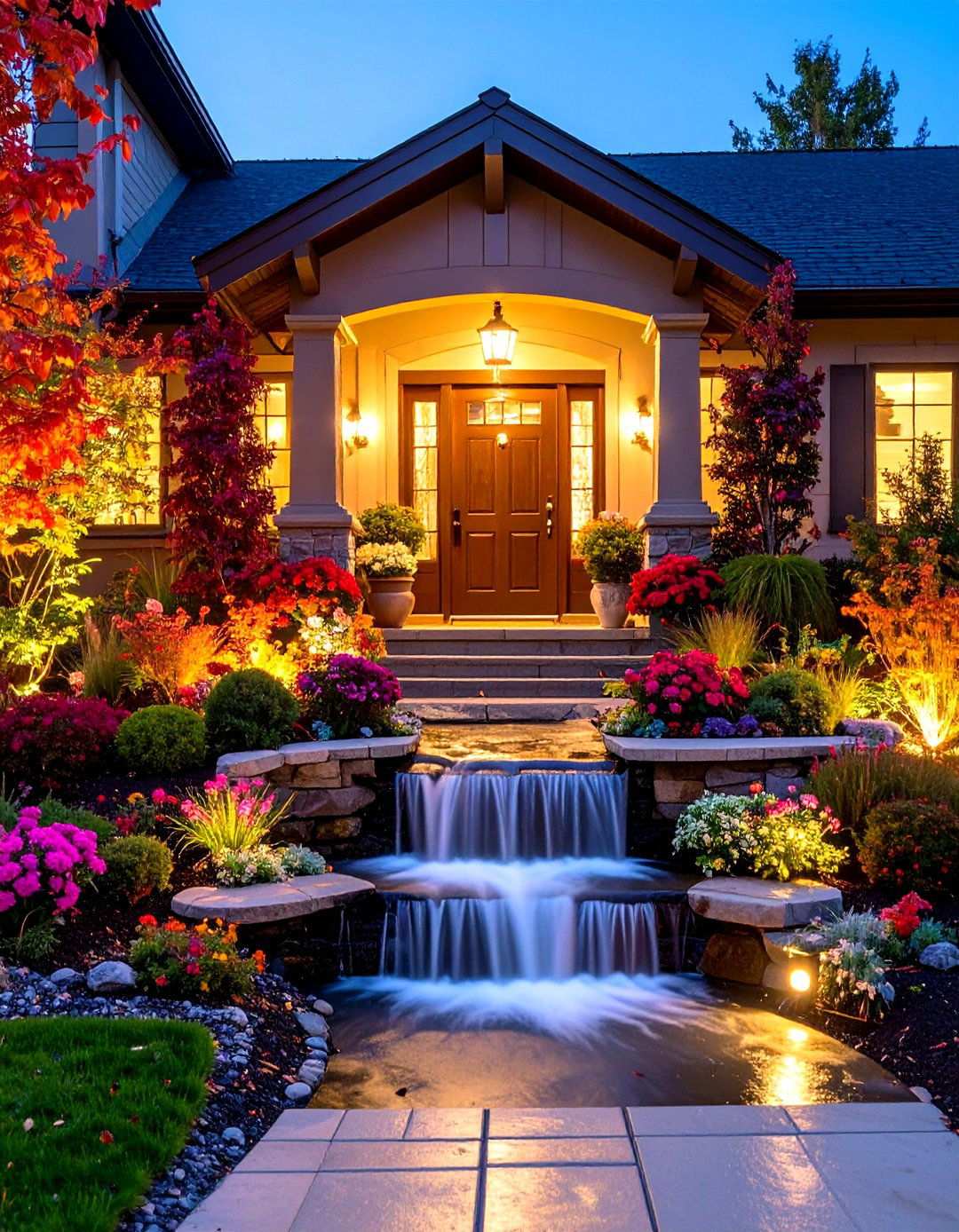
Make a lasting impression by thoughtfully positioning a waterfall near your home’s entrance, where it can greet visitors with soothing water sounds. This prominent placement demands a carefully considered design that harmonizes with your home’s architectural style while providing year-round visual interest. Select materials that seamlessly blend with existing exterior elements, such as stonework, siding, or landscaping themes. Ensure the scale is proportional to the entrance area, avoiding an overwhelming presence that might detract from the approach to your home. Since this location is highly visible, maintenance accessibility is crucial to maintain a professional appearance. Seasonal plantings around the waterfall can add a pop of color throughout the year, while subtle lighting ensures the feature remains attractive during evening hours, providing gentle illumination for walkways and entrance areas.
8. Multi-Level Cascade System
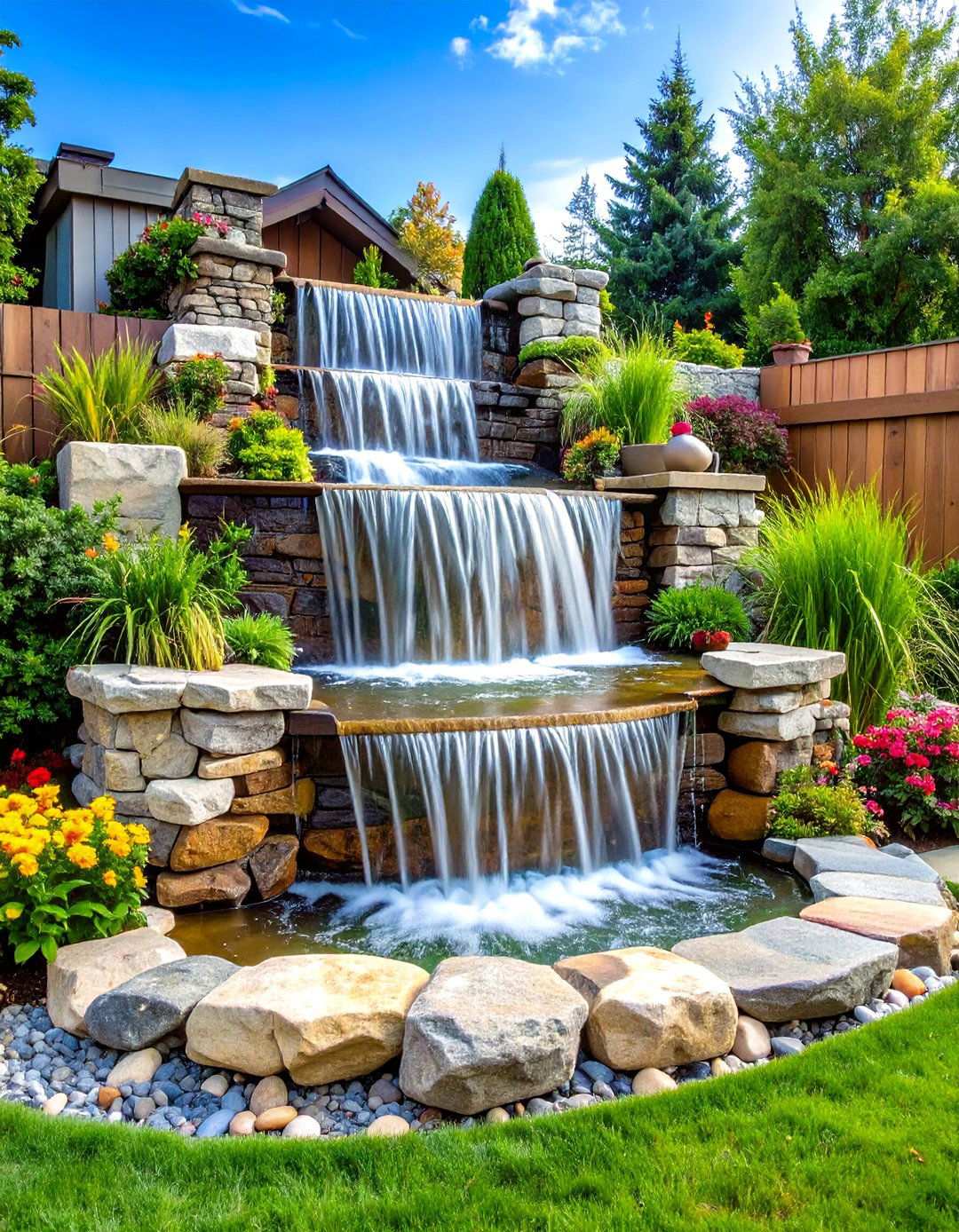
Engineers designing elaborate water features can create dramatic displays through interconnected levels that produce complex visual and auditory experiences throughout the landscape. This ambitious approach involves multiple water drops at varying heights and distances, generating layered sound effects and diverse viewing angles. Each level requires meticulous planning for proper water circulation and distribution to ensure consistent flow throughout the entire system. To add visual variety while maintaining design cohesion, use different stone types and arrangements at each level. The complexity of this design allows for creative integration of multiple plant zones, lighting positions, and viewing areas throughout the cascade system. While maintenance becomes more involved with multiple levels, requiring accessible pump systems and cleaning points, the spectacular results justifies the additional planning and investment required for these impressive water features.
9. Effortless Elegance: The Art of Smooth Stone Water Features
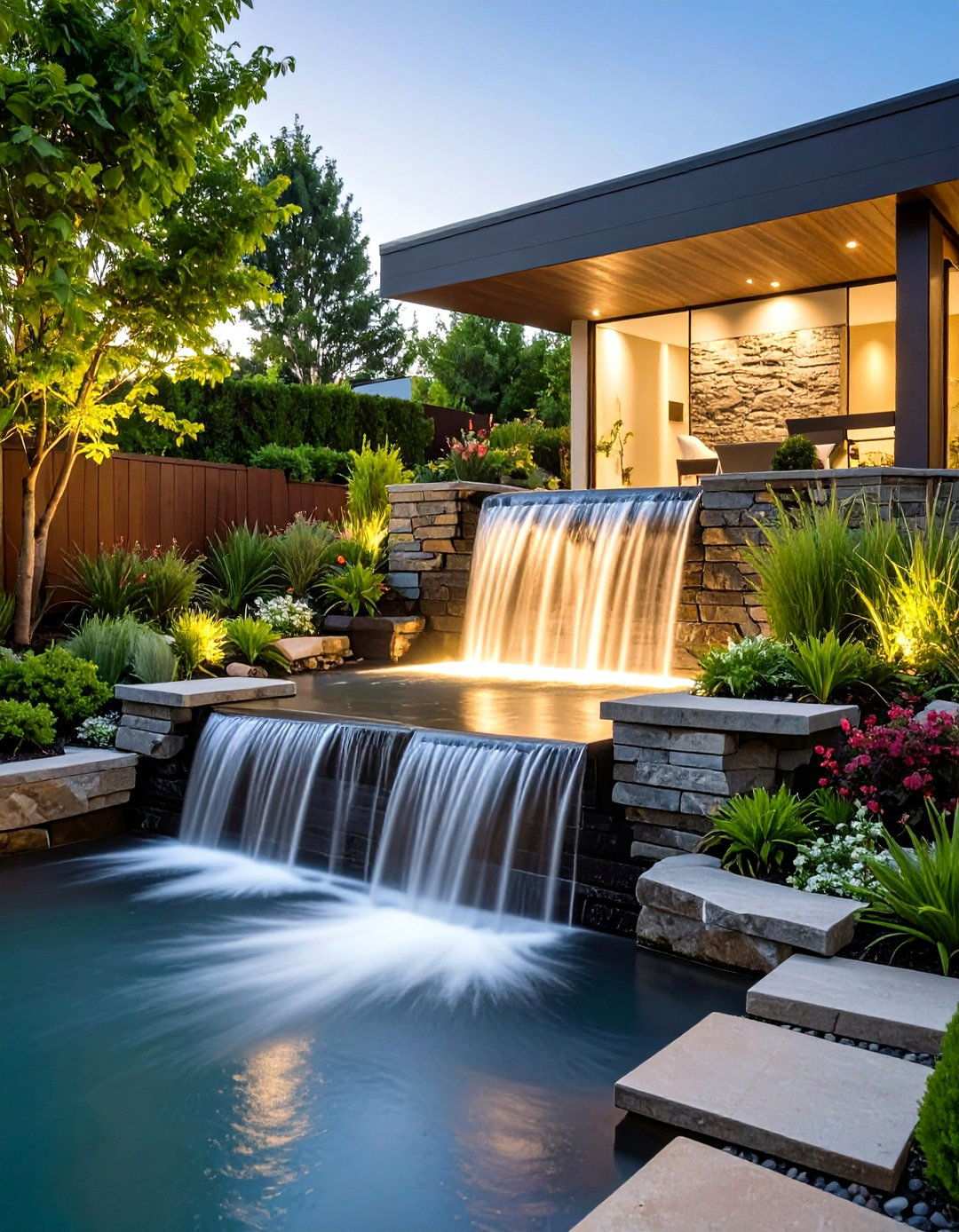
For a serene and refined ambiance, opt for water features that boast sleek, smooth stone surfaces. This design trend showcases carefully chosen flat stones such as slate, limestone, or granite with polished or naturally smooth finishes. As the water flows evenly across the stone face, it creates a captivating glass-like curtain effect that’s particularly stunning when illuminated from behind. Achieving this effect requires selecting stones with surfaces free from imperfections that could disrupt the water flow, making stone selection a crucial aspect of this design. This aesthetic works beautifully in contemporary settings where clean lines and sophisticated materials are highly valued. The gentle, consistent sound of the water provides a soothing background ambiance without overpowering nearby conversation areas. Regular maintenance ensures the smooth water flow, which is essential for the dramatic visual impact this design promises.
10. Immersive Woodland Oasis: Creating a Forest-Like Atmosphere
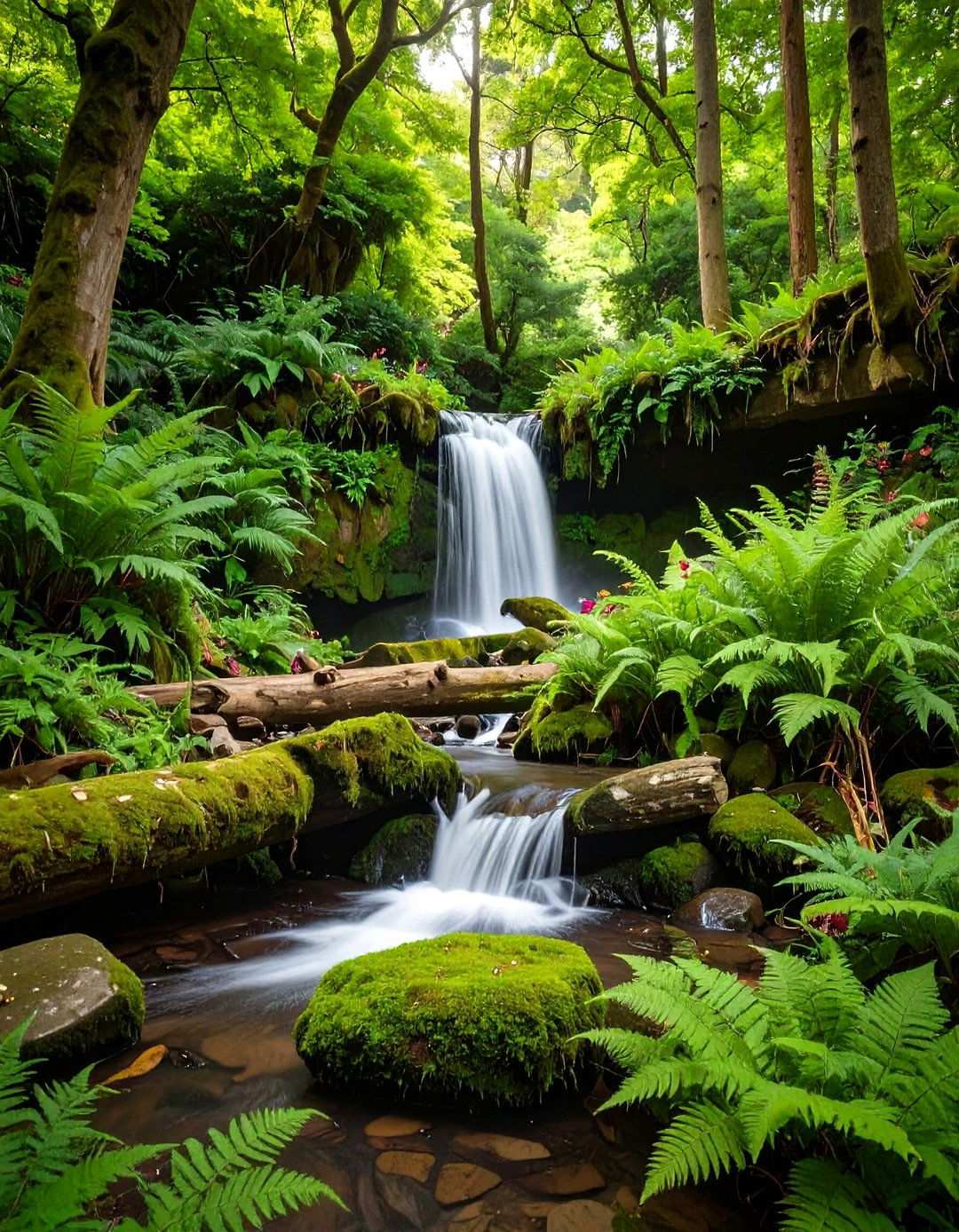
Escape to a tranquil forest-like setting with a waterfall design that seamlessly incorporates natural woodland elements throughout the installation. This approach employs fallen logs, native moss, forest ferns, and irregular stone arrangements to create an authentic woodland stream experience. The design should appear as though it has naturally developed in a forest setting, with organic curves and irregular patterns that mimic the natural flow of water courses. To create a lush ecosystem around the water feature, incorporate shade-loving plants that thrive in moist environments. Fallen branches and weathered wood pieces add authentic touches while providing habitat for beneficial insects and wildlife. This design excels in shaded areas where traditional sun-loving plants struggle, transforming problematic landscape areas into beautiful, functional spaces that require minimal artificial irrigation or intensive maintenance.
11. Geometric Masterpiece: Expressing Modern Design Sensibilities
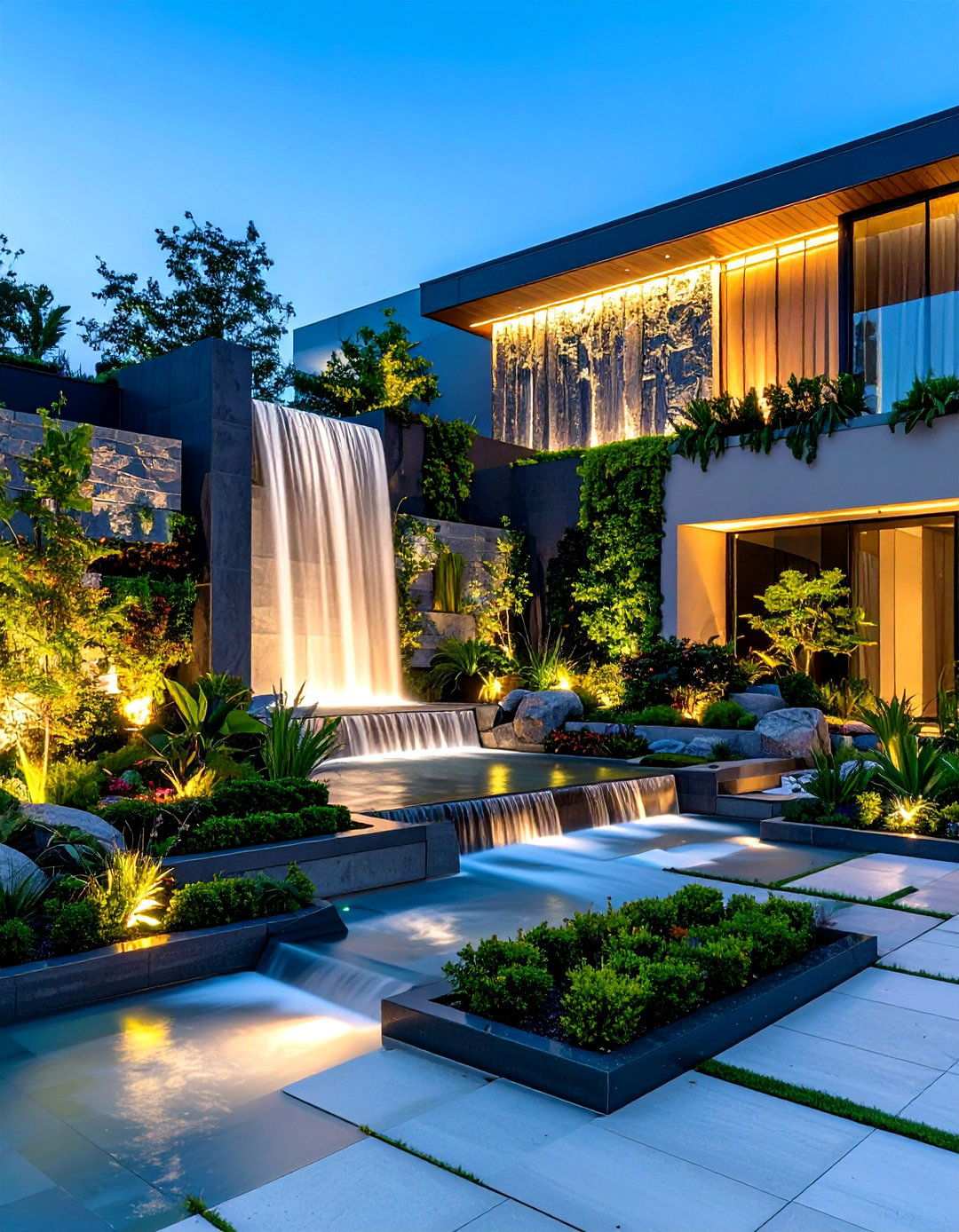
For a striking visual impact, express modern design sensibilities through precise geometric patterns and angular stone arrangements that emphasize architectural precision. This approach treats the waterfall as an outdoor sculpture, using materials like cut stone, concrete blocks, or metal elements to create a dramatic artistic statement within the landscape. Water channels follow deliberate geometric paths rather than natural curves, creating a contemporary artistic expression. The surrounding area should complement the architectural theme with structured plantings, geometric hardscaping, and modern outdoor lighting systems. Neutral and sophisticated color palettes focus on the interplay between water movement and geometric forms. This design philosophy thrives in contemporary home settings where traditional landscape elements might appear out of place. The result combines functional water features with artistic expression, creating conversation pieces that enhance property values.
12. Harmonious Water Connection
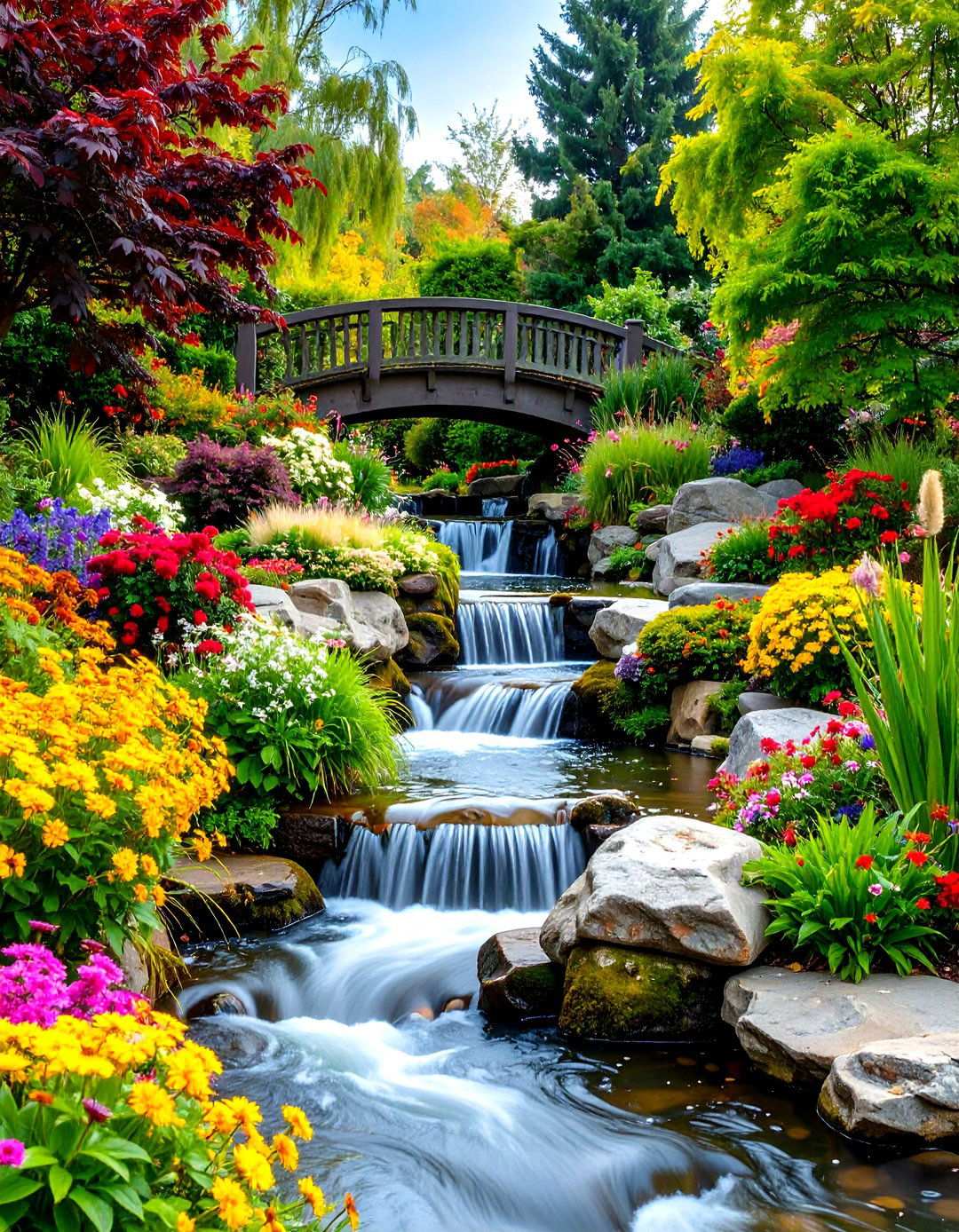
Immersive water experiences unfold as curved stream channels seamlessly connect the waterfall to distant landscape areas, crafting extensive water features within available space. By embracing this design approach, water is free to travel through multiple garden zones before disappearing into the underground reservoir system. The winding stream effortlessly navigates around existing landscape features like trees, garden beds, or hardscaping elements, maximizing the water feature’s impact throughout the property. Strategically placed stone types and arrangements along the stream course create varied visual interest and sound effects as water flows toward its destination. This extended design presents opportunities for diverse plant selections along the water course, giving rise to distinct ecological zones that support different wildlife species. Carefully positioned bridge crossings and viewing areas can be incorporated at strategic points along the stream.
13. Illuminating Waterfall Oasis
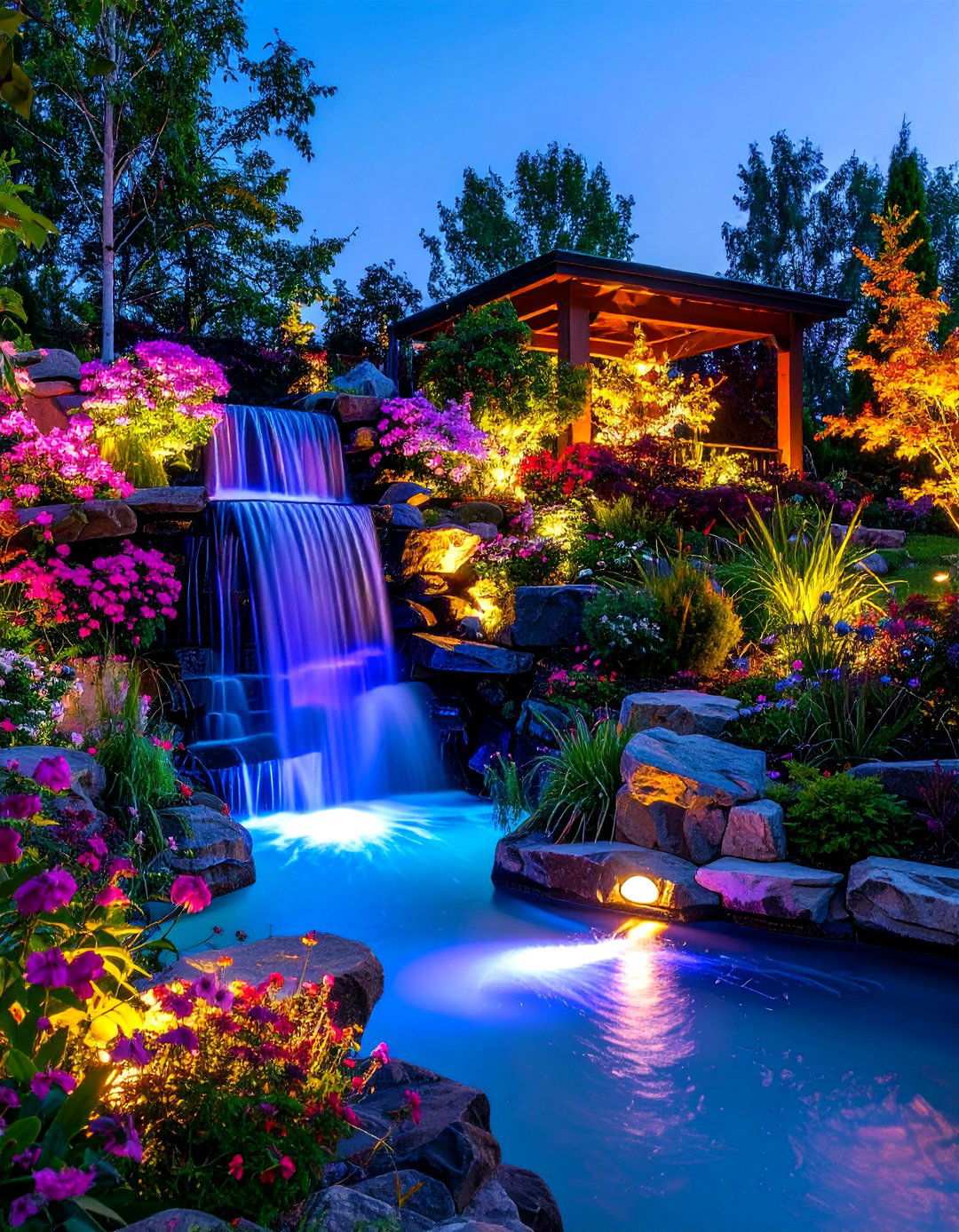
By harnessing the power of energy-efficient LED lighting systems, a stunning nighttime focal point can be created, transforming the waterfall into a breathtaking spectacle that highlights water movement and surrounding landscape features. Modern LED technology offers a range of color-changing options, underwater illumination, and precisely controlled lighting effects that enhance the water’s visual appeal after dark. Strategically positioned lights can be used to create dramatic backlighting effects by placing them behind cascading water or to illuminate the water from below by submerging them within the reservoir. Path lighting around the waterfall ensures safe navigation while extending the feature’s visual impact throughout the evening hours. Convenient operation is made possible through the use of automatic timers and photocell controls, while the low energy consumption of LED systems makes continuous operation economically feasible and provides years of reliable performance in challenging outdoor water environments.
14. Whimsical Fairy Garden Oasis
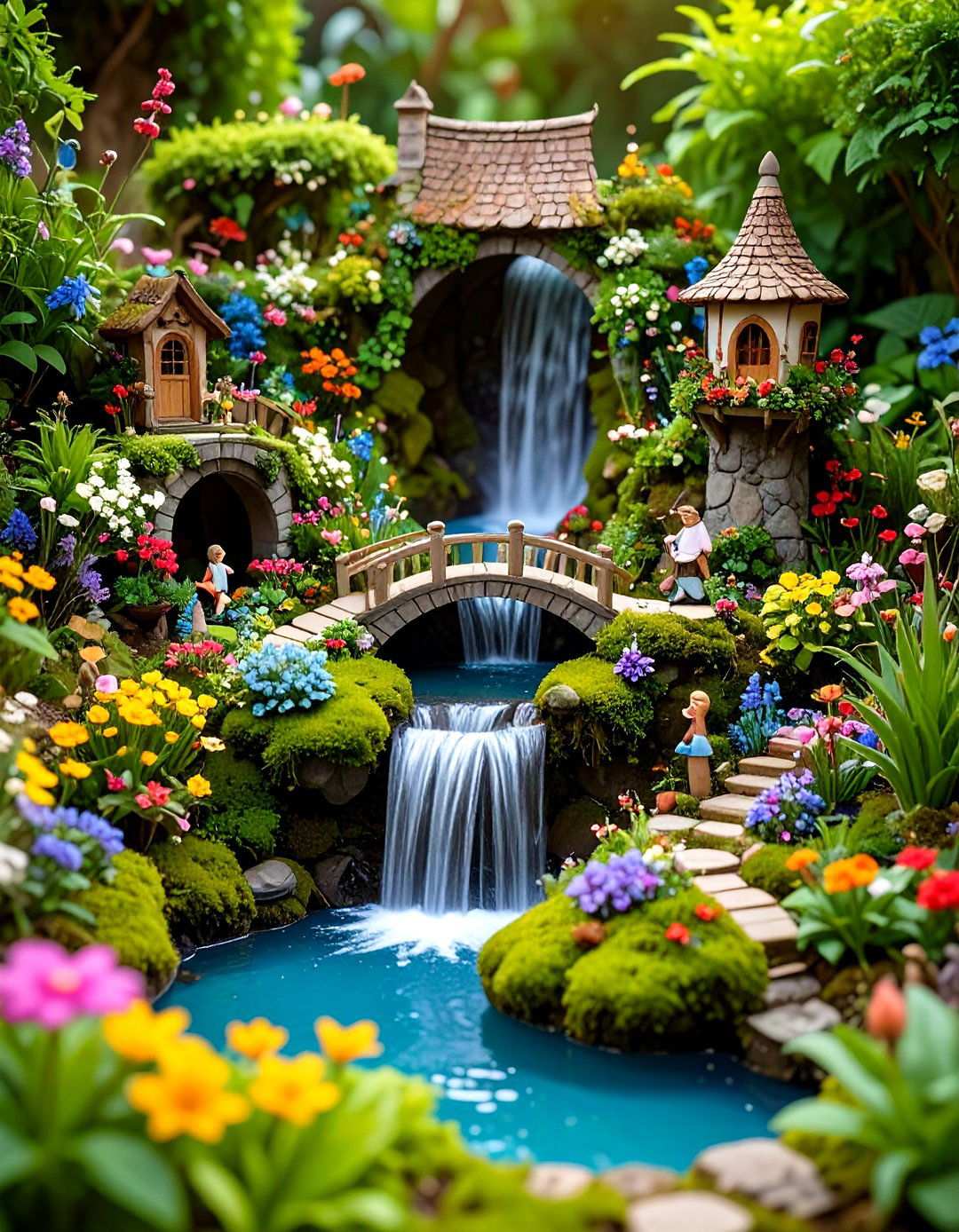
Enchanting small-scale waterfall environments can be created that incorporate whimsical fairy garden elements and tiny plant selections for magical landscape focal points. This charming approach utilizes smaller stones and crafts intimate spaces perfect for miniature gardens, small figurines, and delicate plant varieties that thrive in moist environments. The waterfall scale should be carefully chosen to complement the fairy garden theme, with gentle water flows that won’t overwhelm delicate plantings or decorative elements. Tiny bridges, miniature pathways, and small decorative accessories enhance the magical atmosphere while maintaining proportion with the overall design. Children particularly enjoy these playful installations, which can serve educational purposes by teaching about water cycles, plant growth, and ecosystem relationships. Regular maintenance ensures the detailed elements remain clean and attractive, allowing for seasonal changes in decorative themes and plant selections.
15. Elevating Water Features with Artistic Expression
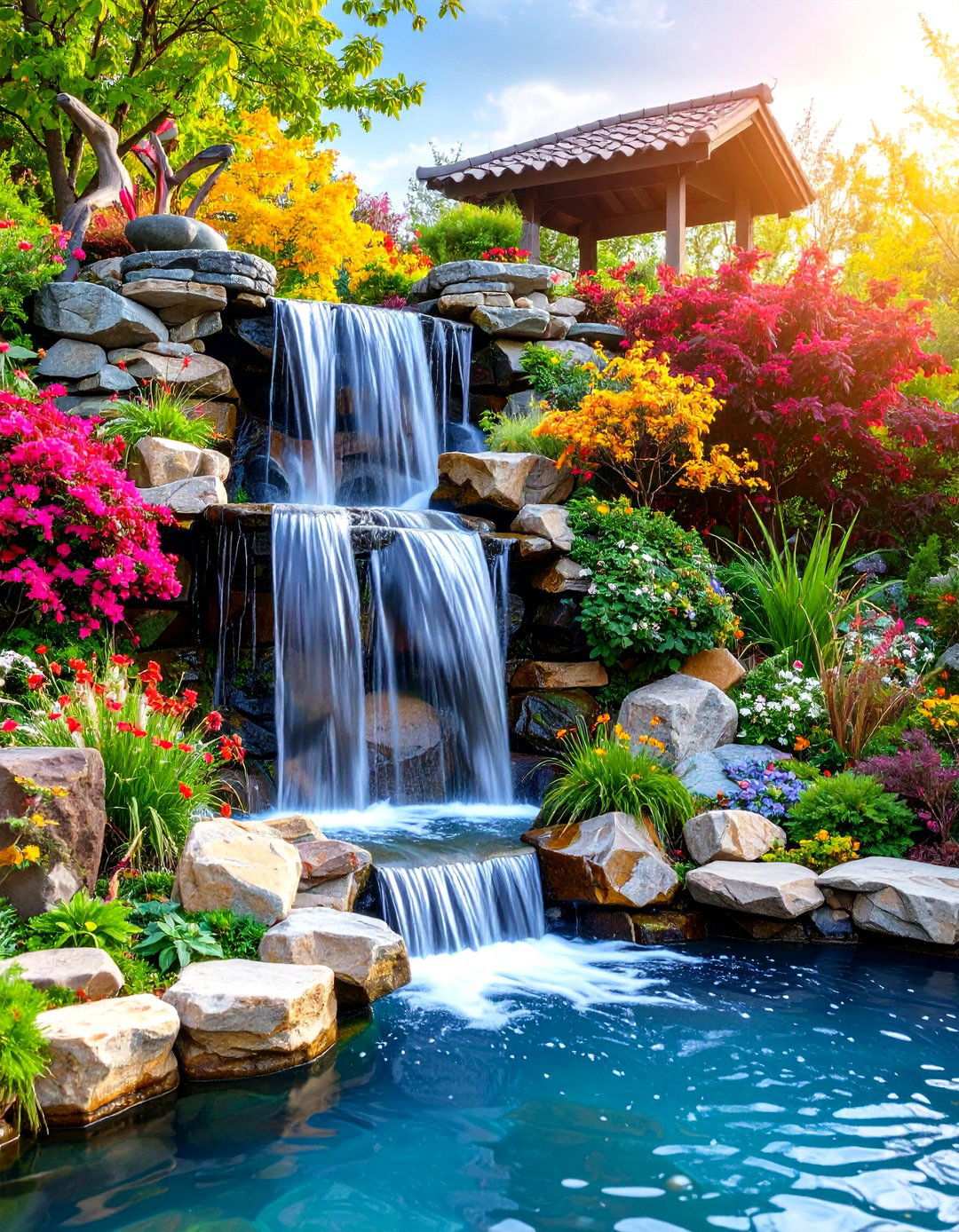
Combining functionality and aesthetics, sculptural art waterfalls seamlessly blend artistic elements with practical water circulation, resulting in captivating outdoor installations that harmoniously unite art and nature. This approach can include intricately carved stone features, metallic sculptures, ceramic pieces, or commissioned artworks that expertly direct or enhance water flow patterns, elevating the overall visual impact. To achieve this balance, the artistic components must be carefully designed to integrate seamlessly with water movement, creating immersive experiences where art and nature converge in perfect harmony. When selecting materials, it is crucial to choose pieces that can withstand constant moisture exposure while maintaining their artistic integrity throughout changing weather conditions. This design philosophy is particularly well-suited for homeowners seeking unique, personalized landscape features that reflect their individual artistic tastes, and may require the expertise of professional artists or skilled craftspeople to achieve the desired artistic quality while ensuring proper water flow and system functionality. As a result, these installations become conversation pieces that add significant value to properties.
16. Modern Waterfall Design with Paving Stones
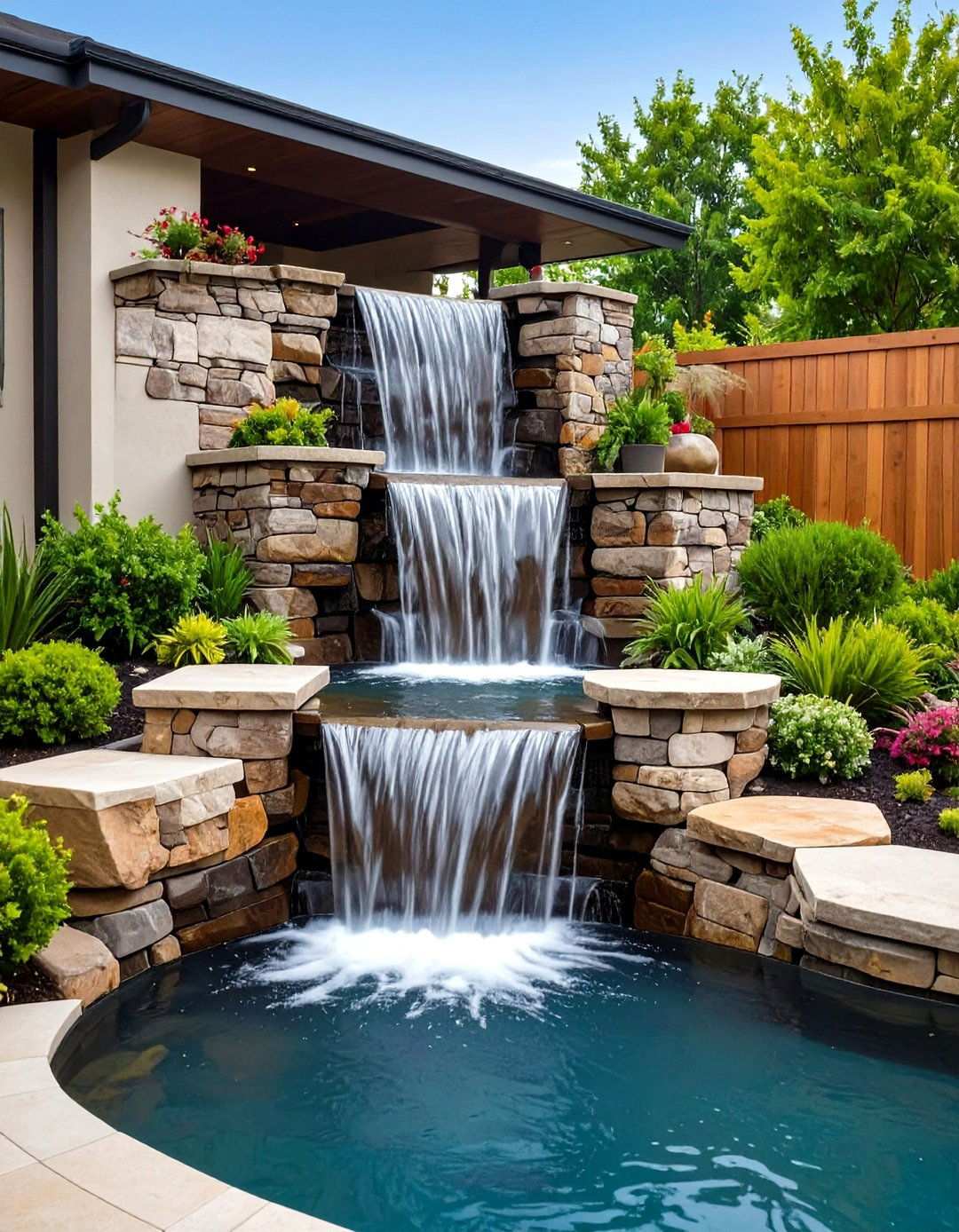
For a sleek, contemporary look, manufactured paving stones can be used to create structured, architectural waterfall features with clean lines and modern aesthetics. This approach leverages the uniformity of stone dimensions and consistent patterns to establish sophisticated water displays that perfectly complement contemporary landscape designs. The precision engineering of manufactured stones allows for exact fitting and a professional appearance that maintains its visual appeal throughout changing seasons. Water flows can be expertly directed through channels cut into the stones or over smooth surfaces, creating controlled sheet effects that add visual interest to the installation. By using uniform materials, installation becomes more predictable, although proper foundation preparation remains essential for long-term stability. This design is ideally suited for modern homes, contemporary patios, and sophisticated outdoor entertainment areas where architectural consistency is prized over naturalistic appearances. The resulting installations provide timeless elegance that enhances the overall aesthetic of the surrounding environment.
17. Enshrouded in Mystery Waterfall Design
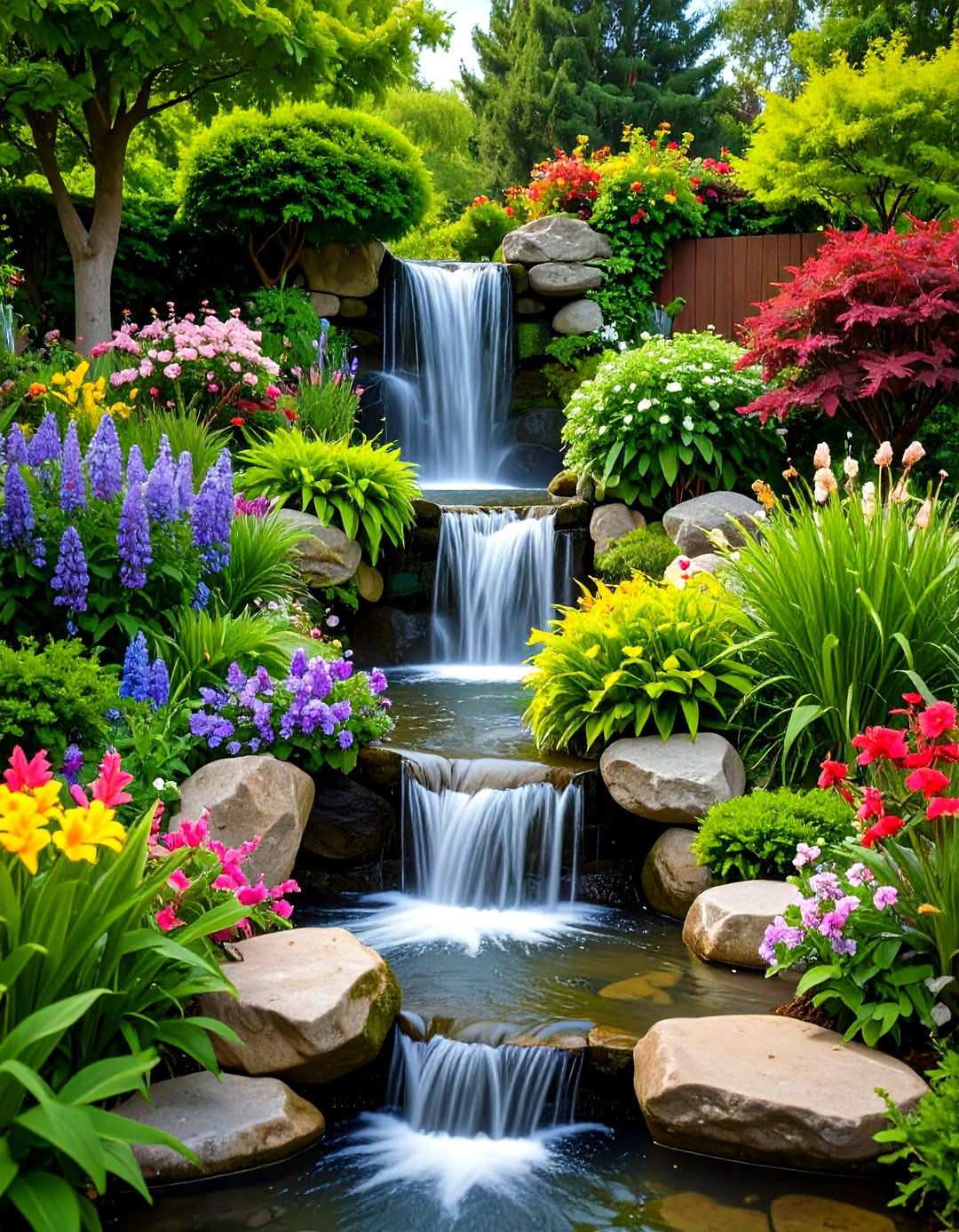
Craft captivating waterfall designs that conceal the water source behind carefully selected rocks, plants, and landscape features, conjuring a sense of awe and curiosity in viewers. By skillfully hiding pumps, plumbing, and reservoir systems, while ensuring easy access for maintenance, the magic of the waterfall’s emergence from the landscape is preserved. This strategy is especially effective in naturalistic designs, where the illusion of spontaneous water emergence is heightened, elevating the overall landscape experience. Strategic placement of plants and creative stonework not only contribute to the mysterious effect but also provide practical benefits, such as system concealment and erosion control. The result is a memorable landscape feature that invites closer inspection and ongoing enjoyment throughout the changing seasons.
18. Harmonious Integration of Stairway and Waterfall Features
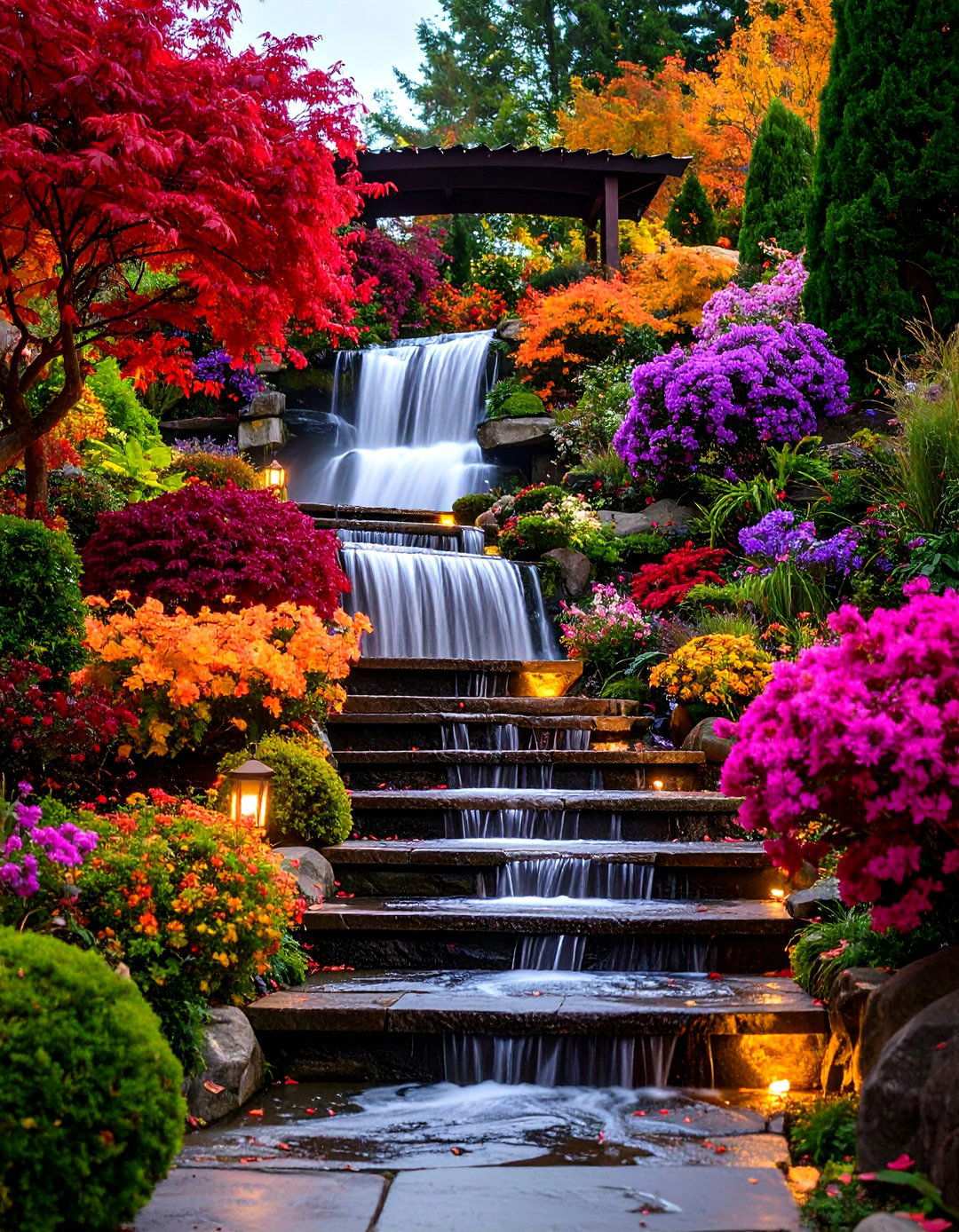
Elevate existing landscape stairs or slopes by transforming them into dynamic water features that combine functional pathways with breathtaking waterfall elements, maximizing the potential of sloped terrain. This innovative approach seamlessly integrates water channels alongside or within stairway structures, creating unique combinations of hardscaping and water features that are both functional and visually striking. By leveraging existing grade changes, the water flow can cascade down steps, producing dramatic effects while ensuring efficient use of space. Safety considerations take center stage when combining water features with walking surfaces, necessitating the use of non-slip materials and meticulous drainage planning. This integration excels in hillside installations where stairs are a necessary component, and the water feature enhances the overall design. The incorporation of lighting provides both safety and aesthetic benefits for evening use, while creative plant placement softens the hardscaping elements, maintaining clear and safe passage for regular foot traffic.
19. Vertical Oasis Design
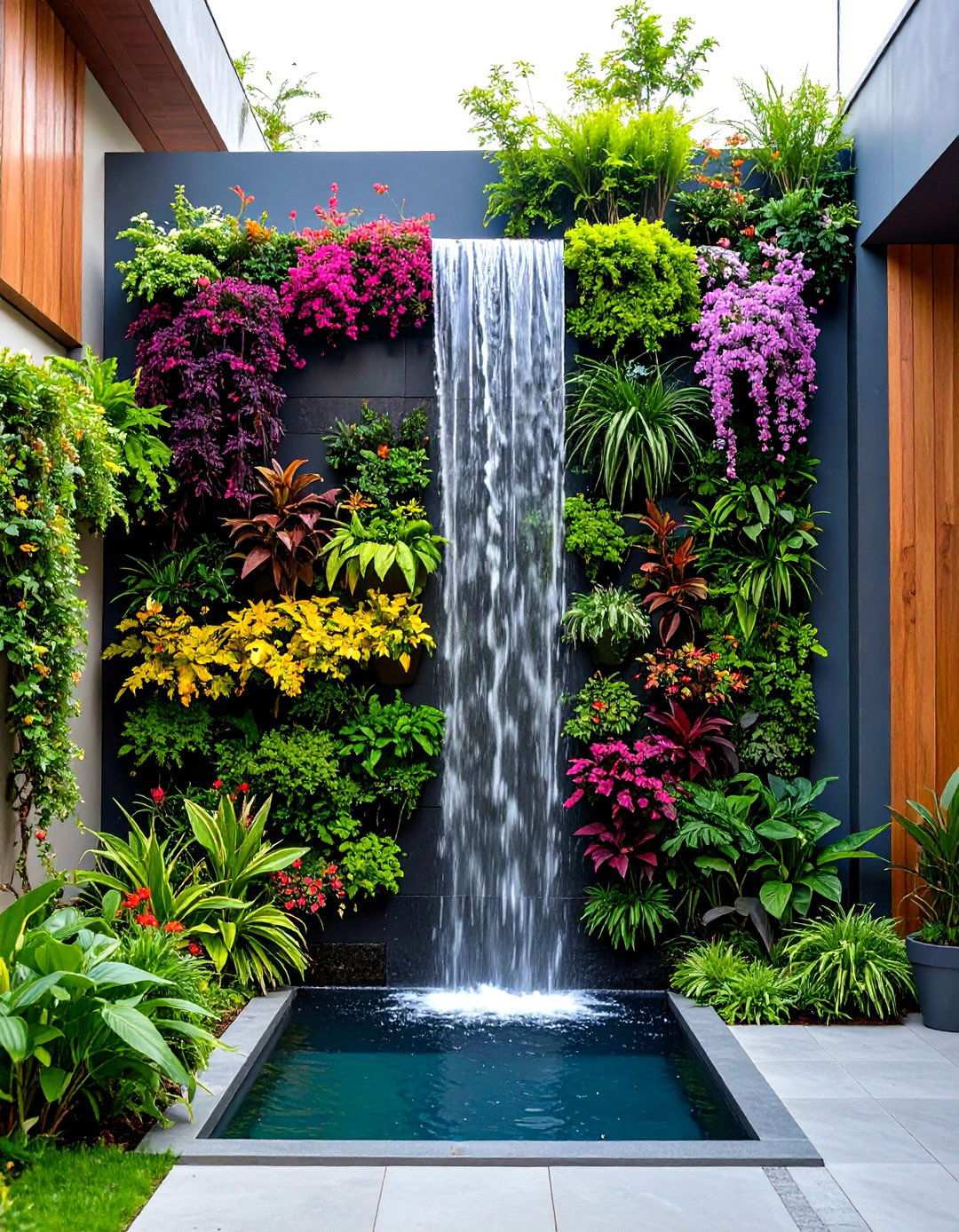
Maximizing vertical surfaces such as retaining walls, building facades, or custom-built structures offers a space-efficient solution for creating breathtaking waterfalls that leave a lasting impression in minimal ground space. This approach proves particularly effective in urban environments, small courtyards, or areas with limited ground area but abundance of vertical surfaces to exploit for creative expression. By concealing the water source at the top of the wall structure, water flows down the vertical surface into a ground-level reservoir system, creating an eye-catching focal point. The choice of wall materials should harmoniously complement the waterfall design, ranging from natural stone textures to sleek contemporary concrete surfaces. This design often incorporates sheet waterfall effects that accentuate the wall’s unique texture and materials, producing captivating visual interest. Strategically implemented lighting can amplify dramatic nighttime effects while providing practical illumination for adjacent areas, cleverly manipulating perceptions of space.
20. Landscape Focal Point Design
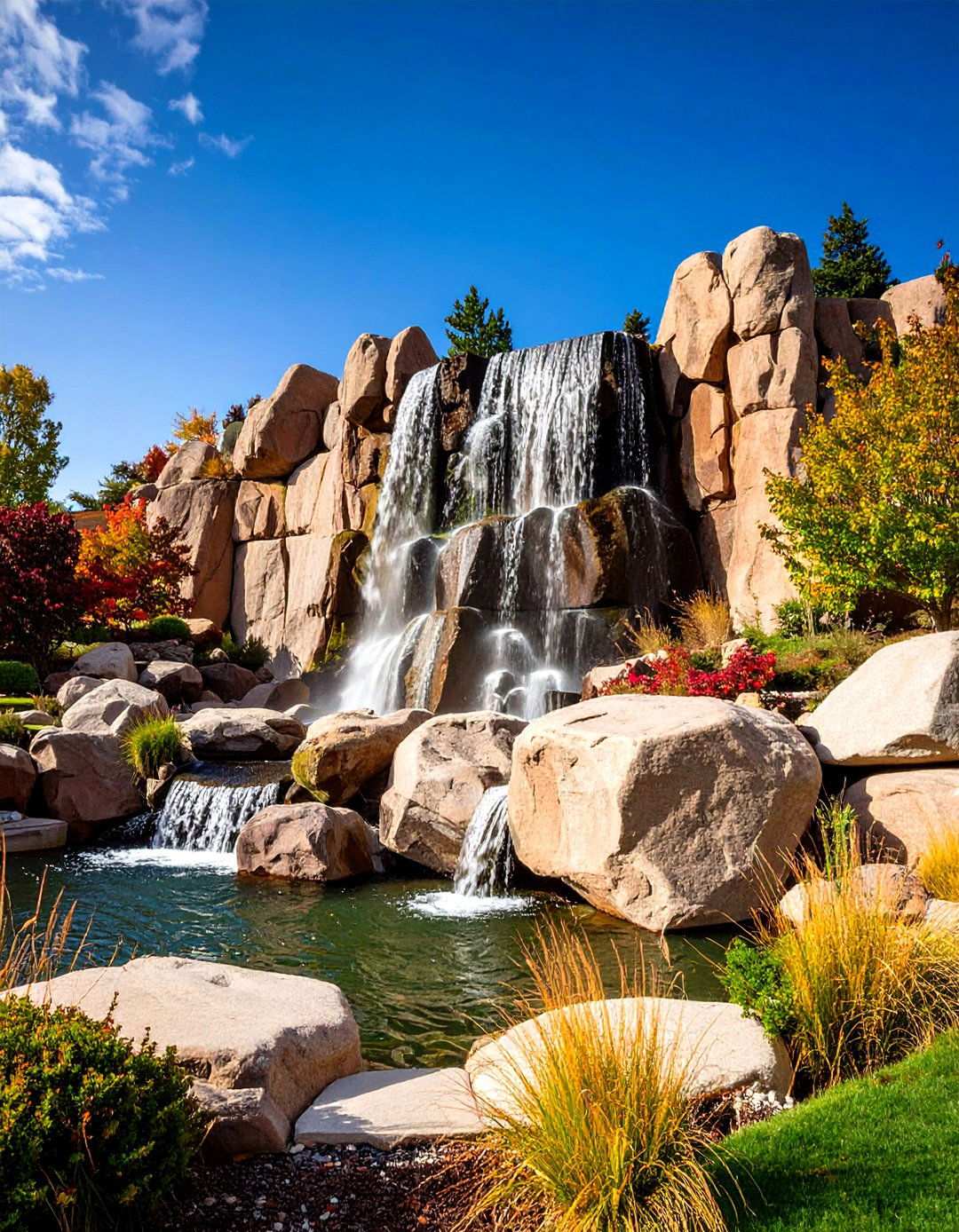
Large boulders are a staple of impressive waterfall backdrops, adding substantial visual weight and dramatic water flow possibilities to the landscape design. This approach masterfully leverages the power and beauty of substantial stone elements, which serve as both structural components and striking aesthetic focal points. The selection process for boulders is crucial, as choosing stones with diverse textures, colors, and shapes creates a visually appealing combination that complements each other while providing stable foundations for water flow. Water can cascade over, around, and between the boulders, generating intricate flow patterns and varied sound effects throughout the installation. Due to their substantial scale, boulder installations are well-suited for larger properties where proportional relationships with surrounding landscape elements can be maintained. For a safe and secure installation process, it is recommended to hire a professional to ensure the proper placement of boulders and construction of the waterfall. The resulting features provide permanent, dramatic landscape anchors that enhance property values.
21. Meandering Watercourse Design
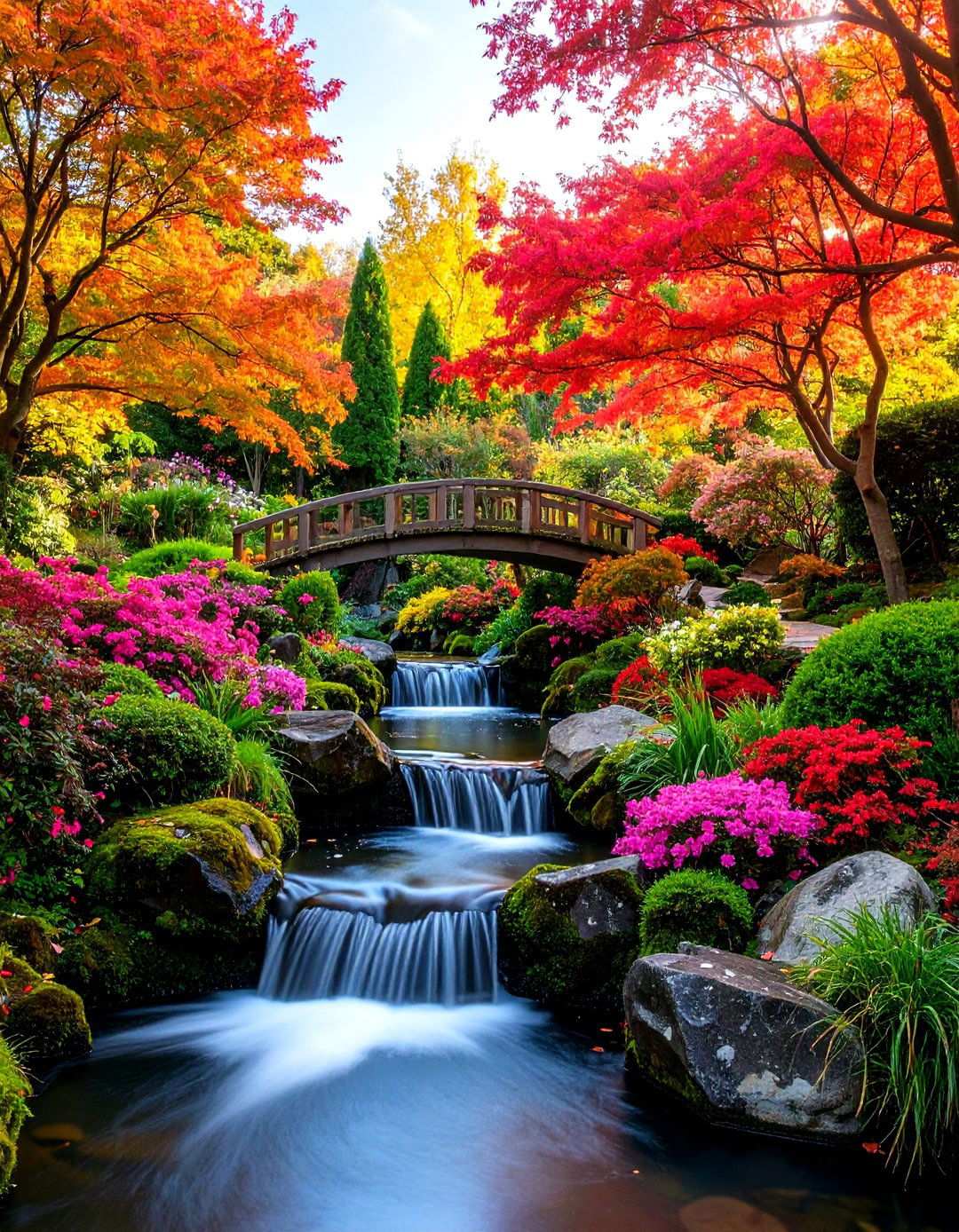
By incorporating sinuous water channels that curve gently through the landscape, water feature designers can create captivating displays that echo the natural flow of streams. This design strategy amplifies the visual and auditory impact of the water by extending its journey across multiple landscape zones before culminating in a breathtaking waterfall experience. The curved path affords a range of viewing angles and interactive points along its length, allowing visitors to engage with the feature in a highly immersive manner. Strategically placed stone arrangements along the meandering course introduce visual interest and create diverse soundscapes as the water navigates through varied channel configurations. Moreover, the incorporation of different plant species along the stream course fosters distinct botanical zones, providing a habitat for diverse wildlife species and seasonal interest. This approach harmoniously integrates existing landscape features, such as trees, garden beds, or architectural elements, into the overall design, resulting in a rich tapestry of visual and auditory experiences.
22. Multi-Cascade Waterfall System Design
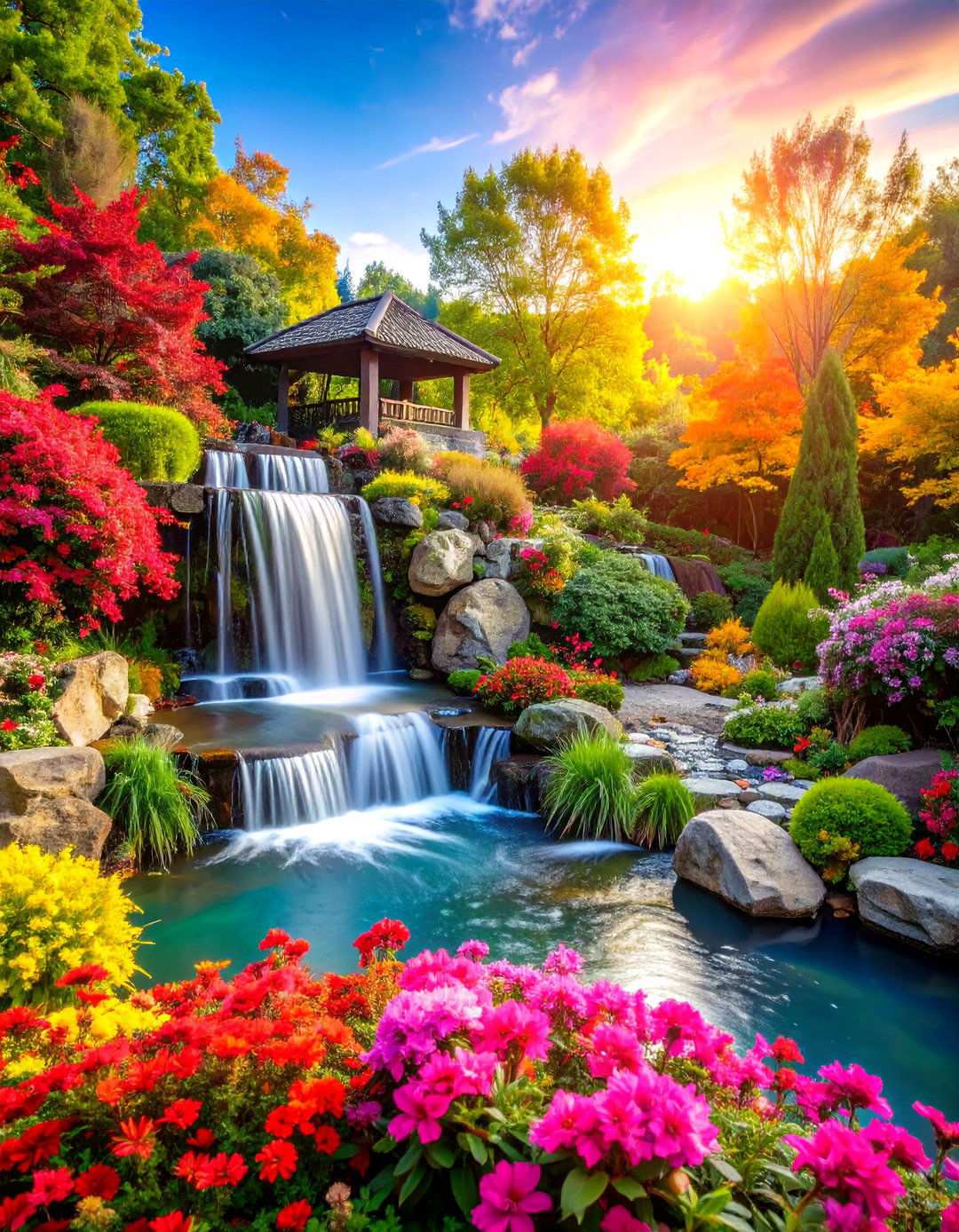
Water feature designers can create intricate and visually striking systems by engineering multiple cascade points that showcase diverse water effects and soundscapes throughout the installation. This sophisticated approach demands meticulous hydraulic planning to ensure that each cascade point receives adequate water flow while maintaining optimal circulation throughout the entire system. By varying drop heights and stone arrangements at each cascade point, designers can craft a range of auditory experiences, from gentle trickling sounds to dramatic plunges, which change in response to fluctuating water flow rates. Multiple cascades can be arranged in sequence down a slope or positioned at various locations throughout a larger landscape area, enabling the incorporation of multiple plant zones, lighting positions, and viewing areas that offer ever-changing perspectives. Through careful design and expert installation, water feature professionals can ensure the reliable distribution of water and the longevity of the system.
23. Harmonious Bridge Waterfalls
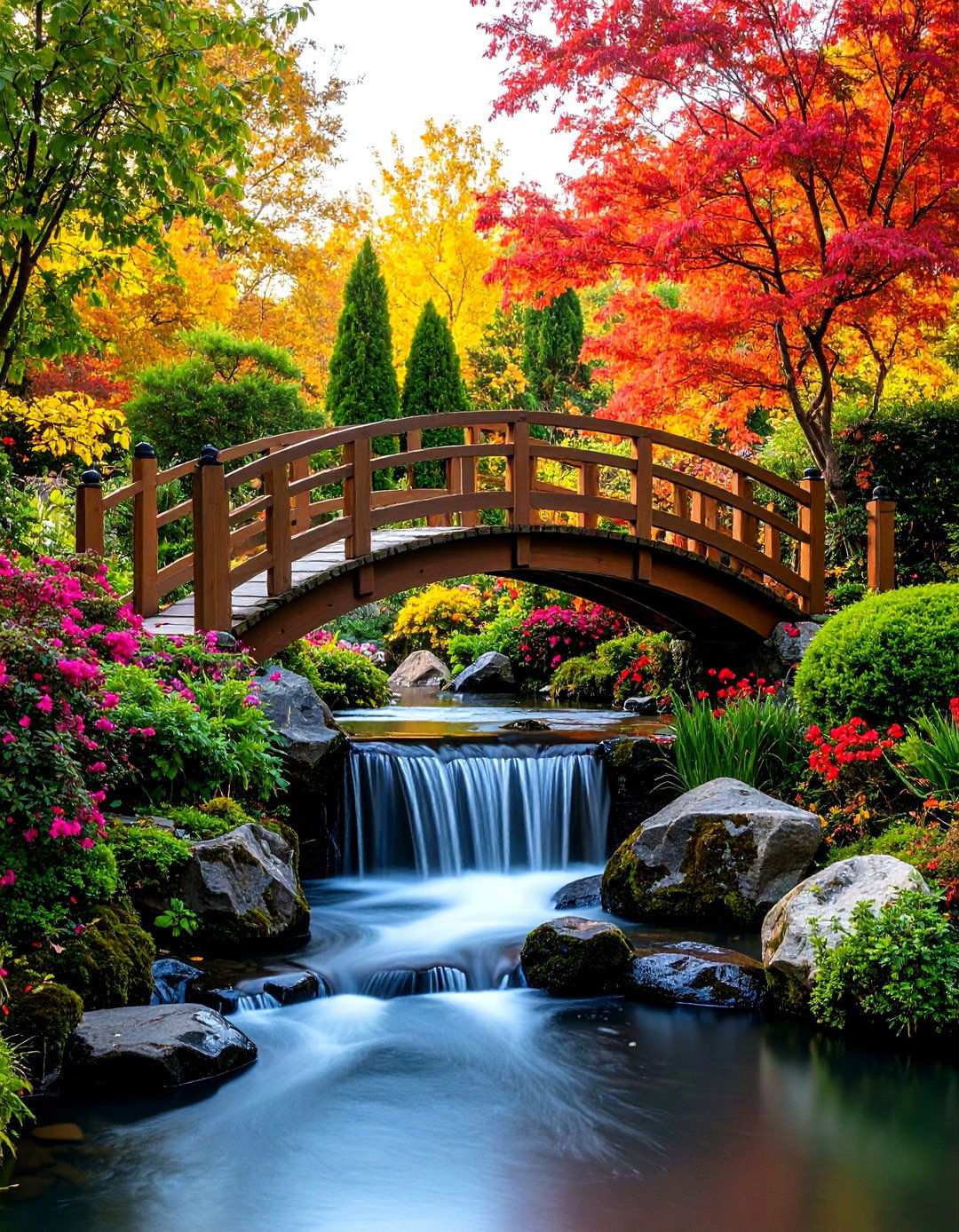
Bridges that connect walkers to the heart of a waterfall can be a game-changer in landscape design. By integrating a functional bridge that spans a waterfall stream, you create an immersive experience that invites exploration while providing a practical pathway solution for navigating the landscape. This approach cleverly combines transportation infrastructure with the beauty of water features, maximizing the value of landscape investments. Selecting bridge materials that harmonize with the waterfall design is crucial, ensuring safe, slip-resistant surfaces that withstand various weather conditions. The positioning of the bridge demands careful consideration, balancing safety with aesthetics to provide optimal viewing angles for appreciating the waterfall. Bridge construction options like stone, wood, or metal offer diverse aesthetic possibilities that can be tailored to the landscape’s overarching theme. By incorporating lighting, you not only enhance safety but also elevate the visual appeal during evening hours. This bridge element unlocks opportunities for intimate waterfall experiences that wouldn’t be possible from ground-level vantage points.
24. Seasonal Plant Diversity and Waterfall Ecology
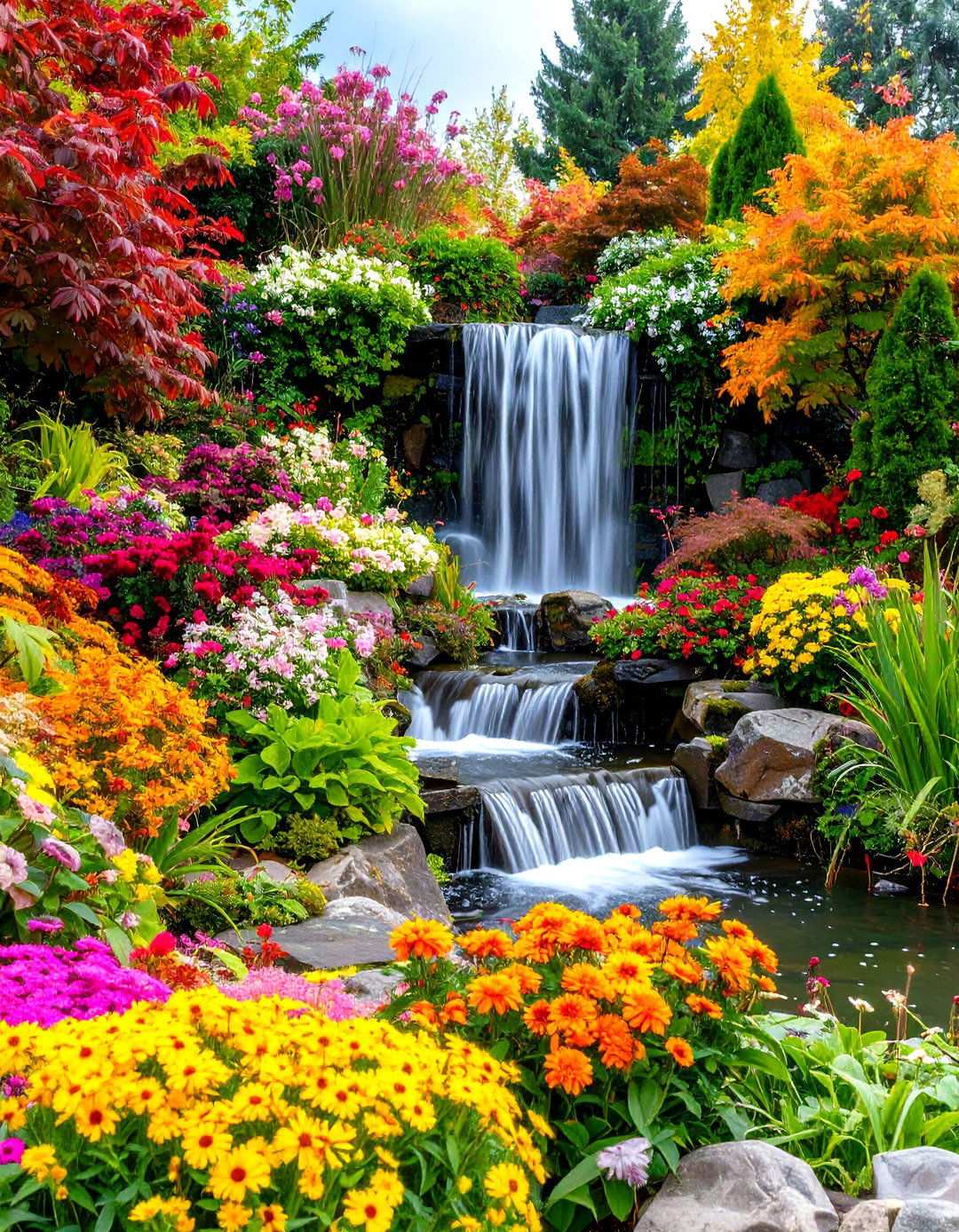
Developing a comprehensive planting plan around a waterfall installation is key to creating a dynamic landscape that thrives throughout the year. This approach acknowledges that plant selections significantly impact the waterfall’s appearance and ecological function across different seasons. By incorporating a diverse array of plants, you can create a year-round visual spectacle that keeps the water feature captivating regardless of the season. Spring-blooming plants, summer-flowering species, autumn foliage displays, and winter structural elements all contribute to a constantly evolving landscape that’s both beautiful and functional. When selecting plants, consider factors like moisture requirements, mature sizes, and maintenance needs, while also providing wildlife habitat and erosion control benefits. Native species often excel in waterfall environments, requiring less artificial irrigation and maintenance while supporting local ecological systems. The planting plan should strike a balance between accessibility for maintenance and adequate coverage for aesthetic and functional purposes, accommodating changing growing conditions throughout the year.