1. The Art of Boulder Retention
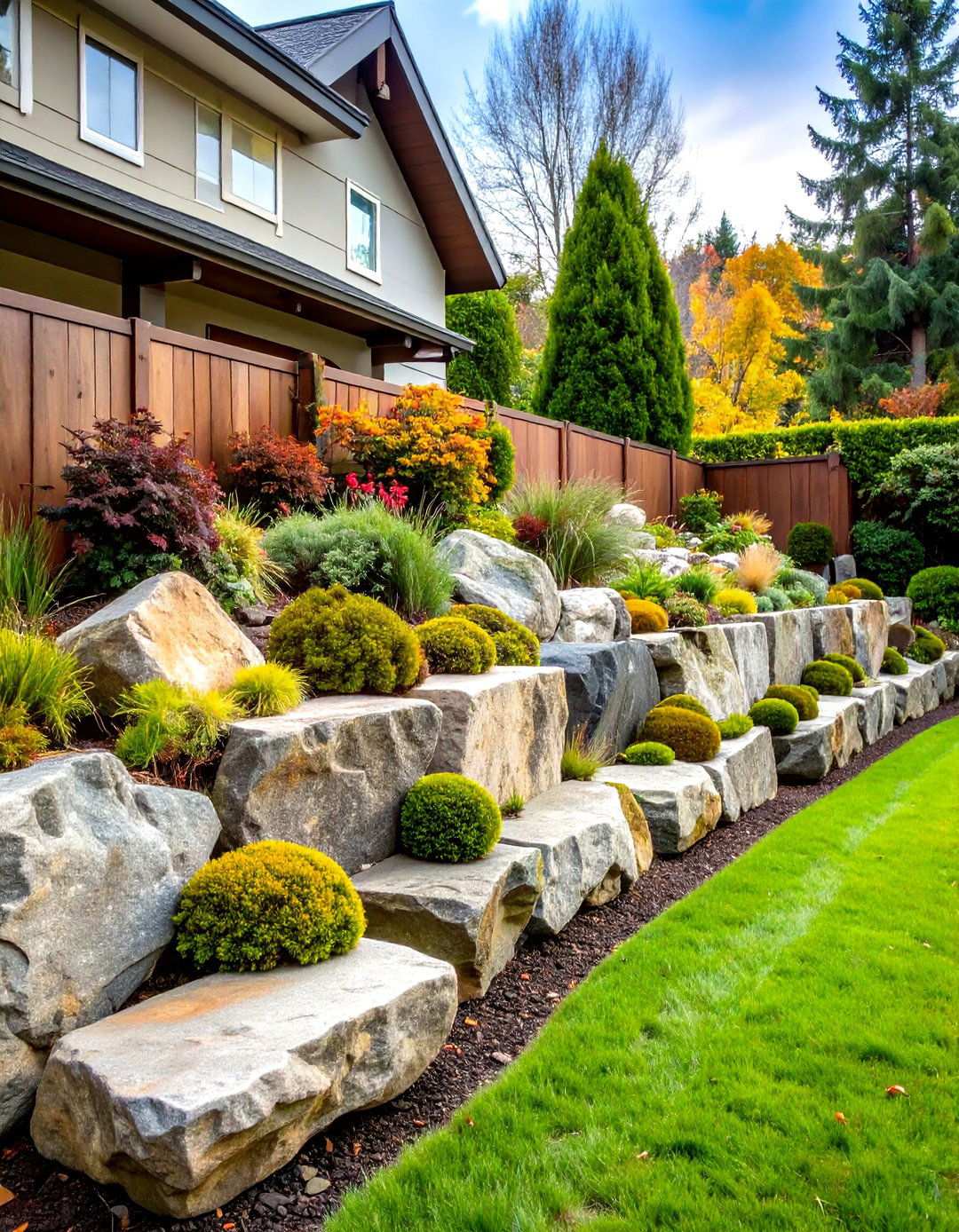
Boulder retaining walls have long been a favorite among landscape designers and homeowners alike, offering a unique blend of functionality and aesthetic appeal. By strategically placing large, naturally shaped stones on a slope, these structures create dramatic landscape statements that can turn even the most challenging terrain into a stunning feature. Weighing several hundred pounds each, these massive boulders rely on gravity and careful positioning rather than mortar to secure them in place. The result is a visually striking design that exudes rustic charm and offers unmatched stability.

As an Amazon Associate I earn from qualifying purchases.
One of the key benefits of boulder retaining walls is their ability to provide excellent drainage through the natural gaps between stones. This is especially important in areas with heavy rainfall or poor drainage, as it helps to prevent soil erosion and water damage. Large boulders work particularly well for retaining significant soil loads, and their varied sizes and shapes make them perfect for blending seamlessly into naturalistic garden designs. By incorporating drought-resistant plants like sedums or native grasses into the spaces between boulders, homeowners can soften the overall appearance of the wall and create a beautiful, low-maintenance landscape feature.
2. Dry Stack Fieldstone: A Timeless Construction Technique
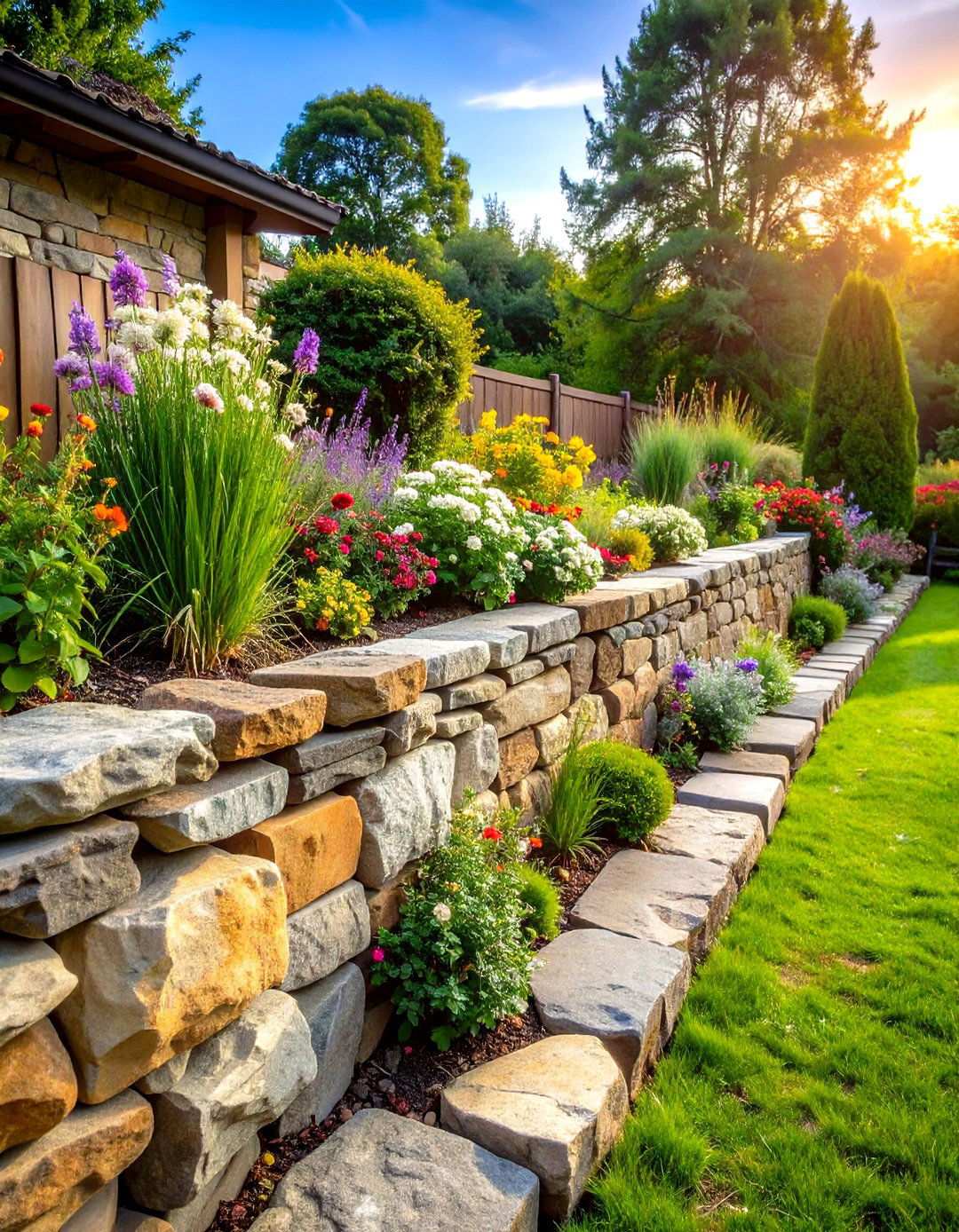
Dry stack fieldstone walls have been a staple of traditional construction for centuries, and for good reason. By using locally sourced stones without mortar, these walls offer a unique blend of structural integrity and flexibility. The careful selection and fitting of each stone creates interlocking patterns that provide stability and durability, even in the face of harsh weather conditions. Fieldstones naturally vary in size, shape, and color, creating a unique textural interest in each installation that is truly one-of-a-kind. By laying larger stones as the foundation course and stacking subsequent layers with proper overlapping joints, homeowners can create a traditional wall that tapers from wider at the base to narrower at the top, creating inherent stability. This approach works exceptionally well for walls under four feet high, and the resulting structure exudes authentic countryside charm.
3. Artful Expression: Limestone Ledgestone Retaining Walls
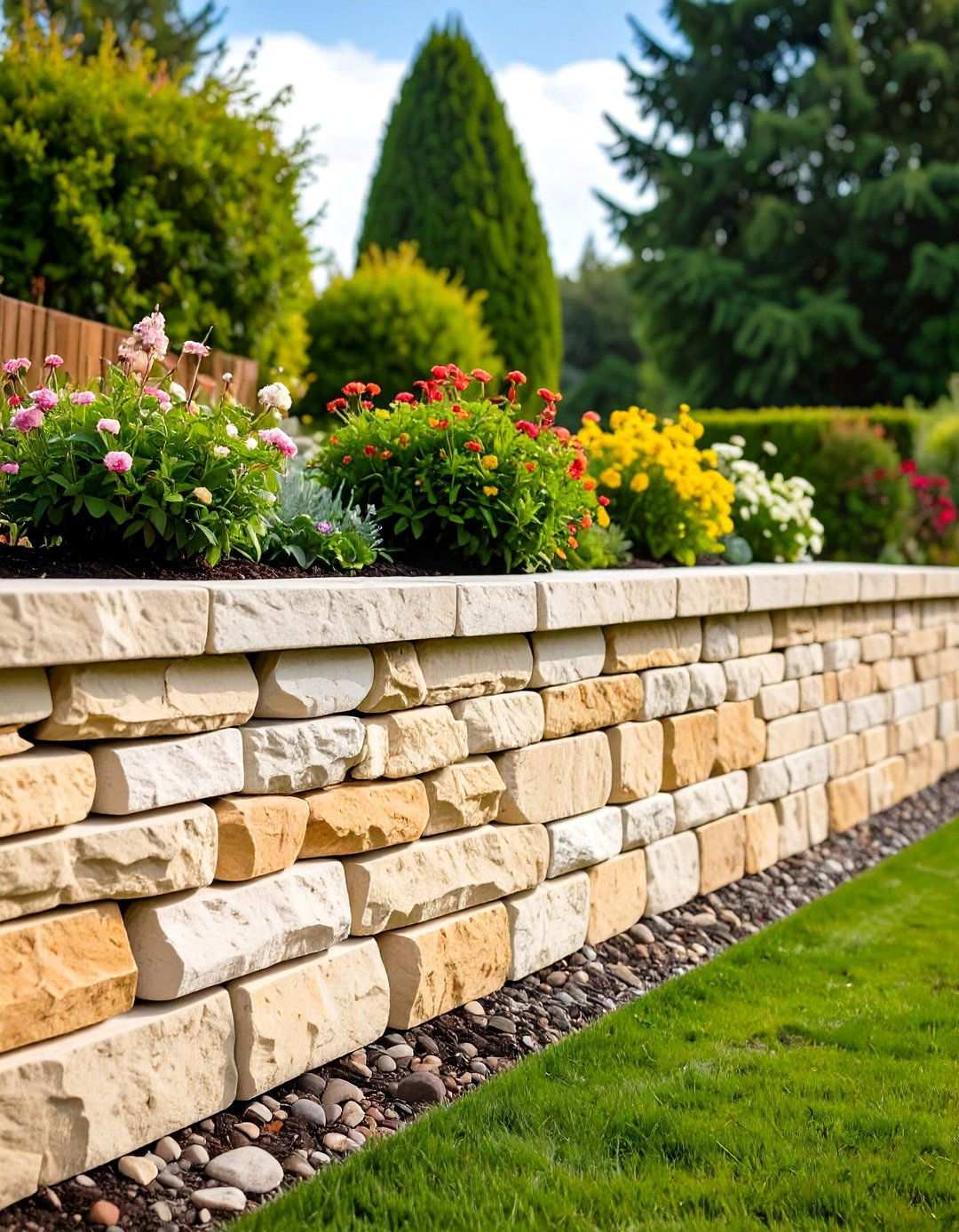
Naturally split limestone ledgestone walls showcase a unique aesthetic by stacking horizontally arranged stones with relatively flat surfaces. This sedimentary stone boasts a palette of warm colors, ranging from soft creams and beiges to grays, with occasional fossil inclusions adding visual interest. The inherent layering patterns of limestone create a striking contrast that complements both traditional and contemporary architectural styles. Limestone’s relatively soft nature makes it easier to work with, but this also necessitates proper drainage to prevent water damage. Wisconsin limestone varieties, such as Chilton and Fond du Lac, exhibit impressive durability in northern climates, thanks to their consistent thickness and rustic texture.
4. Granite Slab Retaining Walls: Modern Elegance
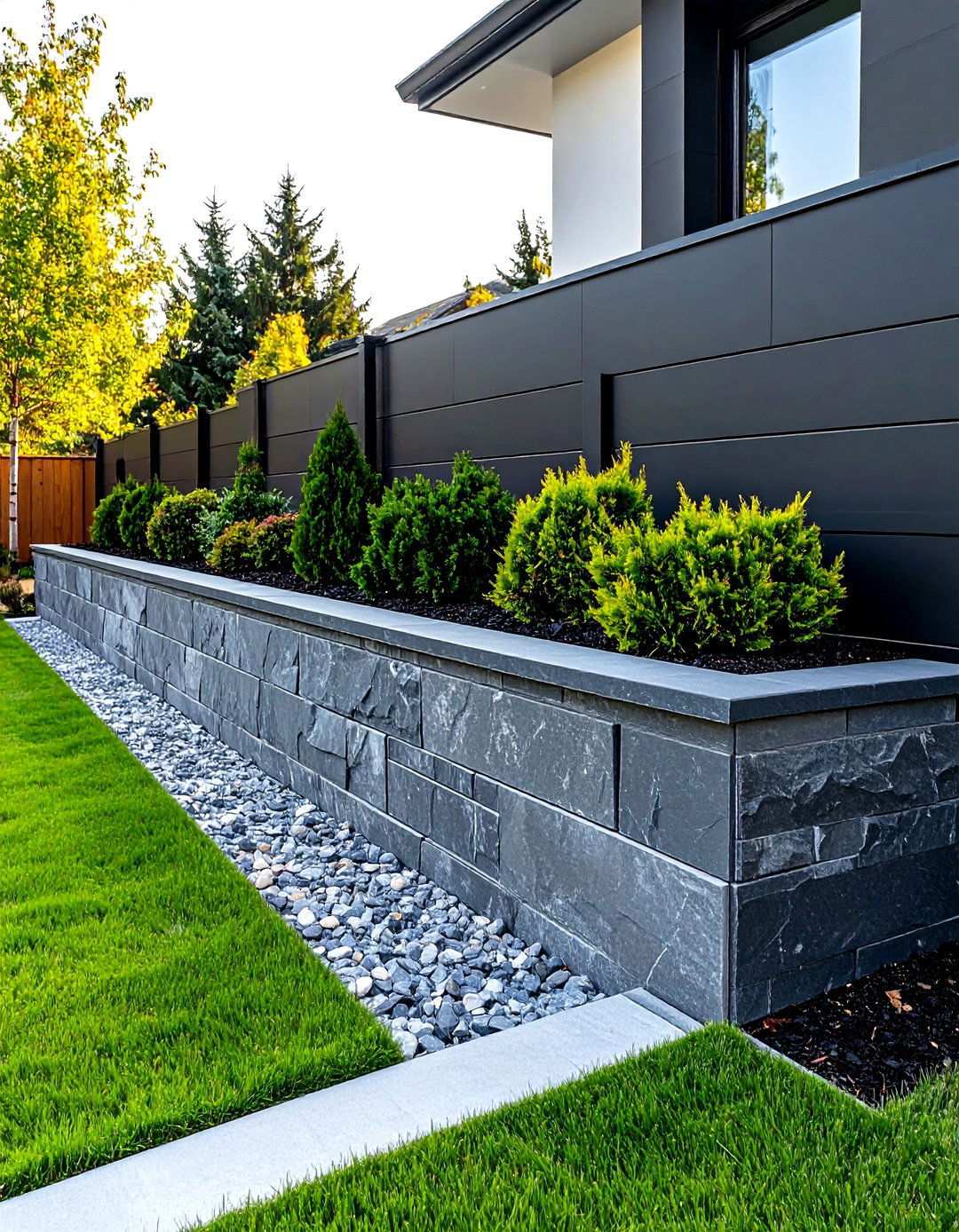
Granite slab retaining walls exude strength and sophistication through large, precisely cut rectangular pieces. These walls create a sleek, modern look with minimal joints, making them perfect for contemporary landscape designs. Granite’s exceptional hardness and low porosity render it virtually maintenance-free and highly resistant to weathering. The rich color palette of granite ranges from classic gray and black to warmer tones of pink, copper, and gold, depending on mineral composition. The substantial weight of granite slabs provides inherent stability, while the smooth surfaces blend seamlessly with architectural features. Installation requires expert craftsmanship to ensure proper alignment, given the weight and precision involved.
5. Sandstone Ashlar Retaining Walls: Formal Elegance
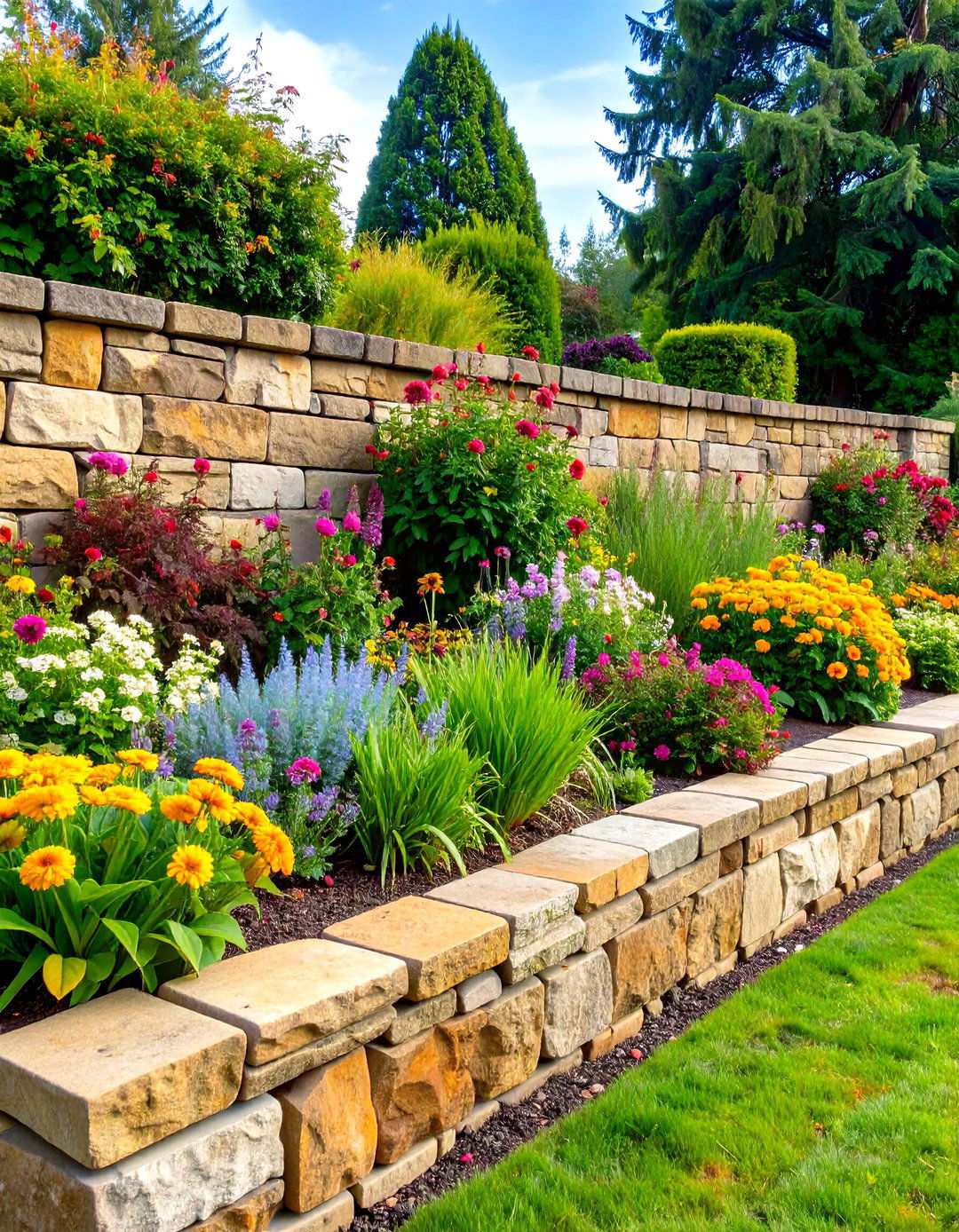
Sandstone ashlar walls feature precisely cut rectangular stones laid in regular courses with minimal joint spacing, creating a formal, architectural appearance. This construction style maintains the warm, earthy character inherent to sandstone, while offering a refined and sophisticated look. The fine-grained texture and consistent coloring of quality sandstone provide visual unity across the wall surface, making it a stunning focal point. Ashlar construction demands skilled masonry work to achieve tight joints and level courses, often utilizing thin mortar beds for stability. The natural porosity of sandstone necessitates proper drainage and occasional sealing in harsh climates. Color variations include buff, brown, red, and gray tones that complement various architectural styles, making this formal approach an ideal choice for entrance walls and structured garden spaces.
6. Slate Retaining Walls: A Timeless Choice
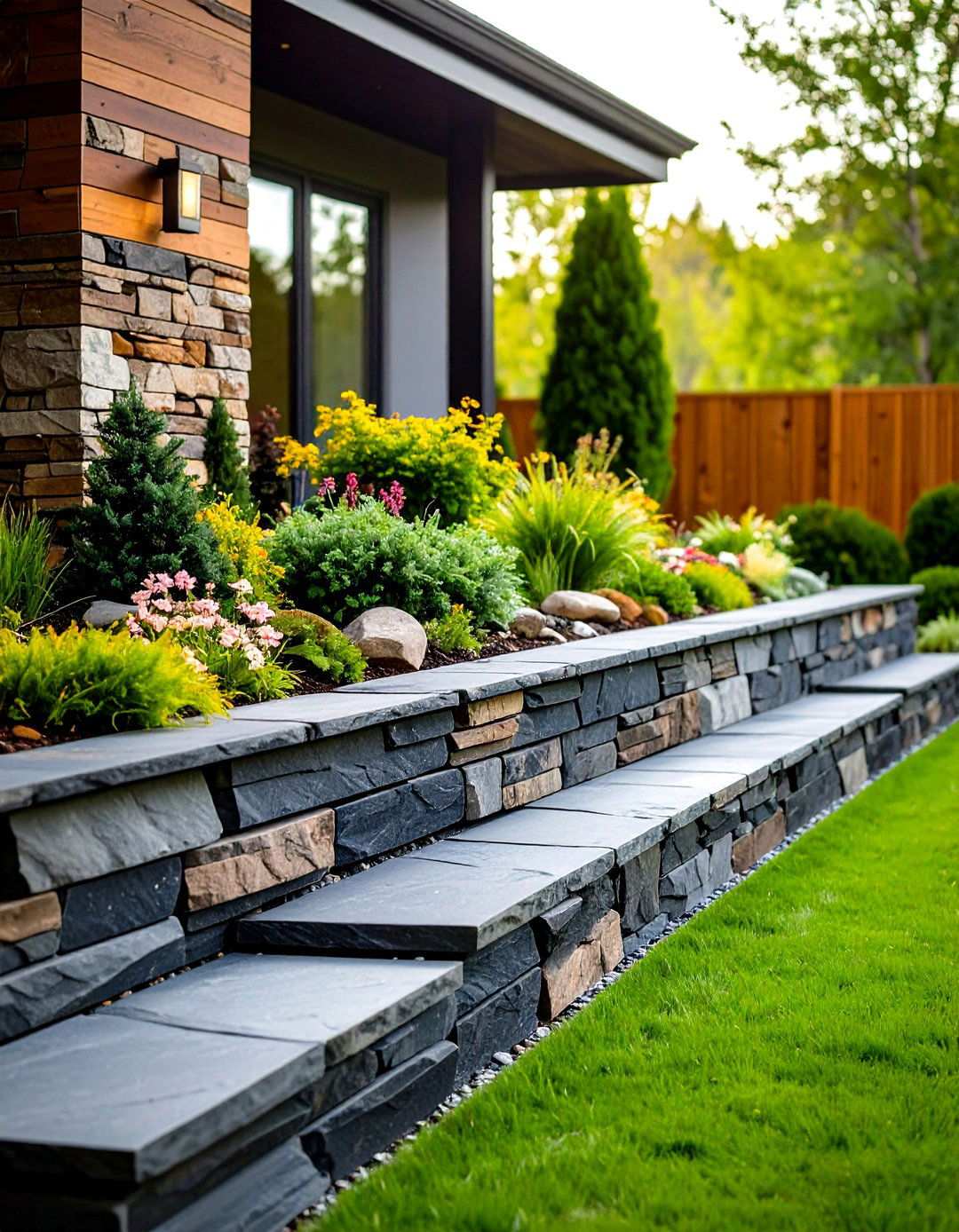
Slate retaining walls draw inspiration from the unique, layered appearance created by the natural splitting of this metamorphic rock. The intricate, fine-grained structure of slate allows it to split into thin, flat pieces that stack together with remarkable efficiency. The natural cleft surfaces of these pieces add textural interest, while maintaining a relatively uniform thickness that enhances the overall aesthetic. Slate’s color palette ranges from classic gray and black hues to more vibrant tones like green, purple, and rust, which are influenced by the presence of minerals. Its exceptionally low water absorption makes it an excellent choice for climates with freeze-thaw cycles, but proper installation remains essential to ensure the wall’s integrity. The flat surfaces of slate stones enable effortless stacking, while the natural edges create organic transitions between courses, resulting in a refined appearance that balances structure and beauty.
7. Gabion Basket Rock Retaining Walls: Modern Elegance
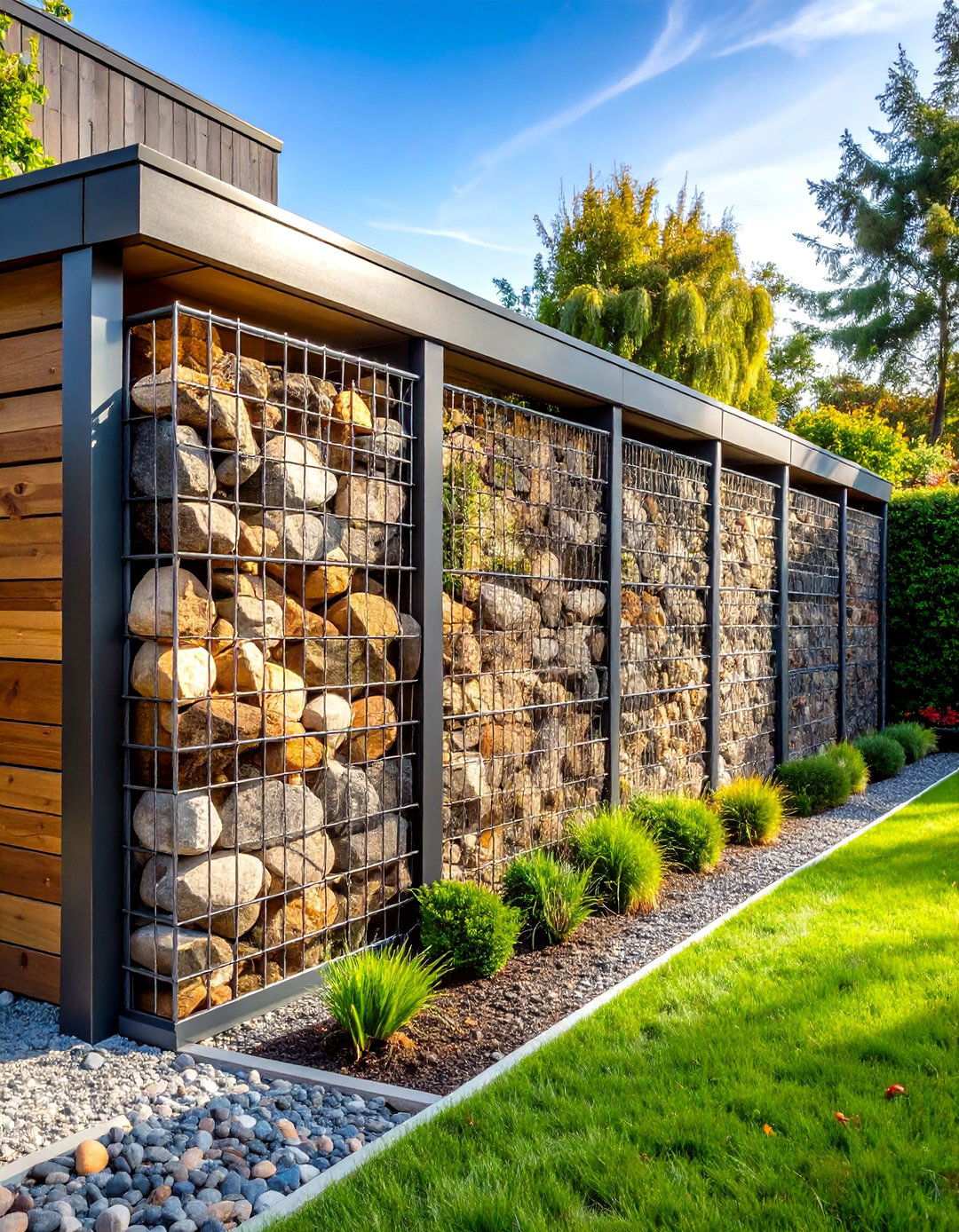
Gabion retaining walls combine the industrial chic of galvanized wire mesh baskets with the natural beauty of selected stones, creating a unique and captivating aesthetic. The wire cage structure of these baskets allows for creative filling patterns using a variety of stone sizes and colors, which can be tailored to suit individual tastes and project requirements. This construction method offers excellent drainage capabilities and can accommodate ground movement better than rigid masonry systems, making it an attractive option for projects that require flexibility. The installation process involves assembling wire frames, positioning them accurately, and then carefully filling the baskets with stone to achieve the desired density and appearance. The modular nature of gabion walls allows for the creation of complex shapes, including curves and steps, which can be used to add visual interest to contemporary landscapes. Additionally, gabion walls can incorporate integrated lighting or planting areas, creating a seamless blend of functionality and style.
8. Terraced Boulder Retaining Systems: A Landscaping Masterpiece
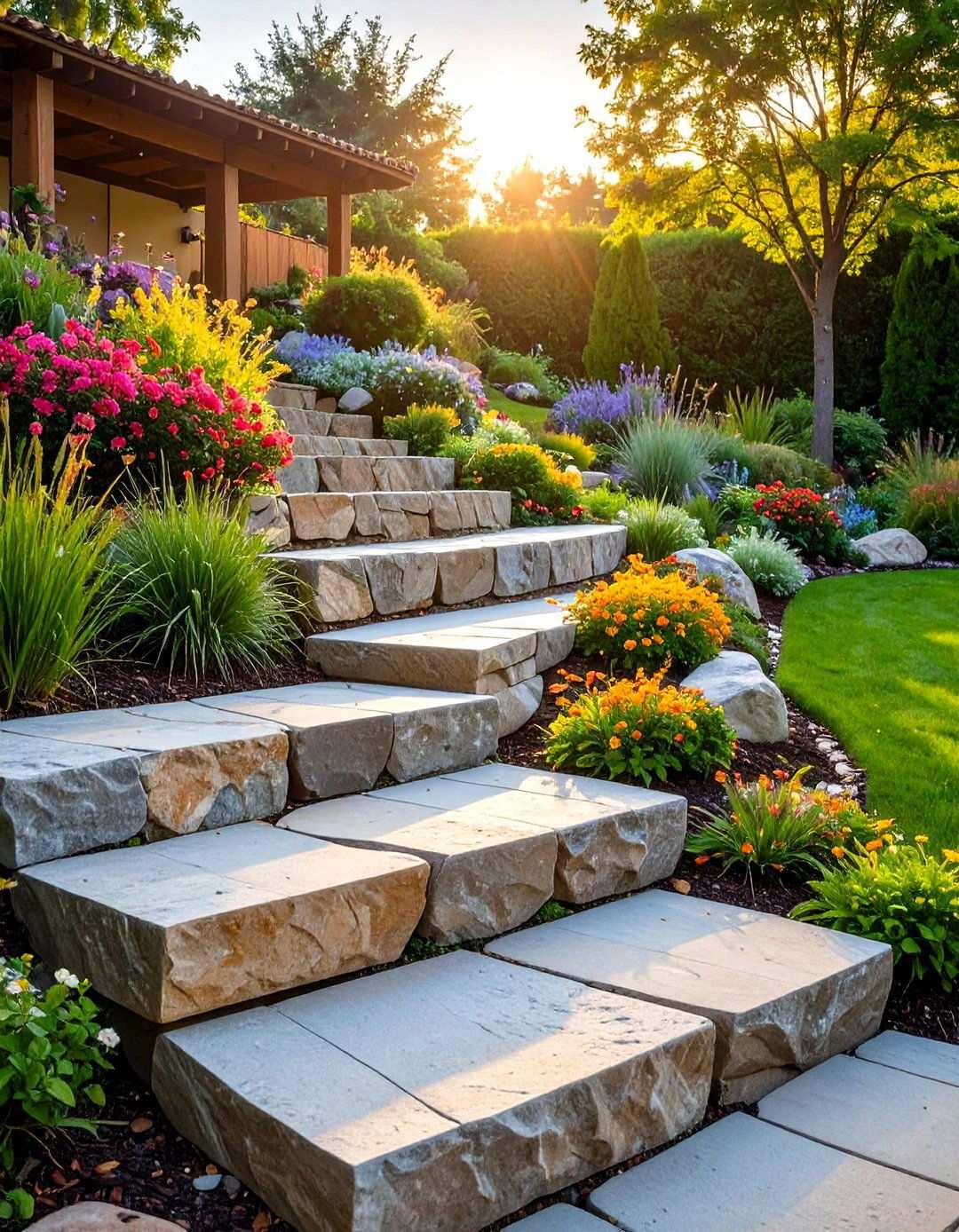
Terraced boulder systems involve the strategic placement of graduated stone sizes across sloping terrain to create multiple retaining levels. This innovative approach breaks down steep slopes into manageable segments, creating planting areas at each level that can be tailored to specific needs and preferences. Large boulders are used to anchor the primary retaining points, while smaller stones fill transitional areas between terraces. The stepped configuration of these systems reduces soil pressure on individual wall sections, creating a more stable and secure structure. The varying heights of the terraces also add dynamic visual interest, while plant selection becomes crucial for erosion control and visual cohesion between the levels. Native grasses and perennials work particularly well for stabilizing soil while complementing the natural stone materials, resulting in a design approach that maximizes usable space while maintaining slope stability through distributed retaining forces.
9. Elegant Curves in Fieldstone Walls
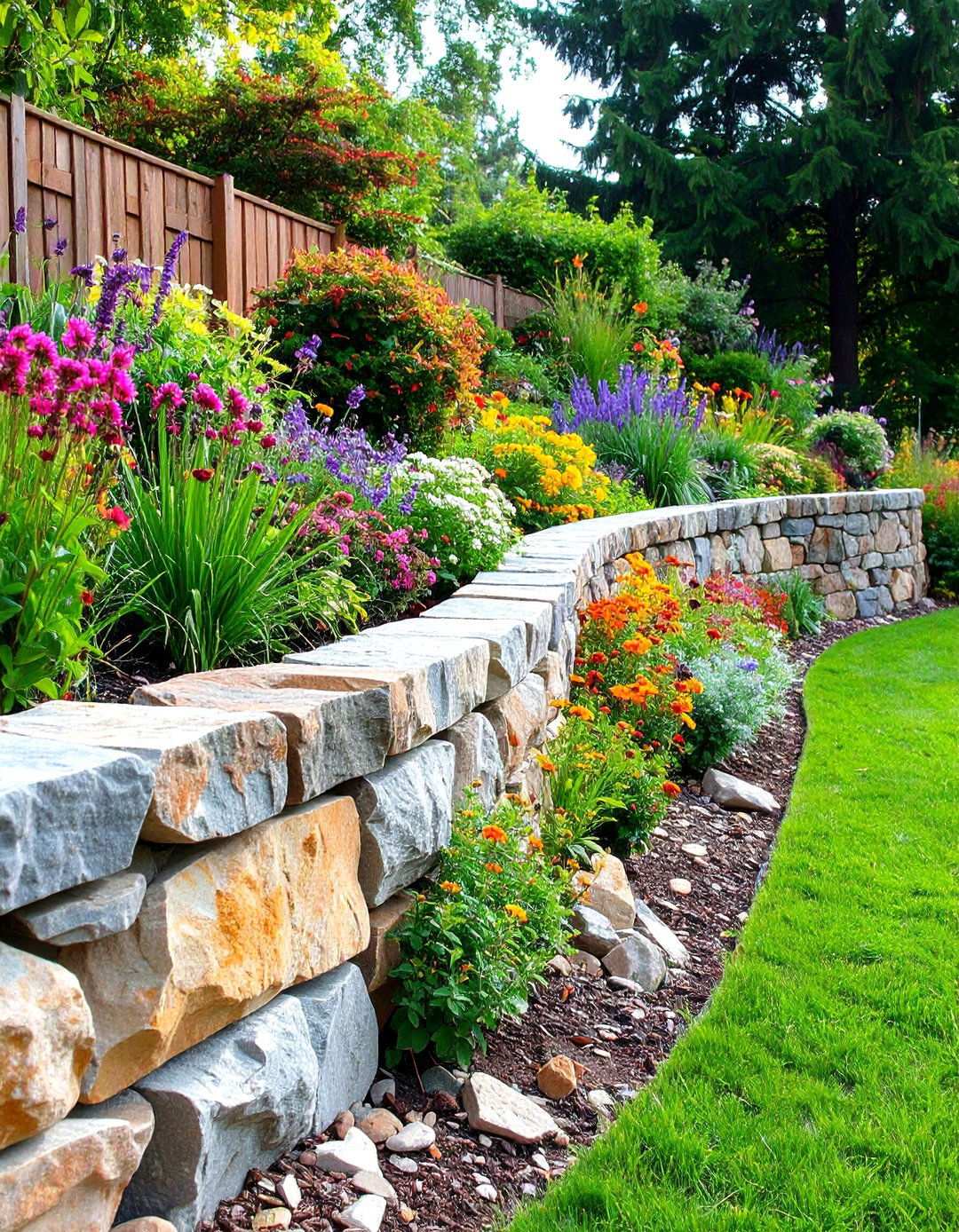
A hallmark of curved fieldstone walls lies in their adaptability to natural contours and design preferences. Unlike rigid straight lines, these flowing landscape transitions seamlessly blend into the surrounding environment. By carefully selecting fieldstones to maintain smooth radius uniformity, builders can create an organic shape that complements natural garden designs. The result is intimate spaces and visual interest that soften harsh angles while maintaining full structural functionality.
Curved walls require meticulous planning for proper stone overlap and structural integrity at direction changes. This attention to detail becomes even more crucial for maintaining a consistent radius throughout the wall length. A well-designed curved wall can effectively enclose garden beds, create seating areas, or follow existing landscape contours, making it an ideal choice for diverse landscaping needs.
10. The Art of Mortared Stone Construction
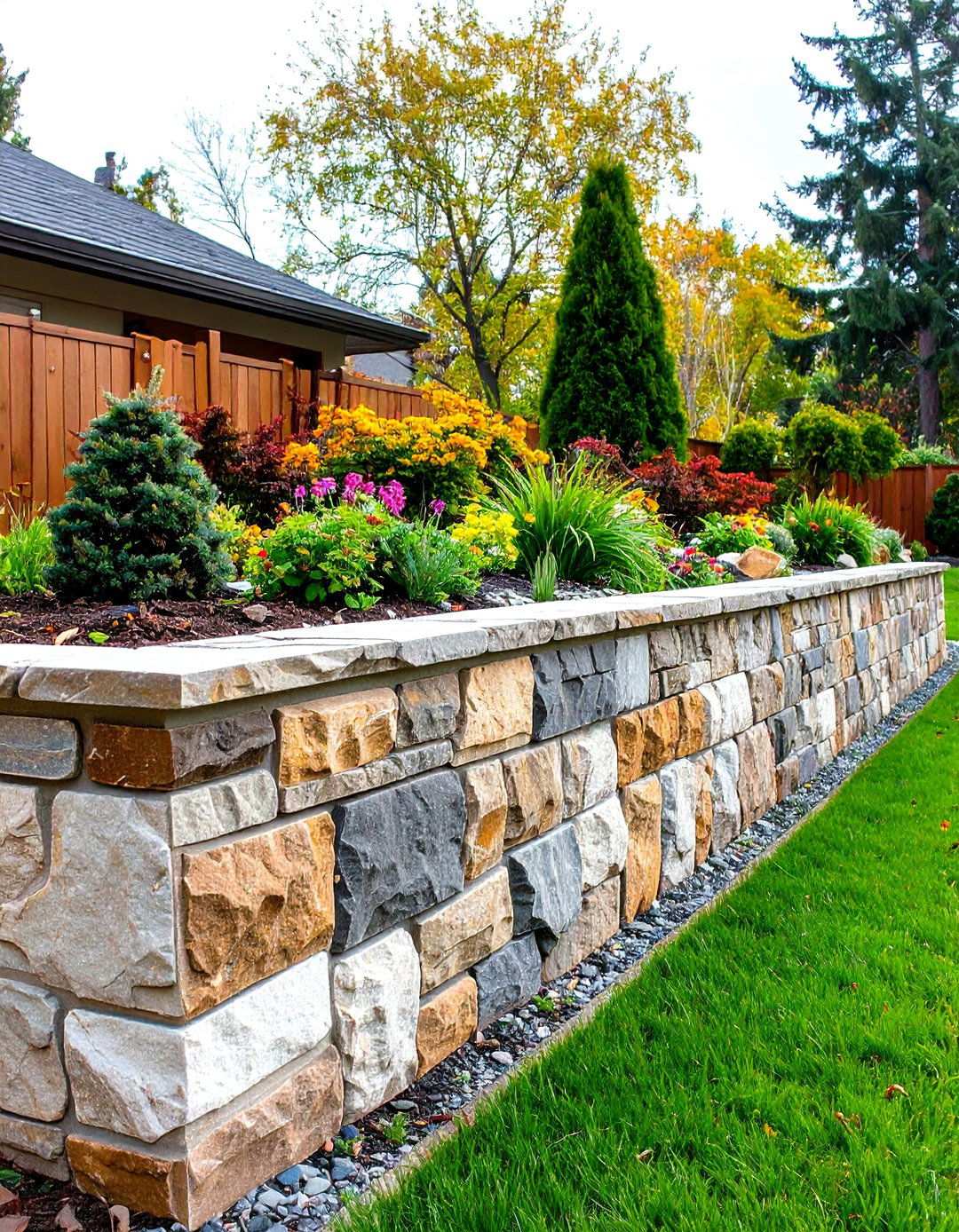
Mortared stone walls expertly balance natural stone beauty with enhanced structural stability through the use of cement-based bonding systems. This construction method allows for the creation of taller walls and steeper faces, even with smaller stone sizes that may not be suitable for dry stack applications. The versatility of mortared stone walls extends to the finish of the mortar joints, which can be tailored to various styles, from flush pointing to recessed joints that accentuate individual stones. Proper mortar selection is crucial for ensuring compatibility with stone porosity and local climate conditions.
The bonded construction of mortared stone walls provides excellent resistance to lateral forces while requiring proper drainage to prevent hydrostatic pressure buildup. By choosing color-matched mortars, builders can maintain a natural appearance, while contrasting mortars can create deliberate design statements. This approach successfully combines traditional aesthetics with modern engineering requirements, making it suitable for challenging retaining applications.
11. Harmonious Blends of Natural Stone
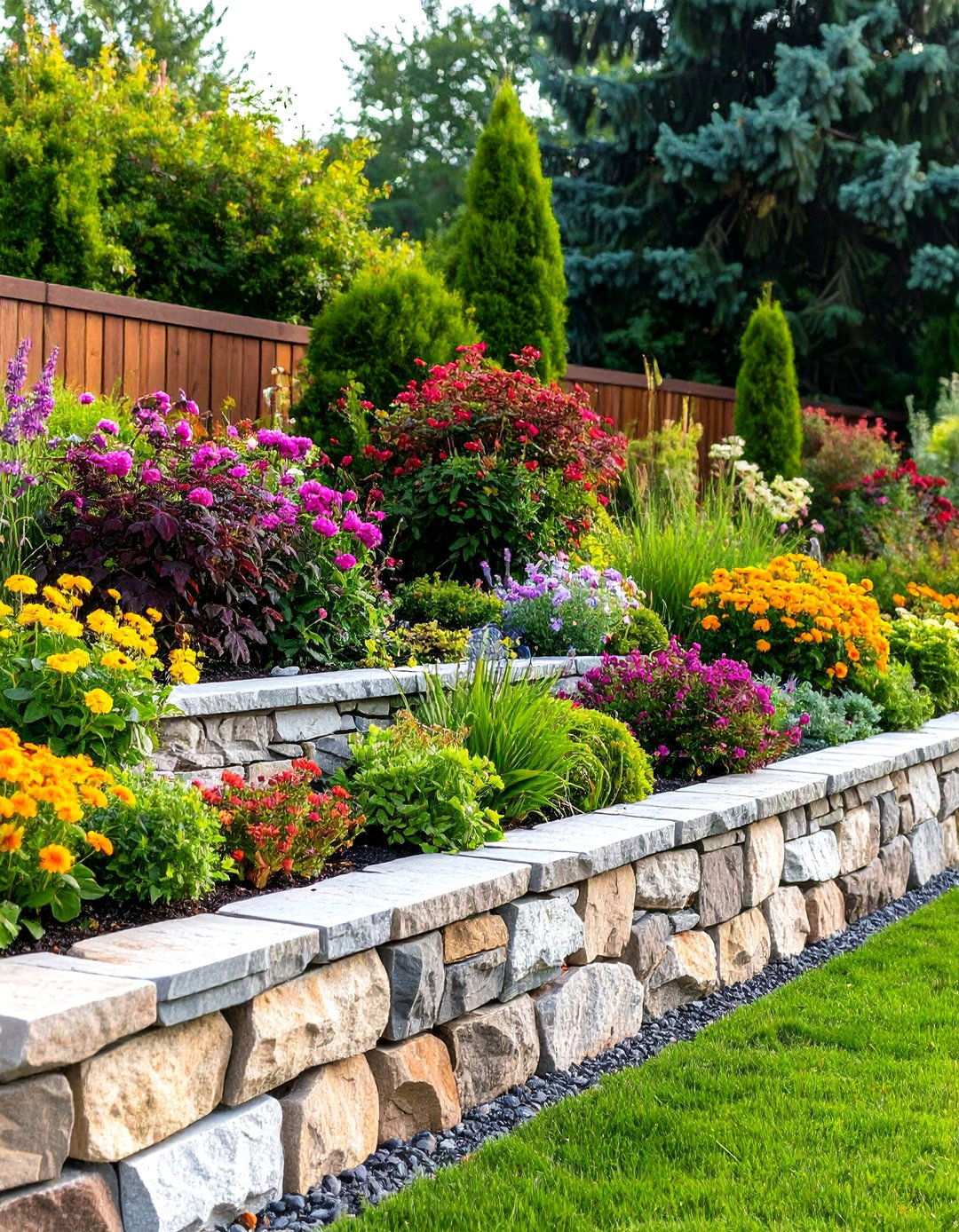
Mixed material walls offer a creative way to combine different stone types within a single installation, resulting in visual variety and the potential for reduced costs. Successful combinations might include pairing limestone base courses with sandstone caps or incorporating granite accents within fieldstone walls. The key to success lies in selecting materials with compatible structural properties and complementary colors. Different expansion rates between stone types require careful consideration of joint placement and movement accommodation.
By thoughtfully combining materials, builders can create dynamic walls that serve as landscape focal points. The variety in texture and color creates a visually appealing effect that can be achieved through strategic use of premium materials in highly visible areas. Design success depends on thoughtful proportion and placement rather than random mixing, allowing for a unique expression of the builder’s creative vision.
12. Unlocking the Potential of Quartzite in Retaining Walls
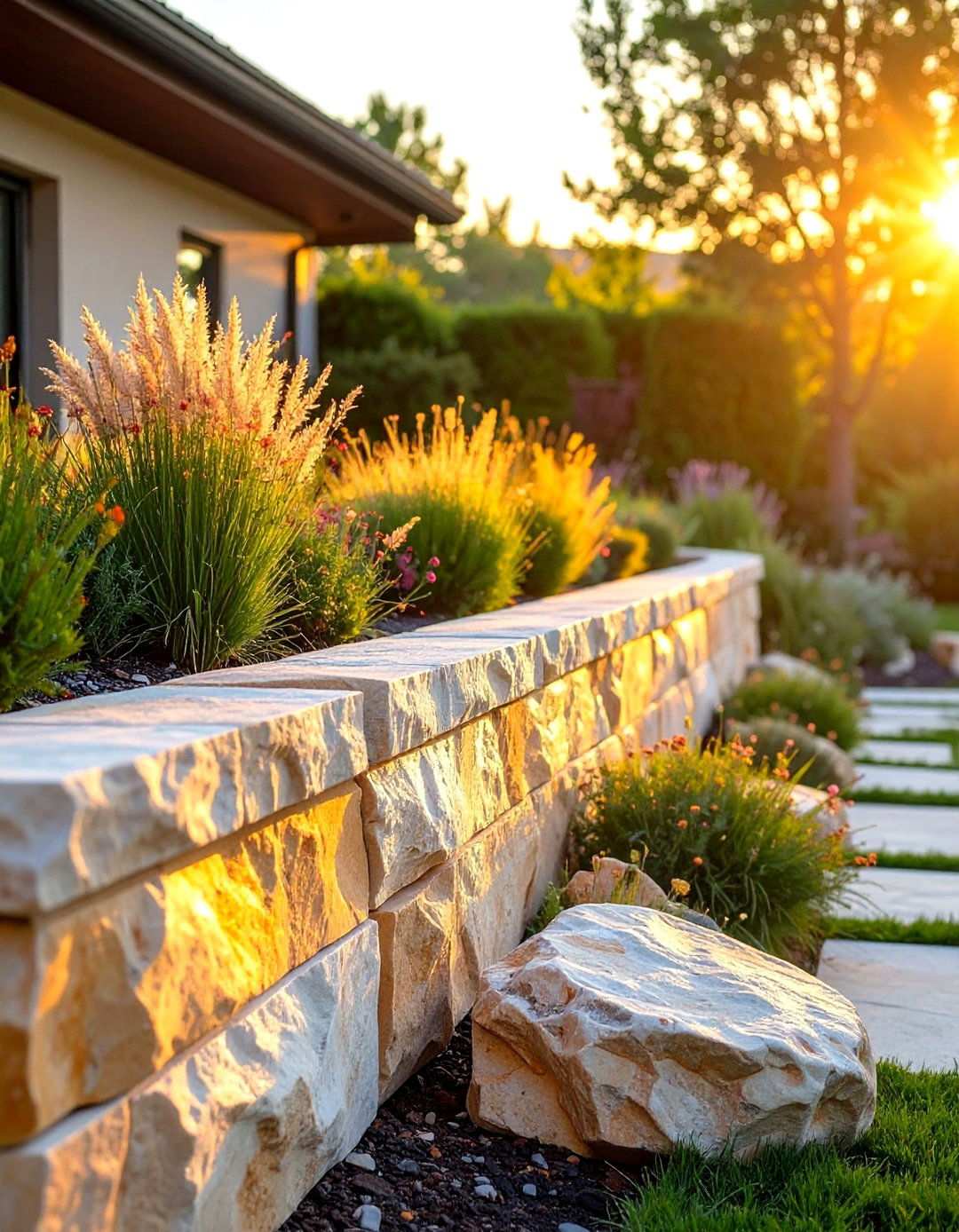
With its exceptional hardness and distinctive crystalline structure, quartzite walls showcase the unique characteristics of this metamorphic rock through creative natural edge construction techniques. As a result, quartzite becomes a suitable choice for demanding applications, such as high walls and exposed installations in harsh climates. By preserving the original fracture patterns, natural edges not only provide a visual appeal but also underscore the stone’s resilience. The color palette of quartzite ranges from elegant white and gray tones to vibrant golden and pink hues, often accompanied by intricate veining patterns. While the hardness of quartzite necessitates specialized cutting tools and techniques for custom fitting, its durability ensures long-lasting walls with minimal maintenance requirements. To achieve the perfect balance between functionality and aesthetics, installation often combines natural edges with cut faces to create bearing surfaces.
13. Capturing the Charm of Flagstone Dry Stack Garden Walls
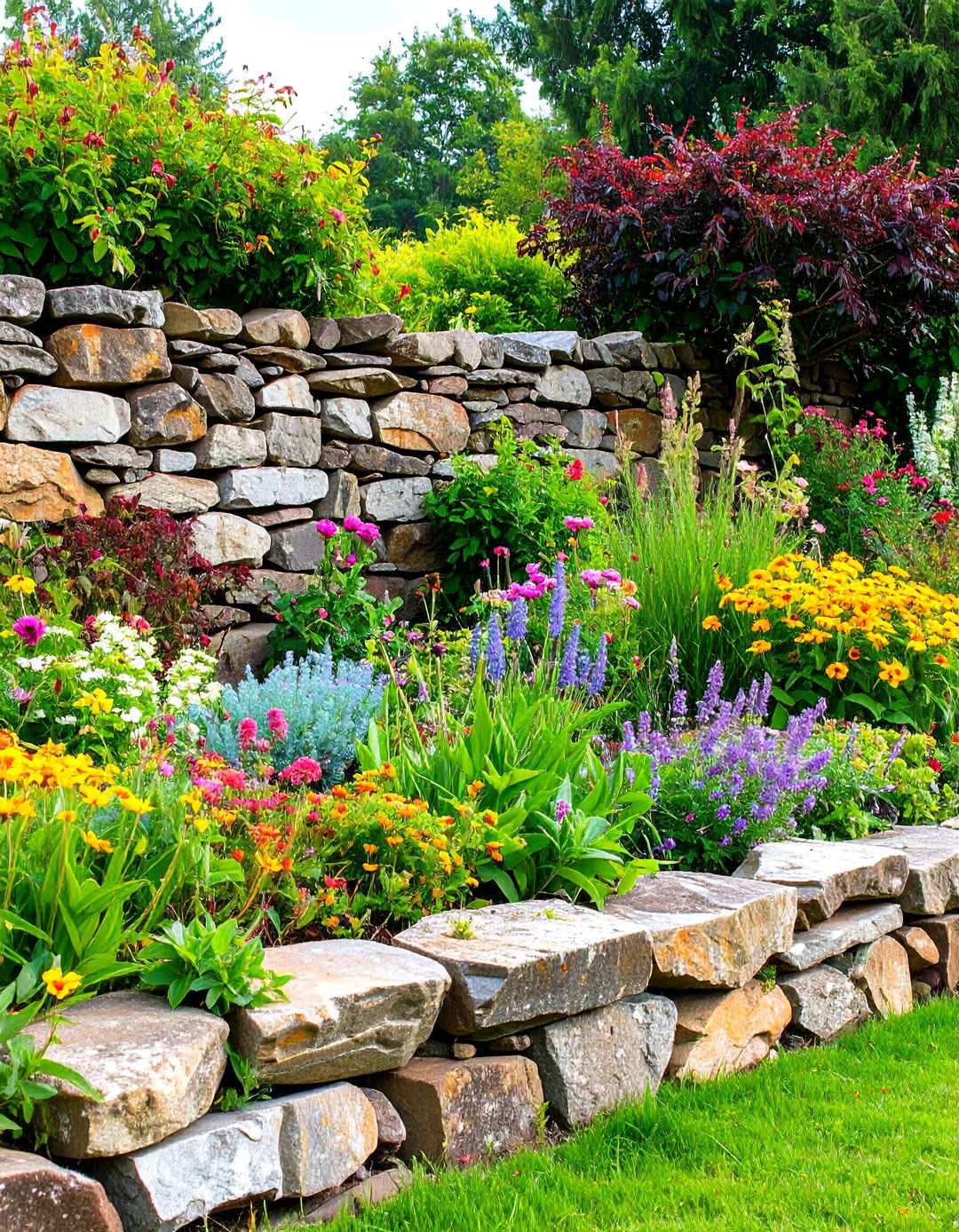
Flagstone walls create an inviting cottage garden atmosphere with their informal stacking patterns, making them a popular choice for landscape design. However, this style requires careful attention to overlap patterns and bearing points to ensure structural stability, given the thin profile of flagstone pieces. The natural color variations within flagstone contribute to the creation of subtle patterns that beautifully complement informal garden designs. While the flat surfaces of flagstone stack efficiently, their irregular edges provide smooth transitions between courses, adding to the overall organic look. Selecting the right flagstone involves choosing pieces with adequate thickness for the intended wall height and loading conditions. With its ability to create unique, one-of-a-kind walls, flagstone works particularly well for low retaining walls and garden borders where its informal appearance enhances the overall landscape design.
14. Embracing the Dramatic Elegance of Basalt Column Retaining Walls
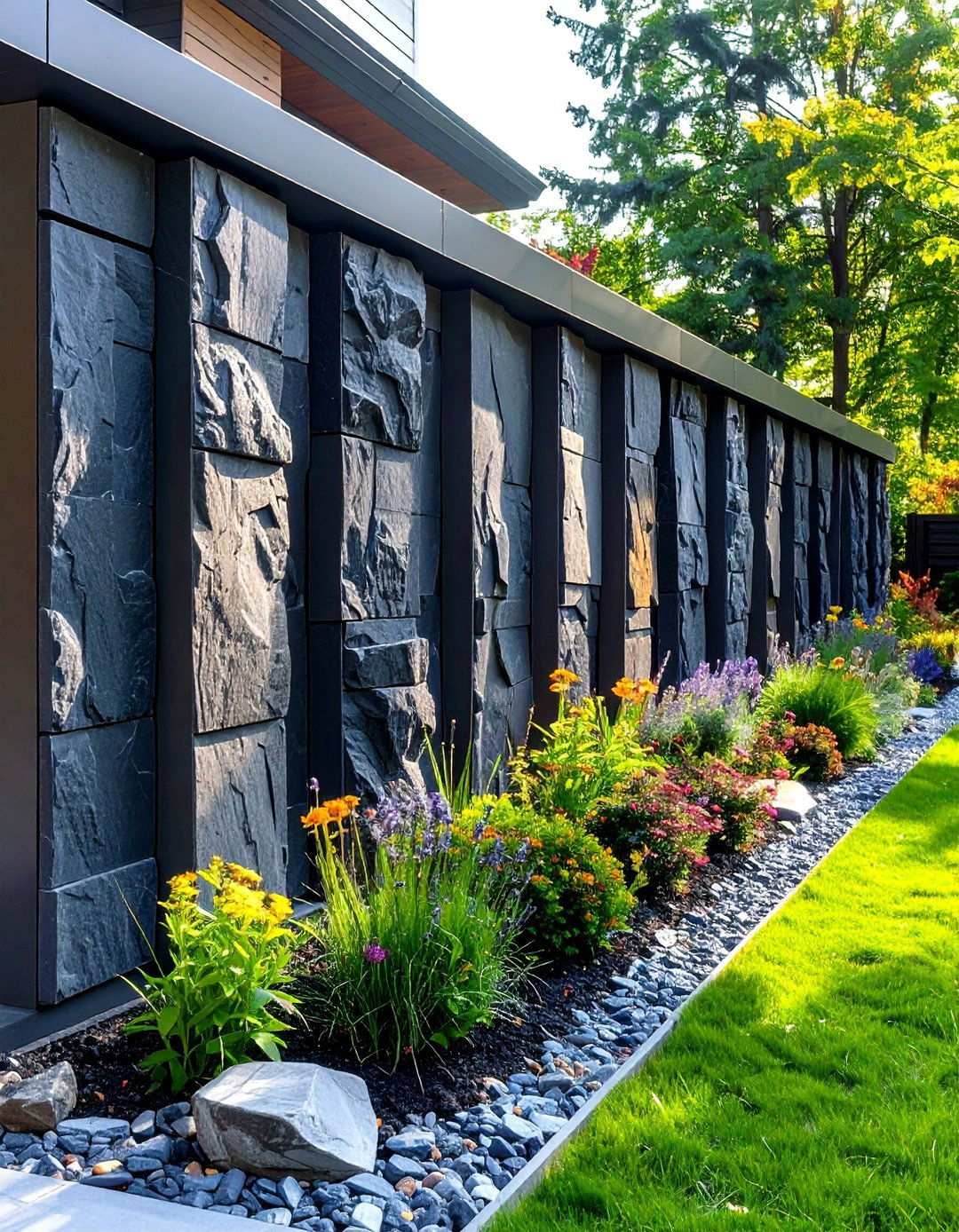
Basalt retaining walls boast the unique natural columnar structure or cut rectangular forms of this volcanic rock, which adds a touch of sophistication to any landscape design. The extremely hard nature of basalt provides exceptional durability, while its dark coloring creates a striking contrast with lighter landscape elements. When natural basalt columns are available, they create visually appealing geometric patterns through their distinctive hexagonal cross-sections. Alternatively, cut basalt provides more consistent sizing for formal installations while retaining the material’s inherent strength characteristics. The dense structure and low porosity of basalt make it an excellent choice for areas with harsh weather conditions. Color variations of basalt range from dark gray to black, with occasional reddish tones depending on mineral composition. With its long-term durability and strong visual impact, basalt is particularly well-suited for modern landscape designs that demand a dramatic presence.
15. Interwoven Stone and Plant Life
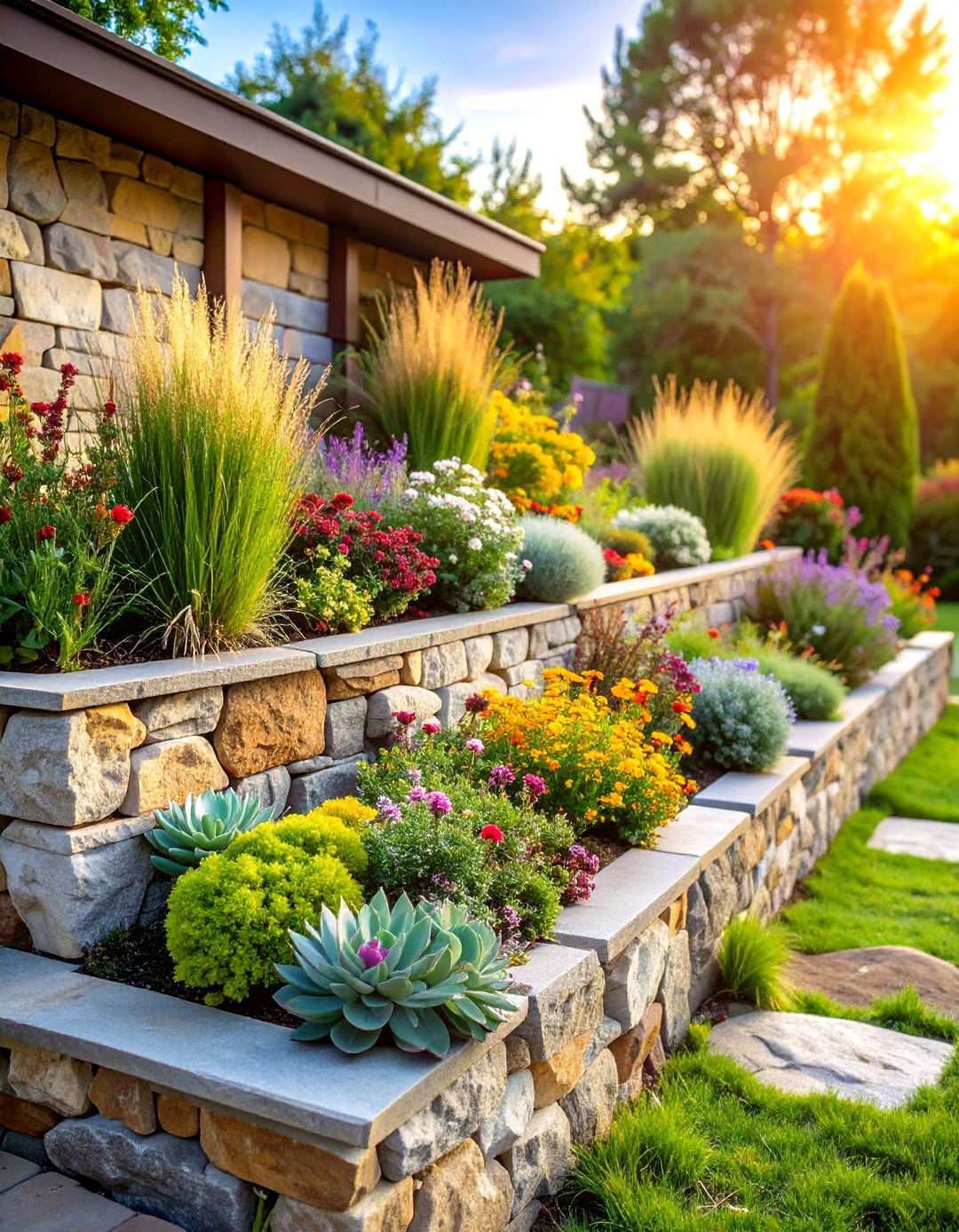
Planter walls seamlessly merge growing spaces into retaining structures, thereby optimizing space efficiency. By integrating planted pockets within the stone wall framework, designers can create visually stunning combinations of hard materials and soft plant life. To ensure the longevity of the structure, adequate drainage must be implemented to prevent water damage, while also providing sufficient moisture for plant growth. When selecting stones for this type of installation, it is essential to consider their compatibility with soil chemistry and root system requirements. Popular plant species include sedums, native grasses, and small perennials that thrive in well-drained conditions. This innovative design allows for living walls that dynamically change with the seasons, maintaining year-round structural integrity. The harmonious blend of natural stone and plant life generates visual interest, while simultaneously serving both retaining and decorative purposes.
16. Multifunctional Natural Stone Seating Walls
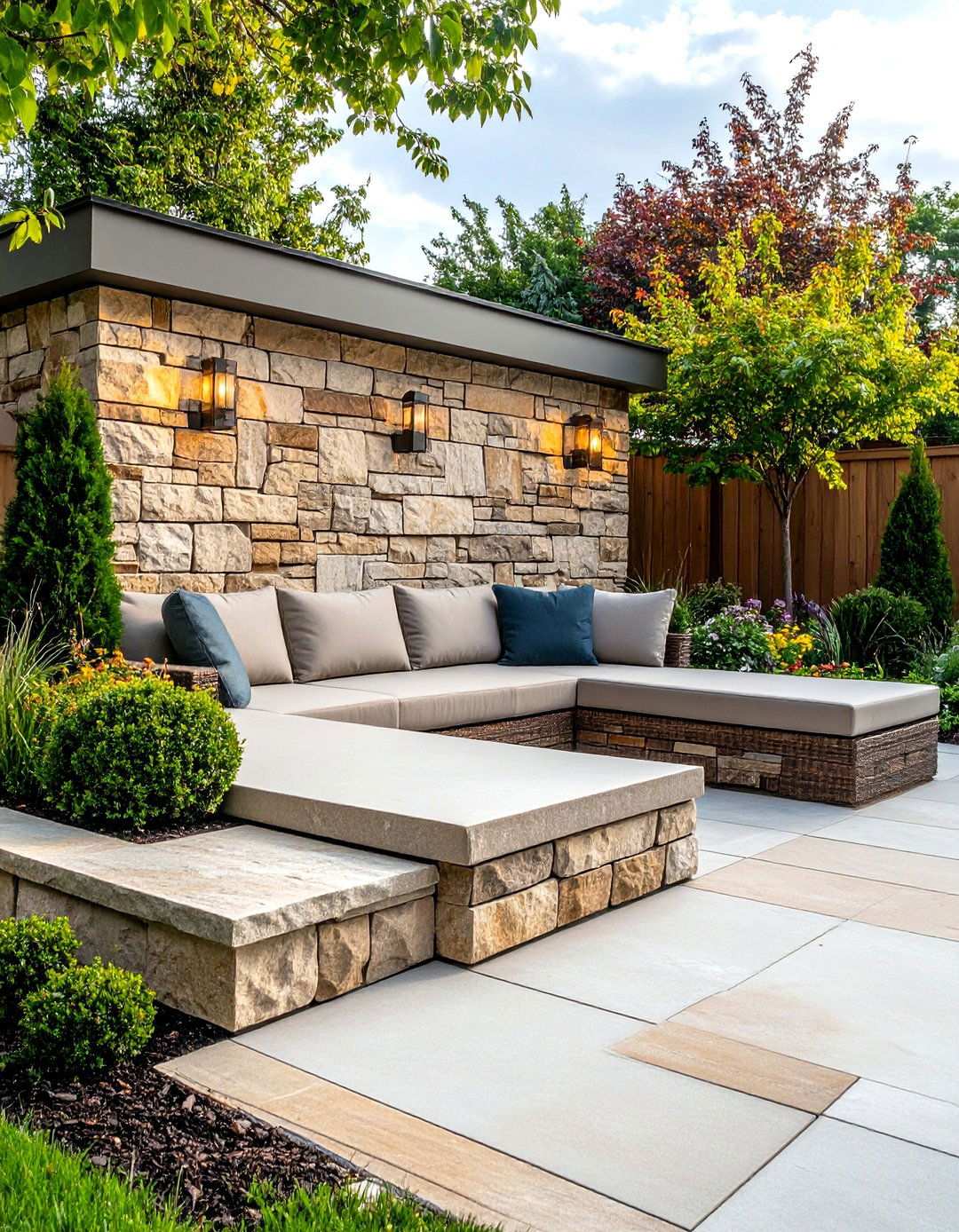
Seating walls successfully combine retaining functionality with outdoor furniture by carefully designing wall height and cap stone selection. The optimal height for these structures is between 18 to 22 inches, providing comfortable seating while meeting structural requirements. By using flat cap stones, designers can create smooth seating surfaces that protect the wall structure from weather penetration. When selecting materials, comfort factors such as stone temperature characteristics and surface texture must be taken into account. To prevent ice formation and water accumulation on seating areas, attention must be paid to drainage. Design considerations include incorporating back support through terracing or adjacent plantings. This dual-purpose approach optimizes space efficiency while creating inviting outdoor gathering areas, making these walls a valuable addition to patios and garden spaces.
17. Heterogeneous Natural Stone Installations
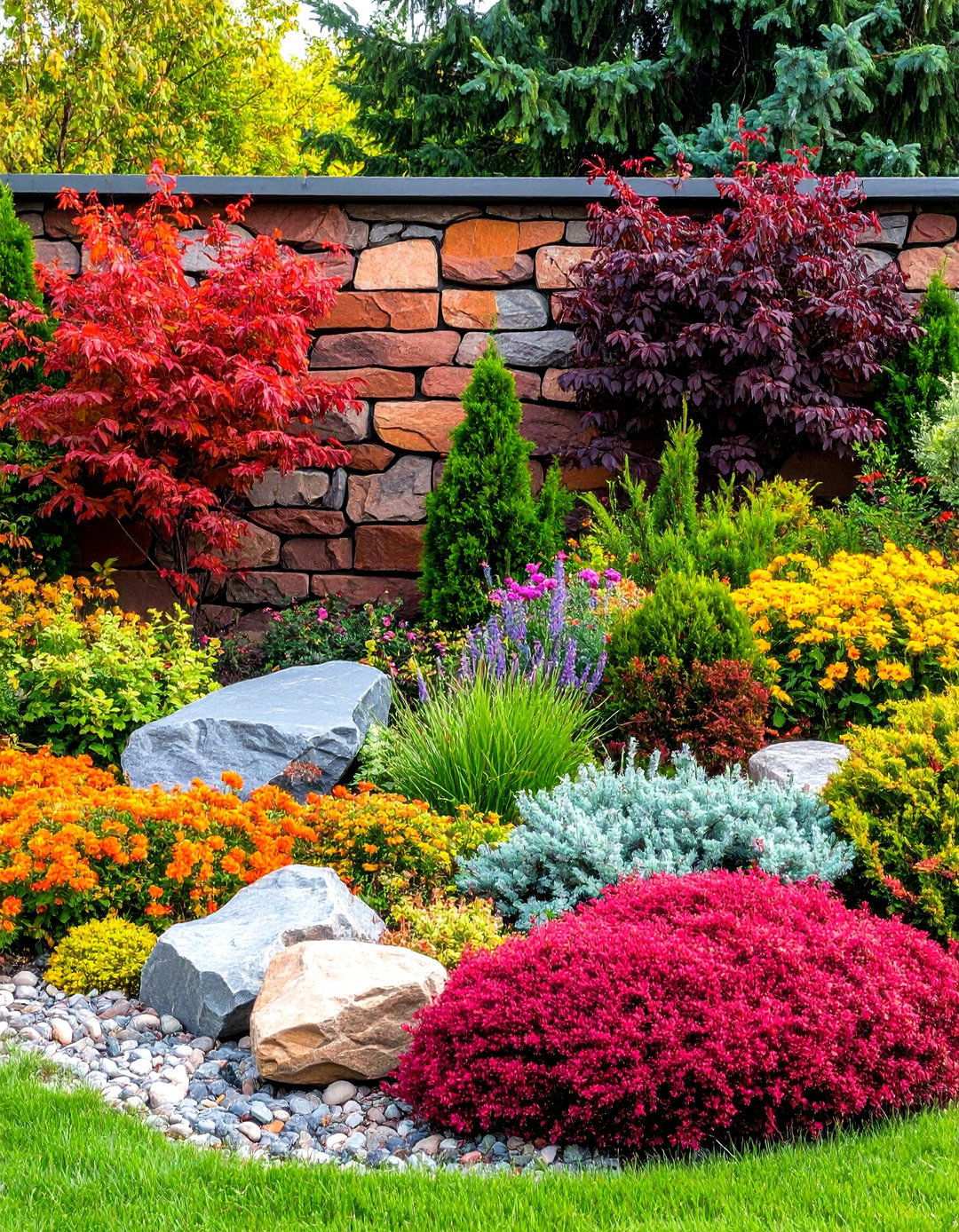
Variegated walls deliberately bring together multiple stone colors within single installations to create vibrant landscape features. Achieving successful combinations requires the careful selection of stones with compatible structural properties despite color differences. Popular combinations include pairing red and buff sandstones or incorporating gray and pink granite pieces. The arrangement pattern significantly affects visual impact, ranging from random distribution to organized bands or sections of color. Mortar color selection becomes crucial for either unifying different stones or emphasizing individual pieces. This approach creates focal points within landscape designs while demonstrating the natural variety available within stone types. The color variation provides year-round visual interest that complements seasonal changes in adjacent plantings. Design success depends on thoughtful proportion and distribution rather than random color placement.
18. Mastering the Art of Ledge Stone Garden Walls
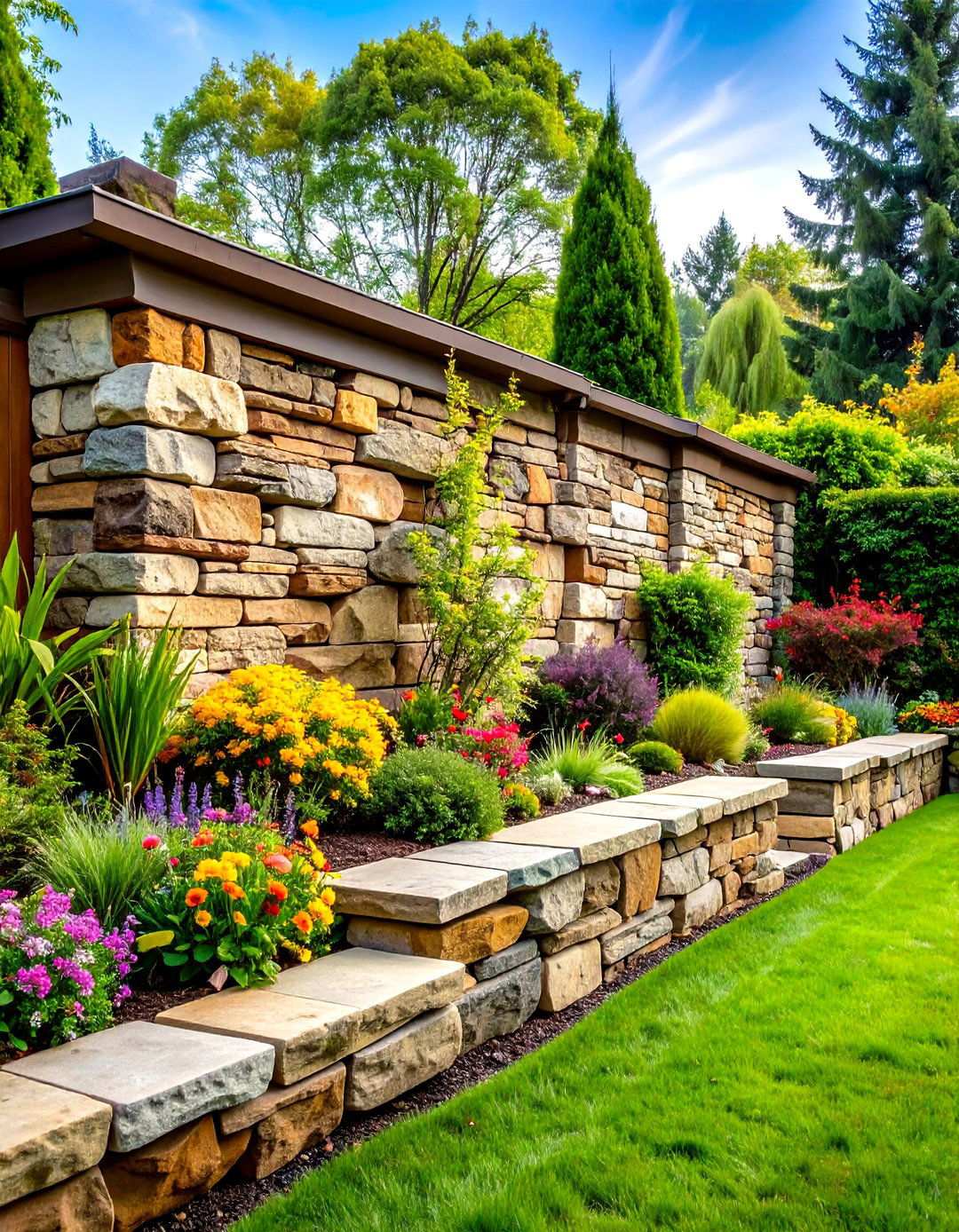
Masterpiece garden walls constructed from ledge stone boast a striking horizontal aesthetic, achieved through the use of flat stones with consistent thickness and varying lengths. This deliberate horizontal emphasis creates a sense of formality while still showcasing the natural beauty of the stone. To ensure the ledged appearance is executed flawlessly, it’s essential to pay close attention to leveling each course and maintaining consistent joint spacing throughout the wall’s height. This construction style is particularly well-suited to contemporary architecture and formal garden designs, where clean lines and a sense of serenity are paramount. Careful stone selection is also crucial, as it requires choosing pieces with sufficient bearing surfaces and compatible thicknesses. To further enhance the horizontal emphasis, consider using contrasting mortar colors or flush joint finishing techniques. The resulting walls strike a perfect balance between formality and natural materials, making them an ideal choice for both traditional and modern landscape designs.
19. Crafting Unique Fieldstone Walls through Random Pattern
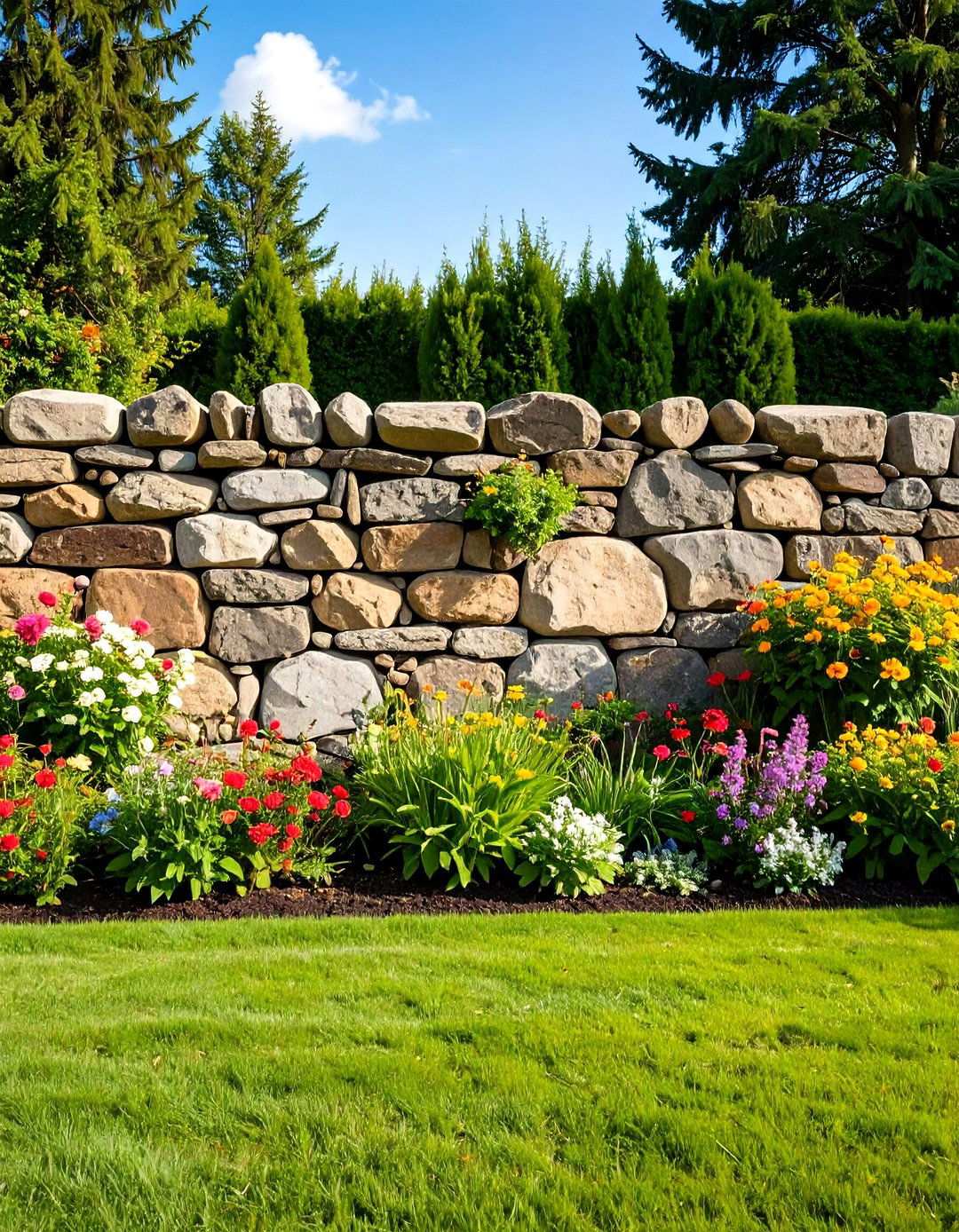
Fieldstone walls that celebrate the natural irregularity of their stones through a deliberate, varied arrangement of sizes and orientations create a truly one-of-a-kind visual experience. Achieving success in this construction style requires a deep understanding of structural principles, as well as a keen eye for detail to avoid predictable patterns. Larger stones often anchor key positions, while smaller pieces fill and adjust the spacing throughout the wall, creating a visually appealing mosaic. To maintain structural integrity and pleasing visual randomness, it’s essential to ensure consistent joint widths and proper overlap between courses. Skilled stone selection and placement are critical to achieving both form and function in these walls. The irregular pattern creates an ever-changing tapestry of texture and shadow, adding depth and visual interest to outdoor spaces. This approach is particularly well-suited to rustic and naturalistic landscape designs, where formal regularity would be out of place.
20. Elevating Outdoor Comfort with Natural Stone Sitting Walls
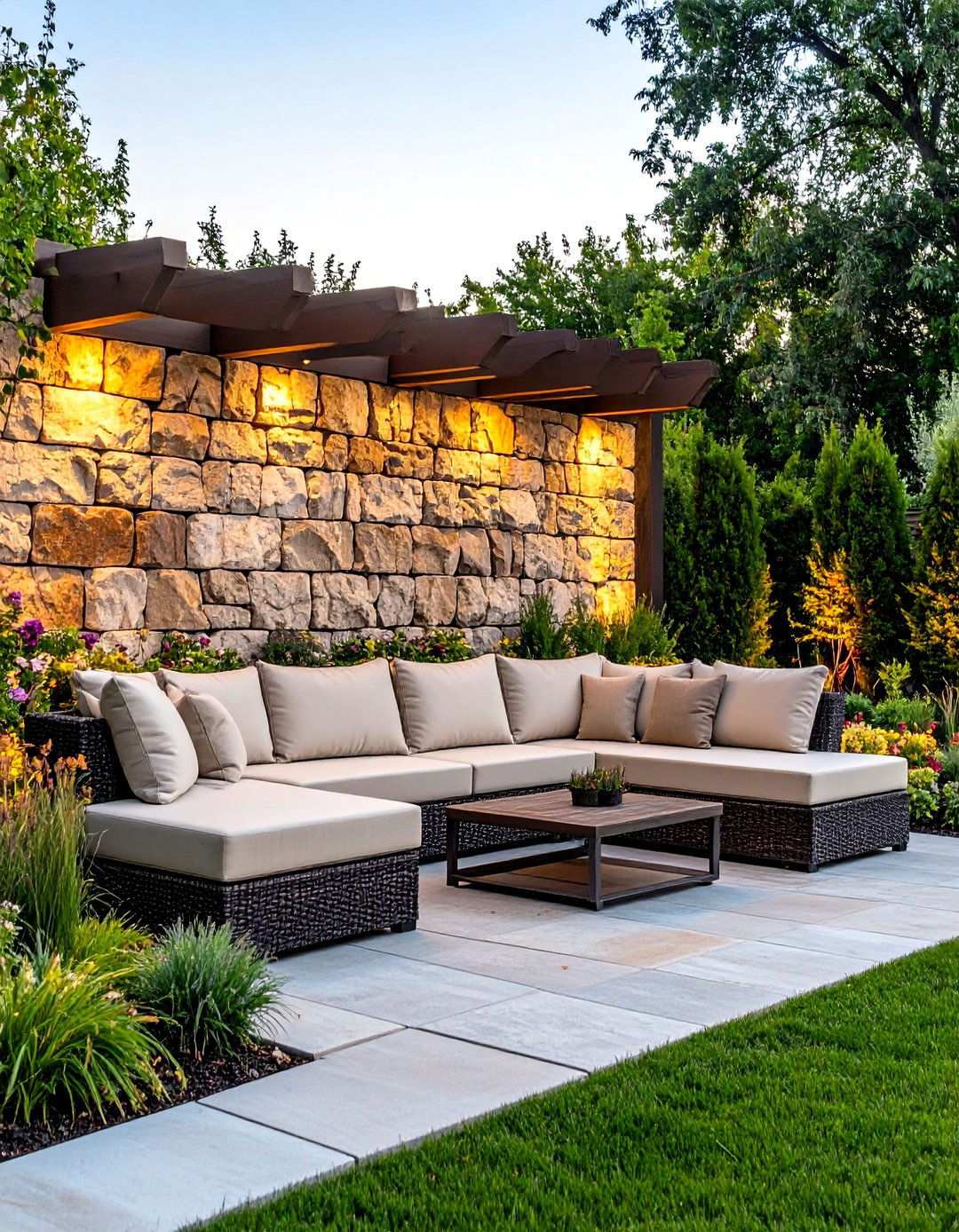
Sitting walls that incorporate integrated backrests take garden design to the next level by providing enhanced comfort and functional retaining wall capabilities through thoughtful design consideration. The backrest typically consists of terraced construction or separate wall sections positioned for optimal comfort. Effective ergonomic design requires attention to seat depth, back angle, and overall proportions to ensure extended comfort. Material selection should balance both structural requirements and user comfort factors. The dual-level construction of these walls presents opportunities for varied plantings and visual interest, while drainage design must accommodate the complex geometry and prevent water accumulation in seating areas. This sophisticated approach creates premium outdoor seating that doubles as a functional retaining structure, making it an ideal choice for entertainment areas and garden retreats where comfort and utility are paramount.
21. Alpine Rock Garden Retaining Wall Design
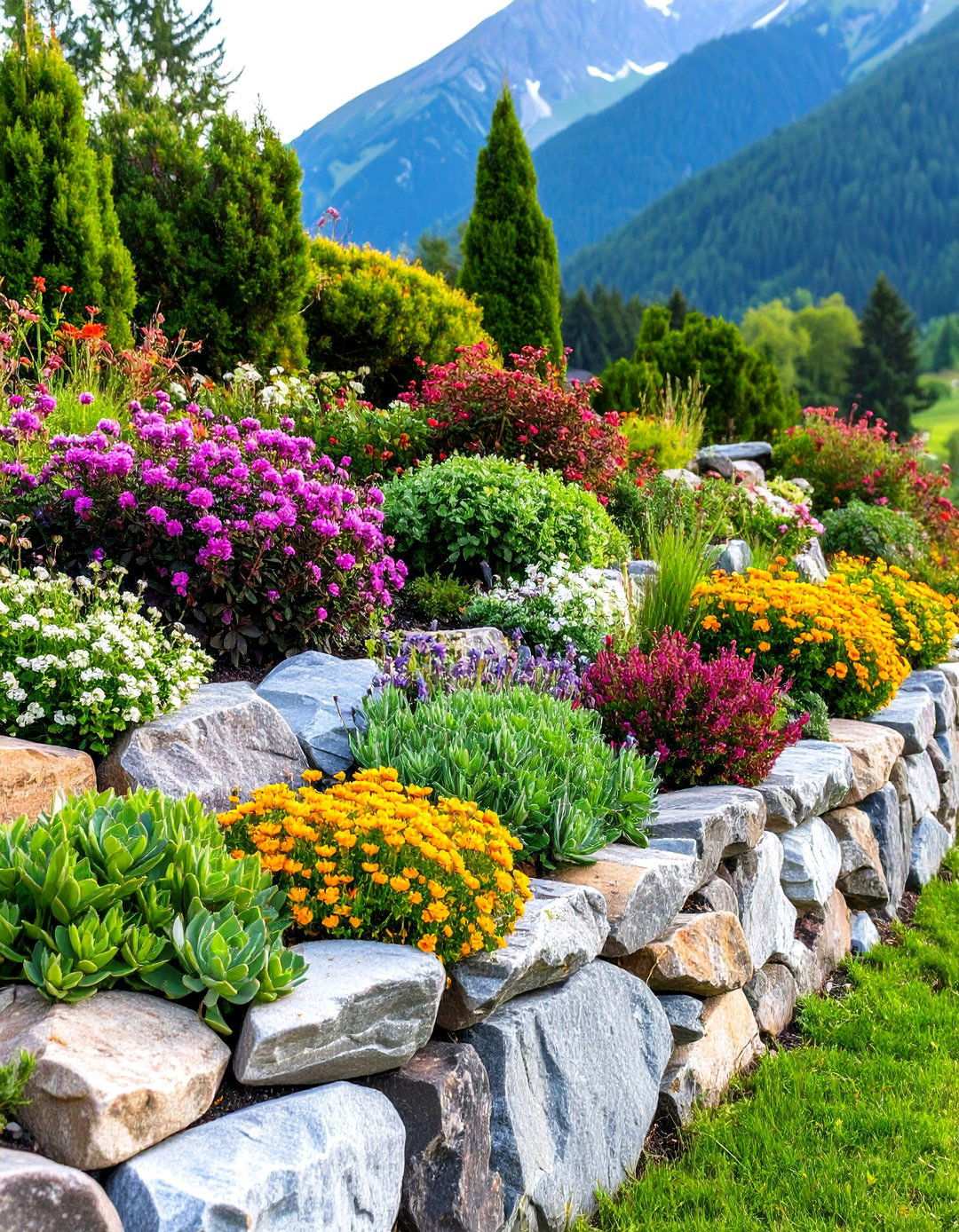
When crafting an alpine-style retaining wall, designers focus on replicating the varied growing conditions found in mountainous regions. This involves strategically placing stones to create specific soil pockets and drainage features tailored to the needs of alpine plants and rock garden species. Effective drainage is crucial for plants adapted to well-drained mountain conditions, and stone selection must balance structural stability with the needs of the alpine flora. By incorporating varied exposures and microclimates, alpine rock garden walls can accommodate a diverse range of plant species, from sedums and saxifrages to small conifers that thrive in rocky conditions. This innovative approach showcases the intersection of stone craftsmanship and horticultural expertise, creating unique garden features that evolve with plant growth and seasonal changes.
22. Moss Rock Retaining Wall System: A Living Canvas
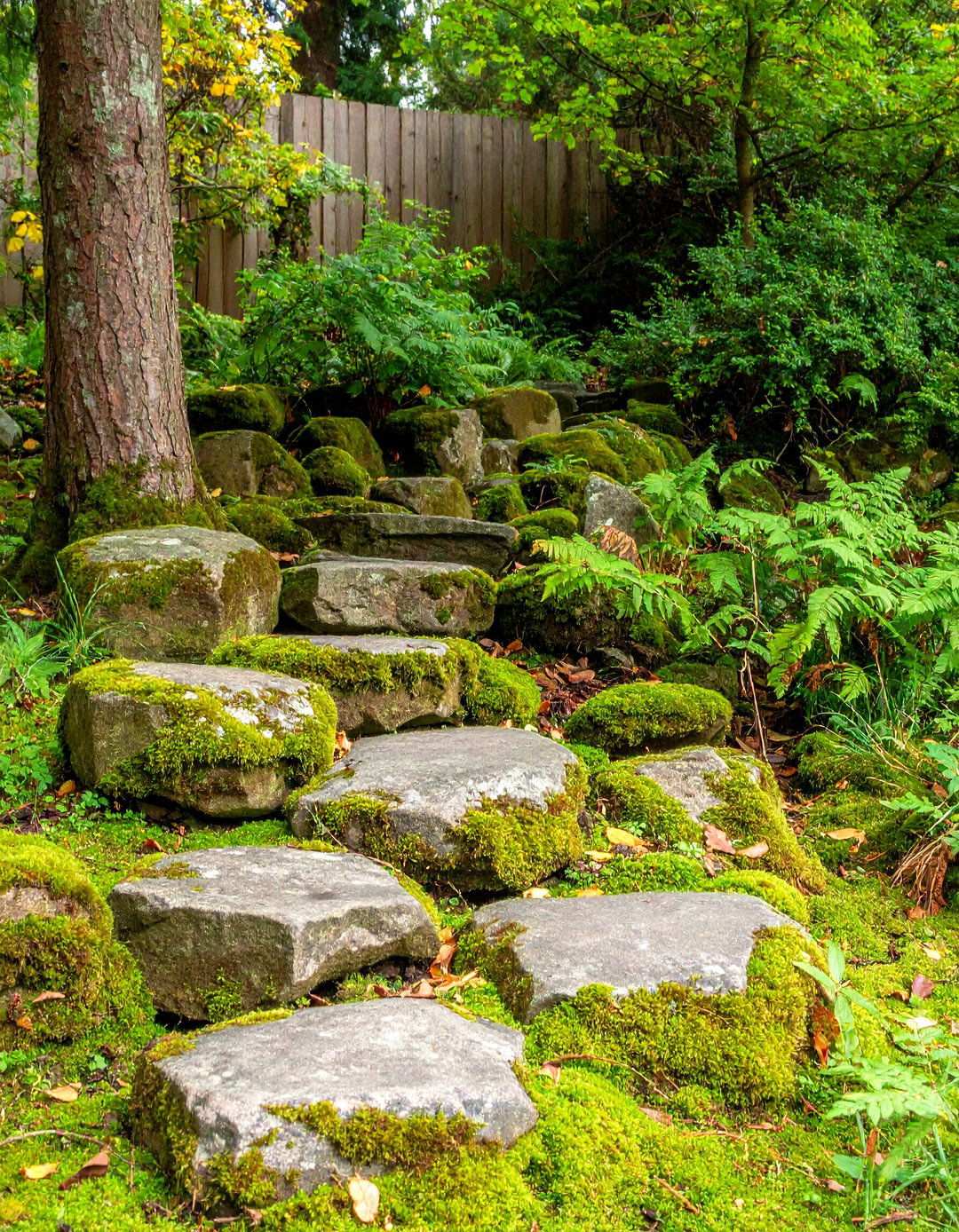
Moss rock walls utilize stones with established lichen and moss growth to create instant aged appearances, providing a natural patina that adds visual maturity to new installations. The biological components of these walls require specific conditions, including the right balance of moisture, shade, and air circulation, and stone selection must be carefully managed to preserve the existing growth. By constructing the wall system in a way that protects the existing lichen and moss, designers can create a living surface that continues to evolve after installation, becoming more attractive with age. This approach works particularly well in woodland settings and shaded garden areas, where the natural aging process can blend seamlessly with established landscapes.
23. River Rock Retaining Wall: A Naturalistic Touch
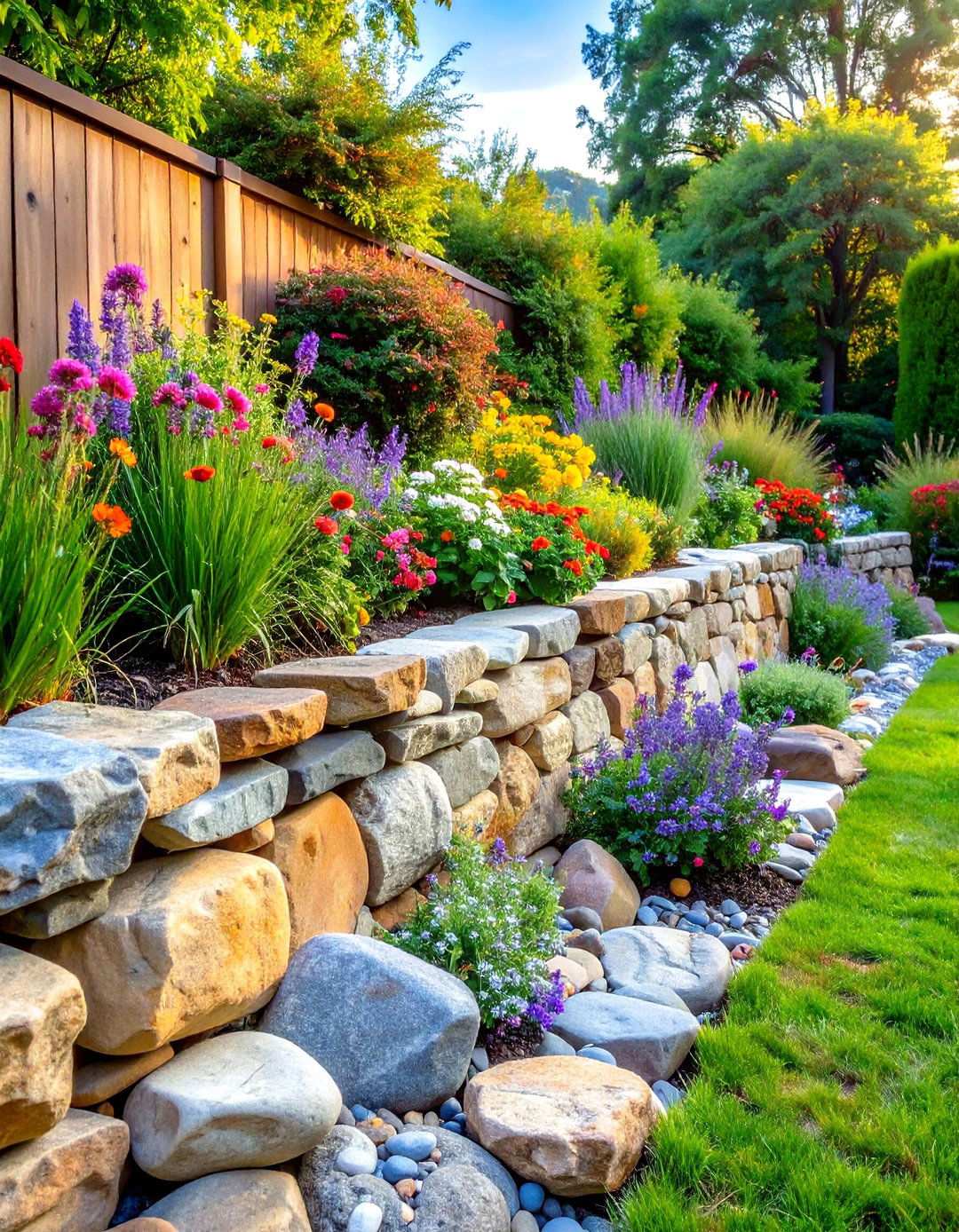
River rock walls feature smooth, rounded stones that have been shaped by water action, creating gentle textures and pleasing color variations. To achieve stable interlocking patterns, designers must employ careful fitting techniques, taking into account the rounded shapes of the stones. Natural color sorting allows for banded patterns or random distribution, depending on design preferences. The smooth surfaces of these stones provide textural contrast to rough-faced stones, maintaining a natural material character. When installing a river rock wall, attention must be paid to bearing points and structural stability, as the rounded stone profiles can be more challenging to work with. Mortar becomes more important in these cases, and the water-worn appearance of the stones complements water features and naturalistic landscape designs particularly well. This approach creates walls with a soft, organic character that works particularly well in informal garden settings and areas near water features.
24. Reviving Timeless Elegance with Fieldstone Walls
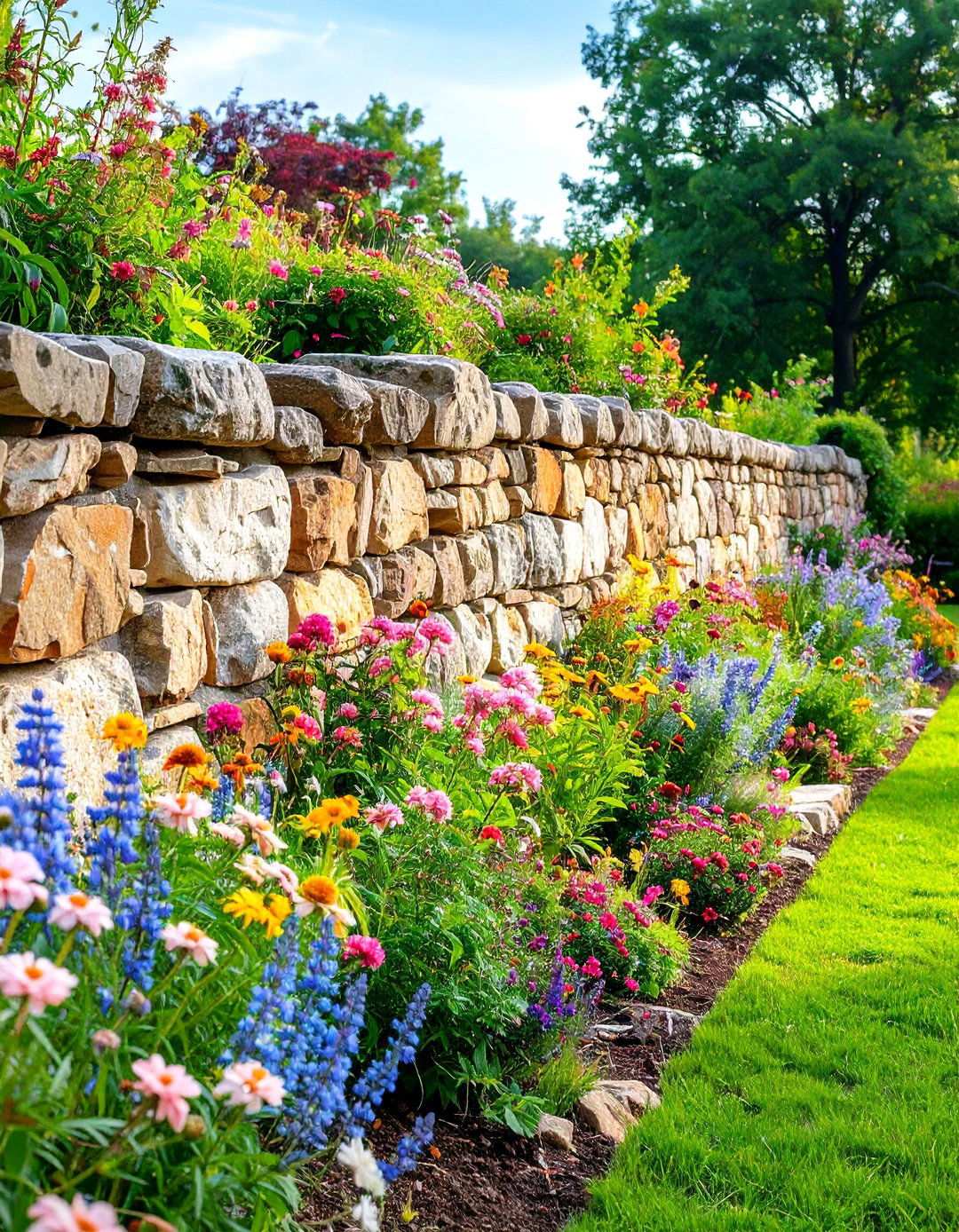
Historic construction techniques are given a modern twist in colonial-style fieldstone walls, blending traditional materials and methods with contemporary functionality. Skilled craftsmanship is at the forefront of this approach, with carefully fitted stones placed without the aid of modern machinery. The emphasis on authentic techniques ensures the structural integrity of the walls, relying on the selection and placement of stones to provide the necessary support without reinforcement. The result is a wall that showcases timeless proportions and details, perfectly complementing period architecture and formal landscapes.
Stone selection typically involves sourcing locally available fieldstone that aligns with regional building traditions, allowing the wall to blend seamlessly with its surroundings. Proper foundation preparation and traditional laying patterns are also essential components of this historical approach, ensuring the long-term stability and reliability of the wall. As the wall ages, its character only deepens, creating a natural integration with historic properties that is both authentic and long-lasting.