1. Elevating Your Outdoor Space with Italian Flair
An authentic Italian garden is a masterclass in blending architectural precision with natural beauty, drawing inspiration from centuries of refined design principles. It’s a harmonious union that embodies the essence of the Mediterranean lifestyle. By marrying the best of Italy’s garden design traditions, you can transform any outdoor space into a charming retreat that exudes elegance and sophistication. From the intricate details of geometric layouts to the carefully curated plant selections, Italian gardens are a symphony of style and refinement. Whether you’re envisioning a grand villa estate or a cozy courtyard setting, Italian garden design seamlessly integrates hardscape features like stone pathways, classical statuary, and water elements with lush Mediterranean vegetation. This perfect blend of form and function creates a haven that invites relaxation and indulgence.

As an Amazon Associate I earn from qualifying purchases.
2. Grand Entrances and Formal Elegance
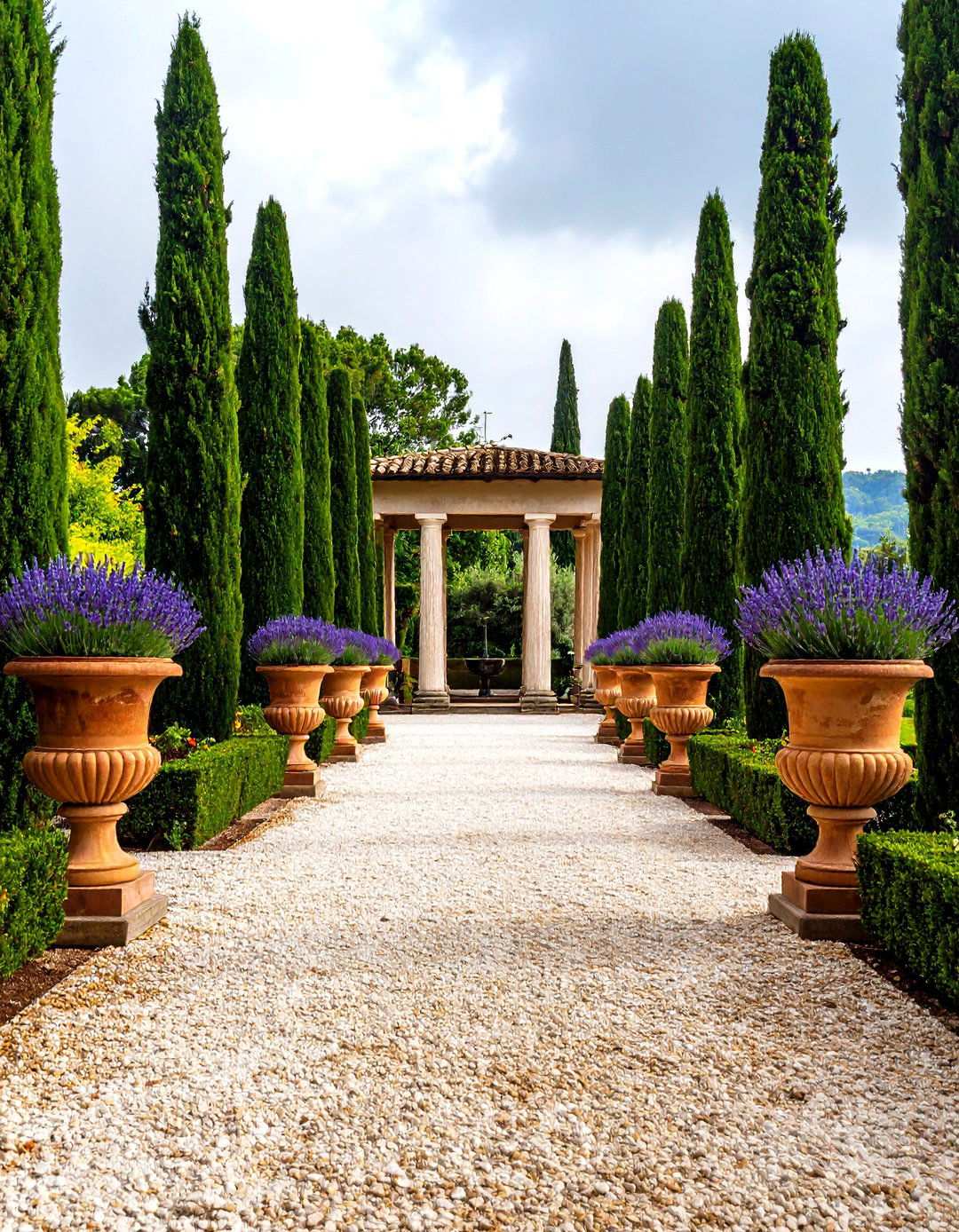
A majestic entrance is the perfect way to make a lasting first impression, and towering Italian cypress trees are the ultimate symbols of Mediterranean authenticity. These stately evergreen sentinels establish clear architectural boundaries while defining the garden’s sense of place. To create a dramatic cypress-lined allée, plant Cupressus sempervirens in parallel rows along driveways or main pathways, spacing them approximately eight to ten feet apart for maximum visual impact. The naturally columnar growth habit of these trees requires minimal pruning while providing year-round structure and privacy screening. Complement the cypress foundation with a meandering gravel pathway featuring honey-colored stone chips and strategically placed terracotta pots filled with fragrant herbs like lavender or rosemary. This classic Tuscan approach creates a sense of depth perception as the eye travels down the tree-lined corridor toward your home or garden focal point, instantly establishing the formal elegance characteristic of authentic Italian landscape design.
3. Renaissance-Inspired Parterre Gardens
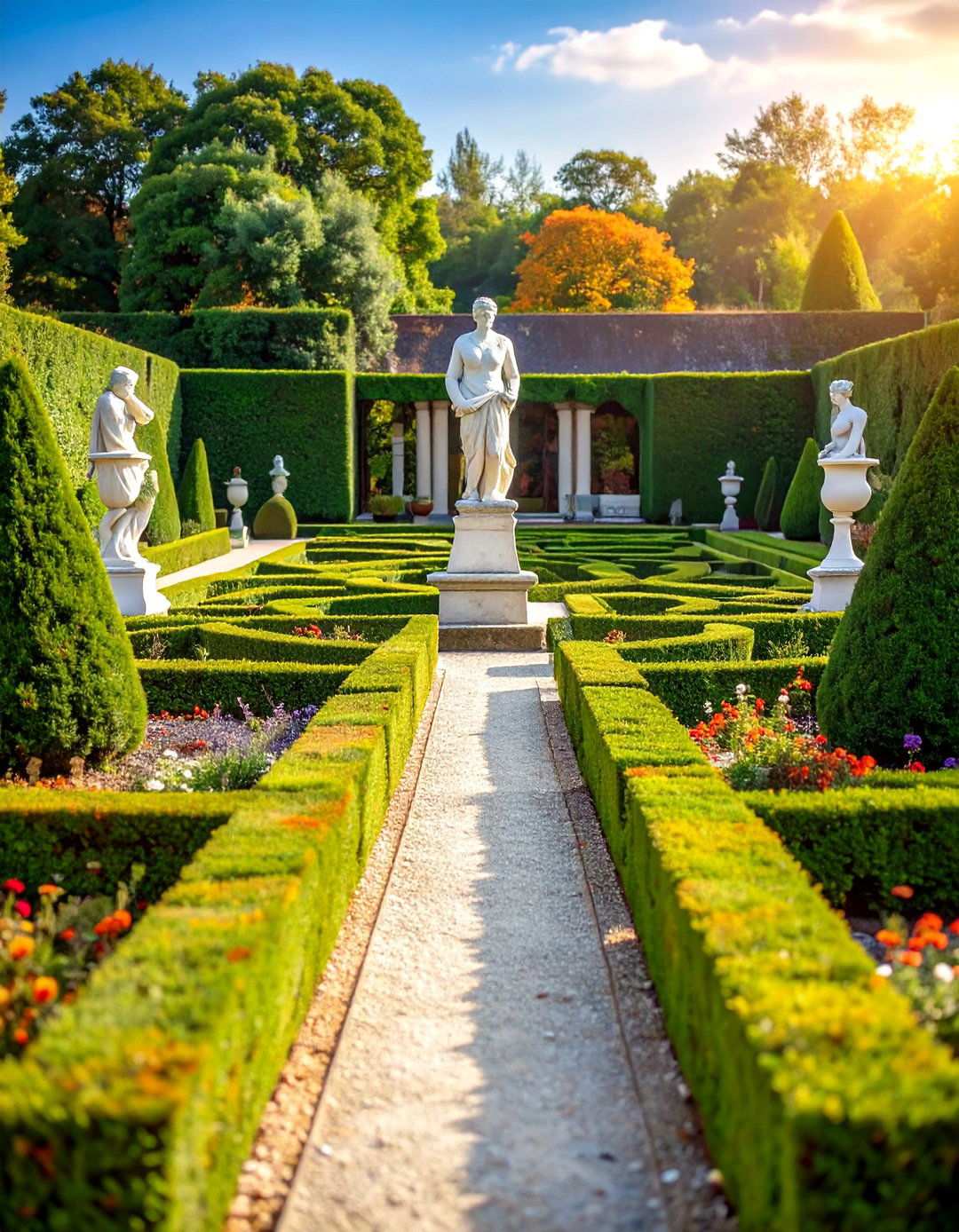
For those who appreciate the beauty of mathematical precision, traditional parterre gardens are a must-try. These intricate designs showcase geometric patterns created through low-clipped boxwood hedges arranged in symmetrical compositions. By using dwarf Buxus sempervirens varieties, you can create diamond, spiral, or scroll patterns, maintaining hedge heights between twelve to eighteen inches for optimal definition. Fill the enclosed compartments with colorful gravel, crushed marble chips, or seasonal flowering plants like white petunias or purple verbena. Position the parterre as your garden’s central feature, viewed from elevated terraces or balconies for maximum appreciation. Edge pathways with natural stone coping and place classical statuary at key intersection points. This formal approach demands regular maintenance but delivers unparalleled sophistication, transforming ordinary lawn areas into living works of art that celebrate Italy’s greatest garden design traditions.
Outdoor Dining Under a Majestic Pergola
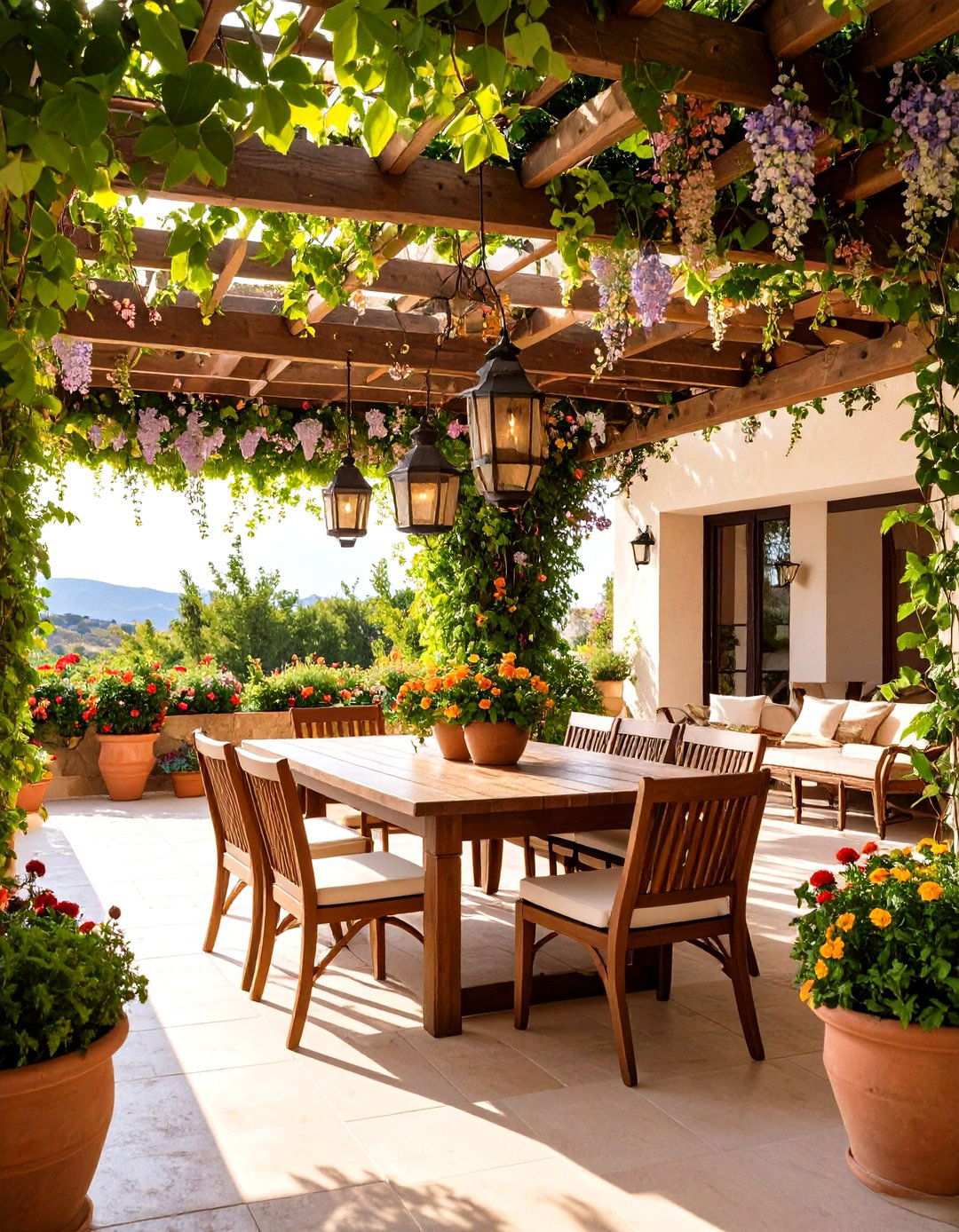
Envision a romantic alfresco dining experience amidst lush greenery, where the sweet fragrance of blooming flowers fills the air. To create this enchanting setting, construct a sturdy pergola using durable materials such as reclaimed wood, metal, or stone, ensuring ample space for comfortable dining underneath. Train vigorous climbing vines like vibrant clematis, fragrant honeysuckle, or robust kiwi across the overhead structure, providing natural shade while adding seasonal interest. Place a large wooden dining table surrounded by plush outdoor furniture in warm, earthy tones, complemented by weather-resistant cushions in soft fabrics. Install soft lighting through pendant lanterns, twinkling string lights, or pillar candles, casting a warm ambiance in the evening. Surround the dining area with fragrant herbs like thyme, rosemary, and oregano planted in oversized planters, capturing the essence of a charming Mediterranean courtyard.
4. Serene Oasis: A Tiered Fountain Water Feature
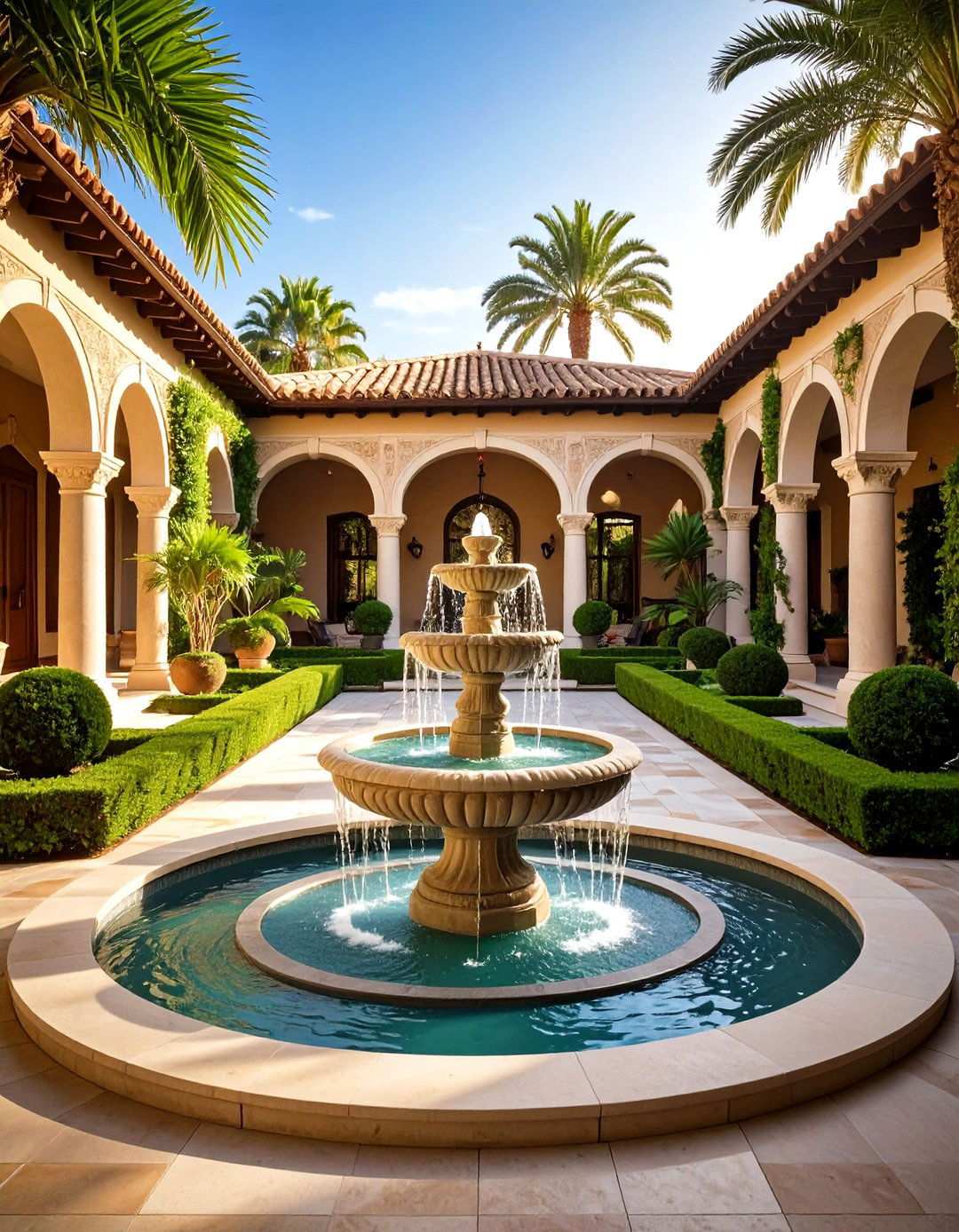
Imagine the calming sounds of gently flowing water creating a peaceful focal point in your garden sanctuary. To achieve this tranquil ambiance, install a classic tiered fountain featuring multiple stone or cast-stone bowls arranged in graduated sizes, allowing water to cascade effortlessly from level to level. Choose designs inspired by timeless artistry, incorporating ornate details like carved scrollwork, classical pedestals, or mythological motifs. Surround the fountain base with circular stone paving using travertine or limestone, defining a sense of separation between the water feature and surrounding plantings. Add low boxwood hedging in geometric patterns radiating outward from the fountain center, creating a sense of harmony and balance. Plant soft-textured herbs and small ornamental trees nearby to soften the formal architecture while maintaining the classical aesthetic. This central water element provides both visual drama and acoustic pleasure, establishing a serene atmosphere that encourages relaxation and introspection.
5. Captivating Terracotta Container Mediterranean Herb Garden
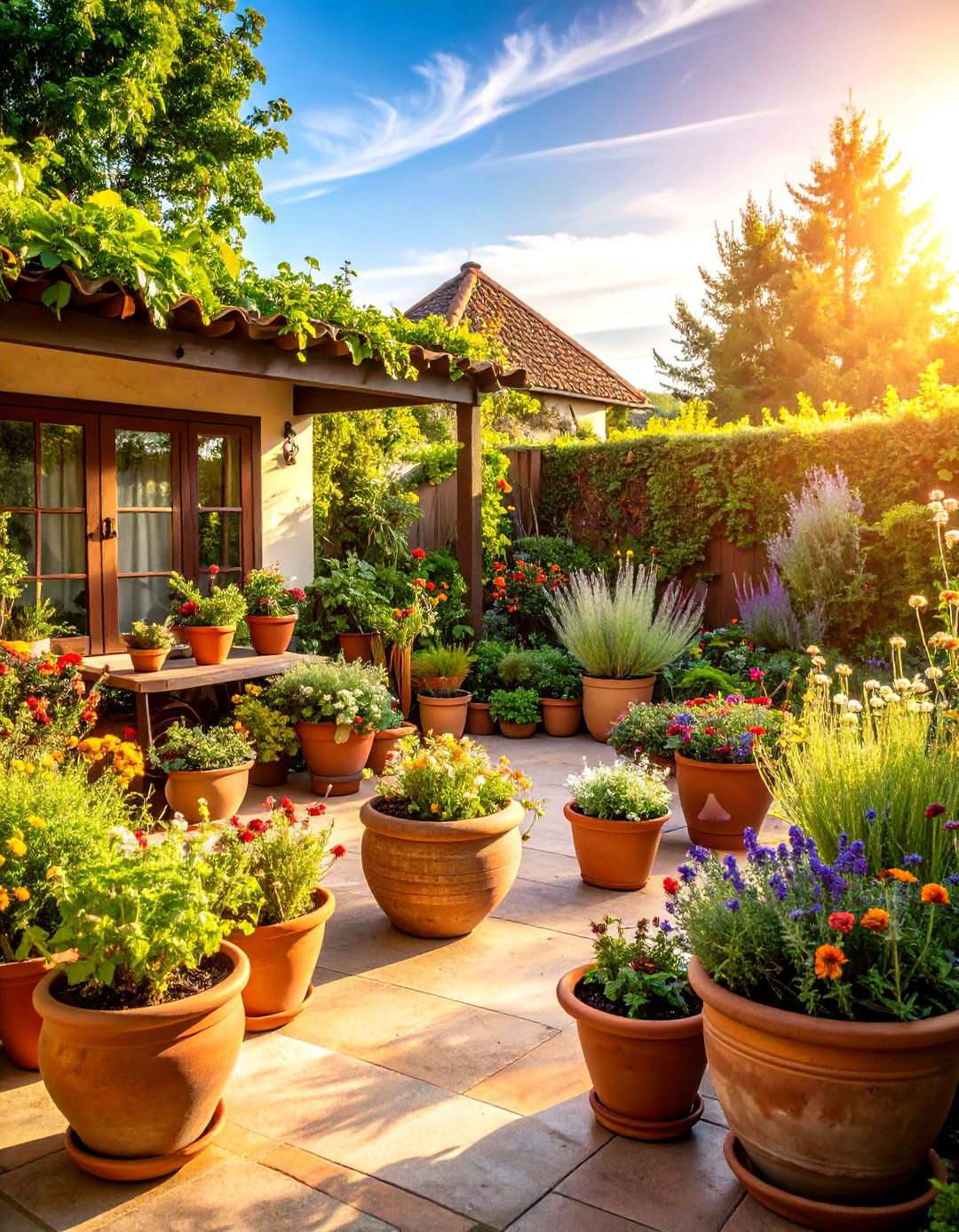
There’s no more authentic way to bring Italy to your garden than by cultivating an array of fragrant herbs within handcrafted terracotta containers. The charm of these clay pots lies in their aged patina, which develops character over time, and weathered surfaces that reflect the seasons. To create a visually appealing display, group containers in odd numbers along terraces, pathways, or around seating areas, showcasing the unique textures and heights. Incorporate trailing plants like creeping thyme or marjoram to soften the container edges, while placing larger specimens containing bay or lemon trees as anchor points. This approach seamlessly blends functional gardening with aesthetic appeal, providing fresh flavors while maintaining the rustic charm that defines traditional Italian garden style.
6. Enchanting Olive Grove Courtyard Garden
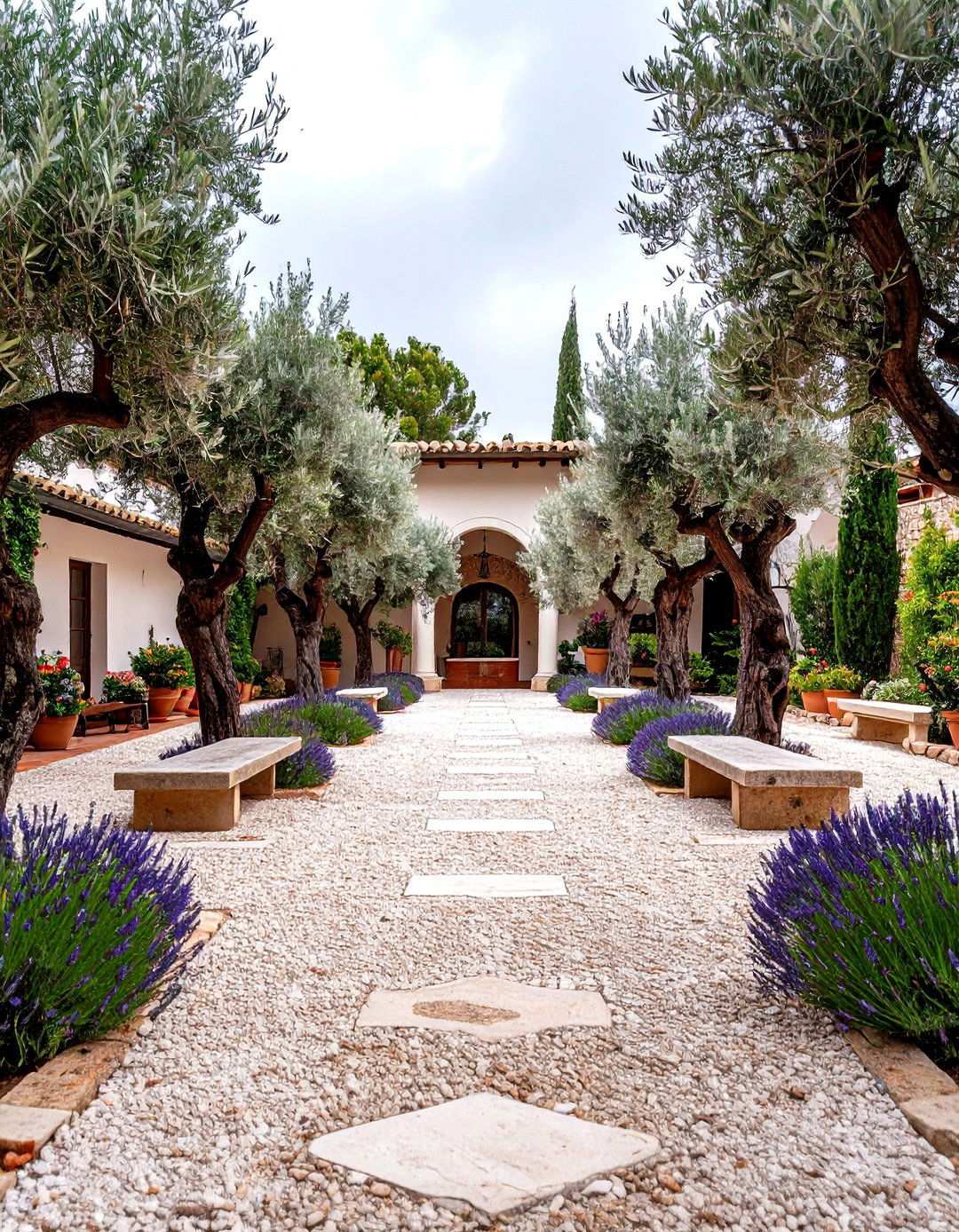
Imagine yourself surrounded by the serenity of an ancient Roman villa garden. An intimate Mediterranean courtyard, reminiscent of Italy’s rich agricultural heritage, can be created by planting mature olive trees in a geometric grid pattern. Spacing them twelve to fifteen feet apart allows for optimal canopy development while maintaining a formal structure. Choose varieties like ‘Arbequina’ or ‘Frantoio’, perfect for temperate climates, or opt for container-grown specimens that can overwinter indoors. Underplant with drought-tolerant Mediterranean groundcovers, such as lavender, santolina, or ornamental grasses, to complement the silvery olive foliage. The addition of decomposed granite or gravel pathways, bordered by low stone edging or clipped boxwood hedges, further enhances the contemplative atmosphere. Complete the design with classical elements like stone benches, antique urns, or a small central fountain to create a peaceful retreat perfect for morning coffee or evening aperitivos.
7. Alluring Climbing Rose Arbor Walkway
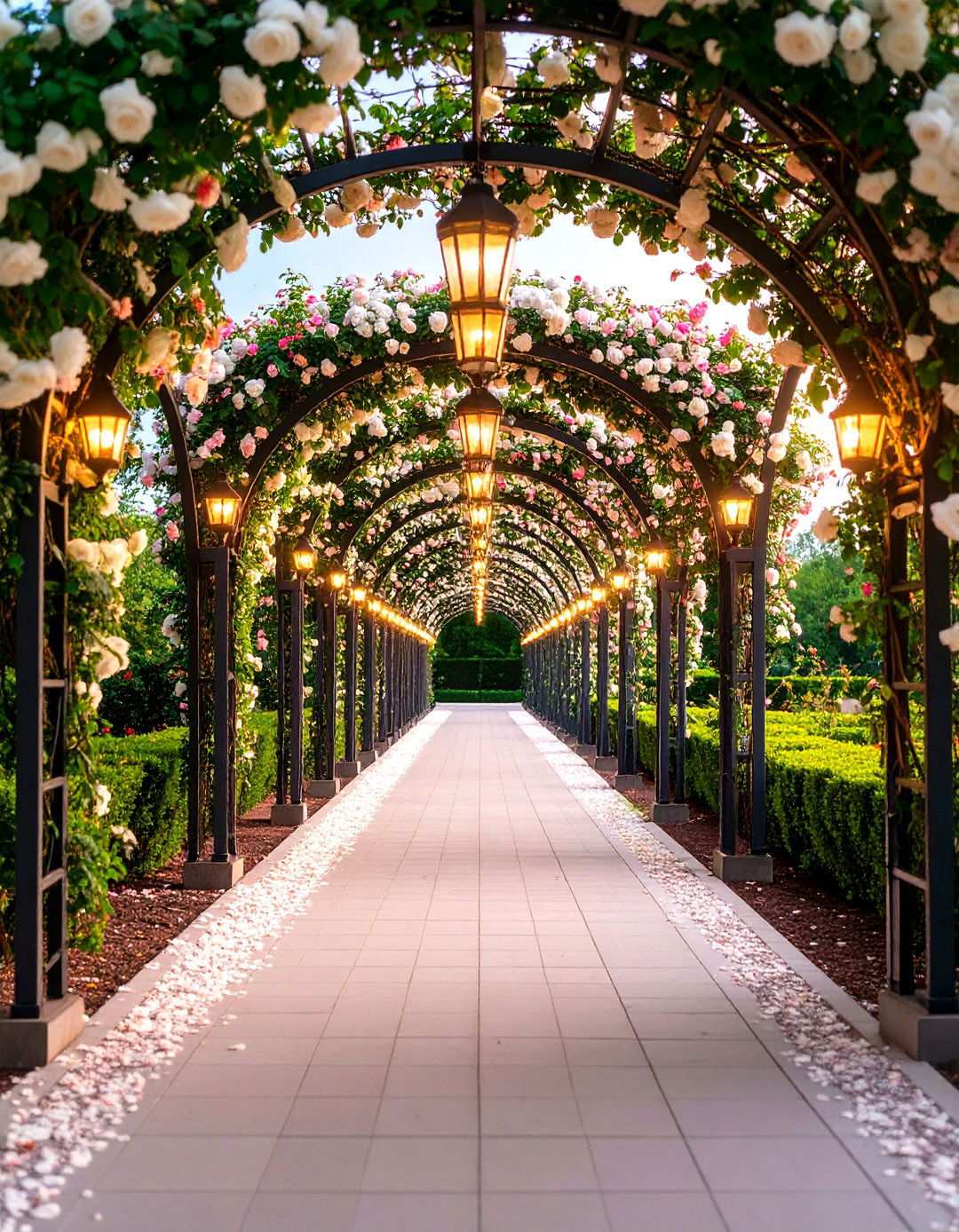
Transform a simple garden path into a romantic journey beneath cascading roses and fragrant blossoms by constructing a series of connected arches using wrought iron or wooden frames. This tunnel-like passage guides visitors through different garden areas, creating a sense of wonder and discovery. Train vigorous climbing roses like ‘Eden’, ‘Pierre de Ronsard’, or ‘Climbing Iceberg’ up and over the structures, ensuring adequate support for mature canes. To add depth and visual interest, combine roses with complementary climbing plants such as clematis or honeysuckle. Plant the walkway borders with low-growing herbs or perennials that won’t compete with the overhead display. As the sun sets, subtle pathway lighting illuminates evening strolls, adding an air of romance to this enchanting design element.
8. Classical Echoes in Modern Landscapes
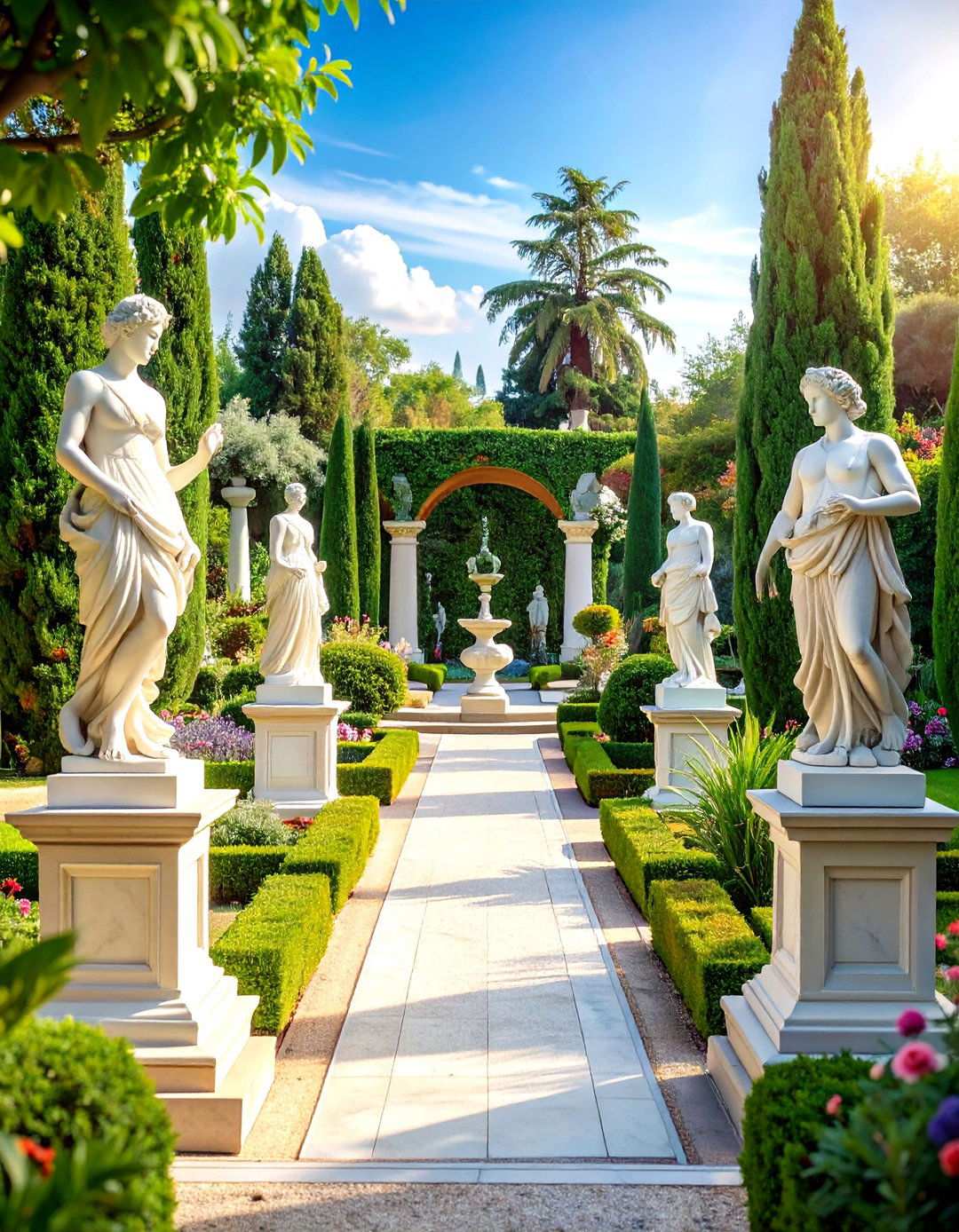
Timeless grandeur can be subtly woven into modern landscapes through strategically placed classical sculptures and architectural elements. By thoughtfully positioning reproductions of mythological figures, historical personalities, or abstract forms crafted from weather-resistant materials, you can create engaging focal points throughout your garden. Placing larger pieces at key intersections or central locations allows them to command attention without overpowering the surrounding plantings. Surrounding sculptures with carefully chosen formal plantings, including shaped evergreens or seasonal flowers, not only complements the art but also strikes a balance between visual elements. Integrate architectural fragments like columns or decorative urns to create visually striking vignettes, transforming your garden into an outdoor space where art and nature harmoniously coexist, much like the Italian tradition of blending cultural refinement with natural beauty.
9. Enchanted Grotto Retreats
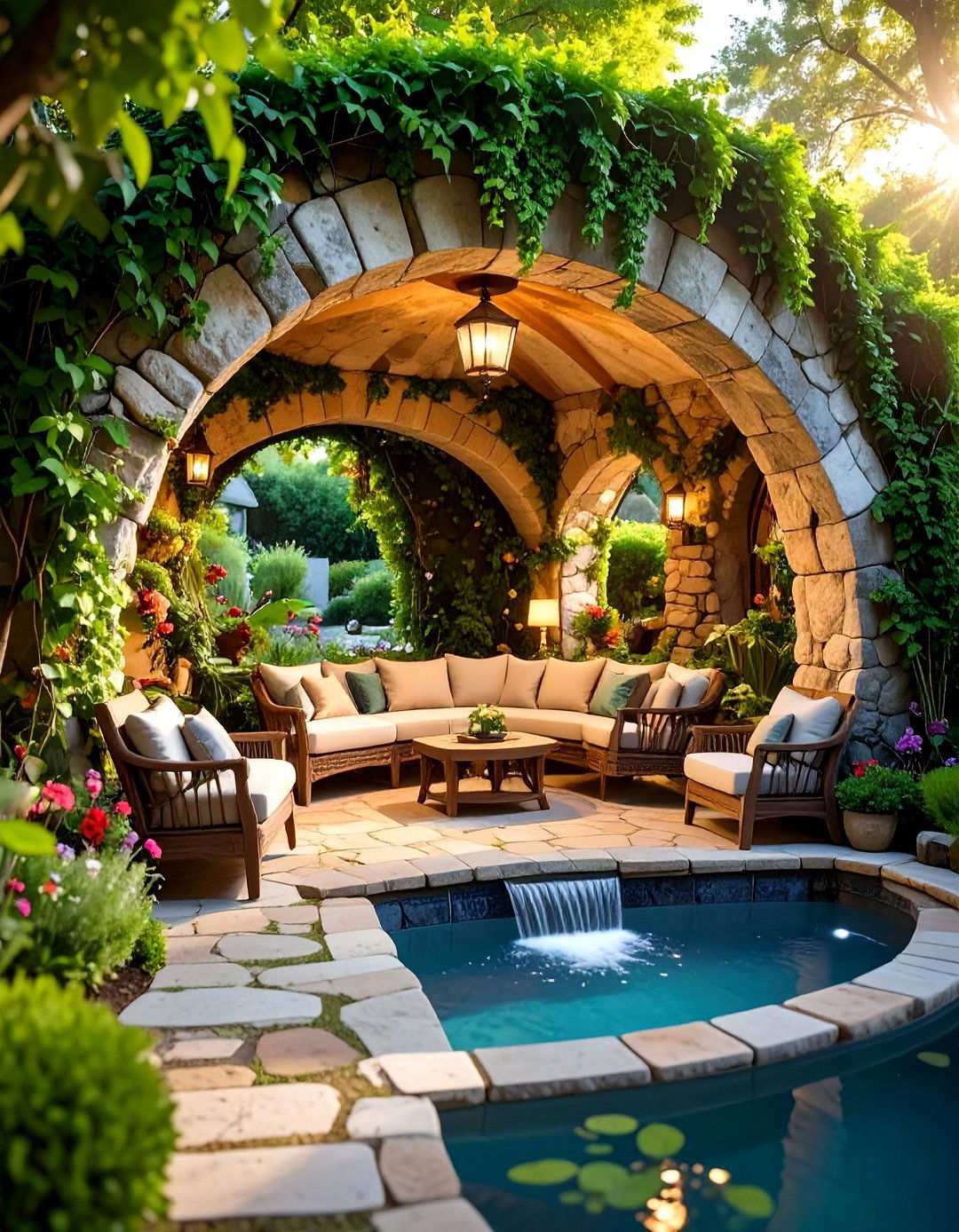
Renaissance-era garden grottoes have long captivated our imagination with their mysterious allure, providing serene escapes from the summer heat. Create a captivating artificial cave using natural stone, designed to foster intimate moments of contemplation or romantic connection. Craft the entrance with weathered limestone or travertine, incorporating classical details like arched openings or decorative stonework to evoke a sense of history. Within the grotto, install a soothing water feature, such as a wall fountain or bubbling spring, to create a calming ambiance. As the exterior is gradually covered by climbing vines like ivy or jasmine, the structure becomes a naturalized part of the surroundings. Add inviting stone or wooden seating inside, along with subtle lighting for evening use, making the grotto a peaceful retreat. Surround the space with lush, shade-loving plantings like ferns or hostas, which thrive in the cooler microclimate, infusing the area with mystery and historical significance while providing a practical escape.
10. Tuscan Herb Spiral Garden
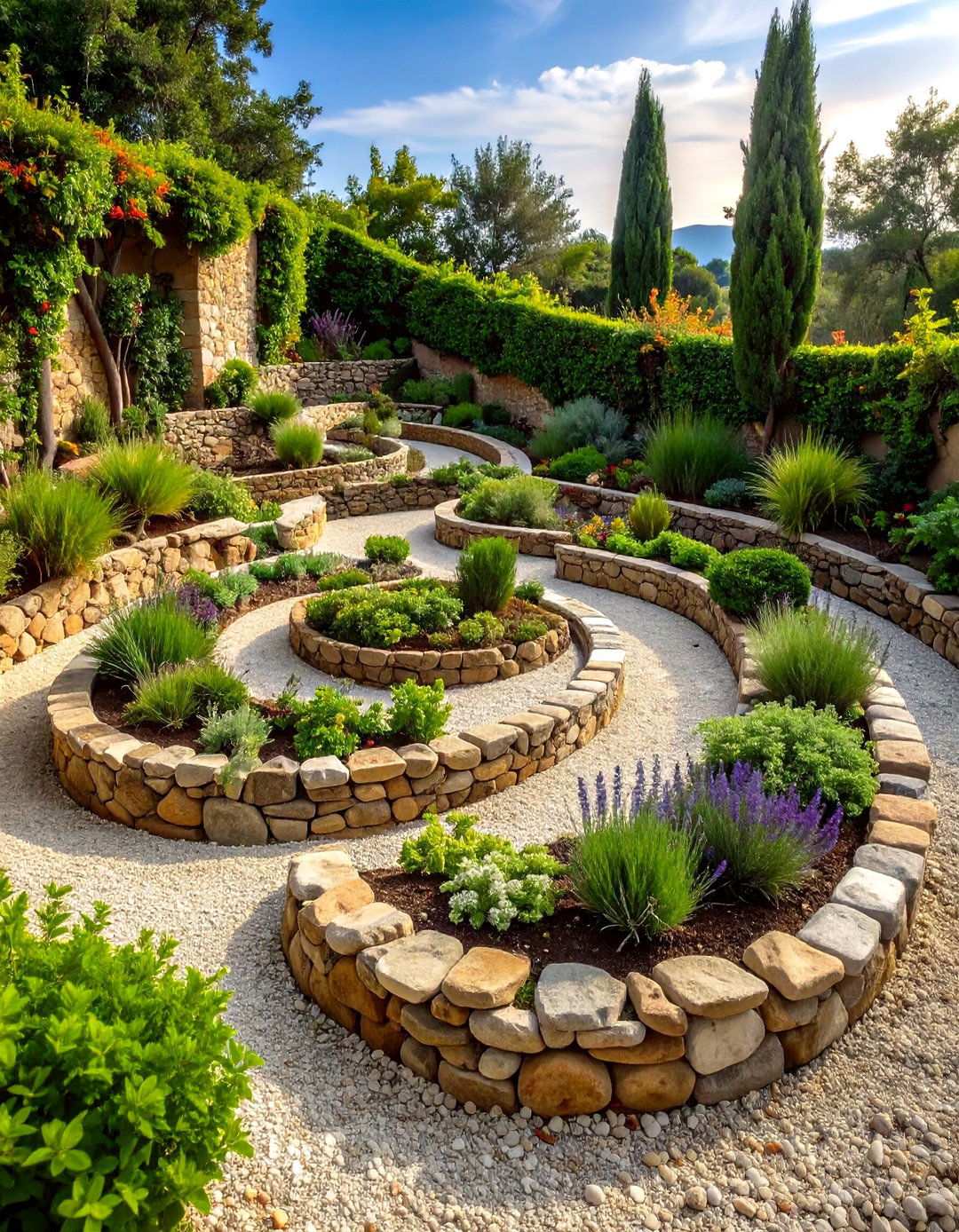
Imagine cultivating a lush herb garden that not only showcases your passion for Italian cuisine but also maximizes growing space in a compact footprint. By creating a spiral-shaped raised bed with natural stone walls, you can establish distinct elevation levels and microclimates. Position Mediterranean herbs like rosemary, thyme, and oregano at the top, where drainage allows for optimal growth, and moisture-loving herbs like basil and parsley lower down. Design meandering pathways between spirals using gravel or small stepping stones for effortless harvesting access. To add a decorative touch, incorporate terracotta markers, small sculptures, or antique garden tools, which will not only enhance visual appeal but also create a sense of history and character. This innovative approach to gardening combines functionality with artistic flair, embodying the Italian philosophy of merging utility with aesthetic pleasure.
11. Formal Box Hedge Maze Garden Design
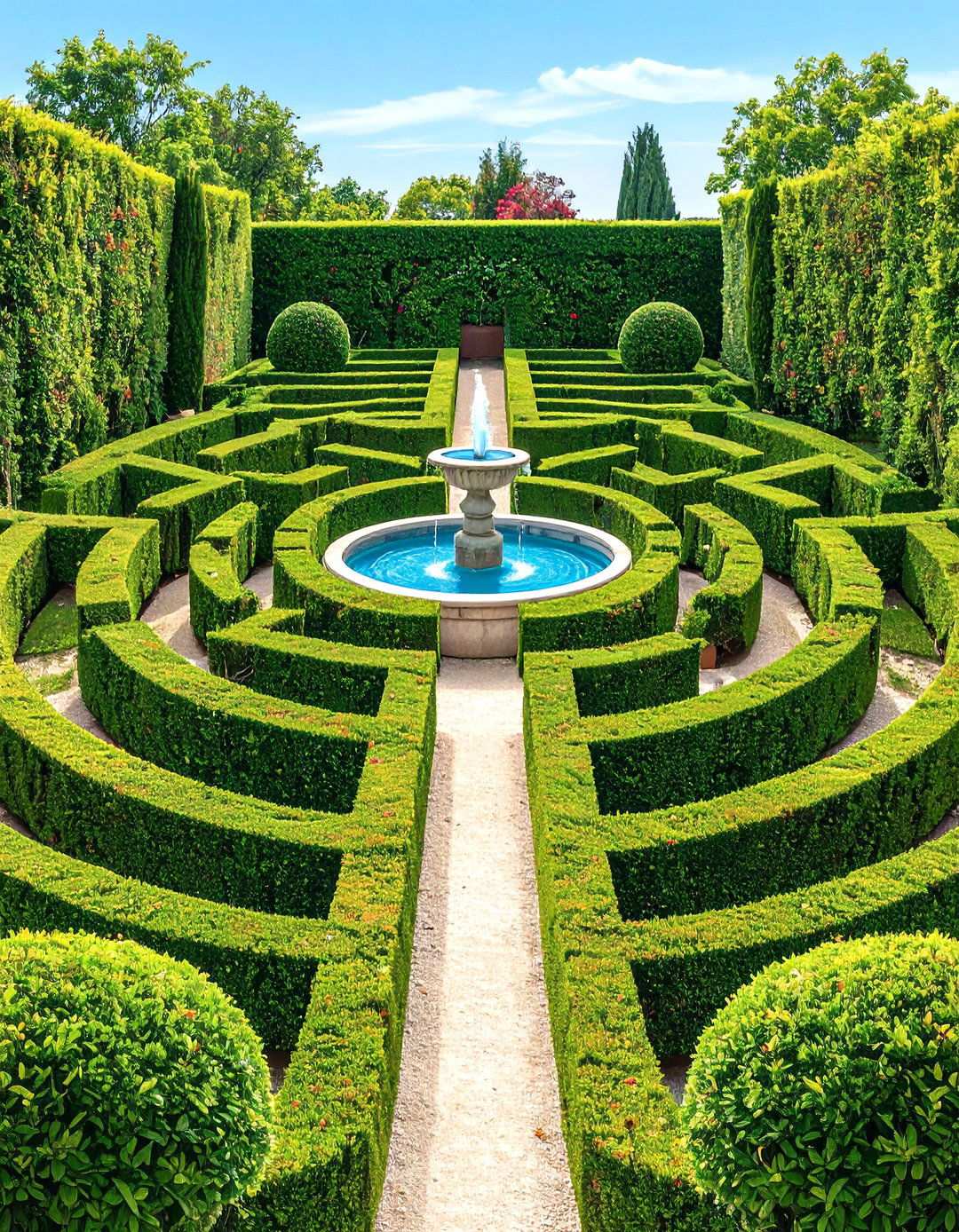
Have you ever fantasized about becoming lost in a captivating maze reminiscent of those found in historic Italian villa gardens? Create an intricate labyrinth using dwarf boxwood varieties arranged in geometric patterns that will challenge and delight visitors of all ages. Design the maze with multiple entry points, dead ends, and a central reward area featuring a fountain, sculpture, or seating area. To strike a balance between challenge and safety, maintain hedge heights between three to four feet. Accentuate the maze borders with vibrant perennials or seasonal annuals that offer visual interest from elevated viewing points. To add an extra layer of sophistication, incorporate topiary balls, small statues, or aromatic plants at key intersections. Install subtle pathway lighting for an enchanting evening experience. This elaborate project transforms your garden into an interactive wonderland that showcases the intricate geometrical principles characteristic of Italian garden design at its most elaborate and playful.
12. Mastering Hillside Terracing for a Vineyard Oasis

Consider reviving the storied tradition of Italian hillside viticulture by designing terraced planting areas that skillfully utilize sloping terrain to their full potential. By employing natural stone such as limestone or sandstone to construct retaining walls, you can create level planting areas that not only prevent erosion but also add an element of architectural interest. Train grapevines along the terraced levels on wooden or wire trellises that provide essential support and structure, selecting ornamental or edible grape varieties suitable for your local climate zone. Meanwhile, complement the vineyard aesthetic by underplanting terraces with Mediterranean herbs, wildflowers, or ornamental grasses that harmonize with the surrounding landscape. Installing stone or gravel pathways between levels ensures easy maintenance access, while adding rustic elements like wooden pergolas, stone benches, or antique wine barrels elevates the design into a stunning reflection of Italy’s rich viticultural heritage.
13. Creating a Citrus Oasis in a Container Garden
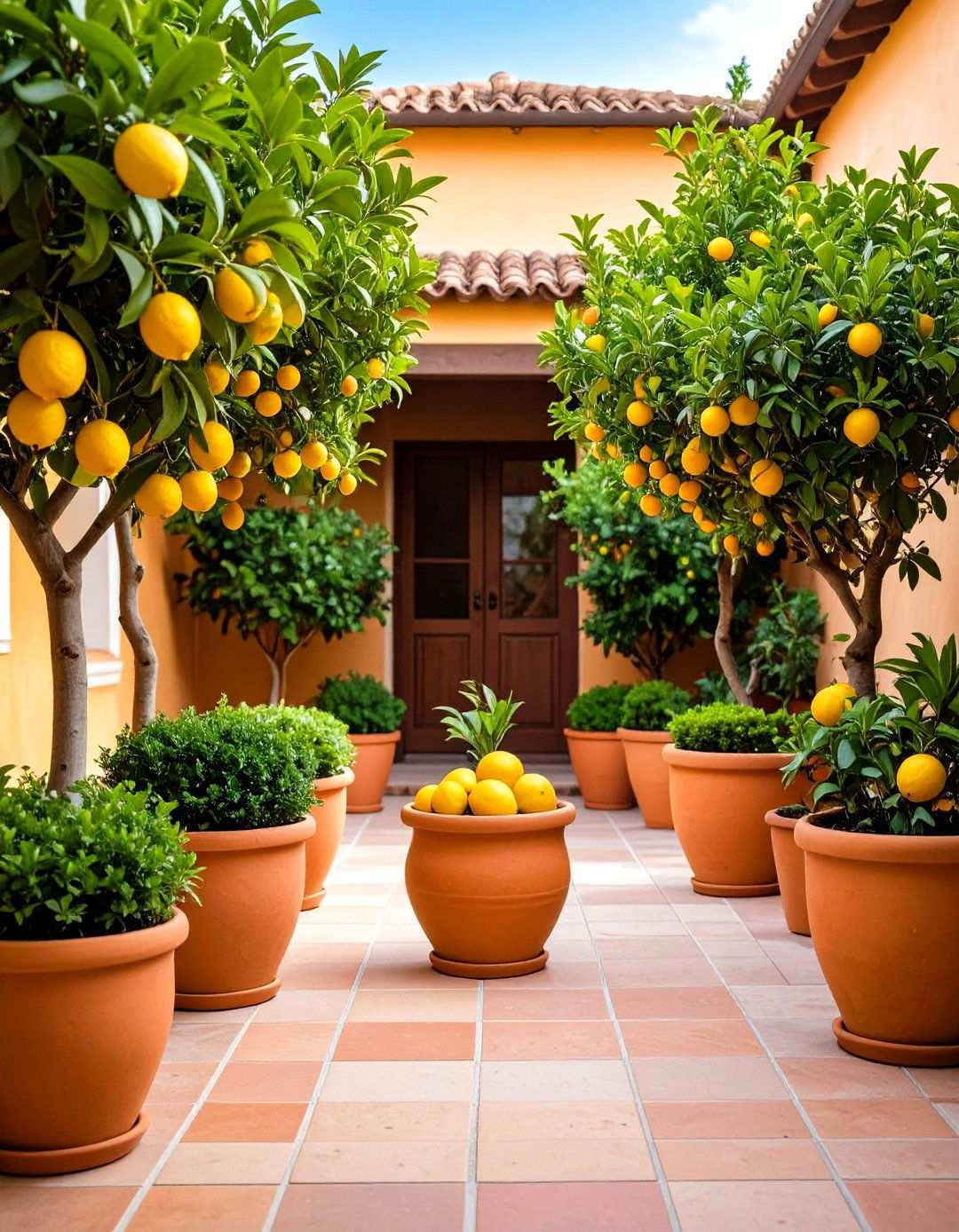
Imagine capturing the essence of Italian Riviera gardens by cultivating aromatic citrus trees in your outdoor space, tailored to your architectural style and climate zone. Choose cold-hardy citrus tree varieties like lemon, lime, orange, or grapefruit that thrive in container cultivation, paired with decorative pots that complement your existing aesthetic. Arrange containers in geometric patterns along terraces, pathways, or around seating areas to create portable orchards that can be easily relocated or overwintered indoors if necessary. Underplant containers with trailing herbs like thyme or oregano that spill over pot edges, while adding companion plantings of lavender, rosemary, or bay trees to create aromatic groupings that evoke the Mediterranean. To ensure optimal growth, install drip irrigation systems for consistent moisture management. Position containers to frame views, define spaces, or create intimate garden rooms that bring the essence of Mediterranean agriculture to any climate, providing fresh fruit, fragrant blossoms, and glossy evergreen foliage that maintains year-round appeal in classic Italian garden tradition.
Elevating Patio Spaces with Mosaic Tile Artistry
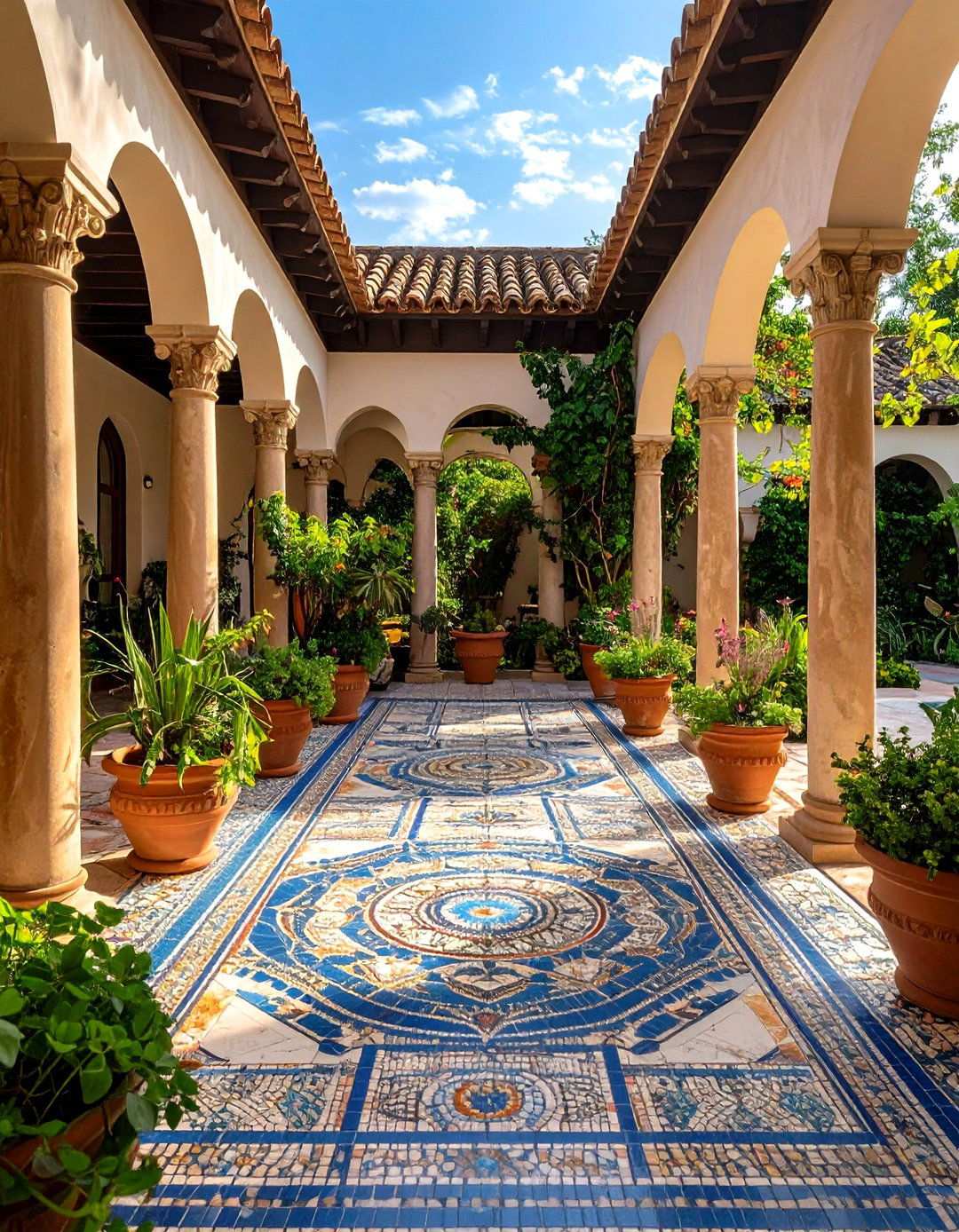
Transforming a simple patio into a breathtaking masterpiece reminiscent of ancient Roman villas is a matter of incorporating artistic flair through decorative mosaic tiles. Skilled artisans can arrange travertine, marble, or ceramic pieces in intricate geometric or figurative patterns, giving rise to stunning visual effects. At the heart of these designs, central medallions, border patterns, or flowing motifs can be incorporated, evoking the elegance of classical Italian artistry. By choosing colors that harmonize with the surrounding architecture and plantings, homeowners can create a cohesive look that celebrates the beauty of Italy’s cultural heritage. The addition of classical elements such as columns, urns, or sculptural features further enhances the historical reference, while evergreen shrubs, aromatic herbs, or seasonal flowers in terracotta containers add a touch of natural charm. To complete the design, comfortable outdoor furniture that complements the mosaic floor treatment is essential, turning functional paving into a work of art that showcases Italy’s rich craftsmanship traditions.
Captivating Garden Arbors with Wisteria’s Dramatic Bloom
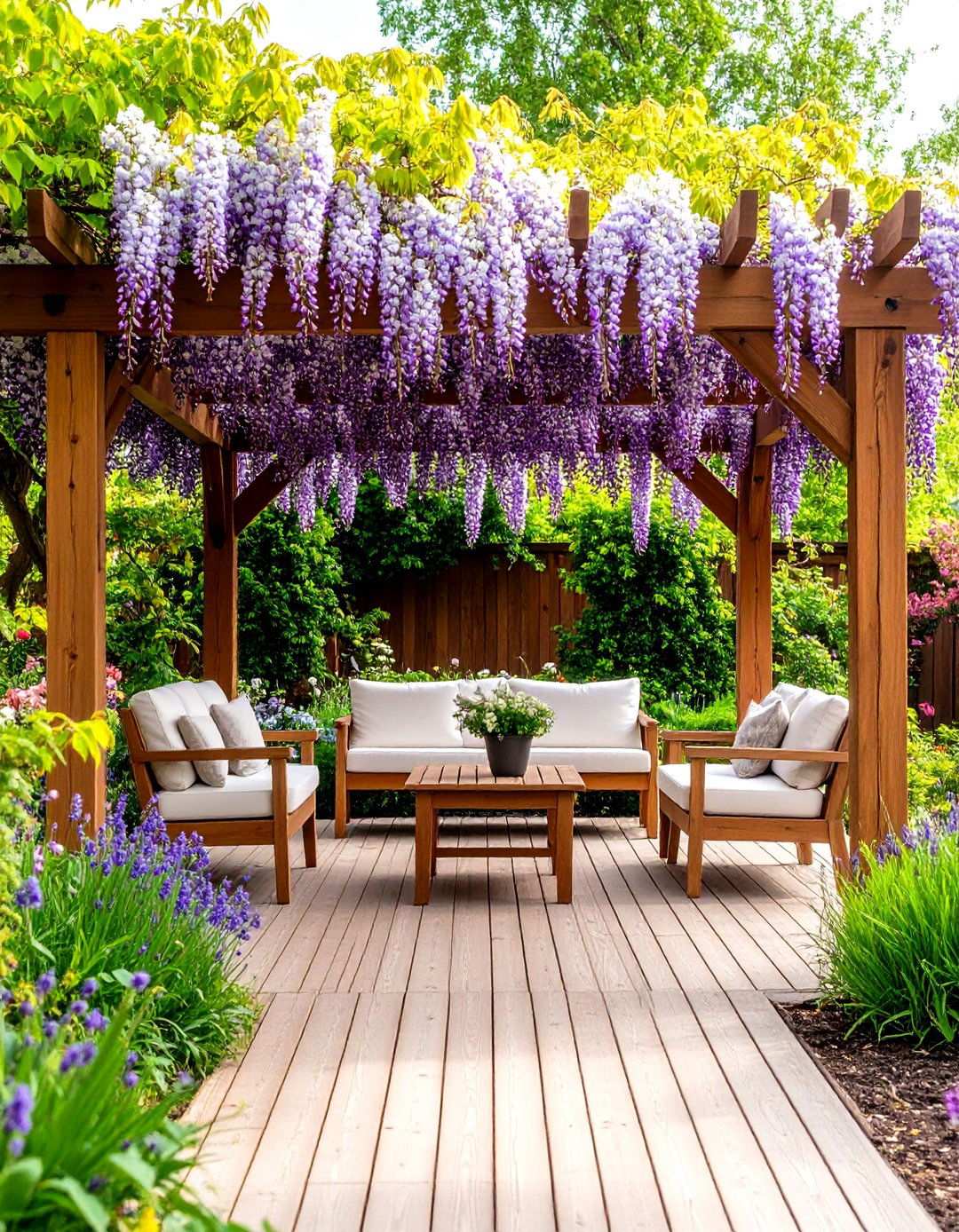
For those seeking the enchanting beauty of cascading purple blossoms during spring garden displays, a substantial wooden or metal arbor can provide the perfect solution. By choosing a sturdy arbor capable of supporting mature wisteria vines, homeowners can create an awe-inspiring spectacle. Japanese wisteria varieties, which bloom before leafing out, offer maximum floral impact, while American species with less aggressive growth habits provide a more controlled display. Careful training of young vines up support posts and across horizontal beams, secured with appropriate ties, is crucial for a thriving wisteria display. Planting the arbor base with spring bulbs like daffodils or tulips that complement wisteria bloom times adds an extra layer of visual interest. To fully appreciate the fragrant canopy during peak flowering, comfortable seating underneath is a must. Surrounding the arbor with complementary plantings, including lavender, roses, or clematis, extends the seasonal interest and creates a breathtaking spring spectacle that embodies the romantic spirit of Mediterranean landscape design.
16. Formal Water Canal Reflection Garden
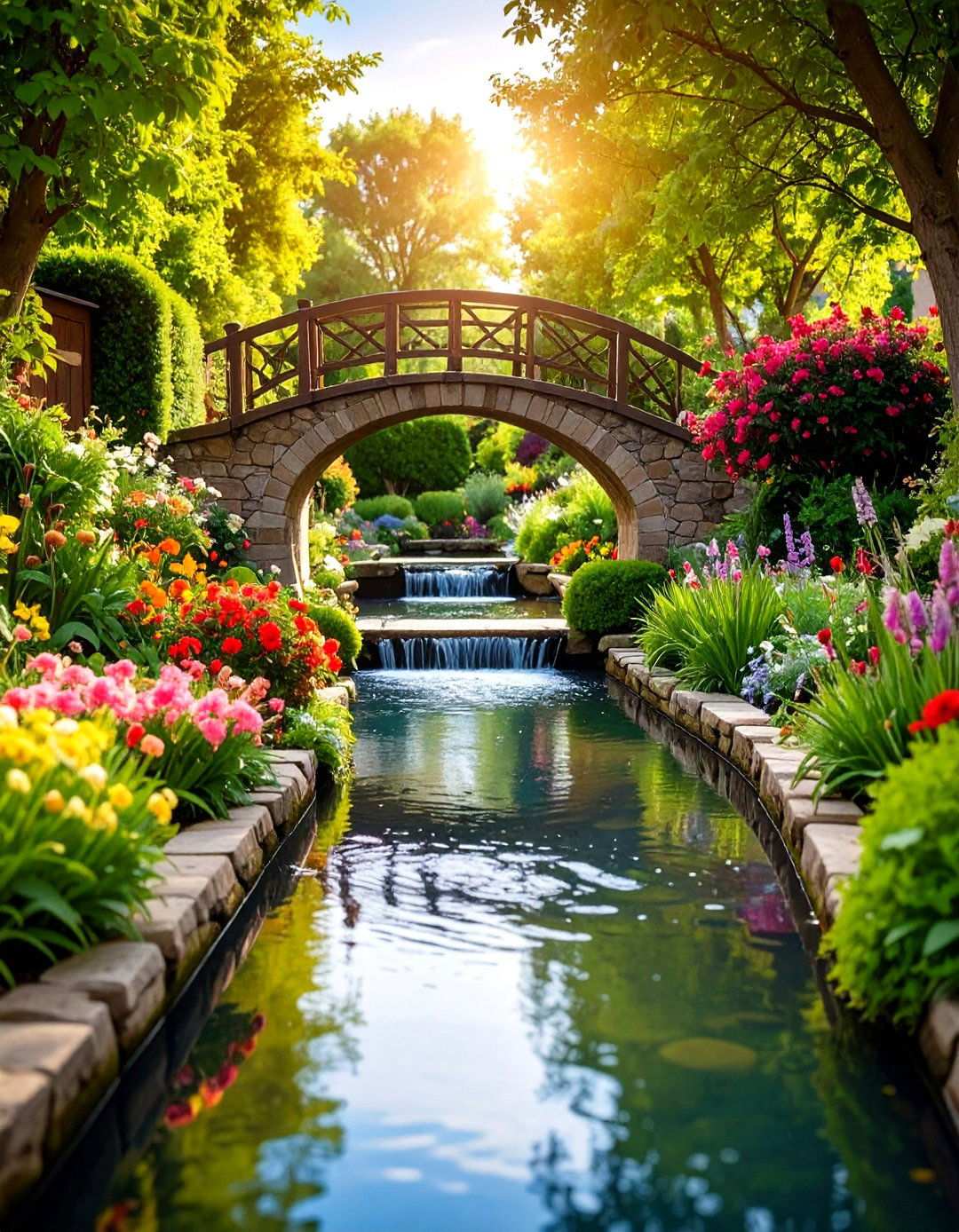
A well-designed water feature can elevate an ordinary garden space into a sophisticated landscape reminiscent of Renaissance villa gardens. By incorporating narrow, stone-lined channels that carry water between different areas, designers can create movement and reflection while connecting separate design elements. Constructing canals using natural stone such as travertine or limestone ensures a proper slope for gentle water flow. Strategically positioning classical fountains or sculptural elements at channel intersections or endpoints adds visual interest and creates a sense of drama. Planting canal borders with formal hedging, ornamental grasses, or seasonal flowers that reflect beautifully in still water sections enhances the garden’s beauty and serenity. Adding decorative bridges at crossing points using materials that complement surrounding architecture creates a seamless transition between garden areas. Installing underwater lighting for evening drama and safety further elevates the garden’s ambiance, introducing linear organization principles while celebrating water as both functional and aesthetic element.
17. Topiary Art Sculpture Collection
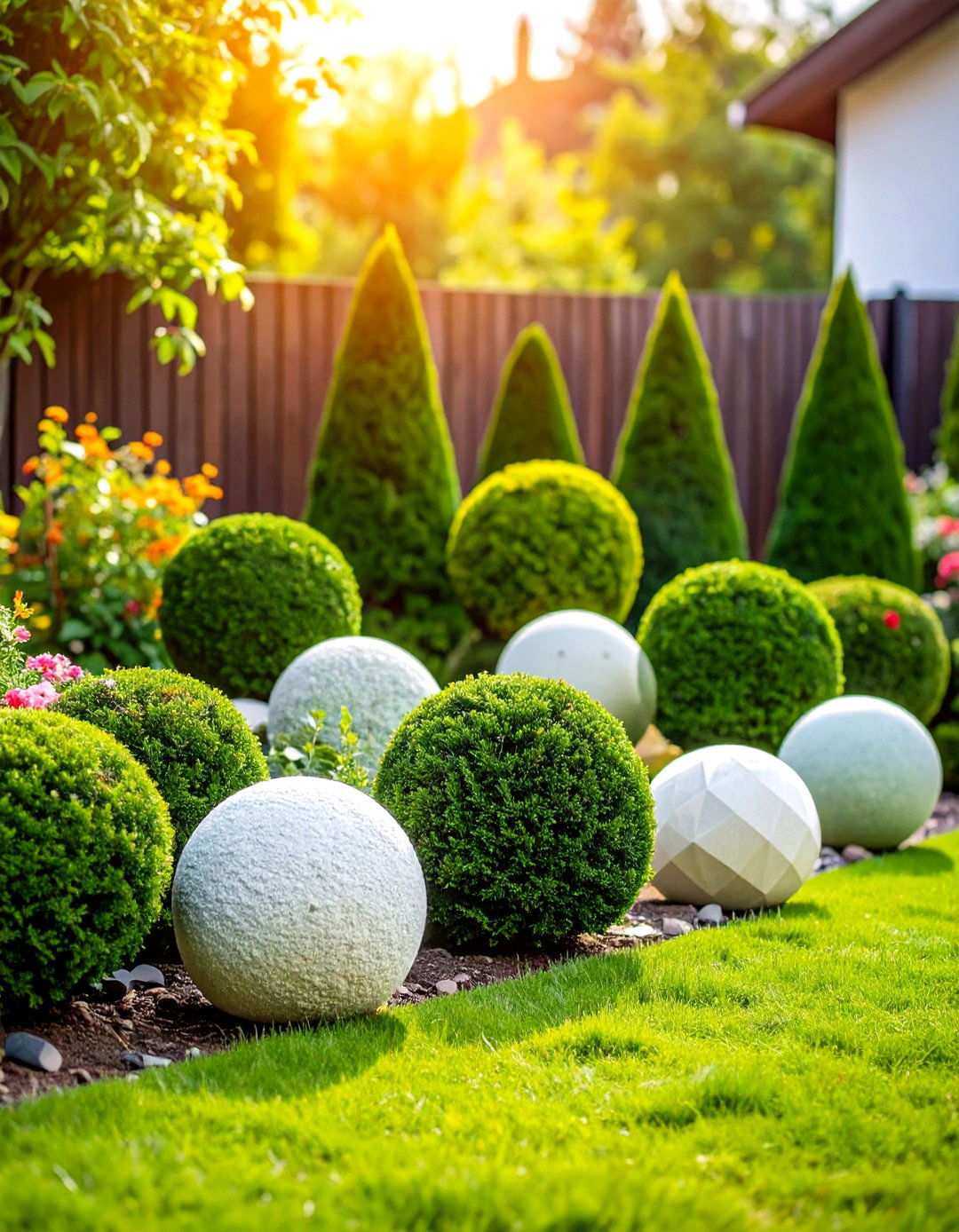
The art of topiary allows garden designers to transform simple shrubs into living architectural elements that define garden spaces with artistic precision. By mastering this ancient art, designers can shape evergreen plants into geometric forms, animal figures, or abstract sculptures using boxwood, yew, or privet species. Creating spheres, cones, spirals, or cubes positioned strategically throughout garden areas serves as a living focal point, drawing the eye to specific areas of the garden. Advanced projects that showcase horticultural artistry can feature complex forms like peacocks, rabbits, or classical urns. Grouping topiaries in odd numbers along pathways, around fountains, or flanking entrances maximizes visual impact and creates a sense of balance. Maintaining shapes through regular pruning during growing seasons requires proper techniques for each species, ensuring the topiaries remain healthy and thrive. Underplanting with seasonal flowers or herbs that complement the formal evergreen structures adds depth and visual interest to the garden, blurring the boundaries between horticulture and art.
18. Envisioning a Mediterranean Succulent Oasis
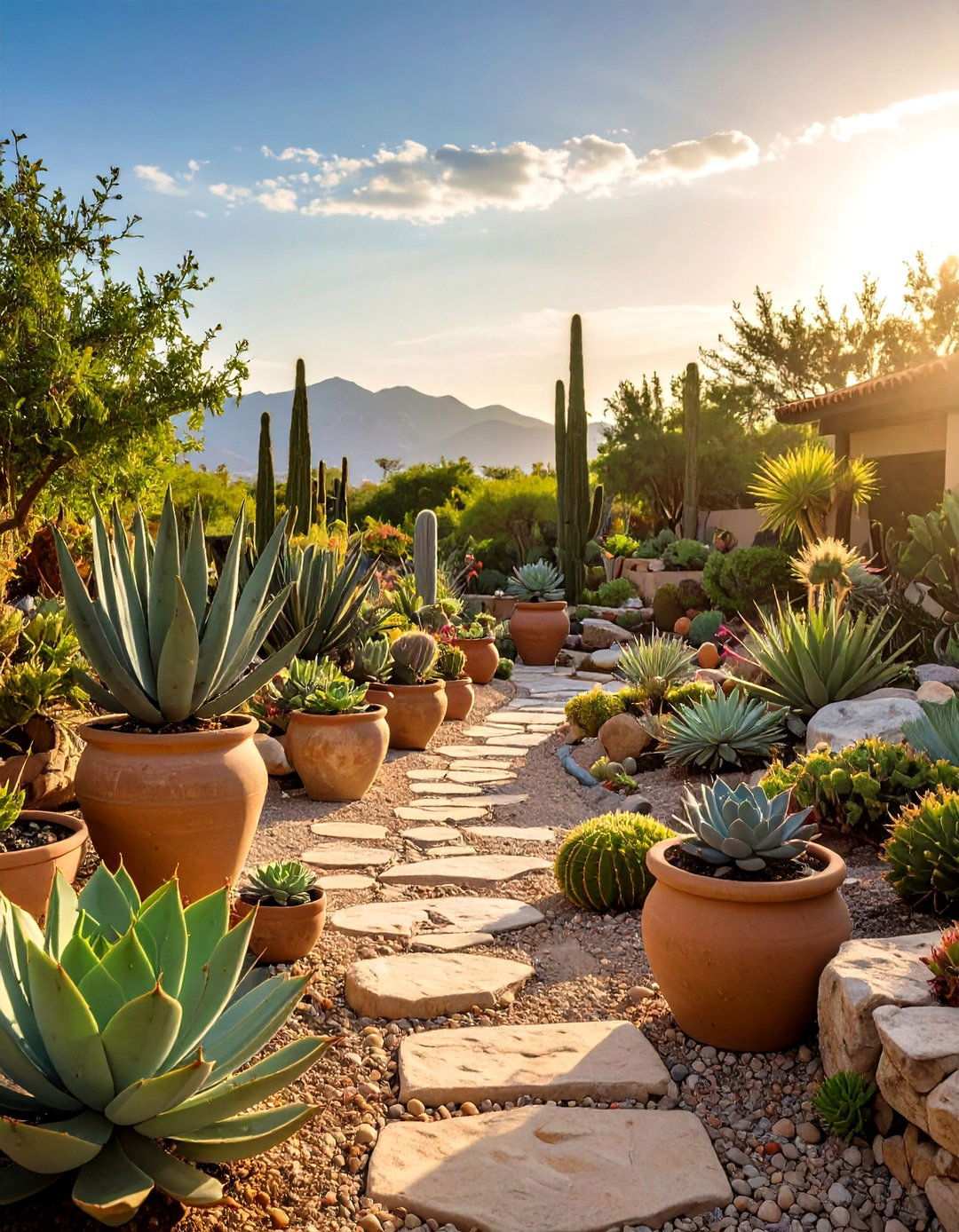
Designs that seamlessly blend drought-tolerant plants with the allure of an Italian garden can be achieved with minimal water requirements and upkeep. By incorporating natural stone to create tiered terracing, a diverse succulent collection can thrive in Mediterranean climates, featuring plants like agaves, sedums, and ornamental cacti. To cultivate well-draining soil conditions, combine gravel, sand, and organic matter in a harmonious balance. Strategically position larger specimens, such as century plants or prickly pear cacti, as focal points and surround them with smaller varieties that introduce textural depth. To add a touch of whimsy, incorporate decorative elements like weathered wood, rustic pottery, or small sculptures that resonate with the desert’s rugged charm. Implementing drip irrigation ensures efficient water management, while aromatic herbs like lavender or santolina planted along rock garden edges create a seamless connection to traditional Italian plantings. This modern interpretation of Mediterranean gardening principles creates serene landscapes that effortlessly blend Italian warmth and character with contemporary water conservation concerns and busy lifestyles.
19. Uncovering Hidden Paradises
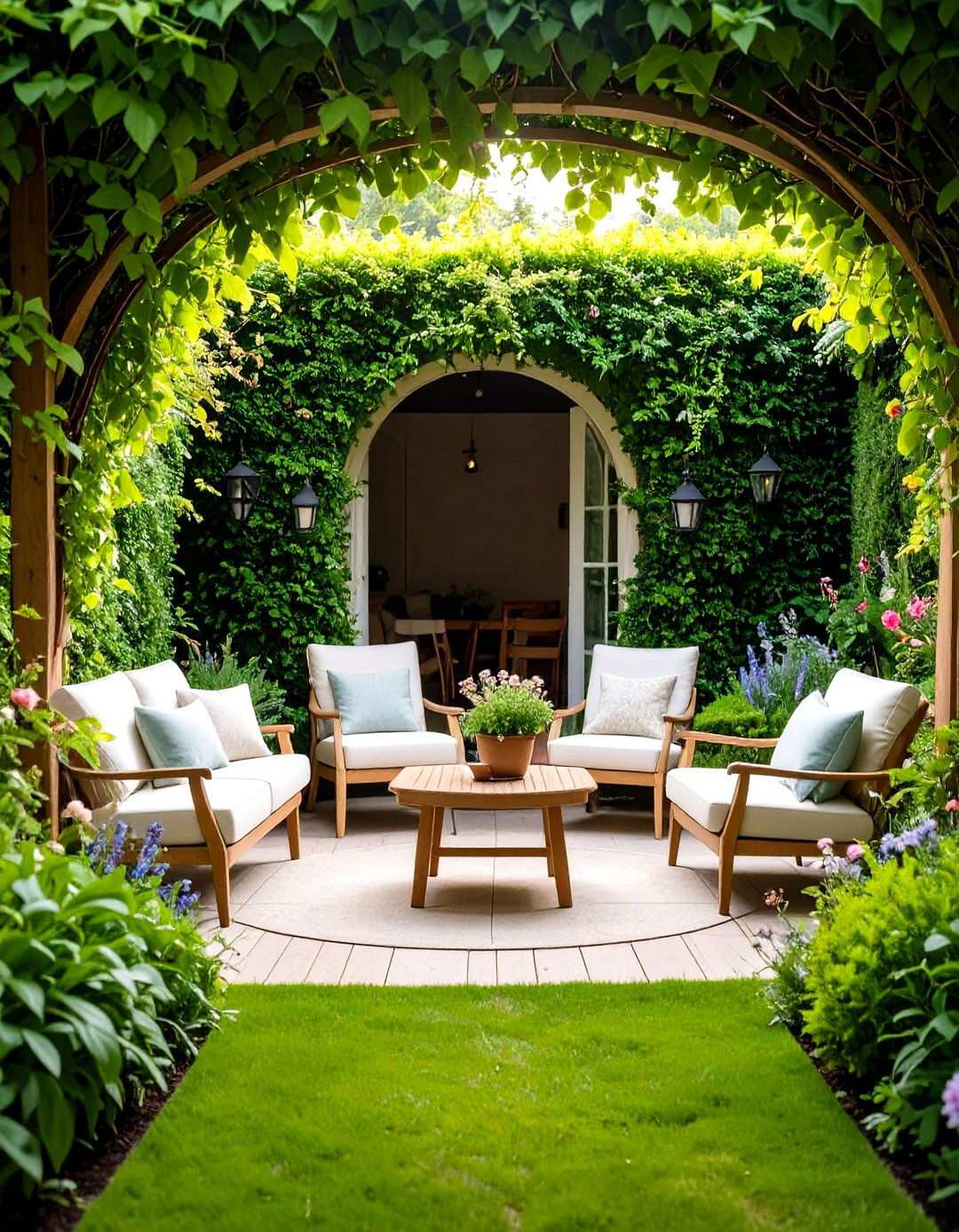
Why not craft enchanting garden spaces that invite exploration and reward discovery with intimate experiences hidden from the main thoroughfares? By designing enclosed areas using high hedging, stone walls, or decorative screening, the interior spaces can remain veiled from casual view. Dense evergreen boundaries created using species like laurel, boxwood, or yew provide year-round seclusion. A single entrance point, whether through an archway, gate, or hedge opening, heightens the sense of discovery and anticipation. Furnish these secret gardens with inviting seating, small water features, or sculptural elements that foster quiet contemplation. Adding fragrant plants like jasmine, roses, or herbs engages multiple senses and heightens the sensory experience. Subtle evening lighting can be installed while maintaining the intimate atmosphere. This design concept draws inspiration from Italian garden traditions, where varied experiential spaces within larger landscapes are crafted to surprise and delight those who venture beyond the obvious pathways to discover hidden treasures.
20. Lavender Field Hillside Planting
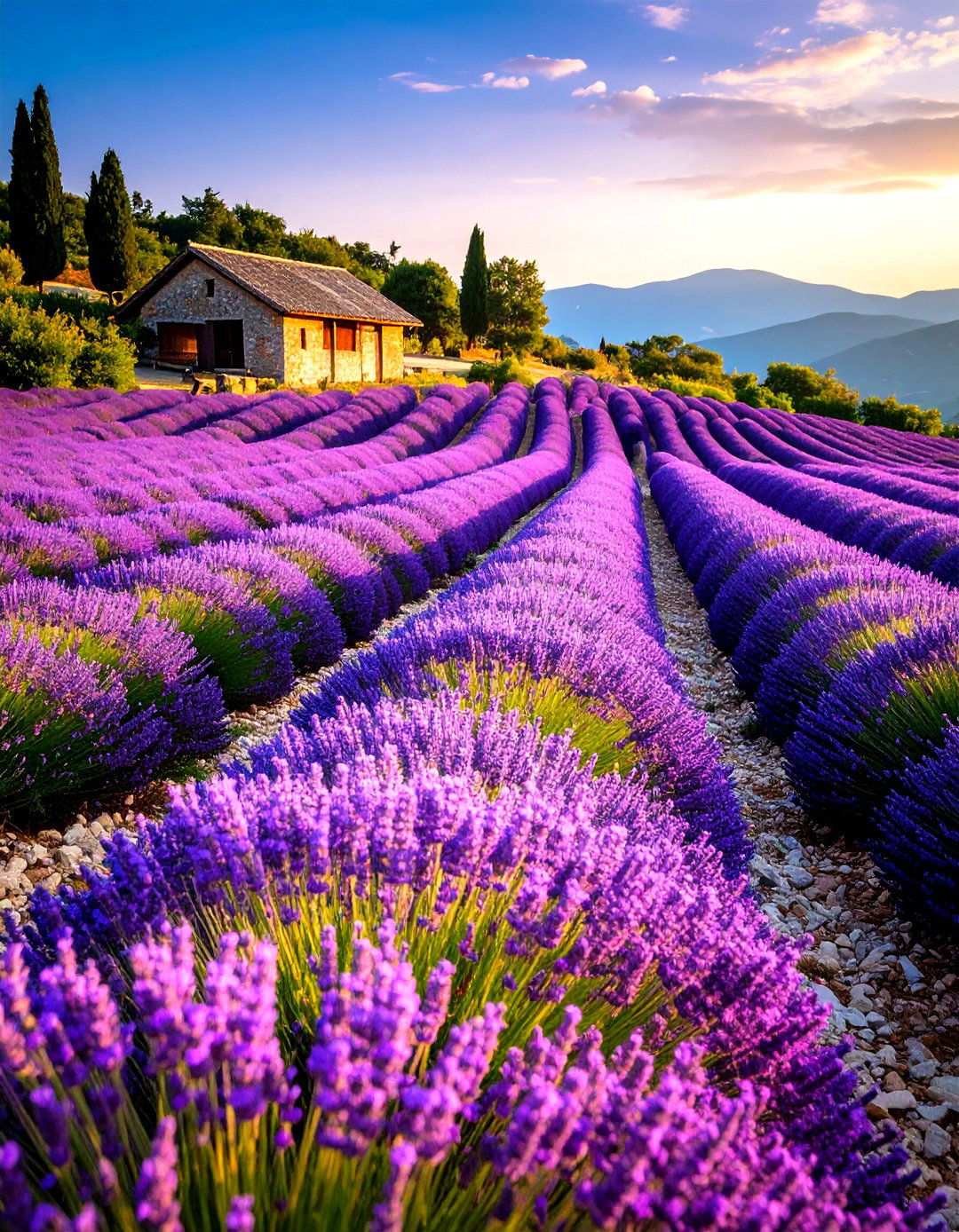
The majesty of the Tuscan countryside is often captured by the sweeping vistas of purple lavender waves undulating across rolling hills. To replicate this breathtaking scene in your own garden, consider planting large groupings of English or French lavender varieties in geometric patterns that harmonize with the natural terrain. For a visually striking effect, combine complementary colors such as the deep purple of ‘Hidcote’, the gentle blue of ‘Munstead’, or the crisp white of ‘Alba’ varieties. Ensure that plants are spaced to accommodate their mature growth while maintaining a defined row structure. Strategically incorporate pathways using gravel or mown grass strips to facilitate maintenance access and visitor circulation. Position viewing areas or benches at key points to maximize appreciation of the display. By incorporating other Mediterranean plants like santolina, catmint, or ornamental grasses between lavender sections, you can create a diverse and dynamic landscape that embodies the Italian tradition of combining beauty with productivity. A well-executed drip irrigation system during the establishment period, followed by reliance on natural rainfall, will ensure the long-term sustainability of this stunning display, providing cut flowers, dried materials, and aromatic oils in the process.
21. Iron Gate Entry Portal Design
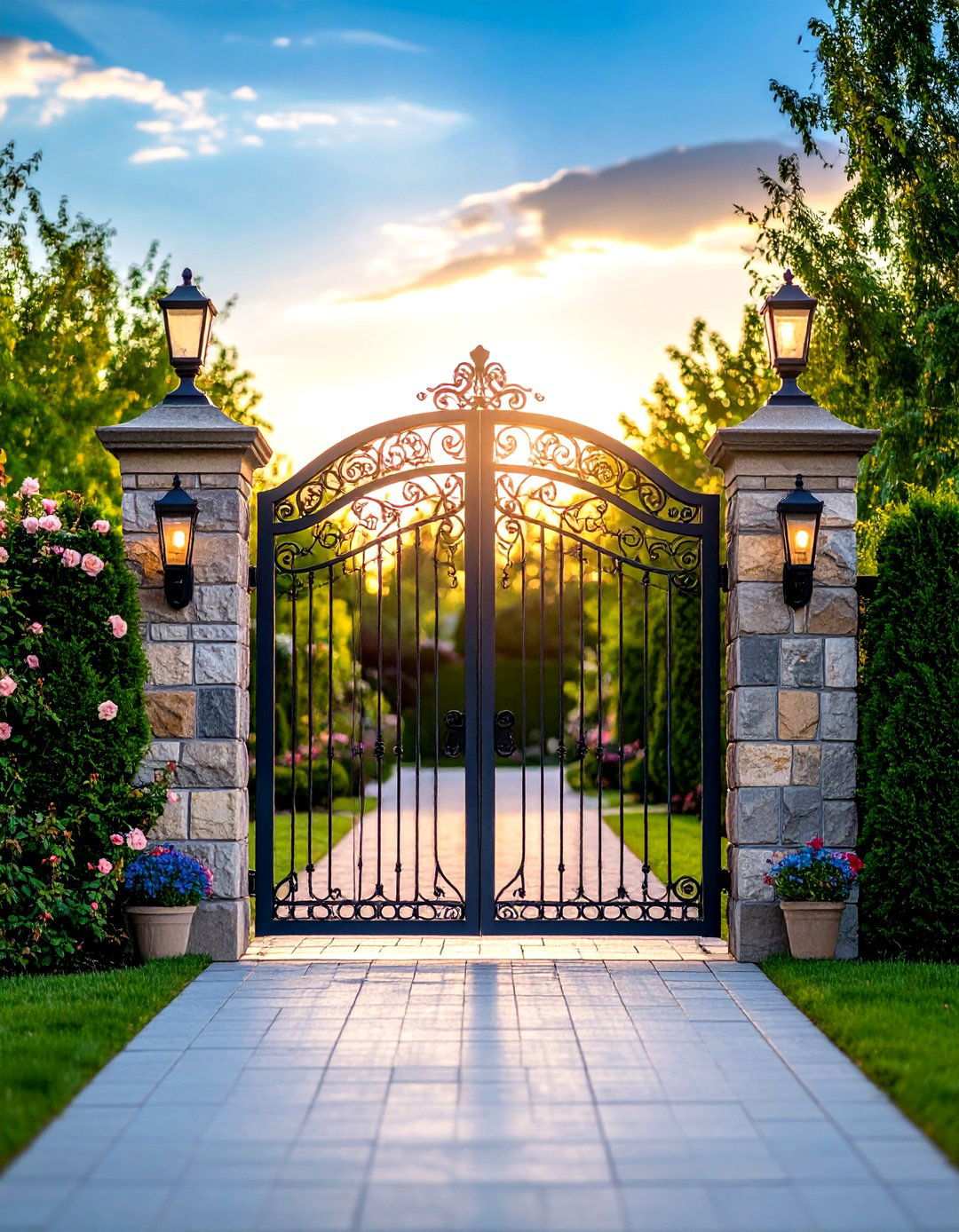
Creating a striking garden entrance that exudes Italian sophistication is a great way to make a lasting impression on visitors. A beautiful wrought iron gate featuring classical motifs such as scrollwork, grape clusters, or geometric patterns can be a stunning focal point that complements your architectural style. Pair the gate with substantial posts made from natural stone, stucco, or brick materials that provide adequate support and visual weight. To add a touch of elegance, flank the gate openings with matching planters containing formal evergreens like boxwood balls or Italian cypress trees. Train climbing vines like clematis or roses up the gate posts and across overhead structures to create a lush, verdant canopy. Personalize the entrance with decorative elements such as lanterns, house numbers, or family crests, and consider installing automatic opening systems for convenience while maintaining security features. By incorporating these elements, you can create an impressive first impression that reflects the Italian tradition of grand entrances that celebrate both hospitality and sophistication.
22. Harmonious Vegetable Garden Layout
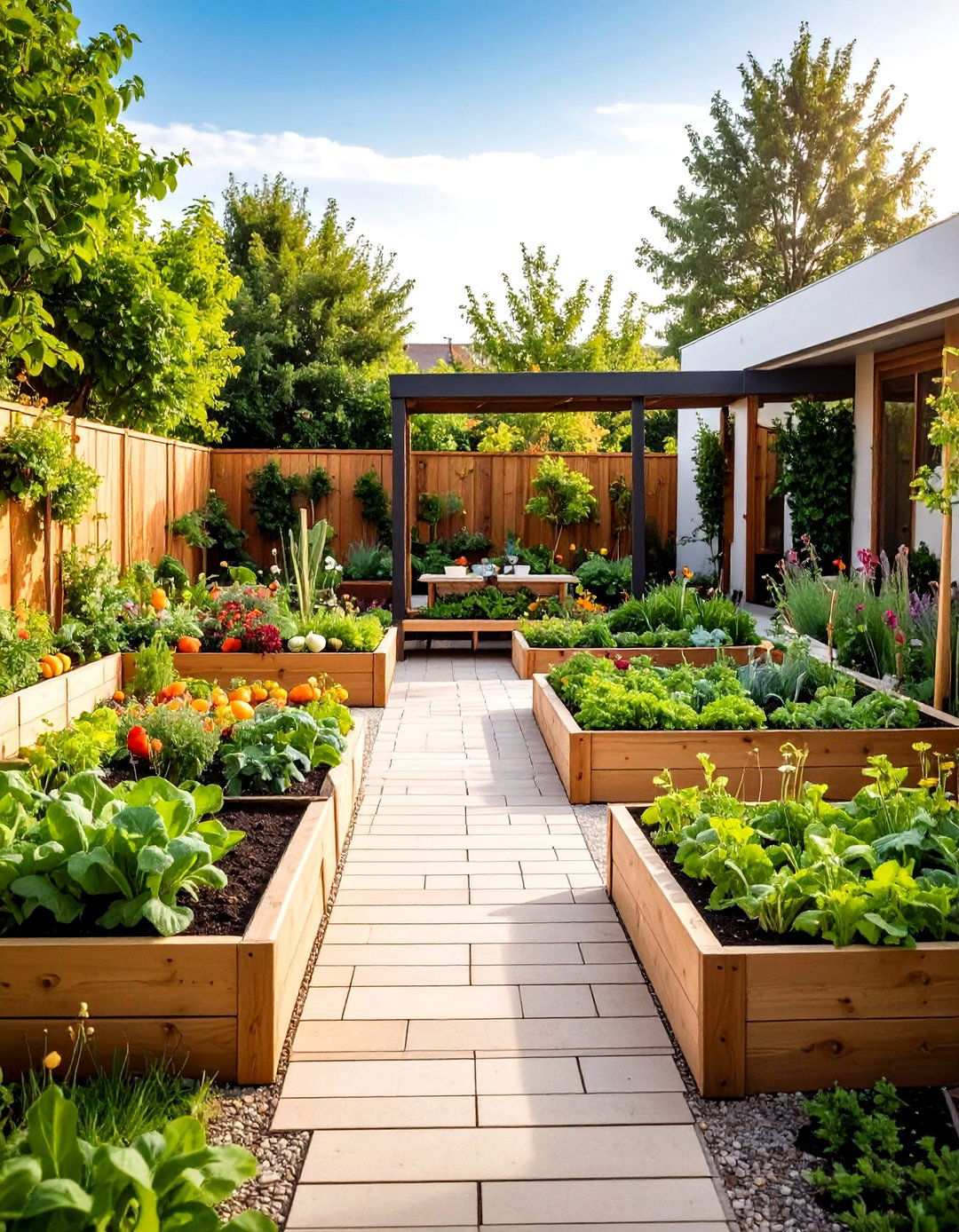
Italian cuisine and vegetable gardens share a common thread – the pursuit of simplicity and elegance. To achieve this union, create a potager layout that seamlessly integrates functional vegetable growing with Italian aesthetic principles. Arrange raised planters in geometric patterns, utilizing natural materials such as stone, brick, or wood to create visually appealing borders. Plant vegetables in neat rows or blocks, categorizing them by color, texture, and growth habits to maximize visual impact. Incorporate Italian staples like San Marzano tomatoes, purple eggplants, and fragrant basil varieties, essential for traditional Italian cooking. Strategically place herbs like parsley, oregano, or chives along the bed edges for effortless harvesting. Construct pathways using gravel, brick, or stone for year-round accessibility and install trellises or obelisks for climbing plants like beans or peas. Embellish the space with decorative elements like terracotta markers, vintage tools, or small sculptures, demonstrating that functional gardens can indeed achieve remarkable beauty while providing essential ingredients for authentic Italian cuisine.
23. Timeless Classical Ruins Garden Folly
Romantic historical ambiance can be effortlessly conjured by thoughtfully placing architectural fragments that evoke ancient grandeur. Create captivating focal points using reproduction classical elements such as weathered columns, decorative pediments, or broken capitals, strategically positioned to suggest forgotten archaeological discoveries. Arrange these fragments in a natural, organic manner, allowing ivy or climbing vines to partially cover their surfaces and create an authentic aging effect. Surround the ruins with Mediterranean plant species that thrive in slightly wild conditions, adding a touch of rustic elegance to the space. Incorporate interpretive elements like stone benches, urns, or tablets to enhance the historical narrative and inspire contemplation. Design winding pathways that lead visitors on an immersive discovery journey between various ruin groupings, inviting exploration and imagination. As night falls, subtle lighting can be used to emphasize the sculptural qualities of the ruins without destroying the mystical atmosphere, transforming ordinary spaces into enchanting landscapes that evoke a sense of wonder and provide a tranquil retreat.
24. Crafting Elegant Outdoor Enclaves
Imagine serene outdoor spaces that mirror the grandeur of indoor living areas while paying homage to Italy’s architectural heritage. To bring this vision to life, consider incorporating architectural elements like columns, arches, or pergolas to create defined spaces without walls. Opt for materials that have a natural, timeless appeal, such as stone, stucco, or reclaimed wood, which develop a beautiful patina over time. Furnish these areas with plush, weather-resistant seating options, including sofas, chairs, and dining sets, to encourage extended periods of outdoor relaxation.
When creating an inviting atmosphere, think about incorporating features like outdoor kitchens, fireplaces, or sound systems that cater to diverse activities. Implement climate control measures, such as ceiling fans or misting systems, to ensure a comfortable environment during hot weather. Surround your outdoor spaces with fragrant plants, decorative planters, or water features that stimulate the senses. To create a seamless transition between day and night, use outdoor textiles, throw pillows, and lighting to establish a cozy ambiance. By embracing this holistic approach, you can craft authentic outdoor living spaces that embody the essence of the Italian lifestyle, where the boundaries between indoors and outdoors seem to disappear.