1. Revitalizing the Great Outdoors with Wooden Walkways
Outdoor spaces can be elevated by combining the natural charm of wood with practical functionality, transforming them into inviting areas for leisure and relaxation. Wooden walkways offer a refreshing alternative to conventional stone or concrete pathways, addressing challenging terrain and uneven ground while adding a touch of rustic elegance to any landscape design. Whether you’re contending with muddy garden areas, uneven ground, or desiring to create defined routes through your outdoor space, wooden walkways provide a versatile solution that suits various architectural styles and skill levels. The inherent versatility of wood allows for infinite design possibilities, from straightforward straight planks to intricate patterned layouts that blend seamlessly with the surrounding environment.

As an Amazon Associate I earn from qualifying purchases.
2. Harmonizing Wood and Environment with Rustic Walkways
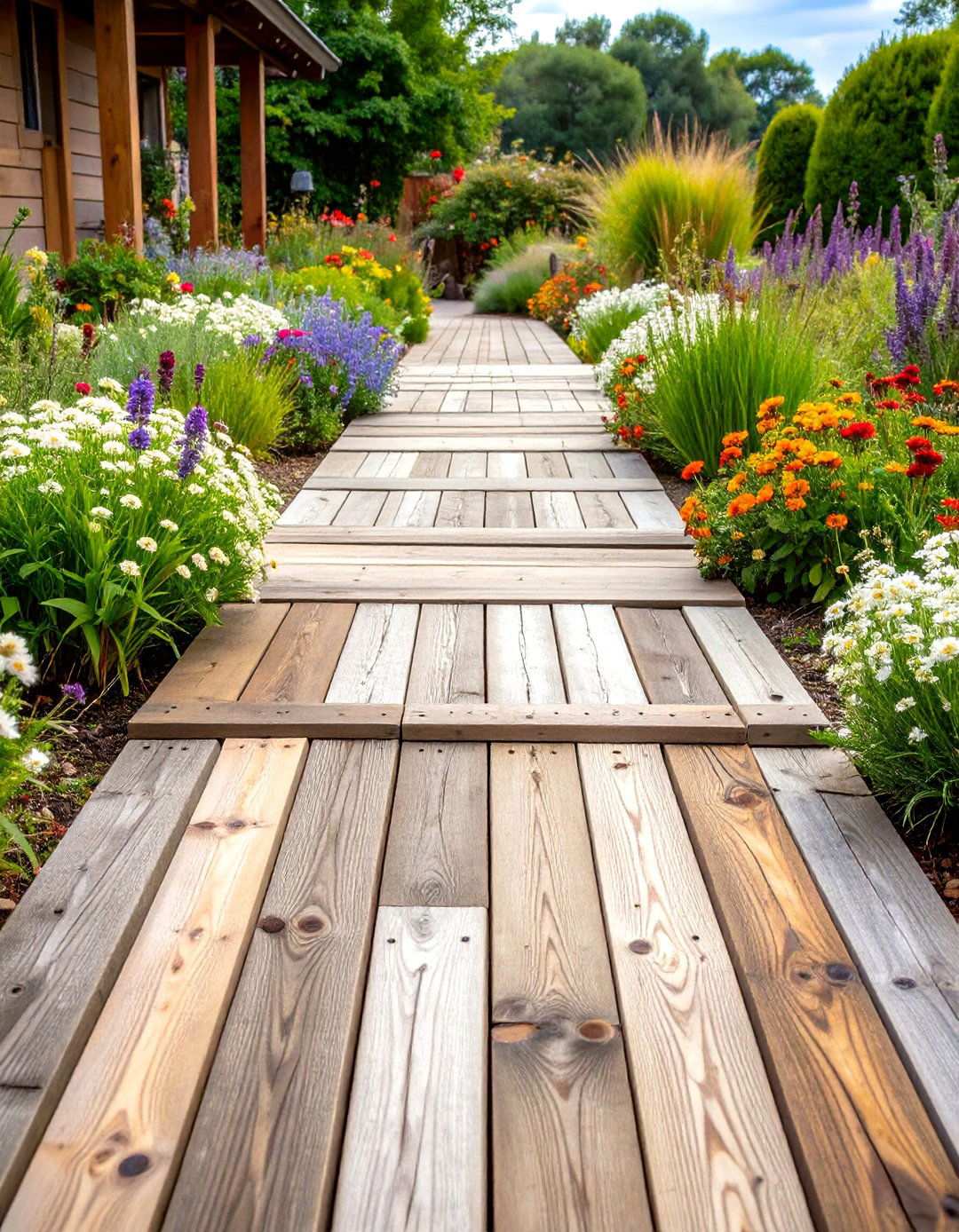
Rustic reclaimed wood plank walkways can be created by combining weathered wood planks in a staggered pattern over a sturdy frame of treated lumber. The natural variations in wood grain and color add character to the design, while the raised construction safeguards against ground moisture. Positioning support beams every six feet and securing individual planks with outdoor screws will result in a visually appealing pathway. The gaps between boards allow for natural drainage while creating visual texture. To complete the look, surround the walkway with native grasses and wildflowers that complement the weathered wood tones. This approach works particularly well in cottage gardens and farmhouse landscapes, where the rustic charm can be fully appreciated.
3. Wood Slice Stepping Stone Trail
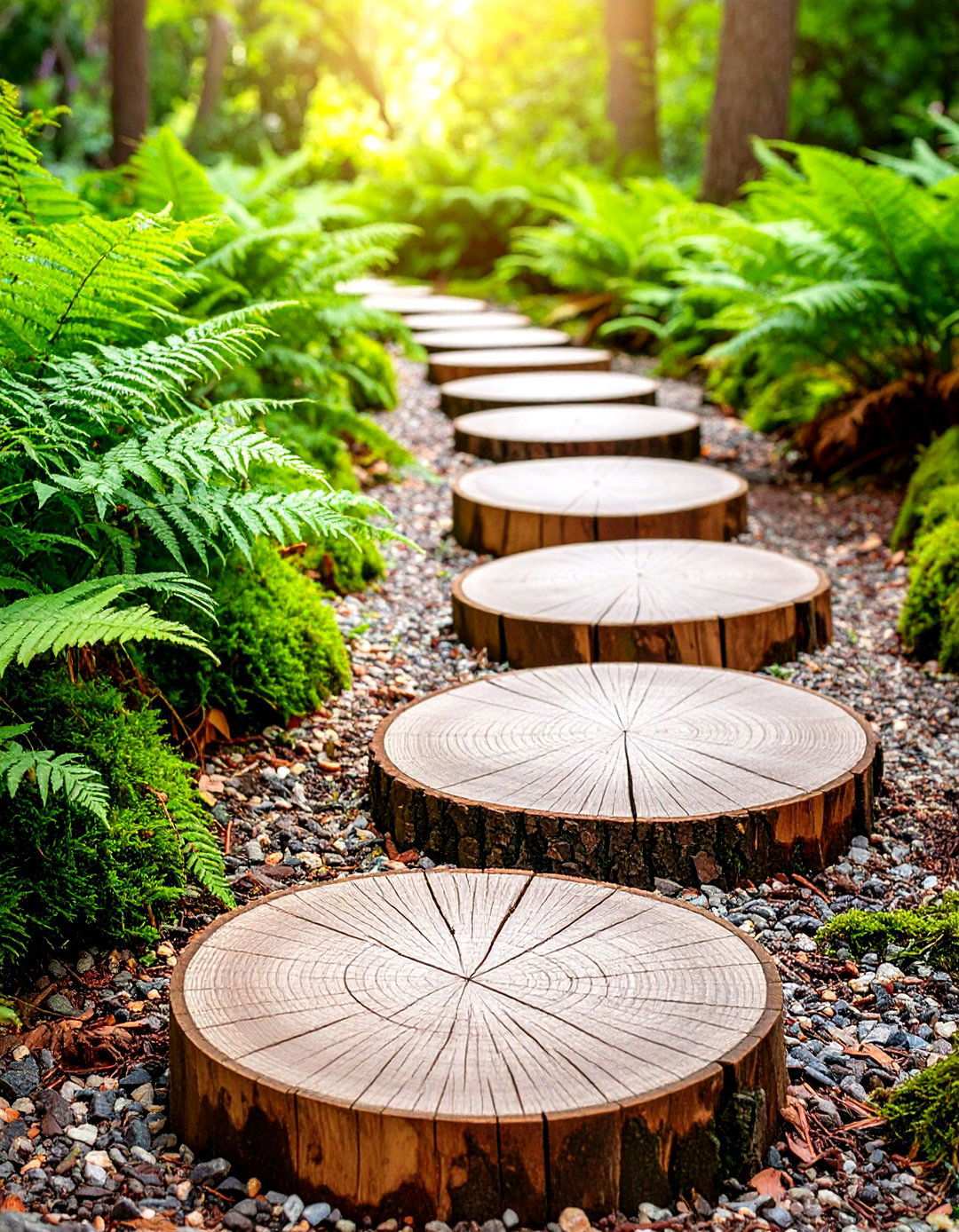
Craft a captivating forest-like pathway by incorporating cross-cut sections from substantial tree trunks, transforming them into oversized stepping stones. These natural wood rounds can be placed directly on prepared ground or embedded in gravel, creating an enchanting ambiance. For visual interest and a natural walking rhythm, vary the sizes from 18 to 30 inches in diameter. To ensure safe footing, seal the wood surfaces to prevent rapid deterioration. Space the rounds approximately 24 inches apart for a comfortable stride length. Surround the pathway with lush moss, ferns, or groundcover plants to enhance the woodland atmosphere. This organic approach works particularly well in shaded areas and natural garden settings where conventional paths may seem too formal.
4. Elevated Boardwalk Design
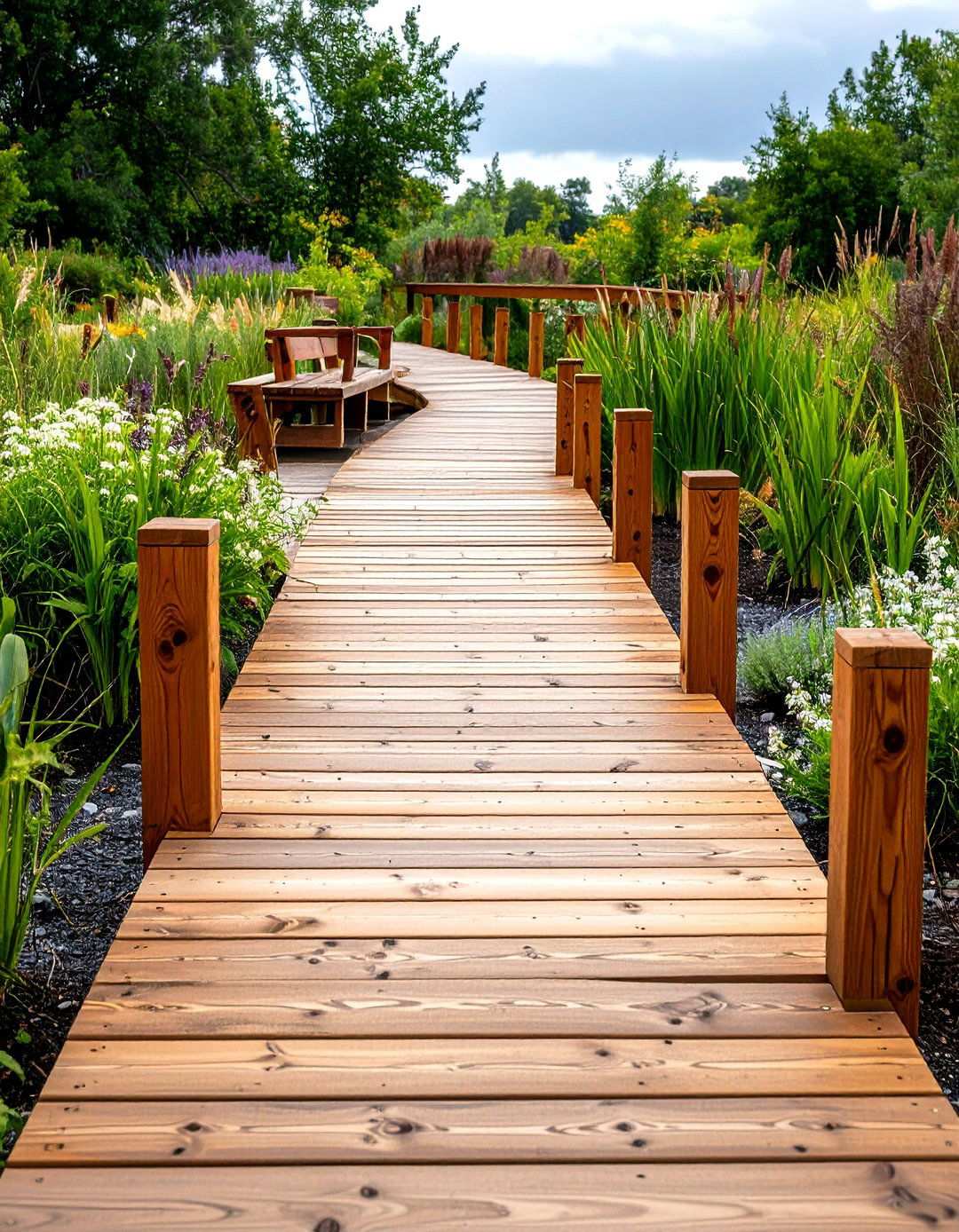
When navigating wet or marshy areas, an elevated wooden boardwalk offers a practical solution while creating dramatic vertical interest. Construct this walkway using pressure-treated posts and framing with cedar or composite decking. The raised design allows water flow underneath, keeping visitors dry and comfortable. Install railings for safety and add built-in seating areas at scenic viewpoints, providing a unique perspective of the surrounding plantings. The elevation also creates habitat space beneath for small wildlife, adding an extra layer of biodiversity to your garden. This design works exceptionally well near ponds, streams, or low-lying garden areas prone to seasonal flooding.
5. Herringbone Pattern Wooden Walkway
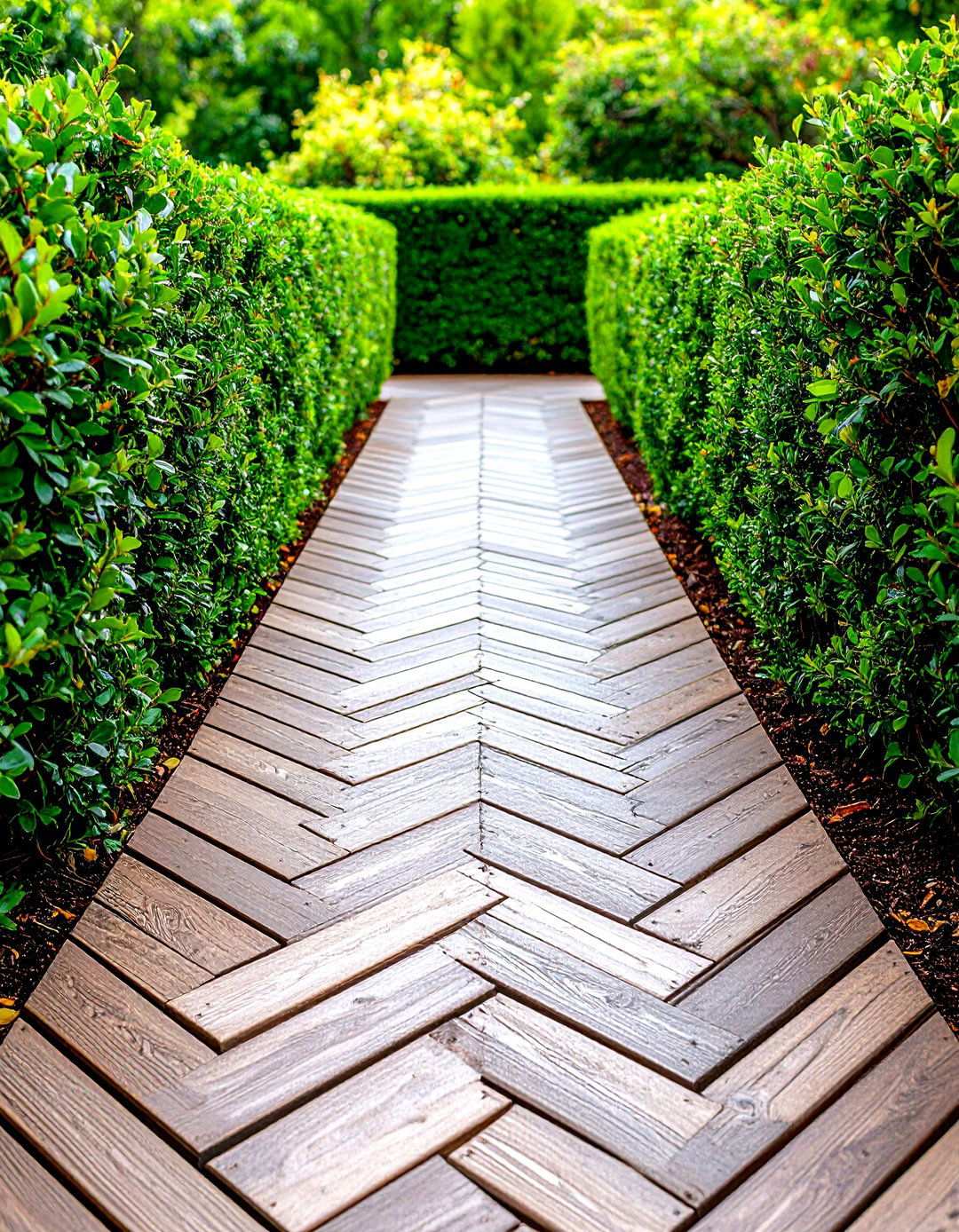
Make a stunning visual statement with intricately arranged wooden planks in a classic herringbone pattern, adding sophistication to your garden design. This elegant design uses shorter boards arranged at alternating angles to create a zigzag effect that draws the eye forward. The pattern adds movement and elegance while maximizing the visual impact of the wood grain. Install over a solid base with careful attention to maintaining consistent angles and spacing. The complex pattern works best with uniform wood pieces in complementary tones, creating a cohesive look. Frame the walkway with formal plantings or hedging to emphasize the geometric design, perfect for traditional and transitional garden styles.
6. Curved Serpentine Wood Path
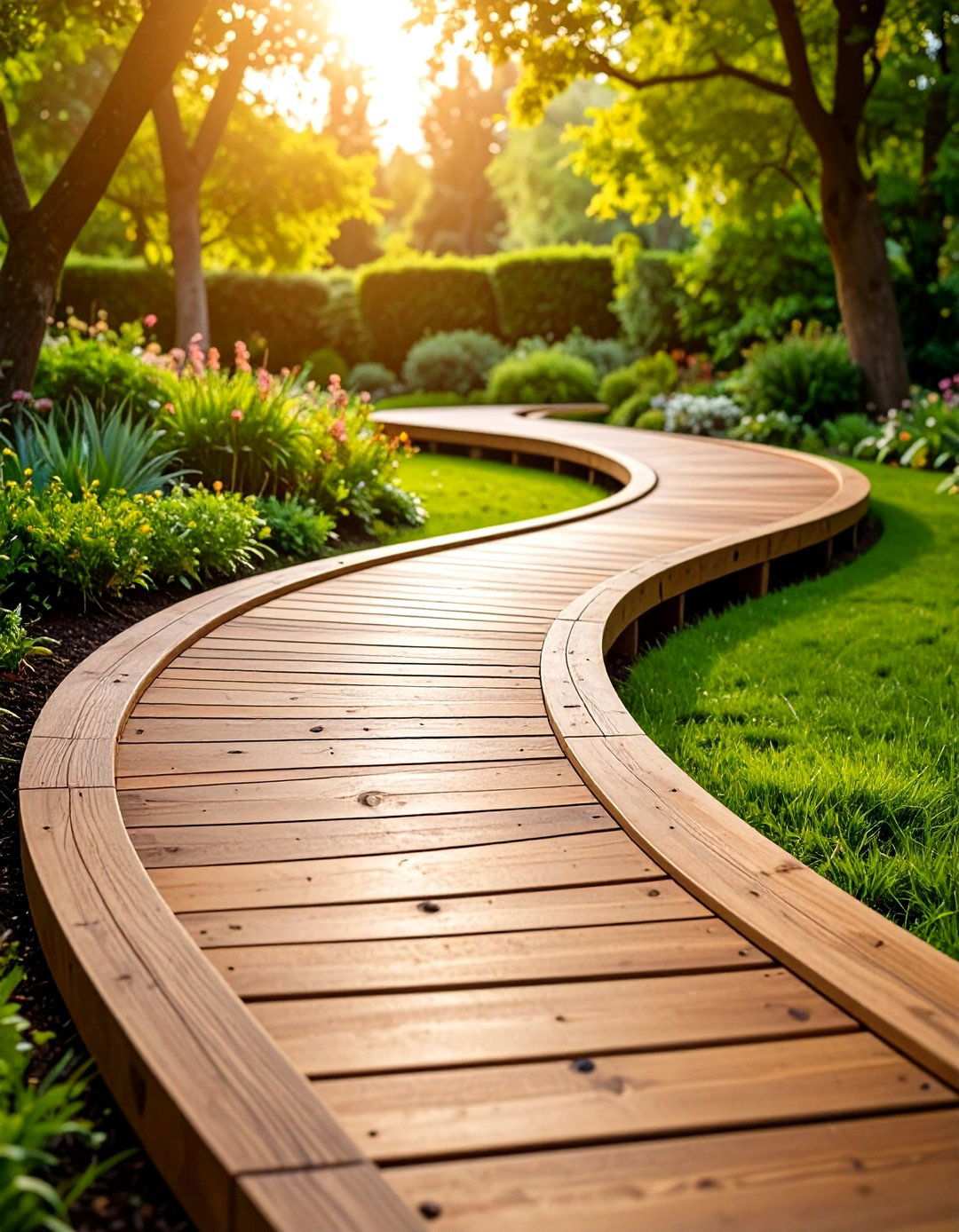
Why settle for straight lines when you can create flowing curves that enhance your garden’s natural beauty? A serpentine wooden walkway follows gentle curves that wind through planted areas, creating mystery and encouraging exploration. Use flexible materials or cut boards to accommodate the curved design, allowing for a more organic look. The meandering path slows foot traffic, allowing visitors to appreciate surrounding plantings and garden features. Install proper drainage along the curves to prevent water pooling, ensuring a smooth and enjoyable walking experience. The organic shape works beautifully in informal gardens and creates natural transitions between different landscape zones, adding visual softness to rigid geometric plantings.
7. Turning Pallets into a Timeless Walkway
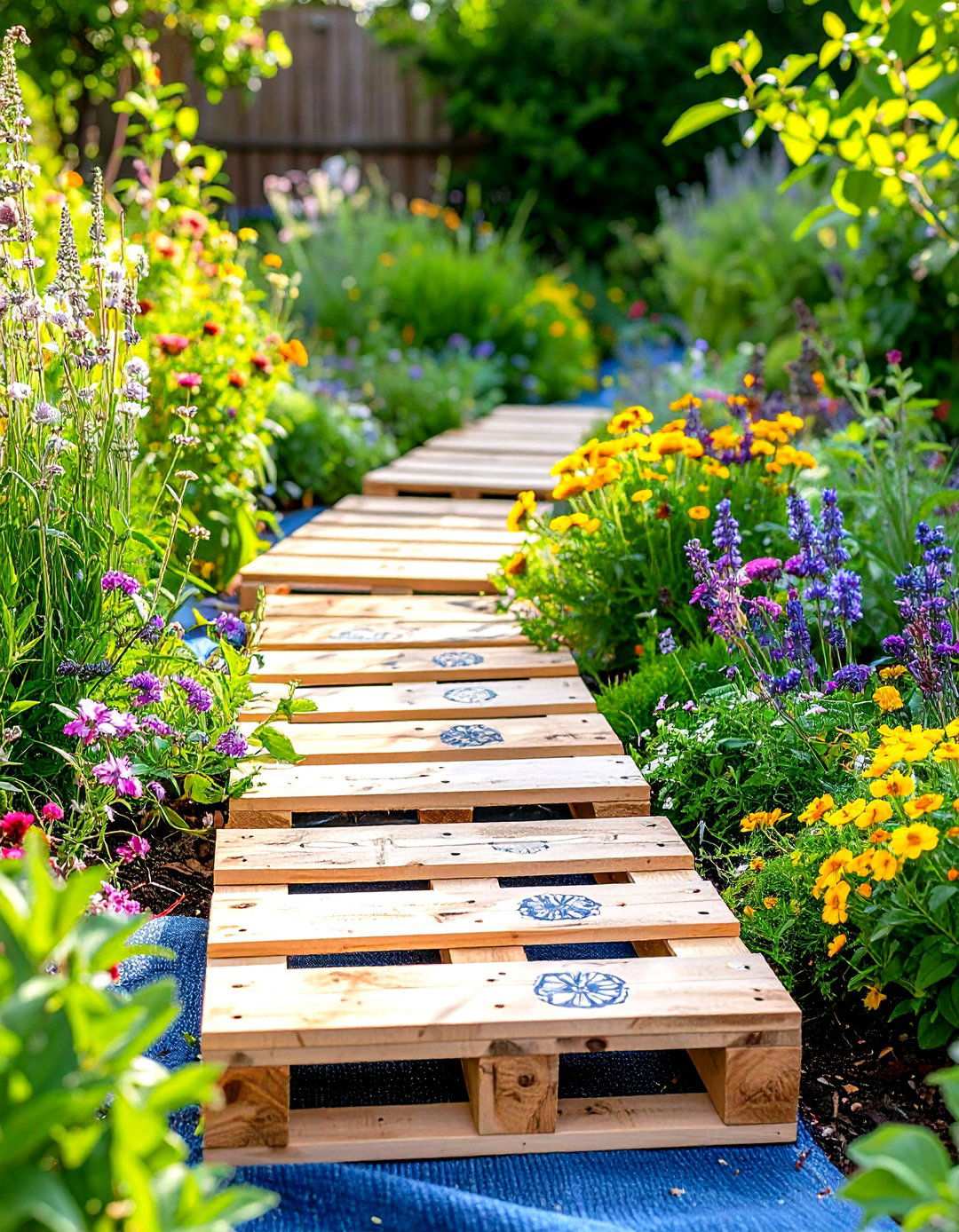
Innovative gardeners are reimagining discarded shipping pallets into charming rustic walkways that epitomize sustainable design principles. This budget-friendly option demands little more than basic tools and minimal expertise, yet yields a significant aesthetic impact. To create a durable and long-lasting walkway, simply sand down the pallets to smooth out their surface and apply a weather-resistant stain or sealant. Place the pallets directly on a level area of ground or over landscape fabric to suppress weeds effectively. The gaps between the pallet slats not only provide natural drainage, but also create a captivating display of shadow patterns. For added flair, consider incorporating decorative elements such as stenciled designs or rope borders. Surrounding the walkway with informal plantings like herbs or cottage garden flowers will tie the entire look together. This approach is particularly appealing to environmentally conscious gardeners seeking creative recycling solutions.
8. Mastering Sloping Terrain with Multi-Level Wooden Steps
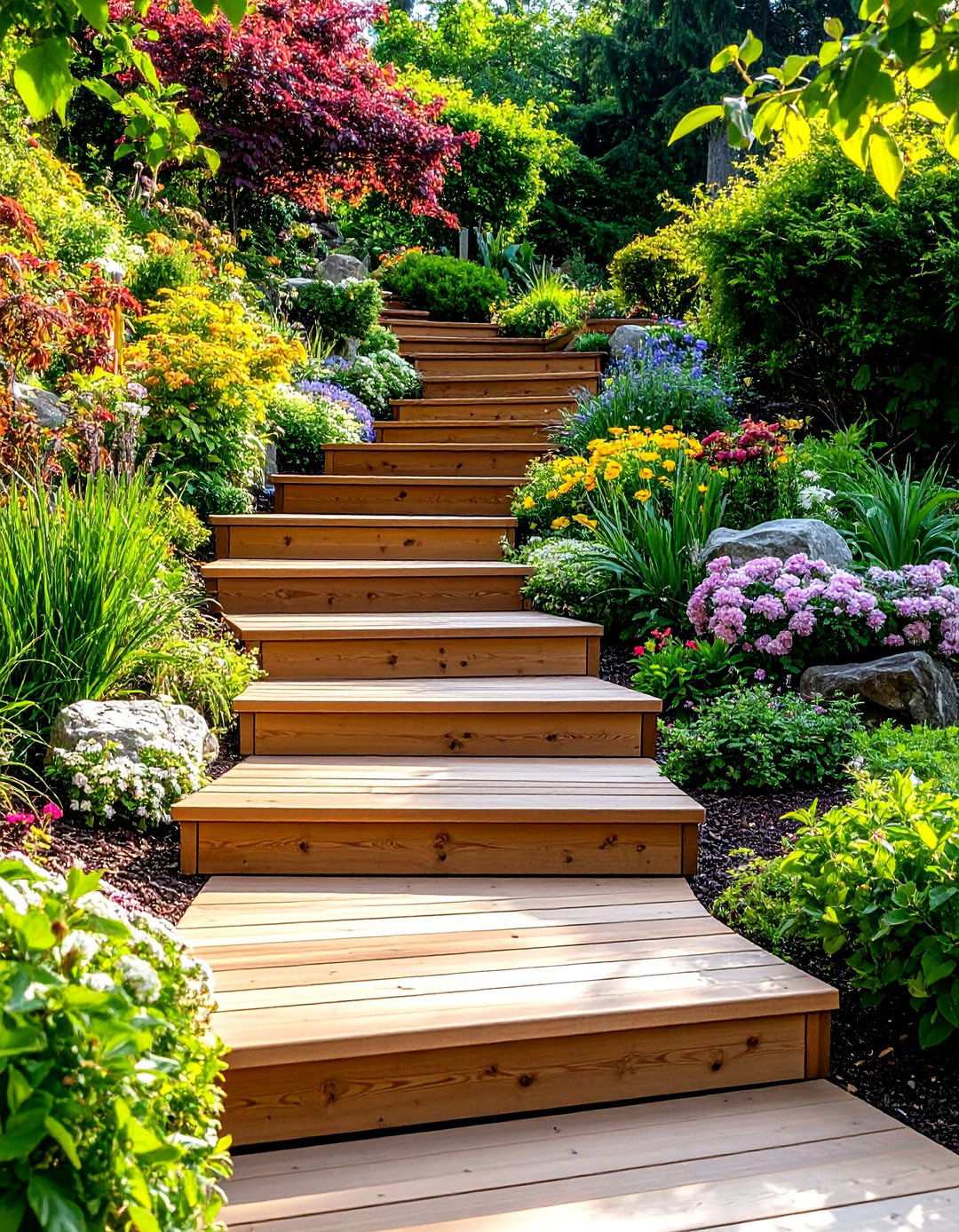
Sloping terrain no longer poses a challenge with the implementation of multi-level wooden terraces that seamlessly integrate walkways and retaining systems. This ingenious design employs wide steps crafted from thick wooden planks or timbers that elegantly follow the natural contours of the landscape. Each level provides a stable foothold while creating ample planting pockets for cascading plants or seasonal displays. The robust timber construction deftly handles soil pressure while adding architectural structure to even the most daunting slopes. To prevent erosion, it’s essential to install proper drainage behind each level. This terraced design is particularly well-suited for Mediterranean or hillside garden styles, creating a dramatic visual impact while addressing practical accessibility challenges.
9. Flexible Walkway Solutions with Modular Deck Tiles
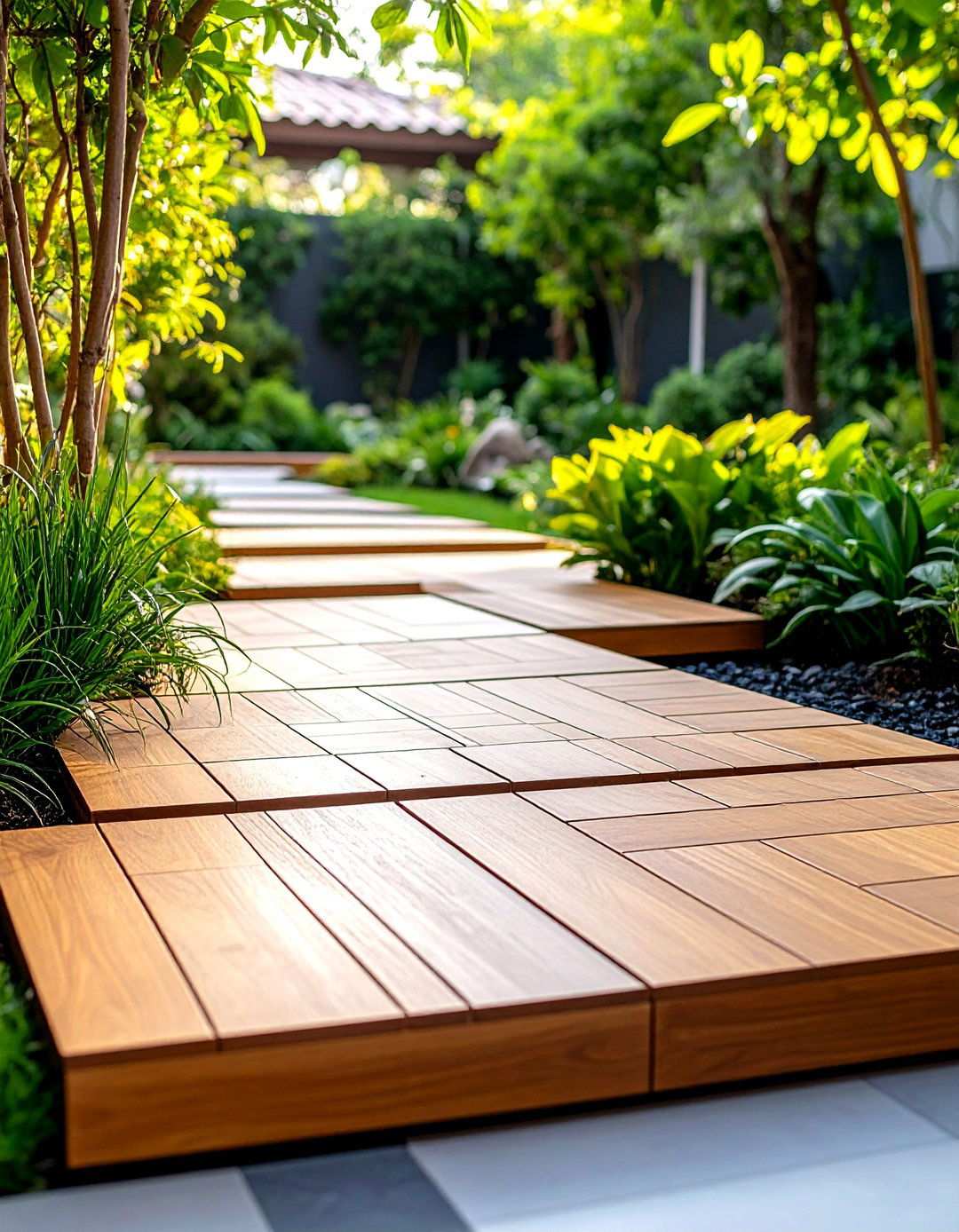
In today’s ever-changing garden landscapes, creating a flexible walkway system that adapts to evolving needs is a must. Modular wooden deck tiles offer the perfect solution with interlocking squares that allow for customizable pathway configurations. These pre-made tiles install quickly over level surfaces and can be rearranged seasonally or as garden layouts evolve. The modular system facilitates easy replacement of damaged sections and simple winter storage. With various wood species and finishes to choose from, you can seamlessly match existing landscape elements. The uniform grid pattern created by the tiles adds a touch of visual order, while the natural wood adds warmth and character to the space. This approach works particularly well in small gardens or areas requiring temporary walkway solutions.
10. Railroads Meet Modern Gardens with Industrial-Toned Pathways

For those who appreciate industrial heritage, substantial railroad ties offer a bold, masculine walkway design that exudes rustic appeal. These massive timbers provide exceptional durability and require minimal maintenance, making them an attractive option for gardeners. To install, simply place the ties end-to-end or with slight gaps filled with gravel or stone dust. The substantial scale of the ties works best in larger landscapes where the proportions complement surrounding elements. Consider using newer eco-friendly alternatives to vintage ties for added safety and peace of mind. The linear design created by the railroad ties exudes strong directional emphasis and works particularly well in contemporary industrial or loft-style garden designs. Pairing the ties with architectural plants and modern hardscape elements will create a visually striking and functional walkway.
11. Radiant Evening Strollways
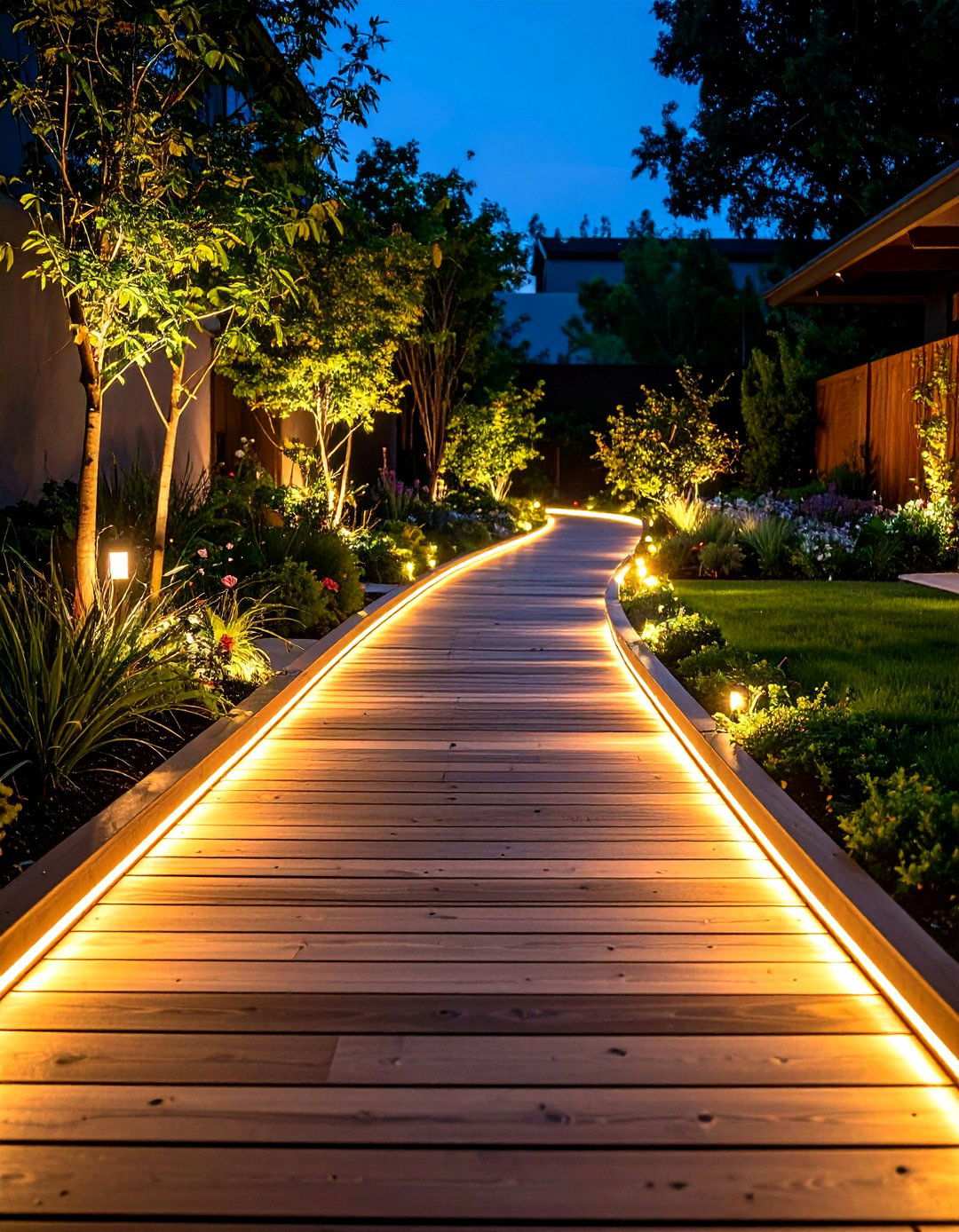
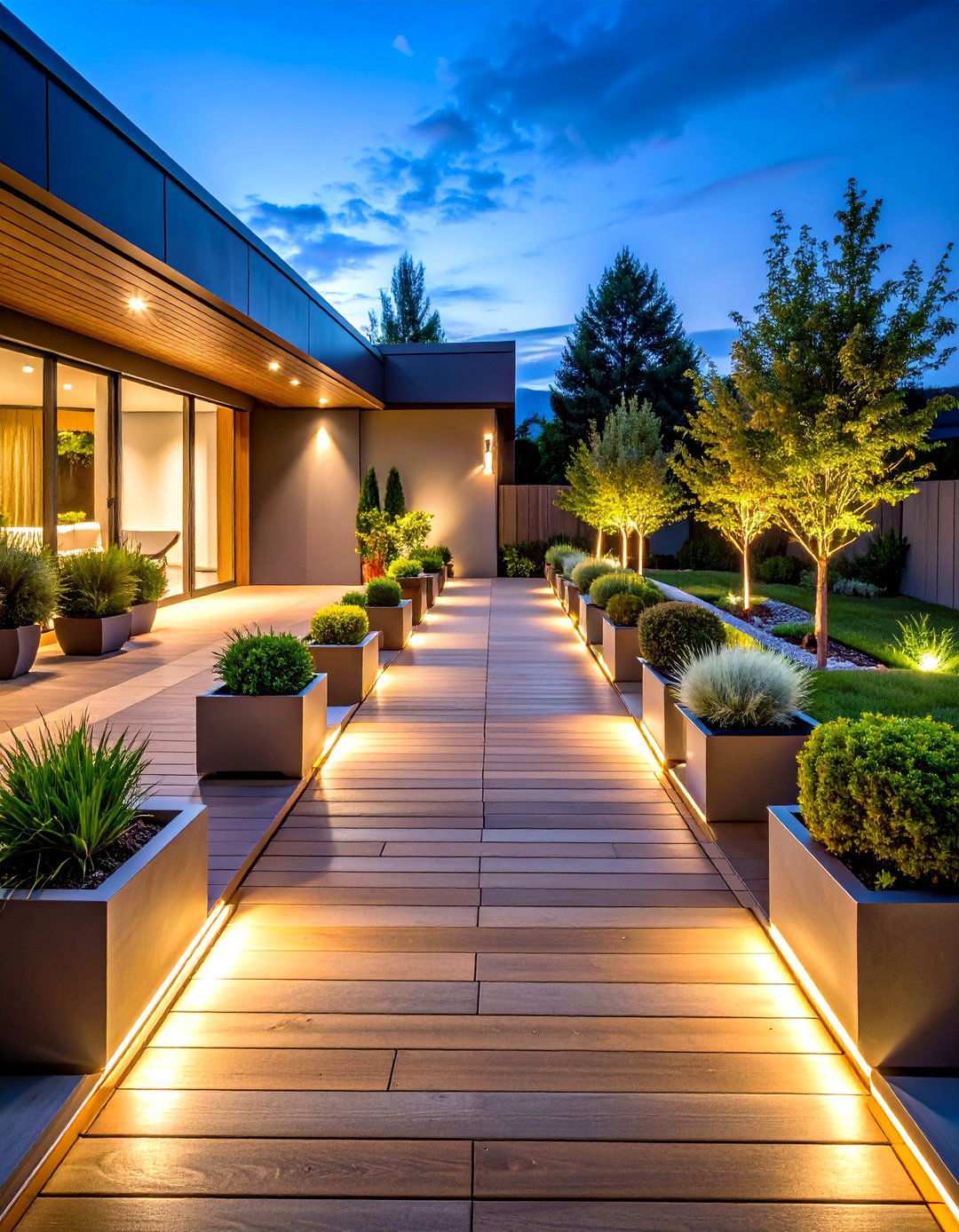
Elevate your wooden walkway into a captivating evening destination with strategically integrated lighting that prioritizes safety while fostering a mystical ambiance. By installing low-voltage LED strips along the edges or beneath translucent deck boards, you can create a subtle illumination that doesn’t compromise the natural beauty of your surroundings. Solar-powered options stand out as a more eco-friendly alternative to electrical lighting, eliminating the need for complicated wiring. As you navigate through the illuminated pathway, the gentle glow accentuates the natural wood textures, surrounding plantings, and guides you through the evening hours. To maximize energy efficiency and create surprising lighting effects, consider incorporating motion-activated options. This enchanting design seamlessly integrates with both contemporary and traditional garden styles, making evening entertainment a breeze.
12. Serene Japanese-Inspired Wood Walkways

Discover a tranquil meditation space with a minimalist wooden pathway that draws inspiration from the timeless principles of Japanese garden design. This understated approach emphasizes the value of clean lines, natural materials, and deliberate spacing, encouraging a mindful walking experience. By incorporating smooth, uniformly cut planks with precise gaps, you can create a rhythmic pattern that fosters contemplation. Surround the pathway with a selection of plants like bamboo, hostas, and moss, which amplify the serene atmosphere. A restrained color palette and simple forms promote a sense of calm, while practical navigation through the garden remains a top priority. Strategically place stones or water features to complete the tranquil aesthetic, making this design perfect for small urban gardens or dedicated meditation spaces.
13. Whimsical Cottage Garden Wood Walkways
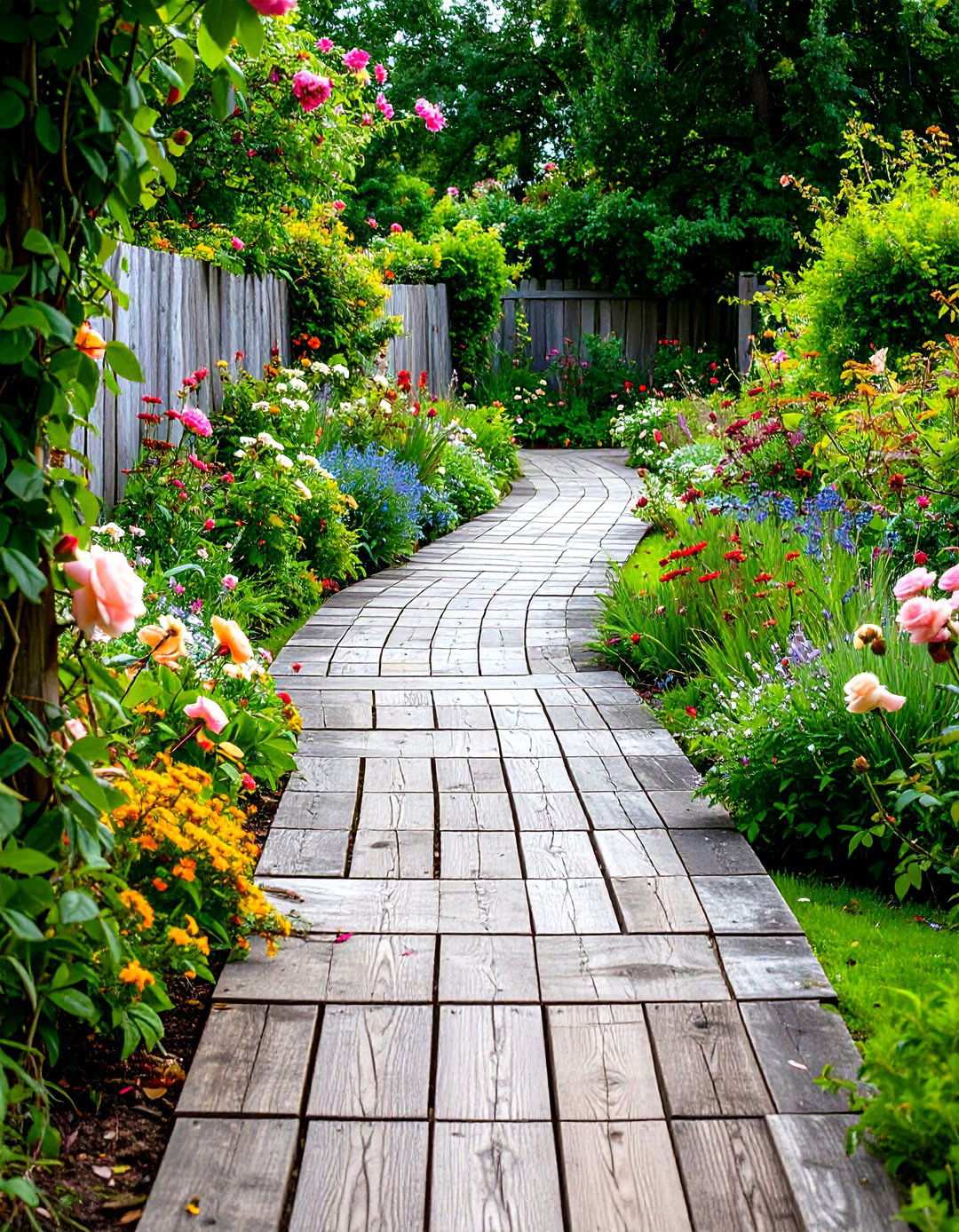
What better way to infuse your romantic cottage garden with charm than with weathered wood planks that invite leisurely strolls? This informal design employs varying width boards with a naturally aged patina that harmoniously complements the abundance of flowering plants. By allowing the edges to blur with encroaching perennials and herbs, you can create a softer, more inviting pathway boundary. The casual arrangement encourages plants to spill onto the walkway, giving rise to that coveted “secret garden” atmosphere. Sustainably sourced cedar or reclaimed materials add authentic character to the design, while climbing roses, lavender borders, and cottage garden favorites create the quintessential English countryside feeling.
14. Elevating Outdoor Spaces with Geometric Crosshatch Wood Design
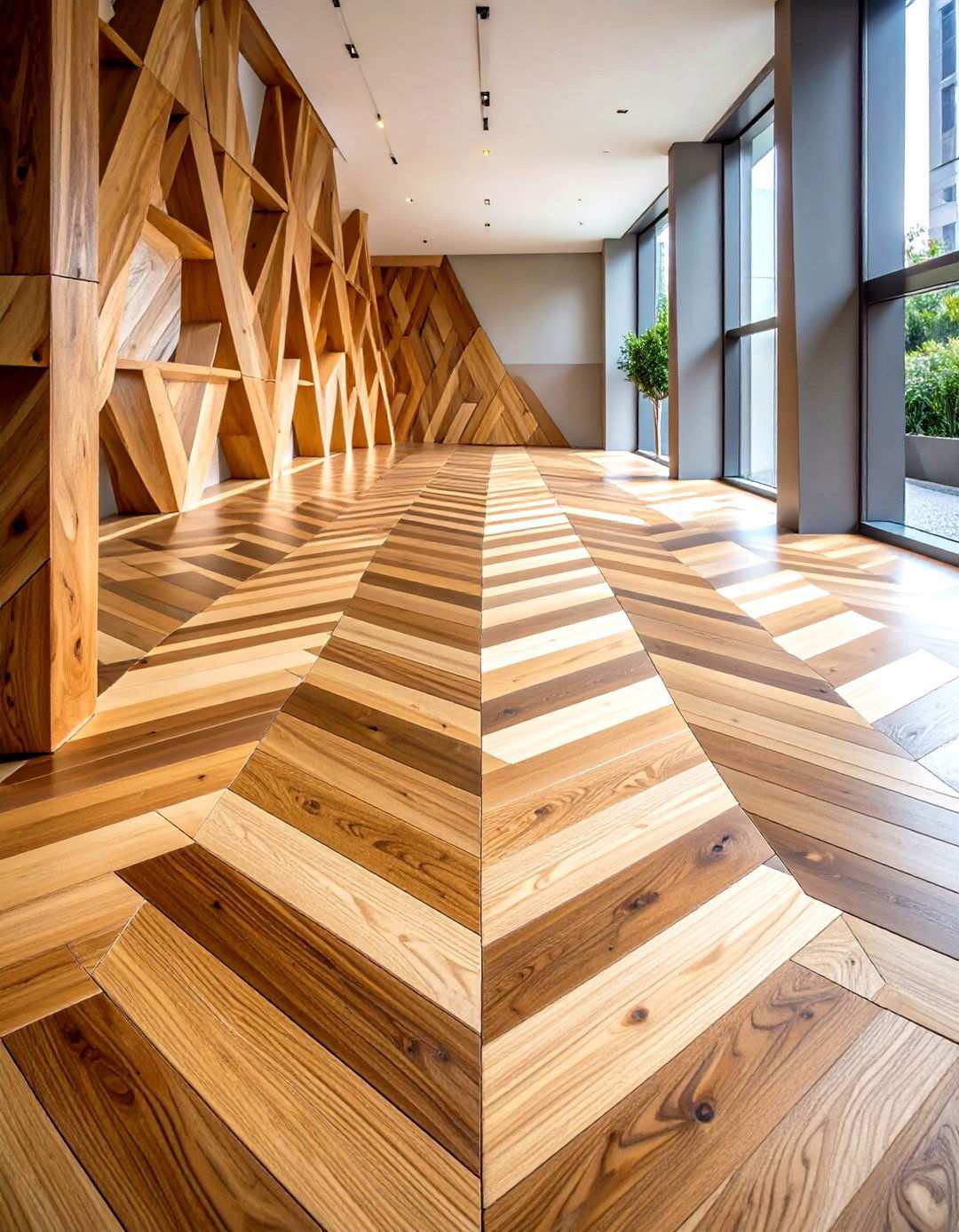
Transform your walkway into an outdoor masterpiece with the sophisticated allure of geometric crosshatch patterns. By carefully arranging precisely cut wooden pieces in intersecting grids, you can create complex visual textures that make a striking statement in your garden. The harmonious blend of mathematical precision and organic elements not only provides excellent traction and drainage but also adds a touch of elegance to your landscape. To truly showcase the intricate design, consider pairing contrasting wood stains to create bold graphic effects that serve as focal points in your garden. This timeless design is particularly well-suited for contemporary settings where architectural elements can complement modern home designs.
15. Bringing Coastal Charm to Your Inland Garden with Beachside Driftwood Walkway
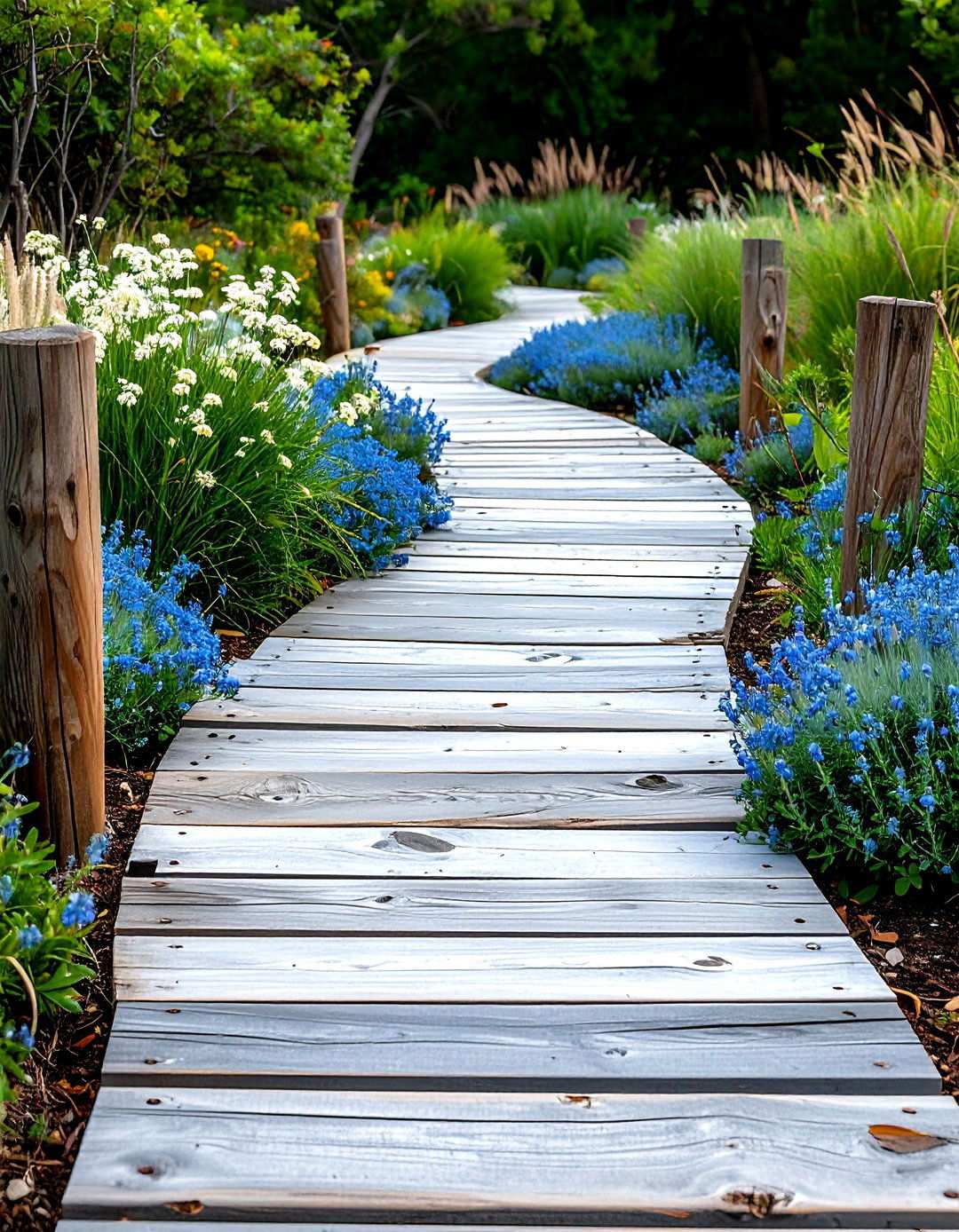
Why settle for a traditional walkway when you can evoke the oceanic beauty of the coast in your very own garden? A driftwood-inspired path brings the relaxed charm of the beach right to your doorstep, thanks to weathered wood tones and flowing organic shapes that suggest pieces washed ashore by the tides. By using naturally weathered cedar or specially treated lumber, you can create a silvery patina that adds to the driftwood’s allure. To complete the look, complement your walkway with ornamental grasses, blue and silver foliage plants, and natural stone accents that will transport you to a seaside haven. Whether you’re looking to capture coastal tranquility or simply evoke the natural beauty of weathering processes, this design is the perfect choice.
16. Navigating Wetlands with Elevated Boardwalks and Raised Marsh Boardwalks
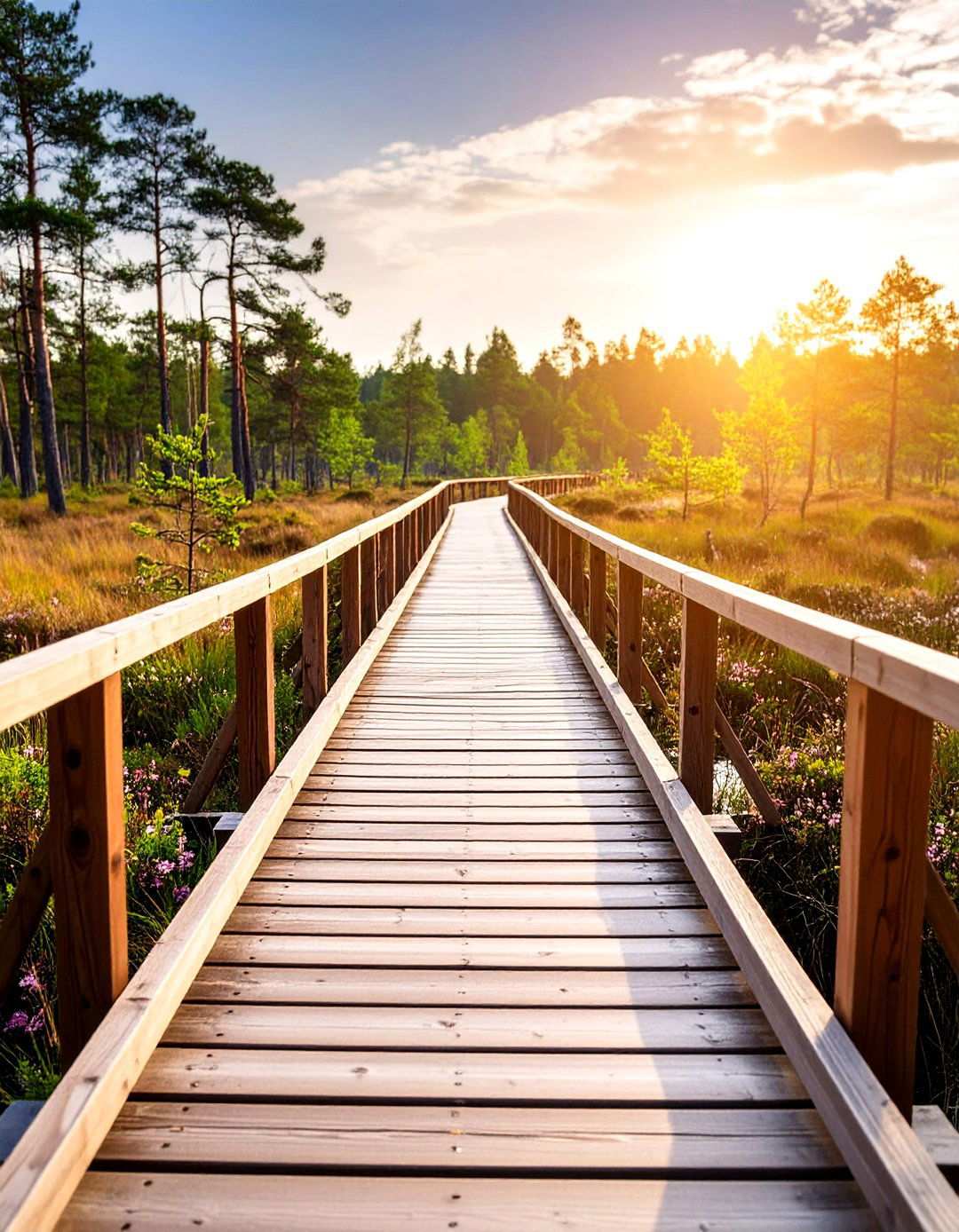
When navigating sensitive ecosystems or creating bog garden access, elevated boardwalks are the perfect solution. Not only do they protect delicate root systems, but they also provide viewing opportunities and habitat for beneficial insects and amphibians. By using marine-grade materials and proper ventilation, you can prevent moisture damage and ensure the longevity of your boardwalk. The elevated construction allows natural water flow, creating a unique perspective on water plants, seasonal changes, and garden wildlife activity. Install observation decks at strategic points to maximize your viewing experience, and enjoy the benefits of observing wildlife and plants in their natural habitat. This design is particularly well-suited for areas near natural or constructed wetlands where ground-level access would be detrimental.
17. Capturing Victorian Elegance with Ornate Wooden Walkways
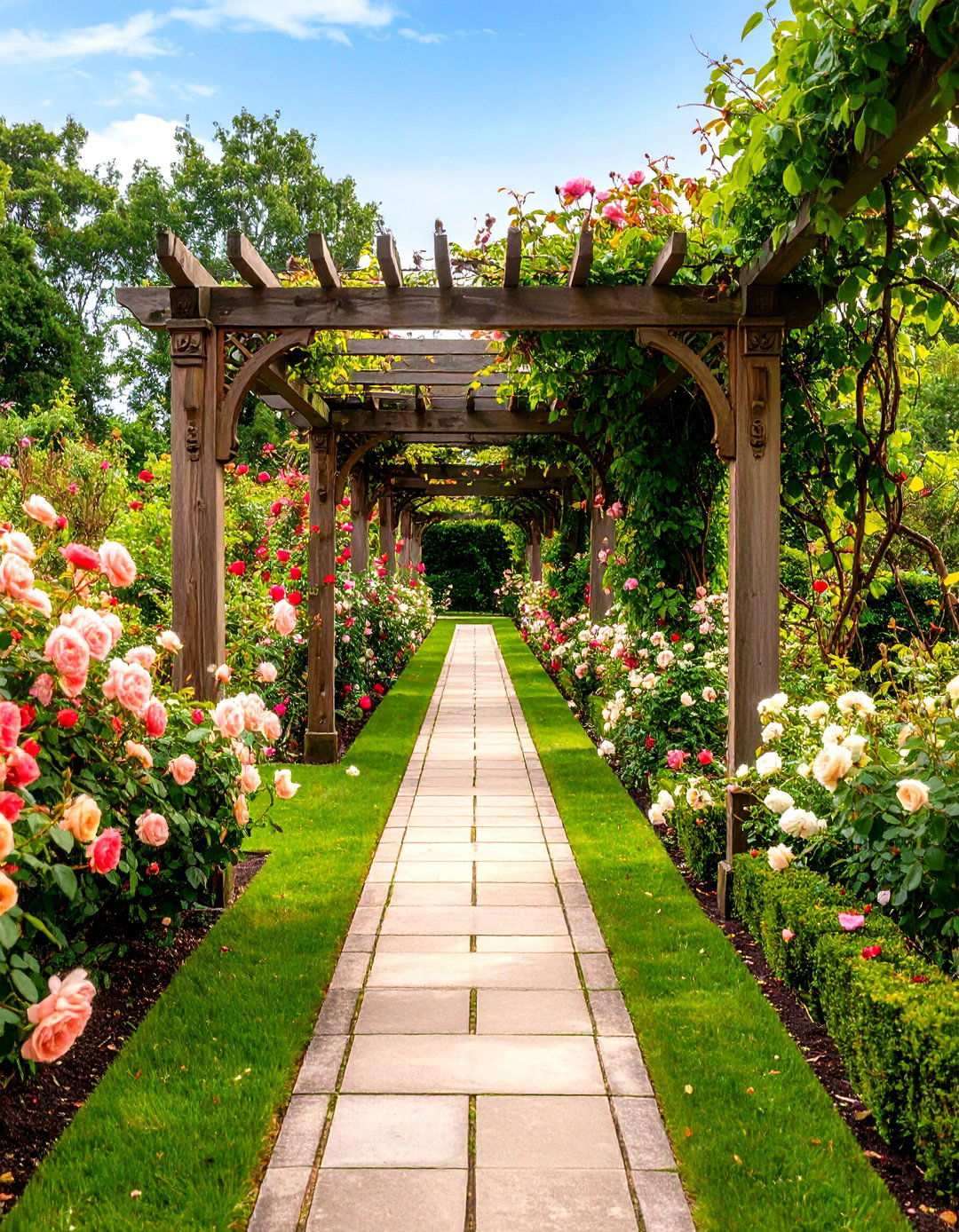
Step back in time with ornate wooden walkways that capture the essence of Victorian era elegance and sophistication. This formal design features decorative edge treatments, precise geometric patterns, and rich wood stains that complement period garden styles. To truly evoke the era’s grandeur, incorporate curved sections, decorative brackets, and formal balustrades that echo Victorian architectural details. While the substantial construction and ornate details may require skilled craftsmanship, the end result is a stunning garden feature worthy of historic properties. Complement your walkway with period-appropriate plantings like roses, boxwood hedging, and formal flower borders, and you’ll be transported to a bygone era of elegance and refinement. This approach works beautifully in restoration projects or gardens seeking to capture historical grandeur and romantic garden traditions.
18. Sustainable Bamboo Plank Pathway
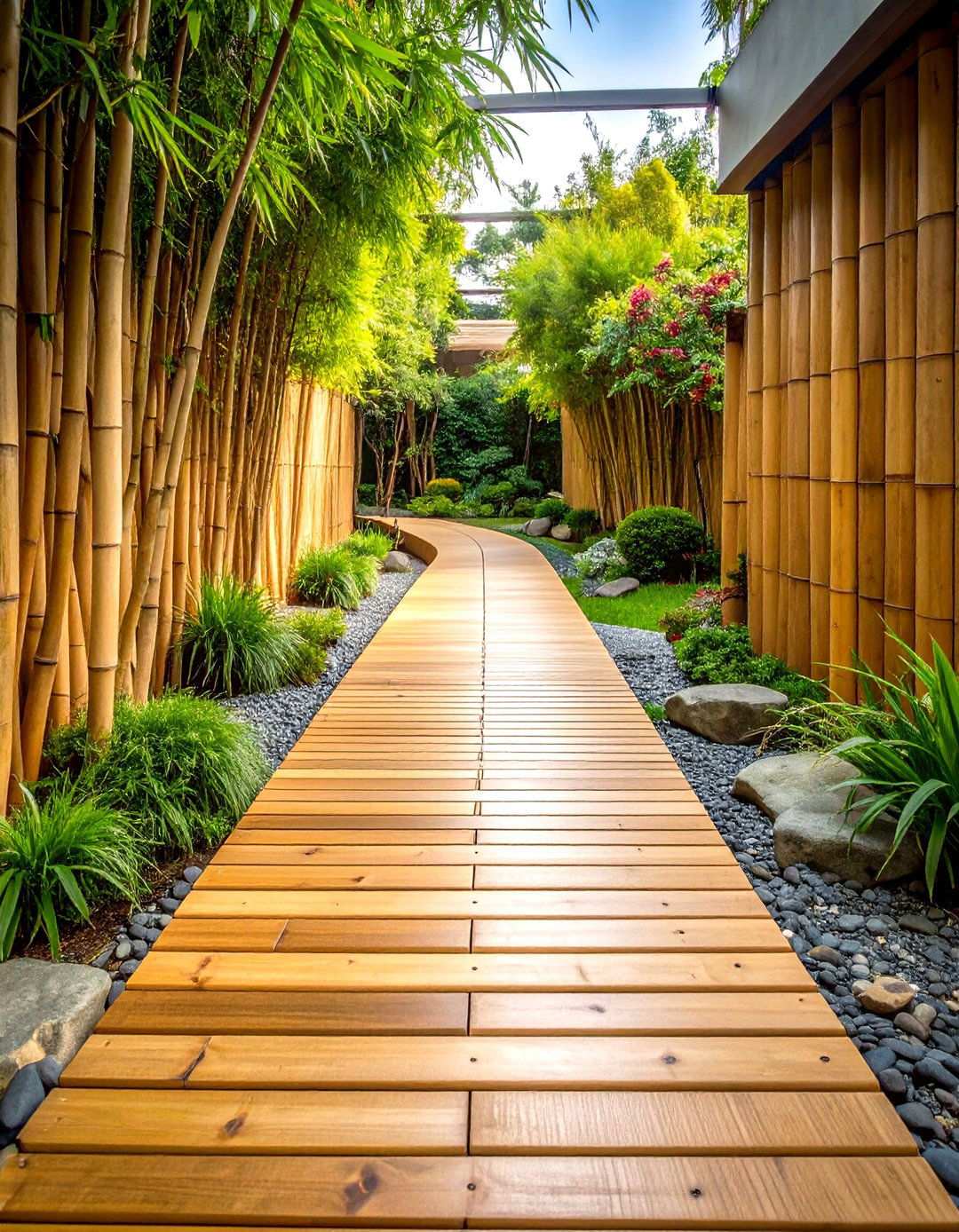
Bamboo planking offers a game-changing alternative for gardeners seeking eco-friendly pathways that blend durability and unique style. This rapidly renewable material boasts exceptional weather resistance and dimensional stability, making it an ideal choice for areas with high foot traffic. The linear grain pattern adds a touch of sophistication while natural color variations create visual interest, elevating the overall aesthetic of the garden. For a seamless look, install the bamboo planks over a well-drained base and secure them with hidden fasteners. This thoughtful approach suits environmentally conscious gardeners who value both functionality and aesthetics. Pair the bamboo pathway with Asian-inspired plantings and natural stone accents to create a harmonious and modern garden setting.
19. Rustic Split Log Walkway
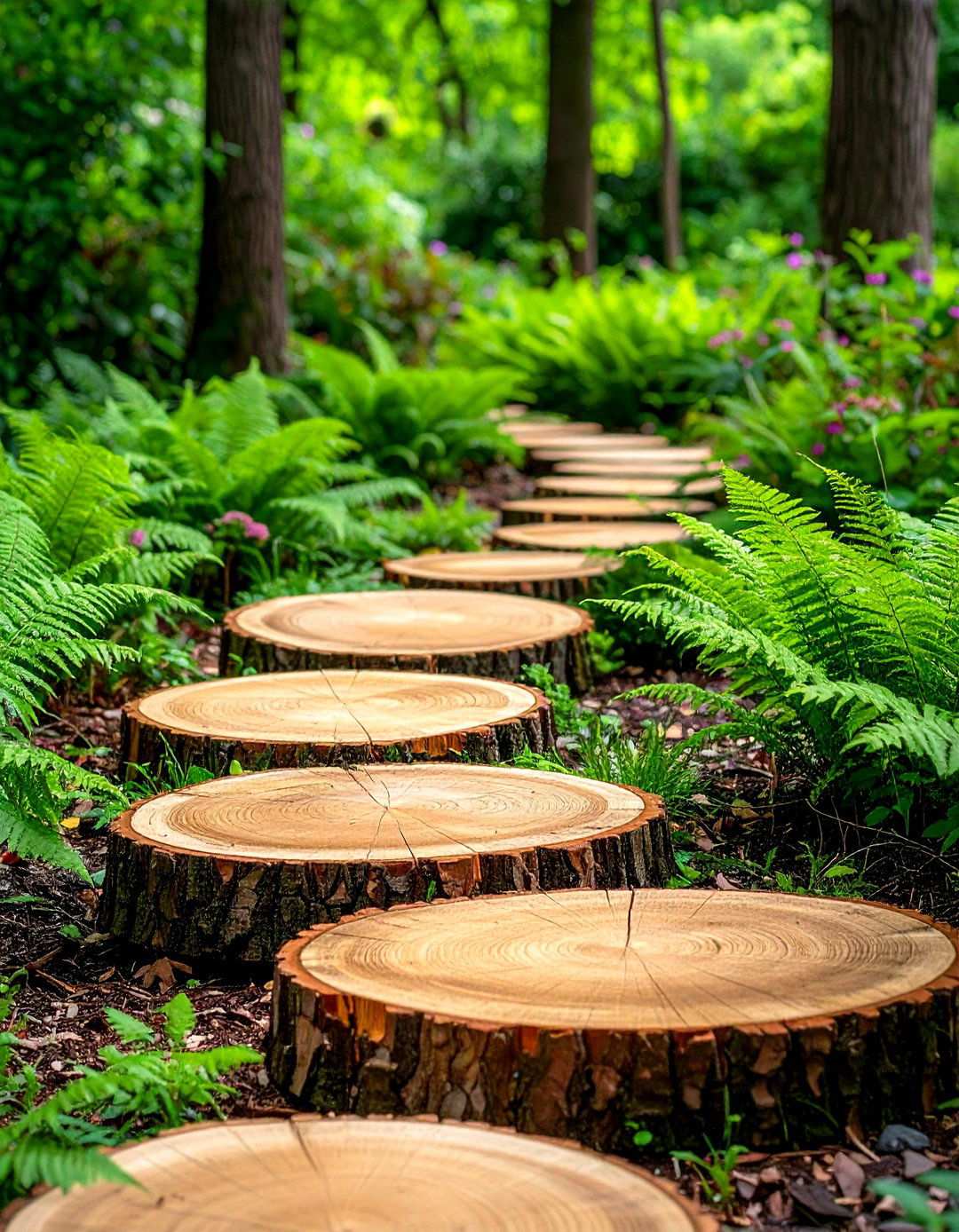
Split logs arranged to create pathways can add a dramatic touch to any garden or woodland setting. This design leverages halved logs placed flat-side down to create stable walking surfaces with natural bark edges that add textural interest. The substantial scale and organic shapes of the logs work beautifully in rustic garden themes or woodland settings, evoking a sense of natural beauty. For a seamless integration, install the logs over a gravel base for drainage and stability. Consider sourcing the logs locally to support sustainable forestry practices and create unique garden features. Complement the rustic charm with native plants, ferns, and shade perennials that enhance the forest floor atmosphere and woodland aesthetic.
20. Modern Minimalist Deck Boards
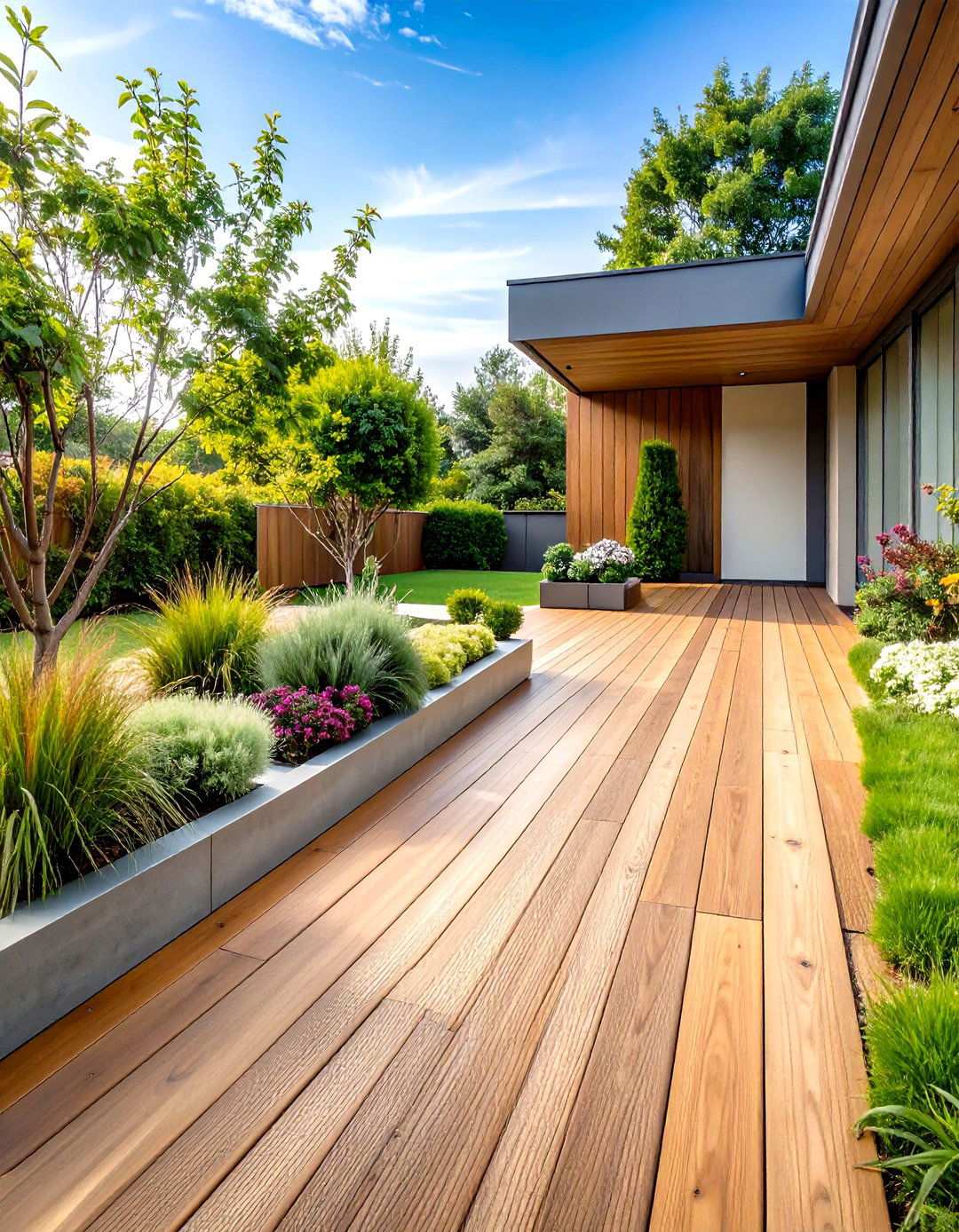
For a striking and modern take on walkways, consider using ultra-modern deck board designs that celebrate clean lines and material honesty. This contemporary approach employs precision-cut boards with invisible fasteners and perfect spacing to create architectural statements that elevate the garden’s visual appeal. The minimalist design emphasizes wood grain and natural color, avoiding decorative distractions that can detract from the overall aesthetic. To achieve professional results, install the deck boards with laser-level precision over engineered base systems. This sophisticated simplicity works perfectly with contemporary homes and modern garden designs where every element serves both functional and aesthetic purposes. Pair the minimalist deck boards with architectural plants, contemporary sculpture, and geometric hardscape elements to create a cohesive and modern garden setting.
21. Elevating Garden Design with Bridge-Style Walkways
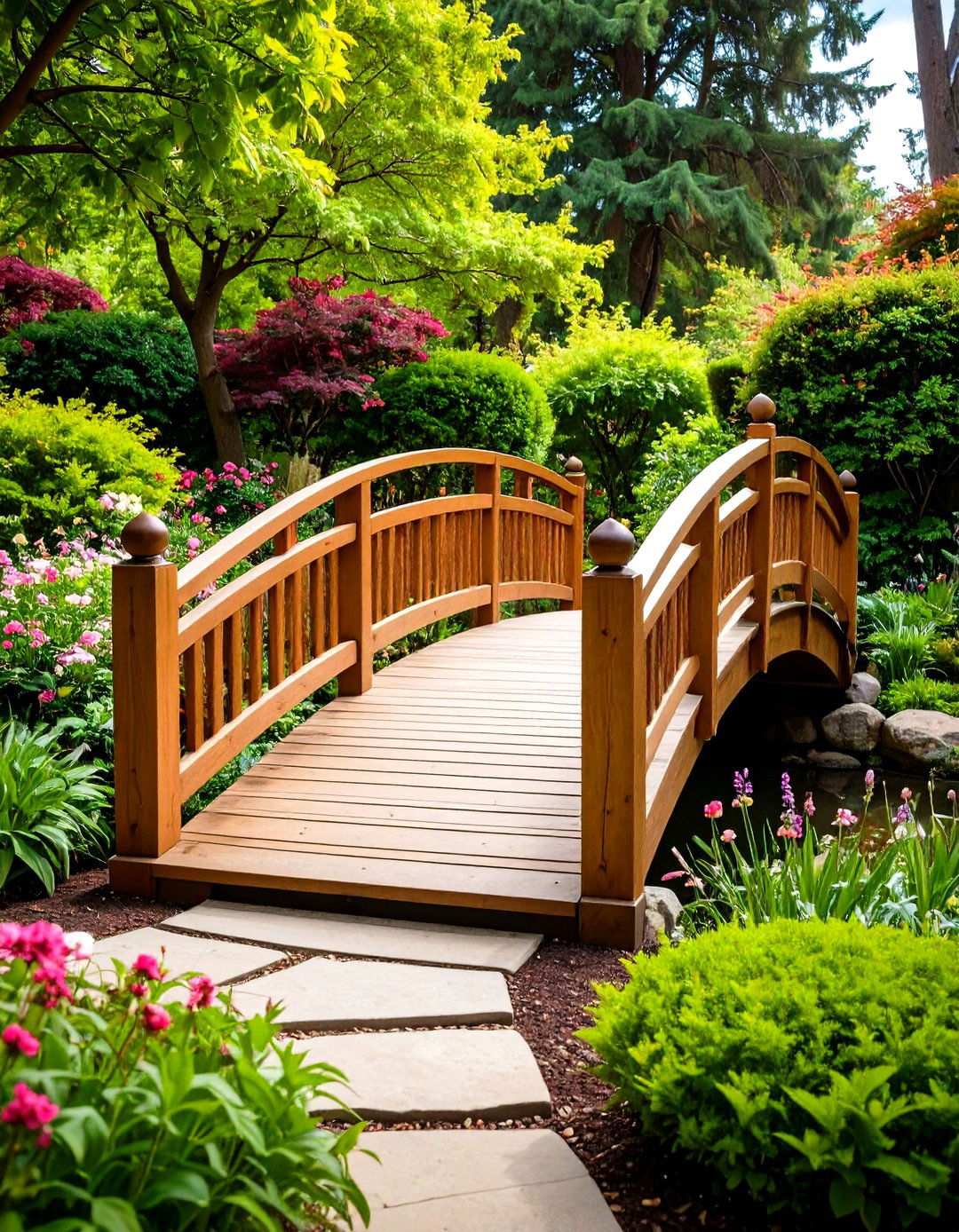
Elevate your garden’s visual appeal and functionality by incorporating bridge-style walkways that seamlessly connect different areas. This architectural feature not only addresses practical challenges but also creates stunning focal points that add depth to your landscape. By spanning low-lying areas, streams, or adding vertical interest to flat spaces, bridge walkways offer a unique solution for gardeners seeking to enhance their outdoor space. The versatile design allows for creative railings, decorative brackets, and viewing platforms, making it an ideal choice for garden exploration. By combining substantial timber framing with attractive decking materials, you can achieve a balance of strength and beauty that complements your garden’s overall aesthetic. As a result, this design naturally fosters gathering spots and photo opportunities, while also addressing circulation challenges. Its effectiveness is particularly notable in larger gardens, where dramatic statements can elevate the entire landscape composition.
22. Intimate Garden Spaces with Pergola-Covered Walkways
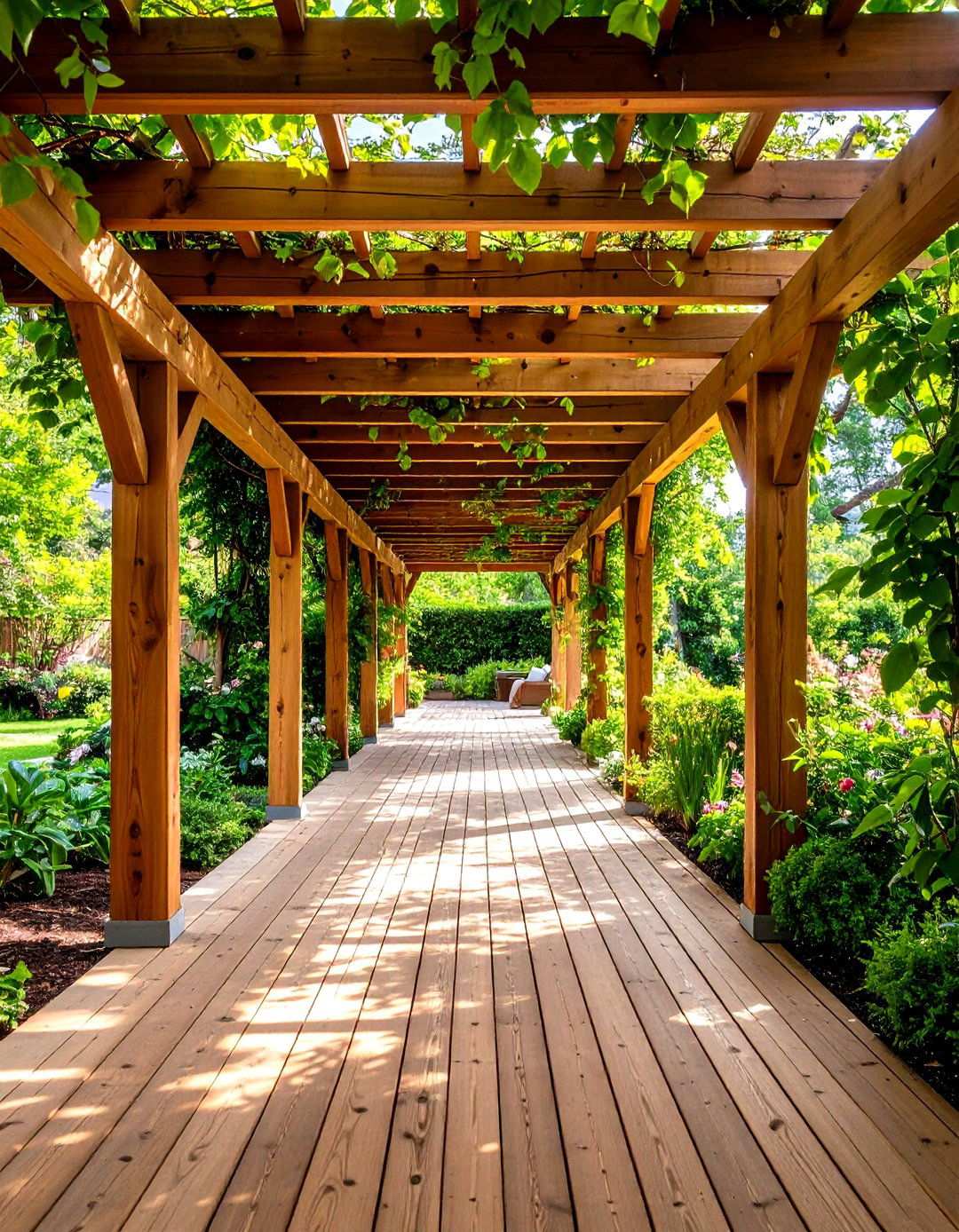
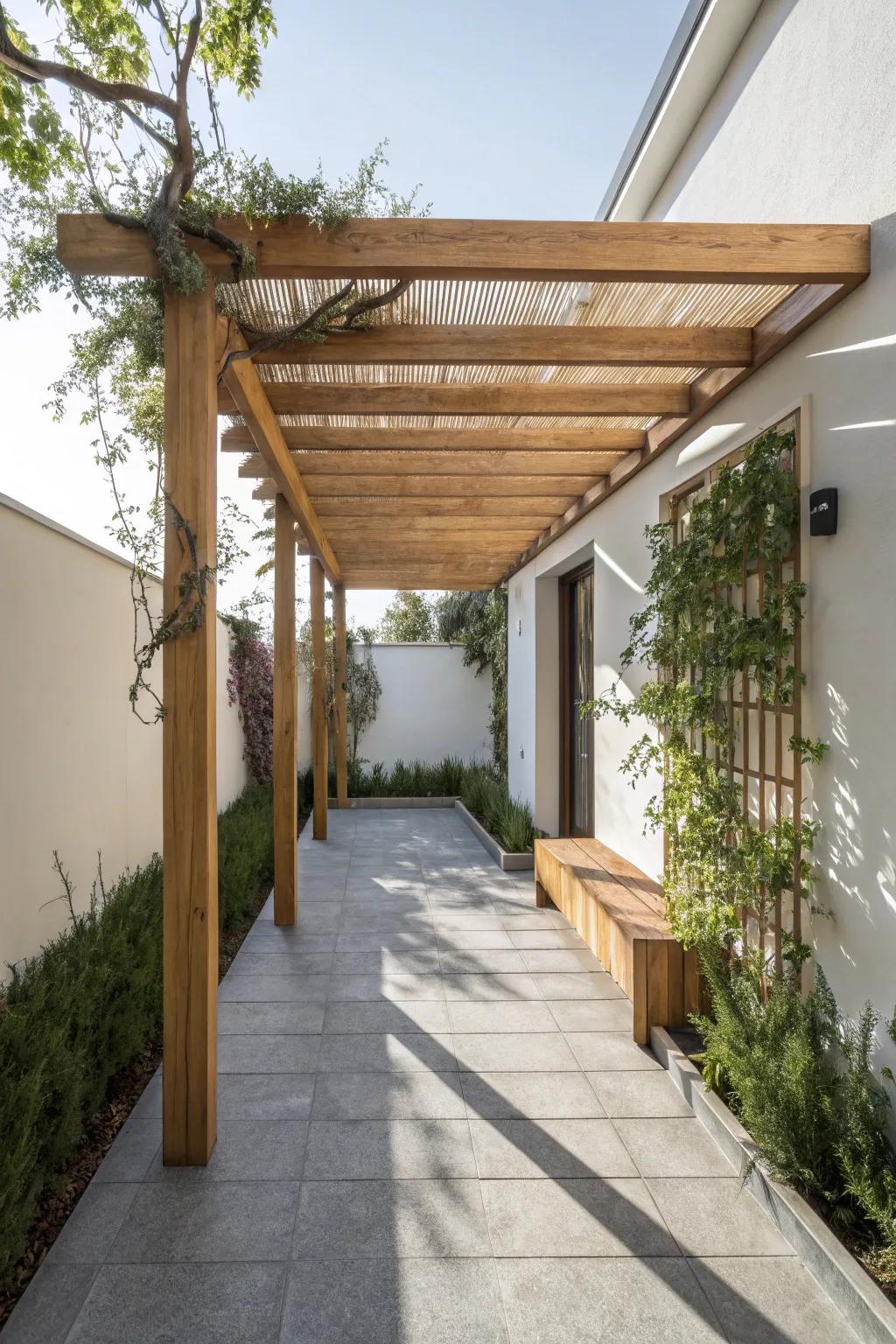
Imagine creating garden rooms that provide shelter and vertical growing space, all while connecting different areas of your outdoor space. This integrated design features wooden walkways topped with pergola structures that support climbing plants, offering partial shade and a sense of seclusion. The overhead framework creates intimate spaces perfect for contemplation or romantic strolls, making it an ideal choice for gardeners seeking to create a peaceful atmosphere. By installing the combined system using substantial posts that support both walkway and overhead loads, you can ensure a sturdy and secure structure. The vertical element allows for seasonal variation through climbing plant selection, while the walkway provides all-weather access. This design works beautifully as transition elements between different garden spaces or as destination features, adding visual interest and depth to your landscape.
23. Ensuring Safety with Textured Wooden Decking
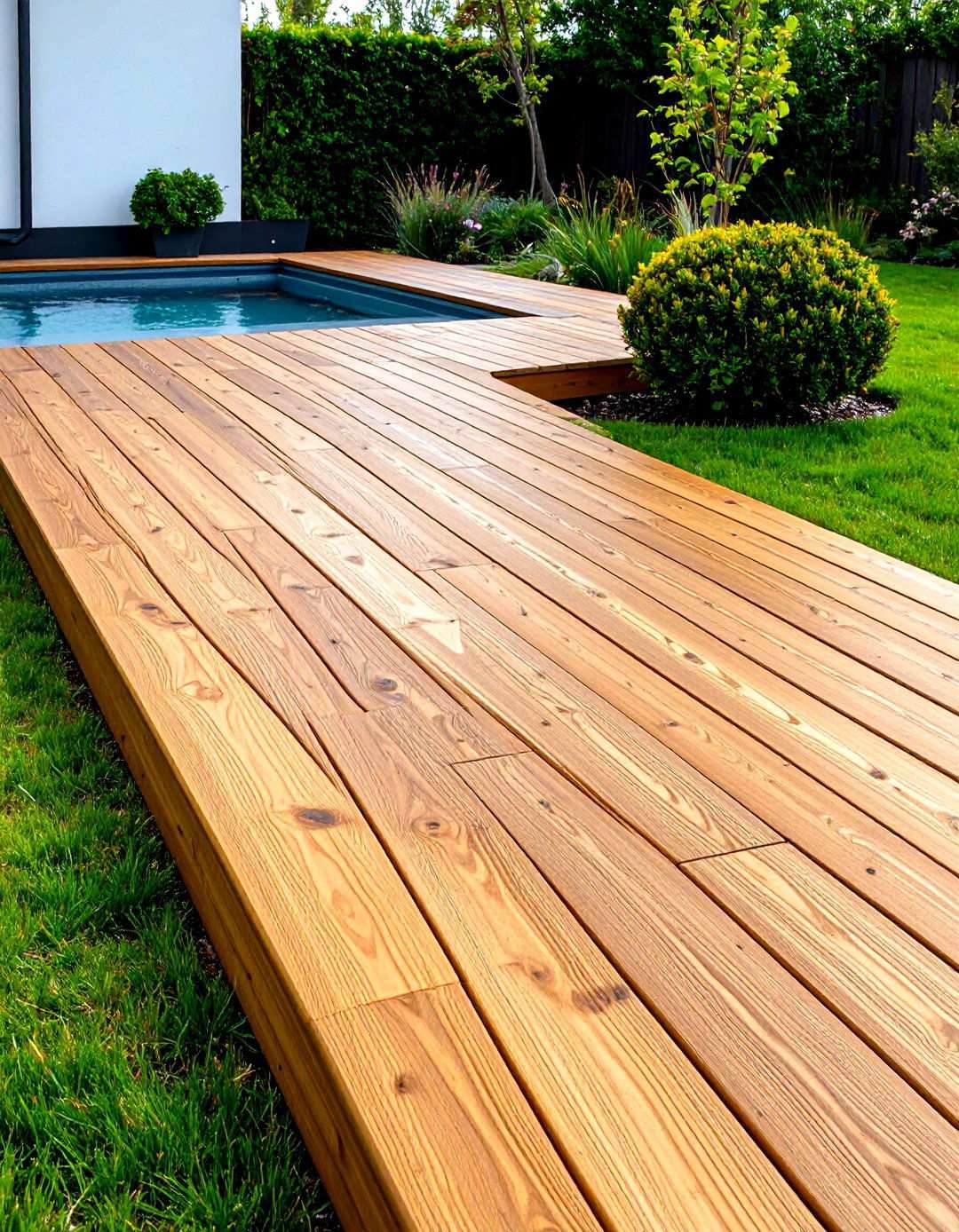
Safety should never be compromised in garden design, and textured wooden decking offers a practical solution that prioritizes slip resistance and durability. This clever design uses specially milled boards with grooved or ribbed surfaces that provide excellent traction in wet conditions. The textured surface adds subtle visual interest while maintaining the natural appeal of wood materials, making it an ideal choice for high-traffic areas or climates with frequent precipitation. To ensure optimal performance, install the decking with proper slope for drainage and regular maintenance for longevity. By choosing from various texturing patterns and wood species, you can match existing garden elements while ensuring safe passage for all garden visitors. This safety-focused design is particularly well-suited for areas near pools or other water features, where slip resistance is essential.
24. Curved Composite Wood Walkway
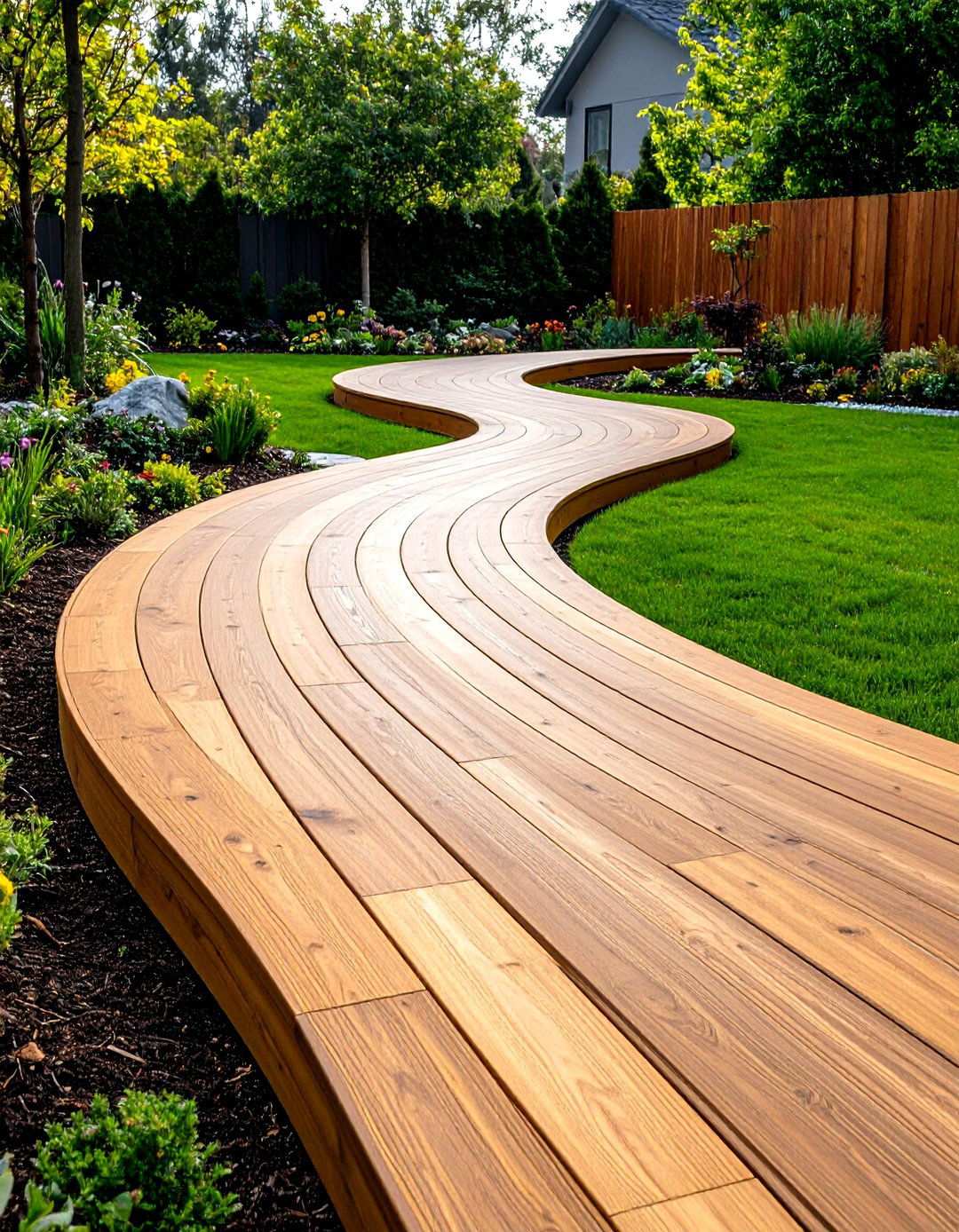
Experience the pinnacle of low-maintenance elegance with curved composite decking that seamlessly replicates the look of wood without the need for ongoing upkeep. This high-end design leverages cutting-edge engineering to create materials that defy moisture, insects, and UV damage while retaining the organic charm of natural wood. The curved installation showcases the ingenuity of modern materials science, effortlessly blending into garden environments with fluid transitions. The uniform coloring and texture result in a consistent appearance that eschews the unpredictable weathering patterns of natural wood. For optimal performance, adhere to the manufacturer’s recommended fastening methods and techniques, making this stylish approach an attractive option for homeowners who desire the warmth of a wooden walkway without the burdens of traditional wood maintenance.