1. Elevating Your Space with Checkerboard Wood Floor Design
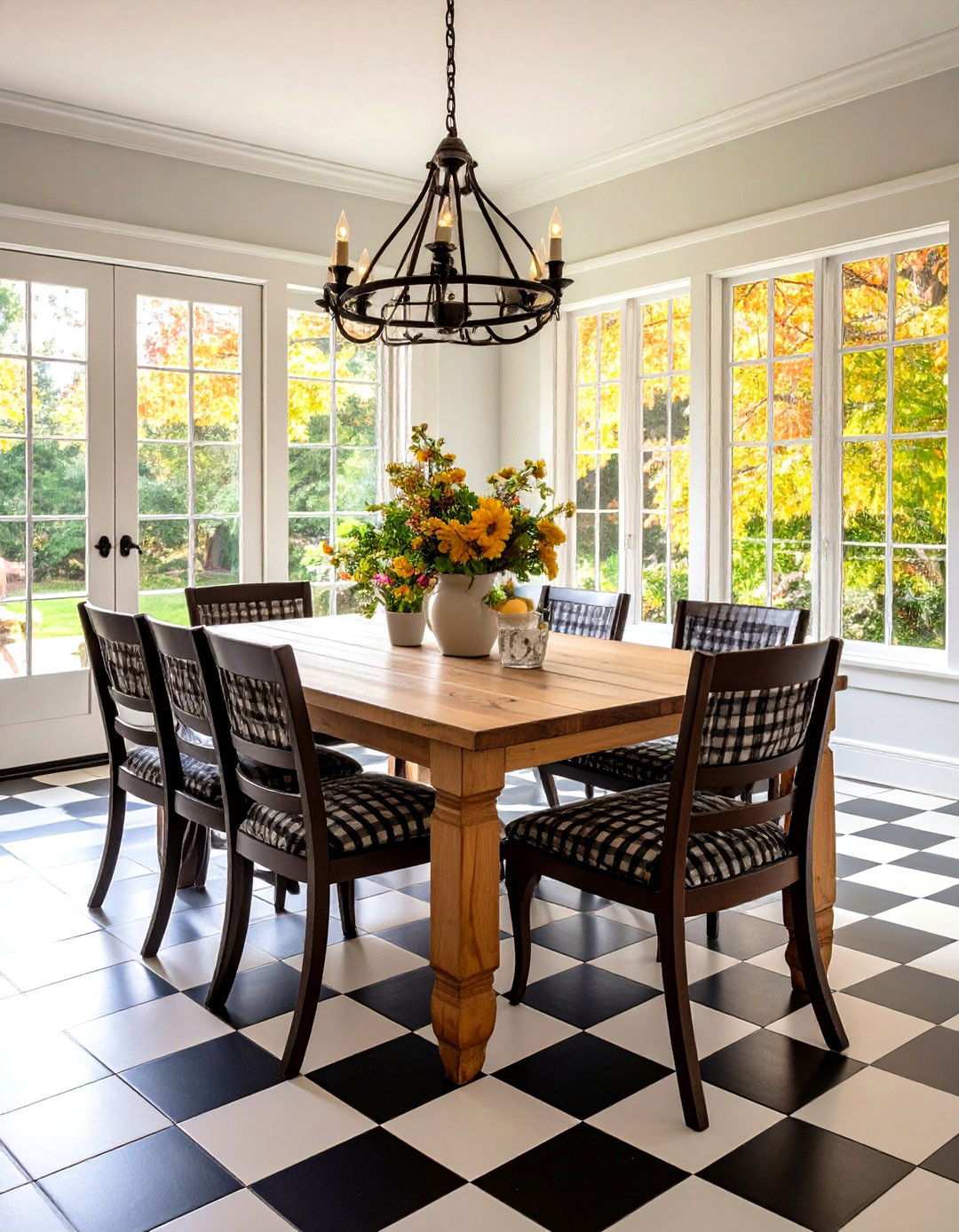
A bold, eye-catching focal point can instantly elevate your dining room’s ambiance, and what better way to achieve this than with a classic checkerboard pattern? This timeless design concept seamlessly blends elegant sophistication with striking visual impact, creating a show-stopping canvas that’s sure to captivate guests. By combining contrasting colors, such as black and white, navy and cream, or gray and white, you can create a dramatic and sophisticated atmosphere that’s perfect for making a lasting impression.

As an Amazon Associate I earn from qualifying purchases.
Whether you’re working with plain hardwood floors or want to add architectural interest to your existing space, the checkerboard pattern is an excellent choice. The alternating squares create an optical illusion that can make rooms appear larger, while the geometric precision adds a touch of sophistication. To achieve this stunning design, start by applying painter’s tape to create perfect square sections, then alternate between your chosen colors using high-quality floor paint. To ensure your masterpiece lasts for years to come, seal it with durable polyurethane. This versatile design works beautifully in dining rooms, entryways, and kitchens, where its bold design can anchor the space and create a lasting impression.
2. Elevating Wood Floors with Geometric Intrigue
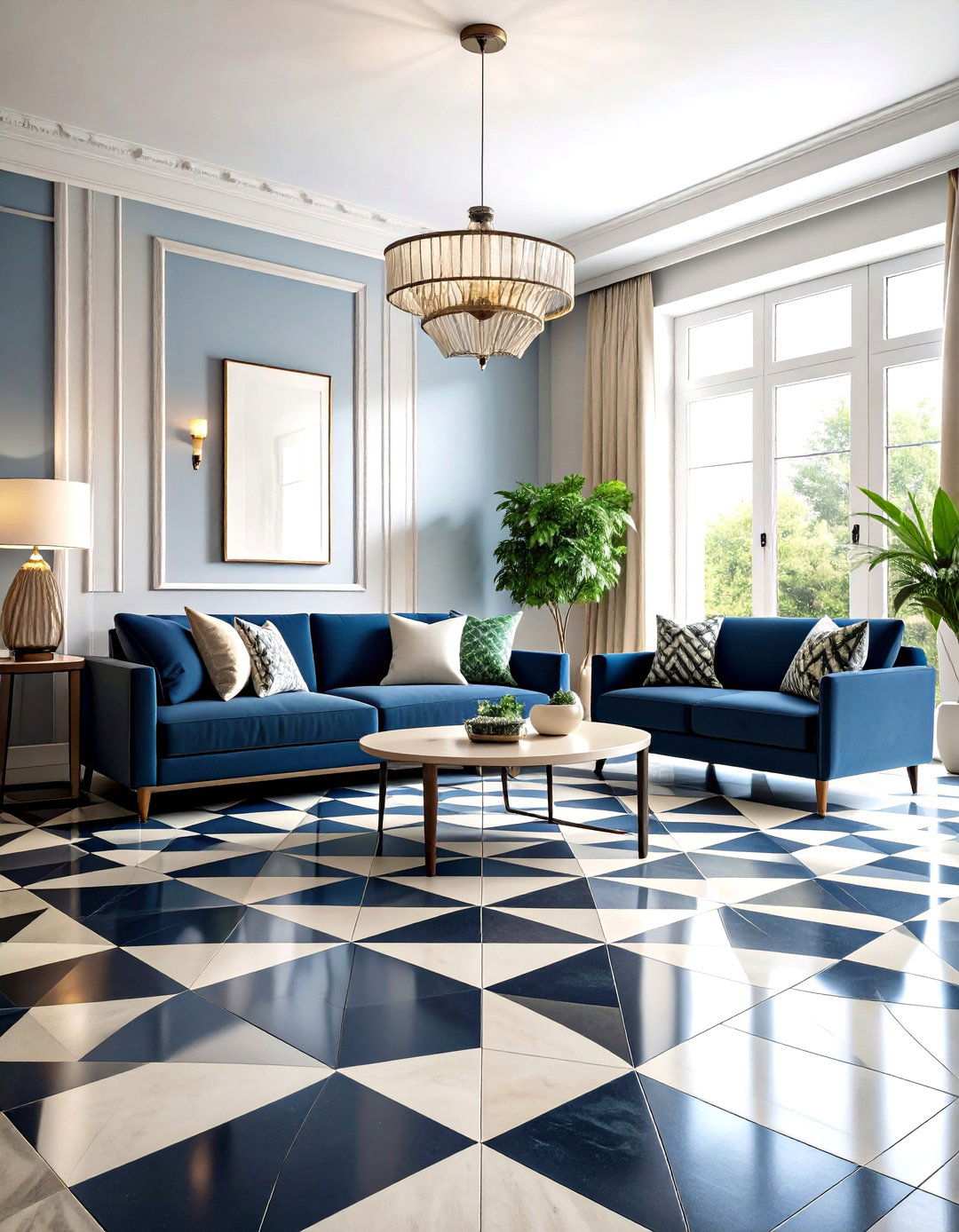
A striking diamond pattern can be the crowning glory of any wood floor, instantly transforming an ordinary space into a breathtaking design statement. This captivating approach draws inspiration from the classic harlequin pattern, where squares are angled at precise forty-five-degree angles to create a visually dynamic effect that beckons the eye to explore further. The interplay of angular geometry creates a sense of movement and energy, while maintaining an enduring appeal that transcends fleeting trends. This sophisticated design is particularly well-suited for formal living areas, master bedrooms, or powder rooms where an air of refined elegance is desired. By selecting contrasting tones like charcoal and pearl white, homeowners can create a dramatic impact, or opt for tonal variations such as soft gray and cream for a more understated sophistication. The key to achieving this stunning effect lies in precise diamond placement, requiring patience and attention to detail during the taping process. Nevertheless, the end result is well worth the effort, yielding floors that rival the beauty of expensive inlaid designs.
3. Revitalizing Concrete Floors with Vibrant Color
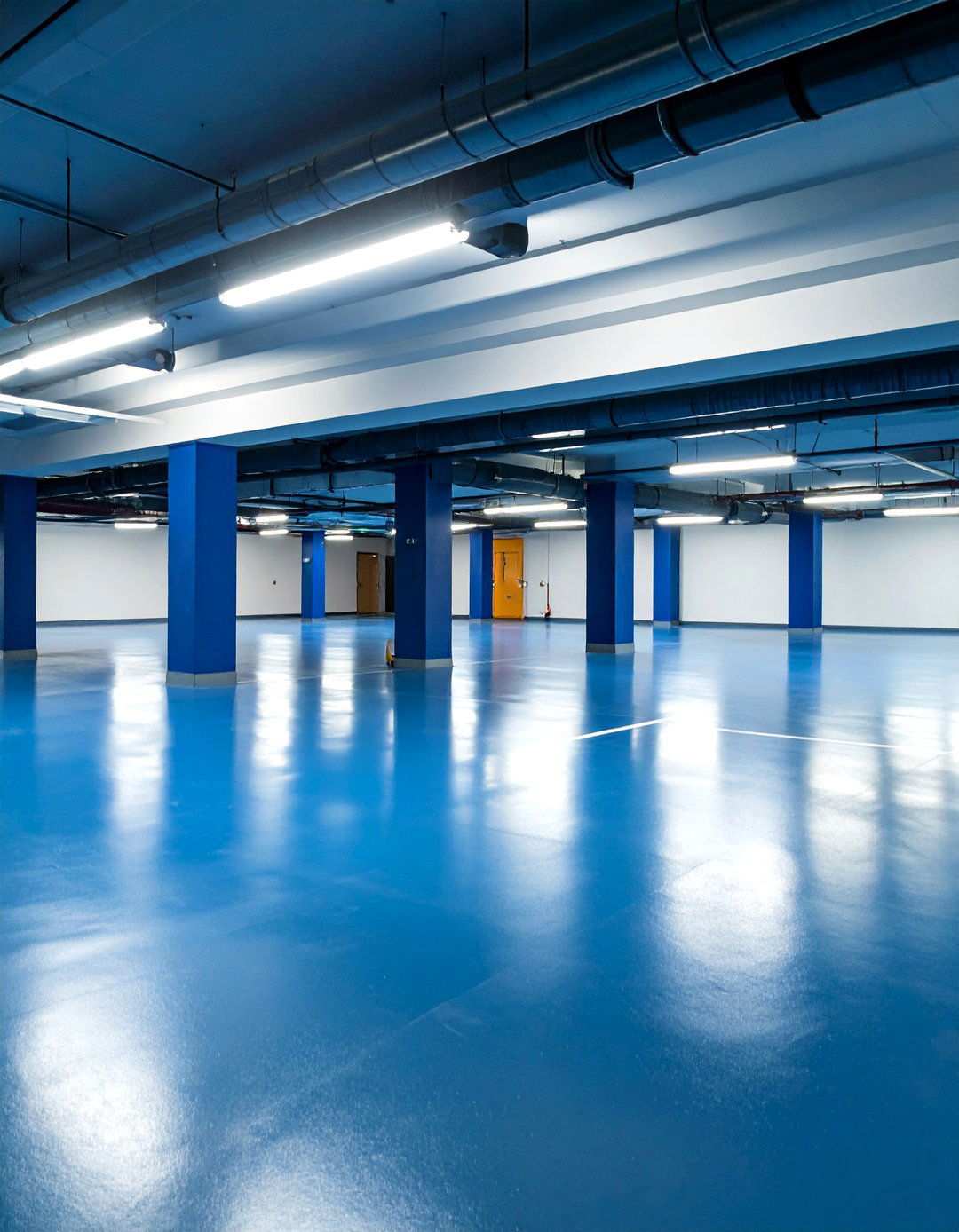
Concrete floors need not be relegated to a drab gray palette when bold, vibrant hues can instantly revitalize any space. A solid color painted concrete floor makeover is an ideal solution for modern design enthusiasts, offering numerous practical benefits like effortless maintenance and exceptional durability. By selecting deep navy, warm sage green, or bright white, homeowners can create an atmosphere that is as sophisticated as it is inviting. What’s more, the smooth, painted surface resists stains and moisture better than raw concrete, while also providing slip-resistant properties when textured additives are included. To prepare the surface for painting, thorough cleaning and possible etching are essential for proper paint adhesion. Epoxy-based floor paints are a popular choice for high-traffic areas due to their superior durability. This monochromatic approach creates a clean, contemporary aesthetic that perfectly complements minimalist furniture and industrial design elements, transforming forgotten spaces into functional and attractive areas that are both stylish and affordable.
4. Moroccan Stenciled Floor Design
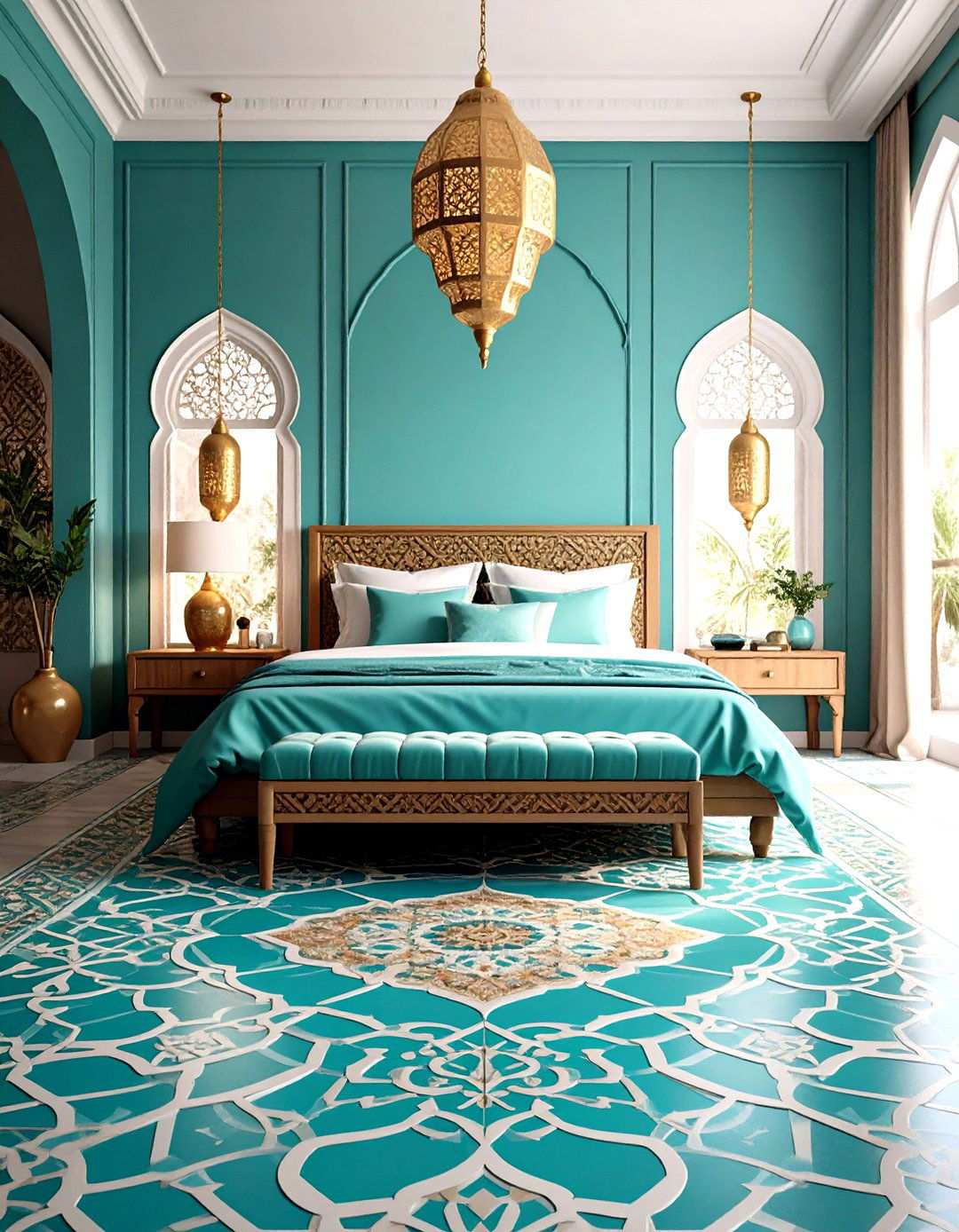
Infuse your living space with an exotic allure by incorporating intricately designed Moroccan-inspired stencil patterns that elevate plain floors into breathtaking works of art. Characterized by interlocking geometric motifs, flowing arabesques, and classic tile patterns, these elaborate designs create a visually captivating experience. Complement rich jewel tones such as emerald green, sapphire blue, and warm gold with neutral base colors, or opt for earthy tones like terracotta and moss green for a more understated elegance. The repetitive nature of Moroccan patterns generates a sense of rhythm and flow within the room, making it perfect for large-scale stencils that cover significant floor areas with a cohesive design. To add a touch of luxury, consider incorporating metallic accents in rose gold or copper. This style particularly suits dining rooms, entryways, or bedroom spaces where the intricate patterns can be fully appreciated, adding a unique and cultural dimension to modern home design.
5. Faux Marble Painted Floor
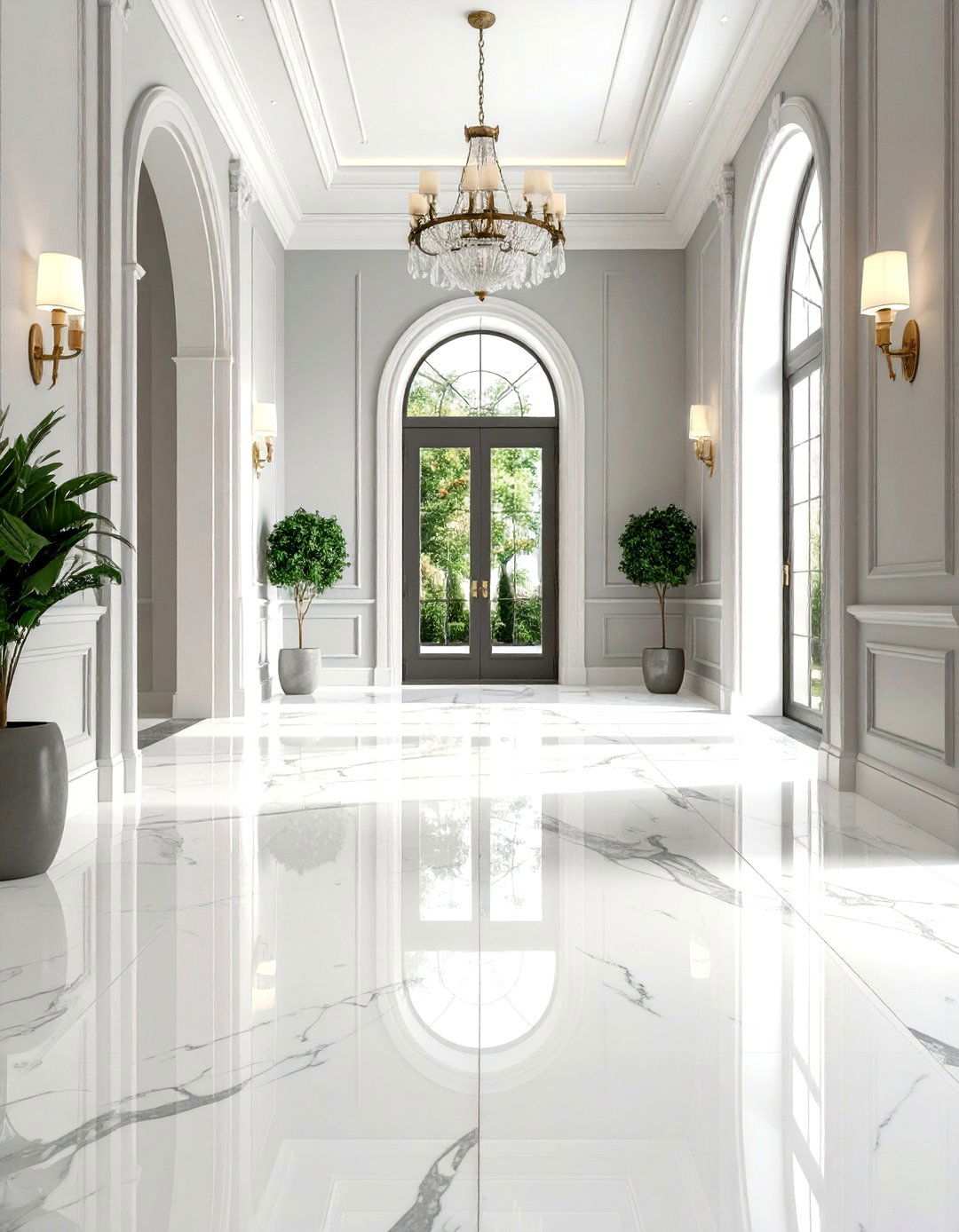
Achieve the luxurious appearance of high-end marble flooring through strategic paint techniques that replicate natural stone veining and color variations. This sophisticated approach involves applying multiple layers of paint and utilizing feathering techniques to mimic the organic patterns found in marble. Begin with a light base color such as soft ivory or pale mist, then add darker veining using fine brushes and natural sea sponges. The key to success lies in studying real marble samples to understand how veins naturally flow through the stone. Classic combinations like soft gray, white, and subtle beige create a timeless Carrara marble effect, while deeper grays and charcoal produce dramatic results. The faux marble technique works beautifully in formal dining rooms, elegant entryways, or master bathroom areas where luxury aesthetics are desired. Proper sealing protects the artistic finish while maintaining the stone-like appearance, making this technique both practical and effective.
6. Harmonious Floor Environments
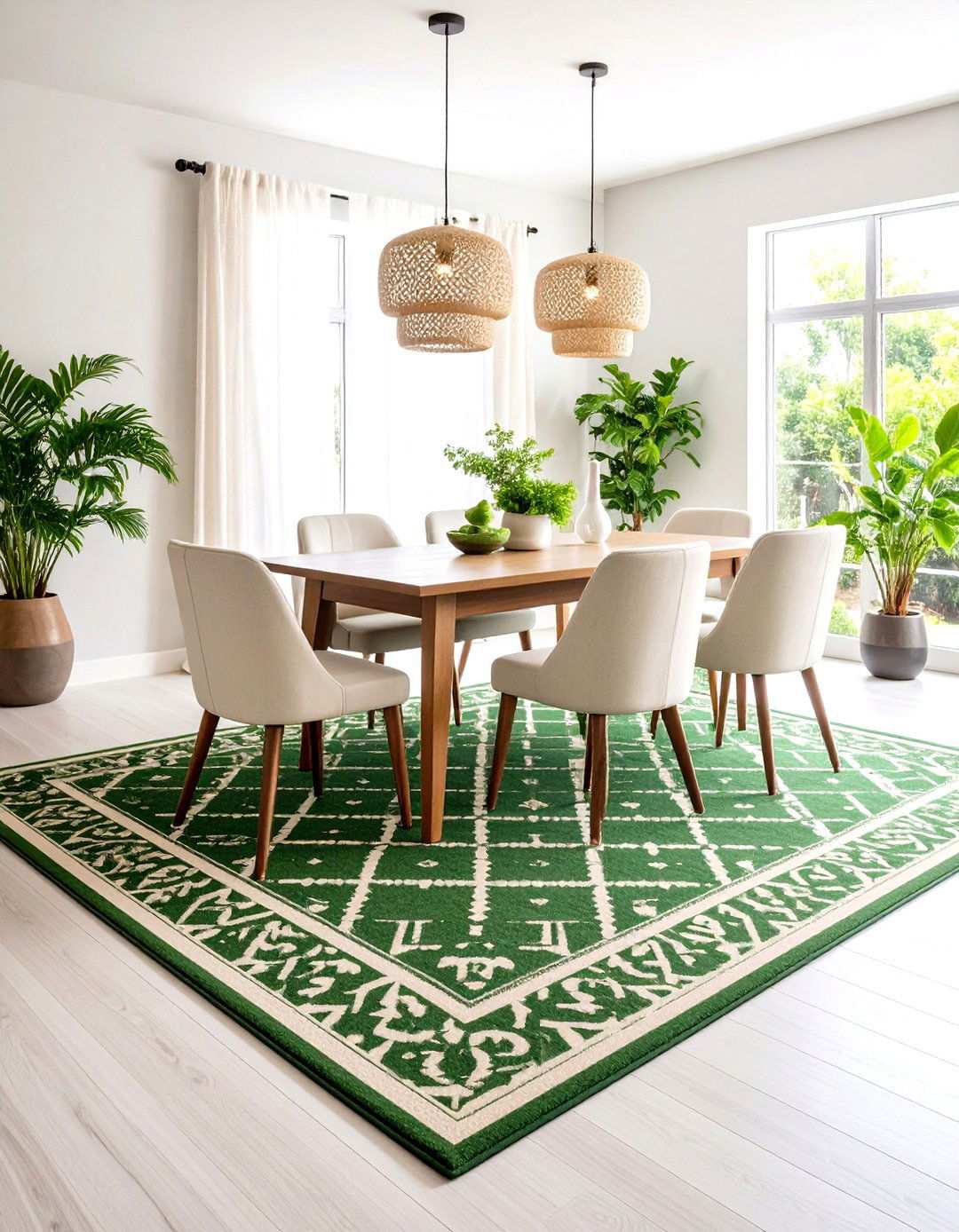
Imagine having a space that combines the warmth of textiles with the durability of a painted floor. This can be achieved by adopting a painted rug effect floor design, a clever technique that brings the visual appeal of rugs directly onto your floor surface. By painting decorative borders, central medallions, or geometric patterns, you can create a unique and inviting atmosphere in your dining area. The key to success lies in selecting colors that complement your existing furniture and ensuring the painted area remains proportional to the room size. From Persian-inspired patterns to southwestern motifs and simple bordered designs, there’s a wide range of styles to choose from that can be beautifully translated onto a painted floor. The best part? Painted rug designs can be customized to fit your exact needs, allowing you to achieve the perfect size, shape, and color combination. Unlike traditional rugs, painted versions won’t shift, require no cleaning, and remain perfectly in place. By strategically placing your furniture, you can enhance the illusion and protect high-wear areas.
7. Immersive Color Experiences
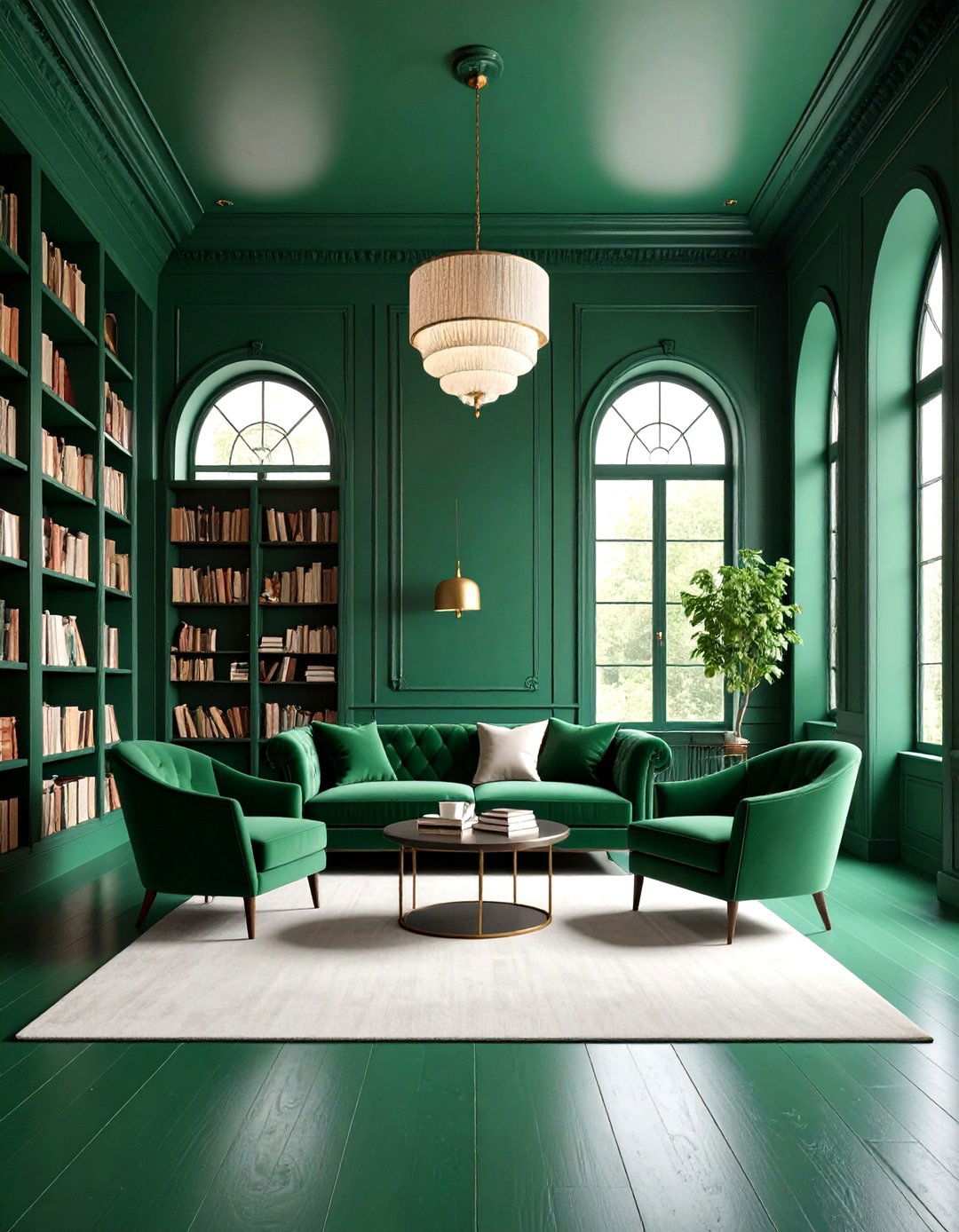
For a bold and contemporary design statement, consider extending your wall colors onto your floors, creating an immersive color experience that envelops the entire room. This dramatic approach, known as color drenching, involves using identical or tonal paint colors on walls, ceilings, and floors to achieve a cohesive design impact. Deep forest green, for example, can create a cozy and intimate atmosphere perfect for reading rooms or dining spaces. Soft lavender or sage can also work beautifully in bedrooms, promoting calm and relaxation. By adopting a monochromatic approach, you can eliminate visual boundaries, making small rooms appear larger while creating sophisticated designer-level results. When choosing colors, be sure to consider natural light levels and room function. For a striking contrast, try pairing matte finishes on walls with semi-gloss floor paint, creating subtle texture variations within the unified color scheme. This technique is particularly effective in powder rooms, home offices, or accent rooms where bold design statements can enhance rather than overwhelm daily living.
8. Captivating Nautical Star Floor Design
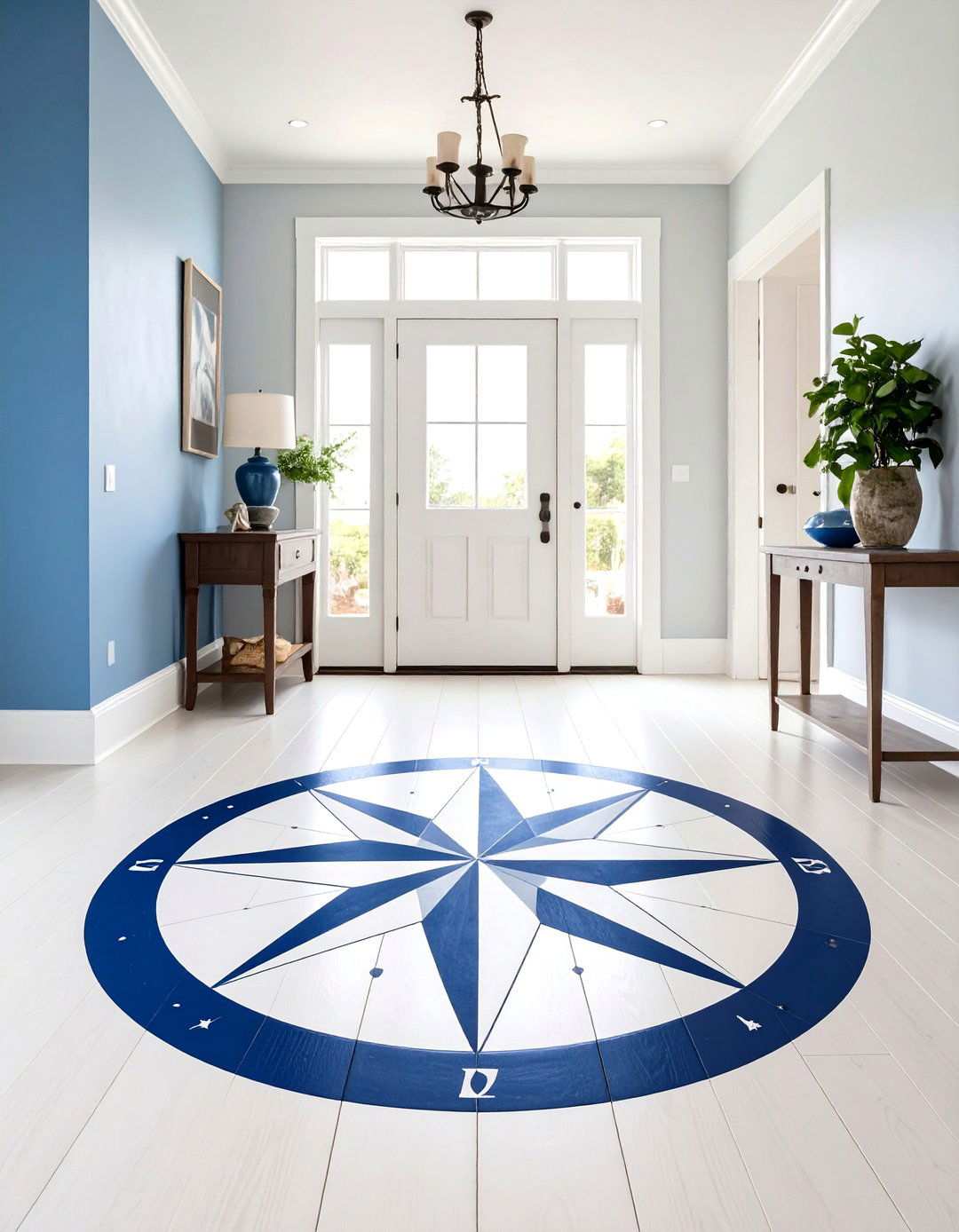
A striking nautical star medallion design can bring a touch of maritime elegance to your home, whether it’s a coastal-themed or traditional space. The eight-pointed compass rose creates a visually appealing geometric pattern that pays homage to classic American design heritage. By placing the star centrally in a dining room or entryway, you can fully appreciate the circular design without any visual obstruction from furniture. Timeless navy and white color combinations evoke a sense of classic maritime style, while softer sage green and cream tones offer a more subtle coastal aesthetic. To achieve perfect proportions and symmetrical points for this design, it’s essential to use precise measurement techniques. Utilize a compass and string method to draw perfect circles, then divide them into equal sections to create the star points. This pattern is particularly well-suited for Cape Cod-style homes, lake houses, or any space where nautical themes align with the overall design. As a focal point, the bold geometric form can anchor furniture arrangements while adding distinct architectural character to the space.
9. Dynamic Striped Painted Floor Patterns
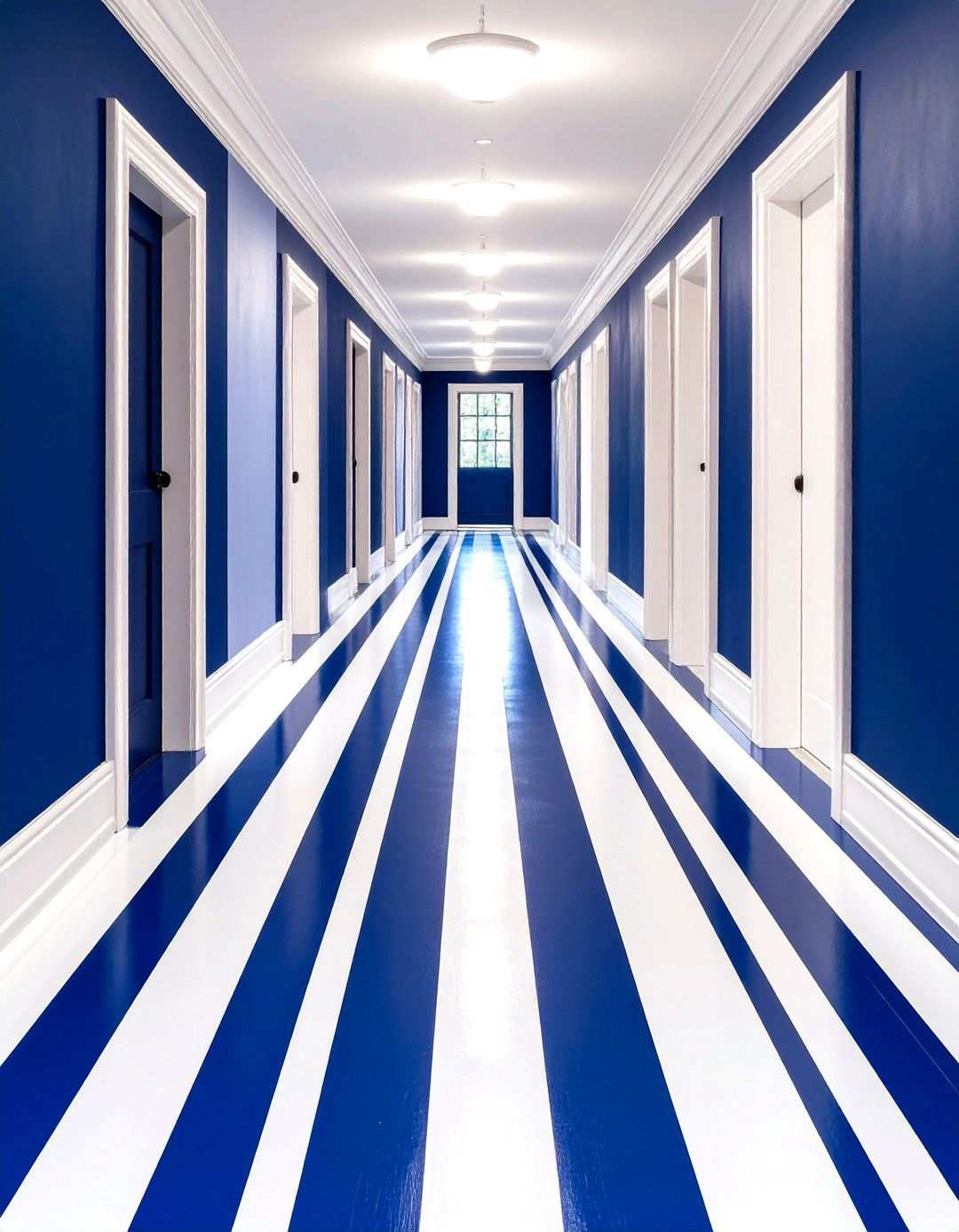
Painted stripe patterns can add a dynamic touch to traditional room layouts, creating the illusion of more space while infusing contemporary energy. Horizontal stripes can make narrow rooms appear wider, while vertical applications can visually extend shorter spaces. The versatility of the stripe technique lies in its infinite customization possibilities, which include varying stripe widths, color combinations, and directional choices. Classic navy and white stripes evoke timeless nautical themes, while alternating wood stain and paint create sophisticated contrast. To add complexity and visual interest, consider varying stripe widths or using three colors for a rainbow effect in children’s spaces. This pattern works particularly well in hallways, kitchens, or casual dining areas where the linear design complements architectural lines. To achieve clean and professional-looking results, it’s crucial to take precise measurements and use careful taping techniques. Thin stripes can create subtle texture, while bold wide stripes make dramatic statements. The adaptability of this pattern allows it to seamlessly integrate with any color scheme or design style.
10. Revitalizing Wood Floors with Whitewashed Finishes
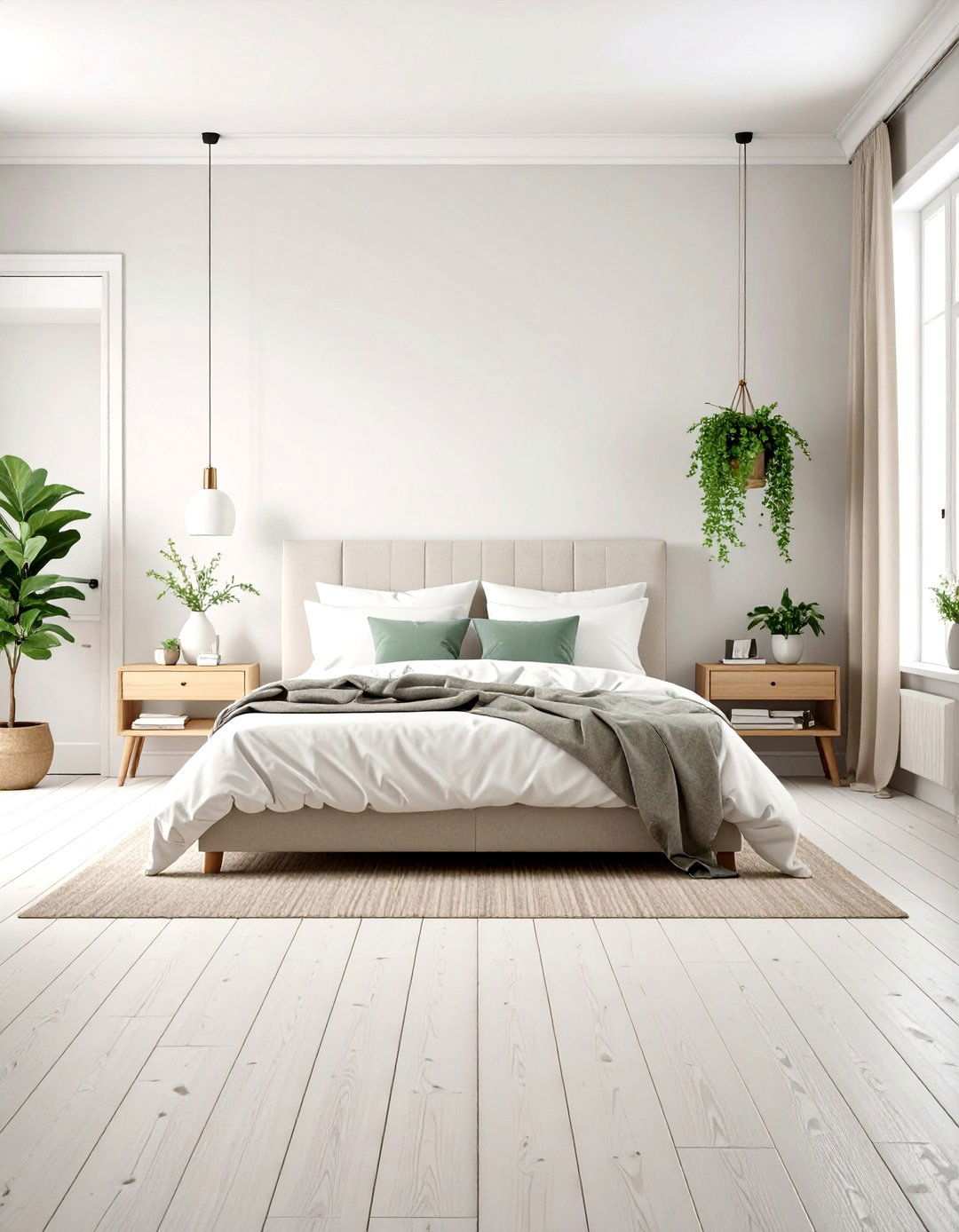
Infuse your hardwood floors with a touch of Scandinavian style using whitewashed finishes that effectively lighten and restore dark or damaged wood. By diluting white paint with water or blending it with wood stain, you can achieve a translucent coverage that highlights the natural grain patterns of the wood. This technique successfully combines the protective benefits of paint with the organic beauty of wood. As a result, whitewashing naturally brightens up dark rooms while maintaining the textural interest of the flooring. This approach is ideally suited for farmhouse, coastal, or minimalist design schemes where a light, airy aesthetic is desired. By experimenting with different dilution ratios, you can achieve various opacity levels, ranging from subtle tinting to more opaque coverage. Applying the mixture using brushes, rags, or sponges, and working in manageable sections, helps maintain a consistent appearance. The slightly imperfect, hand-crafted look adds character and warmth to the space. Moreover, this approach is not only budget-friendly but also environmentally conscious, making it a great alternative to complete refinishing.
11. Elevating Outdoor Spaces with Painted Concrete Patios
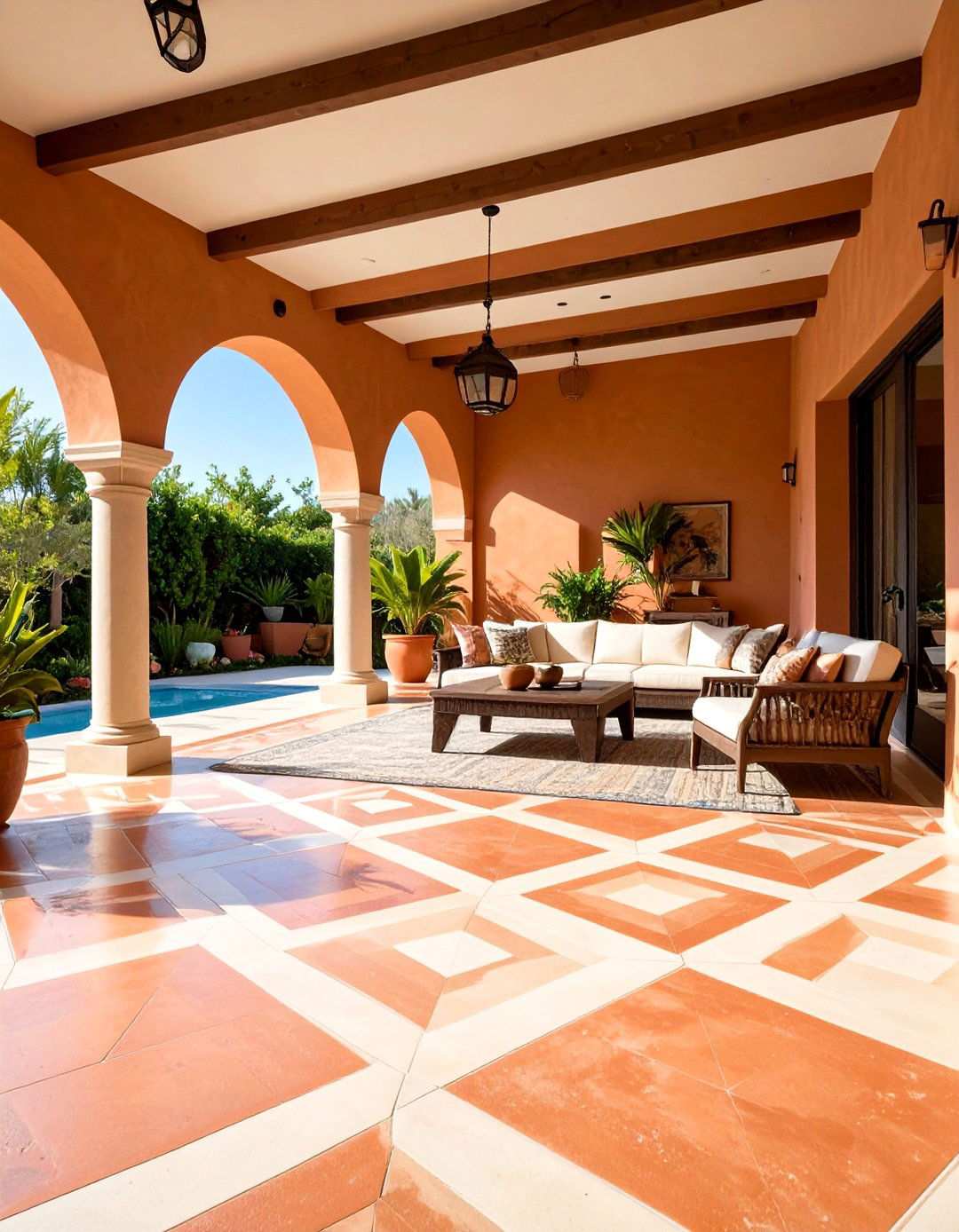
Take your outdoor living space to the next level by transforming bland gray concrete surfaces into vibrant and attractive entertainment areas with painted concrete patio designs. To achieve a durable and long-lasting finish, outdoor concrete painting requires specialized formulations that can withstand the elements, including weather, UV exposure, and temperature fluctuations. With the right color palette, you can create a dramatic impact on your outdoor space. For example, bold geometric patterns, faux tile designs, or simple solid colors can add visual interest and personality to your patio. Certain combinations, such as terra cotta and sage green, evoke a Mediterranean charm, while navy and white create a nautical appeal. The painted surface not only provides slip-resistant properties but also easier maintenance than raw concrete. Consider adding stenciled borders around patio edges or central medallion designs to create focal points of interest. To ensure a successful outcome, proper surface preparation is crucial, including thorough cleaning, crack repair, and appropriate primer application. When selecting colors, consider how they will complement your home’s exterior and appear in varying light conditions. The painted surface effectively creates defined outdoor room boundaries while providing an attractive background for furniture and plantings.
12. Whimsical Wonderlands for Young Hearts
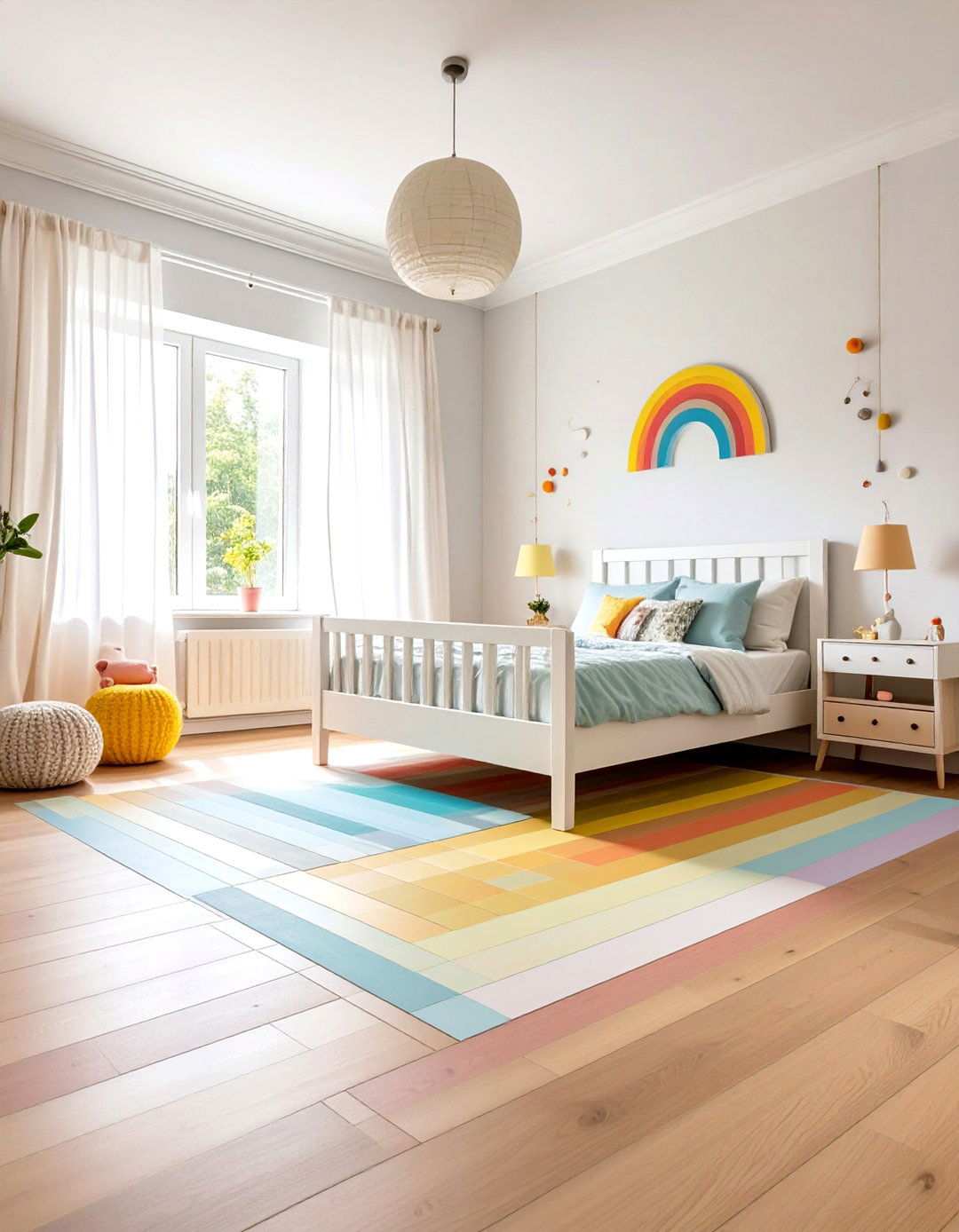
Give your child’s room a vibrant makeover that reflects their boundless creativity and energy. A rainbow painted floor can transform a dull bedroom into a magical realm where imagination knows no bounds. This playful approach involves painting individual floorboards in different colors, creating a visually striking effect that kids adore. You can arrange colors in a traditional rainbow sequence or experiment with custom patterns using your child’s favorite hues. Soft pastel shades are perfect for younger children, while bold, vibrant colors are more appealing to older kids. The benefits of a painted floor far outweigh those of carpeting, especially in spaces where spills and creative projects are a regular occurrence. Consider alternating wide and narrow boards for a dynamic visual effect or grouping similar colors for a more subtle gradation. Adding protective area rugs in play areas can prevent wear while maintaining the colorful impact. As your child grows, you can easily update the color scheme to reflect their changing tastes.
13. Kitchen Revival through Painted Floors
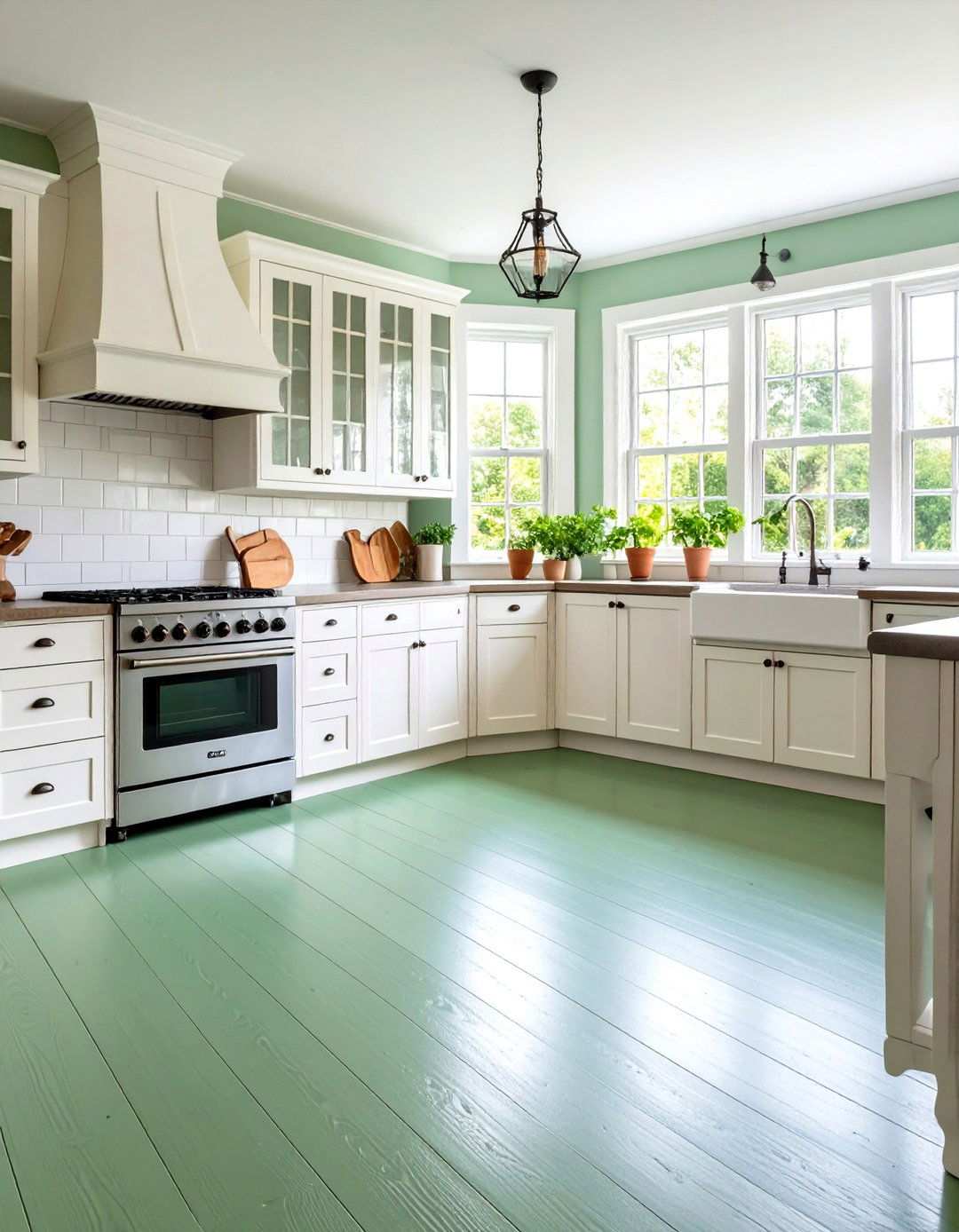
Elevate your kitchen’s style and functionality with painted floors that beautifully coordinate with your cabinetry while providing practical benefits for busy cooking spaces. Kitchen floors are prone to wear and tear from foot traffic, spills, and dropped items, making paint selection a crucial factor for long-term success. High-quality porch and floor paints offer superior durability and stain resistance compared to standard wall paints. Timeless black and white checkerboard patterns complement farmhouse aesthetics, while solid navy or sage green create sophisticated backdrops for white cabinets. A painted surface provides easier cleanup than many traditional flooring options while allowing complete color customization. Consider your kitchen’s natural light when selecting colors, as darker shades can make smaller kitchens feel cramped. Coordinate floor colors with backsplash tiles and countertop materials for a cohesive design. With proper preparation and quality paint, the finish can withstand daily kitchen demands while maintaining a fresh appearance for years.
14. Elevating Bathroom Design with Harlequin Patterns
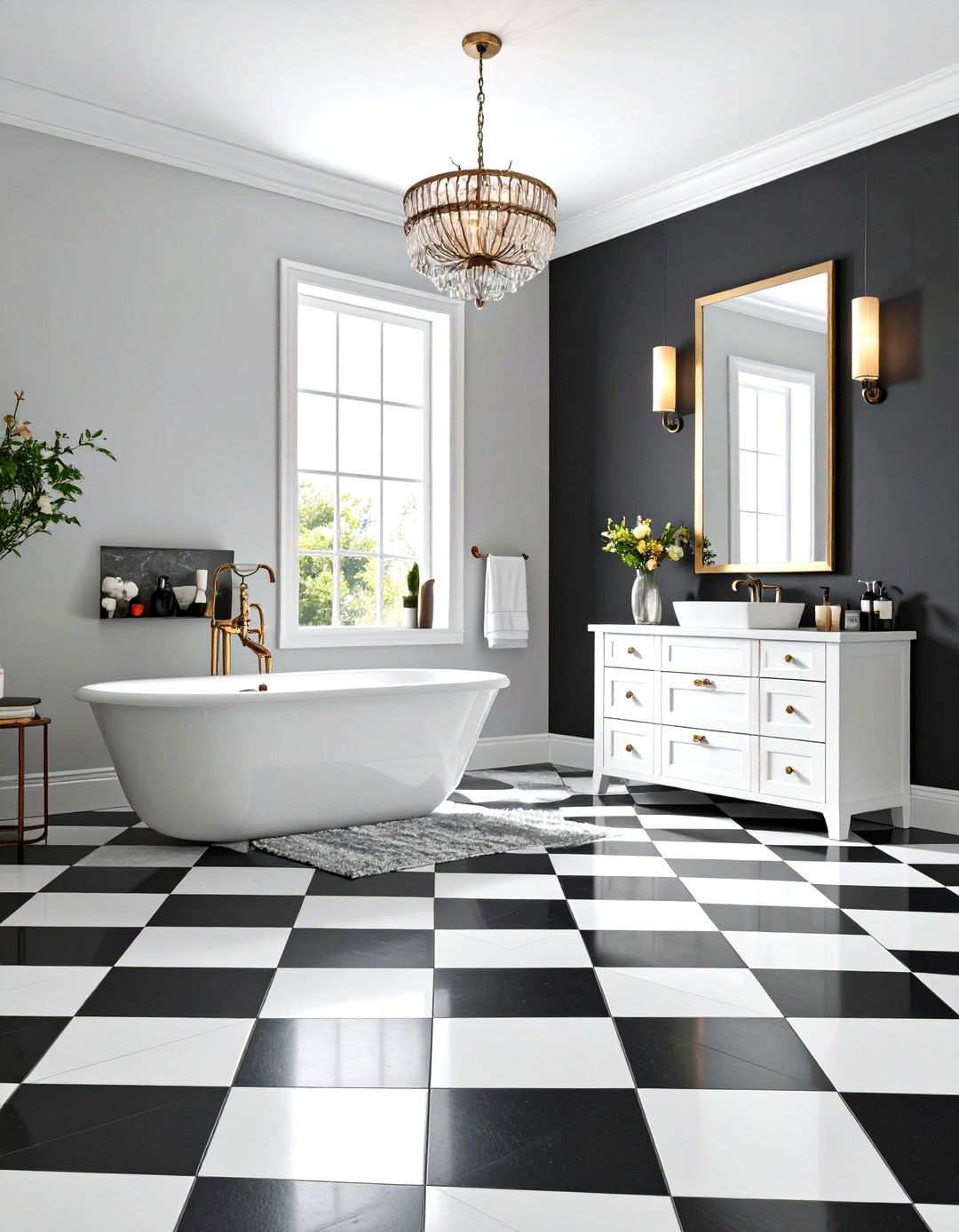
Harlequin floor patterns have long been a symbol of sophistication and visual luxury in bathrooms across the globe. By incorporating this classic geometric design, homeowners can create the illusion of high-end diamond-shaped tiles using simple yet effective paint techniques. In smaller bathrooms, the repetitive geometry of the harlequin pattern creates a striking visual effect that expands the space, making it appear more spacious. The timeless elegance of traditional black and white combinations is well-suited to this design, while softer color pairings like gray and cream provide a more subtle, sophisticated look. However, achieving perfect diamond symmetry requires meticulous planning and precise measuring to ensure a flawless finish. Utilizing chalk lines and cardboard templates to mark diamond positions beforehand can help alleviate this challenge, while a well-sealed painted surface offers excellent moisture resistance, making it an ideal solution for bathroom environments. One of the most significant advantages of this technique is its cost-effectiveness, providing significant savings compared to actual tile installation while delivering a similar visual impact. The bold geometric pattern serves as a stunning backdrop for simple fixtures and neutral accessories, adding a touch of elegance to the space.
15. Bringing Serenity to Bedrooms with Painted Floors
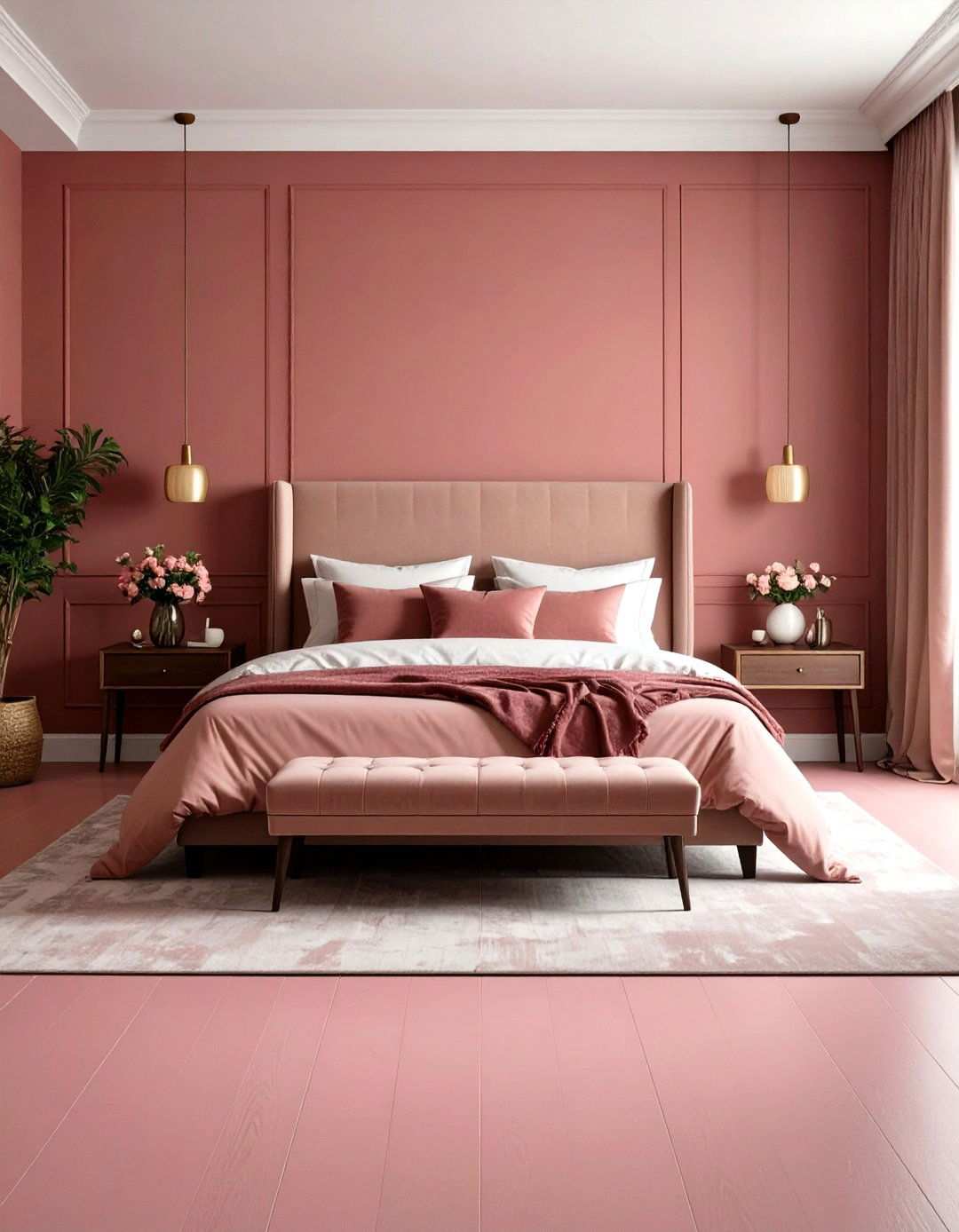
A beautifully designed bedroom floor can be a tranquil oasis, perfect for promoting rest and relaxation while showcasing personal style preferences. One of the key benefits of painted floors is that furniture often covers high-wear areas, protecting the painted surface and allowing for more creative experimentation with design. Soft, muted colors like dusty rose, sage green, or warm gray create a calming atmosphere that is conducive to sleep, while subtle geometric patterns or simple borders add visual interest without overwhelming the space. The painted approach also offers the perfect opportunity for color coordination with bedding, window treatments, and wall colors. For a sophisticated monochromatic scheme, consider painting the floors to match or complement the wall colors. Distressed or weathered paint techniques can add a touch of rustic charm to farmhouse or cottage-style bedrooms, while the smooth painted surface provides easier maintenance than carpeting and eliminates allergen concerns. Strategically placing area rugs can add softness underfoot while protecting painted areas around the bed and dresser, creating a cozy and inviting atmosphere.
16. Elevating Entryway Aesthetic
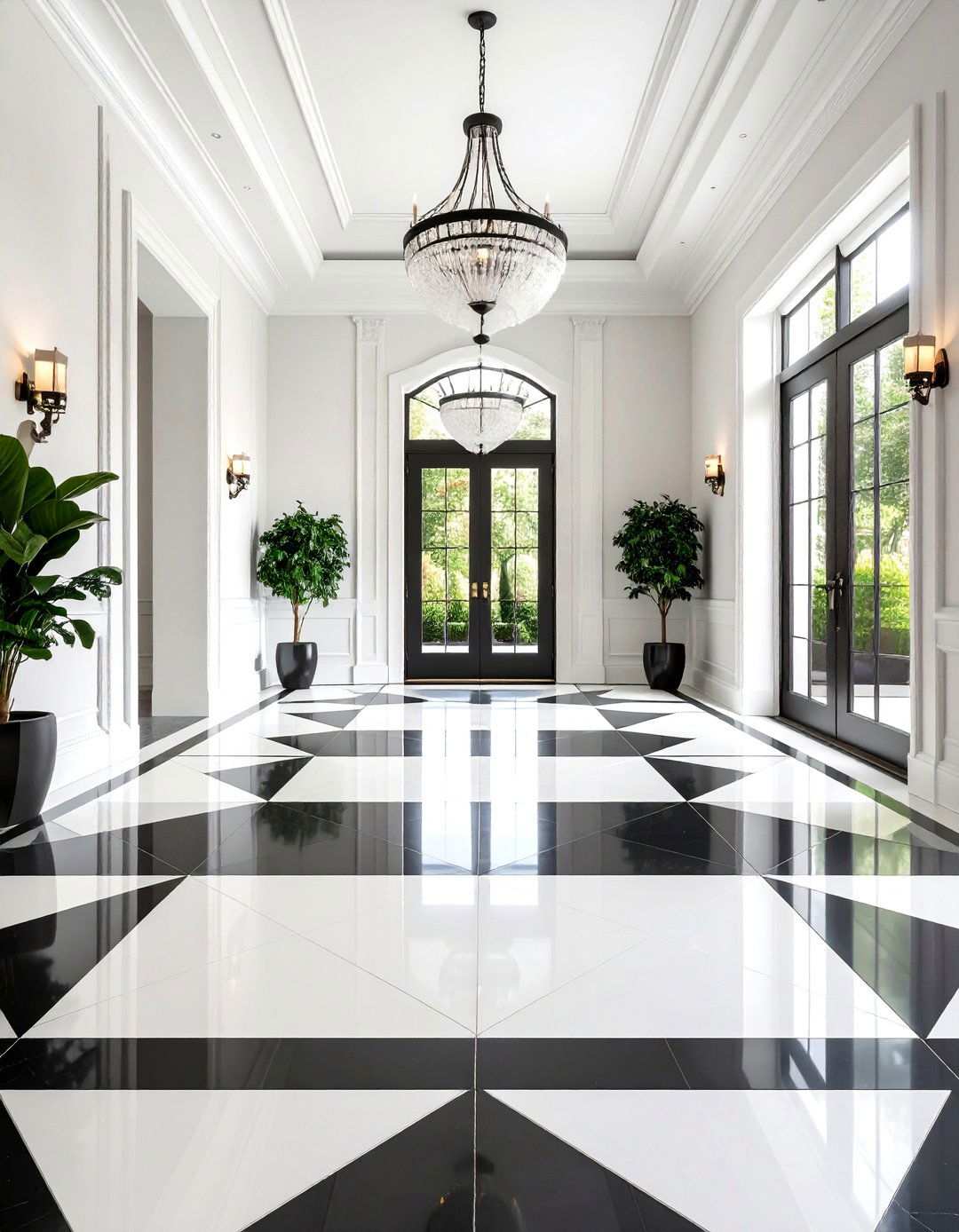
Leave a lasting impression on visitors with a striking entryway floor design that reflects your home’s personality. High-traffic entry areas are susceptible to various environmental conditions, making it essential to choose a durable paint that retains its beauty over time. Eye-catching patterns such as oversized chevrons, celestial maps, or intricate florals transform ordinary spaces into captivating focal points. Dark hues like slate or taupe not only conceal dirt effectively but also provide a sophisticated backdrop for light-colored furniture pieces. The painted design should harmoniously integrate with your home’s overall style while creating seamless transitions to adjacent room flooring. For entryways exposed to moisture from rain or snow, consider using paint formulations that are specifically designed to withstand harsh weather conditions. Bold geometric patterns are well-suited for modern homes, whereas traditional motifs are ideal for classic architecture. The entry floor design becomes a unique identifier for your home, making a lasting impression on visitors. Proper sealing is crucial for maintaining vibrant colors and protecting against wear and tear despite constant use.
17. Revitalizing Basement Spaces
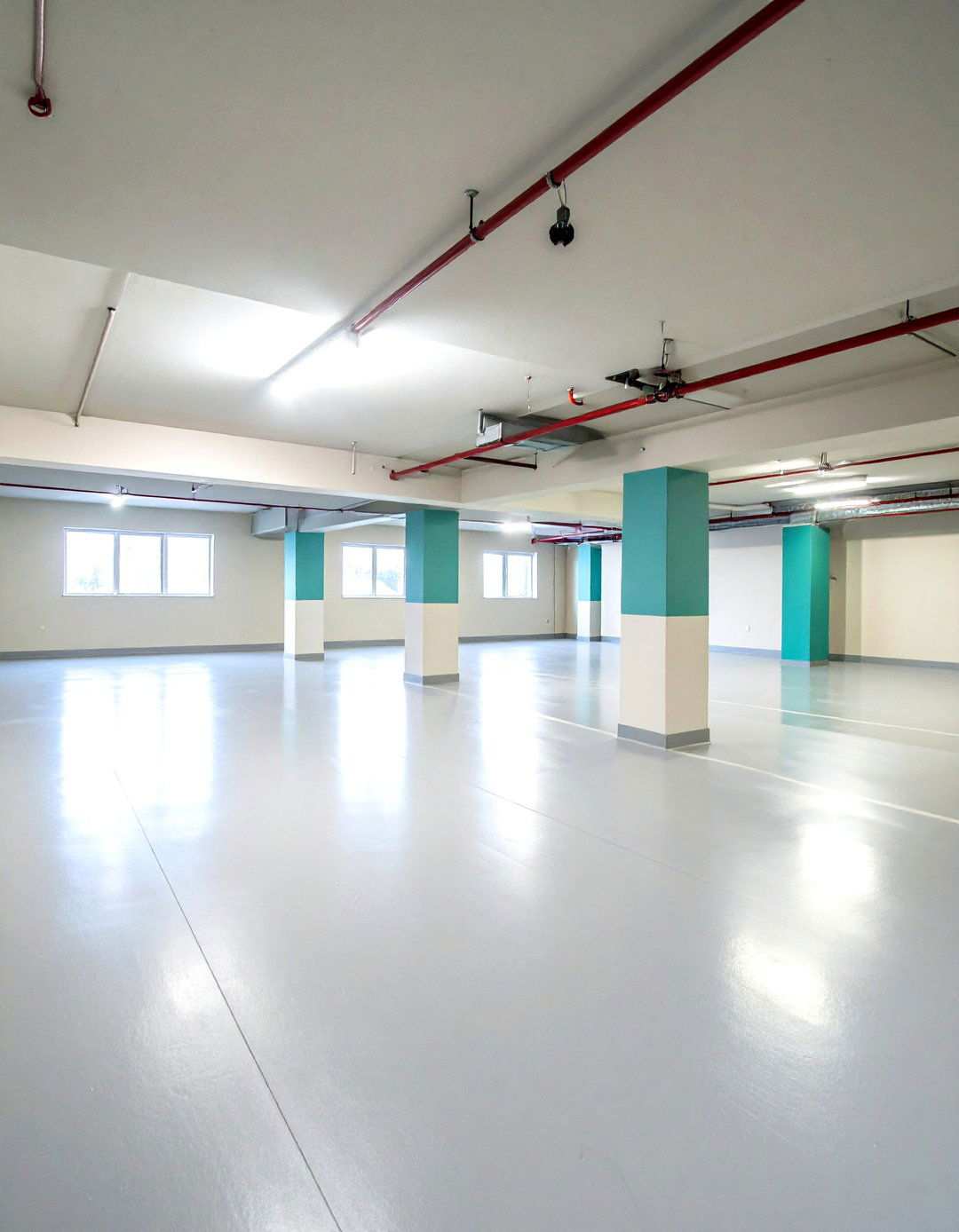
Transform underutilized basement areas into functional family zones with painted concrete floors that provide attractive, durable surfaces for recreation and storage. Basements present distinct challenges including moisture concerns, temperature fluctuations, and limited natural light that significantly impact paint selection and color choices. Light colors such as cream or pale blue can amplify artificial lighting while creating the illusion of greater space in underground areas. Moisture-resistant epoxy paints offer superior protection against humidity and occasional water exposure, making them an ideal choice for basement spaces. The painted surface provides a significant upgrade over bare concrete while remaining a budget-friendly alternative to other flooring options. Consider adding anti-slip additives to basement stairs and high-traffic areas to enhance safety and prevent slips. Geometric patterns or simple borders can define activity zones within larger basement spaces, creating a functional and inviting atmosphere. The painted floor offers easy maintenance essential for spaces used for children’s play, exercise, or hobby activities, effectively transforming previously unused areas into valuable living space.
18. Unifying Movement with Chevron Floor Patterns
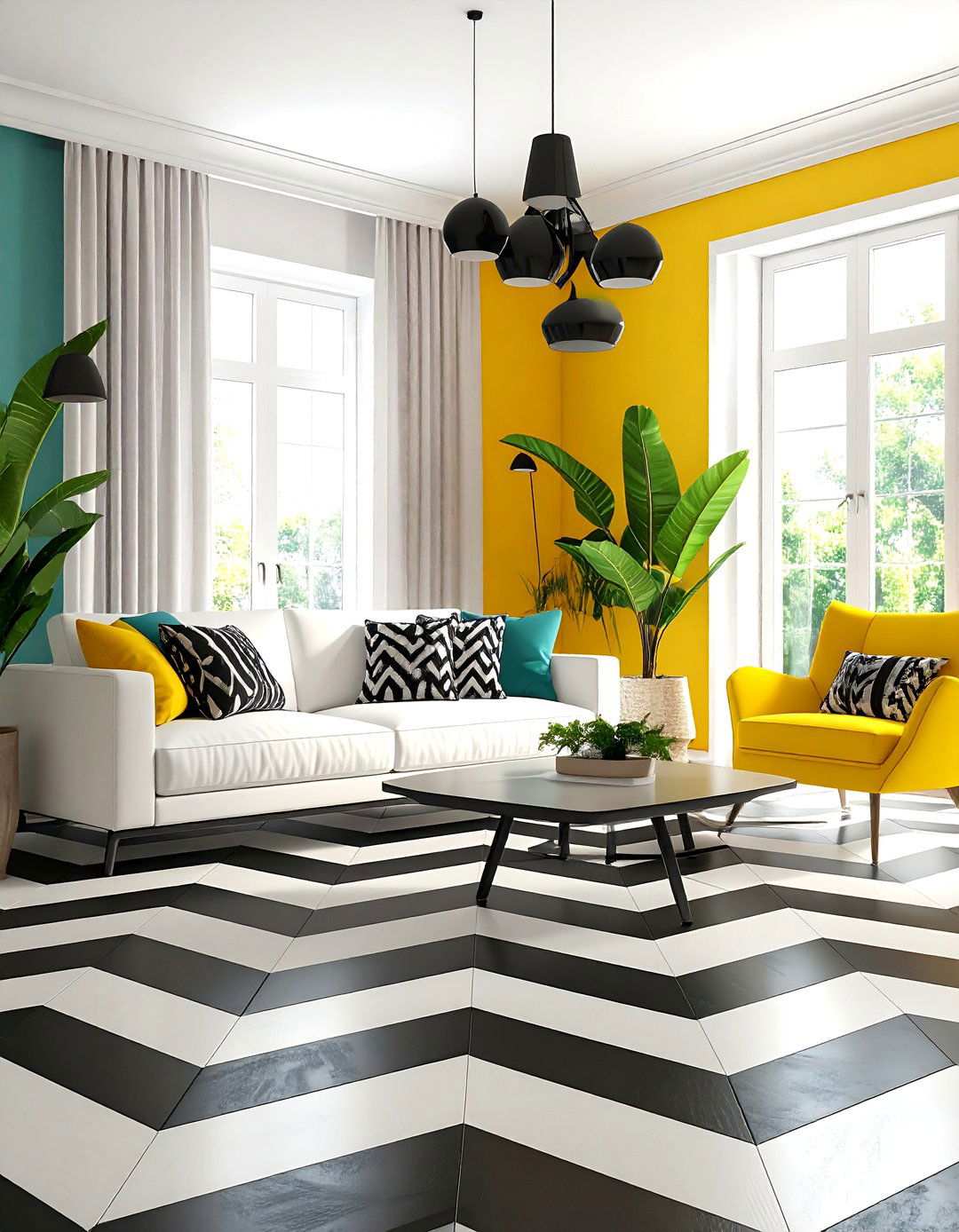
Chevron patterns bring a dynamic flair to floors, generating an immersive visual experience through their V-shaped zigzag design. This versatile pattern thrives in hallways, kitchens, and living areas where its directional appeal naturally guides foot traffic. What’s more, its intricate visual interest surpasses simple stripes, making it perfect for DIY enthusiasts. The angular lines evoke a sense of movement and energy, ideal for busy family spaces. To maximize impact, pair contrasting colors like black and white for dramatic effect, or opt for tonal variations for a more understated look. Effective chevron floor design requires meticulous planning to ensure consistent angles and precise alignment throughout the space. Room size plays a crucial role in determining the ideal chevron scale, with larger patterns suited for expansive areas and smaller versions ideal for cozy spaces. This technique works beautifully on both wood floors and concrete surfaces, transforming the floor into a stunning architectural feature that harmoniously coexists with furnishings and decor.
19. Crafting Distressed Painted Floor Charisma
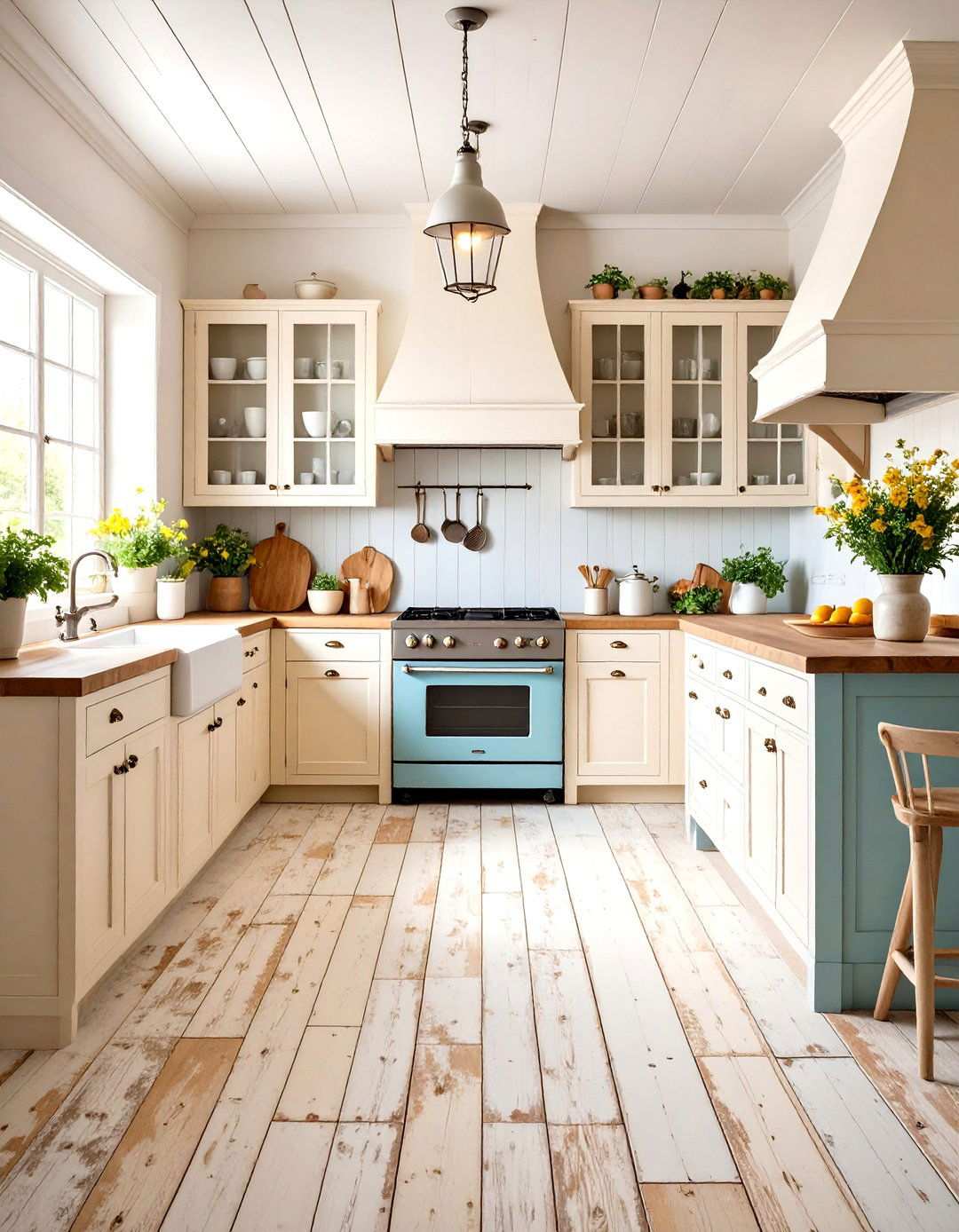
A beautifully distressed painted floor exudes instant charm and vintage allure, making it a perfect fit for farmhouse, cottage, or shabby chic design aesthetics. This technique skillfully replicates the wear and tear of decades, imbuing the space with authentic rustic appeal. The distressing process involves strategic paint removal, focused sanding, and layered paint colors to create realistic aging effects. Target high-traffic areas such as doorways, furniture legs, and walkways for maximum impact, and opt for soft, muted colors like cream, sage, or pale blue for a distressed look. A key benefit of this technique lies in its ability to control the aging process, allowing you to tailor the level of wear to your design vision. Multiple paint layers in coordinating colors add depth and complexity, which develops over time, transforming new or existing floors into surfaces with an apparent history and character. When paired with vintage furnishings, distressed painted floors create a harmonious and timeless look that perfectly captures the essence of a bygone era.
20. Enchanting Floral Patterns for Floor Design
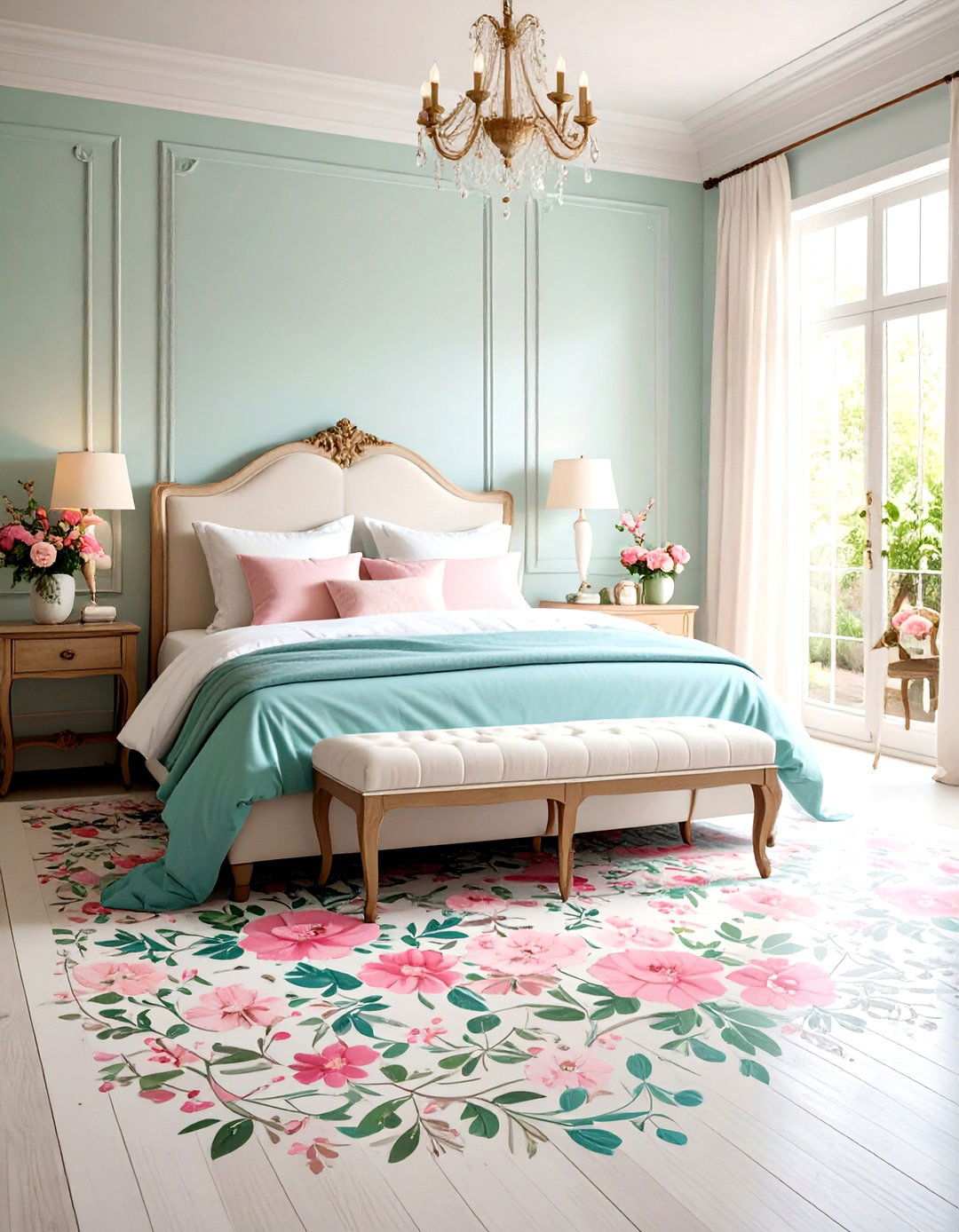
Create an intimate ambiance indoors with exquisite floral patterns that bring a touch of whimsy and romance to bedrooms, powder rooms, or garden-inspired spaces. Grand-scale flower motifs prove particularly effective for floor applications, yielding a striking visual effect when viewed from a standing position. Delicate pastel hues like peachy pink, lilac, and sage green evoke a dreamy, idyllic atmosphere reminiscent of a charming cottage. The stenciling process enables precise placement and color control, allowing for seamless integration of the design throughout the room. Consider framing the space with elegant floral borders or central medallions featuring intricate floral arrangements. The hand-painted finish adds a unique, artistic element that mass-produced flooring cannot replicate. To achieve organic, natural arrangements, experiment with varying flower sizes and types, mirroring the diverse plantings found in a lush garden. This technique proves especially well-suited for girls’ bedrooms, romantic master suites, or any space where soft, feminine touches elevate the overall aesthetic. By using high-quality stencils and carefully applying paint, you can achieve consistent results and prevent bleeding for crisp, professional-looking flowers.
21. Vibrant Multi-Color Stripes for a Playful Floor Design
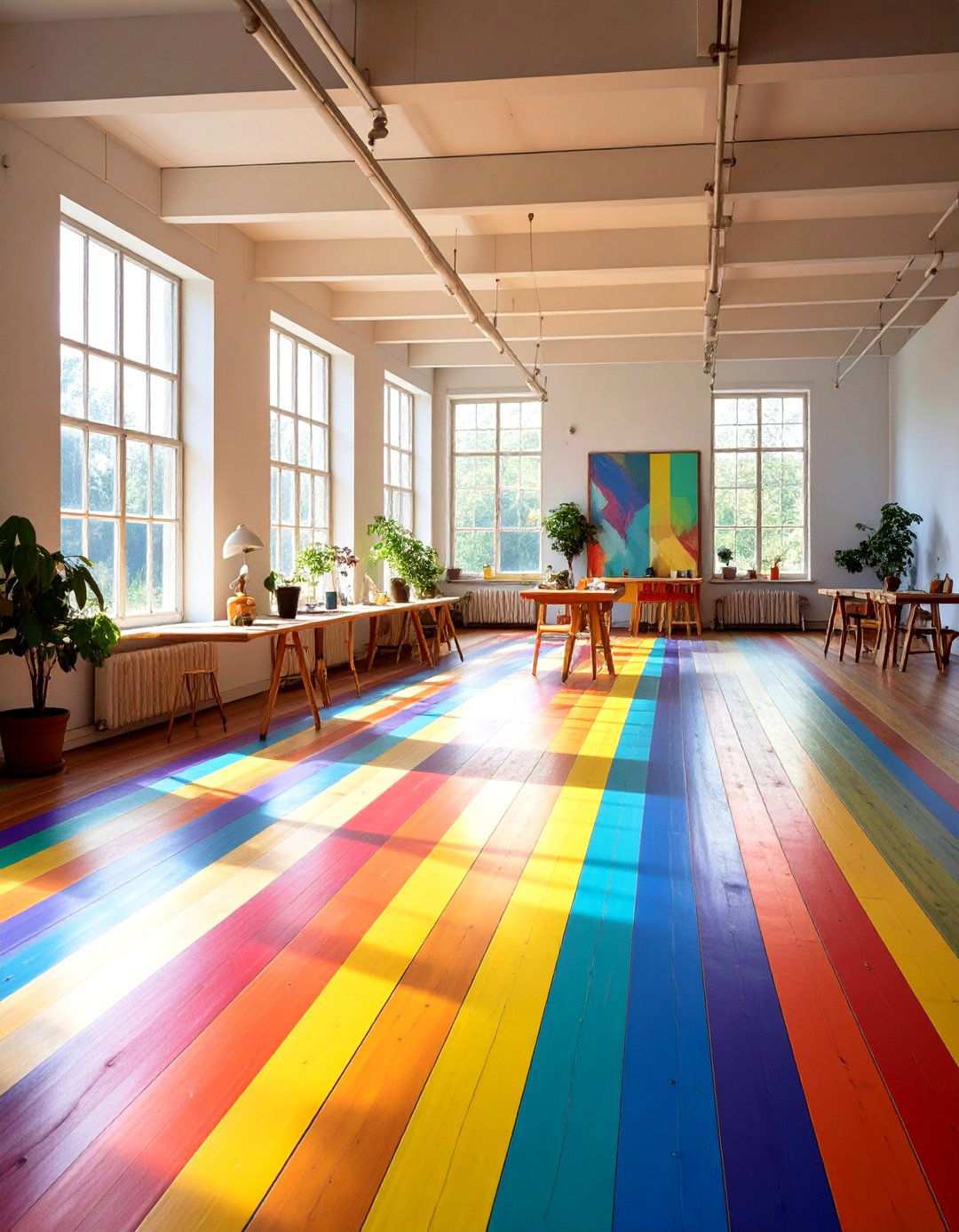
Unleash your creativity and personality with bold, multi-colored stripe patterns that bring joy and energy to children’s spaces or artistic areas of the home. This dynamic approach involves alternating multiple colors in stripe formations, resulting in vibrant floors that inspire and motivate. The technique is particularly effective in craft rooms, playrooms, or studios where bold color encourages artistic expression and imagination. To create a cohesive design scheme, consider coordinating stripe colors with room accessories and artwork. Varying stripe widths adds visual complexity to the design, allowing you to mix thin accent stripes with broader color bands. The pattern enables the incorporation of numerous favorite colors within a single design scheme. When choosing paint sheens, pay attention to the subtle texture variations that different finishes can create within the striped pattern. Achieving pleasing color combinations and balanced proportions requires careful planning, but the end result is a floor that becomes a work of art, providing a dynamic backdrop for furniture and fostering creativity in the space.
22. Enhance Vinyl Flooring with a Fresh Coat
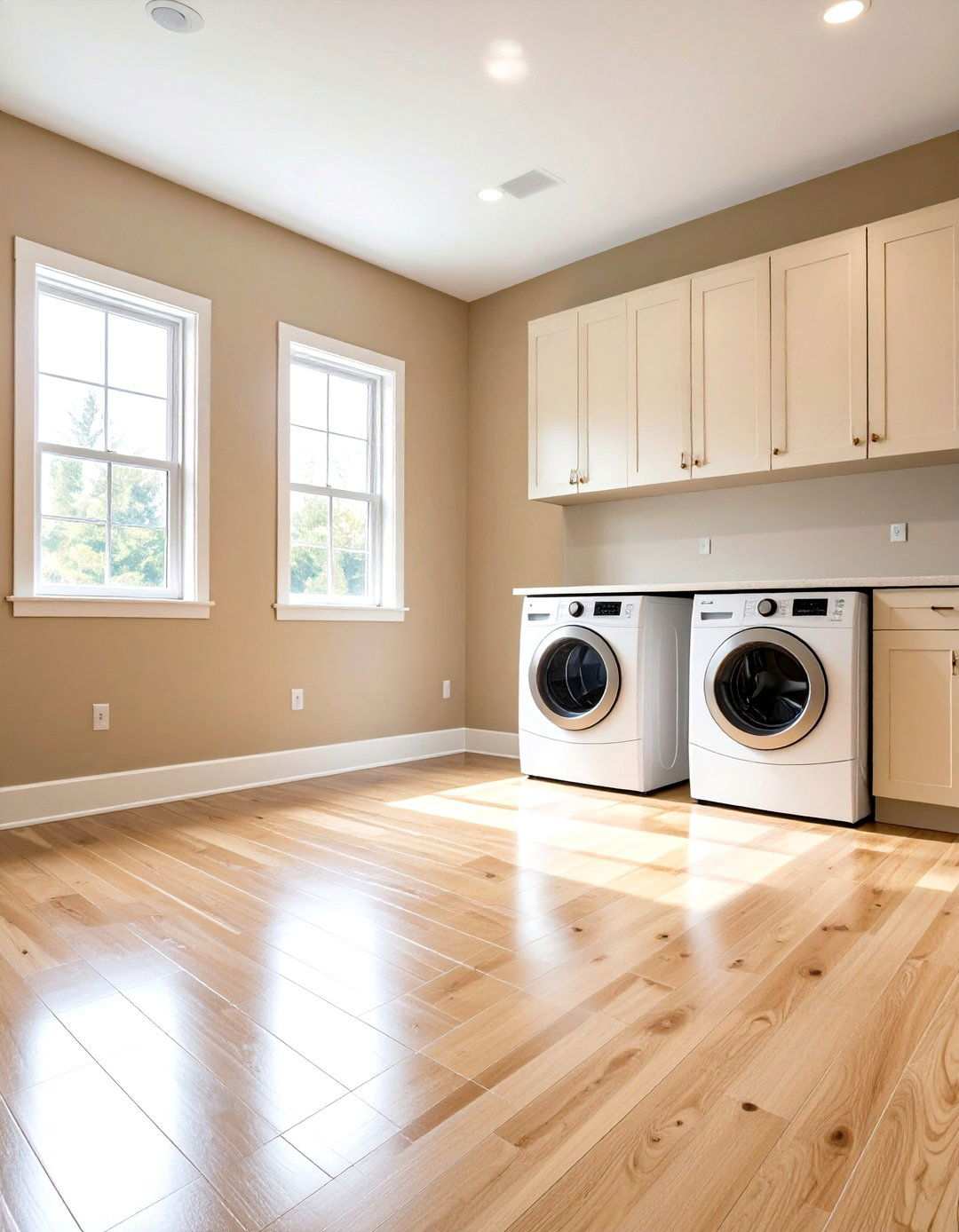
Transform outdated vinyl flooring without breaking the bank by leveraging paint techniques that offer cost-effective updates without full replacement. New vinyl paints boast exceptional adhesion and durability when applied to surfaces that have been thoroughly prepared. This method proves especially effective for rejuvenating dated patterns or colors in high-traffic areas like kitchens, bathrooms, or utility spaces. Opt for timeless neutral hues that blend seamlessly with existing fixtures and cabinetry. The repainted surface can dramatically revamp vinyl’s appearance while retaining its inherent waterproof properties. Thorough cleaning and light sanding ensure a strong bond between the paint and existing vinyl surface. To add a touch of personality, consider incorporating stenciled patterns or geometric designs that stray from solid color applications. This approach offers substantial cost savings compared to vinyl replacement while providing a fresh, updated appearance. A well-executed painted finish can withstand normal wear for several years, making it an excellent temporary solution until more comprehensive renovations can be planned.
23. Unleash Your Creativity with Splatter Paint Techniques
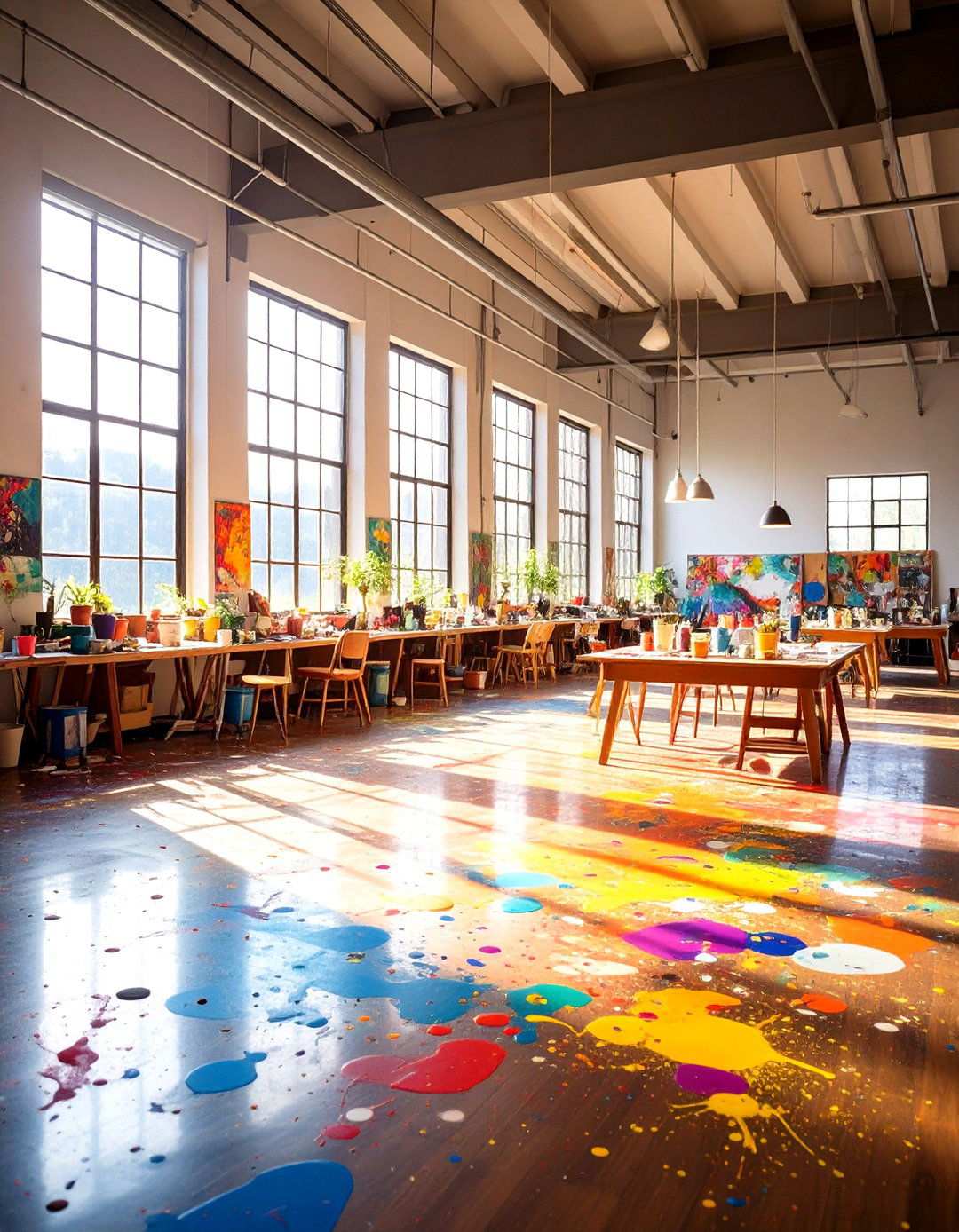
Embrace the art of splatter paint techniques to create one-of-a-kind, abstract floor designs that evoke the spirit of Jackson Pollock’s masterpieces. This innovative approach is well-suited for creative spaces, children’s areas, or any setting where conventional design rules are optional. The splatter technique involves applying a base coat, then strategically releasing contrasting paint colors across the surface to produce organic, unpredictable patterns. Each splatter application yields a unique result that cannot be replicated exactly. The process is inherently forgiving, as imperfections become an integral part of the artistic design. Carefully select color combinations that work in harmony with one another, taking into account how different hues will interact when splattered and blended. This technique is particularly suited for beach houses, art studios, or casual family spaces where relaxed, creative atmospheres are desired. The resulting floors become conversation pieces that reflect personal artistic expression while providing practical, easy-to-clean surfaces.
Elevating Stair Style with Painted Runners
Elevate your staircase design with a time-tested approach that seamlessly blends style and safety. This technique, reminiscent of traditional stair runners, employs bold paint strokes to create visually striking, runner-width strips along stair centers. By leaving the natural wood or painted borders intact on either side, the design maintains the classic proportions of its fabric counterparts while introducing a fresh, modern twist. To achieve this look, choose colors that harmoniously complement your home’s existing color palette, ensuring sufficient contrast for optimal stair safety.
When selecting colors, consider the wear and tear aspect. Dark hues, such as navy or deep green, prove particularly effective at concealing wear and tear, while also minimizing dust visibility. By opting for a painted runner, you’ll not only eliminate the tripping hazards associated with loose carpet runners but also enjoy easier maintenance. To further enhance the design, incorporate subtle pattern elements, such as thin border stripes or geometric motifs, within the runner area. This adaptable technique effortlessly integrates with various architectural styles, from traditional to contemporary, making it an ideal choice for both painted and natural wood stairs.