1. Earthy Terracotta Flooring: A Key Element of Traditional Spanish Kitchens
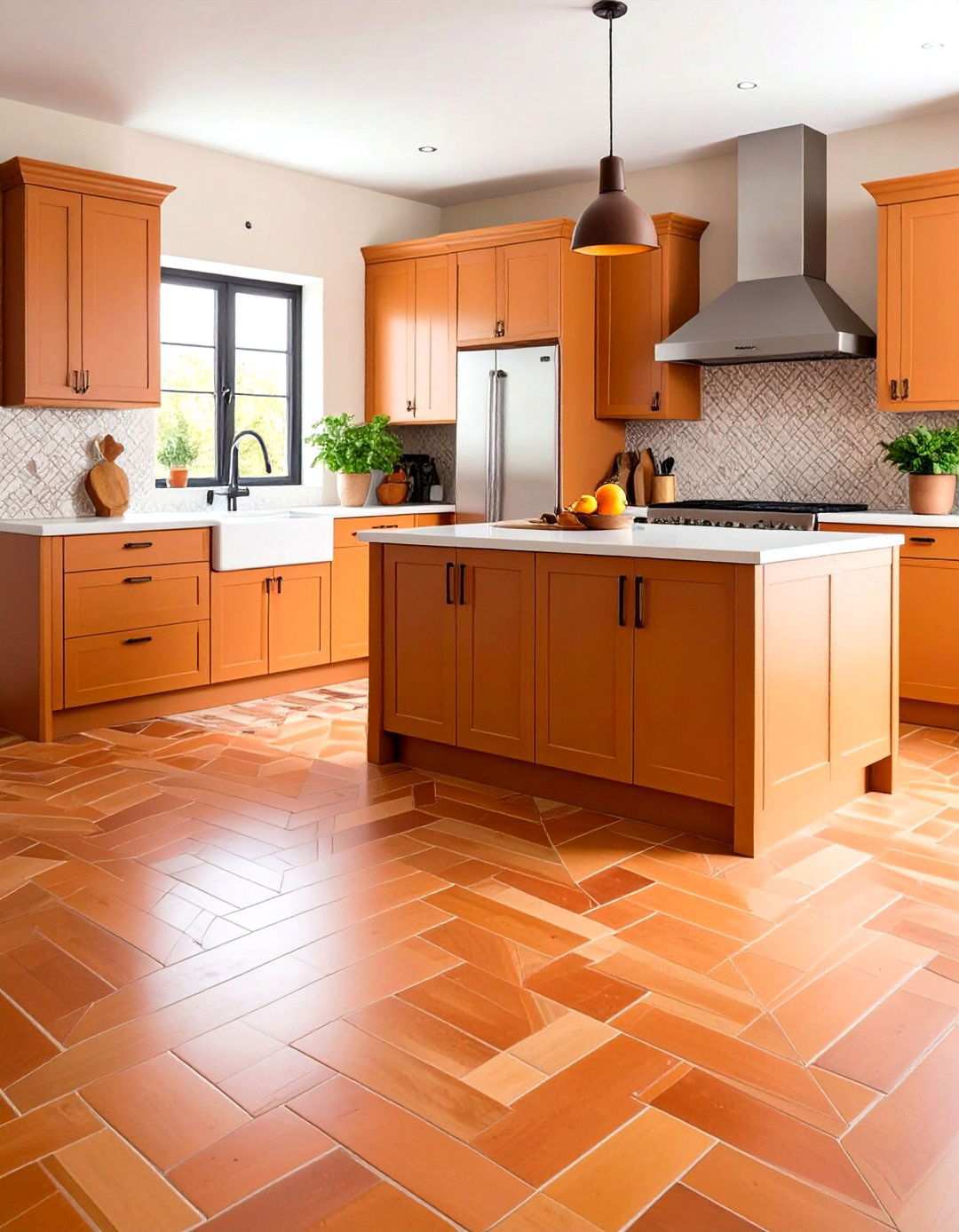
When it comes to creating an authentic Spanish kitchen, terracotta flooring is the perfect starting point. This natural and rustic material brings warmth and sophistication to the space, instantly evoking the charm of a sun-drenched Spanish villa. With its inherent variation in color and texture, terracotta adds visual interest and depth to the kitchen floor. By installing terracotta tiles in a herringbone pattern, homeowners can create a stunning focal point that becomes the focal point of the room. The porous nature of terracotta also provides excellent insulation, keeping the kitchen comfortable year-round.

As an Amazon Associate I earn from qualifying purchases.
Pairing terracotta floors with cream-colored walls and dark wood cabinetry is a classic combination that exudes Spanish elegance. As the tiles develop a beautiful patina over time, they become even more characterful, telling a story of their own. With minimal maintenance required, sealed terracotta floors deliver maximum visual impact, making them a must-have feature in any traditional Spanish kitchen.
2. Whimsical Hand-Painted Ceramic Backsplash Designs: A Touch of Spanish Artistry
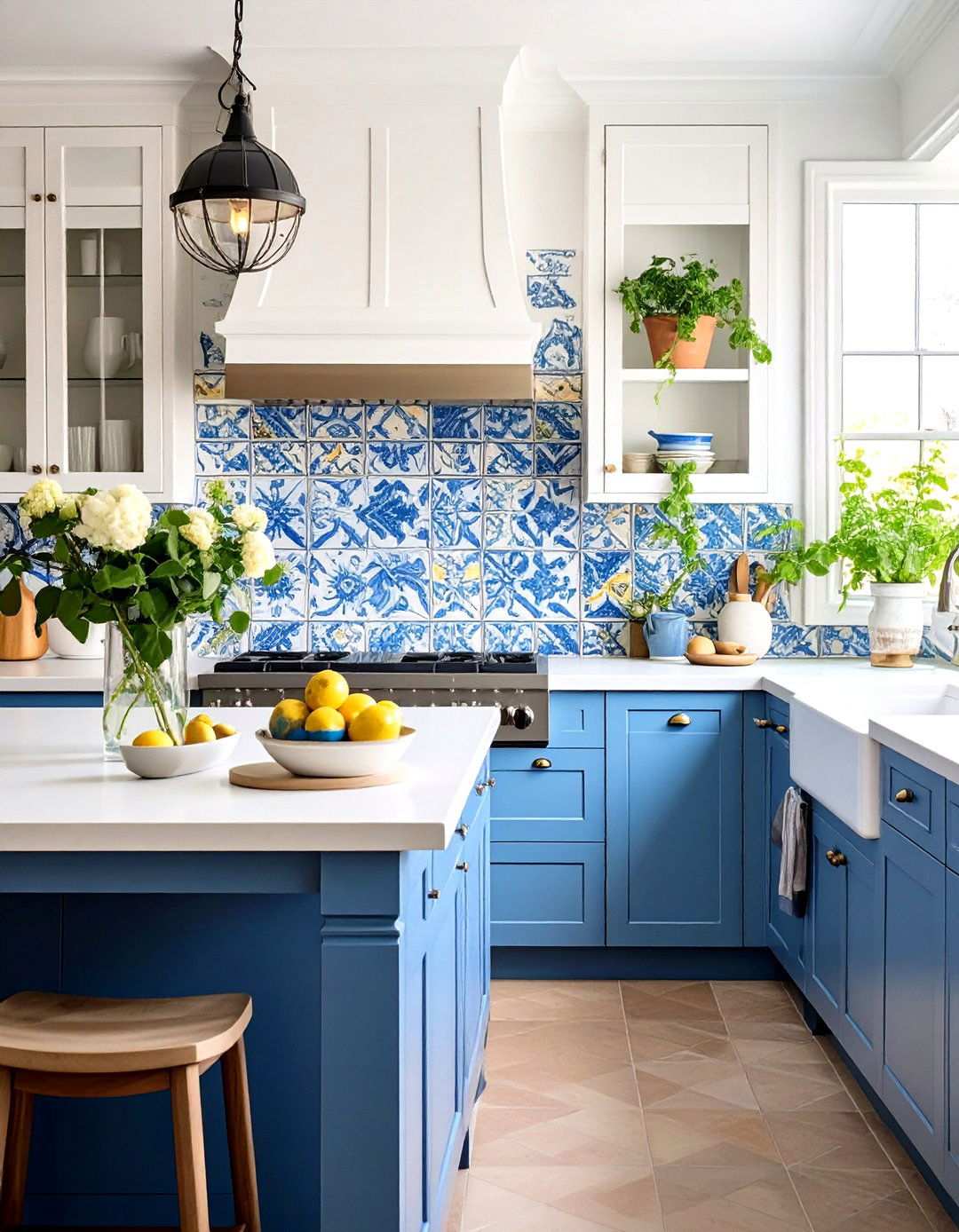
Elevate your kitchen with the vibrant colors and artistic flair of hand-painted ceramic tiles, a quintessential element of traditional Spanish design. These decorative tiles feature intricate patterns in a range of blues, yellows, greens, and terracotta tones, creating a stunning visual display behind the stove or sink. Each tile is a work of art, with unique brushstrokes and artistic imperfections that add authentic character to the space. By mixing solid-colored tiles with patterned ones, homeowners can achieve balanced visual appeal without overwhelming the space.
For a modern interpretation, consider using larger format tiles to create a bold and eye-catching focal point. Alternatively, smaller squares can be used to achieve a more traditional Spanish charm. The glossy finish of these tiles reflects light beautifully, making the kitchen feel brighter and more spacious while celebrating centuries-old Spanish ceramic traditions.
3. Elegant Wrought Iron Chandeliers for Dramatic Ambiance
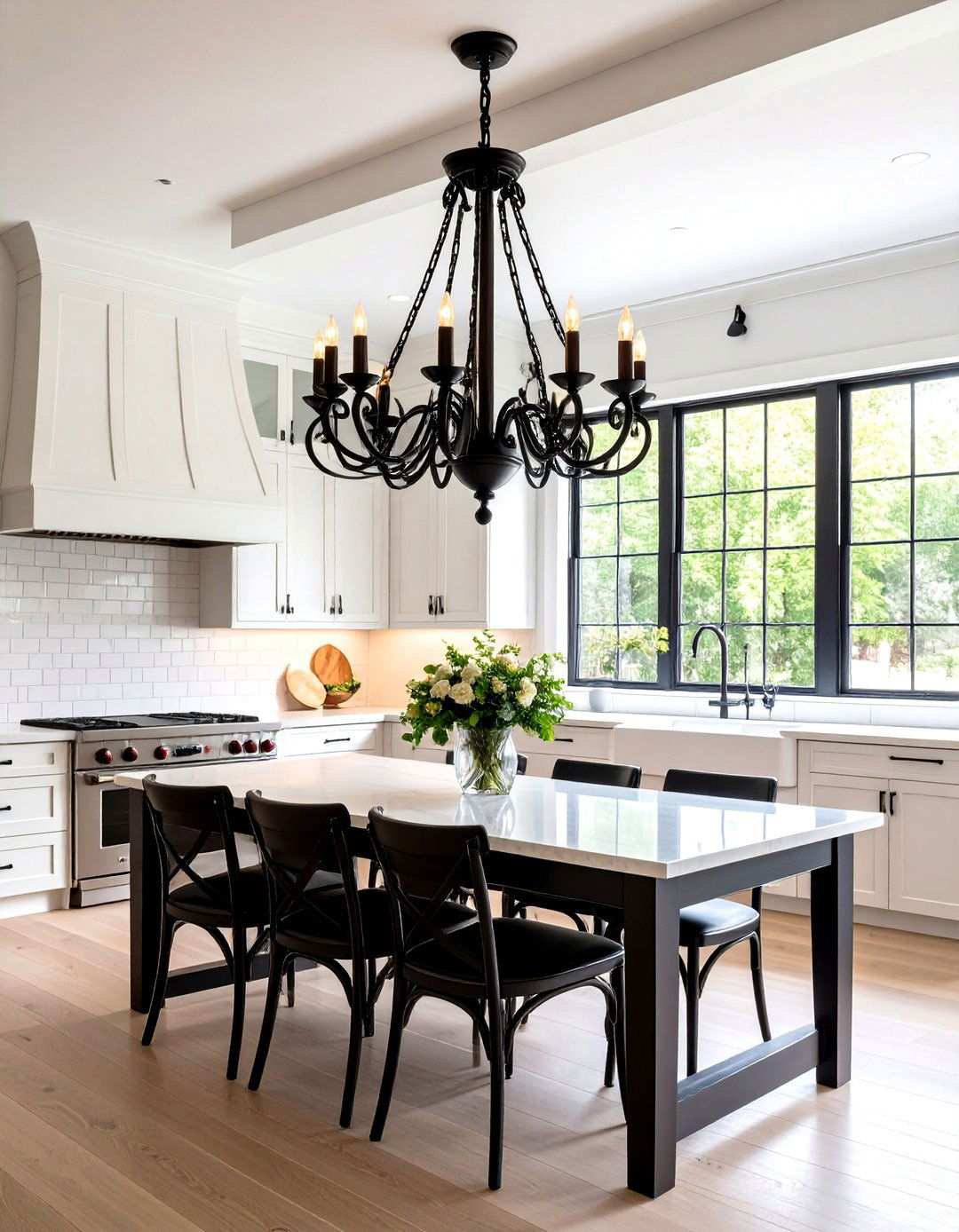
Elevate your Spanish kitchen’s visual appeal with an exquisite wrought iron chandelier that serves as a striking focal point. These opulent fixtures not only provide soft, ambient lighting but also add an artistic touch to your cooking and entertaining space. Opt for designs featuring intricate patterns, candelabra-style arms, or rustic finishes that harmonize with your kitchen’s overall aesthetic. Wrought iron chandeliers shine in open-concept spaces, kitchen islands, or cozy dining nooks where they can command attention. The dark metal’s dramatic contrast with lighter elements like white walls or natural stone countertops creates a sophisticated ambiance. For versatile lighting options, consider installing dimmers to adjust the brightness for intimate family gatherings or lively social events.
4. Warm and Rich Dark Wood Cabinetry with Distinctive Accents
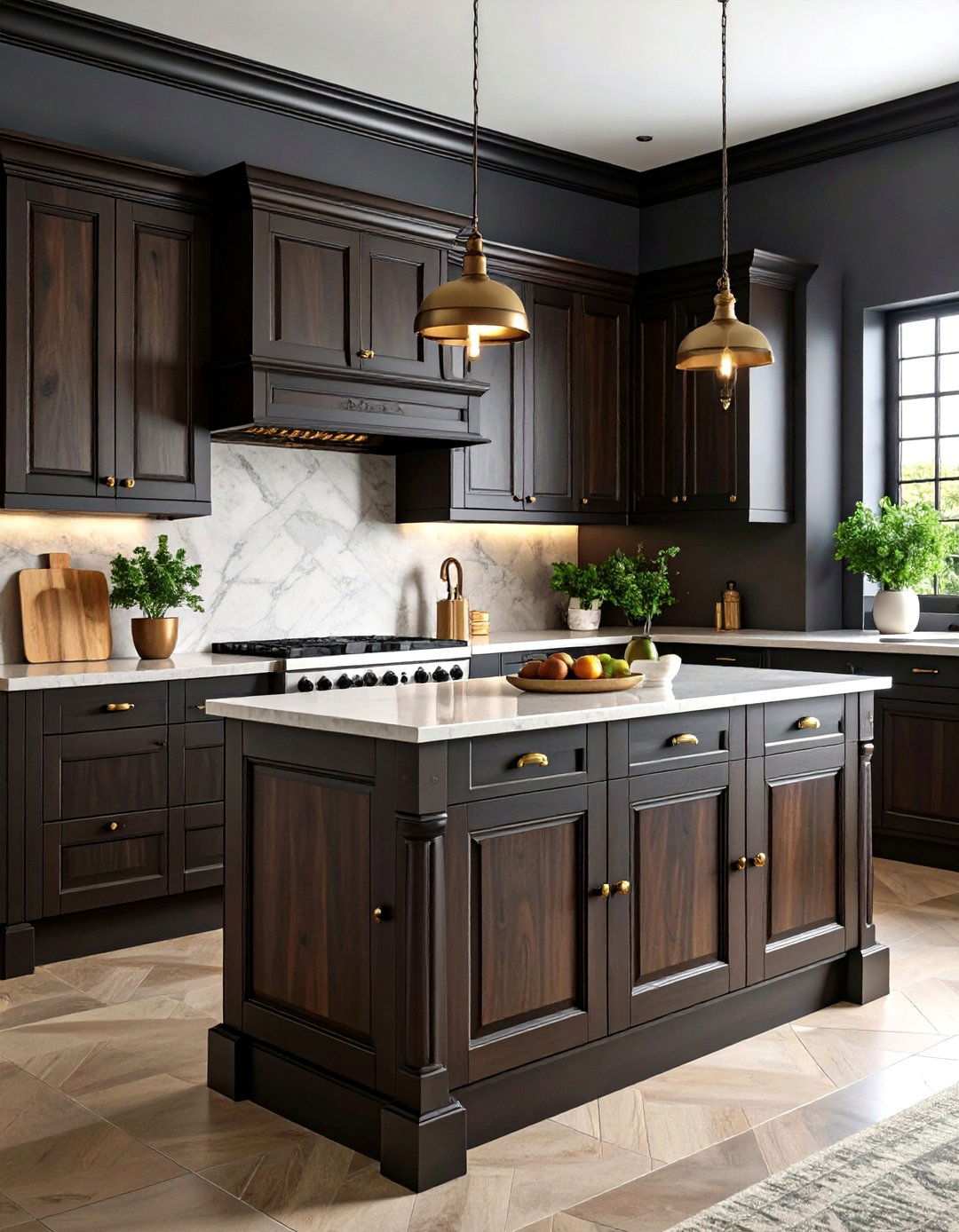
Draw inspiration from Spanish kitchen design and incorporate dark wood cabinetry that adds depth and warmth to your space. Luxurious walnut, mahogany, or deeply stained oak cabinets create a beautiful backdrop for colorful tiles and metallic accents. These substantial cabinets often feature raised panel doors, rope trim, or carved details that reflect traditional Spanish craftsmanship. As dark wood naturally develops a richer patina over time, it maintains its structural integrity while adding character to your kitchen. Pair dark cabinetry with lighter countertops like cream-colored stone or butcher block to create a visually appealing contrast. The natural wood grain adds texture and visual interest, making each cabinet door unique. To showcase beautiful Spanish pottery or colorful dishware, consider adding glass-front cabinet doors.
5. Traditional Spanish Cooking Alcoves with Arched Entranceways
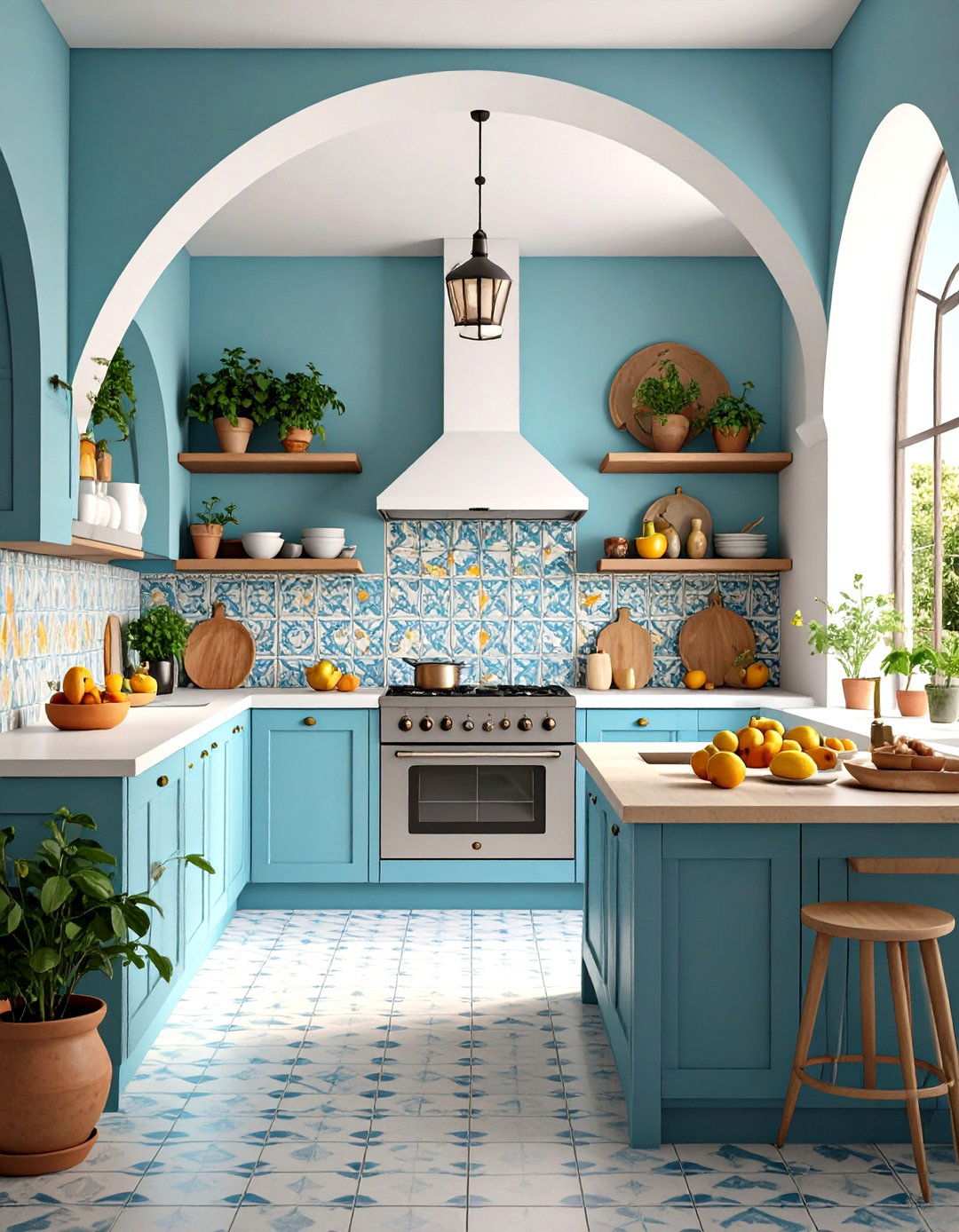
Create a dedicated culinary haven with a traditional Spanish cooking alcove that beautifully frames your range in architectural elegance. These recessed spaces often feature arched openings that echo Spanish doorways and windows, creating a sense of continuity throughout your home. Line the alcove with decorative tiles, natural stone, or painted plaster for authentic texture and easy maintenance. Built-in shelving on either side provides convenient storage for spices, oils, and cooking utensils within arm’s reach. With a Spanish cooking alcove, you can enjoy a dedicated cooking nook that feels like a traditional hacienda. The alcove design naturally contains cooking aromas and creates a cozy, intimate space for meal preparation.
6. Elevating Kitchens with Exposed Wooden Features
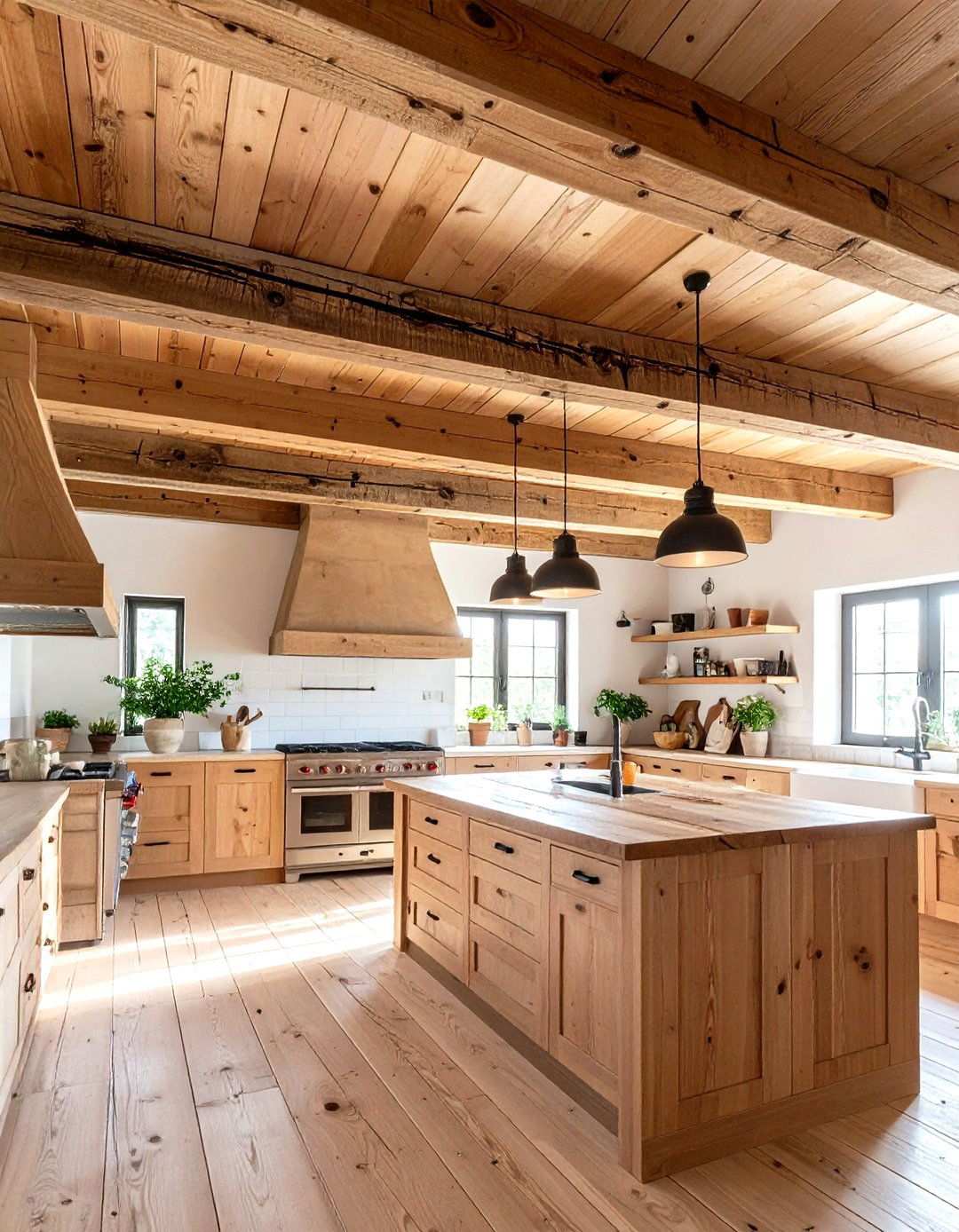
The installation of exposed wooden ceiling beams brings a touch of Spanish architectural flair to any kitchen, instantly elevating its aesthetic. These structural elements, whether authentic or decorative, create a sense of visual warmth and rustic charm, contributing to a cozy atmosphere overhead. For a harmonious look, choose beams in natural wood tones that complement your cabinetry, or opt for a darker stain for a striking contrast against white or cream ceilings. Rough-hewn timbers are ideal for achieving an authentic Spanish feel, while smooth-finished beams offer a more refined interpretation. The vertical lines of these beams create a sense of height, making kitchens feel more spacious and grand. To further enhance the Spanish aesthetic, consider incorporating wrought iron hardware or decorative brackets. These beams also provide practical mounting points for pendant lights or hanging pot racks, adding to their functionality.
7. Designing a Show-Stopping Range Hood with Spanish Flair
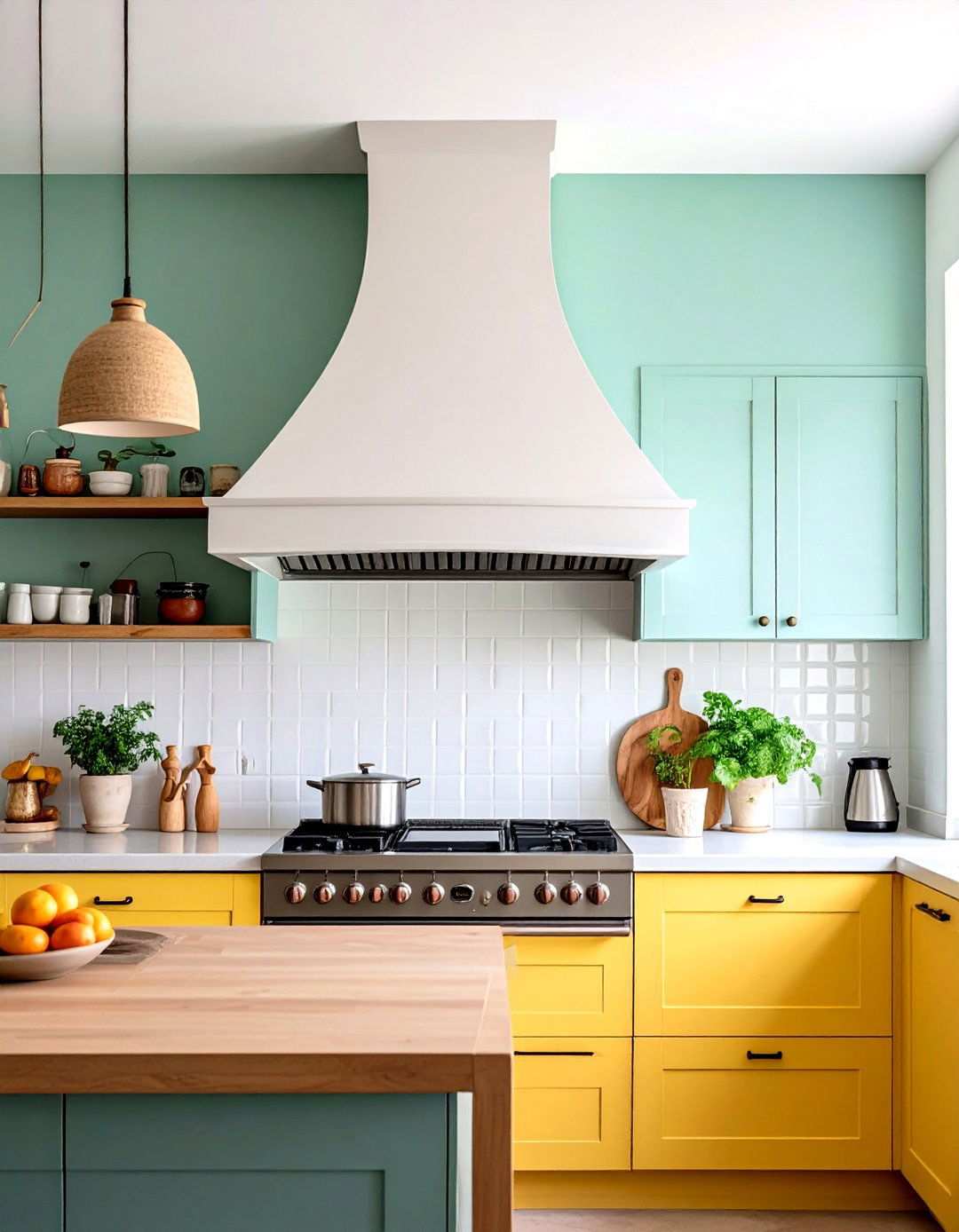
A well-designed range hood can become the kitchen’s architectural centerpiece, with decorative plaster work and Spanish-inspired curves taking center stage. These custom hoods often feature flared or curved silhouettes that echo the lines of Spanish mission architecture, adding a touch of elegance to the cooking area. To complete the look, finish the hood with lime plaster, venetian plaster, or textured paint in warm, earthy tones that complement your overall color scheme. Incorporating niche shelving or decorative corbels adds visual interest and functionality, making the hood a true focal point. The substantial presence of the hood anchors the cooking area while providing efficient ventilation, making it a must-have for any kitchen. To further enhance the Spanish character, consider adding wrought iron details or hand-painted accents.
8. Creating a Welcoming Atmosphere with Open Shelving
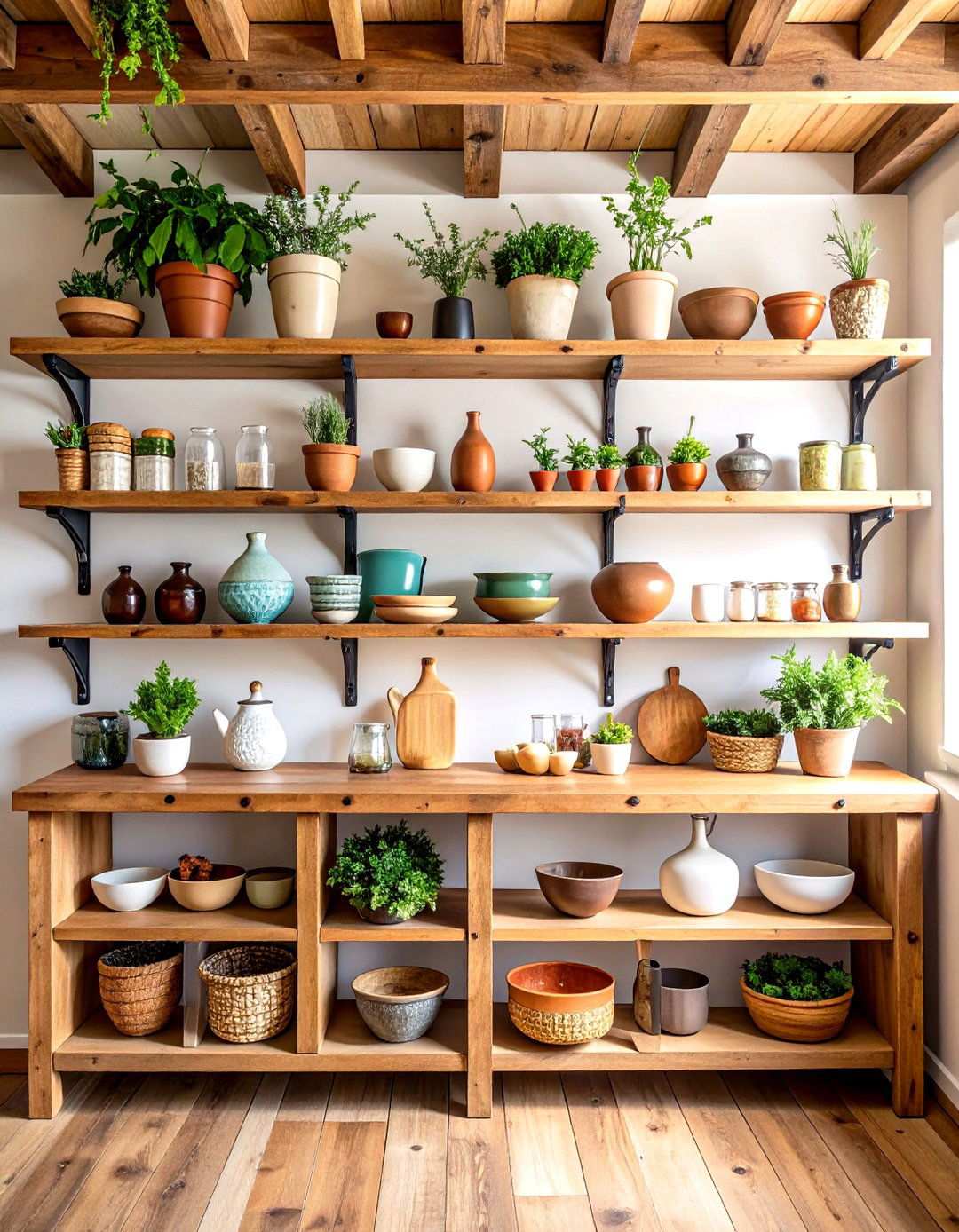
Replacing upper cabinets with open shelving constructed from reclaimed or rustic wood planks is a great way to showcase your Spanish pottery and glassware, creating a beautiful display of decorative elements. This approach not only adds a touch of warmth and texture to the kitchen but also encourages organization and makes frequently used items easily accessible during cooking. Choose shelving brackets in wrought iron or aged bronze to maintain Spanish authenticity, and arrange colorful ceramics, copper pots, and woven baskets to create visually appealing vignettes that change with the seasons. By displaying your favorite Spanish-inspired serving pieces, you can enhance your kitchen’s personality and create a welcoming atmosphere that is sure to impress. The rustic wood adds a sense of handcrafted elegance, celebrating the central tenets of Spanish design.
9. Elegant Arched Doorways as Transition Spaces
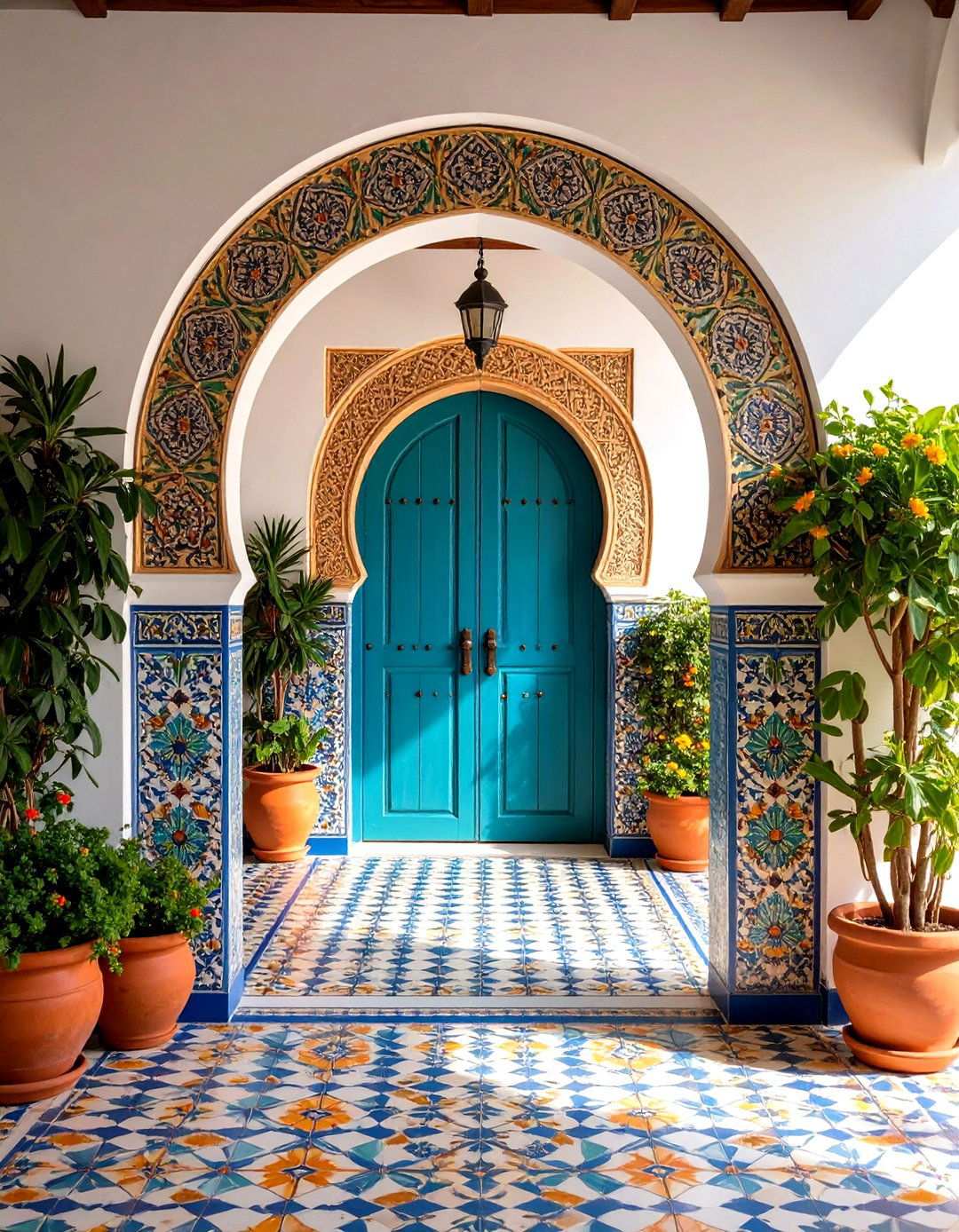
Incorporate timeless Spanish flair into your kitchen design by featuring arched doorways that seamlessly connect with adjacent rooms. These curved openings effectively bridge the gap between spaces while fostering visual harmony in open floor plans. To add an extra layer of sophistication, frame the arches with natural stone, decorative tile, or painted plaster. The rounded shape creates an intriguing contrast with rectangular cabinetry, casting beautiful shadows that dance across the space as the day progresses. For larger kitchens, consider varying the size of the arches to establish a visual hierarchy and add visual interest. These doorways serve as both elegant frames for views into adjacent rooms and intuitive guides for traffic flow. As a testament to their enduring appeal, arched doorways will forever elevate the sophistication of your Spanish kitchen.
10. The Organic Beauty of Handcrafted Saltillo Tiles
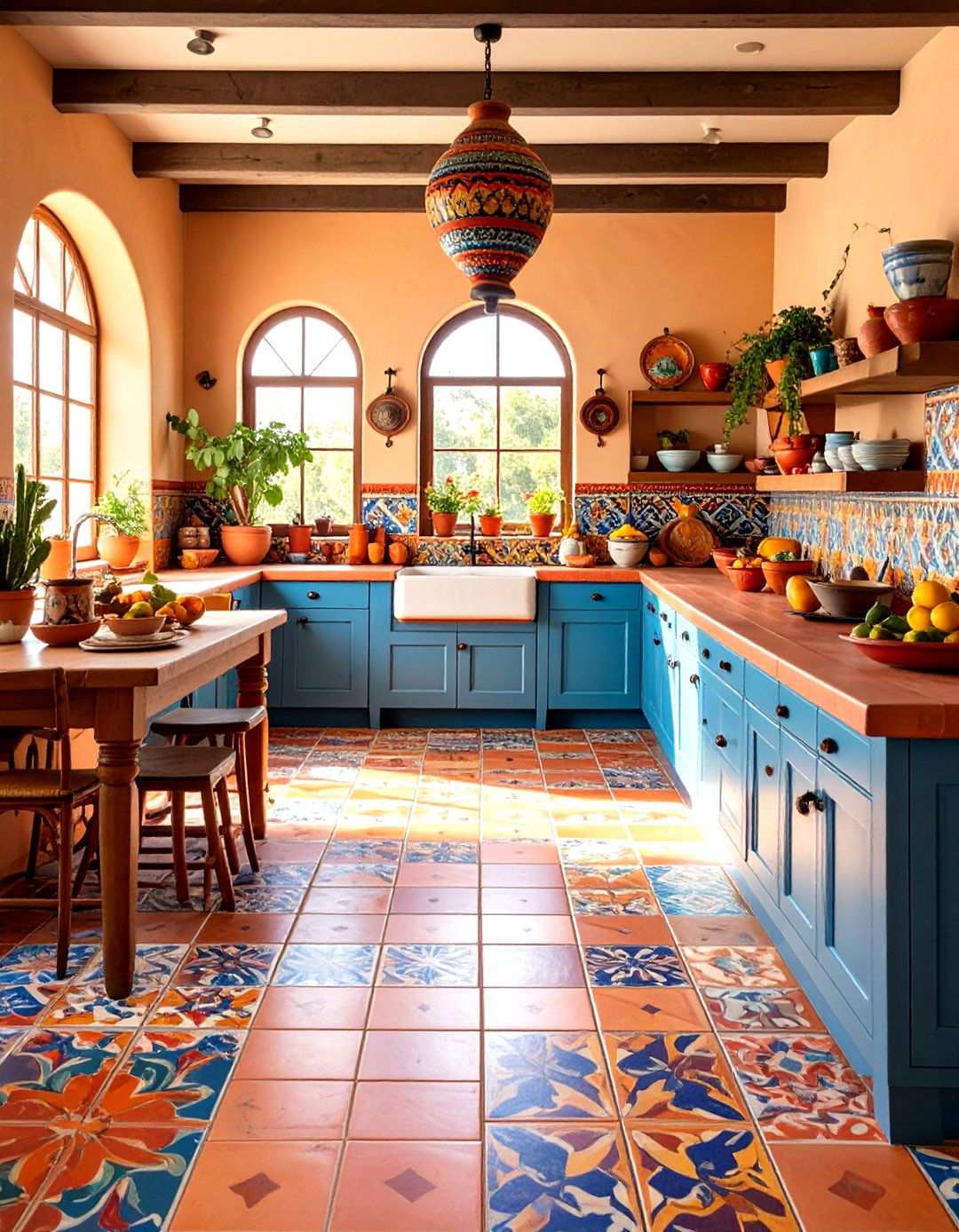
Saltillo tiles bring a touch of authentic Mexican charm to Spanish kitchen design through their unique handcrafted imperfections and rich terracotta tones. As these unglazed clay tiles mature, they develop a beautiful patina that amplifies their natural character. Each tile boasts distinct color variations and surface textures, imbuing your flooring with a one-of-a-kind charm. The porous material of Saltillo tiles provides excellent thermal mass, making kitchens comfortable in a wide range of climates. To preserve their natural appearance while protecting against stains, ensure that your Saltillo tiles are properly sealed. Paired with dark wood cabinetry and wrought iron accents, these tiles will transport your kitchen to the heart of Spain. The irregular edges and size variations of Saltillo tiles create a rustic appeal that is impossible to replicate with machine-made tiles.
11. Timeless Blue and White Tile Patterns
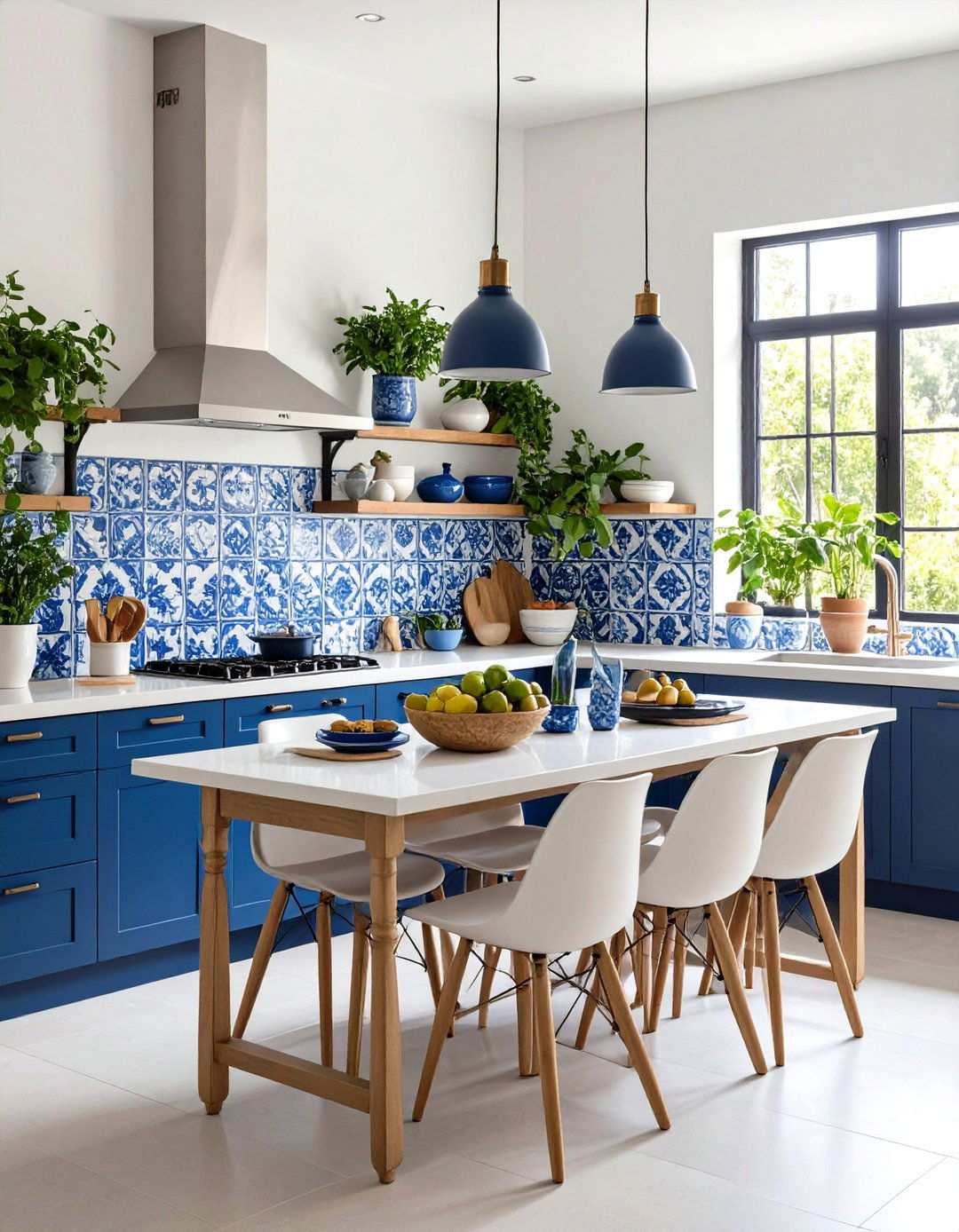
Bring the classic charm of Spanish ceramics to your kitchen with blue and white tile patterns that evoke the serene beauty of the Mediterranean coast. These timeless color combinations work harmoniously as backsplashes, accent walls, or decorative borders throughout your kitchen. Traditional patterns include intricate geometric motifs, delicate floral designs, and Moorish-influenced layouts that add a touch of visual sophistication. The cool blue tones provide a refreshing contrast to warm wood and terracotta elements, while the tile patterns themselves reflect light beautifully, casting a sense of brightness and airiness in the space. To avoid overwhelming the space, consider mixing different pattern scales for a dynamic visual effect. Are you captivated by the serene beauty of blue and white Spanish ceramics? These tiles will transport your kitchen to a world of authentic Spanish charm, where elegance and sophistication come together in perfect harmony.
12. Authenticity through Unrefined Textures
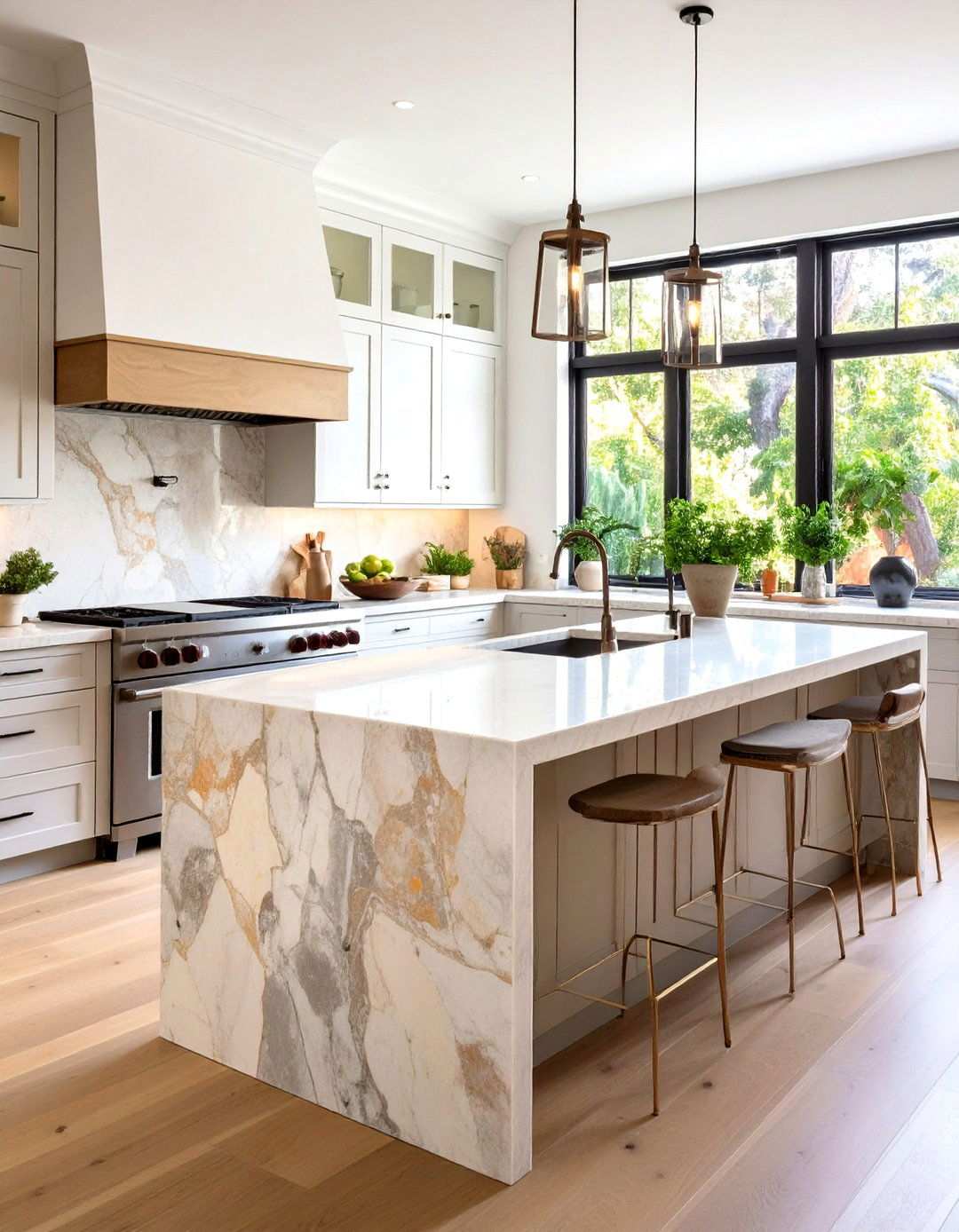
When incorporating Spanish design elements into your kitchen, consider selecting natural stone countertops with rough, organic textures that evoke a sense of authenticity. Materials such as limestone, travertine, or rough-finished granite not only provide durable work surfaces but also add a tactile element to your space. Each installation is unique, thanks to the natural variations in color and pattern that occur within these stones. Moreover, the matte or honed finishes of these stones are less prone to showing fingerprints and water spots compared to polished surfaces. For a cohesive look, pair natural stone with warm wood cabinetry and wrought iron hardware, which will complement the rustic character of the stone. The substantial thickness and weight of natural stone convey a sense of quality and permanence, while edge treatments can enhance the rustic character even further, such as chiseled or naturally broken edges that appear hand-hewn.
13. Hand-forged Iron Accents
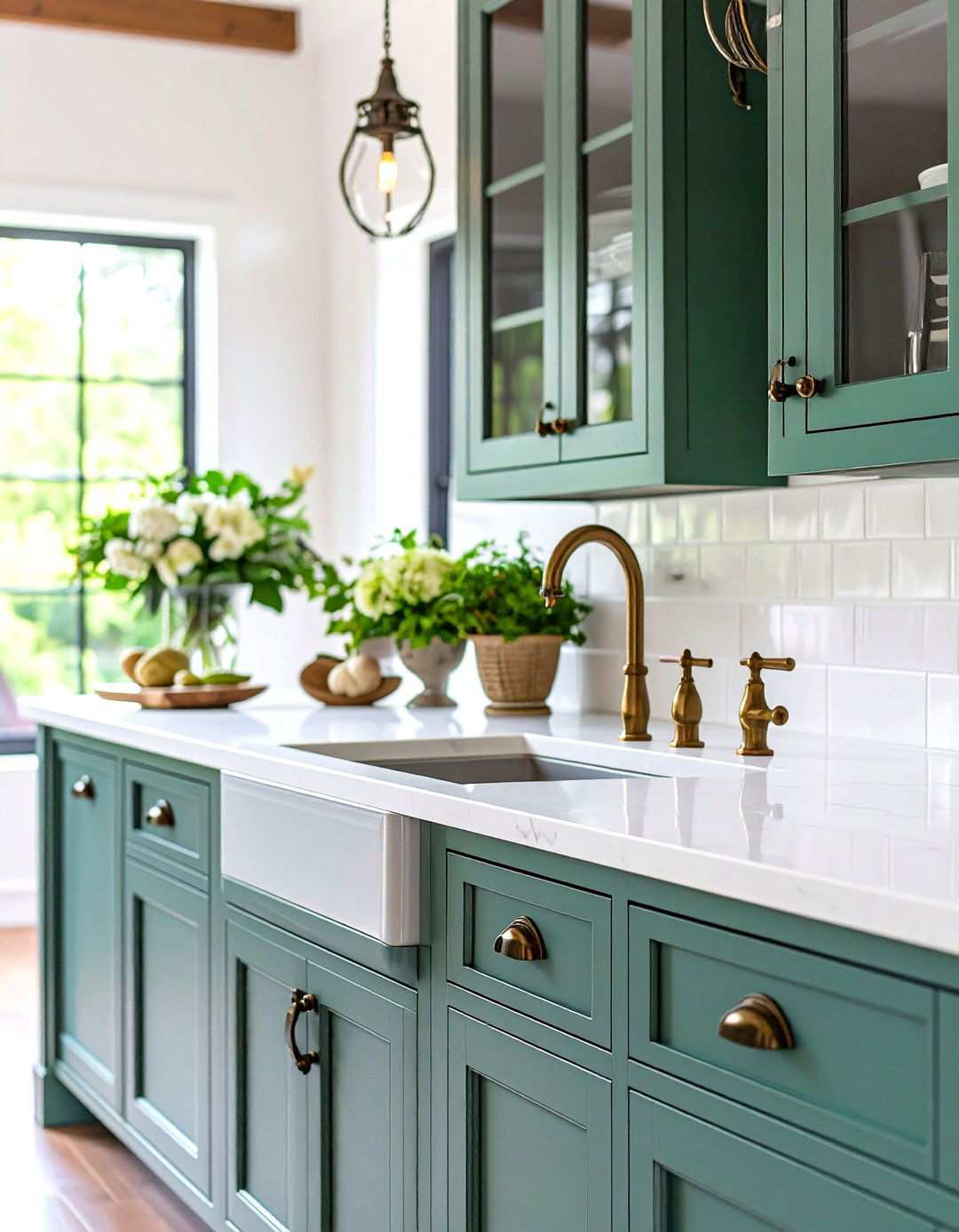
Incorporating authentic wrought iron hardware featuring traditional Spanish motifs such as fleur-de-lis, twisted rope, or hammered textures can instantly elevate your kitchen’s Spanish character. These hand-forged pieces add a touch of artistic detail to each cabinet door and drawer while maintaining their functional durability. When paired with light-colored wood or painted cabinetry, the dark metal finish creates a beautiful contrast that adds visual definition throughout your kitchen. Consider choosing consistent designs across all hardware for a cohesive look, or mix complementary patterns for added interest. What’s more, the substantial weight and quality of wrought iron hardware convey authentic craftsmanship, and over time, the hand-forged iron details will develop a beautiful patina that enhances their aesthetic appeal.
14. Cozy Lighting Zones with Pendant Clusters
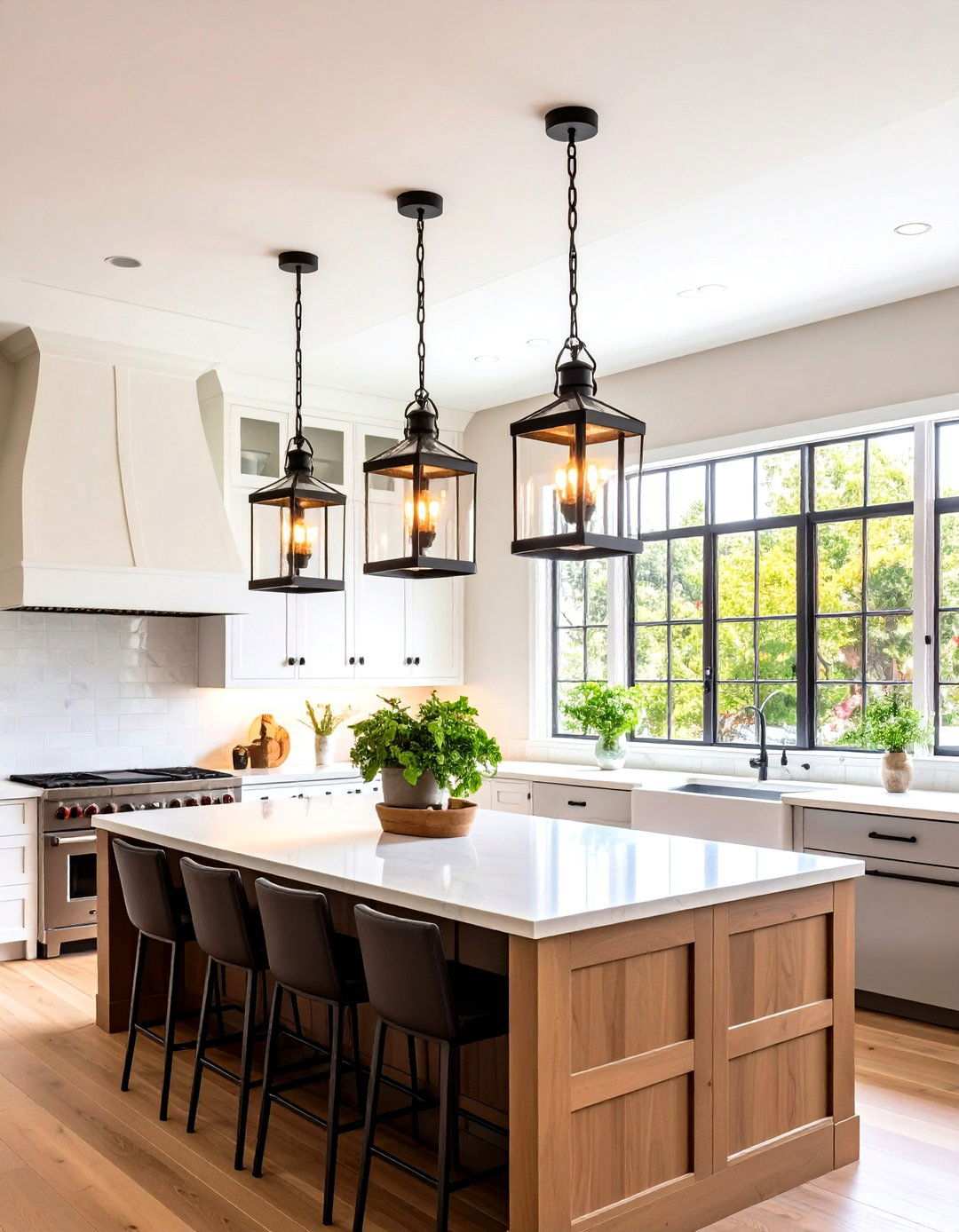
Clustered Spanish-style pendant lights are an excellent way to create intimate lighting zones that provide focused illumination while adding decorative appeal to your kitchen. These fixtures often feature wrought iron construction, glass shades, or ceramic elements that pay homage to Spanish ceramic traditions. Hang multiple pendants at varying heights over kitchen islands or dining areas to create dynamic visual interest. As the warm light filters through the decorative elements, it creates appealing shadow patterns on surrounding surfaces. To accommodate different activities and preferences, choose fixtures with adjustable heights. The smaller scale of pendant lights allows for greater flexibility than large chandeliers while maintaining Spanish authenticity. Consider incorporating dimmer controls to adjust the ambiance for different occasions and times of day.
15. Capturing the Vibrant Charm of the Mediterranean
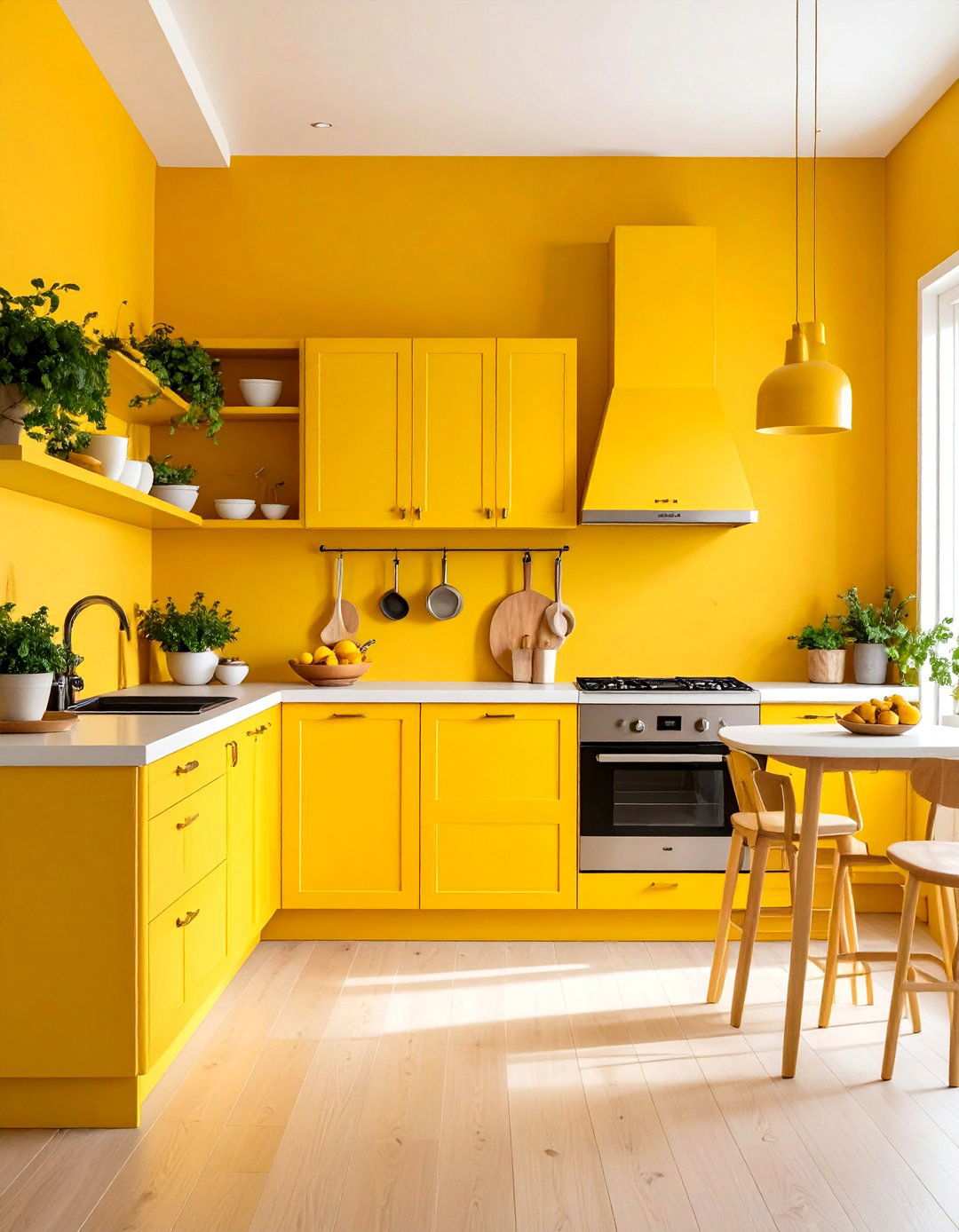
The warmth of Mediterranean Spain can be perfectly captured in your kitchen through a masterful selection of yellow and gold paint colors that radiate brightness and energy. A range of hues, from pale cream to rich saffron, creates a harmonious backdrop for dark wood cabinetry and colorful tile accents. As yellow walls skillfully reflect natural light, they contribute to a sense of openness and warmth, making kitchens feel more welcoming and spacious throughout the day. Pair warm yellows with crisp white trim and natural wood elements for a balanced contrast that creates visual equilibrium. The inherent optimism of yellow stimulates social interaction, turning your kitchen into a natural gathering place. Does a splash of warm yellow in your kitchen have the potential to elevate your morning coffee routine?
16. Showcasing the Timeless Beauty of Talavera Pottery
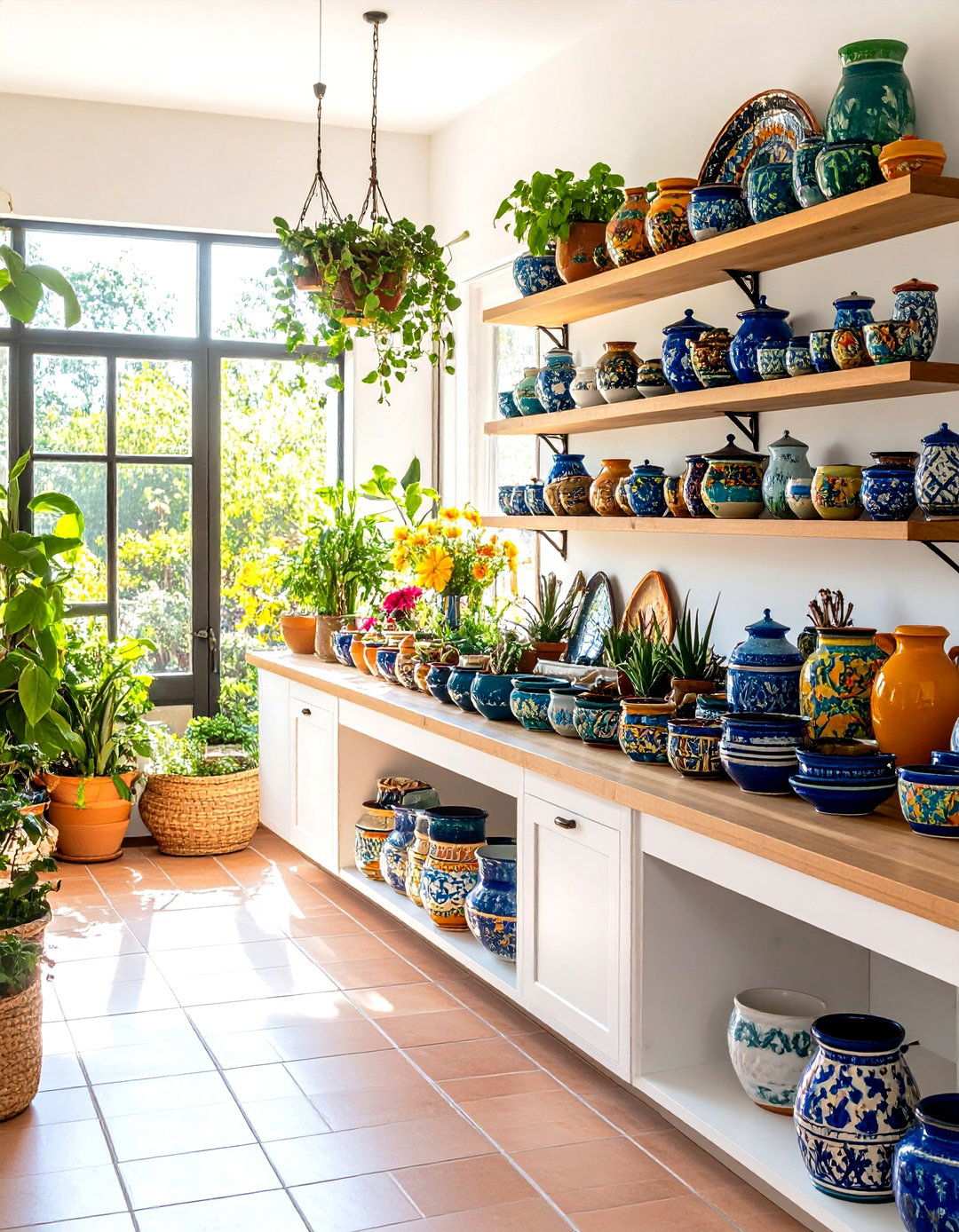
Designate specific areas of your Spanish kitchen to display stunning Talavera pottery, which showcases the exquisite craftsmanship of Mexican ceramic artistry. These hand-painted pieces feature vibrant colors and intricate patterns that not only add a touch of elegance but also serve as functional art throughout your space. To create an optimal display, consider incorporating floating shelves, glass-front cabinets, or wall niches specifically designed to showcase these treasured pieces. The incorporation of serving pieces and decorative objects with varied visual interest and scale adds depth to the display. The authenticity of Talavera pottery contributes a rich cultural dimension to your design. To keep your kitchen’s personality fresh and engaging, consider rotating displays seasonally while protecting valuable pieces from the wear and tear of daily cooking activities.
17. Elevating Your Space with Mosaic Tile Accent Walls
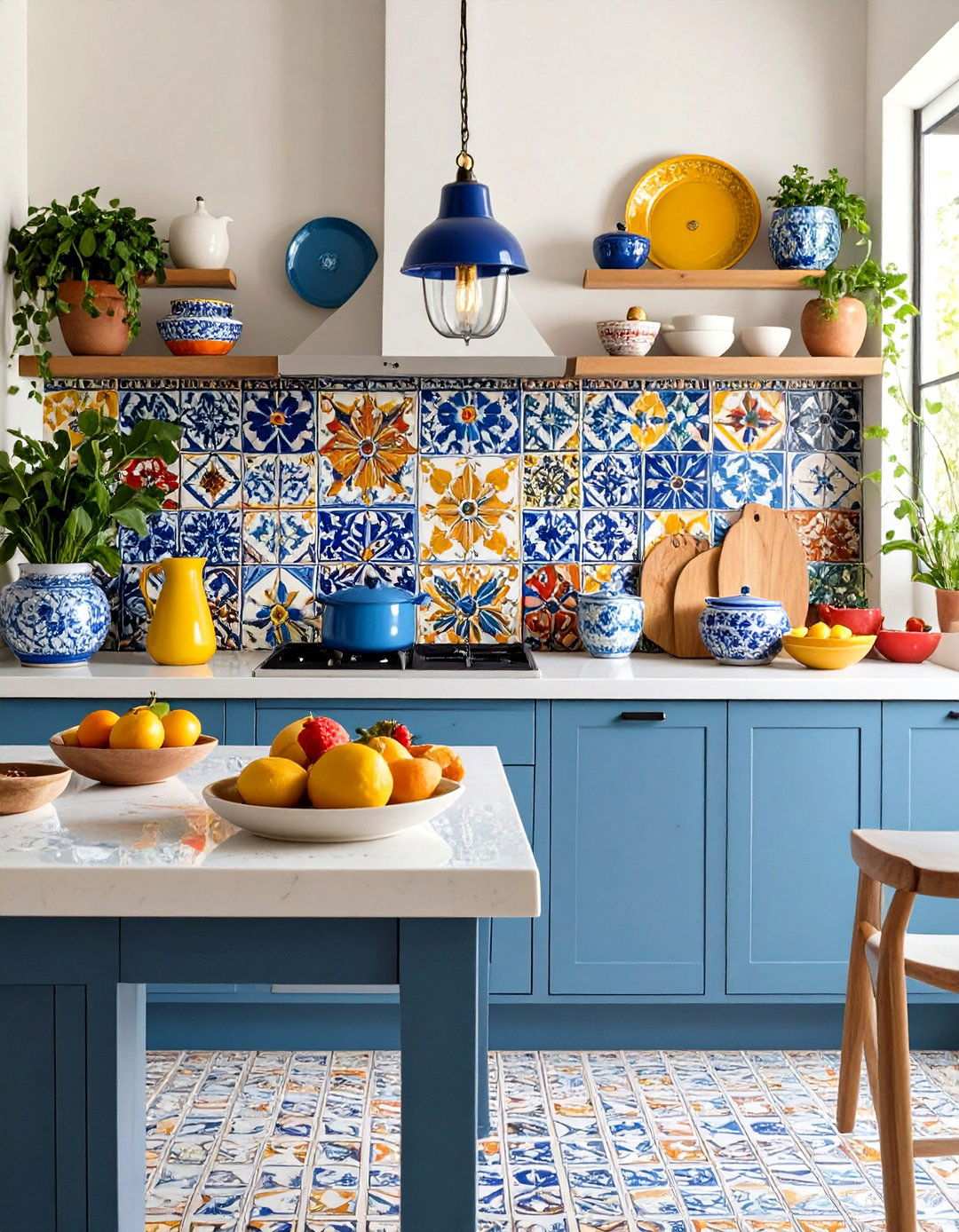
Create stunning focal points in your kitchen with mosaic tile accent walls that beautifully showcase Spanish artistic traditions through intricate patterns and rich colors. These detailed installations work particularly well behind stoves, sinks, or as feature walls in breakfast nooks. By combining glass, ceramic, and stone pieces, you can achieve varied texture and light reflection throughout your space. Traditional Spanish motifs include geometric patterns, floral designs, and Moorish-influenced layouts that add sophistication and visual interest. The versatility of smaller tile pieces allows for curved installations and custom patterns that would be impossible with larger formats. If you’re looking to create one-of-a-kind installations that become conversation pieces, consider hiring skilled artisans to craft these heirloom-quality features. The time and effort invested in mosaic work not only adds value to your home but also celebrates the enduring craftsmanship of Spain.
18. Elevating Kitchen Ambiance with Barrel Vaulted Ceilings
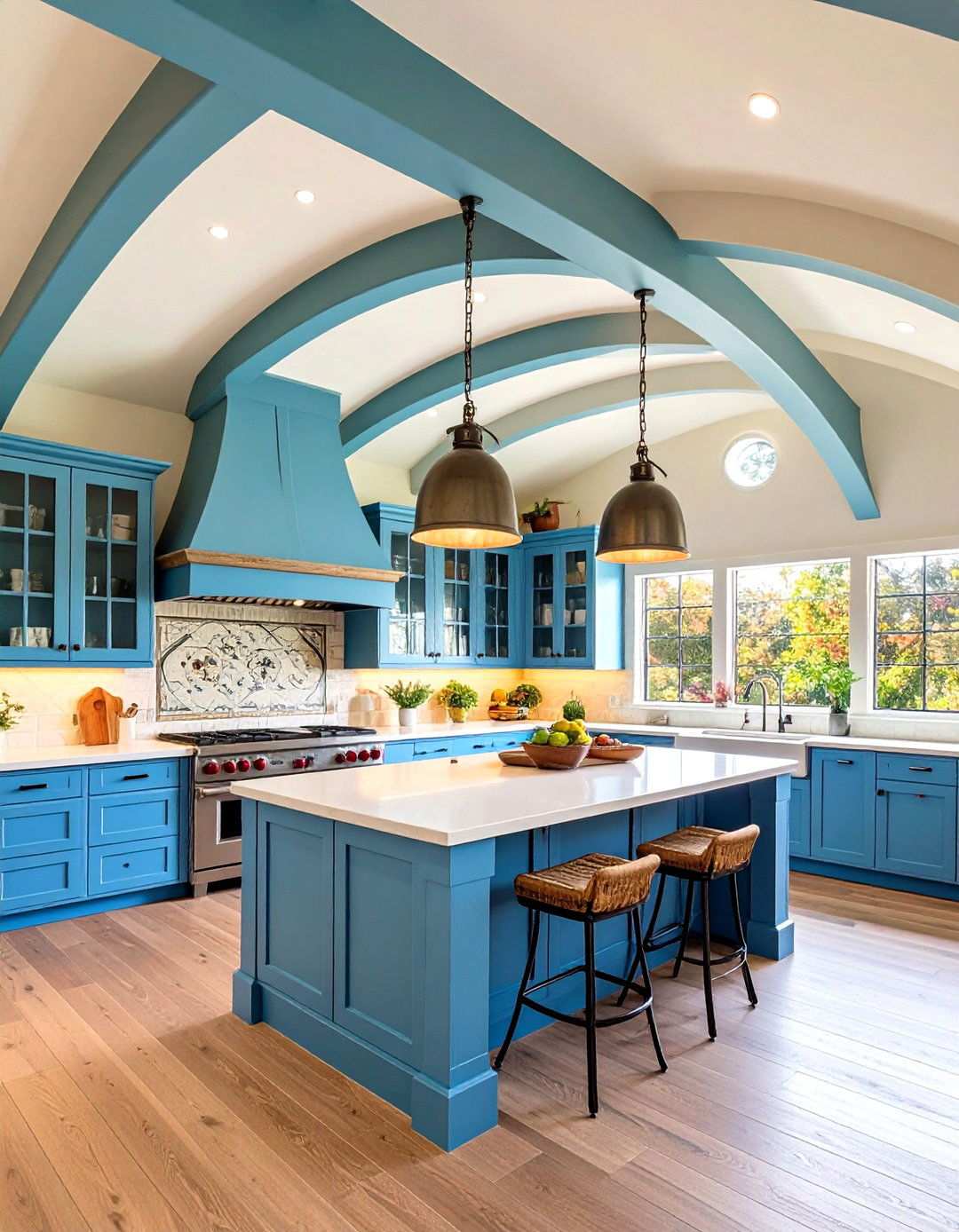
Elevate your kitchen’s aesthetic with the grandeur of barrel vaulted ceilings, reminiscent of Spanish mission and monastery architecture. These sweeping curves create expansive, cathedral-like spaces that make kitchens feel more spacious and airy. Incorporate hand-painted tiles, natural stone, or textured plaster to infuse authentic Spanish character into your design. The curved surfaces generate captivating acoustics and lighting effects throughout the day, inviting you to reimagine your kitchen’s ambiance. To maximize the impact of these architectural features, consider incorporating recessed lighting or pendant fixtures that harmonize with the vault’s curves. This dramatic scale necessitates a thoughtful approach to proportion and balance with other design elements to ensure functionality and visual harmony.
19. Crafting Spanish Revival Range Surrounds
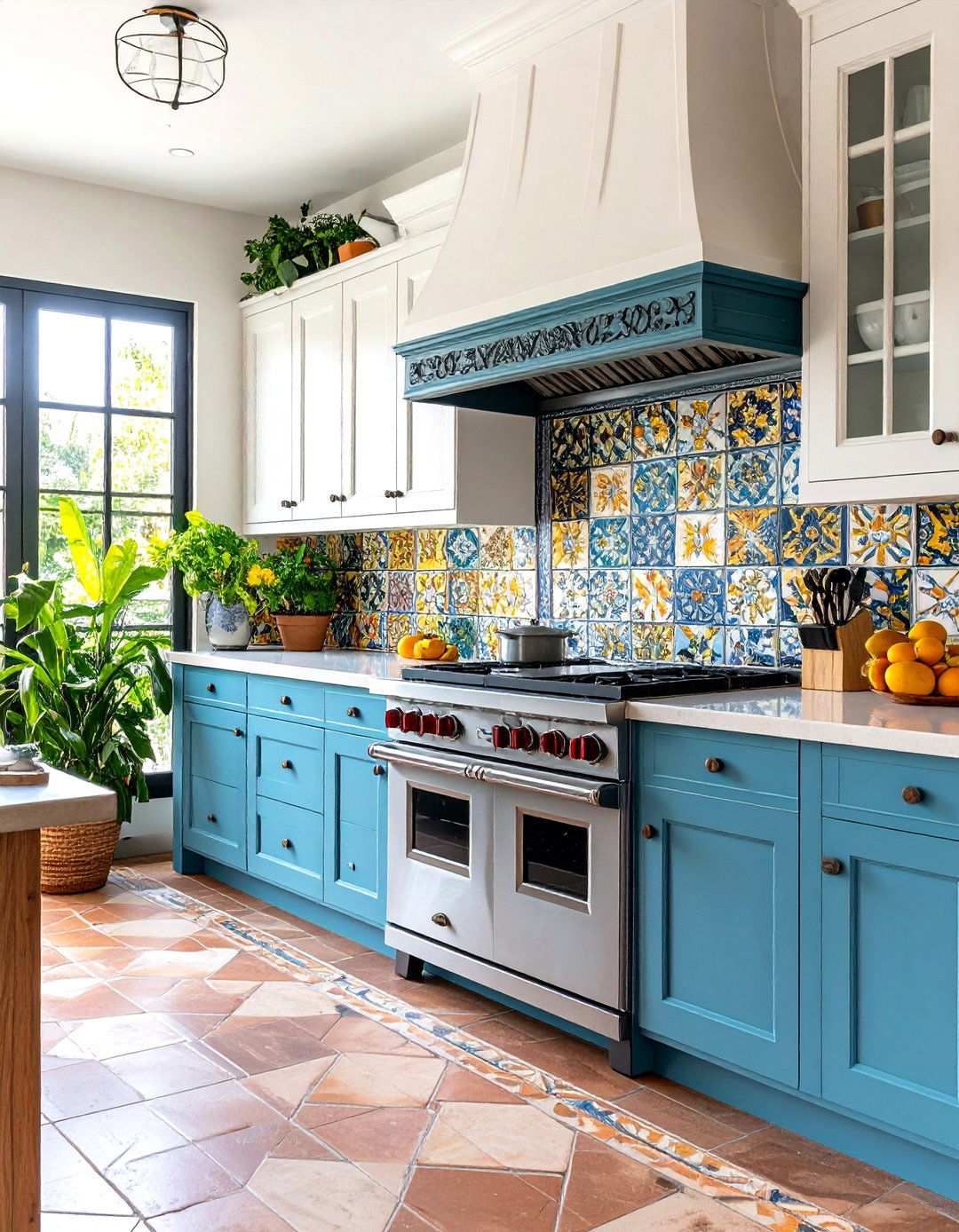
Encompass your cooking area with elaborate Spanish Revival range surrounds that seamlessly integrate multiple traditional elements into cohesive designs. These installations may feature decorative tile work, carved stone details, wrought iron accents, and architectural moldings that create striking focal points. The surround extends beyond basic backsplash requirements to encompass the entire cooking zone in a Spanish architectural tradition, providing an immersive experience for cooking and entertaining. Consider incorporating niche storage, display areas, or built-in spice racks within the surround design to enhance functionality and visual appeal. The substantial scale demands attention while delivering practical benefits for cooking and entertaining. Would a bespoke range surround transform cooking into a captivating art form? These custom installations require meticulous planning but yield lasting impressions that define your kitchen’s unique character.
20. Cozy Dining Nooks in Spanish Kitchen Design
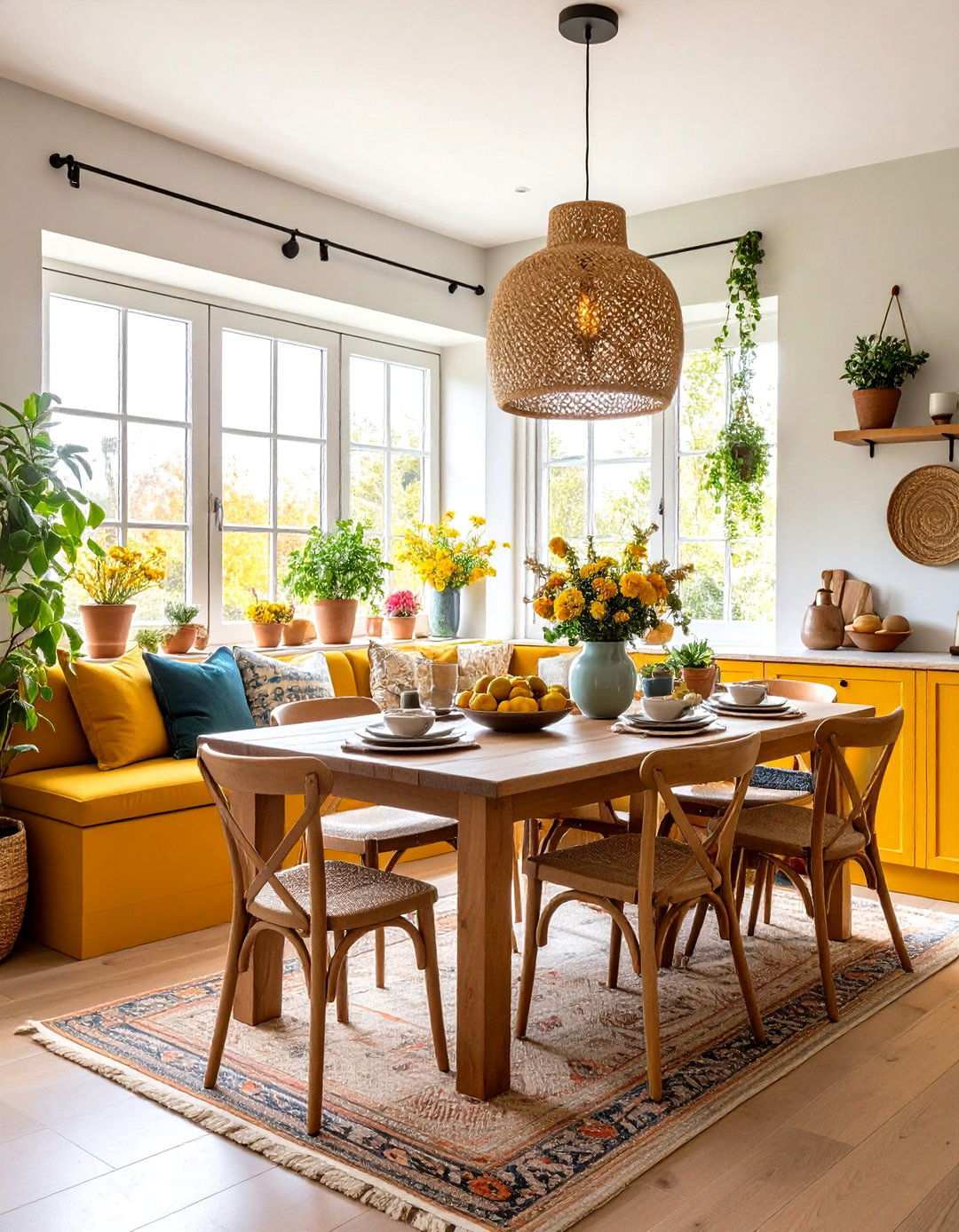
Integrate inviting dining nooks within your Spanish kitchen design using built-in banquettes, rustic tables, and traditional Spanish seating. These intimate spaces foster family gatherings while optimizing space efficiency in smaller kitchens. Choose upholstery in rich jewel tones or natural fabrics that harmonize with your overall color scheme. The close proximity to cooking areas makes serving and cleanup more convenient during daily meals. Incorporate Spanish decorative elements like wrought iron light fixtures, ceramic tile accents, or exposed beam details to maintain Spanish aesthetic consistency. The nook creates a relaxed alternative to formal dining, perfect for casual meals and everyday moments. Consider corner locations that take advantage of natural light from multiple windows for the most appealing breakfast spots, where the beauty of the Spanish kitchen design comes alive.
21. Harmonizing Traditional Spanish Architecture with Modern Kitchen Design
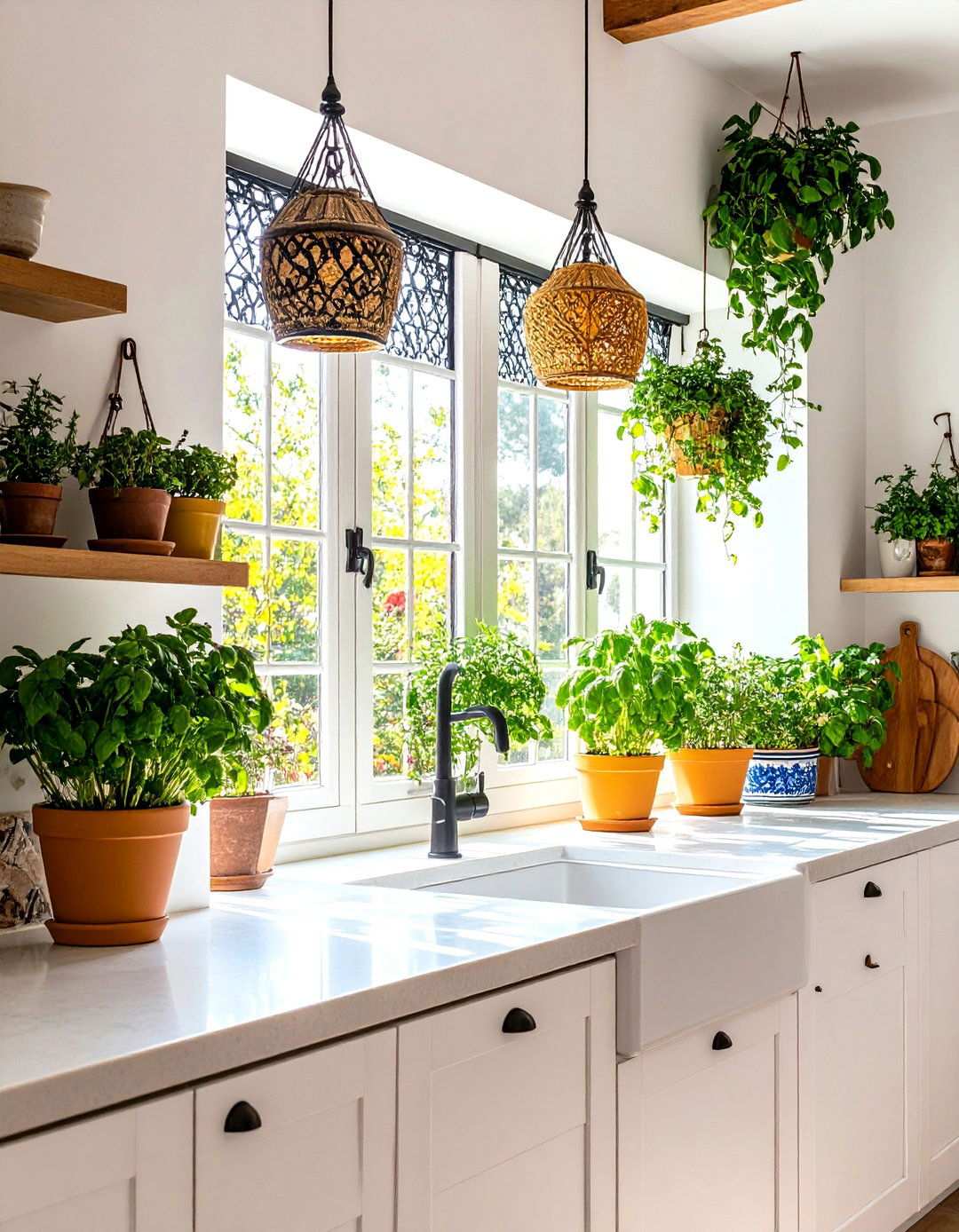
Embracing traditional Spanish ventilation solutions allows homeowners to create authentic architectural character while prioritizing natural airflow. This approach might involve incorporating operable clerestory windows, strategically placed openings, or traditional Spanish grilles that facilitate cross-ventilation. By doing so, individuals can reduce their reliance on mechanical systems while crafting inviting cooking environments. A thoughtful touch is to integrate decorative elements like intricately designed metal grilles or hand-carved wooden shutters that serve both functional and aesthetic purposes. This traditional approach emphasizes sustainability and a seamless connection to outdoor environments, embodying the essence of Spanish architectural philosophy, particularly in mild climates where natural ventilation can effectively manage cooling needs.
22. Fusing Heritage with Modern Functionality in Spanish-Inspired Kitchen Design
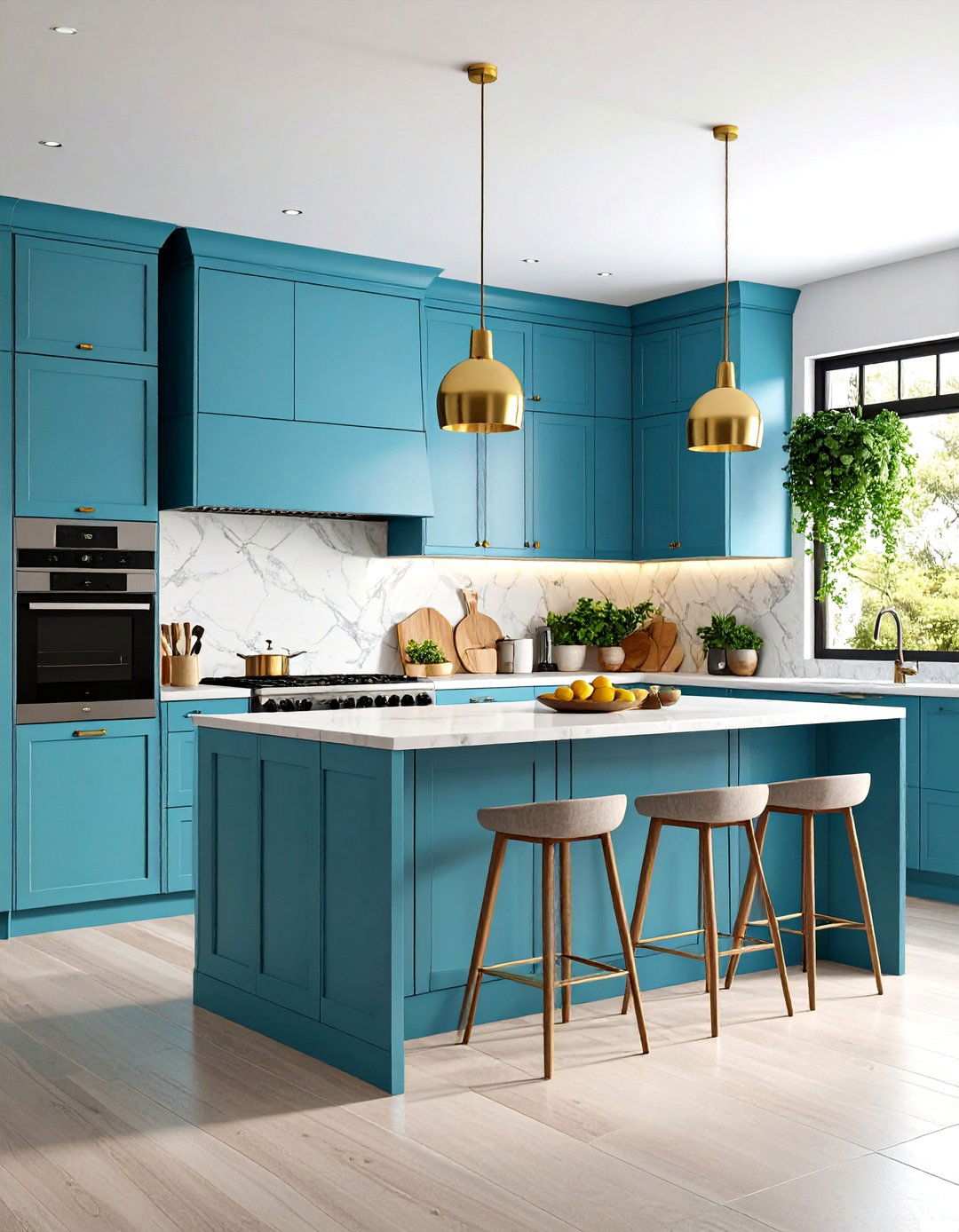
By seamlessly blending traditional Spanish design elements with contemporary functionality, homeowners can create kitchens that harmoniously balance heritage and modern lifestyle demands. This approach might involve combining cutting-edge appliances with hand-painted tiles or streamlined cabinetry featuring traditional wrought iron accents. The key lies in maintaining the warmth and character of Spanish architecture while incorporating current technology and convenience features. Consider selecting one or two traditional elements as focal points, then balancing them with more contemporary components. This fusion approach allows for easier maintenance, updated functionality, and a timeless design that will never feel dated as trends evolve. By embracing the best of both worlds, homeowners can elevate their daily cooking experience and cultivate a sense of belonging to a rich cultural heritage.
23. Elevating Spanish Courtyard Design with Thoughtful Window Treatments
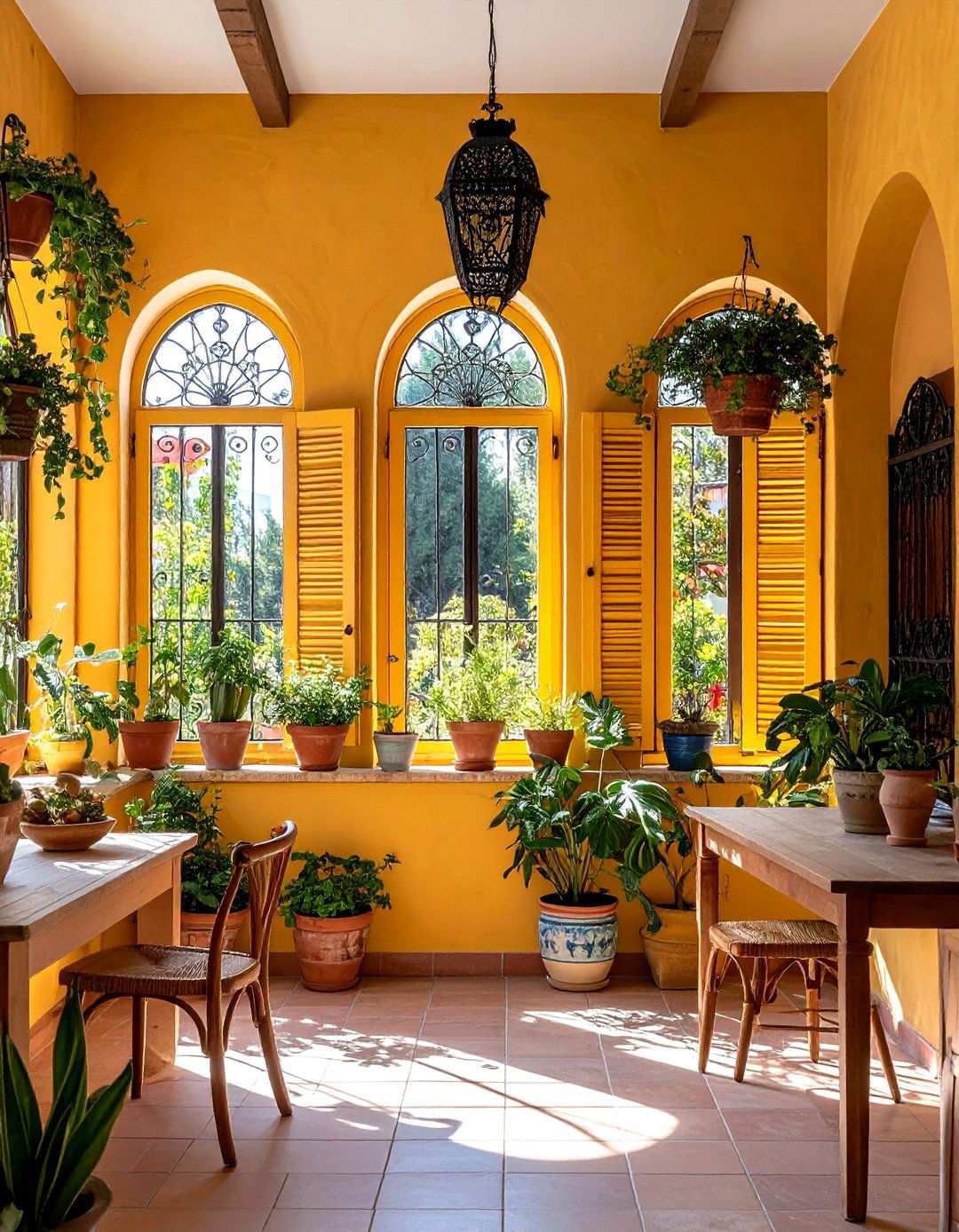
Window treatments that echo Spanish courtyard design through arched frames, decorative grilles, or shutters not only control light but also add architectural interest to indoor kitchens. These elements serve as a connection to outdoor spaces that characterize Spanish residential design. When selecting treatments, consider interior shutters, wrought iron grilles, or fabric panels that complement your overall design aesthetic. Effective window treatments should provide privacy and light control while preserving views to gardens or outdoor dining areas. Natural materials like wood or iron work best for authentic Spanish character. Moreover, these elements offer opportunities to introduce additional color or pattern that enhances your kitchen’s personality while serving practical functions throughout the day.
24. Harmonizing Authentic Spanish Elements
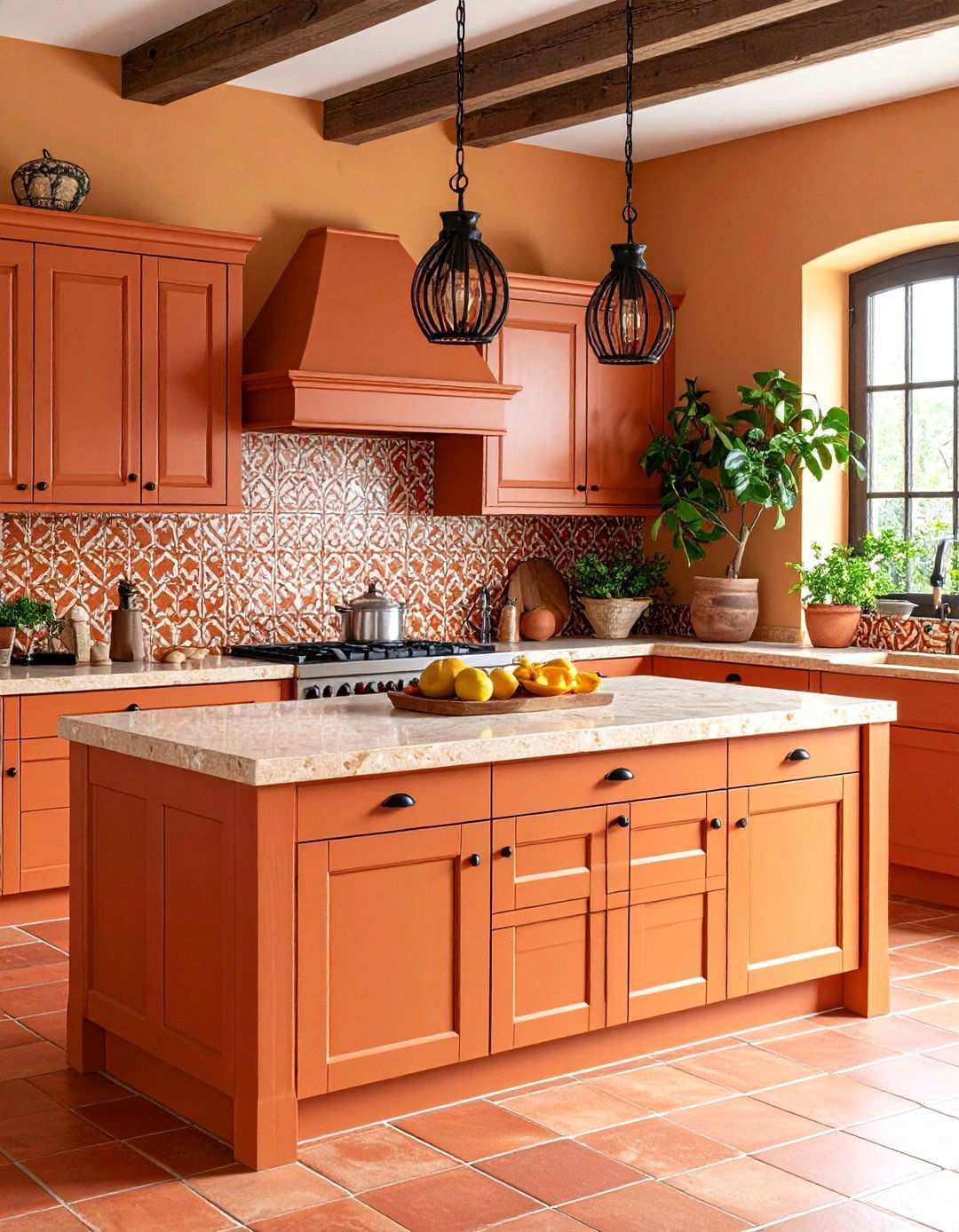
Effective kitchen design involves skillfully combining authentic Spanish materials such as terracotta, natural stone, wrought iron, and solid wood to create visually stunning and well-balanced spaces. Achieving harmony relies on finding the right balance between proportions and maintaining consistent color temperatures throughout all the materials used. Timeless combinations might feature terracotta floors paired with limestone countertops, dark wood cabinetry, and wrought iron accents – each element complementing the others while adding unique textures and visual depth to the overall composition. When selecting materials, it’s essential to consider both their practical requirements in a kitchen setting and their aesthetic appeal. Investing in authentic materials yields lasting value and a timeless beauty that goes beyond fleeting trends. By incorporating natural, handcrafted elements, homeowners can create an atmosphere that not only enhances their daily cooking experience but also promotes overall well-being.