1. Timeless Terracotta Roof Design
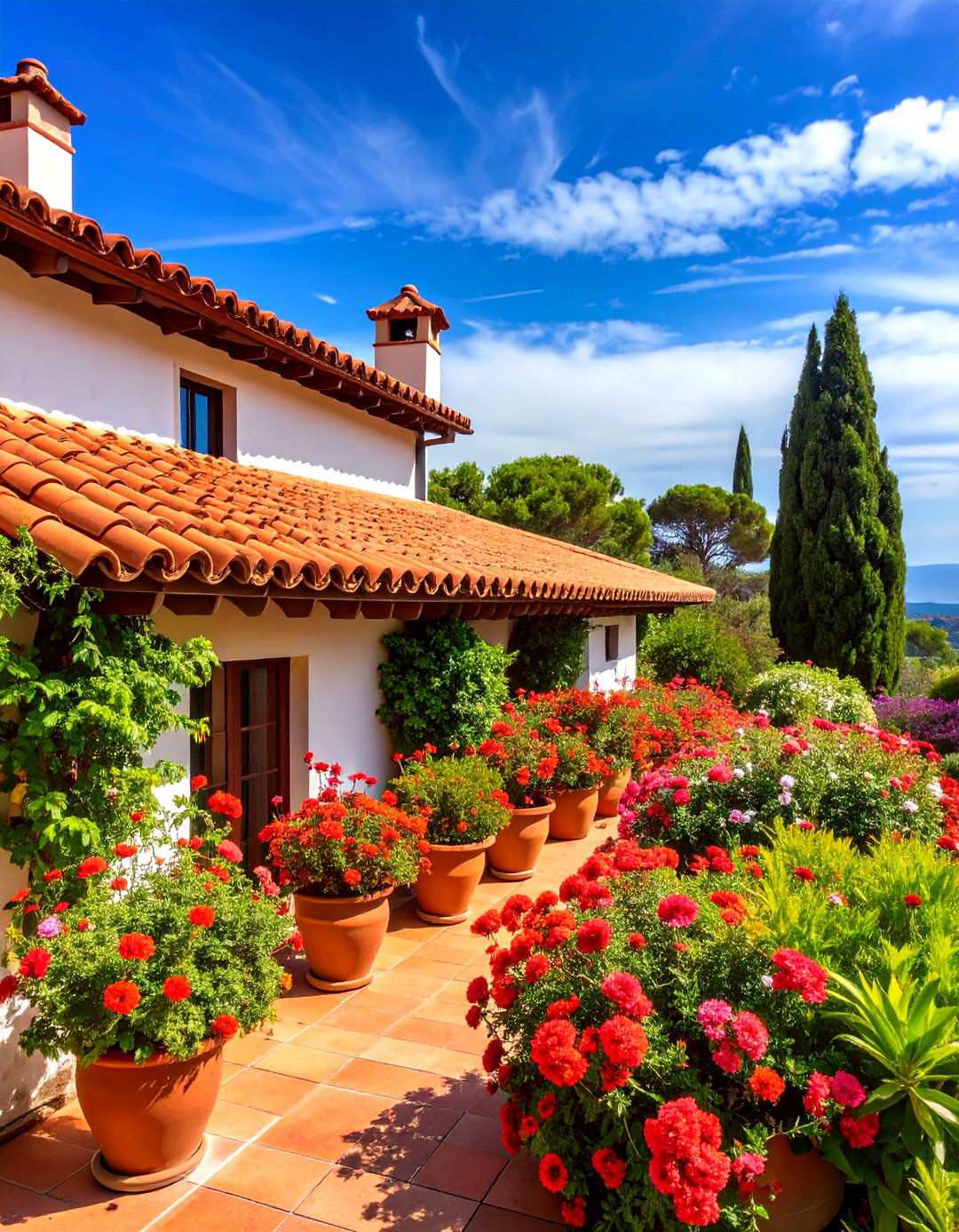
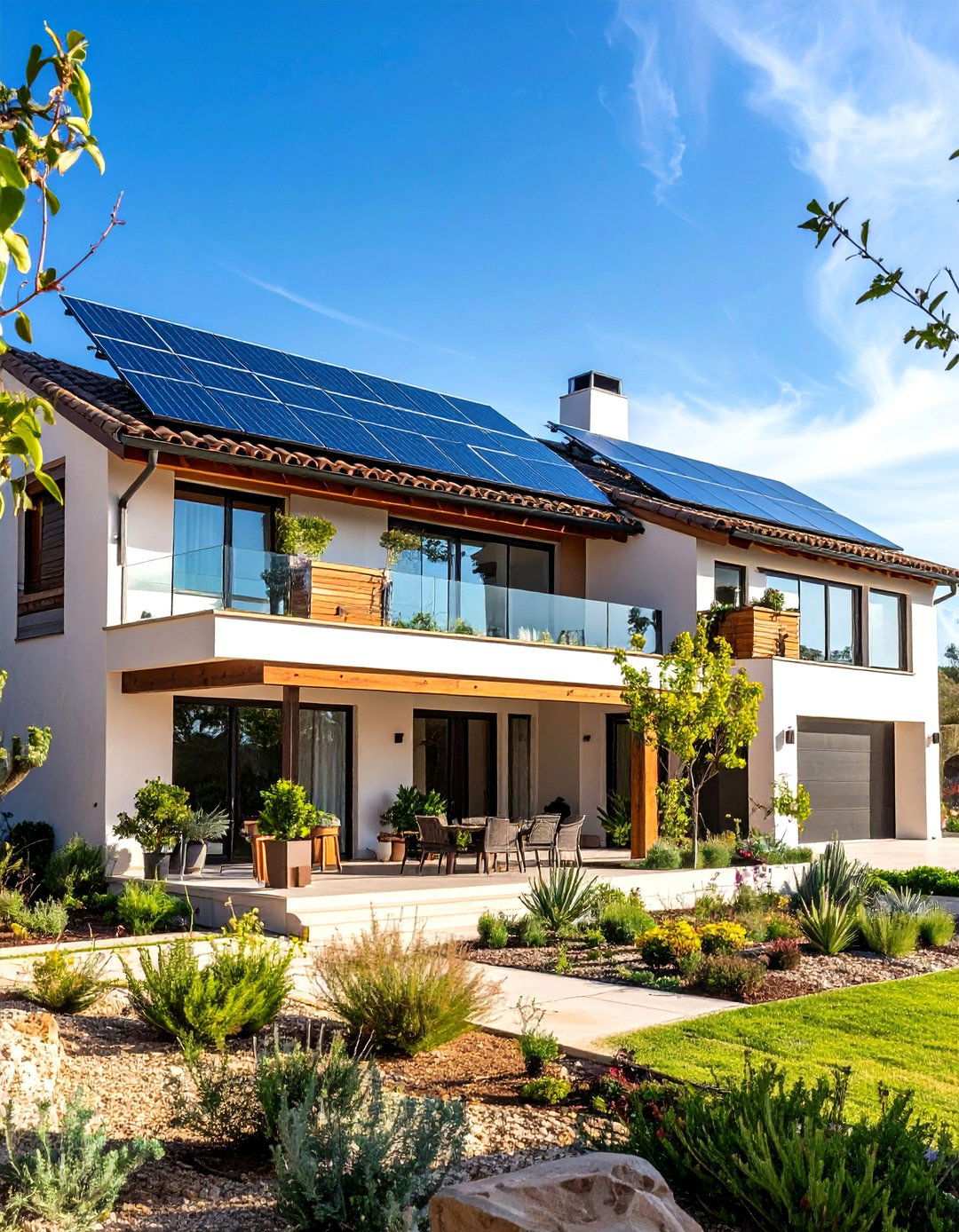
Imagine your home standing proudly, evoking the rich history and warmth of Spain’s sun-kissed coastlines. Authentic terracotta roof design sets the stage for a captivating Spanish Mediterranean aesthetic. The classic clay barrel tiles, with their distinctive reddish-orange hue, transport you to the rolling hills of Andalusia, where tradition meets timeless charm. The subtle weathering on these tiles not only adds character but also ensures excellent insulation and durability. A modern twist on this traditional design often incorporates solar integration seamlessly hidden beneath the tiles, marrying sustainability with enduring appeal. As the sun moves across the sky, the curved profile casts beautiful shadow lines, creating visual depth and a sense of dimensionality that elevates your roofline. Pair this striking roof with crisp white stucco walls and rich, dark wooden accents to achieve the classic contrast that defines Spanish Mediterranean style. Whether your home is a single-story hacienda or a multi-level villa, this roofing choice will beautifully capture the essence of old-world Spain.

As an Amazon Associate I earn from qualifying purchases.
2. Courtyard Living Spaces
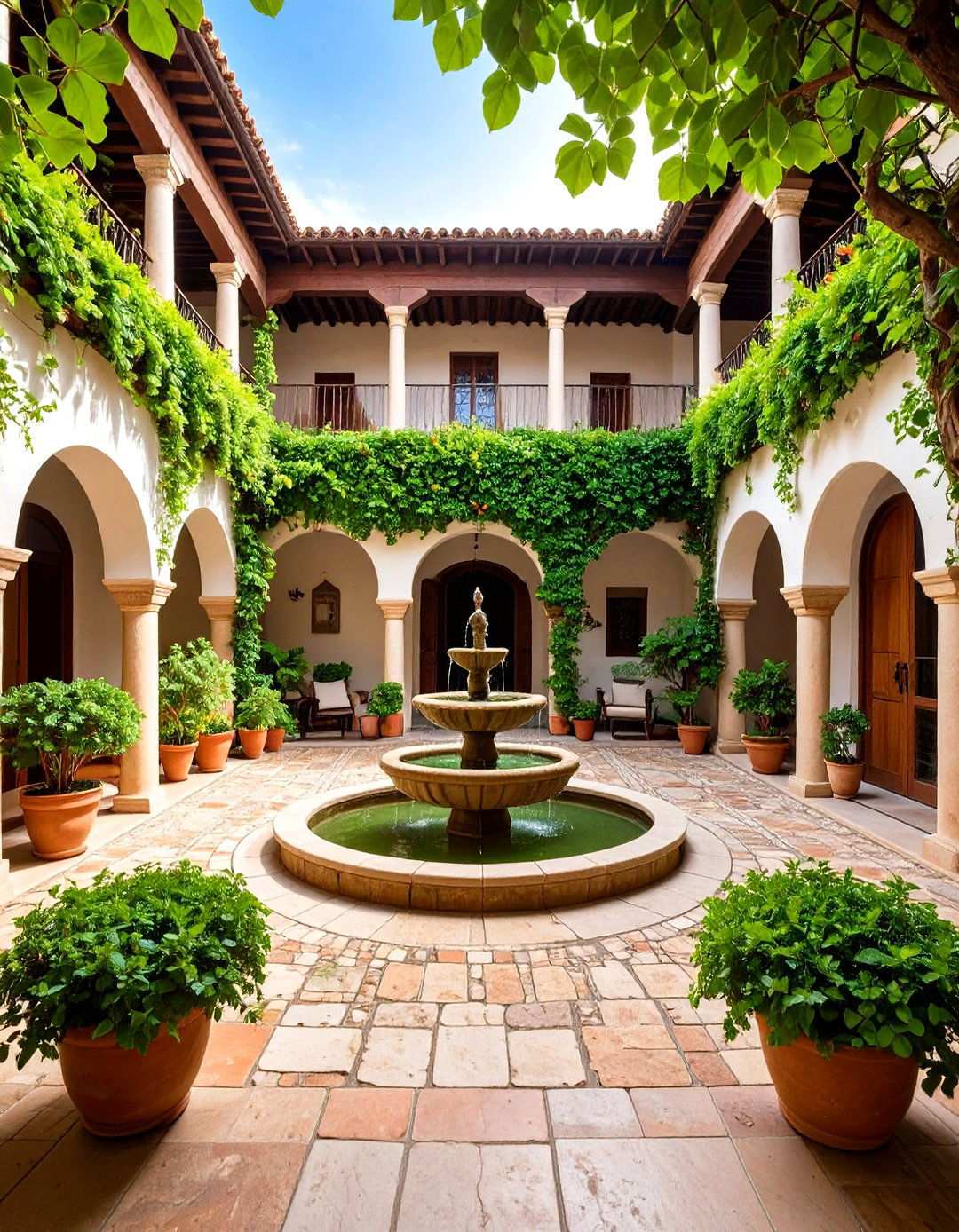
Transforming your Spanish Mediterranean home into a serene retreat, a private courtyard becomes the heart of the family’s social life. This enclosed outdoor area serves as the central gathering space, where natural stone flooring, lush climbing vines on textured walls, and a central fountain or fire feature come together to create a captivating atmosphere. The thoughtful design fosters cross-ventilation while maintaining an intimate ambiance perfect for relaxing with morning coffee or engaging in evening entertaining. Floor-to-ceiling glass doors seamlessly blend the indoor and outdoor environments, disappearing into walls to create an unobstructed view. Cozy seating areas with weather-resistant cushions in warm earth tones invite relaxation, and potted citrus trees or Mediterranean herbs infuse the space with authentic charm. As the courtyard becomes an extension of your living room, dining area, and kitchen, it encourages a unique floor plan that promotes carefree, resort-style living throughout the year.
3. Exposed Beam Ceiling Features
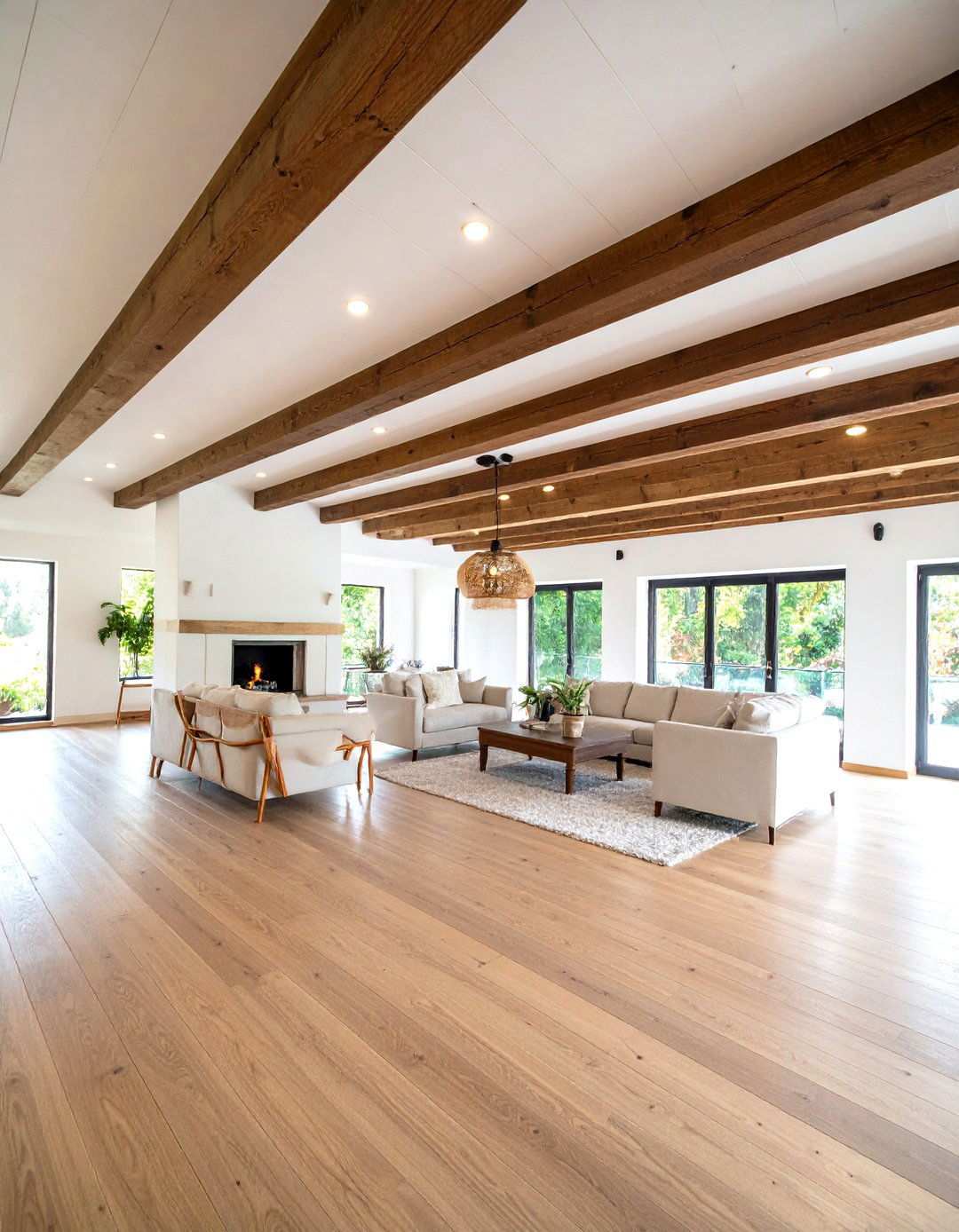
The rustic charm of Spanish Mediterranean interiors is instantly recognizable through exposed wooden beam ceilings. Traditionally crafted from dark walnut or reclaimed chestnut, these structural elements add both visual weight and authentic character to living spaces. The natural lines created by the beams draw the eye upward, making rooms feel more expansive while introducing architectural interest. Modern installations often incorporate hidden lighting systems within the beam structure, providing both ambient and accent illumination. By pairing these dramatic ceiling treatments with white-washed walls, you can create striking contrast, or complement them with warm plaster finishes in subtle earth tones to achieve a harmonious balance. The natural wood grain and hand-hewn textures tell stories of traditional craftsmanship while supporting contemporary lighting fixtures, ceiling fans, or integrated smart home technology. This design element proves particularly effective in great rooms, kitchens, and master bedrooms.
4. Arched Doorway Architecture
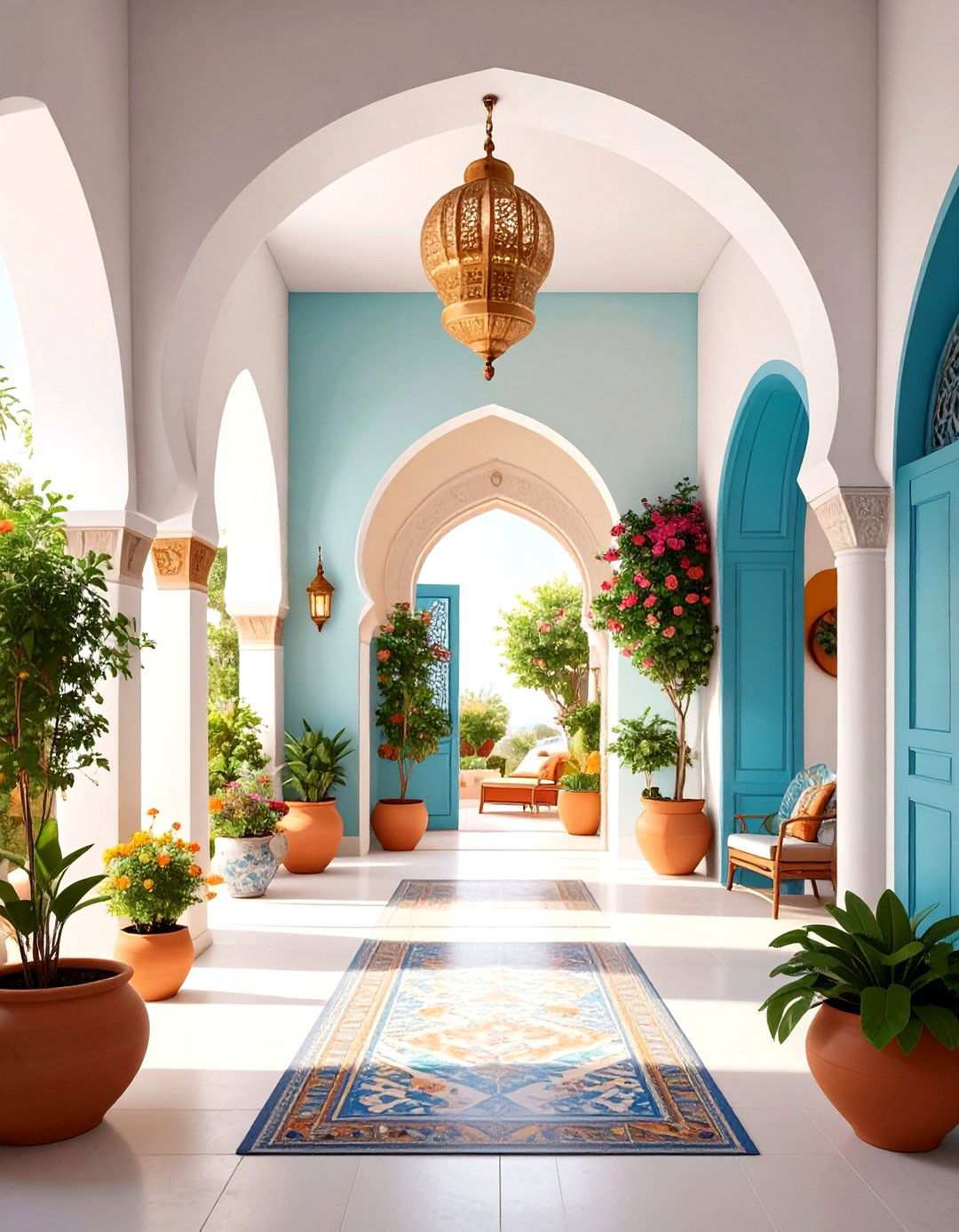
A single architectural detail can greatly impact the ambiance of your home, and arched doorways are a defining feature of Spanish Mediterranean design. These elegant openings create gentle transitions between rooms while introducing the distinctive curves that characterize Moorish influences. By softening the hard lines of contemporary construction, arched doorways facilitate visual flow throughout your home. Whether crafted as simple rounded arches or more elaborate horseshoe shapes, these doorways frame views and create natural focal points. Modern interpretations often incorporate hidden pocket doors that can close off spaces when privacy is desired. It’s essential to balance the arch height and proportions with your ceiling heights and room dimensions. To add a touch of personality, consider painting the arches in crisp white to contrast with colorful accent walls, or finish them in warm plaster tones that complement your overall color palette. Decorative tile accents or carved stone details can further enhance the authentic character of these architectural features.
5. Ornate Metal Accents
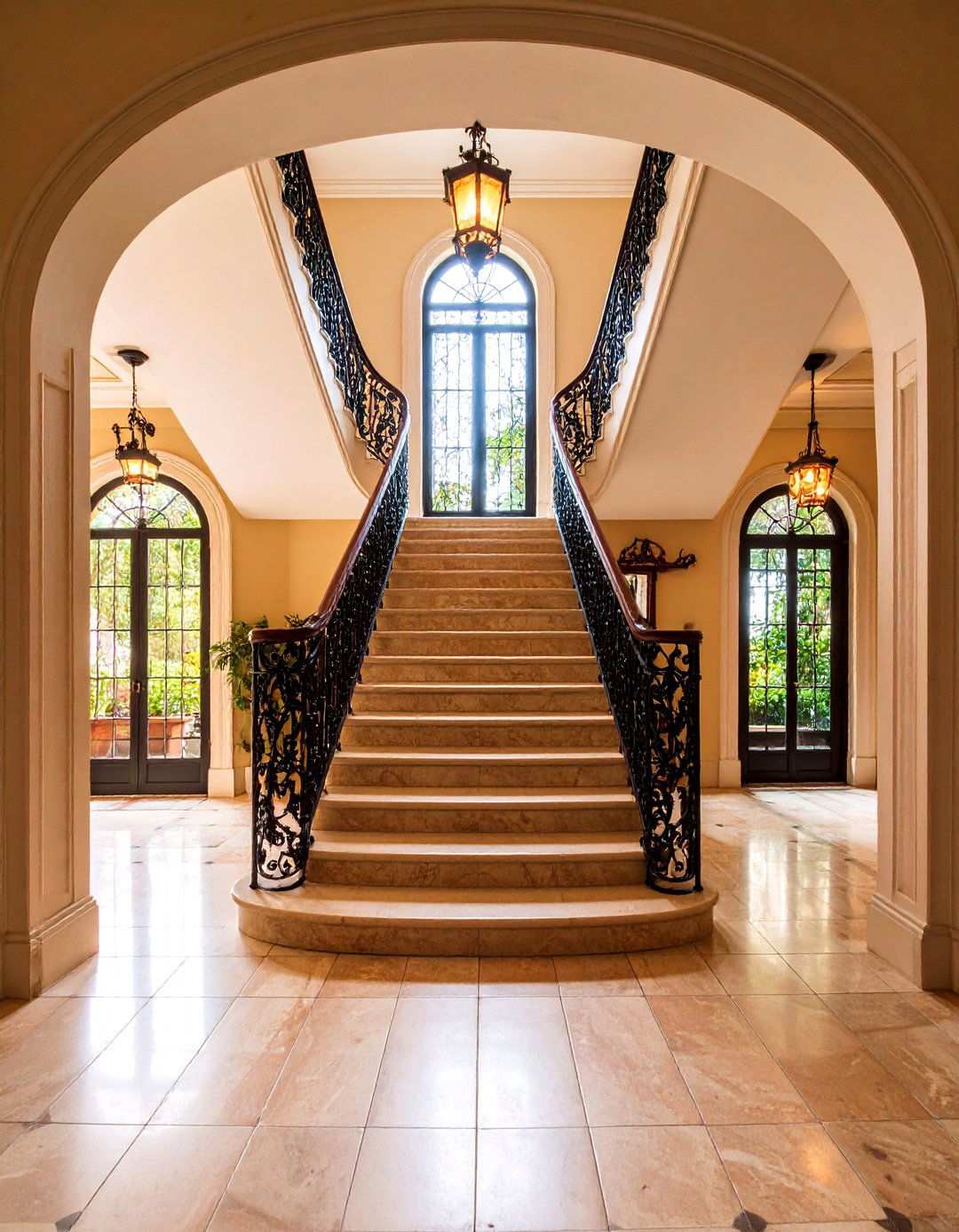
Incorporating wrought iron accents imbues your Mediterranean-inspired home with the distinct charm of traditional Spanish craftsmanship. These decorative metal elements add a touch of elegance to various areas of the home, from intricately designed stair railings to ornate window grilles that seamlessly blend function and aesthetics. Light fixtures with an artful flair cast dramatic shadows on textured walls, while the dark metal creates a striking contrast with white stucco exteriors and light-colored interior walls. Today, modern homeowners can choose from a wide range of custom-designed room dividers, decorative wall panels, and eye-catching headboard designs that become captivating focal points. Look for pieces featuring hand-forged details that showcase the organic imperfections and character marks of traditional metalworking techniques. To create design continuity throughout the home, consider incorporating wrought iron into cabinet hardware, bathroom fixtures, and outdoor furniture. The rich patina and substantial weight of quality ironwork lend an air of authenticity that cannot be replicated with lightweight alternatives, making each piece a worthwhile investment in lasting beauty.
6. Artistic Tile Installations
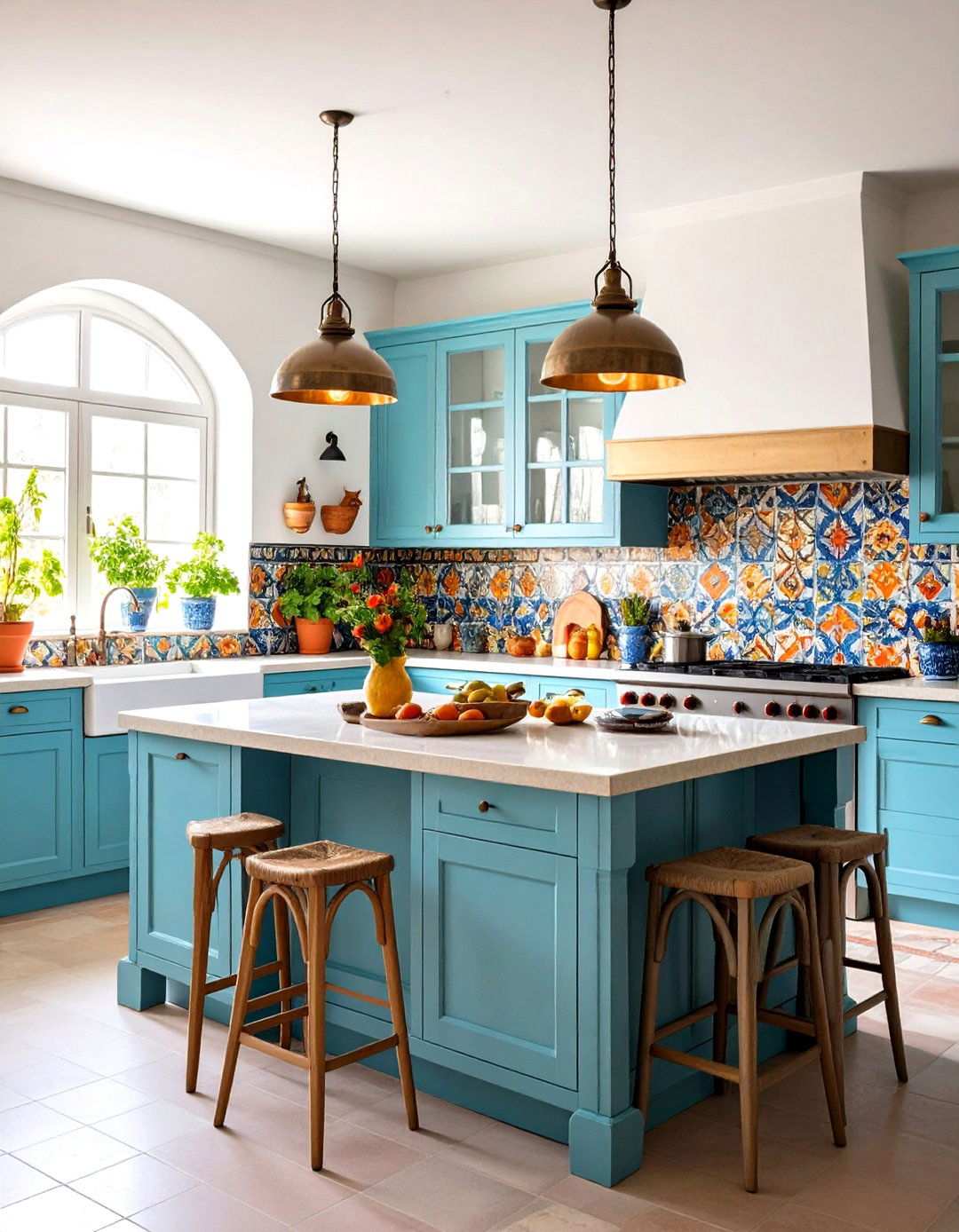
Hand-painted tile work has the power to transform ordinary surfaces into breathtaking works of art that celebrate the vibrant traditions of Spanish design. These ceramic and porcelain elements, characterized by intricate geometric patterns and bold color combinations, add a touch of sophistication to various areas of the home, including stunning backsplashes, stair risers, and accent walls. Traditional Moorish influences are evident in the complex star and polygon patterns, while more contemporary applications often feature simpler designs in earthy terracotta and deep blue tones. The key to success lies in striking a balance between patterned tiles and neutral surfaces to prevent visual overwhelm. Consider creating a dramatic focal wall behind your range or designing a custom border treatment around doorways and windows. Modern manufacturing techniques have made it possible to reproduce historical patterns with incredible detail while maintaining durability and ease of maintenance. These tiles work beautifully in both kitchen and bathroom applications, pool areas, and outdoor entertaining spaces where they can withstand weather while maintaining their vibrant appearance.
7. Elevating Your Space with Natural Stone Flooring
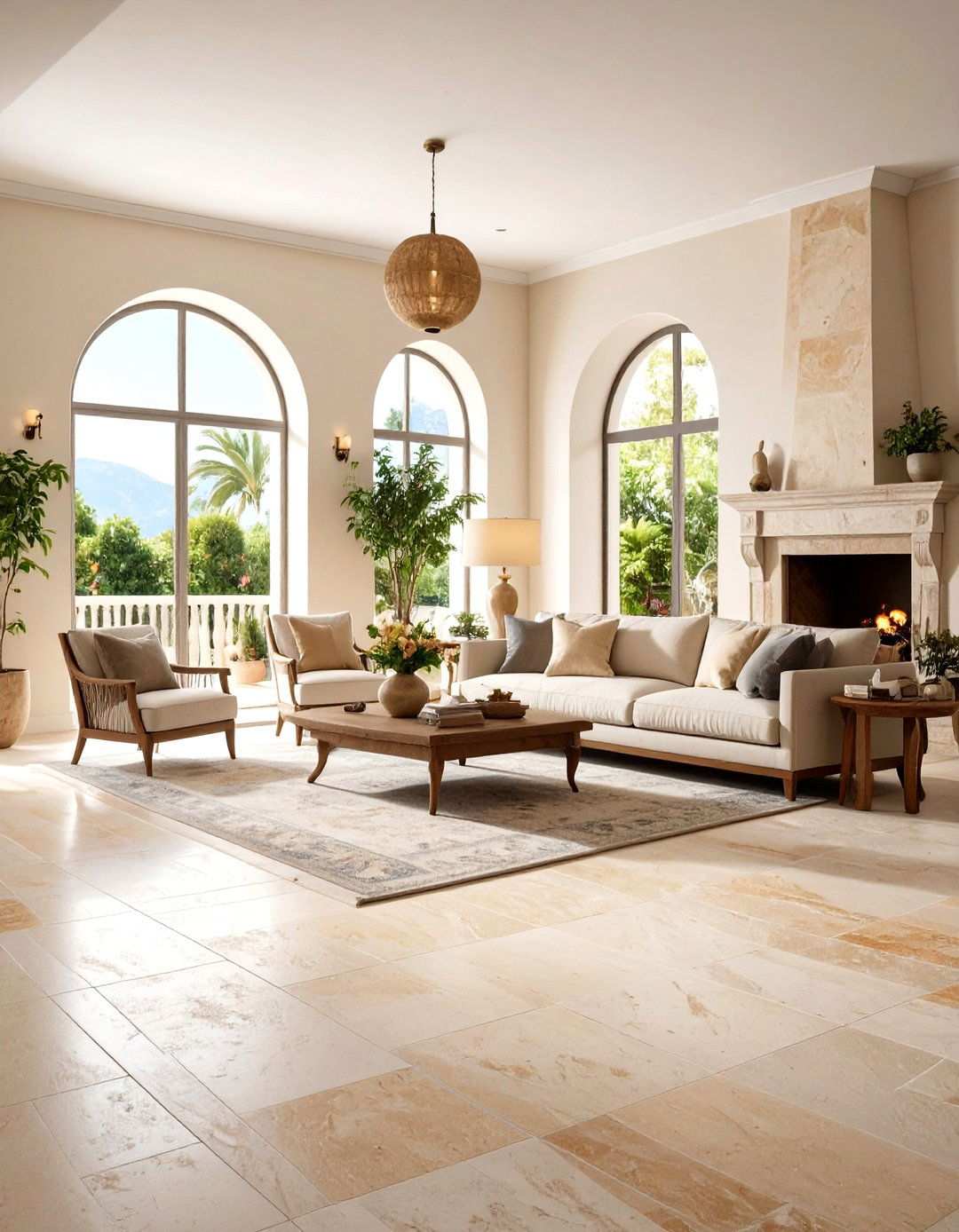
The use of natural stone flooring in a Spanish Mediterranean home is a masterstroke in connecting interior spaces with the earth’s natural splendor. Authentic materials like travertine, limestone, and terra cotta tiles provide a robust foundation for this architectural style, marrying durability with timeless aesthetic appeal. The nuanced variations in color and texture introduce visual interest while maintaining a warm, neutral palette that’s quintessential to Mediterranean design. These eco-friendly materials also naturally regulate temperature, ensuring your home stays cool in scorching summer months while retaining warmth during the cooler seasons. To create a more contemporary look, consider large-format tiles or opt for smaller formats with decorative borders for a traditional charm. The aging process of these materials becomes a beautiful story, developing a patina that reflects the passage of time. By extending these flooring materials to covered patios and terraces, you can create seamless indoor-outdoor flow that embodies the essence of Mediterranean living.
8. Captivating Stucco Wall Treatments
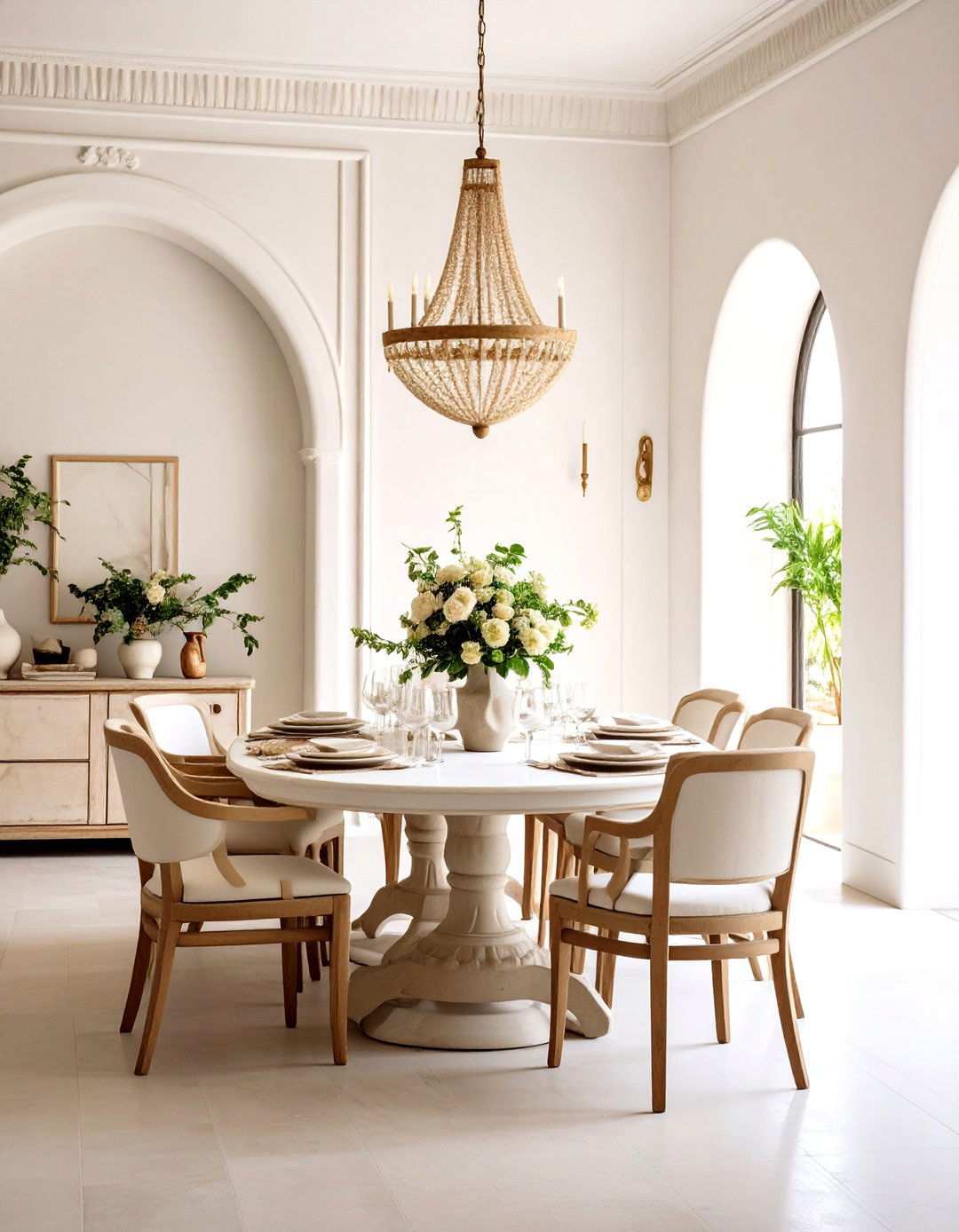
Imagine your walls transporting you to the sun-kissed landscape of a Spanish villa with just a texture and color change. Stucco wall treatments are the perfect canvas for Spanish Mediterranean style, offering both practical benefits and authentic aesthetic appeal. The textured plaster finishes, applied by hand in multiple layers, create a mesmerizing dance of light and shadow throughout the day. Traditional lime-based stuccos not only regulate humidity but also provide excellent insulation properties. For a classic look, choose warm white or soft cream tones, or experiment with subtle earth tones like pale terracotta or sandy beige. The unique application technique yields patterns and textures that cannot be replicated with paint alone, adding an extra layer of visual interest. Modern stucco formulations have improved durability and crack resistance while retaining the handcrafted appearance. To create visual hierarchy and interest throughout your home, consider using different textures in various areas – smooth finishes in formal spaces, more rustic textures in casual areas.
9. Seamless Outdoor Living
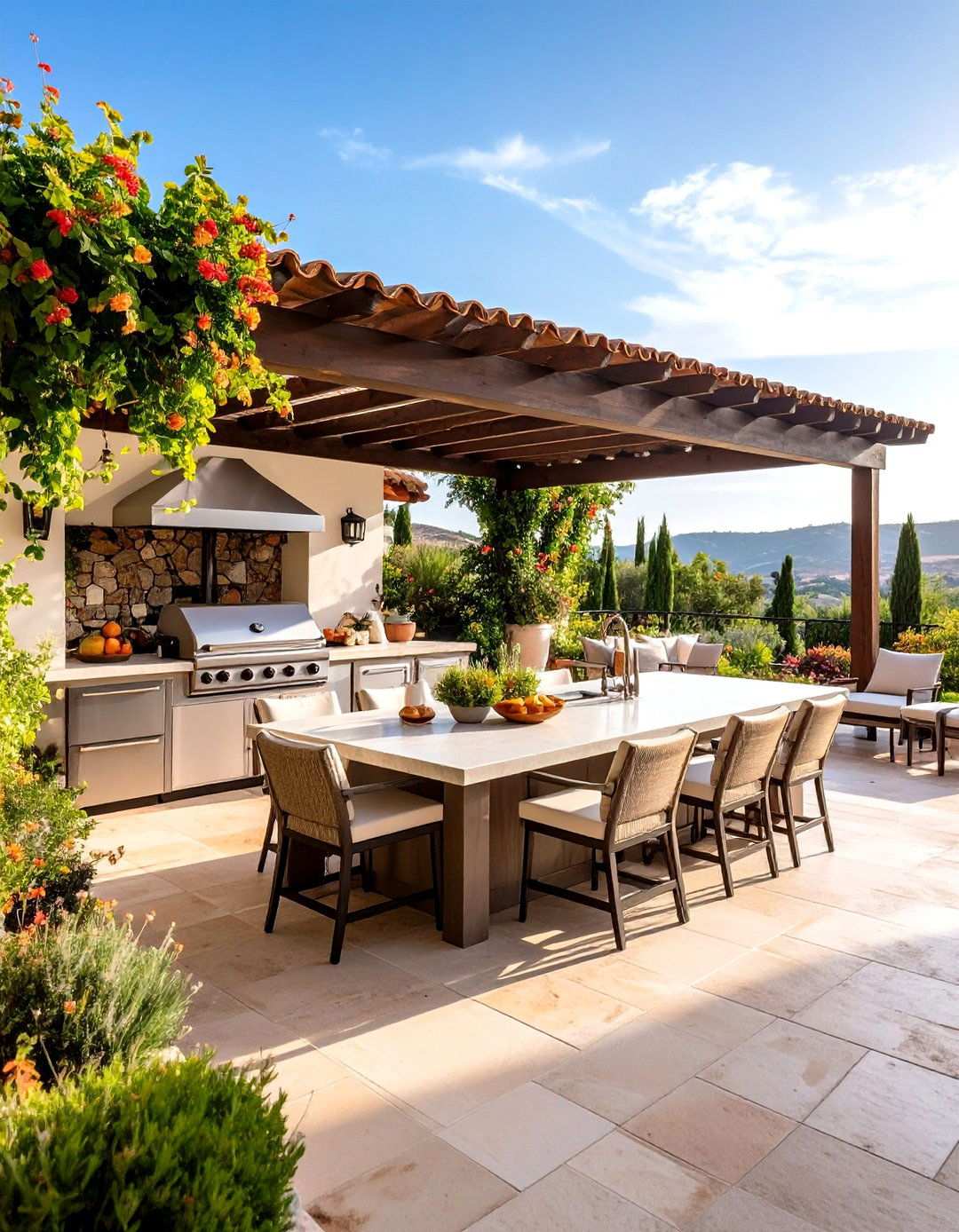
Outdoor living spaces in Spanish Mediterranean homes embody the alfresco lifestyle, where functionality and style converge. Thoughtfully designed areas feature durable surfaces, built-in cooking stations, and weather-resistant storage solutions, all carefully integrated into the home’s overall aesthetic. A seamless flow between indoor and outdoor spaces can be achieved through large glass doors or serving windows, which serve as functional connectors. Essential components like running water, refrigeration, and adequate lighting ensure the space remains inviting, while outdoor cooking elements like wood-fired ovens or gas-powered pizza ovens add a touch of authenticity. Effective design incorporates overhead protection – such as pergolas, solid roofs, or retractable awnings – to safeguard against the elements, while inviting comfortable seating areas for casual dining and a bar for beverage service. The chosen materials should harmonize with the home’s architecture, proving durable enough to withstand the elements and create a seamless extension of the indoor living spaces.
10. Harmonious Open Spaces
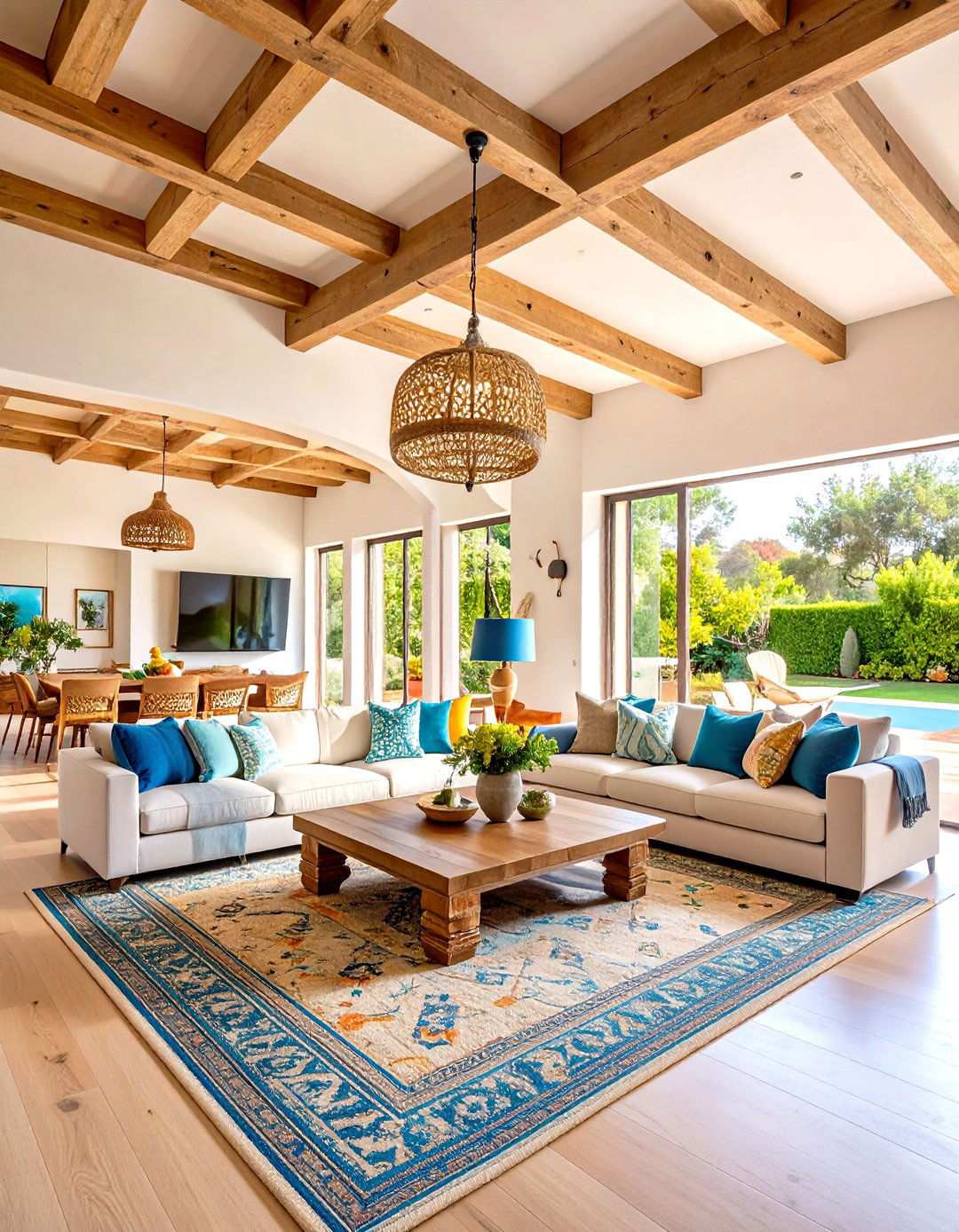
In Spanish Mediterranean homes, open floor plan concepts create expansive living spaces that nurture family connections while maintaining distinct functional areas. Typically, these layouts unite kitchen, dining, and living areas under lofty ceilings supported by exposed wooden beams, which in turn promote natural ventilation and light circulation. A thoughtful approach to design involves defining separate areas using flooring materials, ceiling heights, or built-in furniture pieces, rather than relying on walls. A central island or peninsula can serve multiple purposes – food preparation, casual dining, and social gathering spot – while maintaining visual connections and providing acoustic separation when necessary. Strategically placed large windows and glass doors bring in natural light, framing views of outdoor spaces while punctuating perimeter walls. This design approach excels in moderate climates where indoor-outdoor integration enhances the living experience year-round, resulting in homes that feel expansive and connected to their surroundings.
6.1. Harmonious Hardscapes and Plant Life
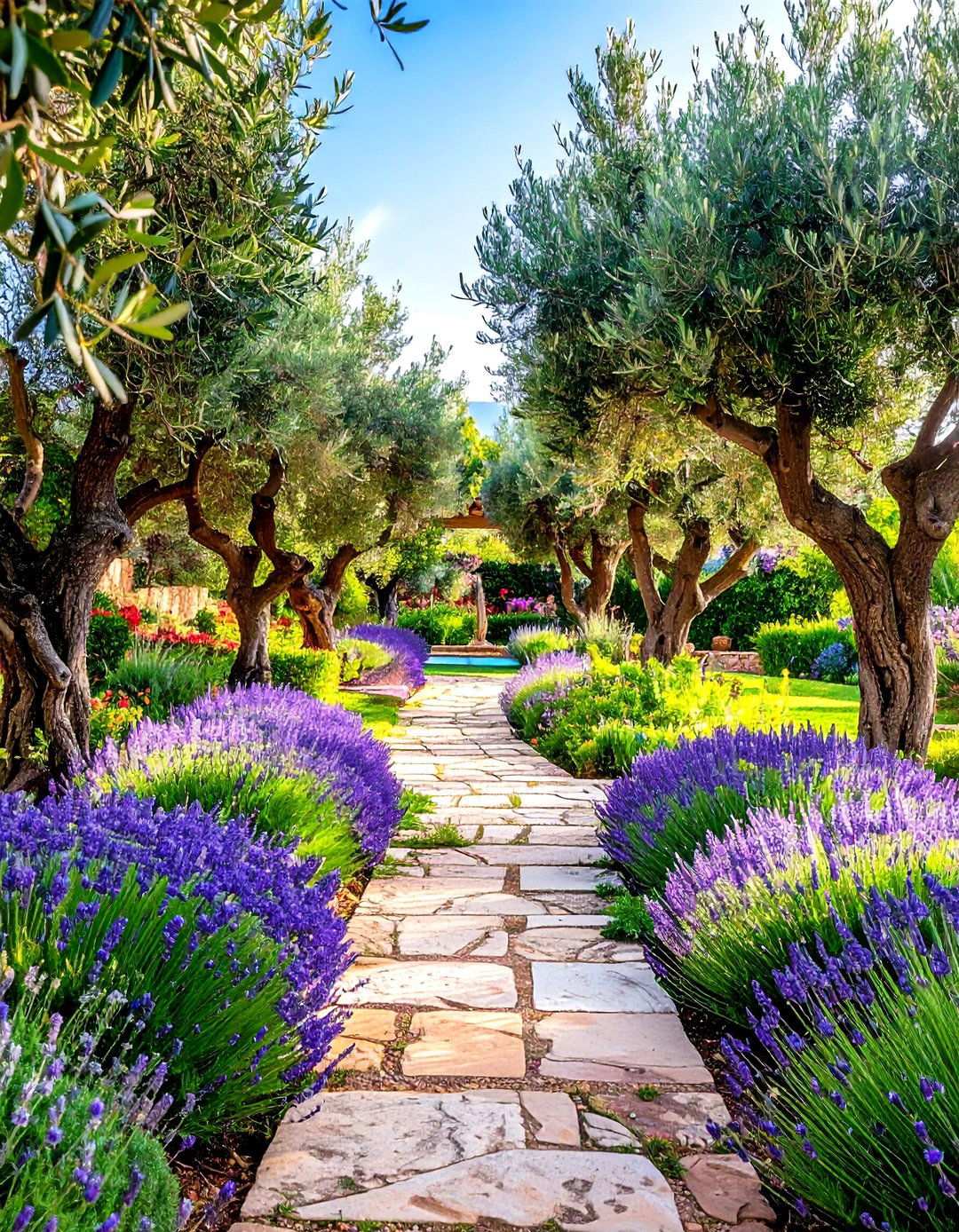
In a Spanish Mediterranean home, harmonious hardscapes and plant life come together to create an inviting and tranquil outdoor environment. By carefully integrating drought-tolerant plants, such as olive trees and lavender, with hardscape elements, you can create a seamless transition between indoors and outdoors. These landscapes not only thrive in warm, dry conditions but also offer year-round beauty and fragrance, making them a perfect complement to your home’s architecture. Strategically placed stone pathways guide visitors through the garden, connecting distinct outdoor spaces like dining areas, reading nooks, and entertainment zones. Water features, ranging from simple wall fountains to elaborate tile-lined pools, provide a cooling respite and soothing sounds, further enhancing the overall ambiance. The palette of silver-green foliage, purple blooms, and warm stone tones creates a cohesive look that beautifully complements your home’s exterior finishes. To achieve a sense of continuity, incorporate raised planters made from materials matching your home’s walls. Consider adding pergolas or arbors adorned with flowering vines like bougainvillea or jasmine to add a touch of whimsy and fragrance to your outdoor spaces.
6.2. Focal Points for Gathering and Conversation
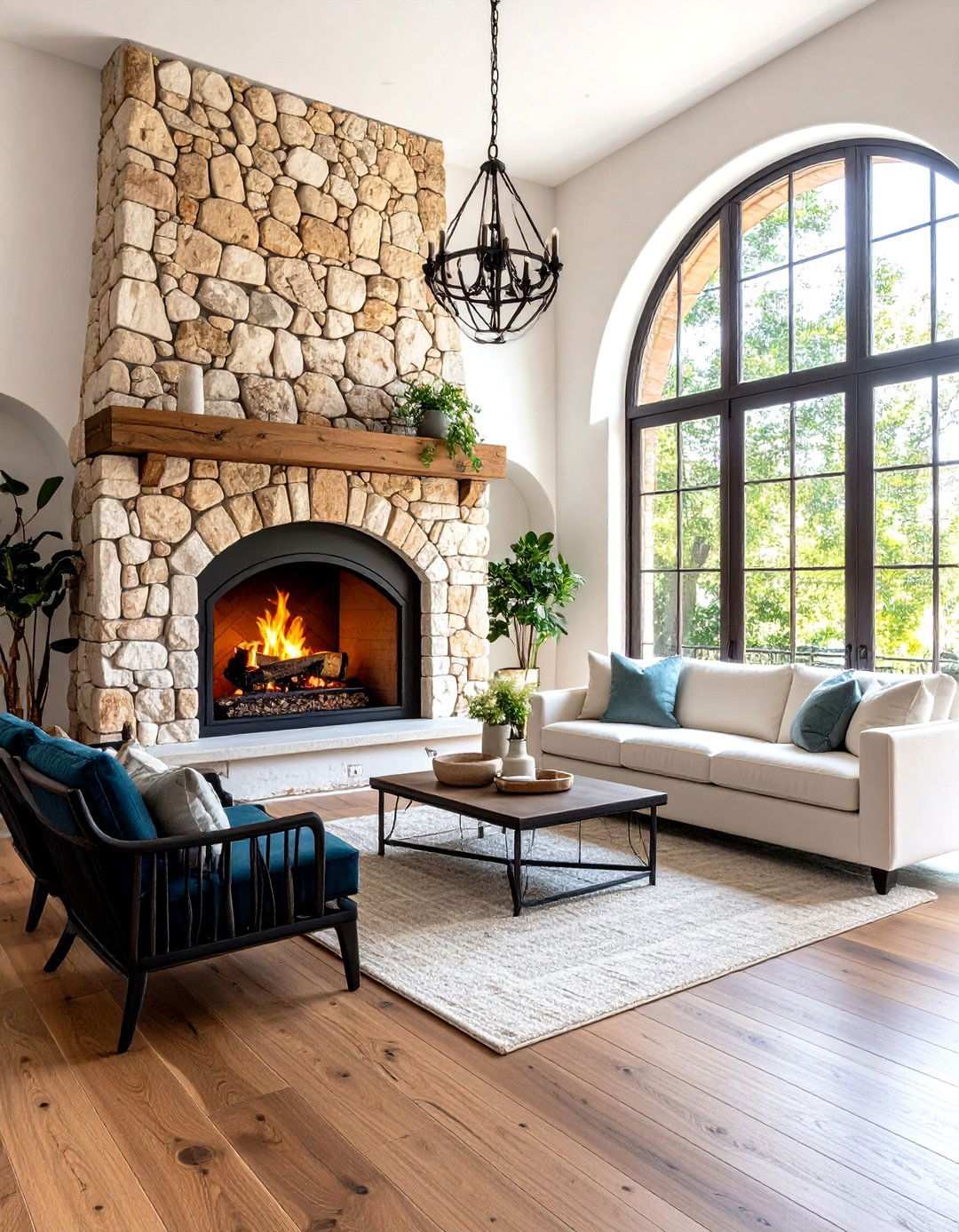
In a Spanish Mediterranean home, fireplace focal points serve as a gathering place, inviting conversation and warmth into your living spaces. These substantial features often incorporate natural stone surrounds, decorative tile accents, and custom wrought iron screens or doors. To create a sense of balance and visual harmony, the design should complement the room’s proportions while making a bold statement. Traditional designs might feature arched openings with rustic stone surrounds, while more contemporary interpretations could use sleek materials with clean lines. Consider extending the fireplace surround to the ceiling to create a dramatic vertical presence, or design built-in seating or storage areas flanking the hearth. Modern gas options provide convenience while maintaining an authentic appearance, allowing you to enjoy the warmth and ambiance of a fireplace year-round. Outdoor fireplaces extend the concept to patios and terraces, creating endless possibilities for entertaining and socializing. The key to success lies in choosing materials and proportions that enhance rather than overwhelm your space, creating a warm and inviting atmosphere that is quintessentially Mediterranean.
13. Kitchen Island Centerpieces
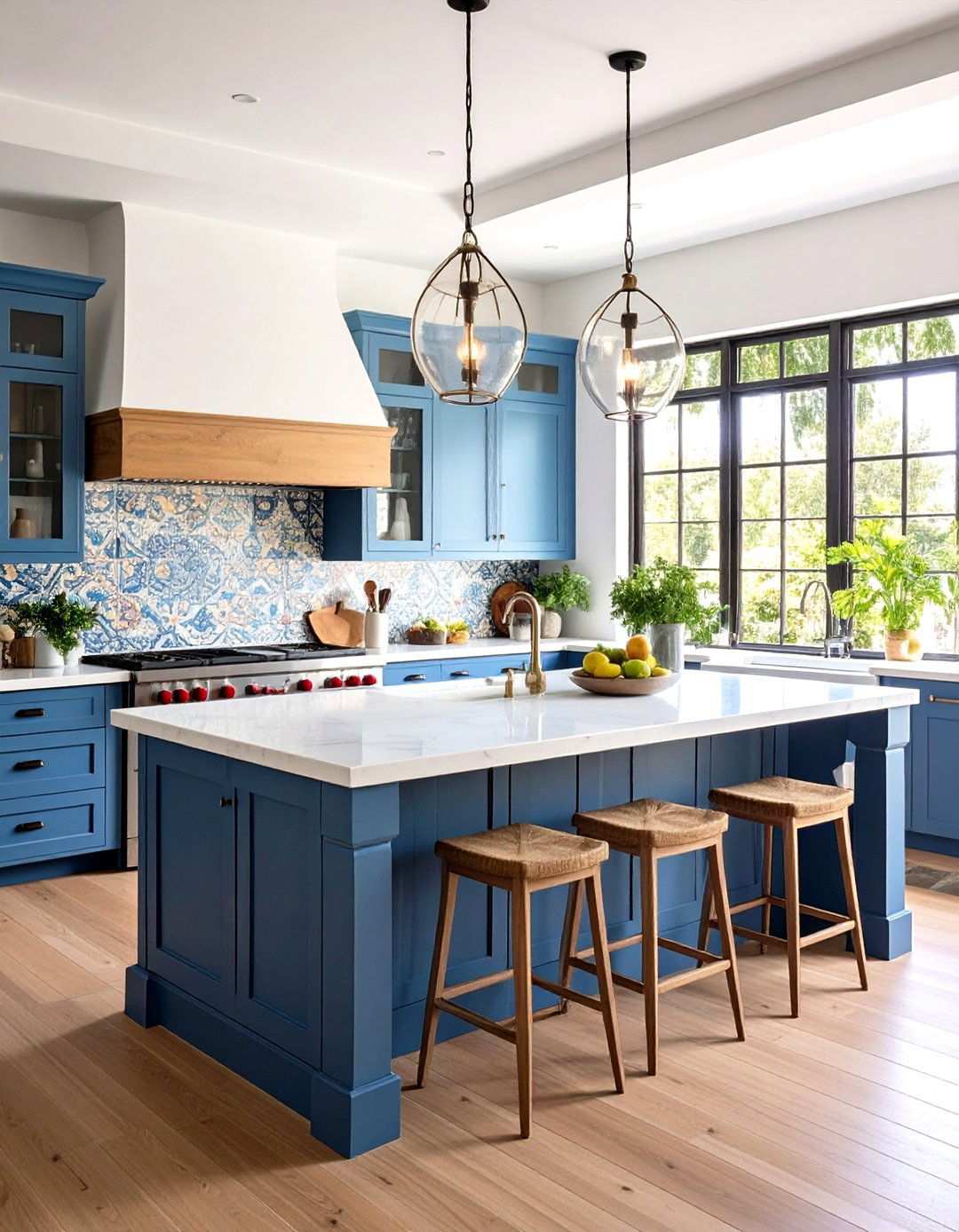
A well-designed kitchen island can be the focal point of a bustling Spanish Mediterranean kitchen, where family and friends gather to share meals and make memories. By incorporating generous work surfaces, often topped with natural stone like marble or travertine, you can create a functional and stylish hub that anchors the space. Add decorative elements such as hand-painted ceramic tiles on the base, metal accents, or intricately carved wooden details that reflect your home’s architectural style. For added functionality, consider features like wine storage, built-in cutting boards, or warming drawers. Complete the look with pendant lighting above that complements the metal accents, perhaps featuring soft glass shades that cast a warm, inviting glow. The proportions should strike a balance between comfort and presence, allowing for easy movement around the perimeter while making a statement. Concealed storage within the base can be achieved with doors featuring classic hardware or open shelving that showcases beautiful ceramics and serving pieces.
14. Bedroom Retreat Spaces
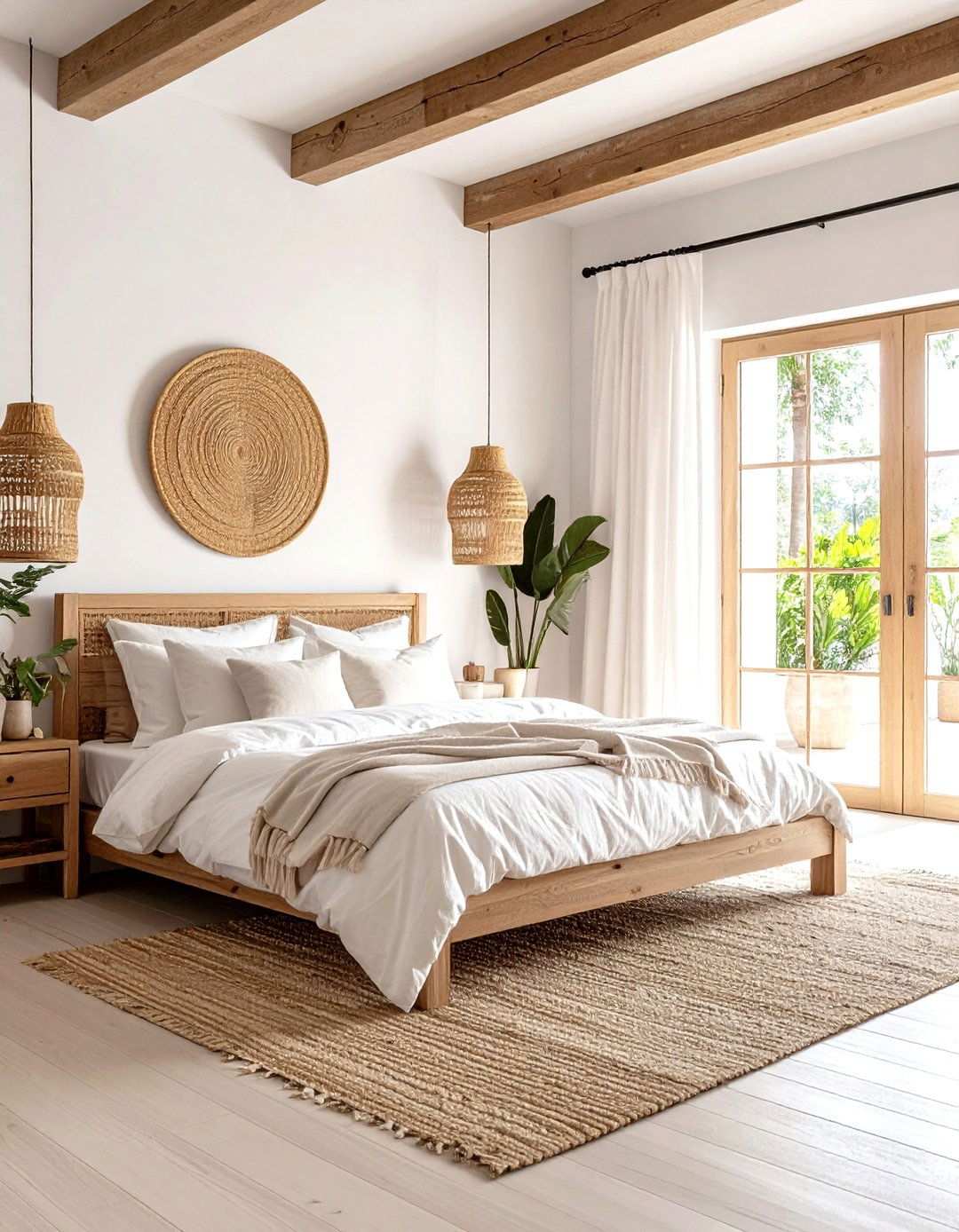
Bedroom retreats in Spanish Mediterranean homes provide a serene oasis where one can escape the stresses of everyday life. These tranquil environments are characterized by warm textures, natural materials, and seamless connections to the outdoors. Whitewashed walls reflect soft morning light, while substantial wooden furniture with carved details and textiles in earthy tones invite rest and relaxation. Create a focal point in the room with a dramatic headboard wall treatment using reclaimed wood planks, decorative tiles, or textured plaster. French doors leading to private balconies or garden terraces extend the room into the great outdoors, perfect for morning coffee or evening contemplation. Layered lighting, consisting of overhead fixtures, bedside sconces, and a show-stopping chandelier, adds depth and visual interest. Natural fiber rugs, linen bedding, and pottery accessories bring authentic touches to the space. A calming color palette allows architectural features and carefully chosen artwork to take center stage, maintaining the serene atmosphere essential for rejuvenation.
15. Elevating Bathroom Experiences
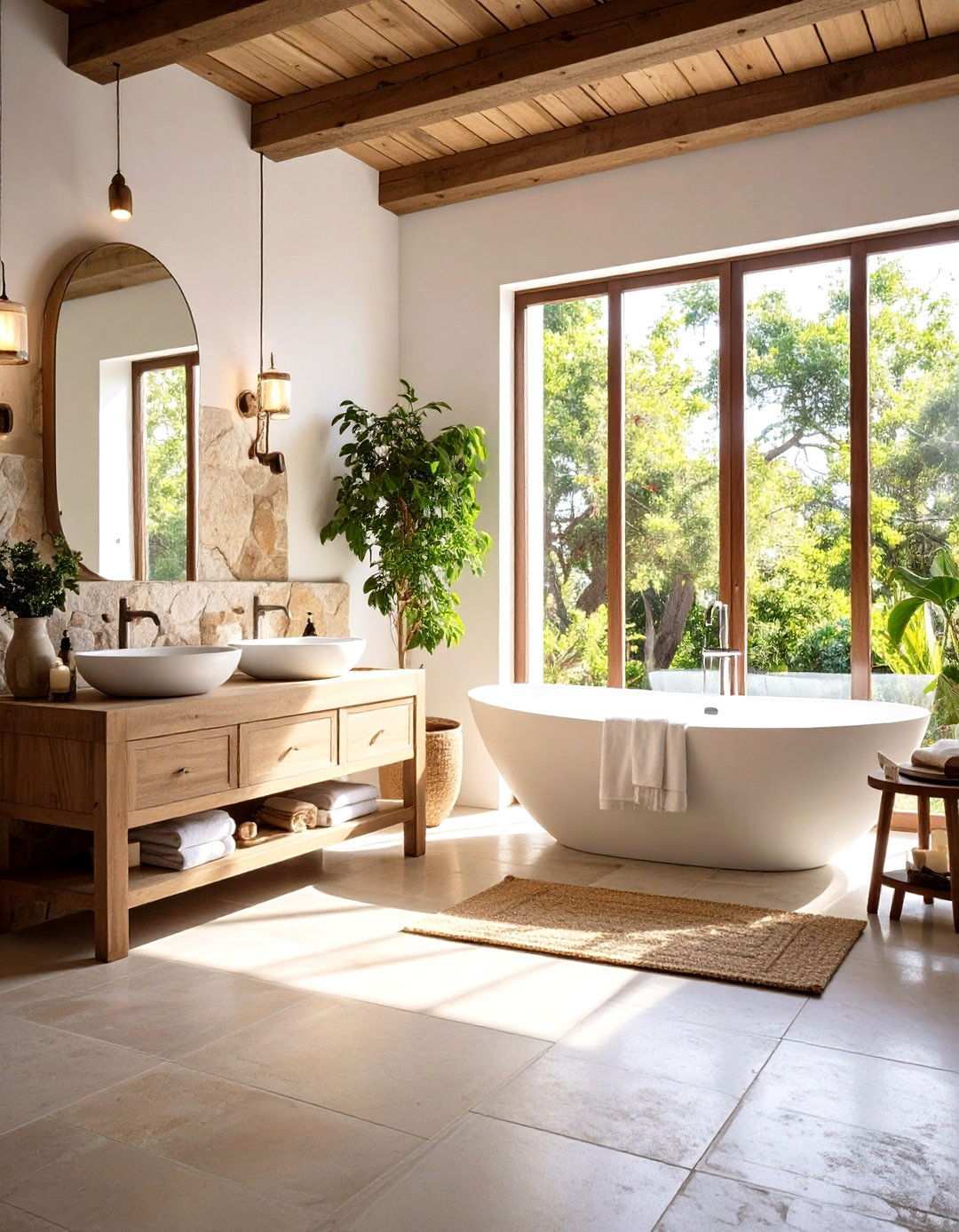
Transforming daily routines into indulgent moments, bathroom spa sanctuaries seamlessly blend luxurious design elements with serene ambiance. Inspired by the Spanish Mediterranean aesthetic, these spaces showcase an abundance of natural materials and carefully crafted details. The focal point often becomes a large soaking tub, possibly nestled beside a window offering a tranquil view of a private garden or courtyard. The incorporation of walk-in showers with multiple shower heads and built-in seating areas elevates the experience to a resort-like level. A thoughtfully designed vanity area with gorgeous stone countertops and decorative tile backsplashes adds a touch of elegance. Natural light pours in through skylights or expansive windows, minimizing the need for artificial illumination during daylight hours. Delicate wooden accents, such as floating shelves or window frames, bring warmth to the space. The resulting atmosphere feels like a secluded retreat where natural materials, soothing hues, and intentional details harmonize to nurture both body and spirit while upholding the authentic essence of Spanish Mediterranean design.
16. Fusing Wine Culture with Home Design
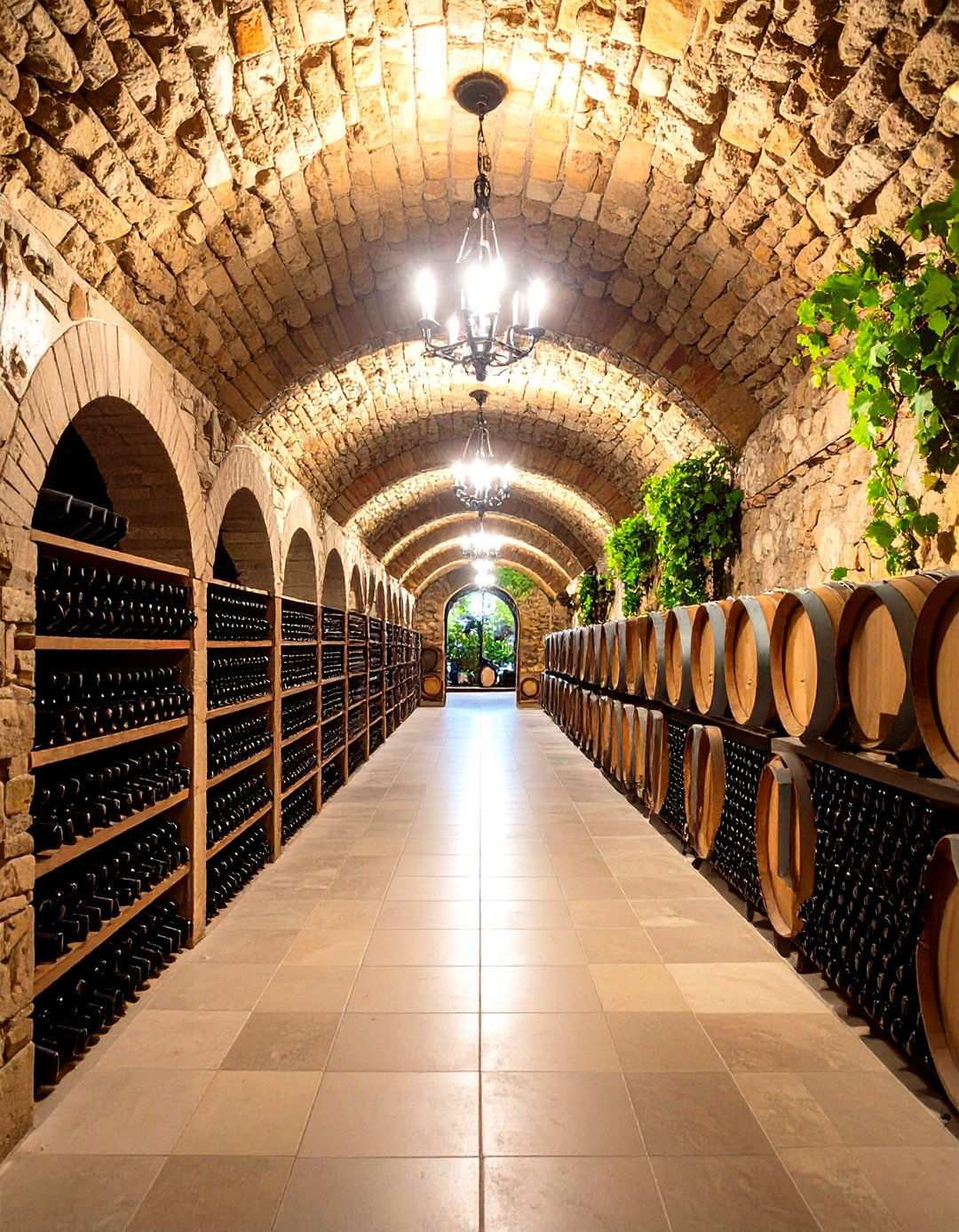
Wine cellar integration embodies the Spanish Mediterranean passion for fine wines while creating refined storage and tasting environments within the home. These dedicated spaces can be found in converted basements, climate-controlled rooms, or even decorative niches within main living areas. Traditional materials like natural stone walls, brick archways, and wrought iron details evoke an authentic ambiance while providing practical storage solutions. Sophisticated temperature and humidity control systems ensure optimal wine preservation, cleverly concealed within the design. A thoughtfully designed tasting area with a small bar, comfortable seating, and suitable lighting enables proper wine evaluation. Showcase areas can display special bottles or decorative elements like vintage corkscrews and serving pieces. The design should exude an intimate and refined atmosphere, possibly incorporating elements like barrel-vaulted ceilings or stone floors that evoke traditional European wine cellars. Even smaller spaces can accommodate wine storage through built-in cabinetry with proper climate control and attractive display features.
17. Illuminating Spaces with Purpose
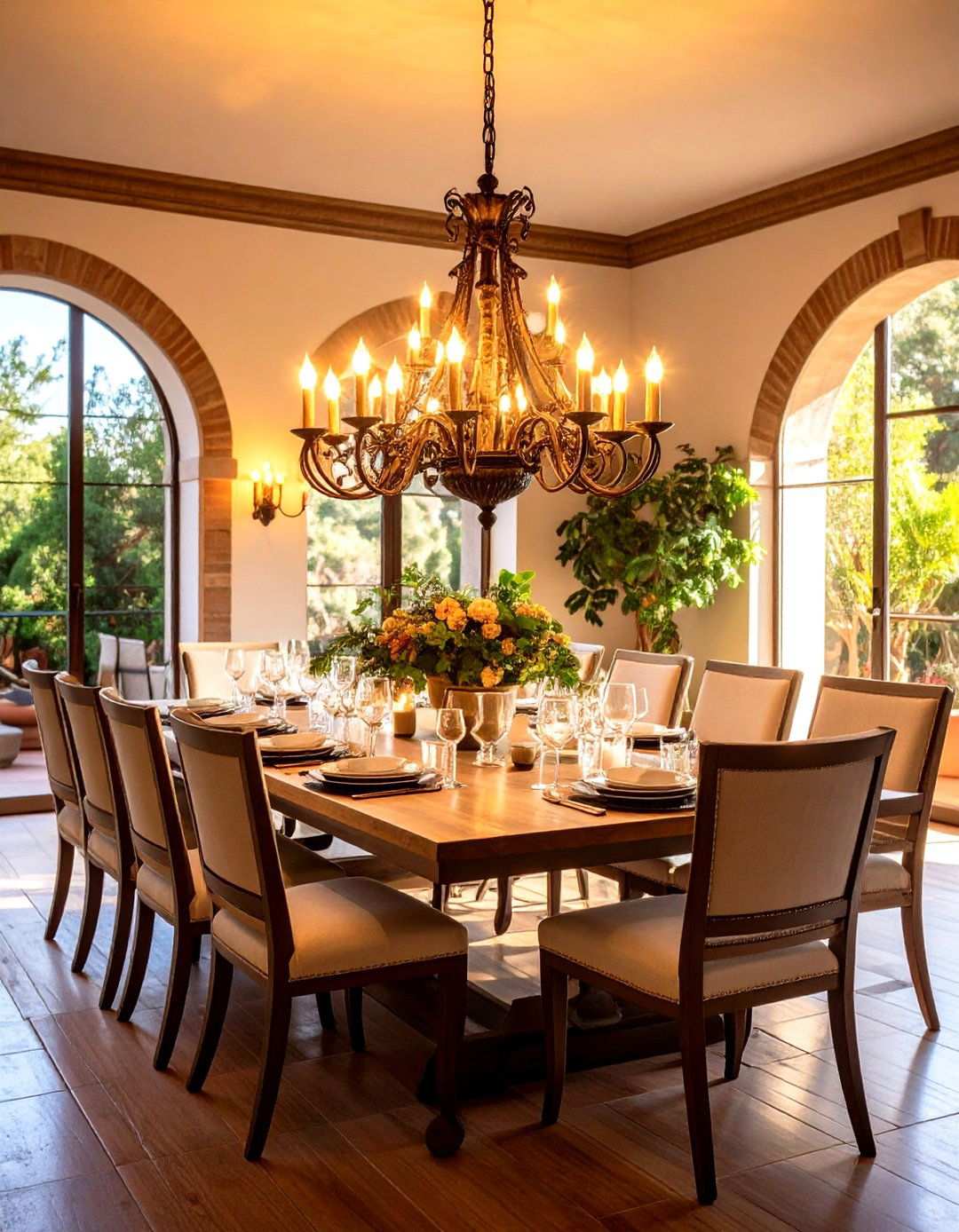
A well-designed lighting system can elevate the ambiance of your Spanish Mediterranean home, transforming it into a warm and inviting sanctuary that adapts to the changing light of day and night. Effective lighting design in these homes often involves layering multiple sources to create a dynamic atmosphere that evolves throughout the day. Wrought iron chandeliers paired with Edison bulbs or candle-style fixtures make for striking overhead lighting in dining and living areas, while wall sconces with amber glass shades cast warm, inviting pools of light along hallways and accent walls. Pendant lights above kitchen islands frequently feature hand-blown glass in earthy tones or metal finishes that harmonize with the overall design aesthetic. To maximize natural light, large windows and glass doors are a staple, allowing for the optimal penetration of daylight. For added ambiance, consider incorporating hidden LED strips within exposed beam ceilings or behind architectural elements to provide soft, indirect lighting. Outdoor spaces require a thoughtful approach to lighting, often incorporating lantern-style fixtures, string lights for entertaining areas, and landscape lighting that highlights architectural features and garden elements while ensuring safety and security.
18. Finding Harmony in Color Selection
A key aspect of creating a Mediterranean-inspired home is developing a color palette that draws inspiration from the surrounding landscape, fostering a sense of connection to the earth, sky, and vegetation. Typically, this begins with a foundation of warm whites and soft creams that effortlessly reflect natural light and provide a neutral backdrop for architectural features. Accent colors emerge from the landscape itself – terracotta and clay tones, olive greens, deep ocean blues, and warm golden yellows that evoke the beauty of a Spanish sunset. These richer hues are thoughtfully incorporated through textiles, tile work, painted accent walls, and decorative accessories, rather than dominating entire rooms. The secret to achieving balance lies in allowing neutral tones to take center stage, introducing color through carefully chosen elements that will not overpower the space. When selecting colors, consider how they will appear in varying lighting conditions throughout the day, and opt for finishes that complement rather than clash with natural materials like stone and wood. By adopting this approach, you can create a timeless and inviting atmosphere that remains unchanged by the whims of fashion, while maintaining the essence of Mediterranean living.
19. Harmonious Furniture Selection Strategies
In a Spanish Mediterranean home, furniture selection focuses on substantial pieces with authentic character that harmonize with the architecture rather than overpower it. To achieve this balance, opt for wooden furniture featuring visible grain patterns and hand-carved details that showcase traditional craftsmanship. Rich brown leather upholstery, earthy textiles, and wrought iron accents create a cohesive design language throughout the home. It’s essential to strike a balance between scale and space, ensuring pieces feel proportional to room sizes and ceiling heights without overwhelming the surroundings. Built-in elements like window seats, banquettes, or bookcases maximize functionality while maintaining clean lines, making them an excellent choice for Spanish Mediterranean homes. Incorporating antique or vintage pieces adds authenticity, but high-quality reproductions can provide a similar aesthetic impact at a more accessible price point. The ultimate goal is to create comfortable, livable spaces that have a curated, collected feel rather than a uniform, store-bought appearance. By thoughtfully mixing textures and materials, you can achieve visual interest and tactile appeal through contrasts of rough and smooth, hard and soft, light and dark.
20. Window Treatment Options that Reinforce the Mediterranean Aesthetic
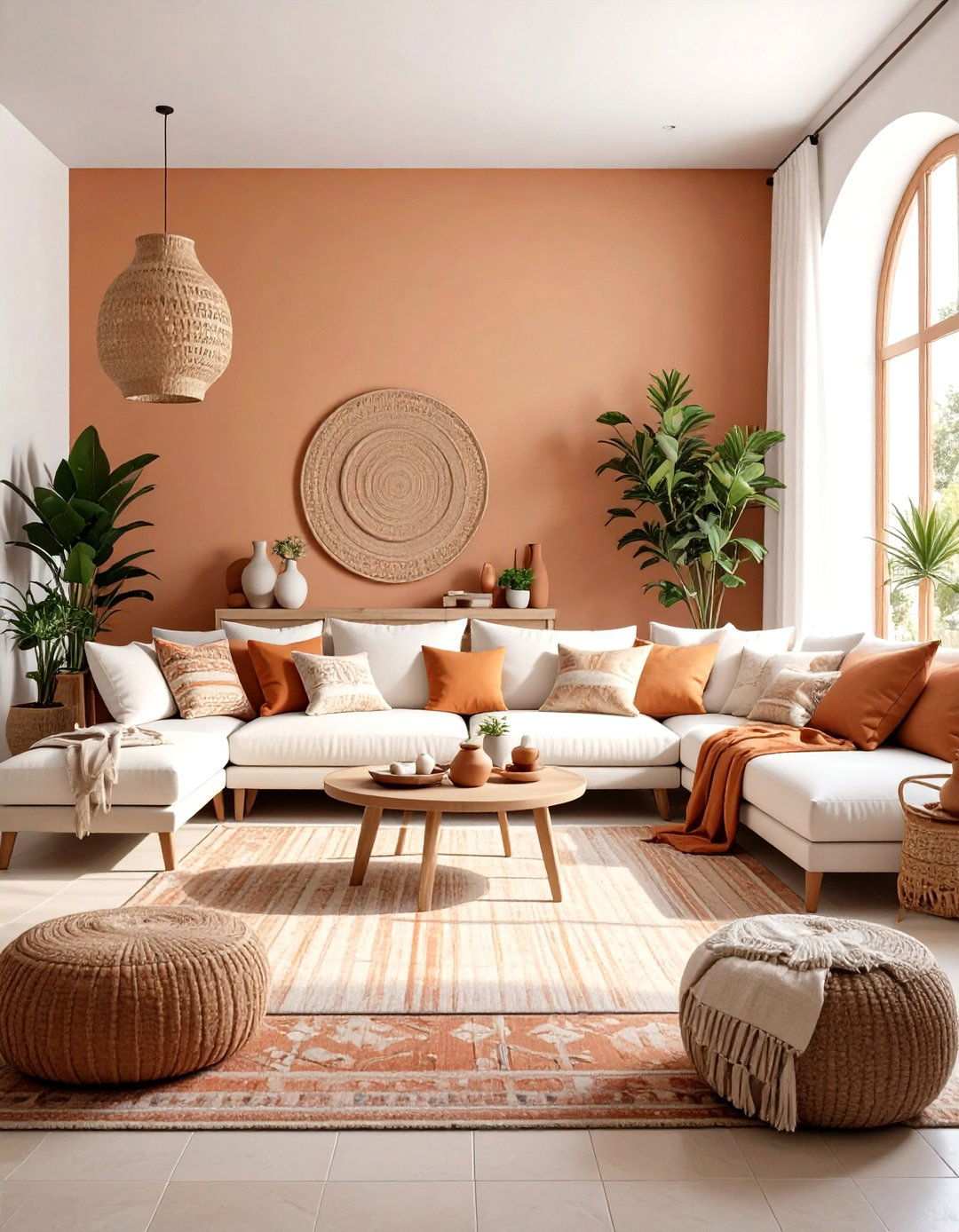
When it comes to window treatment options in a Spanish Mediterranean home, the emphasis should be on enhancing the beautiful architectural details while providing privacy and light control when needed. Wooden shutters with adjustable louvers are an excellent choice, allowing for precise light management and adding authentic Spanish character to the space. These can be painted in crisp white to provide a striking contrast with colored walls or finished in natural wood tones that complement other architectural elements. Wrought iron hardware adds a decorative touch while maintaining functionality. For a softer approach, consider natural fiber curtains or draperies in linen or cotton fabrics with subtle textures. Colors should harmonize with your overall palette – perhaps cream, soft gold, or muted earth tones. To maintain the relaxed Mediterranean aesthetic, it’s best to avoid heavy, formal treatments that may conflict with the style. In spaces where privacy isn’t a priority, consider leaving windows unadorned to maximize natural light and showcase beautiful views. The key is selecting treatments that feel authentic to the architectural style while meeting practical needs for privacy and light control.
21. Harmonizing Modernity with Mediterranean Aesthetics
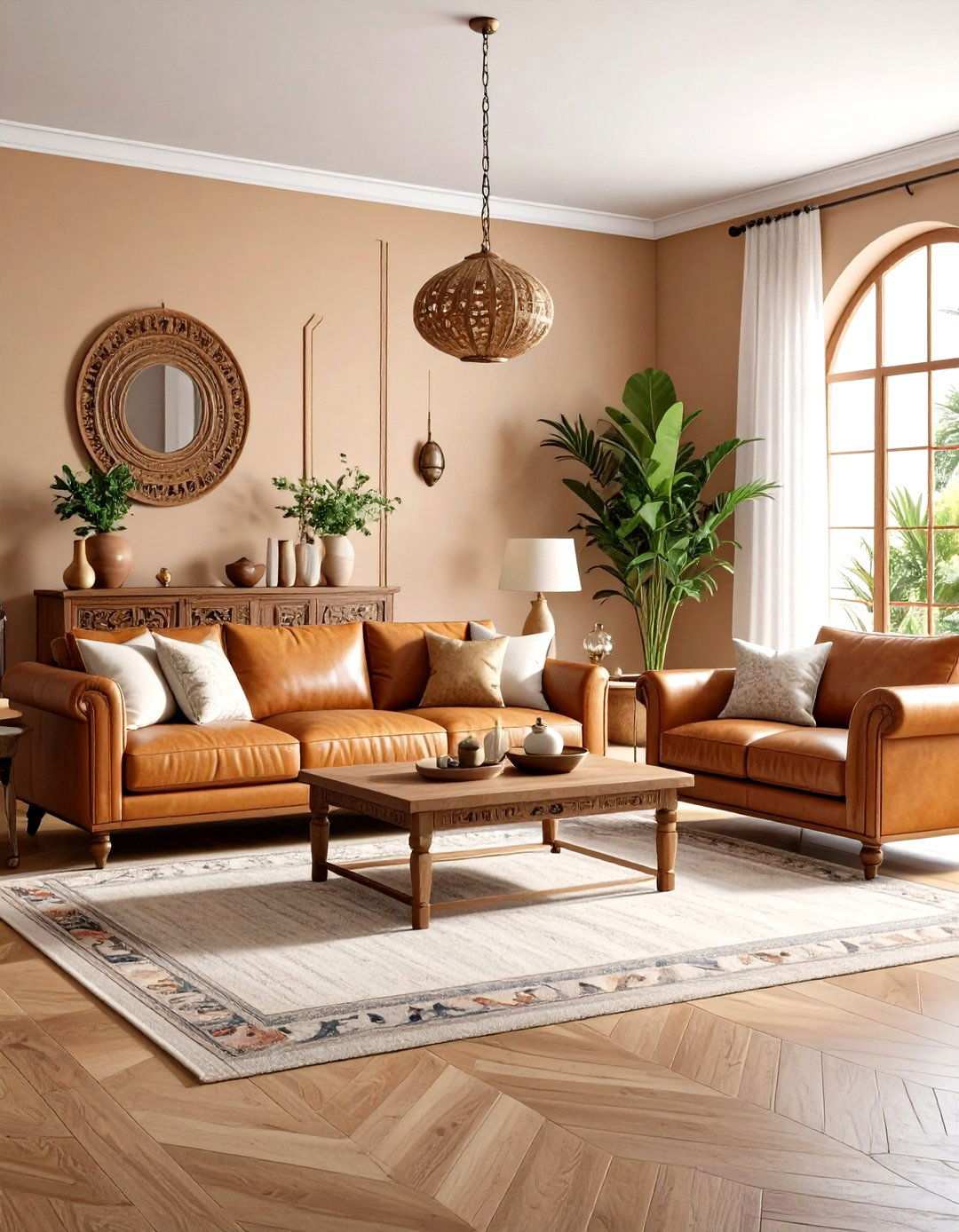
When it comes to integrating smart home technologies in Spanish Mediterranean homes, a thoughtful approach is crucial to blend modern convenience with authentic design elements. To maintain the traditional look, it’s best to bury technology infrastructure within walls during construction or renovation phases, thus avoiding visible conduits and control panels that disrupt the space’s classic design. In terms of fixtures and devices, opt for finishes that complement your hardware selections, such as bronze or brass, rather than modern metals like chrome. Voice control systems are particularly advantageous as they eliminate the need for visible switches and controls while providing an intuitive interface. Furthermore, smart lighting systems can be programmed to enhance the warm ambiance characteristic of Mediterranean design, automatically adjusting color temperature and intensity throughout the day. Additionally, climate control systems can optimize energy efficiency while maintaining comfort, especially in homes with extensive glazing and outdoor connections. For a seamless integration, security systems should blend with architectural features, with cameras and sensors designed to mirror the design elements. Ultimately, the goal is to elevate livability and efficiency while preserving the timeless character that makes Spanish Mediterranean homes so distinctive.
22. Environmental Synergy and Traditional Building Practices
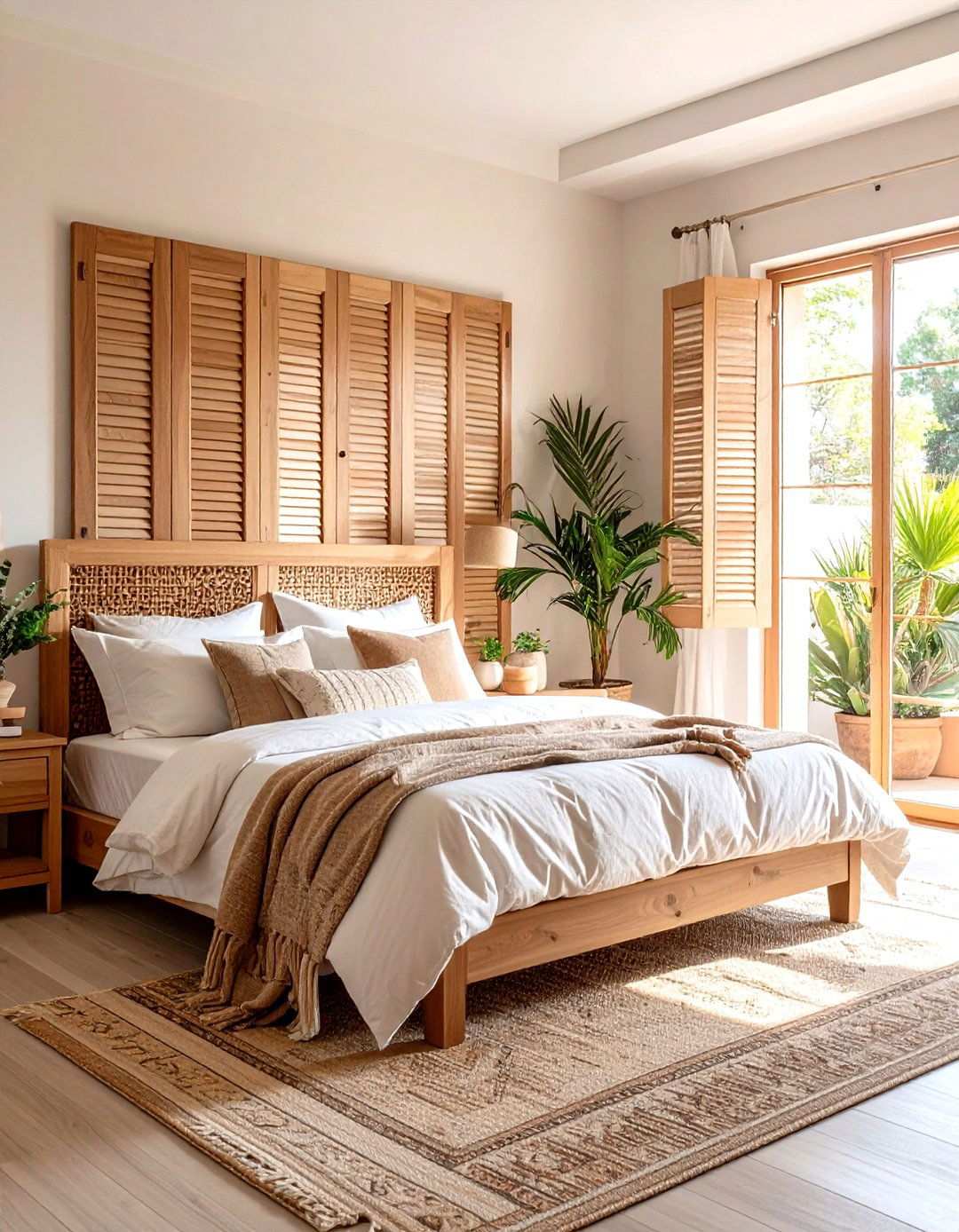
Spanish Mediterranean homes can seamlessly integrate sustainable design elements that not only honor environmental responsibility but also tap into traditional building practices that inherently promote efficiency. By incorporating solar panels into roof designs or strategically positioning them to minimize visibility, homeowners can harness renewable energy while maintaining the home’s aesthetic appeal. Traditional materials like stone and stucco possess excellent thermal mass, naturally moderating interior temperatures. Large overhangs and pergolas provide essential summer shade while allowing winter sun penetration, thus reducing the need for artificial cooling and heating. Native and drought-tolerant landscaping is another effective approach to reduce water consumption while maintaining the authentic Mediterranean character. Reclaimed materials – such as vintage tiles, weathered wood beams, and antique fixtures – add character while minimizing environmental impact. Modern insulation techniques and high-performance windows improve energy efficiency without compromising the home’s aesthetic appeal. Water collection systems can be integrated into landscape designs, and permeable paving materials reduce runoff while maintaining attractive hardscape surfaces. These methods harmonize with traditional Mediterranean building wisdom while meeting contemporary environmental standards, resulting in homes that are both beautiful and environmentally responsible.
23. Crafting Unforgettable Gatherings
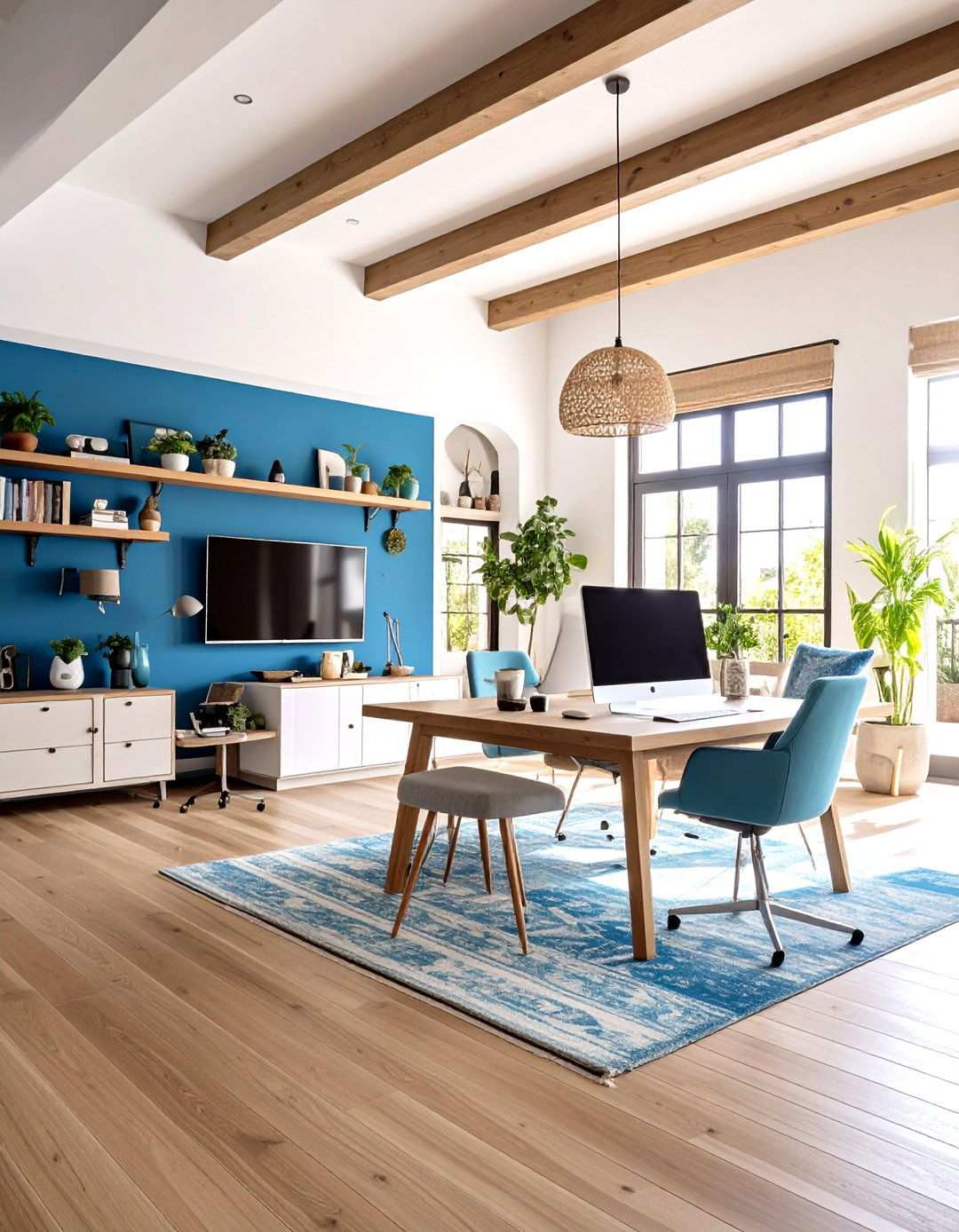
In Spanish Mediterranean homes, entertainment spaces are thoughtfully designed to foster relaxed socialization and memorable celebrations. These spaces often revolve around outdoor areas like covered terraces, courtyards, or poolside pavilions that can seamlessly accommodate groups while maintaining intimate conversation pockets. Indoor entertainment spaces frequently feature grand rooms with soaring ceilings, substantial fireplaces, and built-in seating that encourages effortless mingling. To elevate the ambiance, consider incorporating wet bar areas with stone or tile surfaces, wine storage, and decorative lighting that creates an inviting atmosphere for evening gatherings. The design should facilitate a natural flow between different activity zones – perhaps cozy conversation areas near the fireplace, game tables near windows, and food service areas connected to kitchen facilities. Background music should be subtly integrated through concealed audio systems, providing a subtle yet engaging soundtrack without visible speakers or control equipment. As the evening progresses, lighting becomes a crucial element in crafting atmosphere, with multiple layers and dimming capabilities that can effortlessly transform spaces from bright and energetic to warm and intimate.
24. Expanding the Boundaries of Outdoor Living
Outdoor living extensions represent the pinnacle of the Spanish Mediterranean lifestyle, creating fully furnished environments that function as additional rooms under the open sky. To achieve this seamless integration, it’s essential to plan these spaces with equal thoughtfulness as interior rooms, defining distinct areas for dining, lounging, cooking, and entertaining. Weather-resistant furniture should not only complement your interior design themes but also withstand the rigors of outdoor conditions. Structural elements like pergolas, arbors, or solid roof coverage can provide protection from the elements, while heating elements like fire tables, outdoor fireplaces, or infrared heaters can extend the usability of these spaces into cooler months. Outdoor kitchens with full appliances, storage, and serving areas allow for complete meal preparation and cleanup without requiring a return indoors. Effective lighting design becomes essential for evening use, incorporating both functional and ambient fixtures that create enchanting nighttime atmospheres. By seamlessly integrating these elements, it’s possible to create outdoor environments that feel as comfortable and well-appointed as interior spaces, while celebrating the connection to nature that defines Mediterranean living.