1. Harmonious Wood and Stone Bathroom Oasis
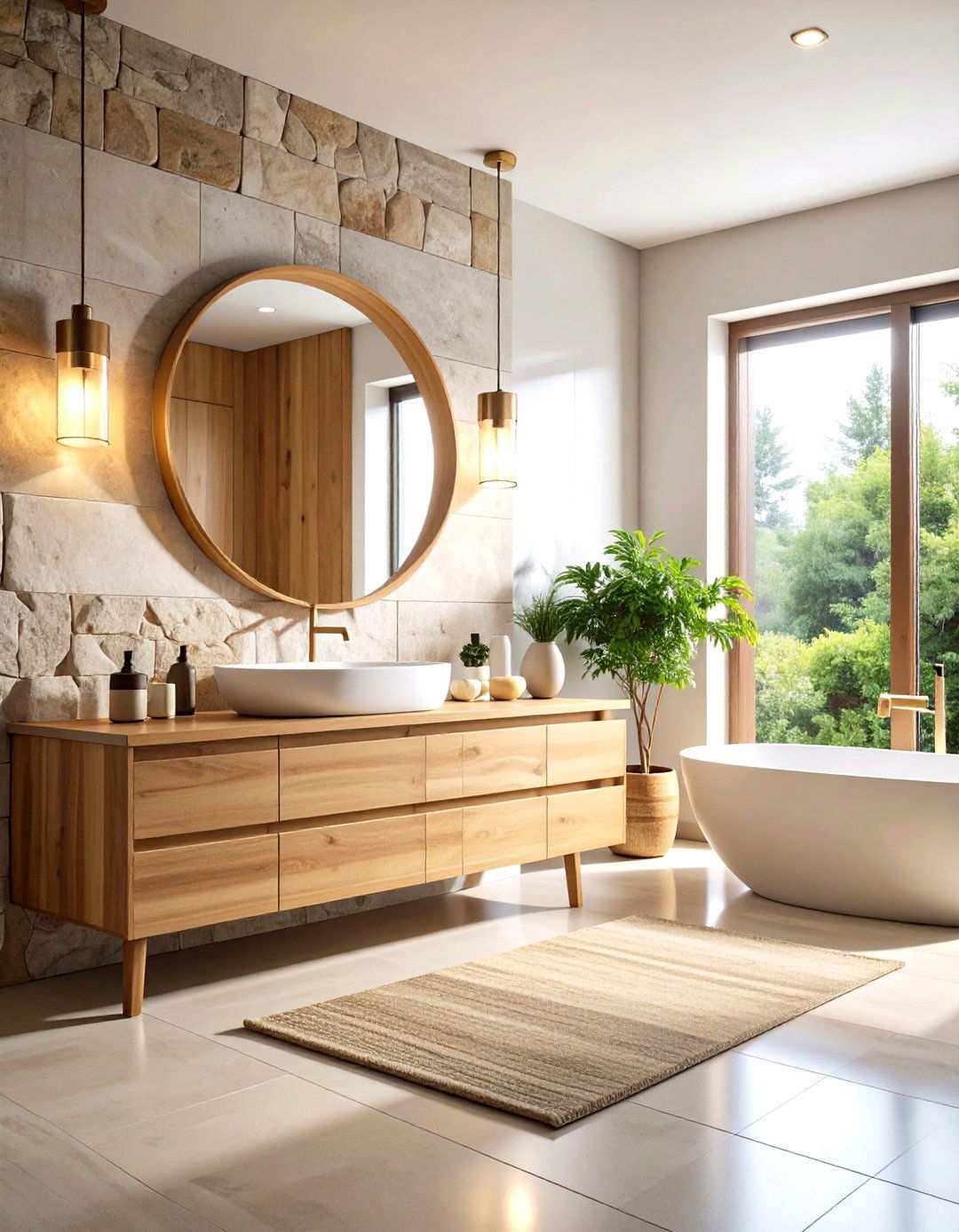
Immerse yourself in a serene bathroom retreat that seamlessly blends the tranquility of Japanese minimalism with the functionality of Scandinavian design. A focal point of this aesthetic is the floating natural wood vanity, paired with the earthy warmth of stone accents. Warm, honey-toned wood provides an organic foundation, while the texture of stone tiles adds depth and visual interest. Brushed brass fixtures complement the natural materials, and the incorporation of open shelving beneath the vanity offers a practical solution for towel storage. A large, round mirror with a delicate wooden frame completes the look, while soft, pendant lighting casts gentle shadows across the stone surfaces, creating a spa-like ambiance that embodies the essence of Japandi design.

As an Amazon Associate I earn from qualifying purchases.
2. Soothing Bathing Experience with Bamboo and Natural Stone
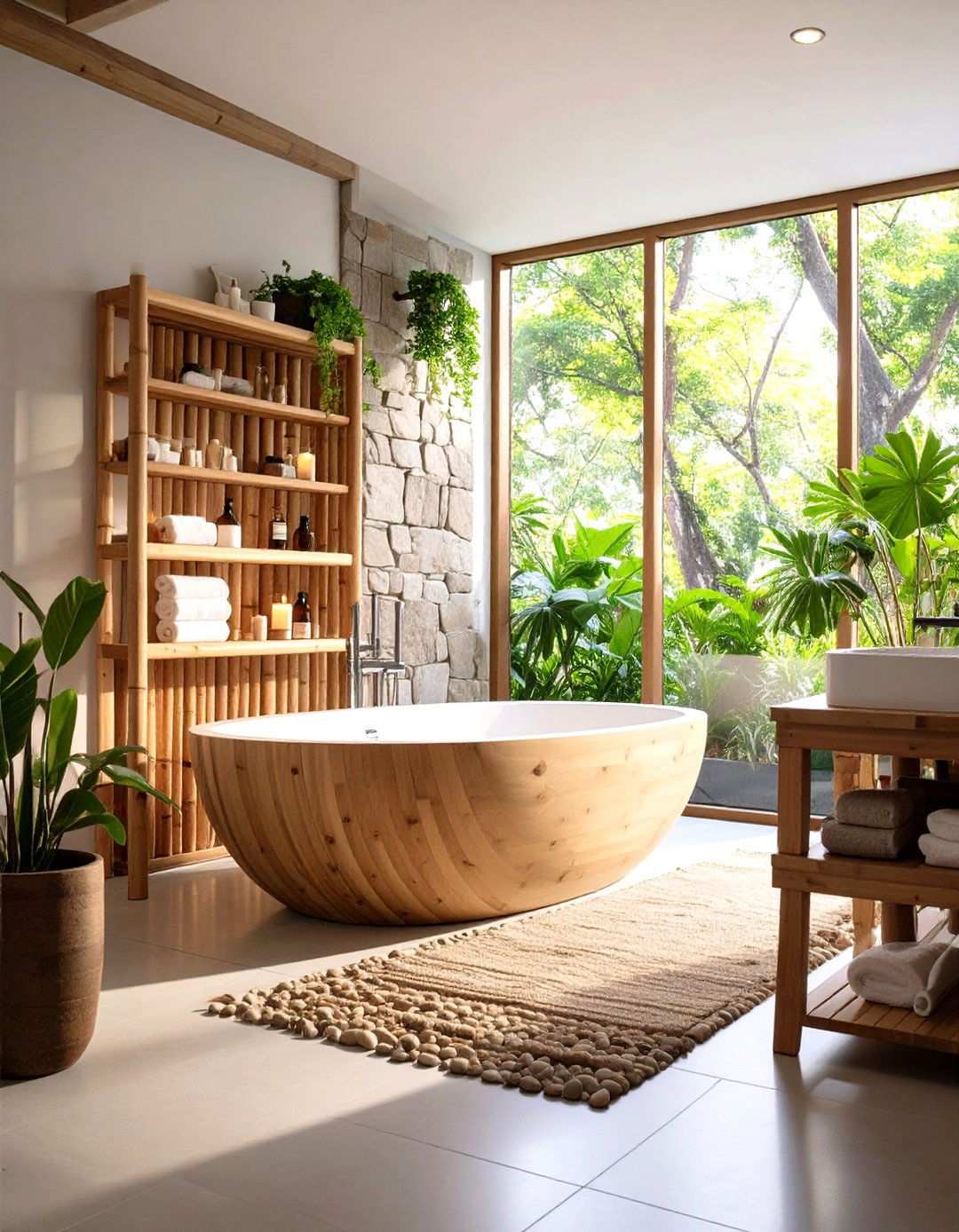
Indulge in a luxurious bathing experience with a deep soaking tub positioned near large windows, separated by an elegant bamboo privacy screen. The tub sits atop natural stone tiles, which filter the light beautifully throughout the day. Built-in, wooden shelving for bath essentials adds a touch of practicality, while a small, wooden stool provides a convenient perch for towels or other bathroom necessities. The neutral color scheme of whites and warm browns maintains visual harmony, while the bamboo screen provides both privacy and a stunning focal point that celebrates natural materials and craftsmanship.
3. Refreshing Shower Sanctuary with Pebble Flooring
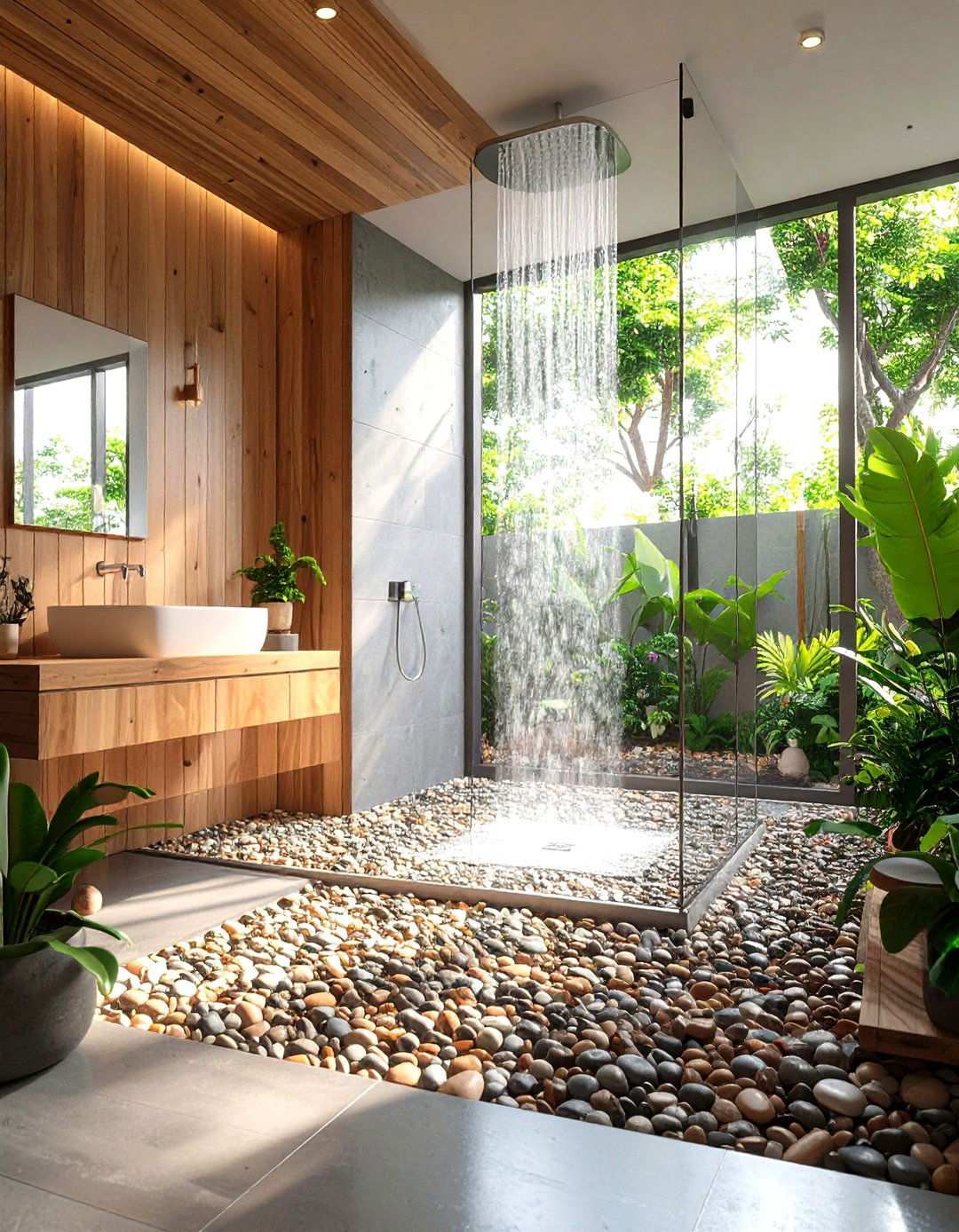
Create a spa-like experience in your shower with a spacious walk-in area featuring natural pebble flooring that massages your feet while providing excellent traction. A rainfall showerhead with clean, geometric lines adds to the sense of luxury, while a wooden bench along one wall provides a comfortable spot to sit and relax. The shower walls combine smooth concrete with warm wood paneling, creating a beautiful textural contrast. A single glass panel maintains openness while containing water, and strategically placed niches in the wood paneling store shower essentials, creating a seamless and refreshing design that connects users with natural elements.
4. Sleek and Modern Bathroom with Vertical Wood Slats
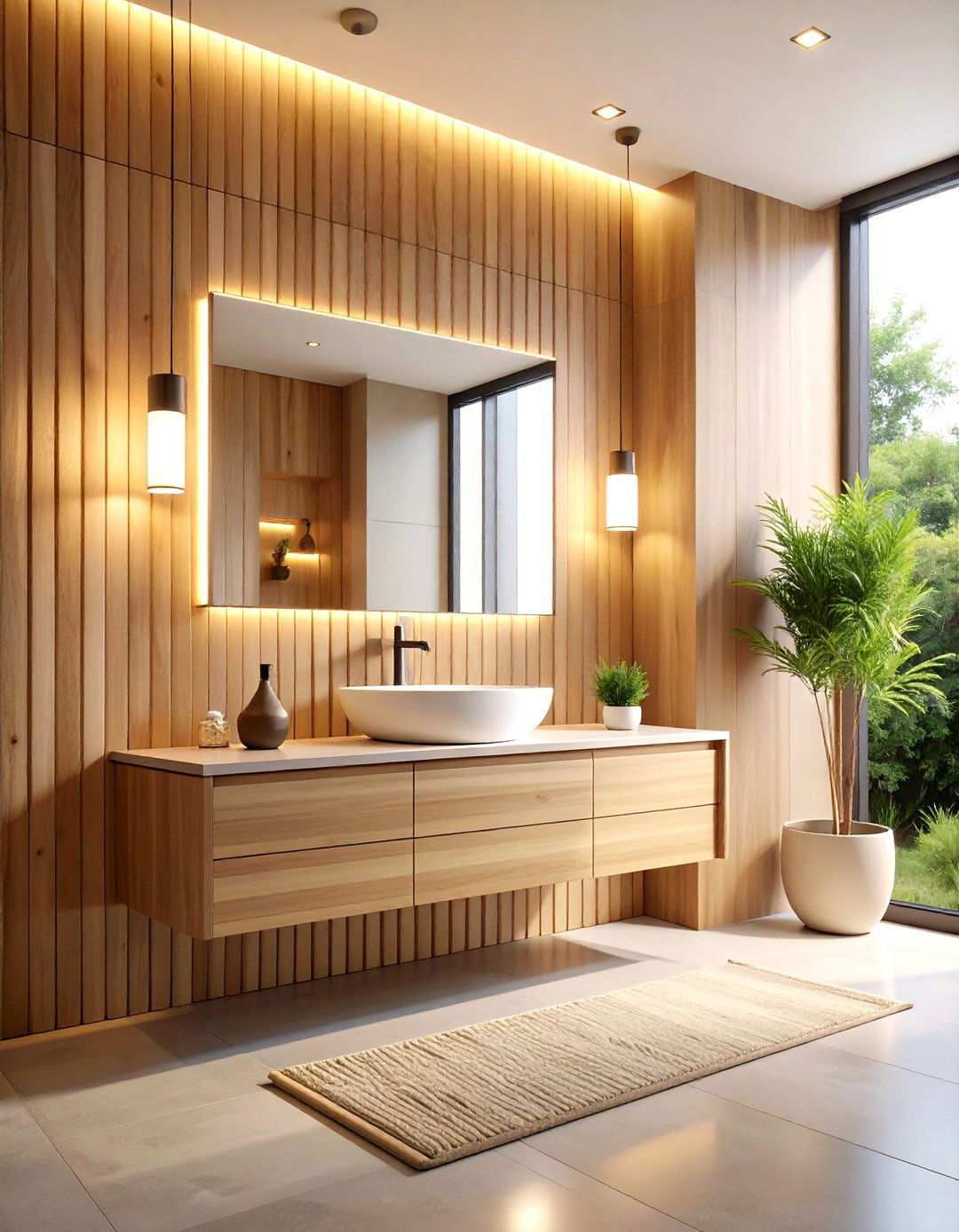
Achieve visual lightness and a sense of airiness with a sleek, floating vanity crafted from blonde wood, complemented by a dramatic vertical wood slat feature. The slats create beautiful shadow patterns while concealing storage behind, and select integrated LED lighting within the slats provides ambient illumination. Choose a vessel sink in matte white to maintain a sense of calm, and keep the remaining walls clean and white to allow the wood features to dominate. A long, horizontal mirror spans the width of the vanity, reflecting light and emphasizing the room’s linear design elements.
5. Earthy Oasis Bathroom with Terrazzo Elegance
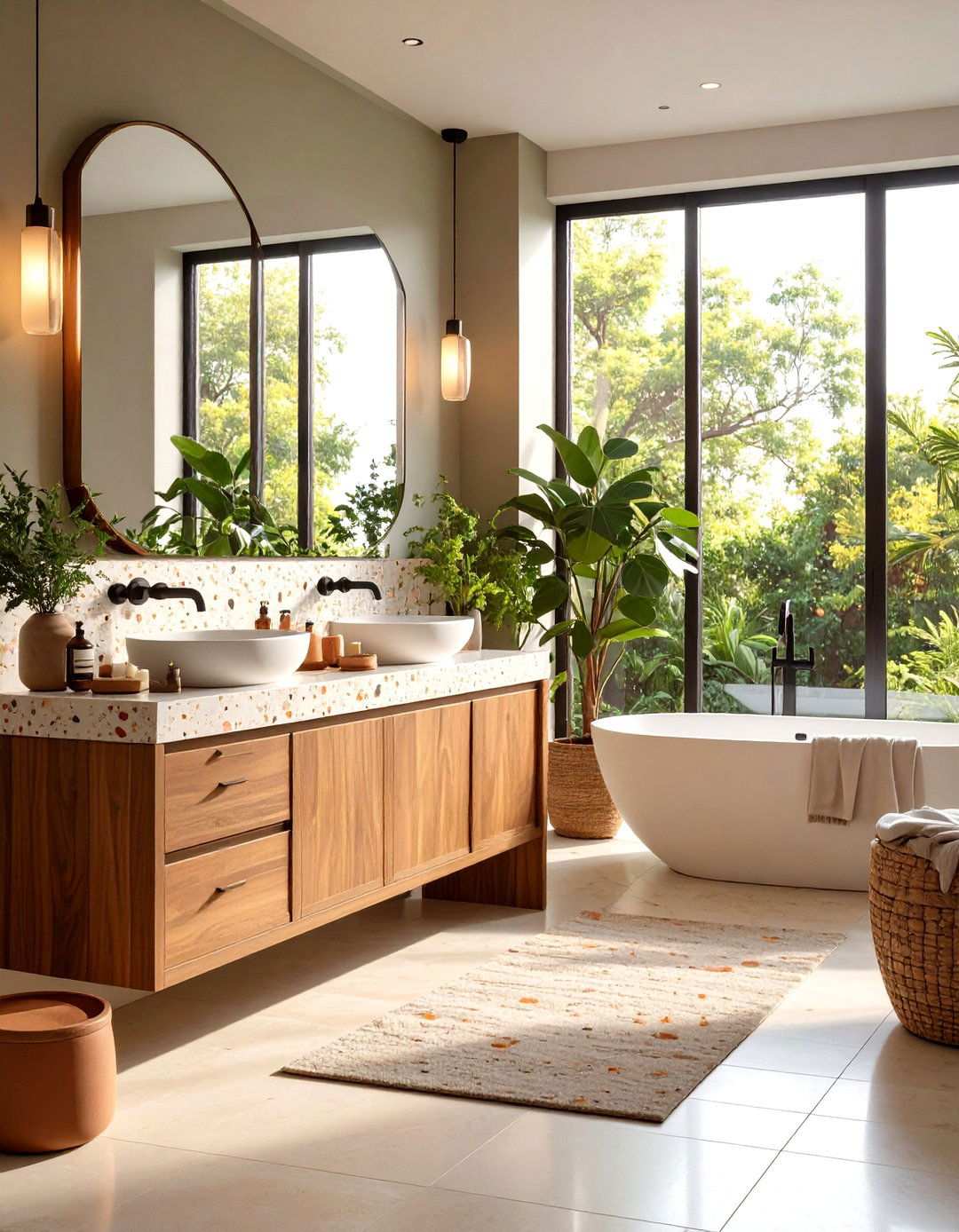
Blending harmoniously with the surroundings, an earthy bathroom design transports you to a serene and natural sanctuary. This vision is brought to life through a thoughtful combination of terracotta, sage green, and creamy hues, perfectly balanced by the stunning terrazzo vanity top with an integrated sink. Extending this earthy material palette to the shower area creates a seamless transition between spaces. The warmth of a matte oak vanity base is beautifully contrasted with matte black fixtures, while ceramic planters, echoing the earthy tone theme, add a touch of organic charm. Placing natural fiber rugs strategically throughout the space fosters a grounding atmosphere that effortlessly blends modern sophistication with timeless elegance, beautifully marrying Japanese serenity with Scandinavian functionality.
6. Monochromatic Minimalism with Wooden Accents
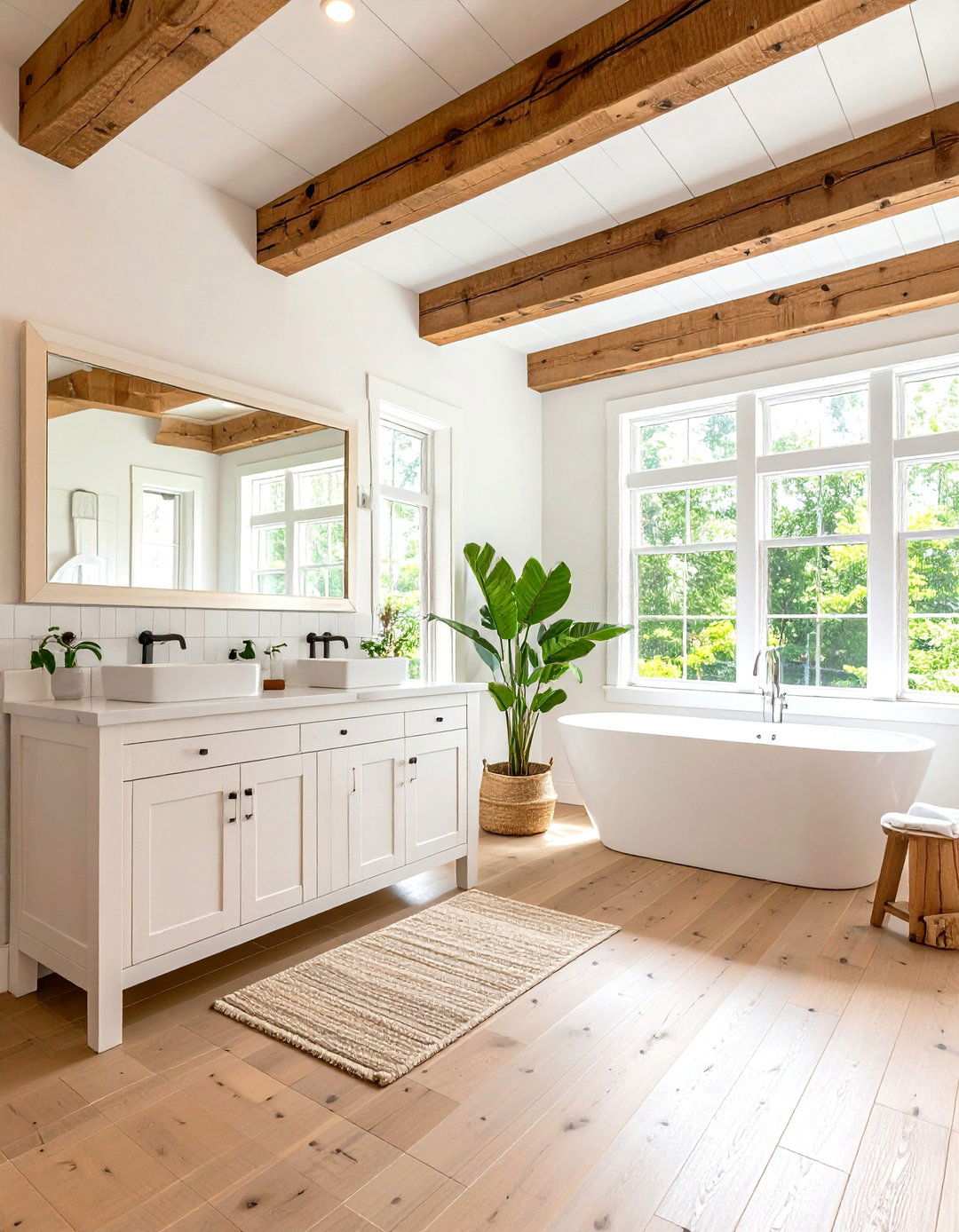
A clever trick to add visual interest to a predominantly white bathroom lies in incorporating exposed natural wood ceiling beams. These wooden elements not only add warmth and texture but also create a sense of depth, drawing the eye upwards. Clean white walls and fixtures maintain the space’s minimalist integrity, while the wooden beams introduce a touch of organic sophistication. A simple rectangular mirror and streamlined vanity in white complement the space, while recessed lighting between the beams ensures even illumination. Adding a single statement plant in a ceramic planter brings a pop of color and life to the space, highlighting the transformative power of a single natural element in redefining a room’s character.
7. Concrete Statement Bathroom with Warm Wood Tones
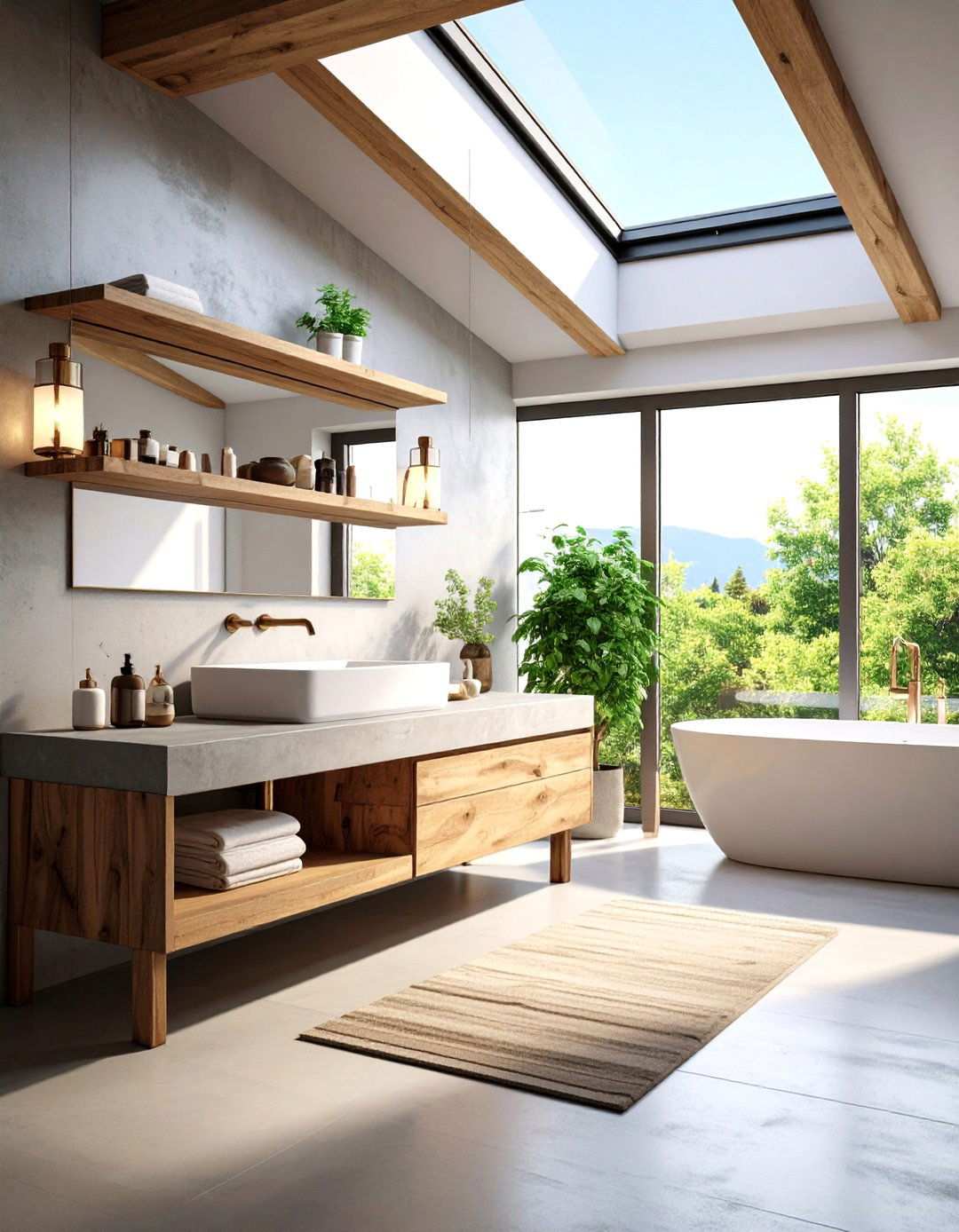
For a truly show-stopping bathroom design, consider a custom concrete vanity that showcases industrial beauty softened by warm wood accents. The concrete top features an integrated rectangular sink with smooth edges, while the vanity base combines the raw, industrial feel of wood and steel for a mixed-material look. Wooden floating shelves above the sink provide ample storage and display options, while fixtures in brushed bronze add a touch of sophistication. A large skylight floods the space with natural light, highlighting the concrete’s rugged texture and creating a beautiful contrast with the softness of the wooden accents. Adding a few simple planters brings life to the monochromatic scheme, striking a perfect balance between raw materials and organic softness.
8. Indoor Oasis Bathroom with Lush Greenery
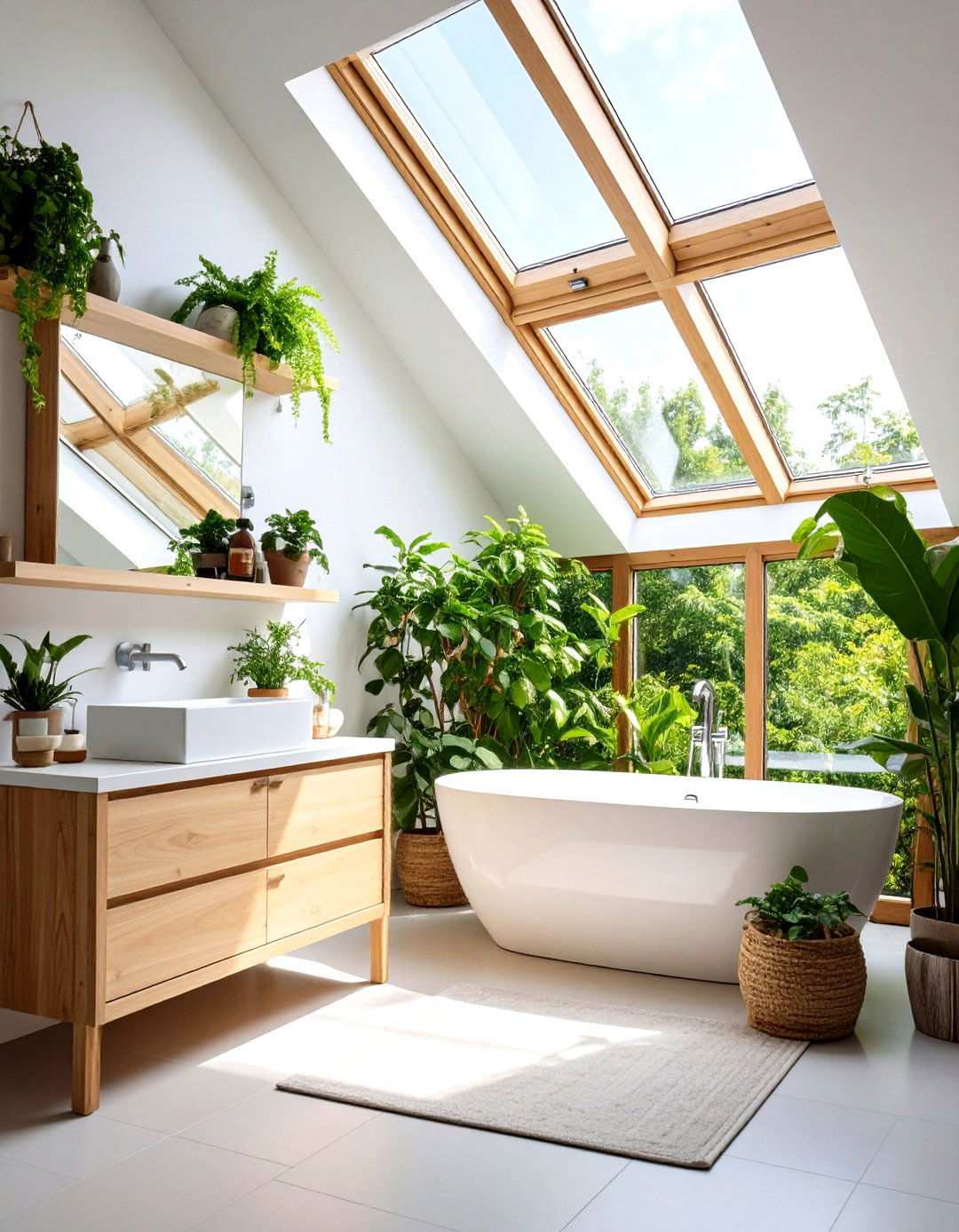
Imagine transforming your bathroom into a vibrant indoor garden, where strategically placed plants thrive in the humid conditions. Combining this with maximized natural light creates a bright and airy space that’s perfect for plant lovers. Choose planters in natural materials like bamboo and ceramic, and position them on floating shelves and the floor vanity. The live-edge wood with visible grain patterns on the floor vanity creates a tactile experience, while the neutral color palette allows the lush greenery to take center stage. This design embodies the biophilic principles of Japandi, creating a connection with nature that promotes well-being and serenity.
9. Serene Meditation Space Bathroom with Bamboo Sanctuary
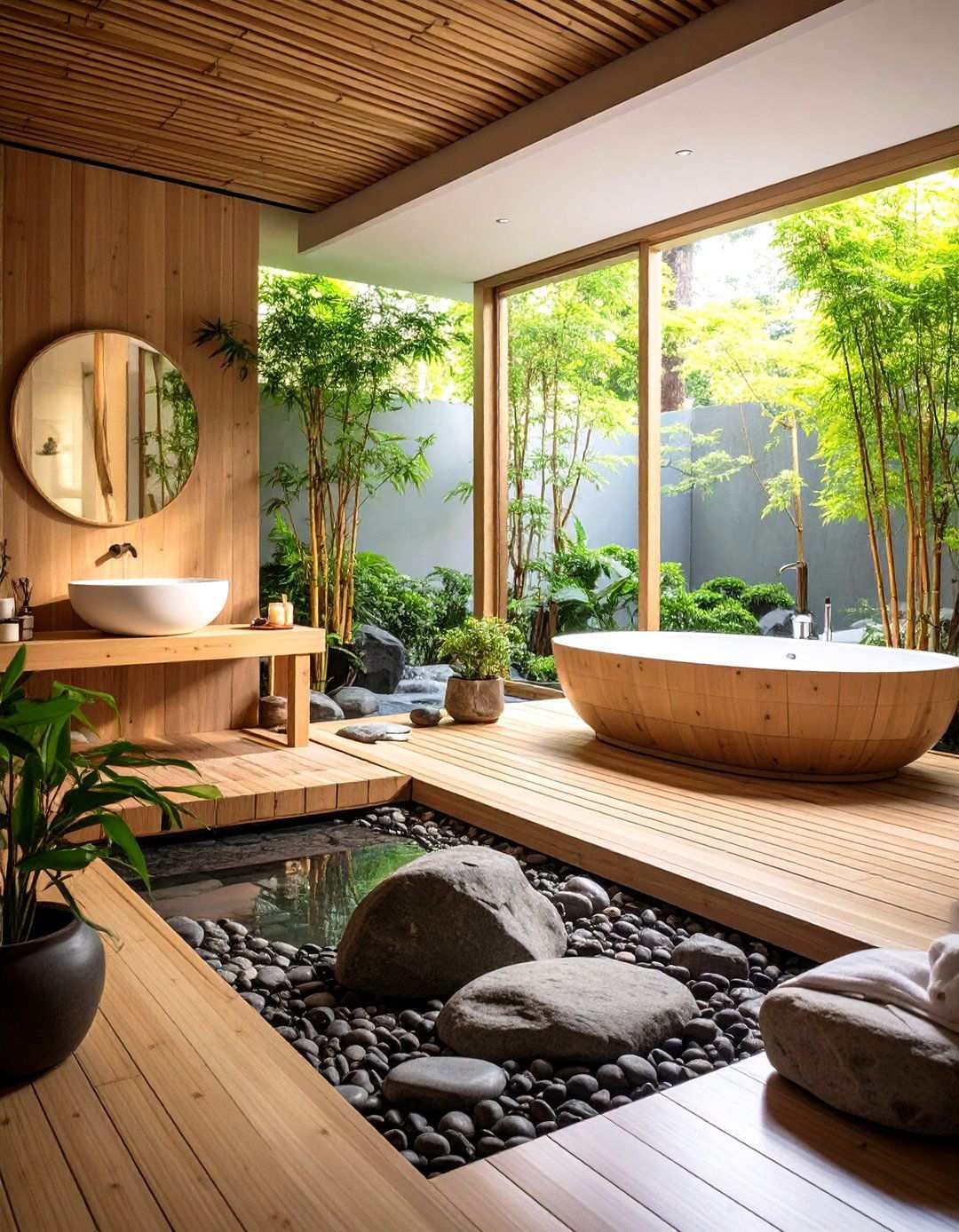
Create a peaceful meditation space within your bathroom by incorporating elements inspired by Japanese zen gardens. A small corner area with bamboo flooring and a low wooden platform creates a tranquil retreat. A tabletop rock garden with carefully arranged stones and a small bamboo water feature for gentle sounds promotes mindfulness and calmness. The main bathroom features clean lines with a wooden soaking tub and natural stone lighting, creating a peaceful ambiance that invites relaxation. The neutral color palette maintains a sense of serenity, making this design the perfect haven for daily meditation and mindful moments within your personal sanctuary.
10. Layered Texture and Natural Elegance
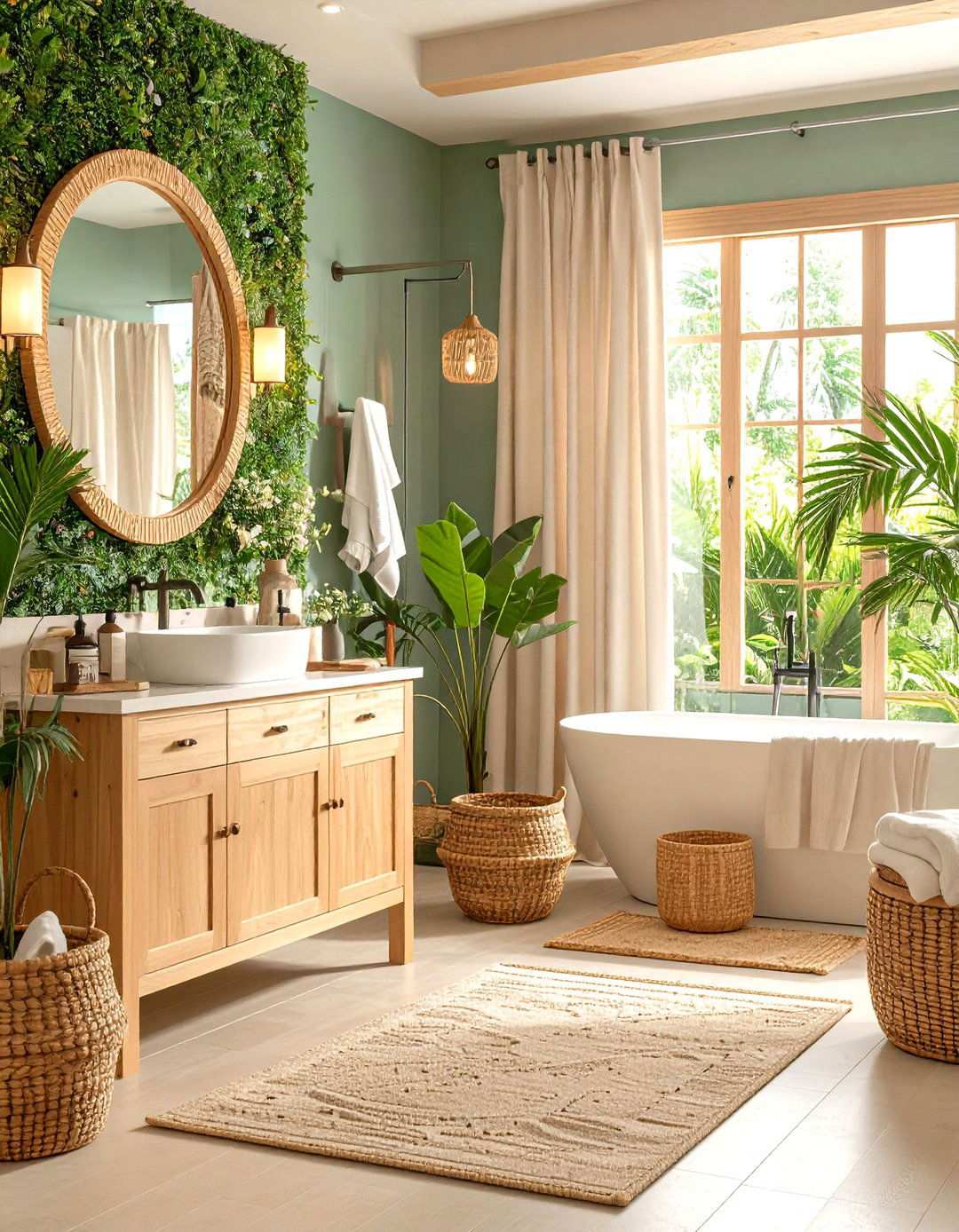
Bathrooms can be elevated through the strategic incorporation of textured wall treatments complemented by natural fiber accessories that create depth without overwhelming the space. This harmonious balance can be achieved by pairing grasscloth wallpaper on one accent wall with smooth painted surfaces on others, while incorporating natural fiber baskets for storage, hemp shower curtains, and bamboo bath vanity features. The incorporation of blonde wood with visible grain and fixtures that maintain a clean, geometric approach demonstrates the ability to create visual interest through texture while adhering to the uncluttered aesthetic fundamental to Japandi design principles.
11. Thoughtfully Curated Bathroom Essentials
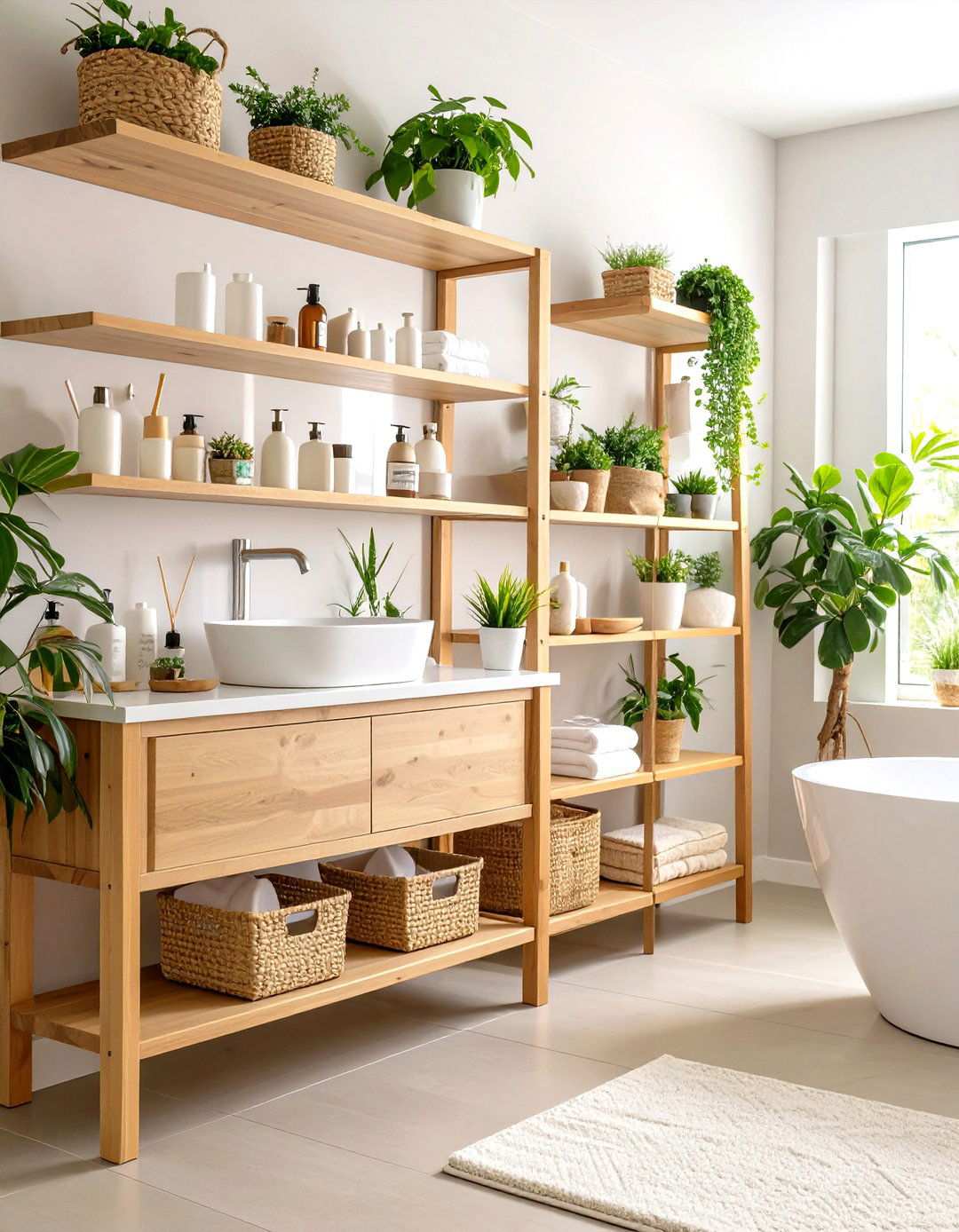
Functional beauty can be achieved in the bathroom through the incorporation of open shelving that displays carefully selected and arranged bathroom essentials. Floating wooden shelves in various lengths can create visual rhythm, while neutral containers made from natural materials showcase the beauty of curated design. The integration of storage with hidden compartments in the vanity below maintains a sense of clean lines, while ceramics in white and cream tones add a touch of elegance. Small plants can be added to enhance the organic design, celebrating the Japandi principle that functional items can be beautiful when thoughtfully chosen and arranged, thereby eliminating the need for hidden storage.
12. Dramatic Bathing Experiences
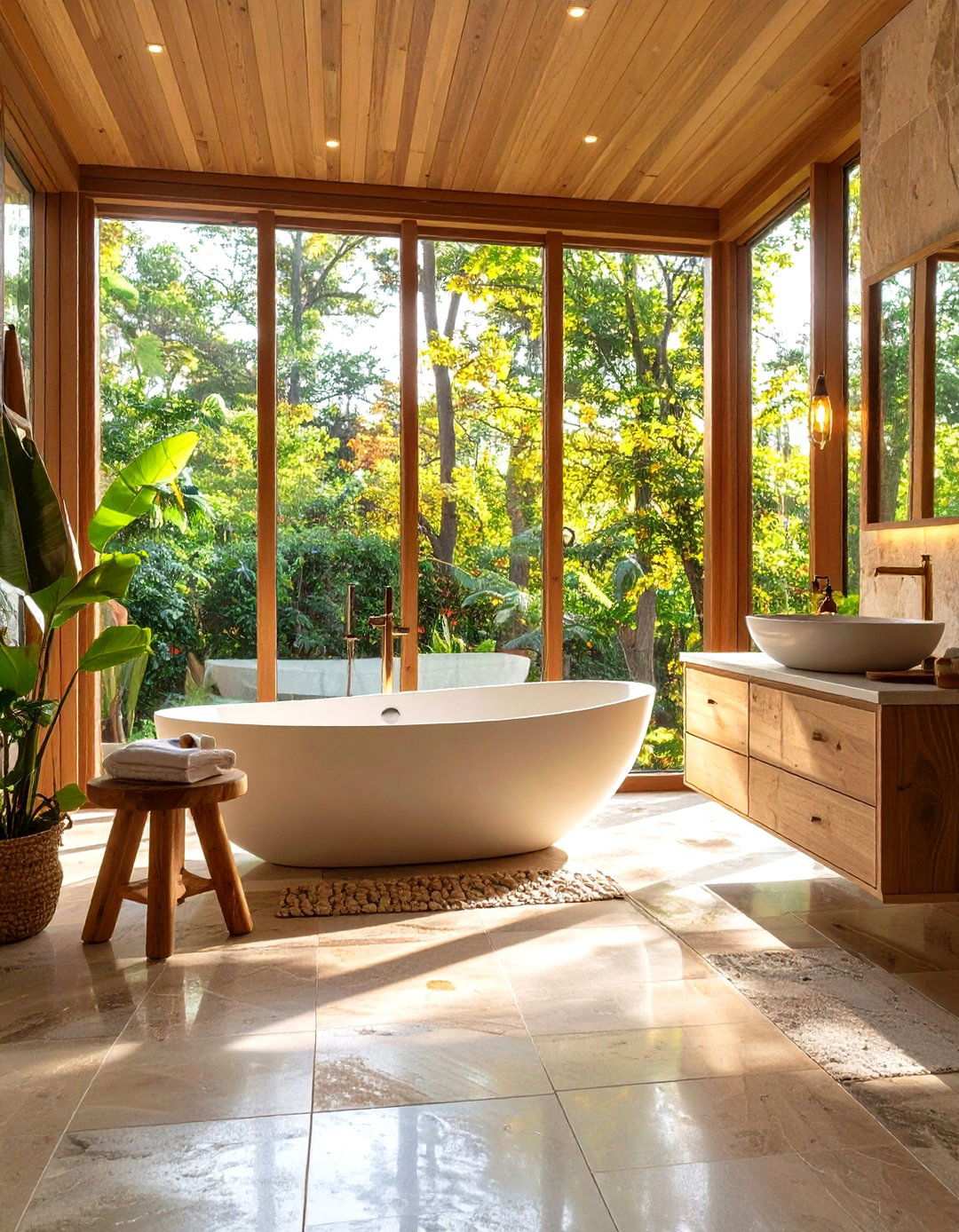
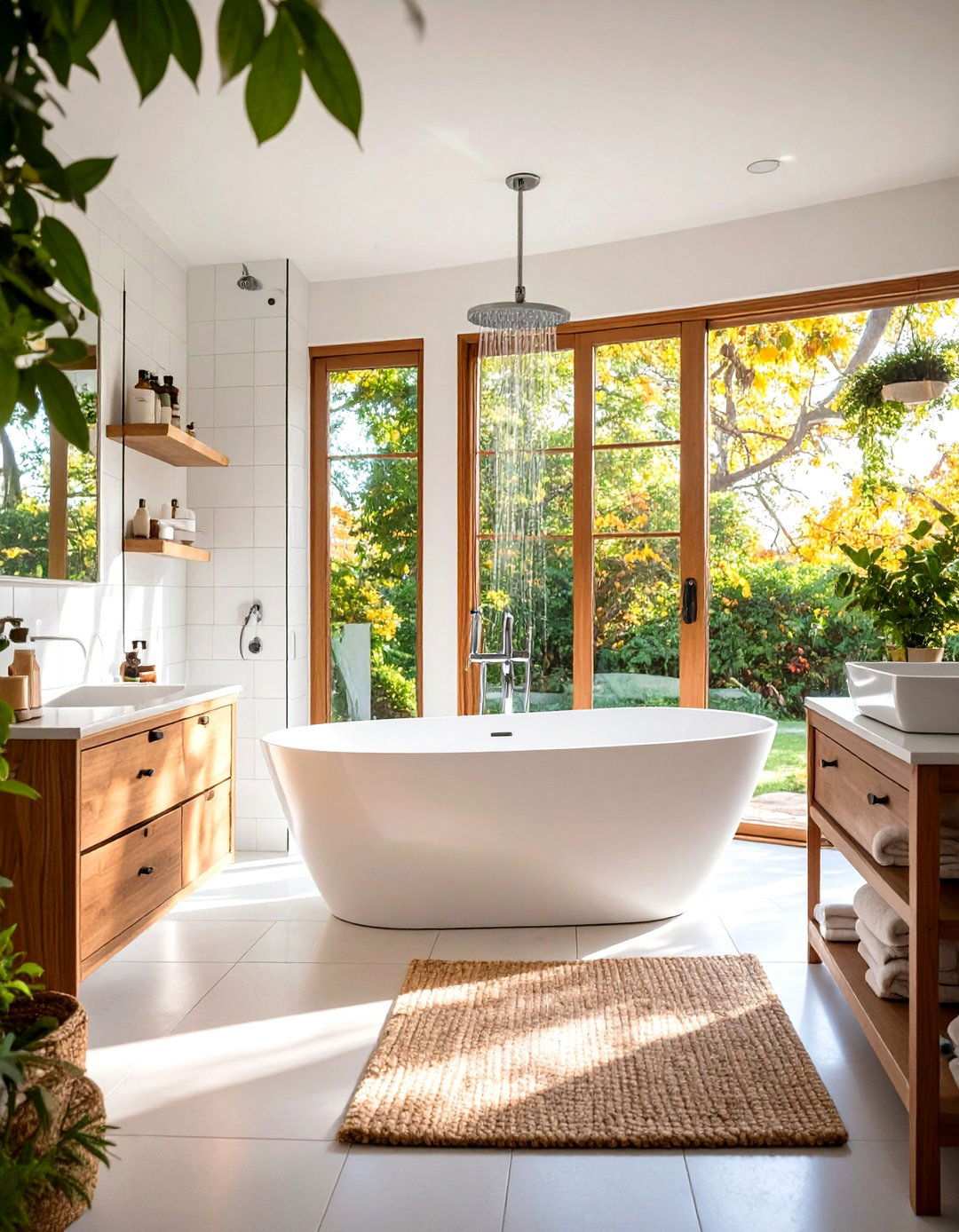
A sculptural freestanding tub can create a dramatic bathing experience when positioned to take advantage of floor-to-ceiling windows overlooking the surrounding natural environment. The clean oval shape of the tub contrasts beautifully with the angular window frames, while a privacy film maintains seclusion without blocking the view of heated floors in natural stone. A wooden stool can be chosen to complement the bath space, leaving the remaining area minimal with white walls and a simple floating design. This approach emphasizes the Japanese concept of bringing nature indoors while maintaining Scandinavian functionality and comfort.
13. Grounding the Bathroom Design
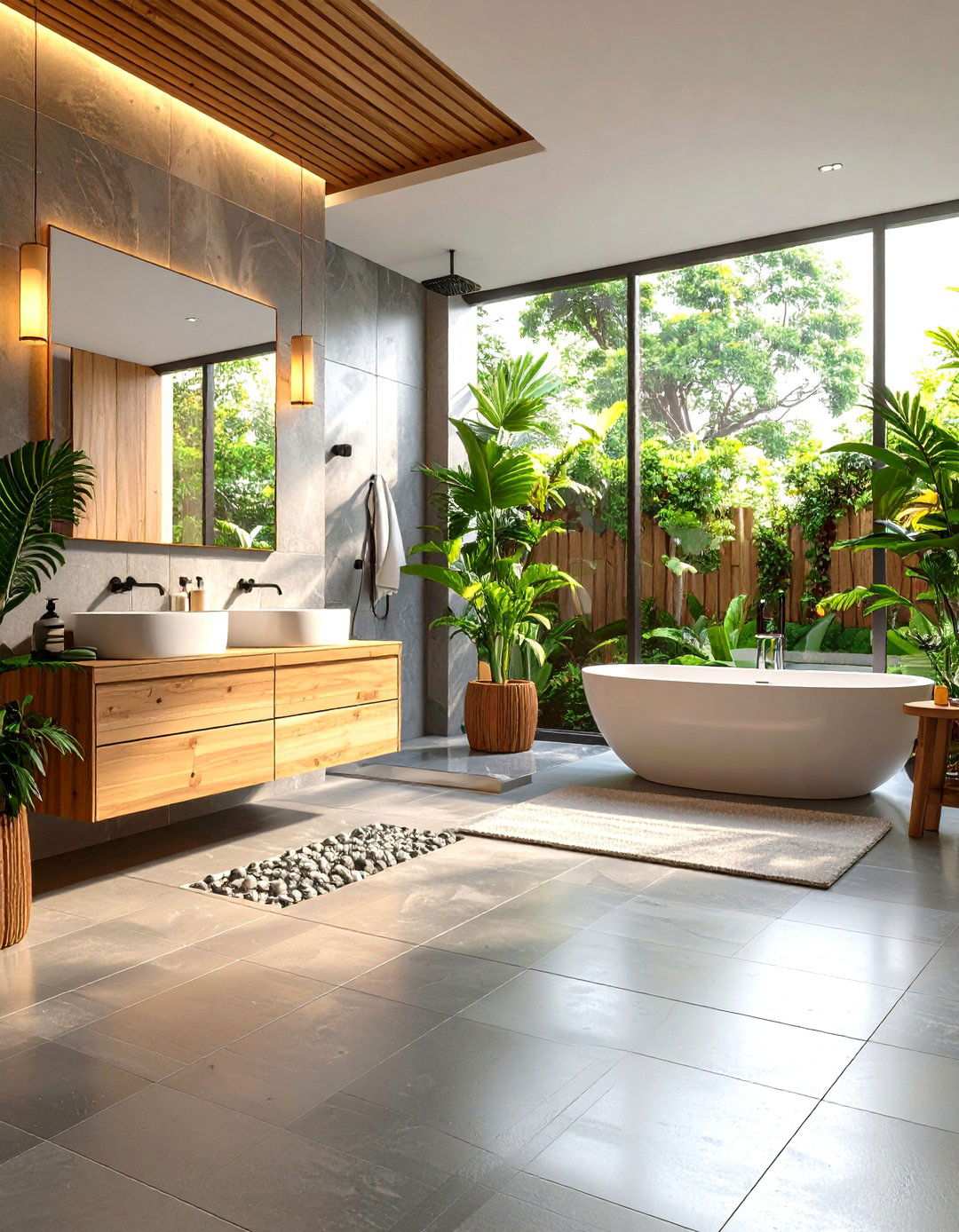
Bathroom design can be grounded with beautiful natural stone flooring that incorporates radiant heating for year-round comfort. Large-format tiles in soft gray tones with subtle veining create movement without being busy, while heated floors extend into a curbless shower area with matching stone. A floating wood vanity that appears to hover above the stone creates visual texture through natural fiber towels and bamboo design. This approach demonstrates how luxury and comfort can coexist with minimalist principles when materials are carefully selected.
14. Embracing Imperfections and Authenticity
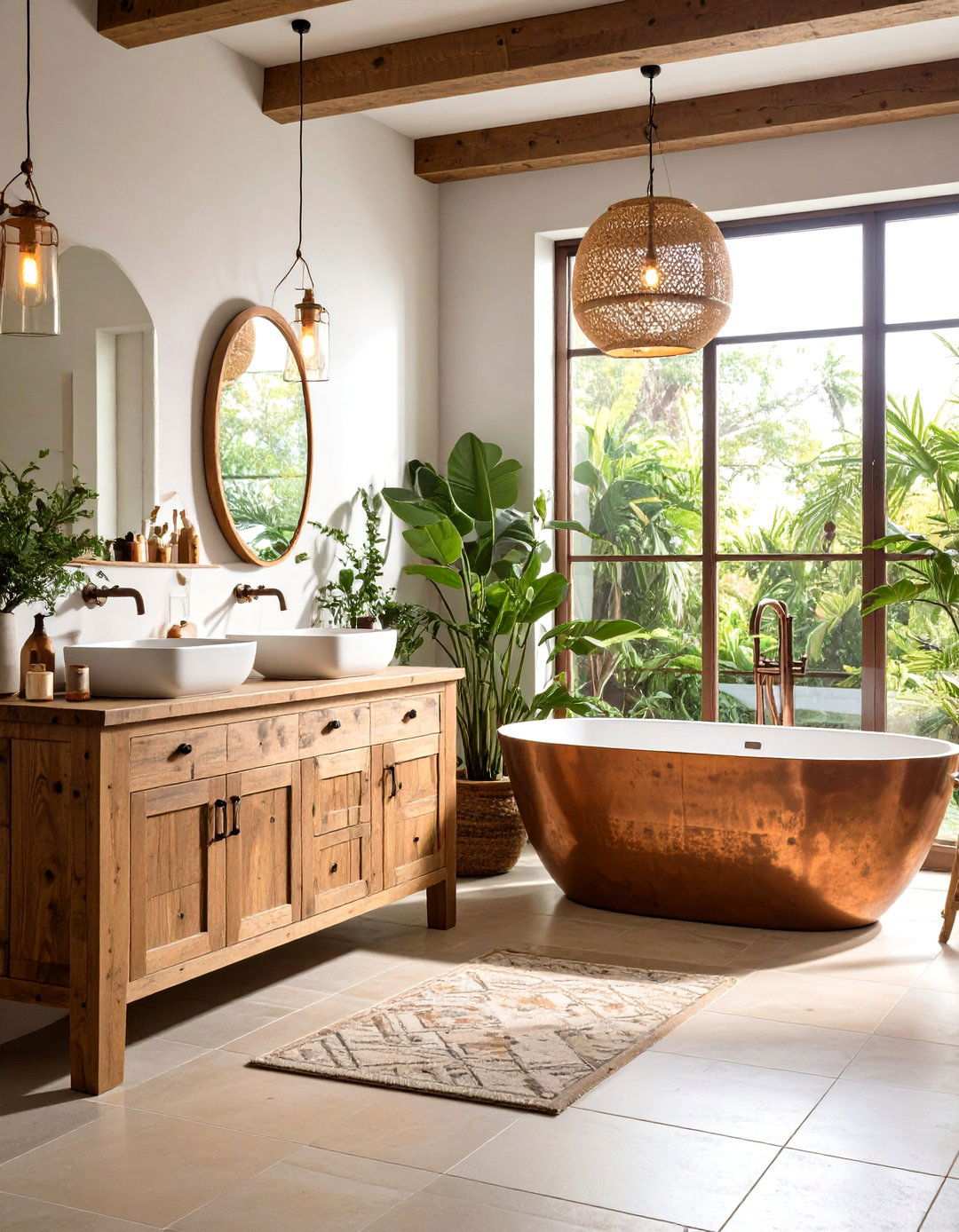
The Japanese aesthetic of wabi-sabi can be celebrated in the bathroom by embracing imperfections and natural aging. A reclaimed wood vanity that shows weathering and character marks can add character to the space, while handmade ceramic tiles with slight variations in color and texture can create a unique and authentic look. A vintage copper soaking tub develops a beautiful patina over time, becoming more beautiful with age, while stone displays unique veining patterns. Plants can grow organically without rigid design philosophy, finding beauty in imperfection and impermanence, which creates a deeply personal and authentic space.
15. Harmonious Balance in Neutral Tones
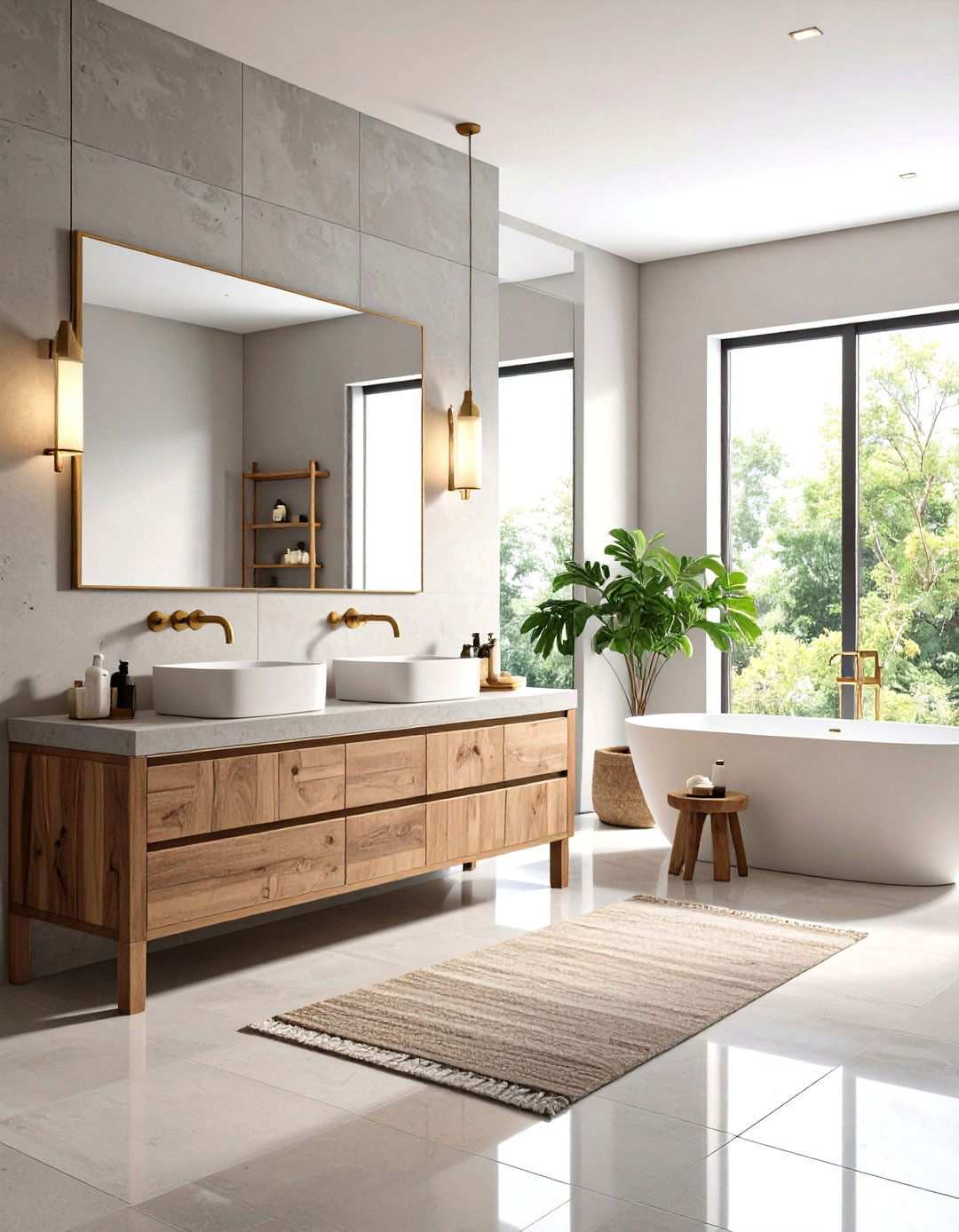
Achieve visual equilibrium by skillfully combining a neutral color palette with textured elements, creating depth and interest in the space. This is achieved through the use of cream, beige, and soft gray in smooth concrete vanity tops paired with rough-hewn wood bases. Polished stone floors complement matte ceramic wall treatments, while linen window coverings add softness to the space. Warm brass fixtures, which bridge all the neutral tones, bring a sense of cohesion to the design. The incorporation of plants with unique leaf shapes further enhances the visual appeal, showcasing that neutral spaces can be anything but dull when textures are thoughtfully layered.
16. The Beauty of Softened Angles
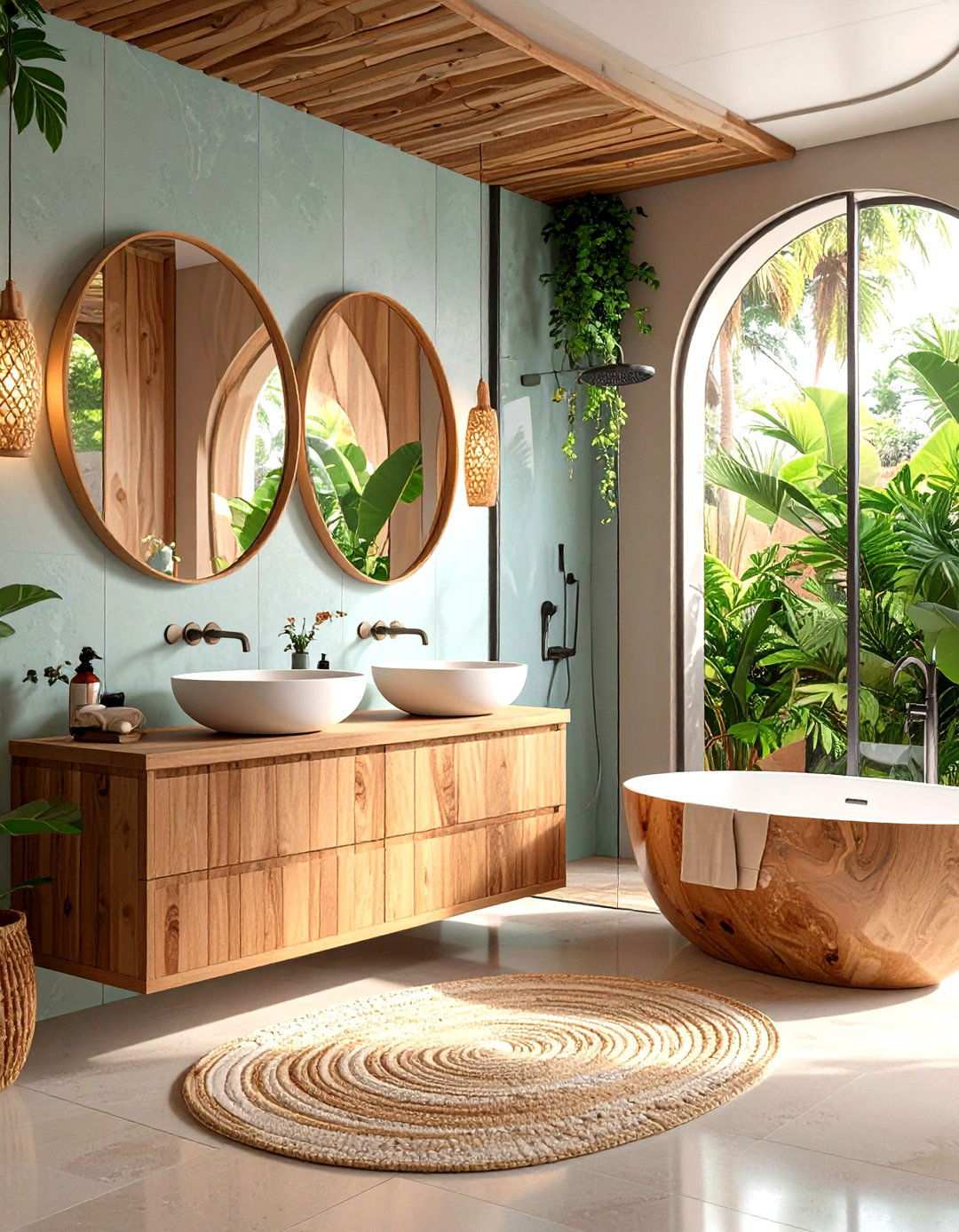
Subtly refine the typically angular bathroom environment by introducing organic curves and flowing shapes inspired by nature. A round vessel sink, for instance, sits atop a curved vanity with flowing edges, while an oval mirror features rounded corners. The addition of a thin wooden shower with curved glass enclosure eliminates sharp lines and stone features, while plants with rounded leaves complement the curved design. This gentle approach creates a soothing environment, reminiscent of a tranquil natural spring, rather than a functional space. The result is a bathroom that feels calming and nurturing, perfect for unwinding after a long day.
17. Eco-Friendly Bathroom Design with a Conscience
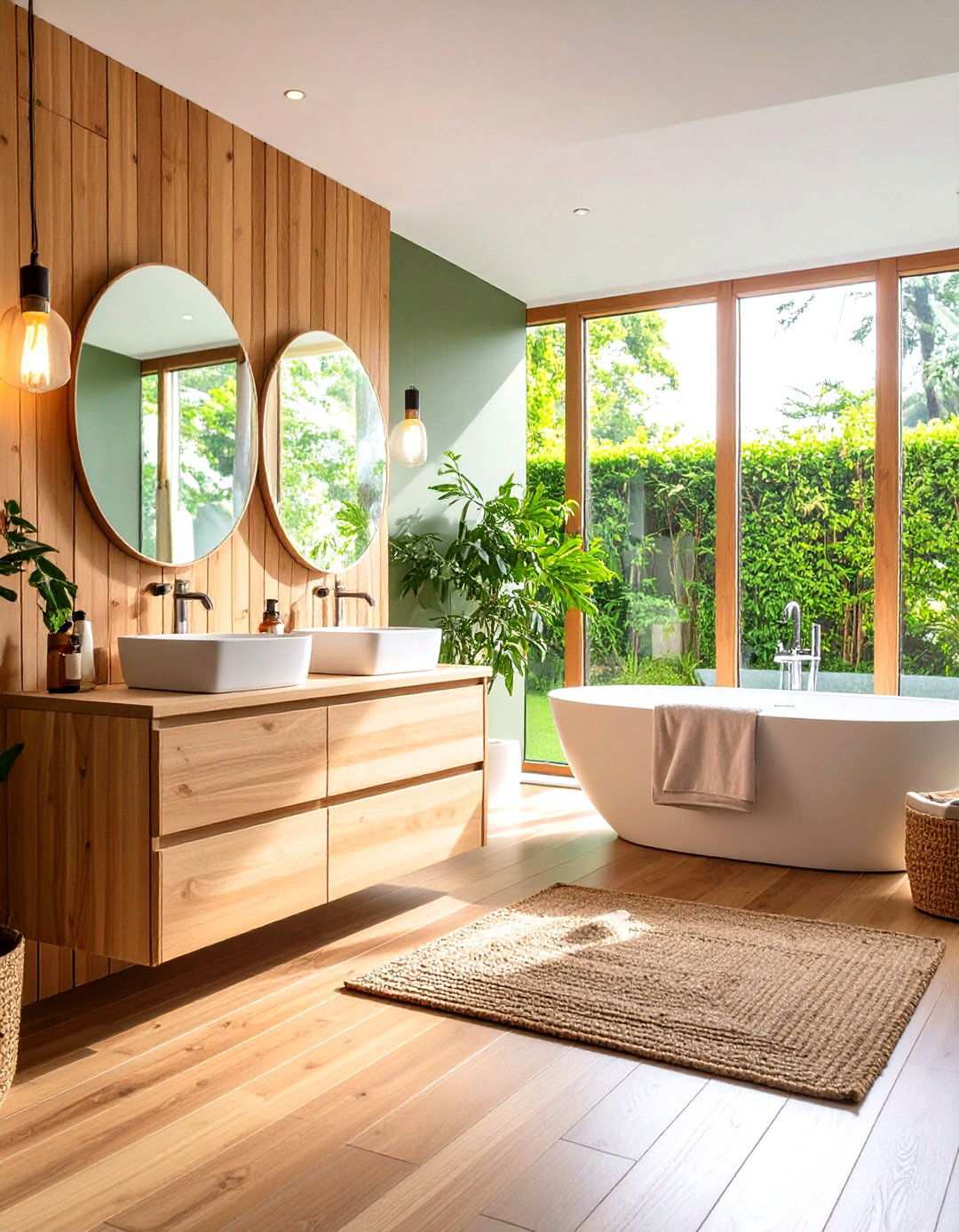
Give precedence to environmental responsibility by selecting sustainable materials that minimize ecological impact while still creating a beautiful space. Bamboo flooring, which regenerates quickly, is an excellent choice for eco-conscious homeowners. A vanity made from certified sustainable materials and glass tiles that shimmer on accent walls add to the sustainable design. Low-flow fixtures conserve water without compromising on style, while cork flooring provides comfortable surfaces in wet areas. Organic cotton towels complete the eco-friendly look, and energy-efficient lighting reduces consumption while offering excellent design. This approach proves that sustainability and style can coexist seamlessly in modern bathroom design.
18. Creating a Sanctuary for Reflection
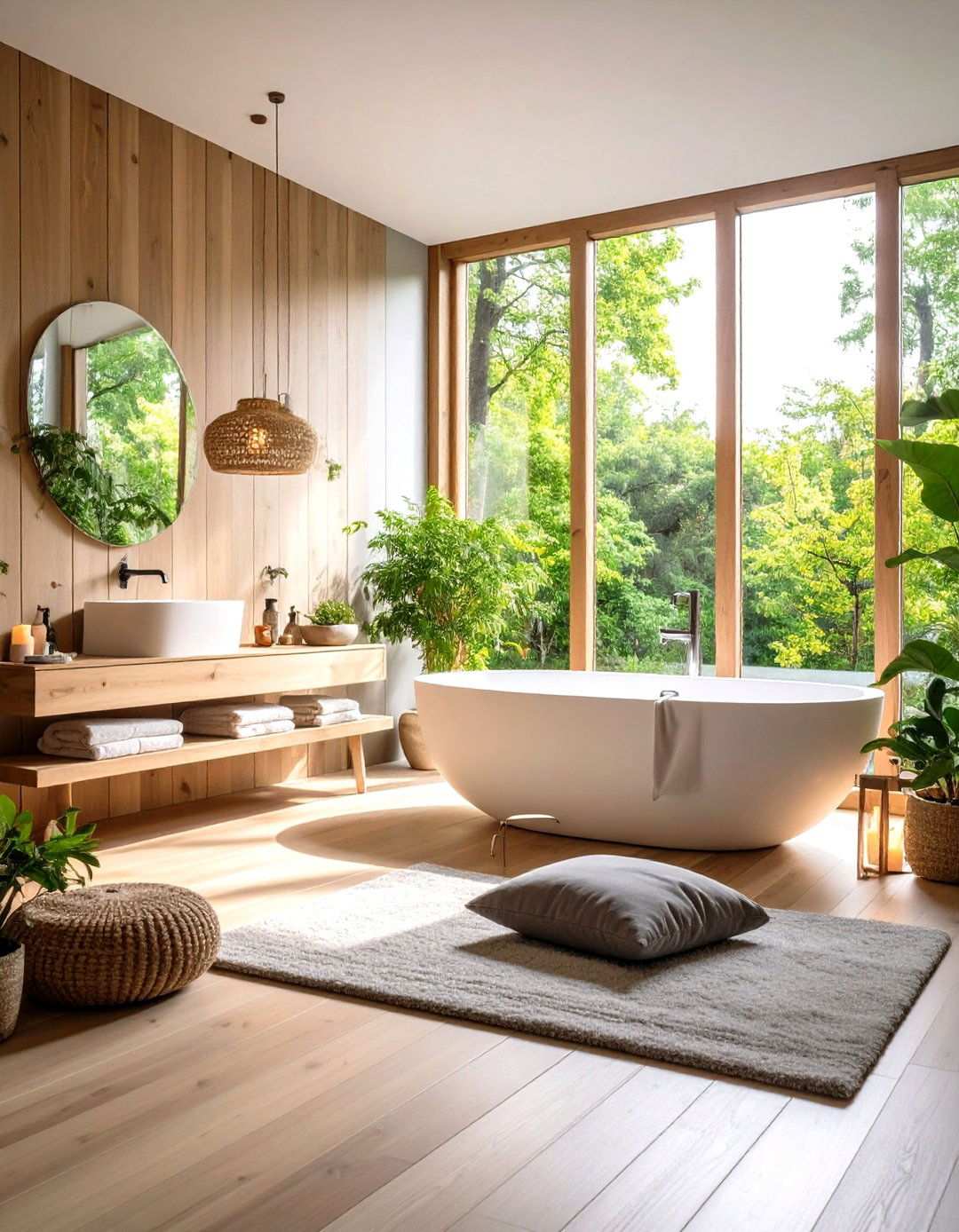
Design a dedicated space for quiet contemplation by incorporating a meditation corner with built-in seating and calming elements. A wooden platform with cushioned seating near a window, surrounded by plants and natural features, creates a peaceful ambiance. The main bathroom area boasts clean lines and minimal decoration, allowing the peaceful seating area to take center stage. Soft lighting creates an inviting atmosphere for evening meditation, while natural light pours in during the day, transforming the bathroom into a haven for mental wellness and daily reflection. This thoughtful design acknowledges the bathroom’s potential as a retreat, rather than just a functional space.
19. Bringing Texture and Softness to the Bathroom with Natural Fibers
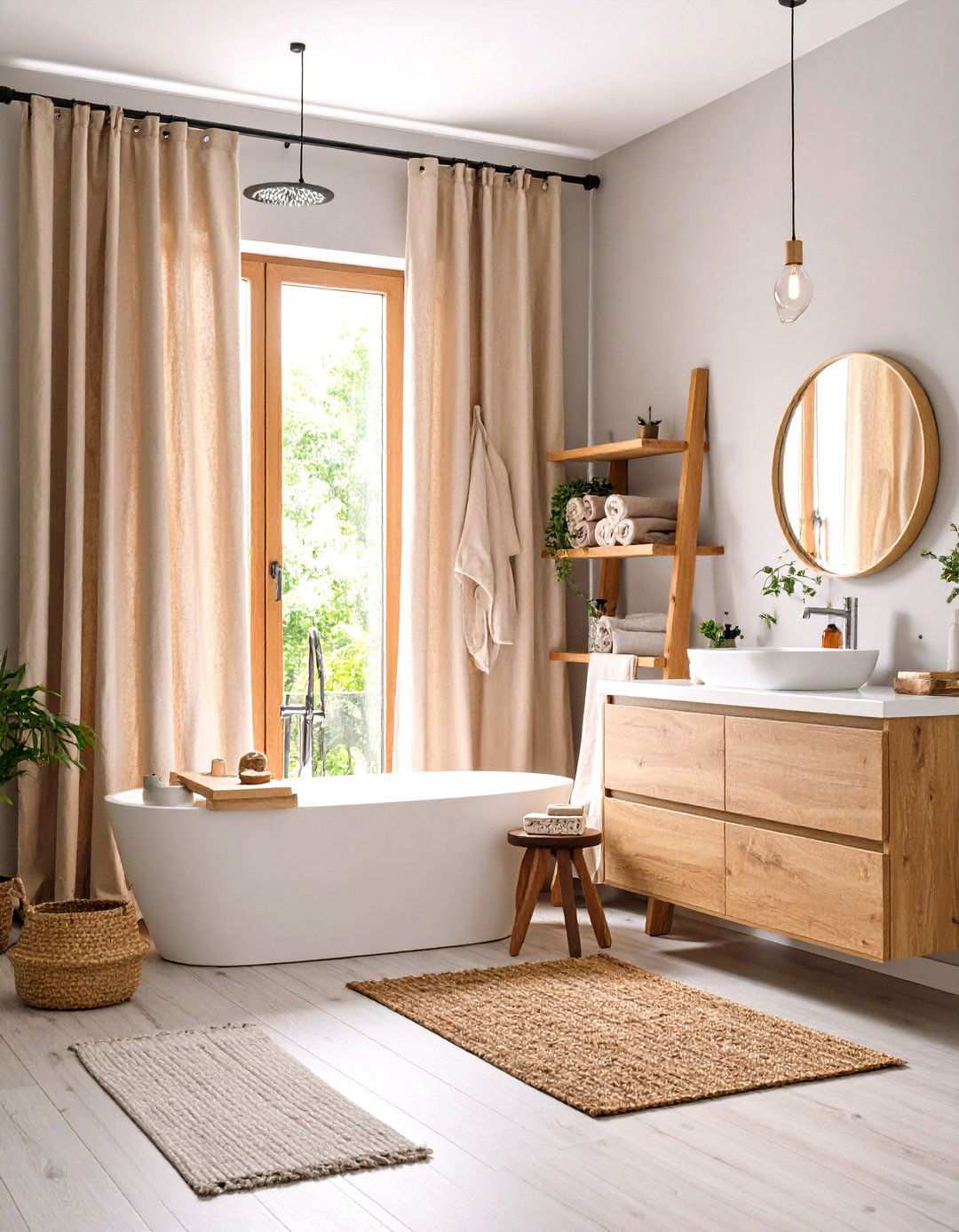
One way to add warmth and depth to a Japandi-inspired bathroom is by incorporating natural fiber textiles that contribute to a cozy atmosphere without compromising the clean aesthetic. Japandi hemp shower curtains and linen window treatments in neutral tones create a harmonious balance between texture and minimalism, complemented by cotton bath mats in soothing colors that don’t compete with other design elements. Floating wooden shelves display rolled towels in natural fibers, while ceramic containers hold cotton swabs and bath accessories, featuring light oak with visible grain patterns. The white walls serve as a backdrop for the textile textures, showcasing the beauty of minimalist design enhanced by soft goods.
20. Embracing the Power of Concealed Storage in the Bathroom
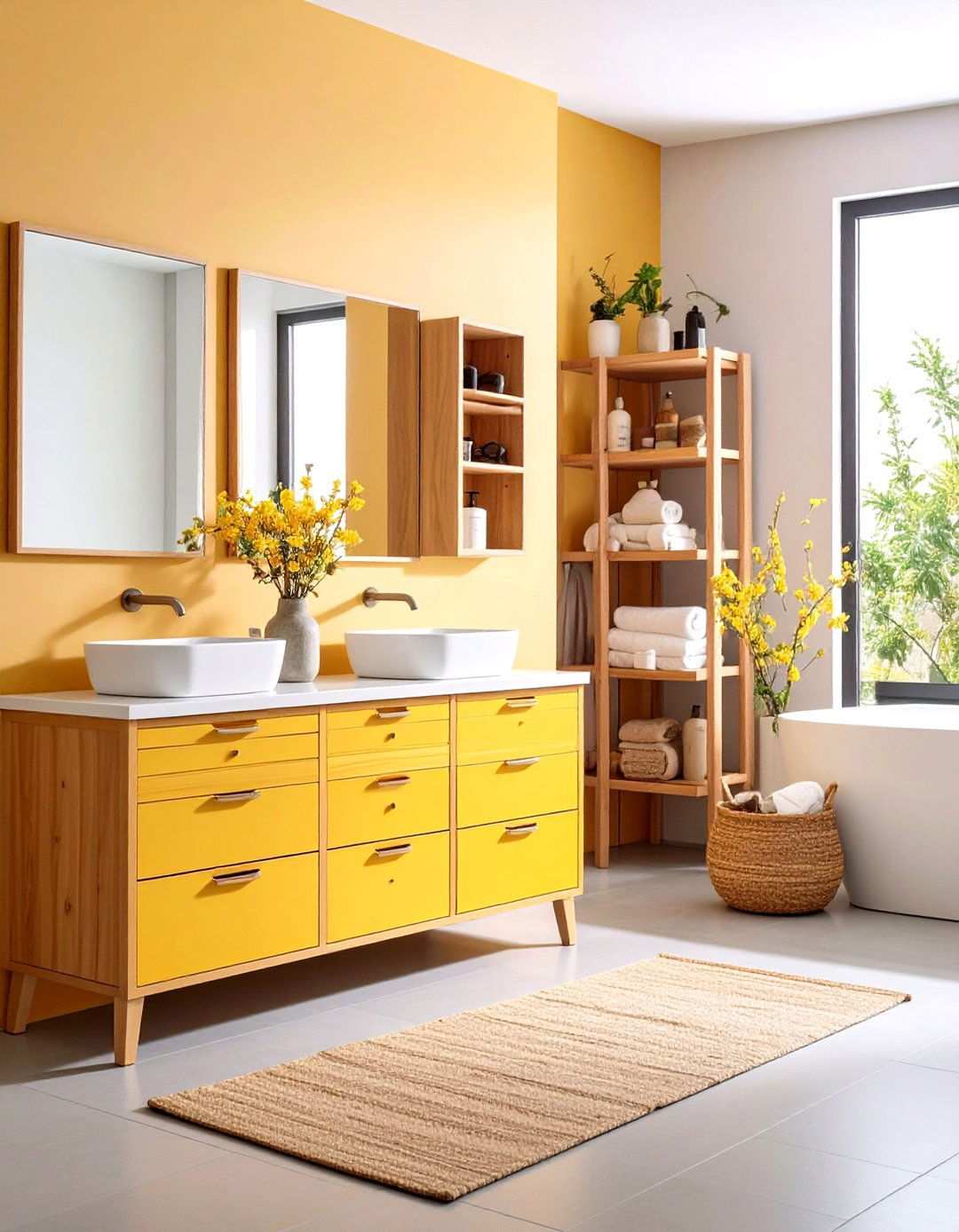
A well-designed bathroom with Japandi principles at its core can achieve perfect organization through cleverly concealed storage solutions that maintain a clean and uncluttered appearance. Bathroom vanity drawers with internal dividers keep toiletries organized, and hidden storage behind mirror niches in shower walls ensures essentials are always within reach without cluttering the space. Toe-kick drawers maximize every inch of storage space, resulting in a design that emphasizes smooth surfaces and continuous lines. By concealing storage solutions, the Japandi design approach embodies the principle that functional beauty arises from thoughtful planning and attention to detail.
21. Creating a Warm and Inviting Bathroom with Honey-Toned Wood Elements
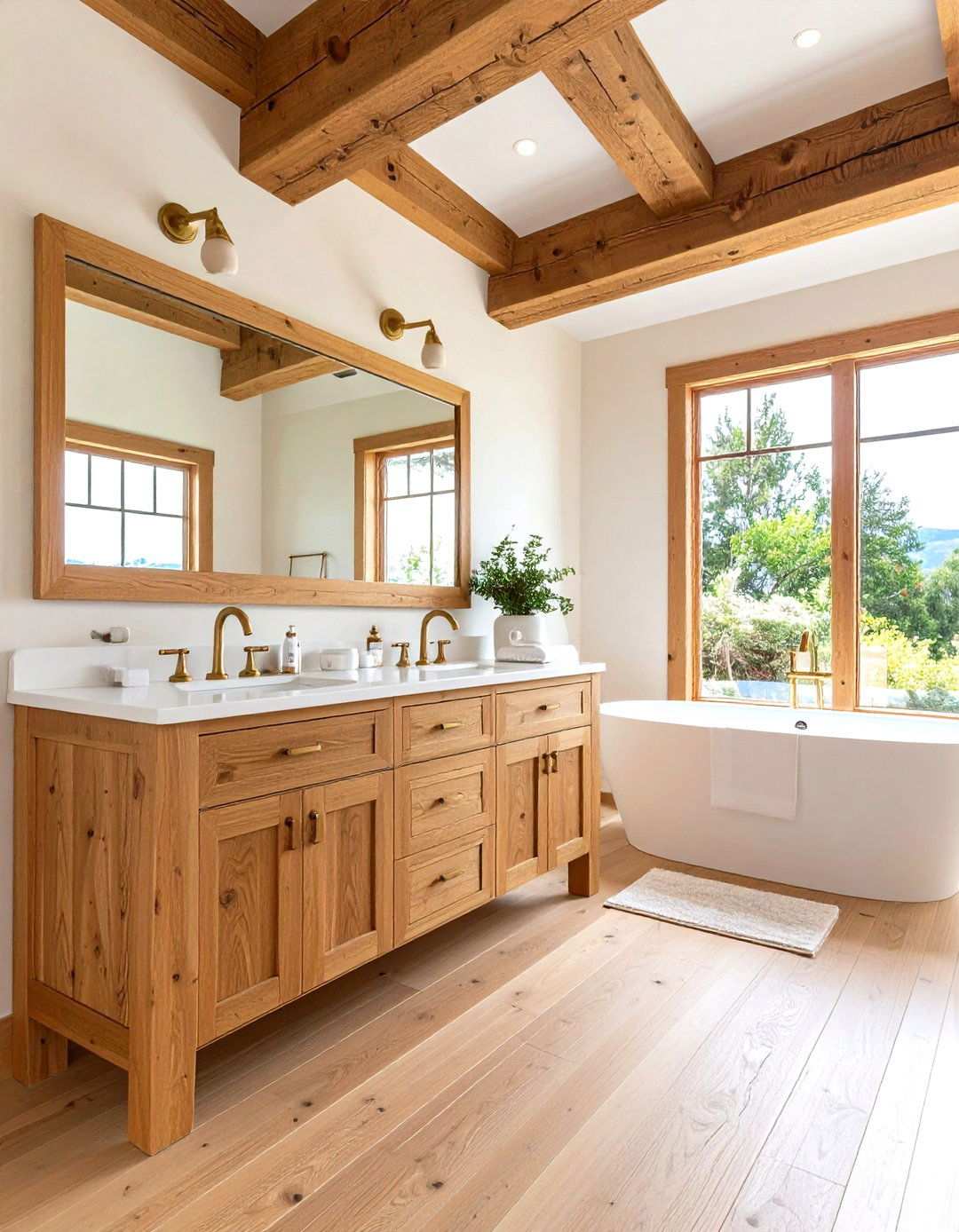
Bathrooms don’t have to be cold and sterile – they can be warm and inviting spaces that bring people together. Honey-toned wood elements can add warmth and richness to a neutral bathroom, creating a cozy atmosphere that’s perfect for relaxing. A vanity in warm oak with visible grain patterns catches and reflects light, while ceiling beams add architectural interest overhead. Matching wood trim frames windows, and warm wood tones pair perfectly with cream-colored walls and natural stone fixtures in brushed brass that echoes the wood’s warmth. Adding plants in wooden planters proves that minimalism doesn’t require cold materials or stark environments – it can be a haven of warmth and tranquility.
22. Harnessing the Power of Natural Light in the Bathroom
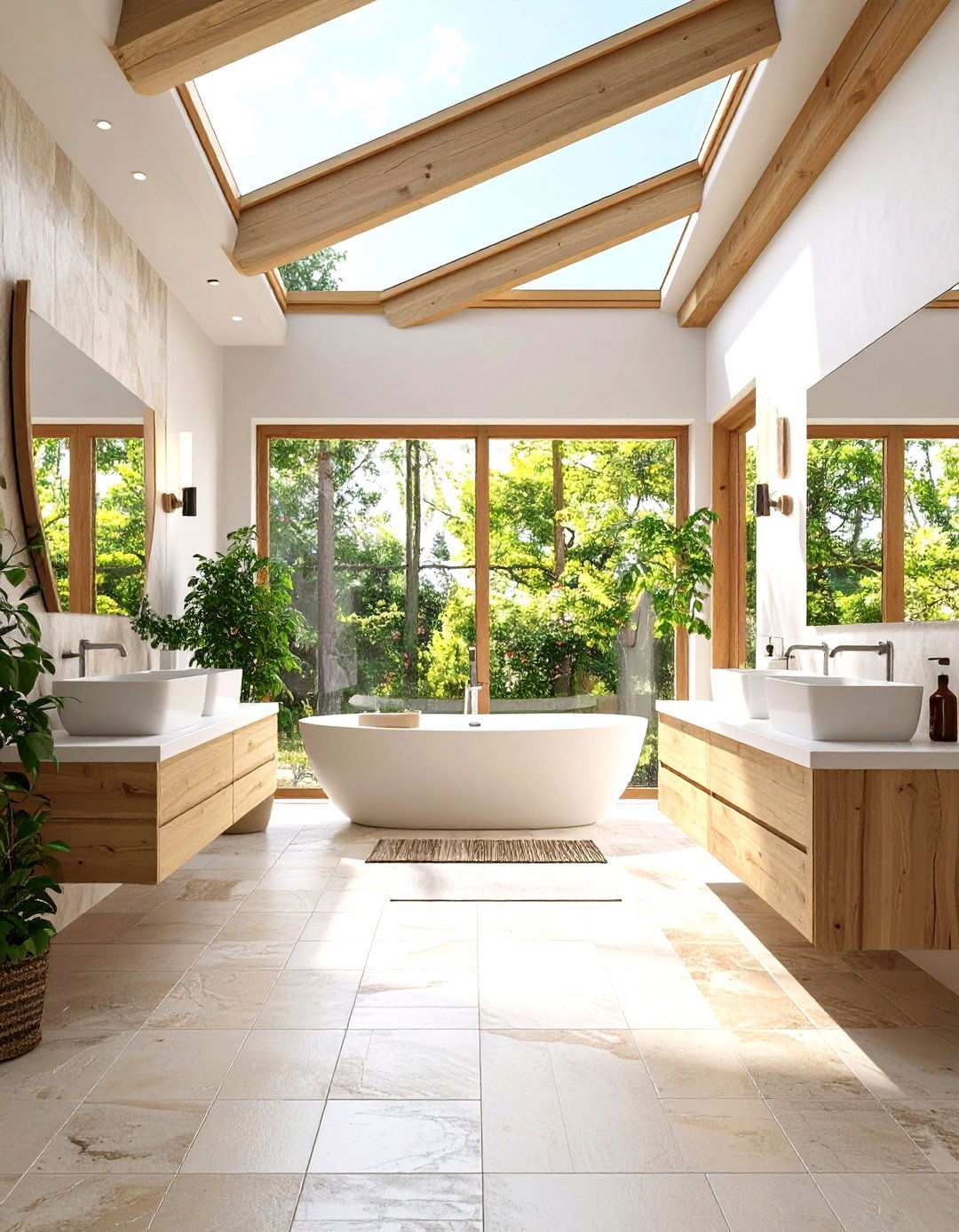
Natural light is one of the most important design elements in any bathroom, and Japandi design celebrates its beauty and importance. By strategically placing skylights and large windows, you can flood your bathroom with changing light throughout the day, creating a sense of brightness and airiness. Clerestory windows provide privacy while maintaining brightness, and positioning mirrors to reflect and multiply available light enhances the luminous quality. The white walls and pale wood stone flooring reflect light upward, creating an overall sense of airiness and life. Adding plants in wooden planters celebrates the beauty of natural light and creates a haven of tranquility in the bathroom.
23. Harmonious Fusion of Nature and Style in Japandi Bathrooms
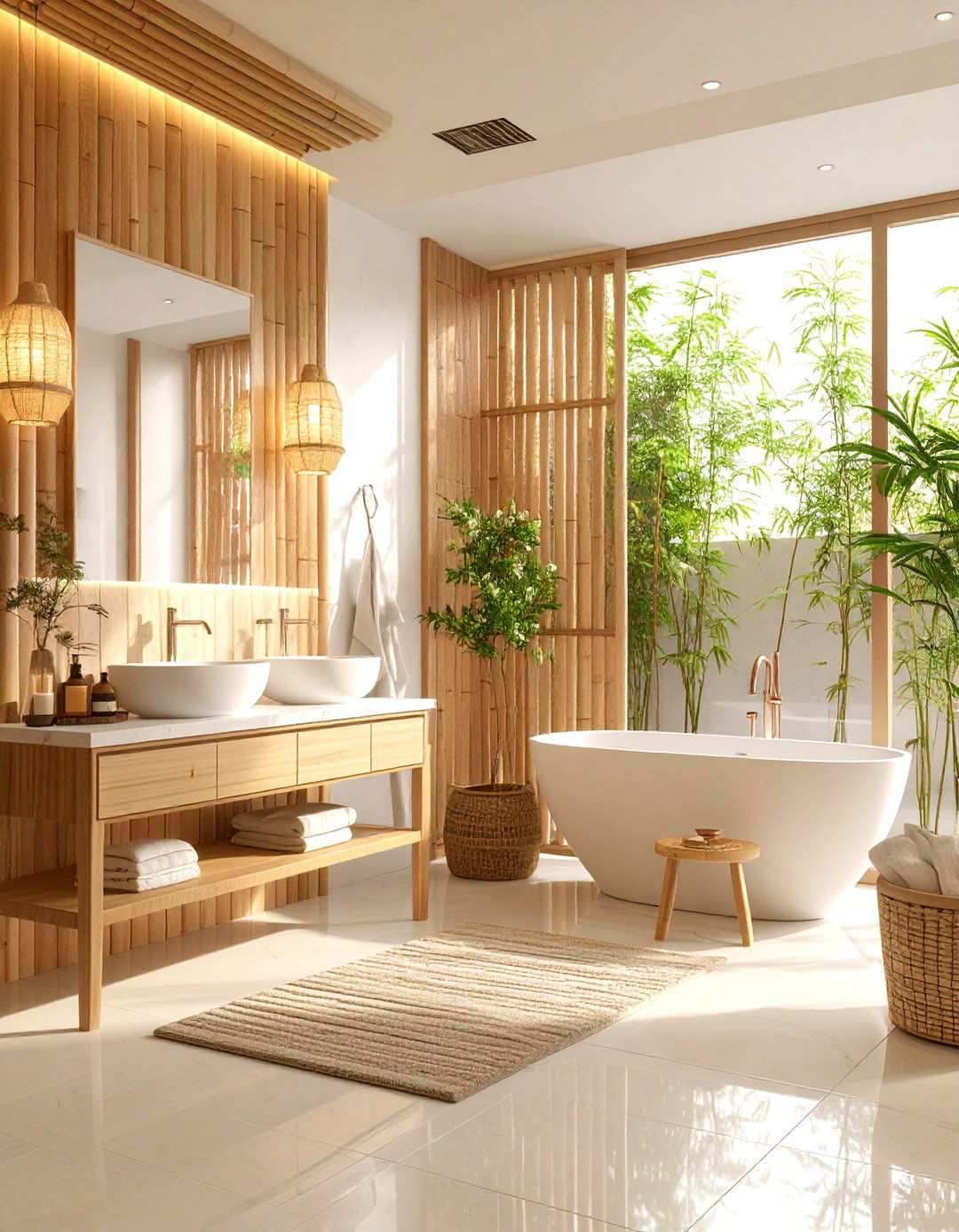
The Japandi design aesthetic seamlessly blends the tranquility of Japanese heritage with the sleekness of Scandinavian minimalism, creating a serene atmosphere that’s perfect for the bathroom. To achieve this harmonious balance, consider incorporating prominent bamboo features that create striking vertical lines and natural texture throughout the space. Bamboo wall paneling behind the vanity area is a stunning focal point, while bamboo accessories such as soap dispensers and toothbrush holders add a touch of organic elegance to the space.
For added visual interest, a bamboo privacy screen can be used to create separation between different areas while maintaining the natural golden tones of bamboo. When paired with white walls and natural stone, bamboo creates a beautiful contrast that adds warmth and depth to the space. To complete the look, choose fixtures with clean, geometric design that honors traditional Japanese materials while maintaining contemporary functionality.
24. Seamless Integration of Technology in Japandi Bathrooms
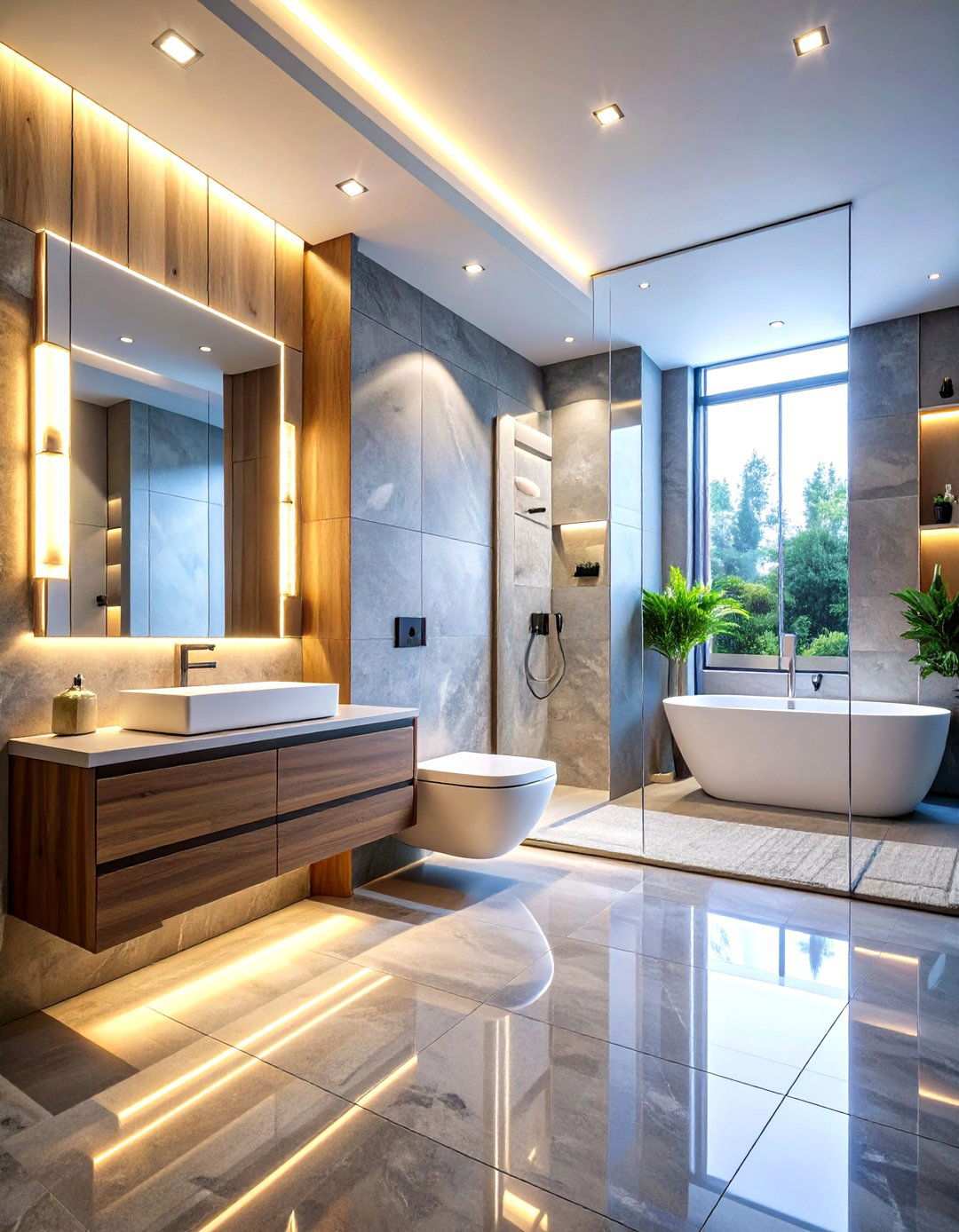
Incorporating modern technology into the Japandi aesthetic requires a thoughtful approach that balances functionality with visual elegance. One way to achieve this balance is through the use of carefully selected smart features that enhance comfort without compromising the minimalist appearance. Heated floors with app control, for instance, provide a luxurious experience while remaining hidden from view.
Smart mirrors with integrated lighting and temperature-controlled shower systems are other innovative features that can be seamlessly integrated into the space. By hiding these high-tech elements within clean walls that remain invisible until needed, the Japandi aesthetic is preserved while providing maximum functionality. The thoughtful integration of materials such as wood and stone, which add warmth and texture to the space, further demonstrates how modern convenience and traditional design principles can coexist in perfect harmony.