1. Japandi Kitchen Design Elevated by Warm Wood Accents
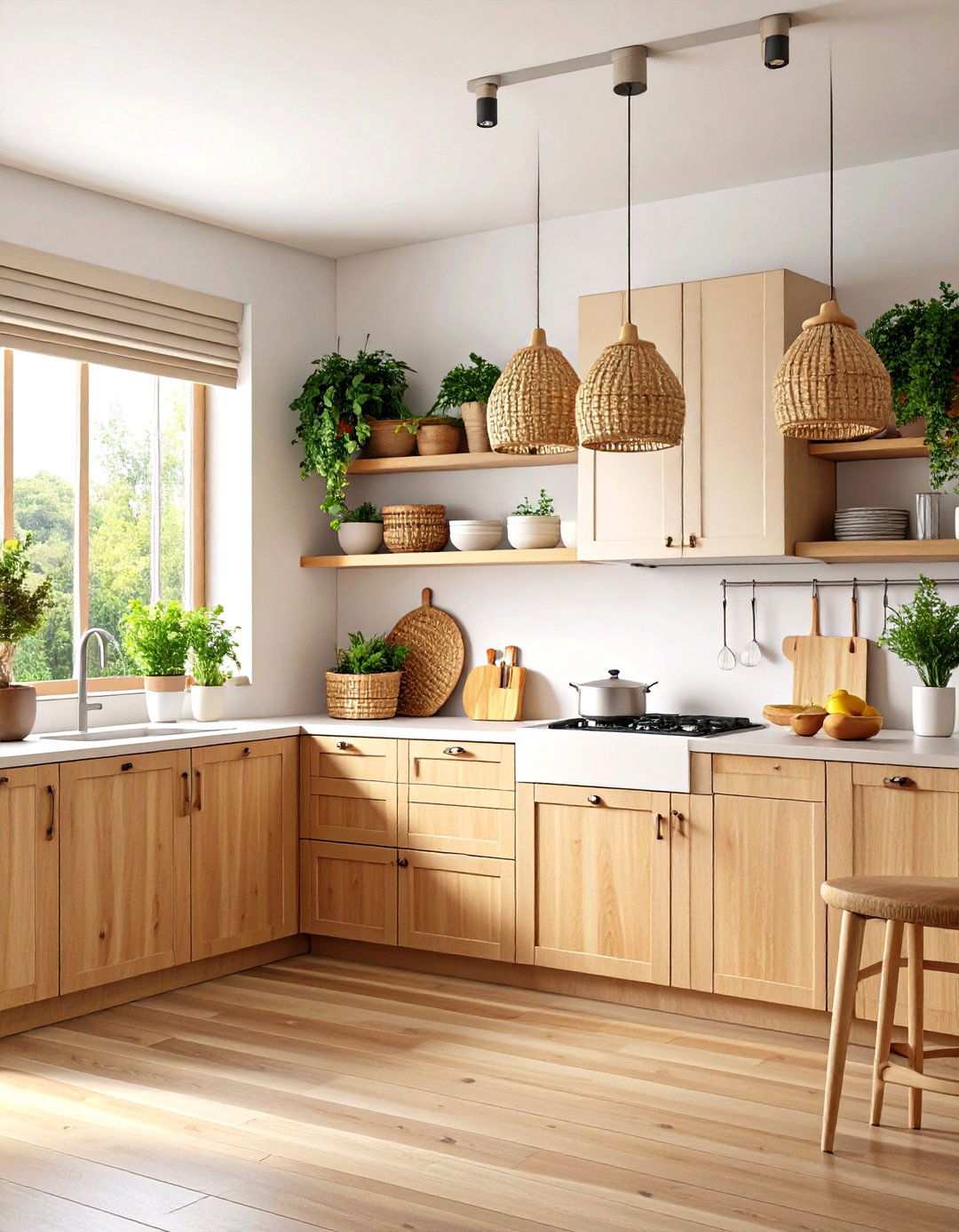
This Japandi kitchen concept combines the simplicity of Japanese minimalism with the functional flair of Scandinavian design, resulting in a space that exudes peacefulness and purposeful style is characterized by its emphasis on natural materials, sleek lines, and understated color schemes, which work together to create a sense of warmth and kitchens prioritize quality over quantity, featuring carefully curated layouts where every element contributes to both form and function. A design philosophy that celebrates the beauty of imperfection, wabi-sabi principles are incorporated alongside hygge’s cozy ideals to create harmonious environments that nurture mindful cooking and living.

As an Amazon Associate I earn from qualifying purchases.
2. Japandi Kitchen with Earthy, Timeless Marble Countertops
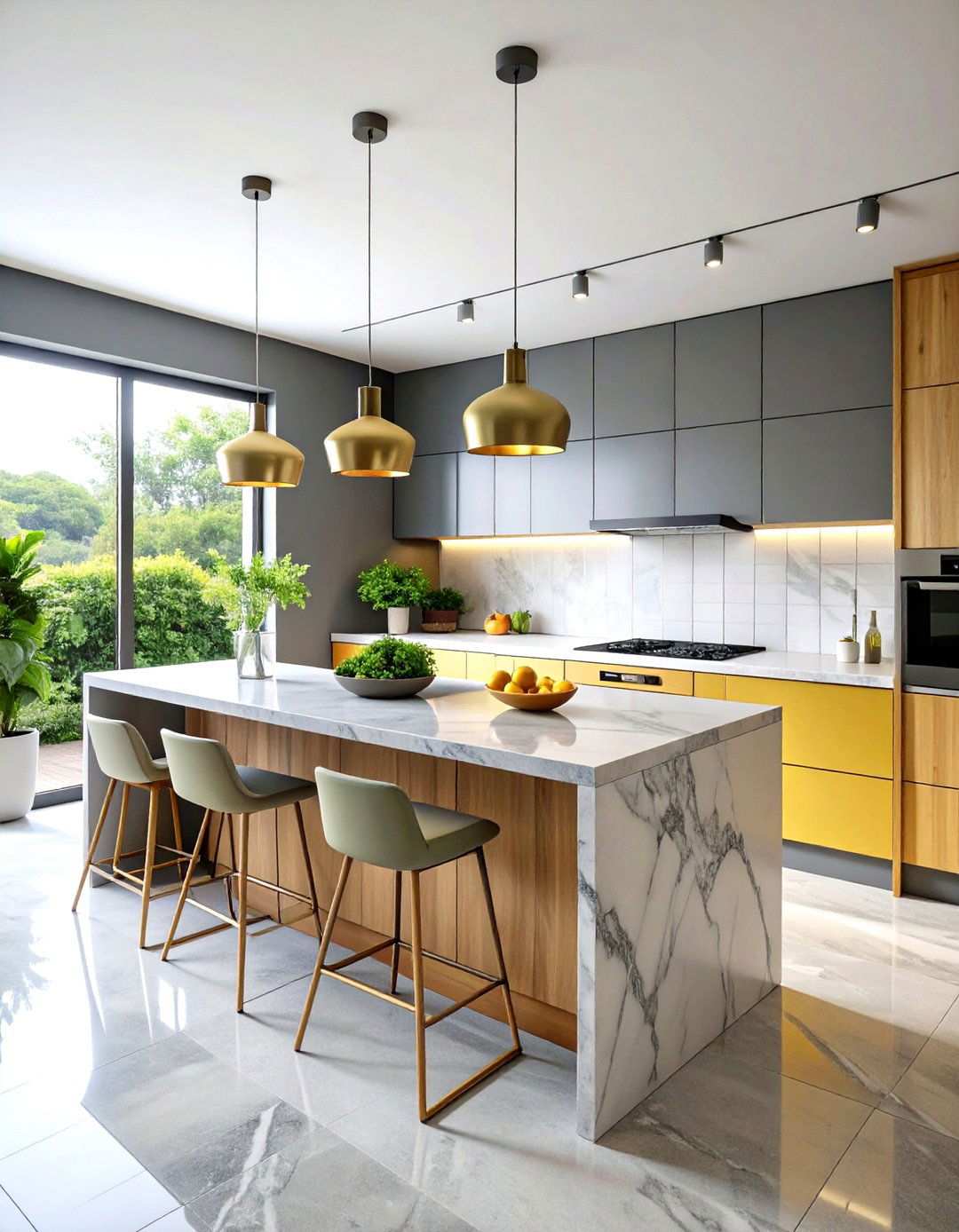
Matte honed marble countertops take center stage in this Japandi kitchen design, their soft gray veining providing a subtle yet captivating visual element without overpowering the overall minimalist aesthetic the stone’s matte finish also happens to be highly practical, reducing maintenance needs while offering exceptional durability for daily cooking and entertaining. The seamless edges on the kitchen island beautifully accentuate the material’s natural beauty, while under-cabinet lighting highlights the stone’s organic patterns during the evening hours when the space is bathed in softer light. This thoughtful combination of natural materials creates a balanced palette that feels fresh and inviting.
3. Japandi Kitchen with Bamboo Elements that Bring Nature Indoors
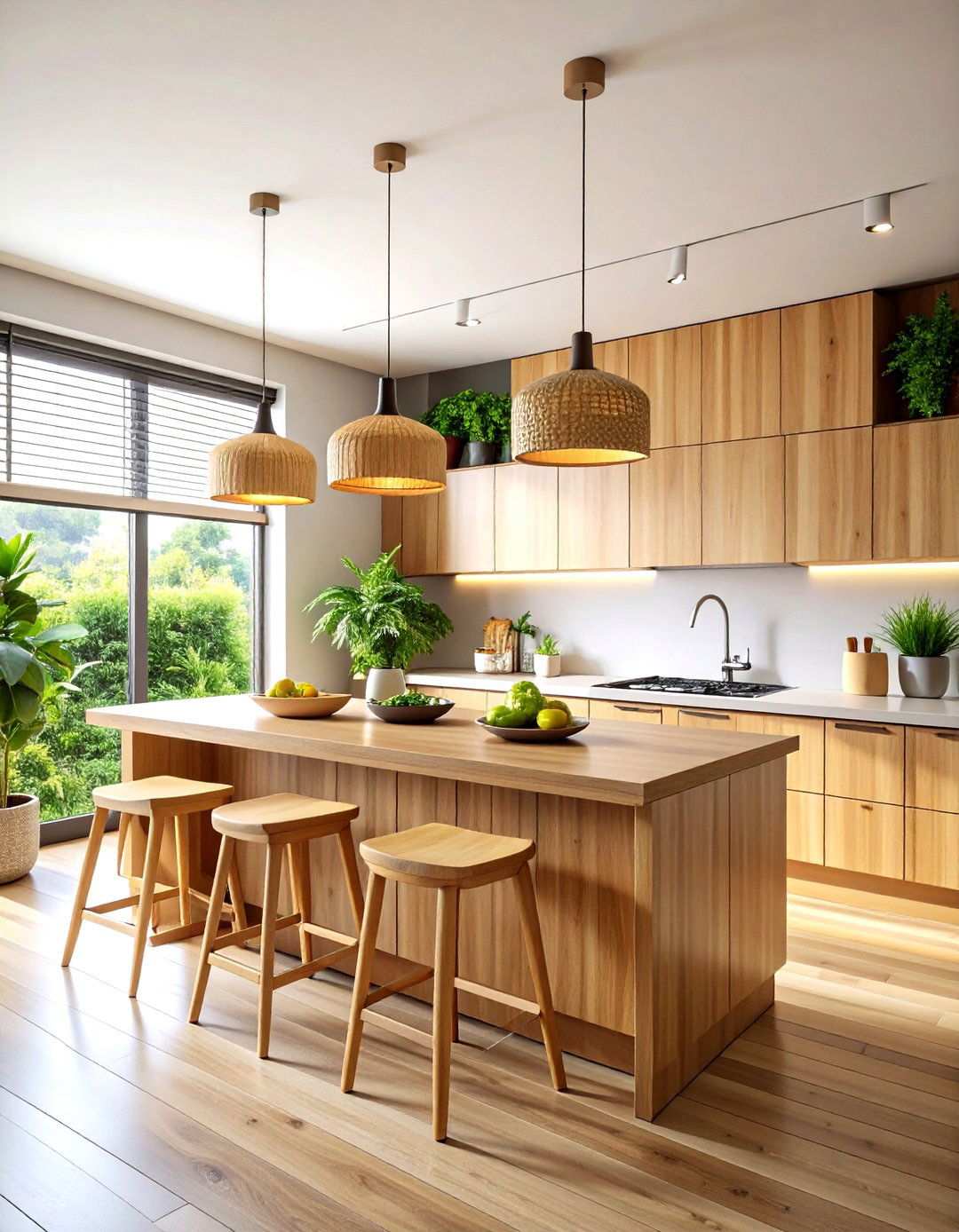
Sustainable bamboo elements play a starring role in this Japandi kitchen, infusing the space with an eco-friendly consciousness and a touch of natural elegance bamboo cutting boards, utensil holders, and pendant light fixtures introduce warm golden tones that beautifully complement the space’s neutral color scheme the bamboo bar stools on the kitchen island feature clean geometric lines, providing comfortable seating while maintaining a sense of visual harmony throughout the interior. Bamboo drawer organizers and shelf liners extend the material’s presence throughout the space, showcasing its versatility and eco-friendly appeal, while bamboo blinds filter natural light while maintaining a comprehensive approach to design.
4. Japandi Kitchen Design with Sliding Panels
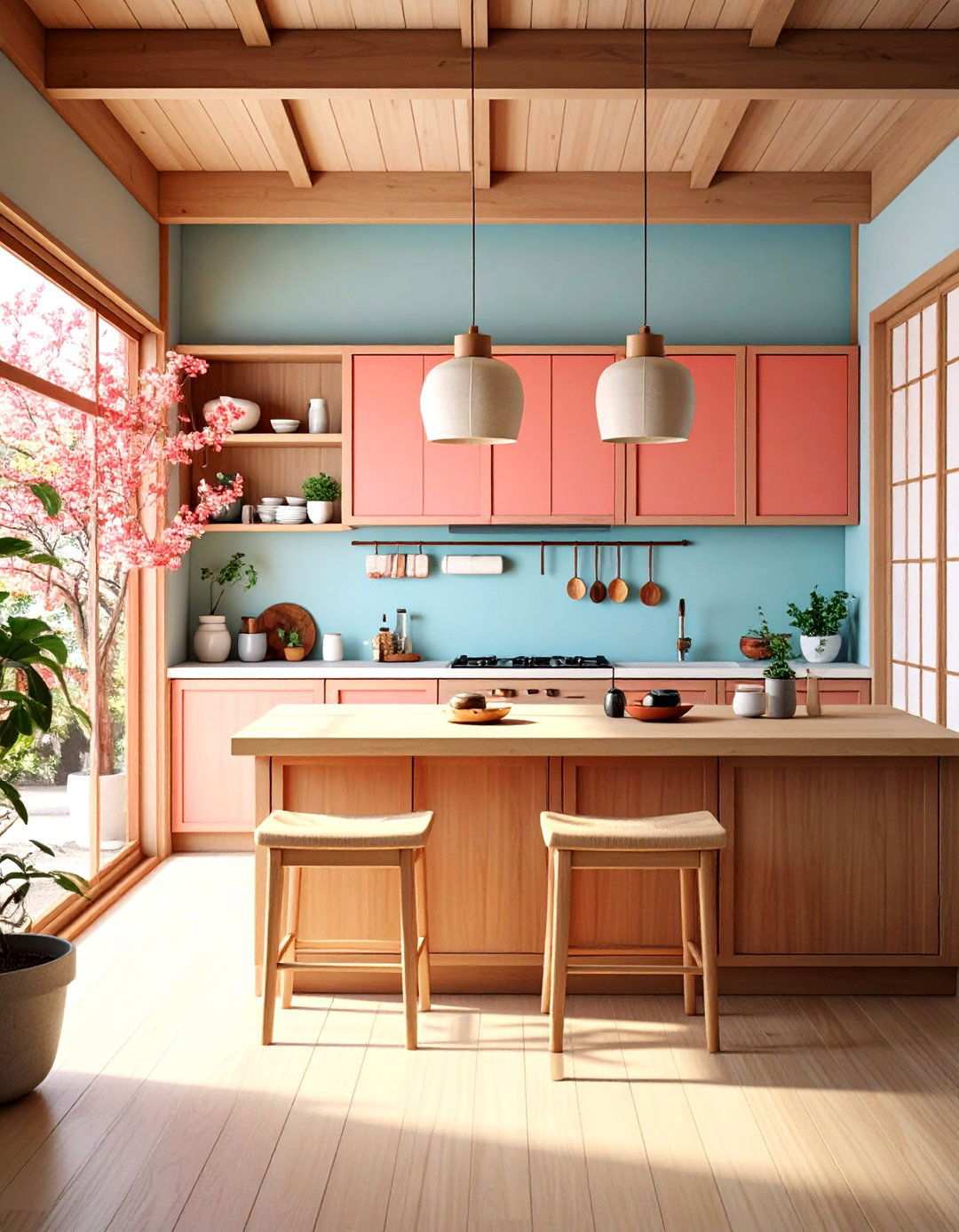
In Japandi kitchen design, sliding panels create versatile spatial divisions that allow for flexible layouts. Inspired by traditional shoji screens, these panels conceal pantry storage while filtering light, maintaining an open atmosphere when in operation. The silent sliding mechanism glides smoothly on precision tracks, exemplifying Japanese craftsmanship and minimal wood frames with rice paper or frosted glass inserts create subtle textural contrasts. As they slide into place, they reveal organized storage solutions, featuring designated zones for different kitchen components. By maximizing space efficiency, this approach offers a serene and peaceful atmosphere through reduced visual clutter. Japandi kitchen sliding doors can effortlessly separate cooking areas from dining spaces, providing flexibility for entertaining while maintaining the kitchen’s tranquil ambiance throughout daily use.
5. Japandi Kitchen Design with Integrated Dining Nook
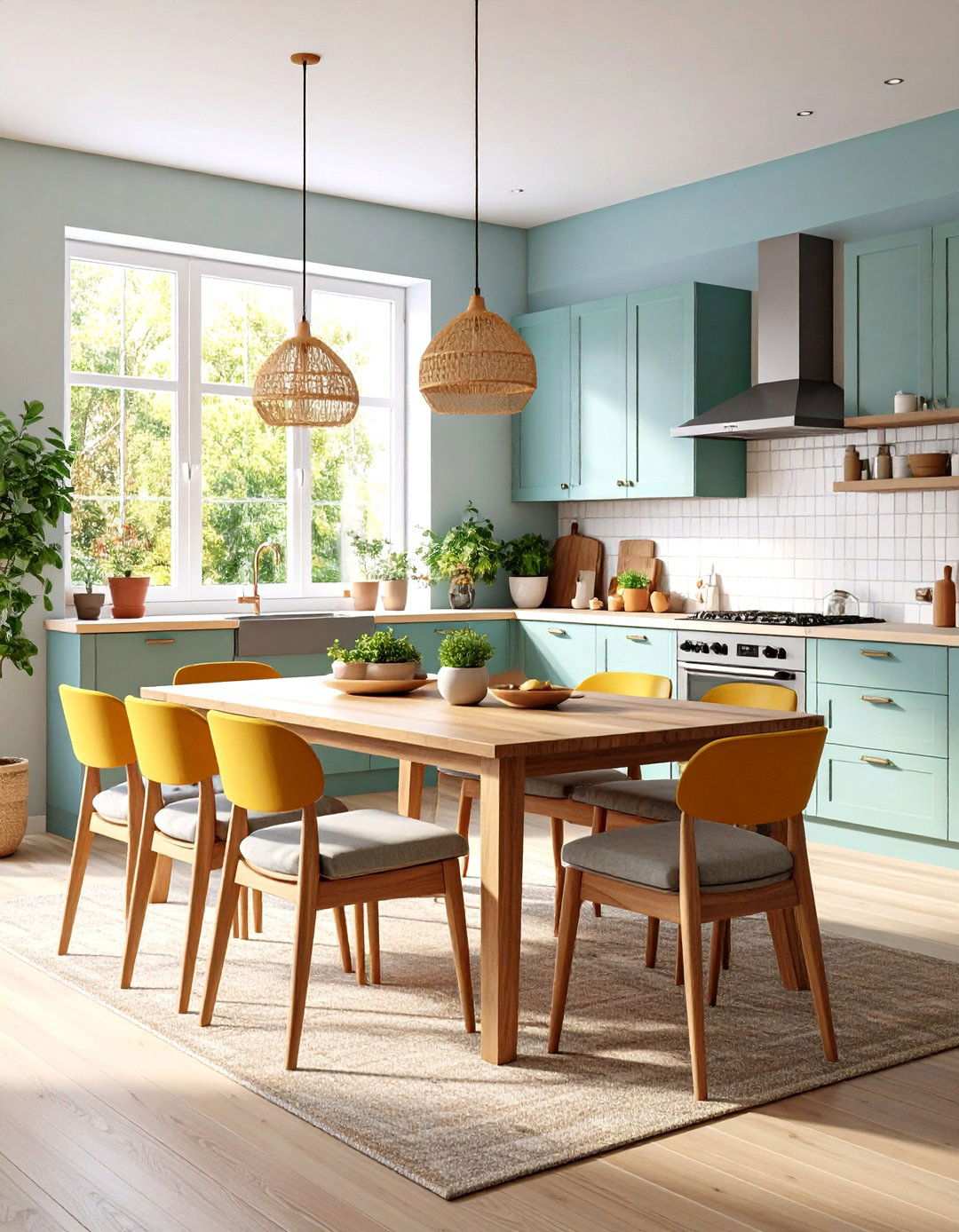
A thoughtfully integrated dining nook seamlessly extends the functionality of this Japandi kitchen, while maintaining spatial harmony. The breakfast area features banquette seating with natural linen cushions and a live-edge wood table that celebrates organic forms. Beneath the seating, compartments provide ample storage for table linens and seasonal items. Large windows flood the nook with natural light, creating an ideal spot for morning meditation or quiet contemplation. The dining nook employs the same neutral palette as the kitchen, ensuring visual continuity throughout the space. Focused illumination above the table provides warmth and ambiance, while contributing to the room’s overall lighting scheme, demonstrating a thoughtful balance of function and beauty.
6. Japandi Kitchen Design with Suspended Shelves
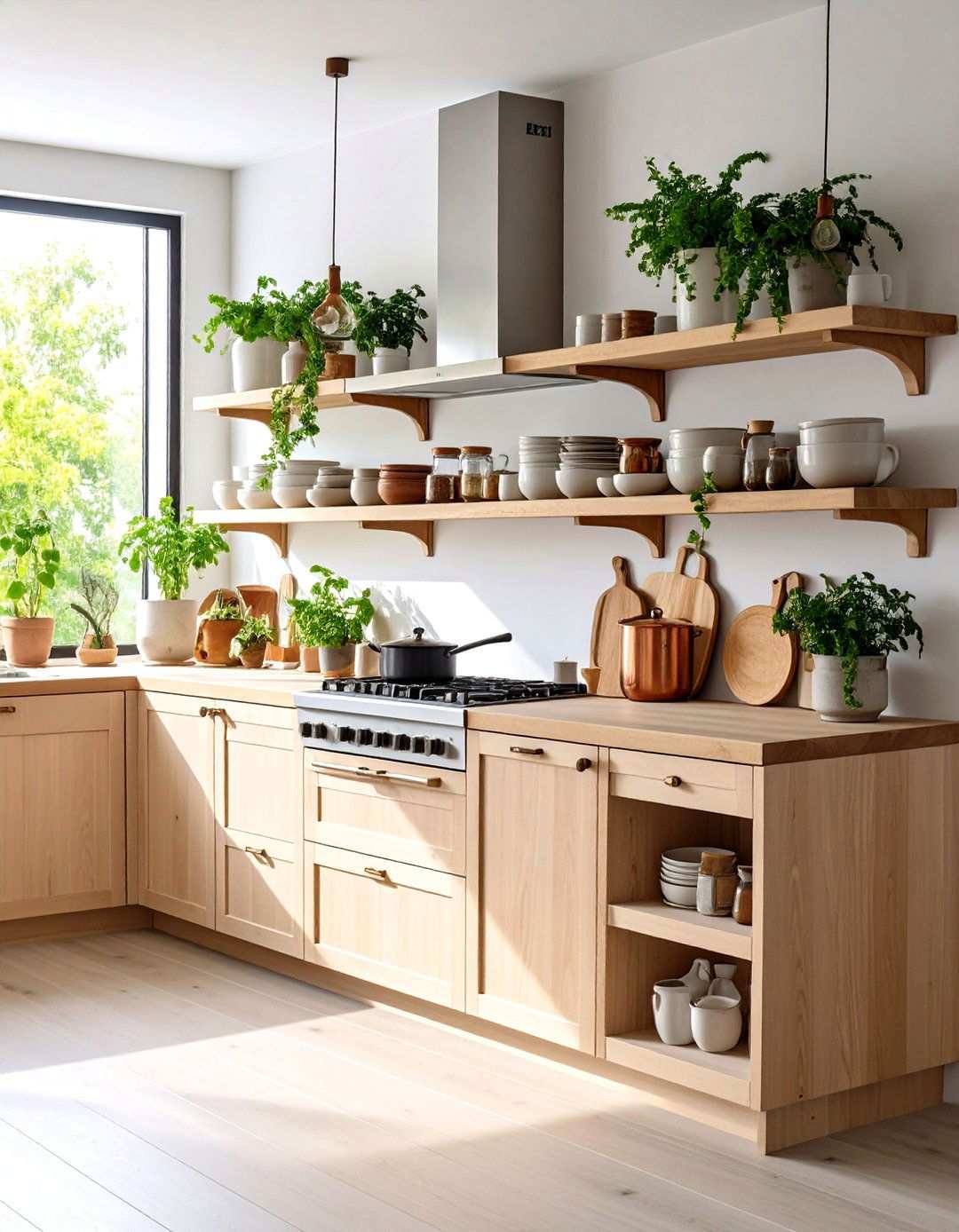
In this airy Japandi kitchen, open floating shelves replace upper cabinetry, creating a sense of visual lightness and showcasing beautiful dishware and cooking utensils. The shelves utilize thick wood slabs with invisible mounting hardware, appearing to emerge naturally from the surrounding space. The curation of displayed items follows the principle of functional beauty, showcasing handmade ceramics, glass vessels, and copperware. The shelf maintains generous spacing to prevent visual crowding, allowing individual pieces to be appreciated and admired. Open storage encourages mindful ownership of kitchen items, keeping only what serves both practical and aesthetic purposes. The simplicity of the storage approach promotes easy maintenance and cleaning access, while the warmth of the wood grain patterns adds depth against white walls.
7. Harmonious Japandi Kitchen Backsplash Design
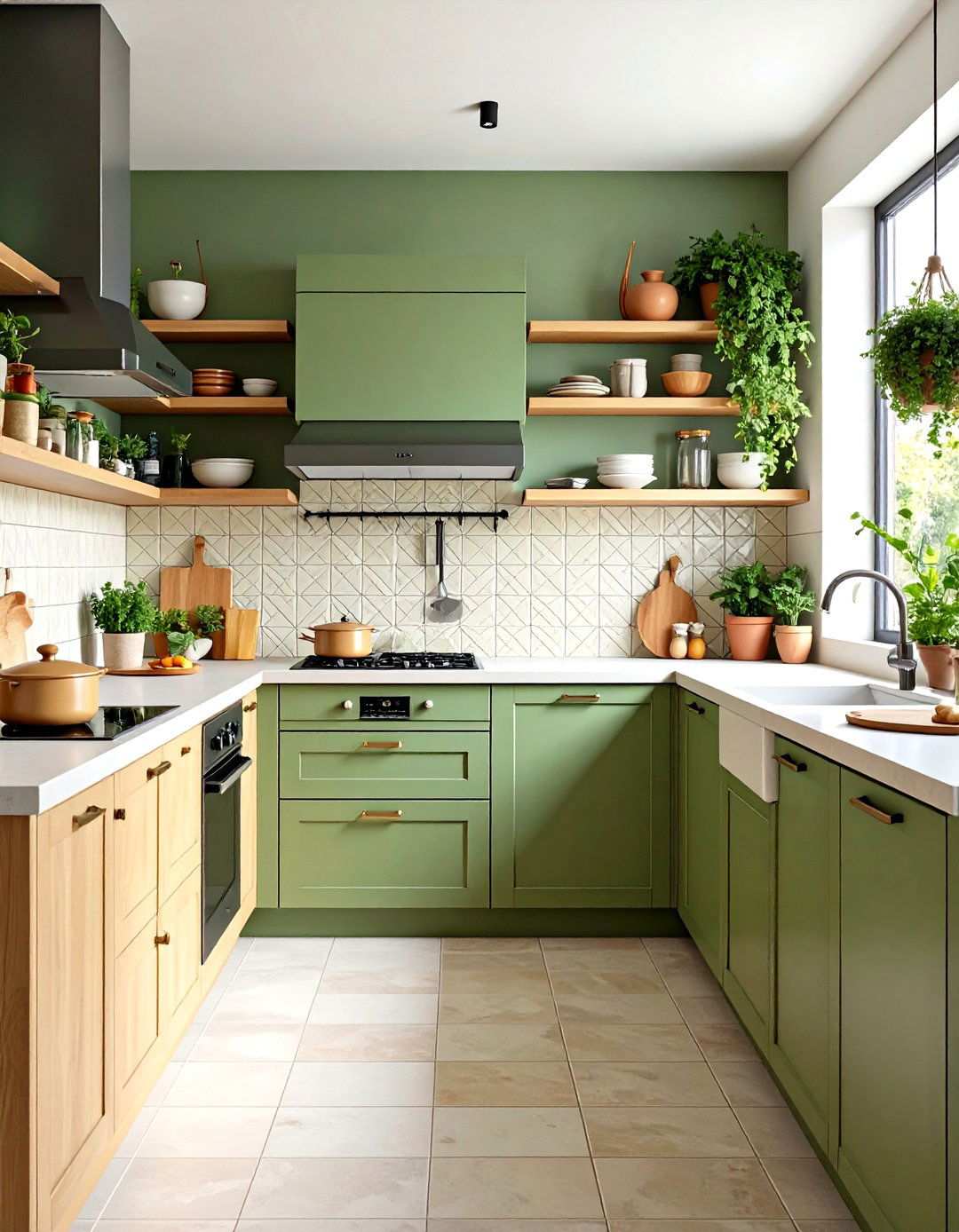
Soft sage and cream-toned handmade ceramic tiles have been chosen to create a soothing backsplash that embodies the essence of Japandi design. The tiles’ subtle variations in color and texture pay homage to the artisanal craft that goes into their creation. The rectangular tiles are arranged in a simple running bond pattern, emphasizing horizontal movement while maintaining a visual equilibrium. A matte glaze finish not only reduces glare but also makes cleaning a breeze. The neutral tones of the tiles create seamless transitions between each other, unifying the wall and reinforcing the Japandi approach to design. By incorporating functional elements, this backsplash demonstrates how a space can become even more meditative while still providing the necessary functionality. The subtle color variations add depth without disrupting the kitchen’s serene atmosphere.
8. Streamlined Japandi Kitchen Storage Solutions
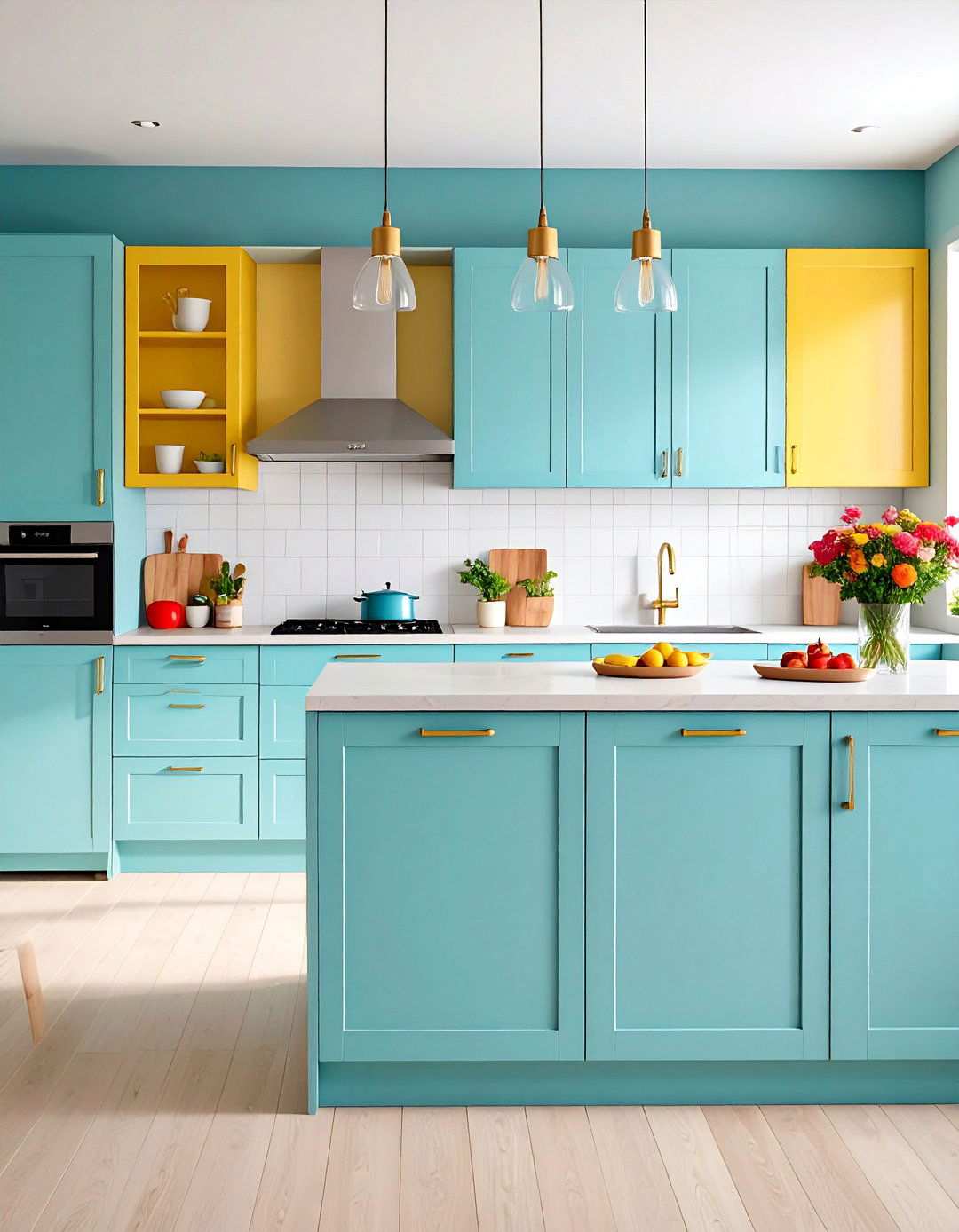
Concealed storage systems have been expertly integrated into this Japandi kitchen, maximizing functionality while maintaining its tranquil ambiance. Doors that seem ordinary at first glance open to reveal a treasure trove of organizational tools, including pull-out drawers, lazy Susans, and vertical dividers that keep contents tidy. Spice racks discreetly nestled behind cabinet doors keep seasonings within easy reach, reducing counter clutter. A concealed pantry boasts door panels that perfectly match the adjacent surfaces, ensuring a seamless blend with the surrounding cabinetry. Toe-kick drawers provide additional storage for infrequently used items, utilizing every available space to the fullest. Garages cleverly hide small appliances when not in use, maintaining a clean and clutter-free counter. By implementing a comprehensive storage strategy, this Japandi kitchen embodies the principle of “less is more” by assigning a designated place to everything, minimizing visual distractions.
9. Japandi Kitchen Island Design: A Central Hub
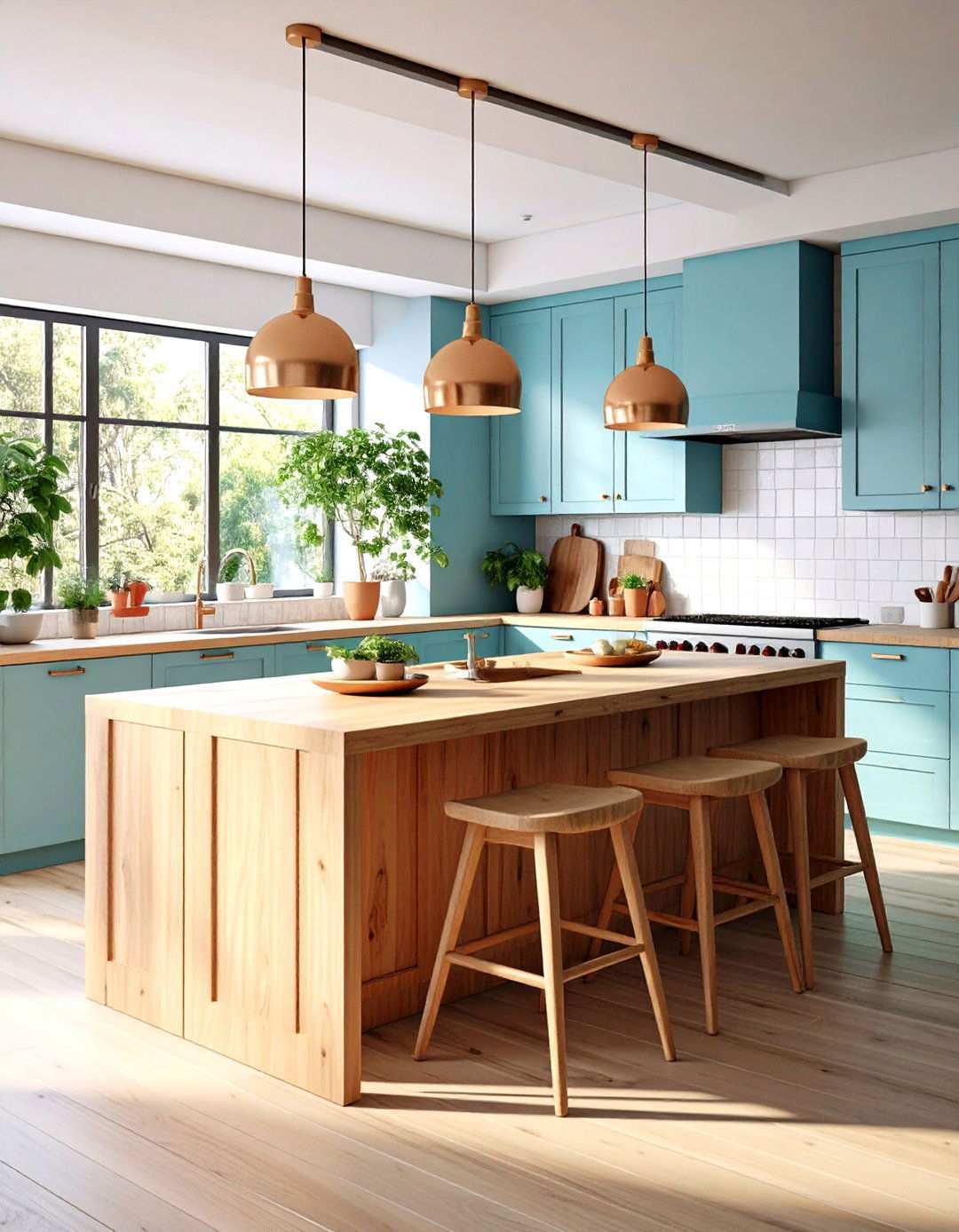
A substantial kitchen island serves as the central hub of this Japandi space, combining workspace, storage, and casual dining in a single, purposeful design. The island’s thick wood butcher-block top provides a warm contrast to the surrounding neutral tones, creating a cozy atmosphere. Storage includes deep drawers for cookware and open shelving for displaying curated dishware, adding a touch of personality to the space. Seating accommodates three people comfortably, with stools that tuck neatly under the counter when not in use. The island’s clean geometric form anchors the kitchen’s layout, providing an efficient workflow between cooking and other activities. Strategically placed lighting above creates focused task illumination while contributing to the space’s ambient lighting. This central element demonstrates how substantial pieces can enhance, rather than overwhelm, minimalist spaces.
10. Japandi Kitchen Elegance Under Statement Lighting
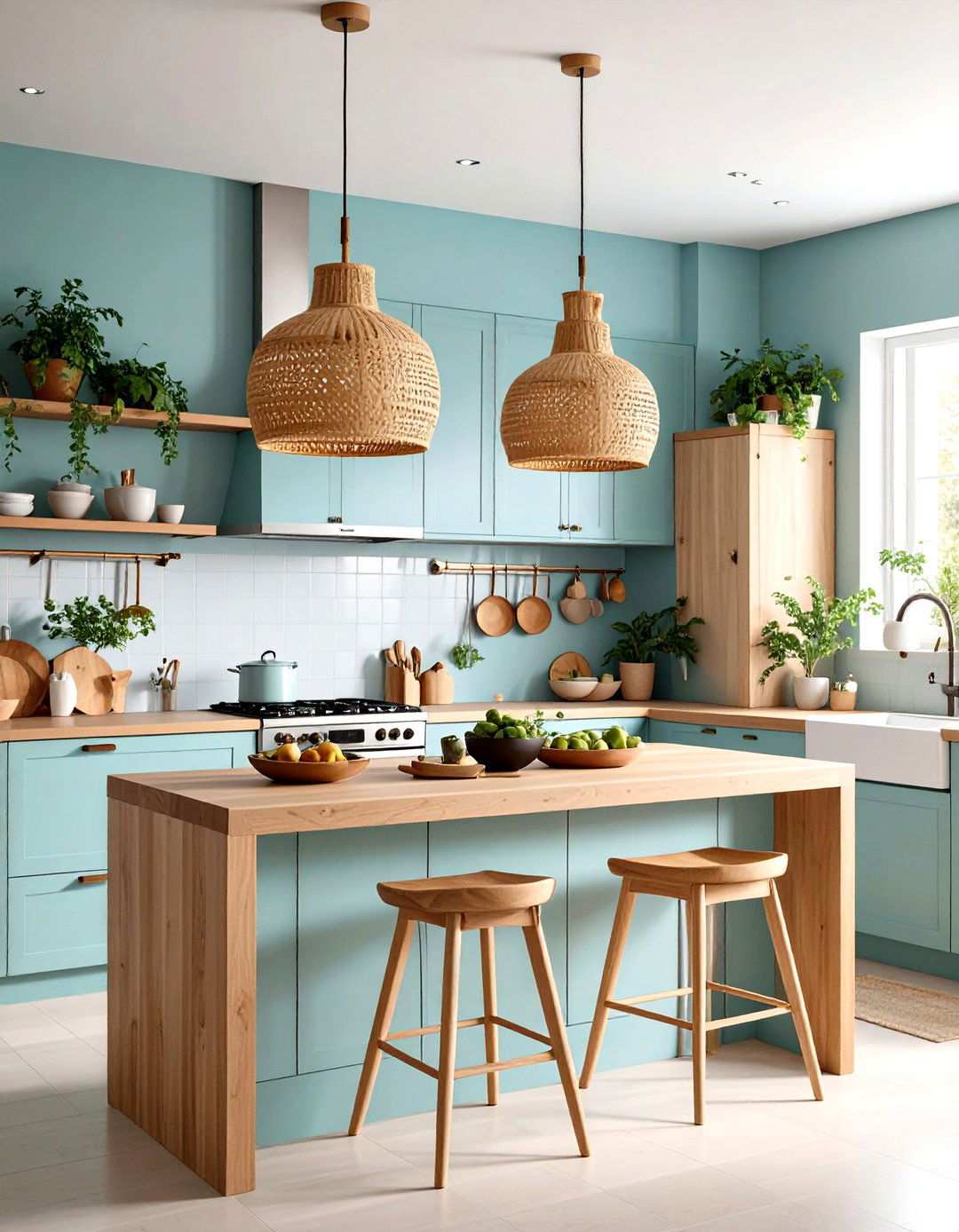
Crafted pendant lights make a bold statement in this Japandi kitchen, delivering both utilitarian illumination and artistic flair. Materials such as woven rattan, ceramic, or wood are chosen to create warm, ambient lighting that harmonizes with the space’s organic features. Strategically positioned at varied heights, the fixtures not only generate visual interest but also ensure adequate task lighting over work surfaces. This thoughtful approach allows for lighting adjustments throughout the day, supporting the space’s dynamic transformation from a vibrant cooking environment to a peaceful evening sanctuary. Pendant designs often feature simple geometric forms that adhere to minimalist principles while adding textural depth through their light sources. By eliminating harsh shadows and creating layered illumination, these fixtures beautifully enhance the kitchen’s natural materials and finishes, regardless of the time of day.
11. Japandi Kitchen Harmony Through Artful Display
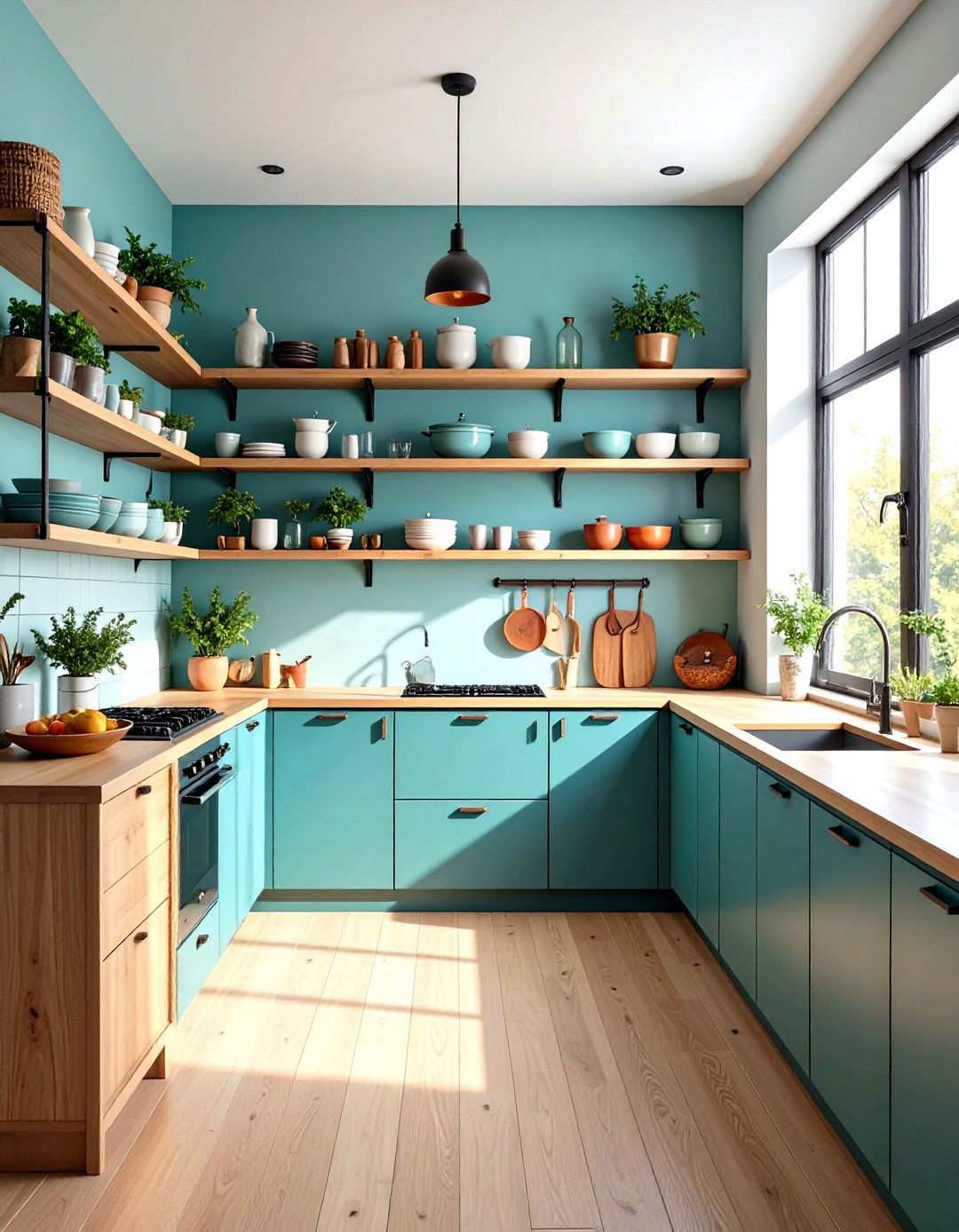
Thoughtfully curated open shelving elevates storage into an art form in this Japandi kitchen, showcasing a carefully selected collection of ceramics, glassware, and natural wood serving pieces that embody both functionality and aesthetic appeal. By maintaining adequate spacing between items, the shelving allows for individual pieces to be appreciated while avoiding visual clutter. The display follows the principles of asymmetrical balance, grouping items by height, color, and texture to create visually pleasing vignettes. As the evening hours approach, the displayed objects are highlighted, transforming the kitchen into a gallery-like space that encourages mindful consumption. By limiting the selection to items that serve both practical needs and aesthetic purposes, open storage promotes easy access while maintaining the visual lightness essential to Japandi design.
12. Japandi Kitchen Sophistication through Understated Hardware
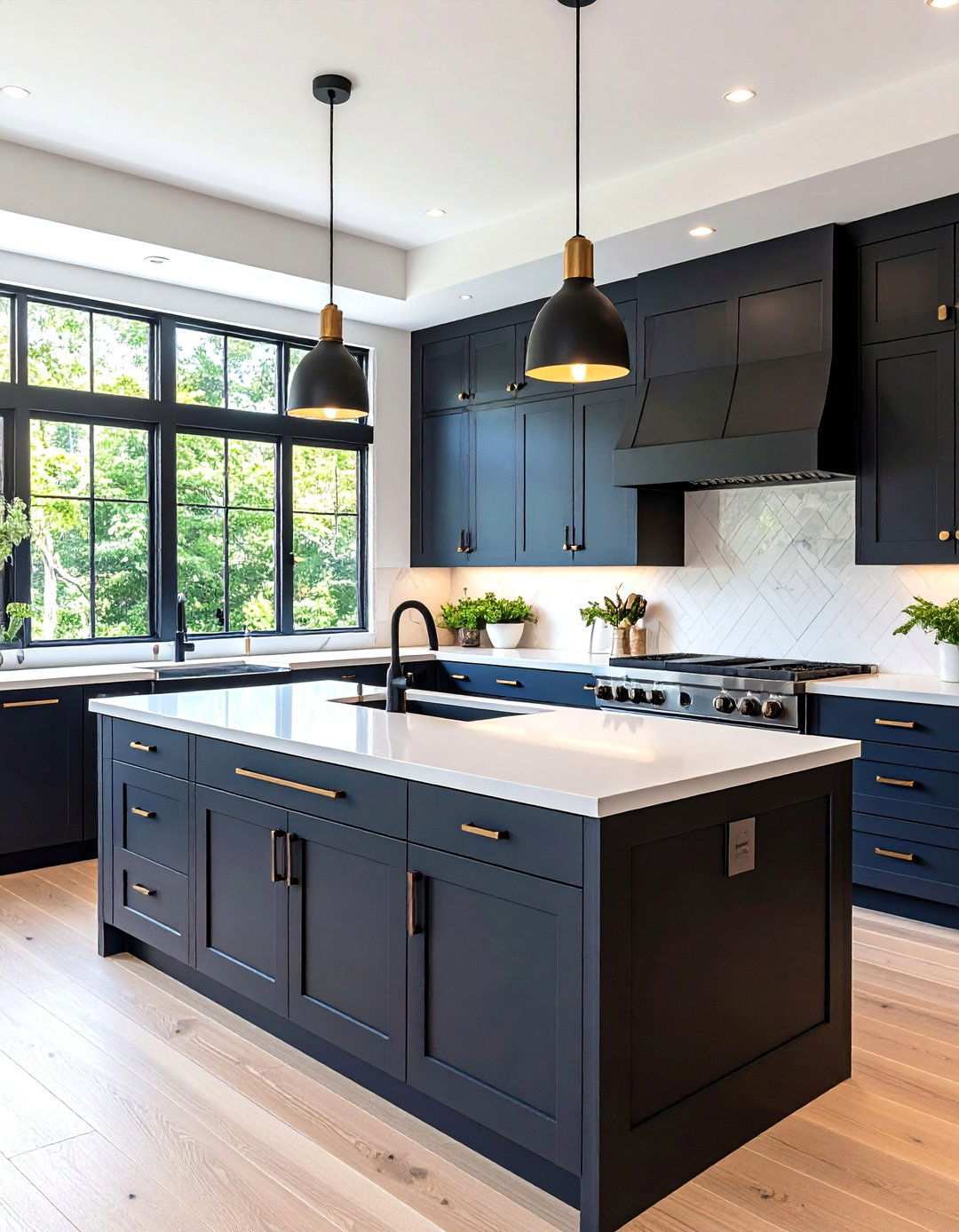
Matte black hardware provides a sophisticated contrast to the light wood cabinetry in this refined Japandi kitchen, adding depth and visual interest without overpowering the space’s minimalist aesthetic. The hardware features simple geometric forms – linear pulls and round knobs – that complement the space’s understated style without competing for visual attention. Consistent finish on all cabinet and drawer fronts unifies the cabinetry while adding a touch of sophistication. Hinges and drawer slides utilize the same black finish, creating seamless visual continuity throughout the cabinetry. The matte surface reduces fingerprints and glare, providing comfortable grip surfaces for daily use. The subtle hardware choice demonstrates how small details can significantly impact a space’s overall sophistication while maintaining the restraint essential to successful Japandi design.
13. Japandi Kitchen: Harnessing the Power of Natural Light
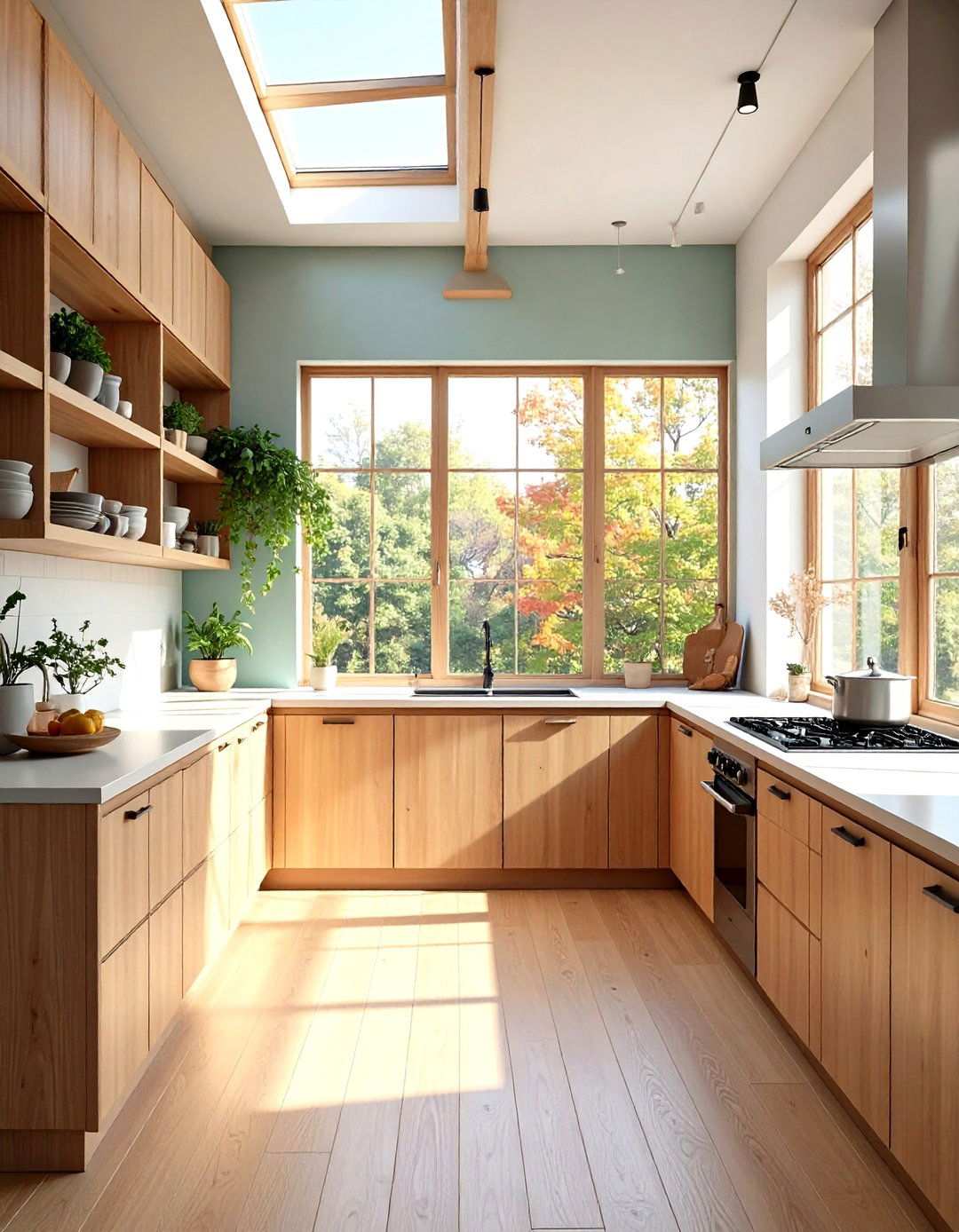
By giving precedence to natural illumination, this Japandi kitchen unfolds as a vibrant space that dynamically adapts to the changing light throughout the day. In place of upper cabinetry on one wall, open shelving is introduced, allowing for a seamless visual connection between the interior and exterior. To filter harsh sunlight while maintaining an unobstructed view of the outdoors, natural linen panels are utilized. The judicious use of light-colored surfaces throughout the kitchen serves to amplify and reflect available daylight, rendering artificial lighting unnecessary and ensuring a consistent lighting design.
14. Japandi Kitchen: Streamlined Pantry Organization
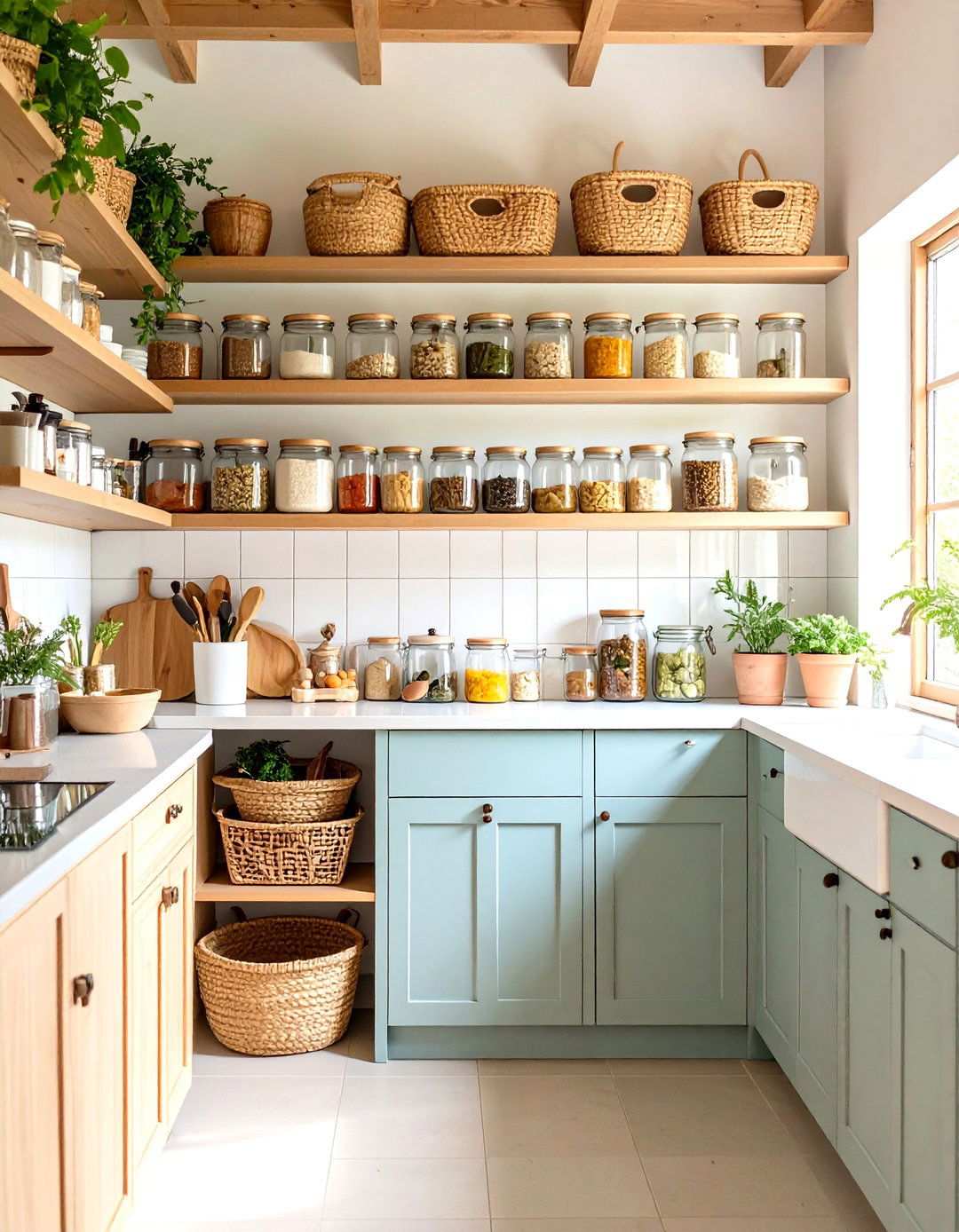
A well-structured pantry system embodies the essence of Japandi organizational principles by implementing a thoughtful categorization system and utilizing containers with wood lids to store dry goods. This approach creates a uniform appearance while allowing for easy access to ingredients. The pantry’s shelving displays containers alongside natural fiber baskets for storing produce and bulk pantry items, creating a visually harmonious space. Employing a neutral color palette ensures visual continuity between the pantry and the main kitchen, even when the pantry doors are closed. Simple typography in earthy tones provides functional information without disrupting the space’s calming atmosphere, while serving to categorize specific storage areas for grains, spices, oils, and cooking tools.
15. Japandi Kitchen: Introducing Textured Wall Finishes
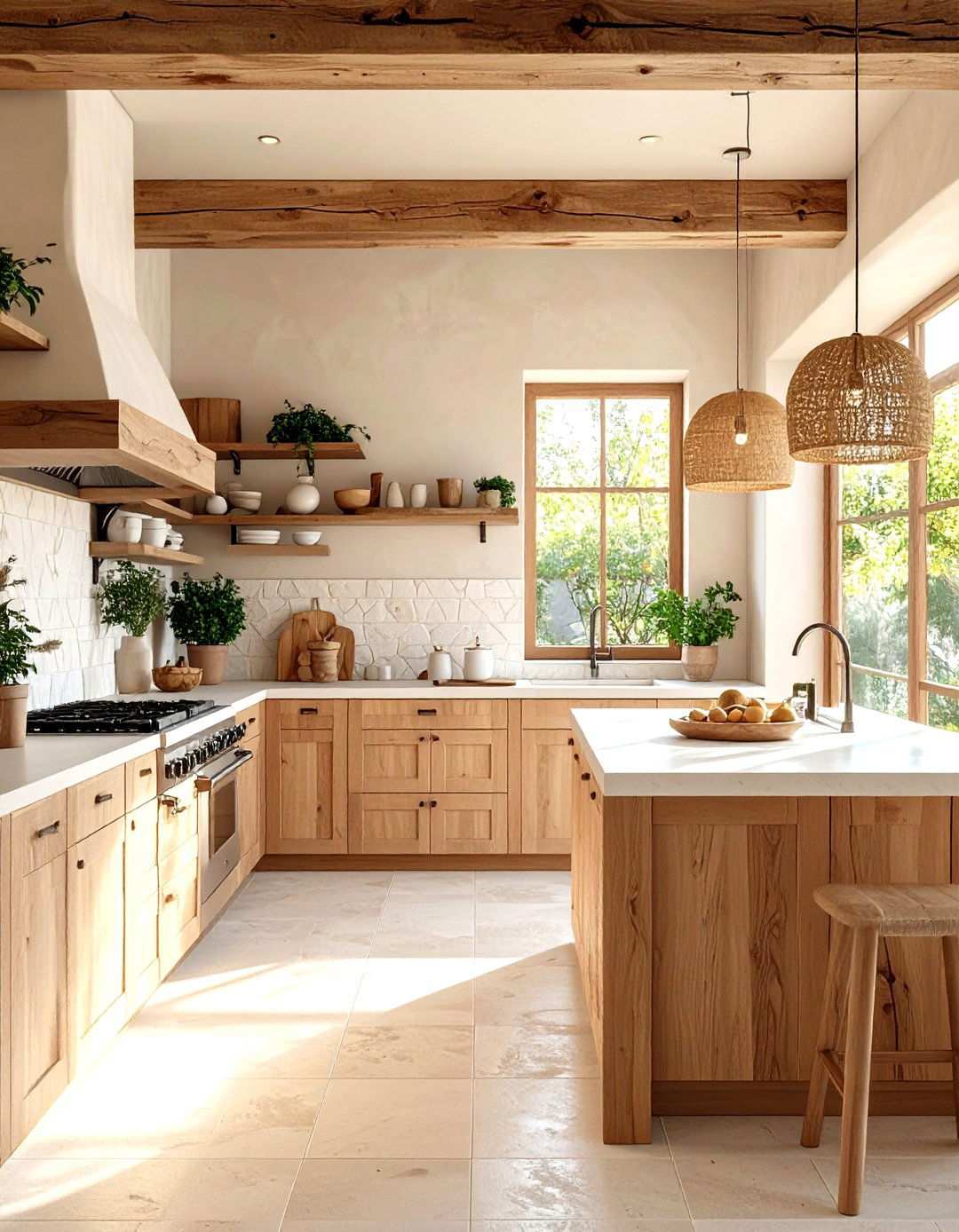
Subtle wall textures inject a sense of tactility into this Japandi kitchen while maintaining its overall visual cohesion. Plaster walls provide gentle surface variation, catching the light beautifully throughout the space. The neutral color palette, comprising warm whites and soft grays, perfectly complements wood cabinetry and natural stone surfaces, eliminating the need for elaborate decorative wall treatments. Instead, the material itself takes center stage, providing visual interest and depth. Varying texture intensities are employed – smooth surfaces near cooking areas for ease of cleaning, and more pronounced textures in dining areas for added visual appeal. This thoughtful approach connects to traditional Japanese plastering techniques while incorporating Scandinavian color sensibilities, creating a space that exudes character and minimalism through the intentional use of materials.
16. Japandi Kitchen with Seamless Integration
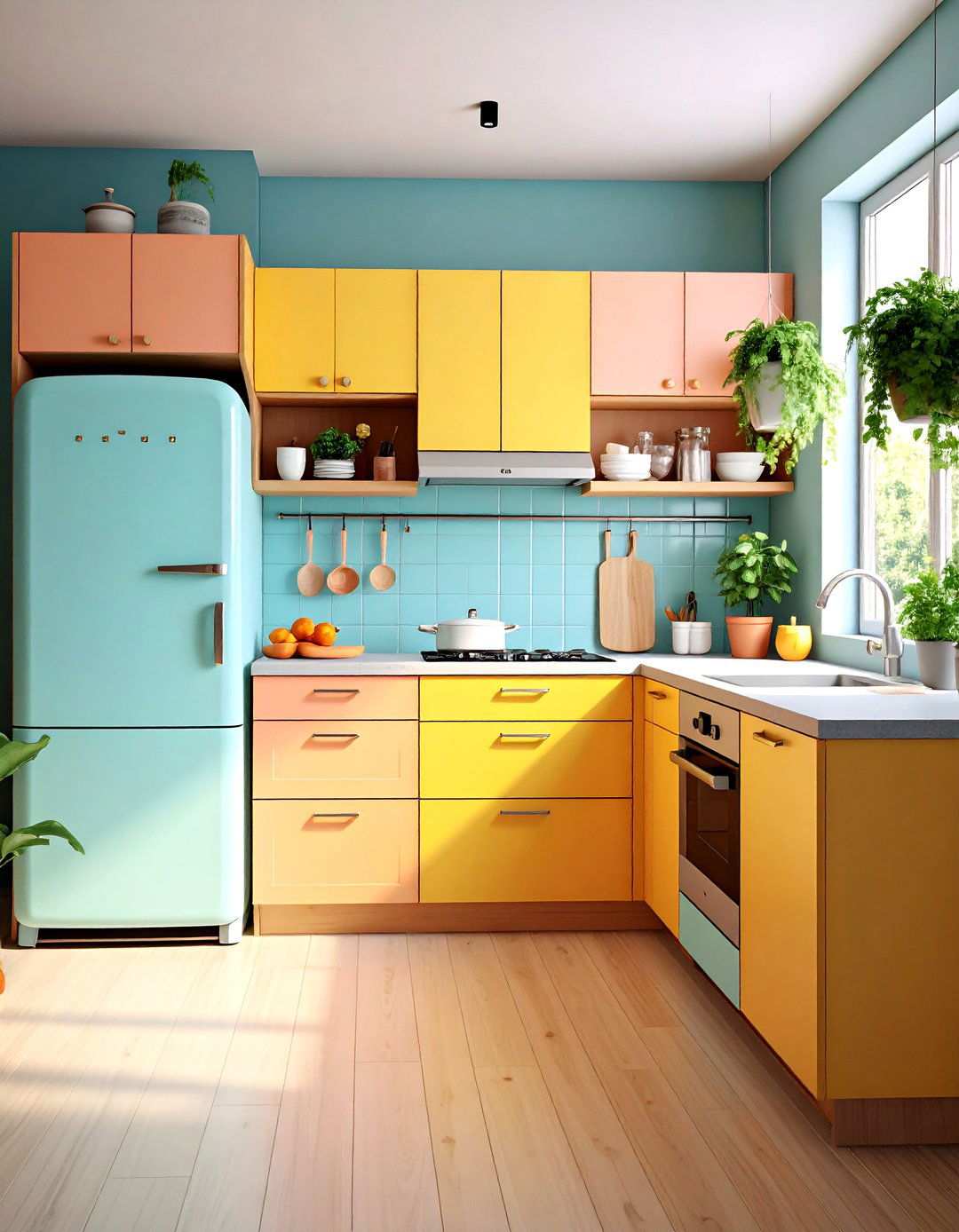
To achieve a harmonious balance between functionality and aesthetics, this Japandi kitchen incorporates concealed appliances that blend seamlessly into the surrounding cabinetry. The refrigerator and dishwasher are cleverly hidden behind modern panels, creating an uninterrupted visual flow that maintains the space’s clean and minimalist essence. The cabinetry itself features simple lines and neutral colors that complement the adjacent elements, rather than overpowering them. Built-in storage accommodates small appliances, ensuring countertops remain clear for daily food preparation and cooking activities. By placing frequently used items within easy reach, the kitchen’s layout follows efficient workflow principles, thereby promoting a sense of calm and organization.
17. Japandi Kitchen with Serene Garden Views
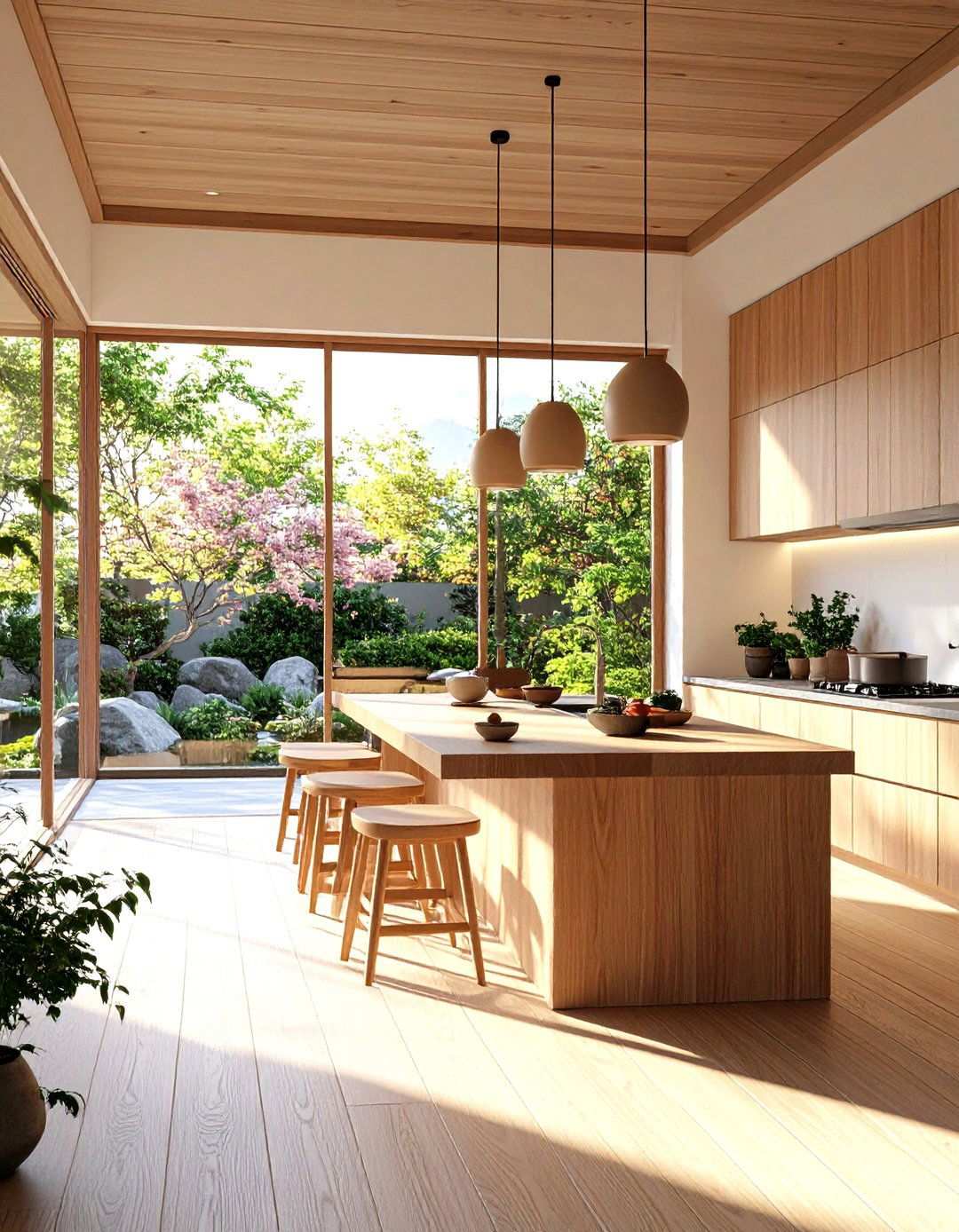
This Japandi kitchen is elevated into a tranquil oasis by thoughtfully framed garden views that blur the boundaries between indoors and outdoors. Strategically positioned windows allow the cooking area to overlook the meticulously maintained garden spaces, which feature stone elements, carefully pruned plants, and a serene water feature. The garden design adheres to traditional Japanese principles of controlling nature, creating seasonal interest and visual appeal while maintaining a sense of harmony throughout the year. By eliminating the need for decorative treatments, the unobstructed views allow for a constantly changing focal point that not only supports mindful cooking but also reduces stress by promoting awareness of seasonal rhythms and natural cycles that influence cooking and eating patterns.
18. Japandi Kitchen with Industrial Contrast
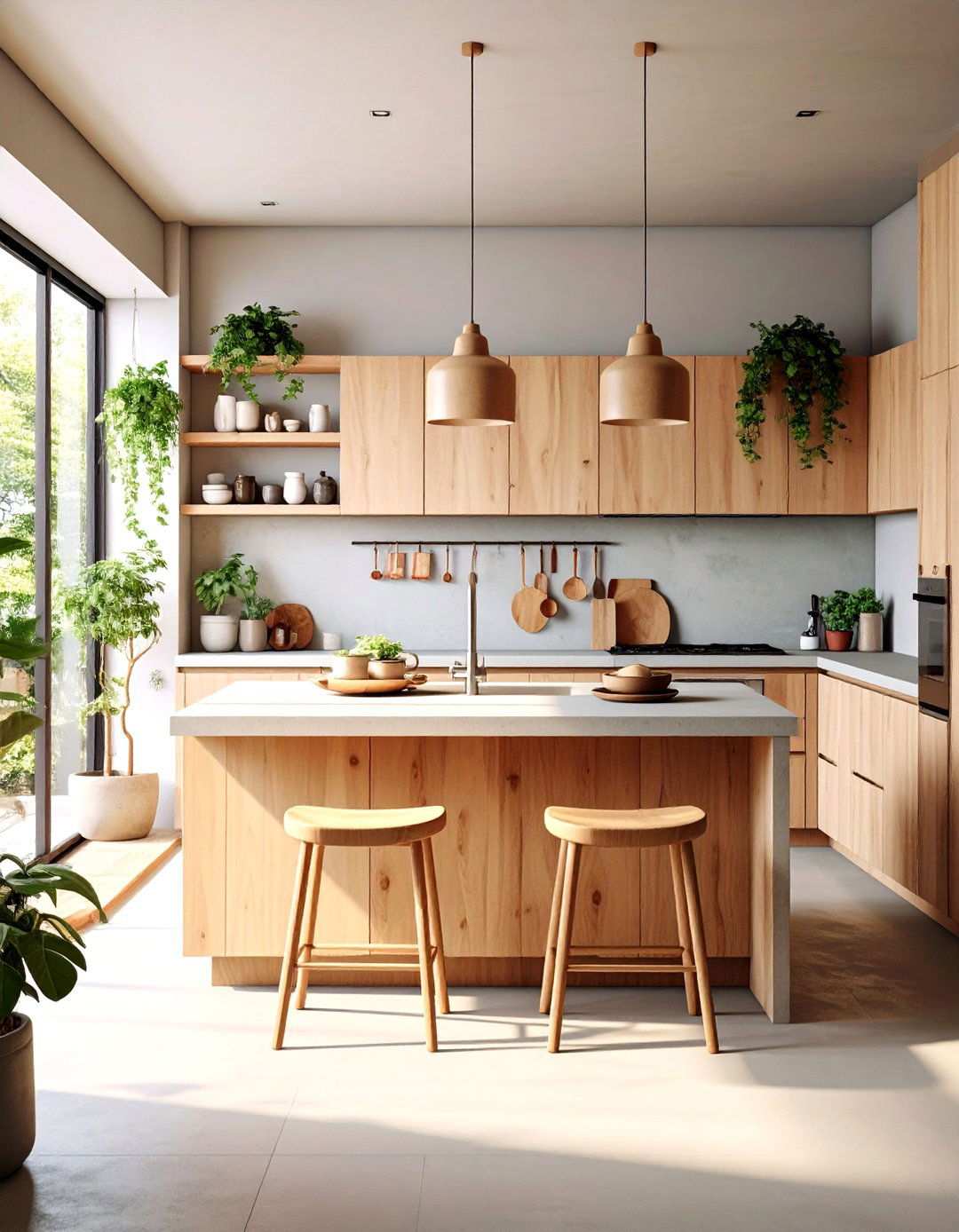
In this Japandi kitchen, raw concrete surfaces provide a striking contrast to the natural materials used throughout the space. The concrete countertops feature smooth, sealed finishes that offer durability while maintaining the material’s inherent beauty. The neutral gray color of the concrete complements the wood cabinetry and ceramic elements, while adding a contemporary edge to the traditional Japanese-inspired design. The backsplash areas provide heat resistance near cooking surfaces and contribute to the space’s unified color palette. By embracing the material’s honest expression, the kitchen’s design aligns with Japandi principles of authentic material elements, which age gracefully and develop a patina that adds character over time. This thoughtful integration demonstrates how industrial materials can enhance minimalist kitchen design while providing practical benefits for daily cooking activities and long-term durability.
19. Japandi Kitchen Embracing Cultural Harmony
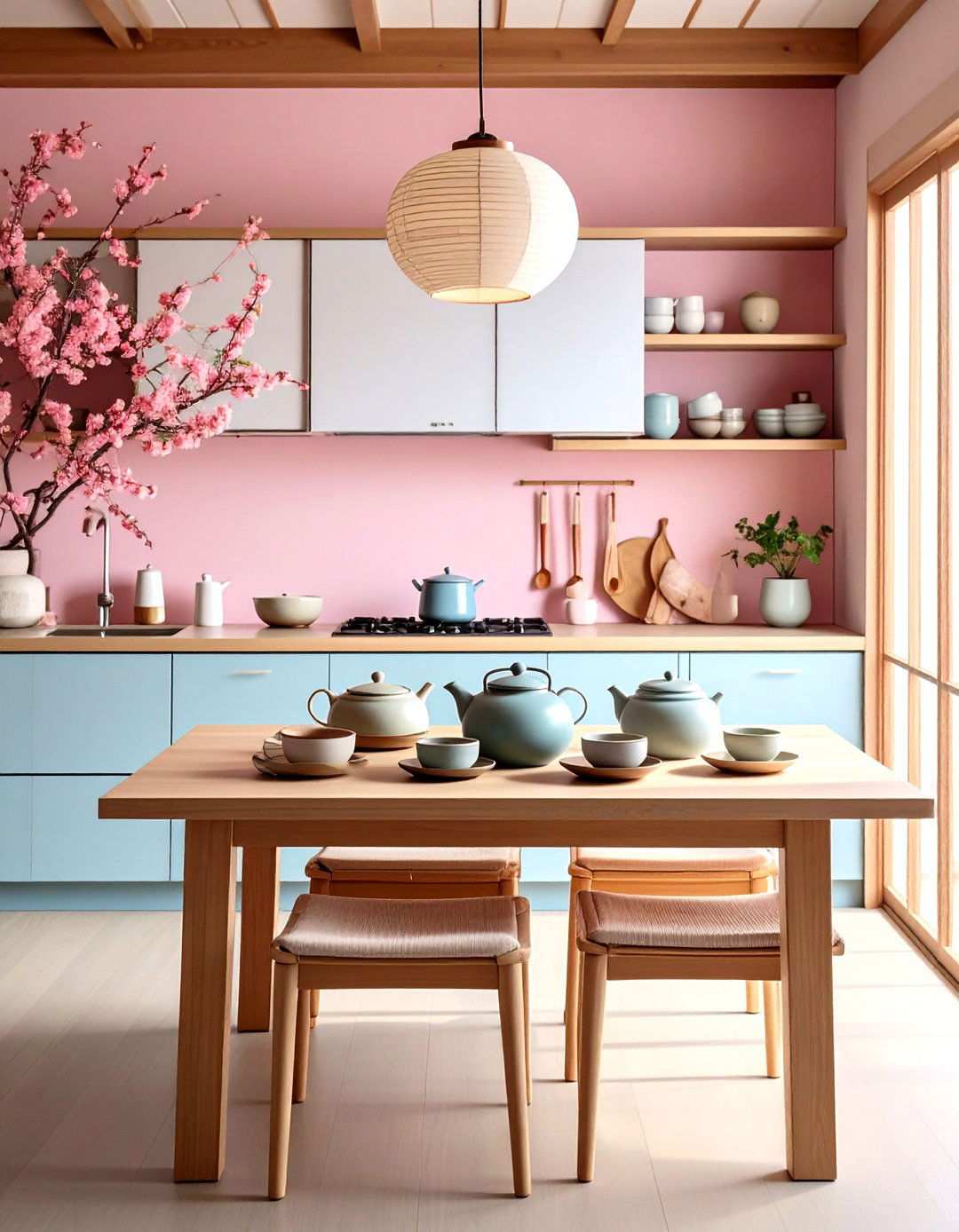
This Japandi kitchen thoughtfully combines traditional Japanese elements with modern functionality, creating a serene space that honors cultural heritage. The dedicated tea preparation area features lower counters, ideal for traditional tea ceremonies, along with storage for ceremony implements and seasonal tea wood cabinetry. The cabinetry showcases ceramic teapots, cups, and serving pieces that reflect both practicality and artistic flair. Specialized storage for various tea varieties maintains optimal freshness through proper containers, while gentle illumination creates a contemplative ambiance. This thoughtfully designed space seamlessly connects to the kitchen’s overall lighting, promoting mindful daily rituals while meeting practical needs for tea storage and design. By incorporating cultural practices into contemporary kitchen layouts, this Japandi kitchen demonstrates the harmony between tradition and modernity.
20. Japandi Kitchen: A Study in Minimalist Elegance
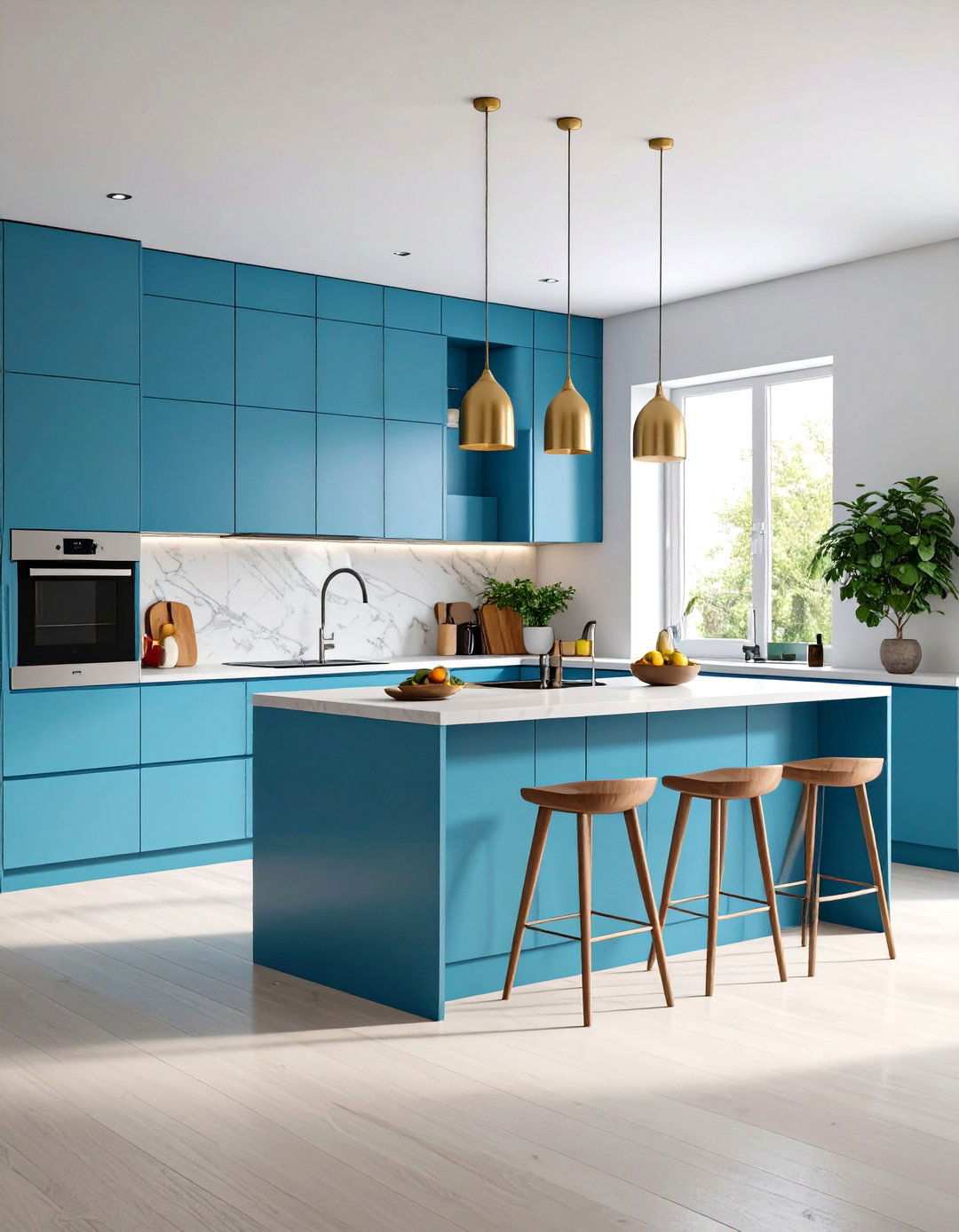
This Japandi kitchen embodies ultra-minimalist cabinetry, stripping away unnecessary elements to reveal a serene and sophisticated space. The cabinetry’s flat surfaces, devoid of raised panels, decorative moldings, or visible hardware, create an unbroken visual line that enhances the room. The seamless surfaces are made possible by precision-crafted hinges and drawer slides, which provide smooth organization while maintaining a streamlined appearance. Simple dividers and adjustable shelving maximize storage, emphasizing the beauty of the wood grain patterns and the expertise of the designer’s reductive strategy. By prioritizing material quality over decorative elements, this kitchen achieves a visual calm that showcases the beauty of simplicity, crafted through careful proportion, material selection, and installation precision.
21. Japandi Kitchen: A Haven of Comfort and Texture
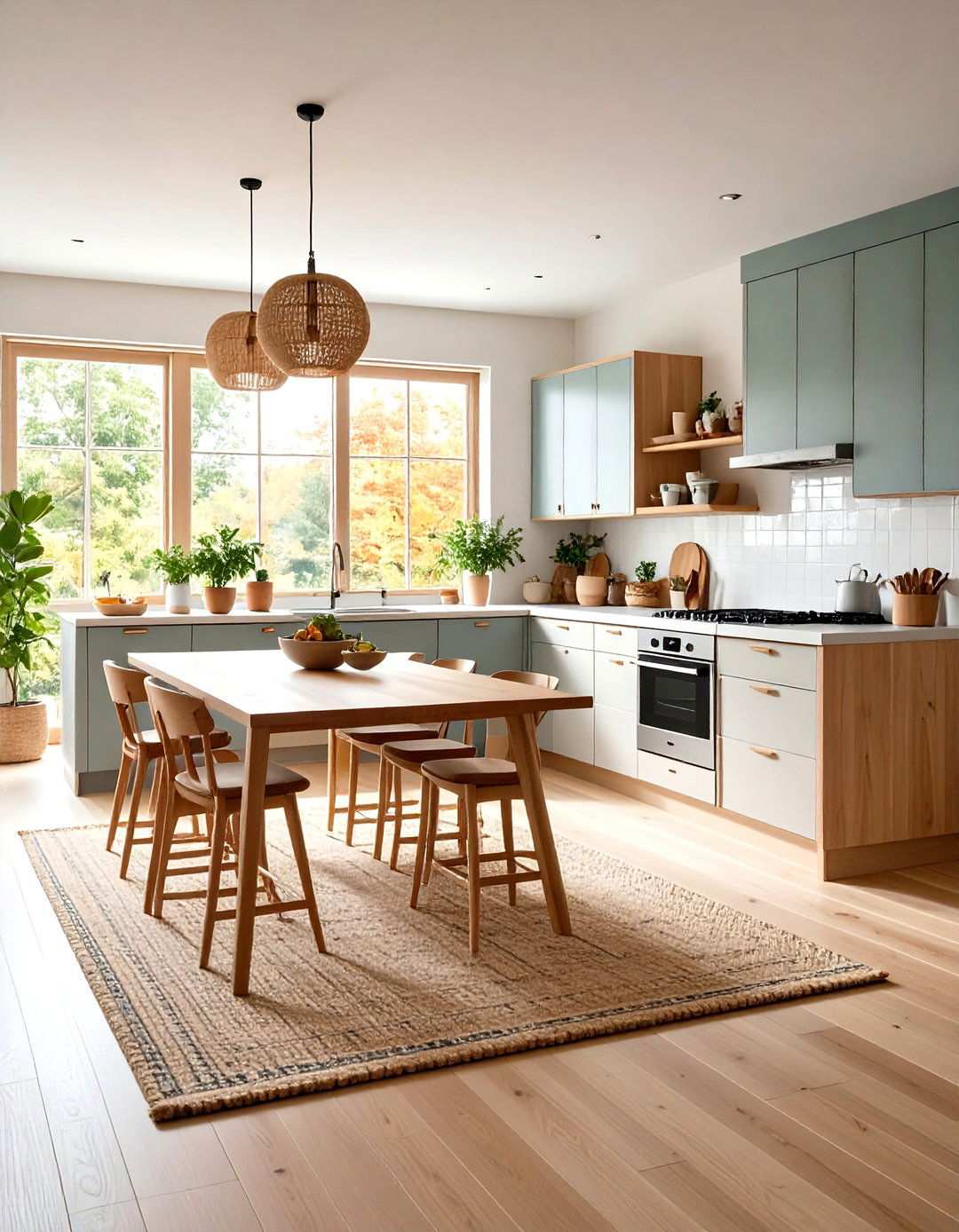
In this Japandi kitchen, carefully placed natural fiber rugs define zones and bring warmth to the space, creating a sense of comfort underfoot. The hemp rugs maintain the neutral color palette, while their organic placement creates inviting standing areas near the sink and cooking zones, reducing fatigue during extended food preparation. The use of natural materials aligns with sustainability principles and offers easy maintenance through regular vacuuming and occasional deep cleaning. Smaller rugs allow for flexible arrangement and easier washing compared to single large fibers, which can disrupt the calm flooring approach. The ‘natural variations add subtle visual interest without compromising the kitchen’s soothing ambiance, demonstrating how soft furnishings can enhance comfort while supporting minimalist design principles.
22. Japandi Kitchen with Ceramic Vessel Storage
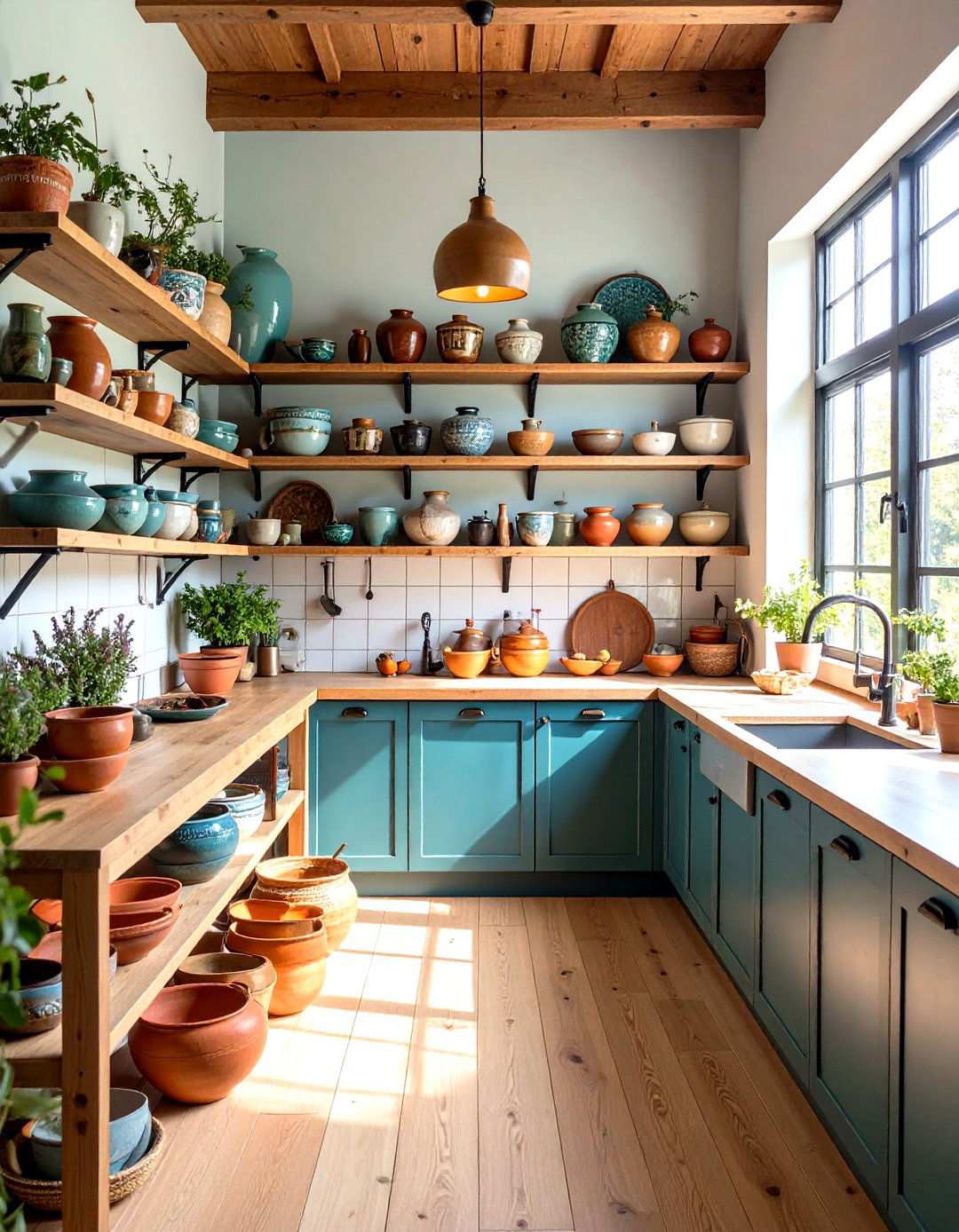
A creative fusion of form and function defines this Japandi kitchen, where handcrafted ceramic containers replace conventional storage solutions. Earthy ceramic crocks serve as a functional repository for dry goods like rice, flour, and beans, while smaller vessels meticulously organize spices and tea. The ceramics themselves boast earthy glazes and organic surface textures, elevating the artisanal craftsmanship and celebrating the beauty of traditional techniques. By showcasing these vessels as sculptural elements on open shelving, the kitchen gains visual interest through the varied sizes and organic textures of the ceramic materials. This thoughtful approach not only maintains ingredient freshness but also eliminates plastic packaging, underscoring the kitchen’s commitment to sustainability. Furthermore, it highlights how everyday objects can be imbued with a sense of cultural significance, connecting users to traditional craft methods and cultural practices.
23. Japandi Kitchen with Wooden Beam Ceiling
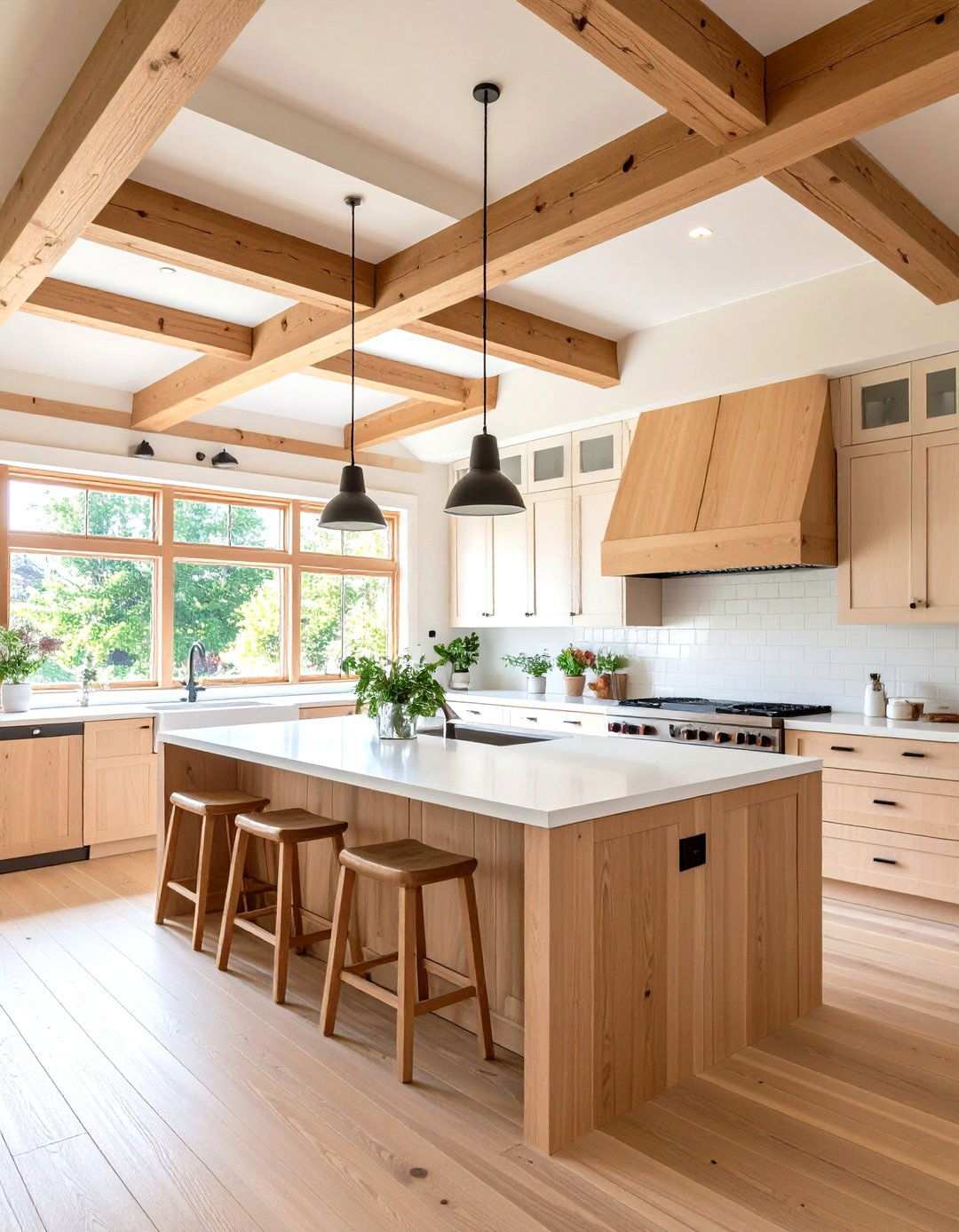
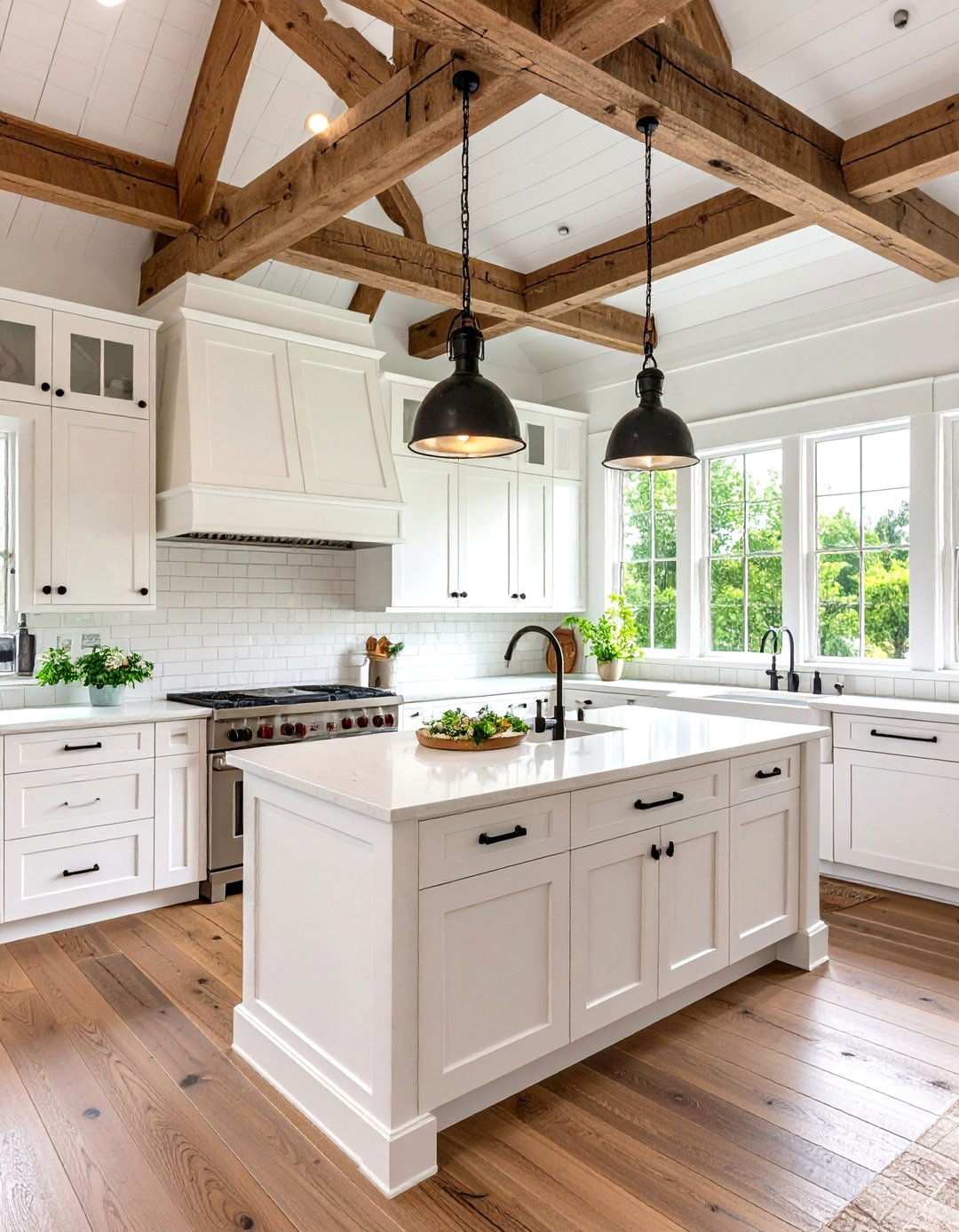
Exposing the wooden beam ceiling in this Japandi kitchen adds a touch of architectural sophistication while maintaining the space’s natural material palette. The beams feature warm, natural wood finishes that harmoniously complement the cabinetry tones, while also adding vertical visual weight to balance the lower kitchen spaces. This thoughtful design creates a sense of rhythm across the ceiling plane, providing mounting points for pendant lighting and hanging storage. The carefully chosen wood species not only offers structural integrity but also ages gracefully through exposure to cooking moisture and temperature. The clean white surfaces of the beams, which reflect light throughout the space, serve as a testament to the kitchen’s dedication to minimalist design. By incorporating this architectural element, the kitchen connects to traditional Japanese building methods while embracing Scandinavian appreciation for honest, natural materials. This thoughtful design demonstrates how structural elements can enhance rather than compromise a kitchen’s aesthetic.
24. Japandi Kitchen with Indoor Plant Integration
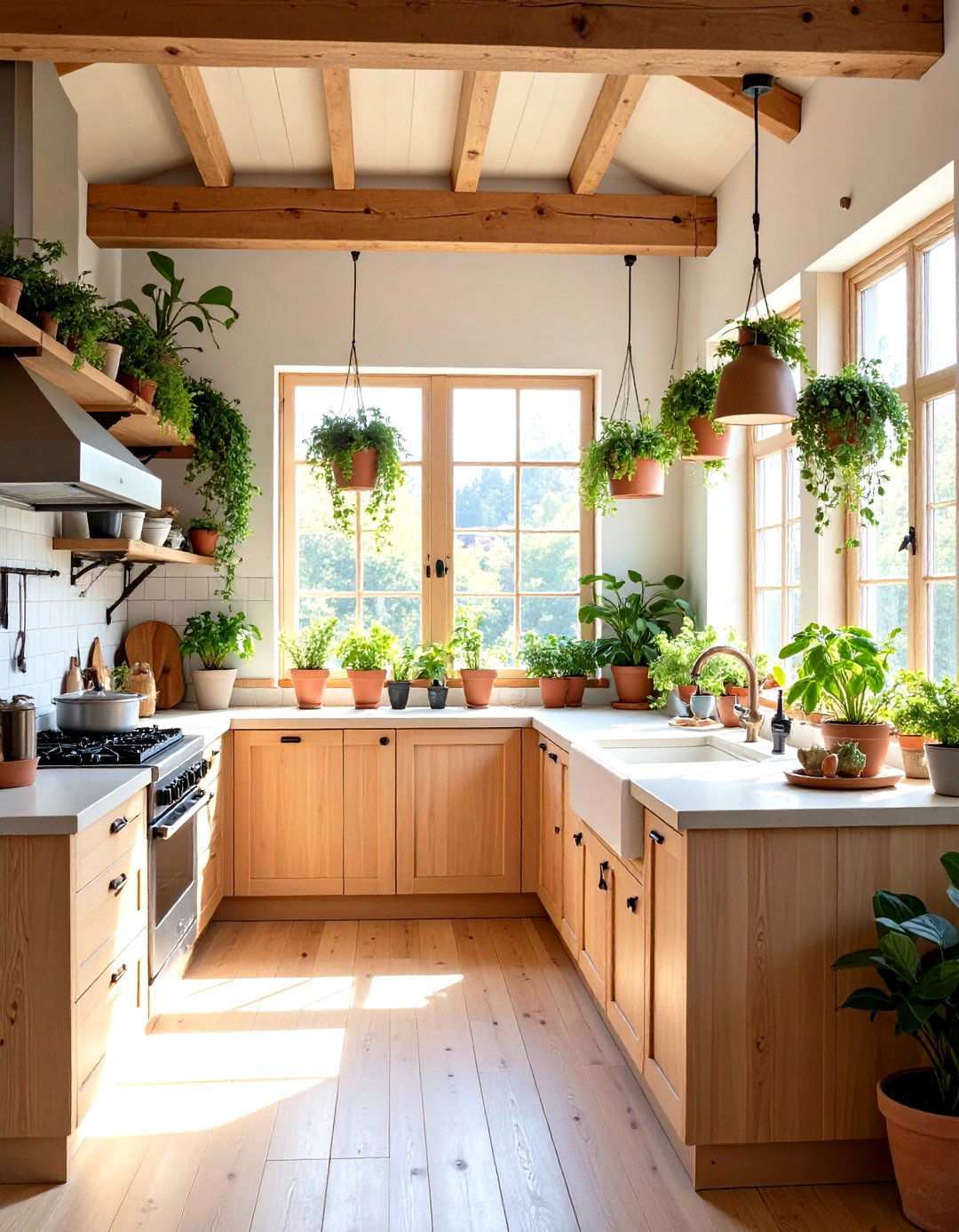
The incorporation of living plants throughout this Japandi kitchen creates a profound connection to nature, while also purifying the indoor air and adding a touch of seasonal flair. Window boxes filled with fresh gardens provide not only fresh ingredients but also create vibrant green focal points that change throughout the growing seasons. Floor-standing ceramic planters define space boundaries while adding vertical elements that complement the kitchen’s horizontal lines. The selection of plants, which thrive in kitchen conditions while requiring minimal maintenance, softens the hard surfaces of the kitchen and introduces color variations that change subtly through the seasons. This thoughtful integration not only enhances kitchen functionality but also supports wellbeing through improved air quality and a deeper connection to the growing cycles. By embracing natural elements, the kitchen becomes a more inviting and sustainable space, where the boundaries between indoors and outdoors are blurred.