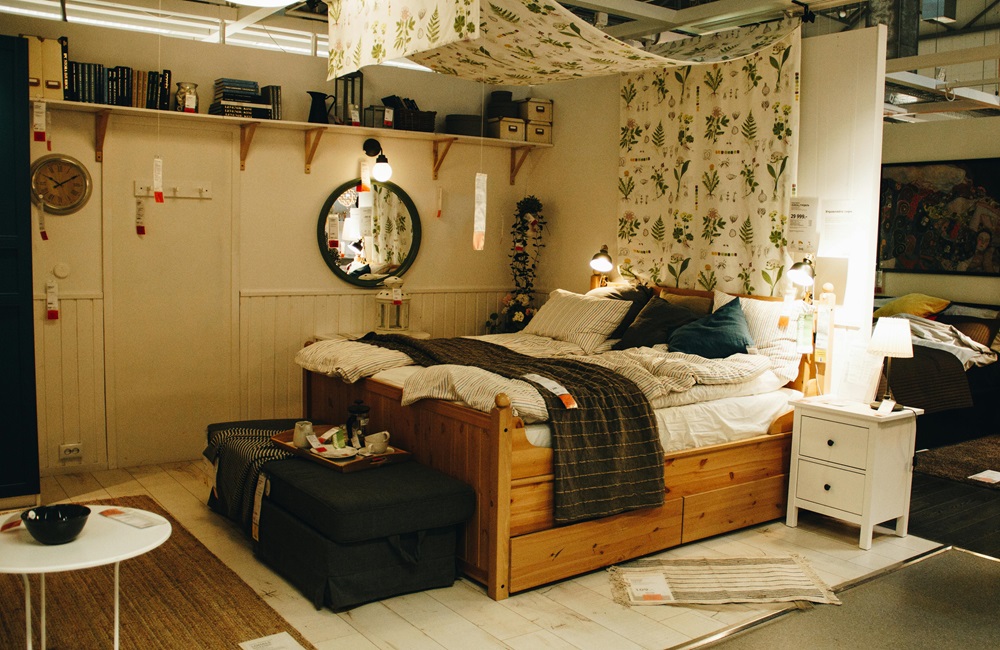
The right plants don’t just decorate a room—they shape how the space feels and functions. Used thoughtfully, foliage can soften hard lines, clarify zones, hide problem spots, and draw the eye to architecture you love. The key to styling isn’t stuffing every corner with greenery; it’s editing. Pick a tight palette of pots and materials, repeat forms and heights with intention, and place plants where they’ll thrive in your actual light. Layer at three levels (floor, table, eye) to build depth, and let negative space breathe around your favorites. Below are twenty indoor plants styling ideas that balance aesthetics with real-life care, so your home looks fresh and stays livable.

As an Amazon Associate I earn from qualifying purchases.
Create a Focal Cluster in the Living Room
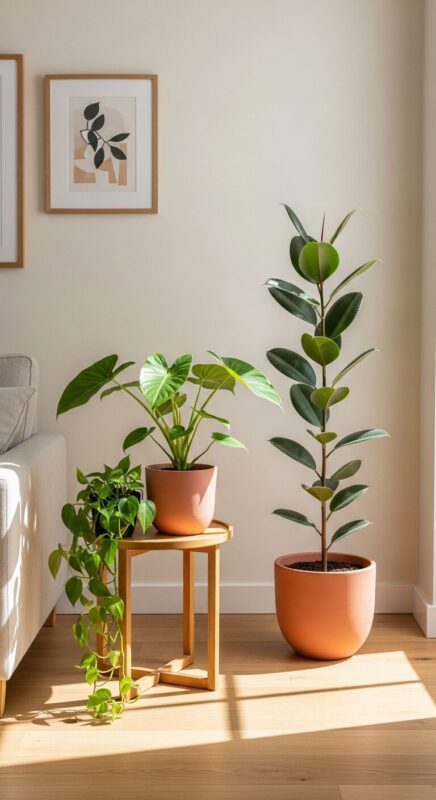
Instead of scattering single pots everywhere, group three to five plants near a feature—like a window, bookcase, or art wall—to create a focal cluster. Mix one tall “hero” (think fiddle-leaf fig, rubber plant, or kentia palm) with mid-size philodendrons and a trailing pothos to spill over the edge of a side table. Use related planters in varied sizes for cohesion. The group reads as one designed vignette and instantly energizes the room without visual clutter.
Flank the Sofa with Green “Lamp” Alternatives
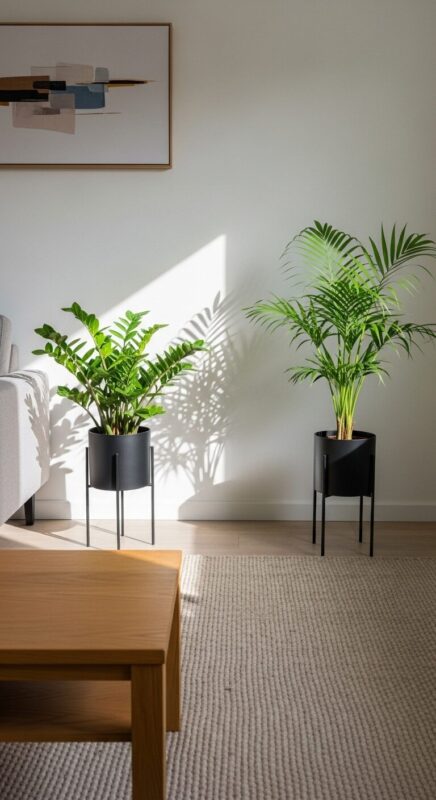
Table lamps aren’t the only way to frame a sofa. Place medium-tall plants on matching stands at each end—ZZ plant, dracaena, or parlor palm—so leaves arc toward the seating zone. Keep foliage clear of traffic and choose stands that echo the coffee table finish. This flanking effect adds symmetry and softens boxy upholstery while keeping sightlines open to the TV or artwork behind.
Use Pedestals to Elevate Small Plants
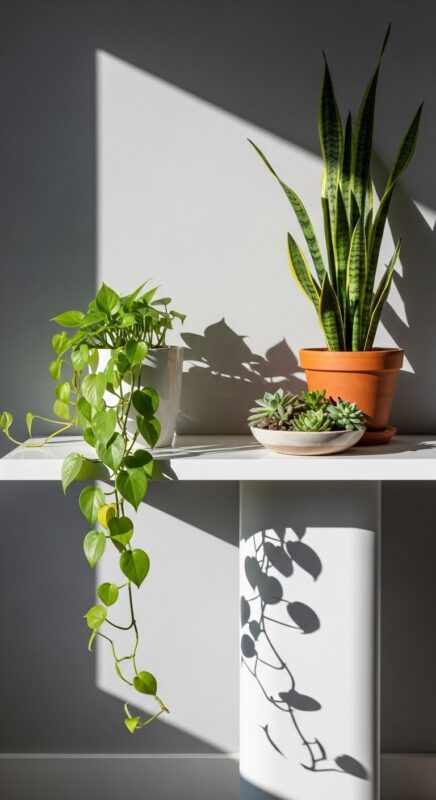
Short plants often disappear on sideboards. Lift them with a pedestal or stack of chunky books to bring foliage into view. Vary heights across a console: one elevated trailing philodendron, one medium snake plant, one low sculptural succulent cluster. Keep pots within a single color family—matte whites or warm terracotta—to let leaf shape lead. Pedestals are also great for rotating “spotlight” plants in bloom.
Style Windowsills Like Miniature Greenhouses
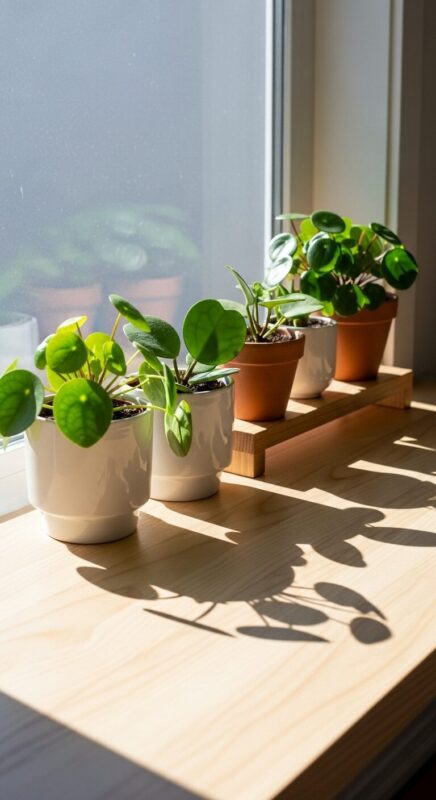
Windowsills are prime real estate for light-loving plants. Line them with a row of small pots—pilea, hoya, peperomia—leaving gaps so the sill doesn’t feel crammed. Repeat pot colors for rhythm and tuck a small mister or scissors into a tray for care. If the sill is deep, add a narrow wooden riser to tier the back row. The effect feels curated and functional, not random.
Float Vines from High Shelves
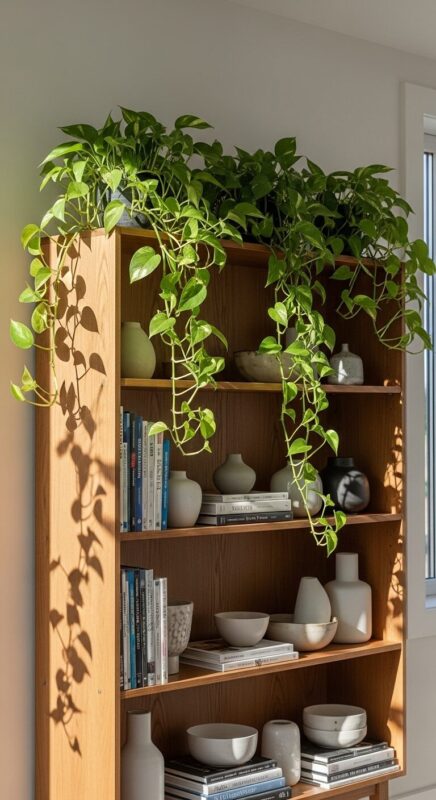
Trailing plants draw the eye up and soften hard edges. Place pothos, philodendron micans, or string-of-hearts on the top shelf of a bookcase and let vines cascade in measured lengths. Balance foliage with negative space so books remain accessible. A single trailing direction looks intentional—choose left or right—and trim to maintain a crisp line above door frames.
Anchor Dining Rooms with a Linear Centerpiece
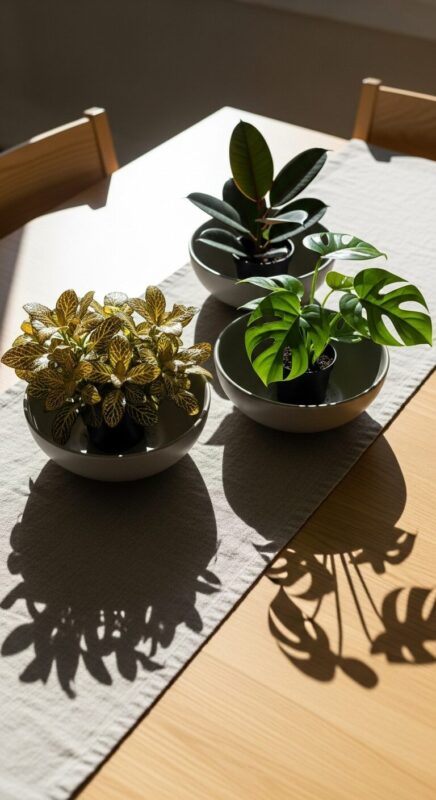
Dining tables need low arrangements that don’t block conversation. Cluster three shallow bowls of mixed foliage—fittonia, baby rubber plant, small ferns (for lower light zones), or mini monstera in brighter rooms—down a runner. Keep profiles under eight inches and repeat the same pot finish for unity. This brings life to the table without constant rearranging for meals.
Green Up the Entry Without Blocking Flow
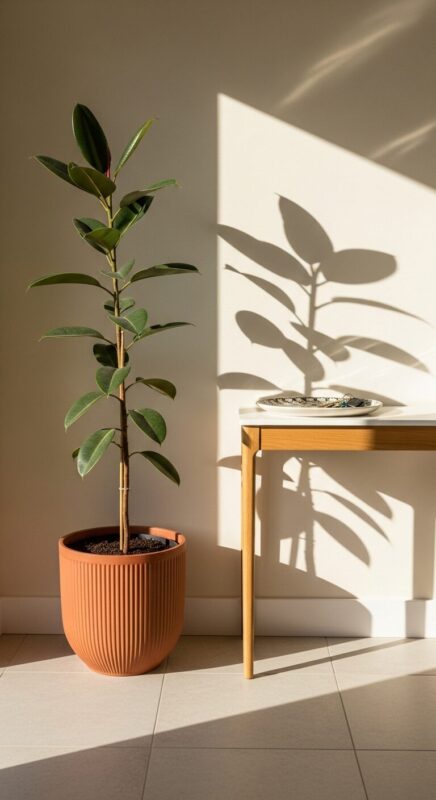
Entries need clear paths and fast care. Choose one impactful plant—a rubber plant, umbrella plant, or tall dracaena—and pair it with a shallow catchall tray on a console. A single statement plant reads intentional and is easy to water on the way out the door. Ensure leaves don’t snag coats and that the pot has a protective saucer for wet days.
Build a Bathroom Spa Moment
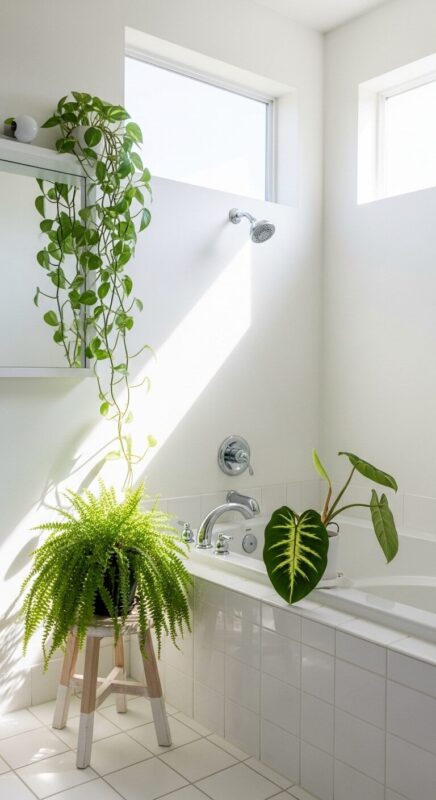
Bathrooms often have bright, diffuse light and higher humidity—perfect for ferns, pothos, and philodendron brasil. Group two to three moisture-loving plants near the sink or on a tub ledge (clear of splashes) and keep pots light-colored to reflect brightness. A single trailing vine over a mirror corner softens the glass and feels resort-like without cluttering countertops.
Zone an Open Plan with Tall Greenery
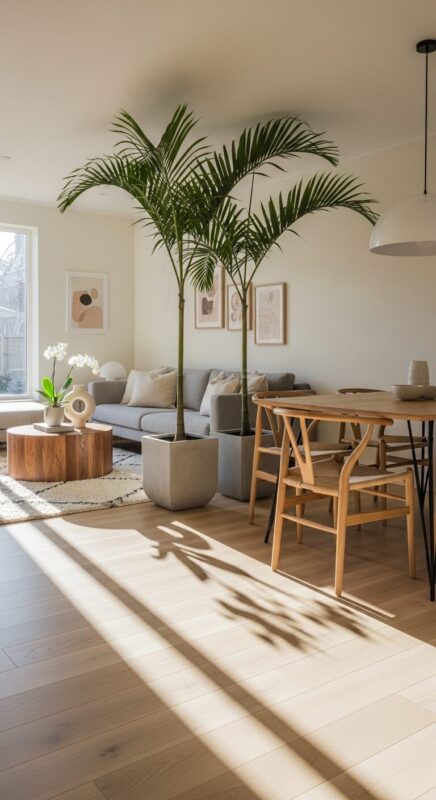
In open layouts, plants can act like visual partitions. Use a pair of tall, airy specimens—kentia palms or dracaena marginata—in matching floor planters to subtly divide living and dining areas. Place them where light is reliable and traffic is light. The green “screen” guides movement while keeping sightlines permeable and rooms connected.
Layer Plants on a Bar Cart
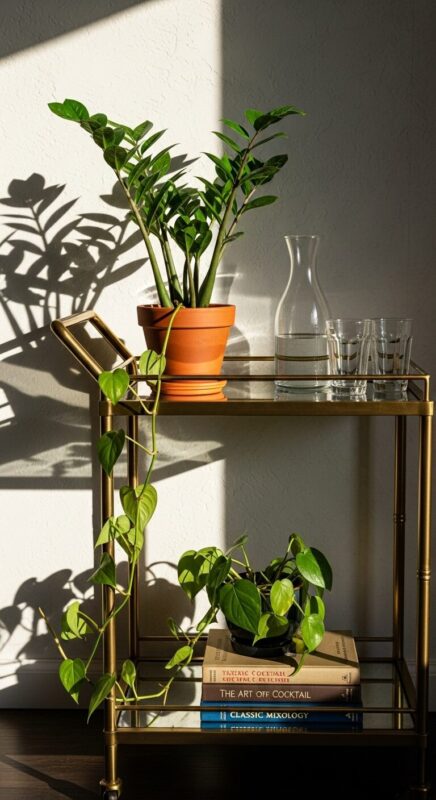
A bar cart can double as a movable plant display when not entertaining. Style the top with a compact plant (pilea, small ZZ), a carafe, and two glasses; place a trailing plant on the lower shelf beside books. When it’s party time, roll the cart and temporarily relocate the plants as a trio to a window ledge—cohesion maintained.
Choose Pots That Echo Your Materials Palette
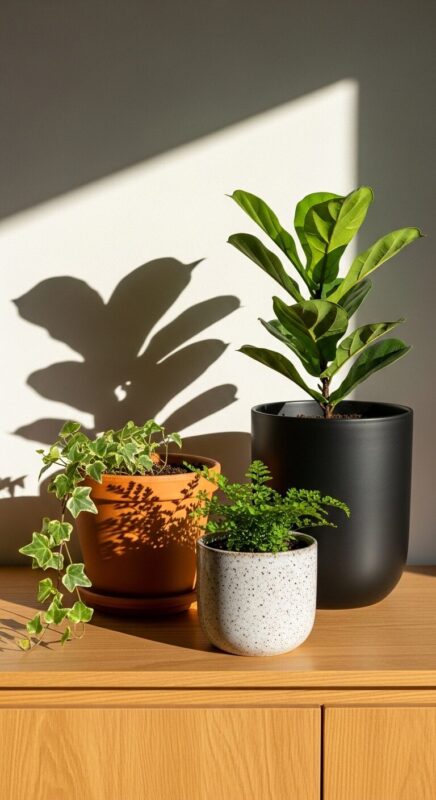
Your pots are half the look. Pick a palette that matches existing finishes—terracotta with warm woods, matte black with black hardware, soft speckled stoneware with light oak. Repeat those finishes across the room so even a variety of plant species reads cohesive. Avoid mixing too many textures in one vignette; let foliage be the “pattern.”
Style a Plant Ladder or Leaning Shelf
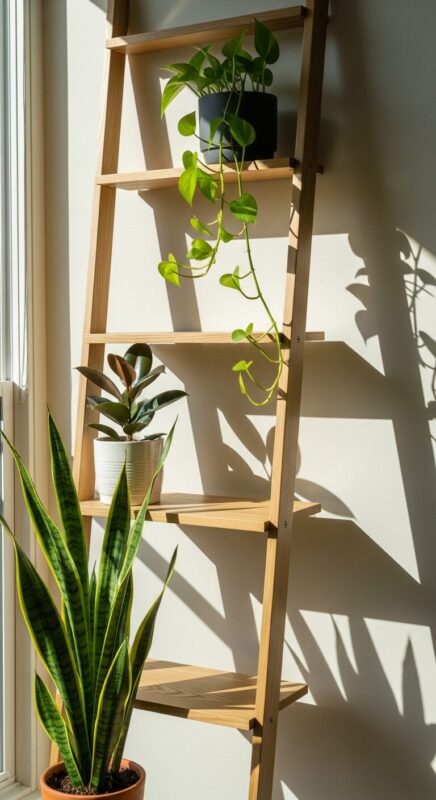
A narrow leaning shelf uses vertical space without crowding floors. Place sturdier plants on lower rungs (snake plant, rubber plant cuttings) and lighter trailing plants higher up. Keep one shelf intentionally empty to avoid visual overload, and align the ladder near a window for even light. This is an apartment-friendly way to gather a collection in one elegant column.
Add Nightstand Greens for Calm
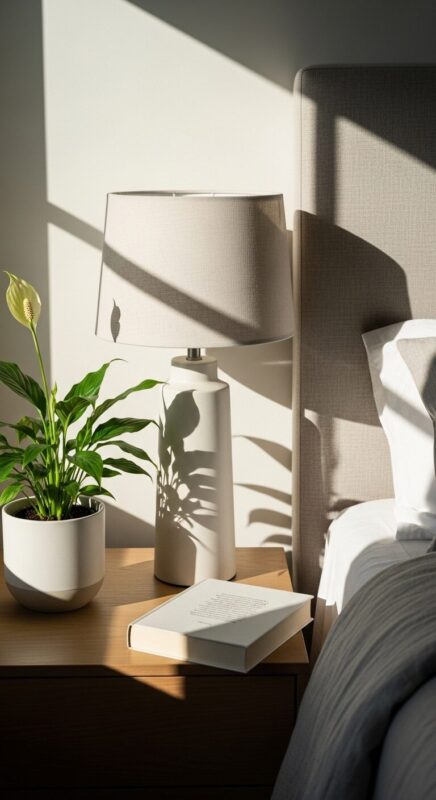
Bedrooms benefit from one or two easy plants with tidy habits—ZZ plant or peace lily for low light, small philodendron for brighter exposures. Use a single, understated pot that echoes lamp or hardware finishes. Keep soil lines below rim height to prevent spills when reaching for books or phones, and opt for saucers with felt pads to protect wood.
Hide Cords and Routers with Foliage
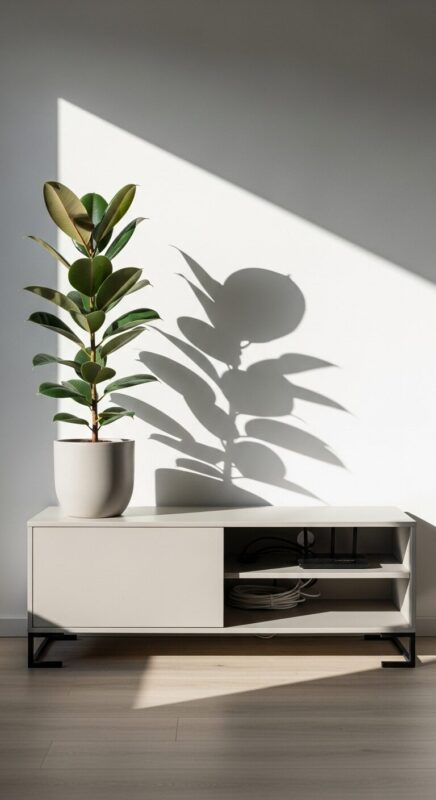
Plants are excellent camouflage for visual clutter. Place a broad-leaf plant like a rubber plant or monstera near media consoles to distract from cords and routers. Ensure airflow around electronics and leave service access. Choose a pot the same tone as the cabinet so the leaves, not the container, take focus.
Curate a Coffee Table Tray with a Mini Plant
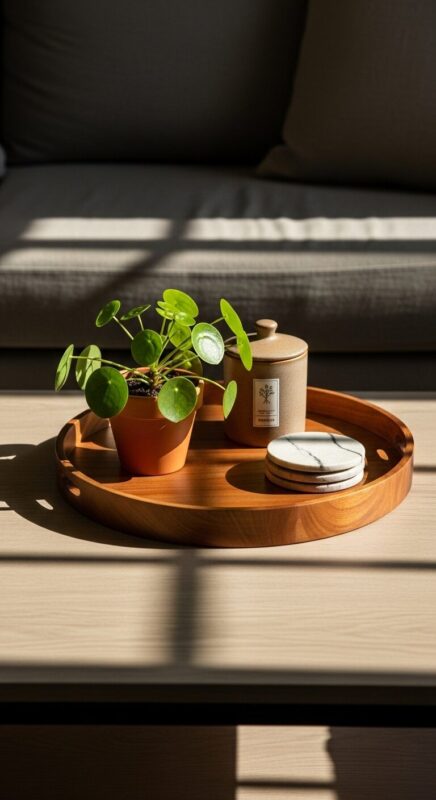
On coffee tables, go low and contained. Style a tray with a small plant (pilea or tiny fern for brighter rooms, a small zamioculcas for dimmer), a candle in a lidded jar, and a coaster stack. The tray keeps watering spills contained, and the plant’s height won’t block sightlines. Rotate the plant to a windowsill once a week for even growth.
Create a Reading Nook Canopy
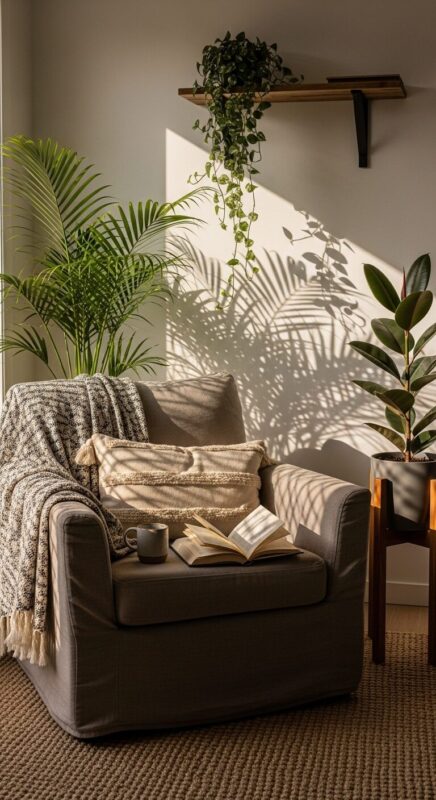
If you’ve got a comfy chair by a window, frame it with plants to build a cocoon. Place a tall, airy parlor palm slightly behind and a mid-height philodendron or rubber plant to the side on a stand, with a trailing vine on a nearby shelf. Keep aisle space clear and maintain foliage just outside the chair’s reach. The layered heights make the nook feel sheltered and serene.
Soften Kitchens with Herb Ledges
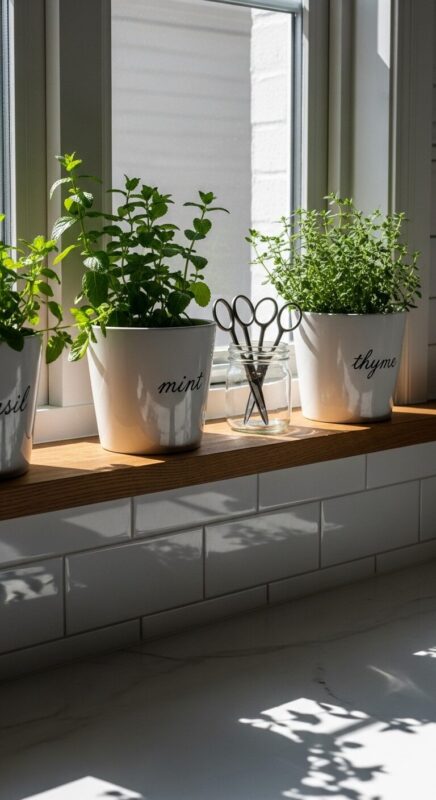
Kitchens need tough, purposeful plants. Install a slim wall ledge or use the sill for small herb pots—basil, mint, thyme—where they’ll actually get used. Keep pot finishes consistent and add a small labeled snip jar for scissors. Avoid crowding counters; one concentrated herb zone looks chic and stays functional. Rotate pots regularly to prevent legginess.
Balance Big Leaf Shapes with Finer Textures
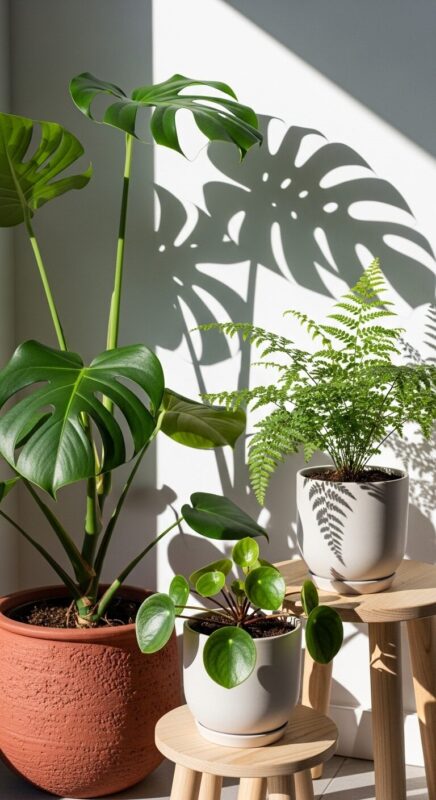
Great plant styling is often about contrast. Pair broad-leaf specimens (monstera, rubber plant) with finer textures (ferns, pilea, peperomia) in the same vignette. The interplay keeps the eye moving and prevents a heavy, monolithic look. Repeat one leaf shape elsewhere in the room to make the mix feel deliberate rather than haphazard.
Keep Workspaces Tidy with One or Two Desk Plants
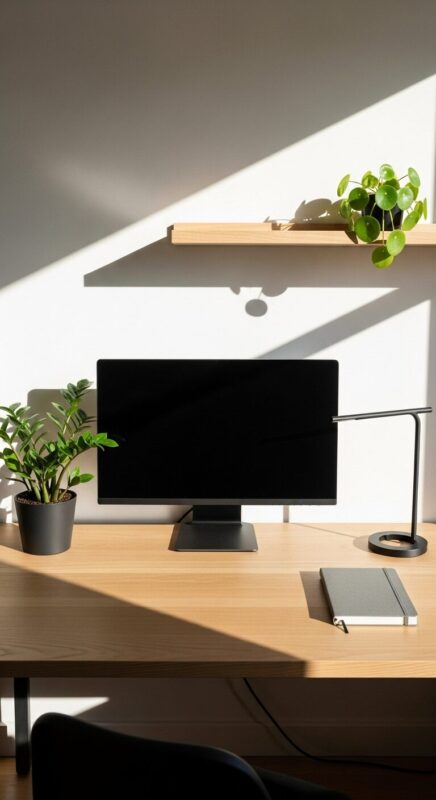
On a desk, less is more. Choose a single compact plant (ZZ or small philodendron) and place it opposite your dominant hand to avoid bumps. Add a second tiny plant on a floating shelf above if you want height. Plants near screens reduce harsh edges and eye strain while keeping the desktop open for actual work.
Use Plant Stands to Stagger Heights
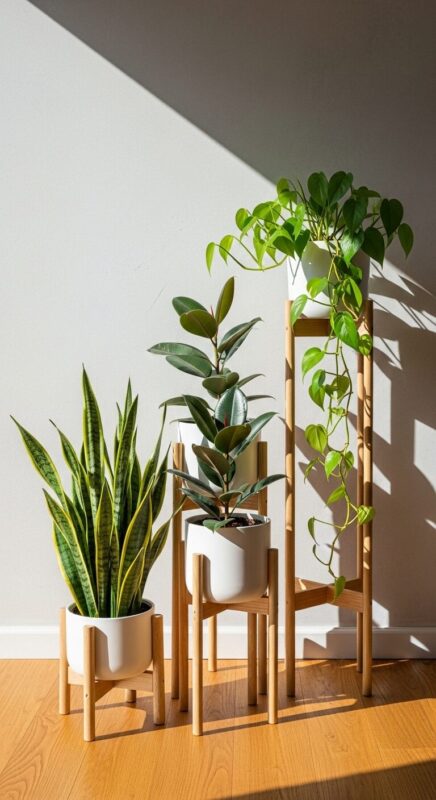
A trio of floor plants can look like a flat line if they’re all the same height. Stagger with stands: one low pot on the floor, one medium stand, one tall stand. Keep finishes consistent—black metal or light wood—and ensure stands are stable. This creates a dynamic skyline of foliage and opens negative space under leaves for air and light.
Refresh Corners with a Single Architectural Specimen
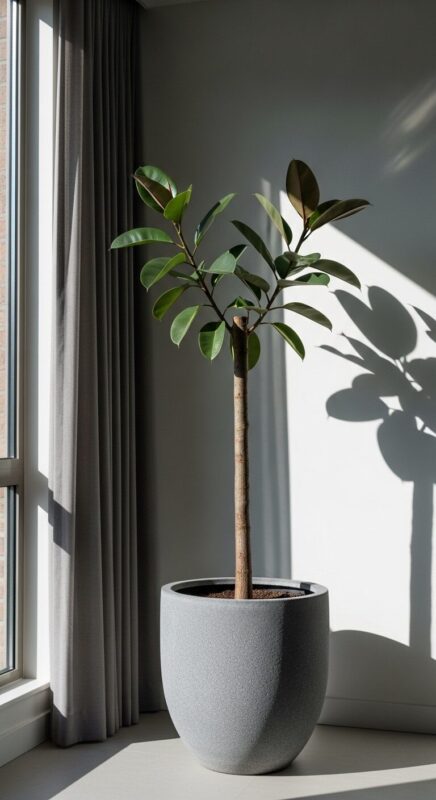
Not every corner needs a cluster. Sometimes one strong shape—like a rubber plant pruned as a tree, or a tall dracaena—reads cleanest. Choose a pot with presence and give the plant space on both sides so it doesn’t fight curtains or furniture. This “solo act” turns a dead corner into a sculptural moment with minimal maintenance.
Edit Seasonally and Rotate for Light
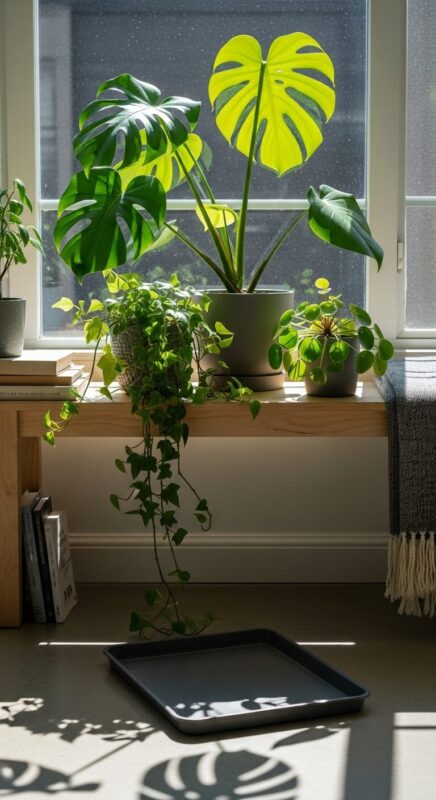
Great styling is also about what you remove. Each season, edit your displays: group sun-hungry plants closer to windows in summer, pull low-light survivors forward in winter, and rotate pots weekly for even growth. Use a single utility tray to shuttle plants to the sink for watering day, then return them to their spot. This keeps displays fresh and plants healthy without changing your whole layout.