Bringing plants up off the floor is one of the easiest ways to add life, color, and movement to a room without eating into your square footage. Hanging plants soften corners, frame windows, and draw the eye up to make ceilings feel taller. They also help you use “found” light—bright window edges, the zone over the kitchen sink, or that sunny spot near a stair landing—where a floor planter would be awkward. The secret is matching each plant to the light you actually have, picking the right potting mix, and watering so roots never sit in soggy soil. The ideas below cover tried-and-true hangers that look great, grow reliably indoors, and won’t turn care into a second job. You’ll find simple design pointers alongside clear care tips so everything you hang stays healthy and keeps your home feeling fresh.

As an Amazon Associate I earn from qualifying purchases.
Golden Pothos (Epipremnum aureum)
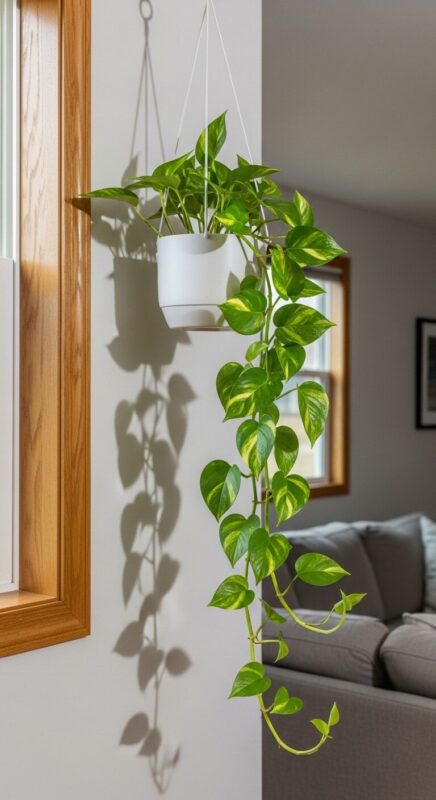
If you want a plant that forgives a missed watering and still looks lush, start here. Golden pothos trails in long, heart-shaped vines with soft green leaves streaked in yellow. It handles bright, indirect light but also tolerates medium light several feet from a window. Let the top inch of soil dry before watering again, and feed lightly in spring and summer. For a fuller basket, wrap a few vines back into the top so new growth fills out the center. Snip and propagate cuttings in water to extend the display to other rooms.
Heartleaf Philodendron (Philodendron hederaceum)
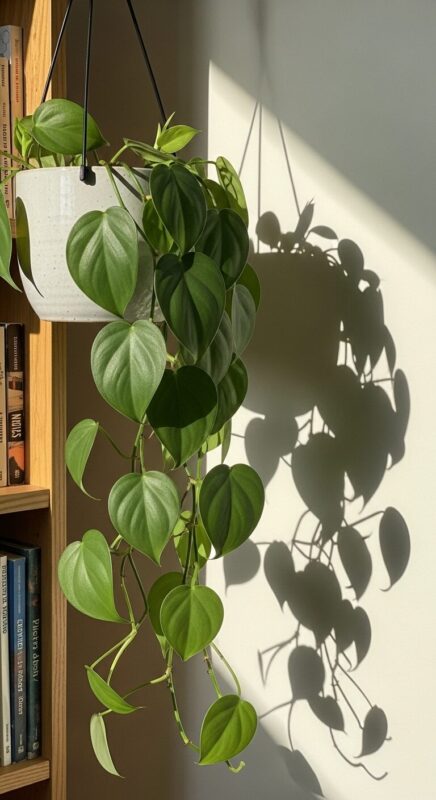
This classic indoor trailer brings velvety, dark green hearts that look polished in almost any room. It prefers bright, indirect light but stays happy in medium light, making it ideal for a bookshelf end or a north-facing window. Keep it lightly moist—never soggy—and rotate the pot monthly so growth stays even. If stems get leggy, cut just above a leaf node and the plant will branch, giving you a bushier, more elegant cascade.
Spider Plant (Chlorophytum comosum)
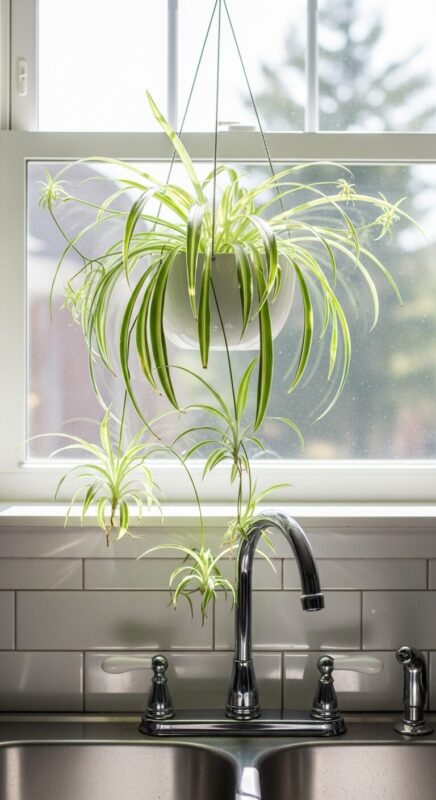
Few plants deliver as much “motion” as a spider plant in a hanging basket. Its arching leaves and tiny baby offshoots (called plantlets) create a living mobile that looks fantastic over a kitchen sink or in a bright hallway. Give it bright, indirect light and let the top half of the soil dry between waterings. Brown tips usually mean minerals or chlorine in the water—switch to filtered water and trim tips cleanly to keep it looking sharp.
String of Hearts (Ceropegia woodii)
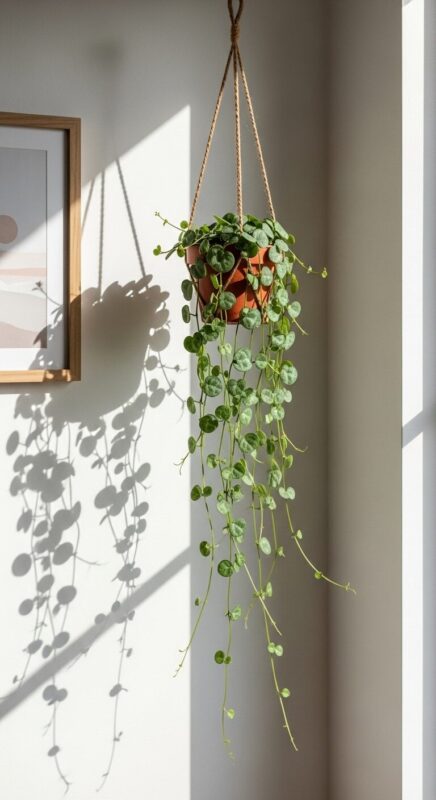
Delicate, silver-flecked hearts trail from fine stems, giving this plant a jewelry-like vibe. It loves bright, indirect light—even a gentle morning sunbeam is welcome—and needs a fast-draining succulent mix. Water thoroughly, then wait until the soil is dry before you water again. Because it’s thin and airy, it layers beautifully with other hangers without blocking light. Tuck a few loops of vine back into the top to thicken the crown.
Hoya Carnosa (Wax Plant)
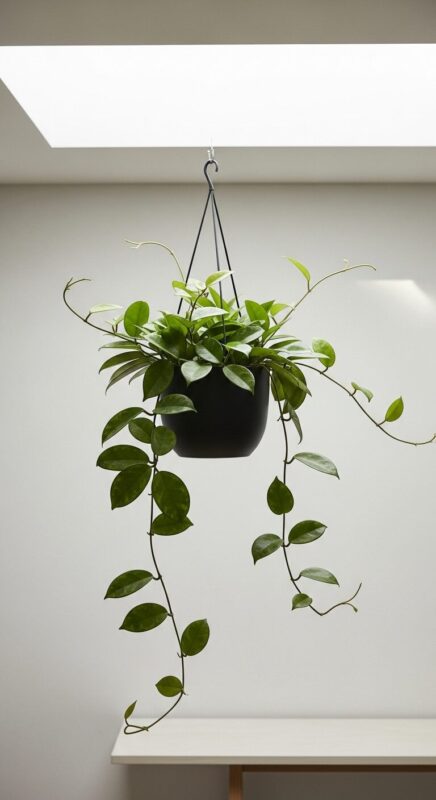
Hoya brings glossy, semi-succulent leaves and star-shaped blooms on mature plants, making it a long-term keeper. It thrives in bright, indirect light and prefers to dry down between waterings. Use a chunky mix (potting soil with bark and perlite) so roots breathe. Leave long tendrils intact; that’s where new leaves and flowers form. In a hanging pot, those tendrils weave and drape like sculpture.
English Ivy (Hedera helix)
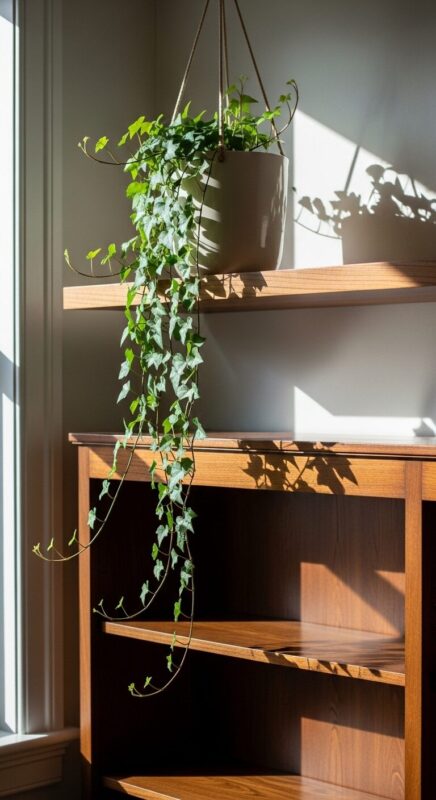
Ivy gives a classic, trailing look that reads traditional and tidy. Indoors, it wants bright, indirect light and regular airflow. Keep soil lightly moist, not wet, and rinse the foliage in the sink every few weeks to discourage pests. It’s best hung where people won’t brush against it constantly—like a high shelf near a bright window—so vines keep their neat, small leaves.
Tradescantia Zebrina (Wandering Dude)
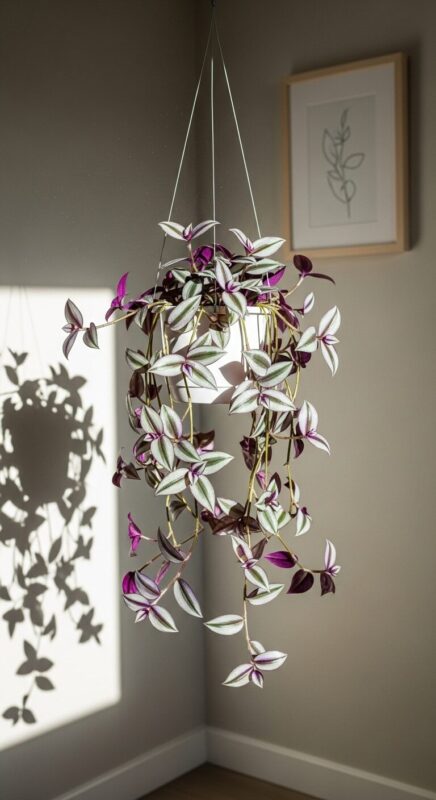
For color without flowers, this trailing plant brings purple undersides and metallic stripes across the leaves. Give it bright, indirect light to keep variegation strong, and pinch back tips to encourage branching. Let the top inch of soil dry before watering. It’s excellent as a hanging “pop” over a neutral sofa or in a white kitchen where the color shines.
String of Pearls (Senecio rowleyanus)
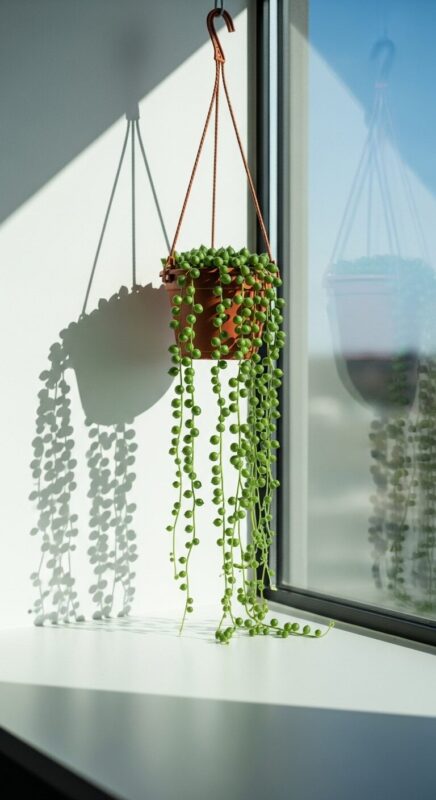
This sculptural succulent turns heads with beadlike strands spilling over the rim of the pot. It needs lots of bright, indirect light (even a few hours of soft sun) and a gritty, fast-draining mix. Water sparingly—soak and then wait until the soil is bone dry. In a hanging display, keep air moving and avoid heavy misting, which can rot the pearls.
Burro’s Tail (Sedum morganianum)
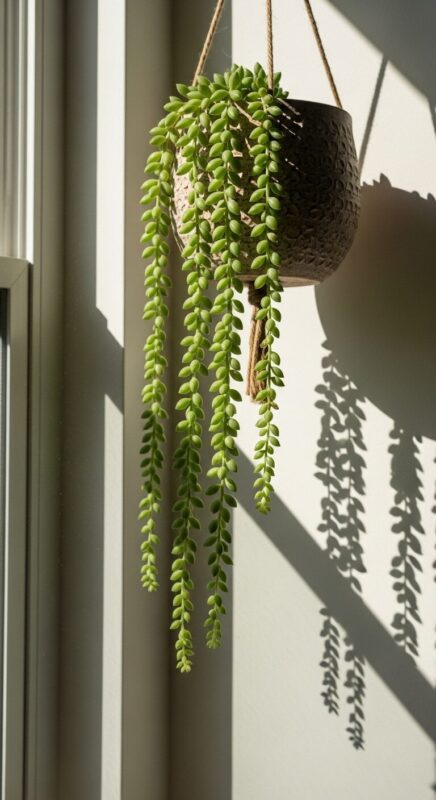
Another succulent standout, burro’s tail drapes in thick, braided-looking stems packed with powdery blue-green leaves. It’s fragile to the touch but stunning when left alone in a bright window. Use cactus mix, add extra perlite, and water only when completely dry. Hang it where traffic is low so stems won’t snap, and avoid handling—this one rewards patience with incredible texture.
Lipstick Plant (Aeschynanthus radicans)
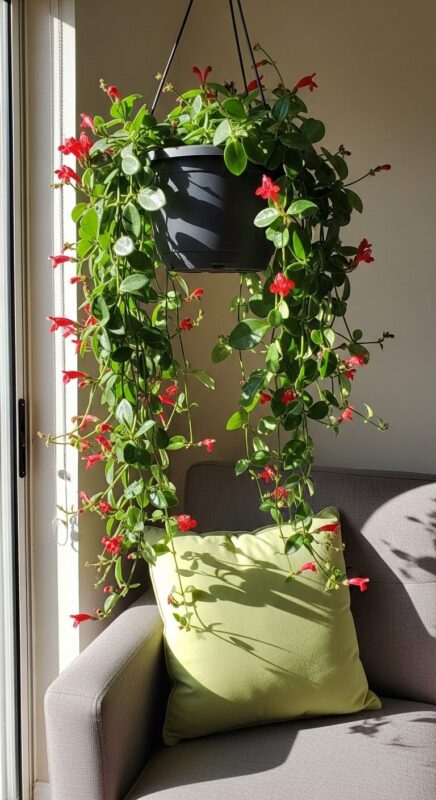
When you want flowers without fuss, lipstick plant delivers bold red blooms that pop from glossy leaves. It prefers bright, indirect light and steady moisture—think lightly damp, never soggy. Trim back after flowering to keep a dense, mounded top and fresh trailing growth. Hung in a living room or near a patio door, it reads polished rather than “floral arrangement.”
Rhipsalis (Mistletoe Cactus)
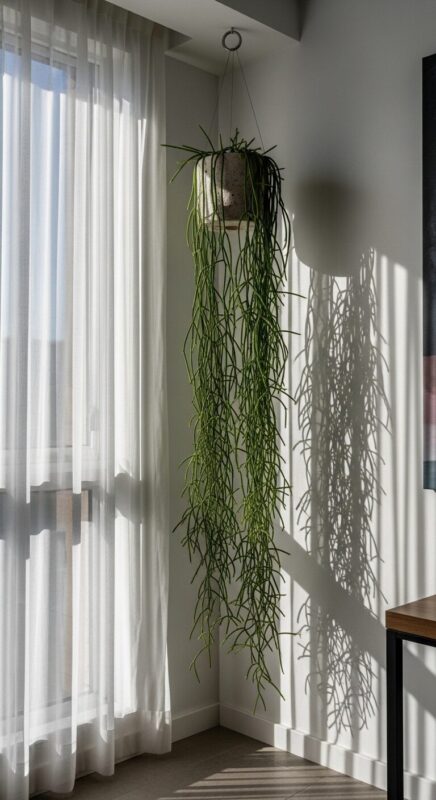
For a modern, airy look, rhipsalis brings thin, pendant stems that form a soft green cloud. It enjoys bright, indirect light and appreciates consistent, light moisture and good drainage. Because it’s epiphytic, mix in bark chips for a loose, breathable substrate. In a group of hangers, its fine texture balances big-leaf plants and keeps the arrangement from feeling heavy.
Boston Fern (Nephrolepis exaltata)
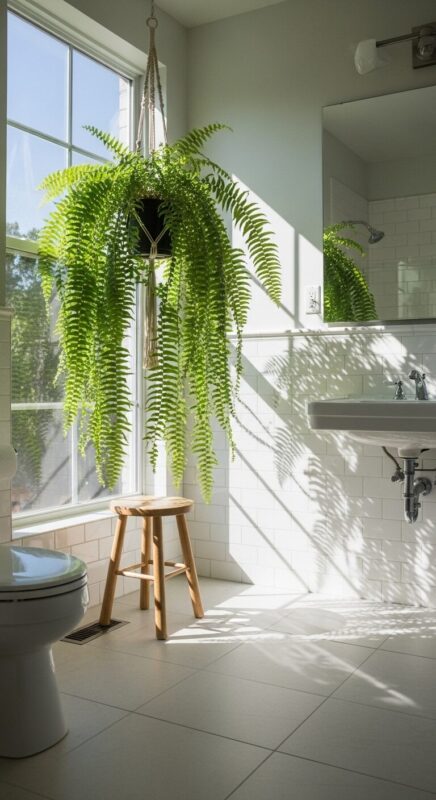
Lush and classic, Boston ferns bring soft, arching fronds that make any room feel fresh. Give them bright, indirect light and higher humidity—bathrooms with windows are perfect. Keep soil evenly moist and trim old fronds at the base to encourage new growth. Hung over a tile floor or above a plant stand, the fern’s skirted shape adds welcome softness.
Peperomia Prostrata (String of Turtles)
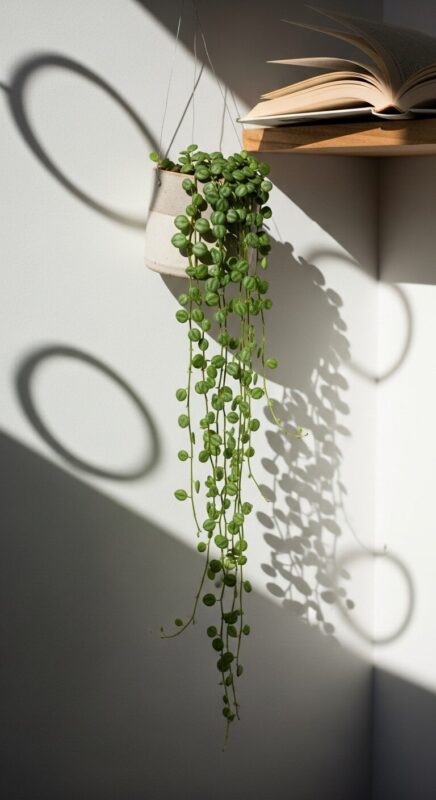
This small-scale trailer has round, turtle-shell patterned leaves and works beautifully in compact spaces. It thrives in bright, indirect light, a chunky, well-draining mix, and gentle watering—never heavy soaks. Because the leaves are tiny, it pairs well with minimalist rooms and doesn’t overwhelm small corners. Keep it close to a window for the best pattern.
Philodendron ‘Brasil’
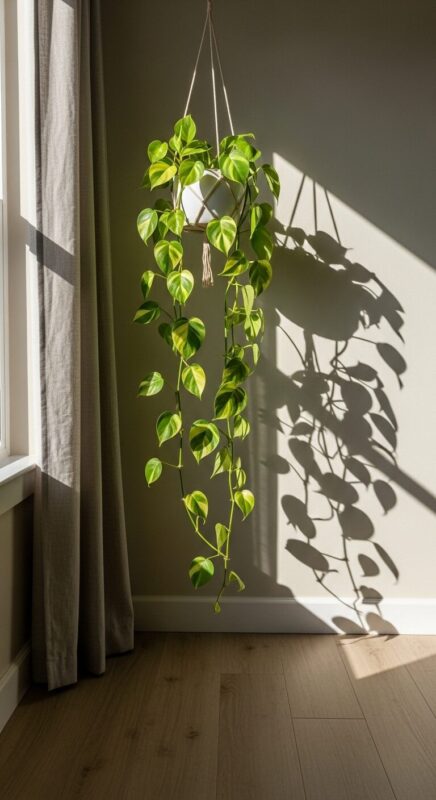
For a stripe of color that still reads refined, try ‘Brasil.’ Its leaves carry a lime-yellow splash down the center of deep green hearts. It likes bright, indirect light and moderate watering, drying midway between drinks. In a hanging basket, pinch back occasionally to keep it compact and encourage branching. It’s a natural fit for modern interiors that favor clean lines with a single bold accent.
Staghorn Fern (Platycerium bifurcatum) — Mounted and Hung
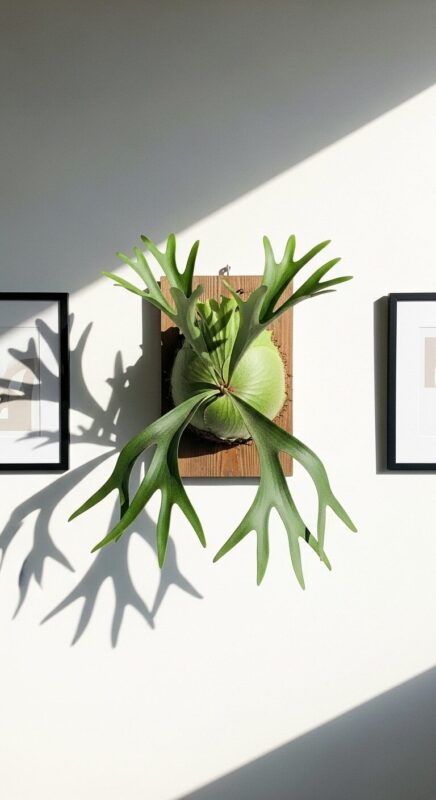
While not a trailing plant, staghorn ferns make a striking “living sculpture” when mounted on a plaque and hung like art. Fronds fork into antler shapes that catch light beautifully. Bright, indirect light is best; water by soaking the mount or showering the roots when the plaque feels very light. In a gallery wall or over a fireplace (away from heat), staghorn adds instant character.
Satin Pothos (Scindapsus pictus)
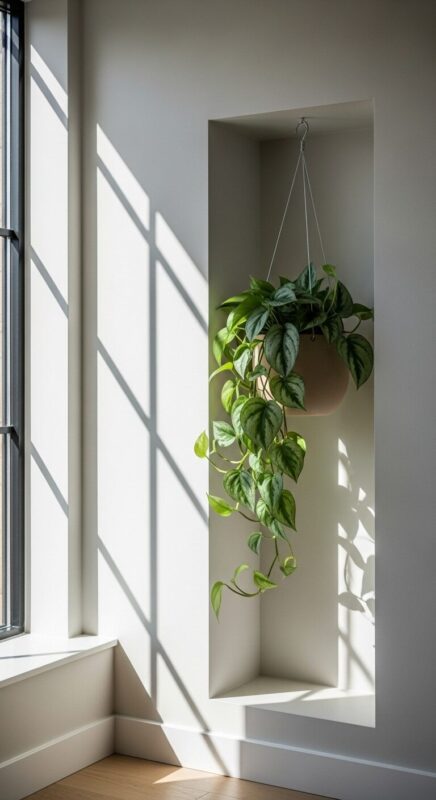
Silvery speckles on velvety leaves give satin pothos an upscale look with the same easy care as pothos relatives. It favors bright, indirect light and moderate watering with a slight dry-down. In a hanging placement, it reads richly textured without shouting for attention. Combine it with plain green trailers for subtle depth.
Dischidia ruscifolia (Million Hearts)
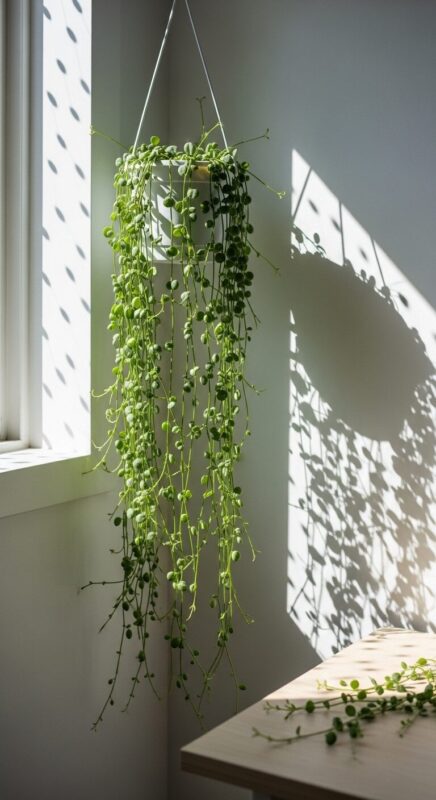
Tiny, opposite leaves line thin stems, creating a delicate beaded curtain. It thrives in bright, indirect light and likes to dry lightly between waterings. Because of its fine scale, it’s ideal for smaller apartments or above a compact desk. It gives motion without blocking sightlines or making the space feel busy.
Hoya Linearis
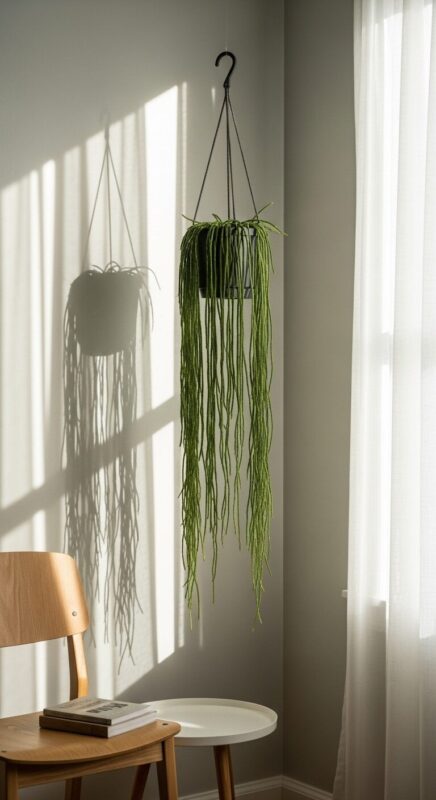
For a soft, shaggy look that still feels curated, try Hoya linearis. Its slender, fuzzy strands drape like a green fringe and love bright, indirect light. Water less than you think—allow a thorough dry-down before the next soak—and keep air moving. When hung near a window, it reads like a designer textile with a living edge.
Rhipsalis Paradoxa (Chain Cactus)
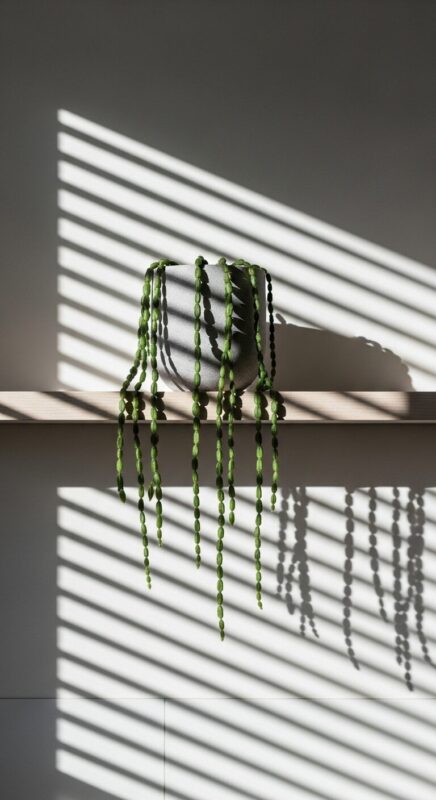
If your taste leans modern, this braided, segmented cactus is a conversation piece. It enjoys bright, indirect light and appreciates a loose, bark-rich mix with reliable dry periods. Hung high, its chains fall in architectural lines that pair well with clean cabinetry or open shelving. It’s an easy way to add structure without heavy, broad leaves.
Trailing Peperomia (Peperomia rotundifolia)
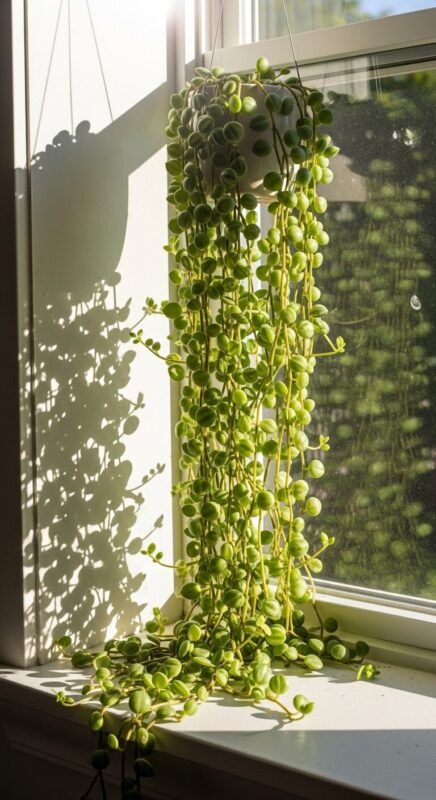
Round, glossy leaves on fine stems make this a friendly, low-profile trailer for tight quarters. It shines in bright, indirect light and prefers a light hand with water. Because it stays compact, it’s great for layering with one taller hanger in a window bay. It adds “green” without demanding attention.
Hoya Kerrii (Sweetheart Hoya), Multi-Leaf Form
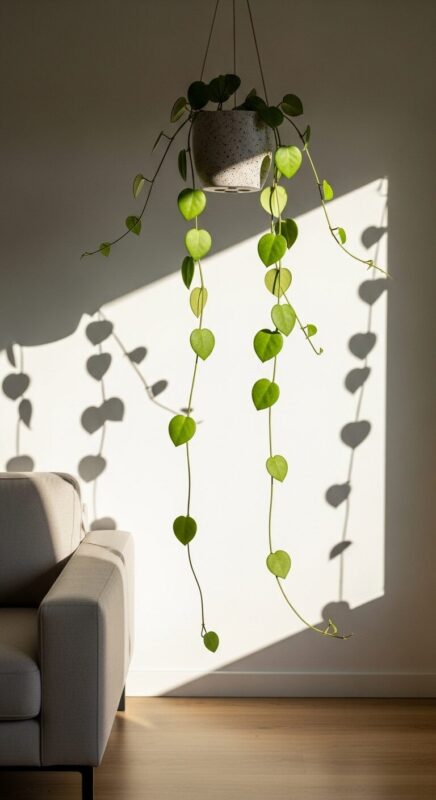
The heart-shaped leaves sell themselves, but the multi-leaf vines are the version that actually trails. Give it bright, indirect light, a chunky mix, and a patient hand—growth is slow but worth it. Let it dry thoroughly between waterings. Hung near eye level, it reads playful yet refined, especially in neutral rooms that benefit from a single charming detail.
Design Tips for Grouping and Care
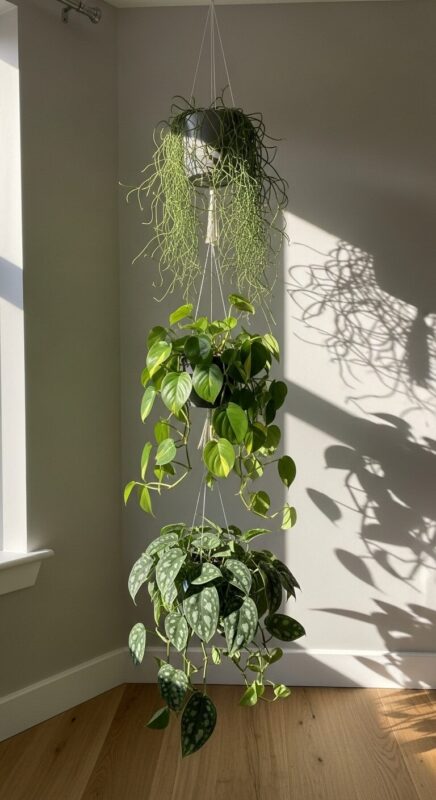
When you group hangers, mix leaf sizes and textures: one fine and airy (rhipsalis), one medium and glossy (hoya or philodendron), and one bold or patterned (satin pothos or ‘Brasil’). Keep the lowest leaves 18–24 inches above head height in walkways. Use ceiling anchors rated for more than your pot weight, and choose pots with drainage plus a catch cup—or slip a nursery pot into a decorative cachepot to make watering simple at the sink. Most trailing houseplants prefer bright, indirect light; a sheer curtain can help soften midday sun. Water deeply, then let excess drain completely. Rotate plants a quarter turn every week so they grow evenly, and dust leaves with a barely damp cloth so photosynthesis stays strong.