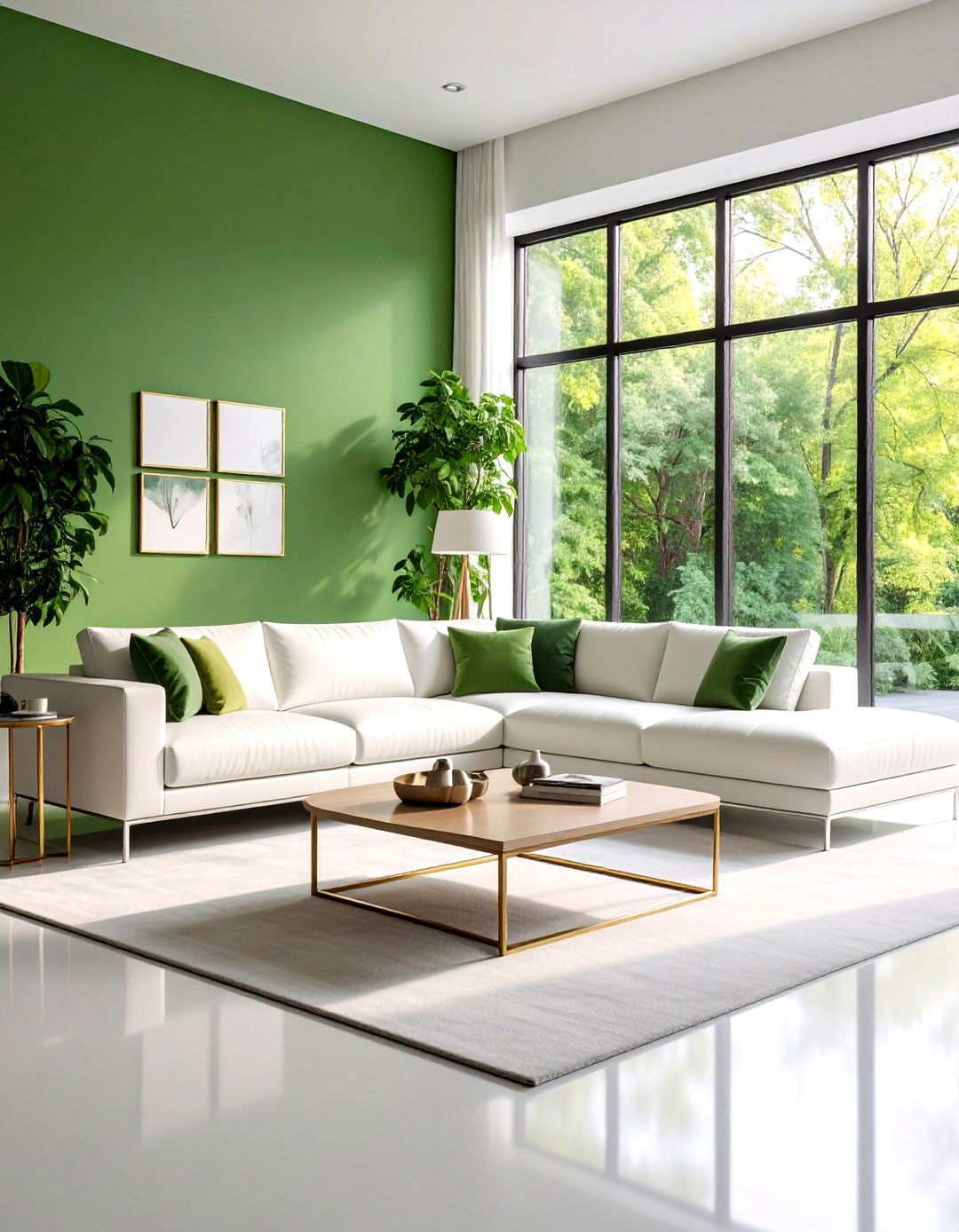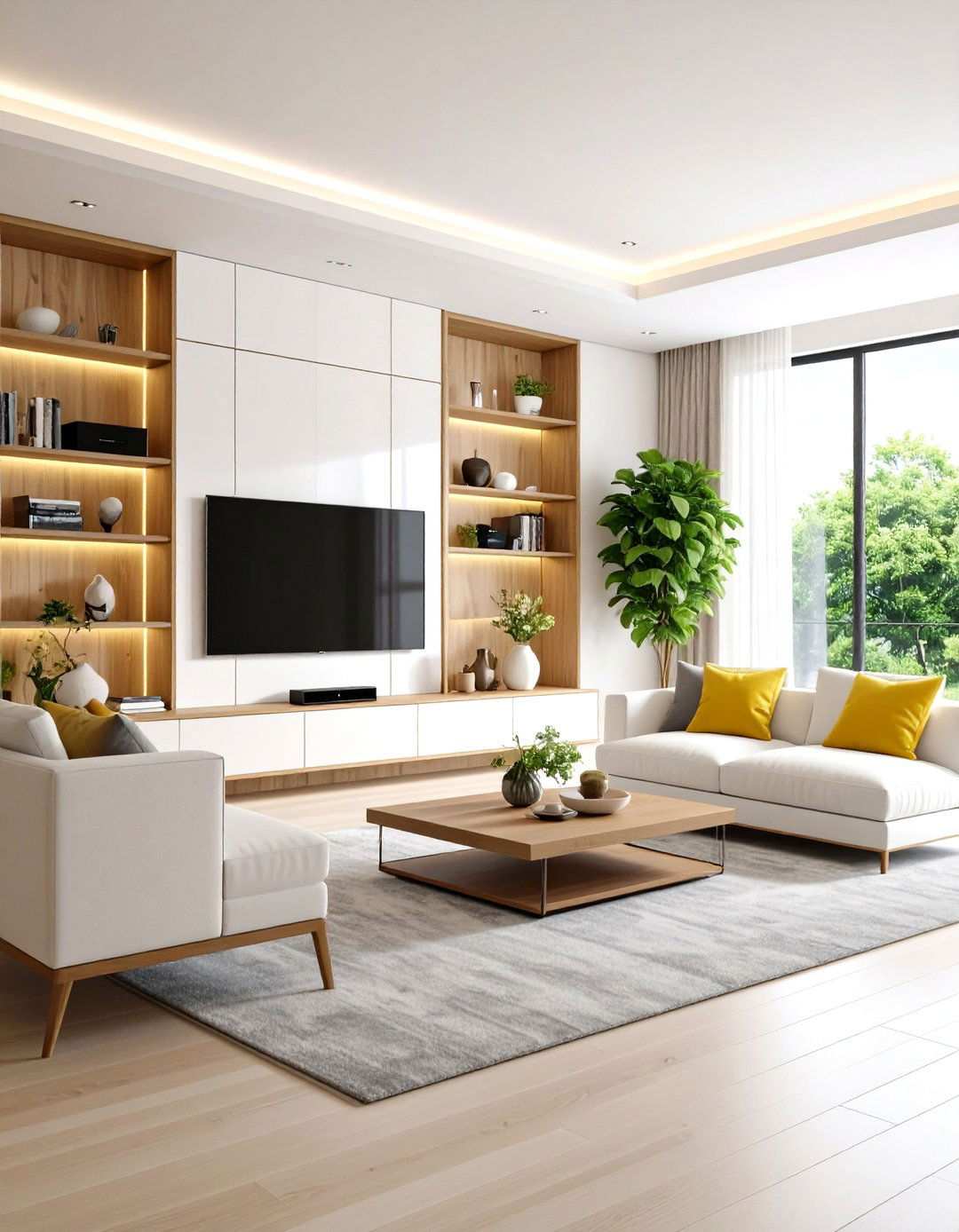
1. Crafting Modern Classics with Low-Profile Seating Arrangements
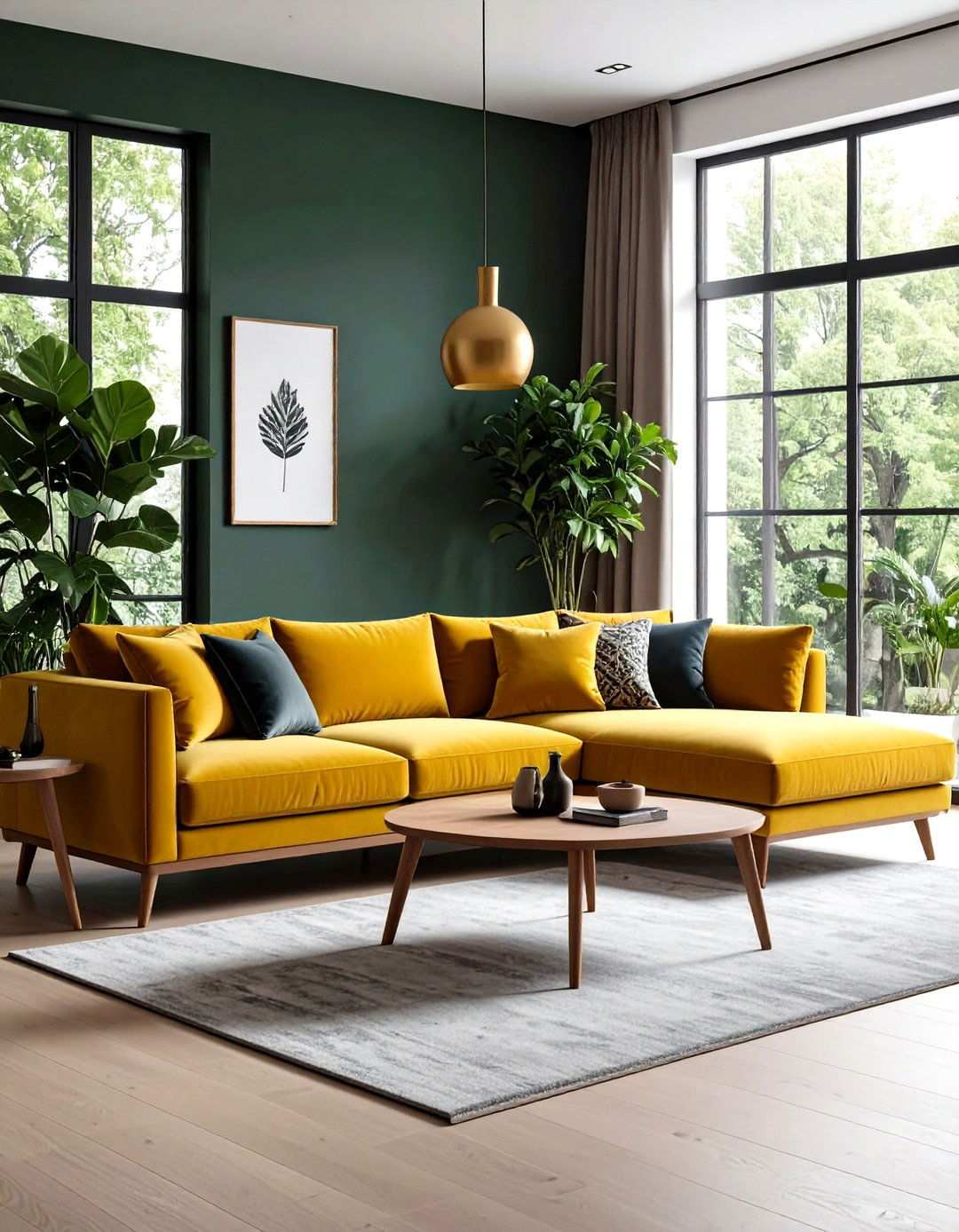
Mid-century modern living rooms achieve a sense of effortless elegance through deliberate design choices. One such choice is a low-profile sectional sofa, a staple of this timeless style. These elongated seating pieces boast clean lines, minimal ornamentation, and a sleek silhouette that invites relaxation. By positioning your sectional in a way that encourages conversation while maintaining clear sightlines, you can create a harmonious flow in the room. The low-profile design cleverly makes ceilings appear higher, fostering an airy atmosphere that defines mid-century modern spaces. To complete the look, pair subtle tufting details with wooden or metal legs that pay homage to the era’s aesthetic, and add a pop of personality with geometric throw pillows in rich shades like mustard yellow or burnt orange.

As an Amazon Associate I earn from qualifying purchases.
2. Elevating Ambiance with Walnut Wood Coffee Table Centerpieces
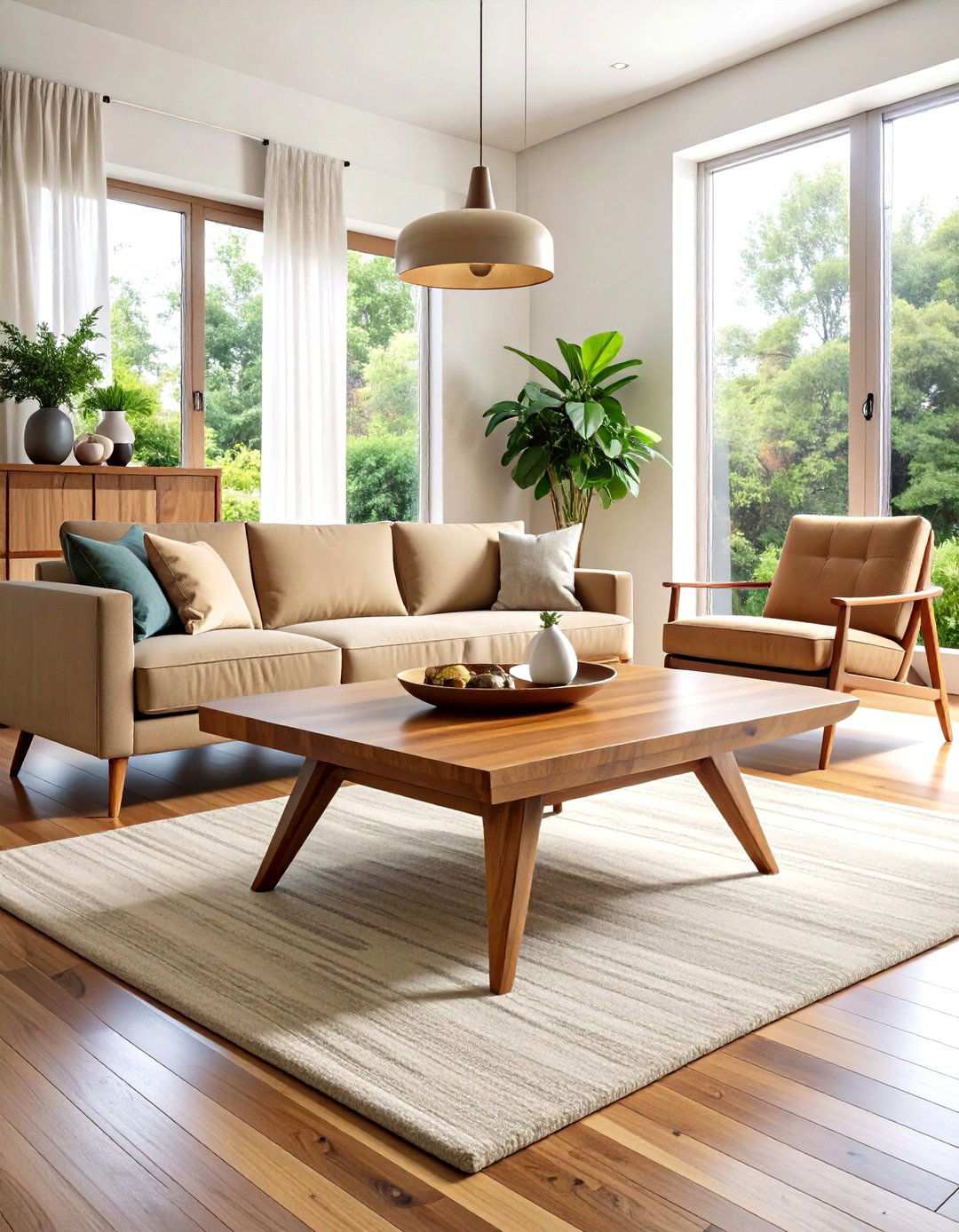
A walnut coffee table serves as the perfect anchor for your seating area, showcasing the natural beauty of wood grain patterns and adding a touch of sophistication to the space. Mid-century modern design often features sculptural bases, kidney shapes, or geometric forms that capture the innovative spirit of the era. The rich, warm tones of walnut wood create visual depth and provide the perfect foundation for displaying decorative objects, books, and plants. To add an extra layer of visual interest, look for tables with hairpin legs, boomerang shapes, or marble inlays that introduce sophisticated contrast. The organic warmth of natural wood expertly balances the clean lines found throughout mid-century modern spaces, creating environments that feel both stylish and inviting to family and guests.
3. Sculptural Lighting Fixtures as Design Statements
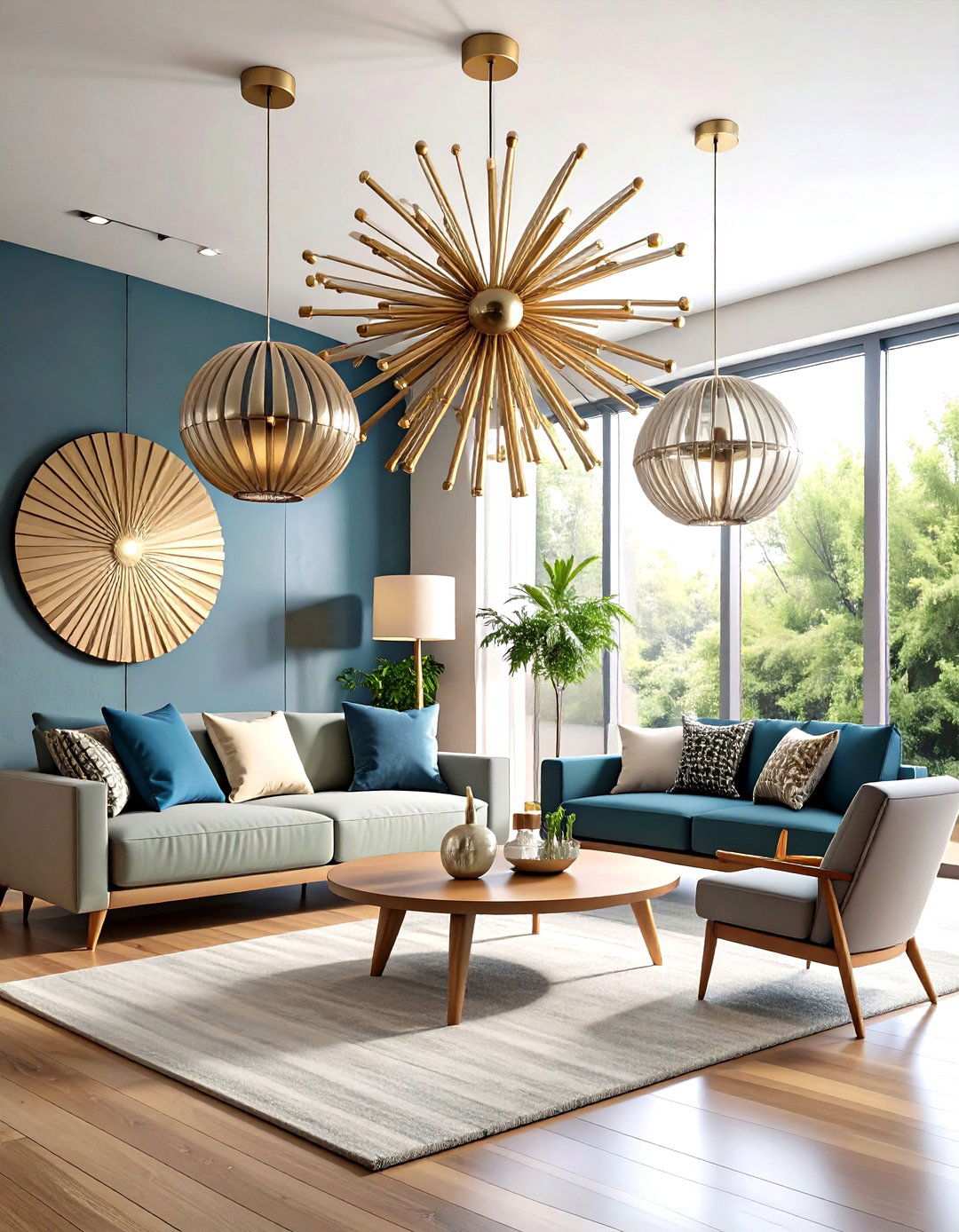
Captivating mid-century modern lighting fixtures are a masterful blend of form and function, elevating any space into a work of art. These iconic designs often feature bold geometric shapes, from starburst chandeliers to spherical pendant lamps, which create striking focal points. By combining materials such as brass, chrome, and glass, designers achieve a perfect harmony of warmth and sophistication. Sputnik-inspired chandeliers imbue spaces with atomic age charm, while Nelson bubble lamps provide soft, diffused lighting that beautifully enhances the room’s ambiance. Mixing different lighting styles – overhead statement pieces, arc floor lamps, and table lamps – adds depth and visual interest to any living space.
4. Timeless Earth Tones as Design Foundations
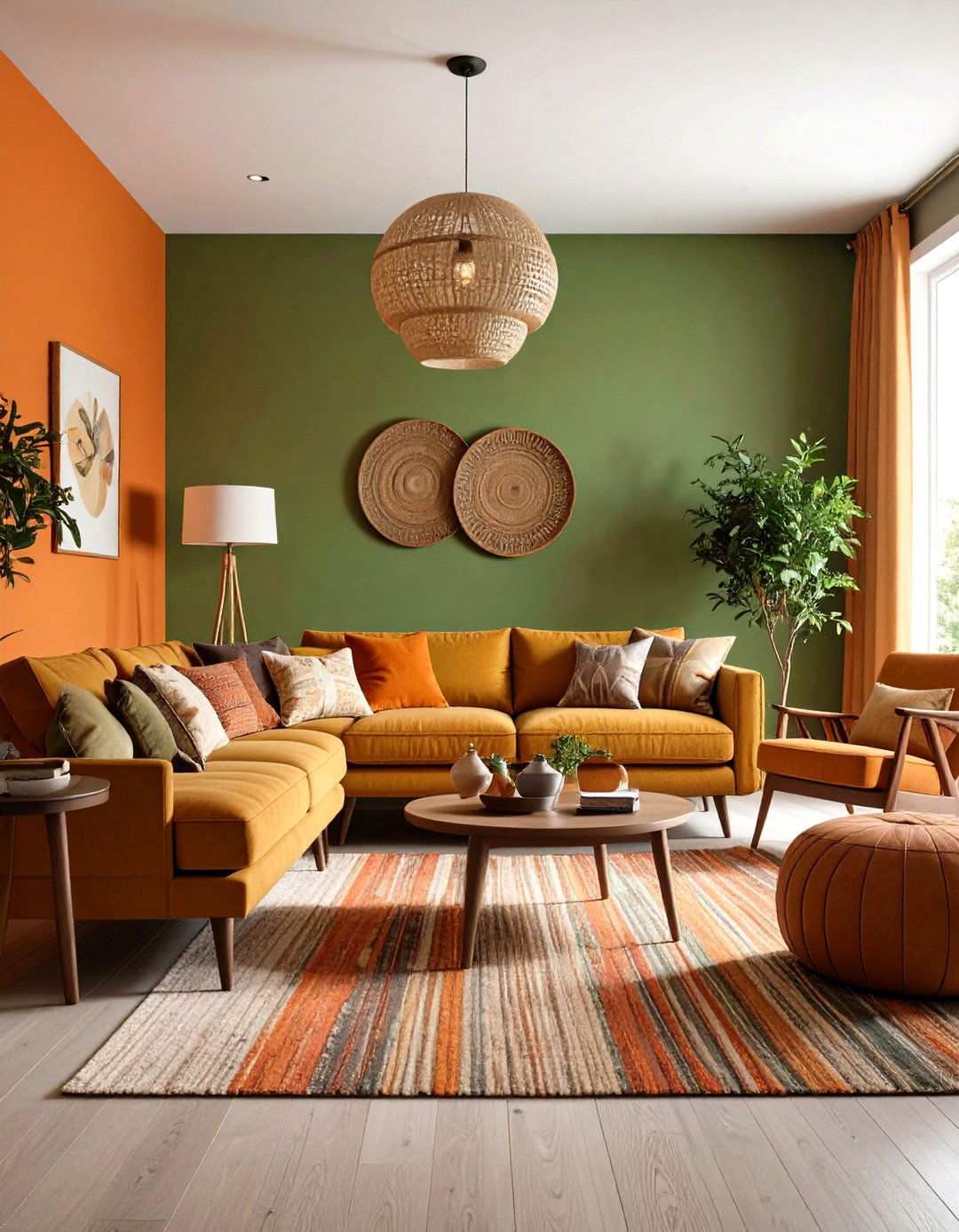
A mid-century modern living room is built on a solid foundation of earthy hues that evoke the era’s connection to nature. Rich, warm colors like browns, oranges, and yellows, as well as olive greens, create a sophisticated palette that harmonizes with natural wood finishes. These colors provide the perfect backdrop for bold accent pieces, adding depth and visual interest to the space. The contrast between deep terracotta and burnt sienna adds warmth and energy, while softer beiges and taupes offer a neutral balance. By layering these hues through various design elements – wall paint, upholstery, rugs, and accessories – you can create a cohesive, authentic mid-century design scheme.
5. Distinctive Tapered Legs as Design Signifiers
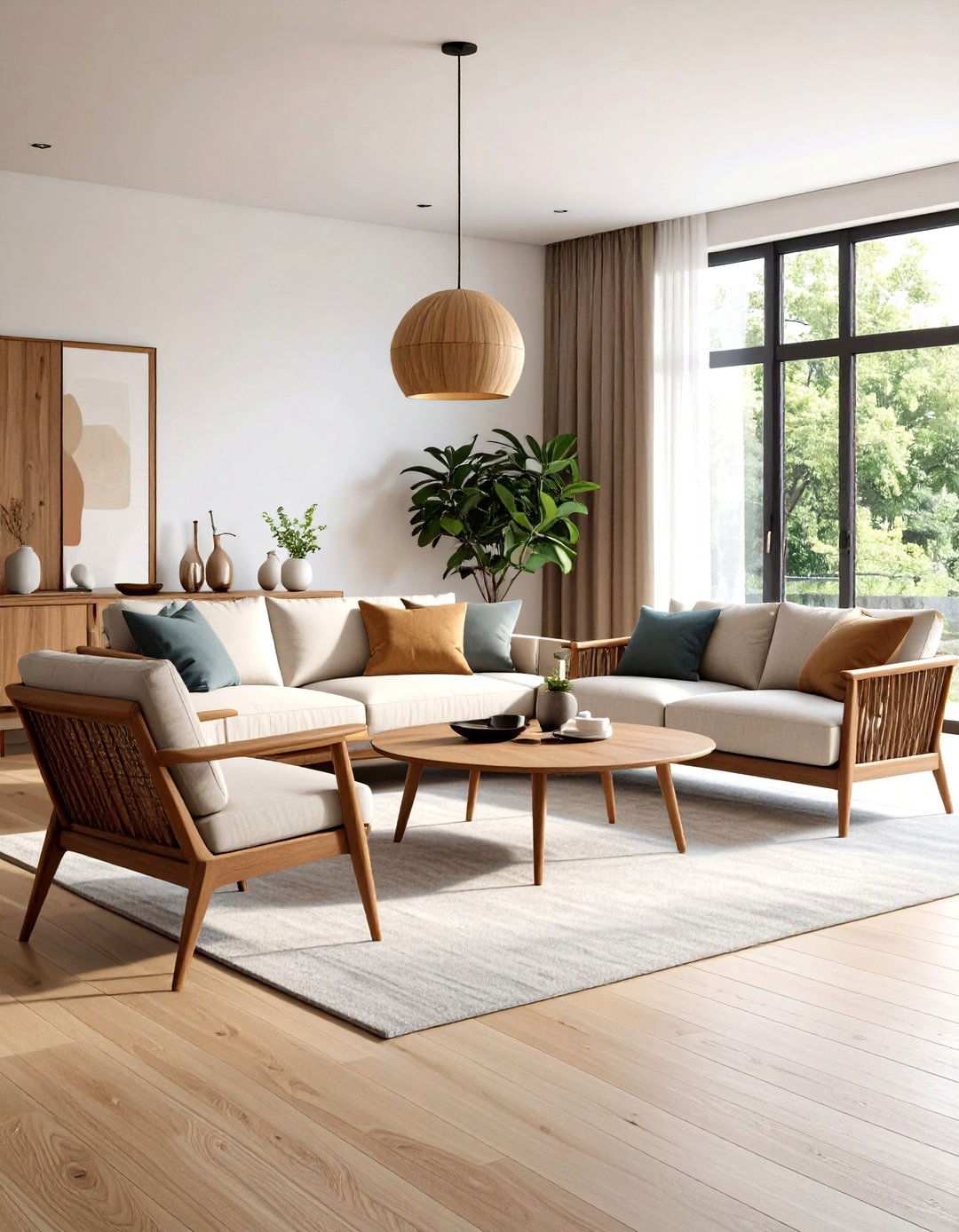
Mid-century modern design is characterized by its emphasis on sleek, functional furniture with tapered legs. These angled supports create a sense of visual lightness, underscoring the era’s focus on clean lines and minimal ornamentation. Furniture pieces with tapered legs in walnut, teak, or painted finishes instantly convey the essence of mid-century character. The slender profile of these legs makes furniture appear to float, contributing to the open, airy feeling that defines the style. To achieve a unified look, choose pieces where the legs flow seamlessly from the furniture’s frame, embodying the period’s design philosophy of form following function.
6. Bold Art Collections as Design Focal Points
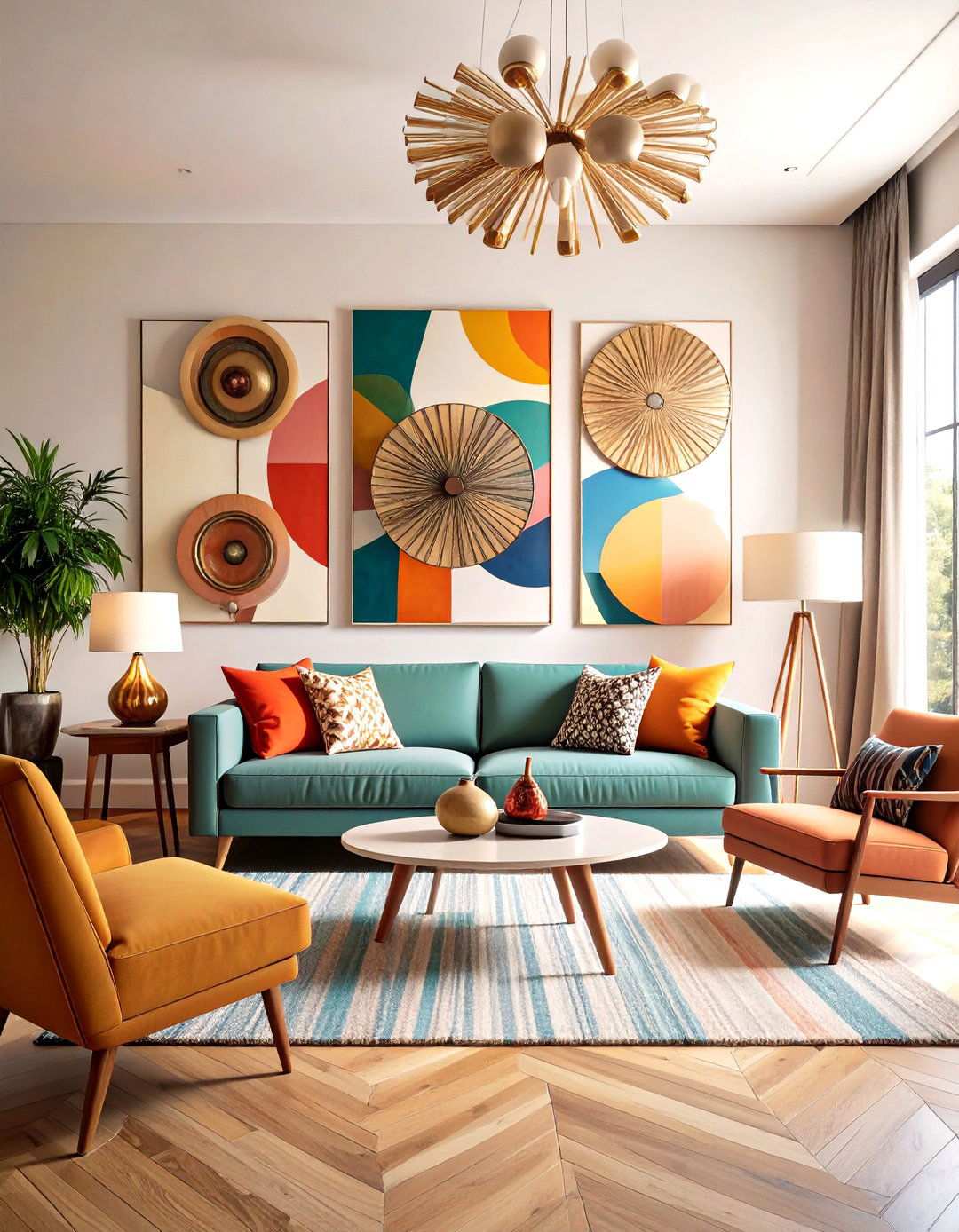
Carefully curated art collections can create a striking visual impact in a mid-century modern living room. Large-scale abstract paintings, geometric prints, and atomic-inspired artwork serve as focal points that anchor the design. Arrange pieces in asymmetrical groupings that feel spontaneous yet balanced, mixing different sizes and mediums for dynamic visual impact. Bold colors like cobalt blue, chartreuse green, and vibrant red add energy and personality to neutral backgrounds. To enhance the design, consider incorporating sunburst mirrors, sculptural wall hangings, and photographic prints that capture the era’s fascination with space age aesthetics and modern living.
7. Harmonizing Authenticity with Material Elegance
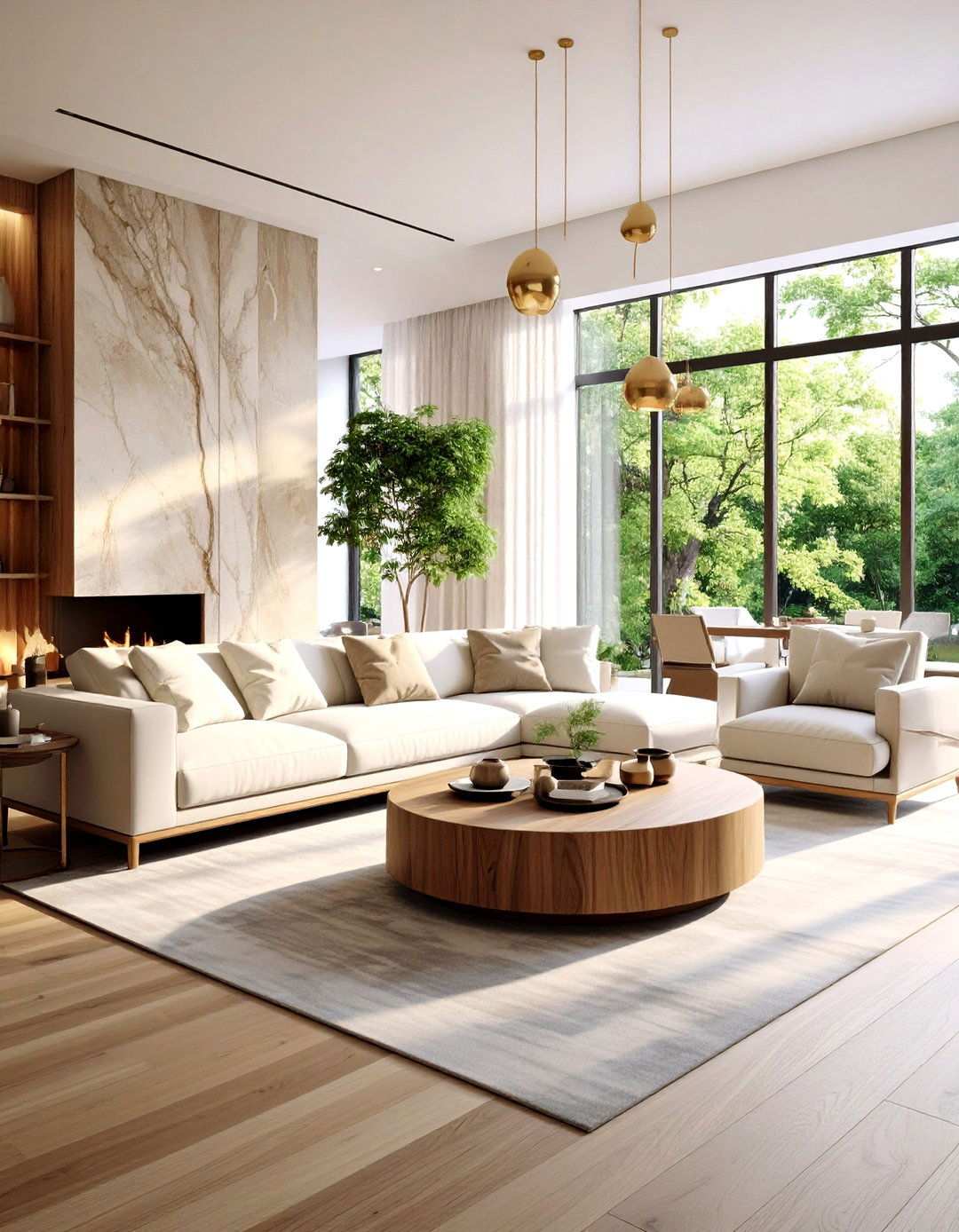
To capture the essence of mid-century modern style without sacrificing the beauty of natural materials, master the art of blending different textures and finishes. This creative approach results in rich, tactile environments that exude warmth and invitingness. Pair the smooth elegance of walnut wood with the rugged sophistication of rough stone surfaces, the sleek refinement of leather with the playful softness of nubby wool, and the polished sheen of brass with the understated charm of matte ceramics. These deliberate material contrasts not only add visual depth but also reflect the era’s appreciation for genuine, honest finishes. By incorporating elements like exposed brick walls, terrazzo surfaces, and natural fiber rugs that bridge the gap between indoors and outdoors, you can create sophisticated material palettes that balance refinement with accessibility.
8. Designing Seamless Spaces for Modern Living
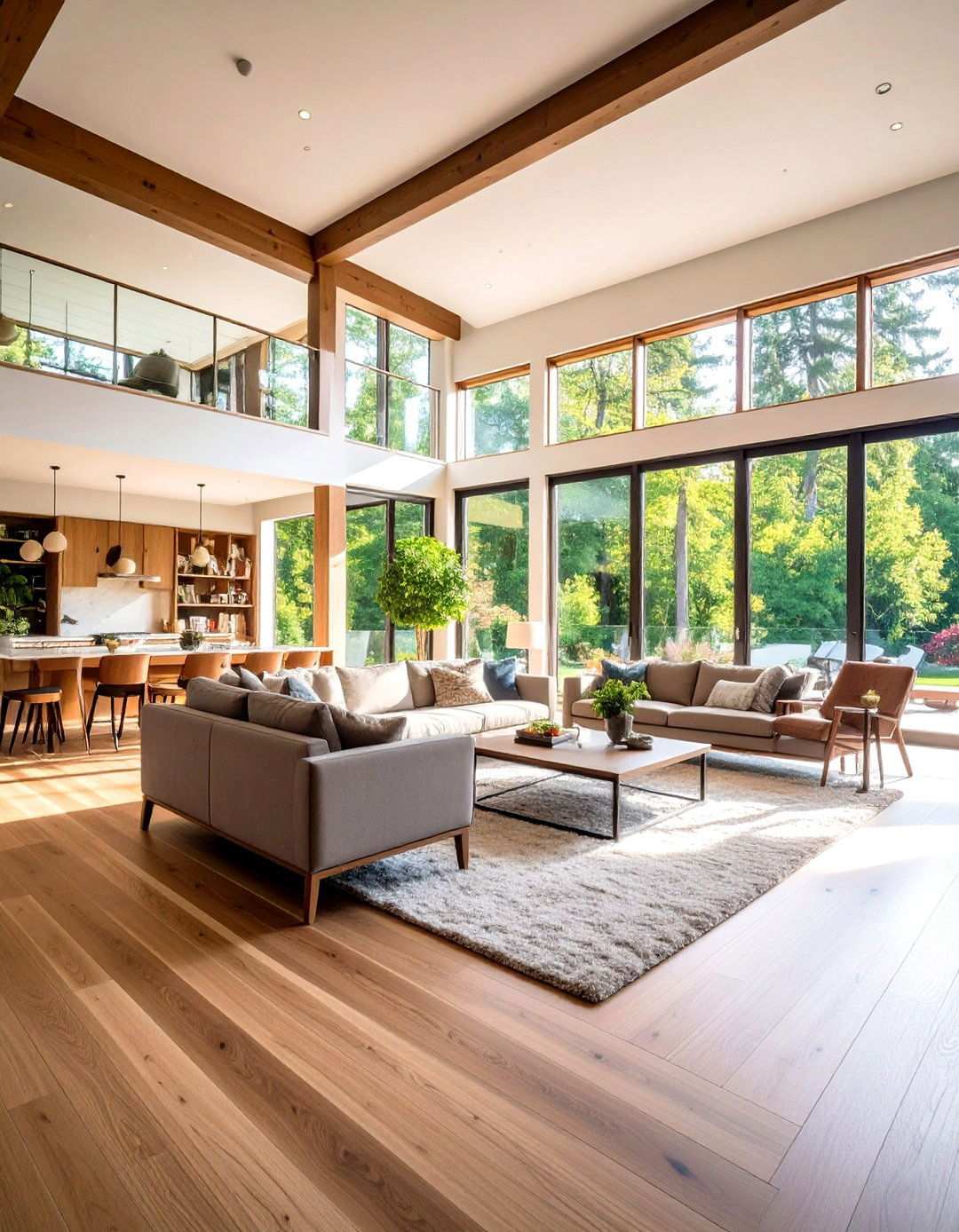
Mid-century modern homes pioneered the concept of open concept living, emphasizing functionality, family togetherness, and a seamless flow of living, dining, and kitchen areas. To replicate this timeless approach, focus on creating flowing, interconnected spaces by eliminating unnecessary barriers. Instead of walls or partitions, use furniture placement, area rugs, and strategic lighting to define distinct zones within larger spaces. Arrange seating groups to encourage conversation while maintaining clear pathways throughout the room. By maintaining a consistent color scheme and material palette, you can unify different areas while allowing each zone to serve its specific purpose. This approach maximizes natural light flow and creates the spacious, airy atmosphere that defines mid-century modern living.
9. Reviving the Glamour of Conversation Pit Seating
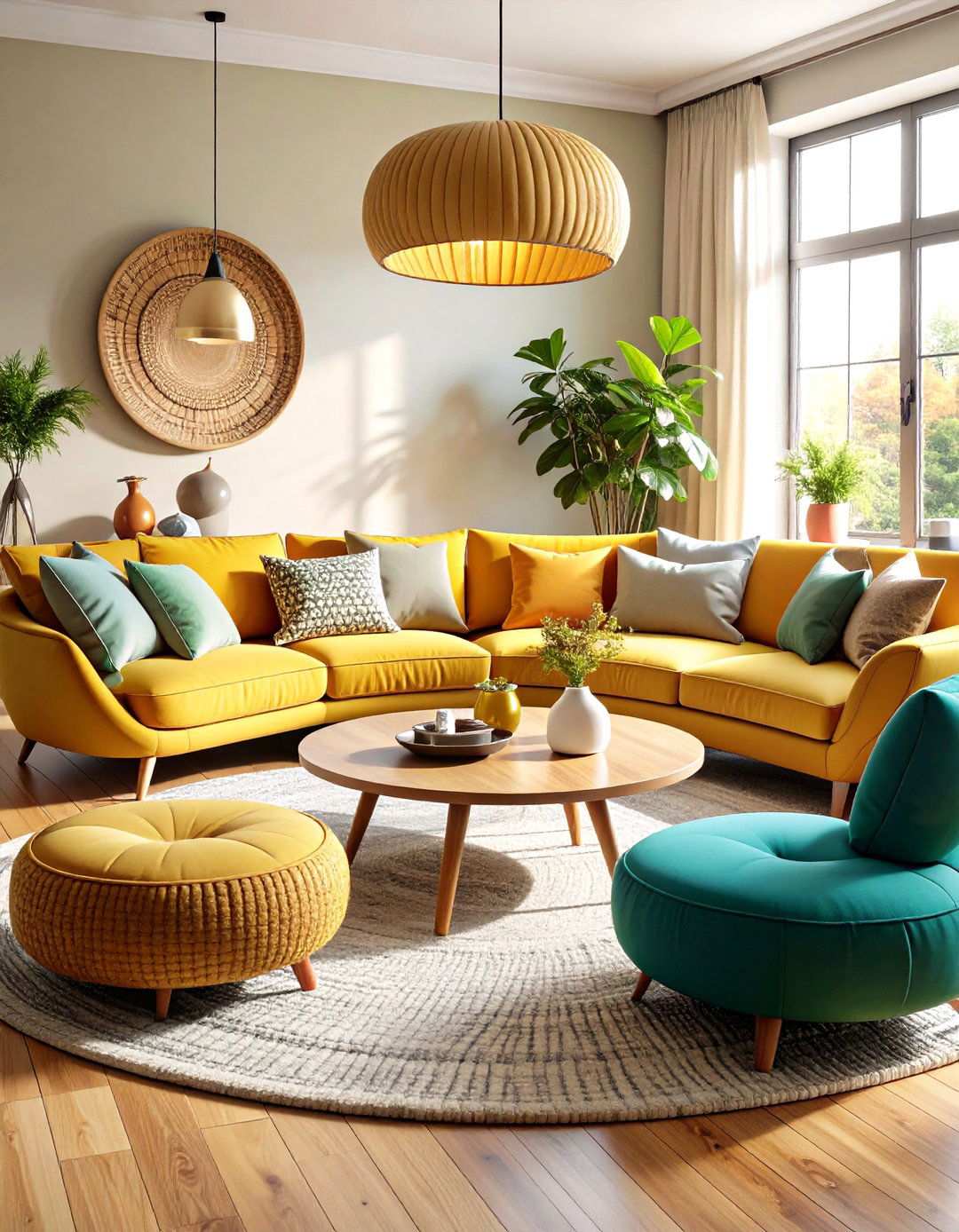
Sunken seating areas are a hallmark of mid-century modern entertaining spaces, encouraging intimate gatherings and fostering a sense of community. These lowered sections create cozy environments within larger living rooms, often featuring built-in banquettes or clustered furniture arrangements. To create an inviting social space, surround conversation pits with plush cushions, low coffee tables, and dramatic lighting. The circular or U-shaped seating arrangements naturally draw people together, making them perfect for cocktail parties and casual family time. Enhanced with rich fabrics, warm wood tones, and thoughtfully placed accessories, conversation pits become the sophisticated heart of mid-century modern living rooms.
10. Sinking into Timeless Living Room Designs
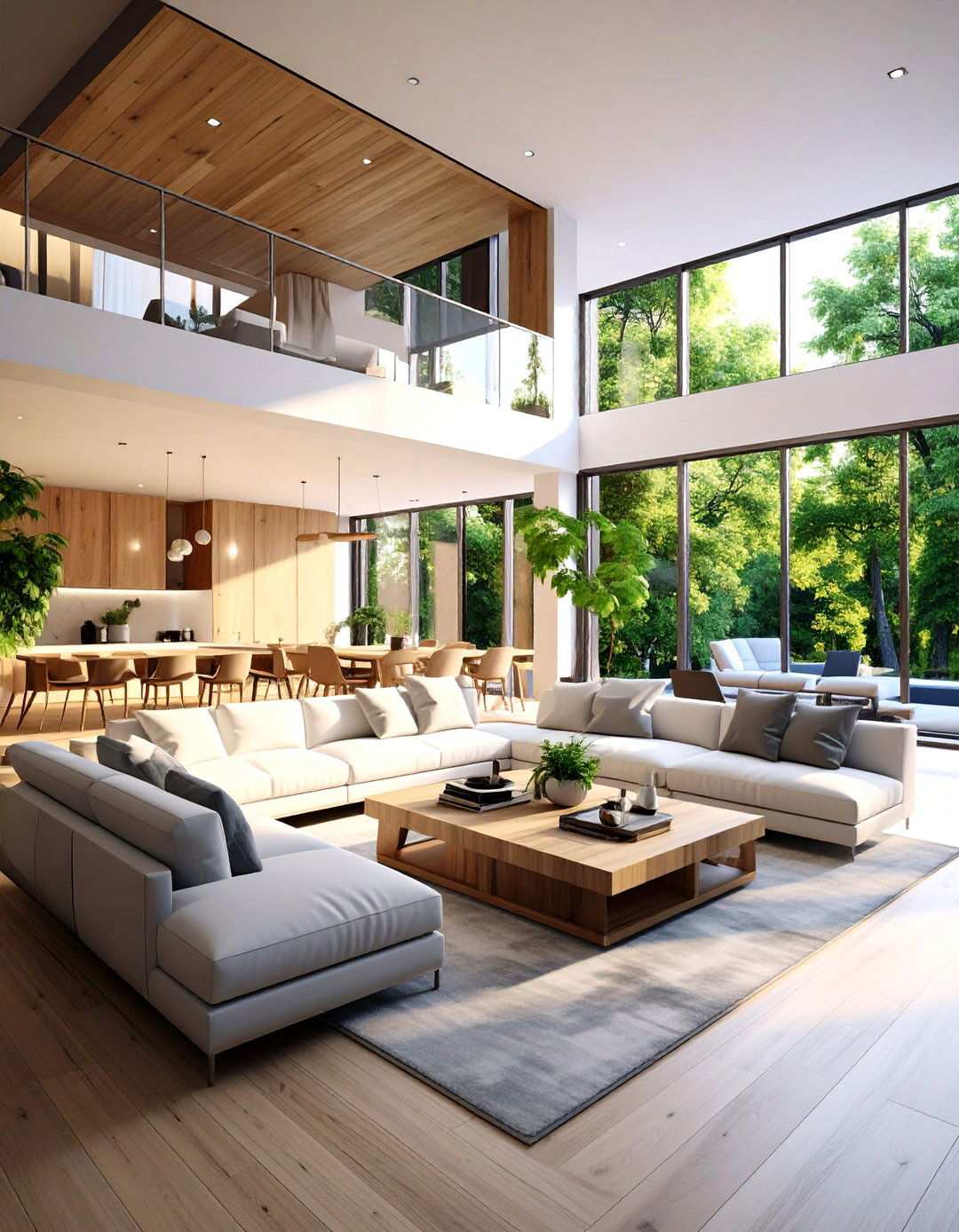
Sunken living areas are a design staple of mid-century modern homes, adding sophistication and visual depth to your space. These lowered sections, accessed by a few steps, instantly establish focal points and create intimate gathering spaces within larger rooms. Design sunken areas with built-in seating, floating hearths, and strategic lighting that emphasizes the architectural drama. The change in elevation naturally defines the living space while maintaining the open, flowing character essential to mid-century modern design. Choose materials like polished concrete, natural stone, or warm wood to line the sunken area, creating luxurious environments that feel both contemporary and timeless.
11. Expansive Window Installations for Seamless Living
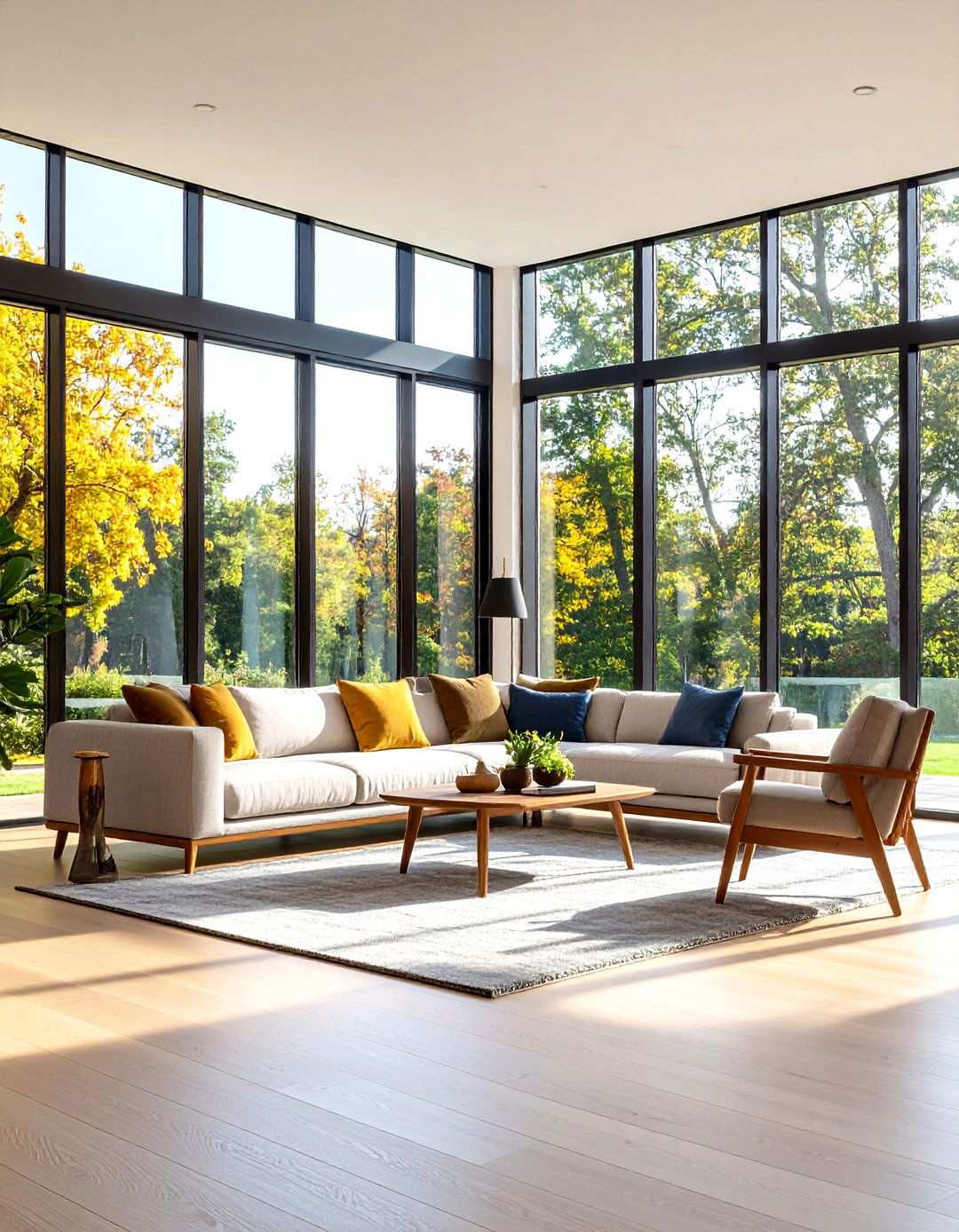
Mid-century modern architecture is characterized by dramatic glass walls that blur the lines between indoors and outdoors. These expansive window installations flood living spaces with natural light, creating an ambiance that celebrates the connection between interior and exterior environments. The abundance of sunlight enhances the beauty of interior design elements, such as wood grain patterns and textile textures. To maintain the architectural integrity of these window walls, opt for minimal window treatments that don’t compete with the drama of the space. Consider sleek panels, simple blinds, or no coverings at all when privacy allows, allowing the natural light to shine through.
12. Seamless Integration of Custom Storage Solutions
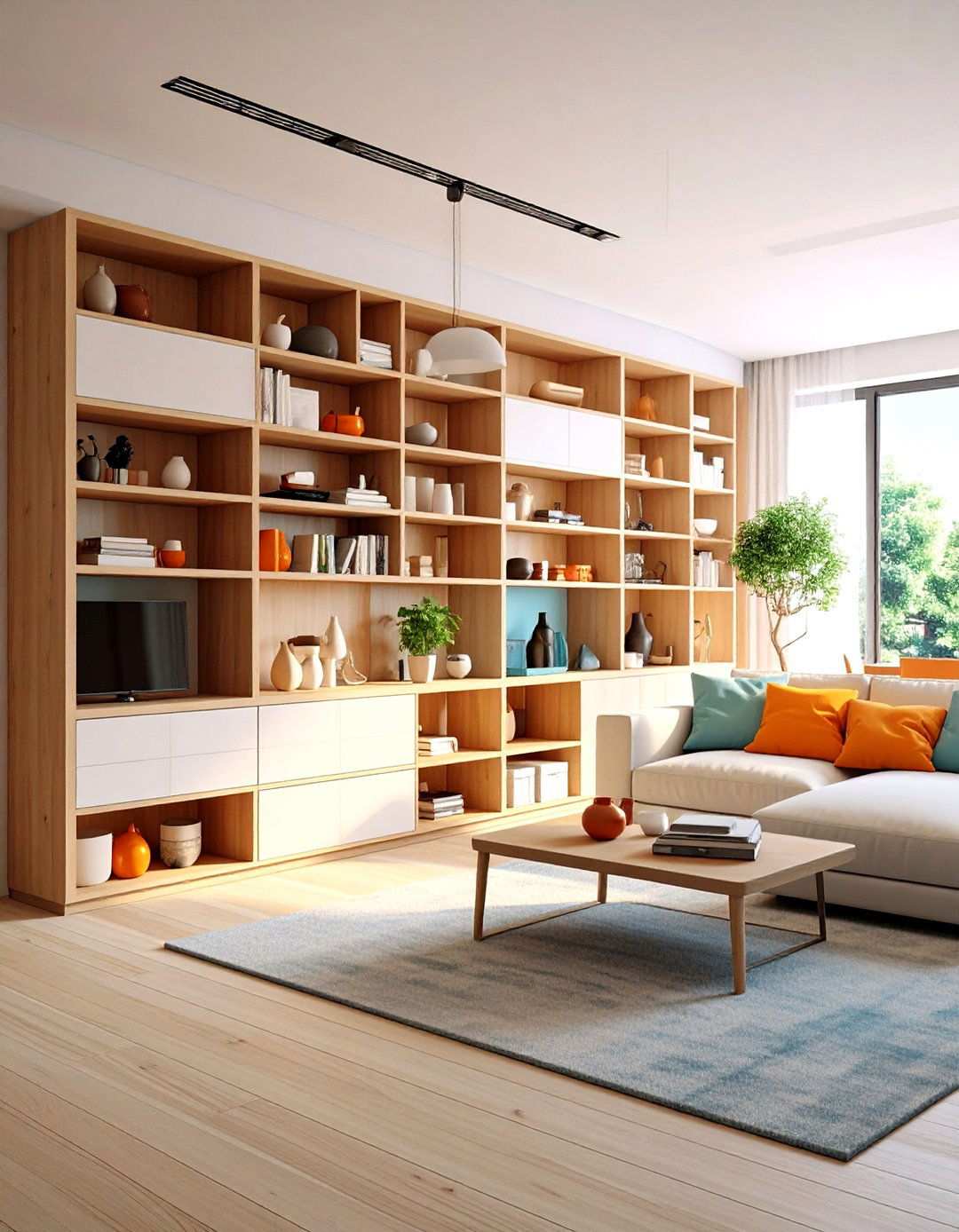
Mid-century modern living rooms are known for their cleverly designed built-in storage systems that maintain the style’s signature clean lines while providing essential organization. These custom solutions eliminate clutter and create a sophisticated atmosphere, making them an integral part of the overall design aesthetic. To achieve a seamless look, design floor-to-ceiling storage walls with alternating open and closed sections, allowing for both display and concealed storage. Choose materials and finishes that complement your furniture, creating a cohesive visual language throughout the space. By incorporating built-ins that feel architectural rather than furniture-like, you can maintain the style’s sophisticated minimalism.
13. Whimsical Atomic Age Accessory Collections
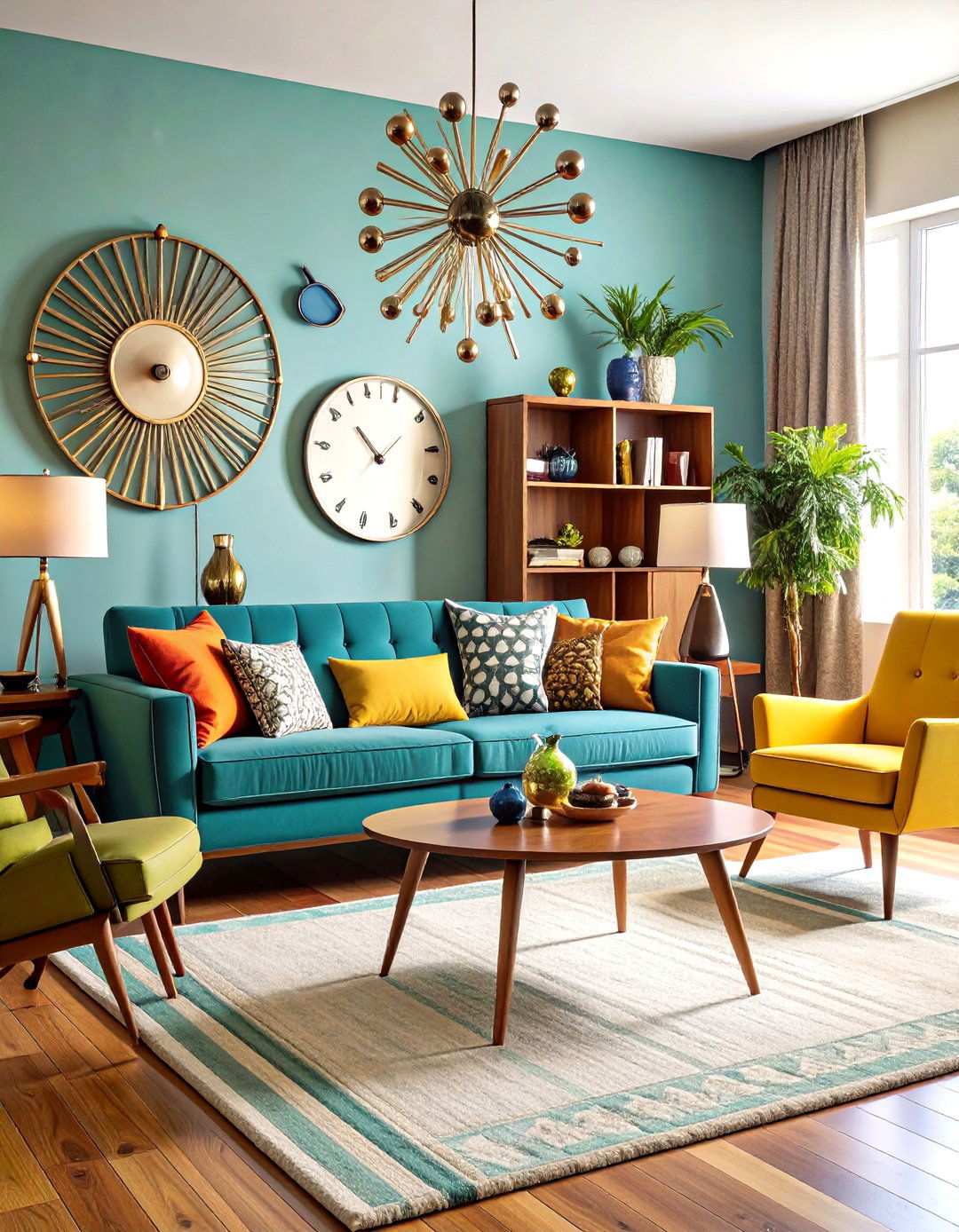
The mid-century era was marked by a sense of optimism and fascination with the atomic age. To capture this spirit, incorporate carefully chosen accessories that reflect atomic and molecular motifs into your living space. Starburst wall clocks, boomerang ashtrays, and atomic-inspired sculptures add a touch of personality and historical context to contemporary rooms. These decorative elements often feature bold geometric forms, metallic finishes, and scientific references that evoke the period’s fascination with atomic energy and space exploration. To showcase your collection, display it on floating shelves, sideboards, and coffee tables where it can be appreciated as a miniature work of art. The playful yet sophisticated nature of atomic age accessories adds a unique touch to mid-century modern design.
14. Sculpting Mid-Century Spaces with Curved Furniture
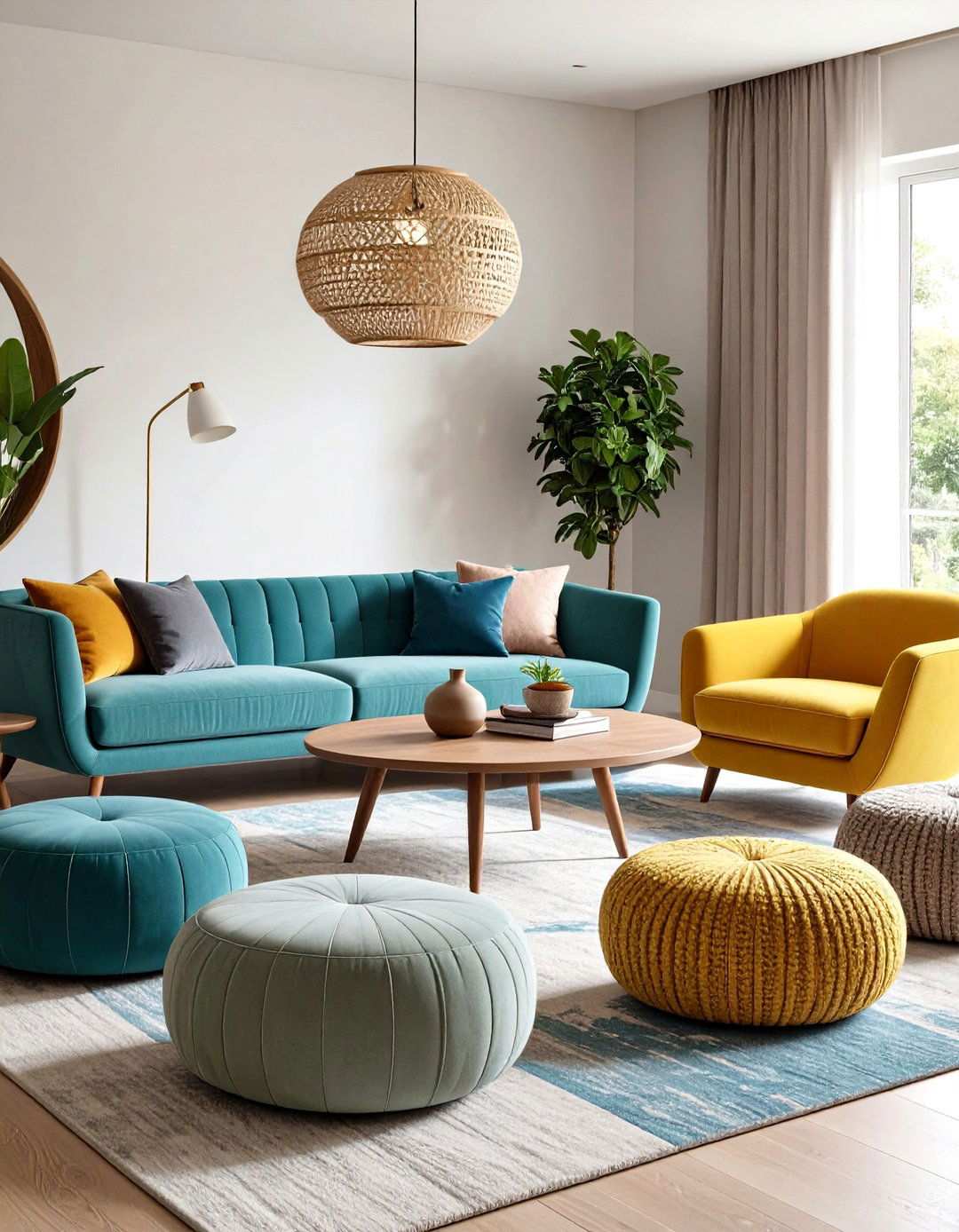
Elevate the look and feel of your geometric mid-century space with the introduction of curved furniture pieces that exude organic softness and provide a sense of visual and physical comfort. Kidney-shaped coffee tables, curved sectional sofas, and round ottomans inject a touch of sculptural interest into the room while maintaining the era’s emphasis on functional design. These fluid forms create an intriguing contrast to the straight lines found in most mid-century furniture, adding a dynamic rhythm and movement to living room arrangements. To amplify the period charm, opt for pieces featuring rich upholstery in classic hues such as avocado green or burnt orange. The harmonious blend of curved and angular elements creates a captivating interplay that keeps spaces feeling lively and engaging rather than rigid or predictable.
15. Elevating Mid-Century Modern Spaces with Terrazzo Flooring
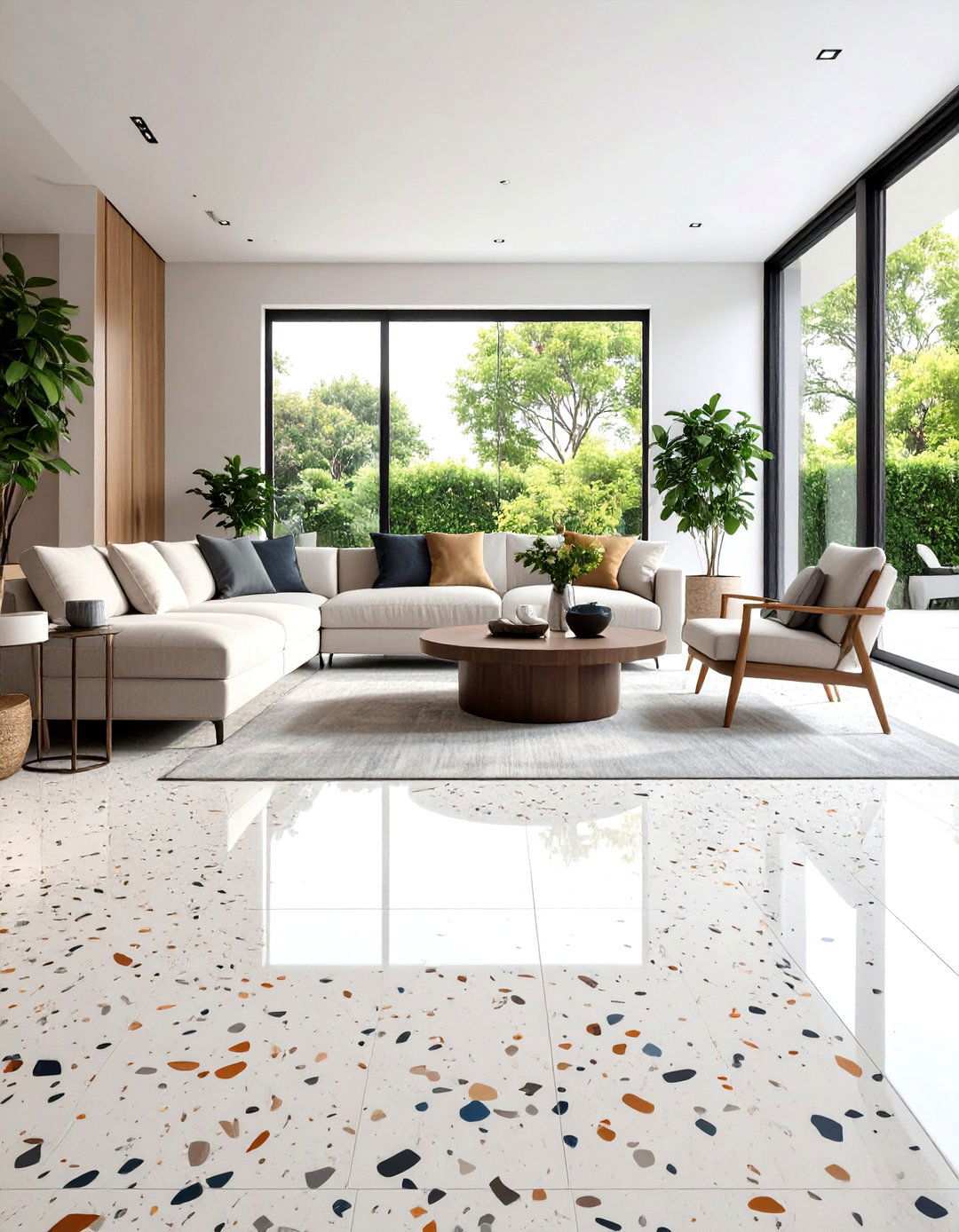
Establish a strong foundation for your mid-century modern living room with terrazzo flooring that adds an exciting layer of texture, pattern, and authentic period character. This innovative composite material, comprising chips of marble, granite, or glass set in cement, produces a unique speckled surface that perfectly complements the era’s affinity for bold materials. Terrazzo floors boast durable and low-maintenance surfaces that work beautifully with area rugs, natural wood furniture, and metal accents. To create a visually striking effect, choose neutral base colors with vibrant aggregate chips that mirror your room’s palette, generating subtle patterns that enhance the overall aesthetic without overpowering other design elements. The smooth, polished surface skillfully reflects light and enhances the clean, sophisticated atmosphere that defines mid-century modern style.
16. Adding Texture and Authenticity with Wood Paneling Accents
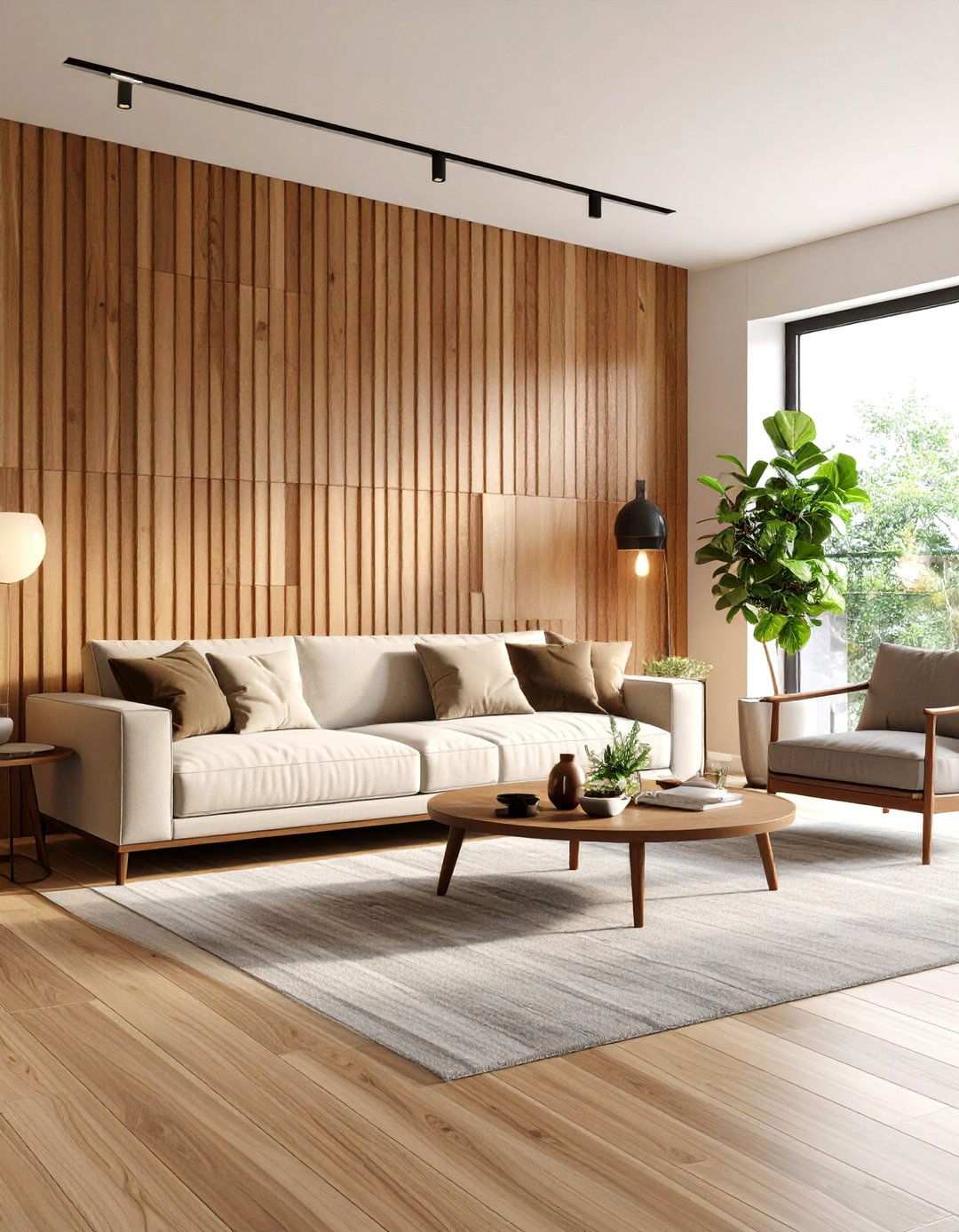
Transform plain walls into stunning architectural features with the warm, inviting texture of wood paneling that adds vintage authenticity to modern living spaces. Horizontal slat walls, vertical board installations, and geometric paneling patterns inject visual interest into the room while maintaining the clean lines characteristic of mid-century design. For a contemporary feel, choose light woods like oak or birch, while embracing darker walnut and teak can add a richer, more dramatic effect. To maximize the impact, panel entire walls or create accent areas behind seating groups or entertainment centers. The natural wood tones provide warmth and texture that beautifully balance sleeker materials like steel and glass found throughout mid-century modern interiors.
17. Unleashing Pattern Innovation
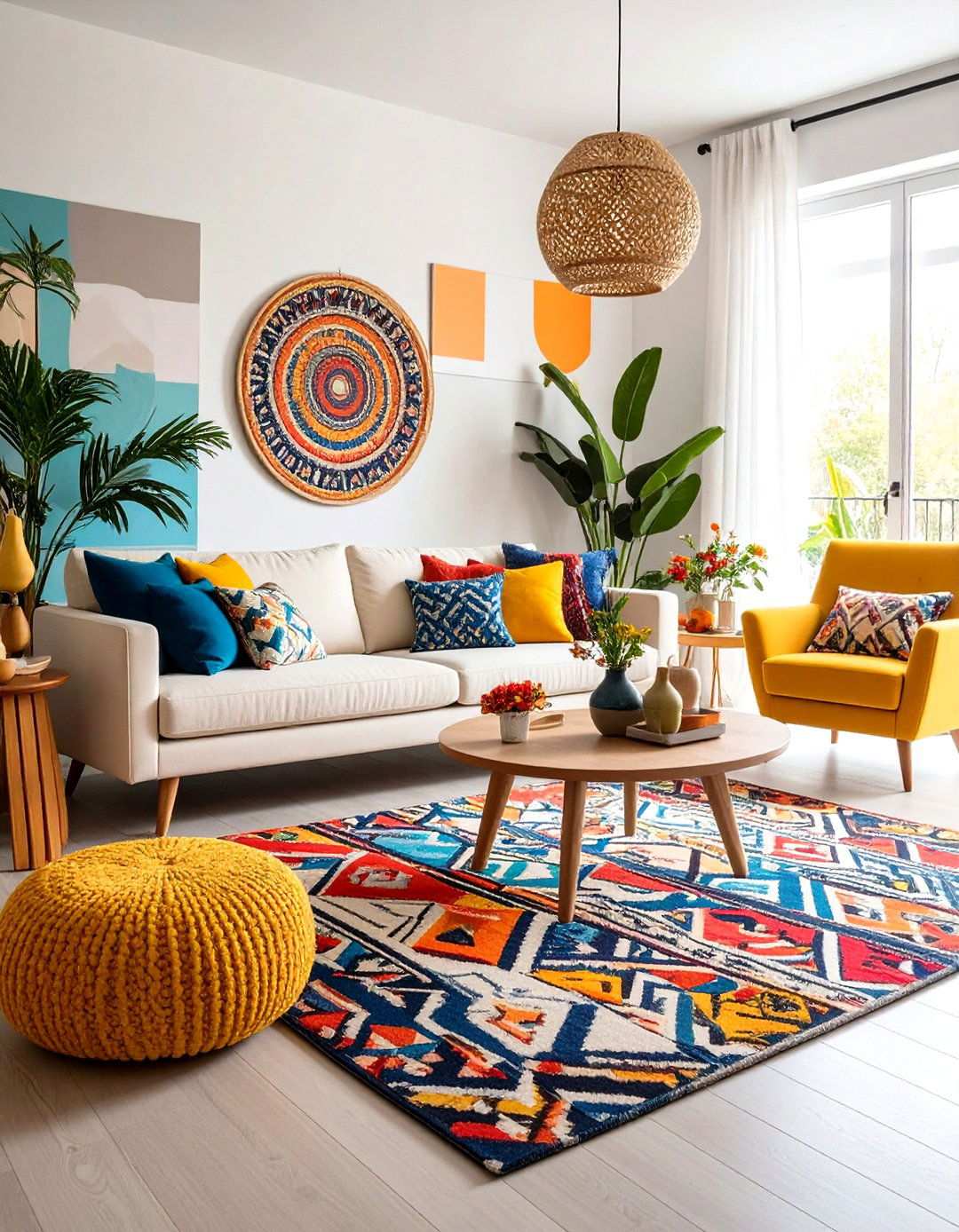
Embracing the fearless combinations of patterns that characterize mid-century modern interiors can be a thrilling experience. To create dynamic, sophisticated spaces, layer contrasting prints such as geometric patterns, atomic motifs, and abstract designs through rugs, pillows, and upholstery. By pairing different scales of patterns, you can achieve striking visual effects – large geometric rugs can be paired with smaller atomic-print pillows, or bold stripes can be combined with subtle polka dots. Maintaining cohesion is key, and this can be achieved by working within a consistent color palette that ties disparate patterns together. A delicate balance between busy patterns and solid colors, as well as neutral backgrounds, prevents visual overload. This bold approach to pattern mixing embodies the era’s optimistic, experimental spirit while crafting living rooms with distinctive personality and visual excitement.
18. Elevating Elegance with Brass Accents
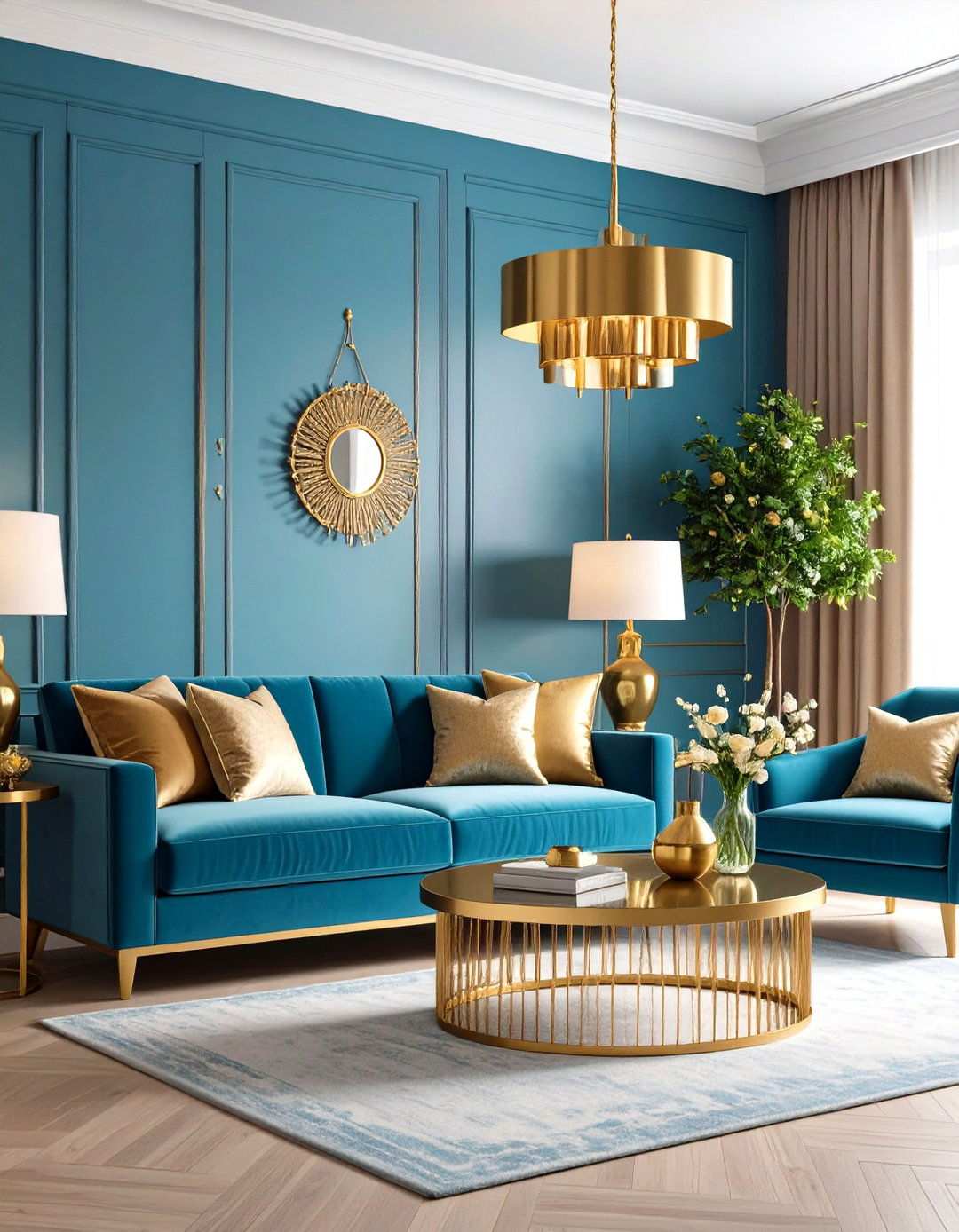
Transform your mid-century modern living room with carefully placed brass details that add warmth and sophistication throughout the space. Brass accents create cohesive design threads that unify different room elements, from cabinet hardware and lamp bases to picture frames and decorative objects. You can opt for polished brass for a glamorous effect or aged brass for a more subtle, vintage appearance. The warm golden tones of brass complement earth-tone color palettes while providing elegant contrast against darker woods and neutral fabrics. When incorporating brass accents, consider them as strategic elements rather than dominant features, using them to enhance rather than overwhelm the overall design scheme. This approach can be particularly effective on key pieces like coffee table legs, lighting fixtures, and architectural details.
19. Bringing Nature Indoors with Organic Displays
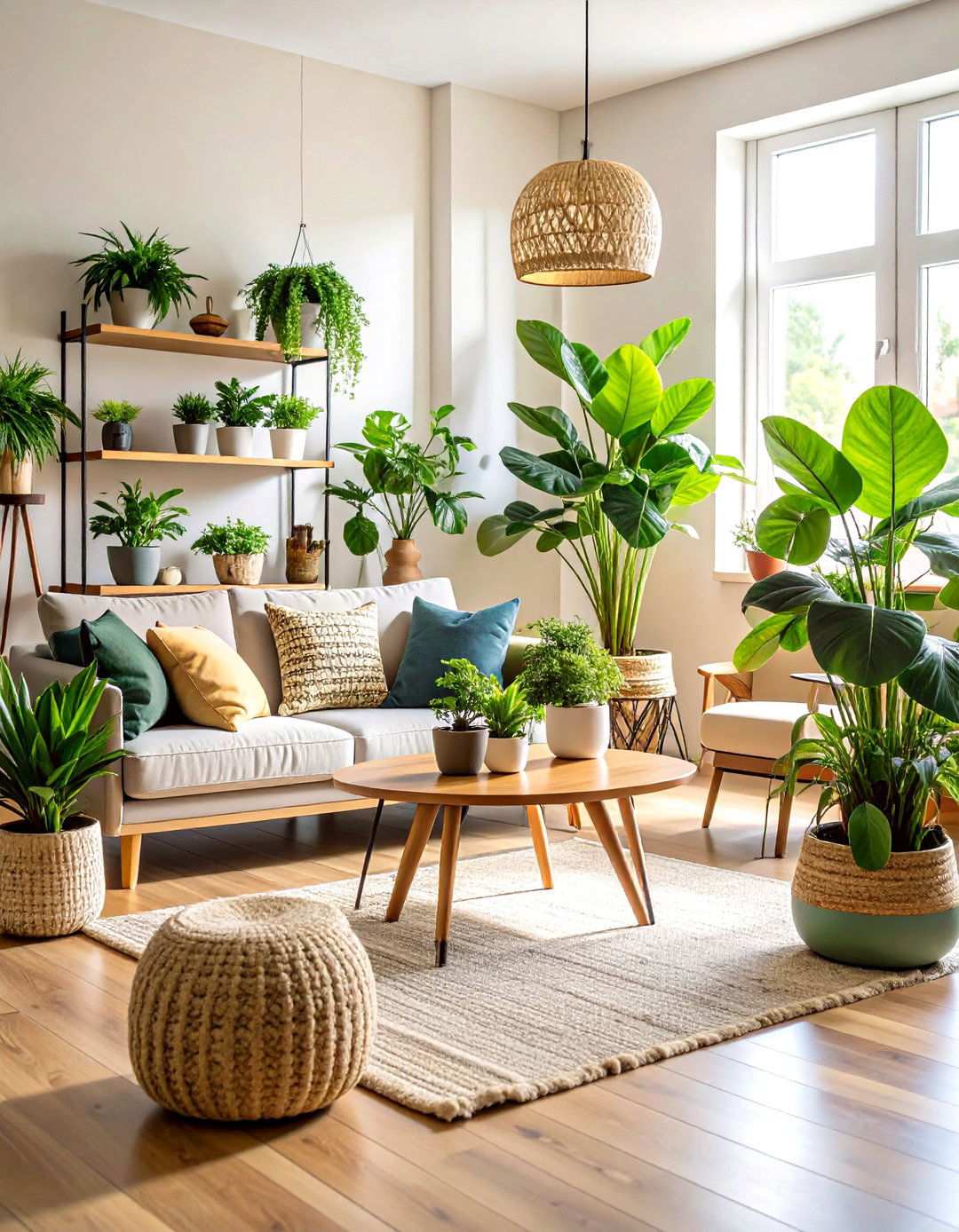
Mid-century modern design’s emphasis on natural elements and organic forms can be beautifully reflected through lush plant displays. To create visually stunning plant arrangements, use period-appropriate planters such as ceramic pots in geometric shapes, wire plant stands, and hanging macramé holders that add texture and life to living spaces. Large statement plants like fiddle leaf figs or palm trees can establish dramatic focal points, while smaller plants grouped on shelving and side tables create layered green displays. The organic shapes and varied textures of plants provide beautiful contrast against the geometric furniture and architectural elements. As these living decorations change seasonally and grow over time, they add dynamic natural elements to static interior designs, creating a captivating and ever-evolving visual experience.
20. Streamlined Entertainment Hubs
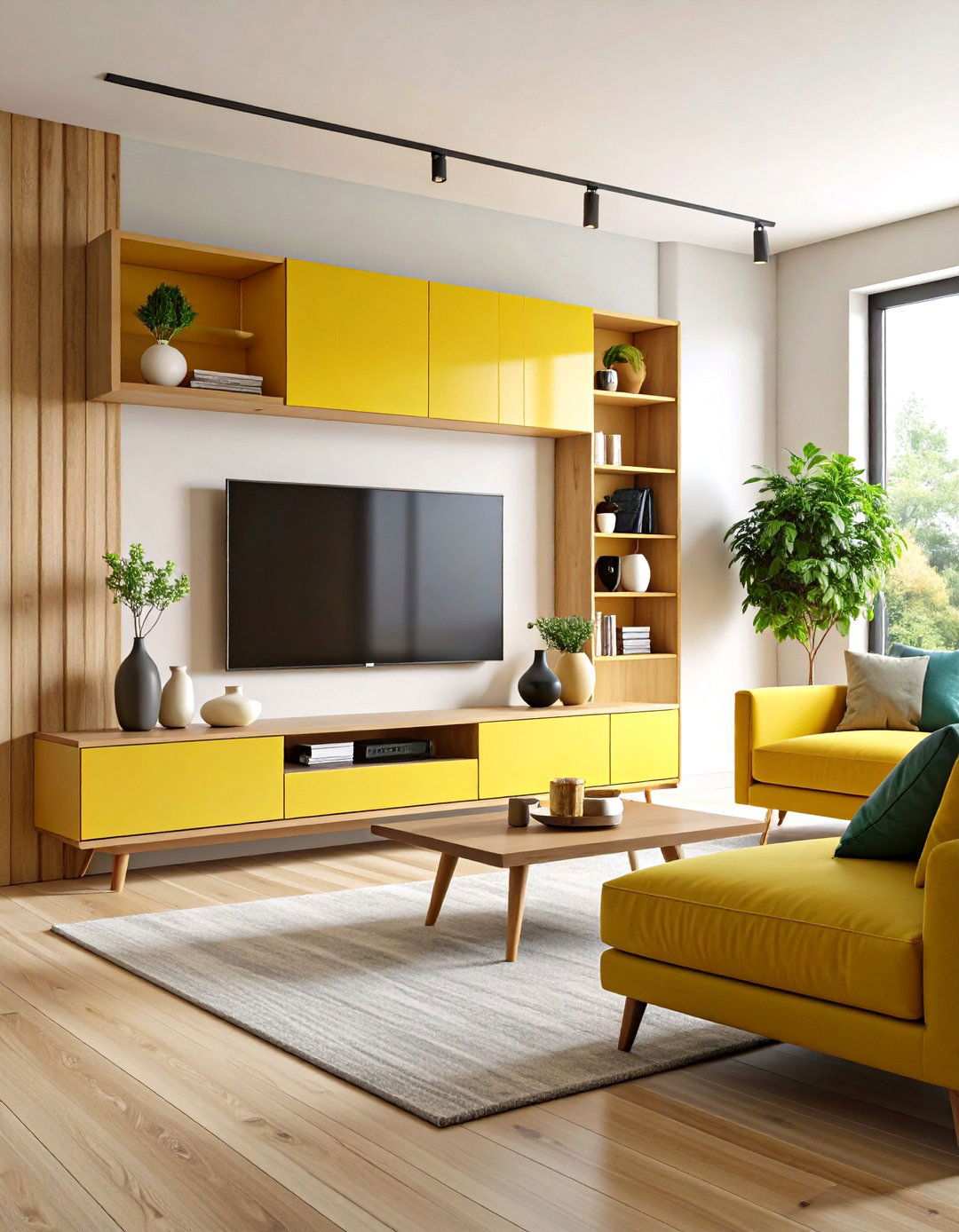
Craft inviting entertainment spaces that seamlessly integrate modern technology with the clean aesthetic of mid-century modern design. Opt for media consoles boasting clean lines, low profiles, and unadorned legs that harmonize with other furniture pieces. Conceal cables and electronics within sleek cabinetry featuring sliding doors or flip-down fronts for effortless access. By merging entertainment technology with the surrounding space, you create a visually balanced area where technology doesn’t overwhelm. Consider consoles finished in warm wood tones that complement coffee tables and other furniture, establishing a cohesive aesthetic. Strategically placing wall-mounted televisions as part of a larger gallery wall or above minimalist consoles creates a balanced presentation that doesn’t clutter the space.
21. Texture Interplay Techniques
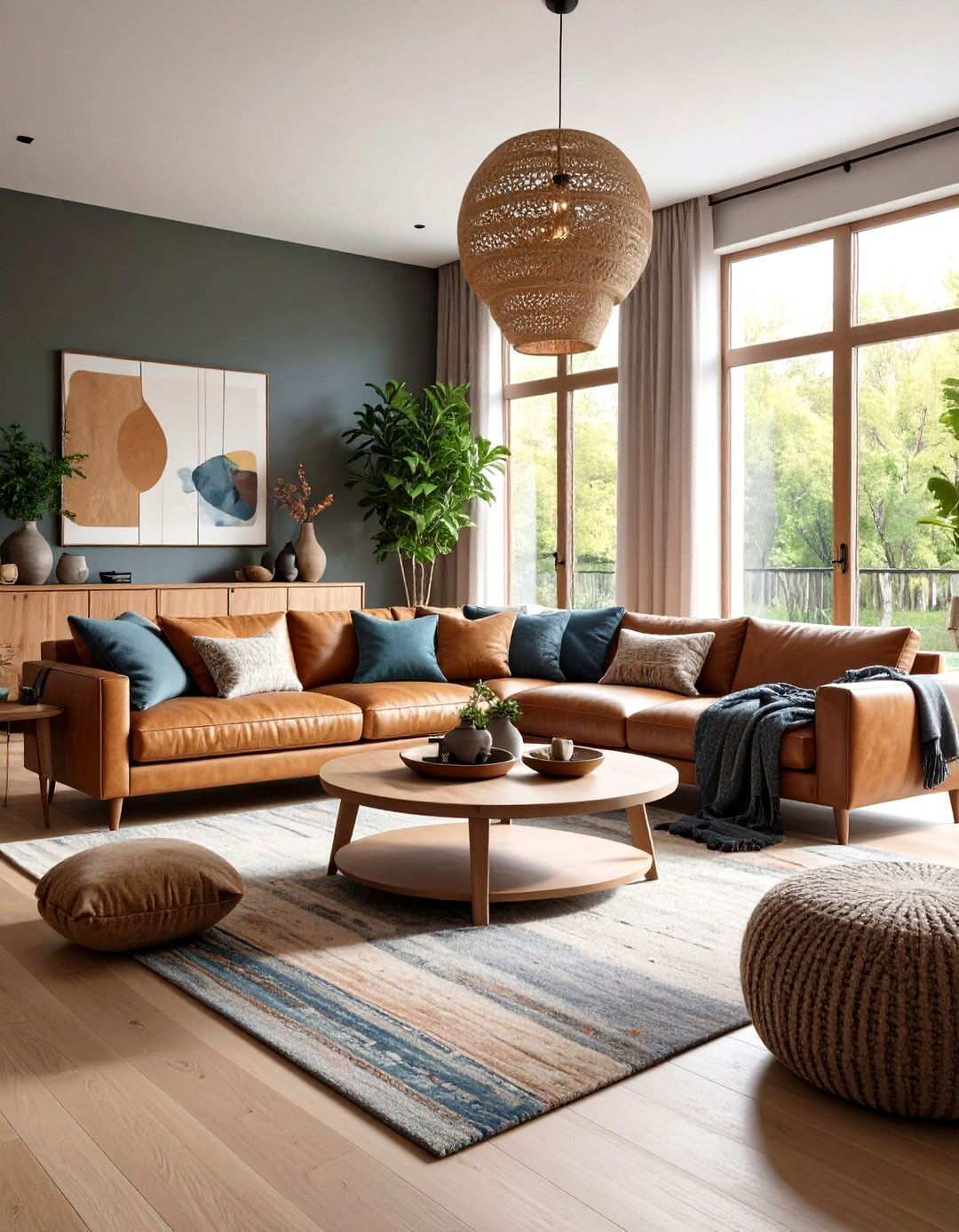
Elevate the ambiance of mid-century modern living rooms by artfully layering a variety of textures that add depth and coziness to the space. Combine sleek leather seating with chunky wool throws, polished wood accents with rugged stone features, and metallic details with plush fabric cushions. These deliberate texture contrasts prevent spaces from feeling sterile or overly minimalist while maintaining a touch of sophisticated elegance. To create visual interest, layer area rugs over hard flooring, drape throw blankets over streamlined furniture, and mix pillow fabrics in diverse weaves and finishes. The interplay between smooth and rough, hard and soft, creates a sensory experience that invites touch and adds warmth to geometric, angular spaces.
22. Sculptural Lighting Displays
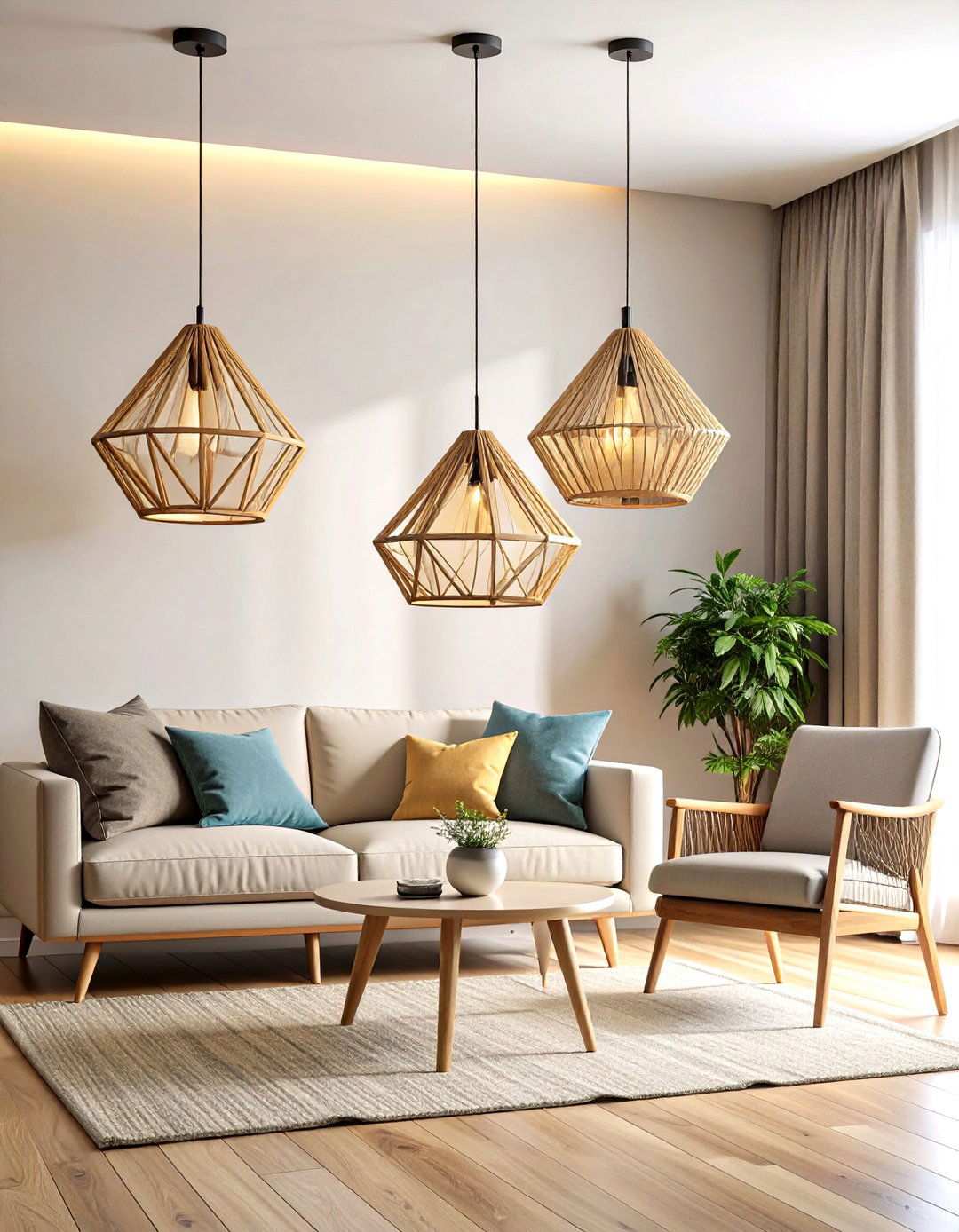
Transform your ceiling into an artistic gallery with carefully curated pendant light arrangements that provide both illumination and visual interest. Group pendants at varying heights above seating areas, hang statement pieces above coffee tables, or create dramatic groupings that define distinct living zones. Choose fixtures with unique shapes, atomic-inspired forms, or organic curves that complement your furniture and reflect mid-century design principles. Mix different sizes and styles within the same material family—brass pendants in various shapes, or glass globes in different dimensions—to create dynamic yet harmonious lighting displays. These suspended sculptures add vertical interest and create intimate lighting zones within larger open spaces, drawing the eye upward and fostering a sense of cohesion.
23. Harnessing Color to Create Visual Drama
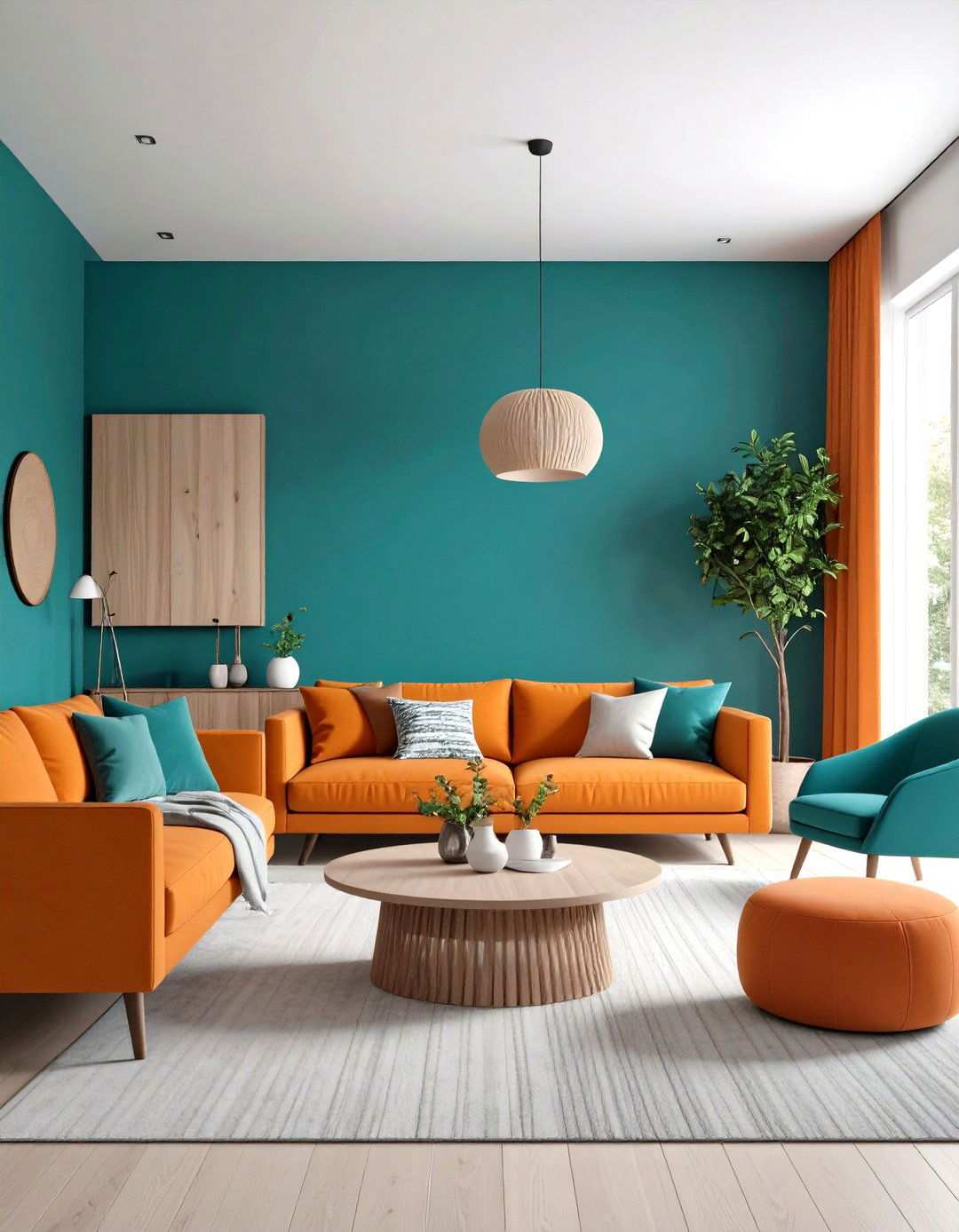
Mid-century modern living rooms can greatly benefit from the strategic use of bold color-blocking techniques. By incorporating rich, saturated hues in accent walls, furniture upholstery, artwork, and accessories, you can inject graphic impact and visual energy into the space. To maximize the effect, group furniture in similar tones, then introduce contrasting accents that add visual excitement. The key to success lies in using color confidently and strategically, crafting clear color stories that feel deliberate rather than haphazard. To avoid overwhelming your senses, balance bold blocking with neutral areas that allow the eye to rest, thereby maintaining the optimistic, energetic essence that defines authentic mid-century modern style.
24. Curating a Vintage Furniture Collection
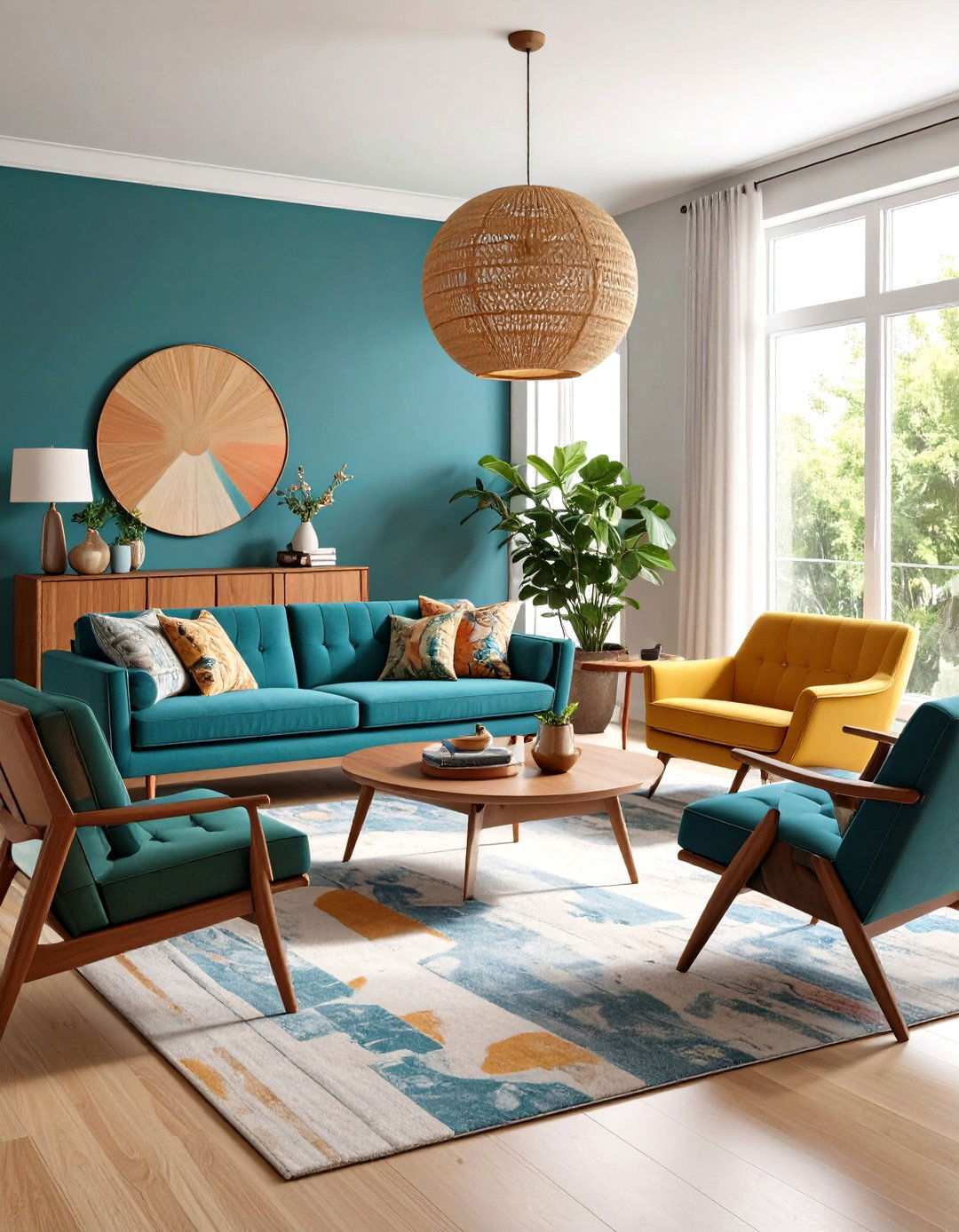
A carefully curated vintage furniture collection can add genuine period character and distinctive personality to your mid-century modern living room. To find iconic designs, scour the market for renowned makers like Herman Miller, Knoll, and Danish furniture companies that created the era’s most enduring pieces. Combine original vintage finds with high-quality reproductions that capture the same spirit and craftsmanship, striking a balance between authenticity and affordability. Focusing on key statement pieces—a vintage Eames lounge chair, an original Noguchi coffee table, or an authentic Danish credenza—can anchor your design scheme and provide functional seating and storage. Moreover, these investment pieces serve as conversation starters and links to design history, imbuing your living room with genuine character and timeless style.