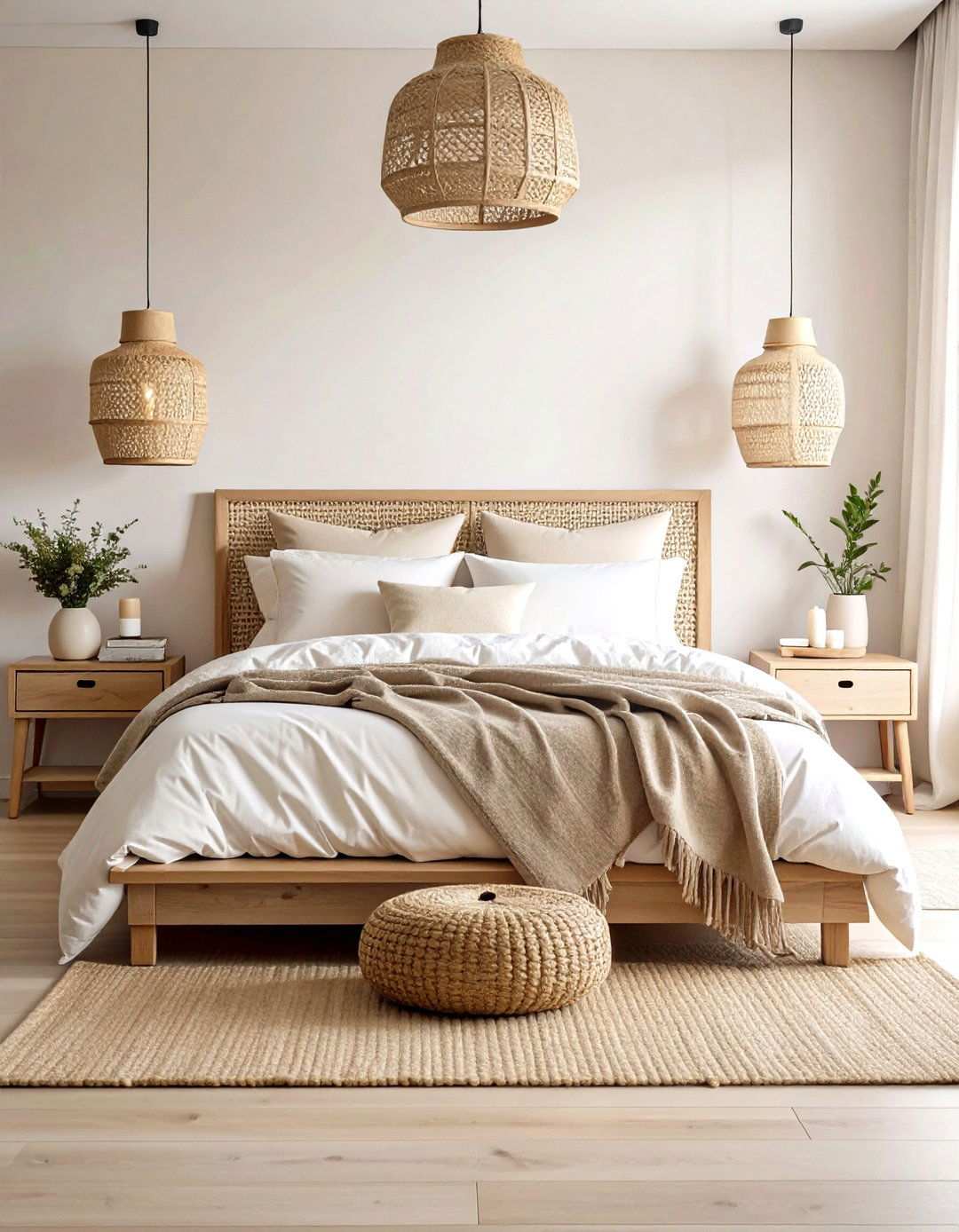
1. Serene Oasis with Floor Cushions
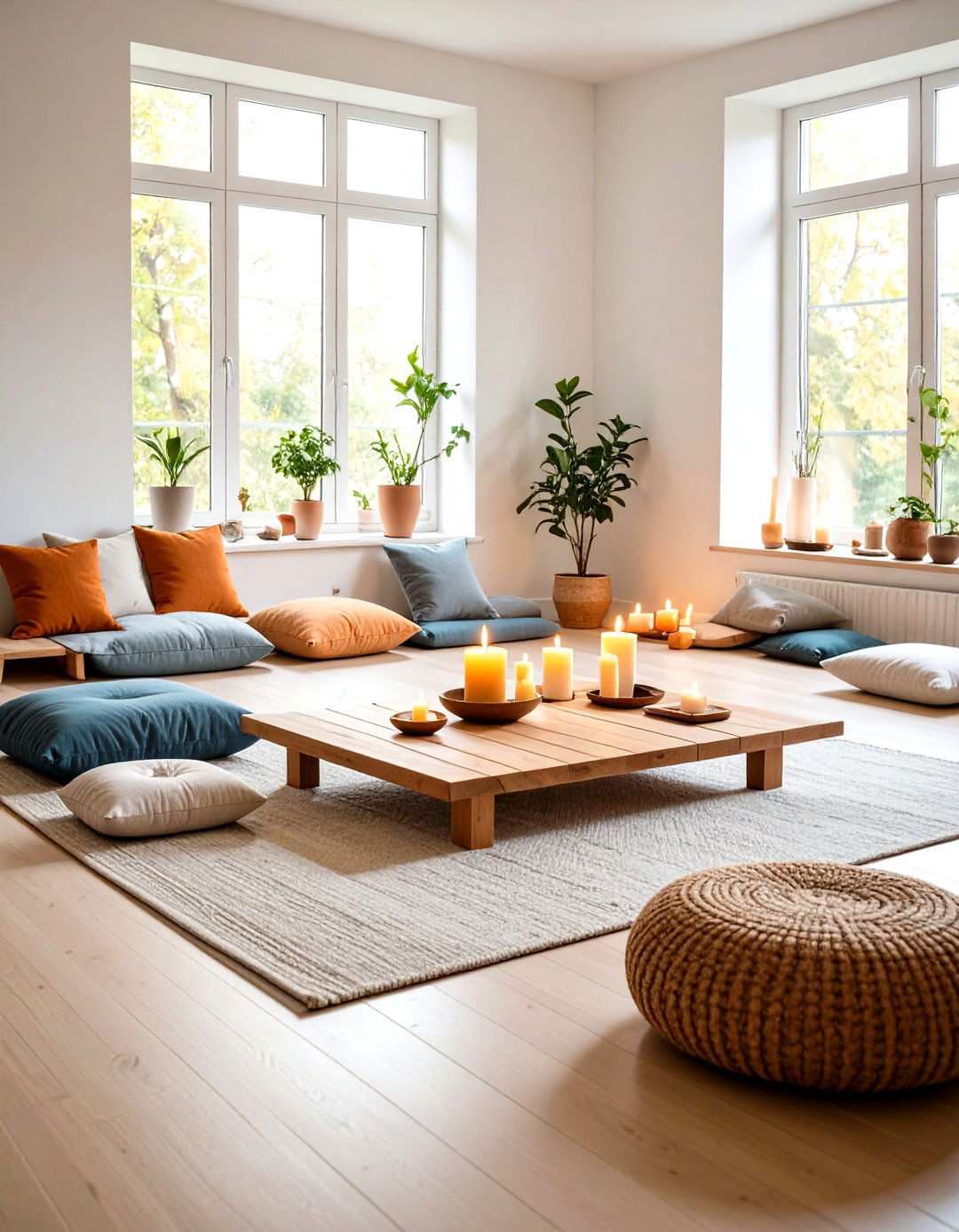
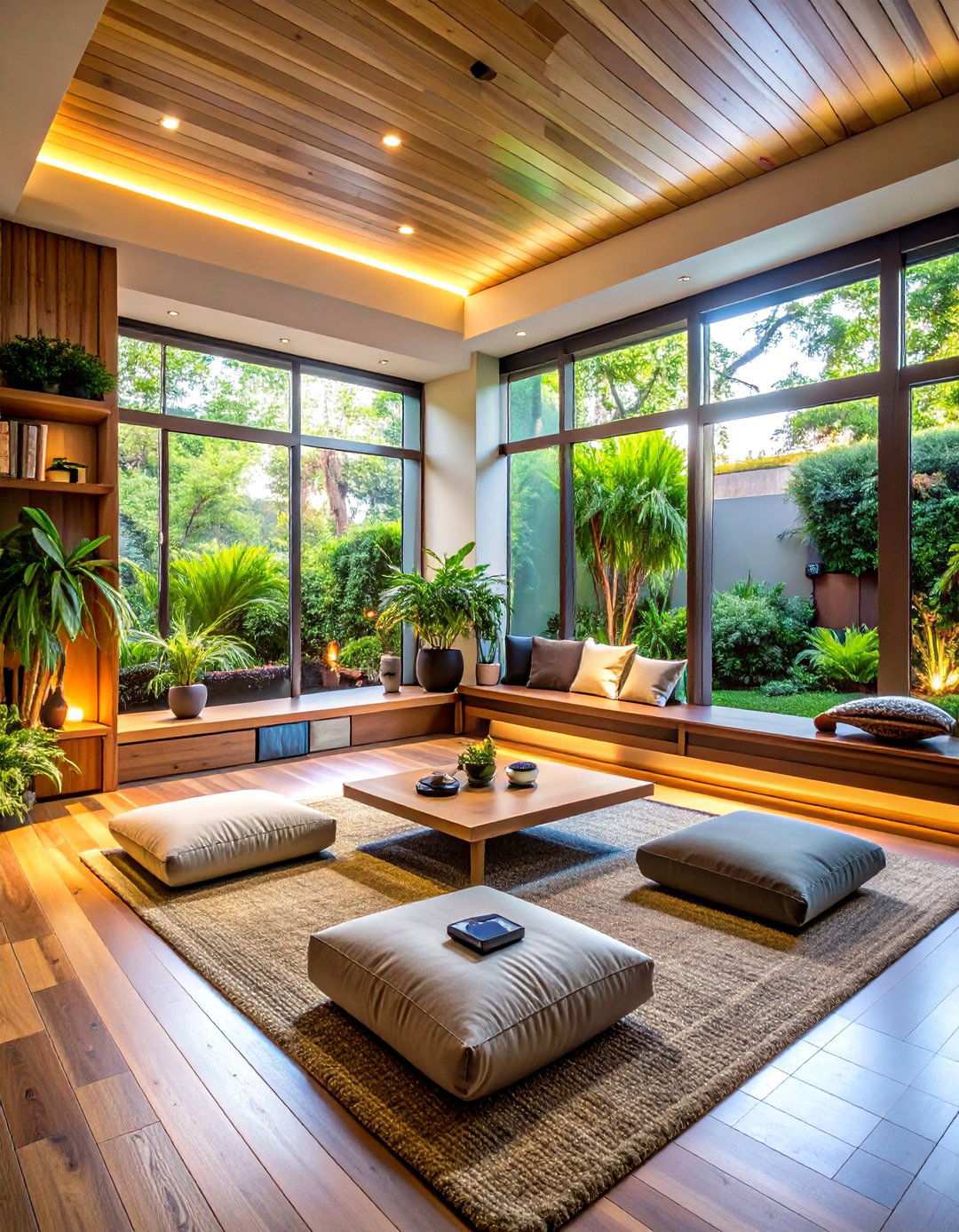
Transforming a space into a peaceful sanctuary is easier than you think, and it starts with creating a dedicated meditation corner. Position plush floor cushions or meditation mats in a quiet area that bathes in natural light, accompanied by a low wooden table for candles or incense. Keep the space uncluttered with a single, striking plant or a thought-provoking sculpture to maintain focus. Proper ventilation is crucial, and air-purifying plants like peace lilies or snake plants can work wonders in this regard. Noise reduction is equally important, and soft curtains or area rugs can help minimize distractions. This setup encourages regular mindfulness practice while maintaining the clean aesthetic that defines zen design. The key to creating a peaceful sanctuary lies in selecting a space free from distractions where you can consistently return to center yourself and cultivate present-moment awareness.

As an Amazon Associate I earn from qualifying purchases.
2. Calming Zen Bedroom with Natural Wood Accents
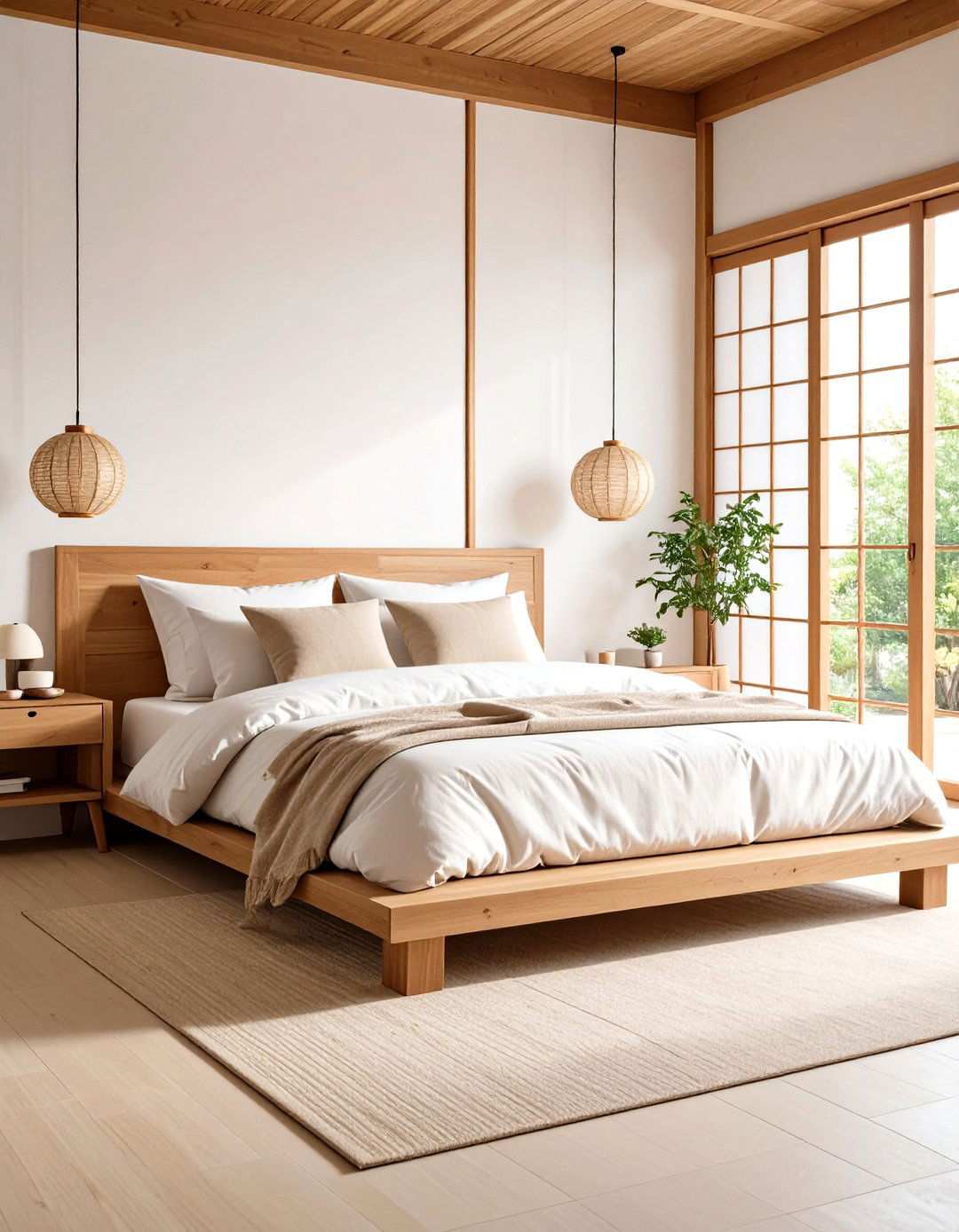
A restful and rejuvenating bedroom is a sanctuary for the soul, and zen design principles can help you achieve this. Design your bedroom around a low platform bed made from natural wood, complemented by organic cotton bedding in soothing, neutral tones. Wooden nightstands with clean lines add a touch of elegance, while woven baskets or bamboo elements bring texture to the space. Symmetrical, low-lined furniture helps to create a sense of balance and harmony. Natural lighting flows freely through sheer curtains, while storage solutions remain hidden to maintain visual simplicity. This design philosophy creates a sleep sanctuary that promotes deep rest and rejuvenation, essential for overall wellbeing and mental clarity.
3. Tranquil Zen Bathroom with Stone and Wood Elements
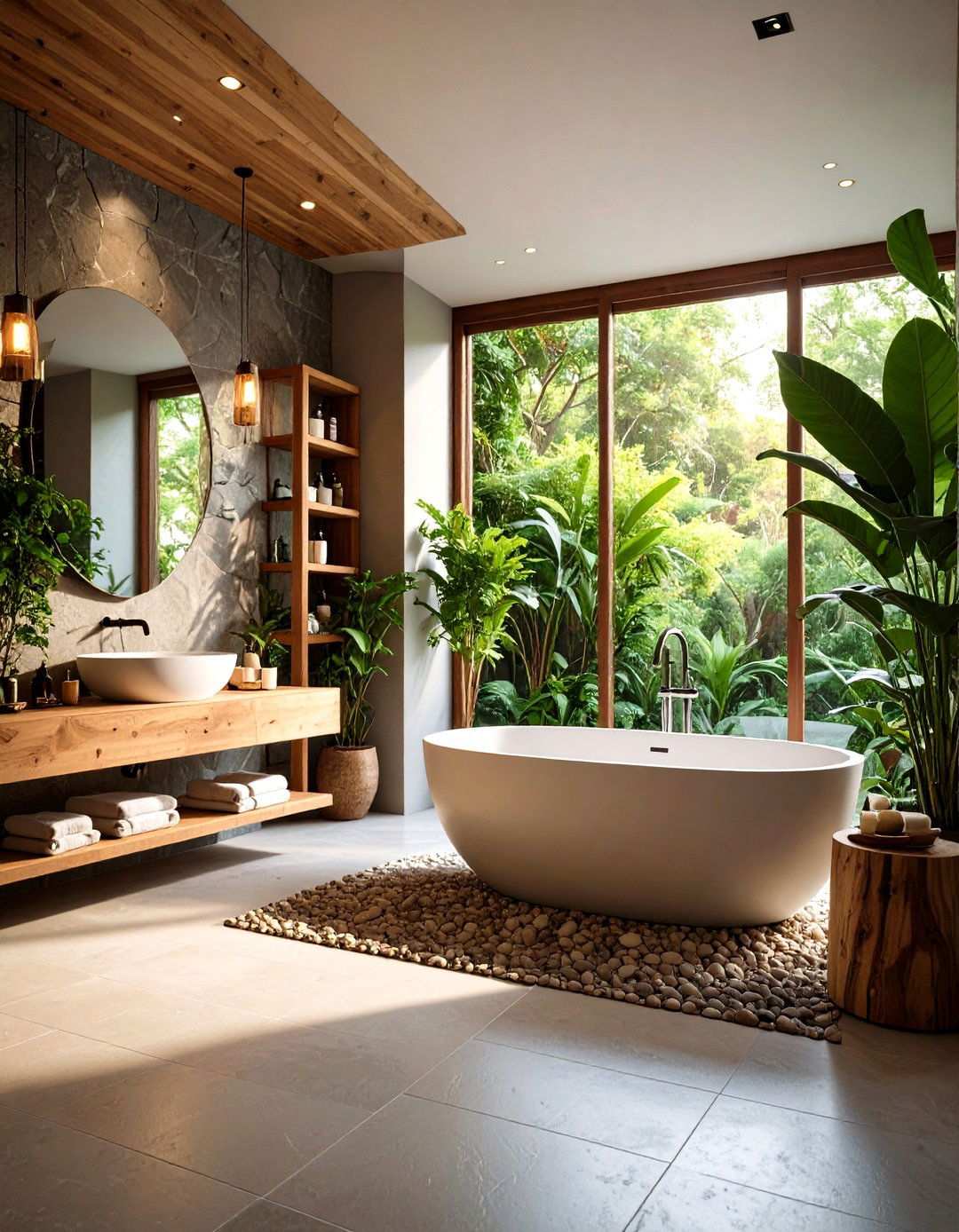
Bathrooms can be more than just a functional space – they can be a spa-like retreat that rejuvenates the body and spirit. Incorporate natural materials like wood, stone, and bamboo to create a calming ambiance. Matte-finish tiles, a freestanding soaking tub, and wooden accents through shelving or stools create a serene atmosphere. Add tactile wooden elements and textured materials to create visual harmony while maintaining clean lines. Plants that thrive in humidity, such as bamboo or peace lilies, purify the air and connect you with nature. Soft ambient lighting through candles or dimmable fixtures creates the perfect atmosphere for relaxation. This zen bathroom design turns daily routines into mindful rituals that nourish both body and spirit.
4. Effortless Elegance in the Zen Living Room
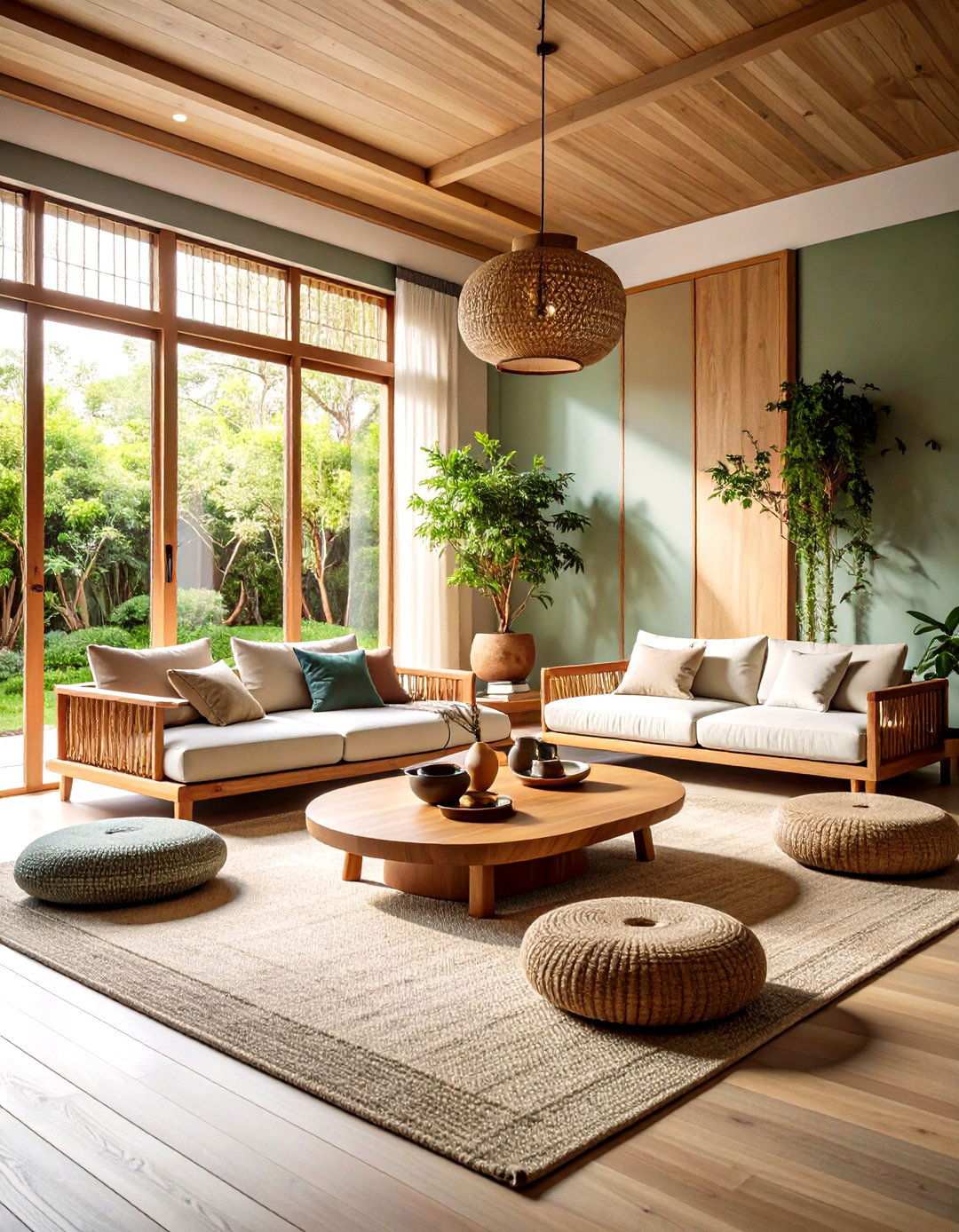
Effortless elegance can be achieved in a zen living room by embracing minimalism and creating a space that feels open and inviting. To achieve this, opt for low-profile furniture that keeps sight lines unobstructed, perfect for encouraging conversation and relaxation. Combine natural materials like wood and stone with soft textiles in cotton, linen, or wool to create a harmonious balance that promotes a sense of calm. By keeping furniture low to the ground and focused on functionality, you can create a space that feels peaceful and serene. Add wooden details and light color palettes to complete the look, and consider incorporating large floor cushions for flexible seating options that invite relaxation and informal gathering.
5. Serenity in the Zen Home Office
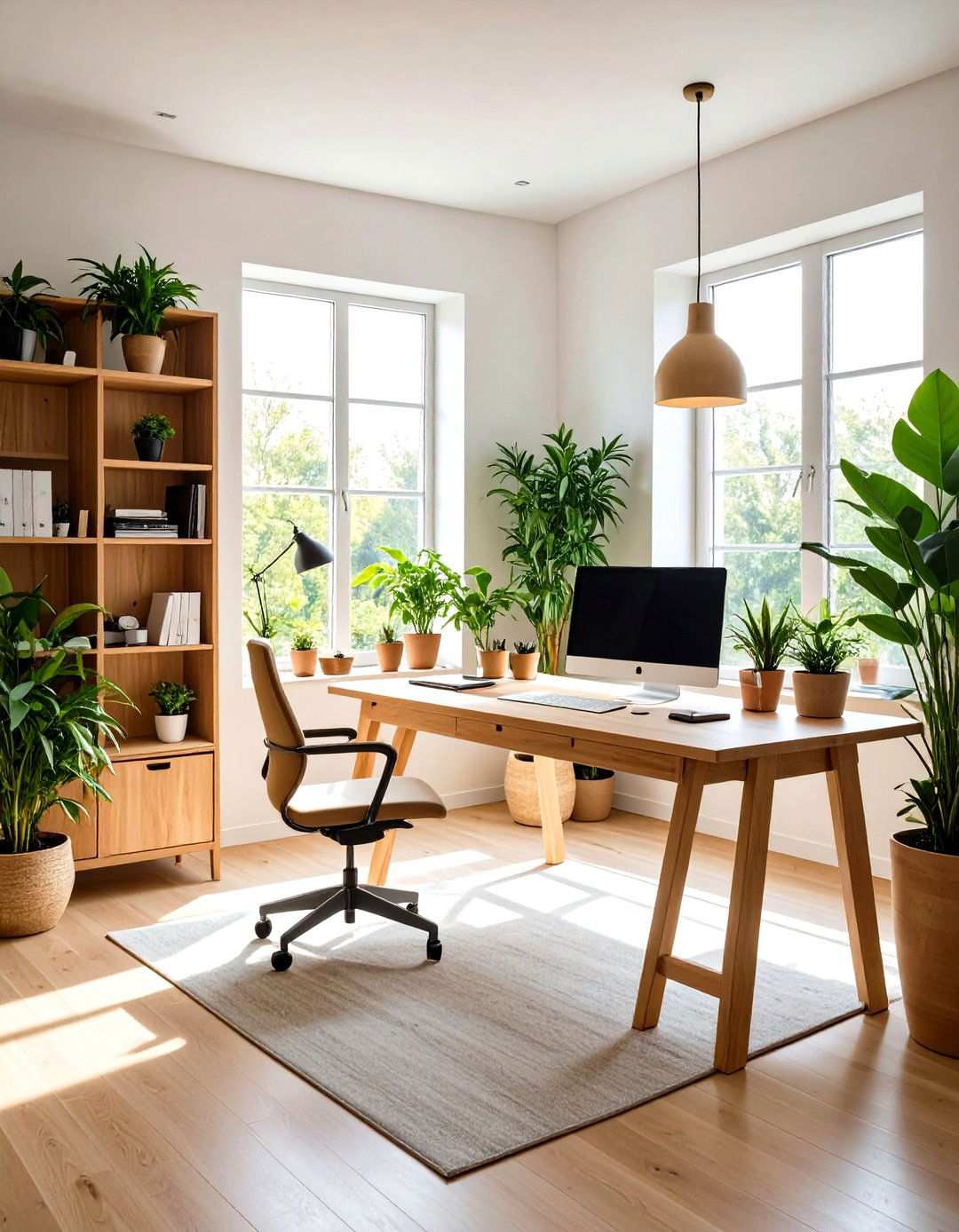
A zen home office is the perfect blend of minimalist elegance and natural elements, creating a serene yet professional workspace. Position your desk near a window to maximize natural light and incorporate bamboo plants or accessories to bring in a calming presence. With clean lines and natural wood finishes, choose furniture that exudes simplicity while incorporating decorative elements that are both minimal and purposeful. Research has shown that working in a calming environment can have a significant impact on productivity, reducing stress levels by 60% after just 15 minutes. To maintain a clutter-free space, incorporate hidden storage solutions and add an air-purifying plant like a snake plant or peace lily to promote a healthy work environment. This zen workspace encourages focus and creativity while providing a peaceful retreat from daily pressures and distractions.
6. The Soothing Power of Water in Zen Spaces
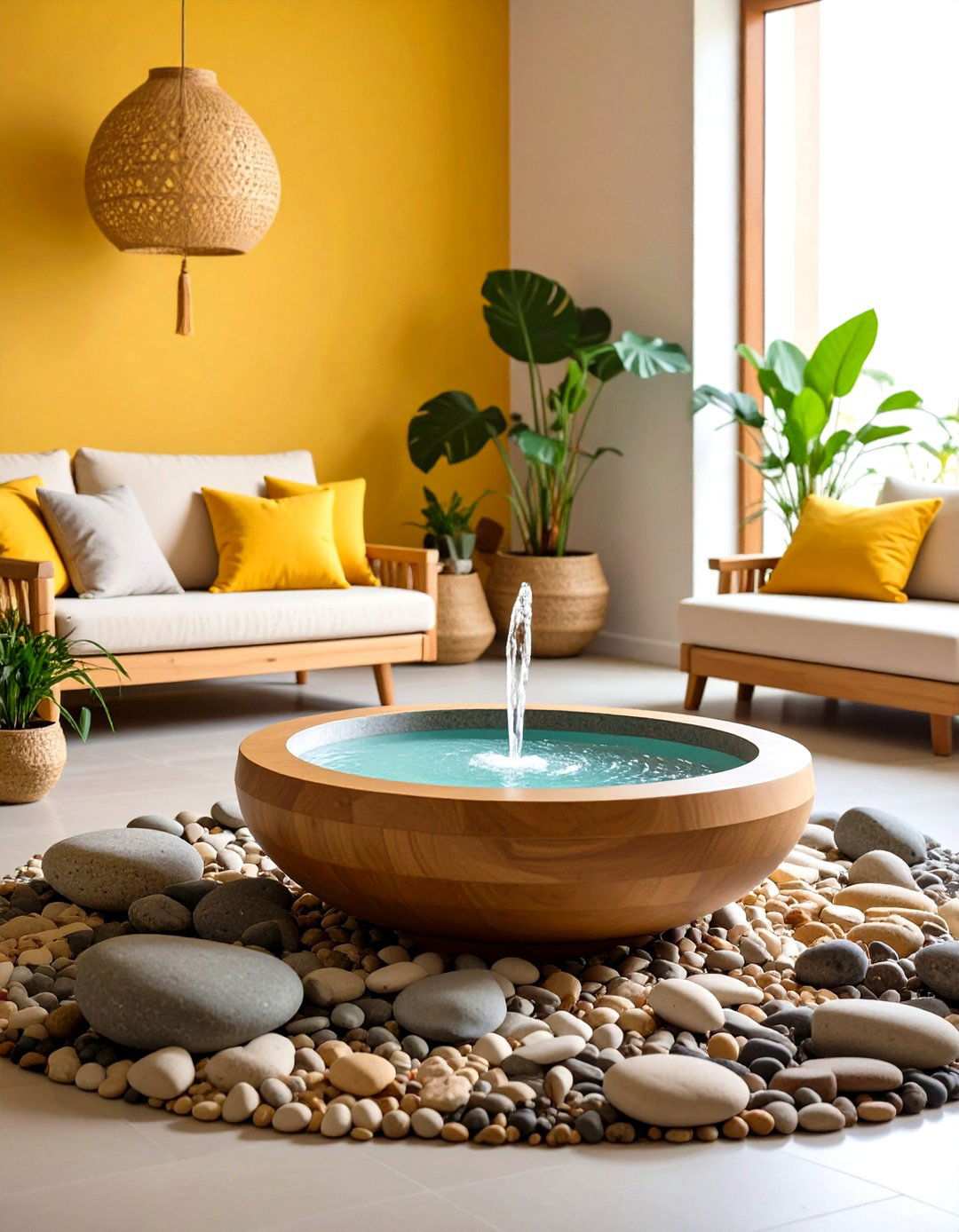
Incorporating water elements is a powerful way to enhance tranquility and introduce meditative sensory experiences to zen rooms. A small tabletop fountain or bamboo water feature can serve as a focal point, creating gentle sounds that mask outside noise and promote relaxation. Position comfortable seating nearby where you can listen to the flowing water while practicing mindfulness or unwinding. Whether you choose a small tabletop fountain or a more elaborate indoor waterfall, water features have the ability to create a peaceful ambiance in any space. Surround the area with smooth stones or pebbles to enhance the natural aesthetic while maintaining minimal decoration. This combination of sound, movement, and natural elements creates a powerful meditation environment that engages multiple senses and promotes deeper relaxation.
7. Cultivating Serenity in a Nature-Inspired Reading Space
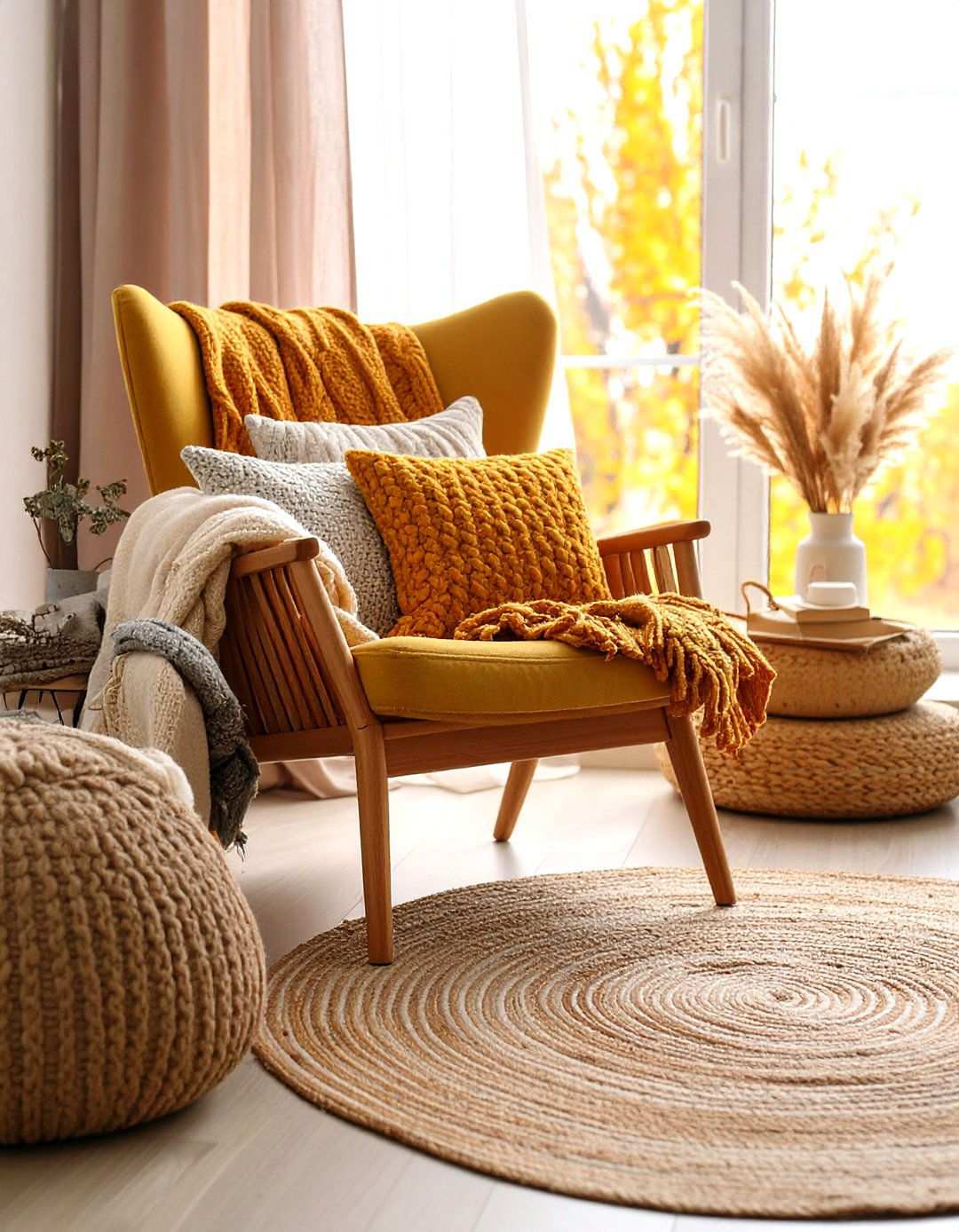
Transform a quiet area of your home into a peaceful reading sanctuary by thoughtfully combining natural materials and soothing textiles. Place a plush chair near a window with sheer drapes that filter the light, allowing you to bask in a soft, gentle glow while maintaining your sense of seclusion. Layer texture with linen throws, woolen cushions, and jute rugs that invite tactile exploration and offer a sense of comfort. Achieve a state of serene balance by carefully balancing various textures and incorporating natural materials throughout your design. A small side table nearby, adorned with simple lines that don’t compete for attention, can hold a steaming cup of tea or a book, while a single potted plant can help purify the air and strengthen your connection to nature, creating a haven where you can immerse yourself in literature while remaining mindful.
8. The Beauty of Minimalism in Zen Spaces
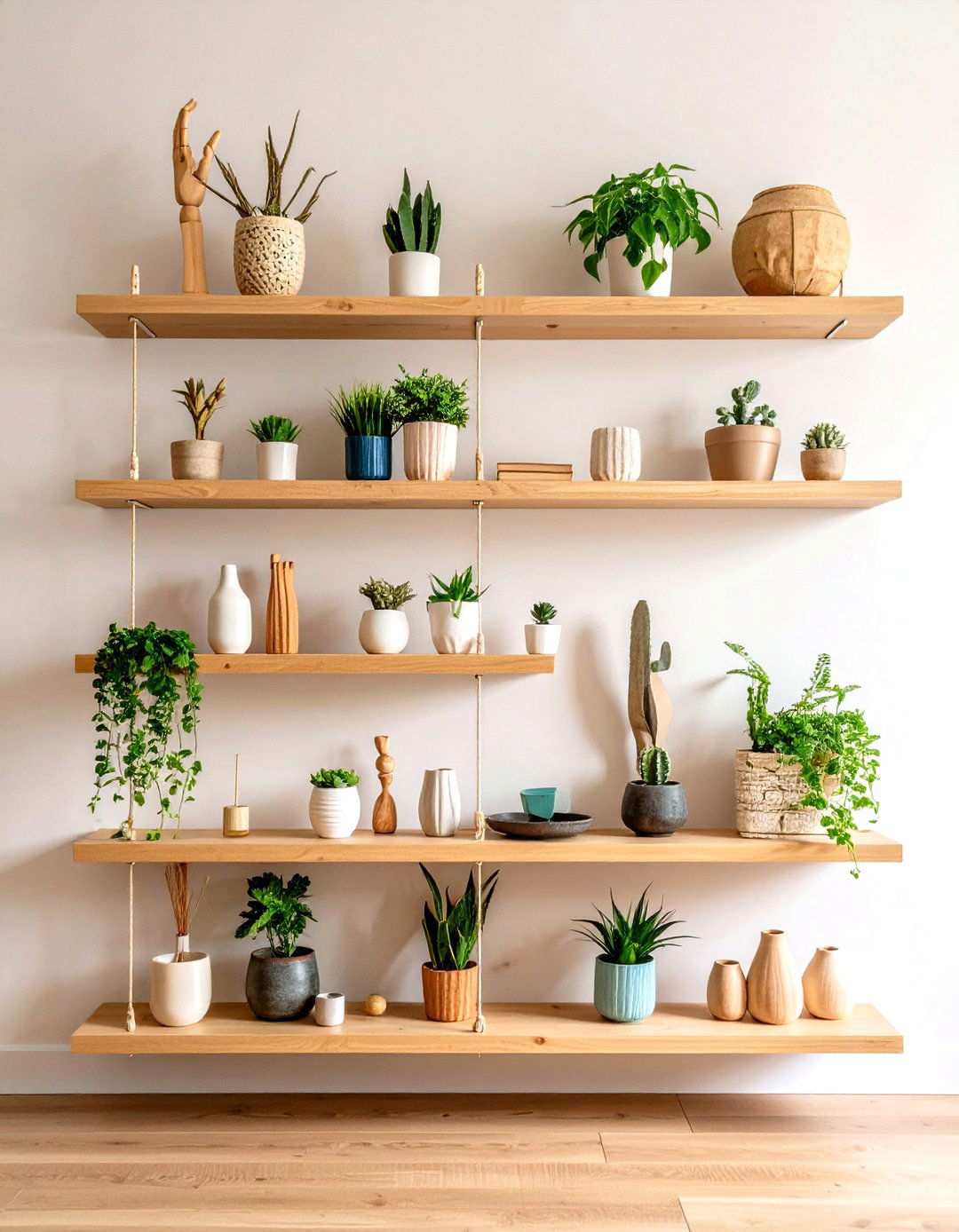
Artistic simplicity can be achieved by selecting pieces that evoke a sense of calm without overwhelming the space, through the strategic use of carefully chosen minimalist wall art. Install floating wooden shelves with clean lines to display curated objects that bring joy and significance to your space. Opt for items crafted from natural materials, such as ceramic vases, wooden sculptures, or small potted plants, which align with the principles of zen. A well-organized and minimalist shelf transforms zen spaces, incorporating calming elements like plants and select books. Leave plenty of negative space between objects to allow each piece to breathe and be appreciated individually, creating visual interest while honoring the zen philosophy of intentional living and mindful curation of possessions.
9. Finding Inner Peace in a Zen-Inspired Garden Room
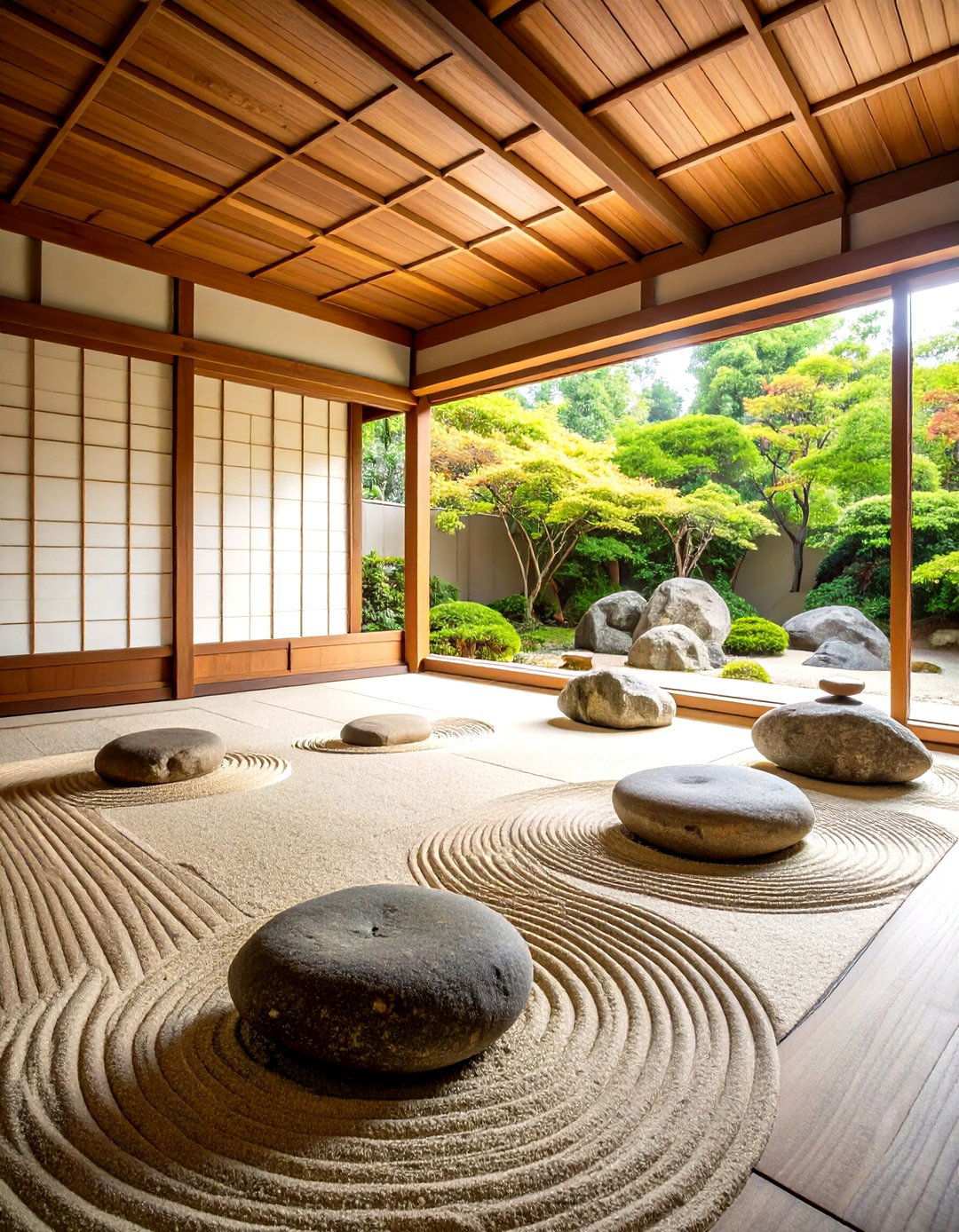
Sand gardens have the power to encourage contemplation and mindfulness, while soft lighting creates serene atmospheres perfect for meditation practice. Design a dedicated space with raked sand patterns, carefully placed stones, and minimal seating for contemplation and stress relief. Include simple tools for creating patterns in sand, allowing you to engage in meditative activities that focus the mind and promote relaxation. Desktop zen gardens provide miniature versions that are perfect for smaller spaces or office environments. Add subtle lighting that highlights textures without creating harsh shadows, maintaining the peaceful ambiance essential for contemplative practice. This traditional zen element brings ancient wisdom into modern homes, providing tangible ways to engage with mindfulness through simple, repetitive actions.
10. Illuminated Oasis: Natural Light in Zen Spaces
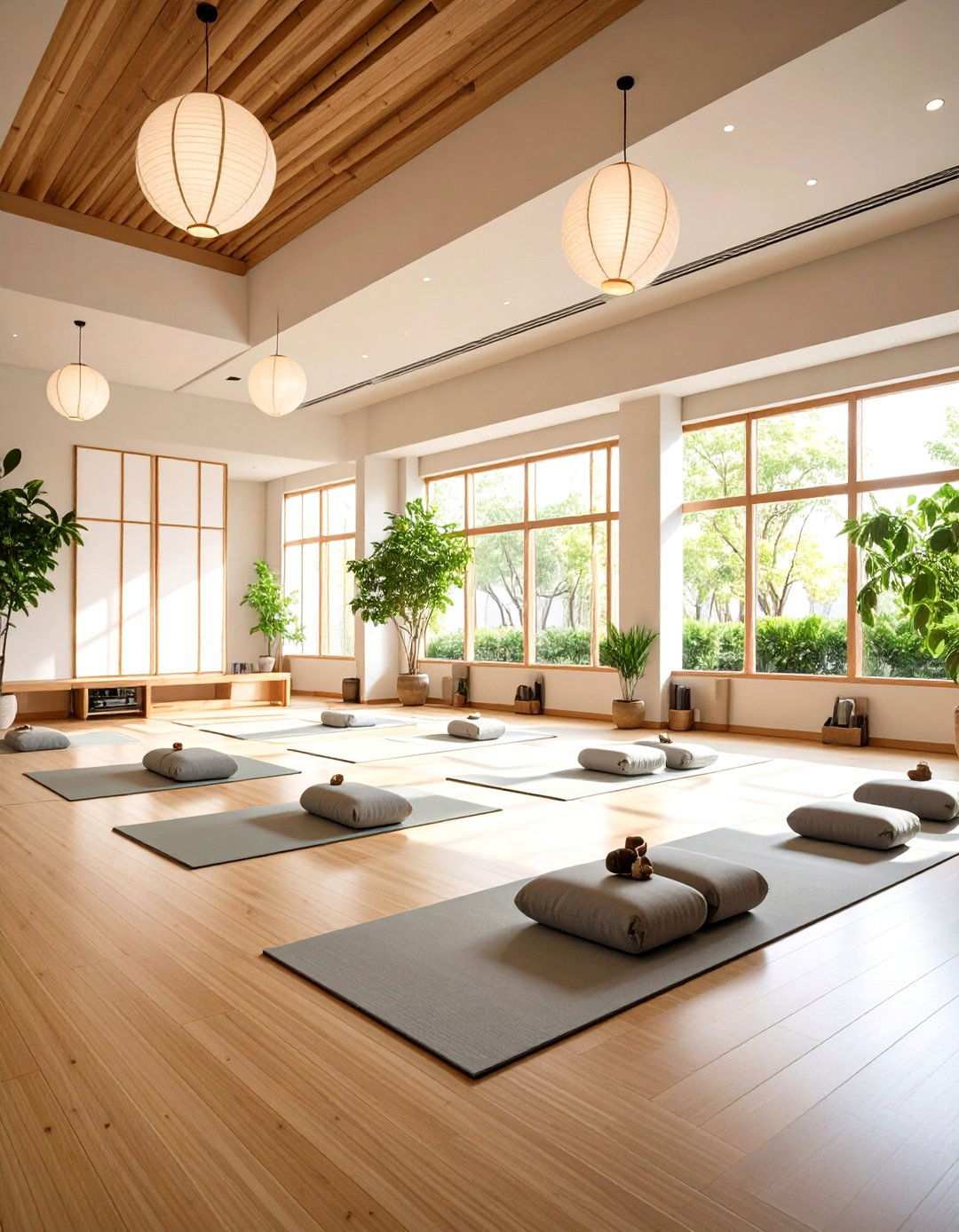
By capitalizing on sunlight’s calming effects, designers can create serene environments that foster relaxation and inner peace. East or west-facing windows, in particular, offer a unique opportunity to capture the soft, golden hues of sunrise and sunset. To amplify this impact, consider transforming a room or expansive area into a yoga studio by strategically placing windows to maximize natural light. Light-colored walls serve as a reflection of brightness, while bamboo or wooden flooring adds warmth beneath the feet. Harnessing the power of the sun to illuminate workspaces is a simple yet effective way to create a sense of tranquility. Sheer curtains enable natural light to flood in, while allowing for a seamless transition between spaces. To further enhance this ambiance, incorporate plants that thrive in bright conditions, not only purifying the air but also strengthening the connection to nature during meditation and yoga practice.
11. Mindful Mornings: Low-Table Dining Areas
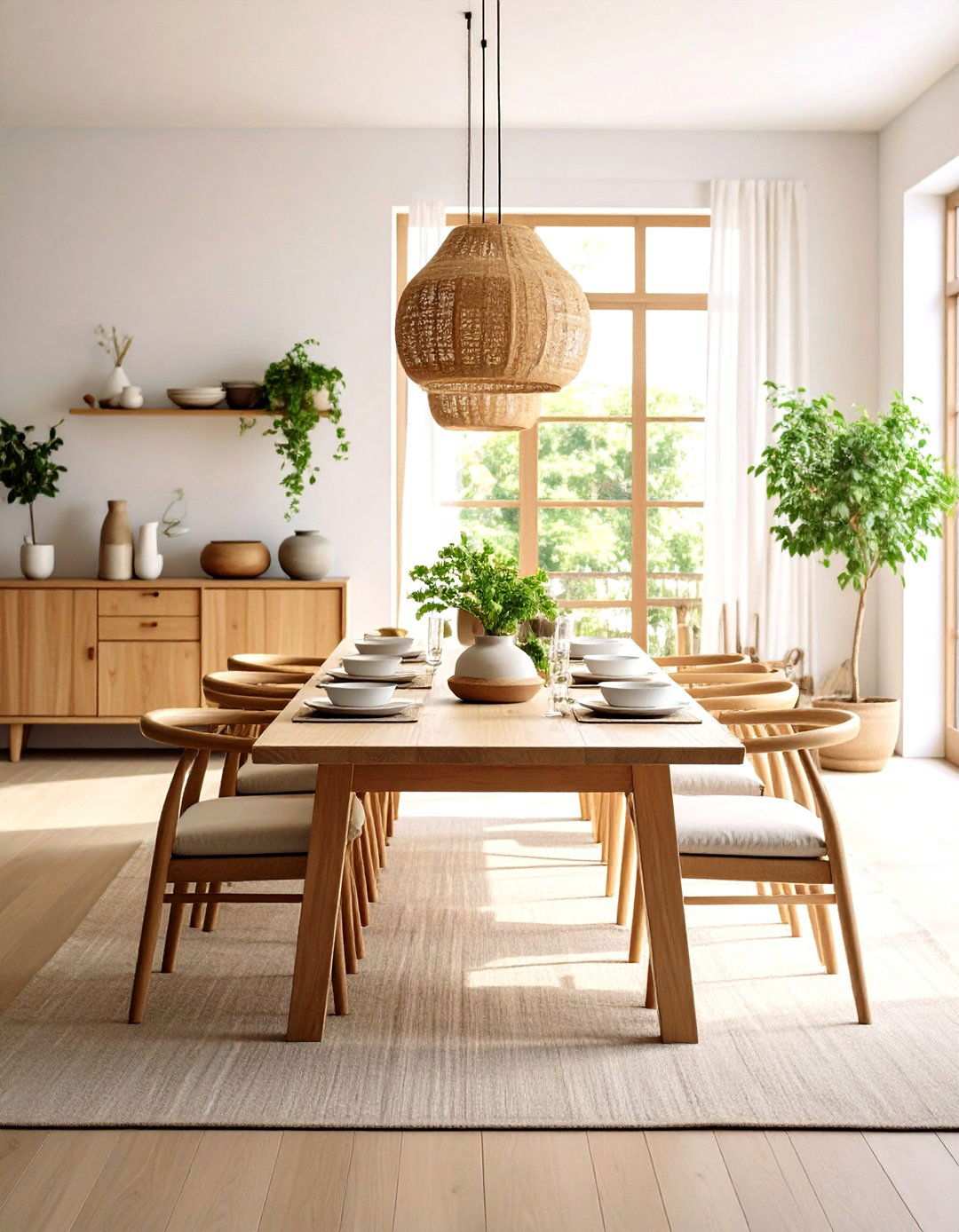
Incorporating low wooden tables surrounded by floor cushions or low stools encourages a more contemplative approach to dining. By doing so, individuals can slow down and savor their meals, fostering a deeper connection with others and the natural world. This concept can be taken a step further by selecting natural materials, such as reclaimed wood, for tables and organic cotton or linen for cushion covers in soothing, earth-toned hues. Minimal centerpieces – perhaps a single flower in a simple vase or a small arrangement of smooth stones – serve as a reminder to appreciate the beauty in simplicity. By designating spaces for meditation and reflection, while maintaining a minimalist aesthetic, individuals can transform their meals into meditative experiences that honor both food and fellowship.
12. Harmonious Separations: Sliding Screen Room Dividers
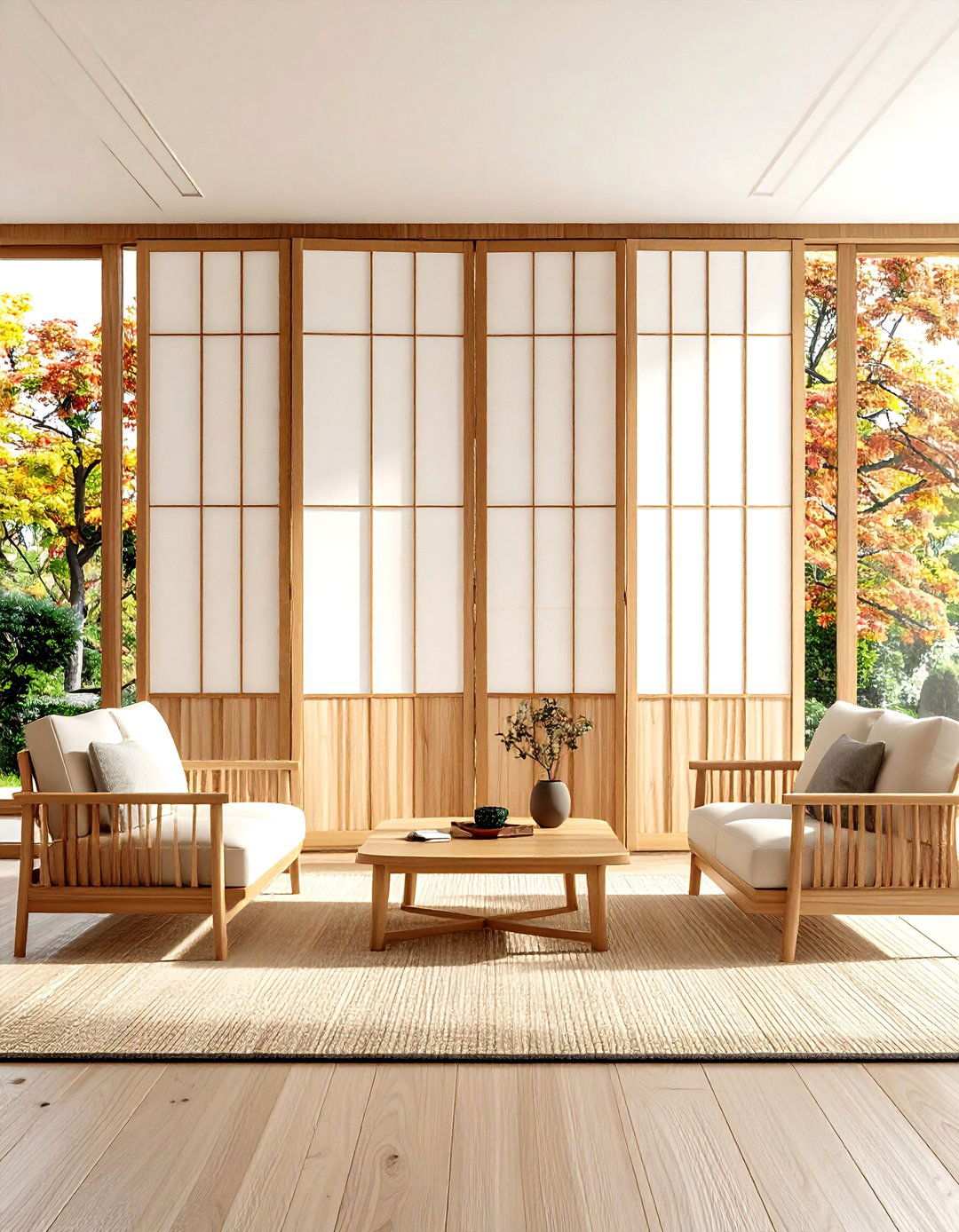
Sliding doors or screens offer a versatile solution for creating adaptable living spaces while promoting a sense of calm and order. By installing traditional shoji screens or modern interpretations using natural wood frames with translucent panels, individuals can divide larger spaces without obstructing the flow of natural light. These elements maintain an open, airy feel while providing the necessary privacy for meditation, work, or rest. Shoji screens are an essential component of authentic Asian-style meditation rooms, creating an ambiance that is both serene and inviting. Whether opting for traditional rice paper panels or contemporary frosted glass designs, the key is to choose a style that complements the overall aesthetic of the space. By positioning screens to create intimate zones within larger rooms, designers can maintain the visual continuity essential to zen design principles of harmony and balance.
13. Crafting Calm Ambiances with Aromatherapy Essentials
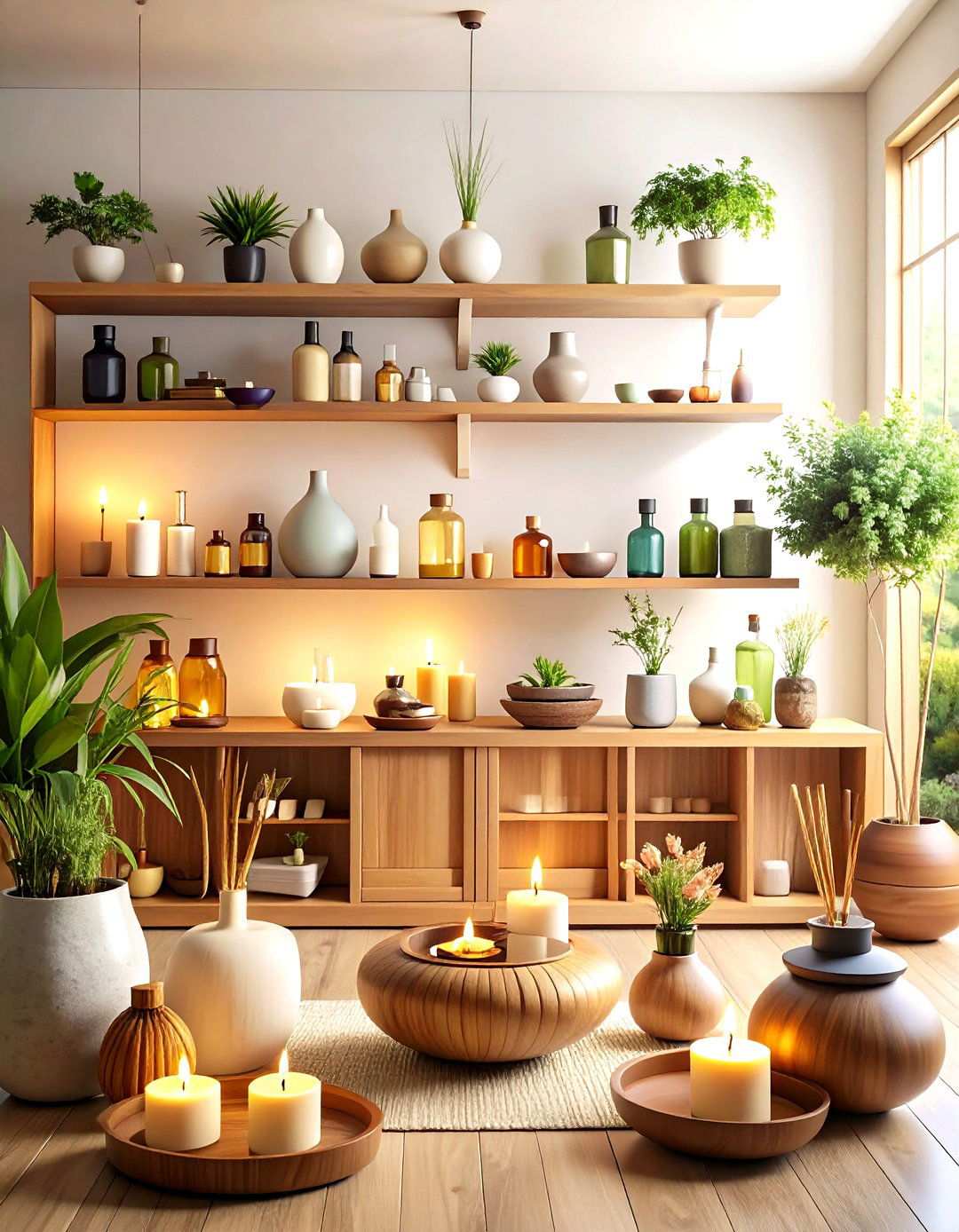
Aromatherapy serves as a potent catalyst for creating serene environments by harnessing the therapeutic properties of essential oils, diffusers, and scented candles. Strategically position oil diffusers or candle arrangements in quiet areas, far removed from high-traffic zones where aromas can unfold unhindered. Opt for natural scents such as eucalyptus, sandalwood, or jasmine, which foster relaxation, and sidestep synthetic fragrances that might overwhelm sensitive individuals. To create a sensory experience that promotes mental clarity, deploy diffusers, candles, or rollerball applicators to distribute calming scents throughout workspaces. Incorporate storage for various oils and accessories in tasteful containers that harmonize with the zen aesthetic, thereby deepening meditation practice and daily relaxation through the powerful synergy between scent and emotional well-being.
14. Revitalizing the Zen Kitchen with Organic Elements
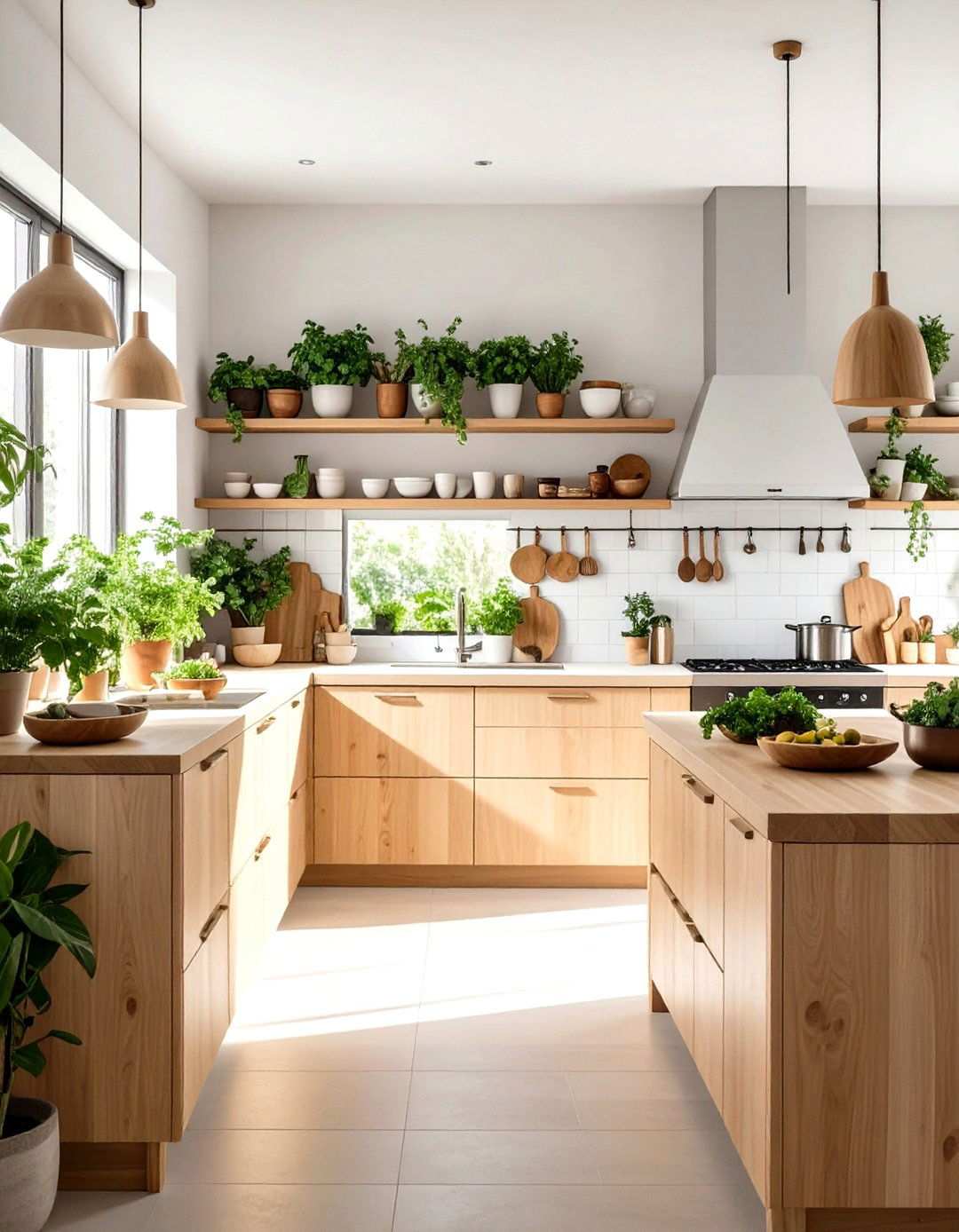
Transform cooking spaces into tranquil preparation areas by incorporating natural wood countertops, bamboo cutting boards, and stone or ceramic serving pieces that forge a connection to food origins. Integrate natural materials into furniture while utilizing organic elements like wood for shelving and furniture. Maintain streamlined countertops by storing appliances in cabinets with clean lines and minimalist hardware that doesn’t detract from the cooking process itself. Add herbs growing in simple pots on windowsills to provide fresh ingredients while purifying air and synchronizing daily activities with natural cycles. Employ chromatic harmony by selecting matching or complementary colors throughout different elements while opting for soft, natural hues. This approach transforms meal preparation into a meditative practice that honors both nourishment and mindful living.
15. Designing Harmonious Entryways with Subtle Storage
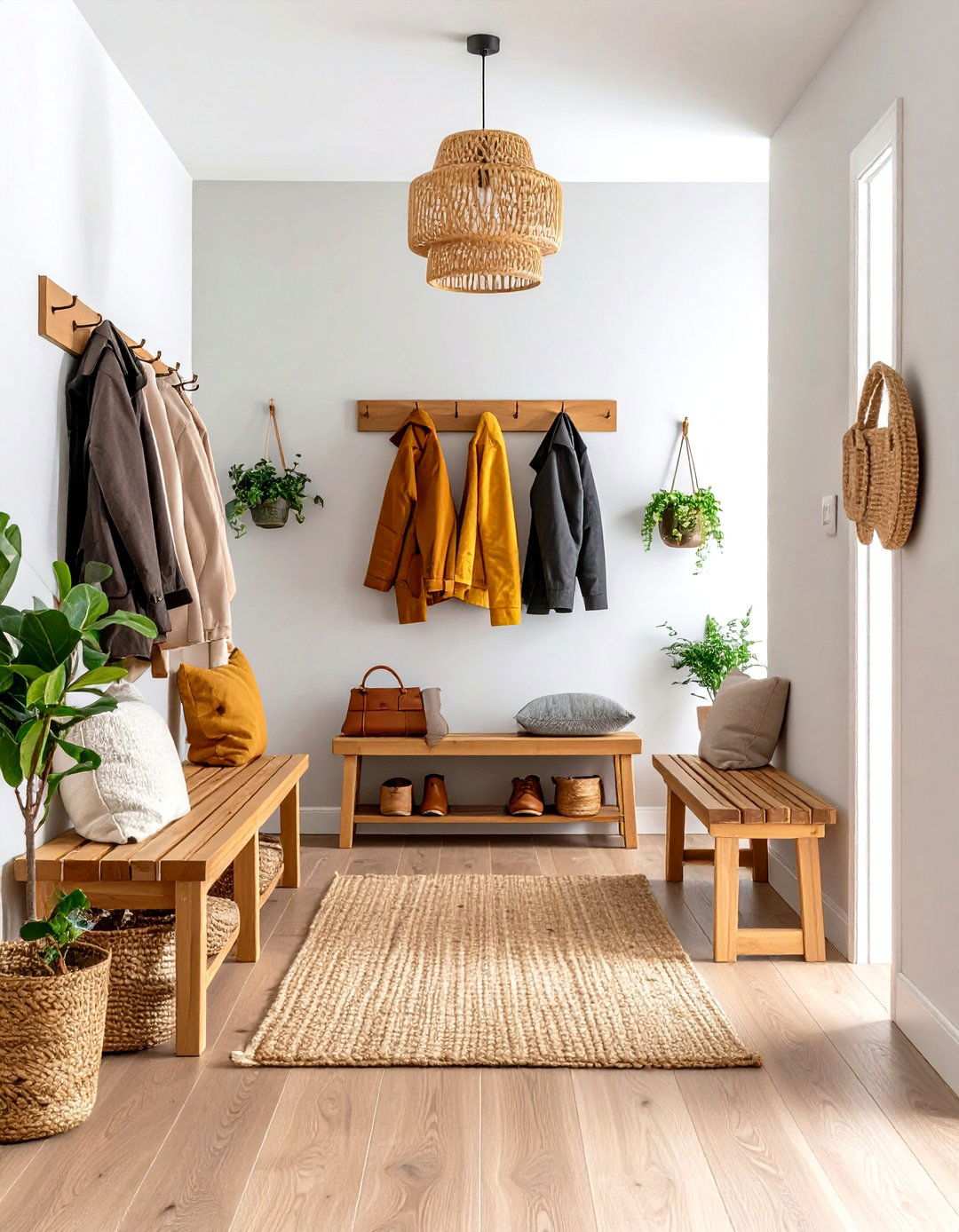
Creating serene atmospheres involves prioritizing clutter-free surroundings while incorporating elements of nature through small indoor plants. Design entry spaces that facilitate mindful transitions between outside chaos and inner peace through organized shoe storage and coat hanging systems. Choose wooden benches with built-in storage that provide seating while maintaining clean lines and natural materials consistent with zen principles. Introduce single plants or small arrangements that welcome visitors while purifying air in high-traffic areas. Storage in zen design is understated, seamless, and purposeful, keeping belongings concealed but accessible through furniture with built-in storage. Incorporate small mirrors that reflect light and create a sense of spaciousness while maintaining minimal decoration that doesn’t overwhelm the peaceful transition into your serene home.
16. Elevating Clothing Storage to Mindful Curation Spaces

By organizing garments according to intentional ownership and visual harmony principles, clothing storage transforms into mindful curation spaces. Clutter-free environments are a prerequisite for creating zen rooms that promote peace and clarity through organized systems. Select matching hangers in natural wood or neutral tones to create visual consistency, making selection processes more peaceful and efficient. Incorporate drawer organizers crafted from bamboo or natural materials to keep smaller items tidy while maintaining easy access for daily routines. A clutter-free space is crucial for relaxation, making organization a vital aspect of creating peaceful living environments. Subtle lighting can also enhance morning and evening routines, encouraging mindful consideration of clothing choices that align with intentional living principles.
17. Bringing Nature Indoors with Vertical Gardens
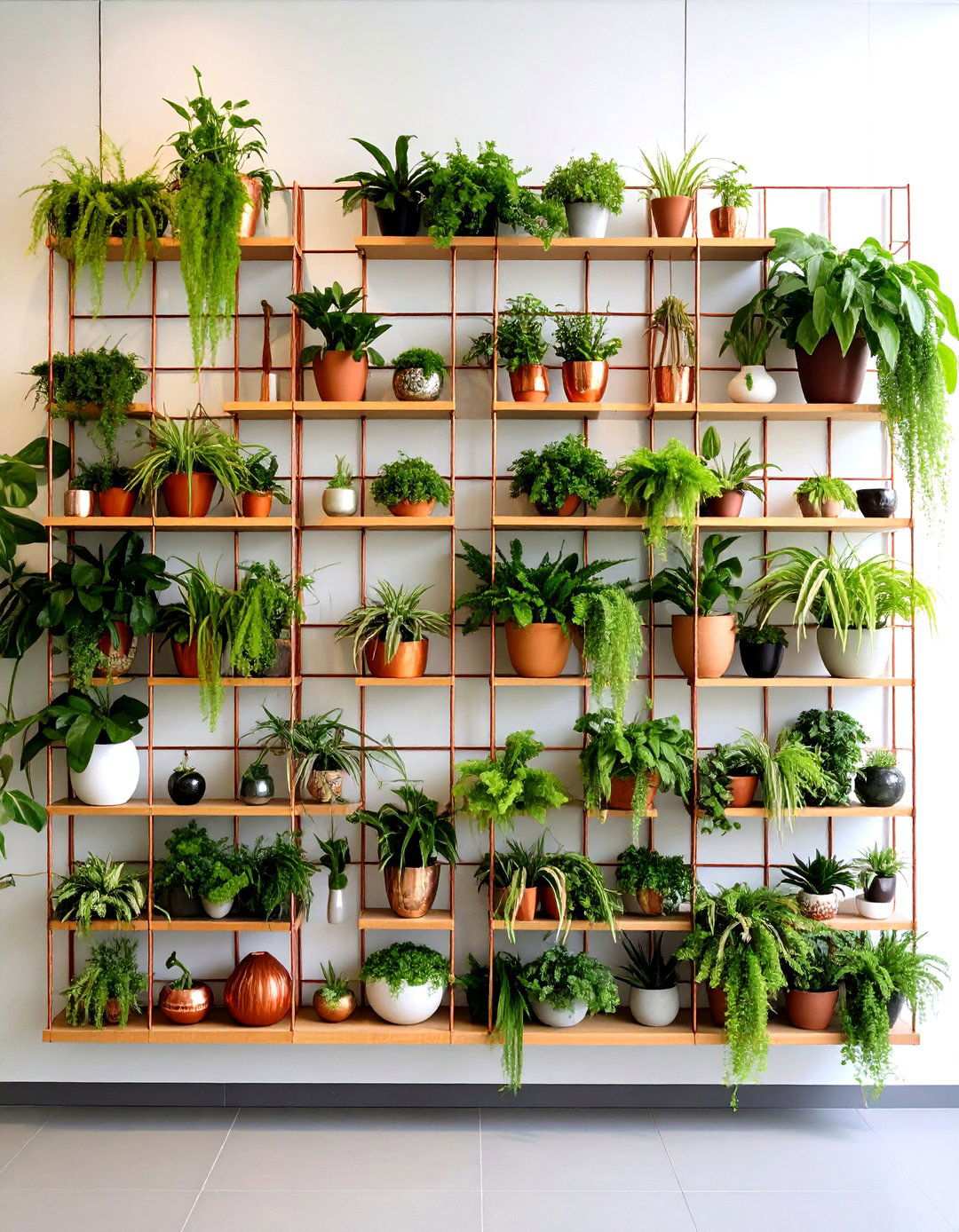
Living walls create artistic office environments, while air plants offer a minimalist yet impactful way to improve daily wellbeing. Design vertical gardens using air plants that require minimal maintenance while providing maximum visual impact and air purification benefits. Create handmade holders using natural materials like copper wire, wooden frames, or ceramic vessels that complement zen aesthetics while supporting plant health. Adding indoor plants not only purifies the air but also adds touches of nature that make areas feel more alive and calming. Position living walls near windows where plants receive adequate light, creating focal points that draw attention without overwhelming space design principles. This innovative approach brings nature indoors while maintaining the clean lines and minimal maintenance requirements essential to sustainable zen living practices.
18. Creating Serene Outdoor Retreats with Zen Principles
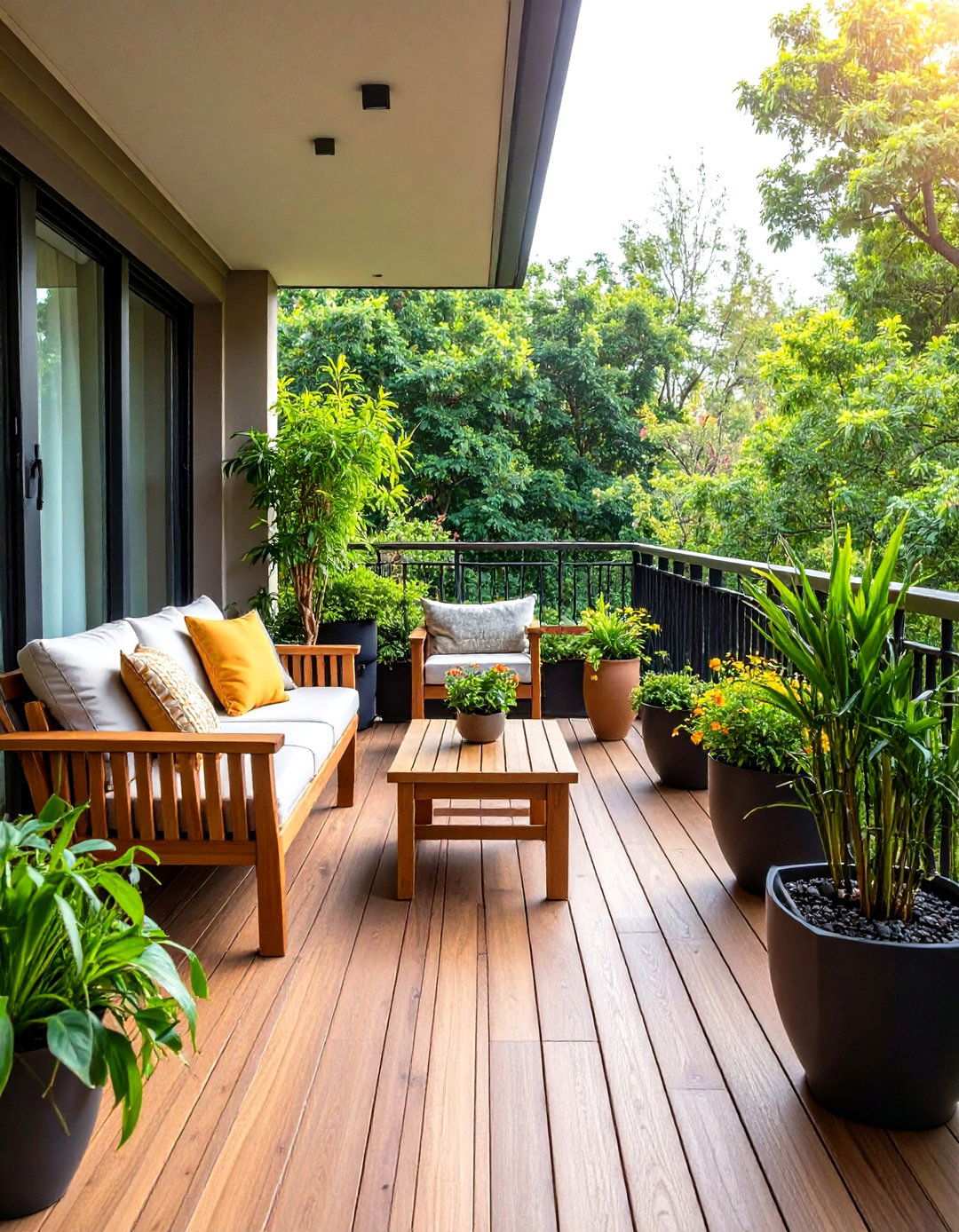
Consider creating outdoor meditation spaces where natural elements provide ideal conditions for contemplative practice. Transform outdoor balconies or patios into peaceful retreats using weather-resistant materials like teak furniture and stone accents that withstand elements while maintaining natural beauty. Add container gardens featuring bamboo, peace lilies, or other plants that create privacy screens while connecting you to seasonal changes and natural cycles. By transforming corners into meditation spaces, you can bring peace and tranquility to everyday life through simple yet effective design choices. Incorporate comfortable seating with weather-resistant cushions in natural fibers that invite extended periods of outdoor contemplation and fresh air meditation. This extension of zen principles beyond indoor spaces creates opportunities for a deeper connection with natural environments while maintaining design consistency throughout your living areas.
19. Harmonious Reflections in Zen Meditation Spaces
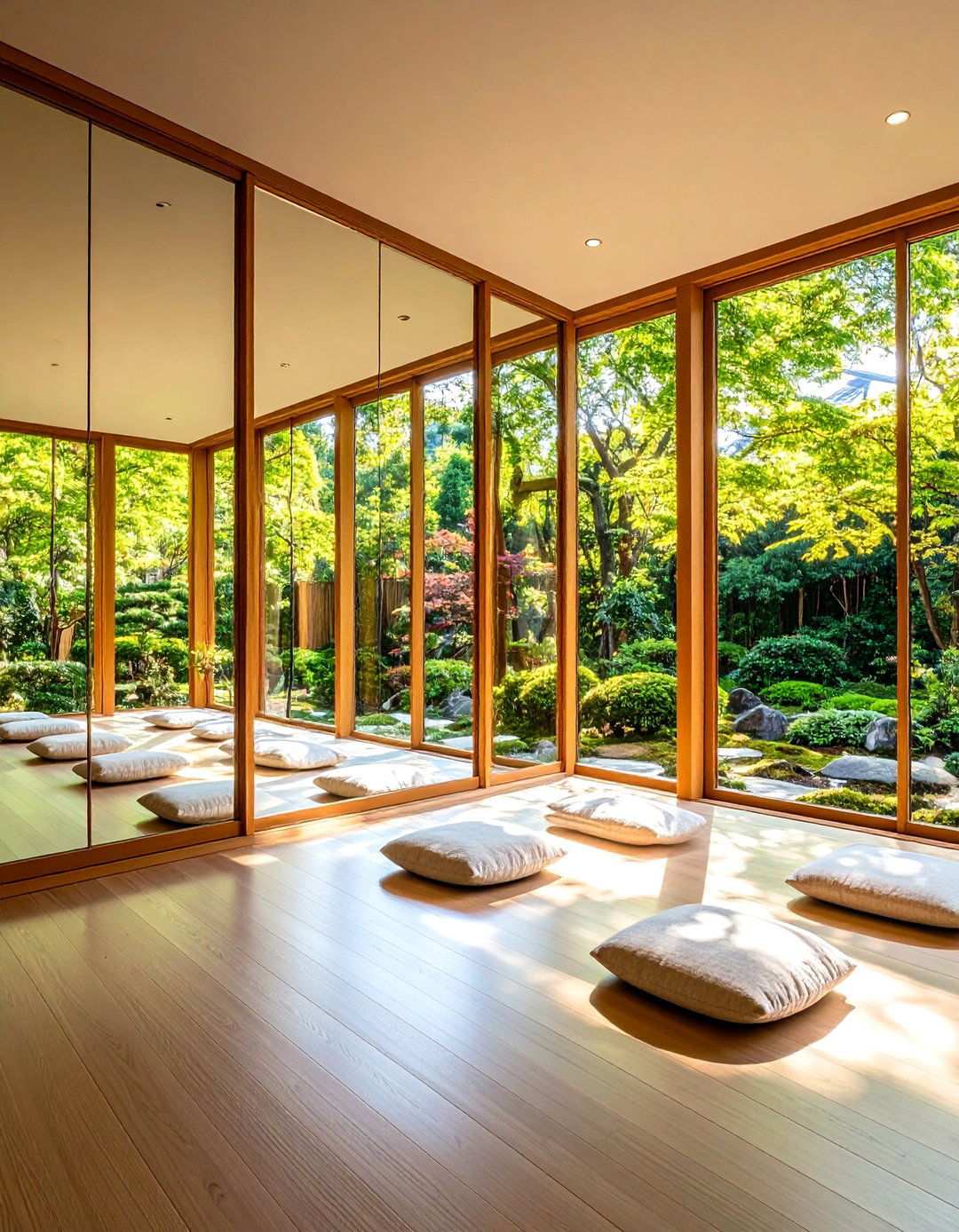
Carefully placed reflective surfaces can create a sense of serenity and elegance in meditation areas, while also amplifying the sense of spaciousness. To achieve this, strategically position mirrors that capture natural light and garden views, ensuring they don’t overwhelm the space and distract from the meditation practice. Choose mirrors with simple, natural frames – such as bamboo or unfinished wood – that complement the zen aesthetic without competing with other design elements. By thoughtfully positioning reflective elements, you can create atmospheres of calm that invite quiet introspection and support the zen principle of observing without attachment to visual stimulation. This approach not only enhances spatial awareness but also cultivates a deeper sense of mindfulness.
20. Cozy Zen Fireplaces for Gathering and Reflection
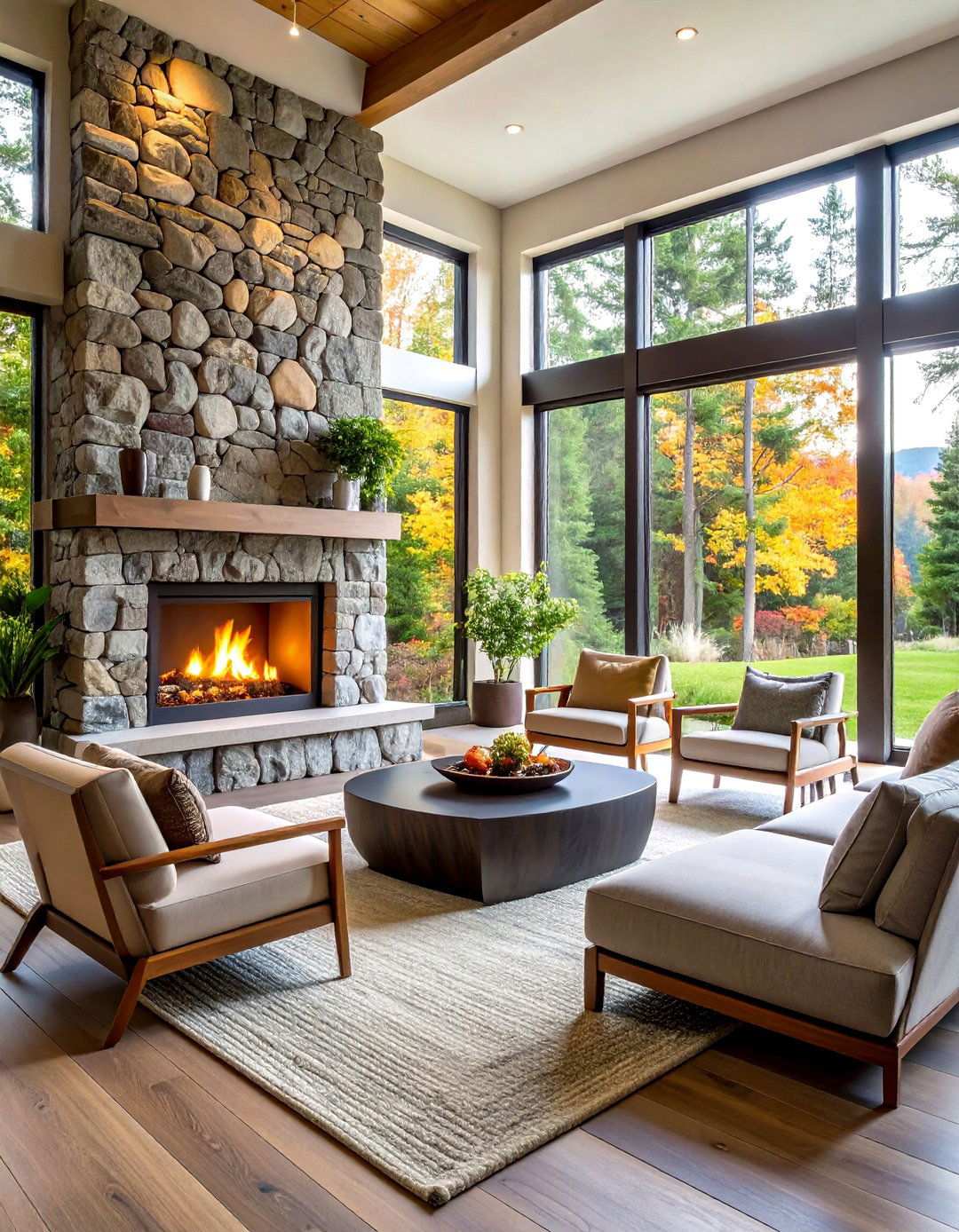
Fireplaces can be a powerful focal point for contemplative spaces, and incorporating natural stone surrounds and minimalist mantel decoration can help draw attention to the flame and warmth sharing. By integrating biophilic design and the principles of feng shui – which include wood, fire, earth, metal, and water – you can create a sense of balance and harmony. Arrange low seating in semicircles to encourage intimate conversation, while maintaining clear views of the fire for all participants in gathering activities. Choose fire-resistant materials for nearby surfaces, and incorporate wooden elements that won’t be damaged by heat exposure. Traditional Japanese influences often feature warm, inviting earthen hues that create cozy atmospheric settings. Adding storage for firewood or accessories in containers that match the overall design aesthetic can help maintain safety considerations while enhancing the overall zen environment.
21. Minimalist Zen Art Display with Purposeful Negative Space
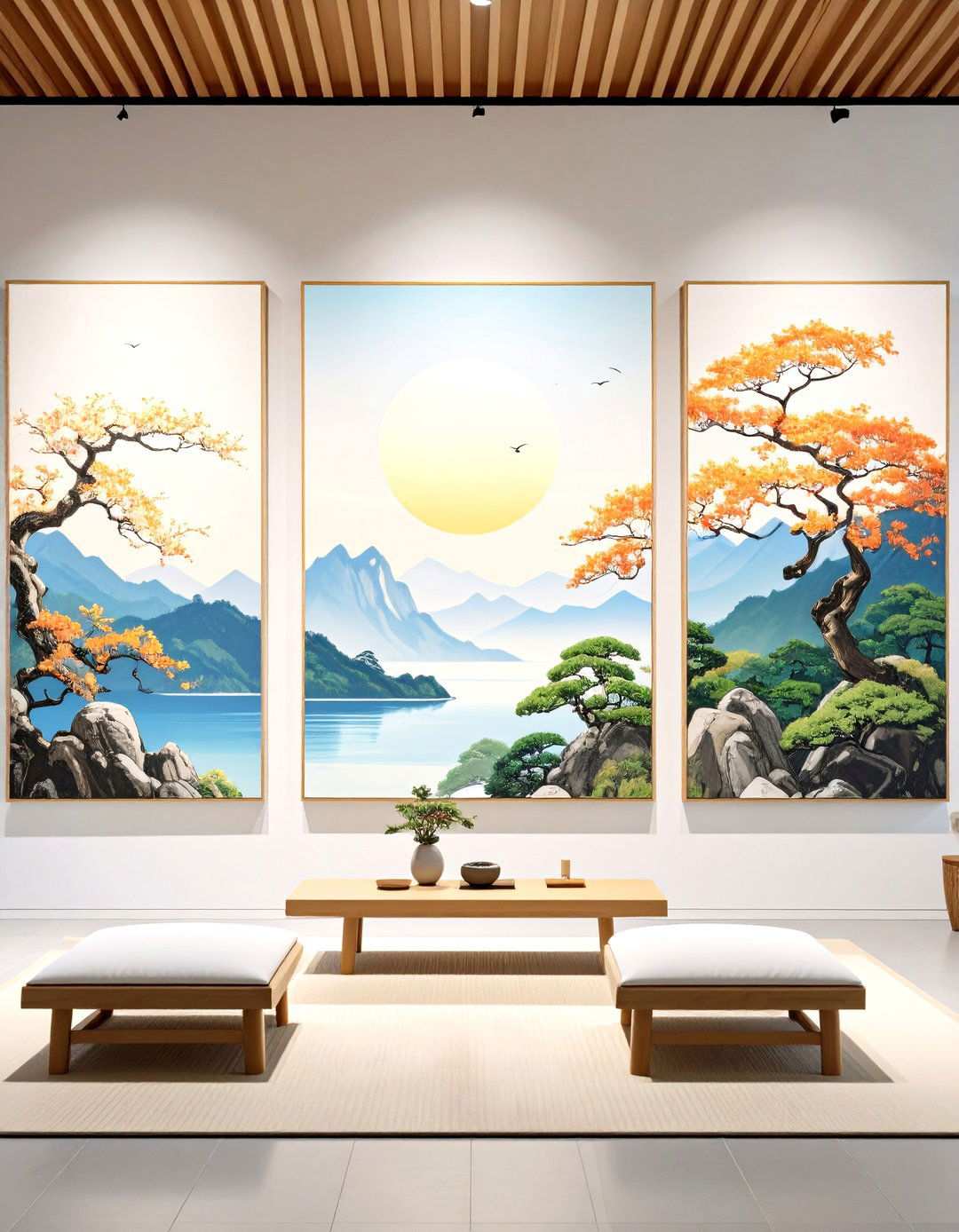
Artful simplicity is achieved by thoughtfully curating art collections that evoke calm and focus without overwhelming the space. To create a sense of gallery-like environments, choose pieces that reflect natural themes – such as water, stones, or minimalist landscapes – rendered in neutral colors. These artworks support rather than distract from the overall room harmony, embracing the principles of negative space. This design element serves as an important aspect of achieving minimalist ends without feeling cluttered or bare. Position art pieces at eye level where they can be contemplated during daily activities, avoiding overcrowding walls with multiple competing visual elements. By curating with mindfulness, you can create spaces that honor both artistic expression and zen principles of intentional, meaningful decoration.
22. Harmonious Lighting with Soft Glow
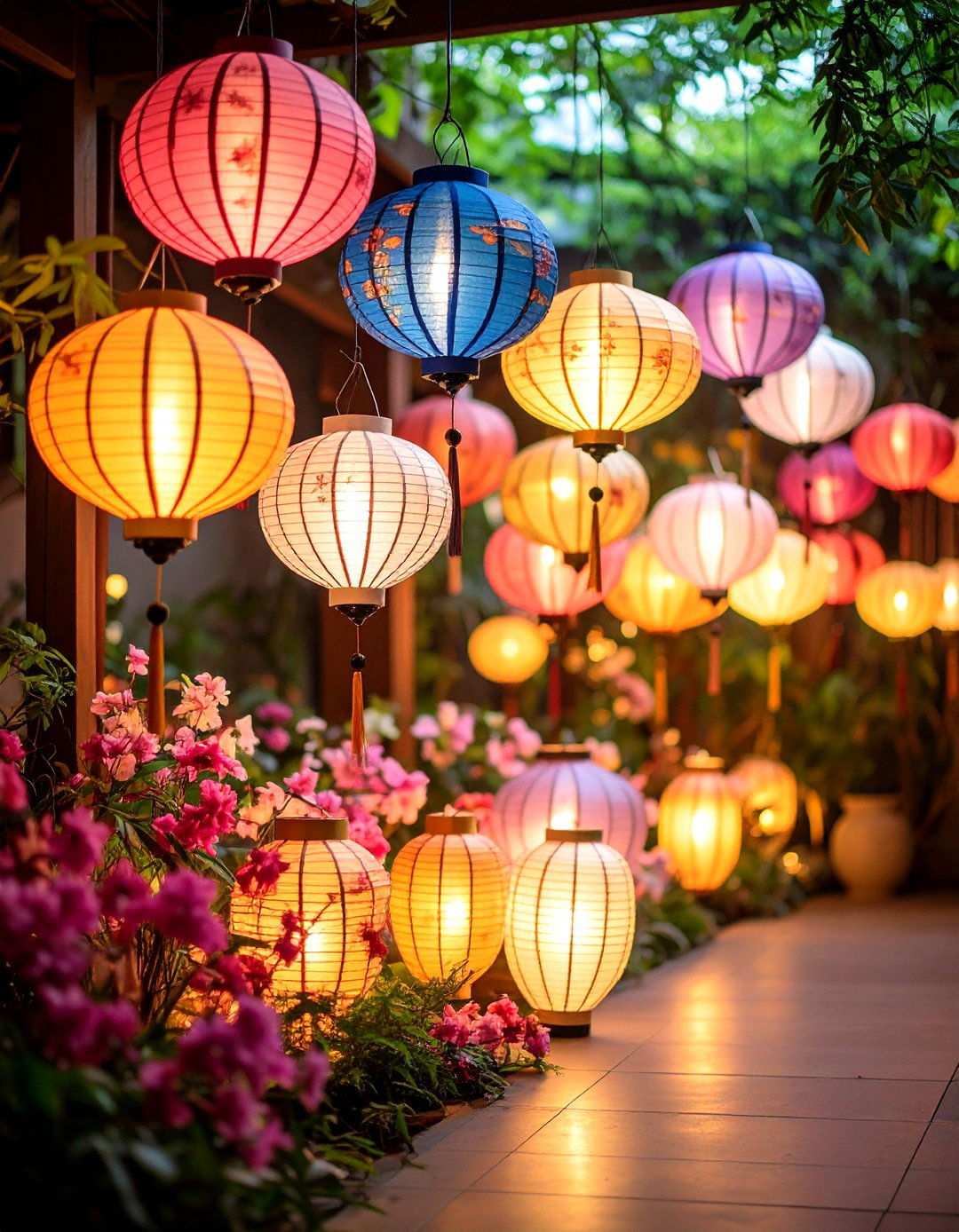
Carefully placed lamps, LED strips, and traditional paper lanterns can create a soothing ambiance in any room. By diffusing harsh bulb brightness, these soft lighting fixtures provide the perfect atmosphere for meditation or relaxation. Opt for lanterns crafted from natural materials like rice paper or fabric, which not only complement other zen elements but also offer practical lighting solutions for various activities. Effective lighting design involves layering ambient, task, and accent lighting to adjust the ambiance to suit different moods. Strategically placing multiple light sources at various heights helps eliminate harsh shadows, creating a sense of depth and visual interest through gentle illumination patterns. This thoughtful approach to lighting supports the zen principle of nurturing both practical needs and spiritual contemplation through beautiful, functional design.
23. Serene Color Palette with Earthy Tones
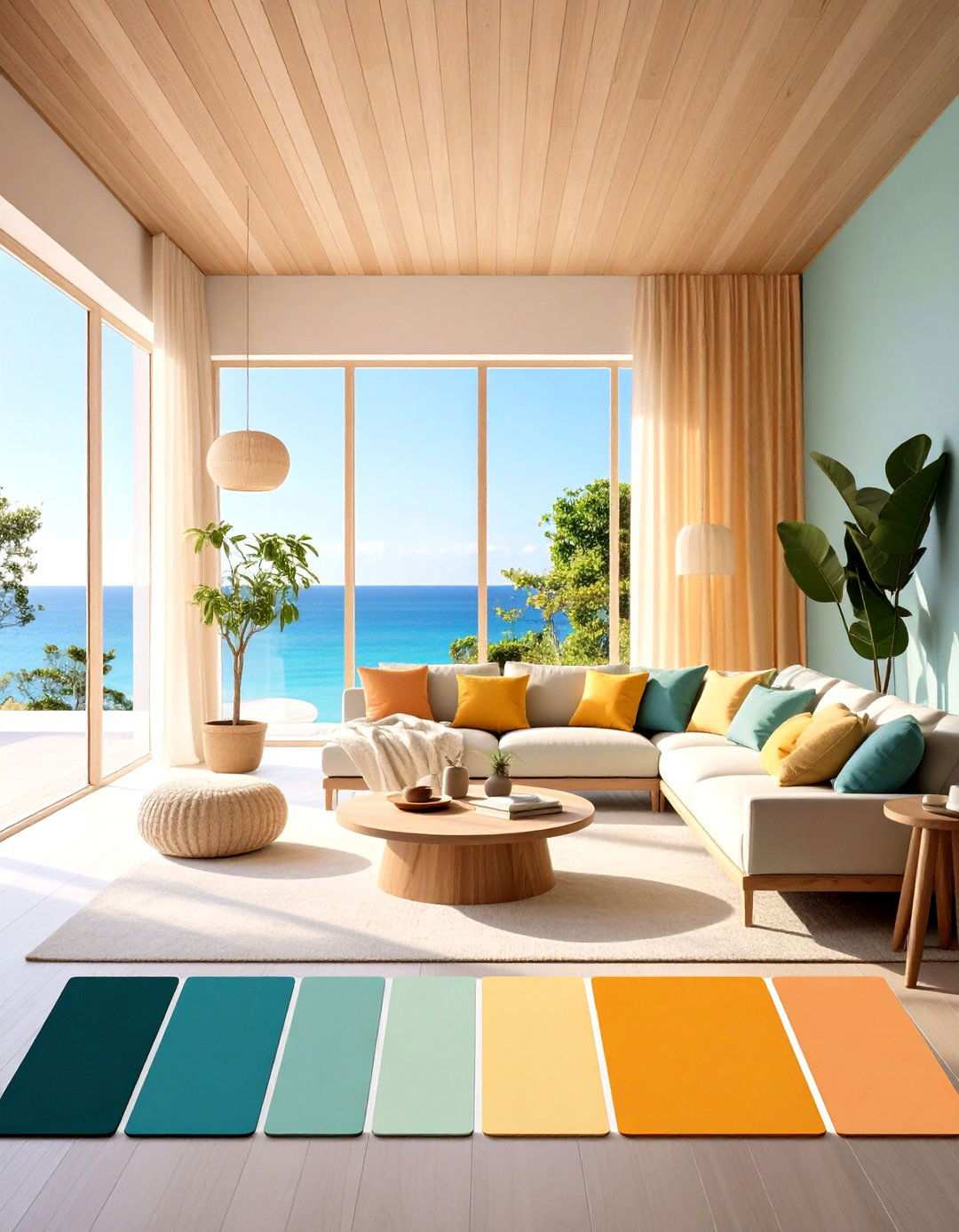
Zen home interiors often feature a soothing color palette that includes white, grey, beige, and soft pastel hues reminiscent of serenity. Design rooms with cohesive color schemes inspired by natural landscapes like beach sand, forest leaves, or mountain stones, which create a psychological connection to the outdoors. When selecting paint colors, textiles, and accessories, choose harmonious combinations that work together seamlessly while avoiding high contrast colors that might feel stimulating rather than calming. Cool colors like blue, green, and purple promote feelings of serenity, while warm colors add visual interest as complementary colors. By applying color theory principles, you can create a balanced environment by using lighter shades on larger surfaces and incorporating deeper tones through smaller accent pieces that add depth without overwhelming the space. This thoughtful approach to color creates environments that naturally promote relaxation and mental clarity, essential for zen living practices.
25. Harmony of Technology and Serenity
Incorporating cutting-edge technology into zen-inspired spaces requires a thoughtful approach that balances functionality with the goal of creating a peaceful atmosphere. This involves designing dedicated areas where technology is discreetly integrated, rather than dominating the space. To achieve this, consider incorporating furniture with built-in charging stations or clever cord management systems that keep cables hidden from view, allowing for seamless access to meditation apps, soothing sounds, or guided relaxation programs.
When planning your zen space, resist the temptation to incorporate smart-home devices or screens, opting instead for minimalist design that allows for easy access to essential lighting. By doing so, you can maintain a sense of calm and clarity, free from digital distractions that can undermine mindful living principles. This balanced approach acknowledges the reality of modern life while protecting your sacred space from the overwhelm of technology, allowing you to fully immerse yourself in zen practices.