1. Elevating Exterior Aesthetics with Two-Tone Siding
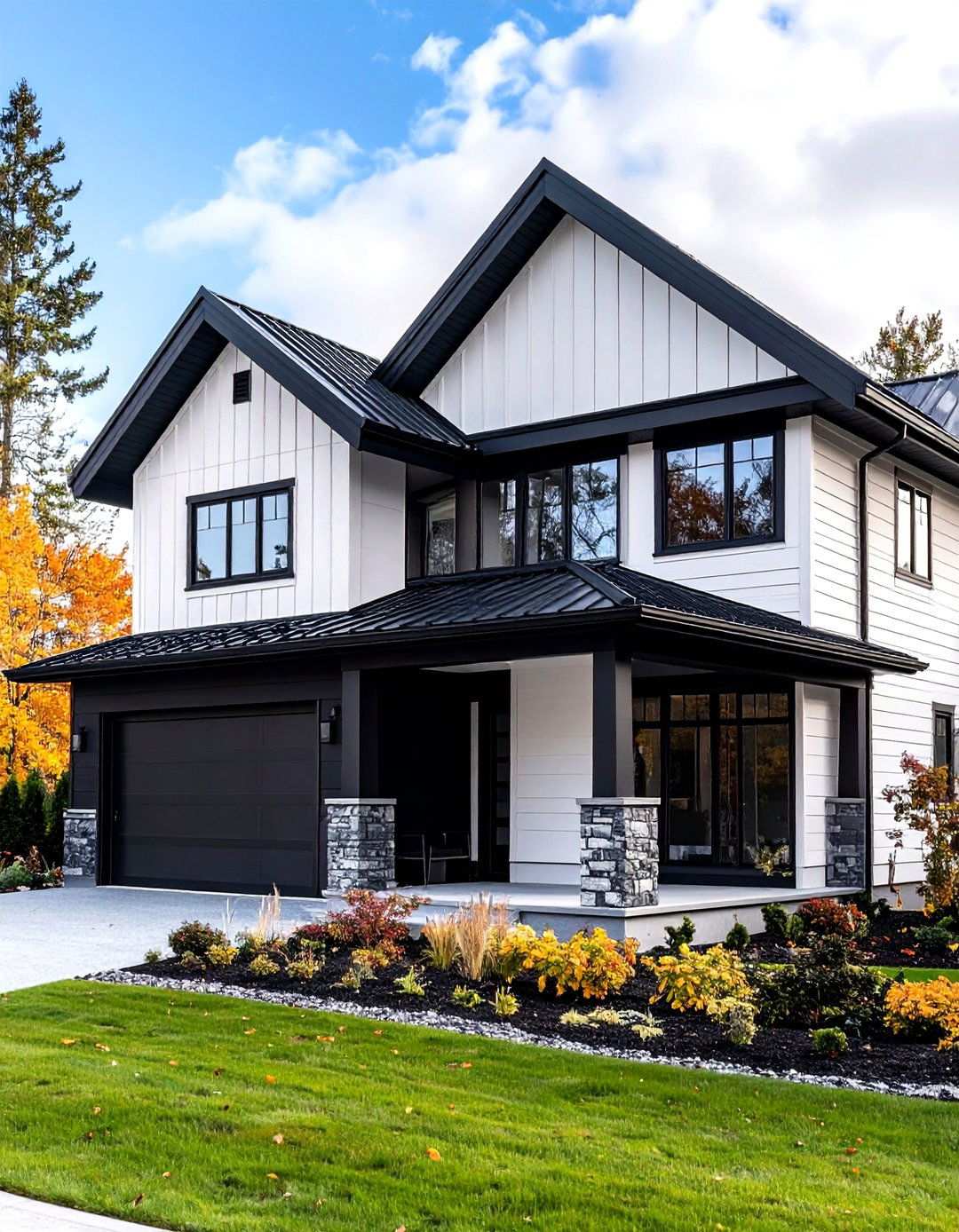
Two-tone siding designs have taken the exterior home design landscape by storm, enabling homeowners to create captivating architectural statements that set their properties apart from the crowd. This dynamic approach combines contrasting colors and textures to produce depth, visual interest, and enhanced curb appeal that not only elevates the home’s exterior but also showcases its unique architectural features. Modern homeowners are increasingly embracing this design strategy, which allows for personalized expression and highlights the home’s structural details. By strategically pairing two complementary colors, smaller homes can appear larger, and focal points can be created that draw the eye naturally across the exterior surface. From subtle neutral combinations to bold contrasting palettes, two-tone siding offers endless possibilities for creating distinctive home exteriors that reflect personal style and contemporary design sensibilities.

As an Amazon Associate I earn from qualifying purchases.
2. Timeless Elegance: Classic Black and White Contrast Siding
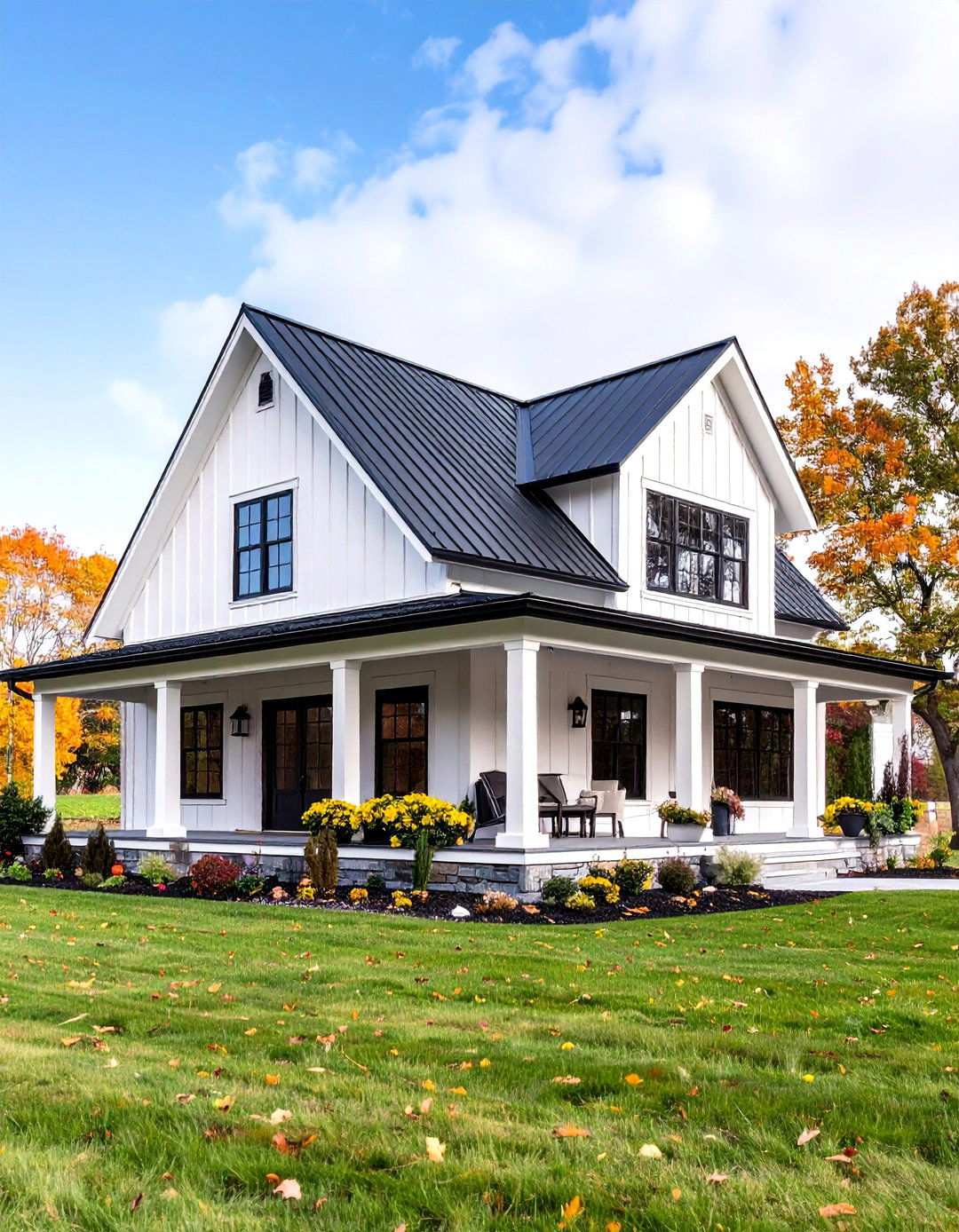
The classic black and white two-tone siding design is a true testament to the power of simplicity. By combining high-contrast colors, this sophisticated approach creates a visual impact that never goes out of style. Typically, crisp white serves as the primary siding color, while black accents adorn trim, shutters, and architectural details. The dramatic contrast emphasizes clean lines and modern geometry while maintaining elegant simplicity. This particular color pairing works exceptionally well on contemporary homes, farmhouse styles, and even traditional colonial architecture. The black elements ground the bright white, preventing the exterior from appearing too stark while adding depth and dimension to the overall design. By leveraging this timeless color combination, homeowners can create a stunning exterior that exudes sophistication and refinement.
3. Modern Farmhouse White and Charcoal Design
What defines the perfect modern farmhouse exterior? The combination of warm white siding with charcoal gray accents creates an inviting yet sophisticated aesthetic that embodies the essence of contemporary farmhouse living. This design typically positions white as the dominant color across horizontal lap siding, while charcoal appears on board and batten sections, gables, or accent walls. The warm undertones in both colors create harmony while the contrast provides visual separation between architectural elements. This approach works beautifully with natural wood trim, black metal roofing, and stone foundations, creating a cohesive design that feels both timeless and current in today’s residential market.
Harmonizing with the Coast: Blue and White Maritime Style
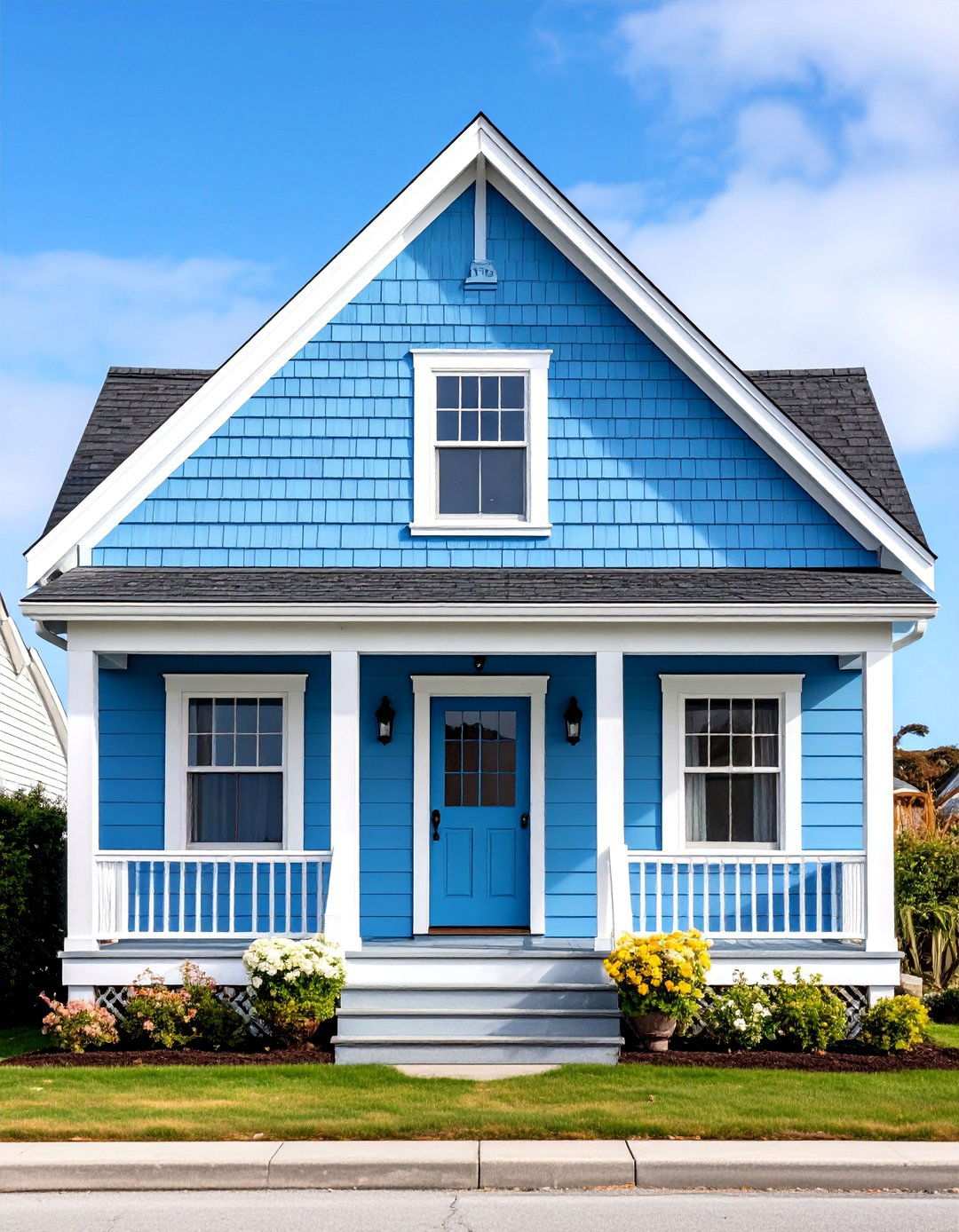
Elevate your home’s ambiance with the soothing essence of the ocean. Coastal blue paired with crisp white siding embodies the serene atmosphere of oceanfront properties, transporting you to a tranquil seaside haven. This refreshing combination typically features soft blue tones reminiscent of sea and sky, complemented by bright white trim and architectural details that seem to dance in the breeze. The blue siding often takes center stage on the main body while white accents highlight windows, doors, and decorative elements, creating a sense of visual balance. The result is a relaxed, vacation-home atmosphere that invites feelings of calm and coastal charm.
4. Timeless Elegance: Warm Beige and Cream Harmony
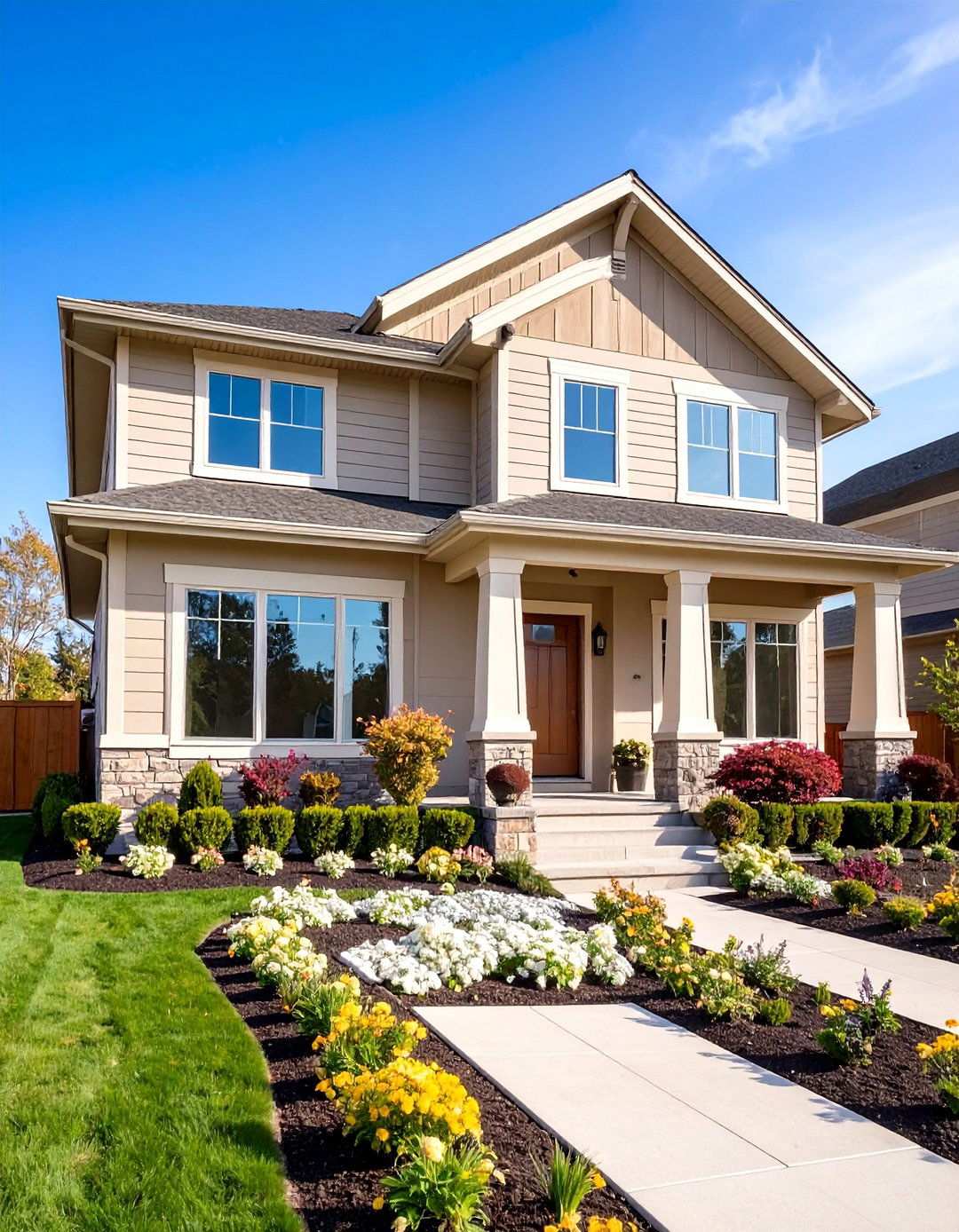
Why do neutral combinations continue to captivate us? The sophisticated pairing of warm beige siding with cream accents creates an understated exterior that seamlessly blends with natural landscapes. This gentle contrast provides subtle visual interest without overwhelming the architectural design, making it an ideal choice for traditional and transitional home styles. The beige typically serves as the primary color while cream appears on trim work, columns, and decorative details that add a touch of warmth. These earth-toned colors work harmoniously with stone, brick, and natural wood elements, creating a cohesive design that feels both welcoming and refined. This combination particularly enhances homes surrounded by mature landscaping and natural settings, where it seems to blend in effortlessly.
5. Gray Area: Elevating Contemporary Sophistication
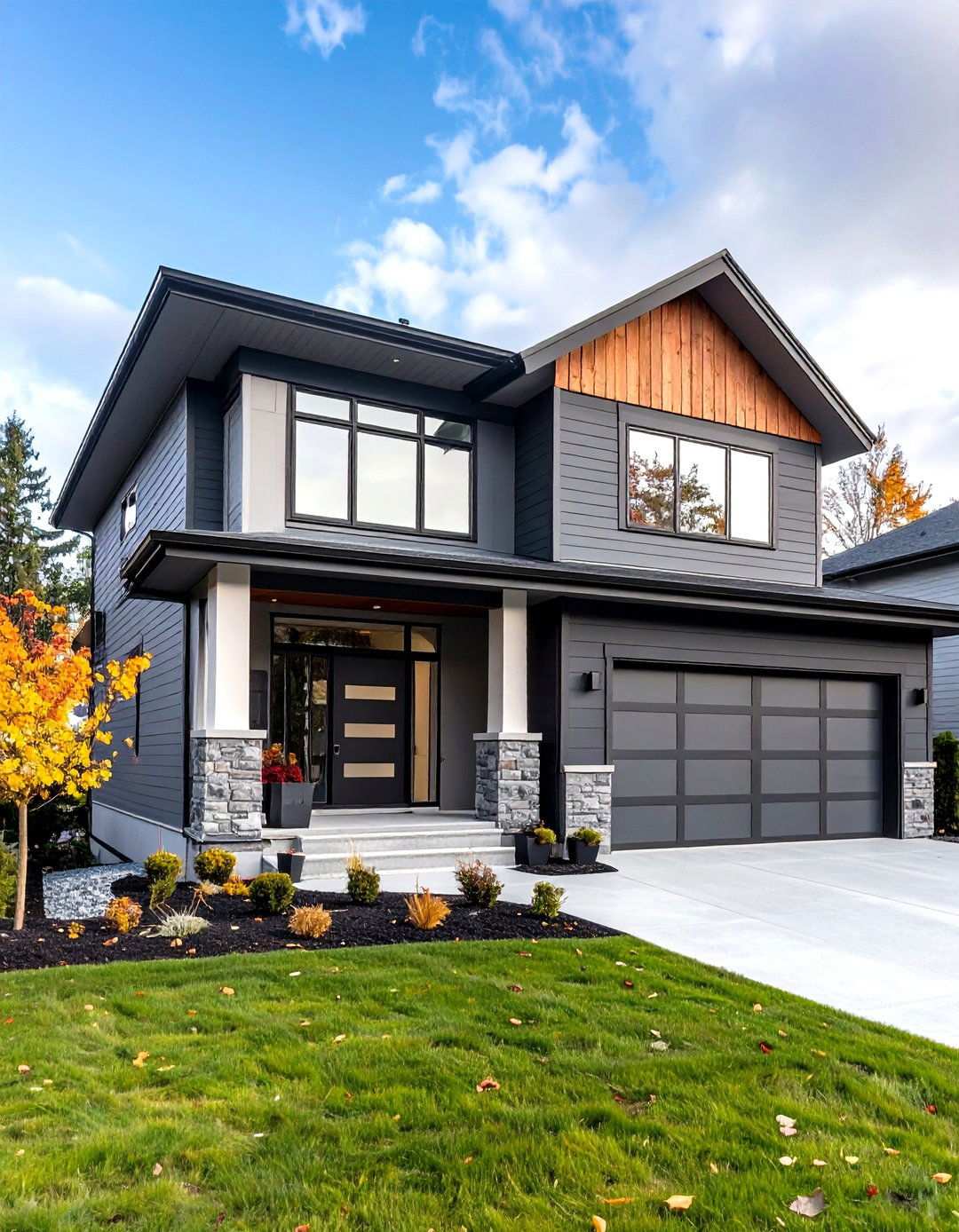
What makes gray such a chameleon in exterior color options? The elegant combination of light gray primary siding with darker gray accents creates a contemporary aesthetic that effortlessly adapts to various architectural styles. This monochromatic approach uses varying shades within the same color family to create nuanced contrast and visual depth, adding a touch of sophistication to the design. The lighter gray typically dominates the main siding areas while darker tones appear on trim, accent walls, or architectural features that add a sense of drama. This sophisticated color scheme pairs beautifully with white trim, black fixtures, and natural stone elements, resulting in a modern, streamlined appearance that feels both current and timeless, appealing to buyers seeking contemporary sophistication.
6. Captivating Contrast: Rich Navy and Crisp White
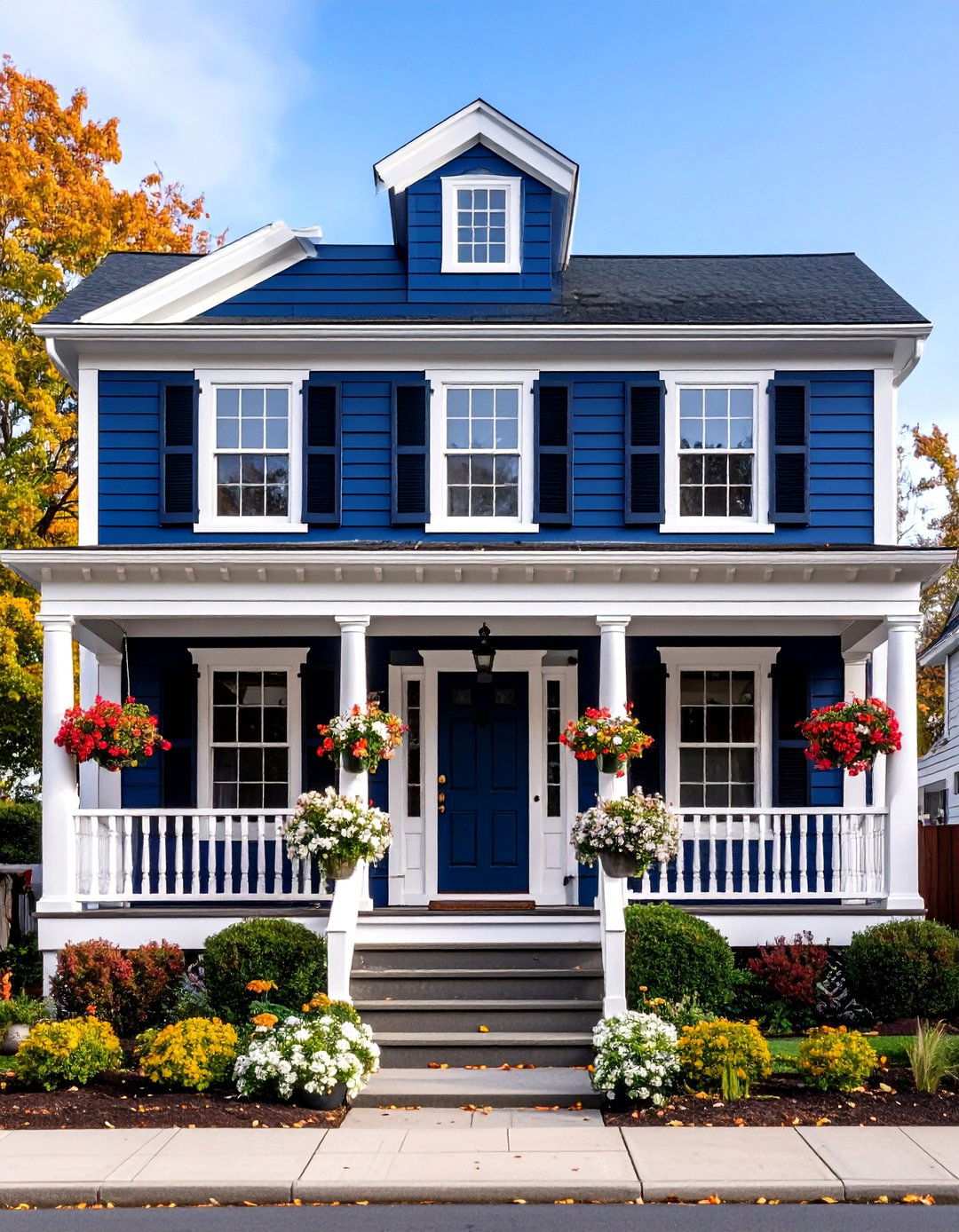
Pairing deep navy blue siding with vibrant white trim can significantly enhance architectural features, imbuing a home with a timeless, nautical flair. This striking contrast is particularly well-suited to classic styles such as colonial, cape cod, and craftsman, where proportionate balance is crucial. As a bold yet elegant statement, the navy blue typically takes center stage, while crisp white accents highlight intricate details, window trim, and decorative elements, adding a touch of sophistication. This harmonious blend of contrasting colors creates a unique visual experience that effortlessly balances tradition and modernity, making it an excellent choice for homeowners seeking a classic yet modern aesthetic.
7. Blending with Nature: Earthy Green and Natural Wood
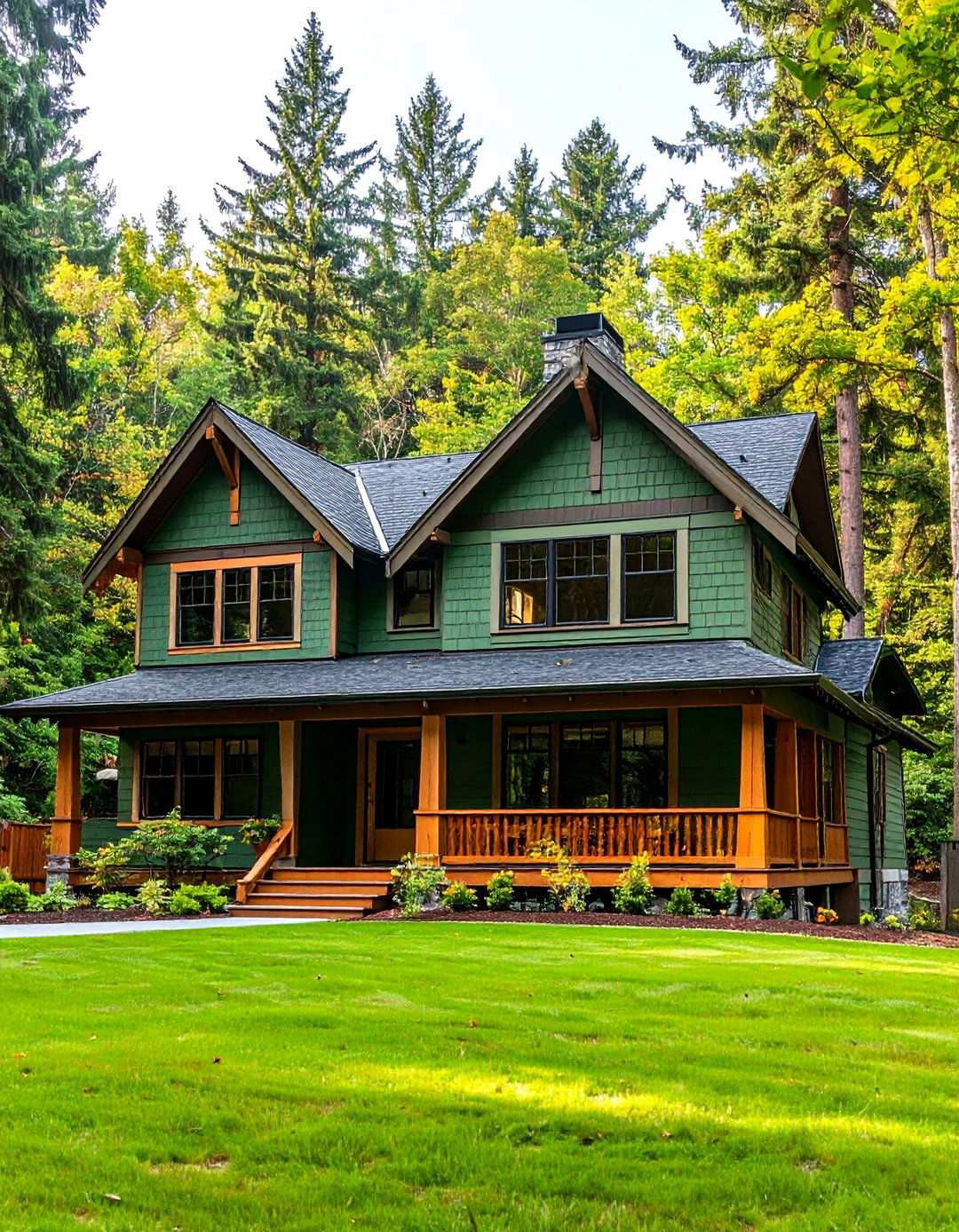
For homes situated amidst natural surroundings, an earthy color palette can create a seamless connection to the environment. Sage green siding paired with natural wood accents achieves a harmonious balance that echoes the tranquility of wooded landscapes. This organic approach typically features muted green tones as the primary color, while natural wood is used to add warmth and texture to accent sections, trim, or shutters. The result is an exterior design that exudes an authentic, earthy charm, complementing rather than competing with the natural beauty of the surroundings. This harmonious blend of earthy tones and natural textures is particularly well-suited to craftsman, ranch, and contemporary homes, creating exteriors that feel grounded and at peace with nature.
8. Timeless Rusticity: Warm Brown and Tan Accents
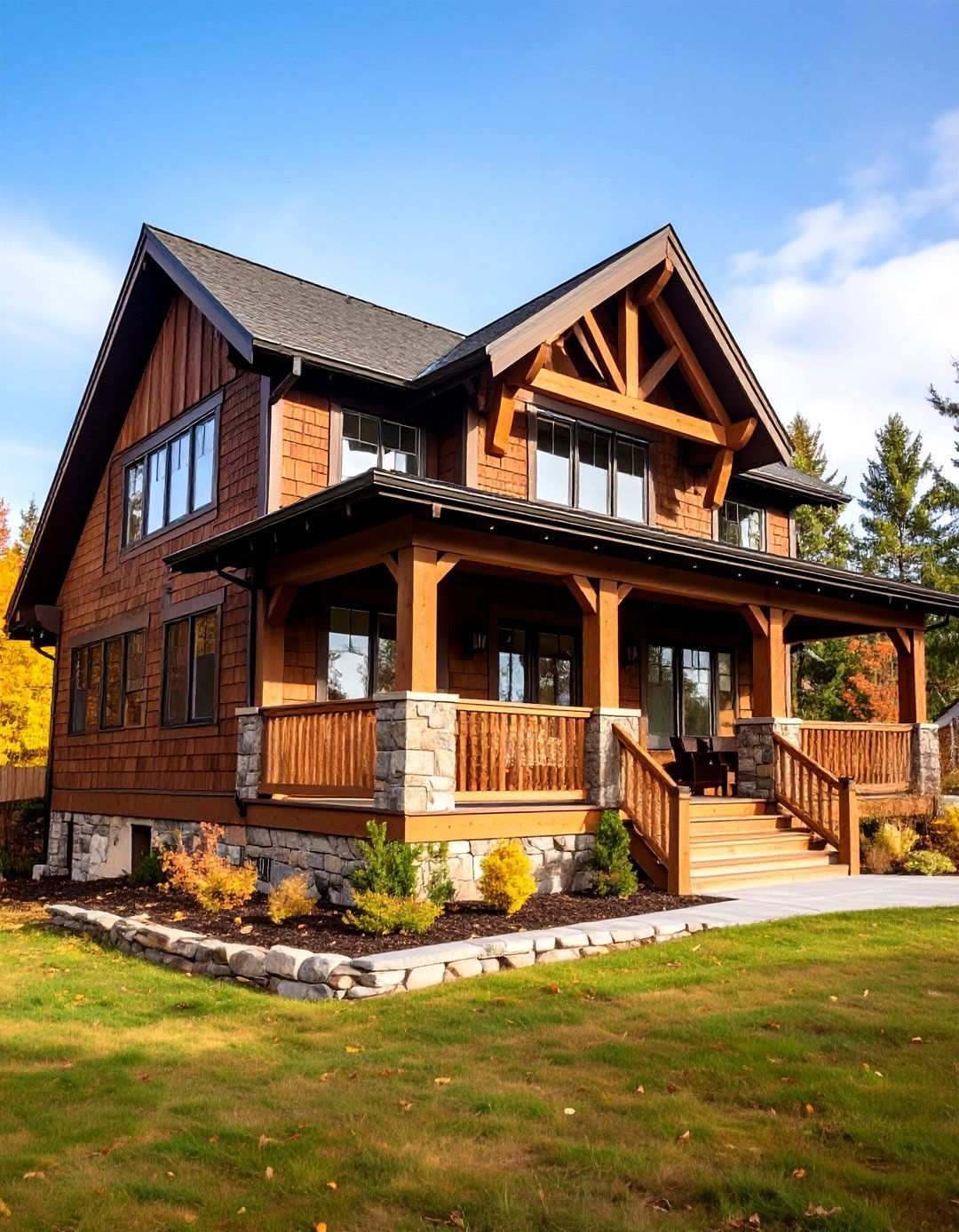
Achieving that perfect rustic charm requires a thoughtful balance of warm, earthy tones. The combination of rich brown siding with lighter tan accents creates a traditional country feel while maintaining a broad appeal that transcends style. Typically, deep brown takes center stage as the primary siding color, while tan is used to add warmth and visual interest to trim work and architectural details. This inviting color palette suggests natural materials like bark and stone, creating an exterior that feels deeply connected to rural landscapes. As a result, this approach works beautifully on farmhouse, craftsman, and cabin-style homes, where rustic authenticity is highly prized. The warm tones create a welcoming atmosphere, while the subtle contrast adds necessary visual depth to the design.
9. Effortless Elegance through Charcoal and Light Gray Harmony
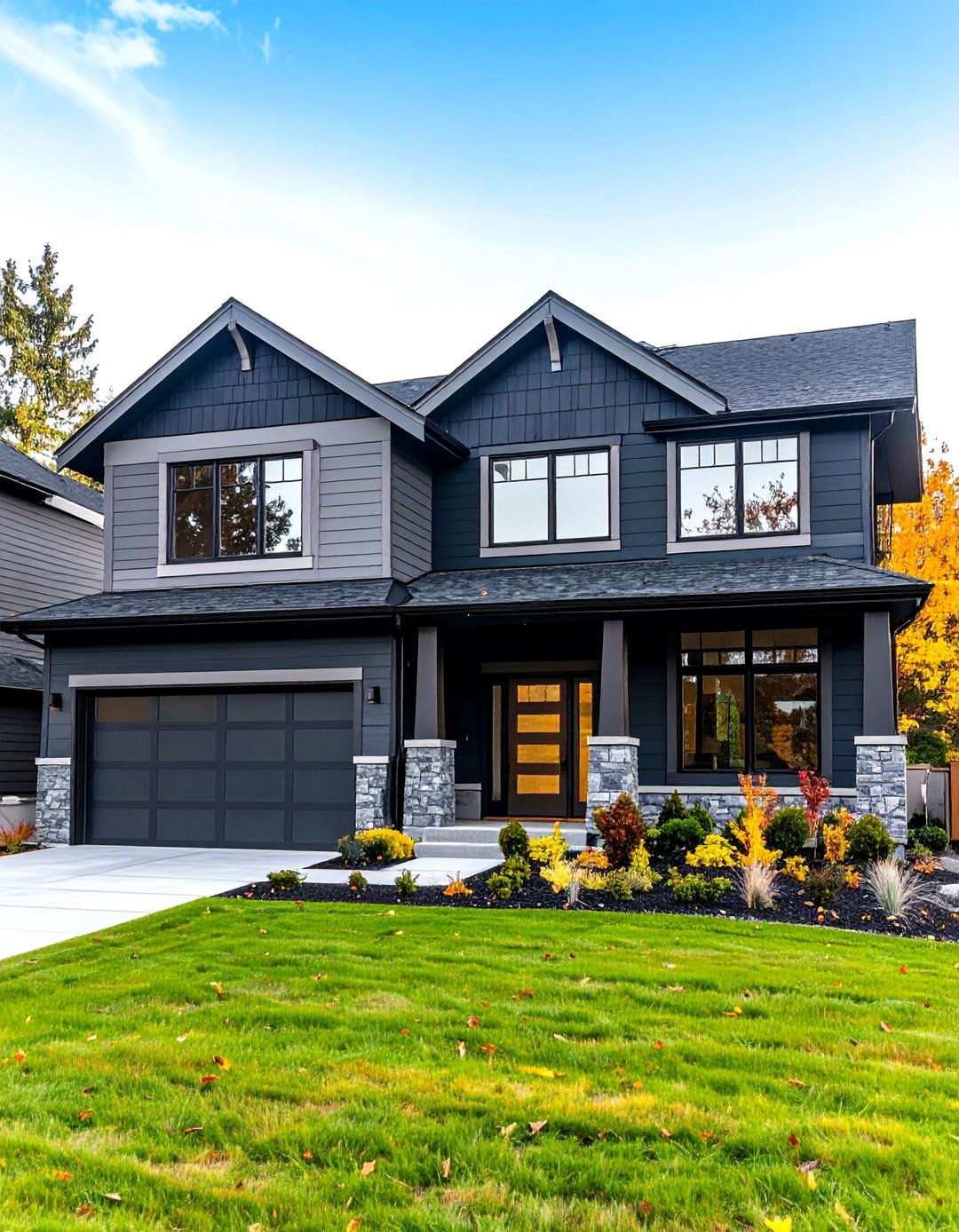
A subtle interplay of tonal variations creates a refined aesthetic. The nuanced combination of charcoal gray primary siding with light gray accents yields a contemporary exterior that exudes architectural precision and modern sensibilities. This tonal approach skillfully employs nuanced color shifts to achieve depth, resulting in a streamlined, polished appearance. The charcoal typically prevails in main siding areas, while lighter gray takes center stage on trim, columns, and decorative details. This elegant color pairing perfectly complements modern, contemporary, and minimalist architectural styles characterized by clean lines and geometric forms. The outcome feels current, sophisticated, and architecturally refined.
10. Bold Personality through Vibrant Yellow and Forest Green Contrast
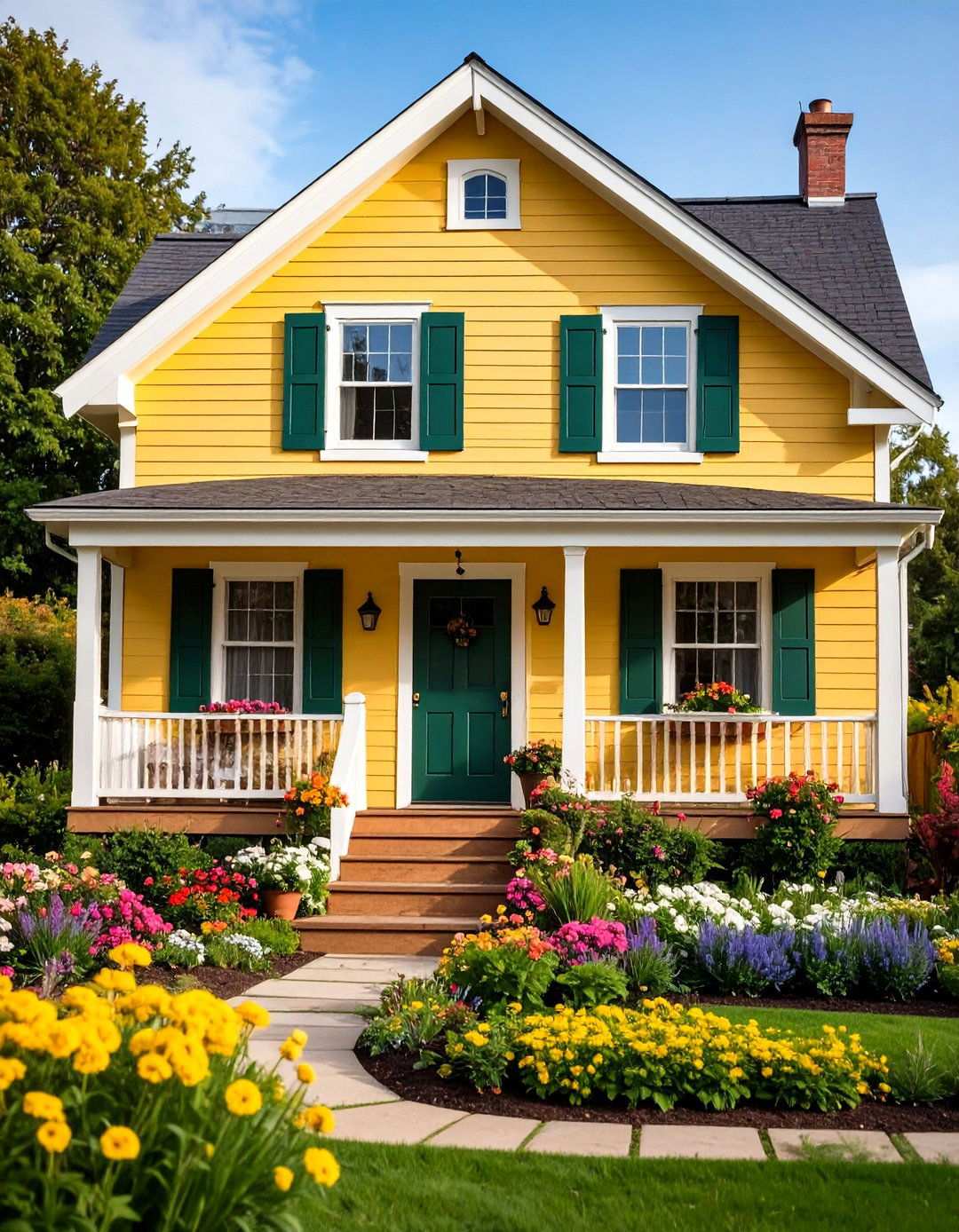
Can striking color combinations elevate residential exteriors? The cheerful union of buttery yellow siding with deep forest green accents creates an inviting, optimistic exterior that radiates warmth and individuality. This high-contrast pairing typically showcases yellow as the dominant color, while green appears on shutters, trim, and architectural details. The vibrant combination evokes images of sunny meadows and natural landscapes while maintaining sufficient contrast for architectural definition. This unique color scheme particularly suits cottage, craftsman, and traditional home styles where character and charm are cherished. The result creates an exterior that feels both distinctive and approachable, making it an ideal choice for homeowners seeking one-of-a-kind curb appeal.
11. Classic Timelessness through Brick Red and Cream Harmony
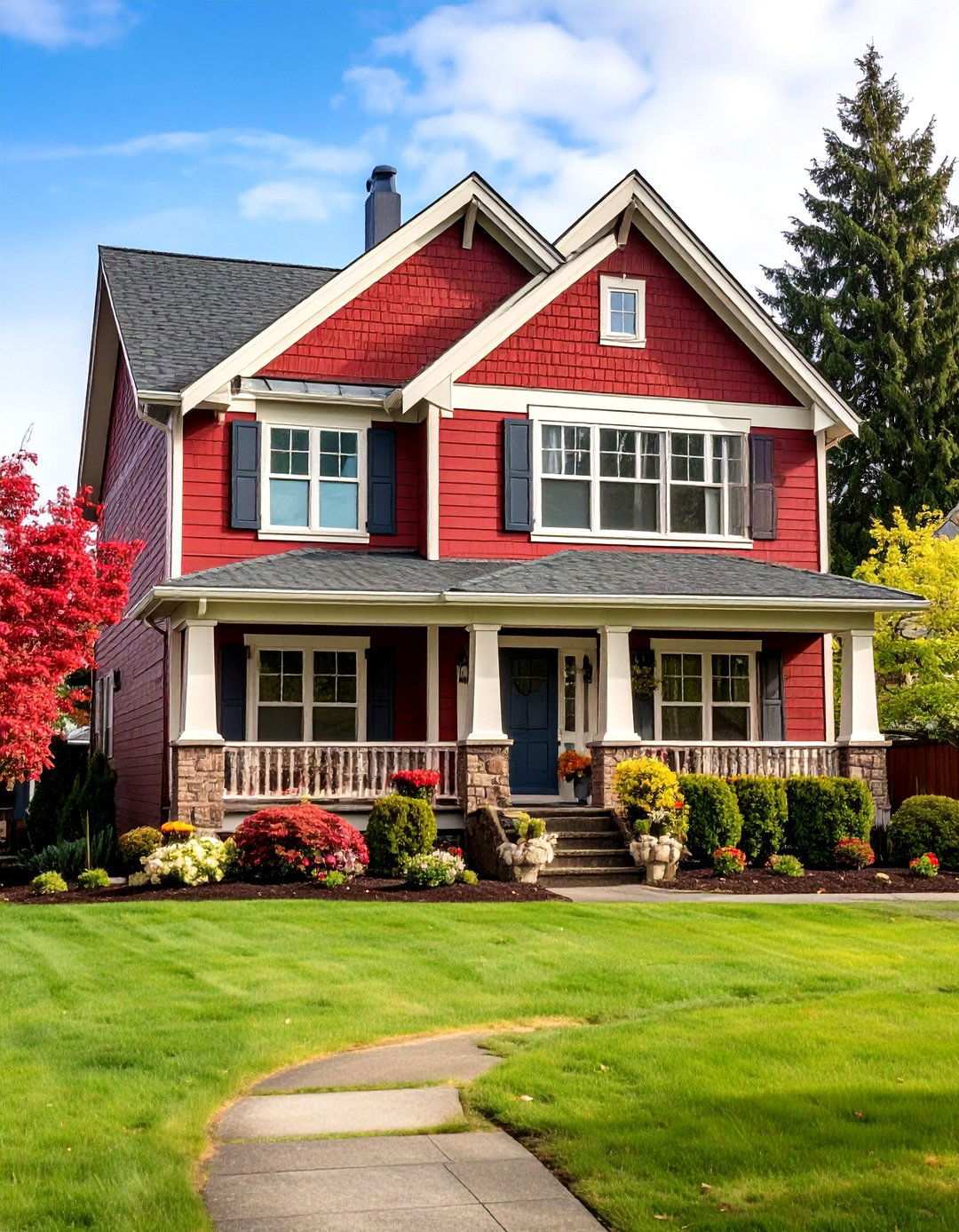
What makes certain color combinations enduringly appealing? The timeless pairing of brick red siding with cream trim creates a traditional exterior that conveys heritage and established elegance. This warm combination typically positions red as the primary color, while cream appears on architectural trim, window surrounds, and decorative elements. The colors work together to create a sense of visual warmth while providing sufficient contrast for architectural clarity. This approach particularly suits colonial, federal, and traditional home styles where historical authenticity is a priority. The combination suggests permanence and quality while remaining sufficiently neutral to complement various landscape settings and neighboring homes, making it a versatile and enduring design choice.
12. Timeless Elegance through Neutral Tones
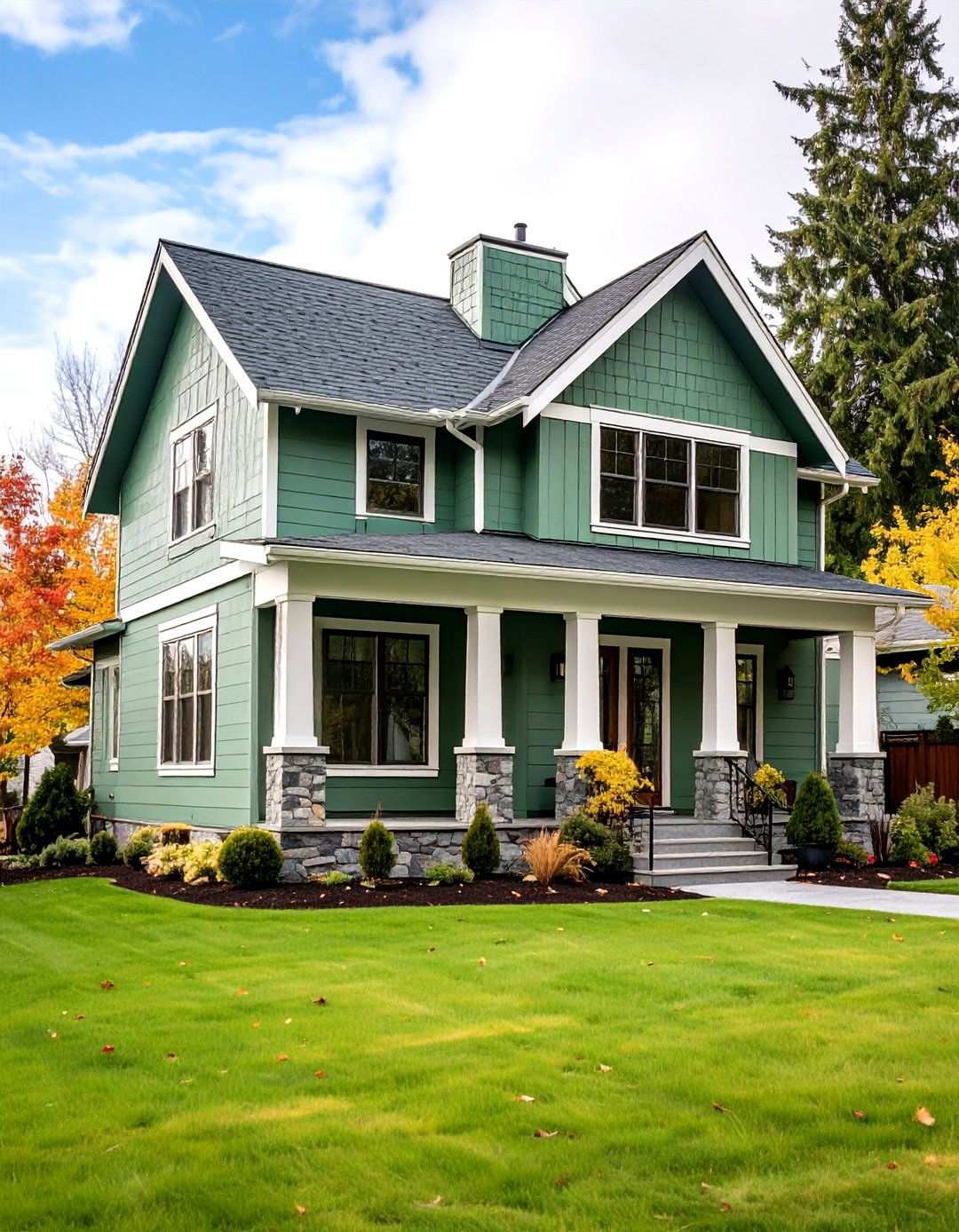
Neutral colors can bring a sense of sophistication to a home’s exterior. The combination of muted green siding with crisp white accents creates a calming and serene atmosphere, reminiscent of a natural oasis. This approach typically features muted green as the primary color, with white trimming and architectural details that add a touch of elegance. The subtle contrast between the two colors provides visual interest without overwhelming the design, while the white elements maintain a clean and bright appearance. This combination works beautifully on a range of home styles, from farmhouse to contemporary, where understated sophistication is valued. The result is an exterior that feels both timeless and effortlessly chic.
13. Coastal Charm through Bold Color Choices
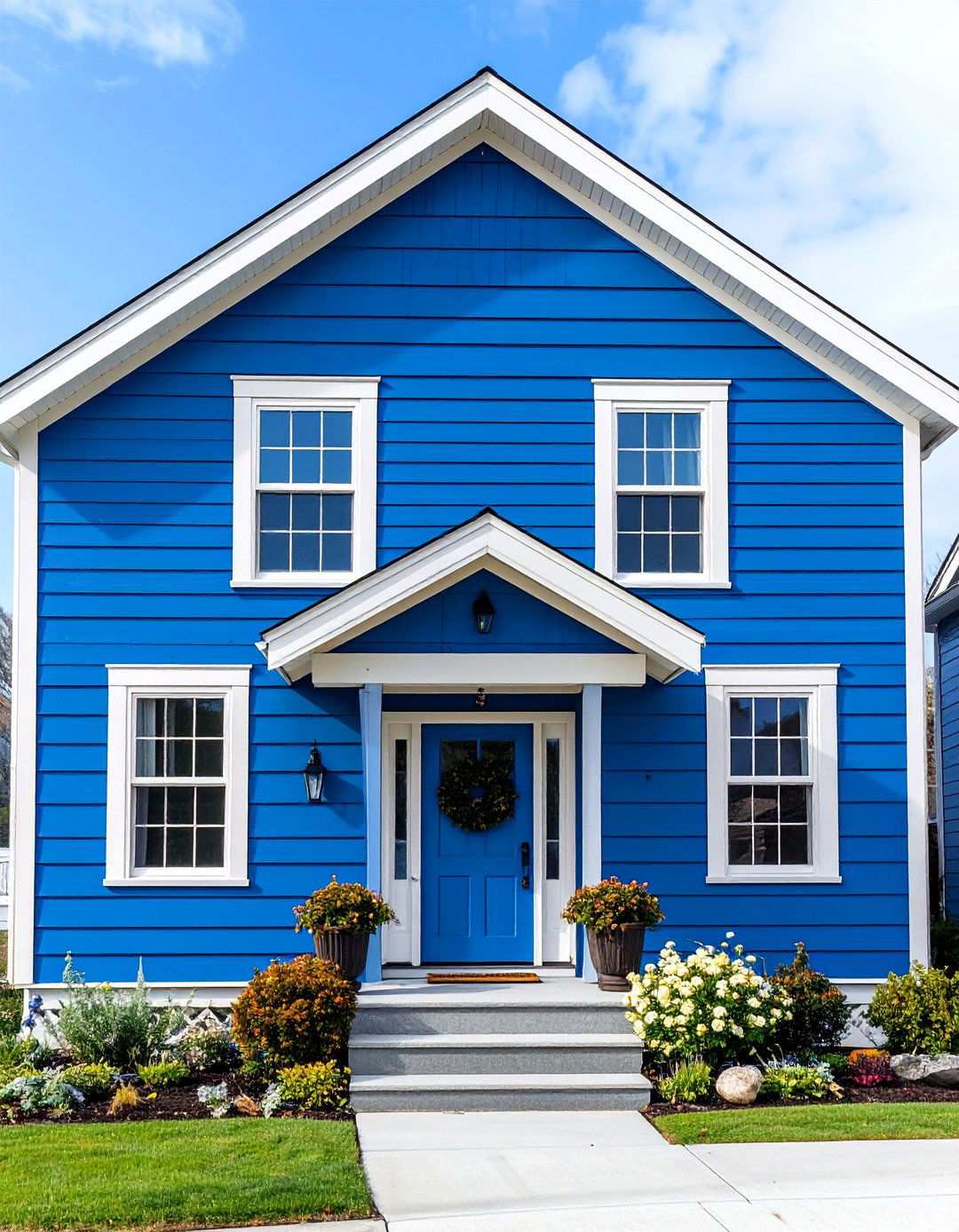
Bold color combinations can evoke the essence of coastal living. The pairing of deep blue siding with warm beige accents creates a refined and sophisticated exterior that captures the essence of upscale maritime living. This color scheme typically positions blue as the dominant siding color, with beige accents on trim work and architectural details that add warmth and visual interest. The combination of cool and warm tones creates a visually appealing contrast that’s reminiscent of ocean depths and sandy shores. This approach works exceptionally well on coastal home styles, from cape cod to colonial, where nautical references are desired without being too literal. The result is a sophisticated and relaxed exterior that’s perfect for homeowners seeking refined coastal character.
14. Monochromatic Sophistication through Tonal Variation
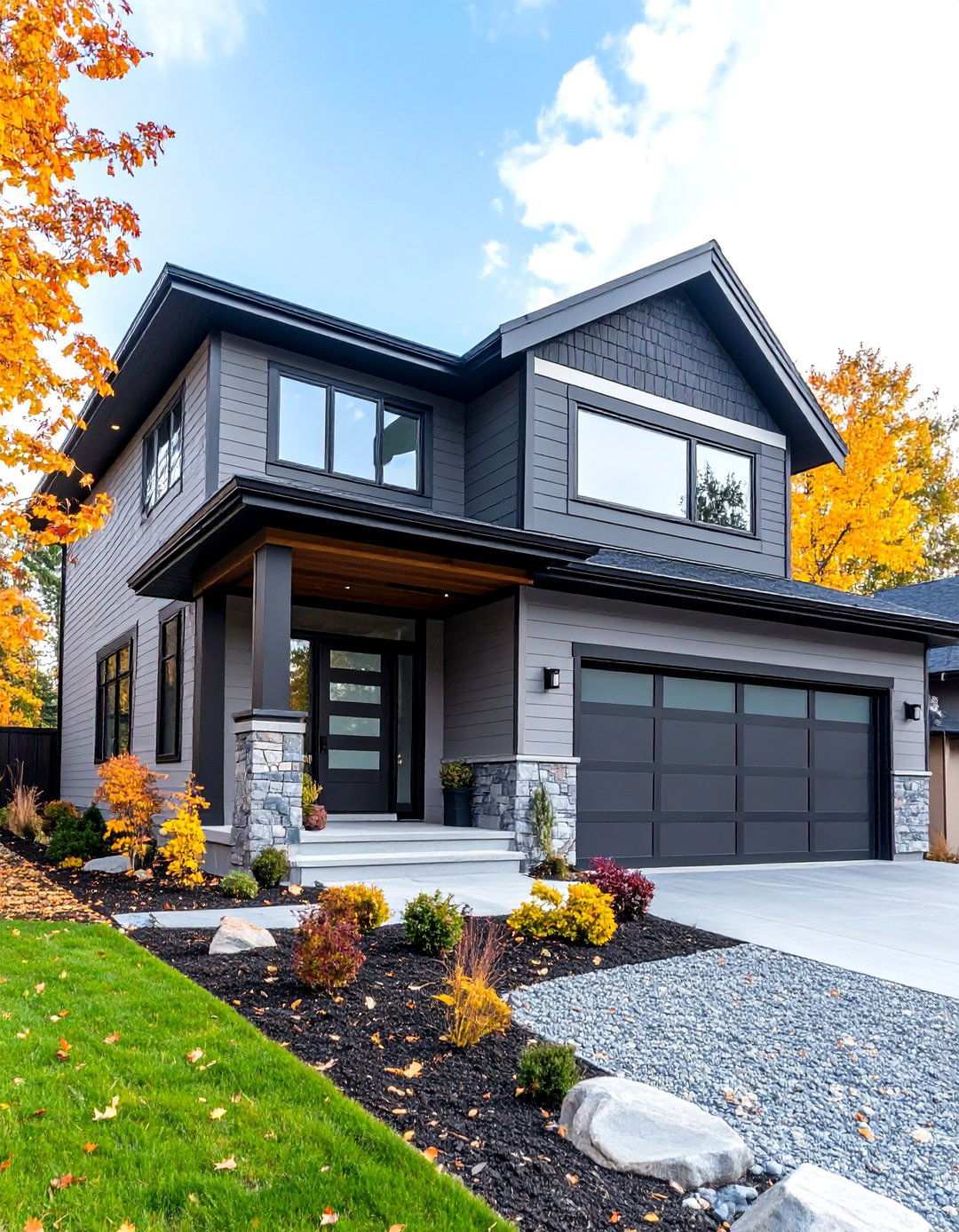
Monochromatic color schemes can add depth and visual interest to a home’s exterior. The combination of light gray primary siding with darker gray accent areas creates a sophisticated and contemporary look through the subtle variation of tone rather than dramatic color contrast. This approach typically features pale gray as the dominant color, with charcoal or medium gray accents on specific architectural elements like gables, columns, or trim work. The monochromatic palette ensures visual cohesion, while the tonal variation adds necessary architectural definition. This color scheme works particularly well on modern, contemporary, and minimalist home styles where understated elegance is prioritized. The result creates refined exteriors that feel both current and timeless, with a sense of sophistication that never goes out of style.
15. Elegance through Timeless Neutrals
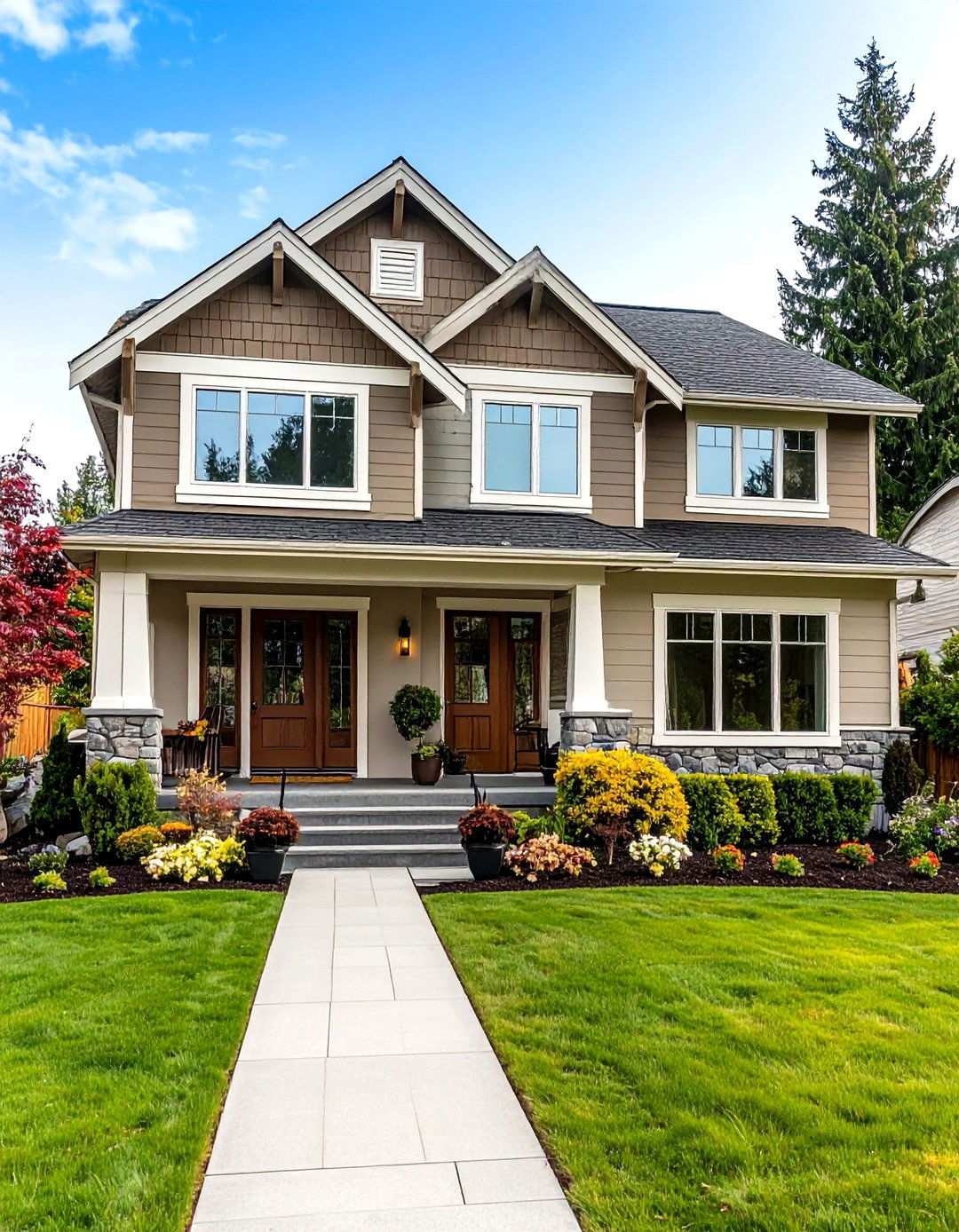
Neutral tones have long been prized for their capacity to create lasting appeal. A sophisticated fusion of warm taupe siding with crisp white trim yields an exterior that effortlessly complements a broad spectrum of architectural styles and landscape settings. By positioning taupe as the primary color and reserving white for trim work, this refined approach creates clean architectural definition while allowing for a subtle yet neutral color palette. The warm gray-beige tone works harmoniously with diverse accent colors and natural materials, lending itself to traditional, transitional, and contemporary home styles that value understated sophistication. As a result, exteriors that showcase this combination tend to photograph beautifully and maintain market appeal despite changing trends.
16. Enduring Allure of Traditional Color Combinations
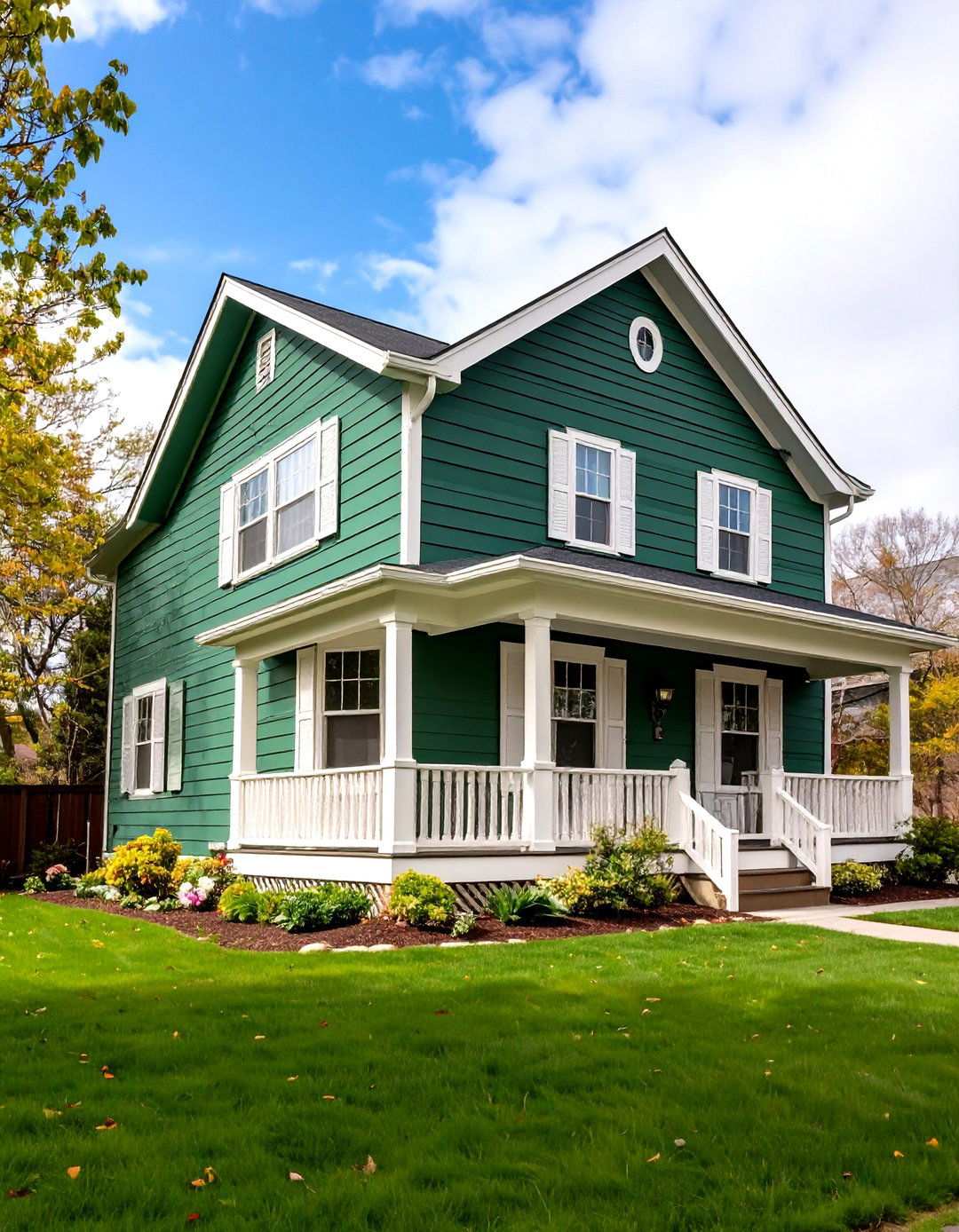
Traditional color combinations have a timeless allure that stems from their ability to evoke established neighborhoods and classic American architecture. A rich pairing of deep forest green siding with cream accents creates a sophisticated exterior that exudes classic charm. Typically, this combination features green as the dominant color while cream assumes a supporting role on trim, shutters, and architectural details. The deep green provides a strong color presence that is expertly balanced by the cream, which ensures adequate contrast for architectural clarity. This approach is particularly well-suited to colonial, cape cod, and craftsman home styles that seek to convey traditional character. Furthermore, the colors suggest natural landscapes while maintaining sufficient formality for prestigious residential settings.
17. Coastal Modern Aesthetic through Bold Color Choices
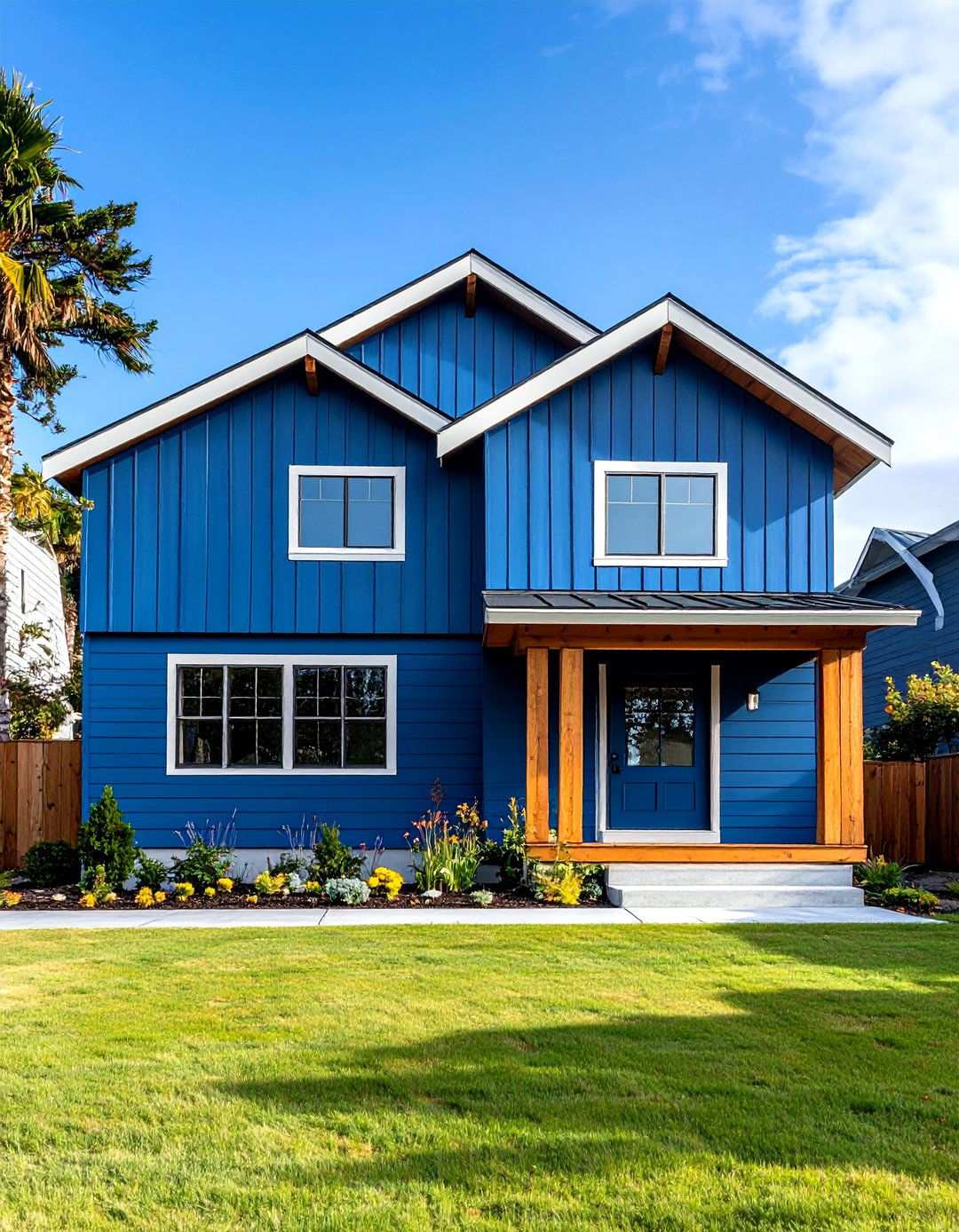
Contemporary design can seamlessly incorporate coastal influences to create a modern aesthetic that feels both current and connected to seaside traditions. A fresh combination of pacific blue siding with natural wood accents yields a modern coastal exterior that effortlessly captures the essence of ocean views and driftwood. Typically, this approach features blue as the primary siding color while natural wood assumes a supporting role on accent walls, trim, or architectural details. The interplay of color and natural texture creates visual interest that works particularly well on contemporary, modern farmhouse, and coastal home styles that value relaxed sophistication. As a result, this design feels both vacation-inspired and suitable for year-round living.
18. Balancing Neutrality with Modern Sophistication
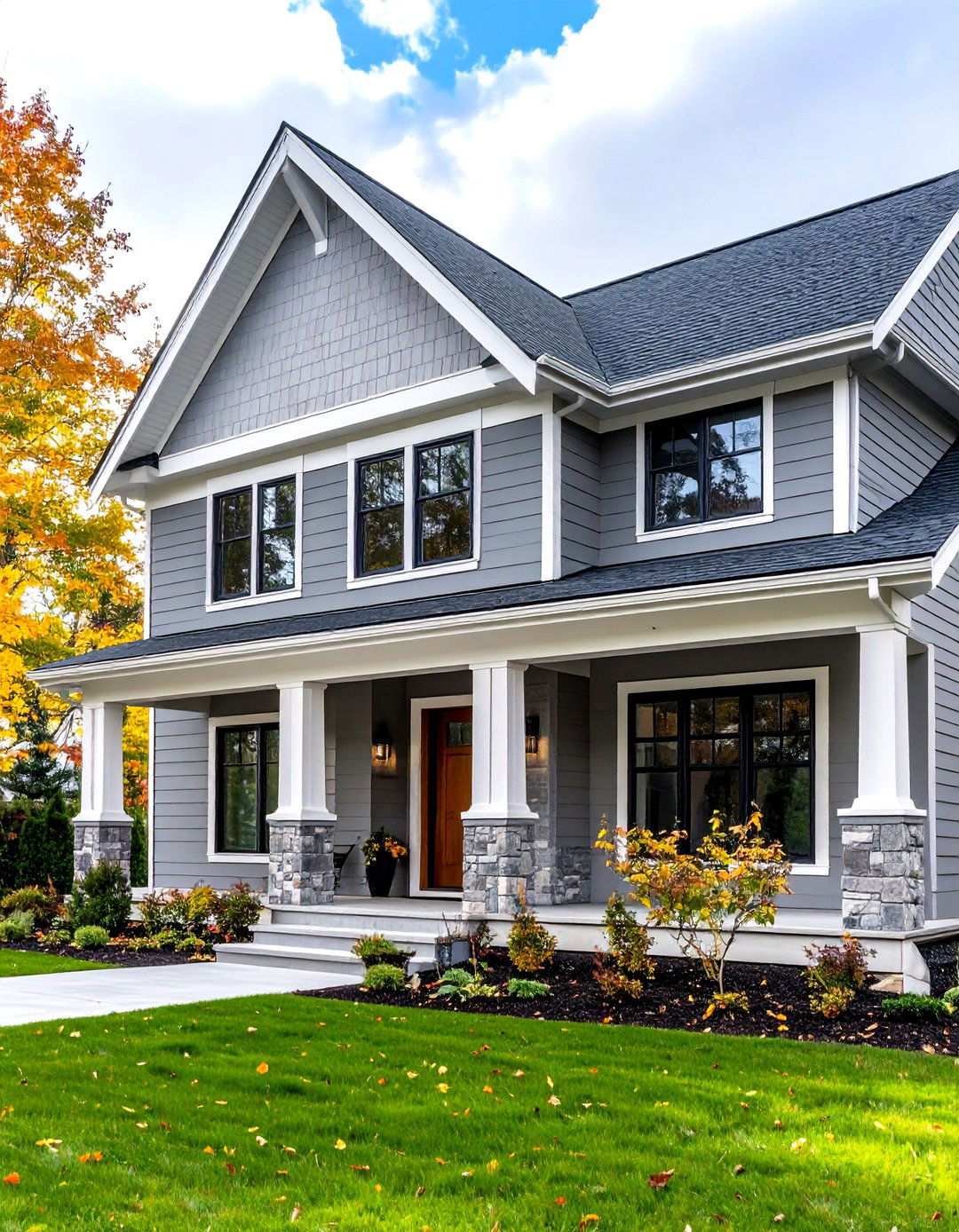
A striking palette of cool tones expertly crafted with pewter gray and bright white accents creates a sleek, contemporary exterior that exudes precision and clean design lines. By positioning gray as the primary color and reserving white for trim, columns, and decorative elements, a sense of balance emerges, allowing the overall aesthetic to focus on architectural form and modern materials such as steel, glass, and stone. This harmonious combination finds its sweet spot on contemporary, modern, and minimalist home styles, where the emphasis lies on clean lines and simplicity. As a result, exteriors that feel professionally designed and thoroughly current come to life.
19. Crafting Distinction with Warmth and Approachability
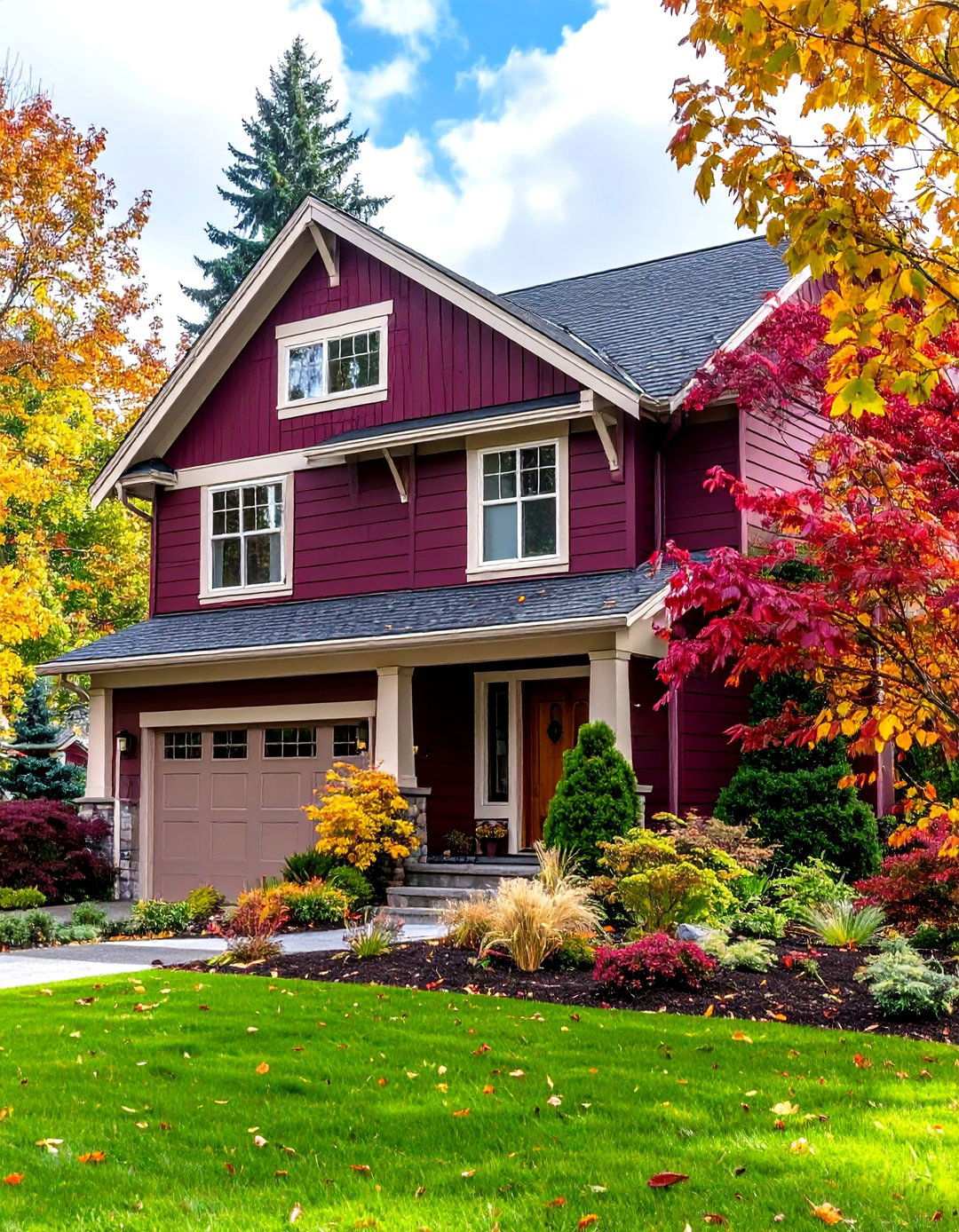
A bold and inviting palette of rich burgundy and light neutral accents creates a sophisticated exterior that stands out while maintaining residential comfort. By featuring burgundy as the primary color and cream or light beige on trim and architectural details, a sense of balance and approachability is achieved, ensuring the design remains both unique and established. This distinctive combination finds its perfect match on traditional, craftsman, and colonial home styles, where character and distinction are cherished. The end result creates exteriors that exude personality and establish a lasting impression, perfect for homeowners seeking memorable curb appeal.
20. Weaving Natural Harmony with Understated Elegance
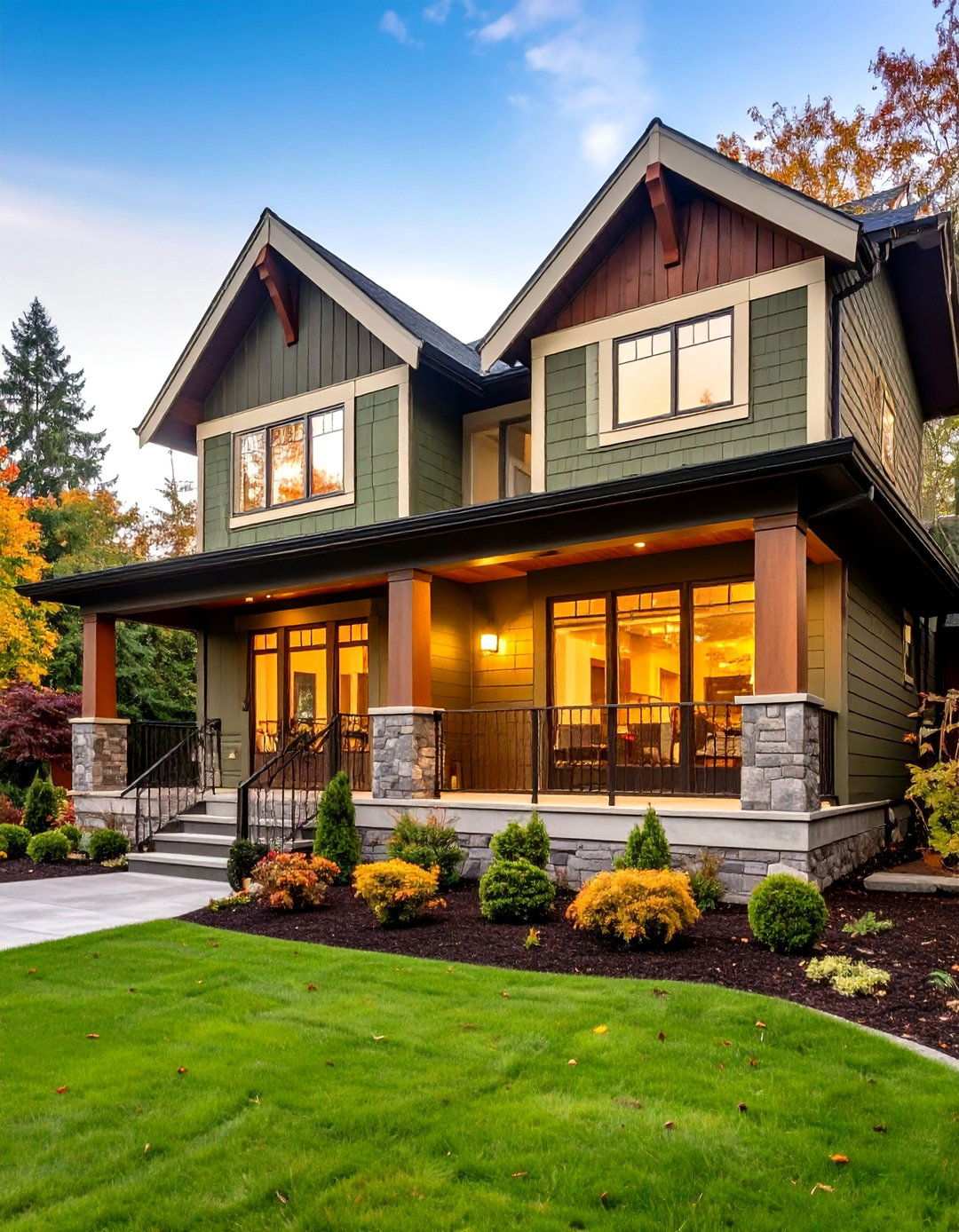
A soothing palette of soft olive green and cream accents expertly crafted creates a naturally-inspired exterior that feels both contemporary and timeless. By positioning olive as the primary color and reserving cream for trim work and architectural details, a sense of subtlety and understated elegance is achieved, allowing the overall aesthetic to seamlessly blend with natural landscapes and diverse architectural styles. This harmonious combination finds its sweet spot on farmhouse, craftsman, and contemporary home styles, where the emphasis lies on understated elegance and timeless appeal. As a result, exteriors that age gracefully and maintain relevance across changing design trends and market preferences come to life.
21. Harmonious Industrial Chic
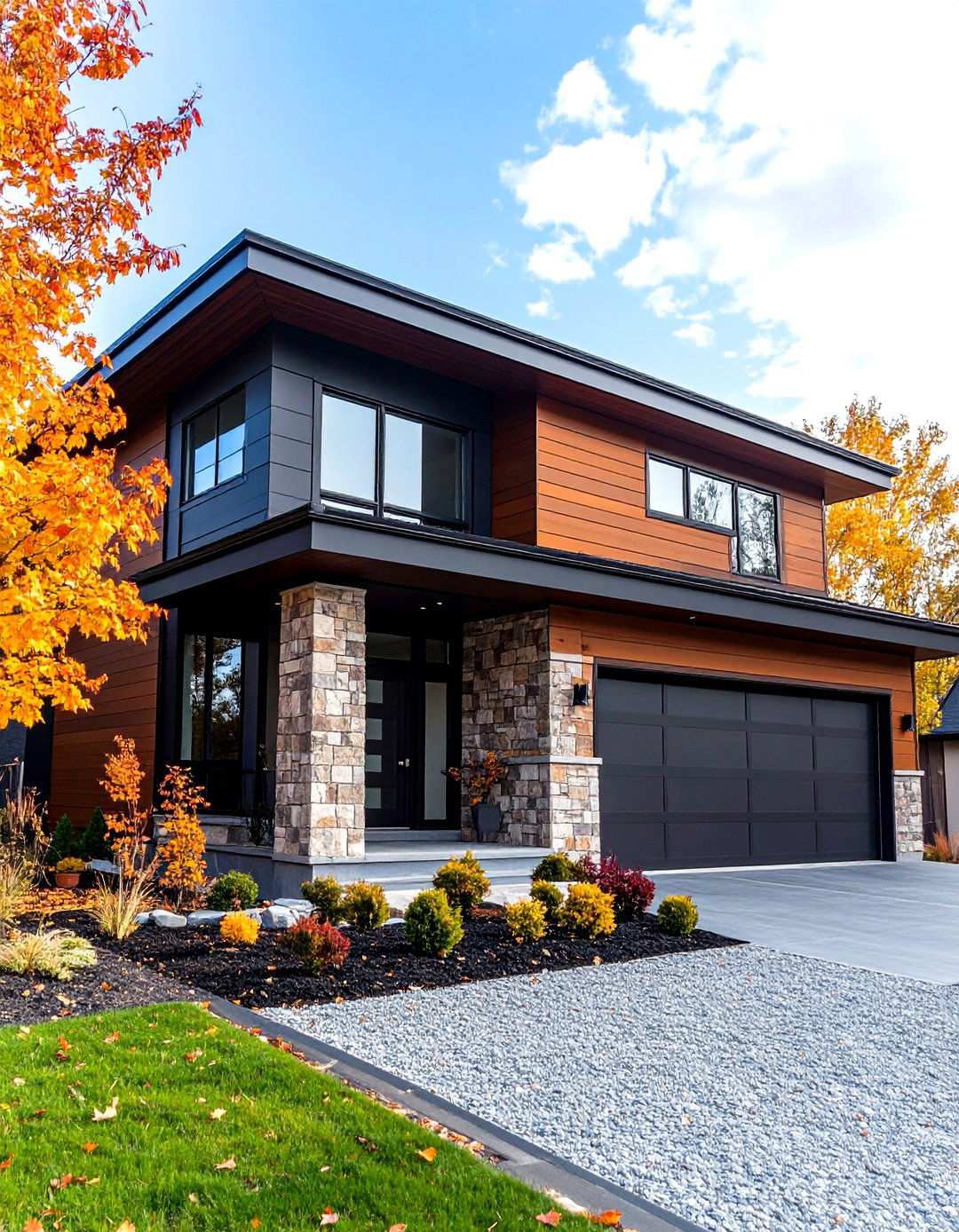
Industrial influences can seamlessly integrate into residential design, yielding a striking and modern aesthetic. The fusion of dark bronze siding and light stone accents brings forth a contemporary exterior that embodies the essence of urban loft living while still exuding warmth. Characteristically, this approach features bronze as the dominant hue, with light stone tones gracing trim and architectural elements. The harmonious contrast created between the two tones avoids a stark, uninviting ambiance, instead presenting a refined and sophisticated appearance. This distinct color scheme proves particularly well-suited for contemporary, modern, and industrial-inspired home styles that emphasize clean lines and architectural materials. Ultimately, the result is an exterior that feels both modern and substantial, resonating with homeowners seeking distinctive character.
22. Coastal Elegance through Coral and White
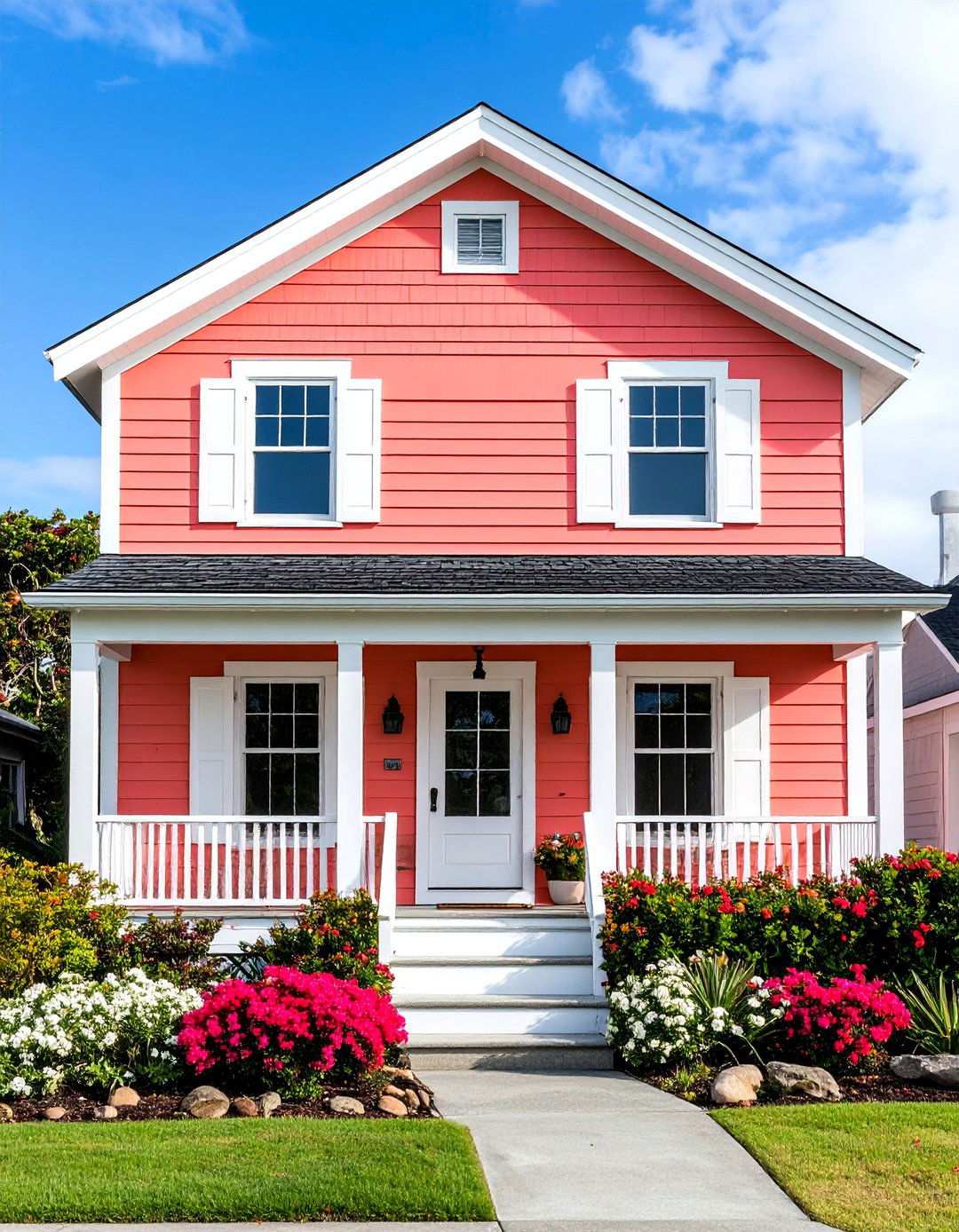
The unique combination of muted coral siding with bright white accents gives birth to captivating coastal-inspired exteriors. This approach, often featuring coral as the primary color, pairs it with white trim work and architectural details to create a tropical yet sophisticated atmosphere. The coral provides a distinct pop of color, while its muted tone ensures adaptability in a range of settings beyond beachfront locations. This blend works particularly effectively on cottage, coastal, and contemporary home styles where warmth and personality are cherished. The outcome is an exterior that evokes the essence of a vacation getaway while remaining suitable for year-round residential living in diverse climates.
23. Balancing Cool Tones with Slate Blue and Warm Gray
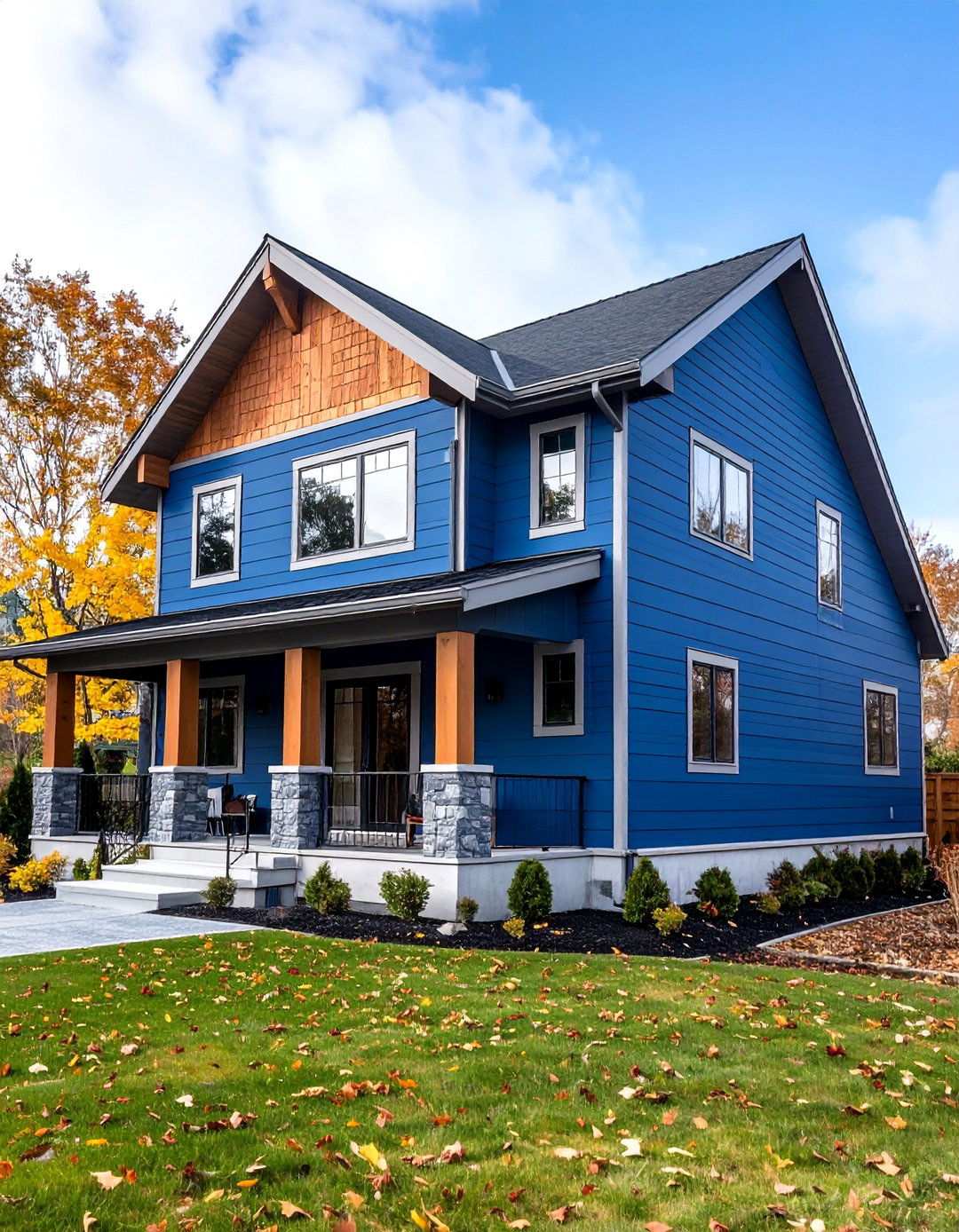
Cool tones can indeed create inviting exteriors when balanced with warm accents. The sophisticated combination of slate blue siding and warm gray accents yields a contemporary exterior that is both welcoming and trend-setting. Typically, this approach features blue as the primary color, with warm gray tones gracing trim and architectural details. The interplay between cool and warm undertones adds visual interest, while the overall color harmony maintains a sense of balance. This approach proves exceptionally well-suited for contemporary, transitional, and modern farmhouse styles where current design sensibilities take center stage. The result is an exterior that feels both modern and livable, perfect for homeowners seeking a contemporary, sophisticated look.
24. Harmonious Balance of Earthy Hues and Sunny Accents
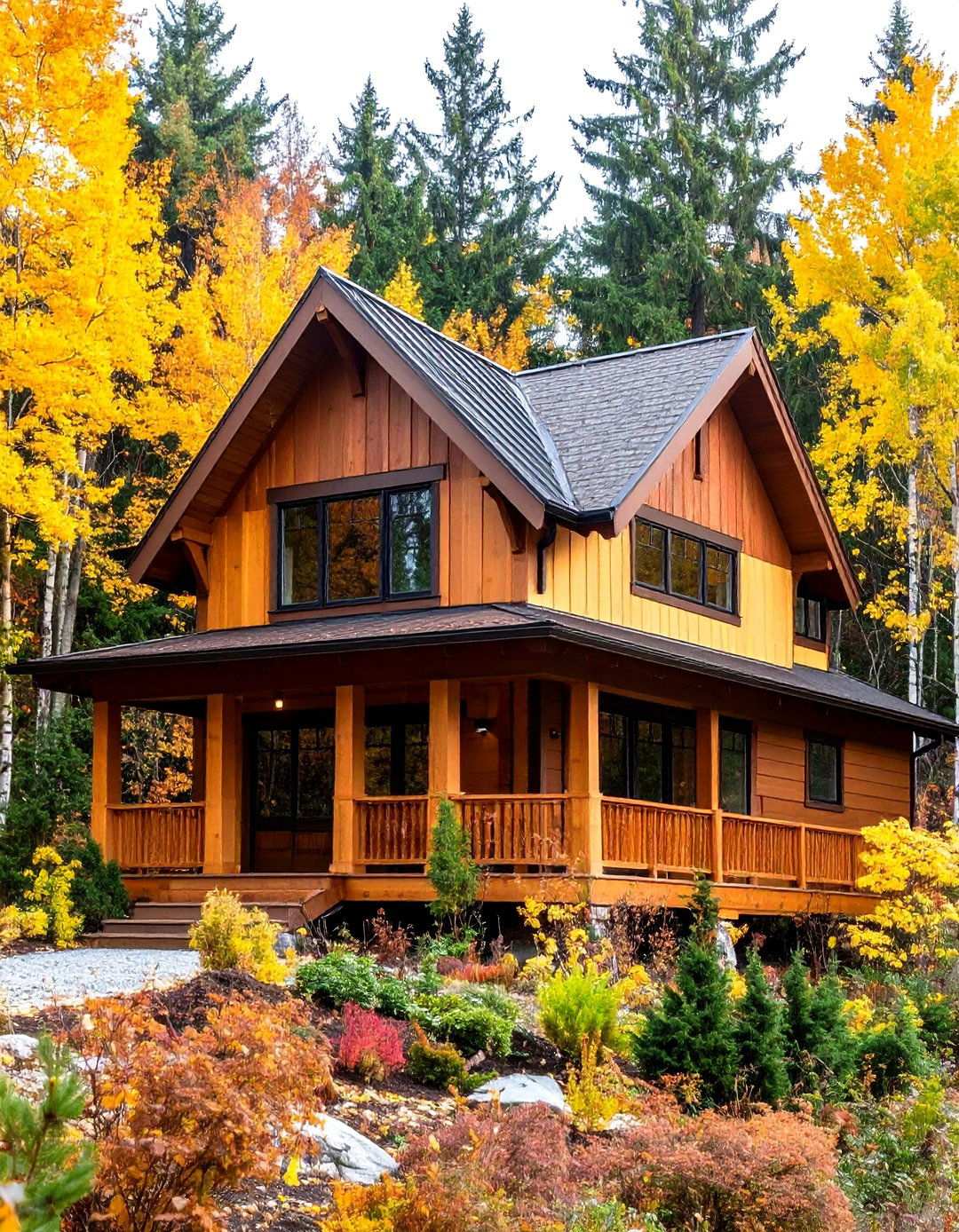
A carefully curated blend of rustic contemporary charm is often achieved by combining earthy tones with soft, sunny accents. This warm and inviting color combination, featuring earth-tone brown siding with pale yellow trim work, creates a sense of grounded optimism. By placing brown at the forefront and incorporating yellow on architectural details, this natural approach evokes the feeling of tree bark and the warmth of autumn sunlight. As a result, this color scheme provides a visually appealing and enduring aesthetic that transcends the seasons. It’s particularly well-suited for craftsman, farmhouse, and cabin-style homes, where a connection to the natural environment is highly valued. Ultimately, this harmonious balance of earthy hues and sunny accents yields exteriors that exude a sense of established authenticity and warm hospitality.