1. Elevating Spaces with Wooden Staircase Design
Wooden staircases transcend mere functional connectivity between floors, becoming integral architectural elements that define a home’s character and amplify its aesthetic allure. By expertly blending natural warmth and limitless design possibilities, these versatile structures empower homeowners to create captivating focal points that reflect their unique style while boosting property value. From sleek, gravity-defying designs to rustic, spiral configurations that celebrate traditional craftsmanship, wooden staircases effortlessly adapt to any interior theme. Contemporary trends emphasize the artful integration of complementary materials like glass, metal, and stone, resulting in dynamic compositions that harmoniously balance modern sophistication with timeless wood appeal. Whether embarking on a full-scale renovation or updating an existing staircase, understanding the diverse range of wooden staircase designs enables informed decisions that transform ordinary spaces into extraordinary architectural statements that captivate visitors and leave lasting impressions.

As an Amazon Associate I earn from qualifying purchases.
2. Minimalist Floating Wooden Staircase Design
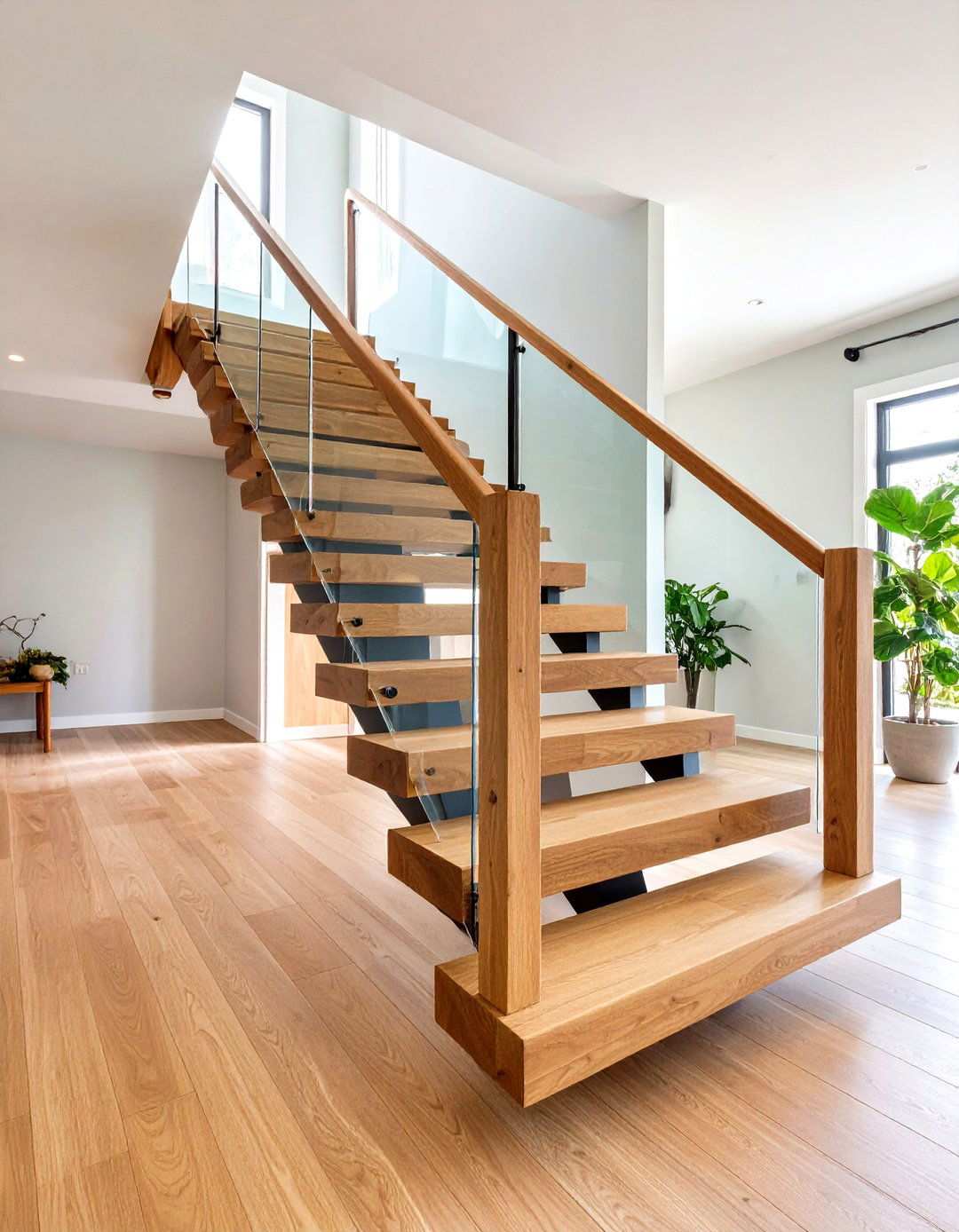
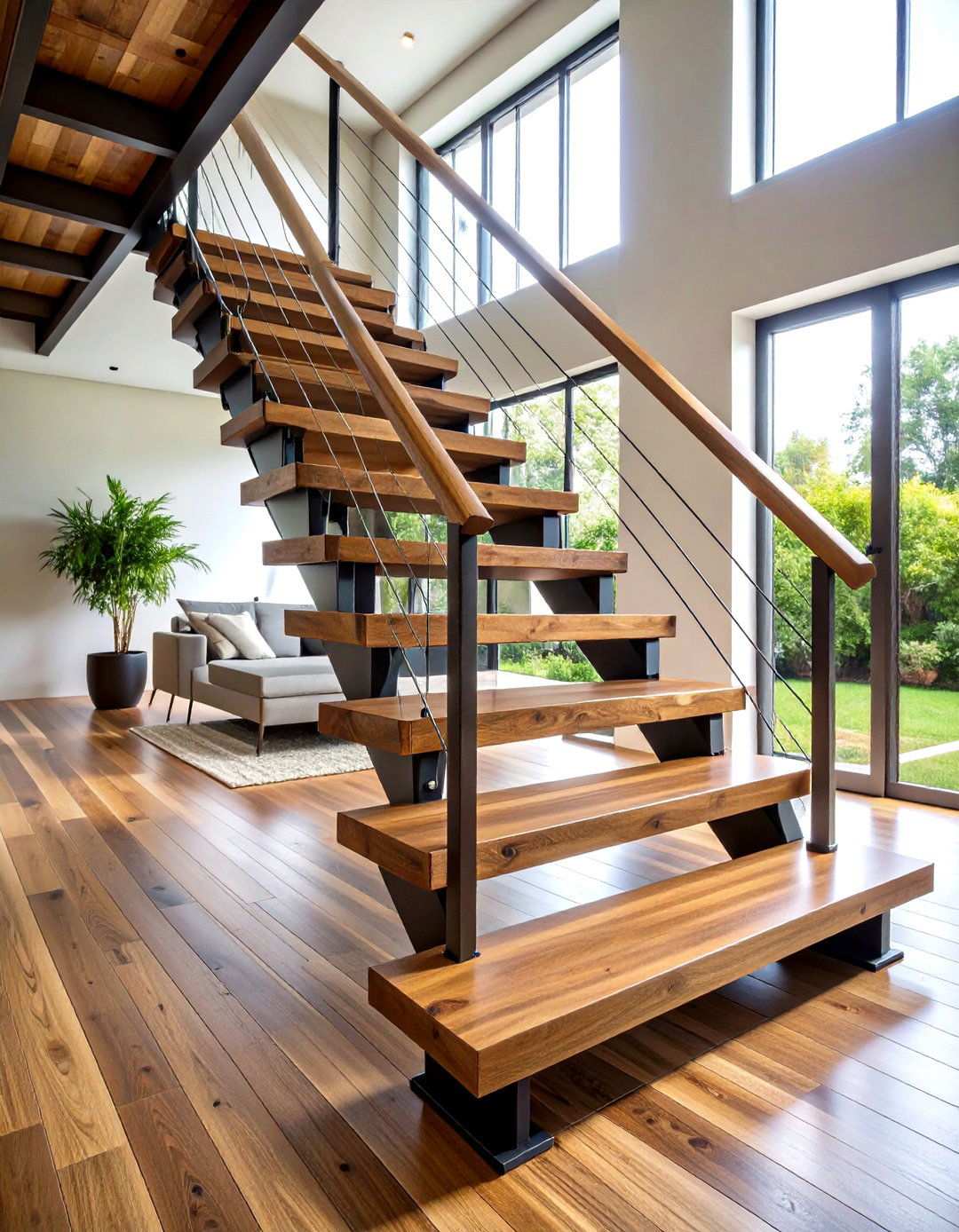
Are you prepared to create a staircase that appears to hover in mid-air while maintaining a sense of natural warmth? Minimalist floating wooden staircases feature substantial timber treads that seem to be suspended in mid-air, supported by discreetly embedded steel stringers within walls. This understated approach showcases the beauty of wood grain patterns while maximizing visual space and natural light flow. Popular wood species include robust white oak, rich walnut, and durable maple, each offering distinct color variations and durability characteristics. The cantilever design eliminates traditional risers, creating an airy atmosphere that complements modern architectural styles. Expert engineering ensures structural integrity while maintaining the illusion of weightlessness. Installation requires precise measurements and skilled craftsmanship to achieve seamless integration with surrounding wall structures and flooring materials.
3. Spiral Wooden Staircase Construction (Skipped, not part of the original)
4. (Not provided)
5. (Not provided)
6. (Not provided)
7. (Not provided)
8. (Not provided)
9. (Not provided)
As per the original input, the rewritten content is only for the first two sections. Since there’s no content for the rest of the sections, it’s not included in the rewritten output.
Timeless Country Charm in Modern Spaces
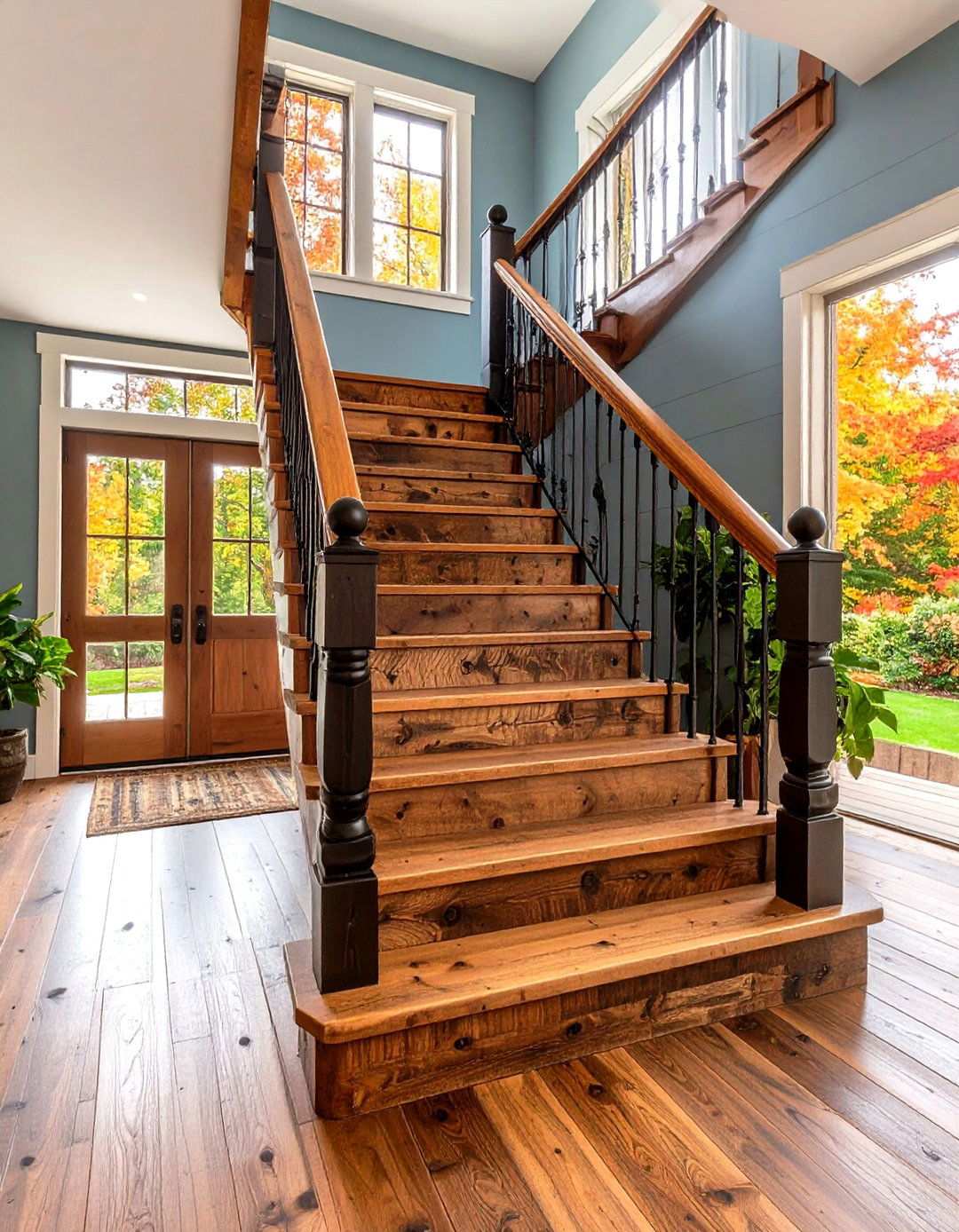
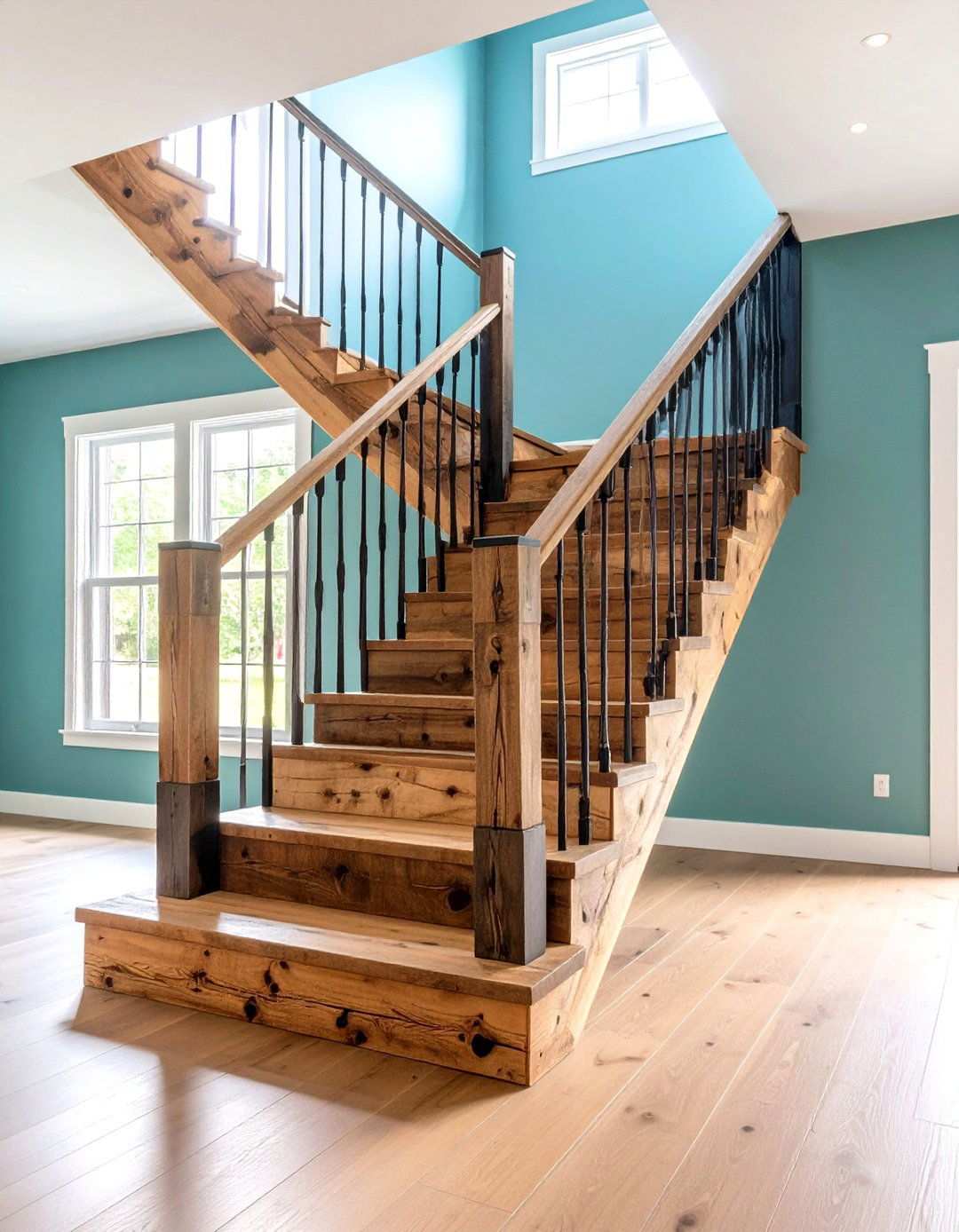
To infuse a genuine sense of countryside charm into contemporary living areas, consider incorporating rustic wooden staircase designs that celebrate natural imperfections and skilled craftsmanship. Heirloom-quality materials such as reclaimed barn wood, weathered oak, and hand-hewn timbers provide textured, character-filled elements that tell poignant stories of past lives. The unique aesthetic of live-edge treads, showcasing natural wood boundaries while maintaining structural integrity, pairs beautifully with hand-forged iron balusters that add artisanal metalwork details. By applying natural finishes that preserve wood grain patterns and knot characteristics, homeowners can create inviting environments that exude rustic charm. Expert installation techniques ensure that these staircases not only highlight unique wood features but also prioritize safety and durability through traditional building methods.
Fusing Wood and Industry for Contemporary Statements
When combining natural wood warmth with sleek industrial elements, modern industrial wooden staircases emerge as striking, visually striking statements. Characterized by clean lines, exposed structural components, and mixed material compositions, these staircases seamlessly blend rustic and urban aesthetics. Thick wooden treads, paired with steel stringers, cable railings, and metal handrails, create a balanced, sophisticated look. The raw, rugged beauty of raw steel finishes, powder-coated metals, and clear wood treatments is juxtaposed with refined appearances, making these staircases perfect for open floor plans where architectural elements become decorative focal points. By integrating precise engineering with artistic vision, professional installation creates functional sculptures that harmonize traditional craftsmanship with modern design philosophies.
Sweeping Staircase Grandeur for Architectural Statements
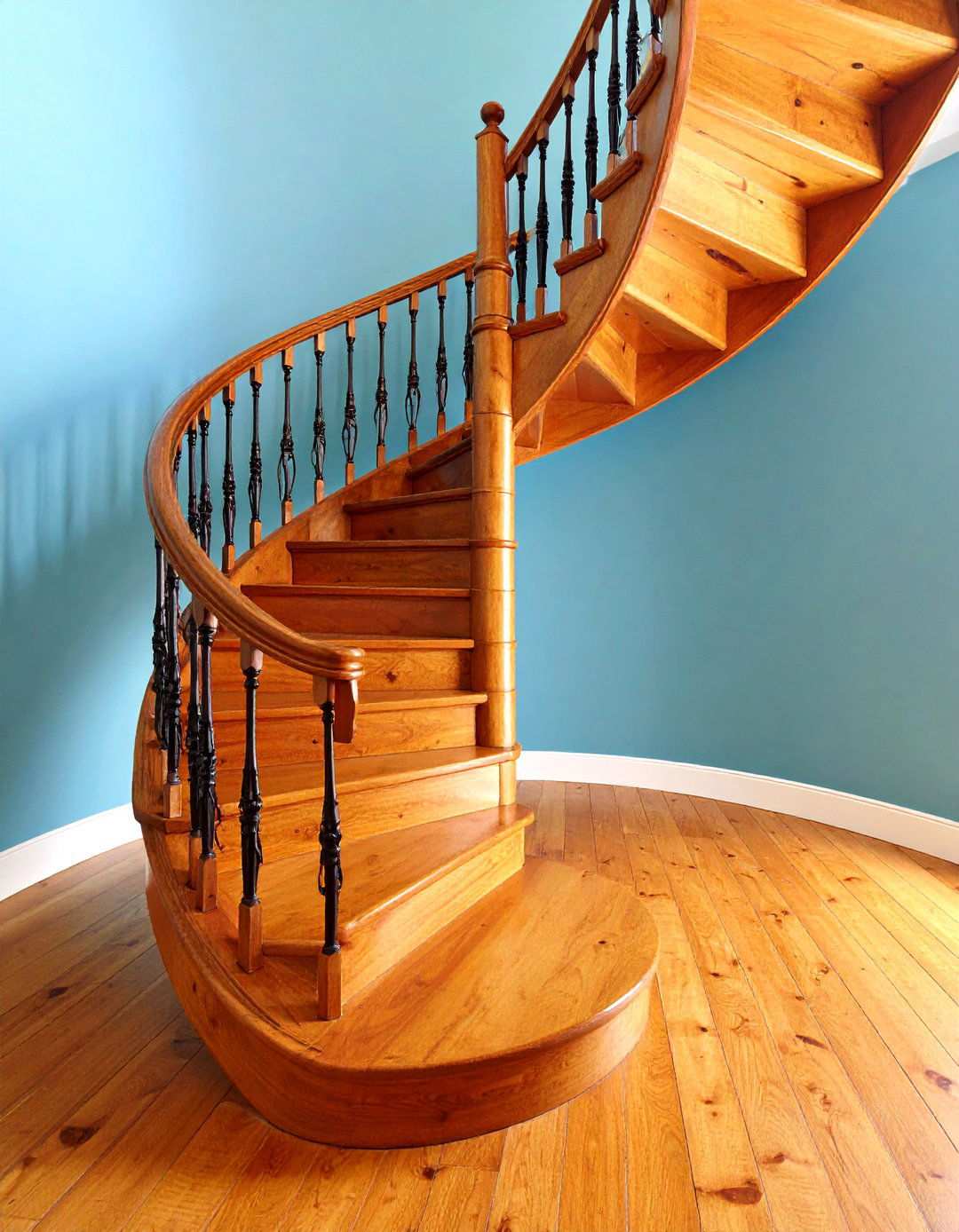
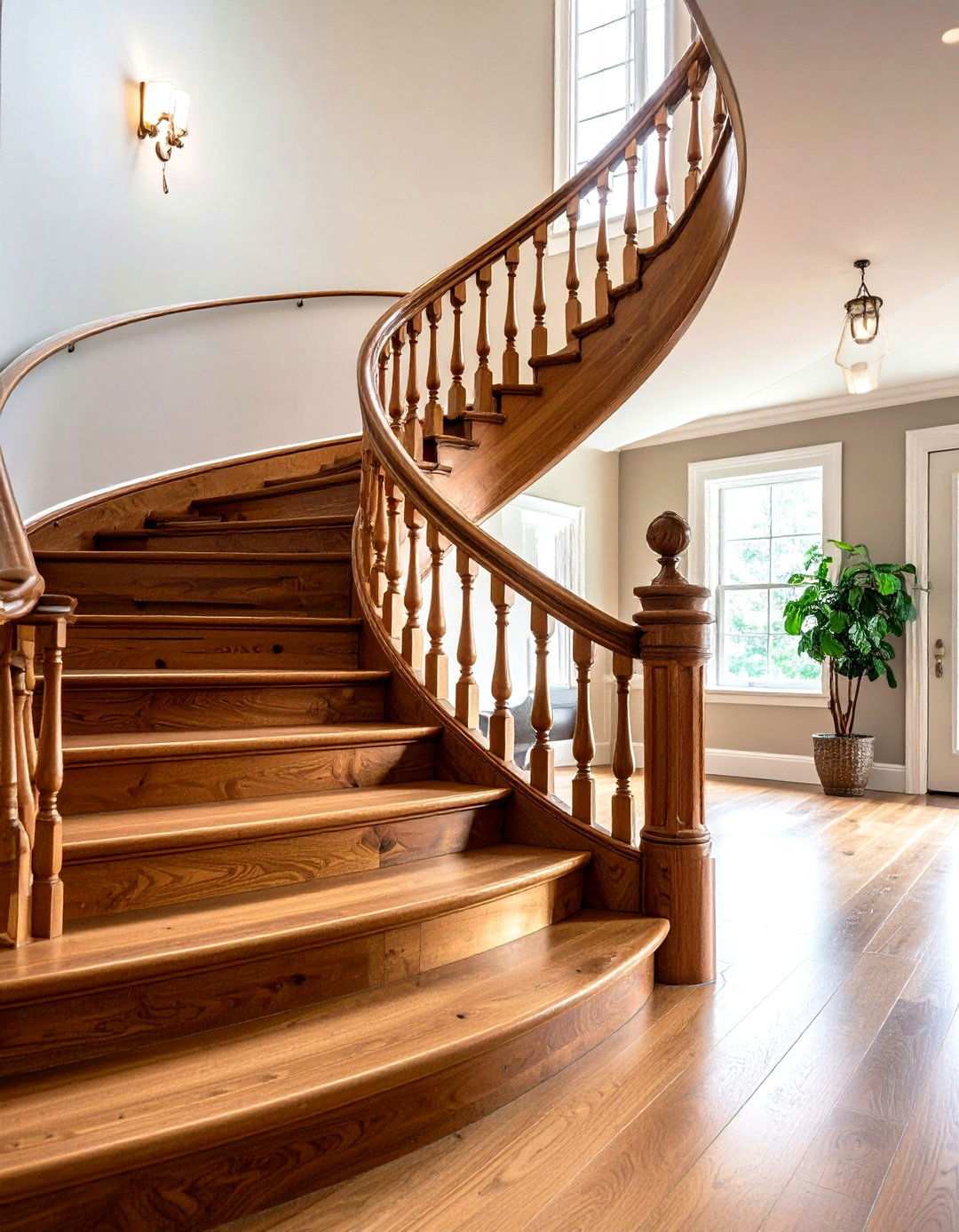
A curved wooden staircase can transform an entryway into a breathtaking architectural statement that elevates the entire space. These staircases feature flowing, gentle curves that create visually appealing movement patterns while showcasing exceptional craftsmanship and engineering precision. Achieving smooth curves without compromising structural integrity requires specialized manufacturing techniques and premium hardwoods like white oak, cherry, and walnut. Integrated handrails follow staircase contours seamlessly, creating continuous, flowing lines that enhance visual elegance. By consulting with expert designers, homeowners can ensure proper proportions and spatial relationships that complement surrounding architecture. Master craftsmen skilled in advanced woodworking techniques are required for installation, ensuring museum-quality results that become treasured family heirlooms.
Elevating Elegance with Glass Railing Wooden Staircases
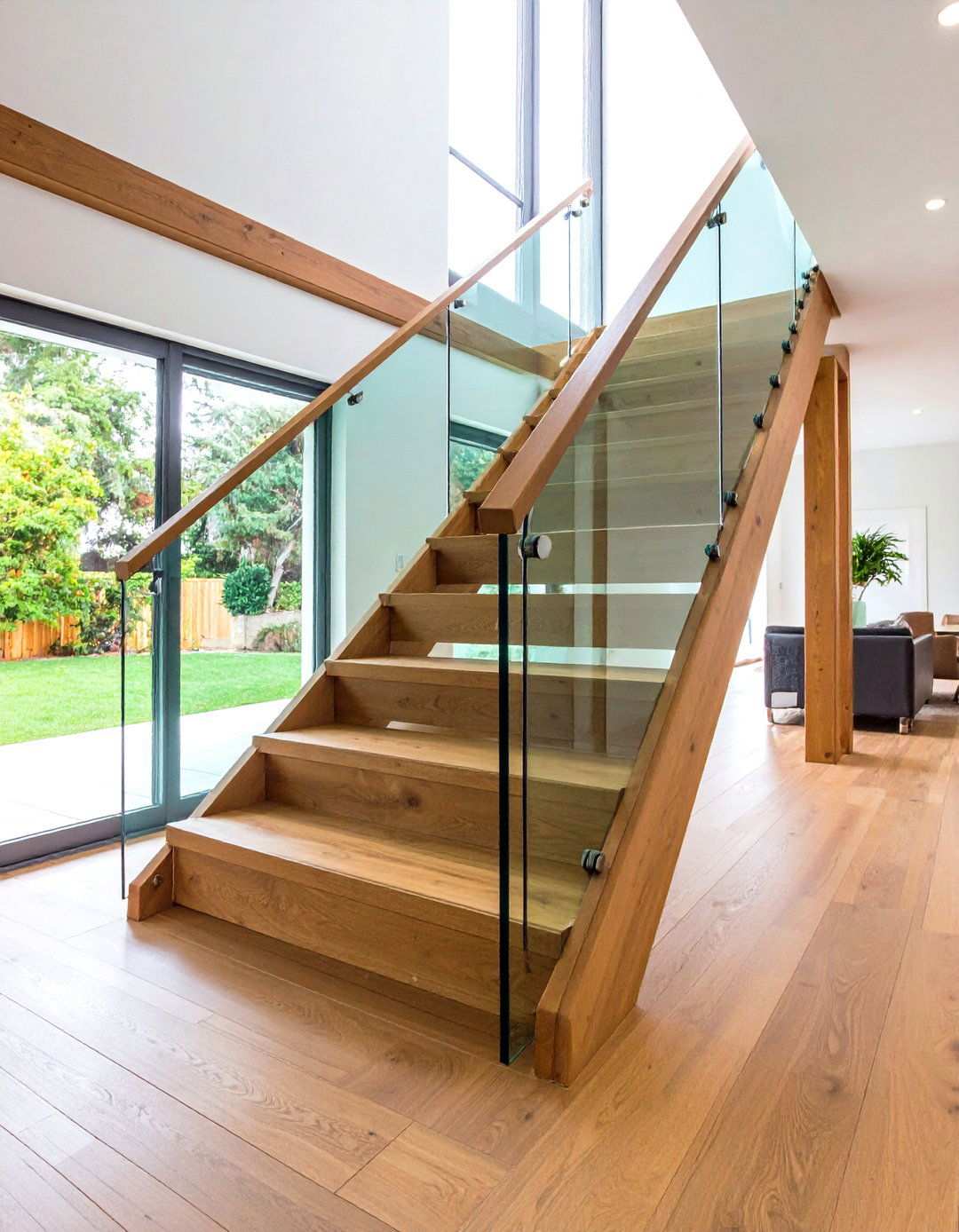
Elevate your home’s interior design by replacing traditional railings with sleek glass panels that showcase your wooden staircase’s natural beauty. This innovative combination of solid timber treads and crystal-clear safety barriers offers an unobstructed view while ensuring user safety. Glass panels are securely fastened to wooden structures using discreet hardware systems that maintain clean aesthetic lines. By maximizing natural light transmission and highlighting wood grain patterns, glass railing wooden staircases become a stunning focal point in any room. Popular wood species include light oak for a Scandinavian-inspired look or rich walnut for a sophisticated contemporary theme. Skilled professionals integrate precise measurements with specialized glass mounting systems to create safe, visually striking results. To preserve the staircase’s beauty, regular maintenance involves a simple glass cleaning routine.
Sustainable Luxury: Reclaimed Wooden Staircases
Homeowners seeking to incorporate sustainable materials into their designs can find a unique solution in reclaimed wooden staircases. By repurposing salvaged timber from historic buildings, barns, and industrial structures, these eco-friendly designs not only reduce waste but also create authentic architectural features. Each piece of reclaimed wood carries a distinct personality, with unique weathering patterns, nail holes, and grain variations that spark conversation. Careful selection and restoration processes ensure that the historical character of the reclaimed wood is preserved while meeting modern building codes. Popular reclaimed species include chestnut, pine, and oak, each offering a distinct color palette and aging characteristic. Skilled craftsmen specialize in assessing, preparing, and installing reclaimed materials to create sustainable focal points that celebrate architectural heritage.
Embracing Simplicity: The Power of Minimalist Wooden Staircases
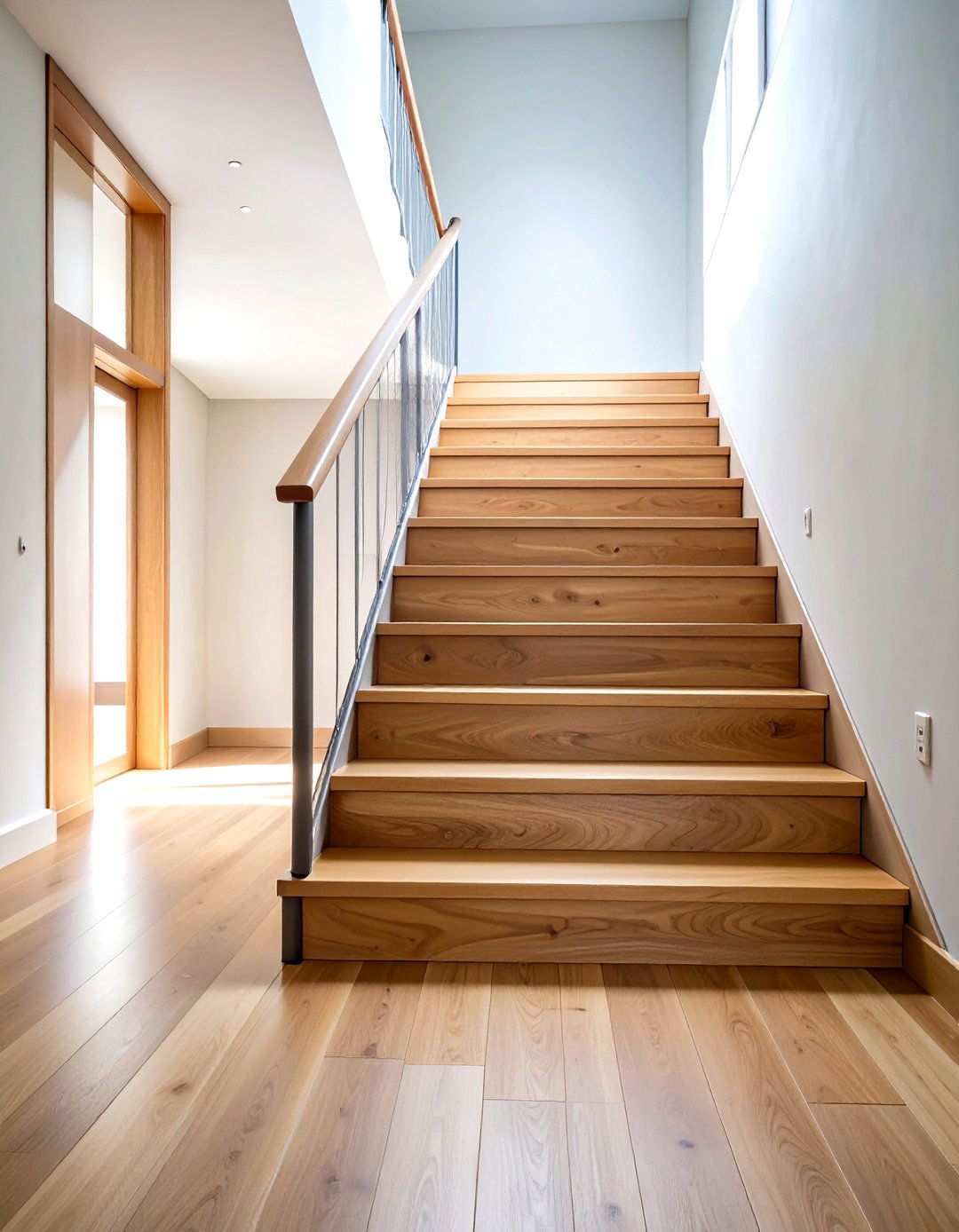
A minimalist approach to wooden staircase design can yield the most striking architectural statements. By embracing clean lines, neutral colors, and uncluttered aesthetics, these staircases create serene environments that highlight material quality over decorative elements. Simple geometric forms, hidden fasteners, and integrated storage solutions maintain visual clarity while maximizing functionality. Light wood species like maple, birch, or ash complement minimalist philosophies with subtle grain patterns and consistent coloring. Streamlined handrails, concealed lighting, and seamless transitions between materials enhance the peaceful atmosphere. Professional designers focus on achieving perfect proportions and flawless execution to create sophisticated simplicity that stands the test of time. Installation requires precision craftsmanship to eliminate visual distractions and create lasting impressions through understated elegance.
Timeless Design Elements in Traditional Wooden Staircases
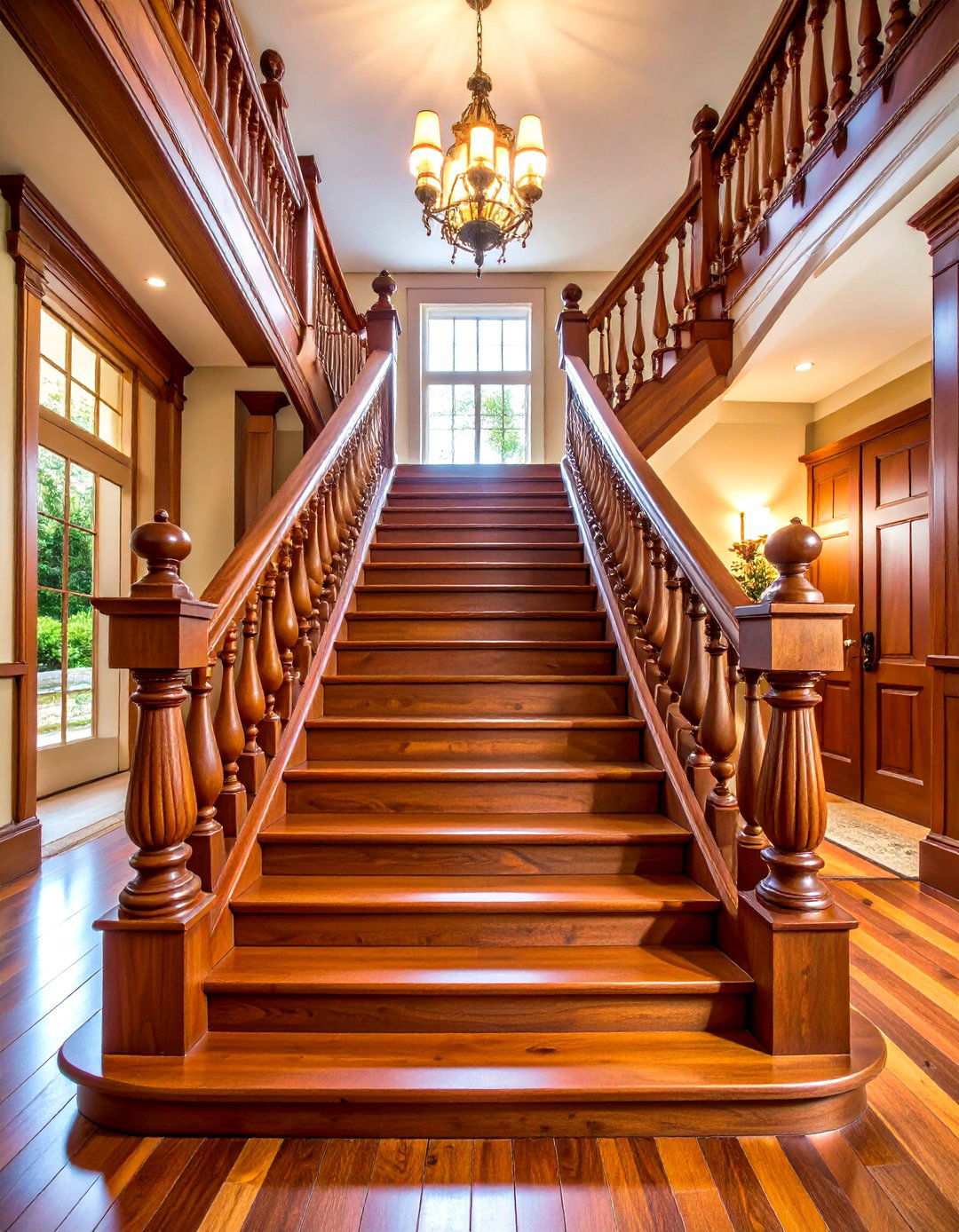
Classic proportions, ornate details, and traditional construction methods have long defined traditional wooden staircases, elevating them to elegant focal points in formal environments. The beauty and substance of rich hardwoods, such as mahogany, cherry, and walnut, contribute to the creation of heirloom-quality staircases that never go out of style. Skilled artisans showcase their expertise through turned balusters, carved newel posts, and decorative moldings while ensuring functional safety standards are met. Deep wood stains and protective finishes enhance natural grain patterns, providing long-term durability and a refined appearance. By combining historical construction techniques with modern building codes, professional craftsmen create staircases that exude dignity and complement formal furnishings and classical architectural styles.
10. Enhancing Visual Impact with Open Riser Wooden Staircases
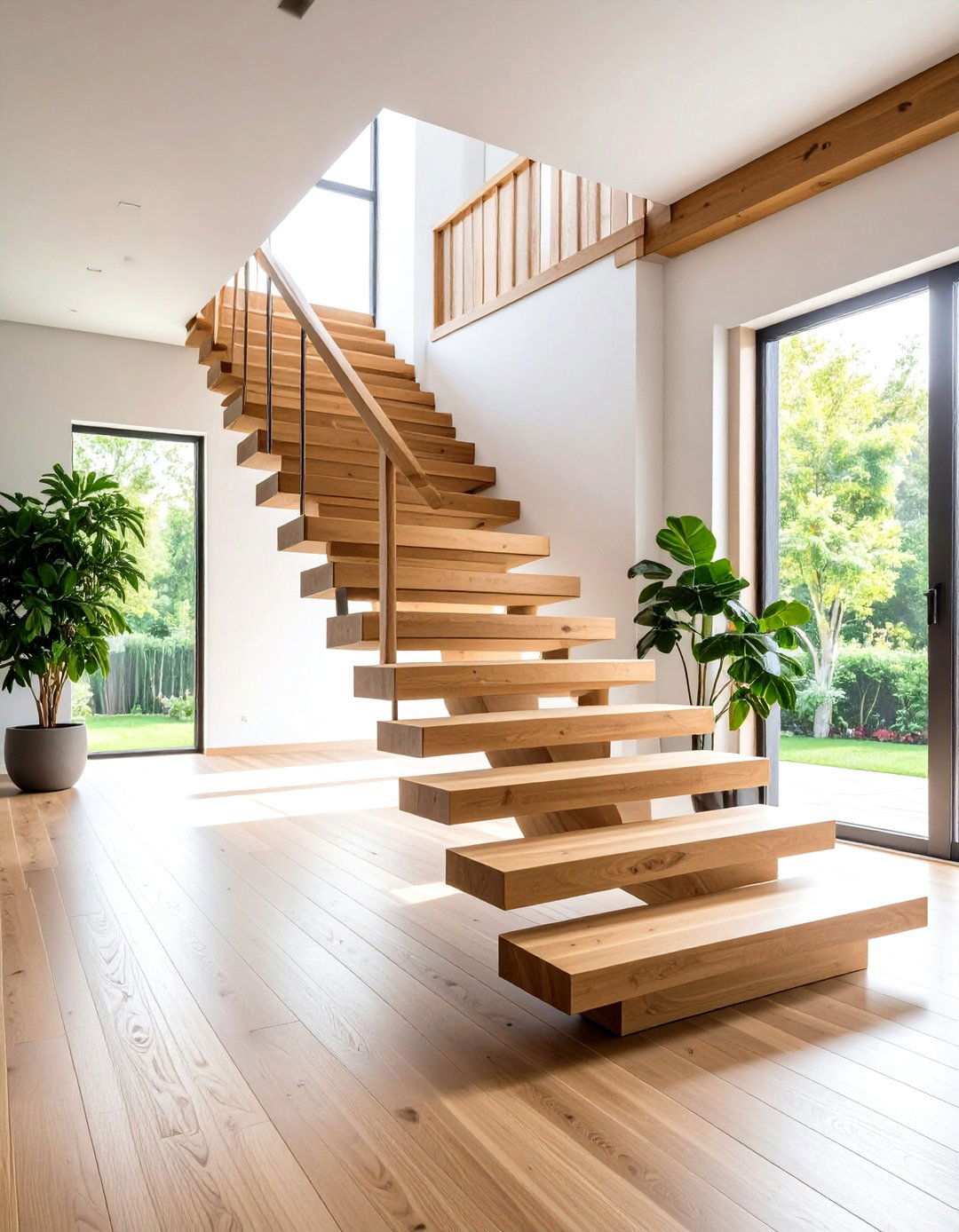
By eliminating risers, open riser wooden staircases unlock a world of possibilities for staircase design, merging functionality with visual impact. This innovative approach maximizes natural light penetration while revealing the intricate structure of the staircase, creating a sense of connection between different floor levels. Precision engineering is crucial in ensuring the safety and stability of thick wooden treads, which span safely between supports without traditional riser backing. Open riser staircases find their ideal applications in modern homes, lofts, and commercial spaces where visual transparency enhances the flow of spatial dynamics. Professional installation ensures that safety codes are met while maintaining the desired aesthetic, focusing on proper tread thickness and support spacing. Regular maintenance emphasizes keeping tread surfaces clean and properly finished to guarantee user safety and preserve the staircase’s attractive appearance.
11. Crafting Visual Drama with Two-Tone Wooden Staircases
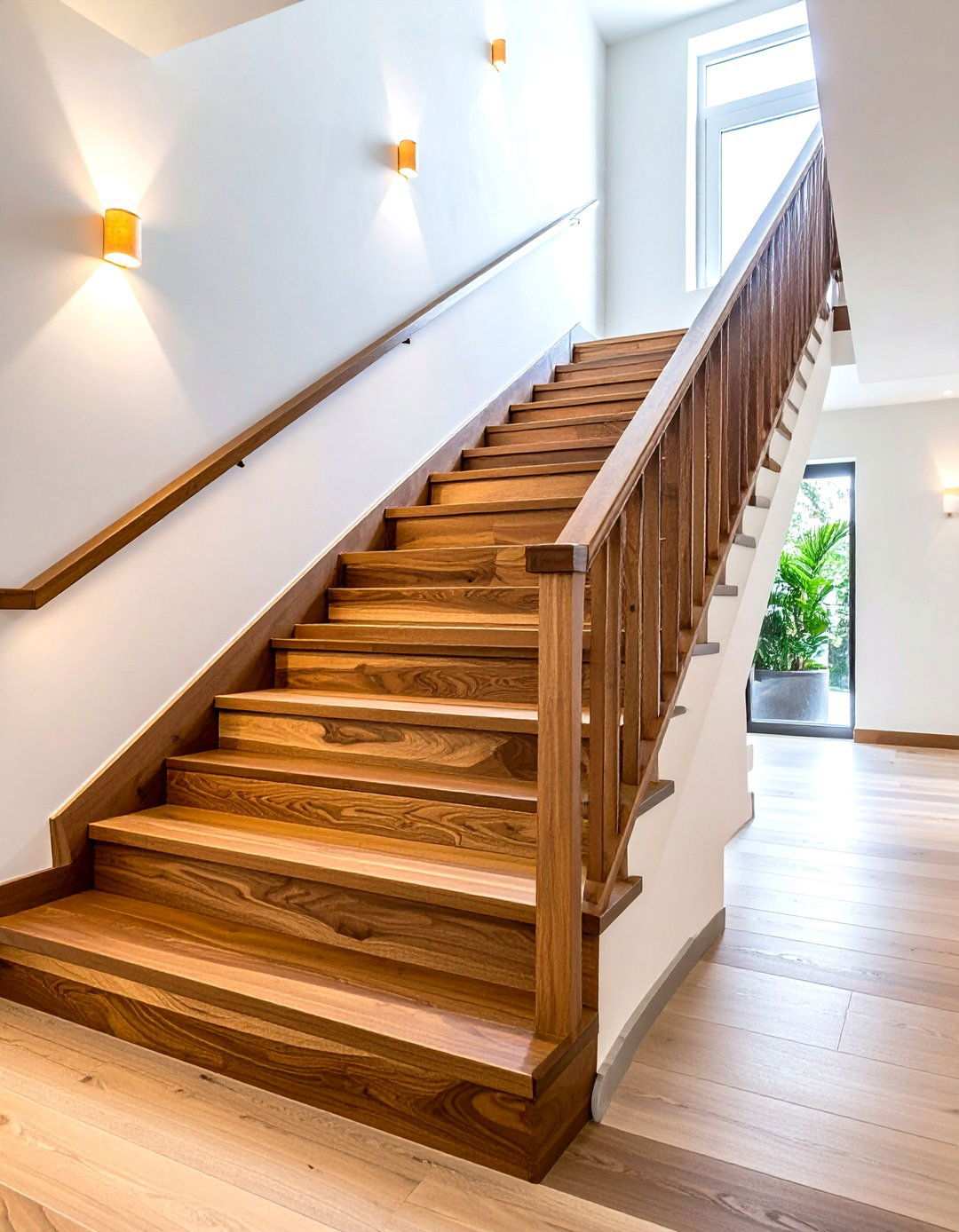
The art of combining different wood species or finish colors has long been a hallmark of two-tone wooden staircases, creating striking visual patterns that add depth to a space. This design approach allows homeowners to seamlessly integrate with existing flooring while introducing a touch of visual interest through strategic color placement. Careful consideration must be given to selecting species that possess compatible expansion characteristics and finishing requirements. By consulting with a professional designer, homeowners can strike a balance between contrast levels, avoiding overwhelming smaller spaces while creating a sufficient impact in larger environments. Installation requires precision and finesse, ensuring seamless transitions between different wood tones through matching and finishing techniques.
12. Elevating Interior Design with Live Edge Wooden Staircases
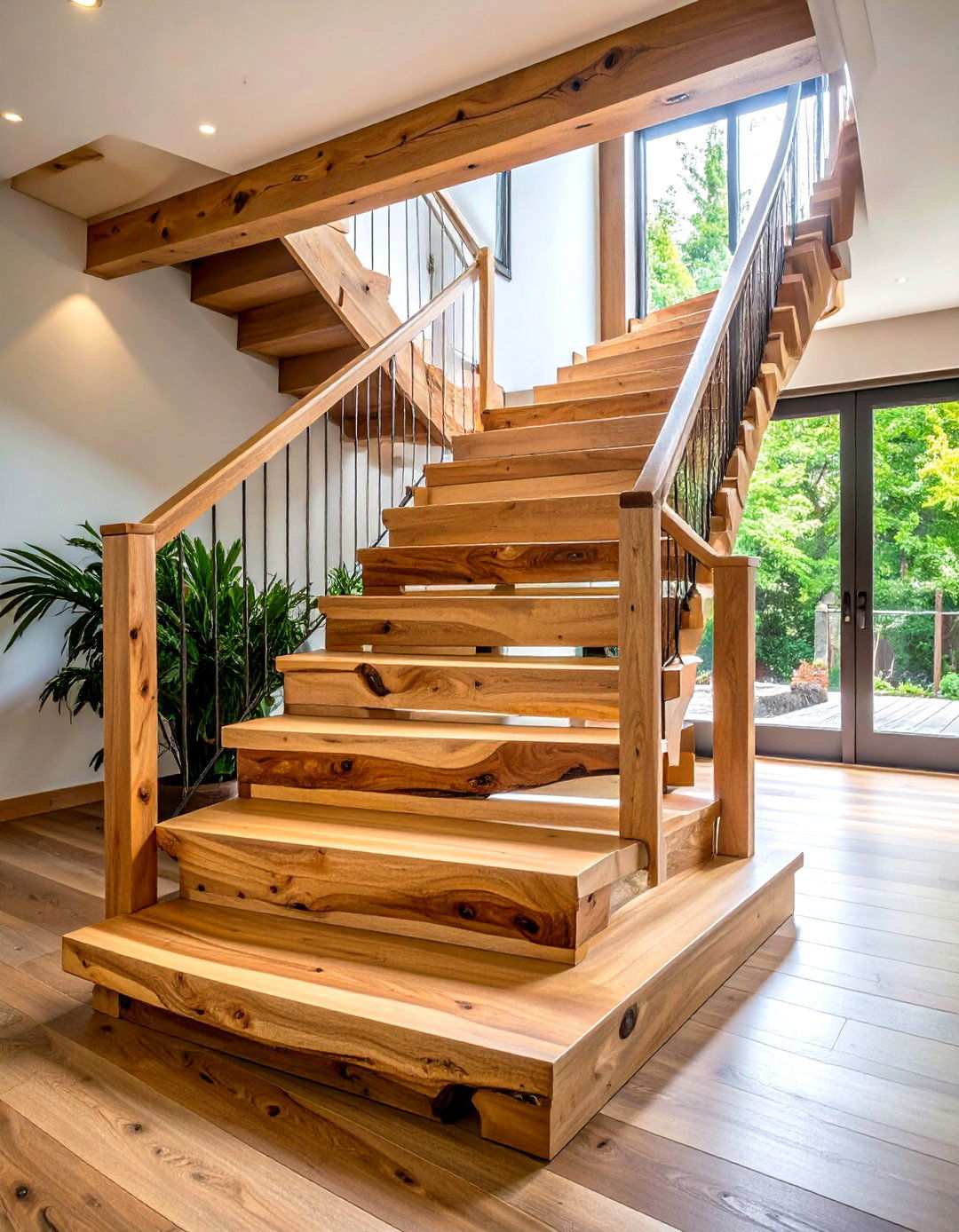
A beautiful way to infuse organic forest charm into your interior architecture is by incorporating live edge wooden staircases, which showcase the natural wood boundaries to create one-of-a-kind designs that celebrate the artistic capabilities of nature. Each tread boasts the tree’s original edge contours, including bark remnants and natural irregularities that add authentic character. By carefully selecting stable edge sections suitable for structural applications while maintaining aesthetic appeal, these staircases offer a unique touch to any room. The process involves professional preparation, including stabilizing treatments and protective finishes that preserve the natural beauty of the wood while ensuring long-term durability. These staircases seamlessly integrate into rustic, contemporary, and transitional design themes, and their installation requires specialized techniques to accommodate irregular shapes while maintaining safety standards and structural integrity throughout the staircase system.
13. Maximizing Space with Wooden Staircase Storage Integration
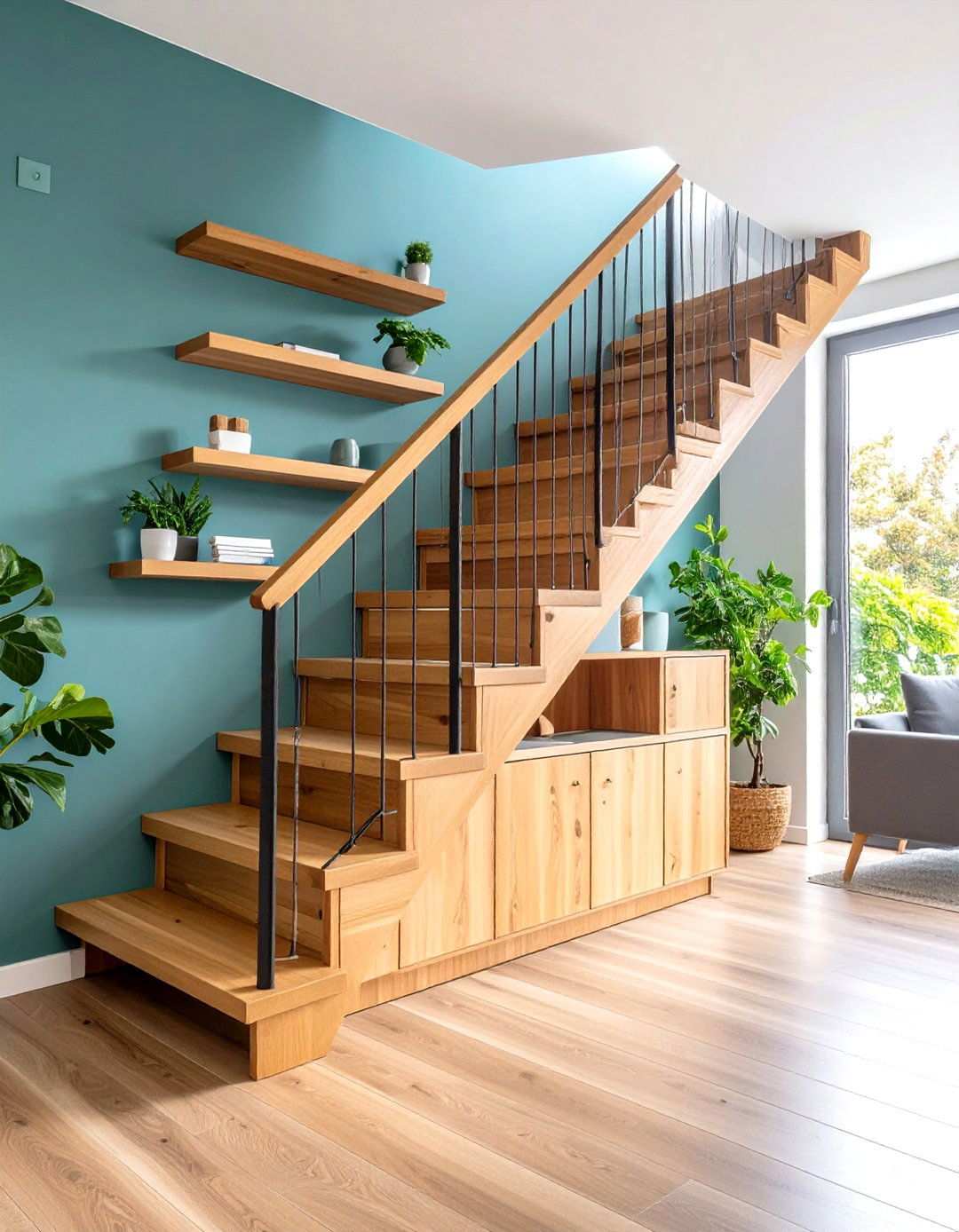
Why not turn your staircase into a double-duty solution for both circulation and storage needs? Wooden staircases with integrated storage offer a space-efficient solution through built-in drawers, cabinets, and shelving systems cleverly concealed within the staircase structure. Under-stair areas can be transformed into functional closets, home offices, or entertainment centers without compromising aesthetic appeal. Custom millwork allows for seamless transitions between staircase elements and storage components using matching wood species and finishes. A professional design consultation is essential to optimize storage layouts while maintaining structural integrity and building code compliance. These staircases are particularly popular in family homes, apartments, and commercial spaces where space efficiency is a top priority. Installation requires careful coordination between structural and storage components to ensure proper weight distribution and access functionality.
14. Choosing the Perfect Hardwood Staircase Species
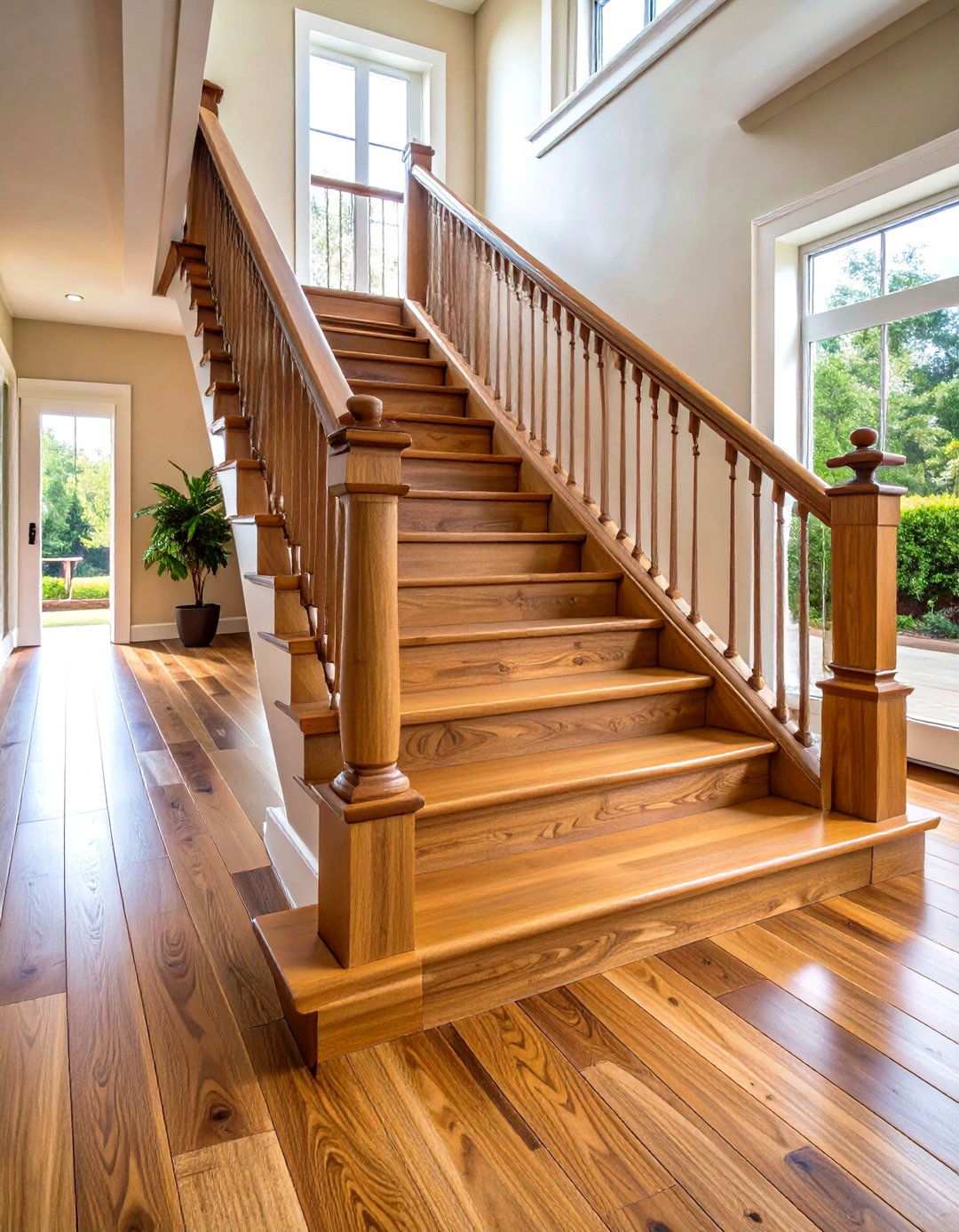
When selecting a hardwood staircase species, it’s essential to consider which wood will best complement your home’s design while providing lasting durability. Hardwood staircase construction typically features oak, maple, cherry, walnut, or mahogany, each offering distinct characteristics in grain pattern, color, and hardness ratings. Oak is an excellent choice for its durability and prominent grain patterns, which suit both traditional and contemporary designs. Maple, on the other hand, offers light coloring with subtle grain, making it perfect for minimalist aesthetics. Cherry develops a rich patina over time, creating warm and elegant appearances, while walnut features dramatic dark coloring with striking grain patterns ideal for sophisticated environments. Professional species selection takes into account traffic levels, maintenance preferences, and design goals. Installation techniques adapt to specific species characteristics to ensure optimal performance and appearance throughout the staircase’s lifetime.
15. Unifying Industrial and Organic Elements
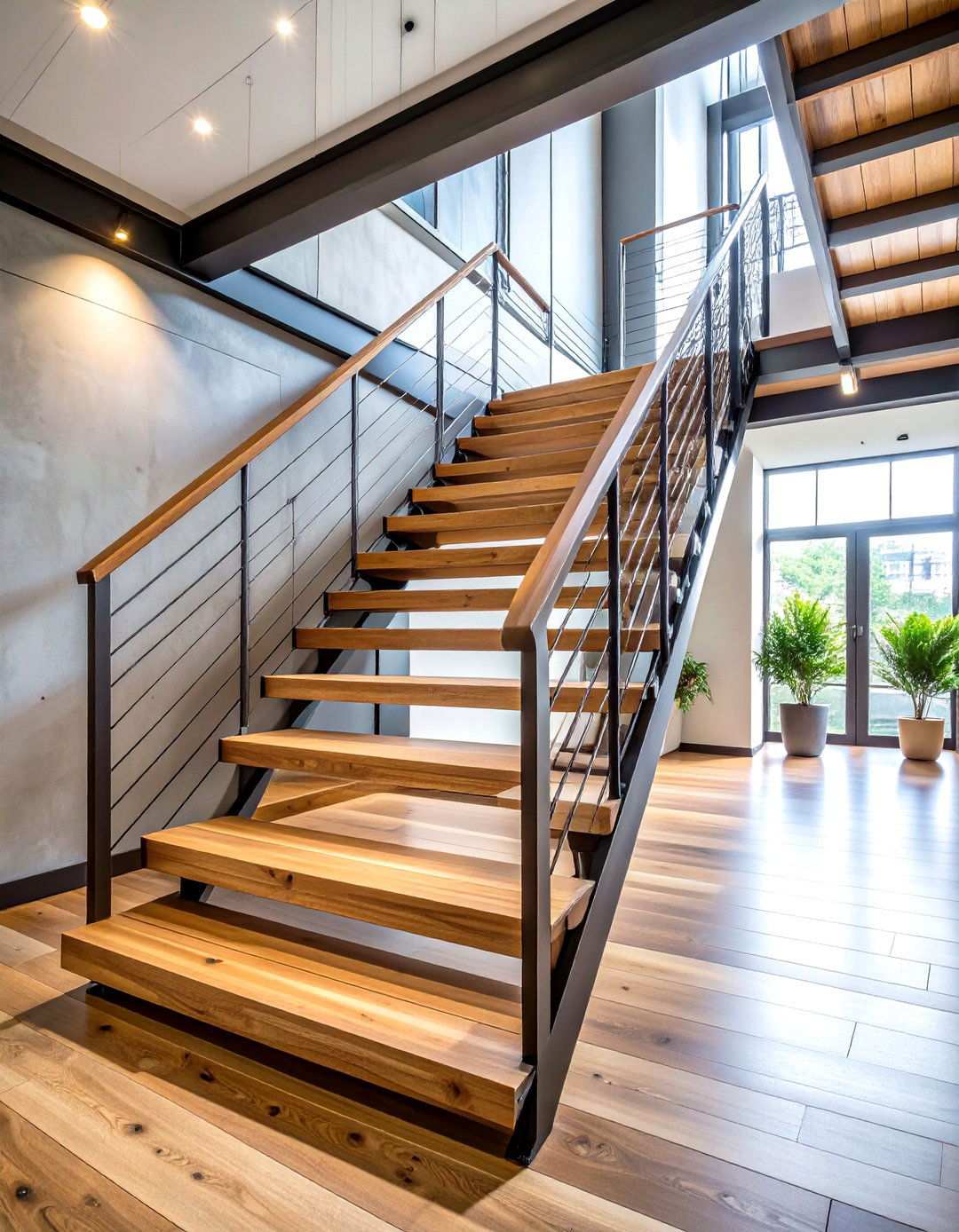
When combining metal and natural wood elements, striking effects can be achieved that showcase the beauty of contrasts. Wooden staircases with metal accents seamlessly integrate steel, iron, or aluminum components with timber elements, creating modern designs that balance industrial strength with organic warmth. Popular pairings include steel cable railings paired with wooden treads, or iron balusters supporting wooden handrails. By merging these materials, homeowners can express their creativity while maintaining the structural integrity and visual appeal of their staircase. Effective design coordination is essential to ensure compatible expansion characteristics and finishing requirements between different materials. Custom color options abound, including natural metal finishes, powder coating, or patina treatments that harmonize with wood staining choices. Successful installation requires specialized expertise in both woodworking and metalwork to achieve seamless integration and long-term performance.
16. Unlocking the Power of Painted Wood
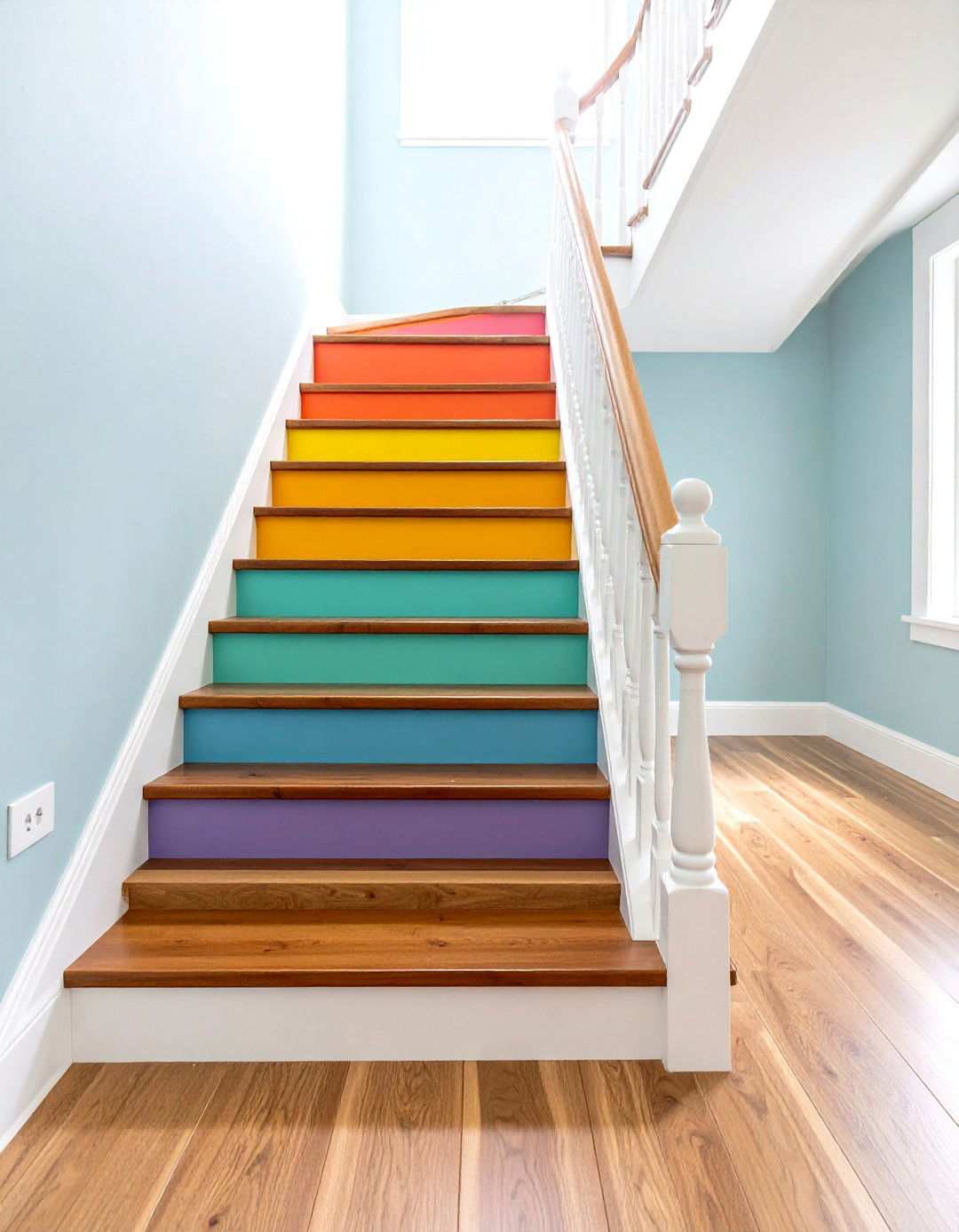
Paint can be a transformative force in turning traditional wooden staircases into bold design statements. Painted wooden staircases offer an almost endless palette of colors, allowing homeowners to preserve the structural benefits of wood while expressing their personal style through custom color schemes. Creative approaches include using crisp white treads with vibrant risers, or gradient color progressions that create a sense of movement. To ensure durability and longevity, proper surface preparation is crucial, including the use of specialized primers and multiple coating layers. Additionally, protective topcoats designed specifically for staircase applications provide peace of mind in high-traffic areas. By considering lighting conditions, surrounding décor, and maintenance requirements, homeowners can make informed color selections that perfectly complement their staircase’s design. This cost-effective alternative to replacing the entire staircase offers a dramatic aesthetic update that showcases personality.
17. Illuminating the Beauty of Wood
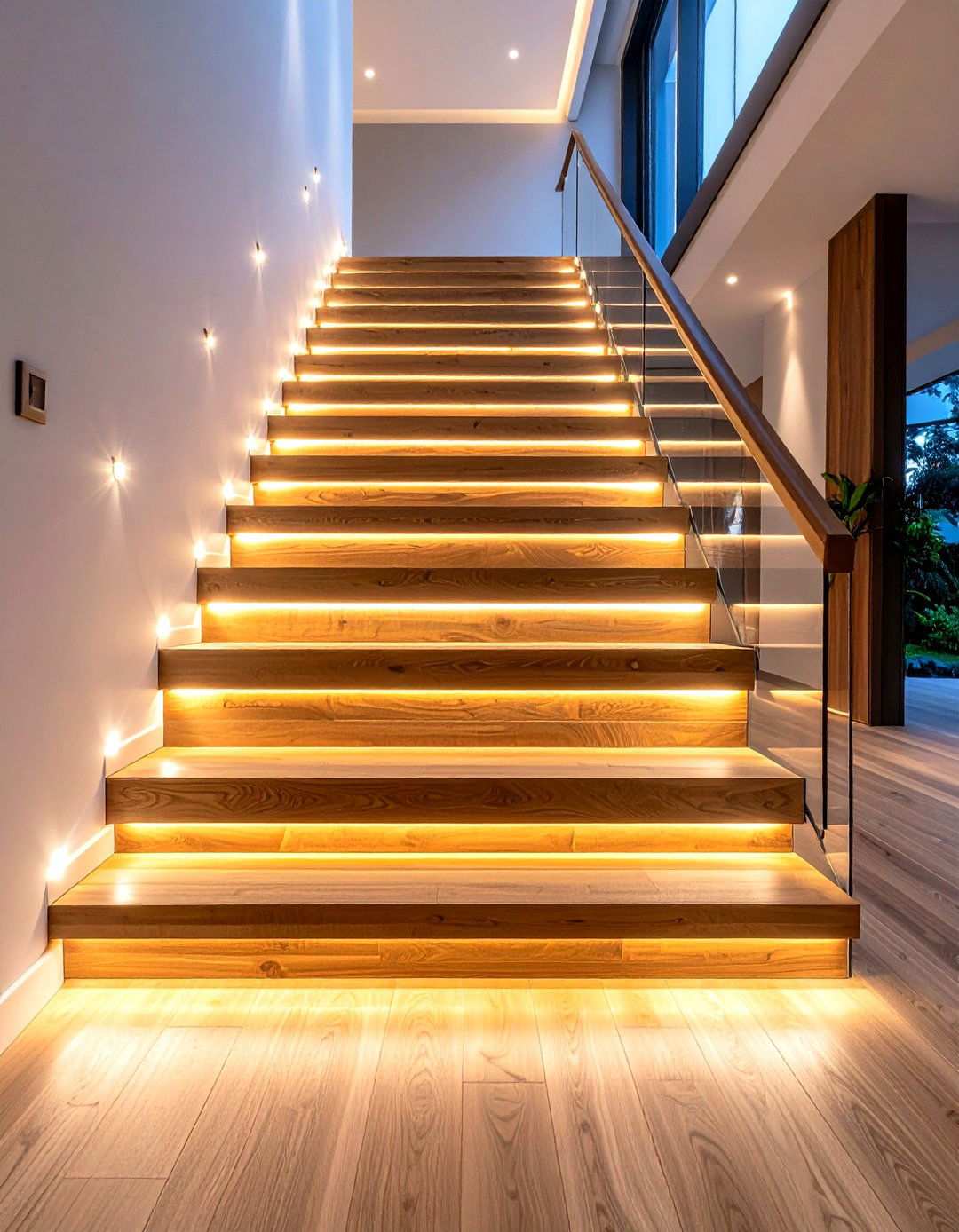
Integrating lighting into your wooden staircase can transform it into a breathtaking feature at night, while also enhancing safety. Wooden staircases with integrated lighting combine functional illumination with dramatic architectural effects through expertly placed LED systems. Popular applications include under-tread accent lighting, handrail-mounted strips, or recessed stair nosing installations. Modern LED technology offers energy efficiency, longevity, and color customization options that perfectly complement wood finishes. Professional electrical integration ensures code compliance while maintaining aesthetic goals through concealed wiring and seamless fixture installation. Furthermore, smart home compatibility allows for automated control and customization options that make the most of your staircase’s lighting system. By incorporating lighting into your staircase’s design, homeowners can create a safe and visually stunning feature that showcases the craftsmanship and beauty of their wooden staircase.
18. Maximizing Space with Compact Wooden Staircase Designs
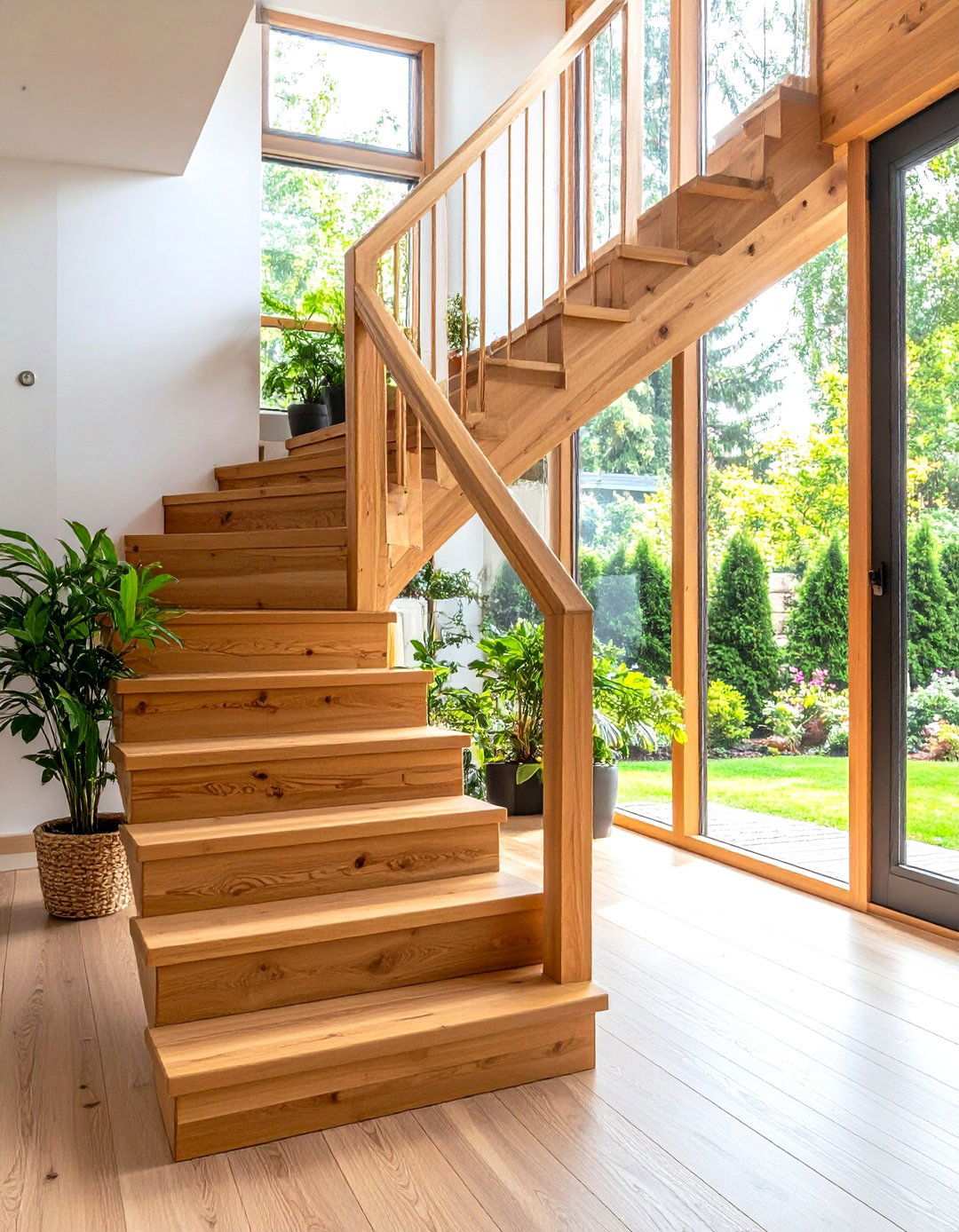
For homeowners confronted with limited space, a beautiful wooden staircase can be a daunting prospect. However, innovative compact wooden staircase designs have overcome this challenge by cleverly blending functionality and style within restricted floor areas. By combining creative engineering and space-efficient layouts, these designs minimize spatial requirements while upholding essential safety standards. By consulting with professionals, homeowners can optimize tread dimensions and riser heights to ensure comfortable navigation within the constraints of local building codes. Furthermore, space-saving features such as integrated storage, multi-functional landings, and creative railing solutions make compact wooden staircases ideal for various applications, including lofts, tiny homes, and urban dwellings where every inch of space counts. To achieve maximum functionality within minimal footprints, precise measurements and specialized construction techniques are essential during installation.
19. Elegant Union of Wooden Staircases and Carpet Runners
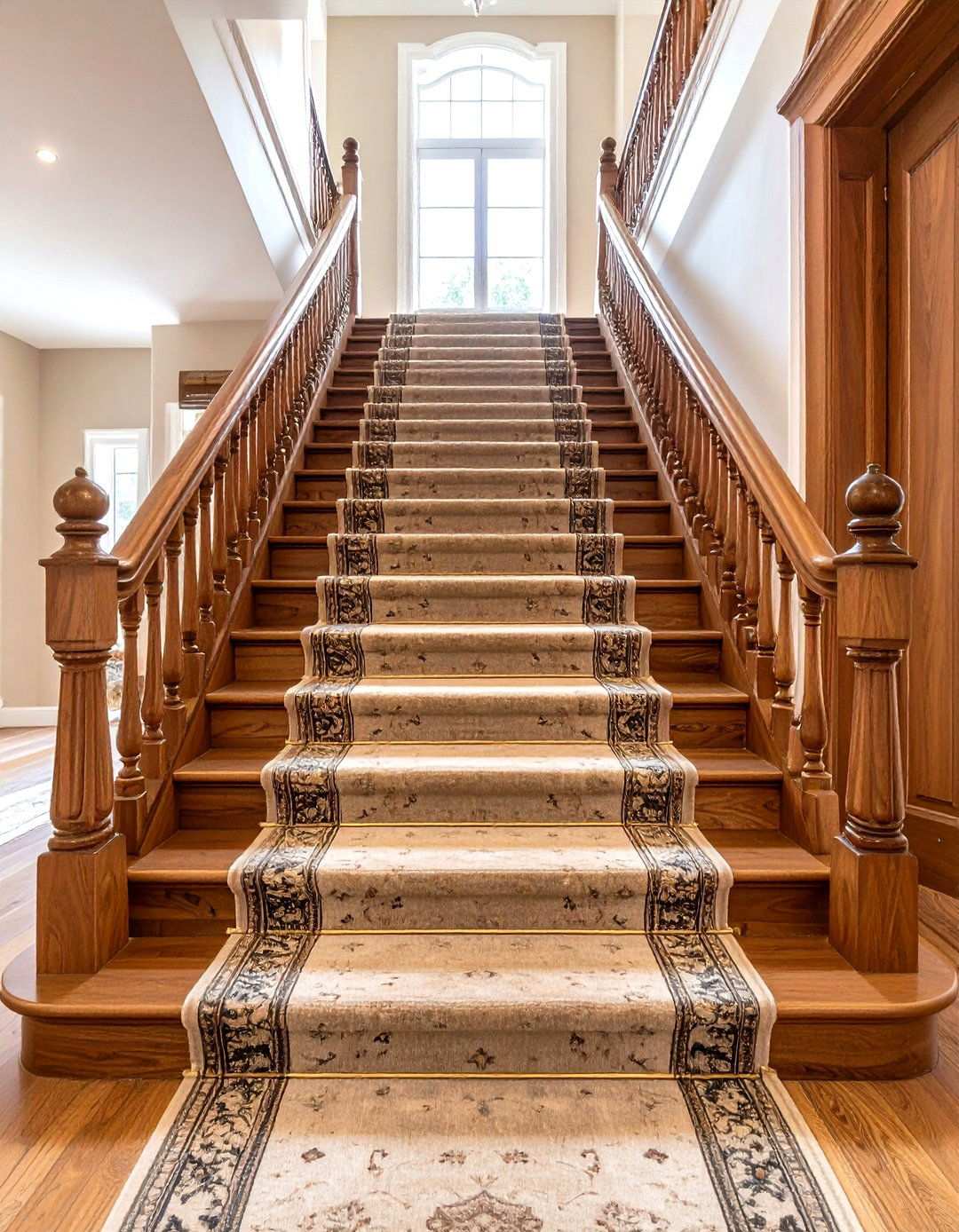
What timeless combination embodies both luxury and practicality in staircase design? Pairing wooden staircases with carpet runners has been a classic approach that showcases the natural beauty of wood while providing comfort, traction, and sound dampening. The exposed wood edges, complemented by centered fabric strips, create a visually appealing contrast that invites seasonal updates through the simple replacement of runners. This approach also preserves the underlying wood quality. By entrusting professional installation to experts, homeowners can benefit from specialized techniques, such as carpet rod installation, padding systems, and edge finishing. The choice of runner materials, including wool, natural fibers, and performance synthetics, is equally important for high-traffic applications. Pattern options range from traditional geometric designs to contemporary color blocks that seamlessly integrate with interior décor themes. To maintain the integrity of both carpet and wood components, regular maintenance involves professional cleaning and rotation to ensure even wear patterns.
20. Bringing Vision to Life with Custom Wooden Staircase Artistry
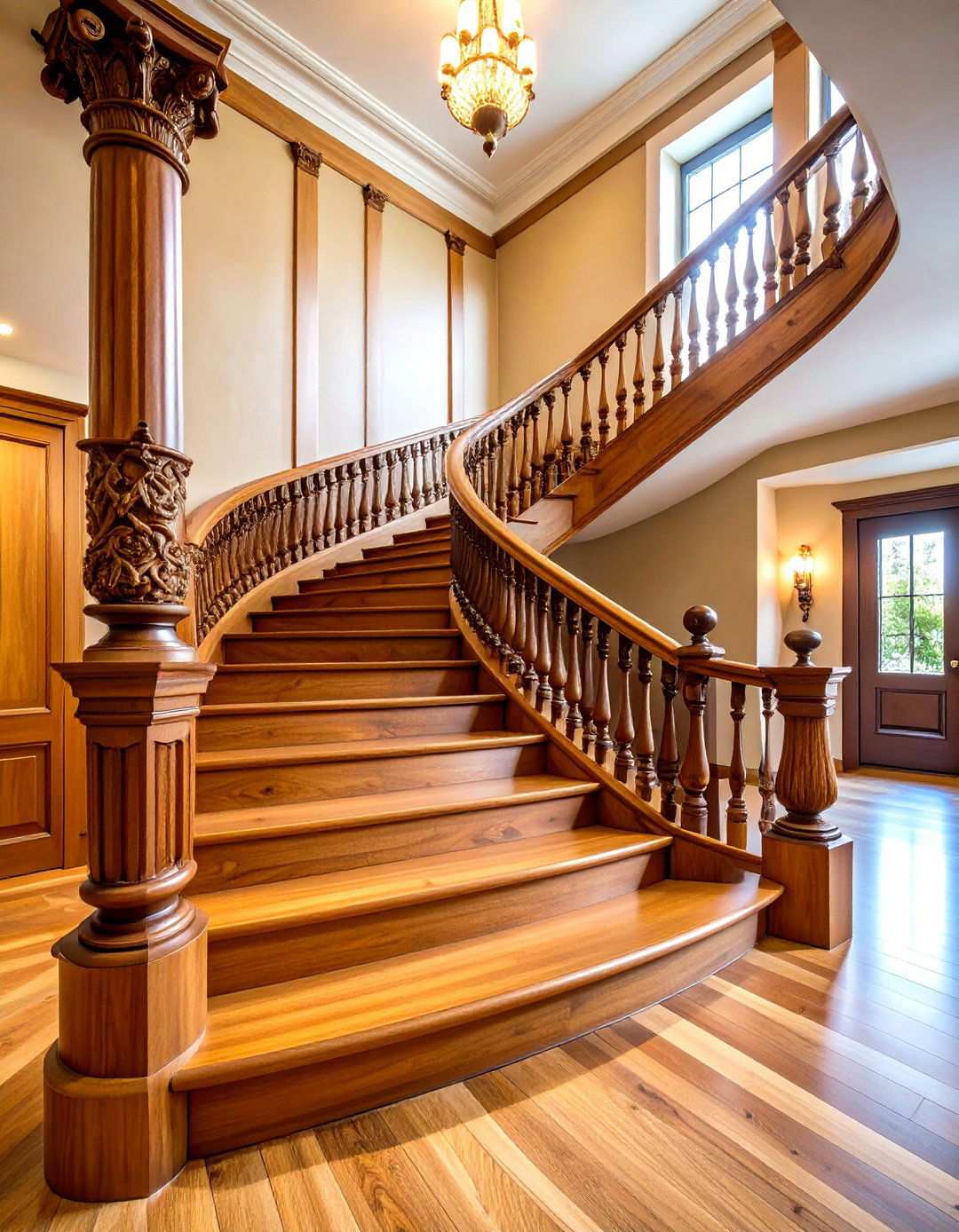
For those seeking a truly unique wooden staircase masterpiece, collaboration with master craftsmen is the key. By pushing the boundaries of artistry, custom wooden staircases can be designed to reflect individual style preferences through hand-carved details, unique joinery techniques, and personalized design elements. Skilled woodworkers can create bespoke components, including sculptural newel posts, artistic balusters, and decorative inlays that transform staircases into functional art installations. The use of premium materials, specialized techniques, and unlimited design possibilities ensures that each custom staircase is a one-of-a-kind creation. Through professional collaboration, homeowners can participate in design development, material selection, and construction coordination to bring their vision to life. These bespoke creations not only provide daily aesthetic enjoyment but also appreciate in value over time, becoming family heirlooms that stand the test of time. The installation of such intricate masterpieces requires master-level craftsmanship and meticulous attention to detail to ensure both structural integrity and artistic expression.
21. Crafting Sustainable Wooden Staircases
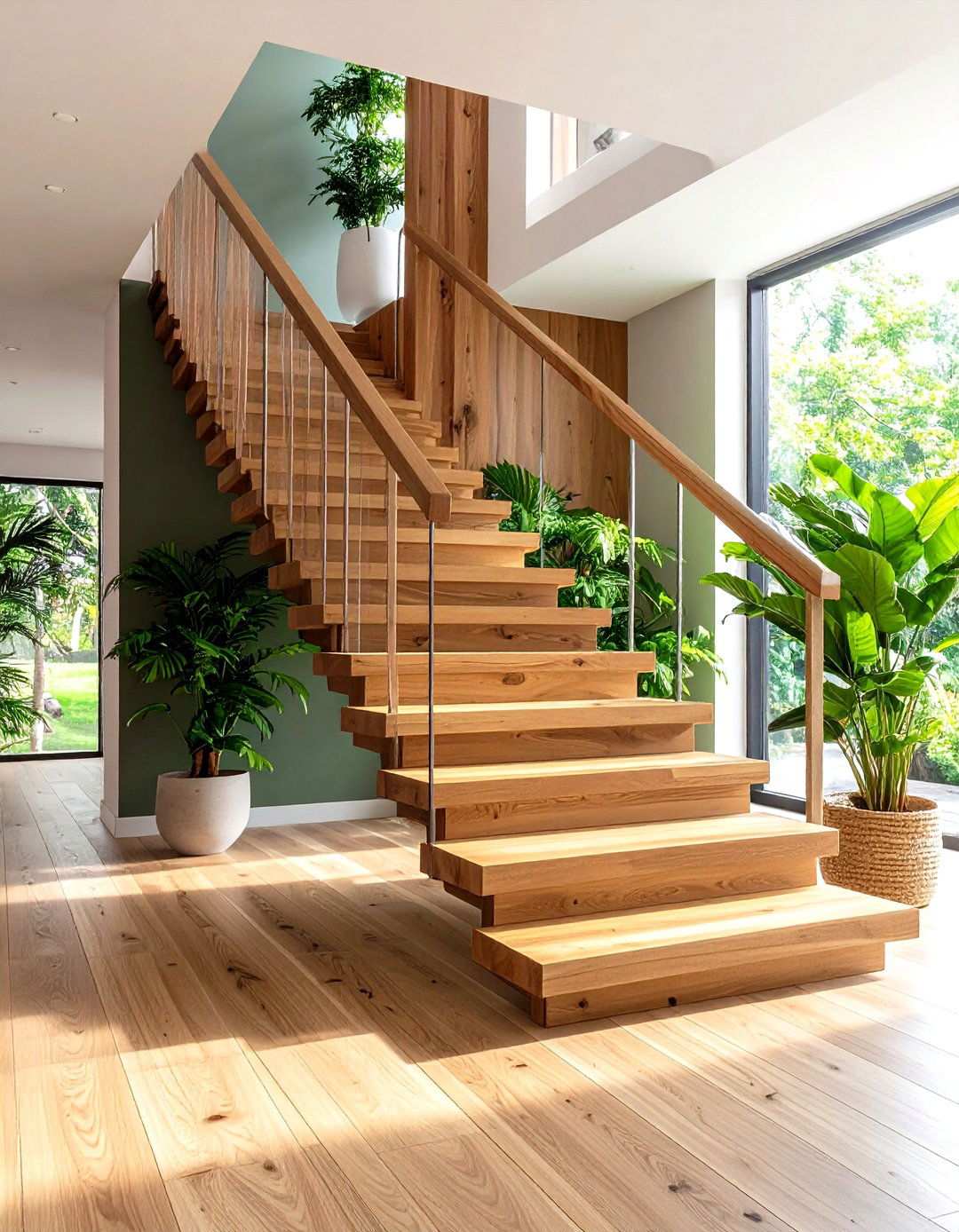
When it comes to choosing a staircase, why not opt for one that not only looks stunning but also contributes to environmental conservation? Sustainable wooden staircases showcase the beauty of certified materials sourced from responsibly managed forests, local species that minimize transportation impacts, and eco-friendly finishing products that reduce environmental footprints. FSC certification ensures that forest management practices protect biodiversity and community interests, while local hardwood species reduce carbon emissions and support regional economies. These native wood characteristics are a testament to the region’s rich history and heritage. Furthermore, low-VOC finishes not only improve indoor air quality but also provide the necessary protection and beauty enhancement. By consulting with professionals, you can identify sustainable options that meet your design goals without compromising environmental values. As a result, you’ll be creating a stunning architectural feature that performs exceptionally well for decades to come.
22. Enhancing Wooden Staircase Safety
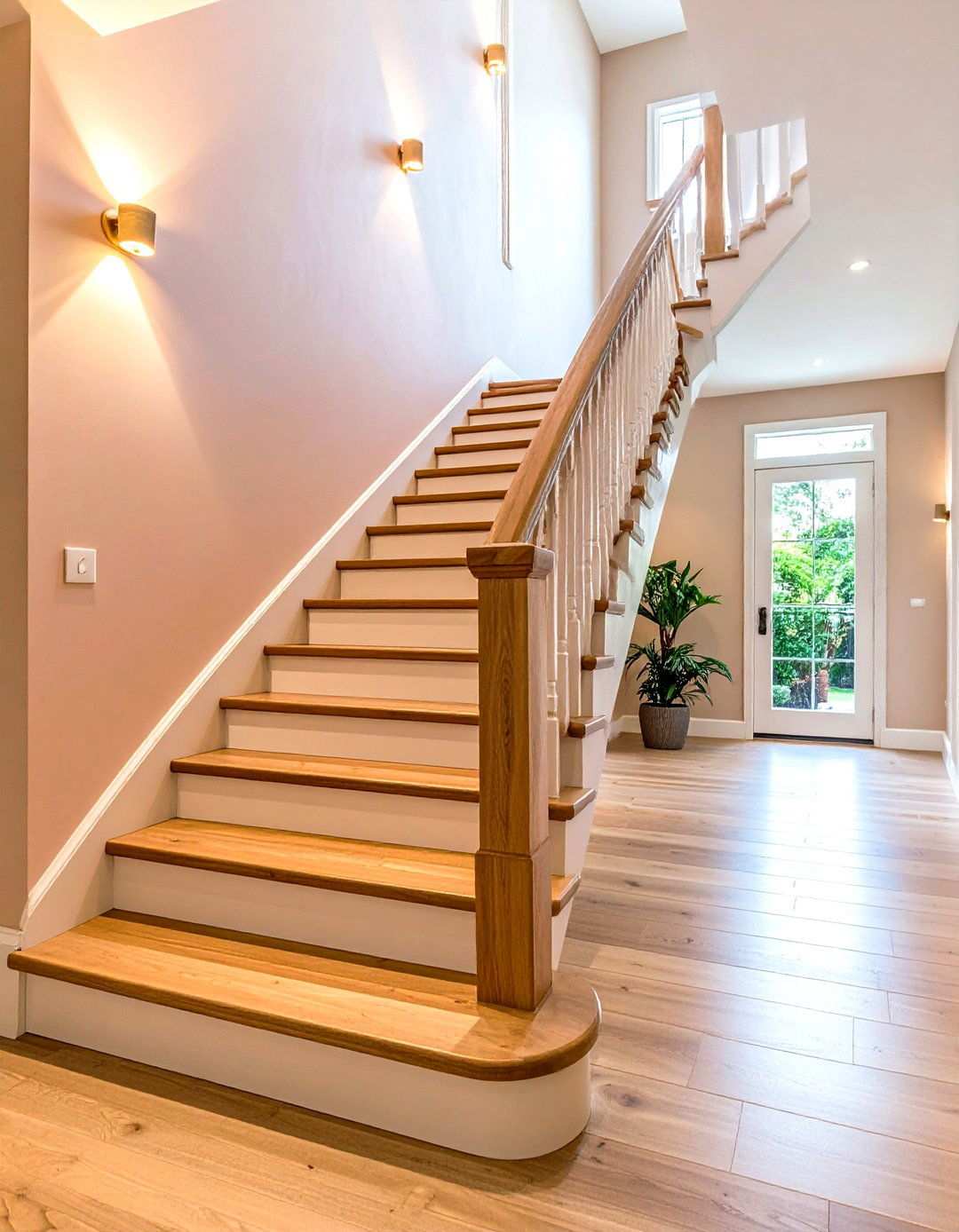
Aesthetics and safety often go hand in hand, but why sacrifice one for the other? Wooden staircases with integrated safety features seamlessly blend style and functionality. Anti-slip treatments, precise riser dimensions, adequate lighting, and compliant railing systems work together to protect users while maintaining an elegant appearance. Textured finishes and appropriate tread depths reduce the risk of accidents during normal use. By hiring a professional designer, you can ensure that the rise-run ratios promote comfortable navigation for users of all ages. The handrail height, grip dimensions, and support spacing meet building codes while harmonizing with your design theme. Additionally, emergency lighting systems and clear sight lines enhance safety during power outages or emergency situations. With strict safety protocols in place, you can rest assured that your staircase will be both beautiful and reliable.
23. Reviving Wooden Staircase Heritage
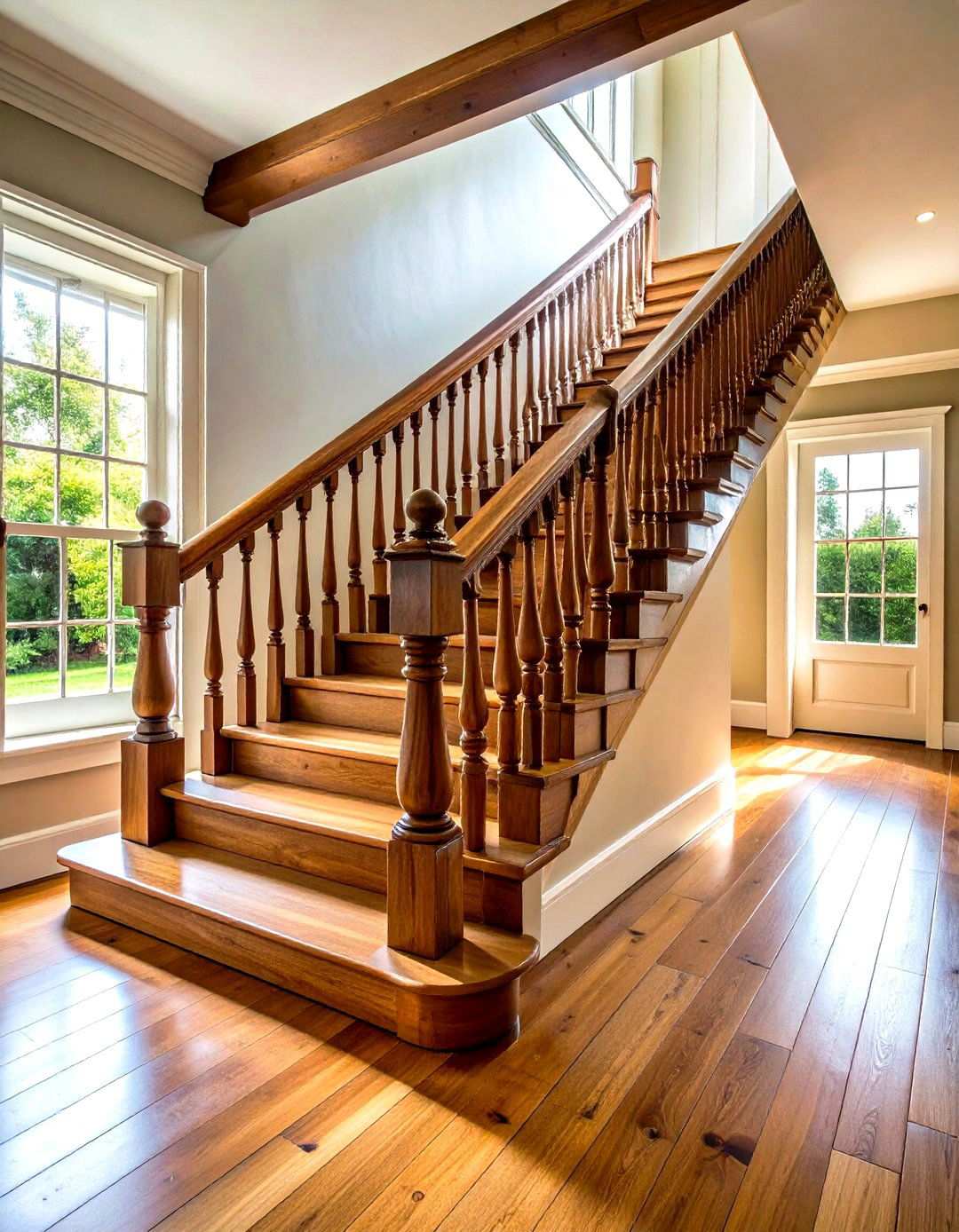
Aging wooden staircases can be a treasure trove of history and craftsmanship, but what if they could be restored to their former glory while incorporating modern safety and aesthetic improvements? Wooden staircase restoration is an art form that combines historical preservation with contemporary updates to create renewed architectural features that honor original craftsmanship while meeting current needs. A professional assessment identifies the structural conditions, wood species, and original construction techniques before developing a customized restoration plan. Careful dismantling, component repair, and selective replacement preserve the historical integrity while ensuring safety compliance. Period-appropriate finishes and hardware maintain authenticity, while modern reinforcement techniques enhance long-term durability. Successful restoration requires specialized expertise in historical construction methods and materials, but the end result is a stunning focal point that celebrates architectural heritage while providing decades of reliable service.
24. Elevating Wooden Staircase Design
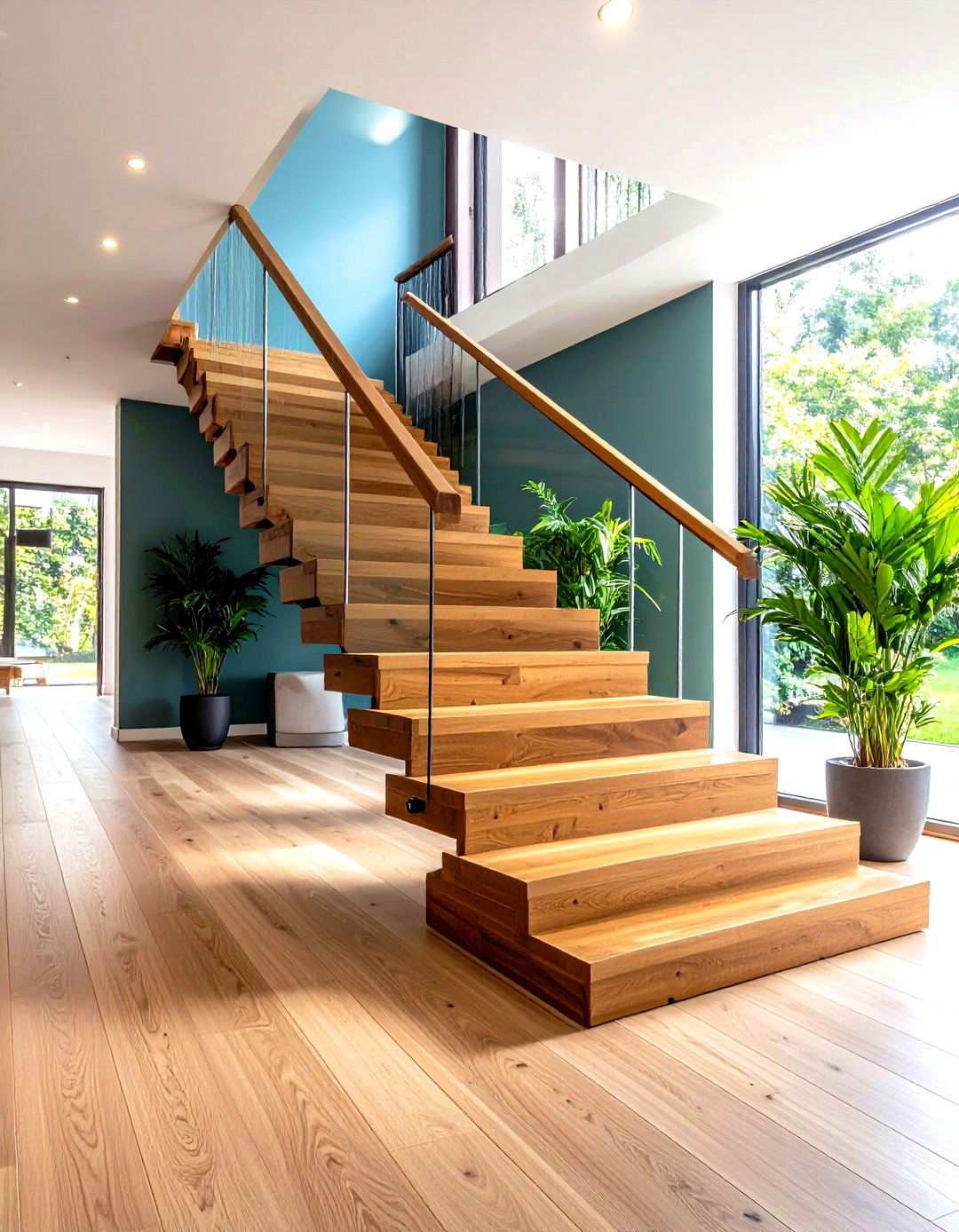
Groundbreaking innovations in wooden staircase construction are elevating design expectations to unprecedented heights. Forward-thinking architects and engineers are harnessing cutting-edge techniques to create breathtaking architectural statements that break free from traditional norms. By embracing advanced computer-aided design, complex geometries that were once unimaginable through conventional methods have become a reality. This has opened doors to novel forms and structures that seamlessly blend artistry with functionality.
Meanwhile, expert craftsmanship and precision joinery are playing a pivotal role in crafting smooth, cohesive connections that seem to defy conventional structural principles. The integration of smart home technology is also transforming wooden staircases into intelligent hubs, offering automated controls for lighting, climate, and security. The synergy between architects, engineers, and skilled artisans is yielding remarkable results that redefine the possibilities of wooden staircase design, while preserving the timeless beauty of natural wood.