1. Timeless Elegance of Wood Railings
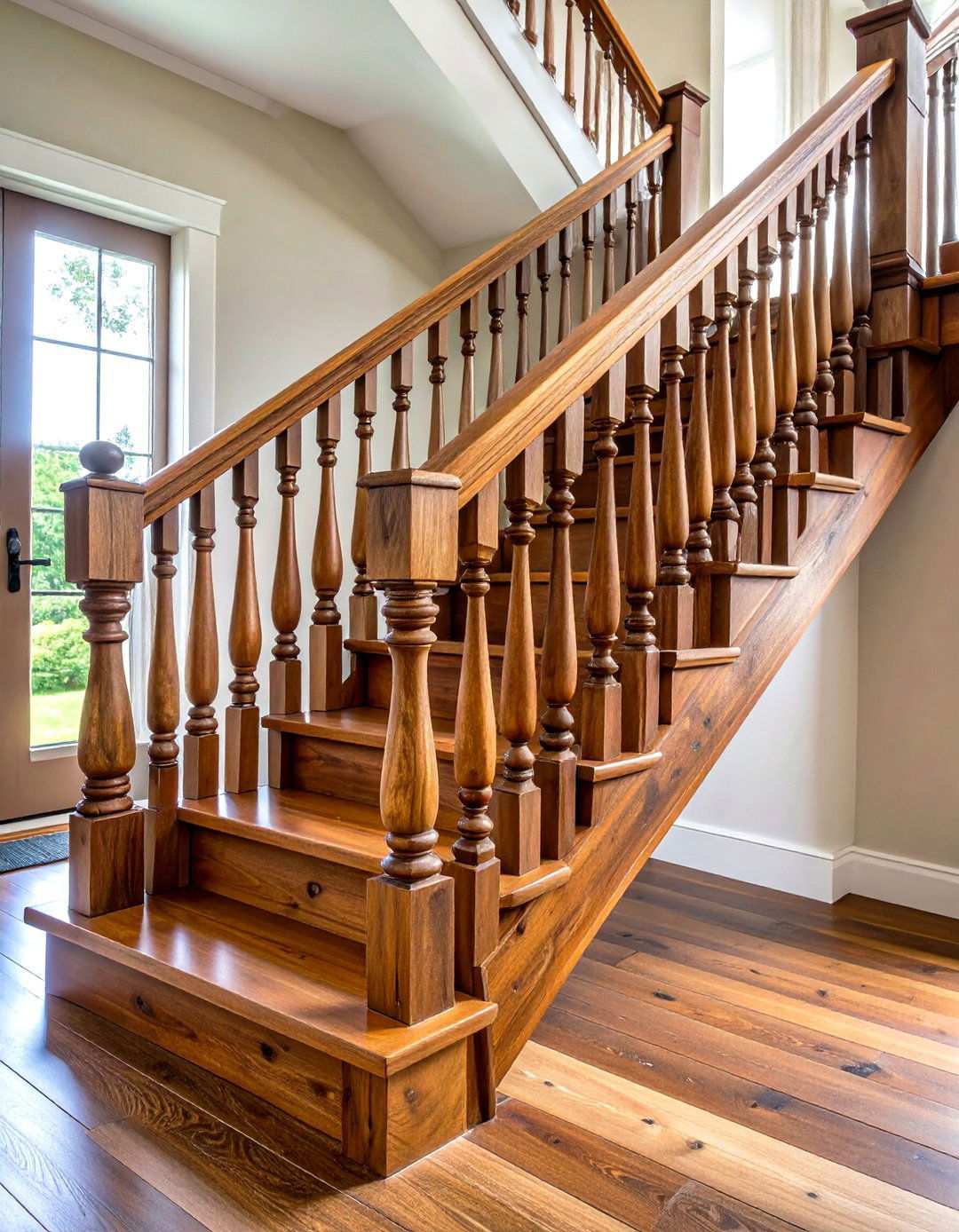
Wood stair railings possess a unique quality that allows them to seamlessly integrate with various architectural styles, elevating the aesthetic appeal of a home. Homeowners can now create railings that not only complement their existing décor but also add a touch of sophistication and warmth. With modern trends embracing innovative designs, wood railings have evolved to incorporate cutting-edge features like cable systems, LED lighting, and creative storage solutions. This versatility enables homeowners to craft railings that not only enhance their home’s value but also provide safe and beautiful pathways between floors.

As an Amazon Associate I earn from qualifying purchases.
2. Embracing Rustic Charm in Wood Railings
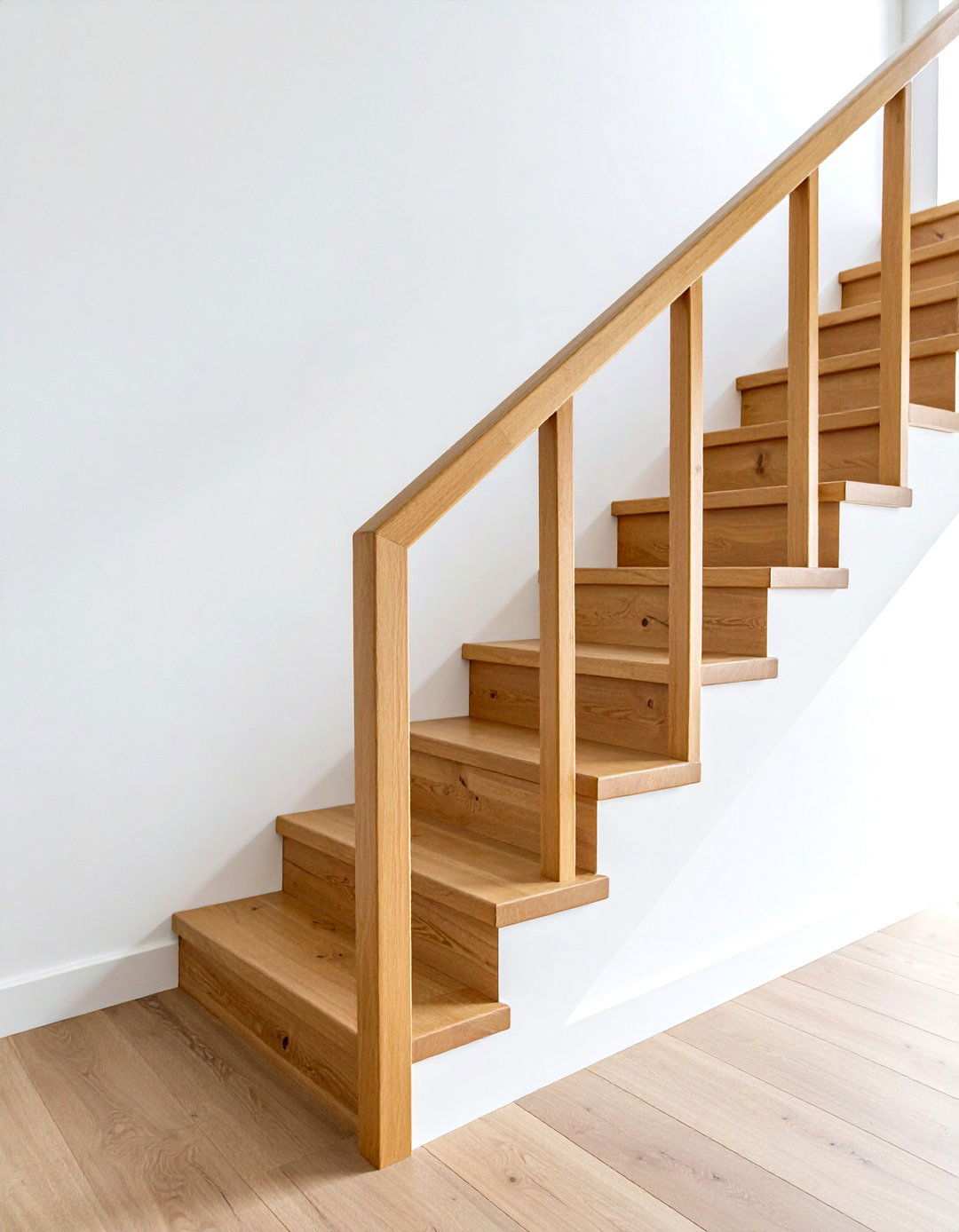
For a cozy, countryside-inspired ambiance, consider rustic farmhouse wood railings that celebrate the beauty of natural materials and timeless charm. These designs typically feature reclaimed or distressed wood with visible grain patterns, weathered finishes, and substantial proportions that evoke an authentic, lived-in appearance. Popular wood choices include pine, oak, and cedar, often left unfinished or treated with natural stains that accentuate the wood’s organic character. The combination of chunky handrails and simple vertical balusters creates a welcoming atmosphere that perfectly complements shiplap walls, vintage hardware, and neutral color palettes, making it an ideal choice for country homes, cabins, or any space seeking unpretentious elegance.
3. Modern Minimalist Wood Handrails
Can simplicity be a powerful design element in stair design? Modern minimalist wood railings prove that clean lines and understated elegance can create a lasting impression. These sleek handrails feature smooth, rectangular profiles with minimal ornamentation, producing horizontal lines that emphasize contemporary architecture. Light woods like maple or birch are often chosen for their subtle grain patterns, while darker species like walnut provide striking contrast against white walls. The use of glass panels or horizontal cables instead of traditional balusters maintains the clean aesthetic, creating open, airy environments that feel spacious and sophisticated, ideal for urban lofts and modern homes.
Cable Wood Hybrid Systems
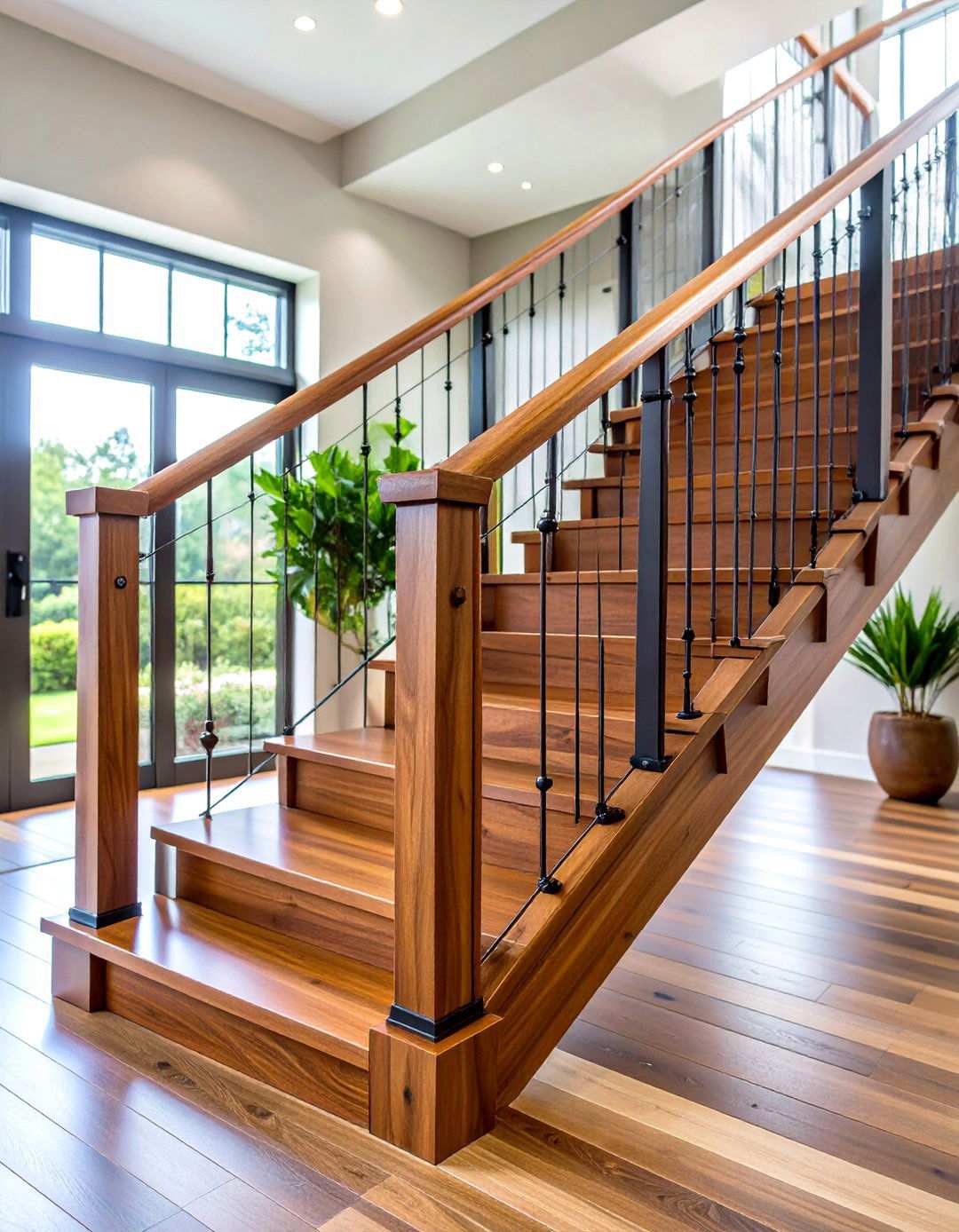
Sleek, modern cable systems paired with the timeless warmth of wood create visually striking railings that provide unimpeded views and a touch of architectural flair. At the heart of these designs are solid wood handrails, often crafted from rich, hardwood species, which are supported by slender metal posts and anchored by horizontal stainless steel cables. As the wood and metal components come together, they create a harmonious balance of textures and contrasting aesthetics. This synergy proves particularly effective in open-concept homes where maintaining clear sightlines between levels is crucial. By combining the organic feel of wood with the sleek lines of cable systems, designers can craft railings that not only serve a functional purpose but also add visual interest to the space.
4. Live Edge Wood Railings
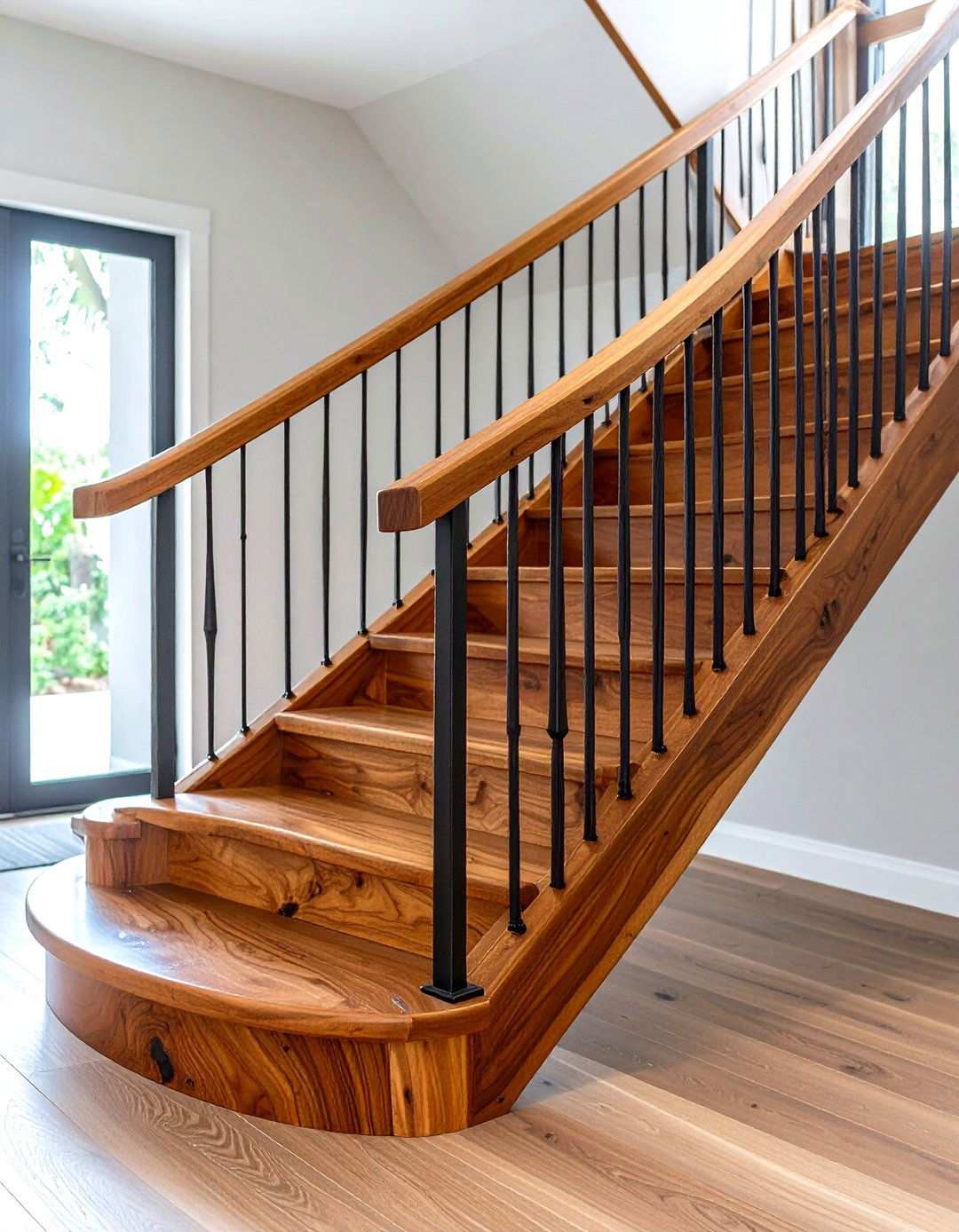
Live edge wood railings offer a unique way to bring the outdoors into the home by showcasing each timber’s distinct character and natural boundaries. These one-of-a-kind handrails feature organic curves and flowing lines that tell a story of the tree’s history, while distinctive grain patterns, knots, and edge formations add an element of intrigue. Popular choices for live edge railings include walnut, cherry, and elm slabs, which are carefully selected for their dramatic edge profiles and structural integrity. When paired with industrial metal supports or floating stair designs, live edge railings create striking focal points that celebrate craftsmanship and natural beauty. This union of contrasting materials and textures not only adds character to contemporary spaces but also serves as a testament to the beauty of nature.
5. Traditional Turned Balusters
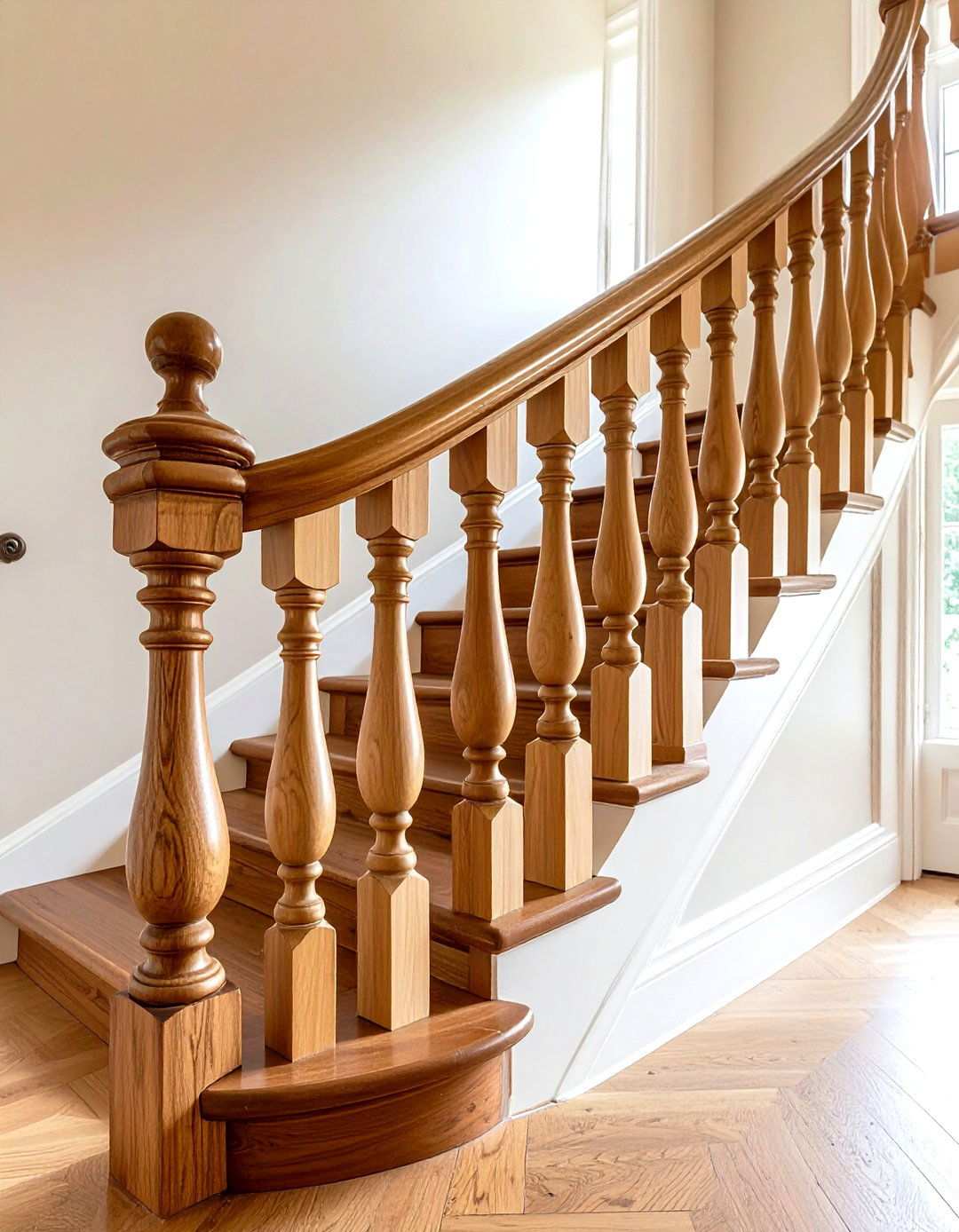
The timeless appeal of traditional wood railings lies in their ability to transcend generations, evoking a sense of nostalgia and warmth. Classic turned balusters, with their hand-crafted or machine-turned spindles, have been a cornerstone of woodworking tradition for centuries. These elegant profiles, often featuring intricate details like bulbous centers, tapered ends, and decorative curves, demonstrate the skill and craftsmanship that goes into creating each piece. Oak, cherry, and mahogany are popular species for their durability and rich grain patterns, which accept stains beautifully. The substantial wooden handrails provide secure gripping surfaces, while the closely spaced balusters ensure safety compliance. This traditional style complements a range of architectural styles, from colonial to Victorian, and remains a proven choice for homeowners seeking elegance and functionality.
6. Harmonious Horizontal Lines
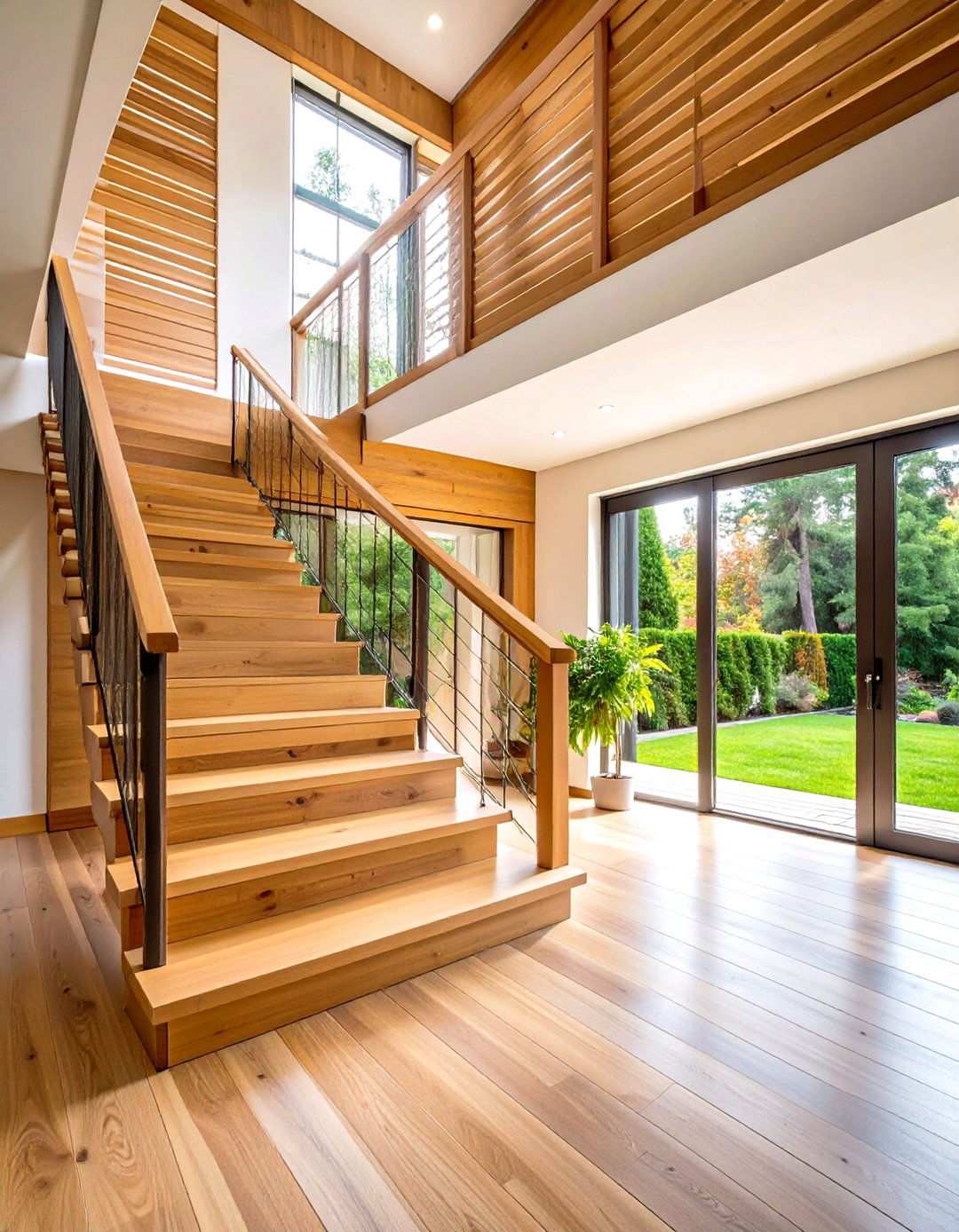
Timeless horizontal slat railings bring a sense of balance and visual equilibrium to modern staircases, courtesy of carefully spaced wooden elements that create intricate shadow patterns. These designs feature horizontal boards or slats mounted between posts, resulting in clean lines that emphasize width over height. The varied spacing between slats allows for different aesthetic effects while still meeting safety requirements. Suitable woods for these applications include cedar, pine, or composite materials, often finished in natural tones or painted to match surrounding decor. As a result, these railings can create a sense of expansive space, perfect for smaller homes seeking visual enhancement.
7. Weightless Wood Handrails
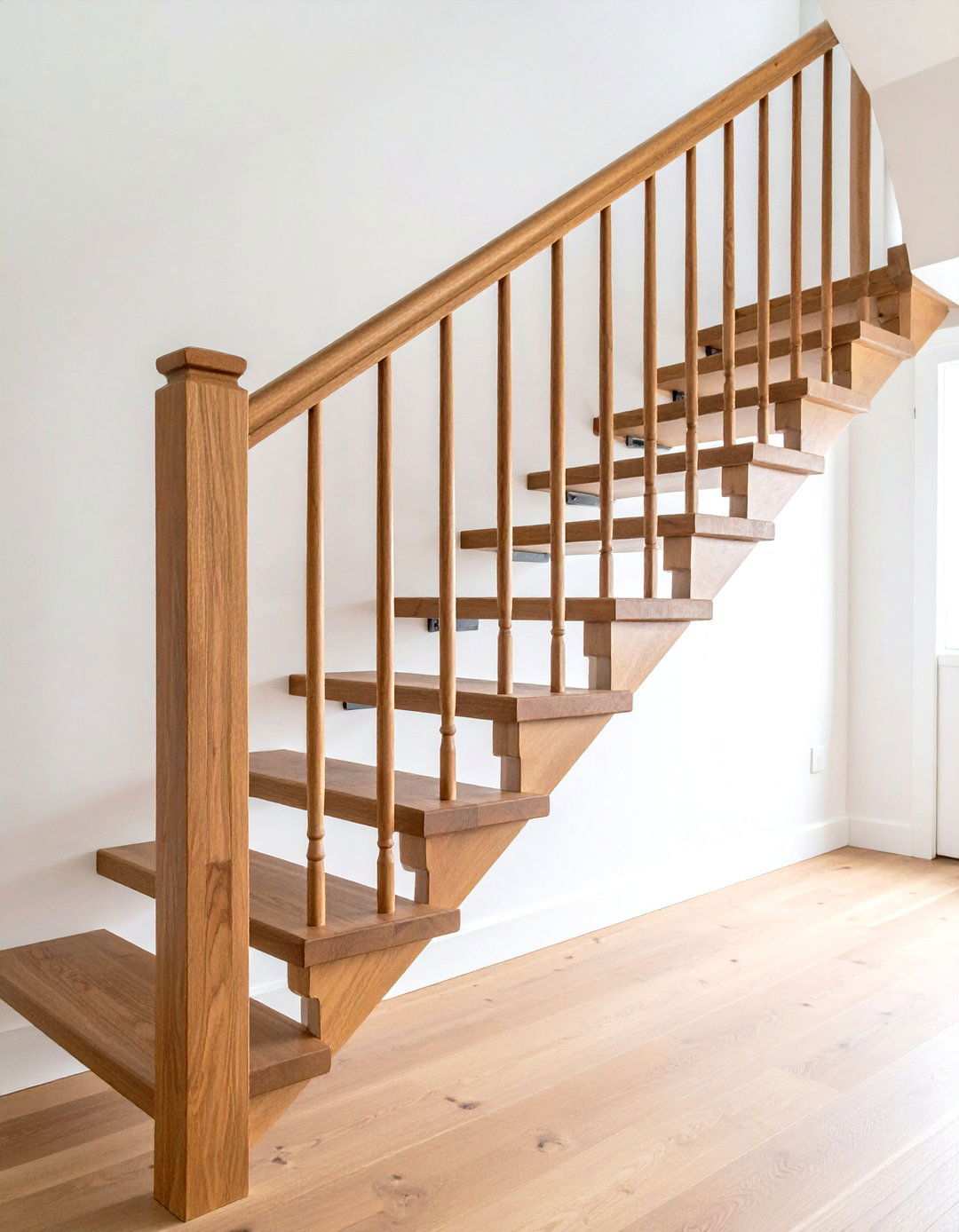
Architectural innovation is within reach with floating wood handrails that appear to defy gravity by floating along stairway walls without visible support brackets. These minimalist designs utilize hidden mounting systems and precise engineering to create the illusion of handrails suspended in mid-air. Crafted from high-quality hardwoods like maple, walnut, or cherry, these sleek profiles can support structural loads while maintaining their aesthetic appeal. This approach works particularly well with floating staircases or contemporary designs where minimal visual interruption is desired. The clean lines and lack of traditional posts create unobstructed views while providing the necessary safety support. Proper installation ensures the structural integrity of these railings while achieving the desired floating effect.
8. Dynamic Material Pairings
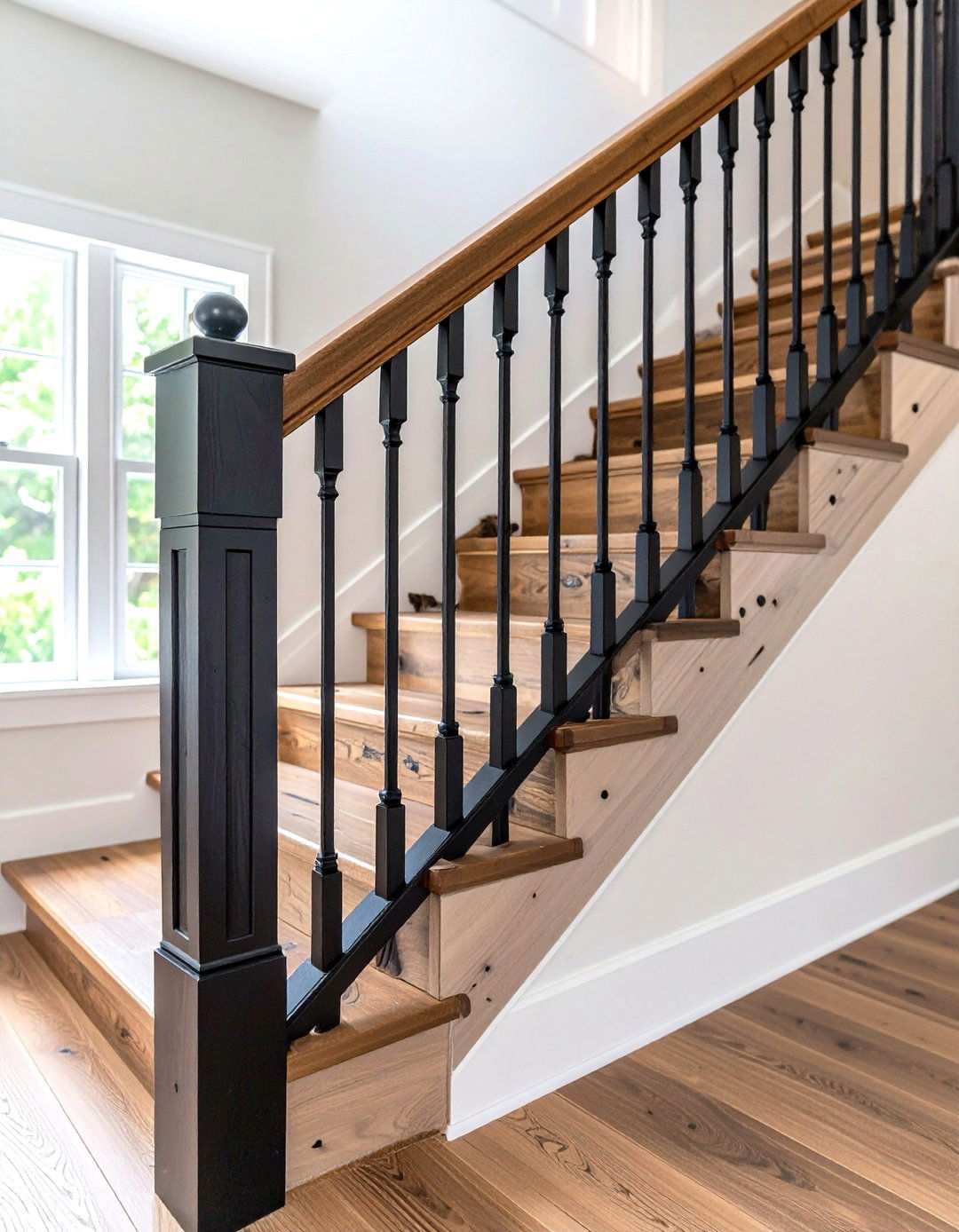
Why settle for a single material when combining wood and metal unlocks a world of dynamic design possibilities? These hybrid railings feature wooden handrails paired with metal posts, spindles, or decorative elements that add industrial strength and modern appeal. Popular combinations include dark hardwood handrails with black steel posts, or light woods with brushed aluminum accents. The metal components provide structural support and modern aesthetics, while wood adds warmth and tactile comfort. These designs excel in transitional spaces that bridge traditional and contemporary styles. The contrast between materials creates visual interest while offering practical benefits like durability and low maintenance requirements for the metal elements.
9. Elevating Elegance: Box Newel Posts
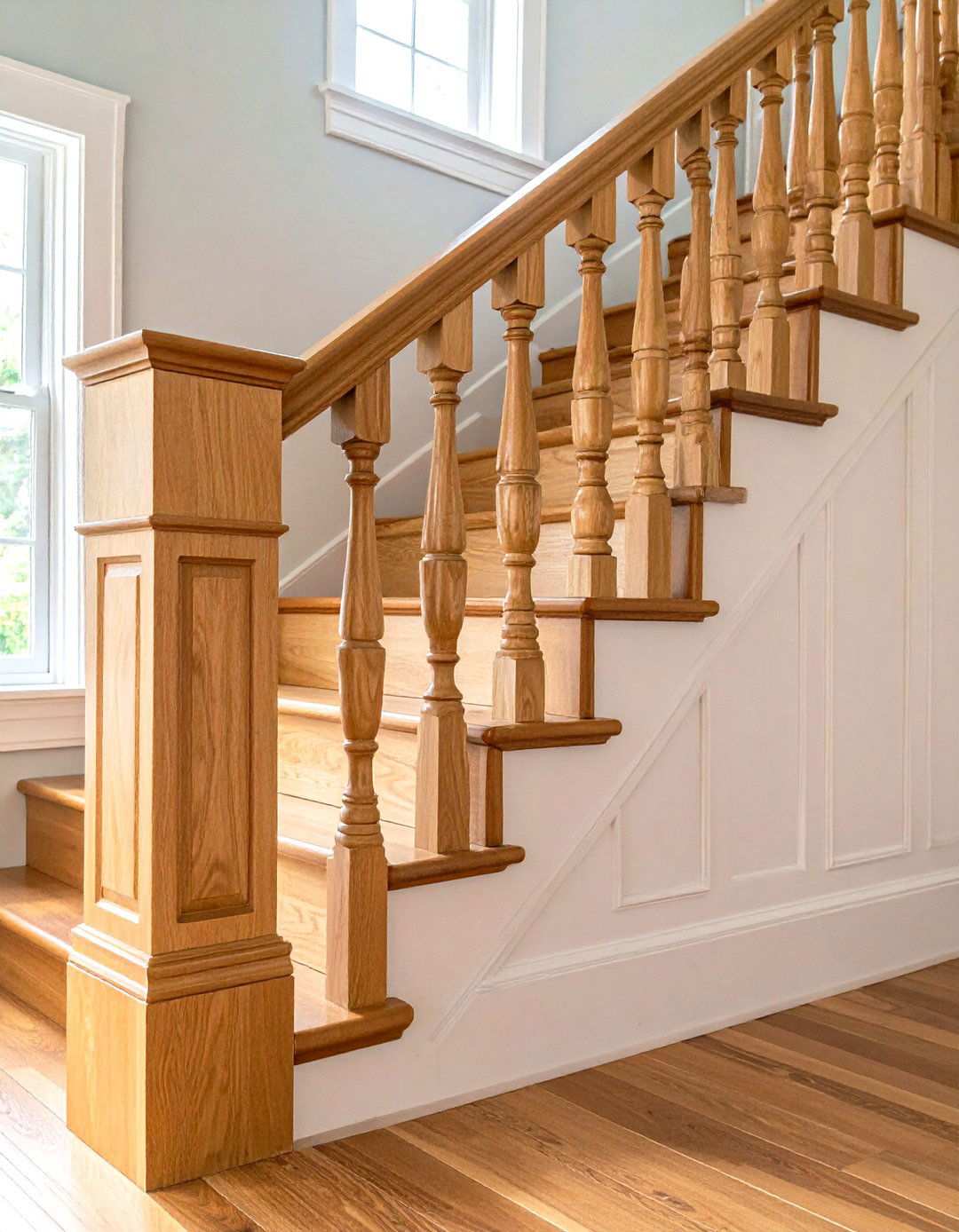
A well-crafted box newel post can be the crowning glory of a traditional or transitional stairway design, commanding attention with its substantial presence and classical proportions. Typically constructed from solid hardwoods or engineered lumber with hardwood veneers, these large, square wooden posts anchor railing systems with impressive scale and create a sense of gravity. Whether plain or adorned with panels, caps, and decorative moldings, box newels provide excellent structural support for handrails and serve as natural termination points for railing runs. In larger homes with grand staircases, this style excels in creating a sense of proportion that is hard to replicate. Furthermore, the substantial nature of box newels allows for creative customization through paint, stain, or architectural details that perfectly match surrounding millwork.
10. Curved Wood Railing Systems: Artistic Expression
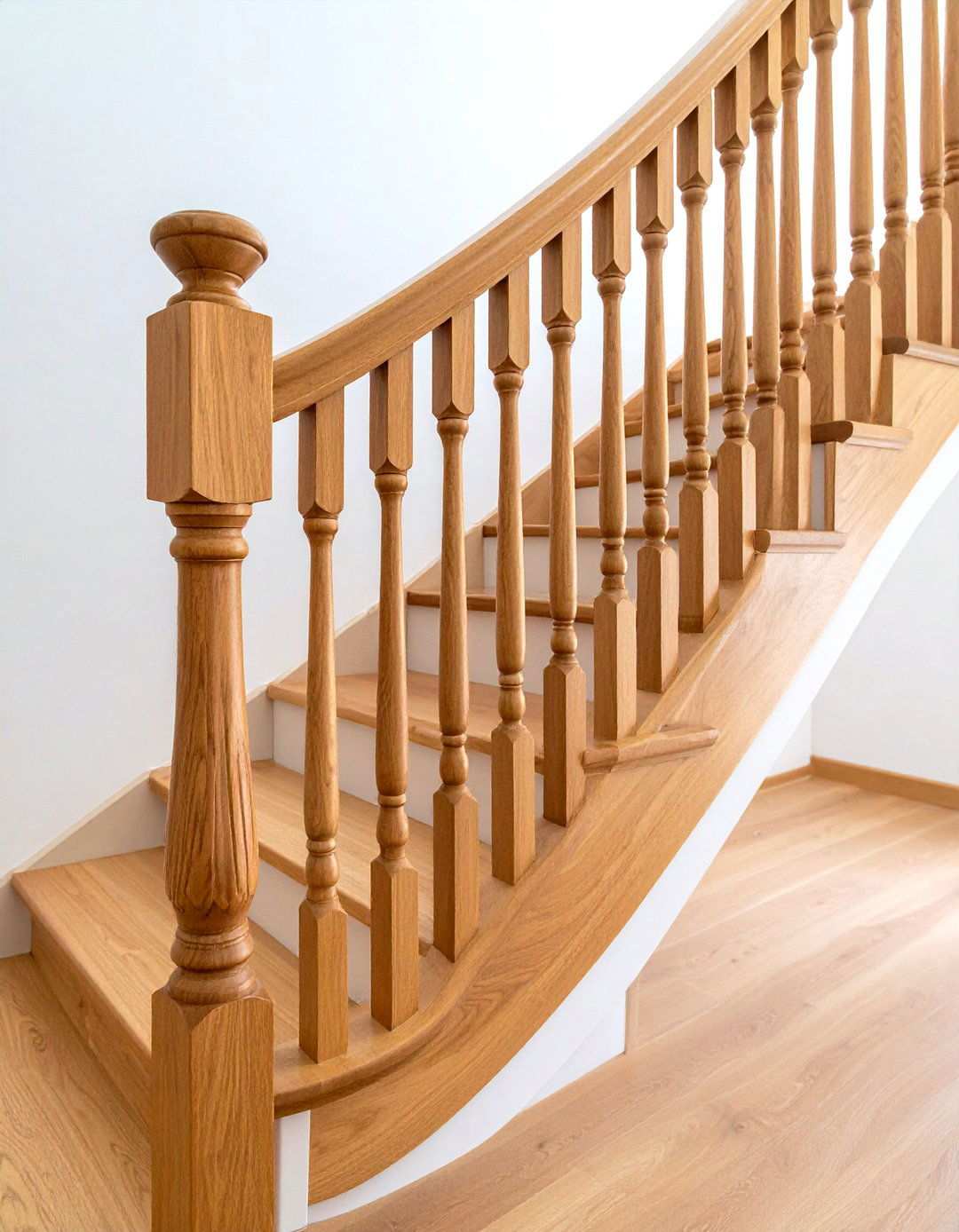
Curved wood railings have a way of elevating even the most ordinary staircases into architectural features that guide movement with fluid, organic lines. These sophisticated designs demand expert craftsmanship to bend or laminate wood into smooth curves that harmonize with stairway geometry. Techniques such as steam bending, lamination, or segmented construction come into play to create seamless curves in hardwoods like oak, maple, or cherry. The continuous handrail provides a sense of comfort and security, while the curved profile adds a touch of elegance and sophistication to interior spaces. This approach is particularly well-suited for spiral or curved staircases, where every element flows together in perfect harmony. Professional installation ensures that the curve radius and structural integrity of the railing system are impeccable.
11. Illuminated Elegance: LED Integrated Wood Railings
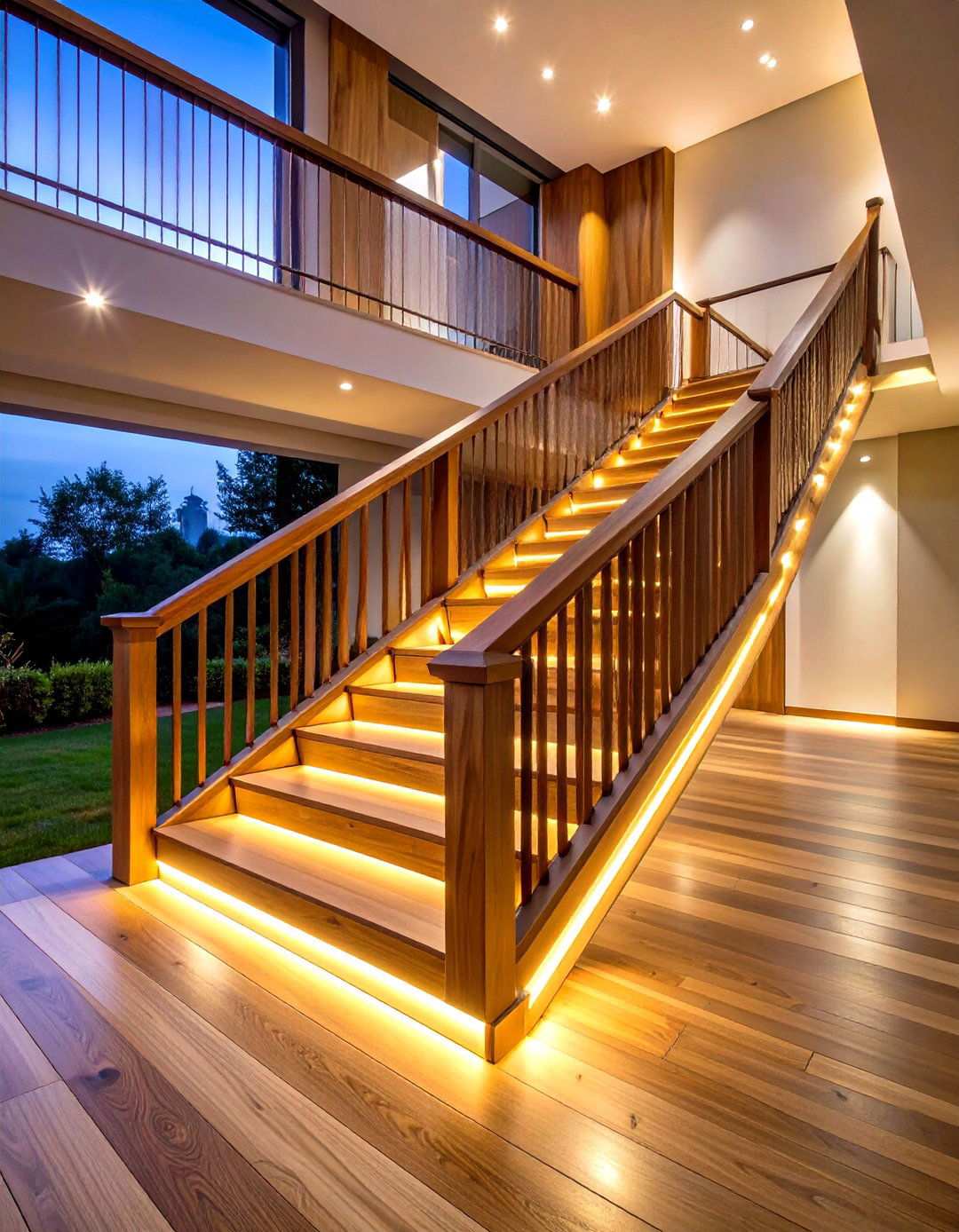
LED-integrated wood railings have the power to transform your staircase into a luminous architectural feature that combines safety lighting with dramatic visual effects. By embedding LED strip lighting within handrail channels or underneath rail systems, these innovative designs create ambient illumination that guides movement while highlighting architectural details. The warm glow of the LED lights showcases the beauty of the wood grain patterns, creating inviting atmospheres during evening hours. Color-changing LED systems offer a versatile option for special occasions or mood lighting, while standard warm white provides practical illumination. Additionally, modern control systems allow for dimming, timing, and smart home integration, making this technology a perfect fit for contemporary designs where innovative features enhance both functionality and aesthetic appeal.
12. Harmonious Zen Railings
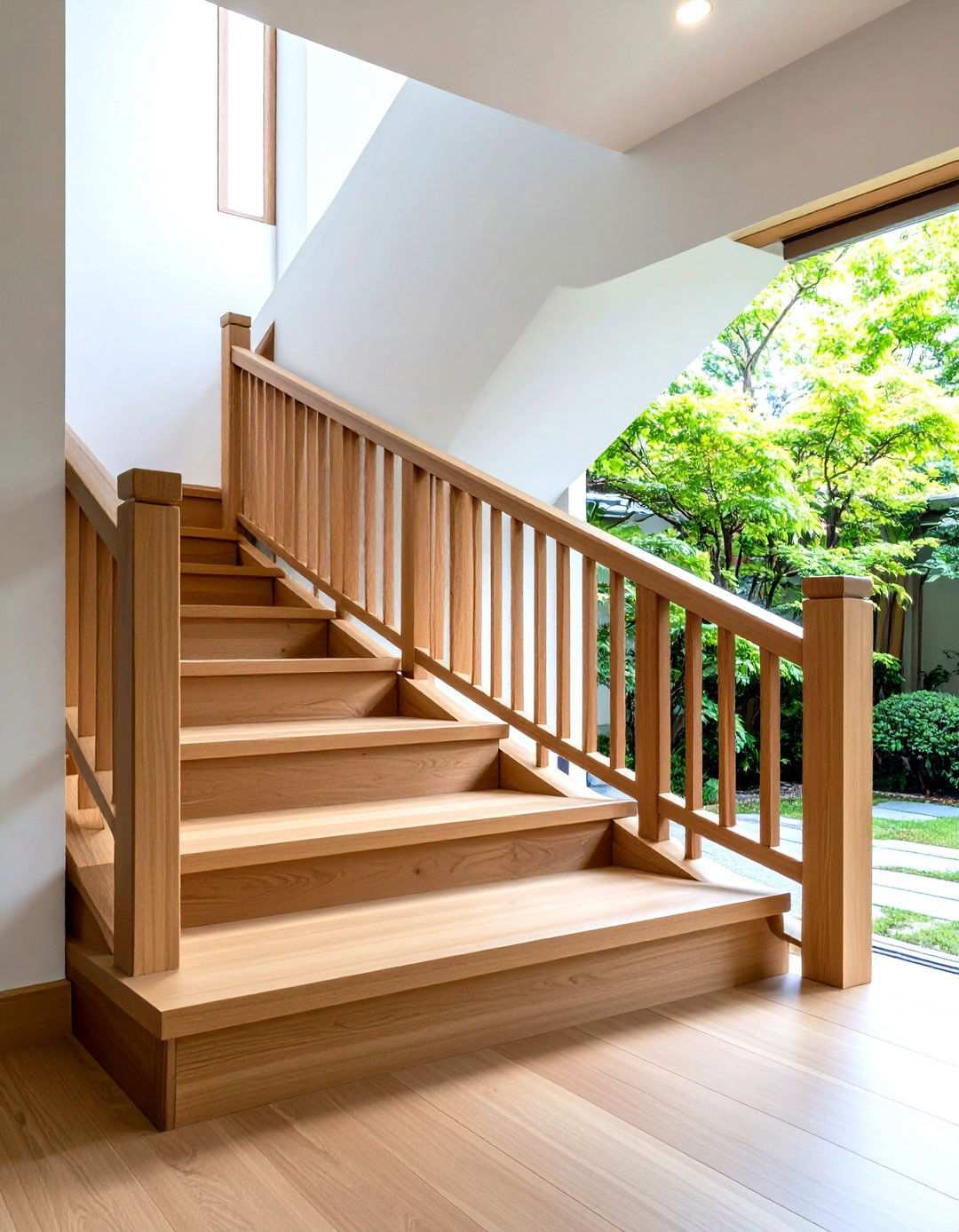
Achieve a sense of serenity and balance in your home through minimalist wood railings that effortlessly blend natural materials with clean lines and harmonious proportions. These understated designs rely on simple, horizontal slats or vertical elements that create a soothing rhythm without unnecessary complexity. Traditional woods such as cedar, pine, and bamboo are popular choices for their natural beauty and cultural significance, which contribute to a tranquil ambiance. By eschewing ornate details, these railings emphasize precise joinery and perfectly proportioned elements that foster calm, meditative environments. The deliberate spacing between elements is guided by mathematical principles that ensure visual balance and harmony. This style is particularly well-suited to contemporary homes seeking a peaceful, clutter-free aesthetic that encourages relaxation and mindfulness through thoughtful design and natural materials.
13. Industrial Fusion Railings
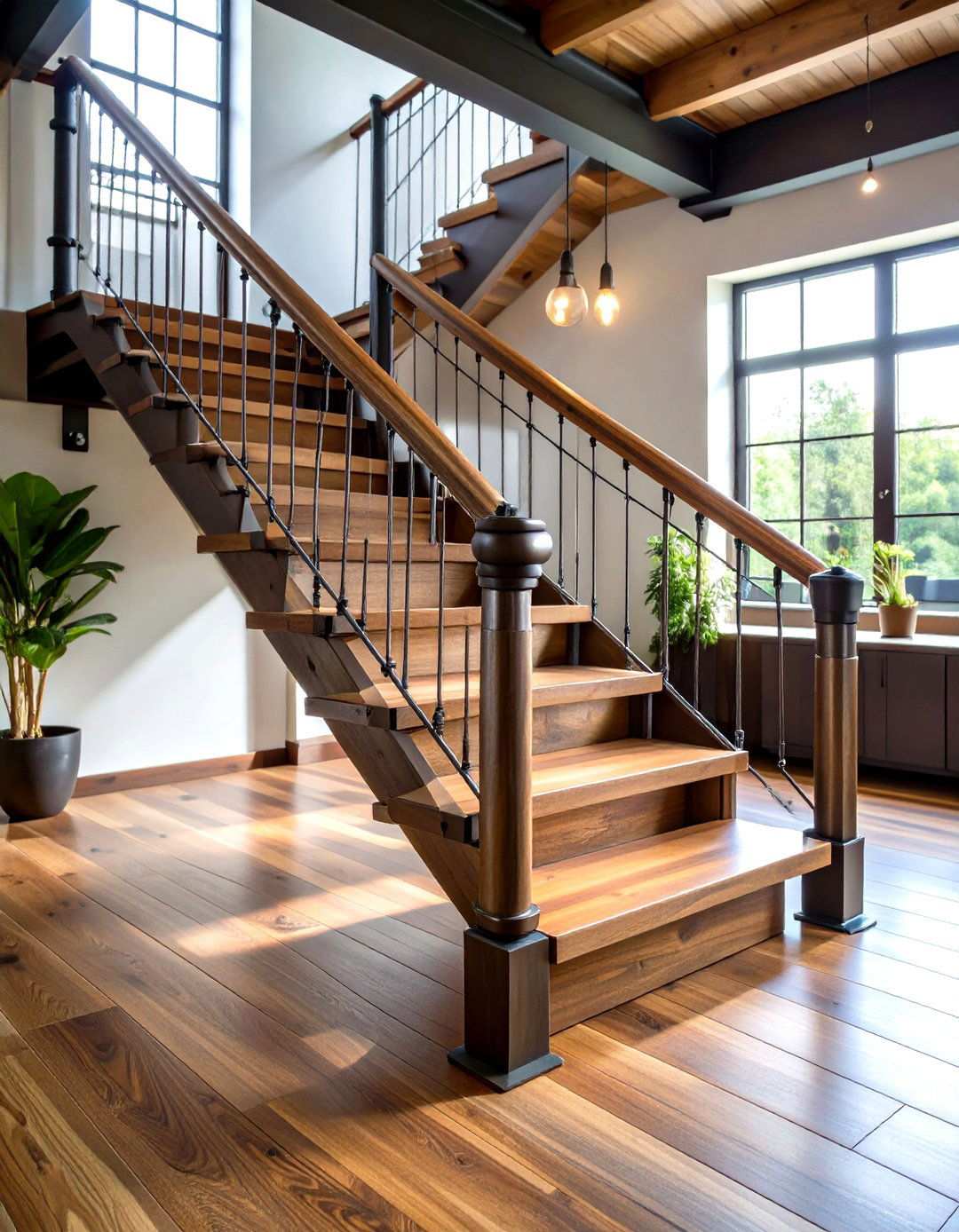
Combine the rugged charm of industrial aesthetics with the organic warmth of wood through railings that pair refined wood surfaces with raw steel components. These designs typically feature thick wooden handrails alongside steel pipes, angle iron, or flat bar supports that celebrate the inherent strengths of both materials. The contrast between the smooth wood and raw metal creates a visually striking dynamic that works beautifully in loft spaces, converted buildings, or contemporary homes seeking edgy character. Dark woods like walnut or ebony pair dramatically with black steel, while lighter woods provide a softer contrast with galvanized or natural steel finishes. What sets this combination apart in modern design is its authentic use of materials and straightforward construction, which celebrates craftsmanship and functionality.
14. One-of-a-Kind Branch Railings
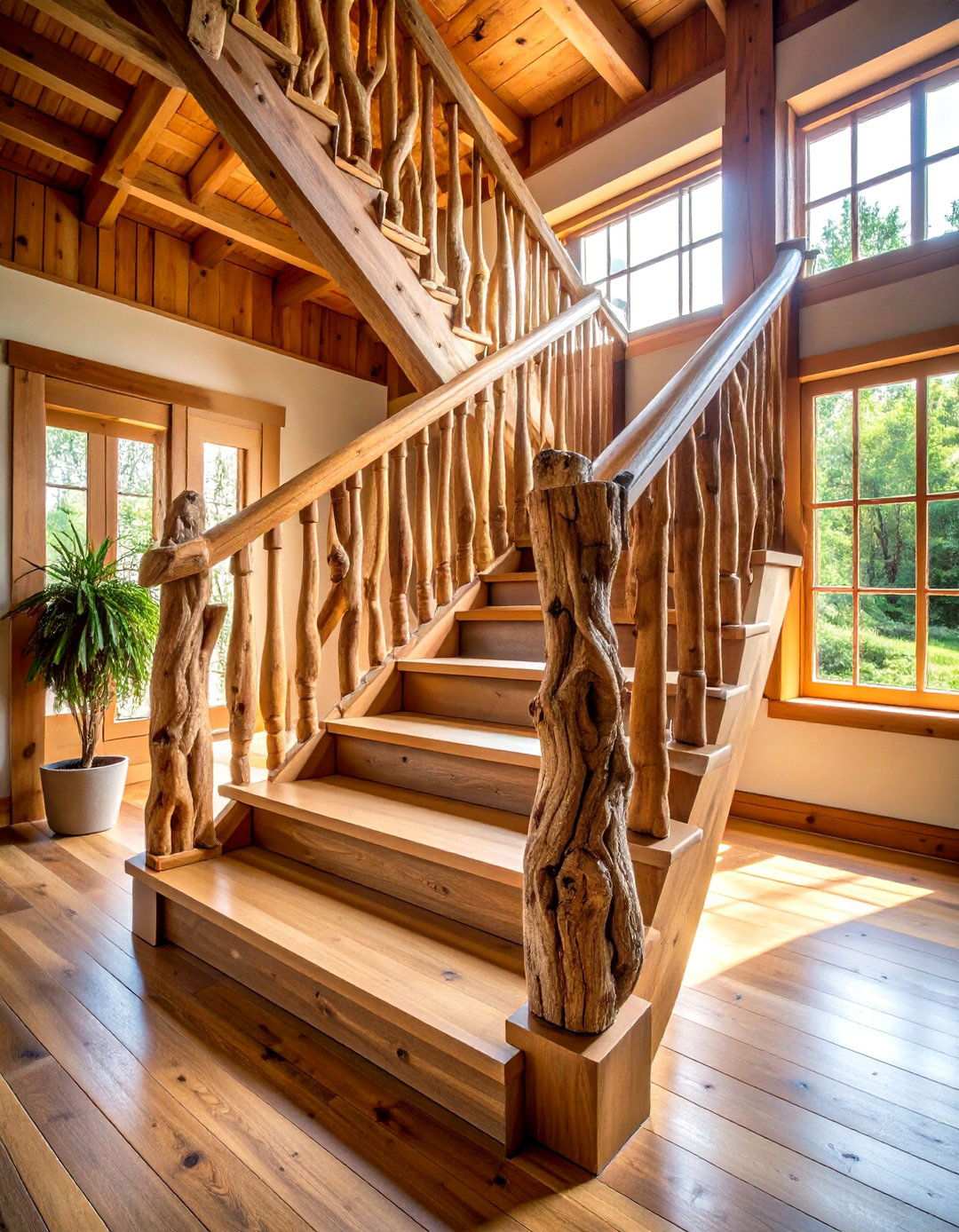
Transform found materials into functional art pieces with unique character and environmental consciousness through natural branch railings. These creative designs utilize carefully selected branches, driftwood, or reclaimed timber pieces that retain their natural forms and textures. Each installation is truly unique, as no two branches share identical characteristics. The irregular shapes and organic curves create visual interest while connecting interior spaces with nature. Proper preparation involves cleaning, treating, and stabilizing the wood to ensure safety and longevity. This approach works particularly well in rustic cabins, artistic homes, or any space seeking a connection with natural environments through authentic, sustainable materials.
15. Elevating Wood Railings with Bold Color Statements
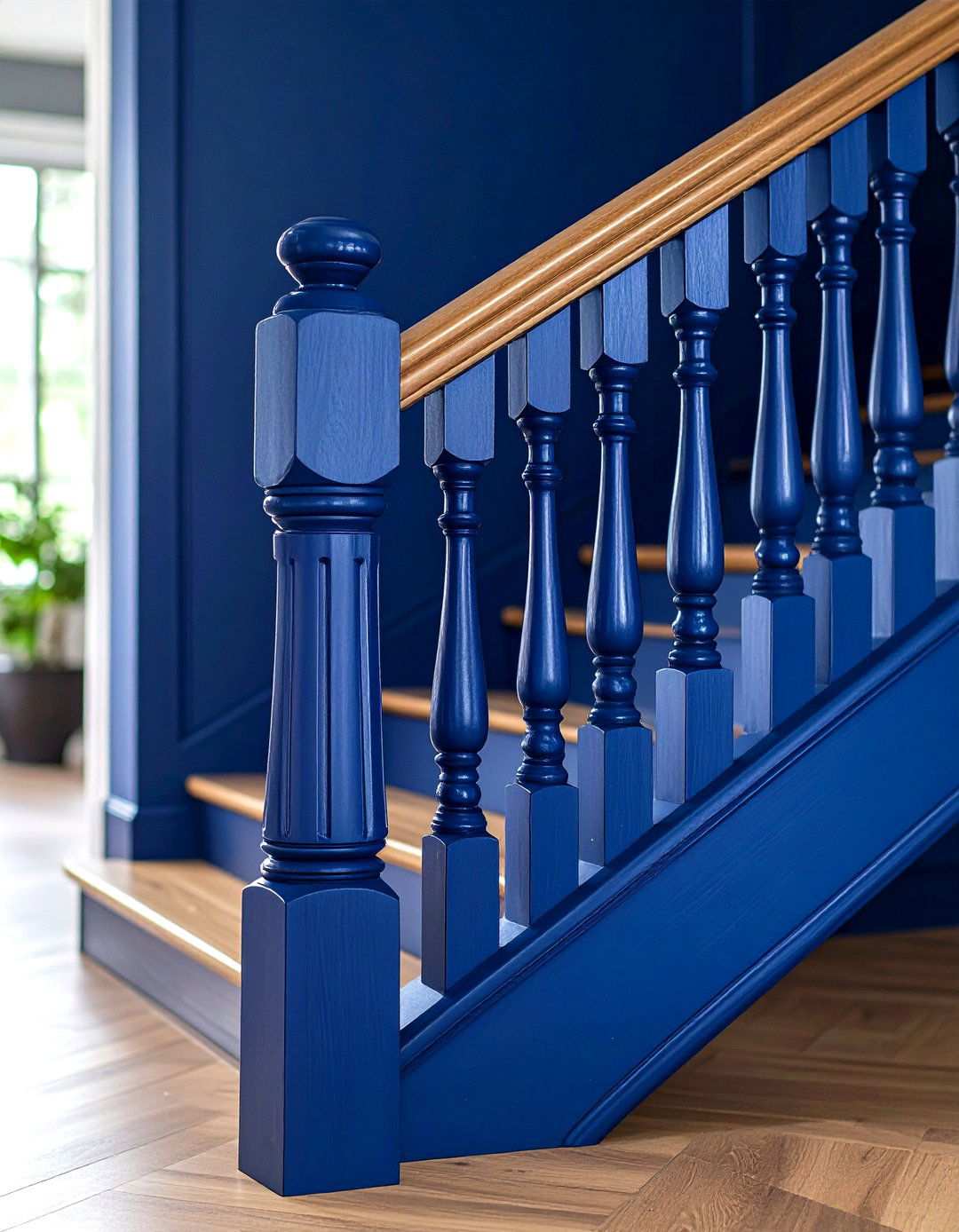
Imagine transforming wood railings into eye-catching focal points through a vibrant palette of paint colors. This bold approach offers endless design possibilities that can harmonize or contrast with the surrounding environment to create a striking visual impact. Classic white remains a timeless favorite for its clean, uncluttered aesthetic, while deeper hues like navy blue, forest green, or charcoal gray bring a sense of sophistication to contemporary spaces. Accent colors can infuse energy and personality into spaces, reflecting the homeowner’s unique style preferences. High-quality primers and paints ensure durability and a smooth finish, resistant to wear and tear from daily use. As a result, homeowners can easily update railings to match shifting design preferences, making this a versatile choice for evolving interior designs that prioritize flexibility and personal expression.
16. Reviving Timeless Elegance with Victorian-Inspired Wood Railings
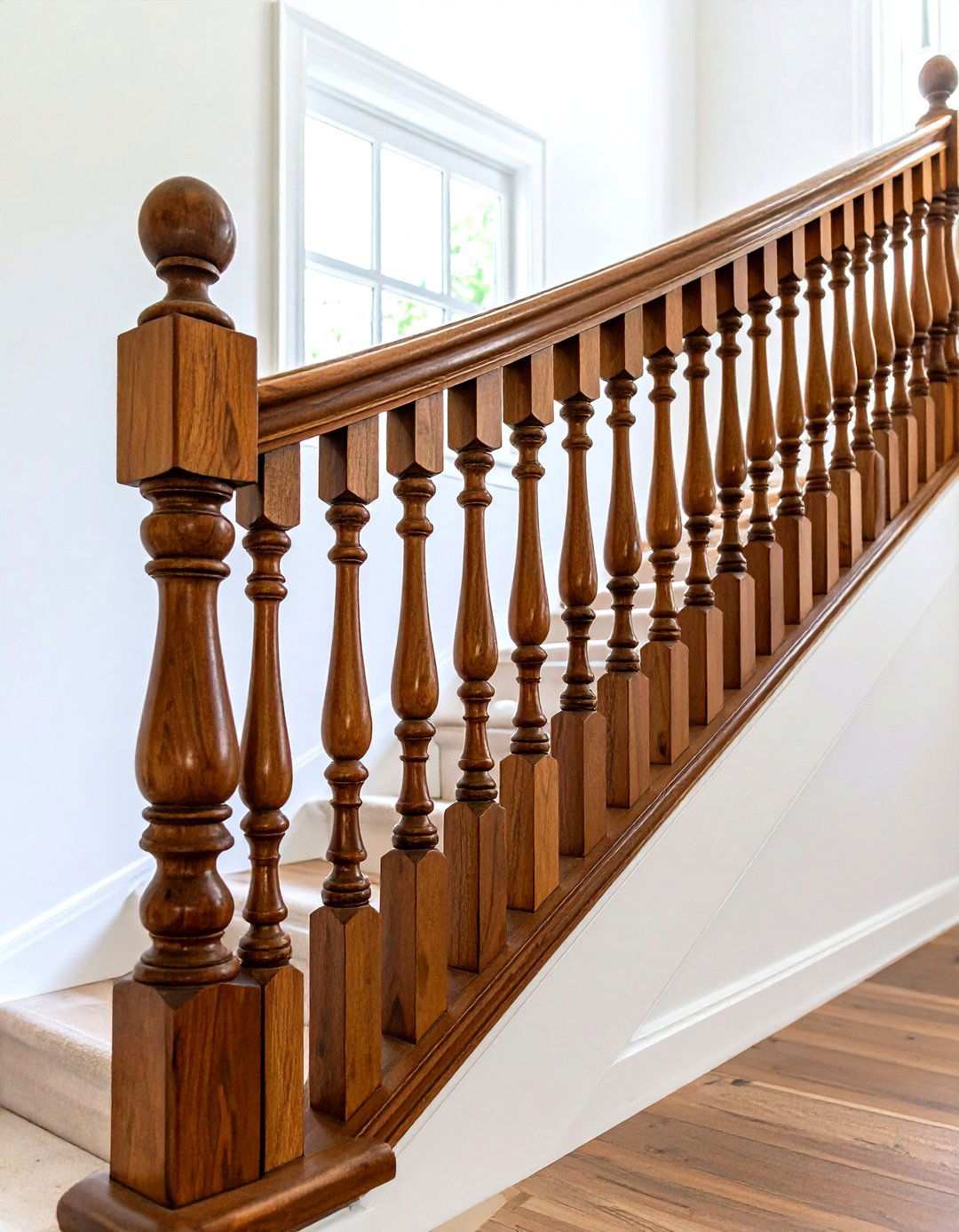
Experience the enduring charm of Victorian-style wood railings, which blend ornate craftsmanship with historical design traditions in a modern context. These elaborate designs feature intricate turned balusters, decorative newel posts, and detailed handrails that showcase exceptional woodworking artistry. Rich hardwoods like mahogany, cherry, or walnut provide a substantial foundation for complex profiles and fine details. By combining traditional techniques with modern manufacturing methods, it’s possible to recreate historical patterns while adhering to current safety standards and building codes. The ornate character of these railings lends itself beautifully to period homes undergoing restoration or contemporary spaces seeking dramatic architectural interest. When installed by professionals, the decorative elements are proportioned and aligned to maintain the style’s sophisticated visual impact while ensuring reliable structural performance.
17. Geometric Wood Railings as a Statement of Design Excellence
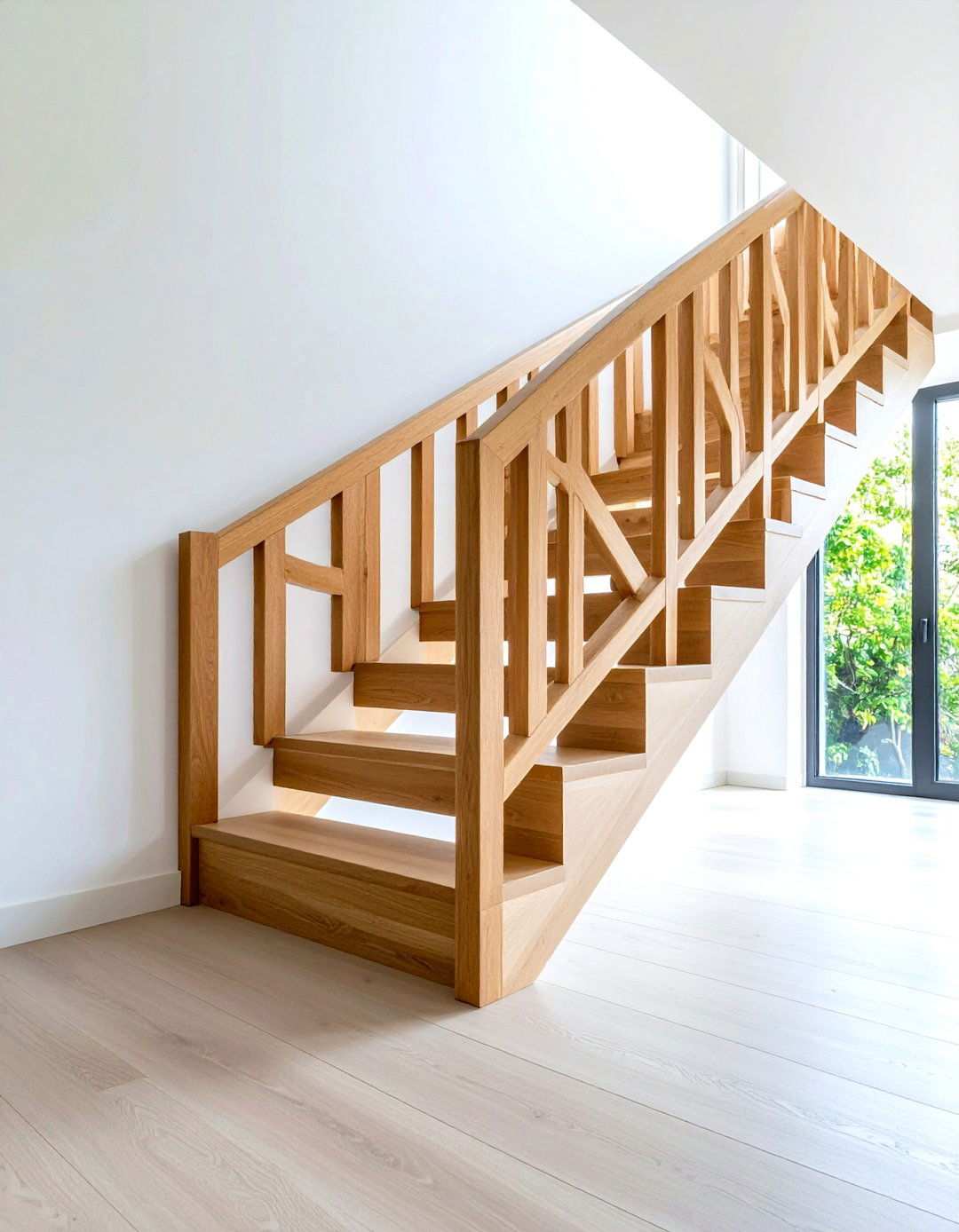
Geometric wood railings offer a unique opportunity to transform functional elements into striking works of art, utilizing mathematical patterns and repetitive forms to create a visually stunning impact. These contemporary designs feature precise arrangements of squares, rectangles, triangles, or hexagonal shapes that create a sense of rhythm and movement through repetition. By contrasting wood species or stain colors, geometric patterns can be emphasized while maintaining structural integrity. Geometric railings work particularly well in modern homes where precision and attention to detail are valued. Computer-aided design ensures perfect alignment and proportions throughout the installation, resulting in a cohesive and visually appealing design. The repetitive elements in geometric patterns can create a sense of visual expansion, making spaces appear larger while adding sophisticated architectural detail that demonstrates a commitment to design excellence.
18. Elevating Functionality with Integrated Wood Railings
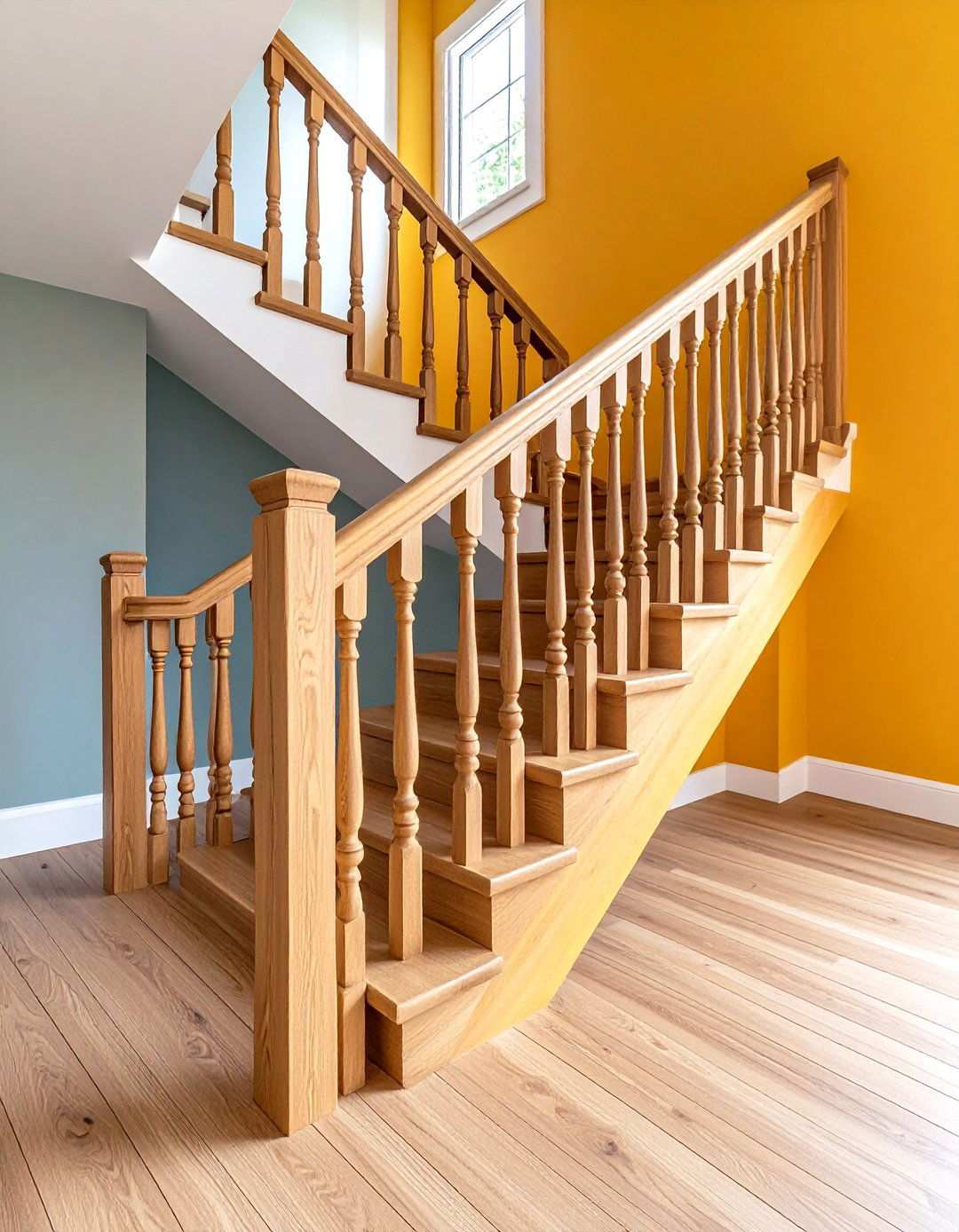
Elevate your home’s design by incorporating multifunctional elements that seamlessly blend form and function. Innovative wood railing designs can now incorporate storage solutions, cleverly concealing practical items within seemingly innocent structures. This approach includes cleverly incorporated shelving within posts, stylish display niches within balustrade panels, or cleverly hidden compartments within hanrail profiles. Storage areas can cleverly stash books, decorative objects, lighting fixtures, or essential items like keys and mail. Careful design ensures that storage elements don’t compromise safety or structural integrity while adding valuable functionality to often underutilized spaces. This approach is particularly effective in smaller homes where every square foot counts, or in modern designs that celebrate multi-functional furniture and architectural elements. To ensure the structural support for both railing and storage loads, professional planning is essential.
19. Blending Industrial and Natural Elements with Wire Mesh Wood Frame Railings
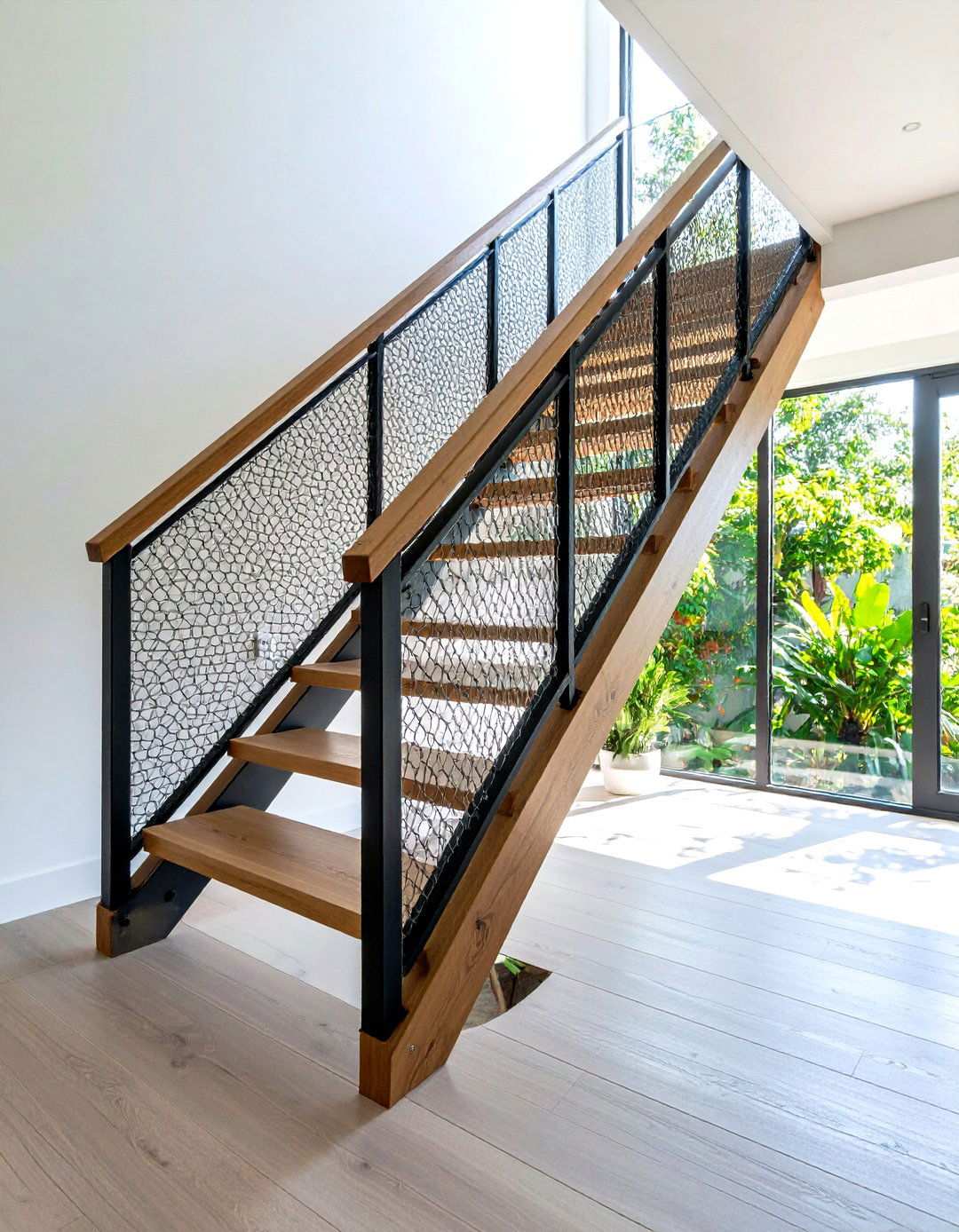
Combine the raw elegance of industrial design with the natural warmth of wood to create a truly unique and captivating aesthetic. Wood-framed railings filled with wire mesh panels offer the perfect blend of safety and visual transparency. These contemporary designs feature substantial wood frames constructed from hardwoods or engineered lumber that support stainless steel or powder-coated mesh inserts. The mesh provides the necessary safety barriers while allowing light and air to flow freely through the railing system. The various mesh patterns and wire gauges available create an array of different visual effects that meet building code requirements. This style is particularly well-suited to modern homes, studios, or industrial conversions where the contrast between refined wood frames and utilitarian mesh creates an appealing design tension. With low maintenance requirements and excellent durability, this combination offers a contemporary appeal that is hard to resist.
20. Achieving Sleek Aesthetics with Rod Infill Wood Railings
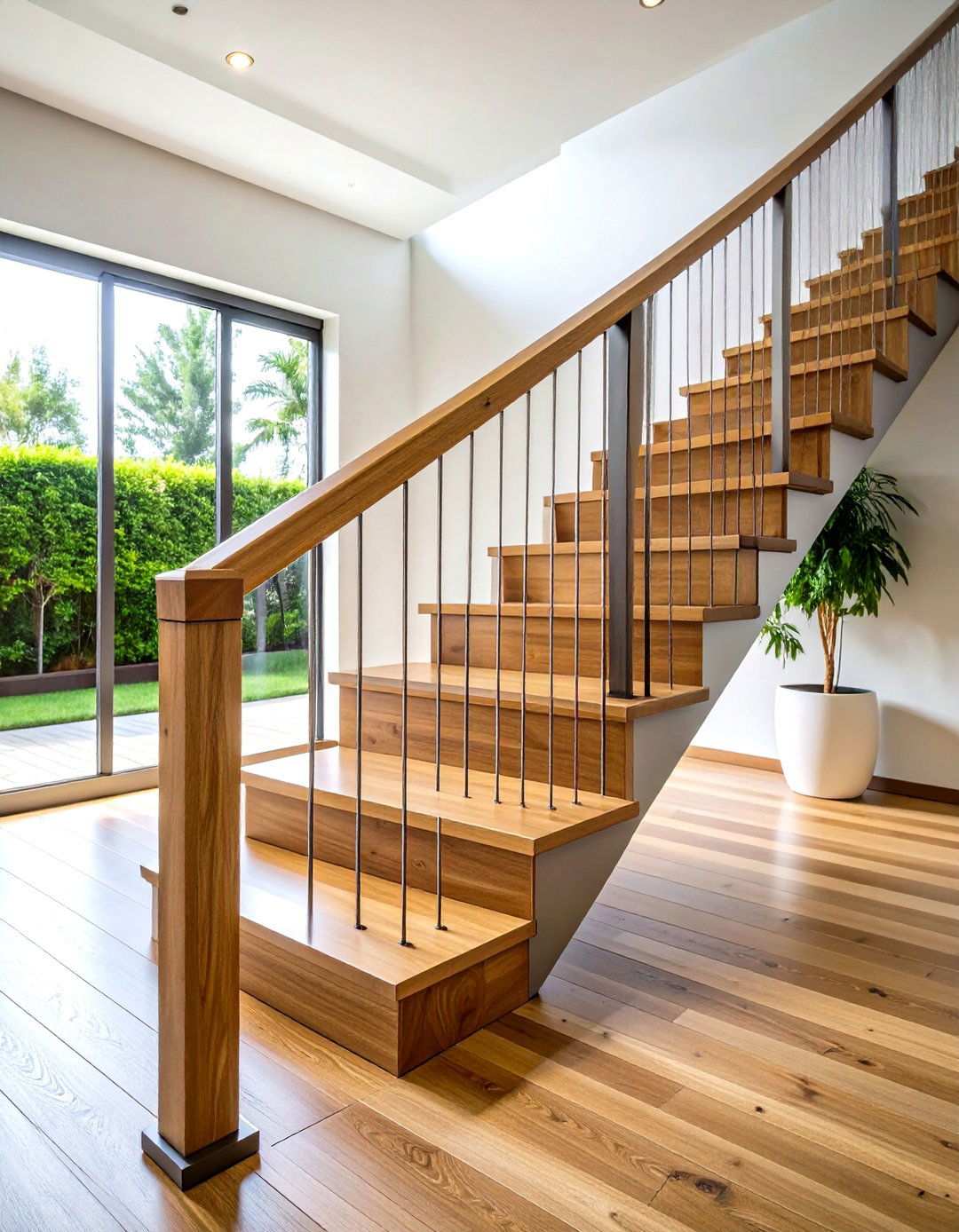
Create a clean, modern look with wood railings featuring vertical or horizontal rod infill systems that provide safety with minimal visual interruption. These designs typically combine solid wood handrails and posts with slender metal rods that span between structural elements. The rods can be round, square, or flat profiles in various finishes that complement the wood species and overall design theme. Precise spacing ensures code compliance while maintaining a clean, uncluttered appearance. This approach works particularly well in modern homes where transparency and light flow are priorities. The linear elements create strong architectural statements while the wood components add warmth and natural beauty. To ensure proper rod alignment and secure connections that provide lasting safety and structural integrity, professional installation is crucial.
21. Streamlined Spatial Experience
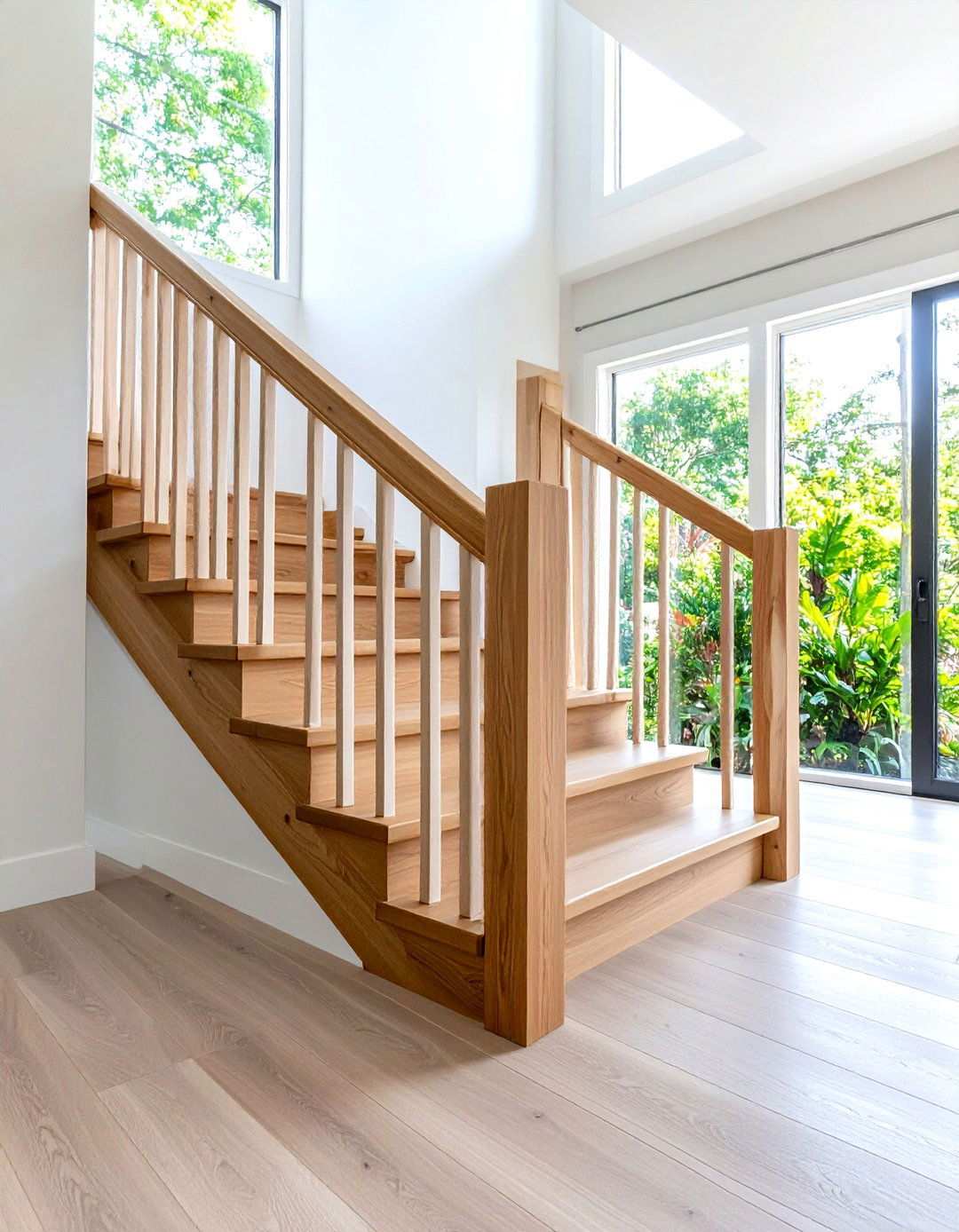
Open riser wood railings redefine spatial flow and natural light by eliminating traditional risers and incorporating carefully designed wood railing systems that prioritize safety. This modern approach features extensive wooden handrails supported by posts or cable systems, creating necessary barriers without obstructing sight lines between stair levels. The open design fosters a seamless connection between floors while allowing light to permeate throughout the stairway, creating a sense of continuity. Thick hardwood treads, often constructed from premium materials like oak or maple, provide secure footing and contribute to the overall aesthetic. To ensure compliance with building codes, meticulous attention to spacing and height requirements is crucial. This style is particularly well-suited for modern homes where open, flowing spaces are desired, while still maintaining essential safety standards.
22. Bespoke Wood Handrails
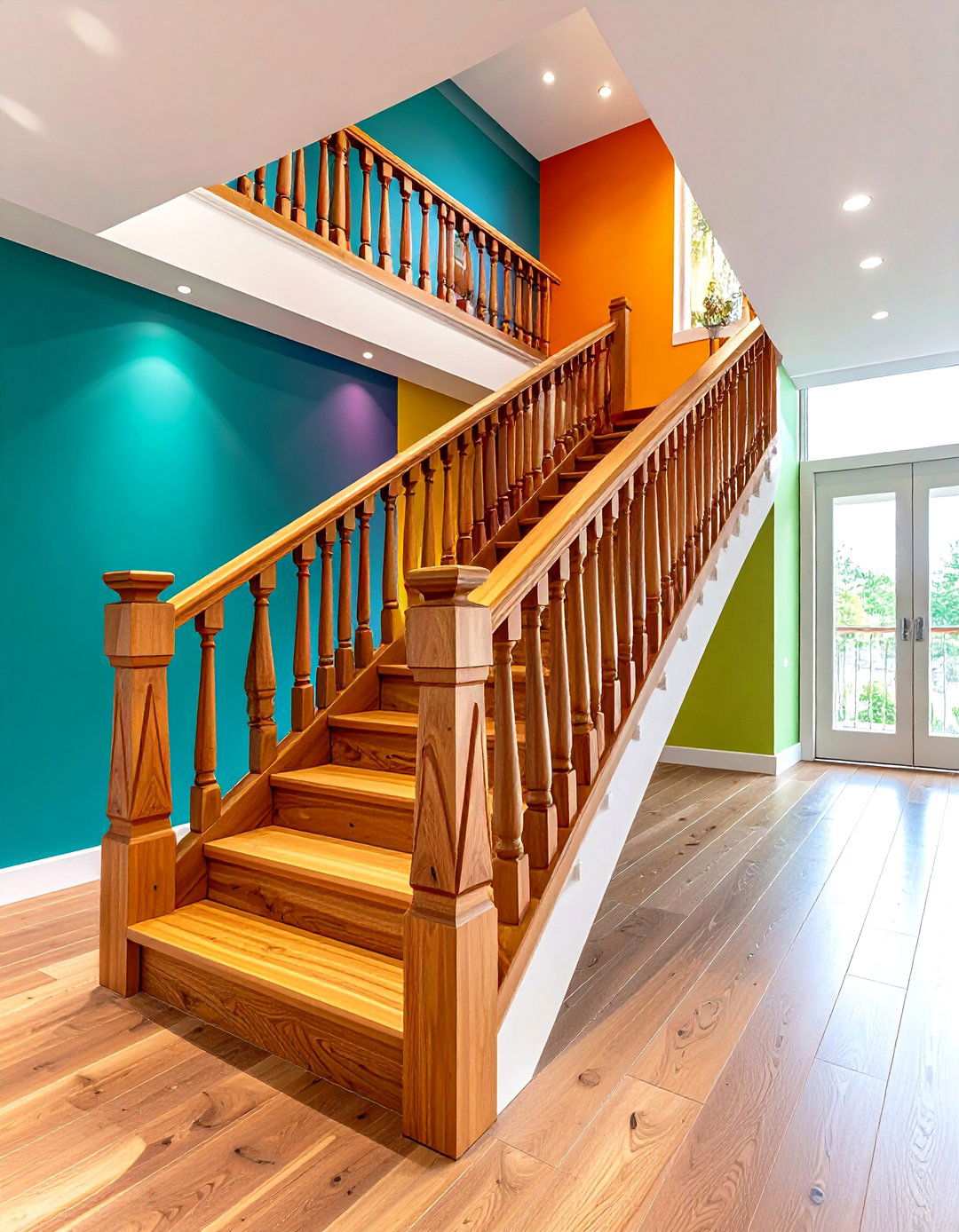
Custom-profiled wood handrails offer a unique opportunity to infuse individual architectural character into a project. By designing bespoke handrails tailored to specific requirements and aesthetic preferences, homeowners can create distinctive installations that reflect their personal style. Modern CNC machinery enables precise reproduction of complex profiles, ensuring consistent quality throughout the installation. The choice of hardwood species has a profound impact on both appearance and functionality, with harder woods providing greater durability for high-traffic applications. Custom profiles can incorporate ergonomic considerations, architectural details that match existing millwork, or unique decorative elements that create signature design features. This approach ensures seamless integration with surrounding architecture while creating one-of-a-kind installations that reflect individual taste and design vision.
23. Timeless Design Fusion
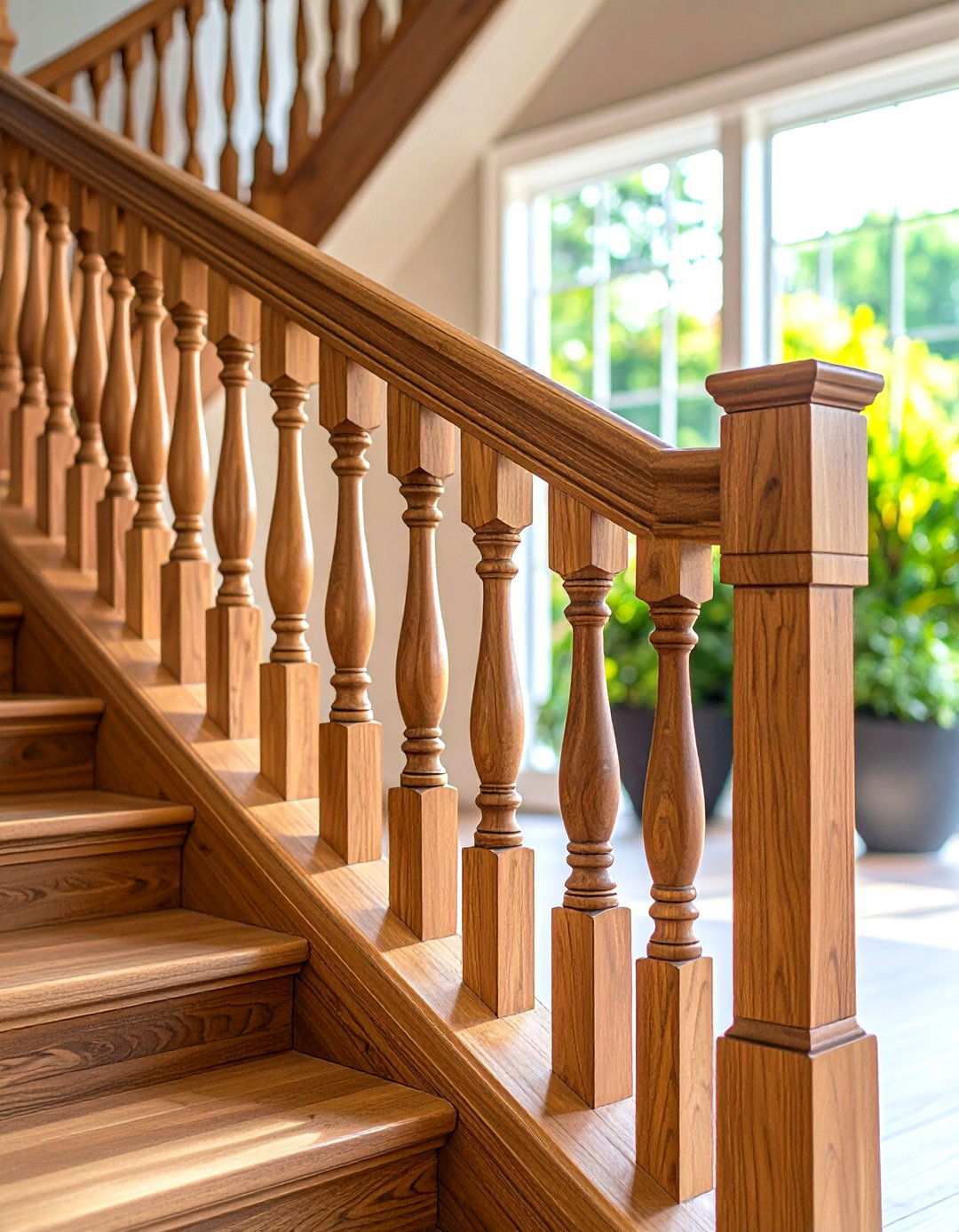
Transitional wood railings seamlessly bridge traditional and contemporary design elements by combining classic proportions with simplified details for enduring appeal. These versatile designs typically feature clean-lined balusters, substantial handrails, and refined profiles that eschew excessive ornamentation while maintaining elegant proportions. The simplified approach facilitates easy integration with various architectural styles and decorating schemes, creating a sense of continuity. Quality hardwoods like cherry, maple, or oak provide the foundation necessary for crisp details and smooth finishes. This style excels in homes undergoing updates where the goal is modernizing without sacrificing classical appeal. Professional design ensures proper scale and proportions, resulting in sophisticated outcomes. By incorporating transitional railings, homeowners can enhance their home’s value by offering broad appeal that attracts diverse preferences while maintaining lasting style relevance.
24. Bringing Reclaimed Character to Modern Spaces
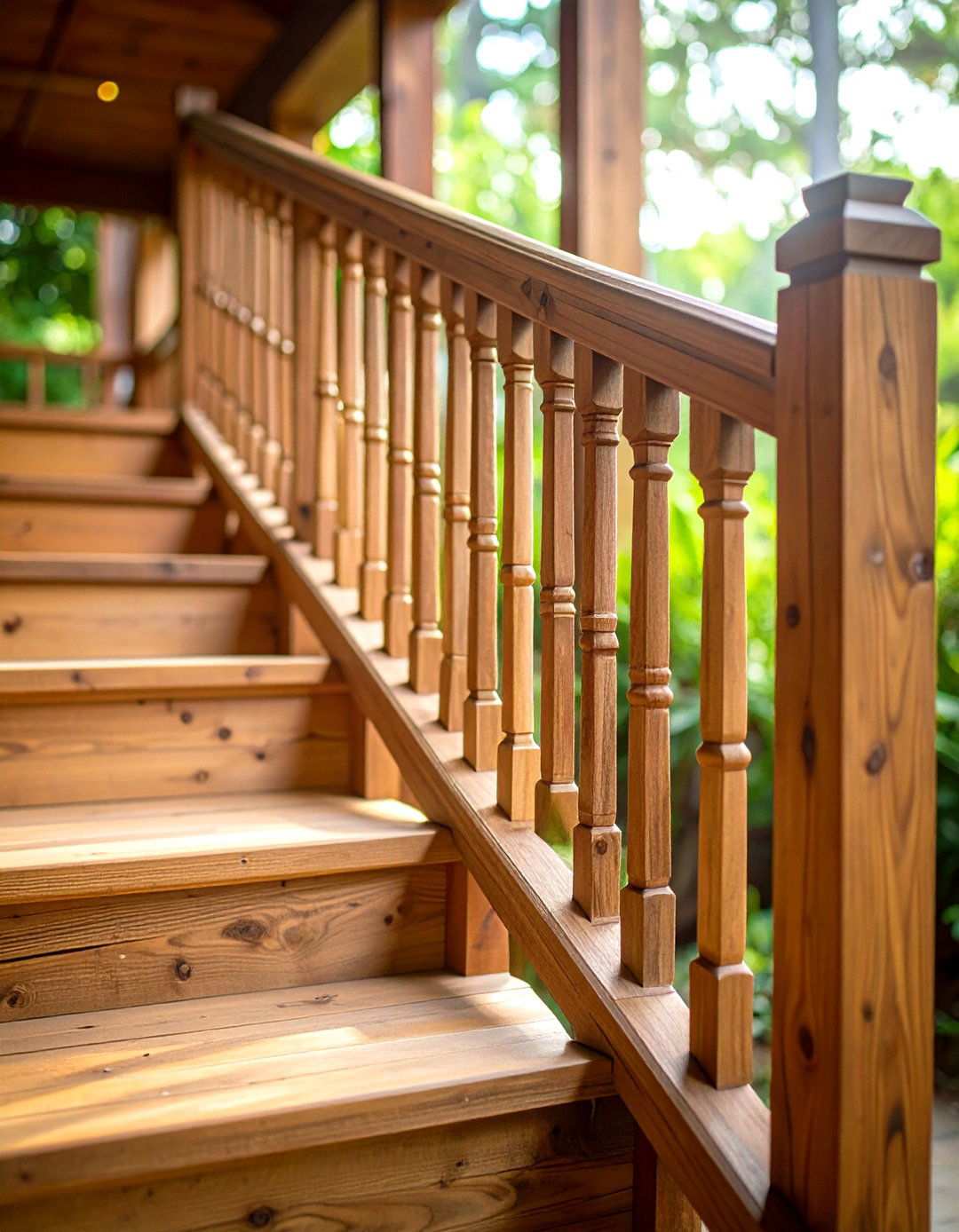
Reclaimed wood railings embody eco-friendly design and distinctive character by breathing new life into salvaged materials. This approach transforms discarded wood from old structures into unique architectural features that elevate a space’s aesthetic. The history etched into each piece is reflected in its weathered appearance, nail holes, saw marks, and patina, which cannot be replicated with new materials.
To ensure safety and longevity, reclaimed wood must undergo proper preparation, including cleaning, stabilizing, and finishing. This process not only preserves the wood’s character but also extends its lifespan. Available salvaged materials dictate the species variety, with popular choices often including pine, oak, chestnut, or exotic woods sourced from vintage locations. By adopting this approach, homeowners can support sustainability goals while adding conversation pieces that bridge the past and present through authentic architectural elements.