1. Mastering Terrain with Timeless Terracing Solutions
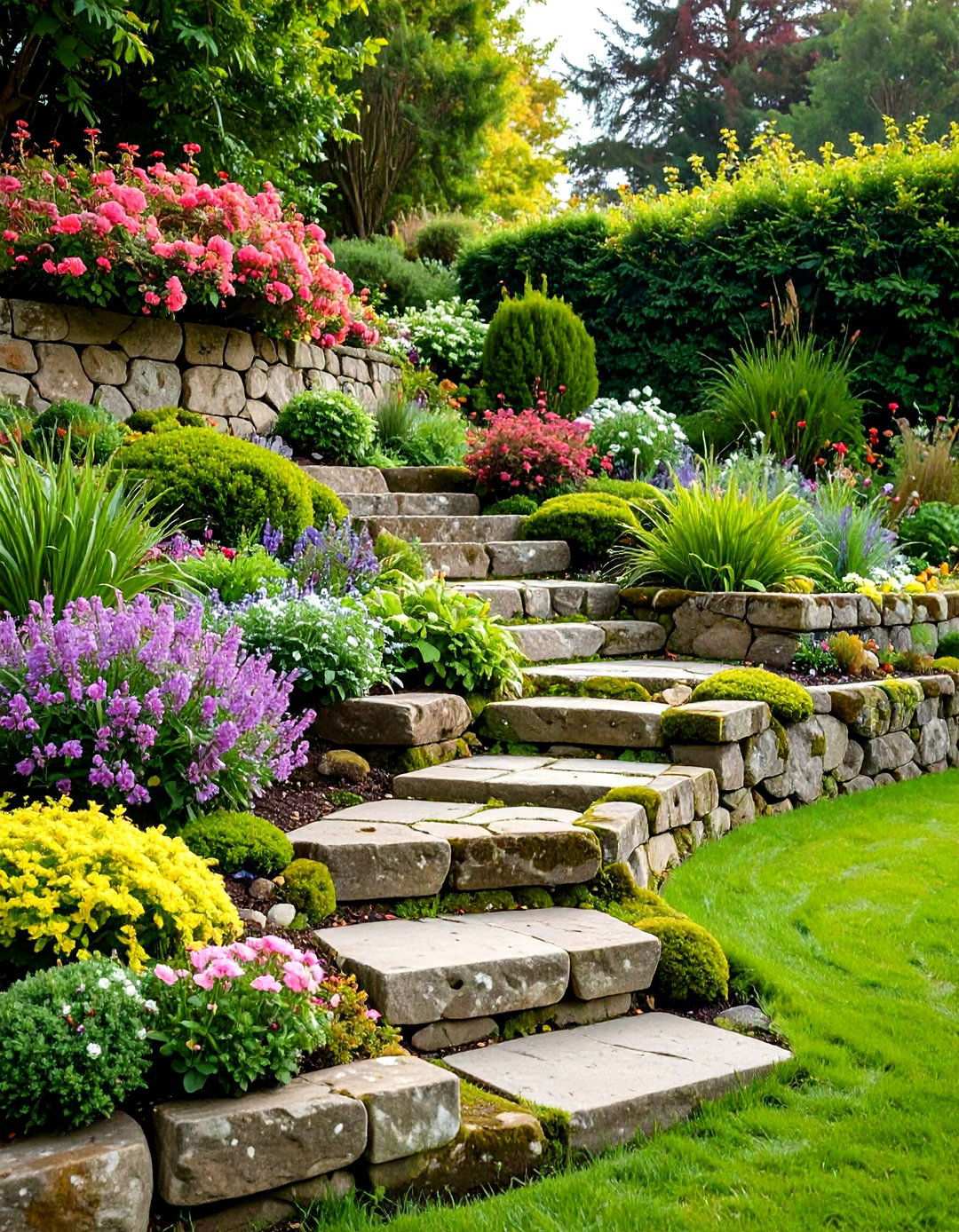
Crafting a breathtaking outdoor space on a sloped yard demands a thoughtful approach and innovative terracing techniques. By embracing the challenges of uneven terrain, you can unlock new possibilities for your landscape, infusing it with visual interest and functional areas. Whether your yard features a gentle incline or a dramatic hillside, well-designed terraced gardens can mitigate erosion, improve drainage, and create distinct zones for various activities. From rustic stone walls to sleek timber systems, multilevel garden designs allow you to harmonize with your land’s natural contours rather than fighting against them. Each tier presents a chance to showcase unique plants, materials, or functions, resulting in a dynamic outdoor environment that flows effortlessly from one area to the next.

As an Amazon Associate I earn from qualifying purchases.
2. Elegant Stone and Timber Terracing Options
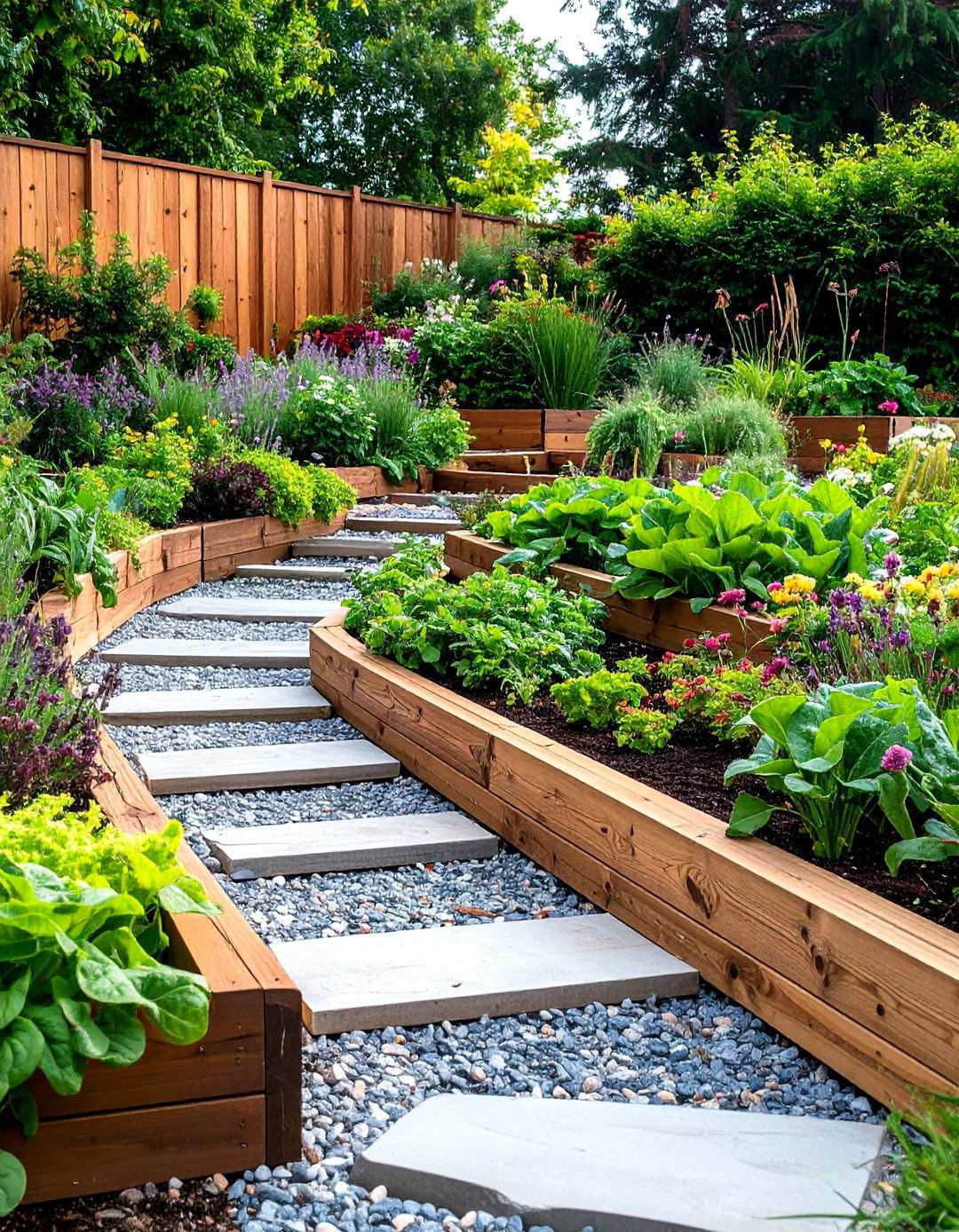
When it comes to creating timeless terraced gardens, natural stone and timber sleepers emerge as top contenders. Stone structures, with their authentic, weathered appearance, provide exceptional soil retention while developing character over time. These durable walls are particularly well-suited for creating multiple planting levels, allowing you to establish distinct garden zones with varying sun exposure and drainage conditions. The thermal mass of stone helps regulate soil temperature, promoting healthy plant growth throughout the seasons. Meanwhile, timber sleepers offer a cost-effective and versatile solution, providing excellent stability for moderate slopes while maintaining an organic feel that complements most garden styles. Treated hardwood sleepers resist rot and insect damage, ensuring longevity in your terraced design. Consider incorporating built-in drainage, carefully planning your wall height for structural integrity, and selecting a style of stone or timber that harmonizes with your home’s architecture and existing landscape features.
3. Mediterranean Hillside Terraces
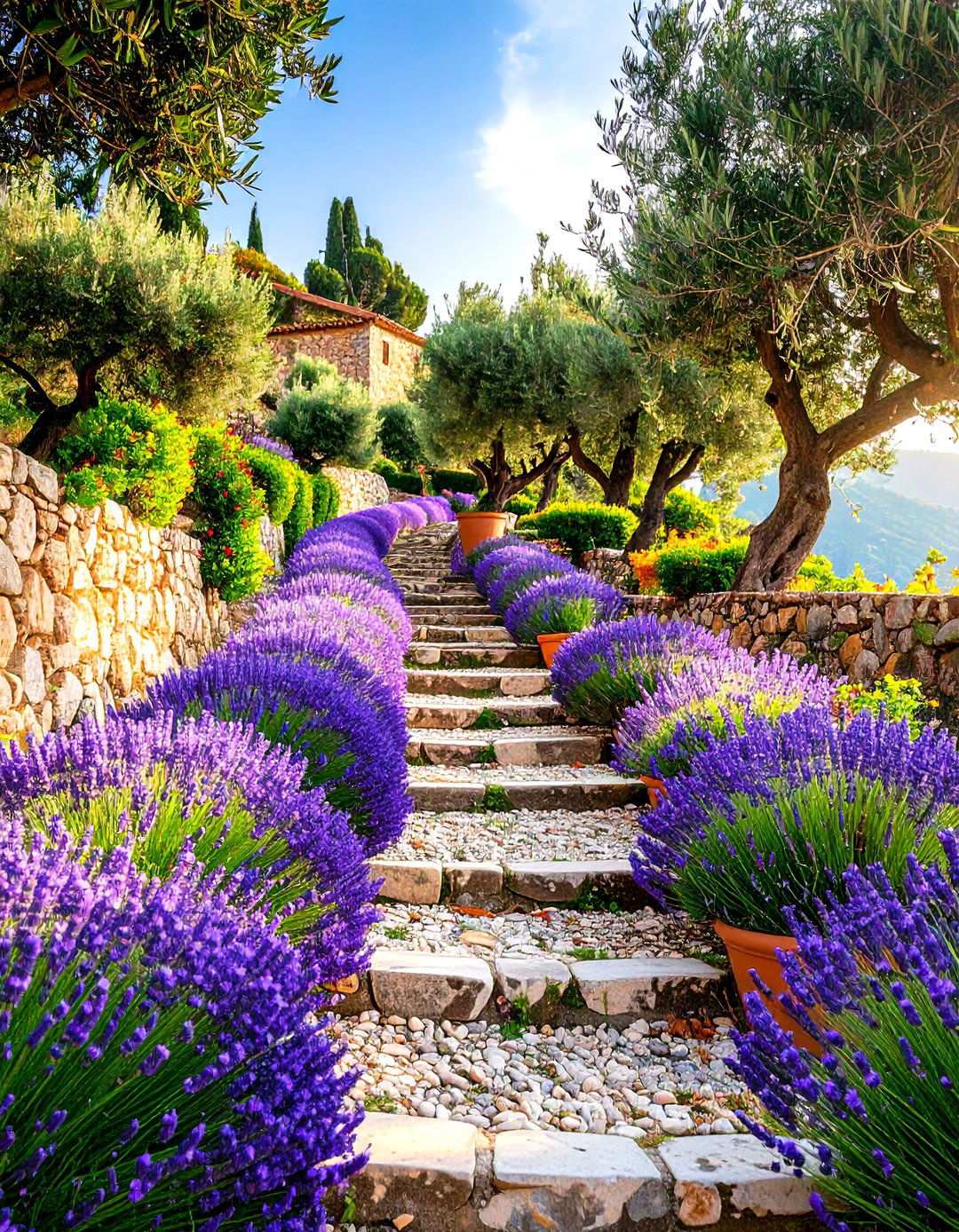
Mediterranean-style terracing adds a touch of rustic elegance to sloping gardens by blending warm stone materials with drought-tolerant plant varieties. These sun-kissed terraces harness the effectiveness of traditional dry-stone construction methods, fostering optimal drainage while supporting robust root systems. To establish an authentic Mediterranean atmosphere, consider incorporating native plants like lavender, rosemary, and olive trees, which thrive in terraced environments. Complement these elements with terra-cotta accents, meandering gravel pathways, and weathered stone, which create a harmonious backdrop for fragrant herbs and aromatic plants that release scents as you wander through the space. By incorporating small water features or fountains, you can create soothing sounds and focal points within your terraced design, while the stepped layout naturally lends itself to outdoor dining areas and contemplative seating spots that take advantage of views and gentle breezes.
4. Japanese Zen Level Gardens
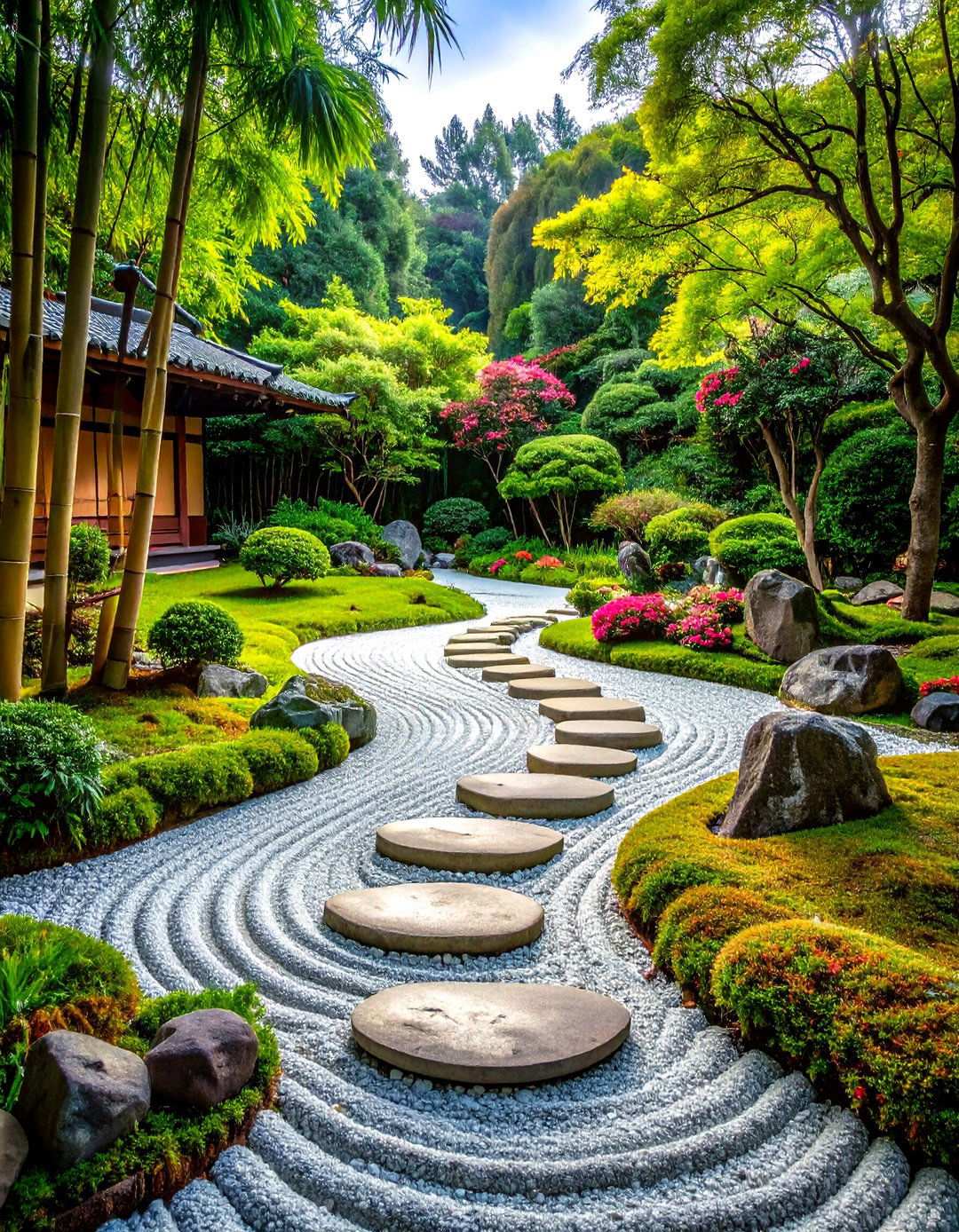
Japanese-inspired terraced gardens embody the essence of simplicity and contemplation through deliberate level changes and judicious plant selection. These serene spaces rely on natural materials like bamboo, stone, and gravel to create subtle transitions between different garden zones. Each terraced level serves a distinct purpose within the overall design narrative, whether showcasing a specimen tree, housing a meditation area, or providing space for intricate raked gravel patterns. The placement of elements in these gardens is guided by asymmetrical balance, avoiding rigid symmetry while maintaining visual harmony throughout the terraced landscape. By strategically incorporating evergreen plants, you can ensure year-round structure and interest, while deciduous elements provide seasonal change and movement. Authentic Japanese touches, such as water features, stepping stones, and carefully positioned boulders, add to the meditative quality of your terraced space, creating a peaceful refuge that encourages mindfulness and connection with nature.
5. Modern Concrete Block Terracing Systems
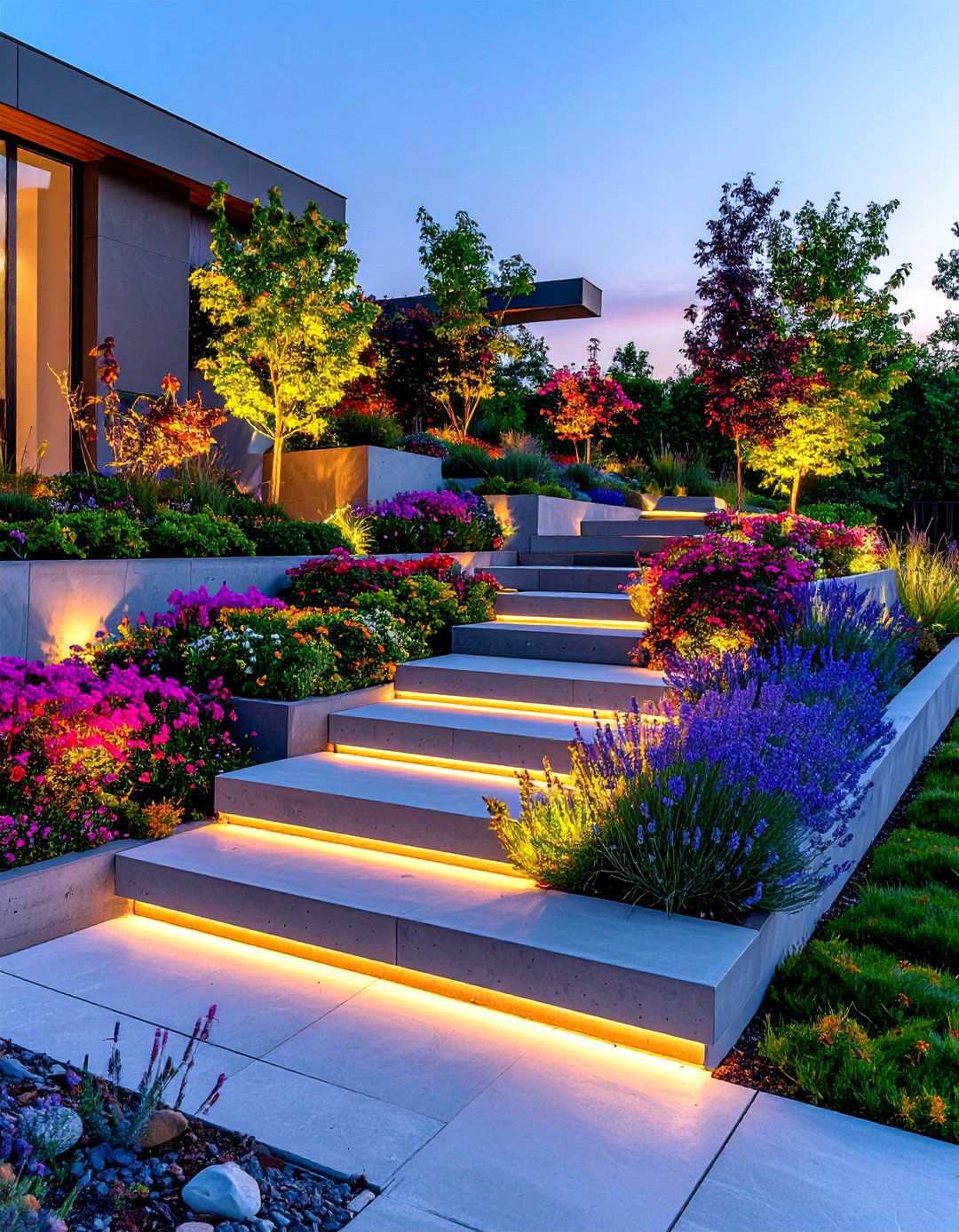
Contemporary landscape designs are elevated by the sleek, long-lasting appeal of modern concrete block terracing systems. Engineered to provide superior structural integrity, these systems offer a versatile canvas for creative expression through varied textures, colors, and installation patterns. The clever interlocking design of these blocks simplifies construction, while also ensuring optimal drainage and long-term stability across even the most challenging terrain. By incorporating modular concrete blocks with built-in planters or textured surfaces, homeowners can add an extra layer of visual interest to their outdoor spaces without compromising the crisp, architectural lines that define contemporary design. With their clean aesthetic, these systems seamlessly integrate with modern hardscaping materials like steel, glass, and composite decking, making them the perfect choice for creating dramatic evening displays with LED lighting that highlights the structural elements of your terraced garden.
6. Herb Terracing Designs for Gardeners
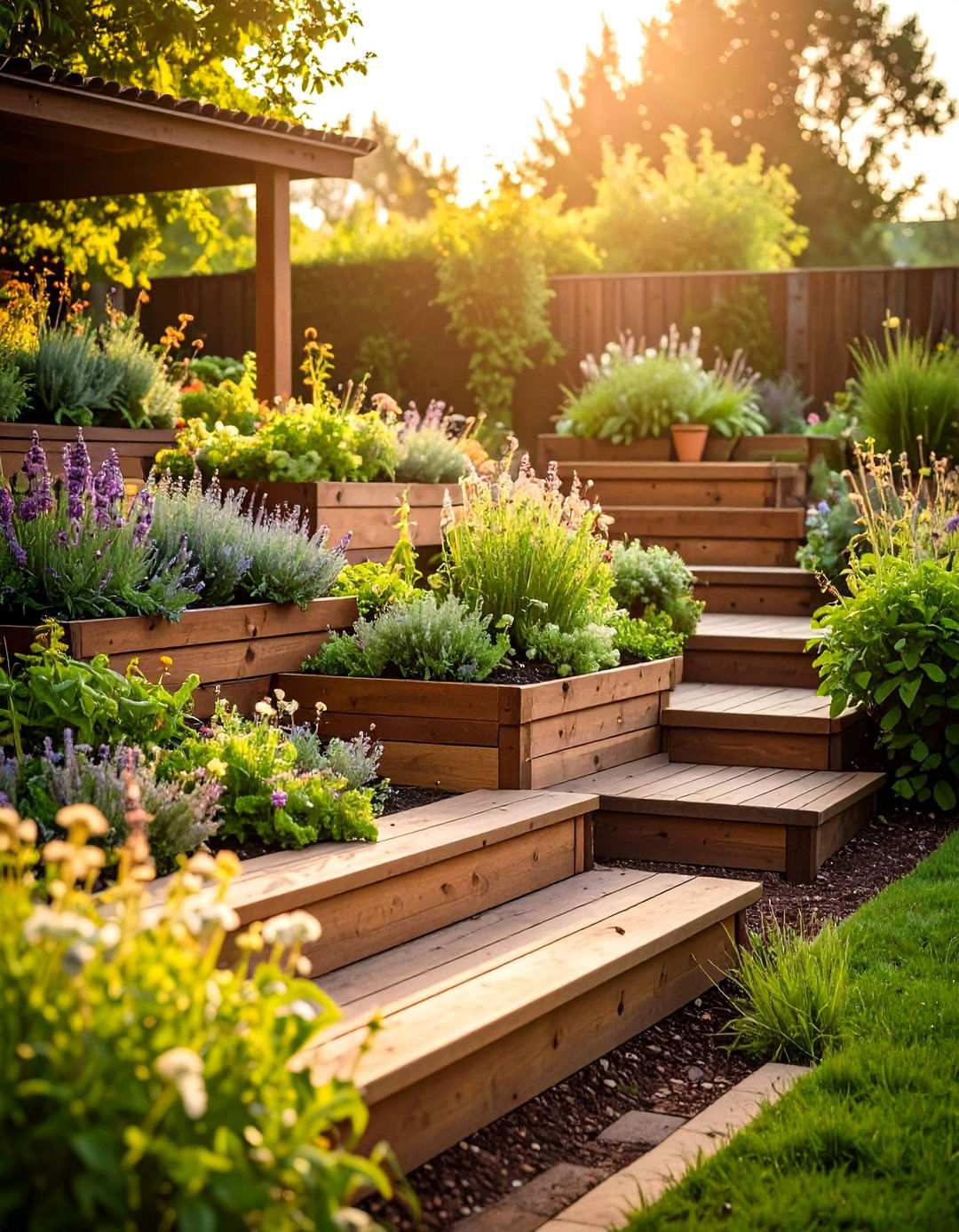
For gardeners seeking to maximize their growing space, terraced herb gardens offer an attractive solution that combines excellent drainage with easy access for harvesting. By organizing herbs by culinary use, growing requirements, or harvest timing across different levels, gardeners can tailor their designs to suit the specific needs of each herb family. Whether it’s Mediterranean herbs that require exceptional drainage or moisture-loving varieties that prefer richer soils, each terrace can be optimized to provide the perfect environment for its inhabitants. Strategic placement ensures adequate sun exposure for all plantings, while built-in seating areas allow gardeners to enjoy the sensory experience of their herb terraces while planning meals and seasonal plantings. Gravel pathways between levels provide clean access for maintenance and harvesting, further enhancing the overall Mediterranean aesthetic that many herbs prefer.
7. Vegetable Terracing Systems
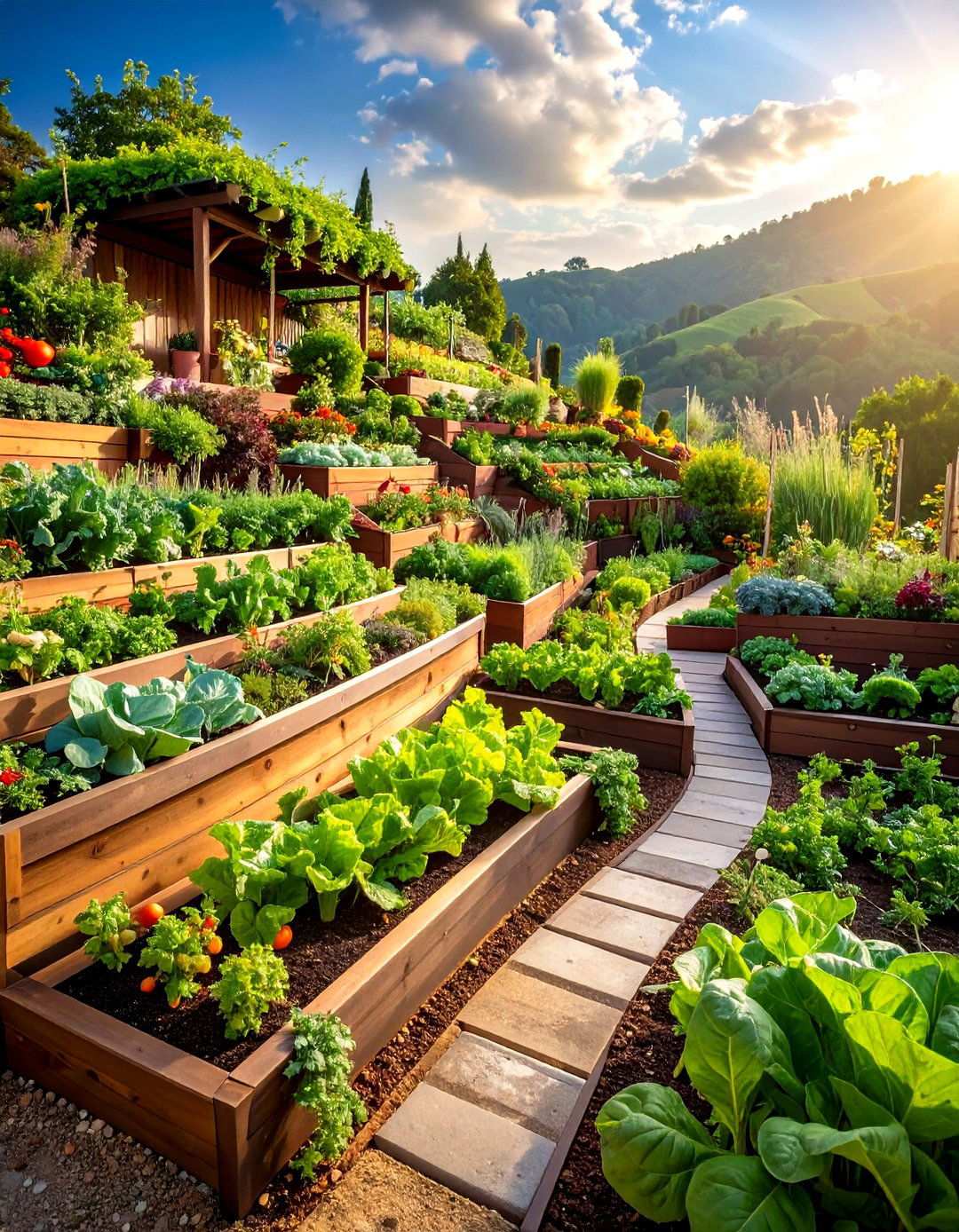
Maximizing the potential of a steep slope can be achieved through the implementation of vegetable terraced gardens. By breaking up the terrain into level planting areas, these systems enable efficient soil management and improved drainage, both crucial factors for successful vegetable production. With the ability to customize each terraced level for specific crop requirements, you can strategically group plants with similar water and nutrient needs, while also optimizing sun exposure throughout the growing season. Installing drip irrigation systems that harness the power of gravity can efficiently water all terraced levels, minimizing water waste and optimizing resource utilization. Additionally, companion planting strategies can be effectively managed across different levels in terraced designs, allowing for the creation of beneficial plant relationships that enhance growth and productivity. Wide pathways between terraces provide ample space for garden carts and tools, while also ensuring comfortable access for planting, maintenance, and harvesting activities. How do you envision incorporating the principles of seasonal crop rotation into your terraced vegetable garden layout to maintain soil health and maximize yields?
8. Water Feature Integration Levels
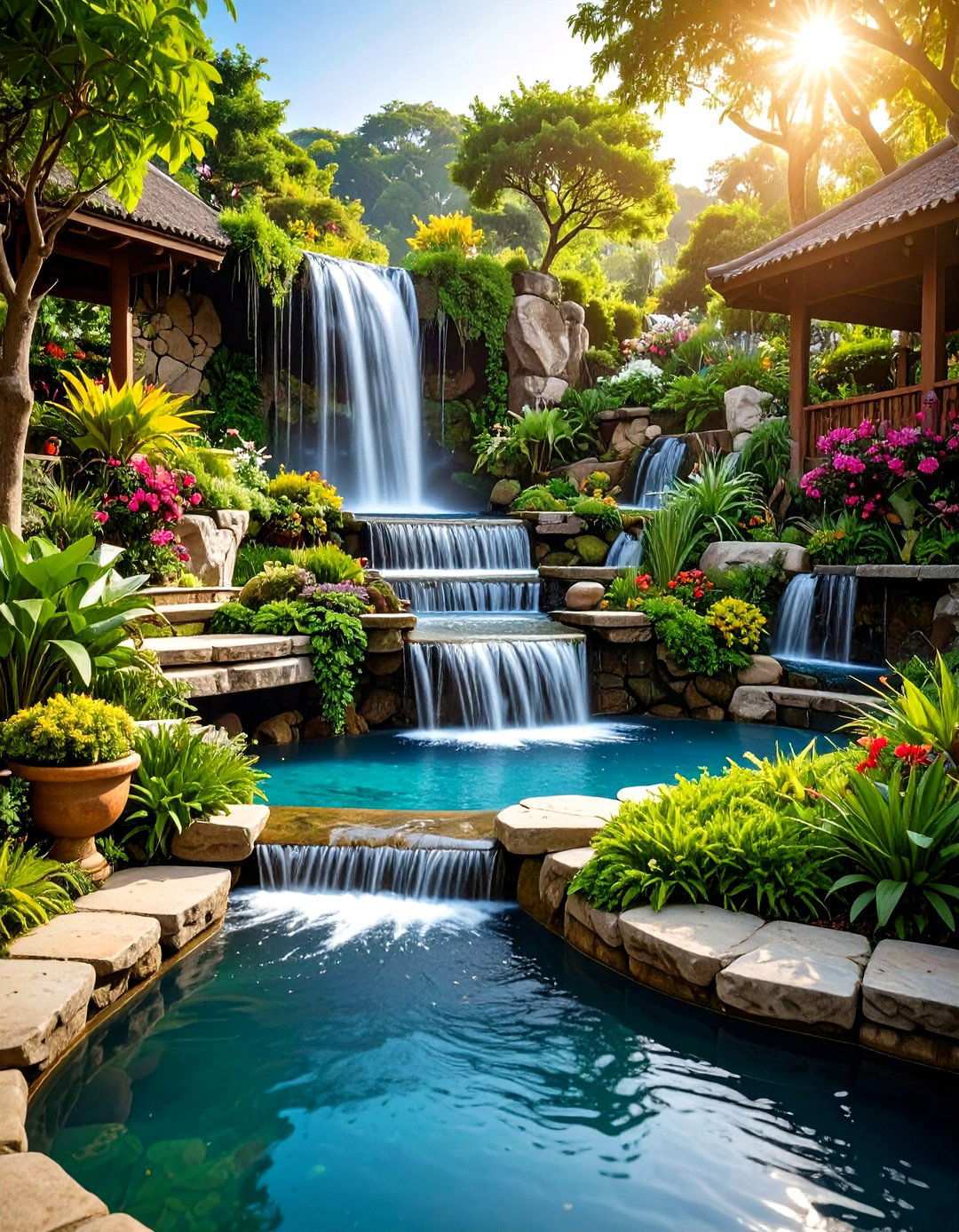
The integration of water features into terraced gardens elevates the design to a new level of sophistication, creating a dynamic and immersive experience. By leveraging gravity to create cascading fountains, stream features, or tiered pond systems, these designs add a captivating element to your outdoor space. Each terraced level can be tailored to incorporate unique water elements, from reflecting pools to bubbling springs, offering a diverse array of experiences as you navigate the garden. Effective water circulation and maintenance are ensured through strategic placement of pumps and filtration systems, which work in tandem to preserve the natural appearance of the water features. On top of this, incorporating rain gardens into your terraced design enables the management of stormwater runoff while supporting native plant communities. The establishment of aquatic plants, moisture-loving perennials, and bog gardens at different levels can create diverse habitats that attract local wildlife, enriching the ecosystem. As the sun sets, strategically placed evening lighting can transform water features into dramatic focal points, further enhancing the ambiance of your terraced landscape throughout the seasons.
9. Illuminating Elevations in Terraced Gardens
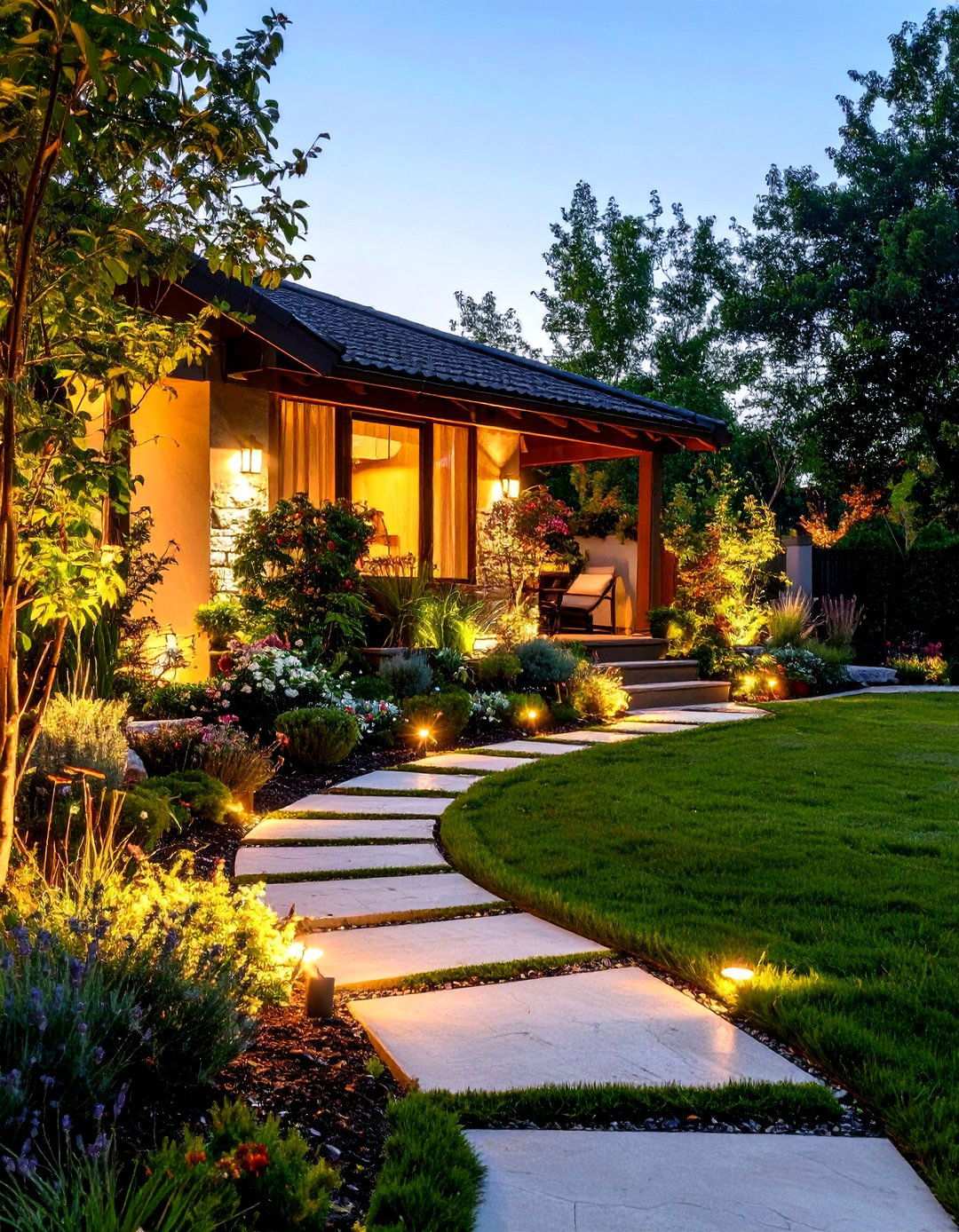
Elevated terraced gardens can be transformed into captivating evening destinations through strategic lighting design. By employing various lighting techniques at each level, these illuminated landscapes can create depth and visual interest after dark. Effective path lighting along walkways ensures safe navigation, while uplighting specimen plants and architectural features adds drama and focal points. Solar-powered lighting options often thrive in terraced designs, where high positions maximize sunlight exposure during the day to optimize evening performance. When integrating lighting into your terraced garden, consider the benefits of low-voltage LED systems that can be easily incorporated into retaining walls and planted areas without disrupting the natural aesthetic. Accent lighting draws attention to texture and form in stone walls, while subtle backlighting creates intriguing silhouettes of plants and garden structures. Water features can be highlighted by underwater or submersible lighting, which creates enchanting reflections and movement patterns. What is the ideal lighting design to showcase your terraced garden’s unique features while maintaining a serene nighttime ambiance?
10. Crafting Multi-Level Seating Areas
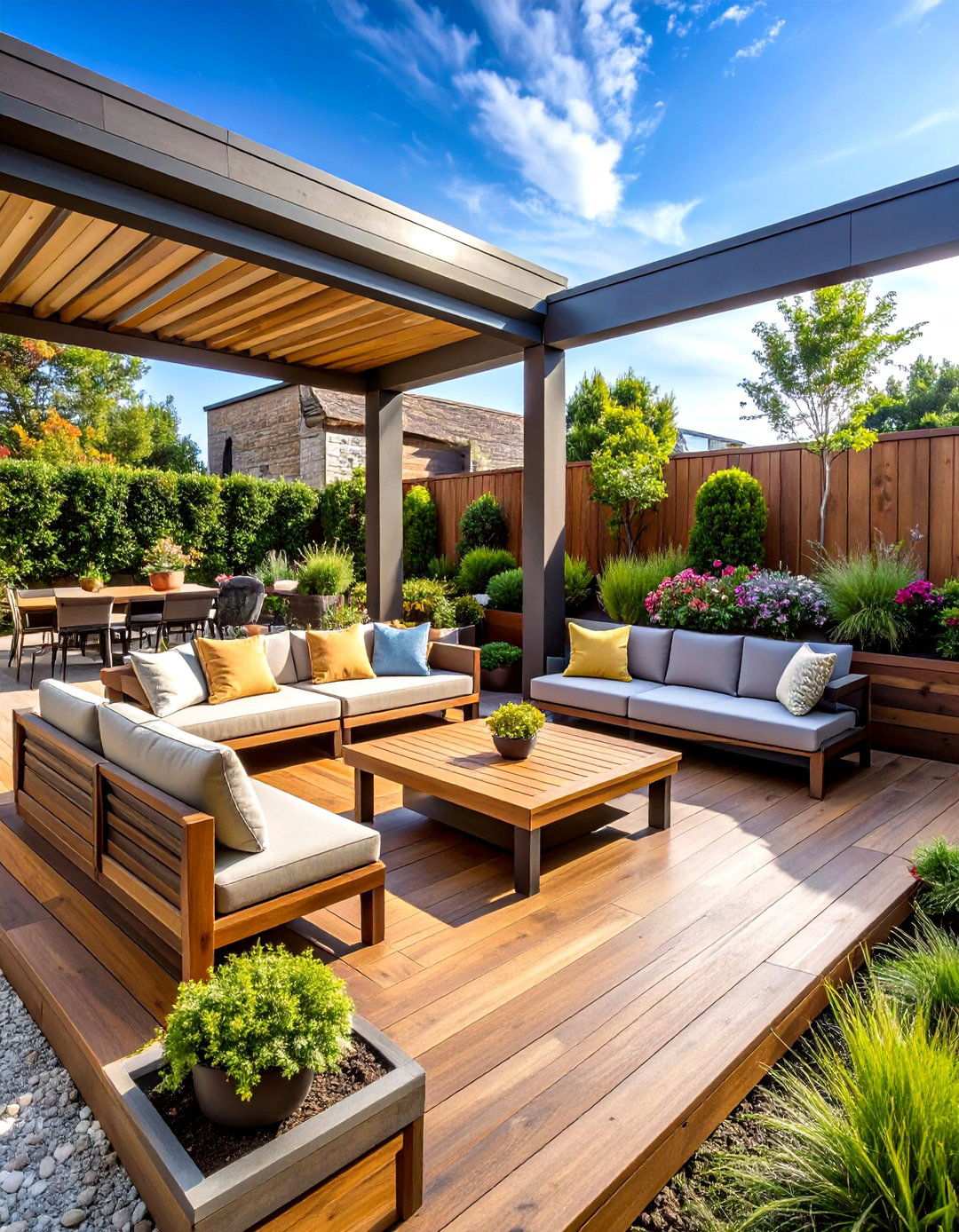
Elevated terraced seating areas can be designed to create intimate gathering spaces that take full advantage of panoramic views and natural amphitheater effects. These social terraces can be tailored to accommodate everything from casual morning coffee spots to formal outdoor dining areas, each strategically positioned to optimize comfort and scenery. Built-in seating integrated into retaining walls maximizes space efficiency while maintaining clean design lines throughout your terraced landscape. A thought-provoking approach to designing terraced seating areas involves varying seating heights and orientations to accommodate different activities and group sizes across your design. Fire features, outdoor kitchens, and weather protection can be incorporated at suitable levels to extend the usable season of your terraced entertaining areas. Strategically placed plants or architectural elements can be employed to create effective privacy screening, defining individual spaces while maintaining visual connection between levels. The natural stepping of terraced seating areas can create excellent acoustics for outdoor performances or gatherings, while providing comfortable viewing angles for garden appreciation. How can you thoughtfully design transitions between different seating levels to encourage movement and social interaction?
11. Rock Garden Terraced Landscapes
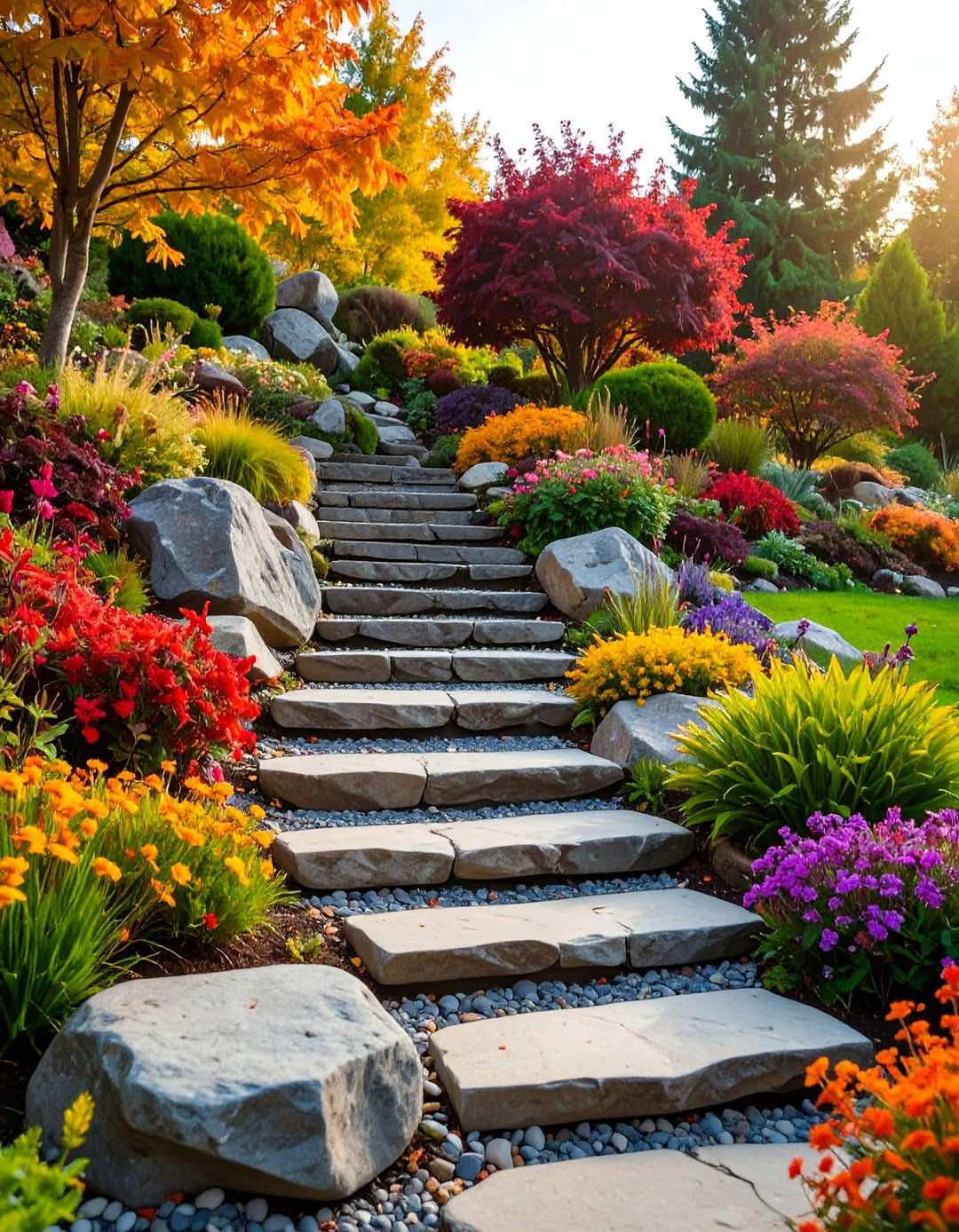
Crafting rock garden terraces unlocks a world of possibilities for showcasing drought-tolerant species and alpine plants in well-draining conditions. These artfully designed terraced environments pay homage to mountain ecosystems where a variety of unique plants thrive in rocky, fast-draining soils. By incorporating varied rock types and sizes at each terraced level, you can create diverse growing conditions that support a range of plant communities, from sedums to native wildflowers. Carefully placed boulders not only provide natural windbreaks but also create microclimates that benefit specific plant groups, adding sculptural elements to your terraced design. To further enhance your rock garden, consider incorporating scree slopes and crevice gardens, which can accommodate even the most specialized alpine species. Gravel mulches and decomposed granite pathways not only enhance the natural aesthetic but also provide excellent drainage and easy maintenance access. The thermal mass of rocks helps regulate soil temperatures, protecting plants during extreme weather conditions while creating striking seasonal displays as different species bloom throughout the year.
12. Sustainable Native Plant Terracing
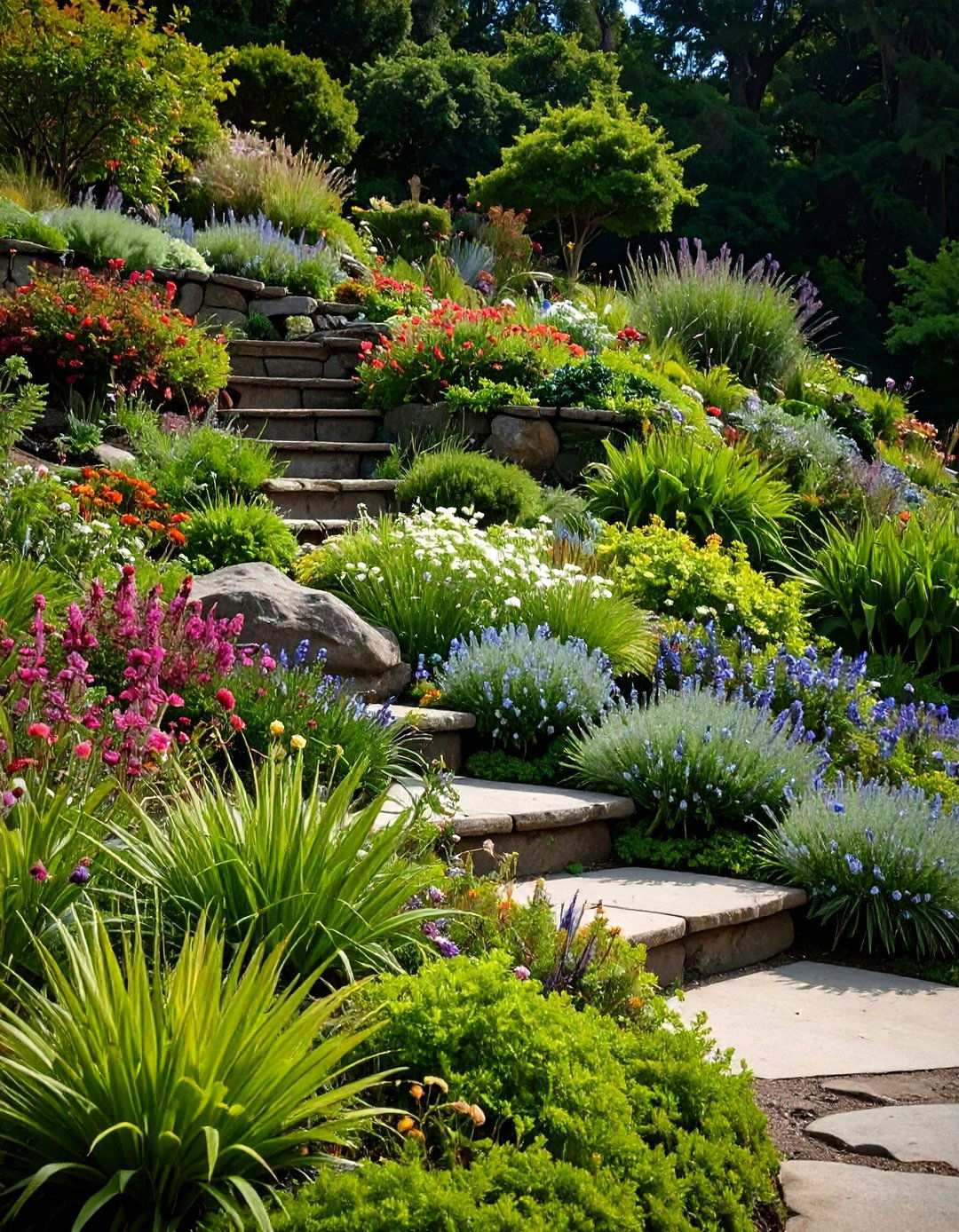
Native plant terracing presents an opportunity to create sustainable landscapes that support local wildlife while minimizing maintenance requirements and water usage. These ecological terraced systems can replicate natural habitat transitions from wetland to upland communities across different levels of your garden. By tailoring each terraced zone to accommodate different native plant communities based on moisture, sun exposure, and soil conditions, you can create diverse ecosystems that provide food and shelter for beneficial insects, birds, and other wildlife. To further expand your native plantings, consider incorporating seed collection and propagation areas within your terraced design. Rain gardens and bioswales can be strategically integrated at appropriate levels to manage stormwater while supporting specialized native plant communities. The gradual progression of elevations allows you to showcase seasonal changes and wildlife activity throughout the year, creating a captivating and dynamic landscape. What unique native plant communities would thrive in your specific climate and soil conditions, bringing year-round interest to your terraced landscape?
13. Drought-Resilient Landscape Design
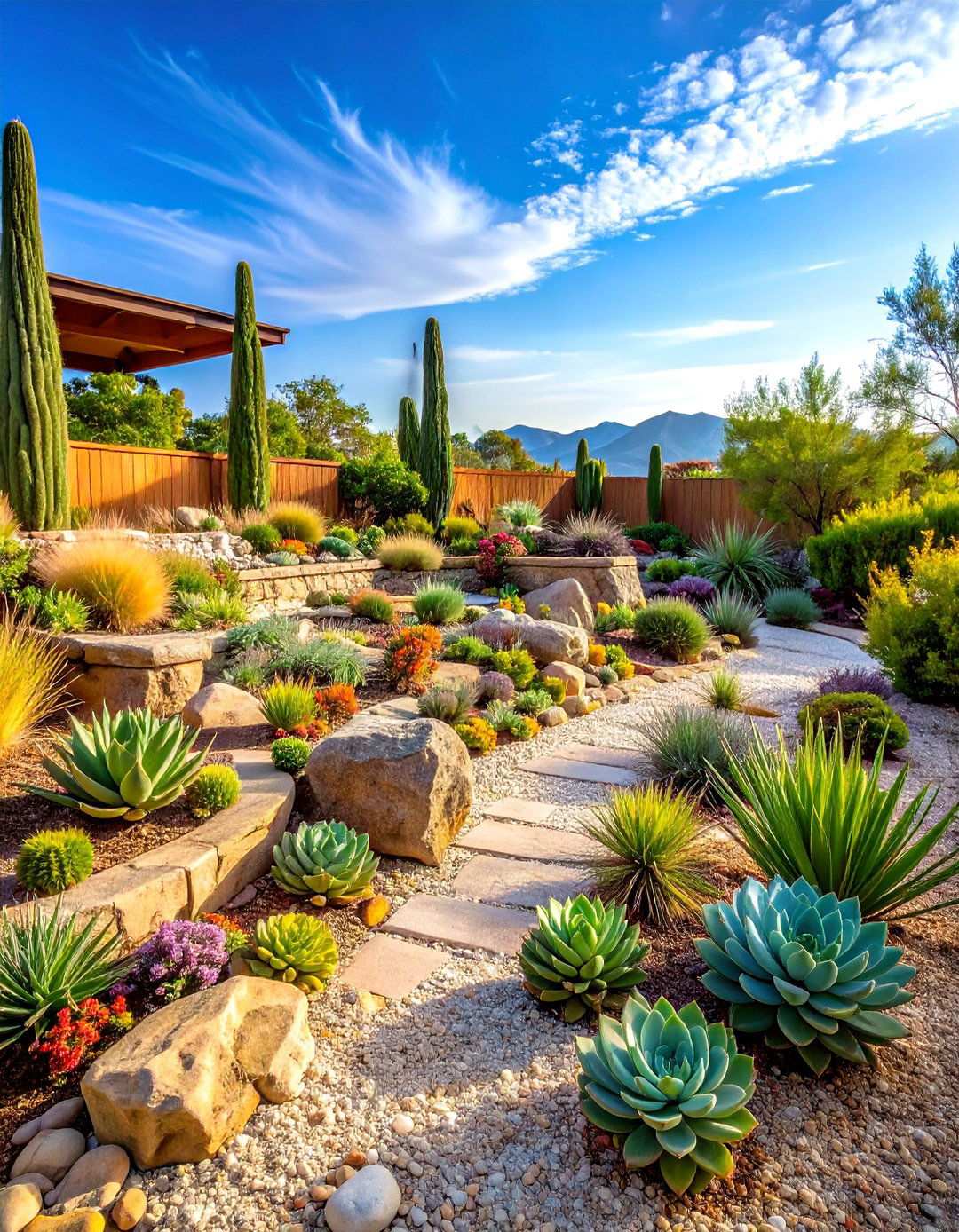
Terraced gardens with drought-resistant plants offer a striking alternative to traditional landscapes, thriving in arid conditions with minimal water requirements. By emphasizing effective drainage and strategic plant placement, these water-efficient designs maximize natural rainfall while minimizing the need for irrigation. Each tiered level can showcase a unique selection of drought-tolerant plants, from architectural succulents and cacti to ornamental grasses and fragrant herbs that add structure and seasonal interest to your landscape. Gravel and decomposed granite surfaces not only reduce water loss but also create visually appealing pathways and design elements throughout the terraced landscape. By incorporating rainwater harvesting systems, you can capture and redirect precipitation to areas where it’s most beneficial, providing a sustainable solution for water-conscious gardening. Strategic shade structures and windbreaks protect sensitive plants while creating comfortable microclimates for both plants and people to enjoy. The sculptural forms and textures of drought-resistant plants add a touch of drama to your landscape, challenging traditional garden expectations while requiring minimal maintenance.
14. Maximizing Space in Small Terraced Gardens
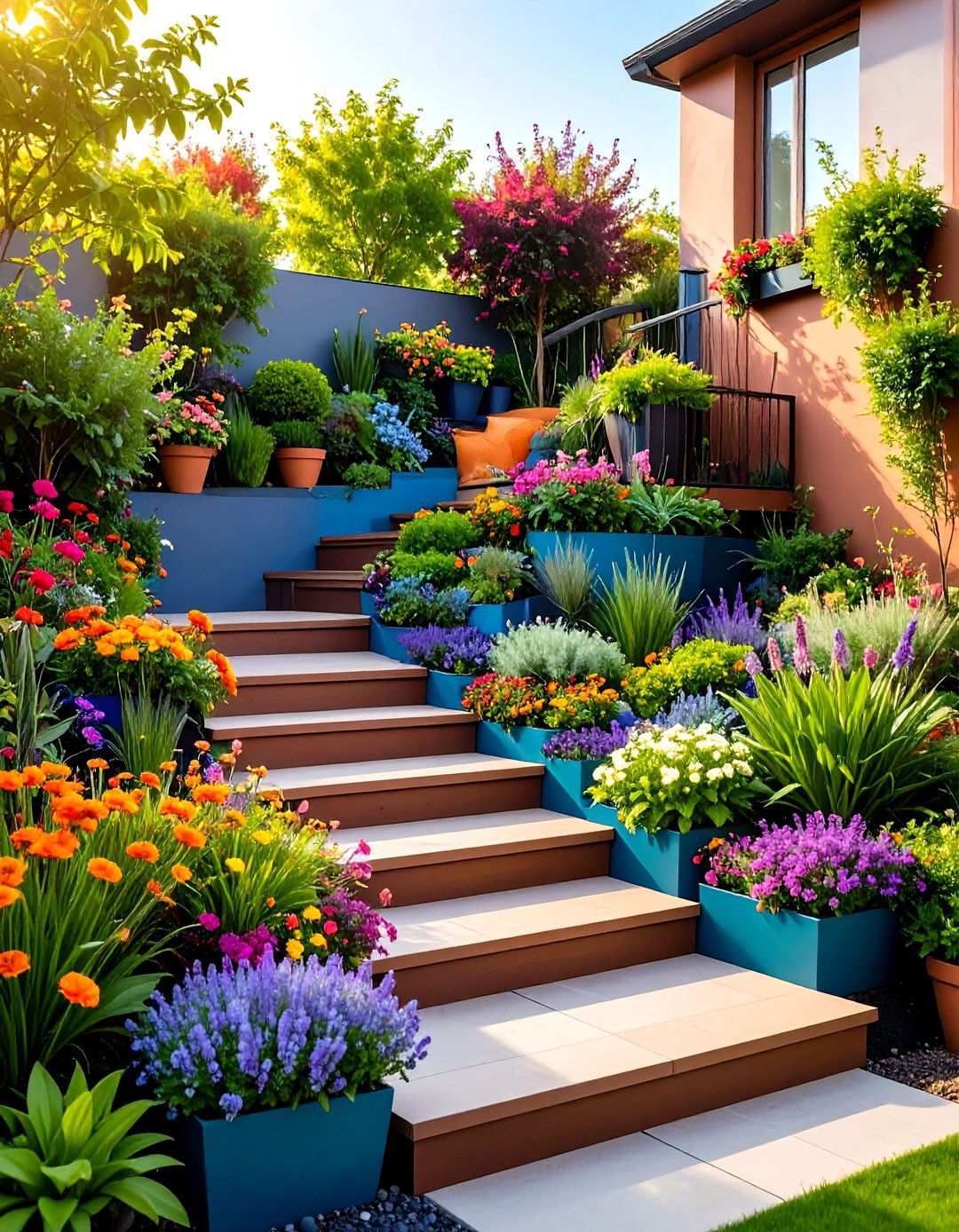
Compact terraced gardens make the most of limited space by incorporating clever vertical design and efficient space utilization techniques. These space-saving terraced systems can transform even the smallest slopes into functional outdoor areas that accommodate multiple activities and plant displays. Each tiered level serves multiple purposes, combining planting areas with storage, seating, or display functions to maximize available space. Modular systems and container gardening techniques are particularly well-suited to small terraced designs, allowing for easy reconfiguration as needs change throughout the seasons. Consider incorporating fold-down tables, built-in storage benches, and vertical growing systems to maximize functionality without overwhelming the space. Strategically placed mirrors and reflective surfaces can create the illusion of expanded space while amplifying natural light throughout your compact terraced garden. By selecting plants with compact growth habits and multi-season interest, you can create a thriving outdoor environment that makes the most of your small space. What’s more, by prioritizing different functions within your terraced space, you can create a unique outdoor area that meets your specific needs and enhances your overall quality of life.
15. Elevating Private Oasis Terracing
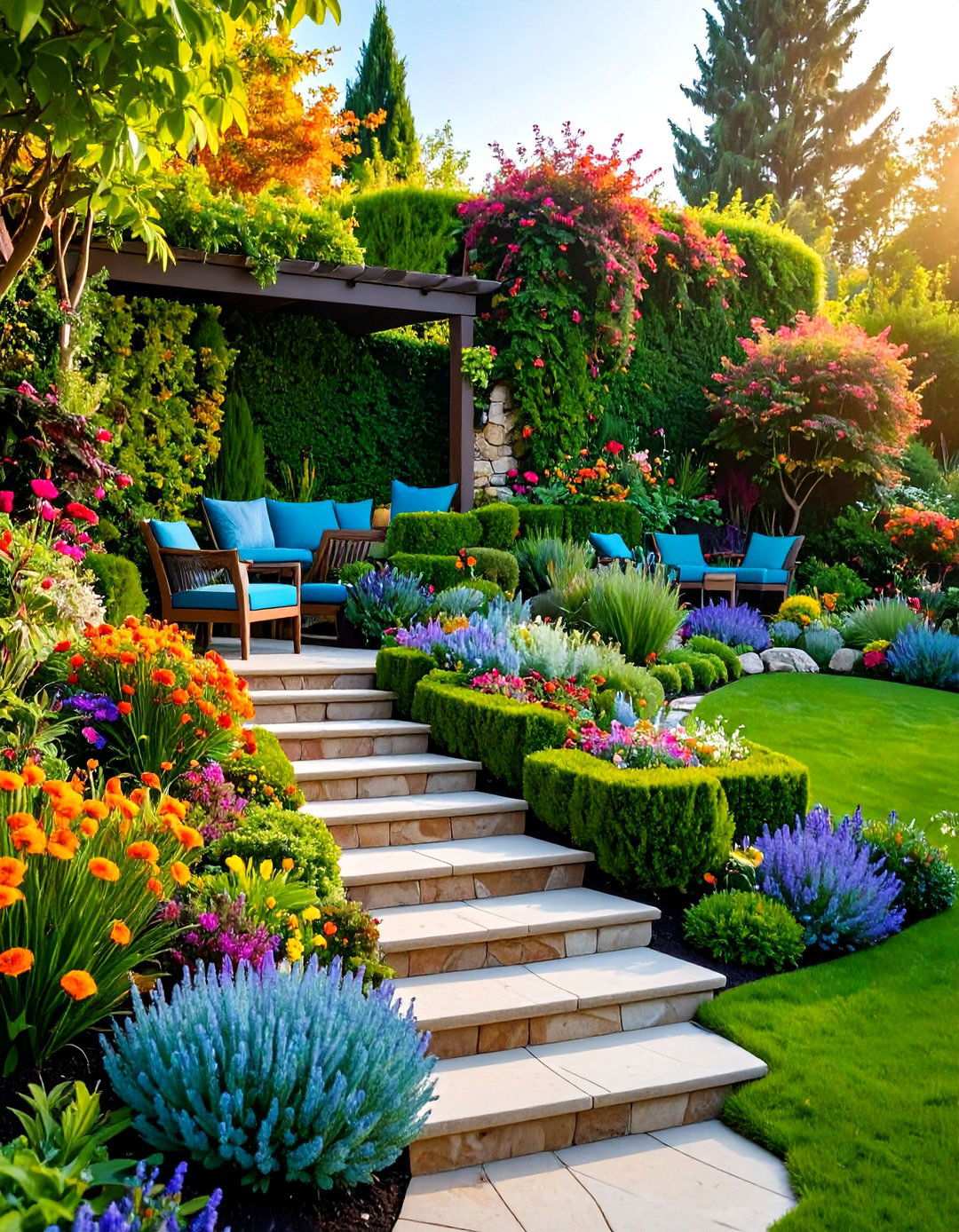
Strategic terracing and layered screening enable homeowners to create secluded outdoor retreats that filter out unwanted views while showcasing desirable vistas. By integrating a variety of horticultural and architectural elements, you can craft intimate spaces within a larger landscape that harmonize with surrounding natural features. Each tier in the terraced design can feature distinct screening strategies, from verdant, densely planted levels to decorative walls that provide immediate seclusion and long-term visual interest. Fast-growing hedge materials and climbing plants can be strategically positioned to quickly establish effective screening, while developing into beautiful landscape features over time. Carefully selecting integrated seating and gathering areas will allow you to optimize both privacy and comfort within your terraced design. The sensory experience of sound masking through water features, rustling grasses, and lush plantings can transport you to a tranquil environment removed from urban commotion. The organic progression of tiered screens creates visually appealing layers that add depth and visual interest to your private outdoor sanctuary.
16. Harmonizing Terraced Forms
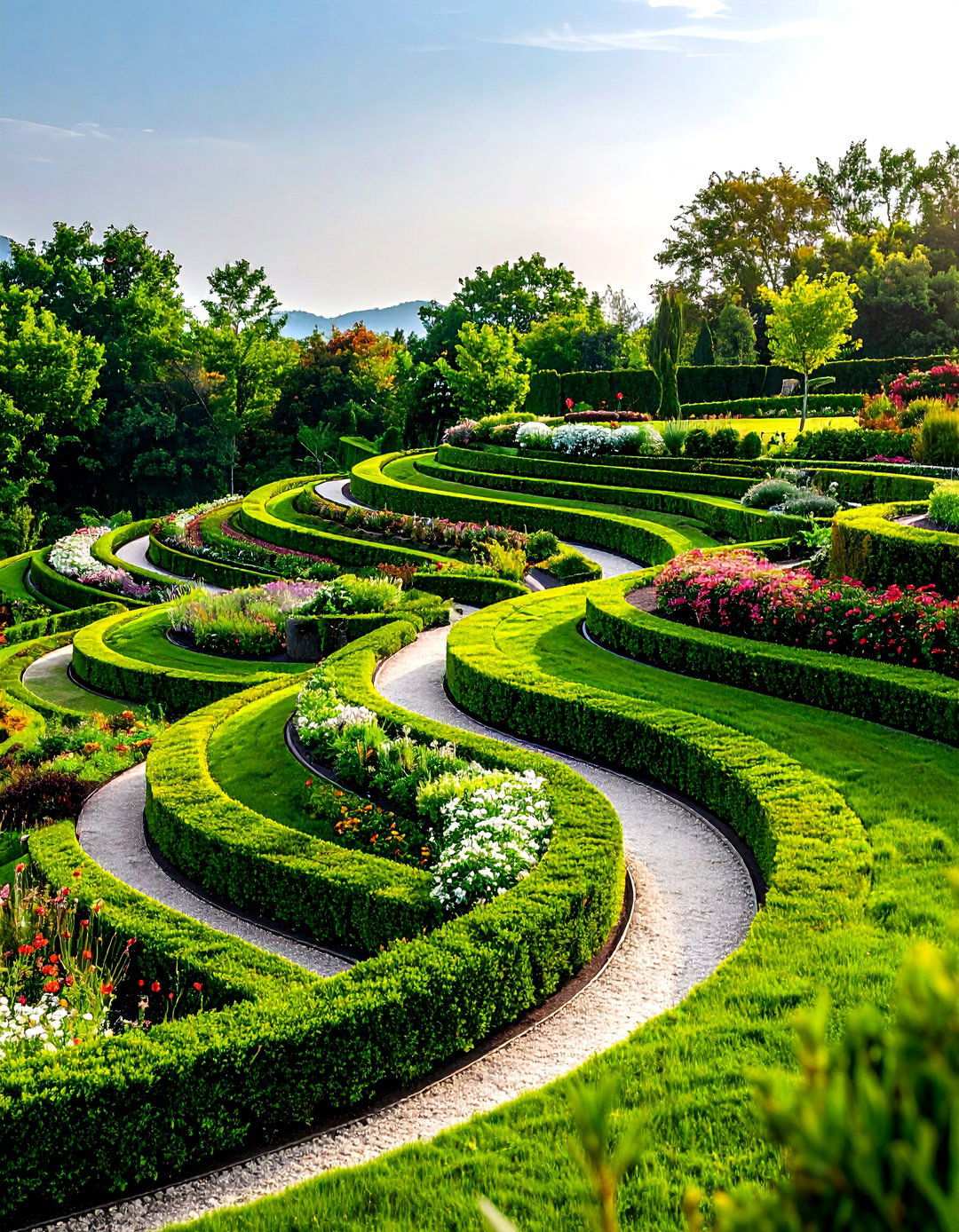
Terraced gardens can take on two distinct forms, each offering unique aesthetic experiences and functional benefits. Curved terracing creates a fluid, organic landscape that naturally follows the contours of your site, while linear terracing establishes a strong, geometric framework that complements modern architecture. Depending on your site conditions and personal design preferences, you may opt for the naturalistic, whimsical feel of curved terraces or the precise, structured look of linear terracing. Curved terraces are particularly well-suited to irregular slopes and varied site conditions, creating a seamless transition between the built environment and the surrounding landscape. In contrast, linear terraces offer maximum growing space and simplified construction, making them an excellent choice for productive gardens and modern landscapes. Consider blending both approaches within a single terraced system, using curved elements to create intimate gathering spaces and linear features for functional growing zones. The choice between curved and linear terracing has far-reaching implications, influencing everything from construction complexity to plant selection and maintenance access. Drainage patterns, view corridors, and circulation routes all respond distinctly to curved versus linear terraced layouts, underscoring the importance of selecting a design approach that harmonizes with your home’s architecture and elevates your landscape’s natural features.
17. Harmonious Terracing with Gravel and Paving
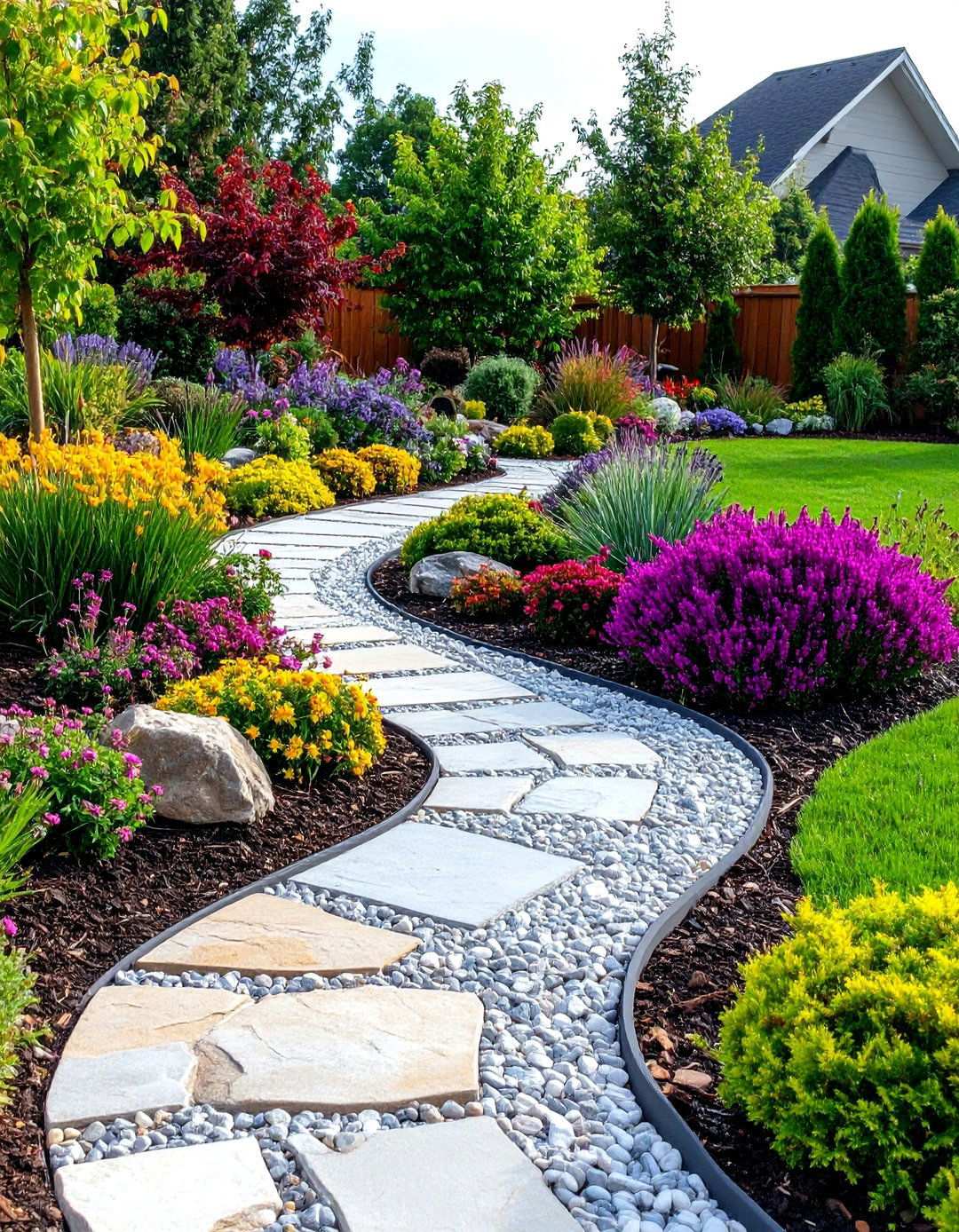
When designing terraced gardens that seamlessly integrate gravel and paving, the result is a low-maintenance landscape that skillfully balances planted areas with durable surfaces. By combining soft plantings with functional hardscapes, these terraced designs can accommodate various activities, from foot traffic and outdoor furniture to seasonal events. Each terraced level presents an opportunity to experiment with unique material combinations, such as permeable gravel areas that support naturalistic plantings or solid paving that provides stable platforms for relaxation and entertainment. To create visual cohesion throughout your terraced design, consider using matching or complementary materials that accommodate different functional requirements. By combining decorative gravels, colored concrete, and natural stone paving in creative patterns, you can add visual interest while maintaining practical performance. Effective drainage design ensures that hardscapes efficiently shed water toward planted zones where it can provide maximum benefit. The key to maintaining a clean and professional appearance lies in careful detailing of transition zones between different materials to prevent erosion.
18. Engineered Terracing for Slope Stabilization
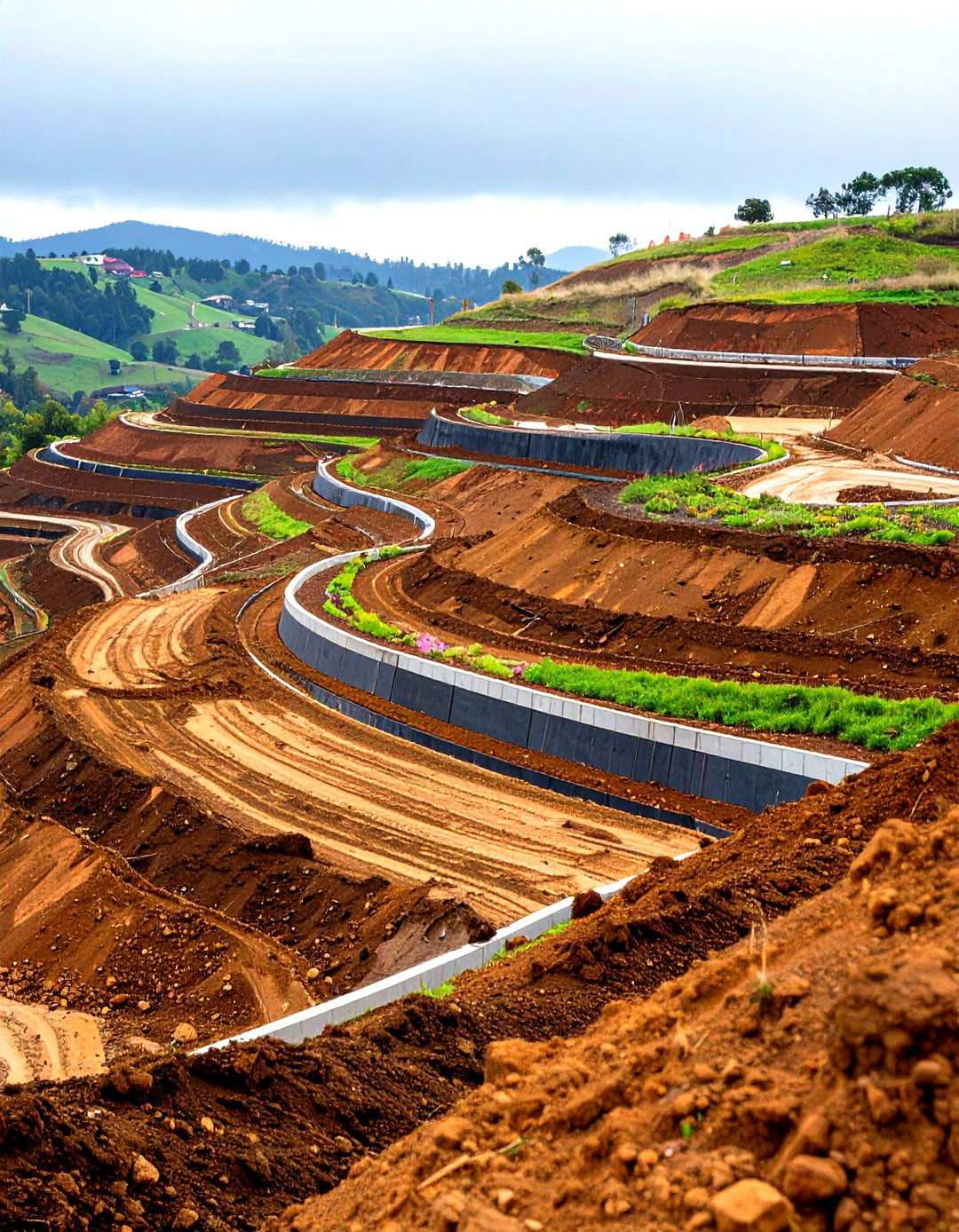
For terraced gardens that prioritize engineering and slope stabilization, the focus is on creating attractive planted landscapes that prevent erosion and soil movement. By employing proven construction techniques and optimal materials, these structural terraced systems can ensure long-term stability on challenging sites. Each terraced level incorporates essential elements, including proper drainage, suitable backfill materials, and reinforcement techniques that maintain structural integrity while supporting healthy plant growth. To enhance stability and provide optimal growing conditions for your selected plants, consider incorporating geotextile fabrics, drainage pipes, and engineered soils. A professional engineering consultation is crucial to ensure that structural requirements are met while achieving your aesthetic goals within budget and timeline constraints. Plant selection plays a vital role in the success of your terraced landscape, emphasizing deep-rooted species that provide additional soil stabilization while offering seasonal interest and wildlife habitat benefits. By combining proper engineering with thoughtful plant selection, you can create terraced landscapes that perform reliably while becoming more beautiful and stable over time. How would a comprehensive slope analysis impact your terraced garden design, balancing both safety and beauty?
19. Dynamic Raised Bed Systems for Versatile Gardening
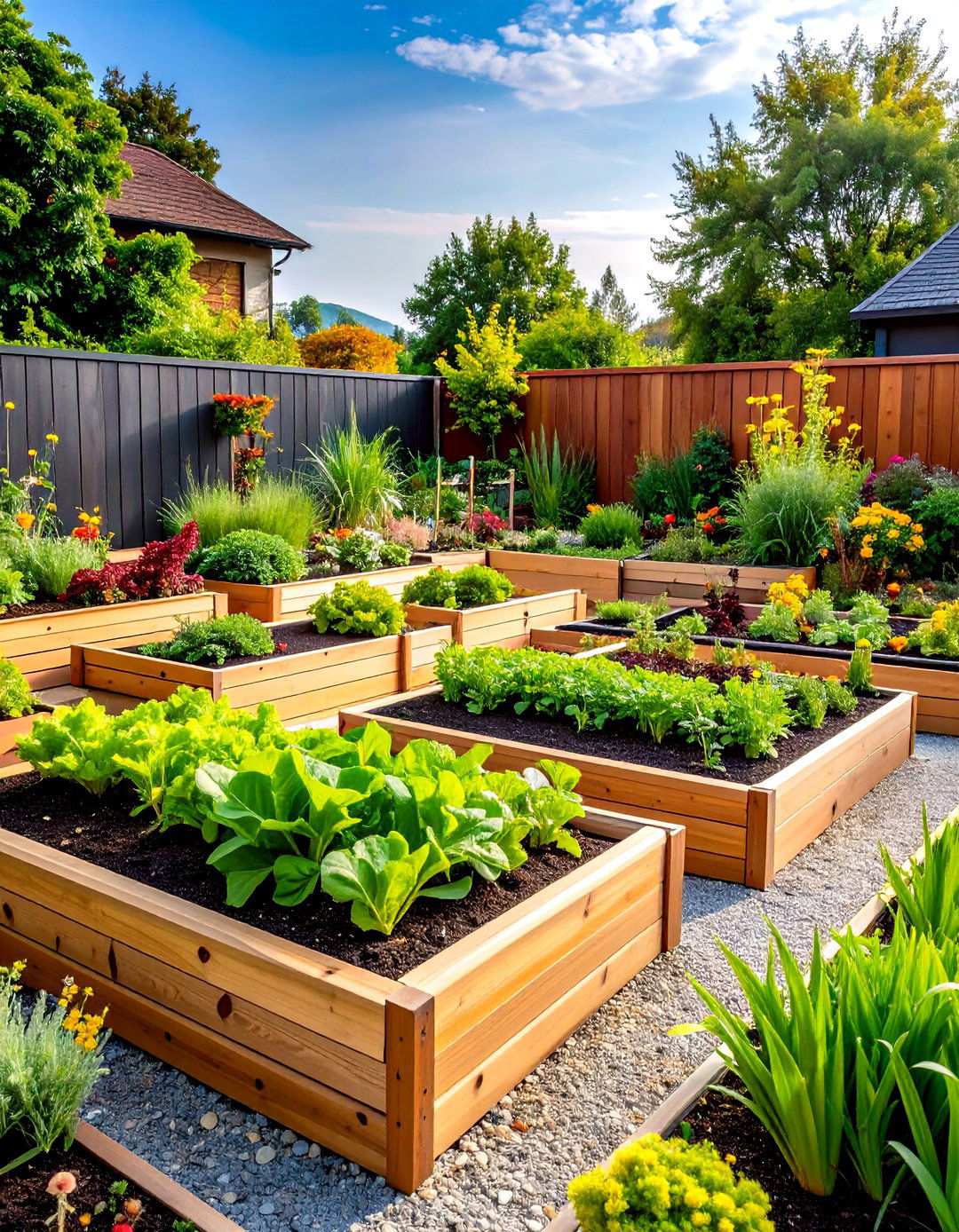
Elevated raised bed terracing combines the benefits of container gardening with the permanence of landscape structure, fostering ideal growing conditions and accommodating challenging terrain with ease. These elevated terraced systems provide superior drainage, precise soil control, and effortless access while transforming slopes into thriving garden areas. Each raised bed can be tailored with bespoke soil mixtures and amendments to cater to the specific needs of various plants, from acid-loving blueberries to alkaline-preferring herbs and vegetables. Modular construction techniques enable seamless expansion or reconfiguration as your gardening needs evolve over time. Gravity-fed irrigation systems function particularly well with raised bed terraces, ensuring efficient water delivery to all planted areas through effortless distribution. The defined edges of raised beds create a clean, organized appearance while providing natural barriers that prevent soil erosion and plant spreading. Features like wider pathways and comfortable working heights make raised bed terraces an ideal choice for gardeners with mobility considerations while maintaining attractive landscape integration.
20. Multi-Level Outdoor Entertainment Spaces
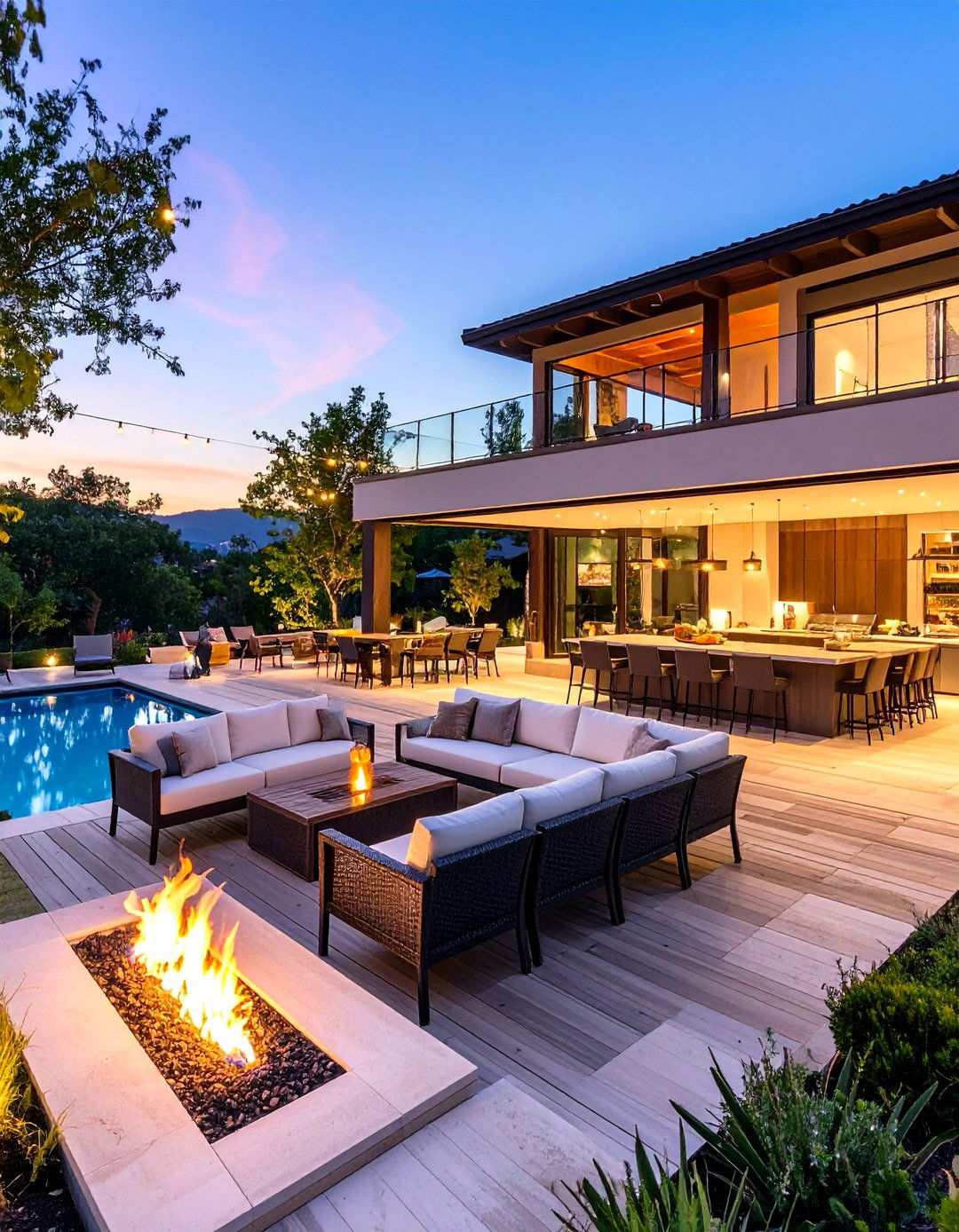
Social terraced gardens create dynamic outdoor living areas that accommodate a variety of activities across multiple elevations and exposures, fostering seamless transitions between different spaces. These entertainment-focused terraced systems can include cooking areas, dining spaces, lounging zones, and activity areas that take advantage of optimal views and comfort conditions. Each terraced level can be designed for specific entertainment functions, from intimate conversation areas to large gathering spaces that accommodate parties and celebrations. Outdoor kitchens, fire features, audio systems, and weather protection can be integrated into your terraced entertainment areas to extend the usable season and enhance comfort. Lighting design plays a crucial role in entertainment terraces, where safety, ambiance, and functionality must be balanced across multiple levels and activity zones. Storage solutions, utility connections, and furniture selection require thoughtful planning to ensure that each terraced level functions effectively while maintaining visual appeal. By carefully sequencing different entertainment activities across your terraced levels, you can create a natural flow and optimal guest experience.
21. Evoking Whimsy with Terraced Cottage Gardens
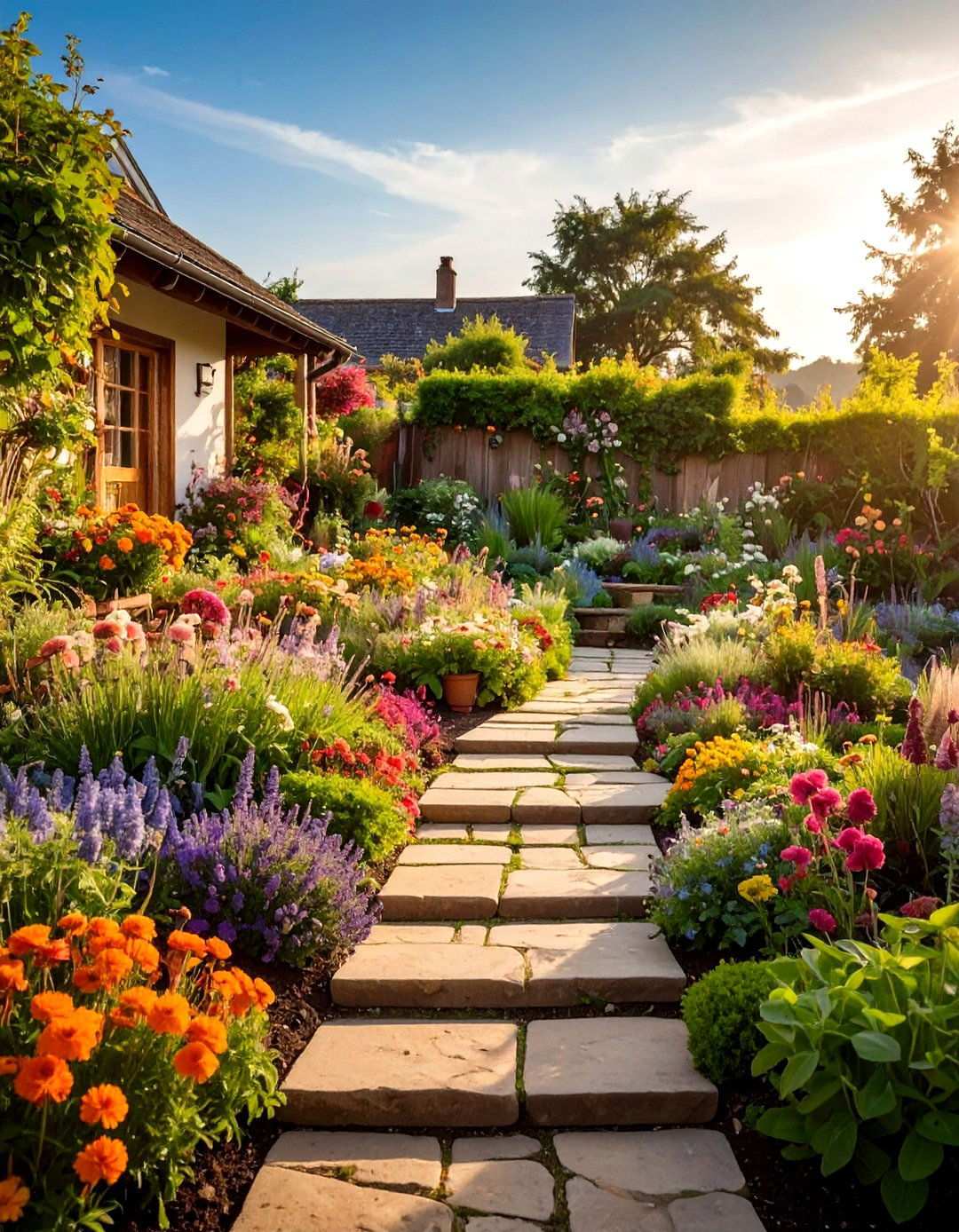
Terraced cottage gardens evoke a sense of enchanting informality, where perennials, herbs, and flowering plants mingle in lush, vibrant displays that seem effortlessly established over time. These charming terraced landscapes prioritize organic plant combinations and seasonal succession, embracing a more relaxed, naturalistic approach to gardening. By incorporating self-seeding annuals and diverse plant themes across each terraced level, you can create an abundance of unexpected combinations that unfold like a story throughout your garden. Vintage garden ornaments, weathered stone, and reclaimed timber complement the organic character of cottage gardens, while meandering pathways and hidden seating areas invite you to linger and explore.
22. Designing Serenity with Modern Minimalist Terracing
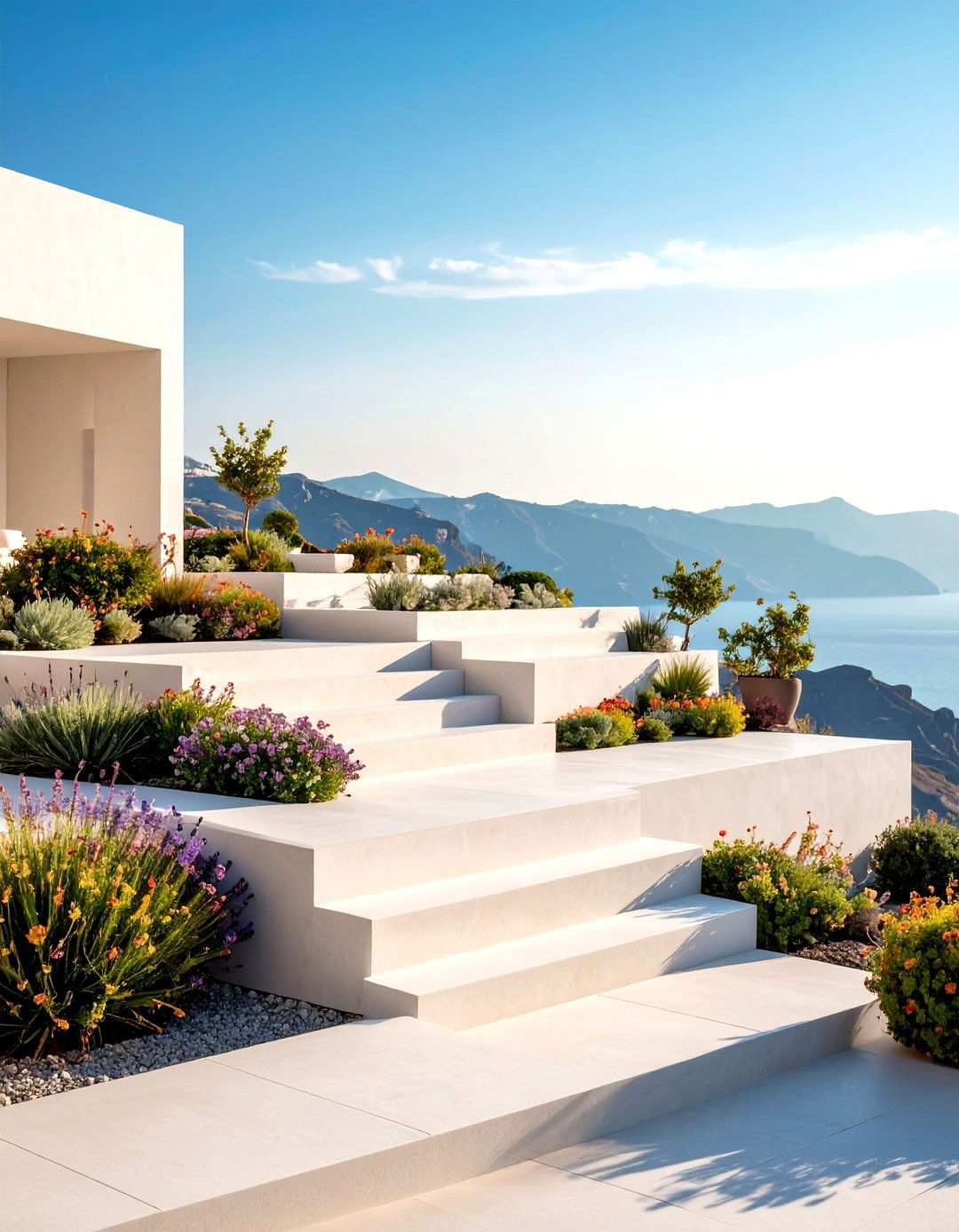
Minimalist terraced gardens embody a philosophy of simplicity and elegance, where clean lines, limited color palettes, and precision-placed plant selections converge to create a profound sense of visual impact. By focusing on a few carefully chosen architectural plants with strong forms and textures, you can establish a sense of structure and year-round interest in your design. Strategic spacing and negative space play a crucial role in maintaining the serene atmosphere of minimalist terracing, as do clever uses of materials like poured concrete, steel, or composite decking to create seamless, uninterrupted surfaces. Integrated lighting, hidden drainage systems, and concealed utility connections further enhance the minimalist aesthetic, allowing you to indulge in the calm, ordered beauty of your garden.
23. Mastering Terraced Wind Gardens for Coastal Resilience
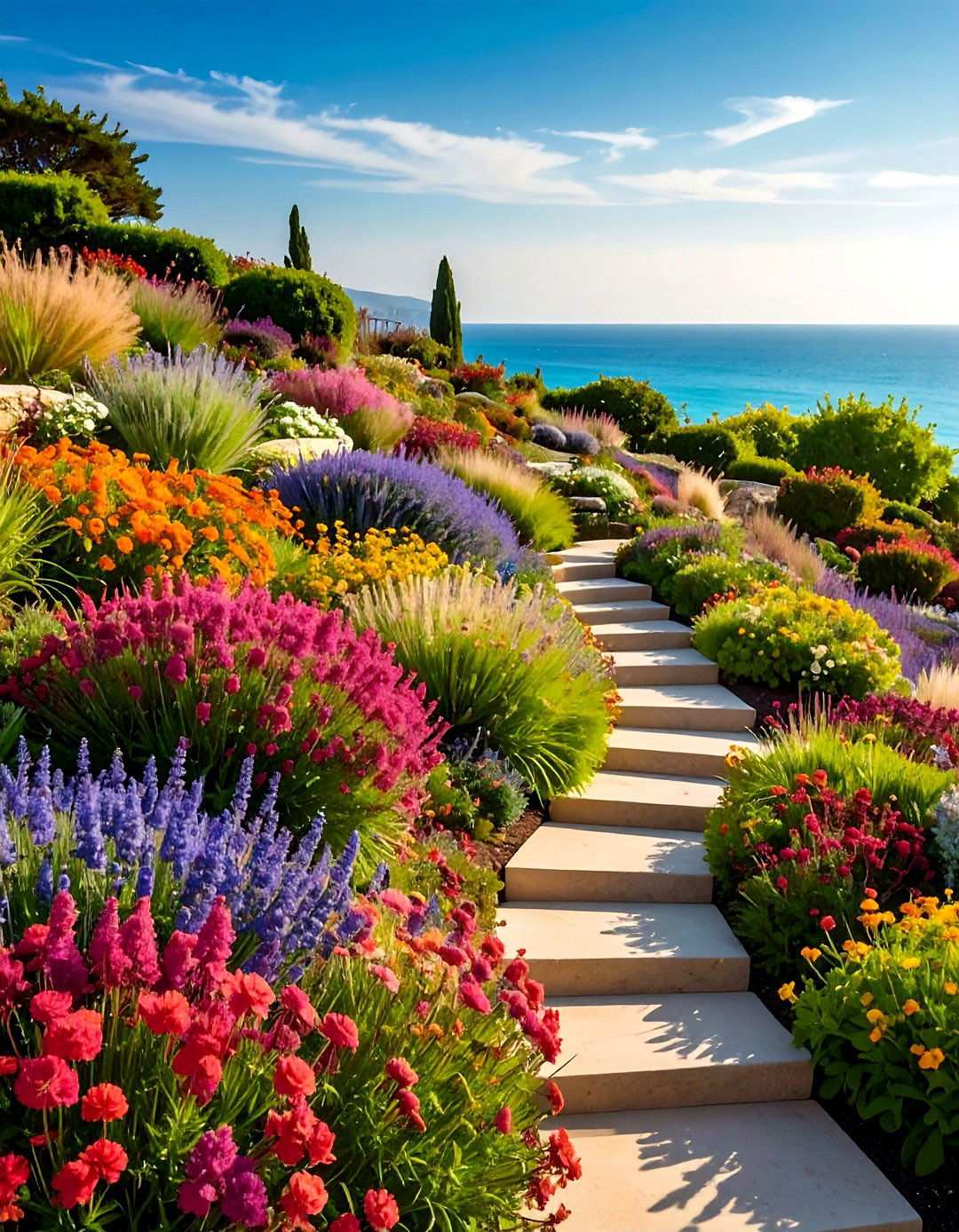
Coastal terraced gardens confront the distinct challenges of salt exposure, wind, and sandy soils by cultivating resilient landscapes that not only survive but thrive in maritime conditions. This specialized approach leverages salt-tolerant plants and protective design strategies that harmonize with coastal weather patterns rather than opposing them. As you ascend each terraced level, varying degrees of wind protection allow for the cultivation of increasingly sensitive plants, shielding them from direct coastal exposure. Consider incorporating native coastal plants, ornamental grasses, and succulent species that naturally thrive in salt air while delivering year-round structure and seasonal interest. Wind barriers, drainage systems, and soil amendments specifically engineered for coastal conditions ensure long-term success while preserving the landscape’s aesthetic appeal. The terraced structure enables the creation of sheltered microclimates that expand your plant palette while preserving the rugged beauty characteristic of successful coastal gardens.
24. Crafting Wildlife Habitat Terraced Gardens
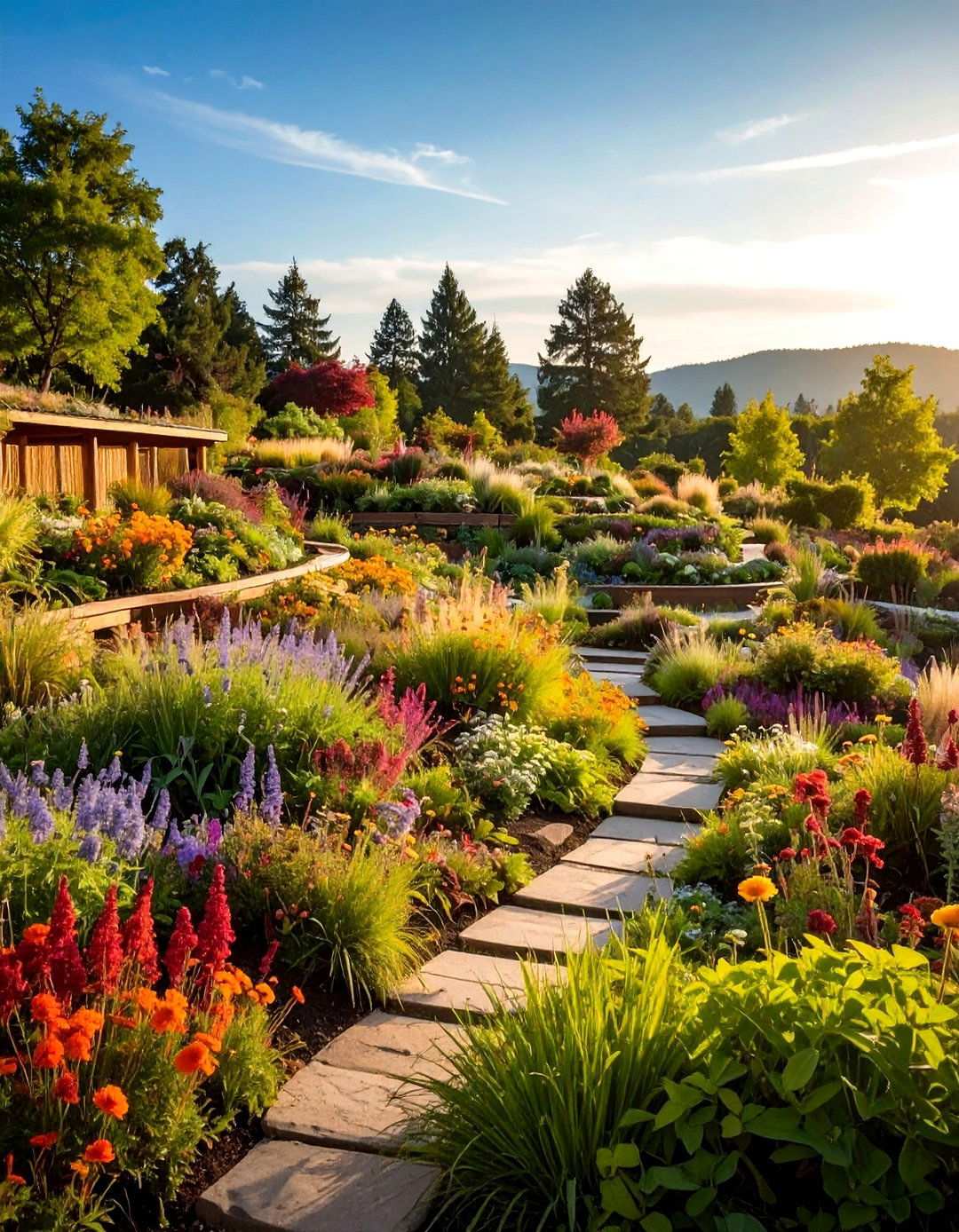
Wildlife-focused terraced gardens create diverse ecosystems that support a wide range of birds, beneficial insects, and local fauna, while providing stunning landscape displays throughout the seasons. These habitat-rich terraced systems incorporate food sources, nesting sites, water features, and shelter areas that attract and sustain wildlife populations. Each terraced level can accommodate different habitat types, from butterfly gardens and bird feeding areas to pollinator meadows and small mammal shelters that create a complete ecosystem support system. Consider native plant selections that provide seeds, berries, nectar, and nesting materials throughout the year, while creating beautiful seasonal displays and natural garden management. Water features, brush piles, and varied vegetation heights create the structural diversity that supports maximum wildlife activity and observation opportunities. The terraced structure allows you to create optimal viewing areas and photography positions while maintaining respectful distance from sensitive wildlife habitats. By practicing organic gardening techniques and pesticide-free maintenance, your terraced wildlife garden provides a safe habitat while demonstrating environmental stewardship and conservation values.