1. Elevated Harvests
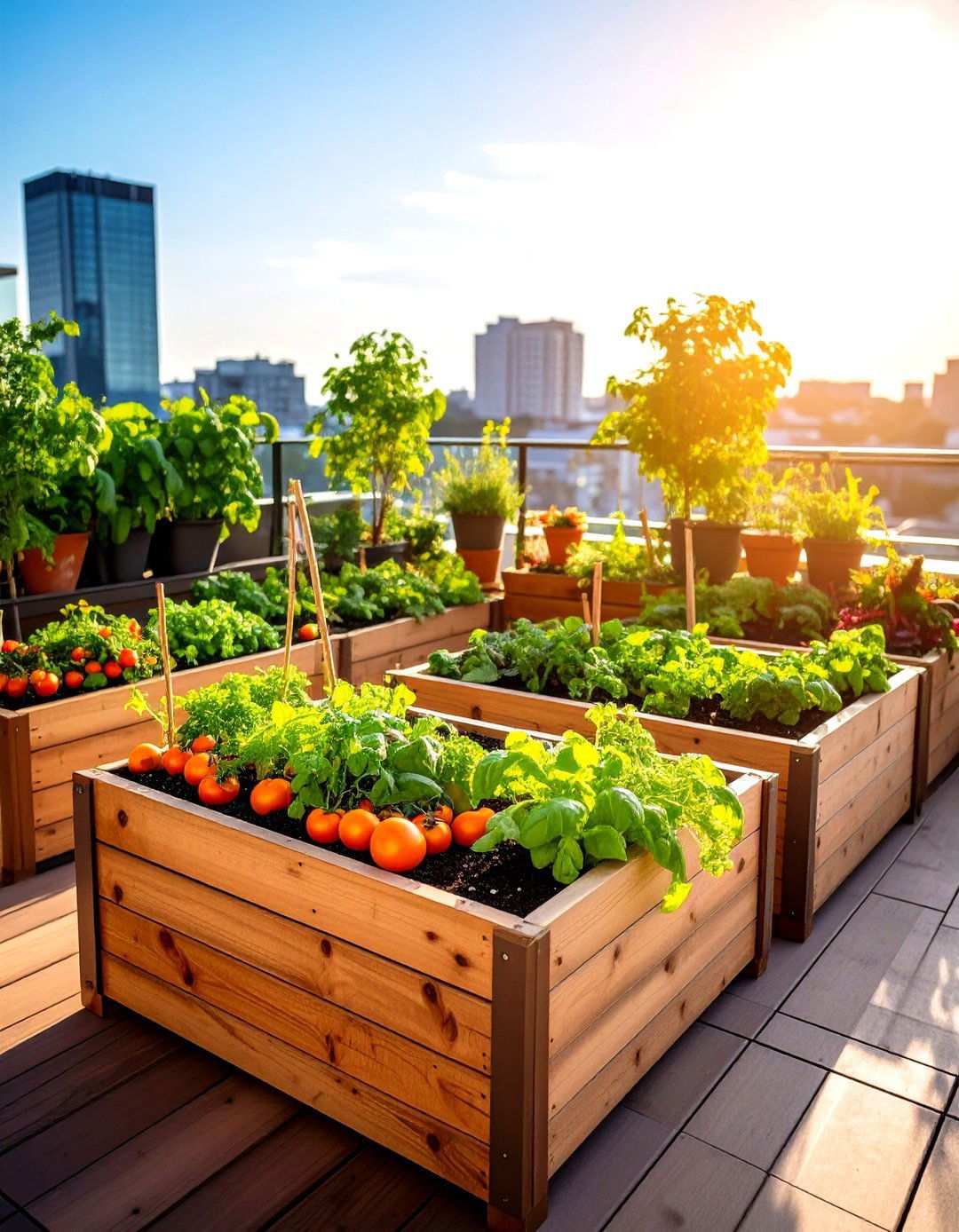
Rooftop gardeners can reap the rewards of a thriving food source by designing and maintaining carefully crafted container vegetable gardens. These ingenious systems utilize compact planters filled with high-quality growing medium to nurture a variety of edible delights, including succulent tomatoes, crunchy peppers, crisp lettuce, and fragrant herbs. To maximize yields, thoughtful placement of containers ensures optimal sun exposure, while organized growing zones promote efficient use of space and enhance harvest potential. By elevating the growing medium, raised containers provide excellent drainage, safeguarding against the risk of root rot in the challenging rooftop environment. To prolong the growing season and maintain a steady supply of fresh produce, consider implementing succession planting techniques. Will you opt for compact bush varieties or train climbing vegetables to ascend vertical supports? Deep containers are ideal for root vegetables like carrots and radishes, while shallow planters work perfectly for leafy greens and herbs. By incorporating drip irrigation systems, maintenance is simplified, as consistent moisture is delivered directly to plant roots, reducing water waste and promoting healthy growth.

As an Amazon Associate I earn from qualifying purchases.
2. Innovative Urban Landscaping Solutions
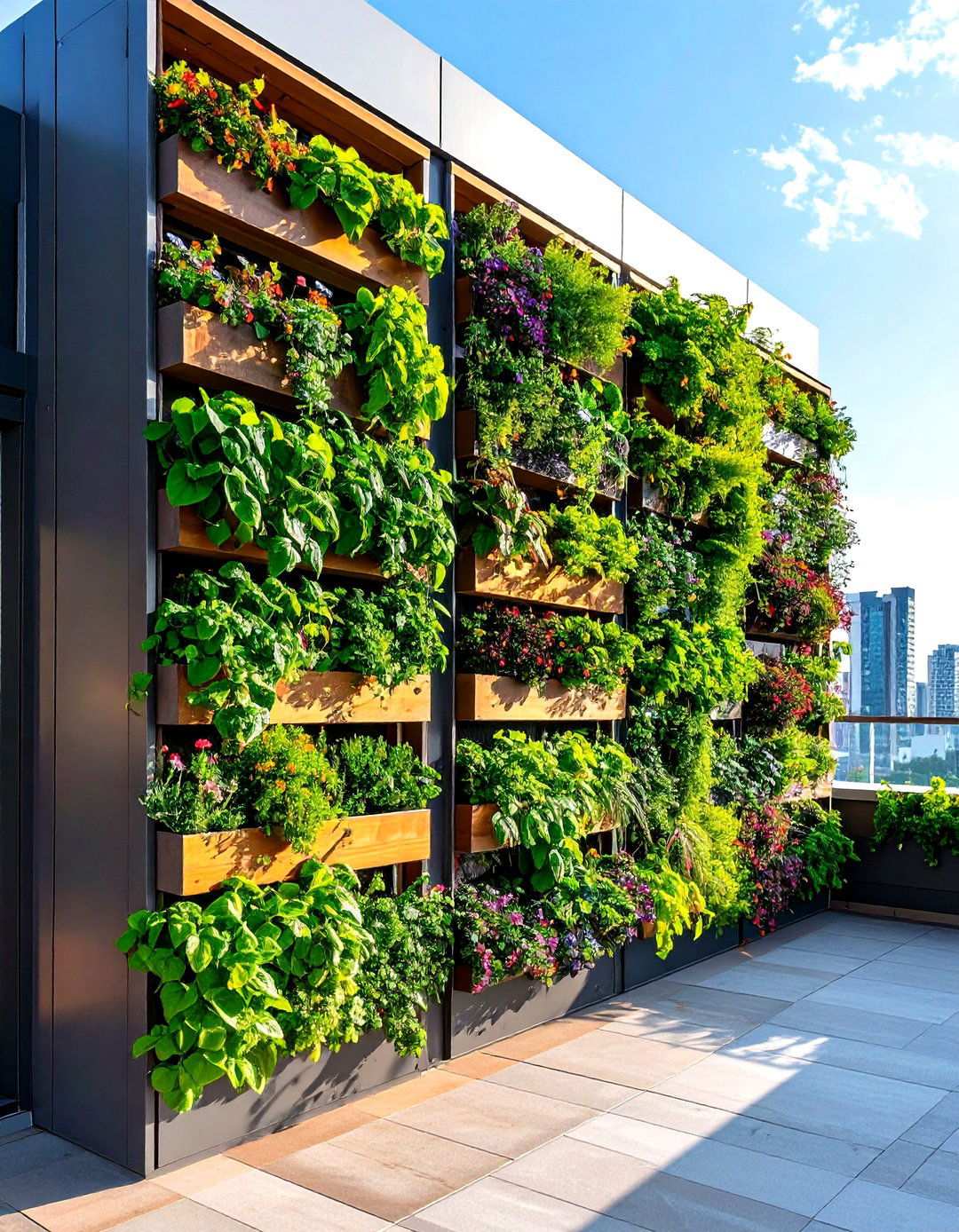
Elevate compact rooftop areas with dramatic green backdrops created by vertically integrated living wall systems. These dynamic installations feature modular planting panels or pocket systems that showcase diverse plant collections along fence lines or building walls. For optimal plant growth, felt-backed panels provide superior root support while ensuring proper drainage and air circulation. Automated irrigation systems guarantee consistent moisture distribution across all planting levels, eliminating the need for manual watering. To create visually striking patterns and textures, combine trailing plants like ivy with upright herbs and colorful flowers. Vertical gardens serve as natural privacy screens, adding substantial greenery without consuming valuable floor space. Lightweight materials minimize structural load, providing years of reliable performance in outdoor conditions. These living artworks transform bland rooftop walls into breathtaking focal points that evolve with each passing season.
3. Outdoor Dining Enclaves
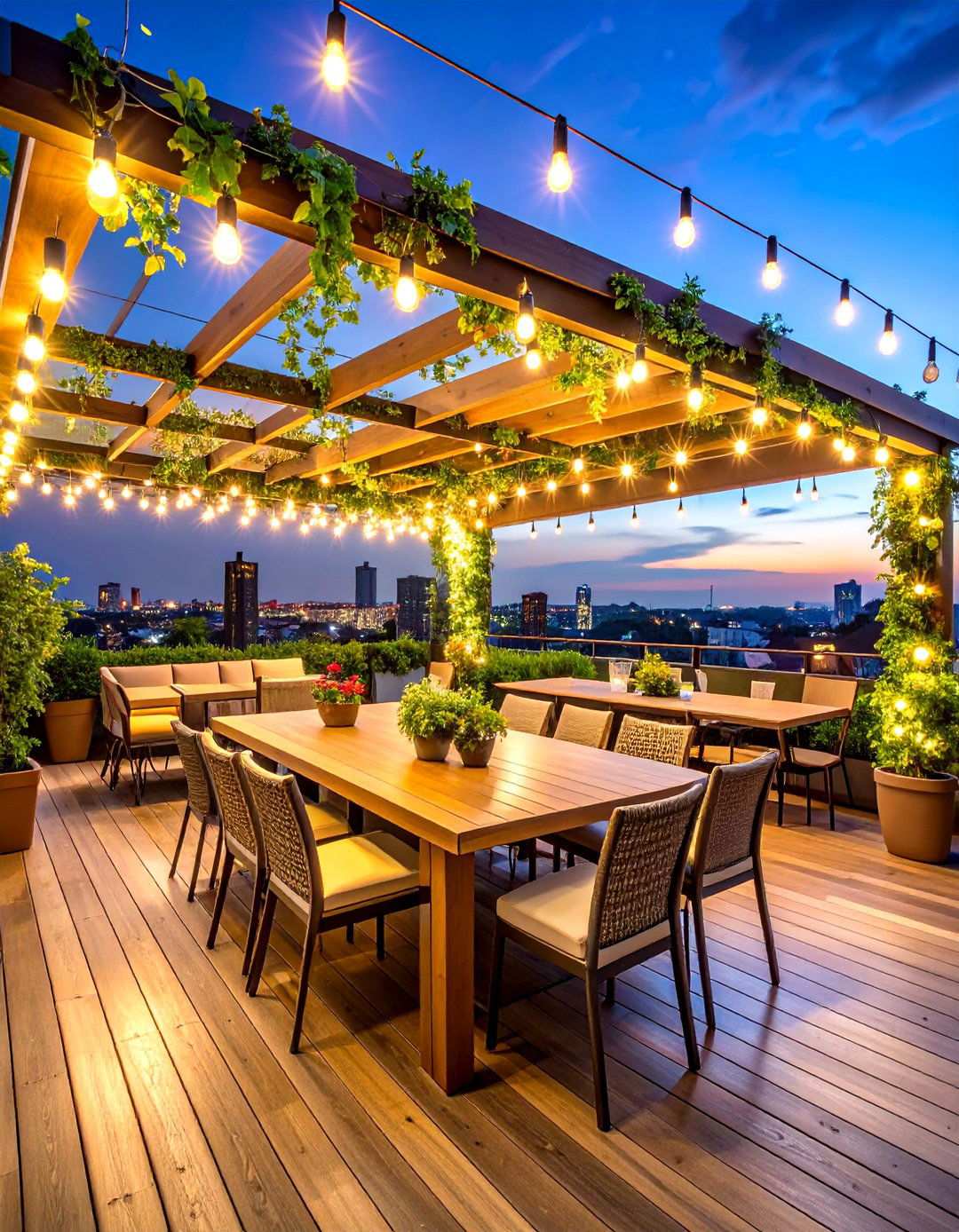
Design sophisticated outdoor dining spaces beneath custom pergola structures that offer partial shade and architectural interest. These overhead frameworks support climbing vines while creating defined gathering areas for meals and entertaining. Retractable canopies provide the flexibility to adjust sun exposure throughout the day, ensuring comfort during peak hours. The possibilities for unique dining experiences beneath your pergola canopy are endless. Weather-resistant furniture anchors the space, while removable cushions add comfort and seasonal color updates. String lights suspended from pergola beams extend the usability of the space into evening hours, creating a magical ambiance for dinner parties. Climbing roses, wisteria, or grape vines gradually cover the structure, providing natural shade and seasonal beauty. Strategic positioning maximizes views while protecting diners from prevailing winds. These covered areas become outdoor rooms that seamlessly integrate indoor and outdoor living spaces.
4. Elevating Succulent Displays in Rooftop Landscaping
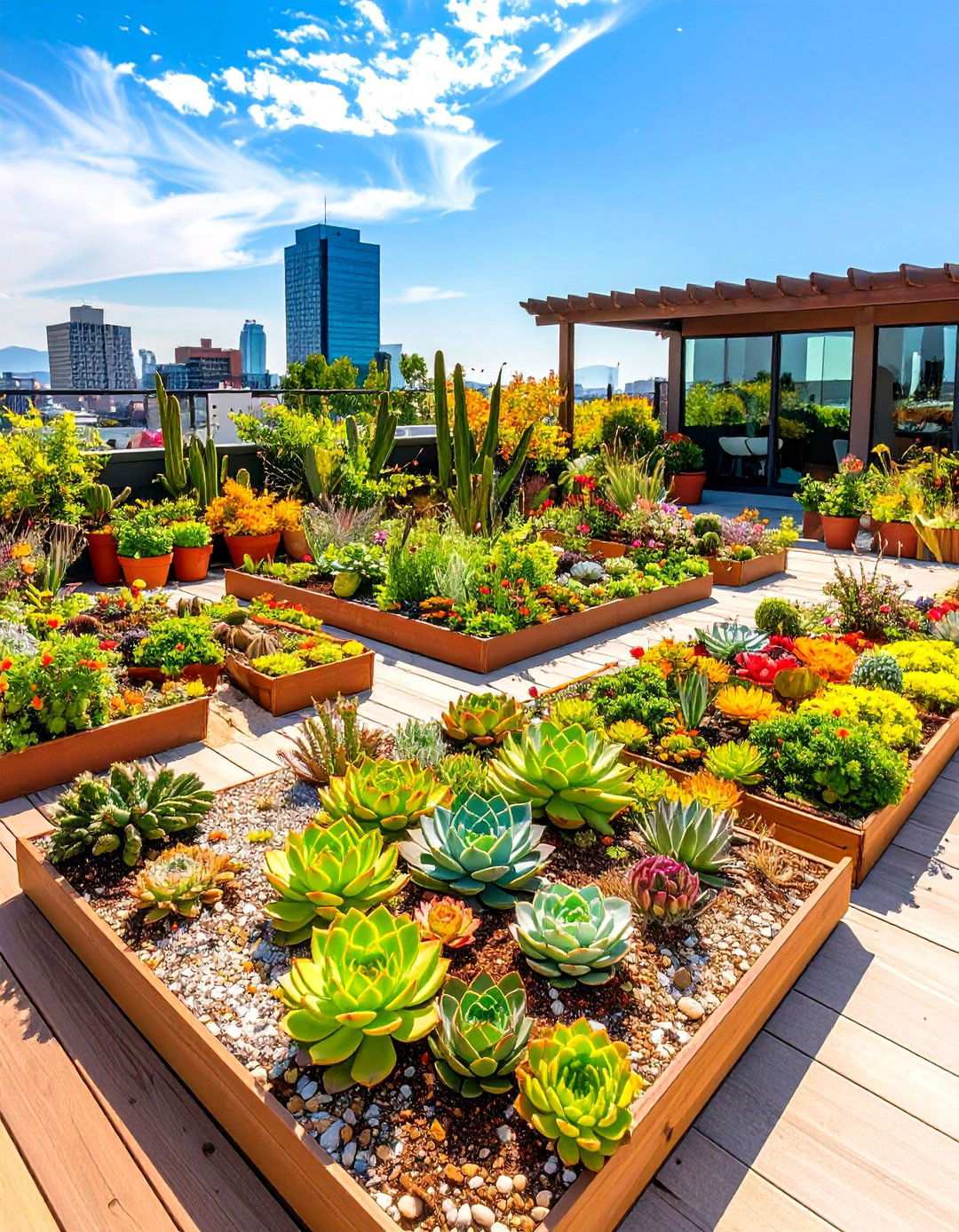
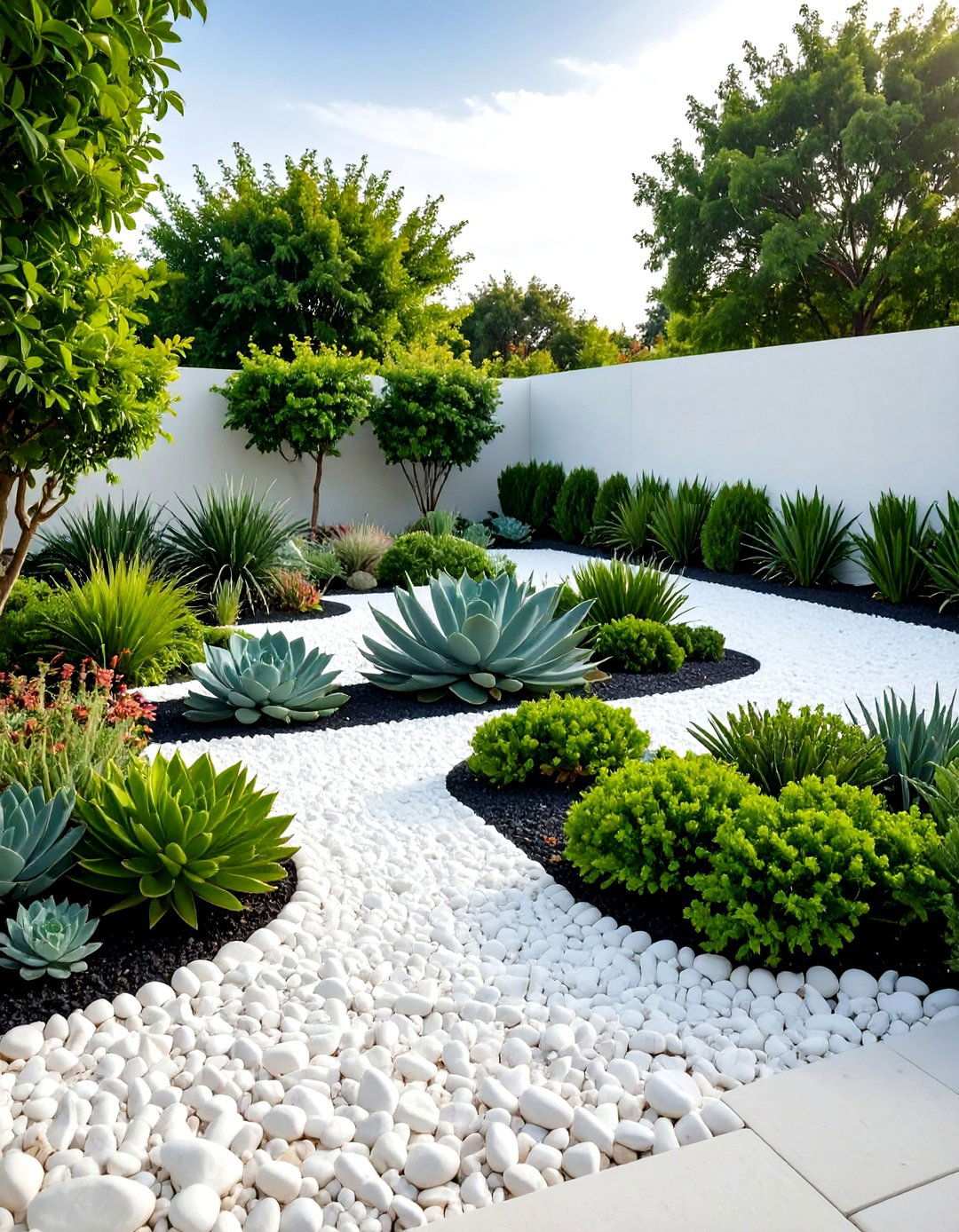
Create visually striking arrangements with drought-tolerant succulents, perfectly suited to rooftop conditions where intense sun exposure and windy conditions prevail. These low-maintenance plants not only add sculptural interest throughout the growing season but also thrive in shallow containers that showcase their unique rosette patterns, trailing varieties, and architectural forms. The incorporation of gravel mulch enhances drainage while adding decorative texture that complements the vibrant foliage colors of these striking plants. By mixing different sizes and forms, you can create dynamic compositions that evolve as the plants mature and spread, offering endless combinations of colors, textures, and growth habits. Varieties like Echeveria, sedum, and sempervivum are particularly resilient, surviving temperature fluctuations and drought conditions that would challenge traditional garden plants. The result is a year-round interest that requires minimal maintenance, making succulent gardens an attractive option for busy urban lifestyles seeking beautiful outdoor spaces.
5. Expanding Your Kitchen with Rooftop Herb Gardens
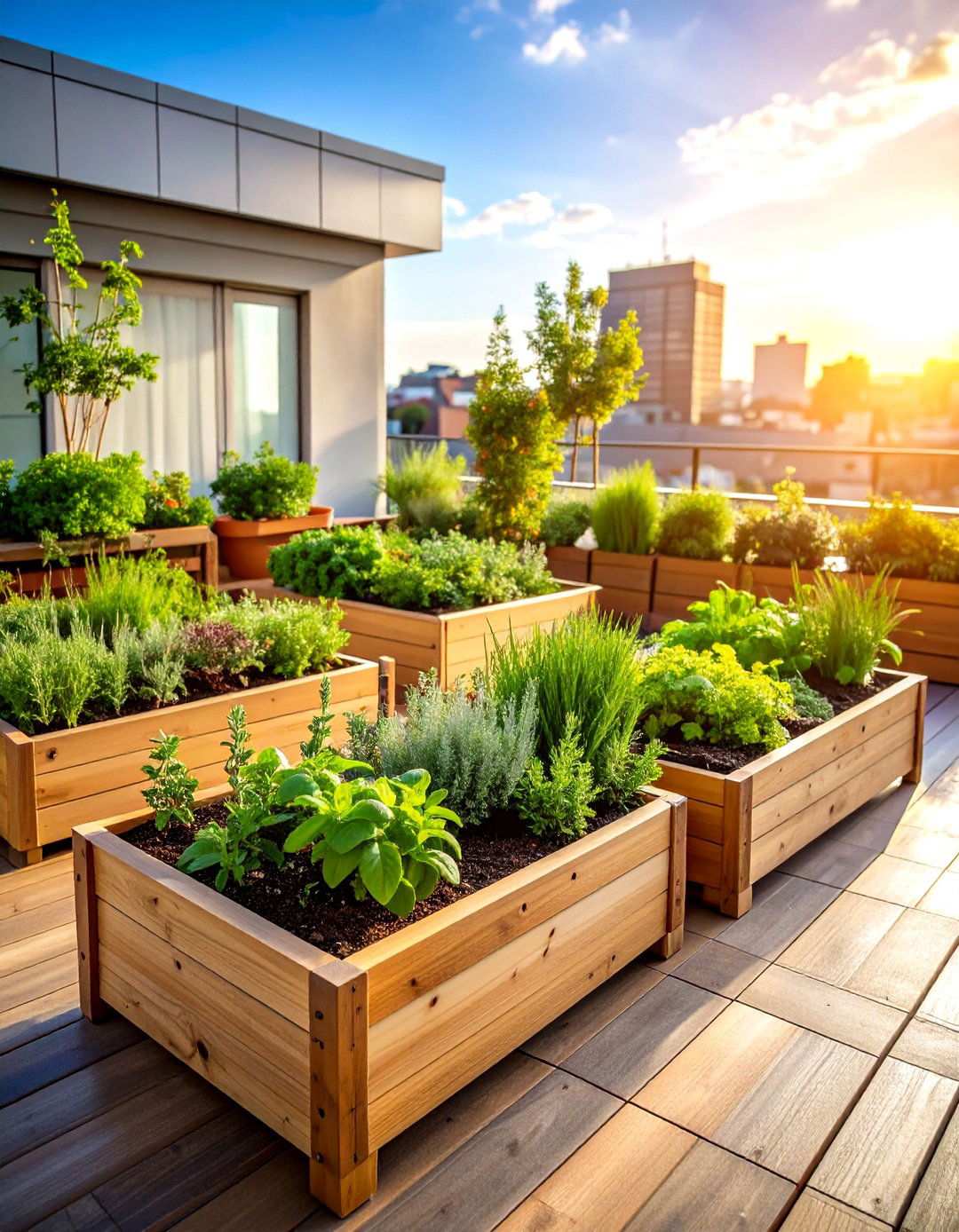
Bring the essence of your kitchen to the rooftop by establishing convenient herb gardens near access points, where you can easily harvest fresh herbs during meal preparation. These culinary gardens feature organized plantings of basil, rosemary, thyme, oregano, and other essential cooking herbs in labeled containers, allowing for effortless identification and harvesting. Raised planter boxes provide optimal drainage while keeping herbs at a comfortable harvesting height for regular use, eliminating the need to venture to the grocery store. By implementing sequential plantings, you can enjoy continuous harvests of quick-growing herbs like cilantro and parsley throughout the growing season. Automated drip systems maintain consistent soil moisture without overwatering these Mediterranean plants that thrive in well-drained conditions. Compact growth habits make herbs ideal for small containers while providing maximum flavor impact in cooking, transforming rooftop spaces into functional extensions of your indoor kitchen.
6. Japanese Zen Meditation Spaces
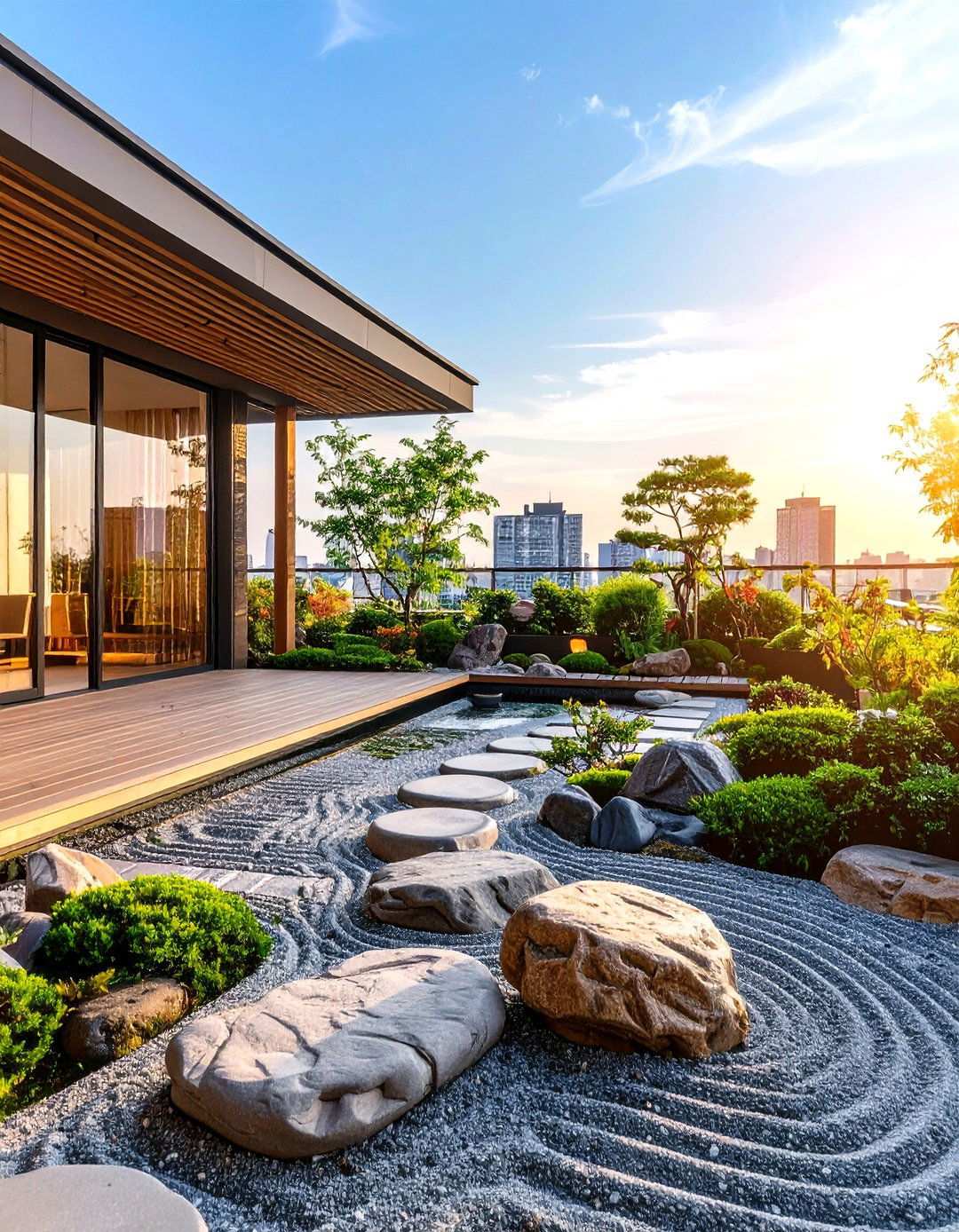
Inspired by the timeless wisdom of Japanese gardens, tranquil meditation retreats can be created that beautifully marry simplicity and natural harmony. These serene spaces are characterized by thoughtfully arranged stones, delicate water features, and minimal plantings that foster a sense of peaceful contemplation. Bamboo screens cleverly provide seclusion while allowing the gentle caress of breezes to flow through the meditation area, creating an ambiance of relaxation. Intricately raked gravel patterns create visually striking geometric designs that serve as focal points, calming the mind during meditation practice. Low-maintenance, ornamental plants like grasses and small evergreen shrubs subtly evoke seasonal changes, maintaining the tranquil atmosphere without overwhelming it. Strategically placed seating areas that optimize views of the surrounding environment further enhance the meditative experience during quiet morning or evening sessions. Meandering stone pathways thoughtfully guide movement through the space, embodying the principle of mindful walking and underscoring the minimalist aesthetic of these designs. In doing so, even small rooftop areas can serve as transformative retreats from the stresses of urban life.
7. Tropical Oasis Container Gardens
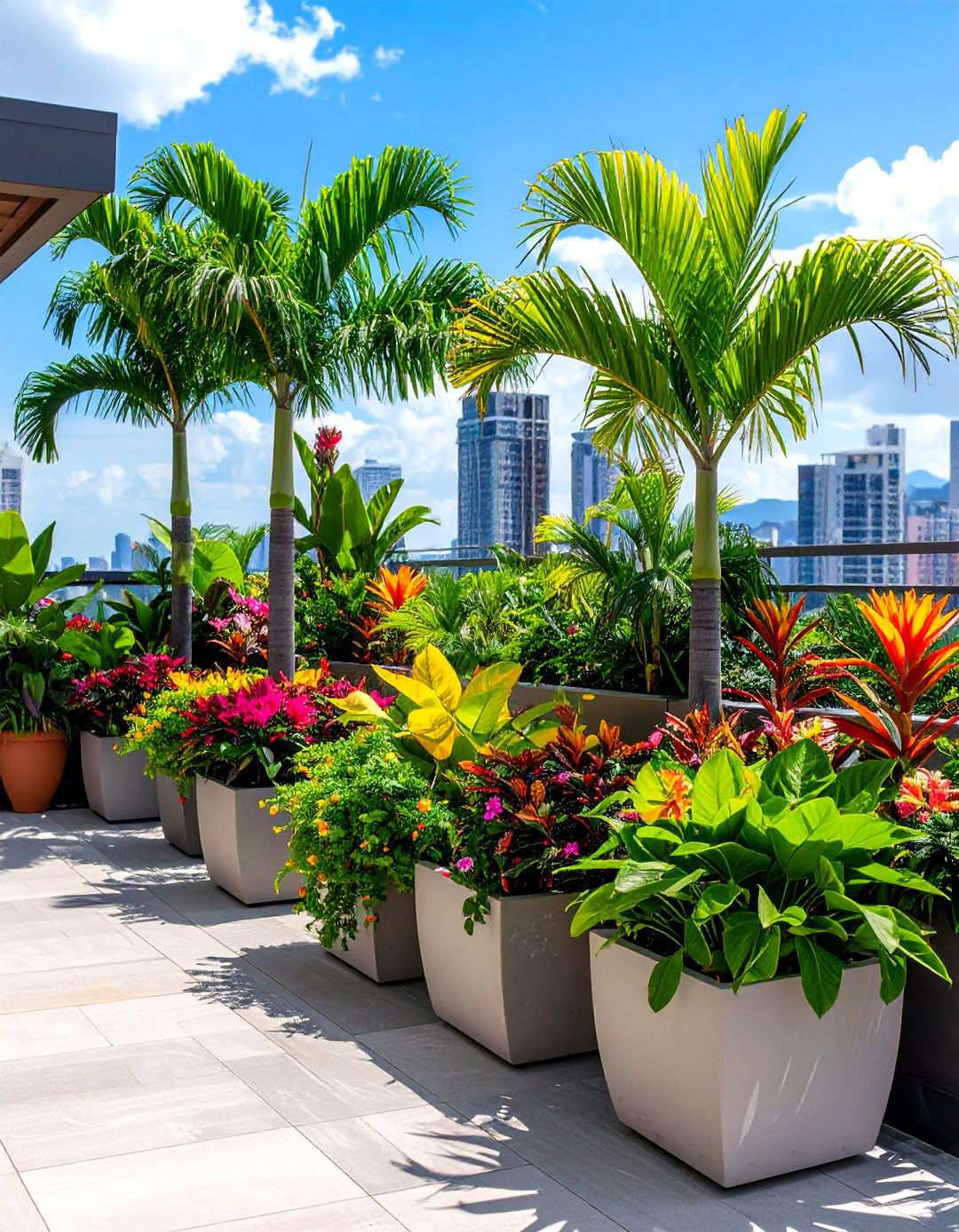
Rooftop spaces can be transformed into vibrant, exotic escapes by incorporating a mix of bold foliage plants and vibrant flowering varieties in oversized containers. Dramatic focal points are created by showcasing large palms, bird of paradise, and hibiscus, instantly transporting visitors to a tropical paradise. The intricate textures and visual interest provided by colorful croton leaves, variegated hostas, and trailing tropical vines make for a captivating display throughout the growing season. Imagine sipping morning coffee amidst lush tropical beauty – a truly idyllic scene. The strategic placement of containers in odd numbers creates visually pleasing compositions that feel natural and established, much like a mature landscape. Bright flower colors from bougainvillea, mandevilla, and tropical hibiscus provide a constant burst of color that attracts a variety of wildlife, including butterflies and hummingbirds. These heat-loving plants thrive in the intense sun exposure common to rooftop environments, creating private jungle-like retreats that invite relaxation. To ensure these tropical displays return each growing season, proper winter protection or seasonal plant rotation is essential.
8. Harmonious Elegance Through Modern Design
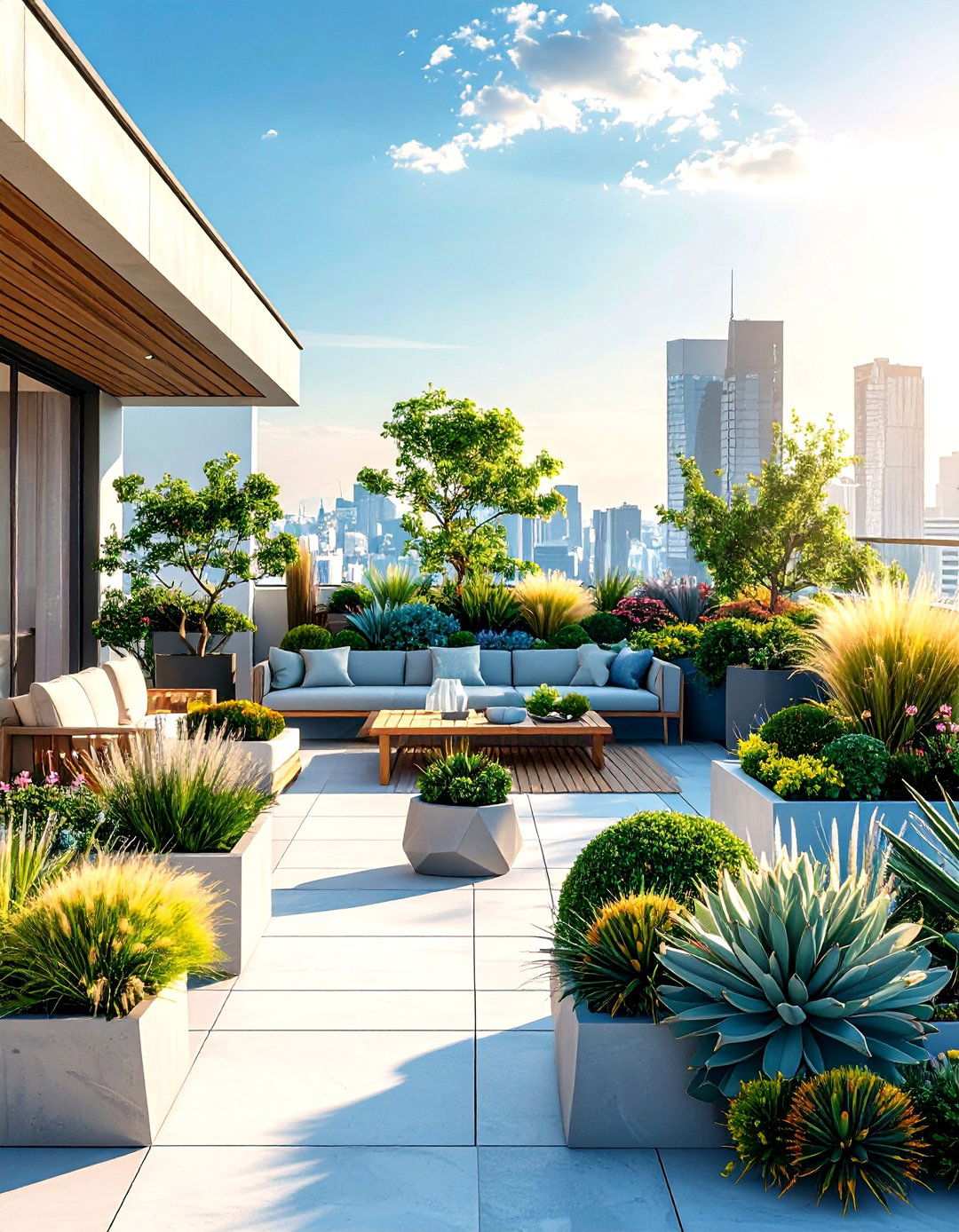
Sleek, minimalist rooftop gardens embody the essence of contemporary design, stripping away unnecessary elements to reveal clean lines, textures, and architectural plantings as the focal points. By showcasing single plant varieties or curated collections in geometric containers, neutral colors can create a sense of balance and sophistication. The strategic use of ornamental grasses, architectural succulents, and topiary forms generates structured displays that harmonize with modern home architecture. In these gardens, the visual impact comes not from vibrant flowers, but the deliberate arrangement of plant forms and foliage textures that evolve throughout the seasons. Discreet irrigation systems, hidden beneath decorative gravel mulch, ensure the garden’s integrity while maintaining proper plant care. Strategic lighting highlights specific specimens during the evening hours, extending the garden’s appeal beyond daylight hours. The restrained use of a limited color palette, featuring plants in silver, green, and white hues, results in cohesive designs that exude an air of intentionality and professional design expertise. By embracing restraint in plant selection, these gardens produce powerful visual statements that leave a lasting impression.
9. Whimsical Charm of the English Cottage Garden
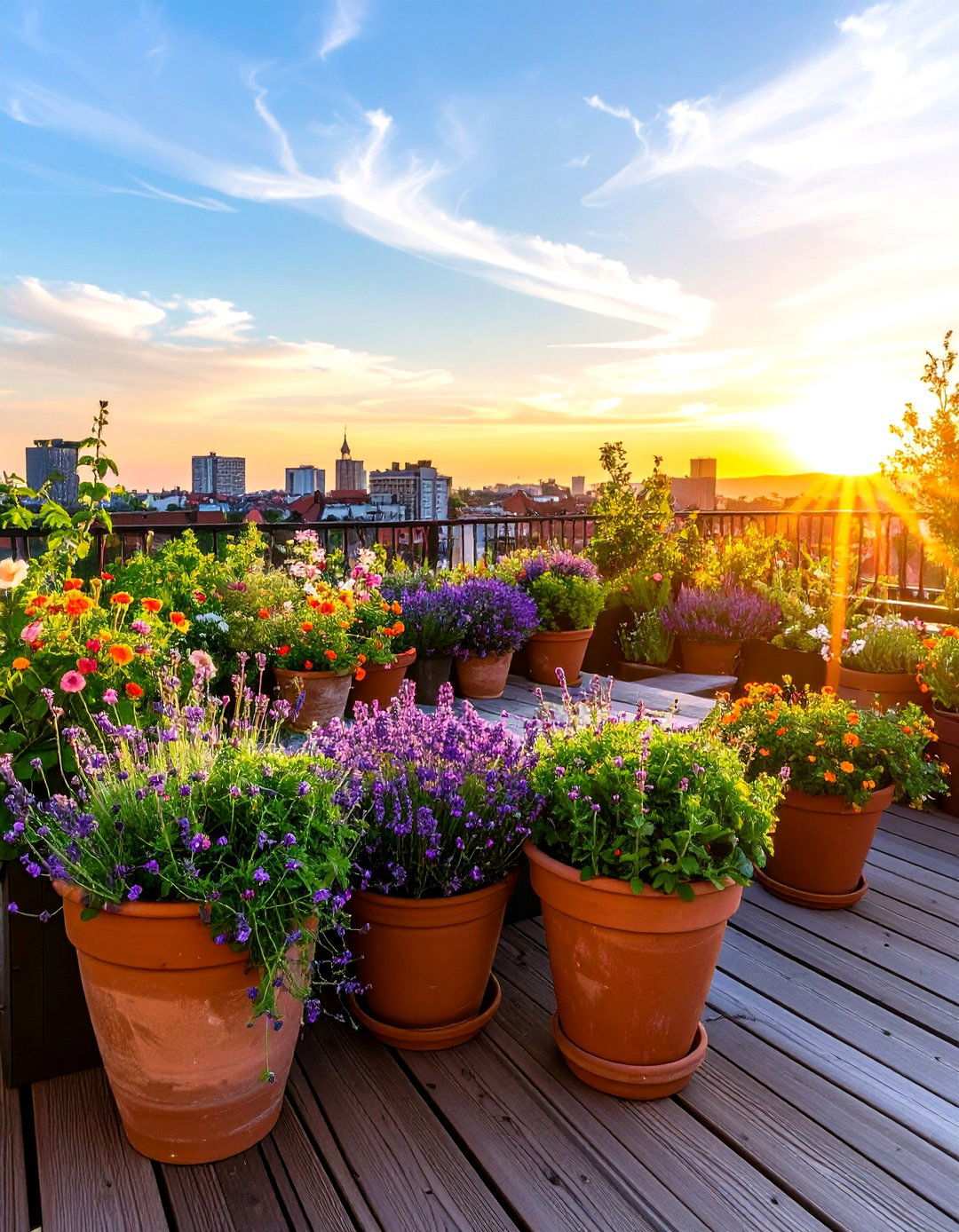
The enchanting aesthetic of the English cottage garden comes alive in informal plantings that blend vegetables, herbs, and flowers in lush abundance, creating a sense of romance and abandon. Mixed containers overflow with climbing roses, lavender, sweet peas, and trailing nasturtiums, painting a vibrant picture throughout the growing seasons. Vintage-style planters and repurposed containers add authentic charm while providing the necessary growing space for diverse plant collections. Every cottage garden tells a unique story through the creative combinations of plants. Self-seeding annuals like calendula and forget-me-nots fill gaps naturally, generating a casual appearance that defines the cottage garden style. The blurring of boundaries between ornamental and productive gardening approaches is beautifully showcased through the mingling of edible flowers with culinary herbs. Rustic plant supports crafted from natural materials perfectly complement the informal aesthetic while providing the necessary structure for climbing plants. These gardens celebrate the beauty of abundance over the pursuit of perfection, creating romantic outdoor spaces filled with fragrance and color.
10. Serene Oasis Water Features
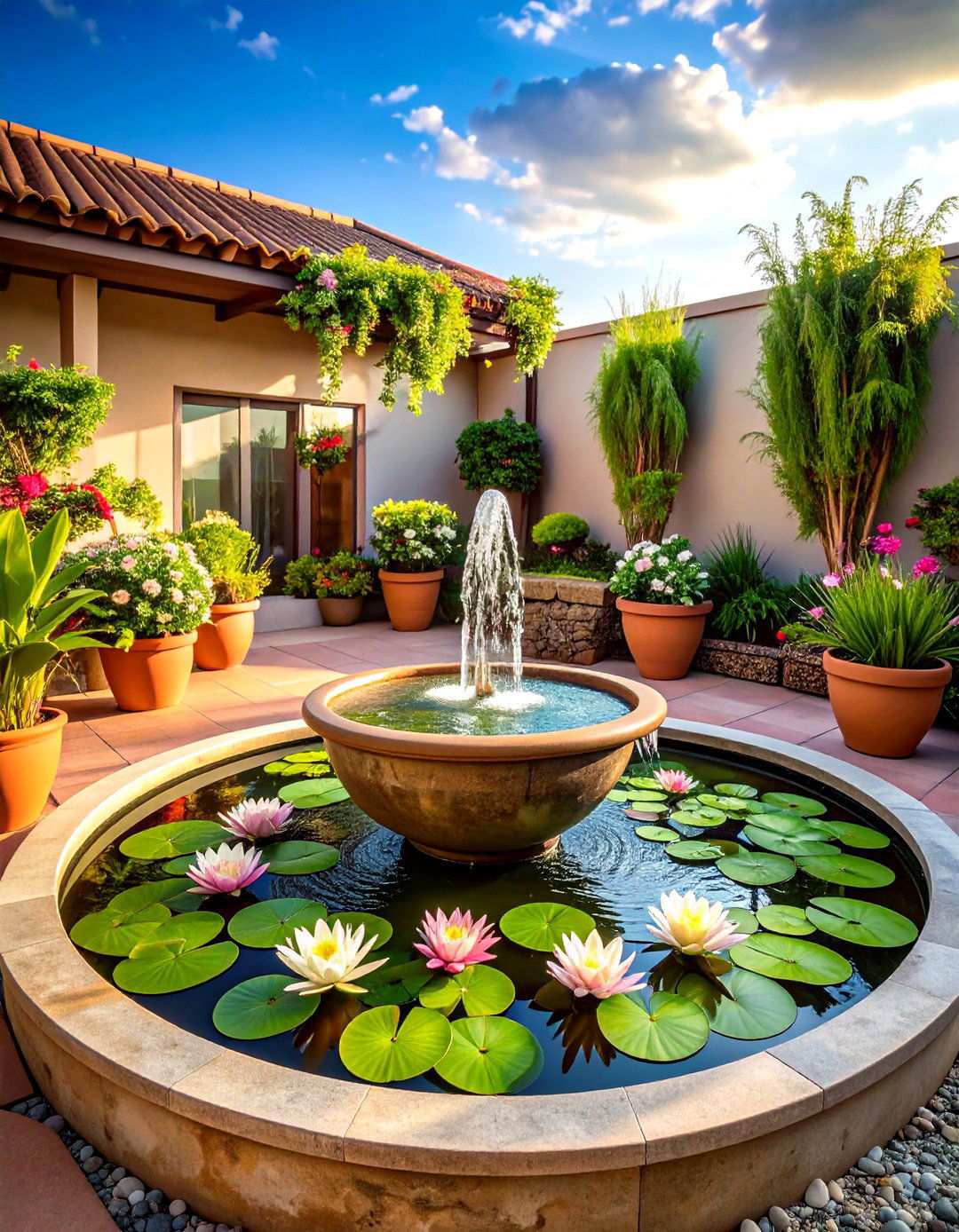
Create tranquil retreats on your rooftop garden by incorporating soothing water elements that mask urban noise and attract beneficial wildlife. Small fountains, bubbling urns, or meandering streams become captivating focal points that draw visitors in and provide a peaceful respite. Container water gardens featuring water lilies and aquatic plants offer a unique opportunity to grow a diverse range of plants in a setting that’s impossible to replicate in traditional soil-based gardens. To ensure safe operation, lightweight materials and proper electrical installation are crucial, minimizing the structural impact on rooftop surfaces. Imagine the sense of calm that comes from sitting beside a serene water feature, surrounded by the gentle hum of moving water and the soothing sounds of nature. Solar-powered options reduce electrical requirements while providing environmentally conscious water circulation during daylight hours, making them an attractive choice for rooftop gardens. Strategically placing water features near seating areas maximizes the relaxing benefits of moving water while creating natural gathering spots that invite social interaction. Aquatic plants not only help maintain water quality but also add seasonal interest through their blooming cycles, adding a dynamic element to your rooftop garden.
11. Culinary Delights in Bloom
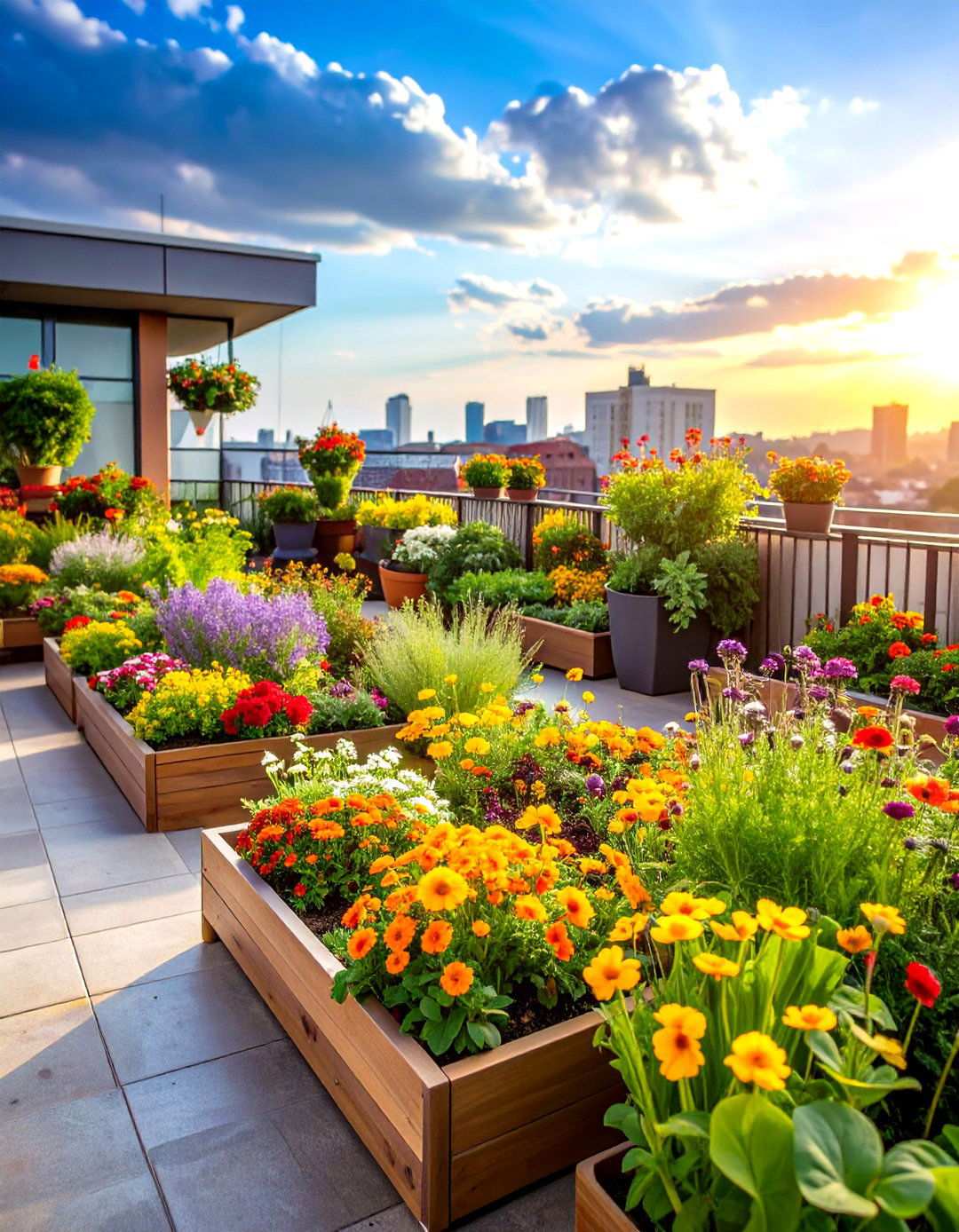
Design beautiful and functional gardens that combine ornamental appeal with culinary functionality through the use of carefully selected edible flowering plants. Nasturtiums, violas, calendula, and borage offer a rainbow of colors that not only enhance the visual appeal of your garden but also provide unique flavors and natural food coloring for creative kitchen projects. These versatile plants thrive in container environments, making them an ideal choice for rooftop gardens. By companion planting with herbs and vegetables, you can create productive gardens that supply both ingredients and garnishes for outdoor entertaining. Regular harvesting encourages continued flowering while providing fresh ingredients for salads, desserts, and cocktail garnishes, elevating your rooftop dining experiences to new heights. To ensure a continuous supply of blooms throughout the growing season, succession planting is essential, maintaining both visual appeal and culinary harvests. By integrating edible flowers into your rooftop garden, you can create a seamless connection between outdoor growing and indoor cooking, making your rooftop space an integral part of your daily meal preparation and entertaining activities.
12. Crafting Nature-Inspired Privacy Walls
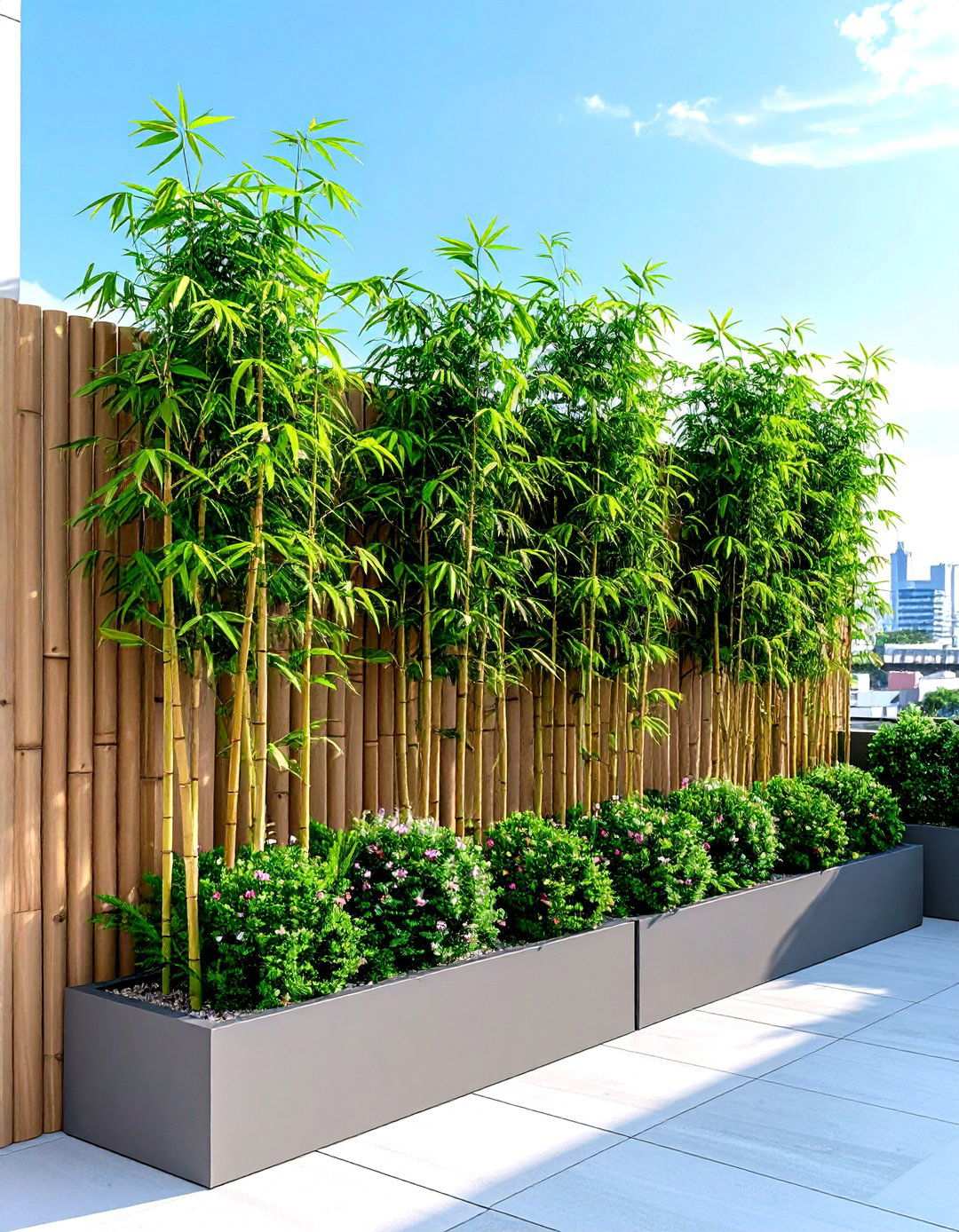
By leveraging tall, linear plant arrangements, you can establish effective natural barriers that block unwanted views while incorporating lush greenery into compact rooftop environments. Specific plant varieties like bamboo, tall grasses, and columnar evergreens offer a high level of screening without consuming excessive floor space. Utilizing modular planter systems allows for adaptable arrangements that can be easily modified to accommodate shifting privacy needs or seasonal plant rotation schedules. The dense foliage of these living screens not only filters wind but also creates intimate outdoor rooms shielded from neighboring buildings’ sight lines. Strategically positioning gaps between plantings ensures air circulation while preserving privacy from specific viewing angles that are essential. These living screens provide a habitat for beneficial birds and help reduce urban noise pollution by filtering out surrounding sounds. Seasonal interest comes from flowering varieties that add vibrant colors and fragrances during peak growing months. Fast-growing options enable quick establishment of privacy, while slower species offer a long-term structural backbone for permanent screening solutions.
13. Establishing Pollinator-Friendly Oases
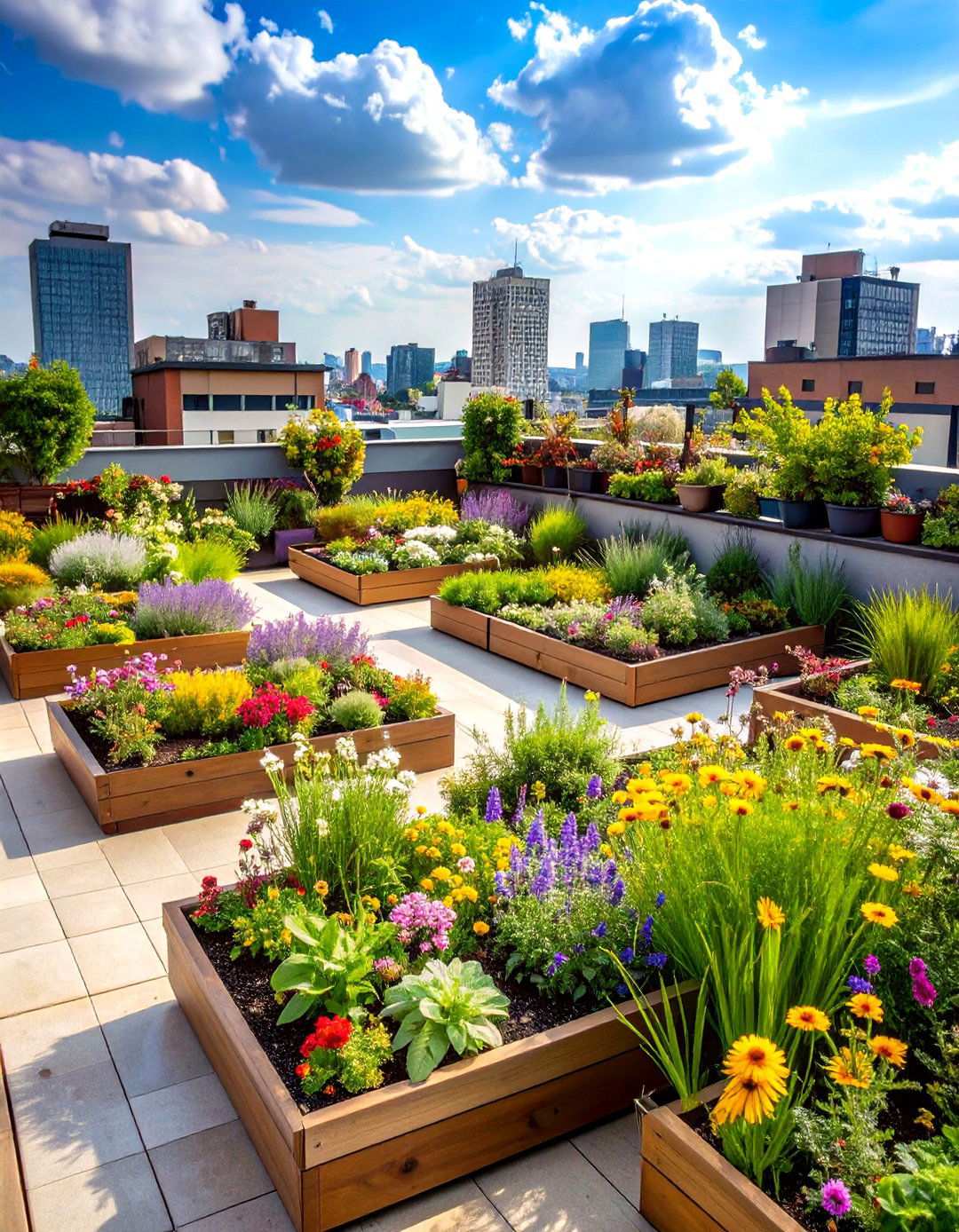
By incorporating native flowering plants, you can attract beneficial insects and create wildlife habitats that support local pollinator populations throughout growing seasons. Plant selections that provide nectar sources from early spring to late fall ensure continuous food supplies for butterflies, bees, and hummingbirds. Container arrangements featuring various bloom times create dynamic seasonal displays that change throughout the year, thereby extending the flowering calendar. Native plant varieties require less maintenance and provide authentic habitats that support regional ecosystem health. Consider transforming your rooftop into a vital pollinator highway by incorporating shallow water sources and sunny landing spots that enhance the garden’s appeal to beneficial insects seeking rest and refreshment. These gardens contribute to urban biodiversity while offering educational opportunities to observe pollinator behavior and lifecycle stages. Careful plant selection ensures blooms during critical migration periods when pollinators need reliable food sources most.
14. Seasonal Color Rotation Systems
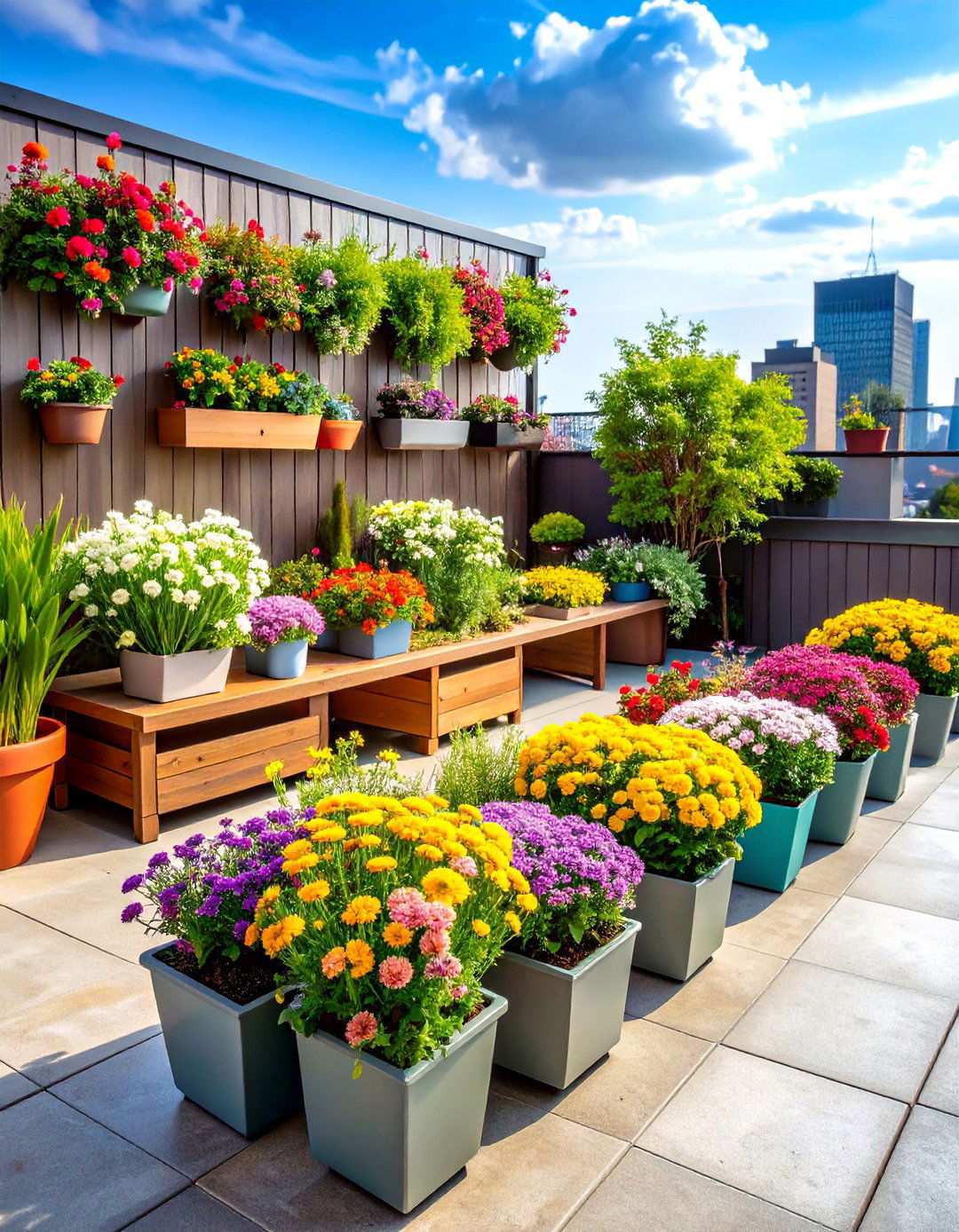
Dynamic rooftop gardens can thrive through strategic seasonal plant rotation, leveraging removable container systems to seamlessly transition from spring’s vibrant bulbs to summer’s lush annuals and fall’s dramatic chrysanthemums. By employing staging areas, gardeners can prepare forthcoming seasonal displays as current plantings reach their peak, maintaining design cohesion through color-coordinated themes that adapt to changing seasonal preferences and plant availability. To optimize off-season storage, consider investing in clever solutions that protect your seasonal plant collections while maximizing space efficiency. By embracing a pre-planned color palette, gardeners can ensure a smooth transition between seasons, preventing visual stagnation and keeping their rooftop garden visually dynamic. This forward-thinking approach rewards gardeners with constantly evolving displays that showcase their unique personality.
15. Night Garden Lighting Designs
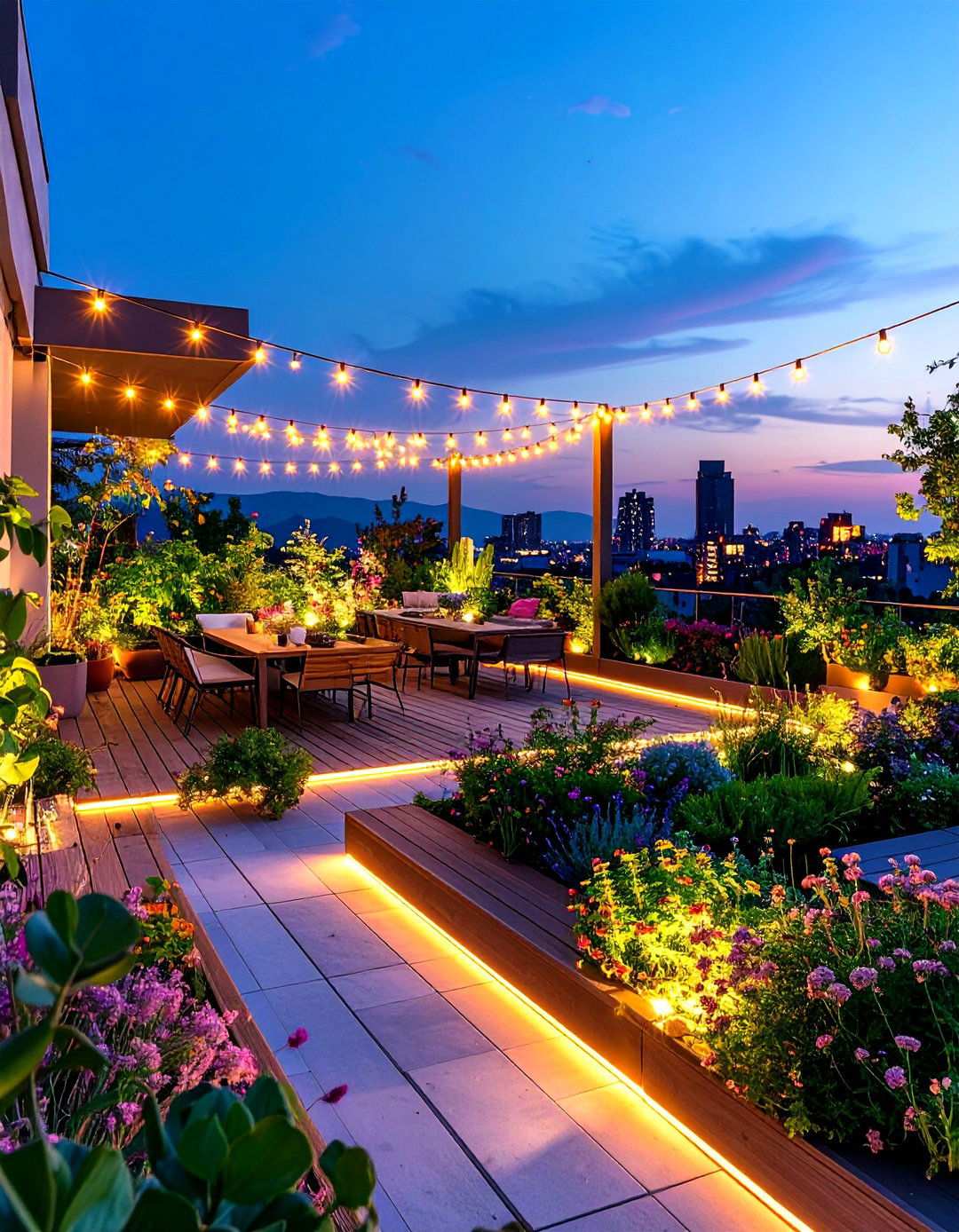
Rooftop gardens can become an extension of indoor living spaces by implementing carefully designed lighting schemes that highlight plant textures and create enchanting ambiance. LED strip lights discreetly placed along planter edges provide understated uplighting that accentuates plant forms without overpowering the natural darkness. Solar pathway lights guide movement through garden areas, reducing electrical requirements and installation complexity. Strategically positioned spotlights draw attention to specimen plants, transforming familiar gardens into breathtaking nighttime wonderlands. Suspended string lights add a festive atmosphere perfect for outdoor entertaining and dining experiences. By incorporating smart lighting controls, gardeners can customize brightness and timing to match seasonal changes and specific activities, increasing garden usability while providing security benefits that make rooftop spaces feel safe and welcoming after dark. Energy-efficient lighting options minimize operating costs while maximizing visual impact throughout evening hours.
16. Adaptable Rooftop Plantings
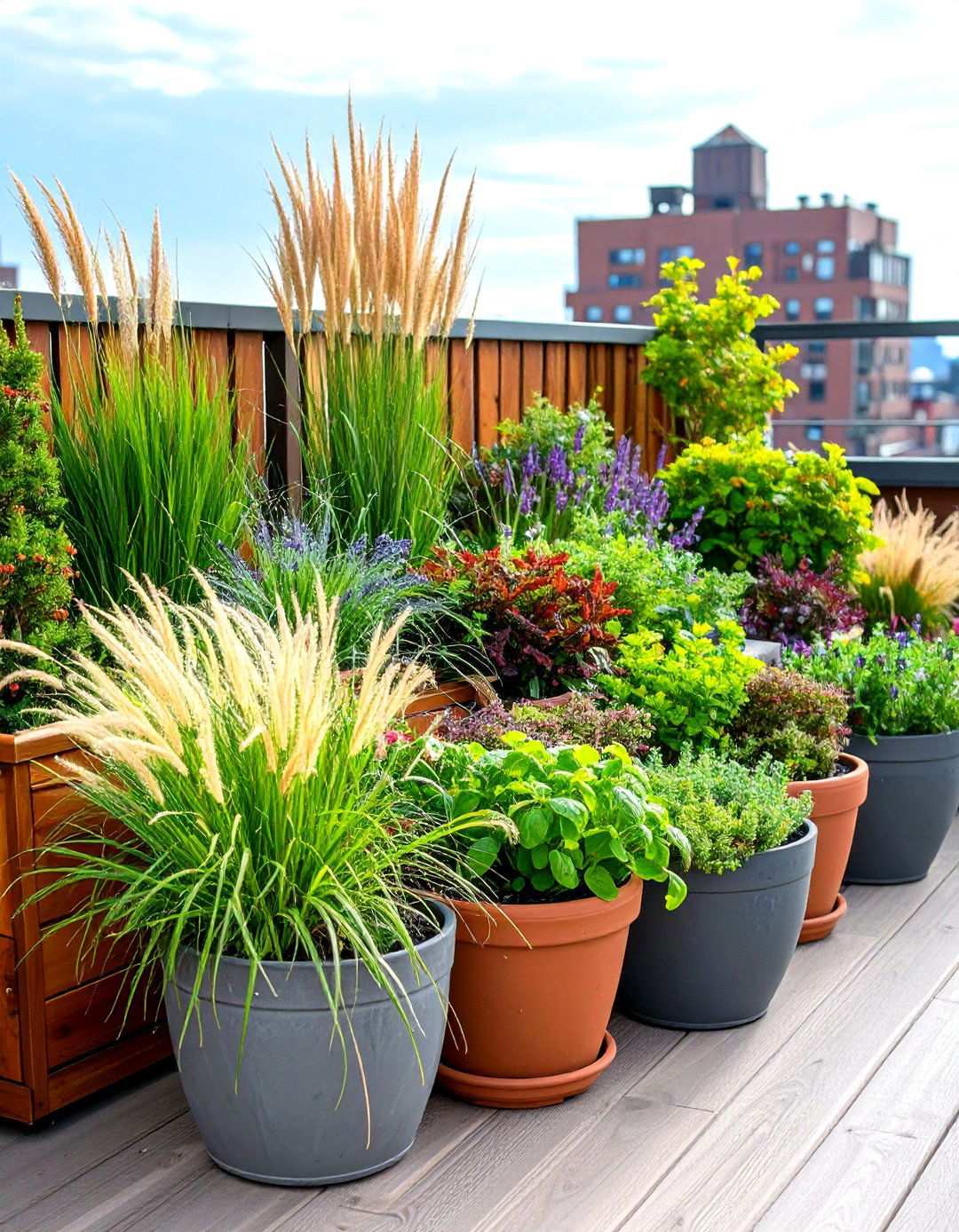
When designing rooftop gardens, prioritize plants that have been bred for their resilience in high-wind and temperature conditions, which are characteristic of elevated environments. Compact, densely growing species prove effective at withstanding wind damage, providing a visually striking addition to the space with strategic placement. Ornamental grasses demonstrate a unique ability to flex in breezes, maintaining structure and seasonal interest through seed heads that add depth to the landscape during winter months. Their sturdy stems and adaptable branching systems enable them to withstand gusty conditions that would be detrimental to more delicate species in exposed locations. To ensure your rooftop garden stands up to challenging wind patterns, consider the root systems of your plants and the containers they’re housed in. These structures must provide stable support and adequate nutrients during growth periods while weathering storms. By utilizing building features and strategically placing taller plants, you can create microclimates that shield more vulnerable species from direct wind exposure, cultivating resilient and visually stunning outdoor spaces that thrive in adversity.
17. Elevated Garden Solutions
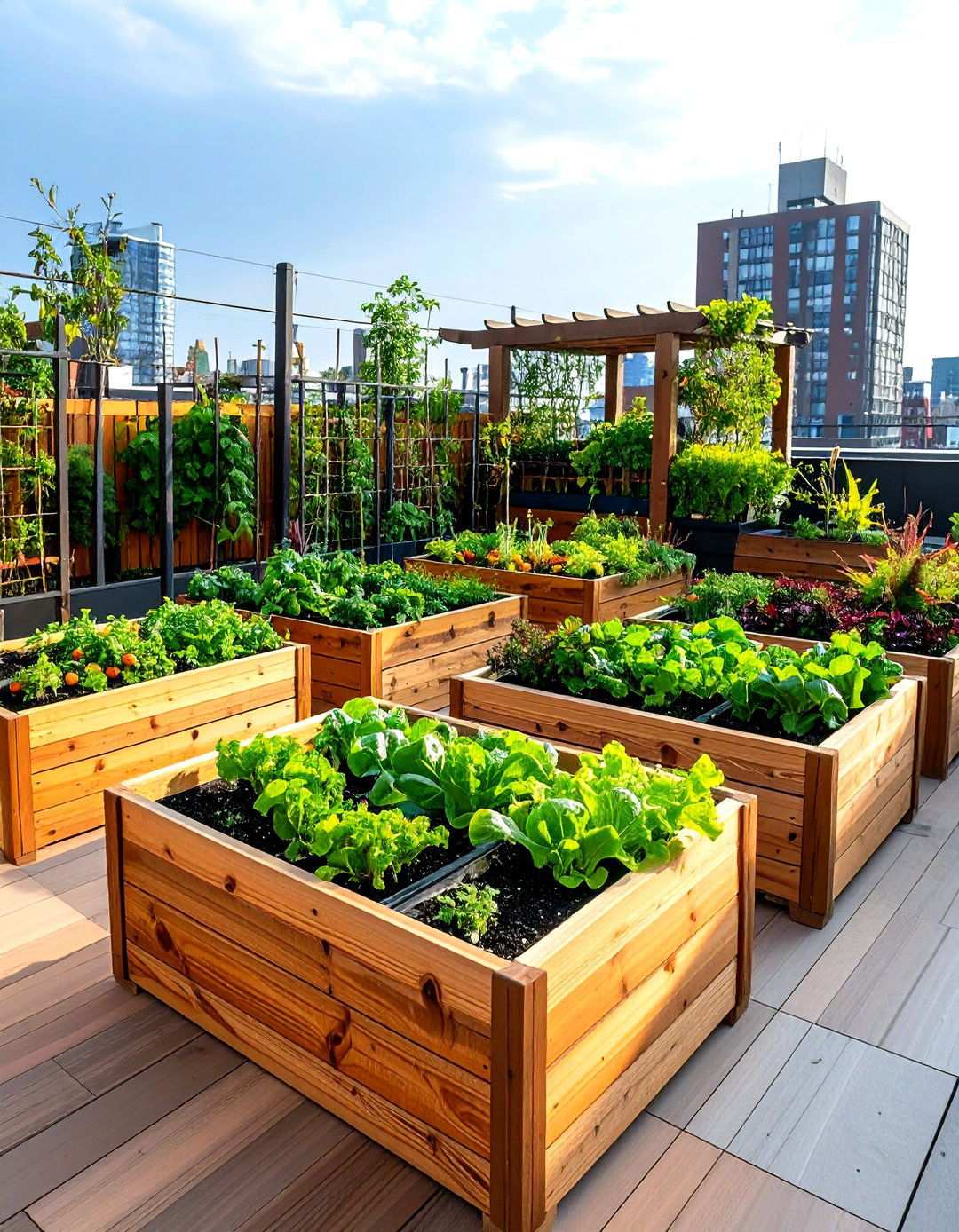
Implement raised bed systems that enhance drainage, improve soil quality, and increase accessibility while creating organized and functional planting areas for vegetables, flowers, and other garden delights. Custom-designed systems optimize growing space while ensuring optimal soil depth for root development in challenging rooftop conditions, where growth can be more taxing. Lightweight growing mediums minimize structural burdens while maintaining essential drainage that prevents waterlogged conditions during heavy rainfall periods. Modular designs enable future expansion or reconfiguration as gardening interests and space requirements evolve over time. Integrated water harvesting systems capture and store rainfall for later irrigation use, reducing reliance on municipal water supplies. Built-in trellises support climbing plants while maximizing vertical growing space within compact footprints, making raised beds a practical and visually appealing solution for rooftop gardens. These systems create clearly defined growing areas that simplify maintenance tasks, while providing a professional appearance that enhances property values and transforms your rooftop into a thriving garden oasis.
18. Expanding the Growing Season
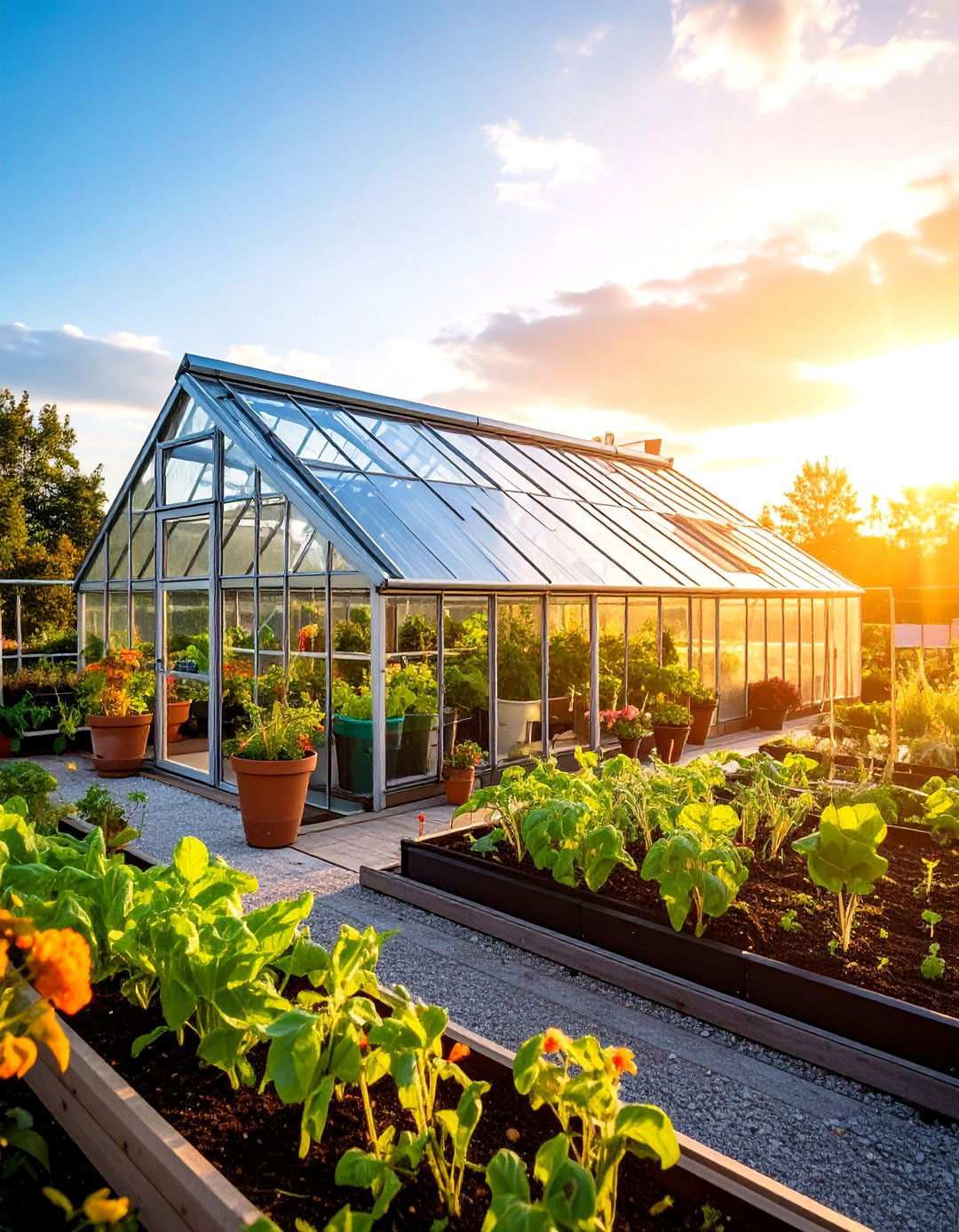
By strategically incorporating protective structures, gardeners can extend growing seasons and maintain year-round cultivation in challenging climates. Mini greenhouses and cold frames provide controlled environments for starting seeds and safeguarding delicate plants from extreme temperatures. Advanced ventilation systems ensure optimal growing conditions by regulating temperature fluctuations and managing airflow, even in varying weather patterns. This enables the cultivation of plants that would otherwise be unsuitable for local conditions, significantly expanding the plant palette. Innovative season extension techniques include the use of row covers, frost protection fabric, and thermal mass systems to moderate temperature fluctuations. As you explore season extension technology, consider the possibilities for new plant varieties and the benefits of maximizing winter sunlight while protecting against harsh winds and precipitation.
19. Transforming Waste into a Resource
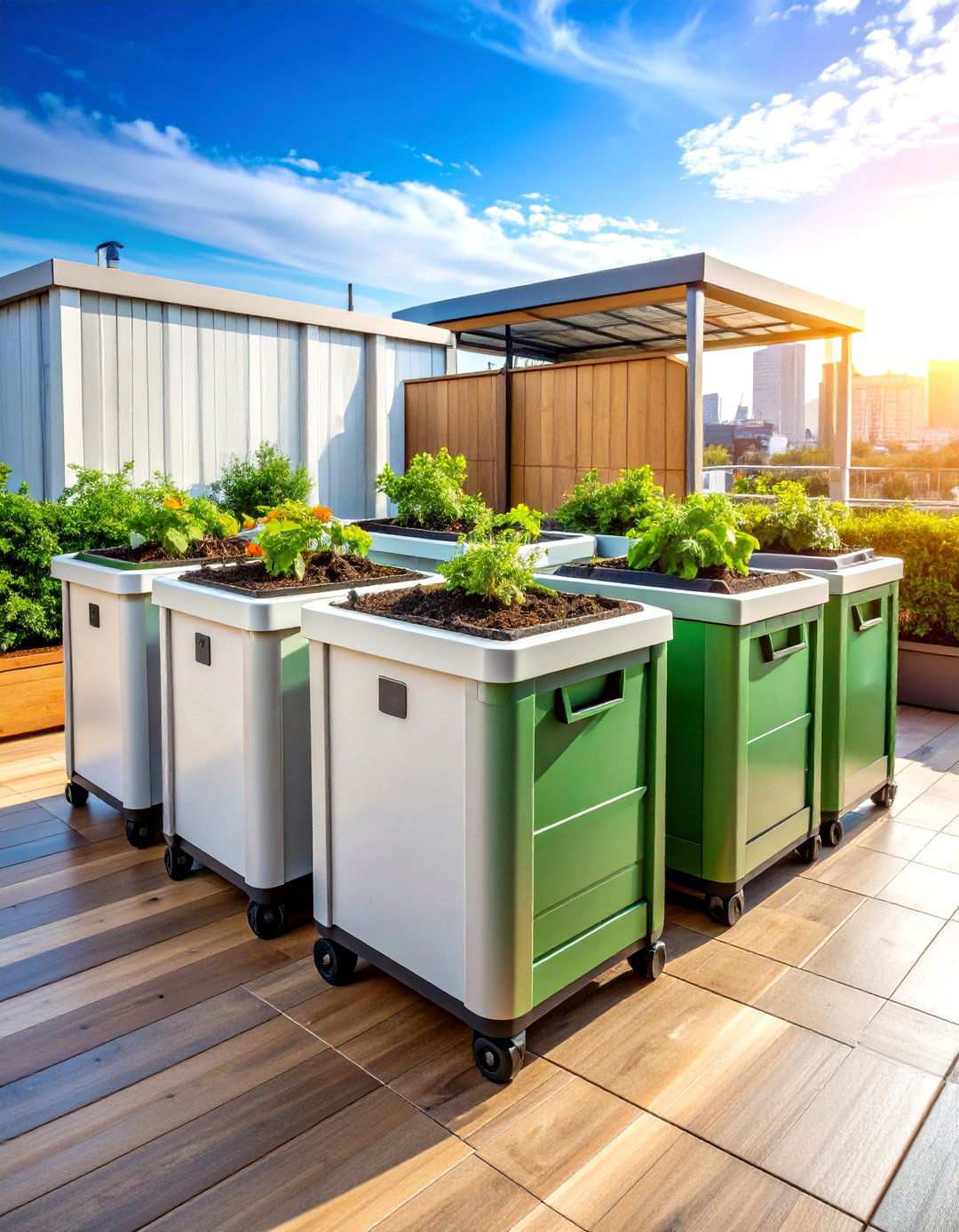
Establishing sustainable waste management systems that convert kitchen scraps and garden debris into valuable compost is a crucial step in reducing household waste streams and promoting eco-friendly practices. Compact tumbler systems are ideal for rooftop spaces, producing finished compost faster and more efficiently than traditional pile methods. Achieving the right balance of green and brown materials ensures efficient decomposition while minimizing odors that might disturb neighbors in urban settings. The end product, finished compost, not only improves container soil quality but also reduces the need for purchased fertilizers and soil amendments. When paired with rainwater collection systems, composting efforts can further reduce dependence on municipal water supplies. By repurposing recycled materials and creating unique planting solutions, rooftop gardens can become models of sustainable urban living and demonstrate environmental responsibility. These systems also close nutrient loops, teaching valuable lessons about natural cycles and resource conservation in urban environments.
20. Harmonious Outdoor Kitchen Design
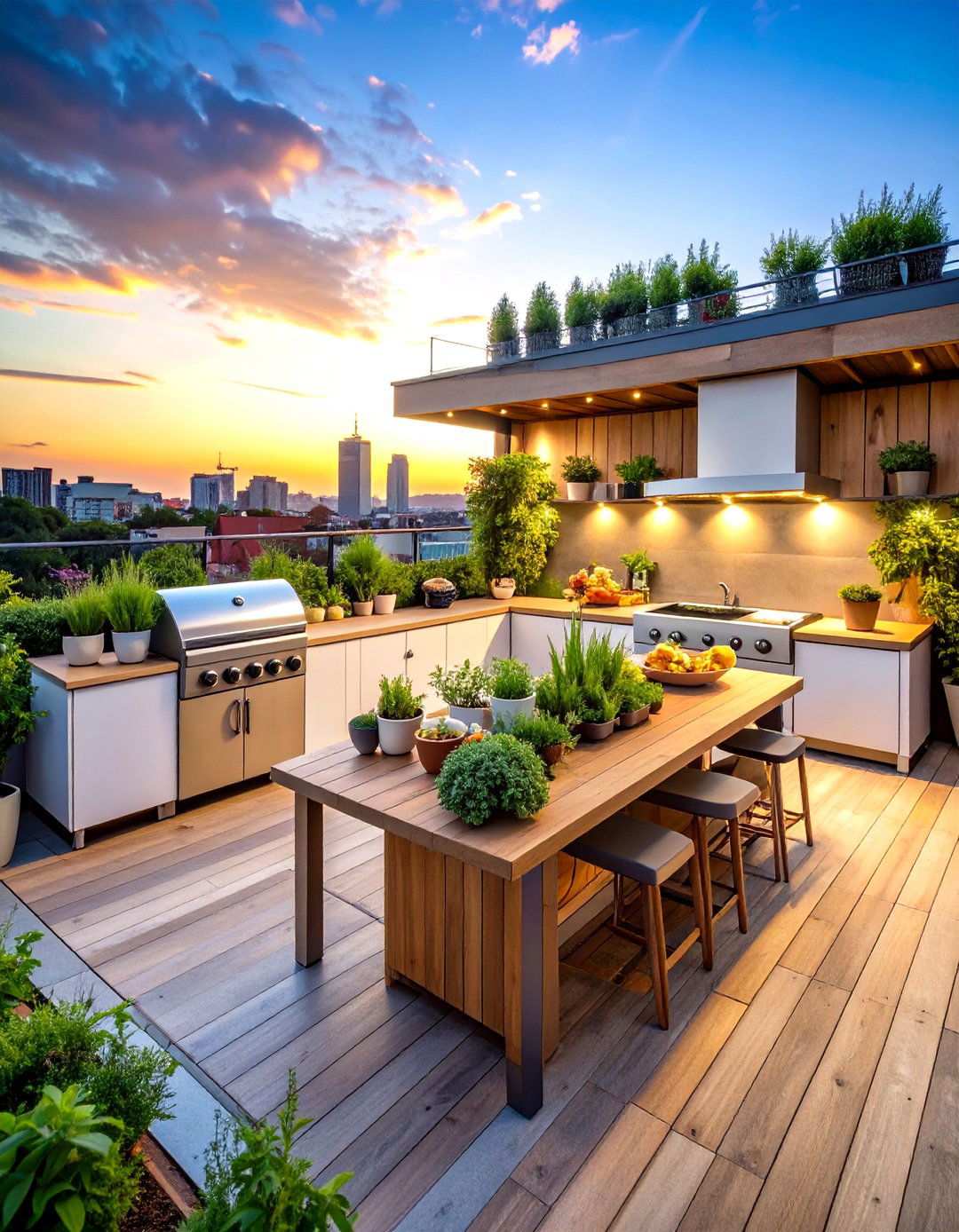
Expertly blend outdoor cooking areas with rooftop gardens to create seamless food preparation spaces that showcase fresh harvests. Weather-resistant appliances, including portable grills and prep counters, allow for effortless food preparation while withstanding the elements. Strategically placed herb gardens near cooking stations ensure a constant supply of fragrant flavors during meal preparation. Storage solutions safeguard cooking equipment, maintaining an organized appearance between gatherings and daily use. How can your outdoor kitchen foster a seamless garden-to-table experience? Careful electrical and plumbing connections support appliances while upholding safety codes for permanent installations. Shaded structures protect cooking areas from intense sunlight, providing a comfortable working environment during peak hours. These integrated systems transform rooftop spaces into cohesive outdoor living areas where cooking and gardening converge.
21. Kid-Friendly Educational Garden Spaces
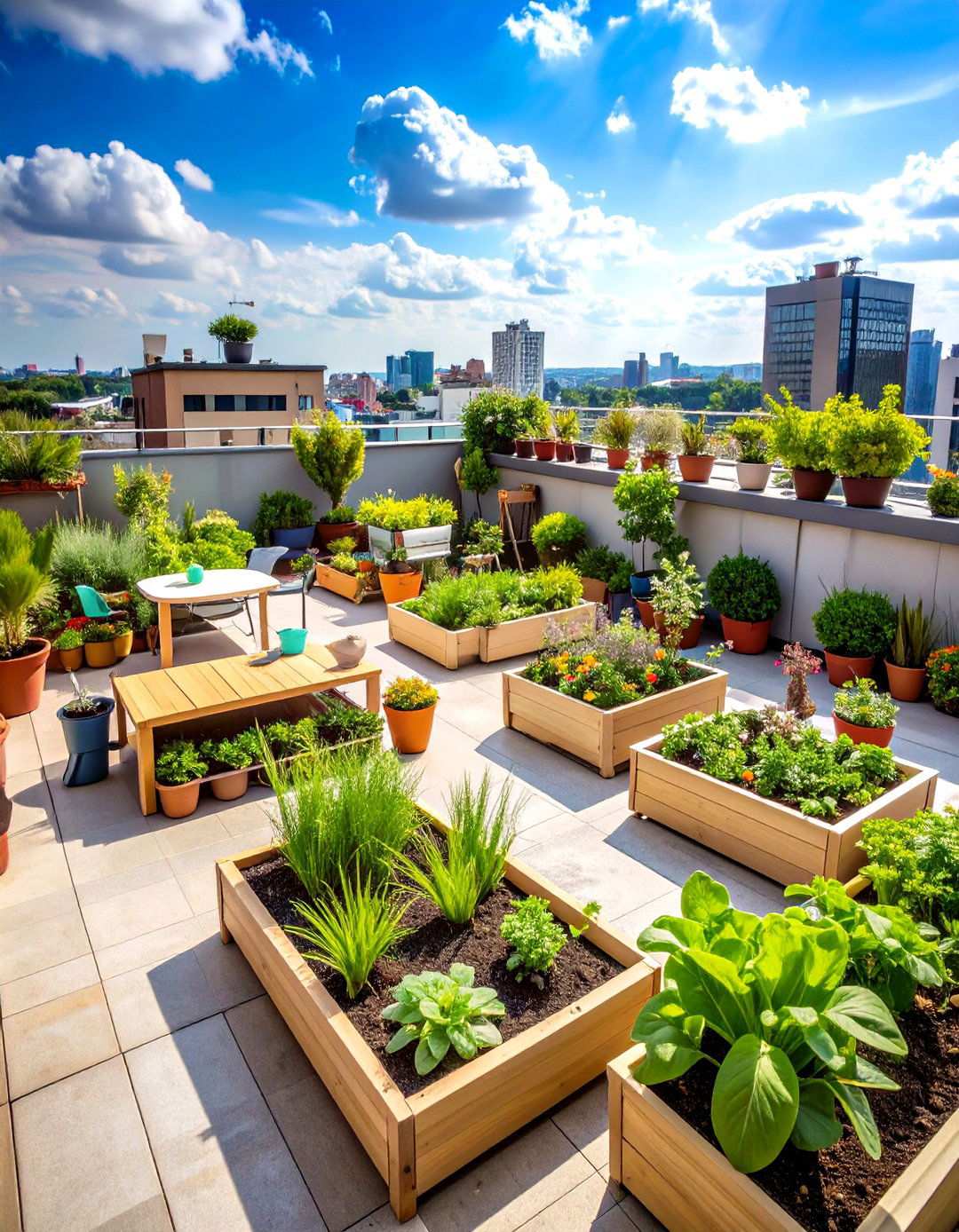
Develop interactive outdoor environments that educate children about nature, plant growth cycles, and environmental stewardship through immersive gardening experiences. Age-appropriate containers and tools empower young gardeners to take ownership of their green spaces, fostering confidence and independence. Fast-growing plants like sunflowers, beans, and radishes provide immediate gratification, keeping children engaged throughout the growing season. Sensory plants with unique textures, fragrances, and colors cater to diverse learning styles, creating unforgettable garden experiences. Safety considerations include non-toxic plants, secure containers, and child-friendly tools, ensuring a positive learning environment. What discoveries will children make in their rooftop garden classroom? Interactive elements like plant labels, measuring equipment, and observation journals facilitate a deeper understanding of growth while developing critical thinking skills. These gardens establish lasting connections with nature, providing educational opportunities that complement academic learning and environmental awareness.
22. Unlocking the Potential of Multi-Level Terraced Designs
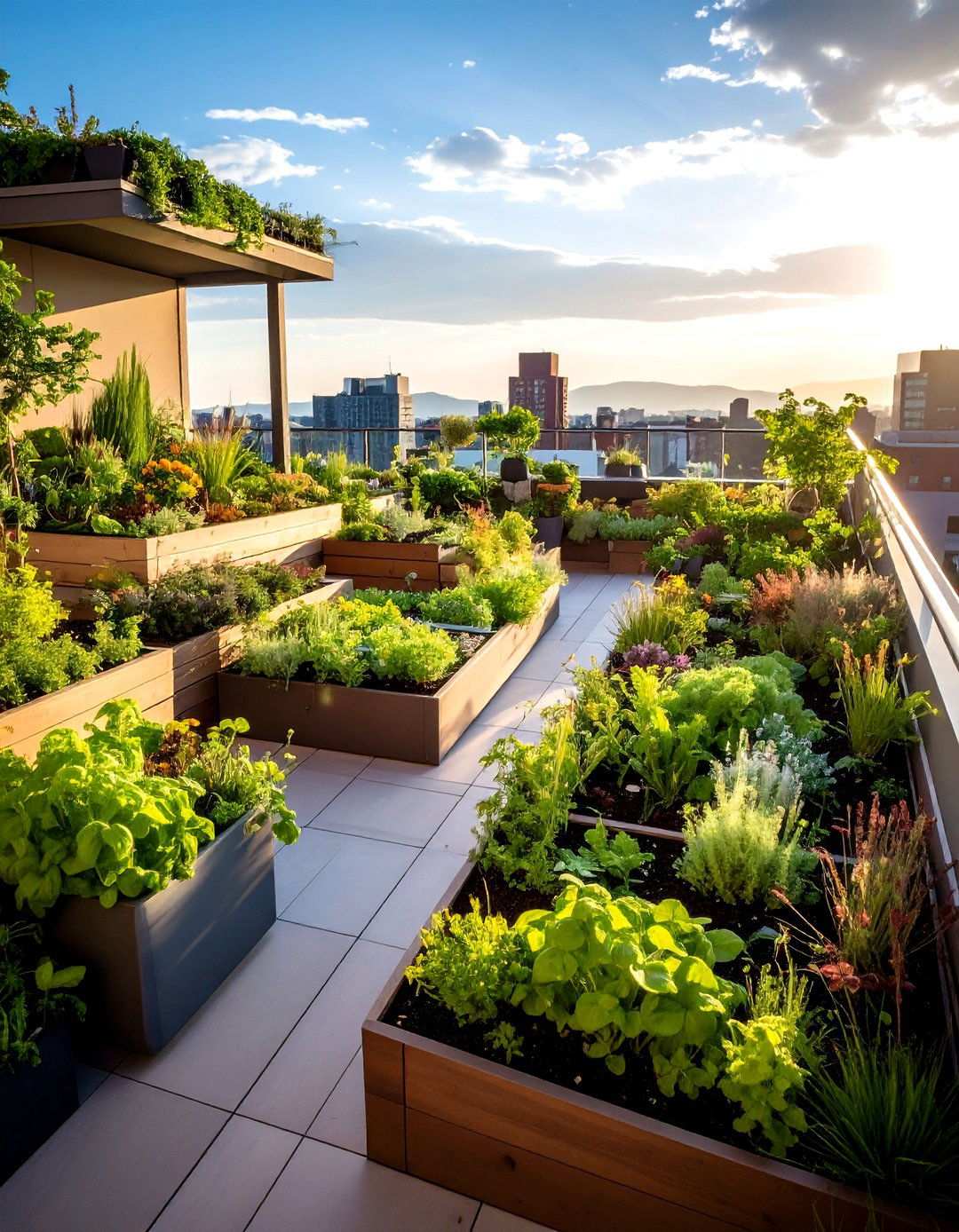
Unlock the full potential of your rooftop garden by embracing terraced planting systems that skillfully utilize vertical space to create distinct growing zones. By arranging stepped containers, you can establish diverse microclimates within a single rooftop space, catering to a wide range of plants with varying sun and water requirements. The intelligent design of gravity-fed irrigation systems ensures that water is efficiently distributed throughout the terraced system, minimizing waste and achieving optimal results. Strategically placing plants allows for a beautiful cascade effect, with trailing varieties flowing harmoniously between levels, while upright plants provide a structural framework for the entire design. These innovative designs offer a significant advantage over flat arrangements, providing more growing space and captivating visual impact that transforms ordinary rooftops into thriving garden havens.
23. Bringing Artistic Expression to Your Rooftop Garden
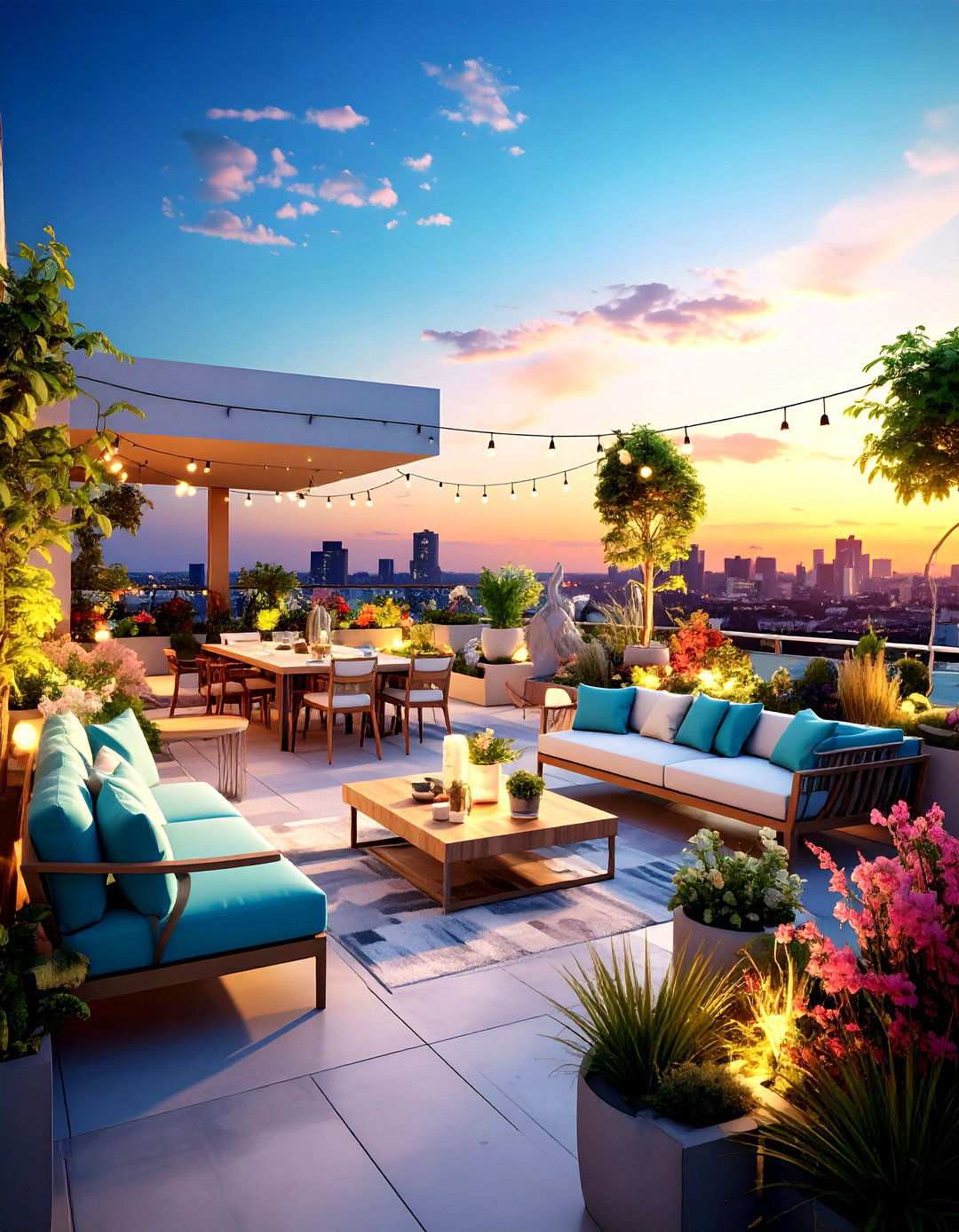
Elevate your rooftop garden into a masterpiece by seamlessly integrating carefully selected sculptures, garden art, and decorative elements that beautifully complement plant displays. By choosing weather-resistant materials, you can ensure that your artistic installations stand the test of time while providing focal points that continue to captivate visitors, even during the dormant seasons when plant material may be less vibrant. Thoughtfully placing art and decorative elements creates a harmonious dialogue between nature and creativity, guiding visitors through the garden and offering a unique perspective on the beauty of the space. By incorporating local artists’ work, you can foster a sense of community and add a personal touch to your rooftop garden, creating a memorable destination that showcases your unique style.
24. Elevating Rooftop Gardening with Advanced Tech
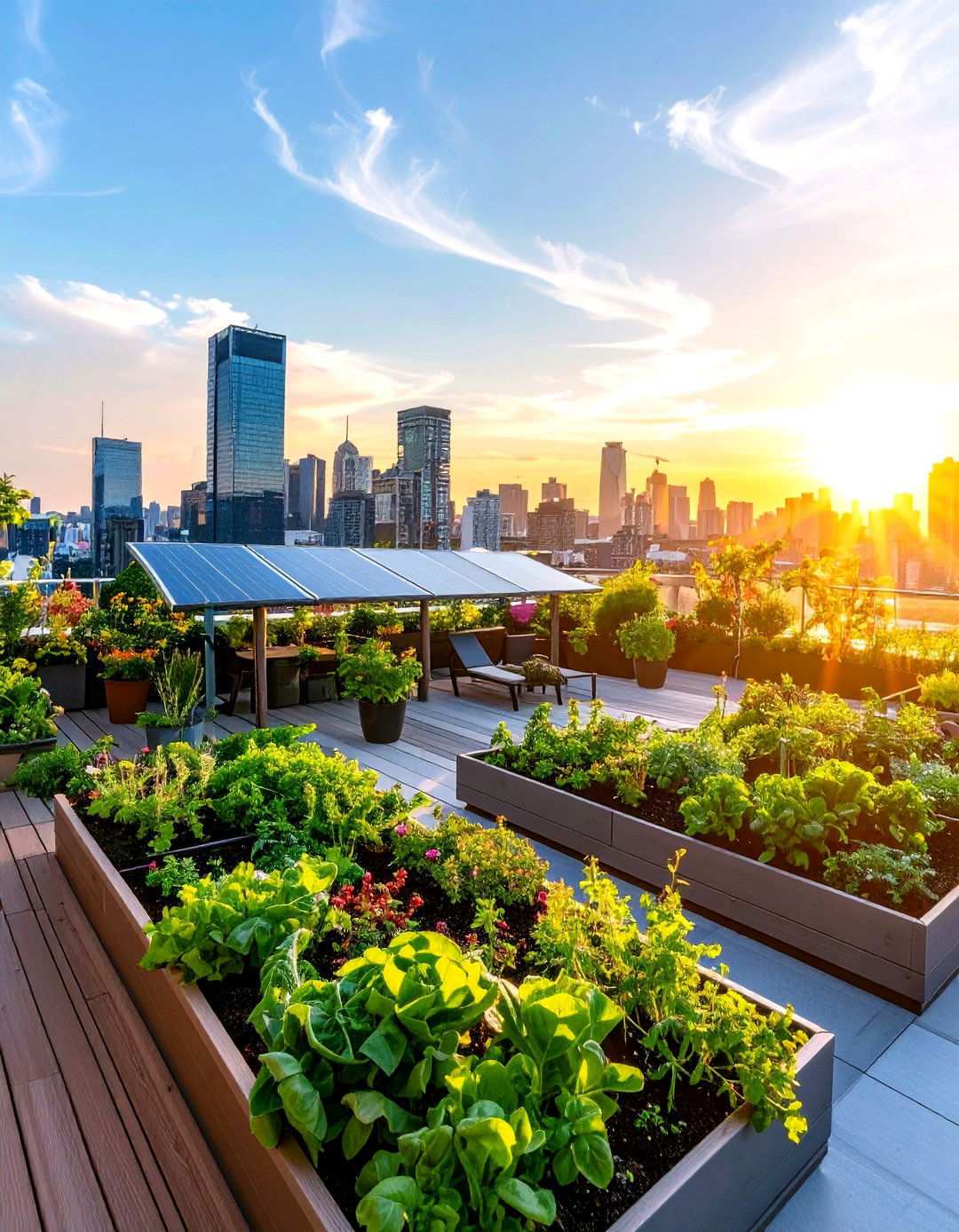
Cutting-edge technology solutions can significantly simplify rooftop gardening, automating routine maintenance tasks and providing valuable insights for optimal plant care and resource management. By leveraging data-driven analytics, gardeners can make informed decisions about irrigation, temperature control, and other essential factors that impact plant health. Advanced sensors and monitoring systems detect subtle changes in soil moisture, temperature, and light levels, sending timely alerts to mobile devices to ensure prompt attention.
These innovative systems empower urban gardeners with busy schedules to successfully cultivate their rooftop gardens, even when they’re away from home. Real-time monitoring capabilities allow for seamless adjustments to irrigation and environmental controls, providing peace of mind and optimal plant performance. Energy-efficient systems not only reduce operating costs but also offer professional-level garden management capabilities, ensuring that rooftop gardens thrive throughout the growing season.