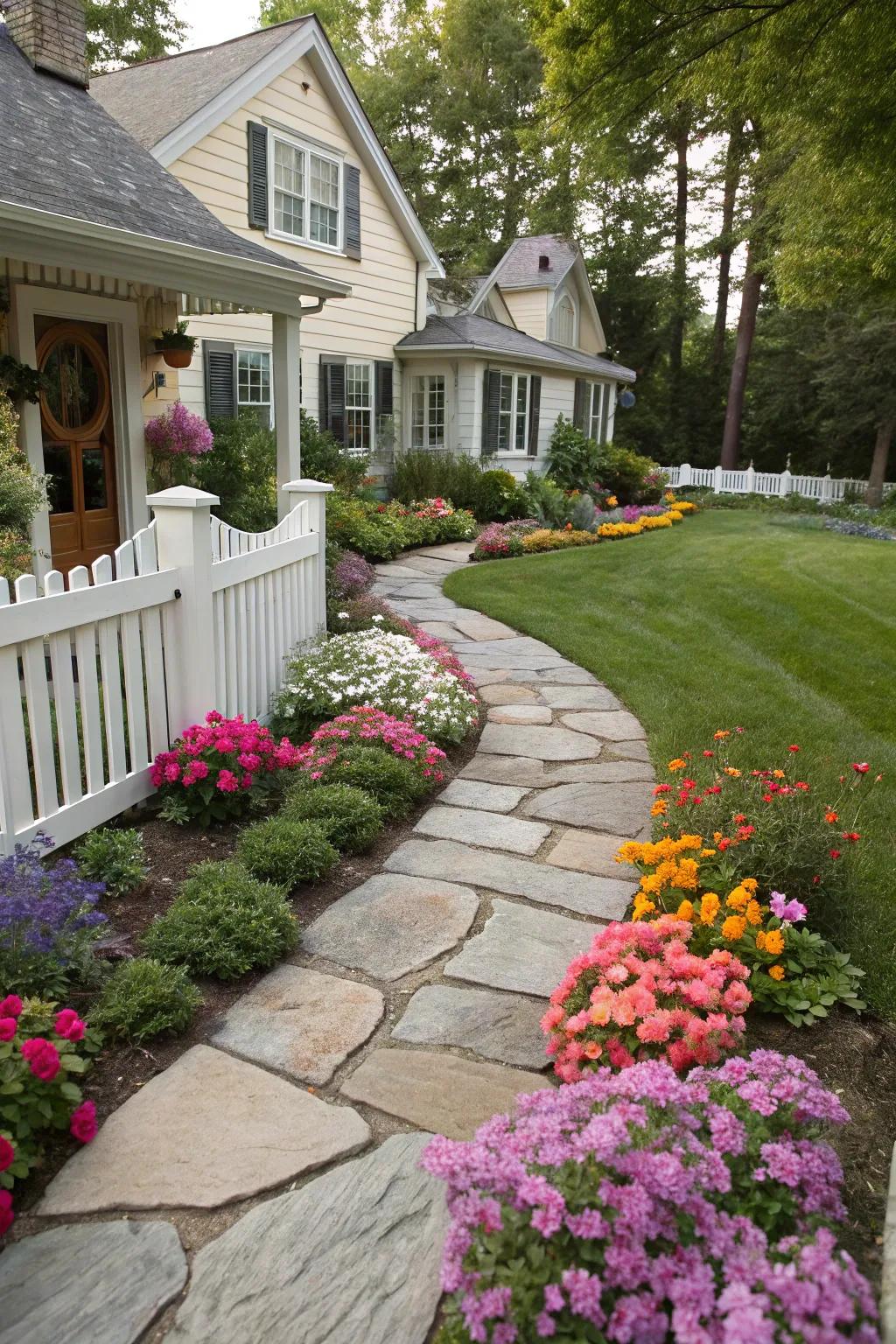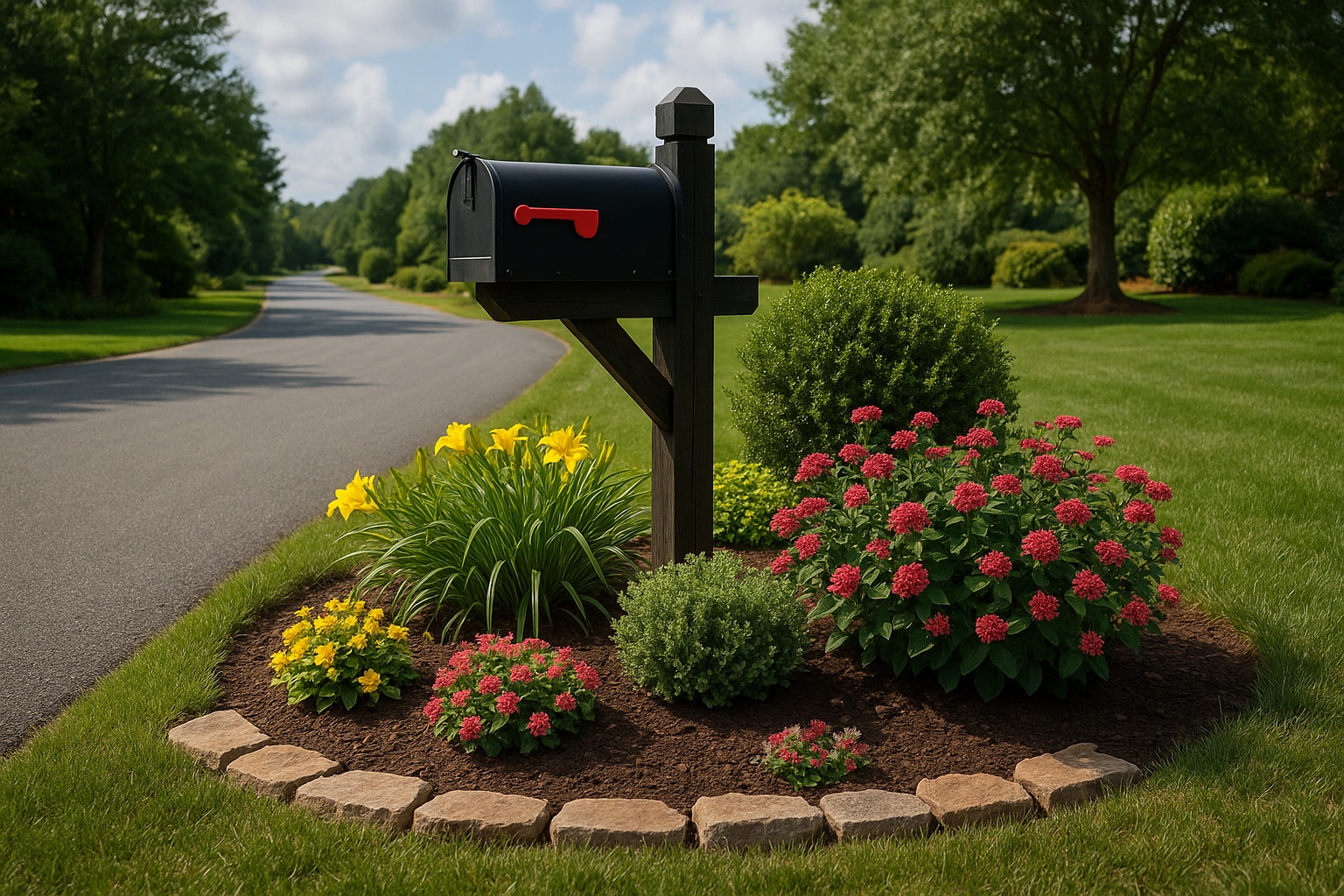
1. Elevating Your Outdoor Space with Rock Walkways
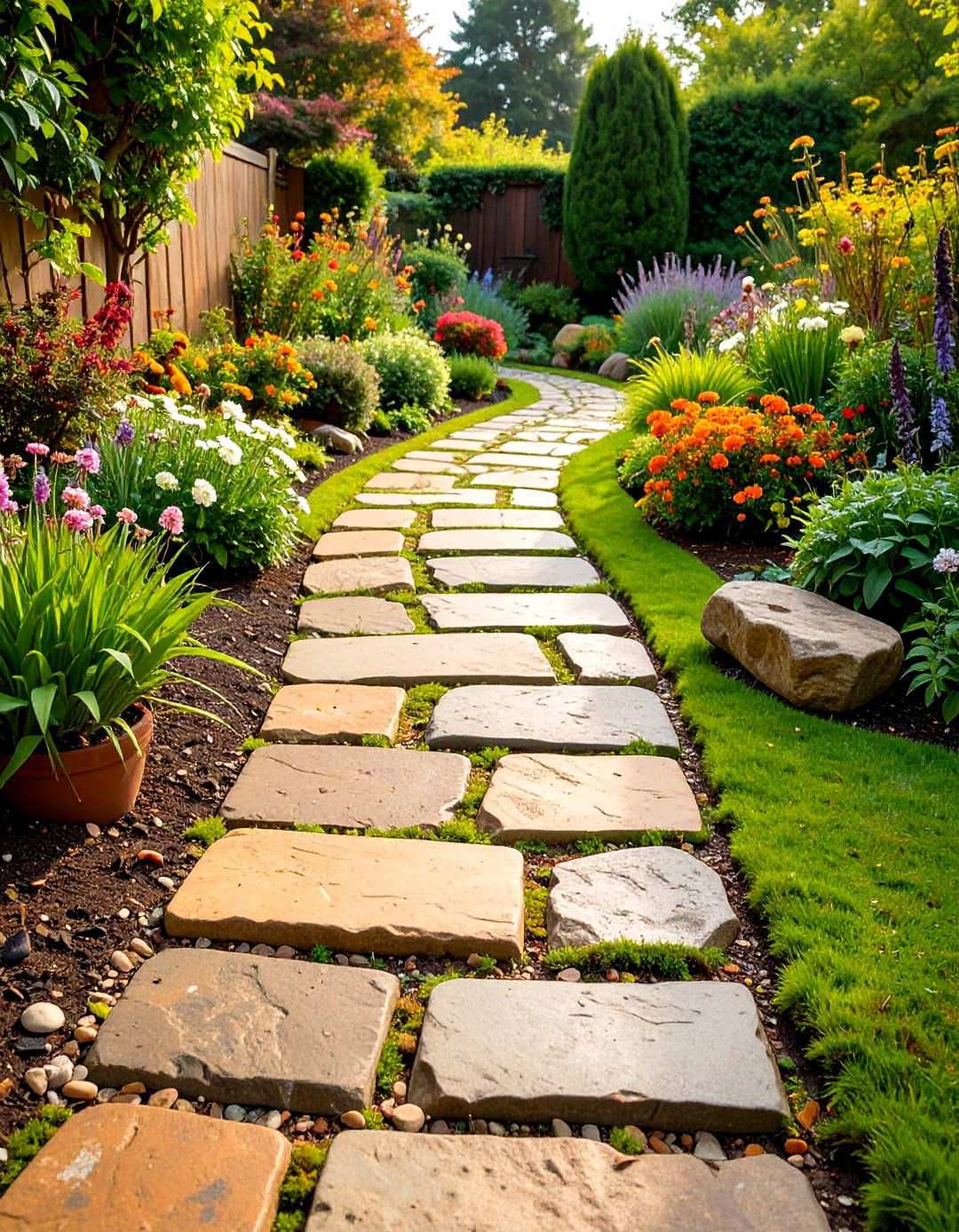
Transforming ordinary outdoor areas into captivating pathways is a breeze with the incorporation of rock walkways. These resilient, natural features serve as functional passageways connecting different parts of your property while adding timeless beauty and character to your garden design. Whether you’re aiming for a rustic, countryside feel or a sleek, contemporary look, rock walkways offer endless possibilities for expressing your personal style. Each material boasts unique textures, colors, and installation considerations that can complement various architectural styles and landscape themes, ensuring a perfect fit for your outdoor oasis.

As an Amazon Associate I earn from qualifying purchases.
2. Designing a Timeless Flagstone Pathway
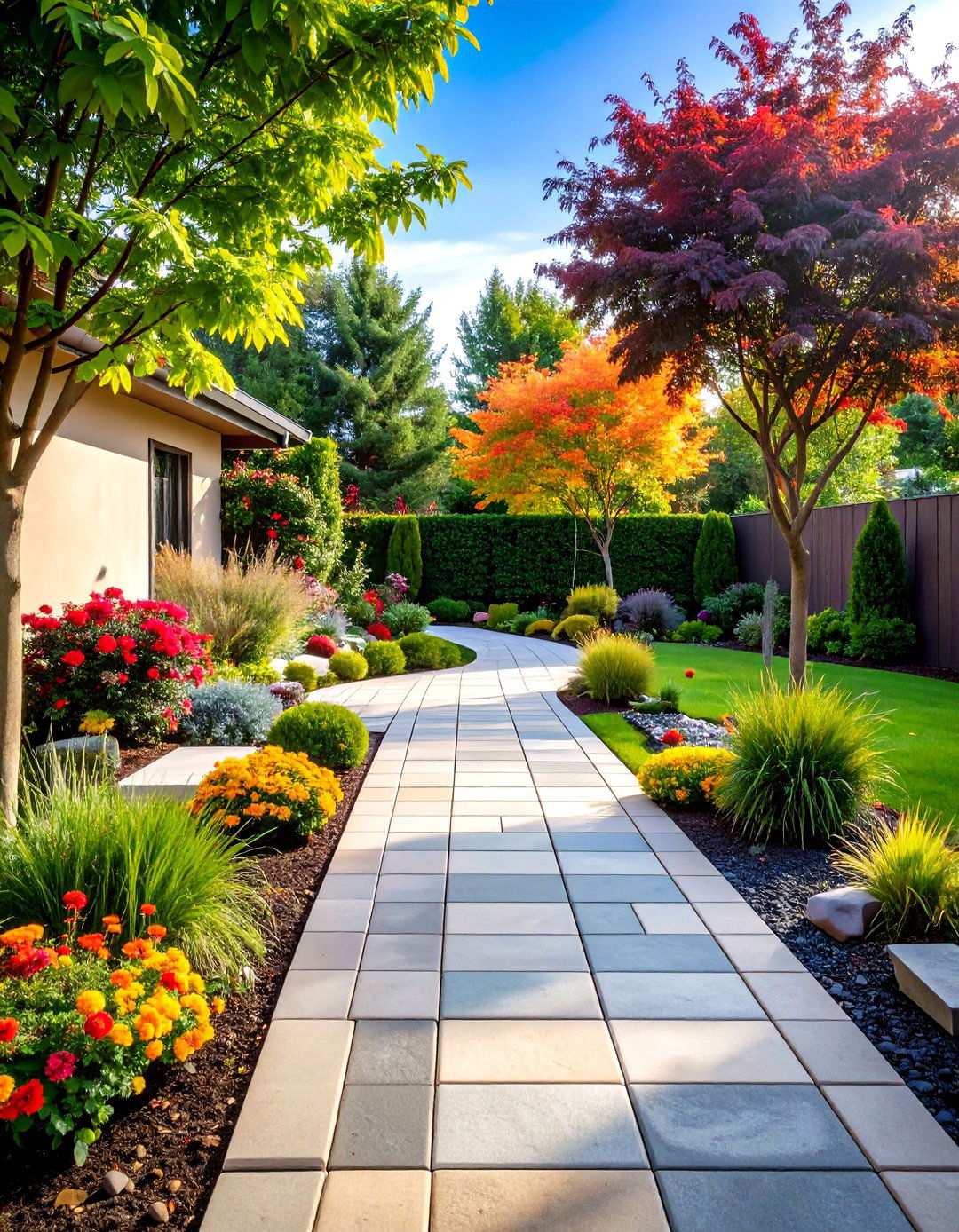
Imagine strolling through a charming garden pathway that exudes the charm of a centuries-old English garden. A well-designed flagstone pathway can transport you to a bygone era, inviting you to explore and connect with nature. This classic walkway design employs irregular flagstone pieces in soothing earth tones, creating an organic flow that harmonizes with natural landscaping. The stones are placed with ample spacing, allowing moss and low-growing groundcover to flourish between joints for an aged, romantic appearance. This design is particularly suited for cottage-style gardens, incorporating gentle curves that welcome exploration while providing stable footing. The natural variations in stone color and texture create visual interest without overwhelming surrounding plantings, making it perfect for connecting garden rooms or leading to secluded seating areas.
3. Geometric Paver Stone Walkway
Modern homes demand a clean and structured design aesthetic that reflects contemporary architectural principles. This geometric paver stone walkway utilizes rectangular cut stones arranged in precise patterns, creating a striking visual impact through repetition and symmetry. The uniform spacing and straight edges complement minimalist landscapes while providing exceptional durability for high-traffic areas. Choose neutral colors like charcoal, dove gray, or warm beige to maintain the sophisticated aesthetic. The structured layout works beautifully when bordered by ornamental grasses or architectural plantings that echo the pathway’s clean geometry. This design particularly suits urban environments where formal landscapes create a peaceful contrast to busy surroundings.
Discovering Hidden Treasures in Your Garden
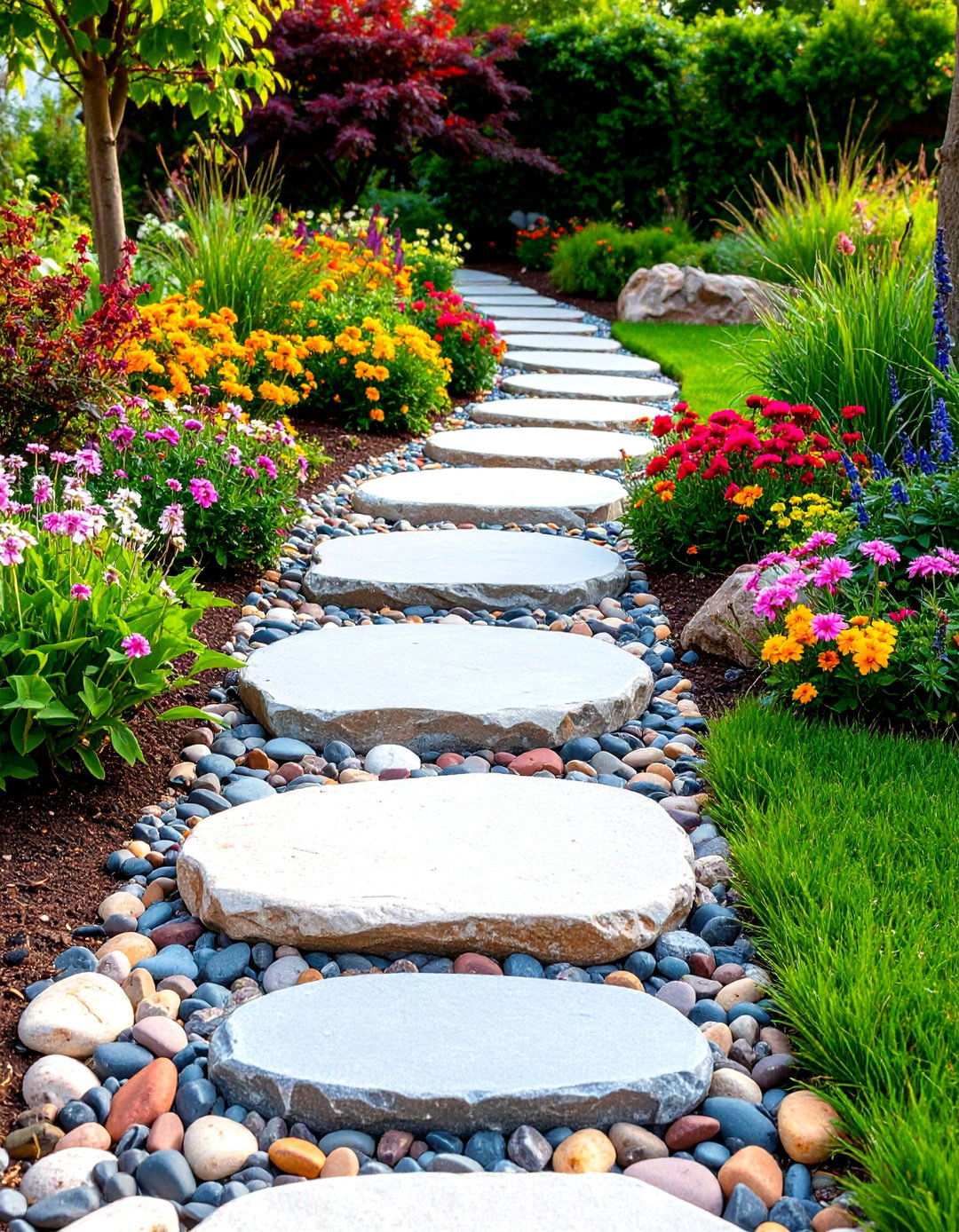
Imagine strolling through a serene garden, with each step revealing a new surprise, as if on a treasure hunt. River rock stepping stones can make this vision a reality, blending large flat stones with smaller river rocks to create an exciting journey. Spaced approximately two feet apart to fit natural stride patterns, each stepping stone becomes a destination, inviting you to slow down and appreciate the surroundings. Fill the gaps between stones with vibrant pebbles, ornamental grasses, or low-maintenance groundcover plants to add a pop of color and texture. This thoughtful design not only ensures excellent drainage but also encourages a more mindful pace, allowing you to fully immerse yourself in the beauty of nature.
4. Classic Elegance in Herringbone Brick Patterns
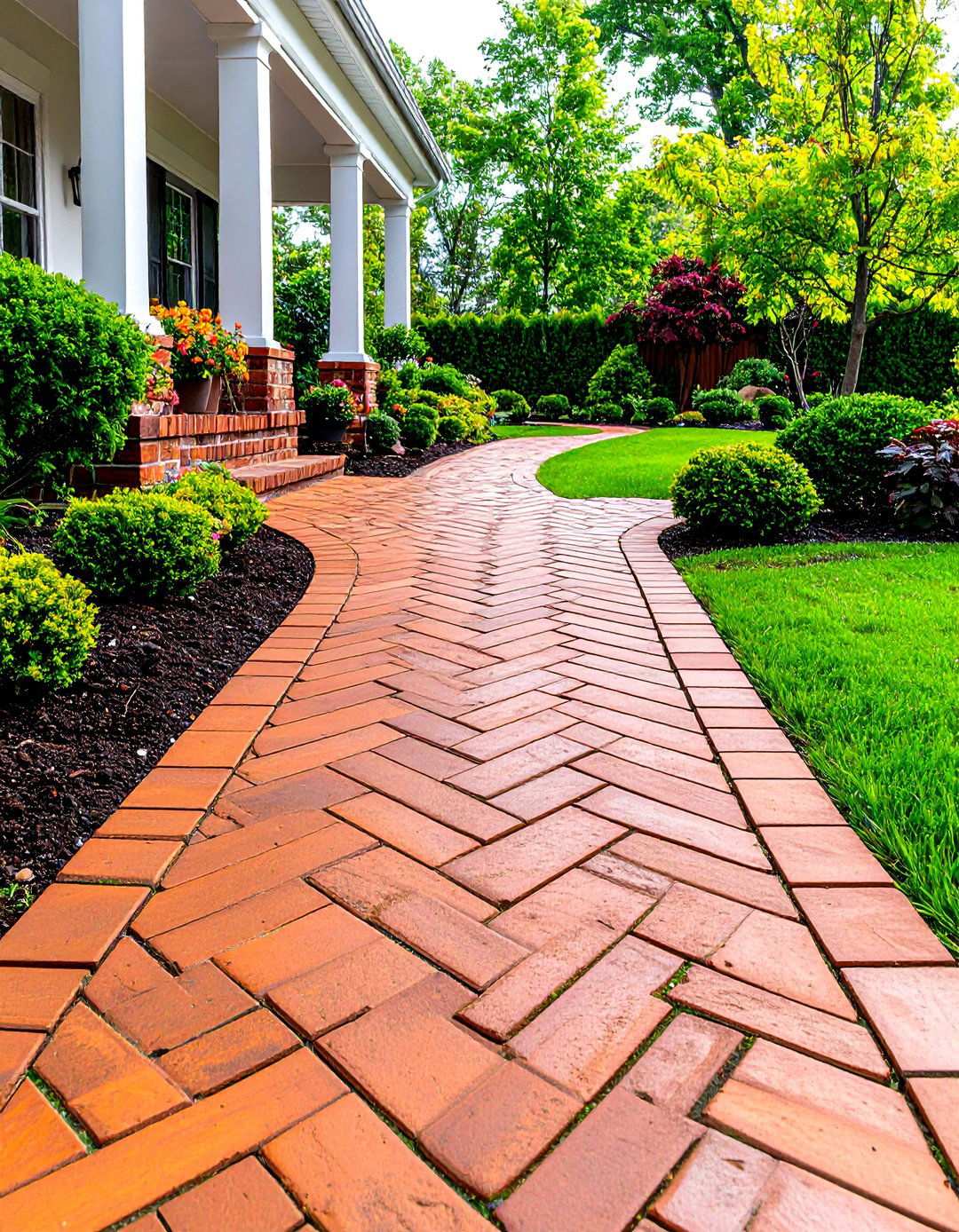
Elevate your entrance with a herringbone brick pathway that exudes timeless sophistication and traditional craftsmanship. This intricate design features rectangular pavers arranged in interlocking zigzag formations, creating a dynamic visual effect while maintaining structural stability. The angled placement adds complexity and visual interest compared to simple running bond patterns, making the walkway itself a stunning design feature. Choose from classic red clay bricks for a traditional look or contemporary concrete pavers in modern colors to give your entrance a fresh twist. This pattern works particularly well for formal front entrances, connecting to porches or patios where the intricate design can be fully appreciated. The tight joints provide a smooth walking surface suitable for all ages, inviting you to walk with confidence.
5. Artistic Expression in Pebble Mosaic Walkways
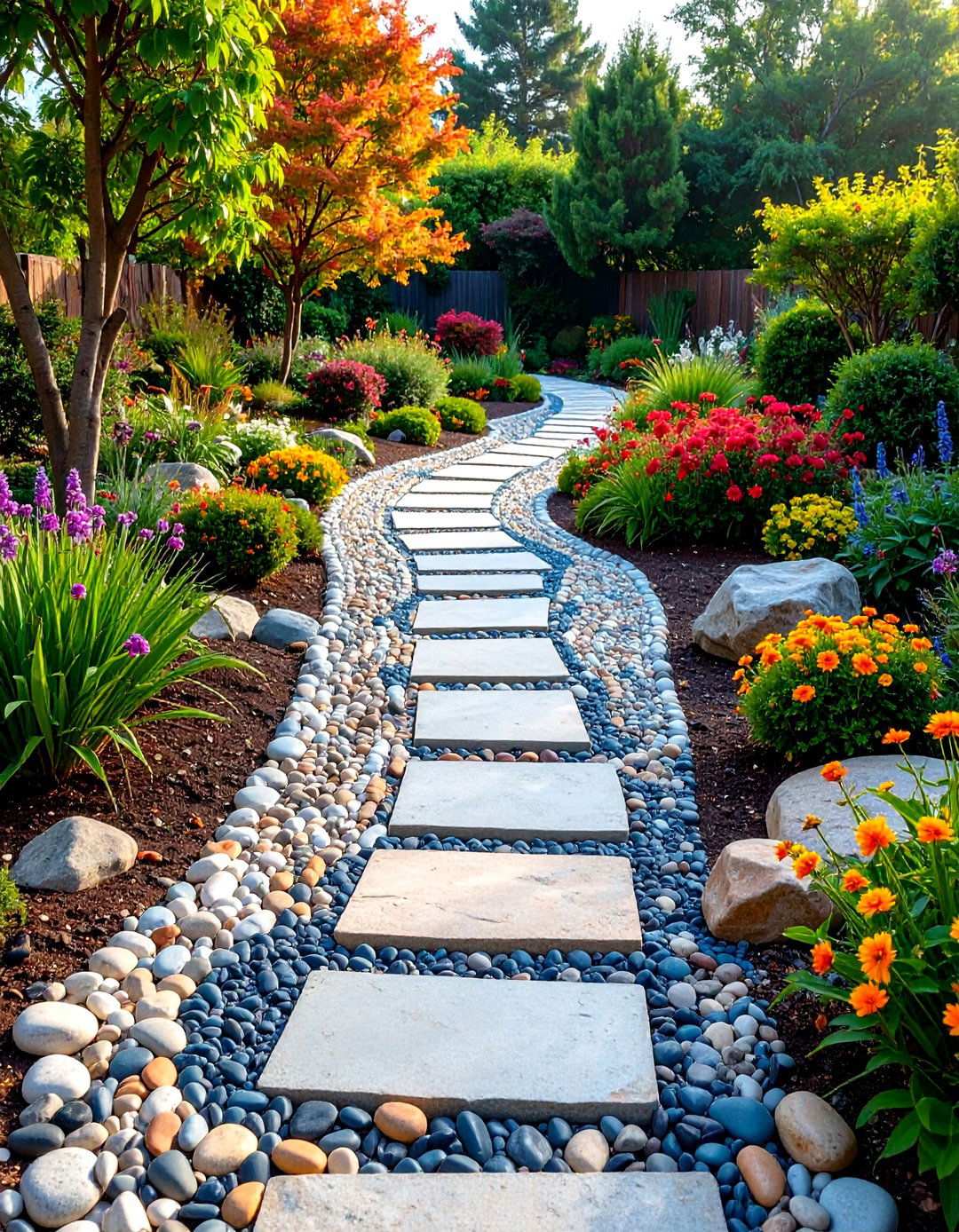
Why settle for ordinary when you can create extraordinary artistic expression beneath your feet? Pebble mosaic walkways transform functional pathways into stunning outdoor art installations using carefully selected stones arranged in intricate patterns. This ancient technique involves embedding smooth river rocks, beach pebbles, and colored stones in mortar to create unique geometric designs, floral motifs, or abstract compositions. Each section becomes a one-of-a-kind artwork that reflects personal creativity while providing durable, slip-resistant surfaces. The design process may require patience and planning, but the result is a pathway that serves as a conversation starter and a reflection of your household’s personality. Consider incorporating family symbols, cultural patterns, or nature-inspired themes that hold special meaning for your household, creating a truly unique and meaningful outdoor space.
6. Winding Gravel Paths
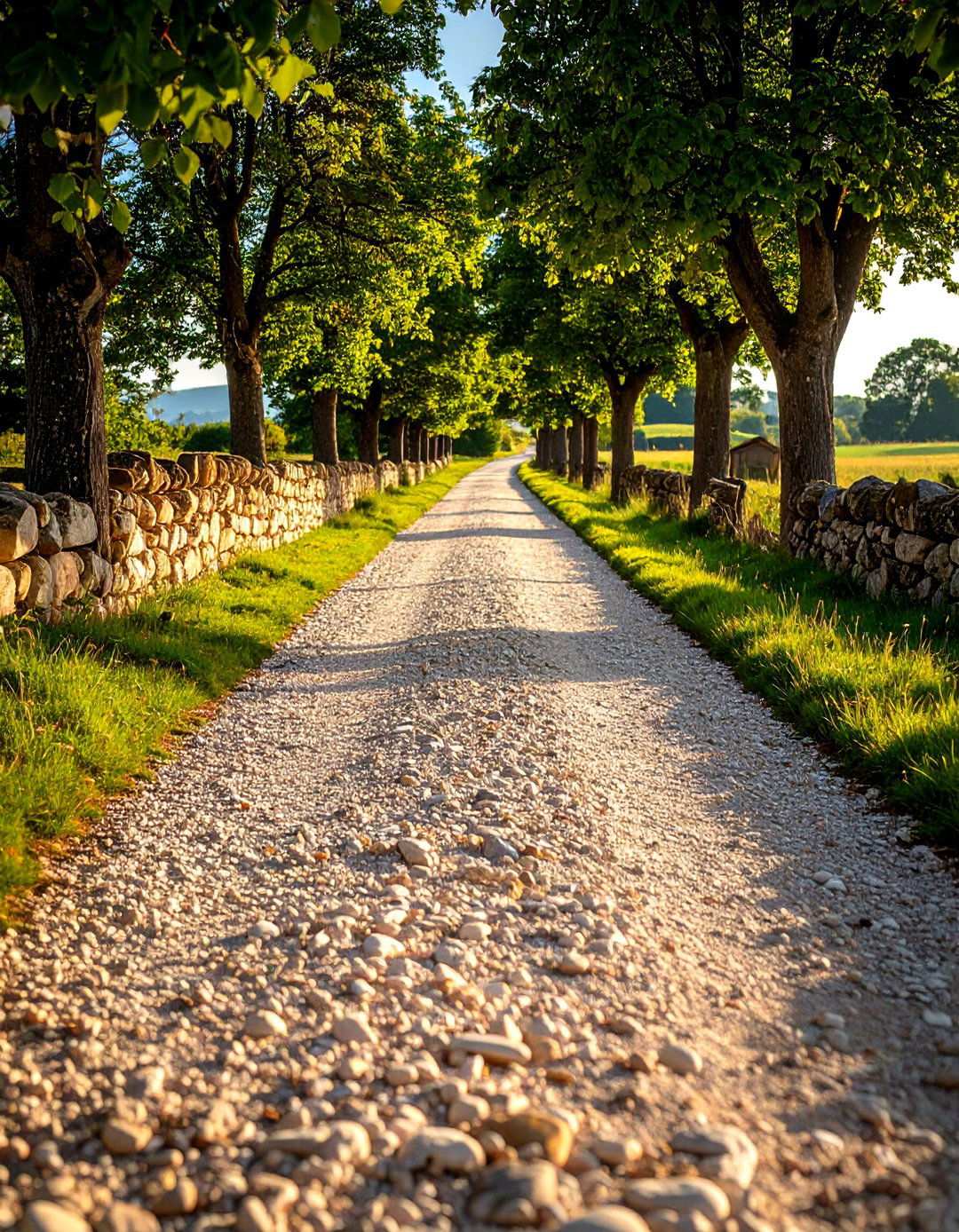
Elevate your outdoor space with a charming European-inspired gravel pathway that combines rustic charm with functional simplicity. Angular crushed stone, a budget-friendly option, compacts well and creates stable walking surfaces that drain efficiently during rainy conditions. The neutral color palette allows for seamless blending with various landscape designs while adding subtle texture underfoot. To define the walking area and prevent spreading, edge the pathway with natural stone borders, wooden timbers, or planted margins. This design excels for longer pathways connecting different garden areas or creating service routes to utility spaces. As a sustainable landscape solution, the permeable surface requires minimal maintenance, limited to occasional raking, while supporting eco-friendly practices.
7. Slate Stepping Stone Pathways
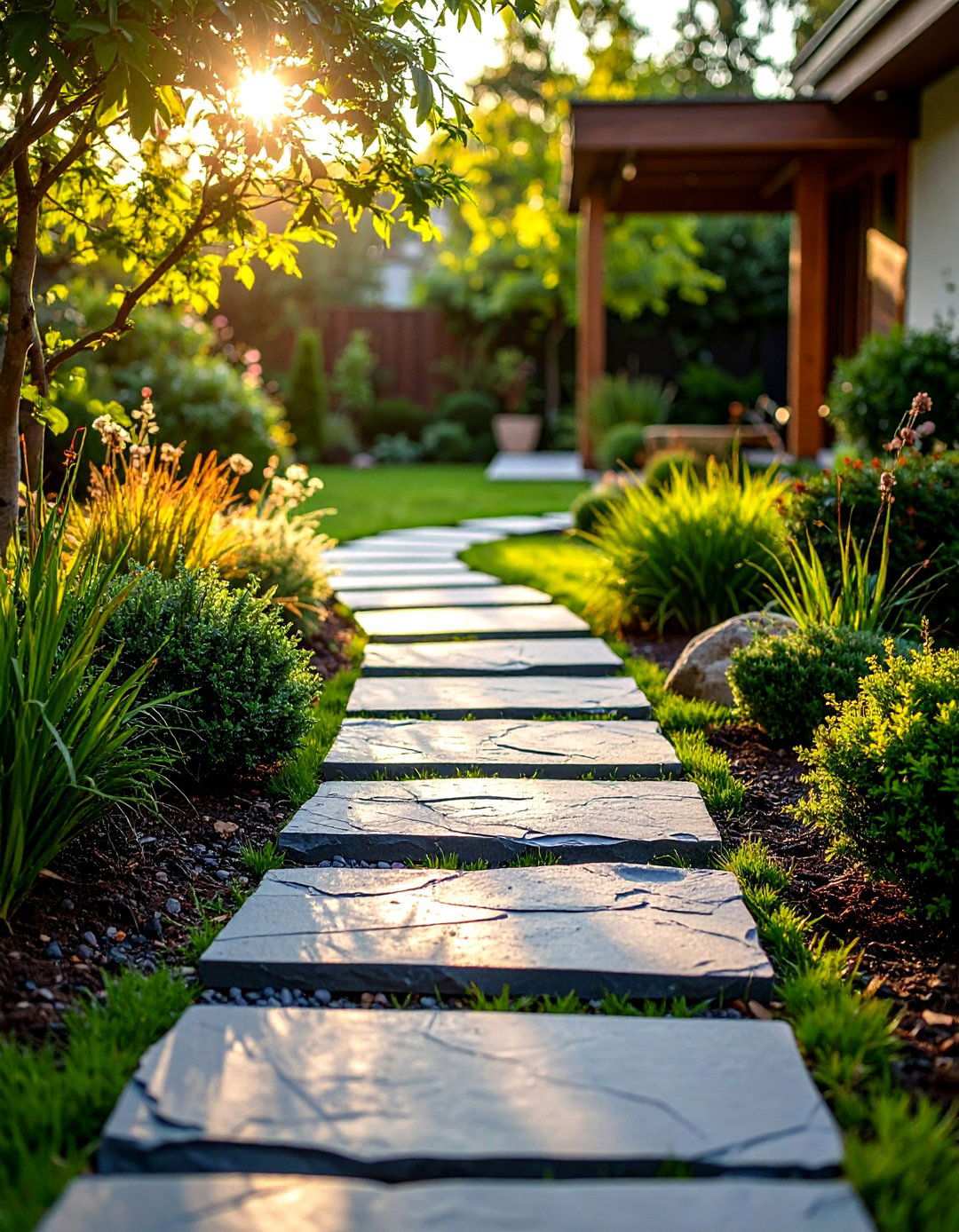
For a landscape pathway that embodies elegance and natural durability, slate stepping stones are the perfect choice. Their flat surfaces and diverse color variations, ranging from deep charcoal to warm copper tones, create a sophisticated visual effect. These large format stones offer generous landing areas that feel stable and secure while maintaining a sense of lightness in the landscape. To ensure comfortable walking, space the stones eighteen to twenty-four inches apart. The gaps between stones can be filled with ornamental plantings, decorative gravel, or grass, allowing you to tailor the pathway to your maintenance preferences. As the stones become wet, their naturally smooth surface develops a beautiful reflective quality, adding another dimension to the pathway experience during and after rainfall.
8. Cobblestone Gathering Spaces
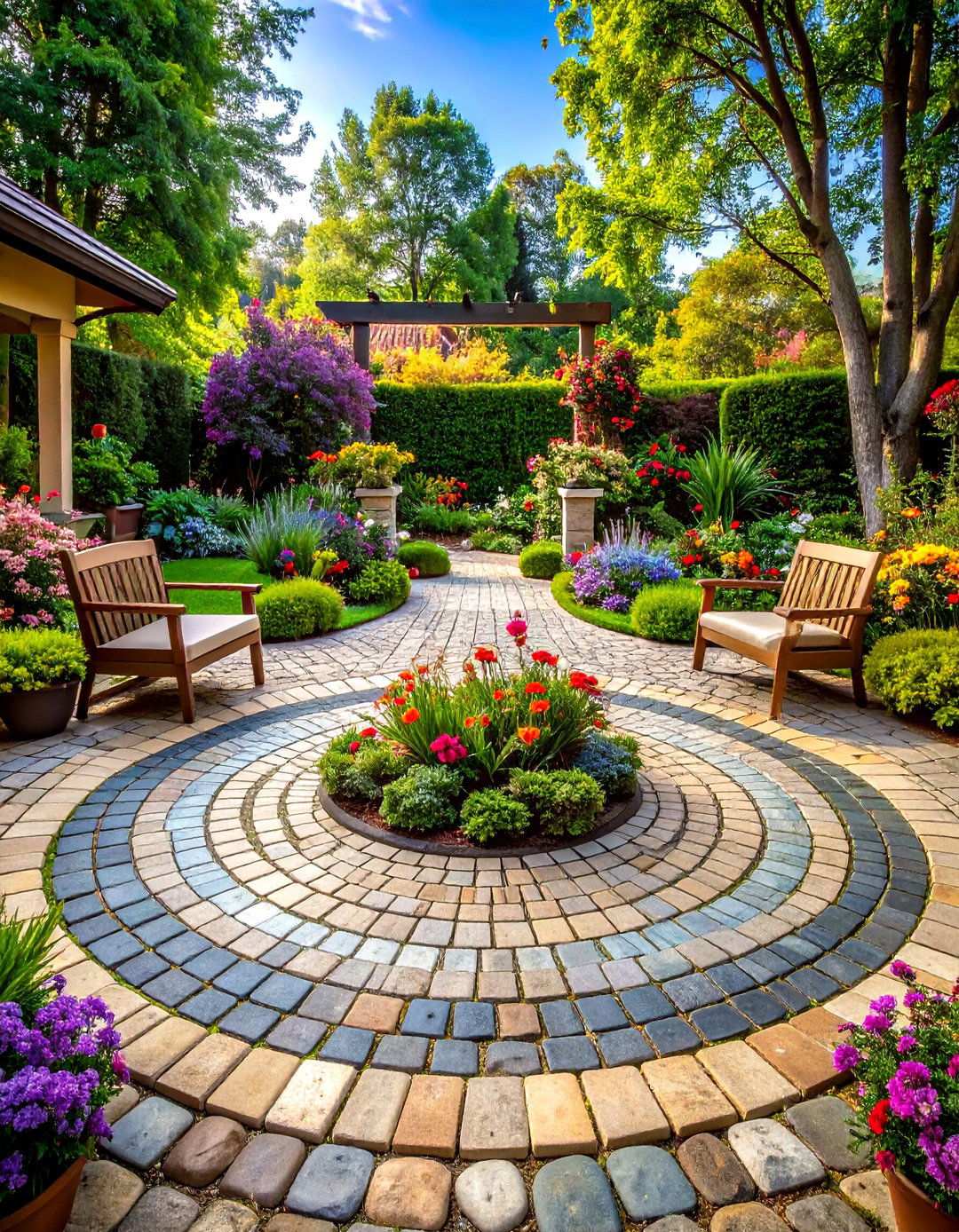
Enhance your landscape with cobblestone circular features that transform pathway intersections into memorable gathering spaces. These rounded installations, comprising small, uniform stones arranged in radiating patterns, draw the eye inward while providing textural contrast to surrounding straight pathways. The circular design can incorporate different colored stones to create concentric rings or spoke patterns that add artistic flair. These features excel at pathway junctions, garden entrances, or as bases for outdoor sculptures and planters. The traditional European aesthetic brings old-world charm to modern landscapes while providing excellent drainage and durability. To highlight the intricate stonework during evening hours, consider adding subtle lighting to these captivating gathering spaces.
9. Harmonious Fusion of Materials
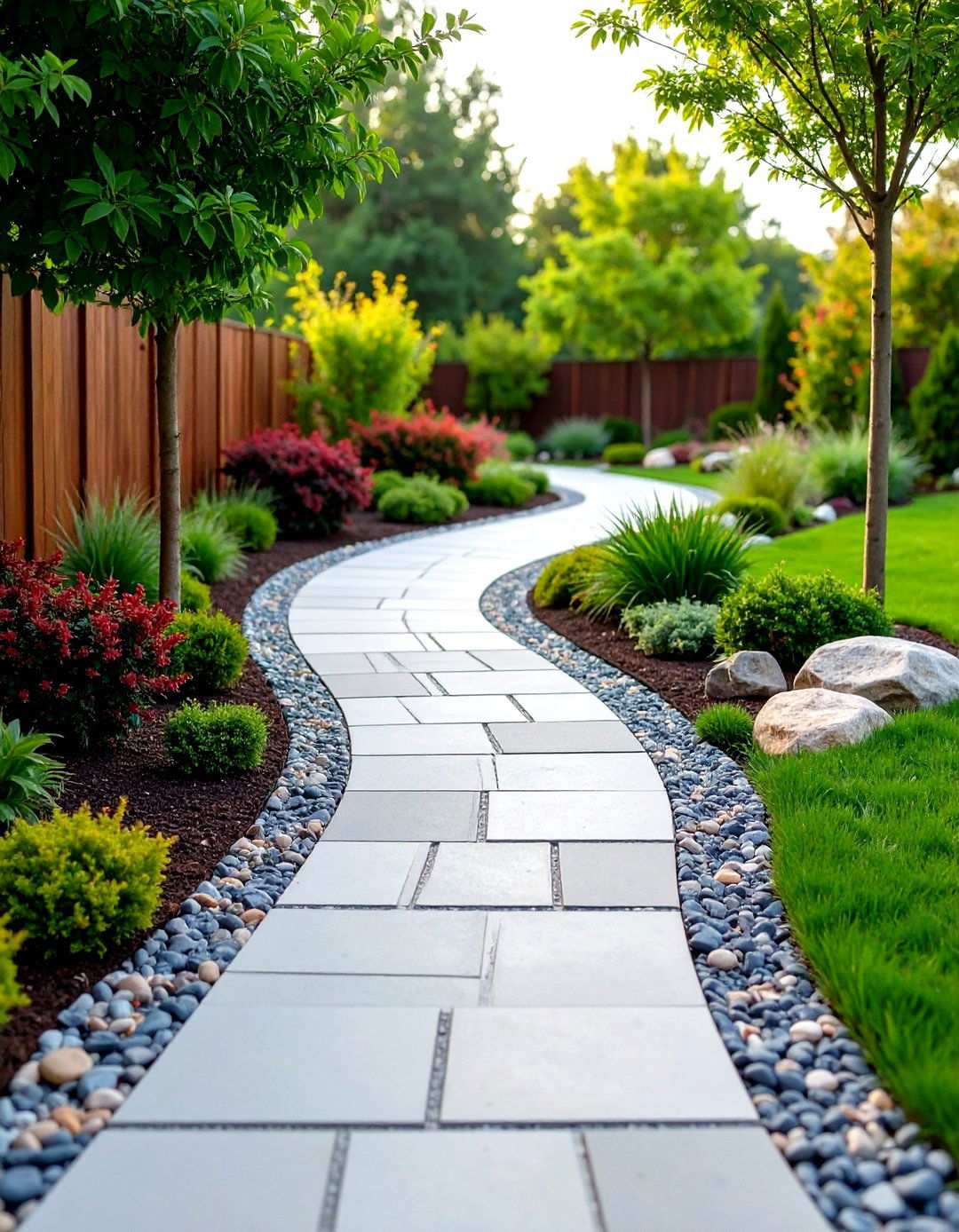
Modern design can seamlessly integrate natural materials to create a sophisticated aesthetic, even with the addition of clean lines. By combining smooth concrete pavers and natural stone accents, a harmonious fusion of materials emerges, blurring the lines between architecture and landscape. This contemporary pathway showcases the beauty of contrasting textures and materials, offering endless possibilities for visual expression. To achieve a cohesive design, choose materials with complementary color palettes that work in harmony. This approach is particularly effective for connecting indoor and outdoor living spaces, where the pathway serves as a seamless transition. By incorporating subtle visual cues, the pathway ensures accessibility while maintaining its unique charm.
10. Naturalistic Decomposed Granite Trails
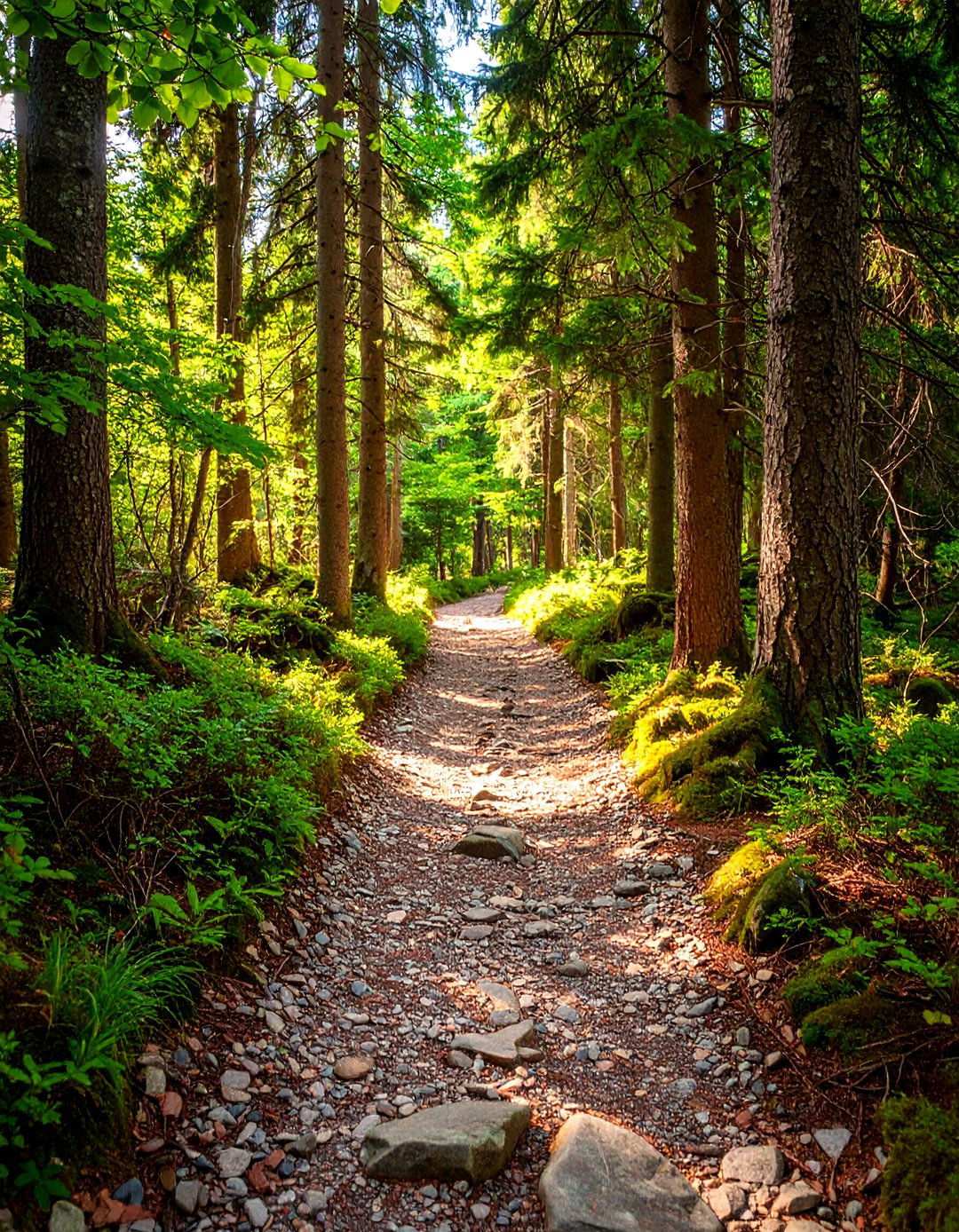
Decomposed granite trails offer a unique opportunity to create a naturalistic woodland pathway that feels authentic and environmentally responsible. This sustainable material provides a firm and comfortable walking surface that complements naturalistic landscape designs. The fine texture of decomposed granite offers excellent traction, while also allowing water infiltration that fosters the growth of surrounding vegetation. To maintain definition without disrupting the organic aesthetic, edge the pathway with natural stone borders or fallen logs. This design excels in informal gardens, connecting seating areas, or creating meditation paths through planted areas. The neutral earth tones of decomposed granite blend seamlessly with most plant palettes, requiring minimal maintenance beyond periodic surface renewal.
11. Regal Limestone Block Entrances
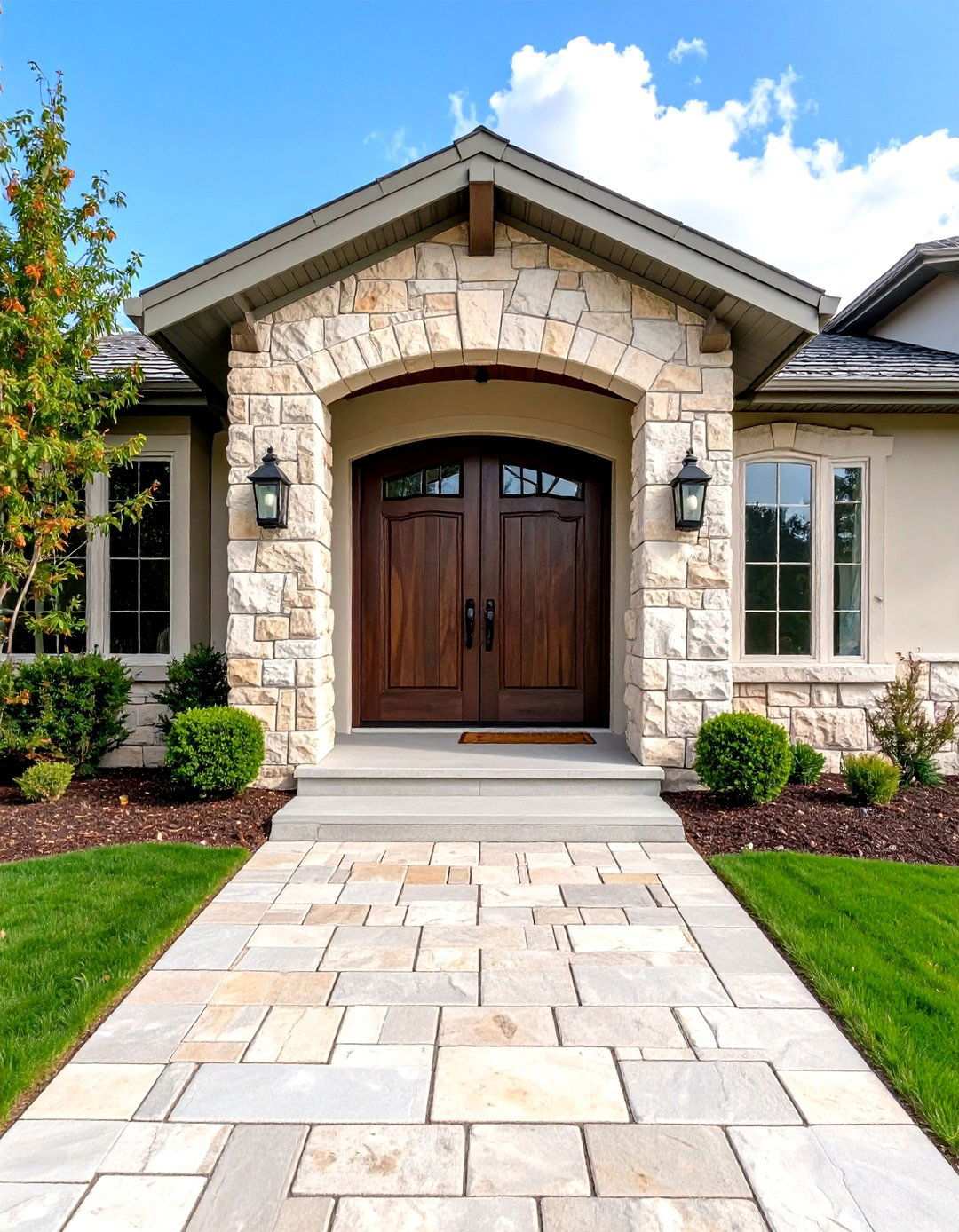
A front entrance is often the first impression visitors have of a home, and a well-designed pathway can speak volumes about the property’s character. A limestone block formal entrance pathway creates a regal welcome that exudes quality and attention to detail. The substantial rectangular stones provide a generous and durable surface that feels fitting for main entrances. The consistent sizing allows for precise installation with tight joints that create a clean and professional appearance. Limestone’s natural variation in color and texture adds subtle interest without overwhelming architectural features. This design is particularly well-suited to traditional and transitional home styles, where the pathway’s formality complements the structure’s proportions. By incorporating subtle drainage channels between stones, you can effectively manage water flow and maintain a well-crafted entrance.
12. Cultivating Serenity in Movement
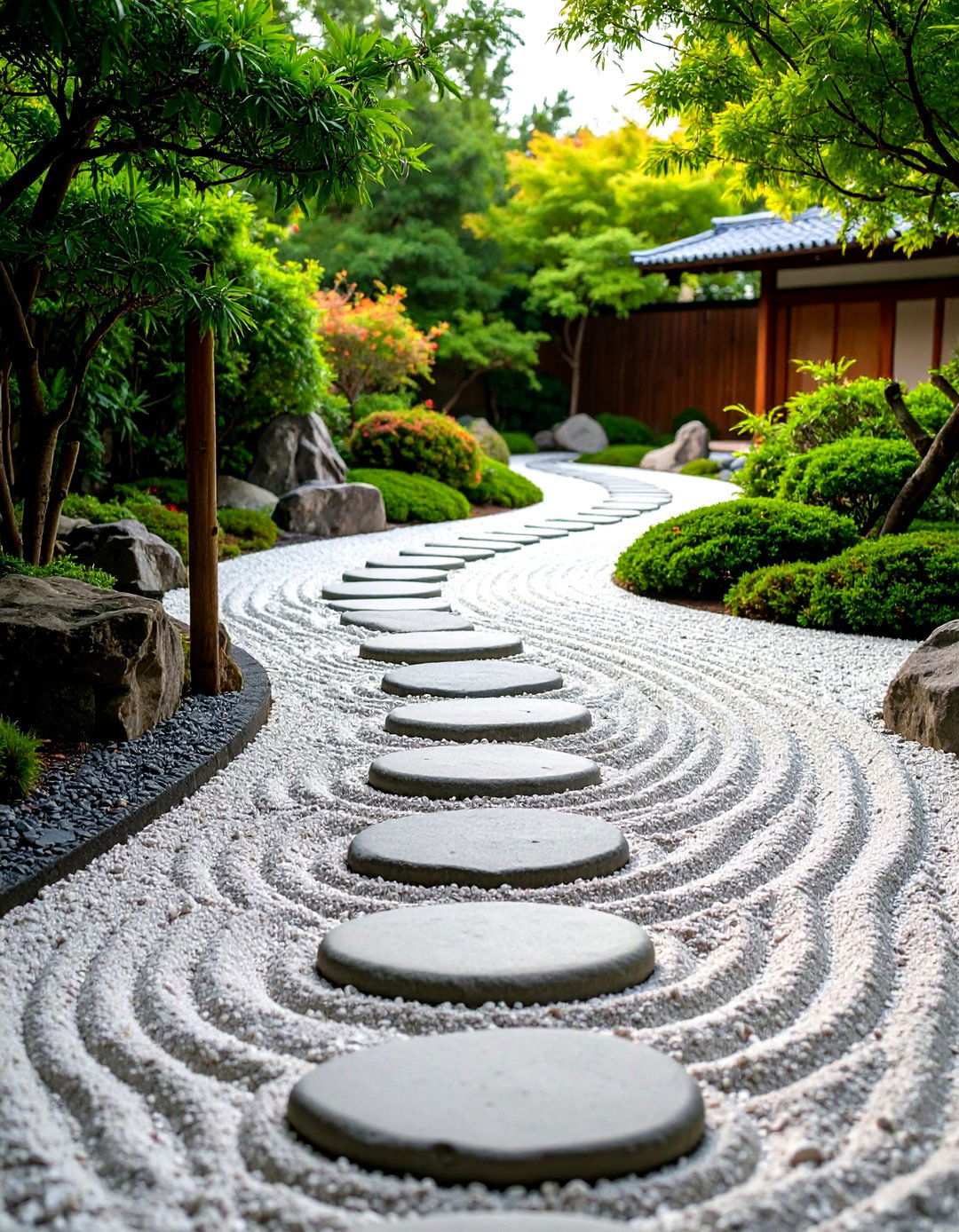
Experience the transformative power of mindful walking with pea gravel zen garden pathways that invite a more deliberate pace. The soothing sounds and gentle sensations beneath your feet create a sensory experience that calms the mind and rejuvenates the body. This understated design philosophy prioritizes minimalist beauty and organic simplicity over elaborate patterns or vibrant hues. Balance the pathway with strategically placed, larger stones or drought-resistant plantings that reinforce the peaceful ambiance. The permeable surface not only supports eco-friendly landscaping practices but also minimizes maintenance. Whether connecting meditation areas, creating therapeutic routes, or linking wellness spaces, this design fosters a tranquil atmosphere and encourages relaxation.
13. Honoring the Land with Fieldstone Rustic Trails
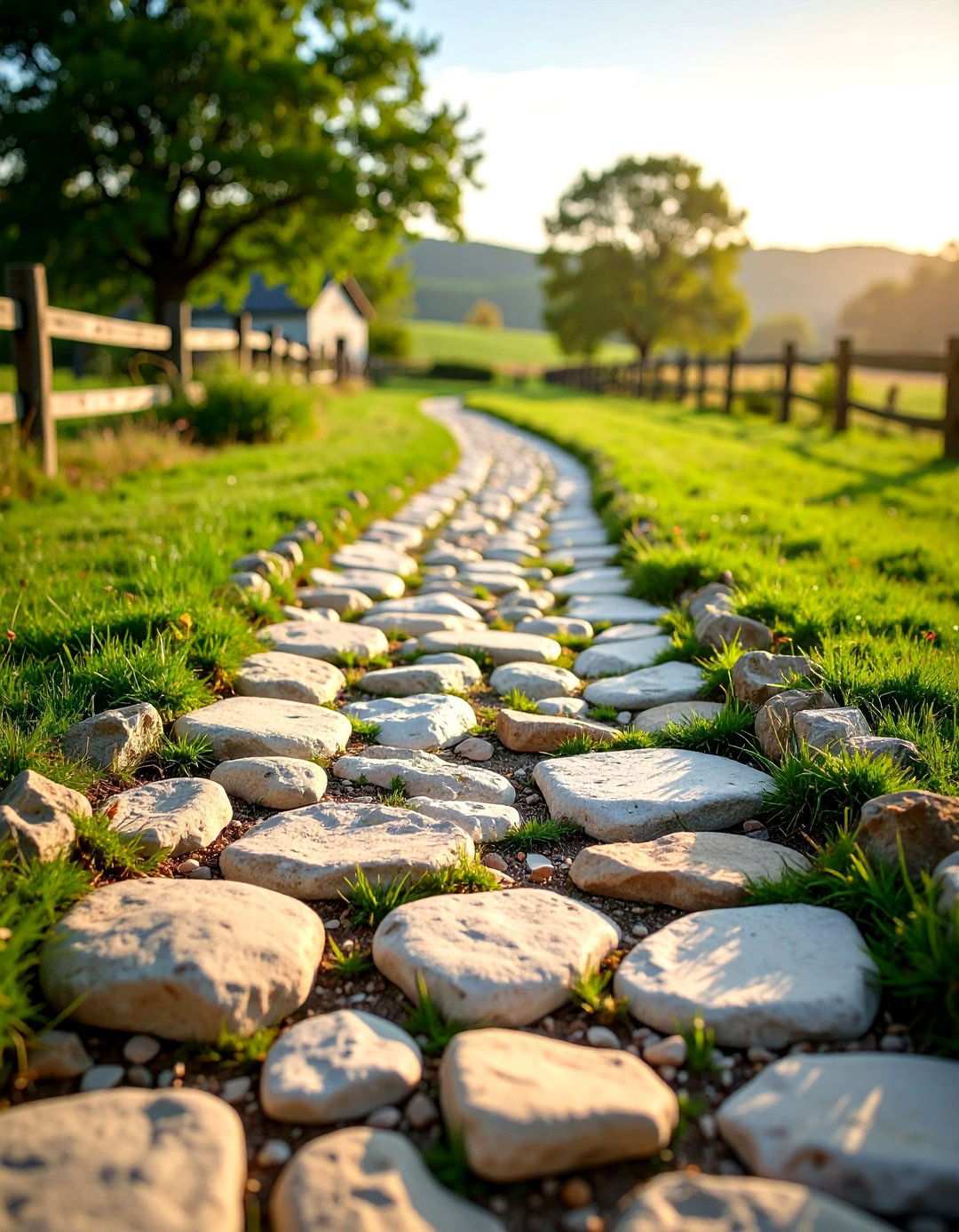
Incorporating the rustic charm of rural landscapes into your suburban setting can be achieved with fieldstone rustic trails that use locally sourced, irregular stones. These natural stones convey a sense of authenticity and regional connection, telling stories through their varied shapes, colors, and textures. Arrange them with generous gaps to accommodate informal plantings or naturalized ground cover. This design celebrates the beauty of imperfection, embracing the unique characteristics found in nature. The pathway assumes an air of timelessness, as if it has stood for generations. To create visually appealing resting spots along longer routes, consider incorporating larger anchor stones at key points.
14. Elegance and Endurance in Brick and Mortar Traditional Pathways
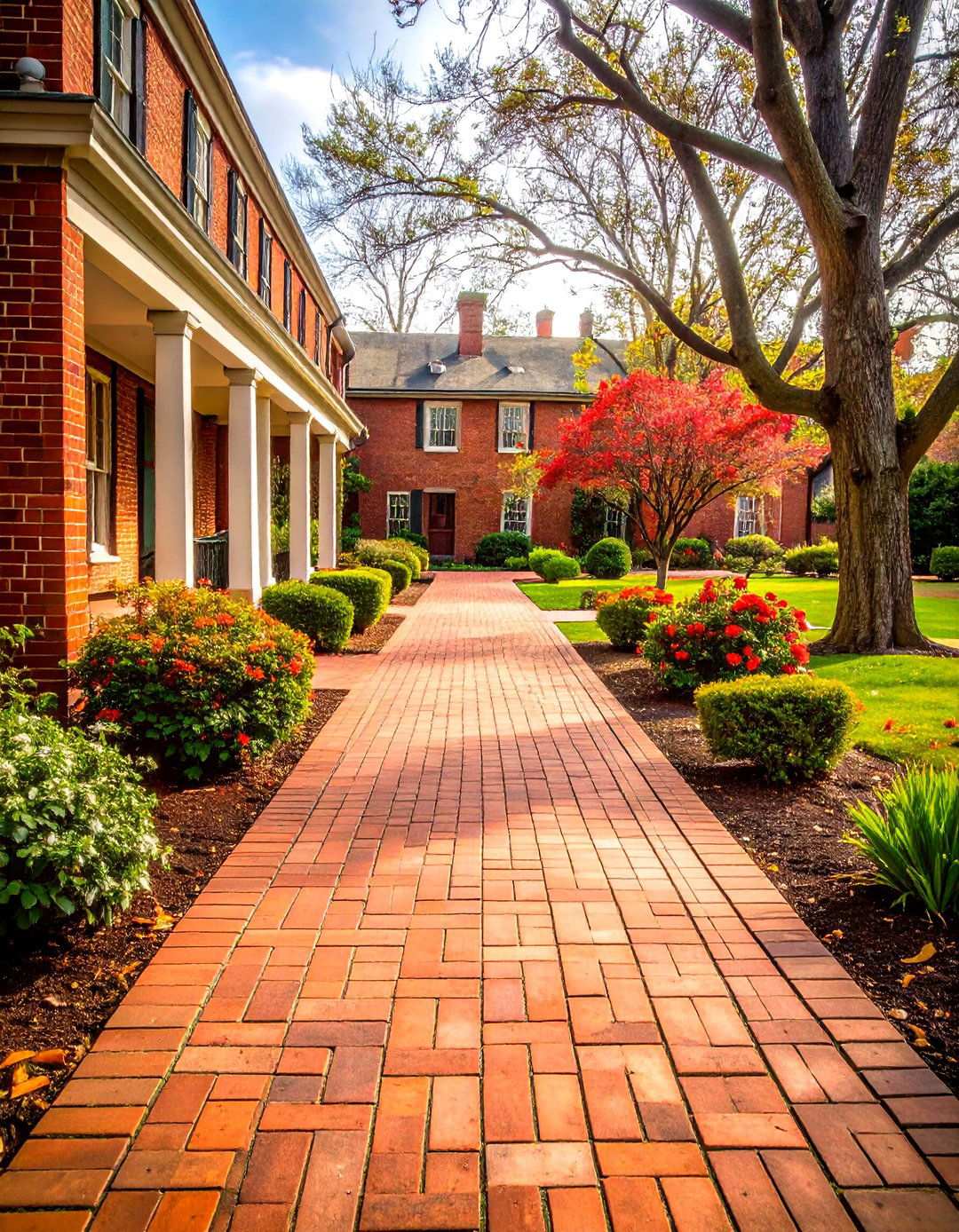
Elevate your landscape with brick and mortar traditional pathways that embody enduring craftsmanship. This classic approach employs timeless running bond or herringbone patterns with mortared joints, resulting in smooth, professional surfaces suitable for formal settings. The permanent installation boasts excellent longevity, maintaining a consistent appearance through seasonal changes. To achieve cohesive design integration, choose brick colors that complement your home’s exterior materials. This pathway style is particularly well-suited for historic properties or gardens where traditional aesthetics are prized. The solid construction handles heavy foot traffic while providing stability for mobility devices. Consider incorporating subtle drainage solutions within the mortar joints to prevent water accumulation and maintain the pathway’s integrity.
15. Integrating Architectural Elements with Geometric Precision
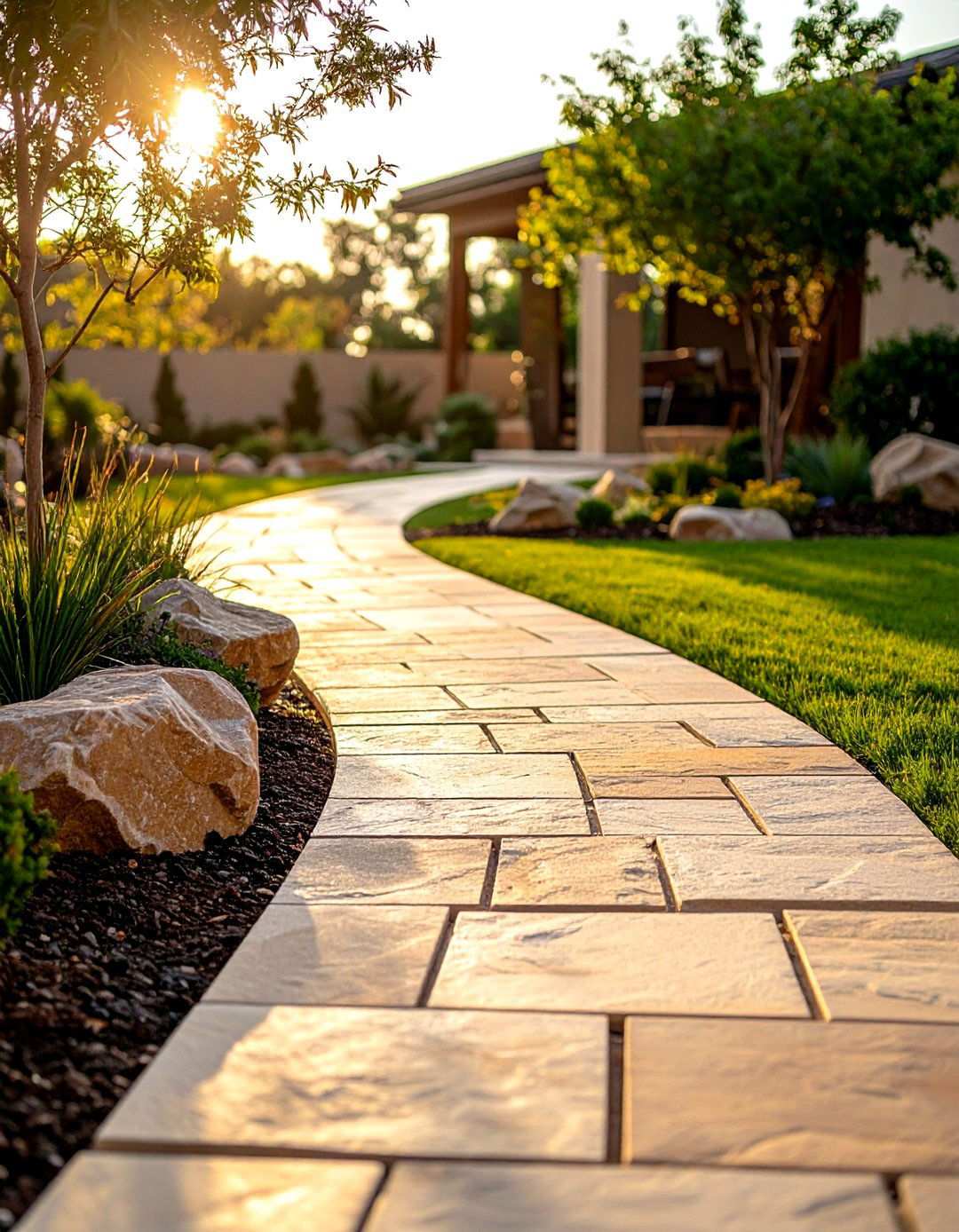
For contemporary landscapes that demand a seamless blend of natural and architectural elements, sandstone slabs in geometric layouts offer an ideal solution. With their clean edges and warm, natural hues, these large format stones create substantial landing areas that exude security while maintaining a sense of visual lightness. By arranging them in grid patterns, offset layouts, or custom geometric compositions that reflect modern design sensibilities, you can achieve a sophisticated look that feels both contemporary and timeless. The natural variation in sandstone’s surface texture adds organic interest, while the clean lines required for contemporary aesthetics remain intact. This design approach is particularly effective for connecting indoor and outdoor spaces where material continuity is crucial.
16. Captivating Cottage Charm with Tumbled Stone Pathways
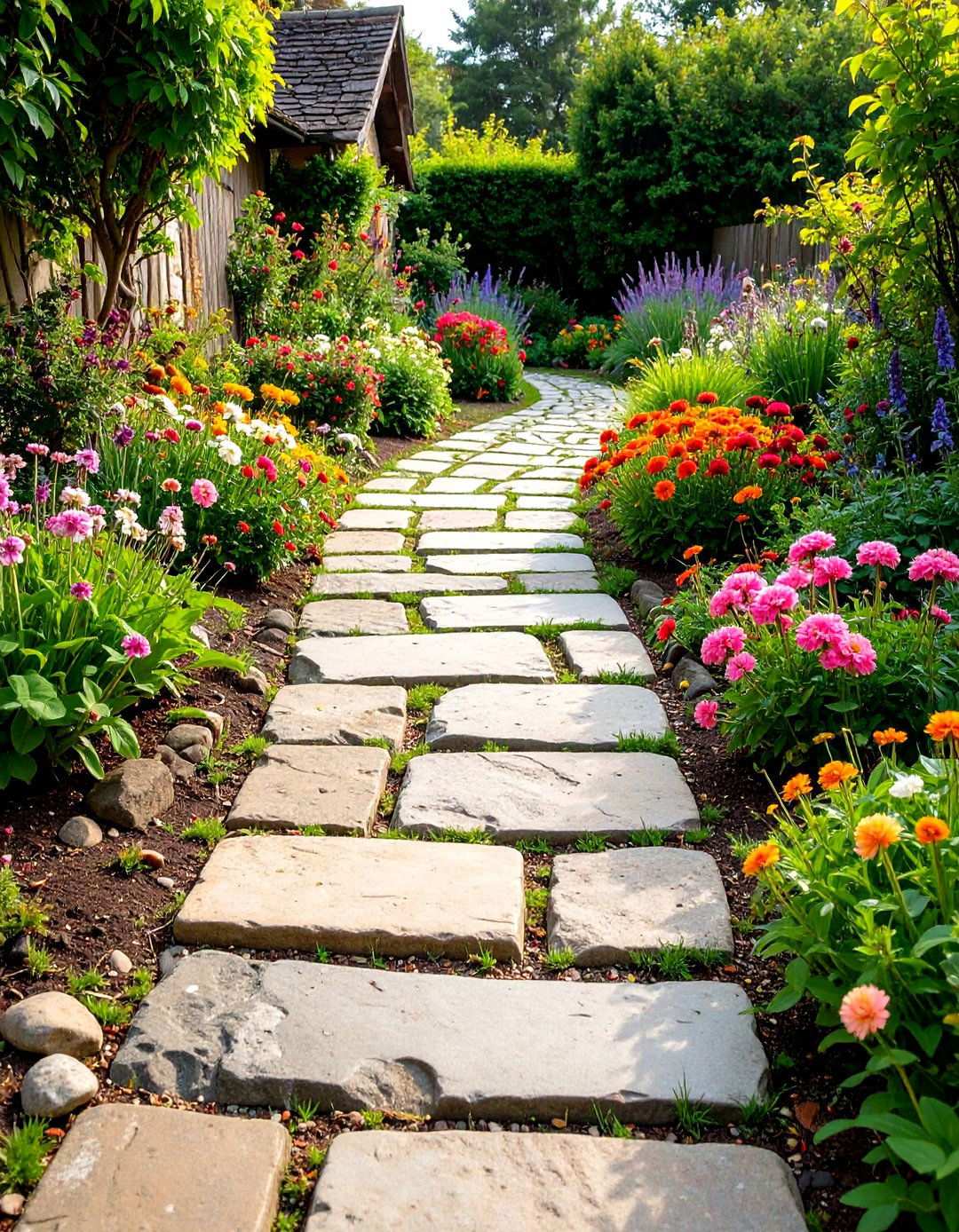
Tumbled stone cottage pathways evoke the romantic charm of English countryside gardens, where centuries-old stories unfold with every step. These weathered stones feature softened edges and aged surfaces that seem to whisper tales of the past. The irregular shapes and varied sizes allow for creative layout patterns that feel organic and unplanned, as if nature itself had crafted the pathway. By incorporating aromatic herbs and cottage garden flowers in the joints, you can enhance the romantic aesthetic while providing natural fragrance along the walking route. This design approach celebrates the beauty of imperfection and aging, creating pathways that become more enchanting with time. The varied stone heights and textures provide an engaging walking experience, while maintaining rustic authenticity throughout the seasons.
17. Defining Urban Sophistication with Granite Cobble Grids
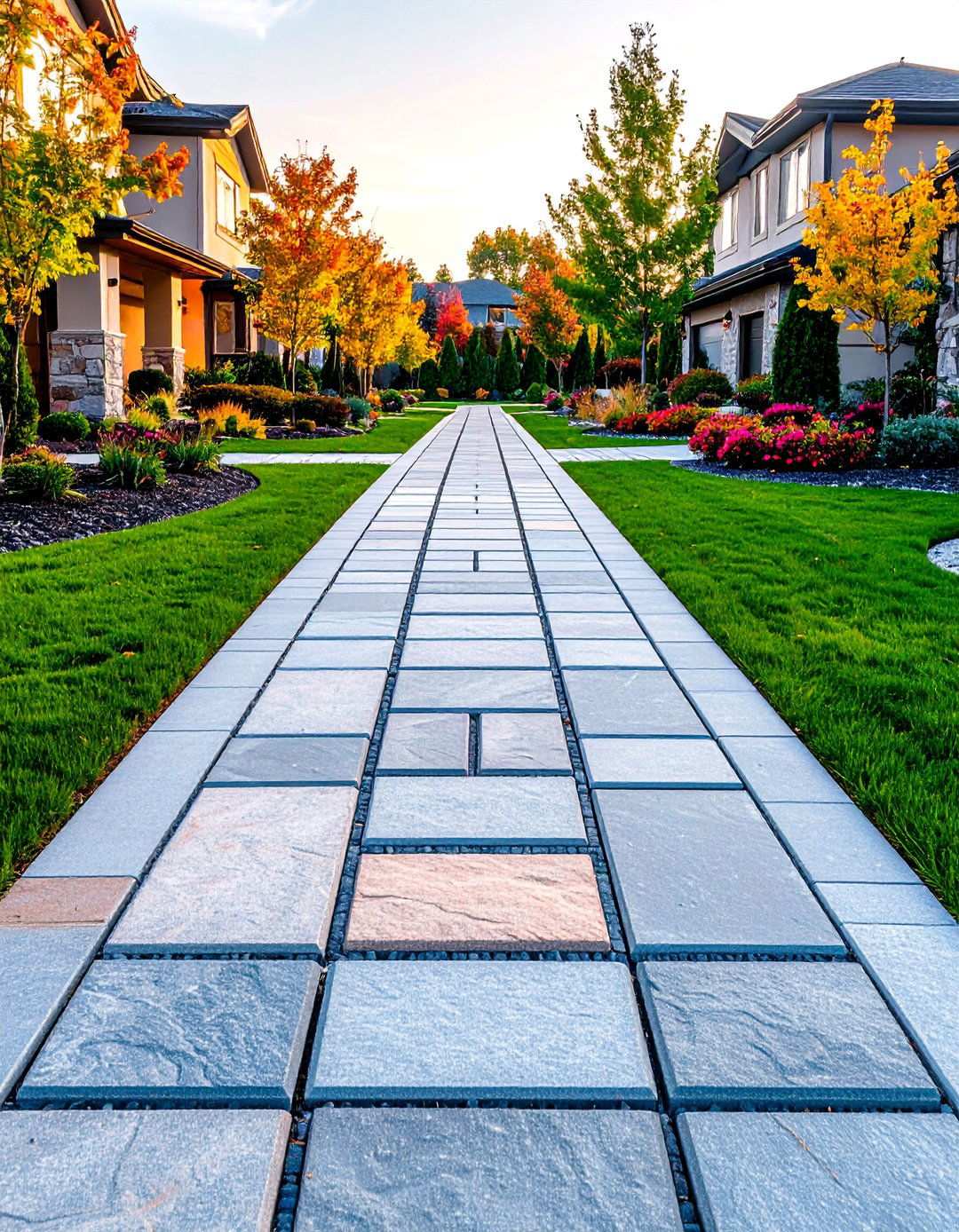
In residential landscapes, what defines sophisticated urban design? Granite cobble formal grids create structured pathways that reflect city streetscape traditions while providing residential-scale functionality. By arranging uniform stones in precise patterns with consistent spacing, you can create a sense of rhythm and visual order that is both captivating and functional. The durable granite construction can withstand heavy use while maintaining its appearance through decades of weather exposure. This design works particularly well for formal front gardens or connecting architectural features where a structured appearance is essential. The small scale stones allow for complex geometric patterns while providing excellent traction and drainage. To further enhance the geometric design, consider incorporating contrasting border materials to define the pathway edges.
18. Capturing the Beauty of Nature
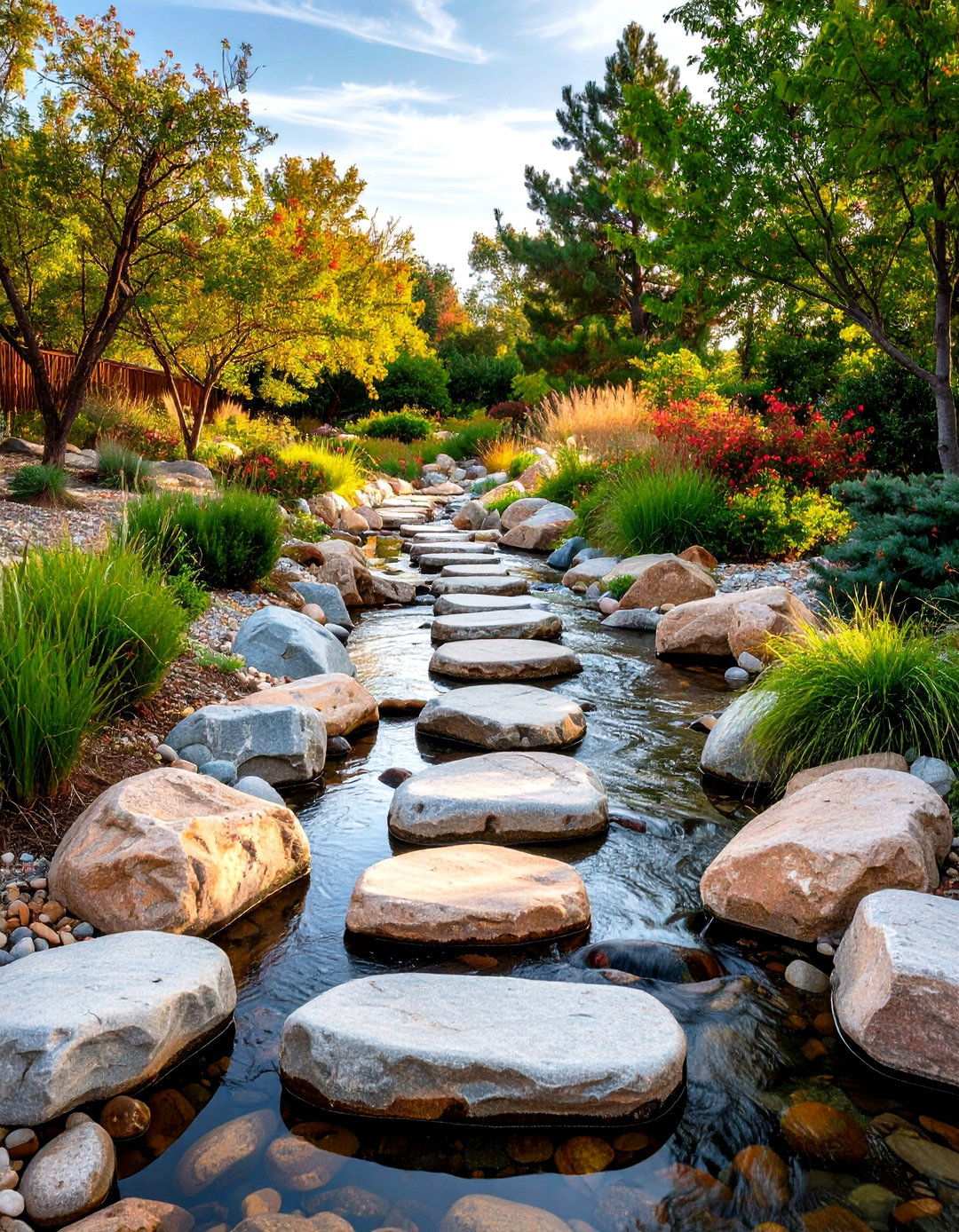
Consider transforming necessary drainage solutions into captivating landscape features that harmonize functionality and aesthetics. River rock dry creek crossings create effective pathways that manage stormwater while infusing your outdoor space with the serenity of nature. By arranging smooth river rocks of varying sizes to mimic natural water flow patterns, these installations evoke the dynamic beauty of a gentle stream. As the pathway crosses through the “creek bed,” larger stepping stones provide a dry and inviting passage during normal conditions. This thoughtful approach not only addresses drainage challenges but also celebrates the transformative power of water in shaping landscapes. The subtle nuances of natural color variations and organic shapes create a captivating visual display that evolves with the changing light conditions throughout the day.
19. Modern Design Meets Practicality
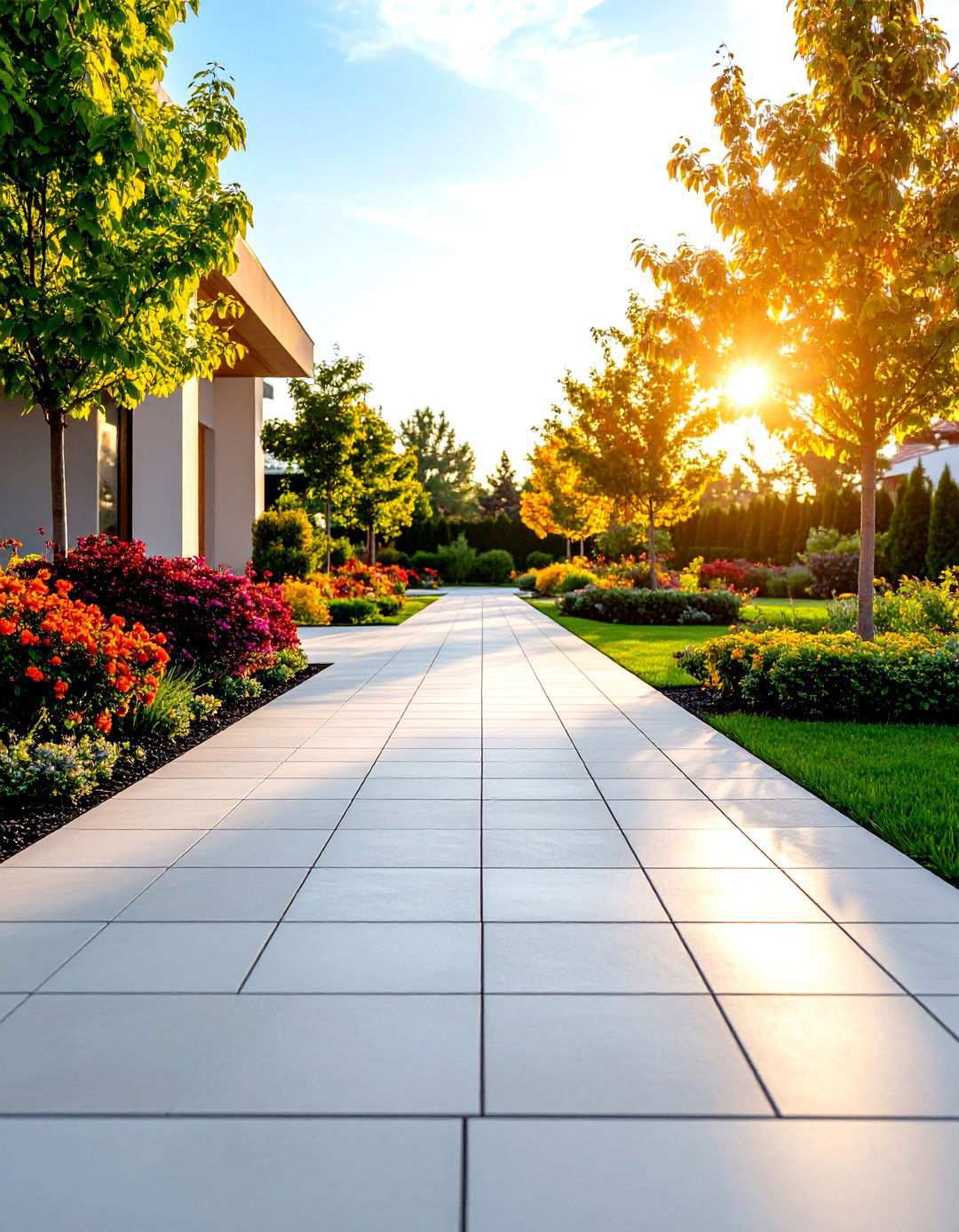
Contemporary outdoor spaces demand materials that seamlessly blend aesthetic sophistication with practical performance. Porcelain pavers have emerged as the ideal solution, creating modern minimalist pathways with precise dimensions and consistent surfaces that reflect current architectural trends. Engineered for durability, these materials maintain their appearance even in extreme weather conditions, ensuring that your outdoor space remains a tranquil oasis. By opting for large-format pavers, you can minimize joint lines and achieve a clean, uninterrupted visual flow that enhances the sense of spaciousness in compact landscapes. Neutral colors and subtle textures complement contemporary architecture while providing slip-resistant surfaces for added safety. This design approach excels in connecting modern indoor and outdoor living spaces, where material consistency creates seamless transitions that blur the boundaries between indoors and outdoors.
20. Balancing Texture and Functionality
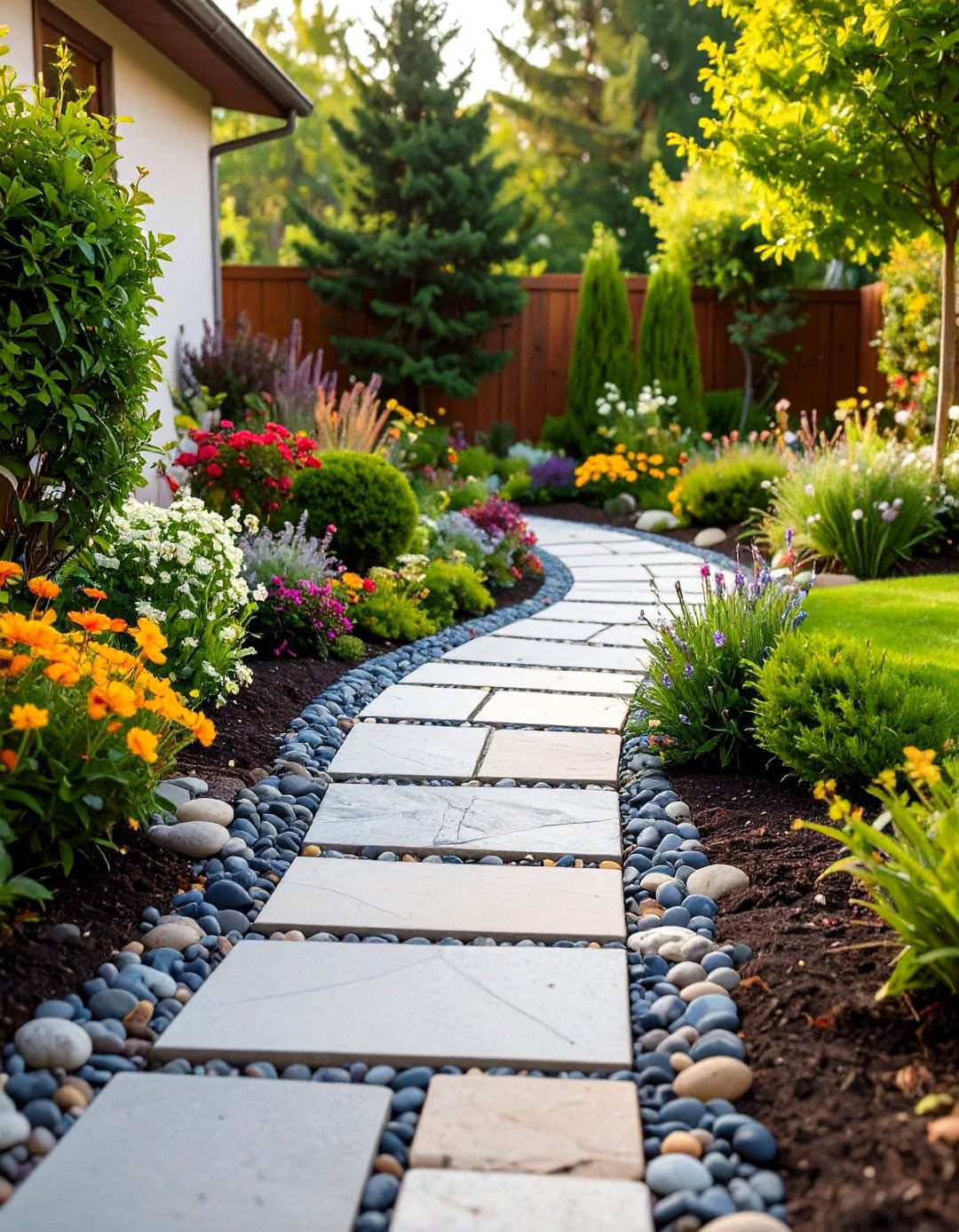
To create pathways that combine visual interest with functionality, consider integrating different natural materials in a creative way. Flagstone and pebble integration offers a perfect solution, where large flat stones serve as primary walking surfaces while colorful pebbles fill gaps, providing drainage and decorative appeal. This combination allows for artistic expression through pebble color selection while maintaining the structural stability of flagstone pathways. The contrasting textures of flagstone and pebbles create engaging visual and tactile experiences that encourage slower, more mindful movement through the landscape. This thoughtful design approach is particularly well-suited for informal gardens, where artistic expression and natural beauty are equally important considerations for pathway development.
21. Elevating Pathways with Engraved Stone Artistry
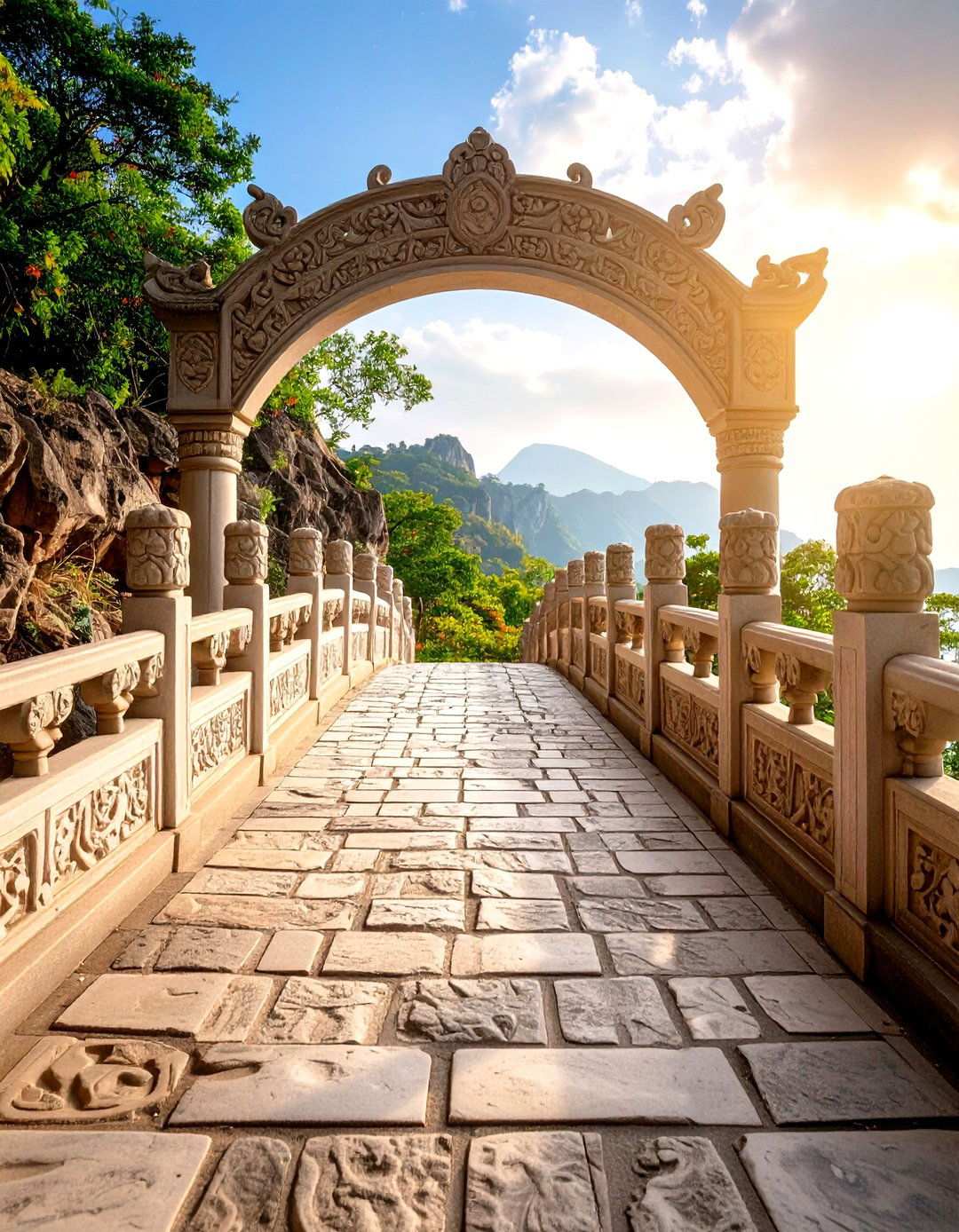
Elevate functional pathways into captivating gallery experiences by incorporating carved stone artistic elements that celebrate cultural heritage and express personal creativity. These distinctive installations showcase decorative stones featuring intricate relief carvings, inscribed text, or sculptural elements that draw the eye along meandering routes. The artistic components can weave tales of family histories, honor cultural traditions, or simply serve as stunning visual anchors that elevate the pathway experience. Strategically position carved elements at pathway junctures, seating areas, or vantage points where they can be fully appreciated, fostering a deeper connection to the landscape. This design approach necessitates collaboration with skilled artisans, yielding one-of-a-kind landscape features that become treasured family heirlooms for generations to come. The enduring nature of stone ensures that these artistic expressions will remain a testament to the past, present, and future.
22. Harnessing Volcanic Drama in Modern Landscapes
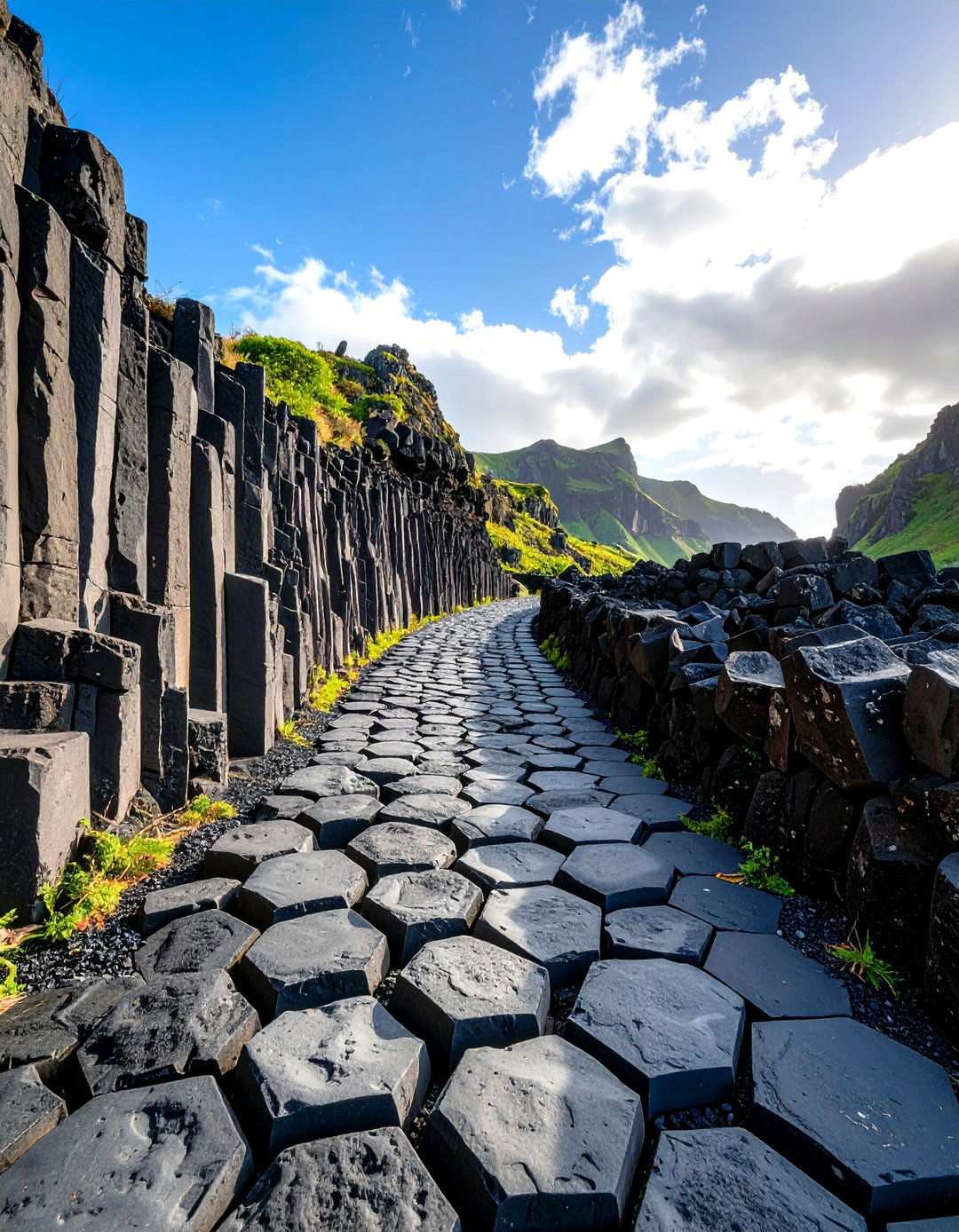
Inject striking contemporary pathways with basalt column installations that bring an air of geological drama to modern outdoor spaces. These naturally formed hexagonal stones provide unique geometric shapes that create captivating visual patterns while boasting exceptional durability. The dark, rich volcanic stone offers a sophisticated tone that complements both cutting-edge and traditional architectural styles. Arrange columns in varying heights to create dynamic topography or cut them to uniform dimensions for a more structured appearance. This design approach is particularly effective in water-wise landscapes where the dramatic stone forms provide sculptural interest without the need for irrigation, making it an idyllic choice for environmentally conscious homeowners. The natural formation process imbues each column with subtle variations, ensuring that no two installations are identical, and adding to their allure.
23. Sustainable Pathway Solutions with Permeable Pavers
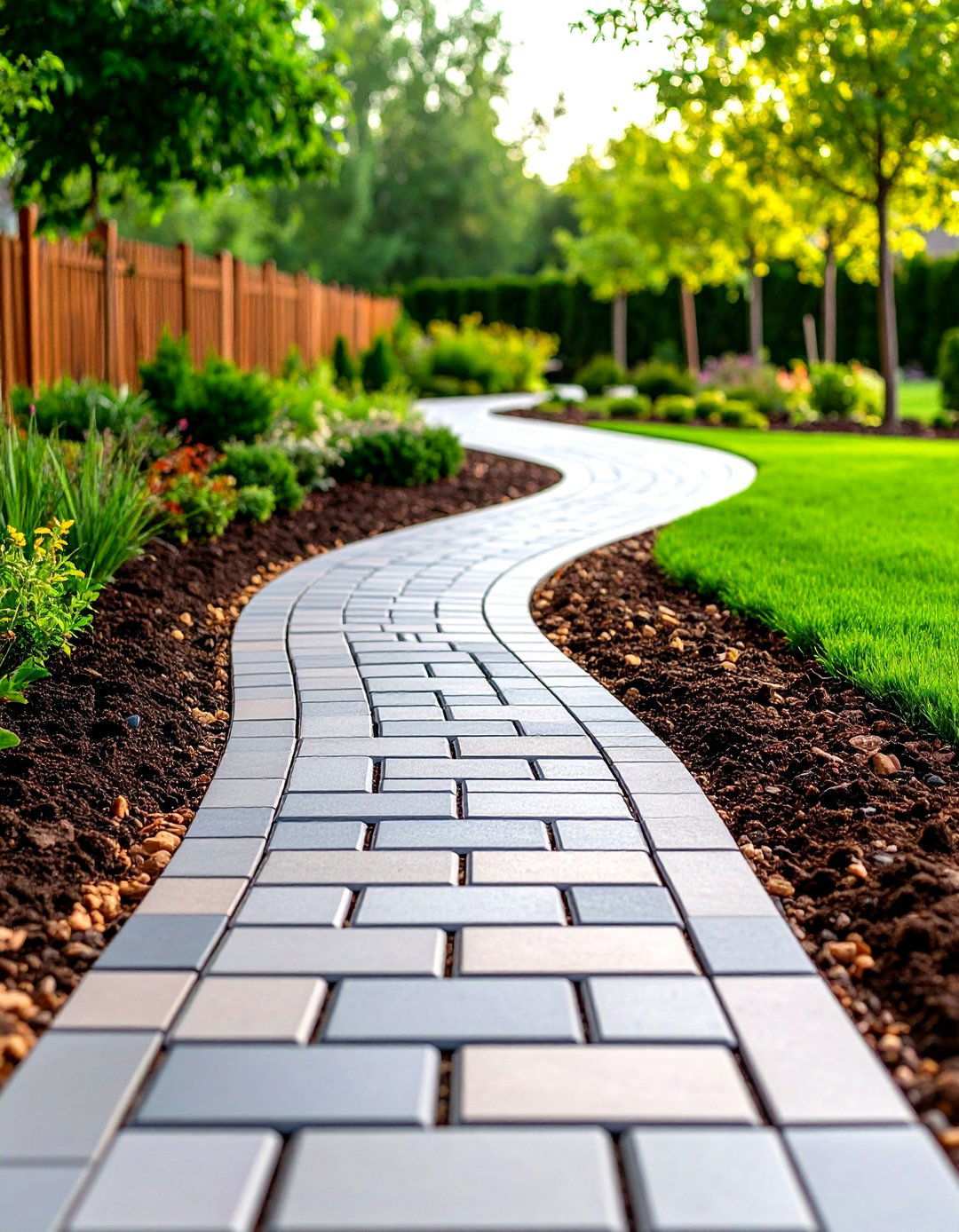
For homeowners seeking pathway solutions that prioritize environmental sustainability while maintaining beautiful landscape design, permeable pavers offer an eco-friendly option that effectively manages stormwater runoff while providing durable walking surfaces. These specially designed stones feature gaps or porous materials that allow water infiltration, reducing the strain on municipal drainage systems. The environmental benefits include groundwater recharge, pollution filtration, and reduced heat island effects compared to solid paving materials. With a range of materials available, including permeable concrete, recycled plastics, or specially designed stone pavers, homeowners can choose the perfect solution to meet their sustainability goals. This design approach is an excellent choice for environmentally conscious homeowners who want to minimize their landscape’s ecological impact and create a more sustainable outdoor space.
24. Harmonious Mosaic of Textures and Materials
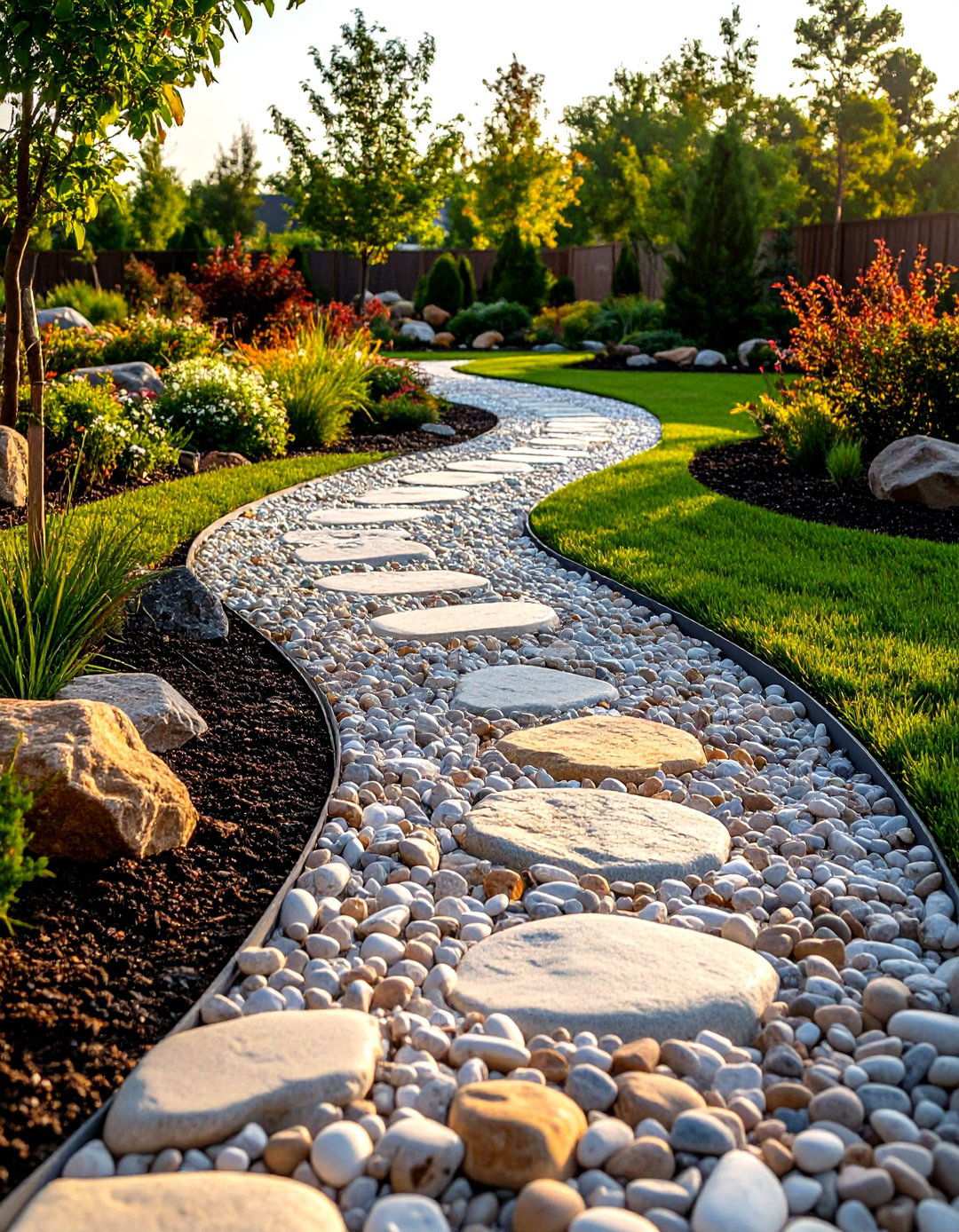
When designers create pathways by combining multiple types of stones, they can produce unique textural experiences that engage the senses. This approach involves selecting a diverse array of stones, ranging from smooth river stones to angular crushed aggregates, and incorporating them in a way that showcases their distinct characteristics. The varied palette of textures and materials can include colorful pebbles, neutral gravel, and recycled materials alongside natural stones, yielding a visually dynamic and thought-provoking pathway design. As the lighting conditions change throughout the day, the interplay of textures and colors creates an ever-evolving visual narrative that adds depth and interest to the space. By embracing diversity and creativity, designers can craft practical pathway solutions that not only incorporate locally sourced materials but also reflect the personal style and values of the homeowner, making for sustainable and cost-effective installations.