1. Evoking Rural Charm with Weathered Wood
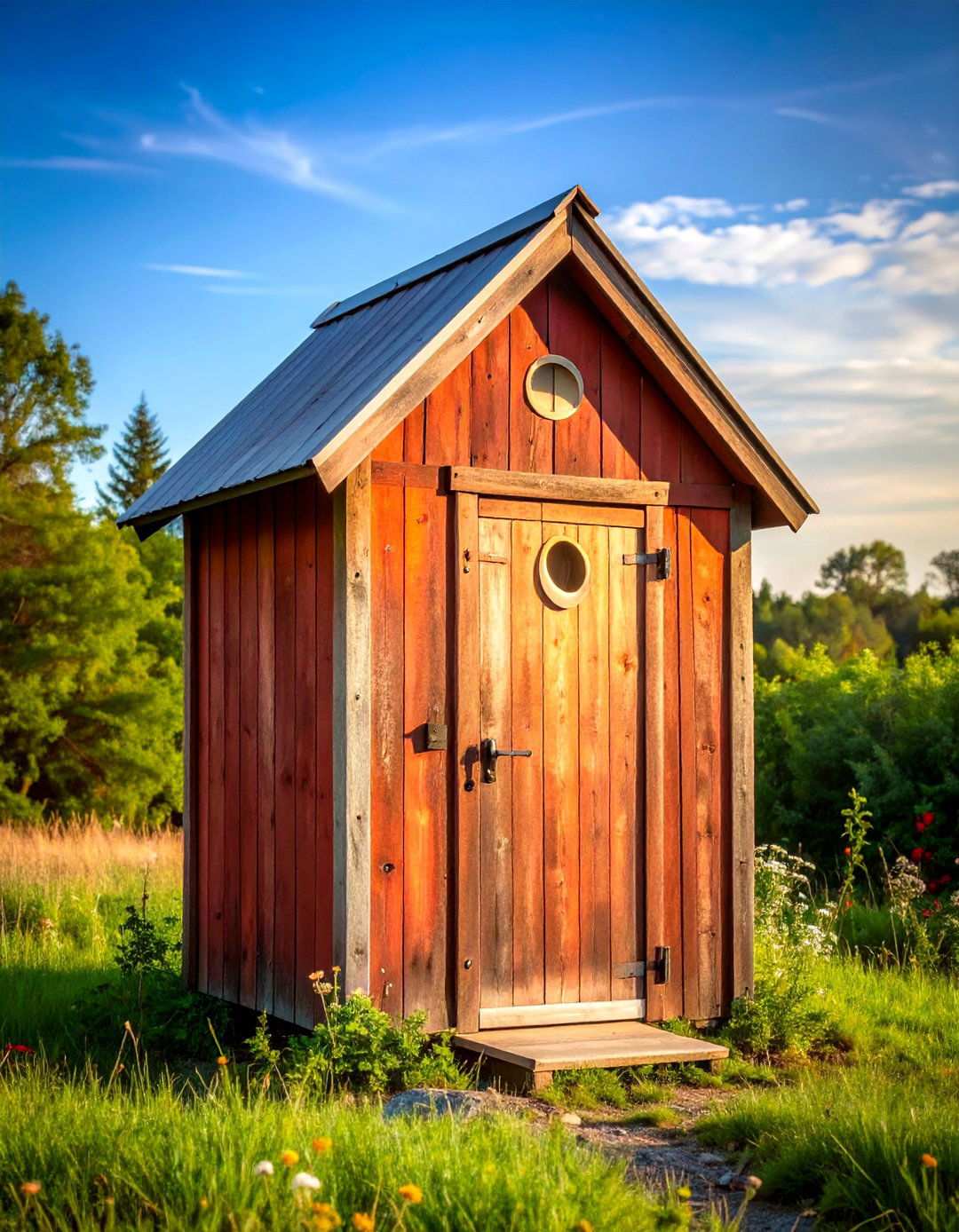
Timeless rural appeal has been reimagined in modern outhouse designs, with a focus on blending function with aesthetic charm. The classic cedar outhouse is a masterclass in understated elegance, where western red cedar siding and traditional board-and-batten construction evoke a sense of nostalgia. The peaked metal roof, antique-style hardware, and rustic wooden door with wrought iron hinges all contribute to a cohesive look that’s both nostalgic and enduring. Inside, natural wood planking, vintage mason jar lighting, and built-in storage shelves for supplies create a warm and inviting atmosphere. A traditional crescent moon cutout provides ventilation while maintaining the authentic character of the design. To ensure easy relocation, the foundation uses treated lumber skids, while a modern composting system is discreetly integrated within the classic aesthetic. The finishing touches include copper gutters, an aged metal roof, and surrounding wildflower landscaping that enhances the nostalgic countryside atmosphere.

As an Amazon Associate I earn from qualifying purchases.
2. Minimalist Chic in Modern Cube Design
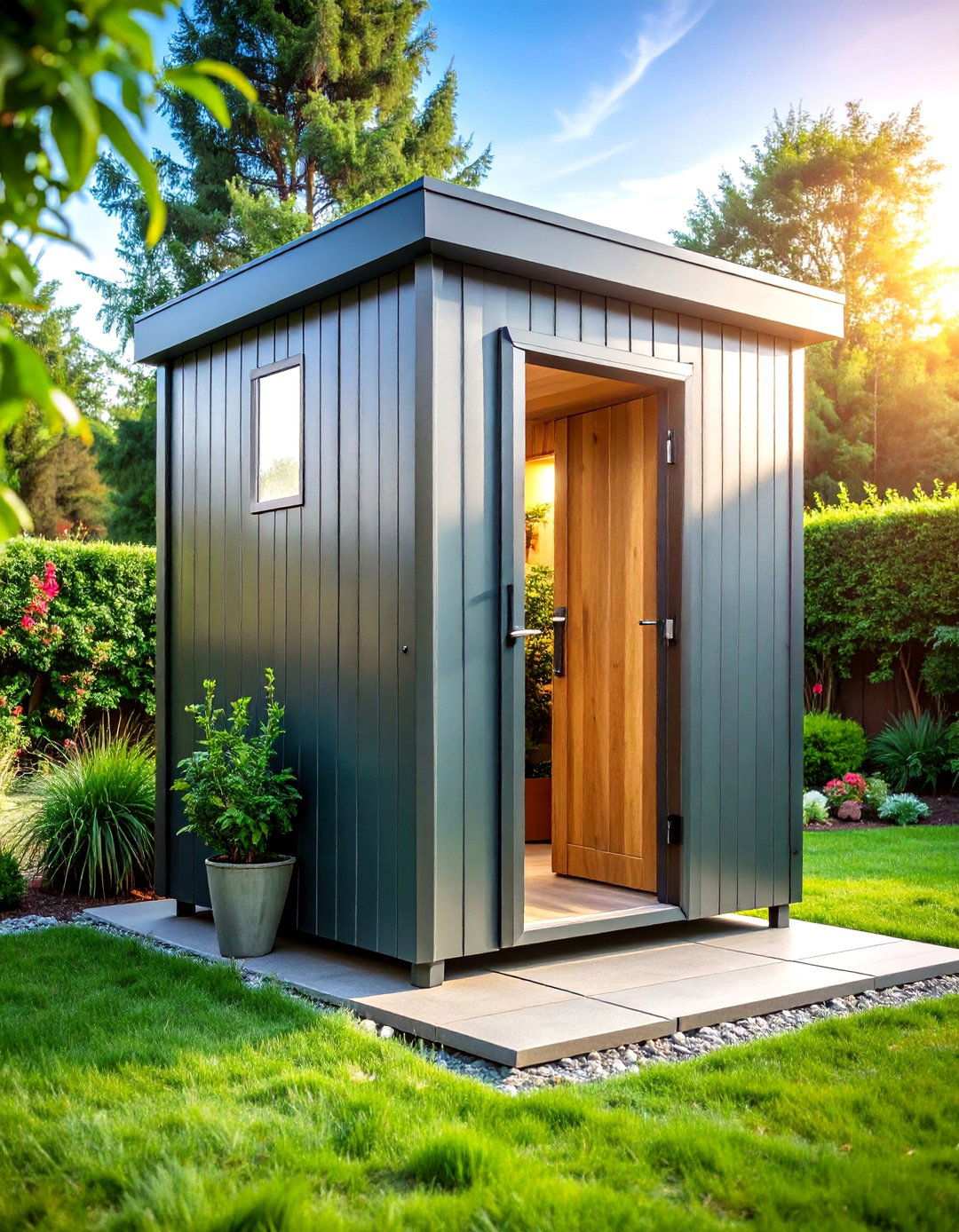
Geometric simplicity has never looked more stunning than in this contemporary cube-style outhouse. By emphasizing stark angular architecture and monochromatic color schemes, this design creates a sense of clean-lined sophistication. The smooth metal or composite siding, flat roofing, and oversized modern door hardware all contribute to a sleek and modern aesthetic. Inside, clean white surfaces, hidden storage compartments, and sleek fixtures create an uncluttered spa-like environment. LED strip lighting provides even illumination, while floor-to-ceiling windows with frosted glass maintain privacy while maximizing natural light. For added permanence, the foundation incorporates a concrete pad, and ventilation systems are completely concealed within the architectural framework. Premium materials like stainless steel fixtures and engineered quartz surfaces elevate the utilitarian function into an architectural statement piece.
3. Sustainable Systems for an Eco-Friendly Outhouse
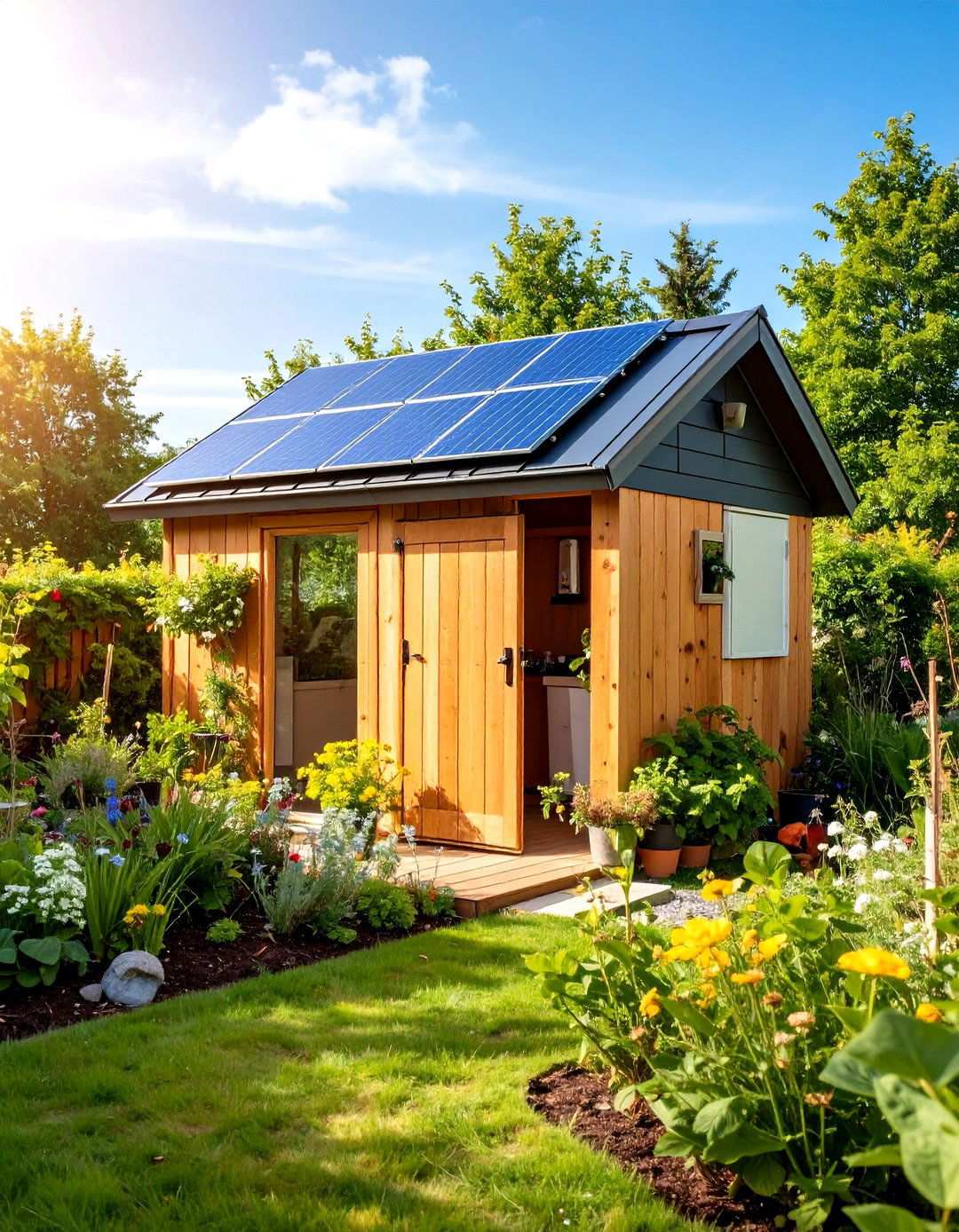
A pioneering approach to environmentally conscious design drives the creation of this green outhouse, seamlessly integrating renewable materials, solar power, and advanced composting technology. The exterior structure boasts reclaimed barn wood siding, living roof systems featuring native plants that thrive in harmony with the surroundings, and rainwater collection systems skillfully integrated into the guttering system. Bamboo flooring, low-VOC finishes, and natural ventilation systems work in tandem to promote efficient composting, while solar panels power energy-efficient LED lighting and ventilation fans. Greywater systems redirect handwashing water to nourish surrounding gardens, fostering a closed-loop ecosystem. Viewing windows into the composting chambers and educational displays about sustainable sanitation further enhance the eco-friendly design.
4. Upscale Amenities for a Luxurious Outhouse Experience
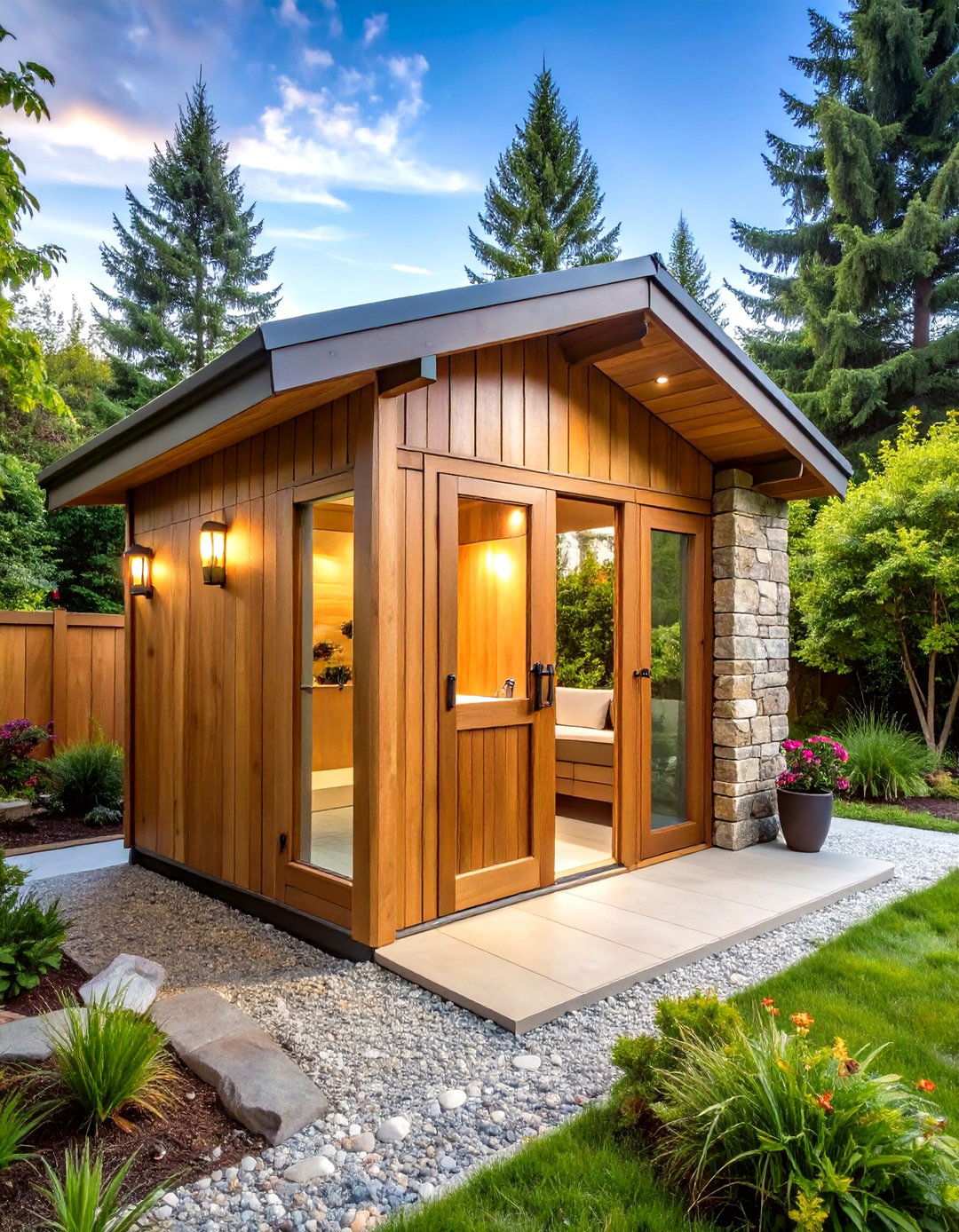
Transforming the basic into the extraordinary, this design combines high-end materials, sophisticated lighting, and spa-like amenities to create a truly luxurious experience. The exterior boasts natural stone walls, cedar shake roofing, and custom millwork that showcases the beauty of craftsmanship. Premium fixtures include heated toilet seats, advanced lighting systems, and built-in sound systems designed to promote relaxation. Interior finishes feature marble countertops, vessel sinks with motion-activated faucets, and radiant floor heating systems that provide unparalleled comfort. Professional-grade ventilation ensures effective odor control, while custom storage solutions keep luxury toiletries and towels neatly organized. Ambient lighting creates a serene atmosphere through dimmer controls and accent fixtures, while custom glass doors and a covered waiting area with comfortable benches welcome visitors.
5. Mountain-Inspired Design for a Durable Outhouse
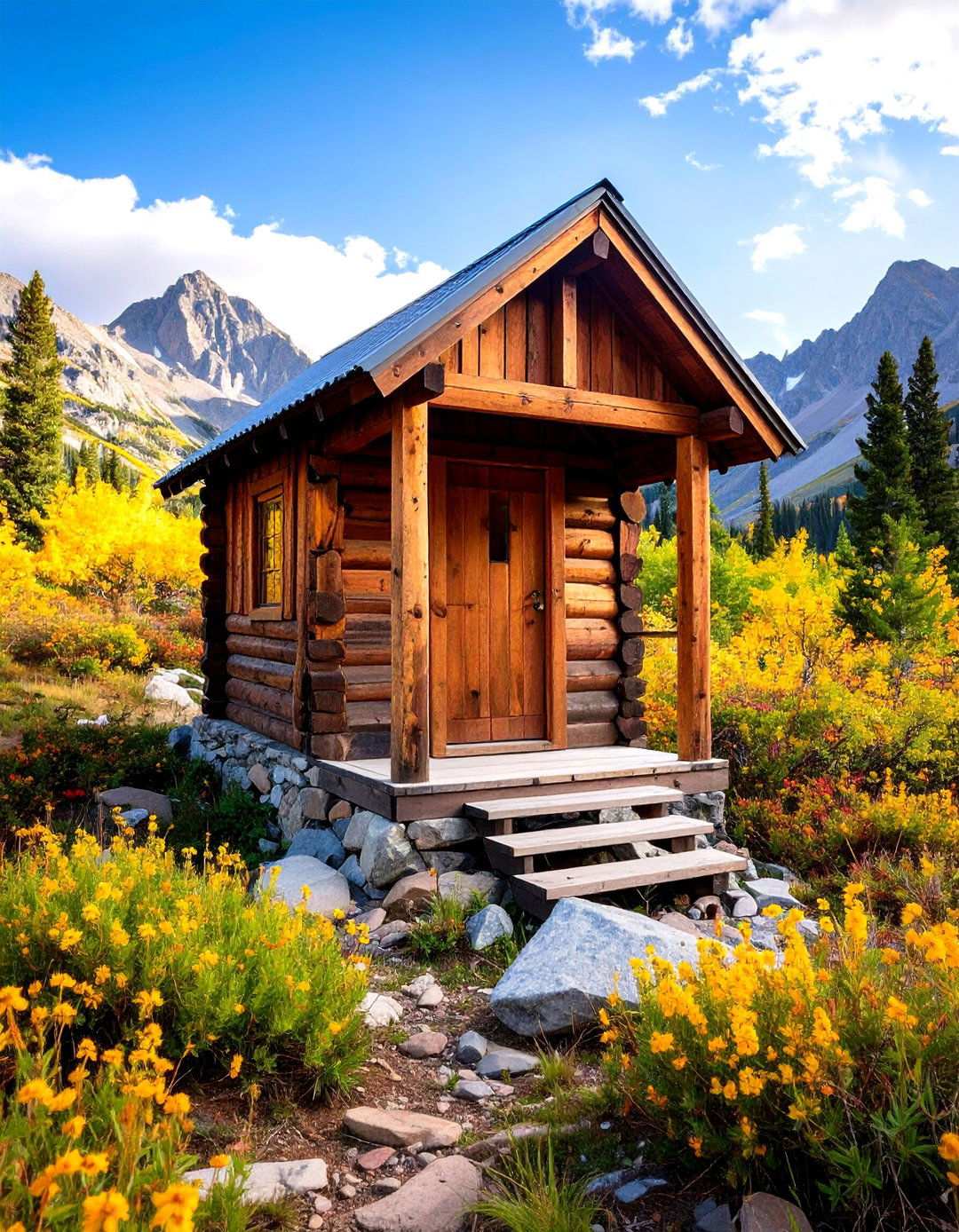
Blending rugged mountain aesthetics with natural materials, this design combines stone foundations with heavy timber framing and rustic metal roofing to create a durable and long-lasting structure. Fieldstone walls, log beam construction, and weather-resistant cedar siding work in harmony to emphasize the importance of durability. Exposed timber framing, natural stone accent walls, and copper fixtures that develop a beautiful patina over time add to the rustic charm. Heavy wooden doors with wrought iron hardware complement the fortress-like appearance, while small windows provide natural lighting without compromising privacy. Built-in firewood storage, mudroom features for outdoor gear, and covered porch areas for weather protection complete the design, which also incorporates proper drainage systems and frost protection suitable for harsh mountain climates and extreme weather conditions.
6. Timeless Elegance with a Modern Twist: Industrial Chic Meets Cutting-Edge Materials
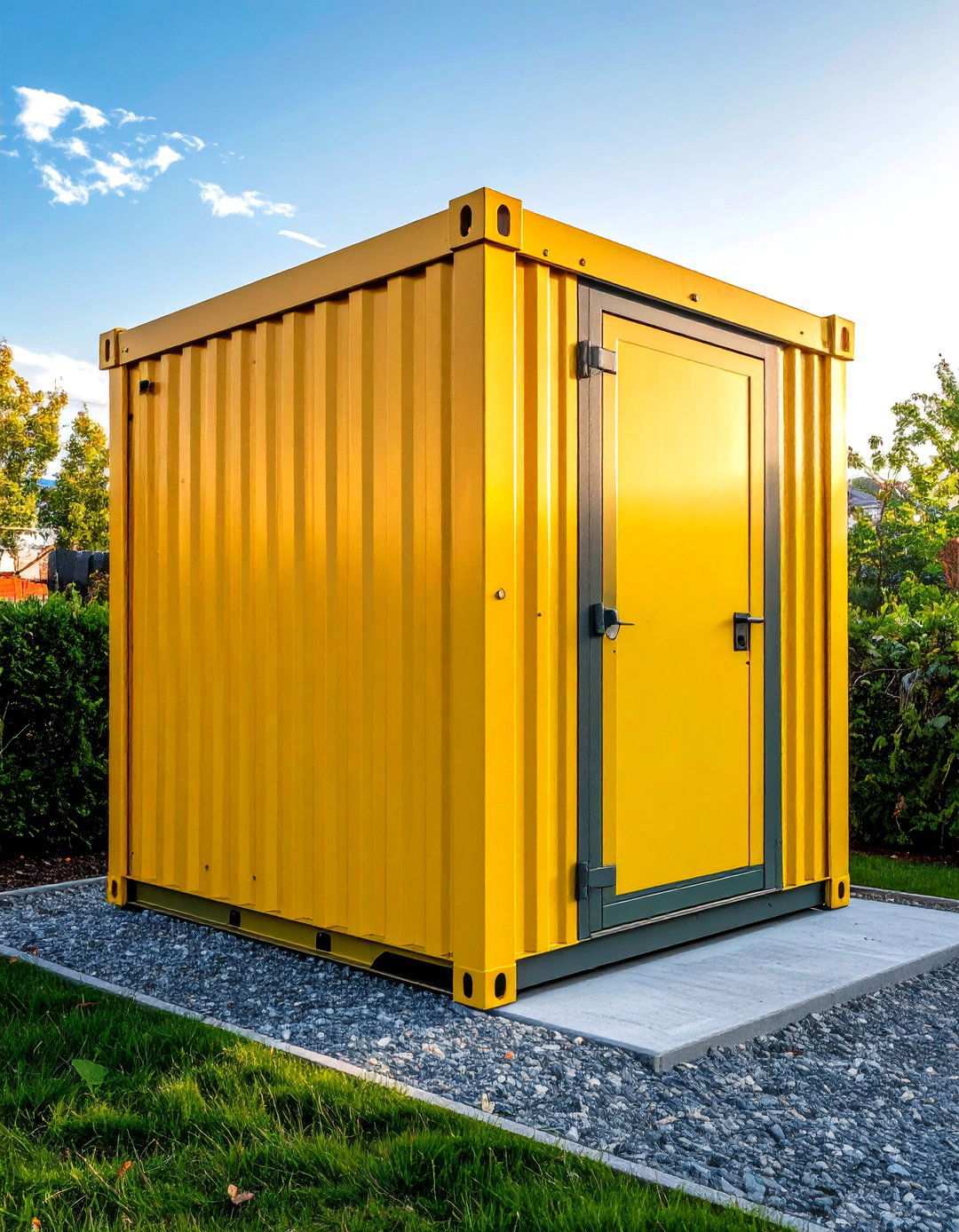
This contemporary design embodies the essence of industrial aesthetics through the strategic use of corrugated metal siding, exposed structural elements, and functional hardware finishes. The structure’s façade is characterized by standing seam metal roofing, industrial-style lighting fixtures, and modern sliding door systems that seamlessly integrate form and function. On the inside, interior design emphasizes the raw beauty of polished concrete floors, metal mesh ventilation grates, and exposed ductwork for ventilation systems. A thoughtful color palette focuses on grays, blacks, and metallic accents that complement the industrial theme, while modern amenities such as motion-sensor lighting, touchless fixtures, and smartphone-controlled environmental systems elevate the living experience. The foundation boasts steel framing and concrete pads designed for durability and minimal maintenance, while urban-inspired landscaping with gravel and modern planters completes the contemporary industrial aesthetic with precision.
7. A Touch of Elegance: Victorian-Style Garden Oasis with Ornate Details
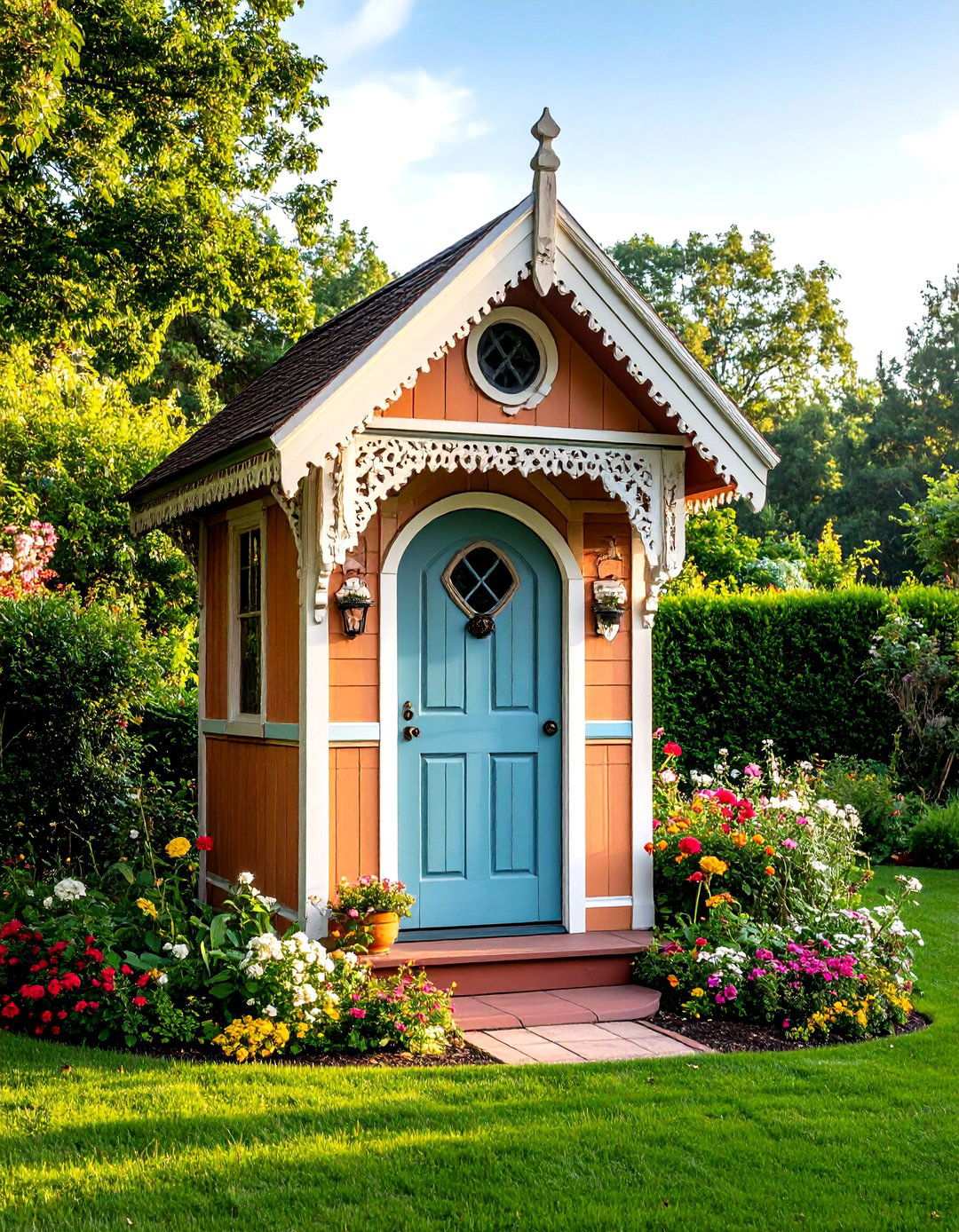
Elaborate Victorian styling comes alive in this ornamental garden structure through the use of decorative trim work, intricate gingerbread details, and period-appropriate color schemes that transport viewers to a bygone era. This design features steep-pitched roofing, ornate brackets, and decorative window boxes filled with seasonal flowers that burst with color and life. Exterior finishes showcase multiple paint colors that highlight architectural details, while brass hardware adds authentic period touches that exude refinement and sophistication. Inside, interior elements showcase beadboard wainscoting, vintage wallpaper patterns, and antique-style fixtures that evoke a sense of nostalgia. Decorative glass windows with colored panes provide natural lighting, while carved wooden seats and ornate mirror frames enhance the period authenticity, making this structure a true masterpiece. The foundation includes decorative stonework and garden pathway integration, while surrounding landscaping features formal garden elements, topiary, and heritage plant varieties that perfectly complement the historical architectural styling.
8. Simple yet Timeless: Scandinavian Pine Tar Blackened Outhouse with Nordic Simplicity
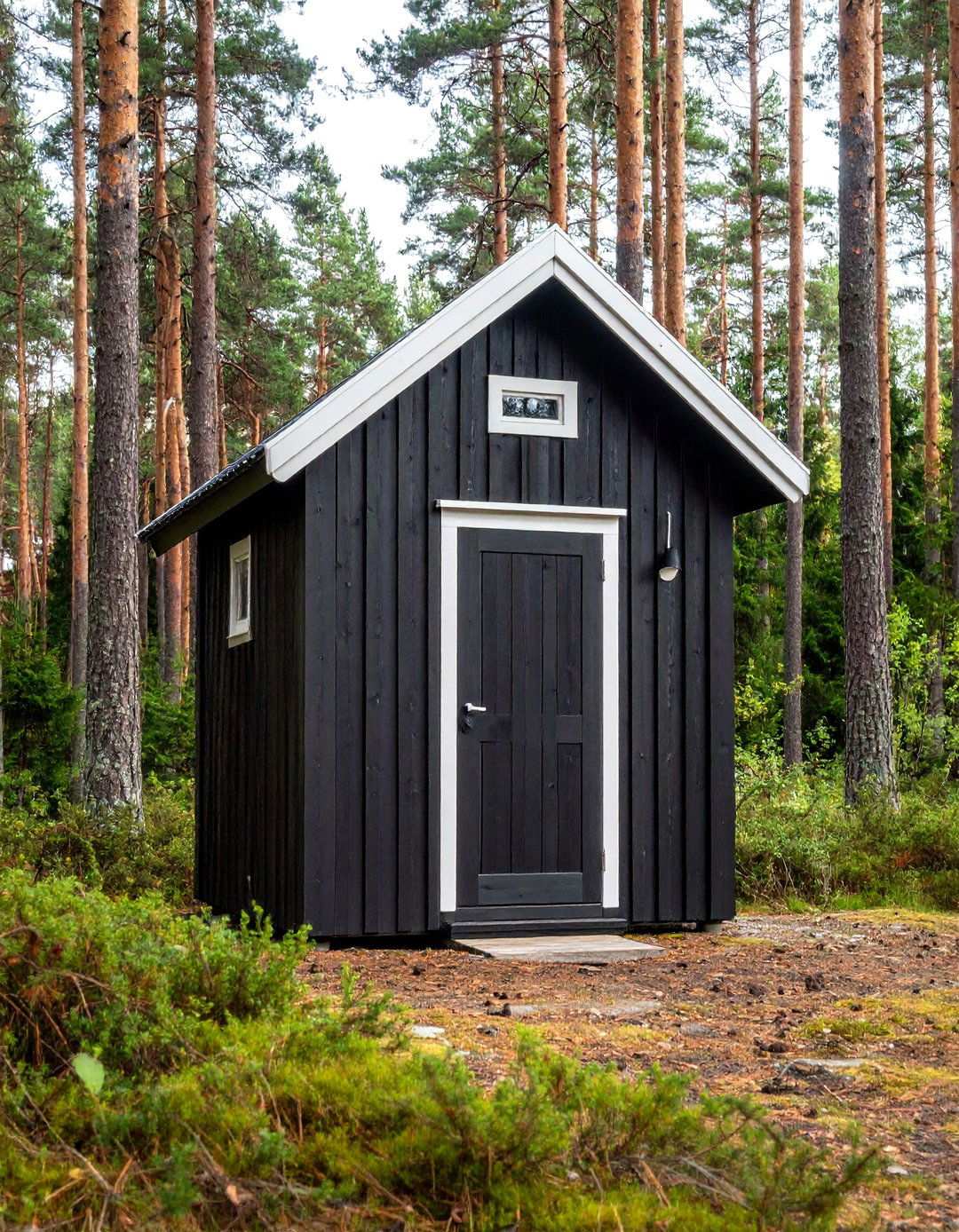
Nordic design principles guide this minimalist structure through traditional pine tar treatments, simple geometric forms, and natural material integration that creates a harmonious balance between form and function. The exterior features blackened wood siding created through ancient Scandinavian preservation techniques, complemented by clean white trim and simple hardware that exudes a sense of understated elegance. Inside, interior design emphasizes light-colored woods, functional storage solutions, and hygge-inspired comfort elements that create a cozy atmosphere. Natural lighting comes through strategically placed windows with clean-lined frames, while white-painted interior surfaces maximize brightness and create a sense of airiness. The design incorporates traditional Nordic building techniques, including proper moisture management and thermal efficiency, making this structure a true testament to the power of simplicity and functionality. Furnishings include simple wooden benches, woven baskets for storage, and minimal decorative elements that emphasize function over ornamentation, while maintaining a warm and inviting atmosphere.
9. Whimsical Wonderland with Fantasy Elements
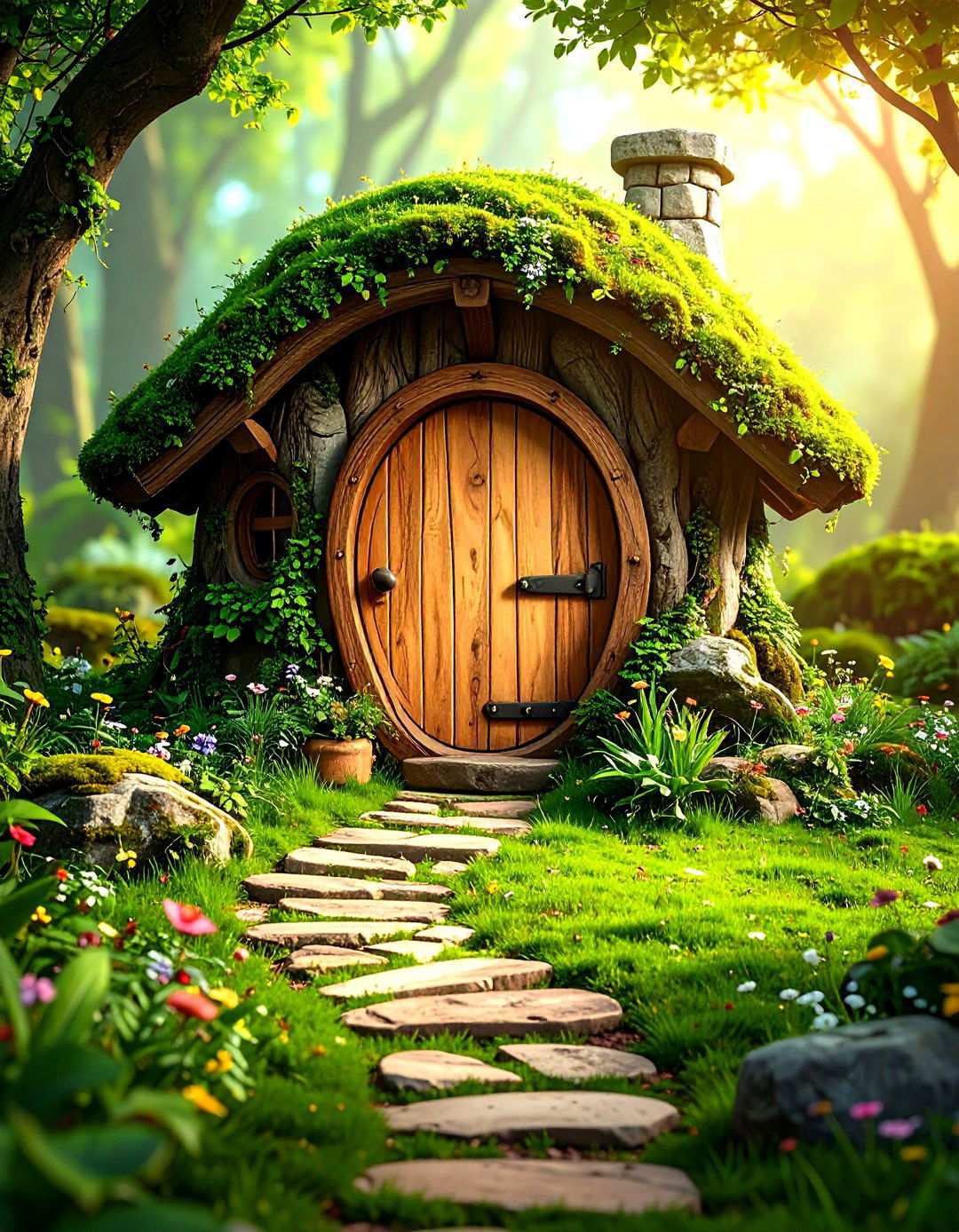
A storybook-inspired design transports you to an enchanted outdoor space by combining curved architectural lines, earth-integrated design, and whimsical decorative elements. Rounded doorways, irregular stone pathways, and living roof systems blend seamlessly with the surrounding natural landscape. The use of natural stone walls, weathered wood details, and copper accents develops a beautiful patina over time, adding character to the structure. Warm lighting creates a cozy atmosphere, while hand-crafted details such as carved door handles and custom millwork showcase the artisanal craftsmanship. Organic shapes and built-in furniture in the interior spaces add to the whimsical charm. The structure’s incorporation of sustainable building techniques, natural ventilation, and eco-friendly materials ensures a harmonious blend of form and function. The surrounding gardens feature cottage-style plantings and decorative elements that enhance the fantasy theme while maintaining practical functionality.
10. Mirrored Oasis with Disappearing Act
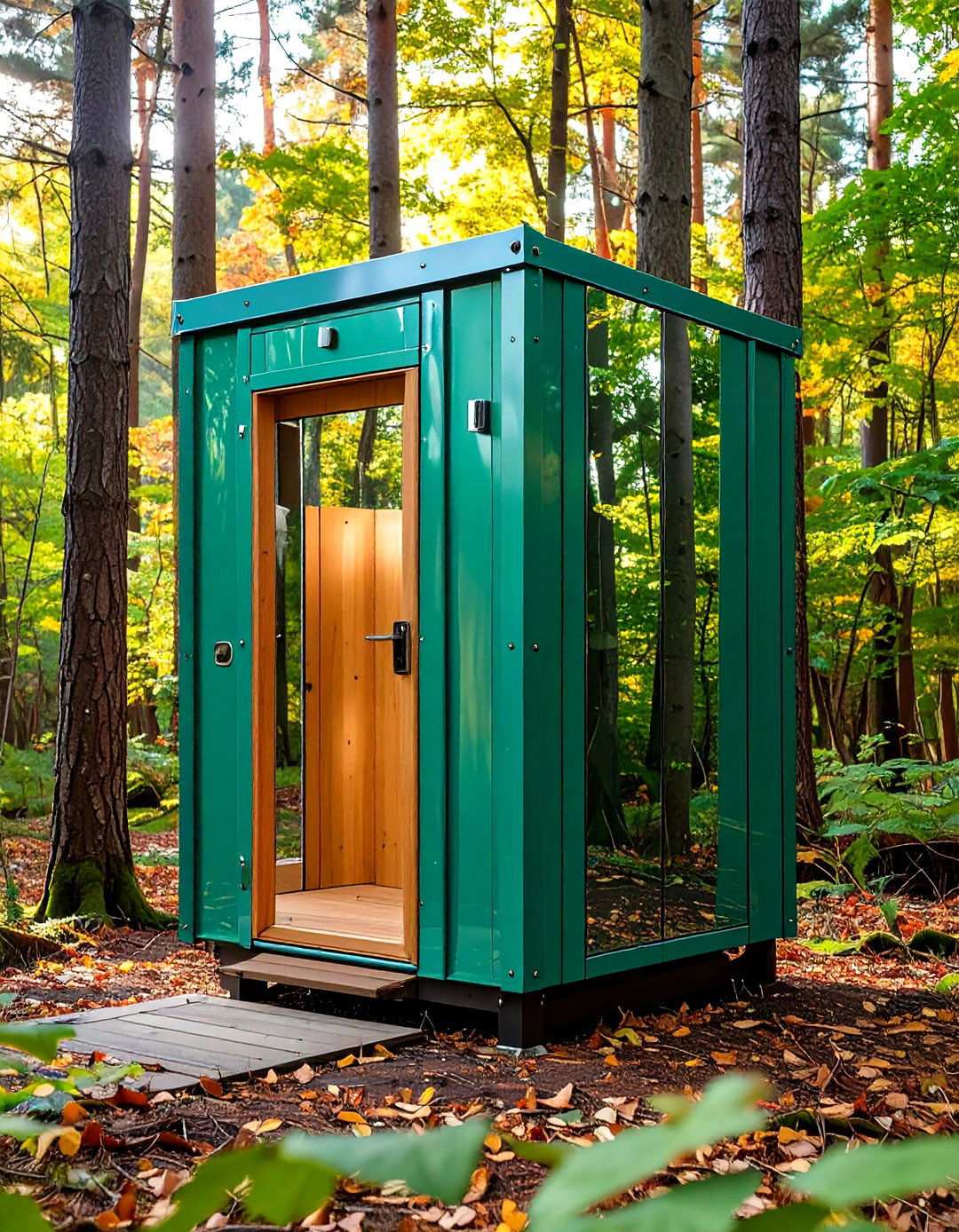
Contemporary design techniques have given rise to innovative camouflage methods, where mirrored exterior surfaces reflect surrounding landscapes, creating structures that blend seamlessly into their environment. This cutting-edge design features high-quality mirror panels and minimal visible hardware, giving the structure a sleek and modern appearance. The reflective exterior provides a dynamic visual effect that changes throughout different seasons and lighting conditions, while the interior surfaces remain comfortably finished with conventional materials. Modern amenities such as smart glass technology for privacy control and LED lighting systems add to the luxury experience. The foundation design takes into account the additional weight of mirror systems and includes proper structural support to ensure stability. Maintenance considerations include specialized cleaning systems and weather protection for the mirror surfaces, ensuring the structure remains in pristine condition.
11. Off-Grid Paradise with Renewable Energy Systems
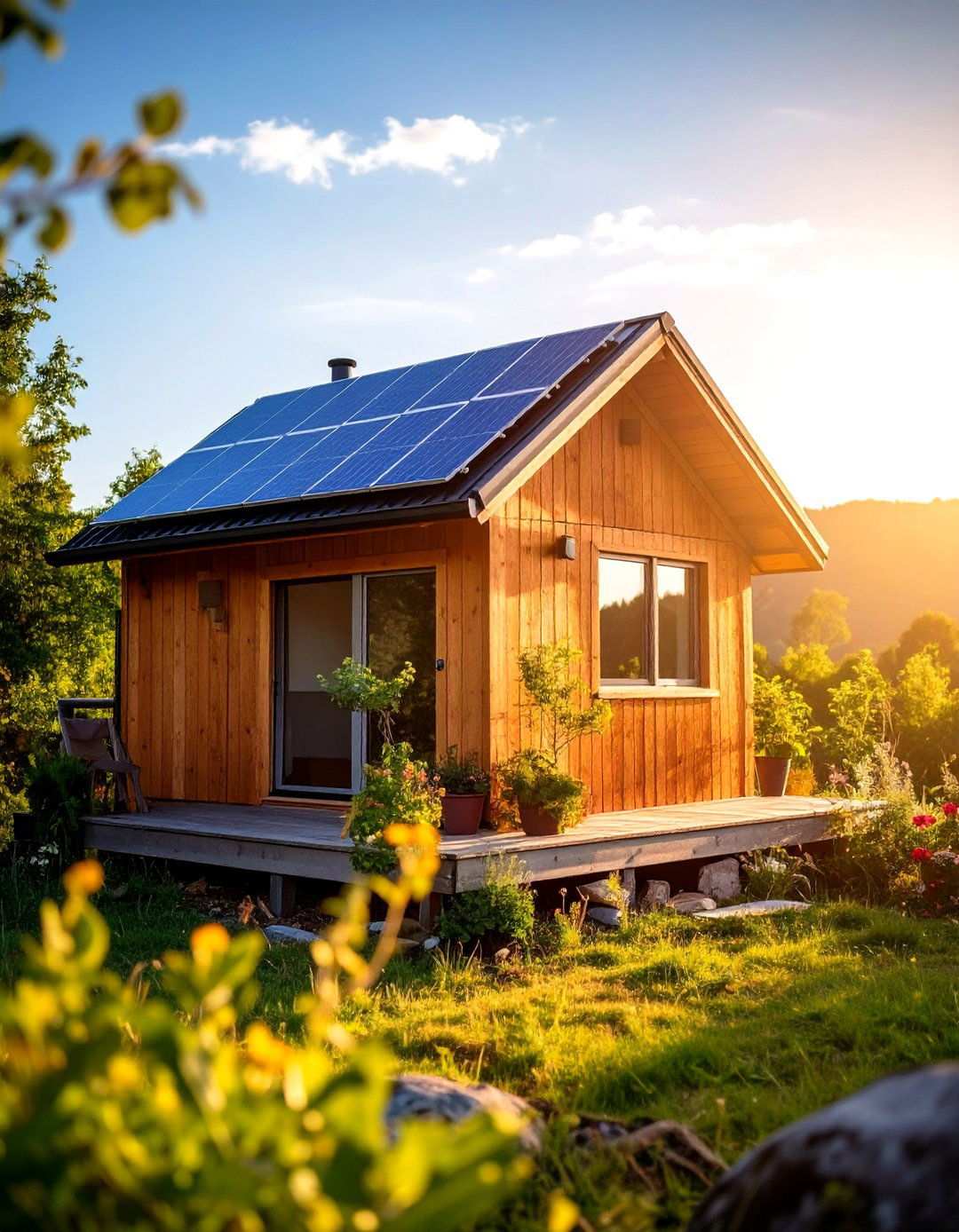
Energy independence is the driving force behind this sustainable design, which integrates solar power systems, battery storage, and energy-efficient fixtures throughout. Solar panel arrays built into the roofing systems, LED lighting, and ventilation fans powered entirely by renewable energy create a self-sufficient ecosystem. Exterior materials emphasize sustainability through reclaimed woods, recycled metal components, and low-impact construction techniques. Interior systems feature composting toilets, greywater recycling, and natural ventilation, reducing energy consumption and minimizing the structure’s environmental footprint. Smart technology integration allows for real-time monitoring of energy production and consumption through mobile applications. The design incorporates weather monitoring systems and backup power solutions for extended cloudy periods, ensuring a reliable energy supply. Construction techniques focus on energy efficiency through proper insulation, air sealing, and thermal mass integration, maintaining comfortable temperatures year-round.
12. Japanese-Inspired Zen Outhouse with Serene Ambiance
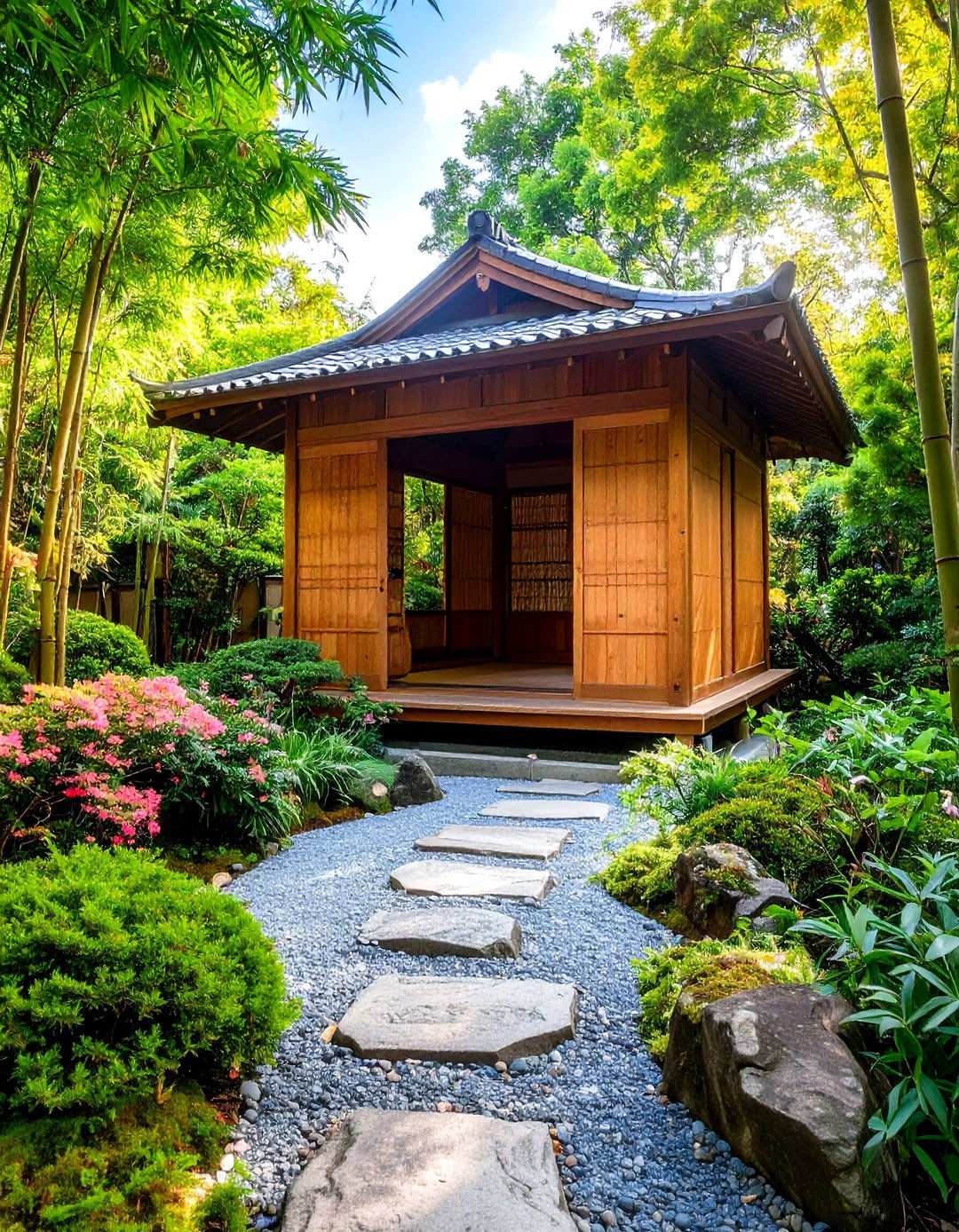
Inspired by the tranquility of Eastern design philosophy, this concept transports users to a peaceful sanctuary through the integration of natural materials, subtle ornamentation, and harmonious proportions. The sleek design showcases clean lines, rich natural wood finishes, and the meticulous application of traditional Japanese joinery techniques, all without visible fasteners. Soft, calming elements inside include bamboo accents, weathered stone surfaces, and gentle water features that produce soothing sounds, creating a sense of balance and harmony. Sliding doors with translucent panels maintain a seamless connection to surrounding gardens, while also ensuring users’ private moments remain undisturbed. Built-in seating areas and meditation spaces provide a contemplative atmosphere, complemented by storage for traditional tea ceremony supplies. Carefully positioned windows and skylights filter in natural light, casting dynamic shadow patterns throughout the day and accentuating the serene ambiance.
13. Farmhouse Shiplap Style with Timeless Agricultural Charm
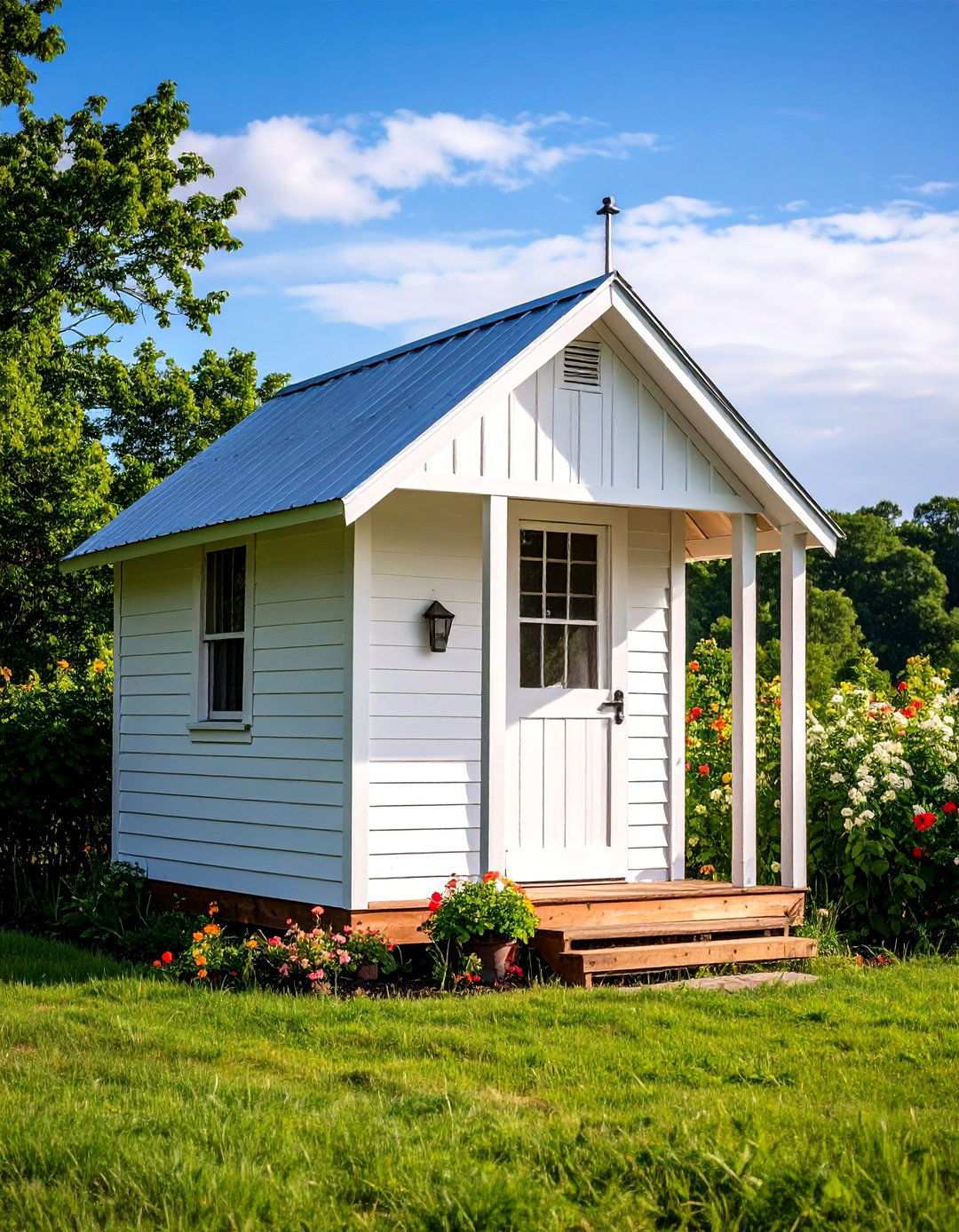
This design takes inspiration from rural American architecture, incorporating classic elements of traditional shiplap siding, practical layouts, and agricultural-inspired details to evoke a sense of warmth and nostalgia. The structure’s classic white paint scheme, metal roofing, and sturdy hardware exude a sense of durability and functionality. Cozy interior elements include beadboard wainscoting, functional storage solutions, and inviting seating areas, creating a welcoming atmosphere reminiscent of rural traditions. Exterior details such as board-and-batten shutters, covered porches, and practical mudroom features pay homage to the heritage of farmhouse design. Vintage-inspired fixtures, mason jar lighting, and galvanized metal accents add a touch of nostalgic charm, while foundation systems utilizing traditional pier construction cater to rural settings. Landscaping features practical gardens, rustic split-rail fencing, and heritage plant varieties, reinforcing the connection to agricultural traditions.
14. Coastal Beach House Design with Resilient Marine Features
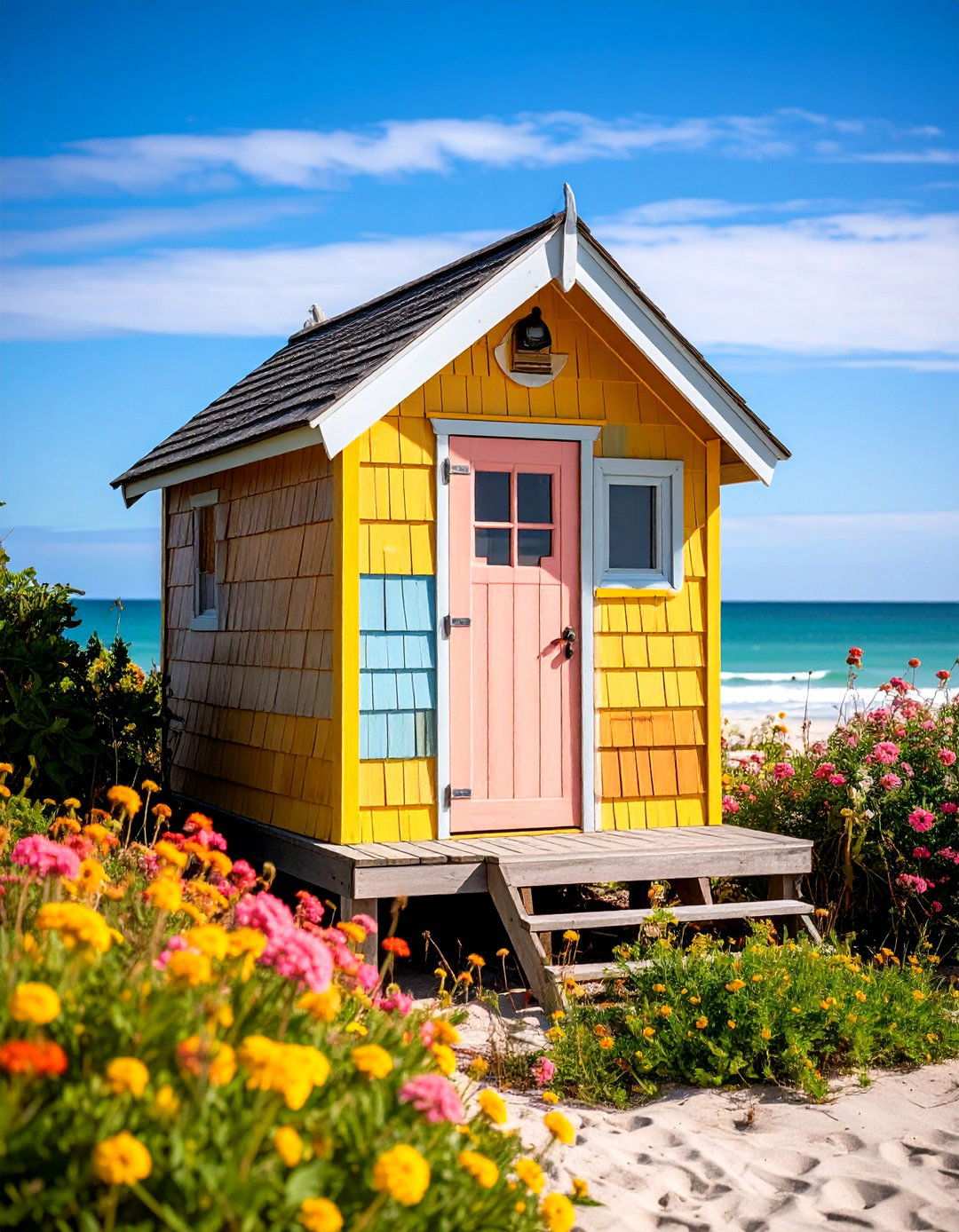
This design takes its cue from the rugged beauty of the seaside, incorporating weathered materials, nautical details, and salt-air resistant construction techniques to create a resilient and charming marine-inspired space. The structure’s cedar shake siding, white trim, and metal roofing are designed to withstand the harsh conditions of coastal weather. Maritime details such as rope accents, porthole-style windows, and weathered wood finishes evoke the driftwood textures of a beachcomber’s finds. Inside, ship-lap walls, nautical lighting fixtures, and storage solutions inspired by boat cabinetry create a sense of continuity with the sea. Color schemes emphasizing coastal blues, sandy beiges, and crisp whites reflect the ocean’s palette. Foundation systems incorporating pilings or elevated construction cater to flood-prone areas, while ventilation systems take into account the corrosive effects of salt air. Landscaping features salt-tolerant plants, shell pathways, and beach grass that perfectly complement the coastal aesthetic.
15. Gothic Arched Window Design with Medieval Architecture
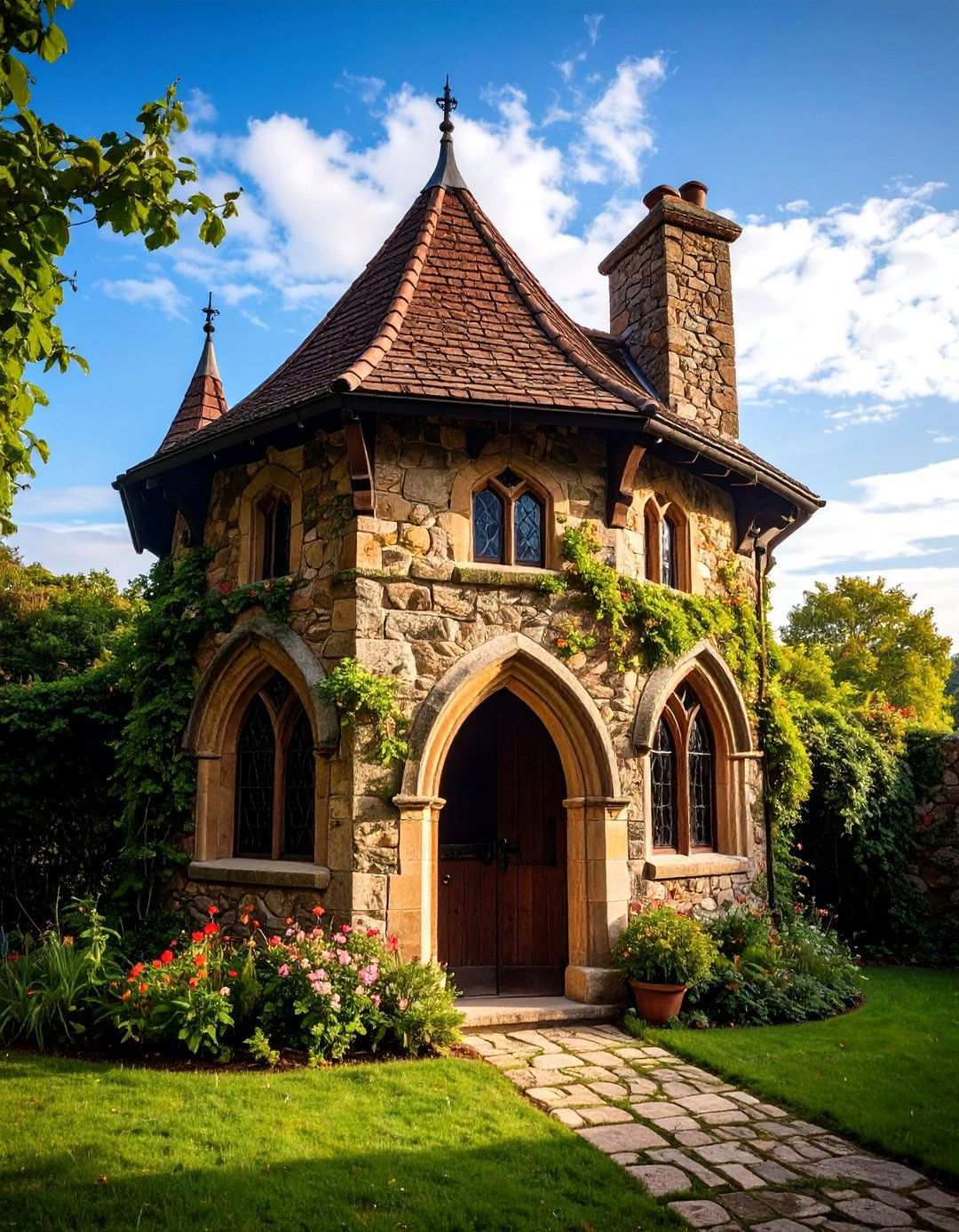
Medieval architectural elements converge to form dramatic structures through the strategic use of pointed arch windows, stone-inspired materials, and fortress-like construction details that evoke a sense of grandeur. The emphasis on steep-pitched roofing, decorative stonework, and heavy wooden doors with wrought iron hardware creates a cohesive look that transports occupants to a bygone era. The incorporation of Gothic windows with leaded glass allows for natural lighting while maintaining historical accuracy, thus preserving the integrity of the design. Interior elements such as exposed beam construction, stone accent walls, and medieval-inspired fixtures amplify the sense of history and authenticity. Traditional building techniques are adapted for modern comfort, featuring proper insulation and ventilation systems that balance form and function. Carved details, iron work, and stained glass come together to create a cathedral-like atmosphere, while the foundation’s stone or stone-veneer construction underscores the importance of permanence and durability. The surrounding landscape complements the historical architectural styling with formal garden elements, climbing vines, and heritage plants, providing a harmonious balance between past and present.
16. Art Deco Geometric Patterns with 1920s Glamour
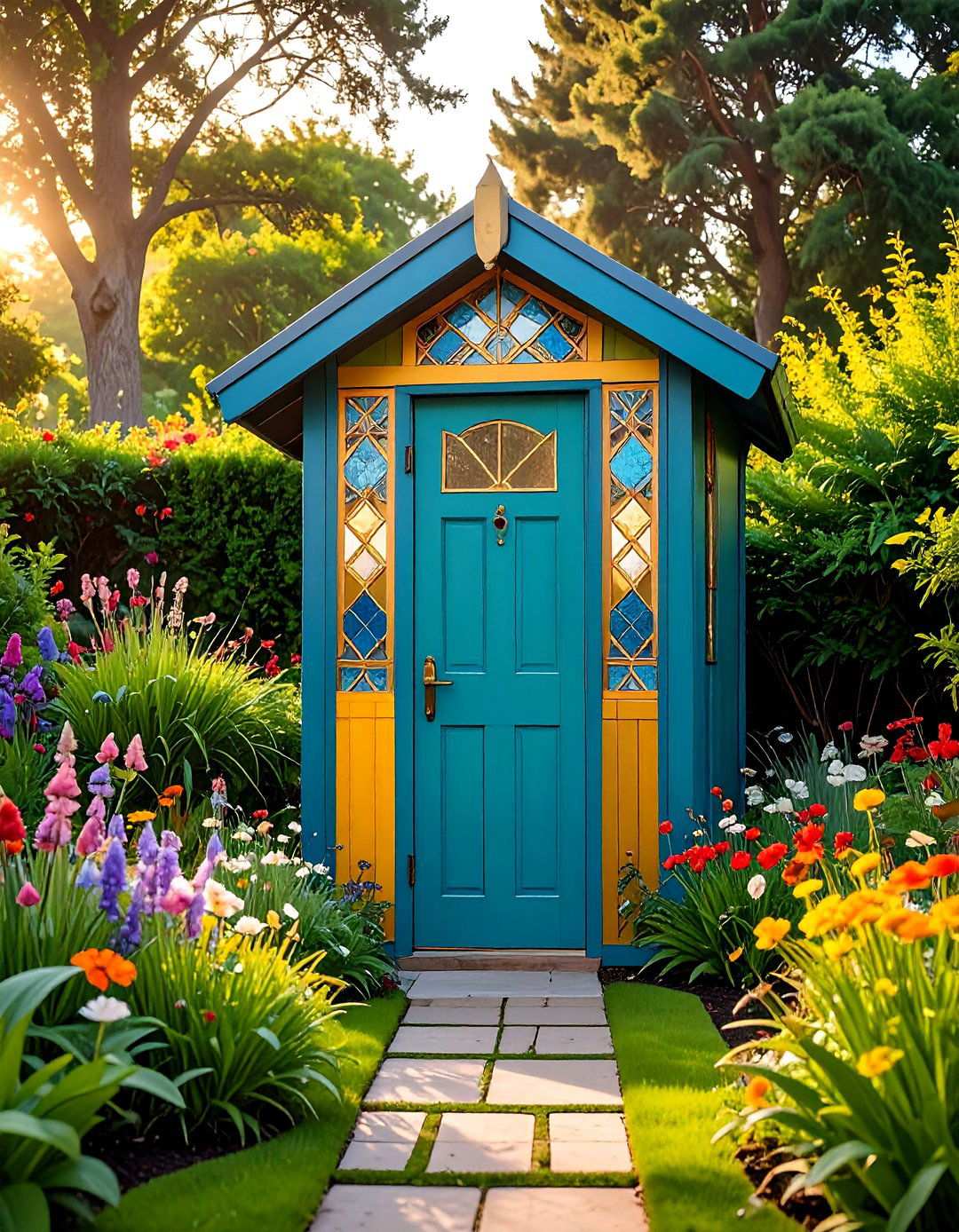
The Jazz Age’s flair for drama and luxury is captured through the strategic use of geometric patterns, metallic accents, and glamorous design elements that exude sophistication and elegance. Characteristic of the Art Deco period, angular forms, decorative metal work, and bold color combinations come together to create a visually stunning exterior that draws the eye. Exterior materials such as stucco finishes, metal trim, and geometric tile work create a dynamic visual effect that adds depth and interest to the design. Interior elements showcase streamlined fixtures, built-in furniture, and sophisticated lighting systems that reflect the era’s penchant for luxury. Color schemes that emphasize blacks, golds, and rich jewel tones evoke the glamour and opulence of the 1920s. The design incorporates period-appropriate hardware, decorative glass, and custom millwork throughout, adding a touch of vintage charm to the modern space. Foundation systems are designed to support the additional weight of decorative elements while maintaining structural integrity, ensuring that the design remains both functional and beautiful. The surrounding landscape, featuring formal elements and geometric plant arrangements, enhances the overall architectural composition, creating a cohesive and harmonious visual experience.
17. Prairie Style Frank Lloyd Wright Inspired with Horizontal Lines
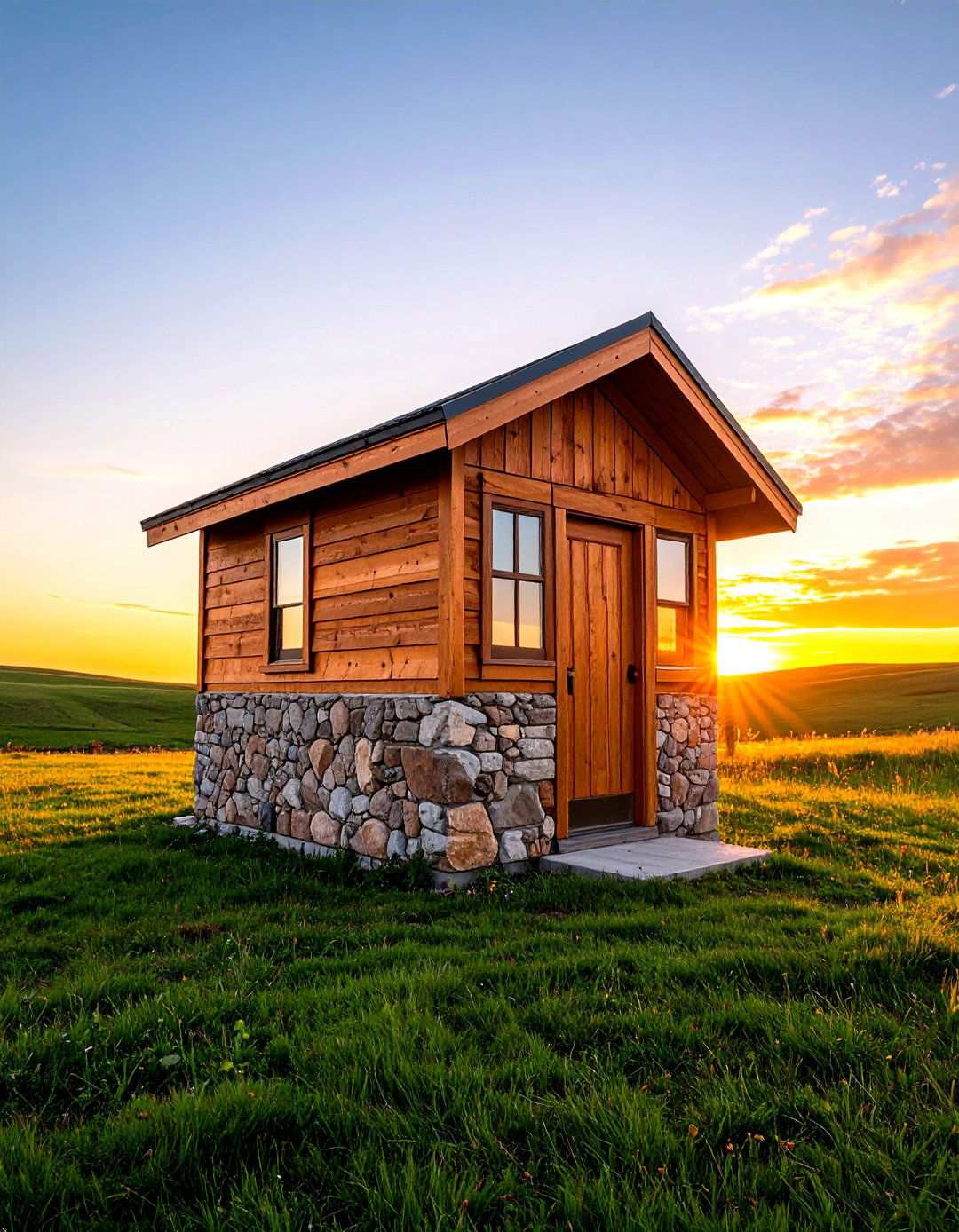
This architectural design draws inspiration from the principles of organic architecture, emphasizing a harmonious coexistence with its surroundings. By integrating natural materials and horizontal lines, the structure achieves a sense of balance and unity with the landscape. Features such as low-pitched roofing, extended eaves, and horizontal bands of windows create a sense of fluidity and continuity. The incorporation of local stone, wood siding, and copper accents allows the structure to blend seamlessly with its natural environment. The interior design boasts built-in furniture, ample natural lighting, and open floor plans, creating a spacious and airy atmosphere. The design adheres to Wright’s philosophy of organic architecture by embracing the natural site’s features and local materials. Custom millwork, art glass windows, and handcrafted details elevate the architectural authenticity, while the foundation systems work in harmony with the natural site contours. By leveraging natural forces and positioning, ventilation and lighting systems optimize energy efficiency, ensuring a comfortable and functional living space.
18. Mediterranean Stucco and Tile with European Influence
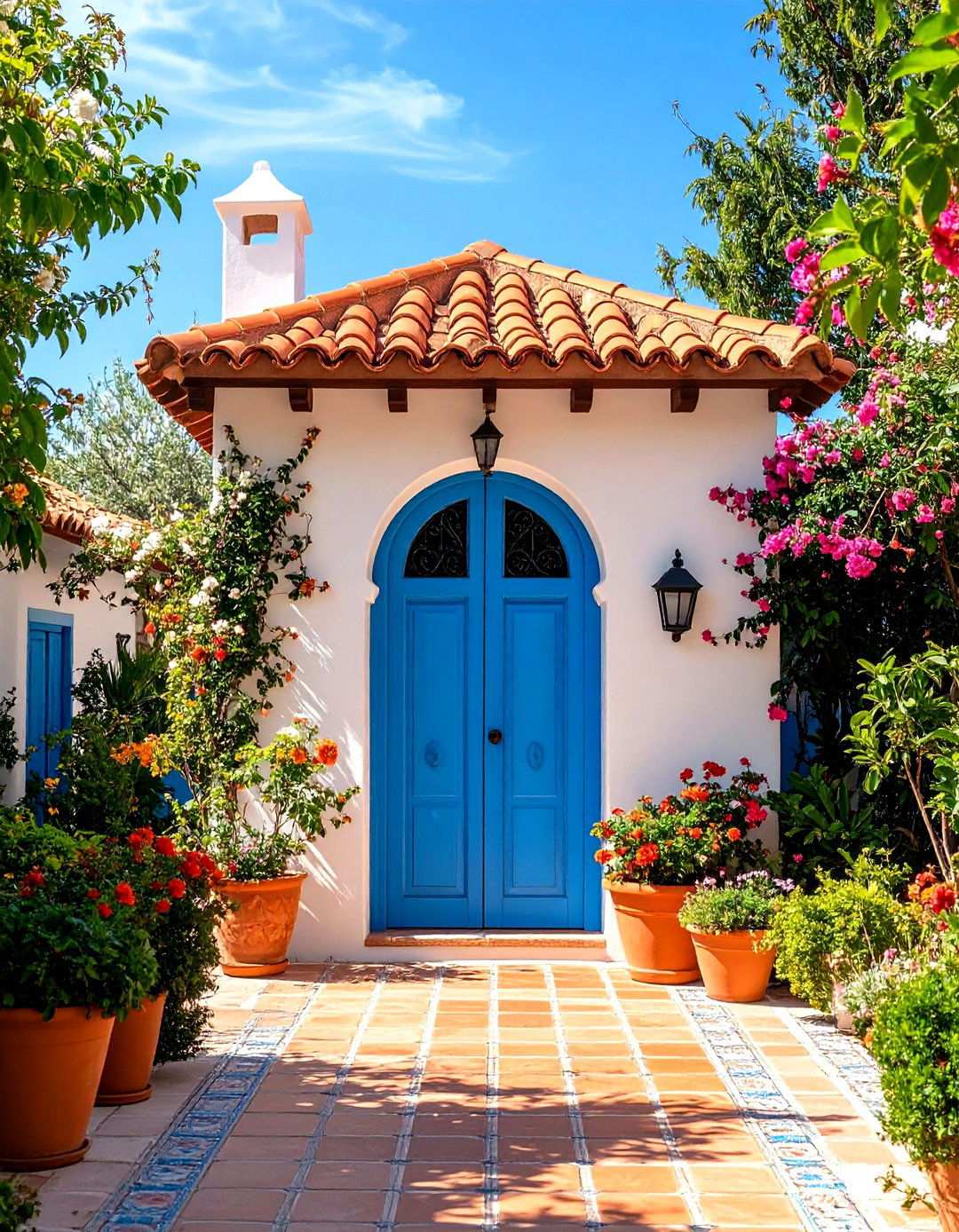
Influenced by the warm and inviting aesthetics of Southern Europe, this design creates a sense of elegance and sophistication. Stucco finishes, terracotta roofing, and colorful tile accents come together to evoke the charm of Spanish and Italian architecture. Arched openings, decorative ironwork, and earth-tone color schemes add to the Mediterranean ambiance. Exterior materials such as textured stucco walls, clay tile roofing, and wrought iron details contribute to the design’s authenticity. Interior elements, including tile floors, wooden beam ceilings, and rustic fixtures, enhance the Mediterranean atmosphere. Decorative tile work features hand-painted details, geometric patterns, and colorful accents, adding a touch of whimsy and personality to the space. The design incorporates traditional building techniques adapted to local climate conditions, ensuring that the structure remains functional and comfortable. Courtyard-style landscaping, featuring drought-tolerant plants, stone pathways, and water features, complements the architectural style seamlessly. By integrating modern amenities, the design maintains its historical authenticity and regional architectural character.
19. Craftsman Bungalow Style with Arts and Crafts Movement Emphasis
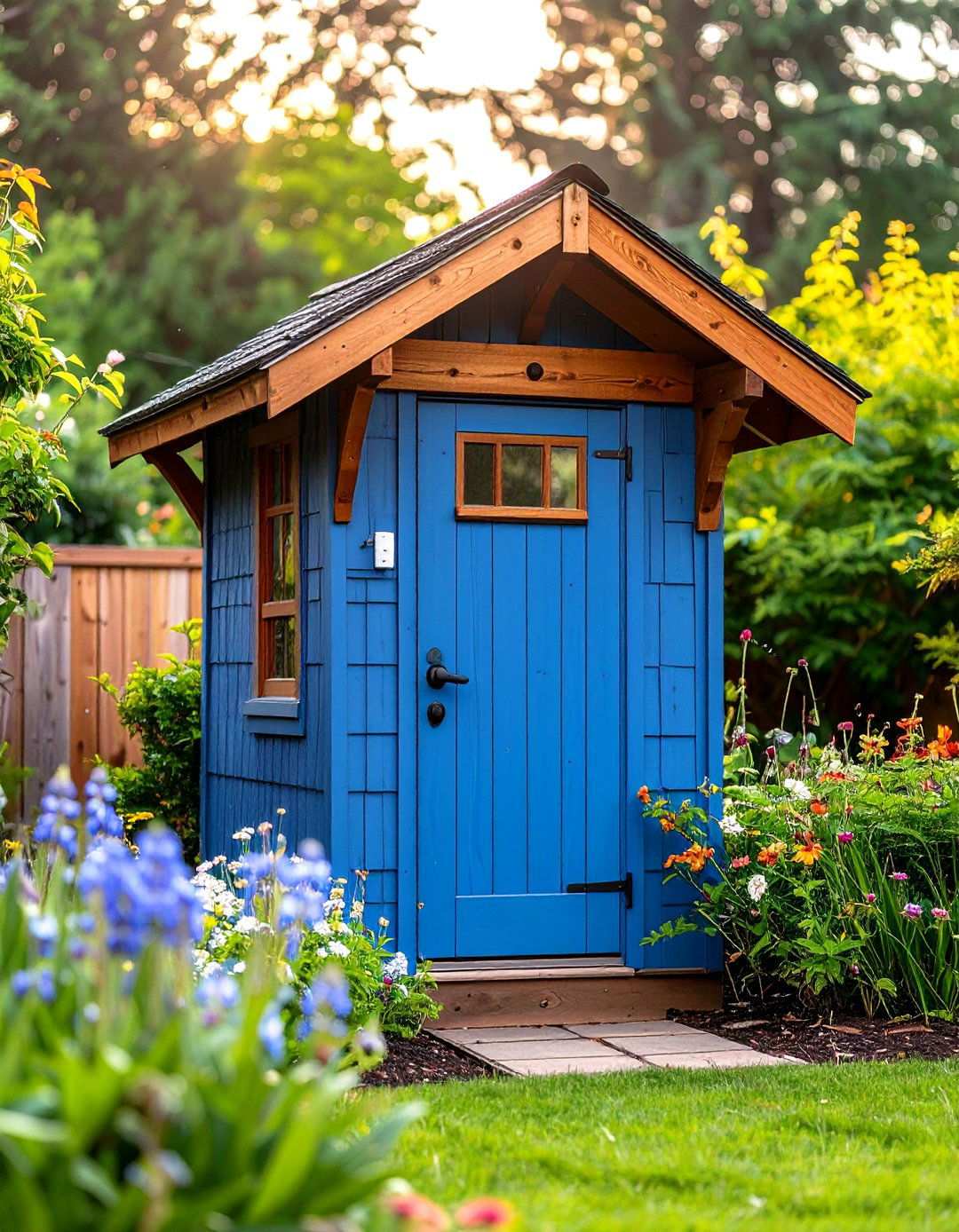
The Arts and Crafts movement profoundly influences this design, incorporating handcrafted features, organic materials, and traditional construction methods that pay homage to the era. Characteristic elements, such as exposed rafter tails, ornate brackets, and multi-paned windows, define the structure’s architectural style. Exterior finishes comprise weathered cedar shingles, robust stone foundations, and copper gutters that develop a distinctive patina over time. Interior design showcases built-in cabinetry, intricately carved wooden wainscoting, and mission-style fixtures that reflect the era’s attention to detail. The incorporation of custom millwork, art glass windows, and decorative hardware adds a touch of craftsmanship. By focusing on quality construction, natural materials, and harmonious integration with the surrounding environment, this design embodies the essence of the Craftsman aesthetic. Warm earth tones and rich wood finishes dominate the color palette, while traditional materials and techniques form the foundation of the structure, adapted to meet modern performance standards. The surrounding landscape features native plants, meandering stone pathways, and garden structures that perfectly complement the design.
20. Tiny House Modern Compact with Innovative Space Solutions
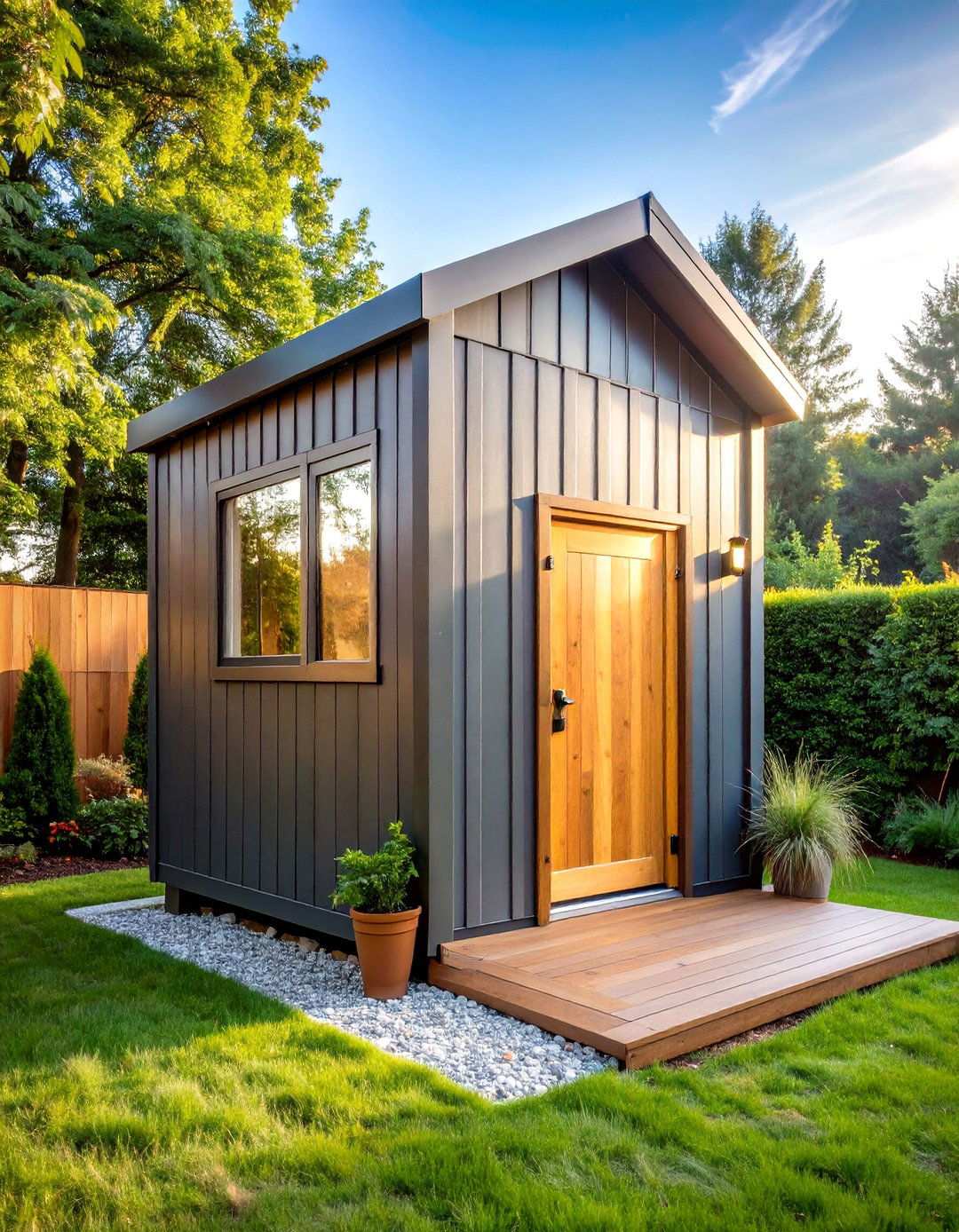
The principles of minimalist living underpin this design, resulting in highly efficient structures through creative storage solutions, multi-functional fixtures, and compact layouts. By optimizing functionality within a limited square footage, this design cleverly utilizes space planning and modern design techniques to create a seamless living experience. Exterior finishes prioritize low maintenance and a contemporary aesthetic through the use of metal siding, expansive windows, and clean architectural lines. Interior design incorporates fold-down fixtures, concealed storage compartments, and convertible furniture systems that maximize space. By integrating smart home technology, energy-efficient systems, and sustainable materials, this design sets a new standard for compact living. Space-saving solutions, such as wall-mounted fixtures, sliding doors, and vertical storage systems, further enhance the design’s efficiency. Foundation systems are carefully designed to accommodate the compact footprint while providing stability and support. Ventilation and lighting systems are expertly integrated to ensure optimal comfort within the confined space, while modern amenities are seamlessly incorporated through innovative design solutions that balance functionality with comfort.
21. Log Cabin Chinking Style with Traditional Authenticity
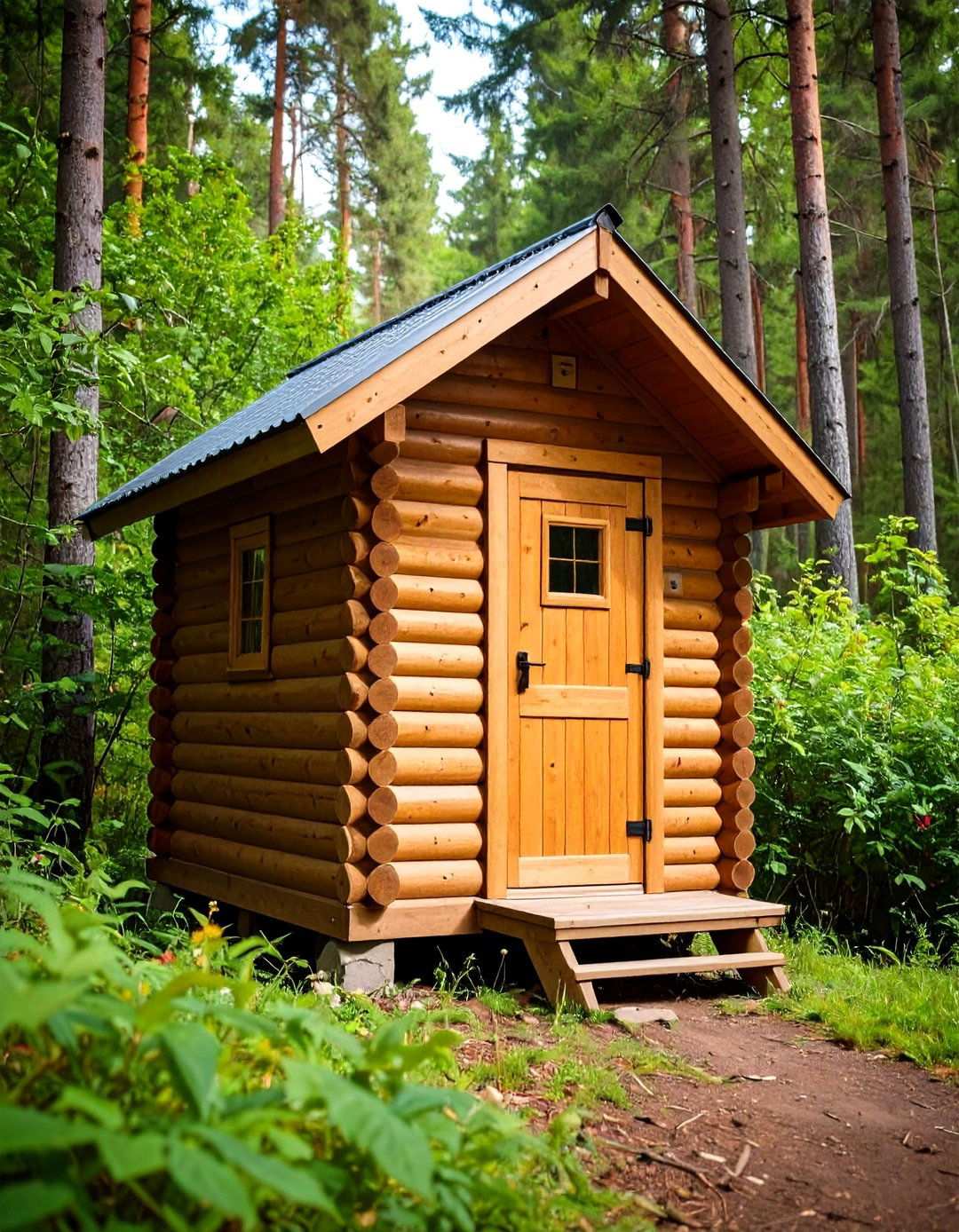
Pioneering building techniques have long been revered for their ability to create authentic wilderness structures, and traditional log construction, chinking details, and rustic hardware are at the heart of this design. By incorporating full-log walls, saddle-notch corners, and traditional chinking materials, the structure provides a weather-tight seal that has stood the test of time. Exterior elements such as metal roofing, wooden doors, and minimal windows are carefully chosen to maintain the historical authenticity of the design. Meanwhile, interior surfaces feature exposed log walls, wooden floors, and period-appropriate fixtures that evoke a sense of bygone eras. By combining traditional building techniques with modern performance standards, this design ensures proper insulation and moisture management, while handcrafted details like carved elements, traditional hardware, and authentic construction methods add an extra layer of character. Foundation systems are carefully designed to utilize stone or concrete supports, which are particularly well-suited to log construction. To strike a balance between historical character and contemporary comfort, modern amenities are carefully integrated into the design. The surrounding landscape features native plants and rustic elements that perfectly complement the wilderness aesthetic and pioneer heritage.
22. French Country Cottage Design with Timeless Provincial Charm
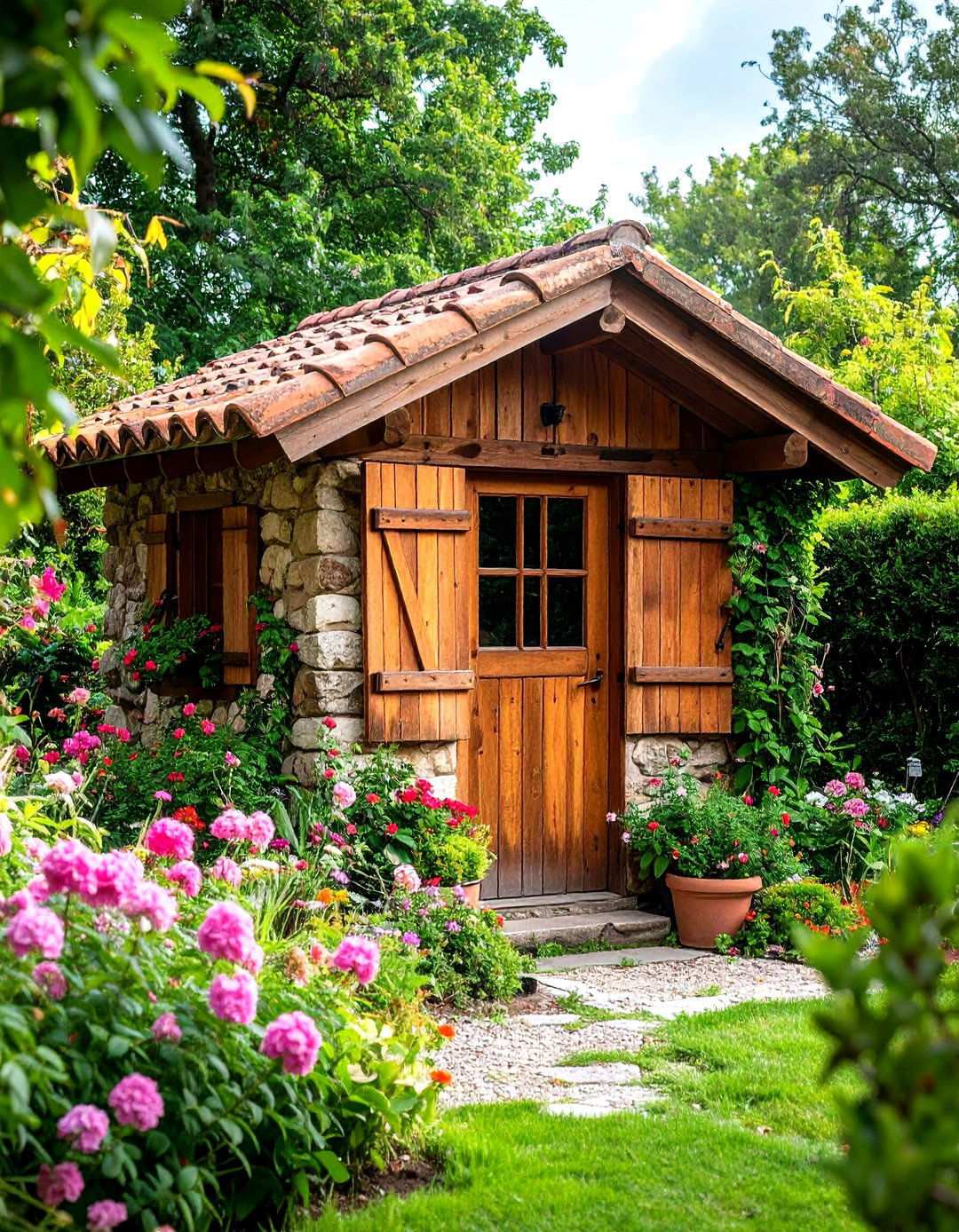
The rustic beauty of rural French architecture is the inspiration behind this design, which features soft curves, natural materials, and romantic garden integration. The structure’s irregular stone walls, curved rooflines, and weathered wood shutters evoke the classic charm of Provence architecture. Exterior materials such as limestone or fieldstone construction, clay tile roofing, and aged copper accents add to the sense of history and tradition. Inside, exposed beam construction, plaster walls, and French country fixtures create a cozy and inviting atmosphere. Decorative details such as wrought iron hardware, carved wooden elements, and hand-painted tile accents add a touch of elegance and sophistication. By incorporating traditional French building techniques adapted for local conditions, the design ensures that it remains true to its heritage while also meeting the needs of modern living. Color schemes emphasize soft pastels, creamy whites, and natural earth tones, which perfectly complement the surrounding gardens featuring lavender, herbs, and cottage-style plantings that enhance the provincial atmosphere. Modern systems are discreetly integrated into the design, allowing the authentic French country character and romantic aesthetic to shine through.
23. Desert-Inspired Adobe and Terra Cotta Constructions
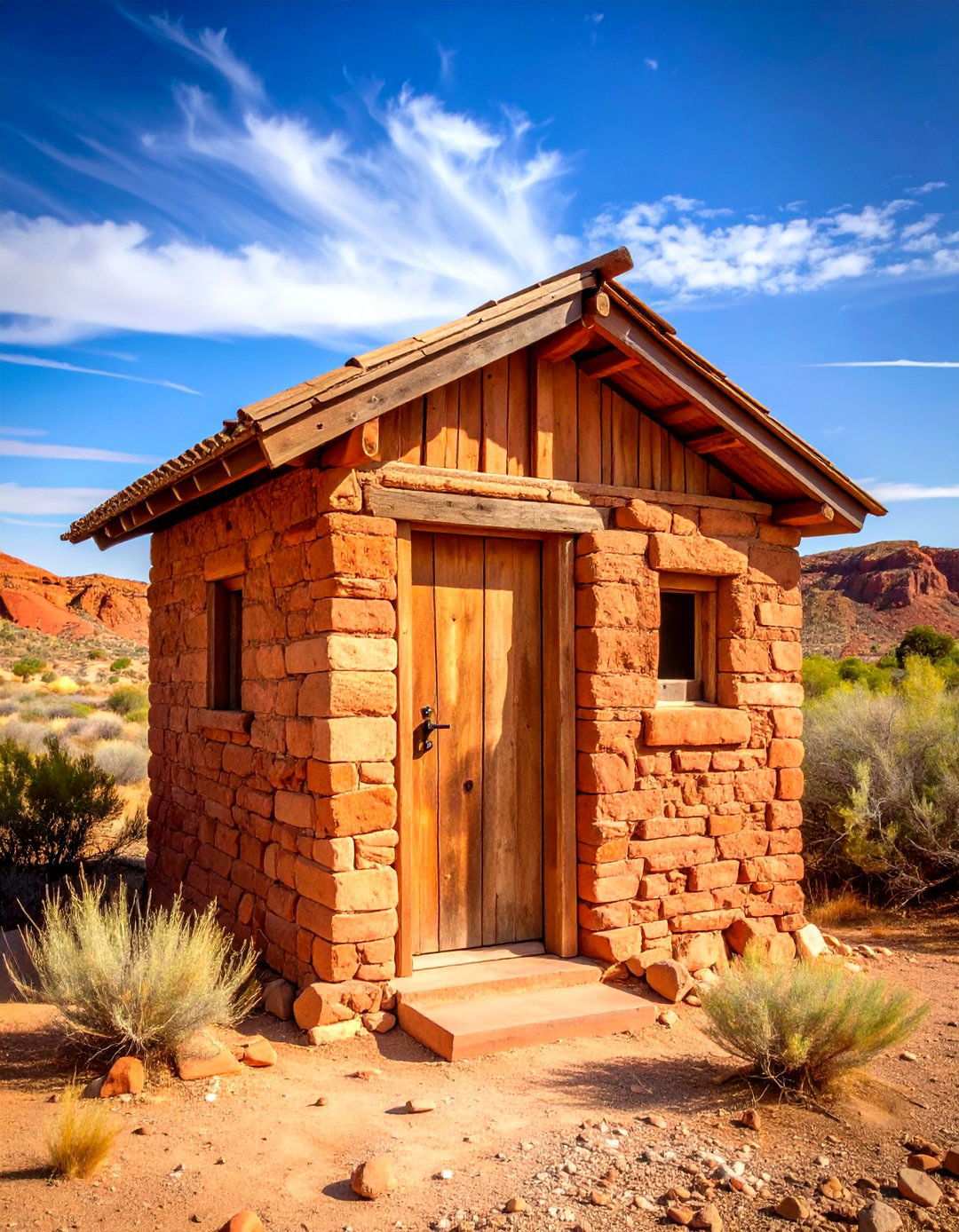
Desert architecture has long been synonymous with environmentally conscious building practices. By harnessing thermal mass construction, earthy finishes, and locally sourced materials, these structures thrive in the desert climate. Thick adobe or rammed earth walls, flat roofing with parapets, and southwestern-inspired decorative elements define this design aesthetic. Exterior features include natural earth plasters, exposed vigas, and terra cotta accents that blend seamlessly with the surroundings. Interior spaces showcase cool tile floors, wooden beam ceilings, and thoughtfully curated regional artwork. To maintain climate comfort, the design incorporates passive cooling techniques, natural ventilation, and solar orientation. Aesthetic details such as hand-painted tiles, carved wooden elements, and southwestern-inspired fixtures add a touch of personality to the space. Furthermore, foundation systems are carefully designed to accommodate expansive soils common in desert regions. Surrounding landscapes feature drought-tolerant plants, gravel pathways, and expertly crafted desert garden elements that minimize water consumption. By integrating modern amenities while respecting traditional building techniques and regional architectural heritage, this design strikes a perfect balance between functionality and sustainability.
24. Coastal Designs Elevated on Stilts for Flood Protection
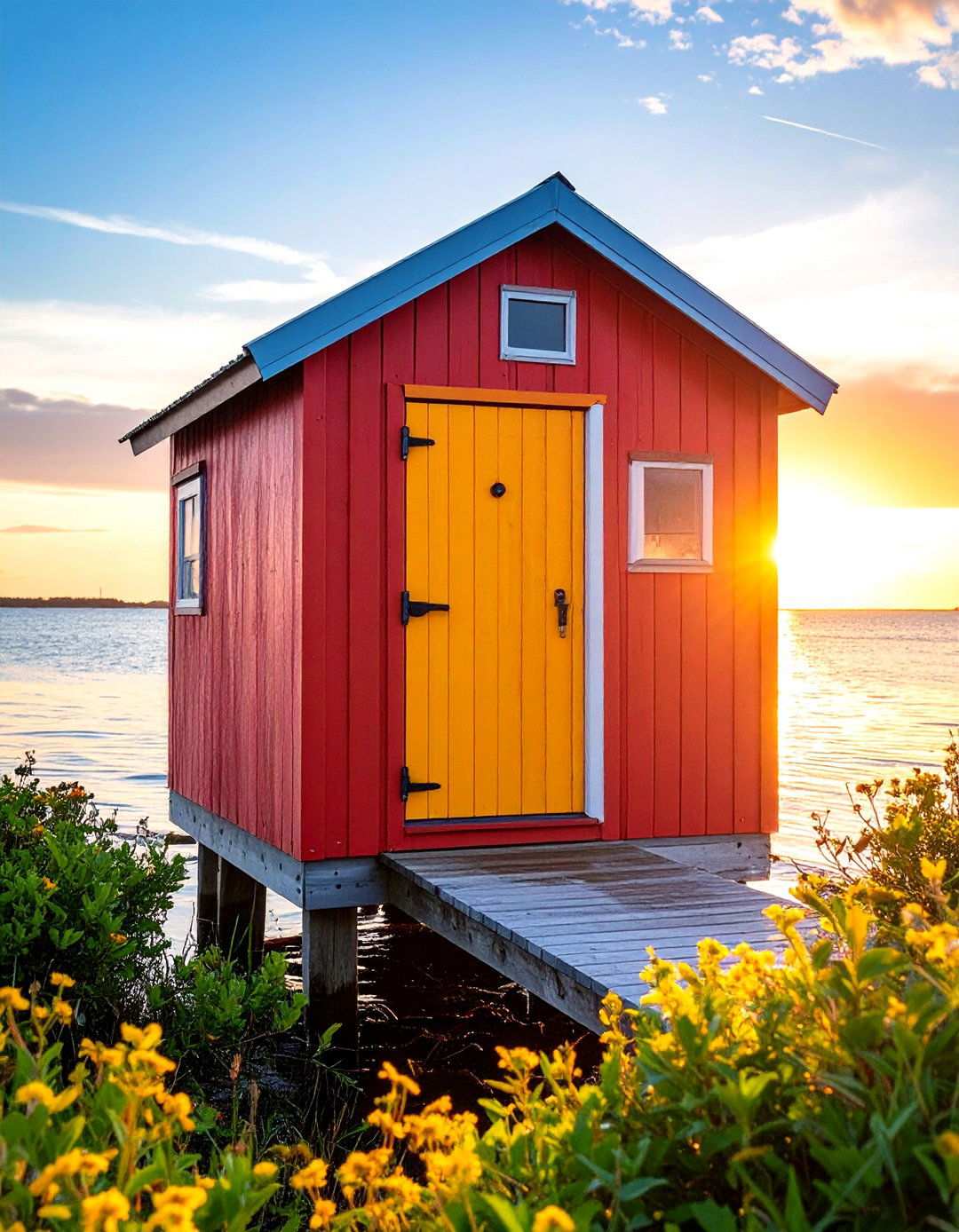
Coastal construction has evolved to prioritize weather resistance and resilience. Elevated foundations, hurricane-rated materials, and flood-resistant design features are just a few of the techniques employed to create structures that can withstand harsh marine conditions. The design showcases pier and beam construction, metal roofing, and impact-resistant materials that ensure the structure remains intact in the face of strong winds and flooding. Exterior materials include fiber cement siding, aluminum trim, and marine-grade hardware specifically designed to withstand salt air exposure. Interior spaces feature moisture-resistant finishes, tile floors, and fixtures engineered for high-humidity environments. To ensure safety and compliance, the design incorporates flood venting, elevated utilities, and breakaway walls that meet FEMA requirements. Structural systems include hurricane ties, reinforced connections, and wind-resistant construction techniques that prioritize safety. Ventilation systems are carefully calibrated to account for humid conditions and salt air corrosion. Foundation systems utilize deep pilings or elevated platforms that are ideally suited for flood-prone areas. Surrounding landscapes feature salt-tolerant plants and permeable surfaces that effectively manage stormwater runoff, reducing the risk of flooding and erosion.