1. Weaving Nature's Serenity into Traditional Japanese Zen Spaces
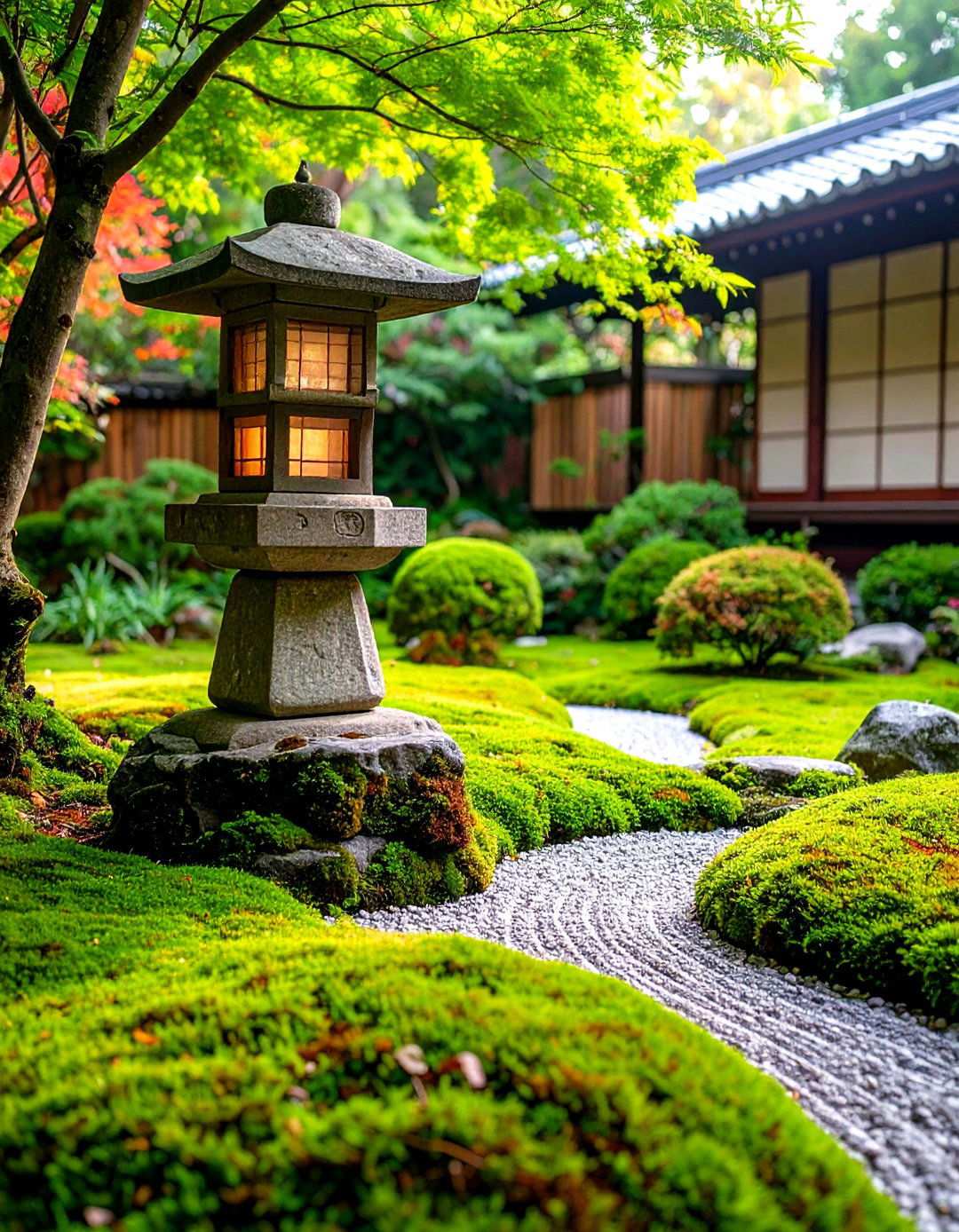
Traditional Japanese Zen moss gardens are a masterful blend of art and nature, where carefully placed moss varieties complement contemplative stone arrangements and raked gravel patterns. Sheet moss forms a lush, emerald canvas, evoking islands of tranquility amidst the dry landscape. Weathered stones, often grouped in odd numbers, follow the time-honored principles of asymmetry and naturalness, while a simple stone lantern and a small, serene bamboo water feature enhance the meditative atmosphere. The essence of this timeless design lies in restraint, allowing each element to contribute to a sense of harmony and balance. Regular care involves the gentle removal of leaves and occasional misting during dry periods, maintaining the delicate beauty of this serene oasis. Perfect for morning meditation or quiet reflection, these gardens embody the wabi-sabi philosophy through the imperfect, yet captivating, beauty of nature.

As an Amazon Associate I earn from qualifying purchases.
2. Contemporary Urban Oasis: Modern Minimalist Moss Courtyard
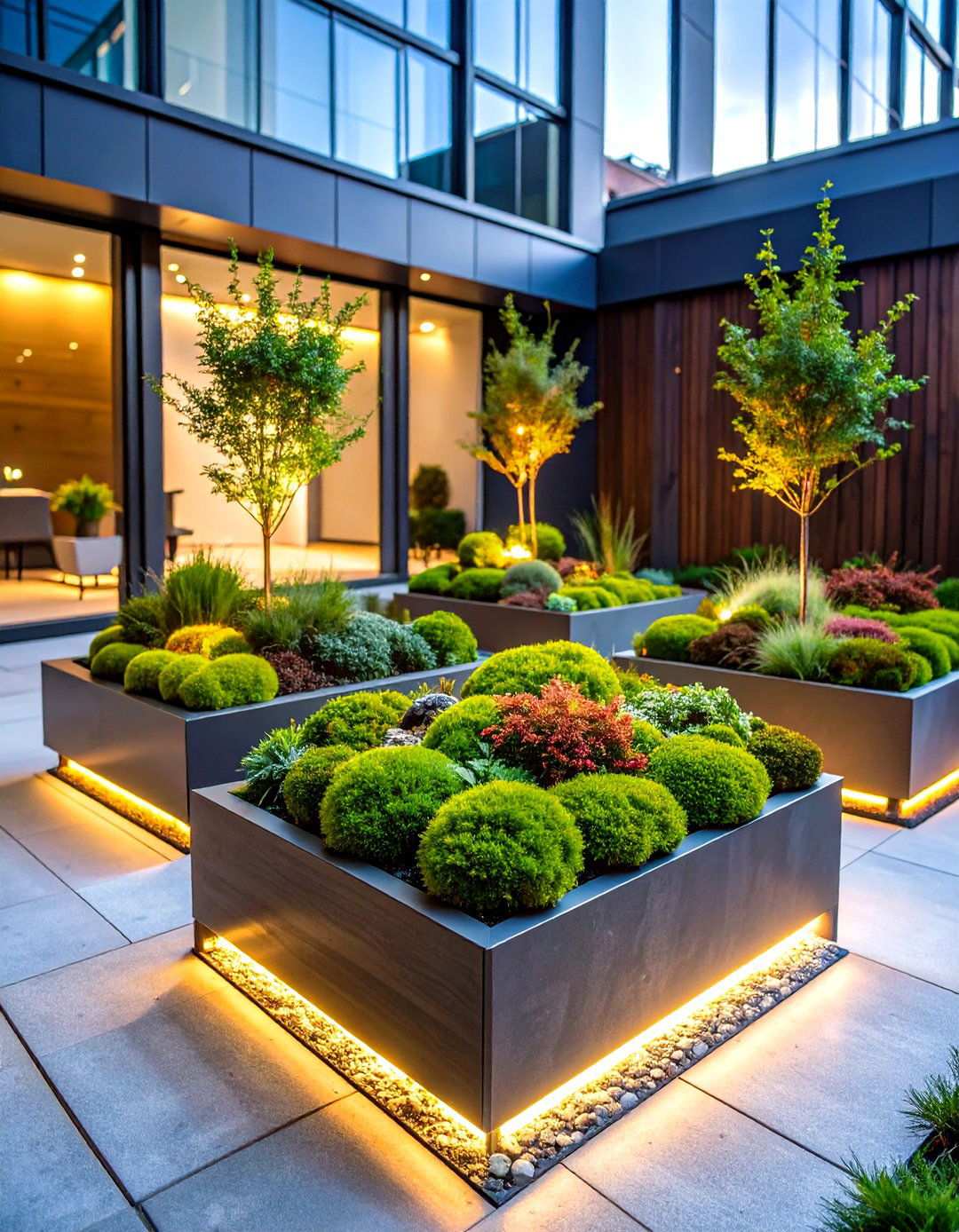
In contrast to the traditional approach, modern moss gardens celebrate the natural texture and vibrant color of moss, often incorporating clean lines and geometric patterns. Designers create dramatic focal points using rectangular raised planters made from weathered steel or concrete, filled with a variety of moss species that come alive as living geometric art. Mood moss adds a striking textural element with its tufted appearance, while cushion moss forms perfect spherical accents. To enhance the evening ambiance, subtle LED lighting strips can be integrated along planter edges. A monochromatic palette of greens and grays creates a soothing backdrop, punctuated by polished concrete pavers and steel edging that define the spaces. This approach is particularly effective in urban settings where space is limited but visual impact is desired. The juxtaposition of architectural hardscaping and organic moss creates a sense of visual tension that feels both contemporary and timeless. Maintenance involves periodic trimming to maintain clean edges and regular misting systems to ensure consistent moisture levels throughout the growing season, preserving the beauty of this modern oasis.
3. Reimagining the Forest Floor: Woodland Enchantments Unveiled

Bring the mystique of shaded woodland areas into your outdoor space by embracing the organic, diverse essence of forest floors. Blend the lacy, delicate charm of fern moss with the robust texture of sheet moss to create an intriguing mosaic. Scatter the remnants of natural decay – weathered logs, fallen branches, and stones – to evoke the authenticity of woodland realms. Allow native species like small hostas and woodland wildflowers to emerge and flourish amidst the lush moss cover, celebrating the harmony of coexistence in nature. This approach not only fosters biodiversity but also reduces the need for intervention once the ecosystem is established. Meander through winding pathways crafted from stepping stones or bark chips to promote exploration without compromising the sensitive moss surfaces. By layering canopy trees, understory shrubs, and moss ground cover, you create a thriving habitat for beneficial insects and wildlife, each season unfolding a new tapestry of life and color. As light patterns shift, spring ephemerals burst forth, and autumn hues contrast with the evergreen moss, your woodland retreat becomes a living, breathing entity, working in harmony with the site conditions rather than fighting against them.
4. Moss Oasis: Bringing Nature's Serenity Indoors
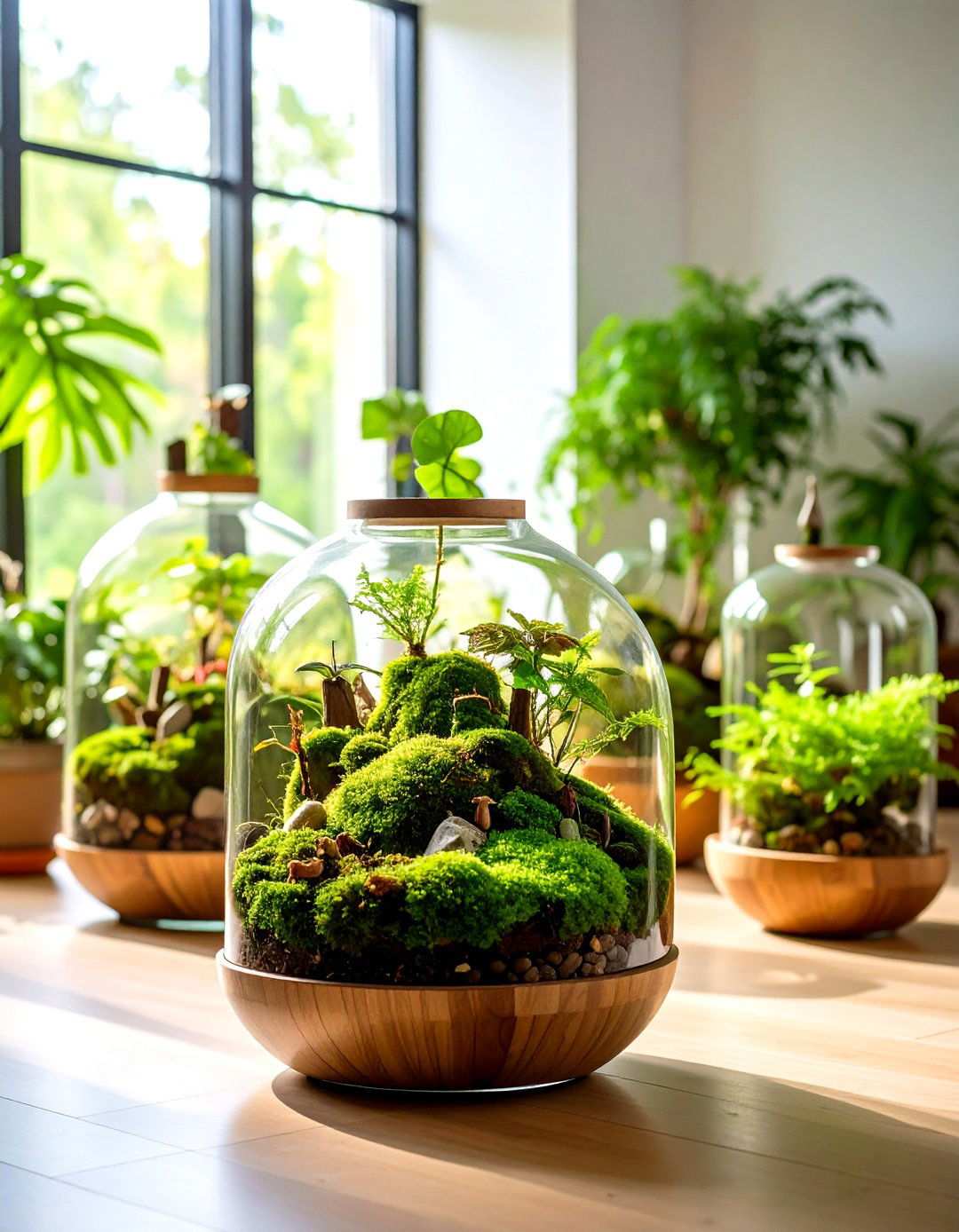
By designing moss terrariums and container gardens, you can transport the tranquility of the forest into your living spaces. Large glass vessels become miniature ecosystems, featuring cushion moss, decorative stones, and woodland-inspired accessories. Vary the textures by layering different moss types, creating topographical interest within contained environments. For added depth, incorporate mood moss for vertical dimension and sheet moss for smooth ground cover effects. Storytelling elements come alive through the inclusion of small figurines, miniature furniture, or seasonal decorations. Position your containers near north-facing windows to optimize indirect light conditions, essential for moss health. Closed terrarium systems maintain consistent humidity levels, ensuring your moss thrives. Group containers at different heights using vintage glass containers, antique cloches, or modern geometric terrariums to create a visually striking display. Maintenance involves occasional misting, removing debris, and rotating containers for even light exposure. These living art pieces not only purify the air but also provide year-round greenery, bridging the gap between indoor spaces and nature’s calming presence.
5. Harmonious Rock Garden Landscapes
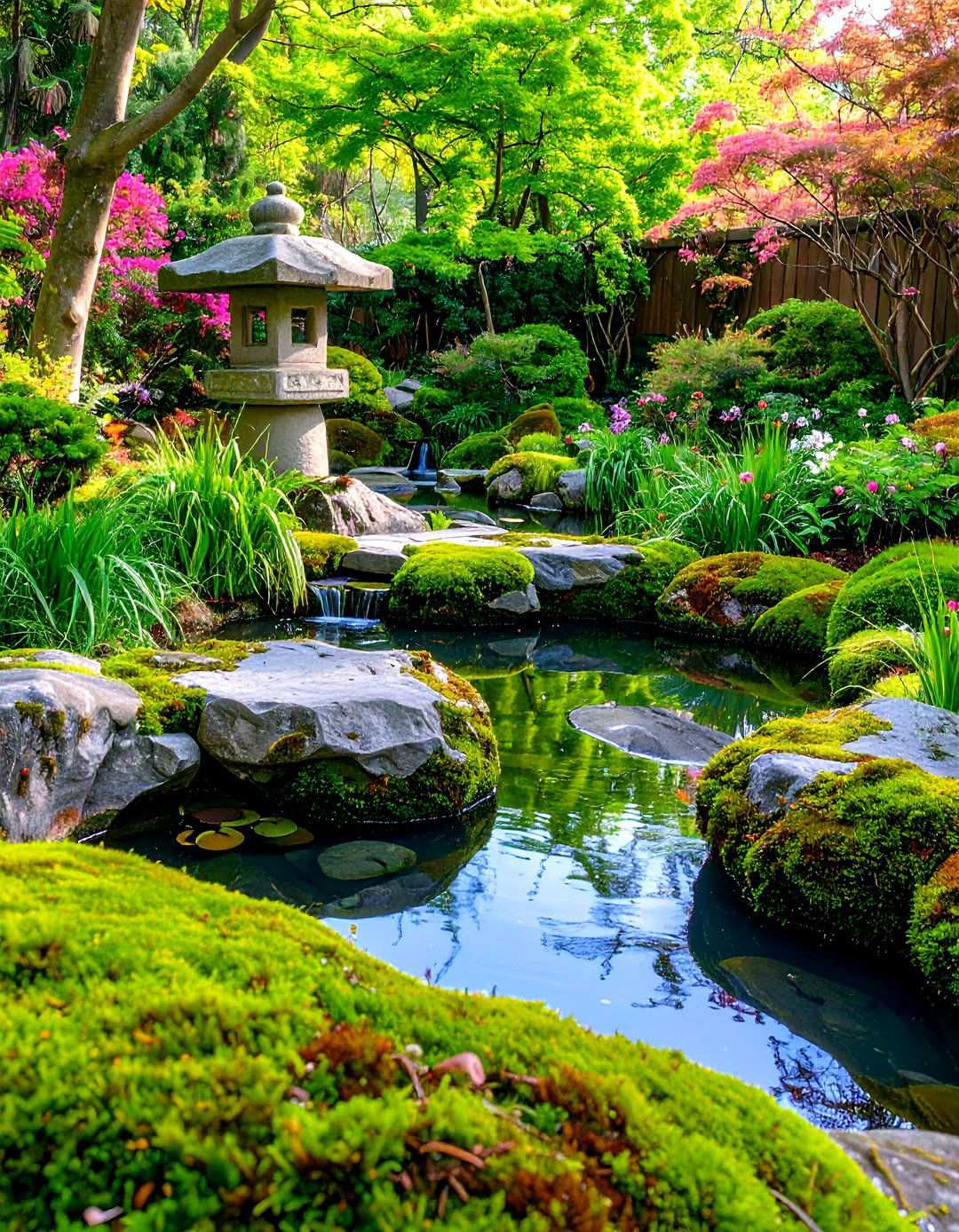
Creating a visually striking landscape that incorporates moss with existing rock formations or constructed stone features is a great way to bring natural beauty to your outdoor space. Rock cap moss has a unique ability to colonize boulder surfaces, while sheet moss fills crevices, softening the hard edges of stone. To achieve a visually appealing design, consider using a variety of stone sizes, from large anchor rocks to smaller accent stones, to create levels of visual depth and interest. Plant mood moss in protected pockets where its distinctive tufted texture complements rough stone surfaces, and include drought-tolerant companion plants like small sedums or native grasses that won’t compete with moss for space. By incorporating water features such as small fountains or dripping stones, you can not only enhance moss growth but also add sound elements to your landscape. This approach is particularly well-suited for slopes where traditional plantings might struggle with erosion. To ensure the success of your moss landscape, it’s essential to select moss varieties that are suited to local conditions and stone types. Regular maintenance, which includes occasional weeding and debris removal, as well as ensuring adequate moisture during establishment periods, will allow natural colonization patterns to develop organically over time.
6. Serene Moss Pathway Garden Designs
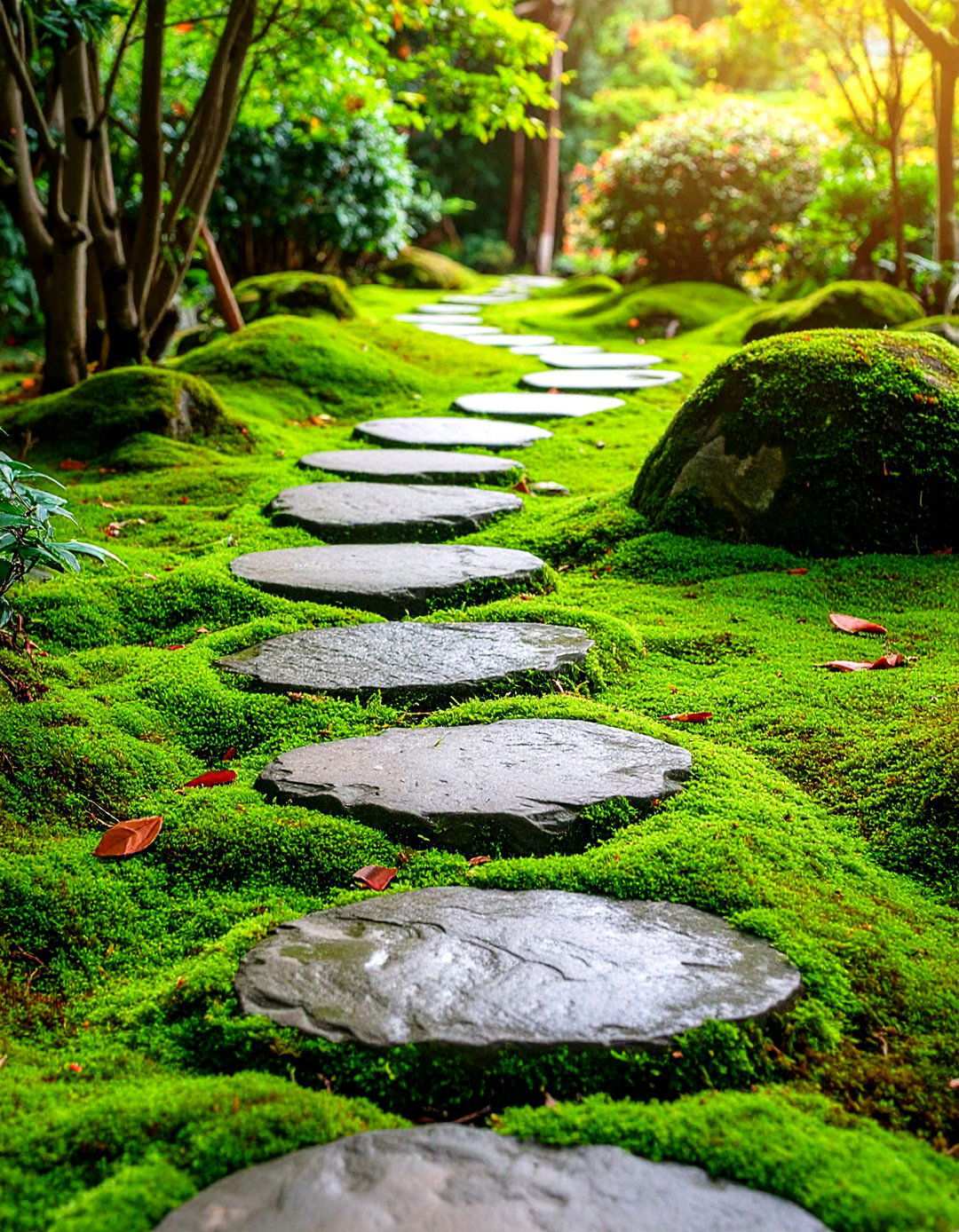
Designing enchanting walkways using moss as both functional ground cover and decorative element is a great way to create a sense of tranquility in your garden. Sheet moss is exceptionally well-suited for handling light foot traffic, creating soft, cushioned walking surfaces that feel luxurious underfoot. To create a natural and inviting pathway, plan routes that curve through your garden, following the existing topography and shade patterns. Use natural stone, aged brick, or weathered concrete pavers with generous spacing to allow moss colonization, and consider creating wider areas along paths for resting spots with simple wooden benches or stone seating. Adding subtle solar lighting to define pathways during evening hours can also enhance the ambiance of your garden. To create a sense of intimacy, consider bordering pathways with taller plants like ferns or small shrubs. Experimenting with different moss varieties can also add textural variety to your pathways, with cushion moss creating interesting mounded accents and fern moss providing delicate ground-hugging coverage. Regular maintenance, which involves keeping pathways clear of debris and occasionally trimming moss edges for neat appearances, will help your moss pathways connect different garden areas while providing contemplative walking experiences through natural landscapes.
7. Contemporary Moss Wall Installation
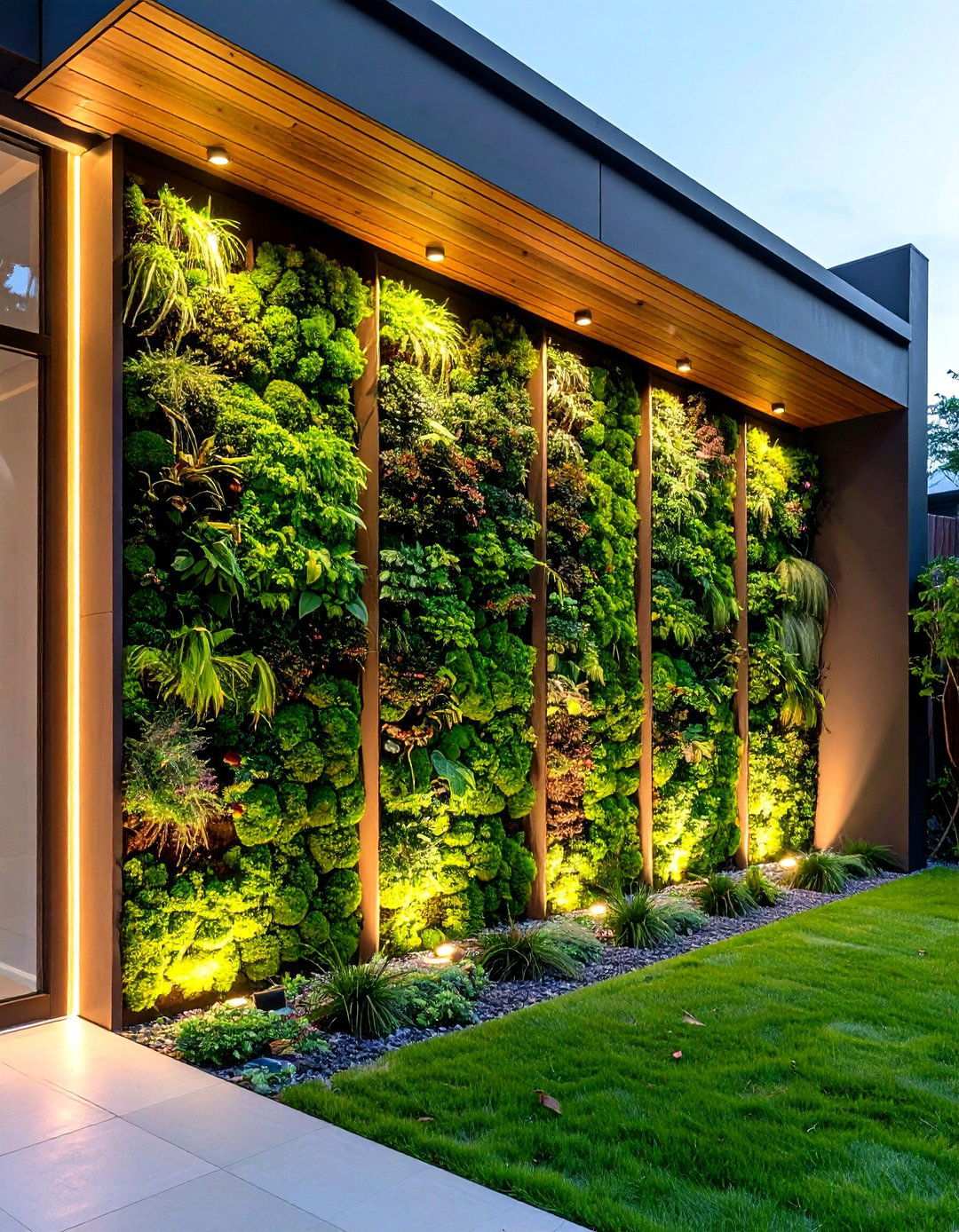
Creating striking living art installations, vertical moss gardens transform blank walls into lush focal points that captivate the senses. To achieve this, designers employ weather-resistant mounting systems and precision-crafted irrigation networks for consistent moisture delivery. By combining different moss types in intricate geometric patterns or organic designs, the resulting installations seamlessly blend with architectural features. The use of mood moss offers a dramatic texture contrast, while sheet moss creates a smooth, uniform background. Strategically incorporating integrated lighting systems allows the moss textures to take center stage during evening hours. Modular panel systems enable seasonal design updates or maintenance access, further enhancing the versatility of these installations. When situating moss walls, consider protected areas like courtyards or covered terraces where conditions remain remarkably stable. These installations prove particularly effective in urban environments where limited horizontal space is compensated for by the abundance of vertical surfaces offering opportunities for innovative green integration. With proper care, moss wall maintenance involves regular misting, occasional cleaning of hardware, and selective section replacement as needed. The result fosters natural air conditioning effects while providing biophilic design elements that reduce stress and enhance indoor air quality in adjacent spaces.
8. Moss Container Garden Collection
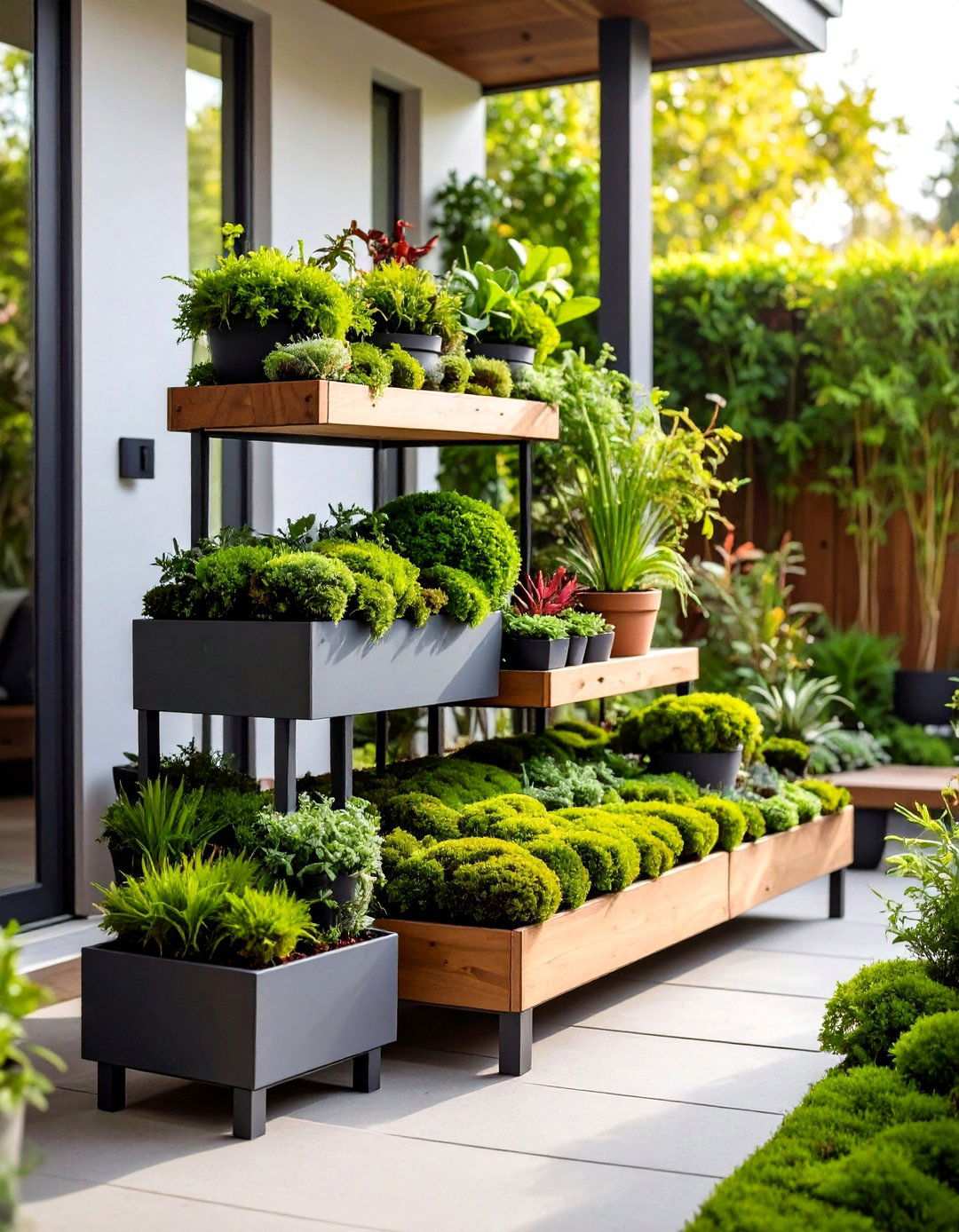
Portable moss gardens created using a variety of container sizes and styles can be effortlessly adapted to changing seasons and design preferences. Large wooden planters showcase sheet moss lawns beautifully, while ceramic bowls highlight cushion moss’s unique spherical growth habits. To create visually striking layers, designers arrange containers at different heights using plant stands, overturned pots, or custom pedestals. Adding seasonal decorative elements such as small ornaments, colored stones, or miniature structures allows for personal expression and celebrates current holidays or interests. Grouping containers with similar care requirements simplifies maintenance routines, ensuring efficient upkeep. Consider mobility factors when designing container gardens – smaller containers can be easily relocated to optimize growing conditions or create temporary displays for special occasions. When selecting potting mixes, prioritize high-quality options designed for moss cultivation, ensuring optimal drainage and moisture retention. Experimenting with container materials such as aged terracotta, glazed ceramics, or modern fiberglass options allows for a wide range of design possibilities while providing the necessary growing conditions for healthy moss development throughout the seasons.
9. Integrating Moss with Water Features
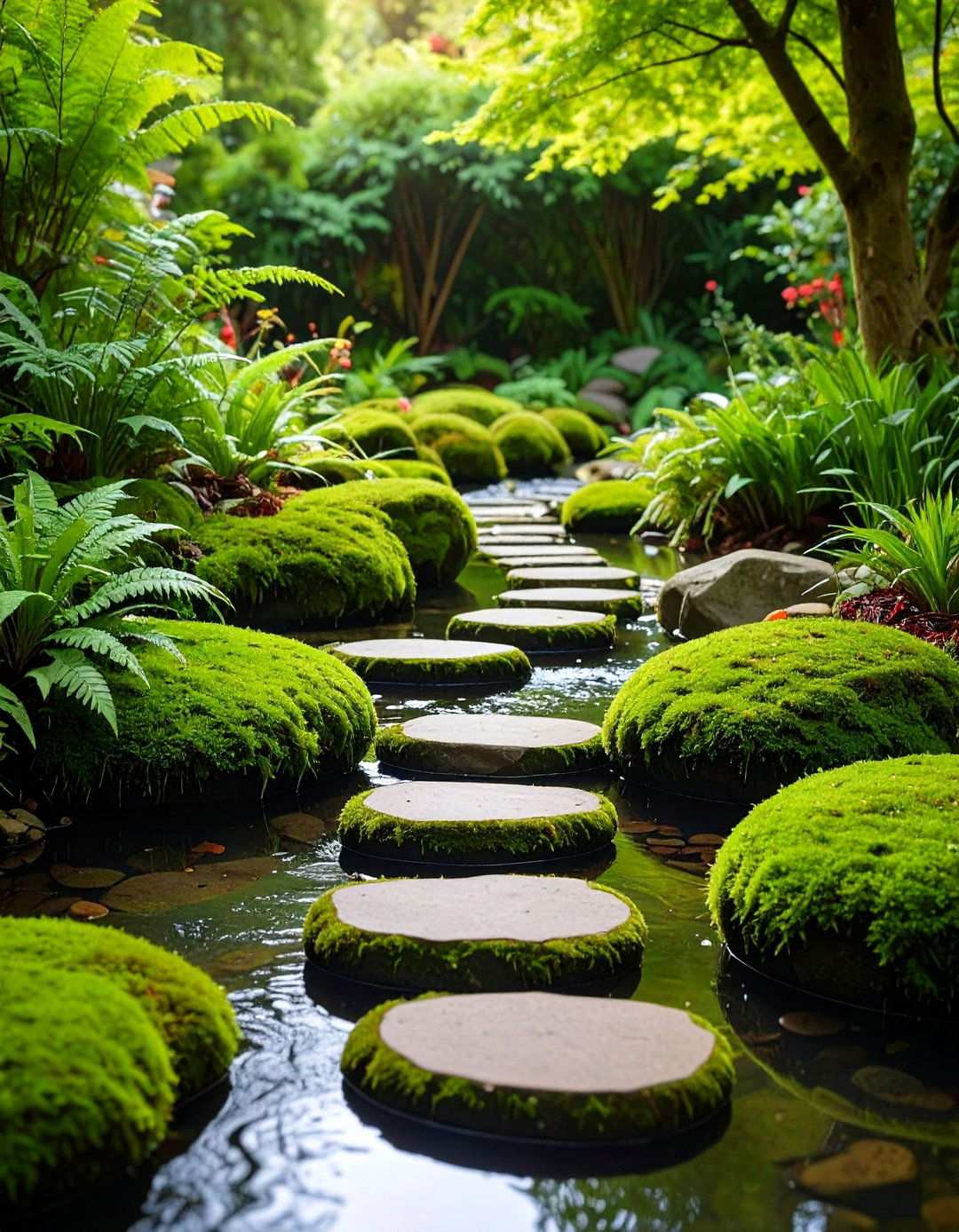
Merging moss with water elements enables garden designers to create captivating focal points that not only elevate the visual appeal but also foster ideal growing conditions. By incorporating small streams or fountains that consistently maintain humidity levels, it’s possible to generate soothing sounds in addition to visually striking features. Strategic placement of cushion moss and fern moss around water edges allows natural moisture to support robust growth, while flat stones can be used to create stepping platforms or enhance viewing angles. For added tranquility, consider incorporating small pools or basins crafted from natural stone or weathered concrete that seamlessly blend with moss coverage. Implementing recirculating pump systems not only conserves water but also ensures consistent flow patterns. Aquatic plants like water lilies or cattails can be added to designated areas, and solar-powered fountains offer an eco-friendly operation option. Strategically placing nighttime lighting can further enhance both water and moss features, extending the enjoyment period. Maintenance necessitates regular cleaning of pump systems, removal of debris from water surfaces, and precise control over moss moisture levels to prevent waterlogging. These water features create microclimates that nurture diverse plant communities while providing serene spaces for meditation that evolve throughout the seasons.
10. Harnessing the Potential of Moss in Shade Gardens
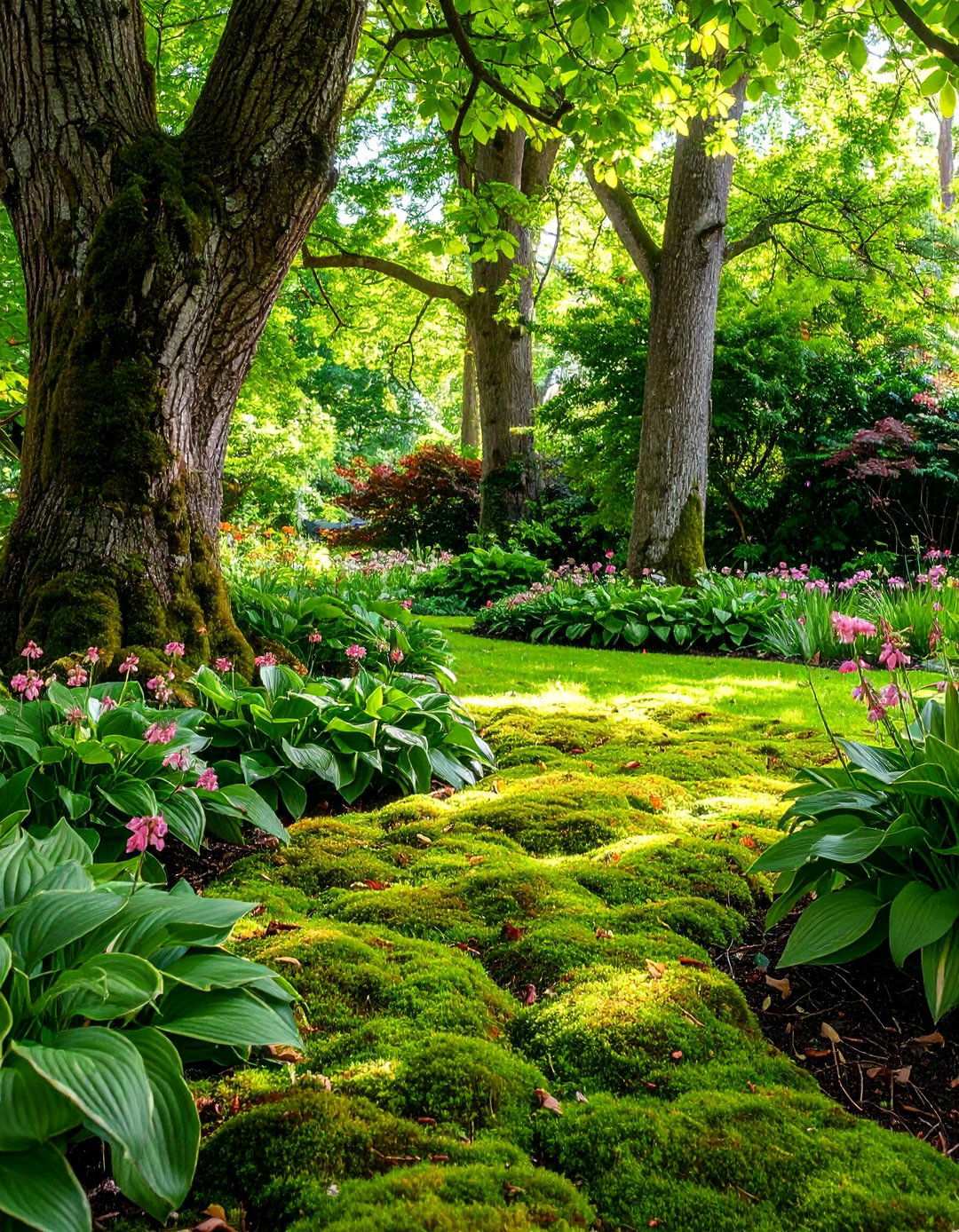
By converting unproductive shaded areas where traditional lawn grass struggles to thrive into lush moss carpets, garden enthusiasts can create thriving ecosystems that excel in low-light conditions. Sheet moss is a particularly effective option for large areas, providing uniform green surfaces that eliminate the need for mowing or chemical treatments. To establish a thriving moss community, select areas with consistent shade from buildings, large trees, or natural topography. Prepare the site by removing existing vegetation and adjusting the soil pH to create slightly acidic conditions that moss prefers. Companion shade plants like hostas, ferns, or astilbe can be incorporated to complement moss without competing for space. Designing gentle slopes and contours not only adds visual interest but also promotes effective drainage during periods of heavy rainfall. This innovative approach to landscaping eliminates the need for frequent watering, fertilizing, or pest control, typical of traditional lawns. Regular maintenance involves autumn leaf removal, occasional weeding, and gentle raking to prevent debris accumulation. The end result is a year-round green carpet that remains visually appealing throughout all seasons while supporting beneficial insects and reducing maintenance time and costs compared to conventional landscaping methods.
11. Majestic Alpine Rockscapes

Craft breathtaking landscapes reminiscent of alpine regions using rock cap moss and cushion moss varieties that thrive in challenging conditions. Design an arrangement of locally sourced stones that mirror natural alpine formations, with moss seamlessly filling crevices and softening the lines of the rocks. Incorporate drought-resistant alpine plants such as small sedums, native grasses, or wildflowers that harmonize with moss without overpowering its delicate growth patterns. Ensure optimal drainage through the strategic use of gravel layers beneath the soil, preventing waterlogging during periods of high rainfall. Strategically position larger rocks as anchor points, with smaller stones serving as transition areas where moss can naturally colonize. This approach is particularly effective on slopes, where it not only provides erosion control but also creates visually stunning landscapes. Integrate pathways made from flat stones to facilitate close observation of moss growth without compromising the delicate ecosystem. Maintenance involves occasional weeding, debris removal, and monitoring for pest issues that might impact moss health. This design captures the essence of a mountain meadow atmosphere while requiring minimal water input once established, making it an ideal choice for xeriscaping.
12. Serene Moss Labyrinth Meditation Spaces
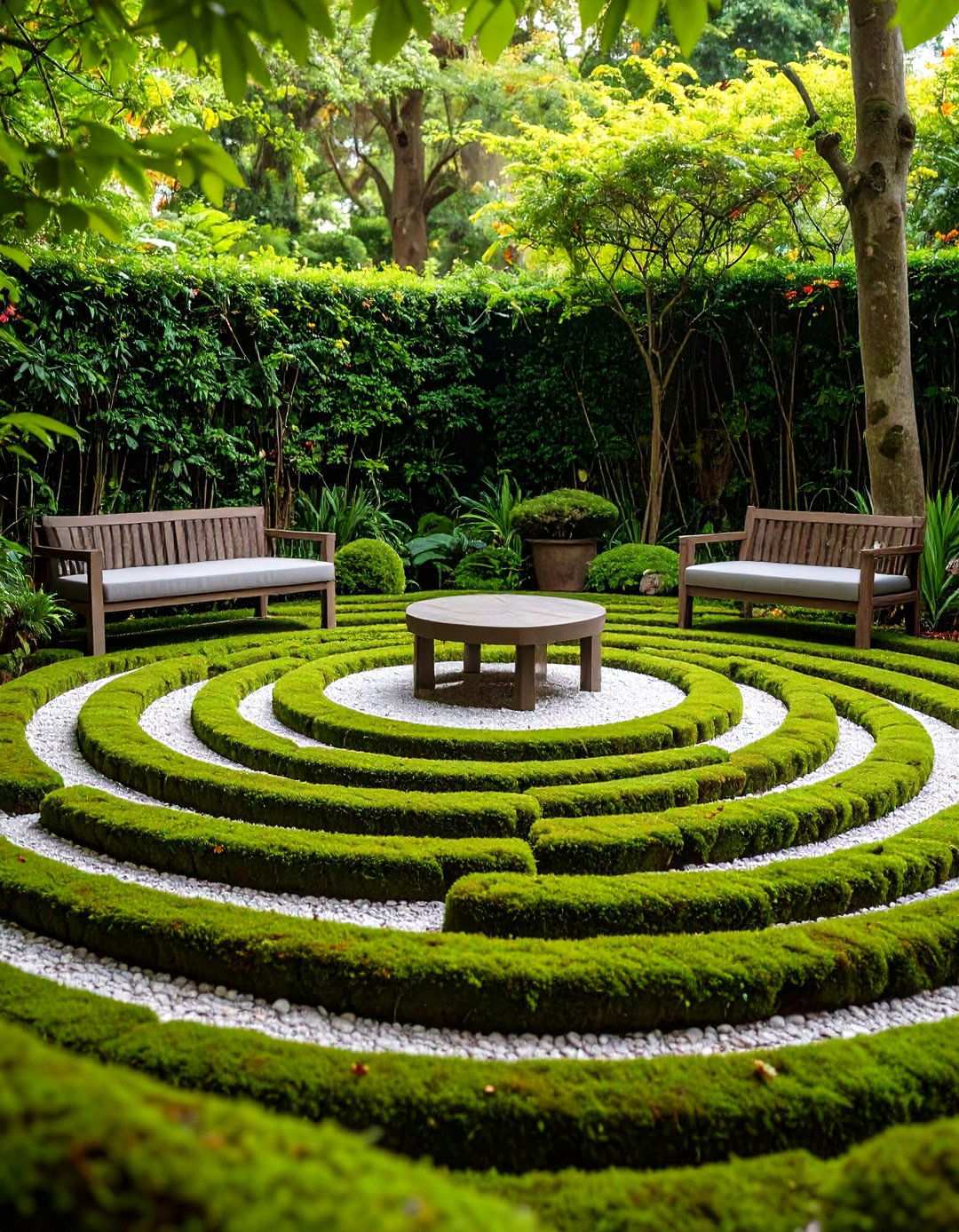
Create contemplative walking meditation areas using moss pathways that craft labyrinth patterns for spiritual reflection and mindfulness practice. Employ sheet moss for main pathways, while using cushion moss to mark turns and focal points throughout the design. Plan single-path labyrinths that guide walkers through meditative journeys from the entrance to the center and back. Incorporate simple seating at the center, utilizing natural stone or weathered wood for reflection periods. Border pathways with low-growing plantings like ferns or native grasses that won’t interfere with walking patterns. Consider the available space when designing, as even compact yards can accommodate compact labyrinth designs. Add seasonal decorations that reflect natural cycles and personal spiritual practices. Install subtle lighting for evening use, creating peaceful walking experiences after dark. Maintenance involves keeping pathways clear of debris, trimming moss edges for definition, and ensuring adequate moisture throughout the growing seasons. These sacred garden spaces provide structured opportunities for meditation, prayer, or quiet contemplation, fostering a deep connection with nature’s healing presence through regular walking practice.
13. Reviving Victorian Gardens with Moss
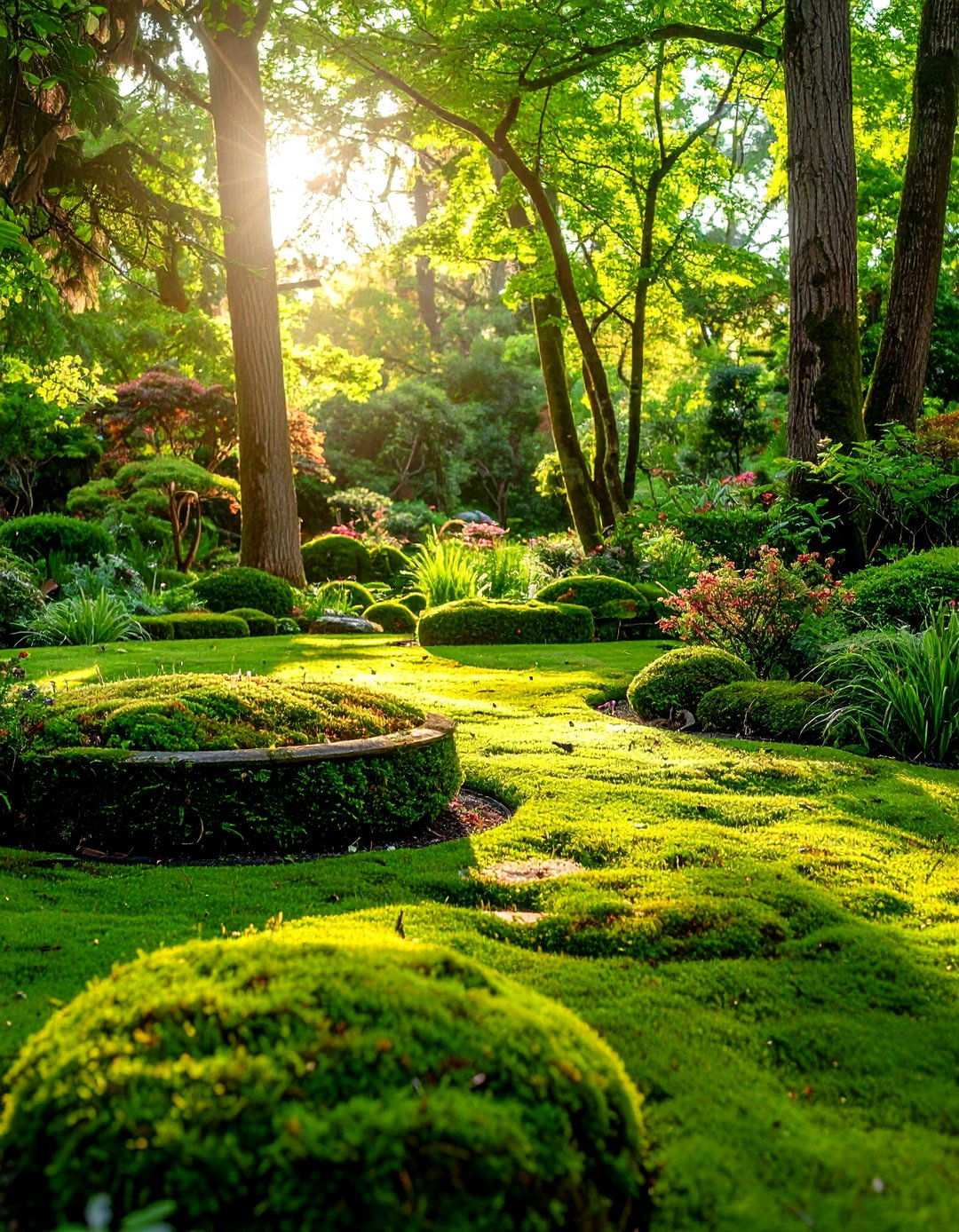
To recreate the elegance of bygone eras, combine moss varieties that thrived in Victorian landscapes with period-specific plants and ornate features. Design intricate patterns using geometric moss beds, framed by meticulously trimmed boxwood or cast iron edging that echoes the era’s penchant for precision. Incorporate antique garden ornaments, such as worn stone urns, classical sculptures, or intricately designed bird baths, to evoke the refined tastes of the Victorian era. Pair these with companion plants like delicate ferns, ivy, or flowering perennials that were highly prized during this period. Construct walkways using traditional materials like brick, wrought iron benches, or stone balustrades, which evoke the authentic atmosphere of a bygone era. Harmonize your color palette with a spectrum of greens, complemented by the vibrant hues of white, purple, or burgundy flowering plants. Whenever possible, choose heritage plant varieties to ensure historical accuracy while guaranteeing modern growth potential. Create secluded seating areas using period-inspired furniture, where visitors can appreciate the intricate details of your plantings and ornate features. Traditional gardening methods, including hand-weeding, organic fertilization, and seasonal cleaning routines, will not only preserve historical gardening practices but also foster the well-being of your moss throughout the growing season.
14. Desert Oasis: A Revolutionary Moss Garden Concept
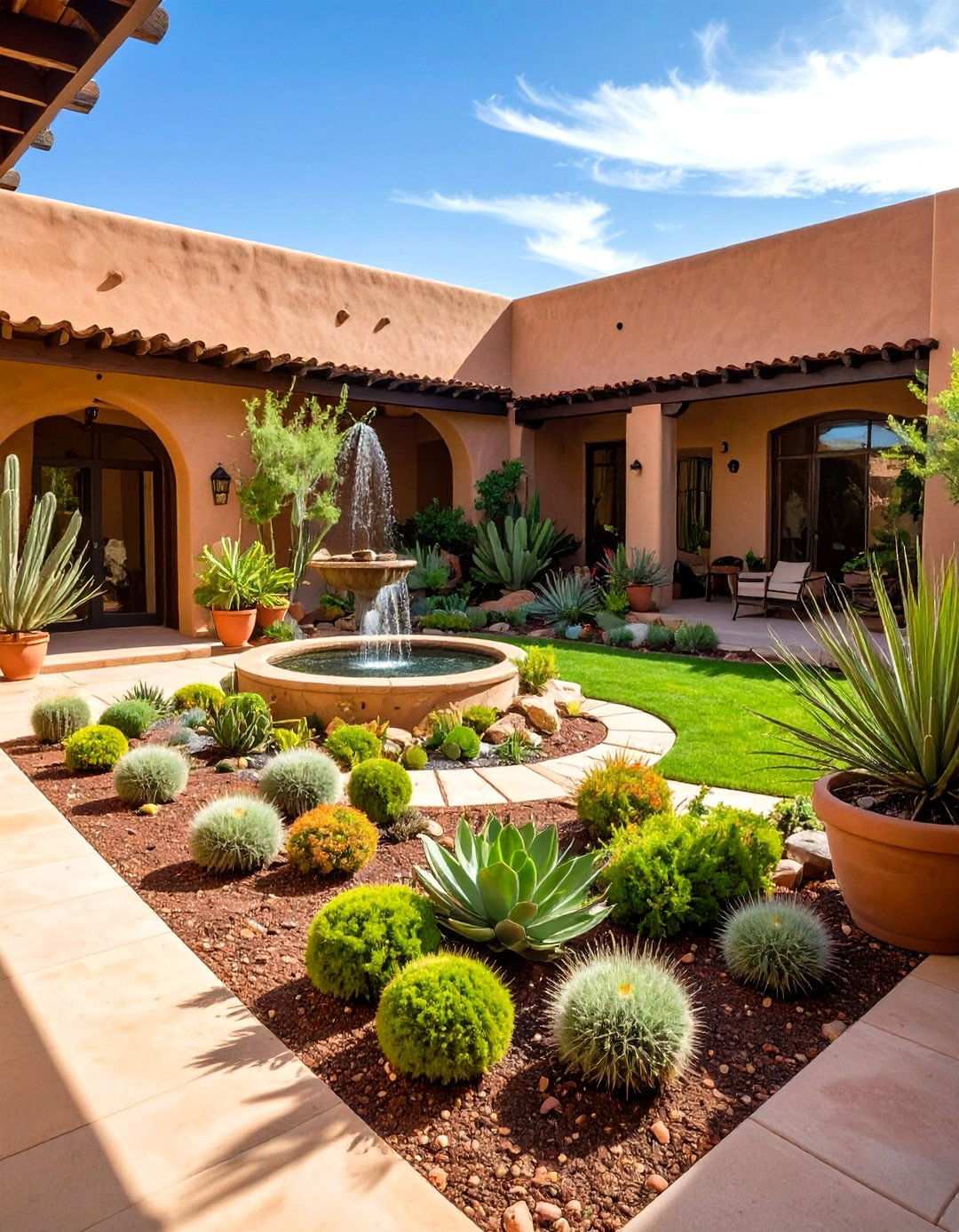
Disrupt conventional thinking and create moss gardens in arid climates by harnessing the resilience of drought-tolerant species and efficient water management systems. Implement misting systems that provide essential humidity during scorching periods, while conserving water through targeted delivery methods. Select sun-tolerant moss varieties, such as silver moss or sun moss, which have adapted to intense light conditions with the support of adequate moisture. Create microclimates using strategic shade structures, reflective surfaces, or thermal mass to moderate temperature extremes. Pair your moss with desert-adapted companion plants like agaves, cacti, or native grasses, which complement moss textures without competing for water resources. Design efficient irrigation systems using drip technology or captured rainwater to maximize water conservation while supporting moss growth. Position your moss gardens in naturally protected areas, such as courtyards or near buildings, where conditions remain relatively stable. Maintenance involves monitoring irrigation systems, adjusting watering schedules seasonally, and safeguarding your moss during extreme weather events. This innovative approach challenges expectations while showcasing moss adaptability and sustainable gardening practices that thrive even in challenging climatic conditions.
15. Whimsical Moss Landscapes Unveiled
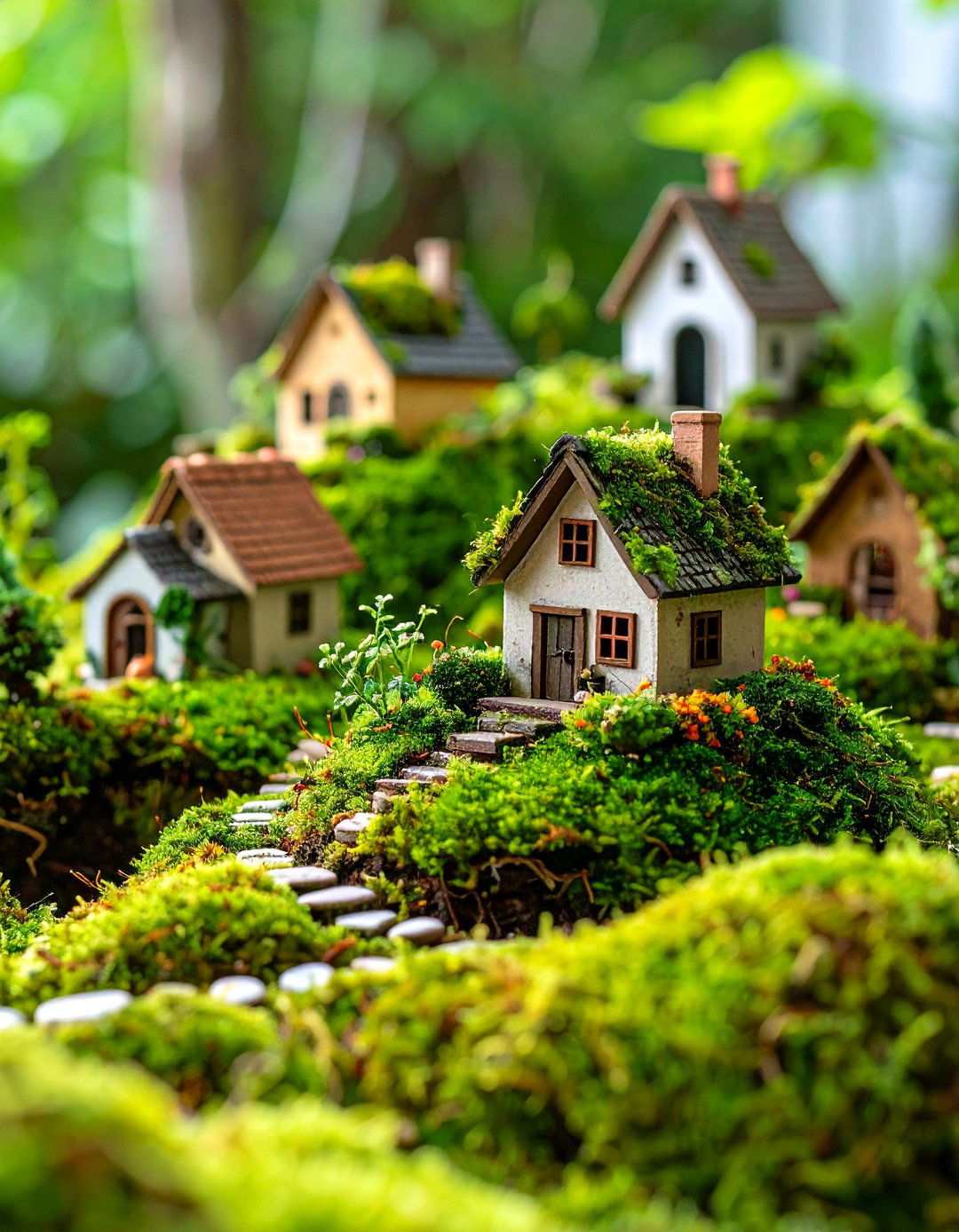
Delight children and adults alike with enchanting miniature landscapes, where moss serves as the foundation for mesmerizing fairy garden installations. Design intricate villages featuring mushroom houses, delicate furniture, and tiny figurines nestled among lush cushion moss hills and serene fern moss valleys. Incorporate seasonal decorations that change throughout the year, fostering curiosity and encouraging regular observation. Craft winding pathways using tiny pebbles or bark chips that guide visitors through distinct themed areas within expansive moss gardens. Add a touch of magic with water features like small fountains or miniature ponds, which not only enhance moss growth but also create an enchanting atmosphere. Whenever possible, incorporate natural materials such as twigs, acorns, shells, or stones that seamlessly blend with moss environments. Create varied elevations using soil mounds covered with diverse moss types to introduce topographical interest and diverse growing conditions. Illuminate the gardens with soft night lighting using small solar fixtures or LED strings, transforming the spaces into mystical evening displays. As maintenance involves seasonal decoration changes, gentle cleaning, and ensuring moss receives adequate care, the magic of these installations is preserved throughout the growing seasons.
16. Serene Rooftop Moss Oasis
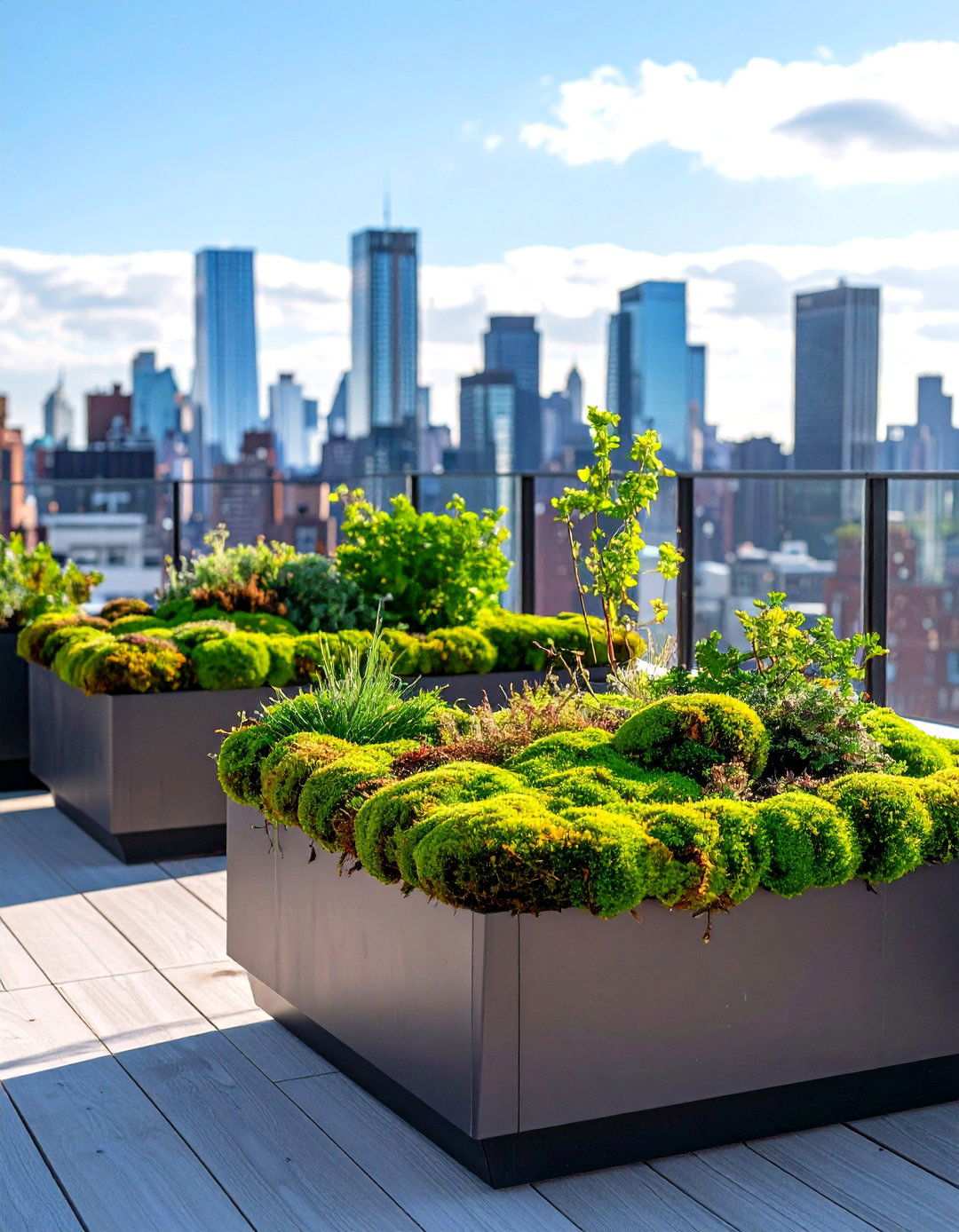
Transform urban rooftops into tranquil havens using moss varieties specifically adapted to windy, exposed conditions. Design lightweight installations that utilize efficient drainage systems to prevent structural overload, ensuring the integrity of the rooftop. Select wind-tolerant moss species and incorporate windscreens using natural materials like bamboo fencing or living walls, providing protection while maintaining an aesthetic appeal. Incorporate container gardens that can be easily moved or rearranged seasonally, allowing for optimal growing conditions and design flexibility. Implement efficient irrigation systems that conserve water while providing consistent moisture essential for moss health in exposed locations. Create inviting seating areas using lightweight furniture that withstands weather conditions while providing comfortable spaces for relaxation and garden enjoyment. Include companion plants like ornamental grasses or small shrubs that thrive in rooftop conditions while complementing moss textures. When planning installations, consider city regulations, structural limitations, and maintenance access to ensure a seamless and sustainable experience. The end result provides a private green oasis that reduces urban heat island effects while creating natural refuges that support mental health and environmental sustainability goals.
17. Seasonal Moss Display Garden

Crafting a moss garden that evolves with the seasons requires a thoughtful approach to plant selection and decorative element rotation. As the seasons change, so too can the beauty of your moss garden. In the spring, incorporate emerging bulbs that burst through the lush green carpet of moss, creating a striking contrast that highlights the garden’s dynamic character. Summer brings an opportunity to showcase small, flowering perennials that complement the delicate growth patterns of the moss without overpowering it. To capture the essence of autumn, design displays that feature colorful leaves, seasonal gourds, or harvest decorations, all while maintaining the health of the moss. In winter, evergreen companions, decorative twigs, or subtle lighting can help maintain the garden’s appeal even during the dormant season. Thoughtful planning of pathways and viewing areas ensures safe access for seasonal maintenance and decoration changes. Incorporate storage areas for seasonal materials and tools, and consider capturing the beauty of your moss garden through photography as it evolves over time. Ongoing maintenance involves regular decoration updates, seasonal cleanup, and providing the right care for the moss during different growing conditions. By embracing the natural cycles of the seasons, these dynamic gardens offer a continuous display of beauty and character.
18. Moss Bridge Transition Garden

A moss-covered bridge can serve as both a functional pathway and a living architectural element, connecting different garden areas in a beautiful and practical way. When designing a bridge, consider spanning over water features, dry creek beds, or lower garden areas, using weather-resistant materials covered with the right type of moss. Safety features like railings or mesh systems can support moss growth while providing protection, and approaches can be designed to blend naturally with the surrounding landscape. Choose from arch designs or simple beam construction, depending on the garden’s style and structural requirements. Integrated lighting systems can provide safety and highlight the moss textures during evening hours. When planning maintenance access, ensure that cleaning, repairs, and moss care can be done without damaging established growth patterns. Position the bridges to provide optimal viewing angles of garden features below and create dramatic overhead canopy effects. Don’t forget to plan for seasonal weight loads, including snow accumulation in areas with harsh winters. Ongoing maintenance involves regular inspections, monitoring the health of the moss, and keeping the bridge surfaces safe for regular use. By incorporating living architectural features like moss-covered bridges, you can create memorable garden experiences and provide practical solutions for garden circulation and access.
19. Harmonious Healing Spaces
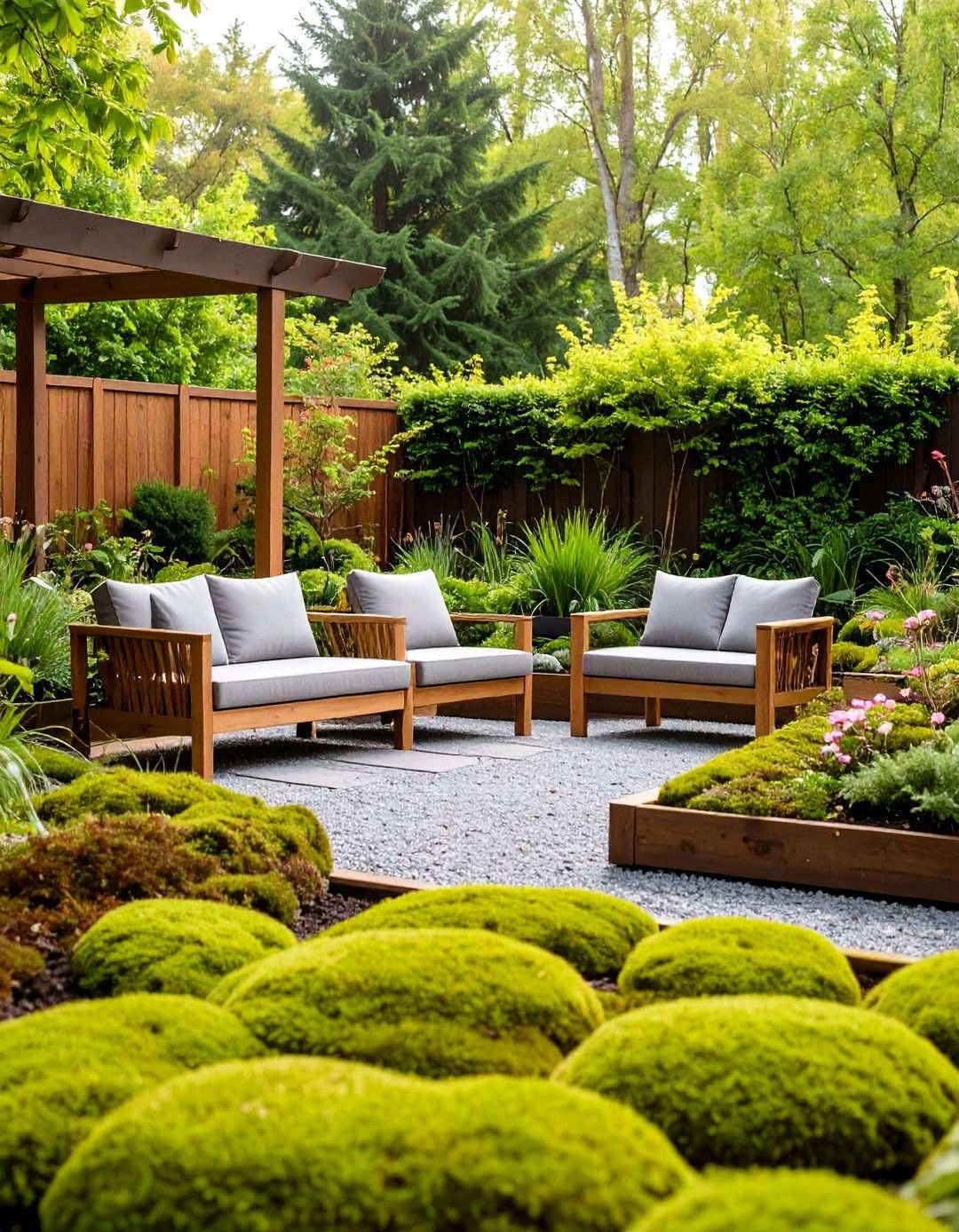
Craft therapeutic moss gardens tailored to provide serene healing environments for institutions such as hospitals, senior centers, and rehabilitation facilities. Ensure that garden pathways are wheelchair-accessible, featuring gentle slopes and suitable surfaces that foster inclusive experiences for everyone. Raised planting beds at ergonomic heights enable seated gardeners or those with mobility limitations to engage with the garden comfortably. Design sensory experiences centered around moss textures, fragrances, and soothing visual elements that facilitate healing and stress relief. Strategically position comfortable seating areas with supportive backrests and armrests to maximize garden vistas. Establish quiet zones isolated from high-traffic areas where patients or visitors can find peaceful spaces for contemplation. Incorporate educational signage highlighting moss benefits, growth requirements, and therapeutic gardening principles to promote a deeper understanding of the garden’s purpose. Consider seasonal programming that engages users in gentle gardening activities adapted to various physical abilities. Install sufficient lighting for evening safety while preserving the peaceful ambiance. Effective maintenance involves a combination of professional landscape care and volunteer programs that foster community involvement and additional therapeutic benefits through meaningful volunteer activities.
20. Cozy Urban Oases
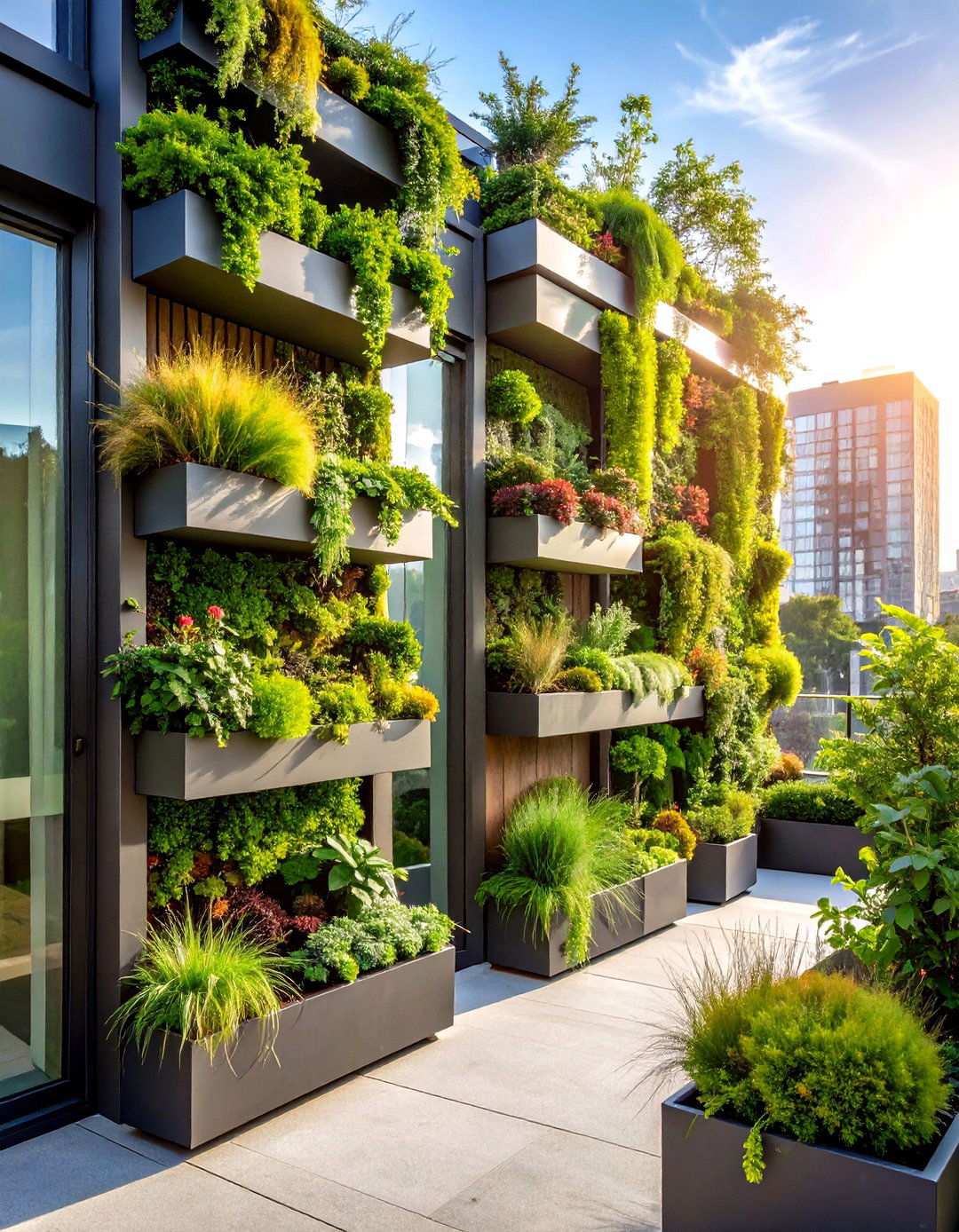
Revitalize small urban spaces by harnessing the potential of moss in vertical growing systems and container arrangements. Design modular wall-mounted systems featuring living walls suitable for patios, balconies, or small courtyards. Include lightweight container systems that provide mobility for seasonal adjustments while optimizing space in confined urban environments. Implement water-conserving irrigation systems that maintain consistent moisture essential for moss health in urban microclimates. Create privacy screens using moss installations that block unwanted views while introducing natural greenery in concrete-dominated landscapes. Incorporate companion plants in containers that complement moss while accommodating space constraints typical of urban gardening situations. Recognize the air quality improvement benefits that moss provides in polluted urban environments, where natural air filtration is particularly valuable. Plan for seasonal protection from extreme weather, pollution, or urban environmental stresses that may impact moss health. Effective maintenance involves regular monitoring, efficient watering systems, and protecting installations from urban environmental challenges while maintaining attractive appearances throughout the growing seasons.
21. Reviving Estate Garden Traditions with Modern Moss Installations

To recreate the grandeur of historical estate gardens, designers can draw inspiration from traditional landscape design principles, adapting them to meet the demands of modern maintenance capabilities. By incorporating formal moss installations, designers can create visually stunning parterres that rival those of the past. Geometric moss patterns, bordered by timeless materials such as boxwood hedging or ornate stone edging, pay homage to historical garden styles while showcasing the beauty of moss. Incorporating period-specific features like sundials, classical urns, or decorative gates further enhances the authentic ambiance. Thoughtfully planned vista lines and axial relationships create a sense of formal structure, allowing moss installations to take center stage. Companion plantings, featuring heritage roses, established trees, or formal flowering borders, complement the moss while maintaining historical accuracy. Meandering gravel or brick pathways provide a practical circulation solution, echoing period construction methods and materials. By combining traditional gardening methods with modern moss cultivation knowledge, maintenance routines can preserve the historical appearance of these installations while ensuring their vitality throughout the growing seasons.
22. Immersive Educational Experiences in Moss Gardens
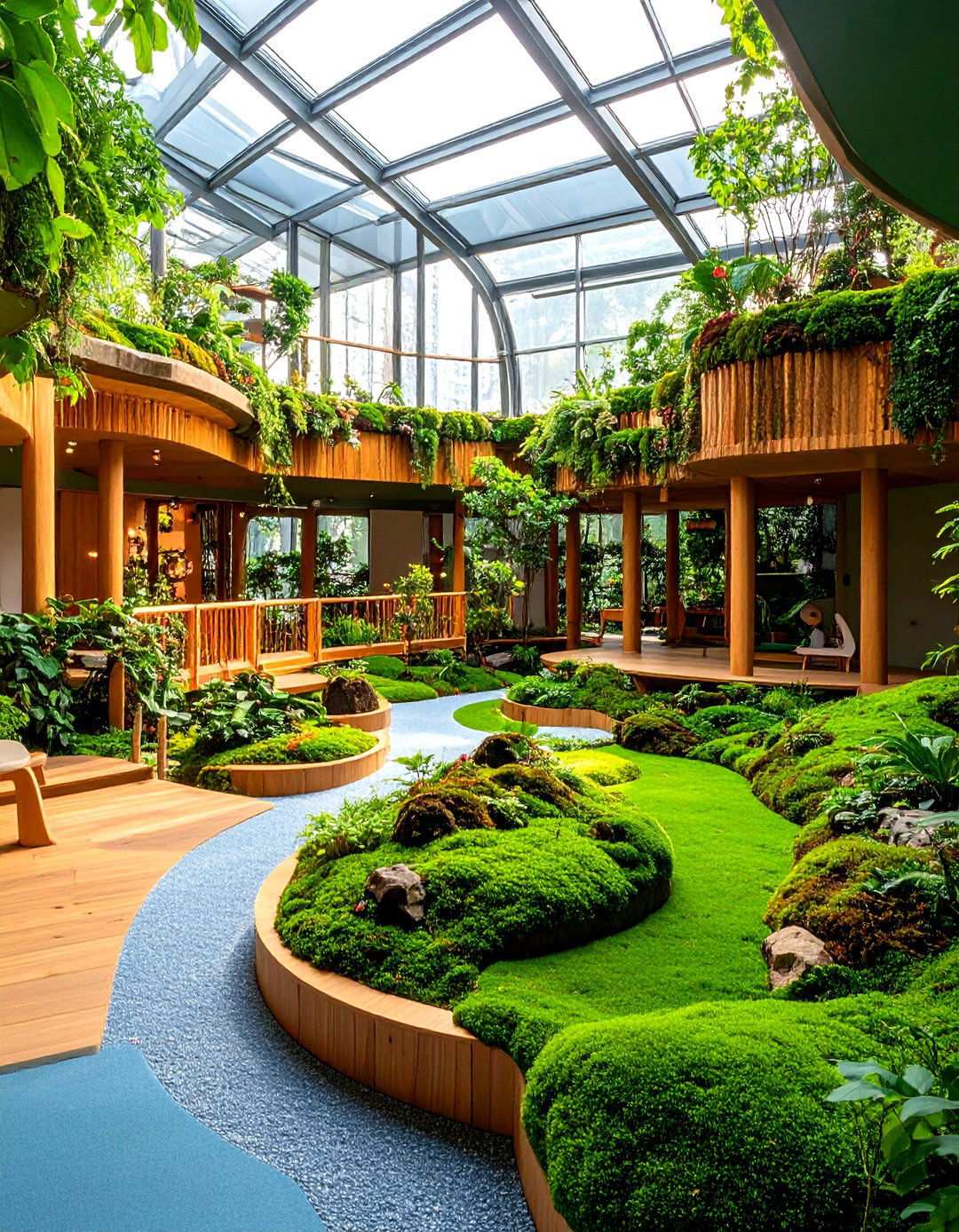
Children can develop a deeper appreciation for moss biology, ecosystem relationships, and environmental stewardship through hands-on garden experiences. Interactive areas with magnifying stations allow young explorers to observe the intricate structures, growth patterns, and tiny wildlife that moss habitats support. Elevated observation platforms provide a safe and engaging viewing experience while protecting delicate moss surfaces from damage. Educational signage, crafted in a child-friendly manner with colorful graphics, explains moss life cycles, environmental benefits, and growing requirements. Hands-on activity areas enable children to participate in moss propagation, terrarium construction, or simple maintenance tasks tailored to their age and skill level. Weather protection, such as pergolas or covered areas, ensures that outdoor education can continue regardless of the weather. Storage facilities for educational materials, tools, and supplies ensure that regular programming activities can run smoothly. Safety considerations, including non-toxic plants, secure pathways, and dedicated supervision areas, guarantee a secure and enjoyable experience for all participants. Maintenance involves ongoing support for educational programs, regular safety inspections, and ensuring the health and resilience of moss installations despite increased foot traffic from educational activities.
23. Uniting Nature and Artistry
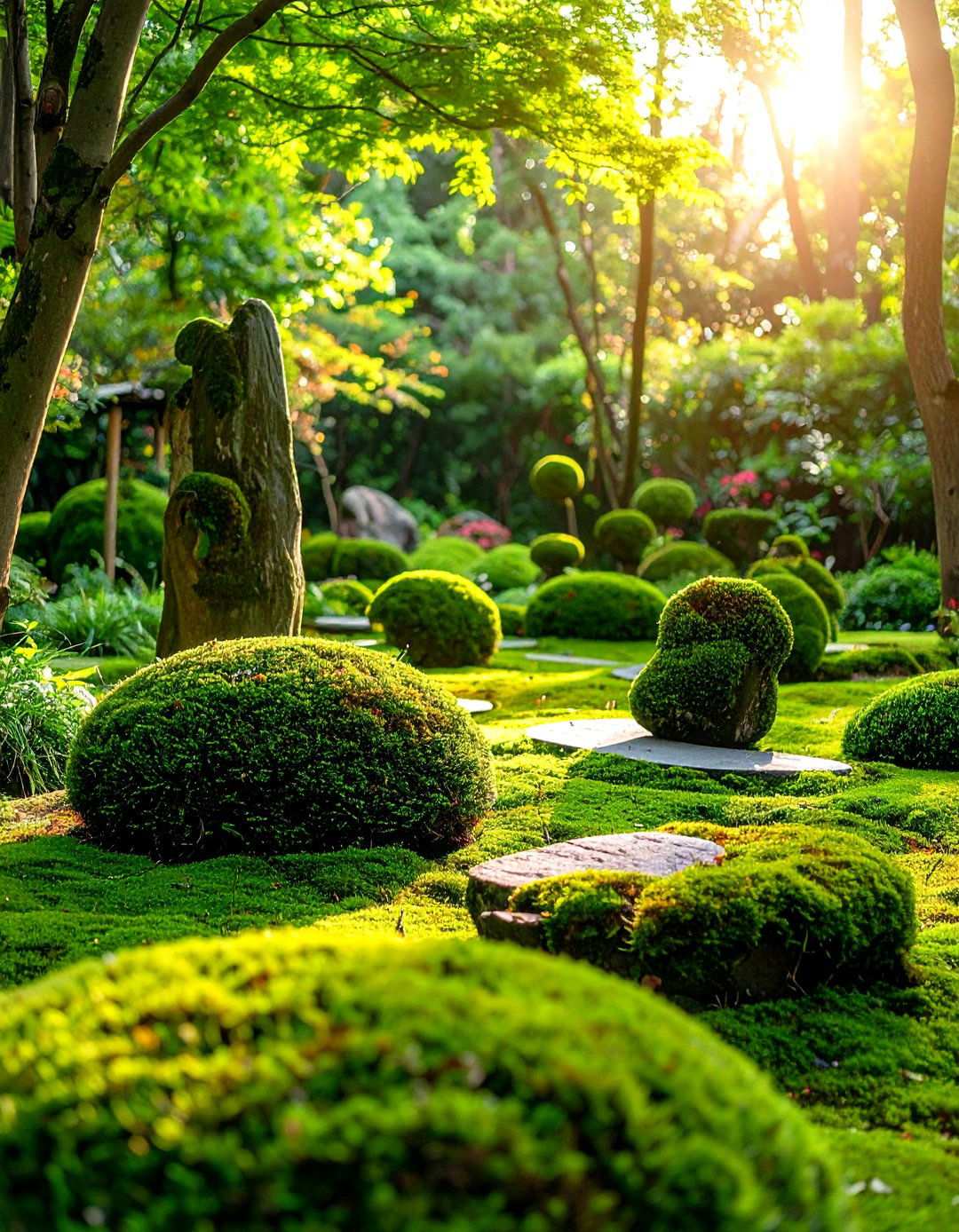
Transform your outdoor space into a dynamic living art gallery by merging moss with sculptural elements. This approach enables the creation of constantly evolving installations that not only thrive throughout the changing seasons but also maintain their artistic integrity. Design intricate topiary forms by covering wire frames with moss, resulting in three-dimensional green sculptures that can be strategically placed throughout your garden as striking focal points. To add an extra layer of depth, incorporate abstract installations that seamlessly blend natural materials such as driftwood, stones, or metal elements with moss coverage, effectively softening industrial textures. Plan art installations that take advantage of seasonal themes or artistic visions by combining moss with temporary materials, allowing for an ever-changing display of creativity. By collaborating with local artists, you can not only create unique garden features but also showcase moss’s remarkable versatility. Implement a thoughtfully designed lighting system that highlights the sculptural elements during the evening hours while also making sure to select a spectrum that promotes moss growth. Plan for maintenance access that allows for artistic element care without compromising the integrity of the moss growth. Documenting seasonal changes and artistic evolution through photography can be a wonderful way to reflect on the ever-changing beauty of your moss garden. Proper maintenance involves preserving the artistic elements, monitoring moss health, and ensuring that the installations remain both safe and visually appealing as they undergo natural changes and evolve with the seasons.
24. Serenity in the Tea Garden
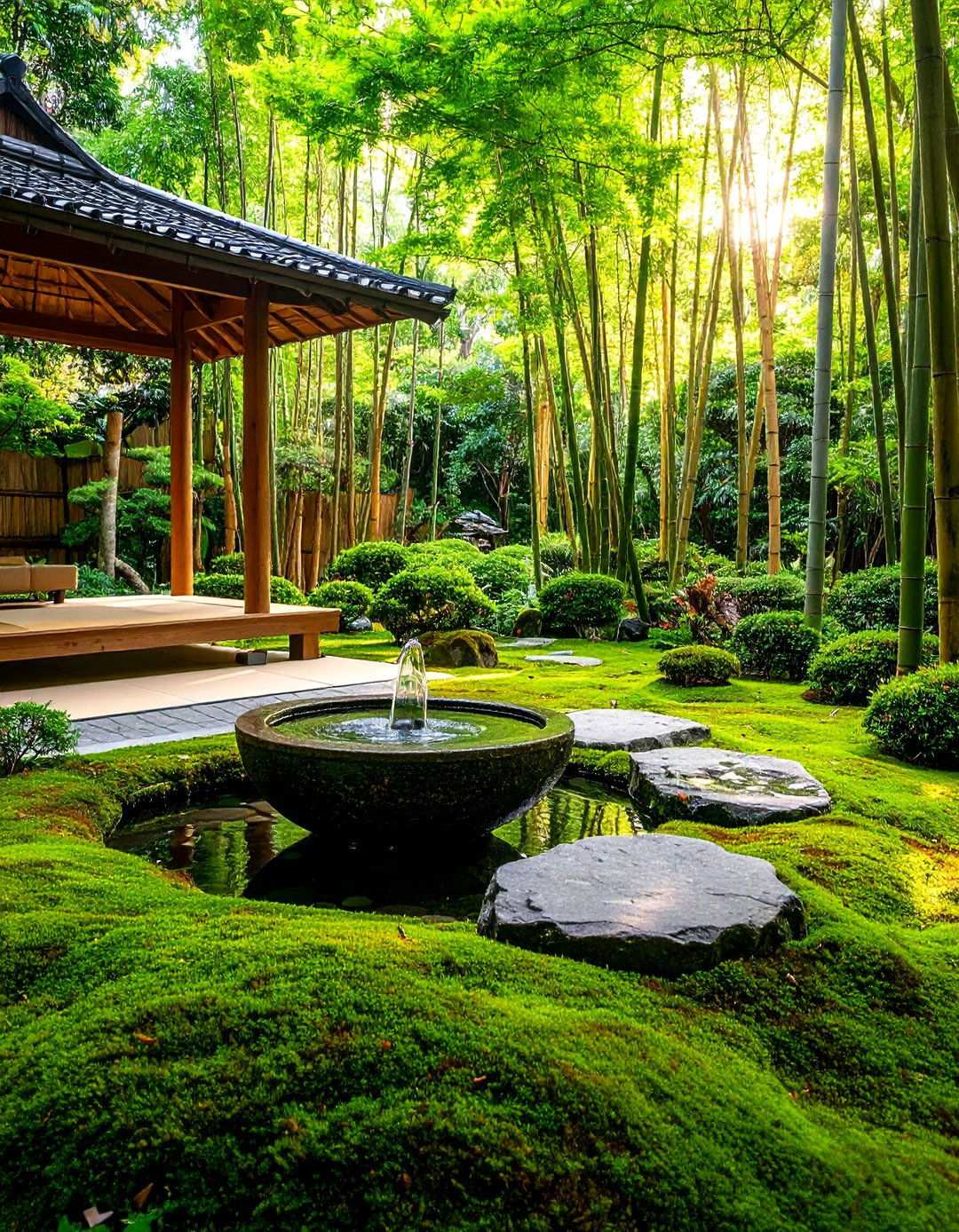
Create an authentic tea garden experience by incorporating moss installations that evoke the perfect atmosphere for traditional tea ceremonies and contemplation. Plan intimate seating areas using natural materials such as bamboo, weathered wood, or stone that thoughtfully complement the moss textures while providing comfortable spaces for a tranquil tea service. Enhance the ceremonial atmosphere by incorporating water features like bamboo fountains or stone basins, which also help support moss growth by increasing humidity levels. Design pathways using stepping stones or gravel that provide easy circulation while maintaining the peaceful atmosphere essential for tea ceremony practices. Add subtle accents with seasonal flowering plants like camellias or azaleas that subtly complement the moss-focused design scheme without overpowering it. Plan storage areas for tea service equipment and seasonal decorations that can enhance the ceremonial experience throughout the year. Create natural windscreens using materials that provide protection while maintaining an open, airy feeling suitable for outdoor tea service. Extend the garden’s usability into the evening hours with subtle lighting that maintains a peaceful atmosphere conducive to contemplative practices. Regular maintenance involves caring for the moss, maintaining the pathways, and ensuring that the ceremonial areas remain clean and welcoming for regular tea service activities throughout the growing seasons.