1. Mid-Century Modern Landscaping Essentials
Mid-century modern landscaping evolved as a groundbreaking approach in the 1950s and 1960s, seamlessly merging indoor and outdoor living spaces to create a harmonious whole. By emphasizing clean lines, geometric forms, and functional simplicity, this design philosophy fosters a deep connection between architecture and nature. It achieves balance between man-made structures and natural elements, focusing on form and texture rather than ornate patterns or excessive color. Key principles include incorporating natural materials like stone, wood, and concrete, selecting native plants for sustainability, and employing restrained color palettes that harmonize with the home’s architectural features. By carefully curating plant selection, particularly prairie plants, ornamental grasses, and evergreens, the design ensures year-round seasonal interest. Modern interpretations of these timeless principles give rise to low-maintenance outdoor environments that serve as an extension of contemporary living spaces, making them an ideal choice for today’s busy homeowners seeking both aesthetic appeal and practicality in their landscape design.

As an Amazon Associate I earn from qualifying purchases.
Geometric Concrete Paver Pathways
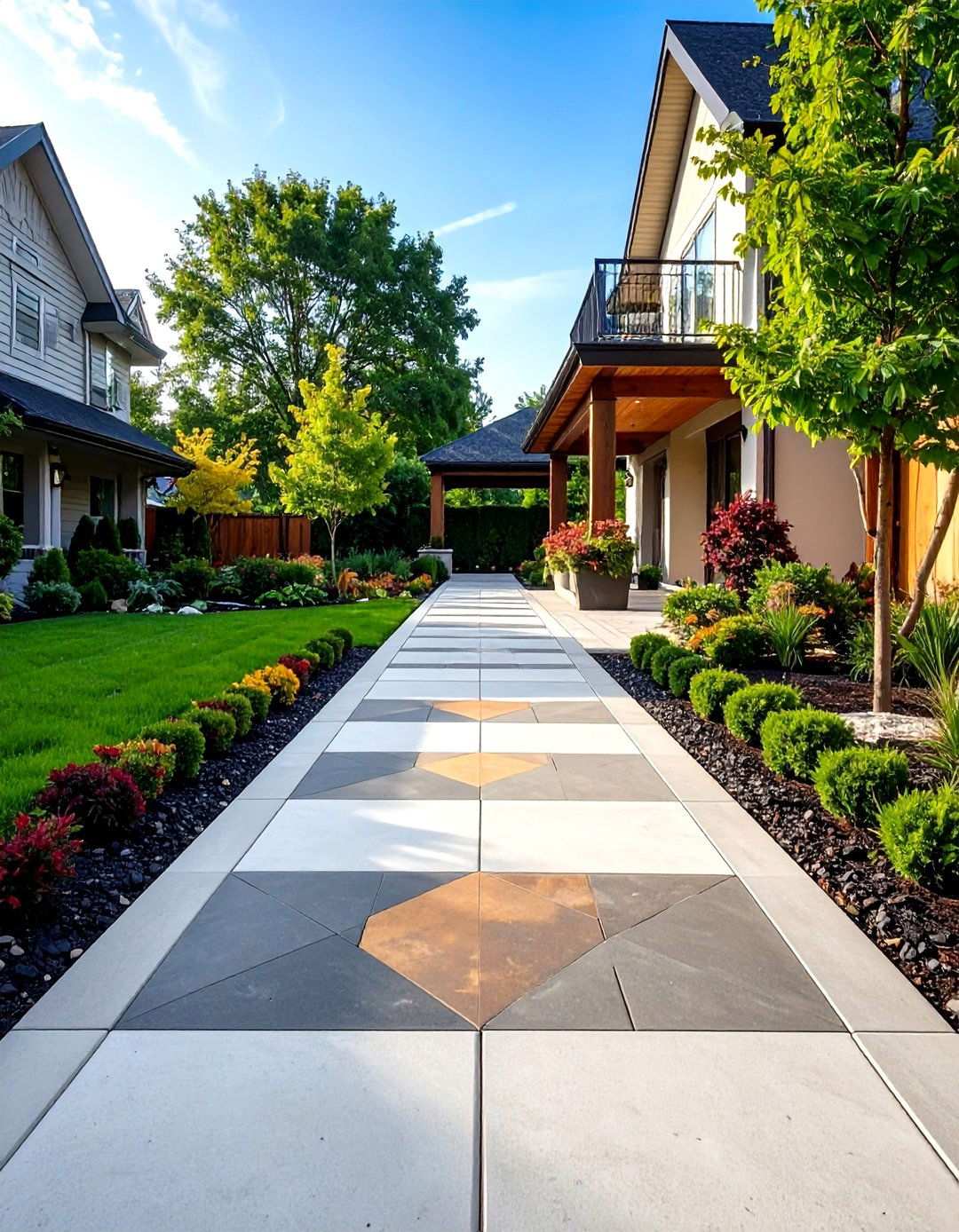
A defining feature of mid-century modern landscaping is the use of geometric-shaped pavers, which bring a sense of order and precision to outdoor spaces. Modular pavers allow for custom patterns with clean lines, encouraging creativity and visual interest. Experiment with triangular pavers or alternating widths in linear arrangements to add depth and texture to your landscape. Popular options include Belgard Melville planks arranged in a “linear random” configuration, featuring alternating 5-inch and 7.5-inch-wide blocks. These pathways should serve as a connection between key areas of your outdoor space, while maintaining the horizontal emphasis characteristic of MCM architecture. For added visual interest, consider using contrasting joint materials like decomposed granite or pebbles between pavers. Contemporary concrete pavers provide an earthy counterpoint to clean minimalism, while maintaining sophisticated visual appeal. The key to success lies in selecting pavers that harmonize with your home’s existing materials and color scheme, creating bold geometric statements throughout your landscape.
2. Naturalistic Landscapes Inspired by Native Prairies
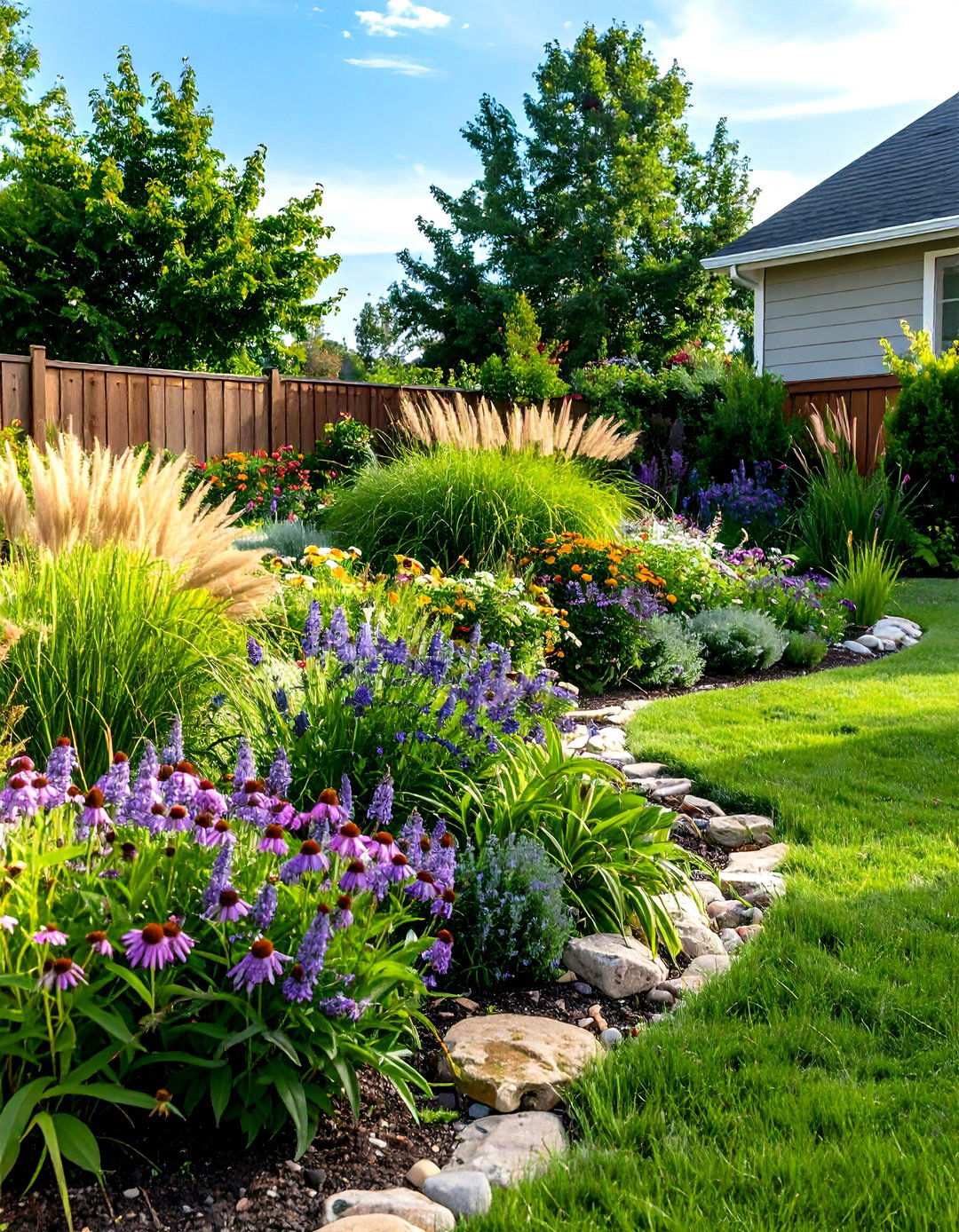
Midwest climates are ideally suited for a diverse array of prairie plants, ornamental grasses, and evergreens that thrive across all four seasons. To create a visually striking and low-maintenance landscape, group native plants like ‘Summer Beauty’ allium, coneflowers, ‘Kobold’ liatris, and ‘Rozanne’ geranium in naturalistic drifts. This approach allows for a clean, organized appearance reminiscent of mid-century modern design. By selecting native species, you can support local wildlife and reduce water consumption while minimizing upkeep. Incorporating ornamental grasses such as little bluestem and prairie dropseed adds movement and texture to your winter landscape, while their hardiness ensures they provide year-round structure and interest. Regular pruning maintains a streamlined look while allowing these robust plants to thrive in their naturalistic settings.
3. Artisanal Wood Screens with a Horizontal Orientation
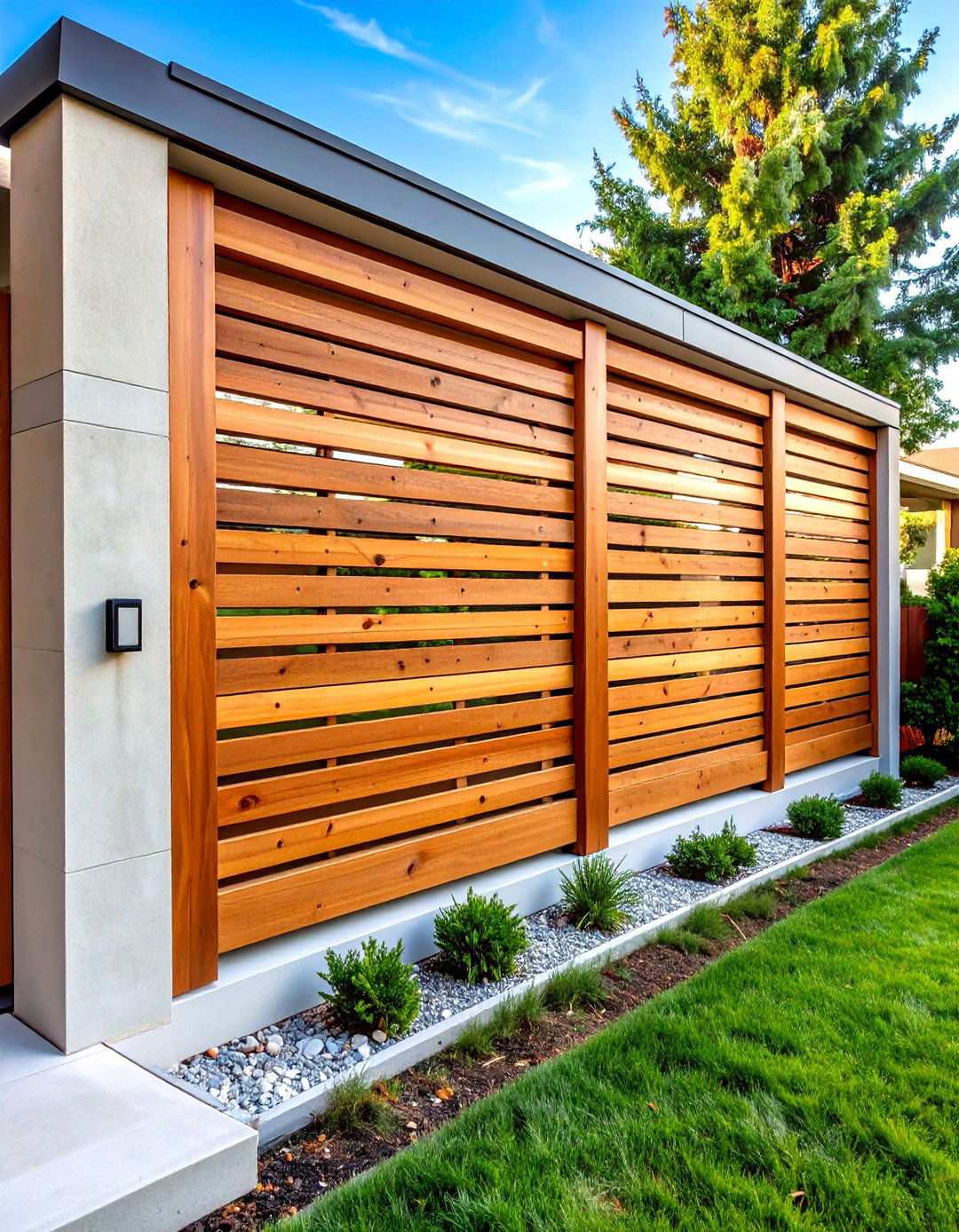
When seeking to create a sense of seclusion without sacrificing the airy, open feel essential to mid-century modern design, consider incorporating horizontal wood screens or wood-concrete elements. These design elements provide effective screening while maintaining a cohesive aesthetic with your home’s architecture. Opt for weather-resistant materials like cedar or teak, which will age beautifully over time and blend seamlessly with your home’s construction. Strategically position these screens to frame views, create intimate seating areas, or conceal utilitarian elements like air conditioning units. The horizontal slat design of these screens reinforces the clean, linear lines characteristic of mid-century modern architecture while allowing filtered light and air circulation to flow through. For added visual interest, consider varying slat spacing or incorporating planted elements between screen sections, transforming these functional elements into sculptural features that elevate your home’s architectural statement.
4. Elevated Planters with Streamlined Silhouettes
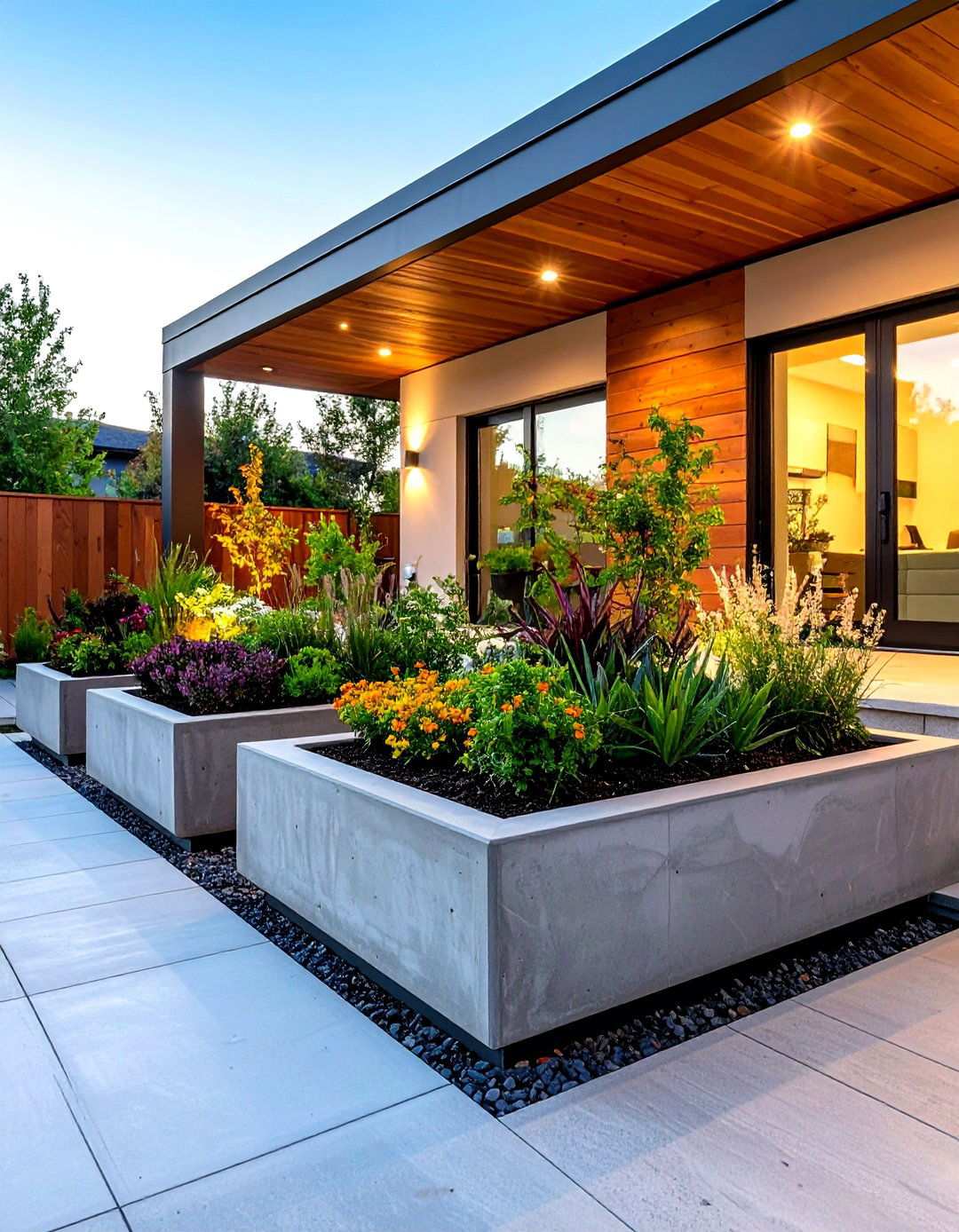
The strategic use of layered planting beds with contrasting materials can add visual allure to a space while preserving the linear, minimalist essence of mid-century modern design. Design raised planters using materials that harmonize with your home’s exterior, such as concrete, steel, or stone. These elevated planters not only facilitate better soil control but also create geometric forms that organize the landscape, adding a touch of architectural sophistication. For optimal visual impact, choose plants with varying heights and textures that blend seamlessly into a cohesive color palette. Consider incorporating plants with remarkable tonal value to accentuate the design without overpowering the surrounding architecture. By carefully positioning planters, you can create inviting outdoor rooms, define pathways, or frame captivating views from interior spaces. The raised design not only adds visual interest but also simplifies maintenance and enhances drainage for your plants, effectively bridging the gap between hardscape and softscape elements in your design.
5. Understated Focal Points in Minimalist Landscapes
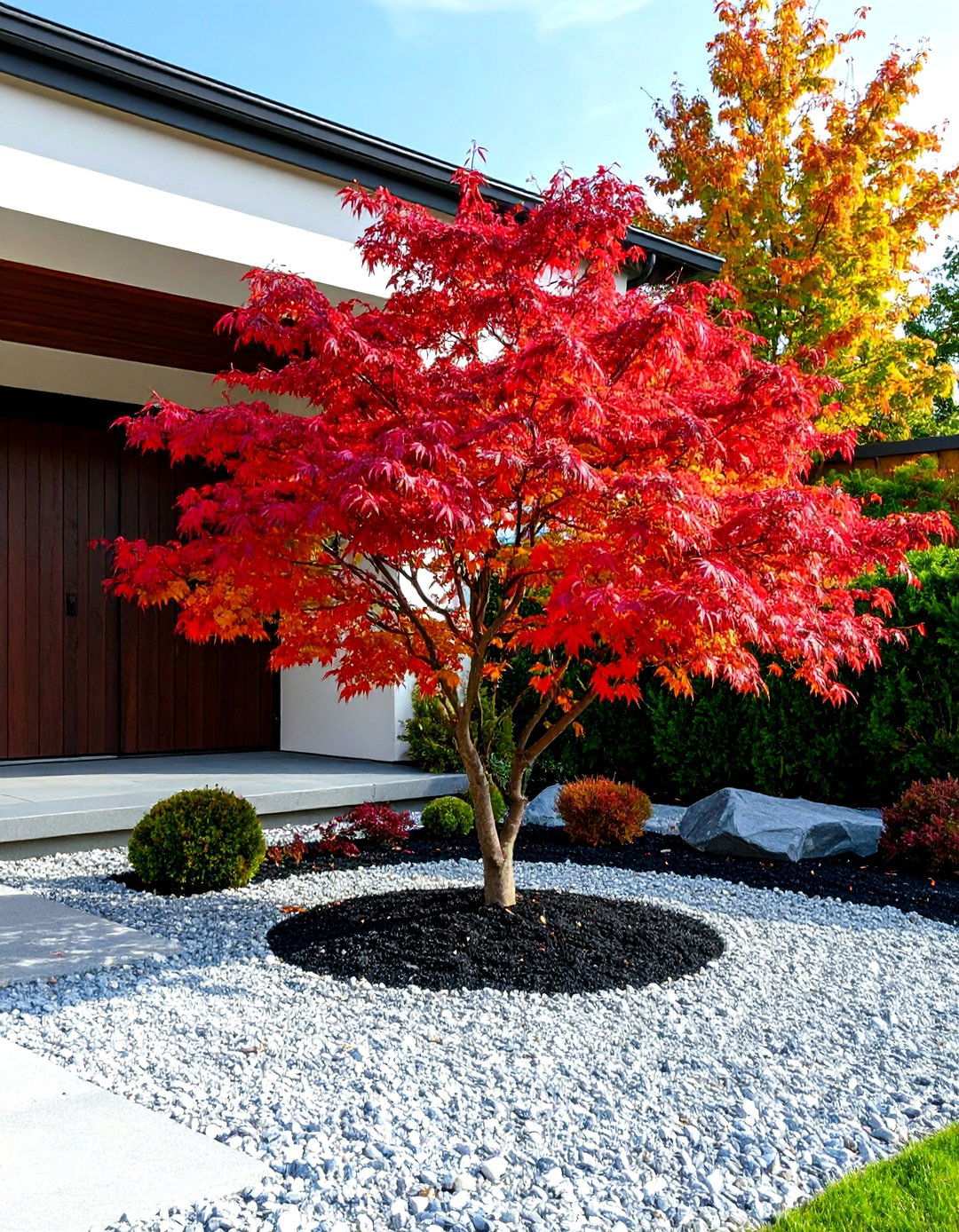
Japanese maples, renowned for their horizontal branching habits, bring a soothing palette of muted colors to landscapes, with varieties like ‘Bloodgood’ boasting rich burgundy leaves. By thoughtfully placing these specimen trees, you can create visually striking focal points that draw the eye without compromising the elegance of mid-century modern design. The naturally architectural form of Japanese maples complements clean-lined buildings, adding depth without competing for attention. Consider planting single specimens in gravel beds or using them to anchor seating areas, creating intimate outdoor rooms that foster a sense of tranquility. When selecting a location, take into account wind exposure, as these trees can be sensitive to harsh conditions. The secret to achieving maximum impact lies in restraint—a single, perfectly placed Japanese maple often surpasses the visual appeal of multiple plantings. To enhance their beauty, underplant with simple groundcovers or leave space around the trunk filled with decorative stone mulch. These trees provide a dynamic display of seasonal interest through spring flowers, summer foliage, and brilliant fall color, all while maintaining the sophisticated simplicity that defines mid-century aesthetics.
6. Elevating Outdoor Ambiance with Integrated Lighting
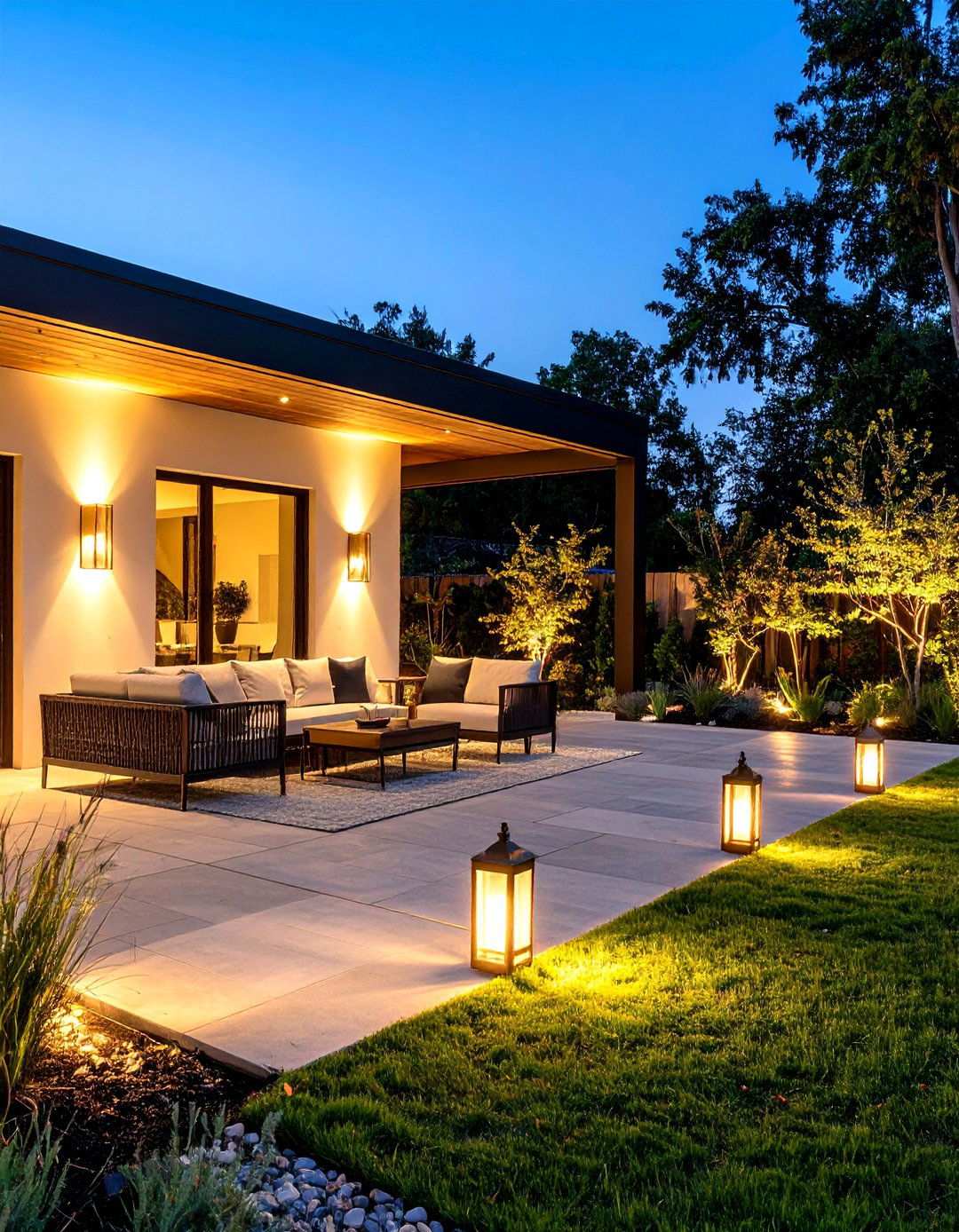
Mid-century outdoor spaces are characterized by a synergy of geometric shapes, warm metallic tones, and space-age aesthetics, all reflected in their unique structural forms. To create a captivating ambiance, homeowners can layer various lighting types to achieve a harmonious blend of ambient, task, and accent illumination. Strategically placed wall-mounted fixtures should not only complement the home’s architectural details but also provide functional illumination for pathways and seating areas, thereby extending the usability of these spaces. Mid-century modern enthusiasts can opt for fixtures boasting signature details such as angled shades, globe bulbs, metallic accents, and asymmetrical forms to create a cohesive look. By incorporating landscape lighting, homeowners can highlight specimen plants, architectural features, and textural elements like stone walls or water features, adding depth and visual interest to their outdoor spaces. The versatility of LED technology enables energy-efficient operation while providing a warm, inviting glow that enhances the evening ambiance of outdoor living. To achieve a sophisticated illumination scheme, consider a combination of uplighting for trees, downlighting for pathways, and accent lighting for focal points. The ultimate goal is to create a seamless integration of lighting that maintains the clean, uncluttered aesthetic essential to mid-century modern design.
7. Designing Intimate Courtyard Spaces with Decomposed Granite
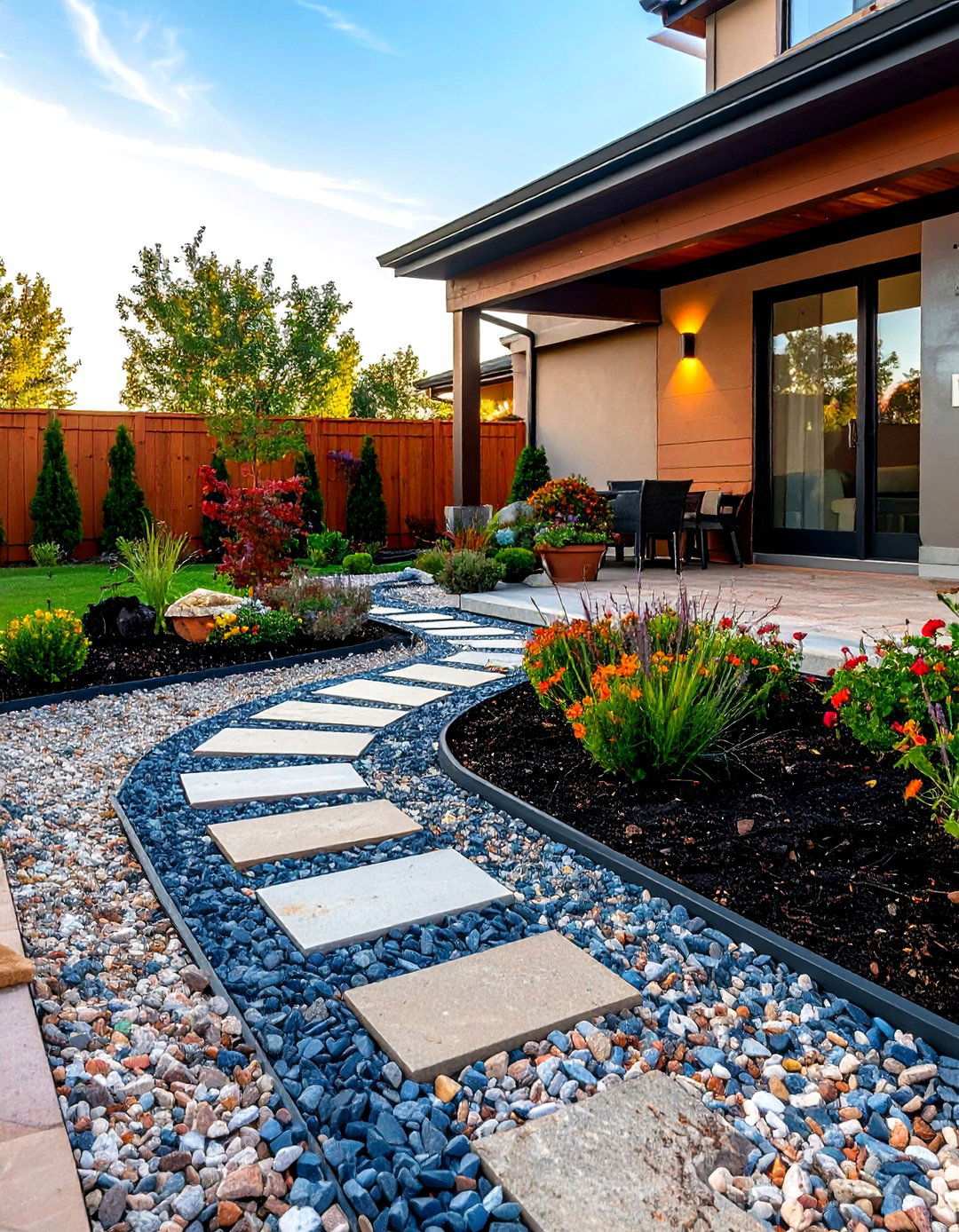
Decomposed granite brings a natural, organic texture to outdoor spaces while serving as a versatile, permeable surface that complements harder hardscape elements. By incorporating this material into courtyard areas, homeowners can create intimate, inviting spaces that seamlessly transition between different garden rooms. Decomposed granite pairs beautifully with geometric patches, concrete slabs, pebbles, stone sand, and gravel, making it an excellent choice for enhancing mid-century modern style. To maintain clean lines and prevent material migration, consider edging decomposed granite areas with steel, concrete, or stone borders. For added structure and circulation, incorporate stepping stones or pathways through these areas. The neutral color and fine texture of decomposed granite create a sense of visual calm, allowing architectural and plant elements to take center stage. As a low-maintenance surface, decomposed granite requires minimal irrigation, provides excellent drainage, and reduces dust compared to traditional gravel alternatives, making it an ideal choice for homeowners seeking a hassle-free outdoor space.
8. Symmetrical Boxwood Sculptures
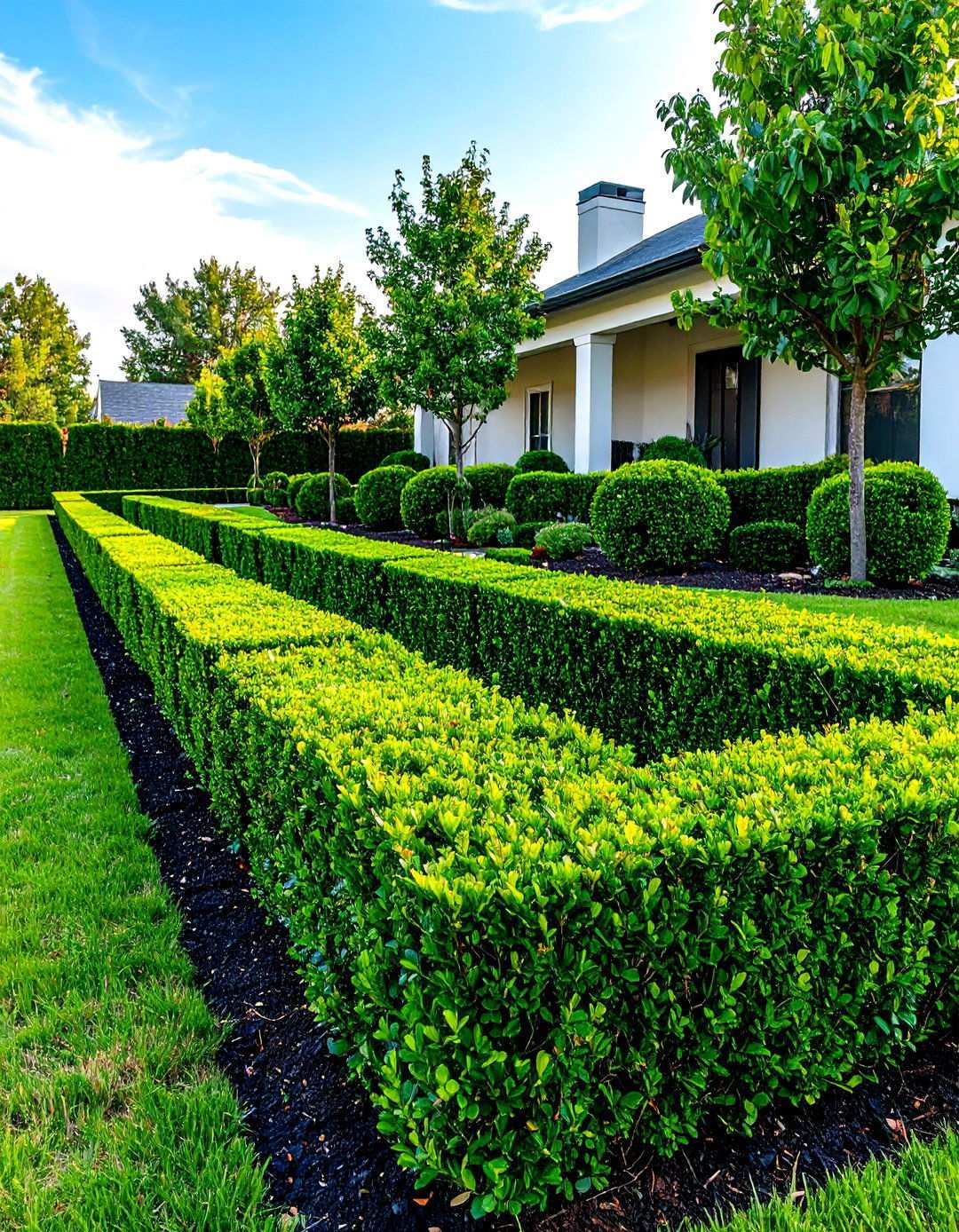
In mid-century garden design, boxwood shrubs are an integral element, effortlessly trimmed into geometric shapes that provide an offset to expansive glass windows. A well-designed linear formation of ‘Green Gem’ or ‘Baby Jade’ varieties along walkways or property edges can create captivating rhythmic patterns. As evergreen shrubs, they offer year-round structure and minimal maintenance once mature. Regular pruning maintains precise geometric shapes that harmonize with the angular lines of MCM architecture. A row of squared-off boxwood lining the front walkway extends the home’s architectural form, creating a seamless visual connection. To add visual interest while maintaining unity, consider varying heights or creating staggered patterns. Odd-numbered groupings create a natural, appealing arrangement, while even-numbered groupings provide a more formal, geometric appearance. These versatile shrubs are equally effective as foundation plantings, property borders, or interior garden room dividers, providing a dense growth habit that offers privacy screening while maintaining a clean, controlled aesthetic essential to successful MCM landscaping.
9. Seamless Natural Stone Integration
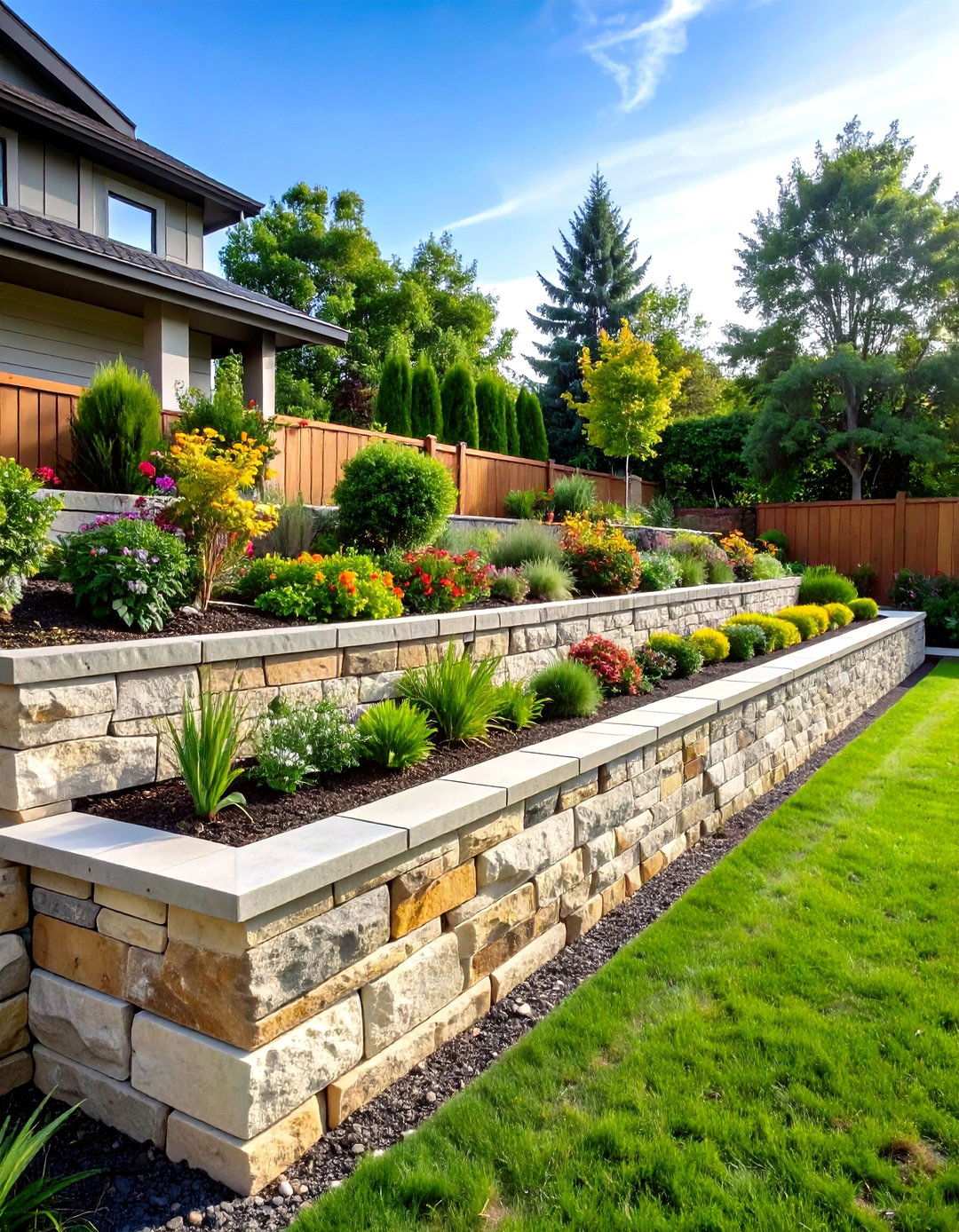
When building new walls, integrate existing stone from the home by matching joint width and mortar color for visual cohesion. These practical elements not only facilitate necessary grade changes but also create opportunities for integrated planting and seating areas. Choose stones that complement your home’s exterior materials, whether limestone, sandstone, or regional varieties that blend seamlessly into the local landscape. Design walls with clean, horizontal lines that echo MCM architectural principles, avoiding rustic or curved formations that detract from the design. Natural stone provides organic elements while maintaining the geometric design principles essential to MCM gardens. Incorporate planting pockets or cap walls with flat stones to create inviting seating areas. Varying wall heights can create tiered gardens that add depth while maintaining views from interior spaces. These structures should appear an integral part of the overall design, serving both functional and aesthetic purposes while providing opportunities for dramatic plant displays and seasonal interest throughout the year.
10. Elegant Abodes: Aesthetic Kidney-Shaped Pool Areas
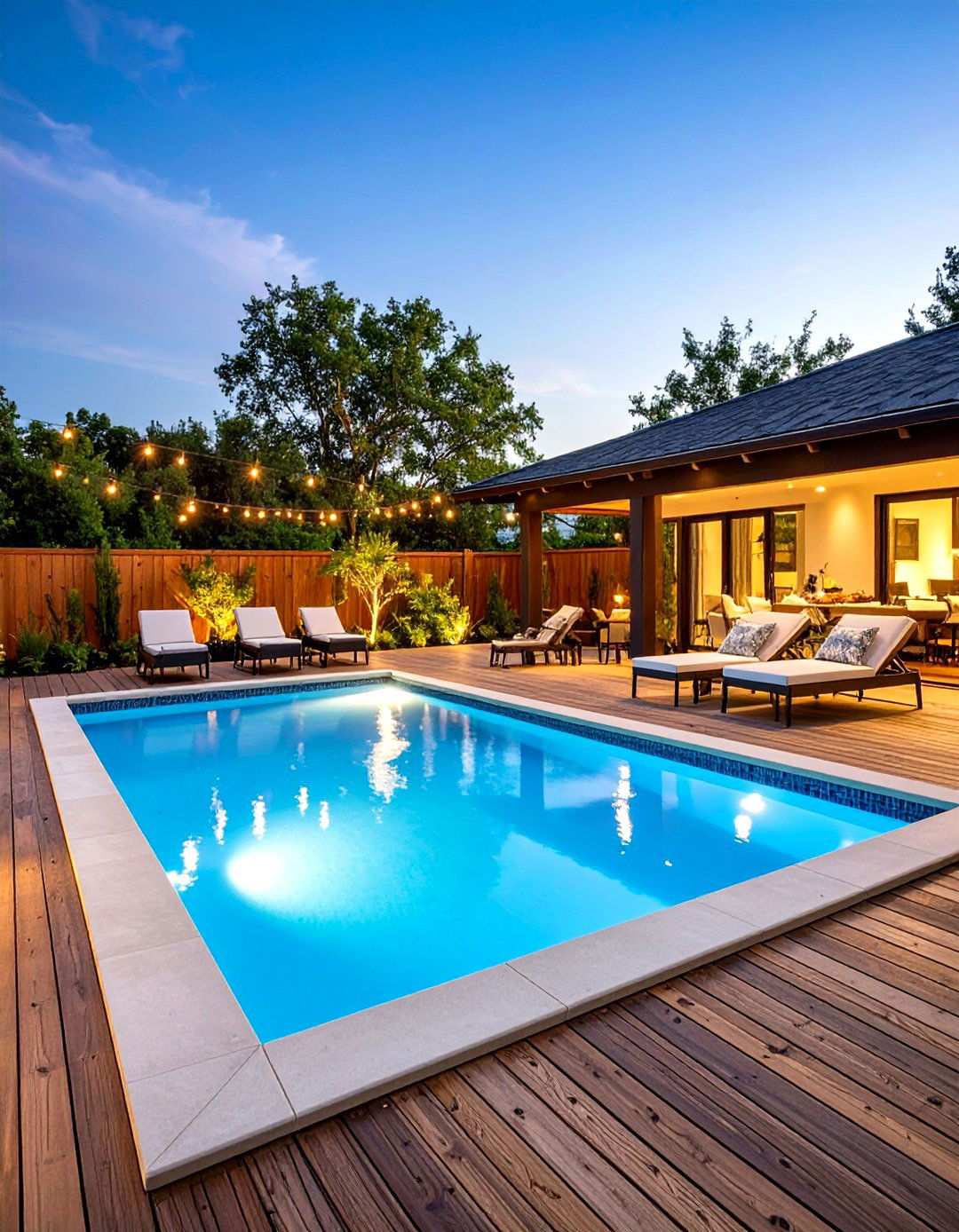
Kidney-shaped pools are a staple of Modernist architecture, blending seamlessly with contemporary aesthetics. By incorporating modern features such as raised bond beams and water elements, these iconic forms bring sophistication to outdoor living spaces. MCM pools often boast simplified geometric shapes, resulting in a minimalist look that perfectly complements modern homes. To complete the look, pair the pool with decking materials like concrete, stone, or composite materials that harmonize with your home’s architectural style. Consider adding raised planters, seating walls, or fire features that seamlessly integrate with the pool design. Today’s versions often incorporate elevated spas, tanning ledges, or rock waterfalls to enhance functionality, all while maintaining a clean, refined appearance. A well-chosen pool finish and coping material can tie in harmoniously with surrounding hardscape elements, creating a serene, resort-like atmosphere that embodies successful MCM outdoor design.
11. Low-Maintenance Oasis: Drought-Tolerant Succulent Gardens
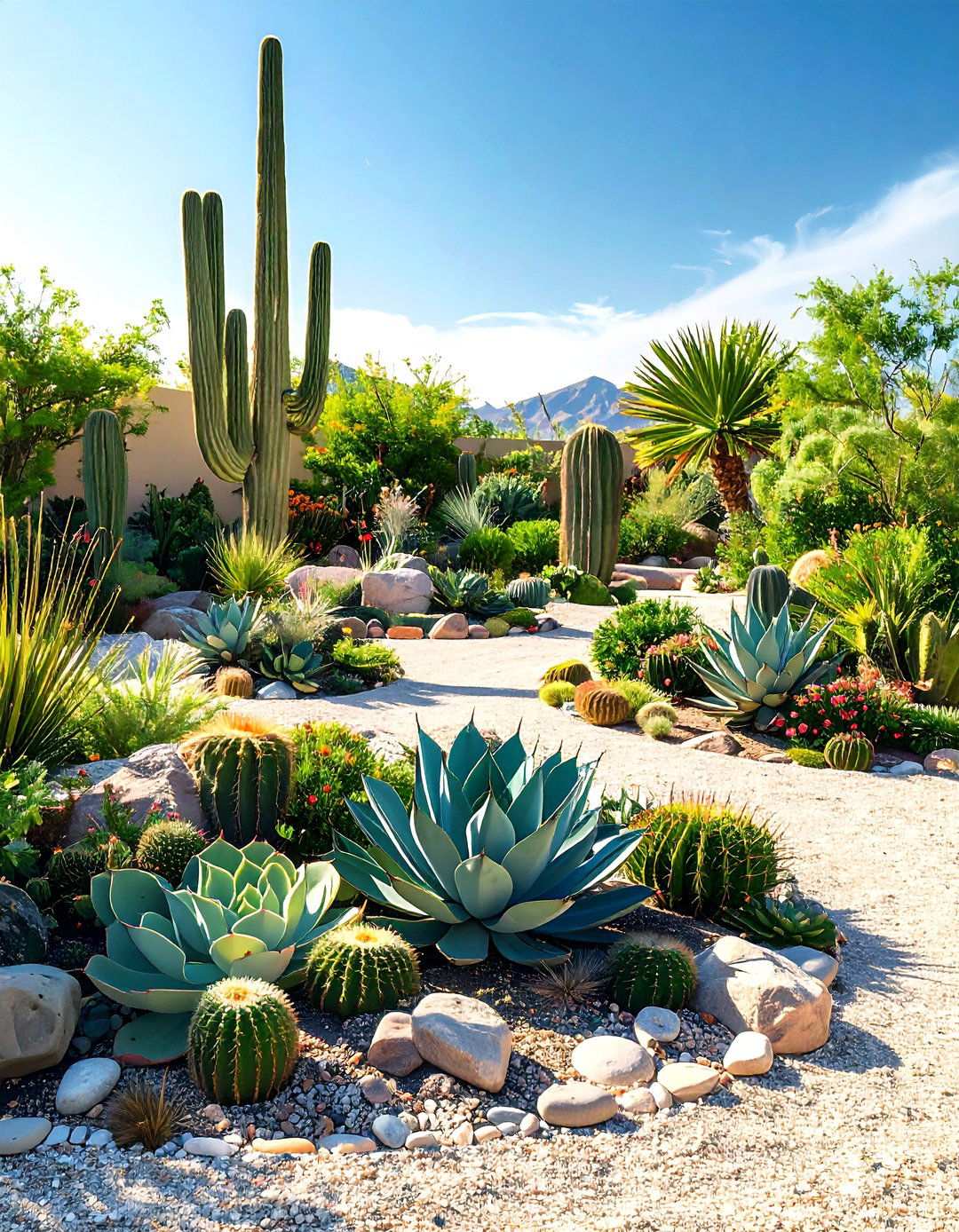
Why settle for high-maintenance plantings when drought-tolerant succulents offer year-round beauty with minimal upkeep? Cacti, succulents, and low-water plants like lavender create organic, visually appealing looks while requiring minimal irrigation. Arrange these plants in thoughtfully designed geometric patterns or naturalistic compositions that reflect your home’s architectural style. Yucca, succulents, and cacti are particularly well-suited for desert landscaping and can be positioned near pool edges or lining concrete fences. Group different varieties by size and texture to create visual interest while maintaining a cohesive look. For added seasonal interest, consider incorporating colorful varieties alongside traditional green forms, all while adhering to the restrained palette characteristic of MCM design. These plants thrive in raised planters, gravel gardens, or as accents among hardscape elements, providing architectural interest while supporting sustainable gardening practices. Effective placement is key, highlighting their unique forms while creating cohesive compositions throughout your landscape.
12. Embracing the Cozy Ambiance of Concrete Fire Pits
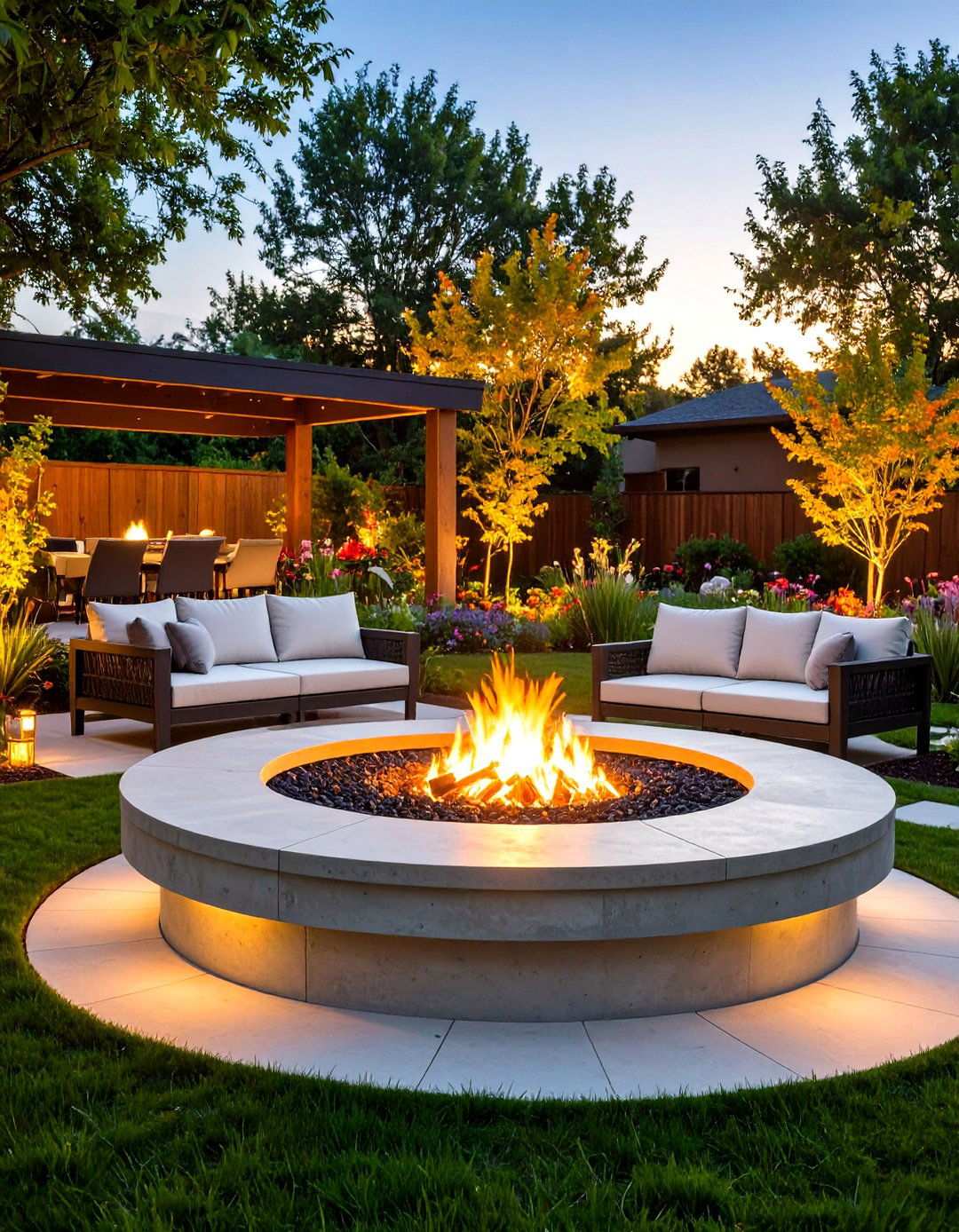
Concrete fire pits offer a unique blend of warmth and sleek design, perfectly in tune with the minimalist aesthetic of mid-century modern (MCM) homes. To create a seamless visual experience, choose from a range of materials, including concrete, steel, and stone, that harmonize with your home’s exterior style. By incorporating these inviting fire features, you extend the outdoor living season and establish cozy spaces that foster connection and relaxation. Strategically place fire pits to anchor seating areas while maintaining a clear flow of circulation throughout your landscape. Consider incorporating built-in seating walls or flexible furniture arrangements to cater to diverse group sizes. The rich, warm tones of orange, red, and accent colors evoke a nostalgic feel, perfectly complementing the natural warmth of the fire. Select fire media that elevate the contemporary aesthetic, such as glass rocks, lava stones, or steel sculptures. As the sun sets, these sculptural elements transform into atmospheric lighting, setting the tone for evening gatherings. By seamlessly integrating fire pits into your design, you create sophisticated gathering spaces that become an integral part of your overall landscape.
13. Harnessing the Elegance of Ornamental Grasses in Movement Zones
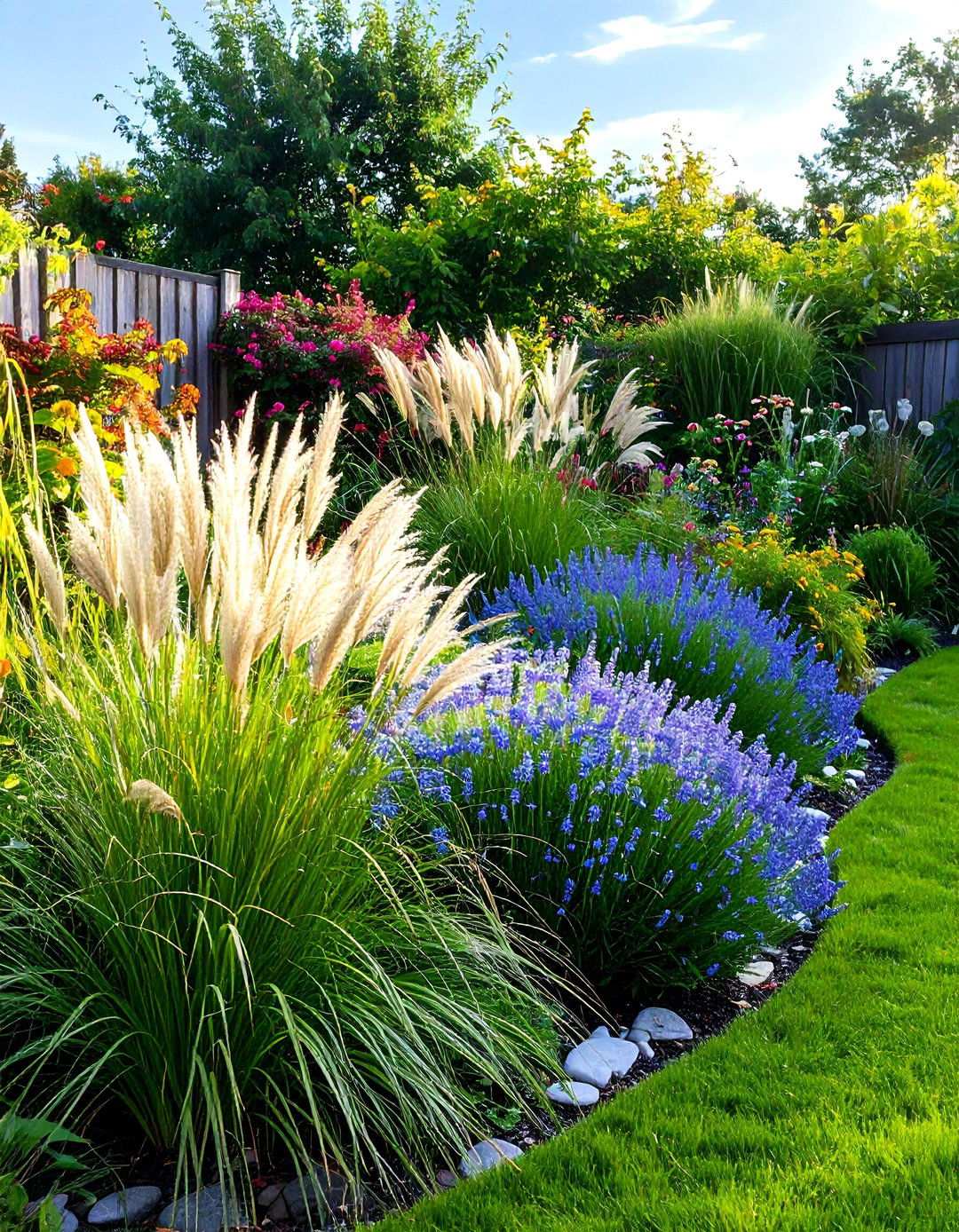
Ornamental grasses bring a dynamic touch to your landscape, requiring minimal maintenance throughout the growing seasons. To create captivating displays, group varieties like fountain grass, blue fescue, or miscanthus in sweeping drifts or geometric patterns. These plants add a welcome textural contrast to the solidity of hardscapes while providing a visual treat through seasonal growth cycles and color variations. For a timeless look, pair blue foliage and white flowers with your home’s color scheme, ensuring they remain interesting throughout the seasons. Position grasses to soften architectural edges or create subtle screening without obstructing key views. When choosing a location, consider wind patterns to maximize the natural movement and soothing sounds of these plants. Grouping similar varieties in masses rather than mixing different types maximizes visual impact. Ornamental grasses offer a four-season display of interest through growth habits, seed heads, and winter structure, while supporting local wildlife and reducing irrigation needs. Regular fall pruning maintains a neat appearance, allowing fresh spring growth to flourish.
14. Breathtaking Vertical Gardens
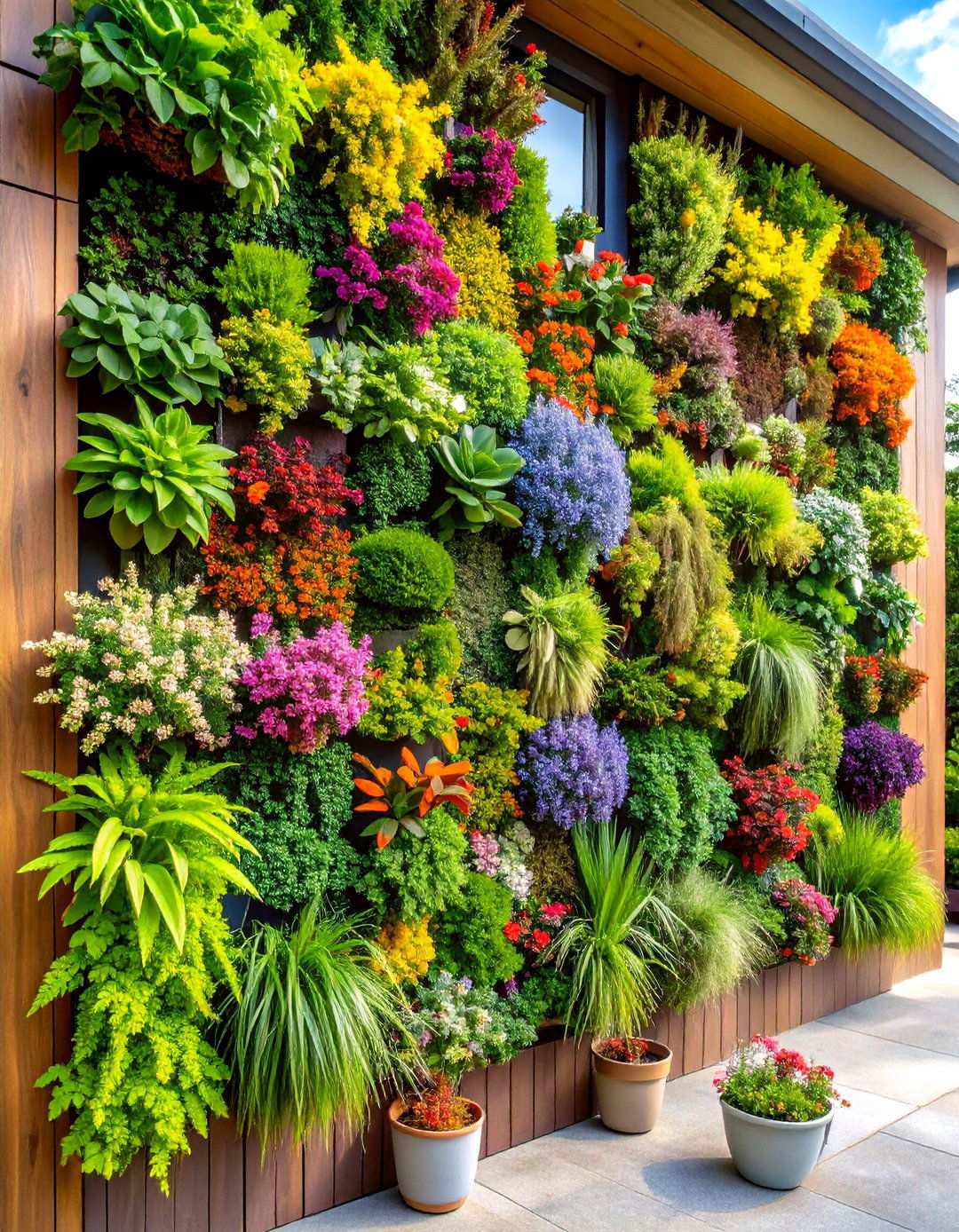
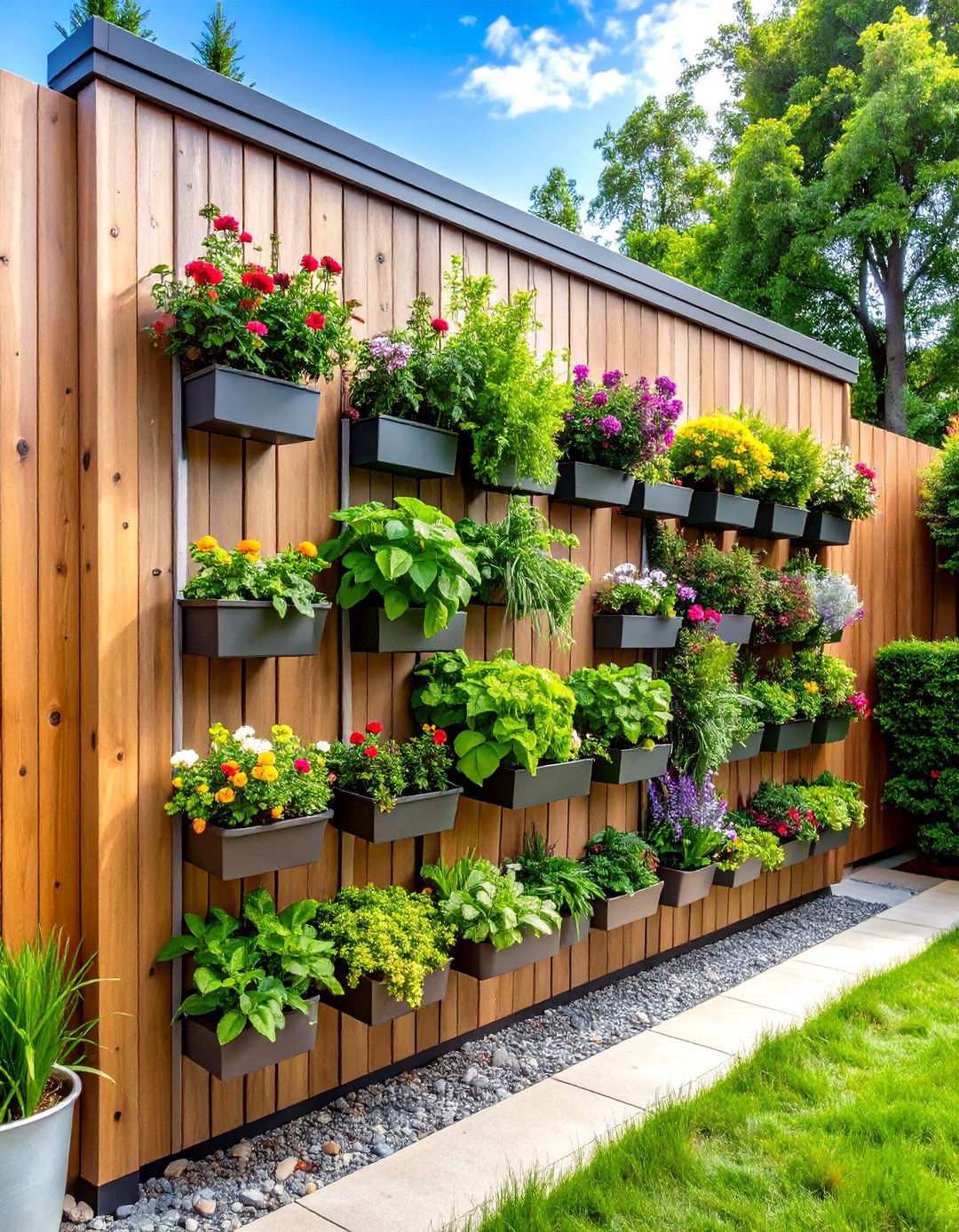
Captivating living walls inject warmth and personality into large house walls, creating visually stunning displays through cascading plant arrangements. To bring these vertical features to life, use modular planting systems that craft intricate geometric patterns while nurturing diverse plant communities. Incorporate a variety of plants, including succulents, grass-like species, and flowering plants, to create dynamic “waves” with diverse textures and colors. These installations thrive on blank wall surfaces, serve as effective privacy screens, or become striking focal points in courtyard settings. When selecting plants, carefully consider the specific light conditions, irrigation needs, and maintenance requirements to ensure the long-term success of your vertical garden. To simplify care and maintain consistent moisture levels, consider integrating automatic irrigation systems. These vertical gardens make an immediate impact while enhancing air quality and providing a welcoming habitat for beneficial insects. Successful designs strike a balance between complementing architectural features and providing year-round visual interest through thoughtful plant selection and composition.
15. Elegant Bluestone Patio Spaces
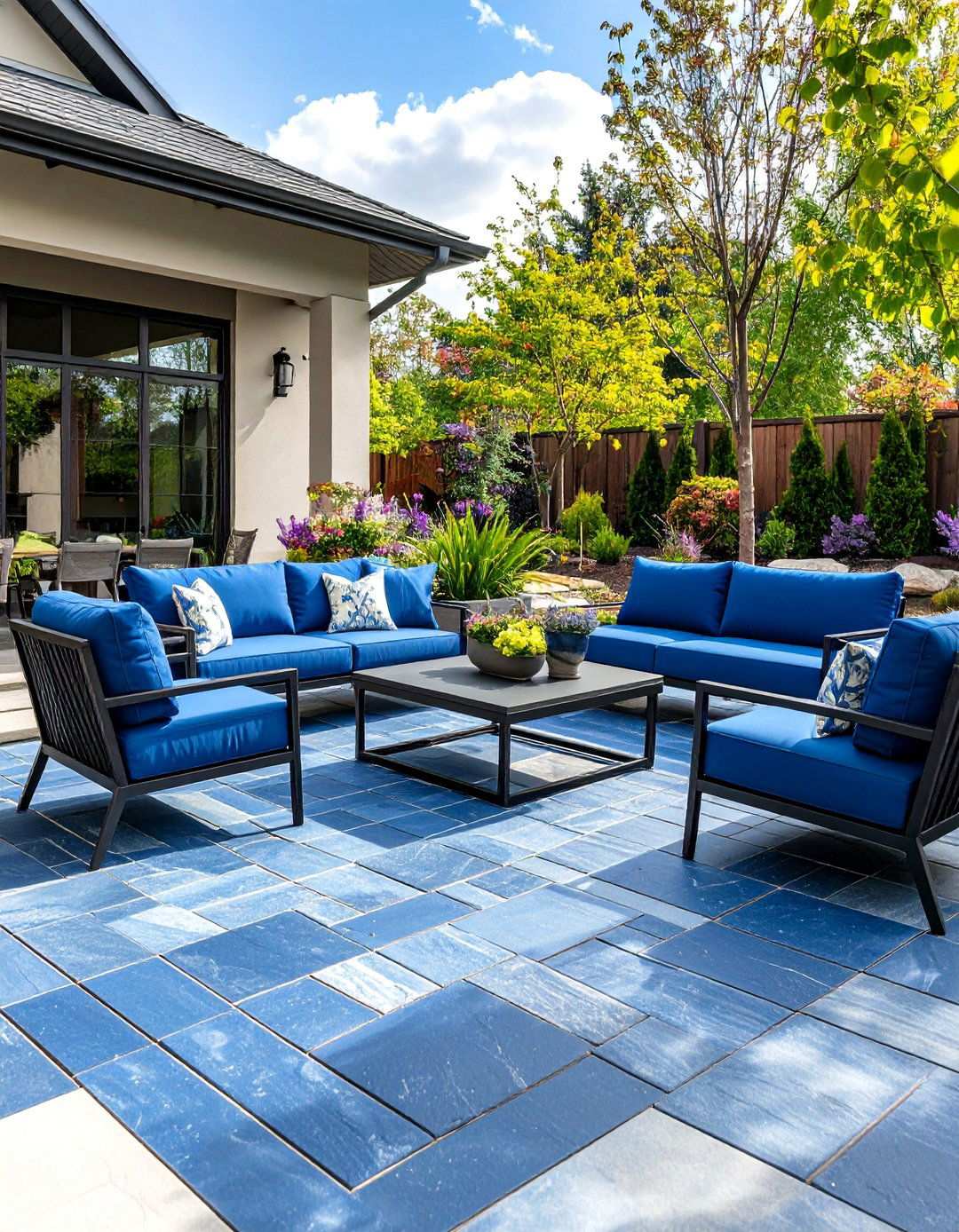
Bluestone entry materials create a strong visual presence while providing durable surfaces for outdoor entertainment. Design patios using large-format stones arranged in geometric patterns that harmonize with your home’s architectural style. Bluestone and native limestones are ideal choices for paved areas when budget permits, offering period-correct materials that age beautifully. These natural stones provide slip-resistant surfaces for dining, entertaining, and relaxation, making them perfect for outdoor spaces. To add visual interest, consider incorporating contrasting border materials or interesting joint treatments while maintaining clean lines. Strategically position patios to take advantage of favorable microclimates, scenic views, and connections to interior spaces. Include built-in features like planters, seating walls, or fire elements that seamlessly integrate with the stone surface. These durable materials require minimal maintenance while offering sophisticated surfaces that cater to both casual and formal entertainment needs. By creating functional outdoor rooms that feel like natural extensions of interior living spaces, you can elevate your outdoor experience.
16. Elevating Yew Foundation Plantings
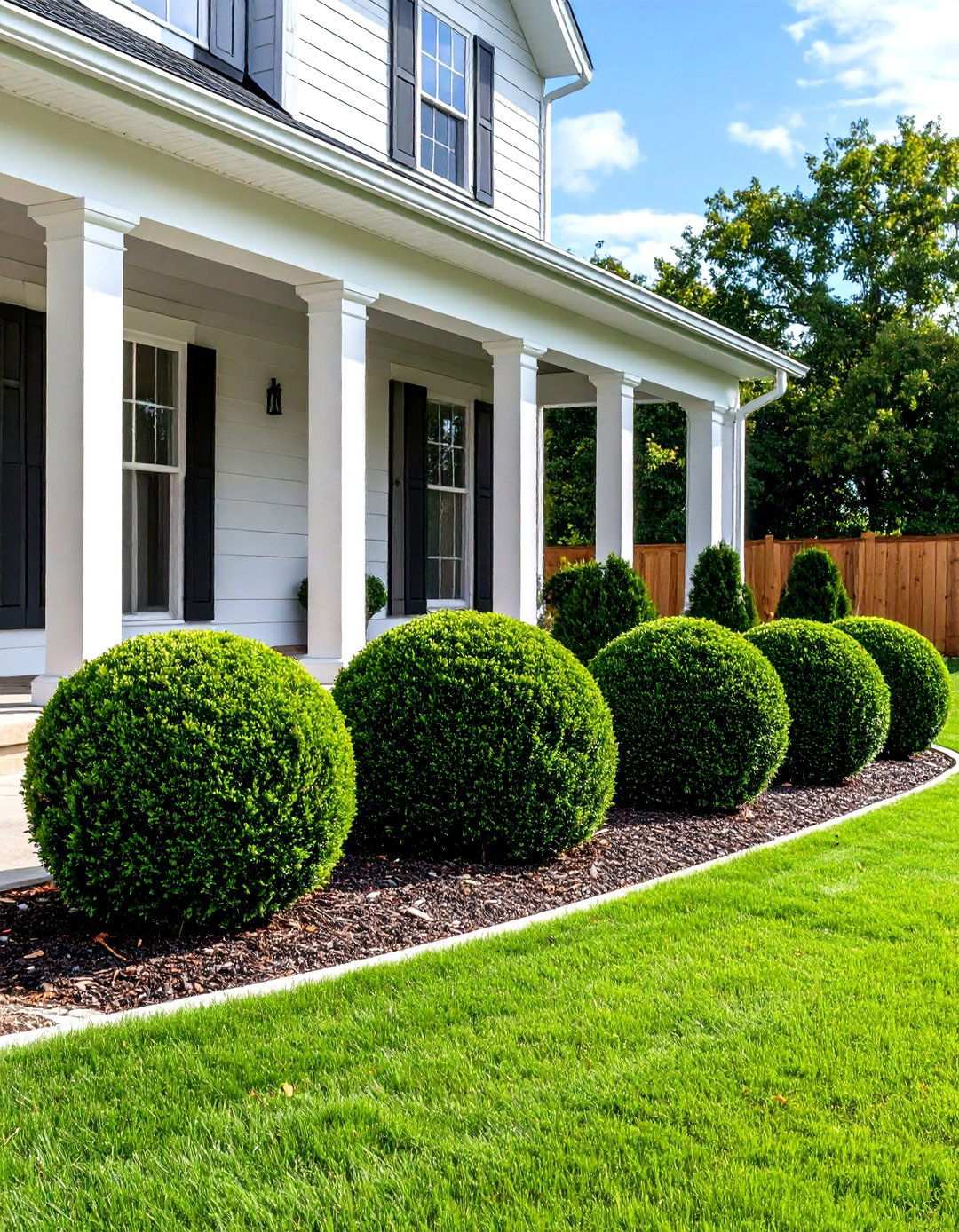
When it comes to brightening up shaded areas with lush, soft evergreen options, yew is an ideal choice. Its adaptability to geometric designs is undeniable, even with its looser natural structure. Yew varieties like ‘Monloo’ excel in foundation plantings, while ‘Fastigiata’ offers a taller, neater option for creating private hedges that require minimal shearing. Compact, rounded growing habits and olive-green leaf colors make them excellent alternatives to boxwoods that struggle in harsh weather conditions. As year-round structure providers, these versatile evergreens can thrive in various light conditions and pruning requirements. Strategically position them to frame entrances, define outdoor rooms, or create captivating privacy screens without obstructing important views. Yew’s slow growth rate in sun or shade, combined with its flexibility in pruning styles, makes it a sought-after hedging shrub. Mixing different varieties can create visually appealing height variations while maintaining overall cohesion. With their low irrigation needs once established, yews offer dense screening and sophisticated green backdrops for seasonal plantings or architectural features throughout your landscape design.
17. Seamless Integration of Aggregate Concrete Outdoor Kitchens
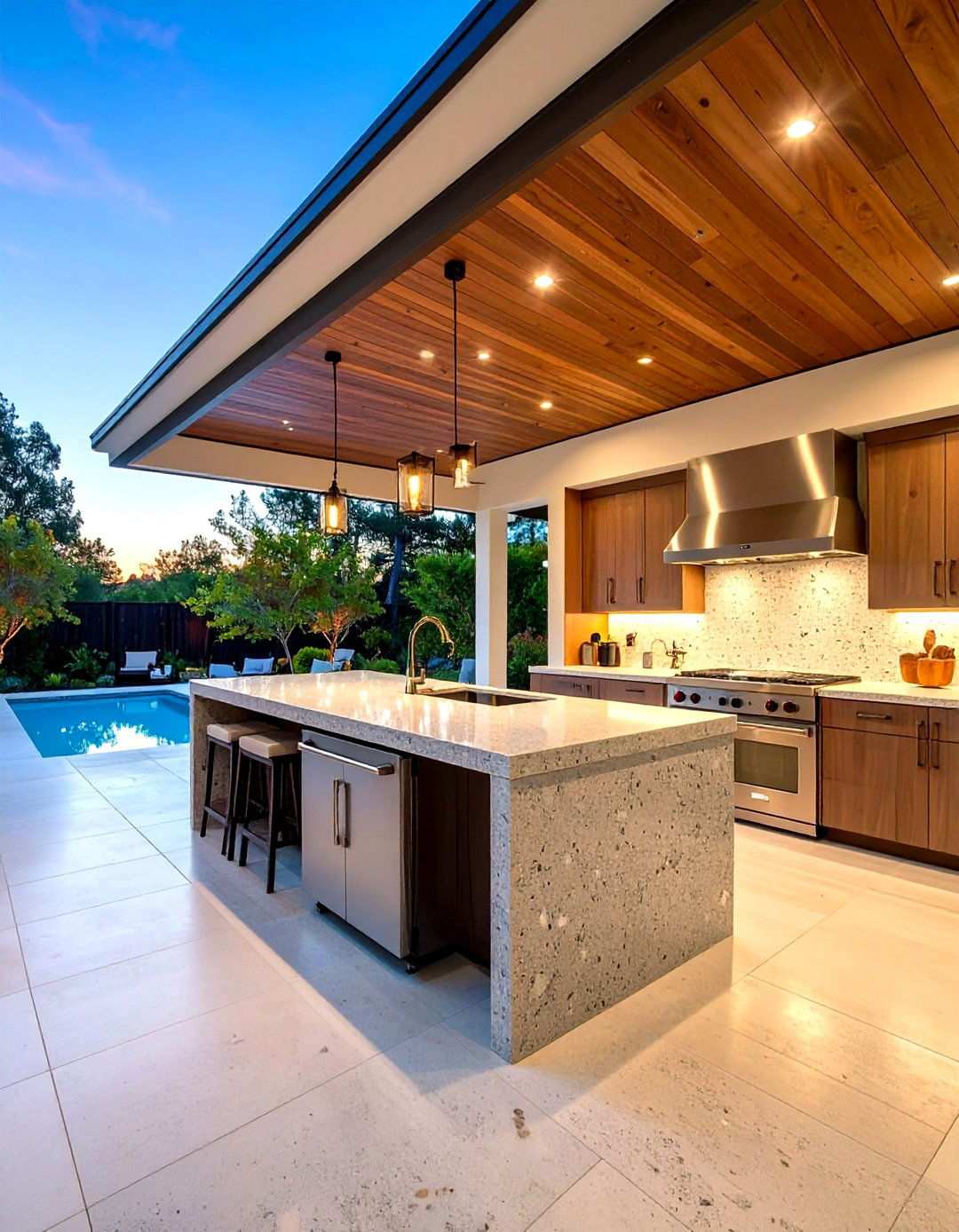
Modular concrete panel systems enable the creation of outdoor kitchens and seating areas with sleek, linear aesthetics that incorporate vibrant details. When designing these spaces, consider using materials that harmonize with your home’s interior finishes, ensuring a seamless transition between indoor and outdoor areas. Incorporate stainless steel appliances, stone countertops, and concrete cabinetry to maintain the clean, uncluttered aesthetic characteristic of MCM design. Exposed aggregate concrete provides a minimalist hardscaping solution that allows dramatic views to remain the focal point. Position these functional spaces to maximize the benefits of prevailing breezes while maintaining convenient connections to interior kitchens. Consider incorporating storage, refrigeration, and prep areas that cater to different entertainment styles, from casual family gatherings to formal dinner parties. These outdoor rooms should feel like an integral part of the overall landscape design, rather than separate additions. To extend usability throughout different seasons, include thoughtful design elements, such as lighting, seating, and weather protection, to maintain the sophisticated simplicity that defines successful MCM outdoor living spaces.
18. Gravel Garden Meditation Spaces
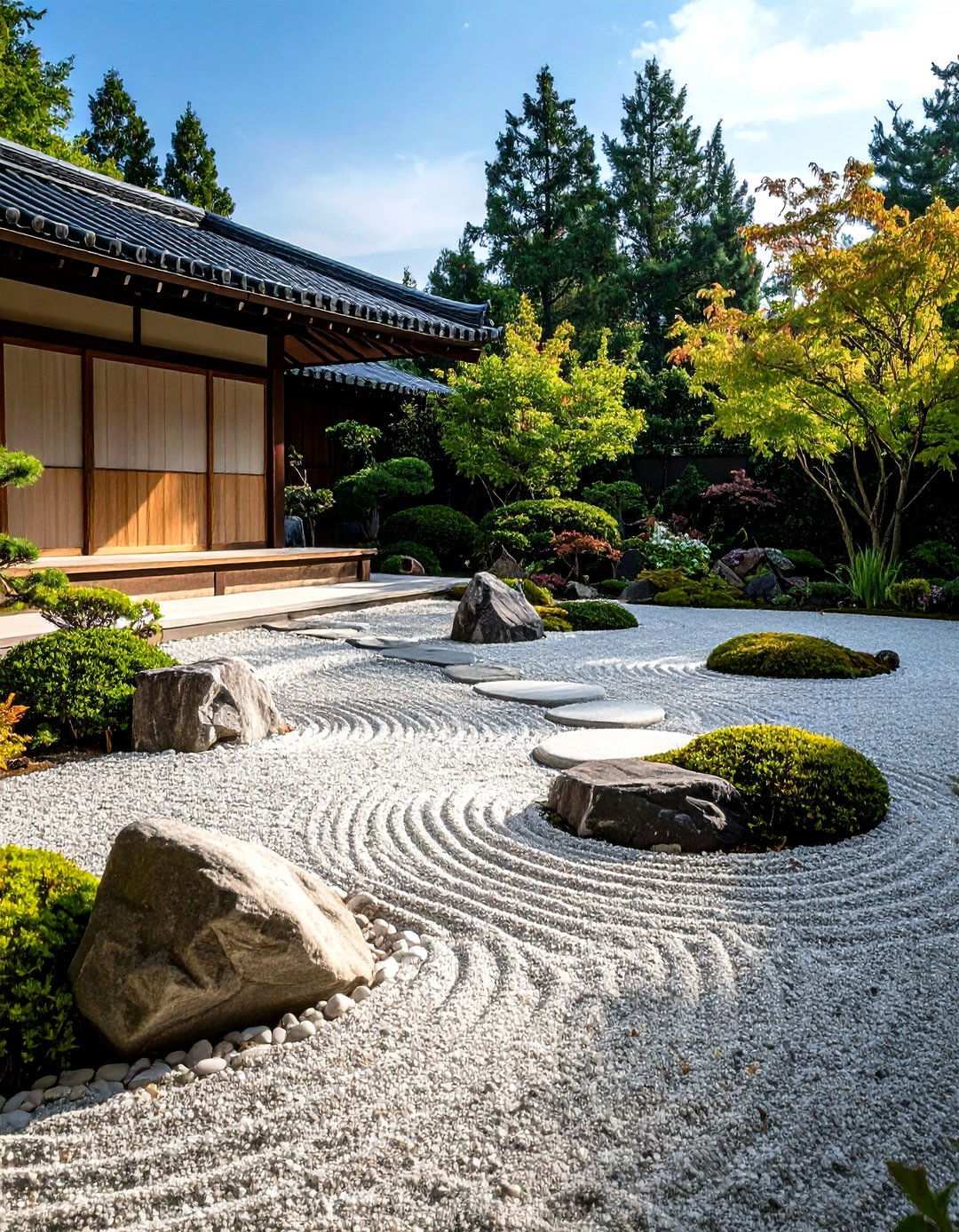
Incorporating boulders into your landscape design can create striking focal points, reminiscent of serene islands amidst a sea of decomposed granite. These low-maintenance areas are perfect for cultivating contemplative spaces, where different gravel sizes and colors can be arranged in geometric patterns to promote reflection and relaxation. These tranquil oases require minimal irrigation, making them an attractive alternative to traditional lawn areas. When it comes to high-traffic zones, it’s wise to avoid using stone mulch, as fallen leaves and debris can become a nuisance to remove. To create a cohesive look, choose materials that harmonize with your home’s color palette, while also introducing interesting textural contrasts with planted areas. Strategically placed seating elements, such as simple benches or large stones, encourage pause and contemplation, inviting you to slow down and appreciate the beauty around you. By incorporating specimen plants or sculptural elements, you can create focal points that add visual interest without overwhelming the serene simplicity of these spaces. These meditation spaces work particularly well in transition zones between more active areas and private retreats, providing calm interludes that enhance the overall flow and functionality of your outdoor environment.
19. Rhododendron Seasonal Color Displays
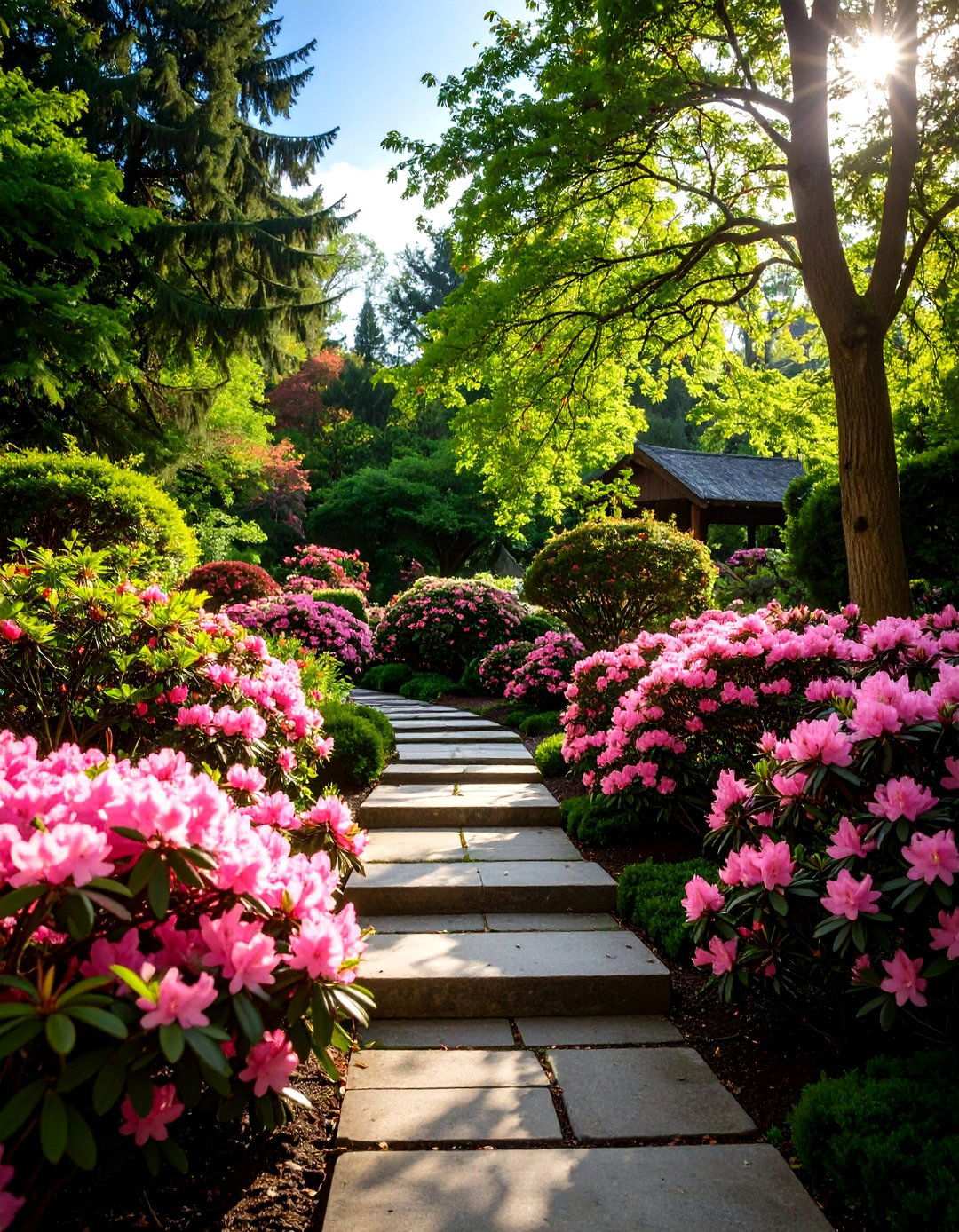
Rhododendrons bring early spring flowers to life in a kaleidoscope of colors, including white, pink, red, and purple, against a backdrop of dark green, glossy evergreen foliage. By selecting varieties that complement your home’s color scheme, you can create dramatic seasonal displays that showcase three weeks of spectacular blooms before other plants awaken from their winter slumber. ‘Girard’s Crimson’ is a popular choice for muted, primary color schemes characteristic of MCM design. To maximize their impact, position these shrubs to create privacy screening while allowing filtered light to penetrate outdoor living areas. Grouping plants in masses rather than scattering individual specimens throughout the landscape can create a more striking effect. When selecting varieties, don’t forget to consider bloom timing to extend the flowering season and maintain continuous color displays. Rhododendrons thrive in partially shaded locations with adequate moisture and organic soil amendments, making them an ideal choice for foundation plantings. Their wide-spreading branch habits also provide excellent natural transitions between hardscape and more naturalistic planted areas. The key to incorporating rhododendrons into your landscape design lies in selecting varieties that complement rather than compete with architectural features, while providing the seasonal interest essential to four-season garden design.
20. Elevating Outdoor Spaces with Modern Accents
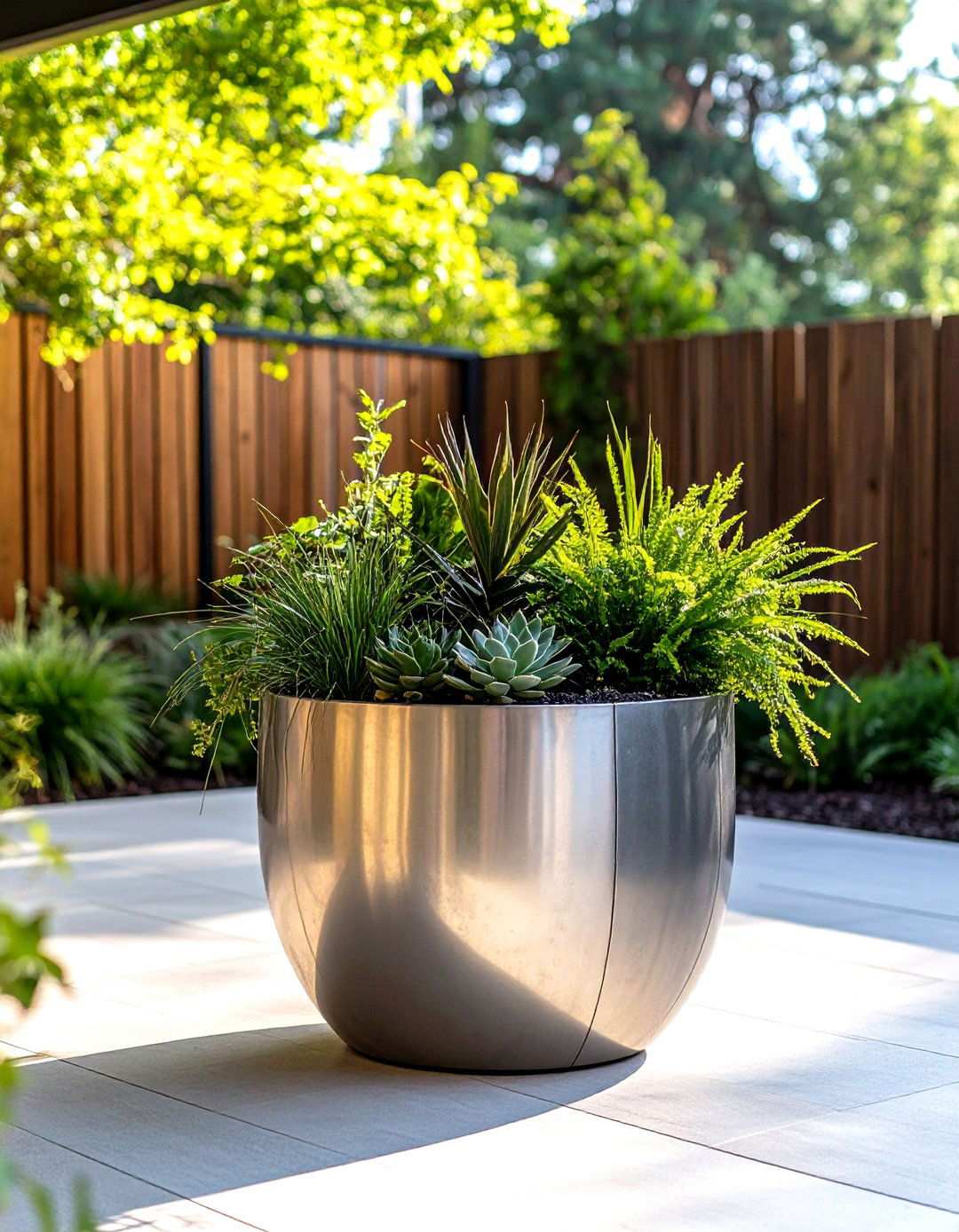
Elevating outdoor spaces has never been more achievable with the addition of modern steel planters, which seamlessly blend contemporary style with functional plant communities. Design these sleek containers using a range of finishes, including weathering steel, stainless steel, and powder-coated coatings that harmonize with your home’s architectural material palette. By placing elevated planters on pedestals, you can create striking asymmetrical compositions that bring visual balance to your outdoor areas. These versatile elements serve equally well as privacy screens, space dividers, or sculptural focal points throughout your landscape, allowing for a high degree of creative freedom. To maximize their impact, select planters of varying sizes and proportions that thoughtfully relate to surrounding architectural features while providing ample growing space for your chosen plants. For effortless maintenance and optimal plant health, consider incorporating automatic irrigation systems. By doing so, you can enjoy the flexibility of seasonal plant changes while maintaining permanent structural elements that expertly organize your outdoor spaces. Strategically position your planters to frame views, create intimate seating areas, or highlight important circulation routes, effectively creating sophisticated plant displays that feel integral to your overall design.
21. Creating Serene Water Features
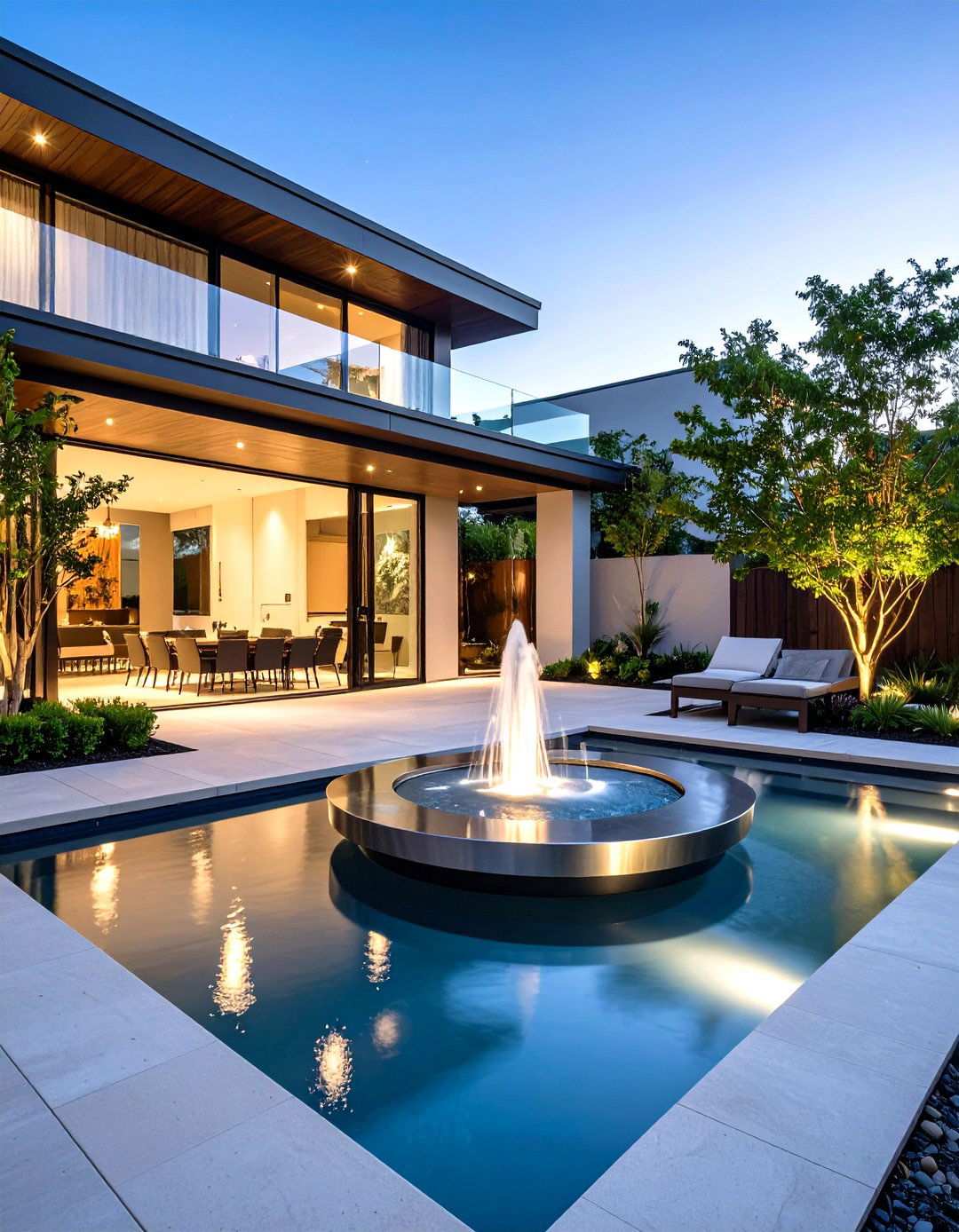
Water features have the unique ability to transform outdoor environments into serene oases, changing the mood of those who experience them through the soothing sounds of flowing water. Design your fountains using a variety of materials, such as aluminum, steel, or concrete, that thoughtfully complement your home’s architectural details. By incorporating small waterfalls and streams, you can create intriguing focal points that not only provide a cooling effect but also add visual interest to your landscape. These features are particularly well-suited for courtyard settings, entry areas, or as endpoints for circulation routes throughout your outdoor space. For a more formal look, consider incorporating fountains and reflecting pools that utilize water as a flat surface, often paired with concrete or pavers, to create a sense of calm and tranquility. To amplify the ambiance of your water feature, consider incorporating lighting systems that highlight water movement during evening hours, casting dramatic shadow patterns on surrounding surfaces. By thoughtfully positioning these features, you can mask unwanted noise from traffic or mechanical equipment while creating pleasant acoustic environments for outdoor living. The key to success lies in scaling your water feature to suit the space, selecting designs that enhance rather than compete with existing architectural elements throughout your outdoor environment.
22. Crafting Outdoor Ambiance Zones
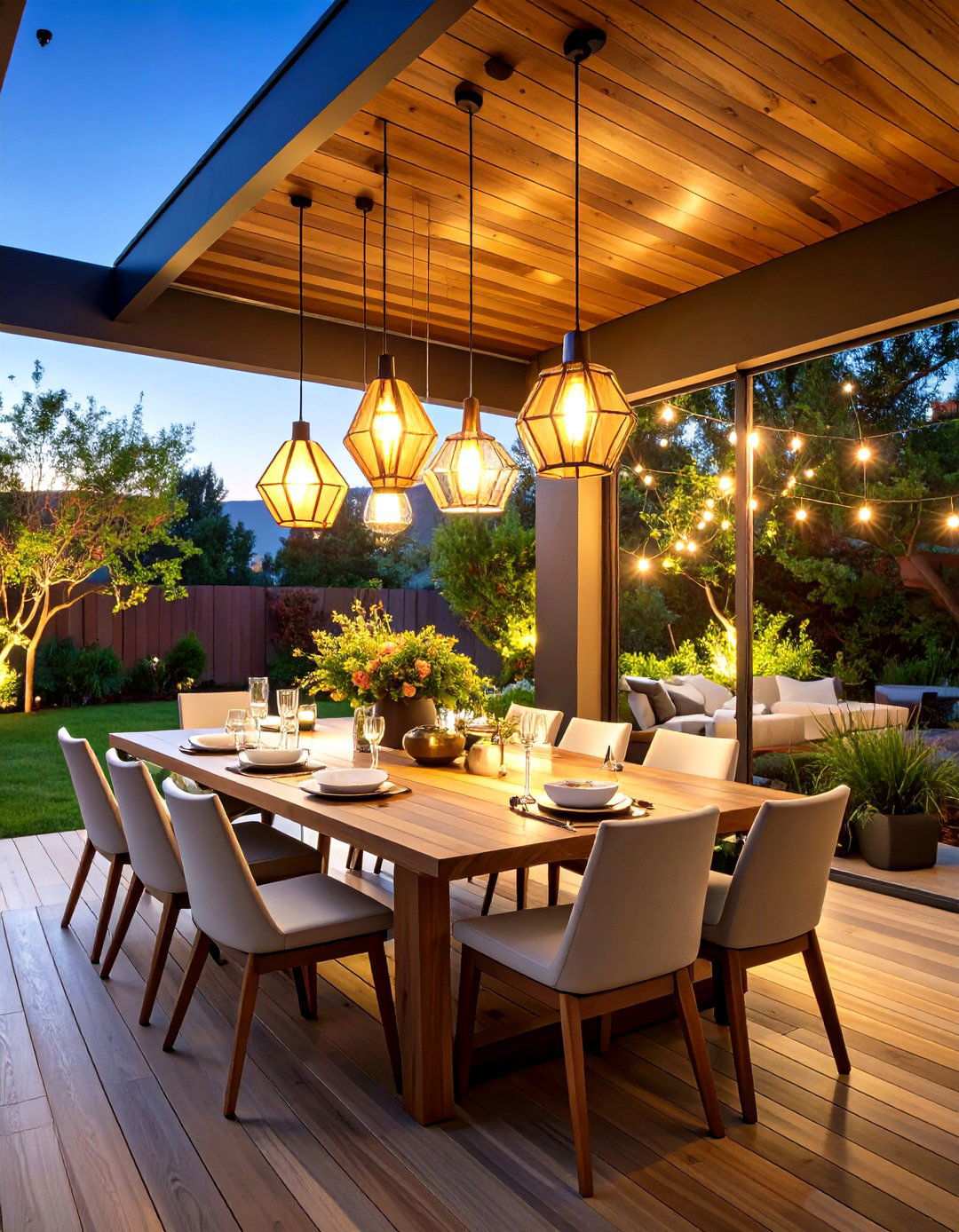
Outdoor pendant lights and ceiling fixtures bring to life a distinctive midcentury lighting style that marries geometric shapes with modern functionality. By strategically placing suspended fixtures that provide focused task lighting, you can create intimate dining and seating areas that exude a warm ambiance. Wall sconces, hanging pendants, and ceiling lights feature angular shades, globe bulbs, and asymmetrical forms that add visual interest to covered outdoor spaces. To avoid harsh glare or unwanted shadows, position these fixtures to highlight key activity areas while maintaining the clean lines and minimal aesthetic essential to midcentury modern design. Varying fixture heights and styles can create layered lighting effects that enhance evening entertainment while maintaining daytime sculptural interest. When selecting finishes, choose materials like matte black, brass, or brushed nickel that complement your home’s hardware and architectural details, allowing these functional elements to feel integral to your outdoor spaces.
23. Creating Dynamic Decomposed Granite Pathways
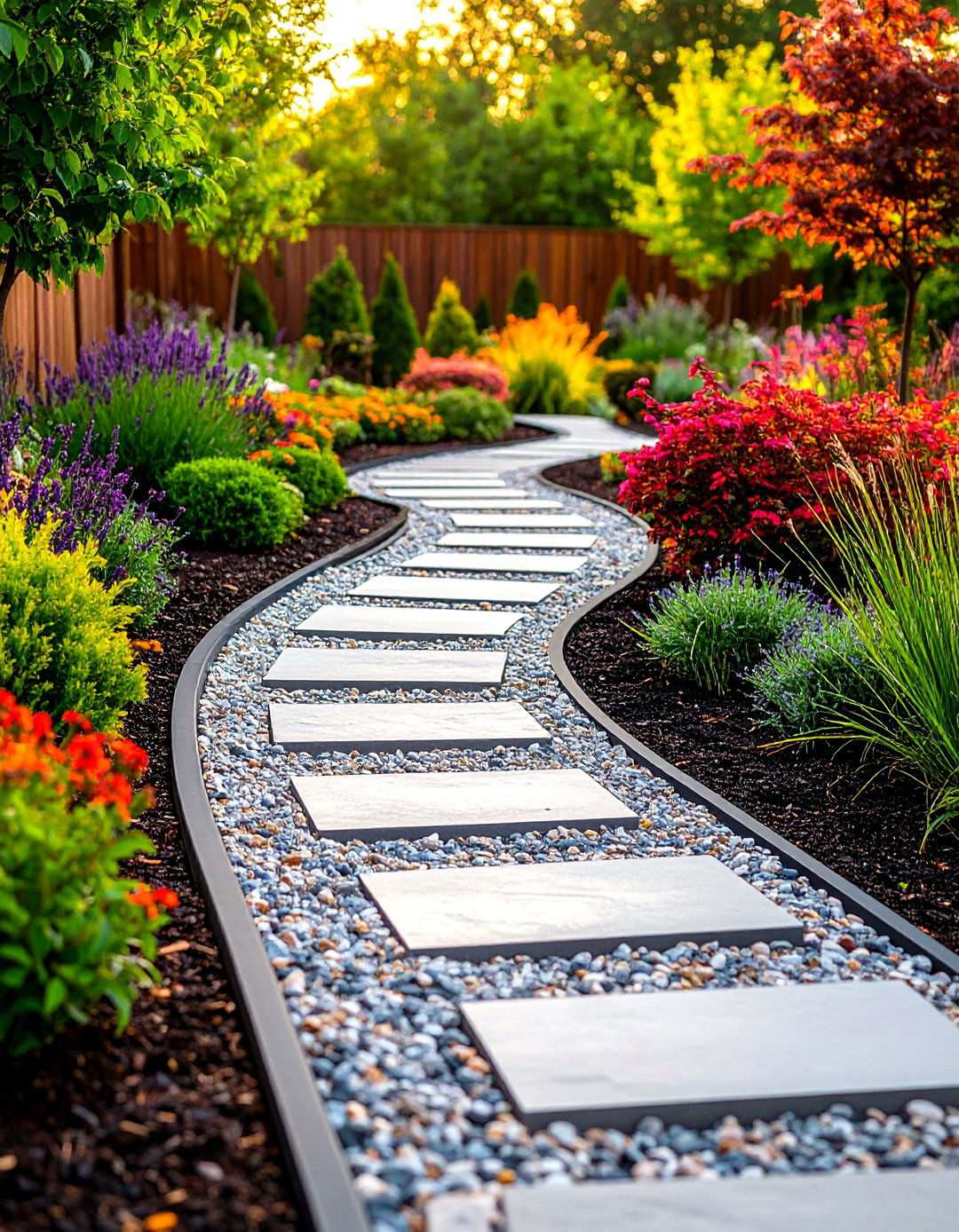
Decomposed granite pathways, mixed with geometric patches of grass and colored glass stones, bring a pop of color and visual interest to your outdoor environment while honoring midcentury modern principles. Circulation routes created with this permeable material provide excellent drainage and support the natural color palette characteristic of midcentury design. These pathways work particularly well in informal areas where softer transitions between spaces can enhance the overall flow and accessibility of your landscape. Mixing materials adds texture and visual interest while maintaining clean lines and geometric organization. Edge pathways with steel, concrete, or stone borders to prevent material migration and maintain precise geometric forms. Consider incorporating stepping stones, lighting elements, or planted strips that add visual interest while providing wayfinding cues throughout larger landscape areas. These low-maintenance surfaces require minimal irrigation, providing comfortable walking surfaces that complement both casual and formal garden areas. The neutral color and fine texture of decomposed granite work well with surrounding plant materials, allowing architectural and specimen plants to take visual precedence throughout your outdoor environment.
24. Elevating Outdoor Environments
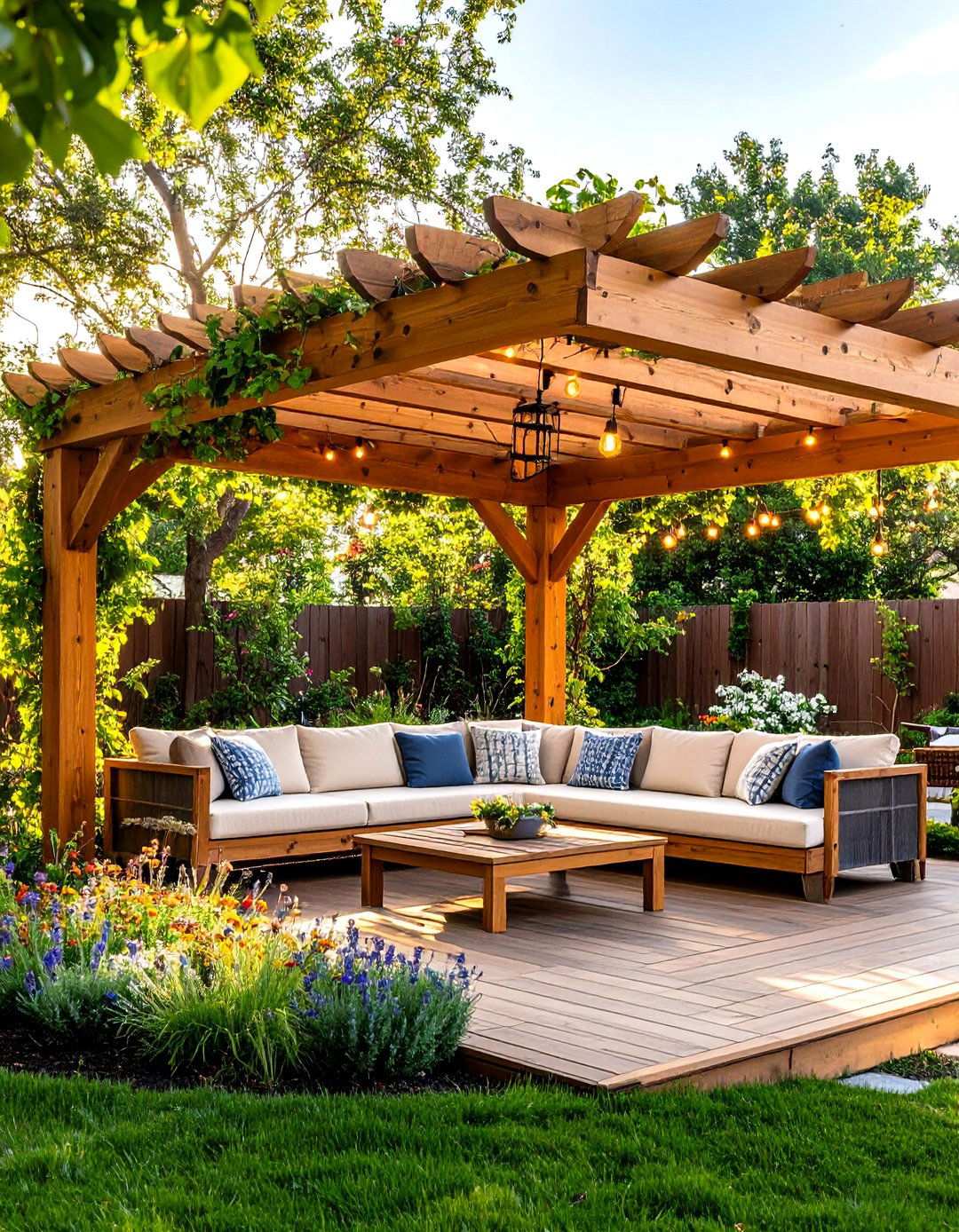
The synergy between wood and concrete gives rise to unique architectural elements that offer shelter while preserving an airy, open feel. Effective design of these structures involves selecting materials that harmonize with the home’s existing construction, thereby providing partial shade and defining the spatial boundaries of outdoor living areas. By integrating climbing plants, homeowners can soften the rigidity of hard edges and create dynamic visual interest through seasonal growth cycles and flowering periods. Pergolas are particularly well-suited for dining areas, seating zones, or transitional spaces between different garden rooms, where they can frame scenic views while protecting furniture and entertainment areas from the elements. A thoughtful balance of materials like wood, metal, and glass can add texture and depth without resorting to ornate designs. Furthermore, the incorporation of integrated lighting, ceiling fans, or retractable shade systems can enhance comfort while maintaining the clean, functional aesthetic characteristic of MCM design. By strategically situating pergolas, homeowners can create structures that not only provide shelter but also contribute to the overall architectural cohesion of the outdoor space, thereby extending its usability and enjoyment across diverse weather conditions and seasonal changes.