1. Wood-Grain Perfection in Horizontal Railings
Horizontal deck railings have revolutionized modern outdoor living spaces with their sleek, contemporary designs, offering a refreshing alternative to traditional vertical arrangements. These streamlined systems minimize visual obstructions, creating clear sight lines that beautifully frame the surroundings while still maintaining essential safety features. Instead of creating visual barriers, horizontal railings draw the eye across the landscape, making spaces feel more expansive and open. From earthy wood slat designs that perfectly complement rural aesthetics to ultra-modern cable systems that blend seamlessly into the background, horizontal railings adapt effortlessly to any architectural style. A diverse range of materials is available, including classic cedar and composite lumber, cutting-edge stainless steel cables, and tempered glass panels, each bringing unique benefits, whether it’s low maintenance, maximum visibility, or design flexibility.

As an Amazon Associate I earn from qualifying purchases.
2. Cedar and Aluminum: A Timeless Combination
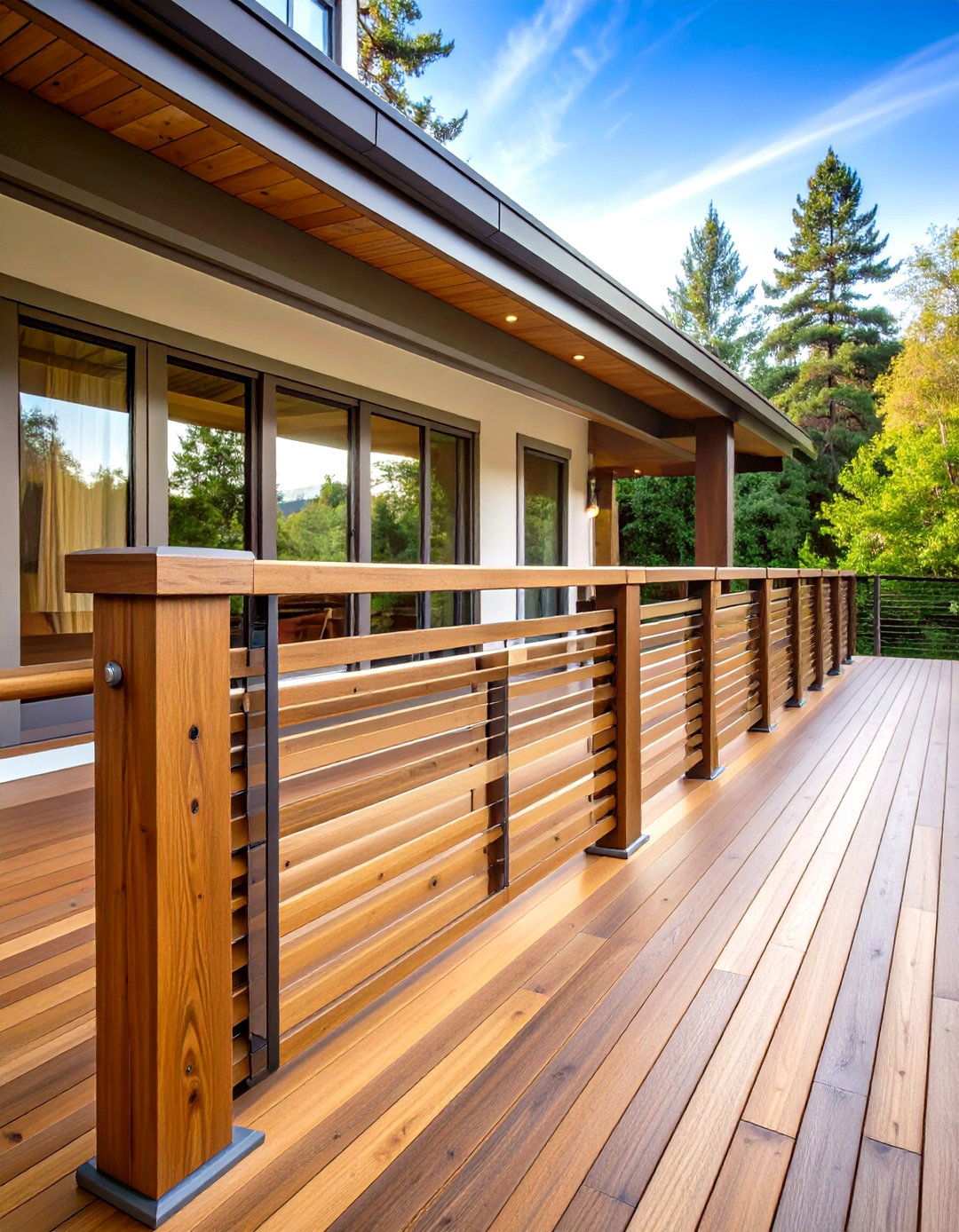
The combination of natural cedar boards arranged horizontally creates a warm, inviting boundary that showcases the beauty of genuine wood grain. One of the key advantages of using natural cedar is its exceptional resistance to insects and decay, making it an ideal choice for outdoor applications. Over time, the rich honey tones of fresh cedar gradually weather to an elegant silver-gray patina, providing a captivating visual transformation that complements the changing seasons. Typically, slats are spaced 1×6 or 2×4 inches apart, with consistent gaps for air circulation and visual rhythm, while steel or aluminum posts provide structural support without overpowering the cedar. This design pairs beautifully with craftsman-style homes and mountain retreats, blending rustic charm with contemporary clean lines in a single, cohesive system.
3. Industrial Chic with Powder-Coated Aluminum
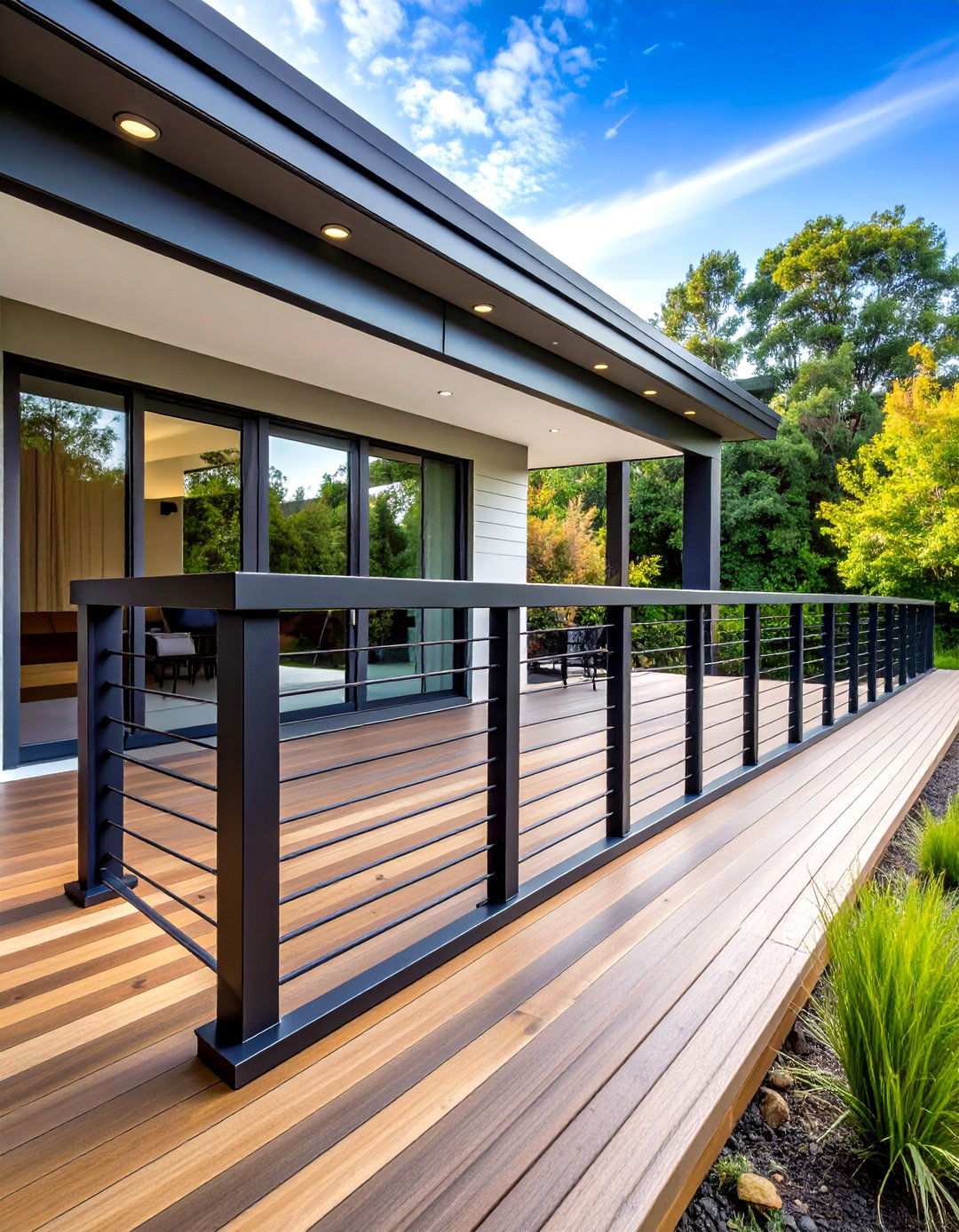
Smooth aluminum bars positioned horizontally deliver a sophisticated, industrial look with the added benefit of maintenance-free performance. The powder-coating process ensures rich, lasting color that resists fading, chipping, and the need for regular touch-ups, unlike traditional paint. What draws homeowners to this design is its versatility in complementing both modern and traditional architecture equally well. Standard configurations feature 2-inch wide by 1/4-inch thick bars welded seamlessly to vertical posts for uninterrupted horizontal lines. Popular color choices include matte black, bronze, and white, each creating a distinct visual effect against various home exteriors. The lightweight yet strong aluminum construction makes installation straightforward while providing decades of reliable service in all weather conditions.
Unobtrusive Cable Railing Design
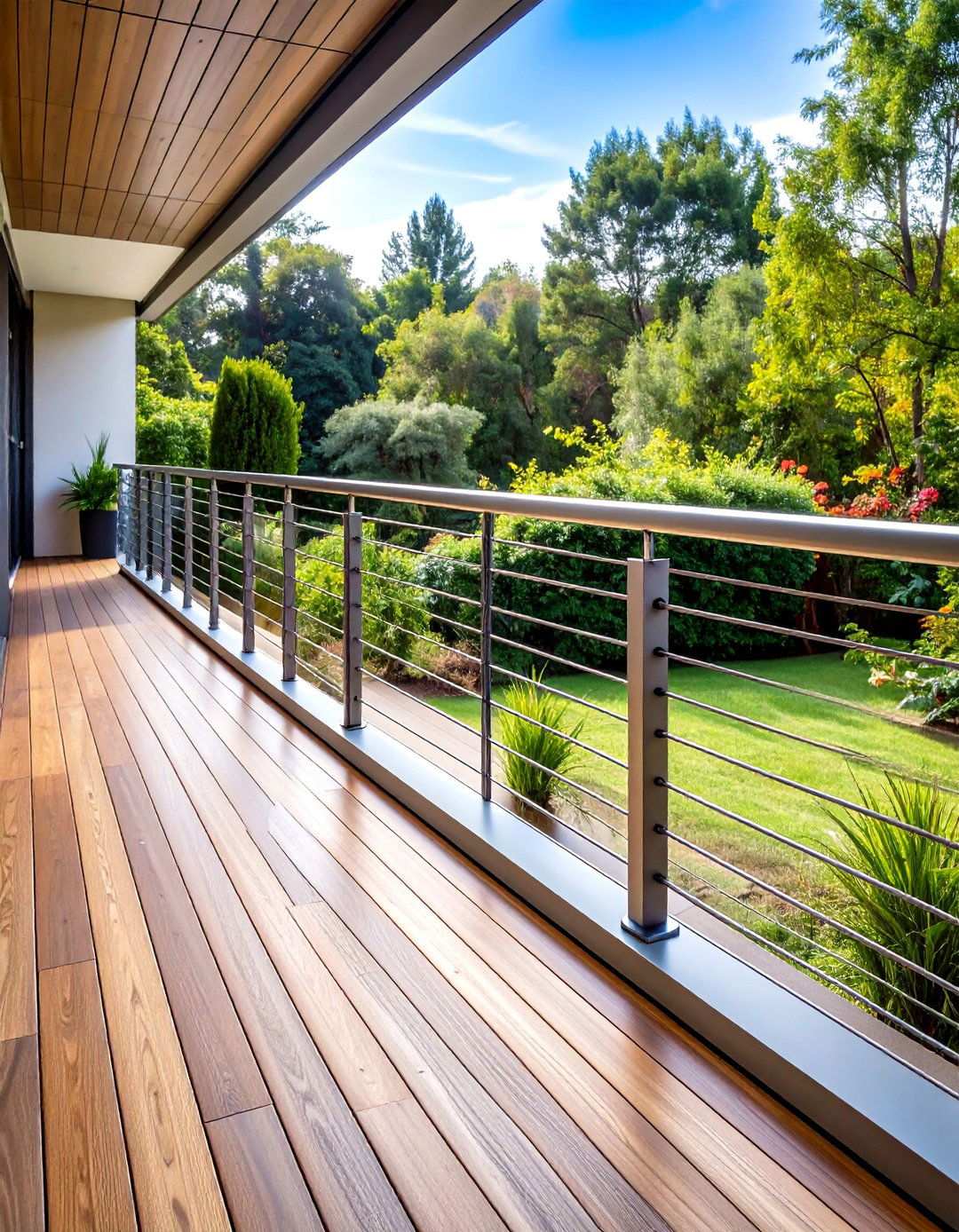
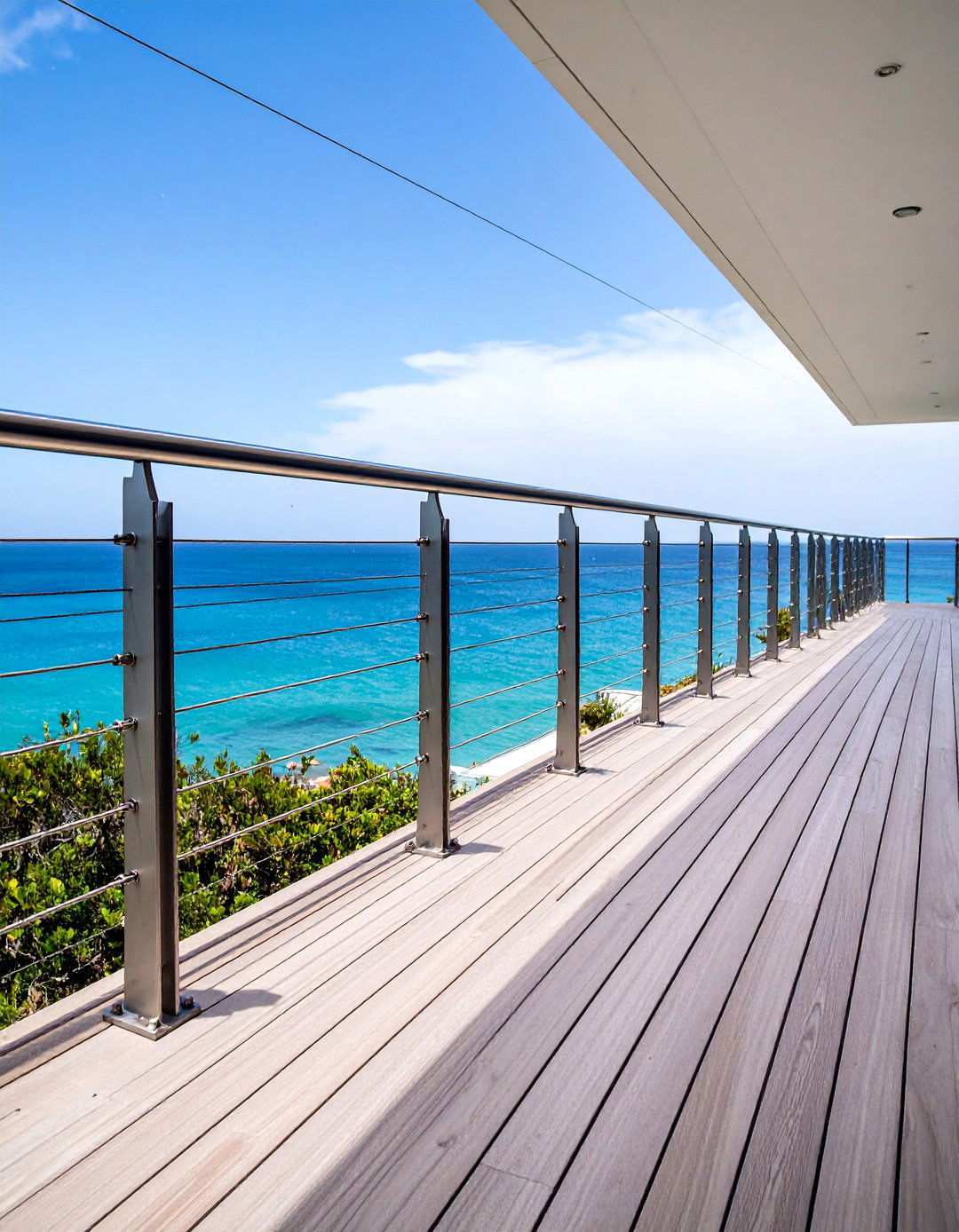
Invisible horizontal lines created by ultra-thin stainless steel cables blend seamlessly into the surrounding landscape, showcasing scenic views while maintaining safety. Marine-grade stainless steel cables, resistant to corrosion in coastal environments, make this system a top choice for waterfront properties. The cables themselves measure 1/8 inch in diameter and are tensioned between posts using specialized hardware that ensures proper spacing and structural integrity. Architects favor this minimalist approach for contemporary homes due to its ability to highlight architectural features and surrounding landscapes. Design versatility is further enhanced by the option to fabricate posts from matching stainless steel or contrasting materials like powder-coated aluminum, creating subtle design variations. A professionally installed system guarantees proper tensioning and code compliance for long-term performance.
4. Low-Maintenance Composite Plank System
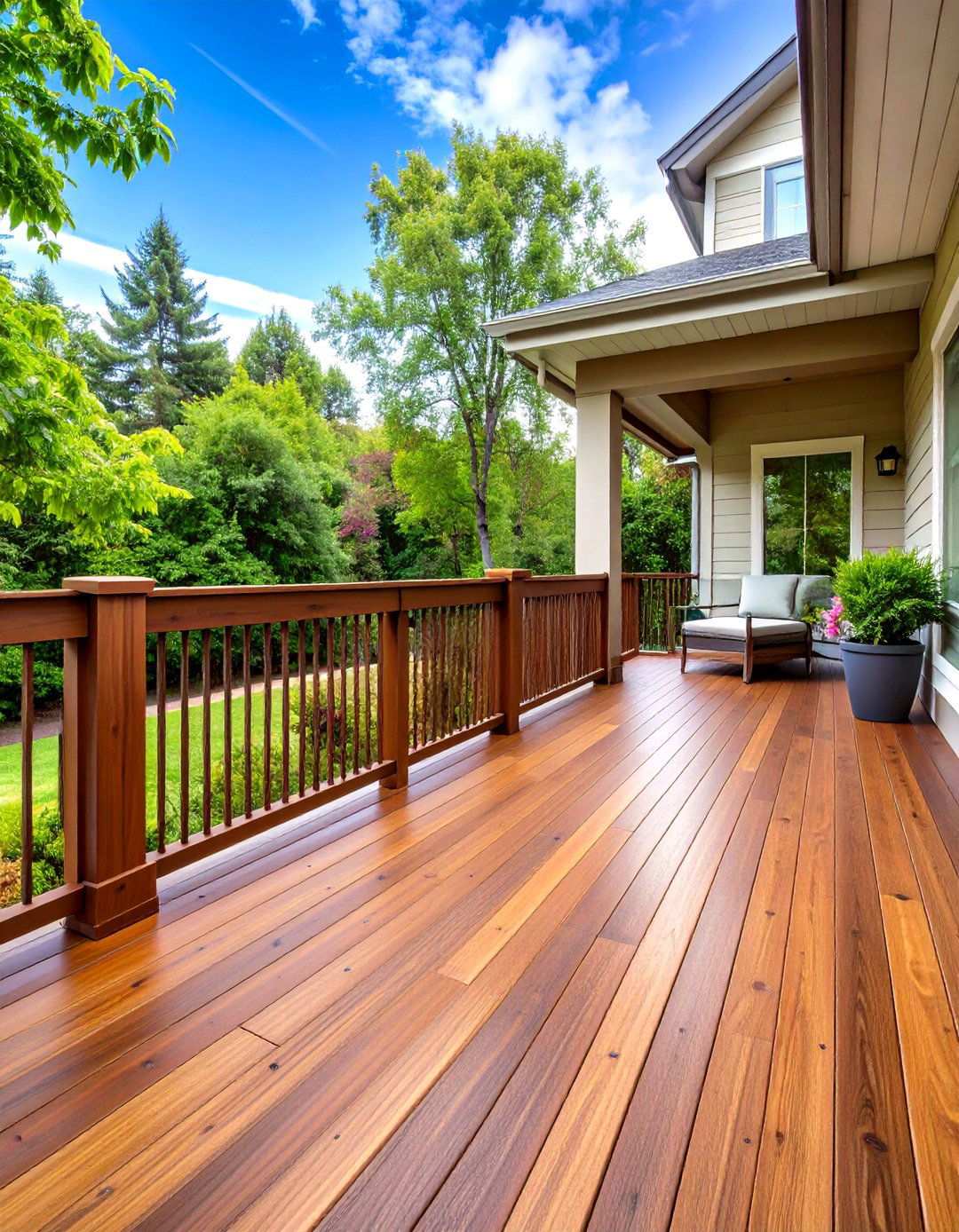
Engineered composite planks combine wood fibers with protective polymers, recreating the authentic appearance of natural wood without the maintenance demands. The horizontal installation creates a striking linear emphasis, while the planks themselves resist fading, staining, and moisture damage that often plague natural wood. Imagine eliminating the annual task of staining and sealing from your outdoor maintenance routine. Most composite systems offer a wide range of color options, from warm earth tones to contemporary grays and blacks, allowing homeowners to choose the perfect fit for their outdoor space. The substantial thickness of composite planks provides excellent structural strength, while hidden fastener systems maintain clean, uninterrupted surfaces. This design works particularly well with composite decking materials, creating cohesive outdoor environments that combine beauty with practicality.
5. Harmonious Blend of Wood and Metal Design
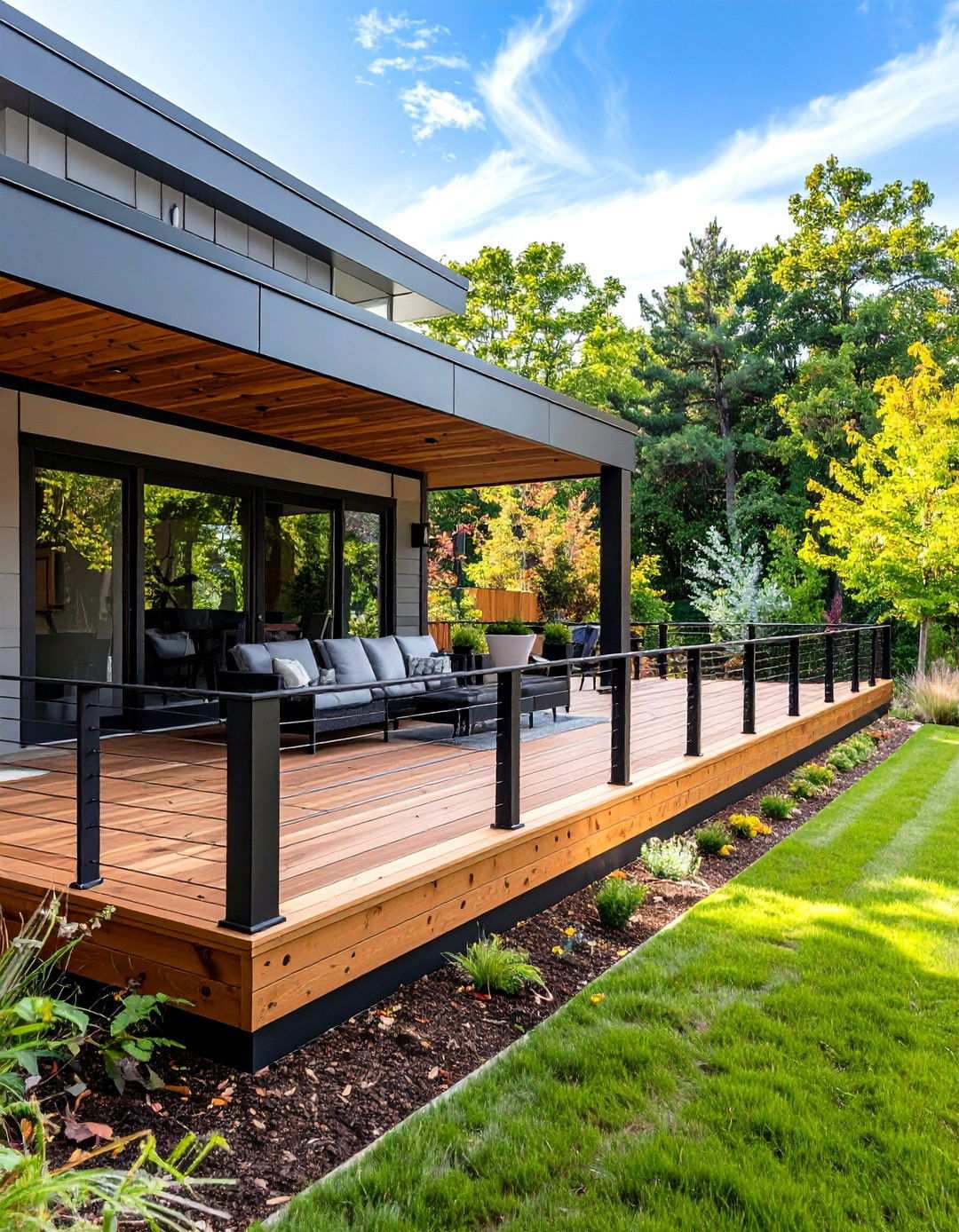
The juxtaposition of warm wood elements with sleek metal accents creates dynamic visual interest through contrasting textures and materials, captivating design sensibilities. Does the combination of natural and industrial materials resonate with your design aesthetic? Wood components might include cedar or pressure-treated lumber for horizontal slats, while steel or aluminum provides structural posts and framing elements. Popular combinations include weathered wood with black powder-coated metal or natural cedar with brushed stainless steel. This approach allows for customization of the ratio between materials, from predominantly wood with metal accents to metal-dominant designs with wood highlights, adding depth and sophistication while maintaining the clean horizontal lines that define modern railing design.
6. Uninterrupted Views with Tempered Glass Panel Railing
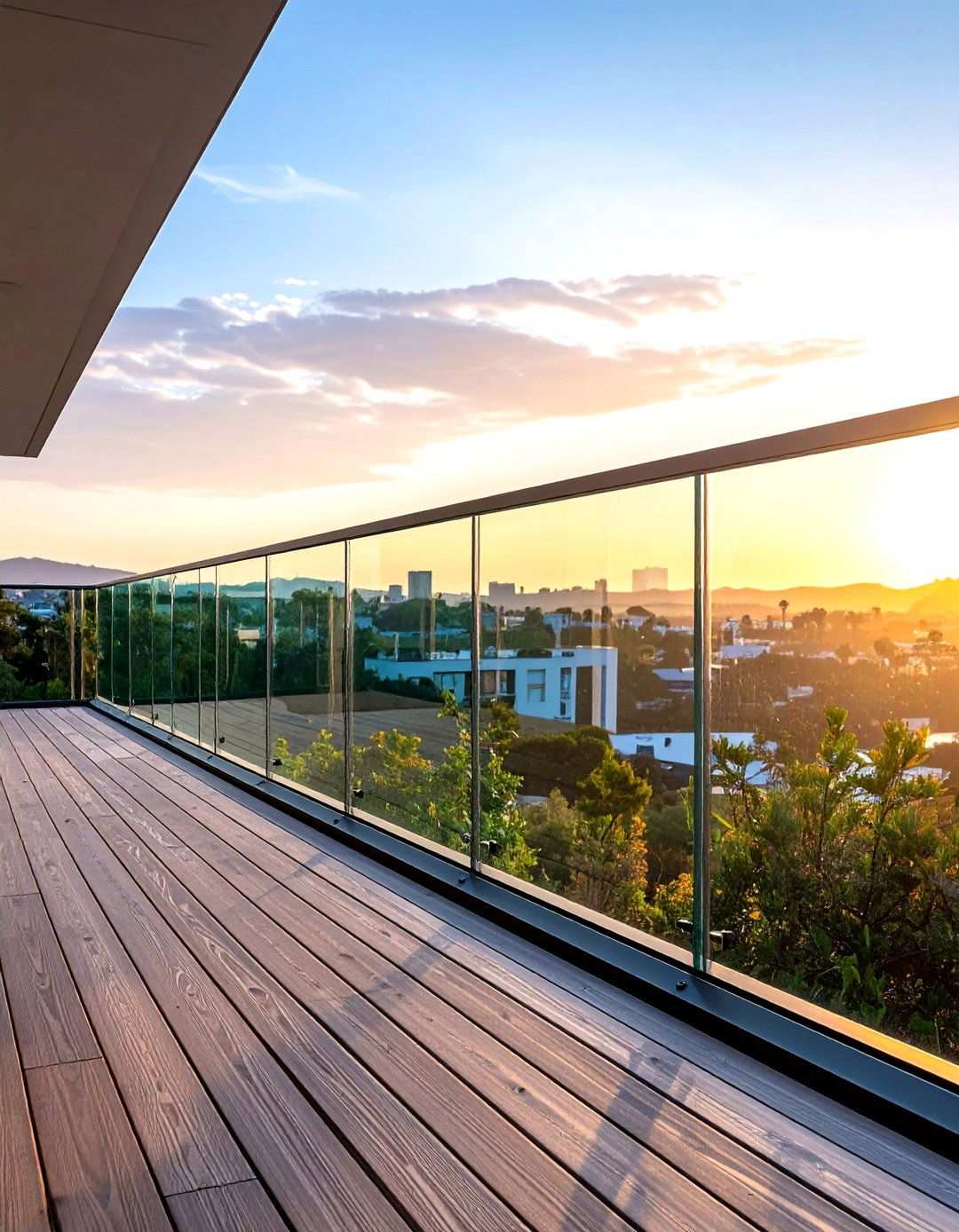
A striking combination of clear tempered glass panels and metal posts creates a seamless visual experience, unobstructed by traditional railing designs. The glass panels, typically measuring 1/4 to 1/2 inch in thickness, undergo a rigorous tempering process that significantly enhances their strength compared to regular glass. This design’s enduring appeal for entertainment spaces stems from its ability to preserve sight lines across decks and patios, effectively merging spaces and fostering a sense of connection with the surrounding environment. Aluminum or stainless steel framing systems seamlessly secure the glass panels while minimizing visual disruption, offering a range of options that include clear glass for maximum transparency or frosted varieties for added privacy while maintaining light transmission. Proper installation by professionals ensures long-term performance through efficient drainage and weather sealing.
7. Elegance and Strength in Horizontal Rod Iron Railing System
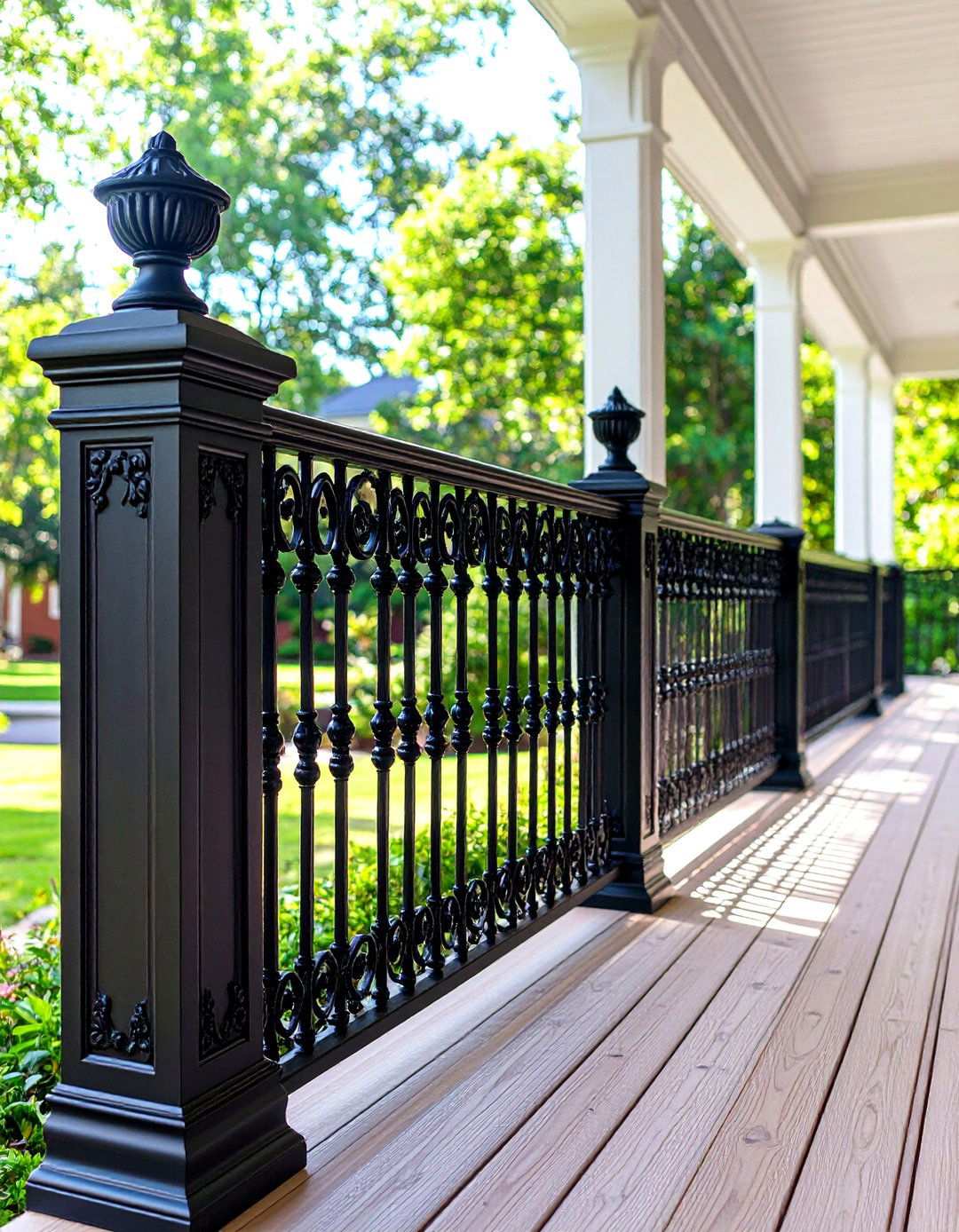
The harmonious blend of solid steel rods and decorative iron posts results in a robust, classic design that exudes traditional elegance. Typically measuring 1/2 to 3/4 inch in diameter, the steel rods create substantial visual weight while maintaining clean, horizontal lines. Hand-forged iron detailing elevates this timeless design approach by allowing for unique post caps, intricate scrollwork, and personalized details that mirror the homeowner’s distinct style. Protective coatings prevent rust and corrosion while offering a range of color options, from classic black to custom hues. This design is particularly well-suited to colonial, Victorian, and traditional architecture, where ornate metalwork complements existing design elements. When properly maintained, iron guarantees generations of reliable service, ensuring the railing remains a stunning feature of the property.
8. Durable PVC Horizontal Slat Design
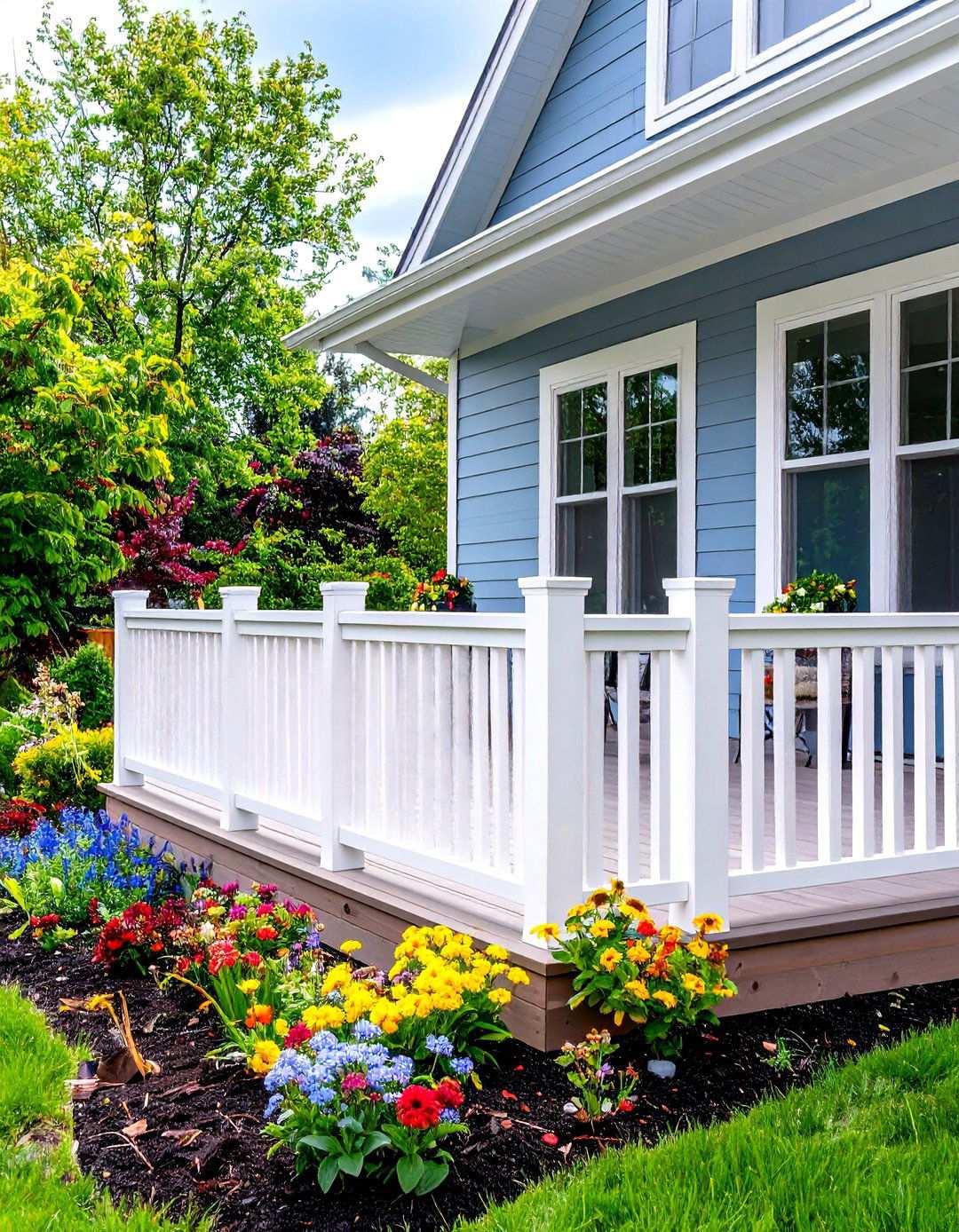
Engineered PVC lumber, arranged horizontally, offers a wood-like appearance with superior weather resistance and dimensional stability. Unlike natural wood, PVC never requires staining, painting, or sealing, maintaining consistent color and texture throughout its lifespan. The material’s greatest advantage lies in its ability to withstand extreme temperature variations in challenging climates, where it won’t crack, split, or warp like traditional lumber, ensuring straight, professional-looking installations year after year. This design offers a range of colors, from classic white and tan to contemporary grays and darker tones. The lightweight material simplifies installation, and hollow profiles can accommodate wiring for integrated lighting systems, making it an excellent choice for homeowners seeking low-maintenance solutions without sacrificing aesthetic appeal.
9. Horizontal Mesh Panel System
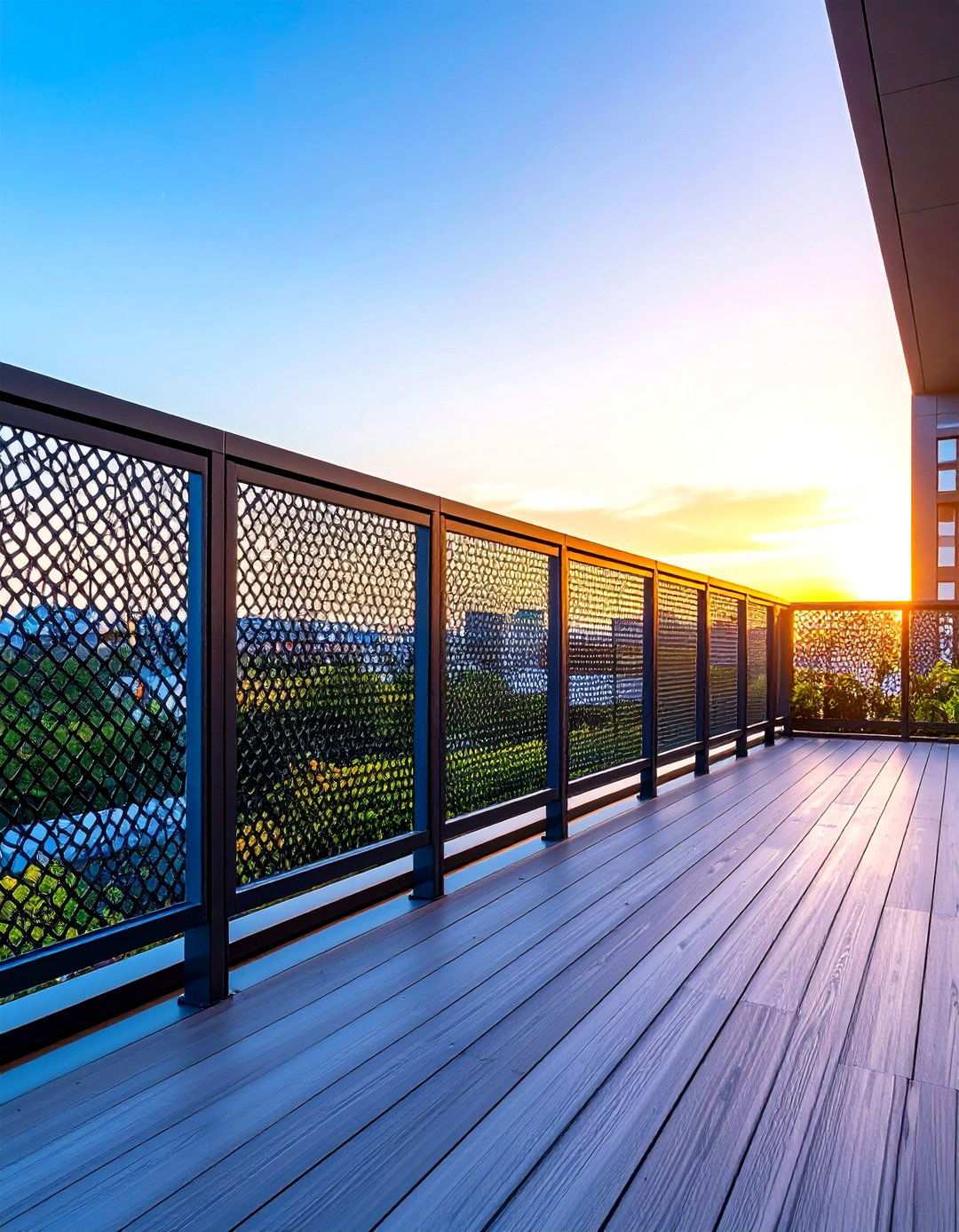
When it comes to creating a contemporary industrial aesthetic, few design elements are as striking as horizontal mesh panels stretched between frames. The mesh itself, often crafted from aluminum or stainless steel, offers an impressive range of patterns, from delicate weaves to bold geometric designs. This distinctive railing style has become a staple in urban loft conversions, where its industrial character complements modern architectural elements while providing practical benefits like wind resistance and graduated privacy. What’s more, mesh panels can be backlit for a dramatic evening effect or left unadorned for a subtle, textured look during the day. By carefully coordinating frame materials with mesh selection, designers can create cohesive designs that range from subtle to boldly architectural. This system is particularly well-suited to rooftop decks and contemporary residential projects.
10. Natural Branch Horizontal Design
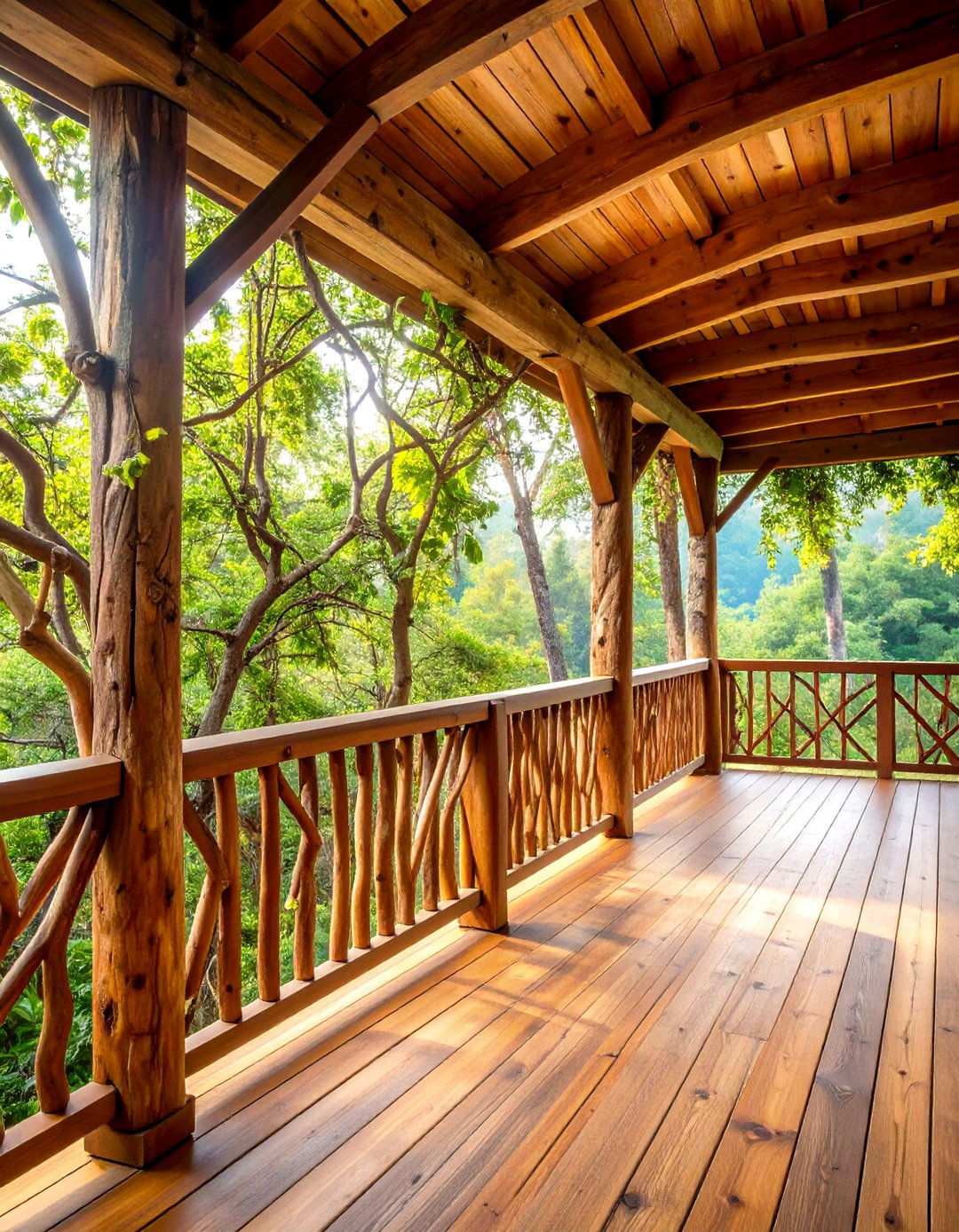
For those seeking to create organic, nature-inspired boundaries, a rustic branch and log arrangement between timber posts is an excellent choice. Each installation is unique, thanks to the natural variations in wood that ensure no two systems look identical. In fact, this approach celebrates local materials and sustainable building practices, making it an attractive option for environmentally conscious homeowners. To create this design, branches typically measure 3-6 inches in diameter, carefully selected and prepared for outdoor exposure. This involves removing bark, treating for insects, and applying a protective finish to ensure longevity. The result is a design that works exceptionally well for cabin retreats, nature centers, and homes where connecting with natural surroundings takes priority. Structural posts often use larger timber or stone elements that complement the organic horizontal elements.
11. Horizontal Lattice Privacy Screen
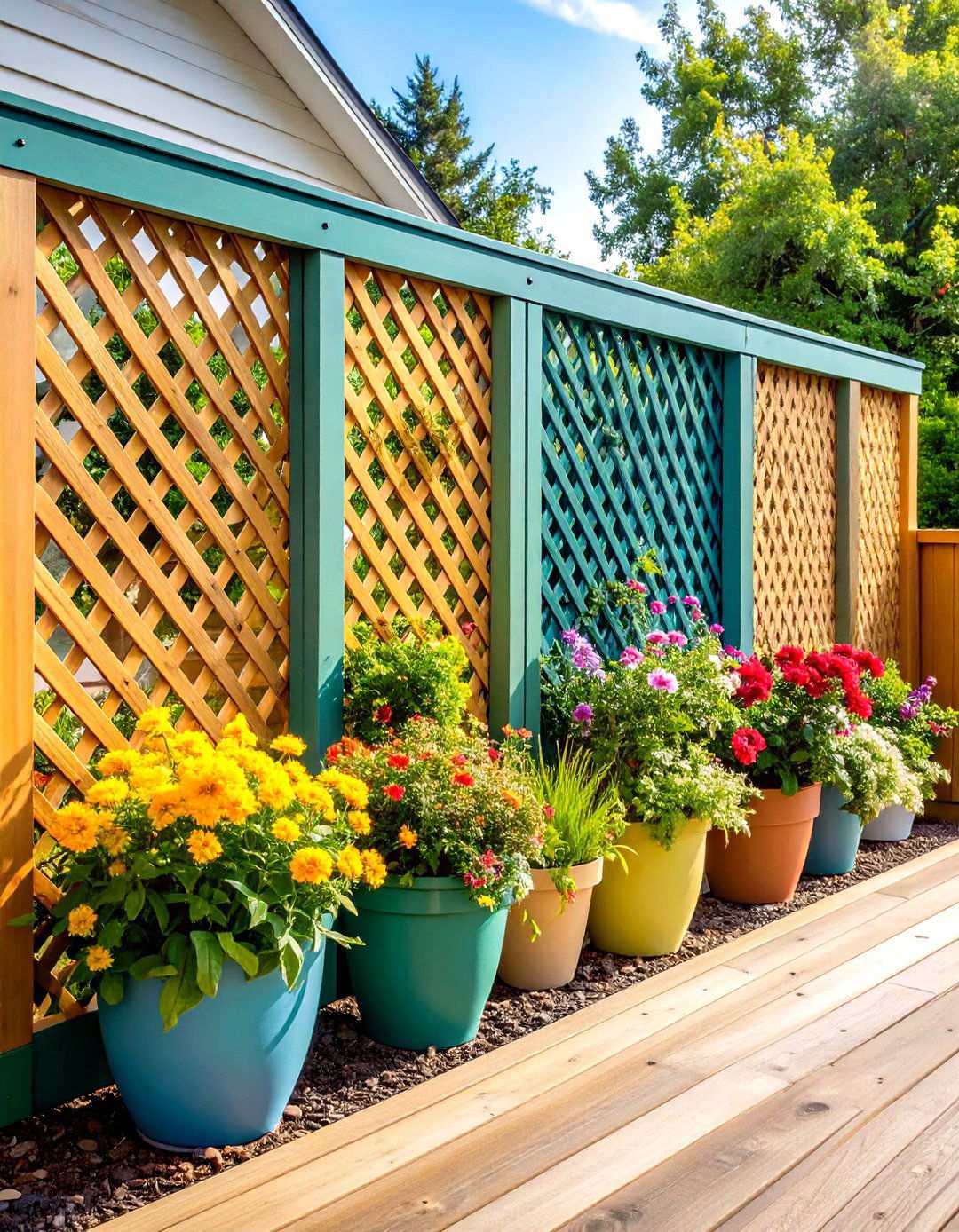
For urban environments where privacy is essential, a traditional lattice pattern installed horizontally is a versatile and decorative solution. The crisscross pattern adds visual texture while the horizontal orientation emphasizes length and creates a sense of movement. What makes this design particularly suitable for urban environments is its ability to provide screening from neighbors while allowing breezes and natural light to filter through. Materials range from pressure-treated lumber to maintenance-free vinyl and composite options, offering a range of choices to suit different architectural styles. By customizing the spacing of lattice openings, designers can fine-tune privacy levels, from nearly solid screening to more open decorative patterns. This adaptable design provides both functional and aesthetic benefits, making it a popular choice for a wide range of applications.
12. Evolving Concrete Aesthetics
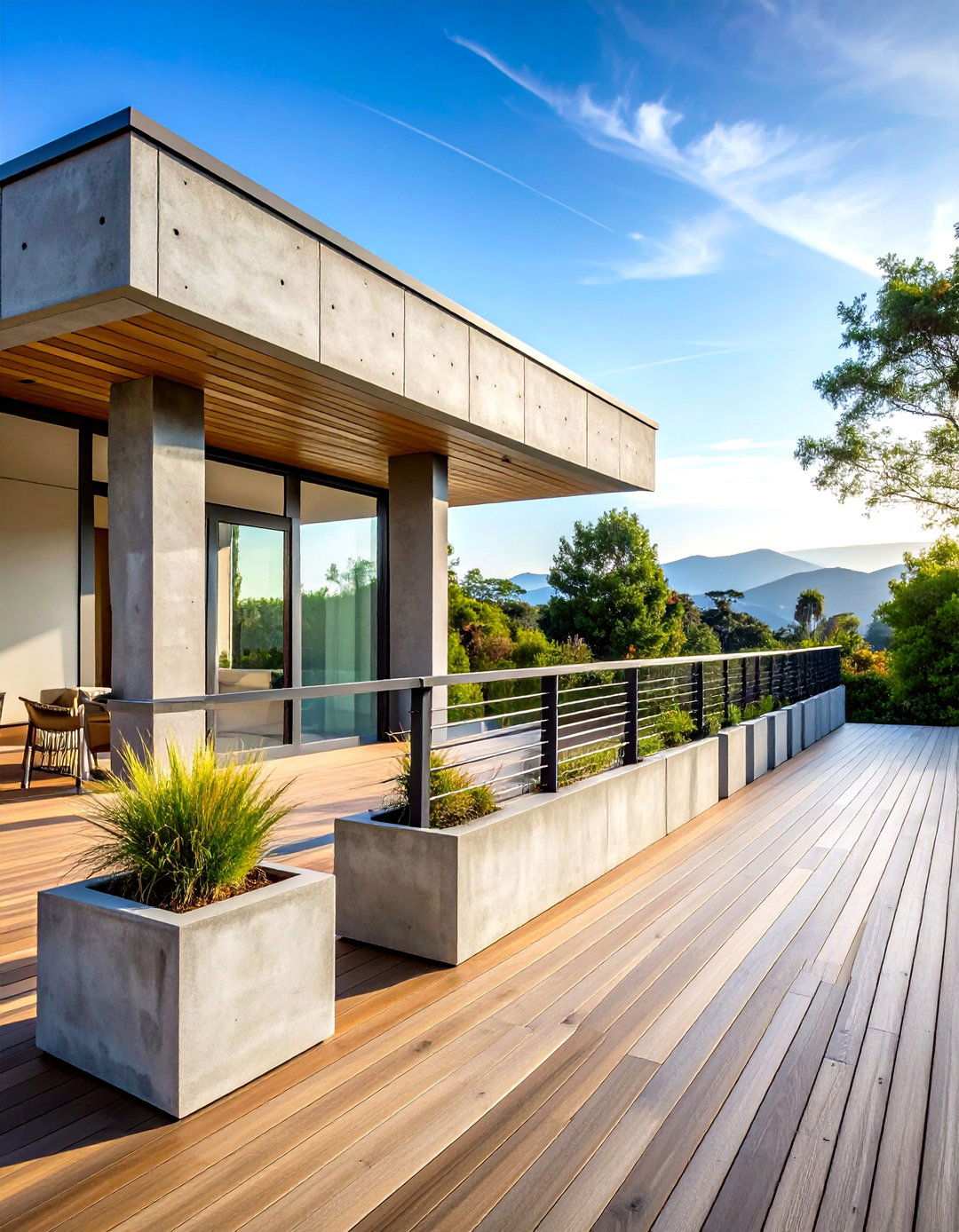
Contemporary precast concrete panels with horizontal ribbing or smooth surfaces serve as a testament to the power of geometric form in modern architecture. By harnessing the substantial mass of concrete, designers can create structures that not only provide exceptional wind resistance and sound dampening but also require minimal upkeep. As a result, concrete railings have become increasingly popular in contemporary residential design. One key factor contributing to their appeal is the ability to customize the material through integral colors, textures, and formed patterns, ultimately yielding unique design elements. Furthermore, panels can be mounted between steel or concrete posts using hidden fastener systems, maintaining clean, uninterrupted surfaces. Various surface treatments, ranging from smooth, polished finishes to textured, exposed aggregate patterns, further enhance the versatility of this design, making it particularly well-suited for modern and brutalist architectural styles.
13. Maritime-Inspired Wire Railing
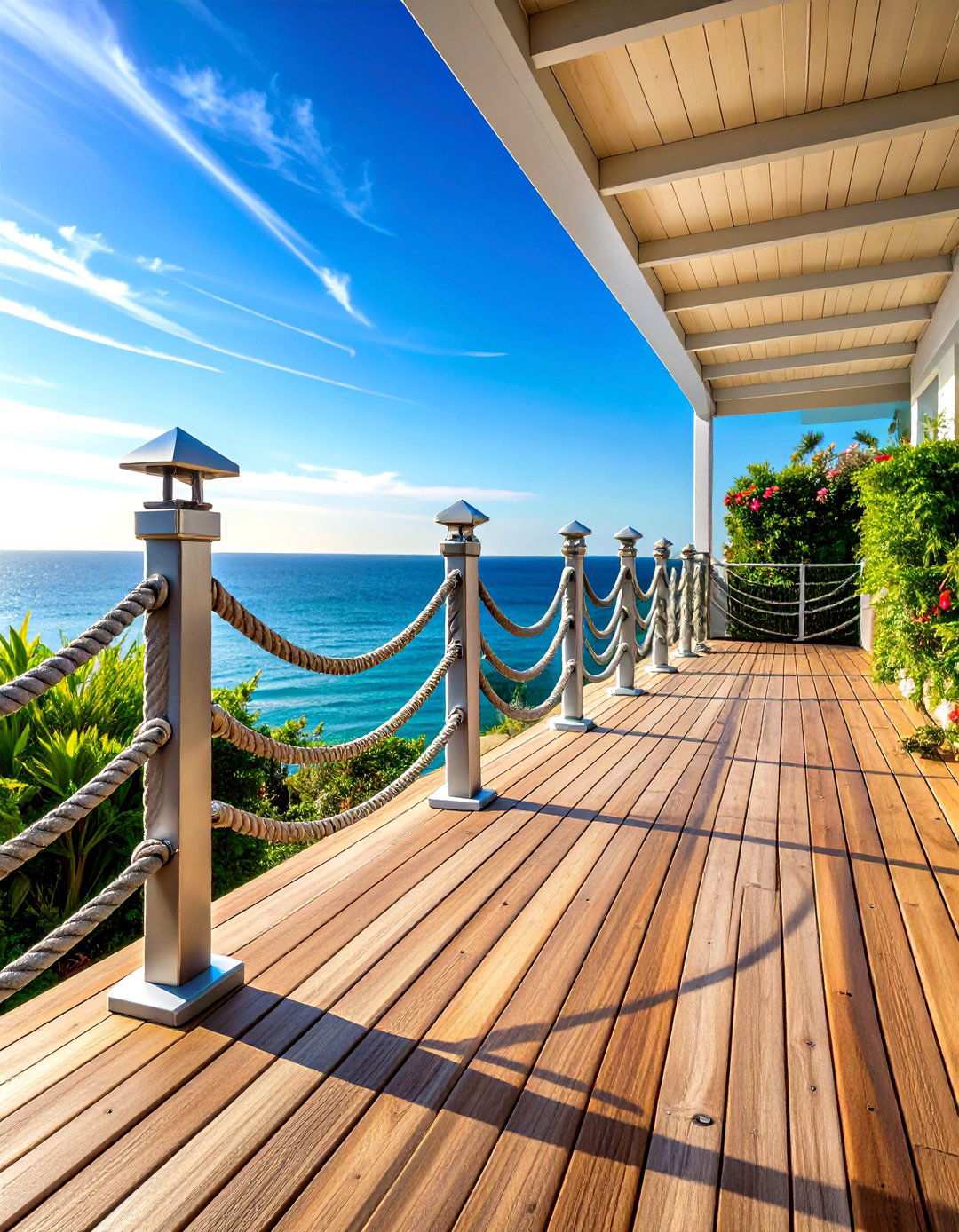
Galvanized steel wire rope stretched horizontally between posts creates a captivating nautical-inspired railing that exudes maritime character. The rope, typically 1/4 to 3/8 inch in diameter, brings a touch of flexibility and intriguing textural contrast to rigid railing systems. Moreover, the rope’s subtle movement in the wind can create visually appealing kinetic elements, adding an extra layer of depth to the design. To ensure proper support while allowing for natural expansion and contraction, tensioning hardware is employed. A range of rope options is available, including bright galvanized finish, stainless steel for corrosion resistance, or vinyl-coated varieties in custom colors. This design works particularly well for coastal properties, boat docks, and anywhere maritime themes harmonize with the architecture. Proper tensioning and regular inspection are essential to guarantee safety and longevity.
14. Sustainable Bamboo Aesthetic
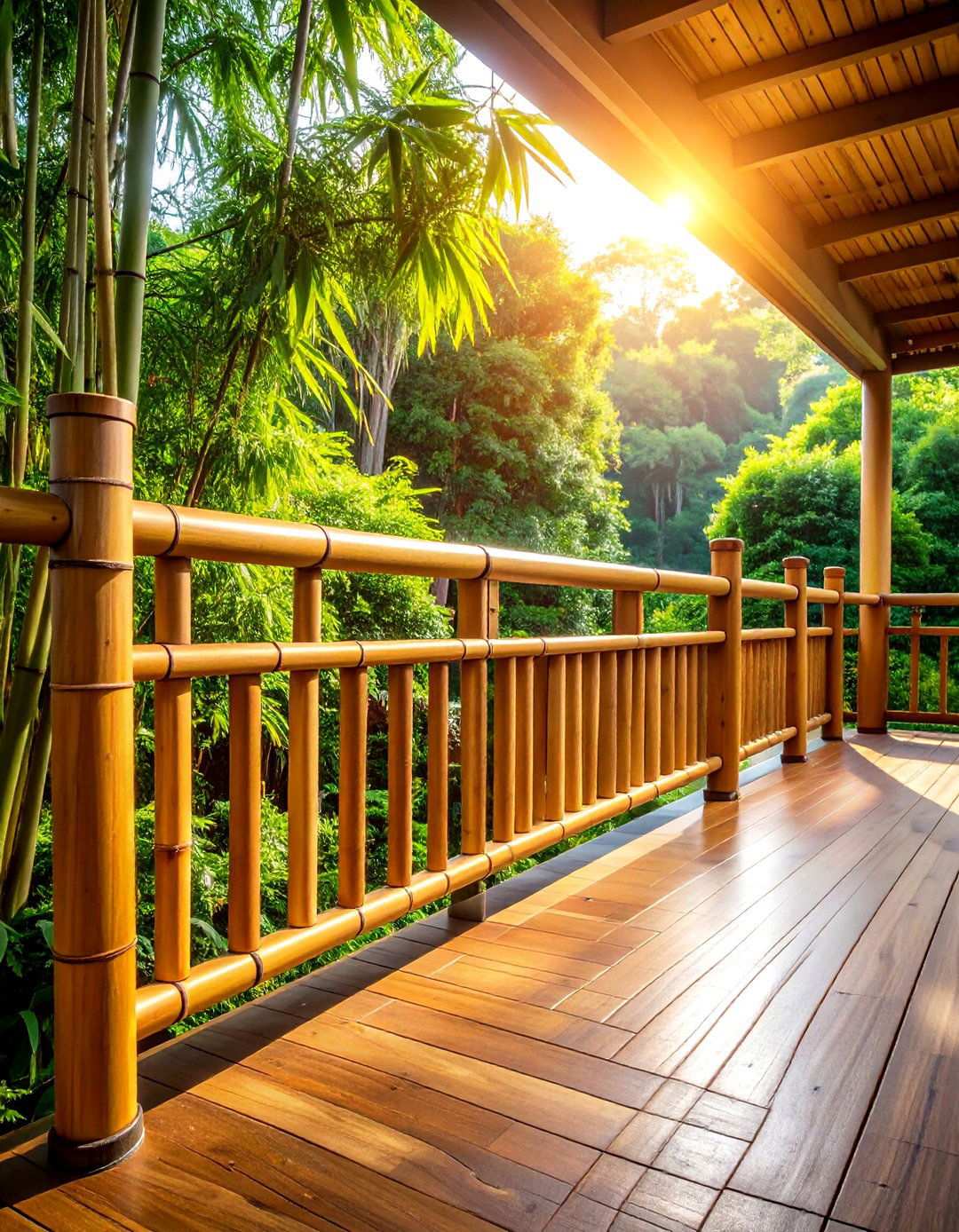
Bamboo culms arranged horizontally between posts create an exotic, tropical ambiance while promoting environmental responsibility. Bamboo’s remarkable ability to grow rapidly and regenerate makes it an excellent eco-friendly building material choice. The unique visual qualities that bamboo brings to outdoor railing applications are undeniable, with natural nodes and subtle color variations creating organic patterns that complement Asian-inspired and tropical architectural themes. To ensure the longevity of this design, proper preparation includes treating for insects and applying protective finishes suitable for outdoor exposure. The lightweight yet strong bamboo poles typically measure 3-4 inches in diameter, creating substantial visual presence. This design particularly suits gardens, spa environments, and homes where sustainable materials align with environmental values.
15. Modern Industrial Pipe Aesthetics
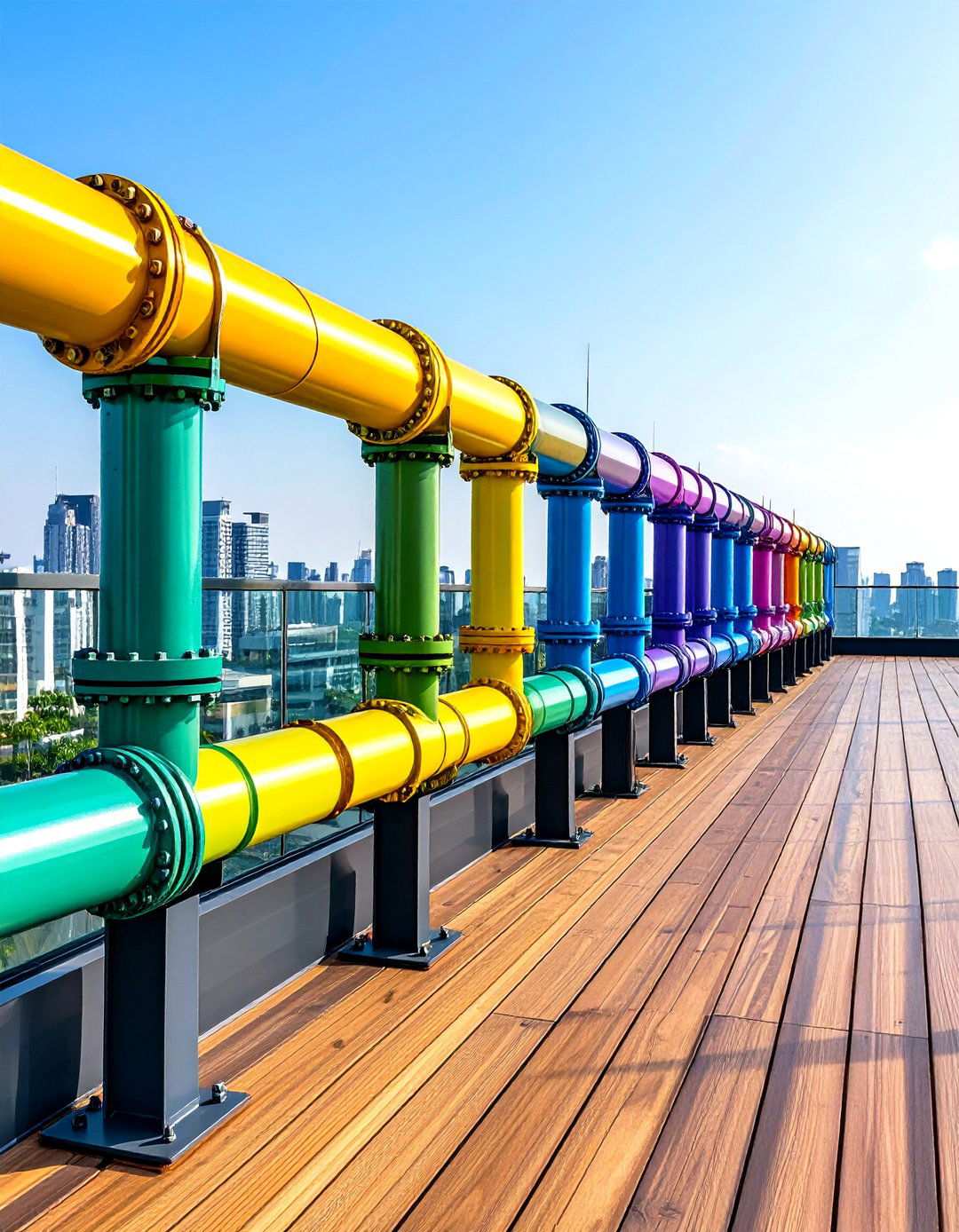
The horizontal arrangement of steel or aluminum pipes in various sizes creates a striking industrial look, reminiscent of modern manufacturing facilities and urban loft environments. Pipe diameters typically range from 1 to 2 inches, with larger sizes creating a more substantial visual impact. What role do exposed pipe fittings and connections play in achieving an authentic industrial character? By celebrating functional design elements, the utilitarian appearance also provides robust structural performance. Finishes such as natural steel with a clear protective coat, painted options in various colors, and powder-coated surfaces ensure maximum durability. This design style is particularly suited to converted industrial buildings, urban lofts, and contemporary homes where industrial elements serve as design focal points.
16. Multi-Material Compositions in Horizontal Railings
Layering multiple materials at varying depths produces sophisticated compositions with rich visual texture and dimensional interest. Typical combinations might include wood slats closest to posts, metal elements at mid-depth, and glass panels at the outer edge. What guiding principles ensure successful material layering in railing systems? Each material layer serves both functional and aesthetic purposes while contributing to the overall composition. The depth variation creates intriguing shadow patterns, allowing each material to maintain its distinct character. Effective color coordination between materials ensures a cohesive appearance, while contrasting textures add visual interest. This approach works exceptionally well on large decks where the intricate pattern complexity can be fully appreciated.
17. Vibrant Color Options in Painted Wood Slat Systems
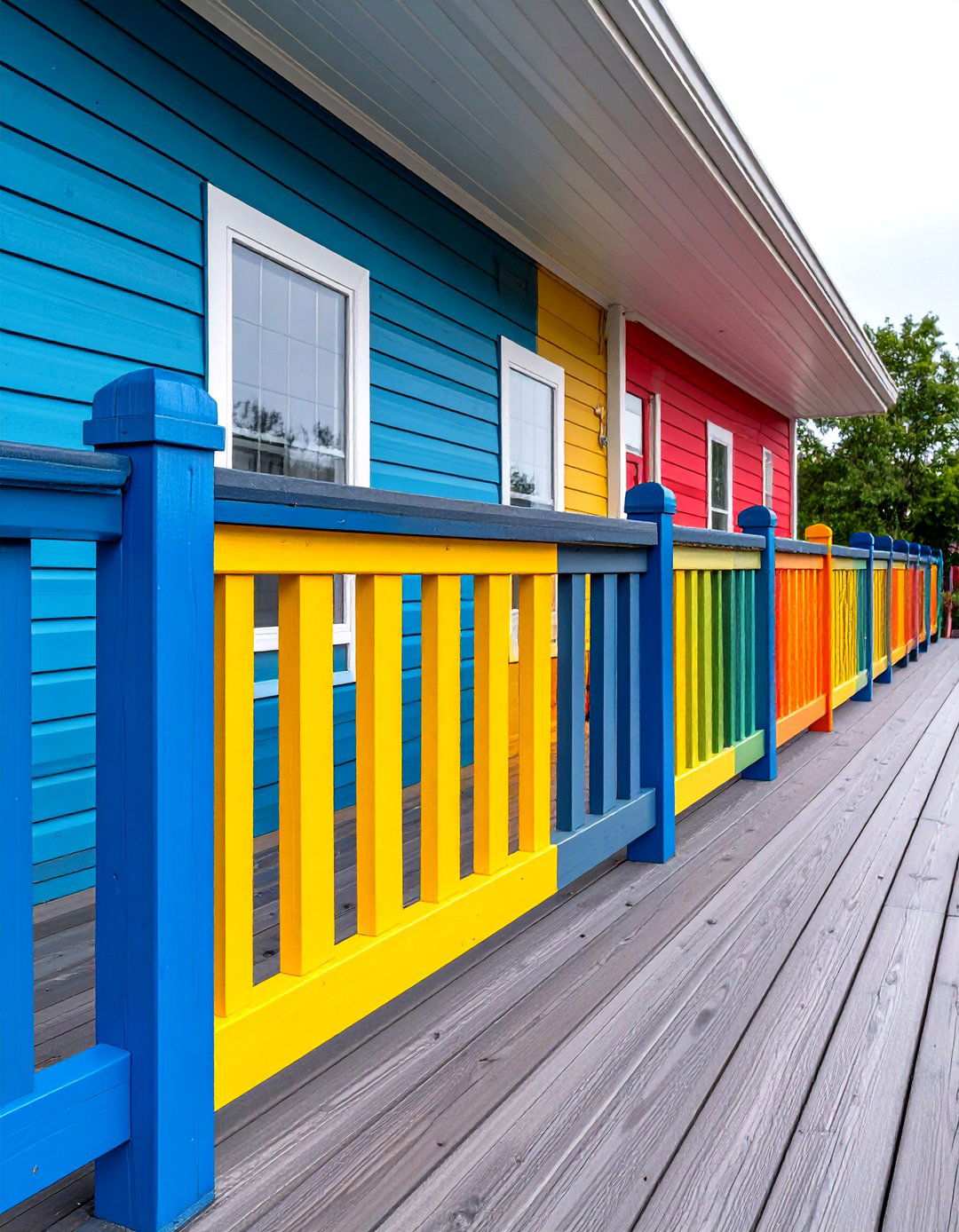
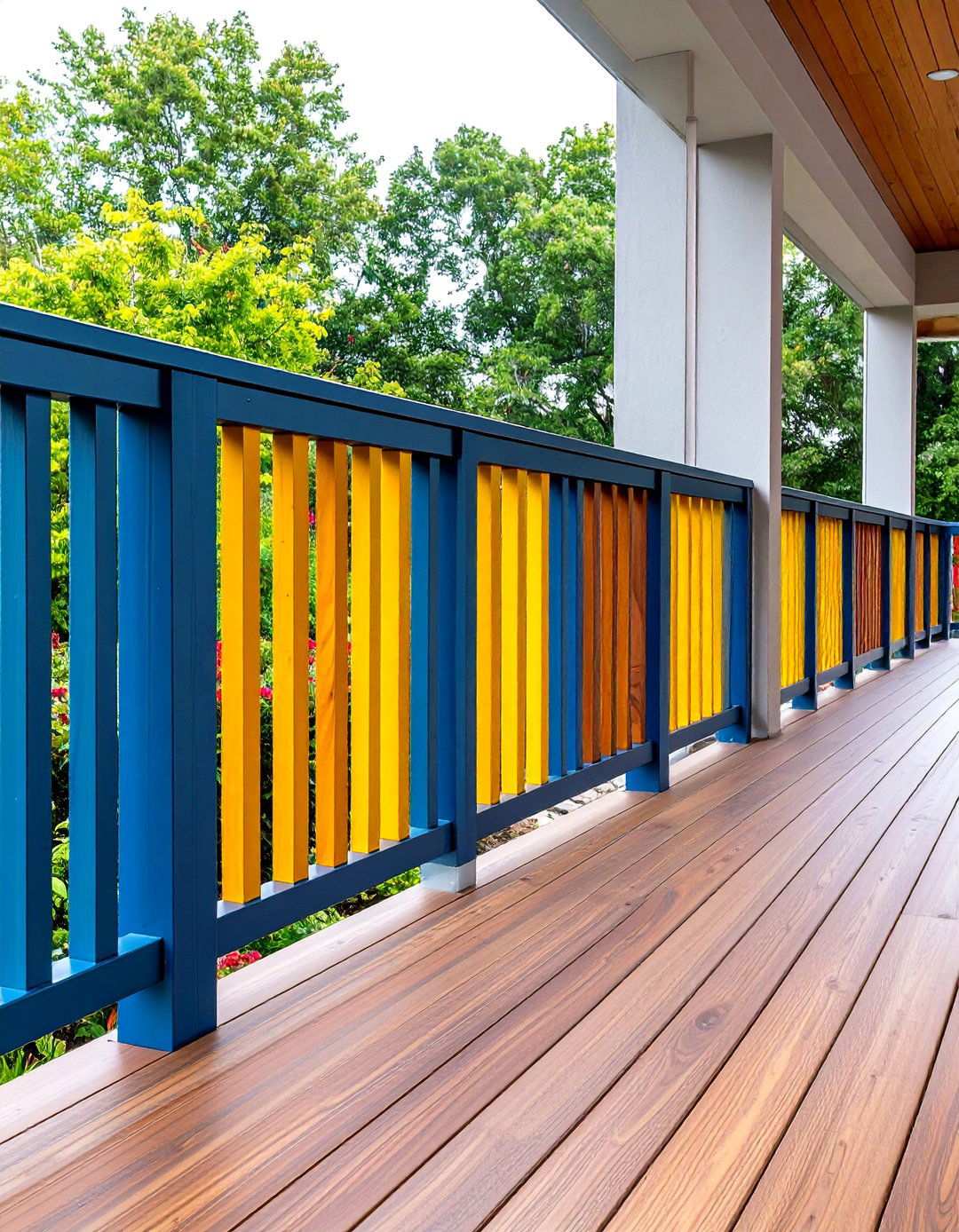
Exterior-grade paint applied to wood horizontal slats offers vibrant color opportunities while protecting lumber from weather exposure. Color choices range from classic whites and earth tones to bold contemporary hues that make striking design statements. How does paint color selection influence the perceived size and character of outdoor spaces? Lighter colors can make spaces feel larger and more airy, while darker tones create intimate, cozy atmospheres. High-quality exterior paints resist fading and chalking, providing years of attractive service. Proper surface preparation and primer application ensure lasting adhesion and color retention. This design allows for seasonal color changes or coordinating with changing landscape elements throughout the year.
18. Railing Systems that Shine: Integrated Horizontal Lighting
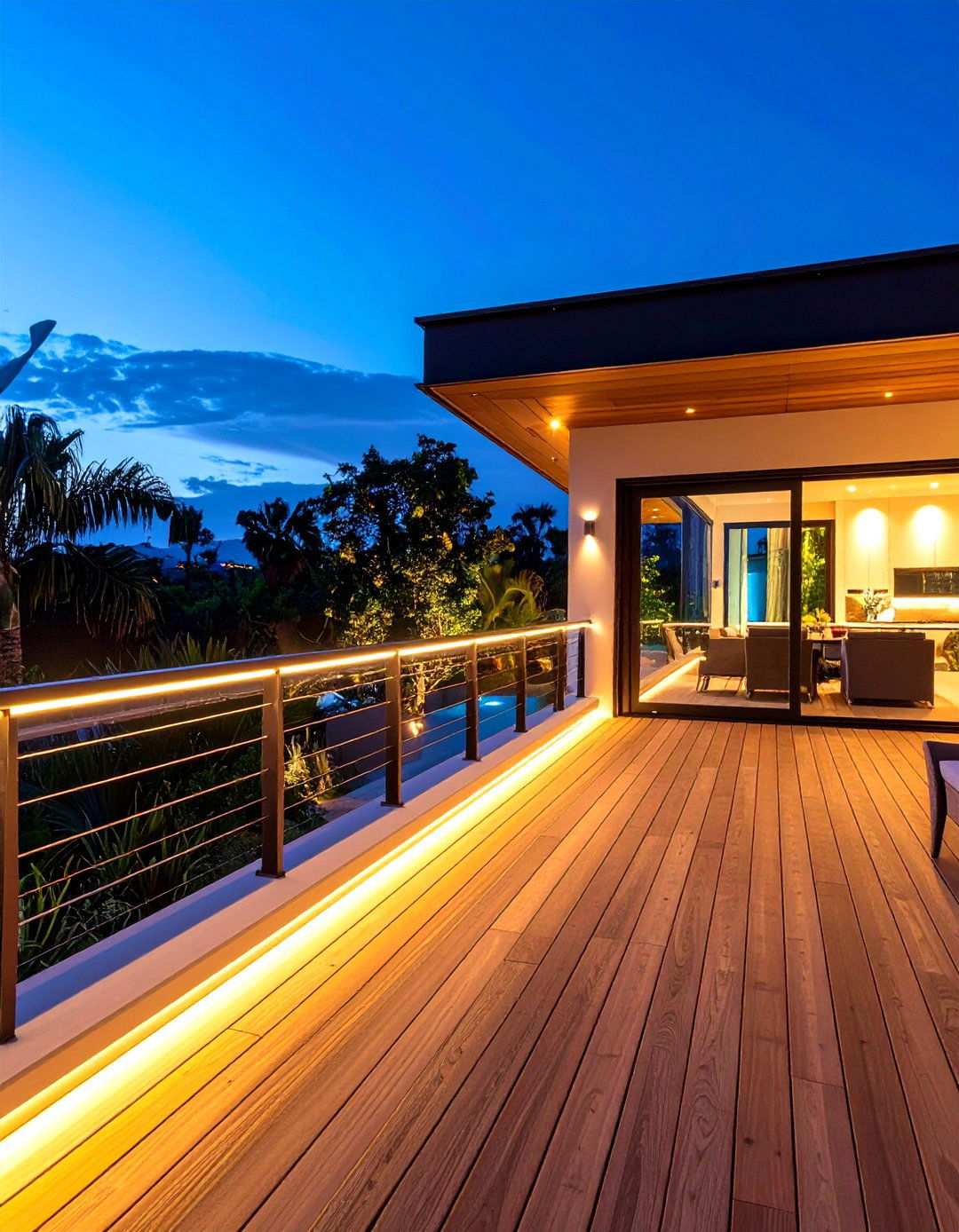
Elevate your outdoor ambiance with LED strip lighting seamlessly integrated into horizontal railing bars. Not only does this design create a breathtaking evening glow, but it also maintains a clean and minimalist appearance during the day. By installing low-voltage LED systems within hollow aluminum or composite rail profiles, you can ensure energy efficiency while enjoying the beauty of your outdoor space. The safety benefits of integrated railing lighting are undeniable, as evening illumination enhances deck safety and creates a dramatic architectural effect that extends your outdoor living into the nighttime hours. Additionally, smart lighting controls allow for color changes, dimming, and programmable effects that can be tailored to suit various occasions. By opting for solar charging options, you can enjoy environmentally friendly operation in sunny locations, further enhancing your outdoor experience.
19. The Art of Seclusion: Horizontal Slat Privacy Walls
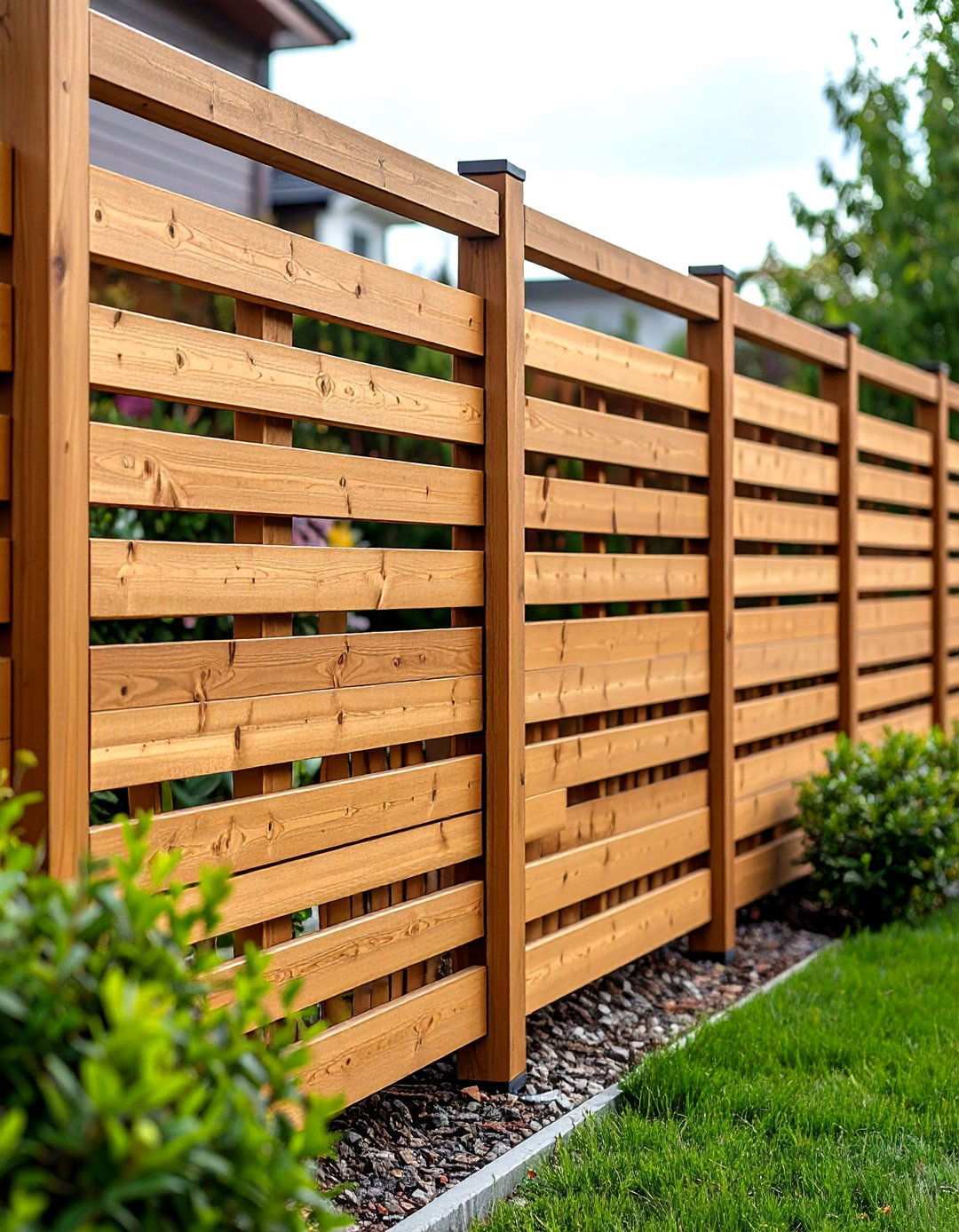
Horizontal slat designs offer a unique blend of functionality and aesthetics, providing substantial privacy screening while maintaining the clean lines of horizontal railing systems. By spacing slats closely together – typically between 1/4 inch to 1 inch – you can achieve an optimal balance of seclusion and weather protection. Homeowners often choose this design for entertaining areas and spa environments because it allows for complete privacy screening, transforming outdoor spaces into secluded retreats perfect for relaxation and intimate gatherings. The versatility of this design lies in its ability to incorporate various materials, such as cedar, composite, PVC, and aluminum, which can be coordinated with decking and architectural elements. Furthermore, the option to fine-tune privacy levels through variable spacing ensures that air circulation remains unobstructed. To add an extra layer of functionality, consider incorporating built-in planters or integrated seating into your privacy wall installation.
20. The Raw Beauty of Rebar: A Contemporary Design Statement
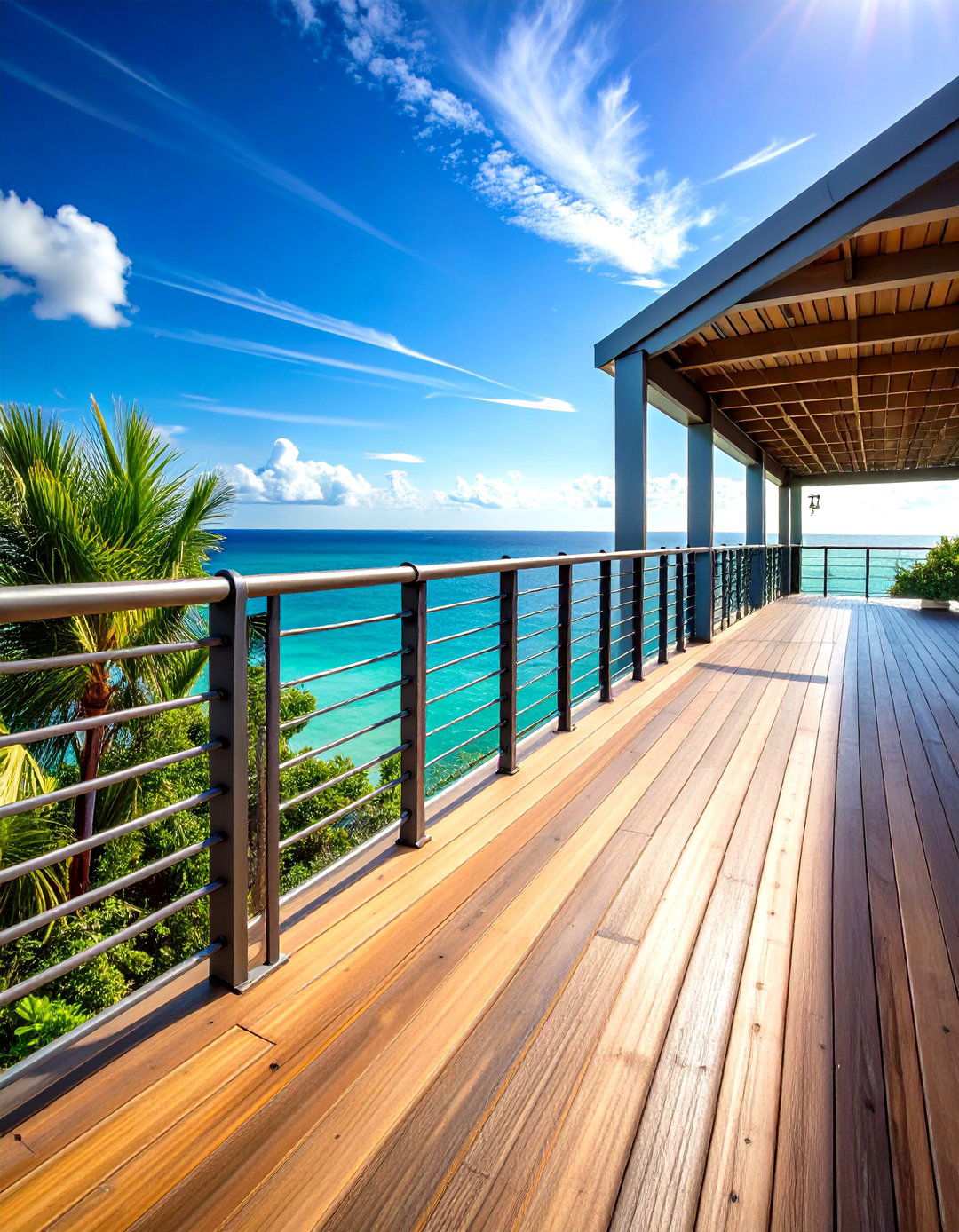
Construction-grade rebar arranged horizontally between steel posts creates a distinctly industrial aesthetic with exceptional strength and minimal cost. The ribbed surface texture of rebar adds visual interest, while the horizontal arrangement emphasizes architectural lines, creating a unique design statement. The utilitarian character of rebar appeals to designers seeking authentic industrial character, making it an ideal choice for workshops, industrial buildings, and contemporary homes. Protective coatings prevent corrosion, maintaining the characteristic appearance of construction materials, while ensuring long-term structural integrity with minimal maintenance requirements. By embracing the raw beauty of rebar, you can create a design that is both functional and visually striking, adding a touch of industrial chic to your outdoor space.
21. Horizontal Composite and Glass Combination
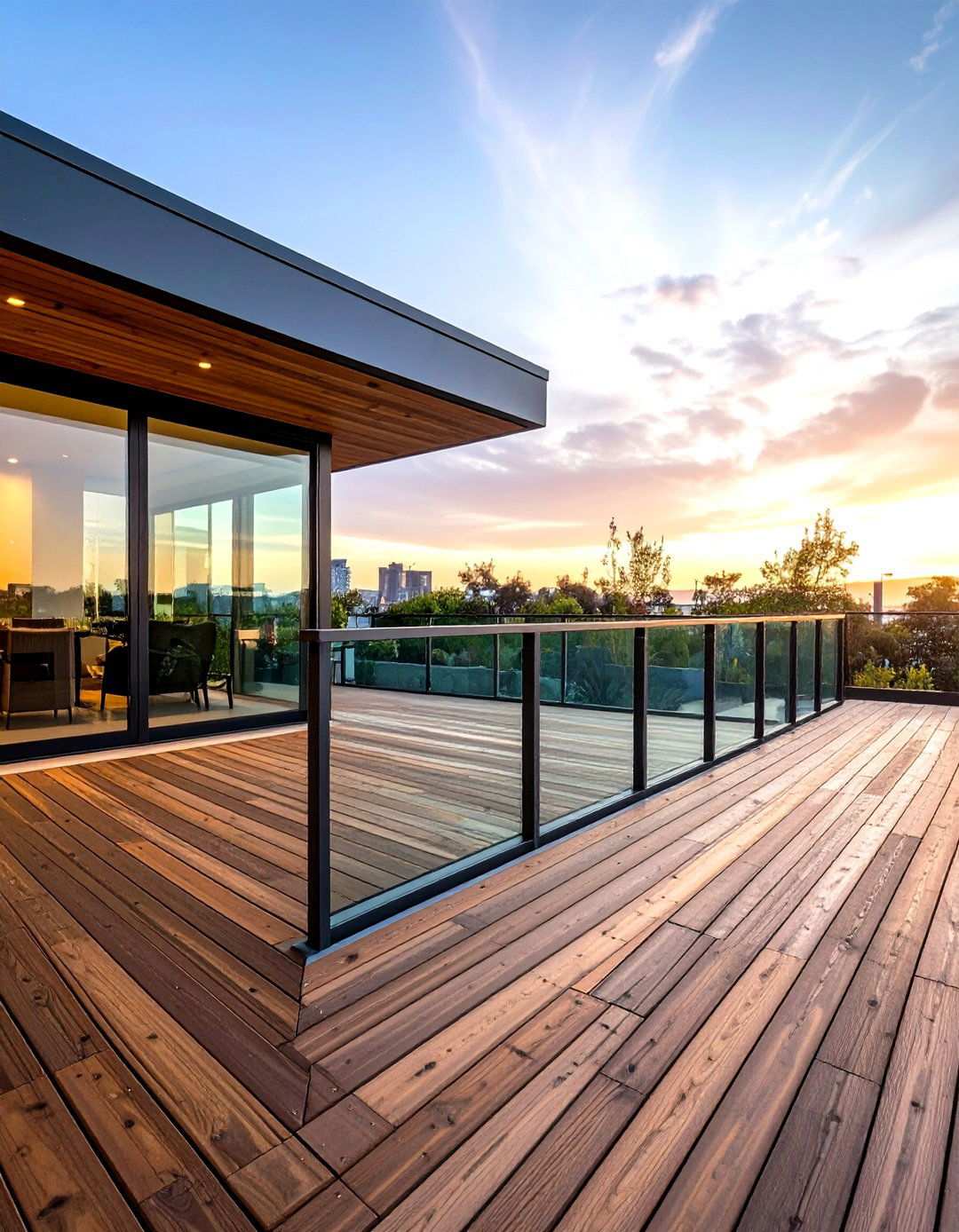
Sophisticated outdoor spaces often feature a harmonious blend of materials, with composite frames paired with tempered glass panels to create visually striking and structurally robust configurations. The composite framing’s natural wood appearance offers a low-maintenance aesthetic, while the glass component maintains an airy openness that enhances the ambiance. What benefits do composite-glass combinations confer upon varying environmental conditions? Composite materials exhibit enhanced durability due to their resistance to moisture, temperature fluctuations, and UV exposure, ensuring a long-lasting performance when paired with glass elements. Furthermore, frame colors can be coordinated with composite decking materials to create a cohesive outdoor environment. Glass options come in a range of clarity levels, from transparent to tinted or frosted varieties, allowing for varying degrees of privacy and light transmission. By entrusting professional installation, homeowners can ensure that their composite-glass combination is properly weathered and structurally attached.
22. Horizontal Metal Mesh Screen Design
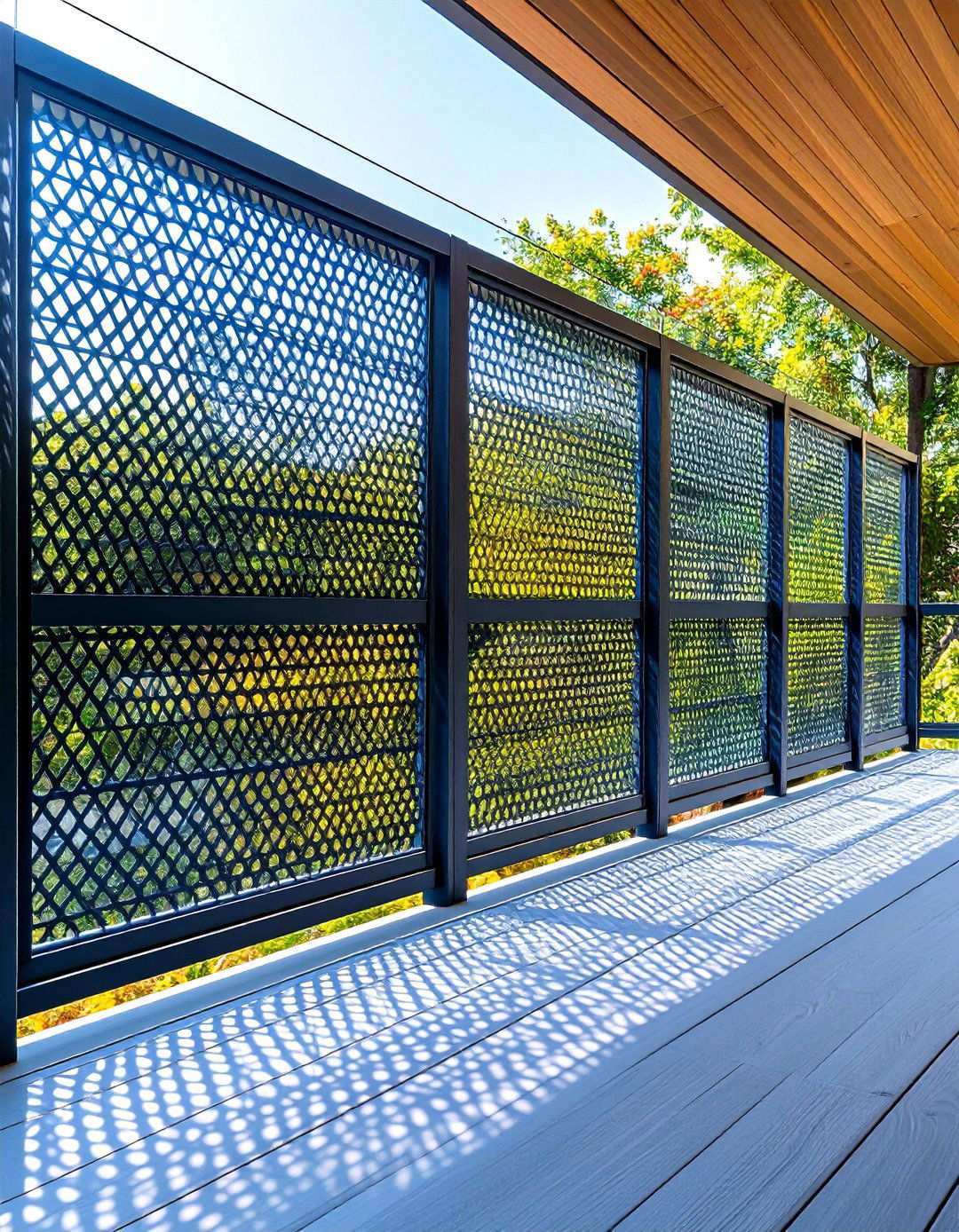
In architectural design, metal mesh stretched between horizontal frames offers a versatile solution for creating visually captivating screening that filters light and adds depth to outdoor spaces. The mesh’s intricate patterns range from finely woven fabrics that provide substantial privacy to bold geometric designs that emphasize decorative effects. Why do architects specify metal mesh for both functional and aesthetic purposes? This material combines the benefits of privacy screening with wind resistance while creating distinctive shadow patterns and visual texture. Metal mesh materials come in a variety of forms, including aluminum, stainless steel, and specialty alloys, each offering distinct appearance characteristics and performance qualities. By carefully coordinating frame systems with mesh selection, architects can create cohesive installations that range from understated to boldly dramatic.
23. Horizontal Wood and Cable Hybrid System
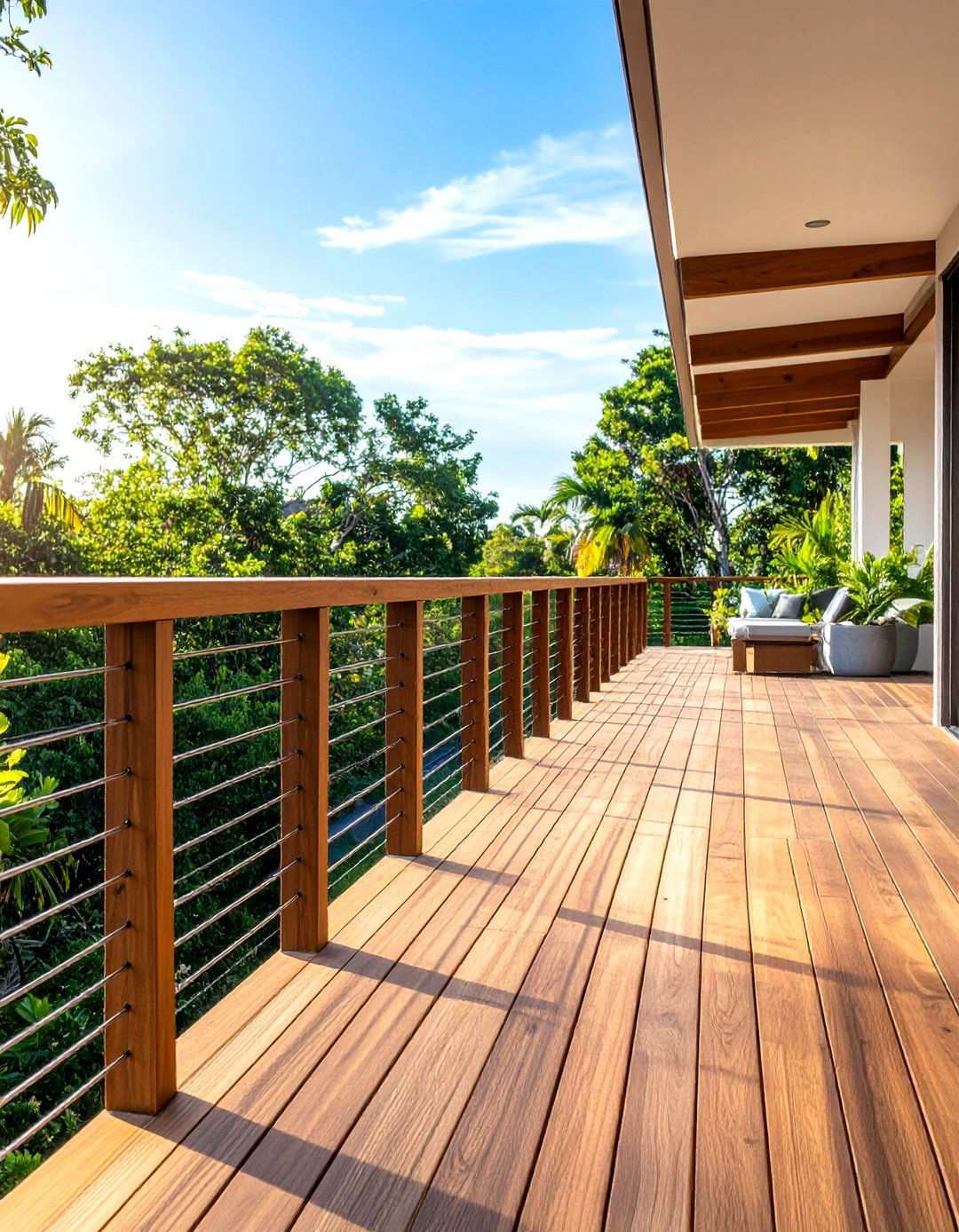
The combination of wood rails and horizontal stainless steel cables results in a unique aesthetic that seamlessly blends natural warmth with modern minimalism. Typically, wood elements form the top and bottom rails, while cables provide infill that maintains view transparency. How does this hybrid approach balance traditional and contemporary design elements? The flexibility of this design allows for customization of the materials’ ratio, from wood-dominant configurations with cable accents to cable-focused systems with wood framing. Cable tensioning systems are designed to integrate discreetly with wood elements, maintaining a clean appearance. This design is particularly well-suited where traditional architectural elements can benefit from contemporary updates without sacrificing their essential character.
24. Horizontal Perforated Metal Panel Design
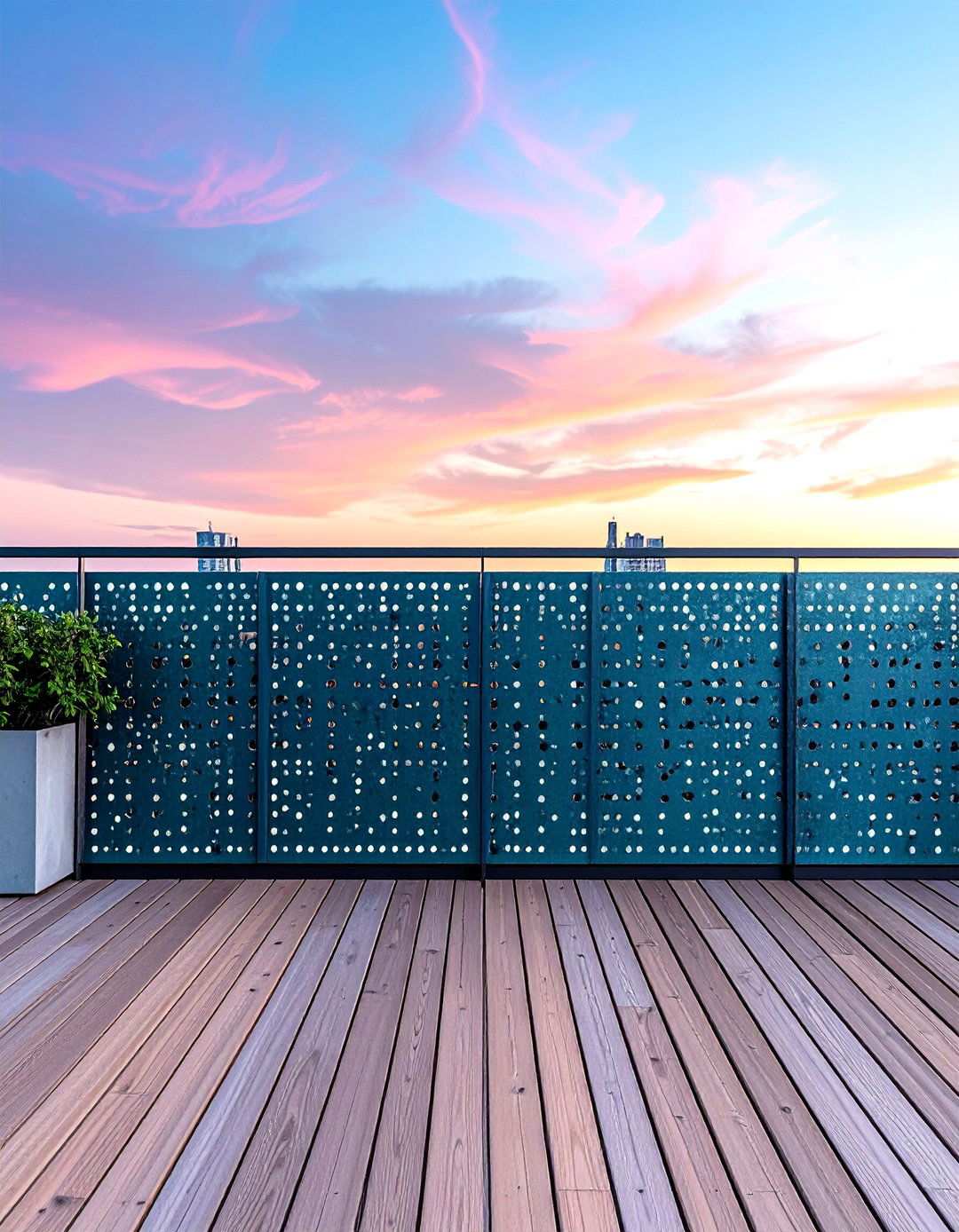
Customizable perforated metal panels with horizontal installation bring a sleek, modern aesthetic to screening solutions, offering adjustable levels of privacy and unique shadow effects. By carefully balancing the ratio of open areas to solid material, designers can craft a wide range of perforation patterns, from dense, intricate meshes to more expansive, decorative designs. This versatility enables the creation of personalized railing systems that not only meet functional needs but also express individual style.
In fact, the possibilities offered by custom perforation patterns are virtually limitless, thanks to computer-controlled manufacturing capabilities. This technology allows designers to experiment with a wide range of geometric and organic patterns, including intricate motifs that reflect unique personalities. Meanwhile, panel materials such as aluminum, steel, and specialty alloys can be paired with various finish options to create a wide range of visual effects. The horizontal orientation of these panels draws attention to the linear quality of perforation patterns, resulting in distinctive architectural elements that serve both functional and decorative purposes.