1. Crafting Timeless Elegance with Yellow Exteriors
A single stroke of vibrant yellow can transform a neighborhood, infusing it with warmth and optimism. This bold color choice offers a versatile canvas for creating stunning curb appeal that stands out while maintaining timeless sophistication. From soft, buttery tones that whisper refinement to bold mustard hues that make confident statements, yellow provides a rich foundation for diverse architectural styles. Whether you’re drawn to traditional farmhouse charm, contemporary minimalism, or classic colonial elegance, yellow exteriors can complement any design vision by striking a perfect balance between welcoming and stylish.

As an Amazon Associate I earn from qualifying purchases.
2. Finding Harmony in Craftsman Yellow Bungalows
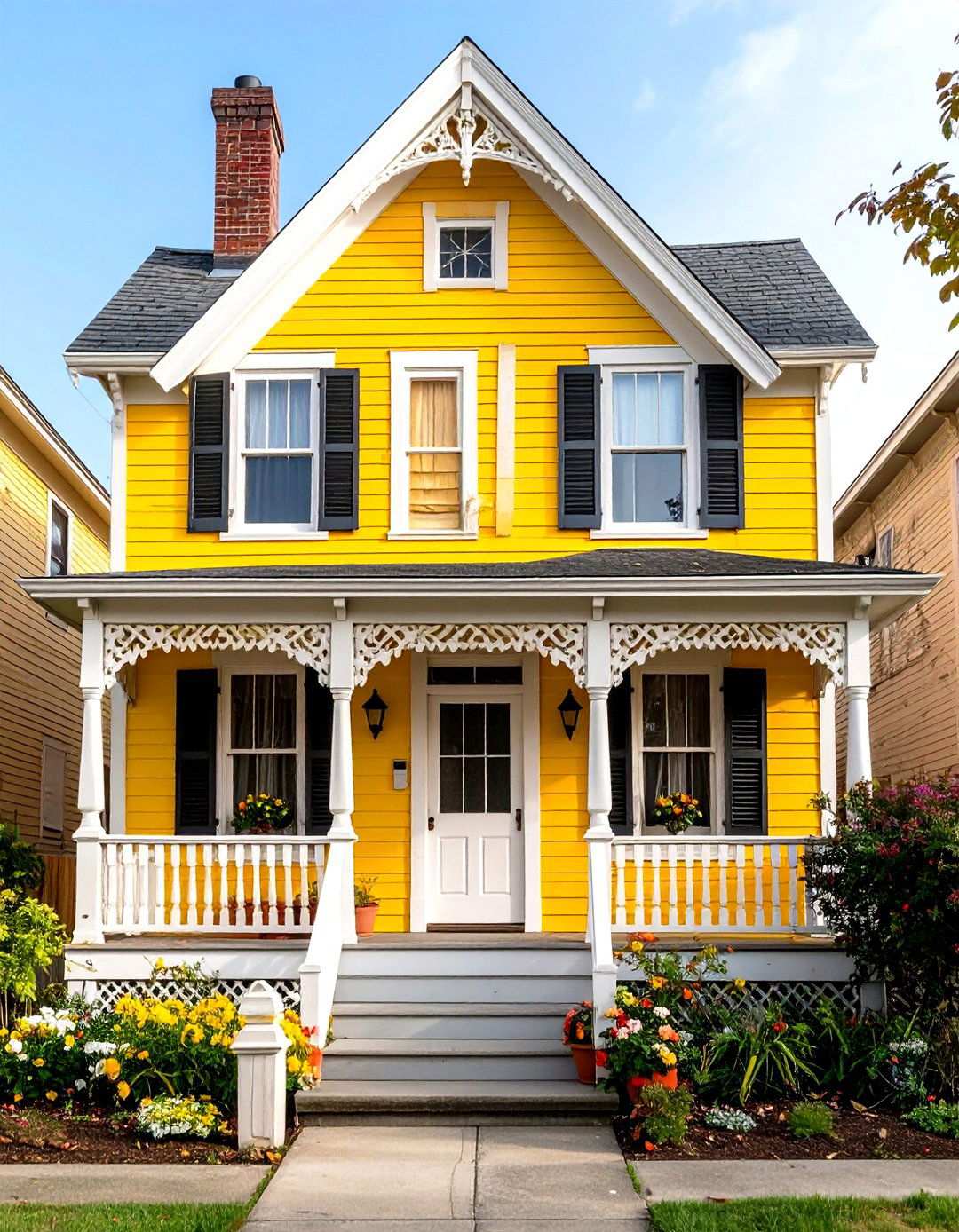
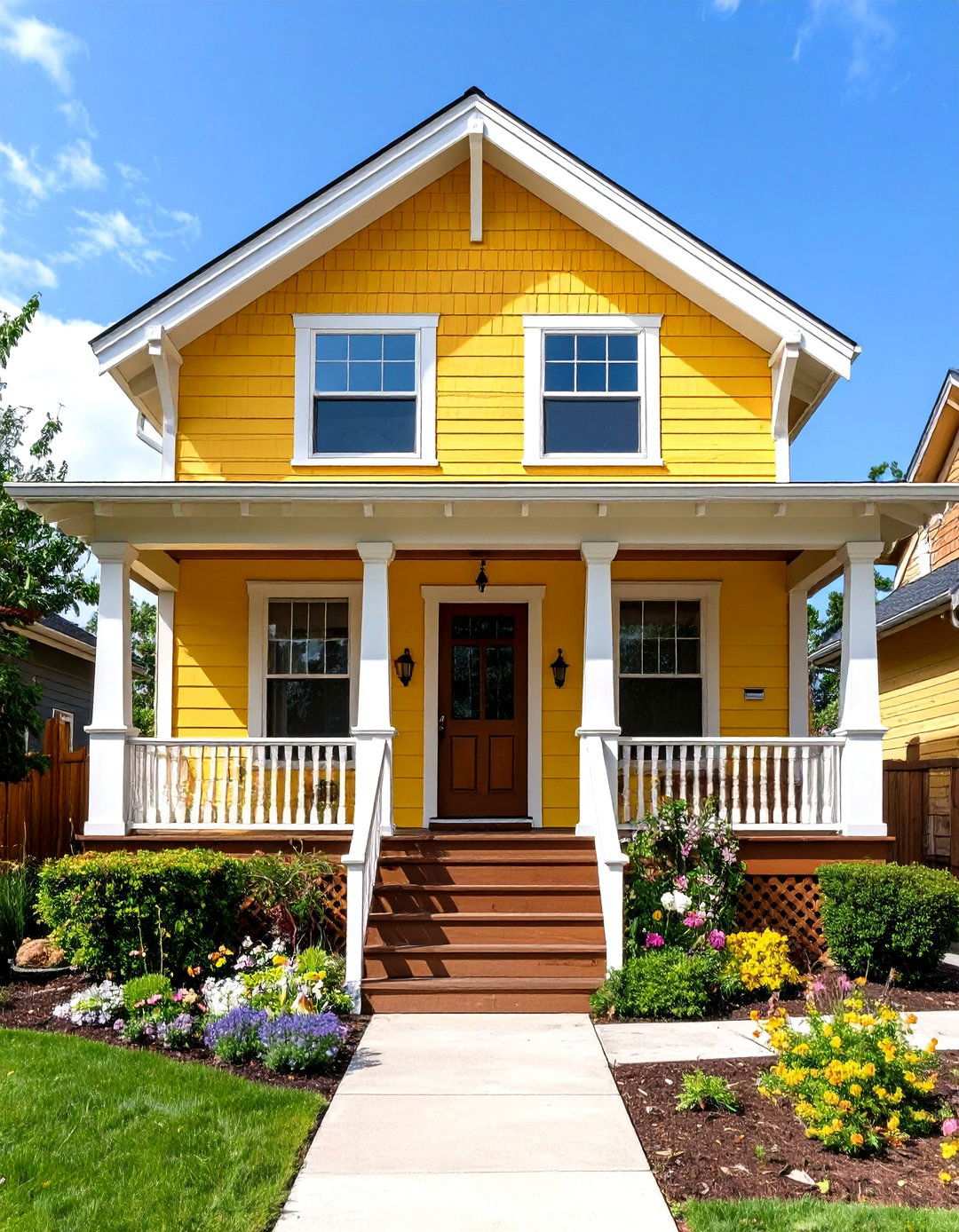
The union of yellow siding and classic craftsman elements creates an inviting aesthetic that celebrates both color and craftsmanship. For a craftsman home to truly shine in warm yellow tones, pair muted butter yellow siding with rich brown or forest green trim to emphasize the home’s distinctive architectural features. The wide front porch, a hallmark of craftsman design, becomes even more inviting when framed by crisp white railings and natural wood accents. Deep overhanging eaves provide perfect shadows that enhance the yellow’s depth, while exposed rafter tails add authentic craftsman character that beautifully complements the sunny exterior.
3. Victorian Yellow Cottage with Ornate Details
(Please provide the next part of the article to continue rewriting)
Timeless Colonial Charm with Warm Yellow Accents
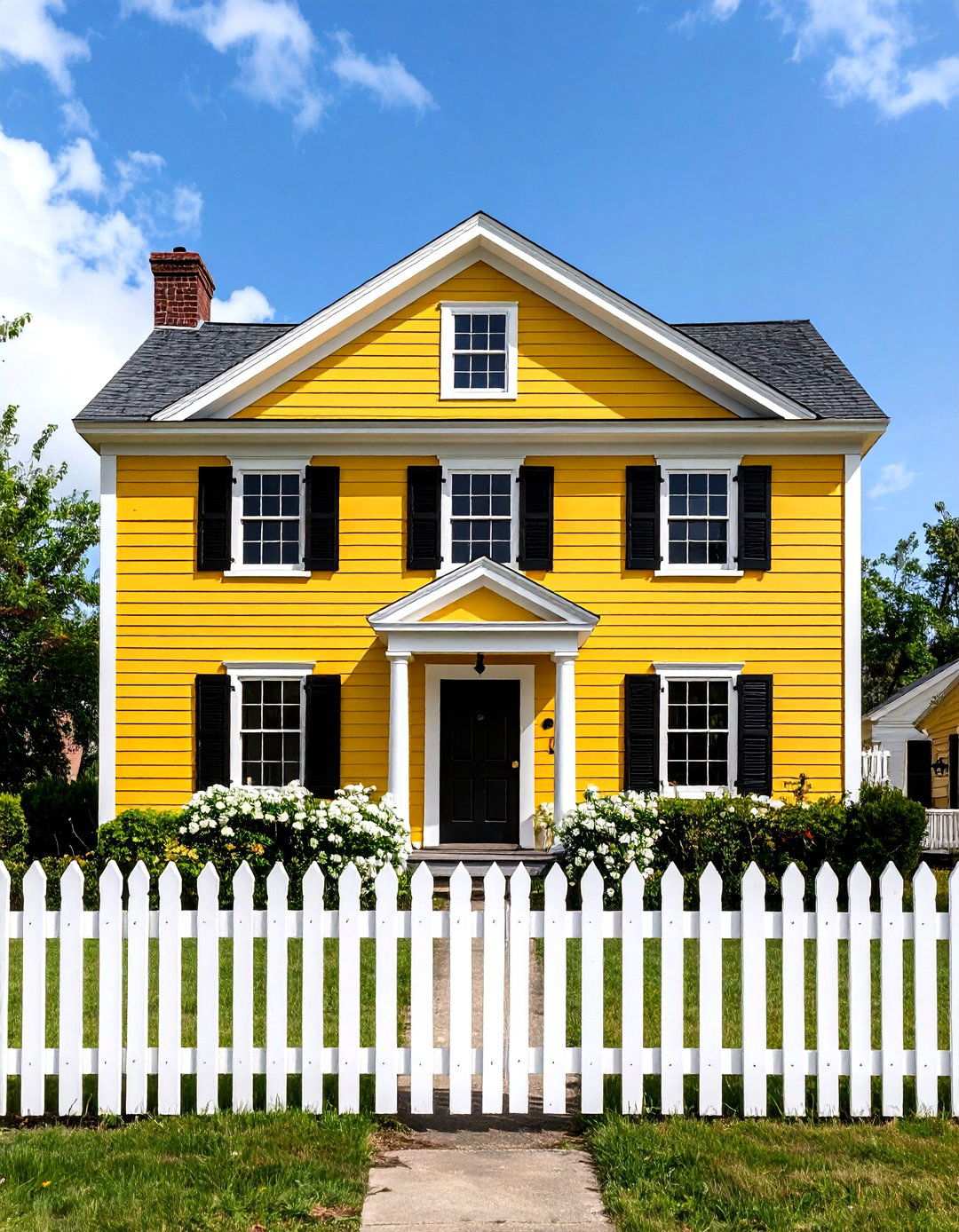
Colonial architecture is renowned for its classic design, and incorporating bold yellow hues can elevate its timeless appeal. By pairing rich golden yellow siding with crisp white trim, homeowners can create a visually striking yet historically authentic facade. The symmetrical layout of traditional colonial homes lends itself perfectly to this warm color combination, which is further enhanced by the judicious use of black shutters and a white picket fence. A brick pathway adds warmth and texture, while a well-placed front door and proportional windows maintain the home’s classic, welcoming atmosphere. This harmonious balance of colors and design elements pays homage to colonial architectural traditions while infusing the space with a sense of warmth and personality.
4. Bold Yellow Statements in Modern Architecture
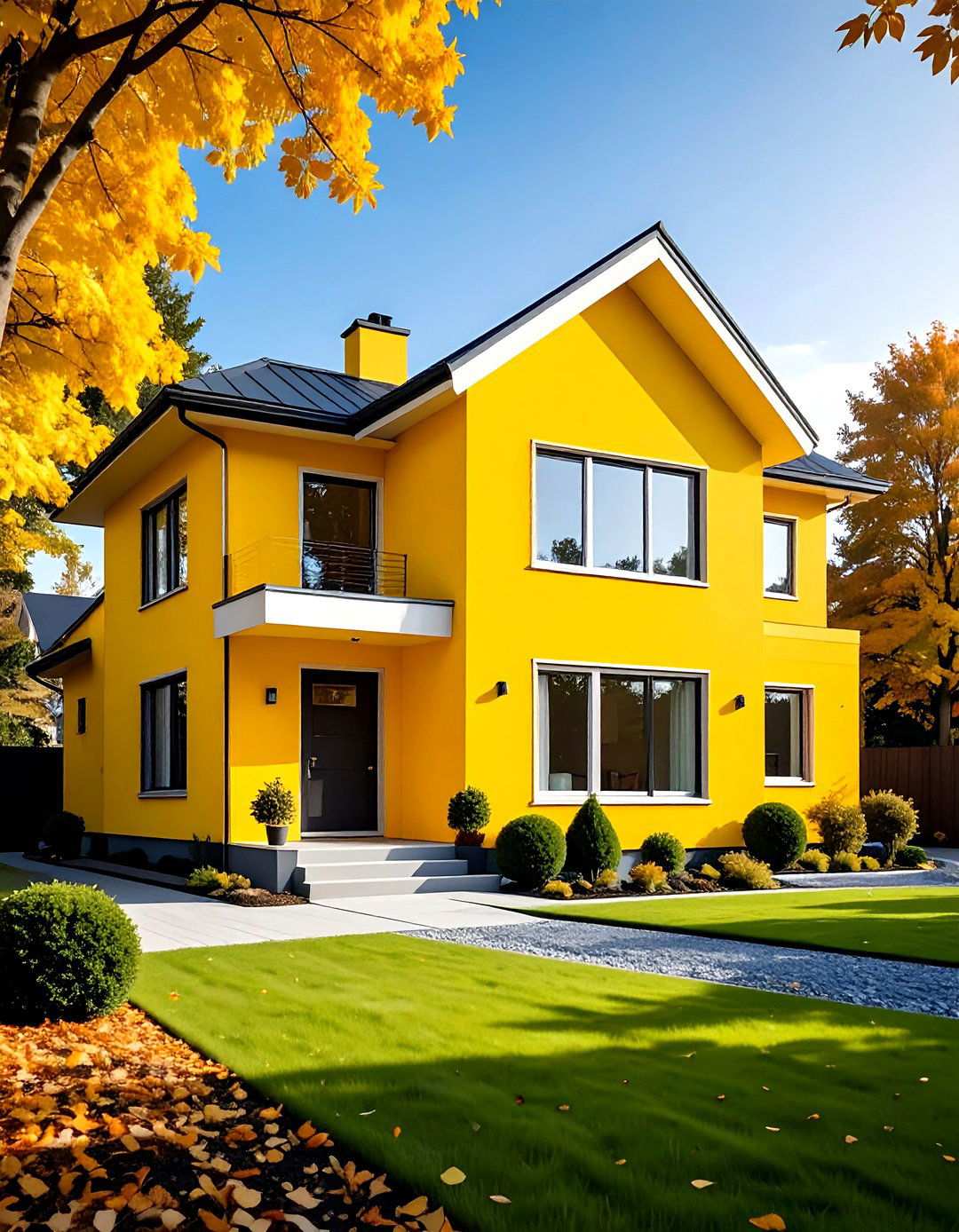
Modern homes often feature bold, geometric designs that can be perfectly complemented by vibrant yellow exteriors. When executed with precision and a clear understanding of clean lines, saturated yellow can become a stunning focal point. By pairing this vibrant hue with sleek white or gray trim, architects and homeowners can create a striking visual contrast that emphasizes the home’s angular design. The judicious use of floor-to-ceiling windows can create dramatic effects while flooding the interior with natural light. Flat rooflines and minimalist decorative elements allow the yellow to take center stage, while metal accents in black or charcoal add sophistication and depth to the design. This approach not only creates striking curb appeal but also reflects a fresh and confident attitude.
5. Rustic Farmhouse Charm with Yellow Accents and Wraparound Porch
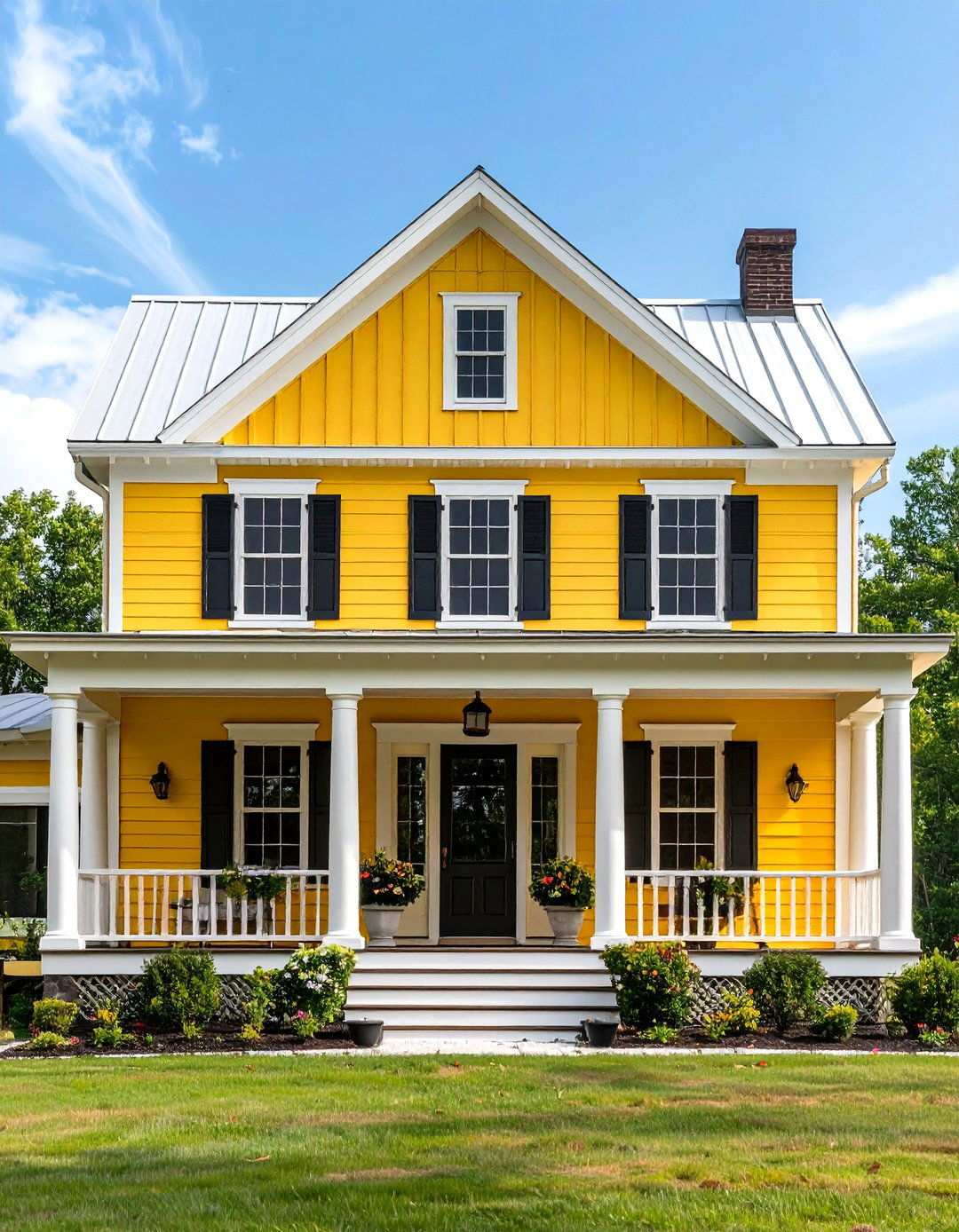
There’s something quintessentially charming about a yellow farmhouse with an expansive front porch, inviting family gatherings and creating a sense of community. By selecting a warm honey yellow for board-and-batten or lap siding, homeowners can create a welcoming atmosphere that’s reminiscent of rural charm. White trim highlights architectural details, while the characteristic wraparound porch becomes an extension of living space. The judicious use of white columns and railings creates inviting seating areas, and a metal roof in charcoal or forest green adds practical durability while balancing the bright exterior. Climbing vines and hanging planters soften the architectural lines, creating a home that embodies the essence of country living at its finest. This harmonious combination of colors and design elements makes for a truly special and inviting space.
6. Coastal Elegance in Soft Yellow
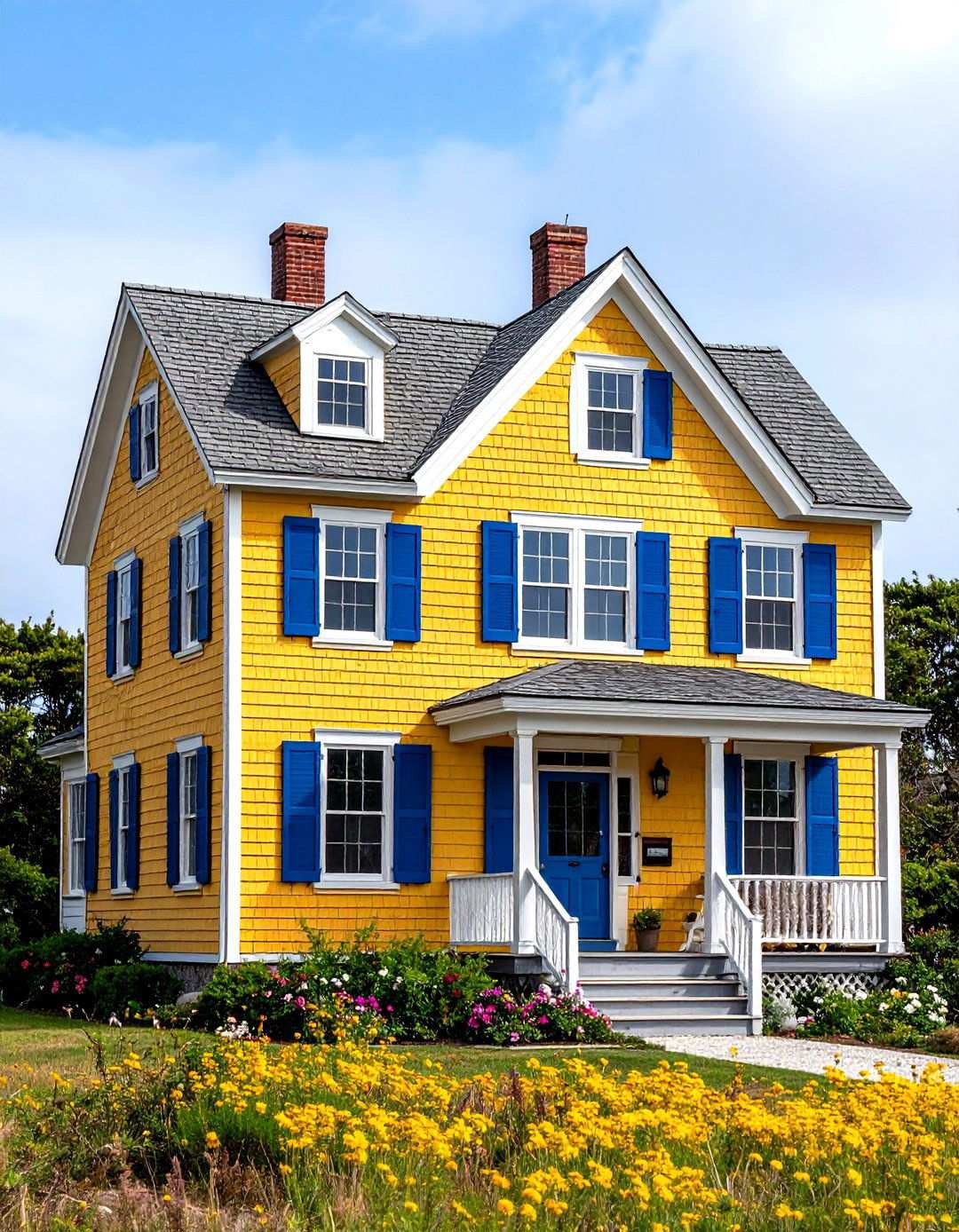
Cape Cod yellow homes embody a quintessential coastal charm that seamlessly blends traditional design with ocean-inspired relaxation. By incorporating soft butter yellow exteriors, homeowners can create a sunny seaside retreat that exudes warmth and tranquility. Weathered yellow shingles or clapboard siding paired with crisp white trim evoke an authentic coastal aesthetic, while dormer windows and steep rooflines add depth and visual interest to the yellow palette. Navy blue shutters provide a striking nautical contrast, protecting windows from harsh weather and adding a touch of classic sophistication. A white picket fence and coastal landscaping with ornamental grasses complete the beachside ambiance, resulting in a home that feels both timeless and refreshingly bright.
7. Golden Glow in Tudor Architecture
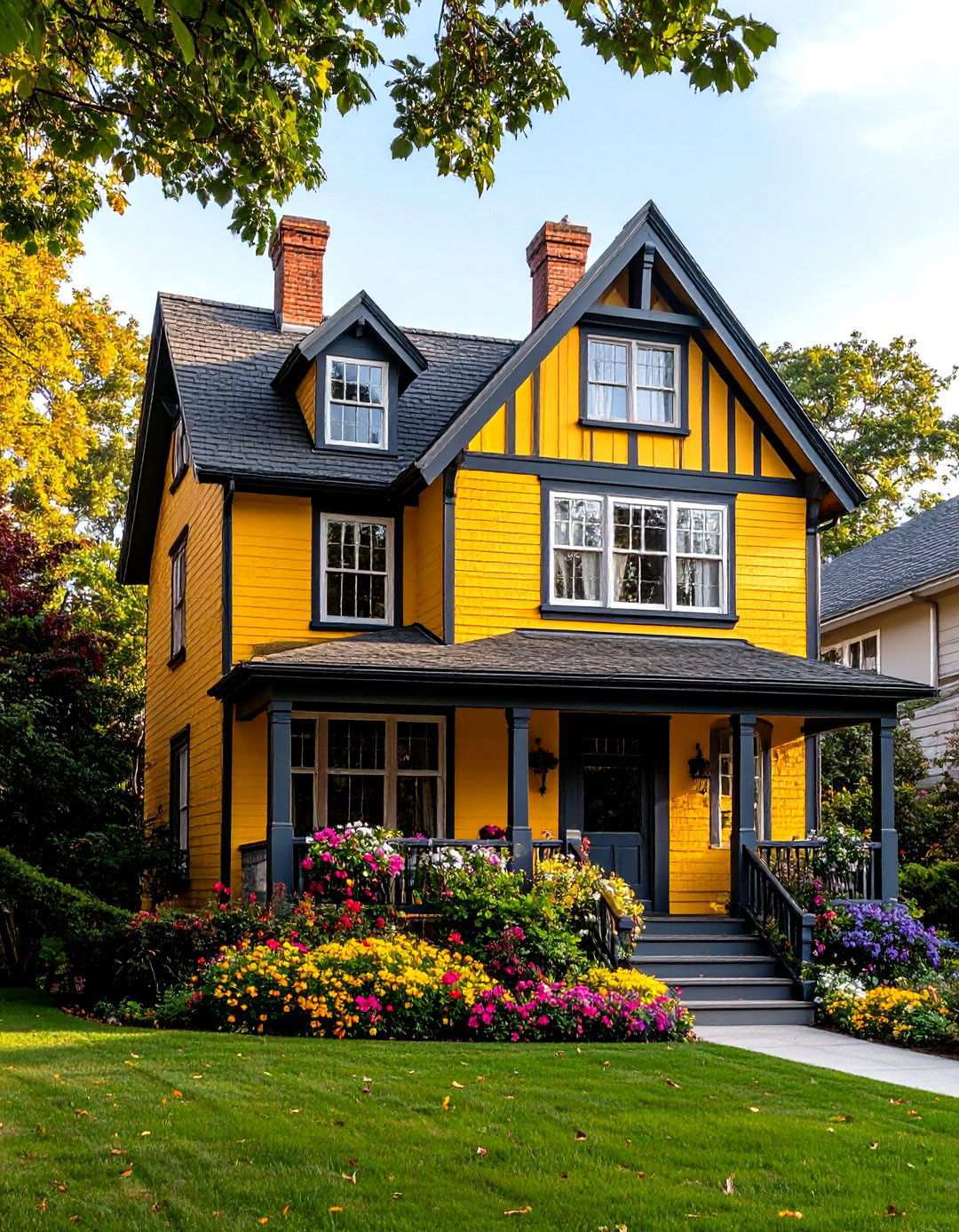
Tudor homes can indeed successfully incorporate yellow coloring, elevating the style’s distinctive character with a rich, warm ambiance. By thoughtfully applying yellow, homeowners can create a stunning backdrop for Tudor’s dramatic timber framing and medieval-inspired details. A rich golden yellow stucco or siding provides a perfect foil for dark brown timber accents, emphasizing the home’s structural framework and creating a sense of depth and complexity. Steep rooflines and multiple gables cast natural shadow patterns, enhancing the color’s depth and visual appeal. Leaded glass windows and arched doorways maintain period authenticity, while benefiting from the warm yellow background that transforms the home into a welcoming and distinctive presence in any neighborhood.
8. Sunny Mediterranean Abodes
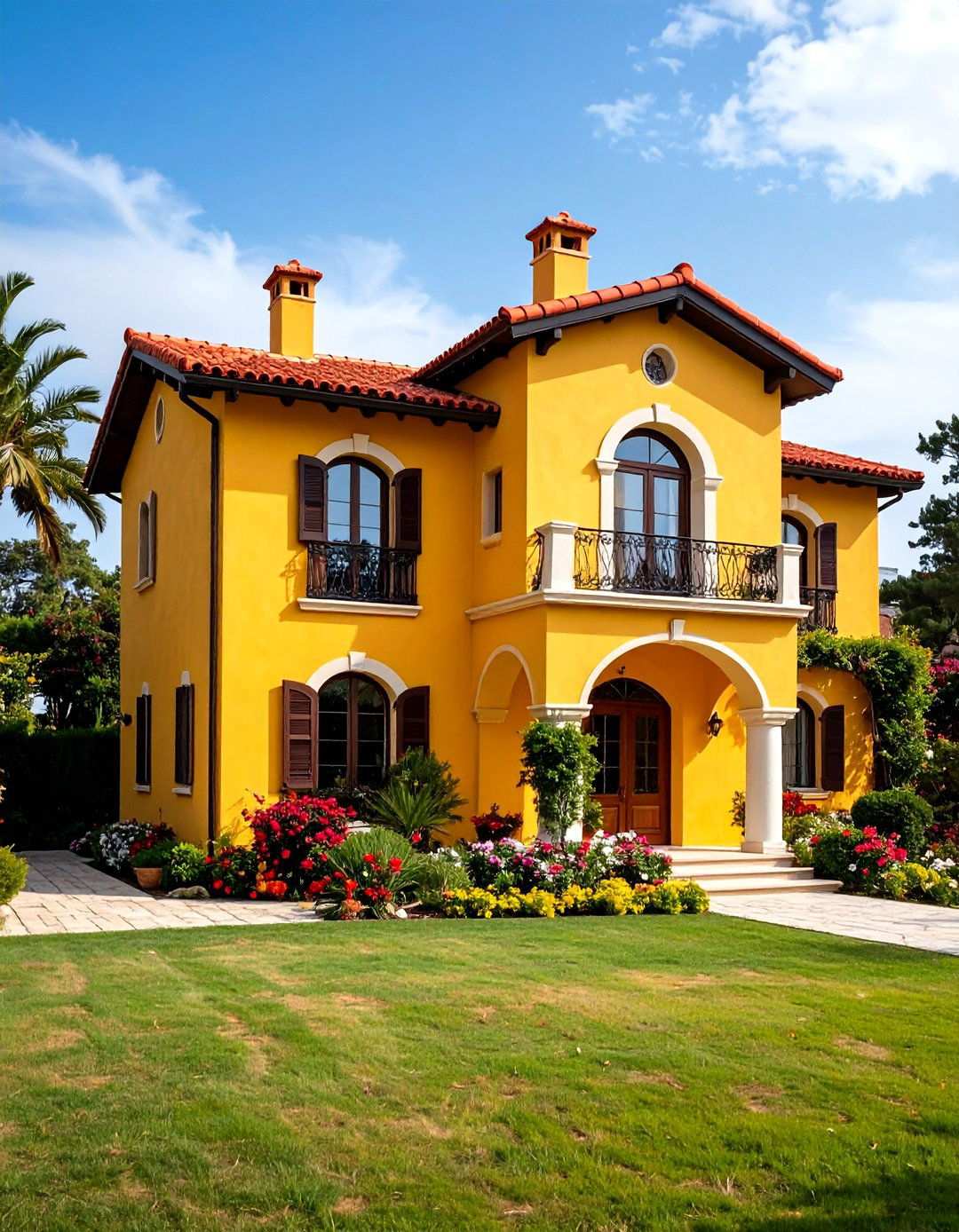
In authentic Mediterranean architecture, yellow plays a vital role in capturing the sun-soaked essence of coastal regions. Warm yellow exteriors provide a perfect backdrop for distinctive architectural elements, such as red tile roofing and wrought iron details. A terra cotta-influenced yellow for stucco walls, complemented by arched windows and doorways, creates beautiful shadows that enhance the yellow’s richness and depth. Stone or tile accents in natural earth tones provide textural contrast, while maintaining the regional aesthetic. Lush landscaping with olive trees, lavender, and other Mediterranean plants completes the villa atmosphere, transforming everyday living into something special and memorable. This approach creates an exotic, vacation-like feeling that’s perfect for those seeking a tranquil retreat.
9. Captivating the Suburban Landscape with Yellow
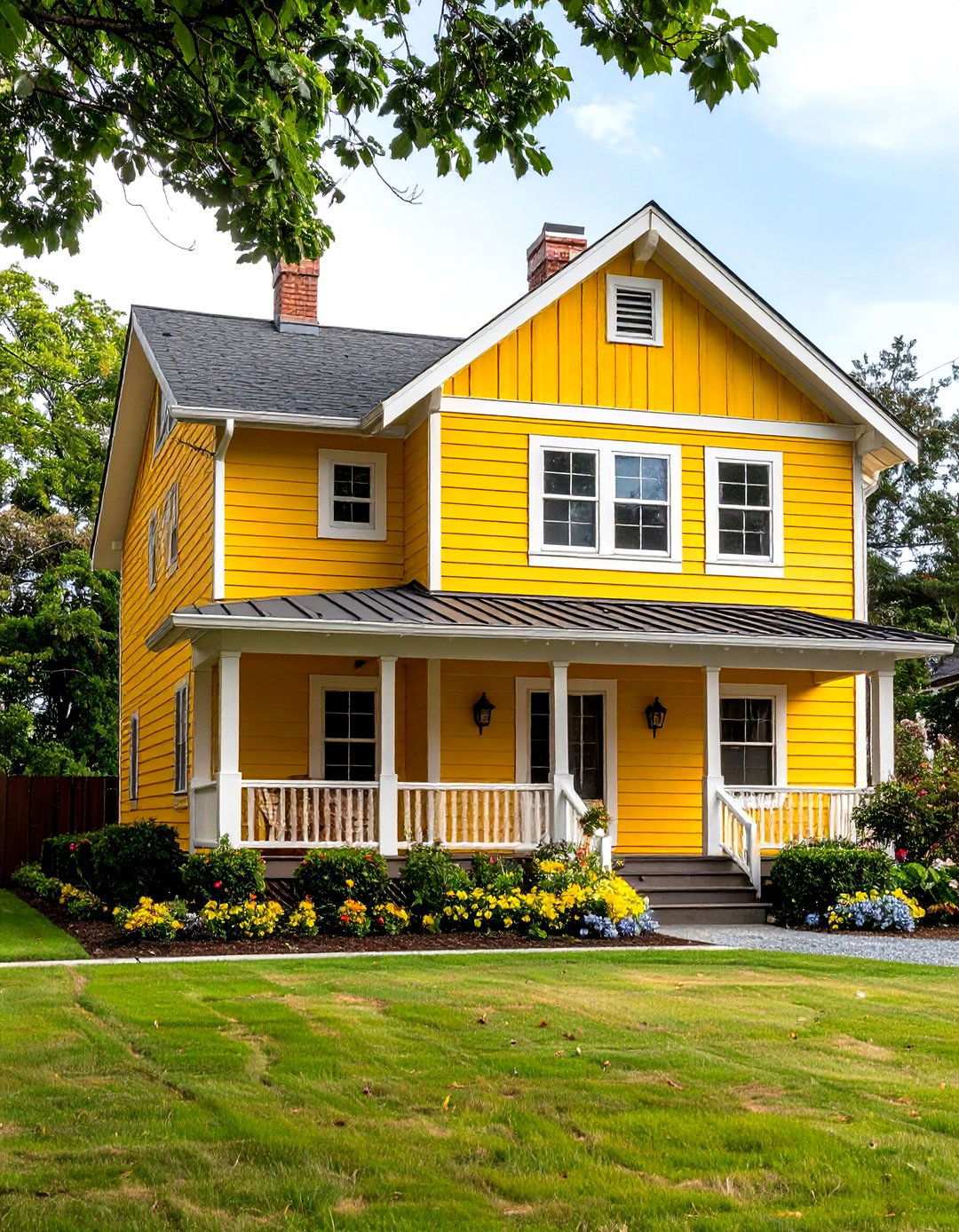
Ranch-style homes are primed to showcase the uplifting effects of yellow, capitalizing on their horizontal lines to create a harmonious union with their surroundings. The clean, minimalist aesthetic of ranch architecture provides an ideal backdrop for warm, golden hues that emphasize the home’s natural proportions. By choosing a sunny yellow for horizontal siding, homeowners can create a sense of continuity with the landscape, while large picture windows, framed with contrasting trim, become striking focal points. A covered entrance or carport maintains the home’s emphasis on seamless indoor-outdoor living, while providing sheltered spaces. The judicious use of stone or brick accents adds textural interest without overpowering the yellow’s radiant presence. This thoughtful combination yields a home that exudes both modernity and timelessness, perfectly suited to suburban or rural settings.
10. Unleashing the Dramatic Potential of Yellow in Queen Anne Victorians
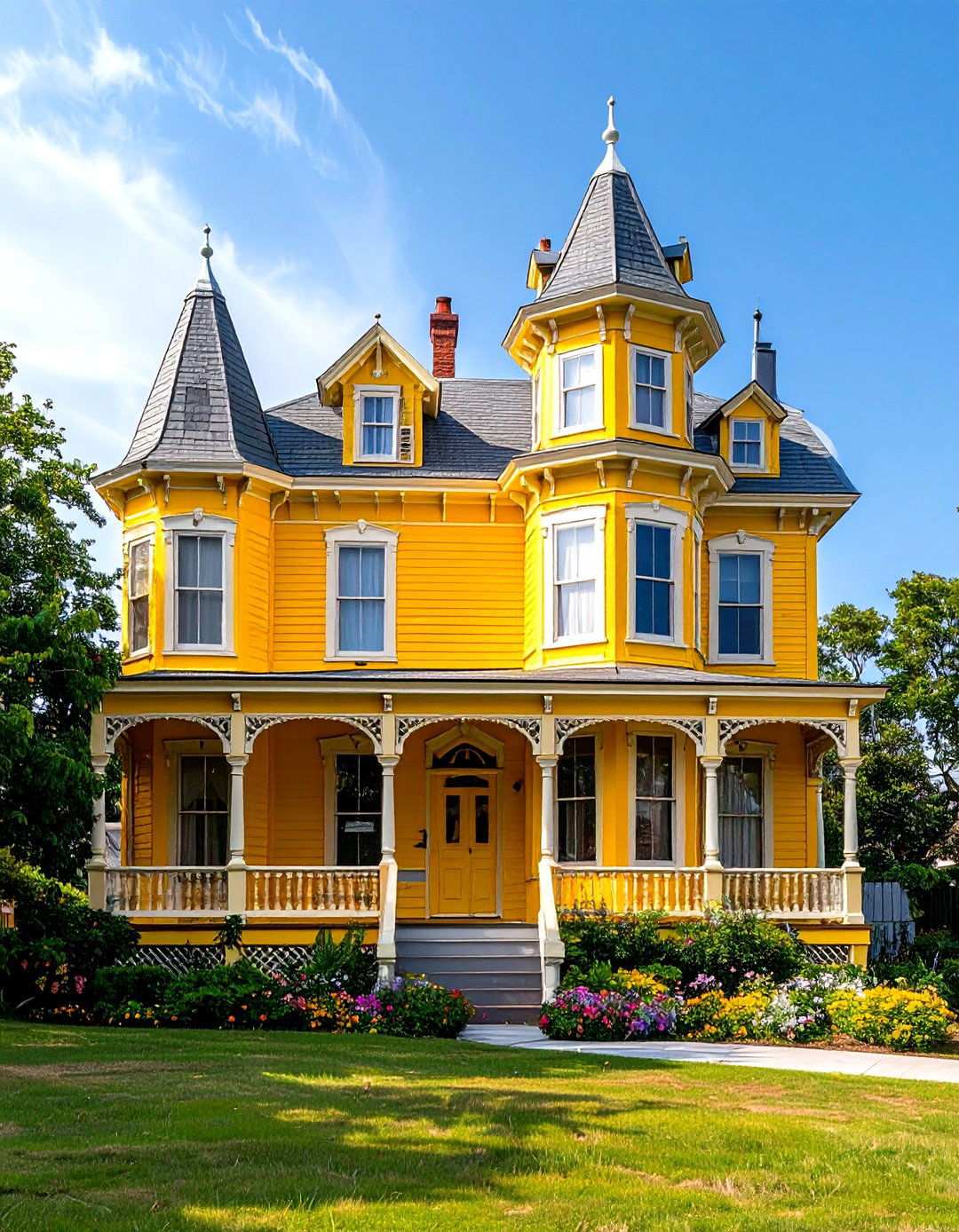
In the ornate world of Queen Anne Victorian architecture, yellow is a color that truly shines, offering the perfect opportunity to celebrate elaborate details while showcasing bold, bright hues. By selecting a rich, buttery yellow for main surfaces, homeowners can create a stunning backdrop for turrets, bay windows, and decorative trim, highlighted with complementary colors like sage green or deep purple. The asymmetrical design of Queen Anne homes presents a multitude of surfaces and angles, allowing yellow to demonstrate its remarkable versatility. When paired with ornate woodwork and gingerbread details, the yellow background becomes a masterful canvas, elevating these decorative elements into eye-catching accents. This thoughtful approach creates a true showpiece that honors the craftsmanship of the Victorian era while boldly expressing personal style and architectural appreciation.
11. Embracing Yellow in Shingle-Style Architecture
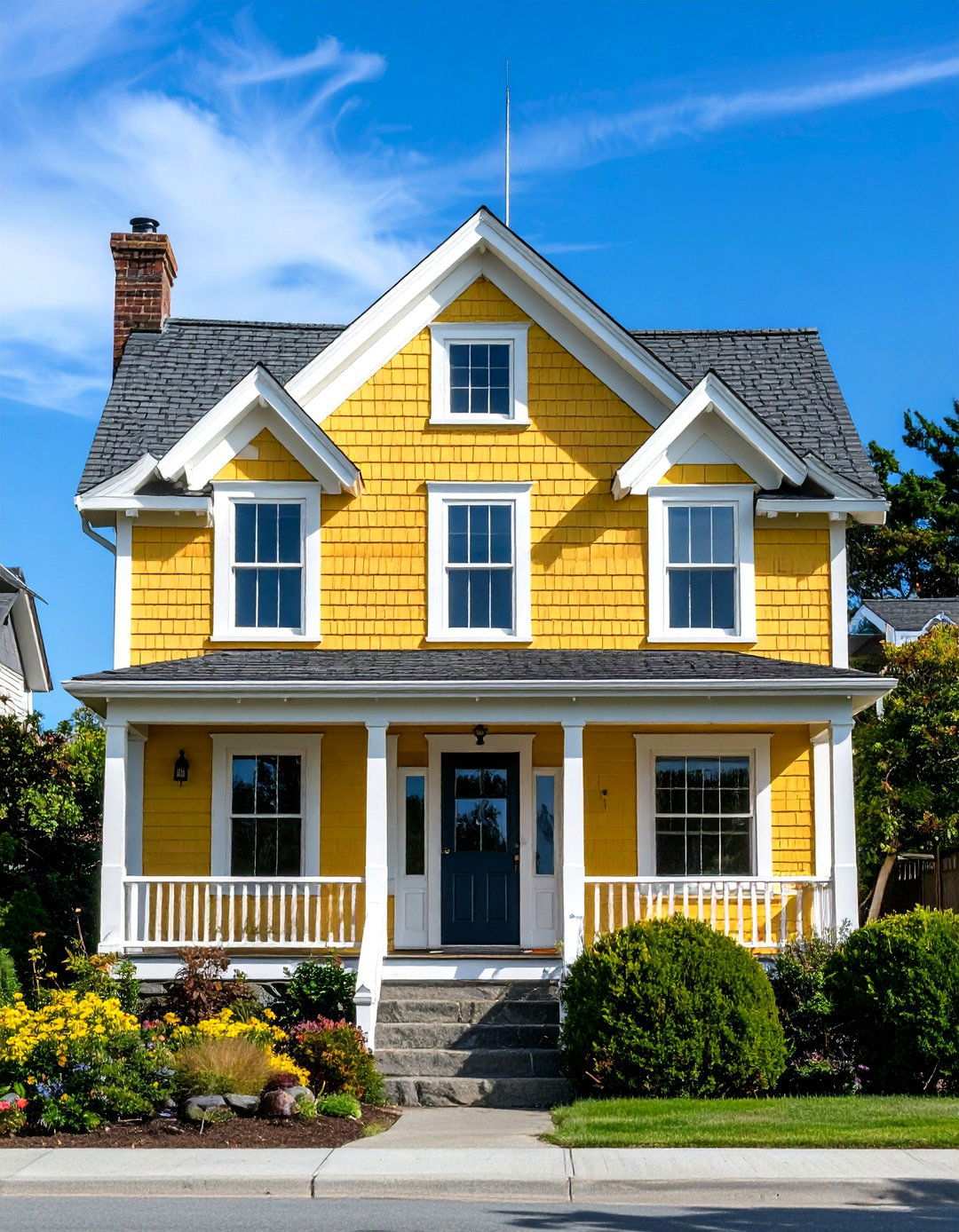
Shingle-style homes, with their relaxed, natural charm, are an ideal canvas for yellow, blending coastal casualness with sunny warmth. Yellow cedar shingles or painted shingle siding creates a captivating fusion of textures and hues, adding depth and interest to the exterior while maintaining the style’s characteristic informality. The irregular, organic quality of shingle texture creates a beautiful interplay with yellow surfaces, while multiple rooflines and dormer windows create an intricate pattern of shadows that enhance the color’s natural variations. Clean white trim around windows and doors provides crisp contrast without overwhelming the home’s relaxed aesthetic. The strategic use of stone foundations and chimneys adds substantial grounding elements that balance the bright exterior. This thoughtful combination yields a home that feels both sophisticated and approachable, perfectly suited to weekend retreats or year-round coastal living.
12. Prairie Style Yellow with Natural Materials
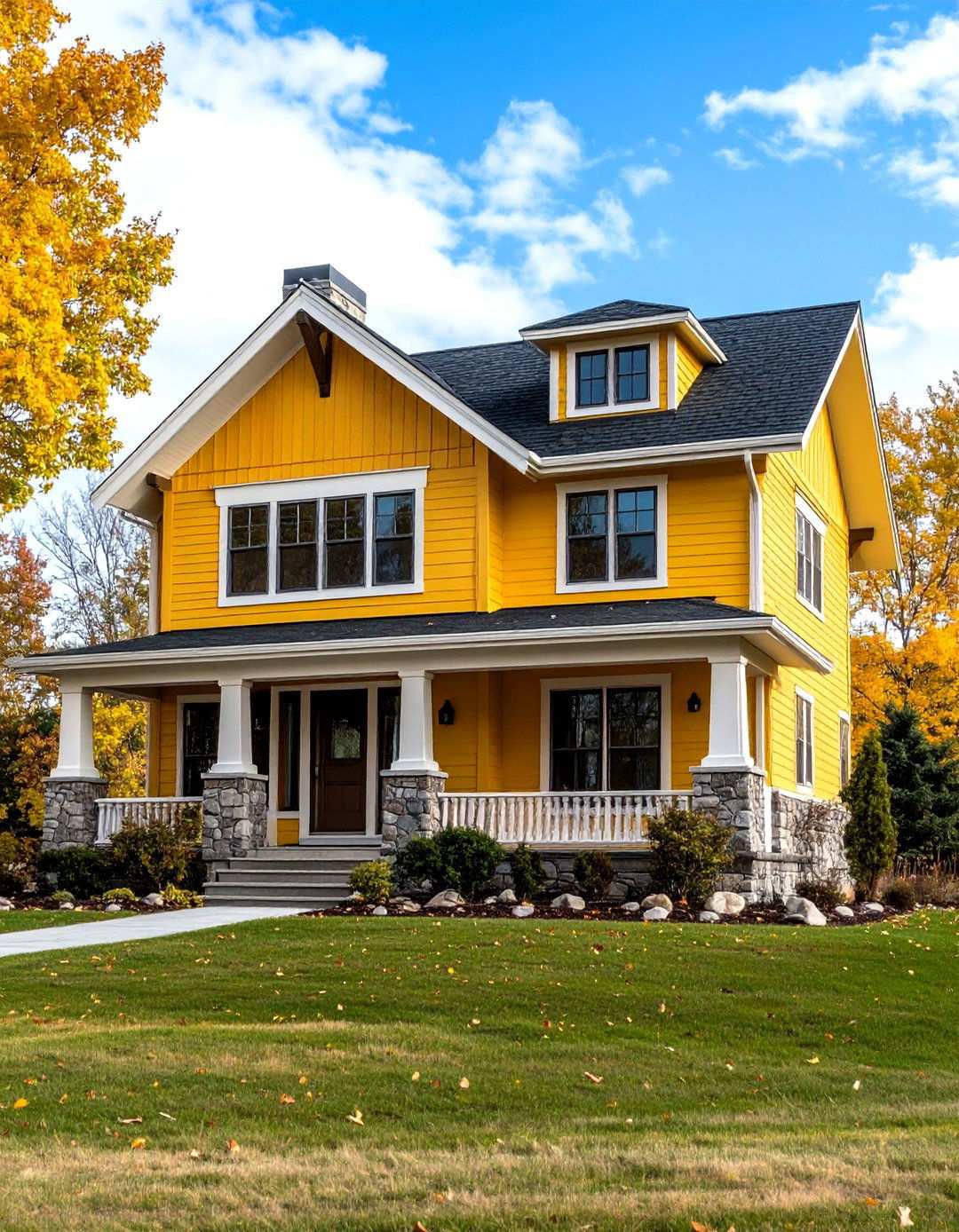
The harmony between Prairie architecture’s horizontal emphasis and yellow exteriors is a perfect blend of contrasting elements. By embracing clean lines and a focus on natural materials, Prairie style creates an ideal backdrop for yellow to shine without overpowering the architectural features. A muted gold yellow, used for primary surfaces, is beautifully balanced by the subtle warmth of natural stone or brick details that ground the vibrant color. The low-pitched roofs and overhanging eaves of Prairie style homes create striking shadow lines that add depth and dimension to the yellow walls, while large groups of windows emphasize the style’s connection to its surroundings, creating visually appealing geometric patterns. Furthermore, built-in planters and integrated landscaping extend the home’s horizontal lines, providing a natural contrast to the bold color. As a result, homes with this approach feel both confident and in harmony with their environments.
13. Dutch Colonial Yellow Gambrel Design
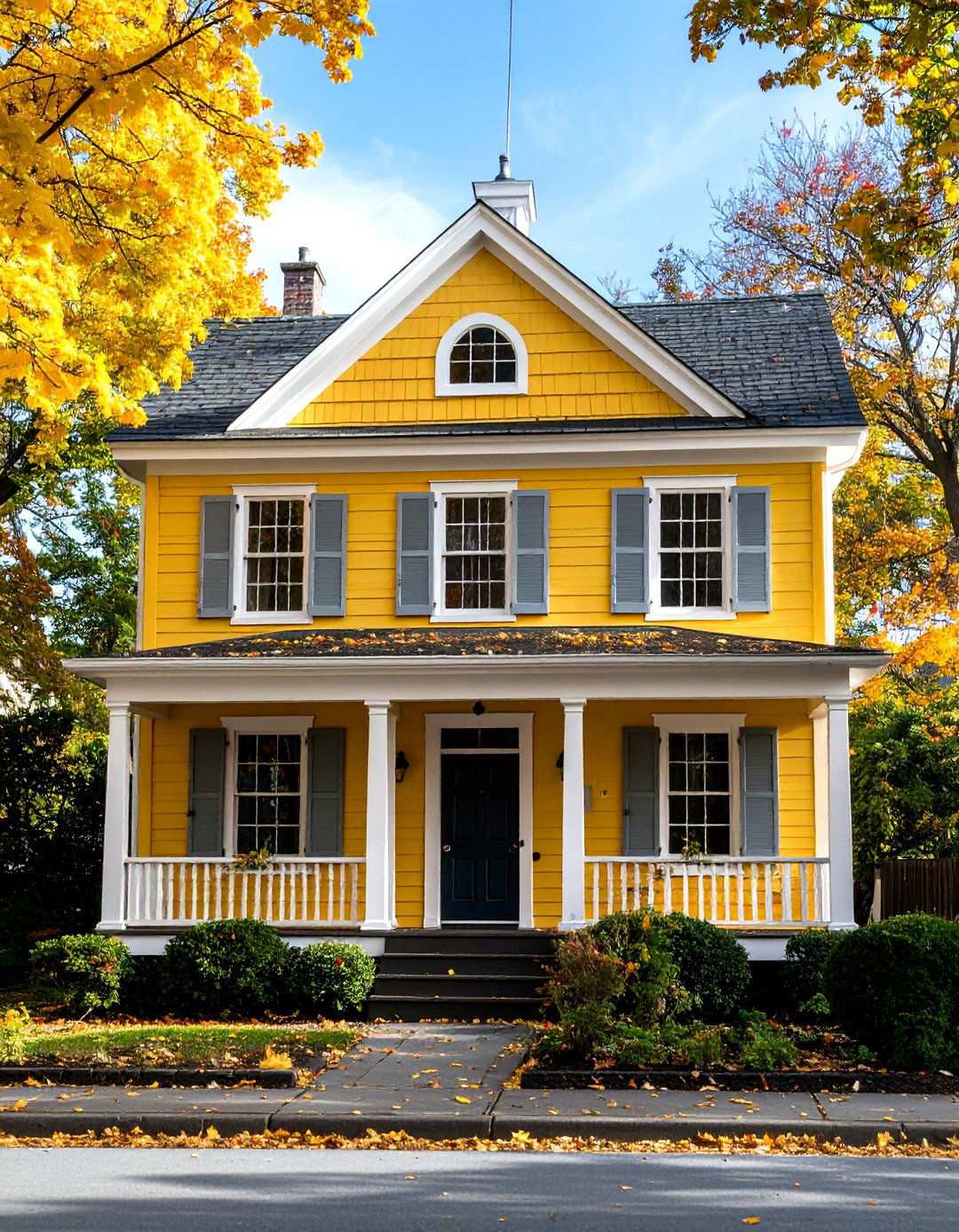
Dutch Colonial architecture’s unique blend of proportions and style makes it particularly well-suited for yellow exteriors. The distinctive gambrel roofline and symmetrical facade provide the perfect proportions for yellow’s cheerful presence while maintaining a strong sense of historical authenticity. A warm honey yellow, used for clapboard or shingle siding, is beautifully complemented by crisp white trim that highlights the home’s classic proportions. The characteristic flared eaves and dormer windows of Dutch Colonial homes create intriguing shadow patterns that add visual interest, while traditional multi-pane windows maintain period accuracy while benefiting from the light-enhancing properties of yellow. The central front door, framed by the sunny exterior, becomes a natural focal point that invites warmth and welcome into the home. This combination honors the heritage of Dutch Colonial architecture while creating a home that feels both traditional and refreshingly optimistic.
14. Bungalow Court Yellow Community Living
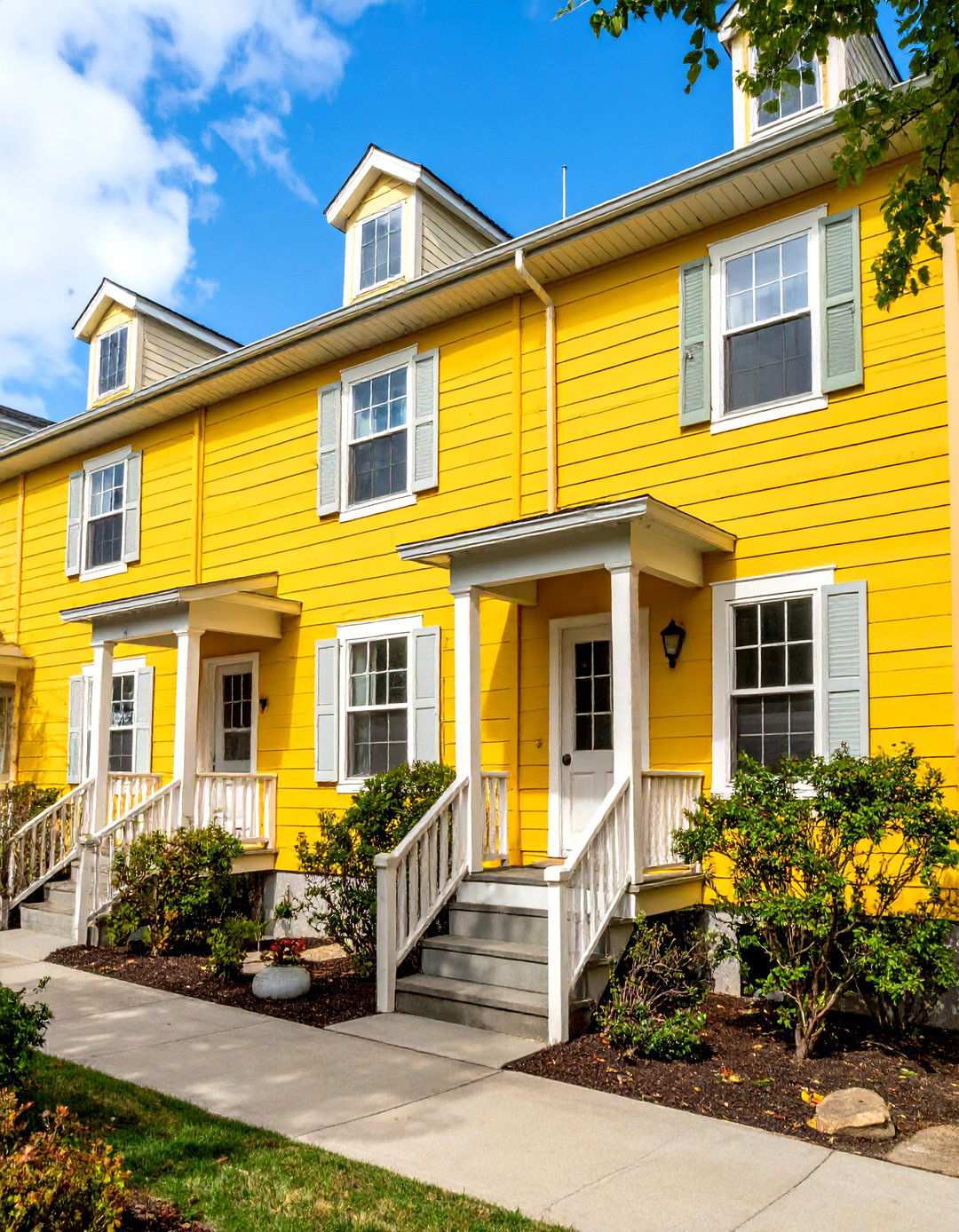
When multiple yellow bungalows come together in planned communities, the result is a cohesive neighborhood character that is both cheerful and inviting. By choosing a consistent base yellow shade across multiple units, homeowners can differentiate each home through contrasting trim colors and landscaping choices, creating a sense of individual expression while maintaining a unified aesthetic. The small scale and front-porch emphasis of bungalow design encourage community interaction while maintaining private outdoor spaces, and the shared courtyards and walkways benefit from the warm, welcoming atmosphere that yellow creates. This approach demonstrates how thoughtful color coordination can enhance community living while preserving individual home character and creating a distinctive neighborhood identity that is both warm and inviting.
15. Captivating Yellow in Saltbox Design
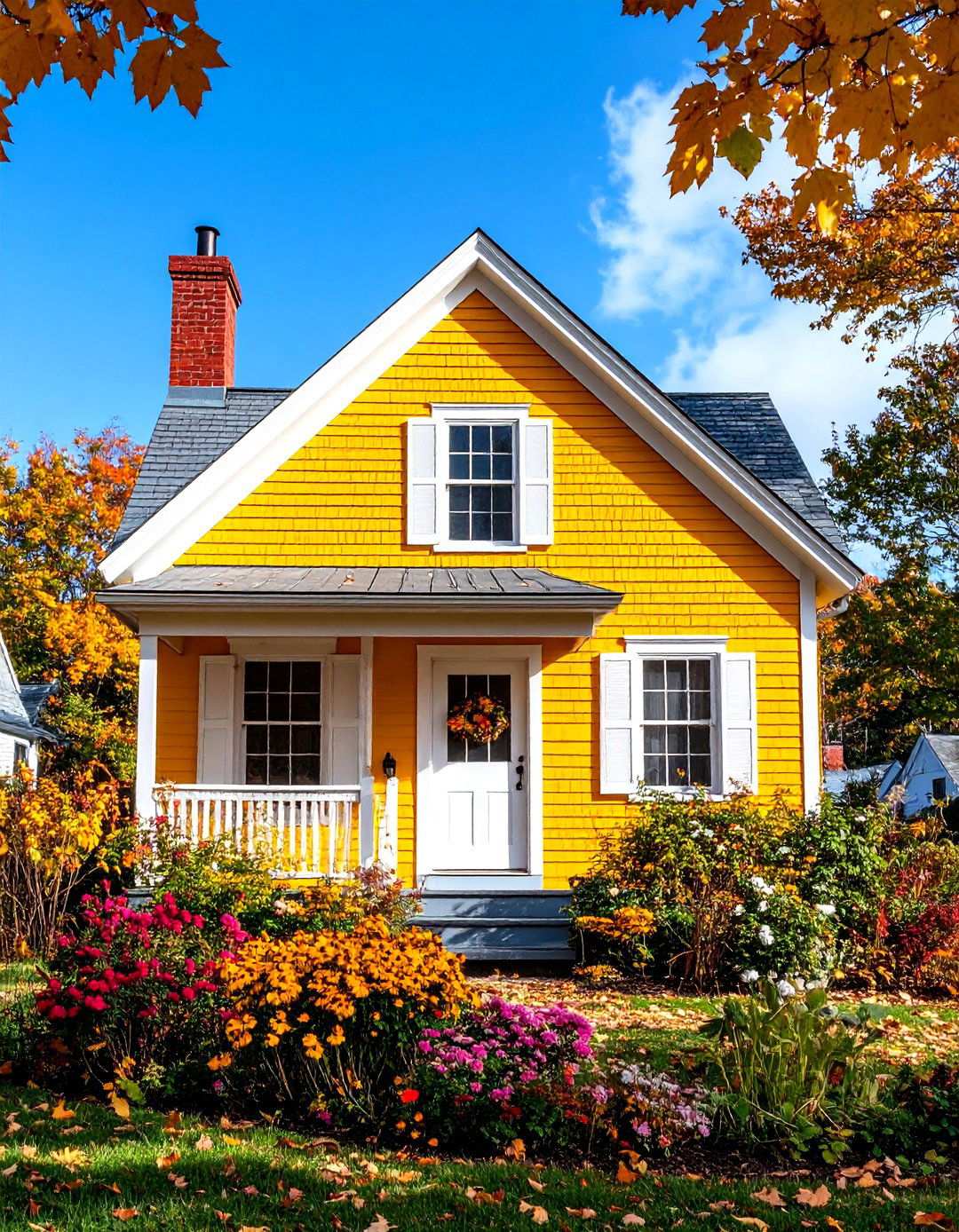
The Saltbox architecture’s understated charm can be successfully elevated by incorporating yellow, without compromising its classic New England essence. The inherent simplicity and practicality of Saltbox design provide a solid foundation for warm and inviting yellow exteriors. Consider a soft, buttery yellow for clapboard siding, paired with dark green or charcoal accents that nod to traditional New England color schemes. The unique asymmetrical roofline, a hallmark of Saltbox design, creates visually appealing proportions that are further enhanced by the subtle warmth of yellow. Small-paned windows maintain historical accuracy while allowing the exterior’s light-reflecting properties to shine. A central chimney and straightforward front entryway preserve the style’s uncomplicated aesthetic. This harmonious blend creates homes that honor traditional New England architecture while exuding a more optimistic and approachable feel than neutral alternatives.
16. Art Deco Yellow: A Bold and Dramatic Statement
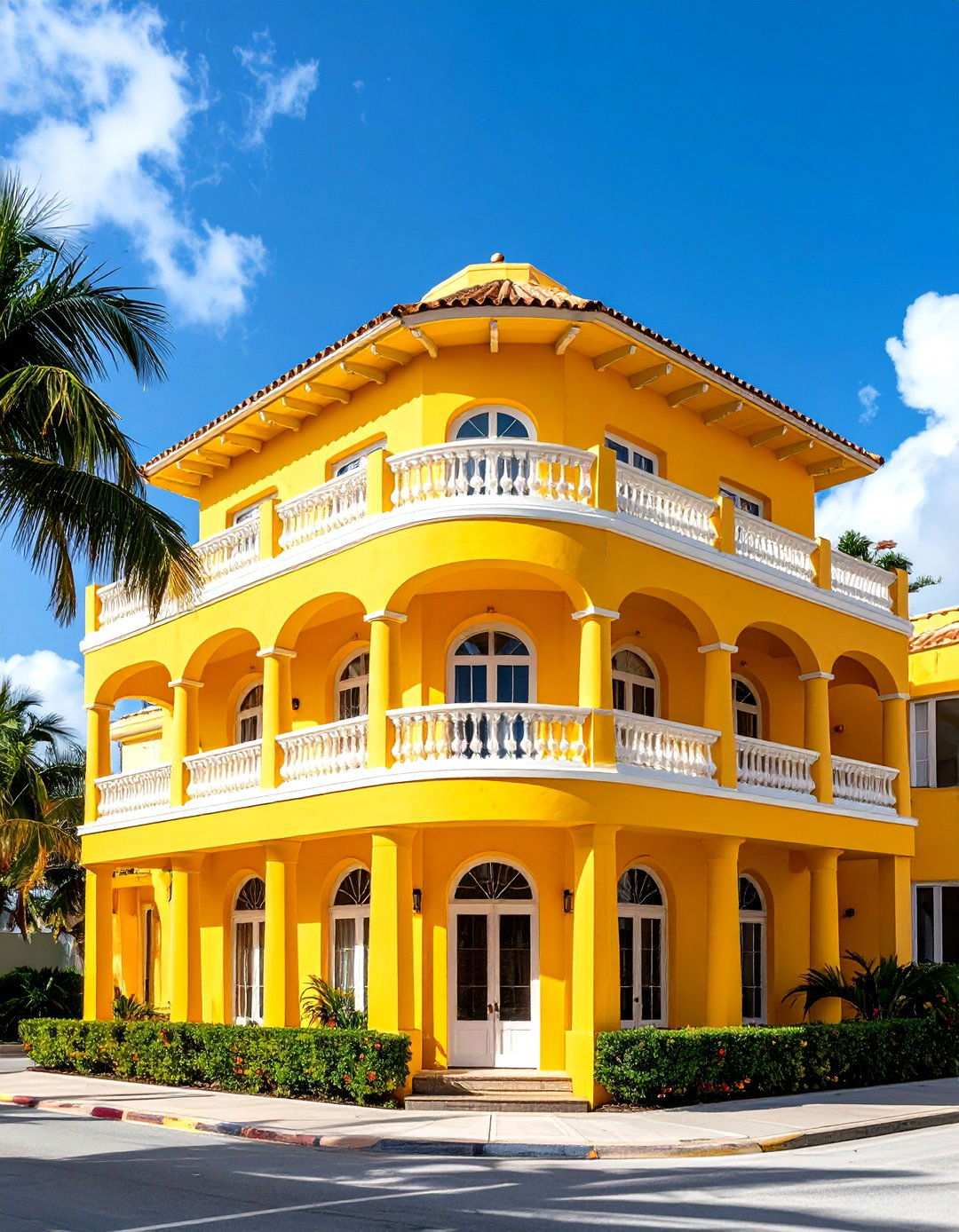
Art Deco architecture presents a unique opportunity for dramatic yellow applications, thanks to its characteristic bold geometric forms and ornate details. The style’s emphasis on confident and striking visual elements creates a perfect backdrop for yellow’s vibrant presence. Choose a rich, golden yellow for smooth stucco surfaces, complemented by contrasting trim in black, white, or metallic finishes that add an extra layer of sophistication. The stepped rooflines and angular bay windows of Art Deco design create dynamic shadow patterns that accentuate the depth and drama of yellow. Decorative elements like sunburst motifs or zigzag patterns become prominent features when highlighted against yellow backgrounds, adding an extra layer of visual interest. Large windows grouped in geometric arrangements maintain the style’s emphasis on light and openness, creating a sense of grandeur and opulence. This bold approach creates homes that feel both historically significant and refreshingly modern, perfect for urban settings or architectural showcase neighborhoods.
17. Elegant Yellow in Federal Style Design
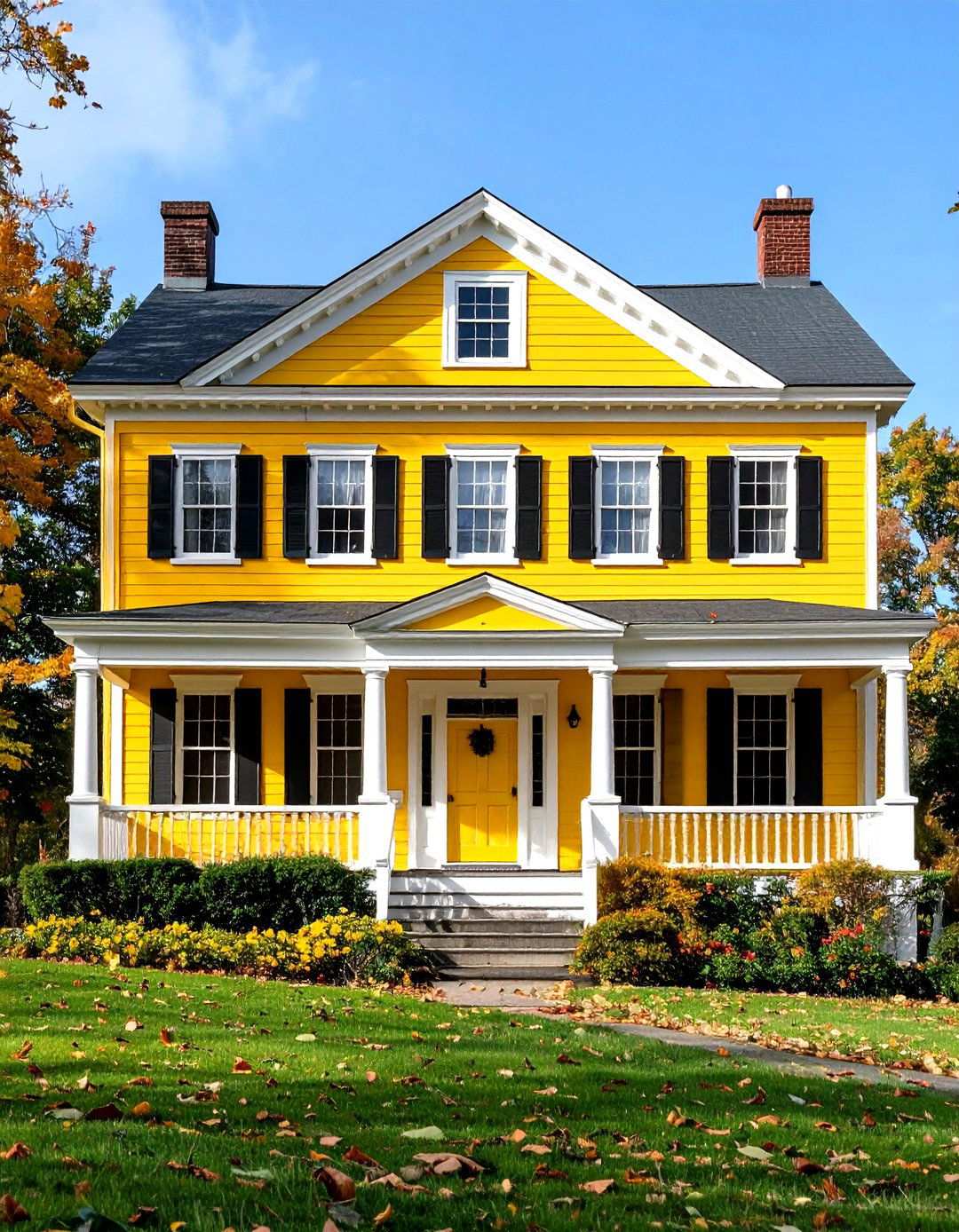
The refined elegance of Federal architecture provides a perfect canvas for yellow exterior treatments, allowing the color to add warmth and sophistication without overwhelming the design. The balanced proportions and delicate details of Federal design offer a range of opportunities for yellow to shine. Consider a pale lemon yellow for brick or painted surfaces, complemented by white trim that accentuates the style’s precise architectural details. Fanlight windows and elegant doorway treatments become focal points when framed by subtle yellow backgrounds, adding an extra layer of visual interest. The symmetrical facade and classical proportions of Federal design prevent yellow from dominating the home’s inherent dignity, instead creating a sense of refined restraint. Black shutters and hardware add a touch of contrast while maintaining period authenticity, resulting in homes that feel both historically accurate and personally welcoming. This thoughtful combination creates homes that exude refined charm, perfect for traditional neighborhoods seeking a touch of elegance.
18. Harmonious Union of Yellow and Farmhouse Elegance
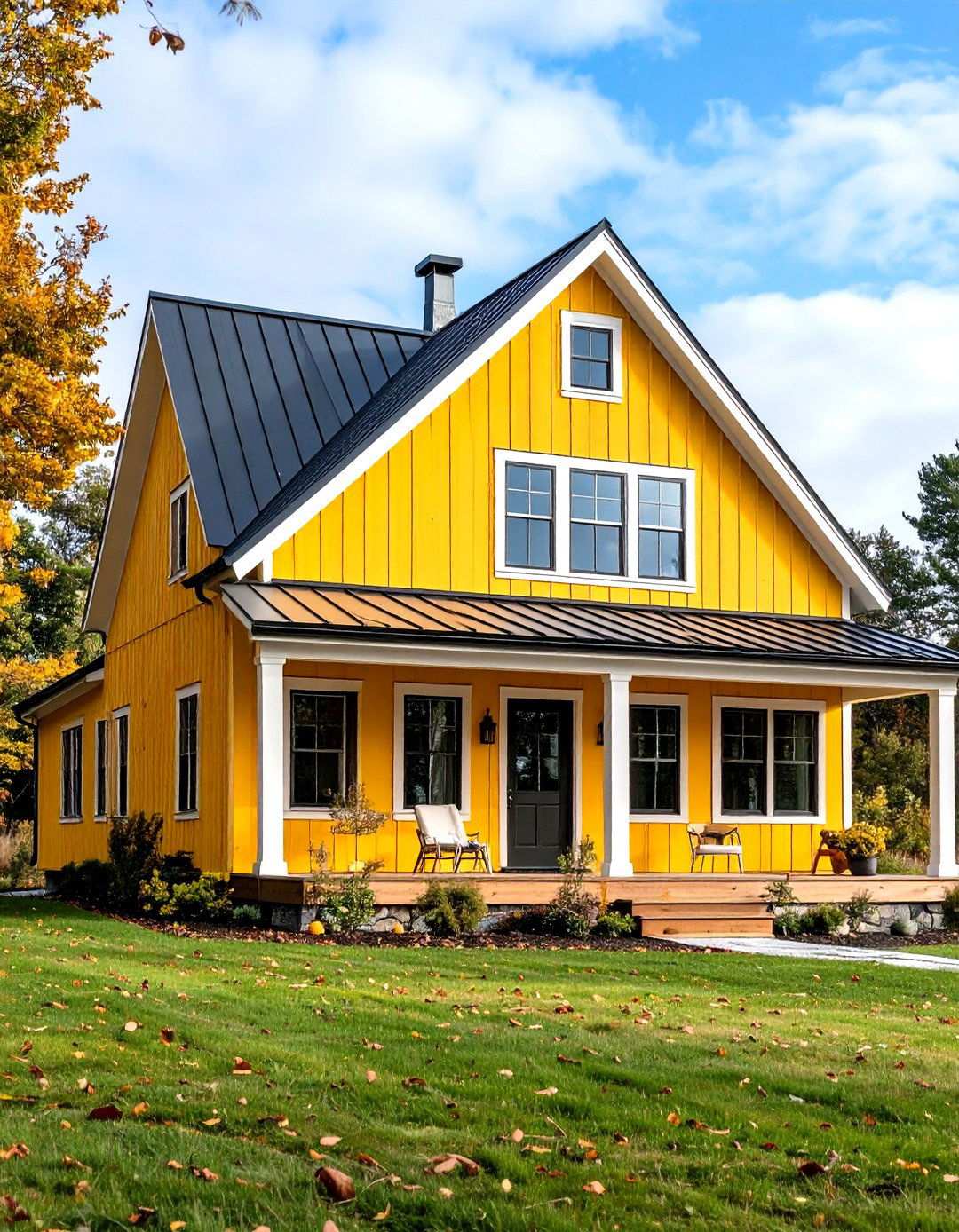
Can contemporary farmhouse design seamlessly merge with bold yellow exterior treatments? The eclectic blend of rural traditions and modern sensibilities within modern farmhouse style creates a unique canvas for yellow to bridge classic and contemporary aesthetics. Select a warm golden yellow for metal or board-and-batten siding, paired with crisp white trim and subtle black accents. Expansive windows and open porch designs maintain the style’s emphasis on effortless indoor-outdoor living, while the welcoming qualities of yellow elevate the overall atmosphere. A judicious mix of materials such as stone foundations or metal roofing adds a layer of sophistication, carefully balancing the style’s rustic essence with modern flair. This thoughtfully designed approach creates homes that beautifully honor agricultural heritage while exuding a fresh, optimistic essence perfect for contemporary family living.
19. Yellow as a Defining Element in Pueblo Revival Architecture
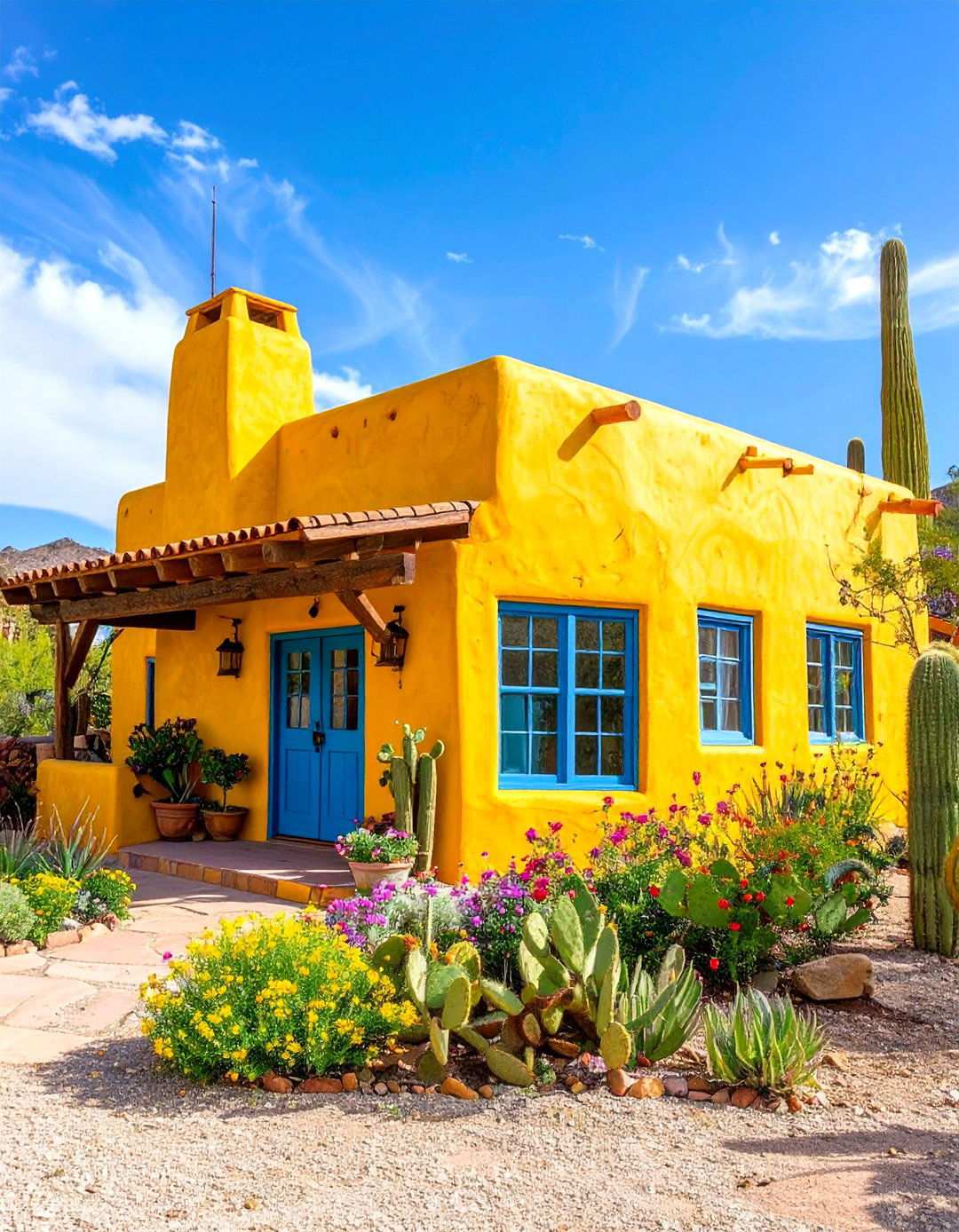
What role does vibrant yellow play in authenticating Pueblo Revival design? Warm yellow adobe or stucco surfaces capture the essence of the Southwestern landscape, providing the perfect backdrop for characteristic architectural elements. The organic, hand-crafted quality of Pueblo Revival style complements yellow’s inherent associations with nature, creating a visual harmony that resonates deeply. Flat roofs with parapets create clean horizontal lines, which yellow subtly enhances without disrupting the structural simplicity. The judicious use of vigas and other wood details provides natural contrast, maintaining regional authenticity while allowing yellow to take center stage. Courtyards and outdoor living spaces benefit from the warm, inviting qualities of yellow, creating a sense of comfort and tranquility. This carefully considered combination creates homes that feel both exotic and at ease, perfectly suited to desert climates and honoring Native American architectural traditions.
20. Yellow and the Mansard Roof: A Timeless Union
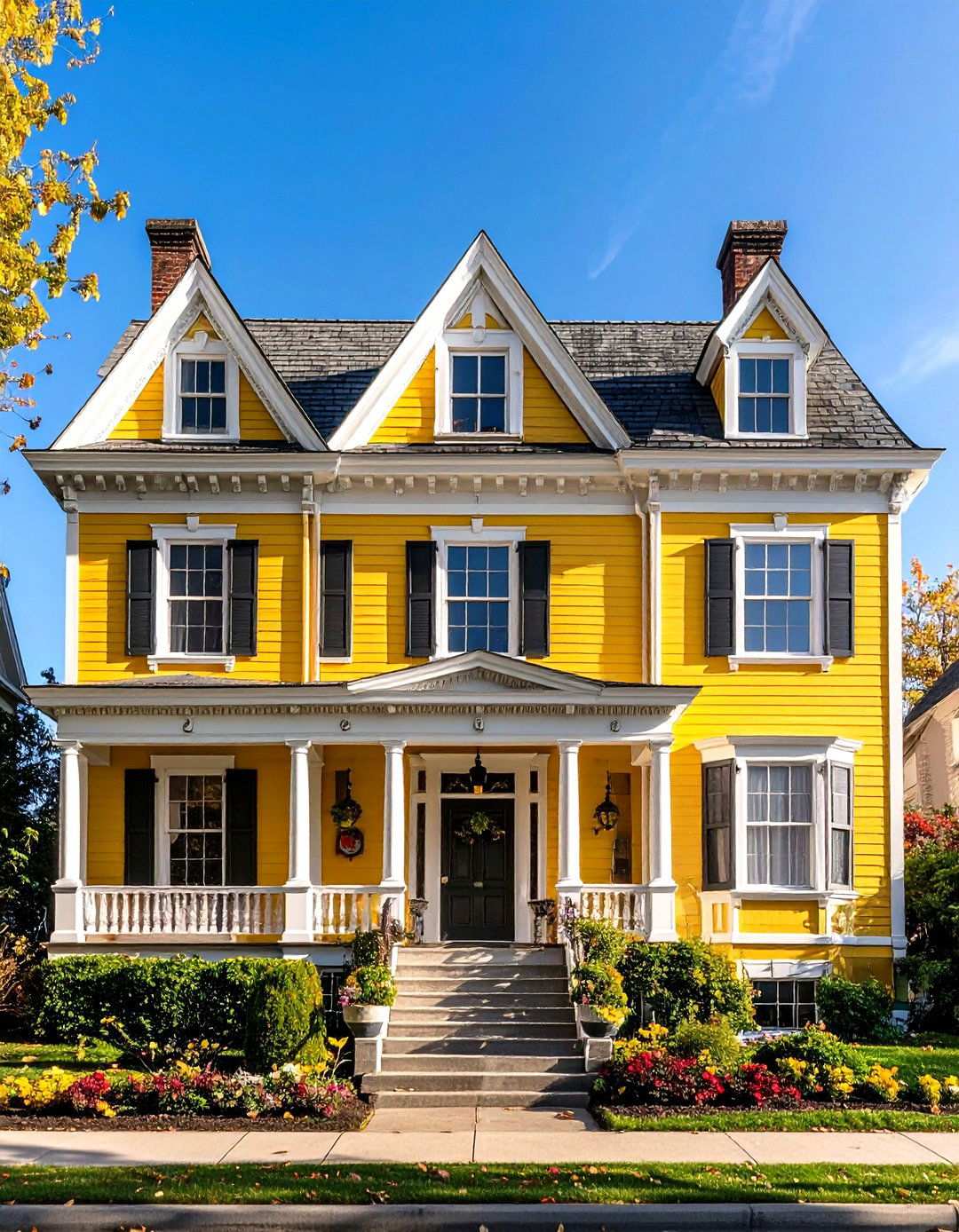
How can the distinctive mansard roof of Second Empire architecture effectively pair with yellow exteriors? The dramatic proportions and ornate details of Second Empire design offer an ideal opportunity for yellow to add warmth and elegance while showcasing elaborate architectural features. Select a rich butter yellow for primary surfaces, complemented by contrasting trim that skillfully emphasizes the characteristic mansard roofline. Dormer windows and decorative brackets become prominent features when highlighted against yellow backgrounds, creating a striking visual effect. The style’s vertical emphasis and formal symmetry ensure that yellow is used in a way that feels both sophisticated and fitting. Cast iron details and elaborate cornices maintain period authenticity, while the warm exterior treatment adds a sense of personal warmth and invitation. This thoughtful approach creates homes that feel both historically significant and warmly welcoming, perfect for urban historic districts.
21. Crafting a Golden Yellow Masterpiece with Stick Style
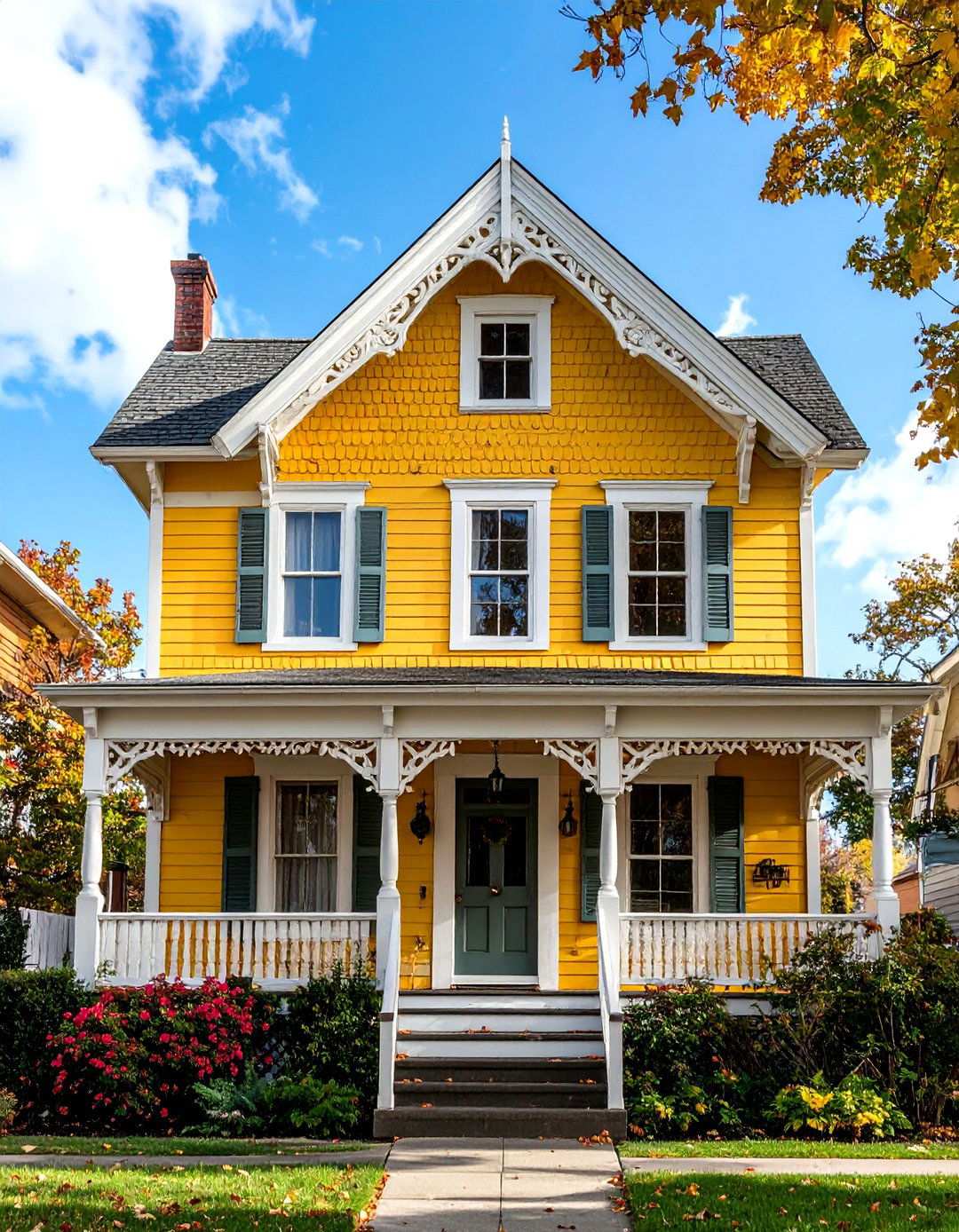
Stick Style architecture offers the perfect canvas for showcasing the vibrant hues of yellow, while still honoring its core principles of structural honesty. The decorative timber framing, vertical board-and-batten siding, and intricate stick work of this style create a dynamic backdrop for yellow’s expressive qualities. By selecting a warm golden yellow for primary surfaces and pairing it with darker trim colors, the ornate details and diagonal braces take on a new level of visual interest. The complex rooflines and bay windows of Stick Style architecture provide numerous opportunities for yellow to demonstrate its versatility. As a result, the combination of yellow and Stick Style elements creates homes that exude both structural expression and color confidence, perfectly suited to Victorian-era neighborhoods seeking authentic period character.
22. Harmonizing Yellow with the Simplicity of Minimal Traditional
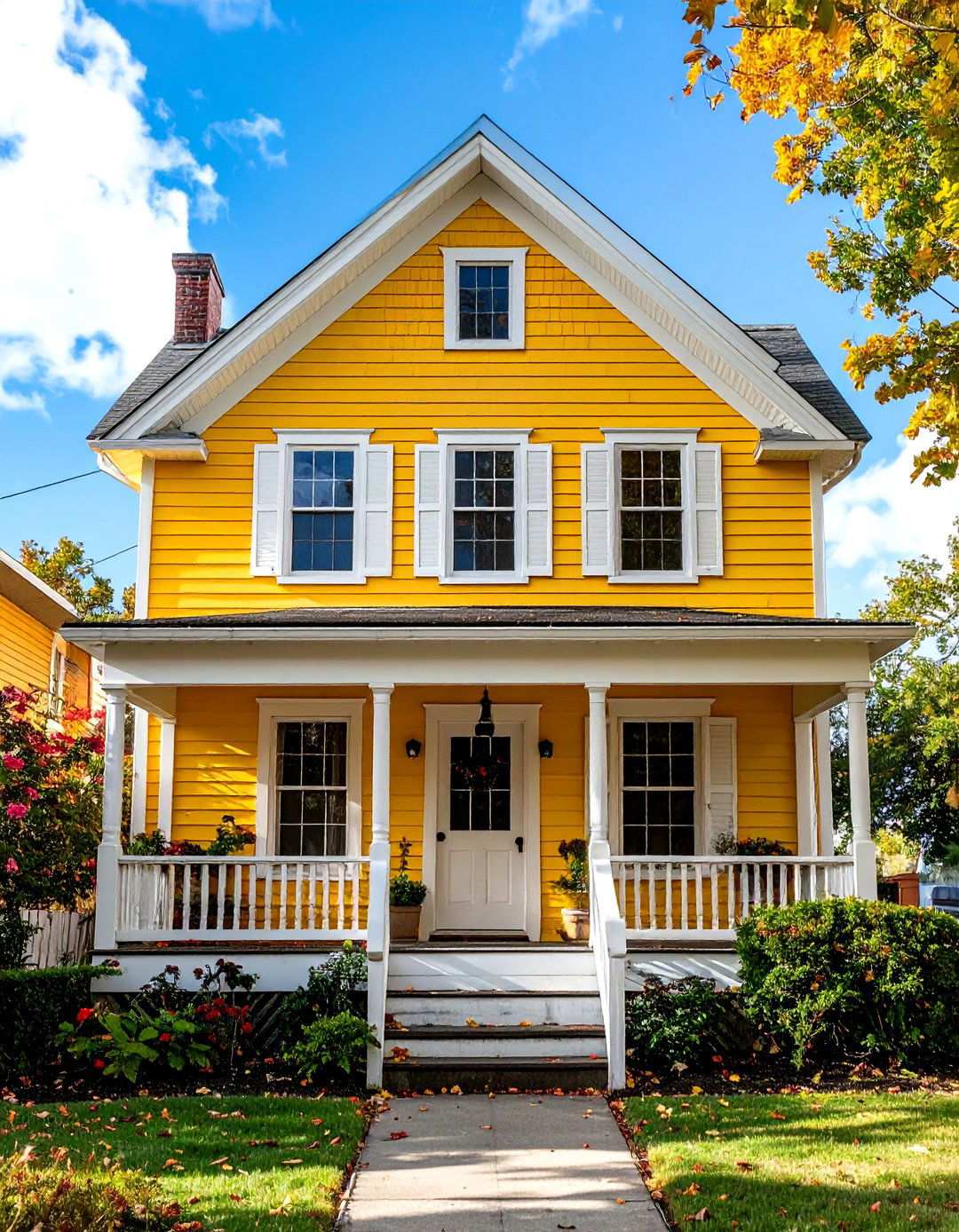
In the realm of Minimal Traditional architecture, yellow exterior treatments can elevate the style’s clean lines and uncluttered surfaces. This colonial revival style provides a blank slate for showcasing yellow’s versatility, without overwhelming the design with excessive ornamentation. Choosing a soft butter yellow for siding, paired with crisp white trim, allows the style’s emphasis on simplicity and proportion to shine through. The balanced compositions created by small front porches and symmetrical window arrangements are further enhanced by the subtle warmth of yellow. As a result, this approach creates homes that feel both traditional and personally expressive, making it an excellent choice for suburban neighborhoods seeking character without ostentation. Simple landscaping and traditional materials complement the cheerful exterior, maintaining neighborhood compatibility while adding a touch of warmth and personality.
23. Embracing Yellow's Potential in International Style Modernism
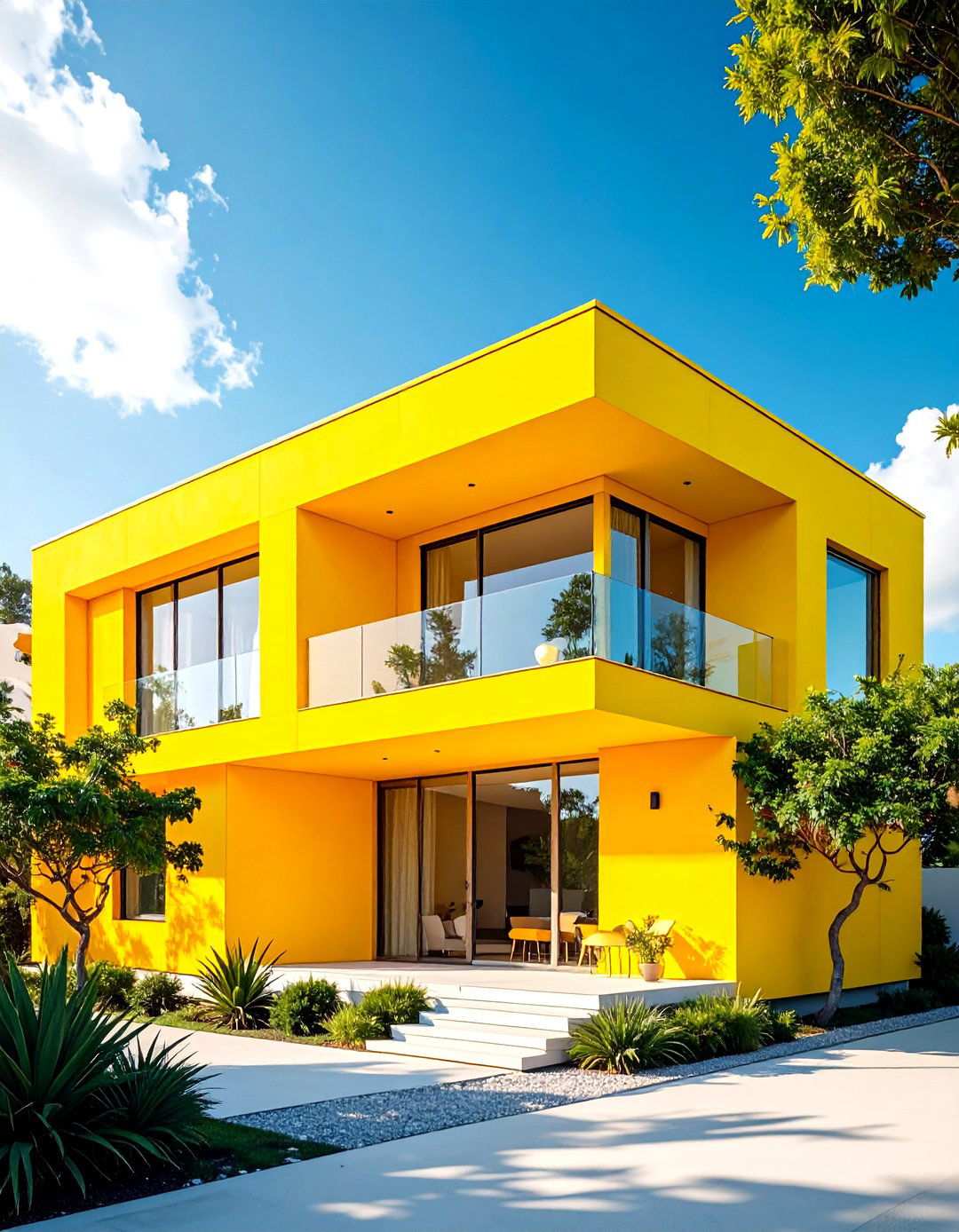
International Style modernism presents a unique opportunity for yellow to take center stage, while maintaining the design’s core principles of function and purity. The clean geometric forms and emphasis on unadorned surfaces create a dramatic backdrop for yellow’s bold, saturated hues. By selecting a vibrant yellow for large, uninterrupted wall surfaces, the style’s sculptural qualities are amplified, creating a striking visual effect. The absence of applied ornament allows color to provide the necessary visual interest and personality. Steel and glass details maintain the design’s modernist authenticity, while creating sophisticated contrasts with yellow surfaces. This approach creates homes that feel both architecturally significant and personally expressive, making it an excellent choice for design-conscious homeowners seeking a bold, modern statement.
24. Timeless Connection to the Wilderness
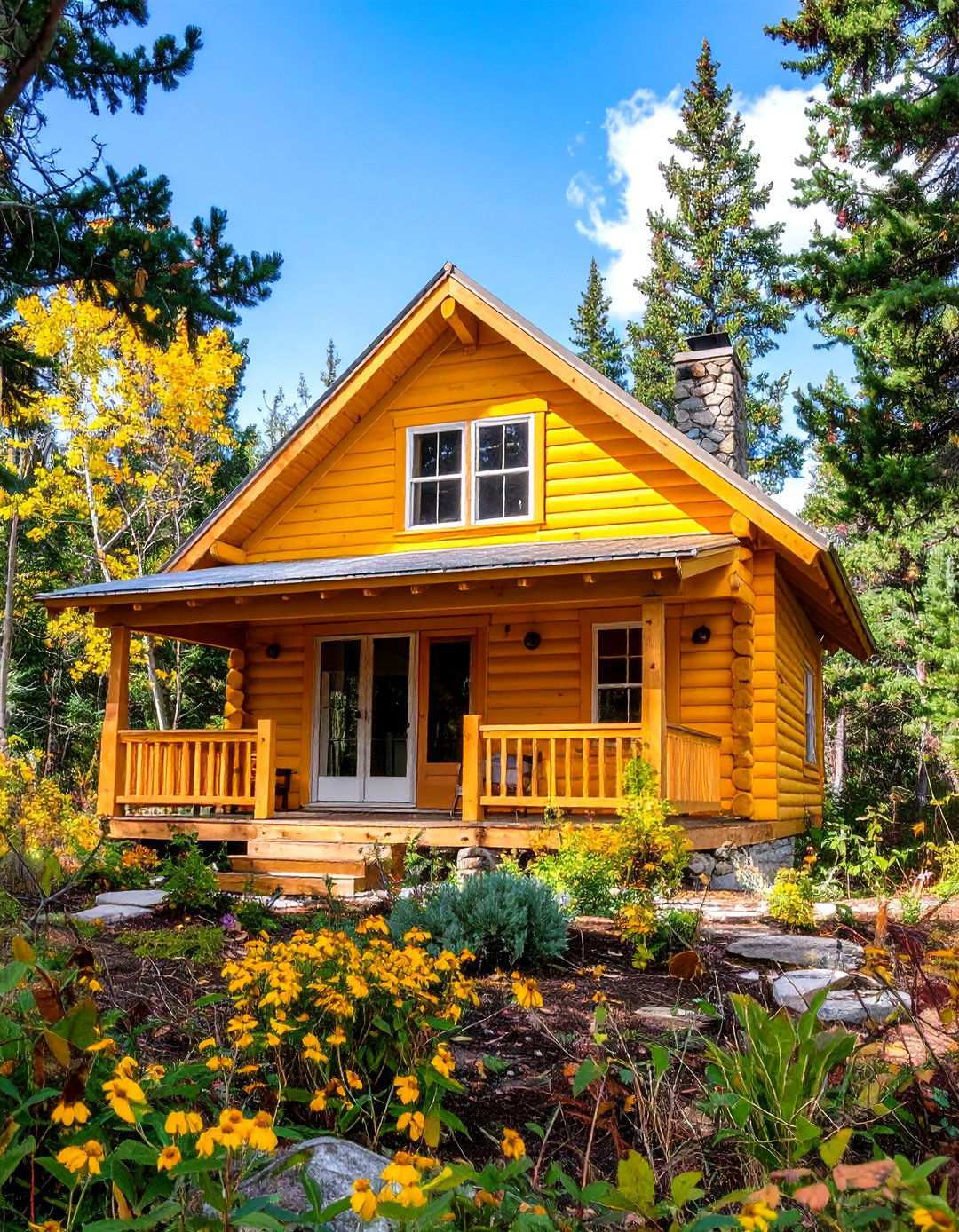
A warm and inviting yellow hue plays a pivotal role in authentic rustic lodge architecture, reflecting the cozy, welcoming essence of cabin design while harmoniously blending with natural surroundings. The inherent textures and natural materials that define the lodge style beautifully complement the warm, inviting connotations of yellow, resulting in a captivating space that feels deeply connected to the outdoors. The juxtaposition of large stone fireplaces and exposed timber details with the rustic charm of the home creates a visually appealing contrast that is quintessentially authentic. Furthermore, the cheerful, vacation-like qualities of yellow are beautifully showcased in covered porches and outdoor living spaces, making every moment feel like a relaxing getaway. By incorporating native landscaping and natural materials, the bright exterior of the home is grounded, while its connection to wilderness settings remains unbroken. This thoughtful combination of elements creates a sense of permanence, making these homes feel like the ultimate retreats in mountain, lake, or forest settings where the pursuit of relaxation and connection with nature takes precedence over urban sophistication.