1. Elevated Design Statements
Contemporary staircases have transcended their fundamental purpose, evolving into striking architectural statements that define the essence of modern interior design. Today’s staircase trends emphasize sleek lines, avant-garde materials, and space-efficient solutions that seamlessly integrate form and function. These designs exemplify the perfect synergy between aesthetic appeal and practical engineering, offering homeowners a wide range of possibilities to elevate their living spaces. From seemingly gravity-defying treads to spiral configurations that maximize vertical space, modern staircases serve as sculptural focal points while ensuring safety and accessibility. The incorporation of materials like glass, steel, and natural wood creates dynamic visual contrasts that harmonize with various architectural styles. Whether you prefer minimalist designs with concealed supports or bold statement pieces with dramatic curves, contemporary staircase design offers solutions for every space and preference. The incorporation of smart storage integration, LED lighting systems, and innovative railing options further expands the possibilities for creating truly personalized staircase experiences.

As an Amazon Associate I earn from qualifying purchases.
2. Weightless Wonders of Glass
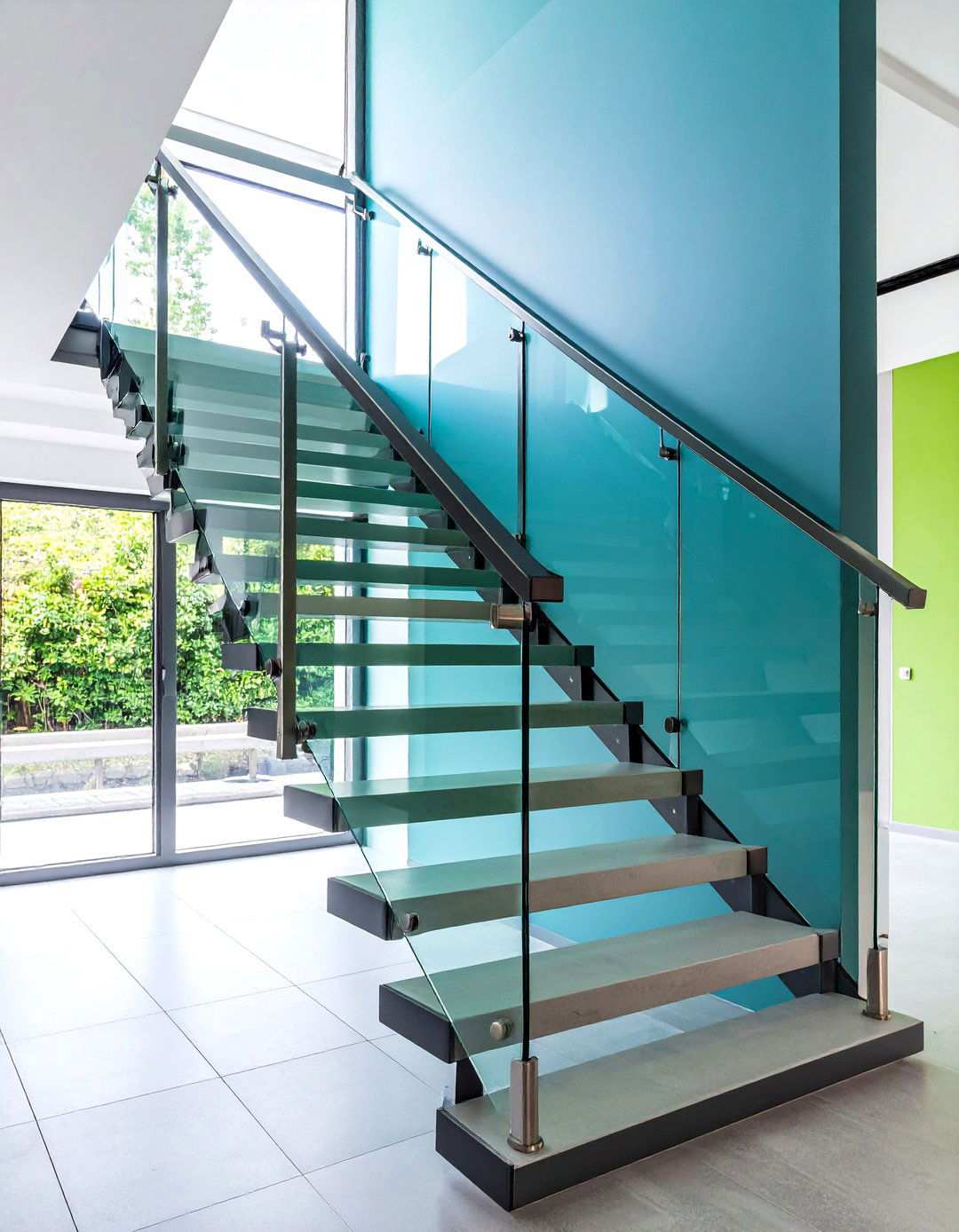
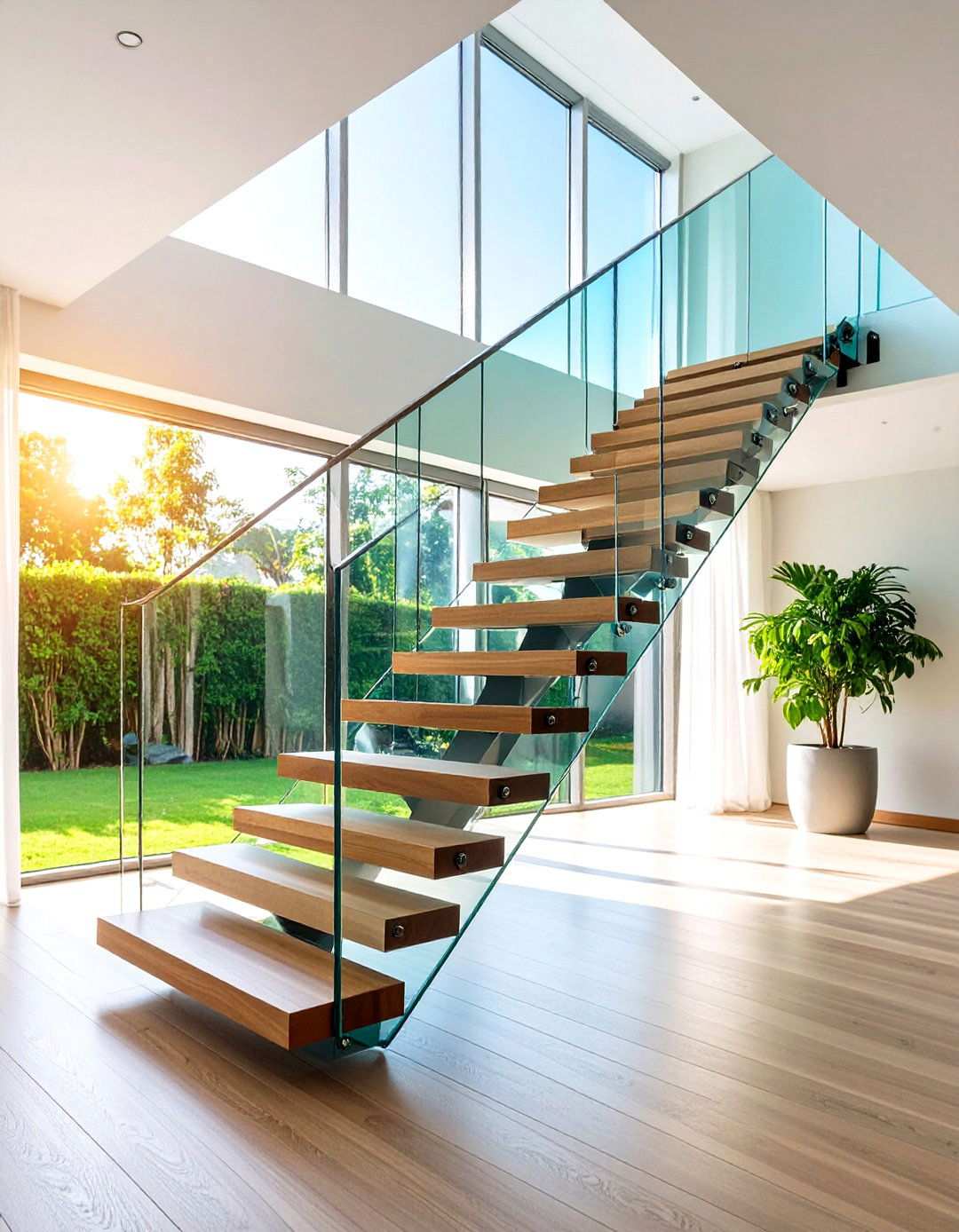
What transforms an ordinary staircase into an architectural masterpiece that appears to defy gravity? Weightless glass panel staircases create the illusion of treads suspended in mid-air, supported by transparent glass railings that maximize natural light flow throughout the space. The combination of steel or wood treads with frameless glass panels offers unobstructed views while maintaining safety standards. These designs work exceptionally well in modern homes with open floor plans, where visual continuity between levels enhances the sense of spaciousness. Installation requires meticulous engineering to ensure proper load distribution, with each glass panel custom-fitted to exact specifications for seamless integration.
3. Industrial Chic and Natural Elegance
Are you searching for a staircase that combines industrial strength with natural warmth? Industrial chic and natural elegance staircases project from a single wall support, creating dramatic visual impact while eliminating the need for traditional stringers underneath. The steel framework provides structural integrity while rich wood treads add organic texture and comfort underfoot. This design maximizes floor space below the stairs, perfect for small homes or apartments where every square foot matters. The exposed steel elements can be powder-coated in various finishes to complement your interior palette, while wood species like oak, walnut, or maple bring natural beauty to the modern design.
Innovative Vertical Access Solutions
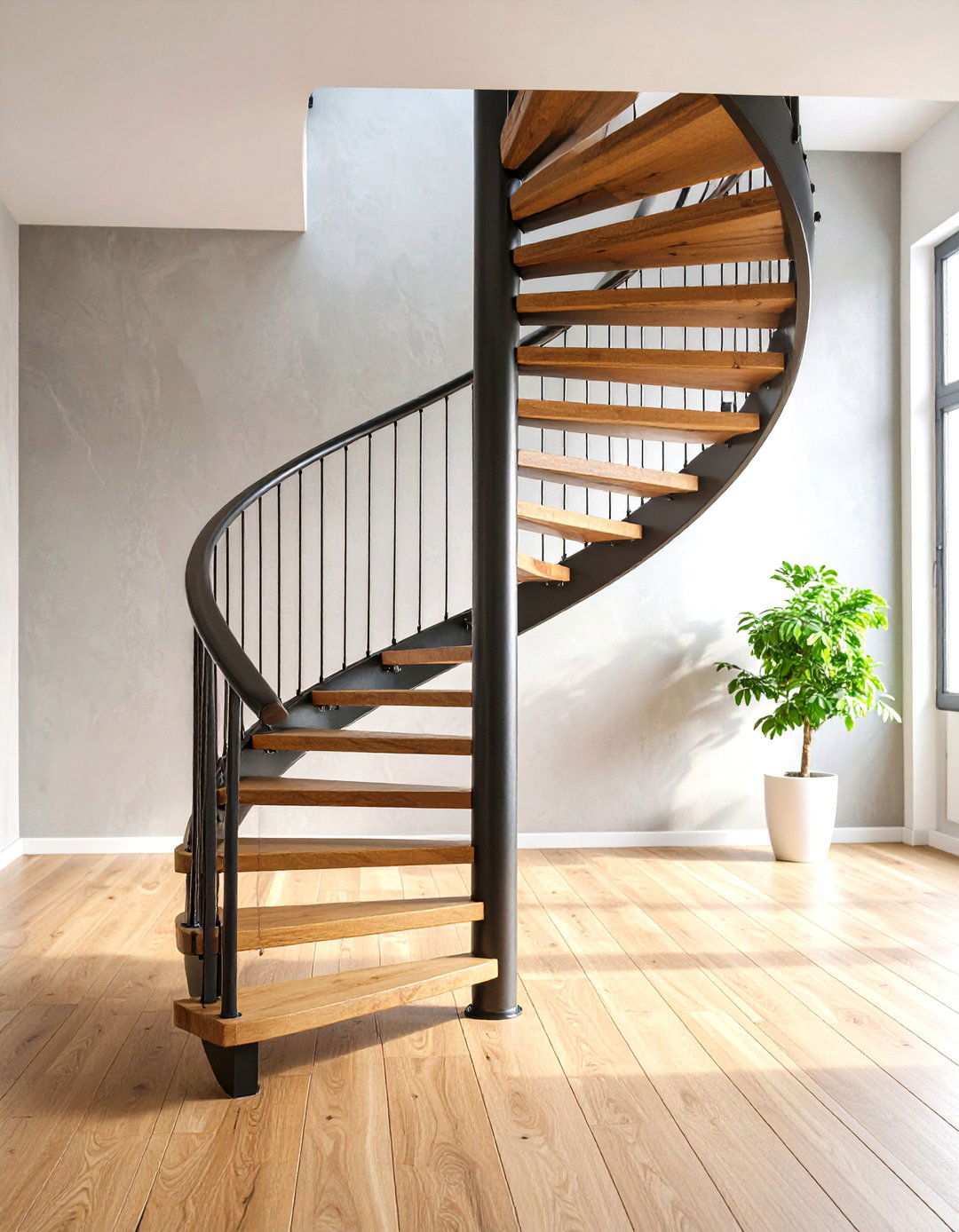
To seamlessly blend functional space-saving design with sleek, modern aesthetics, consider incorporating spiral staircases with cable railings. By optimizing compact footprint configurations, these systems not only maintain open sightlines but also create visually striking architectural features. A cable-based safety system eliminates visual obstruction, allowing for unimpeded light flow and an airy atmosphere within the space. Versatile steel construction ensures durability and stability, while various tread materials – including wood and glass options – offer customizable design possibilities. As a result, these designs are particularly well-suited for urban lofts, modern condos, and any space where a traditional straight staircase would occupy too much valuable floor area, while adding a sculptural touch to interior environments.
4. Sleek Floating Step Designs
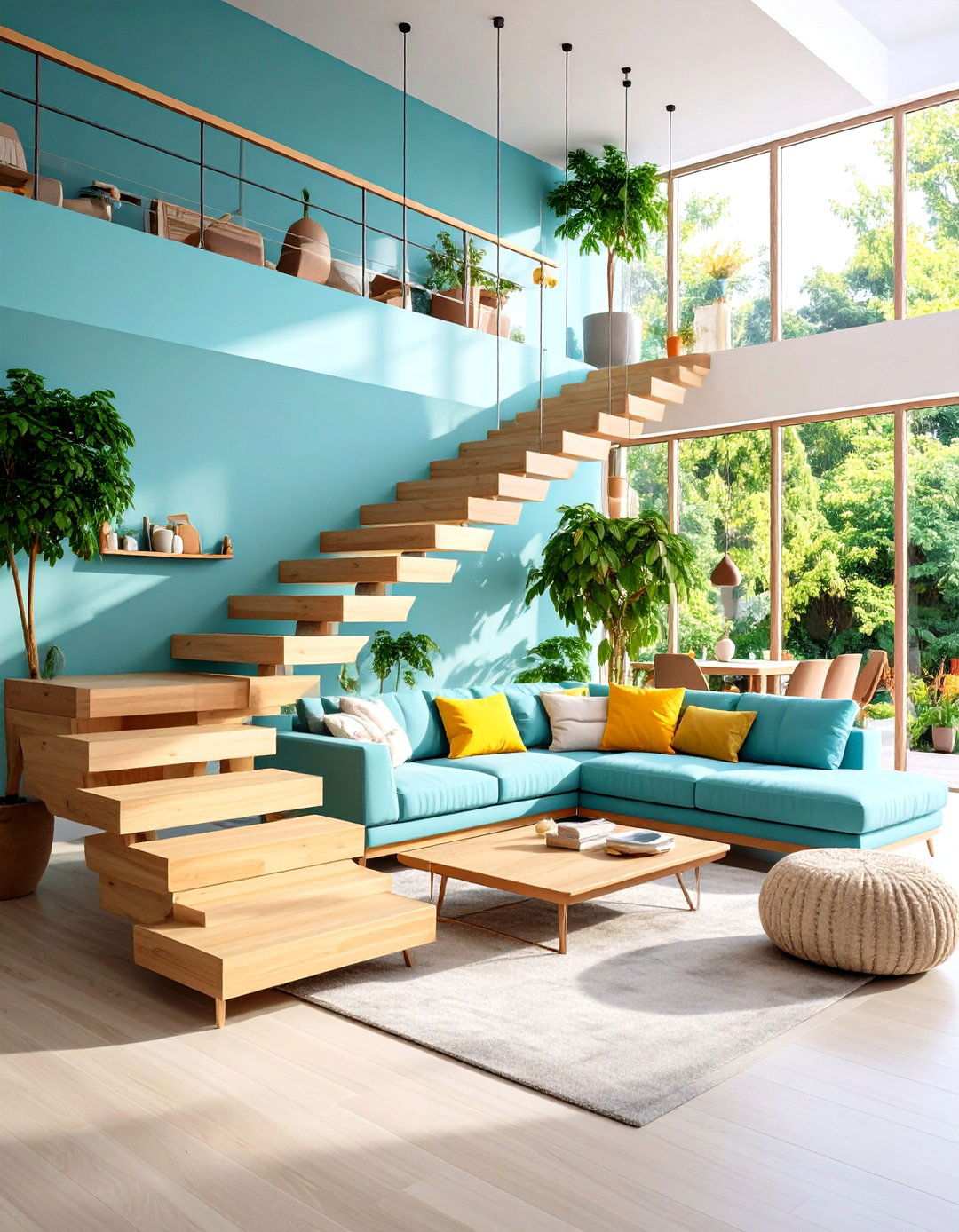
What creates the most striking dramatic effect in modern staircase design? Mono-stringer systems feature a central support beam with treads extending on both sides, creating a bold architectural statement that appears to float effortlessly in space. By eliminating visual clutter, these designs provide robust structural support for heavy use while maintaining a sleek, minimalist aesthetic. The central stringer can be fabricated from a range of materials, including steel, engineered wood, and concrete, depending on aesthetic preferences and structural requirements. Each tread connects to the stringer through discreet, hidden fasteners, maintaining a clean and uncluttered appearance. The open design beneath allows for creative lighting integration and maintains spatial flow throughout the area.
5. Cutting-Edge Glass and Stainless Steel Staircases
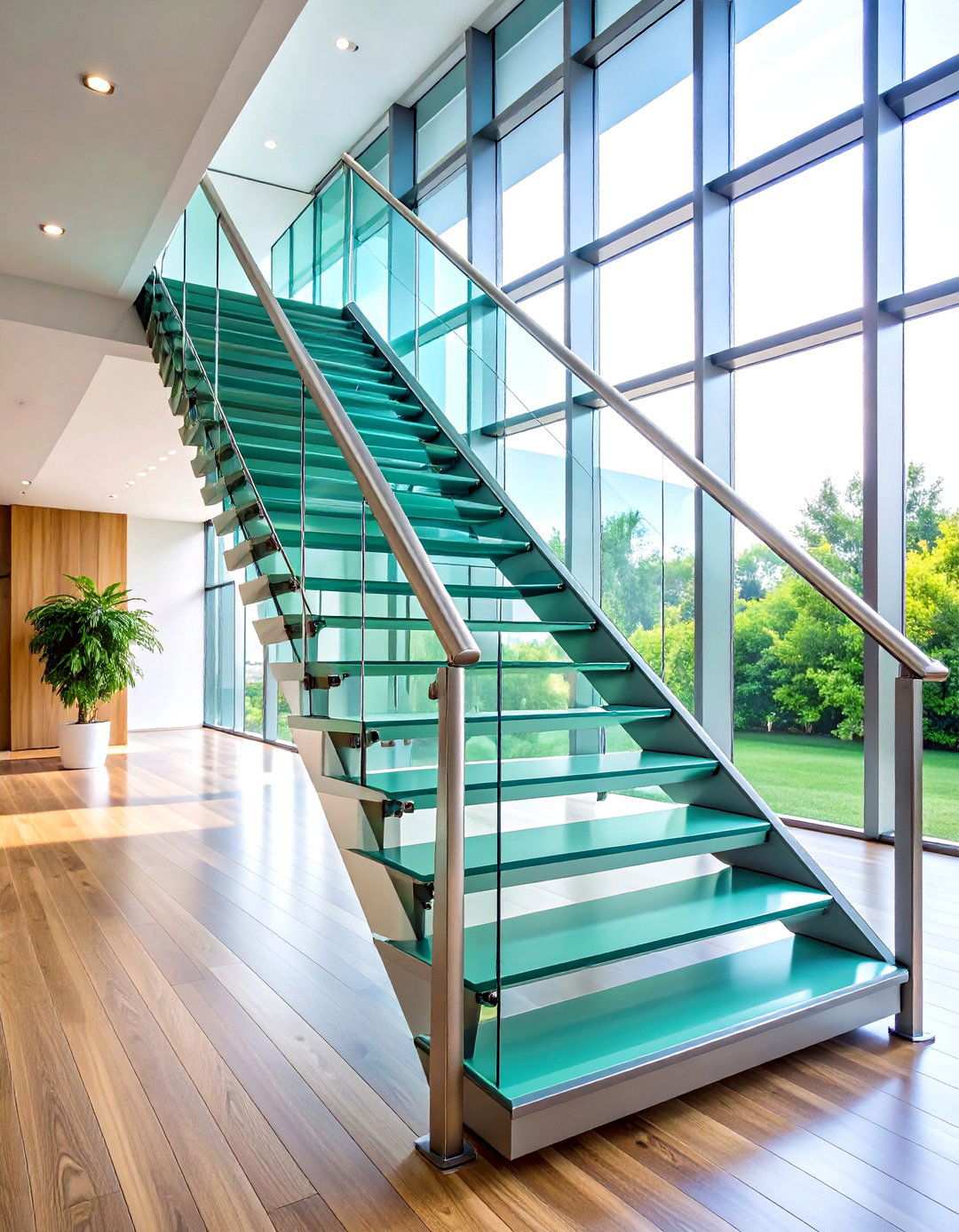
In modern architectural environments, can advanced materials be used to create staircases that seem almost invisible while retaining exceptional strength? Glass and stainless steel combinations offer the ultimate in contemporary sophistication, with precision-engineered stainless steel frameworks supporting tempered glass treads. These designs maximize transparency and light transmission, making spaces feel larger and more connected. The stainless steel elements can be finished in a range of styles, including brushed, polished, or powder-coated, to achieve desired aesthetic effects. To ensure safety, anti-slip treatments can be applied to glass surfaces, and proper handrail integration is also essential. Installation requires specialized expertise to ensure proper load distribution and safety compliance, but the resulting visual impact justifies the investment for modern architectural environments.
6. Industrial Steel Frame with Wood Accents
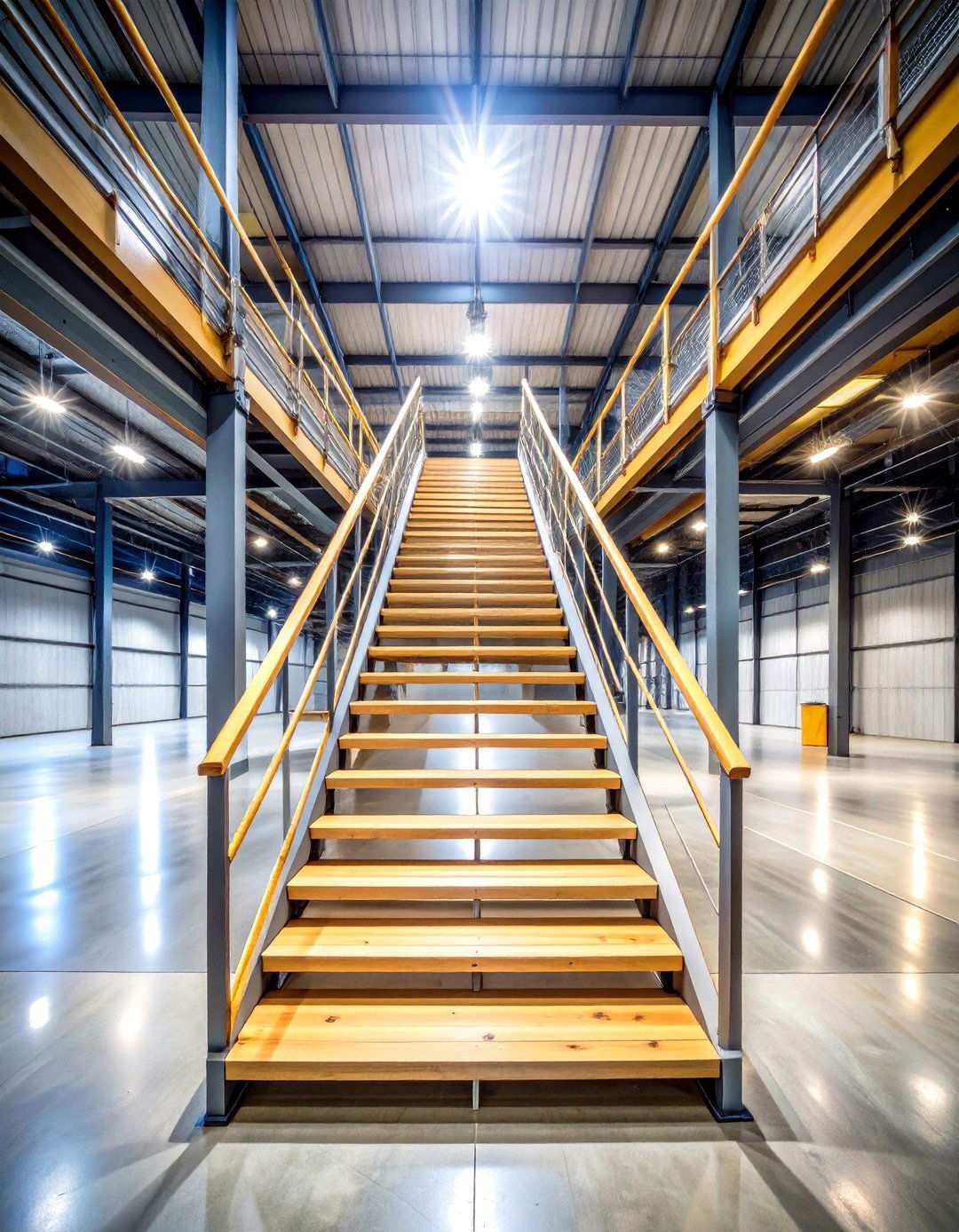
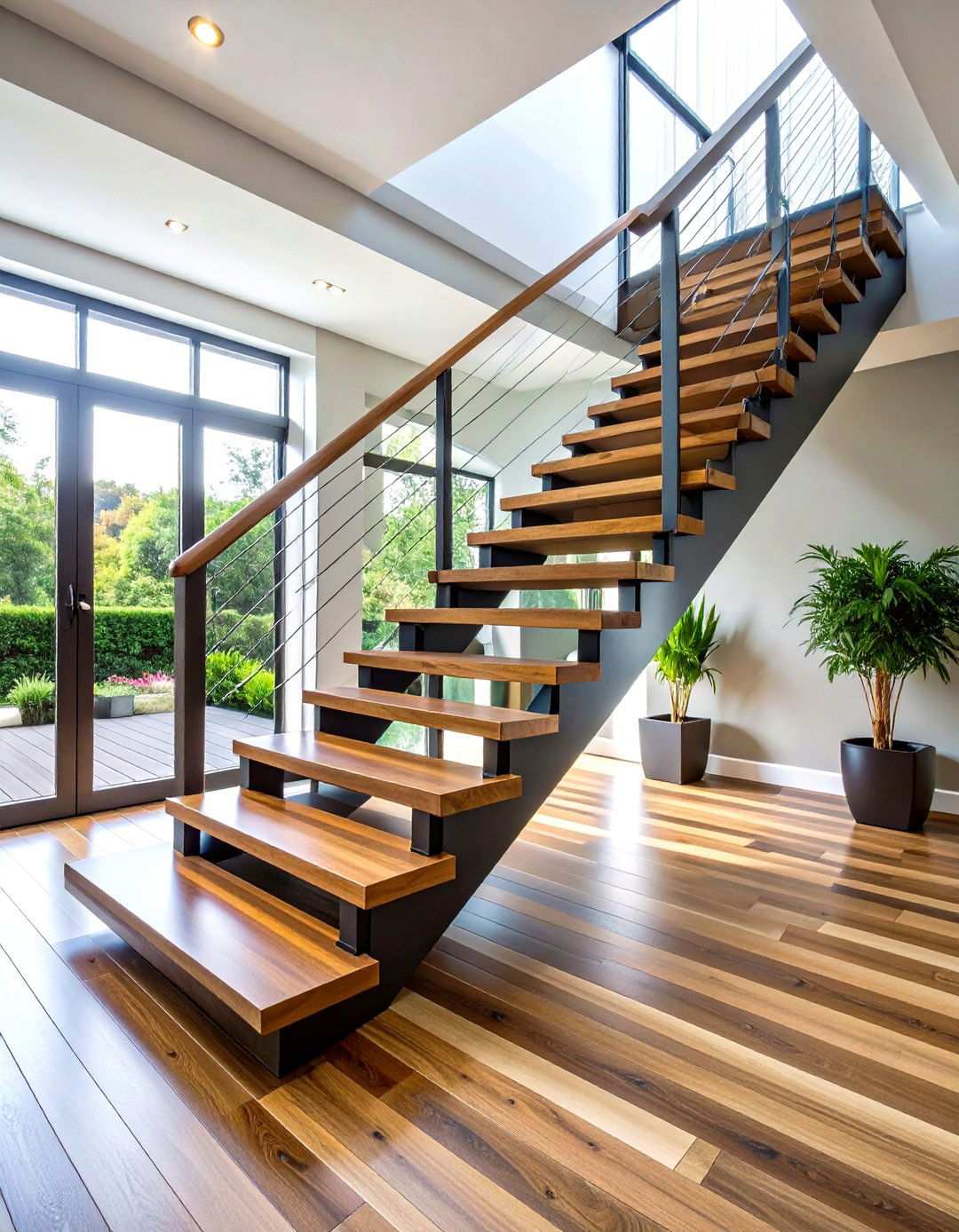
Pairing industrial steel with organic wood tones, architects have discovered a winning formula for staircase design that effortlessly blends rugged functionality with inviting comfort. By combining exposed steel structural elements with warm, tactile wood accents, designers can create visually striking, highly functional staircases that seamlessly transition between converted warehouses and modern residential spaces. Exposed steel stringers and supports take center stage, proudly showcasing the engineering prowess of the design, while wooden treads and handrails provide a welcome respite from the industrial aesthetic, injecting warmth and visual interest into the space. The judicious use of black powder-coated finishes further emphasizes the industrial vibe, while natural wood grain patterns subtly soften the overall appearance, creating a visually captivating contrast. Furthermore, incorporating exposed fasteners and connection details as deliberate design elements pays homage to the raw, industrial aesthetic, reinforcing the honesty of materials and construction methods.
7. Curved Floating Staircase
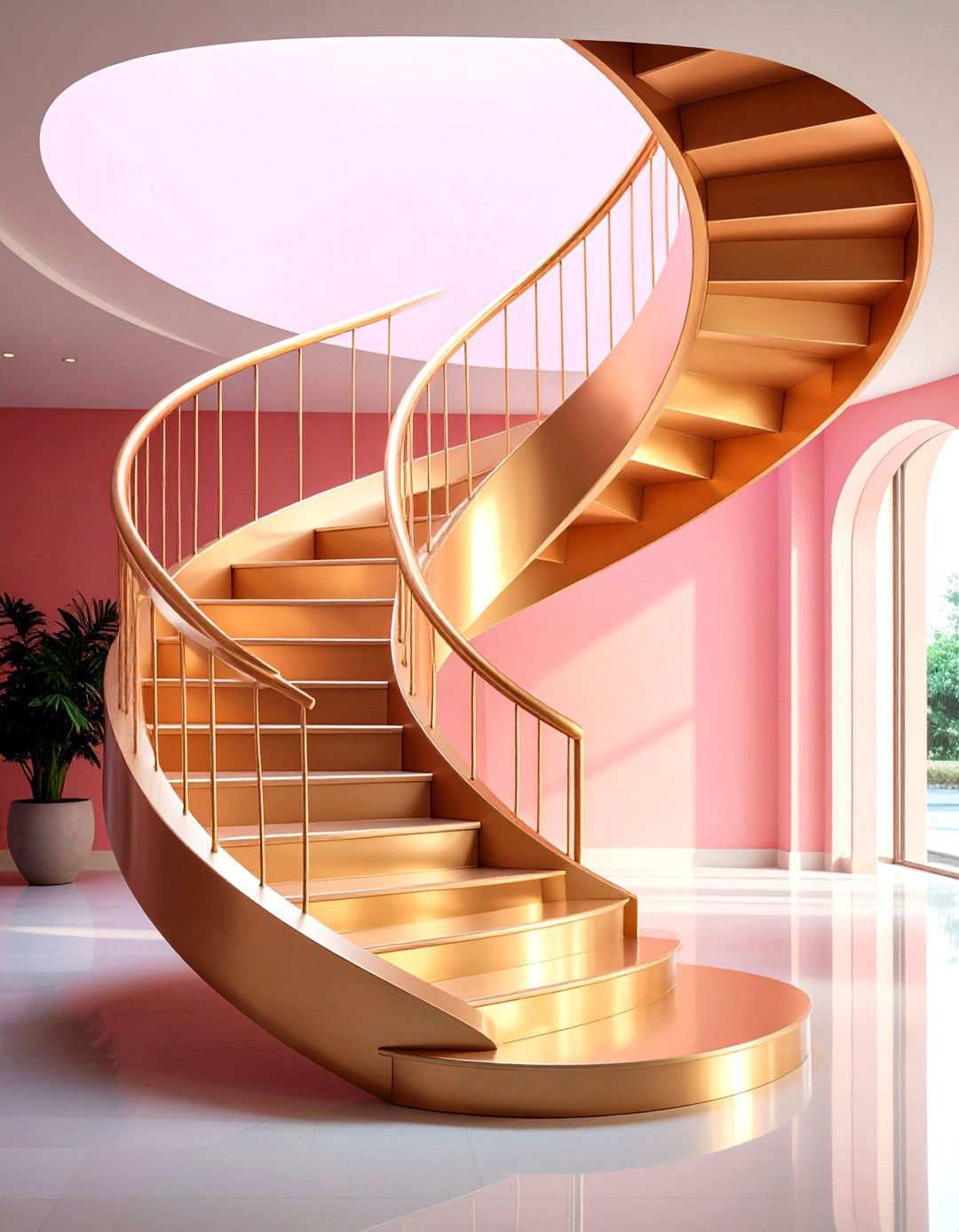
What elevates a staircase from mere functionality to an awe-inspiring work of art? Curved floating staircases, with their sinuous, spiral lines, seem to defy gravity, creating breathtaking focal points in grand entrance halls or expansive living spaces. The curved geometry, though visually stunning, requires meticulous engineering to ensure structural integrity while maintaining the illusion of weightlessness. Typically, designers opt for materials like engineered wood, steel, or composite treads, supported by discreet structural systems that blend seamlessly into the overall design. Glass or minimalist railings preserve the floating effect, while ensuring the necessary safety features. These designs are ideally suited to spaces with ample ceiling height and floor area, allowing the sweeping curves to take center stage without overwhelming the surrounding architecture.
8. Open Riser Modern Design
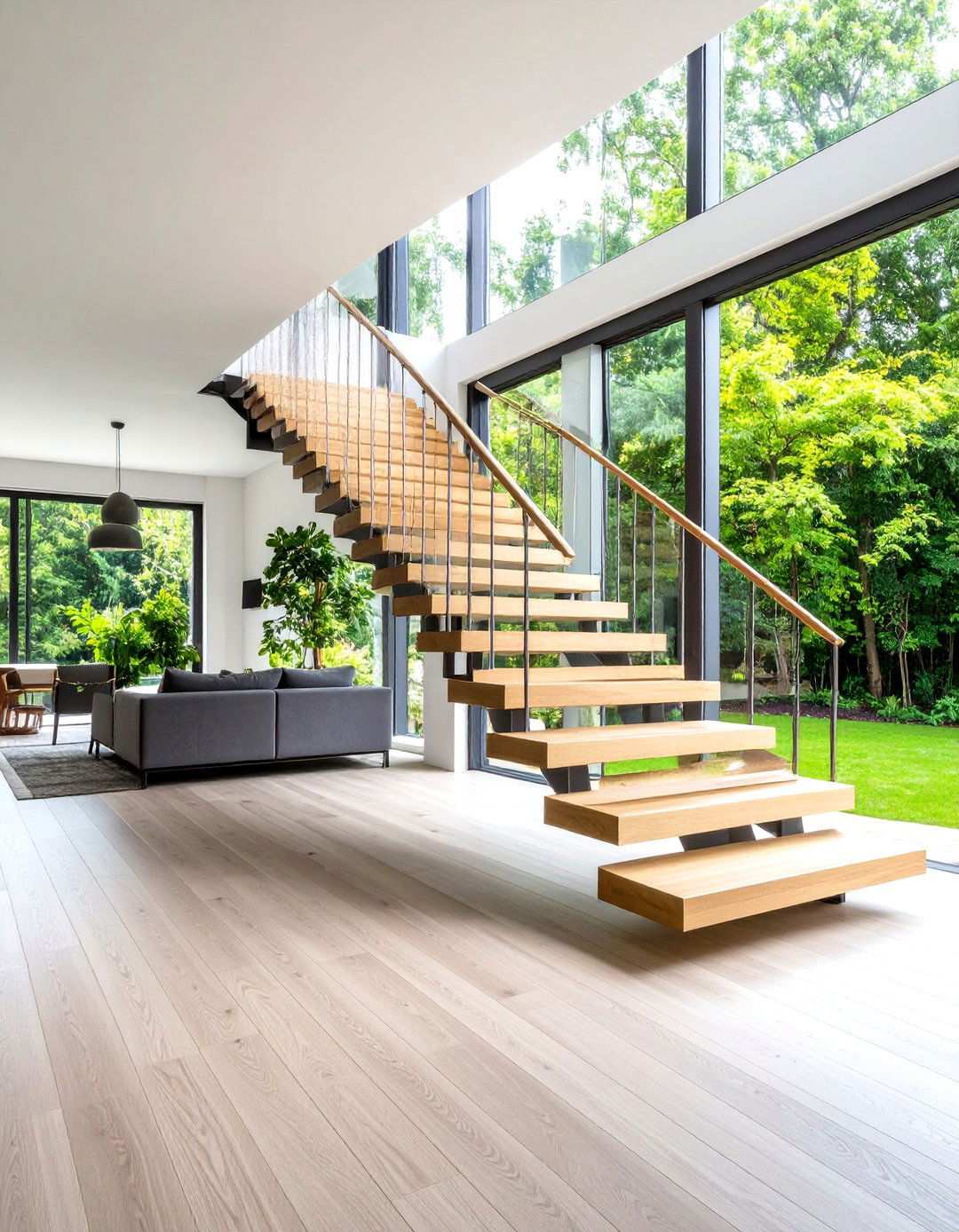
Why settle for a traditional, closed-off staircase when an open design can revolutionize your space? Open riser modern staircases liberate the visual potential of multi-level spaces by eliminating vertical elements between treads, permitting an abundance of natural light to flood in and creating a sense of airy openness. By reducing material costs and emphasizing the minimalist aesthetic, these designs have become a favorite among architects and homeowners alike. However, structural considerations necessitate careful attention to tread thickness and support spacing to maintain safety and stability. These designs work particularly well with floating or cantilever support systems, which emphasize the modern aesthetic and create a sense of weightlessness. While safety codes may dictate special considerations for riser openings, creative solutions like partial risers or protective barriers can address these requirements while preserving the design’s integrity.
9. Illuminated Treads Elevate the Modern Staircase
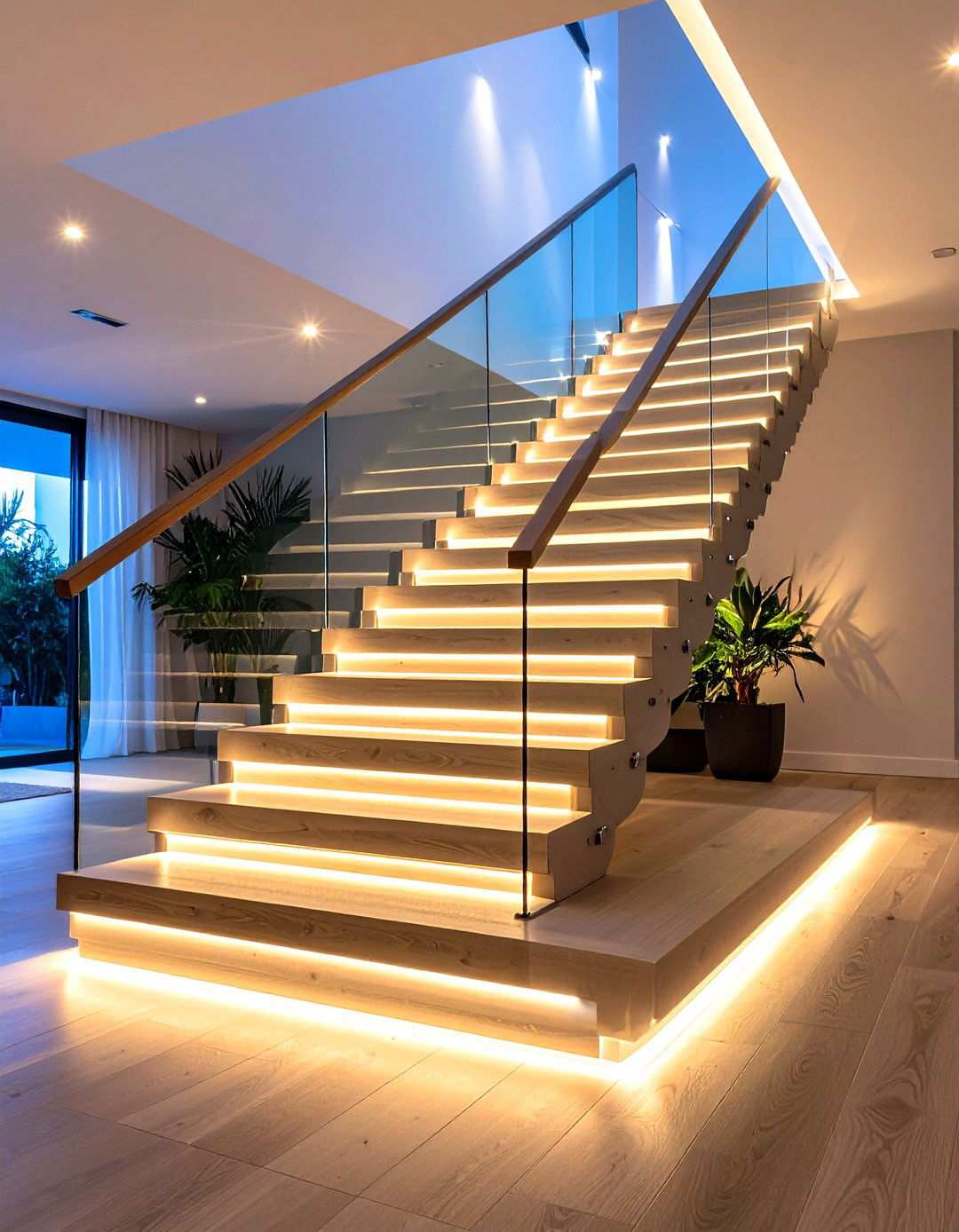
A modern staircase achieves its full potential when illuminated by expertly integrated lighting. By seamlessly incorporating LED elements into each step, homeowners can create a truly breathtaking visual experience that enhances both safety and aesthetic appeal. Strategically placed strip lighting, whether recessed into tread edges, under nosings, or within glass elements, can be used to create a range of dramatic effects. Furthermore, smart controls enable homeowners to experiment with a variety of settings, including dimming, color changing, and motion activation, to create a truly dynamic lighting experience. As with any sophisticated design element, careful planning during the design phase is crucial to ensure that wiring and control systems are seamlessly integrated.
10. Maximizing Functionality in Small Spaces
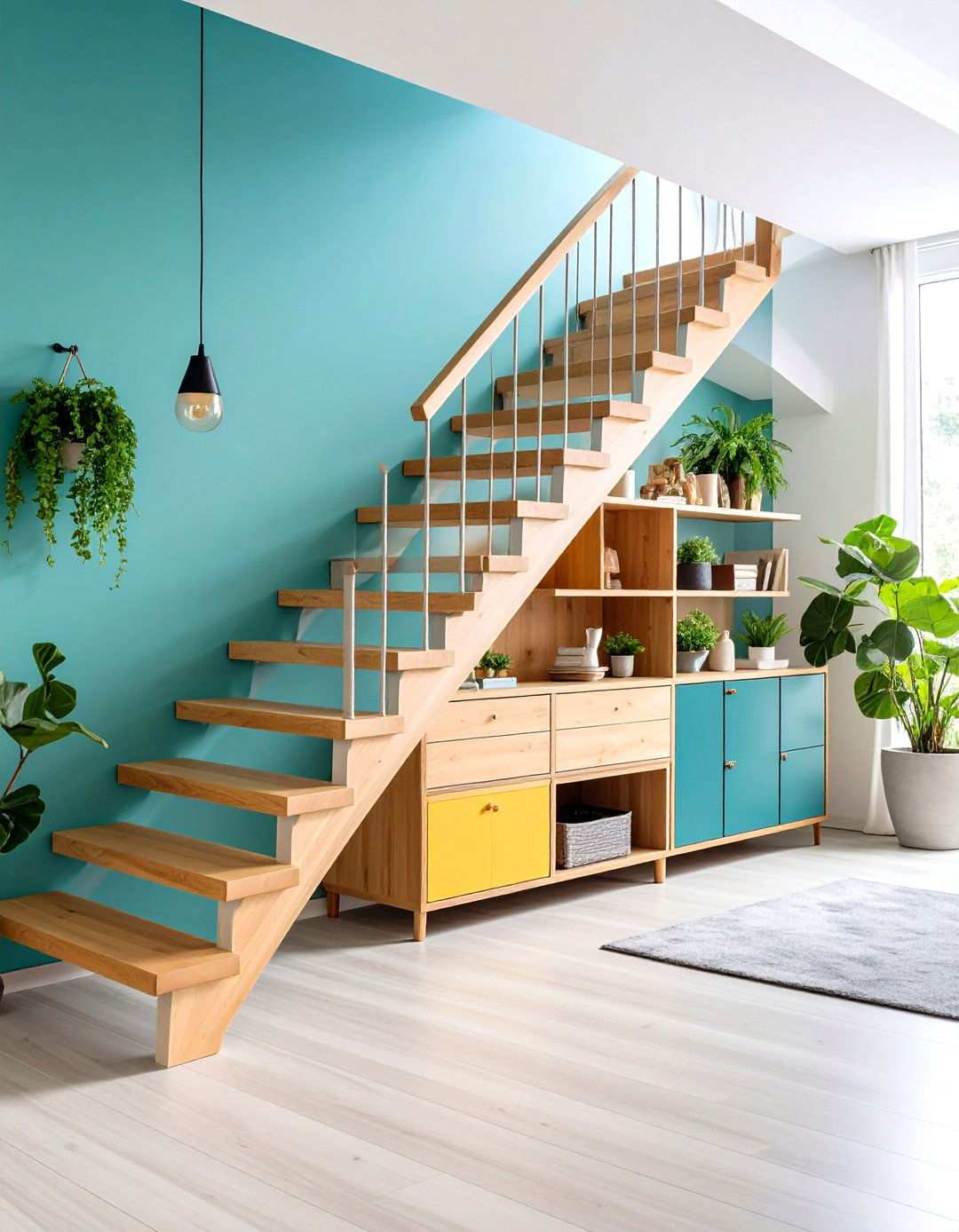
In spaces where every inch counts, the incorporation of storage solutions can be a game-changer. By integrating cabinets, drawers, or shelving within the staircase structure itself, homeowners can transform dead space into valuable storage real estate. Each tread can be designed to conceal pull-out drawers perfect for seasonal items, while larger compartments beneath can accommodate everything from books to cleaning supplies. Effective integration requires a delicate balance between maintaining structural integrity and providing practical access, but the results are well worth the effort. Modern designs often feature hidden hardware and flush-mounted doors or drawers, preserving a clean aesthetic while maximizing functionality. This approach is particularly well-suited to urban apartments, tiny homes, or any space where storage is at a premium.
11. Engineering Precision Meets Architectural Beauty
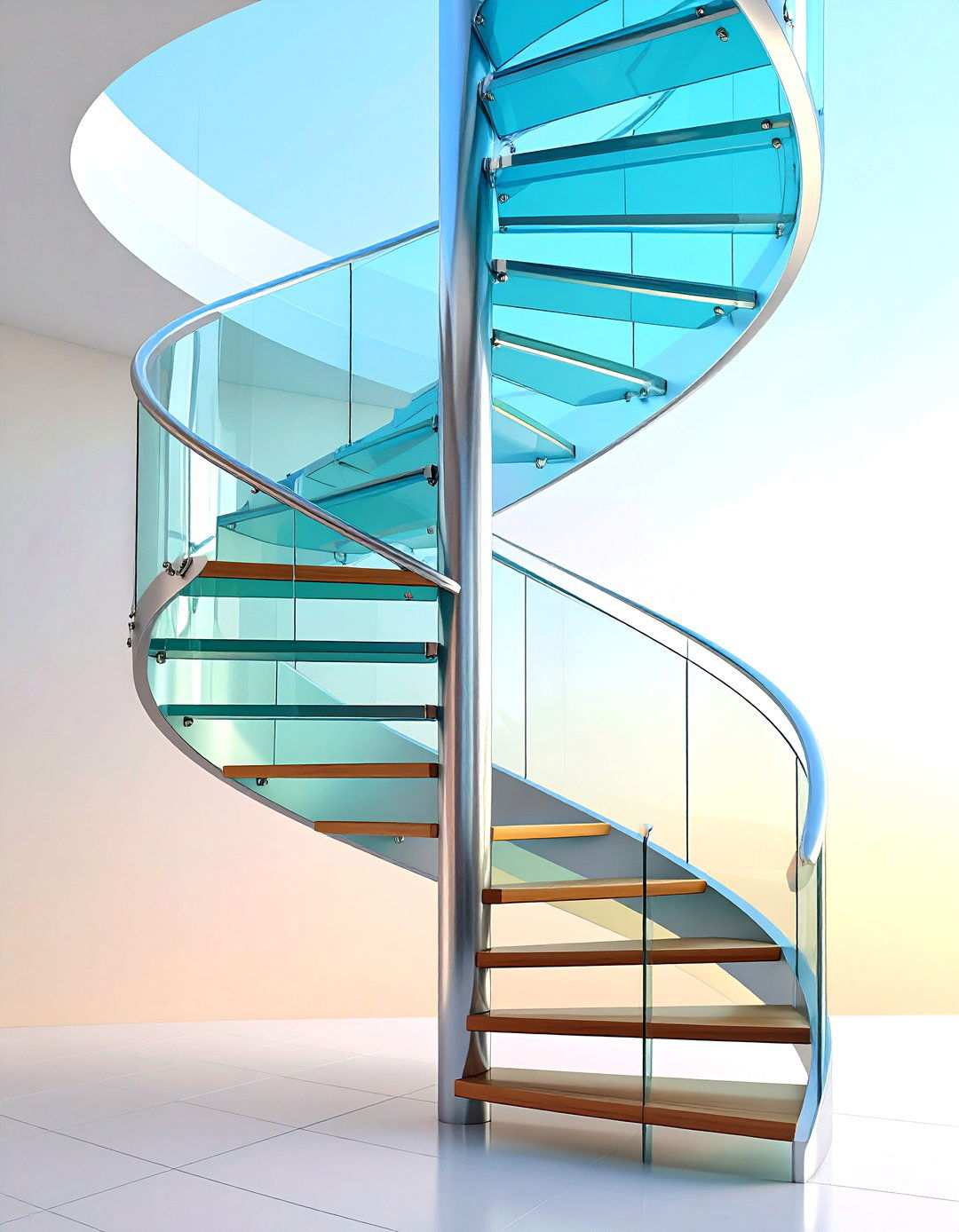
When engineering precision meets artistic vision, the result can be truly breathtaking. Helical steel and glass structures feature continuous spiraling forms that combine robust steel frameworks with extensive glass elements, creating a dynamic architectural feature that appears to twist upwards. The helical geometry provides inherent strength and stability, while the glass elements maintain transparency and lightness. These complex designs require advanced engineering and fabrication techniques, resulting in unique sculptural statements that can elevate any space. Depending on aesthetic preferences, the steel framework can be exposed or partially concealed, while glass panels can be used as treads, railings, or both, creating unified designs where structure and safety elements blend seamlessly into cohesive architectural experiences.
12. Elevating the Ordinary with Concrete Cantilever Design
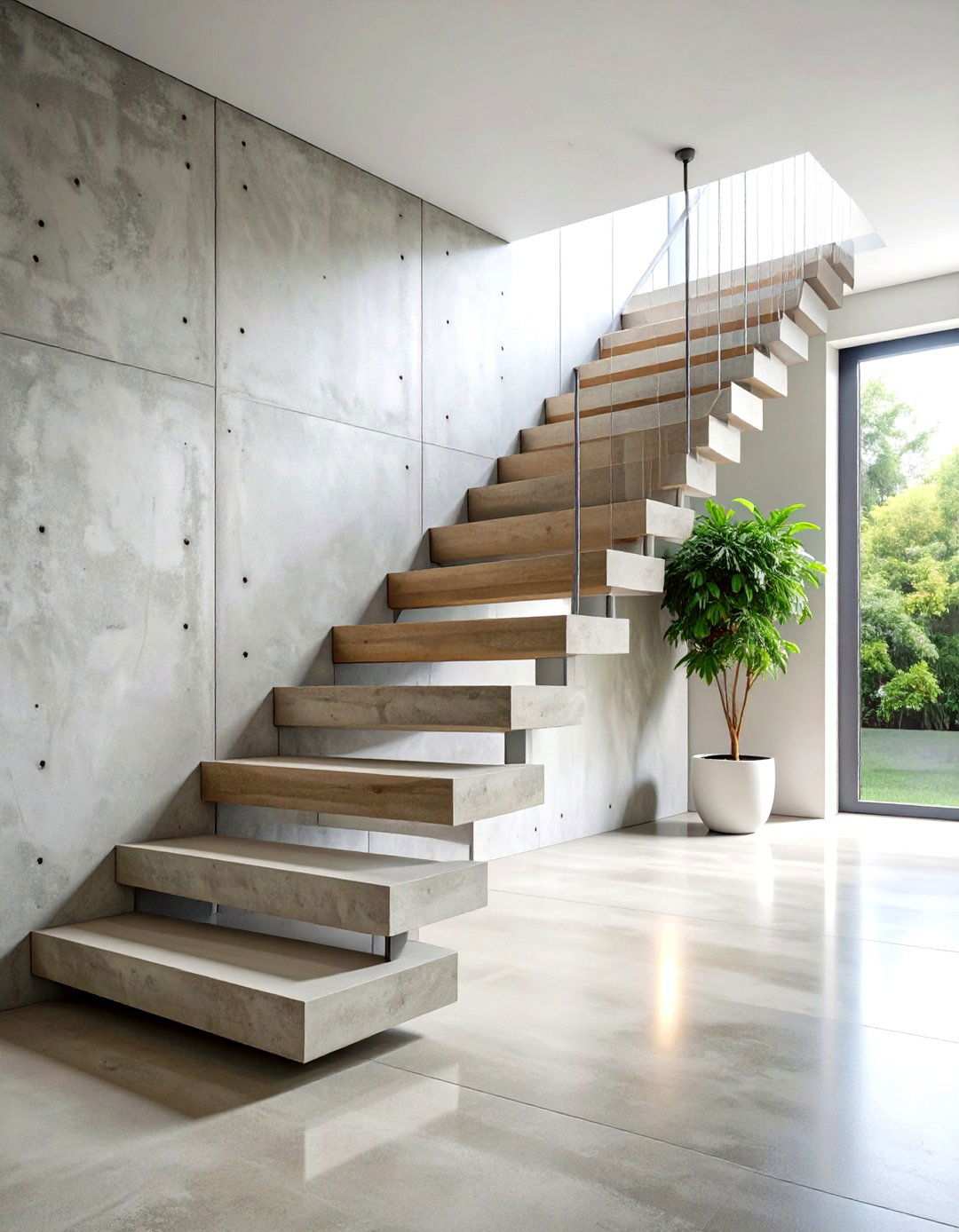
A daring twist on traditional staircases, concrete cantilever designs unleash a sense of weightless stone suspended in mid-air, captivating onlookers with their bold architectural statements. The imposing treads, often left raw for a brutalist aesthetic or polished for a sleek finish, are a testament to material honesty and structural innovation. While the visual impact of these treads is undeniable, their substantial weight demands meticulous engineering and construction coordination to ensure seamless integration with surrounding walls. The striking contrast between the concrete’s rugged presence and lighter materials creates a powerful focal point in modern residential and commercial spaces.
13. Harmony in Heterogeneity: Mixed Material Contemporary Style
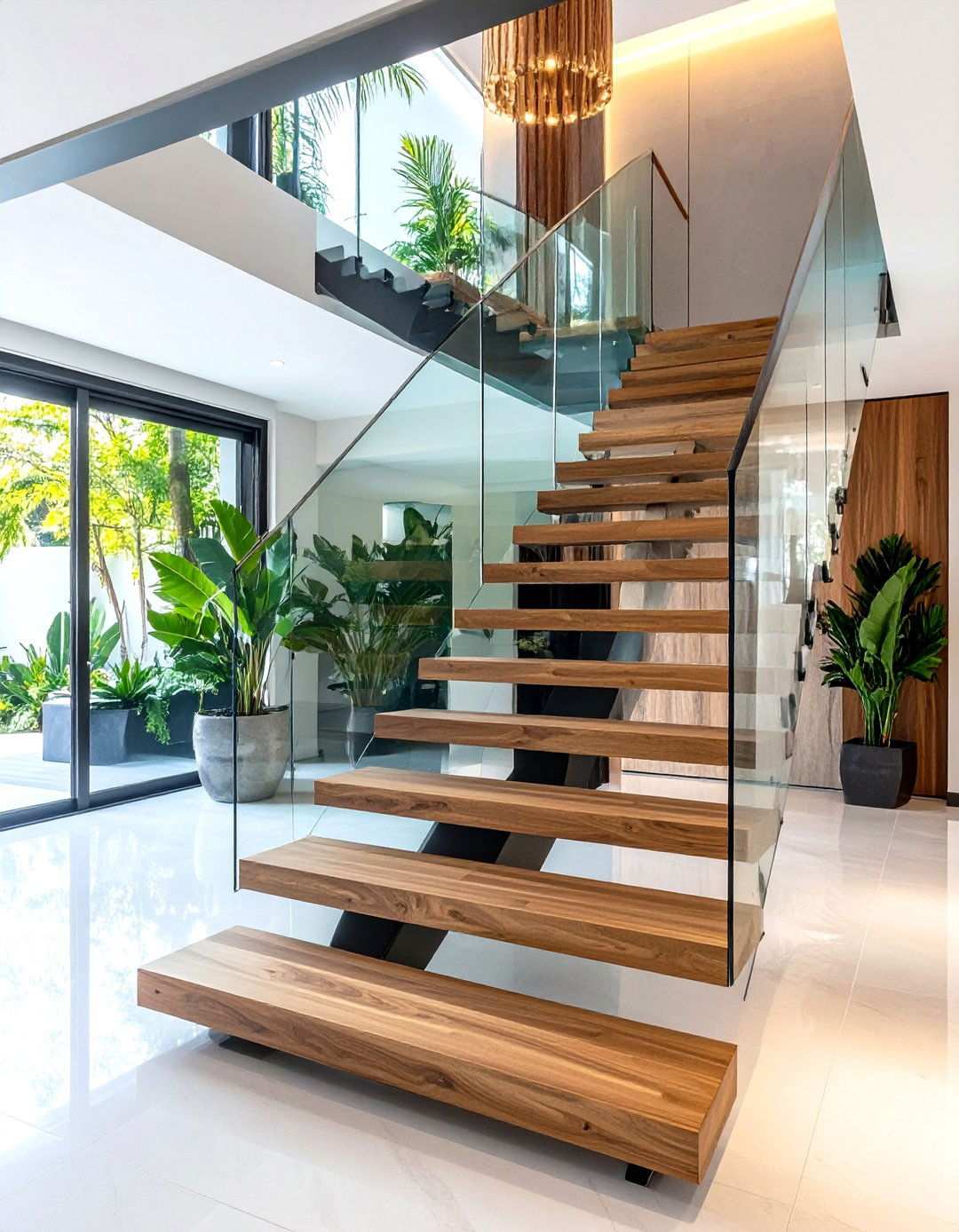
Effective staircase design lies in the subtle balance of disparate elements, coalescing into a unified aesthetic statement. Mixed material contemporary styles expertly combine wood, steel, glass, and stone to create visually interesting and cohesive compositions. By juxtaposing the unique properties of each material – steel’s strength, wood’s warmth, glass’s transparency, and stone’s solidity – designers can craft bespoke staircases that exude a distinctive character. Steel stringers paired with wood treads, glass railings accentuated by stone steps, or concrete supports infused with metal accents are just a few of the many possible combinations. The key to success lies in thoughtful finish coordination and proportional relationships, allowing each material to shine without creating visual chaos.
14. Geometric Precision Meets Artistic Expression in Staircase Design
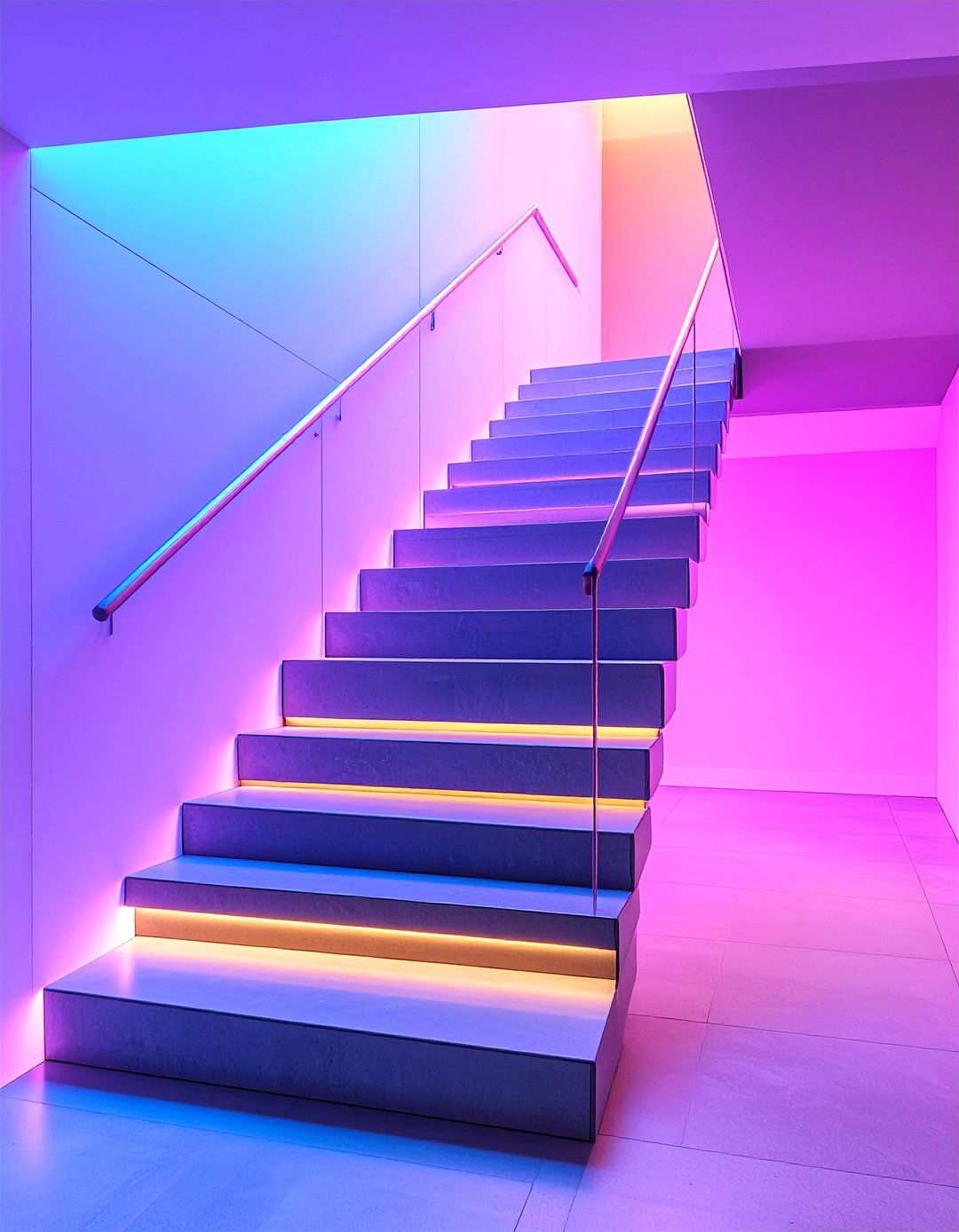
When mathematical precision converges with architectural artistry, the result is a staircase design that is as much a work of art as it is a functional component of a building. Geometric pattern staircases, featuring angular treads, asymmetrical supports, and repeating design elements, create a mesmerizing visual rhythm as they ascend. Zigzag stringers, triangular treads, or hexagonal patterns transform the mundane task of circulation into a dynamic art installation. By incorporating contrasting materials or colors, designers can emphasize the geometric elements, imbuing the staircase with a sense of drama and sophistication. However, artistic expression must be balanced with safety considerations, ensuring that the geometric elements do not compromise functionality or create hazardous conditions.
15. Elevating Safety with Minimal Visibility
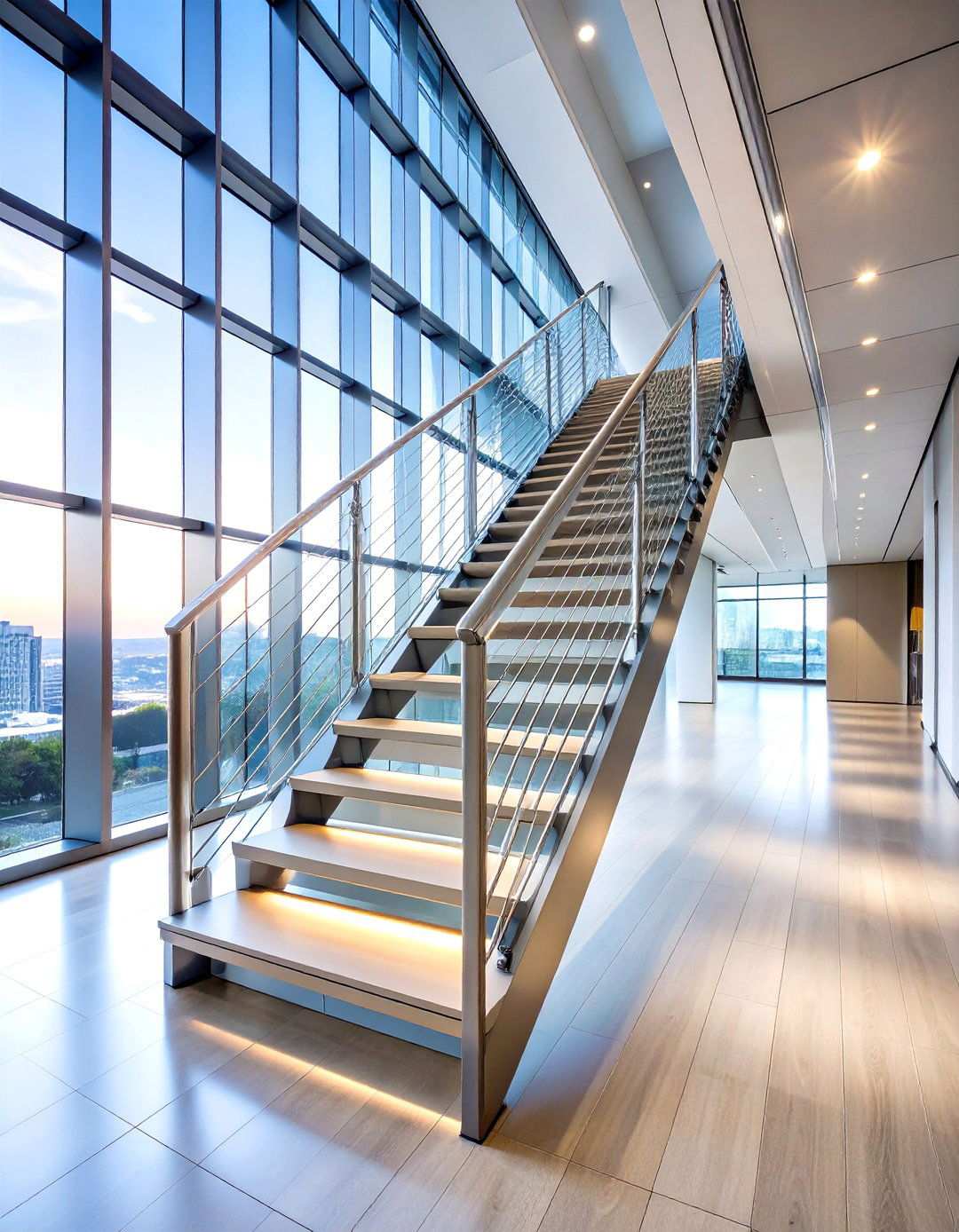
Safety features don’t have to compromise unobstructed views. Suspended wire rail systems employ tensioned stainless steel cables, strategically spaced between posts, to prevent falls while maintaining transparency. This ingenious design solution is particularly well-suited for floating or open staircase designs, where visibility is paramount. By using ultra-thin cables and precision spacing, these railings create a nearly invisible barrier that meets safety codes without obstructing sightlines or natural light. Installation requires specialized tensioning hardware and periodic maintenance to ensure the cables remain taut and effective.
16. Industrial Chic: The Allure of Blackened Steel
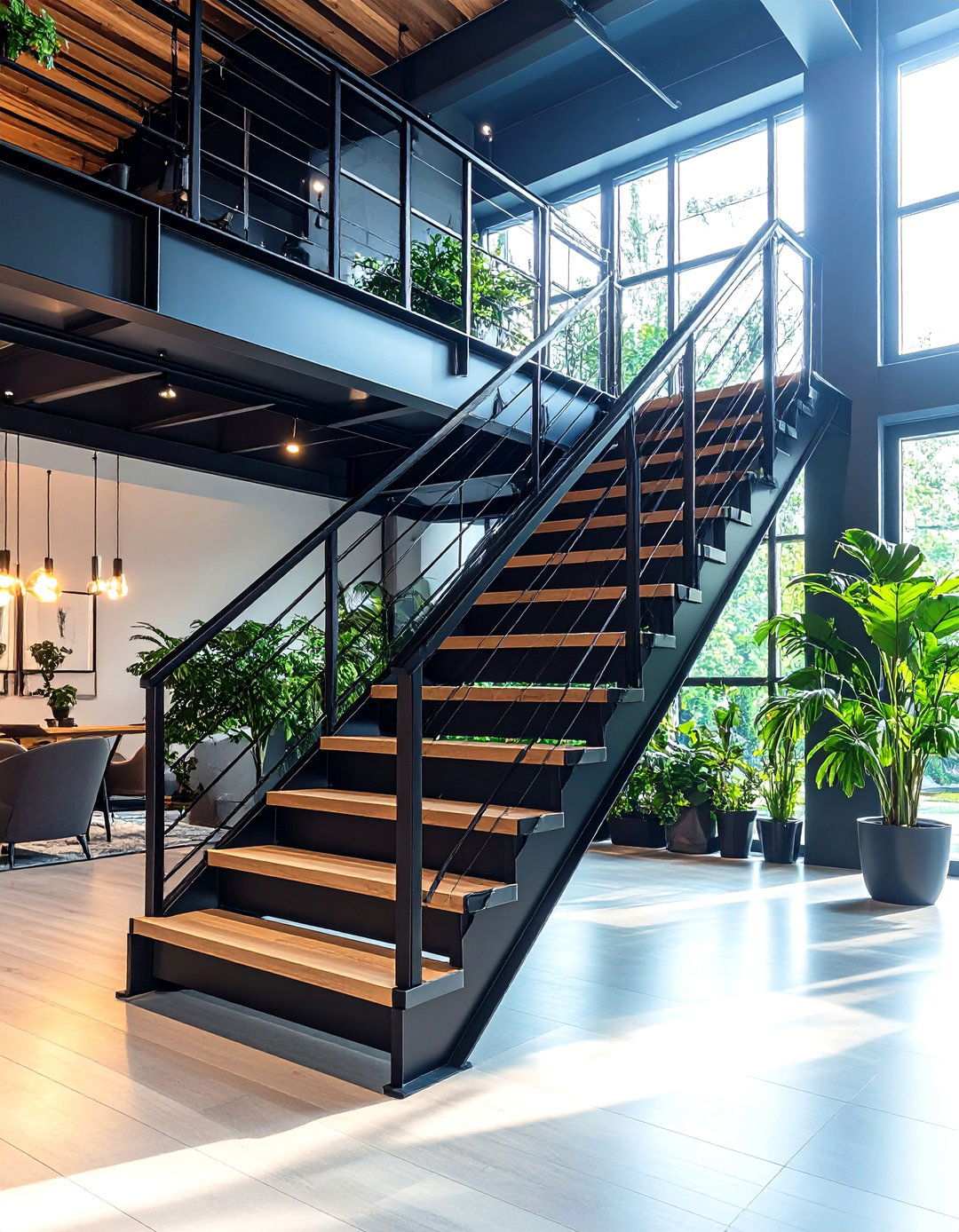
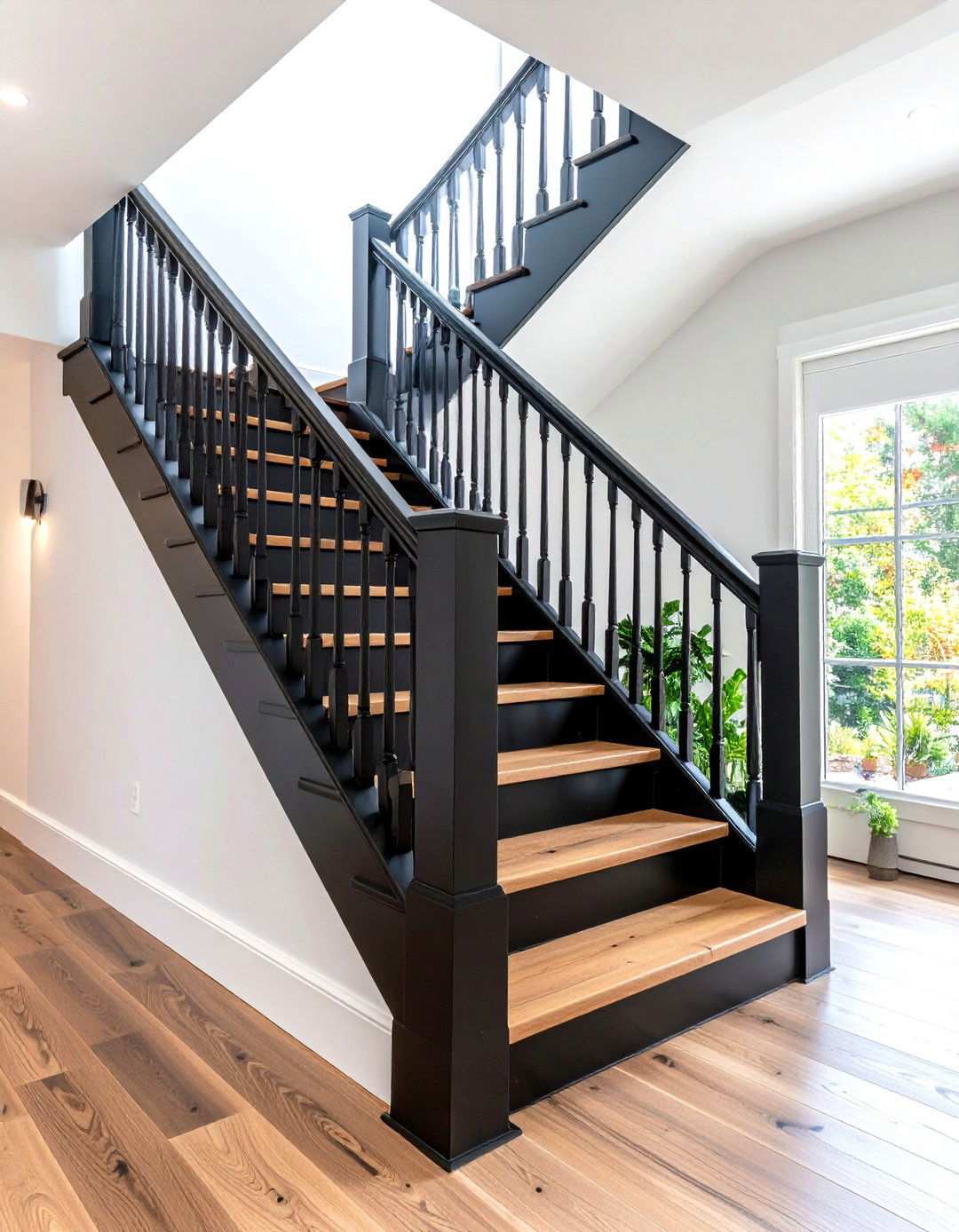
Blackened steel staircases make a bold architectural statement by embracing the raw beauty of industrial design. Dark, matte finishes created through powder coating, chemical patina, or heat treatment enhance structural elements and create striking contrasts with surrounding materials. By exposing connection details, welds, and structural elements as decorative features, these designs celebrate industrial honesty in all its glory. The blackened steel pairs beautifully with natural wood, white walls, or concrete floors, creating visually stunning compositions that are both modern and timeless. Regular maintenance ensures the finish remains pristine and develops a natural character over time, adding to its allure.
17. Harmonious Balance: Timber Frame and Glass
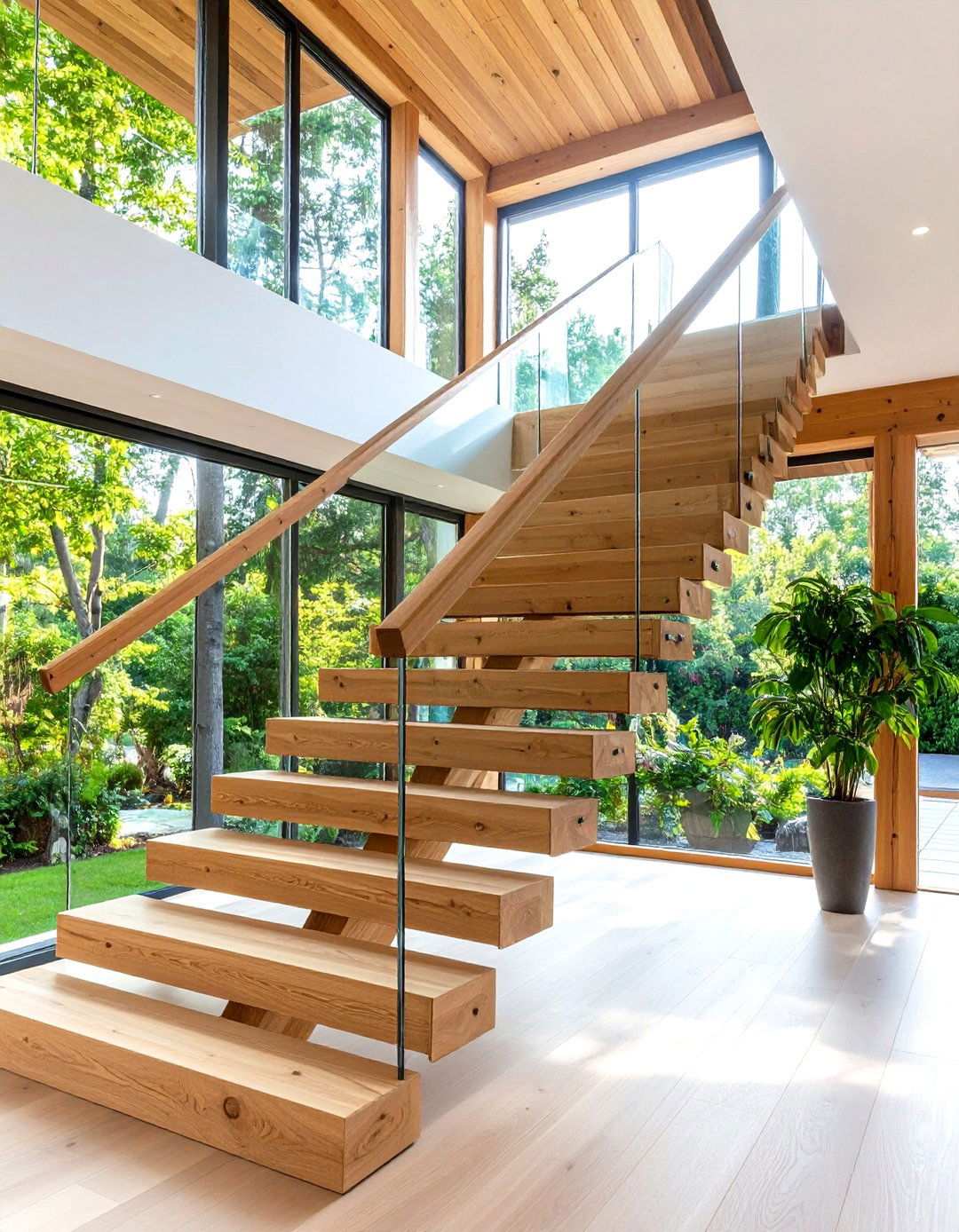
A perfect balance between natural warmth and contemporary transparency is achieved with timber frame staircases that incorporate glass inserts. By combining structural wood elements with strategically placed glass panels, these designs maintain openness while showcasing natural wood grain and construction details. Glass elements can serve as railing infill, tread material, or decorative accents that add a touch of modernity to solid wood masses. Various wood species, from light maple to dark walnut, create different moods and complement diverse interior palettes. The key to success lies in proper integration, where careful detailing ensures both materials perform well together structurally and aesthetically.
18. Elevating Staircase Design with Perforated Metal Treads
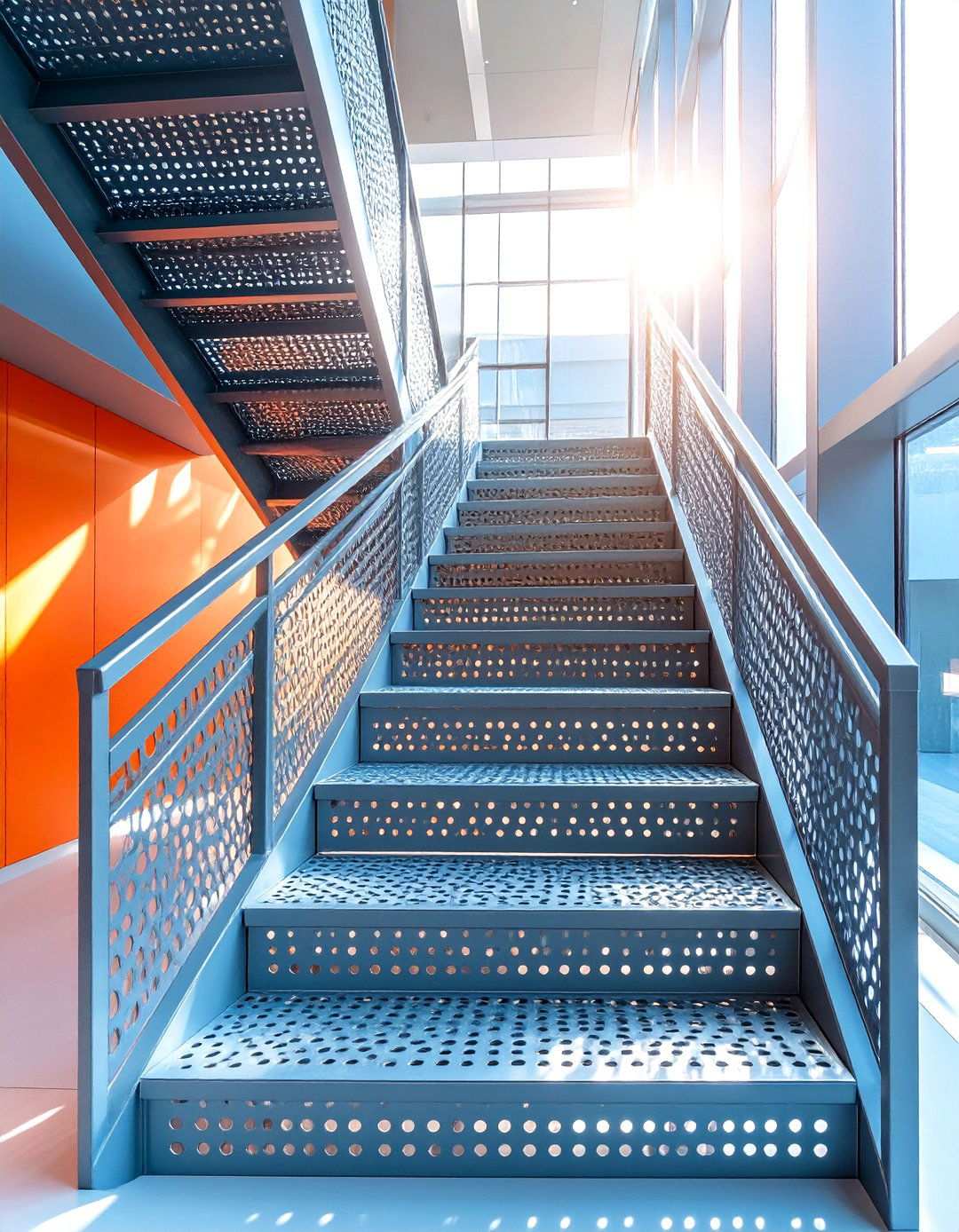
Precision-cut steel or aluminum sheets with intricately designed perforations have the potential to transform industrial materials into unexpectedly elegant staircase solutions. By incorporating decorative hole patterns, these perforated metal treads not only reduce weight but also create captivating light and shadow effects. The perforations can be arranged in geometric patterns, haphazard arrangements, or bespoke designs that harmoniously complement specific architectural themes. These treads boast exceptional slip resistance, while also allowing for air circulation and minimizing material usage. The industrial aesthetic lends itself seamlessly to contemporary homes, commercial spaces, and any setting where modern sophistication is coveted. Various perforation patterns and metal finishes enable extensive customization options while upholding structural performance and safety standards.
19. Creating a Grand Architectural Focal Point with Double-Height Feature Staircases
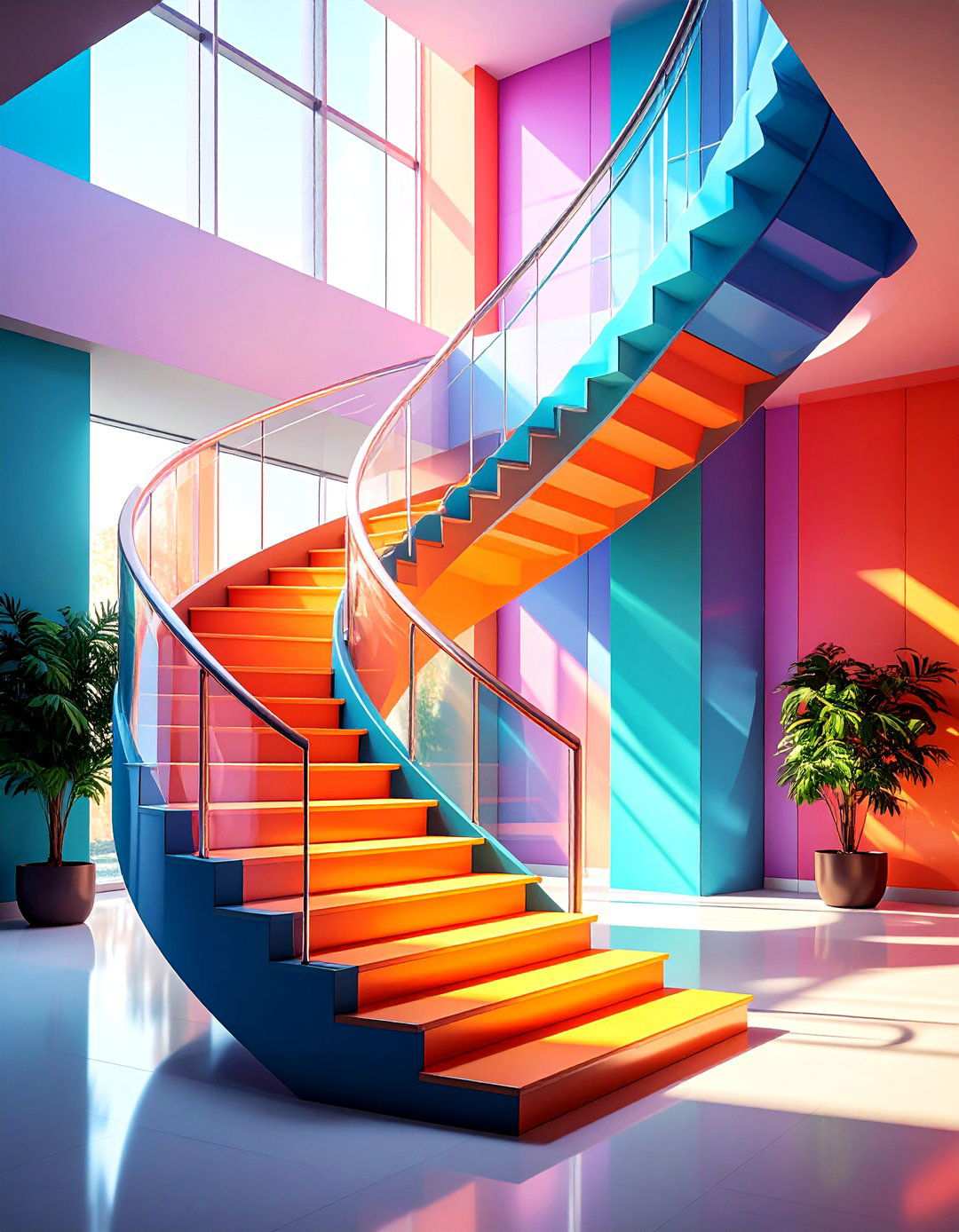
A double-height feature staircase can elevate an ordinary staircase to a stunning architectural centerpiece. These designs span dramatic vertical spaces, resulting in spectacular focal points that exalt vertical circulation as a masterpiece of architectural art. Double-height staircases often incorporate multiple levels, landing platforms, or split configurations that create intricate three-dimensional compositions. The grand scale allows for bold material selections, dramatic lighting integration, and artistic elements that would overwhelm smaller spaces. Careful engineering is essential to ensure structural stability and safety while spanning large distances. The visual impact of these staircases makes them suitable for grand entries, commercial lobbies, or any space where dramatic architectural flair is desired.
20. Achieving Visual Simplicity through Minimalist Hidden Support Systems
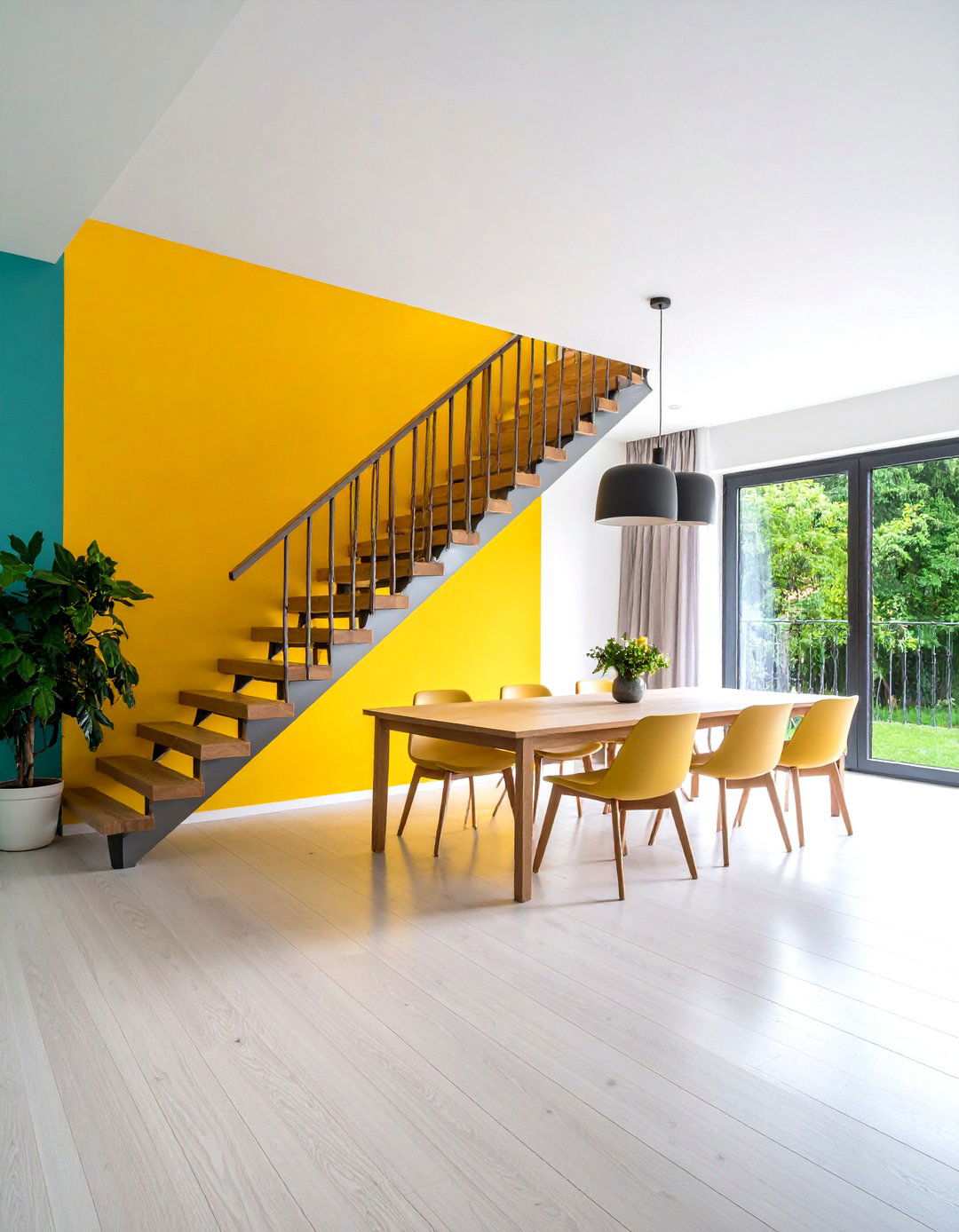
A minimalist hidden support system can create the ultimate visual simplicity while maintaining structural integrity. By concealing all structural elements within walls, floors, or other architectural components, the essential tread surfaces remain visible, leaving a clean and unobstructed aesthetic. This approach demands extensive planning and coordination with structural systems to ensure adequate load paths and safety factors. Material choices for visible elements become critical, as they constitute the entire visual composition. These designs work best in spaces where architectural purity and visual simplicity are the primary design goals.
21. Elevating Staircase Design with Composite Materials
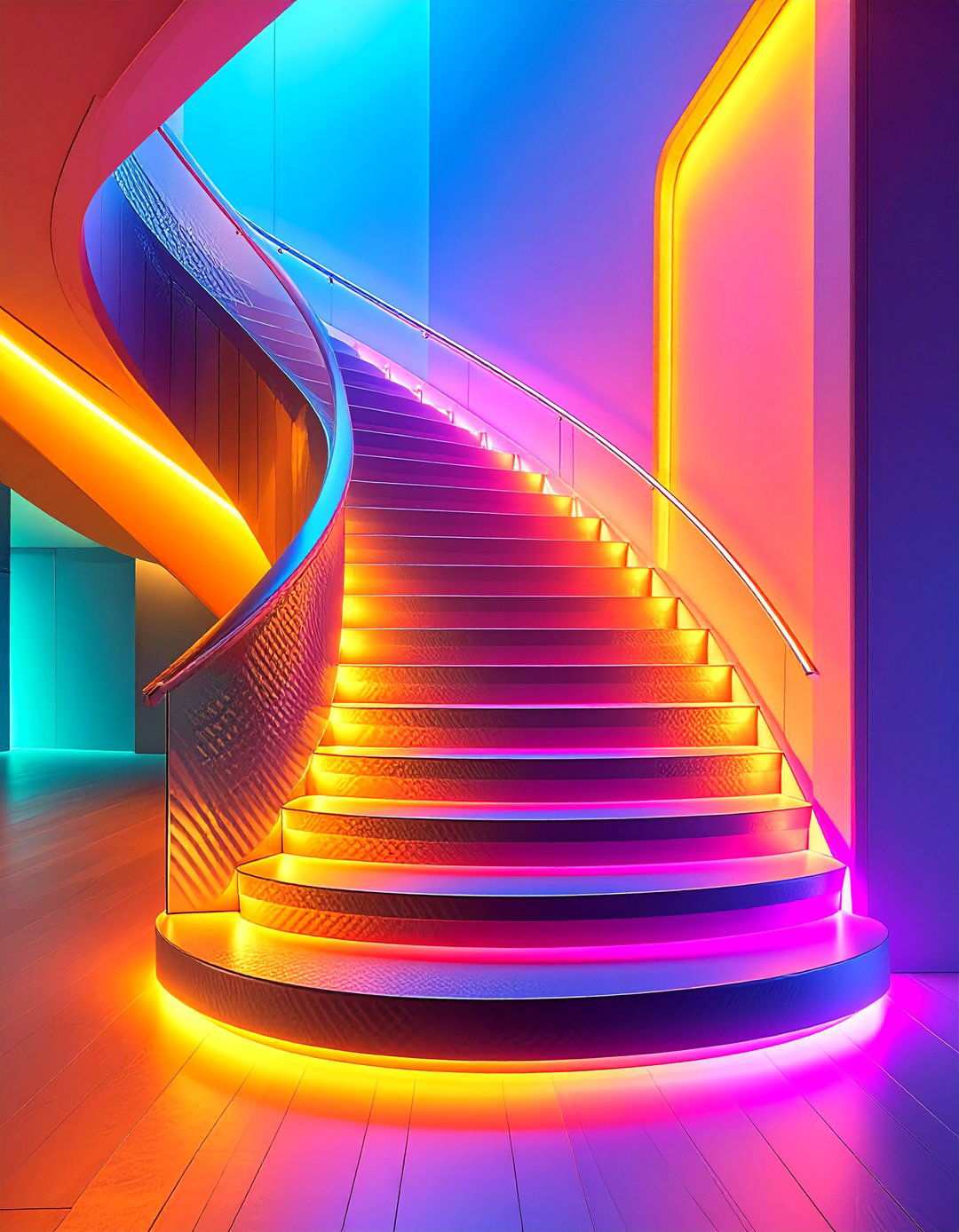
The integration of advanced materials is revolutionizing contemporary staircase design by offering unprecedented possibilities for innovation. By combining fibers, resins, and additives, composite materials create lightweight, durable components with unique aesthetic and performance characteristics. These cutting-edge materials boast strength-to-weight ratios that far surpass traditional materials, enabling the creation of complex curved forms that defy conventional design constraints. Furthermore, the versatility of composite materials allows designers to replicate natural textures or craft entirely new visual effects through colors, patterns, or translucency. As a result, staircase designs can now seamlessly integrate organic shapes, innovative features, and tailored performance characteristics, making them ideal for a wide range of applications.
22. Discreet Handrail Solutions
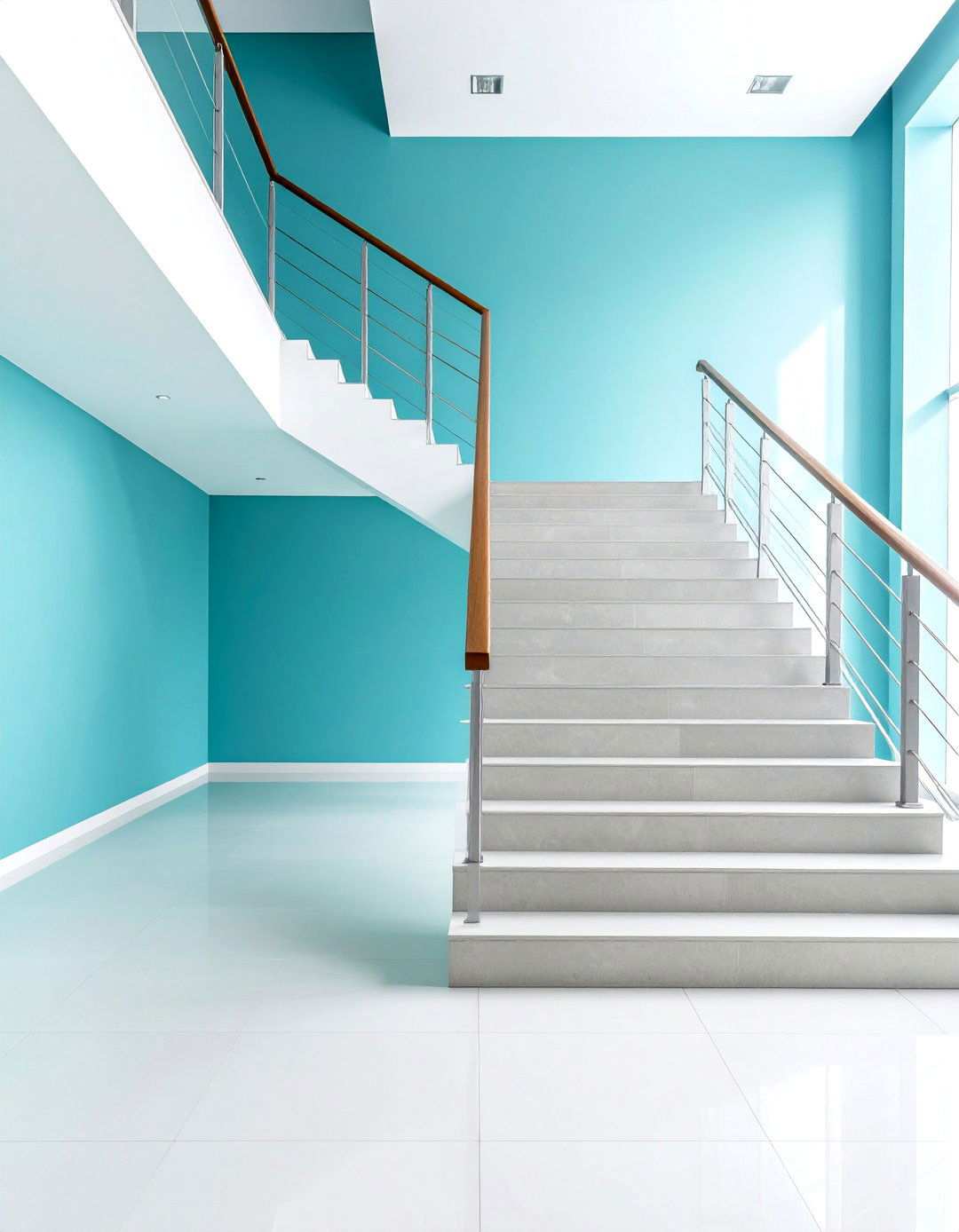
The trend towards minimalist design has led to a reevaluation of handrail functionality, with a focus on integrating safety elements directly into the staircase structure, walls, or surrounding architecture. This approach eliminates the need for separate railing systems while still meeting essential safety requirements. Designers can opt for wall-mounted rails, integrated glass panels, or structural elements that serve dual functions, such as supporting both the handrail and the staircase itself. By carefully balancing ergonomics, code compliance, and visual relationships with surrounding elements, these integrated solutions create a seamless and sophisticated architectural composition that prioritizes both form and function.
23. Transparent yet Private Staircase Design
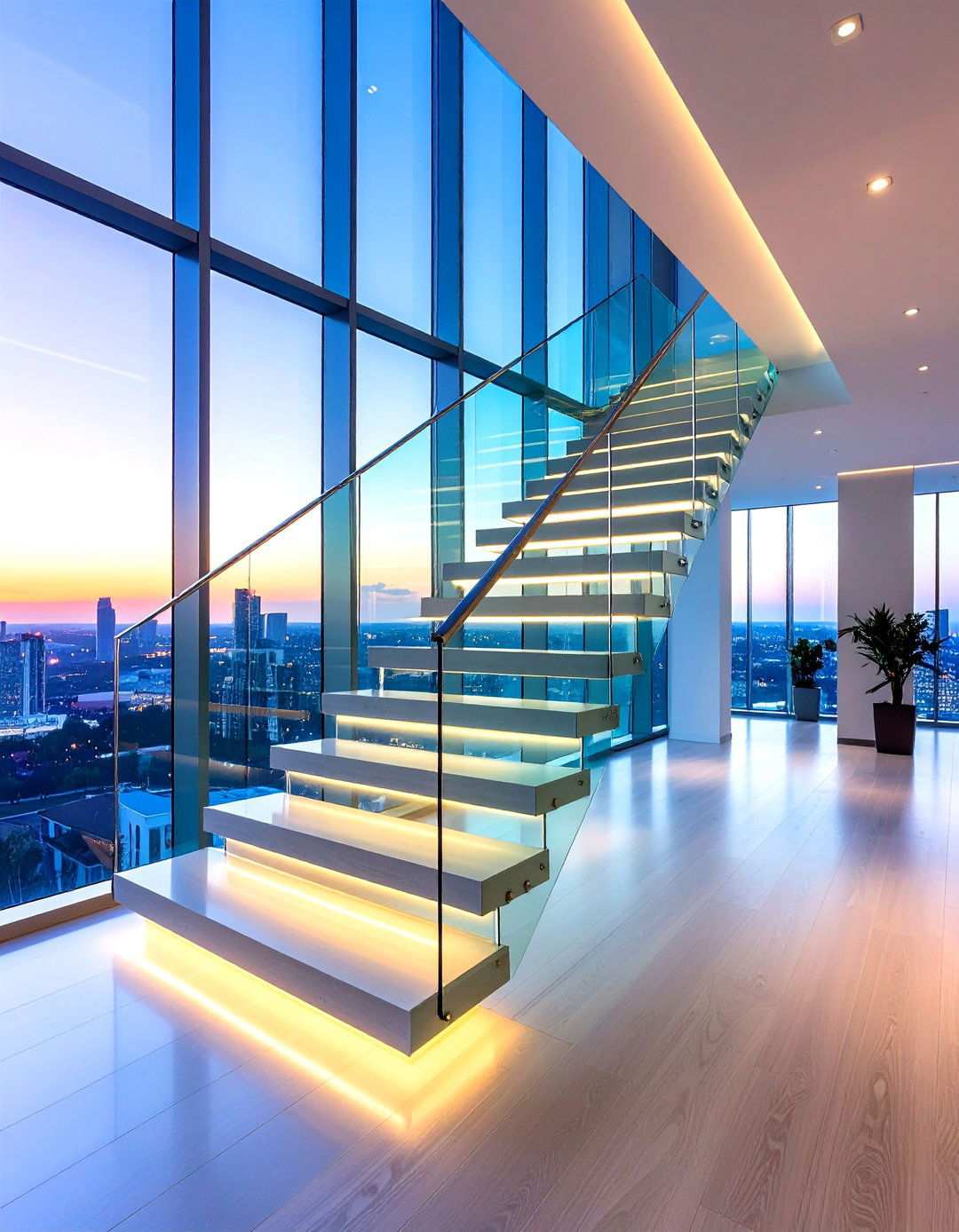
Achieving the perfect balance between light transmission and visual openness is a significant challenge in staircase design. Translucent panel systems provide an elegant solution by incorporating frosted glass, acrylic, or specialized films to create semitransparent barriers that diffuse light while maintaining privacy between levels. These panels can be used as railing infill, tread material, or decorative screens, adding a touch of mystery to staircase environments. By fine-tuning the opacity levels, designers can achieve a delicate balance between light transmission and privacy, resulting in soft, even lighting conditions and a sense of visual connection between spaces. This approach is particularly well-suited for residential settings where natural light is cherished but complete transparency is not always desired.
24. Elevating the Staircase Experience with Advanced Technology
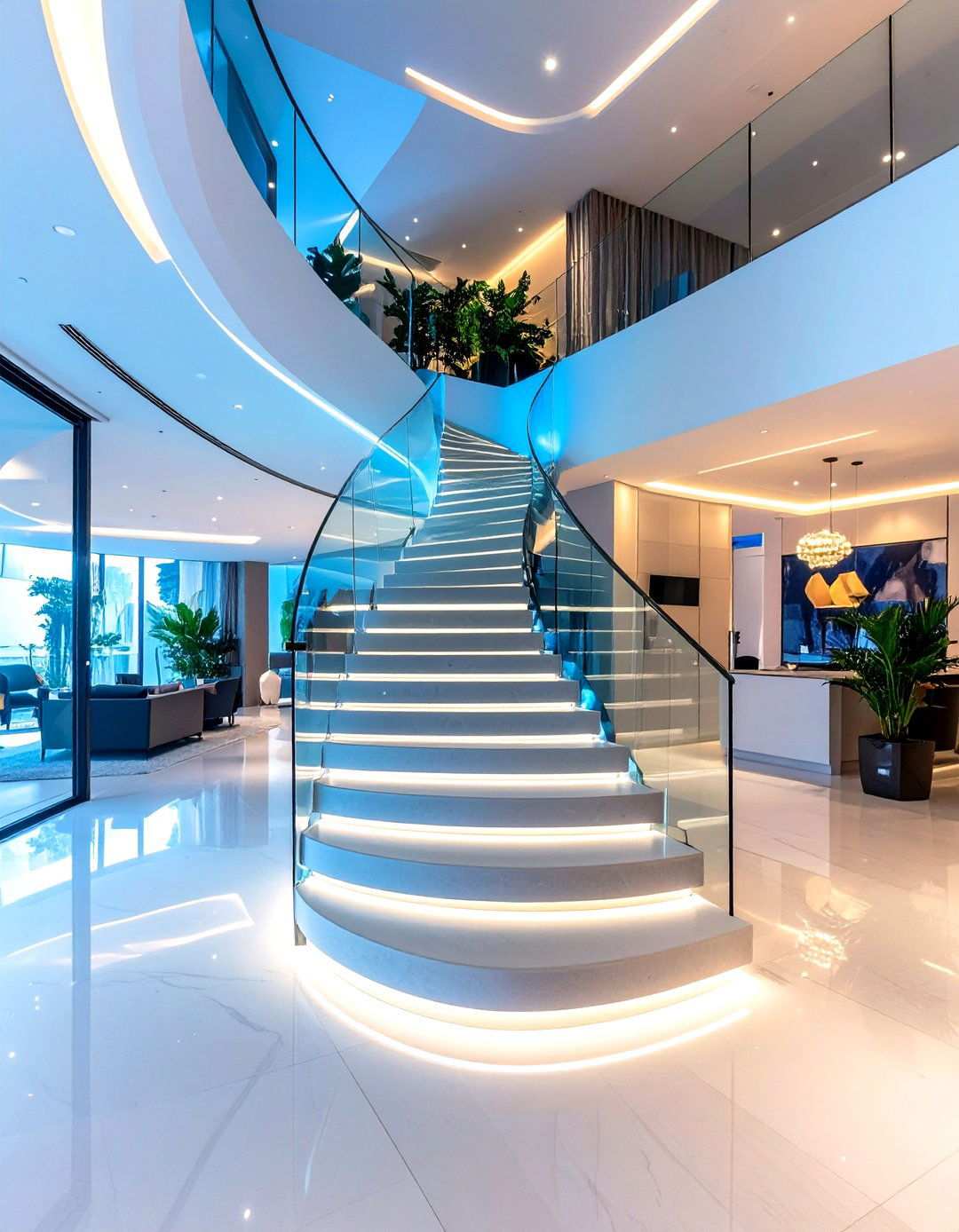
When visionary technology intersects with classic staircase architecture, something remarkable happens. Smart-enabled staircase technology seamlessly merges sensors, automated lighting, climate control, and safety monitoring systems that intuitively respond to user presence and environmental fluctuations. This cutting-edge integration can be seen in motion sensors triggering customized lighting sequences, while pressure sensors track usage patterns for data-driven insights. Home automation system compatibility allows for effortless remote control and programming of various features. Safety sensors can detect falls or anomalies, swiftly alerting designated emergency contacts. Effective technology integration necessitates meticulous planning to discreetly conceal wiring and control systems while preserving the staircase’s visual appeal. As a result, these innovative solutions are poised to redefine the future of staircase design, where functionality transcends mere circulation.