1. Elevating Outdoor Spaces with Stone Walkways
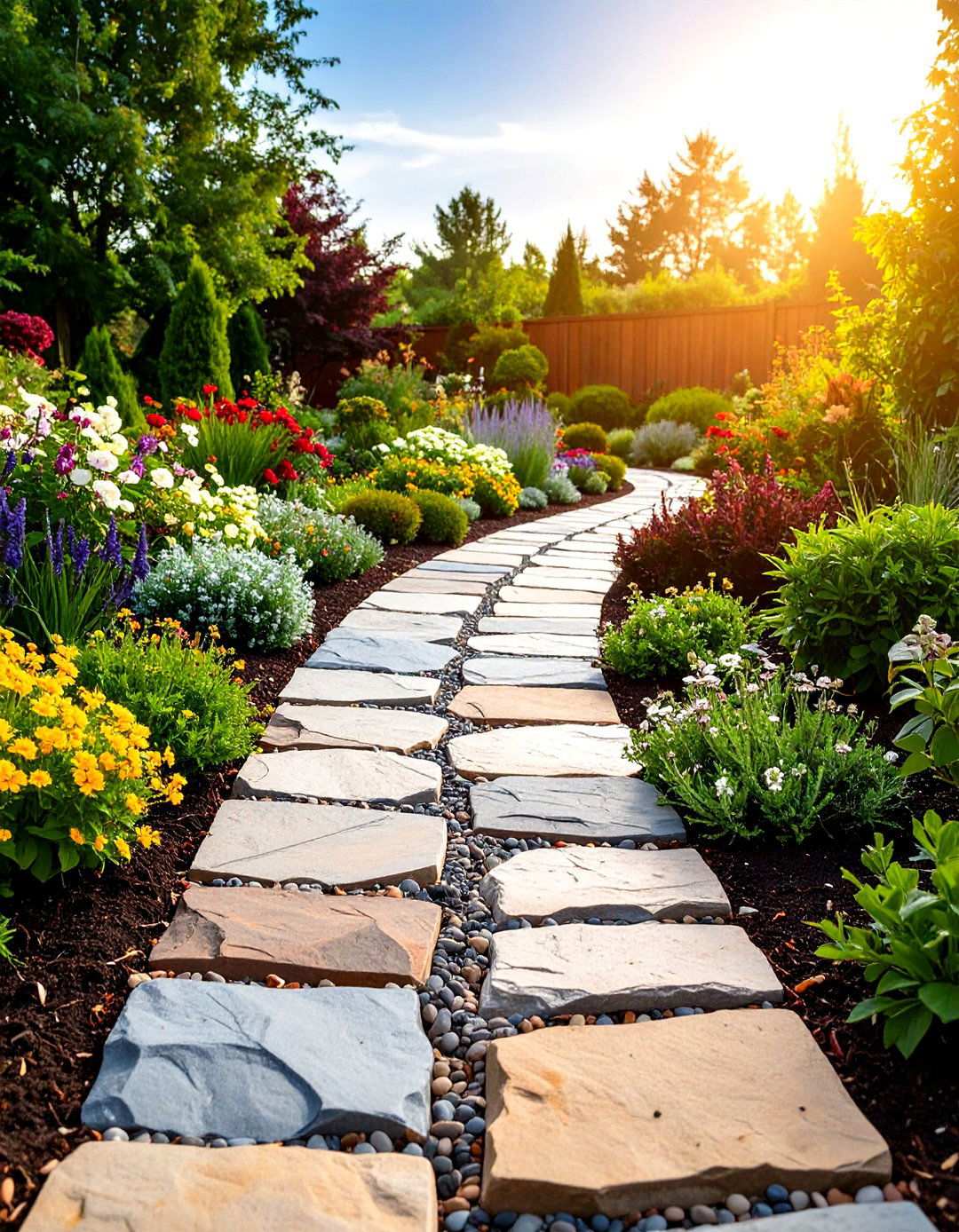
Transforming your outdoor area into a stunning landscape feature is as simple as incorporating stone walkways. These versatile hardscape elements serve as a guiding force through gardens, bridge gaps between property areas, and create focal points that take your home’s curb appeal to the next level. With a diverse array of materials to choose from, including rustic flagstone, modern concrete pavers, and timeless bluestone, stone walkways cater to every architectural style and personal taste. From intricate geometric patterns to organic stepping stone arrangements, each material brings its unique charm that can seamlessly integrate with your existing landscape design. As natural stone is incredibly durable, your investment will withstand the test of time while developing a beautiful patina over the years, making these walkways both practical and increasingly attractive as they age.

As an Amazon Associate I earn from qualifying purchases.
2. Designing Harmonious Natural Flagstone Walkways
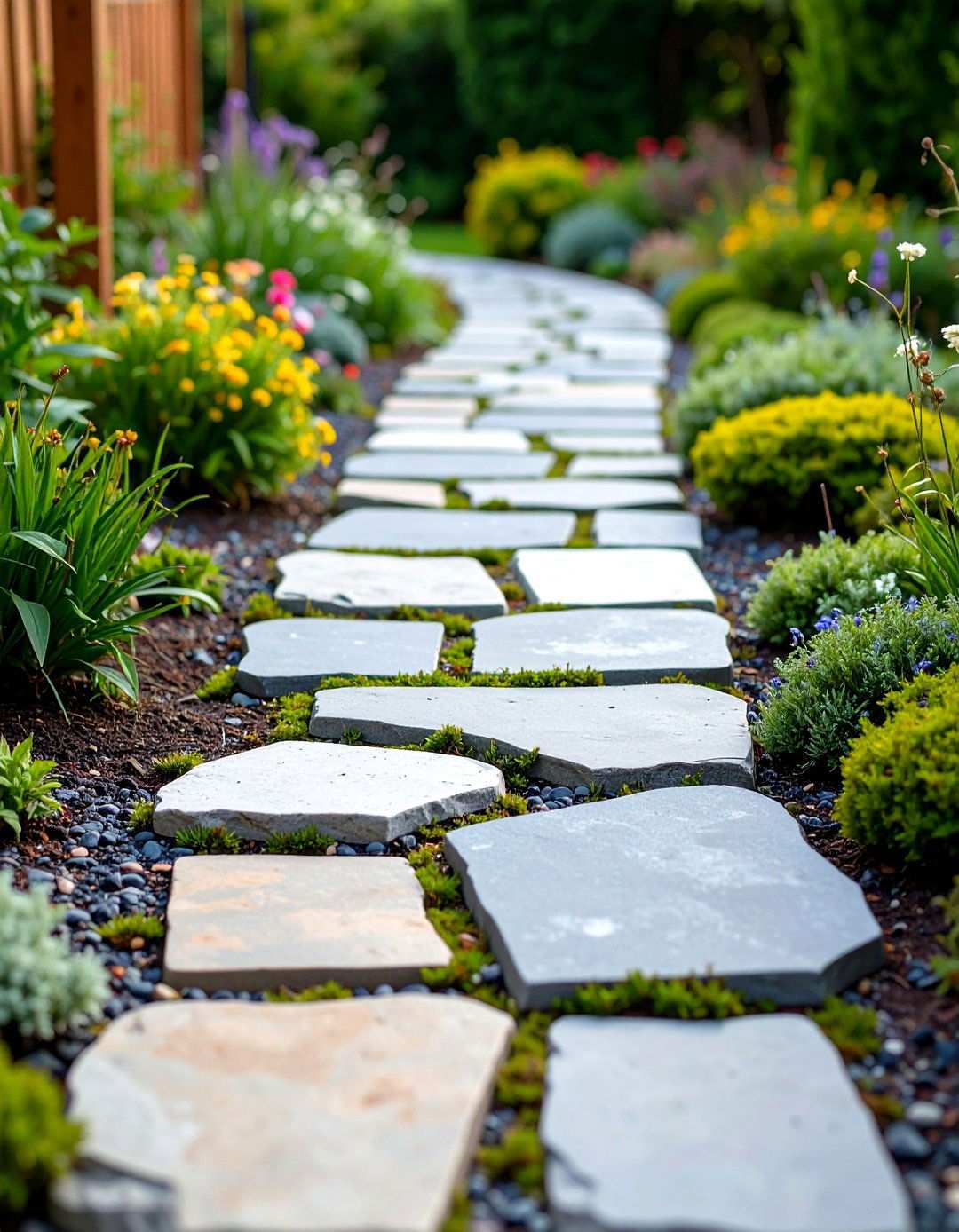
Natural flagstone walkways bring an organic touch to cottage gardens and traditional landscapes, creating pathways that effortlessly blend into their surroundings. The unique textures and warm earth tones of these irregular-shaped stones, ranging from blue-gray to rust and brown, add depth to your outdoor space. To enhance the natural aesthetic, install flagstones with generous gaps filled with moss, thyme, or small pebbles. The random pattern creates visual interest while providing stable footing throughout your garden. This design is particularly well-suited for winding through perennial borders or connecting different garden rooms. Flagstone’s naturally rough surface provides excellent traction in wet conditions, making it both beautiful and practical for year-round use.
3. Unwavering Elegance of Bluestone Rectangular Paver Walkways
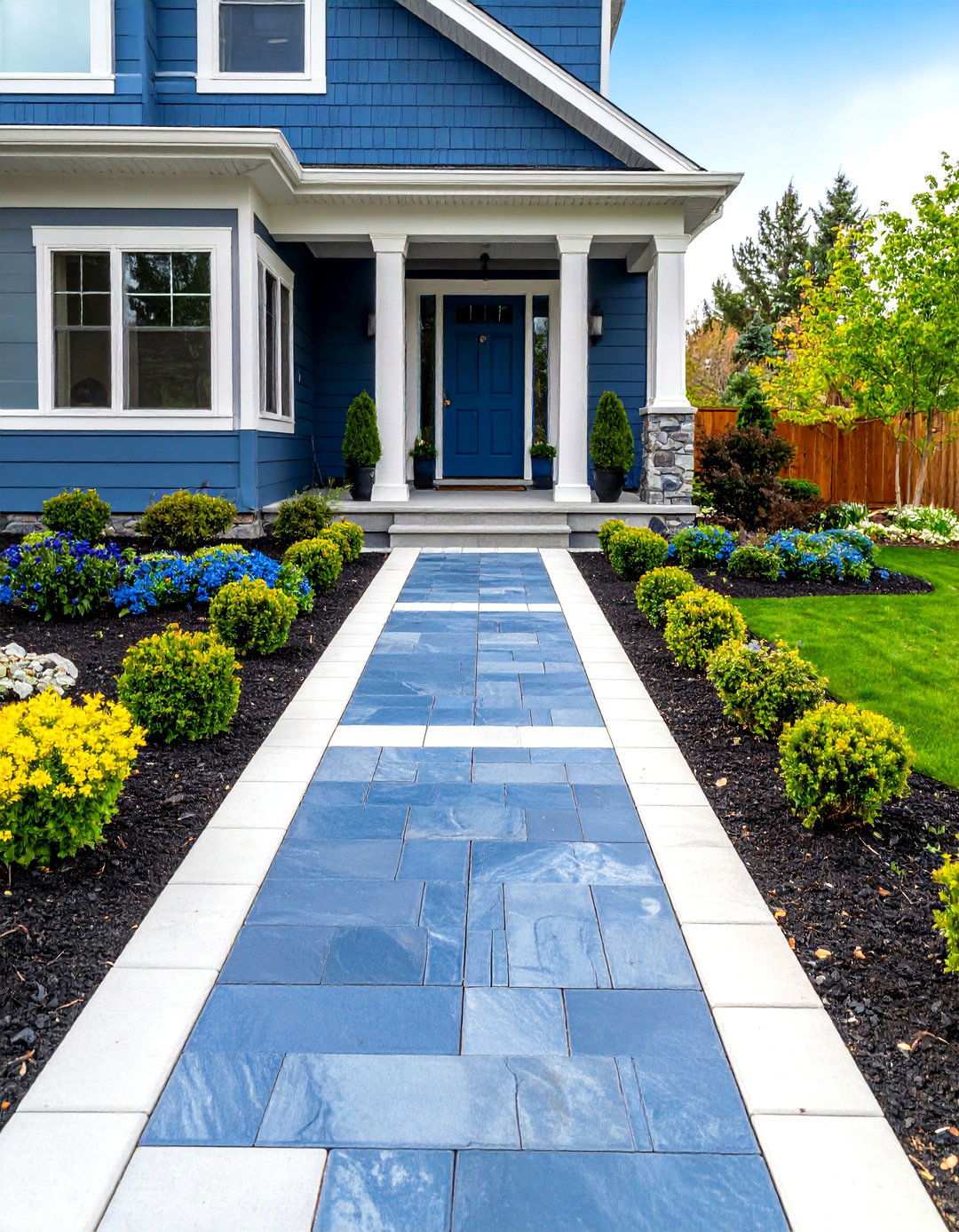
Bluestone rectangular pavers bring sophistication to modern and traditional home designs with their clean geometric lines. These precisely cut stones offer consistent blue-gray coloring that develops beautiful weathering over time. Arrange pavers in running bond or stacked patterns with tight joints filled with polymeric sand for a professional finish. The smooth yet textured surface provides safe walking while maintaining an elegant appearance. Bluestone’s durability withstands freeze-thaw cycles without cracking. Edge with brick borders or steel strips for crisp definition. This design complements both formal front entrances and casual backyard pathways with timeless appeal.
Serpentine Cobblestone Landscapes
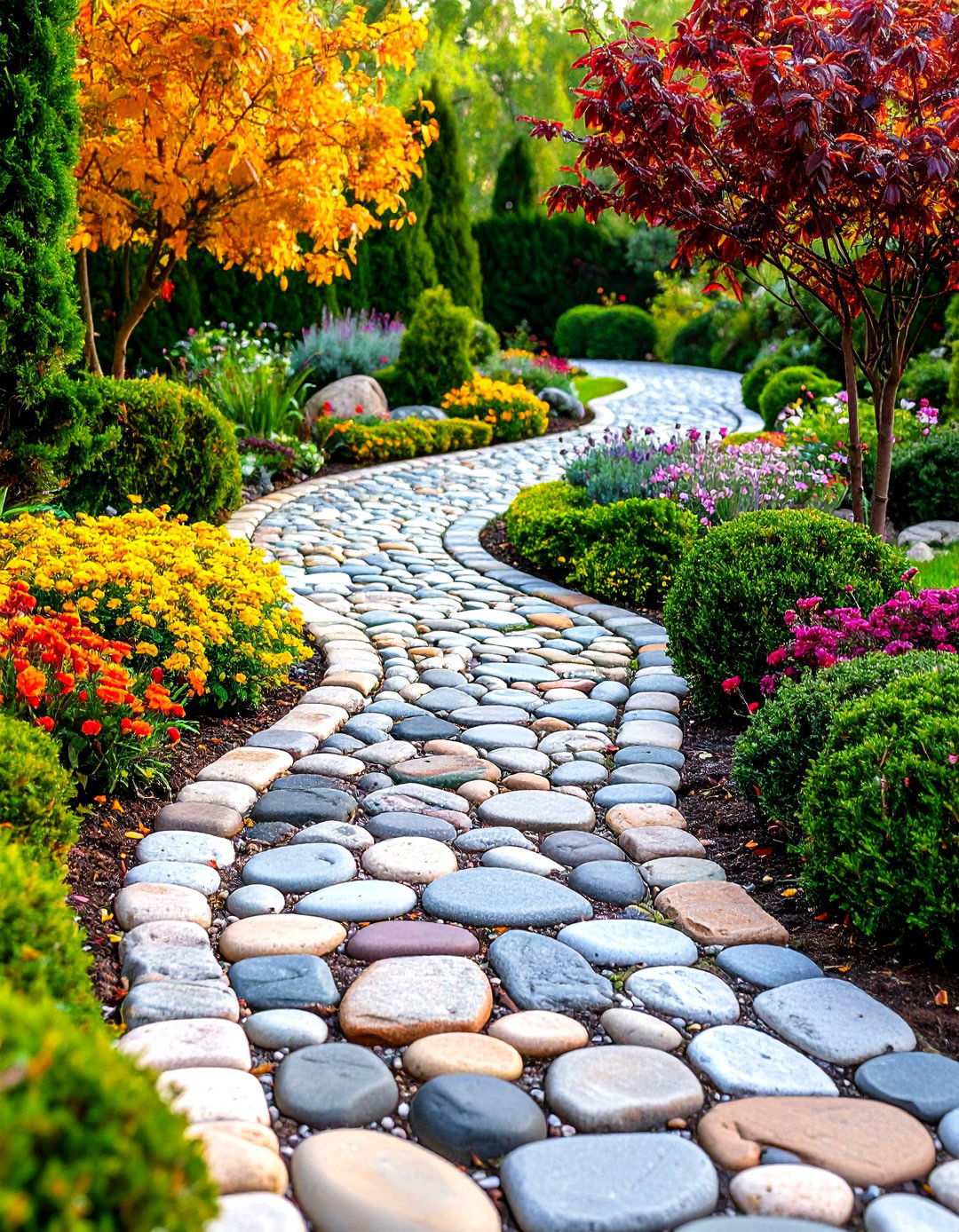
Cobblestone pathways have long been prized for their distinctive, old-world charm, which they bring to residential landscapes with their small, rounded stones and intricate laying patterns. One way to enhance their visual appeal is to create meandering curves that follow the natural contours of the terrain, using traditional patterns like fans or herringbones to create a sense of movement. The varied sizes and colors of the stones contribute to a rich textural interest that’s matched only by their durability under heavy foot traffic. In formal applications, cobblestones can be installed with mortared joints, while dry-laid arrangements with sand add a rustic touch to garden paths. These materials are particularly well-suited to historic homes, cottage gardens, and Mediterranean-style landscapes, where their romantic, old-world charm can be fully appreciated.
4. Naturalistic River Rock Pathways
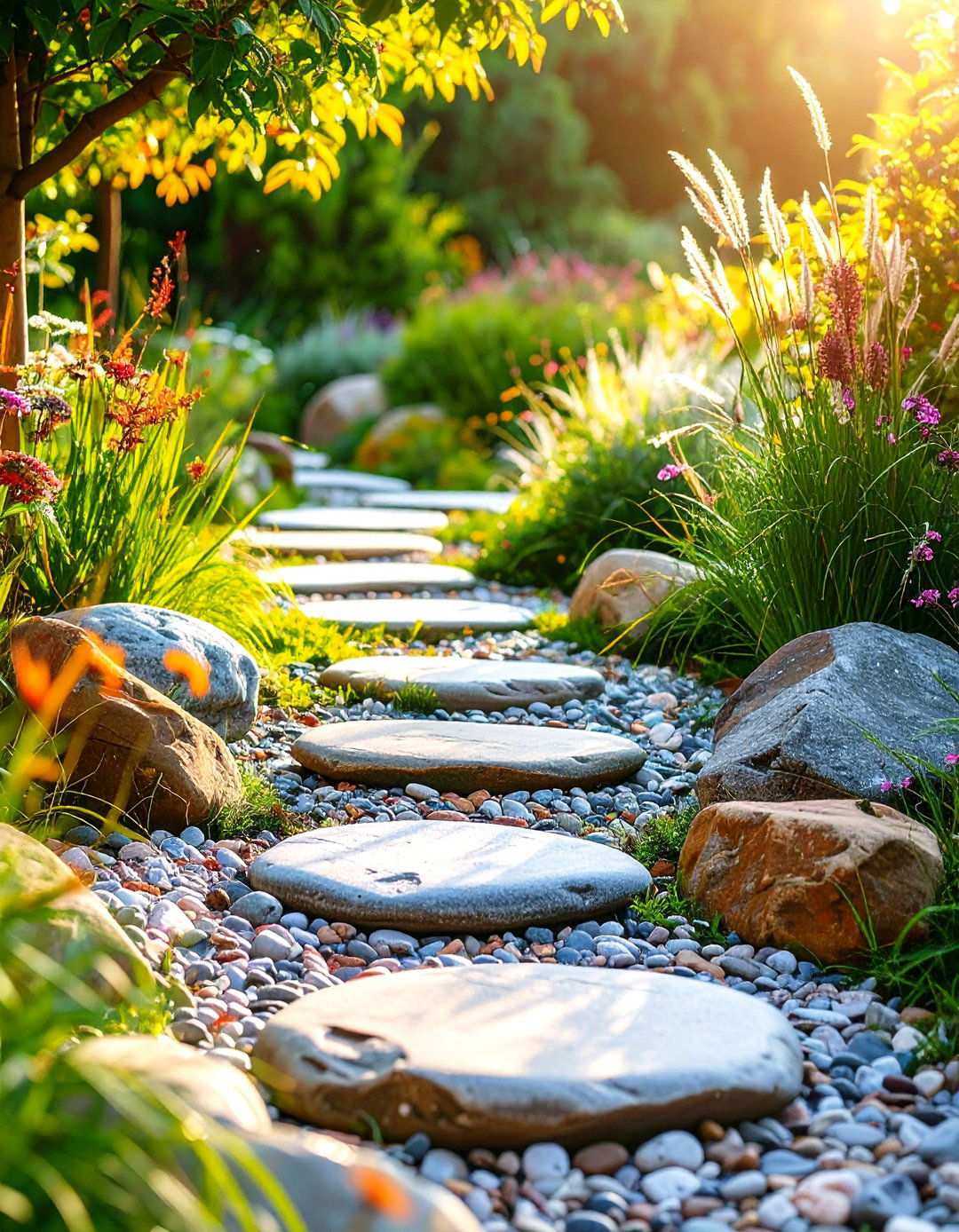
River rock stepping stone walkways have a unique ability to evoke the tranquil atmosphere of a natural streambed environment. By selecting smooth, flat river rocks in a range of complementary sizes and arranging them at comfortable distances through lawn, groundcover, or decorative gravel beds, you can create serene pathways that seem to blend seamlessly into the surrounding landscape. The organic shapes and soft colors of the river rocks work particularly well in naturalistic garden designs and Japanese-inspired landscapes, where their subtle beauty can be fully appreciated. Surrounding areas can be filled with smaller river pebbles or drought-tolerant plants like ornamental grasses, providing a low-maintenance design that not only drains well but also creates a meditative walking experience. To ensure comfortable stride lengths, space stones approximately eighteen inches apart.
5. Artistic Mixed Material Walkways
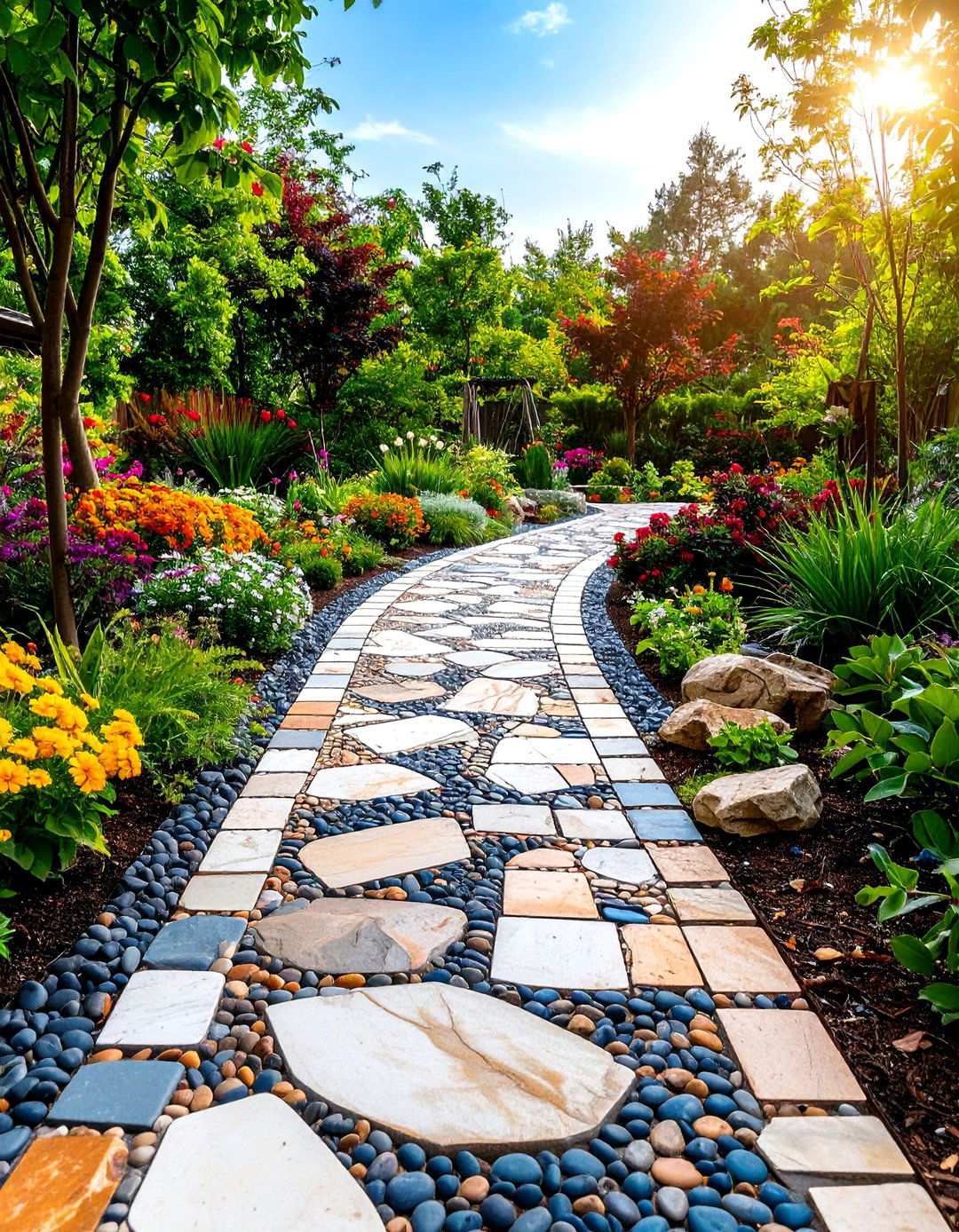
Mixed material walkways offer the ultimate in design flexibility, allowing you to combine different stone types, colors, and textures to create unique mosaic patterns that reflect your personal style. By blending flagstone with river rocks, incorporating colorful slate accents, or mixing natural stone with ceramic tiles, you can create geometric patterns, flowing organic shapes, or even representational images that turn your outdoor spaces into true works of art. This approach not only provides maximum design flexibility but also allows you to utilize various materials that complement your landscape palette. To get the most out of your design, plan patterns on paper before installation to ensure proper proportions and material quantities. By strategically using contrasting colors and textures, you can highlight specific design elements and create walkways that are truly one-of-a-kind.
6. Elevating Landscapes with Granite Slab Stepping Stones
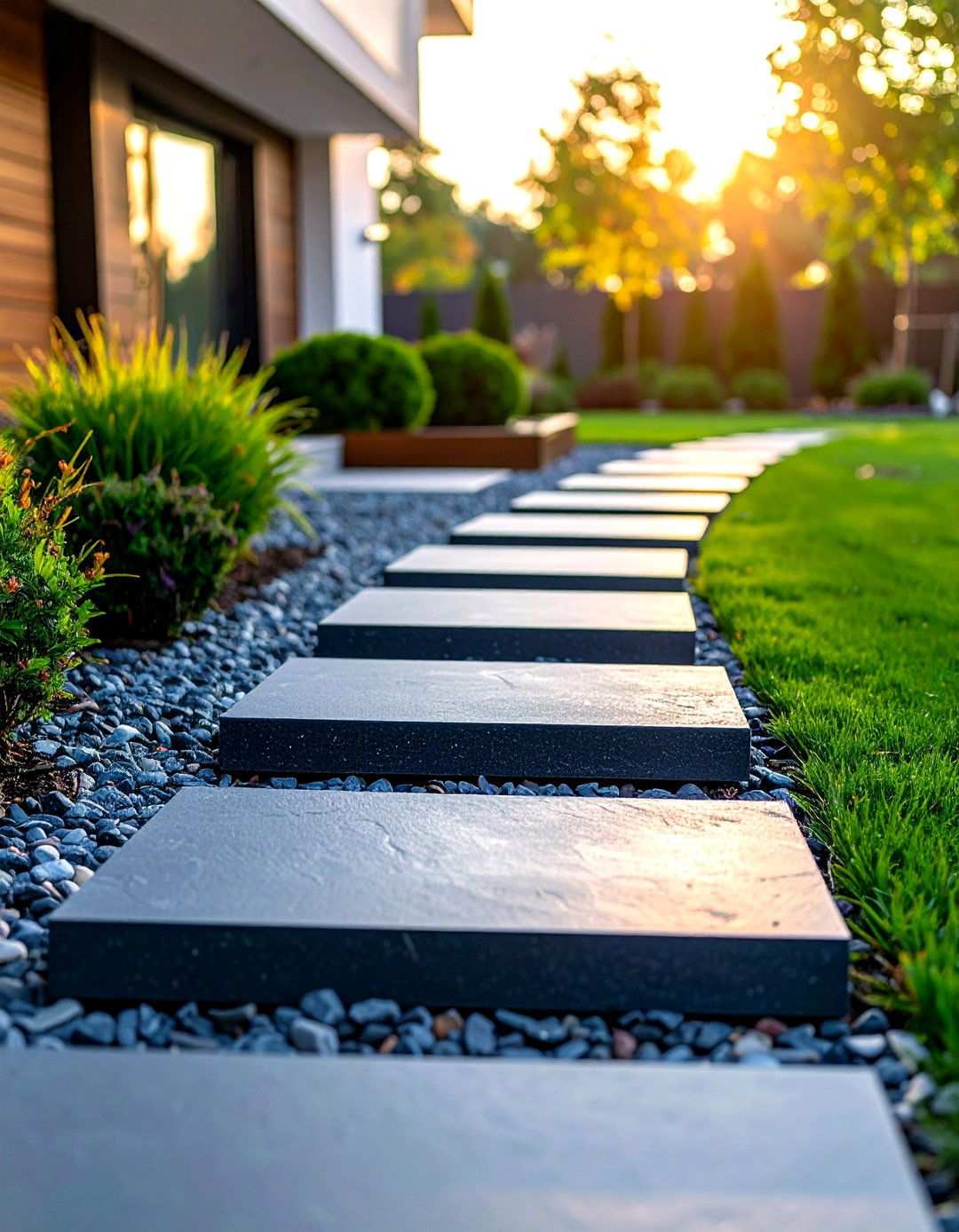
In modern landscape design, granite slab stepping stones stand out for their robustness and sleek appearance. These substantial stones provide stable pathways with an unobtrusive joint line, perfect for sleek, contemporary aesthetics. With a wide range of granite colors available, including deep blacks, grays, and speckled varieties, homeowners can easily match their home’s architectural style. For the ultimate in comfort and practicality, it’s essential to install these stones over a compacted gravel base, allowing for precise spacing and a natural walking rhythm. The dense composition of granite makes it highly resistant to stains, scratches, and weather damage, ensuring a consistent appearance over the years. To further enhance the design, consider surrounding the stones with decorative gravel, ornamental grasses, or low-maintenance groundcover plants. This arrangement is particularly well-suited for minimalist gardens and modern home entrances where simplicity meets sophistication.
7. Timeless Elegance of Limestone Formal Pathways
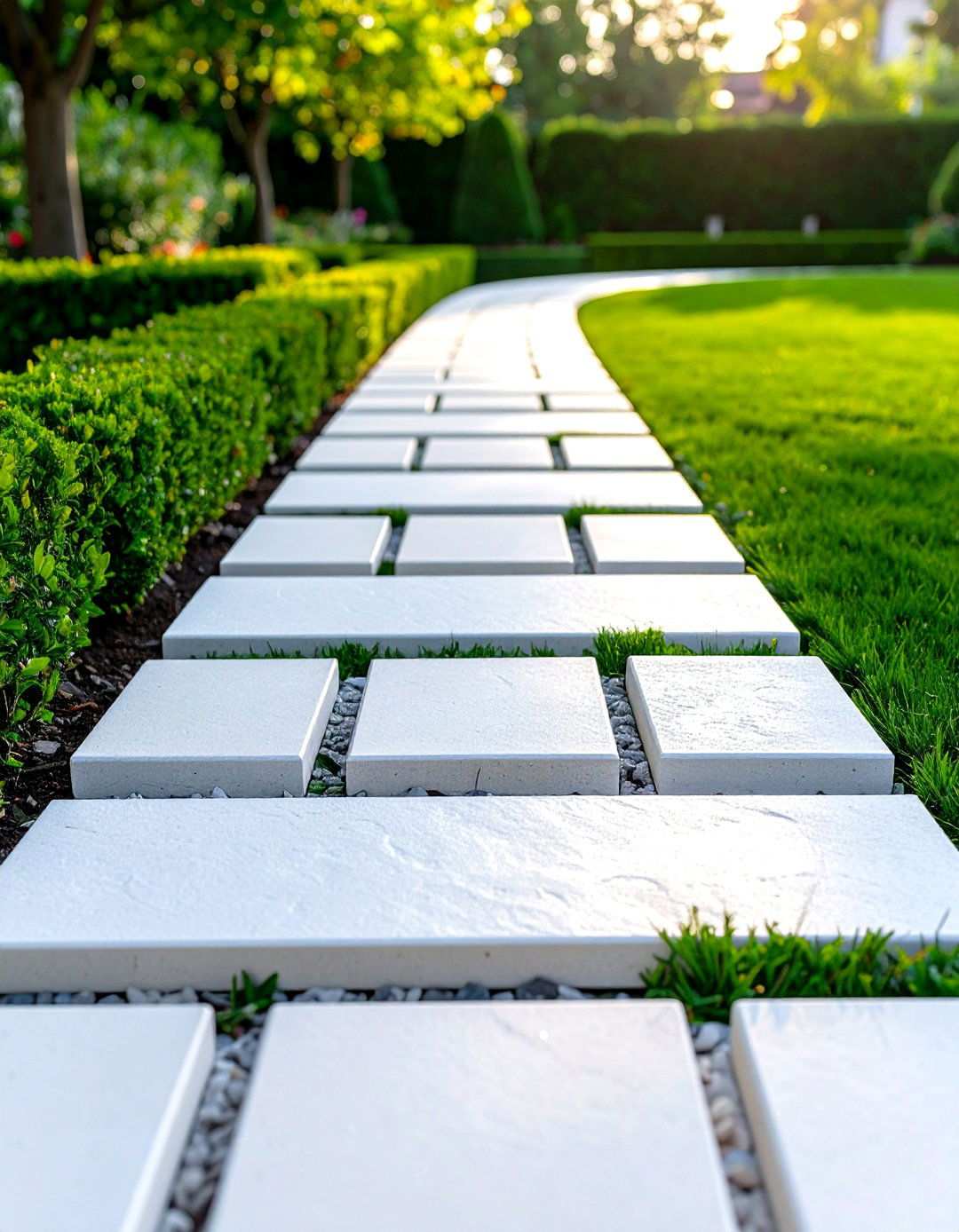
Limestone formal pathways add a touch of refinement to garden spaces with their soft, creamy coloring that ranges from white to light gray. By cutting limestone into precise rectangular shapes, homeowners can create geometric patterns that add structure to their landscape design. Alternatively, using irregular pieces can create a more relaxed, natural look. The textured surface of limestone provides excellent traction while maintaining a refined appearance suitable for formal gardens and elegant home entrances. As the material develops a beautiful patina over time, its attractiveness only increases. For a more formal appearance, mortared joints are recommended, while dry-laid joints with sand create a softer look. To emphasize the formal design, consider bordering the pathway with boxwood hedging, lavender, or other structured plantings. Limestone complements both traditional and modern architectural styles, making it a versatile choice for a wide range of landscapes.
8. Sophisticated Slate Stepping Stone Walkways
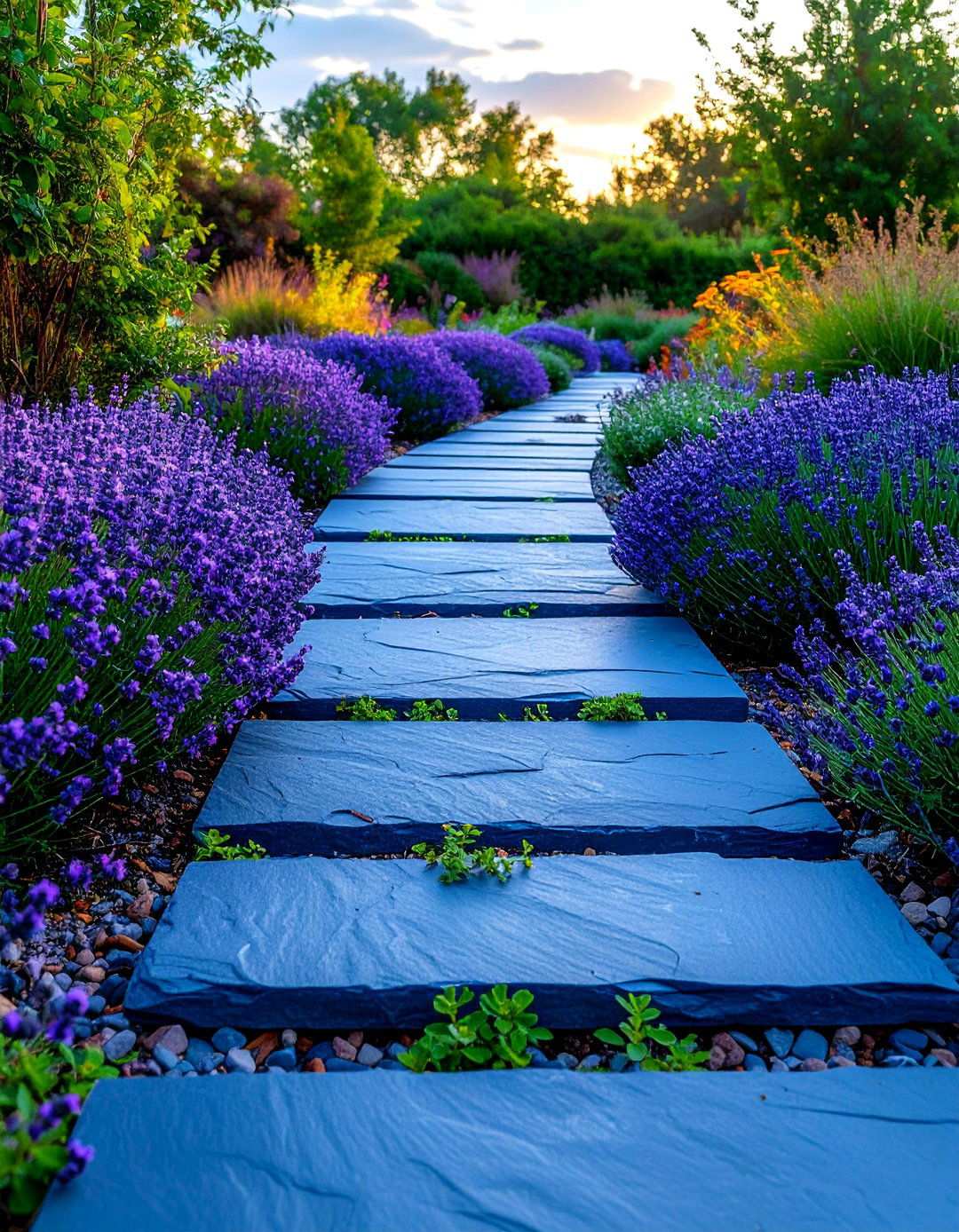
For those seeking a sophisticated and enduring landscape feature, slate stepping stone walkways offer a wealth of options in terms of color and texture. These naturally layered stones split into flat pieces perfectly suited for stepping stone applications. By arranging irregular slate pieces with generous spacing and filling the gaps with decorative gravel or low-growing plants like creeping thyme, homeowners can create a visually appealing pathway. The fine-grained texture of slate provides excellent footing, while its vibrant colors remain unaffected by changing weather conditions. Slate works particularly well in contemporary and Arts and Crafts style gardens, where its subtle beauty can be fully appreciated. Whether creating gentle curves or straight lines, slate stepping stones are a durable and low-maintenance choice that will enhance any landscape design for years to come.
9. Warmth and Texture: Sandstone Garden Paths
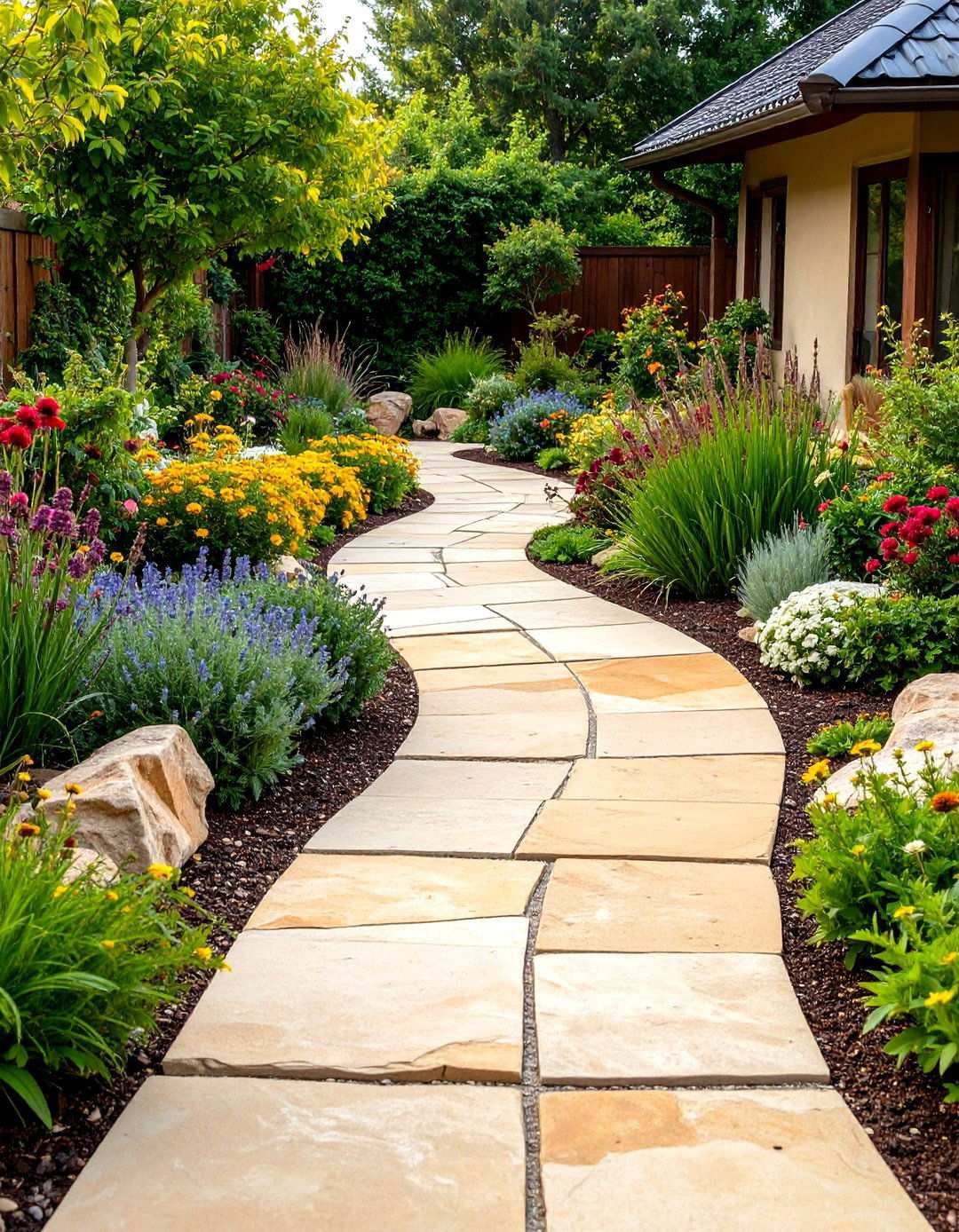
With its rich, earthy tones and organic textures, sandstone is a popular choice for creating inviting garden paths. Ranging in color from soft cream and tan to warm red and brown, these sedimentary stones offer a versatile canvas for custom designs. Whether meandering through a cottage garden or forming a precise geometric pattern for a more formal landscape, sandstone’s workability makes it an ideal material for bespoke cutting. As a porous stone, it naturally absorbs water, reducing surface runoff and providing a secure footing. The choice of mortared or dry-laid joints allows homeowners to balance formality with practicality. Sandstone’s warm tones beautifully complement brick homes, wooden structures, and natural stone architecture, while native plants, ornamental grasses, and seasonal flowers enhance the stone’s natural warmth.
10. Concrete Paver Geometric Designs: A World of Possibilities
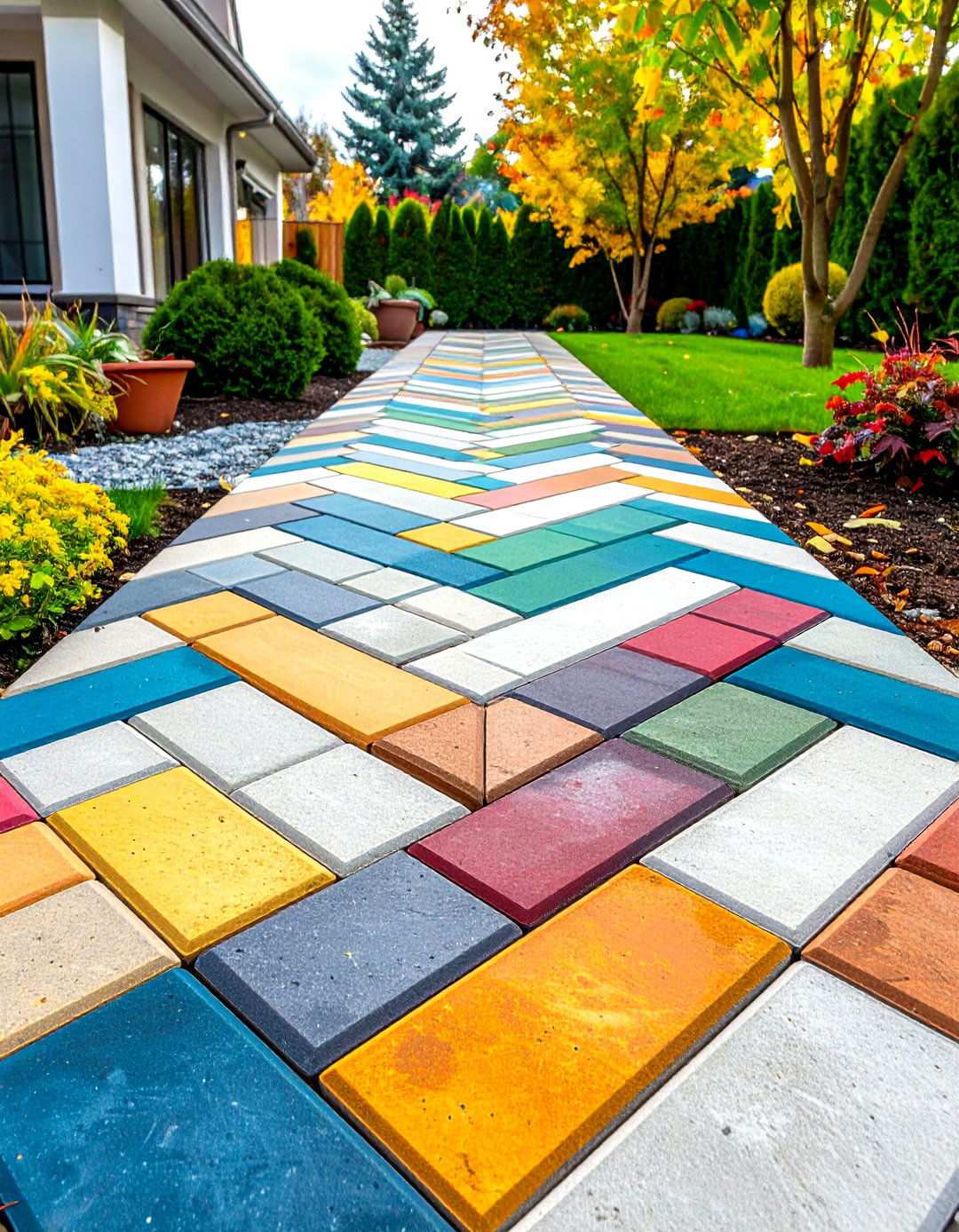
Concrete pavers have revolutionized the world of walkway design, offering endless possibilities for creativity and self-expression. With consistent sizing, varied colors, and precise geometric control, homeowners can create intricate patterns and designs that reflect their unique style. From herringbone to basket weave, or linear arrangements, the options are endless. Modern concrete technology has improved the material’s durability and affordability, while providing stone-like textures and colors that rival their natural counterparts. Proper preparation of the base material and the use of edge restraints ensure long-term stability and a professional finish. To add an extra layer of definition, contrasting borders can be created using different colors or materials. With numerous color options to choose from, homeowners can easily find the perfect fit for their home’s exterior and existing landscape elements.
11. Travertine's Resort-Like Charm: Spa-Style Pathways
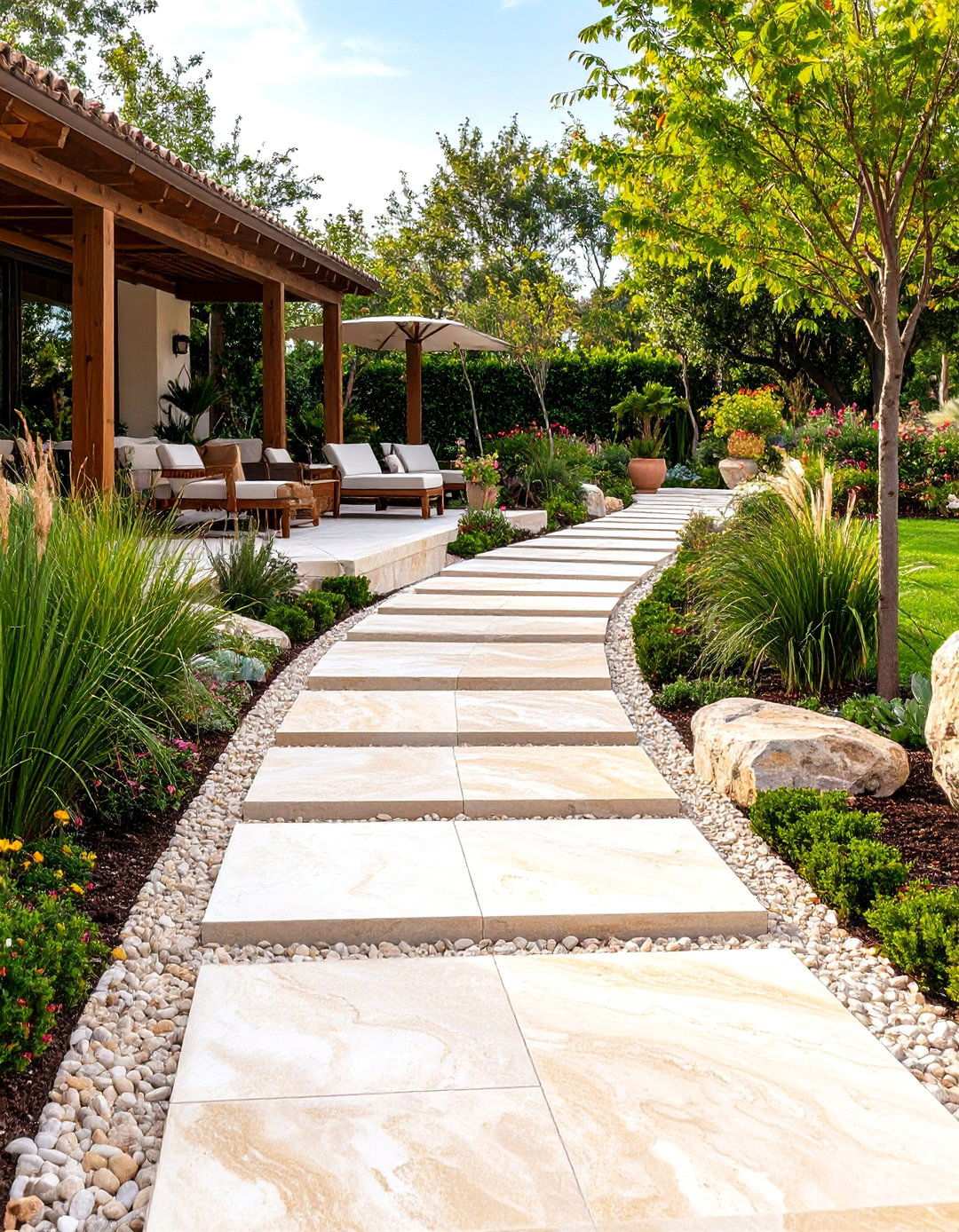
Travertine walkways evoke the tranquility and sophistication of a Mediterranean resort, thanks to their distinctive pitted surface and neutral cream to tan coloring. This unique limestone variety offers consistent coloring and texture, making it an ideal choice for contemporary and Mediterranean landscape designs. The tumbled edges of travertine add a touch of casual elegance, while maintaining its durability for outdoor applications. As a naturally slip-resistant surface, travertine is perfect for pool areas and spa environments. Homeowners can choose between relaxed, sand-filled joints or more formal, mortared joints to suit their desired aesthetic. A striking feature of travertine is its ability to stay cool underfoot, even in direct sunlight. To create a sophisticated landscape composition, complement travertine with architectural plants like agaves, ornamental grasses, and flowering perennials.
12. Harmonious Stone and Gravel Combinations
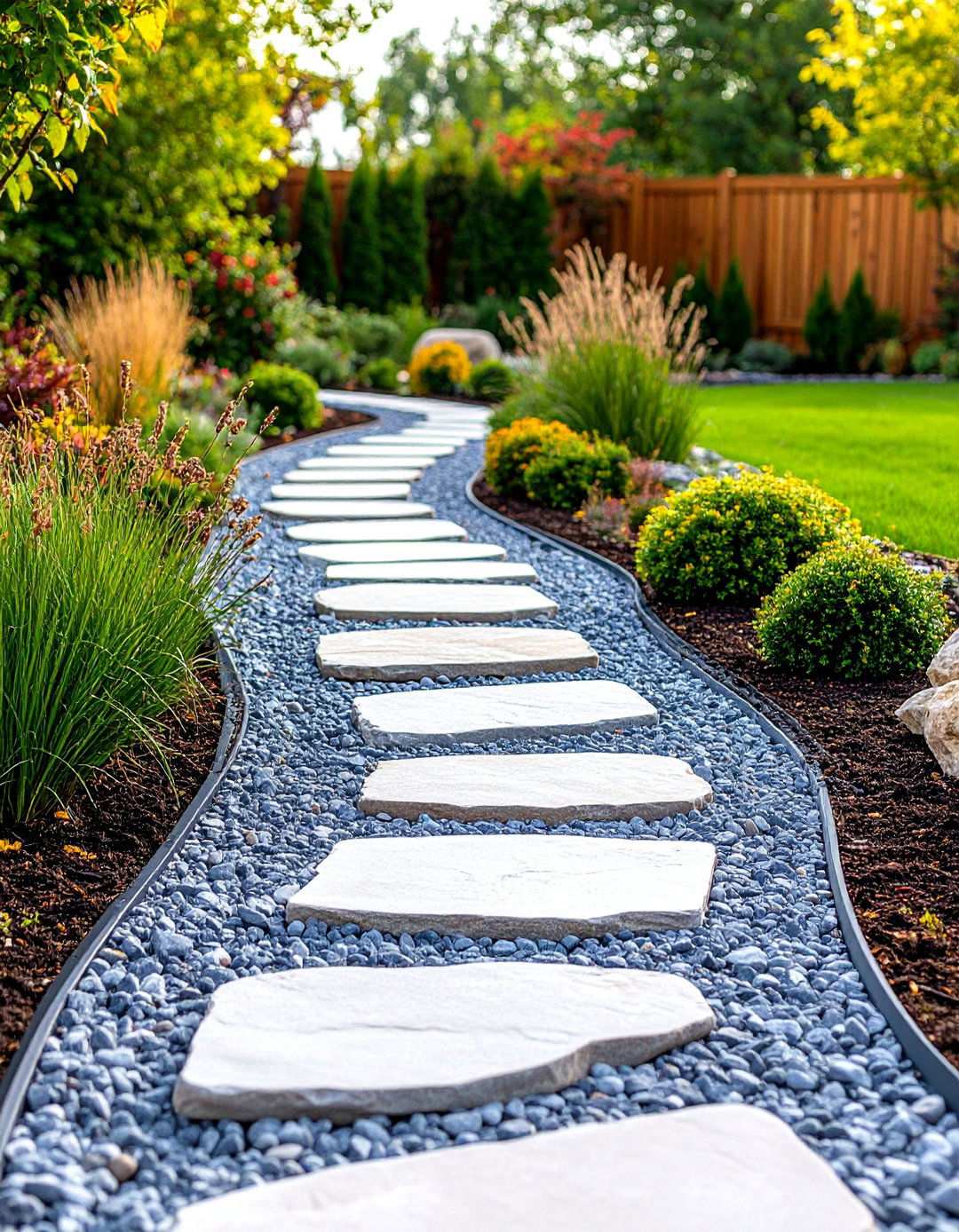
For a visually striking and functional path, consider combining larger stepping stones with decorative pea gravel. This design creates a beautiful contrast between textures and provides excellent drainage. Choose flagstone, bluestone, or concrete pavers as the primary walking surfaces, surrounding them with pea gravel in complementary colors. By doing so, you’ll achieve a balance between visual interest and practical garden navigation. The pea gravel will naturally fill irregular spaces while allowing water to infiltrate, reducing the risk of erosion.
To ensure the gravel remains contained and clean, install landscape fabric underneath the path to prevent weed growth while maintaining drainage benefits. Select gravel colors that harmonize with your stone selection, such as pairing gray gravels with bluestone or earth tones with flagstone. For a polished finish, edge the path with steel or plastic strips to keep the gravel in place and maintain a clean border.
13. Classic Elegance with Brick-Edged Flagstone
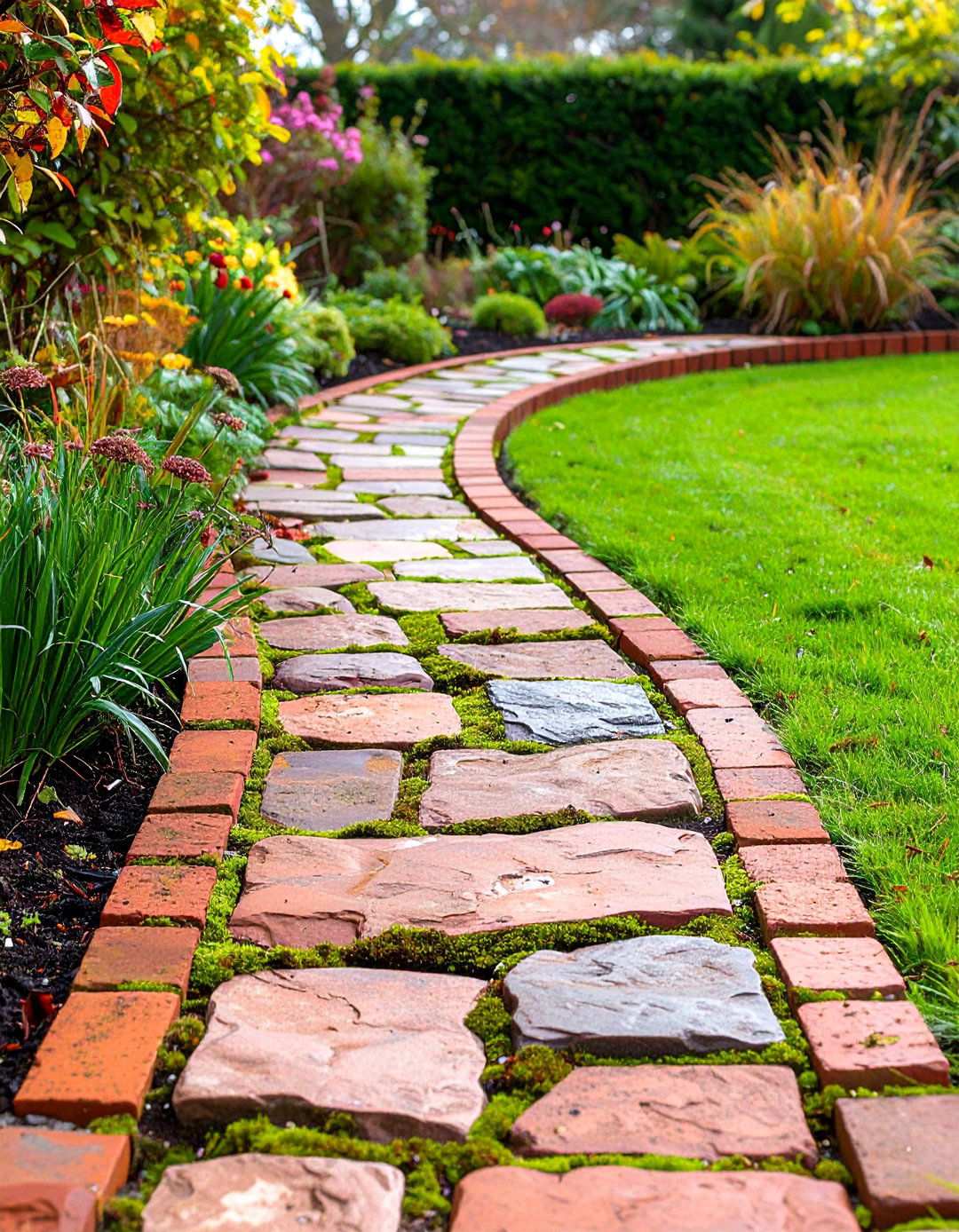
For a timeless and classic garden appeal, combine traditional materials like brick and flagstone. This design creates a structured edge and a natural stone center, perfect for formal or cottage gardens. Use reclaimed or new bricks to create defined borders while filling the center with irregular flagstone pieces. By incorporating brick edging, you’ll add a touch of sophistication while keeping costs in check. The contrasting materials highlight each element, providing complementary textures and colors that add depth to your landscape.
To create a seamless look, install bricks on edge for narrow borders or flat for wider definition. Fill flagstone joints with sand, decomposed granite, or plant with moss and small groundcover plants to add a touch of greenery. This approach works beautifully for historic home renovations, traditional landscapes, and cottage gardens, where a classic, elegant look is desired.
14. Earthy Charm with Decomposed Granite
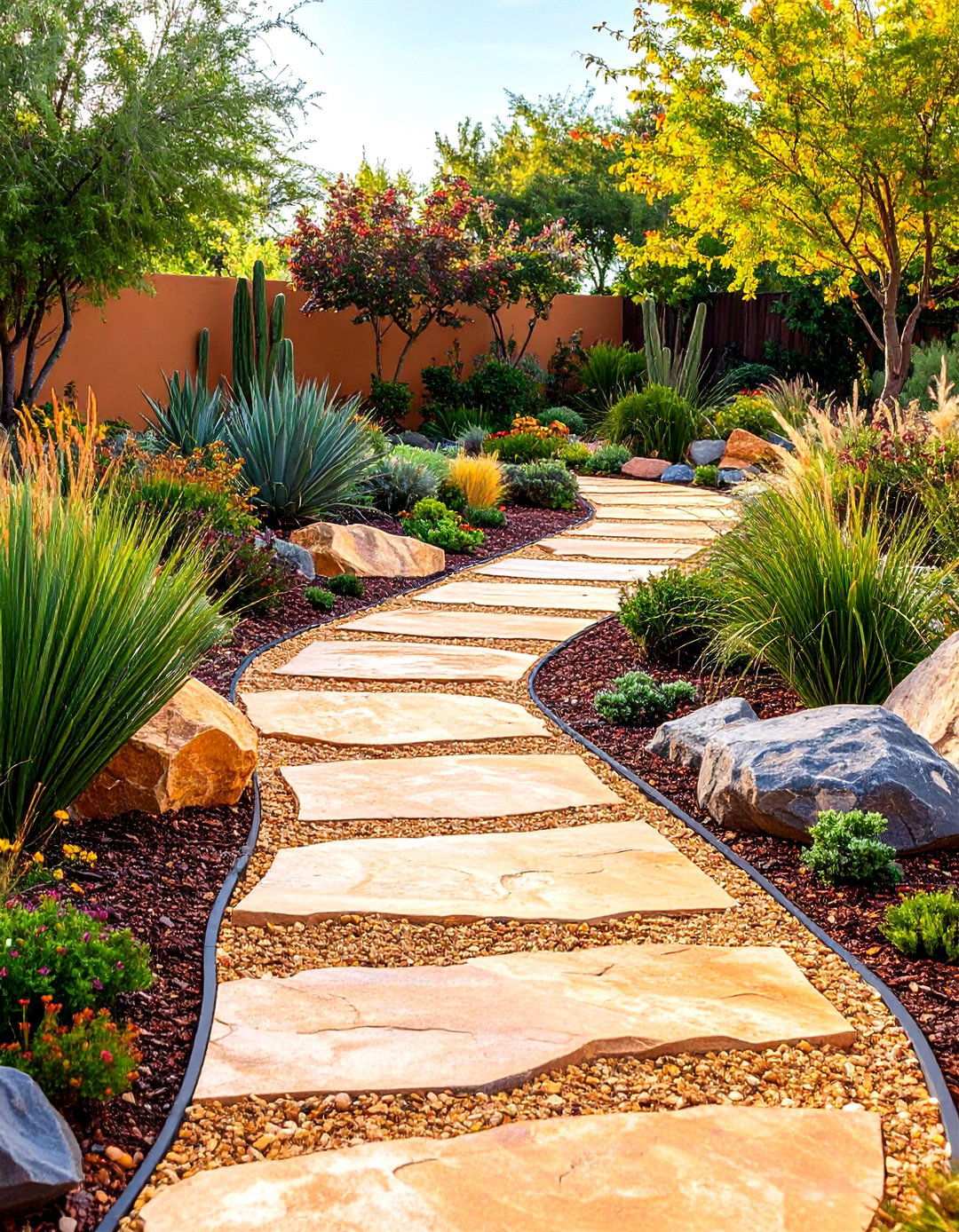
For a natural and sustainable path option, consider decomposed granite. This finely crushed granite material compacts into stable pathways while maintaining its natural appearance and excellent drainage characteristics. Decomposed granite is available in a range of colors, from gold and tan to gray and red, making it easy to coordinate with various architectural styles. Install the material over a compacted base with proper edge restraints for long-term stability. Over time, the decomposed granite will develop a beautiful patina, requiring minimal maintenance.
To complement the path, pair it with drought-tolerant plants, sculptural elements, and contemporary hardscape features. This sustainable option provides a cost-effective alternative to traditional paving materials while supporting water-wise gardening principles. By choosing decomposed granite, you’ll create a harmonious and earthy atmosphere that blends seamlessly into your xeriscape or contemporary landscape design.
15. Mastering Multi-Level Stone Step Walkways
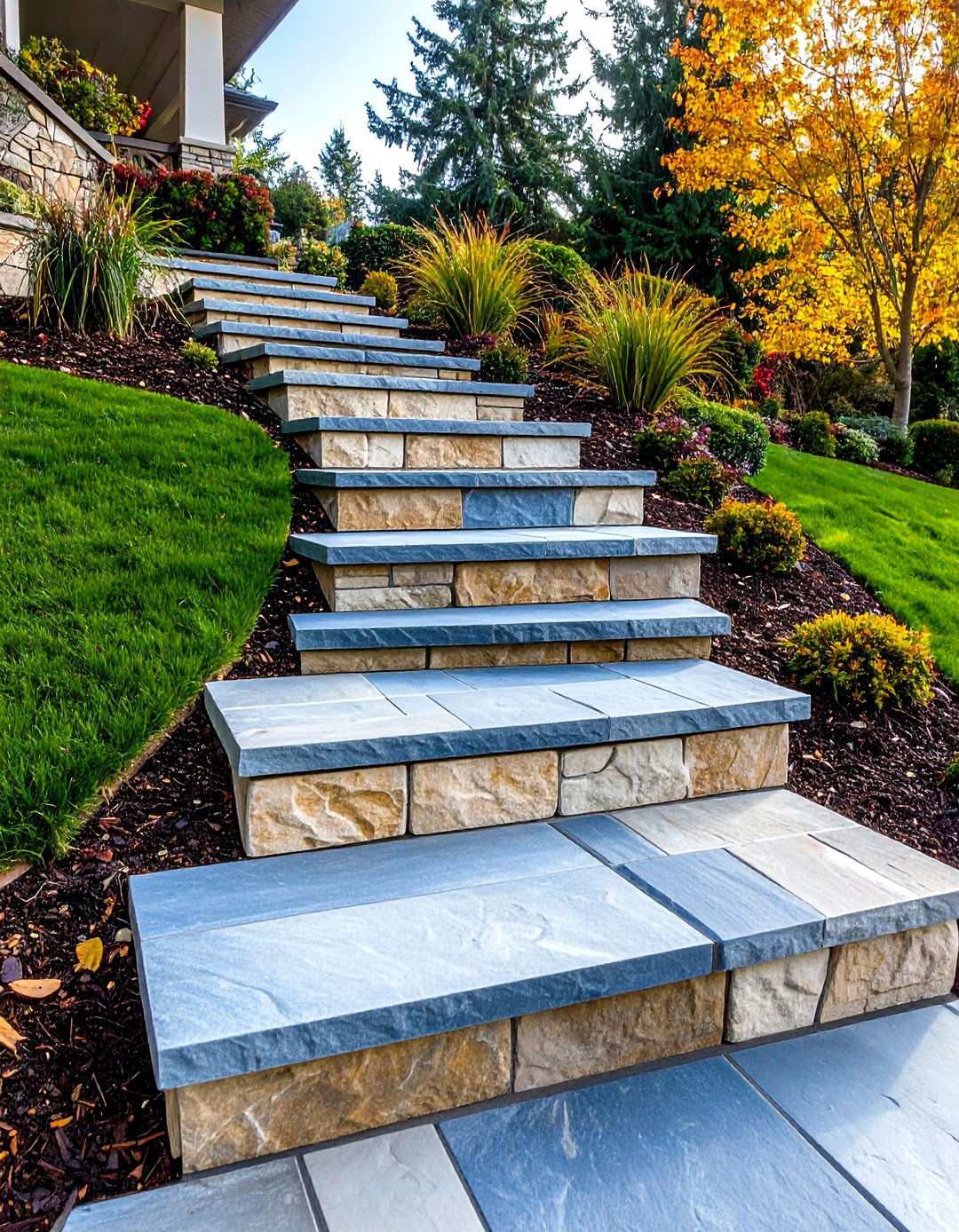
Multi-level stone step walkways seamlessly blend into sloping terrain, creating breathtaking landscape features that showcase natural stone risers and treads. By pairing different stone types, you can add visual interest to your design – think limestone risers paired with bluestone treads or flagstone steps complemented by fieldstone walls. Gradual elevation changes allow for comfortable walking while incorporating retaining walls and planted terraces that add layers of depth and texture. Each level presents opportunities for unique plantings and garden vignettes that bring your landscape to life. To prevent water damage, don’t forget to install proper drainage behind retaining elements. The stepped design naturally fosters gathering areas and viewing platforms throughout sloping landscapes, making them perfect for taking in the surroundings. When it comes to materials, consider striking a balance between consistent textures for a unified appearance and varying textures for dynamic interest. By incorporating lighting, you can enhance both safety and the dramatic nighttime appeal of these walkways.
16. Capturing the Essence of Fieldstone Rustic Trail Systems
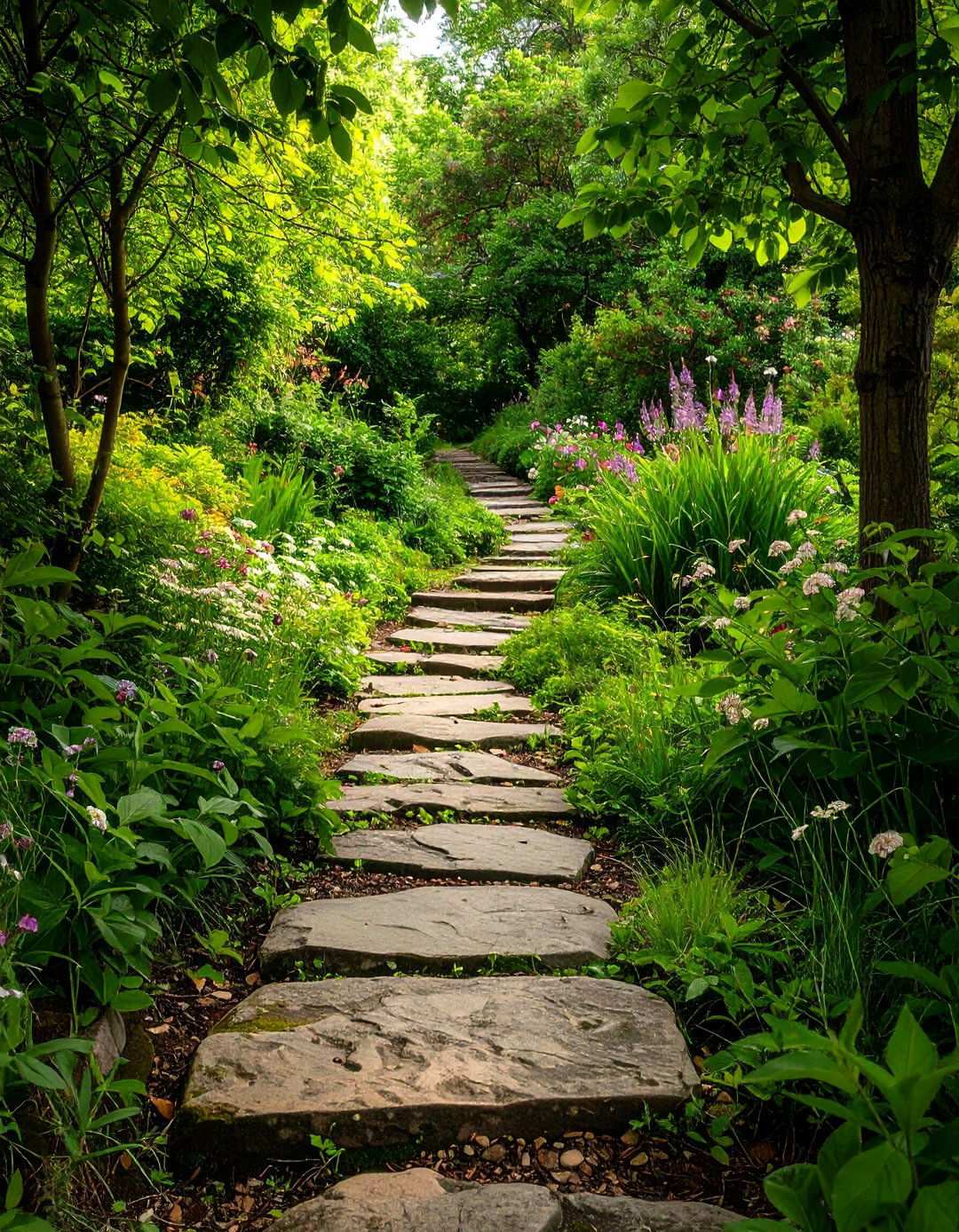
Fieldstone rustic trail systems draw inspiration from locally sourced stones to infuse authentic regional character and environmentally sustainable pathways into your landscape design. These naturally weathered stones boast a unique blend of shapes, sizes, and colors that reflect the local geology and complement native plant communities. To create informal paths, install stones directly into existing soil, while using a prepared base for a more durable finish. The irregular shapes of these stones create organic pathways that beautifully follow natural terrain contours. Filling joints with native soil and allowing natural vegetation to establish will result in seamless landscape integration. By adopting this approach, you’re not only supporting local ecosystems but also providing cost-effective pathway solutions. Fieldstone paths are particularly well-suited for woodland gardens, naturalistic landscapes, and rural property connections where formal hardscaping would be out of place.
17. Designing Permeable Paver Eco-Walkways
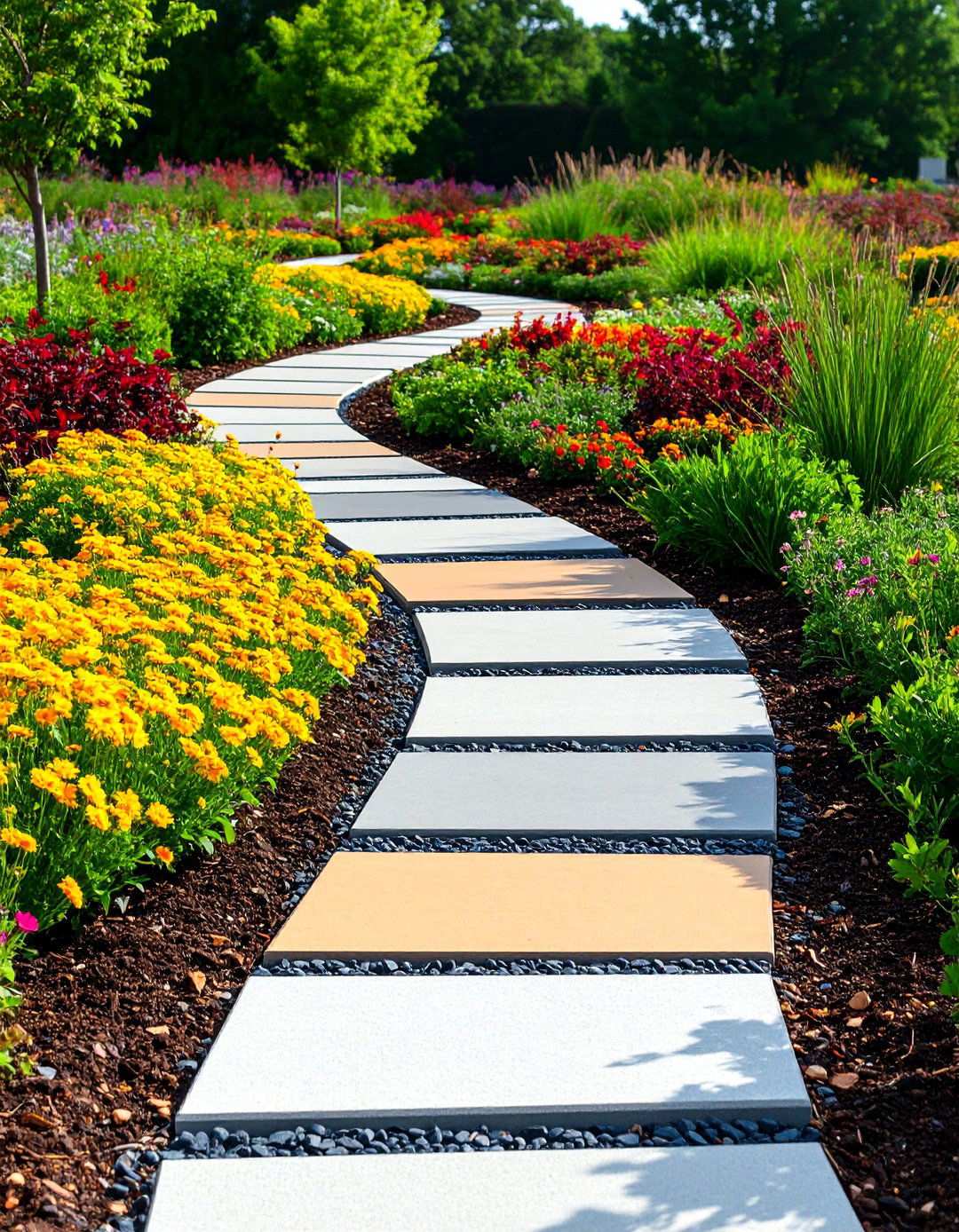
Permeable paver walkways offer a sustainable solution that not only manages stormwater runoff but also creates attractive pathways that reduce the environmental impact. These specially designed pavers allow water infiltration through joints and porous materials, maintaining durability while minimizing the strain on local water resources. Choose from a range of materials, including concrete, stone, and recycled materials, and configure them to accommodate drainage requirements. To ensure both structural and environmental performance, install the pavers over an engineered base system. Planting low-growing groundcovers or grasses in wider joints will provide additional green infrastructure benefits. This approach not only satisfies environmental regulations but also provides practical walking surfaces for contemporary landscapes, institutional settings, and environmentally conscious homeowners seeking sustainable hardscape solutions that support local water management goals.
18. Worn Stone Footpaths for Whimsical Landscapes
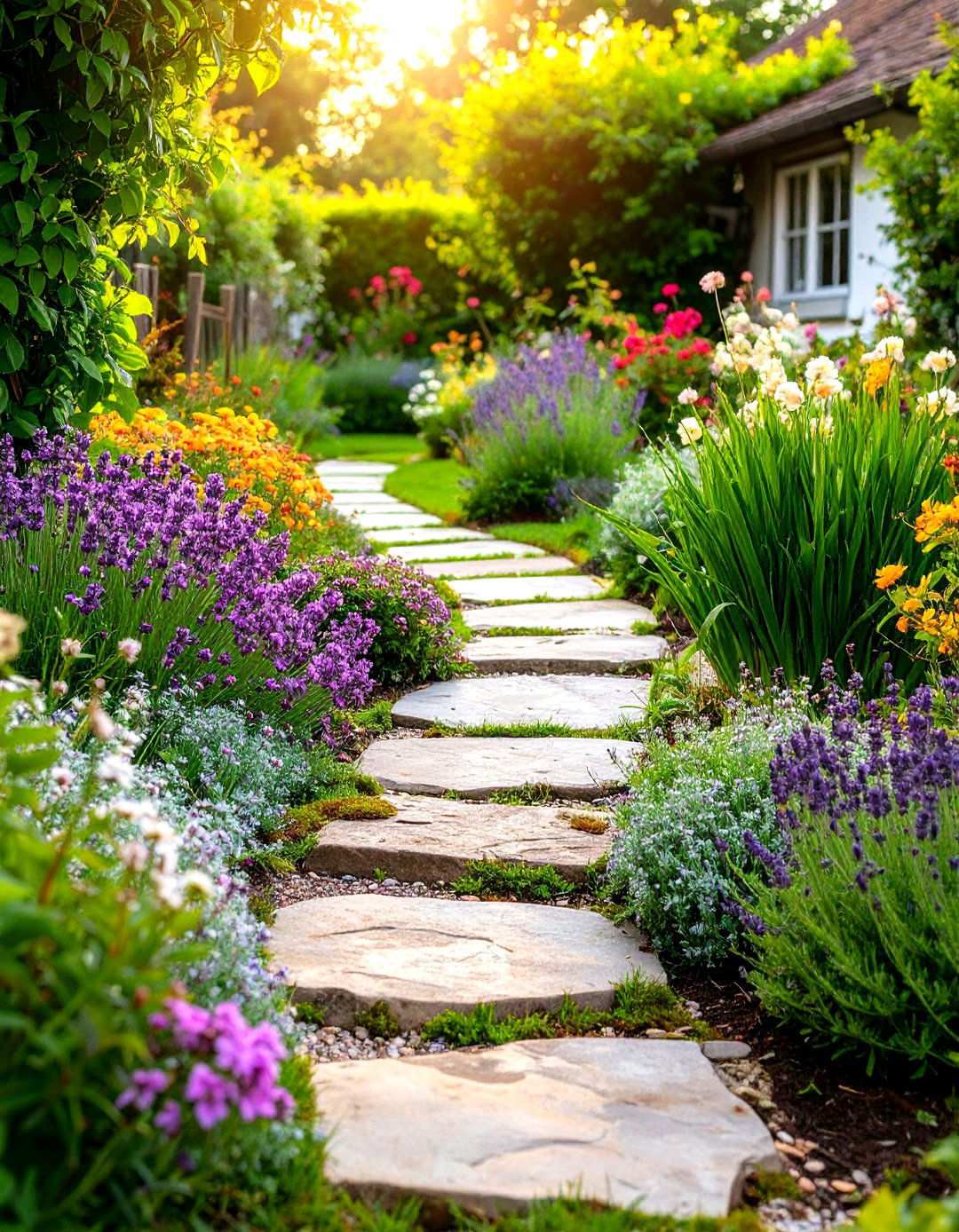
A winding path made from tumbled stone can evoke a sense of nostalgia and romance in even the most traditional of home landscapes. The gentle wear and tear imparted by the tumbling process soften the sharp edges and imbue the stone with a naturally aged appearance that perfectly complements the informal design styles often found in cottage gardens. For a cohesive look, opt for limestone, travertine, or sandstone in a range of earthy tones that blend seamlessly with existing landscape features. To add a touch of whimsy, consider incorporating creeping plants like thyme, moss, or chamomile into the joints between the stones, allowing them to spill over the edges and create a living border. Over time, the weathered stone will develop a charming patina that appears to be the result of decades of gentle wear and tear, perfectly capturing the essence of a bygone era. Pair the stone path with a selection of traditional cottage plants, including roses, lavender, and herbs, to create a truly authentic period garden atmosphere.
19. Polished Porcelain Walkways for Modern Landscapes
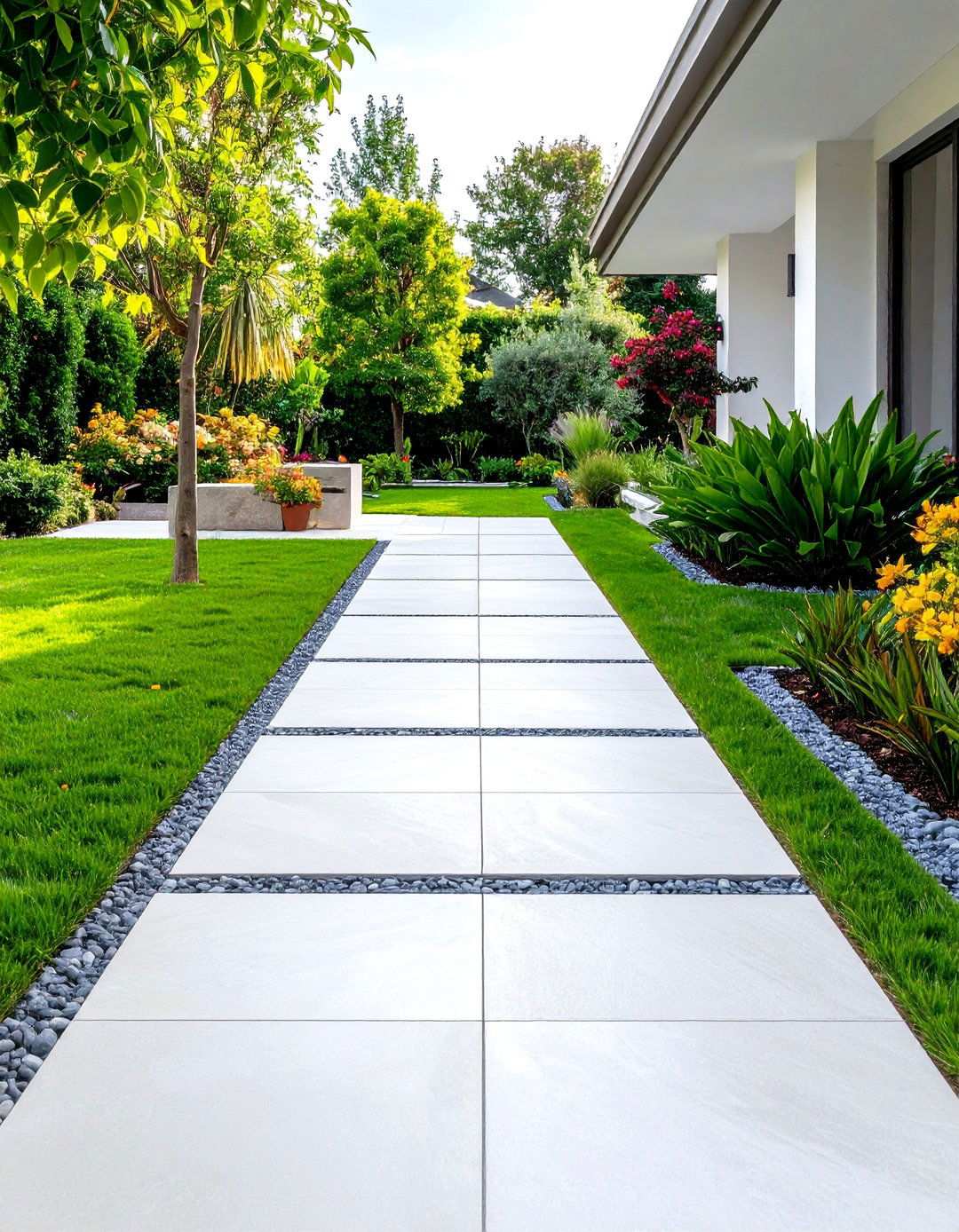
For a sleek and sophisticated look, consider installing porcelain tile walkways in your modern landscape. These tiles boast consistent coloring, precise dimensions, and a low-maintenance requirement that makes them perfect for busy homeowners. With their stone-like appearance and superior durability, porcelain tiles are an excellent choice for contemporary landscape applications. Available in a wide range of colors, textures, and sizes, these tiles can be easily coordinated with architectural elements and interior design schemes to create a seamless transition between indoors and outdoors. To ensure durability, install the tiles over a properly prepared substrate using the right adhesives and joint materials. The non-porous surface of the tiles resists weathering, fading, and biological growth, maintaining a consistent appearance over time. For a truly modern look, design geometric patterns, linear arrangements, or mixed sizing to create visual interest. This material is particularly well-suited for minimalist gardens, rooftop installations, and high-traffic commercial applications where a low-maintenance solution is essential.
20. Artistic Mosaic Medallions in Natural Stone
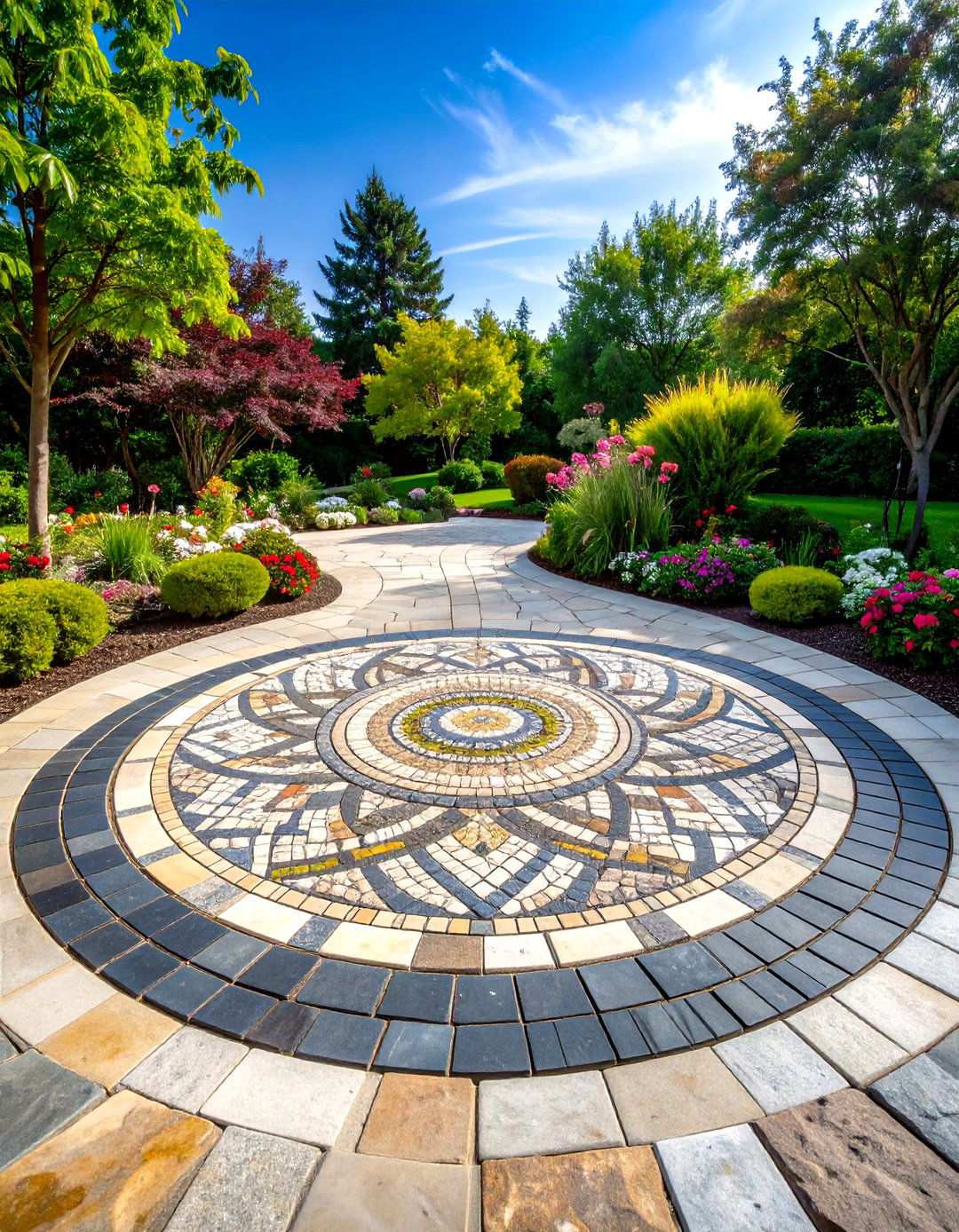
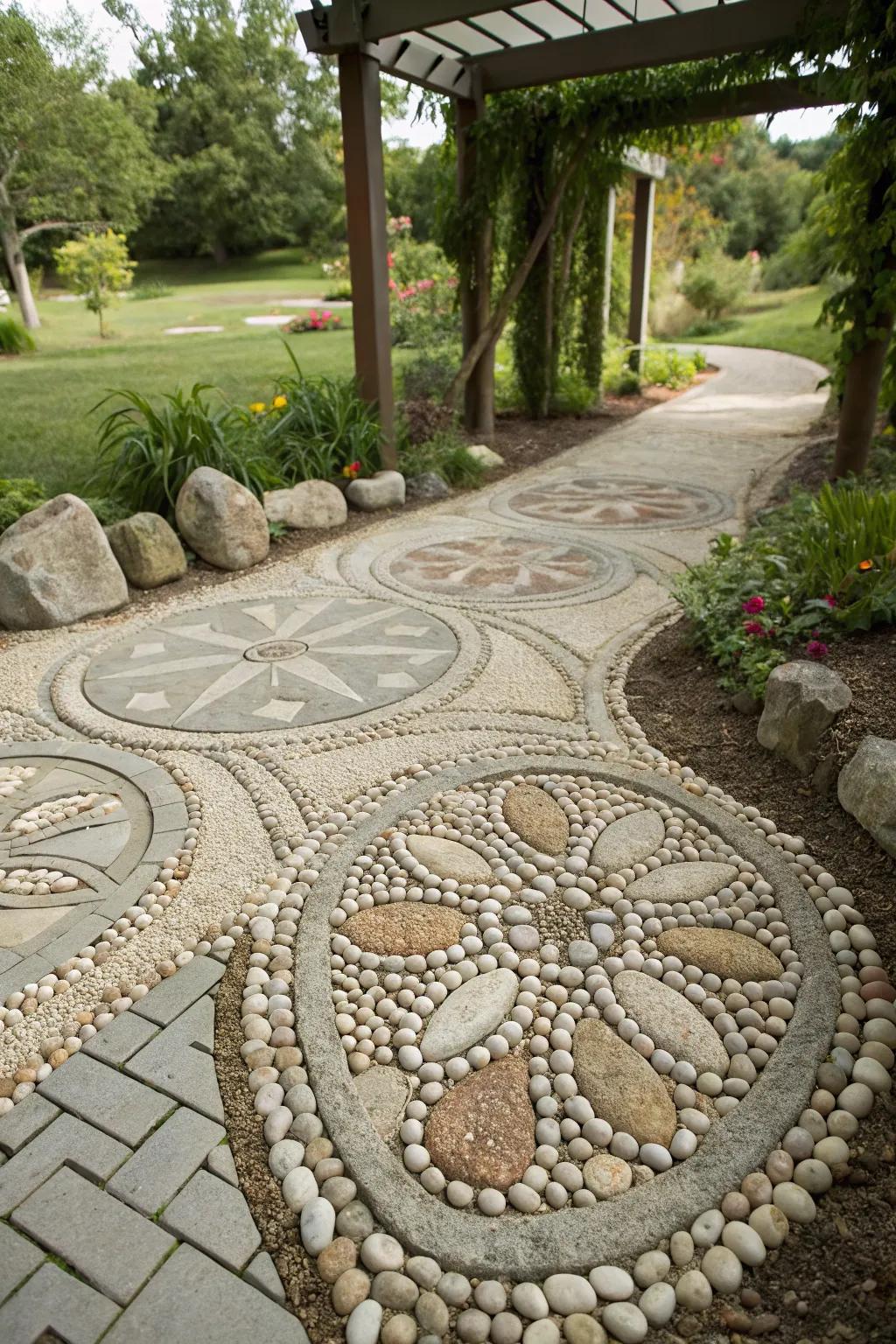
For a truly unique and artistic focal point within your walkway system, consider incorporating natural stone mosaic medallions. These decorative elements can be designed as central features surrounded by simpler paving or integrated into longer pathways for a more subtle effect. By combining varied stone types, colors, and sizes in decorative patterns, you can create a truly one-of-a-kind landscape feature that reflects your personal style. To achieve the desired visual impact, plan the pattern on paper with accurate dimensions before beginning installation to ensure proper proportions and material quantities. For a dramatic effect, consider using contrasting materials like dark slate with light limestone or colorful river rocks with neutral flagstone. To truly showcase the intricate details of the medallions, complement them with strategic lighting that highlights the natural beauty of the stone during evening hours, creating dramatic shadows and visual interest.
21. Engineered Solutions for High-Traffic Areas
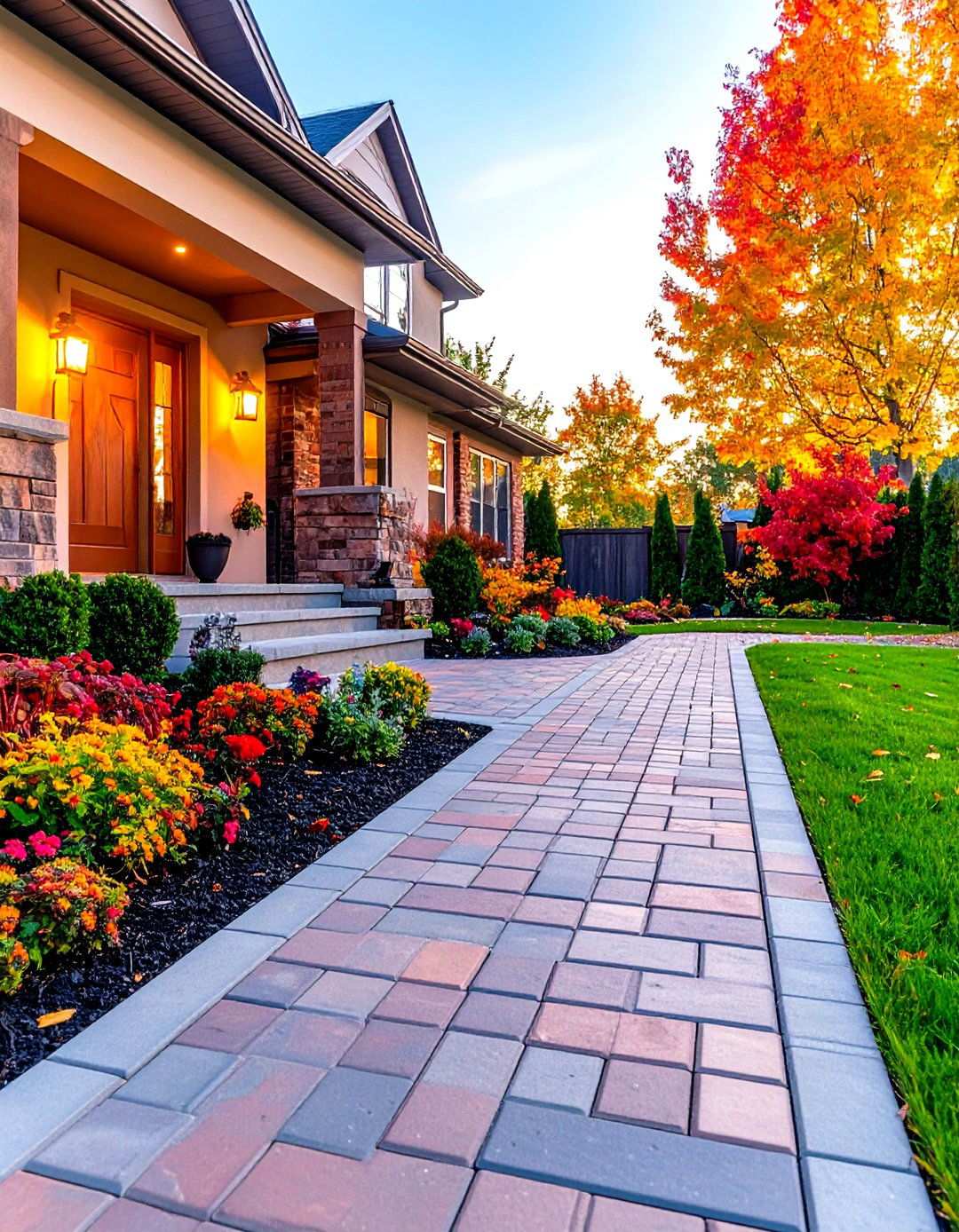
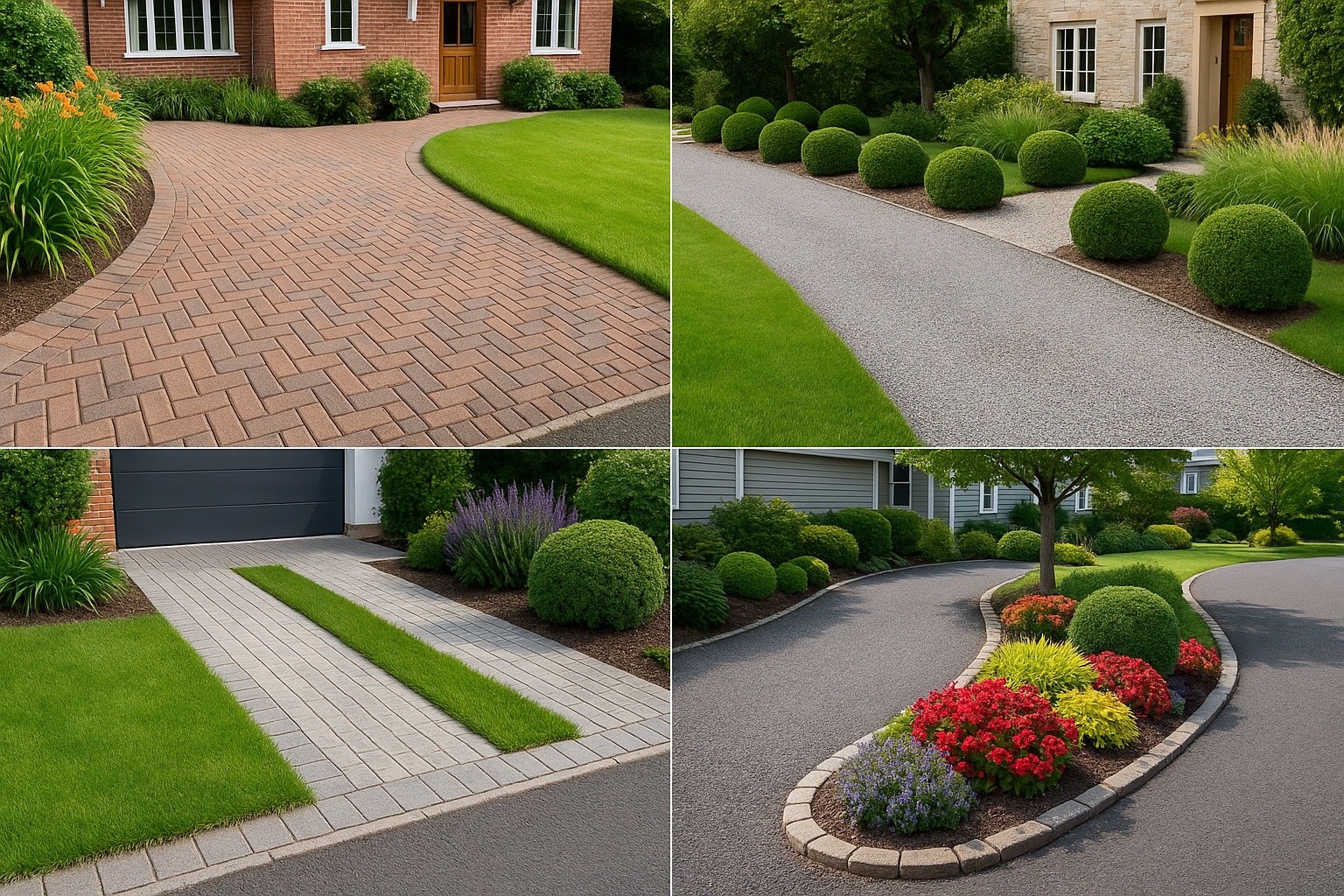
For those seeking long-lasting walkways that can withstand heavy foot traffic, interlocking concrete paver systems offer a compelling solution. Engineered to provide superior durability and a consistent appearance, these precisely manufactured pavers can be easily replaced if damage occurs, making maintenance a breeze. With a wide range of colors, textures, and patterns available, you can choose from traditional brick patterns or more modern geometric designs to suit your style. To ensure optimal stability, install the pavers over a well-prepared base with edge restraints and joint sand. The interlocking design effectively distributes loads while maintaining level surfaces over time, providing a smooth and even walking experience. This versatile system is suitable for both commercial and residential applications, including heavily used pathways that require long-term durability with minimal maintenance.
22. Artistic Expressions in Stained Concrete
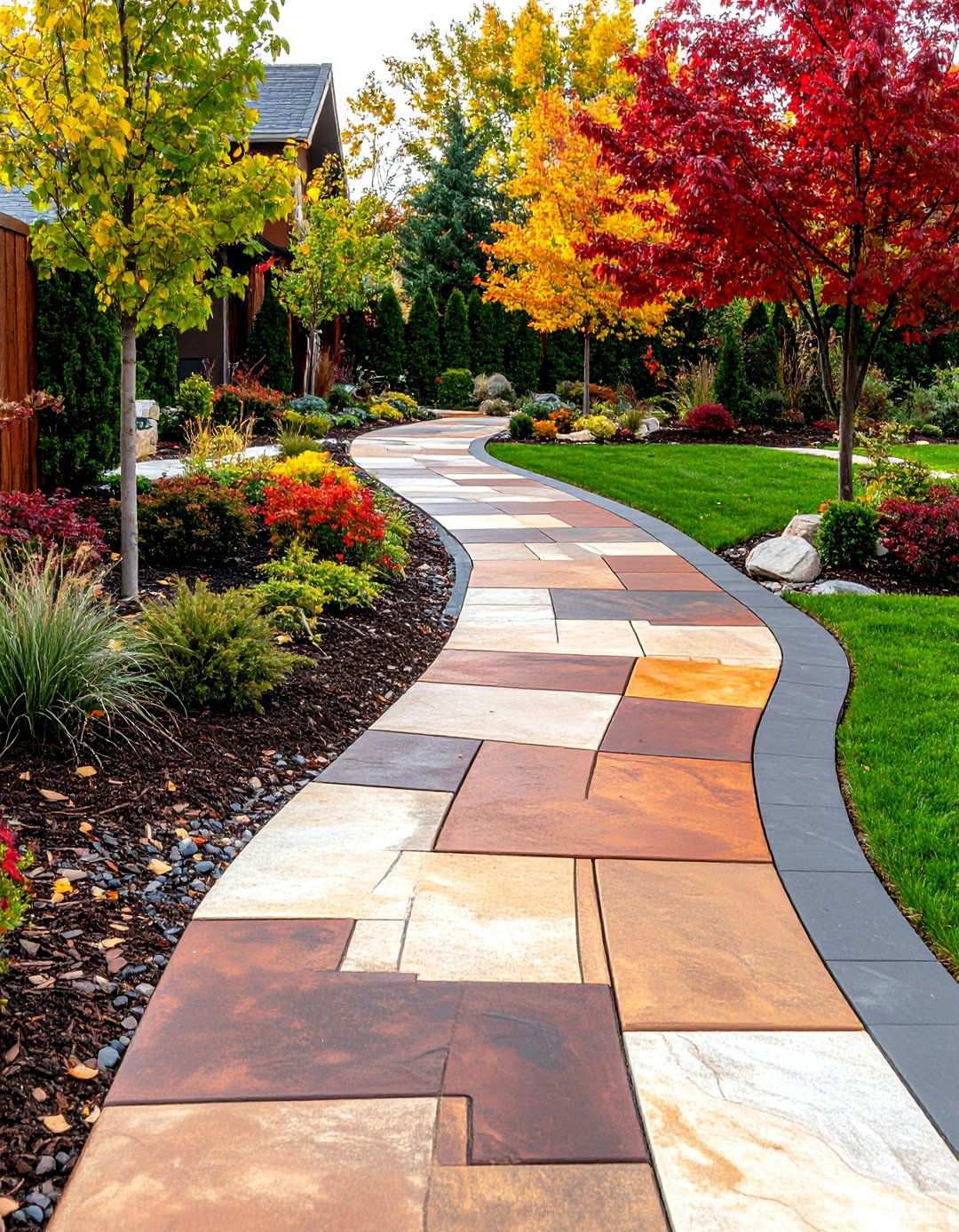
Stained concrete walkways offer a world of creative possibilities, allowing you to add a personal touch to your outdoor spaces. With custom colors, patterns, and textures at your fingertips, you can create a design that mimics natural materials or makes a bold statement. Acid stains can produce stunning variegated earth tones, while water-based stains offer a wide range of consistent colors in an endless palette of hues. To add an extra layer of visual interest, consider incorporating stamped patterns, exposed aggregates, or decorative saw cuts. Control joints can help manage cracking, while artistic elements like embedded stones, glass, or metal accents can add an extra touch of sophistication. Whether you prefer a sleek, modern look or an elaborate artistic expression, stained concrete walkways provide a versatile canvas for your creativity. To protect your design and enhance its color depth, consider sealing the surface. This approach offers a cost-effective alternative to natural stone and provides the design flexibility impossible with traditional materials.
23. Blending Concrete with Natural Beauty
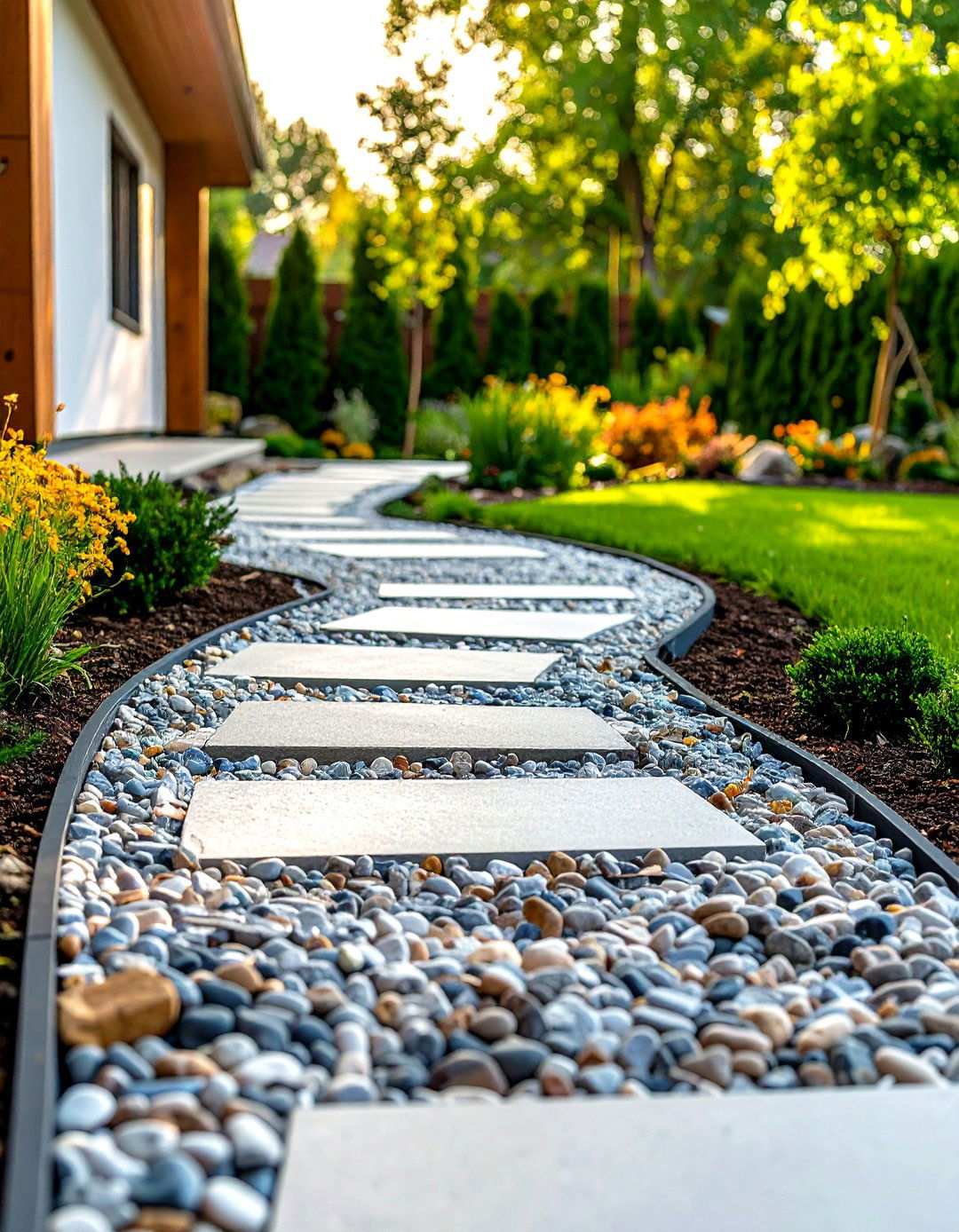
Mixed aggregate exposed pathways combine the durability of concrete with the decorative appeal of natural stone aggregates, creating textured surfaces with a unique, organic appearance. When selecting aggregate materials, consider your landscape palette and choose aggregates that complement your surroundings – river rocks, crushed granite, recycled glass, or local stone varieties can all add a touch of character. During the installation process, the embedded aggregates are exposed, providing a smooth, durable walking surface with enhanced traction characteristics. To achieve the desired aesthetic effect, carefully choose aggregate sizes and colors, weighing both form and function. Proper drainage and expansion joints are crucial for long-term performance in various climate conditions. This technique is well-suited for contemporary designs, institutional applications, and areas requiring durable surfaces with a natural appearance. For a professional finish, consider edging with complementary materials to ensure proper drainage management and a polished appearance.
24. Reinventing Pathways with a Green Edge
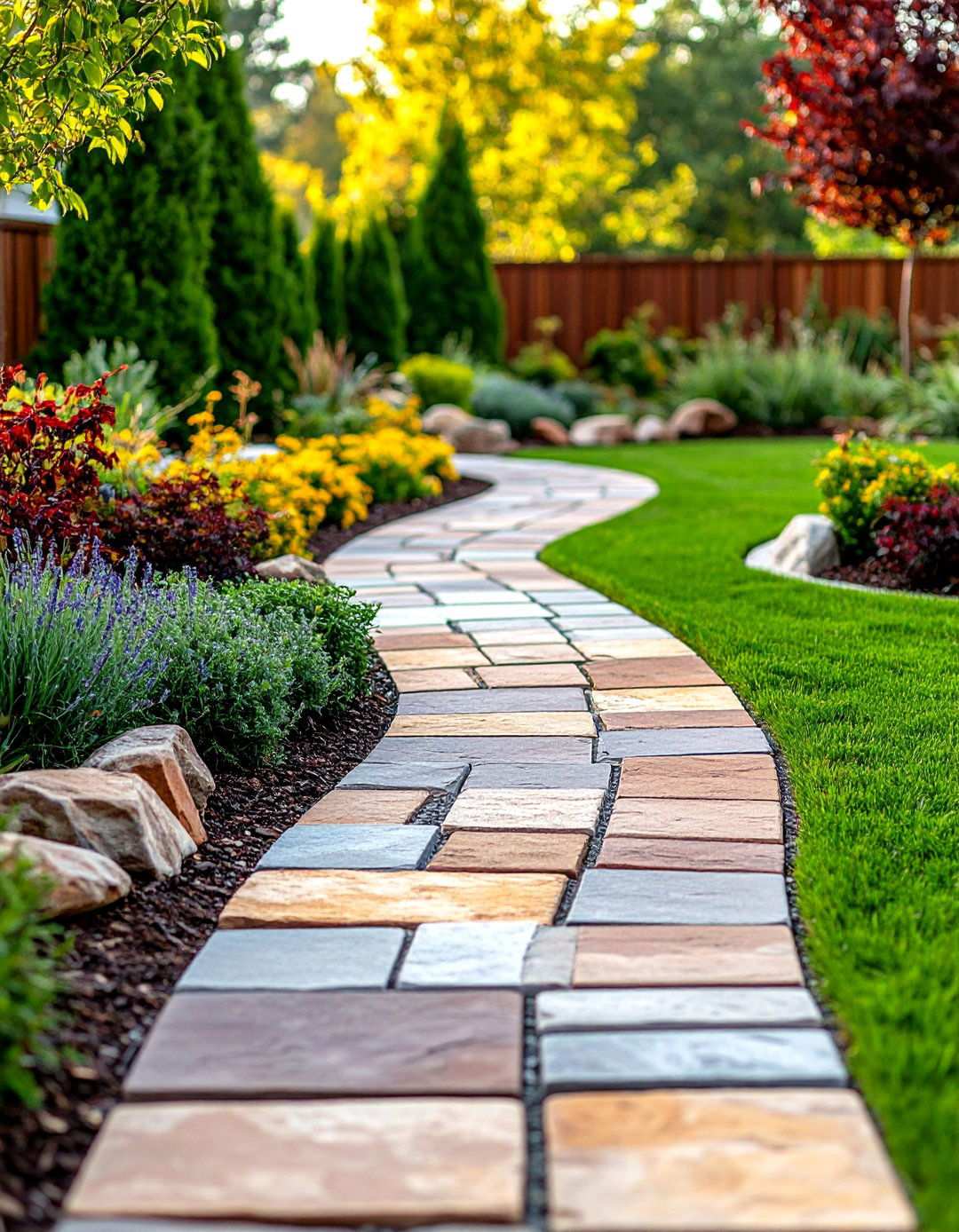
Homeowners seeking to redefine their outdoor spaces while embracing eco-friendliness can turn to a unique approach: utilizing recycled materials for walkways. By repurposing reclaimed bricks, salvaged stone, or recycled concrete pavers, these environmentally responsible pathways not only showcase character and history but also minimize the ecological footprint through efficient reuse of existing resources. To source the best materials, consider tapping into local demolition projects, architectural salvage companies, or specialized suppliers that offer certified recycled products with a proven track record.
The inherent diversity of recycled materials – think varied colors, textures, and weathering patterns – lends itself to creating one-of-a-kind pathway design. However, each material type demands specific installation techniques, taking into account size and condition variations to ensure a seamless integration. By opting for this creative solution, environmentally aware homeowners can simultaneously achieve cost-effective landscape projects that leave a lasting impression. Pairing these walkways with native plants and holistic landscaping practices is a compelling way to demonstrate a comprehensive commitment to environmental stewardship.