1. Mastering the Art of Stone Edging for Timeless Landscapes
Stone garden edging has the power to elevate an ordinary outdoor space into a polished, sophisticated oasis that reflects your unique design perspective. Whether you’re seeking to demarcate flower beds, create pathway borders, or establish clear boundaries between lawn and garden areas, stone edging offers unmatched durability and enduring appeal. From the rugged strength of granite to the warm elegance of limestone, each stone material brings its distinct characteristics that harmonize with diverse garden styles and regional tastes. Modern homeowners increasingly opt for stone edging due to its low-maintenance benefits and ability to withstand harsh weather conditions while maintaining its visual allure year after year. The versatility of stone allows for countless design possibilities, from sleek contemporary lines to rustic natural arrangements that seamlessly blend with existing landscapes. Beyond aesthetics, stone edging provides practical benefits, including superior weed control, mulch containment, and reduced trimming requirements around garden beds. This comprehensive guide explores diverse stone edging concepts that cater to various design preferences, budgets, and installation requirements to help you create stunning outdoor borders.

As an Amazon Associate I earn from qualifying purchases.
2. Contemporary Precision with Granite Block Edging
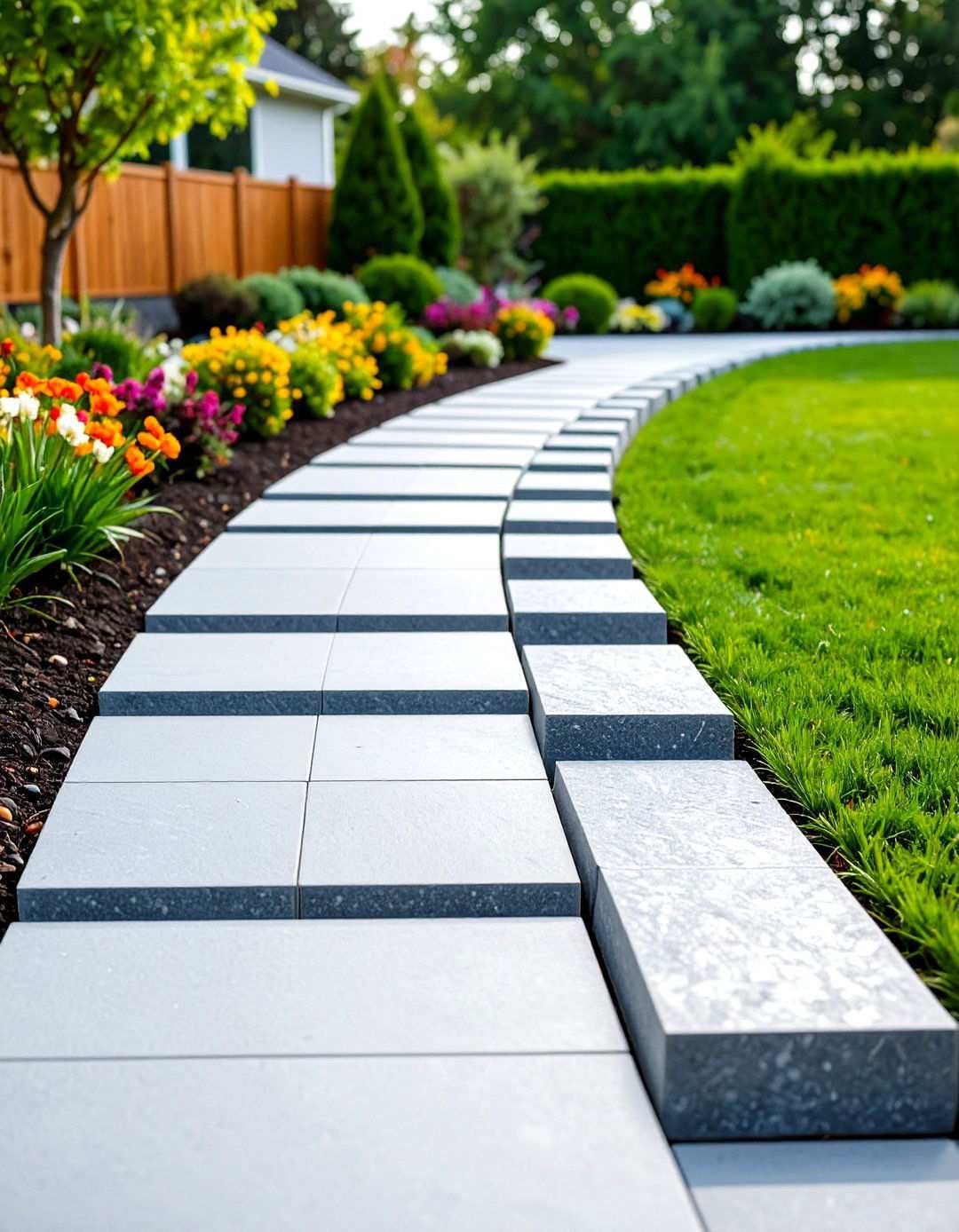
Granite block edging is a masterclass in modern landscape design, creating striking architectural lines that define precision and sophistication in outdoor spaces. These uniform rectangular stones, typically measuring four to six inches in height, establish clean geometric boundaries between manicured lawns and minimalist planting areas. To achieve seamless transitions, the installation process involves excavating a level trench, placing a compacted gravel base, and setting each block flush with adjacent pieces. Granite’s natural durability resists weathering, cracking, and color fading even in extreme climates, making this investment worthwhile for long-term landscape definition. The neutral gray tones of granite blocks complement contemporary home architecture while providing versatile backdrop options for seasonal plantings and decorative elements throughout the year.
3. Limestone Curved Pathway Edging
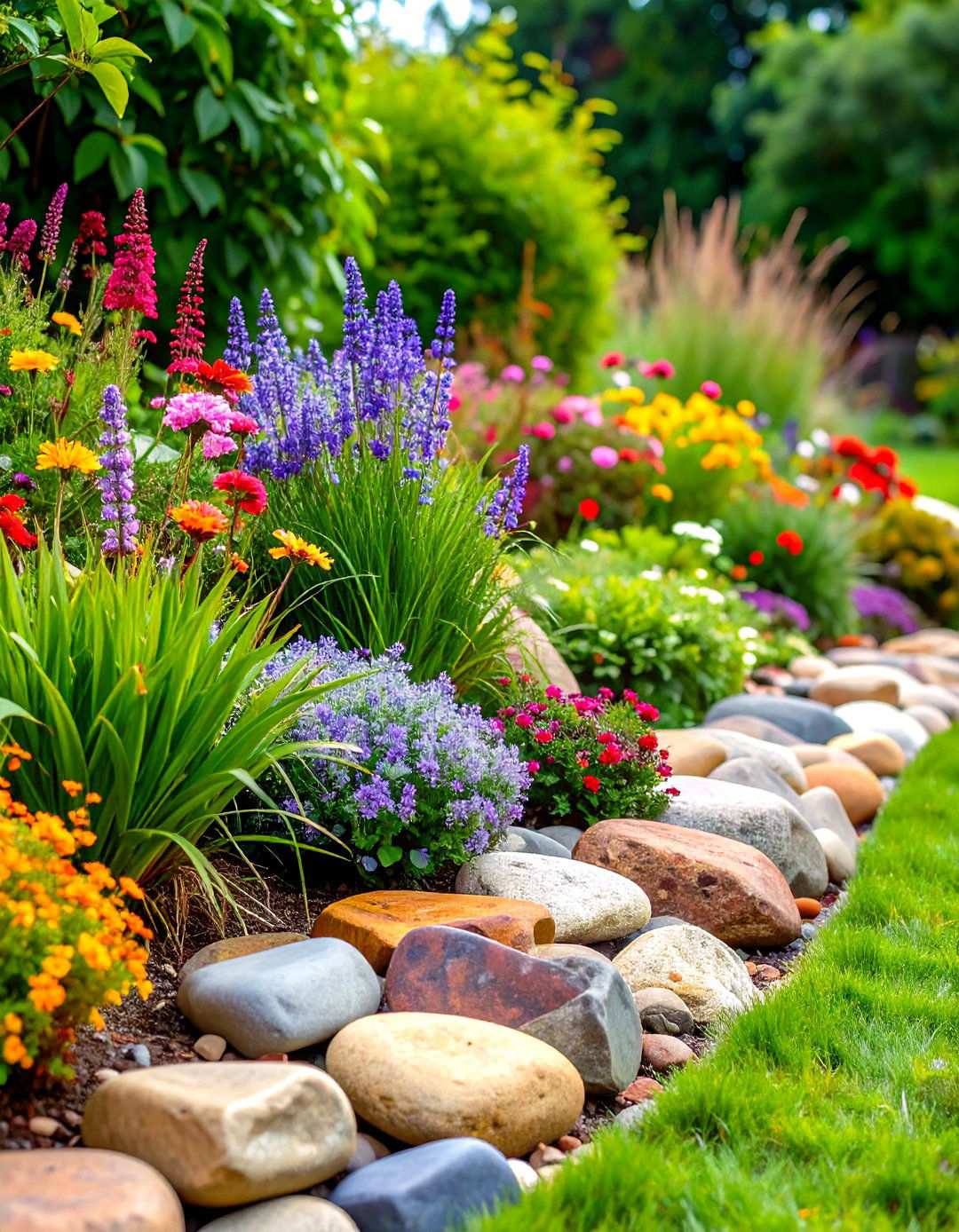
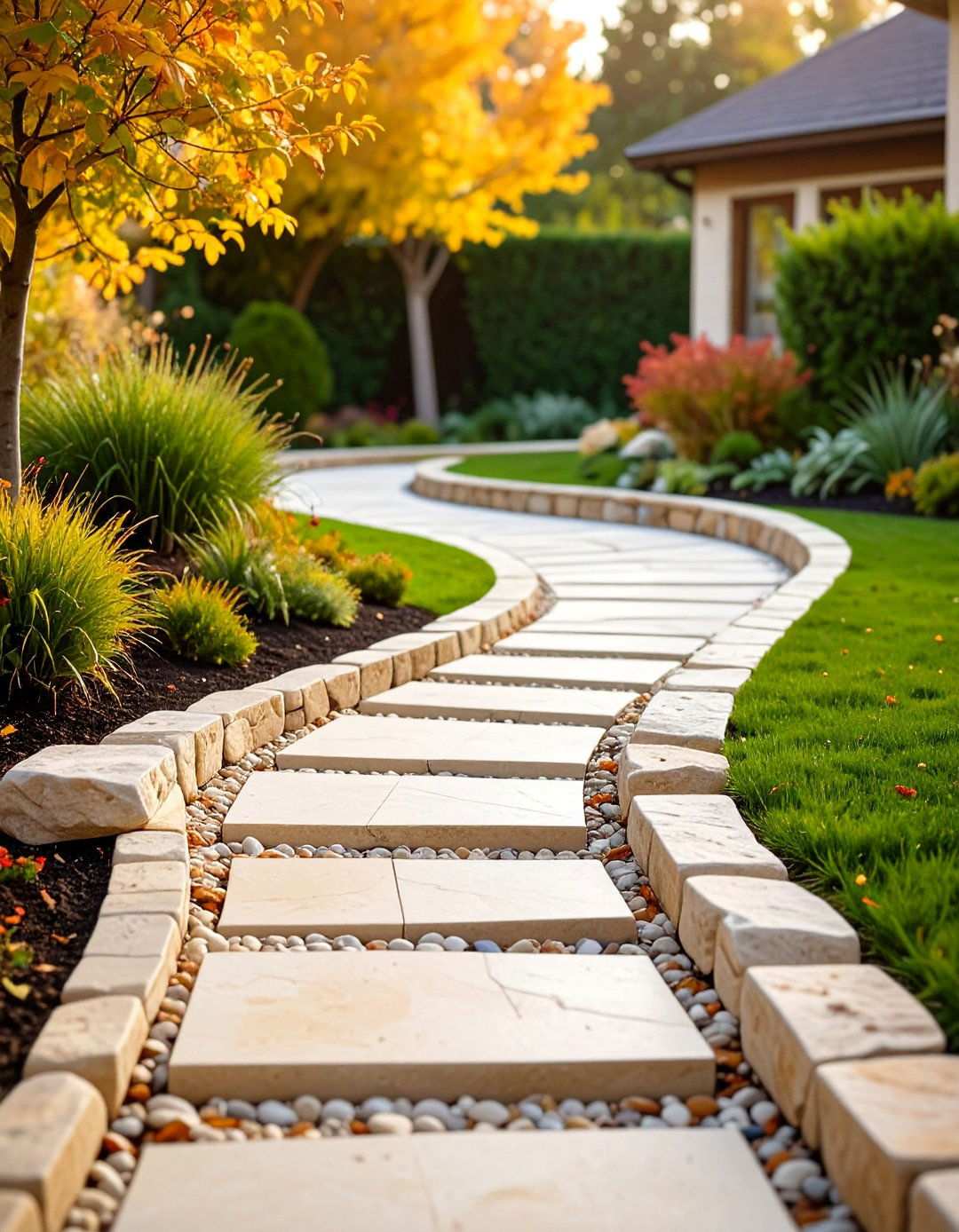
Are you looking to create flowing, organic pathways that invite exploration and create visual movement throughout the landscape? Limestone curved edging offers the perfect solution for establishing graceful walkway borders that complement both formal and informal garden designs. The warm, creamy tones of limestone create welcoming transitions between hardscaped paths and planted areas, while the stone’s workable nature allows for precise curve creation during installation. This edging style works beautifully with decomposed granite, gravel, or flagstone pathways, providing subtle definition without overwhelming delicate plantings. Installation requires careful attention to consistent curve radii and proper bedding in sand or stone dust to accommodate the organic flowing lines that make limestone pathway edging so appealing.
Unbridled Beauty of River Rock Borders
River rock natural borders bring forth the unbridled beauty of streamside landscapes, infusing garden edges with an organic charm and textural allure that’s as captivating as it is soothing. The smooth, water-worn surfaces of these rounded stones, measuring between three and eight inches in diameter, create informal boundaries that seem almost accidental, yet effectively contain mulch and soil with minimal fuss. The kaleidoscope of colors within individual stones adds a mesmerizing depth to the visual experience, with hues ranging from muted grays and browns to rich rusts and blacks, weaving a dynamic tapestry of natural patterns. Installation involves carefully arranging stones in close proximity along excavated borders, allowing their natural shapes to nestle together in a harmonious, organic ensemble. This edging style is particularly well-suited to woodland gardens, native plant landscapes, and areas where low-maintenance, natural aesthetics align with sustainable gardening practices and the local environment.
4. Enhancing Aesthetics with Sandstone Raised Garden Bed Borders
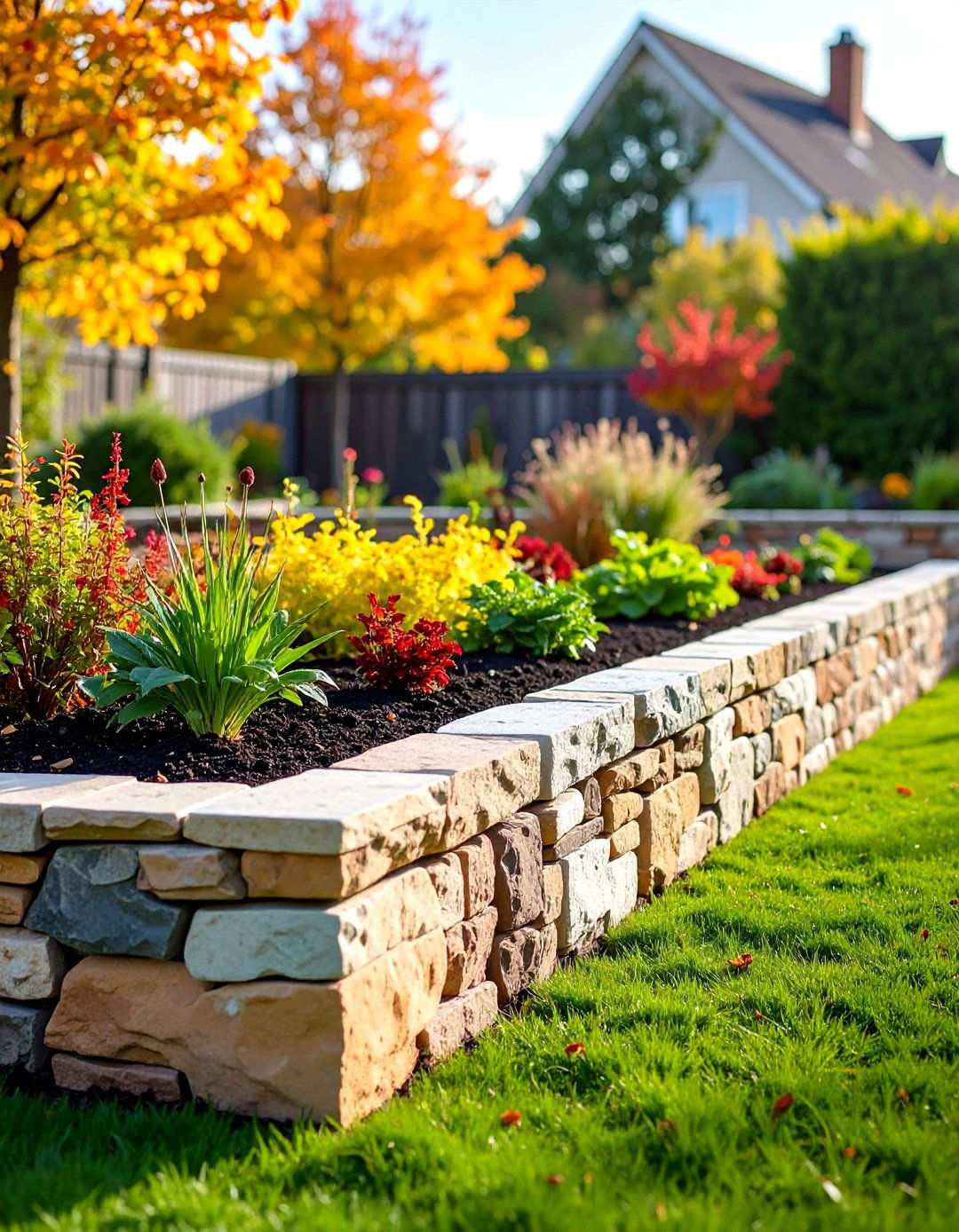
Sandstone raised bed edging seamlessly combines functional elevation with warm, earthy aesthetics that elevate vegetable gardens, herb plots, and perennial borders to new heights of beauty and productivity. The intricate stratification and varied tones in sandstone create a visually captivating effect while providing the structural integrity needed for containing soil and supporting plant growth at comfortable working heights. These installations typically involve stacking sandstone blocks two to three courses high, creating beds that improve drainage, soil warming, and accessibility for gardening tasks, making the most of available space. The porous nature of sandstone allows for excellent drainage, while its thermal mass helps regulate soil temperatures throughout growing seasons, ensuring optimal conditions for plant growth. This edging approach works particularly well in cottage garden settings, farmhouse landscapes, and areas where both productivity and beauty are equally important design considerations.
5. Timeless Elegance of Bluestone Formal Garden Edging
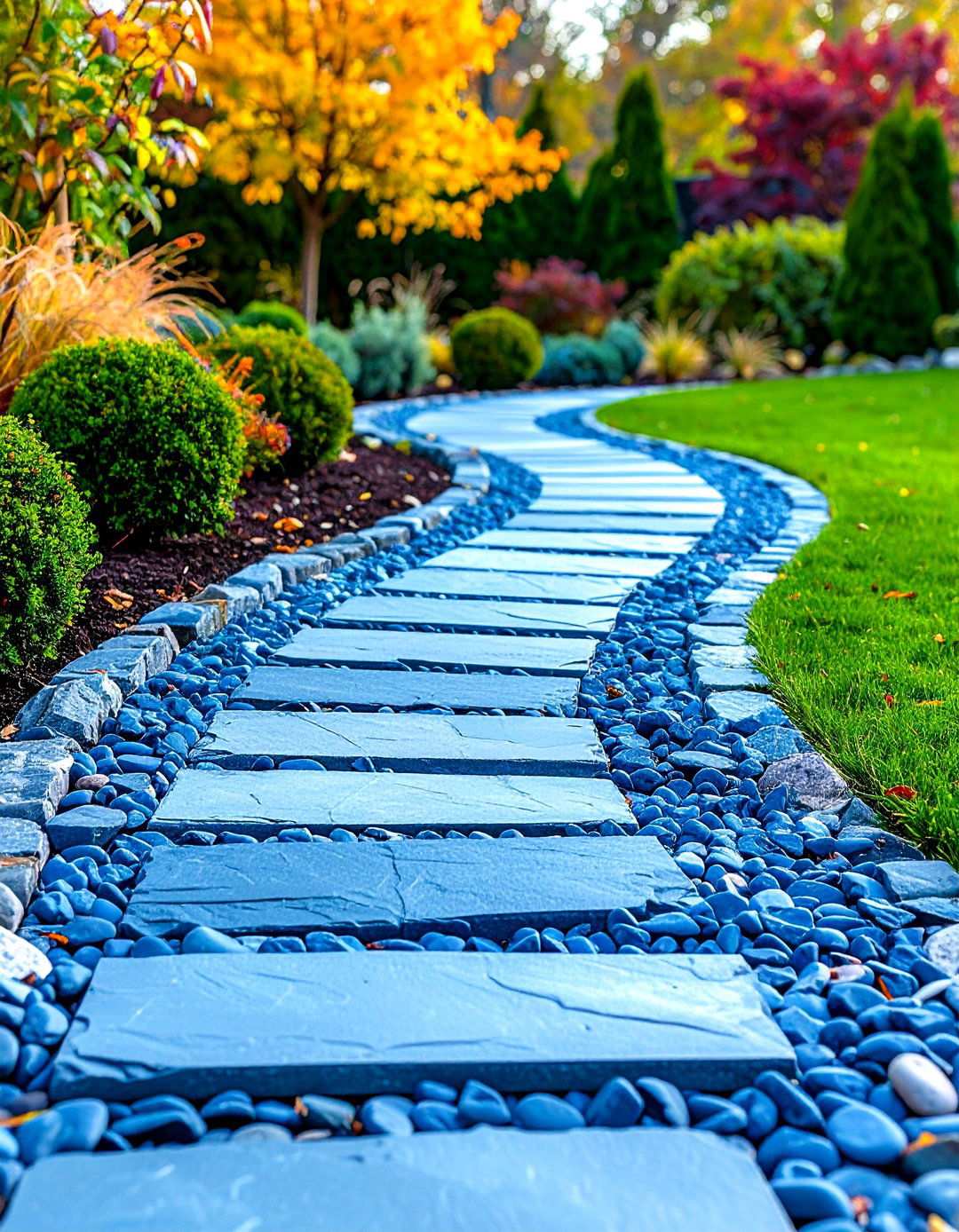
Bluestone formal edging sets a new standard for sophistication, establishing refined boundaries that reflect traditional estate garden design principles with their refined appearance and precise installation techniques. The dense, fine-grained texture of bluestone creates sharp, clean lines that maintain their appearance season after season, making this material ideal for geometric garden layouts and structured planting schemes. Installation requires meticulous attention to leveling and alignment, often incorporating mortar joints for permanent stability in high-visibility applications, where precision and permanence are paramount. The blue-gray coloration of this stone provides excellent contrast against both dark soil and bright green foliage, while its natural cleft surface adds subtle texture without competing with nearby plantings. This edging style works exceptionally well with boxwood hedges, formal rose gardens, and symmetrical landscape designs where precision and timelessness remain essential considerations.
6. Harmonizing Nature with Flagstone Irregular Edging
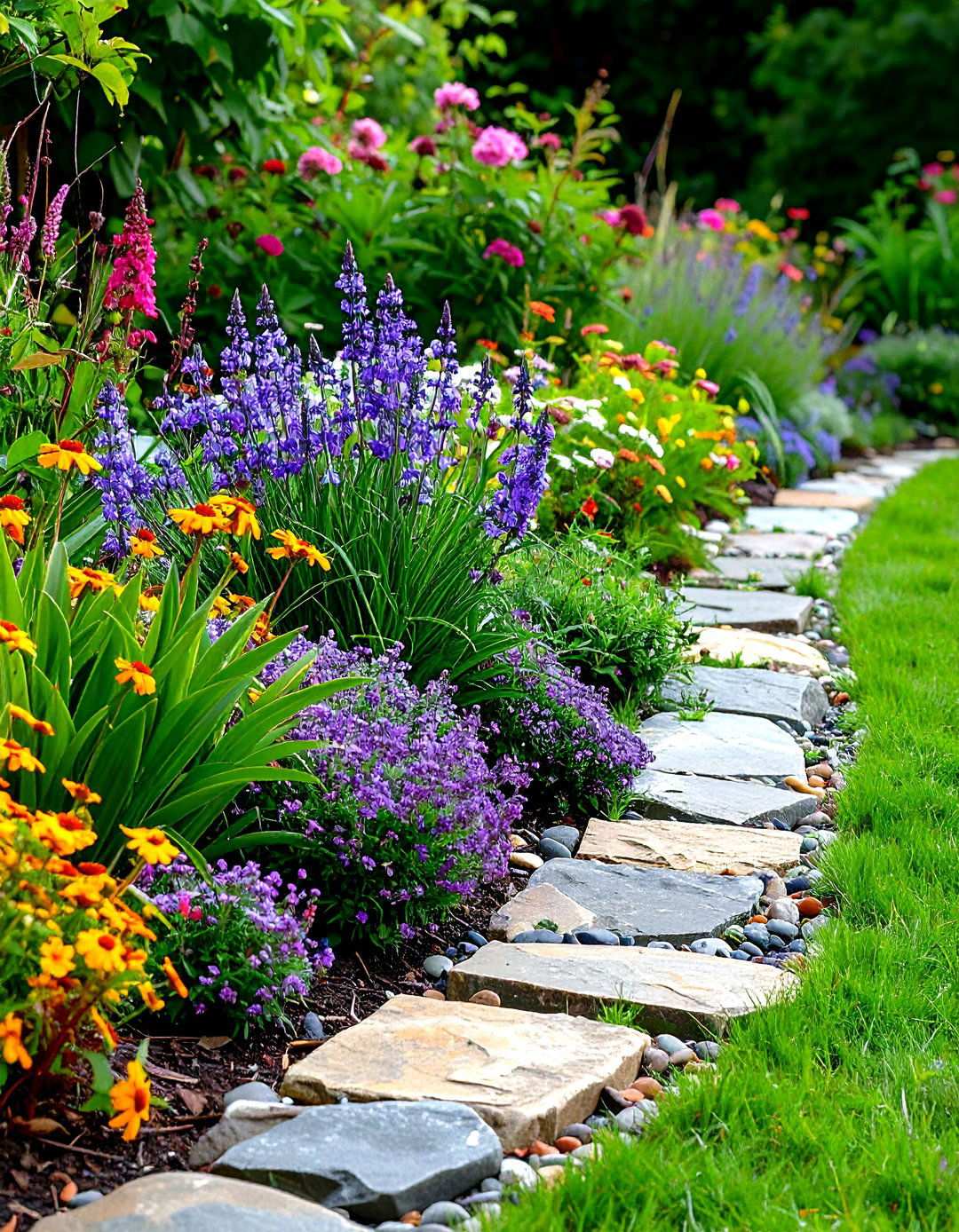
Flagstone irregular edging is a testament to the beauty of imperfection, embracing the unique characteristics and organic shapes that make each installation a one-of-a-kind masterpiece. By combining flat, broad surfaces that fit together like a perfectly crafted jigsaw puzzle, this edging style creates borders that seem to have evolved naturally over time. The result is a landscape feature that effortlessly blends with its surroundings, accommodating gentle curves and irregular bed shapes that follow the natural contours of the site. To create this distinctive border, gardeners must carefully select stones based on their size, shape, and color compatibility, then craft them together with precision to minimize gaps and prevent weeds from taking hold. This approach is particularly well-suited to cottage gardens, wildflower meadows, and naturalistic landscapes where the goal is to enhance the inherent beauty of the outdoor space, rather than imposing rigid design elements.
7. Cobblestone Heritage Pathways: Timeless Elegance
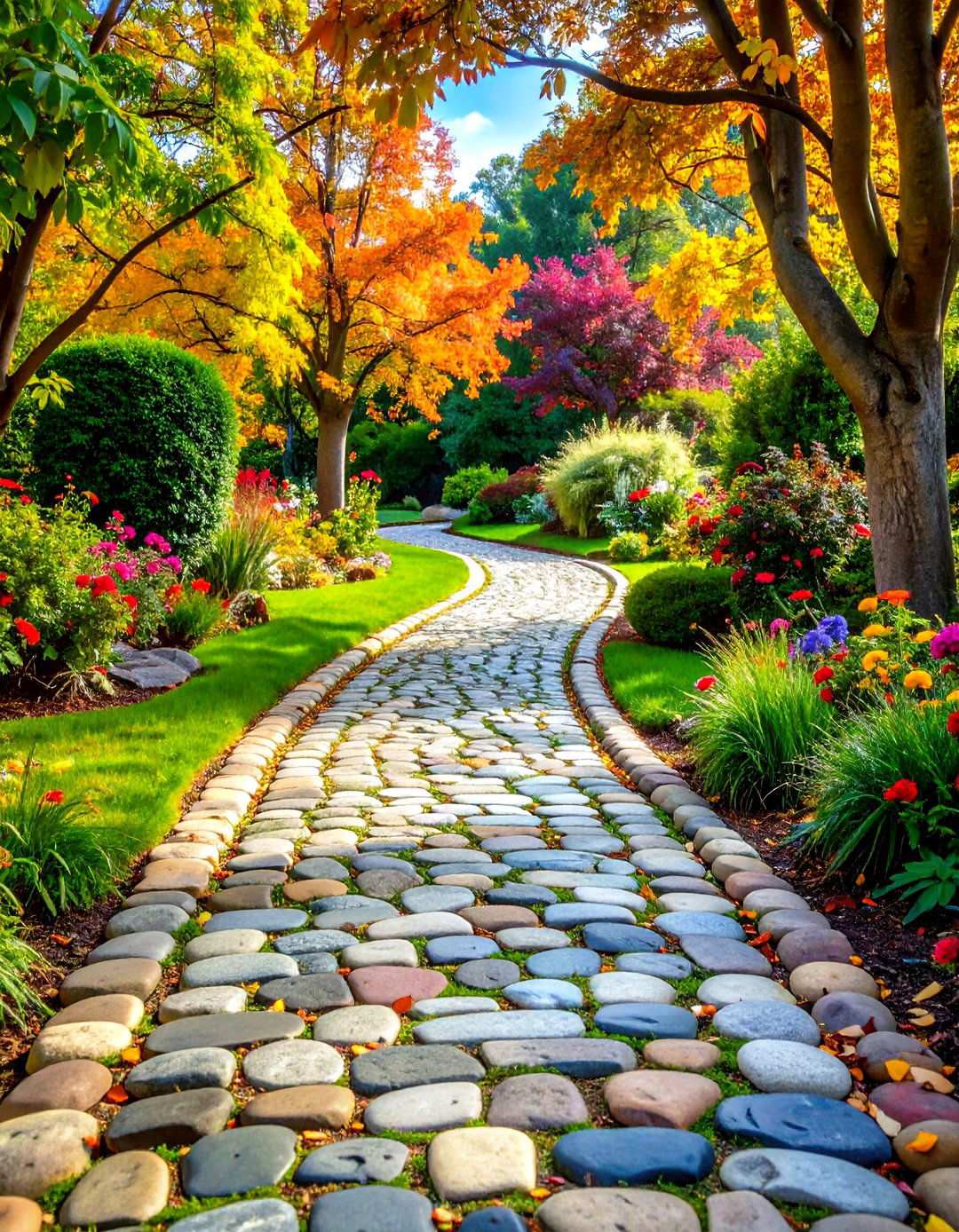
Few design elements evoke a sense of historical character like cobblestone edging, which nods to centuries-old European garden traditions and American colonial landscape design. By incorporating small, rounded stones, gardeners can create charming pathway borders that transport visitors to a bygone era, while providing the practical functionality of a modern landscape feature. Traditional cobblestone installation involves setting stones closely together in sand bedding, resulting in slightly uneven surfaces that add character and authenticity to garden pathways. The varied sizes and earth-tone colors of individual cobblestones create natural pattern variations that prevent monotony, while maintaining overall design cohesion. This edging approach is particularly effective when paired with brick or gravel pathways, herb gardens, and historical home landscapes, where period authenticity can enhance property character and neighborhood charm.
8. Slate Linear Modern Edging: Sleek Sophistication
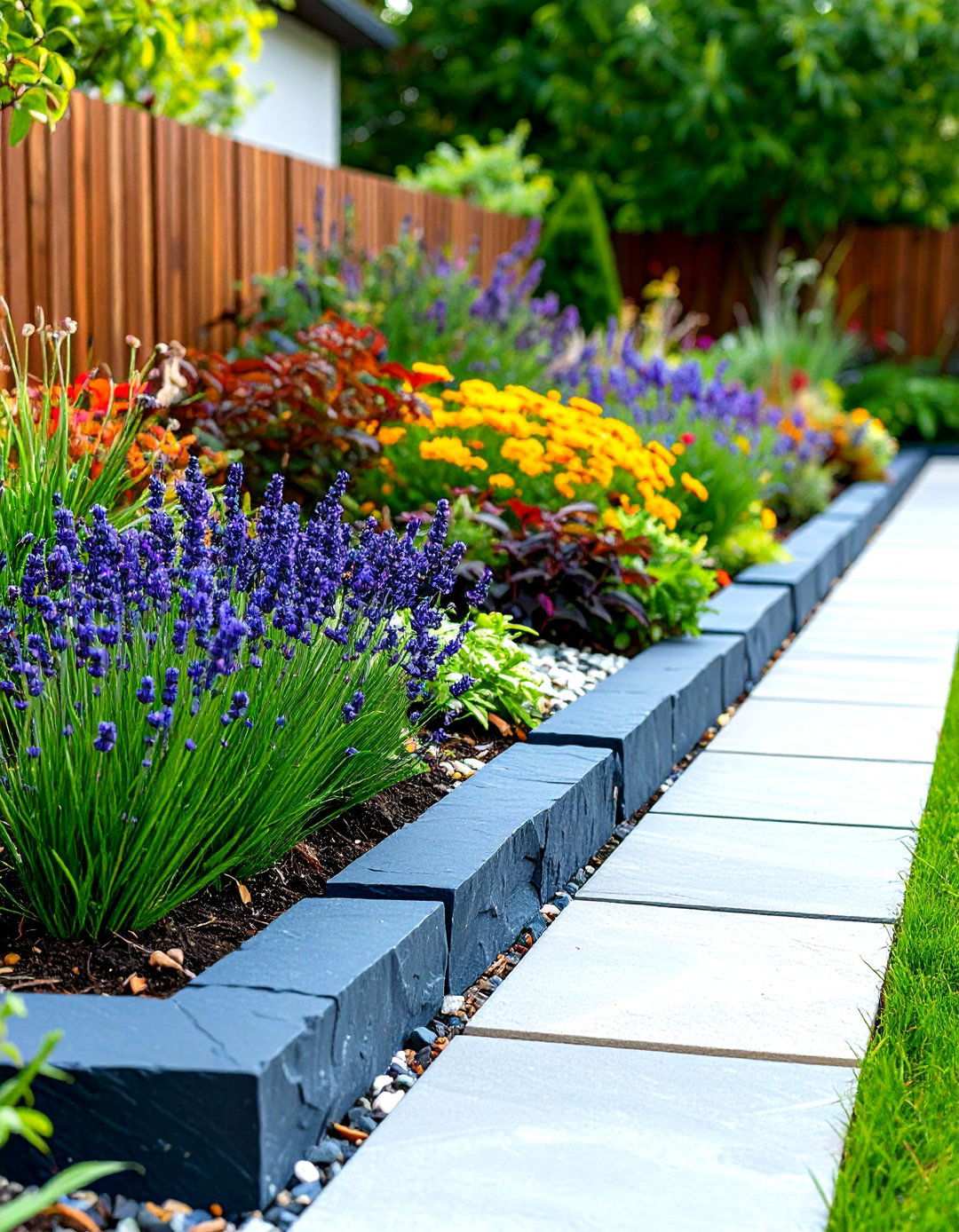
For those seeking a contemporary look, slate linear edging delivers sleek sophistication through its streamlined profile and consistent geometric presentation. The fine-grained texture and dark coloration of slate create striking contrast against lighter-colored gravel, concrete, or decorative stone surfaces, while maintaining subtle elegance in planting areas. These thin, upright stones establish precise boundaries without overwhelming smaller garden spaces or delicate plant materials. Installation requires meticulous attention to consistent height and alignment, often utilizing concrete footings for permanent stability in formal applications. The natural layering characteristics of slate allow for interesting textural effects when stones are positioned to showcase their natural stratification patterns, adding visual depth while maintaining the clean lines essential to contemporary landscape design principles.
9. Rugged Elegance: Granite Cobble Rustic Borders
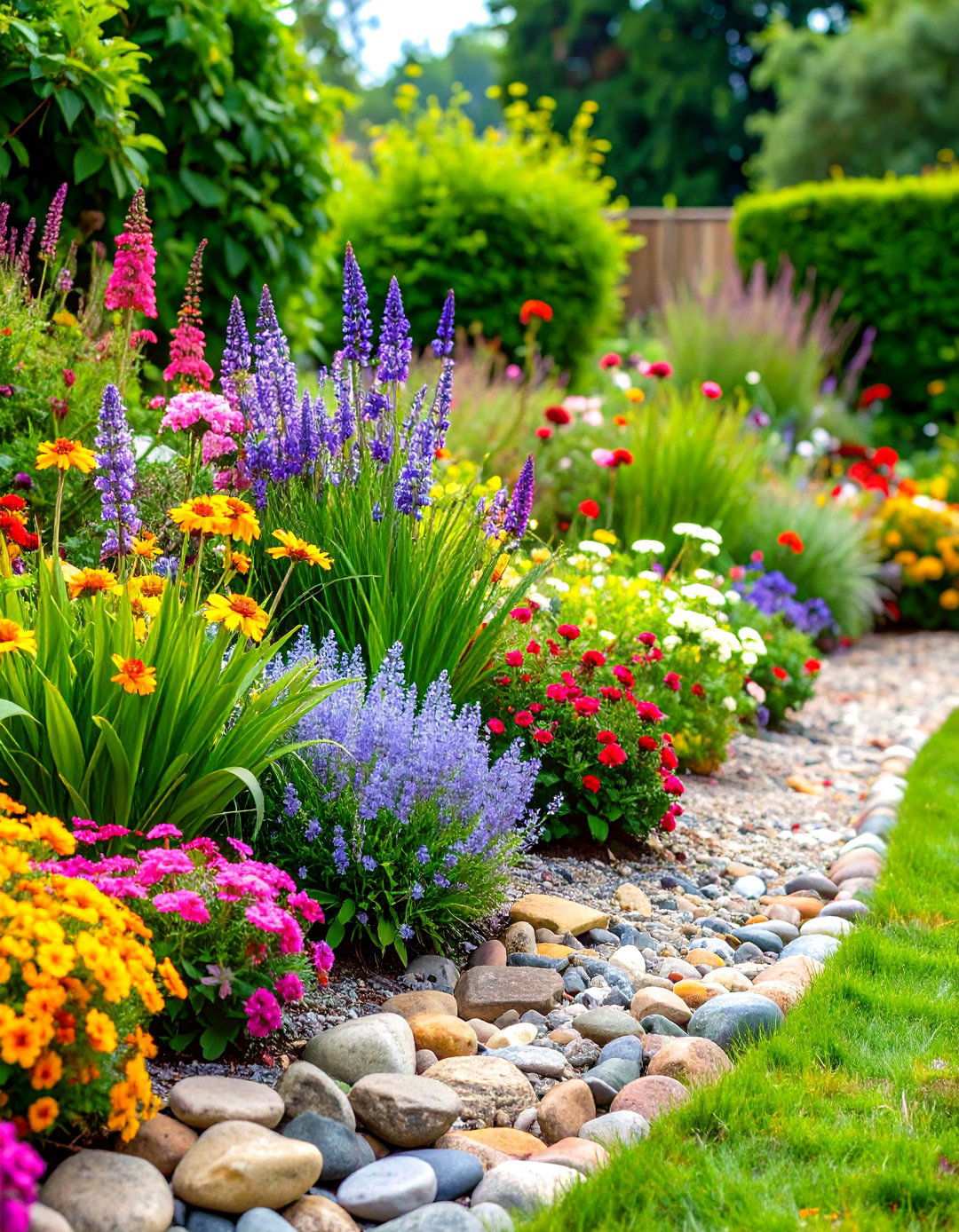
Granite cobble edging brings a unique blend of rugged durability and old-world charm to garden borders, thanks to its irregularly shaped stones that create naturally weathered appearances. These smaller granite pieces, often measuring between 4 and 8 inches in various dimensions, establish informal boundaries that perfectly complement cottage gardens, farmhouse landscapes, and rustic outdoor living areas. The speckled coloration and coarse texture of granite cobbles provide an excellent contrast against fine-textured plantings, while their irregular shapes create captivating shadow patterns throughout the day. When installed, the arrangement of stones must strike a balance between compositional aesthetics and functional effectiveness for containing mulch and preventing grass encroachment. This edging style works particularly well with perennial borders, wildflower gardens, and areas where natural, unpretentious beauty aligns with sustainable gardening practices and regional landscape character.
10. Elevating Slopes: Limestone Stacked Wall Edging
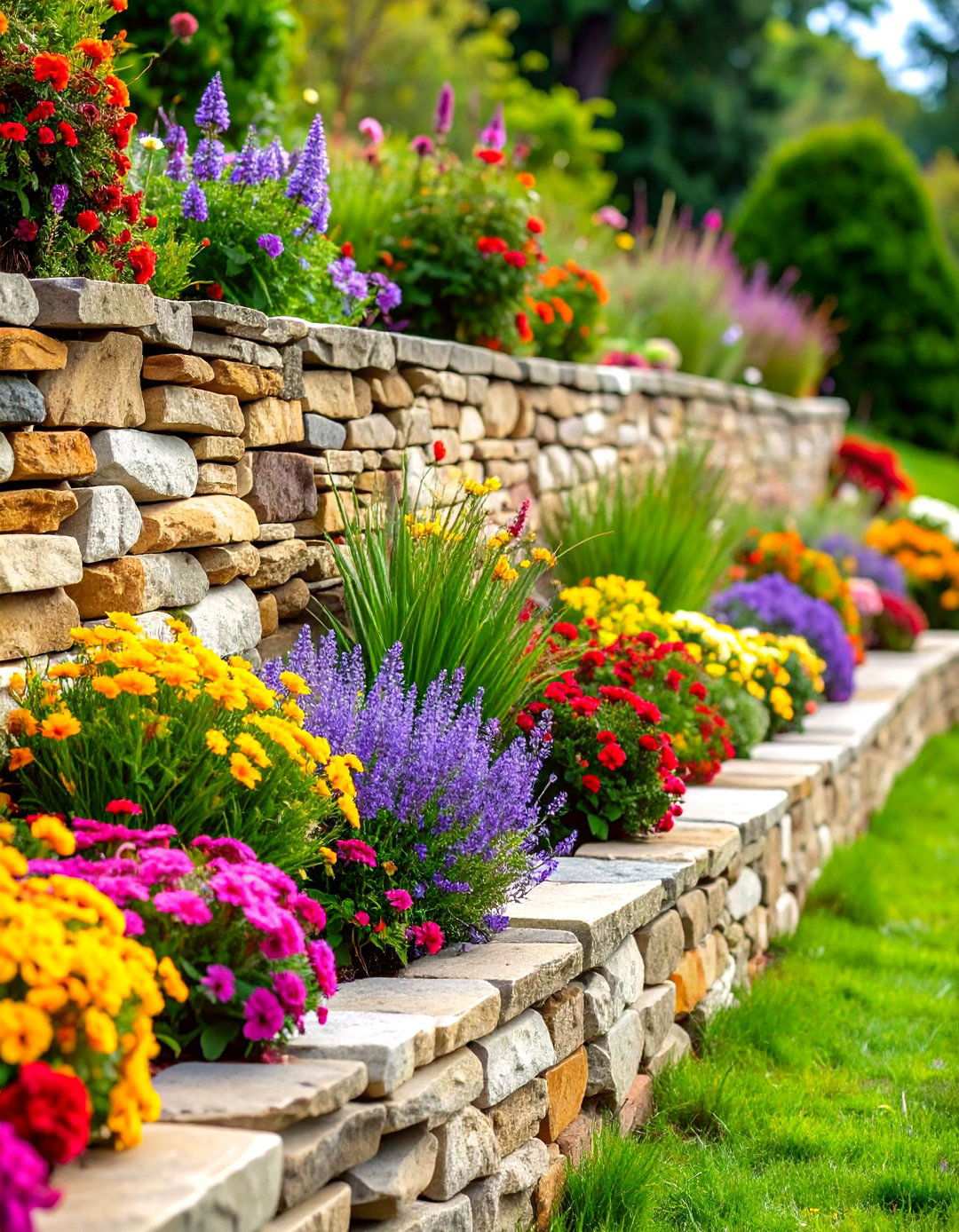
Sloping gardens can greatly benefit from limestone stacked wall edging, which offers both erosion control and elegant terracing solutions. This substantial edging approach creates dimensional boundaries that address grade changes while establishing defined planting areas with increased soil depth and improved drainage characteristics. The natural stratification of limestone enables stable stacking without mortar, resulting in walls that age gracefully while maintaining structural integrity through freeze-thaw cycles. During installation, the process involves excavating level foundations, carefully selecting stones for optimal fit, and backfilling with suitable drainage materials to prevent water buildup behind wall structures. This edging style excels in hillside gardens, raised perennial borders, and areas where both functional soil retention and aesthetic enhancement are equally important design objectives throughout the growing season.
11. Serene Boundaries: River Stone Zen Garden Borders
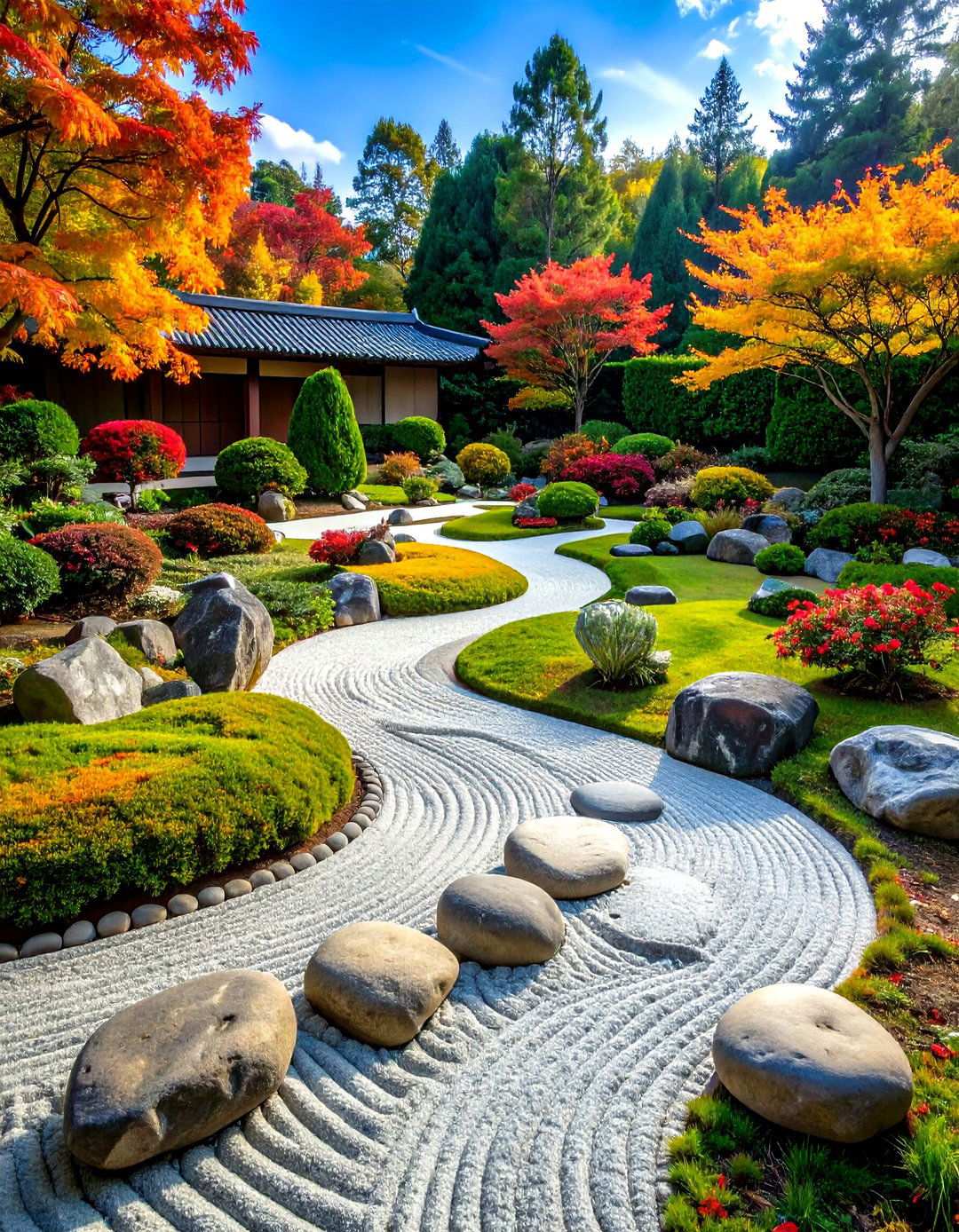
River stone zen garden borders create tranquil, meditative spaces that emphasize simplicity, natural beauty, and contemplative design principles inspired by Japanese landscape traditions. These carefully selected smooth stones, arranged in flowing patterns around gravel areas or minimal plantings, establish boundaries that encourage reflection and peaceful interaction with outdoor spaces. The rounded forms and varied neutral colors of river stones create subtle textural interest without overwhelming the serene atmosphere essential to zen garden design. During installation, thoughtful stone placement is crucial to achieve visual balance and harmony, often incorporating larger accent stones as focal elements within broader compositions. This edging approach works beautifully with ornamental grasses, small evergreen specimens, and areas designated for meditation, reading, or quiet contemplation throughout the seasons of the year.
12. Timeless Charm of Tumbled Sandstone Edging
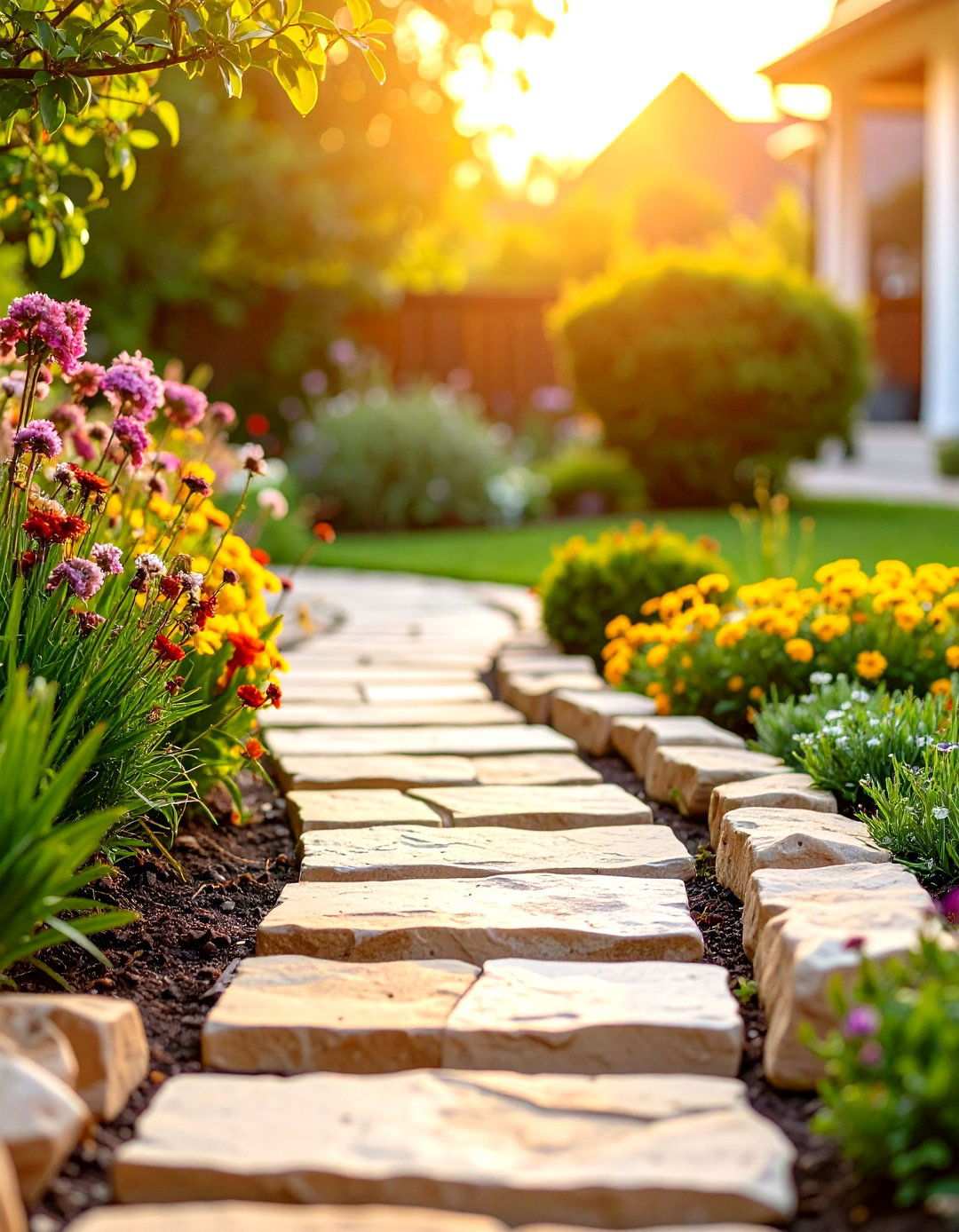
Tumbled sandstone cottage edging embodies the effortless elegance of rural English gardens, featuring stones with gently rounded edges and a naturally weathered appearance. This aesthetic quality is achieved through a tumbling process that eliminates sharp corners, resulting in surfaces that appear to have been shaped by the relentless passage of time. The warm, earthy tones of tumbled sandstone provide a perfect backdrop for cottage garden plantings like lavender, roses, and perennial herbs, while also serving a practical purpose by containing organic mulches and preventing soil erosion. Installation involves creating organic curves and informal patterns that allow plants to grow and flourish, rather than being constrained by traditional boundaries. This edging style is particularly well-suited to mixed perennial borders, herb gardens, and areas where a harmonious balance between form and function is essential.
13. Dramatic Presence of Granite Boulder Edging
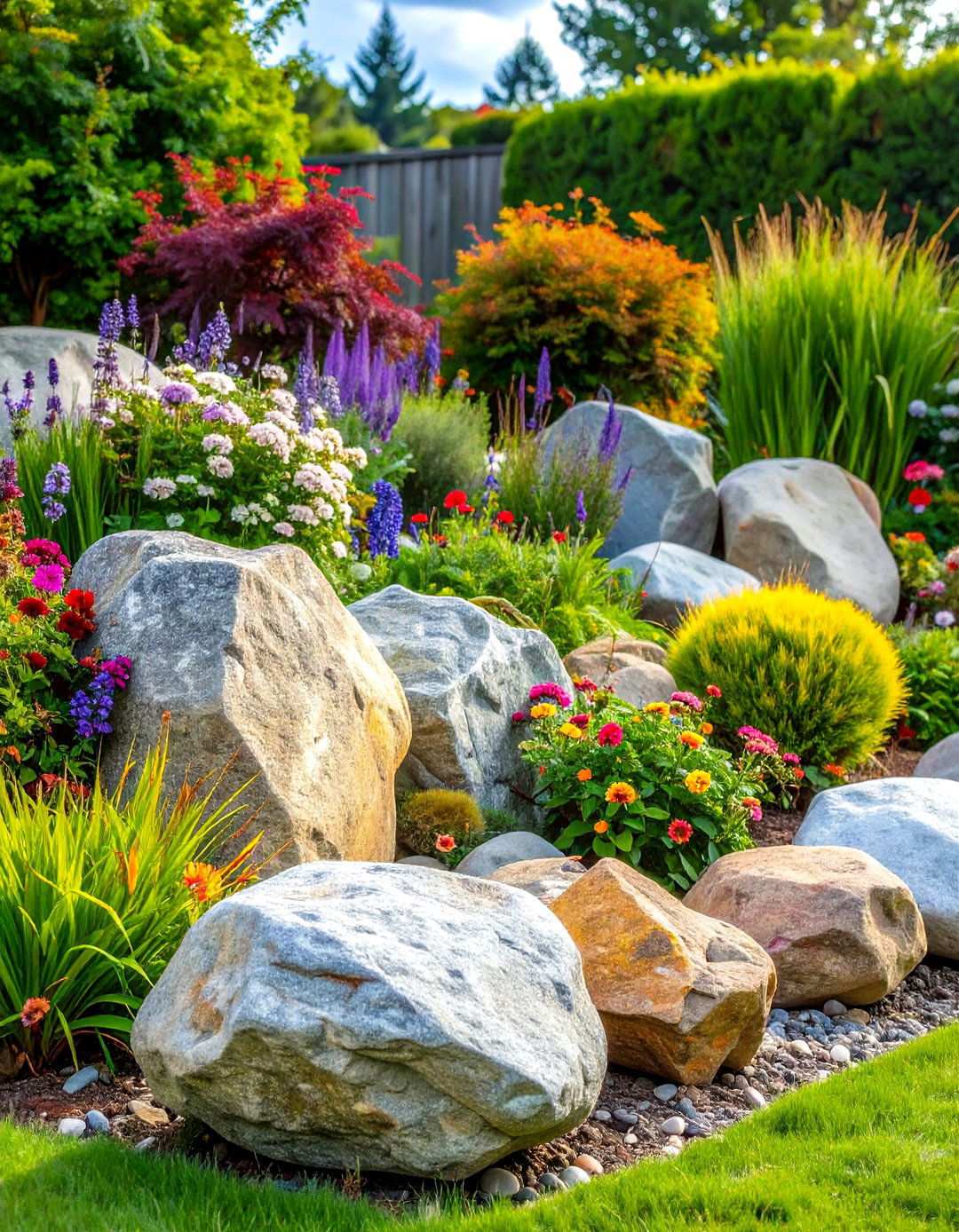
Granite boulder edging makes a resounding statement in any landscape, thanks to the substantial stone elements that anchor garden designs with a sense of permanence and sculptural presence. These large stones, often weighing hundreds of pounds each, create bold boundaries that define major landscape areas while serving as focal points that organize surrounding plantings and hardscape elements. The weathered surfaces and natural coloration of granite boulders provide a striking contrast to refined plantings, while their substantial mass creates year-round structure that remains visually important even during the dormant seasons. Installation requires heavy equipment and careful consideration of drainage around large stone elements to prevent water pooling and soil saturation issues. This edging approach works exceptionally well with contemporary landscapes, large-scale gardens, and areas where dramatic natural elements complement architectural features and expansive outdoor living spaces.
14. Engineered Flagstone Solutions for Slope Stabilization and Aesthetic Appeal
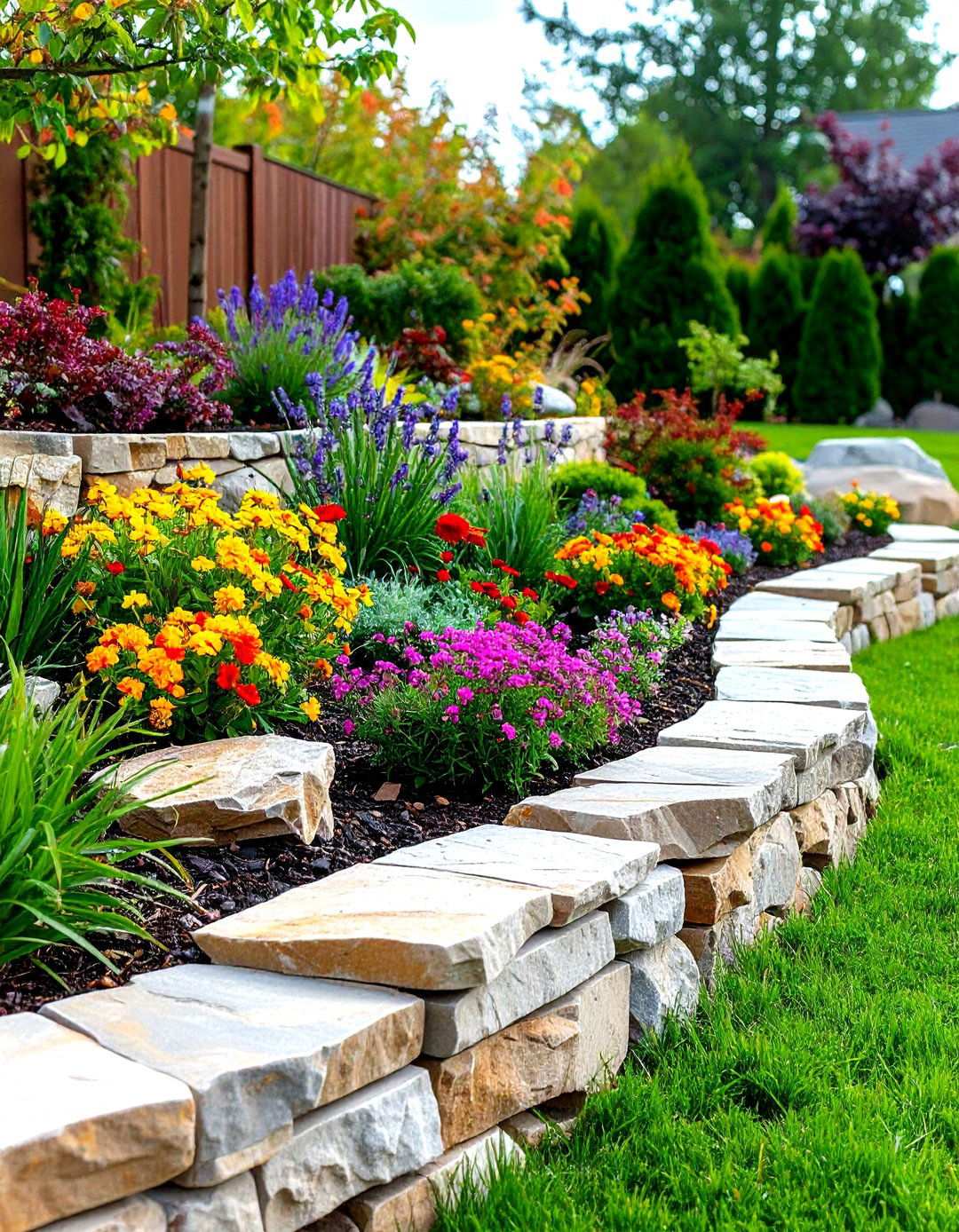
If you’re seeking a landscape solution that harmoniously blends functionality and beauty, consider flagstone dry stack retaining borders. These engineered walls effectively control erosion, create elevated planting areas, and enhance soil conditions through improved drainage. Flagstone pieces, with their broad, flat surfaces, naturally interlock when properly chosen and arranged, forming stable walls that accommodate plant growth and seasonal soil fluctuations. To ensure a successful installation, it’s essential to excavate level foundations, select stones for optimal fit and stability, and incorporate drainage materials to prevent water accumulation behind the wall structure. This edging approach excels in hillside gardens, terraced vegetable plots, and areas where soil retention and visual enhancement are paramount design objectives.
15. Authentic Victorian Elegance with Cobblestone Garden Edging
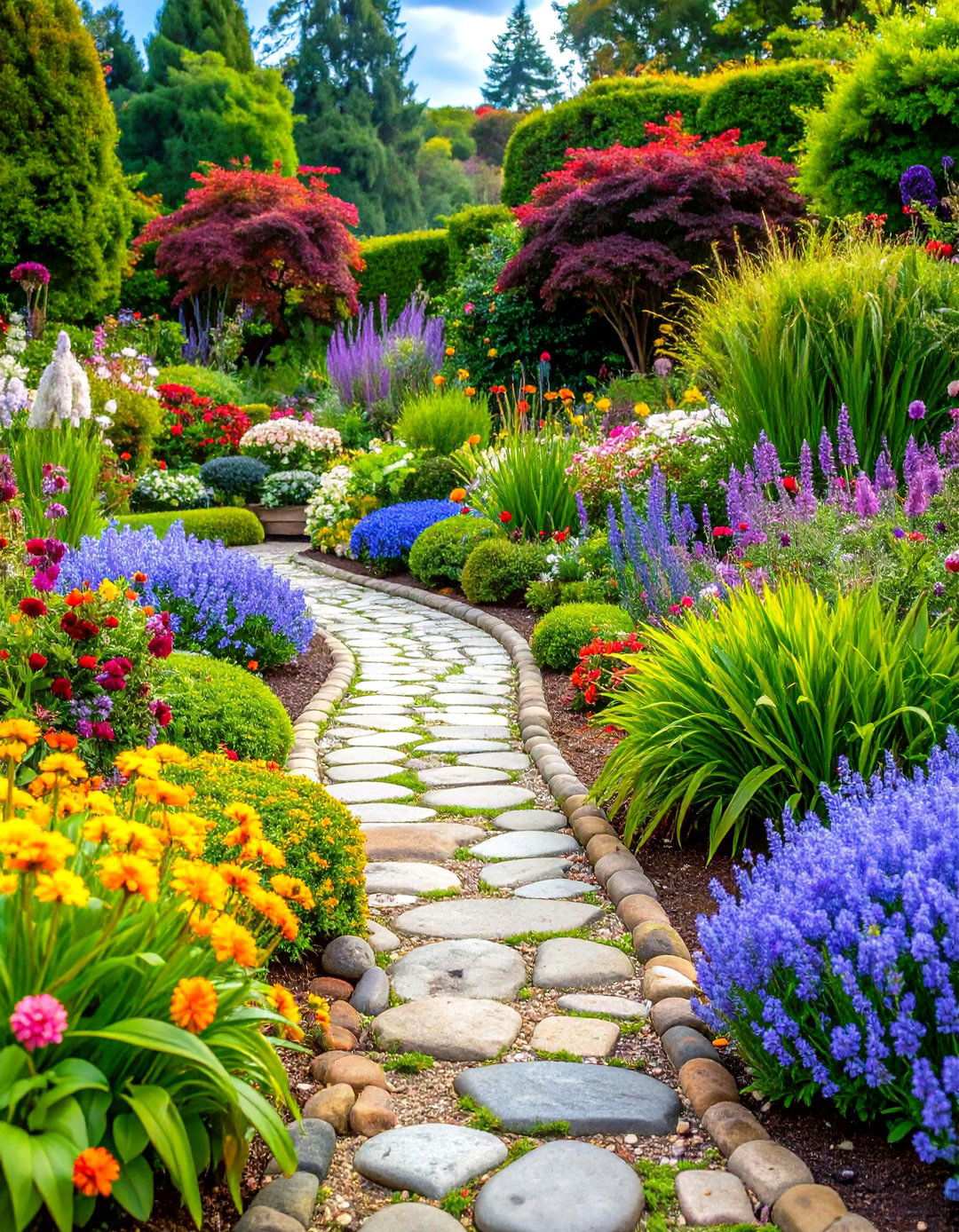
For a landscape that exudes the sophistication of nineteenth-century estate gardens, consider cobblestone Victorian garden edging. This style recreates the elaborate designs of bygone eras through formal patterns and precision installation techniques that evoke period craftsmanship. The small, uniformly sized stones create intricate borders that frame planting schemes with geometric precision and historical authenticity. The installation process involves crafting patterns such as running bond, herringbone, or basket weave that not only complement Victorian architectural elements but also provide functional plant bed definition. The varied colors and subtle size differences in individual cobblestones add visual texture, preventing a monotonous appearance while maintaining the formal character essential to Victorian landscape design. This edging style pairs beautifully with heritage rose gardens, formal perennial borders, and historical properties where period accuracy enhances architectural character and neighborhood preservation efforts.
16. Elegant Curves for Limestone Raised Beds
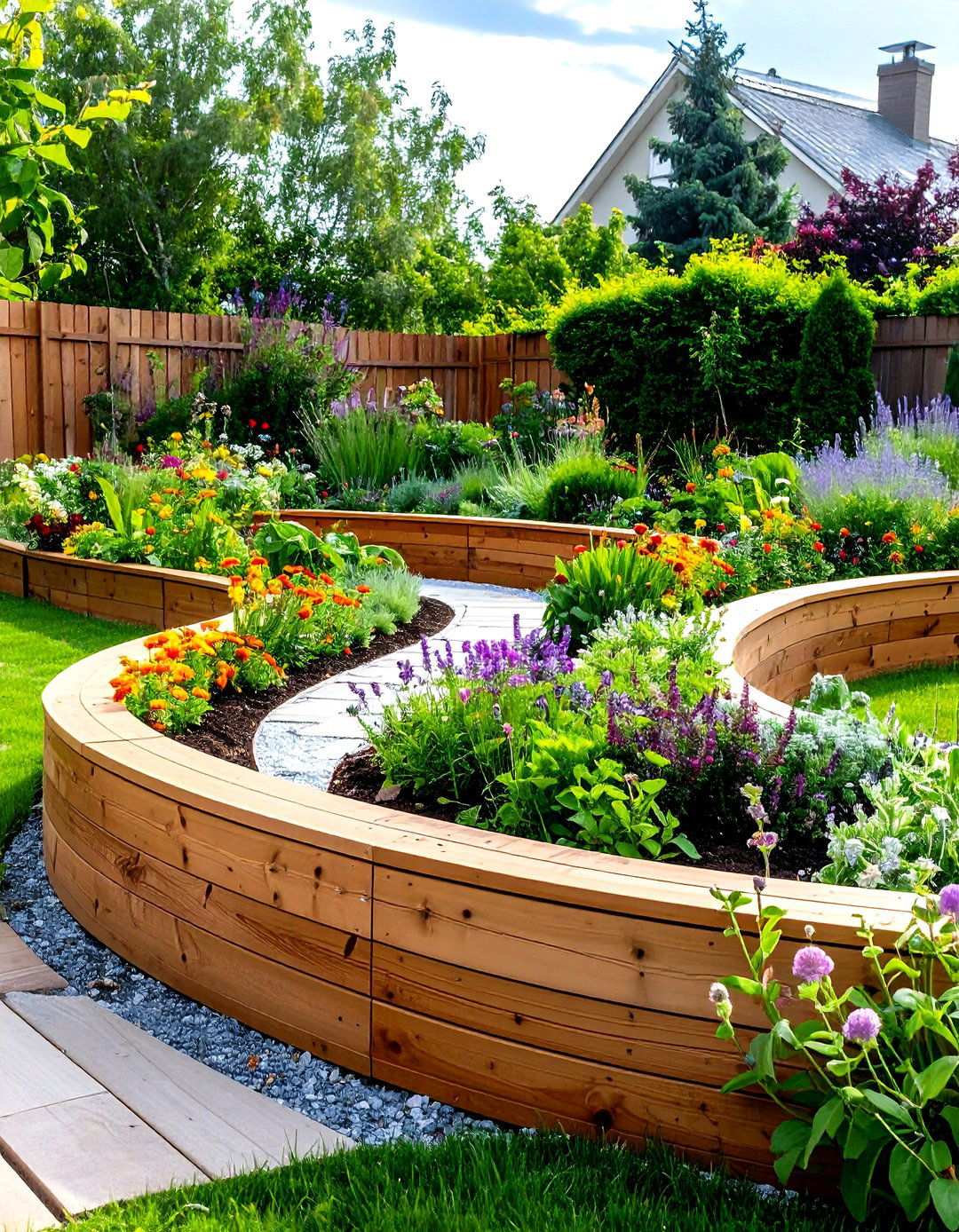
Elevated limestone designs, characterized by sweeping curves, create a sense of fluidity in garden landscapes, expertly blending with natural site features while providing superior growing conditions for a diverse range of plants. The versatility of limestone enables precise curve creation, allowing gardeners to work within the existing landscape contours without imposing harsh geometric constraints on the design. These elevated beds not only enhance drainage, soil temperature, and accessibility but also introduce visual movement that naturally guides visitors through garden spaces. Careful planning of curve radii, proper foundation preparation, and consistent wall height are essential for maintaining both the structural integrity and aesthetic appeal of limestone raised beds. This curved edging approach is particularly well-suited for cottage gardens, herb plots, and landscapes where both functional gardening and visual beauty are equally valued.
17. Modern Slate Borders for Contemporary Spaces
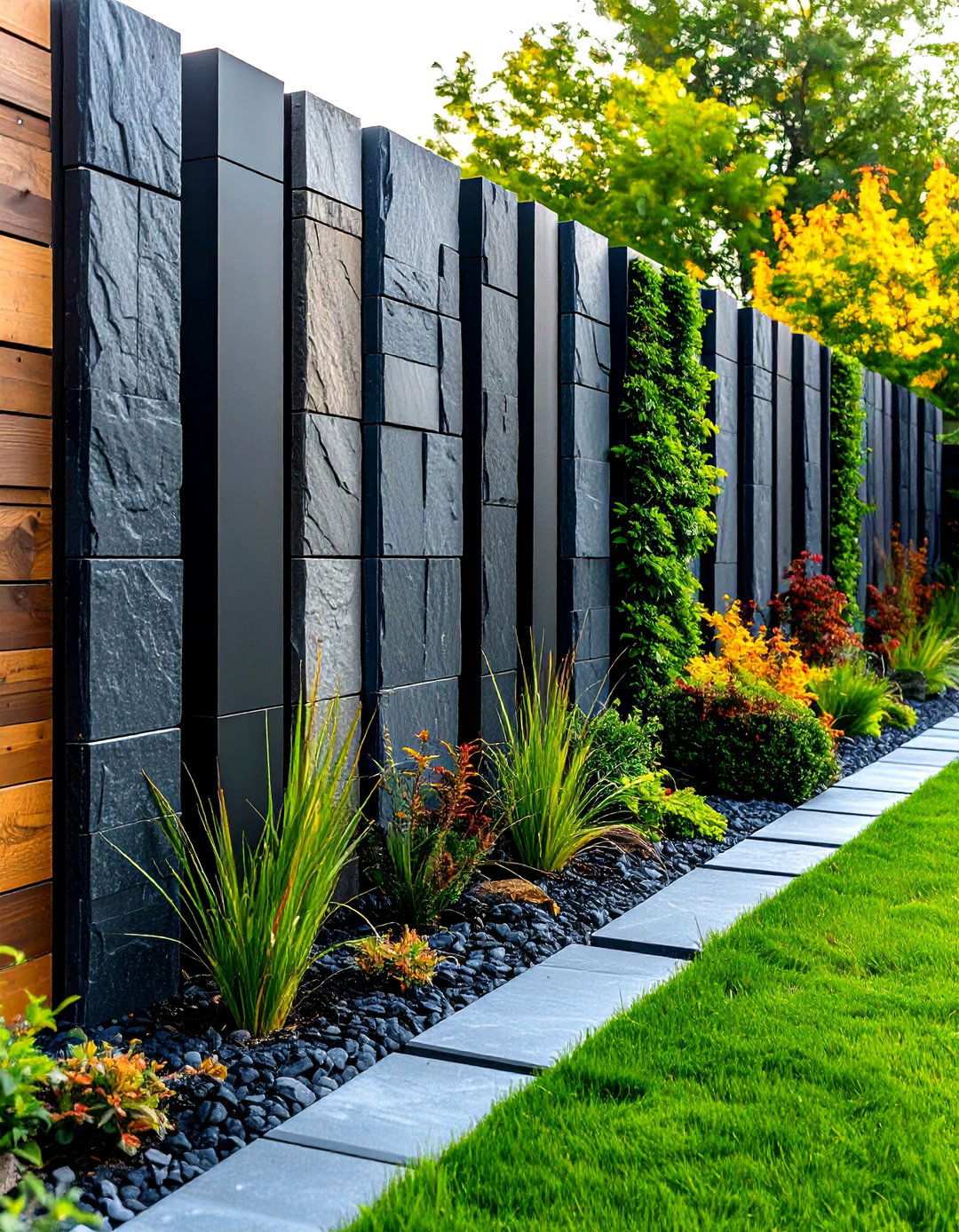
Slate vertical borders can create striking landscape definition that harmoniously incorporates modern architectural elements, all while maintaining a minimalist aesthetic. Thin, upright slate installations establish clear boundaries through linear arrangements that emphasize contemporary design principles and clean geometric lines. The dark coloration and fine texture of slate provide an excellent contrast against lighter-colored ground covers, gravel mulches, and architectural concrete, resulting in a sophisticated yet understated look that doesn’t compete with nearby plantings. Installation requires meticulous attention to consistent height, proper spacing, and robust foundation support to ensure long-term stability and visual continuity. This edging style is well-suited for minimalist landscapes, contemporary urban gardens, and areas where simplicity, low-maintenance gardening practices, and modern outdoor living preferences align with changing seasons.
18. Granite Split Rail Garden Borders
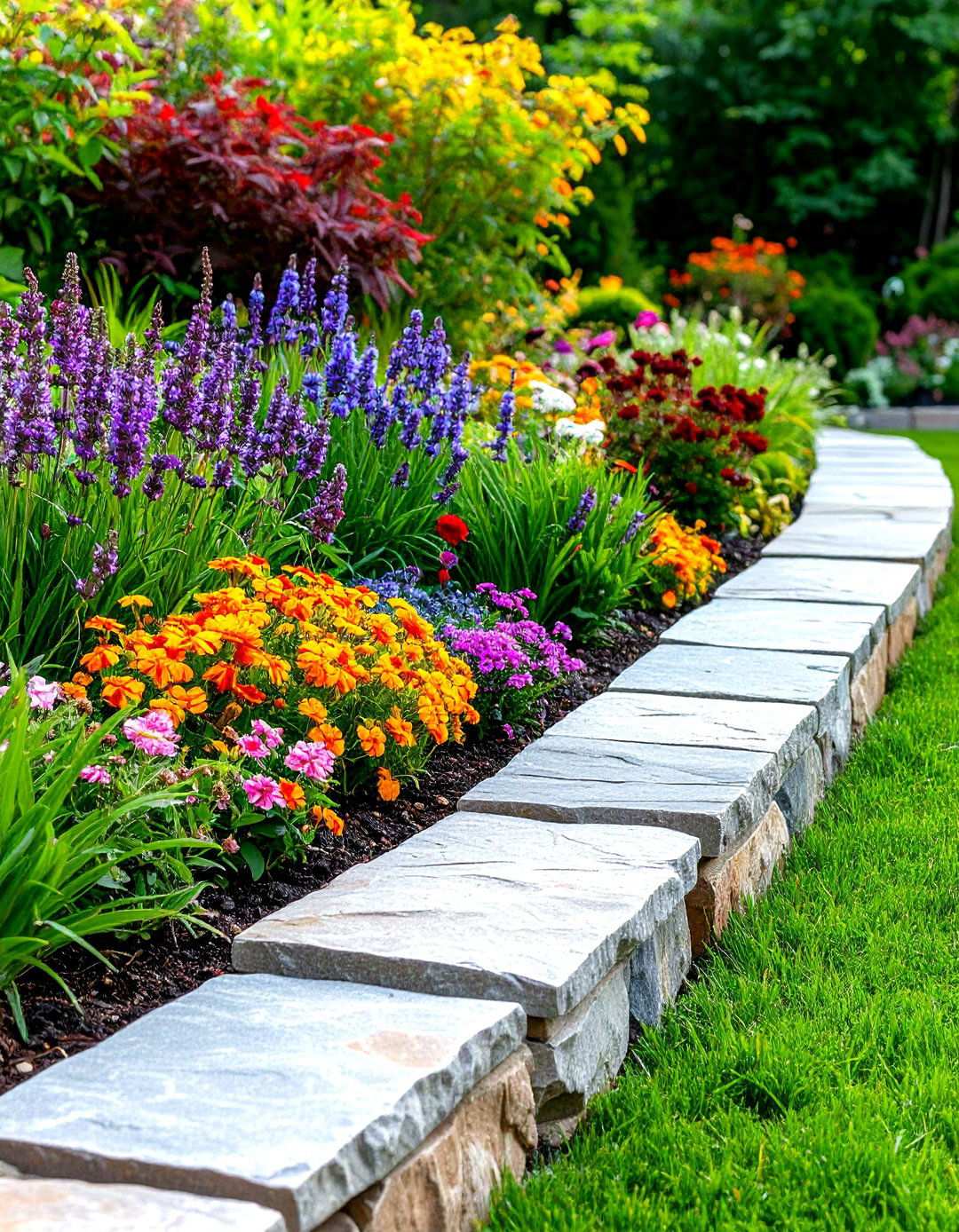
Granite split rail garden borders strike a perfect balance between rugged charm and long-lasting durability, thanks to their linear stone elements that establish clear boundaries without obscuring the view across garden spaces. The rectangular stones, split along natural grain lines, maintain a consistent size and reveal the inherent rock textures and colors that add visual appeal to garden borders. By placing the stones horizontally, the split rail edging imparts a subtle definition that complements both formal and informal planting schemes, while also providing practical advantages like retaining mulch and preventing grass growth. Installation of this edging method involves setting the stones end-to-end in level trenches, ensuring proper drainage and spacing for thermal expansion during extreme temperature fluctuations. This approach proves particularly effective for gardens featuring perennials, meadow landscapes, and areas where a harmonious blend of natural beauty and practical functionality aligns with the principles of sustainable landscape design and regional material preferences.
19. Sandstone Terraced Garden Edging
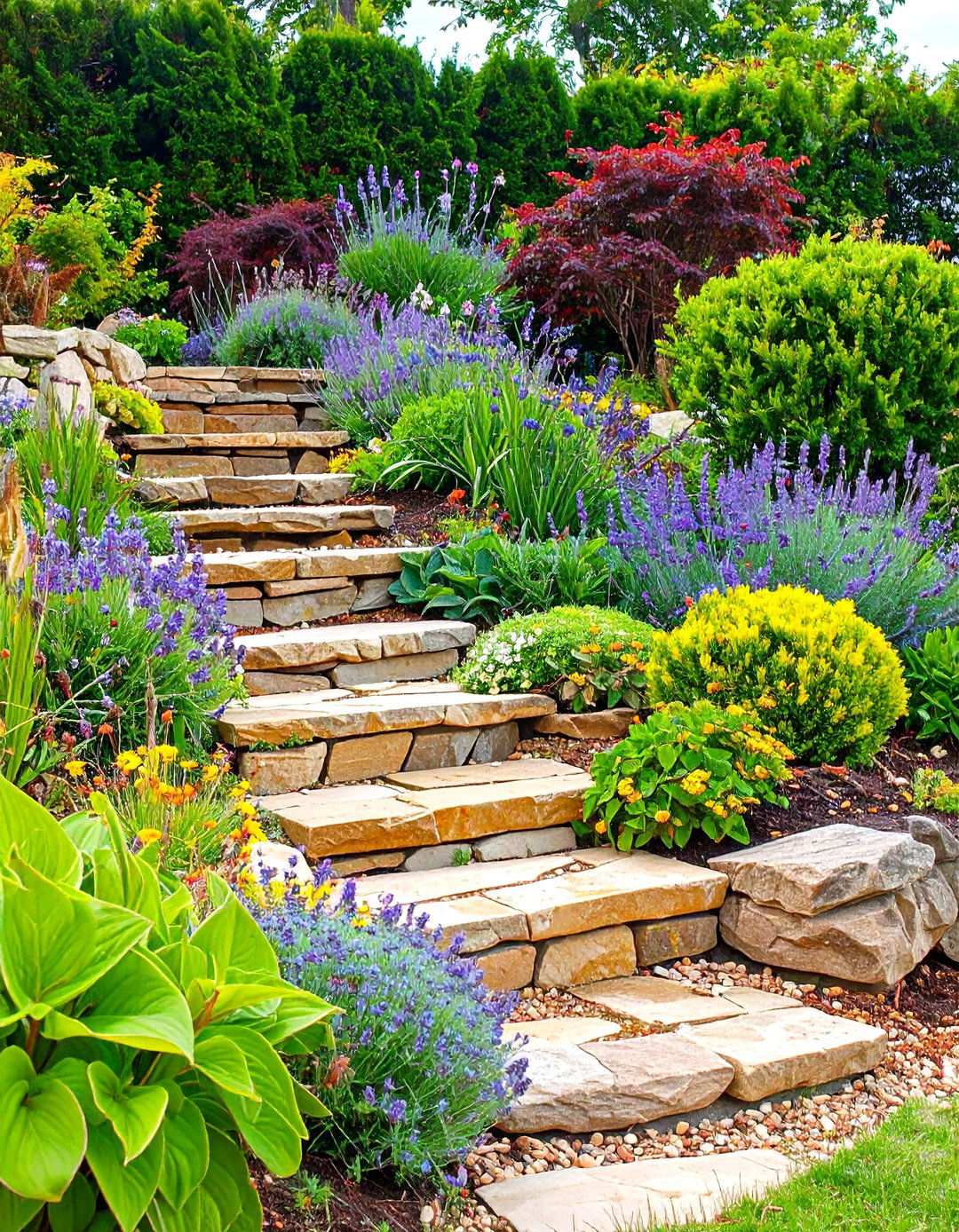
Sandstone terraced garden edging offers a creative solution for sloping sites, using stepped wall systems to create level planting areas while preventing soil erosion and loss during periods of heavy rainfall. The natural stratification and workable properties of sandstone make it ideal for constructing stable terraced systems that accommodate plant root growth and seasonal soil movement without compromising the structure. By increasing soil depth, improving drainage, and creating microclimates that support diverse plant communities, these terraced systems enhance growing conditions across varying elevations. The installation process involves careful planning of terrace heights, proper foundation preparation, and incorporation of drainage systems to prevent water buildup behind wall structures. This edging style works exceptionally well for hillside vegetable gardens, sloped perennial borders, and areas where both functional slope stabilization and aesthetic enhancement are crucial design objectives.
20. Organic Pathway Definition through River Rock Edging
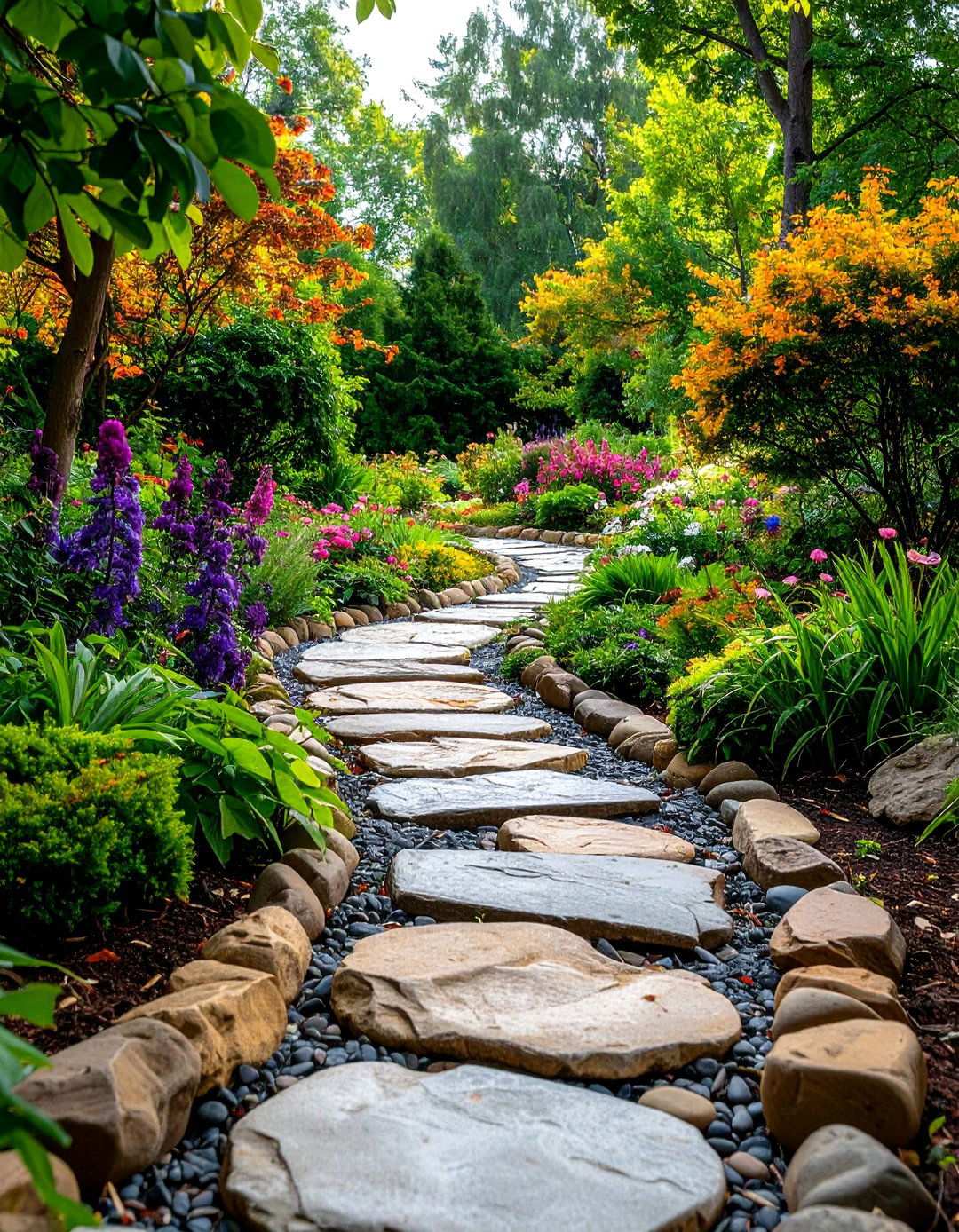
River rock edging creates a natural ambiance in pathways by establishing organic boundaries that allow for flexible garden movement patterns without rigid geometric constraints. The rounded stones guide foot traffic while maintaining the relaxed character essential to informal landscape designs. With varied sizes and earth-tone colors, river rocks offer creative freedom during installation and effective separation between pathway surfaces and adjacent planting areas. Effective installation involves balancing visual appeal with functional effectiveness while embracing the natural curves and irregularities that make informal pathways so charming. This approach harmonizes beautifully with woodland gardens, native plant landscapes, and areas prioritizing natural beauty and low-maintenance practicality.
21. Timeless Formality through Limestone Knot Garden Borders
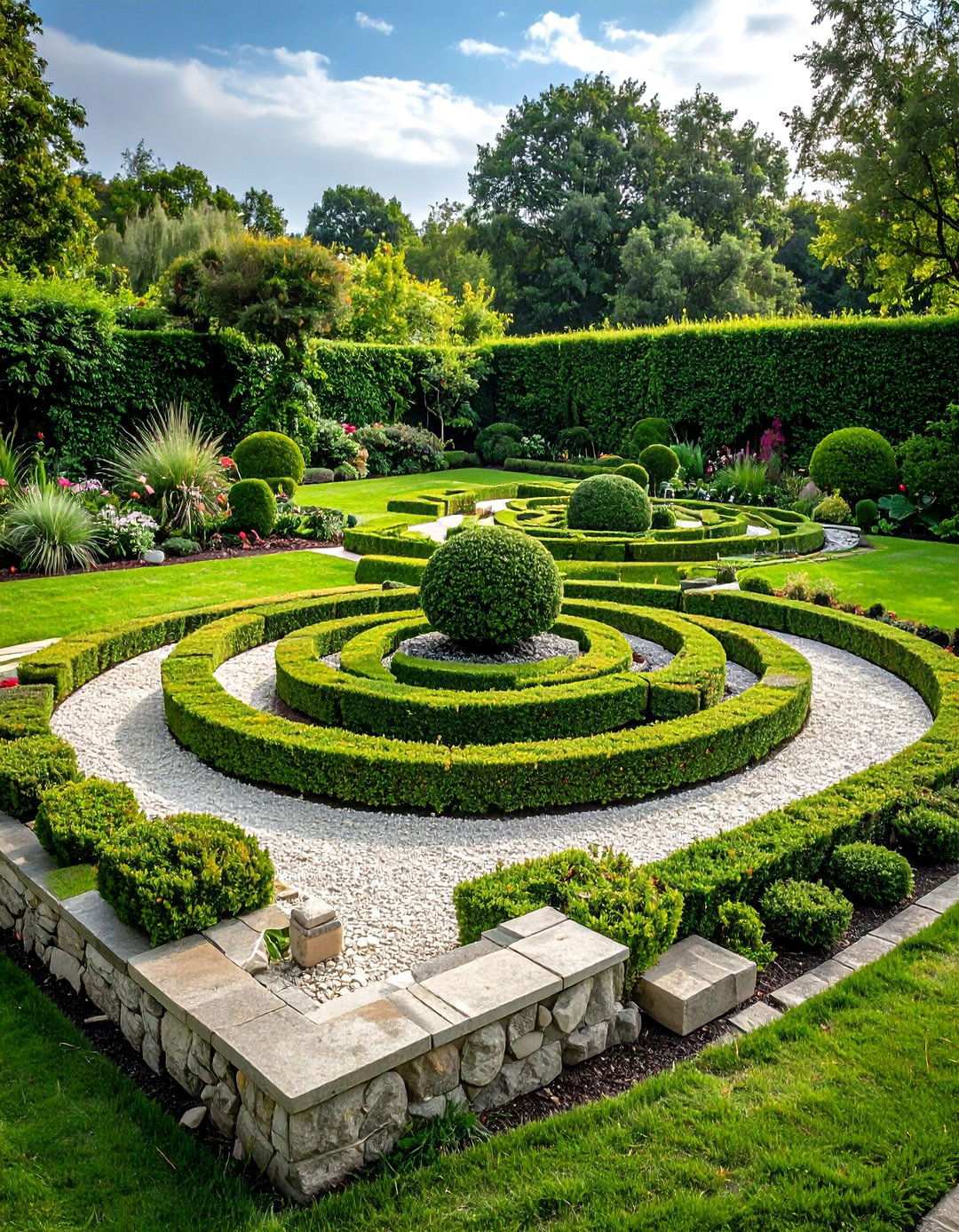
Limestone formal knot garden borders pay homage to traditional European garden design by incorporating precisely installed stone boundaries that frame intricate planting patterns with geometric sophistication. The consistent coloration and workable properties of limestone enable exact installation techniques that maintain the sharp definition essential to formal knot garden layouts. These installations typically involve creating intricate interlocking geometric patterns that contain low-growing herbs, boxwood, or other materials used in traditional knot garden designs. Installation requires meticulous planning, precise measurement, and careful attention to corner details and intersection points where different border elements meet. This edging style excels in heritage gardens, formal herb plots, and areas where historical accuracy and sophisticated design principles enhance property character and neighborhood preservation efforts throughout the changing seasons.
22. Crafting Natural Charisma with Flagstone Edging
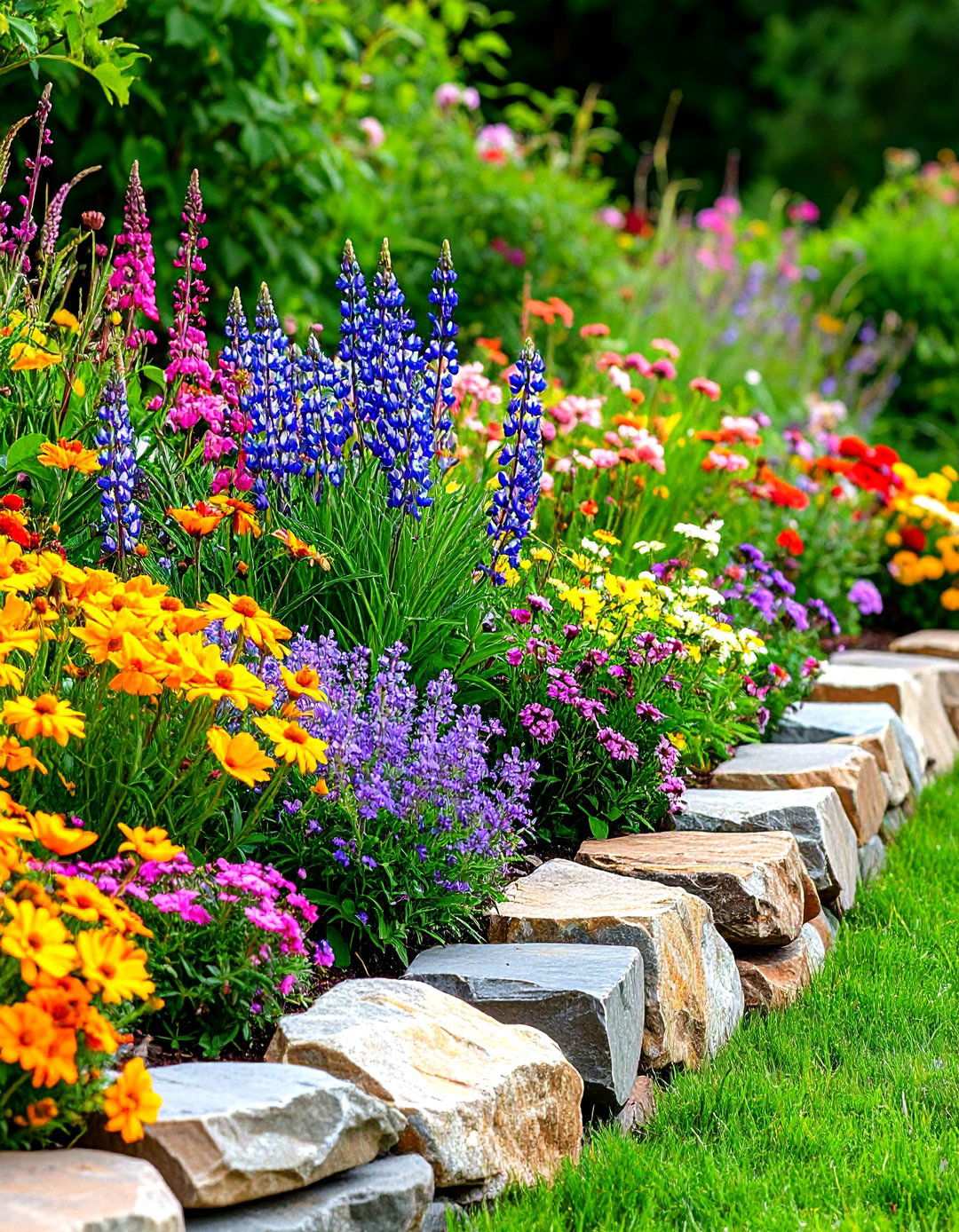
Imagine infusing your garden with a touch of organic charm, where the natural beauty of flagstone pieces takes center stage. By embracing the unique characteristics of individual flagstones, you can create a border that celebrates the beauty of irregular patterns and shapes found in nature. This approach allows you to break free from uniform patterns and rigid geometric constraints, instead opting for a more organic approach to garden boundaries. The varied shapes, sizes, and natural coloration of flagstone pieces come together to form borders that appear to have grown naturally, while providing essential benefits like soil containment and preventing unwanted grass growth. By selecting stones based on visual harmony and functional compatibility, rather than strict dimensional requirements, you’ll be able to unleash your creativity throughout the installation process. This edging style is particularly well-suited for wildflower gardens, native plant landscapes, and areas where harmony with nature is paramount.
23. Elevating Garden Borders with Granite Mosaic Artistry
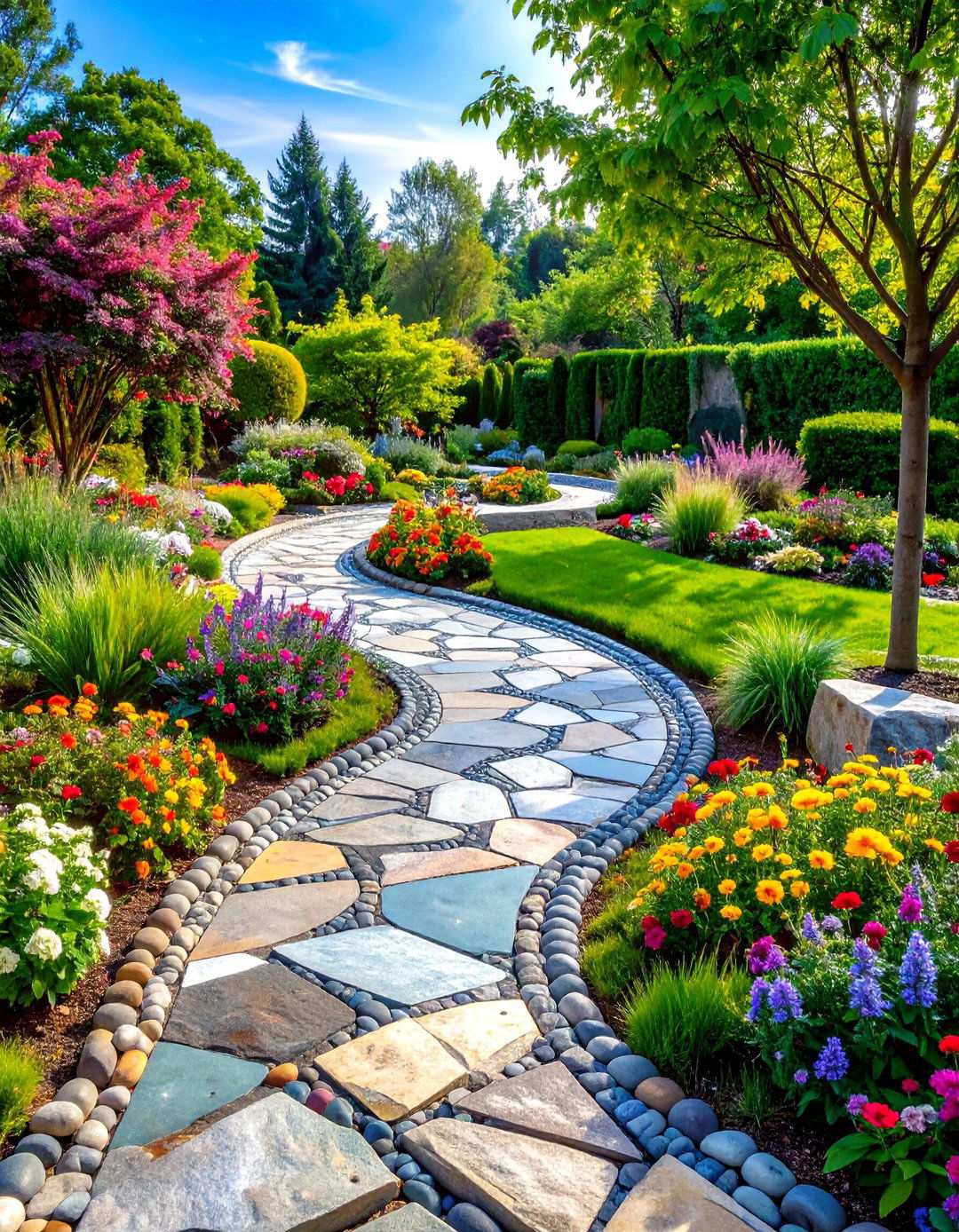
Transform your garden’s edging into a stunning work of art by incorporating granite mosaic borders that combine varied granite pieces in creative arrangements. These installations not only provide functional boundary definition and plant bed containment but also create visually striking patterns and textures that captivate the senses. The durability and color stability of granite ensure that mosaic patterns retain their vibrancy throughout the seasons and withstand the test of time, without fading or deteriorating. To bring this edging approach to life, careful planning of pattern layouts, thoughtful stone selection, and meticulous attention to joint spacing and leveling are essential. As a result, you’ll be able to craft unique outdoor spaces where creative expression and practical functionality blend seamlessly together, making this edging approach particularly well-suited for contemporary gardens, artistic landscapes, and any area where a touch of elegance is desired.
24. Harmonious Integration through Sandstone Block Edging
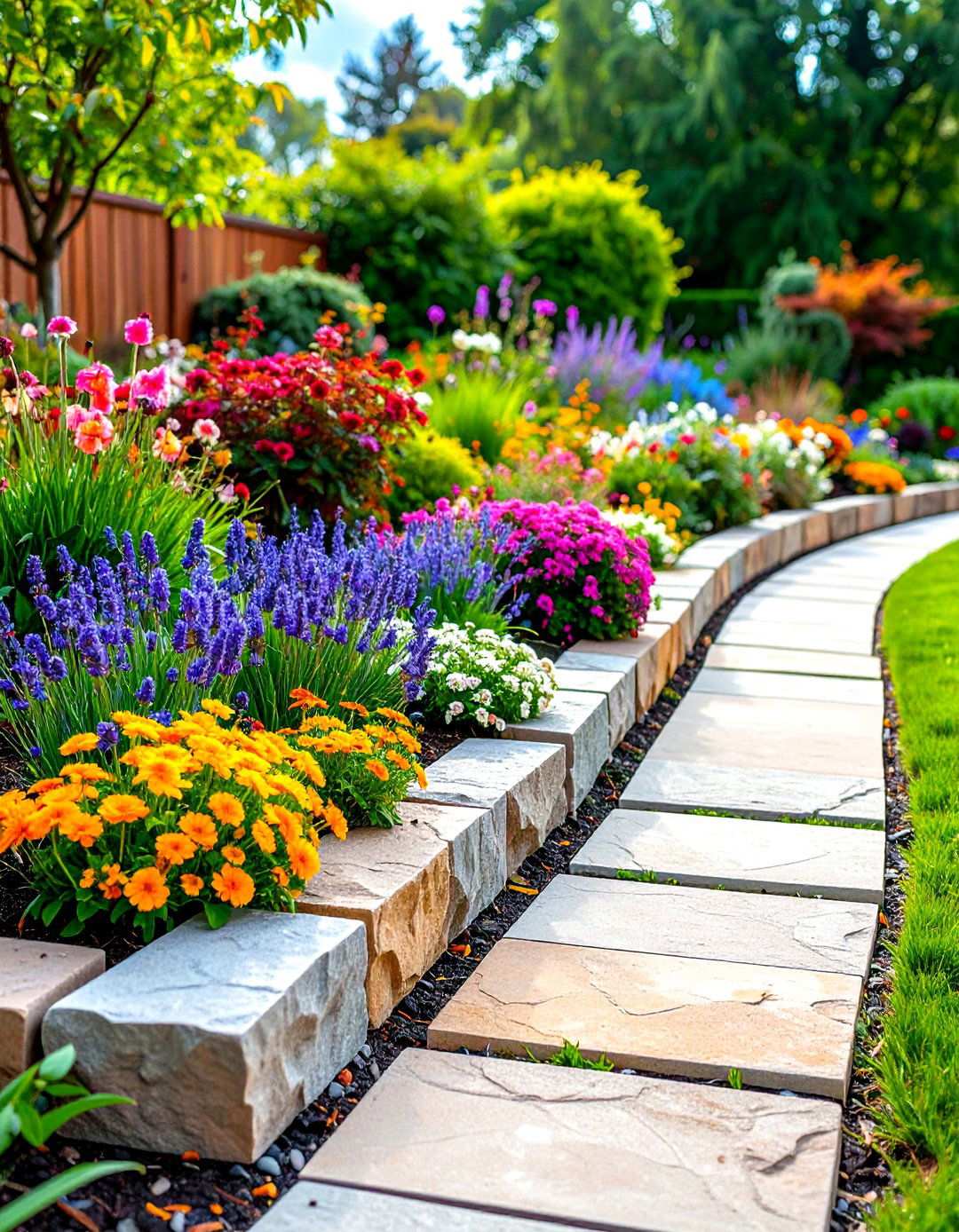
Sculpting gardens with precision-crafted sandstone blocks creates a sense of order and refinement, defining boundaries with crisp, linear details and an unmistakable visual cohesion. By incorporating these natural, earthy elements, homeowners can effortlessly blend traditional and modern landscape aesthetics, adding a touch of warmth and depth that evolves with the seasons. Typically, sandstone block installations involve arranging uniform blocks in deliberate patterns, whether linear or curvaceous, to underscore structural intent rather than organic serendipity. Effective installation necessitates meticulous attention to alignment, precise leveling, and a solid foundation to guarantee long-term structural integrity and an expertly crafted appearance. This elegant edging style excels in formal gardens, cutting-edge landscape designs, and settings where architectural finesse and design sophistication elevate property values and neighborhood charm, all while demanding minimal upkeep and promising decades of faithful service.