1. Elevating Functionality in Compact Spaces
The humble utility room has undergone a metamorphosis, shedding its mundane image to become a dynamic hub that seamlessly integrates into your home’s décor. Gone are the days of cramped, utilitarian spaces; today’s utility rooms are multi-functional oases that cater to everything from muddy footwear to pet care, all while maintaining an inviting atmosphere. Whether you’re working with a slender galley layout, a compact corner, or a dedicated room, clever design solutions can help you optimize every inch of space. Current design trends emphasize warm, inviting color palettes over sterile whites, incorporating natural materials, smart storage systems, and thoughtful lighting to create spaces that feel just as well-crafted as your main living areas. A key to successful utility room design lies in deliberate planning that balances functionality and style, transforming these spaces into indispensable assets that enhance your daily routine.

As an Amazon Associate I earn from qualifying purchases.
2. Revitalizing Space with Vertical Integration
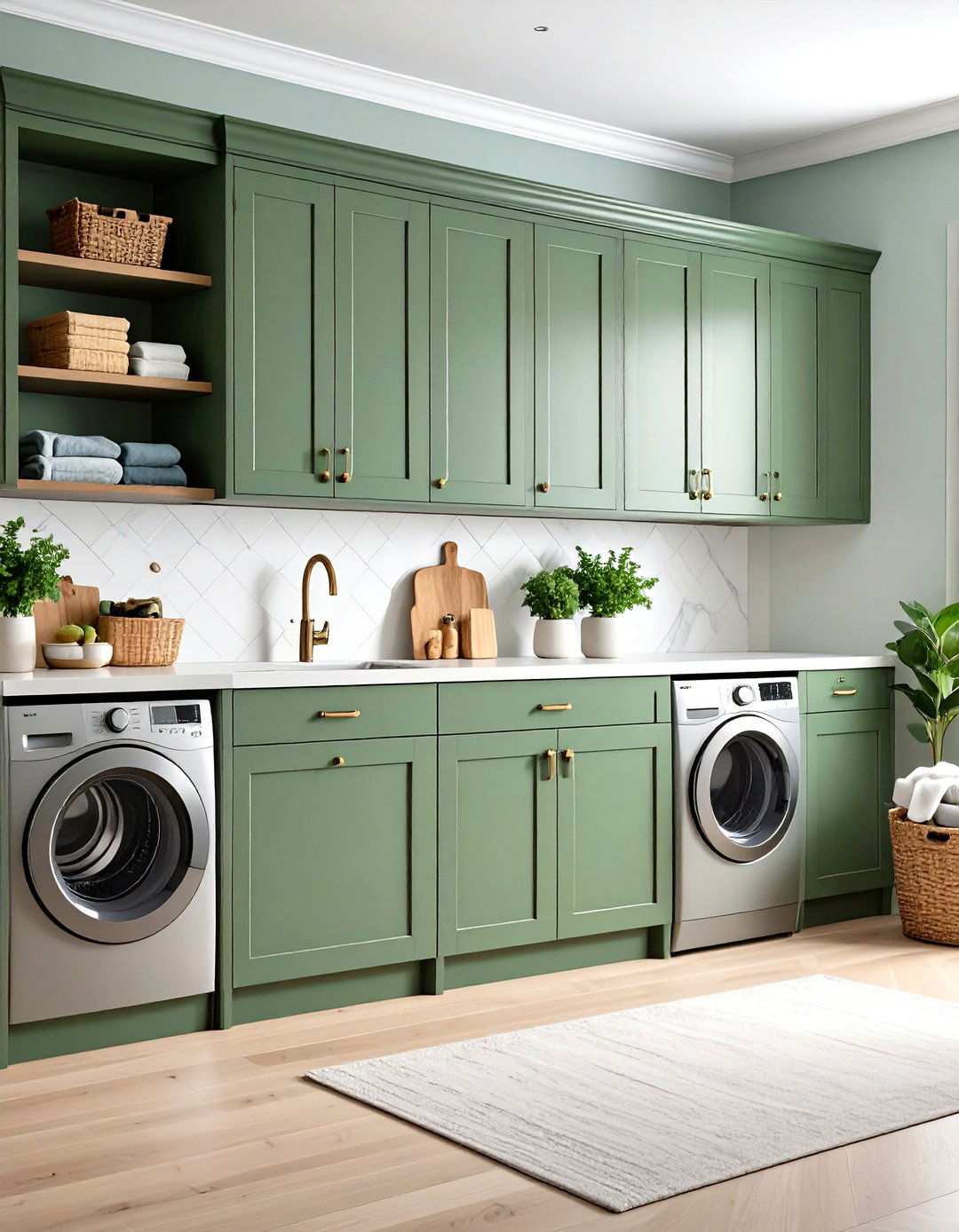
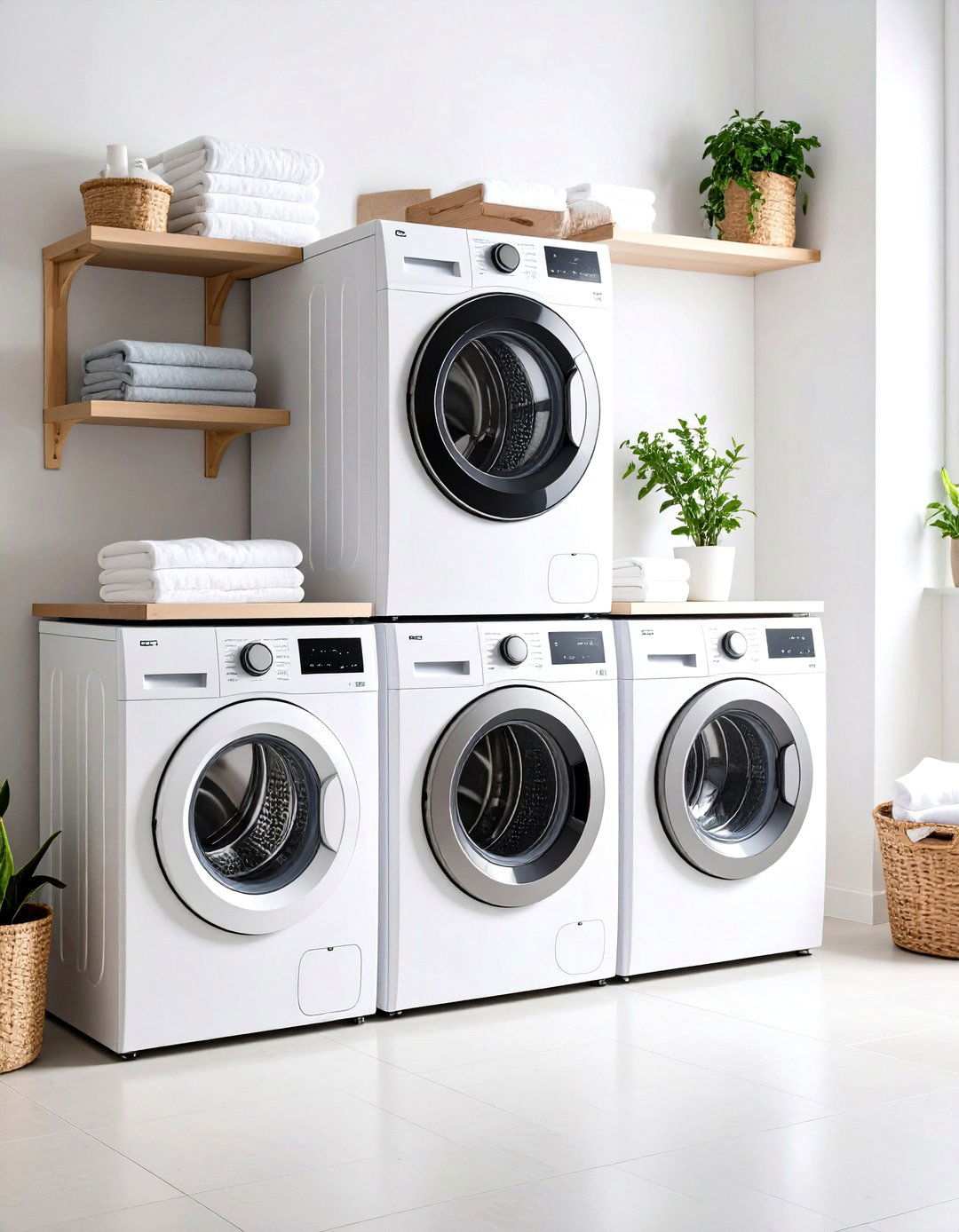
Tired of struggling to fit essential appliances in your compact space? Vertical stacking is the answer to freeing up valuable floor space. Securely position your dryer above the washing machine using sturdy mounting brackets, instantly liberating floor area for additional storage solutions. Install retractable shelves between the units to create convenient folding stations that slide away when not in use. Add wall-mounted cabinets above the stack for detergent storage while maintaining easy access to controls. This arrangement excels in narrow spaces where side-by-side placement proves impractical, allowing room for essential utilities like mops and cleaning supplies in remaining floor space. By repurposing floor area, you create a more efficient and clutter-free space that streamlines your daily routine.
3. Space-Saving Ironing Stations
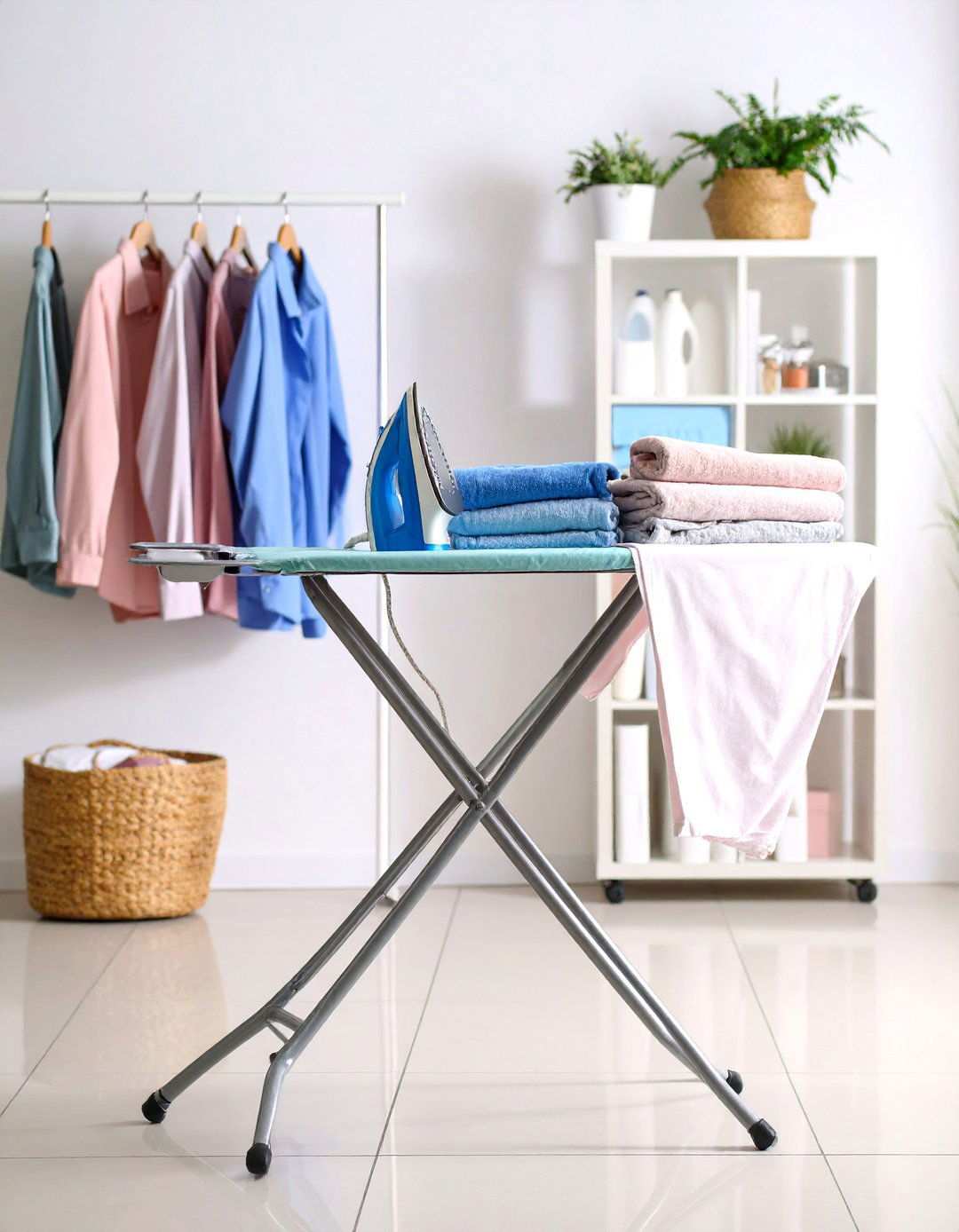
To incorporate ironing facilities without long-term floor space commitments, consider innovative solutions that prioritize functionality and versatility. Wall-mounted fold-down ironing boards strike a perfect balance between convenience and compactness, allowing for effortless ironing sessions without taking up valuable real estate. By installing the unit at a comfortable working height, ensuring adequate clearance for safe operation, and proximity to electrical outlets for convenient iron storage, you can maintain a clutter-free workspace while staying organized. Furthermore, a built-in cabinet above the ironing station provides ample space for ironing supplies and steam irons, keeping everything neatly stored and within easy reach. Add a retractable electrical cord reel to eliminate cord clutter and provide power exactly where needed, making this solution particularly suitable for narrow utility rooms where traditional standing ironing boards might hinder movement and workflow.
4. Farmhouse Sink Features
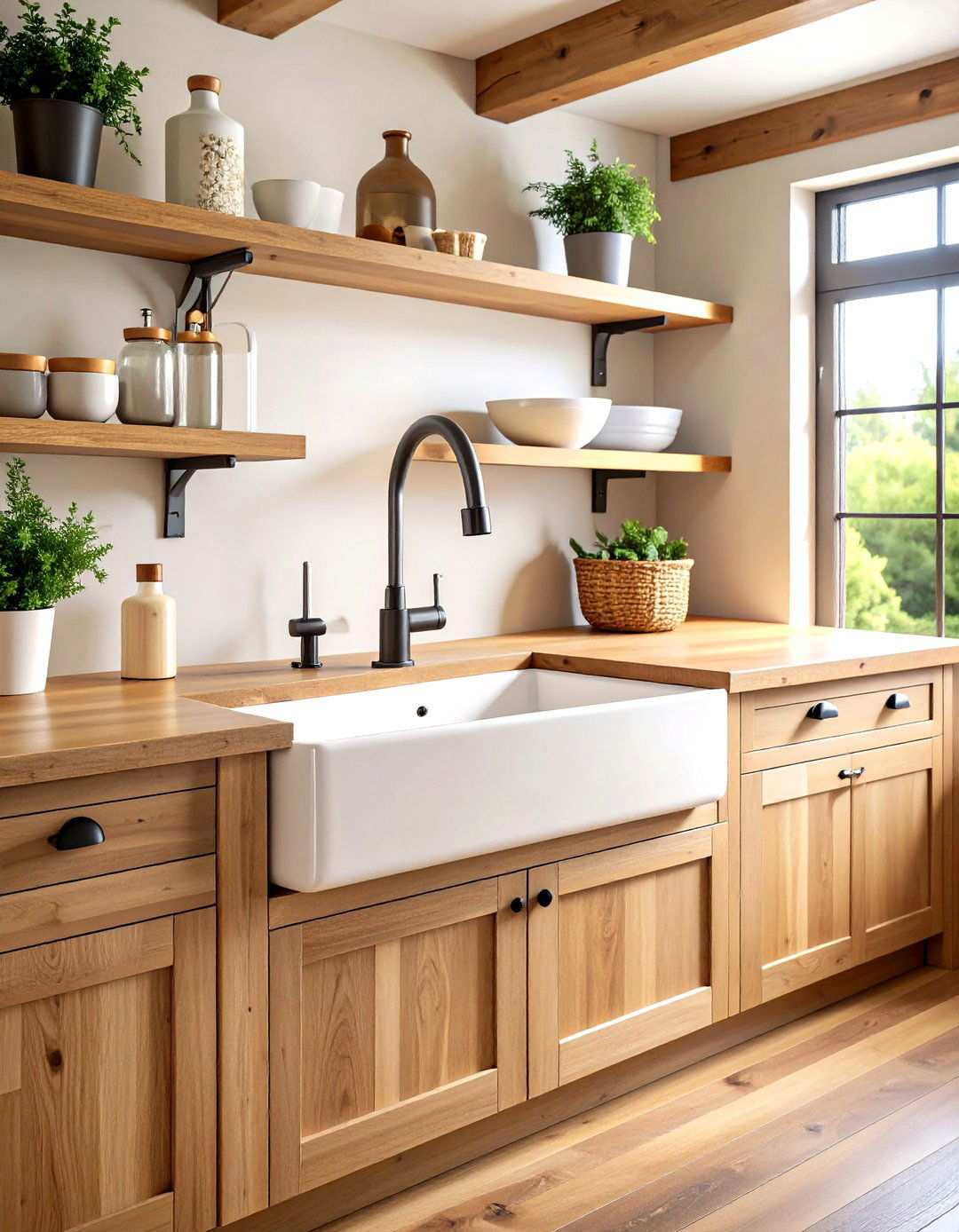
Why settle for basic functionality when you can elevate your utility room’s character and practicality? A deep farmhouse sink becomes the crowning glory of your utility room, offering unparalleled versatility for delicate hand-washing, cleaning garden tools, or bathing small pets. Choose from durable ceramic or fireclay materials that resist stains and scratches while maintaining their classic charm. Install a high-arc faucet with a pull-out spray feature for effortless cleaning tasks, and surround the sink with beautiful butcher block or quartz countertops that complement the farmhouse aesthetic while providing durable work surfaces for folding laundry or sorting household items. Add open shelving below the sink for convenient basket storage, creating a harmonious blend of form and function.
5. Overhead Drying Solutions
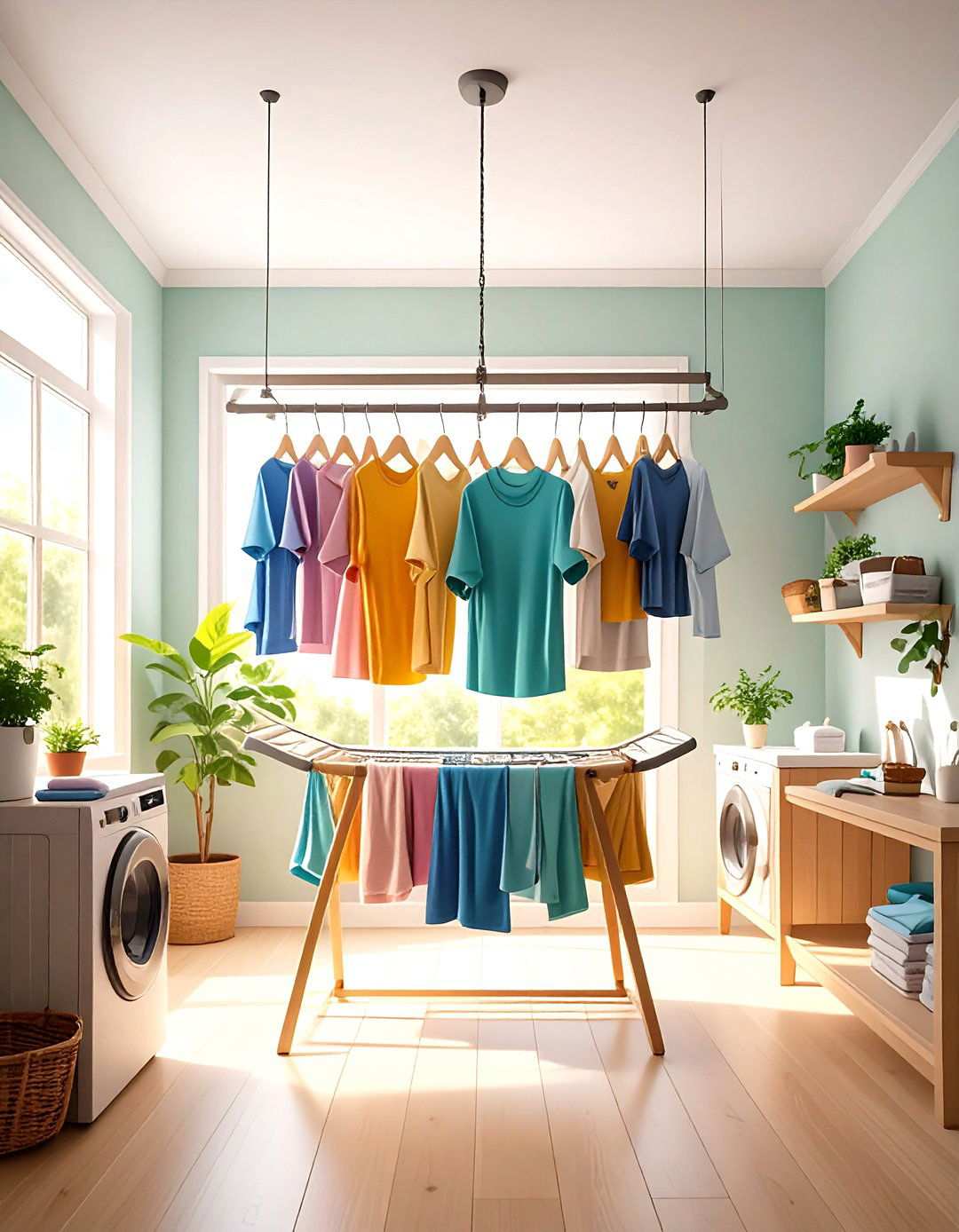
Imagine a drying solution that never takes up valuable floor space. Ceiling-mounted pulley systems offer a space-saving alternative while maintaining clear walkways and work areas. By installing sturdy ceiling hooks rated for wet laundry weight, position the system over an area with excellent air circulation to promote efficient drying. Choose adjustable-height mechanisms that allow easy loading and raising clothes out of the way during other activities, ensuring seamless multitasking. Add a small fan nearby to improve air circulation and reduce drying times, making this traditional solution particularly well-suited for spaces with high ceilings, where it can create an attractive vintage element while serving essential laundry functions without compromising floor space for other utilities.
6. Corner Utilization Strategies
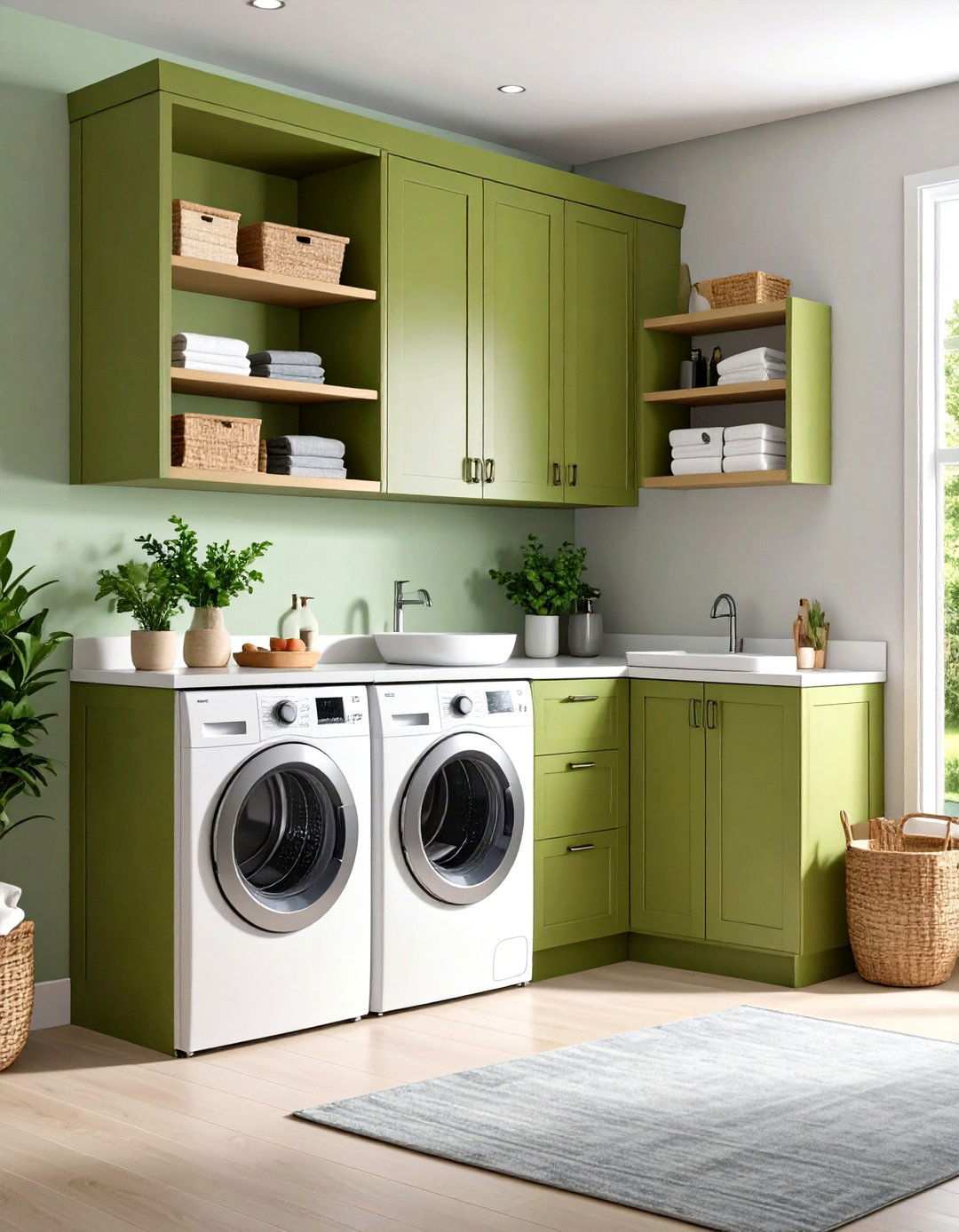
Can awkward corner spaces be transformed into functional storage areas? Yes, with creative corner cabinets featuring rotating shelves or pull-out drawers that maximize accessibility. Install corner sink units that seamlessly integrate into the space while providing essential utility functions, and add corner shelving systems that extend upward to ceiling height, creating display areas for attractive storage baskets or cleaning supplies. Use the vertical corner space for tall items like brooms, mops, and vacuum cleaners with specialized hanging systems, ensuring that every inch of space is fully functional and accessible. To enhance visibility while working in these typically darker areas, incorporate corner lighting, making every corner a valuable and efficient storage zone.
7. Open Shelving Display
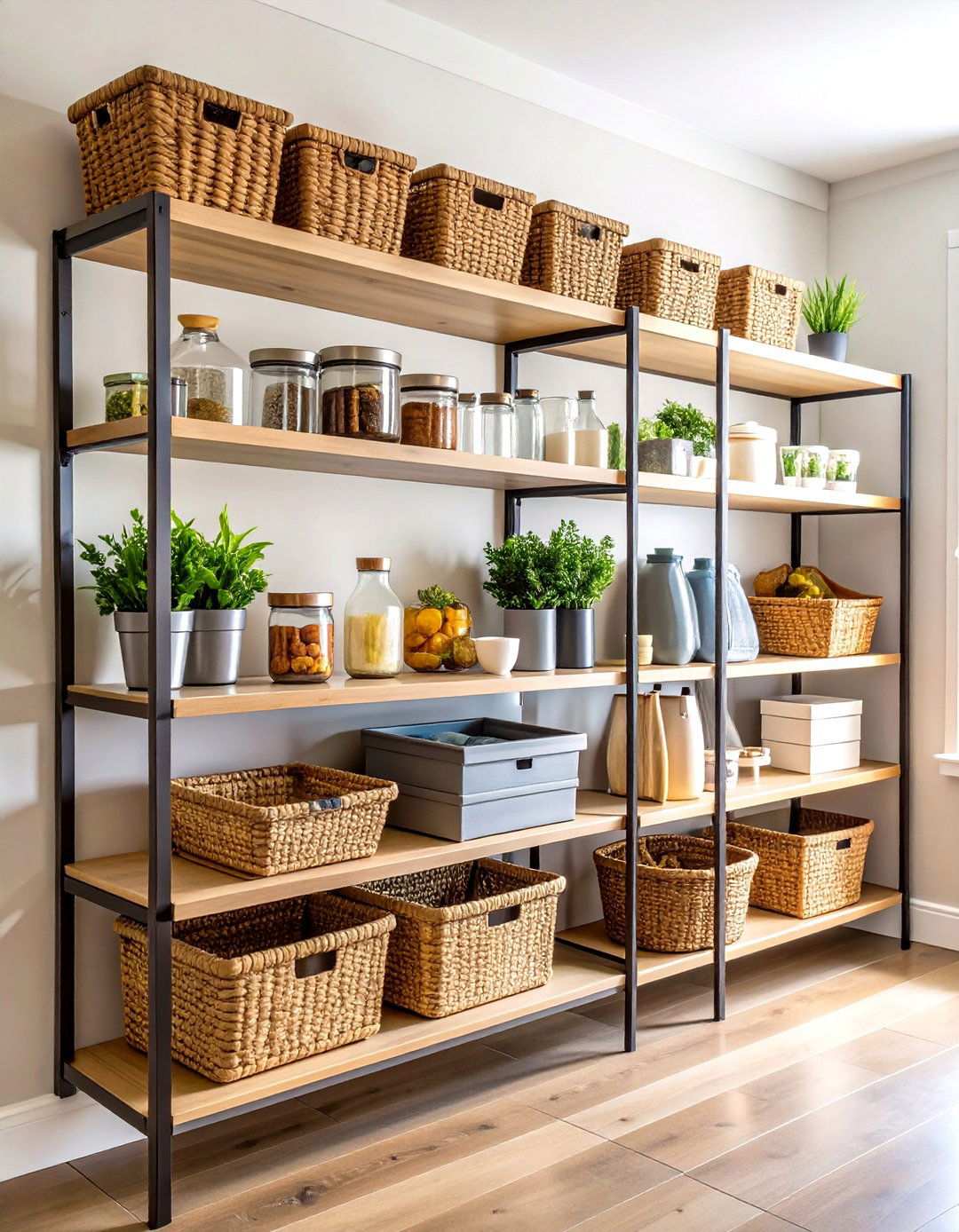
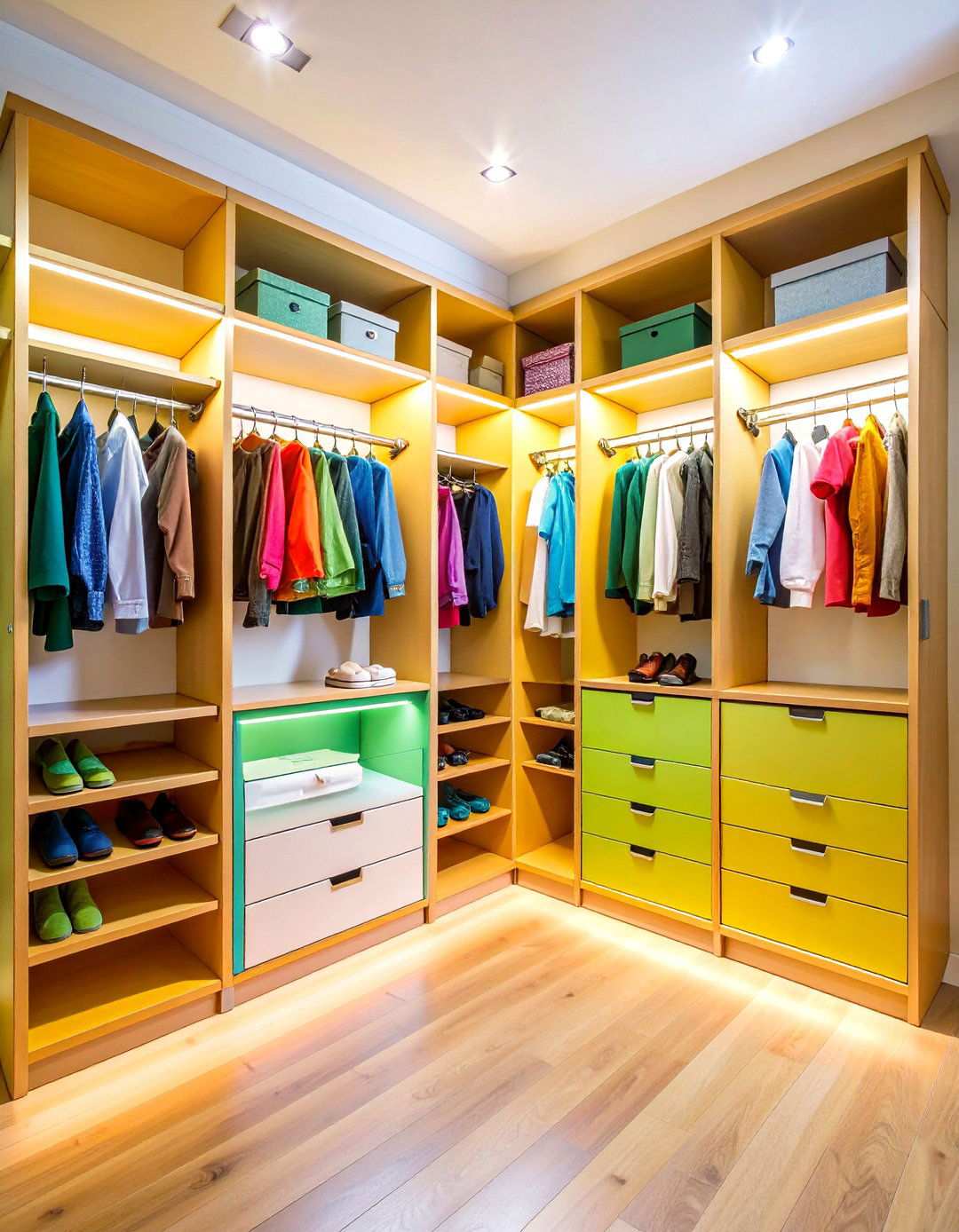
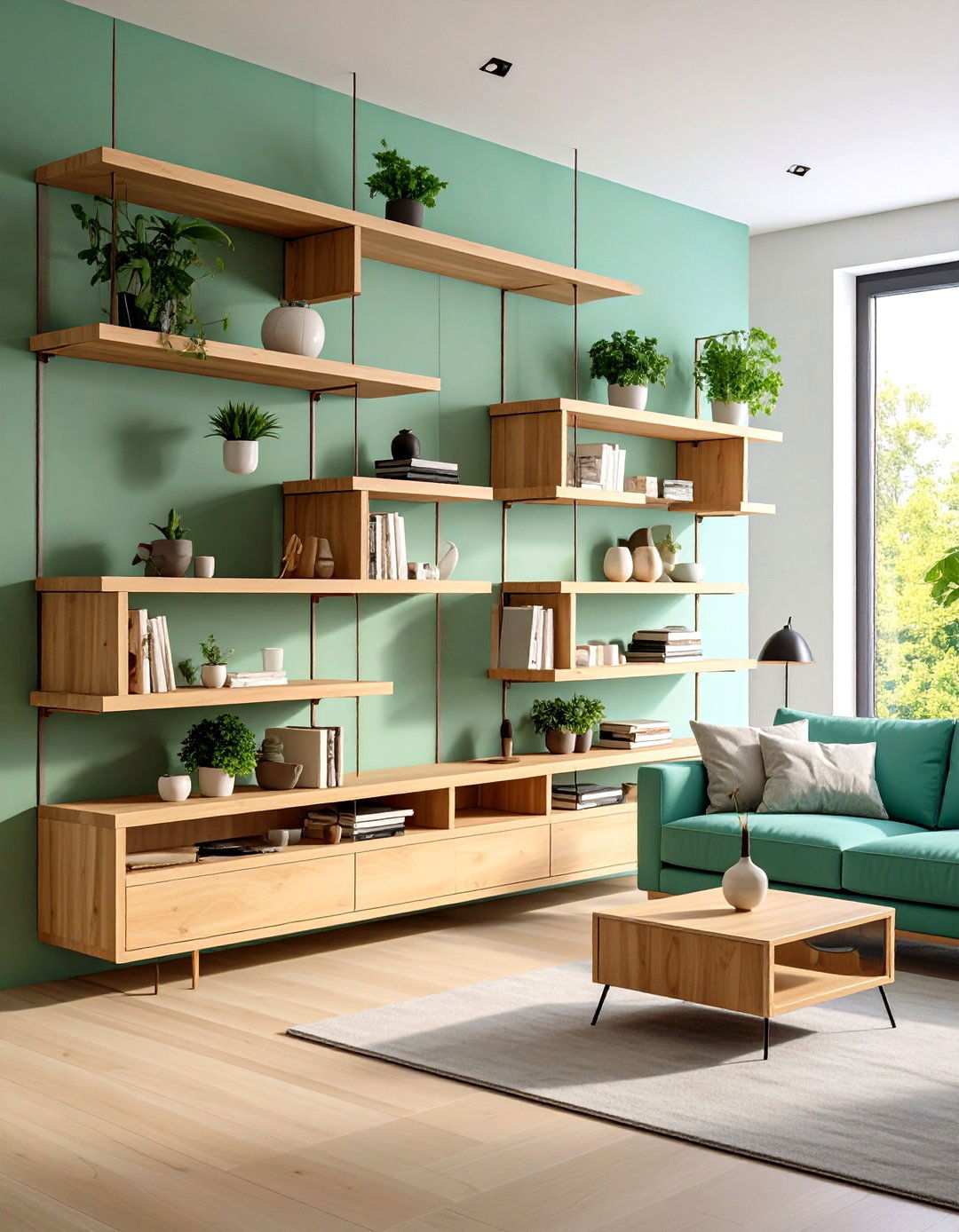
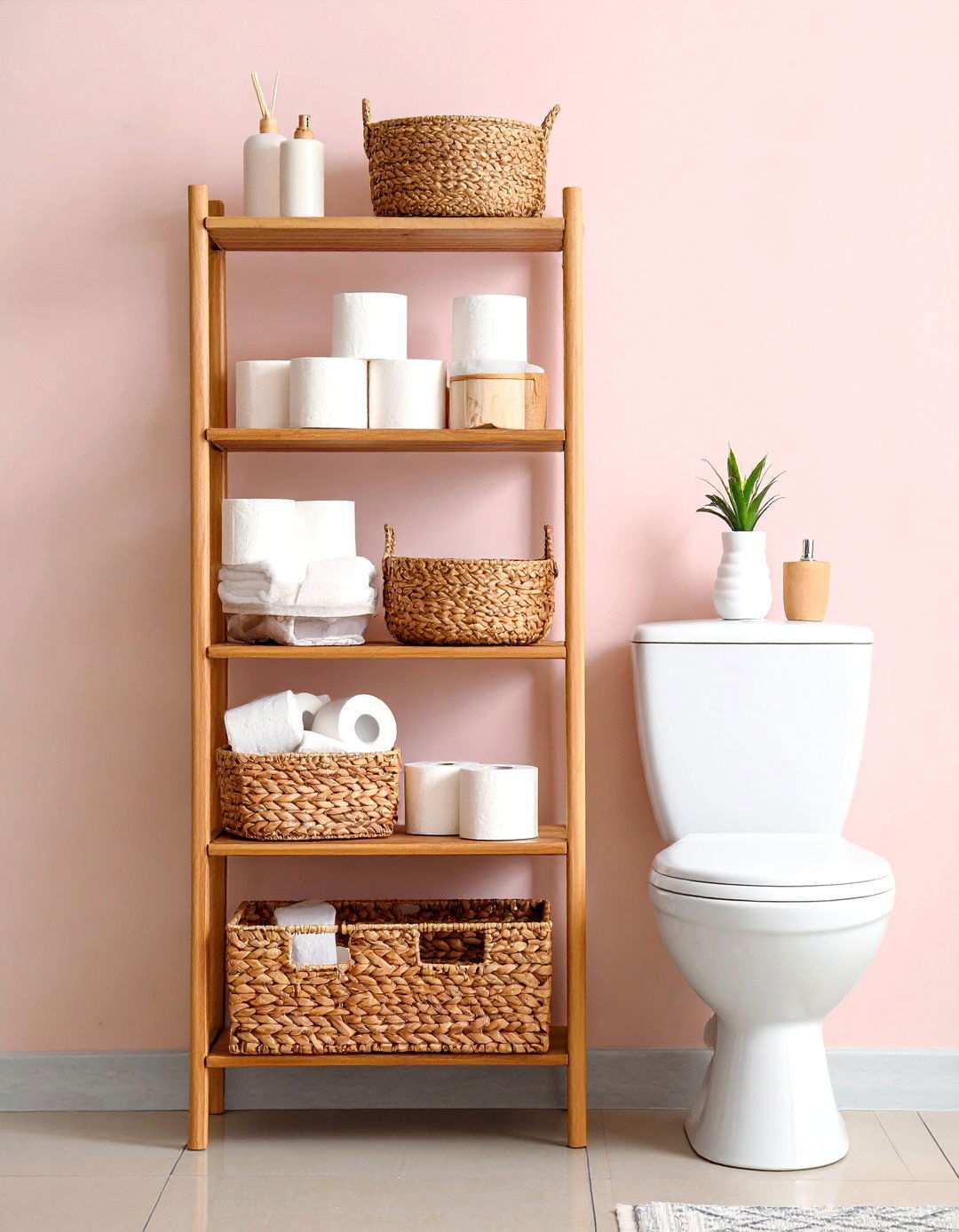
Optimizing storage space doesn’t have to come at the cost of visual appeal. By incorporating open shelving systems, you can strike a balance between functionality and aesthetics. Varying shelf heights can accommodate different container sizes, creating a visually interesting display that showcases your carefully organized supplies. To maintain organization and add decorative elements, consider using matching storage baskets, glass jars, and labeled containers. Position frequently used items at eye level, reserving higher shelves for seasonal or occasional supplies. A clever touch is adding subtle LED strip lighting under each shelf, not only illuminating contents but also creating a warm ambiance. This approach is particularly effective in windowless utility rooms, where the openness helps alleviate feelings of claustrophobia.
8. Mudroom Integration Design
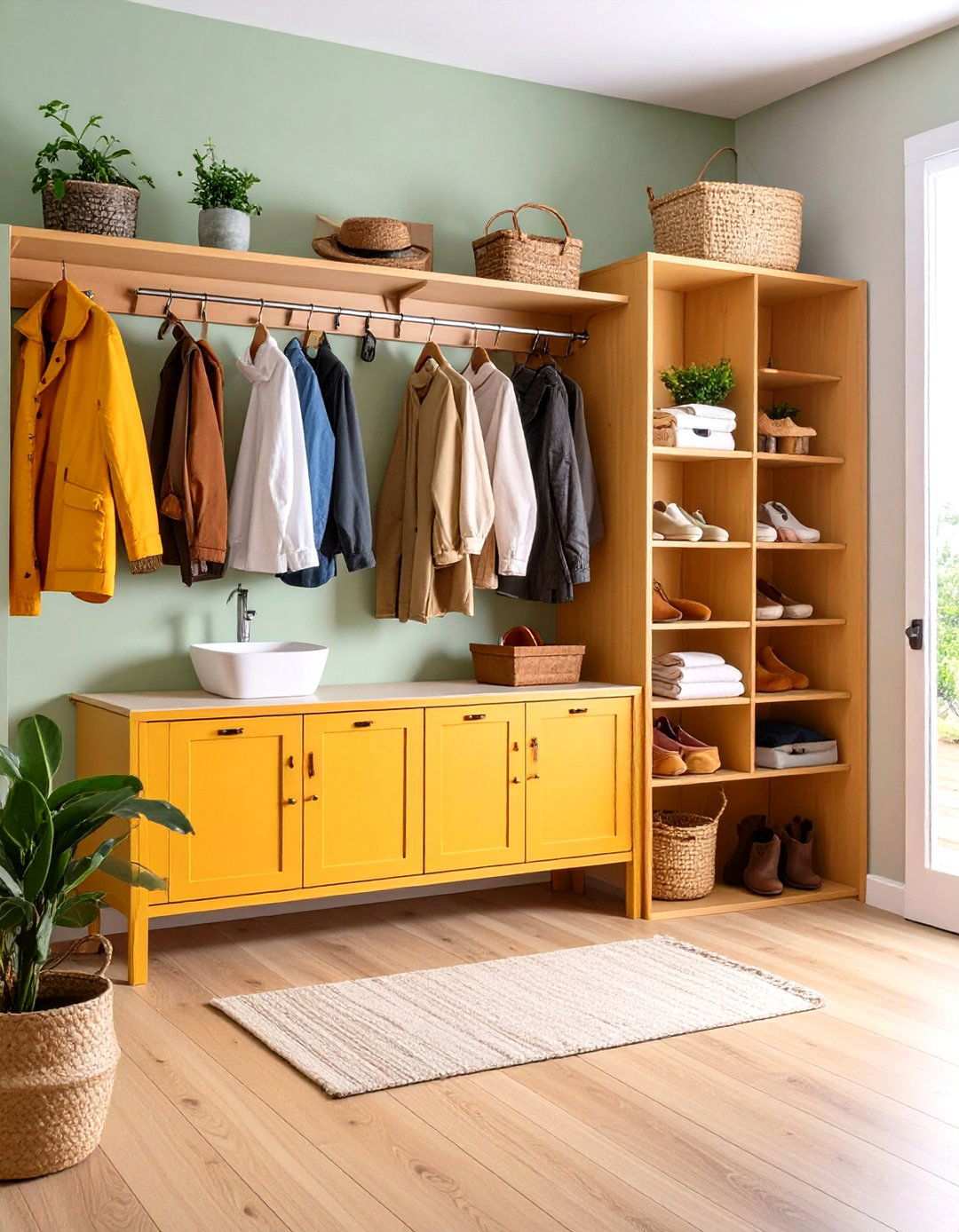
The potential for a single space to serve multiple functions without feeling cramped is limitless. By combining utility room functions with mudroom storage, you can create a seamless workflow that prioritizes efficiency. Designate zones for different activities, such as a bench seating area with storage below for shoes and outdoor gear, positioned away from laundry appliances to prevent interference. Install hooks at varying heights to cater to family members of different ages, providing designated spaces for coats, bags, and sports equipment. A thoughtful addition is a small sink for washing hands after outdoor activities or cleaning muddy items before they enter the main home. Choose durable flooring materials that withstand tracked-in dirt while maintaining easy cleaning protocols.
9. Under-Stair Utility Conversion
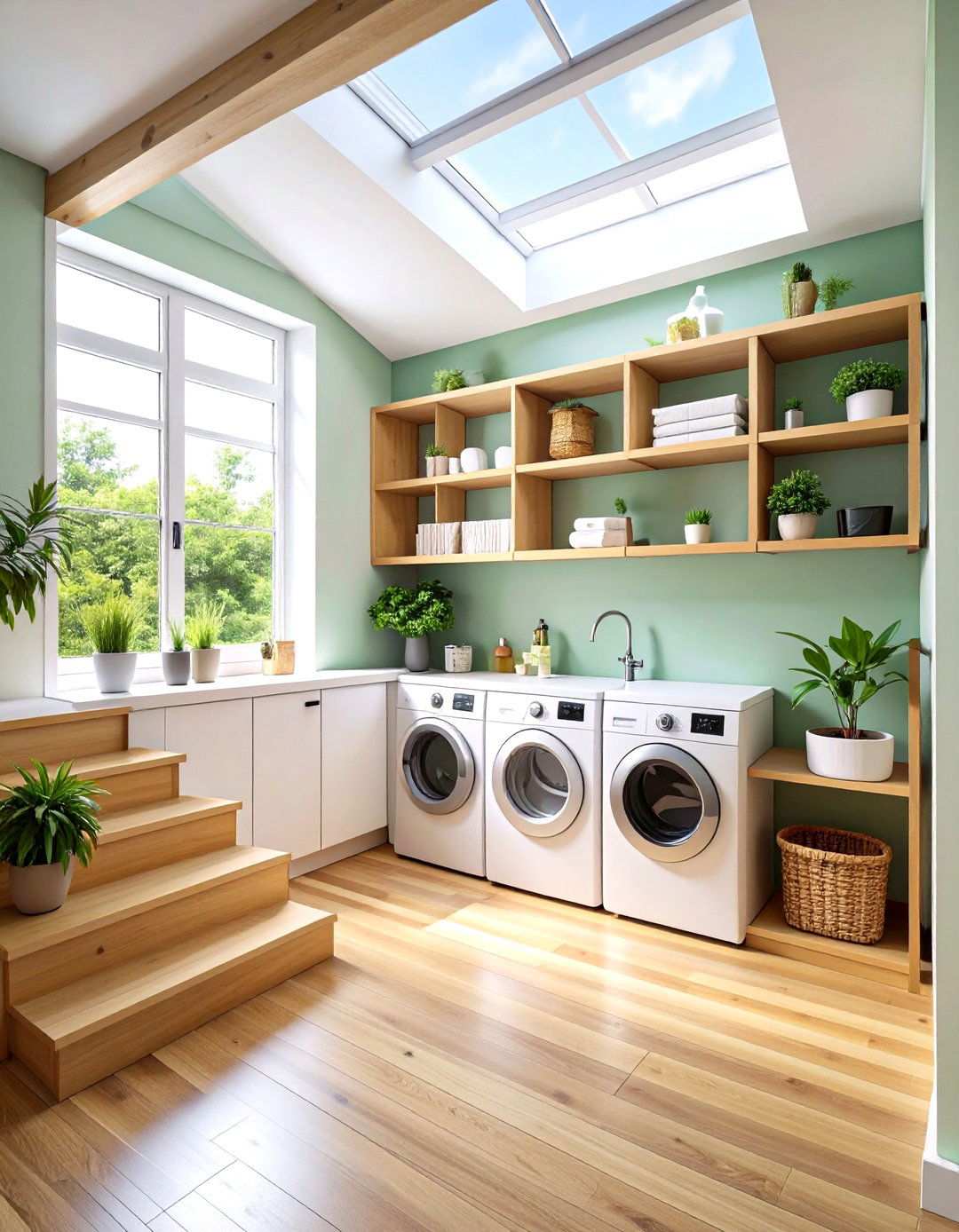
Transforming neglected under-stair spaces into functional utility areas can breathe new life into your home. By utilizing the natural height variations, you can create compact utility rooms that maximize every inch of available space. Install washers and dryers in the tallest section, reserving lower areas for storage and supplies. Design custom shelving that follows the stair angle, ensuring every inch is utilized. Proper ventilation and lighting are essential for safety and functionality, so be sure to include them. Use moisture-resistant materials throughout to prevent damage from humidity. Incorporate pull-out storage solutions to make accessing items in deeper areas easier. This conversion not only adds valuable utility space but also enhances the functionality of your home without requiring additional square footage.
10. Narrow Galley Layout
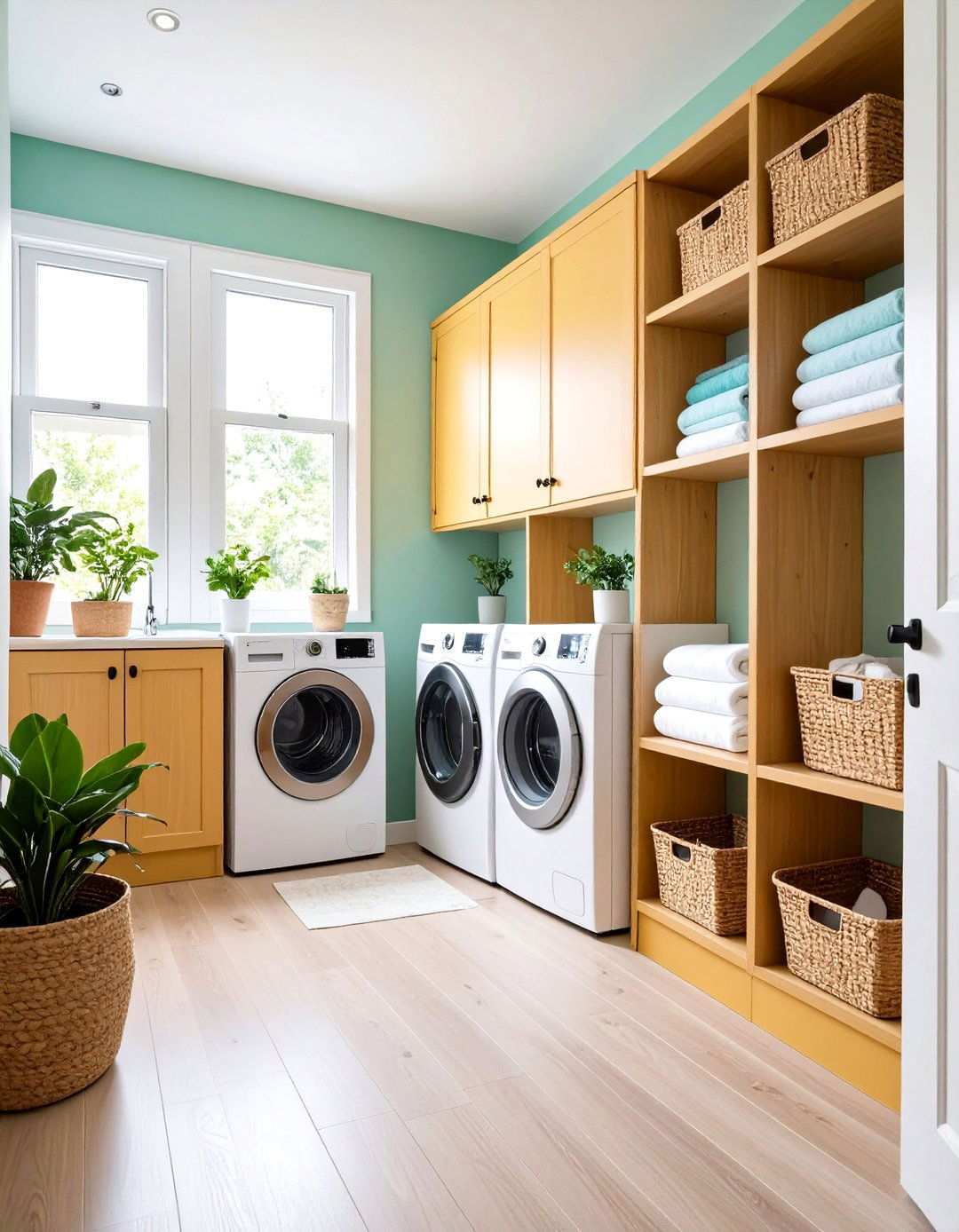
A narrow space can feel functional rather than cramped with strategic layout planning. Transforming narrow galley-style utility rooms into efficient workspaces is easier than you think. Position appliances along one wall, paired with work surfaces and storage opposite, creating clear pathways while maximizing functionality. Draw the eye upward by using full-height cabinets to create an illusion of width. Consider installing pocket doors or sliding barn doors to save swing space. Add mirrors strategically to reflect light and create visual expansion. Choose light colors for walls and cabinets while using darker flooring to ground the space. Include task lighting under cabinets to eliminate shadows and improve functionality during detailed tasks.
11. Colorful Tile Backsplash
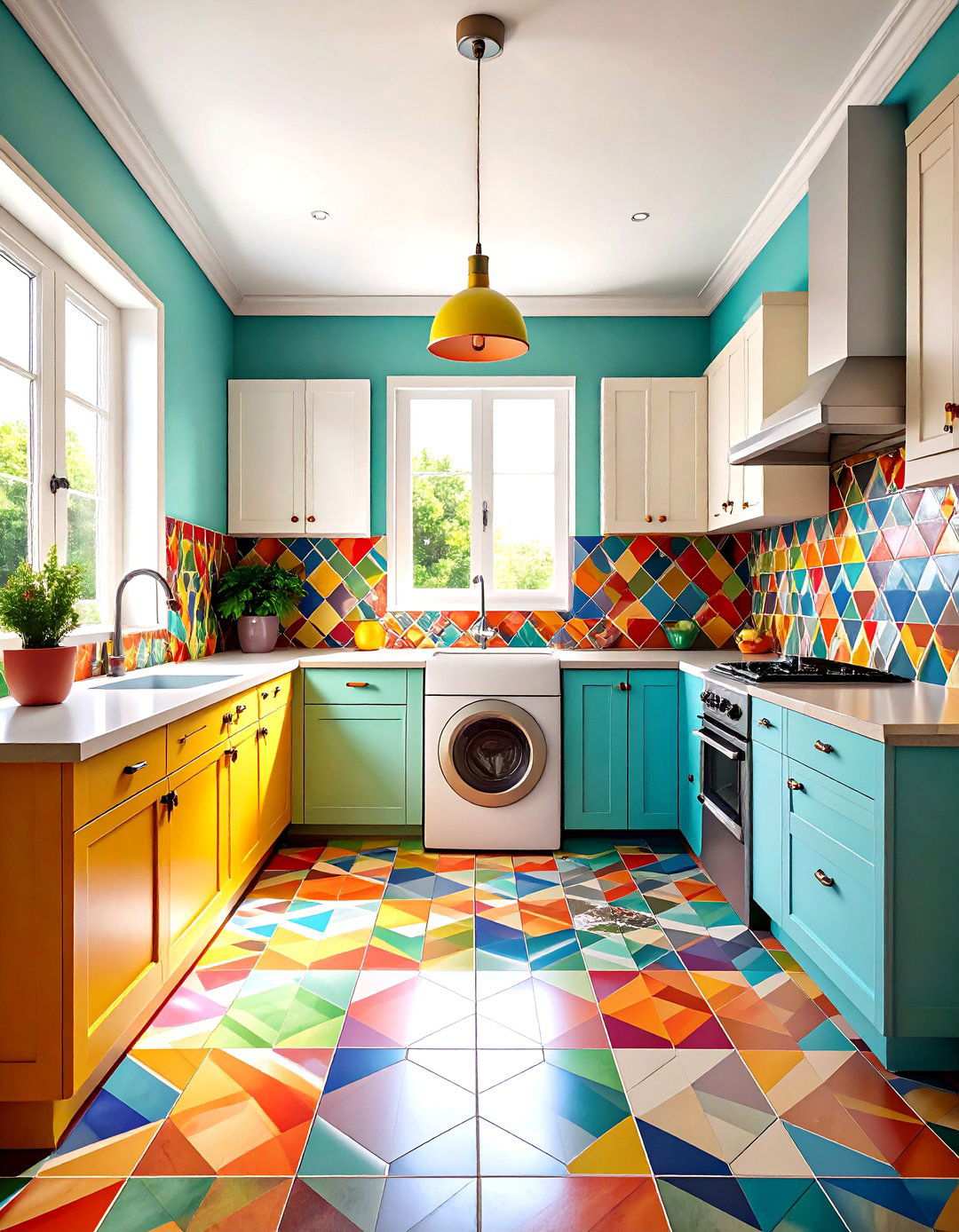
Utility rooms deserve personality, especially when these areas require considerable time and effort. Bold, patterned tiles can be a game-changer by creating focal points and providing functional splash protection behind sinks and work areas. To add some much-needed flair, opt for washable materials like ceramic or porcelain in vibrant patterns that energize the space. Geometric patterns, floral motifs, or colorful subway tiles arranged in creative layouts can greatly enhance the ambiance. For maximum impact in small spaces, consider extending the backsplash from counter to ceiling. Tiles can also help define different zones within the utility room, promoting visual organization while maintaining the practical benefits of easy cleaning and moisture resistance.
12. Pet Care Station
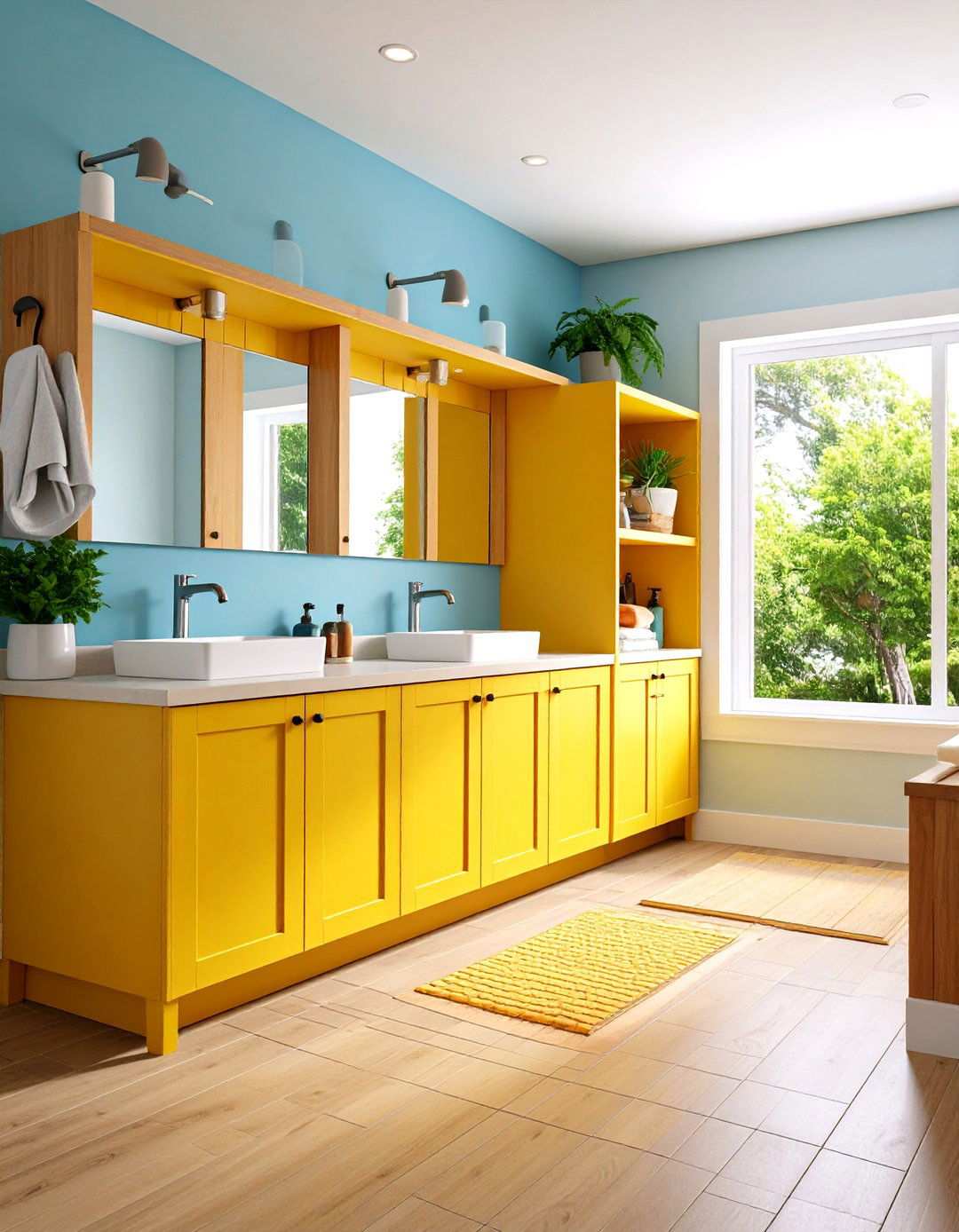
Utility rooms can be designed to accommodate pet care needs while maintaining order and functionality. A dedicated pet station can streamline grooming and feeding processes, ensuring organization in multi-purpose spaces. Installing lower-height sinks with pull-out spray attachments for easy pet bathing is a must. Position these sinks at comfortable heights for various pet sizes to ensure accessibility. Storage for pet supplies, including food, treats, toys, and grooming tools, is also essential. Convenient cabinets or drawers with easy access can hold these supplies. Don’t forget to include hooks for leashes and collars near the entry point for added convenience. Non-slip flooring materials provide safety for wet paws while maintaining easy cleaning. A built-in food station with pull-out bowls that store neatly when not in use is a thoughtful touch.
13. Vintage Laundry Cart Storage
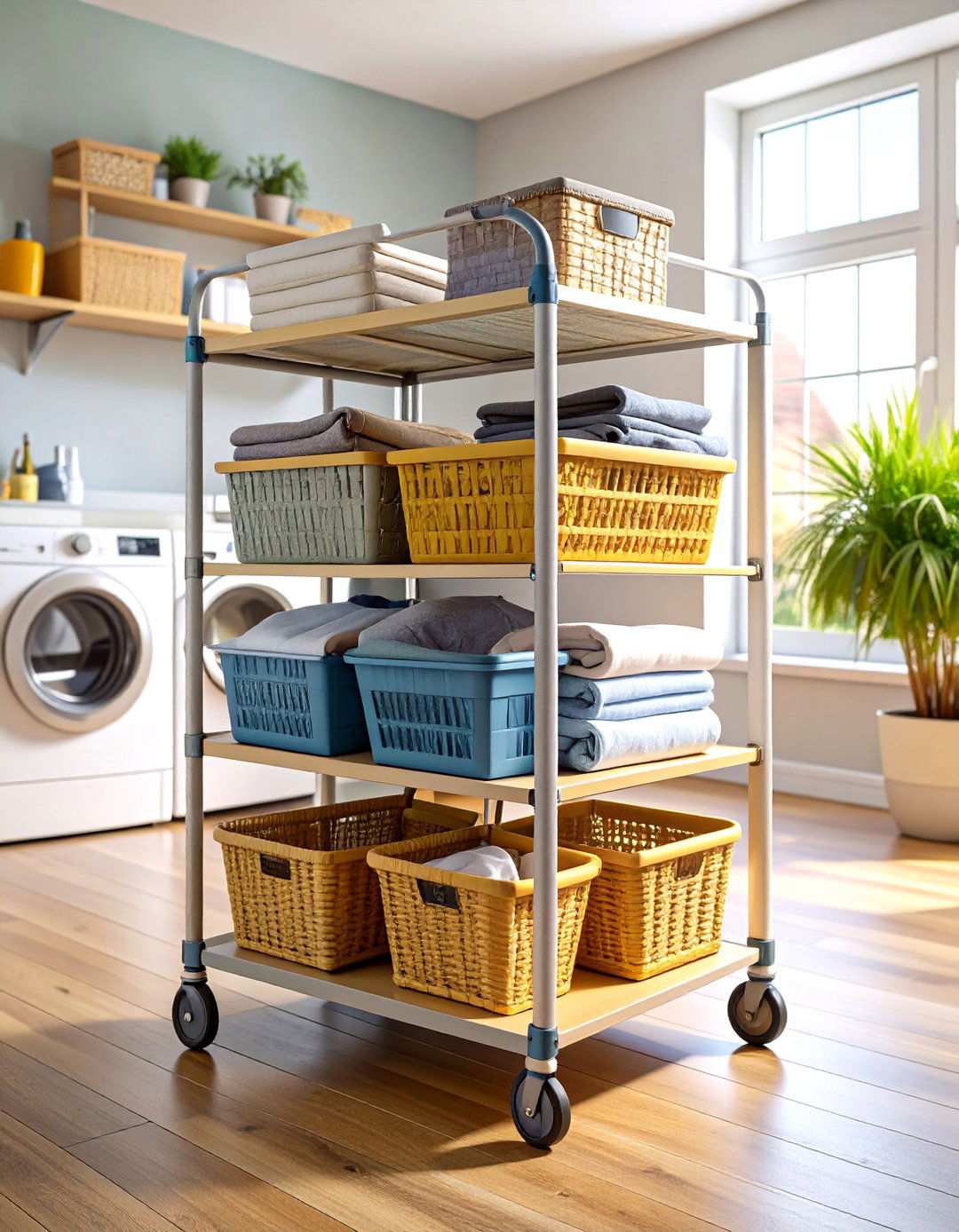
Mobile storage solutions can breathe new life into fixed utility room layouts by offering flexible and adaptable options. Vintage-style laundry carts can add character to utility spaces while providing flexible storage that adapts to changing needs. Choose carts with multiple tiers for sorting different types of laundry or organizing cleaning supplies by category. Position carts to roll between appliances and folding areas, creating mobile work stations that maximize limited space. Use attractive baskets or containers on cart shelves to maintain organization while adding visual appeal. Carts with locking wheels are a must to prevent unwanted movement during use. This solution works particularly well in shared spaces where utility functions need to be mobile and versatile.
14. Adaptable Workspaces
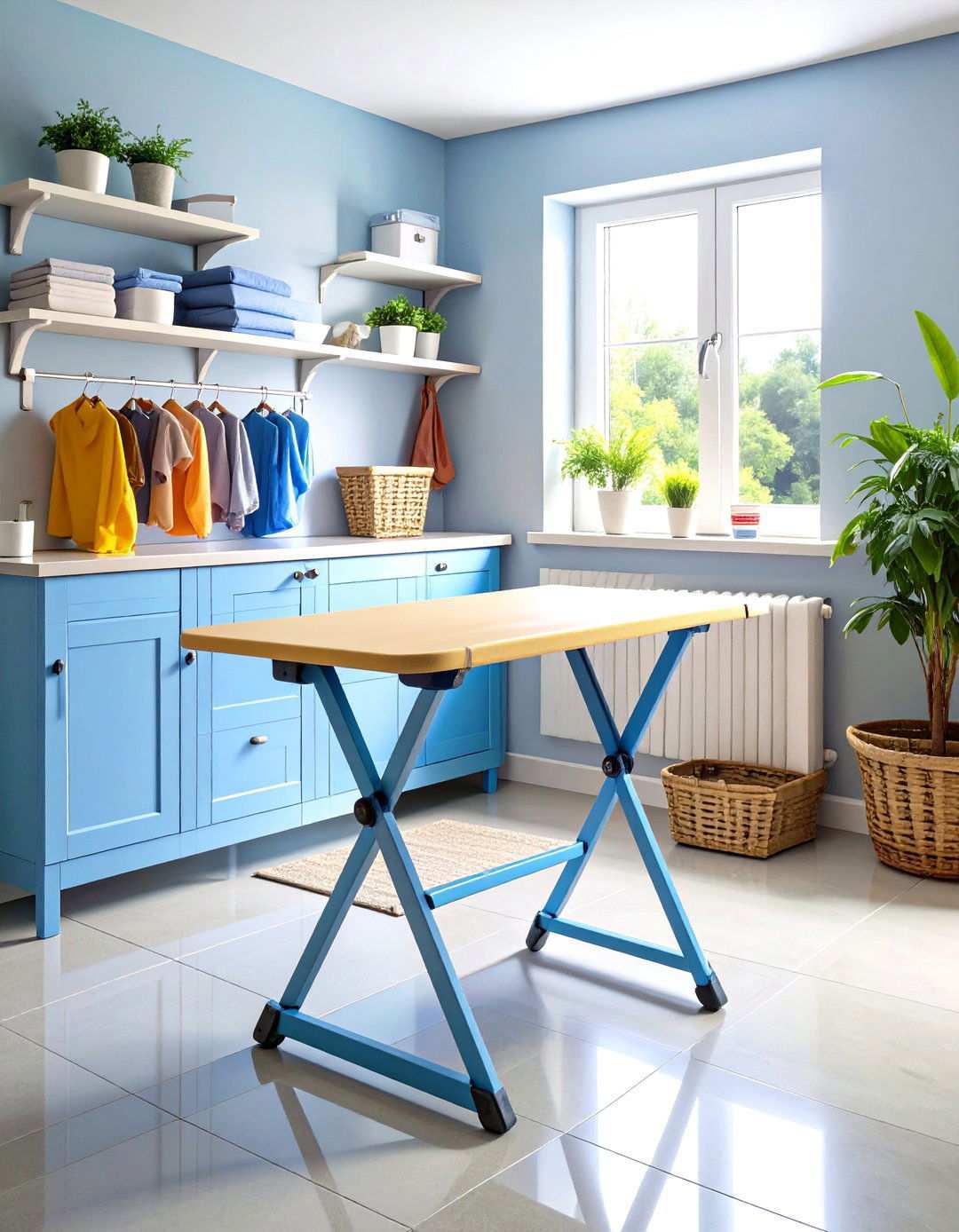
Maximizing floor space doesn’t have to mean sacrificing productivity. With wall-mounted folding tables, essential work surfaces can appear when needed, disappearing completely when not in use. Securely install sturdy brackets that support the weight of laundry and folding activities, placing them at a comfortable working height to promote efficient tasks. When selecting materials, opt for pieces that harmonize with existing cabinetry while providing durable, easy-to-clean surfaces. Adding storage beneath the table for folding supplies or laundry baskets ensures that everything remains organized and within reach. Strategically placing electrical outlets nearby for steaming or pressing activities saves time and effort. Positioning the table near natural light sources can improve visibility during detailed tasks, making it easier to achieve precision. By incorporating this solution, homeowners can reclaim valuable floor space while maintaining adequate work areas.
15. Unobstructed Utility Spaces
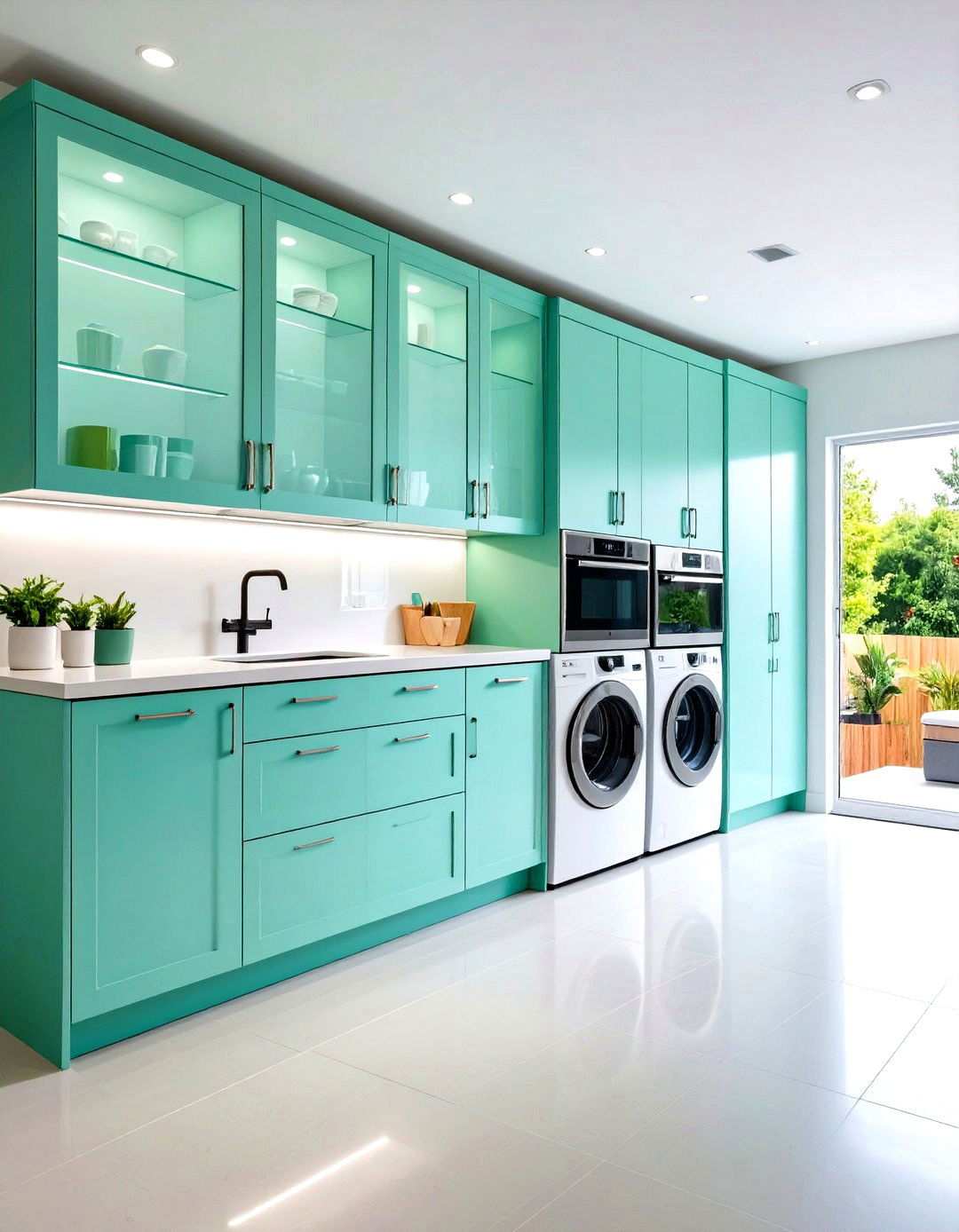
Why restrict access to utility areas when transparency can create a sense of openness? Glass doors on cabinets and room entrances maintain visual connection while providing necessary separation and organization. Select frosted or textured glass for areas requiring privacy, ensuring that light transmission remains unobstructed. Installing glass-front cabinets showcases attractive storage containers while protecting contents from dust and moisture. Using glass doors at room entries preserves sight lines and natural light flow from adjacent spaces. Adding interior cabinet lighting creates attractive displays while enhancing functionality. This approach works particularly well in small homes, where visual flow between spaces prevents feelings of confinement and promotes a sense of spaciousness.
16. Streamlined Laundry Organization
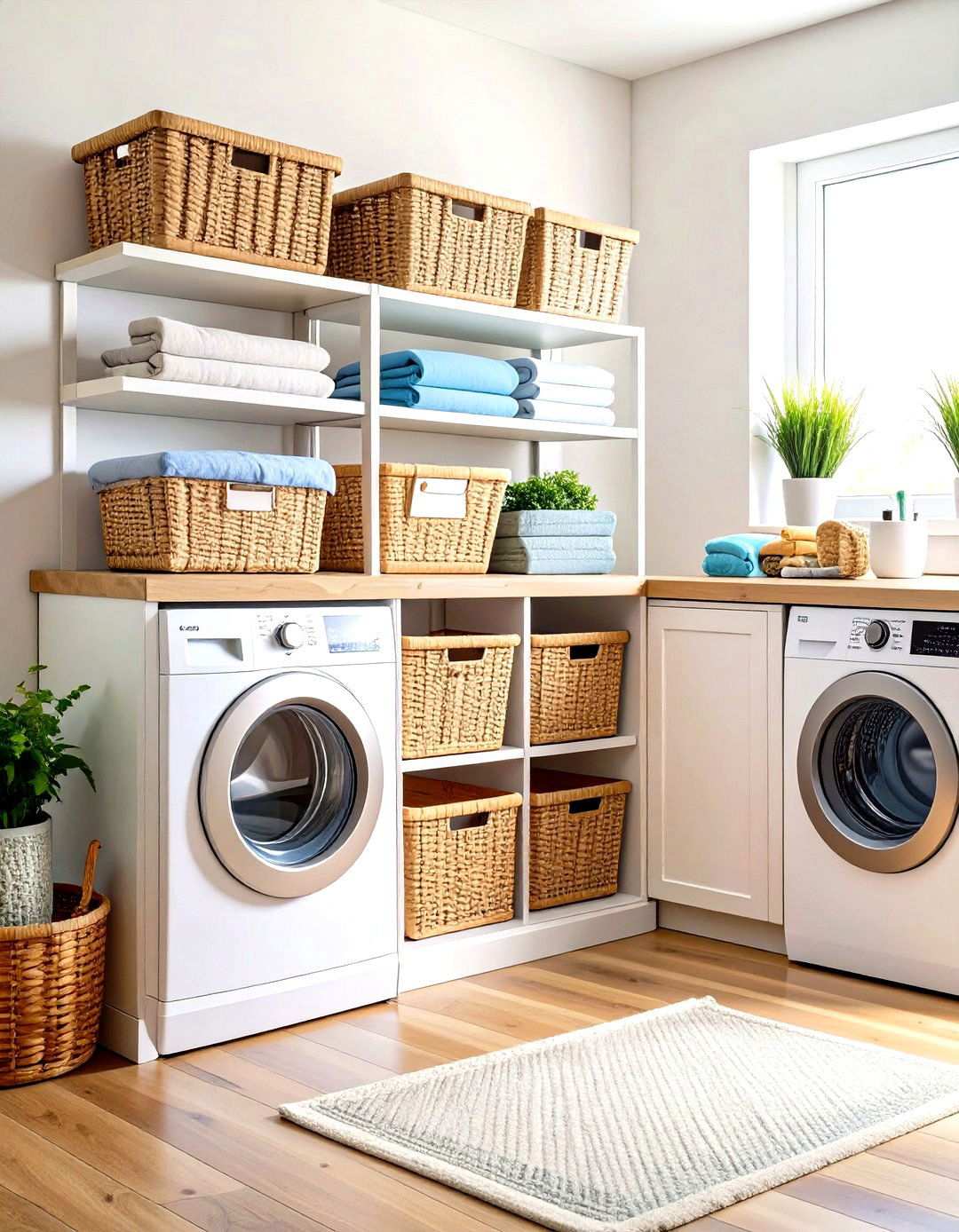
Can laundry sorting become more efficient with dedicated built-in solutions? Custom hamper systems streamline laundry organization while maintaining tidy appearances in utility spaces. Installing pull-out hampers in lower cabinets with separate compartments for different fabric types or family members promotes efficient sorting from the start. Choose removable baskets for easy transport to washing machines, saving time and effort. Adding labels or color-coding systems ensures that laundry is properly sorted, eliminating the need for manual sorting later on. Including ventilation in hamper cabinets prevents odor buildup and maintains freshness. Positioning hampers near the entry point encourages immediate sorting when bringing laundry to the utility room, reducing sorting time and maintaining tidy appearances. By incorporating this organization system, homeowners can reclaim time and maintain a sense of order in their utility spaces.
17. Elevating Utility Rooms to Luxury Status
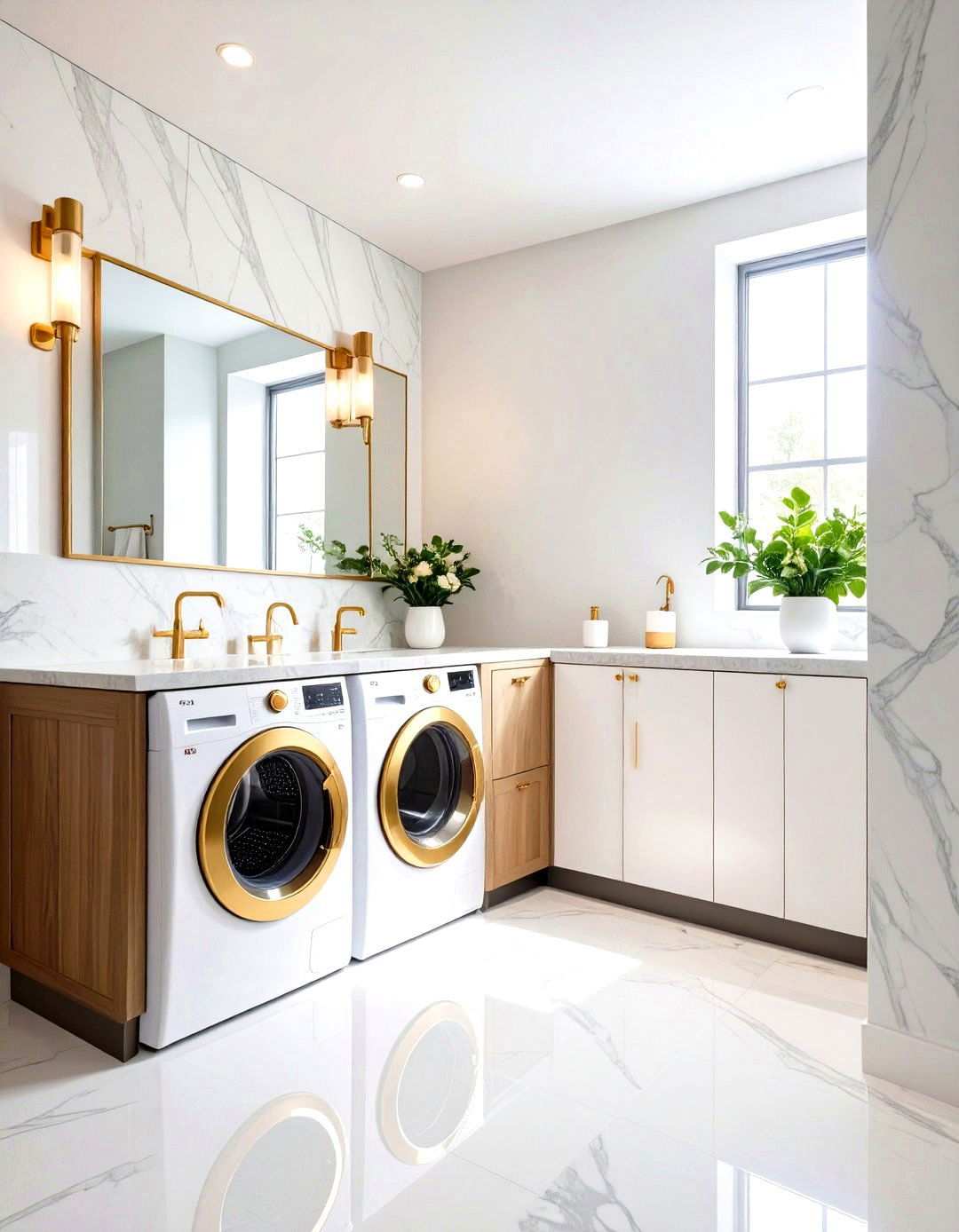
Transforming small utility rooms into sophisticated retreats is a matter of elevating finishes and incorporating thoughtful details. This approach can turn utilitarian spaces into boutique hotel-inspired amenities that rival the best of the hospitality industry. One way to achieve this is by installing high-end materials like natural stone countertops, polished brass fixtures, and custom millwork that seamlessly integrates with the surrounding space. To create a cohesive look, opt for a monochromatic color scheme with subtle texture variations that add depth without visual complexity. Adding luxurious touches such as heated towel racks, premium lighting fixtures, and high-end organizational systems can further enhance the sophisticated atmosphere. To soften the space, consider adding fresh flowers or plants, which can add a touch of warmth while maintaining a polished aesthetic. When selecting fixtures, prioritize quality over quantity, ensuring each element contributes to the overall ambiance.
18. Flexible Room Separation with Fabric Curtains
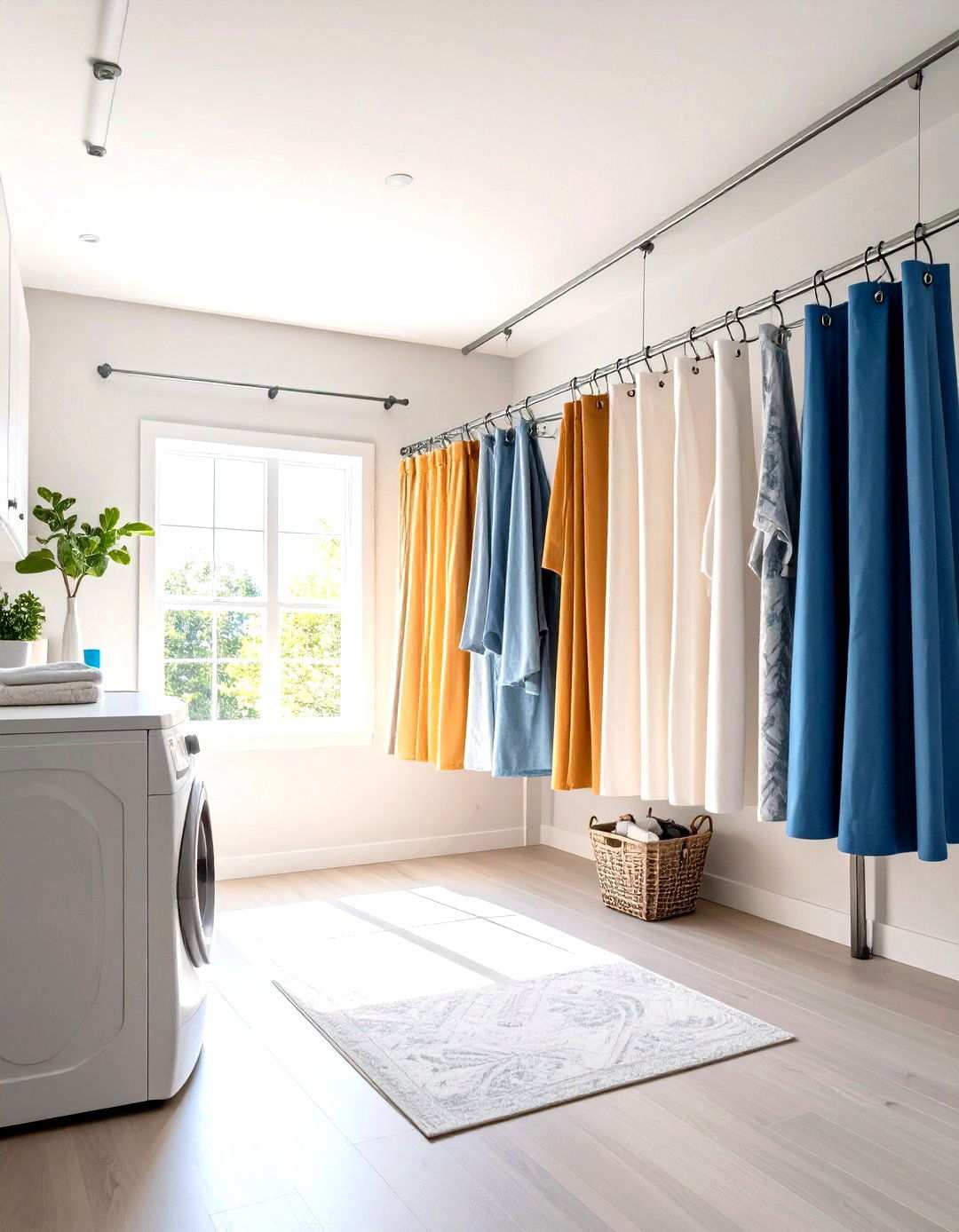
Incorporating fabric curtains into utility rooms can provide a soft, flexible, and space-saving solution for room separation. These curtains not only offer visual division but also add textural warmth to the space while maintaining accessibility. To choose the right fabric, consider washable options in patterns or colors that complement your home’s aesthetic while hiding utility functions when desired. For a professional appearance, install ceiling-mounted tracks that allow for smooth operation. Use curtains to separate laundry areas from storage zones or to conceal appliances when the utility room connects to living spaces. Select fabrics with the right weight and opacity to achieve desired privacy levels. When full access is needed, add tiebacks or holdbacks to secure the curtains, creating flexible space definition.
19. Herb Preservation Stations in Utility Rooms
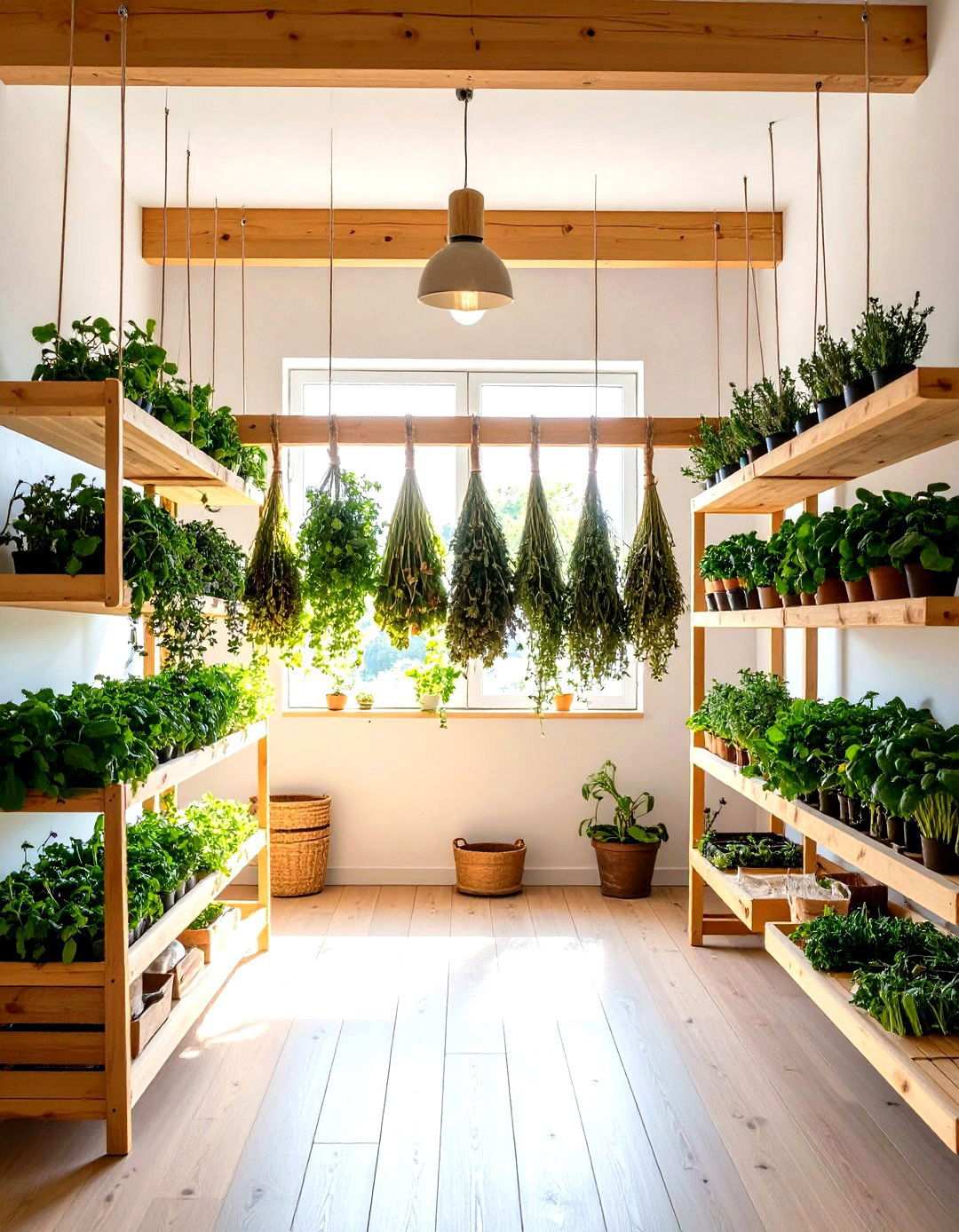
Utility rooms can serve unexpected functions while maintaining their primary purposes. By incorporating a dedicated herb drying area, you can transform your utility space into a multi-seasonal preserving station that complements kitchen activities. To create this space, install wooden drying racks or hanging systems positioned away from moisture sources while maintaining good air circulation. Use ceiling hooks or wall-mounted brackets to support bundles of herbs during the drying process. Add small storage containers for finished dried herbs, positioned in easily accessible locations. Include proper lighting for monitoring drying progress and maintaining herb quality. This addition works particularly well in homes with kitchen gardens, creating natural preservation areas that utilize utility room conditions to their fullest potential.
20. Craft Haven Revival
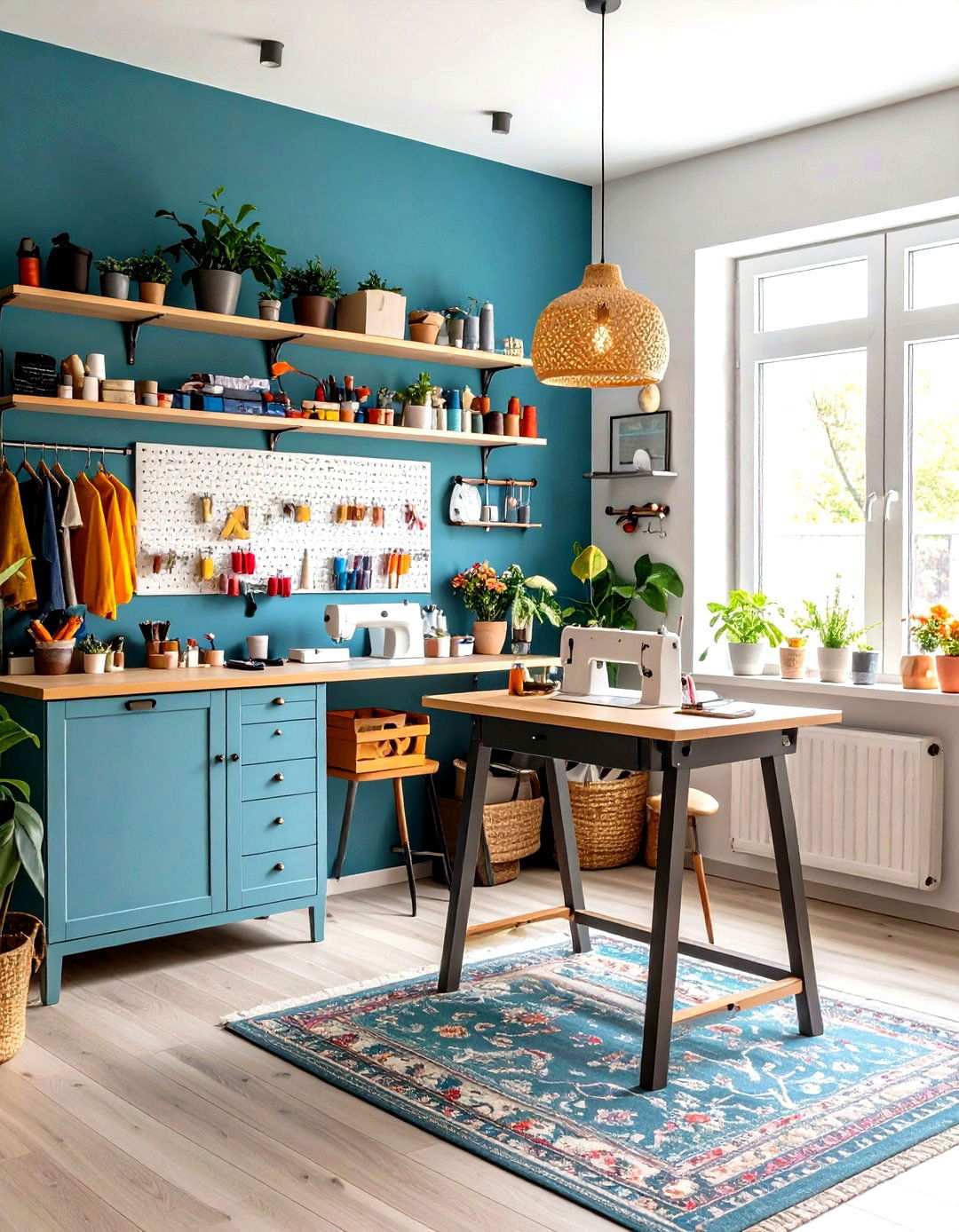
Revamping utility rooms as craft sanctuaries requires a harmonious blend of functionality and creativity. By allocating vertical wall space, you can establish compact craft stations perfect for mending, alterations, and artistic pursuits. Incorporate retractable work surfaces that fold down when not in use, strategically positioned near well-lit areas to foster productivity. Supplement these workstations with nearby storage solutions for sewing supplies, craft materials, and mending tools, keeping essentials readily available while maintaining an organized appearance. Don’t forget to integrate electrical outlets for sewing machines and craft tools, as well as pegboard systems for neatly hanging frequently used tools. Position craft areas away from moisture sources to safeguard materials and maintain a clear separation between creative activities and cleaning functions.
21. Smarter Utility Spaces
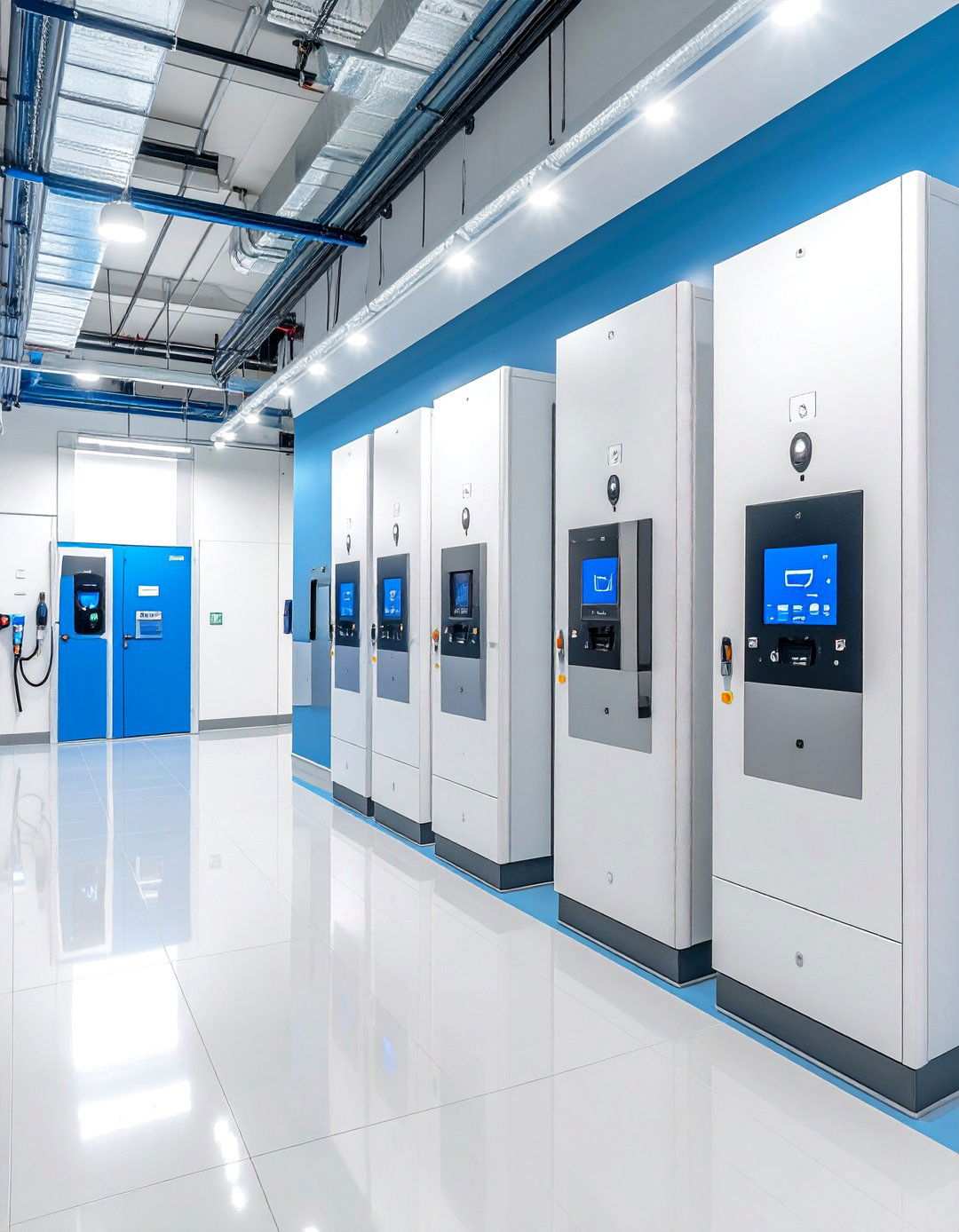
Modern technology can significantly enhance utility room efficiency without overwhelming small spaces. By thoughtfully integrating smart devices, you can simplify laundry routines while maintaining a clean, clutter-free environment. Smart switches for lighting control and scheduling enable energy-efficient lighting while ensuring adequate illumination during all activities. Additionally, smart plugs for appliance monitoring and control allow for remote operation and energy tracking. Incorporate charging stations for phones and tablets, keeping devices within reach during extended laundry sessions. Utilize smart sensors for water leak detection and humidity monitoring to prevent damage and maintain optimal conditions. When selecting devices, prioritize seamless integration with existing home automation systems while focusing on practical benefits for daily utility room use.
22. Exposed Aesthetic and Utility
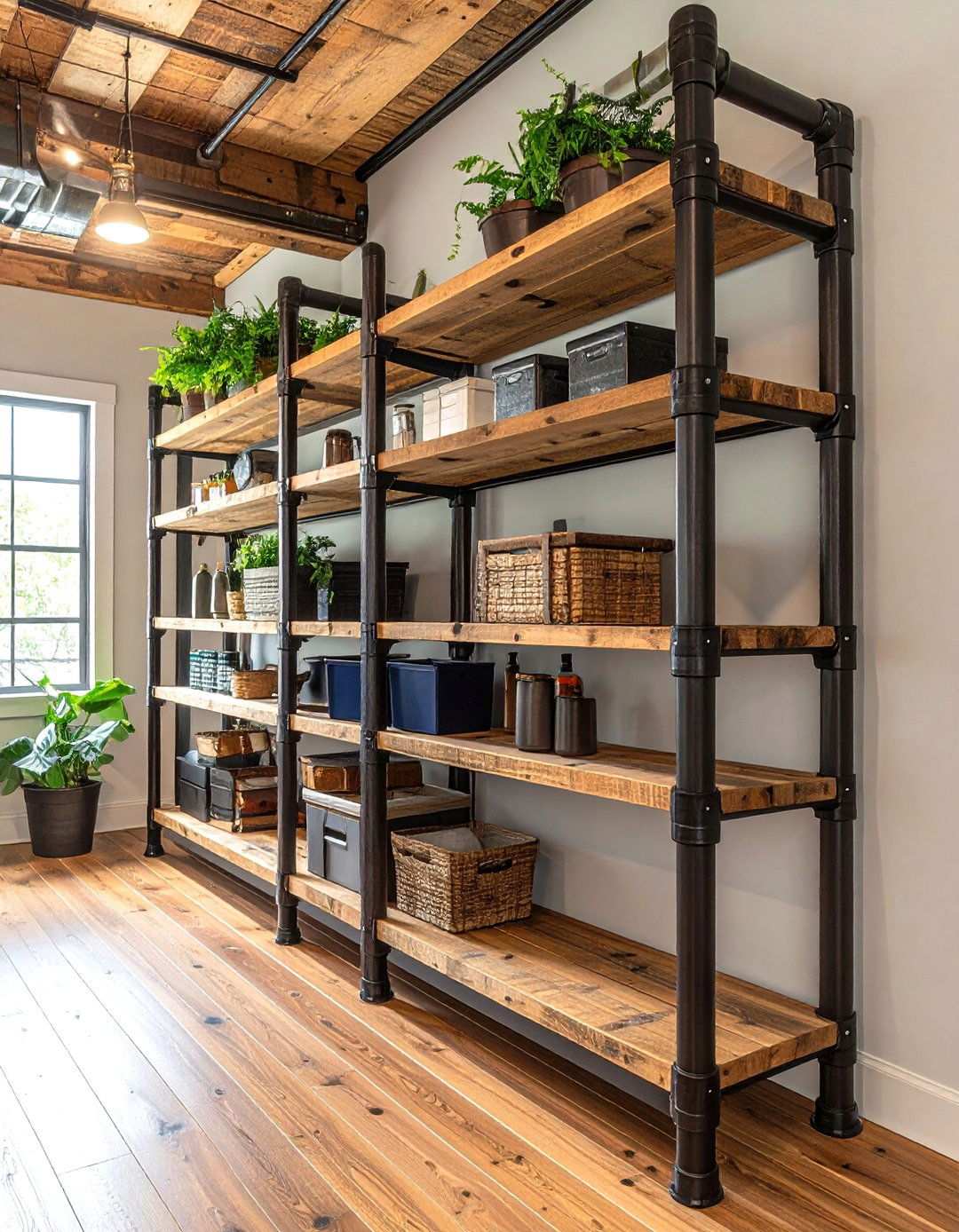
Why not combine utilitarian functionality with a touch of industrial chic? Industrial-style pipe shelving creates sturdy storage systems while adding character to utility spaces through exposed hardware and raw materials. By installing black iron pipes with wooden shelves, you can craft custom storage configurations tailored to specific space requirements. Varying shelf heights accommodate different storage needs, from detergent bottles to cleaning tools. Consider adding hanging rods between pipe supports for air-drying delicate items or storing hangers. Choose reclaimed or distressed wood to enhance the industrial aesthetic while providing durable surfaces. This approach is particularly well-suited for converted spaces or homes with industrial design elements.
23. Illuminating Utility Spaces
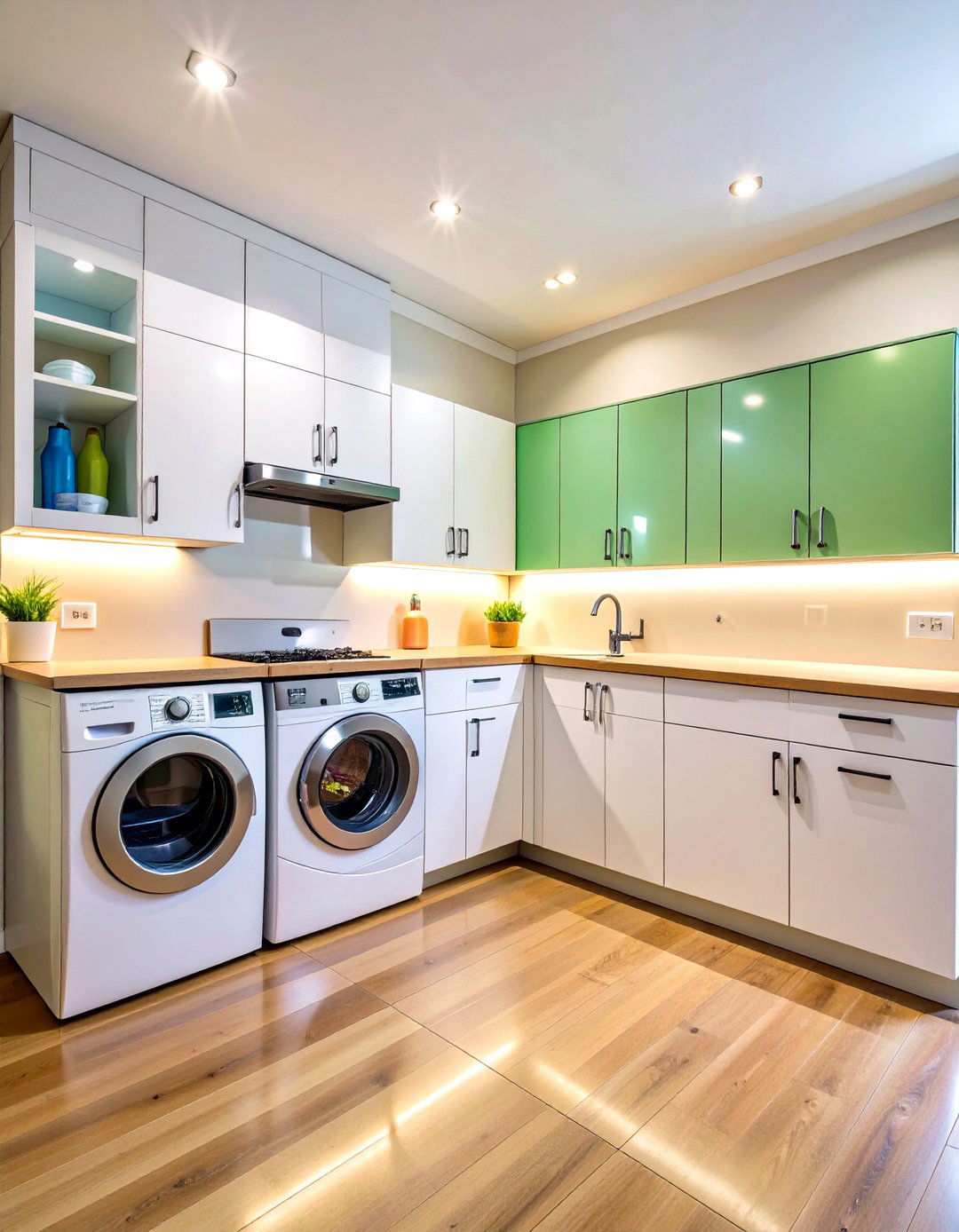
Strategic lighting can be a game-changer for windowless or poorly lit utility rooms, transforming them into bright and welcoming areas. Effective lighting design, paired with clever use of reflective surfaces, creates an illusion of natural light while elevating the functionality and mood of working spaces. To achieve this, consider installing full-spectrum LED fixtures that simulate daylight, reducing eye strain during focused tasks and enhancing visual comfort. Additionally, incorporate under-cabinet lighting to eliminate shadows on work surfaces and create a sense of openness. By using light-colored or glossy finishes on cabinets and walls, you can maximize the reflection of available light throughout the space, making it feel larger and more inviting. Moreover, strategically placing mirrors can bounce light and create visual expansion, further enhancing the sense of brightness. If structural modifications are feasible, consider incorporating light tubes or skylights to bring genuine natural light into previously dark spaces, significantly improving the overall ambiance.
24. Dynamic Seasonal Storage
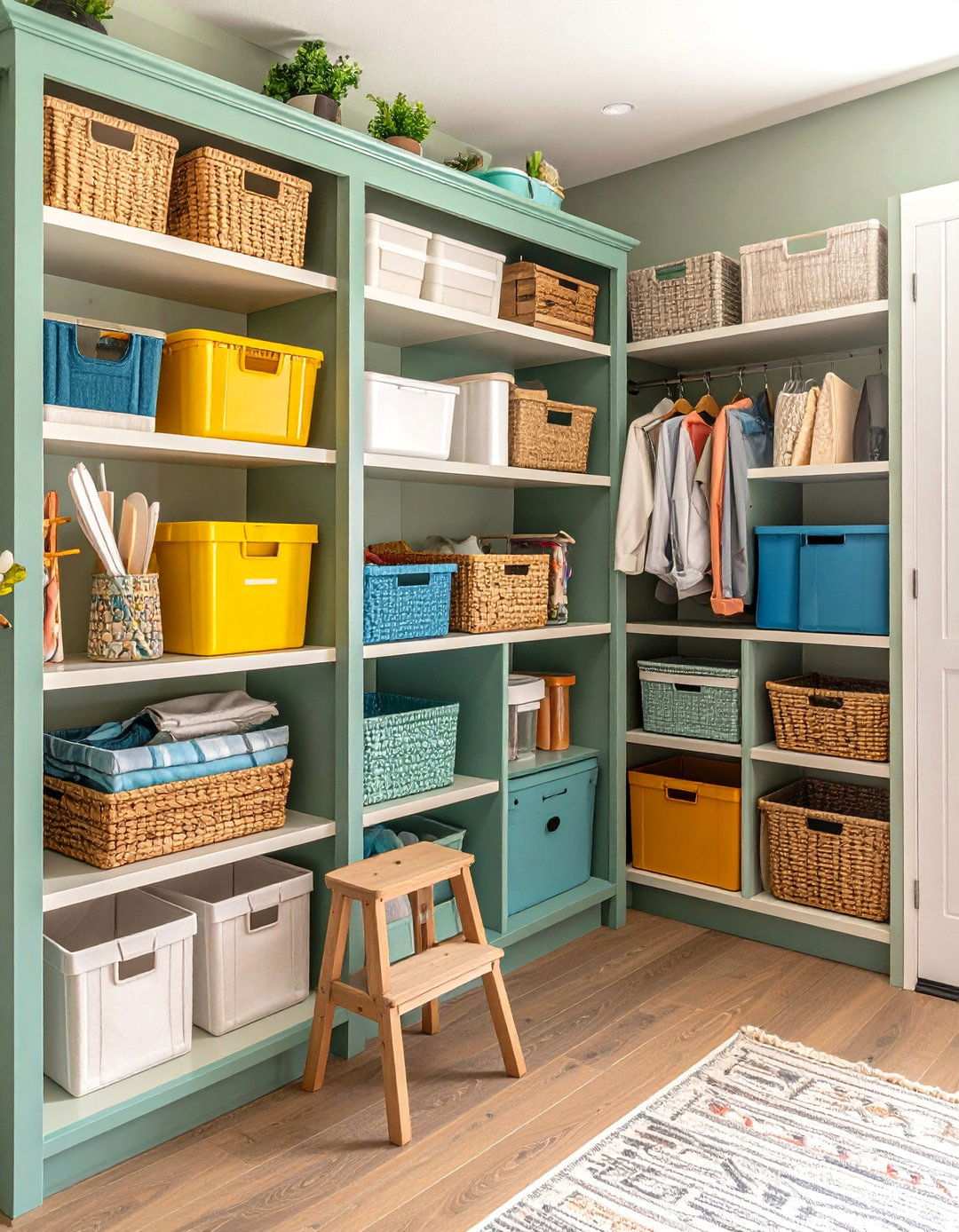
Utility rooms can be designed to accommodate seasonal items in a way that maintains organization and accessibility throughout the year. Rotating storage systems are an effective solution for maximizing space efficiency while keeping seasonal items easily accessible when needed and hidden when not required. To achieve this, consider installing high shelving or cabinets for storing seasonal decorations, sports equipment, or clothing that rotates throughout the year. Clear storage containers with labels can also be used to keep items easily identifiable and accessible. For added convenience, incorporate step stools or ladder access for safely reaching higher storage areas, and consider adding hooks or hanging systems for items like holiday lights or seasonal tools. By positioning seasonal storage away from daily-use areas, you can prevent interference with regular utility room functions while maintaining a tidy and organized space.