1. Crafting a Compact Oasis
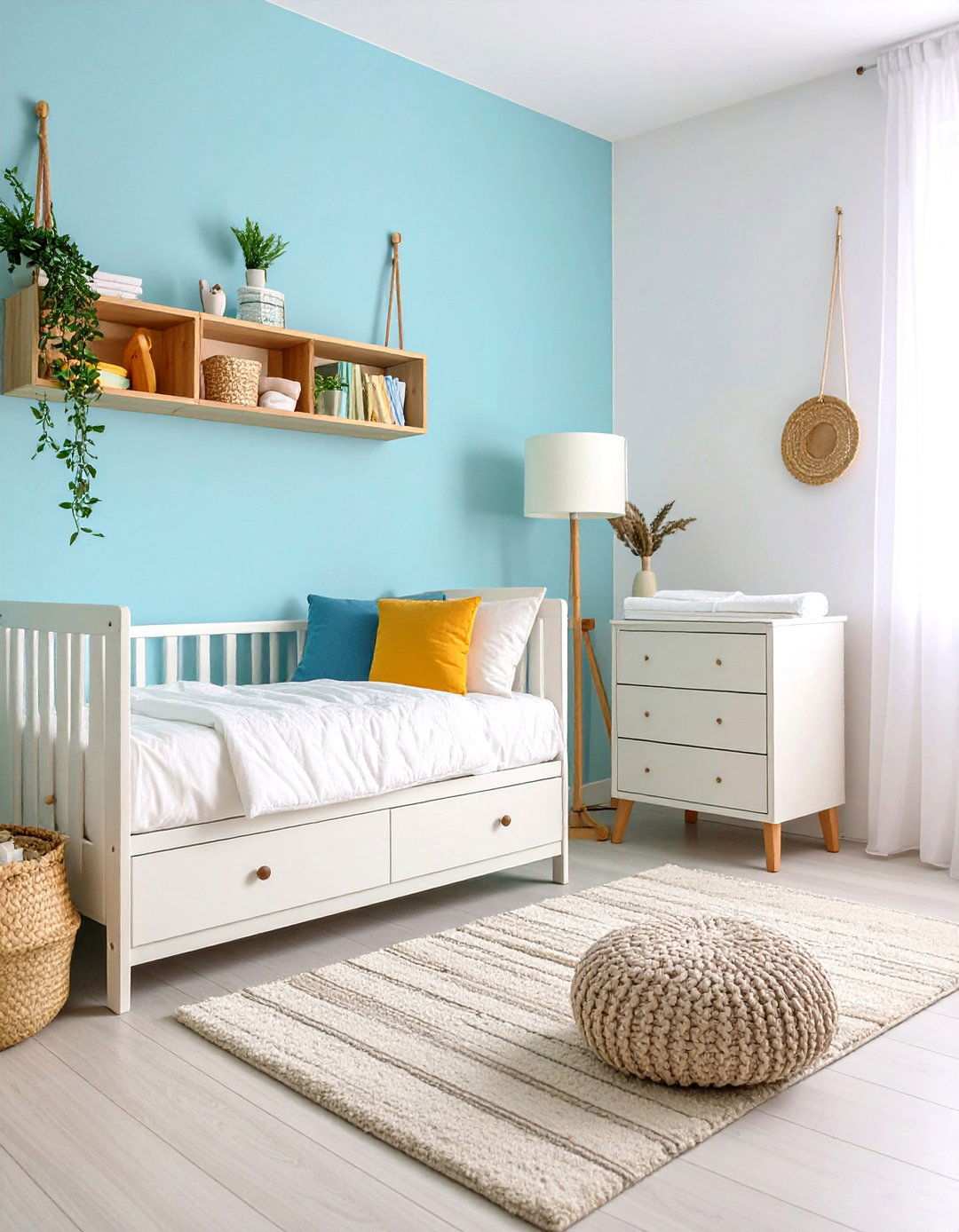
Designing a beautiful nursery in a small space requires a thoughtful approach that balances functionality, style, and intimacy. The challenge of working with limited square footage presents an opportunity to create a cozy sanctuary that wraps your baby in love and security. By carefully selecting furniture pieces that serve multiple purposes, cleverly utilizing vertical wall space for storage, and choosing a color scheme that makes the room feel larger and brighter, you can transform even the tiniest of areas into a haven for your little one.

As an Amazon Associate I earn from qualifying purchases.
2. Corner Creations and Closet Conversions
The versatility of small nurseries lies in their ability to accommodate a range of design themes that seamlessly integrate layout, storage, lighting, and aesthetics. To create a dreamy sanctuary, consider a mini crib positioned in a room corner, where it can create an intimate sleeping nook that maximizes floor space while providing everything your baby needs. Diagonal placement in the corner adds a cozy cocoon feeling that babies find comforting, while floating shelves above the crib display precious keepsakes and store essentials. A convertible mini crib that transforms into a toddler bed ensures years of usefulness. Soft lighting from a small table lamp or wall sconce adds warmth without overwhelming the space. Leaving the central floor area open for a small rocking chair and play space allows your child to grow and explore.
3. Closet Nursery Makeover
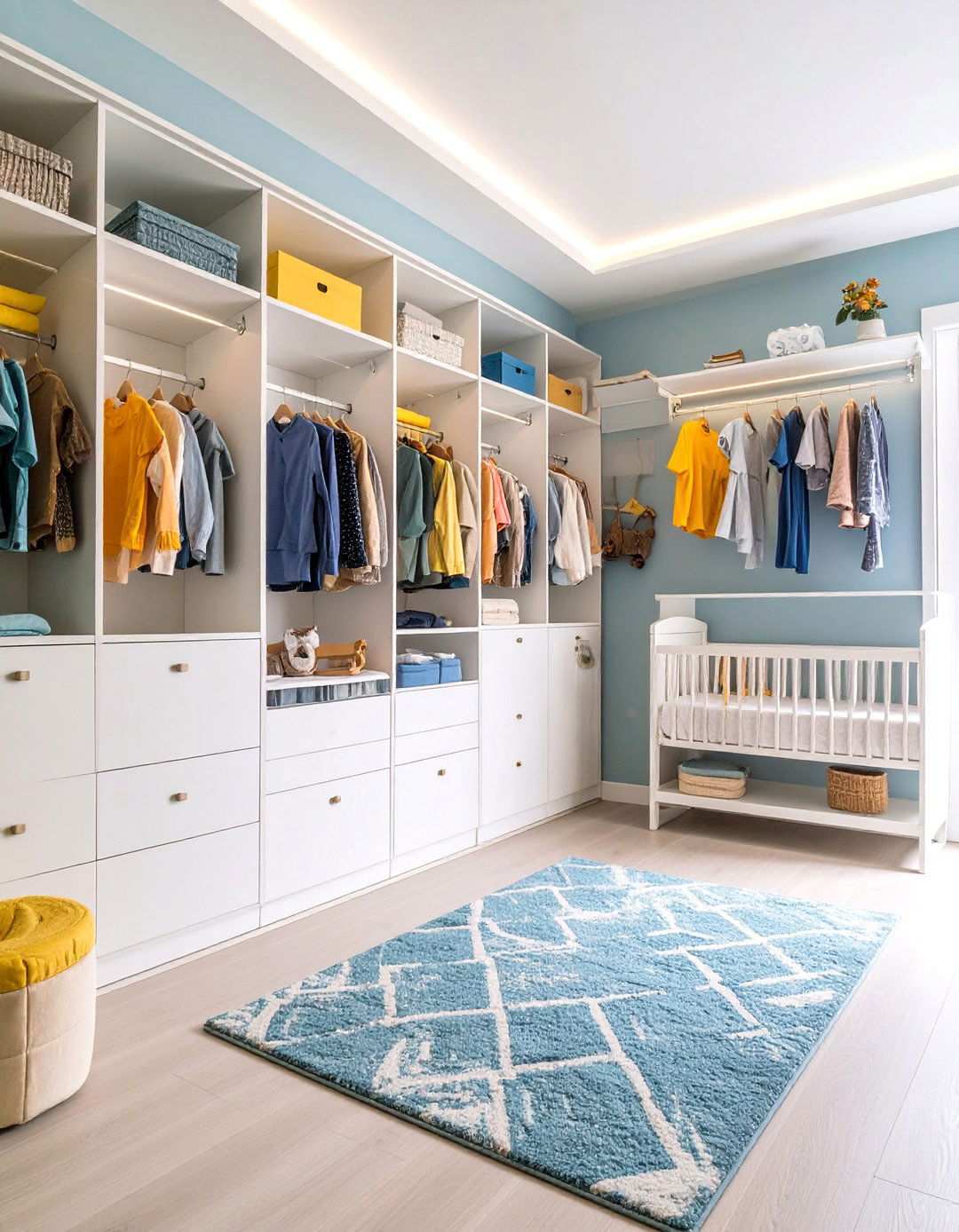
A walk-in closet can be repurposed into a complete nursery, offering a unique solution for families with limited space. By removing closet doors and installing a mini crib, compact changing station, and vertical storage system, you can create a cozy cocoon that feels separate from adult spaces while utilizing otherwise unused square footage efficiently. Painting walls in light colors brightens the space, while battery-operated LED strip lighting around the ceiling perimeter adds a touch of modernity. Custom shelving maximizes storage for clothes, diapers, and toys, keeping everything within arm’s reach. A ceiling fan or small air purifier ensures proper ventilation, while a washable rug defines the floor space and adds comfort. This approach creates a private nursery oasis that is both functional and beautiful.
Space-Smart Solutions for Your Nursery
Transform your nursery into a haven that evolves as your child grows with the help of convertible furniture that serves multiple purposes. Start by incorporating a dresser that converts into a changing table using a convenient removable topper. Choose a crib that can be easily transformed into a toddler bed and eventually a full-size bed. Add an ottoman with hidden storage that provides a comfortable seating option, a footrest, and additional storage for toys and essentials. Incorporate floating shelves that initially hold baby essentials but can later be repurposed to display books and keepsakes. A versatile side table with drawers serves as a convenient storage solution for immediate needs and future homework storage, ensuring that your investment in furniture yields long-term benefits while maintaining a clean and organized appearance throughout your child’s development.
4. A Wall of Practicality and Artistry
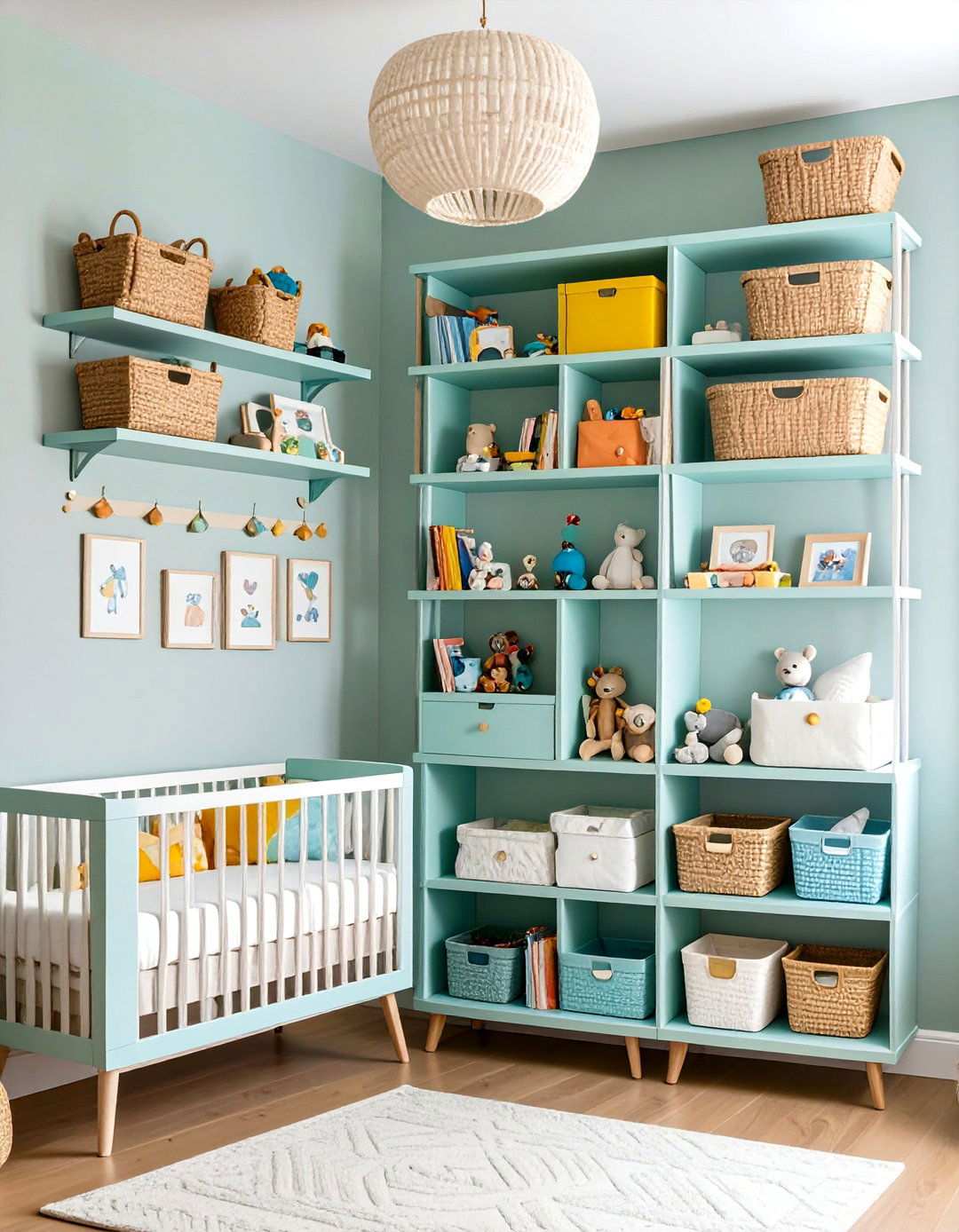
Can a wall be both functional and visually stunning? Design a floating shelf gallery that showcases cherished items while keeping essential nursery items within easy reach. Install shelves at varying heights to create visual interest and cater to different-sized items. Combine picture ledge shelves for books and deeper floating shelves for storage baskets to create a harmonious balance. Paint the shelves to match the wall color for a seamless, built-in appearance that doesn’t overwhelm the space. Display meaningful keepsakes, framed ultrasound photos, and small plants alongside practical items like diapers stored in attractive containers. This vertical storage solution keeps floor space clear while creating a personalized focal point that tells your family’s story through thoughtfully curated displays.
5. A Calming Retreat in Neutral Hues
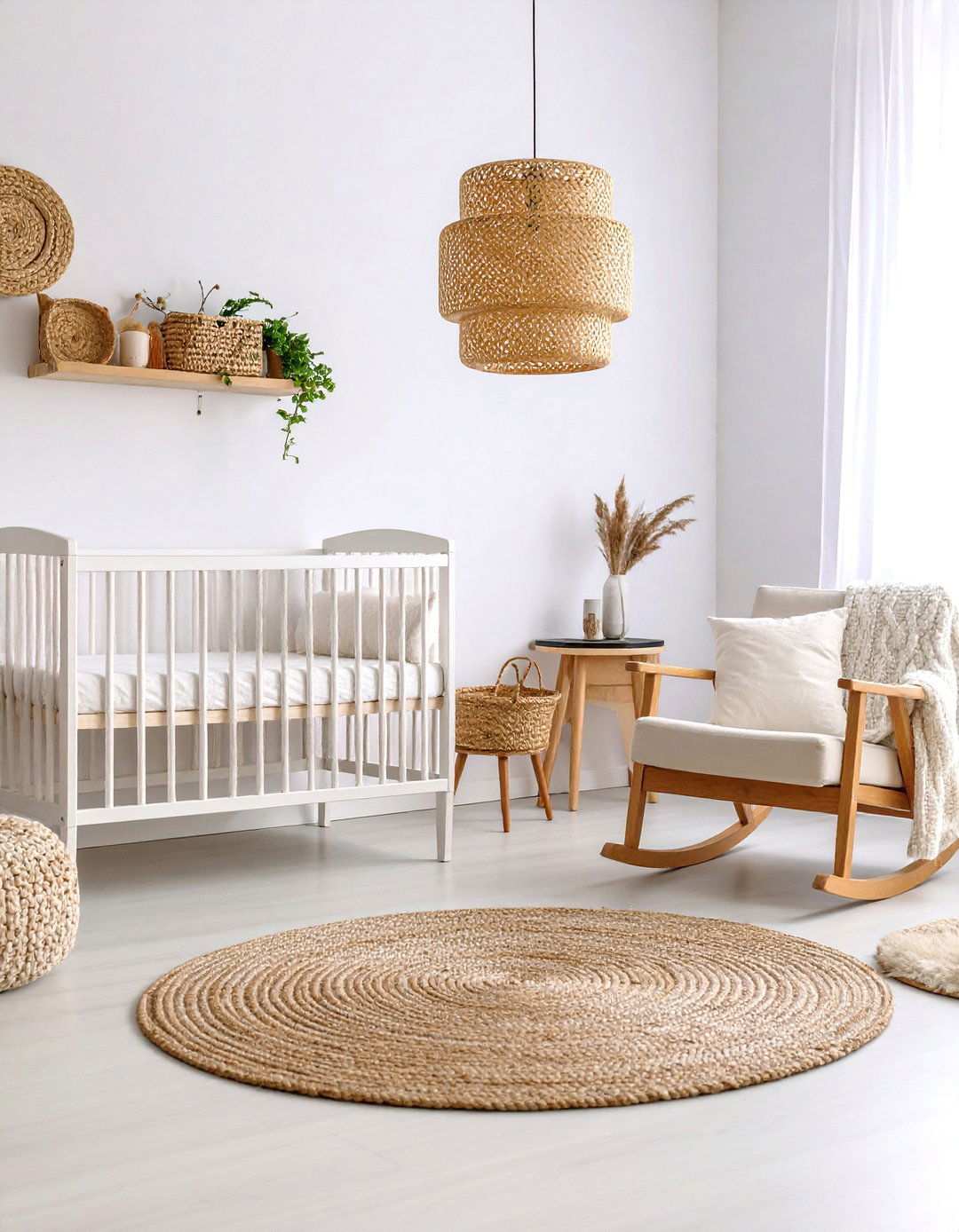
A soothing Scandinavian-inspired design can create a serene atmosphere in even the smallest of nurseries. Paint walls in soft whites or pale grays to reflect light and create an airy feeling. Choose furniture with clean lines and light wood finishes, such as a simple crib, a minimalist dresser, and a streamlined rocking chair. Add texture through woven baskets, chunky knit throws, and a jute area rug to create a cozy ambiance. Limit decor to a few carefully chosen pieces like a modern mobile and simple wall art to prevent visual clutter. Opt for light-filtering white curtains for window treatments to maintain a sense of calmness. This minimalist aesthetic ensures a timeless and adaptable design that feels spacious despite limited square footage, thanks to the use of natural materials and neutral tones.
6. Elevating Vertical Storage in Compact Spaces
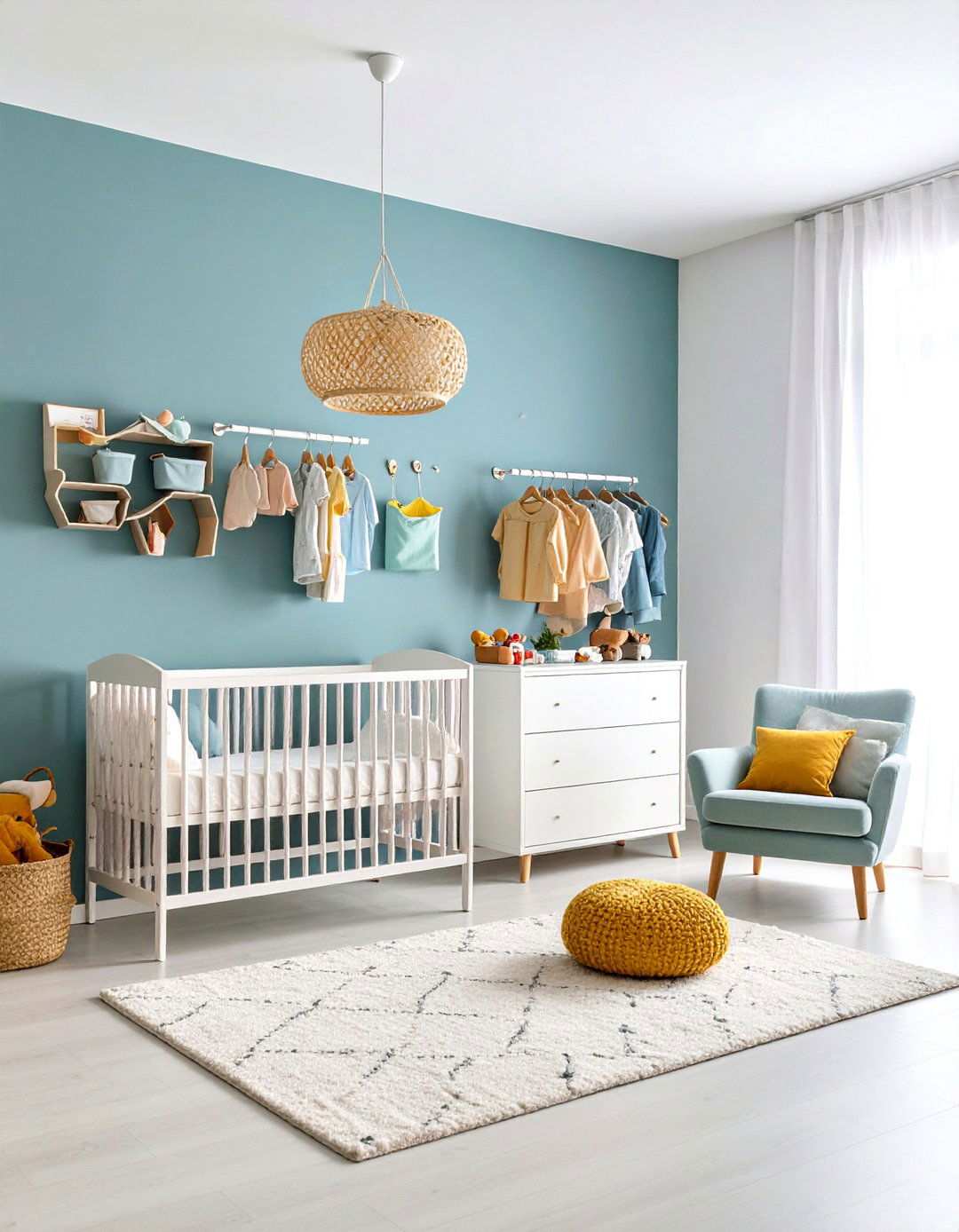
Compact nurseries often require innovative storage solutions. By incorporating wall-mounted essentials, you can reclaim floor space and create a more functional environment. Install wall-mounted changing stations, diaper organizers, and clothing rods to ensure essential items remain accessible without hogging valuable floor area. Consider incorporating shallow cubbies for storing folded clothes and hooks for hanging sleep sacks and towels. Utilize mesh bags attached to walls for toys and stuffed animals, and install a wall-mounted hamper for soiled garments. Don’t forget a wall-mounted night light for gentle illumination, and opt for a mobile that doesn’t necessitate floor-standing support. This holistic storage approach keeps baby necessities organized and within reach, allowing for a more spacious layout that can accommodate a crib and a single piece of furniture.
7. Designing a Shared Bedroom Nursery Zone
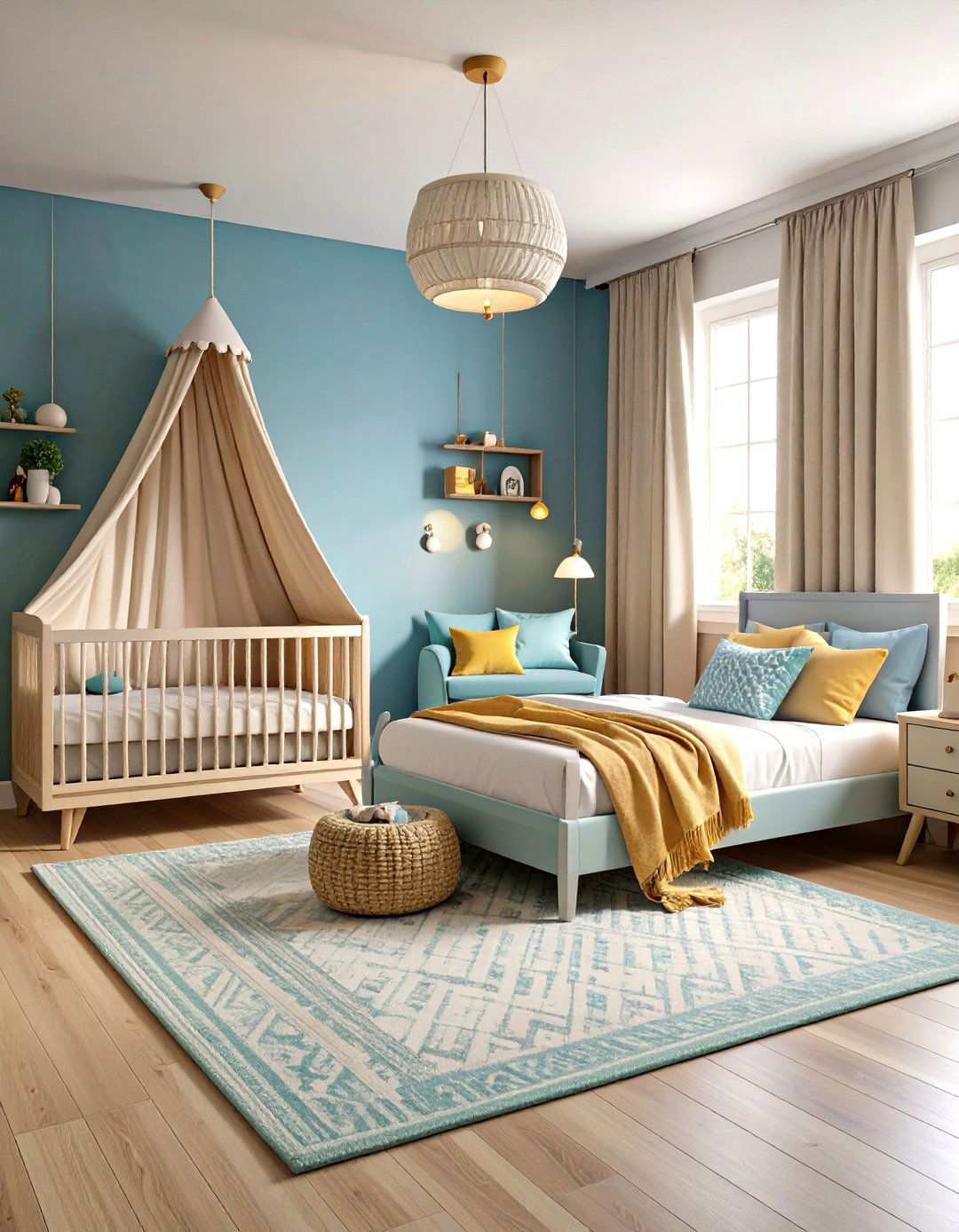
When a dedicated nursery isn’t feasible, it’s essential to create a clear distinction between adult and baby spaces within your bedroom. Define the baby zone using area rugs, lighting, and thoughtful furniture placement to establish a visual separation without compromising the open layout. Position the crib and changing area in a corner, accompanied by a room divider screen to maintain visual privacy during sleep hours. Repurpose a dresser as a natural barrier between adult and baby spaces, and install wall-mounted storage on the baby side to keep supplies organized without encroaching on adult areas. Select cohesive colors that harmonize with your existing bedroom decor while clearly defining the nursery zone. Soft pendant lighting above the baby area provides targeted illumination without disrupting adult sleep patterns. This arrangement enables seamless nighttime care while maintaining distinct, functional spaces.
8. Injecting Vibrant Accents into Small Spaces
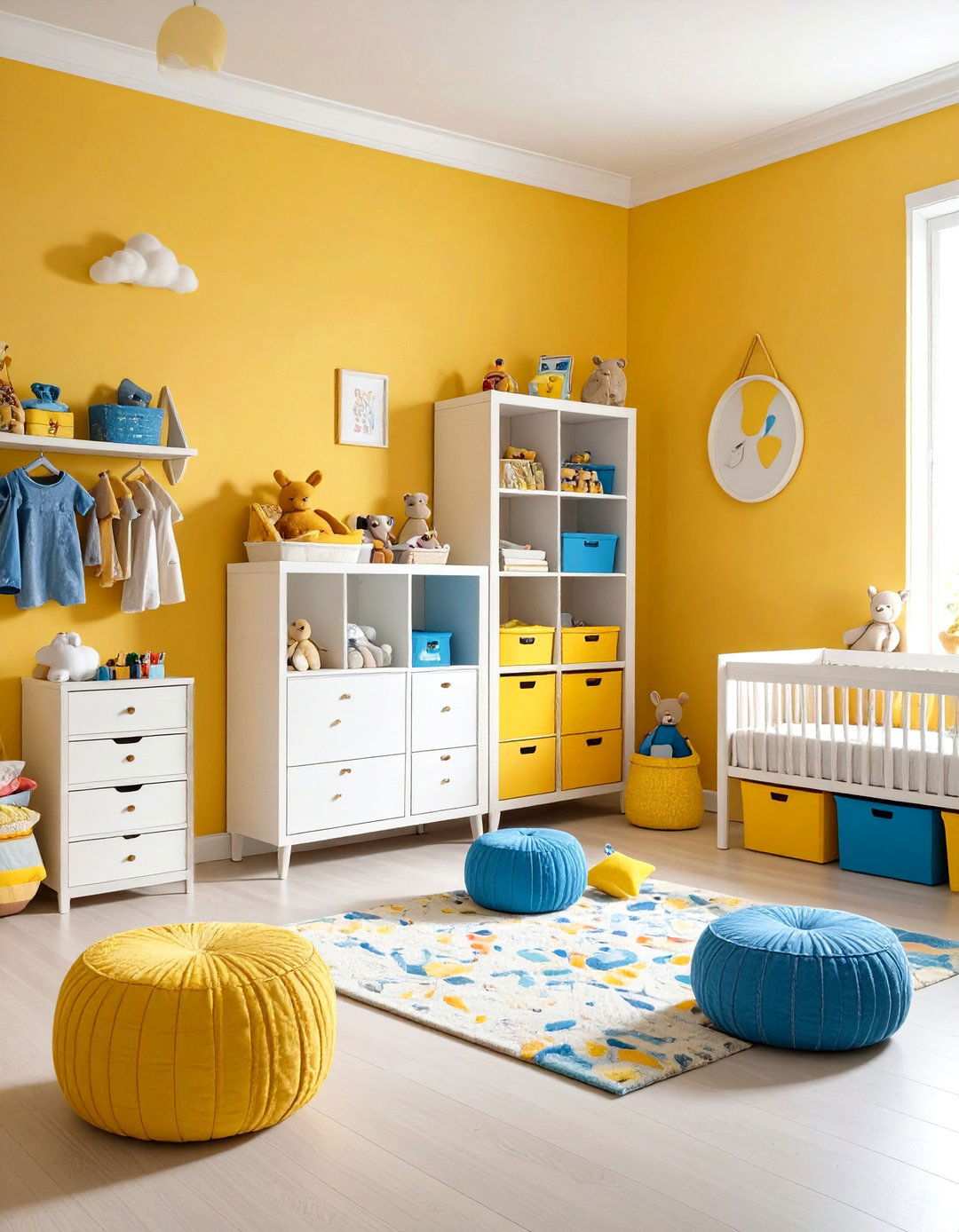
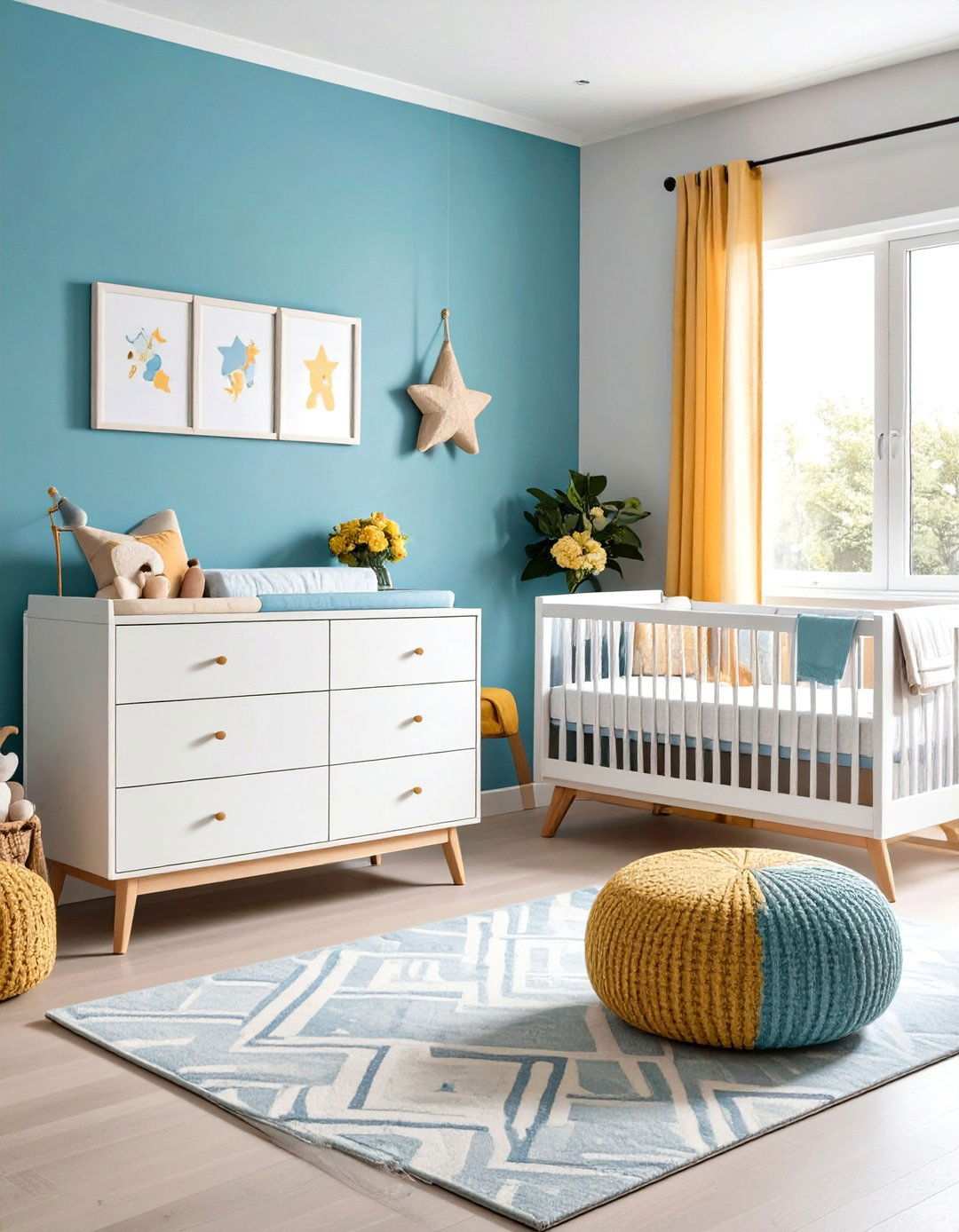
Why not inject energy and personality into a compact nursery with bold, cheerful accents against a neutral backdrop? Paint three walls in soft, soothing hues, and create a striking accent wall in a sunny yellow, coral, or sage green. Choose white or natural wood furniture to allow the accent color to take center stage. Add coordinating accessories like colorful storage bins, a vibrant area rug, and eye-catching wall art to create a visually appealing atmosphere. Use the accent color sparingly in textiles and decor to avoid overwhelming the small space. This creative approach generates visual interest and personality while maintaining the light, airy feeling essential in compact nurseries. The bold color becomes a focal point that can easily be adapted as your child develops preferences and the space evolves.
9. Whimsical Under-Stair Haven
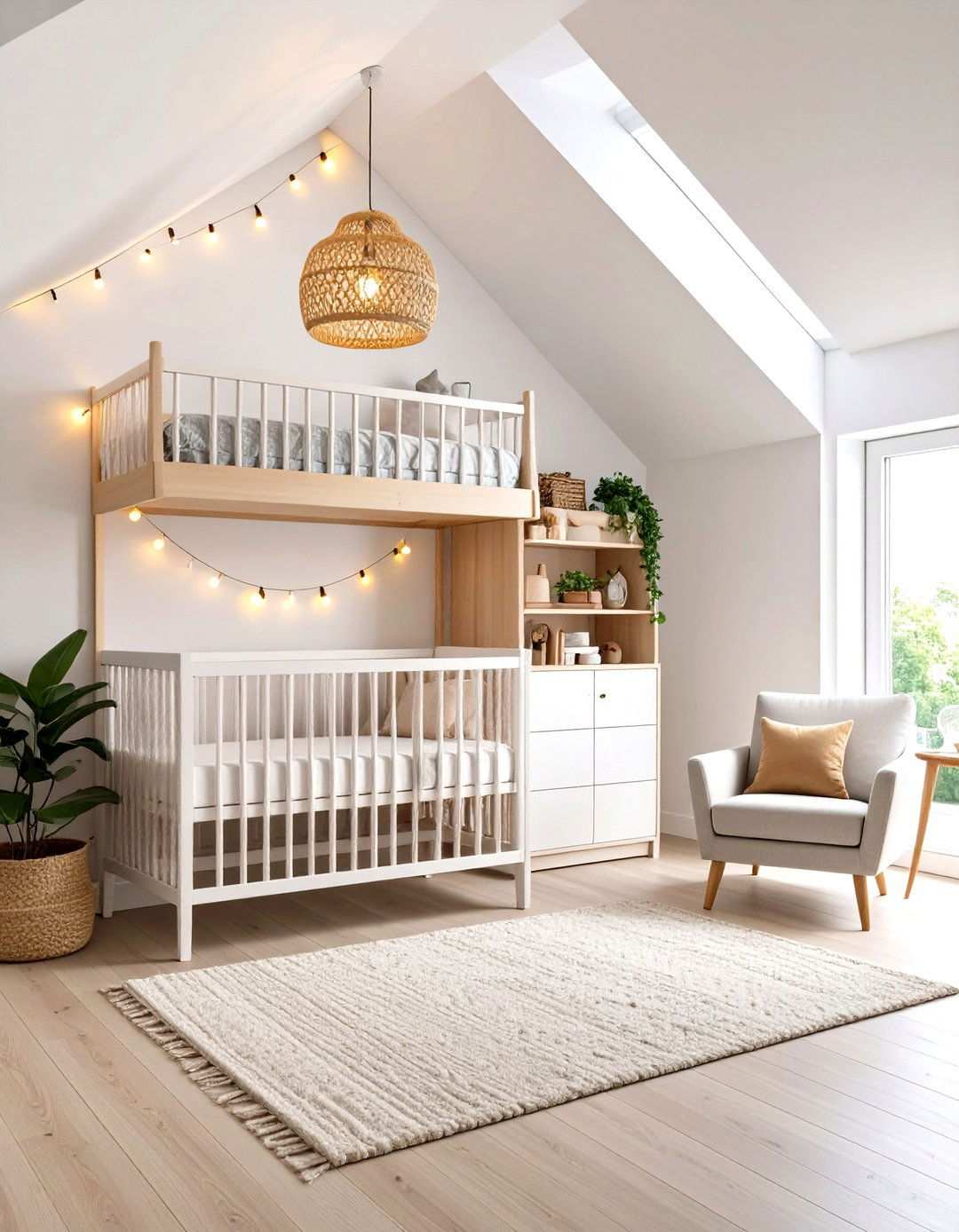
Can under-stair spaces be repurposed into enchanting nurseries? With thoughtful planning and creative vision, transform this often-overlooked area into a snug haven for your little one. Design storage units that complement the stair’s slanted ceiling, utilizing every available inch of vertical space. Opt for low-profile furniture that fits harmoniously beneath the lowest ceiling points. To brighten the naturally subdued space, incorporate string lights or LED strips. Paint the walls in calming hues and employ mirrors to reflect light, creating an illusion of greater space. Ensure proper ventilation and install electrical outlets for monitoring equipment and lighting. A custom-fitted crib and built-in storage make this unique space both practical and captivating. By repurposing this unconventional area, you’ll create a truly special nursery that feels like a hidden gem.
10. Adaptable Nursery Oasis
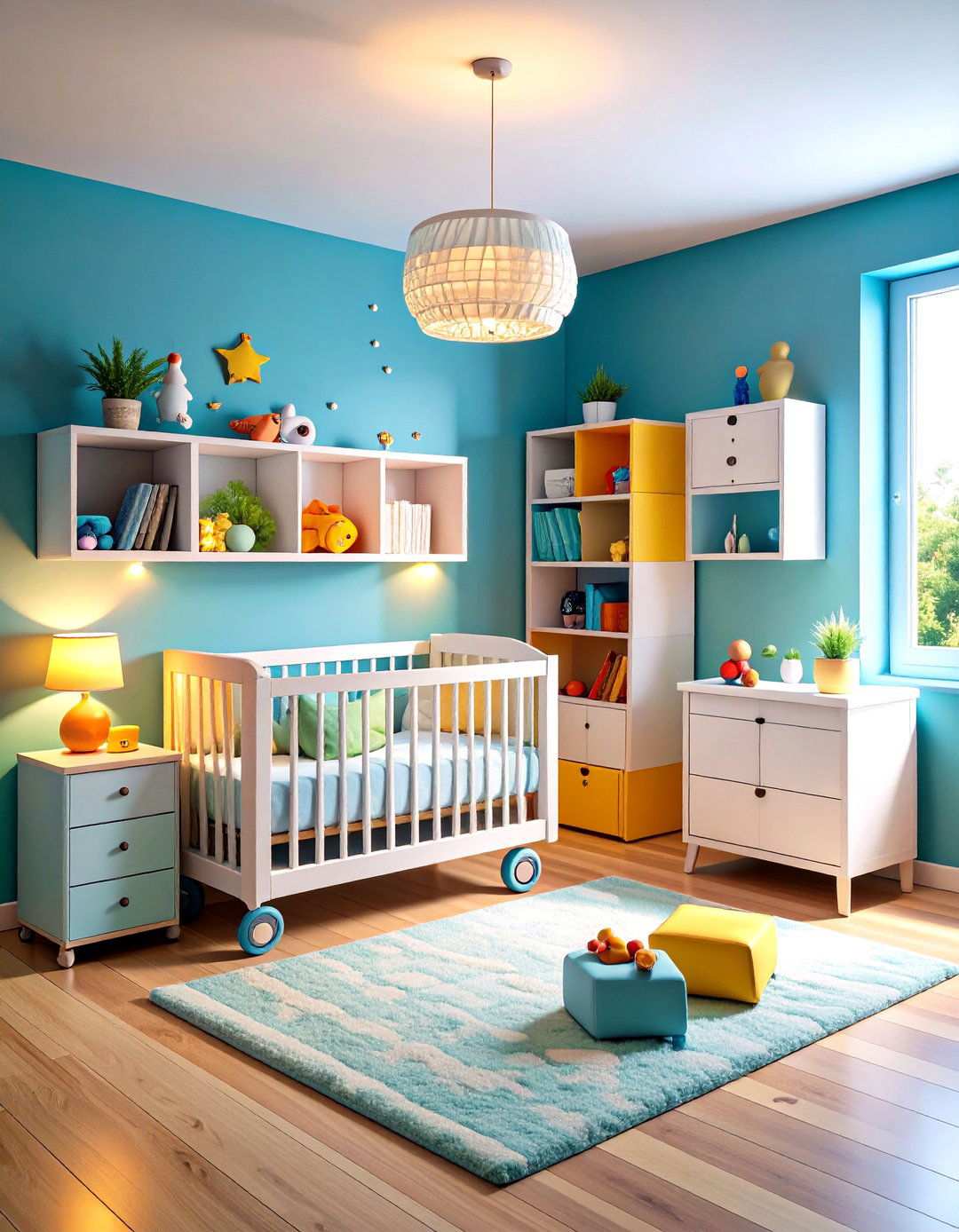
Require flexibility in your small space arrangement? Create a nursery using lightweight, portable furniture that can be effortlessly rearranged as needs evolve. Select a portable crib on wheels, rolling storage carts, and lightweight chairs that glide effortlessly across the floor. Modular storage cubes that stack and reconfigure based on current needs are also ideal. Choose battery-operated lighting that eliminates the need for permanent electrical work. This adaptable approach allows you to adjust the nursery layout for different activities or move everything aside when you need the space for other purposes. Portable solutions work particularly well in studio apartments or multipurpose rooms where the nursery must coexist with other functions. Despite its temporary nature, this setup can be just as cozy and functional as permanent installations.
11. Timeless Vintage Nursery
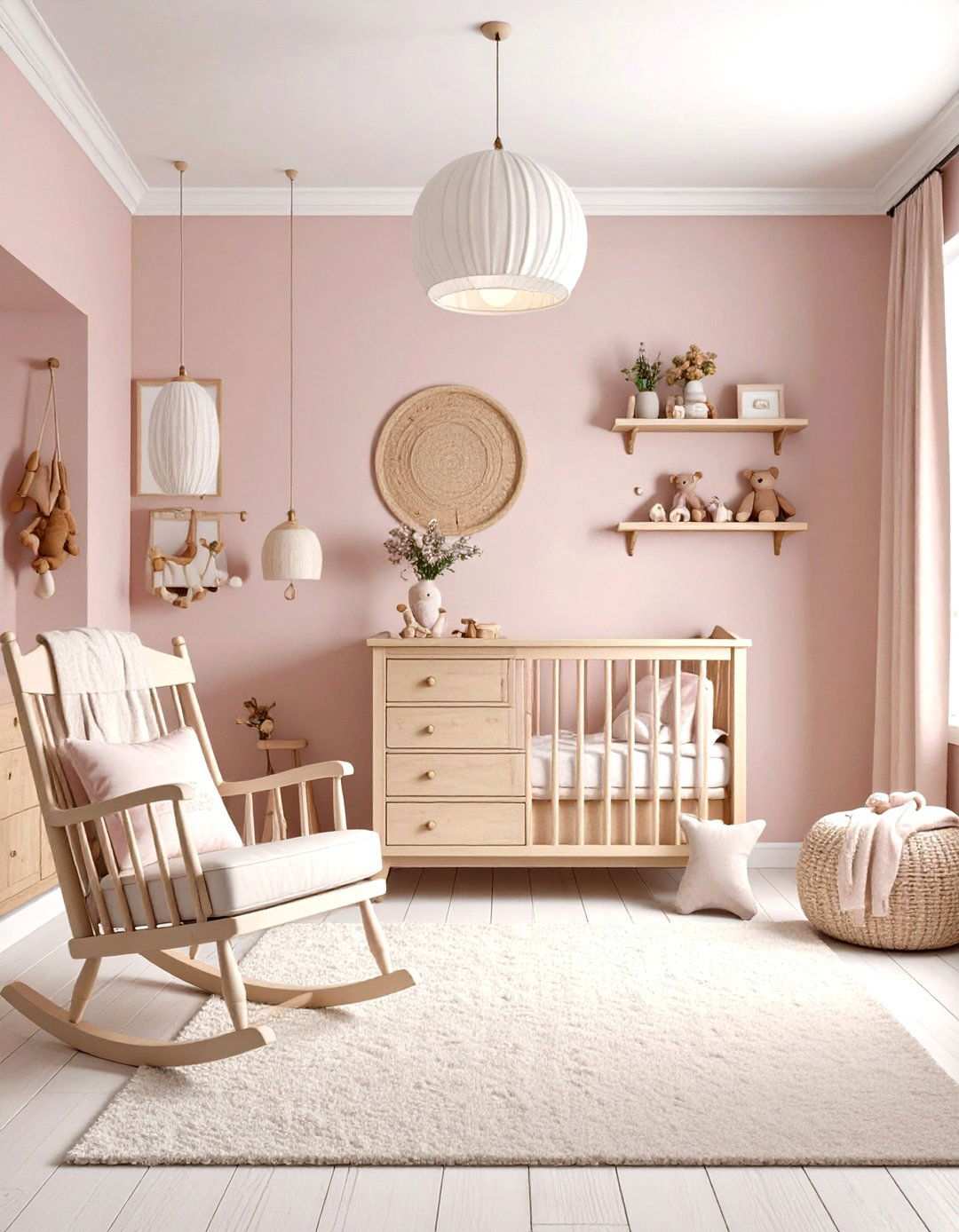
Do you envision a nursery filled with enduring vintage charm? Combine antique treasures with space-saving solutions to create old-world character in compact quarters. Hunt for vintage pieces like a restored rocking chair, an antique dresser repurposed for changing, and classic wooden toys for decoration. Blend these treasures with modern storage solutions like floating shelves and wall-mounted organizers. Choose soft, muted colors reminiscent of vintage nurseries—dusty rose, sage green, or creamy yellow. Add vintage-inspired textiles like quilts and embroidered pillows. Install vintage-style lighting fixtures that provide adequate illumination while maintaining the theme. This approach creates a nursery rich with character and family history while incorporating practical modern conveniences necessary for small space living.
12. Single-Note Symphony
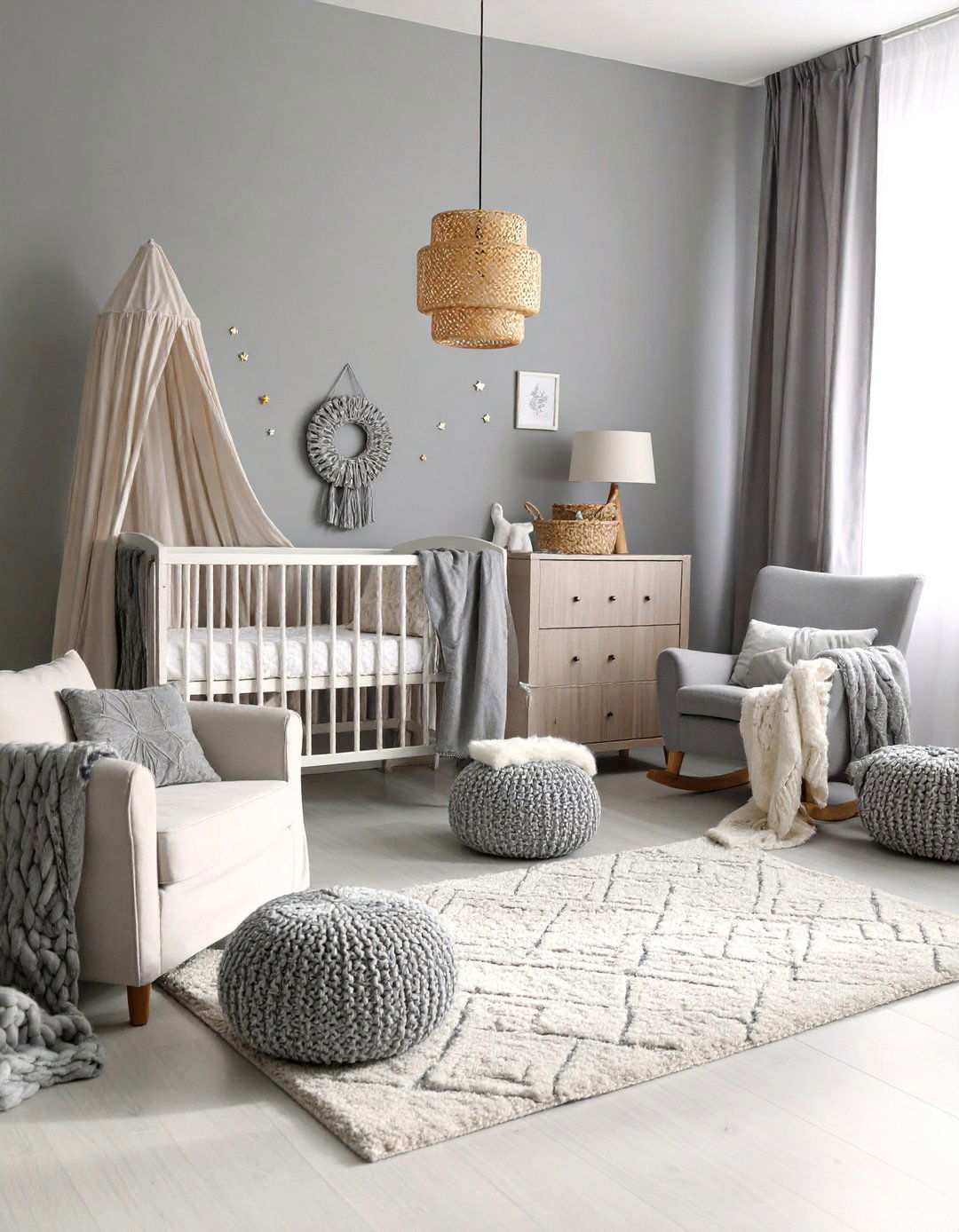
Designing a small nursery around a single color can create a profound sense of depth and refinement. By harnessing the power of varying shades within a unified palette, you can craft a cohesive space that appears larger than its actual dimensions. Soft grays, warm beiges, or gentle blues make ideal bases for your monochromatic scheme. Incorporate lighter and darker variations throughout the room to add visual nuance. Introduce an array of textures, such as smooth paint, woven baskets, and knitted throws, to add visual interest within the monochromatic framework. This approach dissolves visual fragmentation, preventing small spaces from feeling chaotic. Balance the space with white or cream accents to prevent it from feeling flat. The resulting design exudes sophisticated simplicity, capturing beautiful images and establishing a calming environment for both baby and parents.
13. Bohemian Oasis
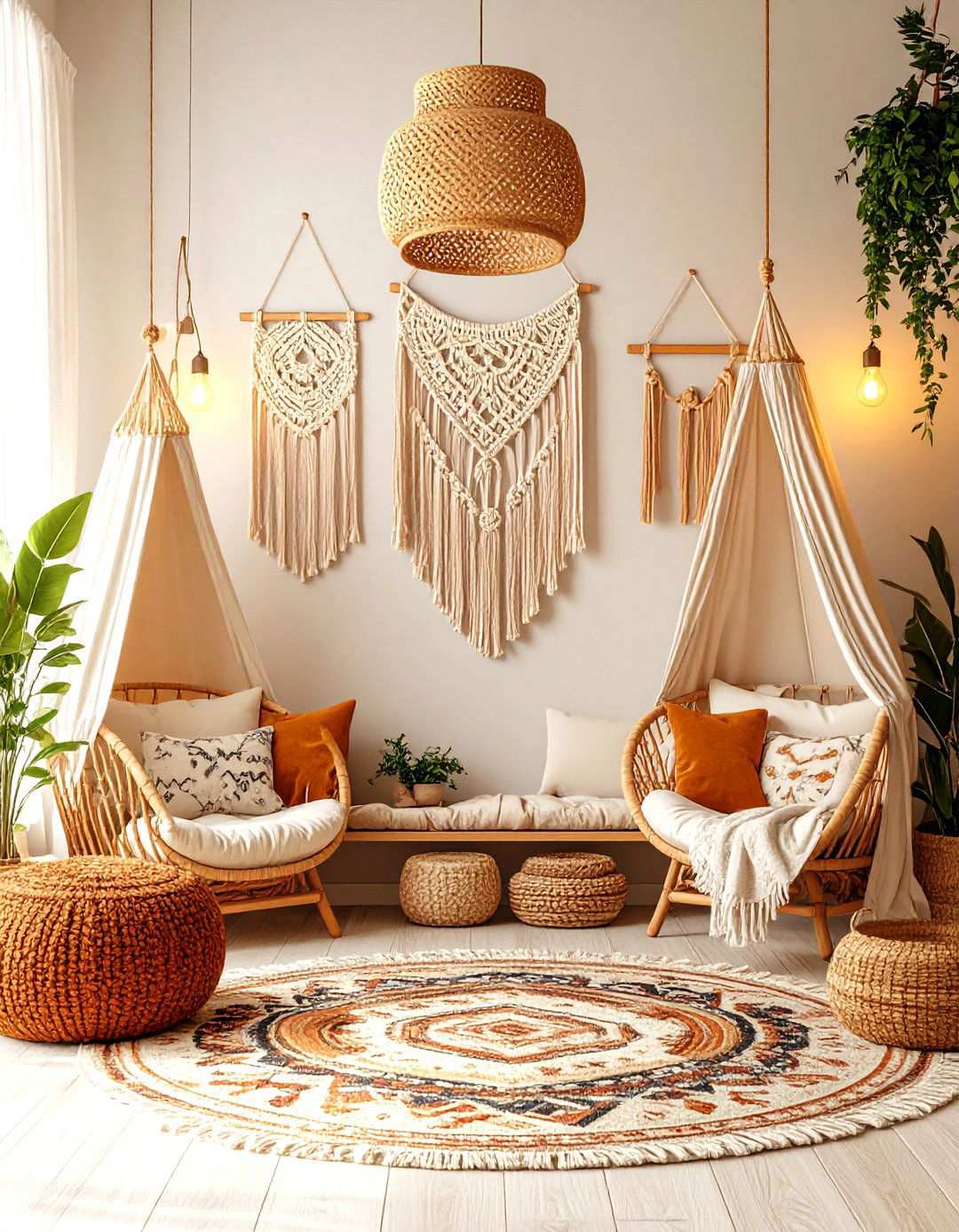
Bringing bohemian flair into a small nursery can have a profound effect on its ambiance. Create a warm, textured environment by combining natural materials, earthy tones, and globally inspired accessories. Layer different textures through intricate macrame wall hangings, woven baskets, and patterned rugs. Select warm paint colors like terracotta, dusty rose, or sage green to infuse the space with warmth. Introduce plants in hanging planters to inject life into the space without occupying valuable floor area. Use floor cushions and poufs for flexible seating that can be easily stowed away. String warm Edison bulb lights for ambient lighting that creates a cozy atmosphere. This relaxed, artistic approach celebrates handmade elements and natural materials, crafting an intimate space that feels worldly and welcoming despite its compact size.
14. Modern Minimalist Mastery
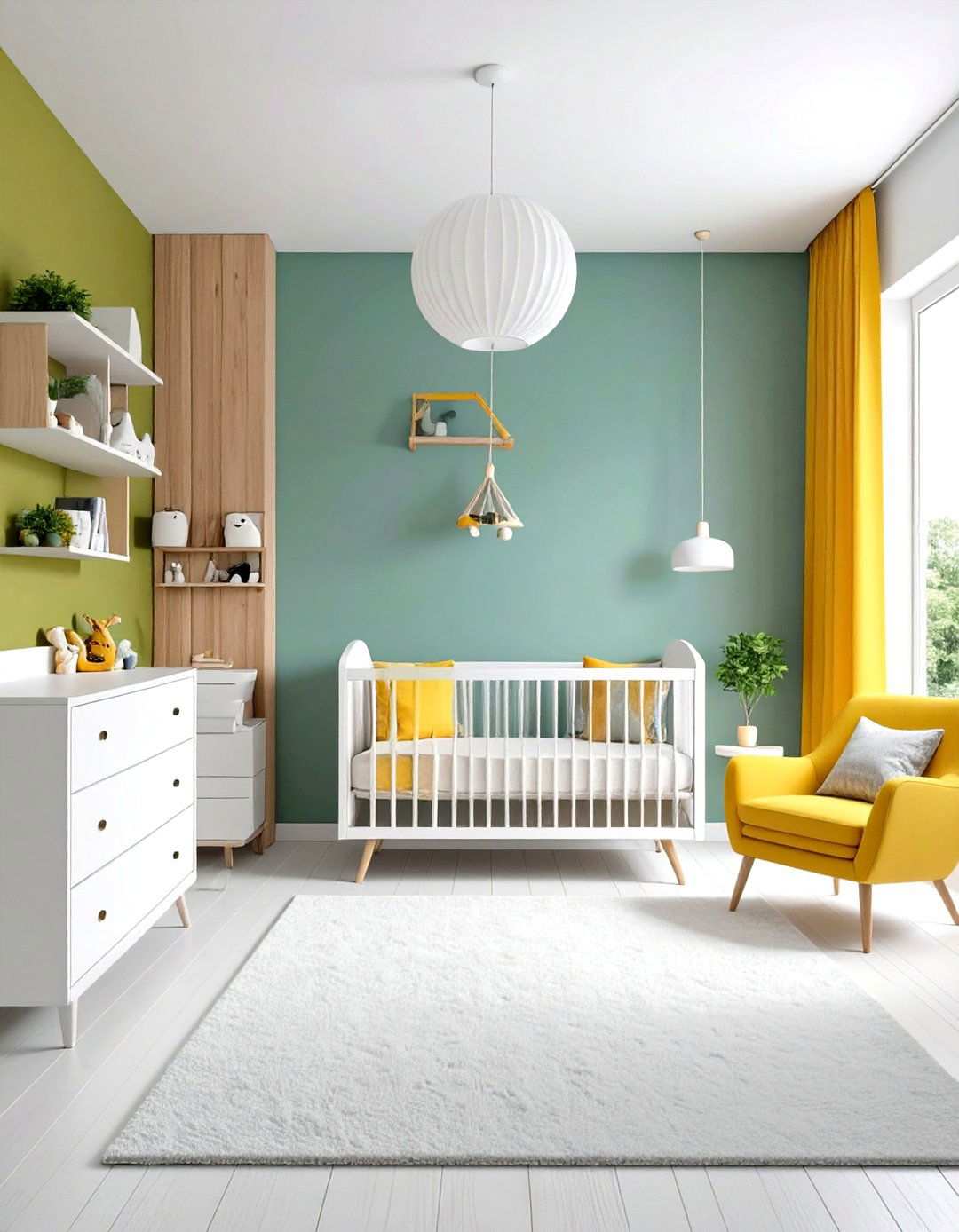
Achieving calm sophistication in a tiny nursery requires a thoughtful approach to design. By stripping away excess and focusing on clean lines, functional furniture, and purposeful design elements, you can create a serene and organized space. Choose furniture with simple geometric shapes in white, black, or natural wood to maintain a sense of calm. Limit the color palette to two or three colors maximum to avoid visual overload. Opt for multi-functional pieces like a crib with built-in storage and a changing table that doubles as a dresser. Keep wall decor minimal, perhaps featuring a single piece of oversized art or a simple mobile. Utilize hidden storage solutions to maintain clean sightlines. This pared-down approach reduces visual clutter, making the small space feel peaceful and organized. Every element serves a purpose, contributing to an overall aesthetic of refined simplicity.
15. Harnessing the Power of Natural Light
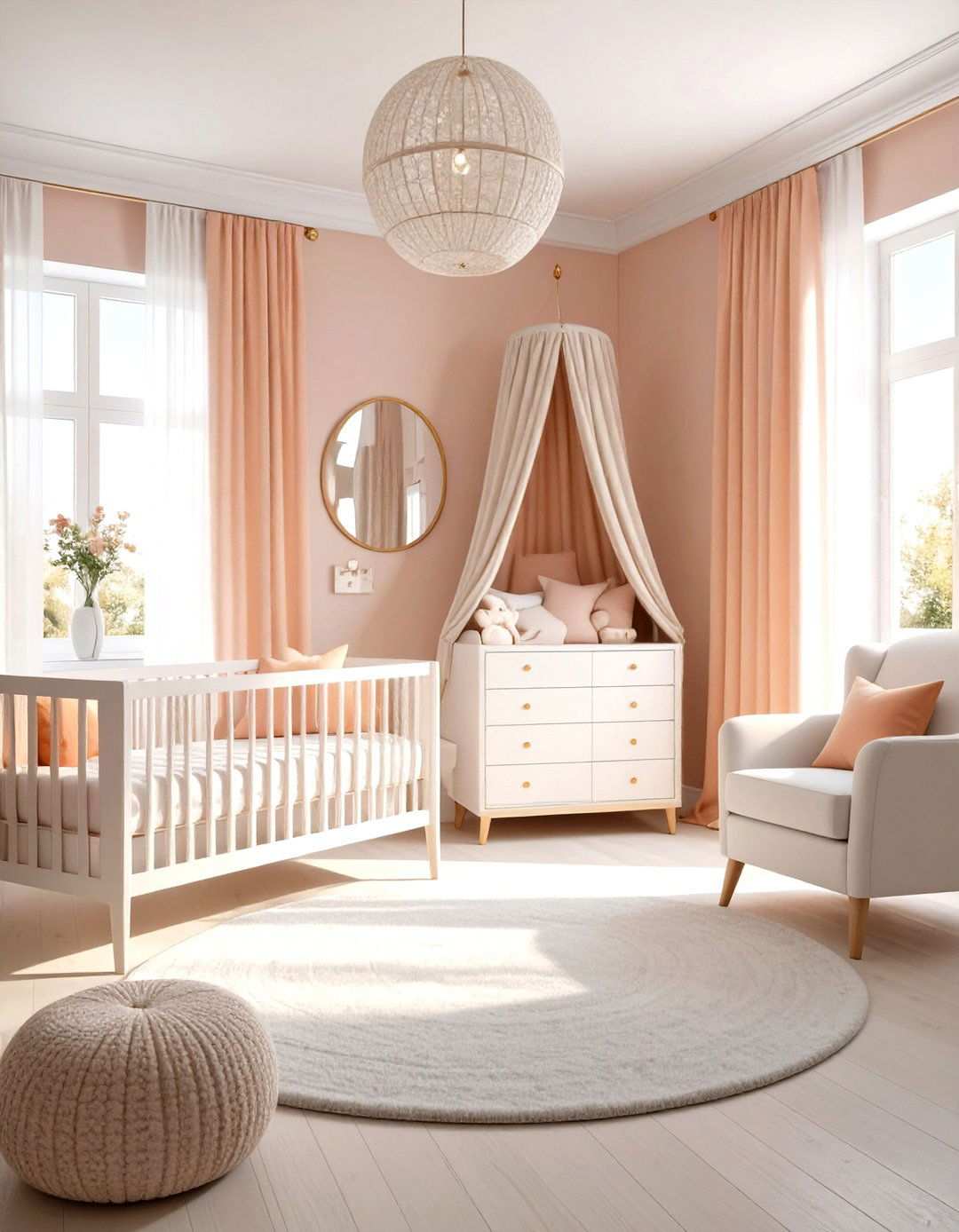
A well-designed nursery can often be hindered by limited natural light. To create a bright, airy atmosphere, consider amplifying and reflecting the available light. Strategically placing mirrors is a great way to bounce light around the room, while choosing light-colored or white furniture helps to reflect rather than absorb it. Hang sheer curtains that filter light while maintaining an element of privacy, and select paint colors that are light and reflective. Glossy or semi-gloss finishes can also help to bounce light around the room. Furthermore, opting for furniture with legs rather than solid bases allows light to flow underneath, creating a sense of openness. Adding metallic accents in light finishes like brushed silver or gold can further enhance the reflective properties of the room, transforming even the smallest and darkest spaces into bright, cheerful environments.
16. The Multi-Faceted Storage Ottoman
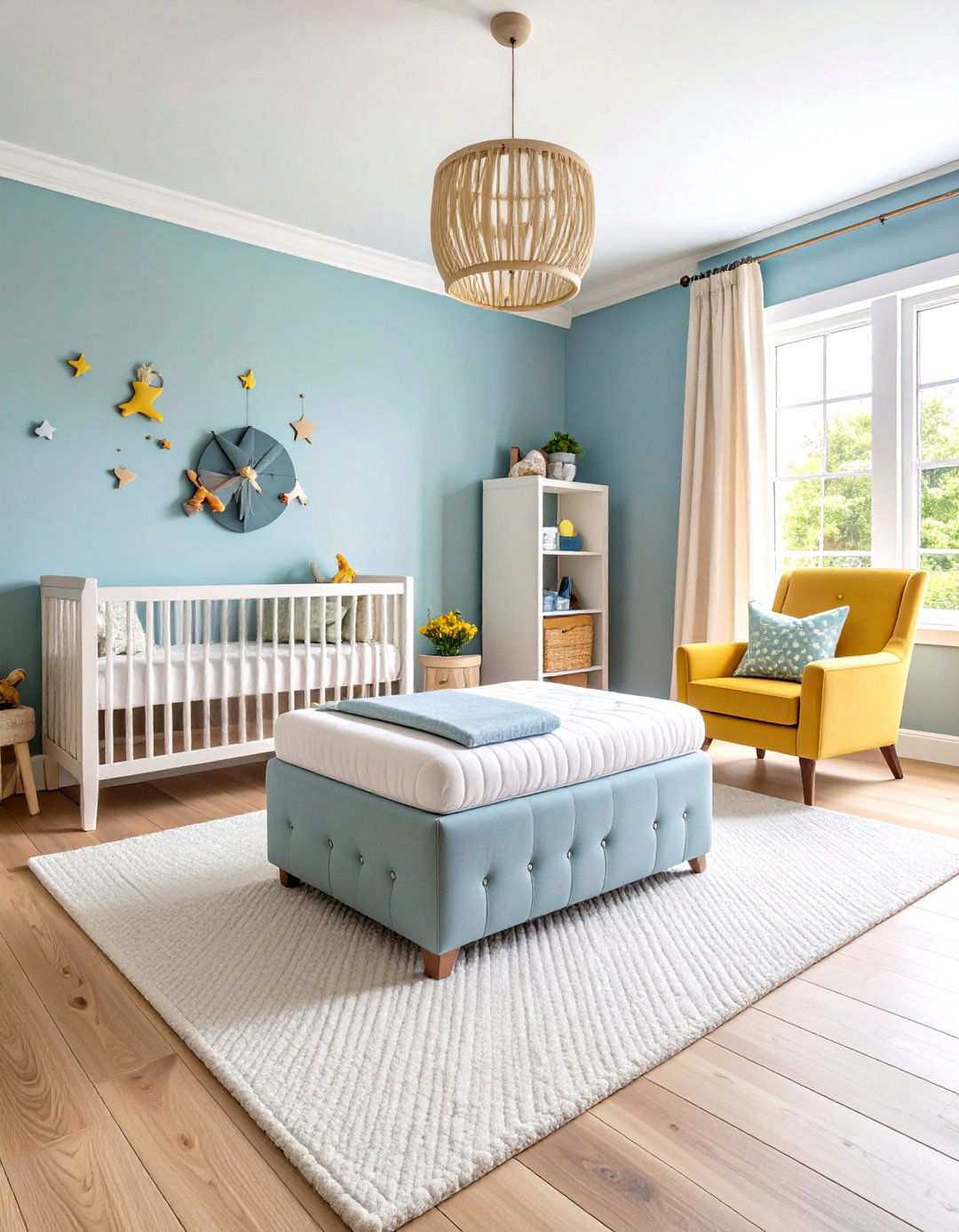
A well-designed nursery can often benefit from a piece of furniture that serves multiple purposes. A large storage ottoman can be the perfect solution, serving as seating, storage, a changing surface, and play area. When selecting an ottoman, consider one that is large enough to sit comfortably while nursing, yet spacious enough to store blankets, toys, and supplies inside. Positioning the ottoman centrally, with the crib and other essential furniture arranged around it, can help to simplify the room layout and provide maximum functionality from minimal furniture pieces. As your child grows, the ottoman can be repurposed as a play table, fort-building base, and general seating area. This central focus can help to create a sense of cohesion in the room, making it easier to manage the space as your child develops.
17. Unlocking the Potential of Ceiling Storage
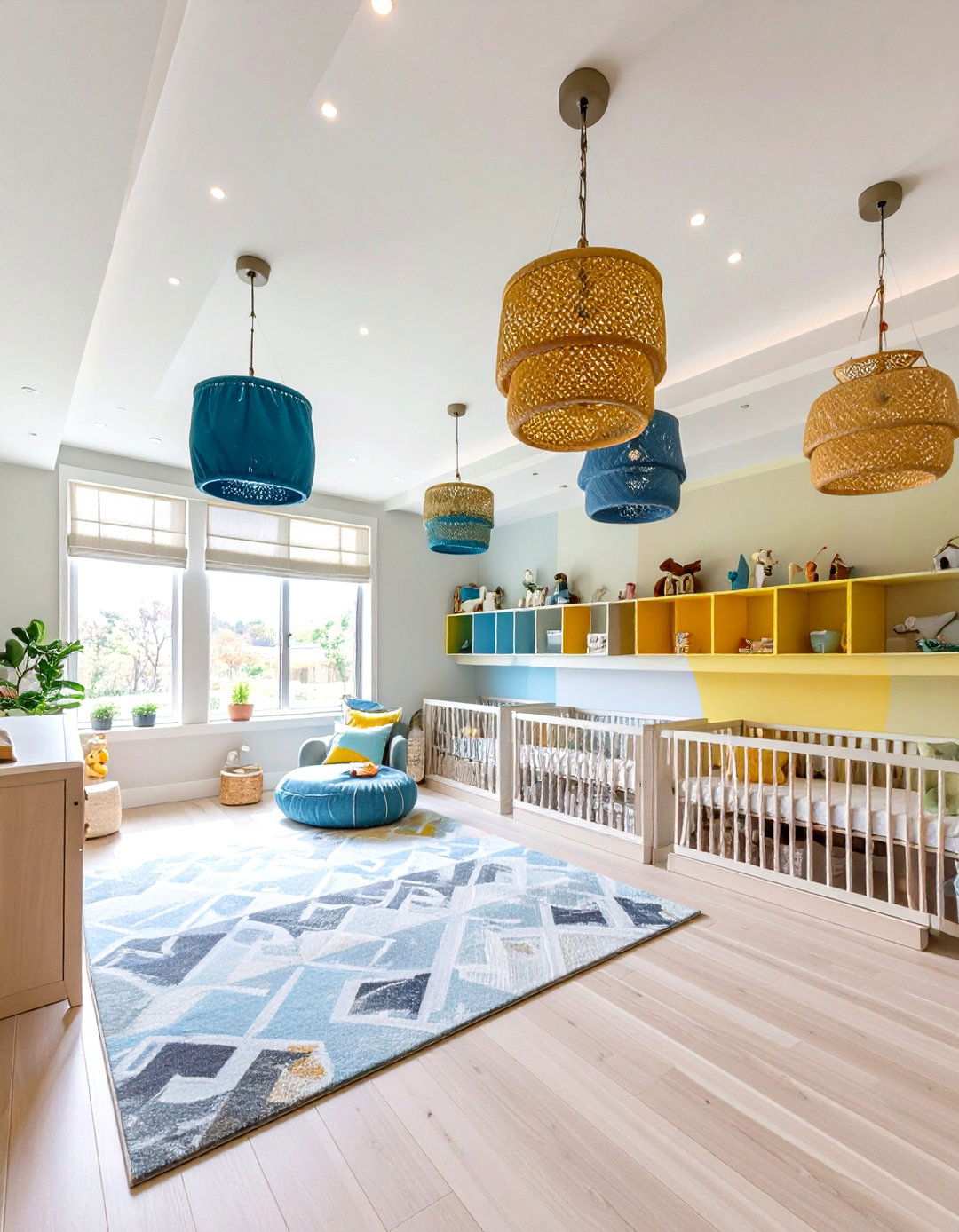
Rather than limiting storage to walls and floors, consider the often-untapped potential of ceiling space. Installing overhead storage solutions can help to keep essentials accessible, while freeing up precious floor and wall space. Hanging mesh bags from ceiling hooks is a great way to store lightweight items like stuffed animals and extra blankets, while a pulley system can be used to store seasonal clothing that can be lowered when needed. Ceiling-mounted tracks with hanging baskets can also be used to add visual interest through varied storage heights and configurations. By ensuring that all ceiling storage is safely secured and positioned away from the crib area, you can create a nursery that is both functional and visually appealing. This innovative approach can help to add a sense of calm and serenity to the room, making it a peaceful space for your child to grow and develop.
18. Corner Haven Creation
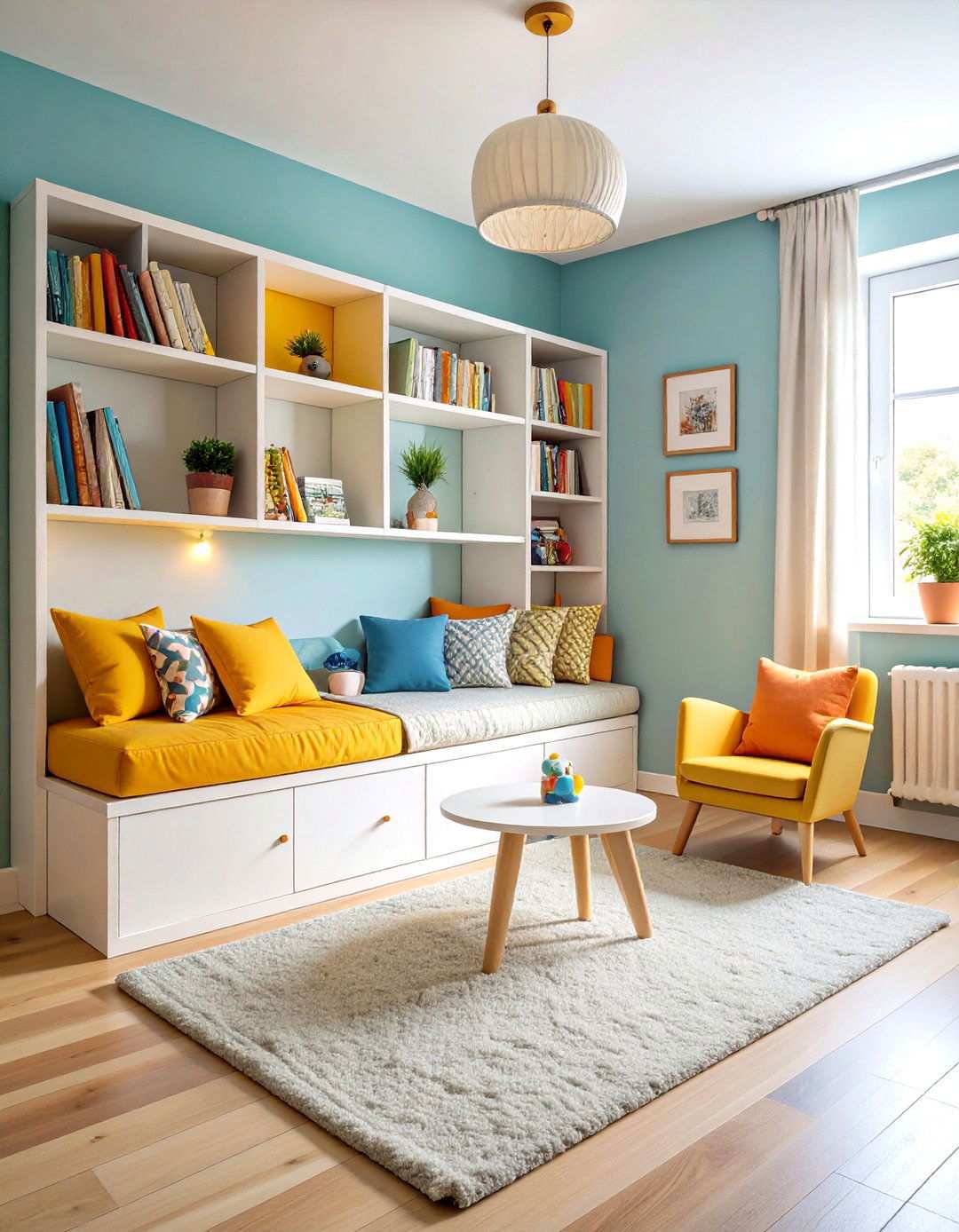
Imagine turning an overlooked corner into the nursery’s crowning glory. This serene reading nook can evolve from a soothing infant haven to a toddler’s independent retreat. To create this haven, incorporate corner floating shelves for an ever-growing book collection and a plush, cushioned seat or compact chair. Delightfully soft lighting from a table lamp or stylish wall sconce adds warmth to the space. Include a compact side table for storing current stories and perhaps a soothing cup of tea during those extended nursing sessions. Opt for durable, easy-to-clean fabrics that prioritize comfort and practicality. As your little one grows, this secluded corner becomes their treasured sanctuary for peaceful time and captivating storytime. The strategic placement keeps this cozy retreat separate from sleeping and play areas, making the most of often-wasted space.
19. Gentle Rainbow Inspiration
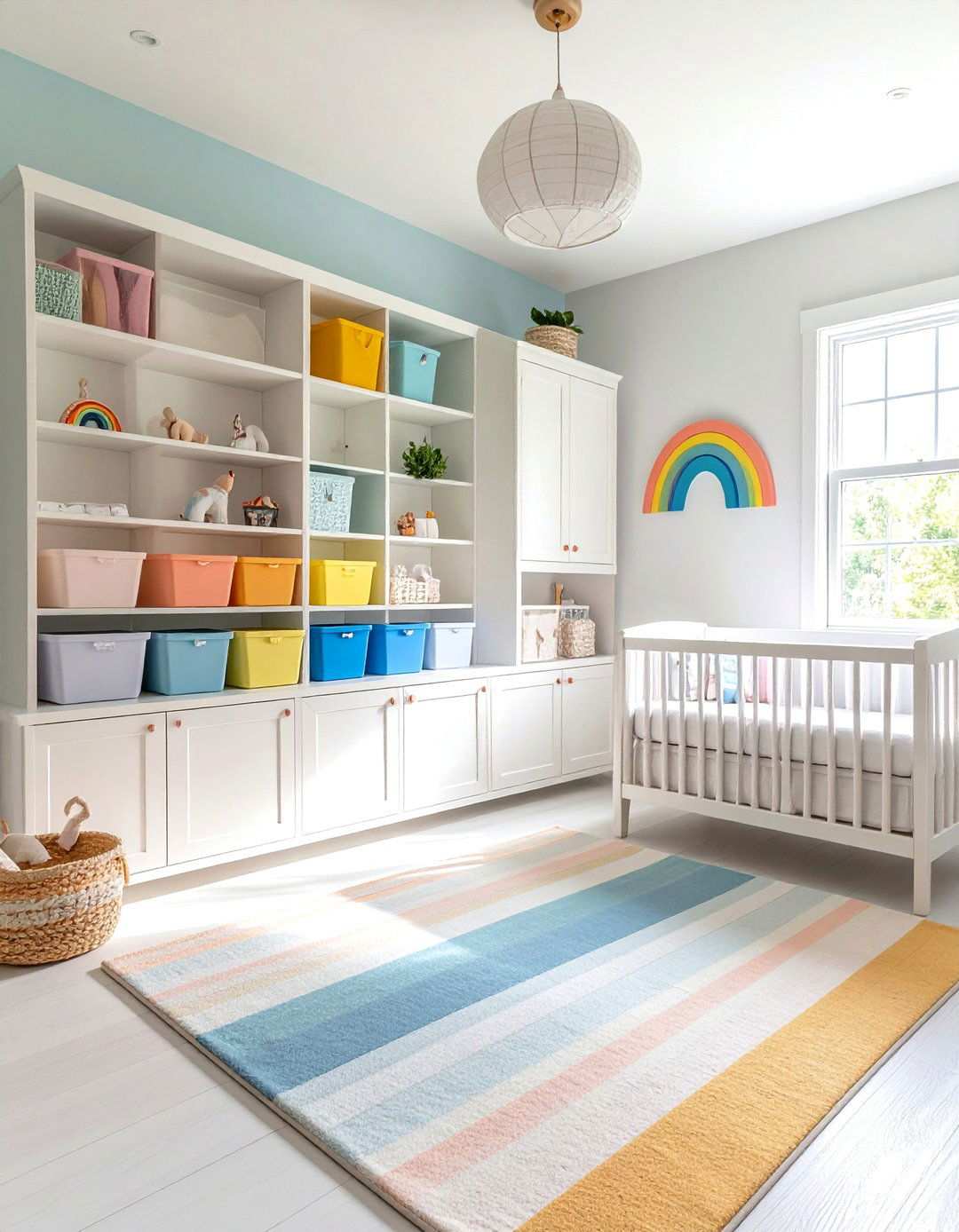
Can a small space be transformed into a vibrant haven without overwhelming the senses? Design a soothing rainbow theme by incorporating soft pastel interpretations of these colors throughout the nursery. Paint a subtle accent wall with gentle rainbow stripes or use rainbow-hued storage bins, books, and toys to introduce a playful touch. Select one or two pastel colors as the primary palette and incorporate the others through more discreet accessories. A crisp white or creamy base color helps maintain the space’s airy and open feel. Introduce whimsical elements through art, mobiles, and textiles, rather than bold paint colors. This creative approach thoughtfully introduces color and personality while preserving the essential calm atmosphere necessary for restful sleep. The rainbow theme can grow and adapt as your child navigates from nursery to toddlerhood and beyond.
20. Versatile Furniture Design
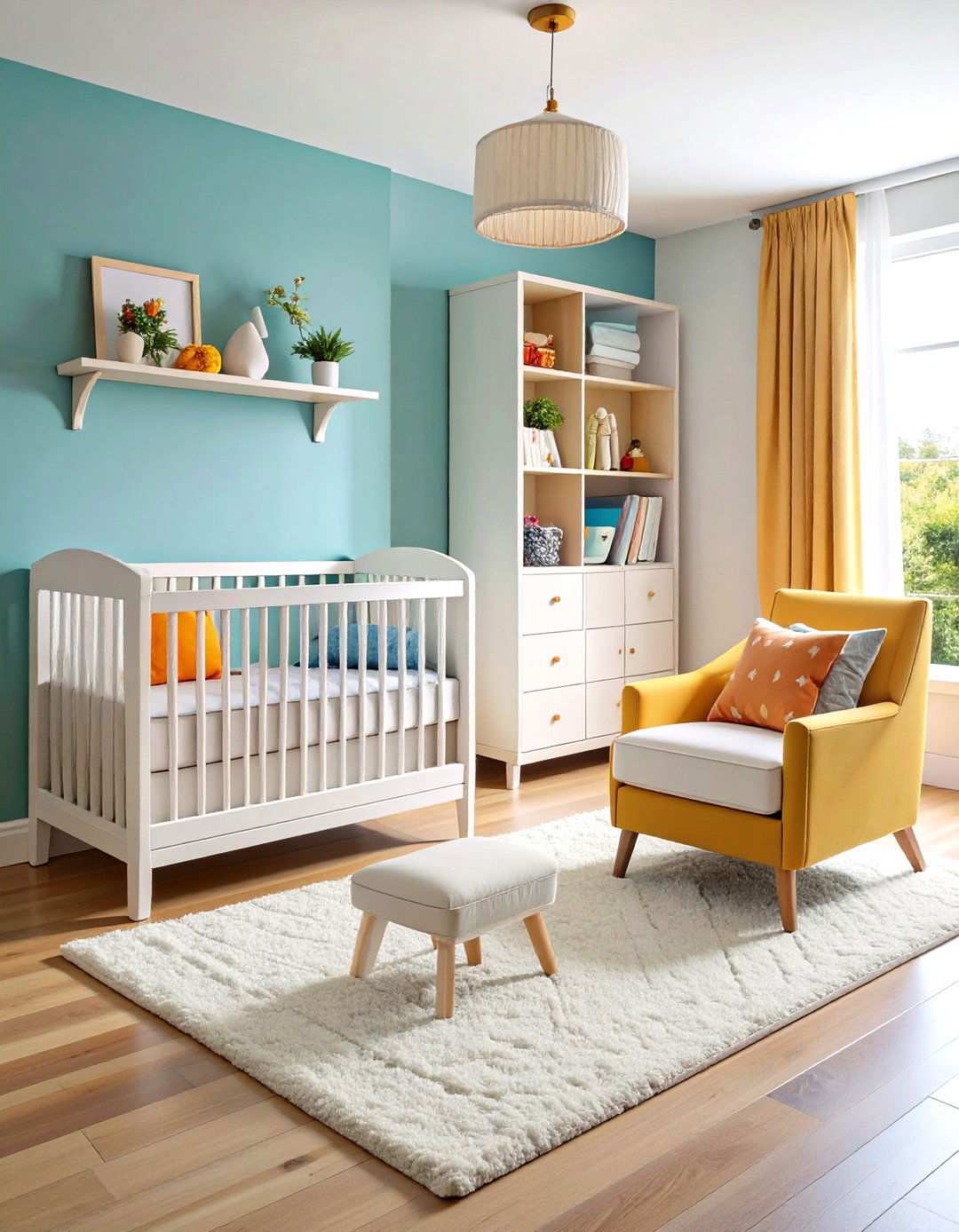
What if every piece of furniture contributed to the nursery’s functionality? Design your small nursery around furniture that serves multiple purposes, ensuring each item earns its keep. Choose a crib with built-in storage drawers, a changing table that doubles as a dresser, and a rocking chair with hidden storage beneath. Select side tables with built-in shelving and ottomans with cleverly concealed storage. Use a multi-functional bookcase as a room divider and storage solution. Install a space-saving fold-down desk that can serve as a diaper supply station now and a homework hub later. This thoughtful approach guarantees maximum functionality from minimal furniture while maintaining a serene, clutter-free atmosphere. Each piece becomes a valuable asset, providing better value while occupying less precious square footage. The result is a highly functional nursery that adapts and evolves as your child’s needs change.
21. Elevating Texture in Small Spaces
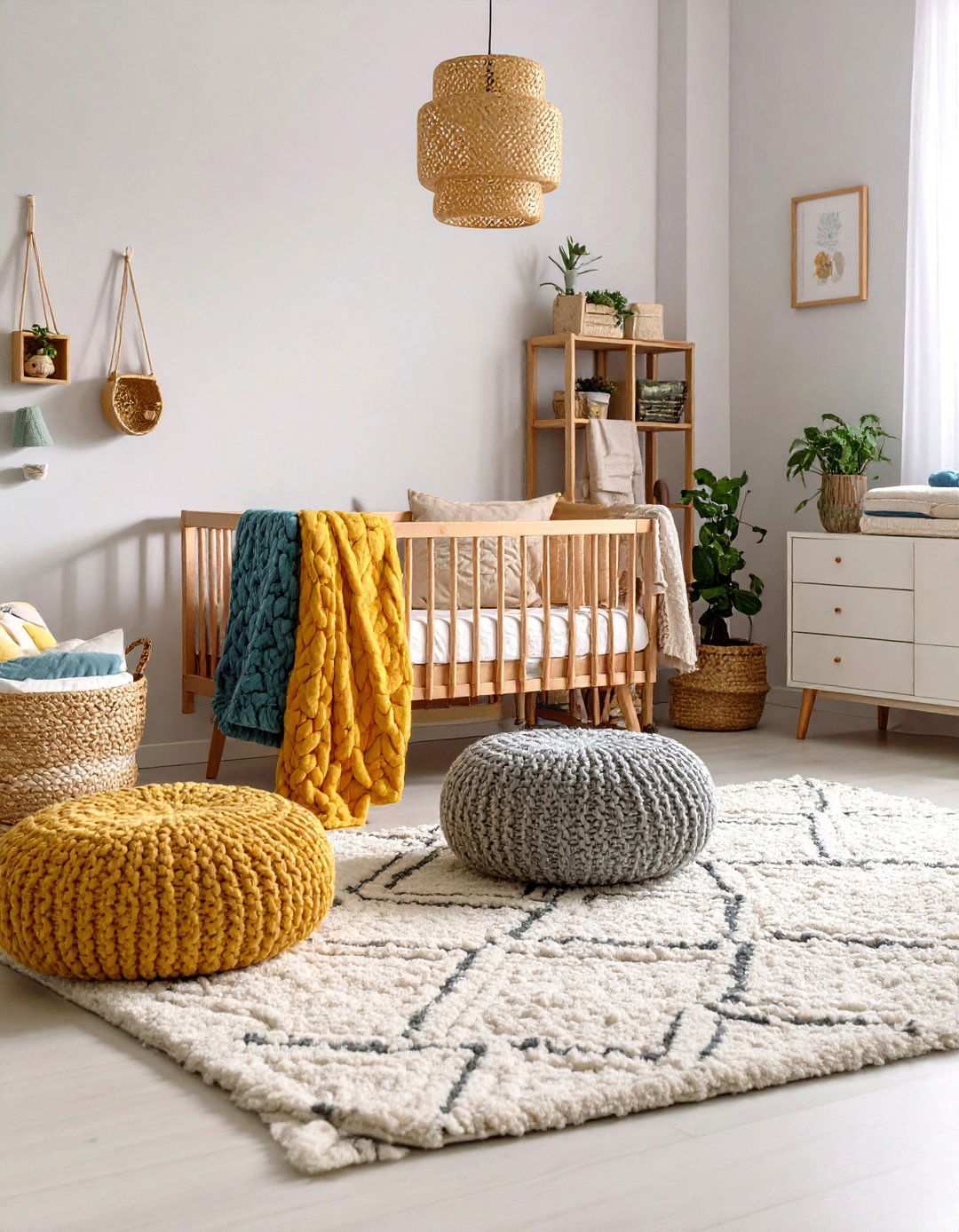
Achieving warmth and coziness without sacrificing precious square footage is a design challenge many face. One effective solution is to create a visually appealing and tactilely comforting environment by layering various textiles. This approach allows you to combine contrasting textures, such as the softness of cotton crib sheets with the chunkiness of knit throws, woven basket storage, and plush area rugs. Don’t forget to incorporate texture through curtains, wall hangings, and decorative pillows. For added convenience, opt for washable options that make maintenance a breeze. When it comes to mixing patterns, strike a balance between bold geometric designs and smaller prints to create a visually appealing and harmonious space. By embracing this textile-focused strategy, you can infuse your nursery with personality and warmth, knowing that it’s easily adaptable as styles and preferences evolve over time. The result is a space that feels rich and intentional, rather than sparse or inadequate.
22. Maximizing Space with Wall-Mounted Storage
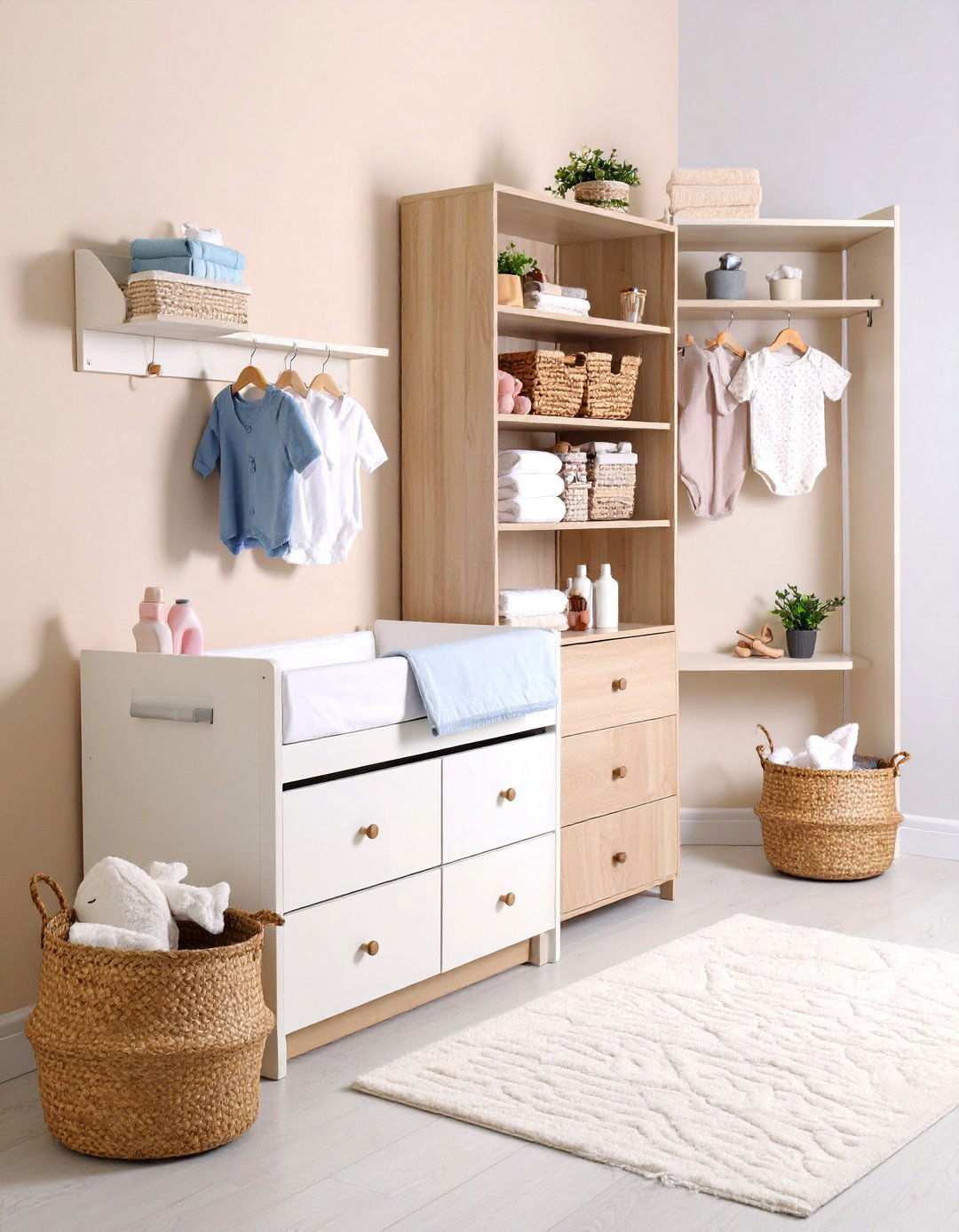
Why waste valuable floor space on a traditional changing table when you can optimize your nursery’s layout with wall-mounted storage solutions? Install a foldable changing station that tucks away neatly when not in use, freeing up floor space for the crib and other essential furniture. When designing your station, consider mounting it at a comfortable height, complete with safety straps and guardrails. To complement the changing station, add nearby shelving or cubbies for storing diaper supplies, wipes, and clothes. A small waste receptacle that mounts to the wall underneath is also a practical addition. By adopting this space-saving strategy, you can enjoy a safe and convenient changing area without sacrificing precious floor space. When the changing station is folded up, it barely protrudes from the wall, allowing you to make the most of your nursery’s layout.
23. Softening the Space with Layered Lighting
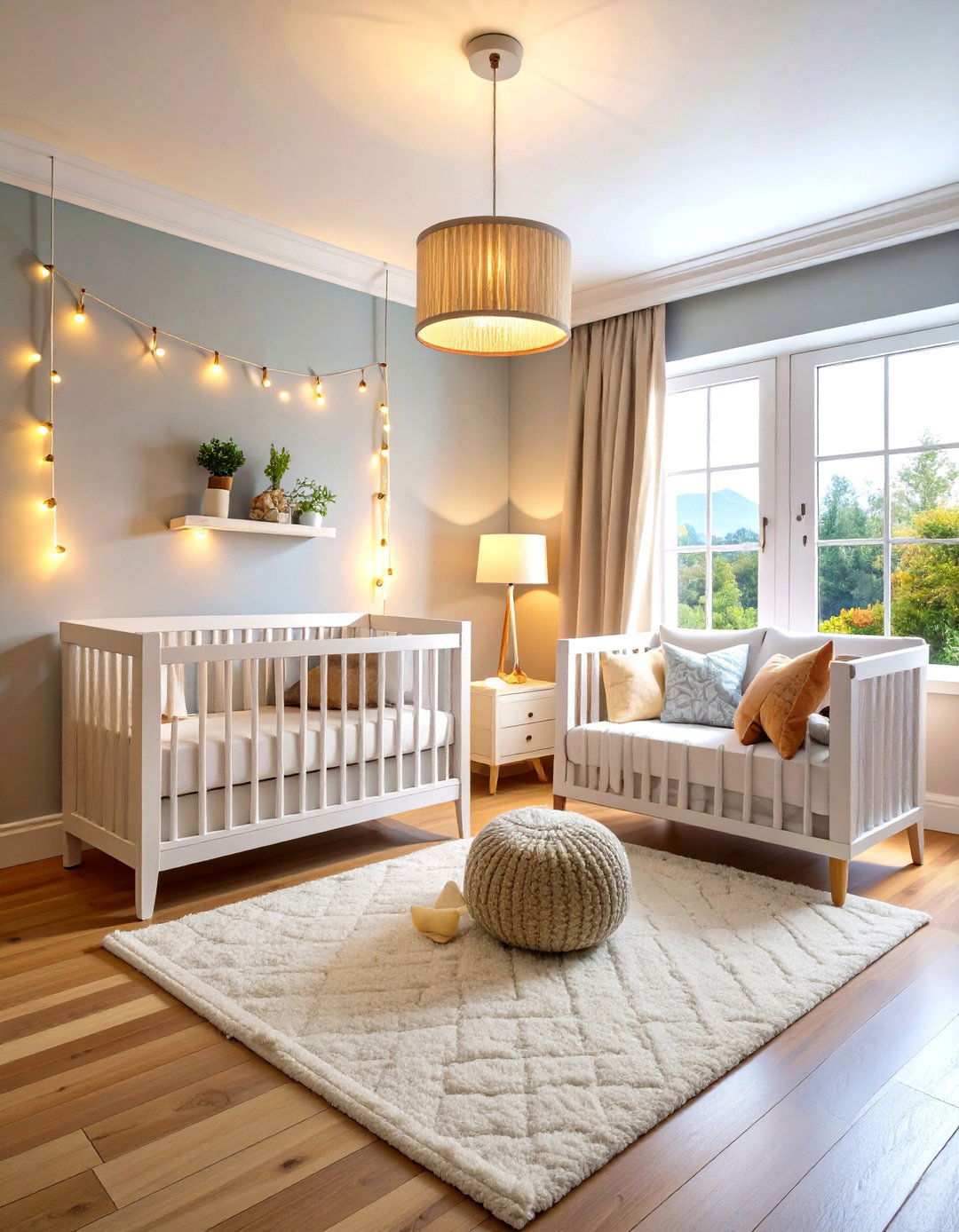
Thoughtful lighting can transform a small nursery’s atmosphere in ways you never thought possible. Rather than relying on harsh overhead fixtures, create a comprehensive lighting plan by incorporating multiple soft sources. This approach allows you to adjust brightness levels using dimmer switches on your main lights. To add ambient lighting, install battery-operated LED strips under shelves, casting a warm glow throughout the space. Table lamps with warm bulbs are perfect for task lighting during feeding times, while wall sconces that direct light upward can bounce it off the ceiling. For a magical evening ambiance, string lights around windows or shelving are a great option. When selecting light temperatures, opt for warm tones that promote relaxation and sleep. By embracing this layered lighting approach, you can create a cozy and intimate atmosphere that makes your small nursery feel warm and inviting, rather than cramped or clinical.
24. Designing for Evolution
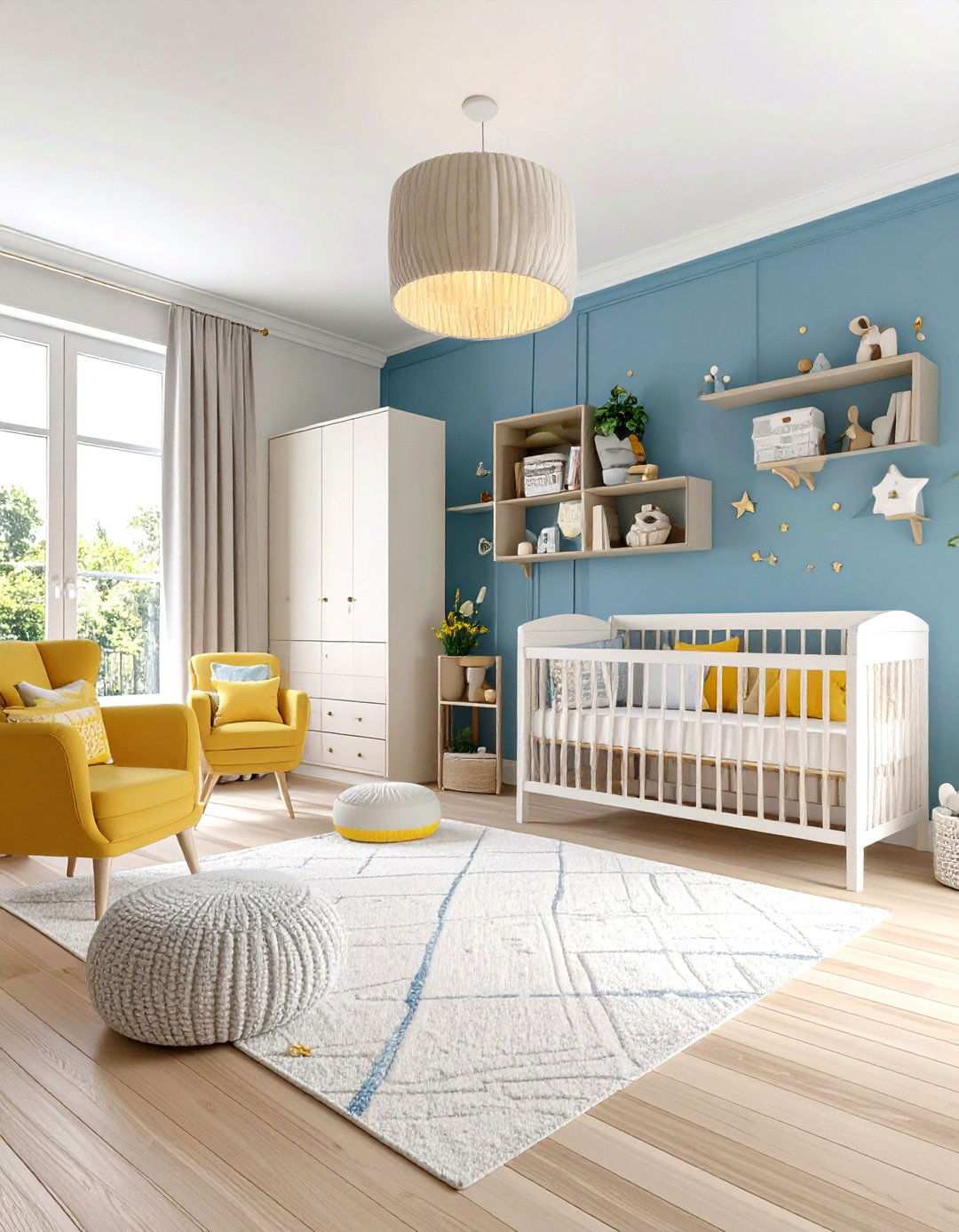
Envision a nursery that evolves in tandem with your child’s growth, adapting seamlessly from infancy to toddlerhood without necessitating a complete overhaul. To achieve this, plan a design that is intentionally flexible and open to transformation. A key element is selecting neutral wall colors that can easily integrate with diverse decor preferences as your child matures.
Consider furniture that serves multiple purposes or converts to accommodate changing needs over time. This can include pieces that can be repurposed or remade to suit different stages of development. Removable wall decals can also be a valuable alternative to permanent paint designs, allowing for easy changes in aesthetic without the need for extensive renovations. In terms of pattern and color choices, opt for timeless classics that avoid a “babyish” feel, ensuring the nursery remains stylish and relevant as your child grows. To maximize functionality and minimize clutter, plan storage solutions that cater to diapers in infancy and toys in toddlerhood. Lastly, incorporate adjustable shelving that can be reconfigured to meet evolving needs, ensuring the nursery remains a harmonious and efficient space for years to come.