1. Elevating Your Sewing Experience with Smart Storage Solutions
Transforming your sewing space from cluttered to calming is a game-changer for your creative process. Whether you have an entire room or just a cozy nook, incorporating thoughtful design elements can boost functionality while showcasing your unique style. The perfect sewing haven combines clever storage options with inviting work areas, optimal lighting, and organizational systems that keep supplies within easy reach yet beautifully arranged. Every element, from compact displays to spacious cutting tables, should harmoniously support your artistic journey. By incorporating these inspired design ideas, you’ll create a sanctuary that fuels productivity, sparks imagination, and makes every project an absolute joy to complete.

As an Amazon Associate I earn from qualifying purchases.
2. Unleashing the Power of Pegboard Displays
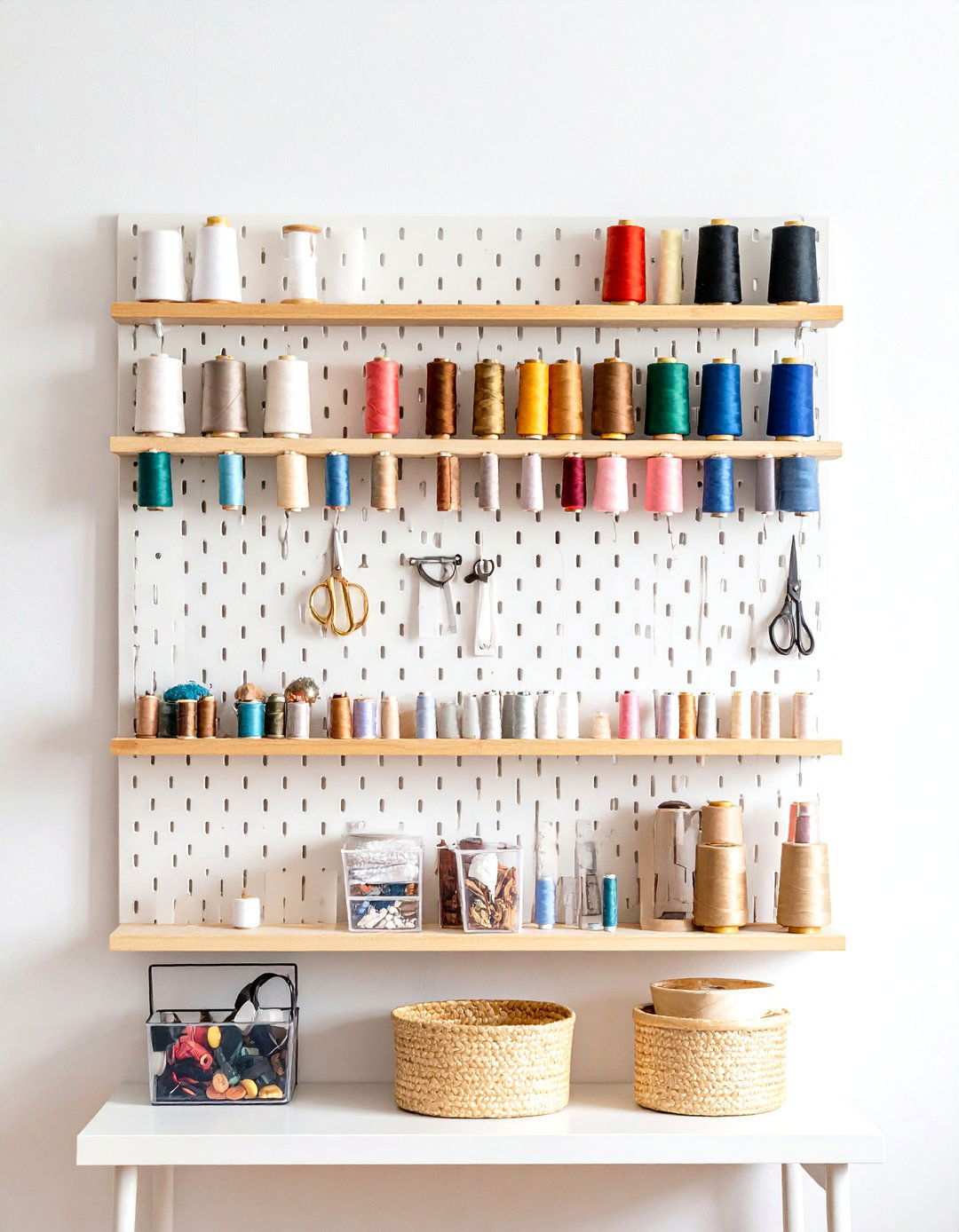
Imagine having every tool at your fingertips while maintaining a peaceful workspace – a true sewing paradise! Pegboard systems offer the ultimate in adaptable storage for sewing spaces. Install a large pegboard on a wall and utilize hooks, baskets, and shelves to showcase thread spools, scissors, rulers, and rotary cutters in an visually appealing display. The beauty of pegboard systems lies in their flexibility – easily rearrange accessories as your needs evolve. Clear containers attached to pegboard hooks make small notions easily visible and organized. This vertical storage solution optimizes wall space while showcasing your sewing essentials in a way that’s both functional and aesthetically pleasing.
3. Mobilizing Your Sewing Supplies with Rolling Storage Carts
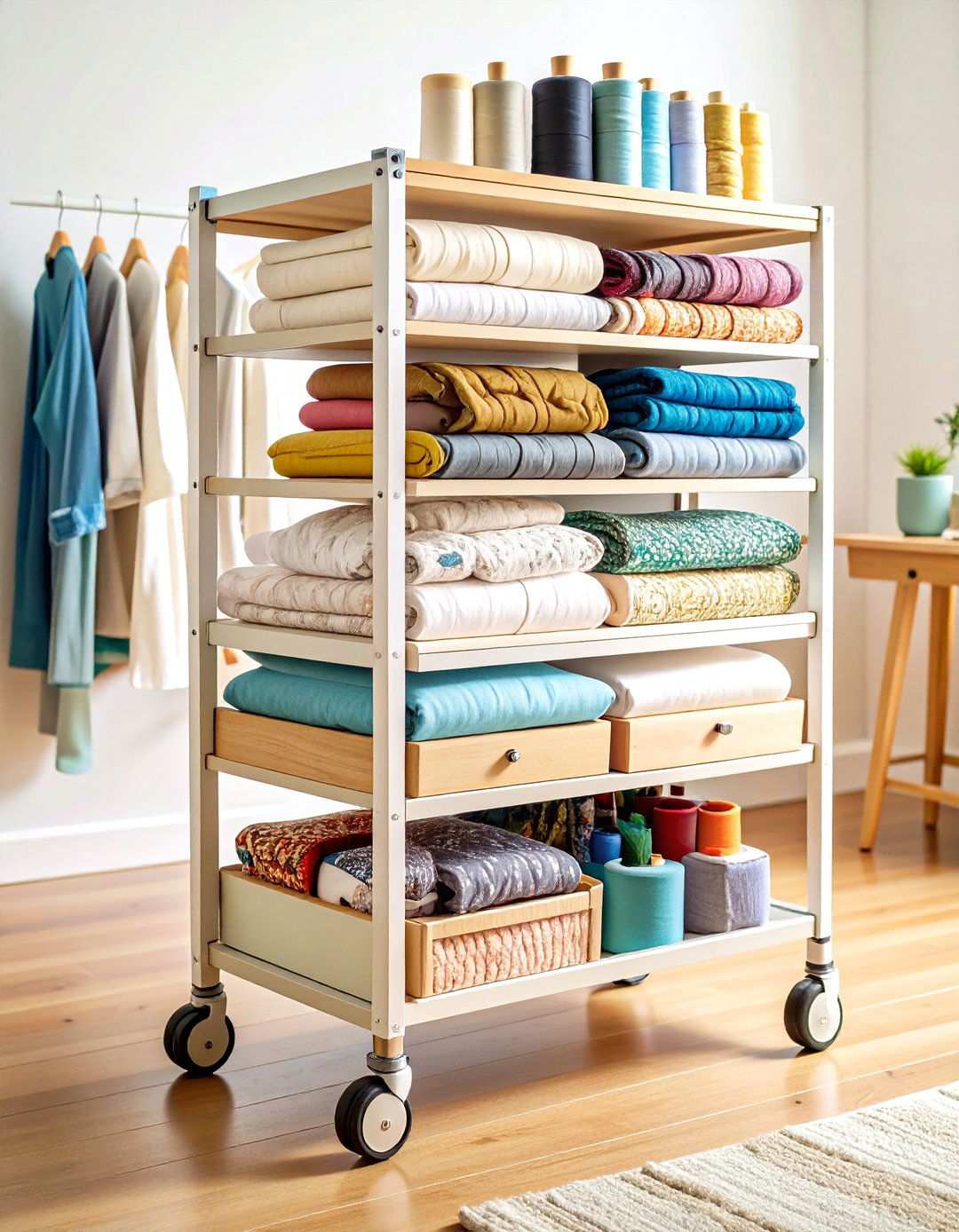
Does your sewing space require storage that adapts to various projects on the fly? Rolling storage carts offer flexible solutions for organizing supplies while maintaining workspace mobility. These multi-tiered carts can hold fabrics, threads, patterns, and tools, rolling to wherever you need them most. Park them beside your sewing machine during active projects, then effortlessly wheel them away for storage. Many feature removable bins or drawers for easy sorting. Select carts with varied-sized compartments to accommodate supplies ranging from tiny buttons to large fabric pieces. The mobility aspect makes these perfect for shared spaces or when you need to clear the room for other activities.
4. Elevating Your Sewing Experience with a Custom Ironing Station
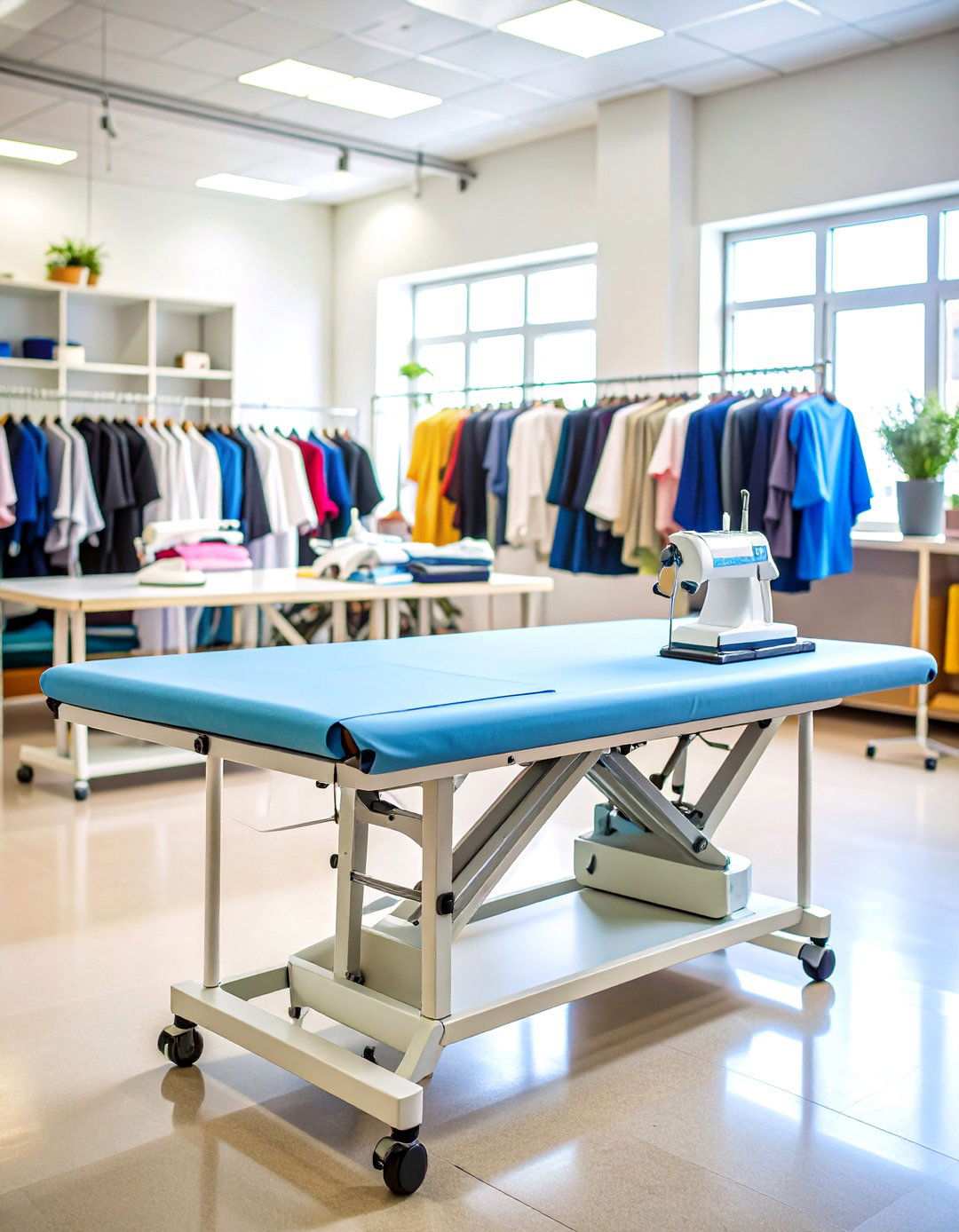
A dedicated ironing area can significantly enhance the quality of your finished projects. By creating a professional ironing station, you can elevate your sewing results while prioritizing your comfort and well-being. Strategically position your ironing surface near your sewing machine, making it effortless to switch between seam pressing and sewing. Many skilled sewers design custom ironing tables using sturdy materials such as plywood, topped with batting and canvas for added stability. Don’t forget to include nearby storage for essential items like pressing cloths, starch, and specialized pressing tools. A gravity-feed iron system can also provide consistent steam, taking your ironing to the next level. By positioning your ironing station close to your main workspace, you’ll be more inclined to develop good pressing habits, ultimately resulting in a more professional appearance for your garments.
5. Streamlining Thread Organization with Thoughtful Storage Solutions
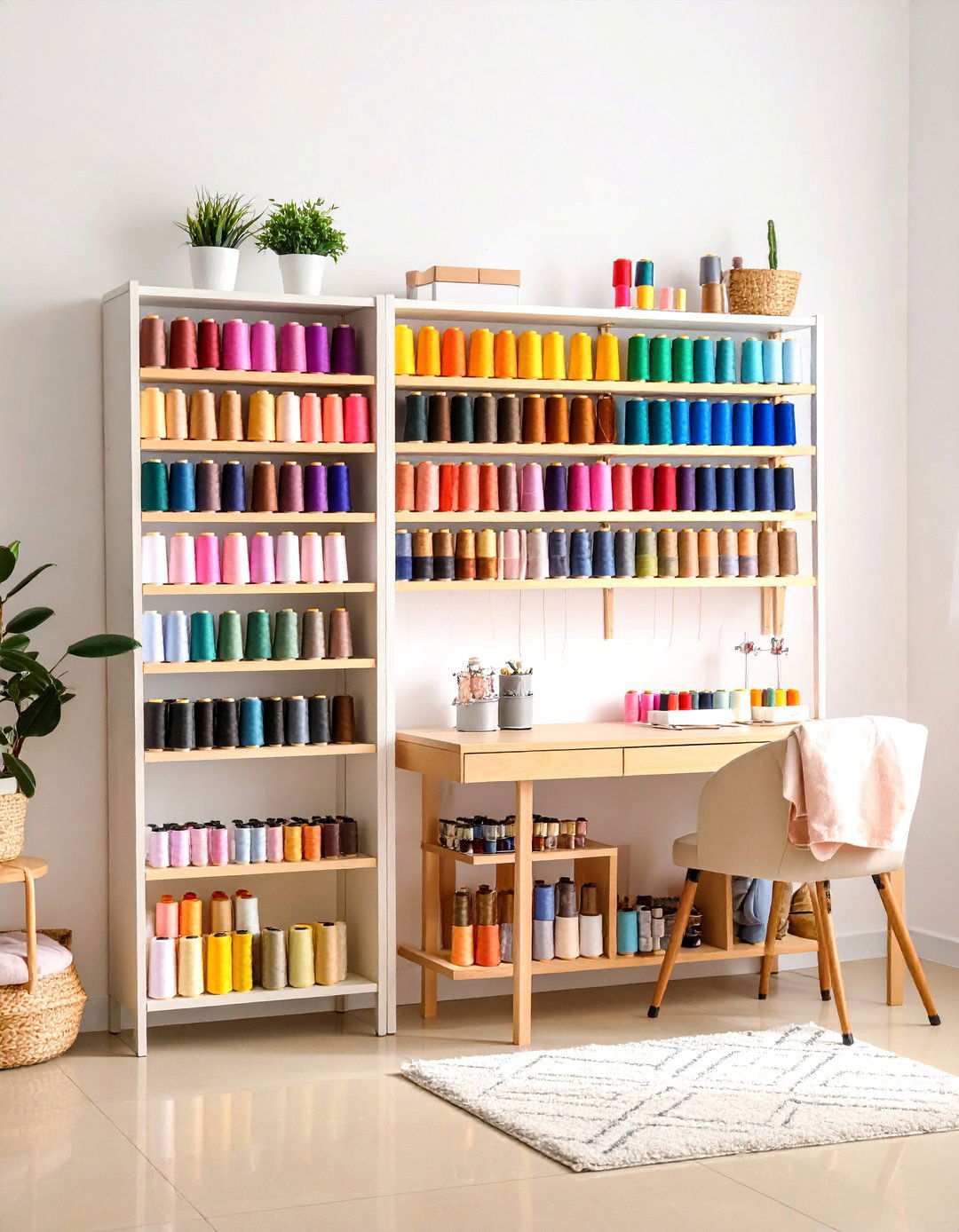
Are you frustrated with the time-consuming process of searching through boxes for the perfect thread color? Elegant thread storage systems can keep your spools organized while creating a visually appealing display. Wall-mounted thread racks can showcase your collection like a work of art, while maintaining easy access to your threads. You can choose from a variety of thread storage options, including wooden racks, clear acrylic holders, or vintage-style displays that complement your room’s aesthetic. Organize your threads by color family or weight for quick selection, and consider including coordinating bobbin storage nearby to keep wound bobbins with their matching threads. Illuminated displays can also highlight thread colors accurately, making it easier to select the perfect shade. By adopting an organized approach to thread storage, you’ll save valuable time during projects and avoid purchasing duplicate colors.
6. Unlocking Creativity with Systematic Fabric Storage Solutions
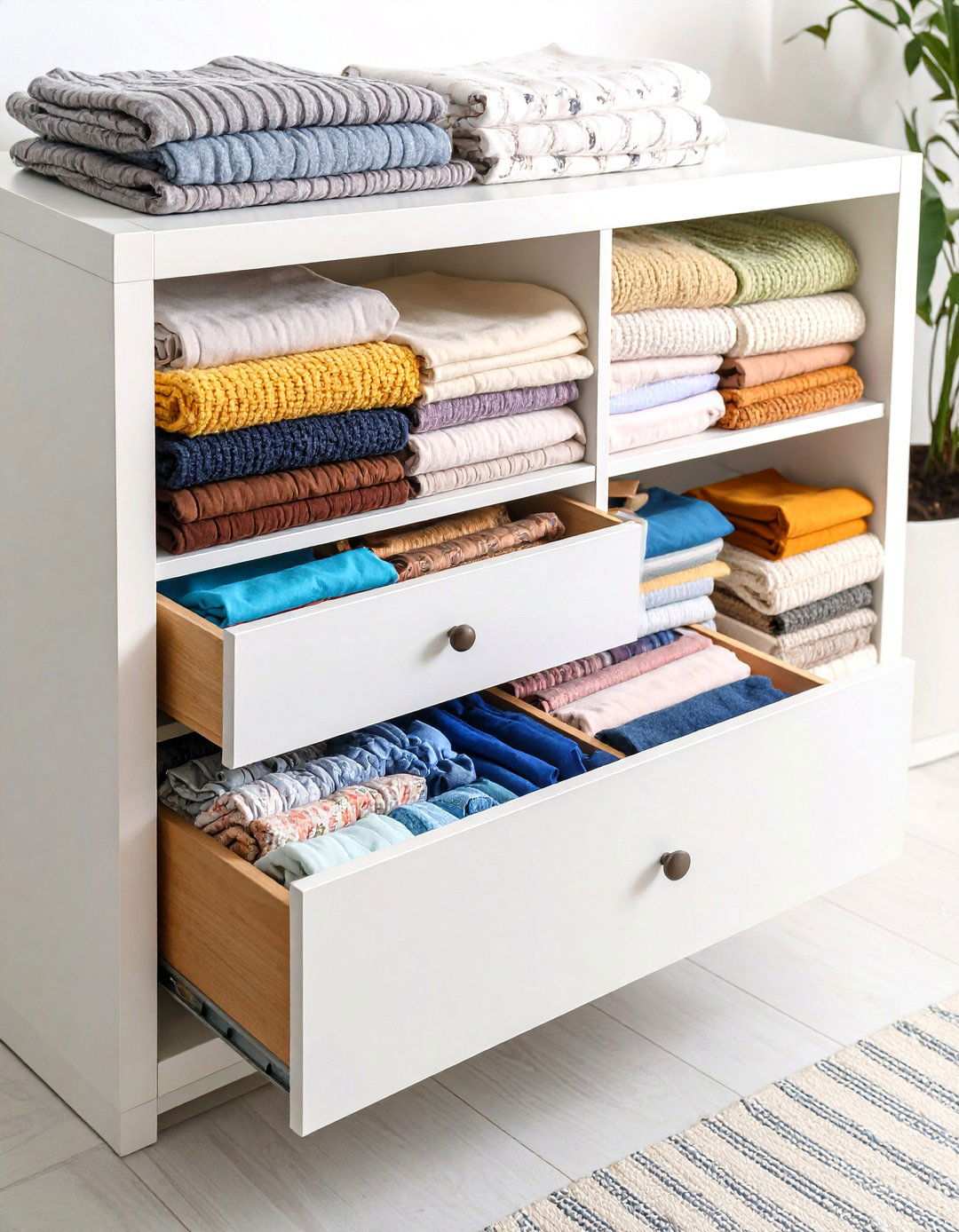
What’s the secret to keeping an extensive fabric collection organized and accessible? Systematic fabric storage can prevent overwhelm while protecting your investment in beautiful textiles. Deep drawer systems are ideal for folded yardage, allowing you to see fabric choices at a glance. Install adjustable shelving for varied fabric heights and use clear bins for smaller pieces. Label storage areas by fabric type, weight, or project destination to ensure everything is easily searchable. Consider climate-controlled storage for delicate or valuable fabrics that require special care. Roll fabrics around cardboard bolts for wrinkle-free storage of longer pieces, making it easy to browse your collection and envision project possibilities. By maintaining an organized fabric storage system, you’ll be inspired to explore new creative possibilities and bring your projects to life.
7. Maximizing Small Spaces with Clever Corner Workstations
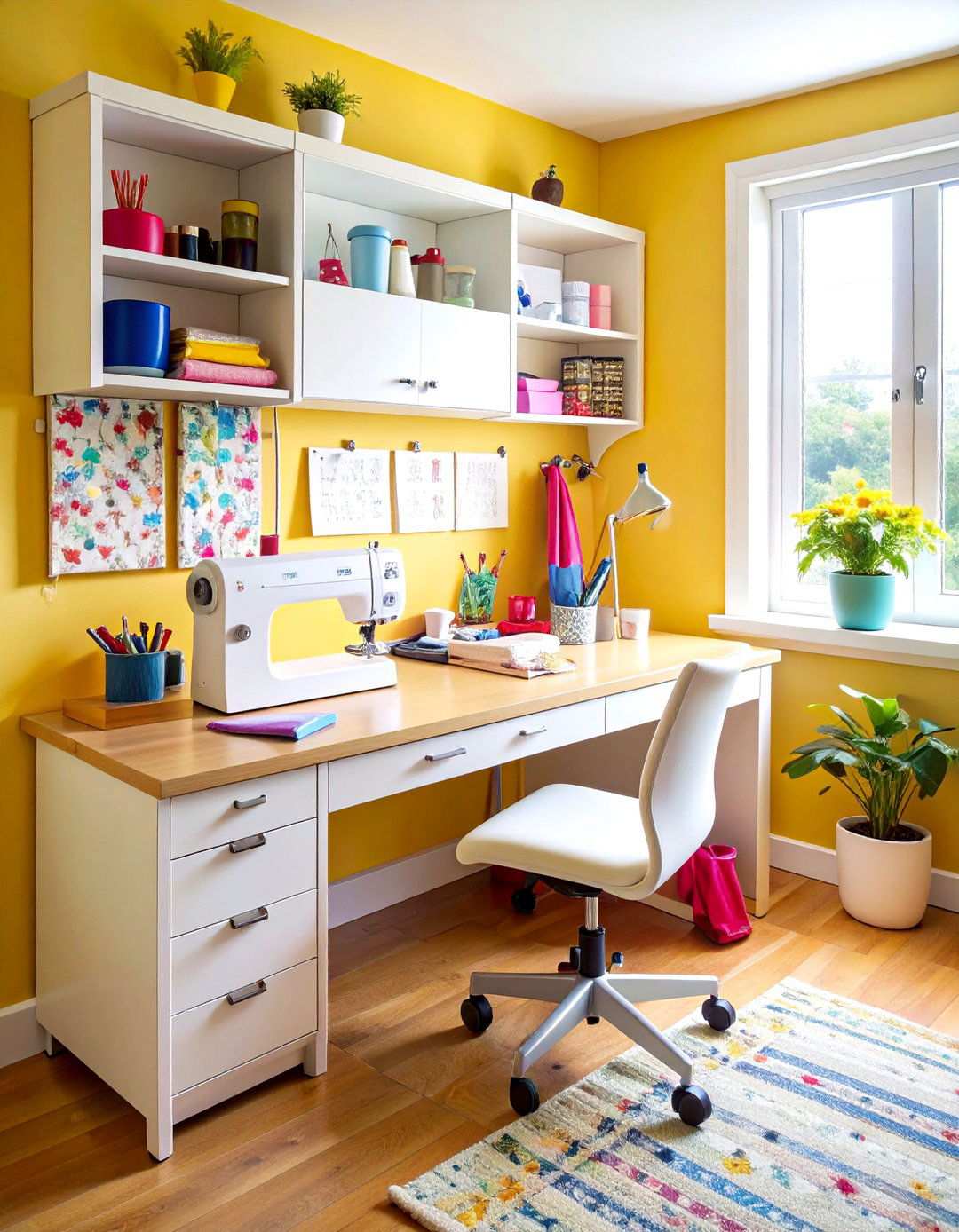
How can you create an efficient sewing area in a compact space? Corner workstations can help you make the most of limited space by utilizing often-overlooked areas. Install a corner desk that fits snugly into available space, with storage above and below for maximum efficiency. Wall-mounted organizers can keep essential supplies within reach without cluttering the work surface. Choose furniture with dual purposes, such as ottoman storage or drop-leaf tables that expand when needed. In small spaces, vertical storage becomes crucial – use every inch of wall height for shelving and hanging storage. Don’t forget to invest in adjustable task lighting that illuminates your workspace effectively, making it easier to work efficiently in compact areas.
8. Visualizing Your Quilt Design with a Design Wall
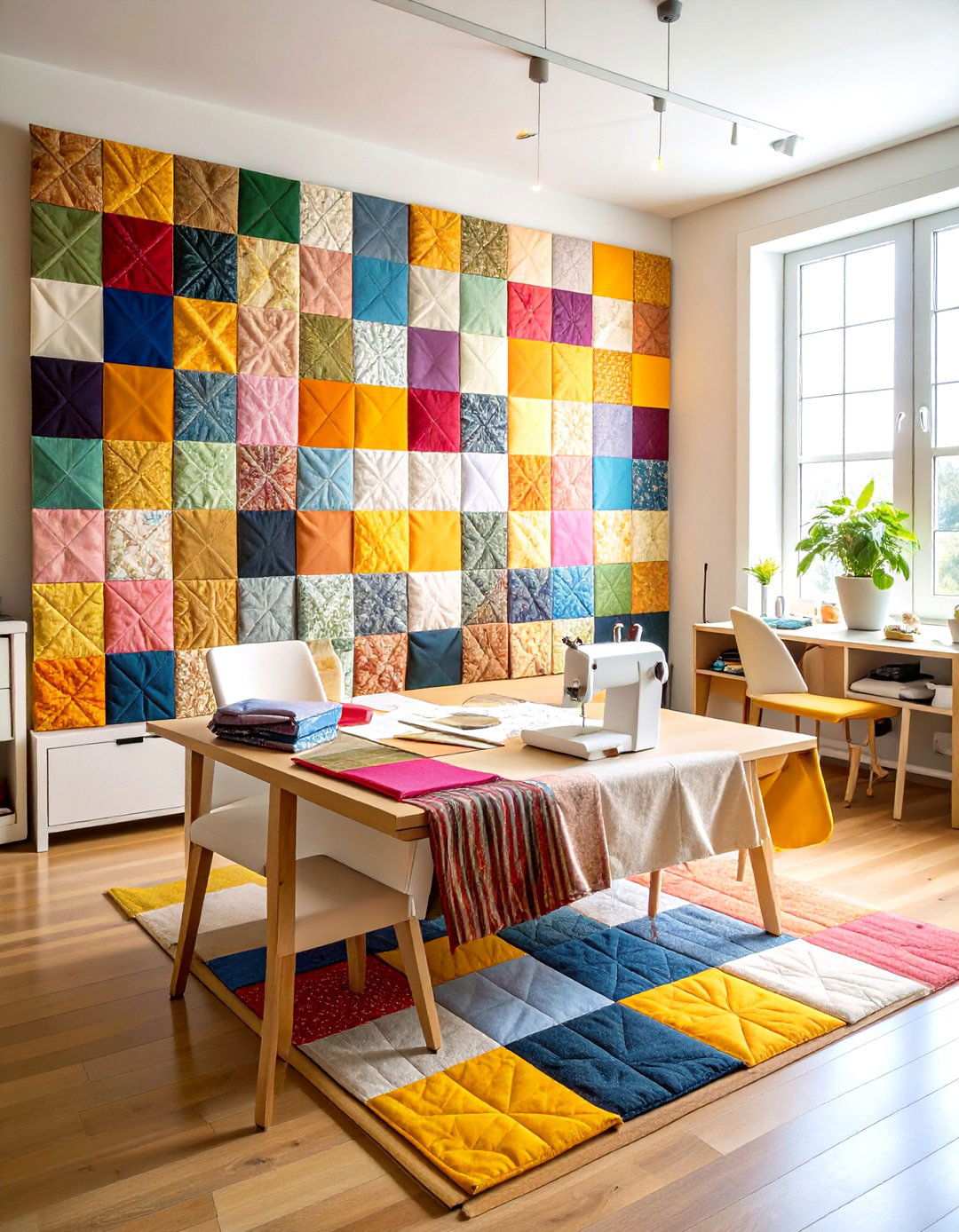
Effective project planning requires a comprehensive approach, and a design wall is an essential tool for bringing your vision to life. Instead of second-guessing how individual quilt blocks will fit together, a design wall provides a clear visual representation of your project’s development. To create a design wall, use a large frame or foam board as the base and stretch flannel fabric over it. Position the design wall in a location where you can step back and assess your work from different distances, taking advantage of good lighting that accurately showcases fabric colors and contrasts. A mobile design wall on wheels is a great solution for smaller spaces, allowing you to easily reposition the display as needed while maintaining optimal project visibility.
9. Merging Functionality and Comfort: The Art of Multi-Purpose Guest Rooms
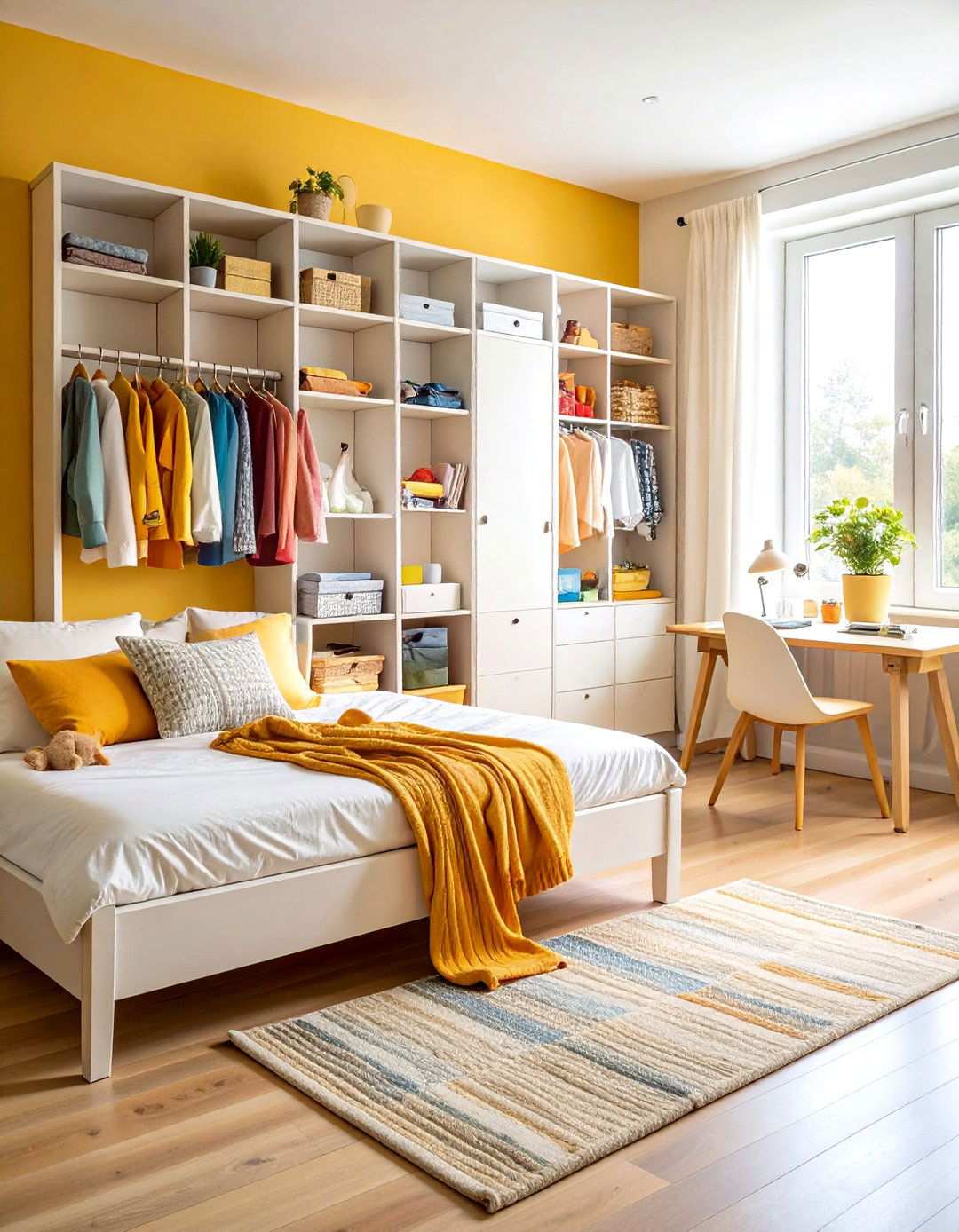
Incorporating a sewing area into a guest room can be a daunting task, but with thoughtful planning, it’s entirely possible to create a space that serves both purposes effectively. The key to success lies in choosing furniture that serves multiple roles, such as a daybed with storage underneath or a folding cutting table that can be easily stowed away when guests arrive. To maintain a seamless transition between sewing workspace and welcoming guest room, install closed storage systems that conceal sewing supplies while still providing easy access for projects. A sewing cabinet that closes completely, keeping machines and supplies out of sight, is another excellent option. Wall-mounted storage solutions keep supplies organized without cluttering the floor space needed for guest comfort.
10. Reviving Vintage Sewing Cabinets: A Restoration Project
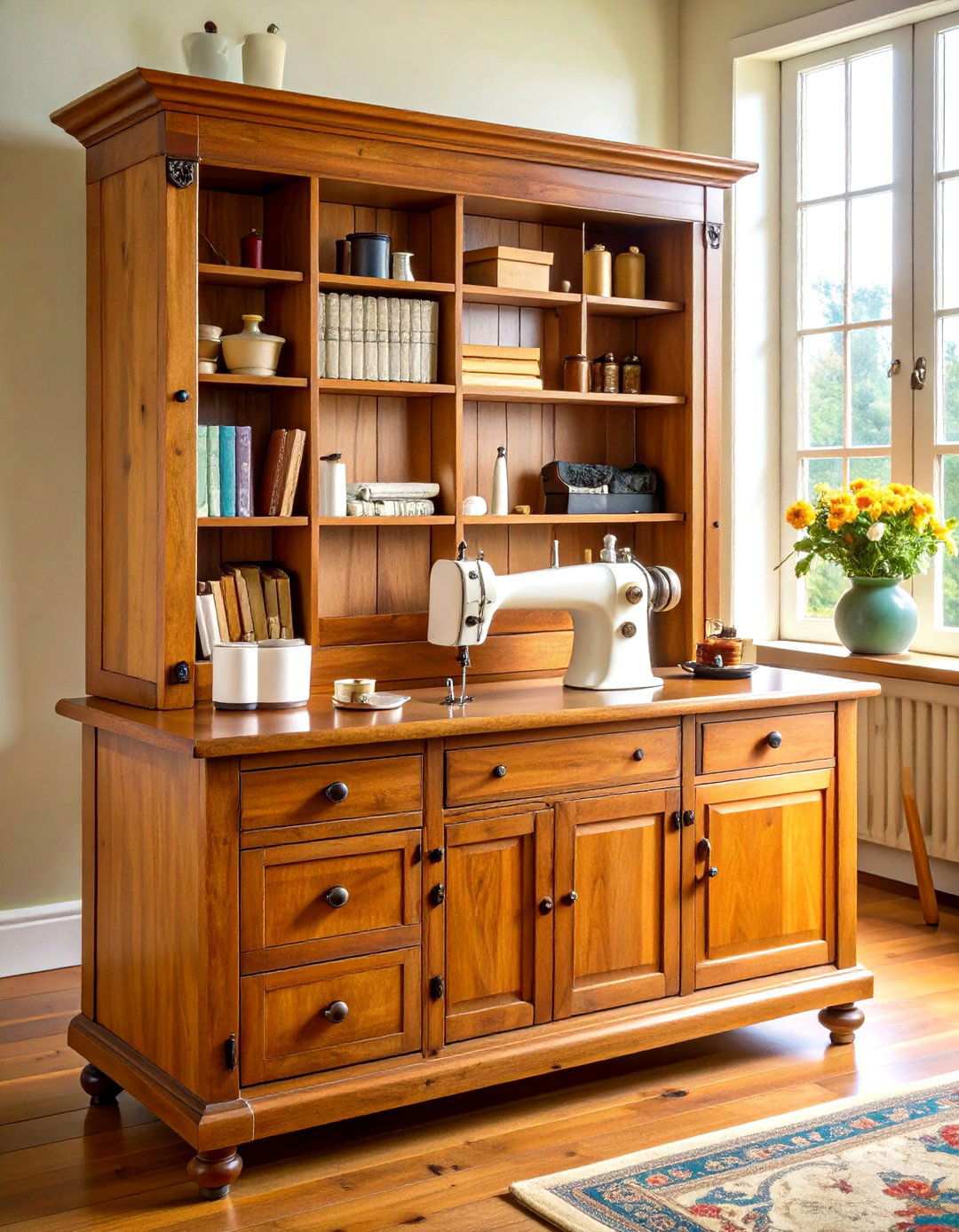
Old sewing cabinets hold a wealth of hidden treasures waiting to be rediscovered and restored to their former glory. When done thoughtfully, a vintage sewing cabinet restoration project combines the nostalgic charm of a bygone era with the practical needs of modern storage. To find a suitable candidate, hunt for solid wood cabinets at estate sales or antique shops, focusing on the cabinet’s underlying structure rather than its current condition. Once you’ve chosen your cabinet, strip and refinish the wood surfaces to reveal the beautiful grain patterns beneath old paint or stain. Update the hardware with period-appropriate pieces or modern alternatives that complement the vintage style, and retrofit the interior spaces with modern organizers while preserving the original character details. The result is a stunning piece that not only celebrates sewing heritage but also provides excellent contemporary storage solutions.
11. Versatile Workstations for Enhanced Creativity
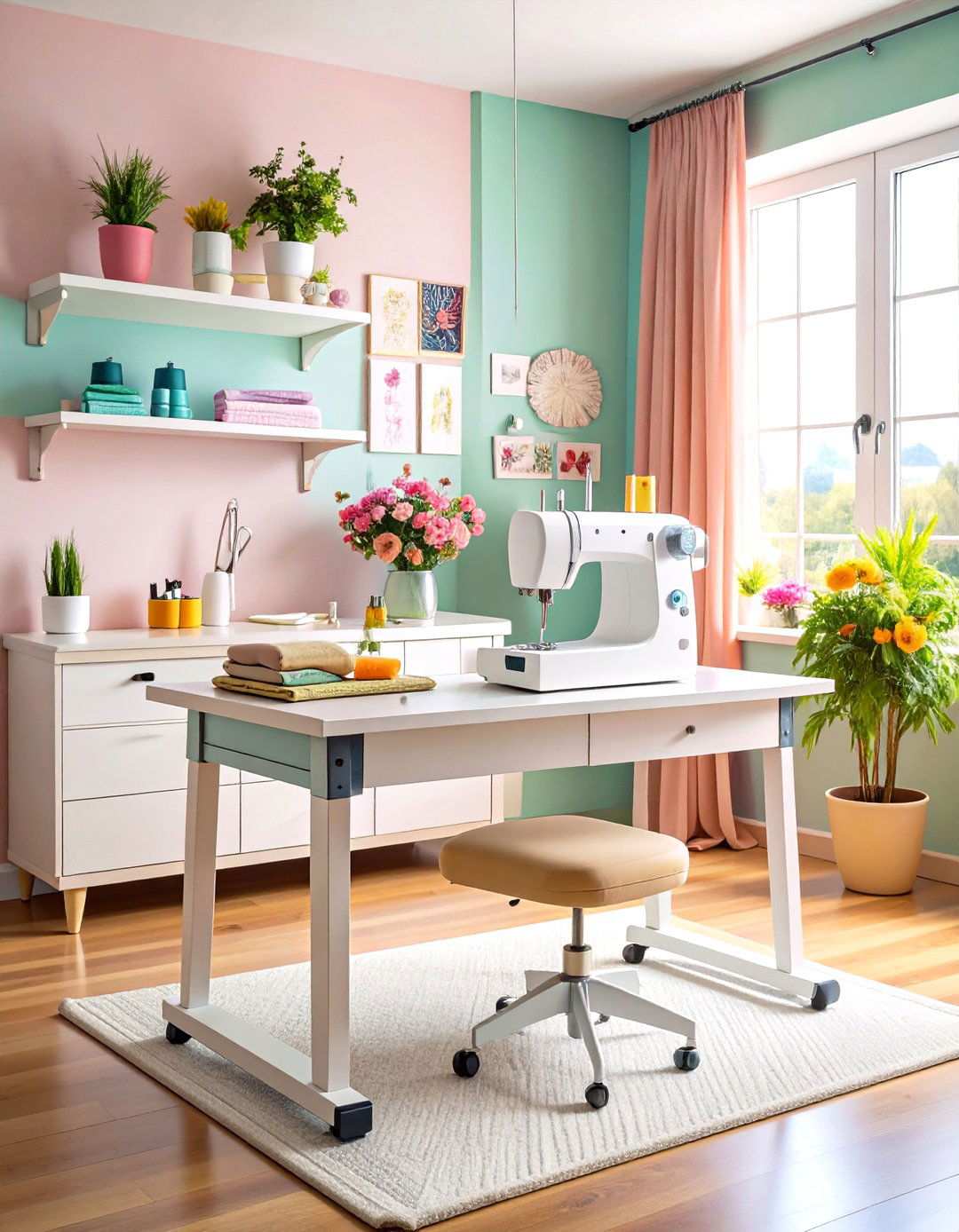
Imagine being able to switch seamlessly between sitting and standing positions during extended sewing sessions – a game-changer for productivity and comfort. Versatile workstations that can adapt to different tasks and personal preferences throughout the day are a must-have for serious crafters. Investing in adjustable-height sewing tables that effortlessly transition between sitting and standing positions is a smart move. By doing so, you’ll minimize fatigue and maintain perfect posture during prolonged crafting sessions. To take it to the next level, consider dual-height workstations featuring separate surfaces for intricate machine work and cutting or layout tasks. The smooth height adjustments offered by pneumatic or crank-operated mechanisms make it a breeze to switch between positions. Whether you’re standing or sitting, this ergonomic approach ensures your sewing sessions are more comfortable and sustainable in the long run.
12. Customized Storage Solutions for Seamless Integration
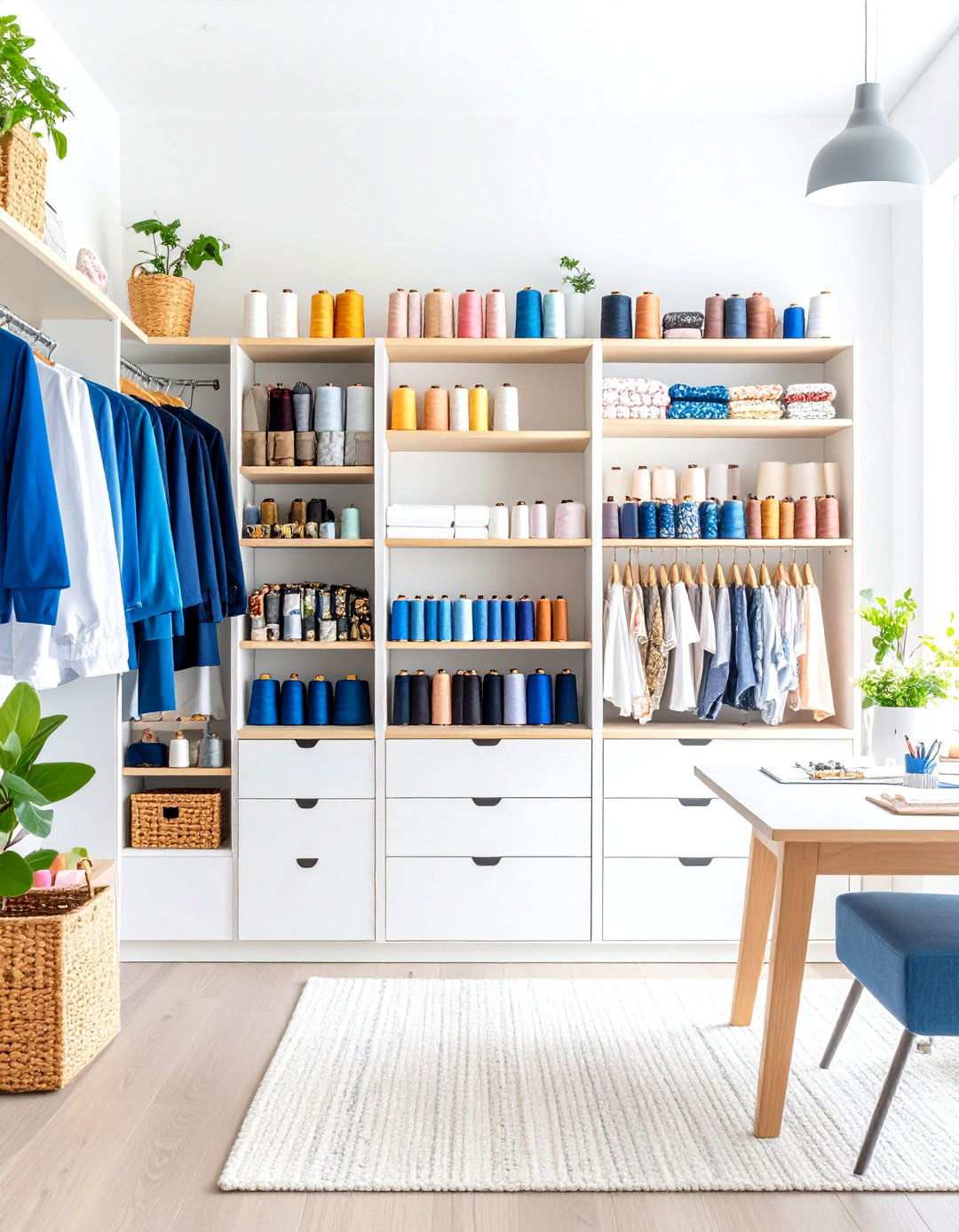
Why settle for generic storage solutions when you can create a tailored space that maximizes every inch of your room? Customized storage solutions integrate seamlessly with your room’s architecture, providing exactly the storage you need to keep your workspace organized. Design bespoke cubbies that perfectly accommodate fabric bolt widths or create specialized compartments for different supply categories. Your storage solutions can also incorporate unique features like pull-out cutting surfaces, hidden ironing boards, or specialized thread storage. By working with available space constraints like slanted ceilings or awkward corners, you can create storage that makes the most of difficult areas. Although custom-built storage may require a larger upfront investment, it offers long-term value and a polished, professional appearance that standard furniture simply can’t match.
13. On-the-Go Project Management
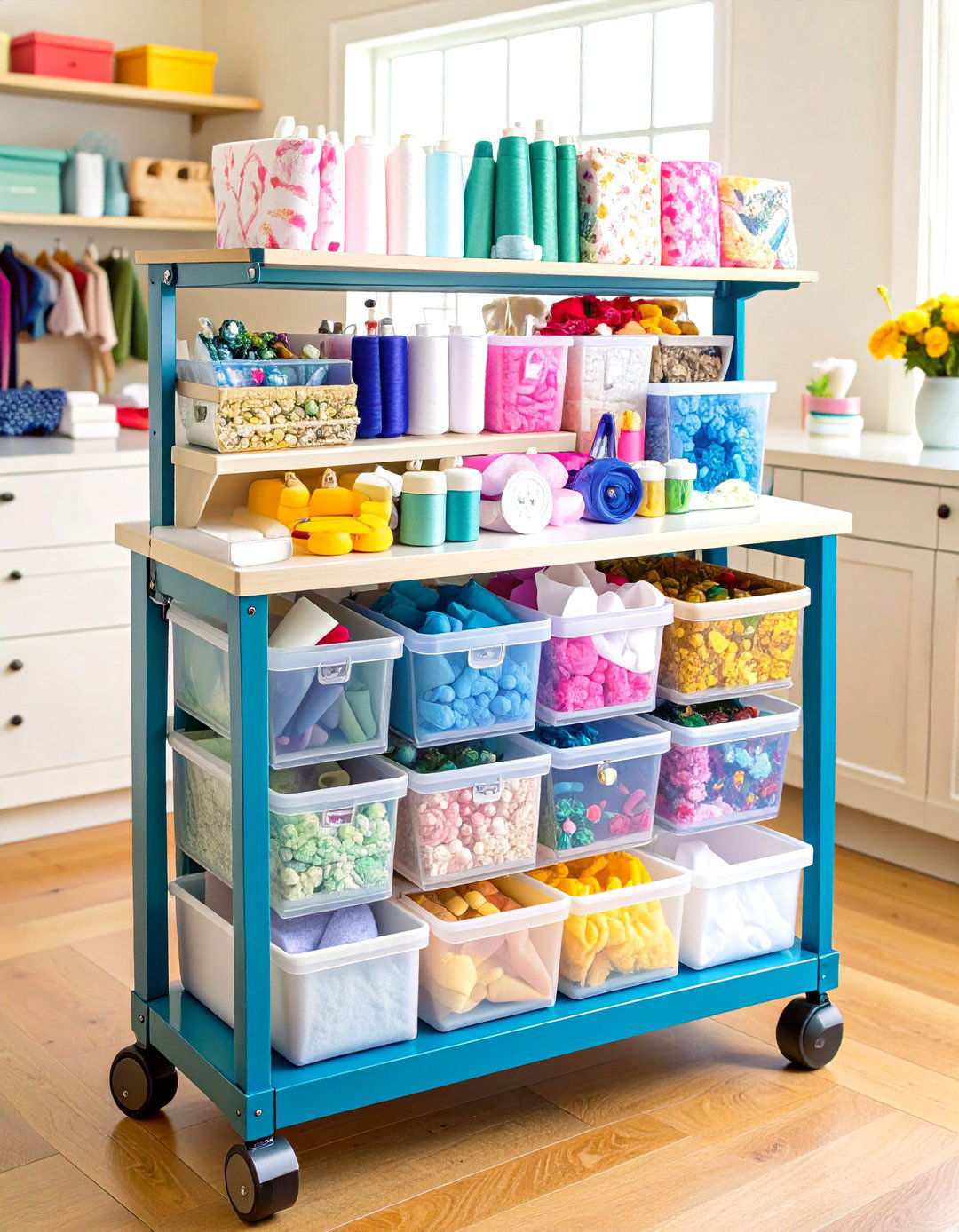
Are you tired of wasting time searching for scattered pattern pieces and project supplies across your workspace? A mobile project organization system keeps everything for your current work contained and portable. Use large zippered bags or project boxes to keep all materials for each project neatly organized – fabric, pattern, thread, notions, and instructions. Dedicated rolling carts for works-in-progress allow easy transport between cutting, sewing, and pressing areas. Clear storage containers let you see project contents at a glance, while labels detailing project details and completion goals help you stay on track. This system ensures you don’t mix up pieces from different projects, keeping your main workspace clear for active sewing tasks and boosting your productivity.
14. Elevating the Sewing Experience with Illumination
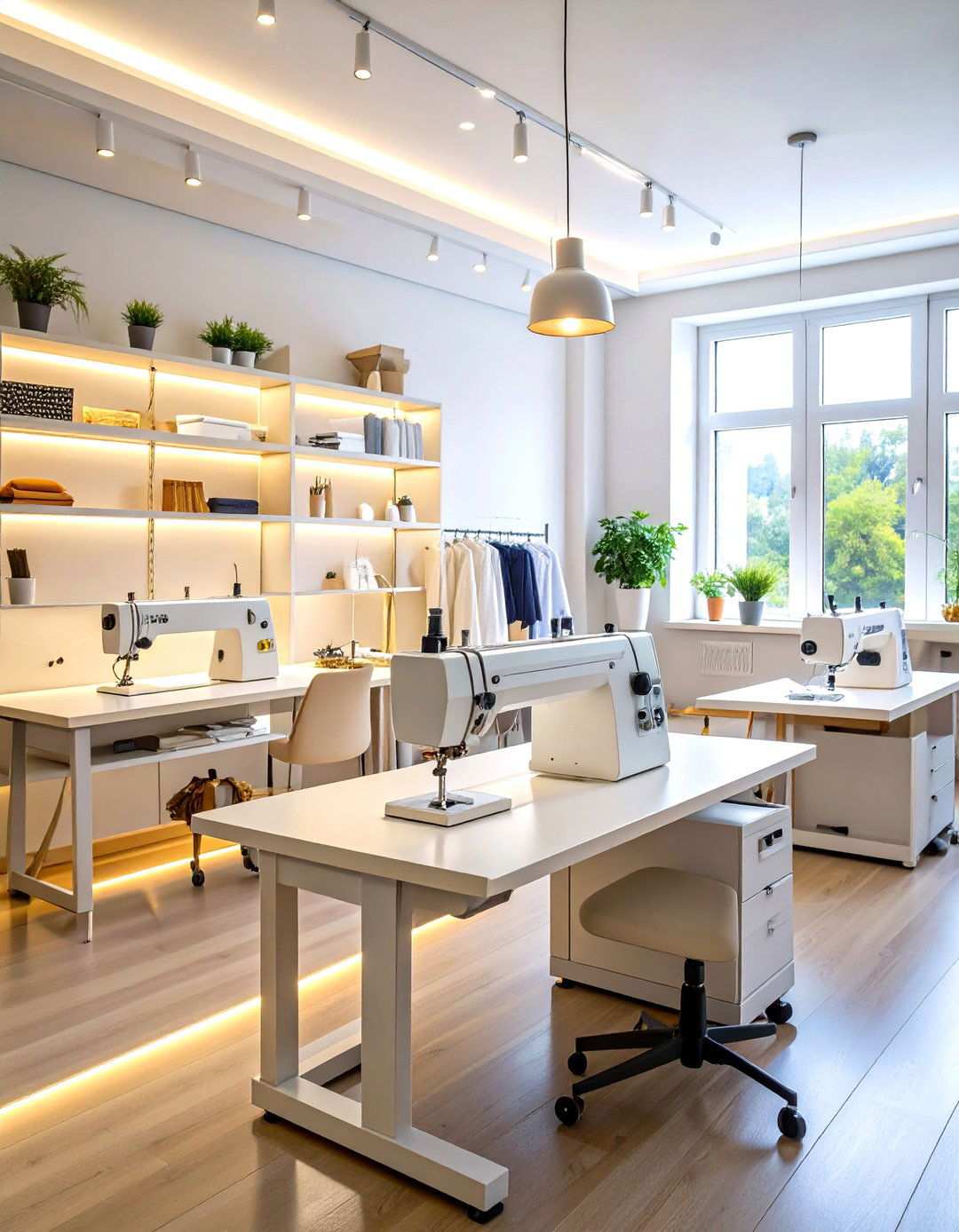
The right lighting can be the secret ingredient that turns your sewing sessions into a seamless and enjoyable experience. By implementing a thoughtful lighting design, you can minimize shadows, reduce eye strain, and enhance your accuracy. Combining natural light from windows with adjustable task lighting positioned directly above work areas creates an ideal environment for sewing. Strategically placed LED strip lights under shelves illuminate storage areas without causing glare, while adjustable desk lamps beside sewing machines provide shadowless detail work. Consider using color-temperature adjustable bulbs that offer bright white light for precision tasks and warmer tones for more relaxed creating. Proper lighting not only makes fabric colors appear accurate but also prevents mistakes caused by poor visibility. Investing in high-quality lighting systems can make sewing enjoyable at any time of day, regardless of the time or ambient light.
15. Rapid Access to Notions with Organized Storage
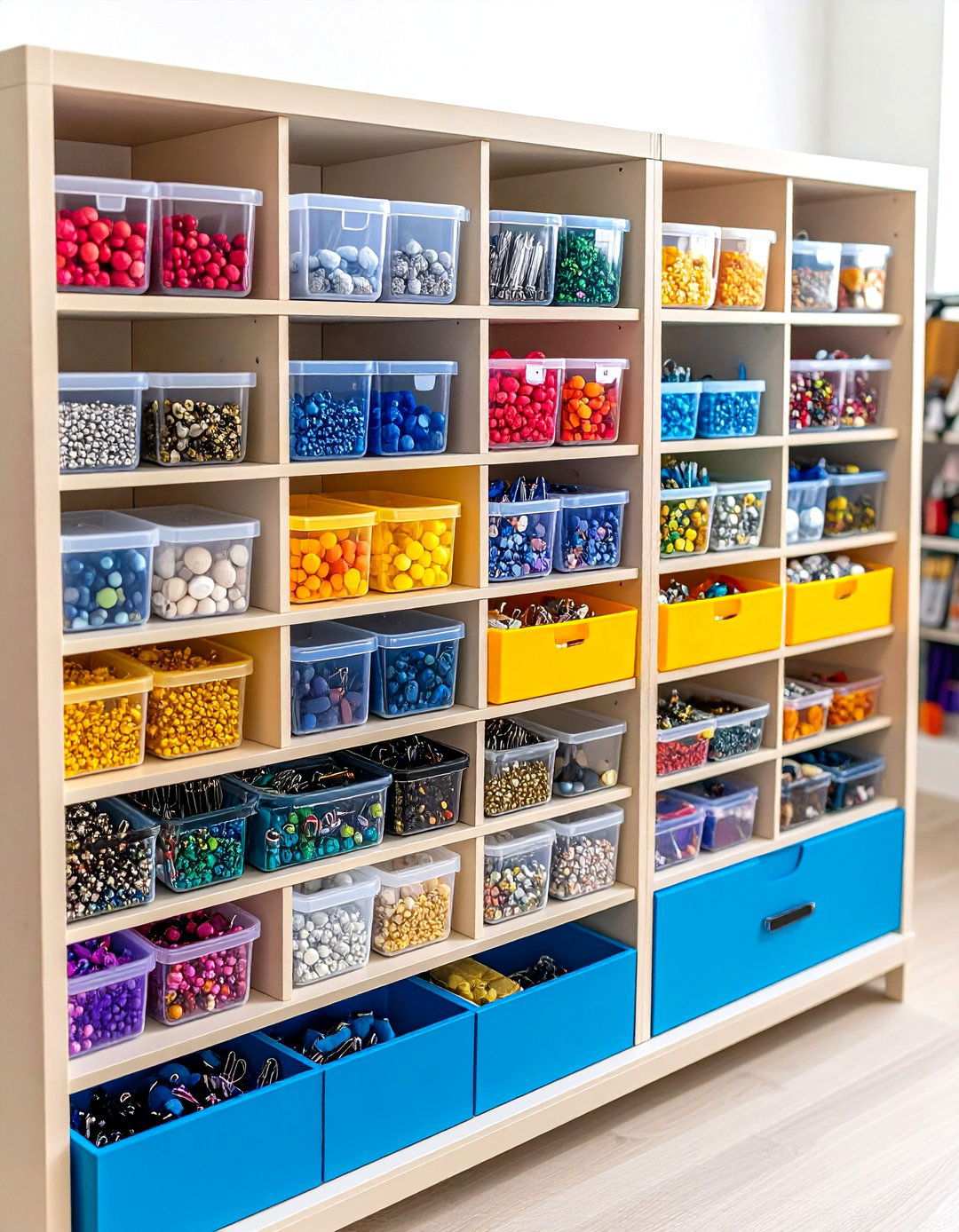
Imagine being able to find the perfect button or zipper in mere seconds, rather than minutes spent searching through cluttered storage. A well-organized notion storage system can transform frustrating searches into quick selections. Utilize drawer organizers with adjustable compartments to categorize and separate different types of notions. Clear containers work exceptionally well for storing small items like buttons, snaps, and hardware, where visibility is crucial. Magnetic strips can securely hold metal notions such as pins and needles in place. Create dedicated spaces for zippers organized by color and length, and use small jars or containers for specialty items like elastic, bias tape, and trim. Labeling everything clearly ensures that your organization system remains effective over time. By keeping essential notions centrally located near your main workspace, you’ll have easy access to them during active sewing sessions.
16. Preserving Your Pattern Collection with Efficient Storage
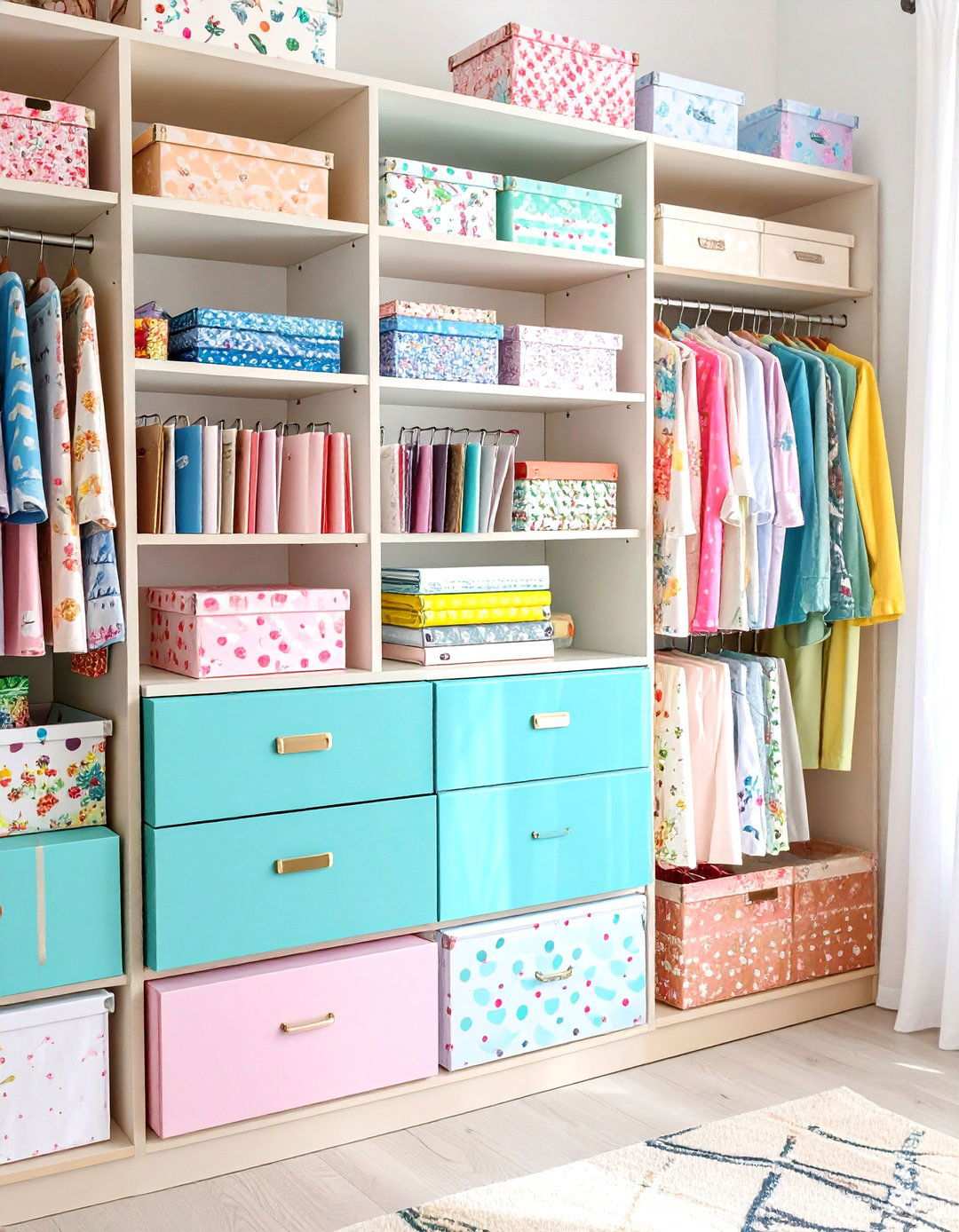
Why let paper patterns become crumpled and disorganized when you can implement a systematic storage approach that keeps them pristine? Effective pattern storage not only protects your investment but also makes pattern selection effortless. File folders in hanging systems are ideal for storing uncut patterns organized by category or designer. Large flat drawers can accommodate cut patterns in labeled envelopes with all pieces contained together, while magazine-style storage boxes keep patterns upright and visible like books on a shelf. Digital organization complements physical storage by allowing you to photograph pattern envelopes and create searchable databases. Including modification notes and size information with stored patterns enables you to easily find and reuse favorite designs for future projects. By implementing a proper pattern storage system, you can extend the life of your patterns and make the most of your sewing investment.
17. Harmonious Color Schemes in the Sewing Sanctuary
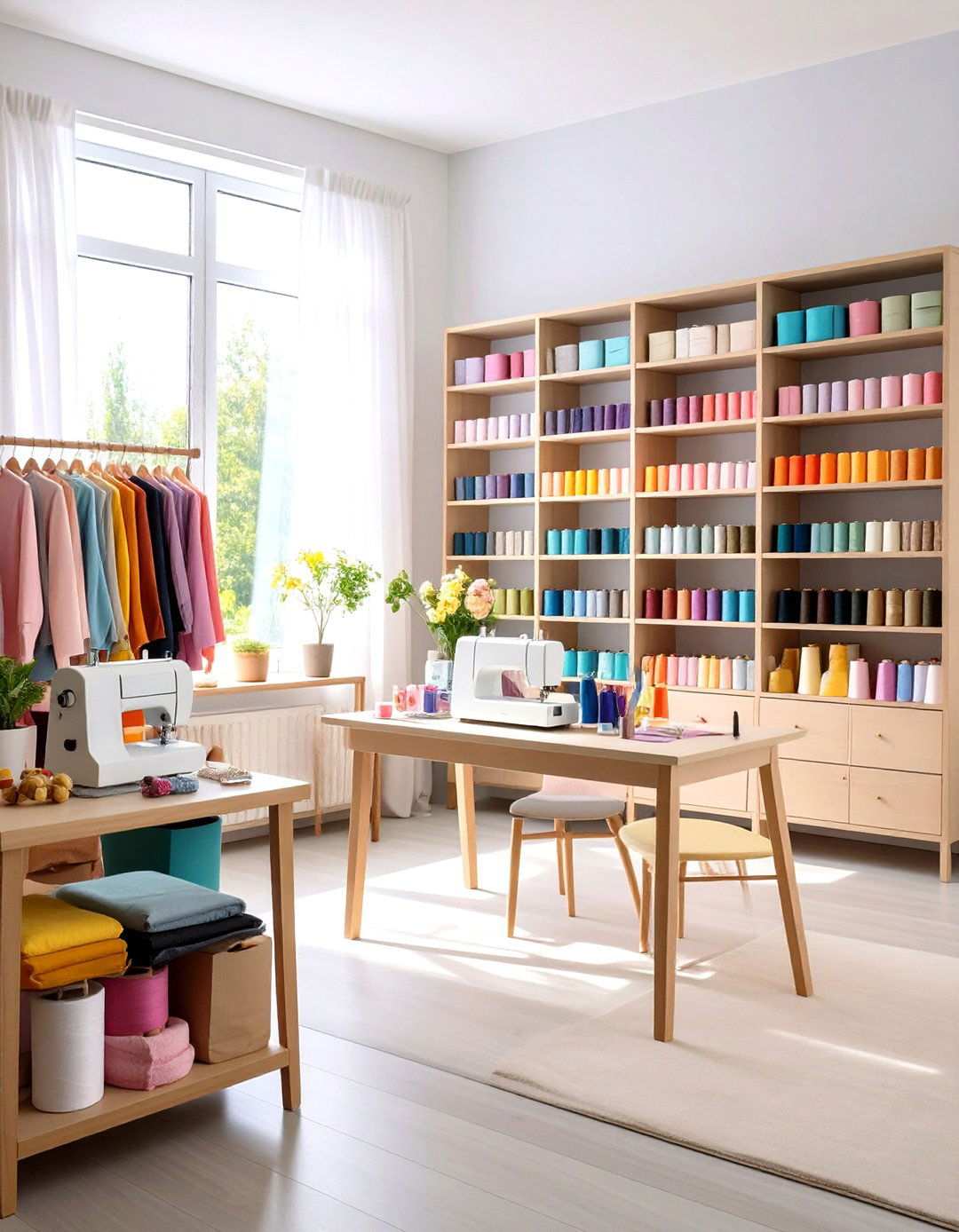
Creating a visually appealing sewing space can stimulate creativity and facilitate focus. Color-coordinated organization brings together aesthetics and functionality, making it an ideal approach for sewing sanctuaries. To achieve this, select storage containers and accessories in harmonious color families that blend seamlessly with the room’s overall design. Organize supplies in storage systems by color, arranging thread displays in vibrant progressions or grouping fabrics into cohesive color families. Employ consistent labeling systems with coordinated fonts and colors throughout the space. This thoughtful approach cultivates a sense of visual cohesion, making the space feel intentional, professional, and inspiring.
18. Window Seat Workstations with Integrated Storage
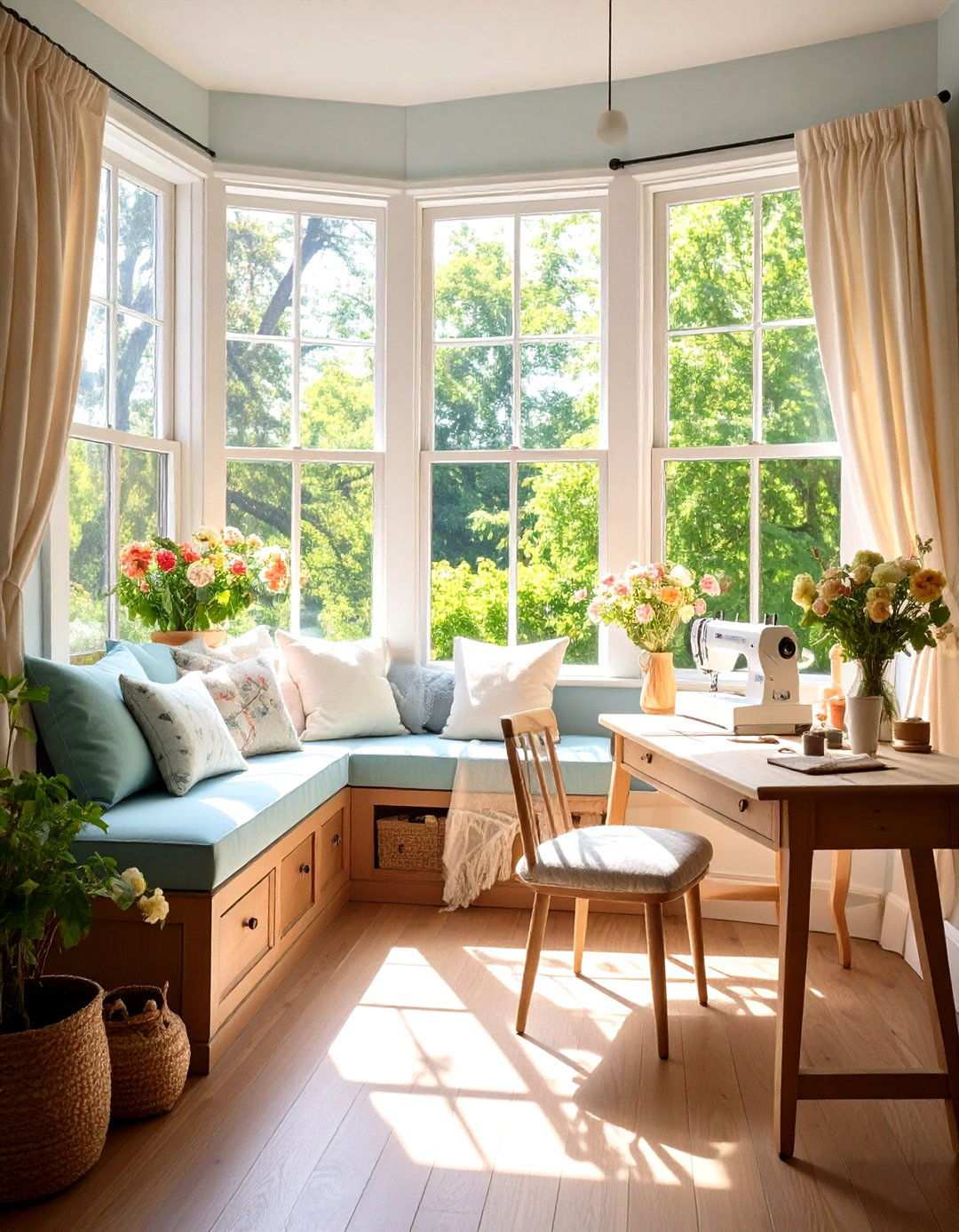
Windows can be transformed into serene creative retreats with built-in storage solutions. Window seat sewing nooks combine the benefits of natural light with cozy workspace charm. Design or install a bench seat with lift-up storage underneath, perfect for fabric or seasonal supplies. Position the seat at a comfortable height for sewing machine work, with nearby electrical outlets for equipment. Add cushions and pillows for relaxation during extended sessions. Install shelving or hanging storage on adjacent walls for supplies and tools. The abundance of natural light provides ideal illumination for detailed work, while the contained space fosters a focused environment. This arrangement is particularly well-suited for smaller homes where dedicated sewing rooms are not feasible.
19. Versatile Work Surface Extensions
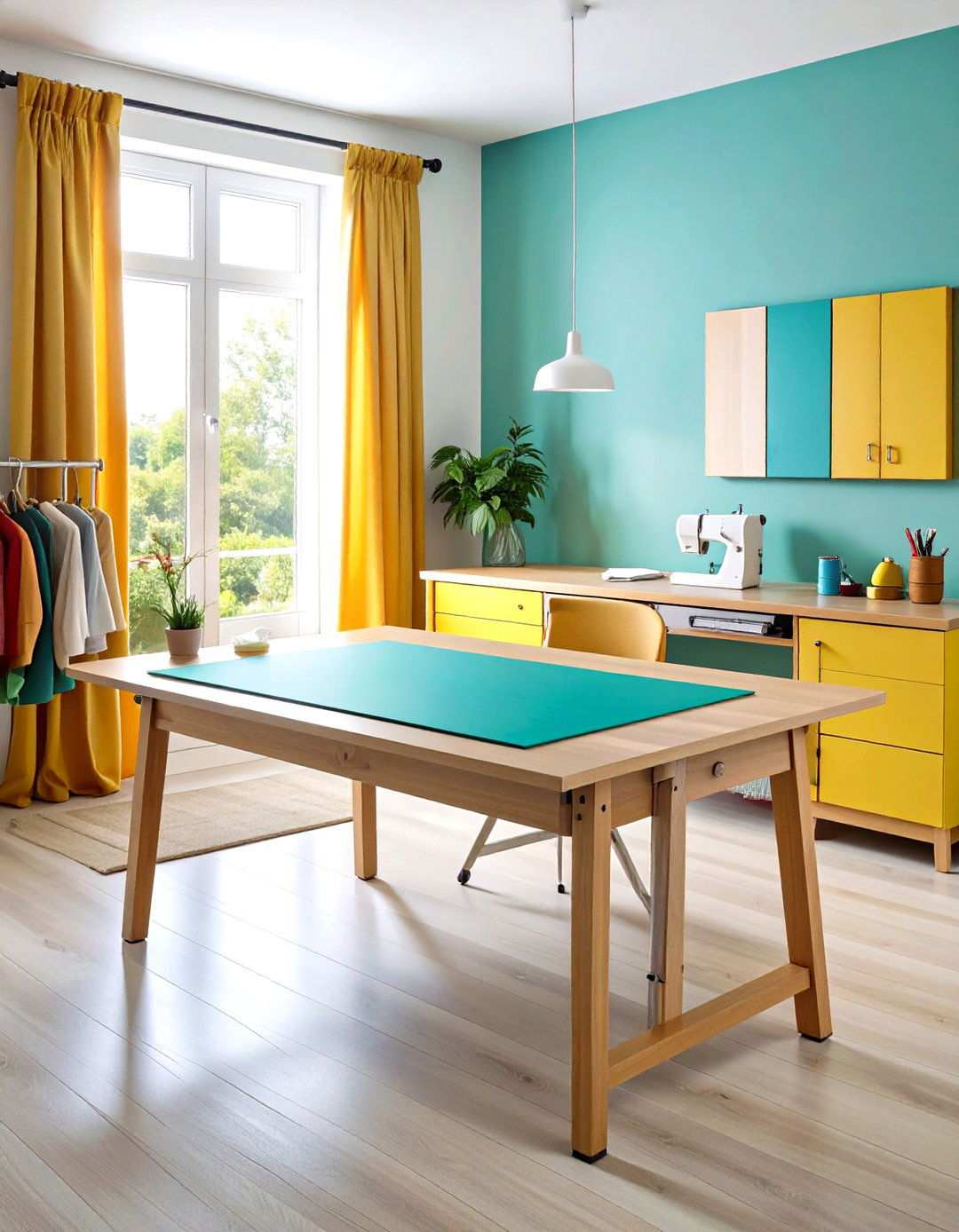
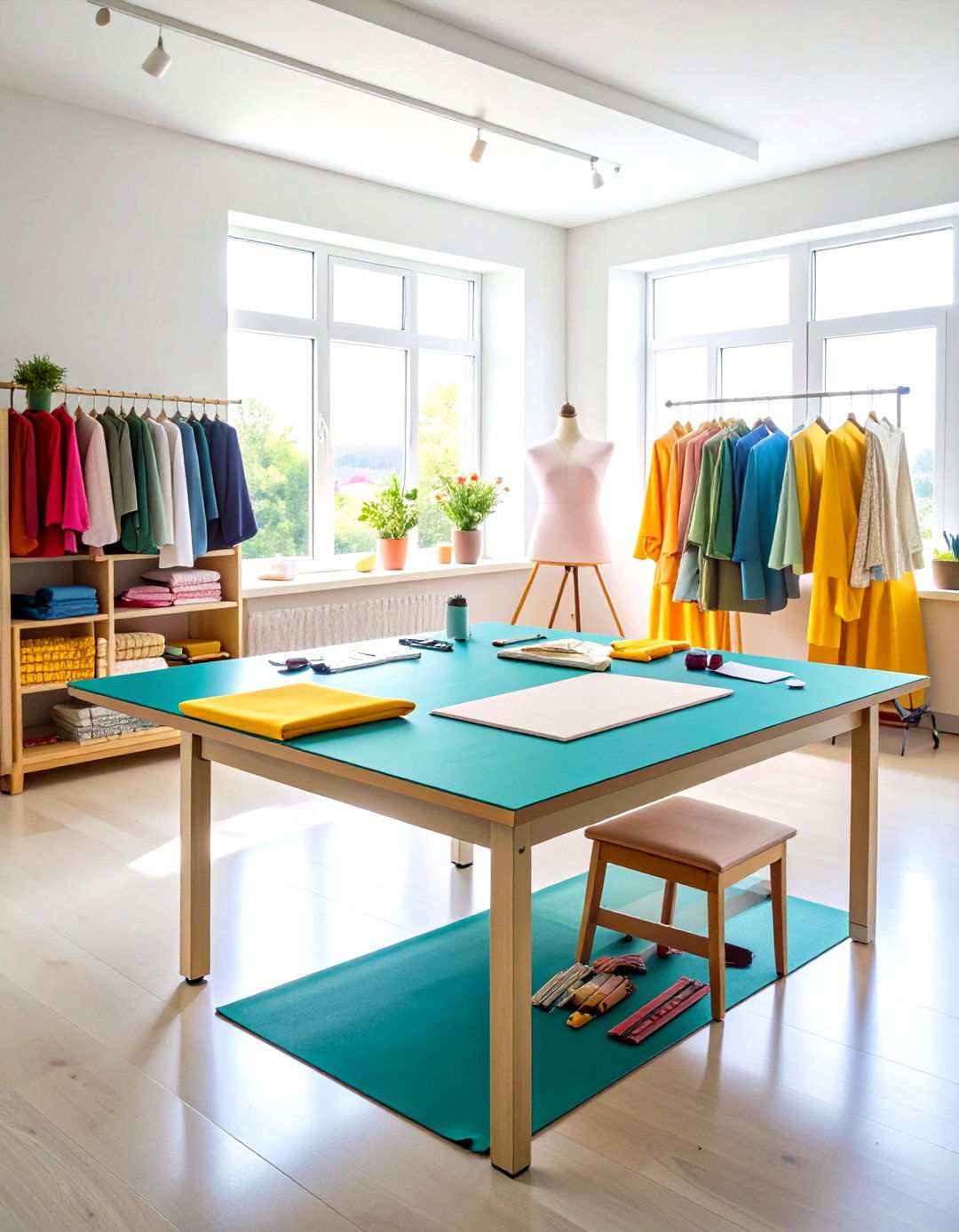
Imagine having a workspace that can adapt to large projects and then seamlessly retract when not needed. Retractable extensions offer valuable extra surface area without permanently consuming floor space. Install pull-out cutting extensions beneath existing tables that slide out for pattern layout and then neatly retract. Wall-mounted drop-down surfaces work exceptionally well in tight spaces, folding flat against the wall when not in use. Consider drawer-style extensions that pull out from cabinet bases to create instant work surfaces. These solutions are particularly effective in shared spaces where sewing areas must occasionally return to other functions. High-quality hardware ensures smooth operation and long-term durability for frequently used extension systems.
20. Visualizing Creative Motivation
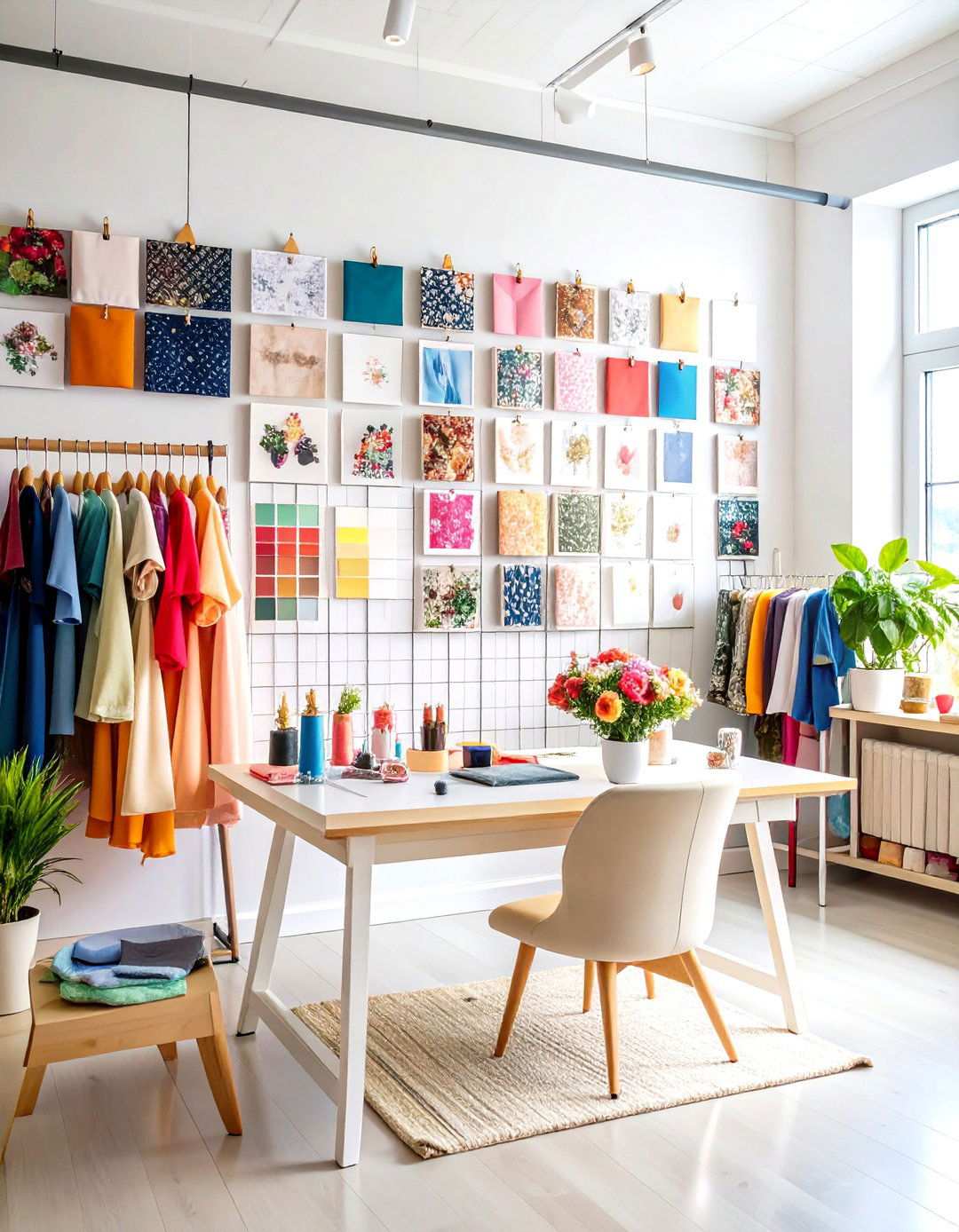
Maintaining an organized and inspiring workspace is crucial for creative sewists. One way to achieve this balance is by incorporating a visually engaging inspiration gallery. This constant visual reminder not only encourages creativity but also showcases the sewist’s journey. Create a rotating display of favorite fabric swatches, color combinations, and technique samples to inspire future projects. Showcase completed project photos to celebrate accomplishments and remember successful techniques. Include magazine clippings, sketches, and color palettes that spark new ideas. Use bulletin boards or wire grid systems that allow for easy updates as inspiration evolves. Position the gallery where it will be seen frequently during work sessions. This visual inspiration helps break through creative blocks while documenting growth and providing reference for future project planning.
21. Mastering Temperature and Climate Control
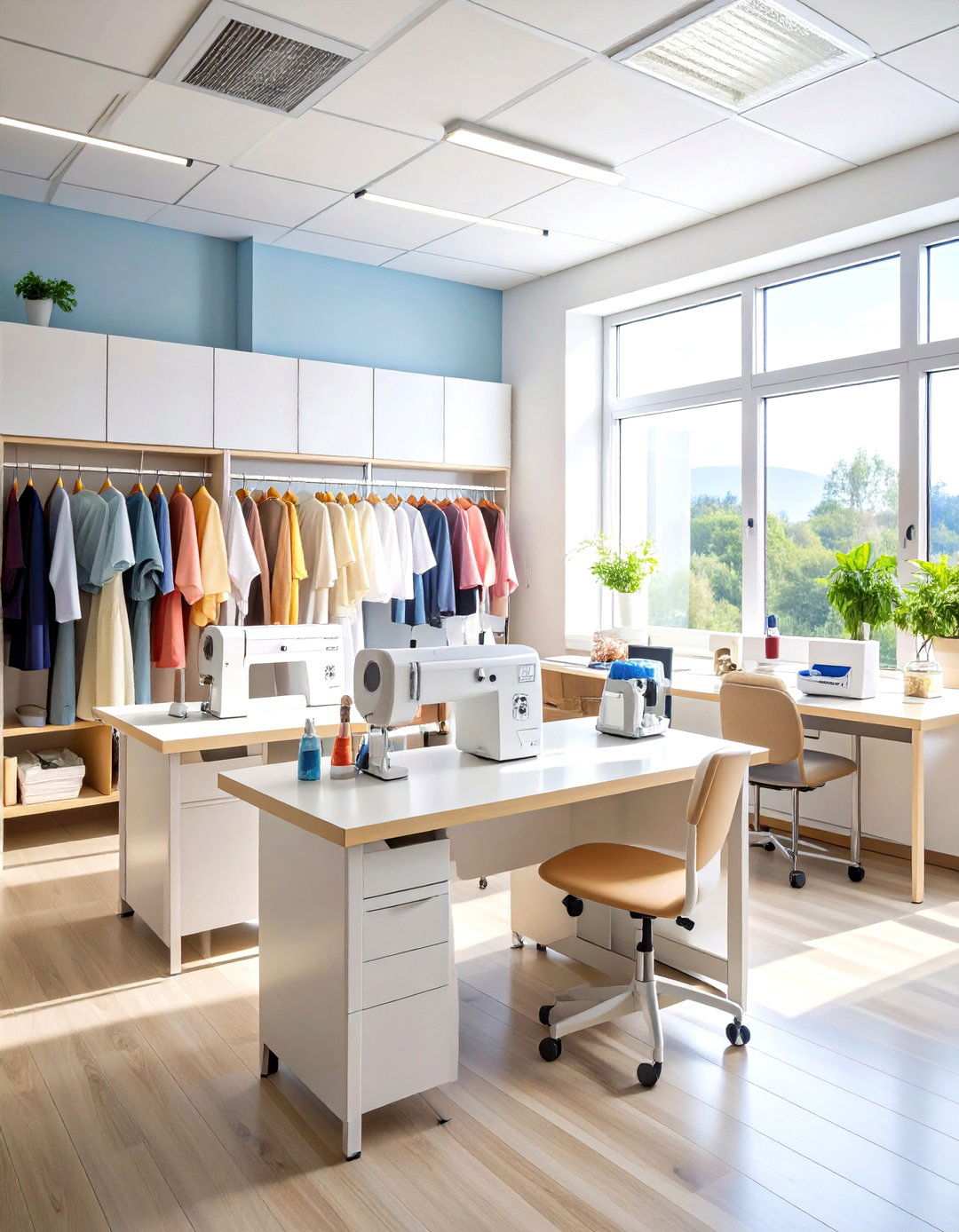
As a sewist, protecting valuable fabrics and maintaining comfortable working conditions is essential. Proper climate control not only preserves fabric quality but also ensures enjoyable sewing sessions. Install heating and cooling systems that maintain consistent temperatures and humidity levels. In damp climates, use dehumidifiers to prevent mold and mildew on natural fibers. Ensure good air circulation to prevent stuffiness during long work sessions. Keep storage away from direct heat sources to prevent damage to fabrics or threads. Consider investing in air purification systems that remove dust and allergens from the sewing environment. By maintaining a comfortable temperature and air quality, sewists can enjoy extended working sessions while safeguarding their material investments.
22. Prioritizing Safety and Emergency Preparedness
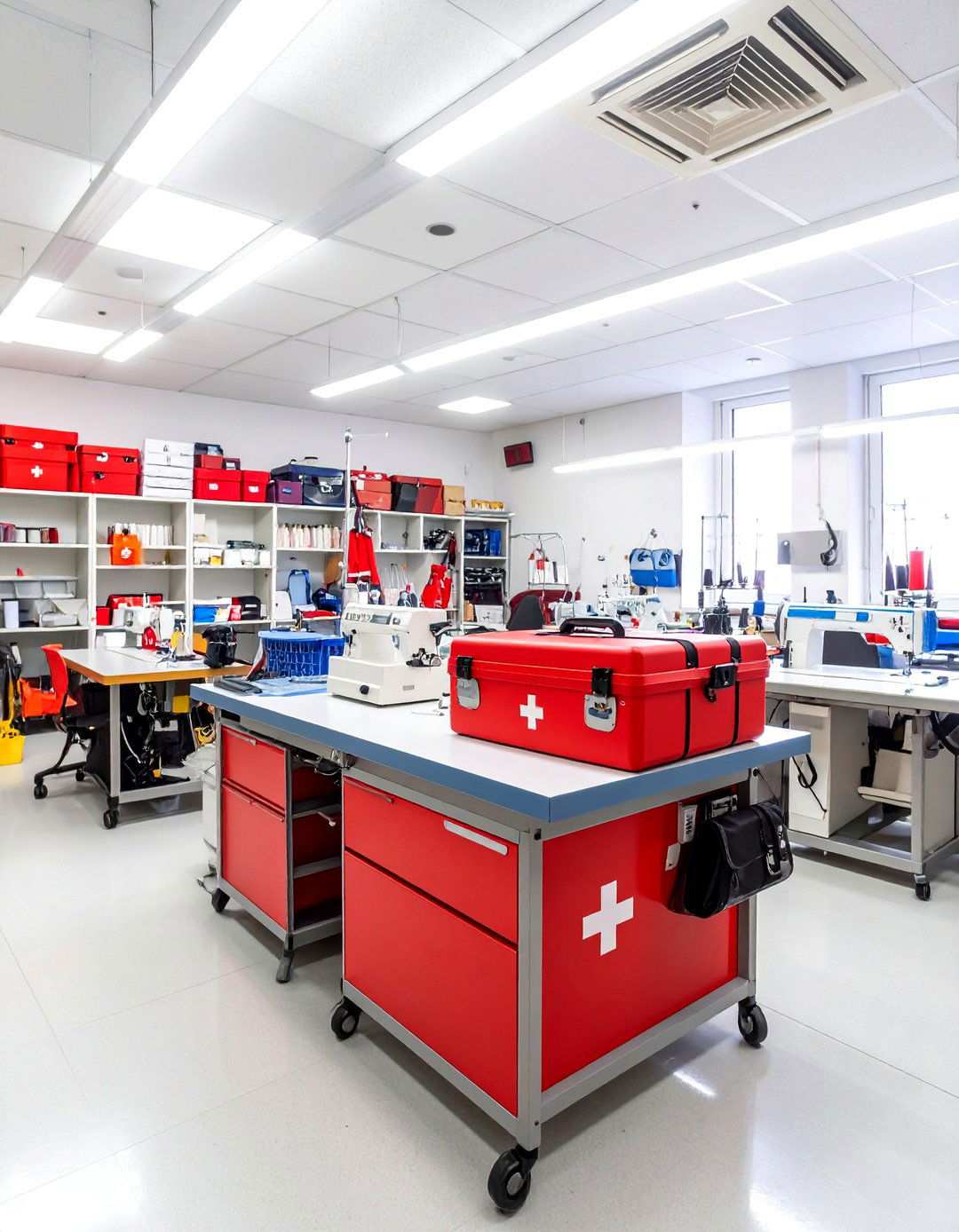
Prevention and preparation are key to maintaining a safe and productive sewing space. A well-equipped safety station provides peace of mind and quick response to minor mishaps. Keep a well-stocked first aid kit easily accessible for cuts, pricks, and minor burns from irons. Adequate lighting can prevent eye strain and accidents, so ensure that your workspace is well-lit. Maintain clear pathways free from fabric scraps and obstacles to avoid tripping hazards. Include fire safety equipment that’s suitable for electrical and fabric materials. Post emergency contact information visibly for easy reference. By prioritizing safety and embracing good ergonomic practices, sewists can prevent repetitive strain injuries and focus on their craft without worrying about potential hazards.
23. Seasonal Storage Solutions
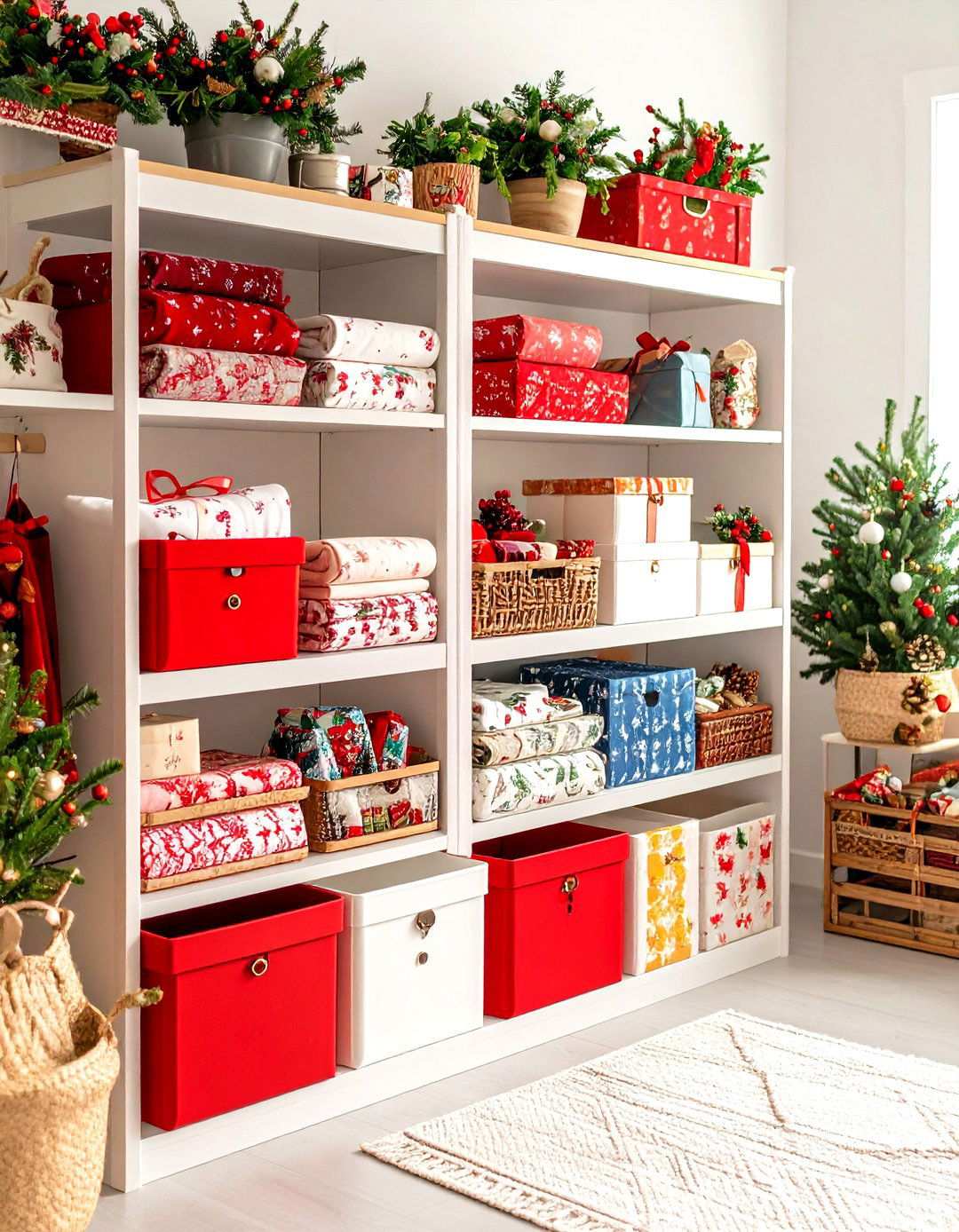
To effortlessly manage holiday projects and seasonal fabrics, it’s essential to strike a balance between organization and functionality. Effective seasonal storage keeps special materials in check, allowing you to maintain a streamlined workspace throughout the year. Store holiday-specific fabrics, patterns, and decorations in labeled bins in easily accessible yet discreet locations. Implement a rotation system for seasonal supplies to keep current projects at the forefront while stashing off-season materials. When it comes to storing infrequently used items, consider climate-controlled attic or basement storage solutions. Keeping inventory lists for seasonal storage containers ensures that specific items can be quickly located. This thoughtful organization system prevents seasonal projects from overwhelming daily sewing space, ensuring that special materials remain accessible when the holiday crafting season arrives.
24. Technology Integration Zones

Modern technology can elevate your traditional sewing experience by adding functionality without compromising creative authenticity. Seamlessly integrating technology into your workspace can have a profound impact on productivity. Designate charging stations for tablets and phones used for pattern instructions and inspiration browsing. Install speakers for background music that fosters focus and creativity. Consider setting up computer workstations for pattern design, fabric ordering, and project documentation. Include good lighting for photography to document your work for sharing or portfolio purposes. Ensure that there are adequate electrical outlets for multiple devices and sewing equipment. By thoughtfully incorporating technology, you can create a workspace that supports creativity while maintaining the tactile satisfaction that makes sewing so rewarding.