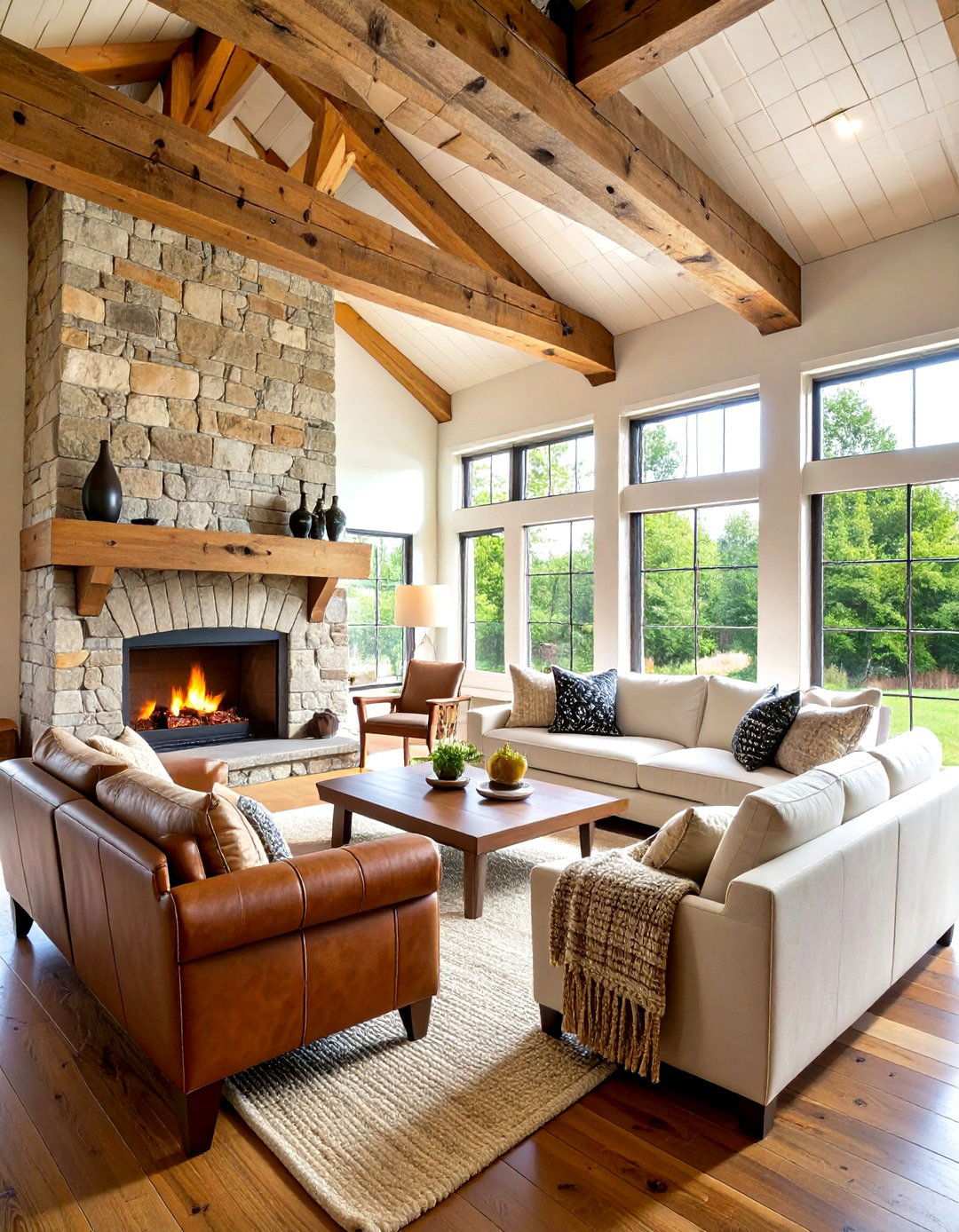
1. Timeless Ambiance with Exposed Wood Beams and Stone Fireplaces
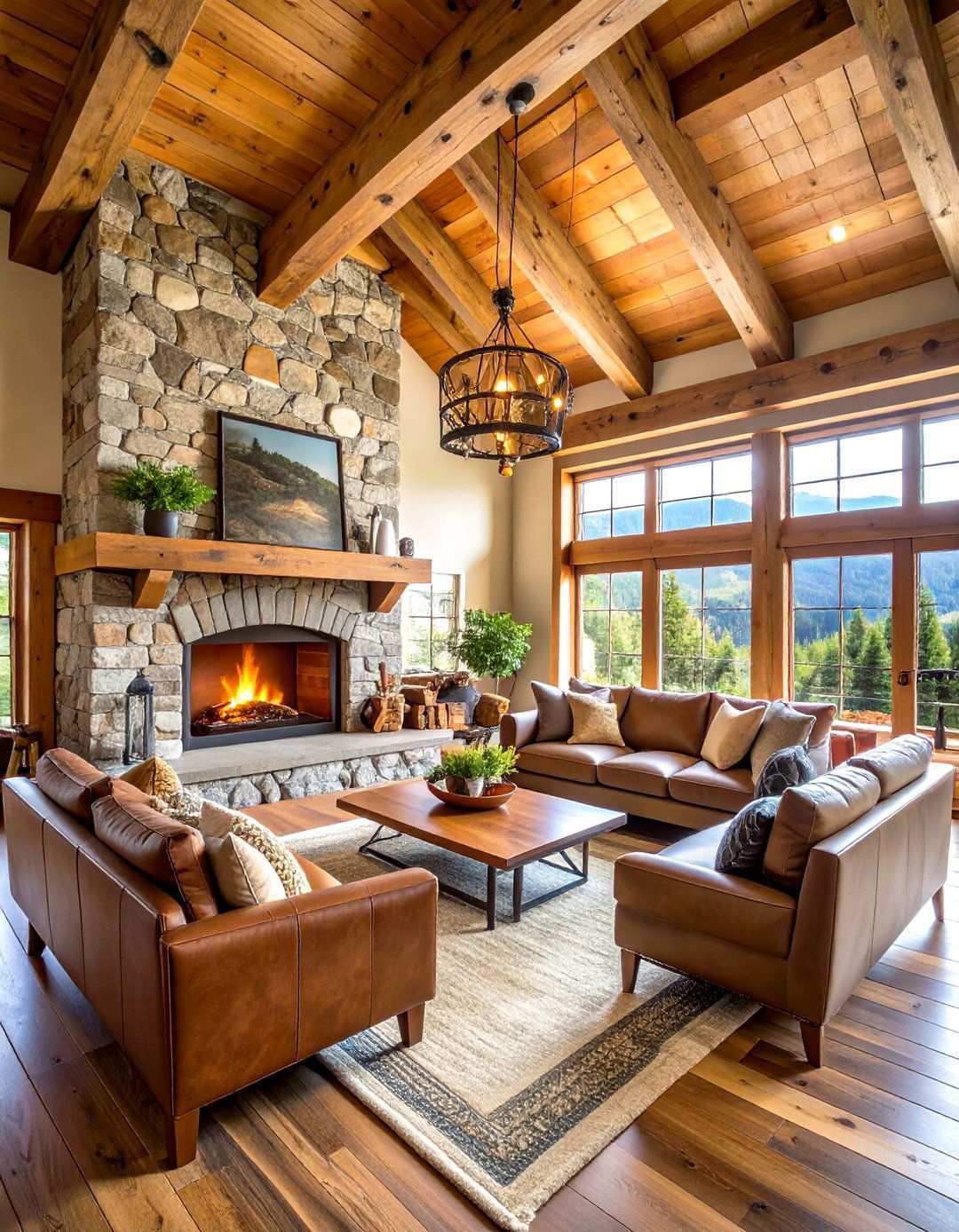
Rustic living rooms possess an undeniable allure that can instantly turn any home into a serene haven. By skillfully blending comfort, warmth, and natural beauty, these inviting spaces evoke the authentic charm of aged wood, exposed stone, and handcrafted elements that whisper tales of a bygone era. Whether you’re drawn to the snug cabin aesthetic with leather-wrapped furniture and the gentle crackle of fireplaces, or prefer the refined sophistication of modern rustic design with clean lines and muted palettes, rustic living rooms offer countless possibilities for creating unforgettable gathering spaces. The interplay of natural textures like reclaimed barn wood, fieldstone accents, and vintage textiles works in perfect harmony to establish an atmosphere that feels both lived-in and urbane. The versatility of rustic design lies in its ability to seamlessly adapt to various settings, from farmhouse cottages to urban lofts, while retaining that distinctive sense of warmth and authenticity that makes everyone feel at home.

As an Amazon Associate I earn from qualifying purchases.
2. Cozy Farmhouse Chic with Vintage Accents and Shiplap Walls
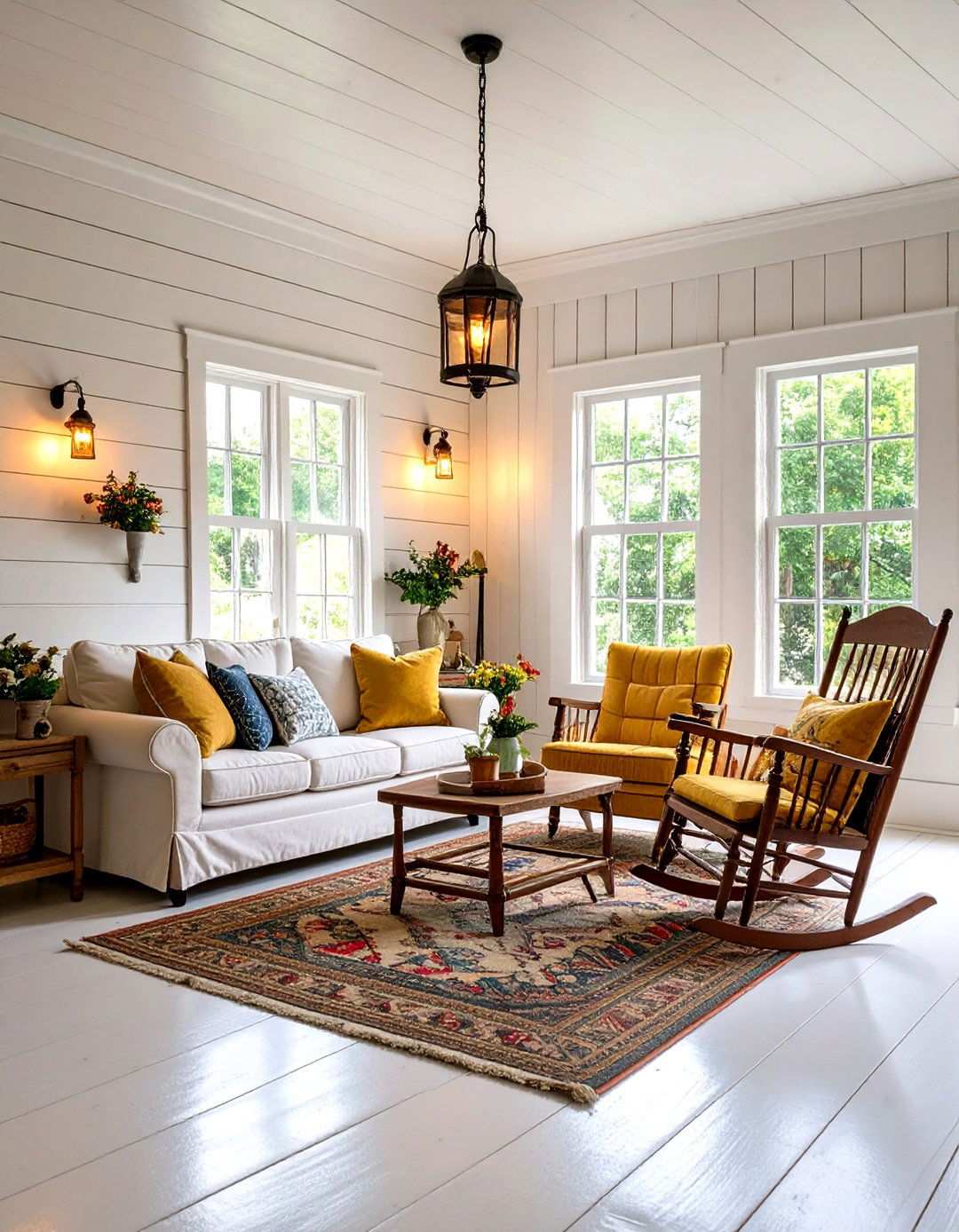
Create a warm and inviting atmosphere in your living room by installing crisp white shiplap paneling on your walls, a classic treatment that provides the perfect canvas for curated vintage furniture pieces. Weathered wooden coffee tables, antique rocking chairs, and distressed cabinets with original hardware are just a few of the timeless treasures that can elevate the authentic farmhouse atmosphere. Add soft linen upholstery, vintage quilts, and mason jar lighting fixtures to create a cozy retreat that exudes warmth and character. The horizontal lines of shiplap not only visually expand smaller spaces but also provide texture that beautifully catches and reflects natural light. To enhance this foundation, complement it with galvanized metal accents, fresh greenery, and family heirloom pieces that celebrate your personal history and style preferences, ultimately weaving a rich narrative that makes your living room a true reflection of your unique story.
3. Harmonious Balance of Texture and Neutrality
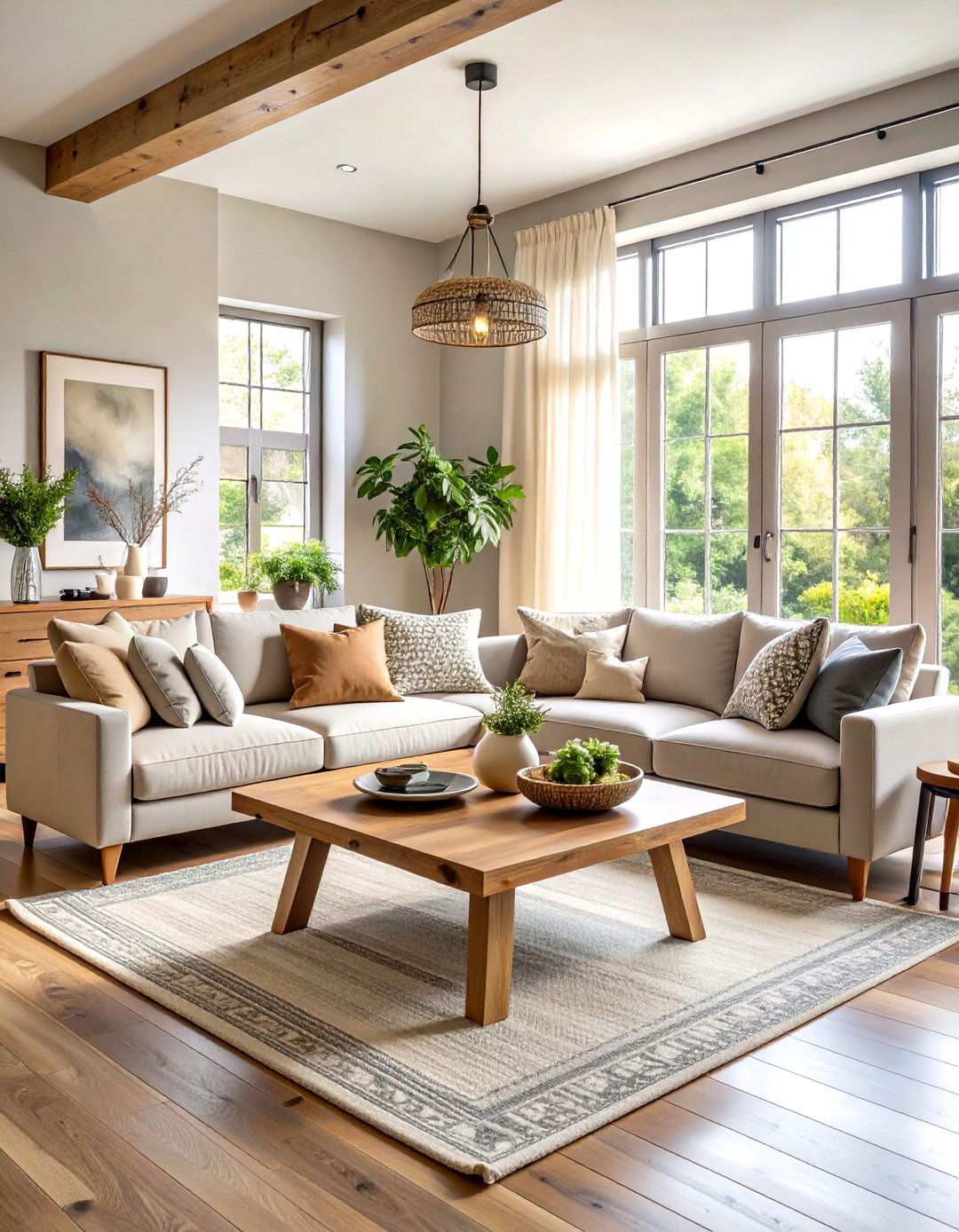
A modern rustic aesthetic can be beautifully achieved through the thoughtful combination of a sophisticated color palette featuring warm beiges, soft grays, and creamy whites. This refined approach seamlessly integrates rustic materials like reclaimed wood and natural stone with clean-lined furniture and minimalist accessories. Consider incorporating statement pieces such as a live-edge coffee table, linen-upholstered sofas, and abstract artwork that subtly complement architectural elements. The art of blending understated elegance with rustic warmth lies in selecting high-quality natural materials and practicing discerning editing to create spaces that exude a sense of currentness and timelessness. To further enhance the serene atmosphere, incorporate texture through woven rugs, faux fur throws, and ceramic pottery in earthy tones.
4. Intimate Gatherings in a Cozy Leather Oasis
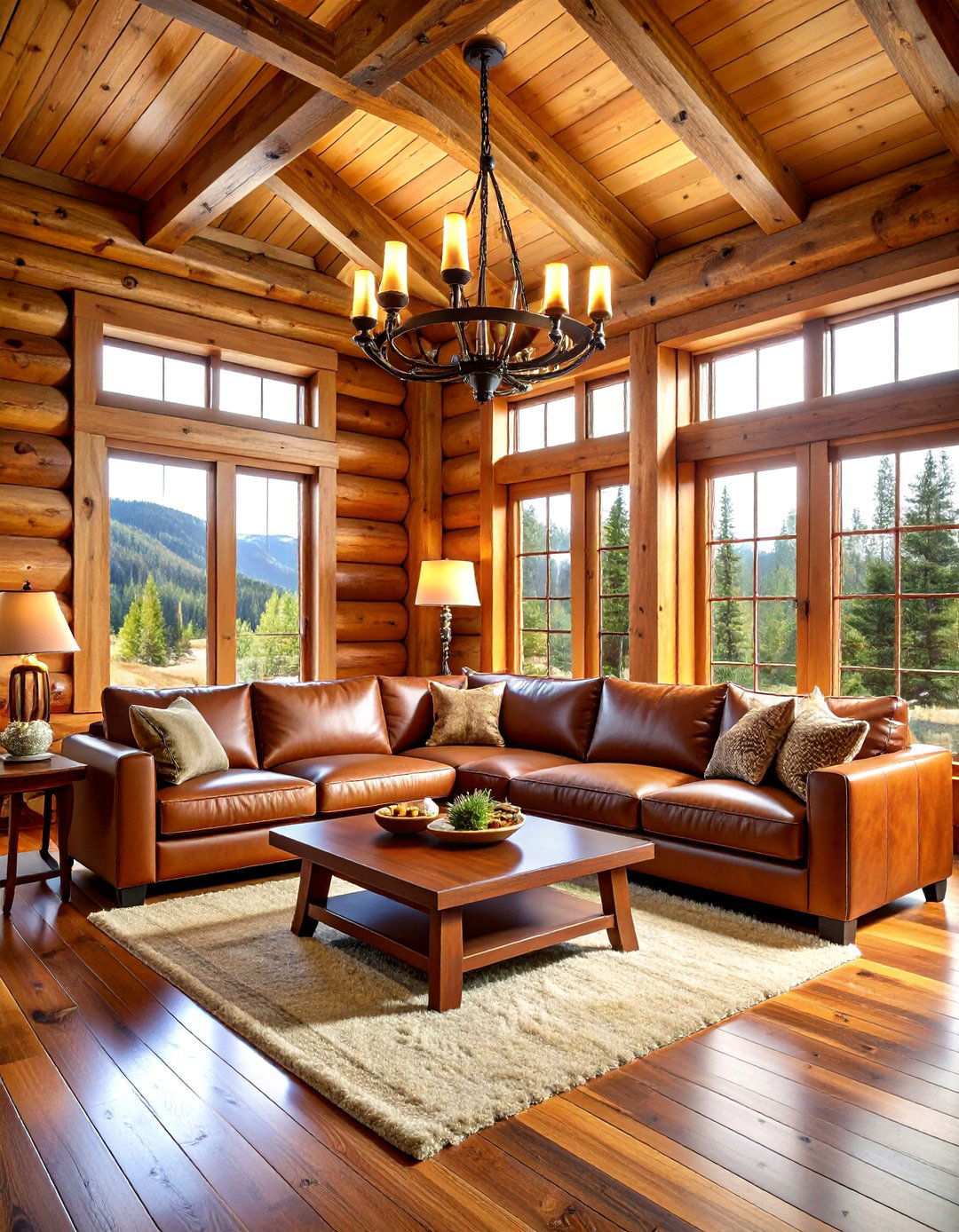
Design a cabin-inspired living room centered around rich leather furniture that develops a beautiful patina over time. Position a large leather sectional or matching sofas to create cozy conversation areas, accompanied by leather accent chairs and ottomans for additional seating and comfort. Rustic wood elements like log side tables, cedar chests for storage, and pine plank walls will not only enhance the authentic lodge atmosphere but also create a sense of warmth and character. The memories you’ll create in this space will likely be cherished for years to come, thanks to its celebration of traditional craftsmanship. To further enhance the ambiance, incorporate Native American-inspired textiles, antler lighting fixtures, and vintage camping gear as decorative accents. The fusion of supple leather and rough-hewn wood results in a masculine yet inviting environment perfect for relaxation and social gatherings.
5. A Dramatic Statement with Reclaimed Barn Wood
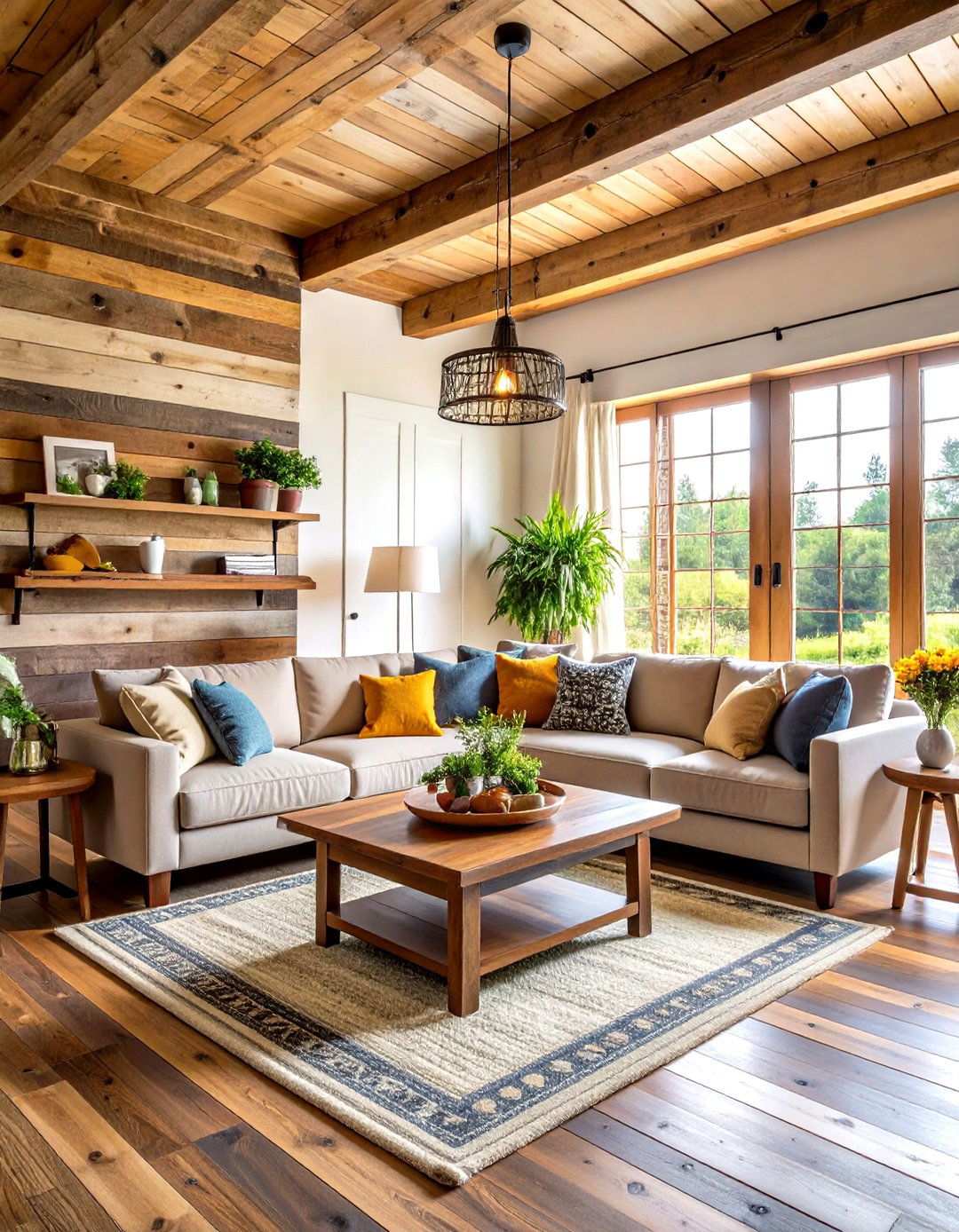
Make a bold statement with a reclaimed barn wood accent wall that becomes the focal point of the room. Seek out authentic weathered planks with original nail holes, saw marks, and patina that tell the story of their previous life. Arrange boards in horizontal, vertical, or herringbone patterns to create visual interest while maintaining the rustic character and charm. Position your seating to highlight this architectural feature, perhaps flanking a wall-mounted television or artwork collection. By incorporating authentic craftsmanship, you can significantly transform the energy of your living space. To prevent the space from feeling too themed or overwhelming for daily living, balance the rustic texture with contemporary furnishings and modern lighting.
6. Industrial Chic Accents
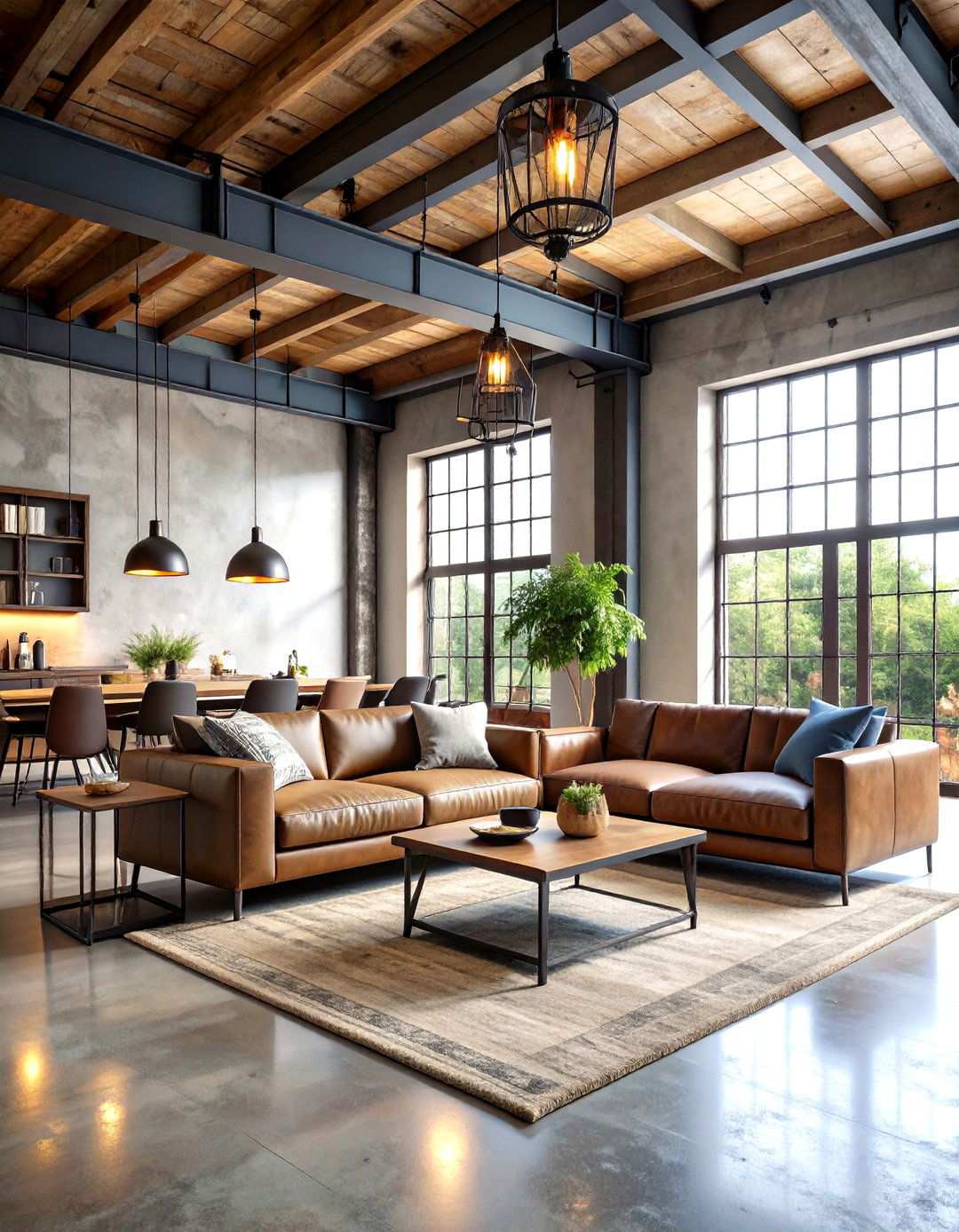
Elevate your home’s décor with the fusion of rustic warmth and industrial elements. Integrate weathered metal accents and fixtures, such as wrought iron lighting and steel beam supports, to evoke the ambiance of old factories and workshops. A harmonious color palette of charcoal grays, warm browns, and deep blacks will unify the masculine aesthetic. Add leather seating, distressed wood surfaces, and vintage industrial artifacts like old pulleys or gears to create a visually striking space. Can raw materials infuse your home with refined sophistication? This style is particularly well-suited to loft spaces or homes with high ceilings, where metal ductwork and exposed structural elements become integral design features.
7. Layering Textiles for Cozy Ambiance
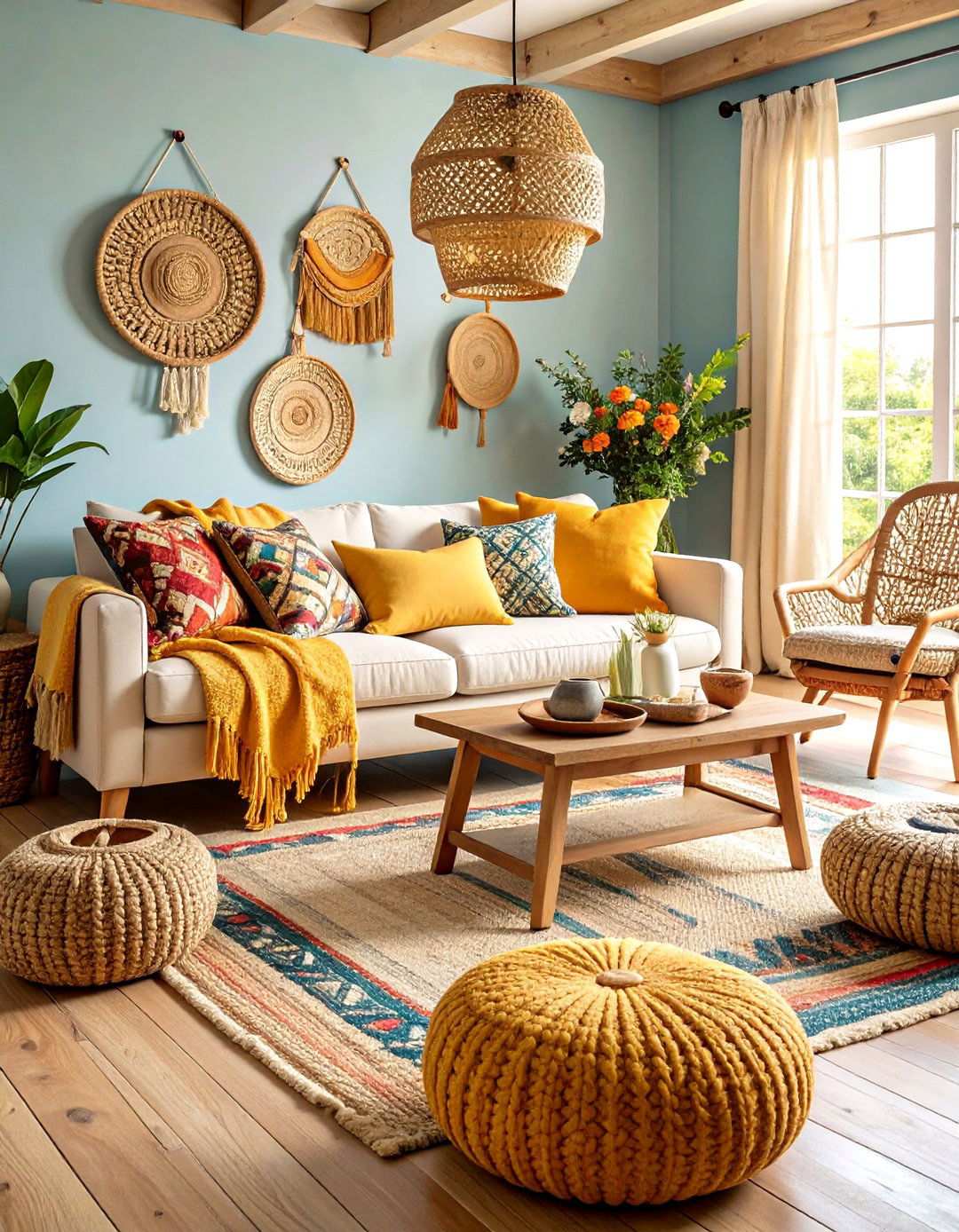
Achieve visual depth and tactile comfort by layering multiple natural textiles in your rustic living room. Begin with a foundation of jute or sisal area rugs, then add wool throws, linen pillows, and cotton canvas slipcovers in coordinating earthy tones. Introduce patterns judiciously with small doses of plaid, stripes, or geometric designs that enhance rather than overwhelm the natural color palette. Why do carefully selected textures make spaces feel instantly more welcoming? Arrange throws casually over seating, group pillows in odd numbers for visual balance, and incorporate natural fiber baskets for both storage and decoration. This approach creates a lived-in comfort that encourages relaxation while maintaining refined style throughout the space.
8. Functional Barn Doors for Space Solutions
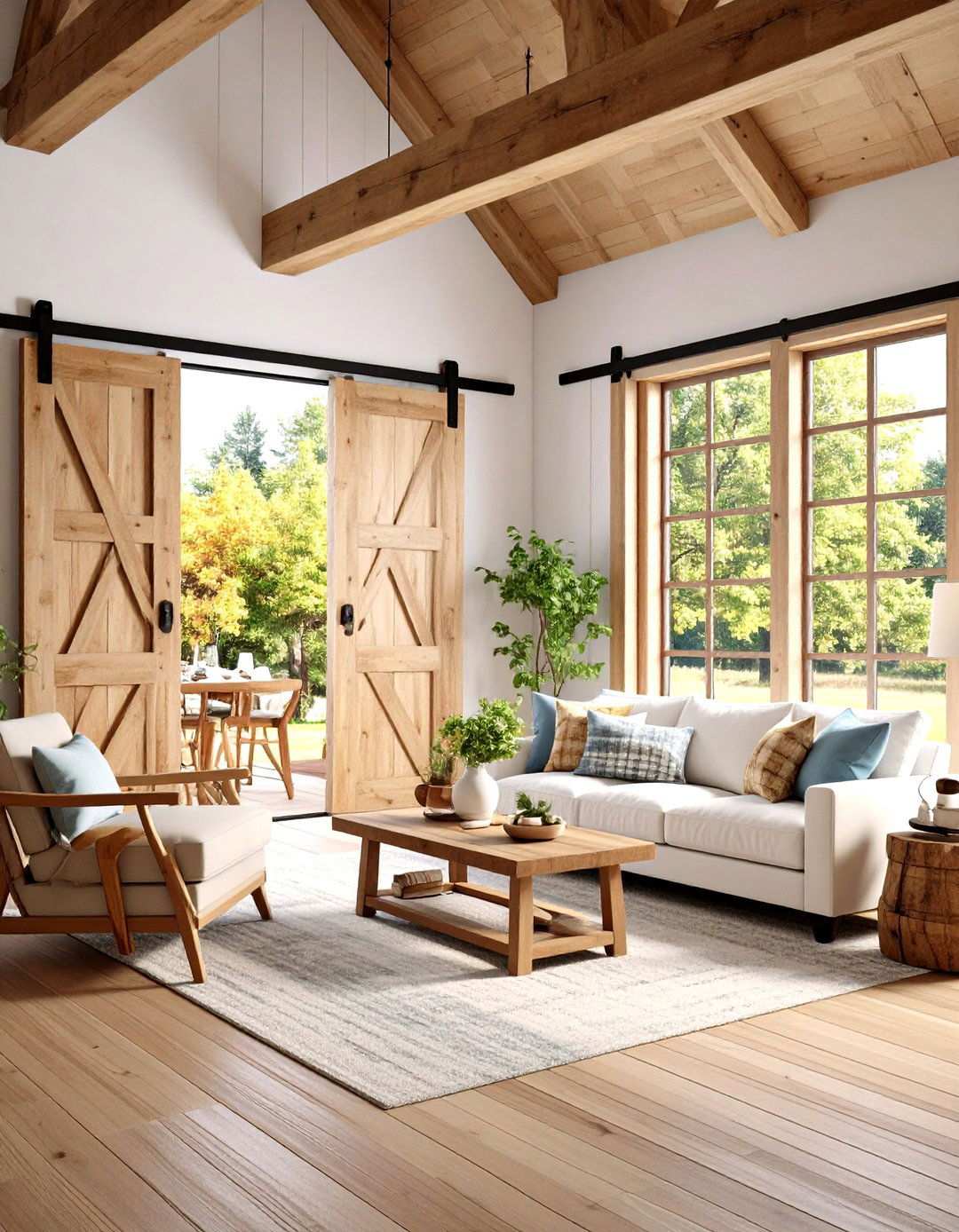
Install sliding barn doors as functional room dividers that enhance rustic character while providing flexible space solutions. Choose doors with distinctive X-bracing, Z-patterns, or glass panels that allow light to flow between areas while maintaining visual separation. Select from weathered wood finishes, painted colors, or metal-framed designs that complement your existing décor style. Mount sturdy hardware tracks that become decorative elements themselves, often featuring wrought iron or brushed steel finishes. How can architectural elements serve both form and function in your home? Use barn doors to separate living areas from dining spaces, conceal entertainment centers, or create private nooks for reading and relaxation throughout your open-concept floor plan.
9. Elevating Emotive Collections
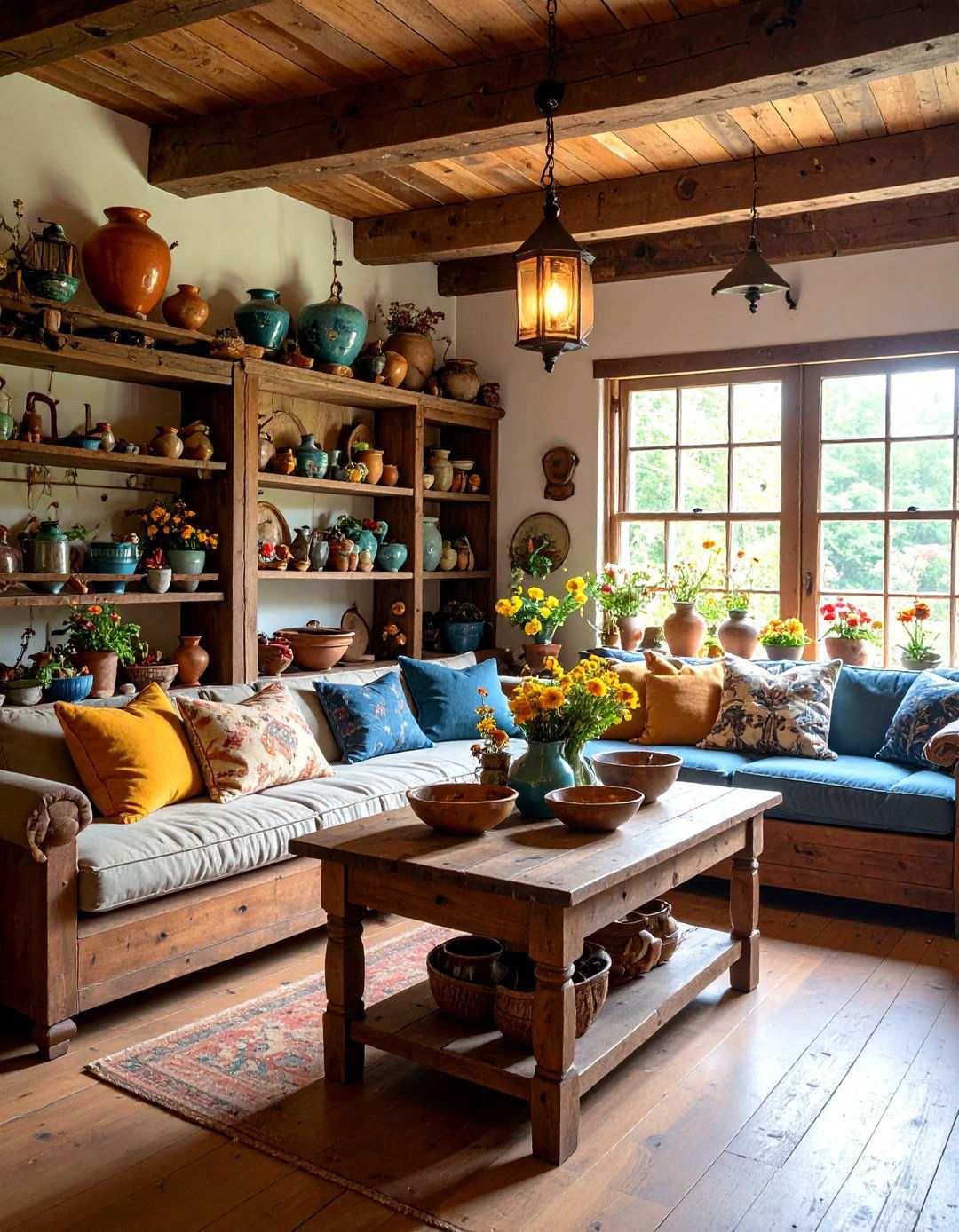
Infuse your rustic living room with a personal narrative by thoughtfully curating antique and vintage accent collections. This can be achieved by showcasing unique items like weathered vases, distressed wooden crates, antique maps, and vintage metalware on open shelving and surfaces. Grouping such collections in odd numbers and varying heights creates visual appeal without overwhelming the space. By doing so, the stories behind your treasured finds become an integral part of your family’s history. Mixing different textures and finishes while maintaining a cohesive color palette allows for a harmonious balance of your eclectic treasures. Incorporating pieces with patina, wear marks, and character adds an authentic touch, drawing attention to their age and past use in homes and workshops.
10. Soaring Wood Ceilings
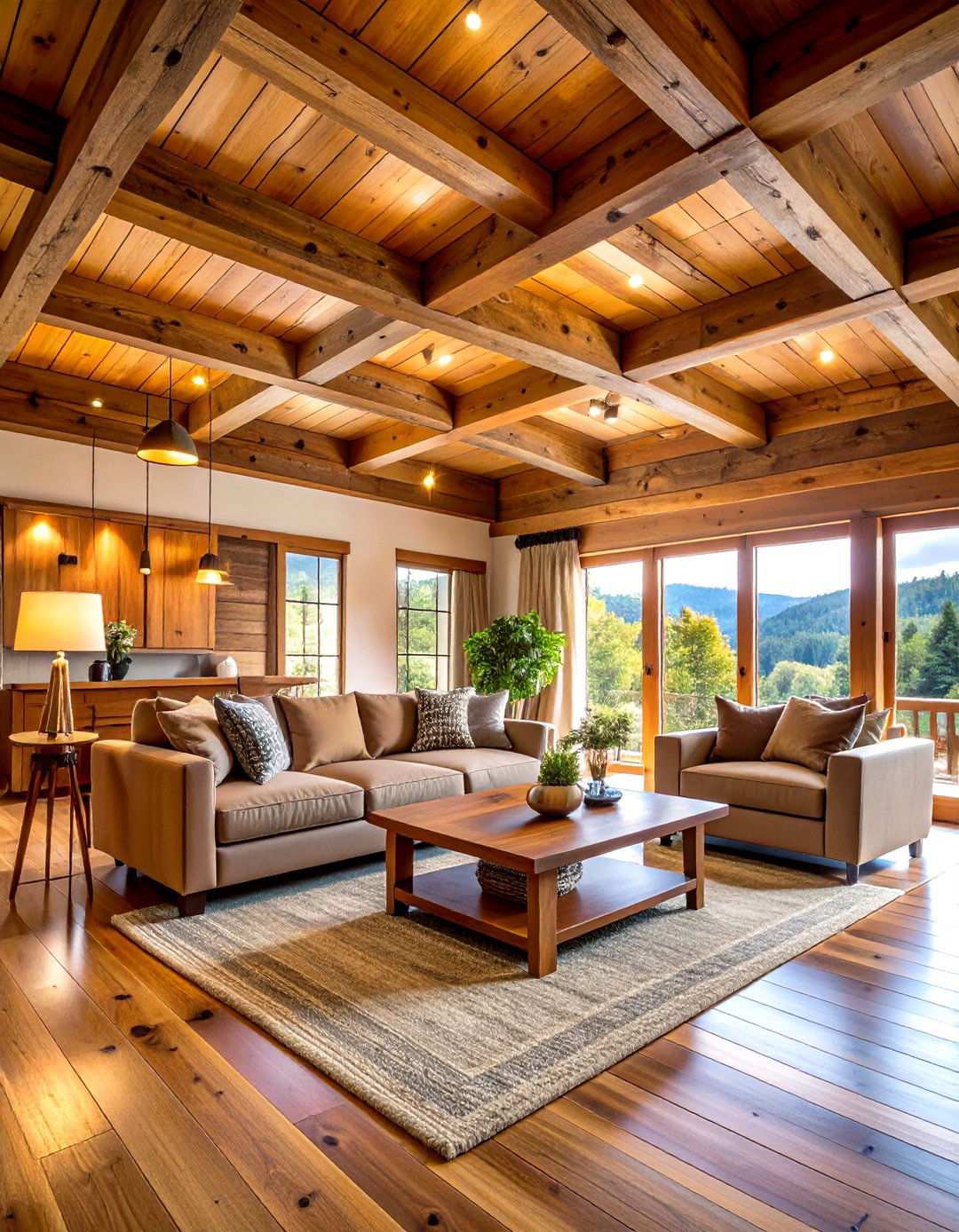
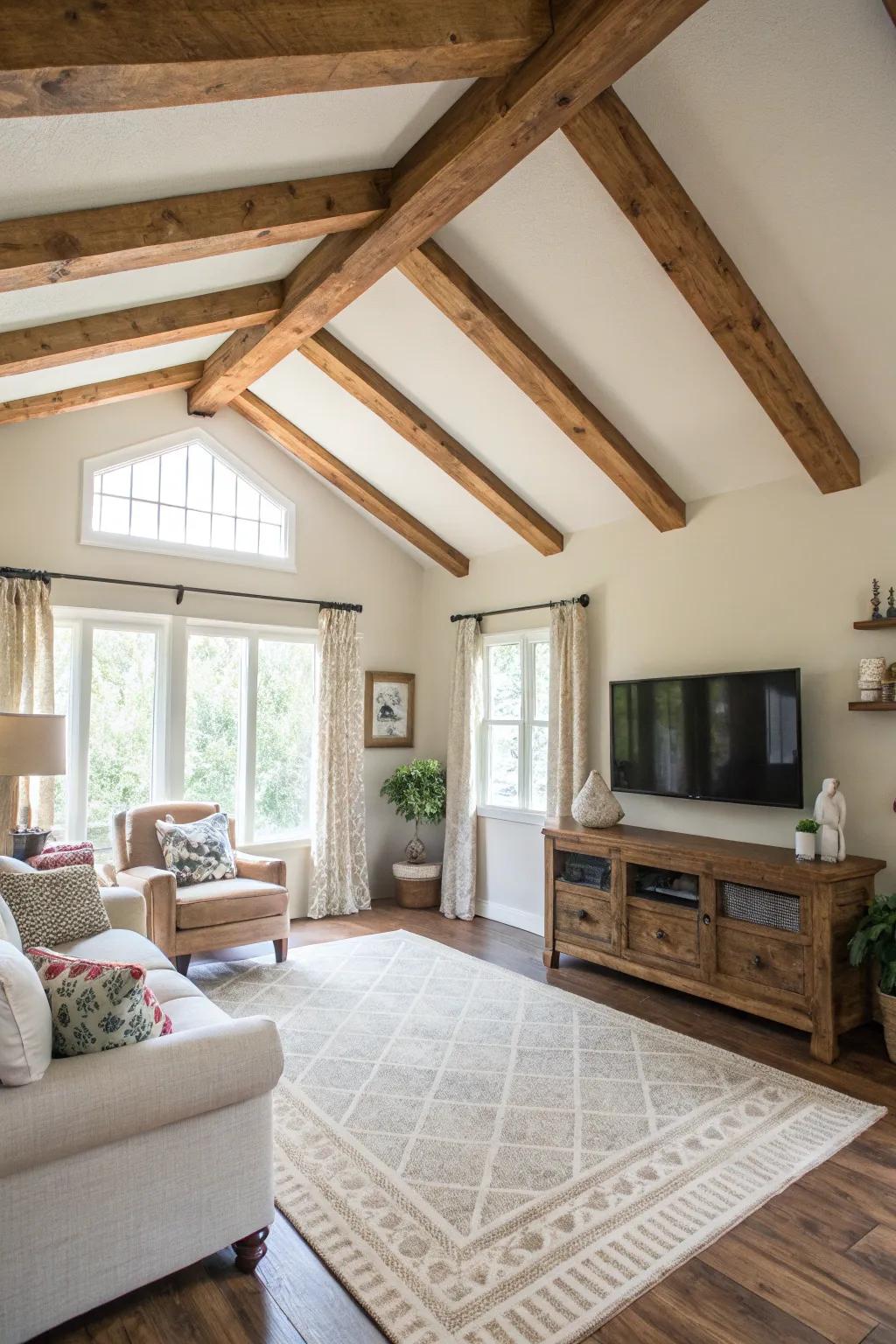
Create a sense of drama in your rustic living room by installing distinctive wood ceiling treatments that draw the eye upward. Explore various options like tongue-and-groove planking, exposed beams, coffered designs, or shiplap applications, considering your ceiling height and structure as a guide. By choosing wood species and finishes that complement your wall treatments and furniture, you can achieve a cohesive look that ties the entire space together. Whether you prefer a lighter, airy feel or a darker, more intimate atmosphere, staining the wood to your liking allows for endless possibilities. The impact of overhead architecture on your gathering space should not be underestimated; it sets the tone for the entire area. By incorporating recessed lighting between beams or pendant fixtures that highlight the wood grain patterns, you can achieve both functionality and visual interest.
11. Coffee Table Artistry
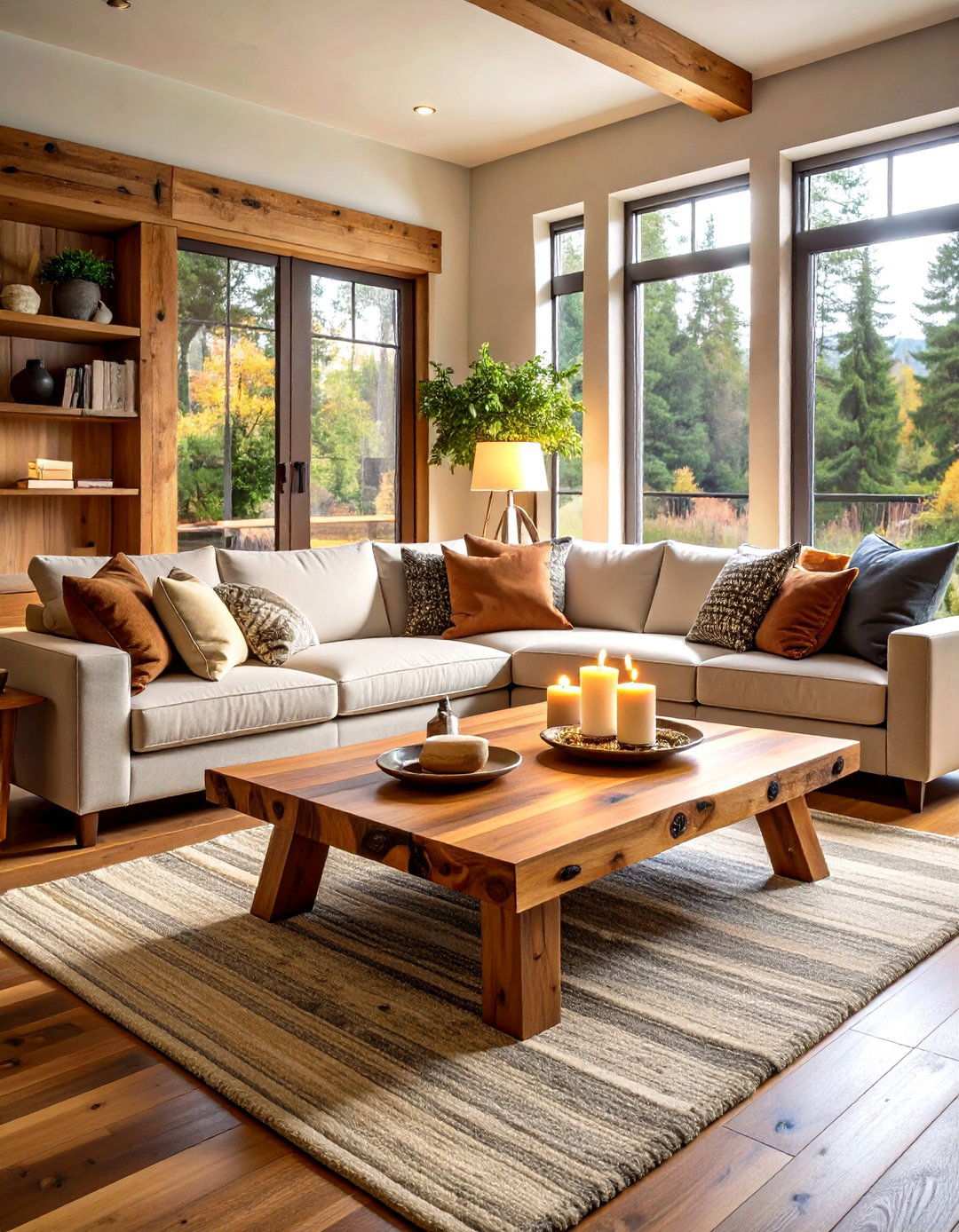
The centerpiece of your seating arrangement is the rustic coffee table, serving both functional and aesthetic purposes. When selecting a table, consider live-edge slabs, reclaimed barn wood constructions, or log-based designs that showcase natural wood grain and character. Style the surface with curated collections of vintage books, wooden decorative items, candles, and seasonal elements that reflect your personal interests. Your coffee table can become a canvas for displaying treasured items, making it an integral part of your living space. To ensure comfortable traffic flow, choose a table scale that is in harmony with your seating and room size. Adding lower-level storage through baskets, vintage crates, or built-in shelving keeps everyday items organized while maintaining the rustic aesthetic throughout your living space.
12. Crafting a Cozy Glow
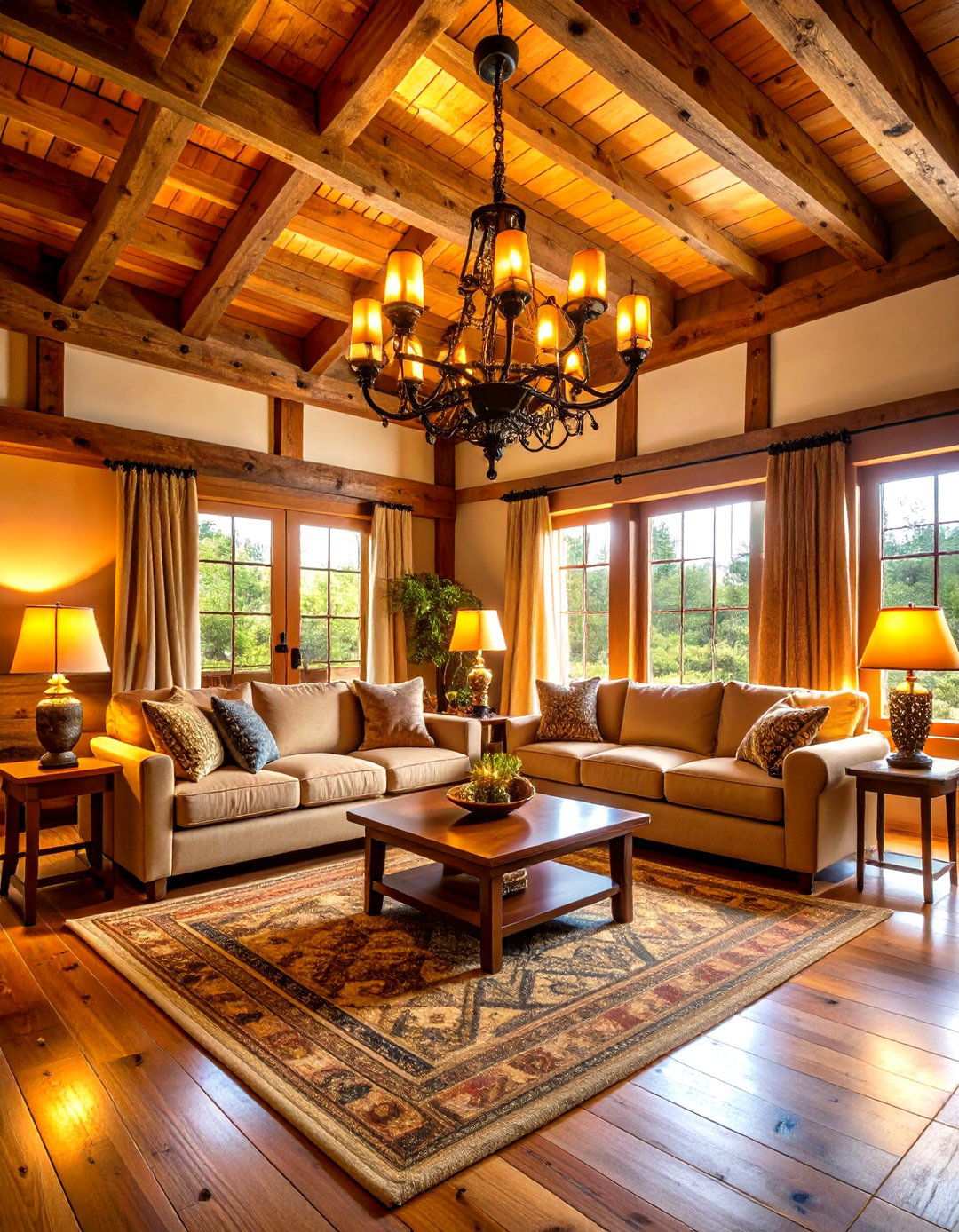
Transform your rustic living room into a haven of warmth and comfort with layered lighting design. By combining overhead fixtures, table lamps, floor lamps, and accent lighting, you can create a flexible and inviting atmosphere. Opt for warm-toned bulbs that produce a golden glow reminiscent of firelight or candlelight, perfect for setting the mood. To further enhance the ambiance, incorporate dimmer switches that allow you to adjust lighting levels throughout the day and evening. Think about the mood you want to create during different times and activities, and let that guide your lighting choices. To add an extra layer of warmth, consider using natural materials like wood, metal, and fabric lampshades that complement your overall design scheme while providing practical illumination for reading, conversation, and relaxation.
13. Designing Functional Storage
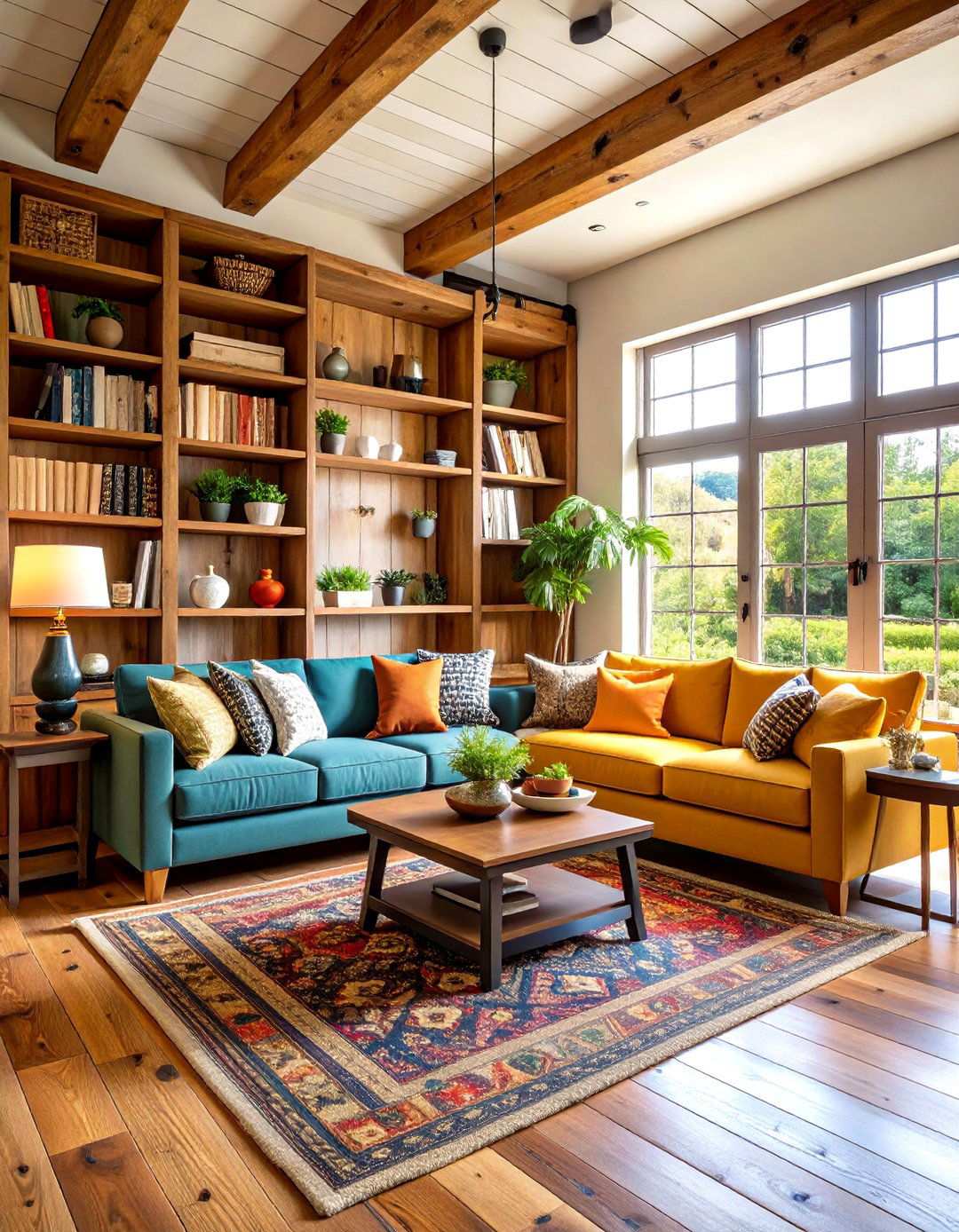
Maximize the functionality of your living room with custom built-in storage solutions that seamlessly integrate with your rustic aesthetic. By designing bookcases, entertainment centers, and window seats using reclaimed wood, metal brackets, and vintage hardware, you can create a cohesive look that organizes your living room essentials. Balance open shelving for display with closed storage for items you prefer to keep hidden. Consider specific needs like media equipment, books, games, and seasonal decorations, and plan your storage solutions accordingly. By incorporating storage into your room’s architecture, you can create a beautiful and functional space that celebrates the rustic charm of your living room.
14. Choosing the Perfect Area Rug
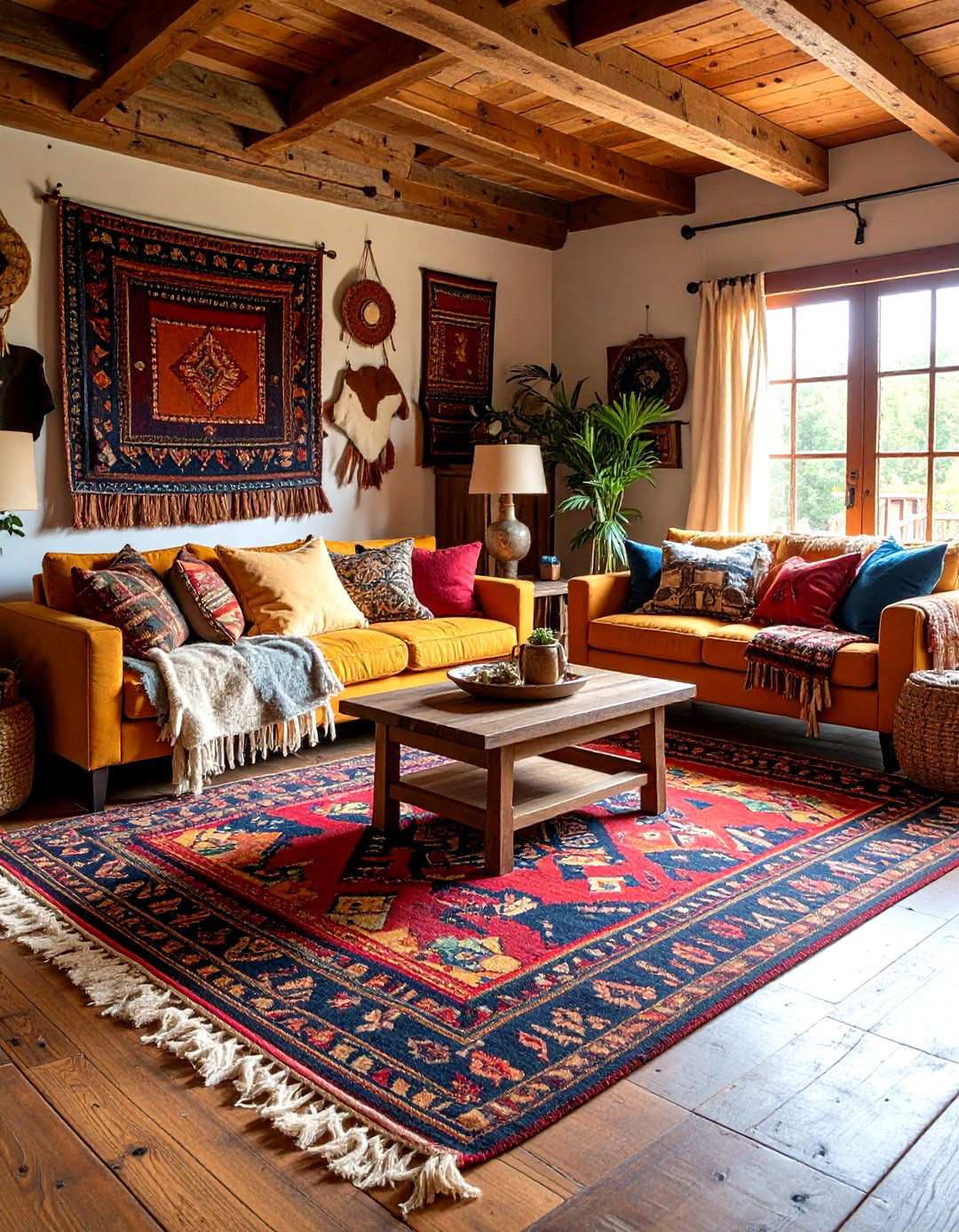
Ground your furniture arrangement with area rugs that add warmth and texture to your rustic living space. Opt for natural fiber options like jute, sisal, wool, or cowhide that complement your color palette and design style. To add visual interest, consider layering smaller rugs over larger ones. When selecting patterns, focus on subtle geometric designs, stripes, or solid colors that won’t compete with other decorative elements. Think about how your floor treatments unify or fragment your room’s overall design, and ensure that rugs are appropriately sized for your furniture arrangement. By placing the front legs of seating pieces on the rug edge, you can achieve proper scale and proportion throughout the space.
15. Harmonious Window Treatments for Cozy Spaces
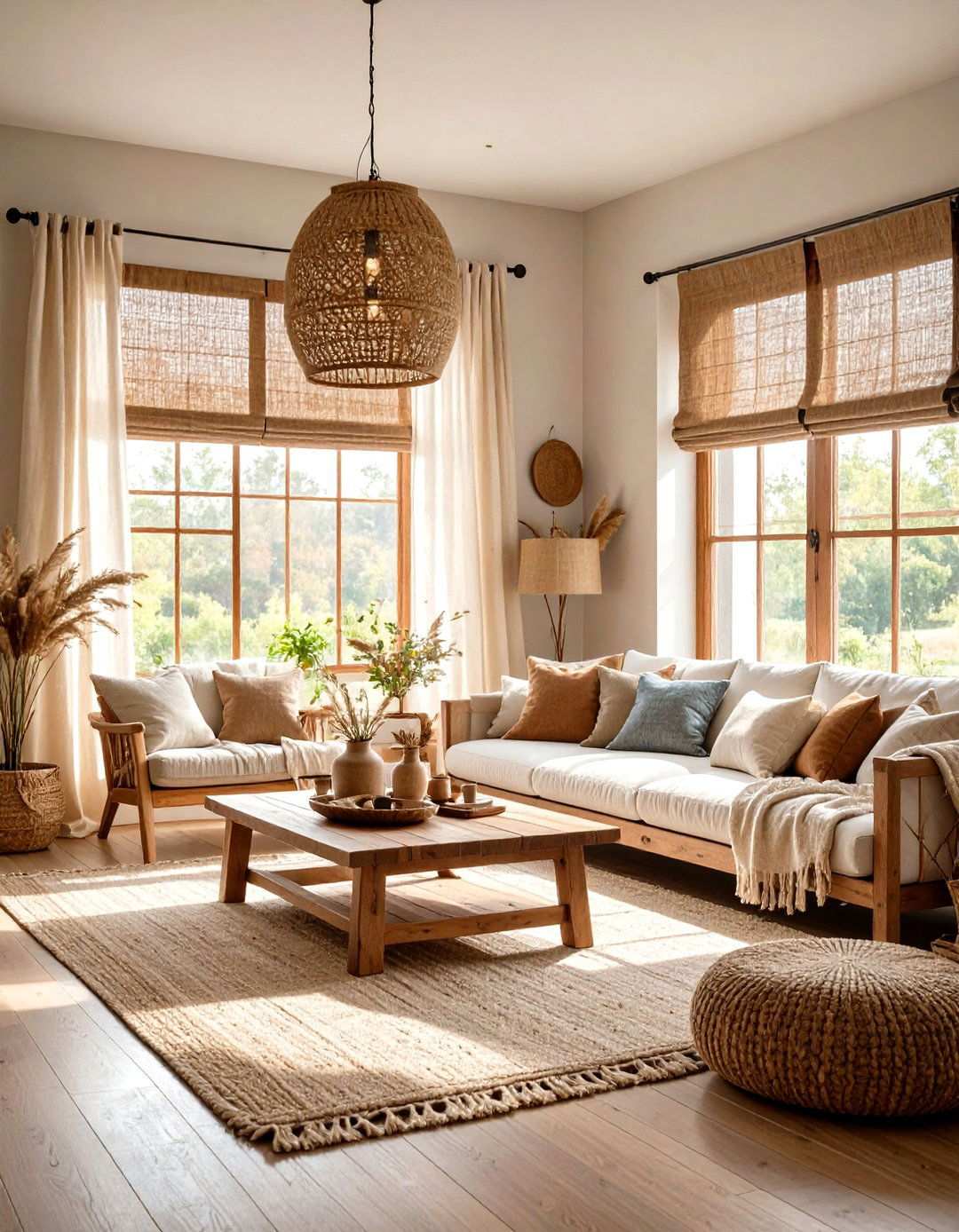
To optimize natural light and maintain your rustic space’s character, create a window treatment plan that balances functionality with aesthetics. Consider incorporating soft, flowing fabrics such as linen curtains or bamboo blinds, alongside wooden shutters or minimalist valances that blend with the room’s design elements. Choose understated colors or subtle patterns that align with your overall color palette, ensuring a cohesive look. For visual impact, consider treatments that appear larger than the actual window size. How do your window coverings affect both the amount of light and the room’s proportions? Achieve flexibility in your window treatment design by layering different styles, such as sheer panels for daytime seclusion combined with heavier drapes for evening warmth and full light control when desired.
16. Nature-Inspired Color Schemes for Rustic Spaces
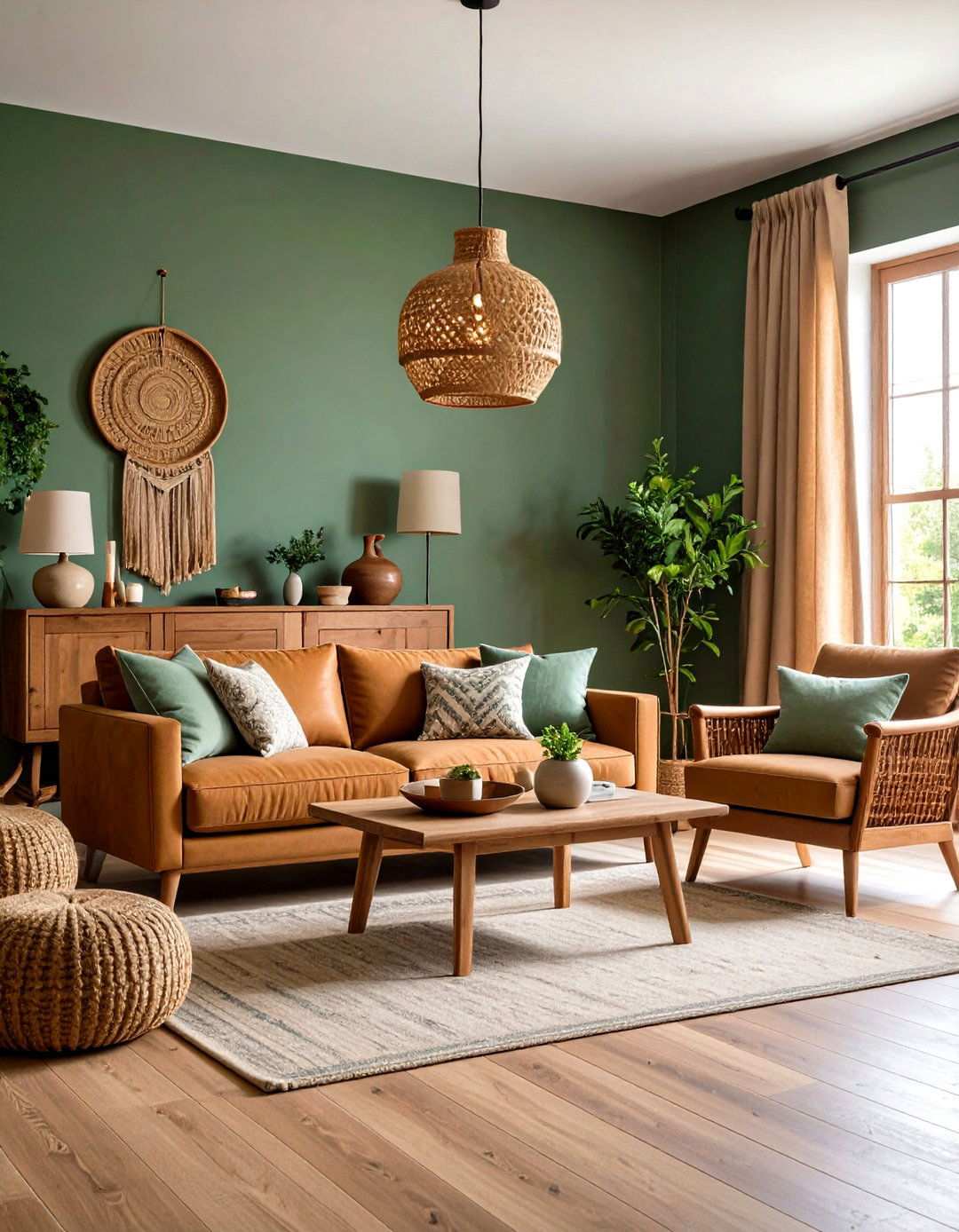
A thoughtfully curated color palette can evoke a sense of serenity and connection to the natural world. Draw inspiration from earthy tones found in nature, incorporating warm neutrals like soft sage, muted gray, cream, taupe, and rich brown as foundation colors for walls and larger furniture pieces. Add depth to your color scheme with carefully chosen accent colors, using accessories, artwork, and textiles that can be easily swapped out seasonally. To ensure a harmonious color palette, test your chosen paint colors in various lighting conditions throughout the room before making a final decision. As you navigate the world of color combinations, remember that a rustic space should feel grounding and calming, providing a peaceful backdrop that complements the natural materials and textures that define your living space.
17. Artful Mixing of Rustic Metal Accents
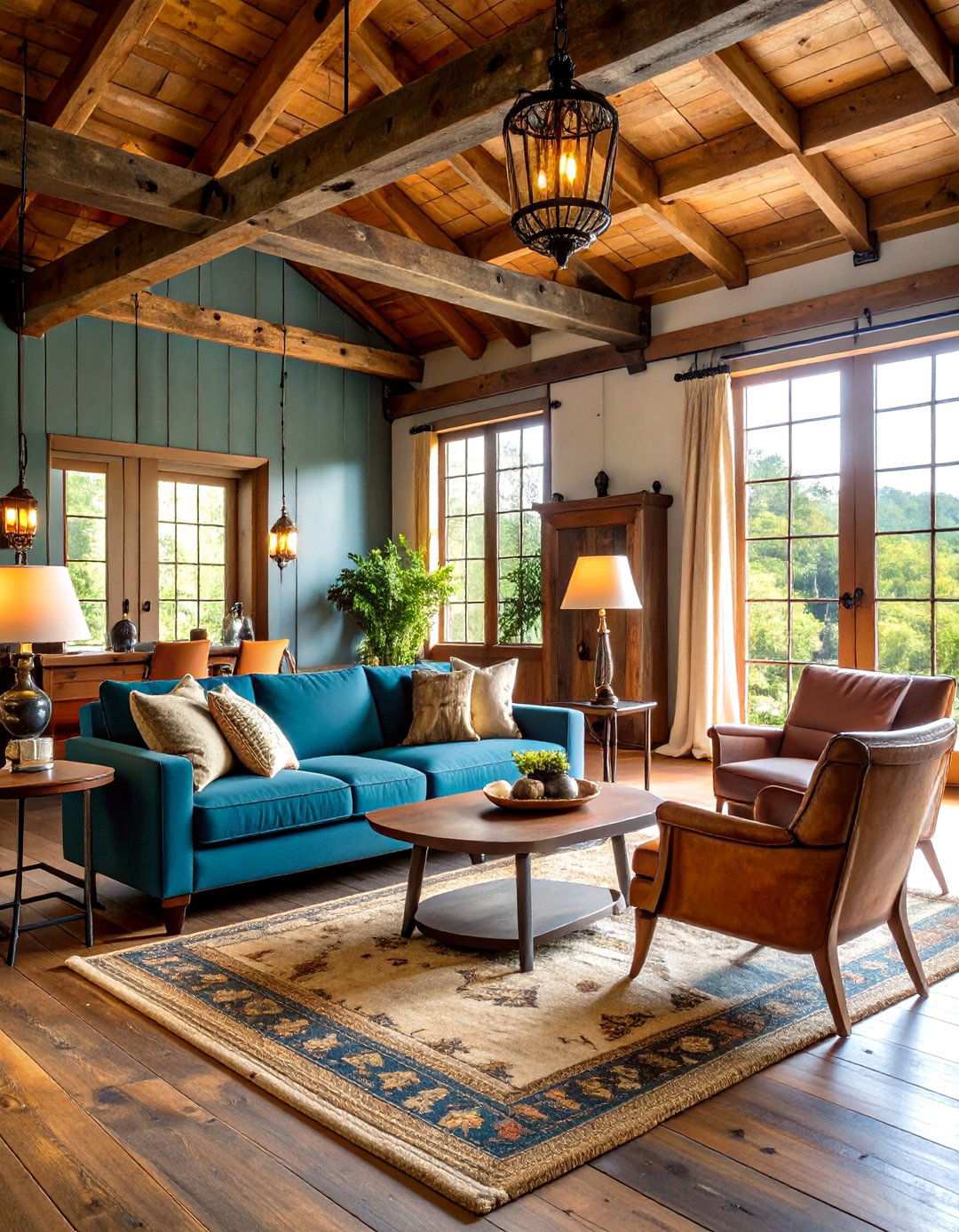
To infuse your rustic living room with authentic character, thoughtfully combine various metal finishes and hardware elements. Blend aged brass, wrought iron, brushed steel, and copper accents through lighting fixtures, furniture hardware, decorative accessories, and architectural elements. When mixing finishes, strike a balance between visual interest and cohesion to avoid a chaotic appearance. Choose pieces with patina, hammered textures, or hand-forged details that nod to traditional metalworking crafts. Can mixed metals create a sense of harmony or confuse your design choices? To achieve balance, focus on maintaining similar undertones and intensity levels across different metal elements, and repeat each finish at least twice throughout the room to create cohesion and balance in your overall design scheme.
18. Harmonizing Rustic Charm with Modern Entertainment
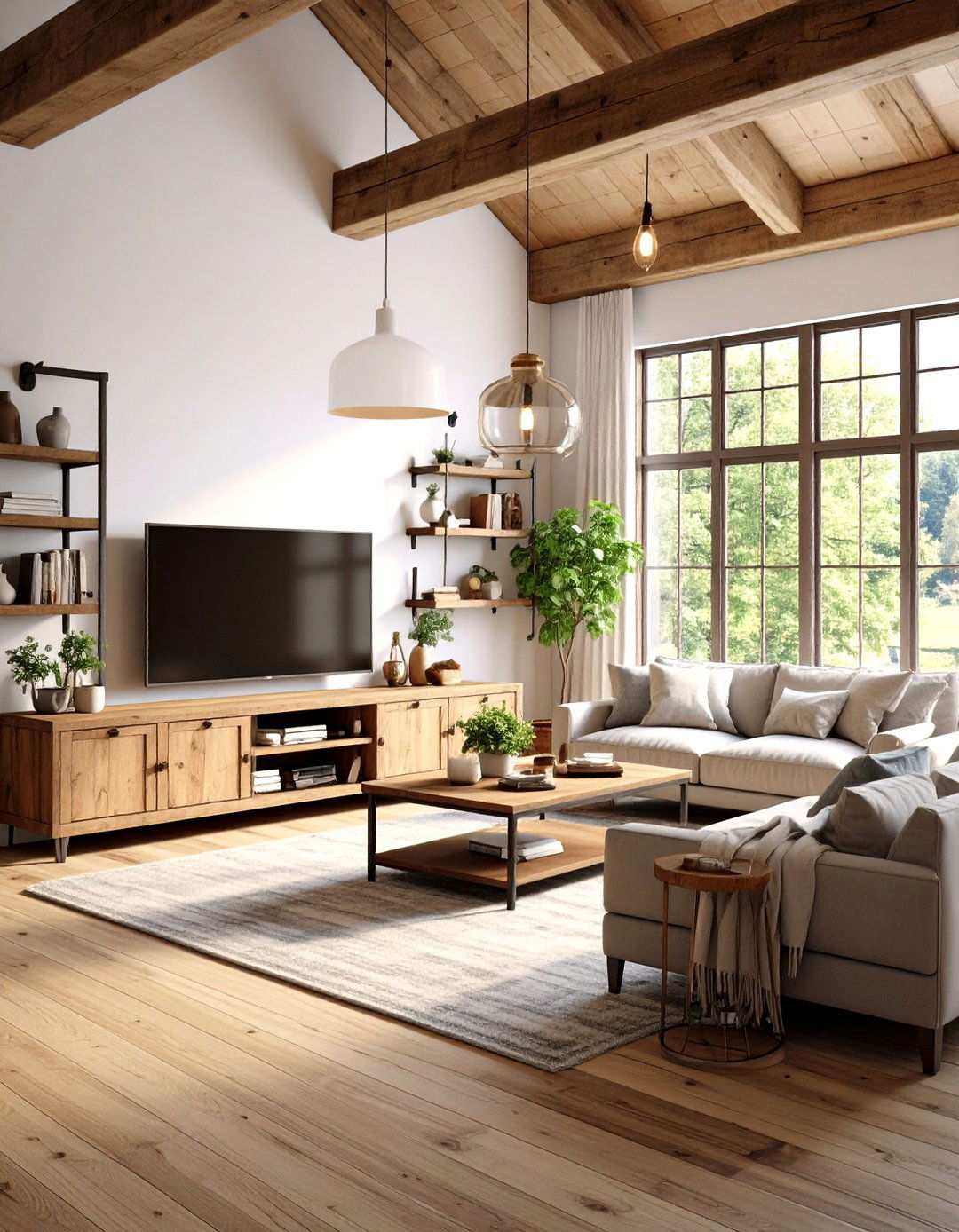
To create a seamless fusion of rustic charm and modern entertainment, it’s essential to approach design with a thoughtful and intentional mindset. By selecting materials that complement the room’s style, such as reclaimed wood, metal piping, or combination materials, you can build or choose media consoles that not only serve a functional purpose but also enhance the overall aesthetic. Effective planning for cable management, ventilation, and equipment access is crucial, as it enables clean lines and maintains the rustic ambiance. Consider mounting televisions above rustic mantels or within custom built-in units that cleverly conceal wiring and components. In this way, contemporary technology can become an integral part of your rustic interior design, rather than detracting from its authenticity. Moreover, incorporating storage for media, games, and accessories within the design ensures that the space remains functional and clutter-free, while handcrafted furniture pieces that serve multiple functions help maintain the unique character of your rustic design.
19. Seasonal Adaptations for a Rustic Living Room
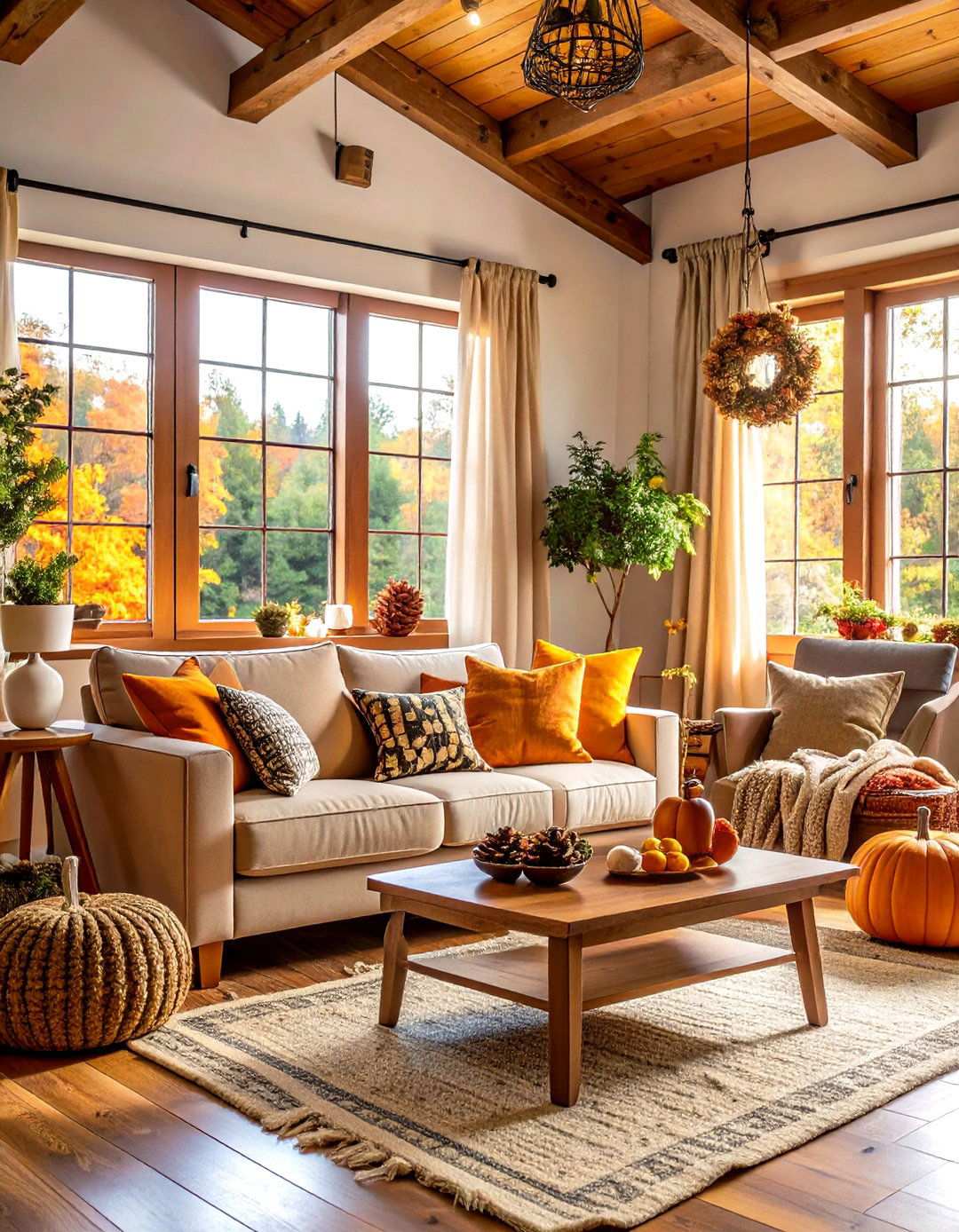
To create a rustic living room that effortlessly adapts to the changing seasons, it’s crucial to focus on strategic use of accessories, textiles, and natural elements that can be easily swapped out. By incorporating seasonal colors, textures, and motifs while maintaining the core design principles, you can achieve a cohesive look that evolves with the passage of time. As the seasons change, add cozy elements like extra throws and pillows during the colder months, or lighter fabrics and fresh flowers during the warmer seasons. Natural elements like pinecones, branches, pumpkins, or fresh greenery can be used as temporary decorative accents, adding a touch of seasonal charm to your space. By embracing the ever-changing beauty of the seasons, you can experience a renewed sense of joy and wonder in your living environment. Furthermore, creating storage solutions for off-season items and developing a collection of versatile accessories that can be mixed and rearranged will enable you to create fresh looks throughout the year while maintaining your room’s rustic character.
20. Crafting a Rustic Reading Nook Oasis
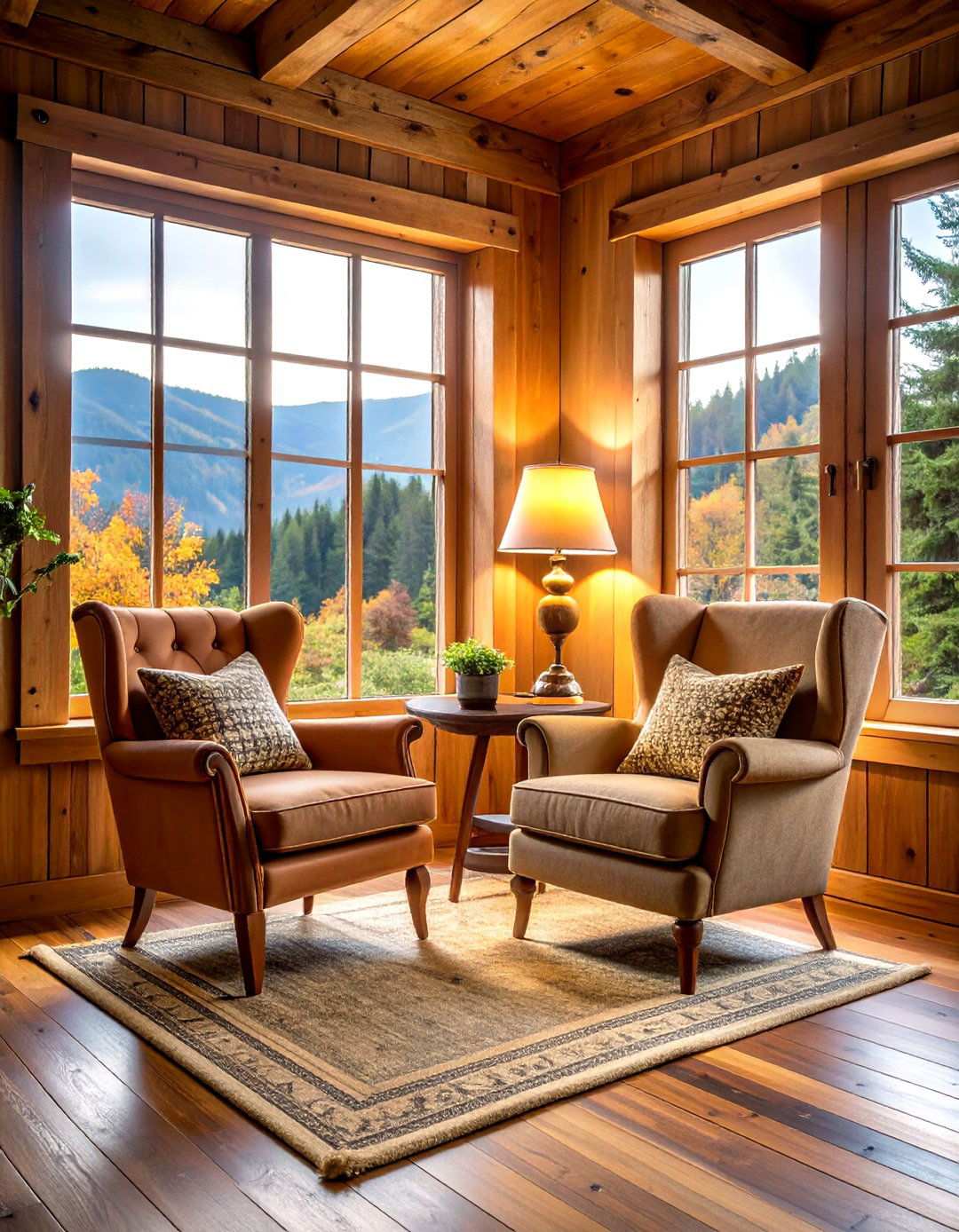
To create a dedicated reading corner that combines comfort with rustic charm, it’s essential to focus on thoughtful furniture selection and lighting design. Position a comfortable chair with good back support near a window for natural light, and include a side table for books and beverages. Adding a soft throw blanket, reading lamp with adjustable positioning, and storage for books within easy reach will create a cozy and inviting atmosphere. When choosing furniture, consider pieces with aged finishes, natural fabrics, or vintage character that complement your room’s overall aesthetic. By considering the corner’s relationship to the room’s main seating area, you can ensure that it feels integrated rather than isolated while providing the quiet atmosphere necessary for reading and relaxation activities. Find a spot in your home where you feel most peaceful and focused, and let that be the inspiration for your rustic reading nook creation.
21. Bringing the Outdoors In
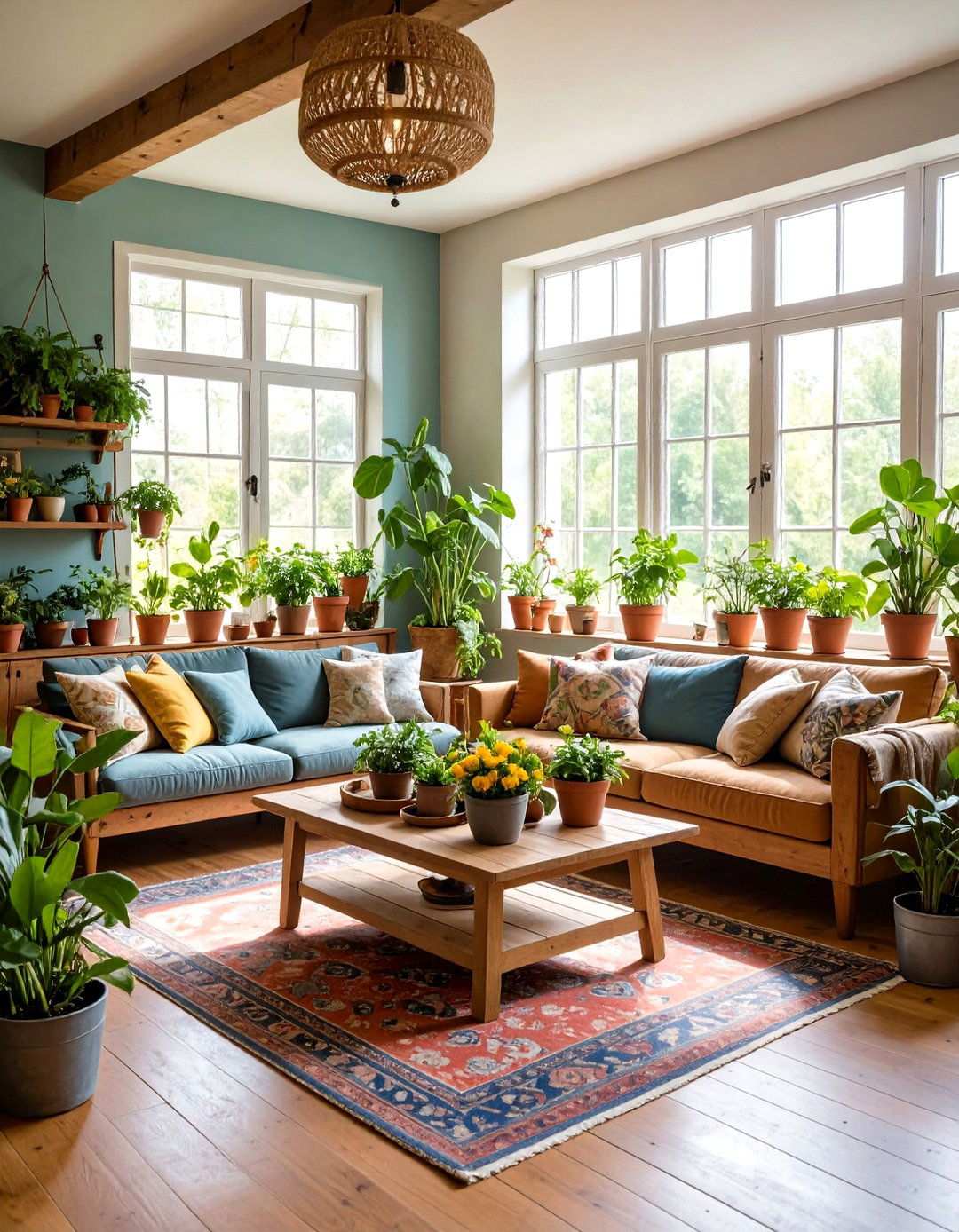
Infuse your rustic living room with a touch of the natural world by thoughtfully incorporating plants that flourish in indoor environments. By selecting varieties with distinct textures, heights, and growth patterns, you can create a visually engaging space that not only purifies the air but also adds to the room’s unique charm. Choose planters that blend seamlessly with your rustic aesthetic, such as reclaimed wood planters, metal containers with a distressed finish, or woven wicker baskets. To create a layered effect, consider incorporating a mix of floor plants, tabletop arrangements, and hanging greenery, all carefully curated to thrive in your specific environment. By doing so, you’ll be able to tap into the transformative power of living elements and dramatically alter the energy and atmosphere of your room.
22. Crafting Your Rustic Story
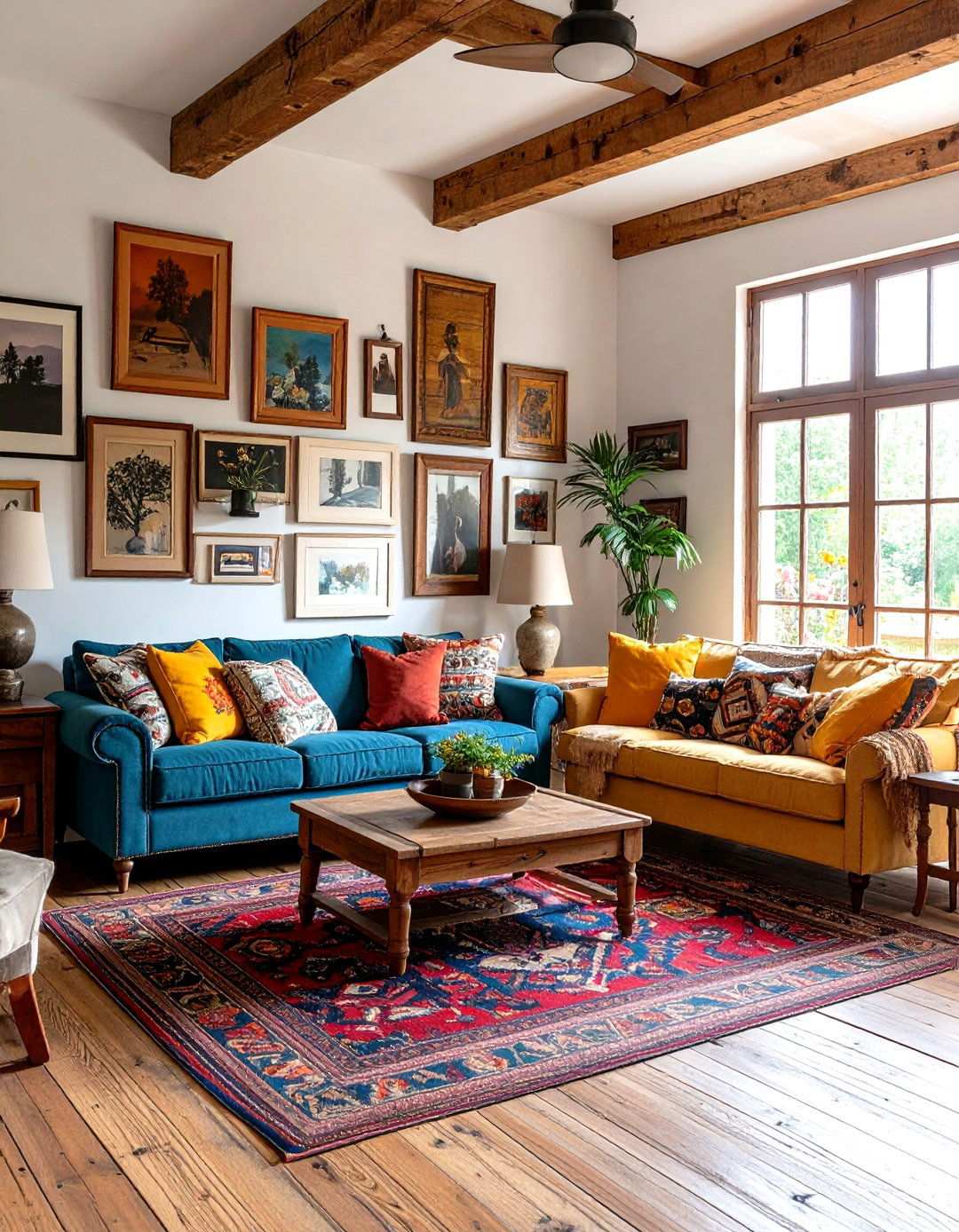
A well-designed wall gallery can serve as a testament to your personal style and a reflection of your unique heritage. To create a visually captivating display, combine framed artwork, vintage signs, cherished family photographs, and three-dimensional objects in a thoughtful and eclectic mix. When selecting frames, opt for natural materials like wood or metal with an aged patina that harmonizes with your overall design philosophy. When planning the layout, consider the interplay between different shapes and sizes, and strive to achieve a sense of balance and visual cohesion throughout the display. This will allow your walls to tell a compelling story about your family’s history, interests, and passions. As you plan the placement of your artwork and collectibles, be mindful of the room’s architectural features and incorporate sufficient lighting to highlight your treasures and create a warm and inviting ambiance.
23. Designing for Connection
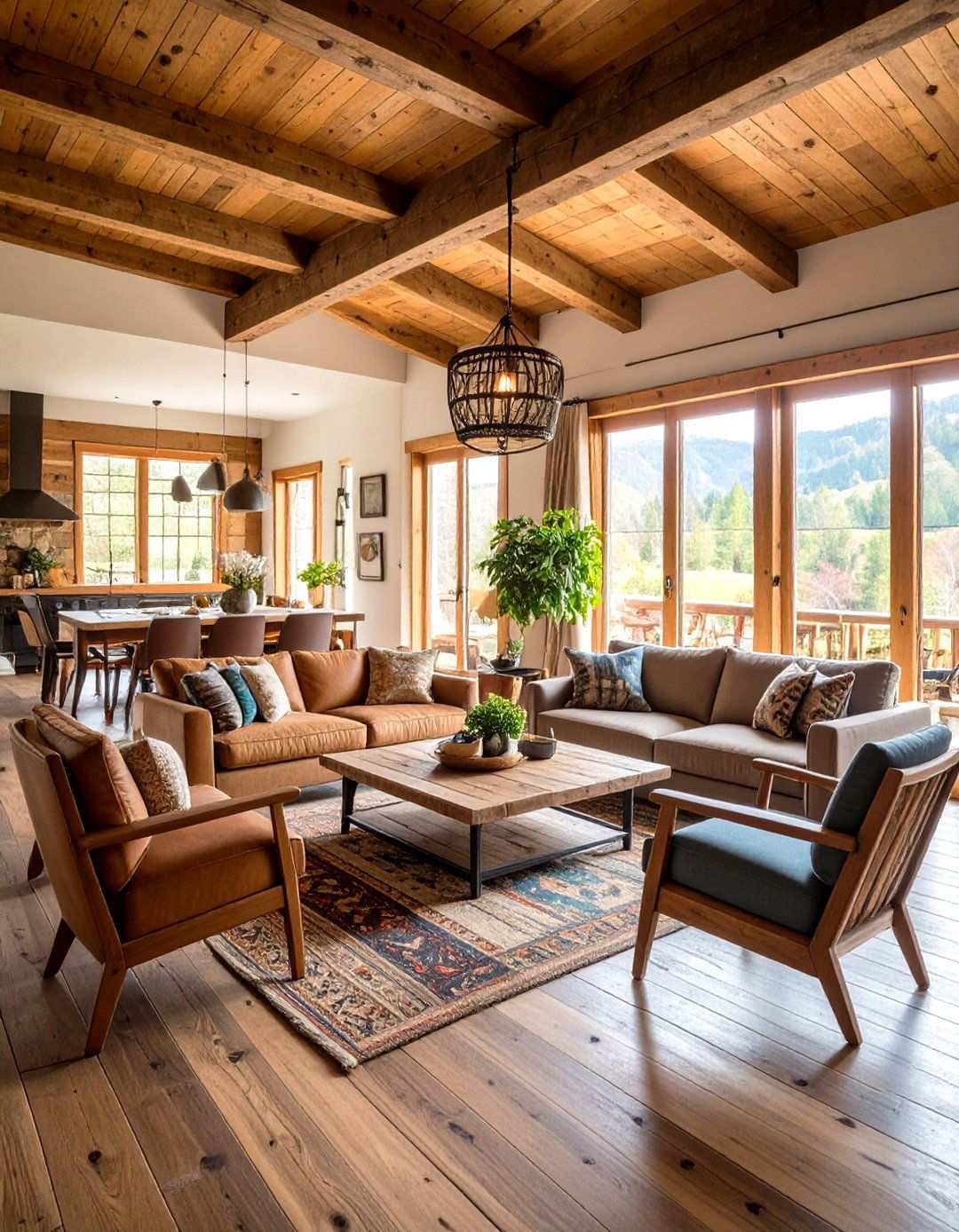
When arranging furniture in your rustic living room, prioritize creating spaces that facilitate meaningful connections and conversations among family and friends. To achieve this, select seating arrangements that encourage comfortable eye contact and easy conversation flow. Consider incorporating sofas, armchairs, and ottomans to create cozy groupings that invite relaxation and social interaction. Don’t forget to include surfaces for drinks and personal items within easy reach, ensuring that everyone feels welcome and at ease. As you plan the layout, take into account the room’s primary functions and the flow of traffic, striking a balance between spaciousness and intimacy. By doing so, you’ll be able to design a space that not only accommodates large gatherings but also fosters meaningful connections and cherished memories among those who inhabit it.
24. Elevating Your Rustic Oasis
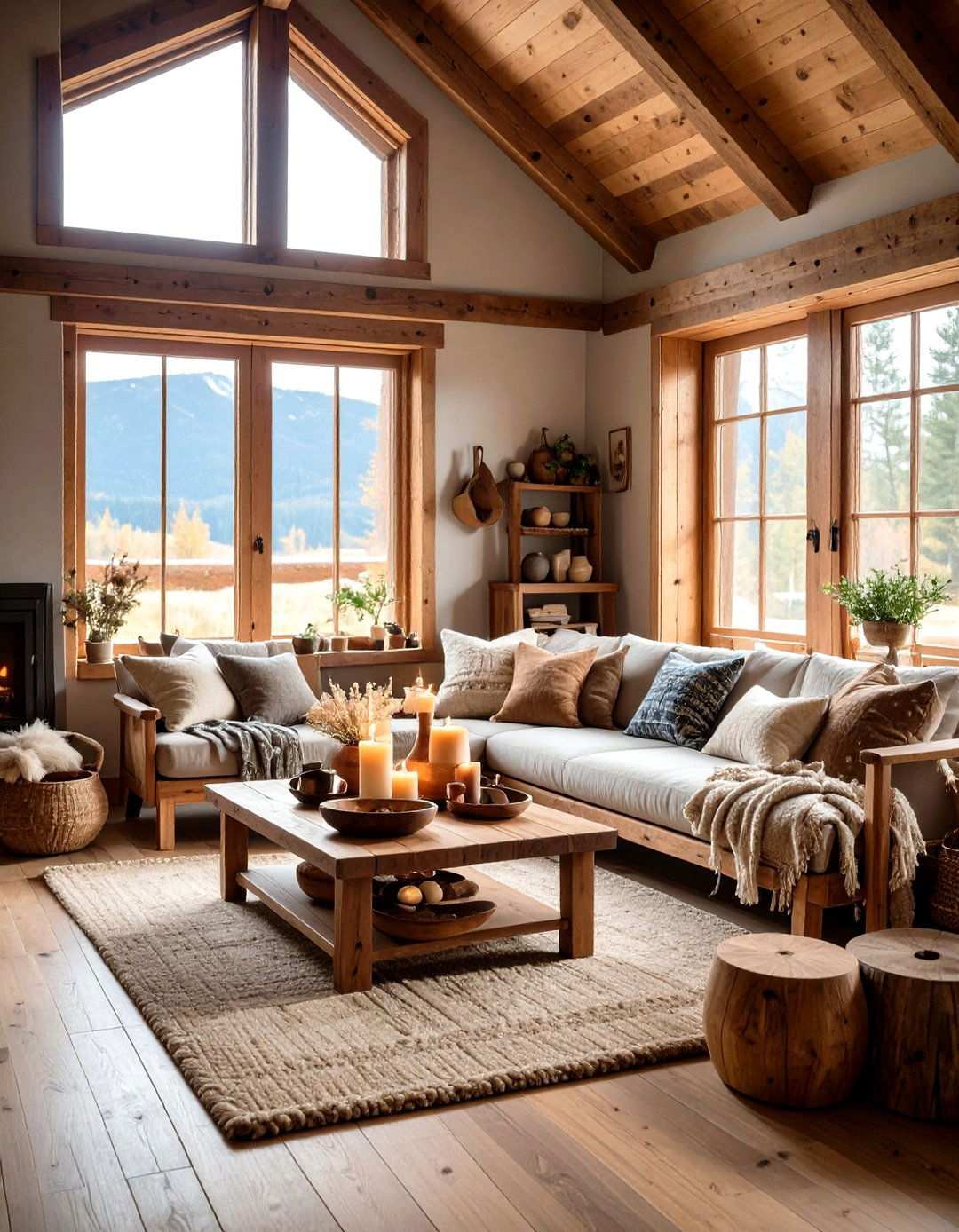
Craft a cohesive and inviting rustic living room atmosphere by incorporating thoughtfully selected accessories that strike a perfect balance between personality and restraint. Instead of cluttering the space, focus on adding functional elements that resonate with your unique style. Consider bringing in wooden vessels, vintage literature, candles, artisanal ceramics, and textiles that harmonize with your chosen color palette and design sensibilities.
To create visual interest, thoughtfully display your collections by grouping items in irregular numbers and varying their heights. When selecting accessories, prioritize those with natural textures, handcrafted features, or a distinct vintage charm that reinforce your room’s overall aesthetic direction. By doing so, you’ll elevate your space into a true reflection of your personal taste and daily comfort. Make it a habit to regularly purge unnecessary items and rotate seasonal accessories to maintain a fresh and authentic rustic ambiance that resonates with you.