1. Weathered Barn Wood's Timeless Allure
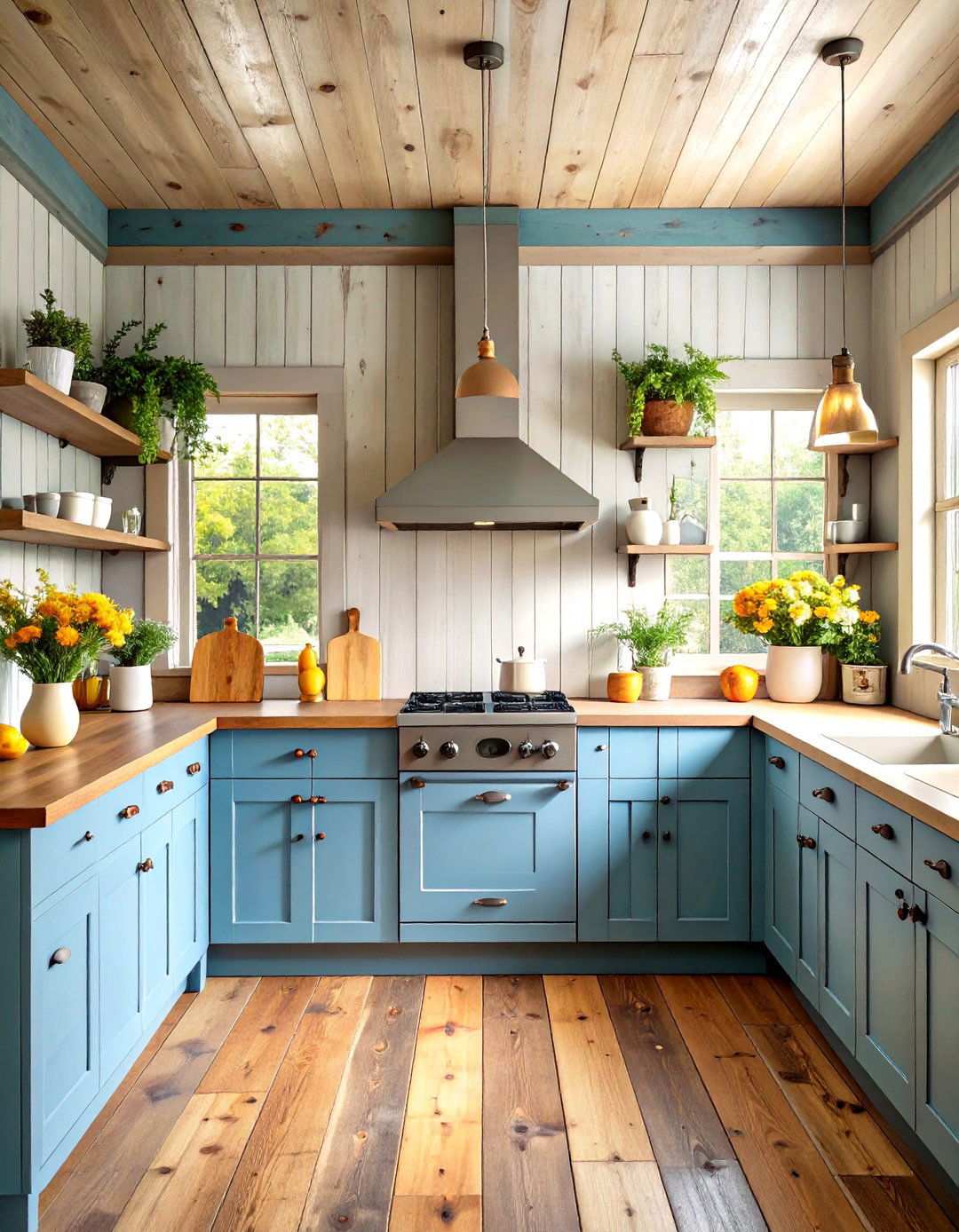
Weathered barn wood planks possess a unique capacity to infuse rustic charm into kitchens, connecting them to the natural world in a deeply authentic way. The patina that develops over time imbues each plank with a distinct character, as the effects of age, weather, and wear create an intricate tapestry of silvery grays and warm honey tones. By incorporating these boards into your kitchen design, you can tap into the rich history of traditional craftsmanship, with each plank boasting its own narrative of nail holes, saw marks, and weathering patterns that add to its allure.

As an Amazon Associate I earn from qualifying purchases.
When installed, these planks can be arranged horizontally to evoke a classic farmhouse aesthetic or vertically to create a sense of height in smaller kitchens. The natural texture of the wood provides a striking contrast to sleek, smooth surfaces such as granite countertops or stainless steel appliances, adding depth and visual interest to your kitchen space. To preserve the authentic weathered appearance while protecting against kitchen moisture, proper sealing is essential.
2. The Unbridled Beauty of Stacked Stone
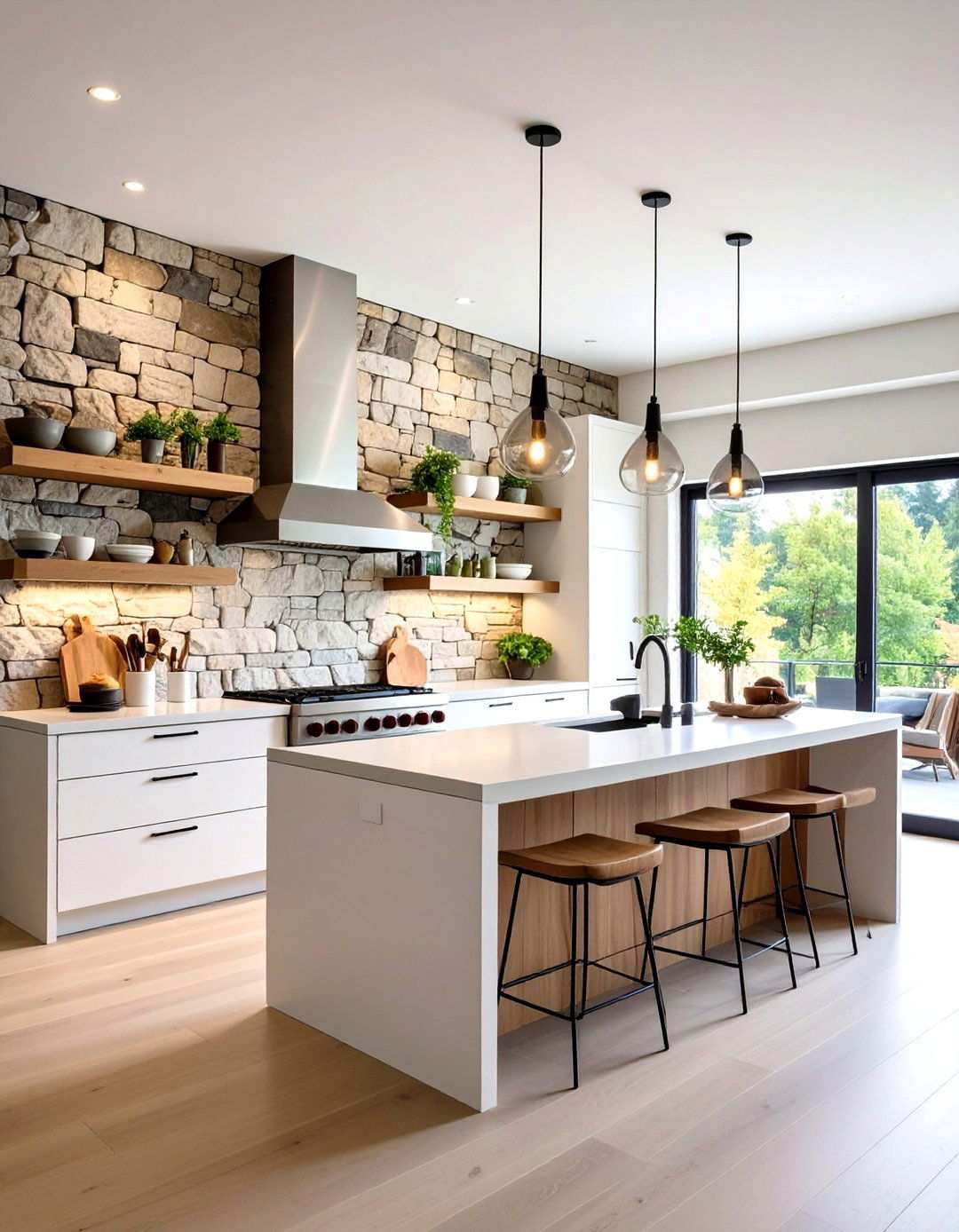
A stacked stone backsplash can transport your kitchen into the heart of a rugged mountain lodge, where the raw beauty of nature takes center stage. Each irregularly shaped stone, with its unique characteristics and depth, contributes to a three-dimensional texture that adds depth and visual complexity to your kitchen design. The natural color gradations, ranging from creamy whites to deep charcoals, create a captivating visual effect that is both soothing and dramatic. As each stone is carefully selected and arranged, the result is a one-of-a-kind installation that is both authentic and eye-catching.
The substantial visual weight of stacked stone can anchor your kitchen design while complementing a wide range of cabinetry styles, from dark to light. Its natural durability ensures that it can withstand the demands of a busy cooking area, where heat and moisture may be present. By varying the size of the stones, from small accent pieces to larger focal stones, you can create a dynamic visual interest that draws the eye upward and enhances your kitchen’s architectural elements, adding a touch of natural sophistication to your space.
3. Refreshing Classic Charm with Whitewashed Brick
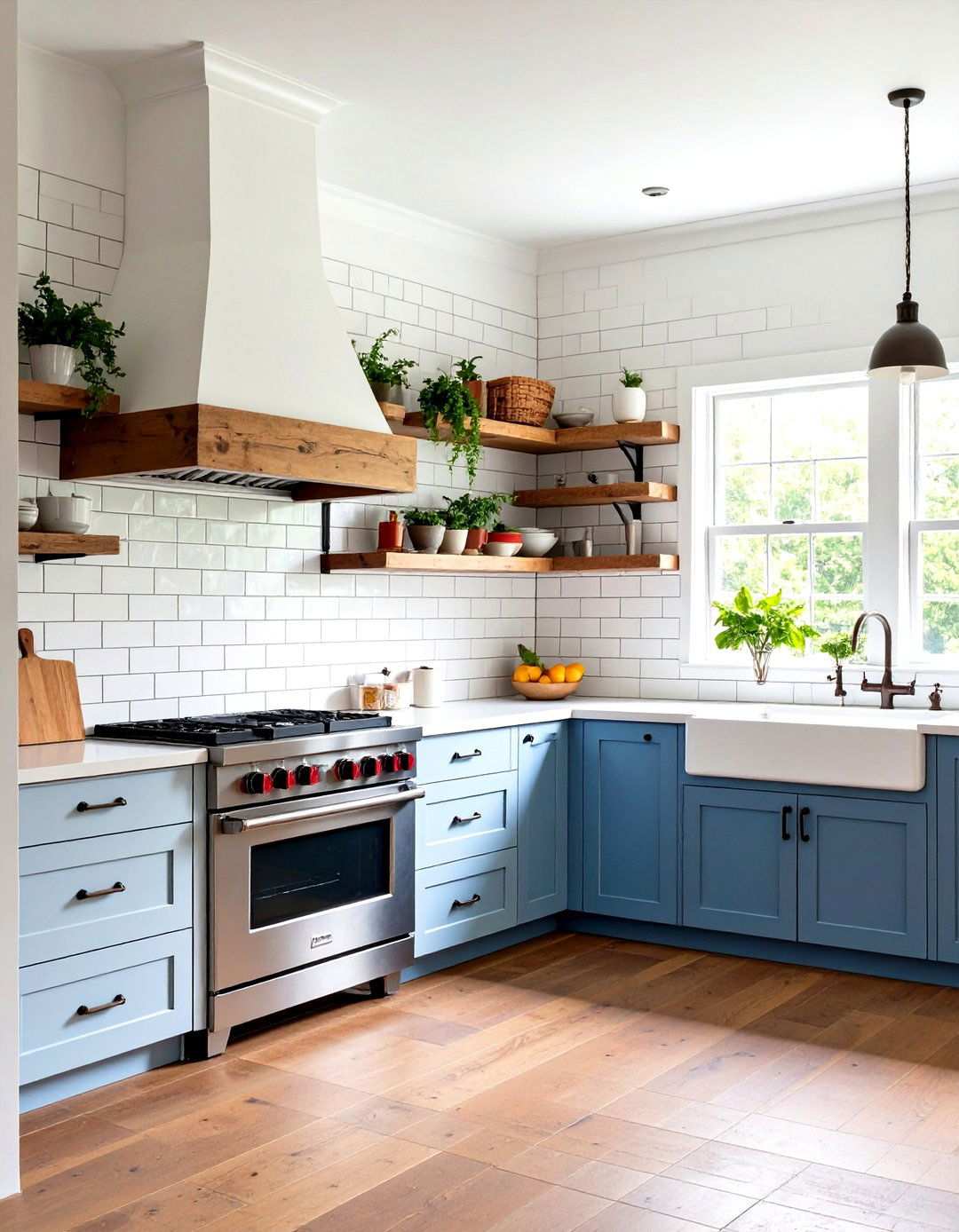
Whitewashed brick exudes a sense of timeless elegance that effortlessly transcends traditional boundaries. By subtly softening the intensity of classic red brick, this treatment unlocks a world of textures, bringing to light the inherent character of the material. The delicate wash allows for the brick’s undertones to peek through, infusing depth and visual warmth that glossy white surfaces cannot replicate. The versatility of whitewashed brick lies in its ability to seamlessly adapt to both traditional running bond and contemporary stack patterns, ensuring a harmonious blend of form and function. When paired with natural wood accents and vintage-inspired fixtures, the result is a cohesive modern farmhouse aesthetic that never goes out of style. This approach is particularly effective in smaller kitchens, where a bold brick look might overwhelm the space.
4. Unleashing Mediterranean Elegance with Terracotta Mosaics
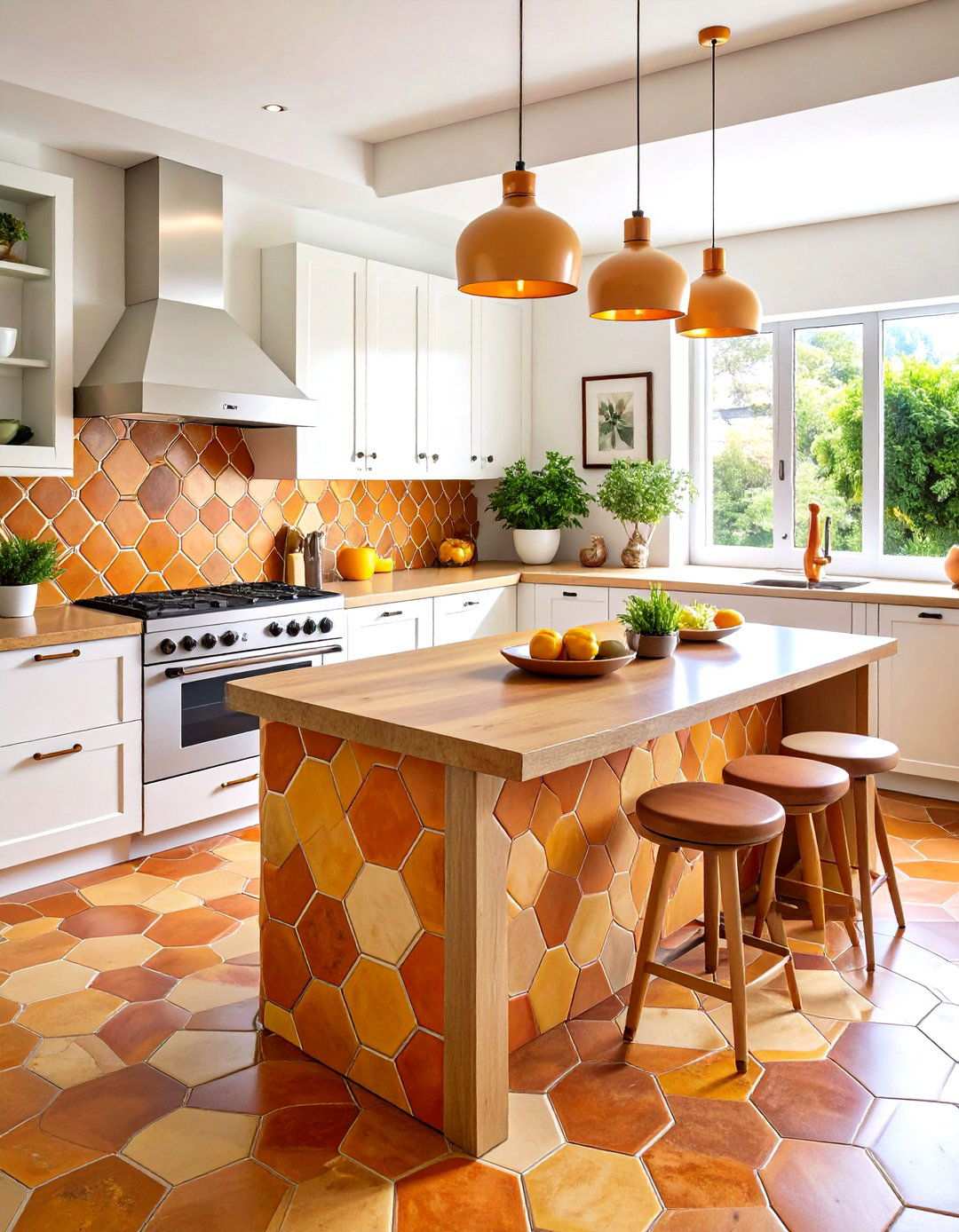
Terracotta hexagon mosaics evoke the warmth and rustic charm of sun-baked Mediterranean landscapes. Each handcrafted tile showcases the unique beauty of natural clay, with subtle color variations and slightly irregular edges that add a touch of authenticity. The hexagonal shape injects a sense of geometric sophistication, while the material’s inherent imperfections maintain a rustic allure. Rich, earthy tones of orange, amber, and rust create a cozy atmosphere that effortlessly complements both warm and cool color palettes. To add an extra layer of visual interest, consider experimenting with installation patterns, from traditional honeycomb to offset layouts. As the natural porosity of terracotta requires proper sealing, the reward is a unique patina that develops over time, imbuing the space with a distinct character.
5. Balancing Structure and Nature with Slate Chevron Backsplashes
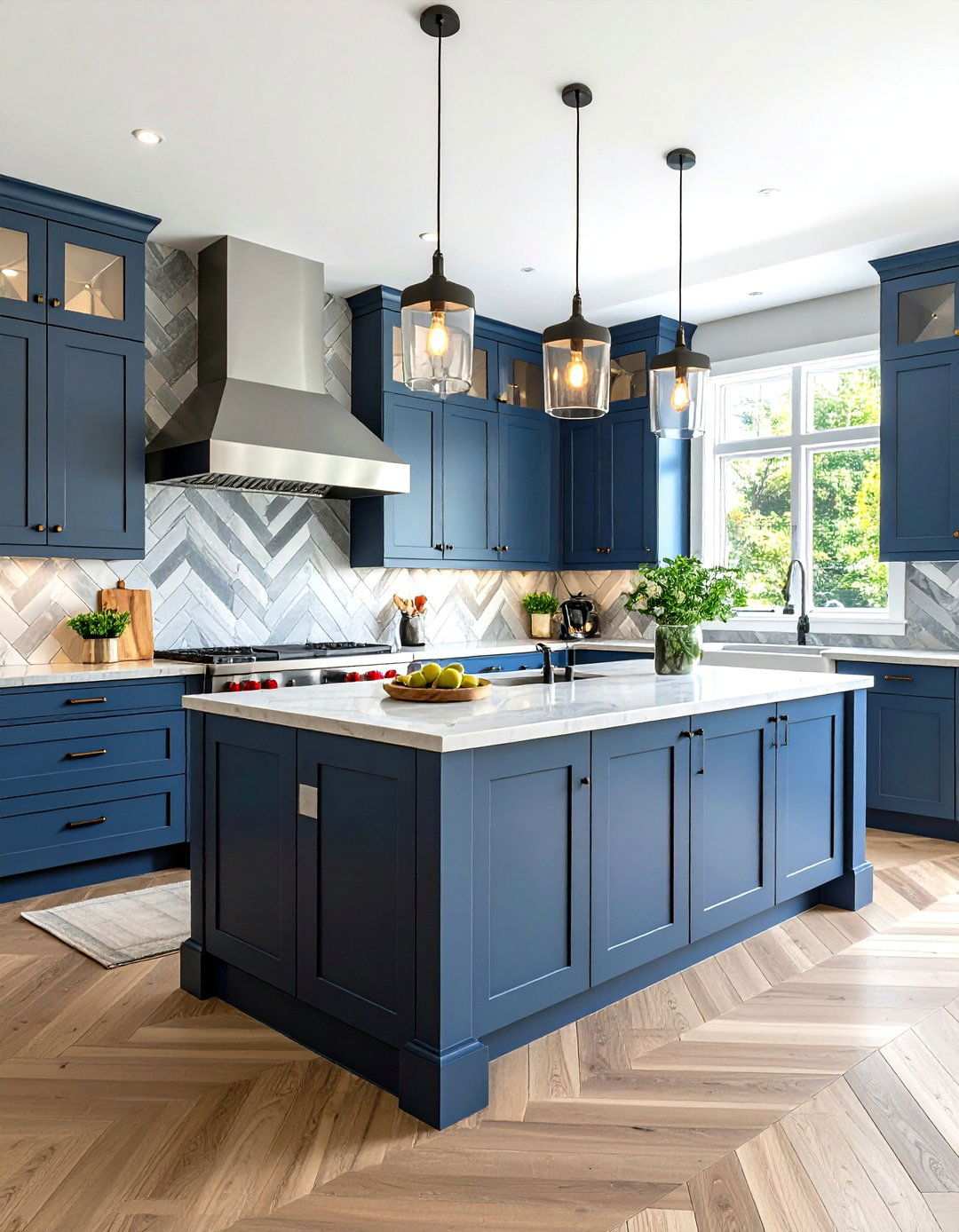
Slate chevron backsplashes demonstrate the perfect harmony between geometric pattern and natural material authenticity. The chevron layout creates a dynamic visual movement that draws the eye, while slate’s natural texture and color variations maintain a sense of earthy appeal. Deep, muted tones of gray, blue, and green blend within individual tiles, creating subtle shifts that catch the light throughout the day. This pattern is particularly effective as a dramatic focal point behind a cooktop, where the angular lines can be fully appreciated. The natural stone ensures durability and heat resistance, making it an excellent choice for high-traffic areas. When paired with simple cabinetry, the slate pattern can take center stage, or it can be used as an accent area within a larger neutral backsplash design, adding a touch of sophistication to the space.
6. Rustic Sophistication through Reclaimed Wood Herringbone
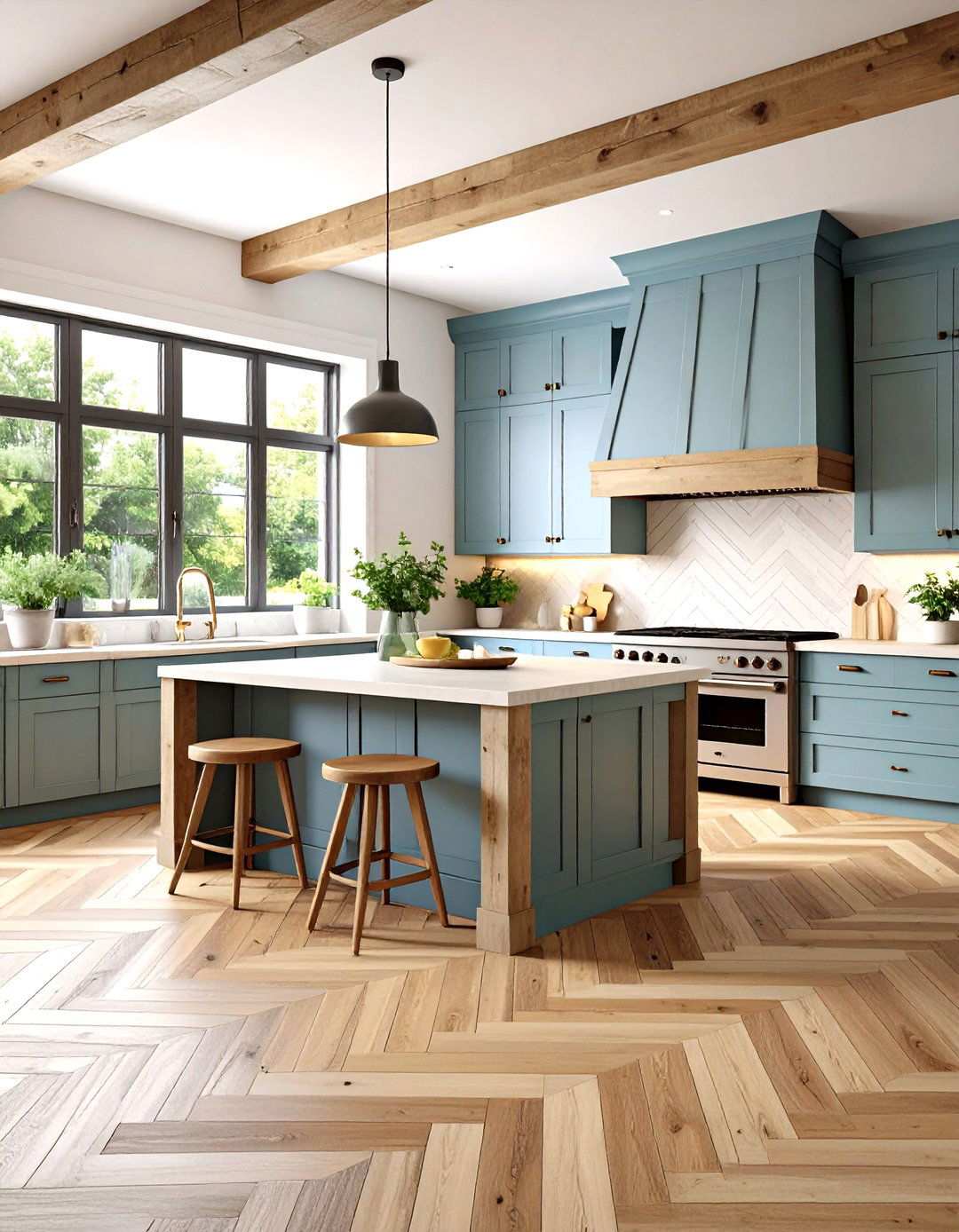
Reclaimed wood herringbone patterns seamlessly blend classic layouts with authentic materials, elevating rustic design to new heights of sophistication. By combining simple planks in intricate patterns, this design transforms humble materials into architectural masterpieces that exude warmth and character. The subtle contrast between geometric precision and the organic irregularities of natural wood creates a unique visual tension that is both rustic and refined. To maximize visual interest, consider incorporating a range of wood tones within a single installation, or opt for consistent coloring for a more streamlined look. While the herringbone pattern demands careful planning and skilled installation, the end result is well worth the effort, as it creates striking focal points that add visual depth and sophistication to any rustic kitchen design.
7. Capturing Nature's Beauty with River Rock Mosaic Features
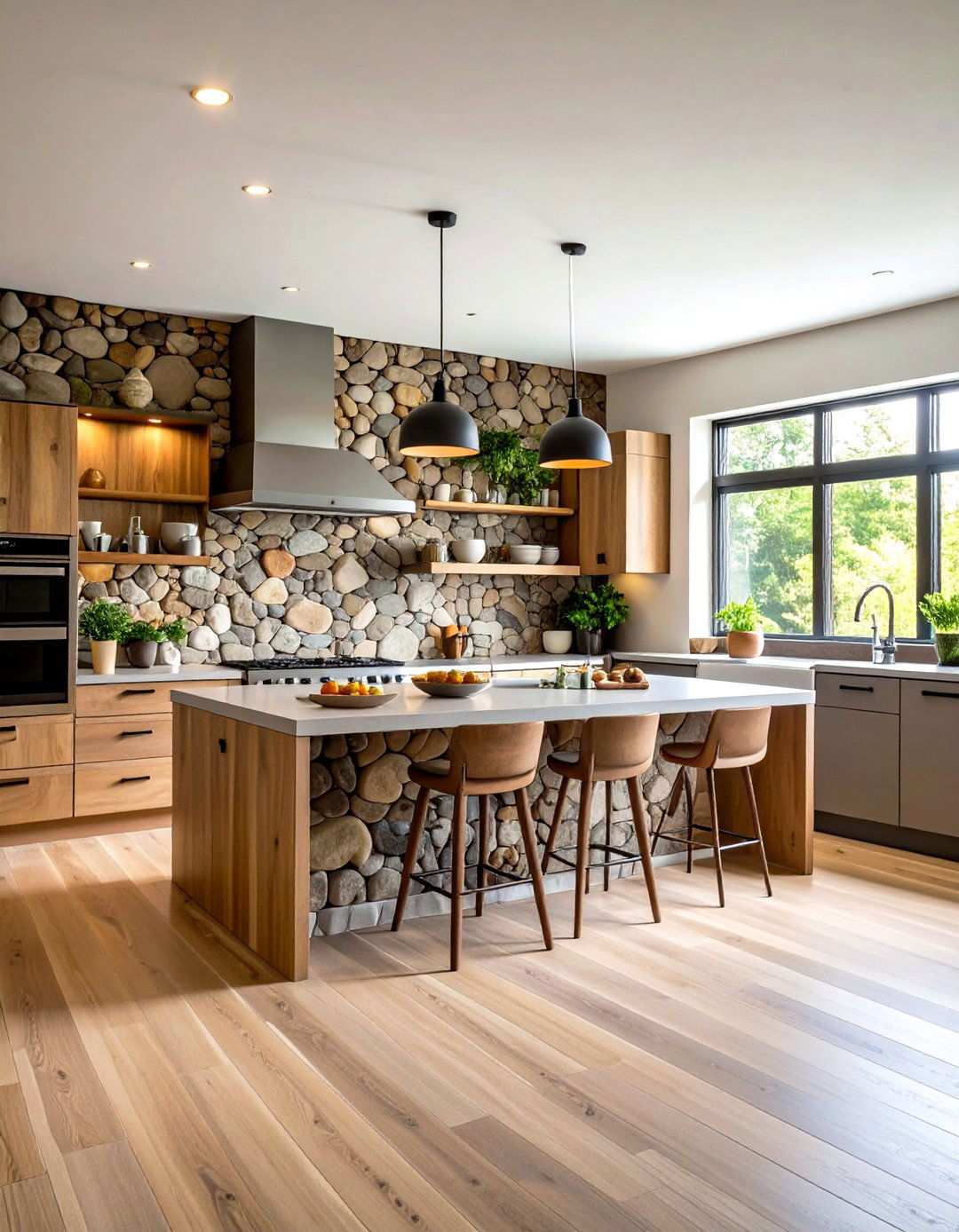
River rock mosaic backsplashes bring the outdoors in, showcasing smooth stones in organic arrangements that evoke the natural beauty of stone and water. The varied sizes and subtle color shifts of these tumbled stones create a three-dimensional texture that is both visually striking and tactilely engaging. Each installation is a unique work of art, as no two stones are identical, and the smooth surfaces of the stones provide a beautiful contrast to the rough textures found in other rustic materials. To create a truly show-stopping feature, consider installing river rock mosaic behind a cooktop or as a focal point, and balance it with complementary materials on the surrounding walls. The natural, water-smoothed finish of river rock requires minimal maintenance, yet provides an authentic connection to the outdoors that makes kitchens feel connected to nature year-round.
8. Timeless Elegance of Limestone Subway Tiles
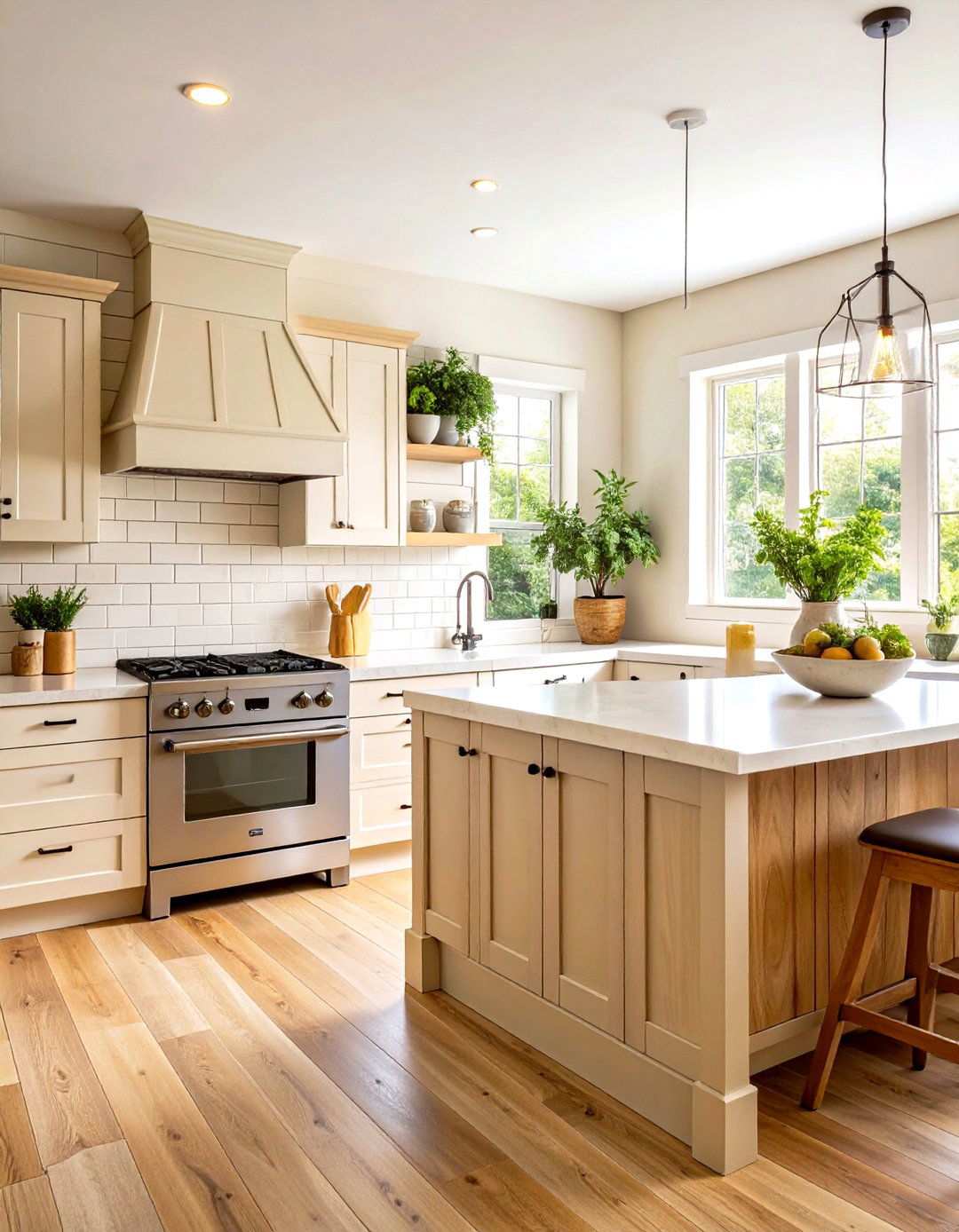
Limestone subway tiles offer a perfect blend of classic pattern and natural stone authenticity, fusing timeless design with the warmth and character of natural materials. The soft, matte finish of these tiles provides a subtle texture that complements a wide range of design styles, while maintaining the clean lines and versatile appeal of traditional subway tiles. The natural limestone palette of cream and beige tones adds warmth and depth to any kitchen, and the familiar rectangular shape ensures broad design compatibility. These tiles can be arranged in traditional running bond, vertical stack, or contemporary herringbone patterns to suit any style. While the natural stone’s porosity requires periodic sealing, the authentic character it provides is unmatched by synthetic alternatives. For a modern twist, consider larger format limestone subway tiles, or opt for traditional sizes for a classic farmhouse look that never goes out of style.
9. Copper Penny Round Mosaic
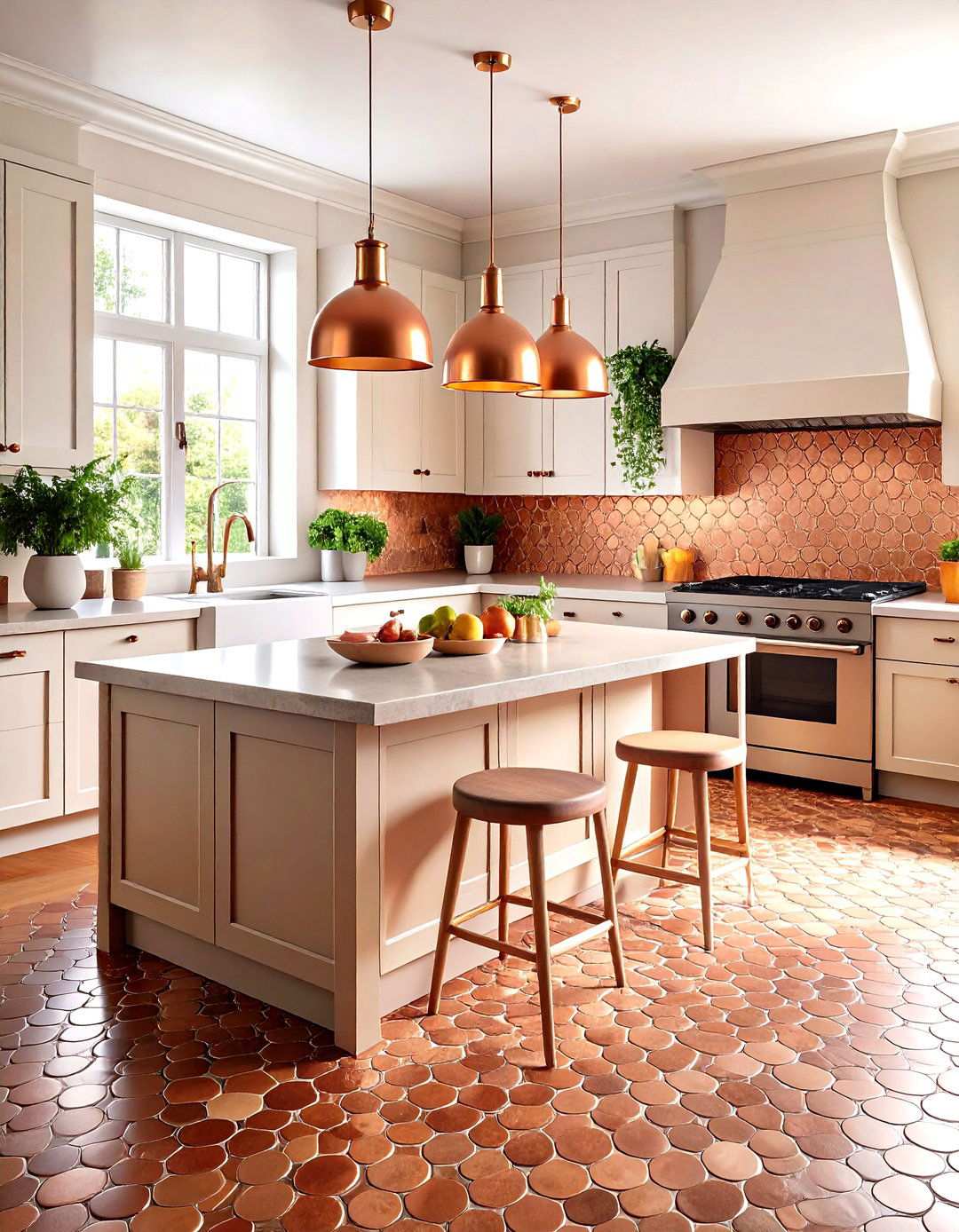
Elevate your kitchen with copper penny round mosaics that radiate warmth and dynamic movement across shimmering backsplash surfaces. These captivating, small circular tiles playfully reflect and refract light as the day unfolds, imbuing walls with a life of their own that adapts to changing lighting conditions. As the natural aging process unfolds, the tiles transform from vibrant copper to rich, deep browns and blues, creating an ever-evolving narrative unique to each installation. Will you be among those who welcome a backsplash that matures with age, growing more enchanting over time? Copper penny mosaics harmonize effortlessly with vintage-inspired kitchens and marry rustic and industrial design elements through their metallic finish. Pair them with warm wood tones and vintage-inspired fixtures for a cohesive aesthetic that celebrates the beauty of craftsmanship and the allure of natural aging.
10. Mixed Wood Species Mosaic
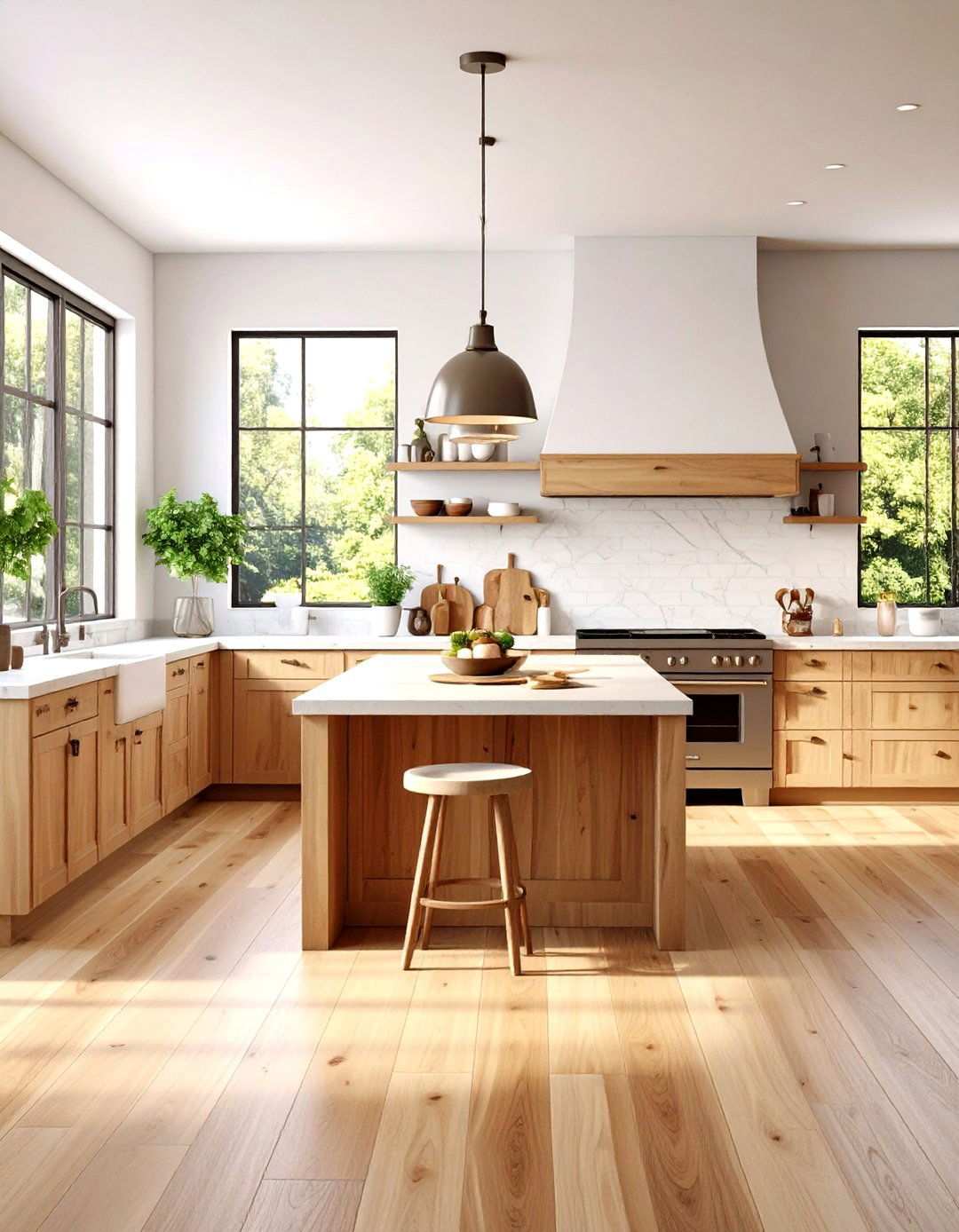
Craft a stunning tapestry with mixed wood species mosaics that pay tribute to the distinct characteristics of various trees within a single installation. By combining the bold grain of oak with the rich, chocolate tones of walnut and the subtle patterns of maple, you’ll create a visually captivating statement that honors woodworking tradition while pushing the boundaries of contemporary art. Each species brings its own distinct color and grain pattern, generating a natural work of art that changes and evolves as you shift your viewing perspective. To prevent monotony and maintain a cohesive natural appeal, consider arranging the species randomly for an organic feel or crafting intentional patterns for a more structured appearance. This technique is particularly well-suited for kitchens that already feature multiple wood elements, tying design themes together through material consistency while celebrating the natural diversity of the materials.
11. Travertine Tumbled Stone
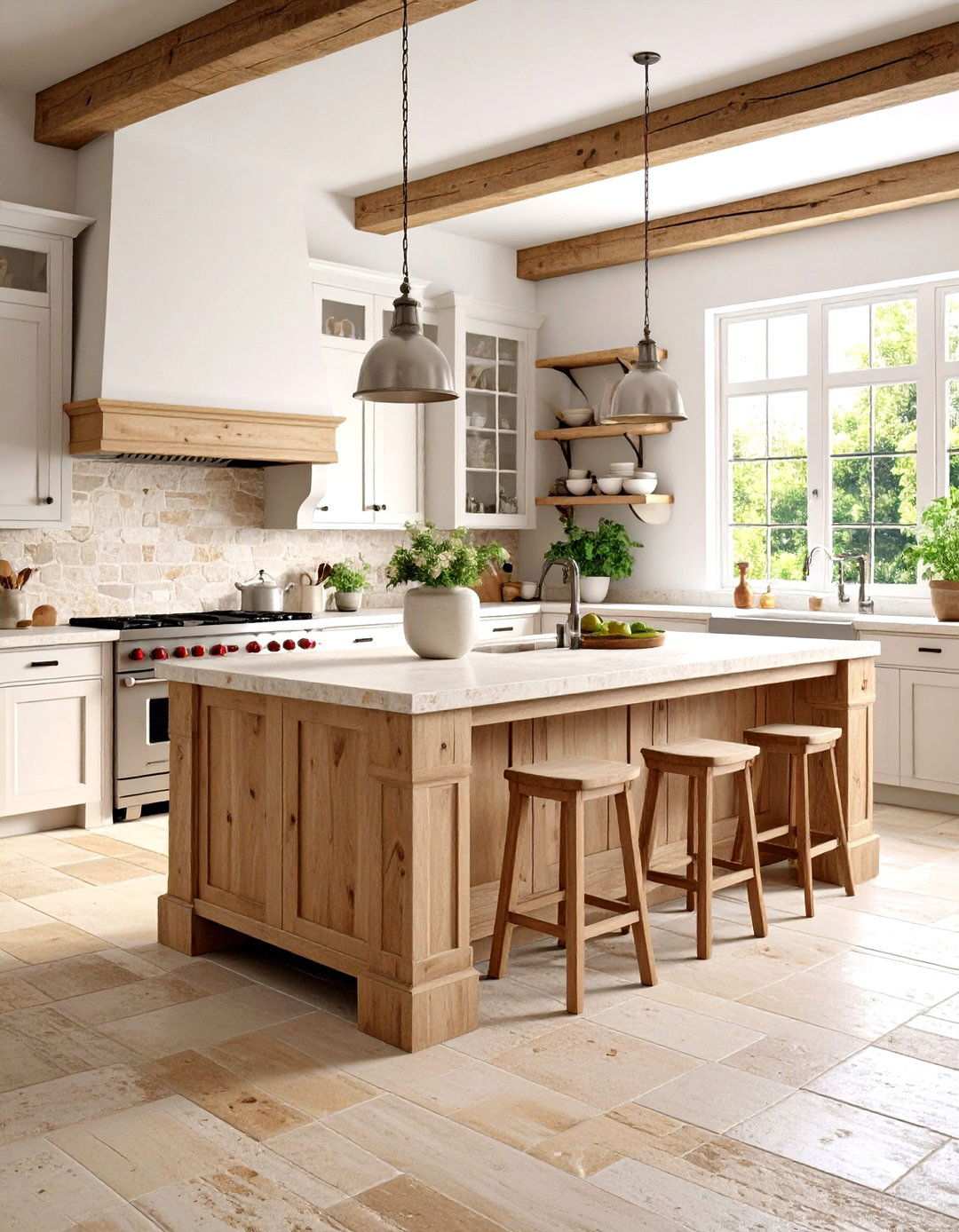
Experience the timeless allure of travertine tumbled stone backsplashes, which bring the ancient charm of limestone’s cousin to modern kitchens. The tumbling process yields softly rounded edges and a subtle surface texture that feels both ageless and enduring. Each tile boasts its own unique character, with natural pitting and veining creating a distinct appearance that is both authentic and elegant. The neutral color palette of cream, beige, and light tan tones provides a versatile backdrop that works in harmony with virtually any color scheme. By incorporating this million-year-old stone into your kitchen, you’ll not only add a touch of geological history but also benefit from its natural thermal properties, which help regulate kitchen temperatures, and its durable surface, which stands up to the demands of daily cooking. Consider filling the natural pits for a smoother surface or leaving them intact for a more textured appearance that connects your kitchen to the depths of geological time.
12. Unbridled Artistry in Handcrafted Tiles
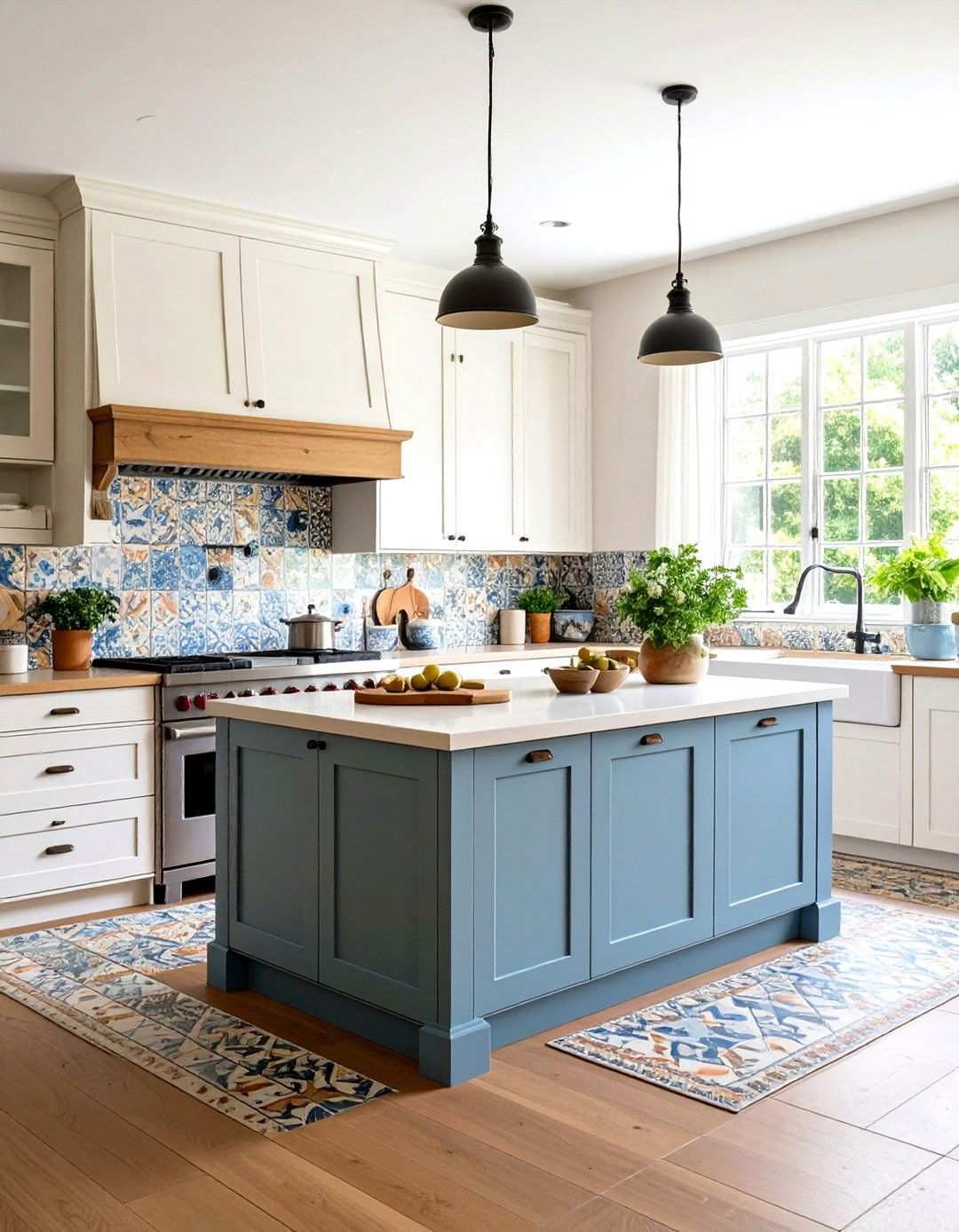
Experience the unbridled creativity of artisans through handmade ceramic tiles that defy mass production’s uniformity. Each tile boasts unique variations in size, thickness, and glaze application, injecting character and authenticity into rustic kitchen designs. Earthy glazes and raw terra cotta finishes invite harmony with natural materials, while the human touch behind each installation transforms it into one-of-a-kind artwork that reflects the maker’s individual flair. By choosing handmade tiles, you’re not only embracing artisanal craftsmanship but also supporting local communities and their rich creative traditions.
13. Elevate Your Kitchen with Granite Stone Veneer
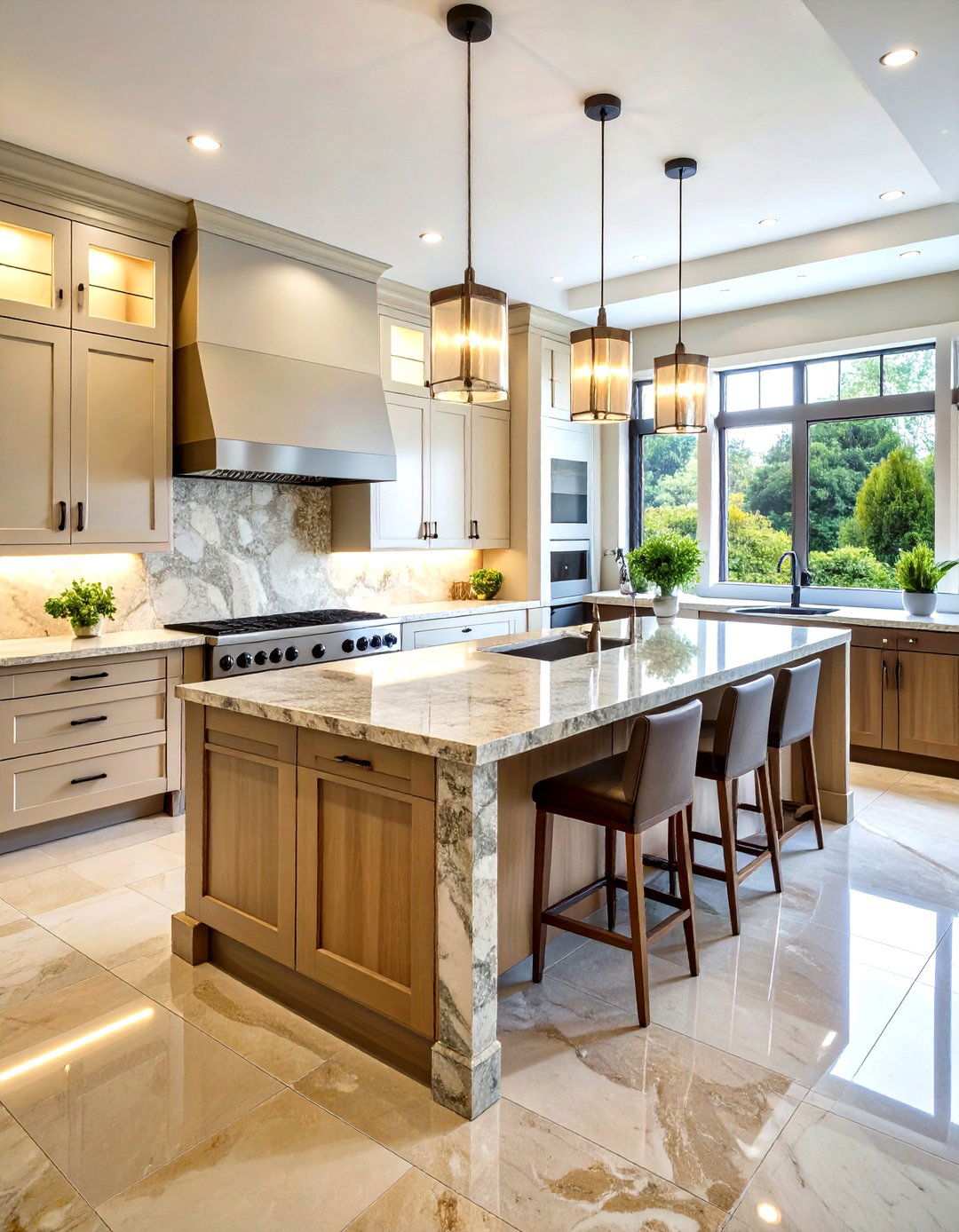
Unleash the majesty of granite stone veneer backsplashes, which bring the drama and grandeur of monumental stone into the heart of your residential kitchen. Thin yet resilient, these slices of granite maintain their natural beauty and durability while accommodating vertical installation. The intricate crystal structure within the stone creates a mesmerizing display of light and color, while its exceptional heat and moisture resistance make it perfect for high-traffic cooking areas. With a wide range of colors to choose from, you can select speckled blacks and grays, warm beiges, or dramatic blues to anchor your kitchen design. Consider pairing book-matched pieces for striking veining patterns or random placement for a more organic arrangement that celebrates the natural formation processes of granite.
14. Farmhouse Charm through Shiplap Wood Paneling
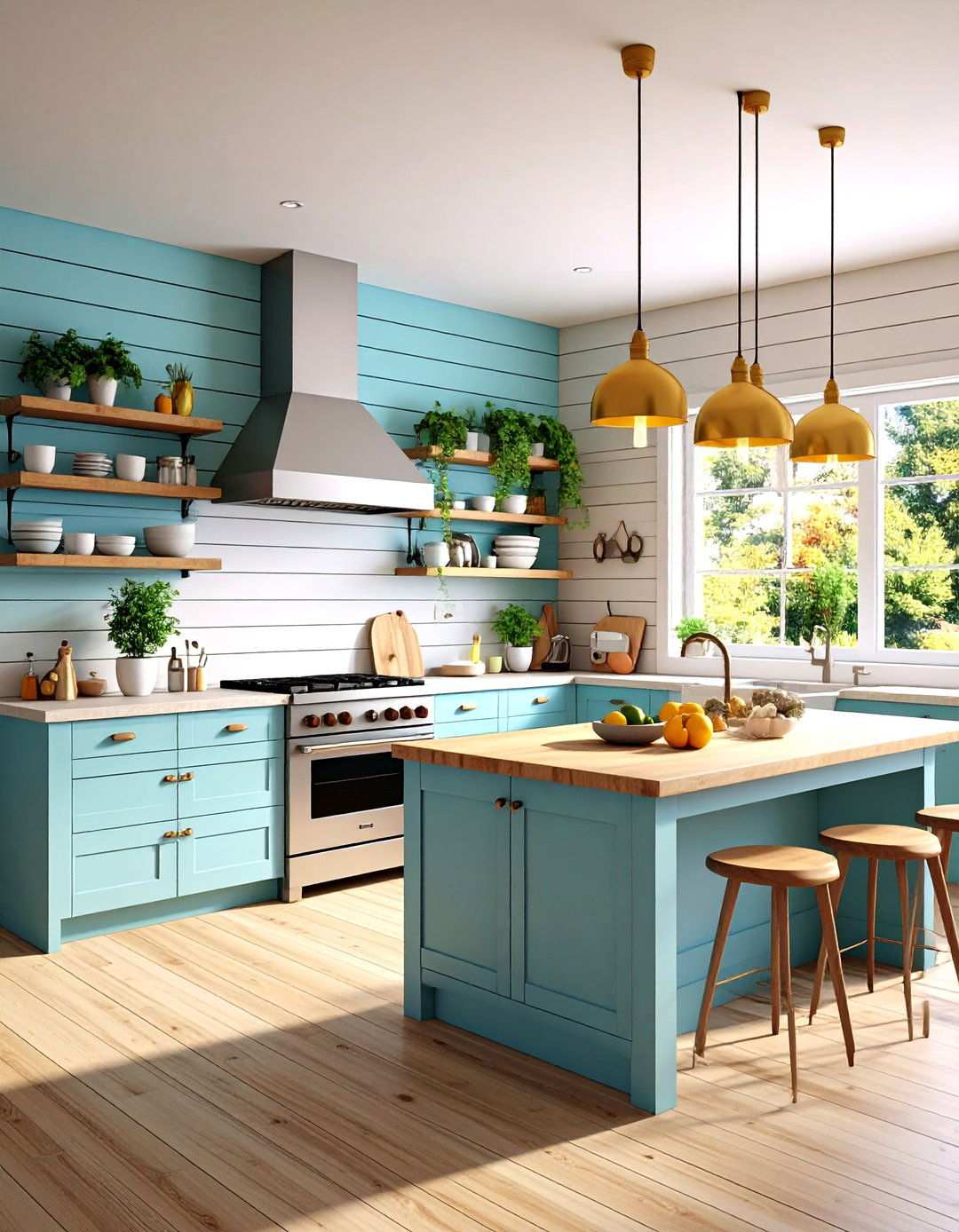
Embody the rustic simplicity of farmhouse design with shiplap wood paneling, which brings clean lines and visual texture to your kitchen. The distinctive gaps between the horizontally installed boards add a touch of elegance, while the linear pattern creates a sense of width and horizontality that makes kitchens appear more spacious. Choose from a variety of painted finishes for a clean, timeless look or opt for natural stains that showcase the wood grain’s natural beauty. The straightforward installation and timeless design of shiplap ensure its longevity, while the natural material provides a warmth that synthetic alternatives can’t match. By extending shiplap beyond backsplash areas, you can create cohesive design themes that unify your kitchen and adjacent living spaces, perfect for open-concept homes.
15. Desert-Inspired Elegance with Sandstone Stacked Ledger
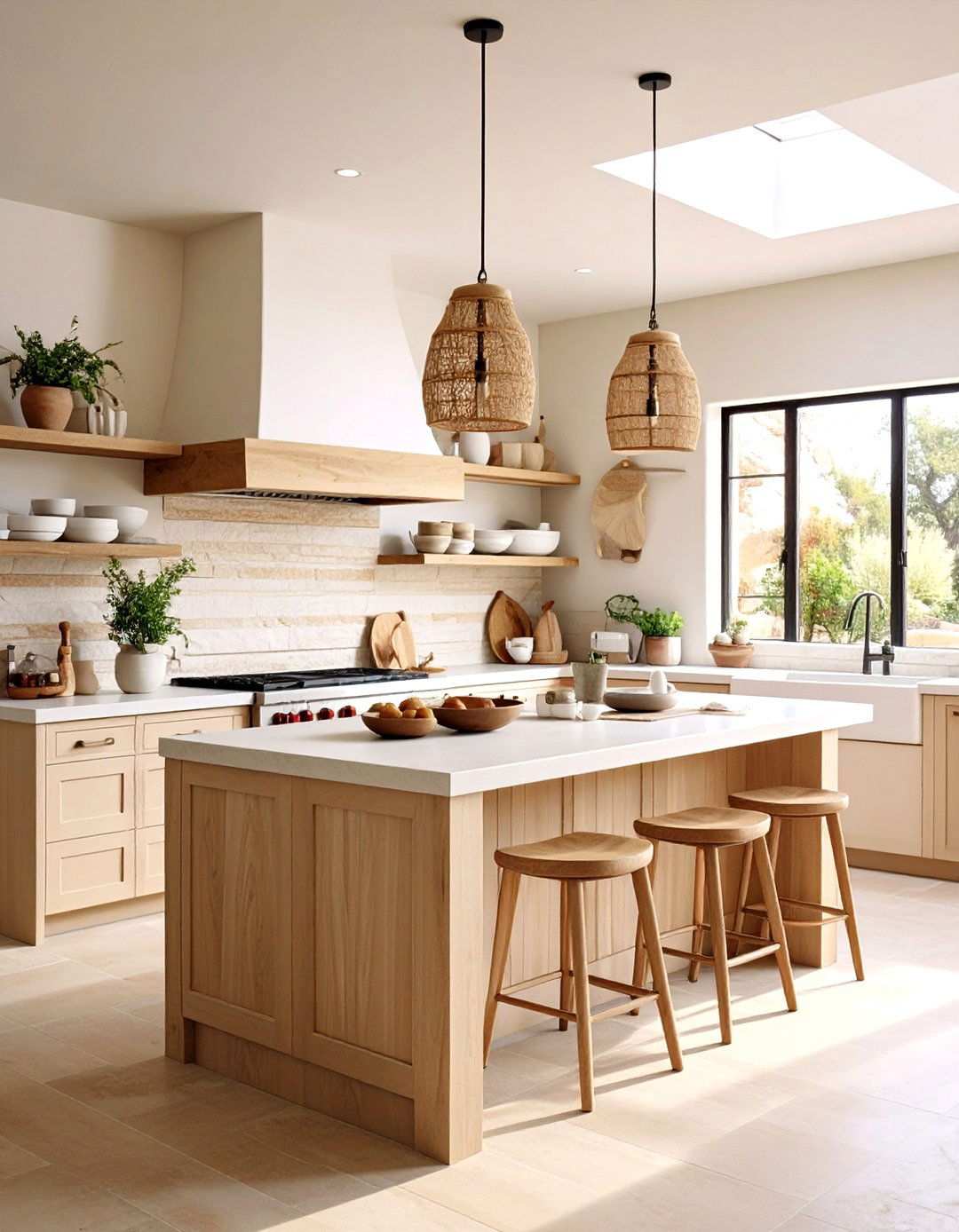
Experience the warmth and sophistication of desert-inspired design with sandstone stacked ledger backsplashes, which showcase the natural beauty of sedimentary rock’s layered appearance. This modern installation method preserves the unique characteristics of the stone, allowing you to appreciate its natural stratification. The warm beige, tan, and rust tones evoke the spirit of the American Southwest, while the linear patterns add a touch of contemporary elegance to any kitchen. Each stone’s distinct coloration and texture creates visual interest without overwhelming smaller kitchen spaces. The subtle color banding resulting from the natural formation process adds dynamic movement and life to kitchen walls. By incorporating accent lighting, you can further enhance the stone’s natural texture and color variations, creating a truly stunning focal point. This material is particularly well-suited for kitchens that open to outdoor living spaces, seamlessly blending indoor and outdoor environments.
16. Mosaic Glass and Stone: A Harmonious Union
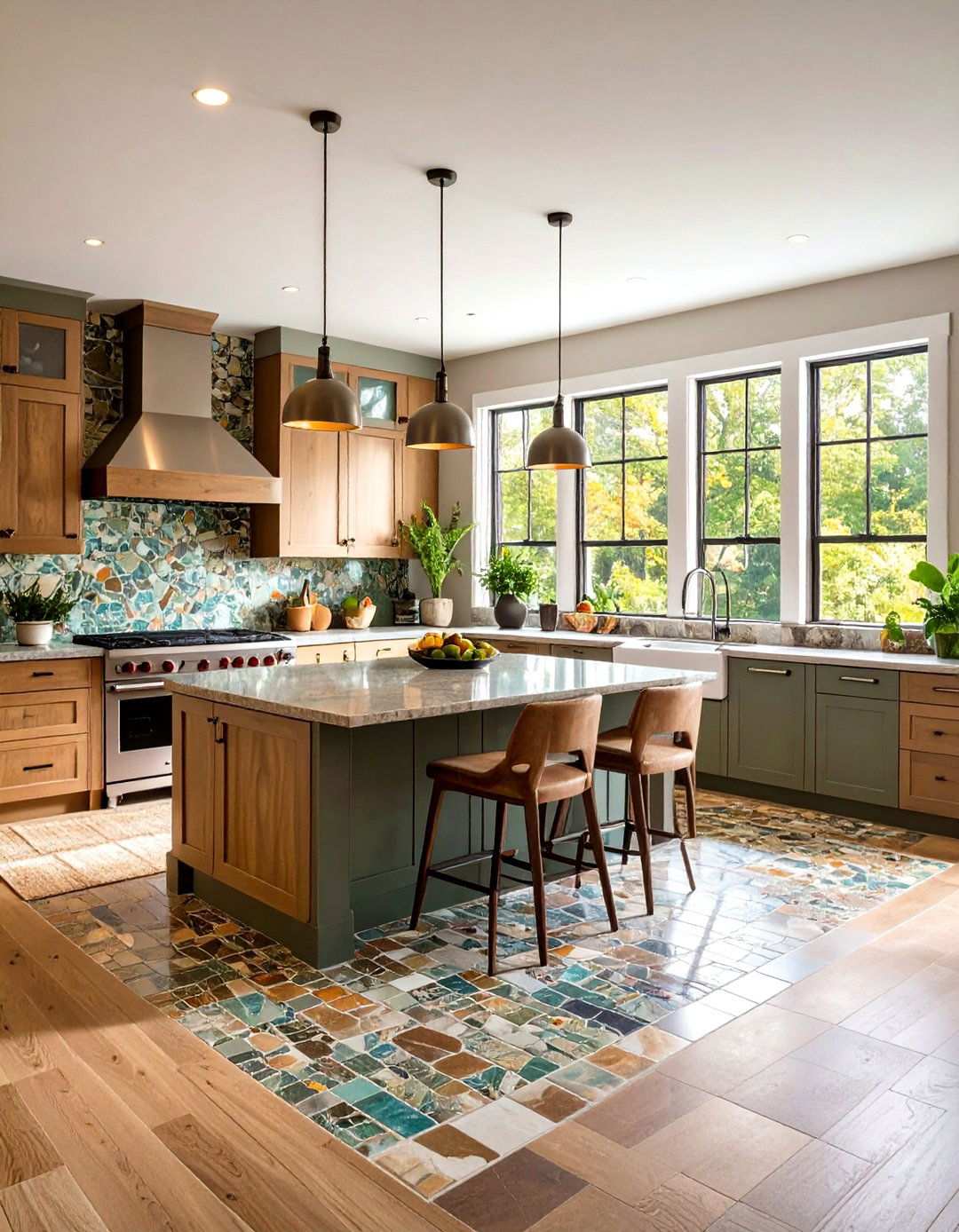
Mosaic glass and stone combinations offer a unique opportunity to blend textures and light reflection, creating complex visual interest that captivates the eye. By pairing natural stone’s earthy authenticity with glass’s light-reflecting properties, you can create dynamic surfaces that change and evolve throughout the day as lighting conditions shift. The contrast between matte stone and glossy glass adds a touch of sophistication, while the random patterns celebrate both materials’ unique characteristics, maintaining a cohesive overall appearance. When ancient materials meet contemporary manufacturing, you get a marriage of durability and practicality. The stone provides a solid foundation, while the glass adds an element of ease and maintenance, resulting in a perfect blend of beauty and functionality. For a cozy appeal, consider warm-toned combinations, while cool palettes create a sophisticated modern rustic look that bridges traditional and contemporary design sensibilities.
17. Sustainable Charm with Cork Tile Feature Walls
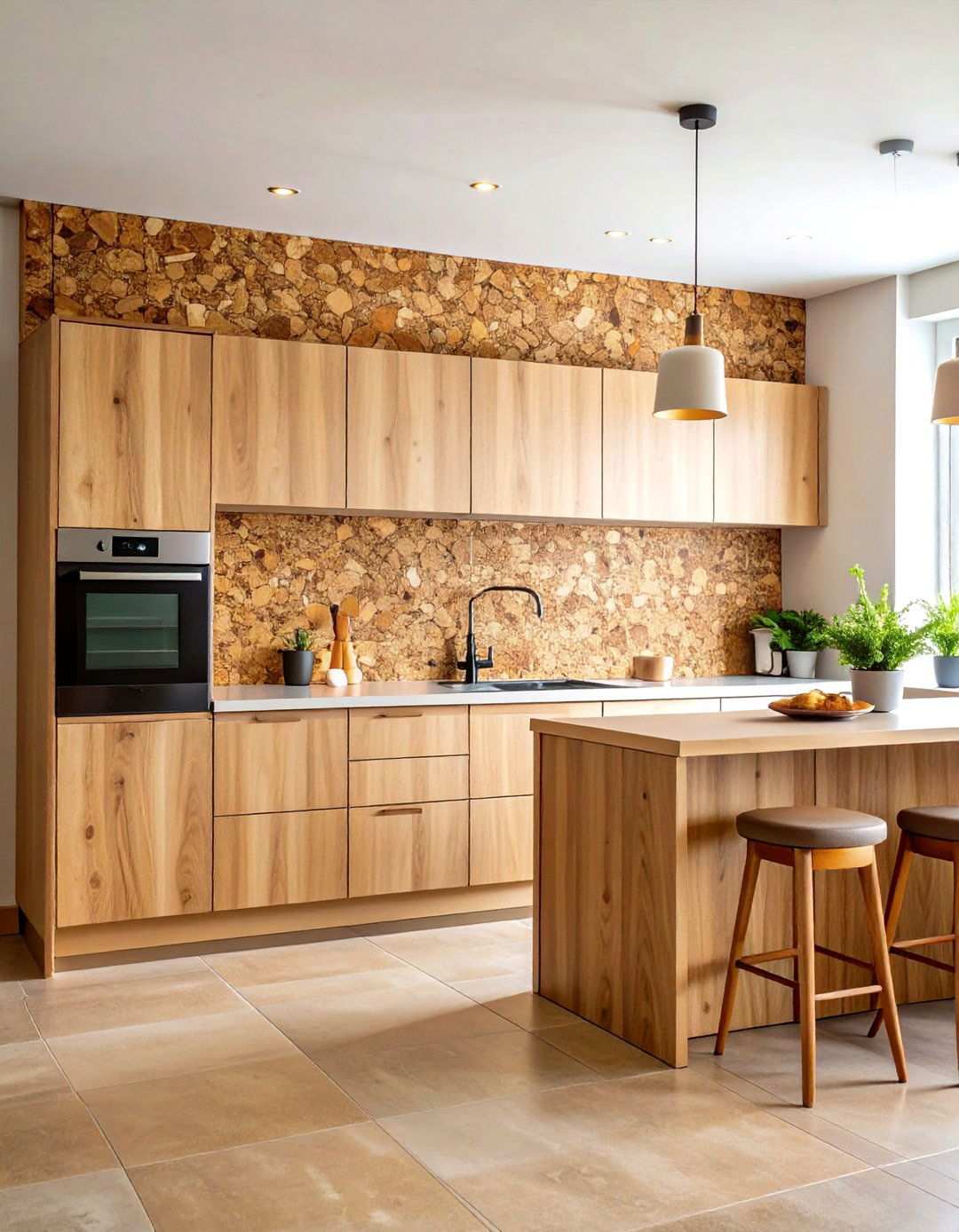
Cork tile backsplashes offer a unique combination of sustainable warmth and natural beauty, making them an excellent choice for eco-conscious homeowners. This renewable material showcases natural bark patterns and warm brown tones that perfectly complement rustic design themes. The natural elasticity provides slight cushioning, while the cellular structure offers natural antimicrobial properties ideal for kitchen applications. Each tile displays unique grain patterns created by nature’s growth processes, ensuring that no two tiles are alike. By choosing cork, you can prove that sustainable design doesn’t have to sacrifice beauty for environmental responsibility. The easy installation and maintenance make this an accessible option for DIY enthusiasts, while the natural material ensures authentic character that synthetic alternatives cannot replicate. Consider combining different cork shades for subtle pattern variations that add depth and visual interest to your kitchen.
18. Flagstone Natural Cleft: Unbridled Geology
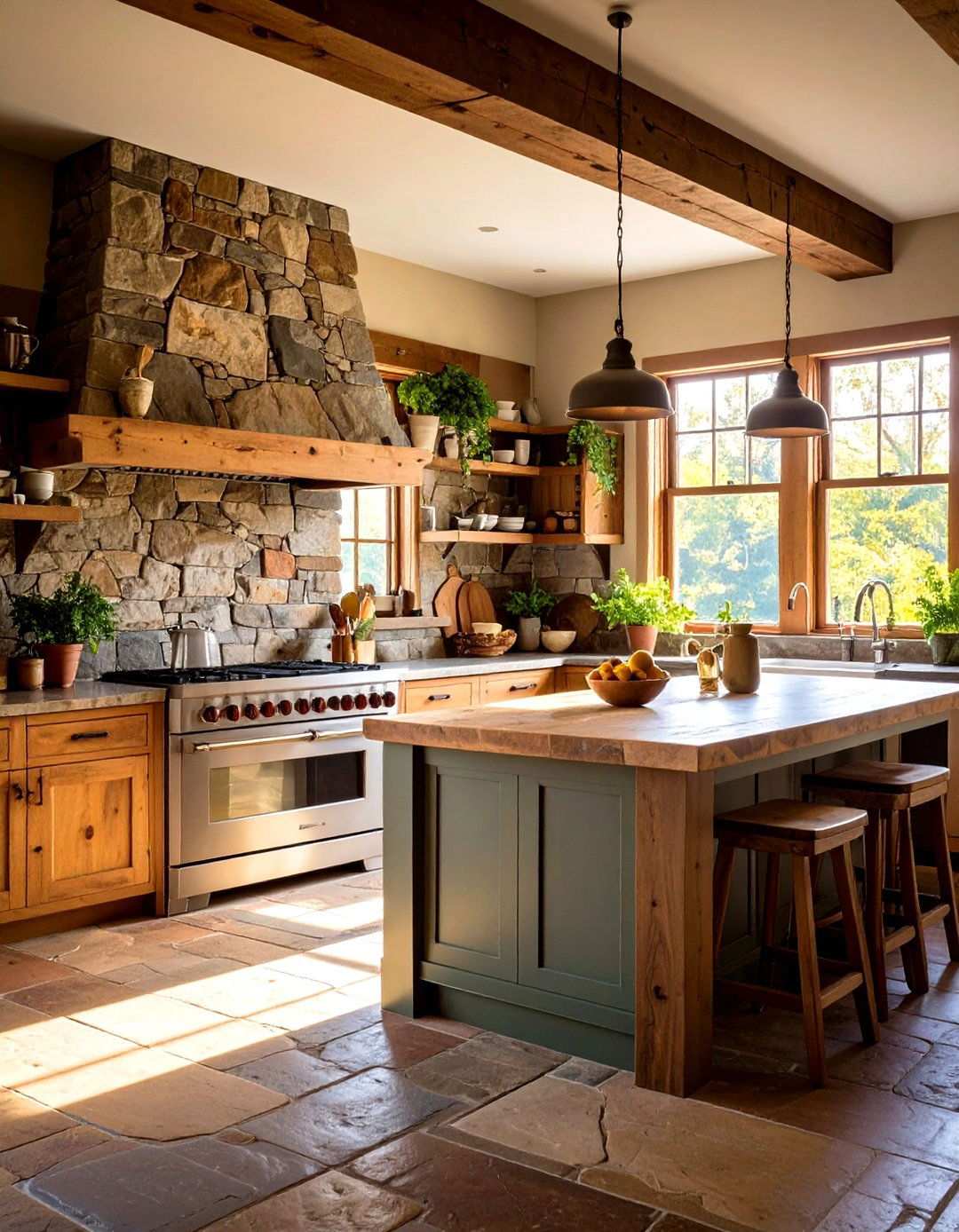
The raw, unbridled beauty of flagstone natural cleft backsplashes offers a dramatic contrast to refined kitchen design. These unique stones, with their surface split by geological forces, maintain their natural texture while allowing for practical vertical installation. As the sunlight catches the irregular surface, it creates striking shadow patterns that add depth and visual interest to kitchen walls, bringing the outdoors in. With a palette of gray, blue, and tan hues, these stones provide a neutral backdrop that still exudes strong character presence. However, their substantial texture demands thoughtful design integration, but the reward is a one-of-a-kind, authentic stone character that artificial replication can’t match. This contrast between the rough, natural texture and sleek, high-gloss surfaces or shiny appliances creates a sophisticated tension that elevates both elements and makes them more memorable.
19. Beadboard Wood Panels: Timeless Cozy Charm
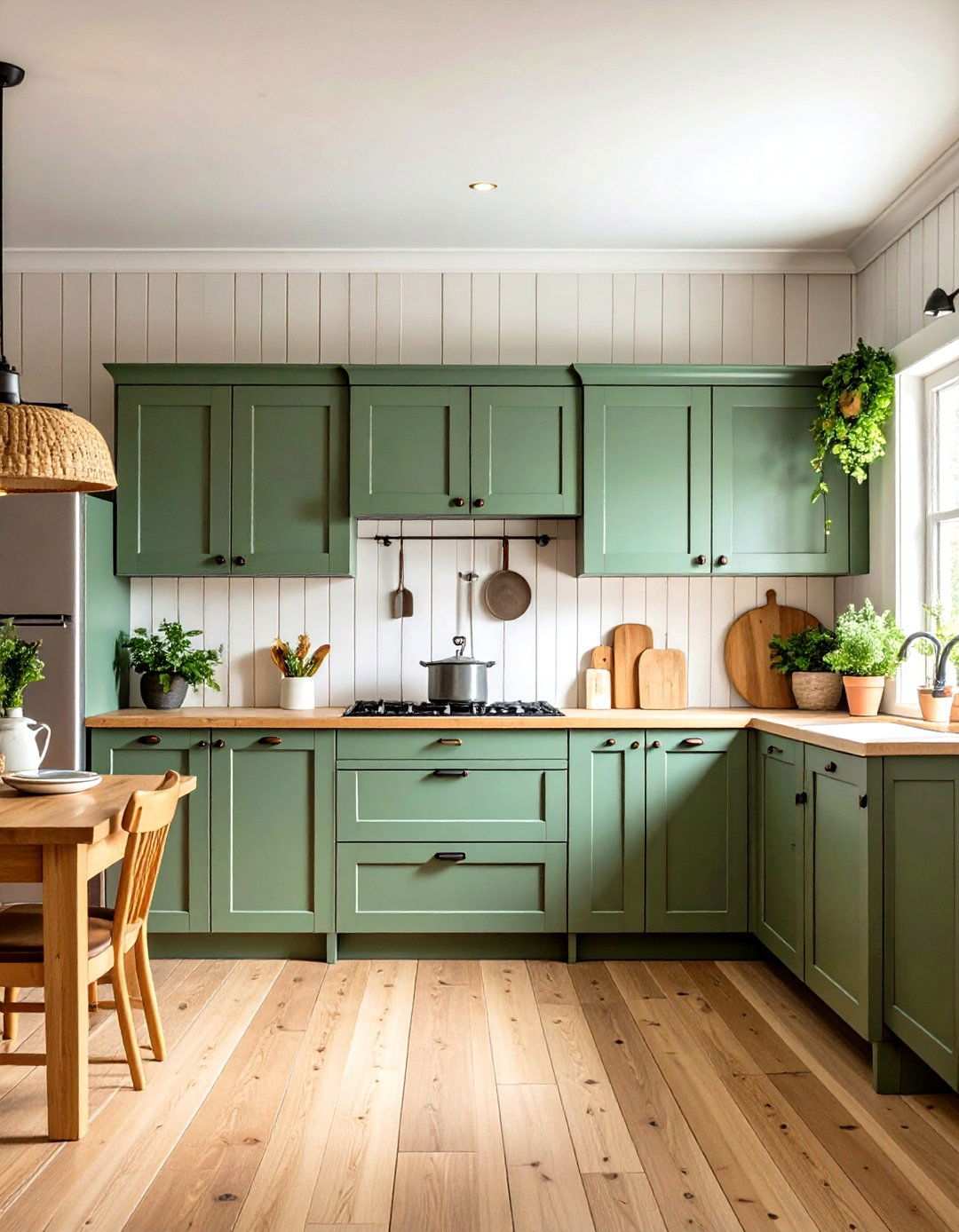
Beadboard wood panels bring a touch of classic charm to kitchens, offering a traditional pattern with the authenticity of rustic materials. The narrow vertical boards create a subtle linear texture while maintaining a residential scale and cozy appeal. A soft white or cream tone paint job gives a clean, farmhouse-style look, while staining showcases the wood grain character. The vertical orientation adds height to kitchen spaces, making them feel more spacious, while the timeless pattern never feels dated. For an enhanced traditional character, consider adding chair rail details, or extend the panels to the ceiling for a dramatic cottage impact. This classic treatment is particularly well-suited to smaller kitchens, where busy patterns might overwhelm, but still provides sufficient visual interest and authentic rustic character through natural wood material.
20. Quartzite Natural Stone: Elegant Durability
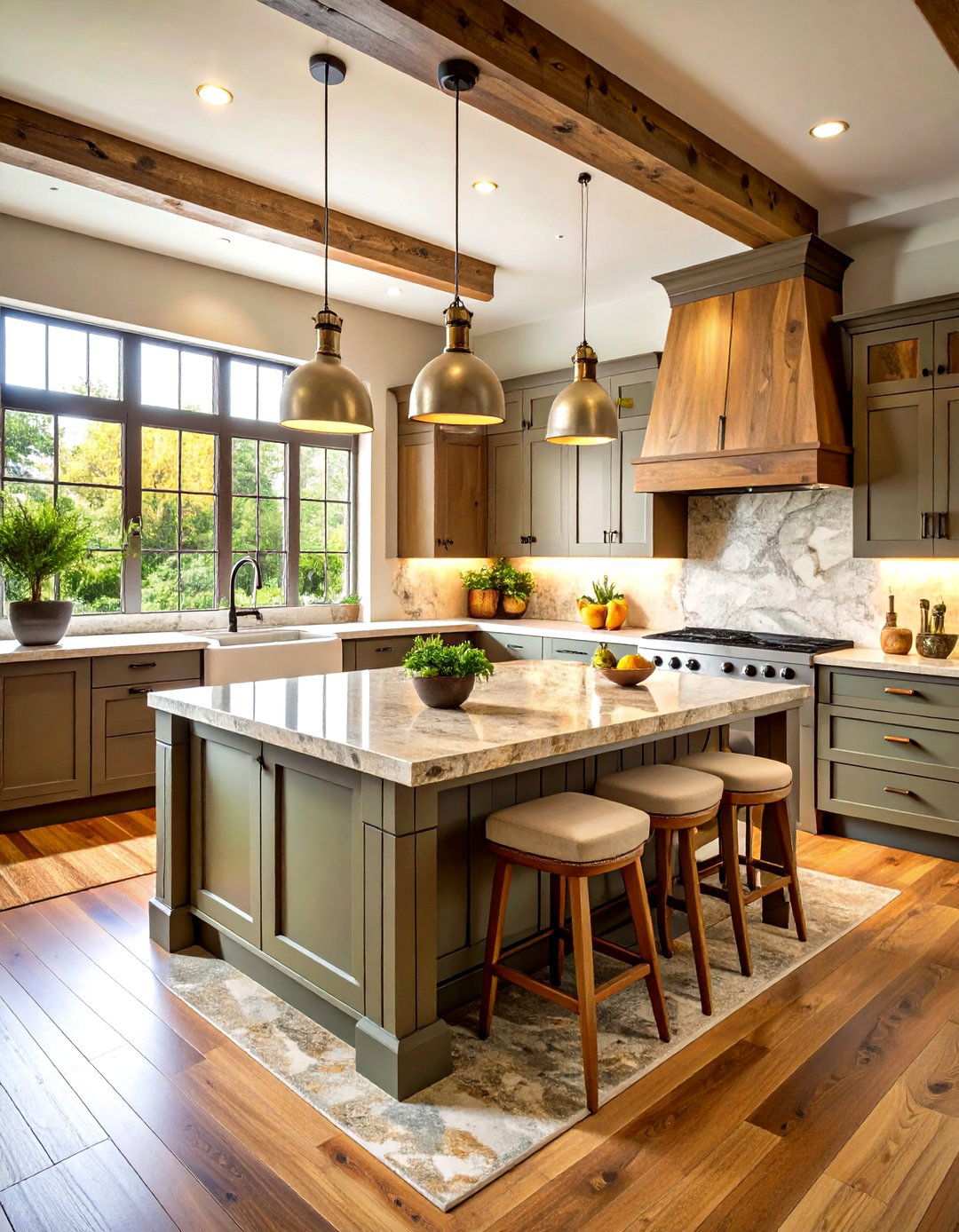
Quartzite natural stone backsplashes celebrate the beauty of metamorphic transformation, offering granite-like durability with unique character. This transformed sandstone showcases natural veining and color variations, making each installation a one-of-a-kind artwork. With exceptional heat and scratch resistance, quartzite is perfect for kitchen environments. The crystalline structure creates a subtle sparkle that adds life to kitchen walls without overwhelming rustic design themes. Available in a range of natural colors, from warm beiges to cool grays and dramatic blues and greens, depending on mineral content, quartzite provides both beauty and uncompromising performance. It withstands daily kitchen demands while maintaining aesthetic appeal, ensuring a lasting connection to the geological processes that shaped the earth over millions of years.
21. A Timeless Tradition in Rustic Red Brick Veneer
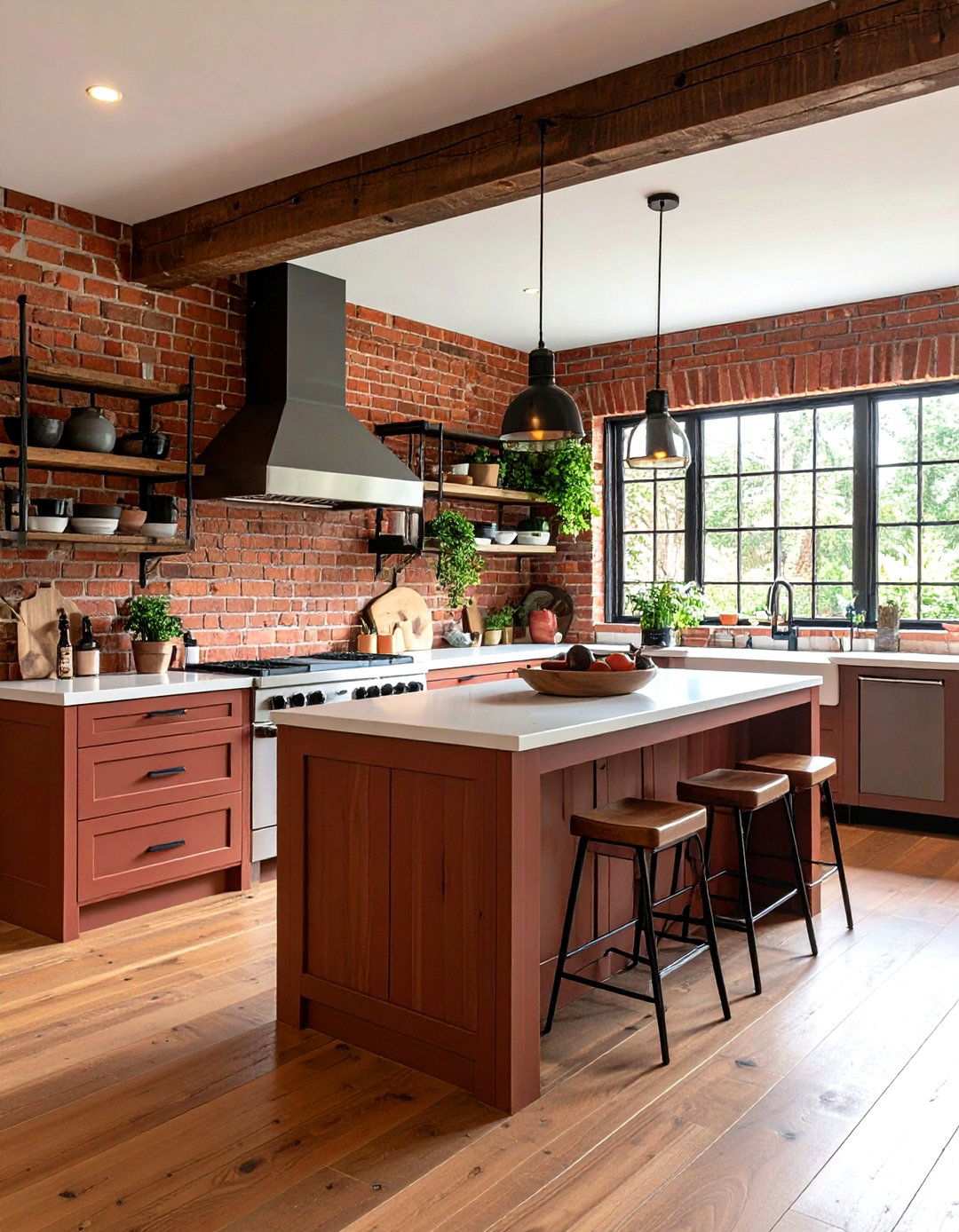
The allure of traditional craftsmanship lies in its ability to evoke memories of bygone eras, and rustic red brick veneer is the perfect way to bring that authenticity into modern kitchens. With its classic red clay coloring and natural color variations, this timeless material not only adds depth and visual interest but also connects the space to a rich architectural heritage. Thinly profiled and easy to install, these brick veneers are ideal for residential applications, where they can provide a durable surface that withstands heat and moisture exposure while helping to regulate kitchen temperatures. The natural efflorescence and subtle color shifts that occur over time add an air of authenticity, making it seem as though the brick has been weathering for decades. What makes traditional materials like these bricks endure?
22. Vertical Wood Plank Installations: Elevating Rustic Charm
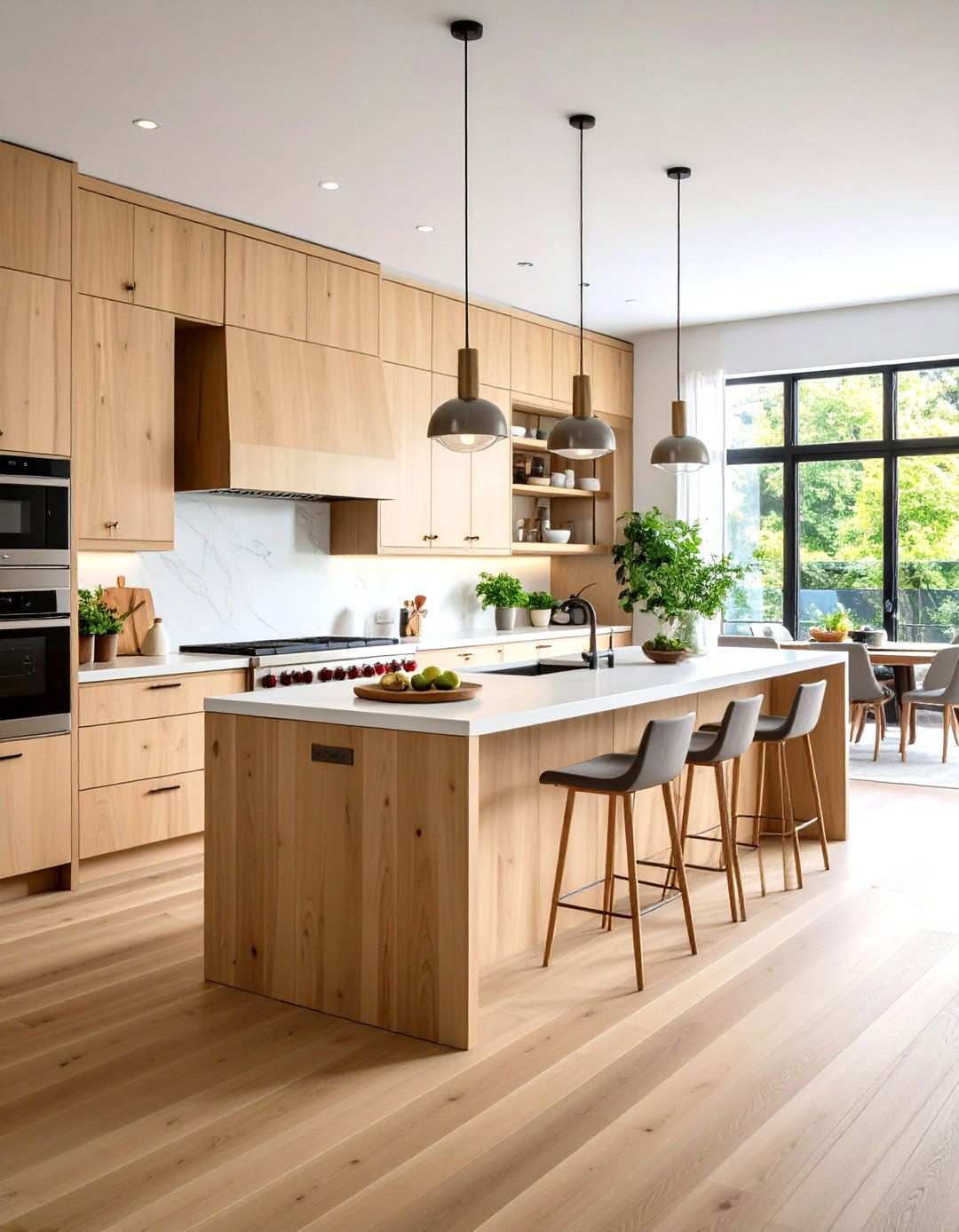
To create a dramatic focal point in the kitchen, consider a vertical wood plank installation that draws the eye upward and imbues the space with a sense of sophistication. By choosing a consistent wood species, you can achieve a clean, modern aesthetic, while mixing species can add complexity and depth to the design. The vertical lines of the installation complement the horizontal elements of the kitchen, such as countertops and cabinet runs, adding a touch of elegance and architectural interest. As the light catches the natural wood grain, the pattern shifts and changes, creating a visual dynamic that’s both captivating and effortless. Does the vertical installation technique really make spaces feel larger? Not only does it create a sense of height, but it also provides a stunning backdrop for the natural beauty of the wood.
23. Mixed-Slate Mosaics: A Celebration of Earth's Diversity
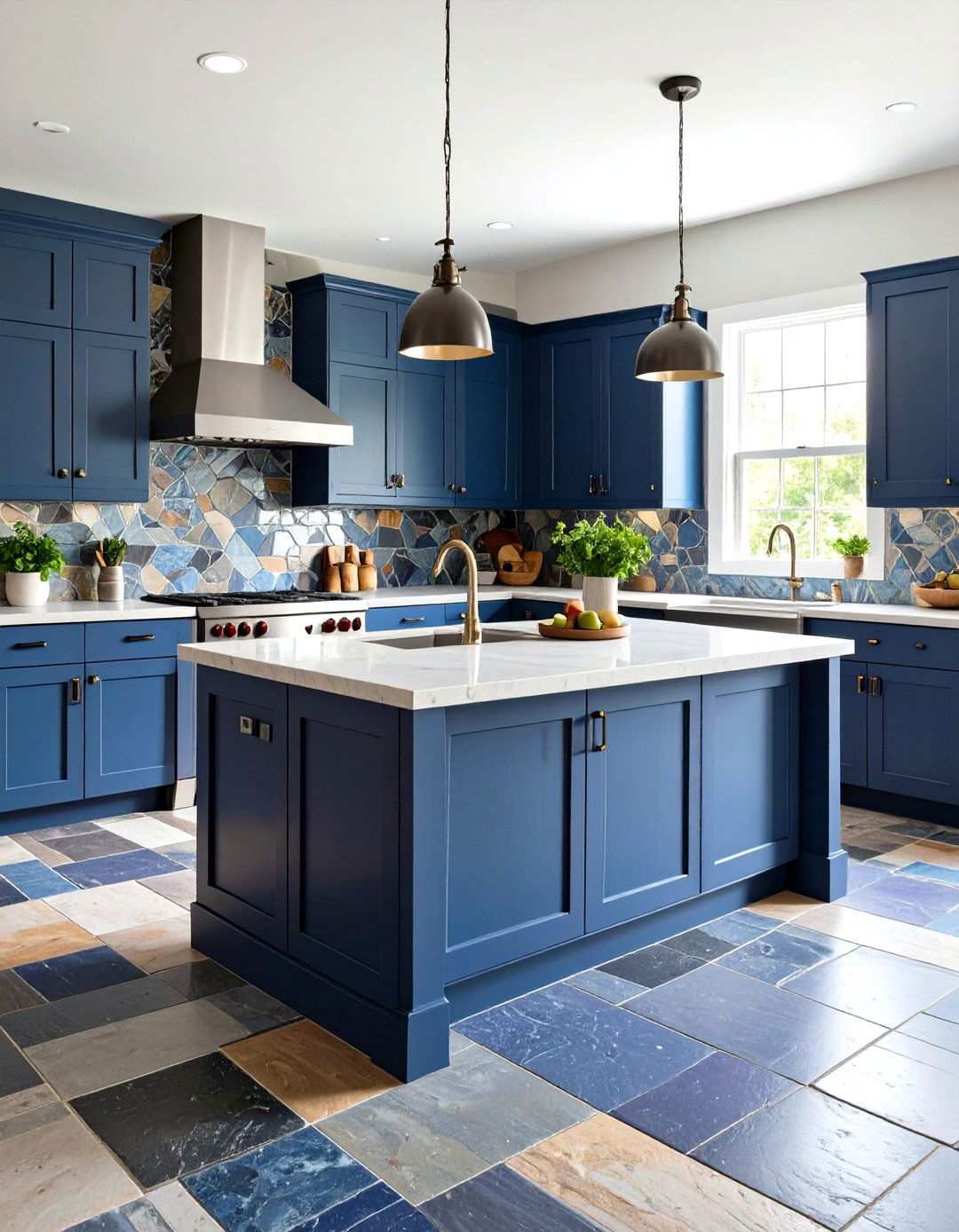
Mixed-color slate mosaics are a true celebration of the natural world, showcasing the unique characteristics of different mineral compositions within a cohesive installation. By combining blue-gray Welsh slate, purple Vermont slate, and green Brazilian slate, you can create rich color tapestries that are both visually striking and durable. The small mosaic format allows for intricate color patterns and smooth transitions between the different stone types, while random placement creates an organic arrangement that rewards close inspection. On the other hand, more structured patterns provide a contemporary take on the traditional mosaic. How can geological diversity enhance kitchen design? By embracing the natural world and its infinite variations, mixed slate mosaics can add a touch of wonder and creativity to the space, while providing a practical surface that withstands the demands of the kitchen.
24. Harmonizing with Nature: Pebble Stone Rounded Natural
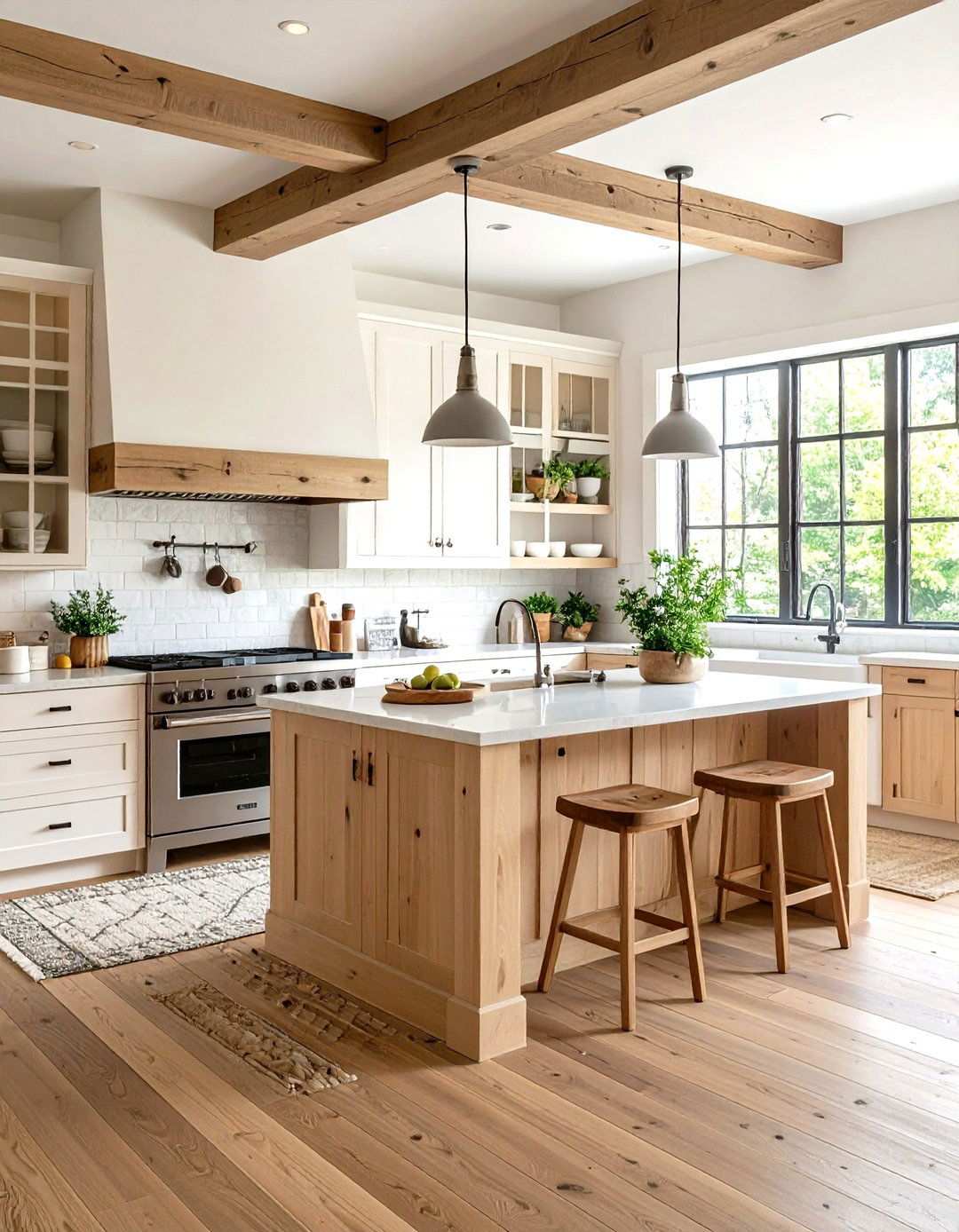
Rustic kitchens can now be fully immersed in natural charm with pebble stone backsplashes that evoke a sense of effortless sophistication. These water-worn stones bring an organic, three-dimensional texture to vertical surfaces through a combination of varying sizes and subtle color transitions. From beach pebbles to river rocks and mountain stream stones, each option presents a unique character that harmonizes with a similar smooth, tactile appeal. The irregular shapes of these stones create visually striking grout patterns and shadow lines, adding a captivating layer of visual complexity to the space. When it comes to installation, precision is key to maintaining the stones’ natural character and creating a level surface.