1. Cozy Barn Red Retreats with Distressed Wood Accents
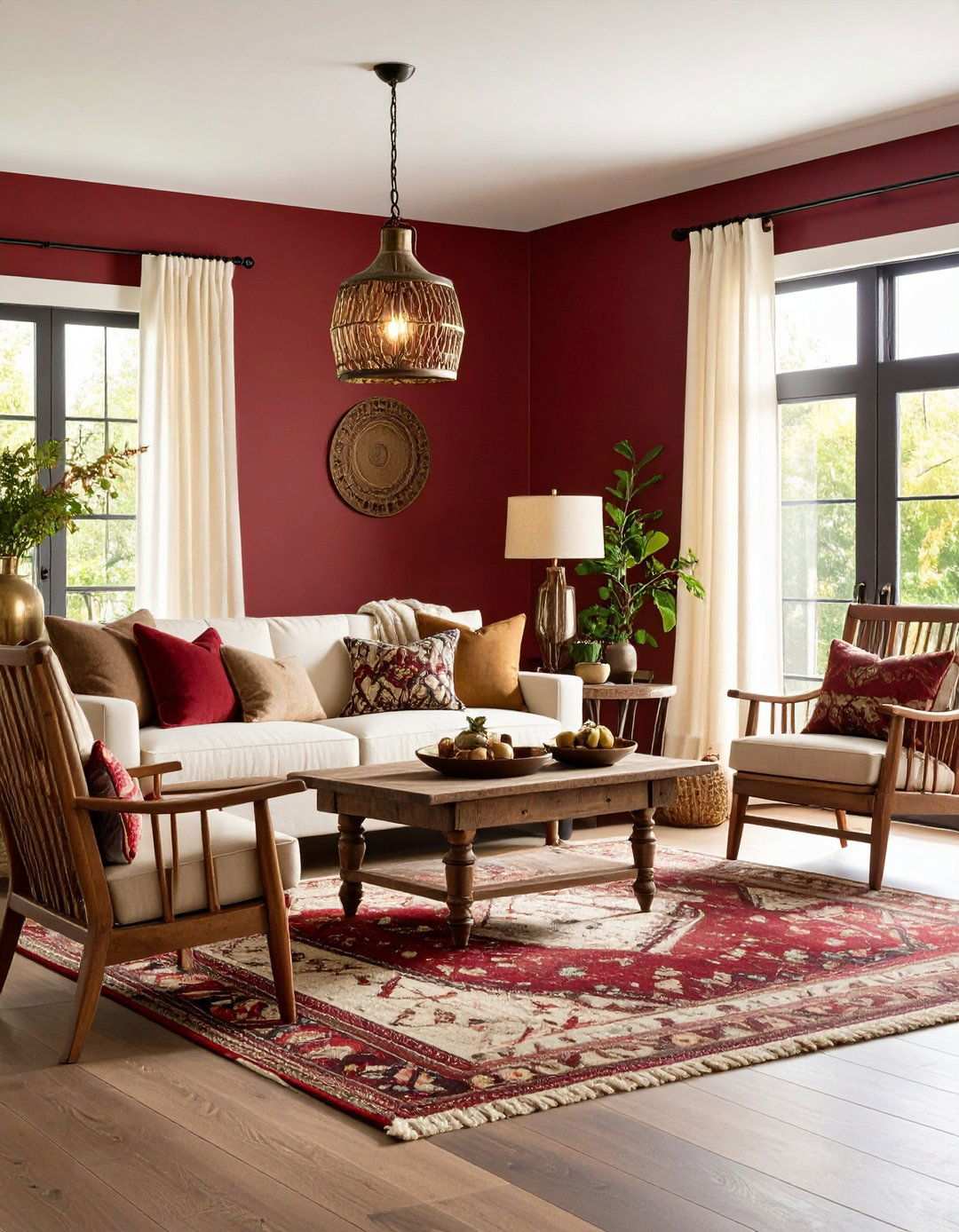
Bring warmth and character to your living space by combining deep barn red walls with weathered wood furniture pieces that highlight natural grain patterns and worn finishes. A reclaimed wood side table, vintage ladder-back chairs, and open shelving crafted from salvaged barn boards work together to create a cozy atmosphere reminiscent of traditional American heritage. To enhance the ambiance, layer cream-colored cotton curtains with simple tie-backs and add warm lighting through brass lantern-style table lamps. Complete the look with braided wool rugs in muted tones, showcasing handwoven baskets filled with dried herbs and flowers. This classic primitive combination creates an authentic colonial atmosphere that seamlessly blends historical charm with modern comfort.

As an Amazon Associate I earn from qualifying purchases.
2. Elegance in Navy Blue and Cream with Touches of Warmth
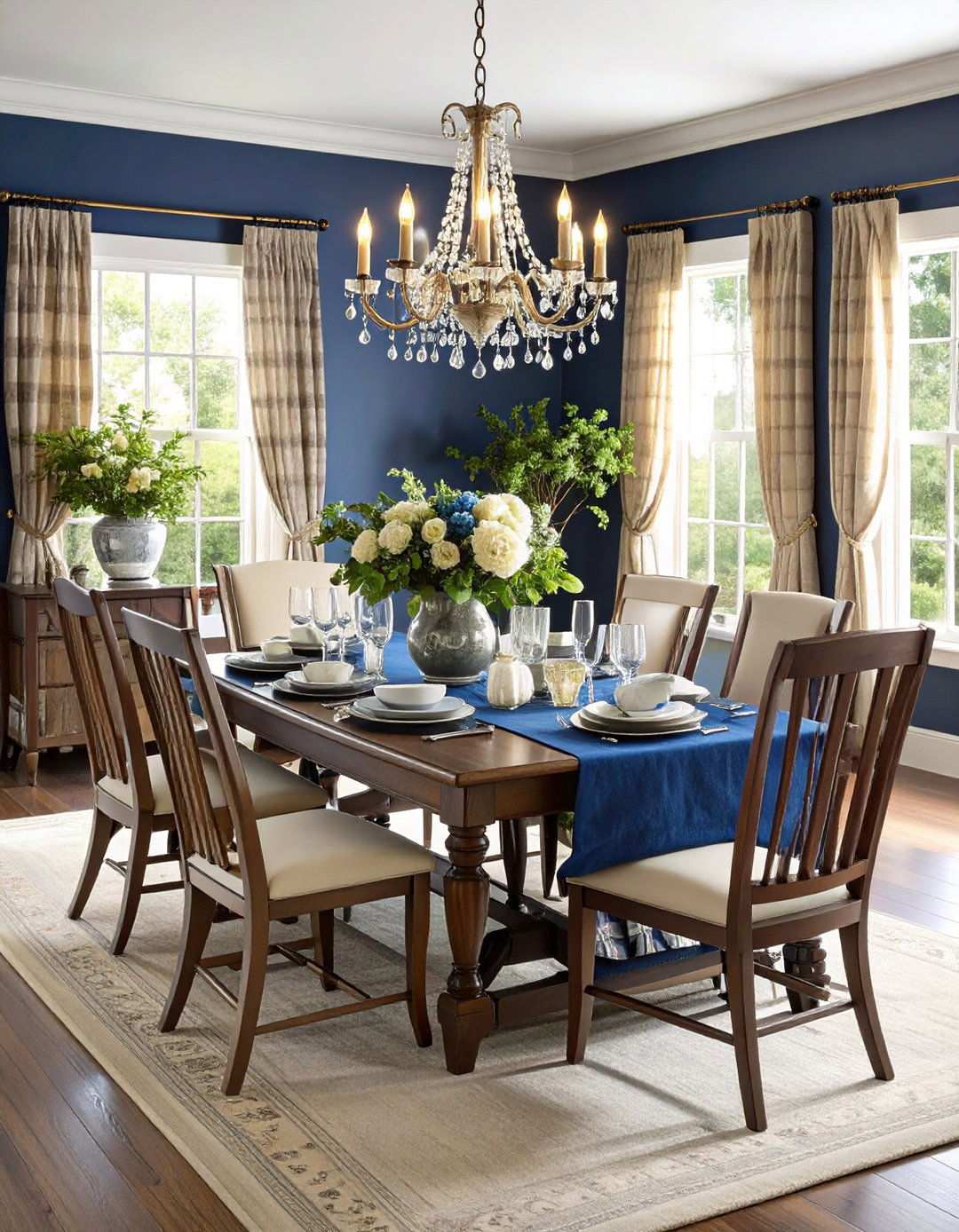
Achieve a sophisticated primitive living room by pairing navy blue walls with cream-colored upholstered seating and natural wood accents. A pine harvest table and Windsor-style chairs with sturdy construction and simple lines provide a solid foundation for the space. To add depth, incorporate checkered fabrics in navy and cream for window treatments and throw pillows, while displaying pewter candlesticks and wooden bowls on open shelving. The addition of wool hooked rugs and linen table runners adds texture and visual interest, while vintage books and pottery arranged on shelves evoke the authentic colonial charm that many homeowners adore. This timeless color combination exudes the elegance of early American interiors while maintaining a comfortable and inviting atmosphere.
3. Heart of the Home: Cozy Stone Fireplace Living Area
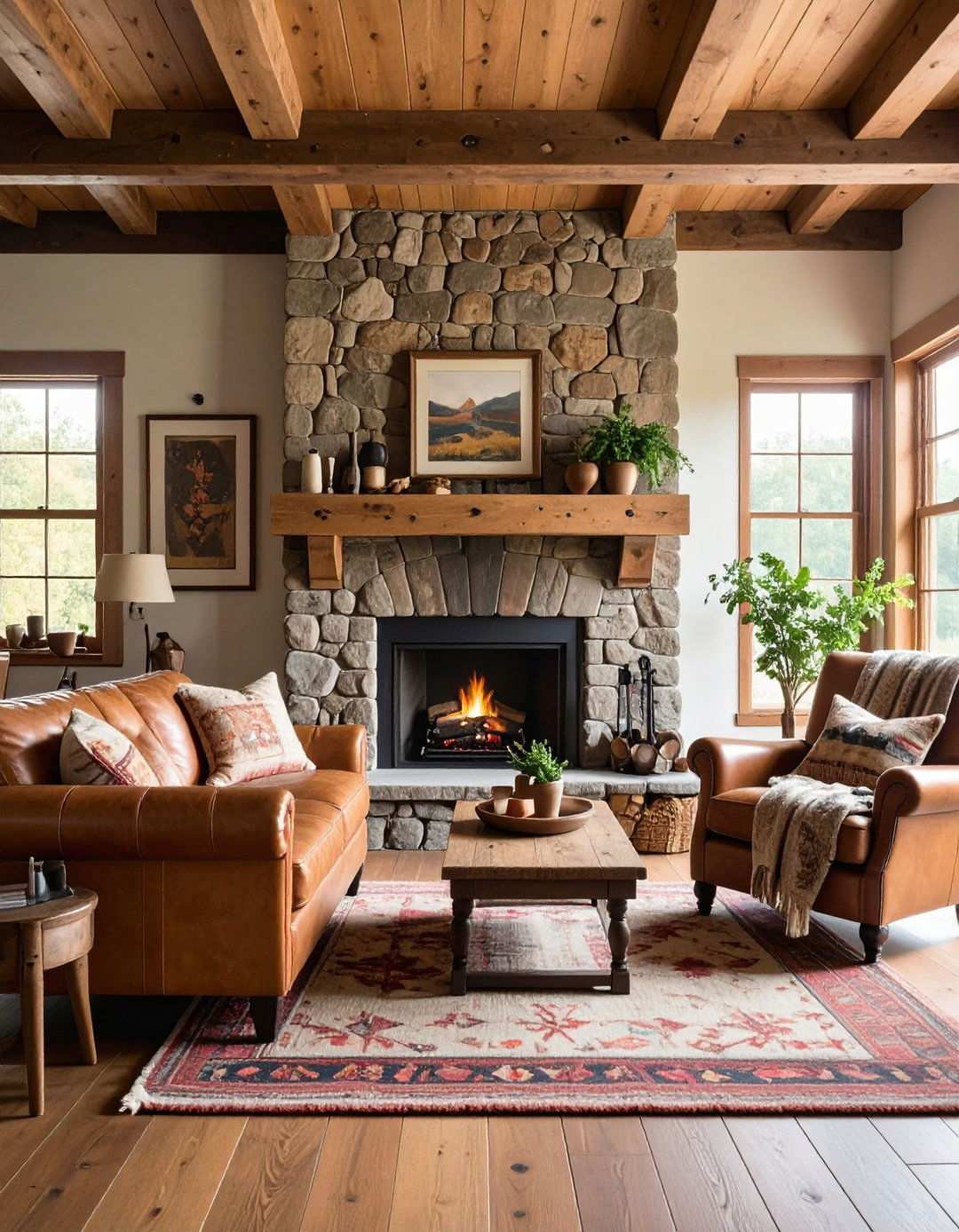
Create a rustic living space by centering your design around a stone fireplace, bringing warmth and character to the room. Consider using rough-hewn fieldstone or aged brick construction to add depth and history to the focal point. Balance the hearth with plush seating, where leather upholstery and distressed wooden frames blend harmoniously. Install a solid wood mantel to showcase folk art, pewter plates, and seasonal arrangements of dried flowers or gourds, adding a touch of whimsy to the space. Complete the look with functional pieces like a pine blanket chest for storage and rustic end tables crafted from reclaimed materials. Blend earthy tones with textiles such as wool throws and primitive-patterned pillows to create a cozy atmosphere that embodies the essence of primitive design philosophy.
4. Calming Oasis: Sage Green Farmhouse Seating Area
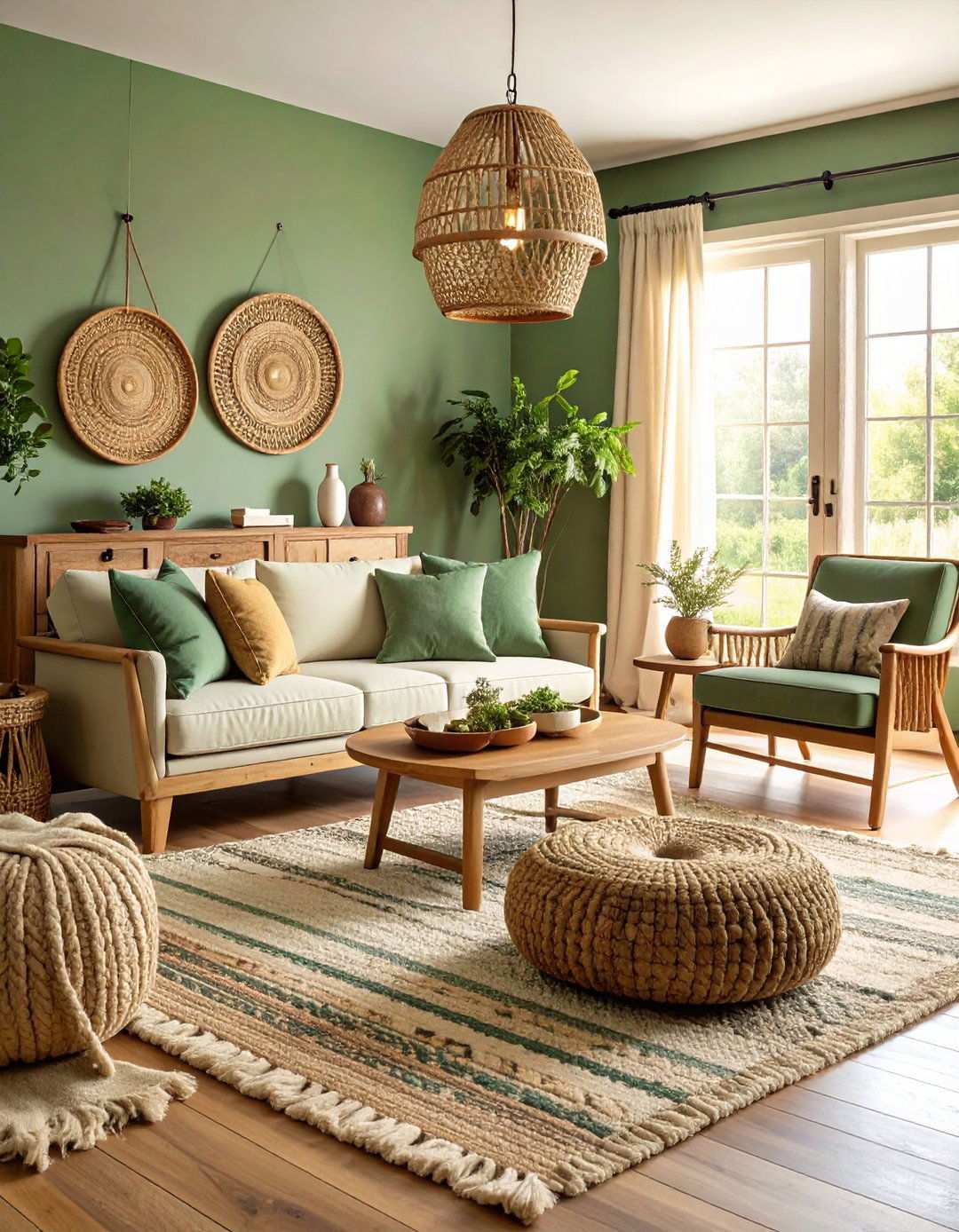
Establish a serene ambiance in your primitive living room by starting with sage green walls as the foundation, paired with natural wood furniture and soft cream accents that add a touch of warmth. Choose comfortable seating with loose cotton slipcovers, wooden coffee tables with painted finishes, and corner cupboards for showcasing treasured collectibles. Add a layer of texture with prairie-style curtains in natural linen, complemented by braided rugs and hand-quilted throws draped over chair backs. For a soft glow, incorporate primitive lighting through tin punched lanterns and candlestick table lamps with fabric shades. This soothing color palette creates a peaceful atmosphere that reflects the simplicity and tranquility valued in traditional primitive decorating approaches while maintaining contemporary comfort standards.
5. Timeless Style: Checkerboard Pattern Textile Focus
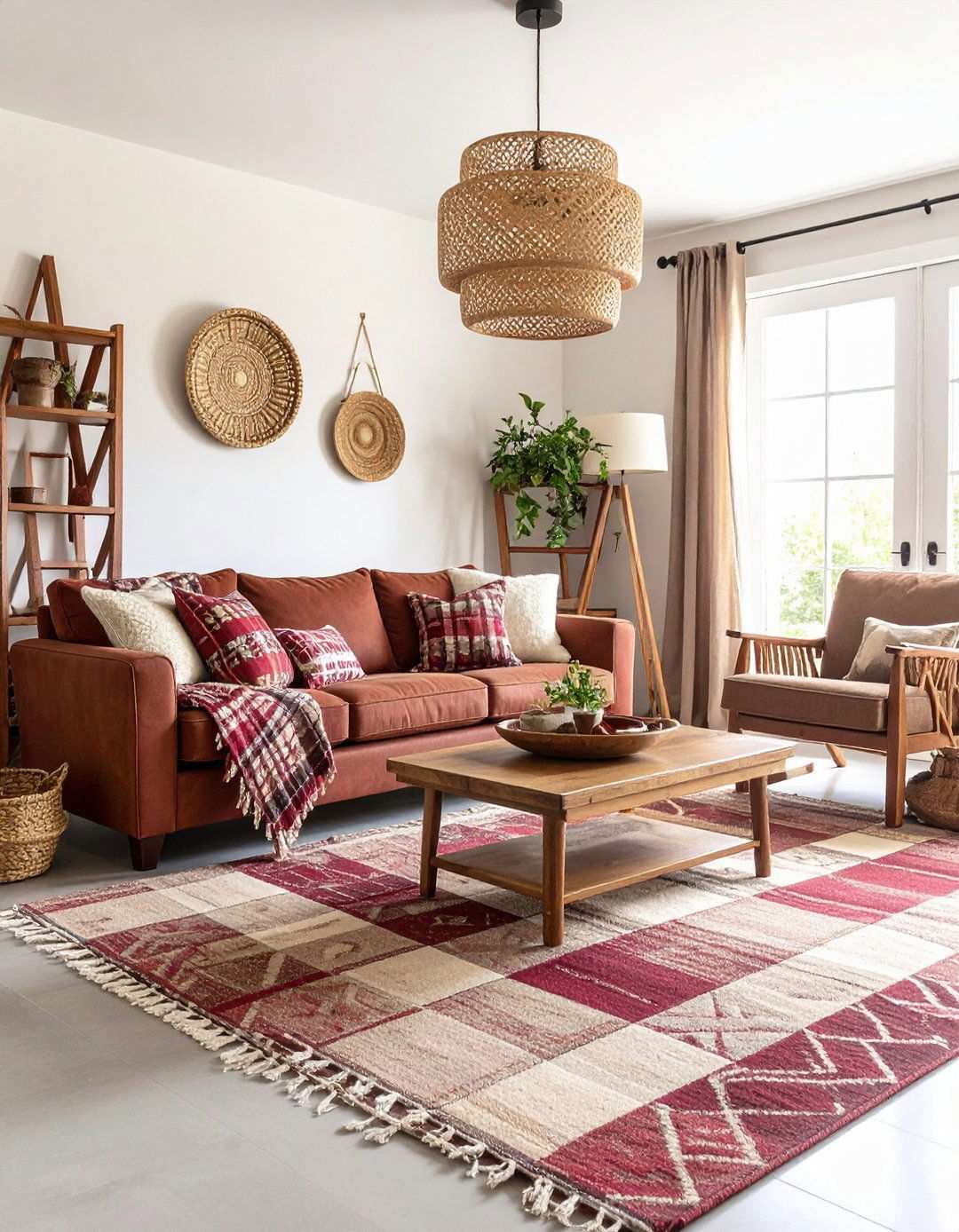
Design your primitive living room around classic checkerboard patterns in traditional color combinations like burgundy and tan, navy and cream, or black and mustard yellow. Integrate these patterns through window treatments, upholstery fabrics, and decorative accessories while keeping walls in neutral tones to prevent visual overload. Select solid wood furniture with painted or stained finishes, including ladder-back chairs and trestle tables, to add a touch of authenticity. Display collections of wooden bowls, pewter items, and handmade pottery on open shelving or cupboard tops, adding a sense of storytelling to the space. Complete the look with texture through braided rugs and woven baskets filled with dried flowers, creating a visually appealing and authentic atmosphere reminiscent of early American homes.
6. Capturing Cozy Moments with Soft Ambiance
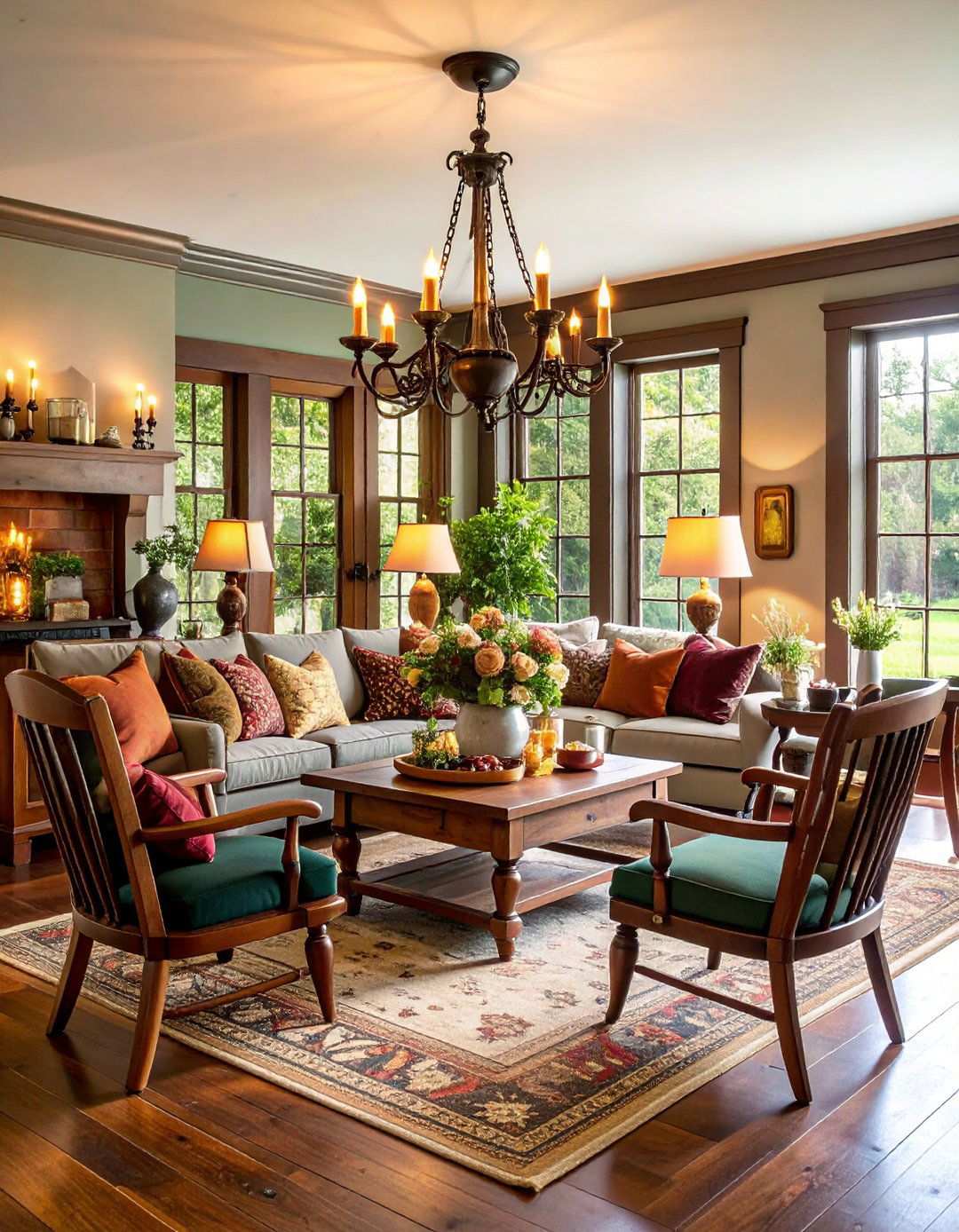
Transform your living room into an inviting retreat by embracing the warmth of soft candlelight and rich illumination from antique-inspired sources. Install dramatic wrought iron chandeliers with candle-style bulbs, paired with punched tin wall sconces and charming mason jar table lamps. Choose furniture pieces in dark wood finishes, such as windsor chairs, harvest tables, and corner cupboards with glass doors, to anchor the space. Rich fabrics in deep colors like burgundy velvet and navy wool add depth and coziness through upholstery and window treatments. Showcase your personal style by displaying collections of ornate brass candlesticks, rustic wooden trenchers, and folk art throughout the space. This enchanting design cultivates a sense of intimacy and relaxation, perfect for unwinding and entertaining.
7. Embellishing with Timeless Textiles
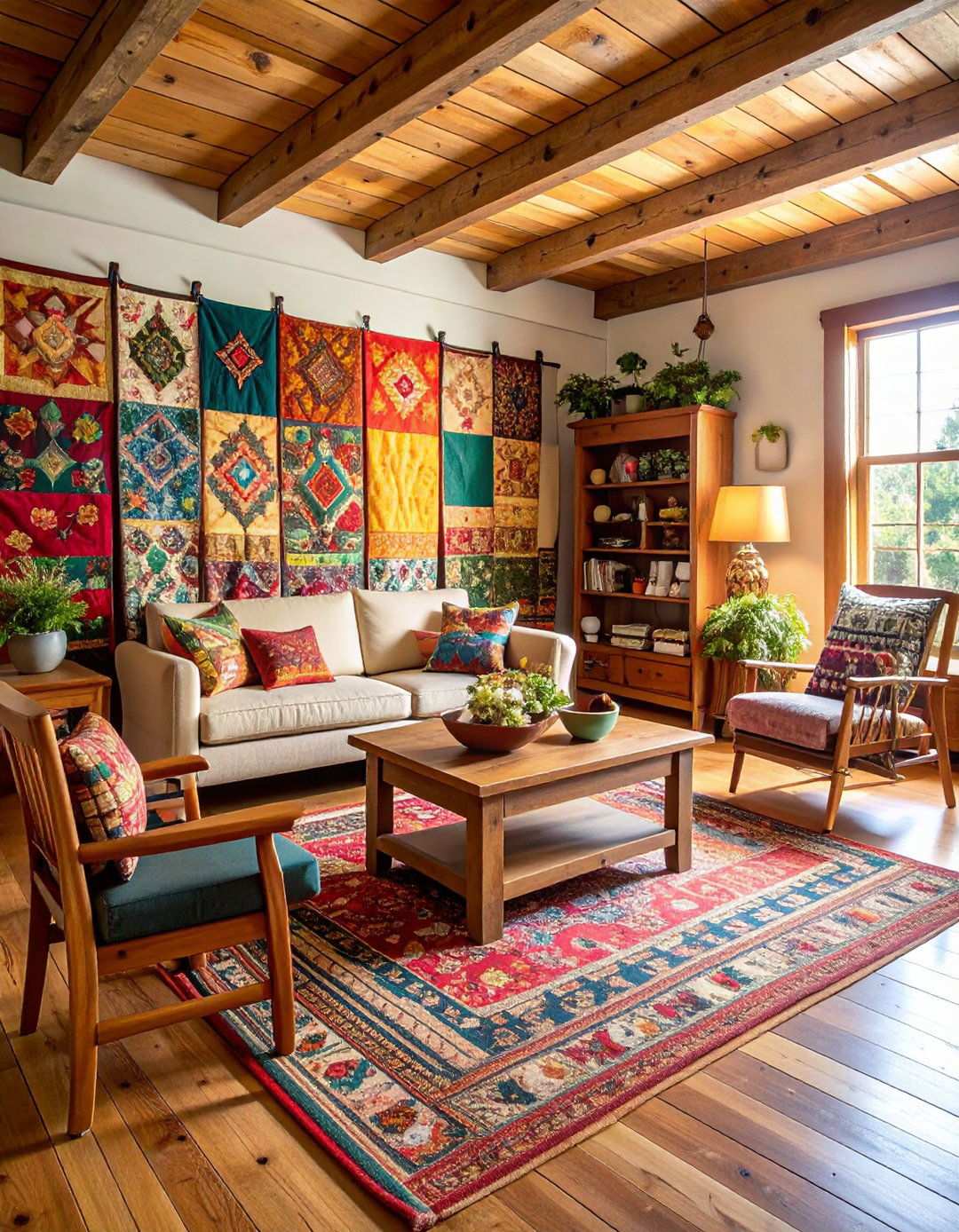
Create a primitive living room that celebrates the beauty of handmade quilts by incorporating them as wall hangings, furniture covers, and decorative accents. Select quilts featuring traditional patterns like log cabin, wedding ring, or star designs in rich colors and intricate stitching. Pair these textiles with simple yet elegant wooden furniture pieces, including plank tables, ladder-back chairs, and storage chests. Let the quilts take center stage against a neutral background, complemented by natural accents like wooden bowls, baskets, and handcrafted pottery. Adequate lighting highlights the craftsmanship and attention to detail in your textile collection, adding warmth and visual interest to the space. This thoughtful approach honors traditional American needlework while showcasing the beauty of primitive decorating.
8. Harvesting the Spirit of Abundance
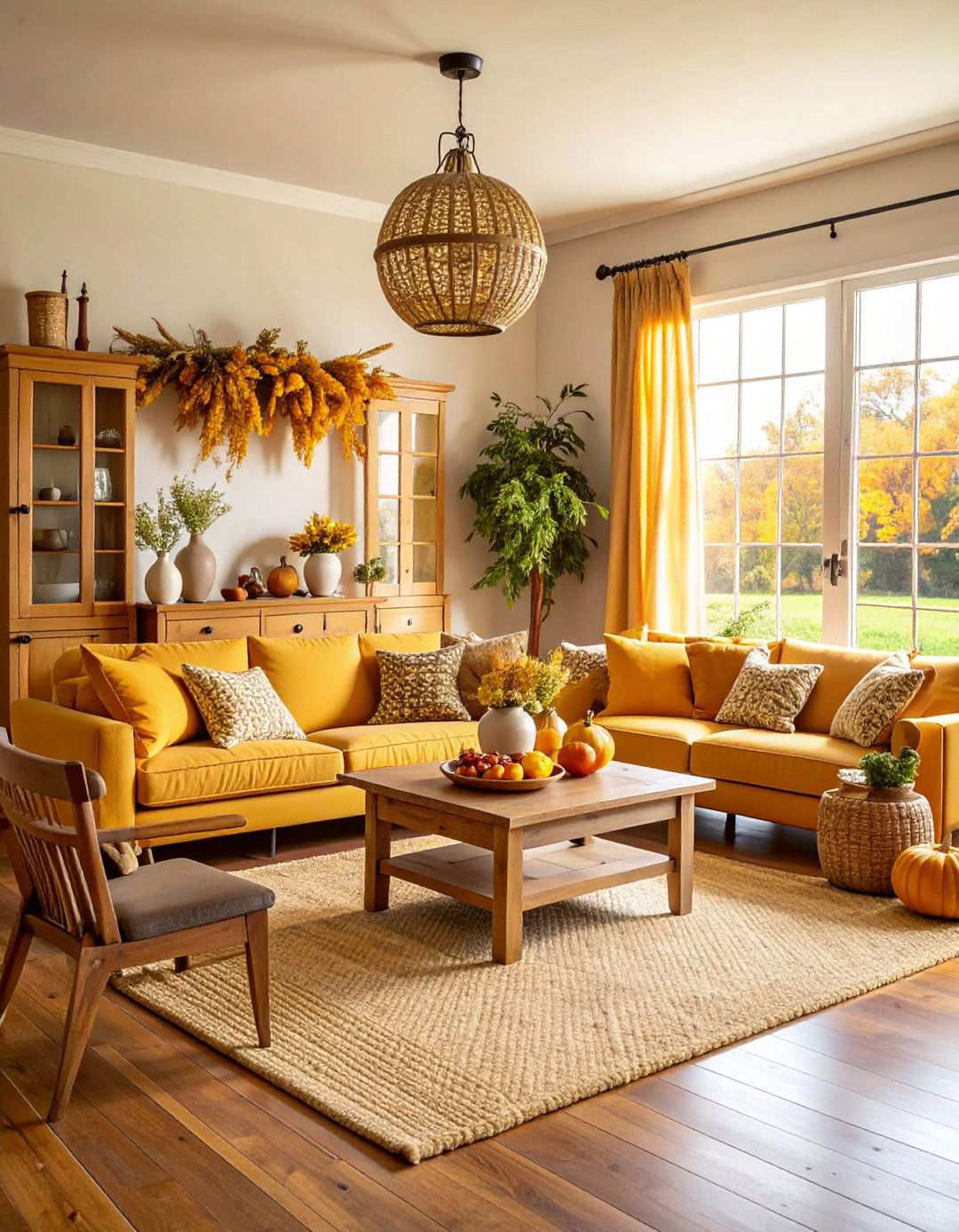
Conjure a warm and inviting primitive living area by embracing the rich, earthy tones of harvest gold. Incorporate this vibrant hue through painted furniture, textiles, and decorative accessories, creating a cohesive look that evokes the abundance of harvest time. Select sturdy wooden pieces like farm tables, benches, and cupboards finished in complementary earth tones, and add texture through burlap curtains, braided rugs, and handwoven throws in coordinating colors. Display your treasured collections of amber glass, copper cookware, and wooden utensils on open shelving or cupboard surfaces, and incorporate natural elements like dried corn, gourds, and wheat sheaves for seasonal interest. This warm and inviting color scheme celebrates the agricultural heritage central to primitive decorating philosophy and American colonial history.
9. Crafting a Natural Ambiance in the Living Room
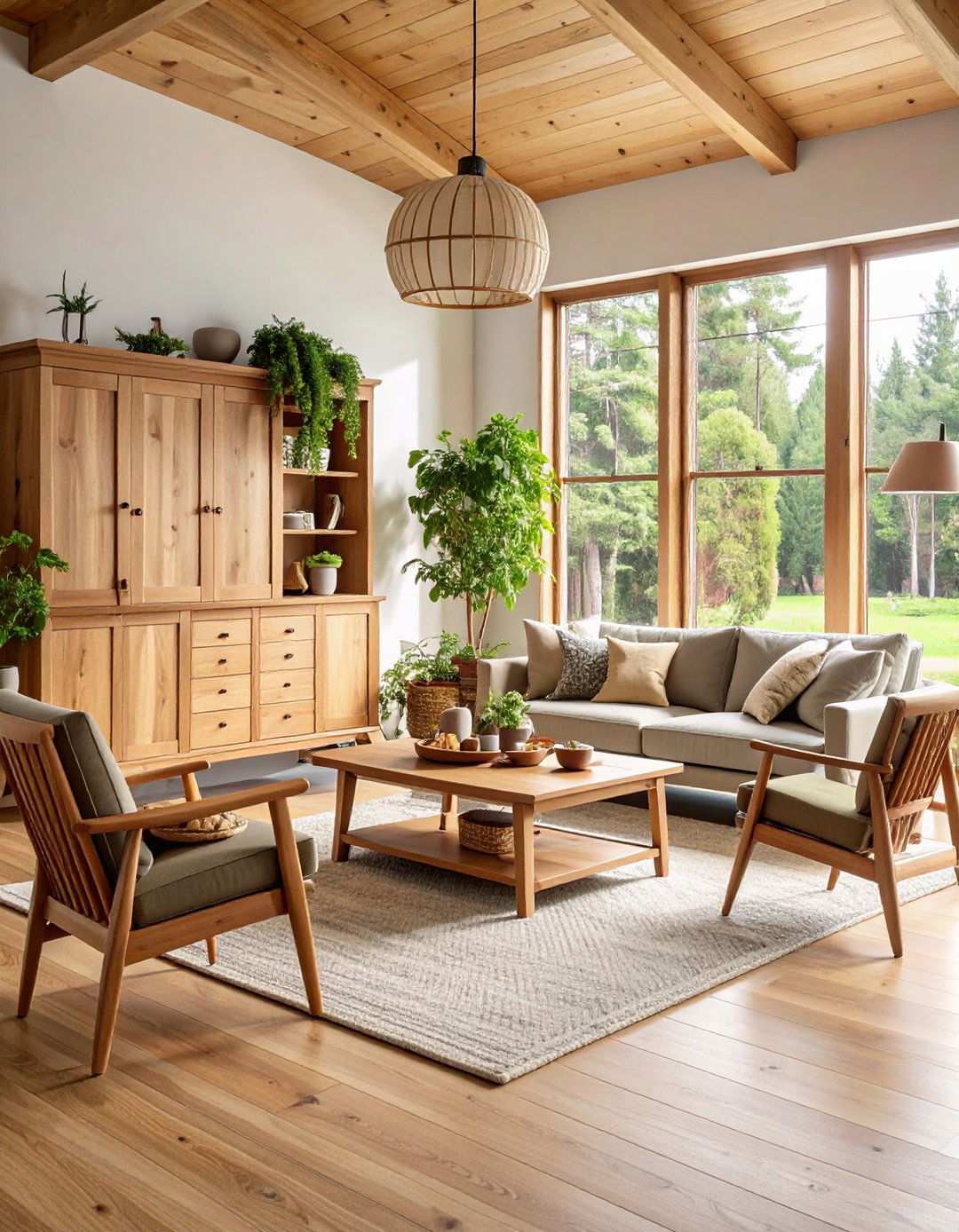
Design a cohesive primitive living room that celebrates the natural beauty of pine furniture pieces. A curated collection of essential items such as harvest tables, corner cupboards, and ladder-back chairs, all finished in complementary stains or paints, serves as the foundation for this space. Soft textiles in muted colors like linen, cotton, and wool add warmth and depth, while primitive accessories like wooden bowls and handmade pottery create visual interest throughout the room. Strategically placed tin punched fixtures and oil lamp reproductions provide the perfect amount of ambient lighting, highlighting the natural beauty of the wood and creating a sense of warmth and coziness.
10. Establishing a Traditional Framework with Braided Rugs
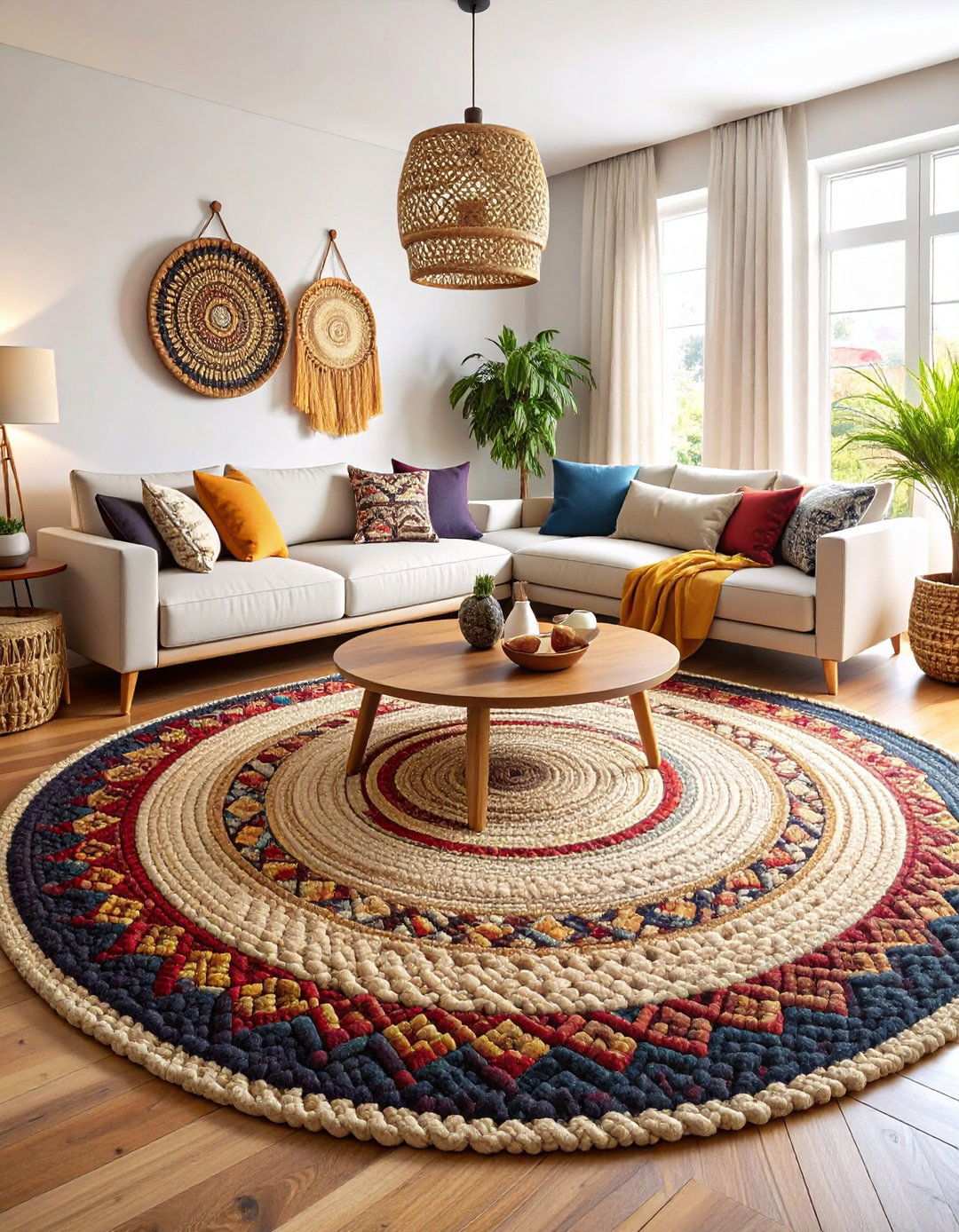
At the heart of a primitive living room design should be a beautiful braided rug that defines seating areas and adds warmth through traditional craftsmanship and natural colors. Oval and round shapes featuring earth tones like burgundy, navy, green, and tan woven into classic patterns create a sense of history and authenticity. Furniture groupings arranged over these rugs, including comfortable seating and wooden tables, complement the rug colors and create a cohesive look. Wall colors and fabrics that coordinate with the rug selection incorporate matching elements throughout the room, tying the space together. Primitive accessories like baskets and folk art that reflect similar color palettes add a touch of whimsy and personality to the space.
11. Showcasing Pewter and Wood in a Timeless Display
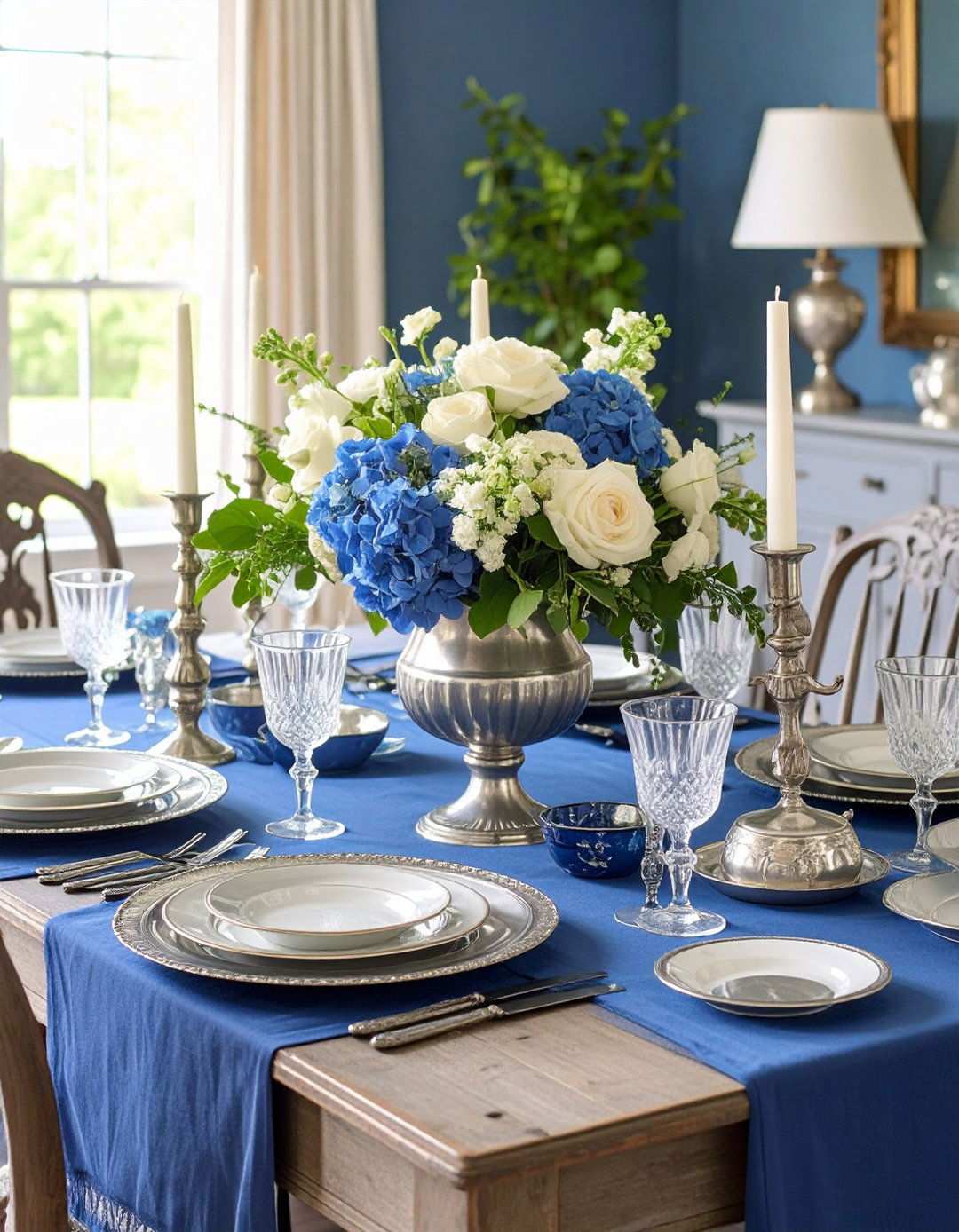
Create an elegant and sophisticated primitive living room by featuring collections of pewter items displayed alongside wooden furniture and accessories throughout the space. Pewter plates, tankards, candlesticks, and serving pieces arranged on painted cupboards, mantels, and side tables evoke a sense of colonial charm and authenticity. Wooden furniture with complementary finishes adds depth and texture, while fabrics in colors that enhance both materials, such as deep blues and burgundy, tie the space together. Strategically placed lighting highlights the collections and creates a warm ambiance, celebrating the combination of metal and wood elements that define traditional craftsmanship. This collection-focused design creates a sense of history and sophistication, making for a truly timeless space.
12. Vibrant Yellow Accents in Primitive Spaces
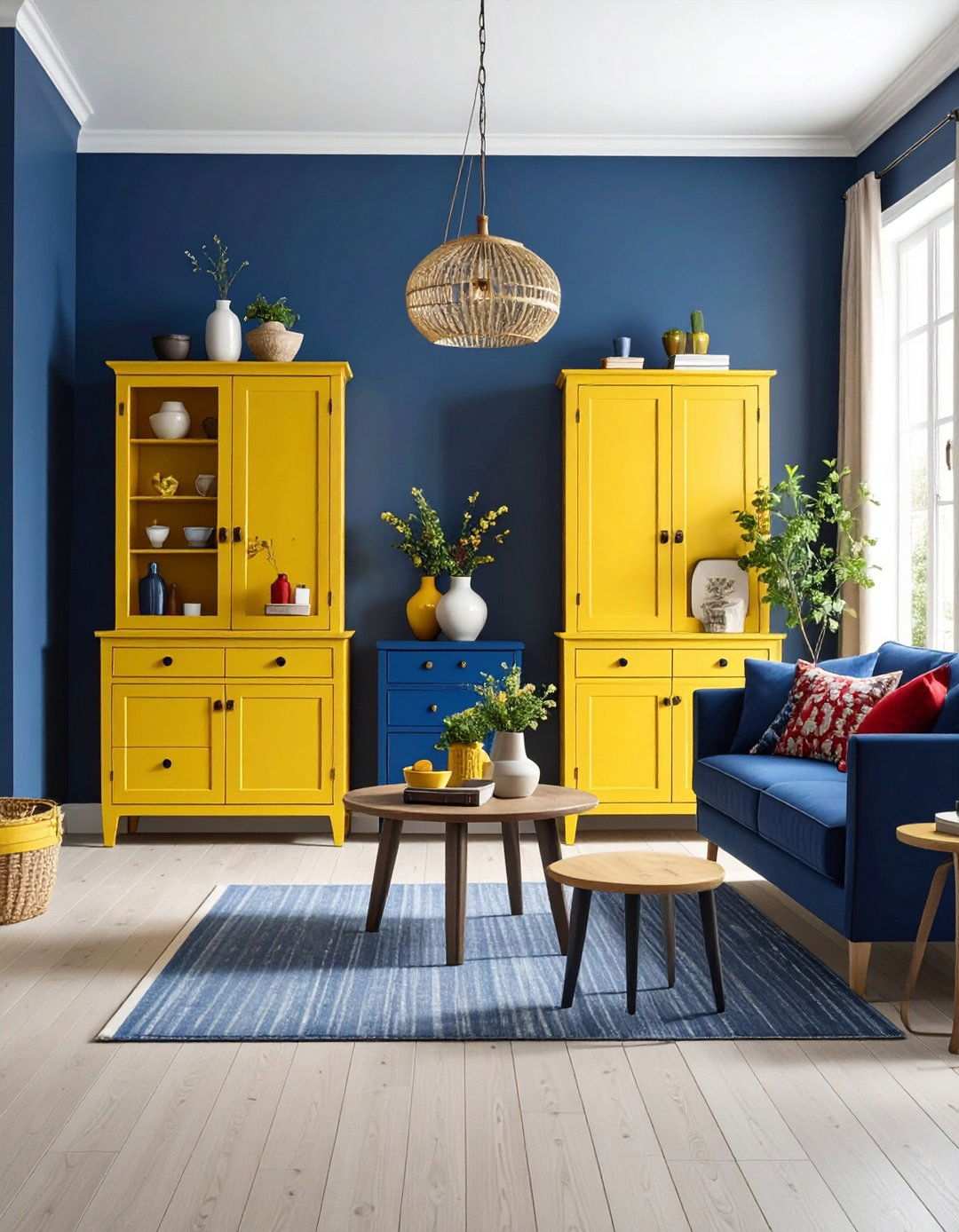
To infuse your living room with traditional charm, incorporate painted furniture pieces in rich mustard yellow, creating a cheerful atmosphere reminiscent of early American decorating preferences. This warm, earthy hue pairs beautifully with neutral wall colors, making it an ideal choice for primitive living spaces. Balance the yellow with complementary fabrics such as deep red, navy blue, or cream for window treatments and upholstery, and add natural wood accents through unpainted pieces like harvest tables or ladder-back chairs. Display curated accessories like wooden bowls, baskets, and folk art that harmonize with your color scheme, bringing brightness and authentic character to the room.
13. Woven Basket Storage and Decor
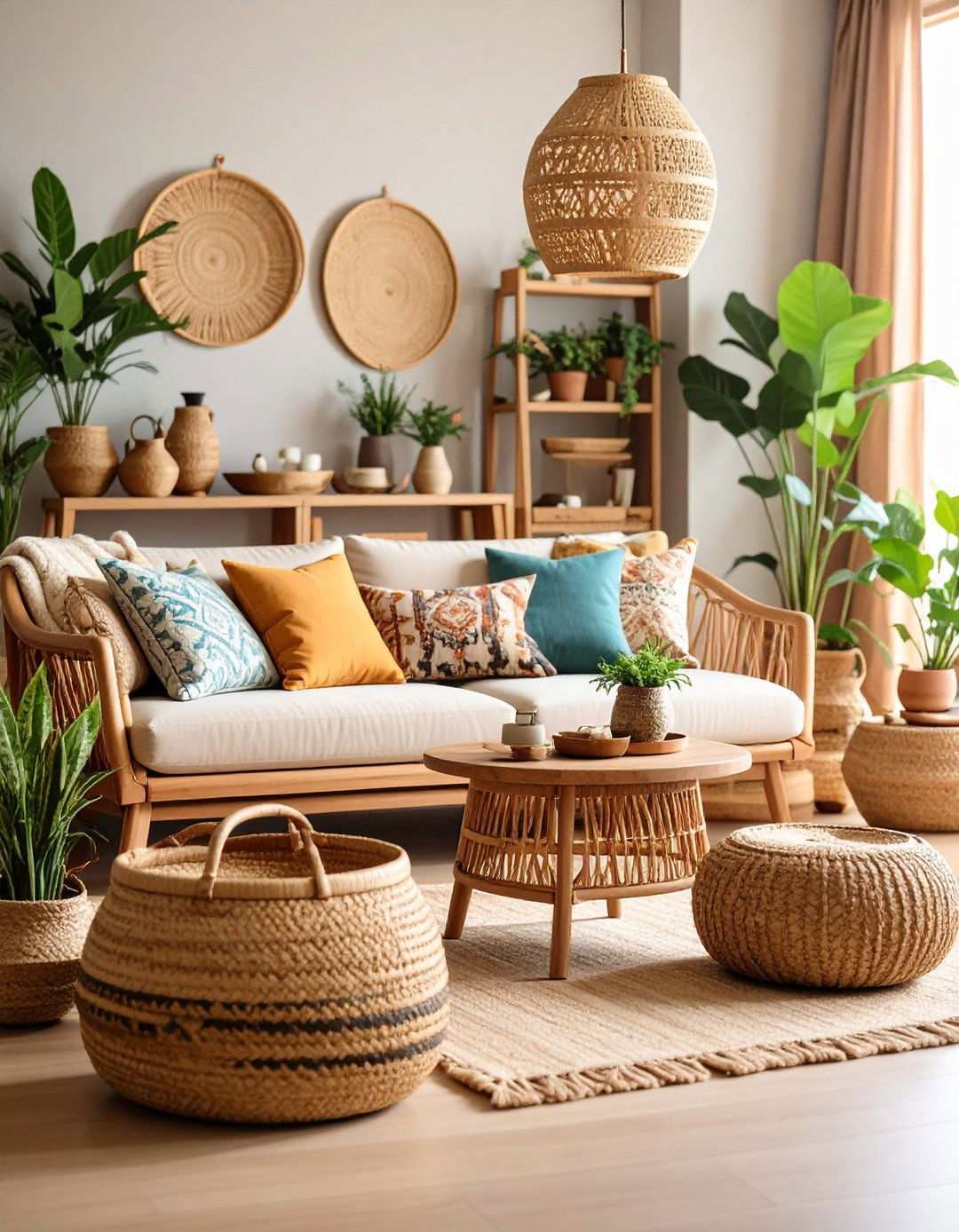
Centring your primitive living space around woven baskets not only adds functionality but also celebrates traditional craftsmanship techniques. Incorporate a variety of basket sizes and weaving techniques, including splint, reed, and willow construction, in natural tones that blend seamlessly with the room’s décor. Use larger baskets to store essential items like blankets, books, and household goods, while smaller versions can hold dried flowers, pinecones, or seasonal displays. Arrange baskets on floors, shelves, and tabletops alongside wooden furniture and textile accessories, choosing wall and fabric colors that complement the natural basket tones. This basket-focused approach emphasizes the practical aspects of primitive living while honoring the rich history of traditional crafts.
14. Warm Metallic Accents in Primitive Interiors
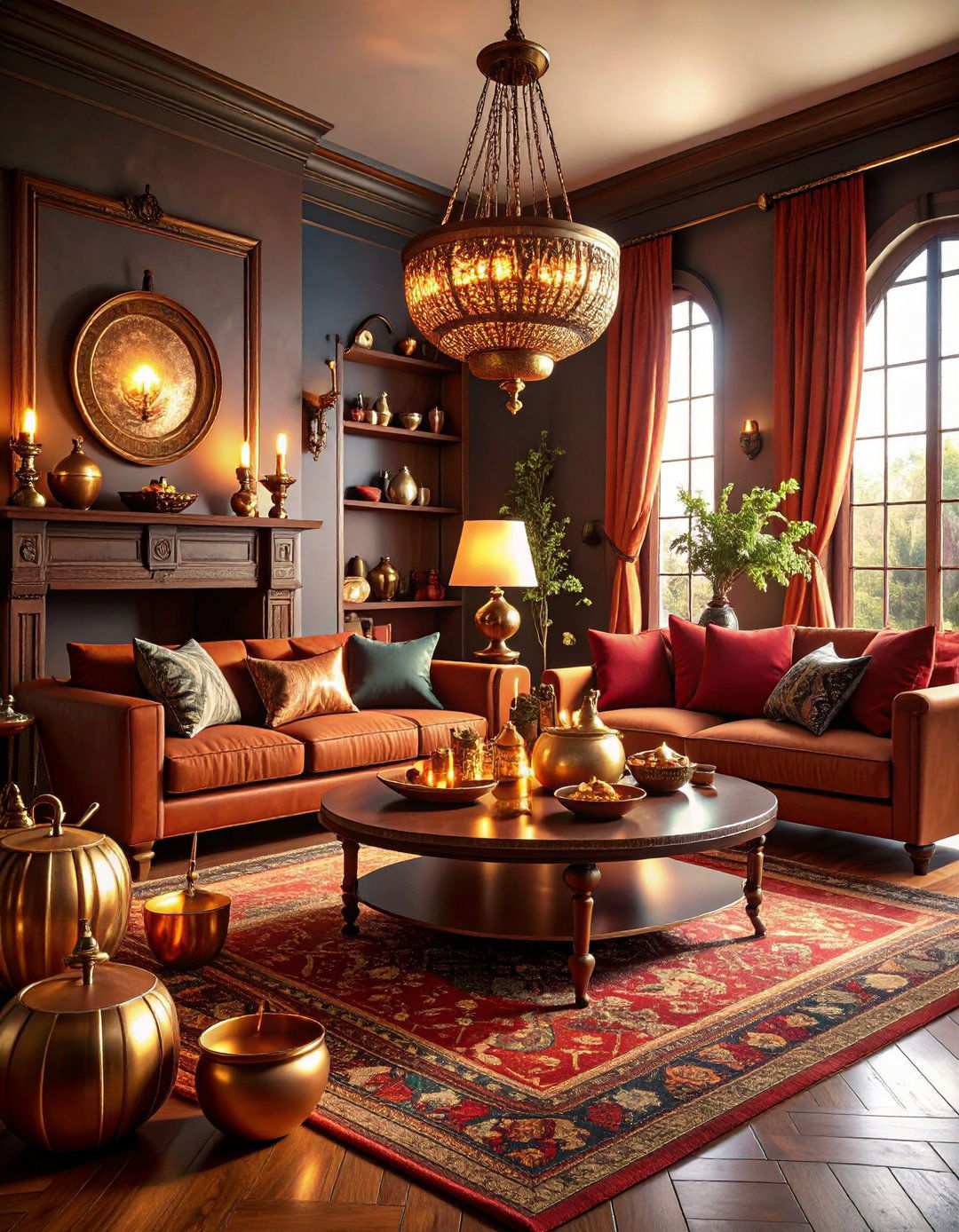
Elevate your primitive living room with warm metallic accents featuring copper and brass items that add richness and authentic period character. Showcase copper cookware, brass candlesticks, lanterns, and decorative hardware on wooden furniture and open shelving, carefully selecting wooden pieces with finishes that complement the warm metal tones. Incorporate fabrics in colors that enhance the metallic elements, such as deep reds, browns, and greens, creating a sophisticated and inviting atmosphere. To highlight the metal accessories, add warm and cozy lighting that creates a welcoming ambiance, celebrating traditional metalworking crafts while introducing refined period details that take primitive decorating beyond simple rustic styling.
15. Timeless Woodland Elegance
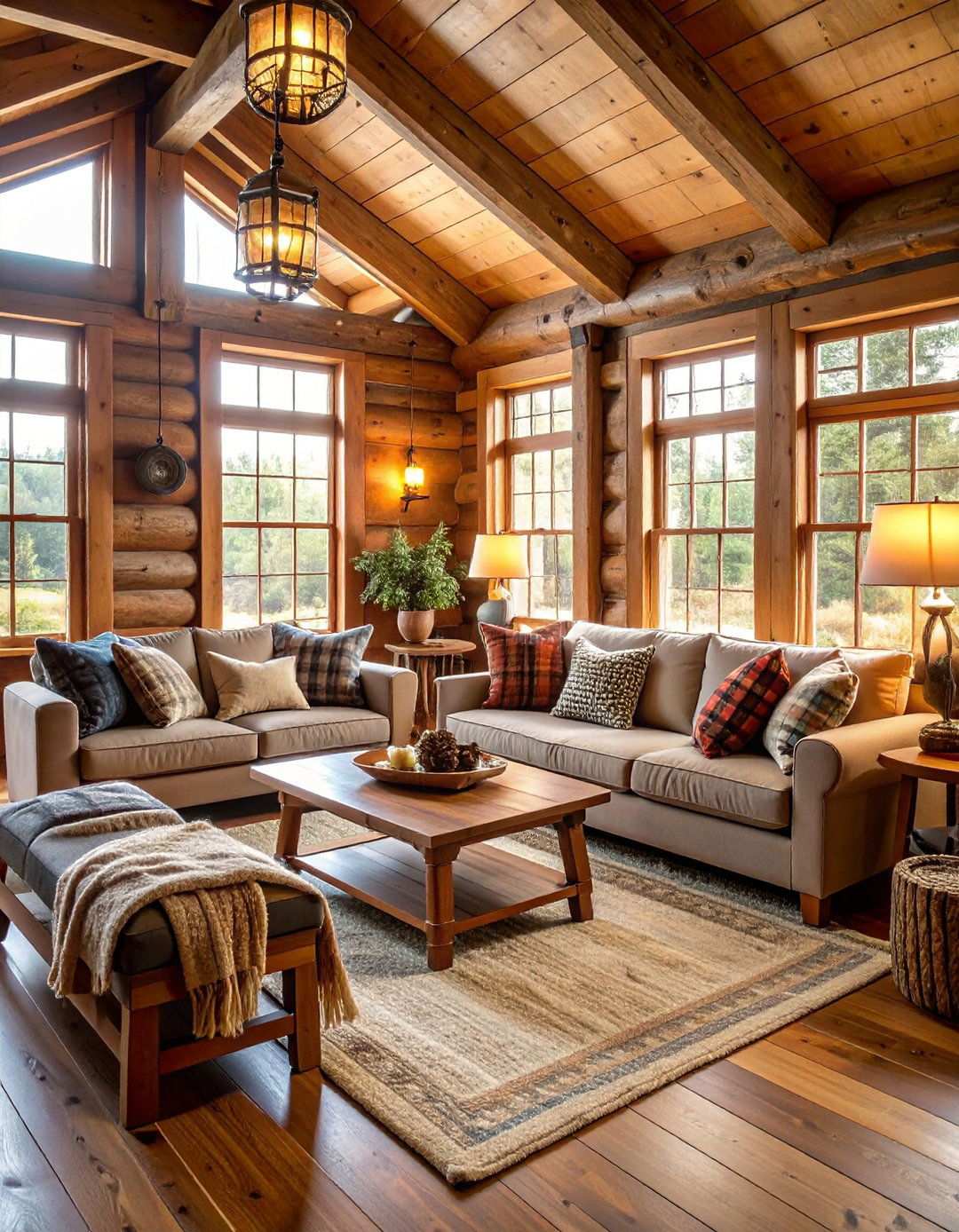
Craft a living room that embodies the serenity and simplicity of a log cabin, where rough-hewn wooden elements and plush furnishings converge to create a cozy atmosphere. Incorporate statement pieces made from reclaimed wood, such as wooden benches, tables, and storage units that proudly showcase the natural beauty of the material. Balance these textured elements with soft, tactile accessories like wool blankets, fur throws, and richly colored plaid fabrics in earthy tones like red, green, and brown. The space comes alive with rustic accents like wooden bowls, antler decorations, and handmade items, while warm, lantern-style lighting adds to the inviting ambiance. The rustic charm of this design celebrates the connection to nature and self-sufficiency that underlies primitive decorating, creating the perfect setting for relaxation and family bonding.
16. Heritage of American Folk Art
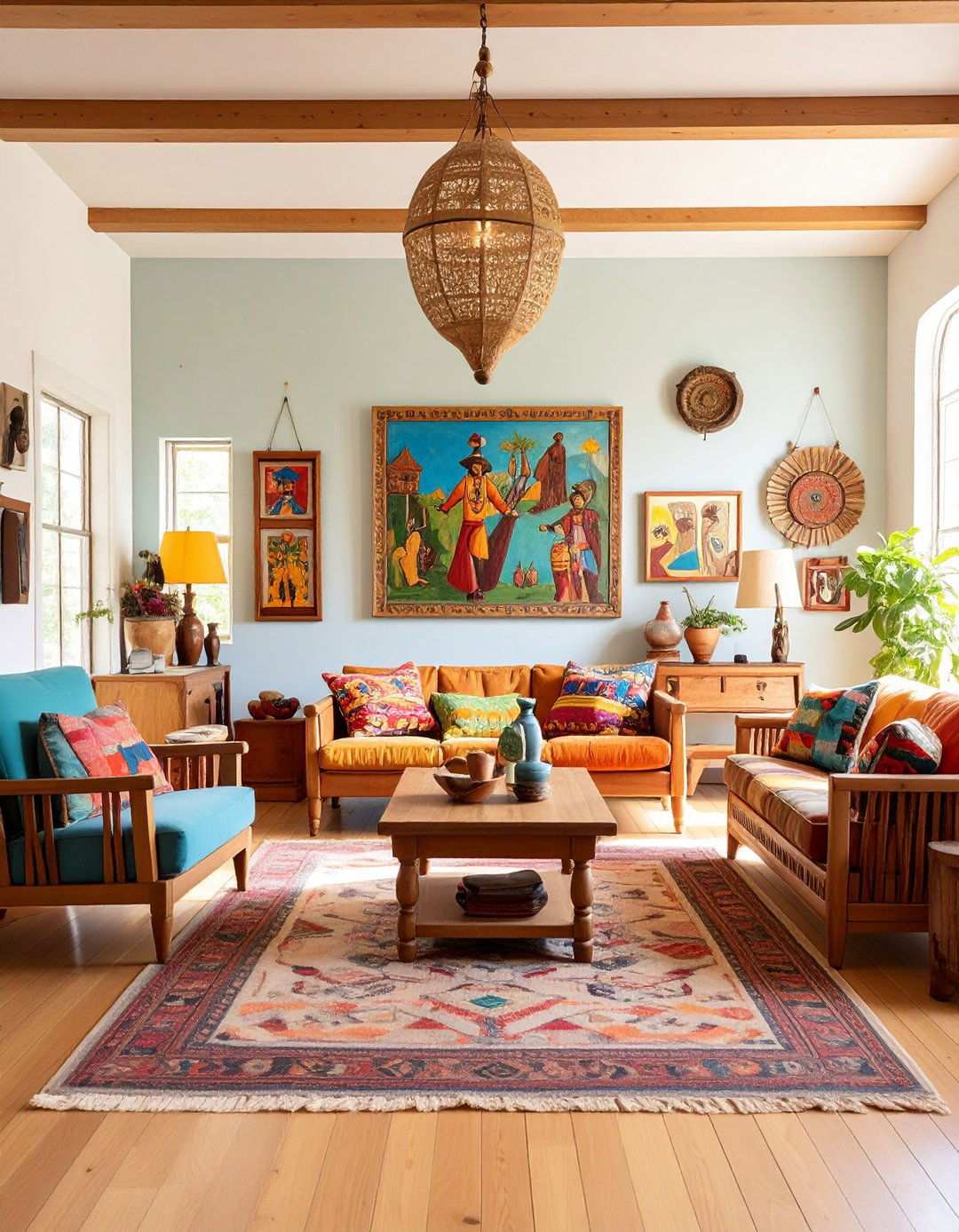
Transform your living room into a captivating gallery showcasing the rich traditions of American folk art, featuring an array of paintings, carved figures, weathervanes, and handcrafted decorative pieces. To maximize the impact of each artwork, arrange them thoughtfully on neutral-colored walls, using strategic lighting to highlight their unique details while maintaining an authentic, primitive atmosphere. For furniture, opt for simple, understated pieces like plain tables, chairs, and storage units that allow the art to take center stage. Complement your art collection with textiles and accessories that work harmoniously with the colors and patterns, avoiding anything that might detract from the artistic display. This approach honors the creative heritage of America, turning your living space into a personal museum celebrating cultural traditions and artistic expression.
17. Artistic Stenciling Traditions
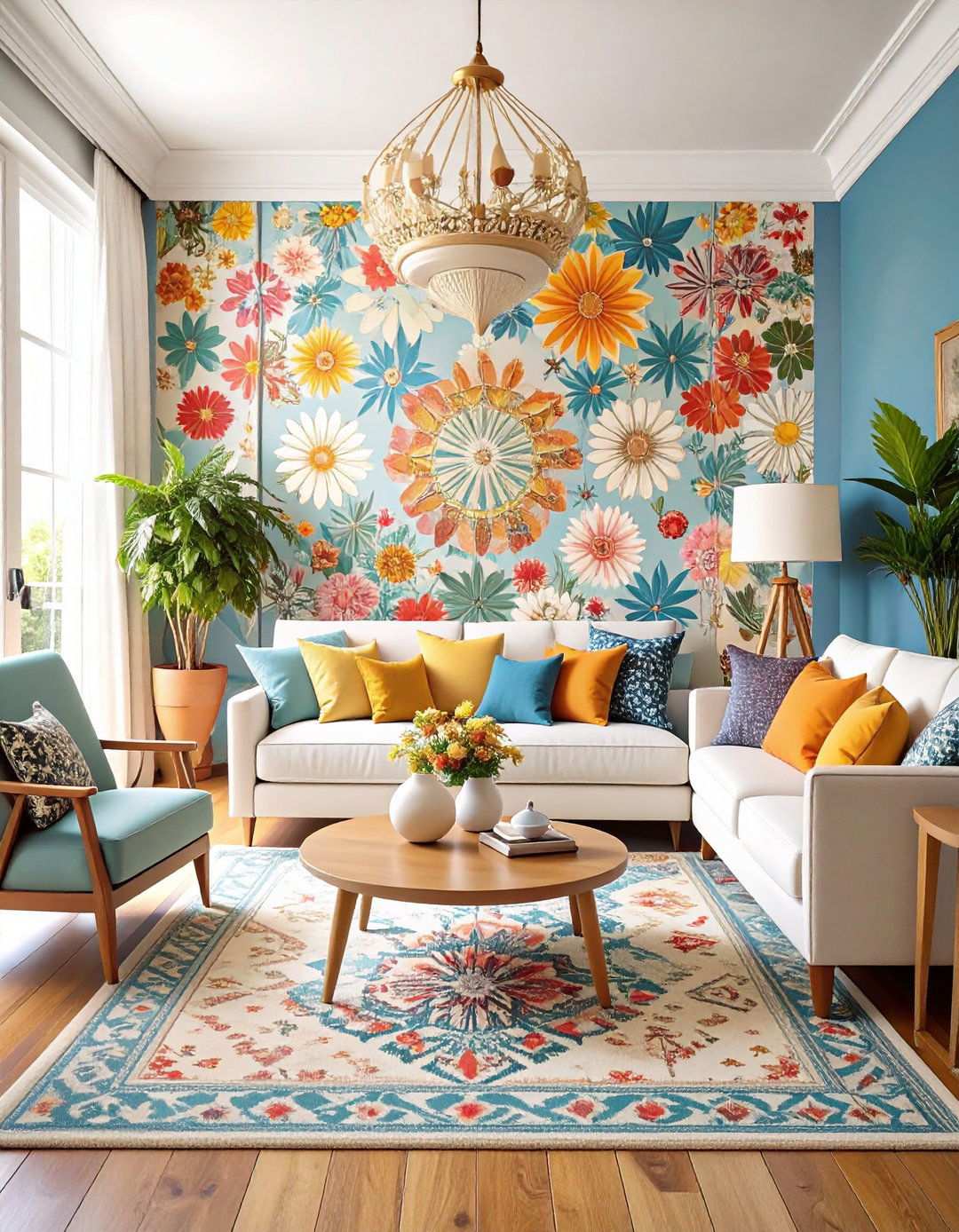
Bring a touch of personal creativity to your living room with hand-stenciled wall designs that evoke the traditional patterns and motifs of early American decorating. Choose stencils in colors that complement your chosen furniture and textiles, using techniques that create authentic, aged appearances. To maintain focus on the stenciled elements, select furniture and accessories that coordinate with the design, while incorporating fabrics and rugs that echo the stenciled patterns and colors throughout the room. Complete the look with thoughtful lighting and accessories that support the overall design theme, resulting in a unique space that combines artistic expression with authentic primitive character, reflecting the early American decorating methods and cultural symbols that inspired the design.
18. A Timeless Twist on Traditional Decor
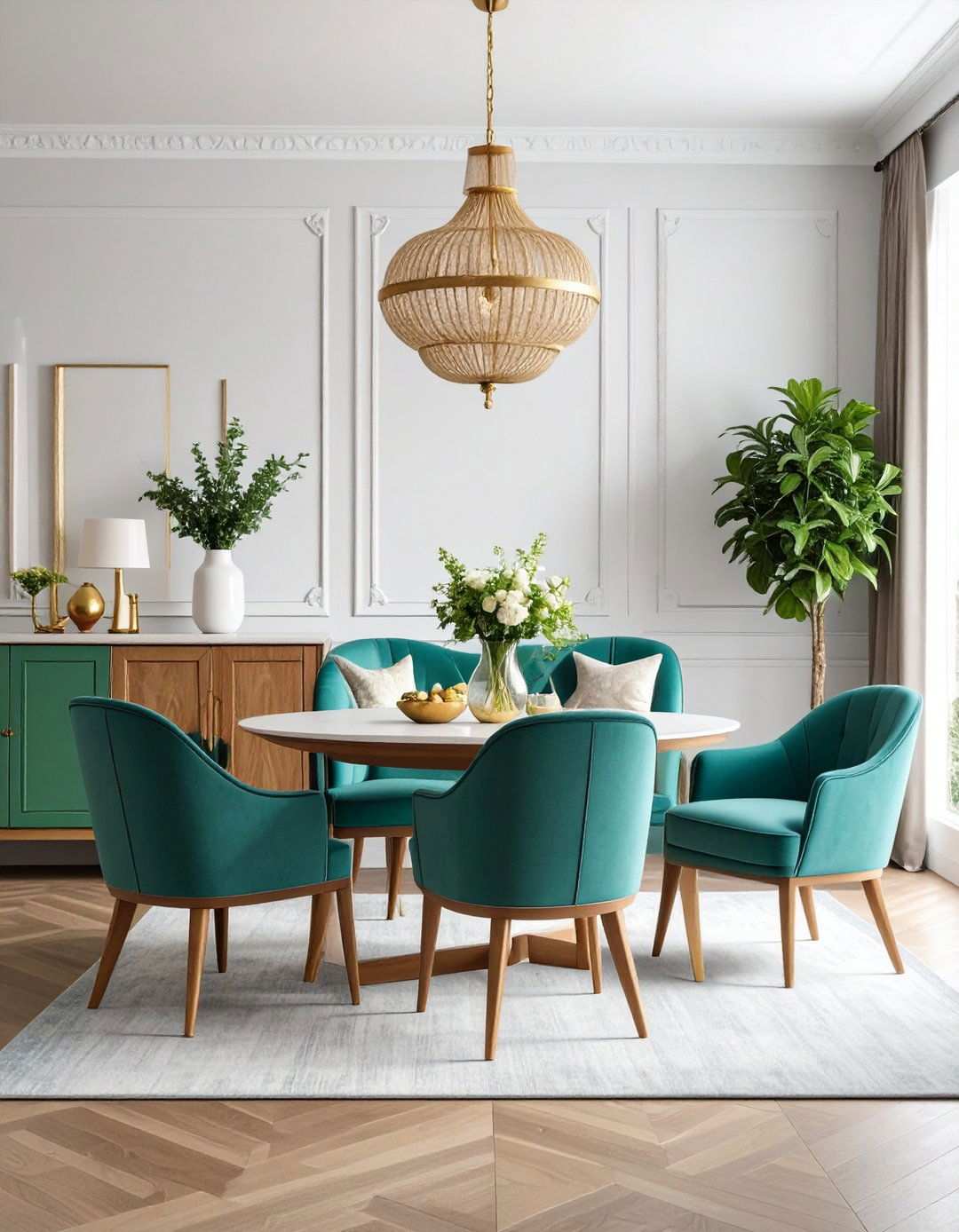
Craft a primitive living room that showcases furniture pieces featuring time-honored grain painting techniques, which mimic the look of expensive wood grains through expert decorative painting methods. Incorporate a variety of pieces like cupboards, tables, and chairs that demonstrate different grain painting styles in harmonizing colors. Balance the painted furniture with understated textiles and accessories that don’t compete with the decorative paint treatments. Select wall colors that elevate your furniture collection while maintaining an authentic primitive atmosphere. Enhance your space with wooden bowls, pewter items, and other accessories that coordinate with your furniture colors and finishes. This classic approach celebrates traditional decorating techniques while creating sophisticated primitive interiors that pay tribute to the ingenuity and artistry of early American craftspeople and their decorative traditions.
19. Bringing the Outdoors In
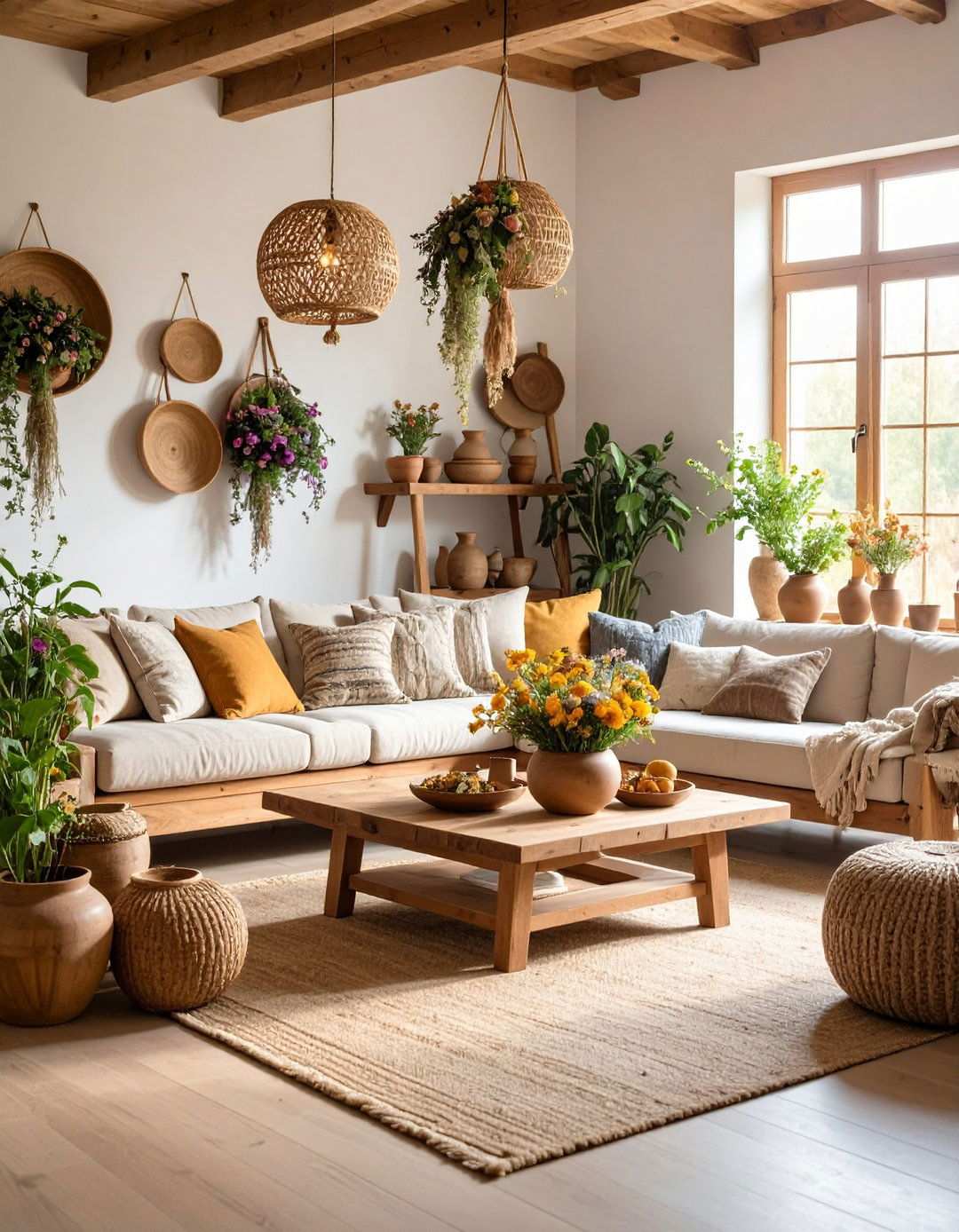
Design your primitive living room around natural elements, including dried herbs, flowers, and plant materials displayed in traditional ways throughout the space. Suspend bundles of lavender, sage, and other herbs from exposed beams or wall pegs, and arrange dried flower bouquets in wooden bowls and baskets. Combine these natural elements with wooden furniture, woven textiles, and earthy color schemes that complement the organic materials. Choose accessories like pottery crocks, wooden vessels, and woven containers that are perfect for showcasing dried materials. Add lighting that highlights the natural textures while creating a warm and inviting ambiance. This nature-focused approach emphasizes the connection between indoor and outdoor living that characterizes primitive decorating while bringing seasonal beauty and natural fragrance into modern homes.
20. The Art of Gathering
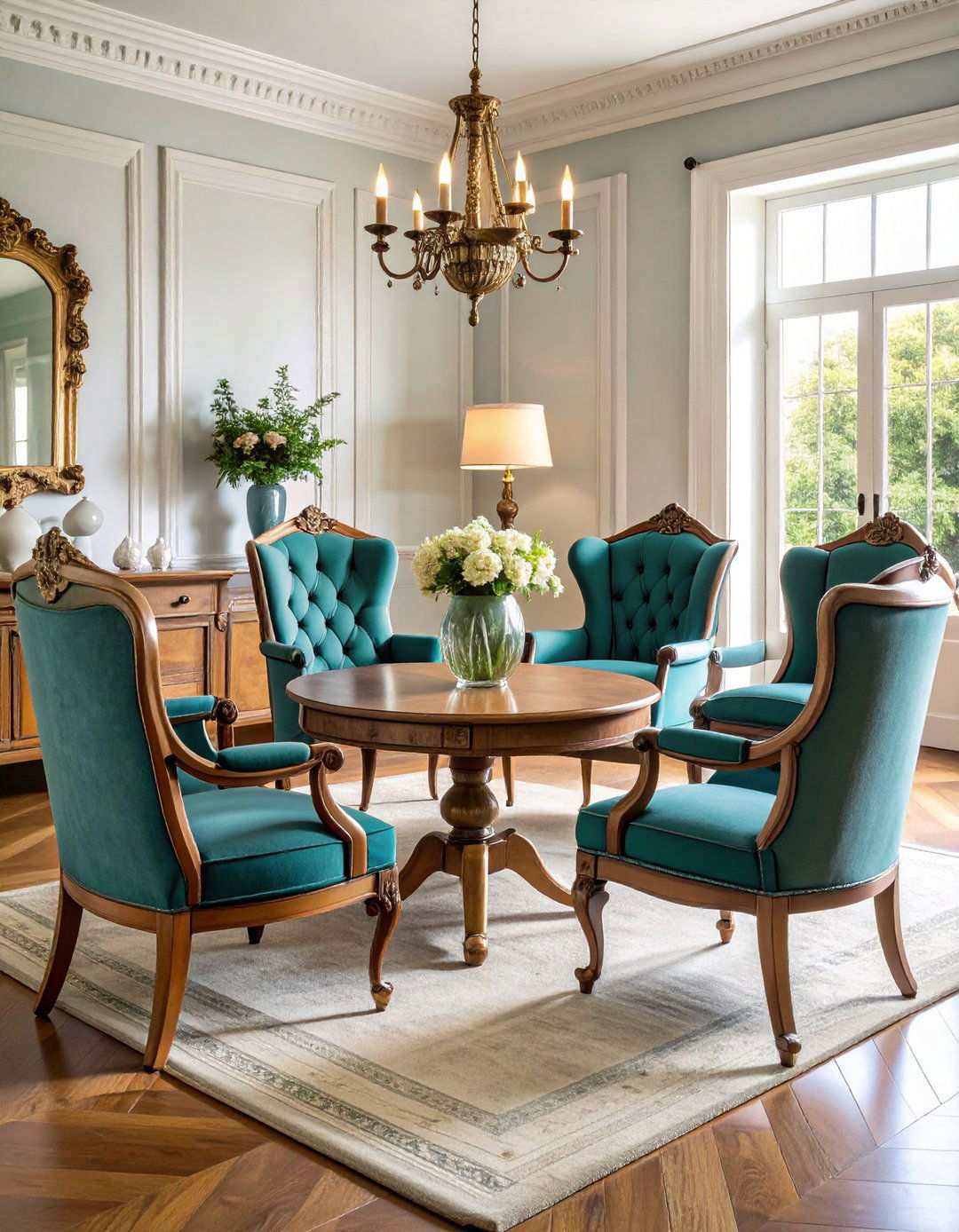
Create elegant primitive living spaces centered around collections of Windsor chairs in various sizes and styles, including bow-back, fan-back, and continuous arm designs. Arrange these chairs around wooden tables and throughout the room to provide flexible seating options while showcasing traditional chairmaking craftsmanship. Complement the chairs with coordinating wooden furniture pieces and suitable textiles, including seat cushions in primitive patterns and colors. Display accessories that enhance the colonial character, such as pewter items, wooden bowls, and period-appropriate decorative objects. Install lighting that highlights the chair details while creating a comfortable ambiance for conversation and relaxation. This seating-focused approach celebrates one of America’s most distinctive furniture forms while creating functional living spaces that honor traditional craftsmanship and design principles.
21. Cranberry Glass Collection Showcase
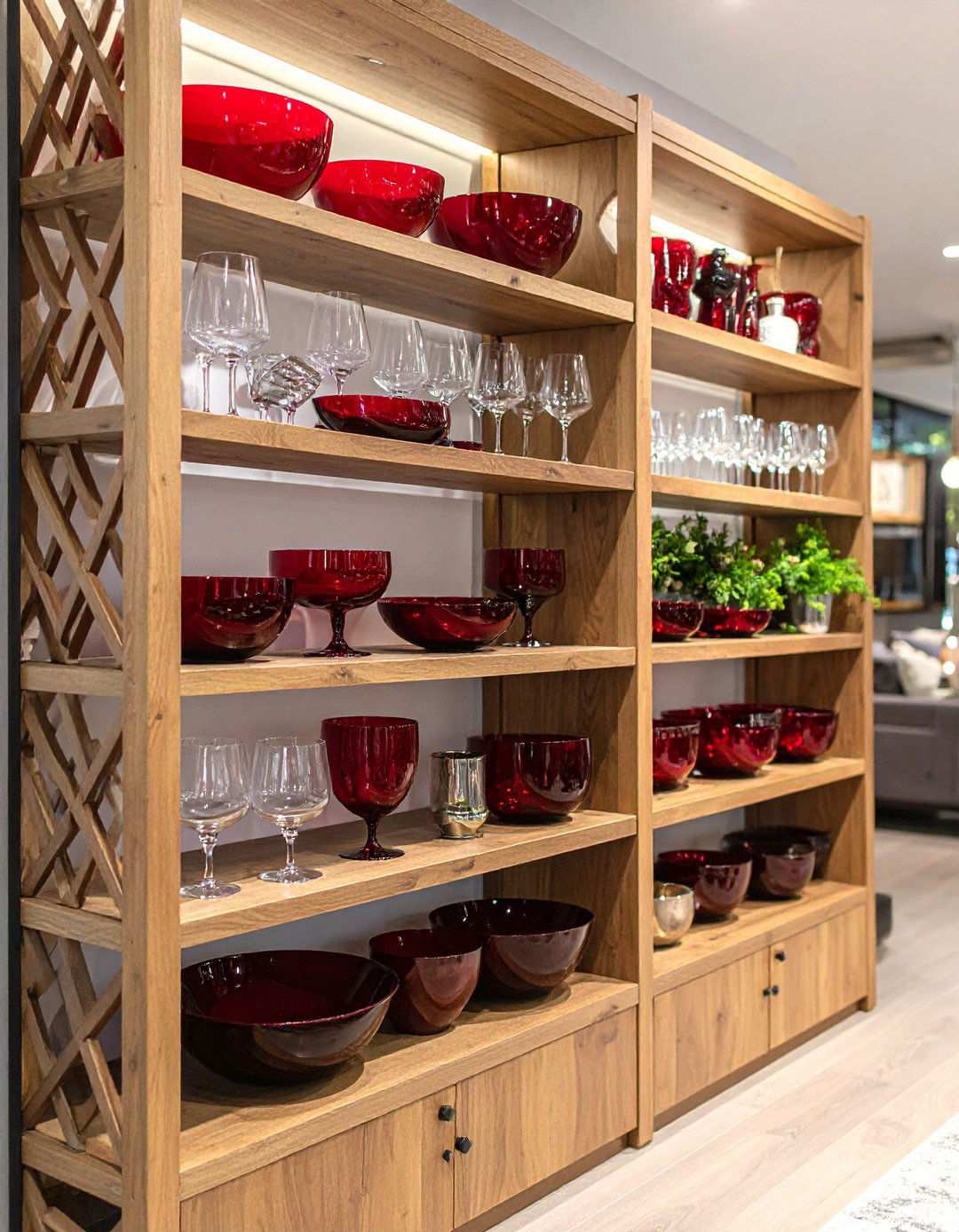
Elevate your primitive living room by curating a stunning cranberry glass collection, featuring an assortment of decorative pieces that exude rich color and elegance. Strategically display your glass collection on wooden shelving, cupboard tops, and side tables, where the interplay of natural and artificial light enhances the deep red hue. Choose furniture finishes and textile colors that harmoniously complement the cranberry glass, while maintaining the primitive aesthetic through the judicious use of earth tones and natural materials. Complement your glass collection with coordinating accessories like wooden bowls and pewter items, and add a touch of sophistication with carefully positioned lighting that accentuates the glass’s beauty while fostering a warm, inviting atmosphere. By embracing this collection-centric approach, you can seamlessly blend practical materials with decorative elements that reflect prosperity and refinement, ultimately enriching your primitive living space.
22. Handcrafted Textile Oasis
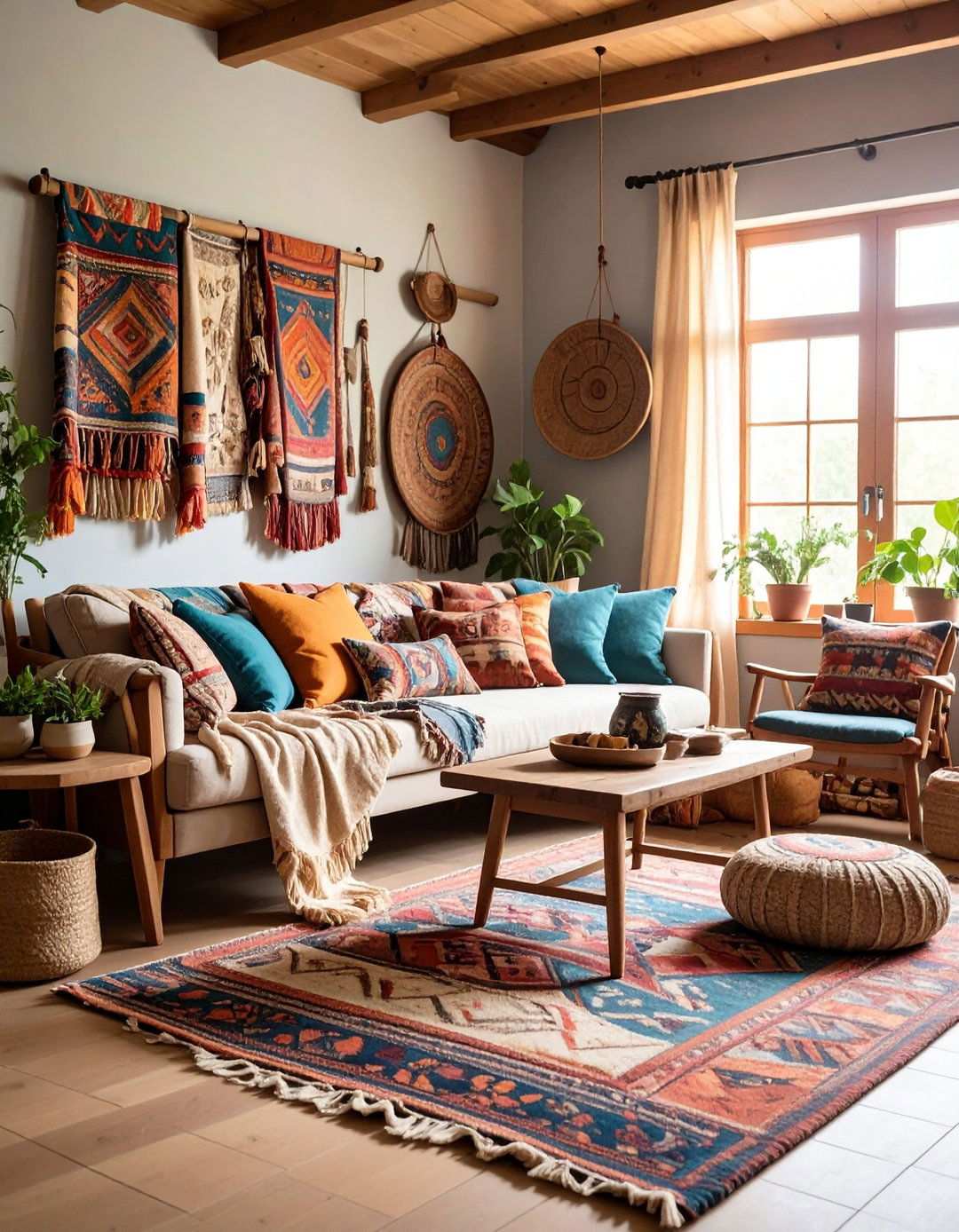
Transform your primitive living area into a cozy retreat by incorporating handcrafted textiles, including hand-woven fabrics, coverlets, and linens that celebrate traditional fiber arts and natural materials. Bring these textiles to life through thoughtful applications in window treatments, upholstery, throws, and table coverings, selecting natural colors and simple patterns that add warmth and depth to your space. Choose wooden furniture with finishes that thoughtfully complement the textile colors, providing a perfect backdrop for showcasing your handcrafted fabrics. Enhance your textile-focused space with accessories that pay homage to textile production and domestic activities, such as wooden wheels, baskets, and pottery. By thoughtfully incorporating lighting that highlights textile textures and weaving patterns, you can create a soothing ambiance that celebrates traditional domestic skills and the beauty of self-sufficient household production in early American life.
23. Saltbox House Heritage Theme
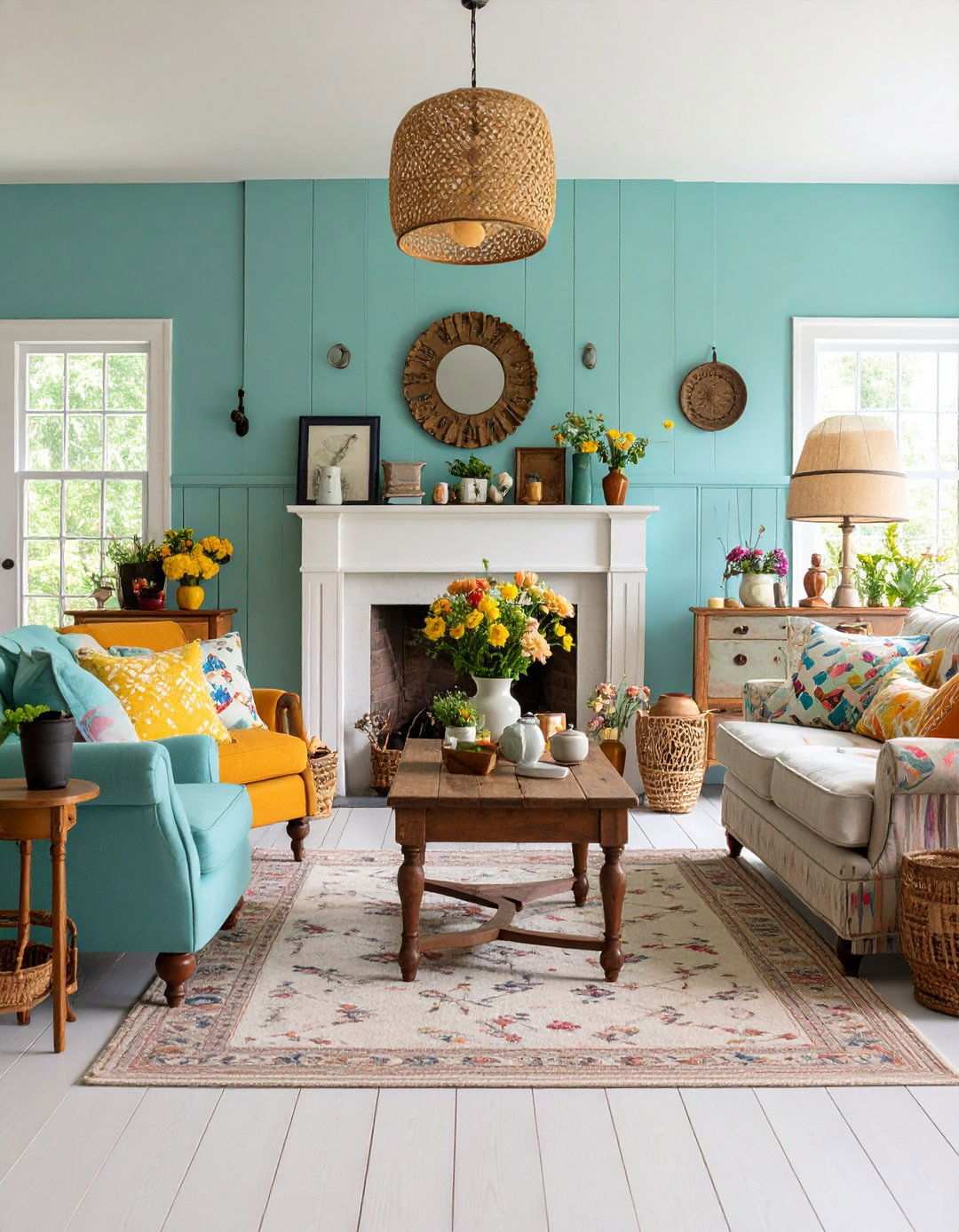
Create a cohesive primitive living room by embracing the iconic saltbox house motif, which can be incorporated through decorative accessories, wall hangings, and collectible items throughout the space. Display saltbox house replicas in various sizes and materials, including wood, tin, and pottery, on mantels, shelves, and tabletops. Select furniture and textiles that harmoniously support this architectural theme, using traditional colors and designs that reflect the saltbox’s rustic charm. Complement your saltbox house collection with colonial-era symbols like stars, hearts, and geometric patterns, which add a touch of regional history and cultural heritage to your space. By carefully positioning lighting that highlights your house collection, you can create a village-like ambiance that celebrates iconic New England architecture and reinforces the significance of recognizable symbols in American primitive decorating traditions and colonial settlement patterns.
24. Harvest Table Gathering Space
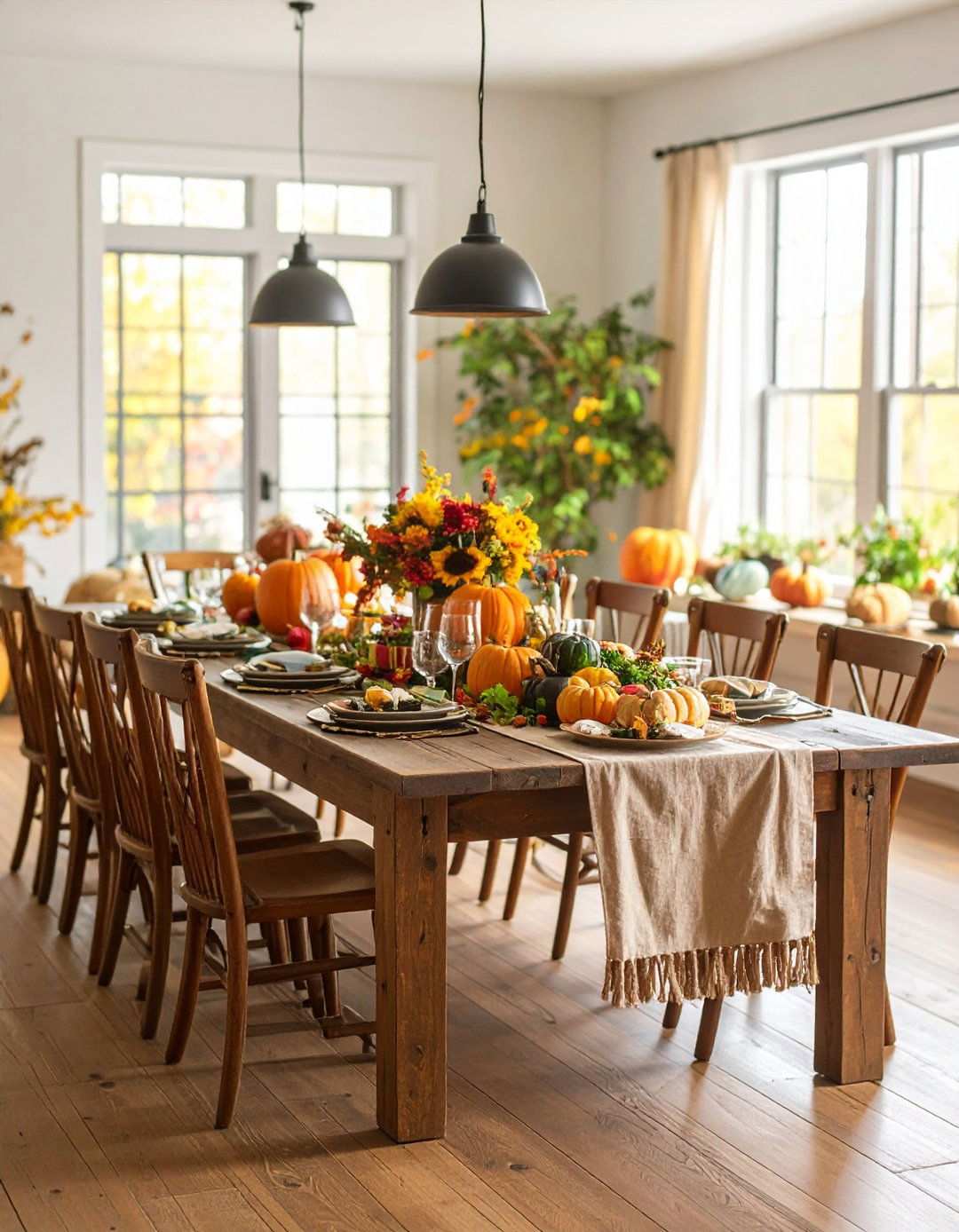
Craft a harmonious living room design that revolves around a sturdy harvest table, serving as both a functional hub and a focal point for family bonding and daily activities. Opt for a robust wooden table with traditional craftsmanship and a finish that complements the space, allowing for a variety of uses such as dining, crafting, and displaying personal treasures. Arrange seating around the table to create inviting conversation areas, incorporating benches, windsor chairs, or ladder-back chairs that harmonize with the table’s style. Elevate the table’s ambiance with textiles like table runners, placemats, and centerpieces, and balance the space with tasteful accessories and sufficient lighting tailored to different activities. By placing the harvest table at the center of the living room, you emphasize the significance of communal spaces in primitive living while fostering flexible areas that cater to multiple purposes essential to traditional household organization and family life.