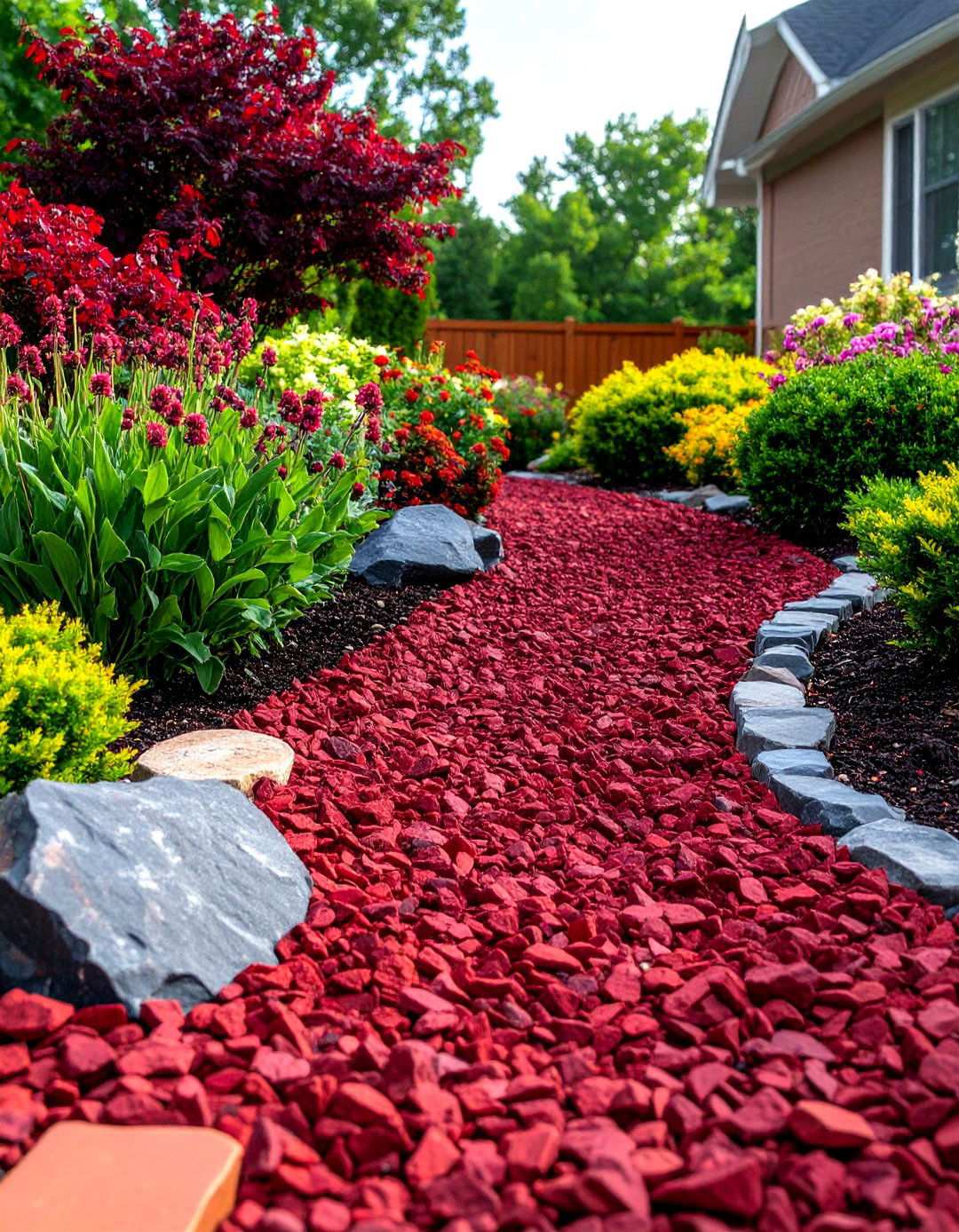
1. Elevating Garden Beds with Natural Mulch Edging
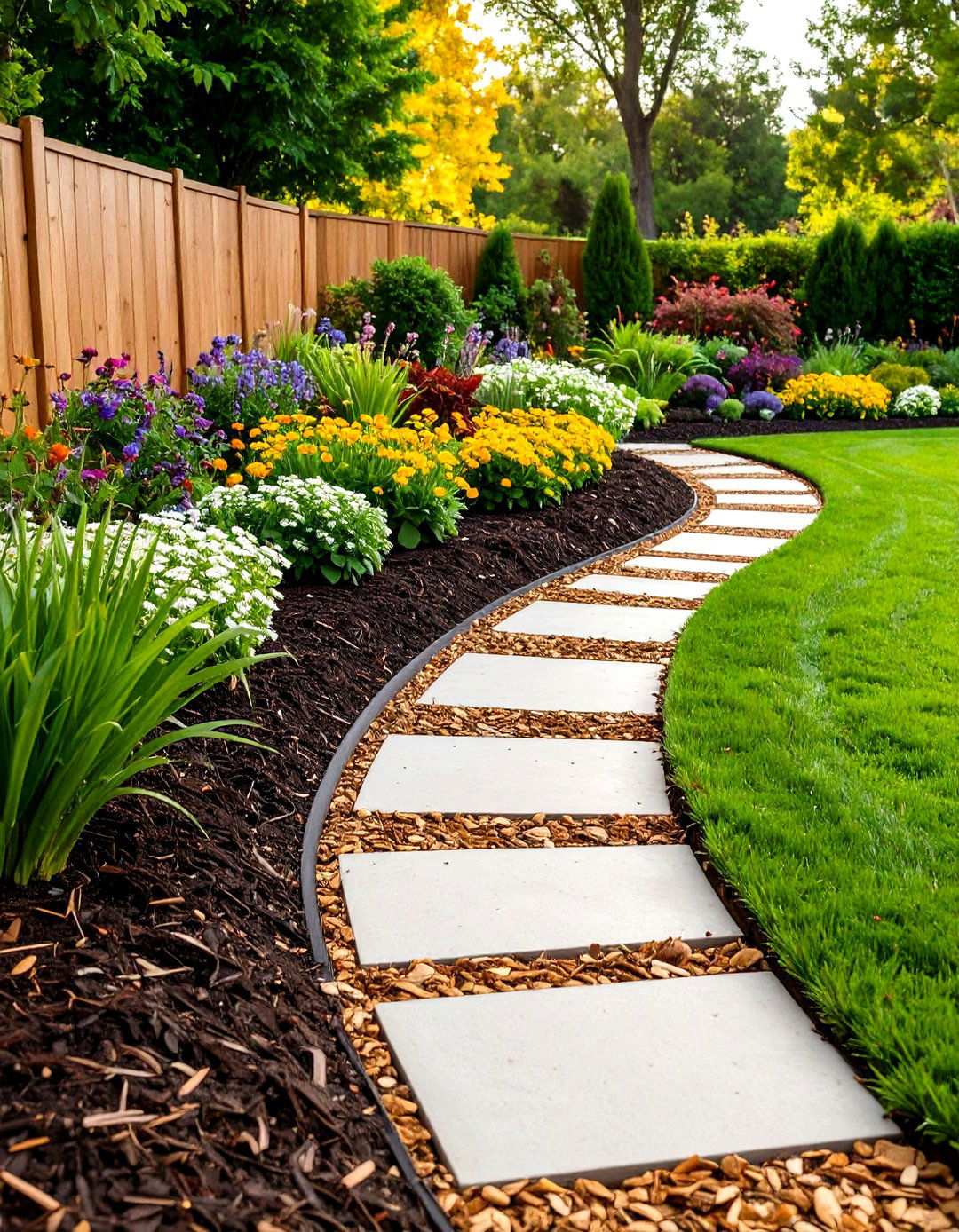
Natural mulch edging can transform your garden beds from ordinary to exceptional. By incorporating this technique, you can not only improve the visual appeal of your outdoor space but also simplify yard maintenance. Edging helps prevent mulch from spilling onto lawns, inhibits invasive grass growth, and creates clean mowing lines, making it easier to manage your garden. From intricate stone designs to simple natural borders, the right edging approach depends on your garden style, budget, and maintenance preferences.

As an Amazon Associate I earn from qualifying purchases.
2. Unifying Garden Aesthetics with Classic Brick Mulch Edging
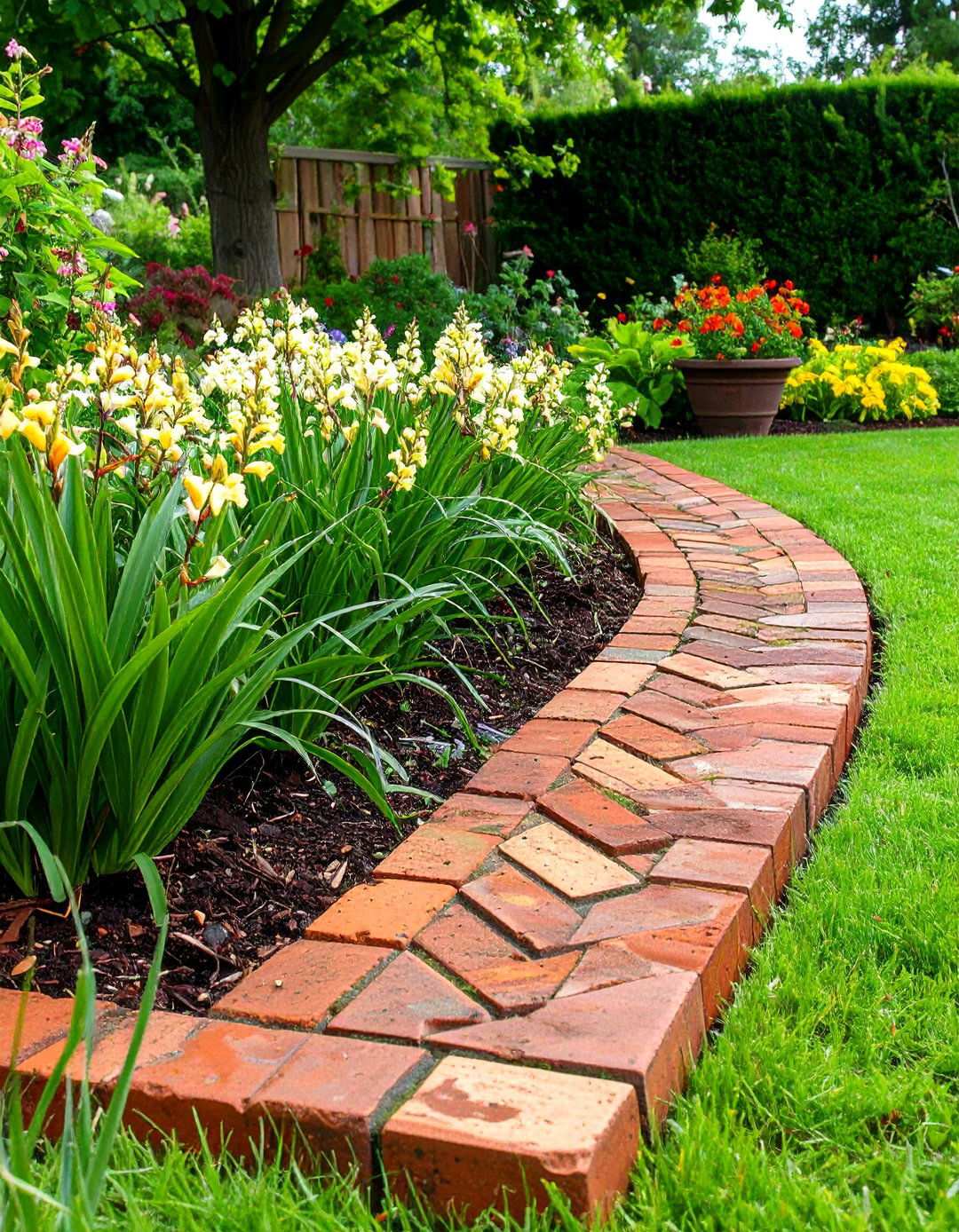
For a timeless look that exudes elegance and sophistication, consider classic brick mulch edging. This traditional method not only keeps mulch contained but also adds visual interest to your garden. By installing bricks in a herringbone pattern, you can create a cohesive look that complements both colorful flowers and rich mulch materials. This approach is particularly well-suited to cottage gardens and traditional landscapes where classic materials enhance the overall design aesthetic. When installing brick edging, it’s essential to prepare the base properly, ensuring the edging remains level and stable throughout seasonal changes.
3. Weathering Steel Mulch Borders with Industrial Chic
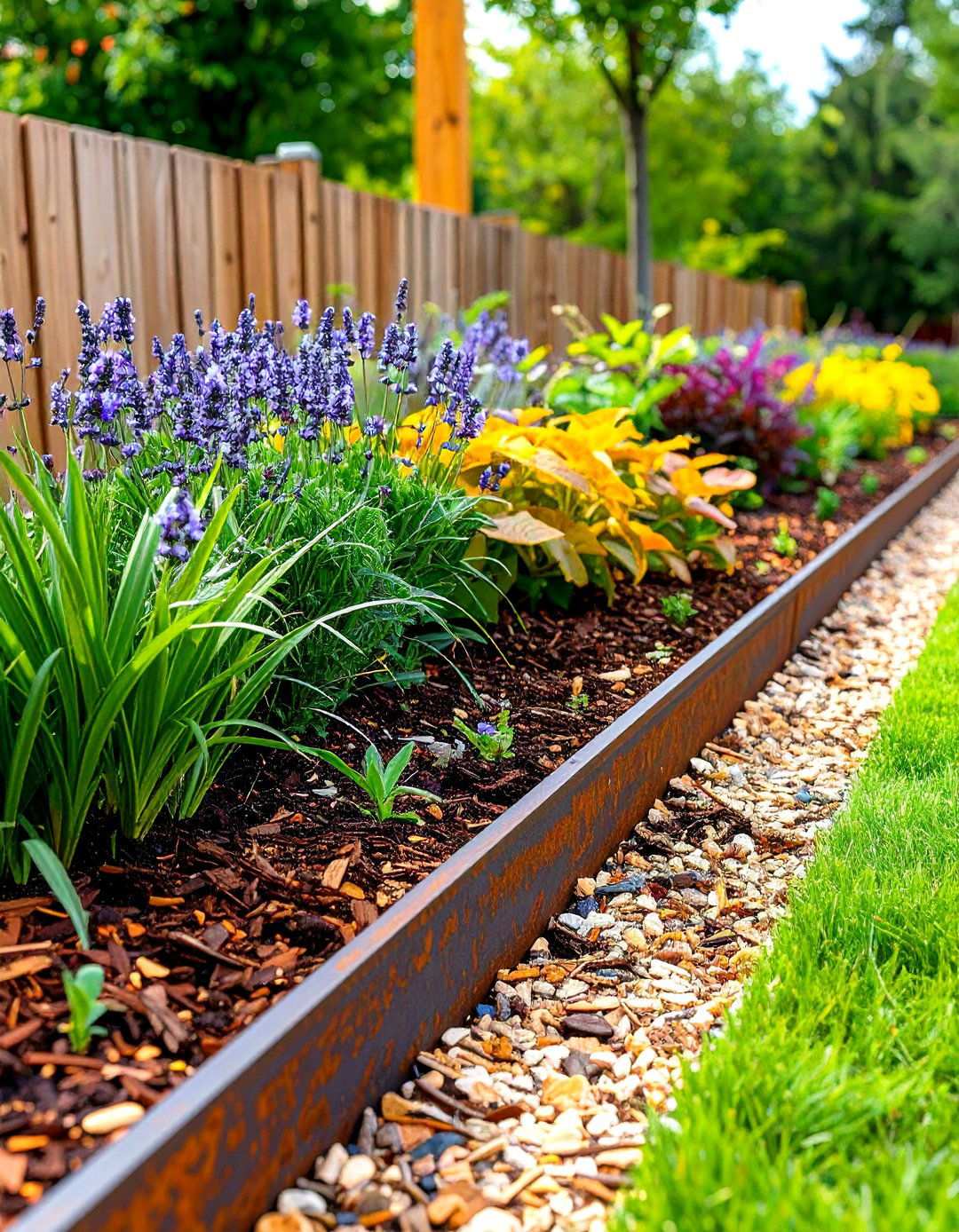
Corten steel offers a striking contemporary mulch boundary option that develops an attractive rust patina over time. The slender profile enables sleek, minimalist lines that seamlessly integrate into modern landscape designs. This versatile material allows for smooth curves around plantings while maintaining the structural integrity needed to effectively contain mulch. The warm, rust-colored hue creates a striking contrast against both dark mulches and lush green foliage, resulting in a sophisticated visual appeal. Secure the steel edging in place with stakes driven beneath ground level, ensuring a consistent top edge. This low-maintenance approach provides decades of reliable mulch containment, alongside an increasingly attractive weathered character.
4. River Rock Mulch Borders with a Naturalistic Cascade
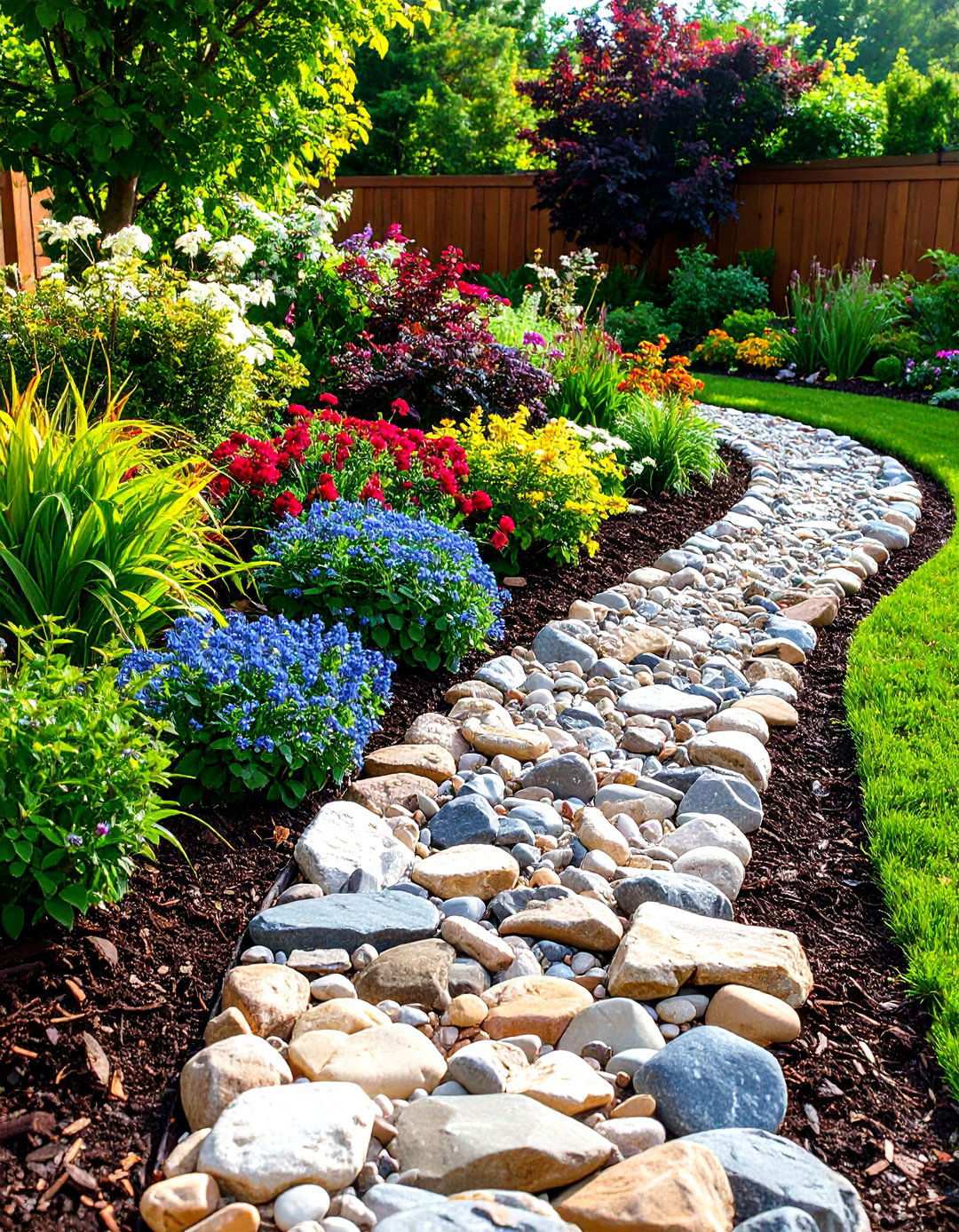
River rocks create organic mulch boundaries that blend harmoniously with garden environments while offering effective containment. Arrange rocks in a graduated size pattern, with larger stones forming the primary barrier and smaller pebbles filling gaps for complete coverage. This approach excels around curved beds and naturalistic plantings where rigid edging would be out of place. The varied colors and textures of river rocks beautifully complement different mulch types, from bark chips to cocoa shells. Installing river rock mulch borders requires excavating a shallow trench and laying landscape fabric underneath to prevent weed growth. As the rocks settle and weather, the natural appearance improves, creating increasingly authentic-looking borders.
5. Pressure-Treated Lumber Mulch Containers with Elevated Bed Design
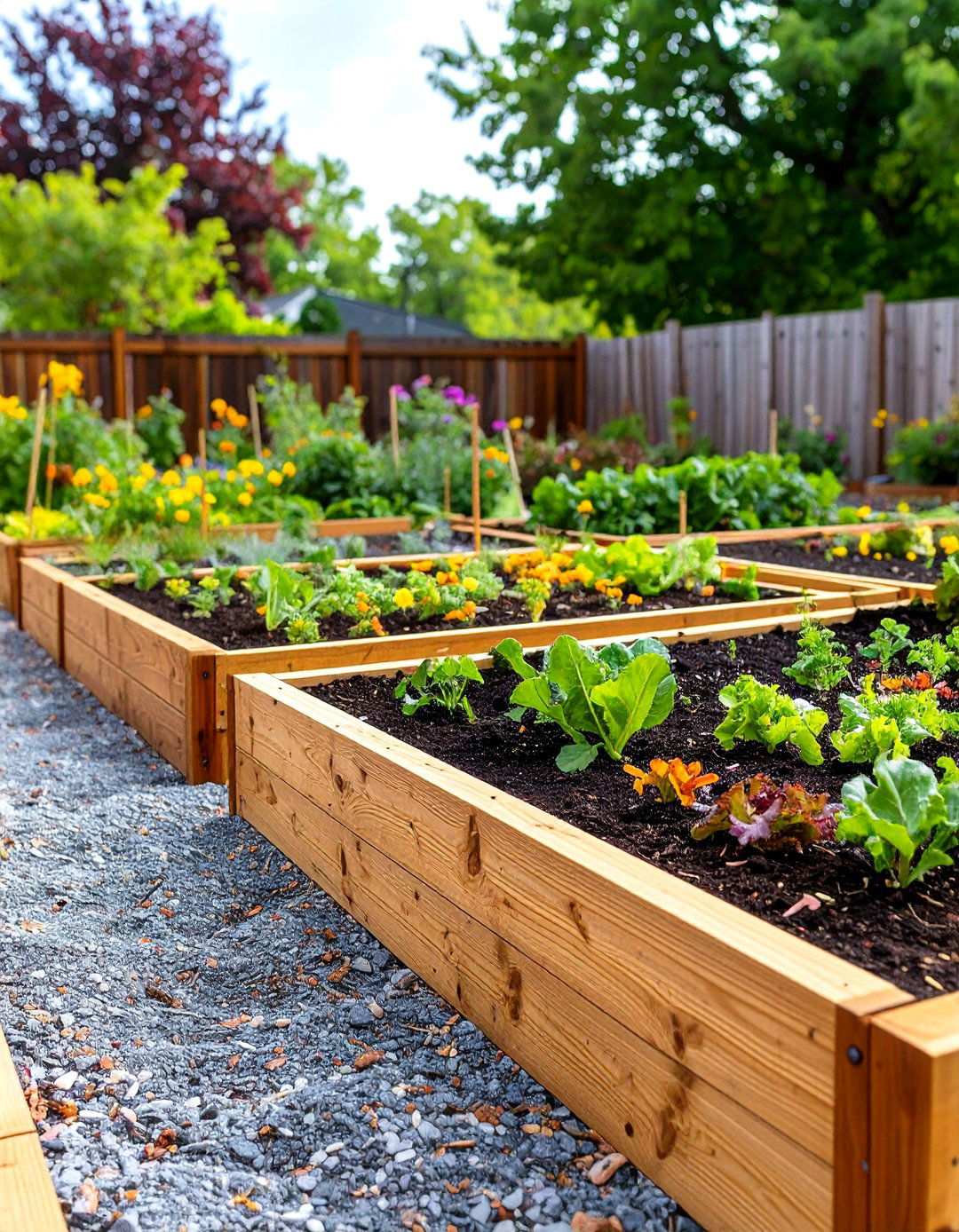
Landscape timber edging creates substantial mulch containment while forming raised growing areas that enhance drainage and soil conditions. Utilize pressure-treated lumber in 2×8 or 2×10 dimensions, securing pieces with rebar stakes driven through pre-drilled holes. This approach allows for elevated mulch levels that provide better root insulation and moisture retention. The raised design simplifies planting and maintenance by reducing the need for bending requirements. Choose lumber dimensions based on desired height and soil retention needs. This method excels in vegetable gardens and formal perennial borders where improved growing conditions justify the additional material investment and installation effort required.
6. Discreet Plastic Mulch Containment with Flexible Edging
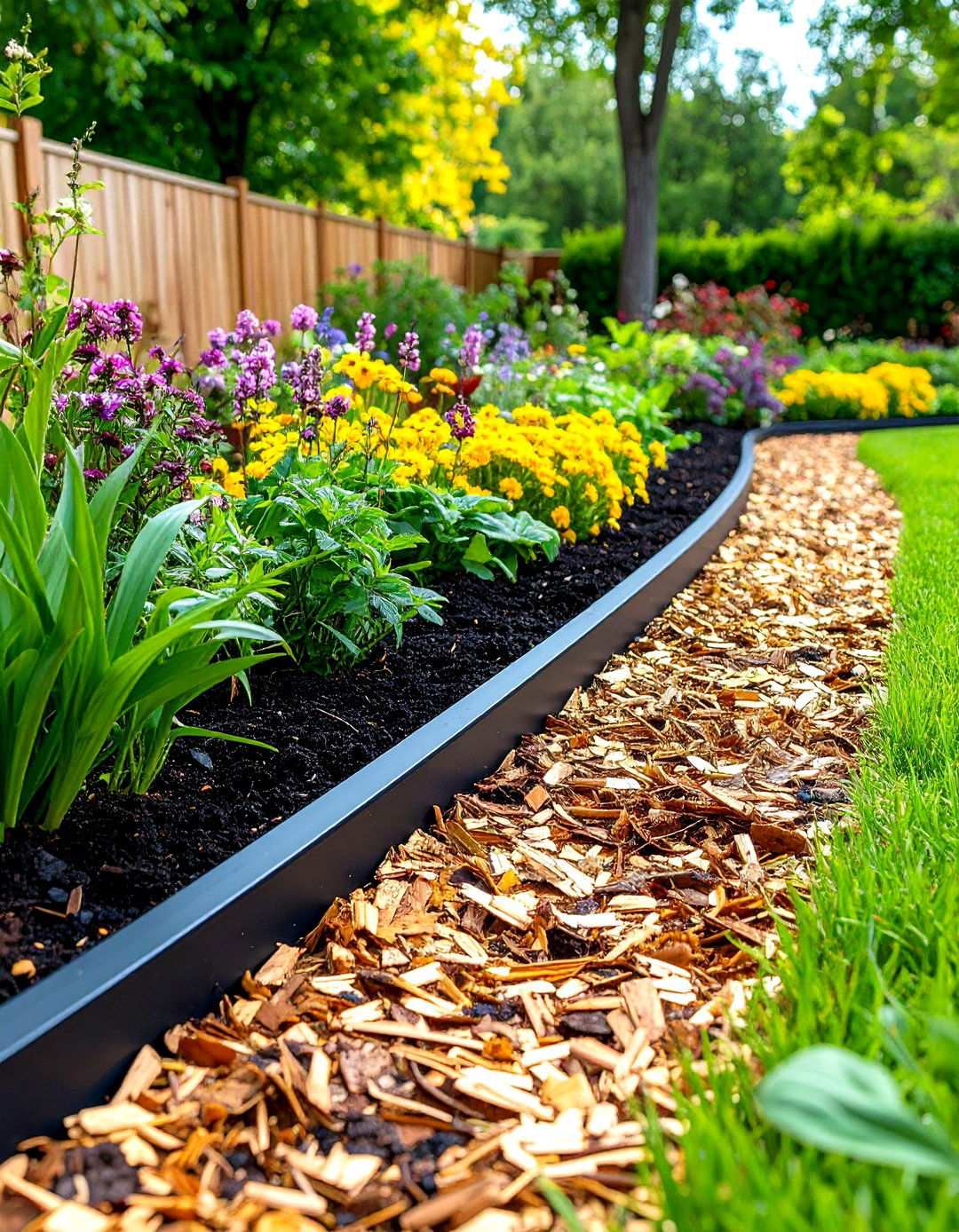
Top-tier plastic edging offers an invisible boundary that keeps mulch in its place while allowing garden plantings to take center stage. By placing the edging’s top lip just beneath the soil surface, it creates a seamless barrier without drawing attention away from the garden’s natural beauty. The flexible material effortlessly adapts to irregular shapes and curves, making it a perfect fit for garden designs that mimic nature. The edging’s dark color ensures it remains inconspicuous, even when partially exposed by settling mulch. However, this approach does require precision installation, including proper staking to prevent damage from frost heaving and settling. When done correctly, this low-maintenance solution provides years of reliable mulch containment, freeing up your focus on plant displays rather than hardscape elements.
7. Architecturally Inspired Mulch Containment with Decorative Concrete Blocks
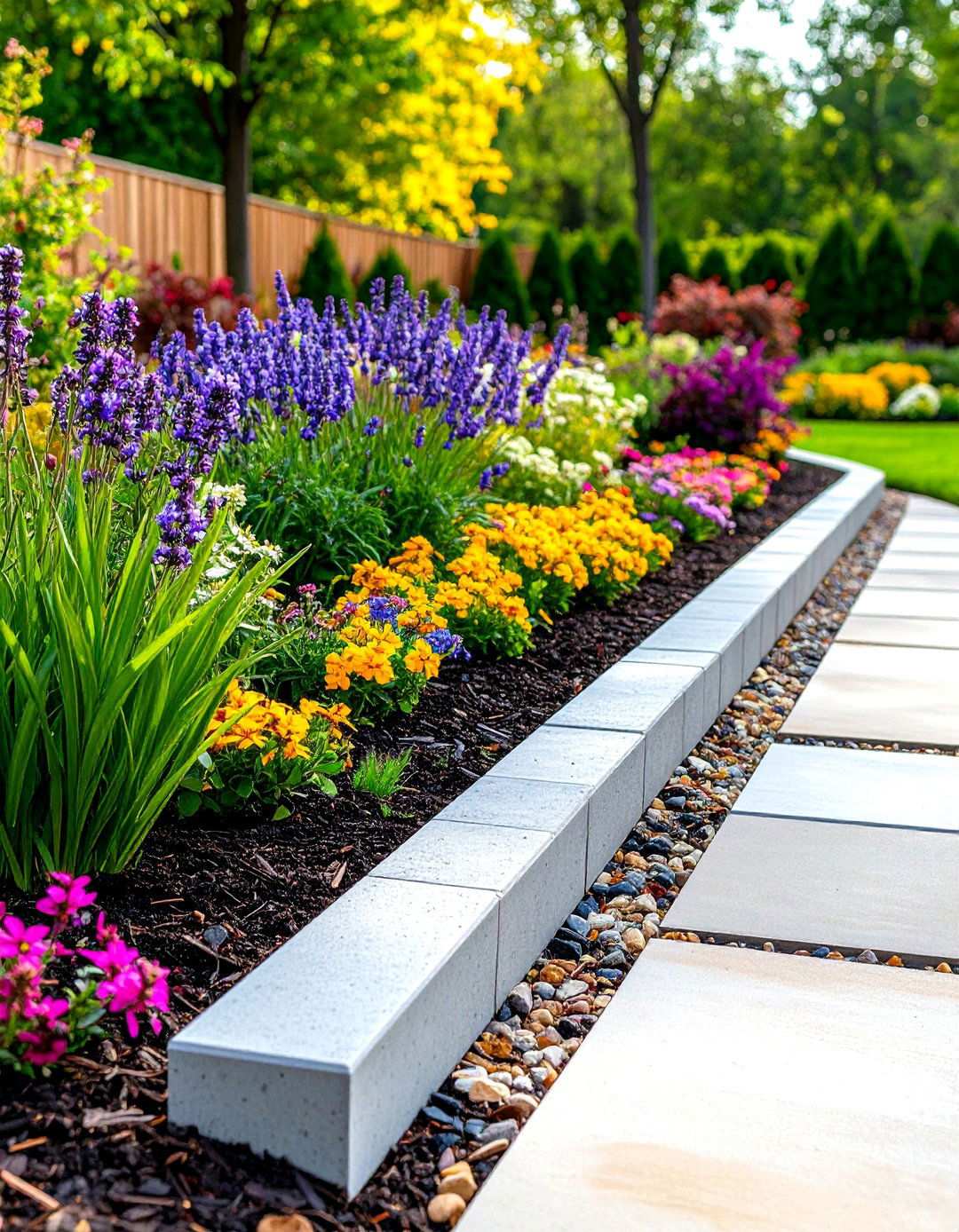
Decorative concrete blocks offer a long-lasting solution for mulch containment that seamlessly integrates with formal landscape designs. By selecting blocks with intricate patterns or textures, you can enhance your garden’s aesthetic without overwhelming the featured plantings. The substantial weight of the blocks ensures stability, while their uniform dimensions guarantee a consistently level installation. This approach works particularly well in modern settings where clean lines and geometric forms dominate the design. Installation involves creating a level base and fitting the blocks together tightly to prevent mulch loss. The blocks’ neutral coloring allows them to complement various mulch types, providing decades of maintenance-free service that justifies the initial investment.
8. Organic Mulch Boundaries with Low-Growing Perennial Borders
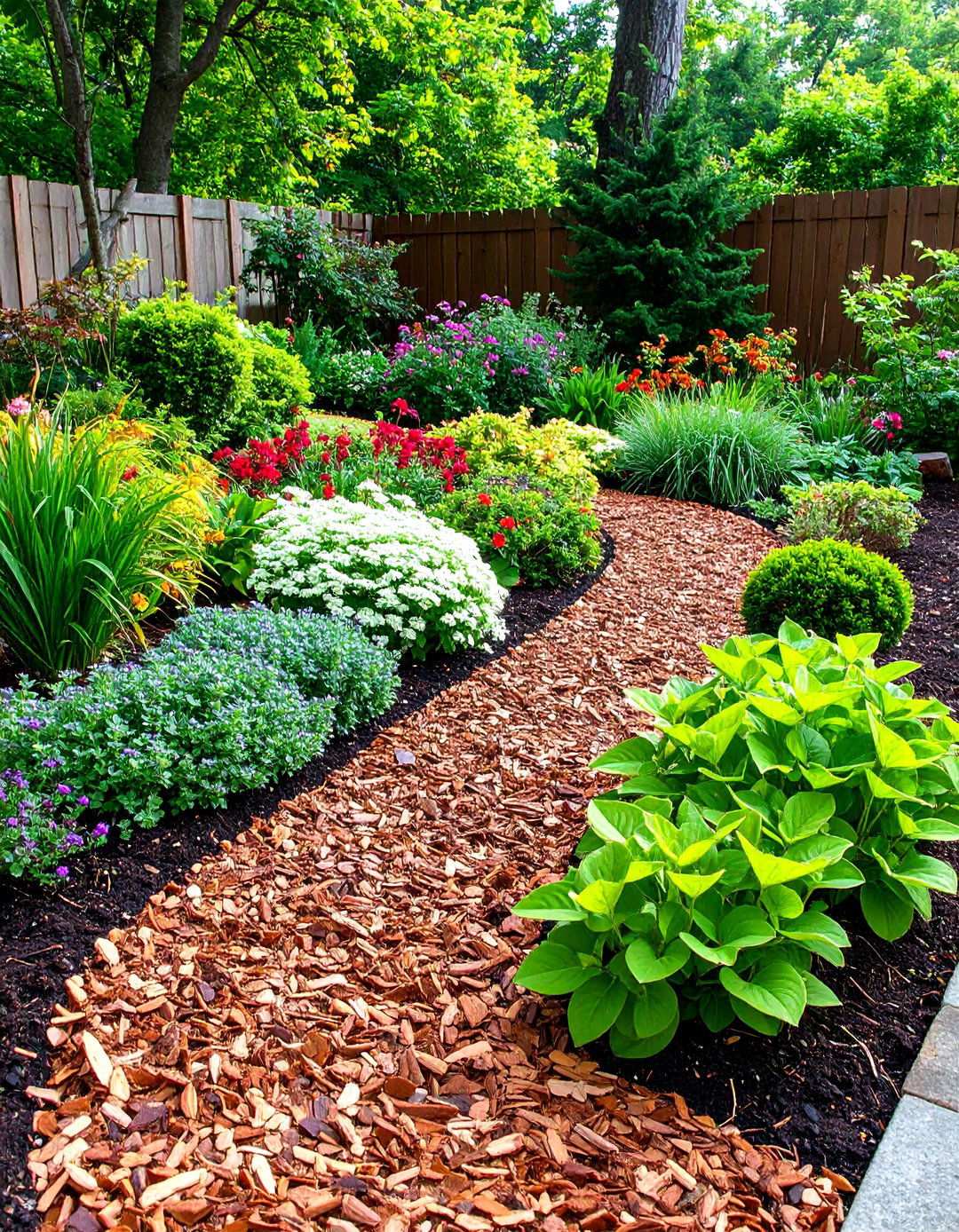
Create a natural-looking mulch boundary using low-growing perennials that form a dense mat and prevent mulch from migrating. Plants like pachysandra, vinca minor, or ajuga are ideal for this approach, as they form a living border that complements rather than competes with the featured plantings. This method offers a range of benefits, including seasonal interest through varying foliage colors and occasional flowers, while maintaining effective mulch containment. The organic appearance of living edges works beautifully in woodland gardens and naturalistic settings where traditional edging materials would appear intrusive. While establishment requires an initial planting investment and some first-season maintenance, mature living edges provide self-sustaining mulch containment with minimal ongoing care. When selecting plants, be sure to choose species that are well-suited to your local growing conditions and desired maintenance levels.
9. Elegant Aluminum Mulch Edges with Sleek Aesthetics
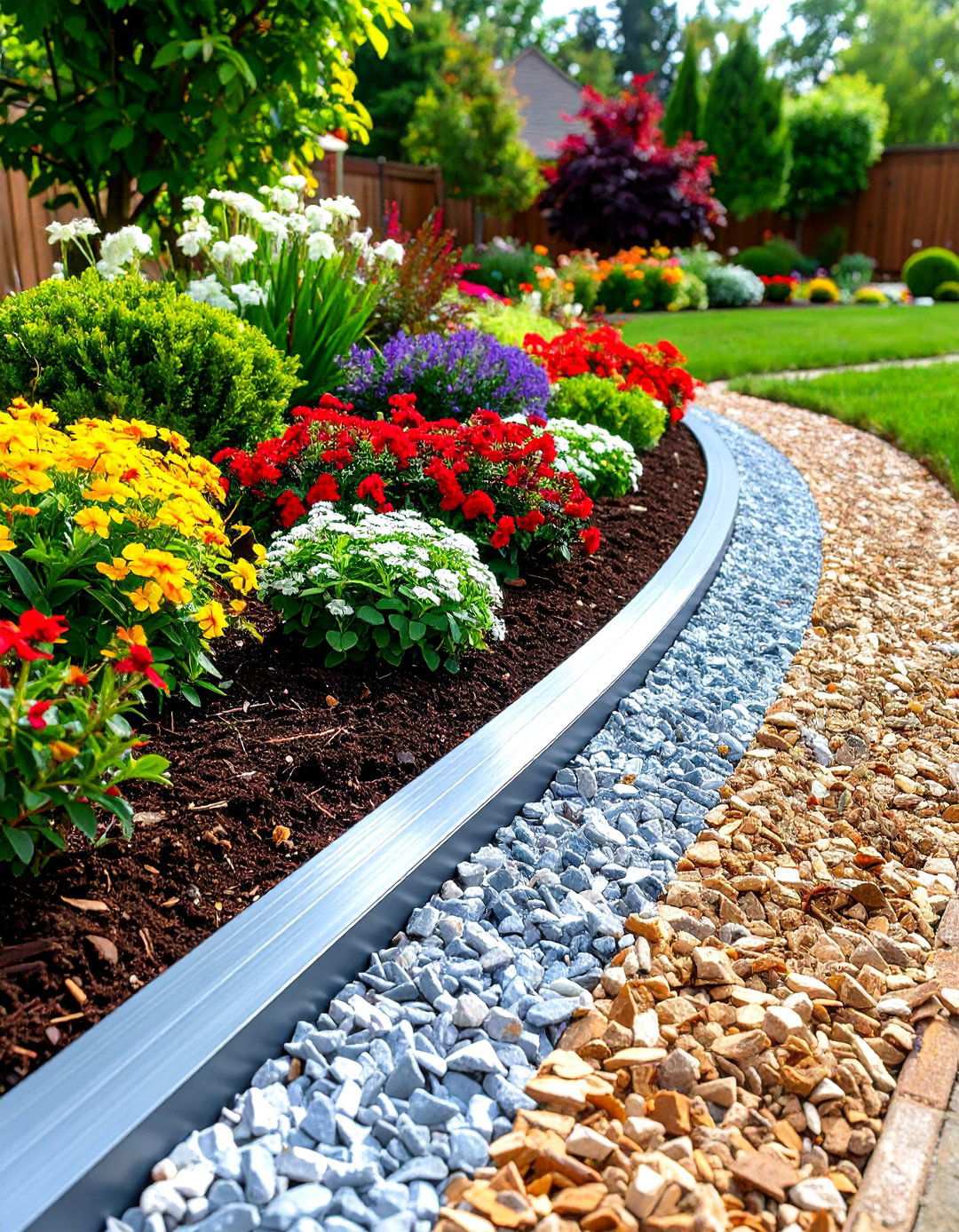
High-end aluminum edging provides precise mulch boundaries with a polished landscape appearance, disappearing from view when correctly installed. Its lightweight construction makes it effortless to install using provided stakes, while the corrosion-resistant finish ensures a lifespan of decades. Smoothly curved and consistently elevated, aluminum edging effortlessly navigates uneven terrain, its slender profile minimizing visual impact while maximizing mulch containment efficiency. Upscale residential settings benefit particularly from this approach, where maintenance efficiency and long-term durability justify the investment in premium materials. To ensure reliable performance, proper installation demands attention to consistent depth and sufficient staking to withstand freeze-thaw cycles and regular maintenance activities.
10. Eco-Friendly Rubber Mulch Edging with Elegant Undulations
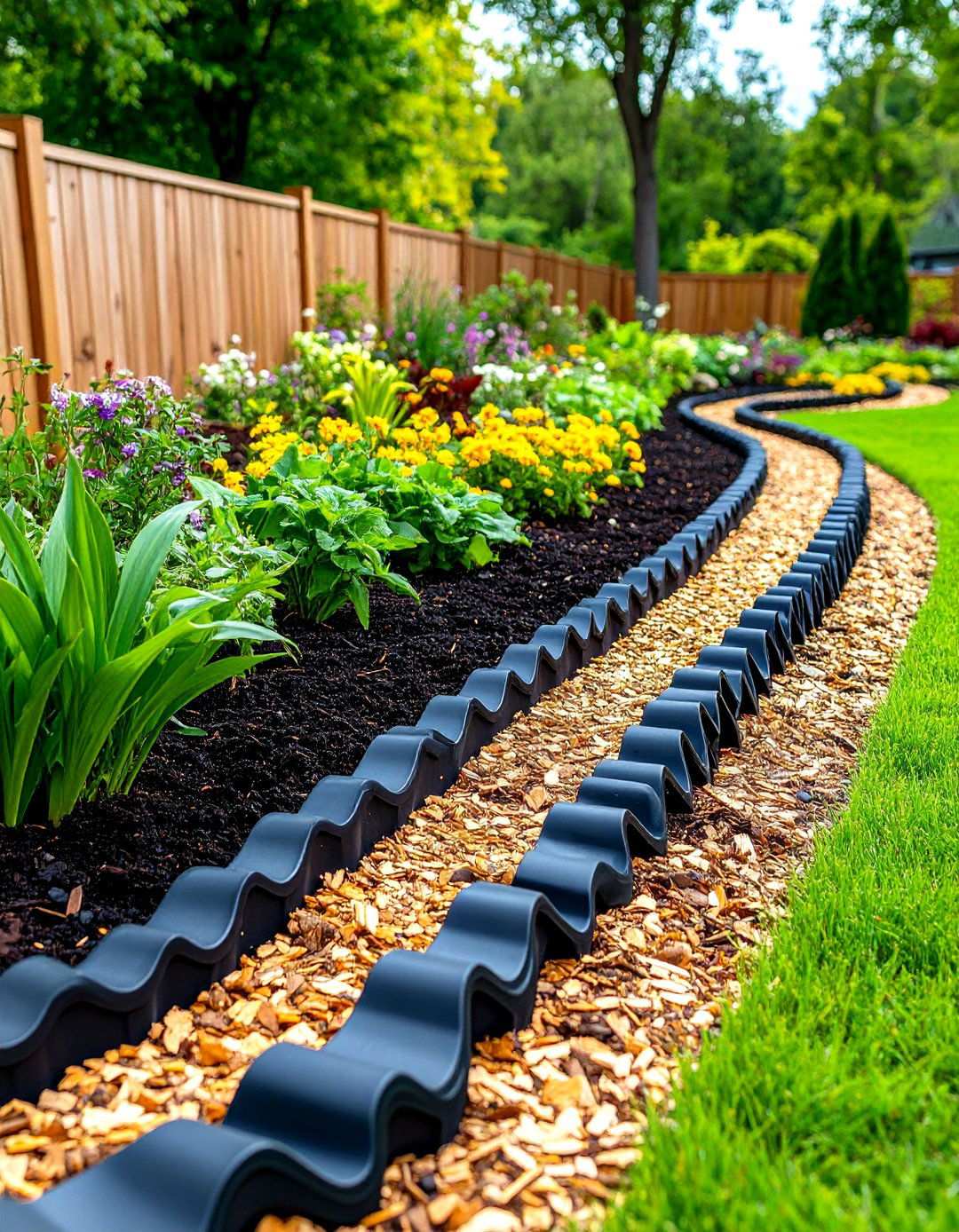
Environmentally responsible rubber edging, crafted from recycled tires, offers flexible mulch containment with decorative scalloped profiles that add visual appeal. This adaptable material flexes seamlessly around curves, maintaining effective barriers against mulch migration and grass encroachment. Rubber edging resists temperature extremes without cracking or becoming brittle, guaranteeing reliable long-term performance. The scalloped design creates gentle waves that soften harsh landscape lines while maintaining clear boundaries, a unique feature that many homeowners appreciate. Installation involves simple staking through pre-formed holes, making this a manageable DIY project. The eco-friendly aspect of this material appeals to environmentally conscious gardeners, while the maintenance-free performance and reasonable cost make it suitable for extensive mulch bed installations.
11. Organic Wood Log Mulch Edging with Timeless Charm
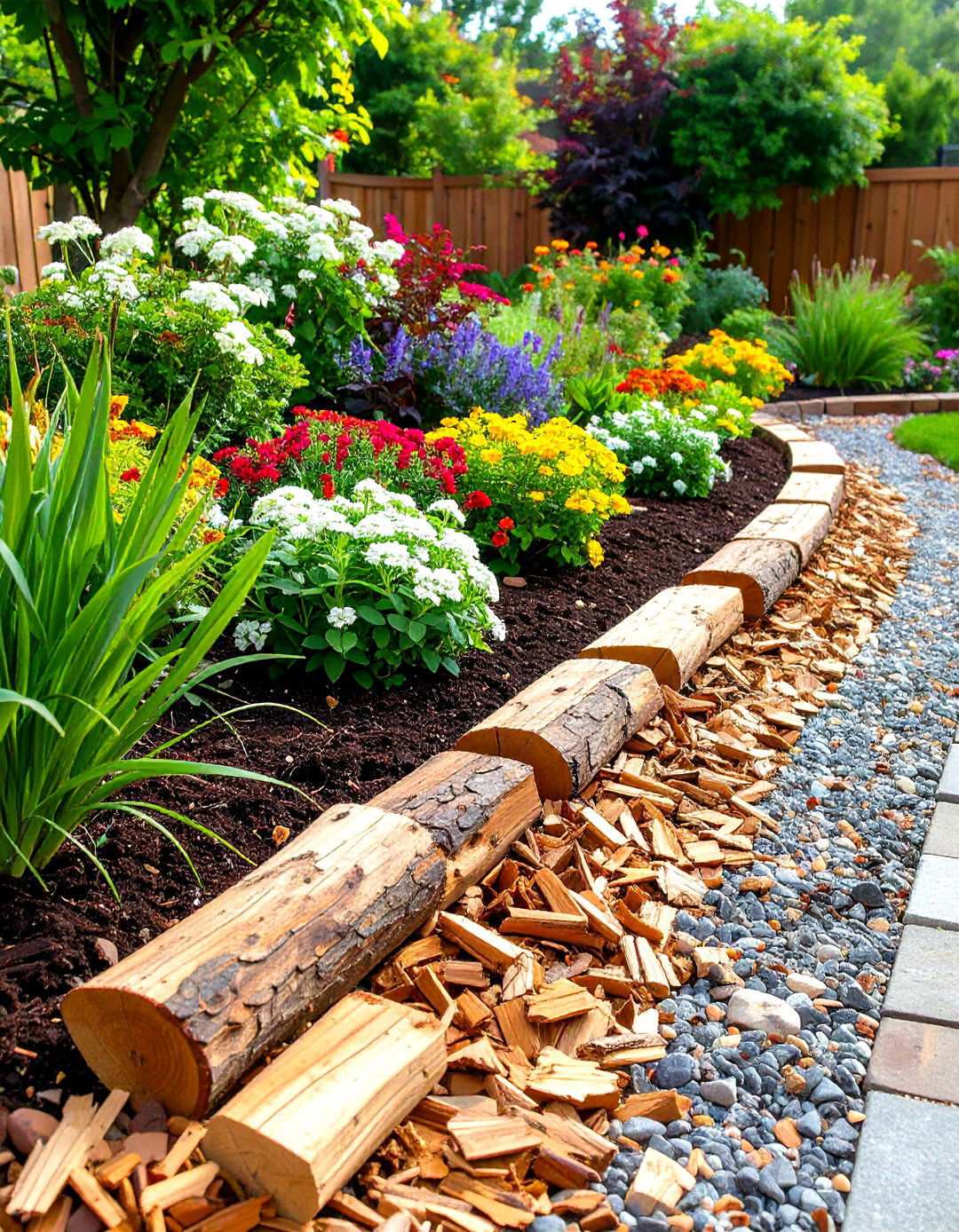
Split logs or landscape timbers create charming mulch boundaries that perfectly complement informal plantings and rustic landscape themes. To achieve optimal results, choose natural rot-resistant woods like cedar or locust, or select pressure-treated lumber for extended longevity. The organic appearance of this edging option complements woodland garden settings where natural materials support the overall design concept. Varying log diameters creates natural-looking installations that avoid overly uniform appearances, adding character to your landscape design. This approach works particularly well around large shade trees and in woodland garden settings where natural materials enhance the overall aesthetic. To ensure a long-lasting installation, level the ground surface and secure logs with rebar stakes to prevent shifting, allowing the natural weathering process to enhance visual appeal over time.
12. Elevating Garden Borders with Cultured Stone Veneer
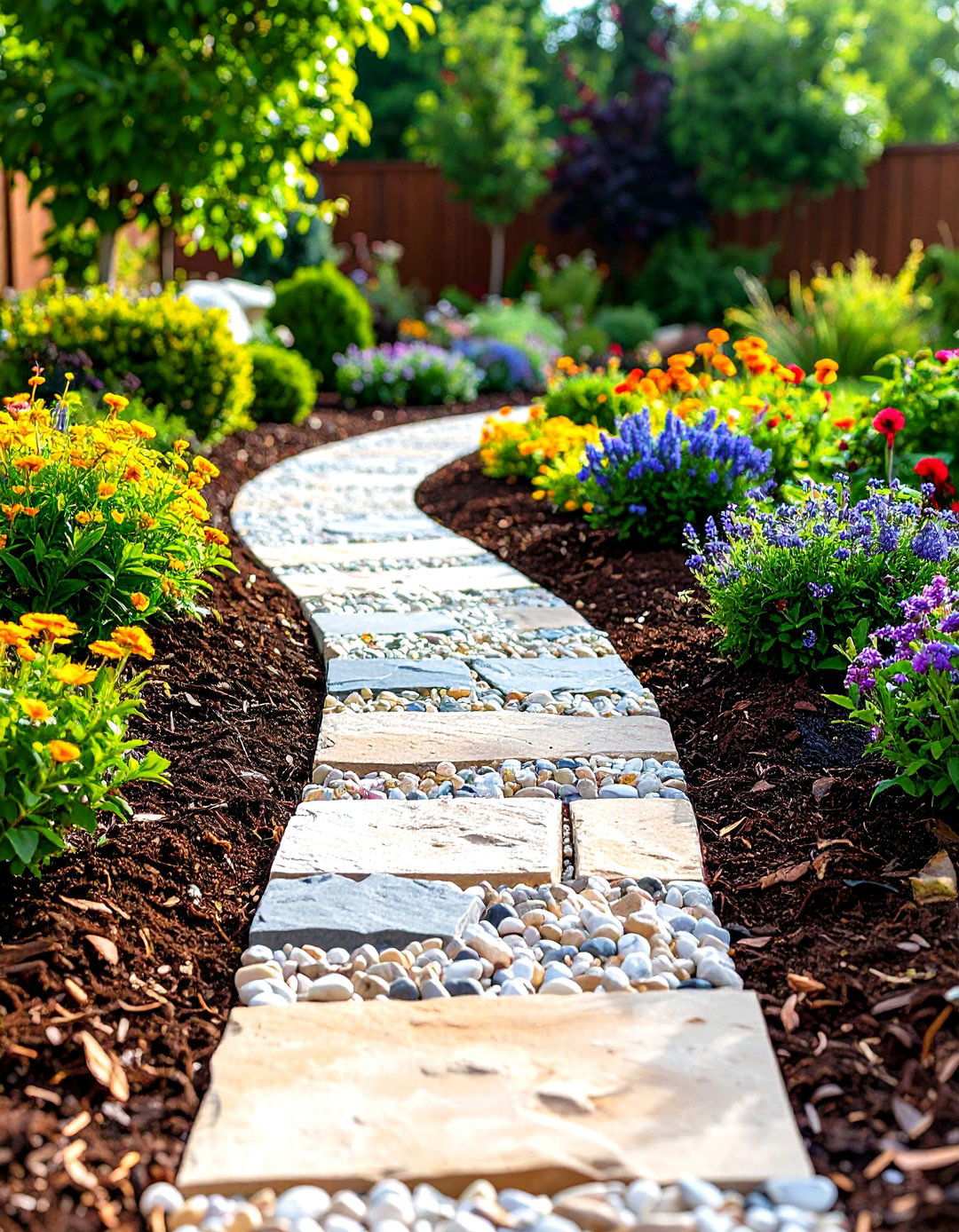
High-end garden aesthetics can be achieved with cultured stone veneer, a cost-effective alternative to natural stone that boasts reduced installation complexity. By installing this material over a concrete or metal substrate, gardeners can create substantial-looking edges with minimal fuss. Cultured stone veneer’s versatility shines through its extensive range of textures and colors, allowing for seamless coordination with various architectural styles and landscape themes. This approach is particularly well-suited to formal gardens where robust edging materials reinforce the overall design hierarchy. As a result, the finished appearance rivals that of natural stone while benefiting from consistent dimensions and streamlined installation procedures. To ensure a long-lasting installation, it’s crucial to prepare the substrate adequately and consider drainage to prevent freeze-thaw damage in northern climates.
13. Unifying Asian-Inspired Landscapes with Bamboo Mulch Edging
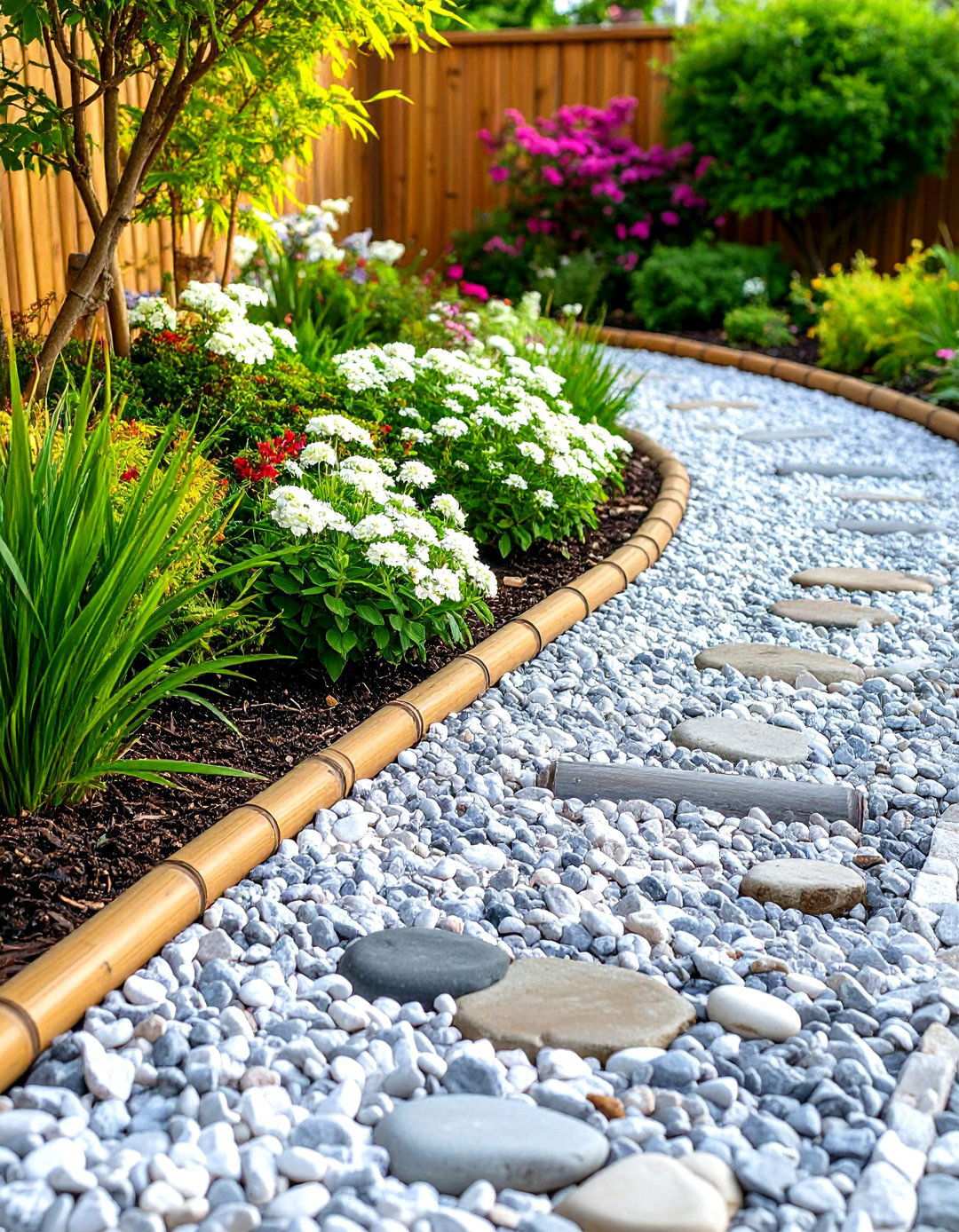
Bamboo edging creates serene and harmonious mulch boundaries that perfectly complement Asian-inspired garden themes while providing effective containment. As the material weathers, it develops an attractive silver-gray color that beautifully complements various mulch types and plant combinations. Bamboo’s flexibility allows for the creation of gentle curves, while its structural integrity ensures reliable mulch containment. This approach is well-suited to meditation gardens and zen-style landscapes, where natural materials play a vital role in fostering contemplative atmospheres. Installation involves securing bamboo sections with hidden fasteners, which maintain clean visual lines and enhance the overall aesthetic. The sustainable nature of bamboo appeals to environmentally conscious gardeners, while its distinctive appearance creates a unique landscape character that sets properties apart from conventional edging approaches.
14. Modular Interlocking Stone Edging for Enhanced Garden Containment
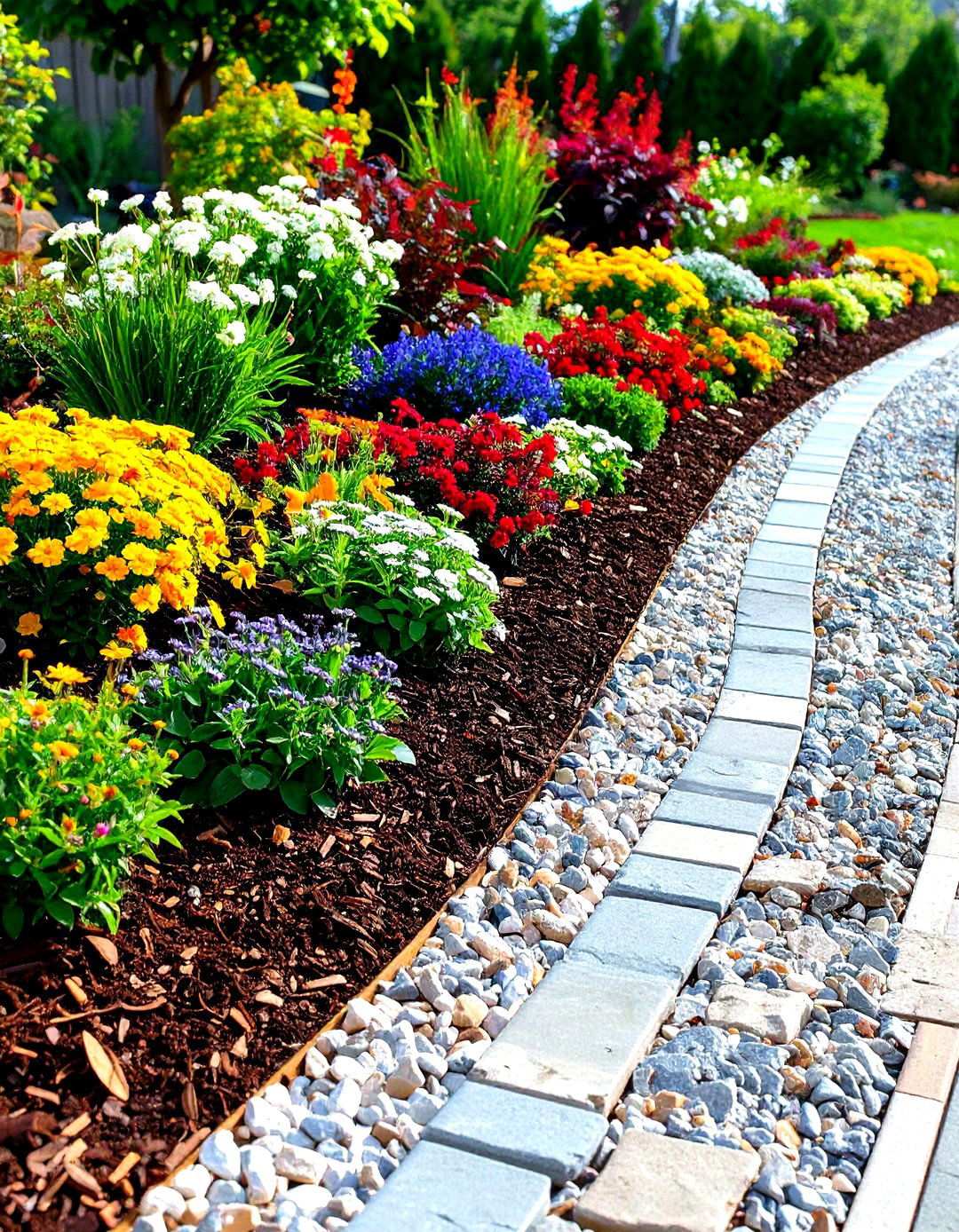
For a professional-looking mulch containment solution, precast interlocking stones offer the perfect combination of performance and flexibility. These precision-manufactured pieces fit together seamlessly, creating gap-free barriers that prevent even fine mulch materials from escaping. The range of colors and textures available ensures that interlocking stone edging can be easily coordinated with different architectural styles and landscape themes. This approach is particularly well-suited to gardens where a consistent appearance and reliable performance justify premium material costs. Installation requires a level foundation, but once this is in place, the process proceeds quickly and efficiently. The interlocking design distributes loads evenly, minimizing settling and movement issues that are often associated with individual stone installations. Maintenance involves occasional cleaning and re-leveling as needed to ensure the edging remains in optimal condition.
15. Innovative Mulch Containment Solutions for Gardens
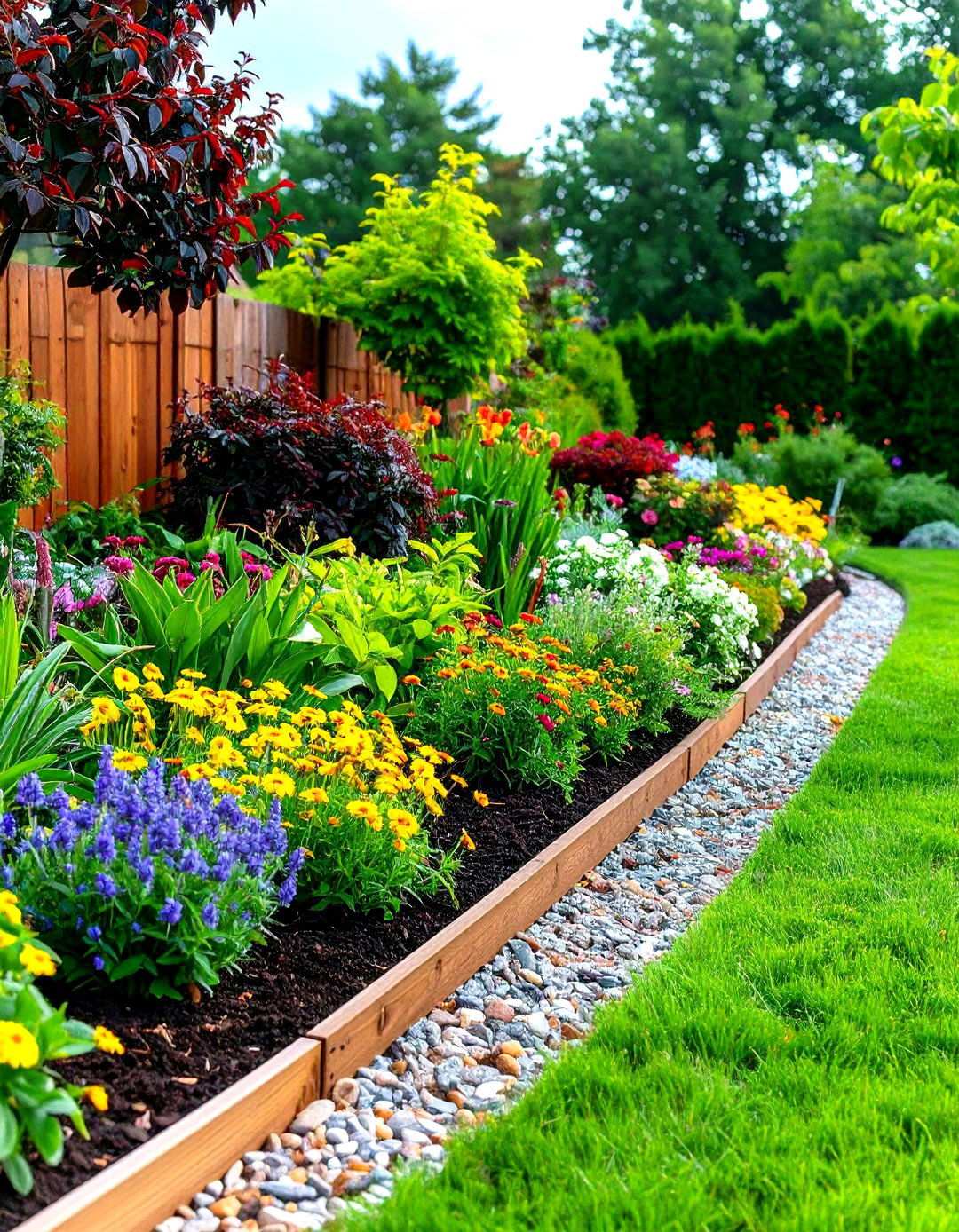
For a seamless blend of aesthetics and sustainability, consider incorporating composite mulch edging made from recycled plastic and wood fiber. This cutting-edge material showcases a natural appearance while boasting exceptional durability that minimizes maintenance needs. Unlike traditional lumber, composite edging resists rot, insects, and weather damage, making it an attractive option for gardeners who value low-maintenance landscaping. The material’s versatility allows it to be stained or painted for customized coloring, while retaining its structural integrity even in extreme temperature conditions. Its eco-friendly credentials also make it an ideal choice for gardeners who prioritize sustainable gardening practices.
16. Heavy-Duty Mulch Edging Solutions for Demanding Environments
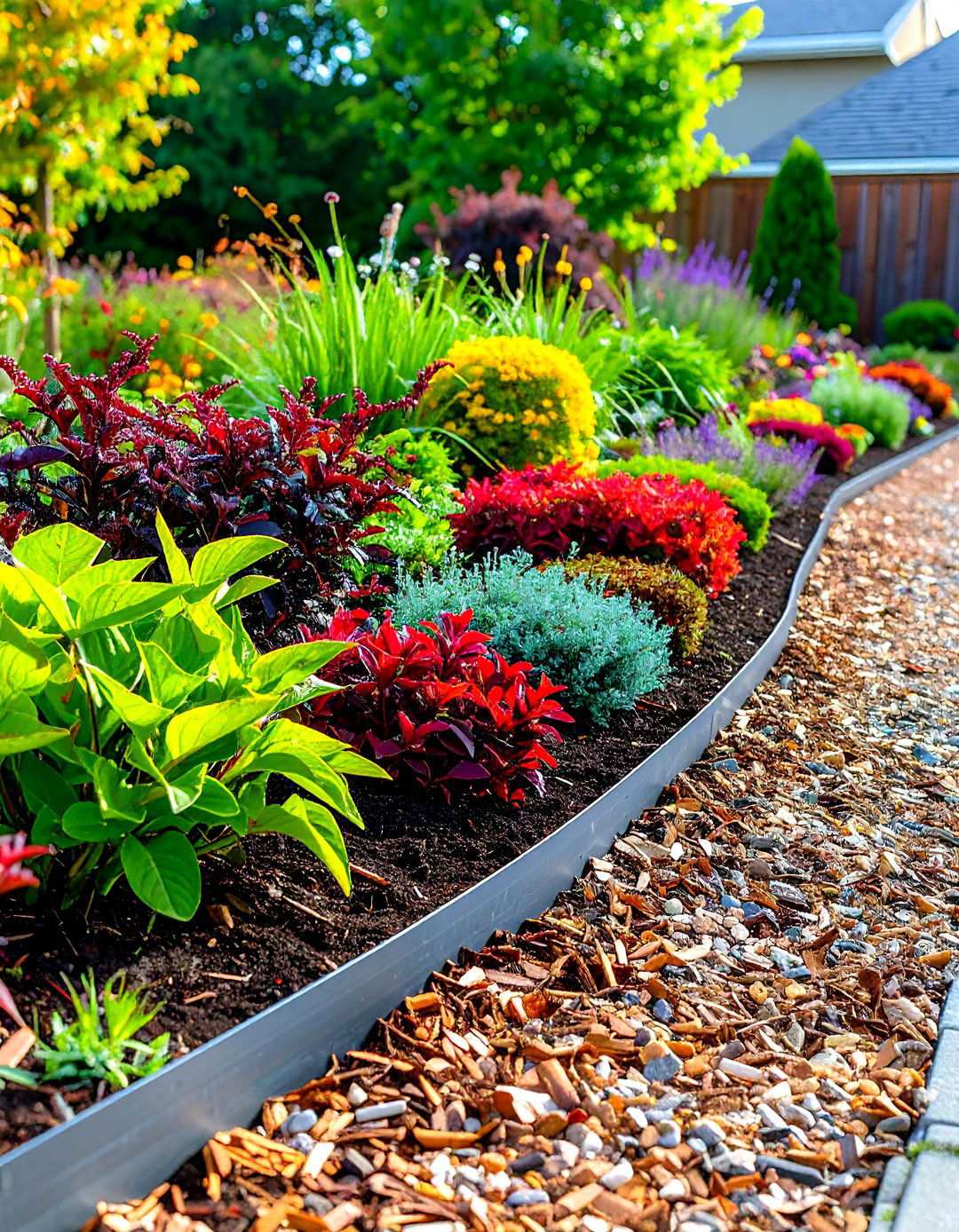
For installations that require maximum mulch containment, heavy-duty galvanized steel edging is the perfect solution. Engineered for challenging conditions with significant soil pressure or heavy traffic exposure, this robust edging material boasts a corrosion-resistant coating that ensures decades of reliable service. Steel edging maintains precise lines and consistent height, regardless of ground conditions or seasonal changes, making it an excellent choice for commercial installations where durability and low maintenance are paramount. While installation may require specialized tools for handling heavy materials, the end result is a superior longevity that far surpasses lighter alternatives. The neutral metallic finish of this edging material also makes it easy to coordinate with various landscape styles.
17. Timeless Terracotta Mulch Edging for Mediterranean-Inspired Gardens
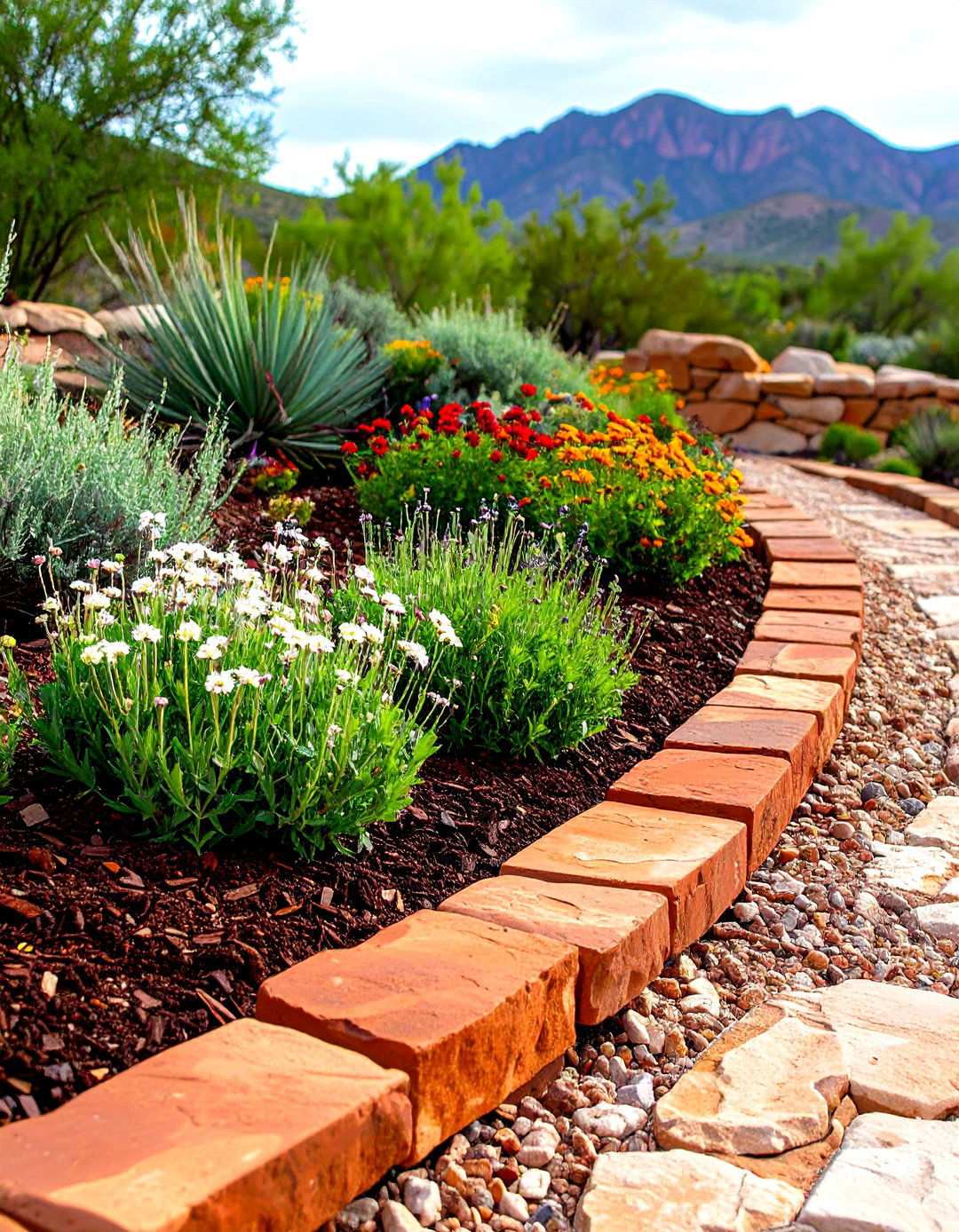
Scalloped terracotta edging is a stylish and functional solution for creating warm, welcoming mulch boundaries that complement Mediterranean and southwestern garden themes. This natural clay material provides excellent mulch containment while adding distinctive decorative elements that enhance drought-tolerant plantings. With various heights and profiles available, terracotta edging can be tailored to suit different garden applications and design preferences. When installed in regions with suitable climate conditions, this material can provide decades of attractive service, even in freeze-prone areas. The warm coloring of terracotta also enhances both light and dark mulch materials, creating a visually appealing landscape feature.
18. Artistic Mulch Edging with Repurposed Glass Bottles

Transform your garden’s aesthetic with creative mulch boundaries created from repurposed glass bottles. This eco-friendly approach not only adds a touch of elegance but also showcases your commitment to environmental sustainability. As the bottles catch the light, they create a mesmerizing display of colors and textures that perfectly complement artistic or eclectic garden designs. By inverting the bottles in the soil, you can achieve a unique visual effect that’s reminiscent of a sparkling tapestry. With various bottle colors and sizes at your disposal, you can tailor the appearance to suit your personal taste and the available materials. To achieve a professional-looking outcome, it’s essential to carefully plan the installation, ensuring consistent heights and spacing. This thoughtful approach will not only prevent breakage but also ensure long-term safety and durability.
19. Custom Mulch Edging with Cast-in-Place Concrete
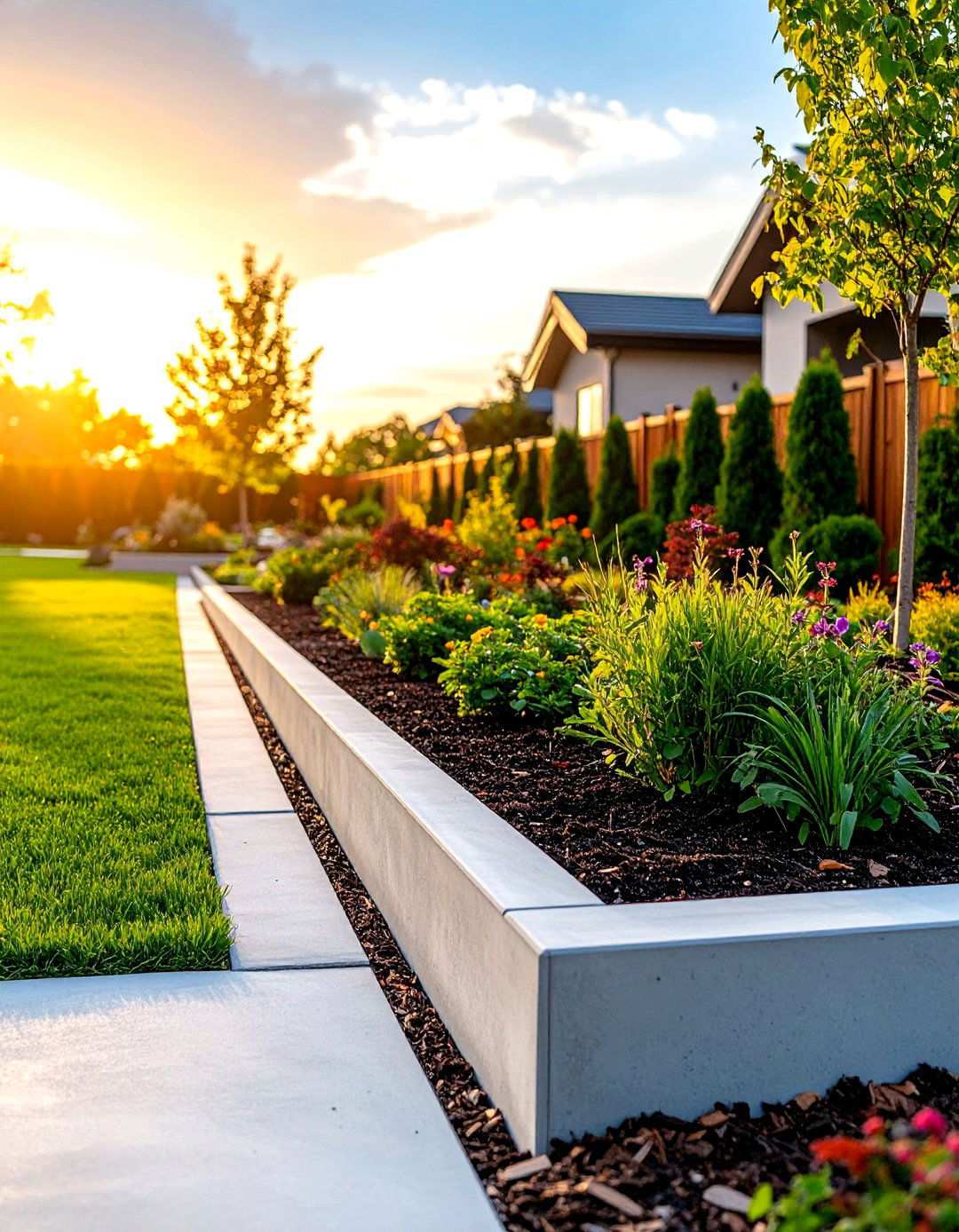
For a truly bespoke mulch containment solution, cast-in-place concrete edging is the ultimate choice. This innovative approach allows you to create precisely shaped borders that perfectly accommodate your garden’s unique configuration. By eliminating joints where mulch might escape, you can enjoy a seamless and maintenance-free experience. The various finishes and coloring options available make it easy to coordinate your edging with different architectural styles and landscape themes. This approach is particularly well-suited for complex curves or unusual shapes that require custom solutions beyond standard edging materials. To achieve optimal results, it’s crucial to enlist the services of a professional who can ensure proper concrete mixing, forming, and finishing. The long-term benefits of this permanent solution far outweigh the initial investment costs, providing decades of maintenance-free service.
20. Natural Mulch Edging with Fieldstone
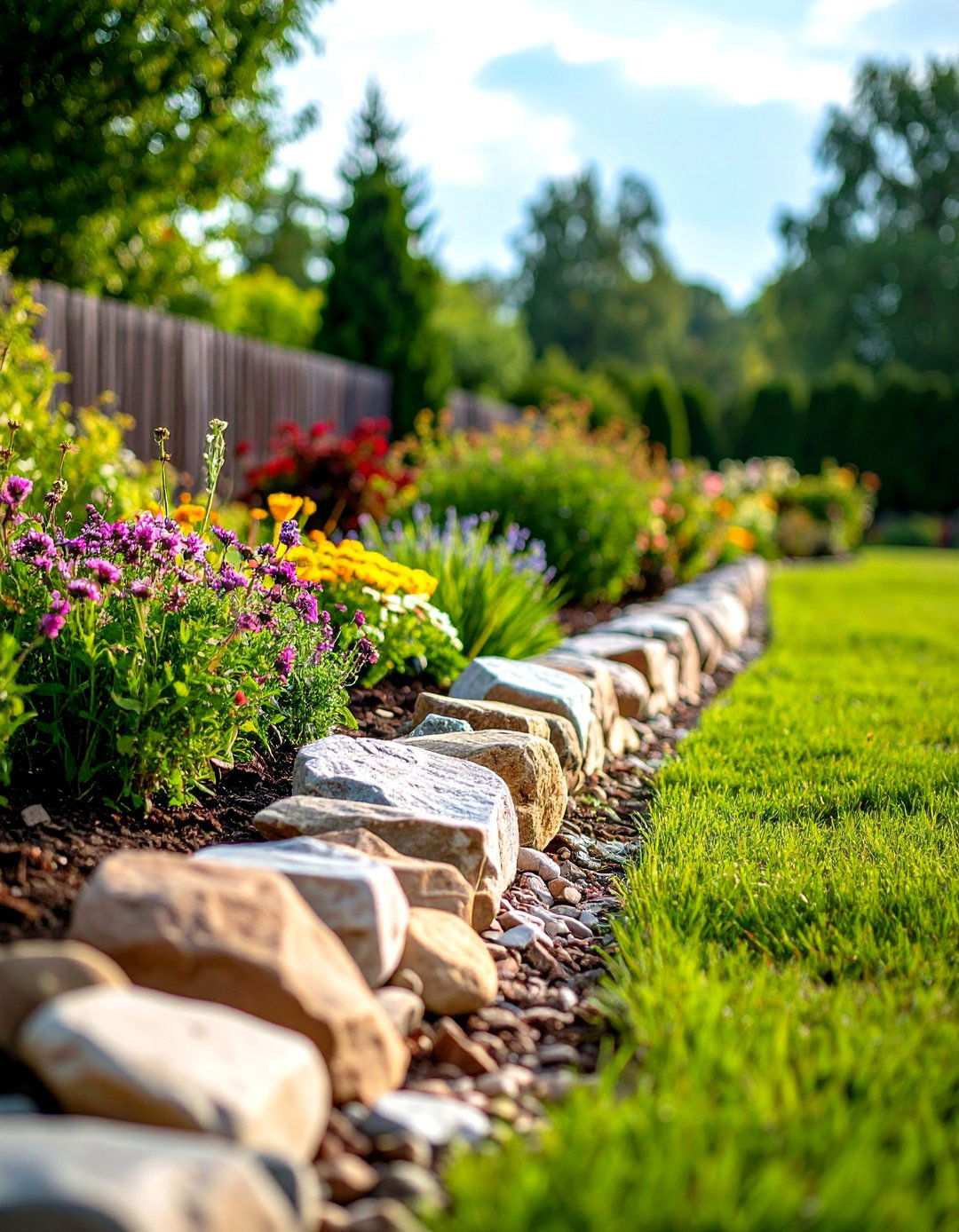
For a truly authentic and rustic look, fieldstone is the perfect choice for creating mulch boundaries that reflect your region’s character. This natural material offers an unparalleled level of containment performance while showcasing the unique beauty of local stone. By carefully selecting and arranging the stones, you can create a one-of-a-kind installation that’s impossible to replicate with manufactured materials. This approach is particularly well-suited for rural or naturalistic settings where local materials are essential for authentic regional design expressions. While the process may require some patience, the end result is a permanent installation that improves with age and weathering. The substantial weight of the stones provides excellent stability without the need for extensive foundations, while gaps between the stones allow for drainage and effective mulch containment. The timeless appearance of fieldstone mulch edging enhances property values through distinctive landscape character.
21. Streamlining Mulch Containment with Utilitarian Chain Link Mesh
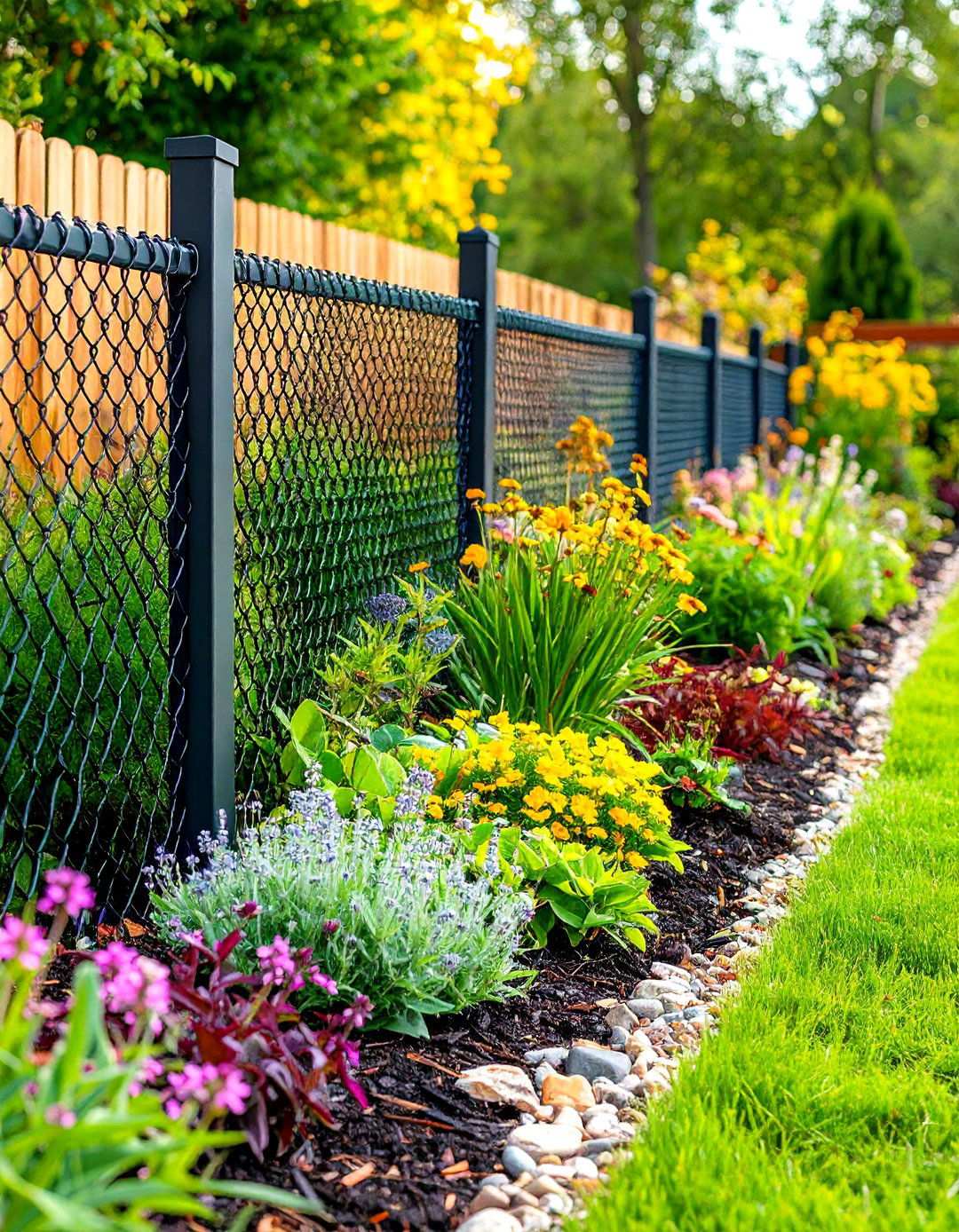
Chain link mesh, coated with durable vinyl, provides a subtle yet effective solution for mulch containment. By installing the mesh vertically along bed edges and securing it with stakes driven below ground level, you can maintain a natural appearance while preventing mulch migration. The flexible material adapts seamlessly to curves and irregular shapes, offering complete barriers against grass encroachment. This approach excels in situations where containment effectiveness takes precedence over aesthetic considerations. Meanwhile, the mesh allows for water and air circulation while blocking unwanted mulch escape and weed intrusion. Its versatility in accommodating various heights makes it an ideal choice for extensive mulch bed installations where budget considerations are a top priority.
22. Elevating Sloped Landscapes with Retaining Wall Block Mulch Edging
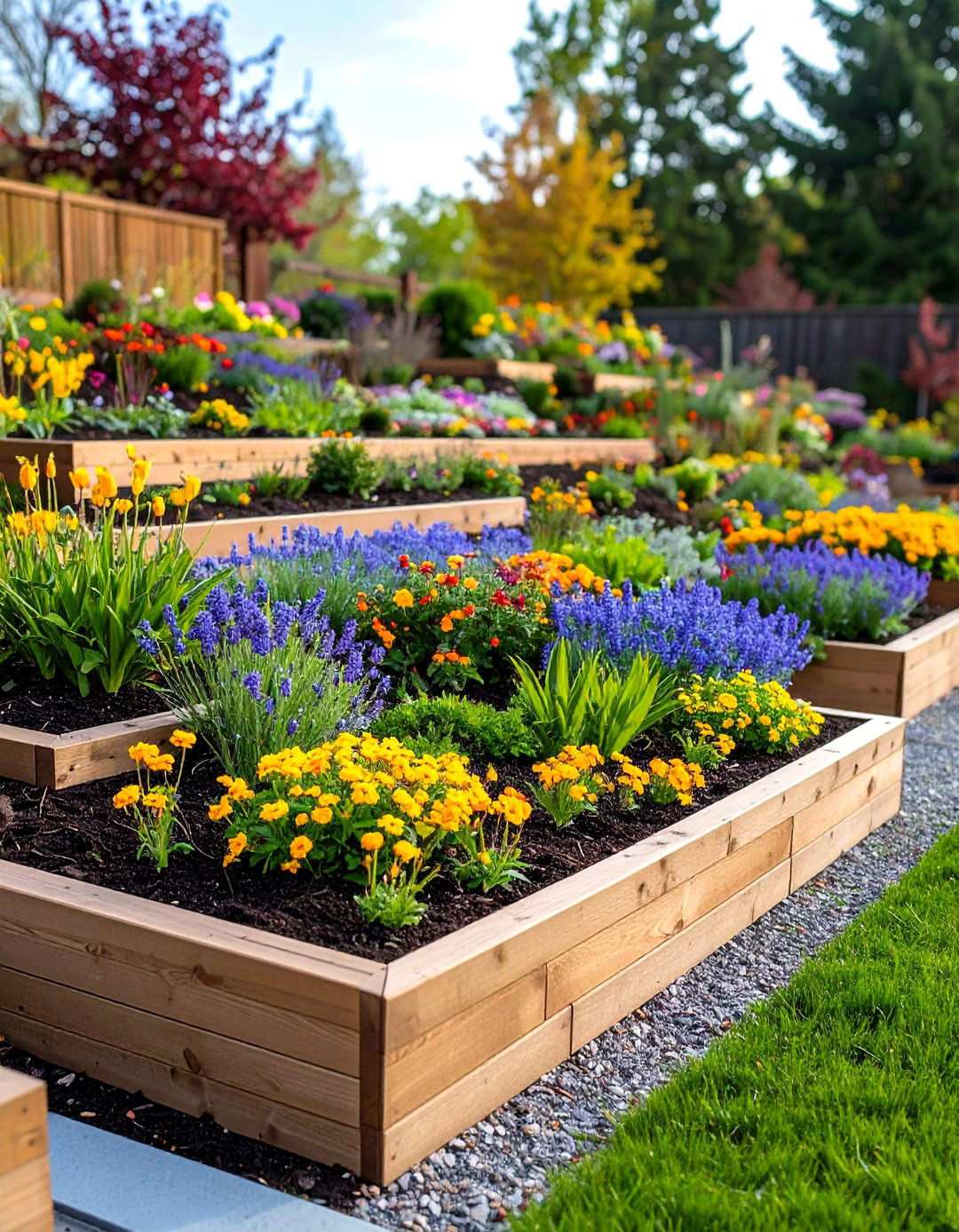
Retaining wall blocks offer a substantial solution for mulch containment, creating terraced growing areas that enhance sloped landscapes. The interlocking design of these blocks provides exceptional stability without requiring mortar installation, making this approach suitable for DIY enthusiasts. With a wide range of colors and textures available, you can coordinate the blocks with various architectural styles and landscape themes. This method is particularly effective on sloped sites where erosion control and improved growing conditions justify additional material investments. The raised design not only improves drainage but also creates distinctive landscape levels that add visual interest. Proper foundation preparation is essential, but once the base courses are established, the installation proceeds systematically.
23. Weaving Natural Charm with Woven Basket Mulch Edging
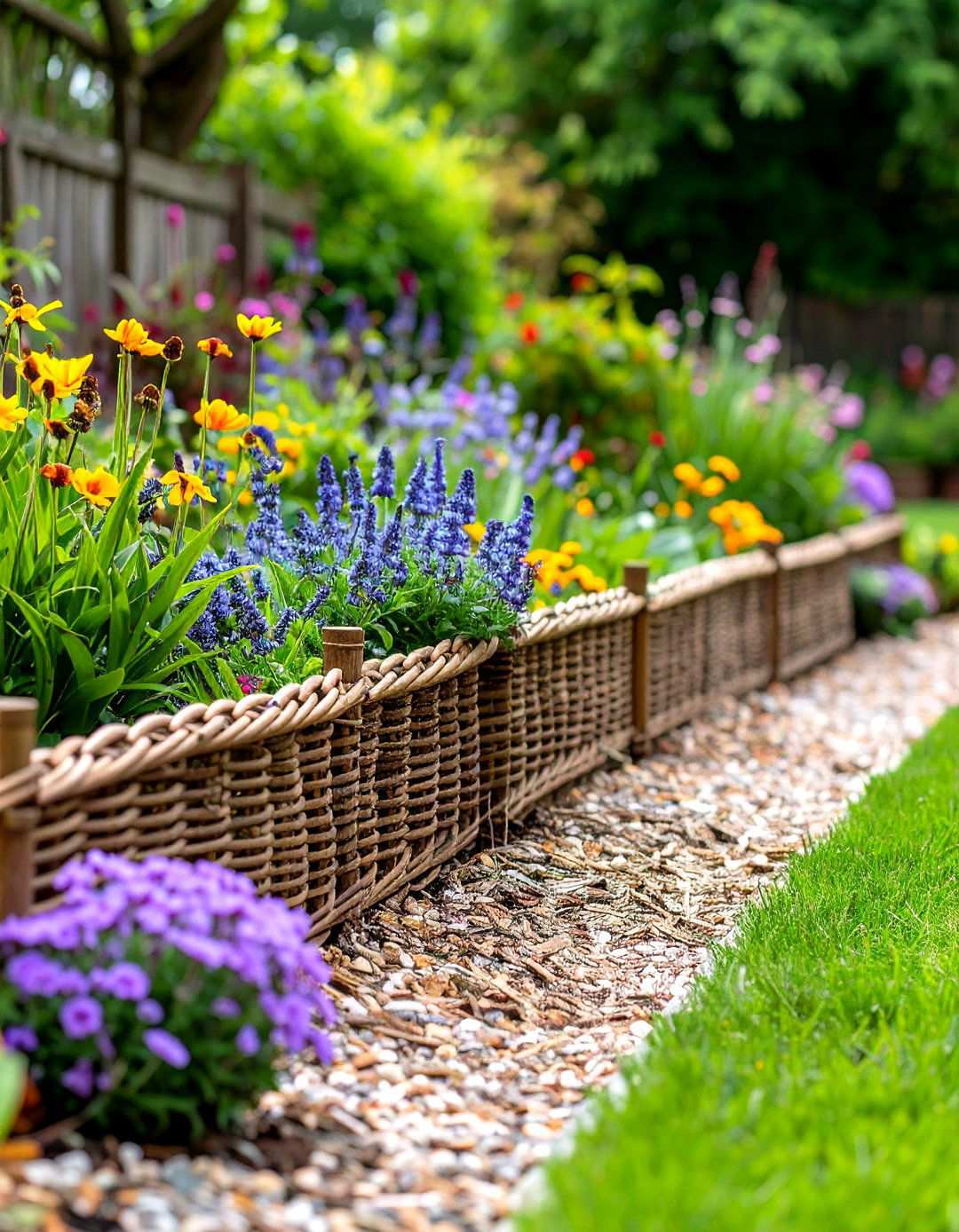
Natural wicker or synthetic basket-weave edging creates textured mulch boundaries that add organic visual interest while providing effective containment. The woven pattern creates distinctive shadows and light effects that enhance garden beds throughout different times of day. This approach excels in cottage garden settings where handcrafted appearances support informal design themes. Various heights and weave patterns allow for customization to suit different applications and aesthetic preferences. Securing the panels with stakes while ensuring consistent alignment and height is a straightforward process. The organic appearance complements natural mulch materials while providing sufficient containment for most garden applications. Synthetic versions, known for their weather resistance, offer extended longevity while maintaining a natural appearance.
24. Multifaceted Mulch Edging with Gradated Stone Elevations
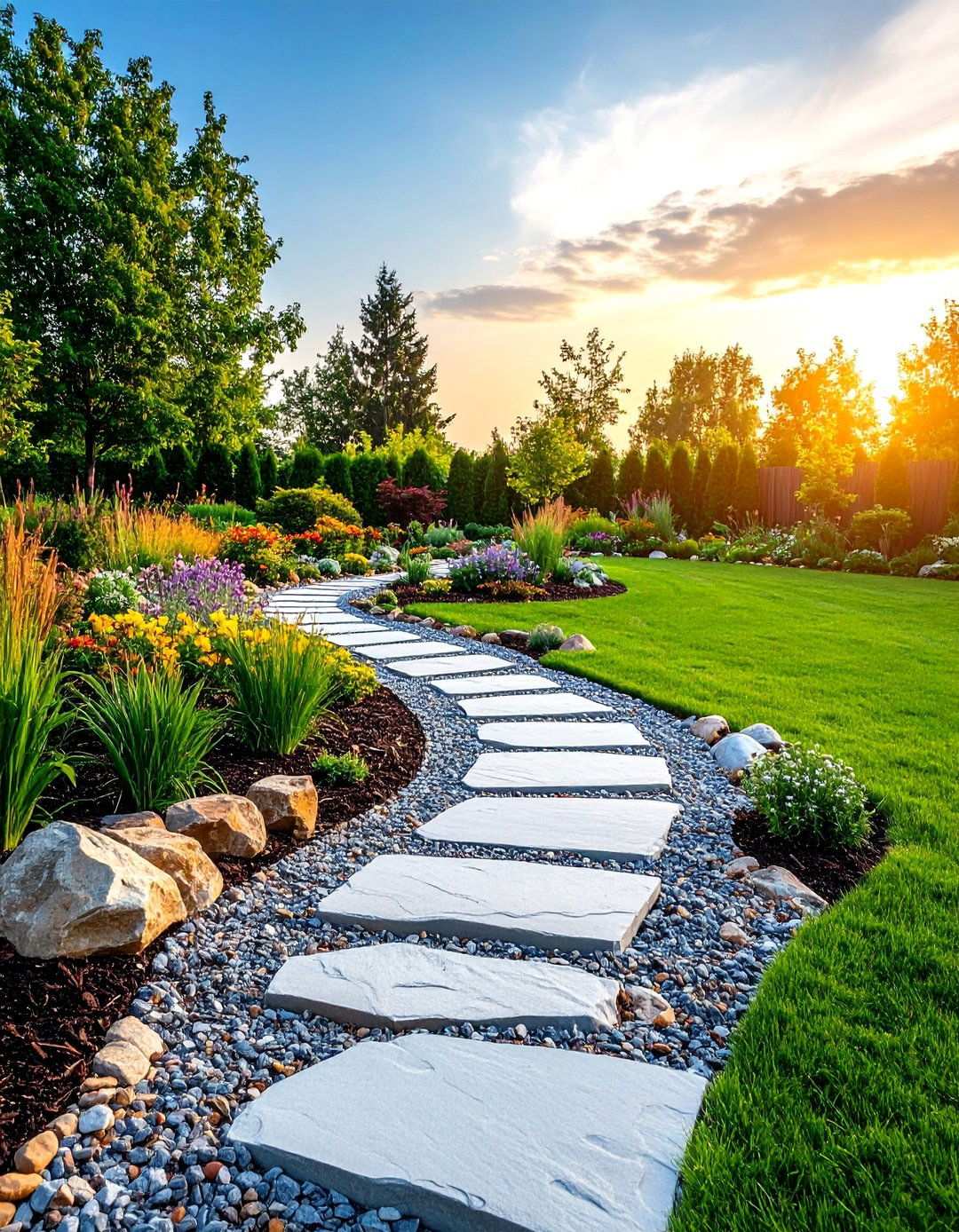
Multifaceted mulch boundaries, crafted with graduated stone elevations, bring a dynamic quality to your landscape. By varying the heights of stones from back to front, you create layered effects that draw the eye and enhance depth perception. This approach is particularly well-suited to large perennial borders, where substantial edging materials complement extensive plantings. The varied heights enable the mulch to be replenished to different depths, while preventing material migration during heavy rains or maintenance activities. Effective installation demands careful selection and placement of stones with compatible sizes and shapes. As the stones weather over time, their substantial appearance enhances your landscape investments, providing decades of reliable mulch containment and a lasting impression.