Arborvitae trees are among the most versatile and popular evergreens for landscaping. Their dense foliage, adaptability, and low-maintenance nature make them a top choice for homeowners who want privacy, greenery, and structure in their yards. From forming living fences to accentuating entryways, arborvitae can be used in creative ways that add both function and beauty.

As an Amazon Associate I earn from qualifying purchases.
Here are fourteen arborvitae landscaping ideas to inspire you when designing your outdoor spaces.
Create a Living Privacy Fence
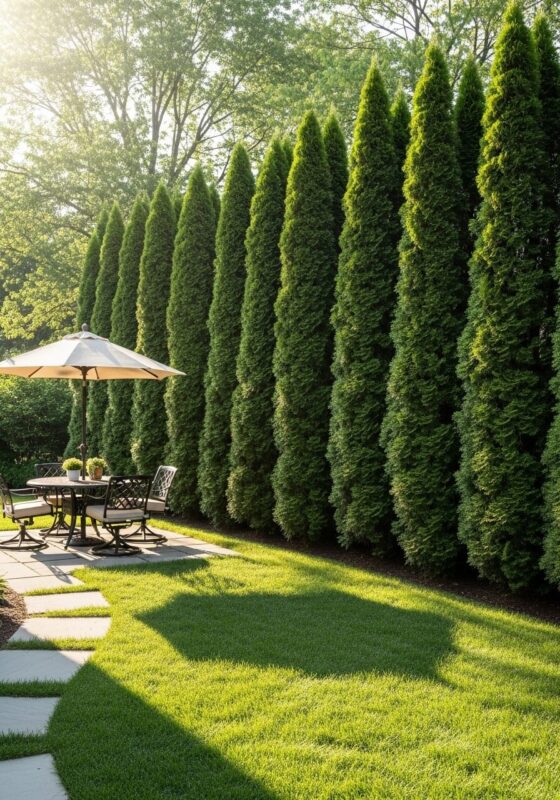
One of the most common uses for arborvitae is forming a living privacy fence. When planted in rows, they quickly grow into a dense, tall wall that blocks unwanted views. This option is not only more attractive than a wooden fence but also improves air quality and reduces noise.
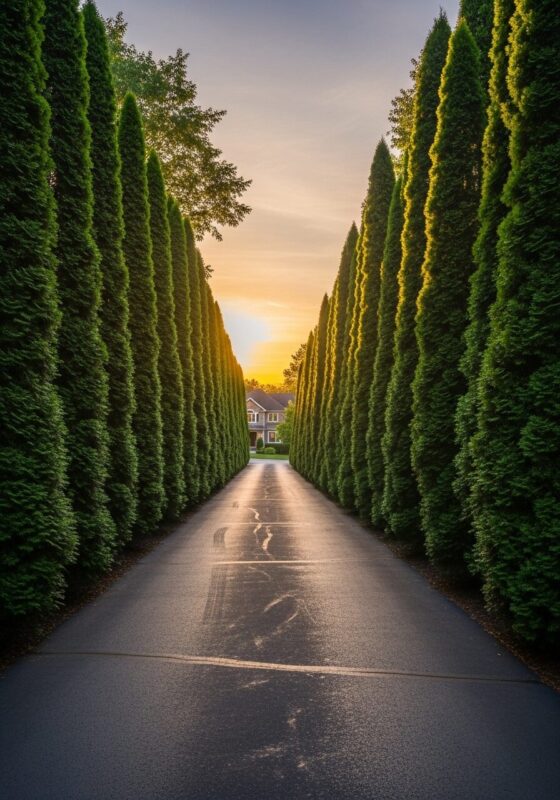
Line a Driveway with Arborvitae
Driveways often feel exposed, but lining them with arborvitae creates structure and elegance. Their tall, narrow shape provides definition and makes the driveway feel like a grand entrance. They also help block headlights from passing cars if your home sits near a busy street.
Image Prompt: Ultra-realistic long driveway flanked on both sides by evenly spaced arborvitae trees. The trees grow tall and columnar, forming a natural green corridor. The paved driveway leads to a two-story home in the distance, while warm sunset light glows softly on the trees’ rich green foliage.
Accent the Corners of a House
Planting arborvitae at the corners of your home softens sharp edges and adds height to the design. Their vertical shape draws the eye upward, balancing the proportions of the house while creating a more polished look.
Use Arborvitae for Garden Backdrops
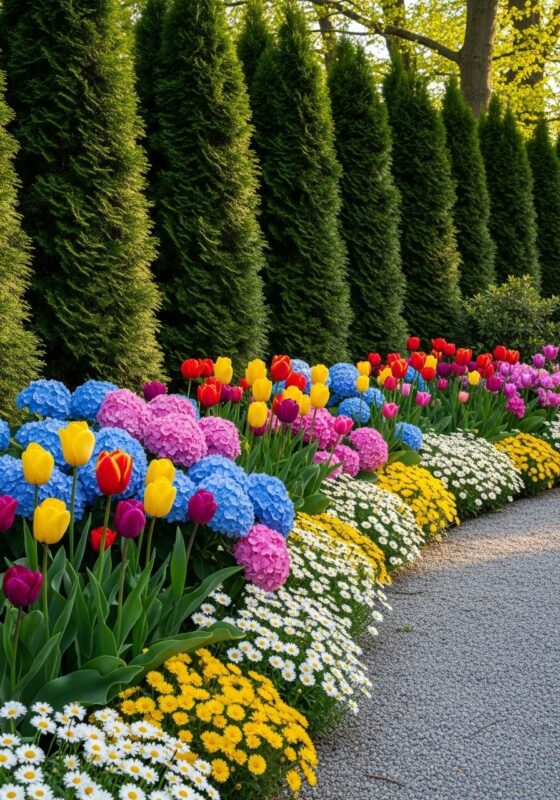
Arborvitae can act as a backdrop to flower gardens, creating a canvas of green that allows blooms to stand out. Their dense foliage emphasizes the colors and shapes of seasonal flowers, making the garden look more organized and intentional.
Frame a Patio or Deck
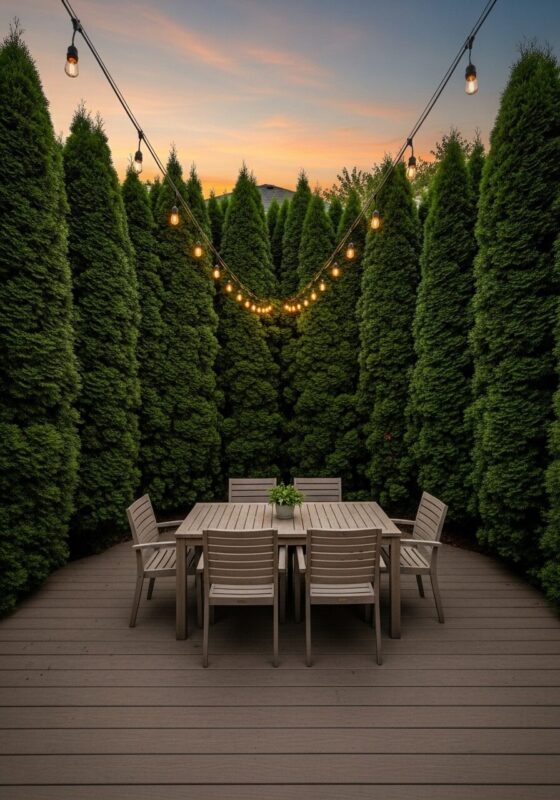
Planting arborvitae around patios or decks creates an intimate outdoor room. Their tall, dense foliage provides privacy from neighbors and adds a cozy, green enclosure. This natural barrier also reduces wind, making the space more comfortable year-round.
Plant Arborvitae in Containers
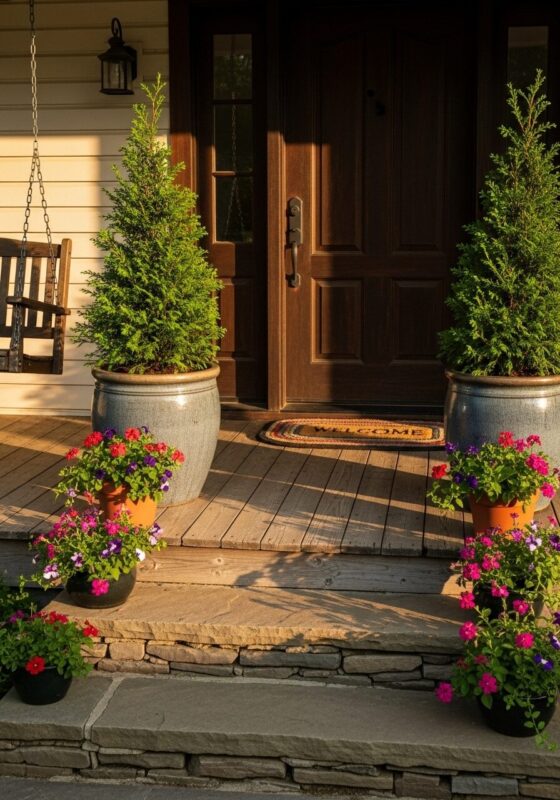
Although commonly planted in the ground, smaller arborvitae varieties thrive in large containers. Placing them on patios, porches, or entryways adds vertical interest without requiring much ground space. Container-planted arborvitae can also be moved as needed.
Combine with Decorative Grasses
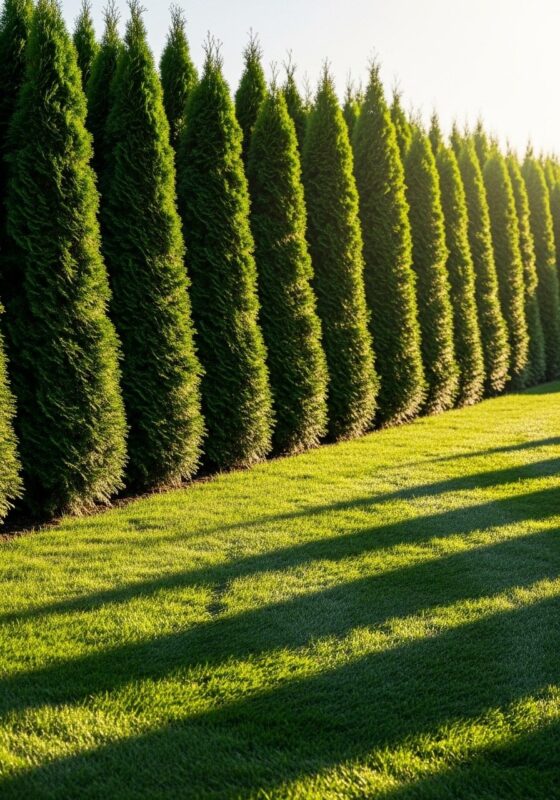
Pairing arborvitae with ornamental grasses creates contrast in both texture and height. The soft, flowing plumes of grasses complement the solid, upright shape of arborvitae, giving the landscape variety and movement.
Enhance a Pool Area
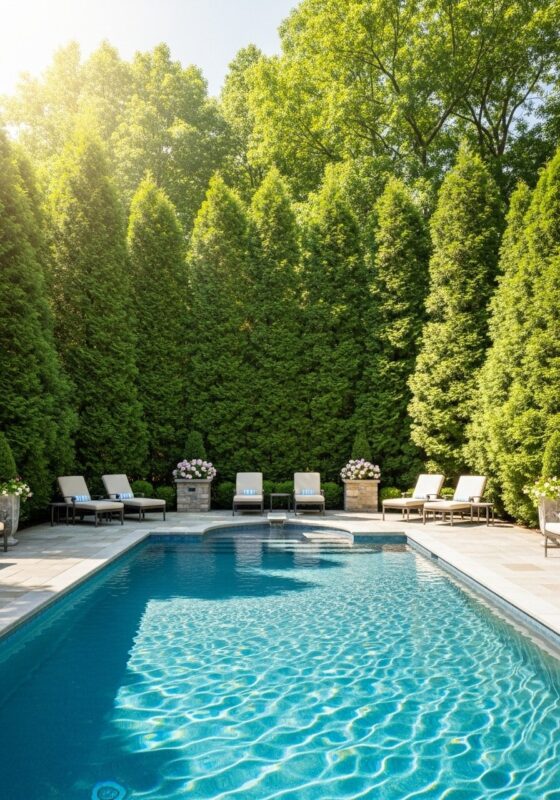
Privacy is essential around pools, and arborvitae offers a natural solution. Their dense foliage screens the space from neighbors while resisting splashes and humid conditions. Planted around the perimeter, they create a serene, private retreat.
Use as Windbreaks
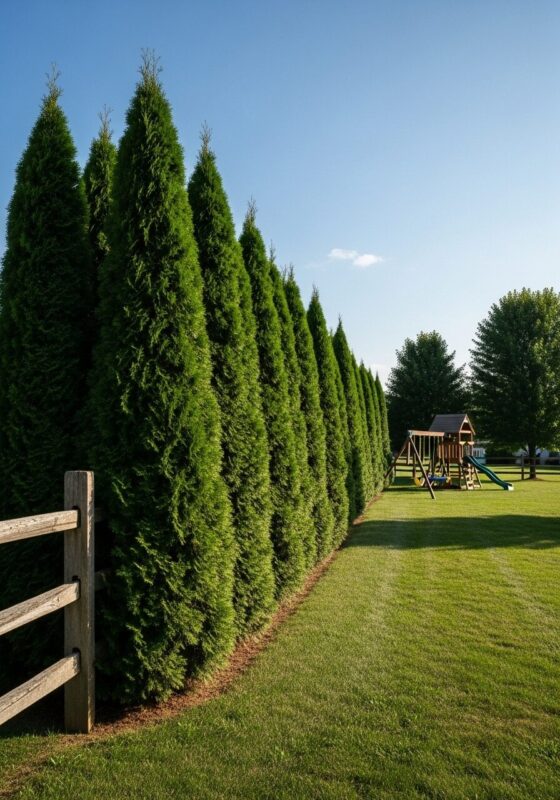
Arborvitae are excellent windbreaks, particularly in open yards. When planted along a fence line, they shield gardens, patios, or play areas from strong winds, making outdoor spaces more comfortable and usable.
Create Garden Rooms
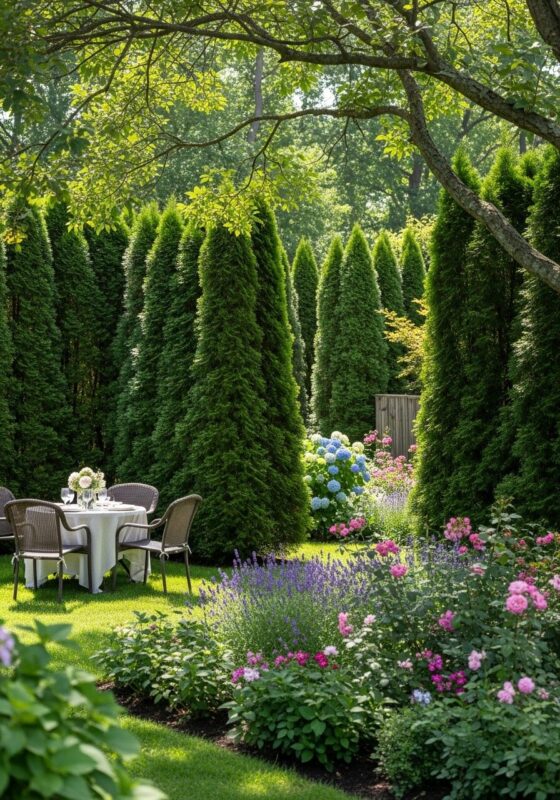
Arborvitae can be used to divide large yards into “garden rooms.” By planting them in rows or clusters, you can create private zones for dining, lounging, or gardening. This technique adds structure and a sense of discovery to large outdoor spaces.
Use in Mixed Borders
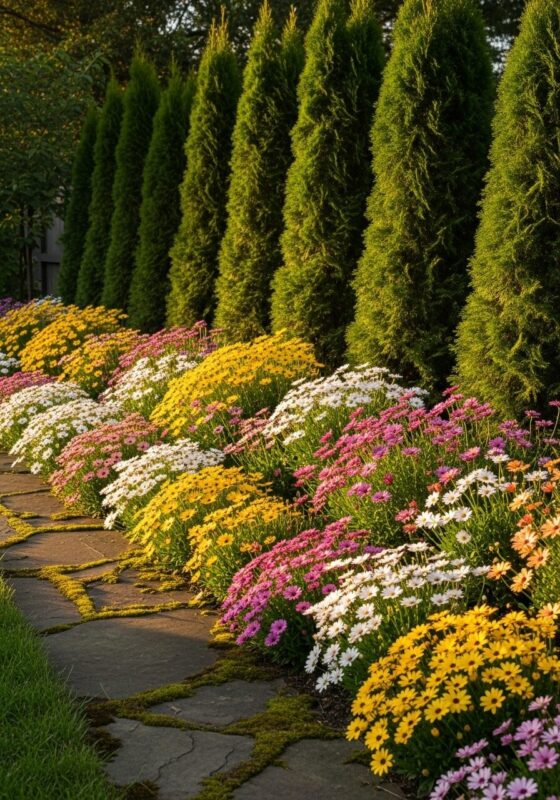
Arborvitae also work well in mixed plantings with shrubs, flowers, and perennials. Their evergreen structure anchors the border, while seasonal plants provide variety and color. This layered look creates depth and visual interest year-round.
Shape into Topiary Designs
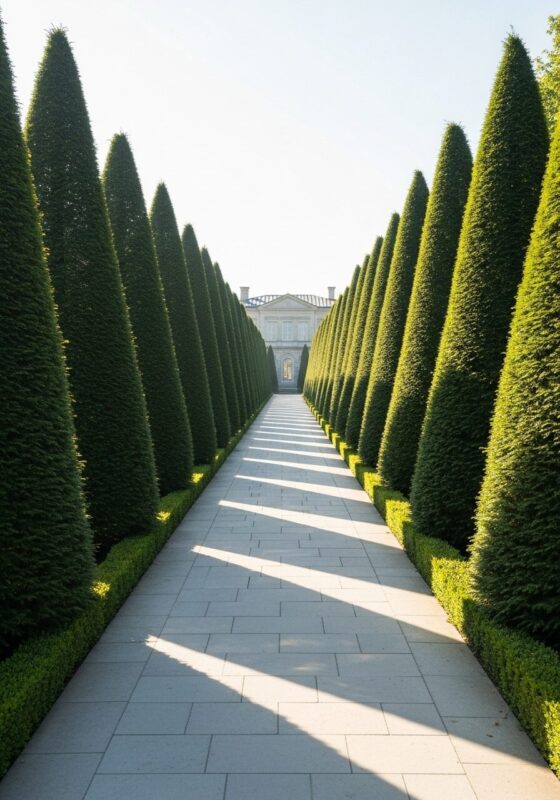
For a formal garden style, arborvitae can be trimmed into geometric shapes or soft cones. This adds an artistic element to the landscape and works well for entryways or pathways where symmetry is desired.
Plant as Corner Accents for Fences
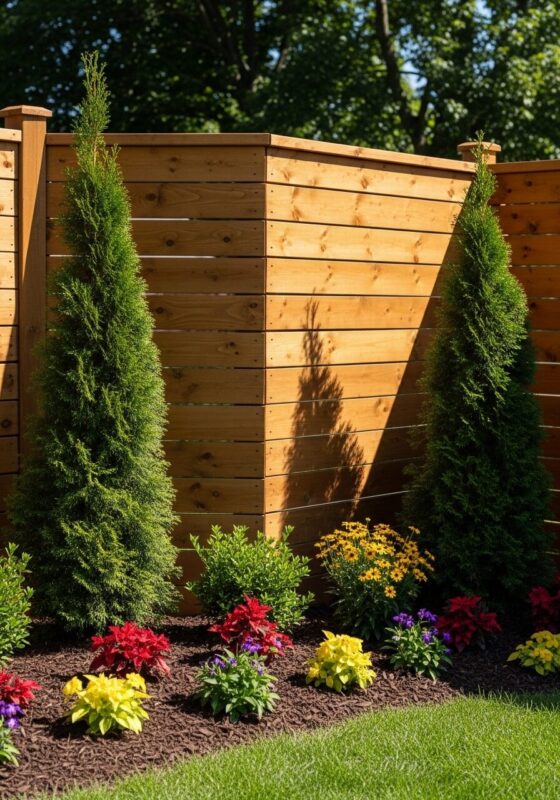
Placing arborvitae at the corners of fences helps soften hard edges and adds vertical interest. Their tall growth draws attention upward while blending the fence into the surrounding landscape.
Mix with Seasonal Flowers
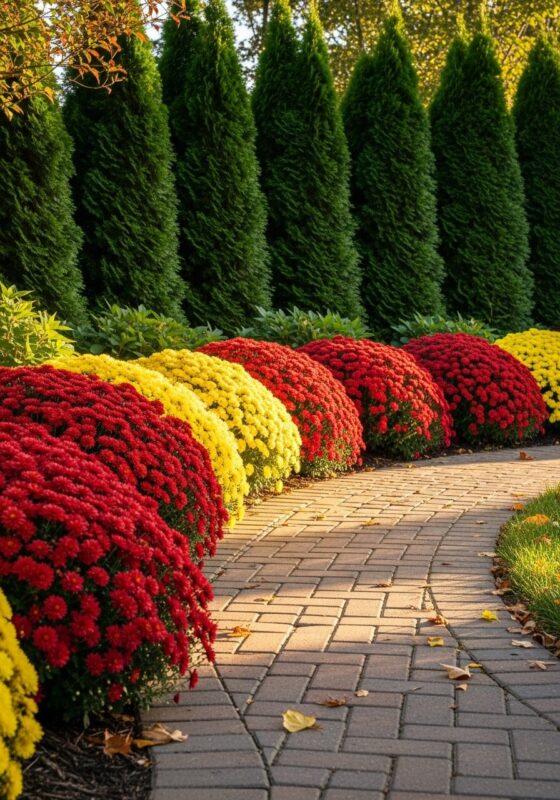
Pairing arborvitae with seasonal flower beds gives landscapes both structure and color. While arborvitae provide year-round greenery, flowers like tulips, marigolds, or chrysanthemums add seasonal highlights that keep the yard looking fresh.