1. Modern Tudor Revival: Embracing Simplicity and Elegance
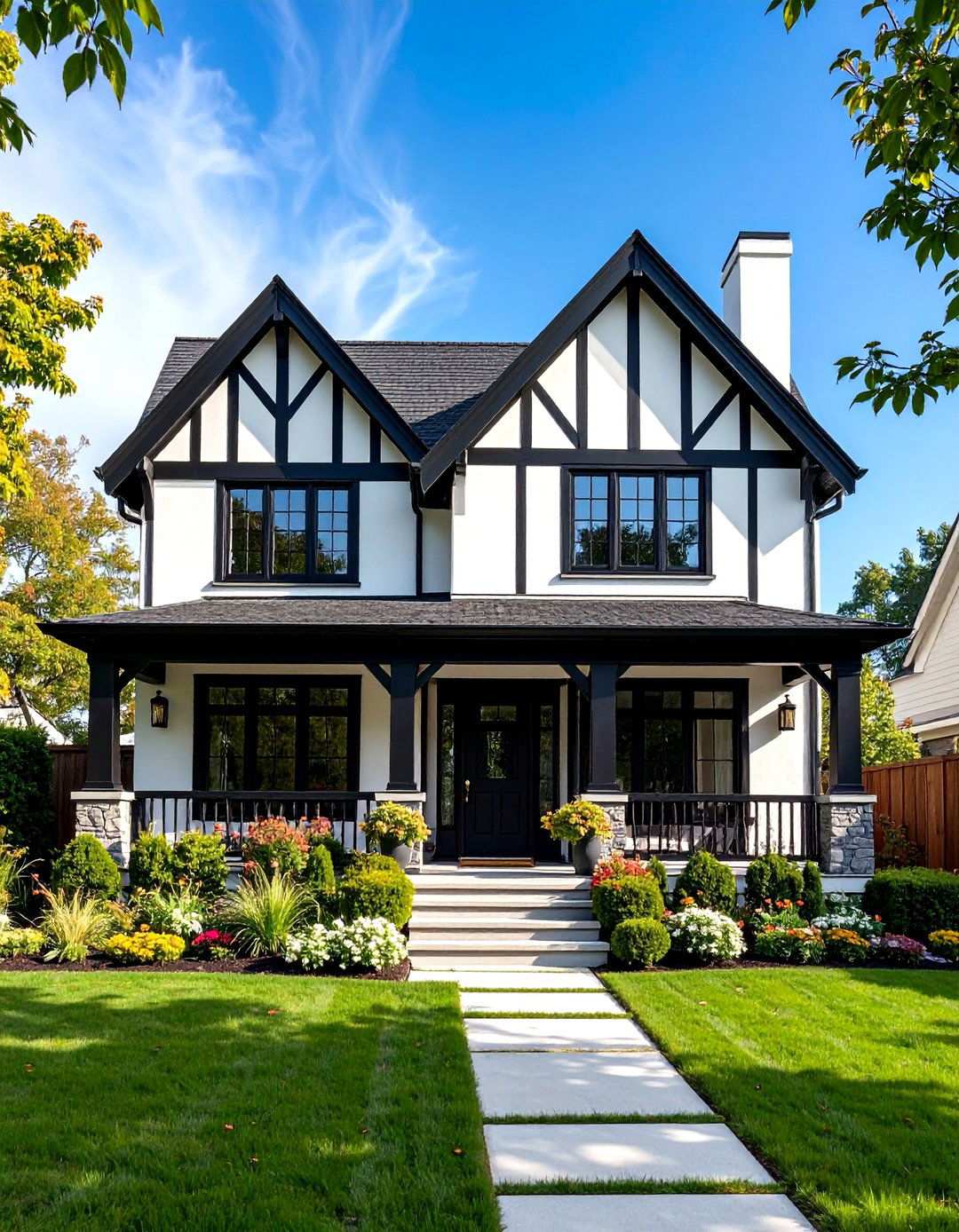
The Tudor style, rooted in English medieval traditions, has undergone a remarkable transformation in recent years. As a result, modern Tudor exteriors now seamlessly blend historical charm with contemporary functionality. Classic design elements, such as steep-pitched roofs and prominent chimneys, are paired with streamlined materials, updated color palettes, and simplified detailing that exudes a sense of timelessness and refreshingly modern flair. Whether renovating an existing Tudor home or designing a new one, these modern interpretations demonstrate how the beloved architectural style can be reimagined for the 21st century. Each concept represents a comprehensive design philosophy that thoughtfully addresses materials, colors, proportions, and details as a cohesive whole, showcasing the Tudor style’s incredible ability to evolve while retaining its inherent storybook charm.

As an Amazon Associate I earn from qualifying purchases.
2. The Power of Monochromatic Minimalism in Tudor Design
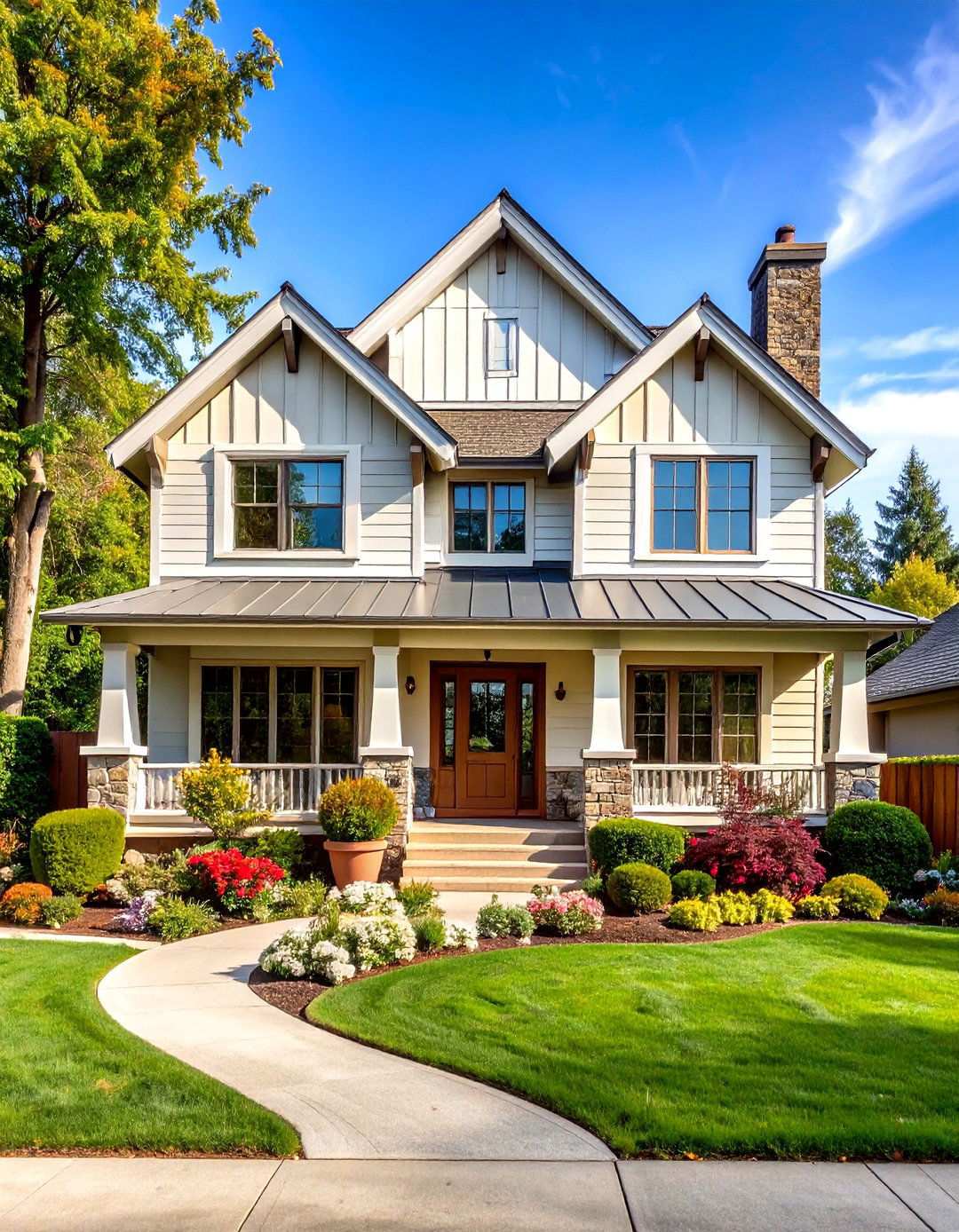
A striking monochromatic approach can transform traditional Tudor styling into a stunning contemporary statement. By painting the half-timbering in bold black and leaving the stucco fields crisp white, a dramatic contrast is created without overwhelming the intricate details. This striking color combination works particularly well when paired with black window frames and matching front door hardware. The simple palette allows architectural elements to shine while feeling thoroughly modern and sleek. Large multipane windows maintain Tudor authenticity by using clean grid patterns rather than ornate leaded glass. The landscaping remains equally understated with structured plantings in neutral containers. A metal roof in charcoal gray adds subtle texture without competing with the facade’s graphic impact. This approach proves that Tudor homes can seamlessly incorporate minimalism while retaining their distinctive character and architectural integrity.
3. Contemporary Stone Facade: A Masterclass in Natural Beauty
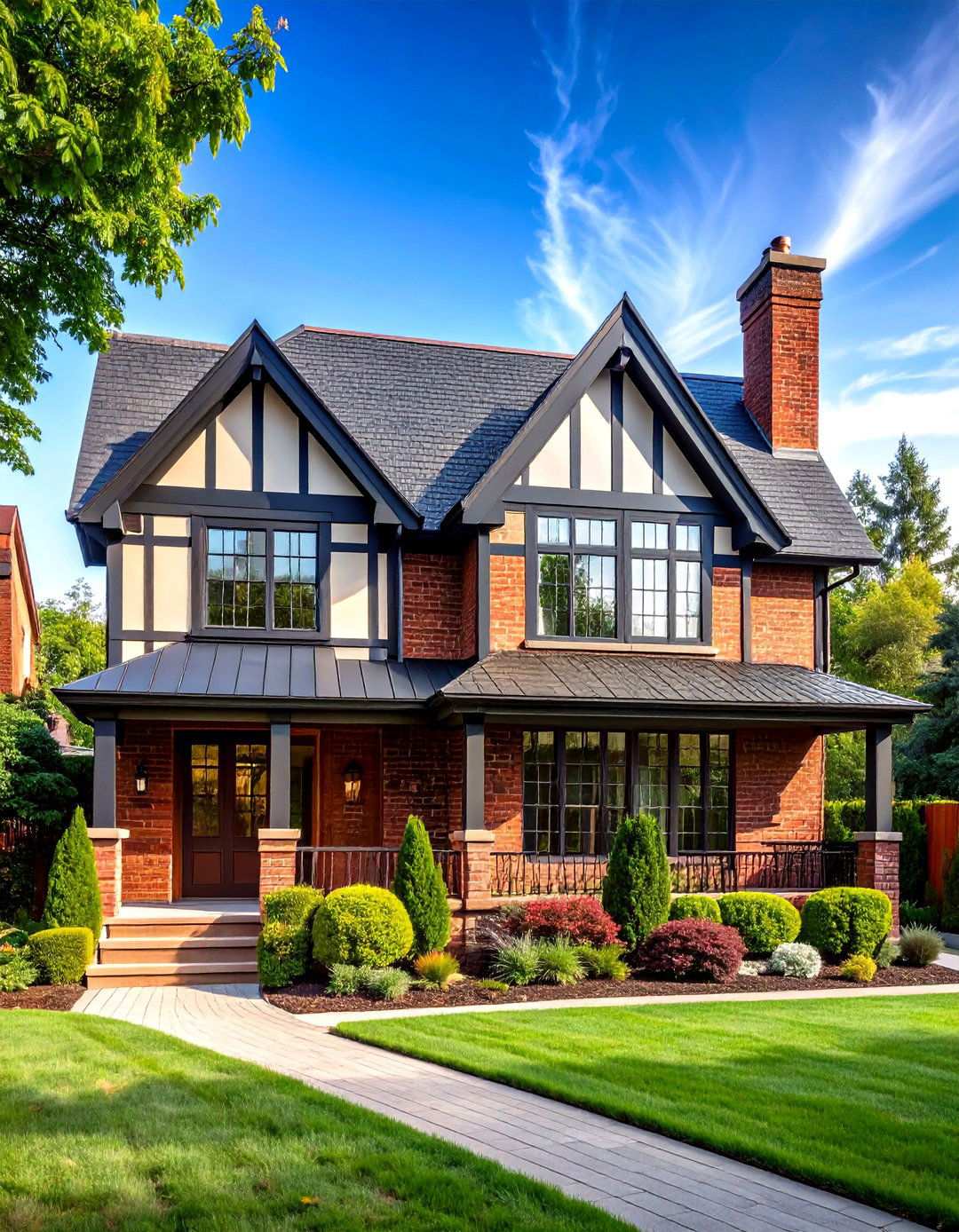
Natural stone takes center stage in this refined approach to Tudor design. Rather than traditional red brick, contemporary limestone or sandstone creates a sophisticated warmth across the lower level. The upper level features smooth stucco in coordinating warm white, while half-timbering receives subtle gray-brown staining instead of stark black paint. This palette feels fresh and current while honoring Tudor traditions. Large windows with bronze frames complement the stone’s natural tones, creating a harmonious balance between form and function. A standing seam metal roof in weathered bronze ties everything together beautifully, while copper gutters and downspouts add premium touches that age elegantly over time. The entry features a substantial wooden door with iron hardware, maintaining the style’s emphasis on quality materials and craftsmanship throughout every detail.
Blending Tradition with Industrial Elegance
Tudor homes can seamlessly integrate modern steel and glass elements to create a striking visual contrast. By incorporating steel window frames in a sleek charcoal finish, classic casement windows are given a contemporary edge. Large glass panels, which replace traditional half-timbering sections, fill interior spaces with an abundance of natural light while maintaining the exterior’s proportional balance. The use of contemporary gray masonry for the brick base sets a modern tone, while the warm white paint applied to stucco areas adds a touch of visual interest through subtle texture. The tension between new and old elements is heightened by a flat metal roof section above the main entry, which showcases the blend of modern and traditional materials. Steel beam detailing replaces some traditional timber work, providing a structural honesty that appeals to modern sensibilities. This approach demonstrates how Tudor homes can evolve by thoughtfully incorporating contemporary materials while respecting the style’s fundamental principles of massing and proportion.
4. Lightening Up the Tudor Aesthetic
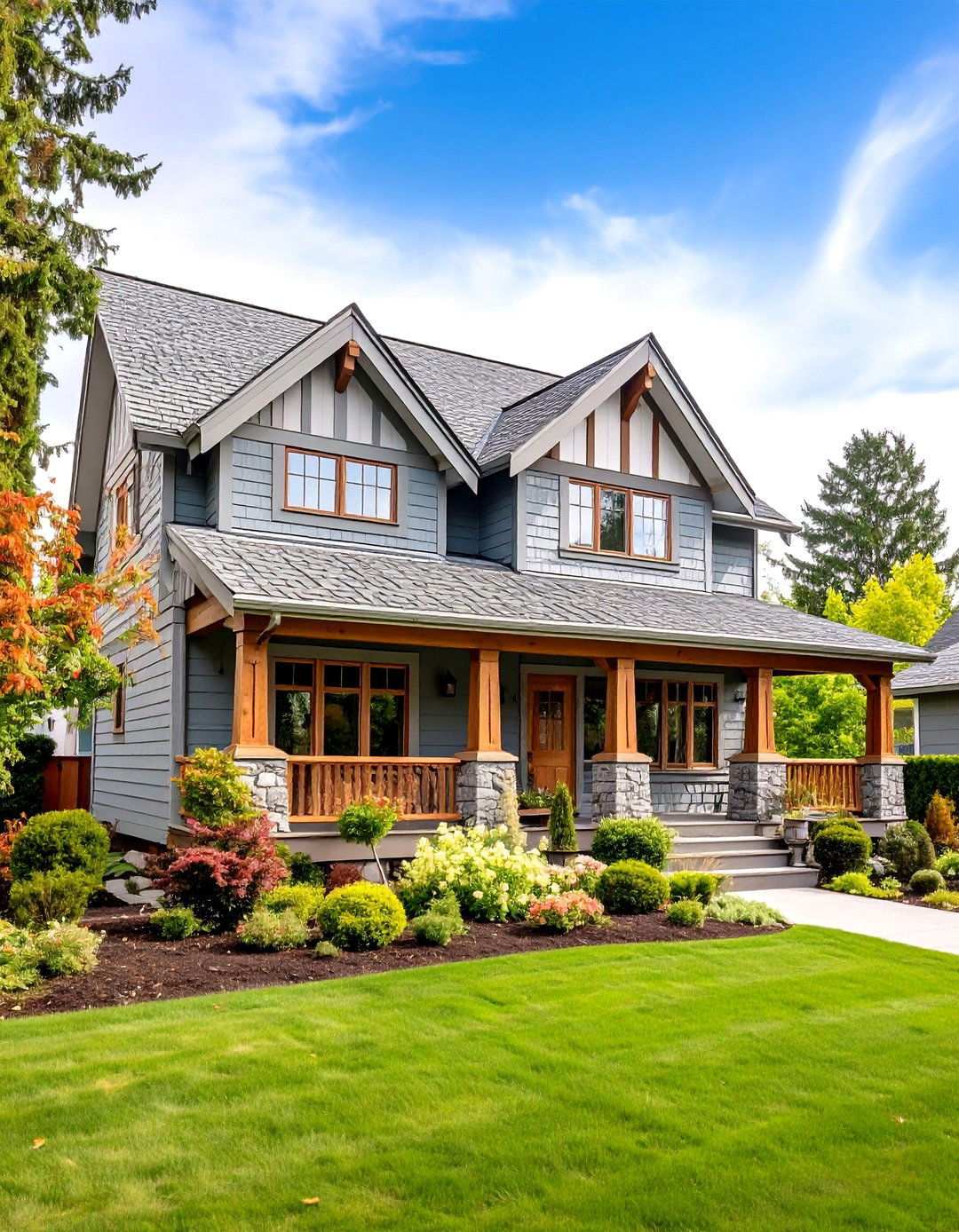
A Scandinavian-inspired color palette brings a fresh twist to traditional Tudor styling, featuring light gray stucco with crisp white trim. The half-timbering elements are painted in a soft sage green hue, deviating from the typical dark brown or black tones. This unexpected choice creates a sense of modernity while maintaining sufficient contrast against the light stucco fields. Natural wood window frames in a light oak finish complement the gentle color palette, adding warmth and depth. A metal roof in a soft charcoal finish completes the sophisticated scheme, while the simple planked door at the entry features sage green paint and minimal black iron hardware. The landscaping emphasizes native grasses and structured plantings to enhance the serene color story. This approach proves that Tudor styling can successfully incorporate lighter, more cheerful palettes while maintaining architectural authenticity and visual impact throughout the design composition.
5. Reviving Tradition through Contemporary Siding
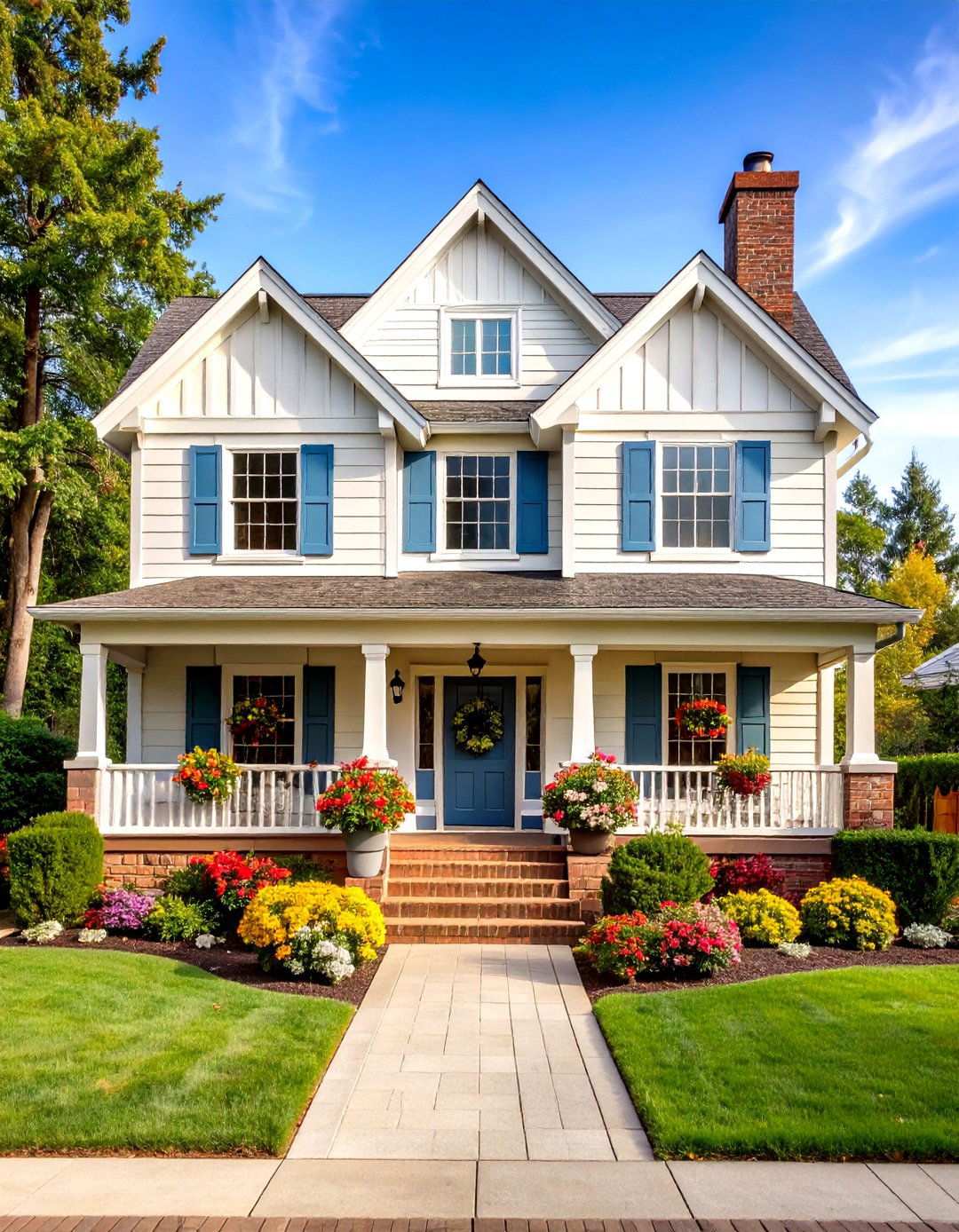
What happens when traditional stucco meets modern board and batten siding? This innovative approach replaces upper level stucco with vertical wood siding in soft white paint, creating a striking contrast with the lower level’s painted brick in warm cream tones. Half-timbering elements use darker gray stain, rather than traditional black paint, to create a more subtle contrast that feels current. Large black window frames provide definition without overwhelming the lighter palette. The steep roofline maintains authentic Tudor proportions, while metal roofing in deep gray adds contemporary performance and functionality. Cedar shingle accents at the gable peaks introduce natural texture, adding depth to the design. A substantial wooden front door with iron strap hinges maintains period authenticity, showcasing the style’s characteristic layered facade composition and architectural dignity. This material combination offers easier maintenance than traditional stucco while preserving the style’s architectural integrity.
6. Refining Classic Brick Tudor with Modern Touches
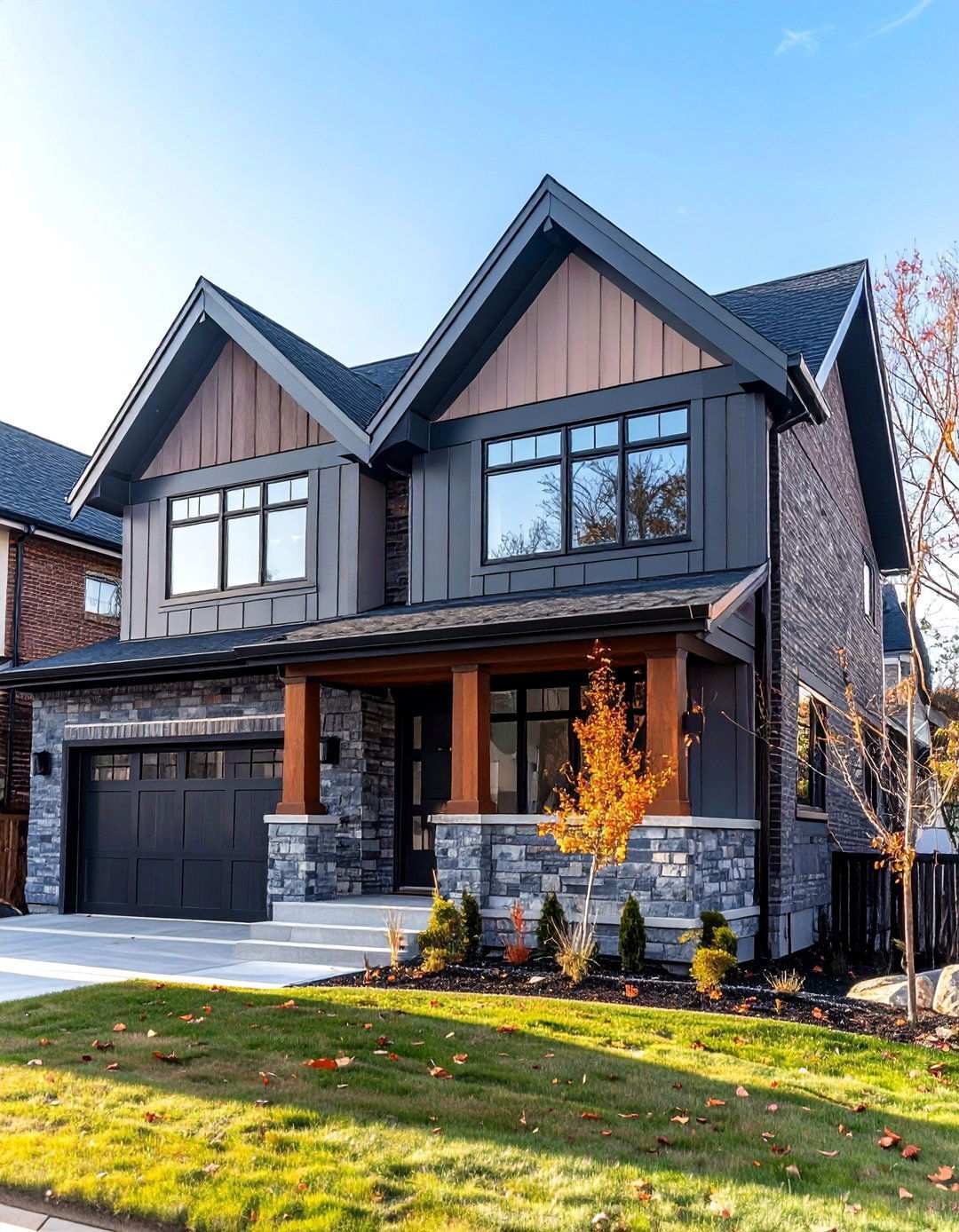
The traditional brick Tudor style has been reimagined with a focus on modern simplicity and premium materials. This updated design replaces the traditional red brick with smooth gray masonry featuring consistent mortar lines, creating a clean and sophisticated aesthetic. The upper level half-timbering has been reimagined using sleek aluminum panels in a charcoal finish, a departure from the traditional wood elements. Stucco sections boast perfectly smooth surfaces in warm white paint, while large steel-framed windows create grid patterns that pay homage to Tudor traditions while feeling thoroughly contemporary. By maintaining steep pitches and eliminating decorative bargeboards, the roofline achieves a cleaner silhouette. Copper fascia and gutters add premium material touches, while the front door features a modern planked design in natural walnut finish with minimal hardware. This approach effectively streamlines Tudor styling without compromising its essential character, creating homes that feel historically grounded yet completely current.
7. Blending Natural Elegance with Contemporary Flair
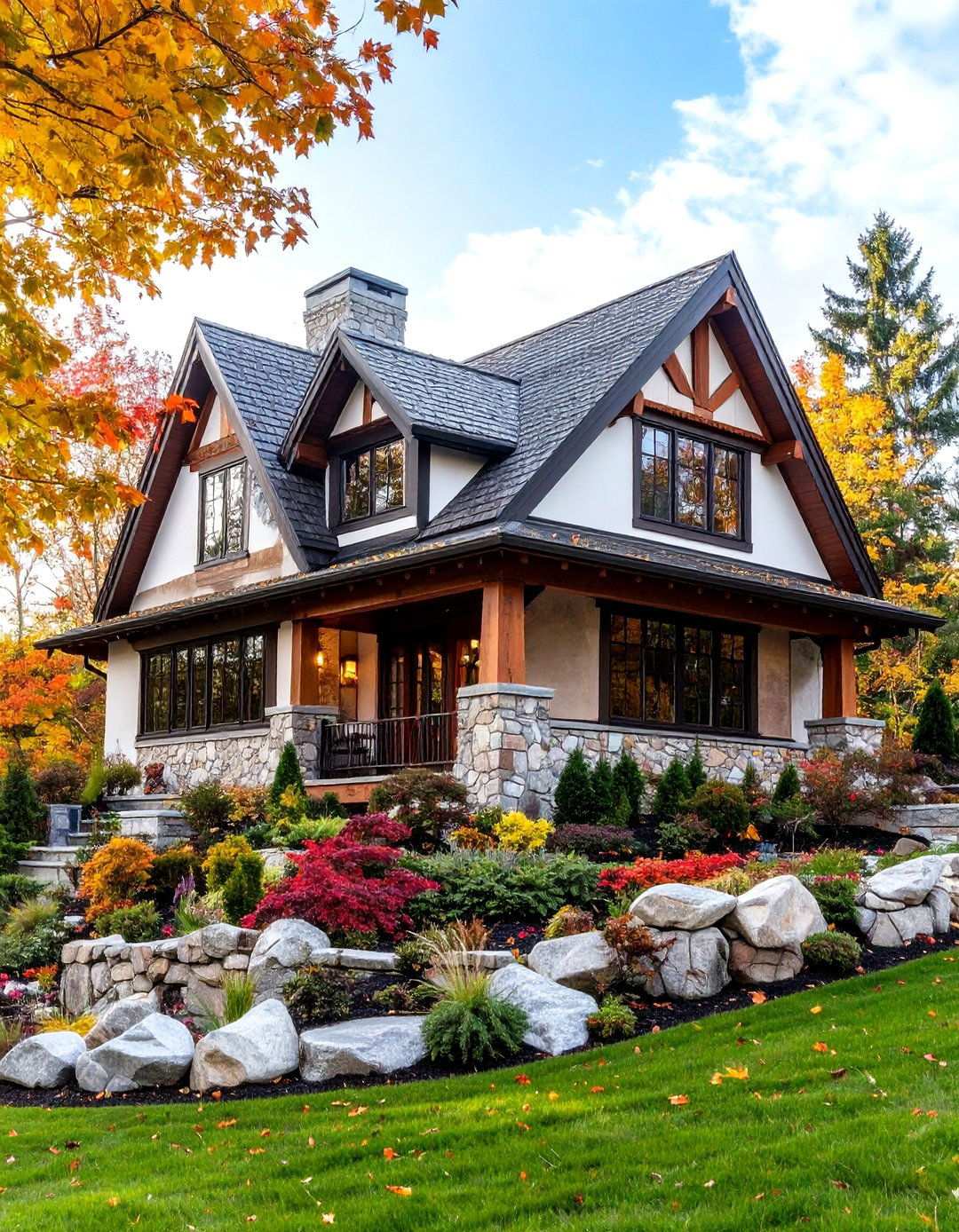
The marriage of natural fieldstone and contemporary detailing creates a compelling material contrast that sets this design apart. The lower level features rough-hewn stone in warm gray tones with deep shadow lines, while the upper sections utilize smooth stucco in a coordinating off-white shade. Half-timbering elements receive a weathered brown stain that complements the stone’s natural variations, adding a touch of authentic charm. Large wood-framed windows in dark bronze finish provide an authentic material choice, while cedar shake roof sections alternate with standing seam metal for visual texture. The entry showcases a massive reclaimed wood door with hand-forged iron hardware, a testament to the power of material selection and expert craftsmanship. Copper accent materials age naturally over time, blending seamlessly into the design. Native stone landscaping walls extend the material palette into site design, creating a cohesive and thoughtfully considered space.
8. Elevating Tudor Proportions with Modern Metal Accents
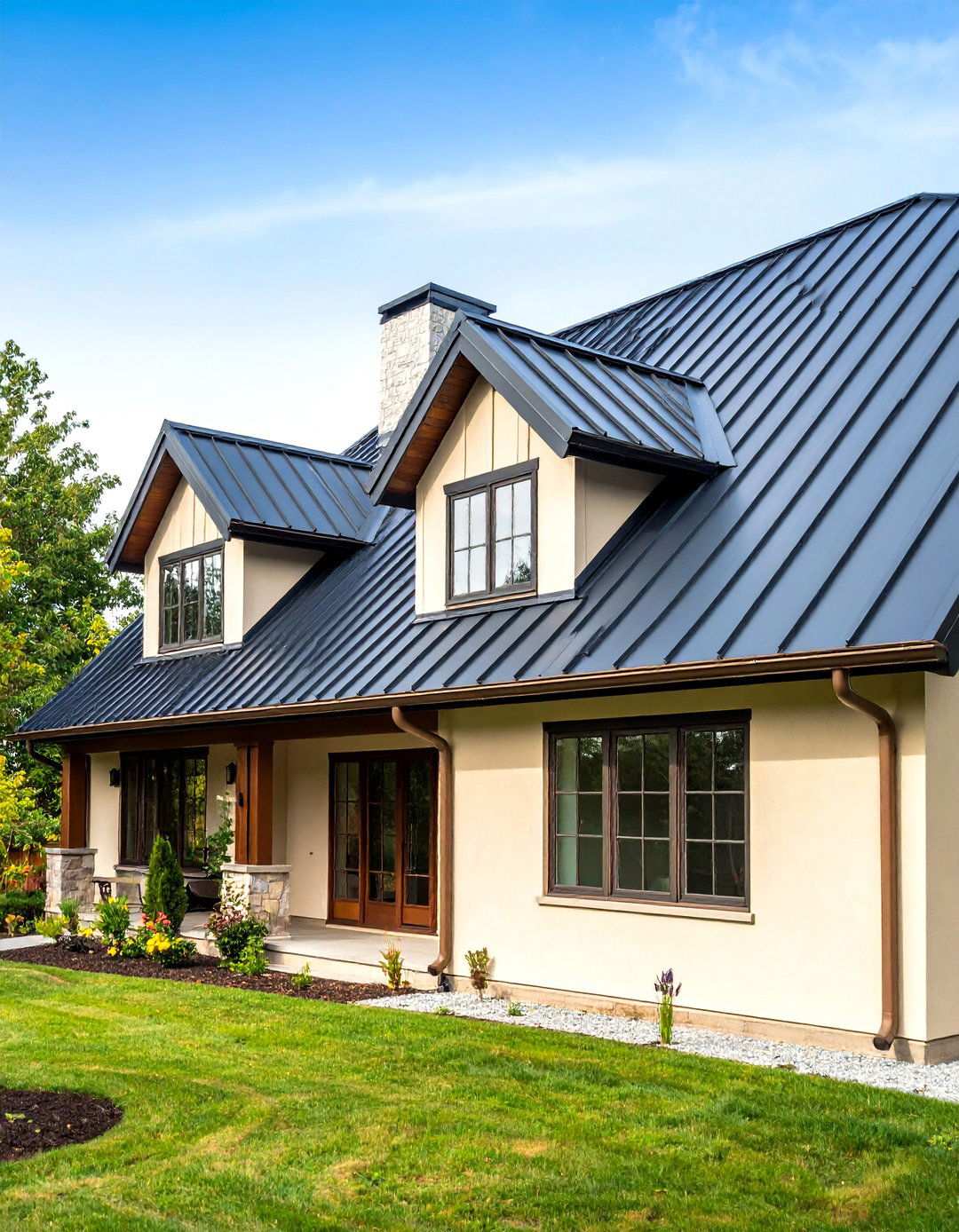
The introduction of standing seam metal roofing has transformed the traditional Tudor proportions, imbuing them with sleek contemporary lines. Dark charcoal metal provides a striking contrast to the cream stucco and warm gray half-timbering, creating a visually appealing and dynamic façade. The steep roof pitches maintain authentic Tudor character while metal materials offer superior performance and longevity. Large casement windows feature bronze frames that complement the metal roof finish, adding a touch of warmth and sophistication. The lower level brick receives painting in soft gray tones for cohesive color flow, while copper gutters and downspouts add a pop of color against the cool metal surfaces. The front door features natural wood planks with black iron hardware, a nod to traditional Tudor detailing. By thoughtfully integrating modern building technology, this design proves that contemporary elements can enhance rather than compromise traditional architectural styling.
9. Harmonizing Tudor Style with Modern Window Walls
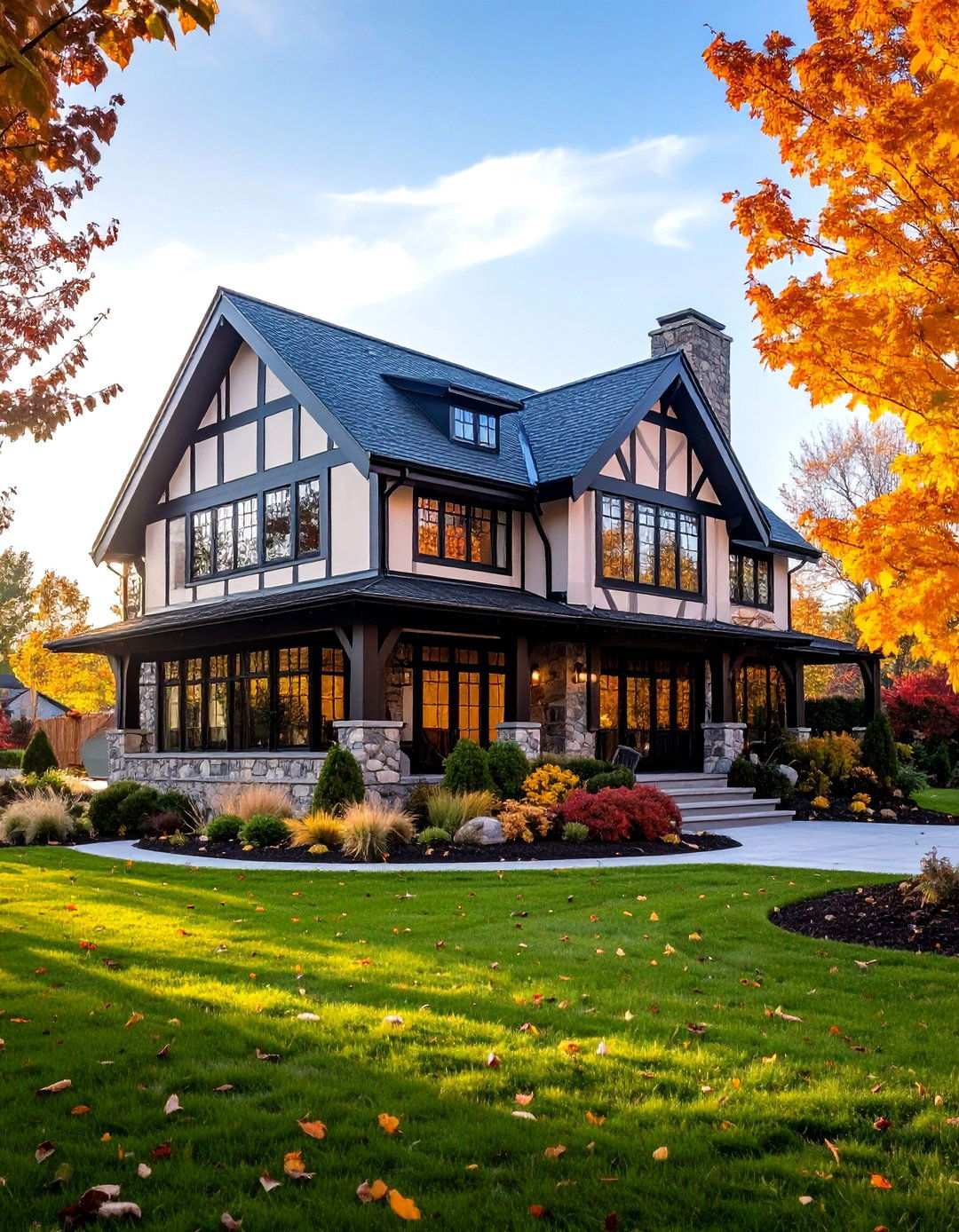
Innovative contemporary interpretations of traditional Tudor architecture skillfully integrate expansive glass surfaces within the classic proportions of this timeless style. Strategic placement of large window walls achieves a seamless balance between modern transparency and essential architectural elements. The half-timbering frames these glass expanses, creating a striking visual contrast between solid and void. By combining traditional materials like stone and stucco with contemporary glazing systems, designers can create a sense of weight and authenticity. The use of bronze-framed windows in vertical groupings cleverly nods to Tudor window proportions, while the steep roofline and prominent chimney maintain the style’s distinctive character. This approach demonstrates that Tudor homes can seamlessly blend modern transparency with their classic charm, resulting in a harmonious coexistence of old and new.
10. Bringing New Life to Tudor Homes with Painted Brick
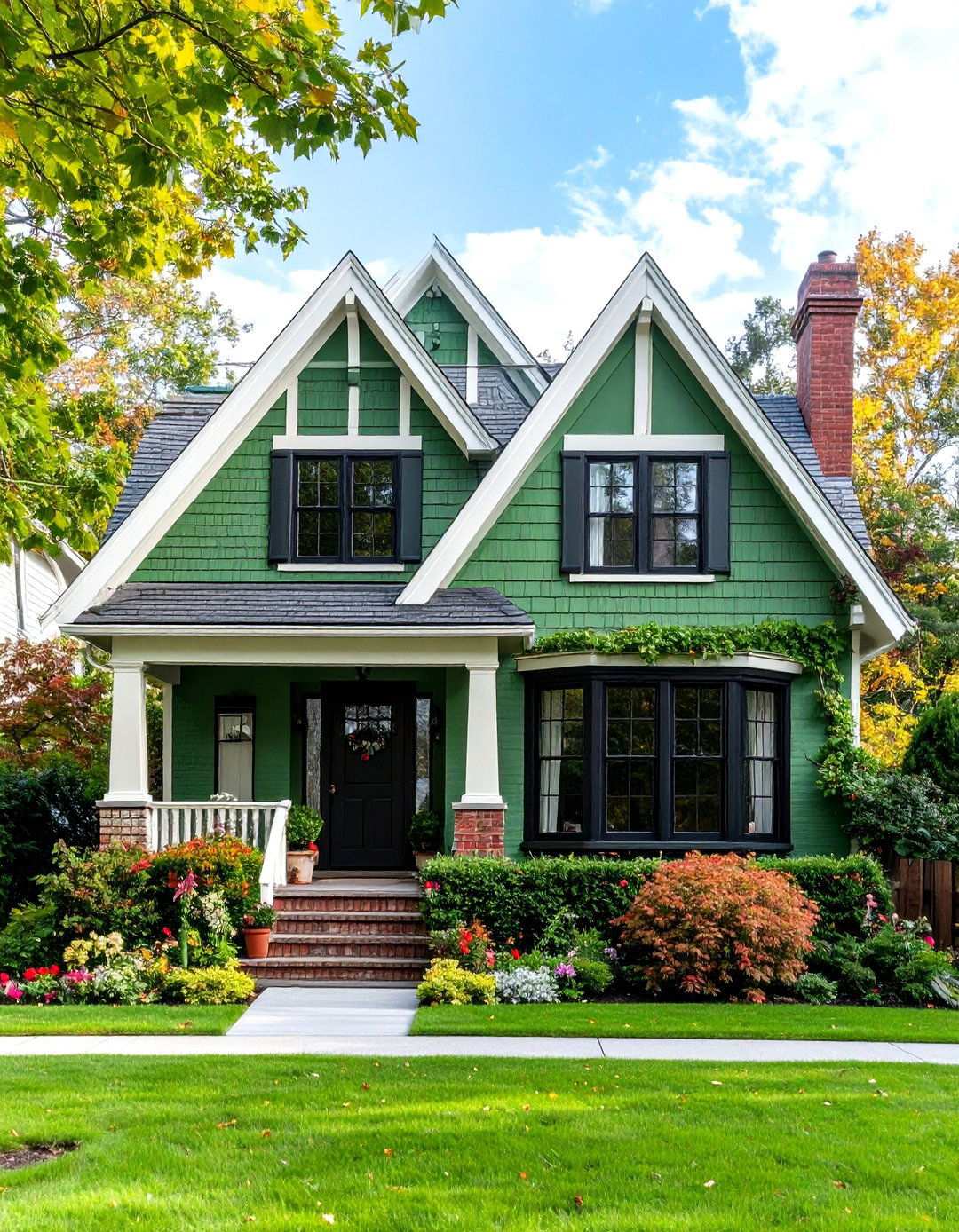
A fresh coat of paint can breathe new life into traditional red brick Tudor homes, transforming them into striking contemporary abodes. The unexpected sophistication of soft sage green brick paint against cream stucco sections is a testament to the power of color transformation. By matching the sage treatment to the half-timbering, designers create a subtle contrast that eschews the stark black lines of traditional half-timbering. Large windows with black frames provide crisp definition throughout the facade, while the traditional roof maintains its signature steep pitches. The addition of copper gutters adds a warm touch to the cool color palette, creating a beautiful visual harmony. A natural wood front door with bronze hardware completes the look, maintaining the Tudor authenticity that underpins this style.
11. Merging Industrial and Tudor Elements for a Unique Fusion Design
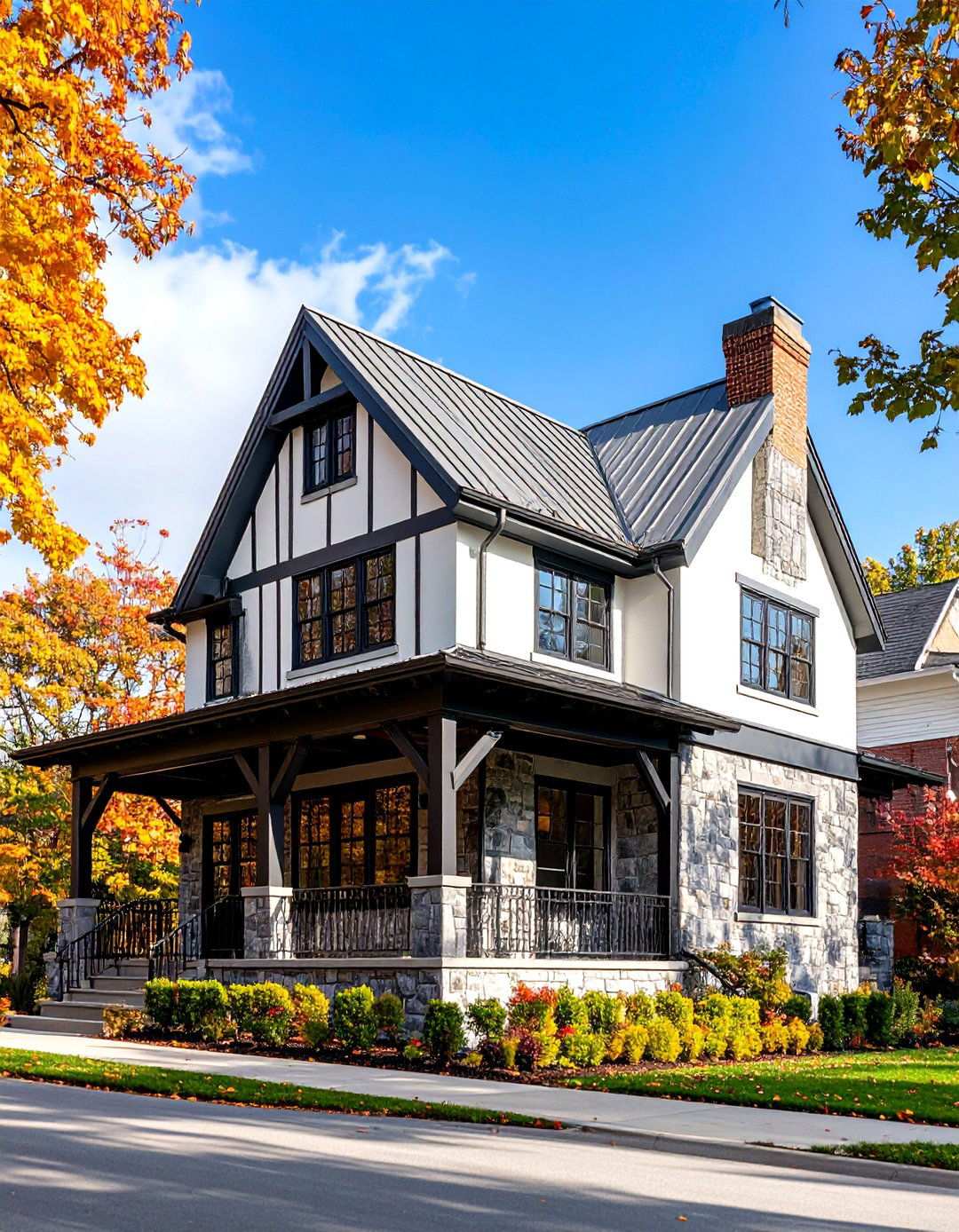
The blending of steel structural elements with traditional Tudor forms creates a unique and captivating urban aesthetic. In select locations, exposed steel beams replace traditional timber framing, adding an edgy industrial touch to the classic Tudor design. Large steel-framed windows create an industrial transparency within the proportions of the Tudor style, while the brick base takes on a contemporary gray masonry finish. Upper sections feature smooth stucco in a crisp white finish, providing a clean and modern contrast to the industrial steel. Metal roofing in dark charcoal adds a sleek, contemporary touch, while the entry features a steel and glass door with minimal hardware. This innovative fusion approach demonstrates how Tudor styling can seamlessly incorporate industrial materials, resulting in a design that speaks to modern construction methods while respecting traditional proportions and massing principles.
12. Coastal Tudor Reinvented with Durable Finishes

By combining weather-resistant materials with classic Tudor elements, homeowners can create a sophisticated coastal abode that withstands harsh marine environments. A light gray fiber cement siding, paired with crisp white trim, establishes a timeless maritime aesthetic. The use of composite materials in a driftwood gray finish for half-timbering ensures a durable and low-maintenance exterior. Oversized windows with white frames provide a striking contrast to the surrounding coastal scenery, while a metal roof in a sea-foam green hue adds a pop of color and enhances storm protection. The integration of composite decking and railings maintains a cohesive look, while the front door’s fiberglass construction in navy blue with bronze hardware adds a touch of sophistication. Natural cedar shingle accents inject authentic texture, underscoring the Tudor style’s adaptability in coastal environments.
13. Harmonious Blend of Tudor and Farmhouse Elements
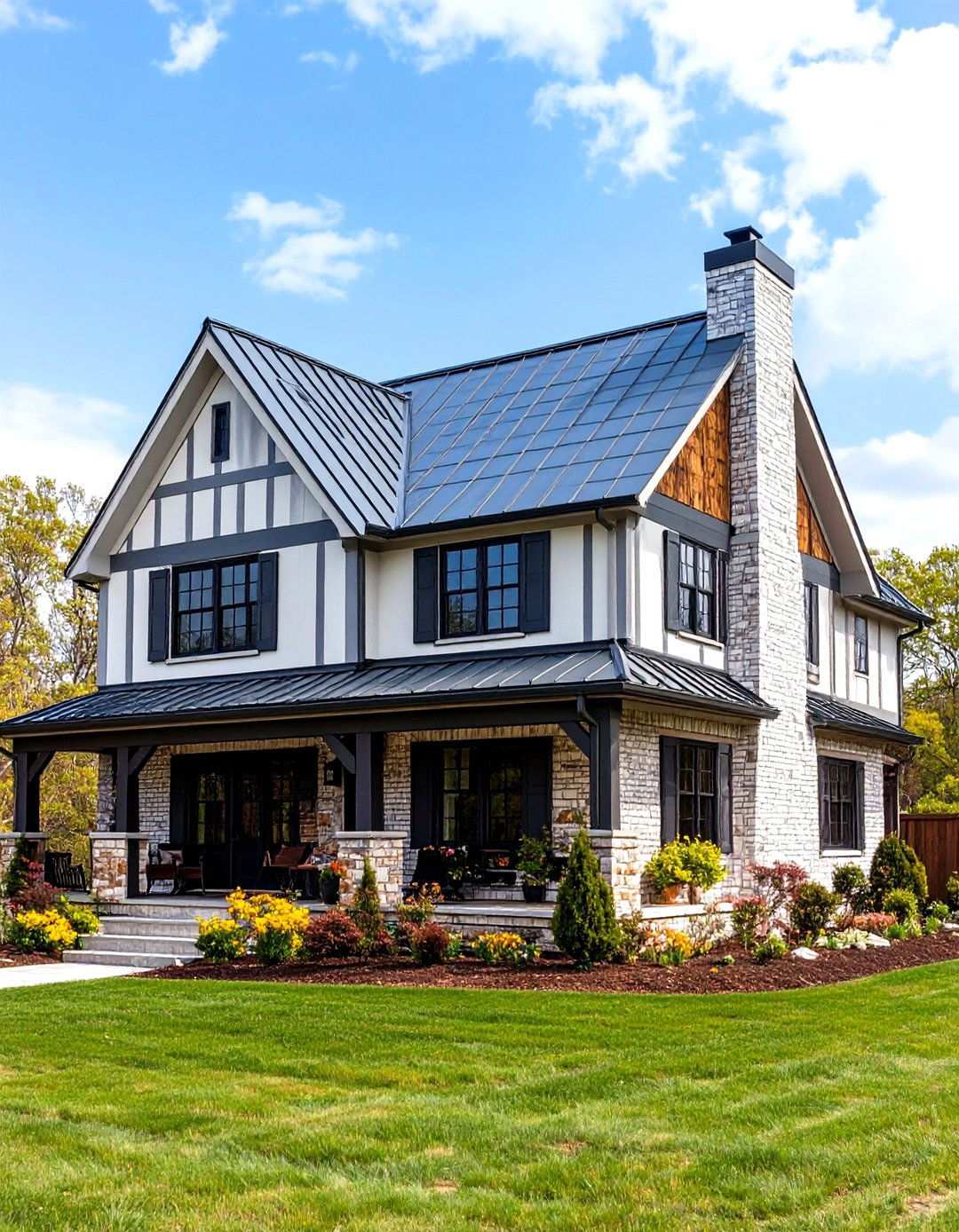
Can Tudor architecture be successfully merged with the simplicity of farmhouse styling? This innovative approach seamlessly combines the classic steep rooflines of Tudor with the rustic charm of a farmhouse. White painted brick adorns the lower level, while board and batten siding creates a striking contrast on the upper level. Subtly stained half-timbering in gray adds a touch of sophistication, whereas large black window frames provide a farmhouse-inspired authenticity within Tudor proportions. A standing seam metal roof in charcoal gray unifies both architectural influences, while a simple planked front door with black iron hardware adds a touch of approachable elegance. Wraparound porch elements, inspired by farmhouse traditions, maintain the Tudor mass and scale, creating a harmonious balance between the two styles.
14. Elevated Luxury in Tudor Design
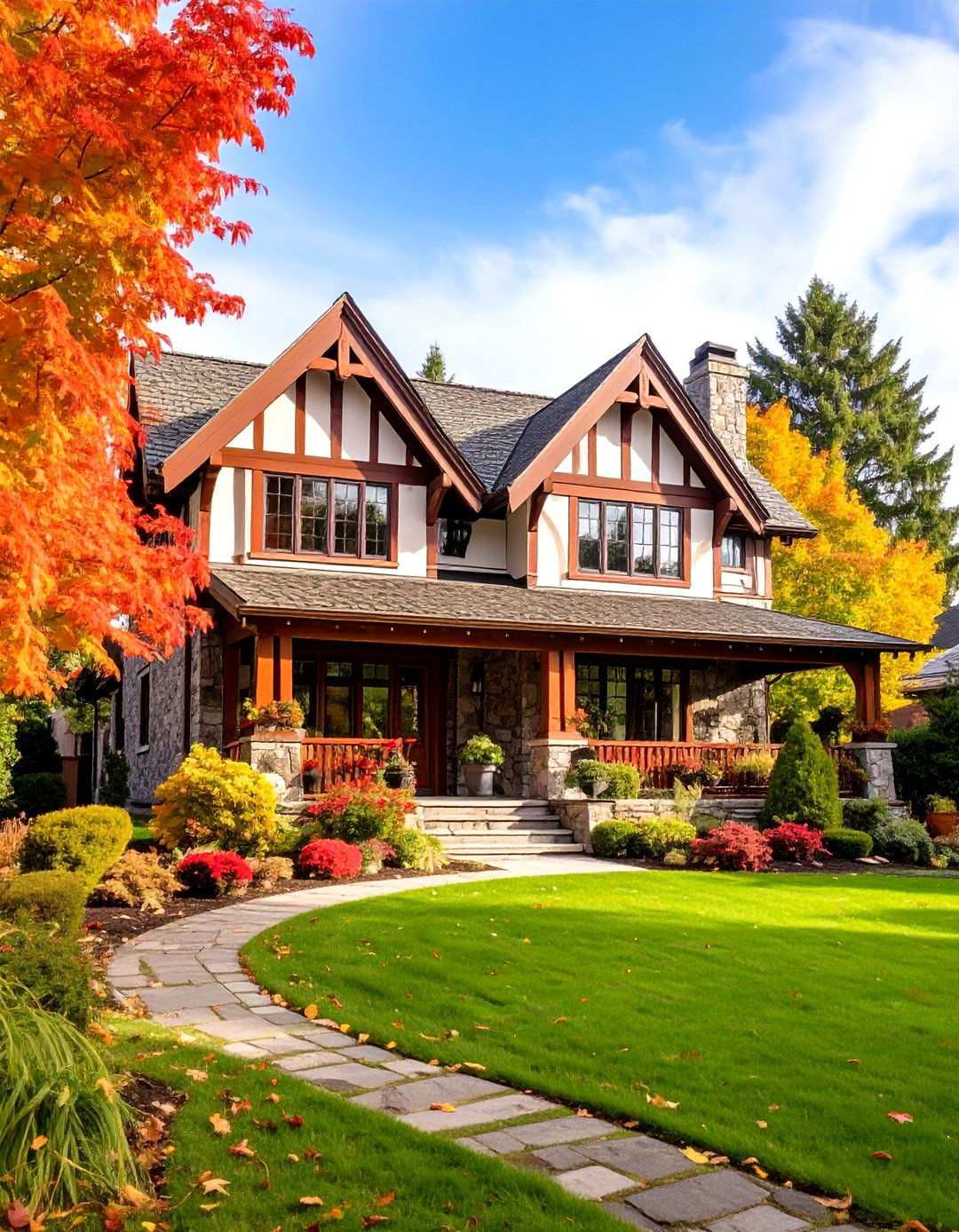
High-end materials have the power to transform Tudor architecture into a luxurious oasis. By incorporating natural limestone in place of traditional brick, homeowners can create a sophisticated and warm atmosphere. Custom copper half-timbering develops a stunning patina over time, while upper level stucco receives a lime wash finish, evoking authentic European character. Bronze-framed windows with divided lights and true muntins add a touch of elegance, while cedar shake roofing provides natural texture and premium weather protection. Hand-forged iron hardware throughout ensures period authenticity, while solid walnut doors with beveled glass panels create a striking entrance. Copper gutters and downspouts provide lasting beauty, and stone landscape walls extend the luxury experience into the site design. This approach showcases how careful material selection and expert craftsmanship can elevate Tudor styling to new heights while maintaining architectural authenticity.
15. Revamping Tudor Proportions for Modern Living
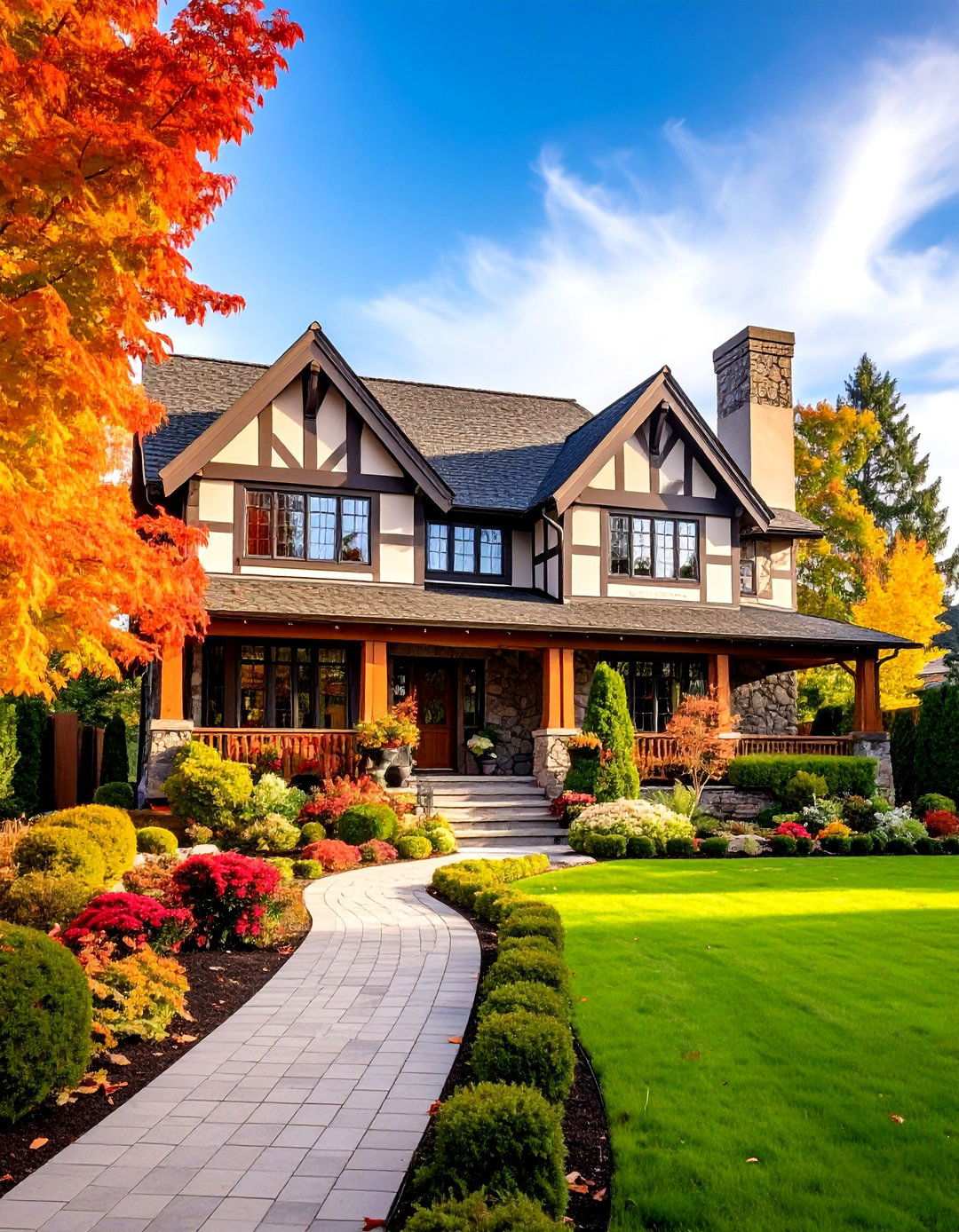
As contemporary home designers navigate larger lot sizes and shifting lifestyles, the traditional Tudor style has undergone a transformation. By scaling up classic elements, architects can now create spacious, modern living areas that maintain the vertical proportions of the original design. The incorporation of larger windows not only provides more natural light but also enhances the sense of transparency, allowing the outdoors to seamlessly blend with the indoors. Meanwhile, the timeless appeal of half-timbering remains unaltered, its authentic character preserved despite its adaptation to bigger wall surfaces. The judicious use of brick and stone materials in contemporary colors adds a touch of modernity, while the retention of traditional textures ensures that the architectural essence of the Tudor style remains intact. Steep rooflines, a hallmark of Tudor design, continue to evoke the era’s authenticity, even as modern homes expand their footprints. The strategic placement of multiple chimneys not only creates a striking visual effect but also emphasizes the massing characteristic of Tudor architecture. Oversized doors with traditional detailing, scaled to perfection, provide an elegant entryway that sets the tone for the expansive living spaces within. By thoughtfully adjusting proportions to accommodate contemporary needs, architects can confidently integrate Tudor styling into modern homes, ensuring that both family and architectural authenticity thrive.
16. The Power of Minimalism in Tudor Design

In the quest for a more streamlined look, homeowners are increasingly turning to the art of minimalist design. When applied to Tudor architecture, this approach yields a stunning visual effect, where complex details are distilled into a clean, monochromatic palette. By painting the entire facade a warm gray, the once-complex half-timbering now becomes a subtle texture, adding depth to the design without drawing attention away from the architectural form. The seamless integration of large windows, sporting matching gray frames, creates a sense of continuity that underscores the simplicity of the design. Metal roofing in identical gray completes the unified palette, creating a cohesive look that exudes a sense of modernity. A pop of color courtesy of the front door in deep navy blue provides a welcome respite from the monochromatic scheme. By stripping away decorative elements, this reductive approach highlights the essential architectural character of the Tudor home, allowing it to blend harmoniously with its surroundings. The result is a striking testament to the power of minimalism in Tudor design, one that effortlessly balances simplicity with historical authenticity.
17. Embracing Sustainable Materials in Tudor Architecture
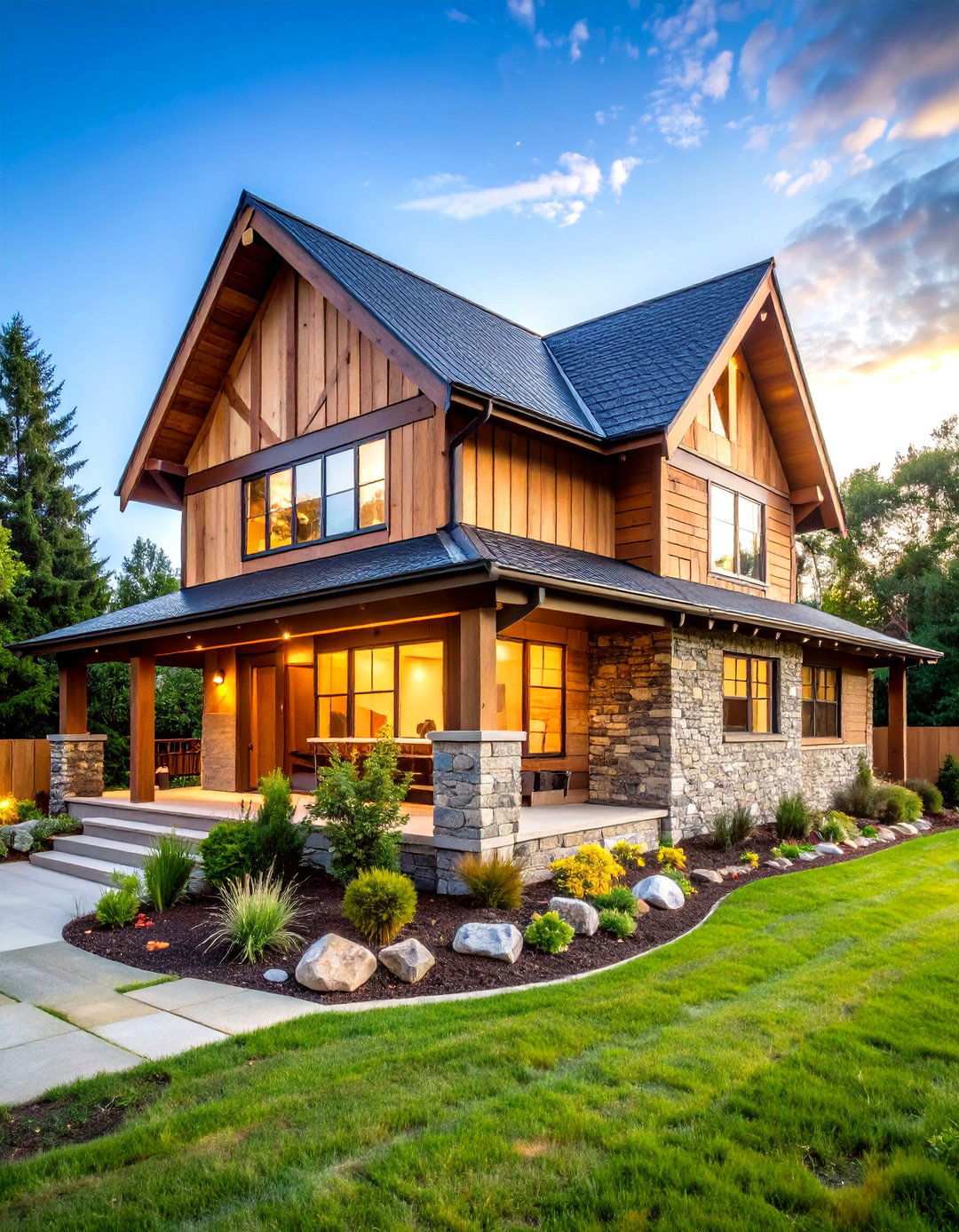
As environmentally conscious homeowners increasingly prioritize sustainability, architects are responding with innovative material choices that not only reduce the ecological footprint of Tudor homes but also enhance their architectural beauty. Reclaimed wood, with its unique texture and storied history, offers a compelling alternative to traditional half-timbering, imbuing the design with a sense of environmental responsibility. Recycled brick, meanwhile, creates authentic texture while boasting sustainable credentials, while low-maintenance fiber cement siding substitutes for traditional stucco requirements, ensuring that the home’s exterior remains pristine with minimal upkeep. Energy-efficient windows, scaled to preserve Tudor proportions, improve performance while maintaining the style’s characteristic vertical lines. The incorporation of solar roof tiles, which integrate renewable energy without compromising architectural authenticity, marks a significant step forward in sustainable design. Permeable paving materials, which support sustainable site design, reduce stormwater runoff while providing a durable, low-maintenance alternative to traditional materials. Native plant materials, meanwhile, offer a touch of seasonal interest while requiring minimal maintenance, ensuring that the home’s exterior remains visually appealing throughout the year. The front door, crafted from FSC-certified wood with low-VOC finishes, serves as a testament to the importance of environmentally responsible design choices. By embracing sustainable materials, architects can create Tudor homes that not only preserve their historical character but also contribute to a more eco-friendly built environment.
18. Updating the Tudor Entry with Contemporary Flair
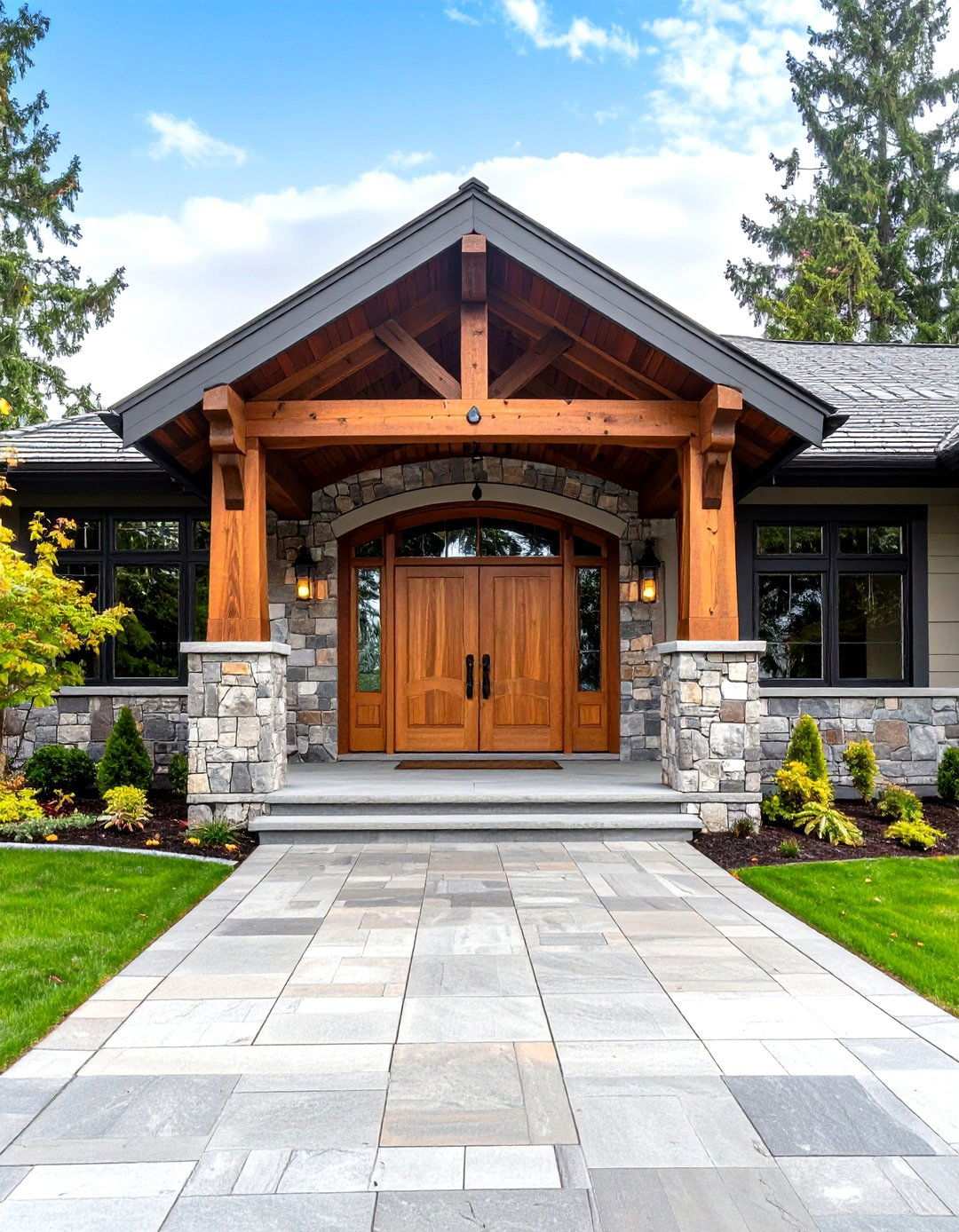
By giving the front entry a dramatic makeover, Tudor homes can maintain their character while embracing modern sophistication. Oversized arched door openings create striking scale and proportion, setting the tone for the rest of the design. The natural walnut doors feature contemporary hardware in a rich bronze finish, adding a touch of elegance to the space. Flanking windows with bronze frames bring in an abundance of natural light, while stone surrounds crafted from modern gray limestone introduce a fresh, contrasting element. The overhead structure’s steel beams and wood decking provide a striking material contrast, while integrated lighting highlights the architectural details with precision. Framing the entry sequence are large planters with structured landscaping, demonstrating how a single architectural element can be transformed to preserve the overall Tudor authenticity. Thoughtful updates can actually enhance a Tudor home’s natural sophistication and architectural dignity, rather than compromising its historical character.
19. Reimagining the Tudor Cottage for Modern Living
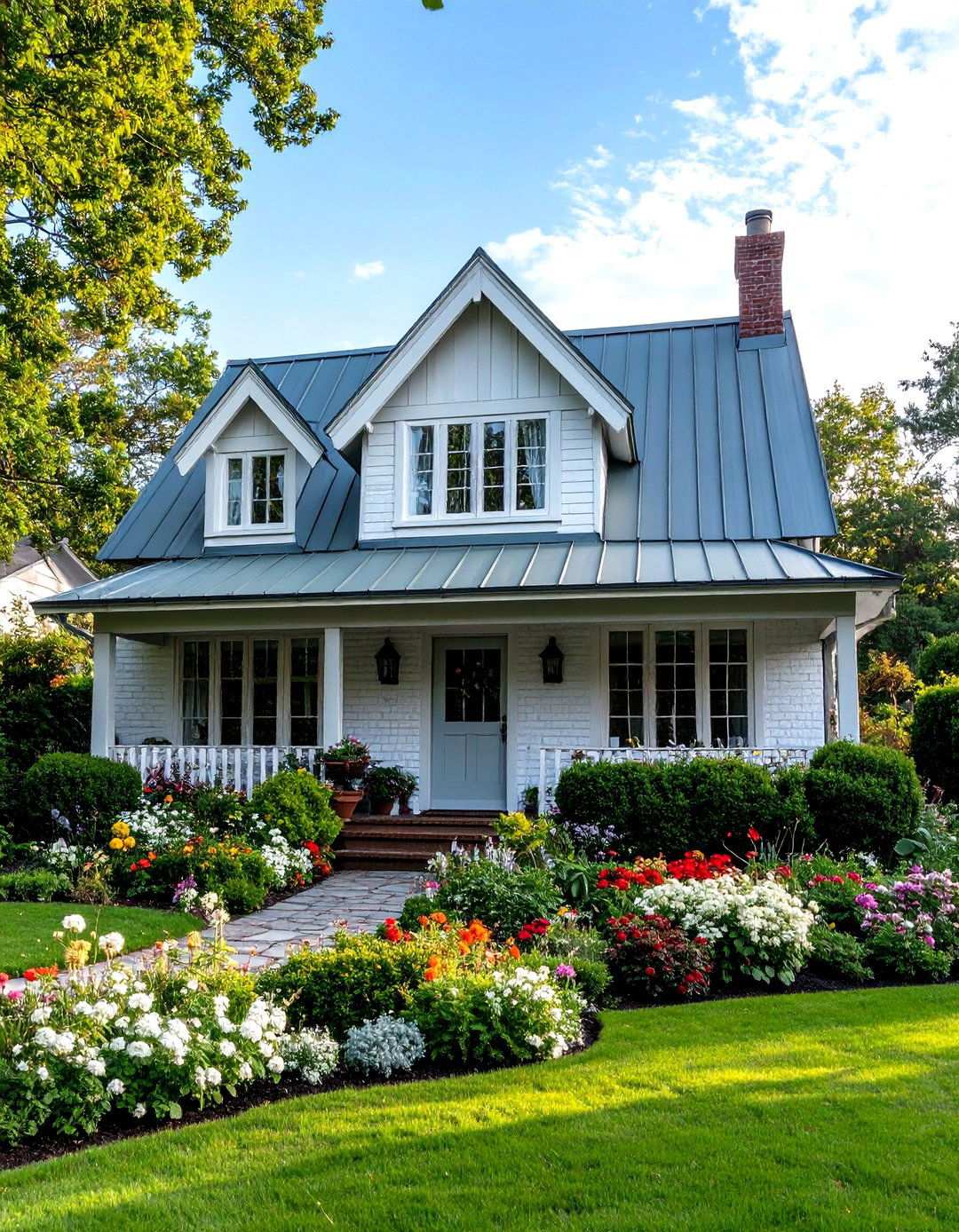
Smaller scale Tudor cottages can benefit from a contemporary facelift, incorporating modern materials to create a charming and inviting facade. White painted brick creates a clean and airy look, while half-timbering uses a light gray stain to add subtle contrast and depth. Casement windows with white frames maintain a cohesive color scheme, while a metal roof in a soft green hue adds a pop of color and maintains the cottage’s scale. The front door features natural wood planks with simple black hardware, creating a warm and welcoming entrance. Window boxes and cottage gardens enhance the intimate scale, proving that Tudor styling can be adapted to smaller scales with ease. By incorporating modern materials and proportions, contemporary cottage living can benefit from the inherent charm of Tudor design while enjoying improved performance and reduced maintenance requirements.
20. Elevating the Tudor Chimney with Modern Materials
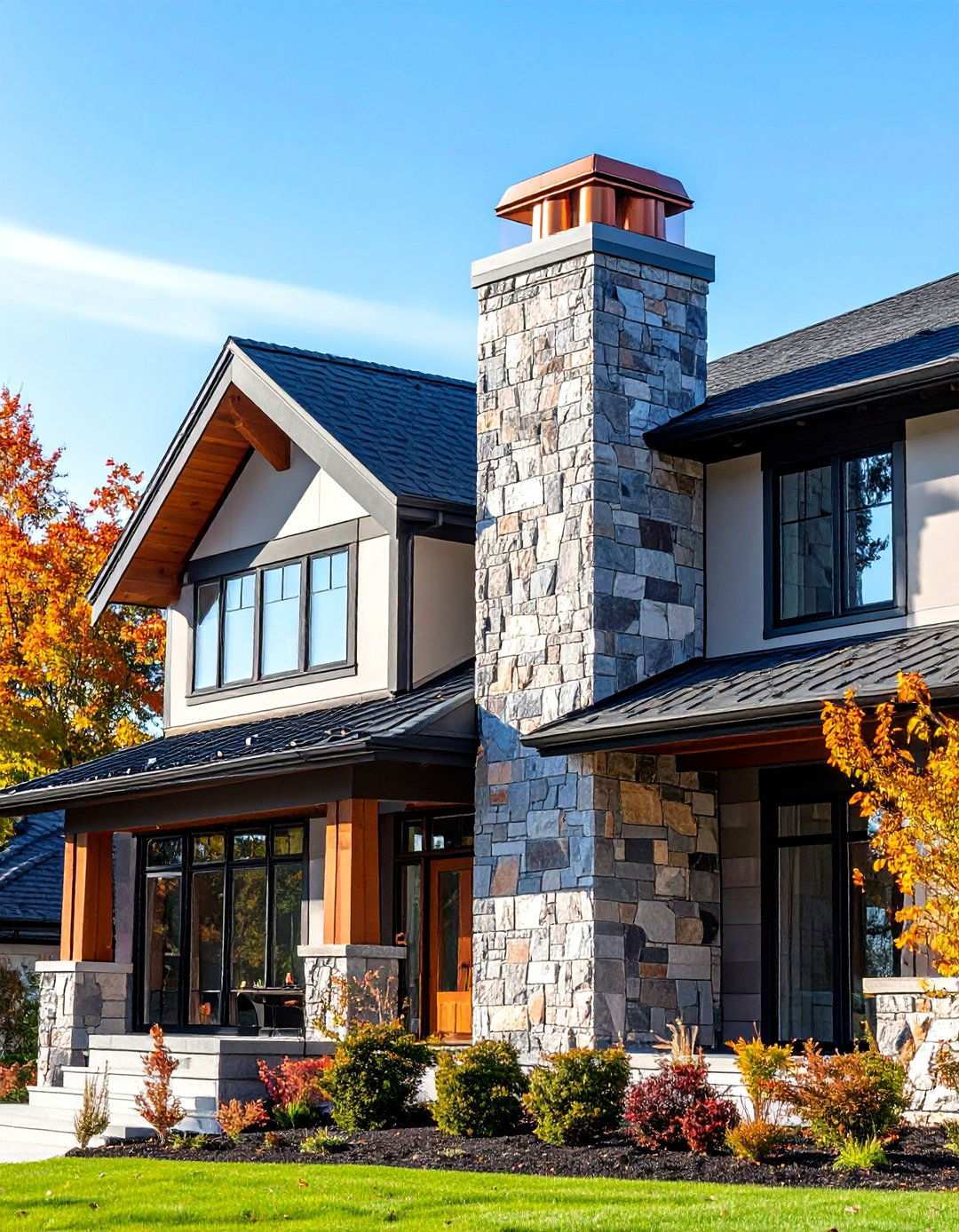
Prominent chimneys can be given a fresh new look while maintaining their traditional proportions, thanks to modern materials and thoughtful design. Natural stone construction uses contemporary gray limestone with clean mortar lines, creating a sleek and sophisticated appearance. Multiple flue configurations add authentic Tudor massing and architectural interest, while copper caps and spark arrestors provide functional beauty that ages beautifully over time. The surrounding facade materials are carefully coordinated to create a consistent color palette and complementary textures. Large windows maintain vertical emphasis around the prominent chimney elements, demonstrating how individual architectural features can be modernized while preserving essential Tudor character. By integrating contemporary fireplace technologies with traditional exterior expressions, homeowners can enjoy both functional improvement and enhanced architectural beauty throughout the design composition.
21. Timeless Window Design Revival
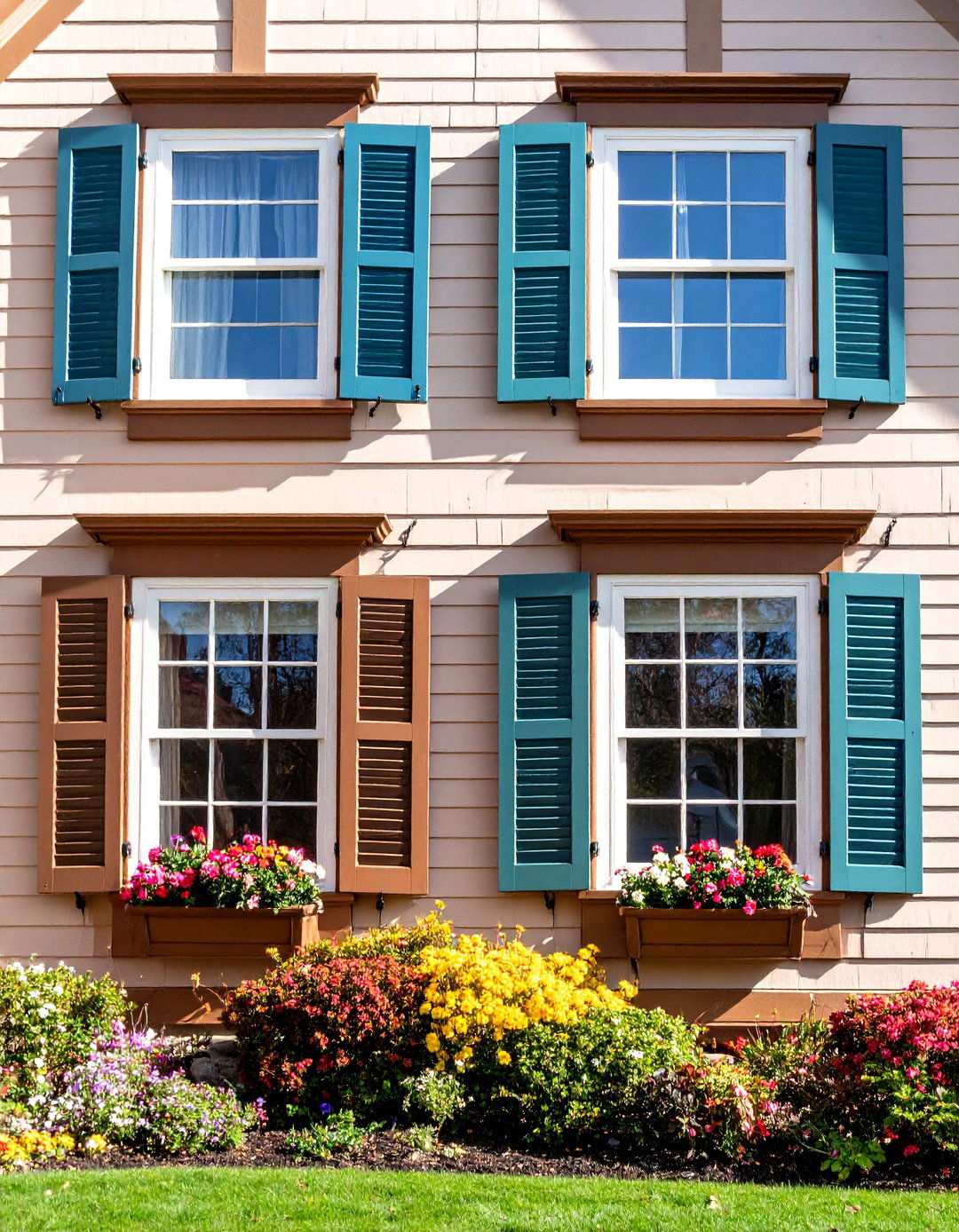
Incorporating traditional elements with modern functionality, contemporary windows evoke the classic charm of Tudor architecture. Bronze-framed casement windows boast true divided lights, recreating an authentic look and feel. By combining larger glass sizes with traditional proportional systems, these windows achieve a perfect balance between modern transparency and historical elegance. The use of composite materials for trim details ensures durability without compromising the appearance of wood. Strategically arranged window groupings create a vertical emphasis that is quintessential to Tudor styling. Furthermore, interior storm systems provide energy efficiency while preserving the exterior’s architectural integrity. This thoughtful approach demonstrates how architectural elements can be updated while maintaining their historical authenticity, ultimately benefiting modern families with improved comfort and efficiency.
22. Evolved Tudor Landscaping Strategies
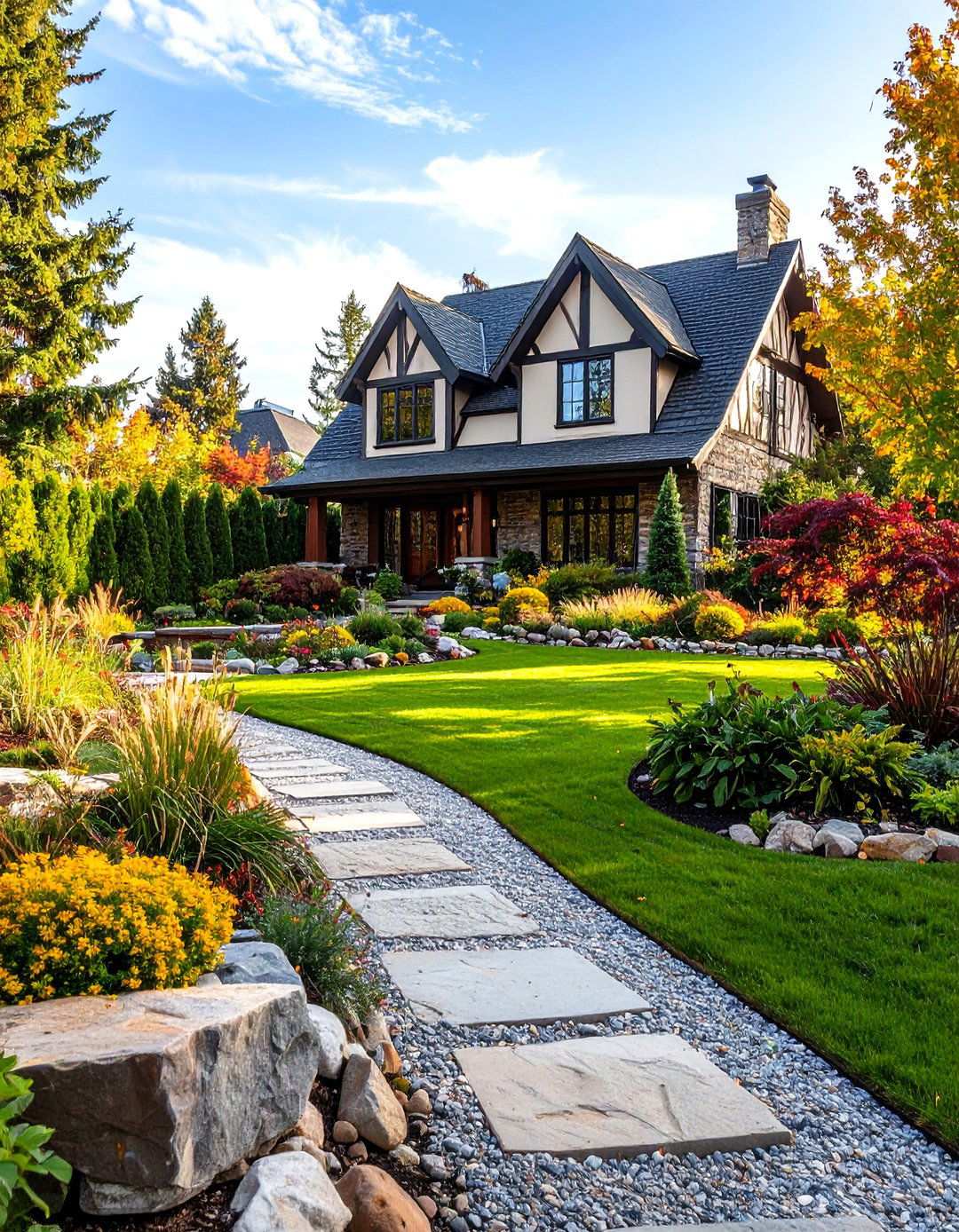
Landscape design plays a crucial role in extending the aesthetic and themes of Tudor architecture into the surrounding site. A well-designed landscape incorporates structured plantings that mirror the period’s emphasis on geometric order and formal composition. Native stone materials are used to create retaining walls and garden borders that harmonize with building materials, creating a cohesive look. The strategic placement of evergreen trees provides year-round structure, while seasonal plantings add a pop of color. Gravel pathways with stone borders maintain the formal character of the landscape while offering practical functionality. By incorporating architectural plant materials into the front garden, a sense of structured beauty is achieved. This integrated approach showcases how landscape design can enhance the overall aesthetic of a Tudor home rather than competing with it. By drawing inspiration from historical precedents and incorporating modern plant selections, contemporary site planning can benefit from improved environmental performance and reduced maintenance requirements.
23. Harmonious Tudor Color Schemes
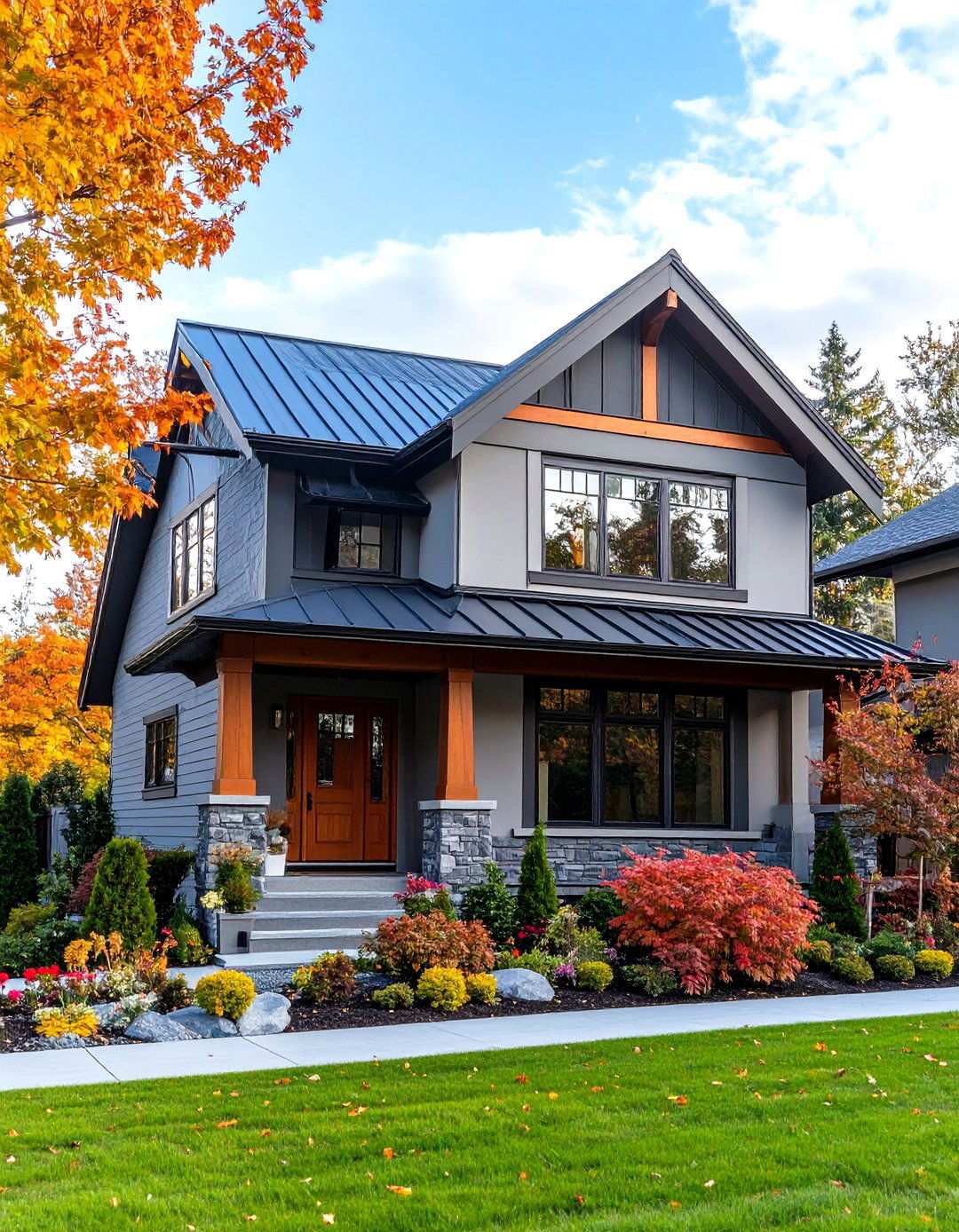
Sophisticated color palettes are used to unify all exterior elements of a Tudor home, creating a contemporary and cohesive look. Warm gray stucco is paired with matching trim and window frames to create a seamless appearance. Half-timbering is given a slightly darker gray treatment to provide a subtle definition without harsh contrast. Metal roofing in coordinating charcoal completes the monochromatic scheme beautifully, creating a sense of visual unity. Only accent materials like copper gutters and natural wood doors provide a touch of warm color relief. This restrained approach emphasizes the architectural form over decorative color contrast, creating a sense of sophistication. Contemporary color theory suggests that unified palettes can create a more striking visual impact than traditional high-contrast schemes. By adopting this strategy, Tudor homes can seamlessly incorporate current design sensibilities while maintaining their essential architectural character and historical authenticity.
24. Blending Tradition and Innovation in Tudor Design
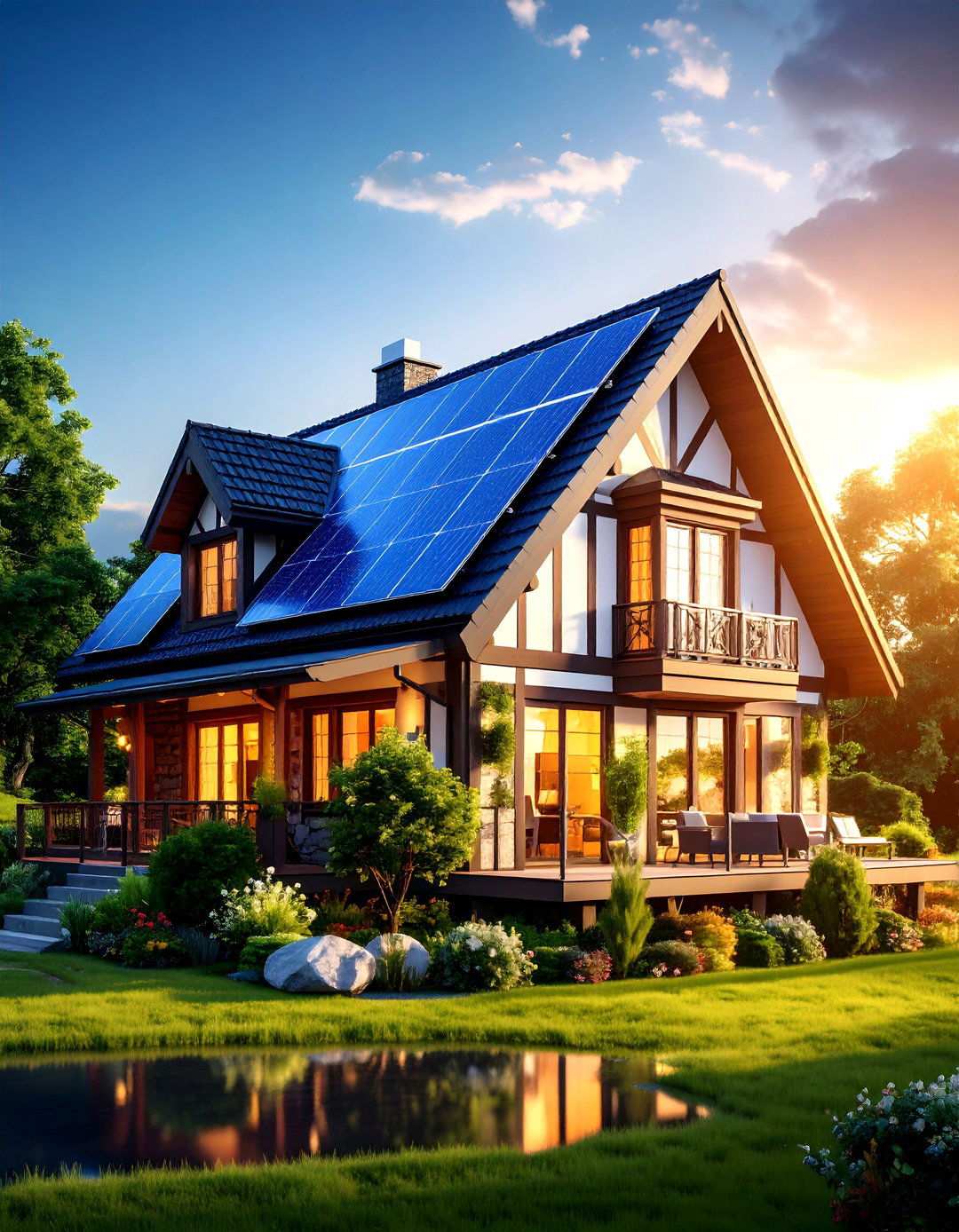
By thoughtfully merging cutting-edge technology with timeless Tudor architecture, homeowners can create a harmonious balance of past and present. Advanced solar panels are skillfully concealed to preserve the classic lines of the roof, providing a sustainable source of energy that seamlessly integrates with the existing design. The incorporation of smart windows allows for effortless automation, all while maintaining the traditional casement styling that defines this iconic architectural style. Integrated security systems offer cutting-edge protection while respecting the historical character of the property, ensuring that both form and function are preserved. High-performance materials not only enhance the durability and efficiency of the home but also maintain an authentic appearance that is true to the original design. The thoughtful integration of LED lighting systems highlights the intricate architectural details without sacrificing the traditional look and feel of the home. This innovative approach to Tudor design demonstrates how homeowners can successfully blend the best of both worlds – technological advancement and timeless beauty – to create a truly unique living space.