1. Modern Farmhouse Kitchen Slate Floors
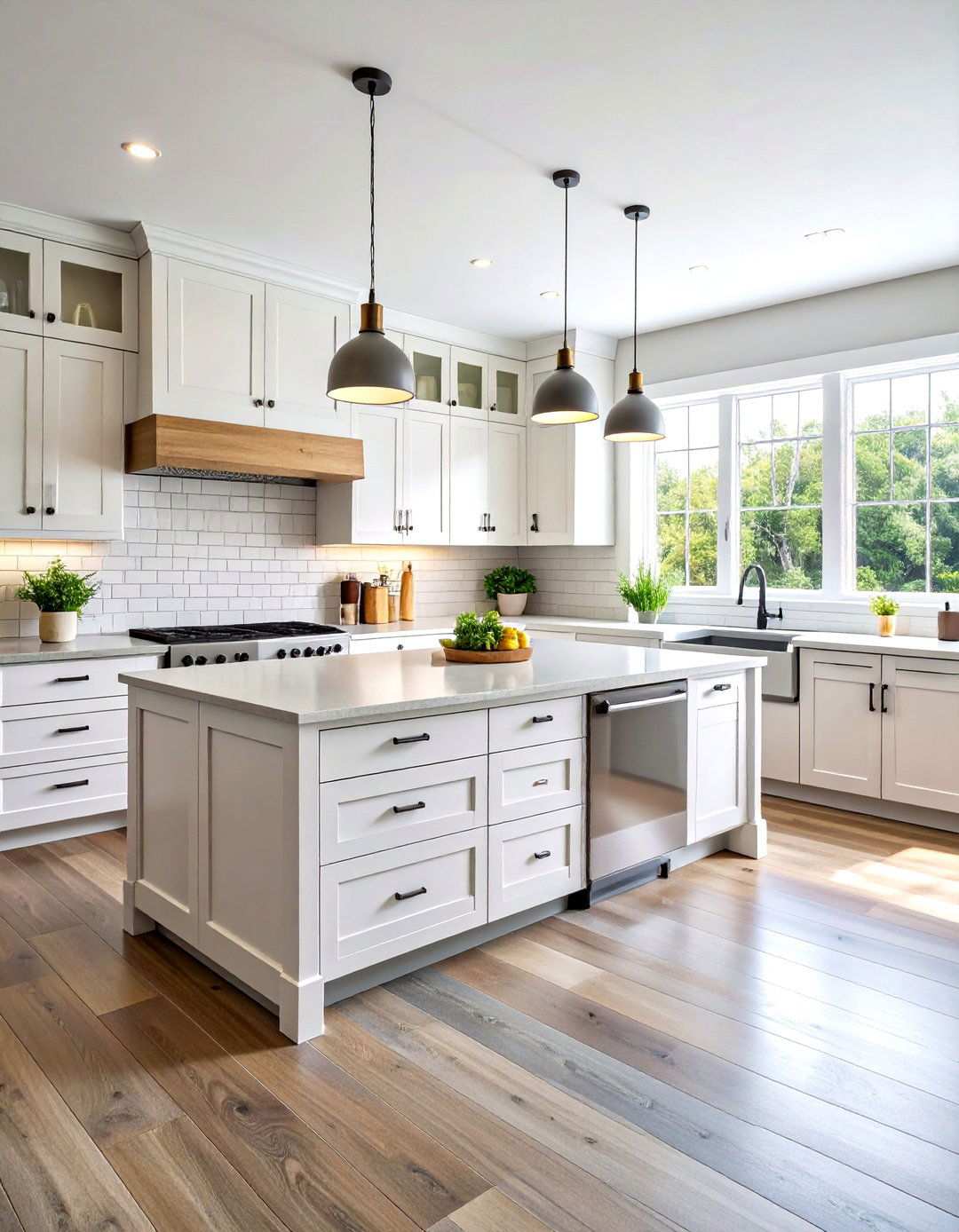
A modern farmhouse kitchen’s aesthetic is elevated by slate flooring, which seamlessly blends rustic charm with contemporary functionality. Light gray slate tiles create a striking contrast with crisp white shaker cabinets and subway tile backsplashes, redefining the classic country look for a fresh, modern spin. The unique texture variations in slate add visual interest without overpowering the clean lines that define modern farmhouse design. These floors pair perfectly with butcher block countertops and vintage-inspired fixtures, while their exceptional durability withstands the demands of family life. The slate’s versatile neutrality provides an ideal backdrop for seasonal decorating changes, allowing homeowners to refresh their space with different accessories while maintaining the timeless appeal that defines this style.

As an Amazon Associate I earn from qualifying purchases.
2. Industrial Style Kitchen Slate Flooring
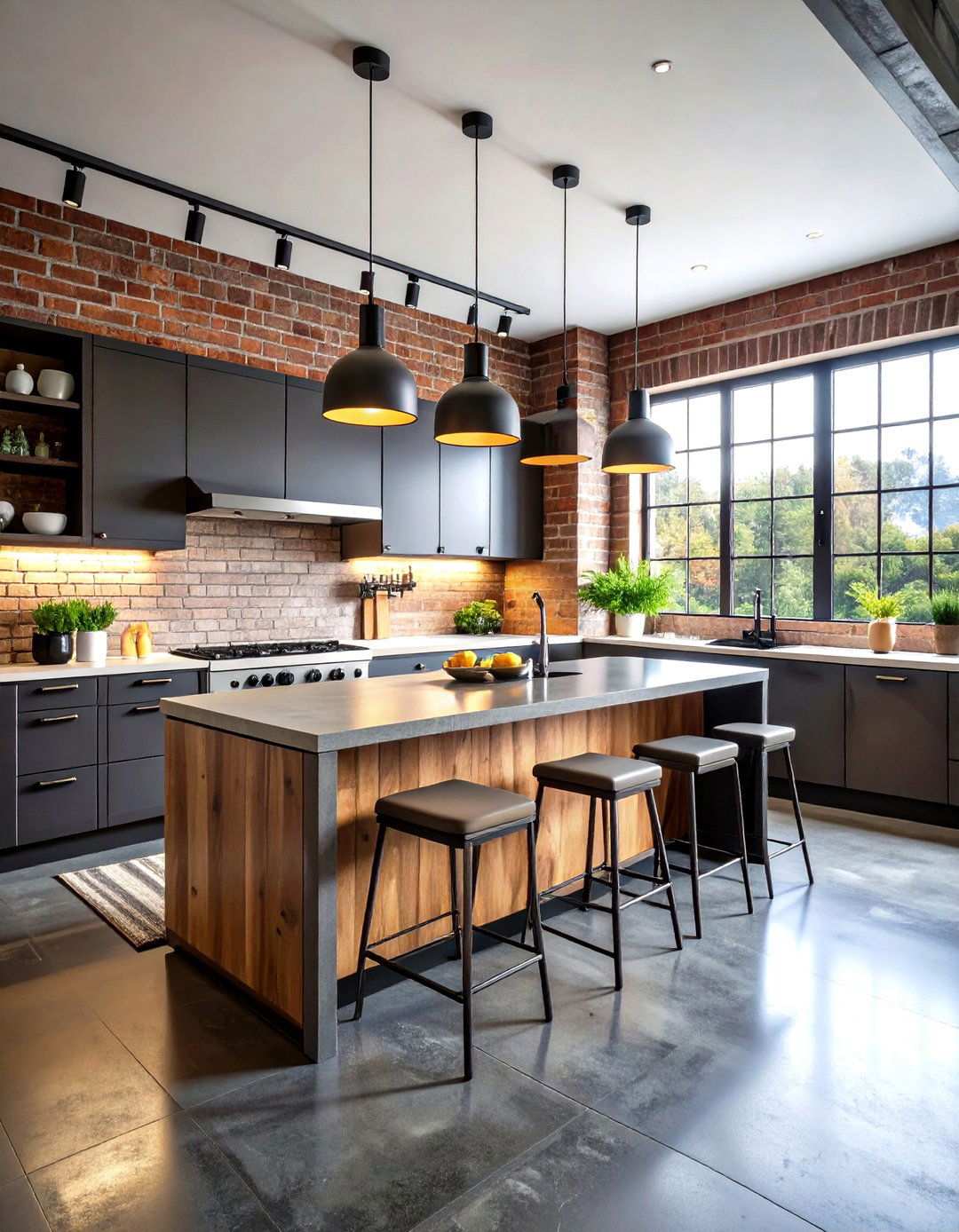
Industrial kitchen designs reach new heights with dark slate flooring, which expertly amplifies the raw, urban aesthetic. Charcoal and black slate tiles create a dramatic visual dialogue with exposed brick walls, steel fixtures, and concrete countertops, resulting in a space that exudes functionality and edginess. The matte finish of slate perfectly complements the utilitarian elements typical of industrial style, including metal bar stools, pendant lighting, and open shelving systems. Large format slate tiles minimize grout lines, contributing to the clean, uninterrupted surfaces that define this design approach. The stone’s natural durability aligns seamlessly with the industrial ethos of functionality over ornamentation, while its subtle color variations add depth and character to spaces that might otherwise feel stark or cold.
3. Elevating Tradition with Gray Slate Floors
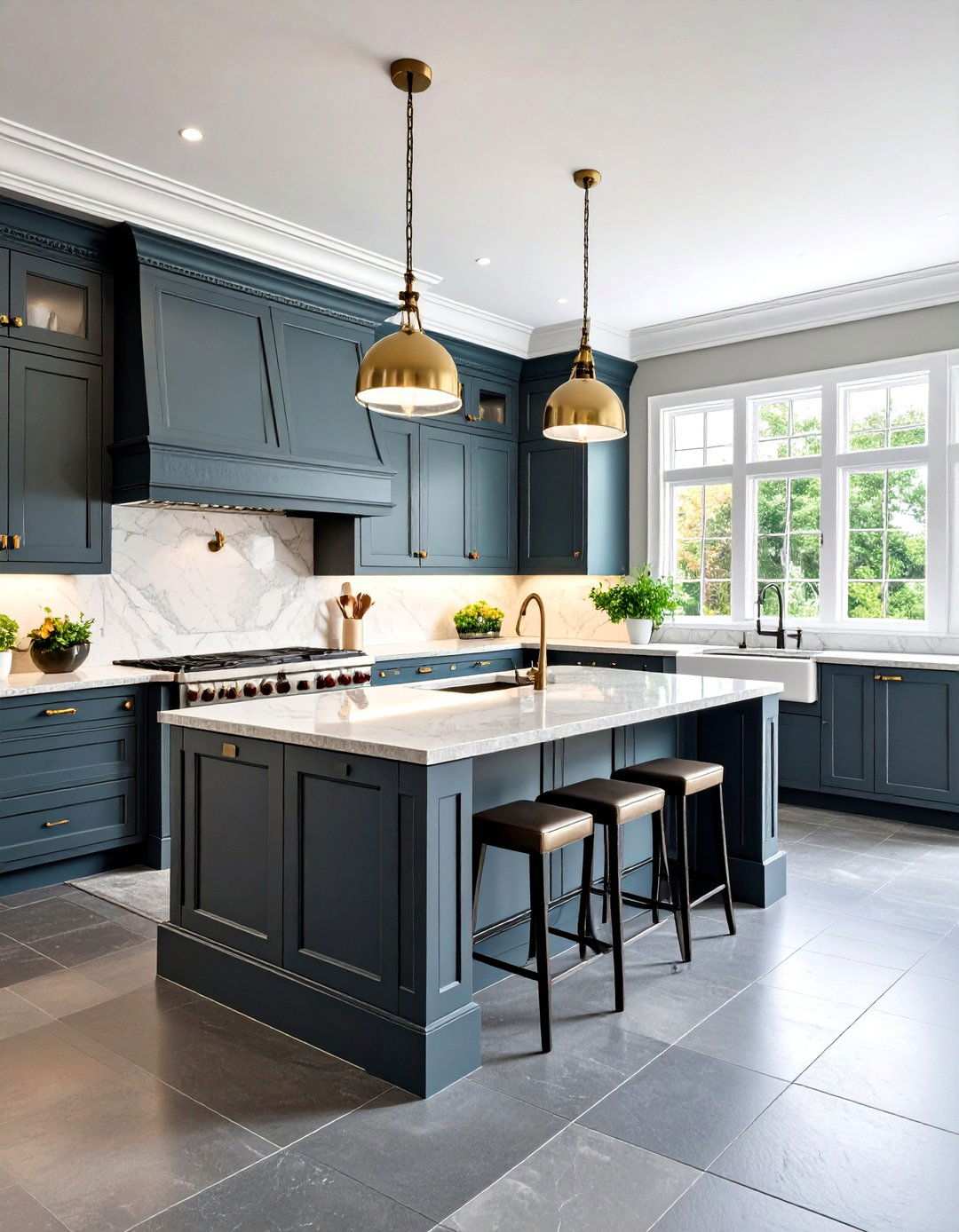
Gray slate flooring presents a timeless foundation for formal kitchen designs, pairing elegantly with traditional elements like raised-panel cabinetry and ornate crown molding. The medium-toned slate tiles’ subtle variations create a nuanced visual depth that harmonizes with formal patterns such as damask backsplashes and decorative ceiling treatments. A gray slate floor offers a versatile backdrop for rich wood tones, allowing cherry or mahogany cabinets to take center stage while introducing a sense of subtle textural interest. This classic combination is particularly effective when paired with granite or marble countertops, creating a cohesive natural stone palette that embodies traditional design values of quality, craftsmanship, and enduring beauty.
4. Making a Statement with Black Slate Floors
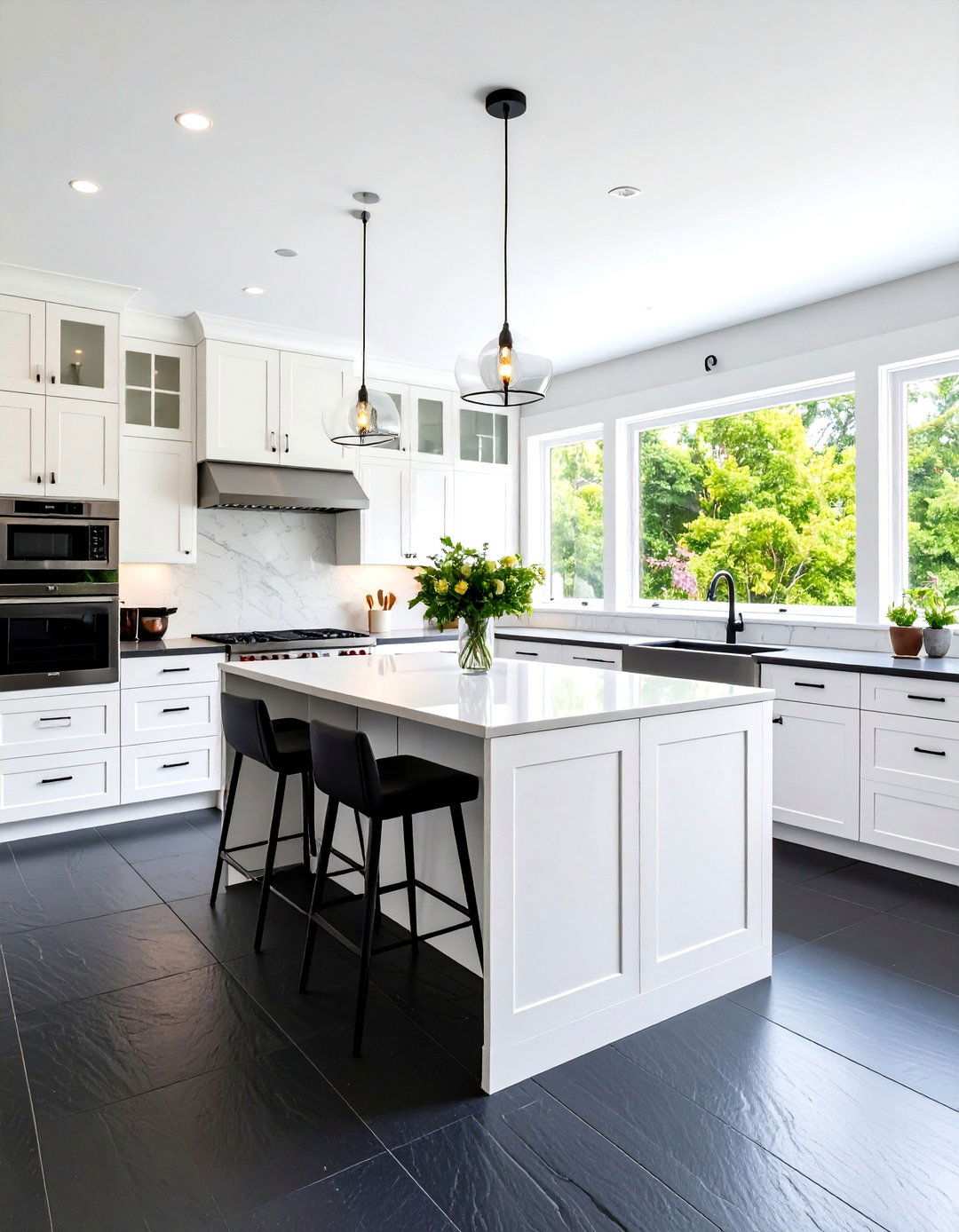
Contemporary kitchens rely on black slate flooring to create a bold design statement that anchors sleek, minimalist interiors. The deep, consistent color creates striking contrast with white or light-colored cabinetry, while the stone’s natural texture prevents the space from feeling sterile and overly formal. Black slate floors seamlessly complement stainless steel appliances and hardware, amplifying the modern aesthetic through material harmony. These dramatic floors work exceptionally well with waterfall islands and handleless cabinet designs, contributing to the clean, uncluttered appearance that defines contemporary style. The slate’s inherent benefits, including stain resistance and durability, align perfectly with contemporary lifestyle needs, ensuring the design remains timelessly elegant rather than fleeting.
5. Embracing the Charm of Multi-Colored Slate Floors
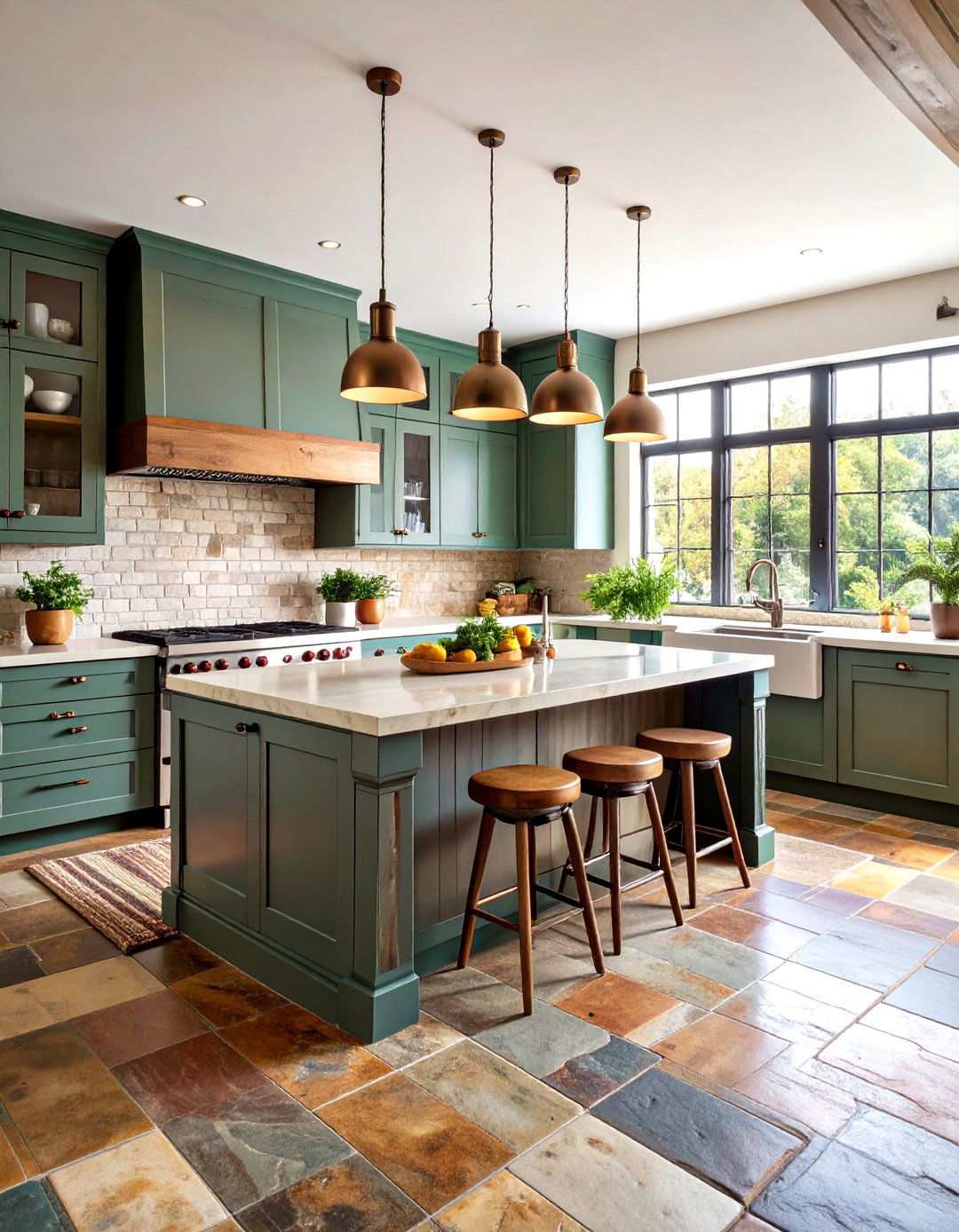
Rustic kitchens celebrate the unique character of multi-colored slate flooring, which showcases the stone’s diverse mineral composition in captivating blends of rust, gold, green, and gray tones. These floors create a visually warm and inviting atmosphere, perfectly complementing reclaimed wood elements, copper fixtures, and stone countertops typical of rustic design. Cleft-finished slate tiles enhance the organic feel with their naturally textured surfaces that reflect light differently throughout the day, adding depth and visual interest to the space. Multi-colored slate floors provide an excellent foundation for eclectic accessory choices, from vintage pottery to handwoven textiles, and their natural variations help hide daily wear and soil, making them a practical choice for country-style kitchens where functionality remains as important as aesthetic appeal.
6. Mid-Century Modern Kitchen Slate Flooring
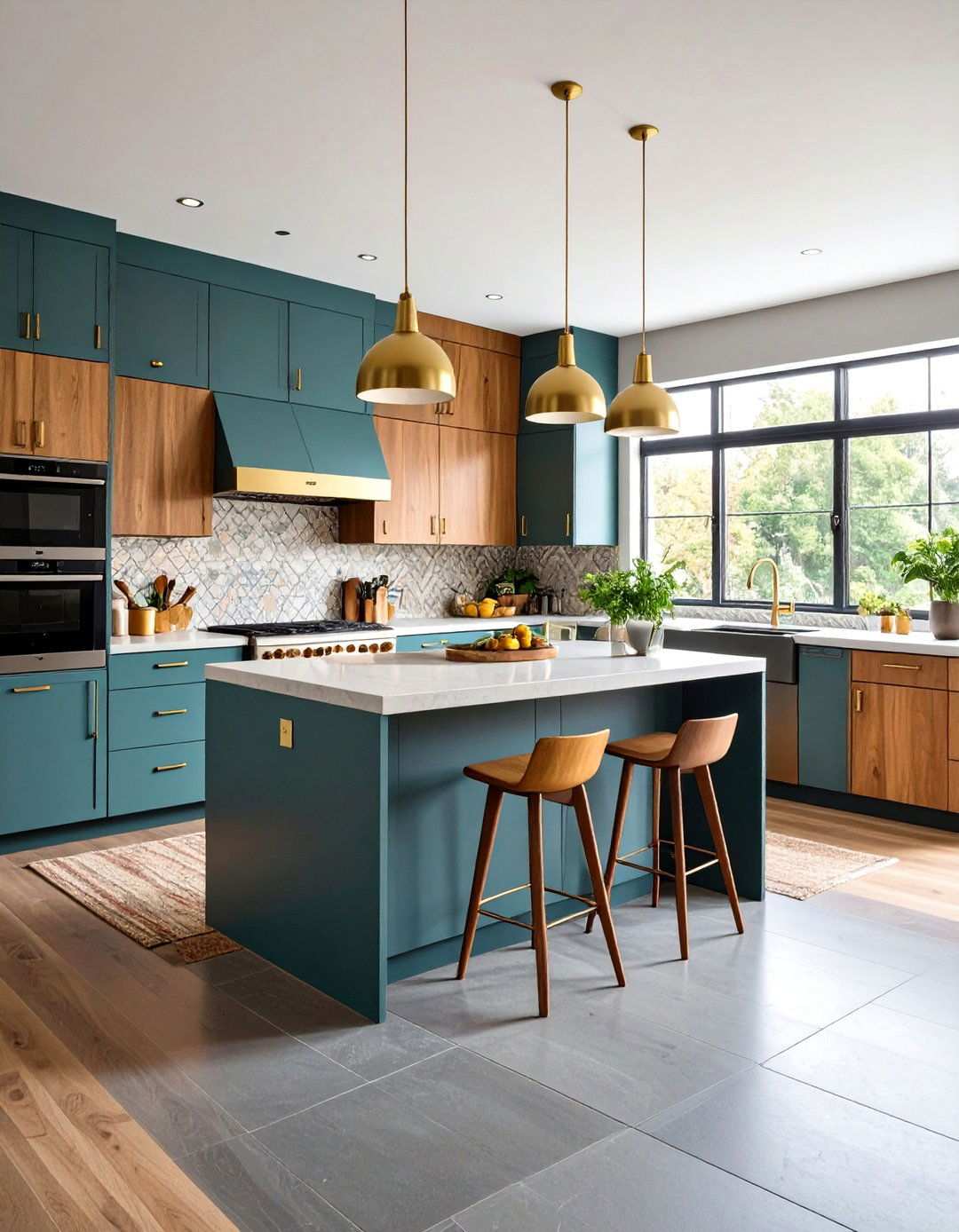
When it comes to mid-century modern kitchens, slate flooring stands out as a timeless choice that embodies the era’s emphasis on natural materials and clean lines. The subtle gray tones of rectangular slate tiles blend seamlessly with the geometric patterns and warm wood elements that characterize this iconic style. The stone’s natural texture provides a tactile contrast to the uncluttered aesthetic that defines mid-century design principles, creating a visually appealing balance. Slate floors pair beautifully with the period’s signature elements, such as flat-panel cabinets, brass hardware, and integrated appliances, to create a cohesive look. Meanwhile, the flooring’s neutral palette allows statement pieces like colorful bar stools or artistic light fixtures to take center stage, adding a touch of personality to the space. By incorporating natural elements indoors, slate floors support the mid-century philosophy of living in harmony with nature, while also providing the durability needed for modern family life.
7. Transitional Kitchen Slate Floor Design
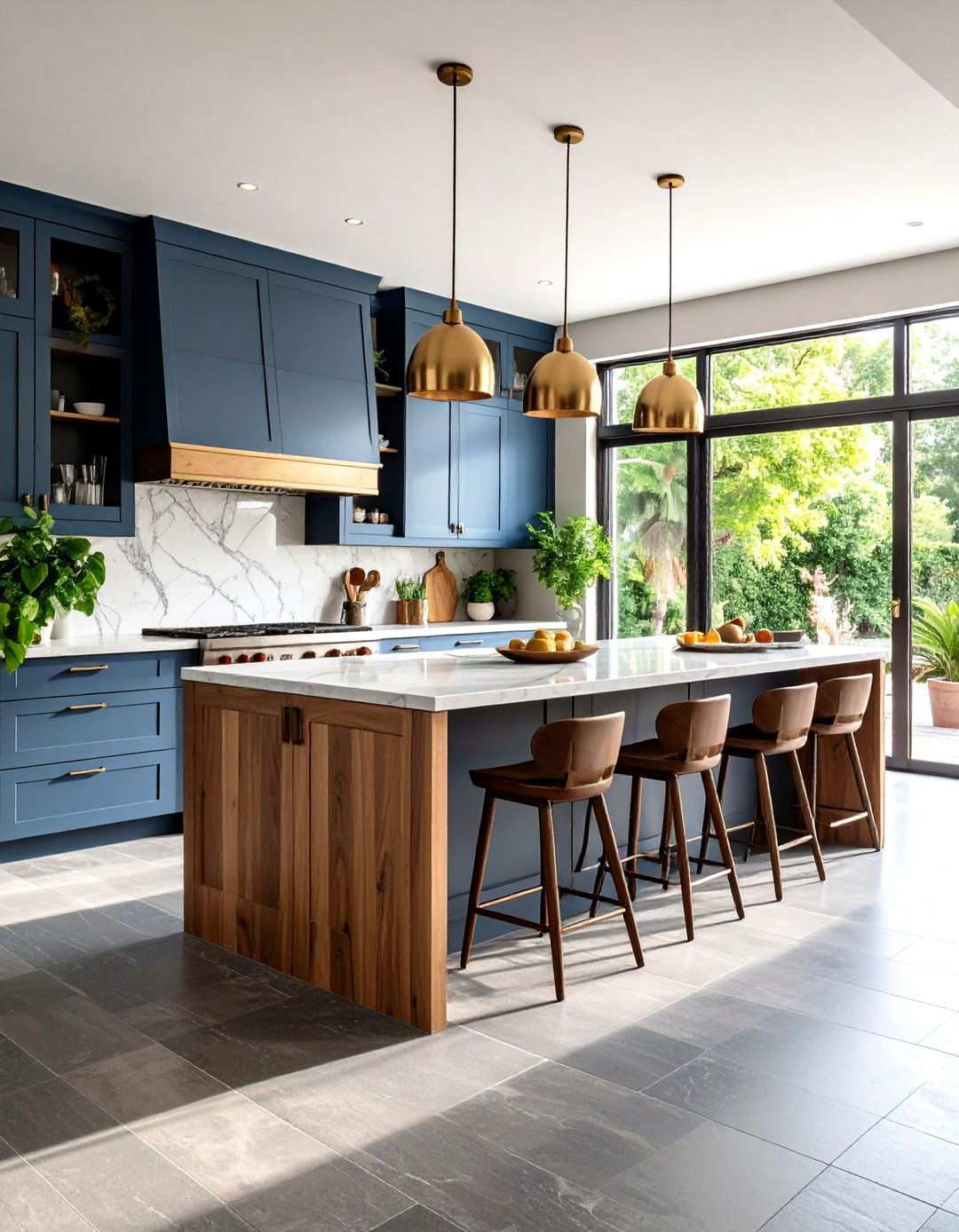
Transitional kitchens benefit from slate flooring that seamlessly bridges traditional and contemporary design elements with a sophisticated neutral tone. Medium-toned slate provides a versatile foundation for mixing cabinet styles, combining the formality of raised panels with the simplicity of flat-front designs. These floors complement both warm and cool color palettes, allowing homeowners to incorporate diverse materials like marble countertops with subway tile backsplashes. The stone’s natural variations add a touch of visual interest without competing with other design elements, creating harmony between different stylistic influences. Slate’s timeless appeal ensures that transitional spaces remain current through changing design trends, while its practical benefits support the functionality that modern families require in their kitchen spaces.
8. Galley Kitchen Slate Floor Solutions
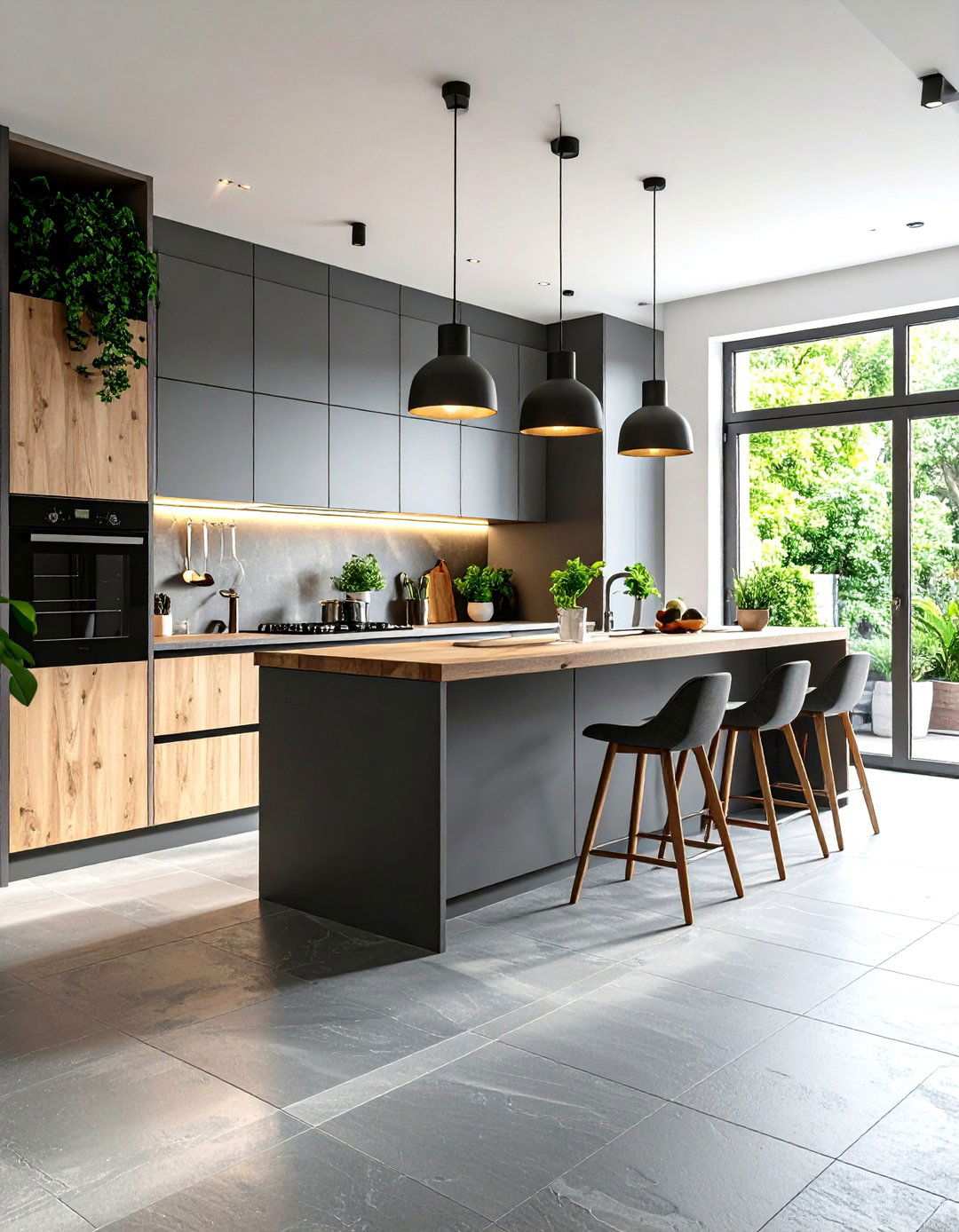
Galley kitchens can benefit greatly from strategic slate flooring that enhances both visual flow and practical function. By installing large format slate tiles running perpendicular to the length, the illusion of width is created, making the space feel more open. Consistent coloring maintains visual continuity, while the stone’s natural slip resistance provides safety in these often-cramped quarters where spills are more likely to occur. Light gray slate reflects available light, helping to brighten these typically darker spaces while masking everyday wear. The durability of slate stands up to the concentrated foot traffic common in galley layouts, while its easy maintenance suits the efficient cooking style these kitchens promote. Proper installation with radiant heating makes these floors comfortable underfoot throughout the cooking process.
9. Seamless Kitchen Design with Slate Flooring
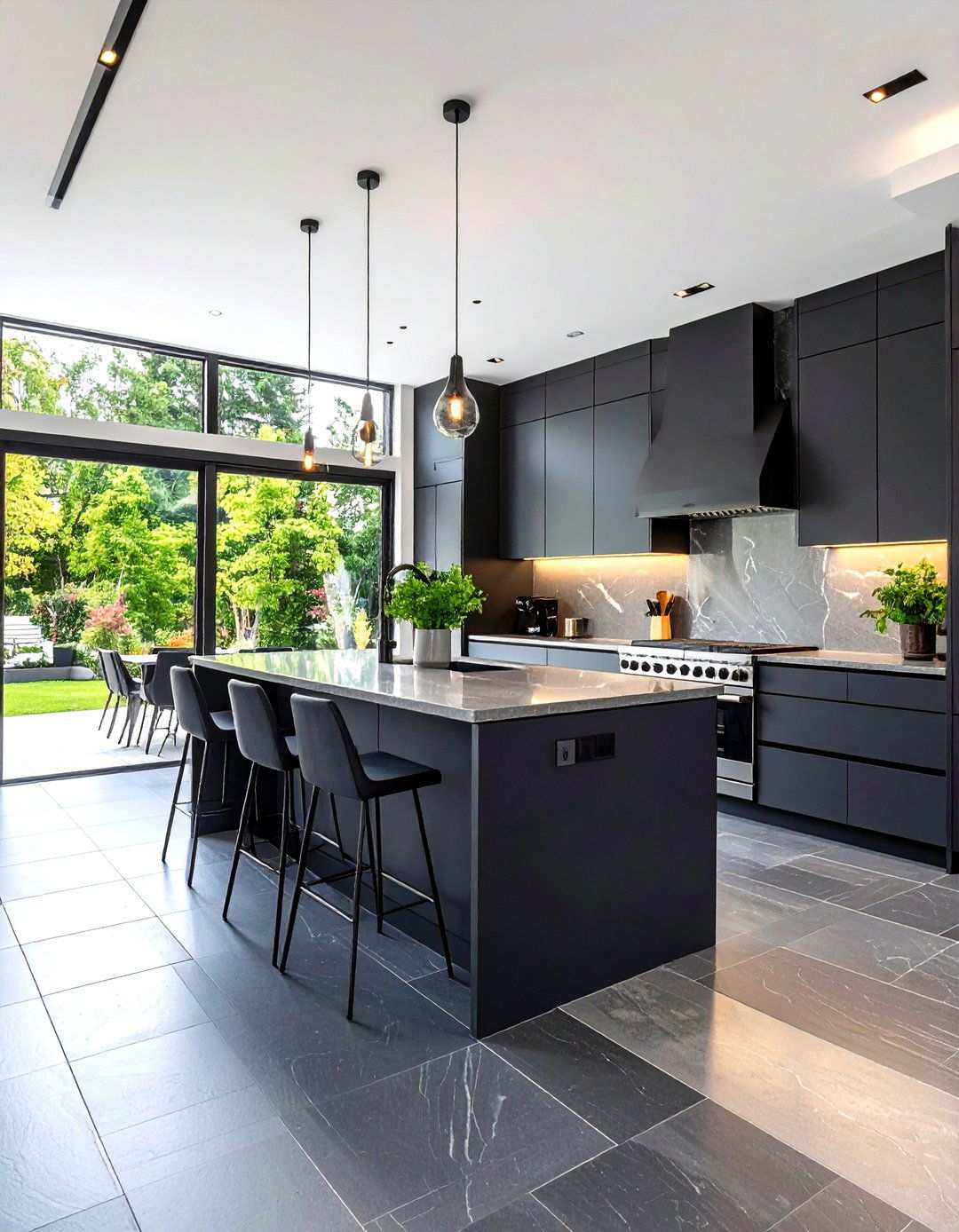
A well-designed open concept kitchen relies on slate flooring to create a harmonious transition between cooking, dining, and living areas. This approach not only establishes a cohesive look but also defines distinct functional zones through subtle color variations and installation patterns. The neutral palette of slate complements a wide range of furniture styles, making it an excellent choice for decorating adjacent spaces. Furthermore, the flooring’s durability can withstand the varied activities of open floor plans, from cooking spills to casual foot traffic, while its natural sound-dampening qualities help manage noise in these multi-functional spaces.
In addition to its functional benefits, slate flooring also offers a sophisticated aesthetic that enhances the overall look of an open concept space. Large format tiles minimize visual breaks, making smaller homes appear more spacious and inviting. This clever design element creates a sense of continuity, making it easier to transition between different areas of the home. By carefully selecting the right slate flooring, homeowners can create a seamless kitchen design that sets the tone for a harmonious and functional living space.
10. Enhancing L-Shaped Kitchens with Slate Installation
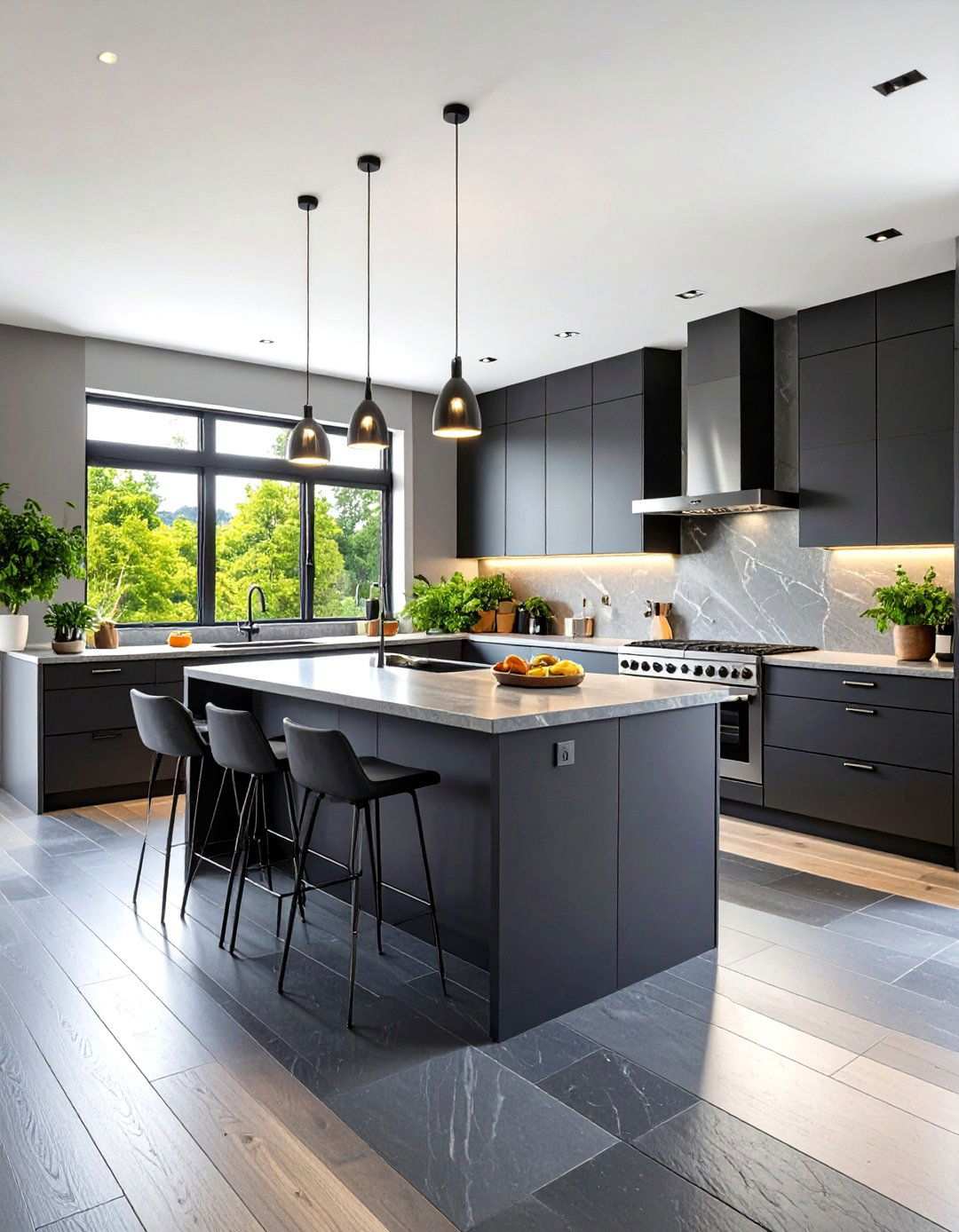
L-shaped kitchens can greatly benefit from slate flooring, which emphasizes the natural flow between the two adjoining walls while creating visual cohesion. By carefully orienting the installation pattern, homeowners can enhance the room’s proportions and create a sense of balance. For example, tiles can be run parallel to the longer wall to emphasize length and create a sense of continuity. The natural variations in slate provide visual interest in the corner area where the two sections meet, preventing the space from feeling broken or disjointed.
The durability of slate flooring is particularly well-suited for L-shaped layouts, which often feature concentrated traffic patterns around the corner where both sections converge. Different slate finishes can be used to subtly define the cooking zone versus the preparation area, while maintaining overall design harmony. The stone’s practical benefits, including water resistance and easy cleaning, also support the efficient work triangle that L-shaped designs promote. By carefully selecting the right slate flooring, homeowners can create a functional and visually appealing L-shaped kitchen.
11. Creating a Focal Point with Slate Flooring and Kitchen Islands
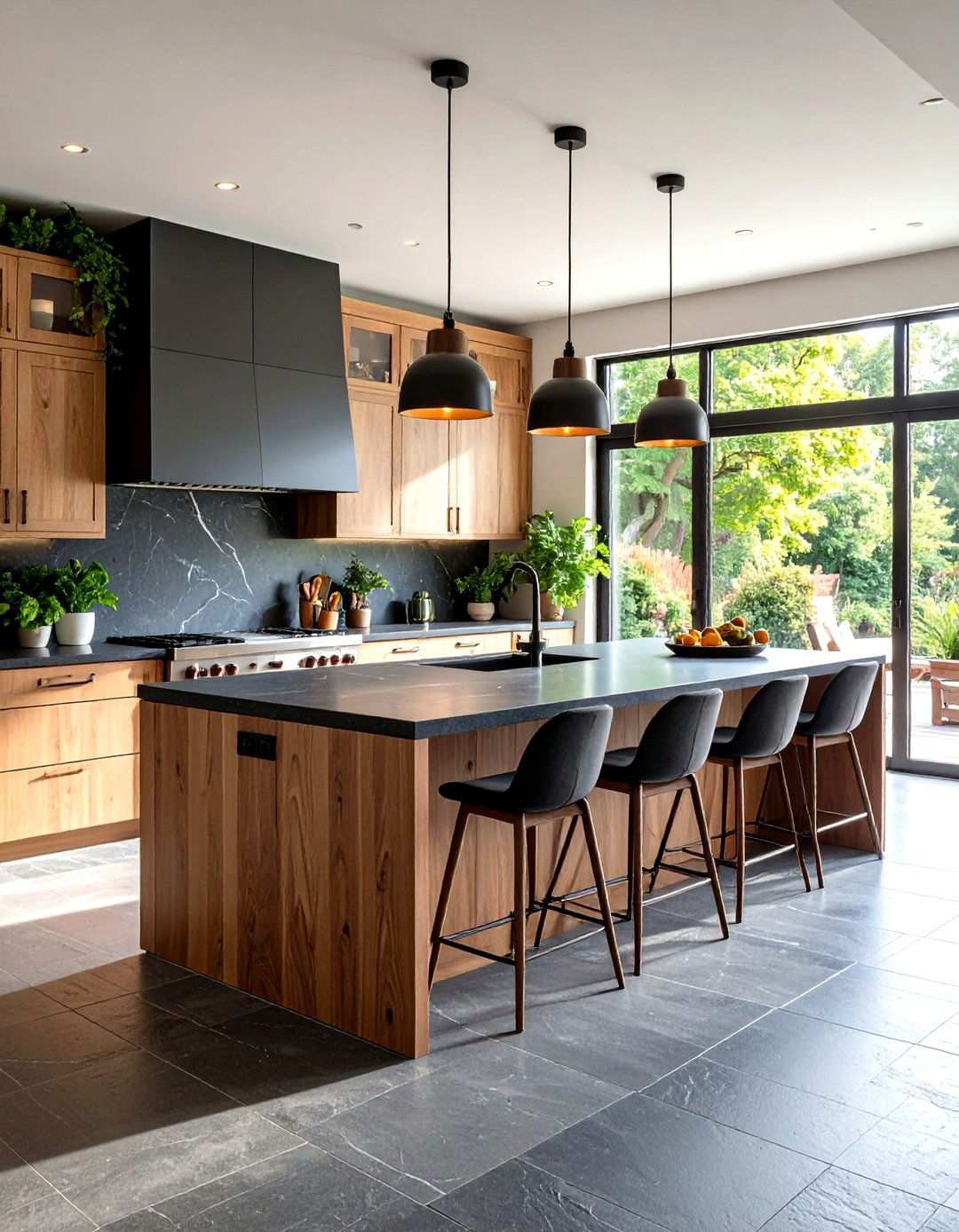
Kitchen islands paired with slate flooring create stunning focal points that anchor the entire space while providing practical work surfaces. The neutral tones of slate complement a wide range of island materials, from butcher block tops to granite surfaces, creating sophisticated material combinations. Slate floors handle the concentrated activity around islands, including food preparation, casual dining, and social gathering. The flooring’s consistent appearance helps islands feel integrated rather than added as afterthoughts, particularly when the island base incorporates complementary stone elements.
By carefully selecting different slate patterns around islands, homeowners can create subtle definition without disrupting visual flow. The stone’s ability to accommodate radiant heating makes standing at islands comfortable for extended periods, while its stain resistance handles the inevitable spills from island cooking and entertaining activities. This clever design element creates a cohesive look that ties the entire space together, making it easier to transition between different areas of the home.
12. A Symphony of White: Slate Floors Elevate Kitchens
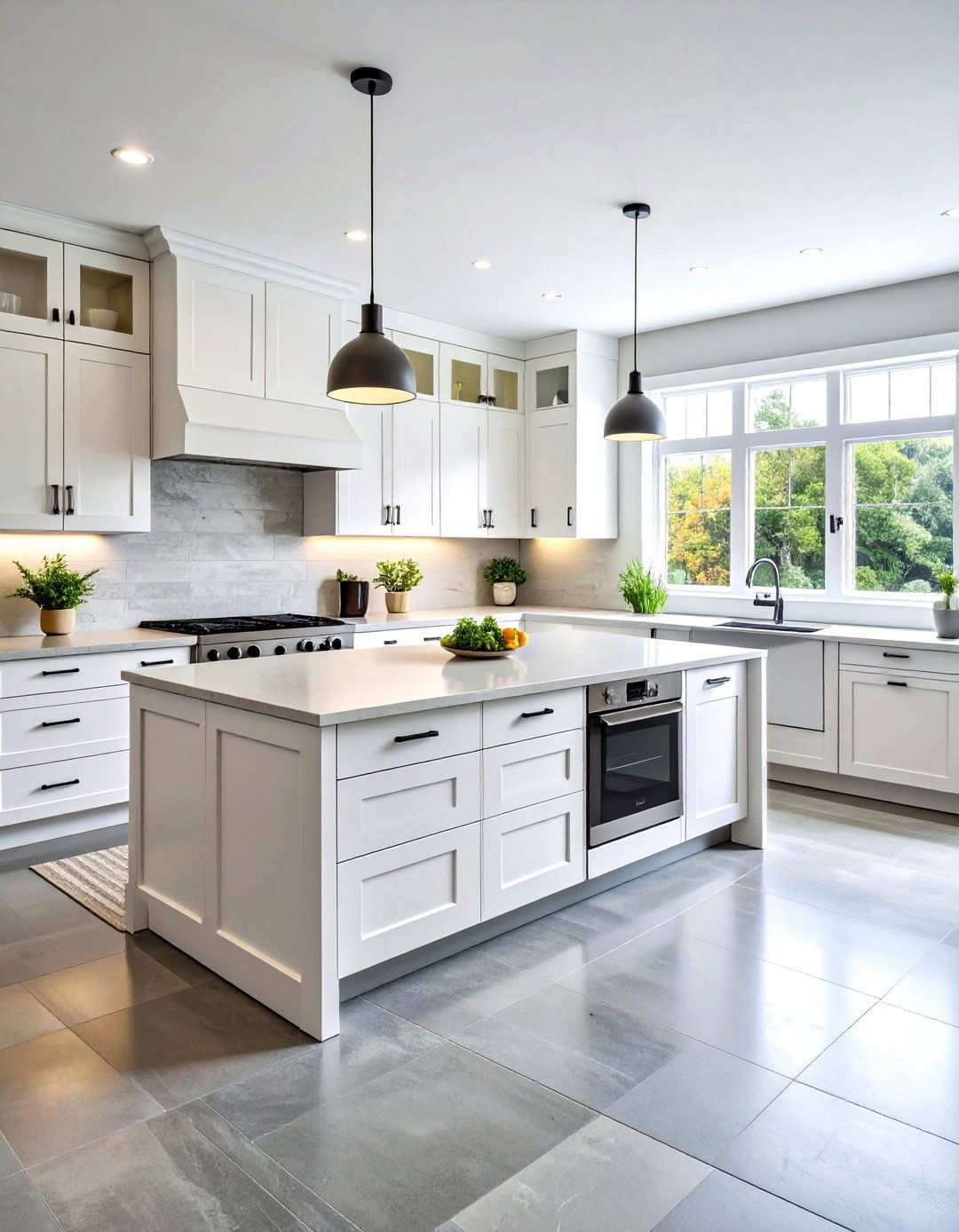
White cabinets and slate flooring come together in a harmonious union that transcends design styles and personal preferences. The subtle contrast provided by light gray slate allows the bright, clean aesthetic of white cabinetry to shine while adding a touch of organic elegance. The natural texture of the stone injects visual depth, preventing all-white kitchens from feeling sterile and flat. By introducing slate floors, white cabinet designs gain a sense of grounding, balancing upper and lower elements with visual weight. This versatile combination works equally well with traditional raised-panel doors and contemporary flat-front styles, making it a popular choice for homeowners seeking timeless appeal. The pairing also makes maintenance a breeze, as slate’s darker tones expertly conceal everyday wear and tear, while white cabinets reflect light to keep the space feeling fresh and vibrant.
13. Sophistication in Harmony: Dark Wood Cabinet Slate Flooring
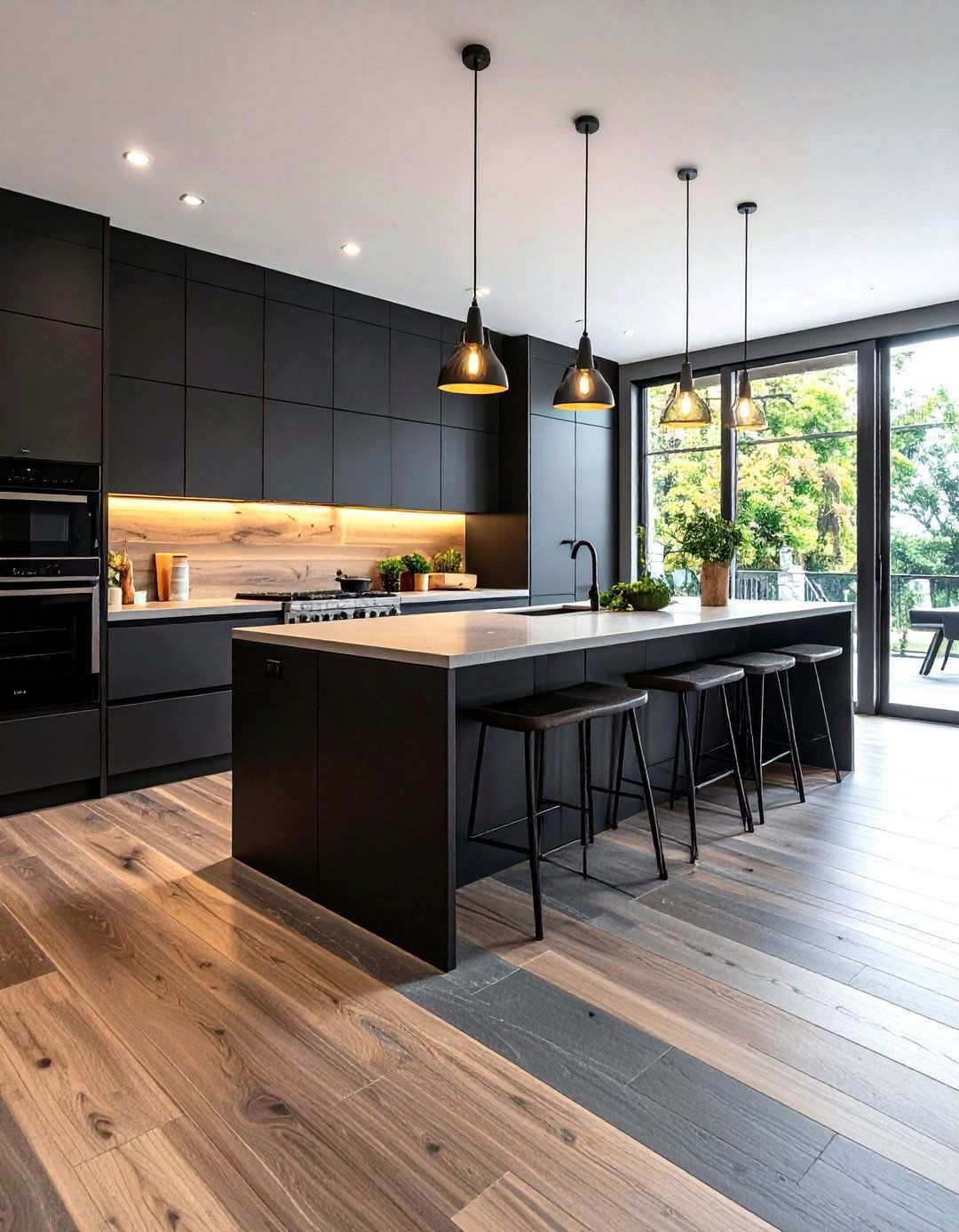
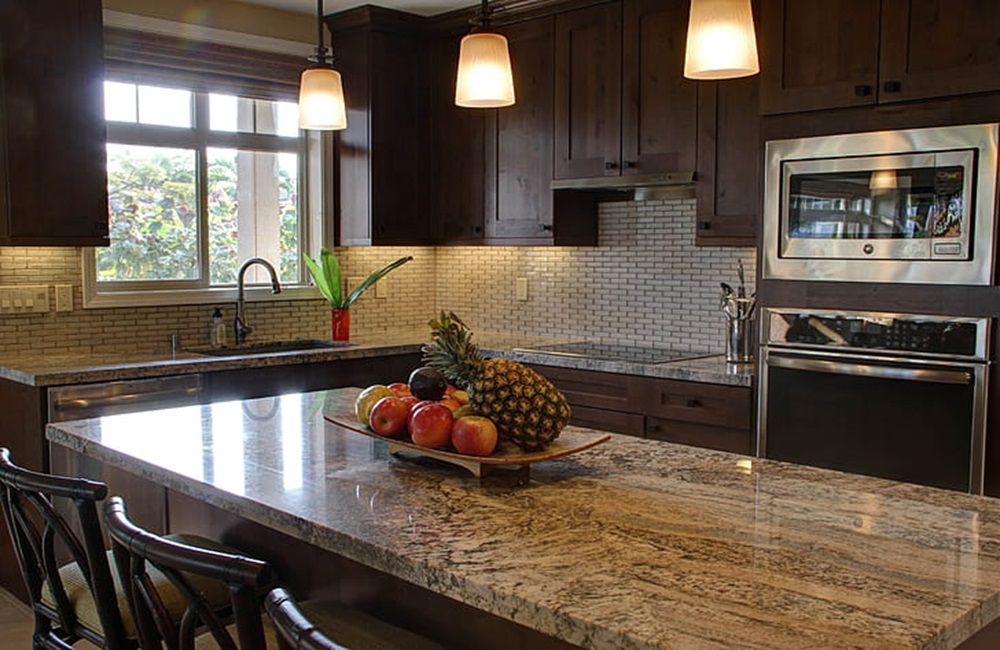
Dark wood cabinets find their perfect match in slate flooring, which complements rich timber tones while providing a sense of balance. The medium to light gray slate used in these combinations prevents the overall aesthetic from feeling too heavy or overwhelming, while the stone’s natural variations mirror the organic patterns found in wood grain. The pairing creates a sophisticated, restaurant-quality look that works particularly well in larger kitchens with ample natural light. The cool tones of the slate beautifully balance the warmth of dark wood, introducing temperature variety that prevents monotony. The durability of slate matches the investment quality of premium cabinetry, ensuring both elements will age together in harmony. This combination supports both traditional and contemporary interpretations, depending on cabinet styling and hardware choices, making it a popular choice for homeowners seeking a refined look.
14. Maximizing Impact: Slate Flooring Strategies for Small Kitchens
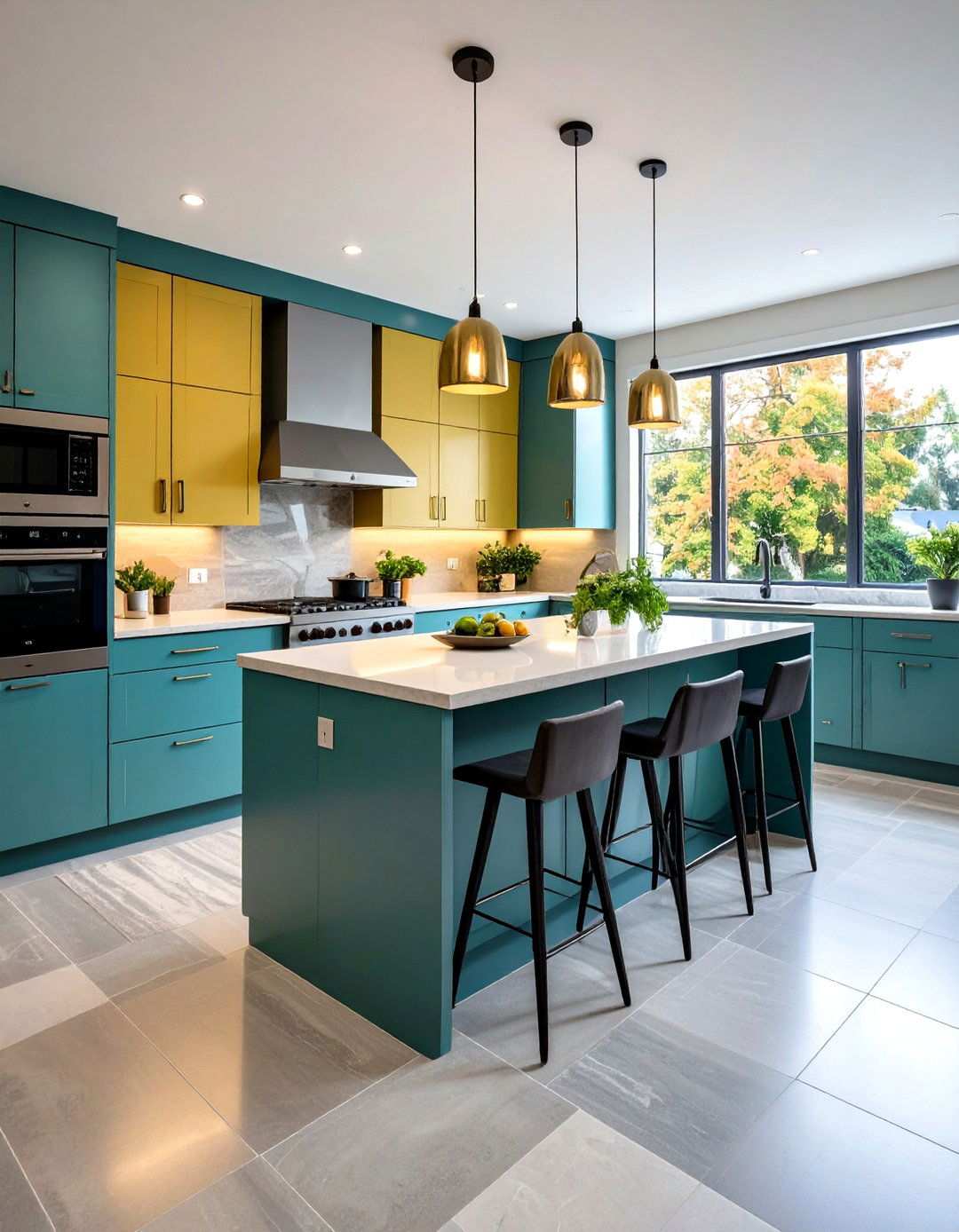
Small kitchens can benefit greatly from strategic slate flooring choices that enhance both visual space and practical function. Light-colored slate is particularly effective at reflecting available light, making compact spaces feel larger and more open. Large format tiles minimize grout lines, creating uninterrupted surfaces that don’t visually fragment small areas. The stone’s neutral palette provides flexibility for cabinet colors and accessories, which is essential in small kitchens where design options are limited. Slate’s durability proves particularly valuable in small kitchens where every square foot receives concentrated use. The flooring’s easy maintenance suits compact layouts where cleaning efficiency matters most. Additionally, radiant heating installation makes small spaces comfortable without requiring floor space for heating elements. The stone’s timeless appeal ensures small kitchen investments remain current through future style changes, providing a lasting sense of style and sophistication.
15. Large Kitchen Slate Floor Applications
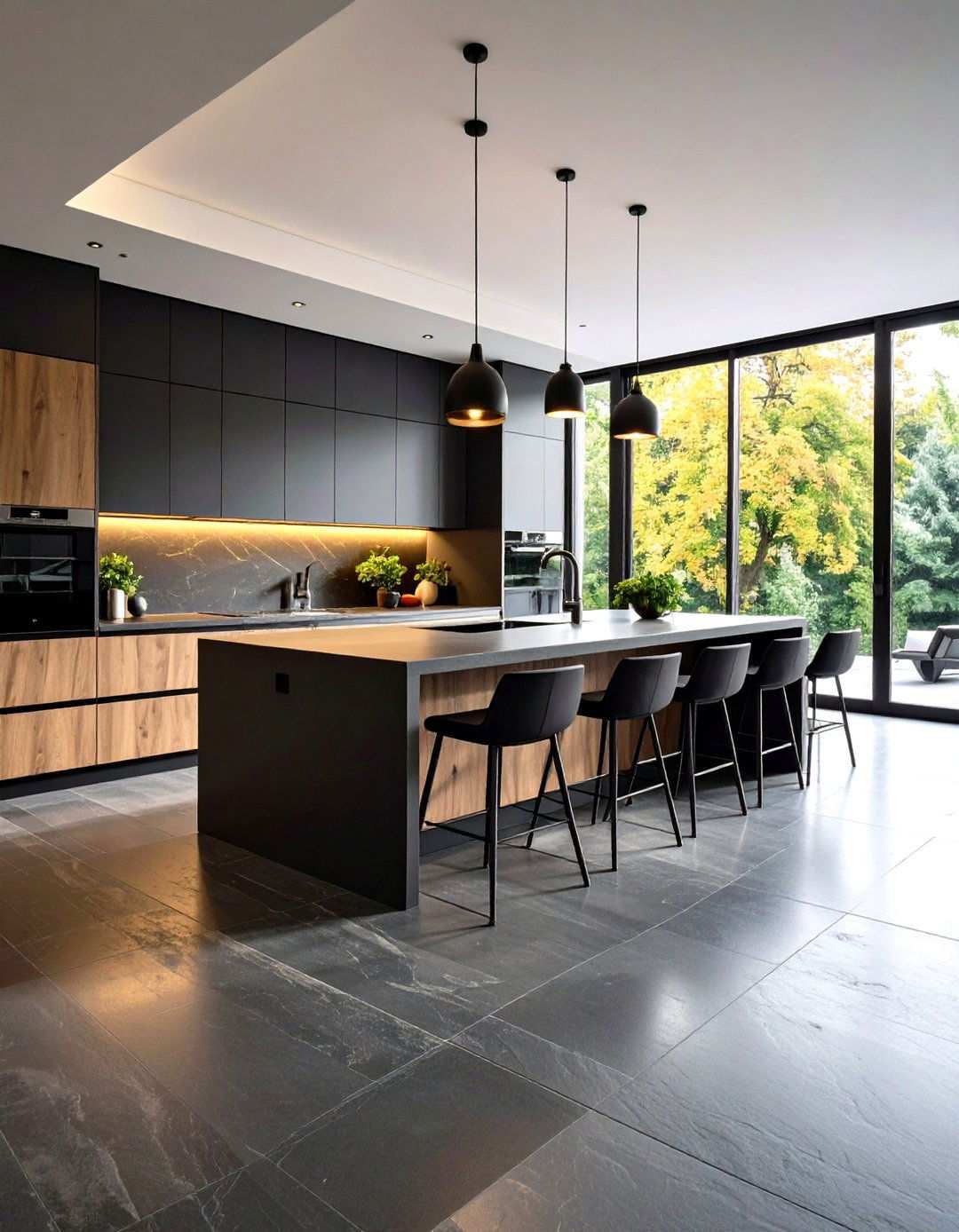
In expansive large kitchens, slate flooring’s versatility shines through dramatic installations that create a profound design impact. As the stone’s natural variations become more apparent over larger areas, a subtle visual movement is achieved that prevents vast floors from appearing dull and monotonous. By incorporating distinct slate patterns, large kitchens can define various zones, such as cooking areas, breakfast nooks, and informal dining spaces. The flooring’s impressive durability ensures it can handle diverse activities across expansive layouts, from intense cooking to family gatherings and entertaining events. Large format tiles have a profound effect on the room’s generous proportions while reducing maintenance through minimized grout lines. The stone’s neutral palette provides an ideal foundation for multiple design elements, enabling large kitchens to incorporate diverse materials and colors without visual conflict. Installing radiant heating in large spaces becomes particularly beneficial, as it addresses coverage challenges that traditional heating methods often face.
16. Kitchen Peninsula Slate Floor Design
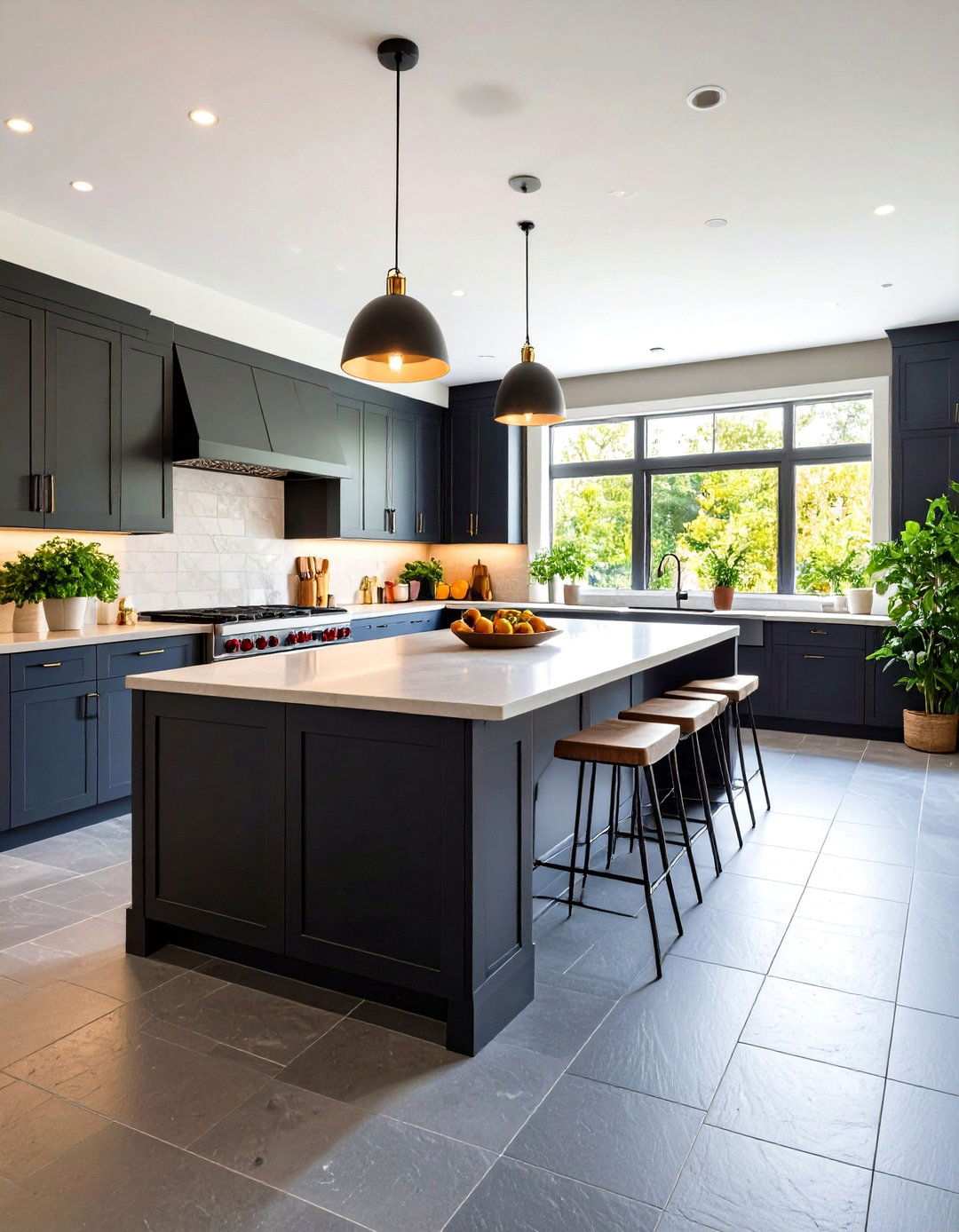
Kitchen peninsulas seamlessly integrate with slate flooring, creating a visually cohesive look while defining the cooking zone’s boundaries. The stone’s installation can emphasize the peninsula’s linear quality through directional patterns that draw the eye along the workspace, creating a sense of visual flow. Slate’s exceptional durability handles the concentrated activity around peninsulas, which often serve as primary preparation areas and casual dining surfaces. The flooring’s consistent appearance helps peninsulas feel like a natural extension of the kitchen rather than an awkward addition. Different slate finishes can subtly differentiate the peninsula area while maintaining overall design cohesion. The stone’s practical benefits, including water resistance and easy cleaning, make it an ideal choice for multi-functional peninsula designs. By installing radiant heating, standing at peninsulas becomes comfortable for extended cooking sessions, while the stone’s thermal mass helps regulate room temperature.
17. Captivating the Mediterranean Aesthetic with Slate Floors
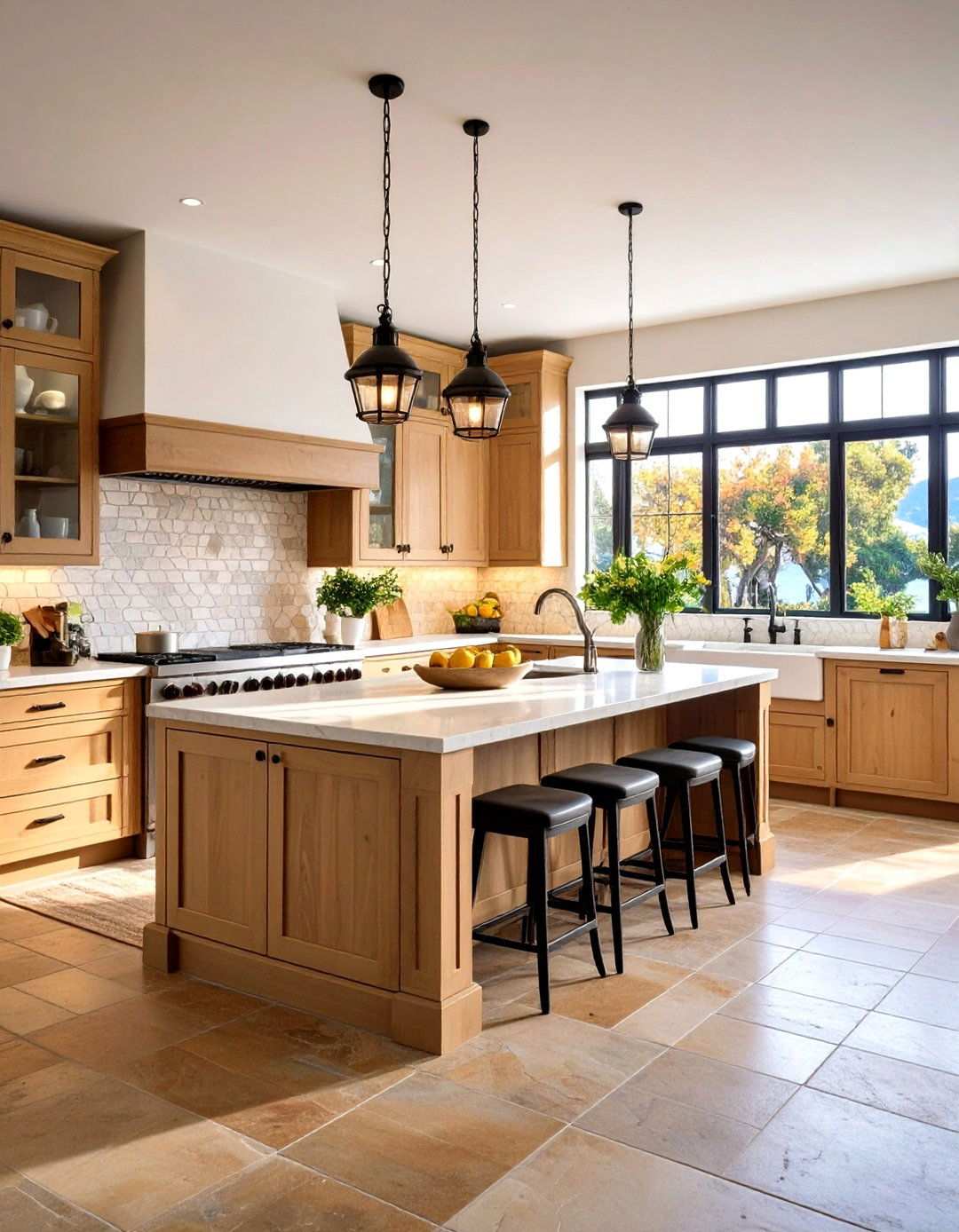
In Mediterranean kitchens, slate flooring serves as the perfect canvas for capturing the sun-kissed essence of coastal European design. The warm, earthy tones of slate with undertones of rust, gold, and terra cotta create a romantic ambiance that’s quintessentially Mediterranean. The stone’s organic texture beautifully complements the characteristic elements of this style, including wrought iron fixtures, ceramic tile backsplashes, and painted wood cabinets. As a result, slate floors seamlessly transition from indoor to outdoor spaces, creating a harmonious flow that’s central to the Mediterranean lifestyle. The flooring’s durability also lends itself perfectly to the relaxed entertaining style characteristic of Mediterranean homes, where cooking and socializing blend together in perfect harmony. What’s more, different slate patterns can evoke the classic, hand-laid appearance of Old World craftsmanship. The stone’s thermal mass helps regulate temperature in Mediterranean climates, keeping feet cool during warm weather and retaining warmth during cooler periods.
18. Embracing Cottage Charm with Slate Flooring
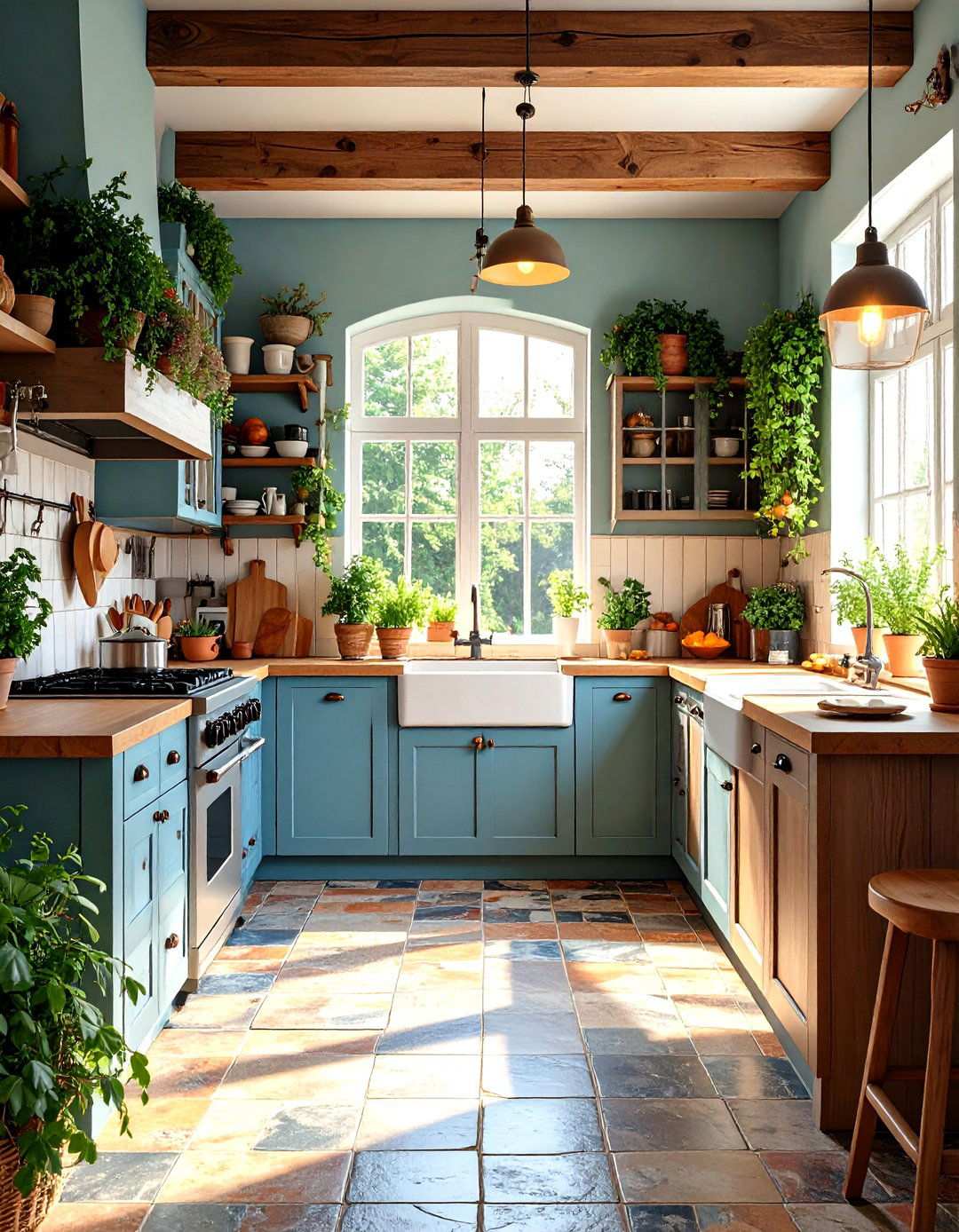
In cottage-style kitchens, slate flooring takes center stage, elevating the cozy, lived-in ambiance that defines this charming style. Multi-toned slate with its natural color variations creates a weathered, authentic appearance that exudes cottage charm. The stone’s texture beautifully complements the typical elements of cottage design, such as beadboard wainscoting, glass-front cabinets, and vintage-inspired fixtures. Slate floors embody the cottage philosophy of comfort and functionality, providing durability for daily family life while maintaining aesthetic appeal. The flooring’s neutral tones serve as the perfect backdrop for showcasing cottage accessories like colorful pottery, fresh flowers, and seasonal decorations. Beyond this, different slate finishes can enhance the handcrafted appearance that cottage style celebrates, from rough-hewn cleft surfaces to smoothly honed finishes. The stone’s ability to age gracefully aligns perfectly with the cottage principles of beauty improving with time and use.
19. Integrating Slate Floors into Scandinavian Design
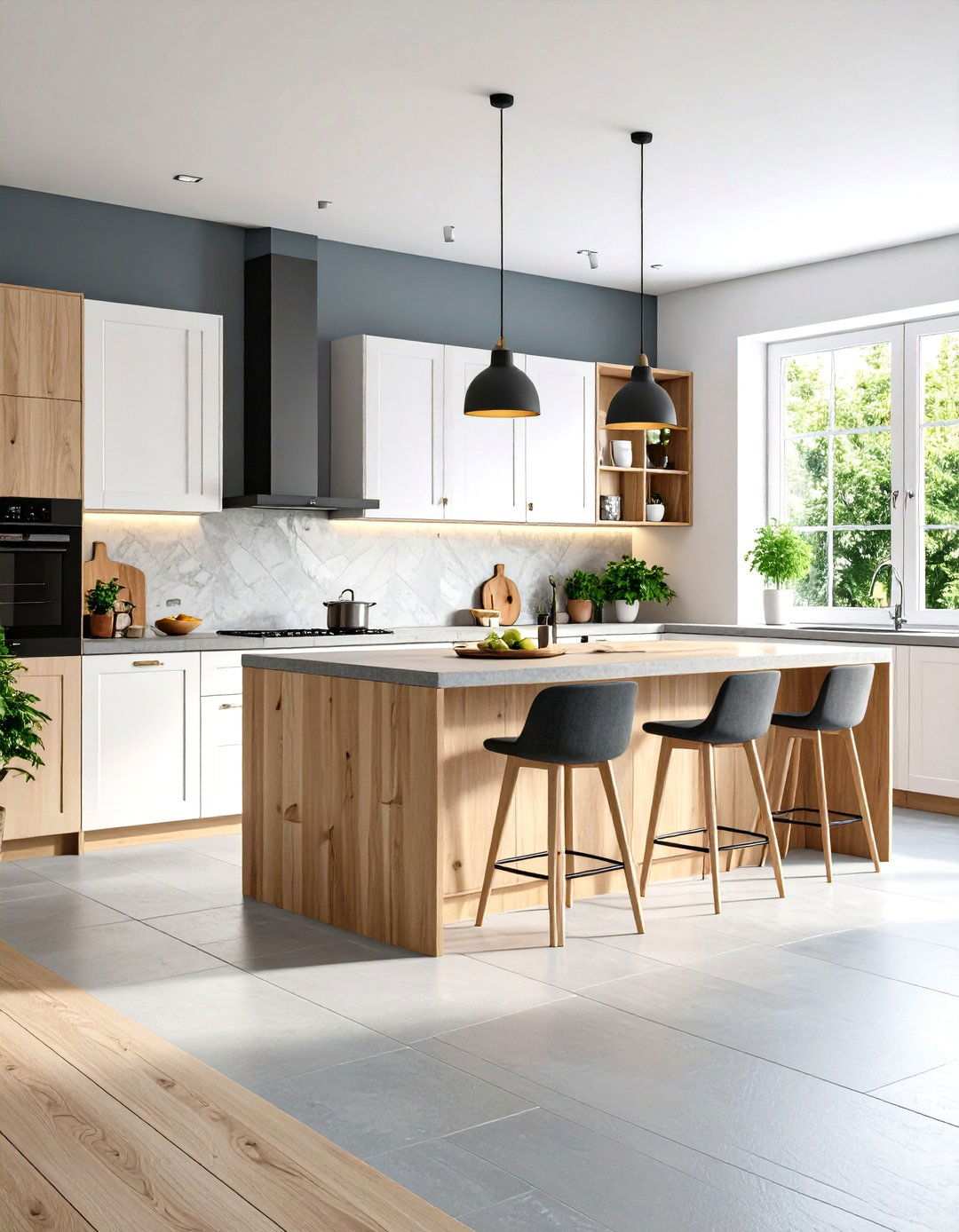
In Scandinavian kitchens, slate flooring is a natural fit, supporting the style’s emphasis on natural materials and functional beauty. Light gray slate provides the perfect neutral foundation for Scandinavian design, adding subtle texture and warmth without overpowering the space. The stone’s minimal color variations maintain the clean, uncluttered aesthetic that defines this Northern European style. Slate floors beautifully complement the typical Scandinavian elements, such as white cabinets, natural wood accents, and simple hardware designs. What’s more, the flooring’s durability aligns perfectly with the Scandinavian principle of investing in quality pieces that last for generations, rather than following fleeting trends. Large format slate tiles create seamless surfaces that are characteristic of Scandinavian design, while the stone’s thermal properties work well with radiant heating systems common in Nordic climates. The natural material also resonates with Scandinavian values of environmental consciousness and connection to nature.
20. Unifying Foundations for Eclectic Kitchens
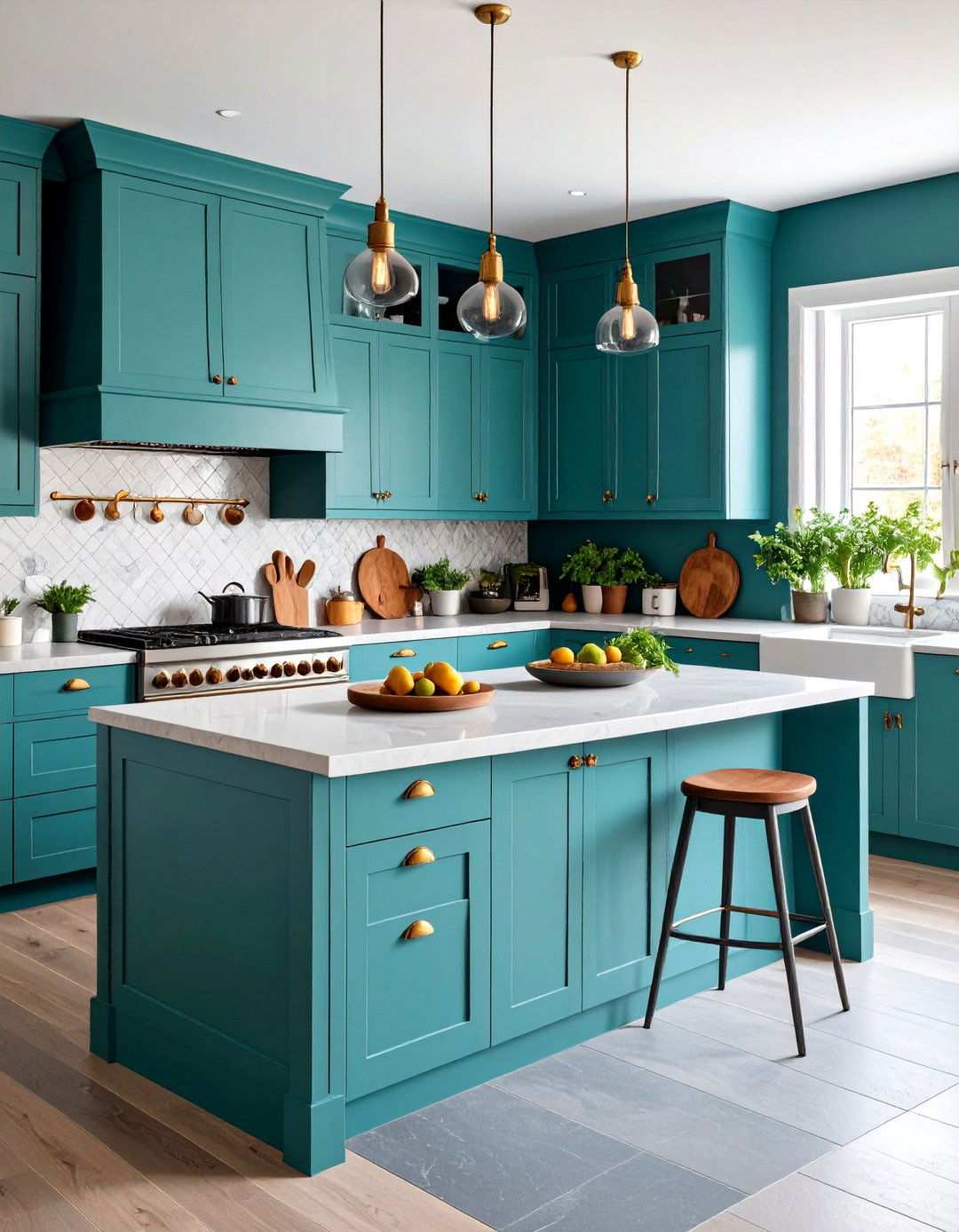
Eclectic kitchens find a common thread in slate flooring, a versatile foundation that allows diverse design elements to seamlessly integrate. The slate’s understated color palette serves as a stabilizing force, allowing homeowners to mix and match various cabinet styles, hardware finishes, and decorative accessories with ease. The natural variations in slate flooring beautifully complement the eclectic style’s signature layered, collected-over-time aesthetic. Furthermore, the flooring’s remarkable durability supports the experimental nature of eclectic design, effortlessly adapting to changing furniture arrangements and decorative elements without showing signs of wear. By incorporating different slate patterns, homeowners can add a unique, custom touch to their space, celebrating the eclectic spirit of individuality. Ultimately, the timeless appeal of slate flooring ensures that even the most adventurous design choices remain grounded, providing a sense of visual stability and balance.
21. Nostalgic Revival through Slate Flooring in Victorian Kitchens
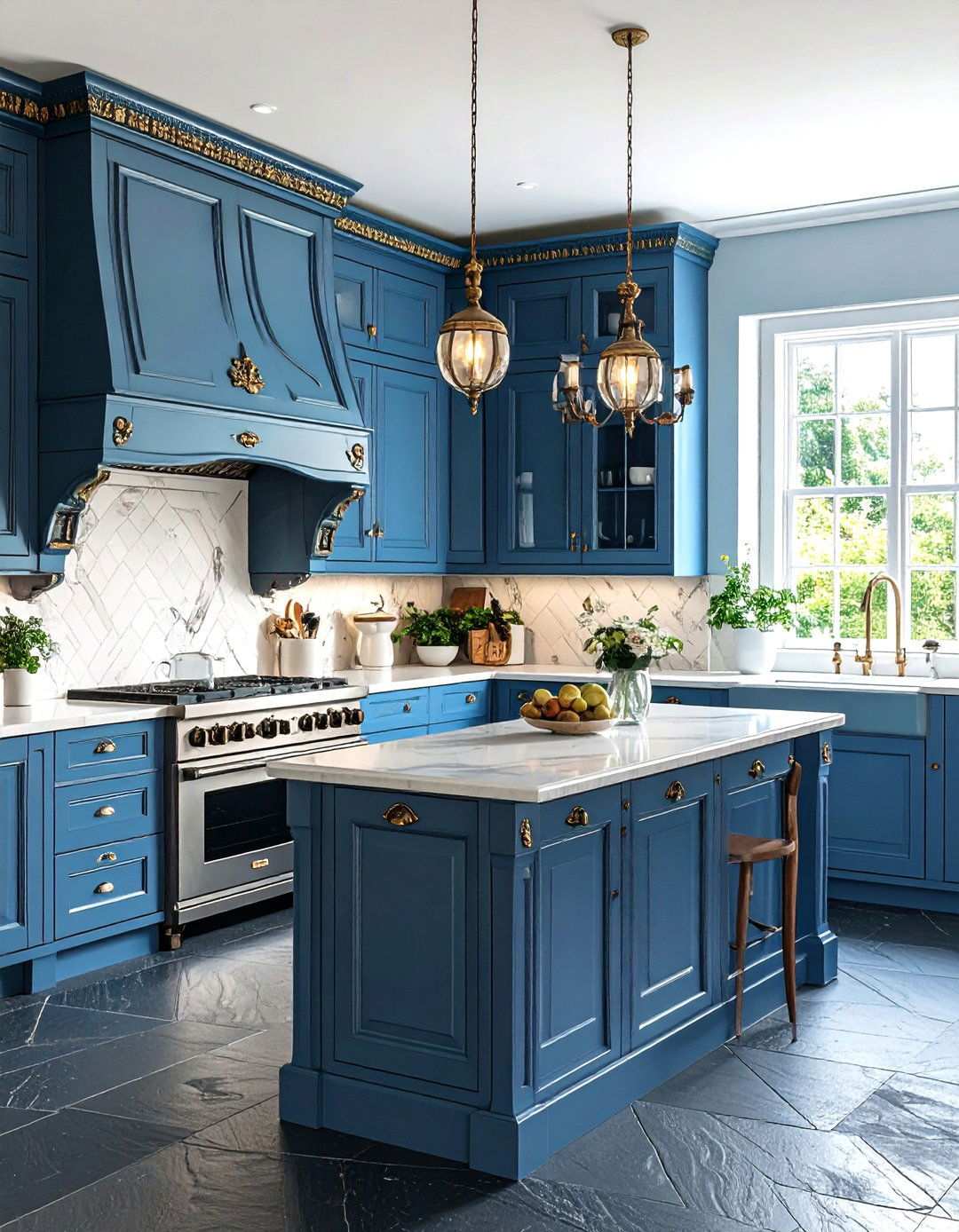
Victorian kitchens rediscover the charm of slate flooring, a choice that skillfully blends historical authenticity with modern functionality. Deep, rich gray and black slate evoke the formal elegance characteristic of Victorian design, beautifully complementing ornate cabinetry and detailed architectural elements. The natural durability of slate flooring aligns perfectly with the Victorian emphasis on using high-quality materials and showcasing lasting craftsmanship. Slate floors thoughtfully balance the Victorian principle of functional beauty, providing both practical benefits and contributing to the style’s sophisticated aesthetic. The consistent appearance of slate floors also enhances Victorian symmetry and proportion, essential elements in this formally structured style. By incorporating different slate patterns, homeowners can recreate historical installation methods while benefiting from modern performance enhancements like waterproof adhesives and proper substrates. The stone’s ability to accept decorative borders allows for the ornamental details that Victorian design celebrates, transforming floors into artistic elements that elevate the overall design.
22. Bringing Desert Charm to Your Kitchen with Slate
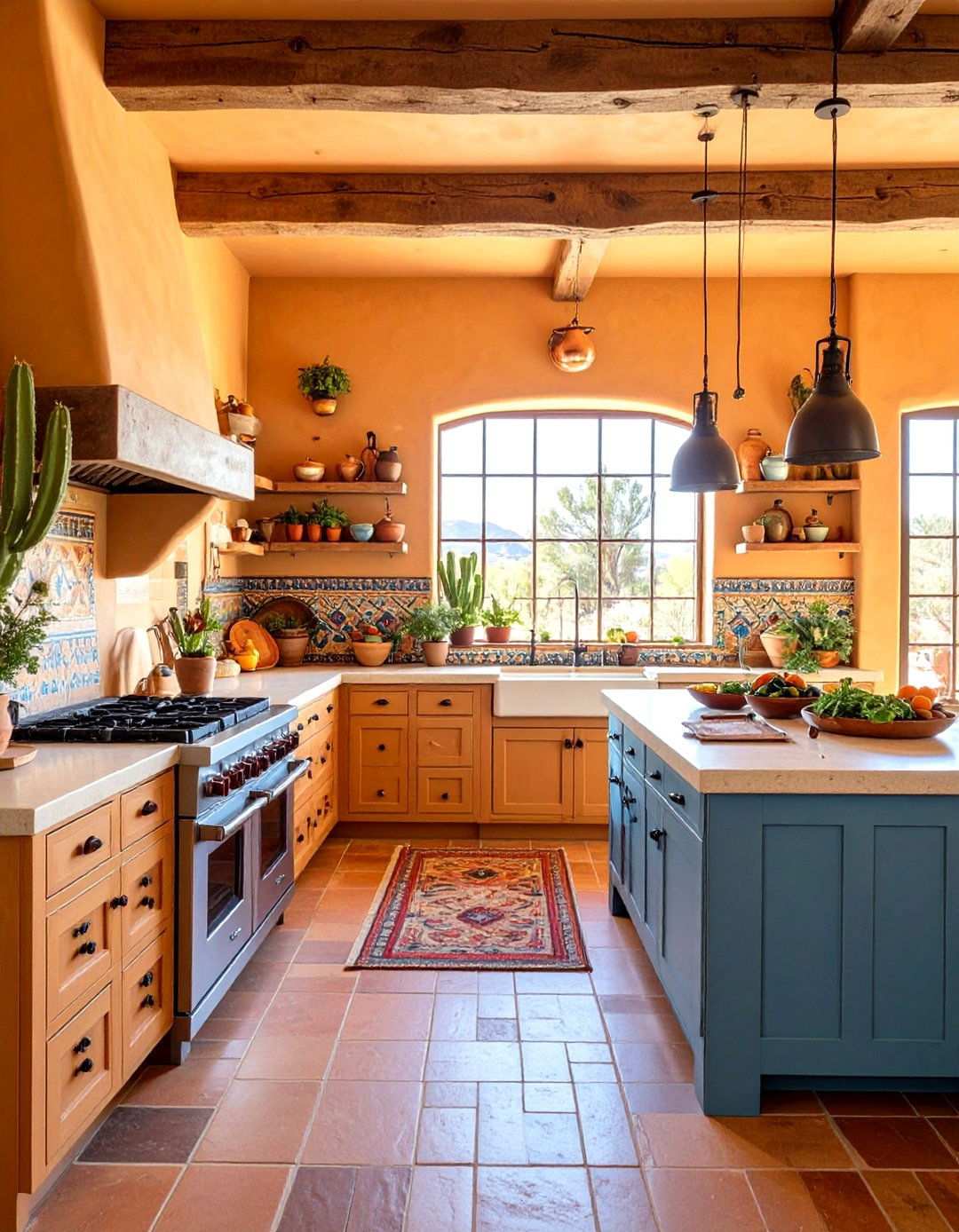
Southwestern kitchens embody the essence of the desert landscape through the strategic use of slate flooring, which harmoniously blends with the region’s cultural heritage and natural surroundings. By incorporating warm-toned slate with undertones of rust, gold, and brown, homeowners can create a sense of cohesion with the typical Southwestern elements such as adobe walls, exposed vigas, and copper fixtures. This thermal mass stone not only provides a cooling benefit in the hot desert climate but also retains warmth during the evening hours, making it an ideal choice for indoor-outdoor living spaces that seamlessly transition to patios and courtyards. The natural variations in slate flooring echo the intricate patterns found in desert landscapes, from rock formations to mineral deposits. By choosing different slate installation patterns, homeowners can pay homage to traditional Southwestern crafts like pottery and weaving, thereby infusing their design with cultural significance. The durability of slate flooring makes it well-suited for the relaxed, family-centered lifestyle that Southwestern living is known for.
23. Elevating Coastal Style with Slate Flooring Solutions
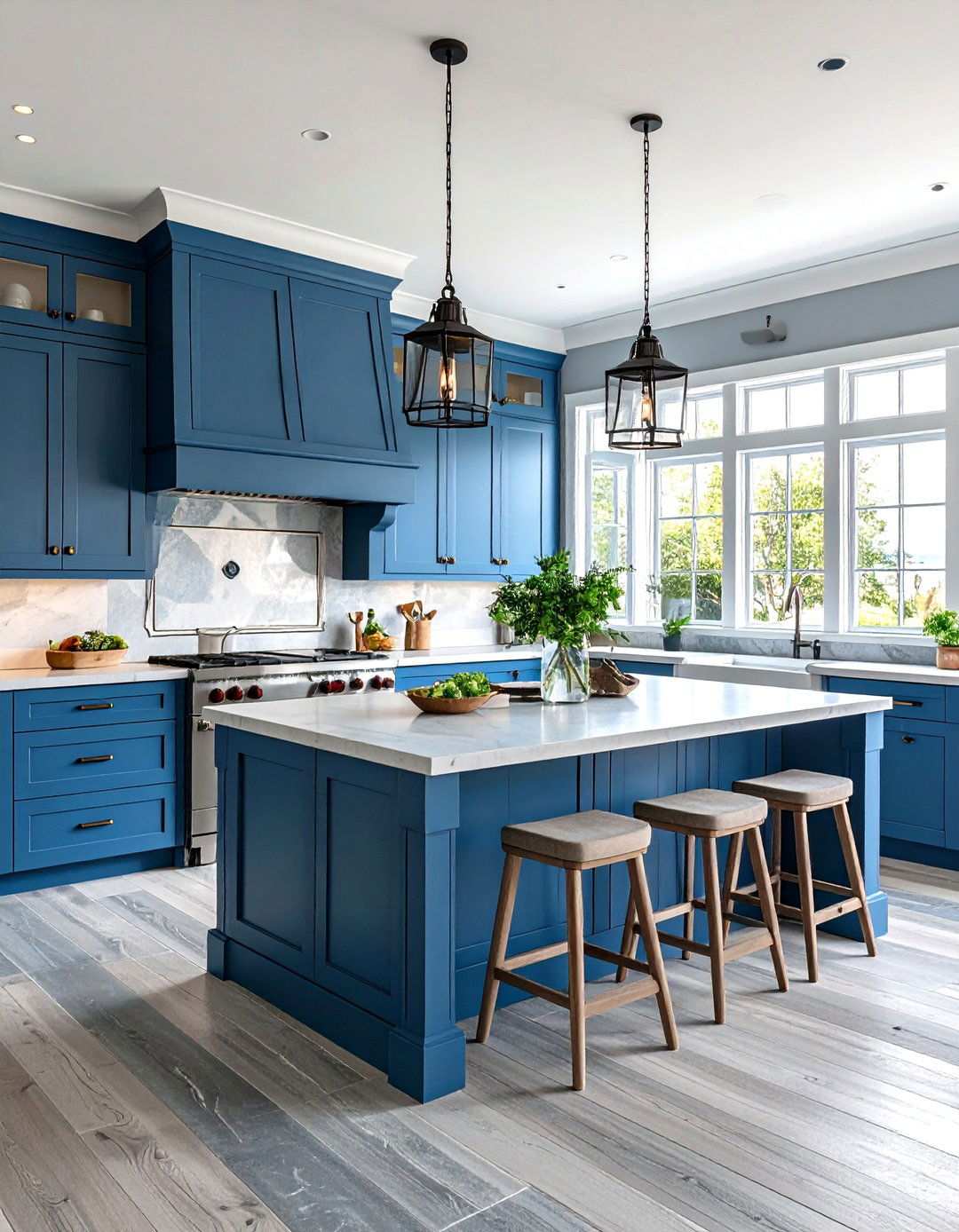
Coastal kitchens can reap the benefits of slate flooring, which not only withstands the humid, salt-air environment but also captures the essence of seaside elegance. By incorporating light gray and blue-toned slate, homeowners can evoke the soothing colors of the ocean while also benefiting from the stone’s exceptional durability, making it an ideal choice for kitchens that experience moisture from nearby water activities or humid climate conditions. Slate floors complement typical coastal elements such as weathered wood, nautical fixtures, and sea glass accessories, providing a consistent appearance that promotes a relaxed, casual atmosphere. Different slate finishes can enhance the weather-worn appearance that coastal design celebrates, ranging from smooth honed surfaces to naturally textured cleft finishes. The stone’s ability to stay cool underfoot provides comfort in warm coastal climates, while its thermal mass helps moderate indoor temperatures throughout changing weather conditions.
24. Transforming Kitchen Breakfast Nooks with Slate Flooring
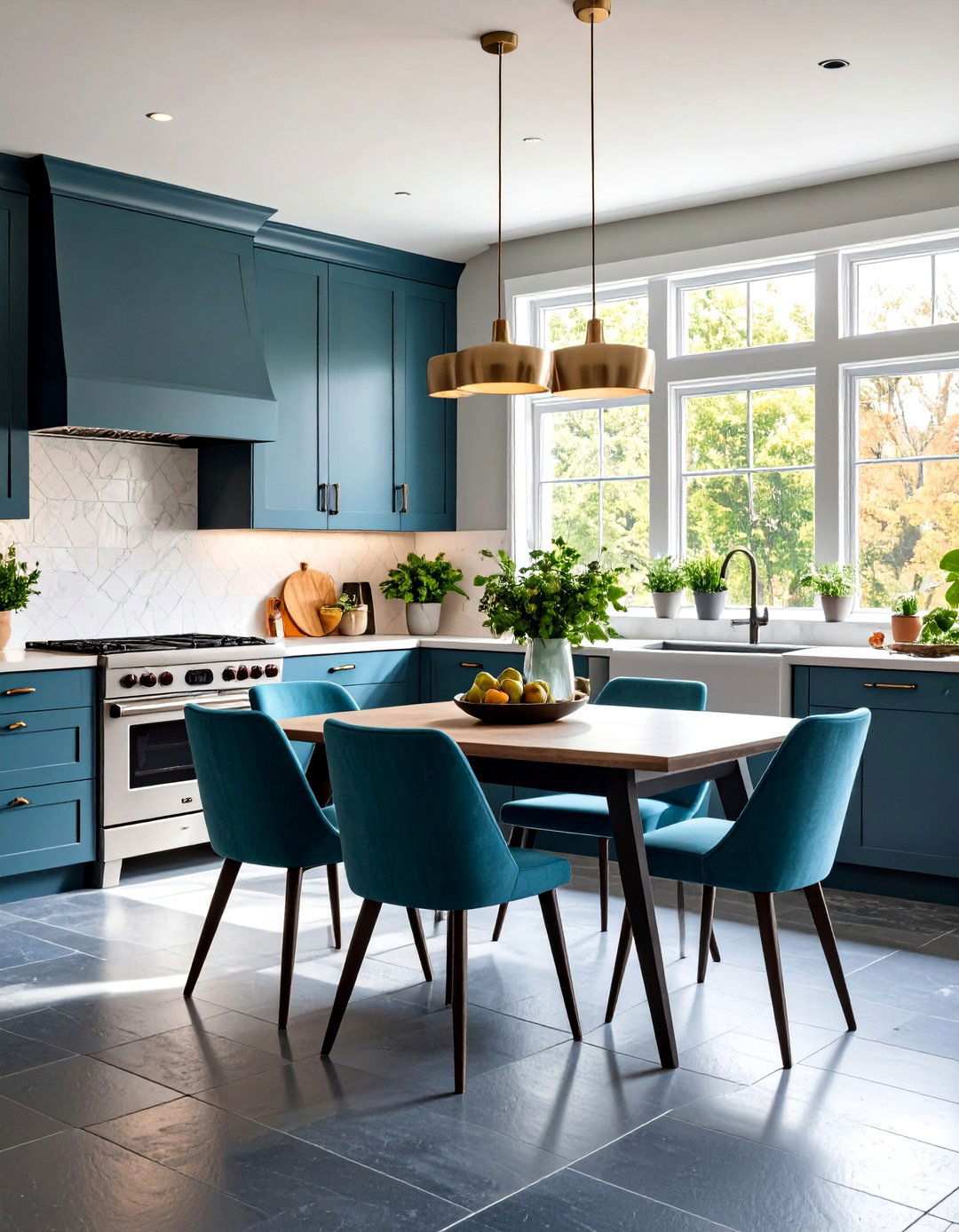
Slate flooring is an excellent choice for kitchen breakfast nooks, as it fosters an intimate ambiance while maintaining an open visual connection to the main cooking area. By subtly defining the nook boundaries through pattern changes or border treatments, slate installation can create a seamless transition between spaces without disrupting the overall kitchen flow. The durability of slate flooring is well-suited to handle the movement of dining chairs and potential spills from casual meals and morning coffee routines, making it an excellent option for busy breakfast nooks. What’s more, the flooring’s consistent appearance helps to integrate the breakfast nook into the kitchen design, rather than treating it as an afterthought. By selecting different slate tones, homeowners can enhance the cozy atmosphere required for a successful breakfast nook, ranging from warm gray shades that promote relaxation to lighter tones that maximize natural light. Furthermore, the stone’s thermal properties work in harmony with radiant heating, making breakfast nooks comfortable for extended morning routines. Overall, the natural material creates a sense of harmony between indoor dining and outdoor garden views that many breakfast nooks celebrate.