1. Crafting Authentic Japanese Dining Spaces
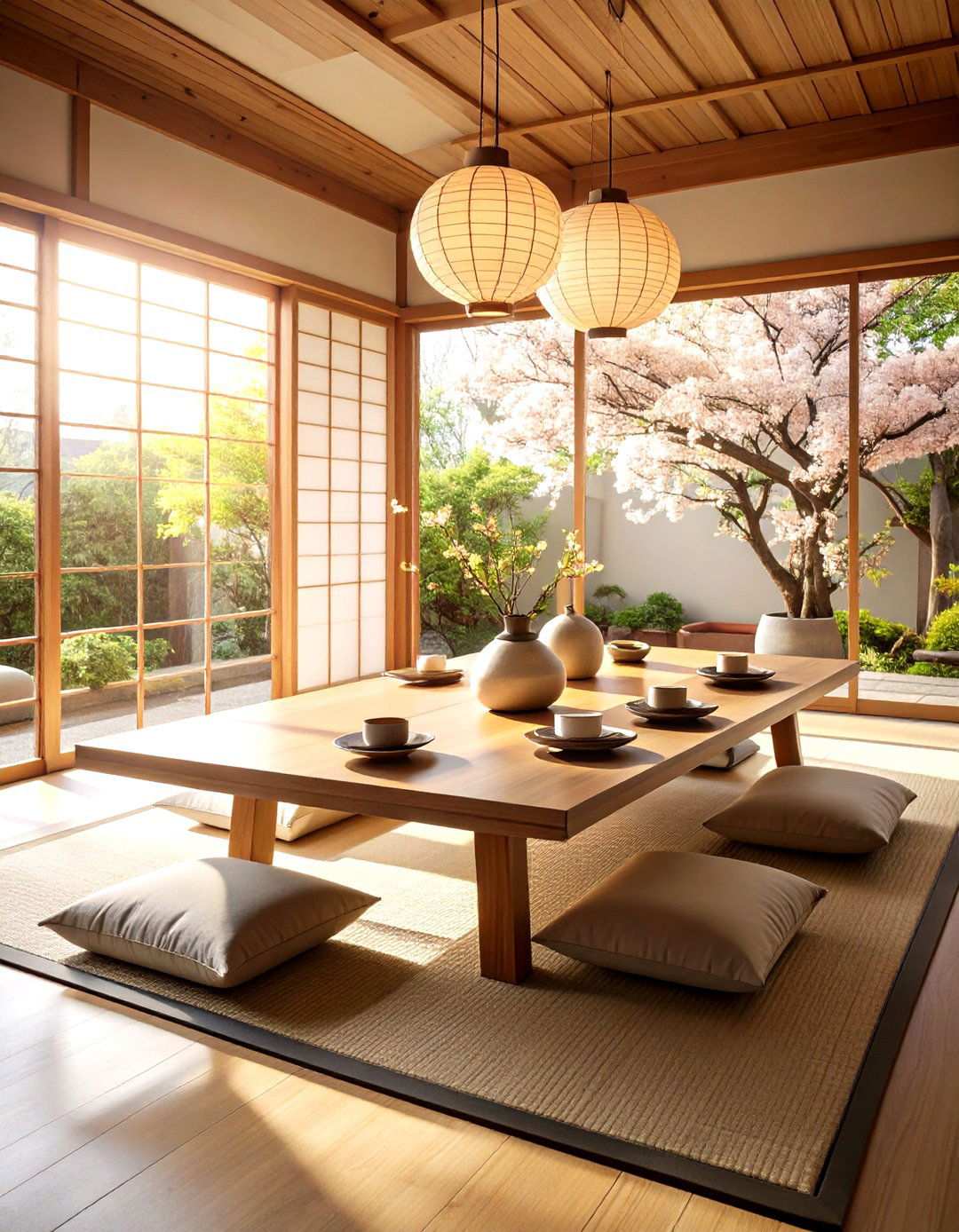
The essence of Japanese dining design lies in creating serene environments that foster connection and appreciation for the present moment. By embracing traditional elements and minimalist aesthetics, homeowners can transform everyday meals into mindful experiences. Japanese dining rooms prioritize simplicity, natural materials, and peaceful ambiance while maintaining practical comfort for modern living. From rustic tatami-floored rooms to sleek, contemporary spaces, Japanese dining design offers diverse approaches to achieving balance and beauty. Each design philosophy emphasizes quality over quantity, natural light optimization, and seamless integration between indoor and outdoor elements.

As an Amazon Associate I earn from qualifying purchases.
2. Modern Minimalist Japanese Dining Rooms
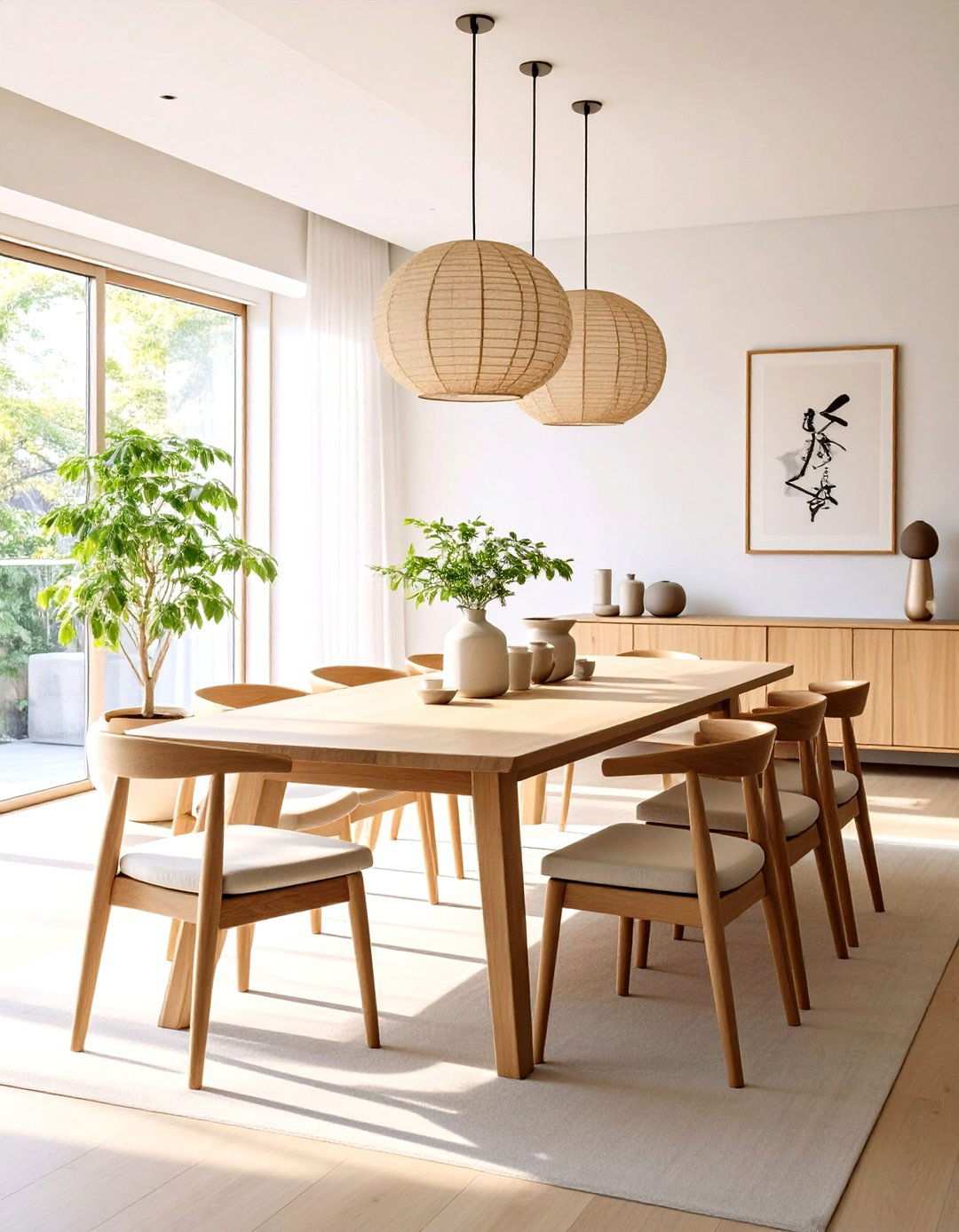
A great approach to creating a modern minimalist Japanese dining room involves stripping away unnecessary elements while maintaining cultural authenticity through carefully chosen materials and proportions. This can be achieved by featuring a sleek, low-profile dining table crafted from light oak or ash wood, paired with floor cushions in neutral linen fabrics. Soft, white walls provide a clean backdrop for one or two carefully selected art pieces featuring Japanese calligraphy or nature motifs. Recessed lighting eliminates visual clutter while providing even illumination throughout the space. Built-in storage cabinets with hidden handles maintain the seamless aesthetic while housing dining essentials. Large windows without treatments allow natural light to flood the room during daytime hours, creating a serene environment that feels both timeless and thoroughly modern.
3. Harmonizing Japanese Minimalism and Scandinavian Functionality
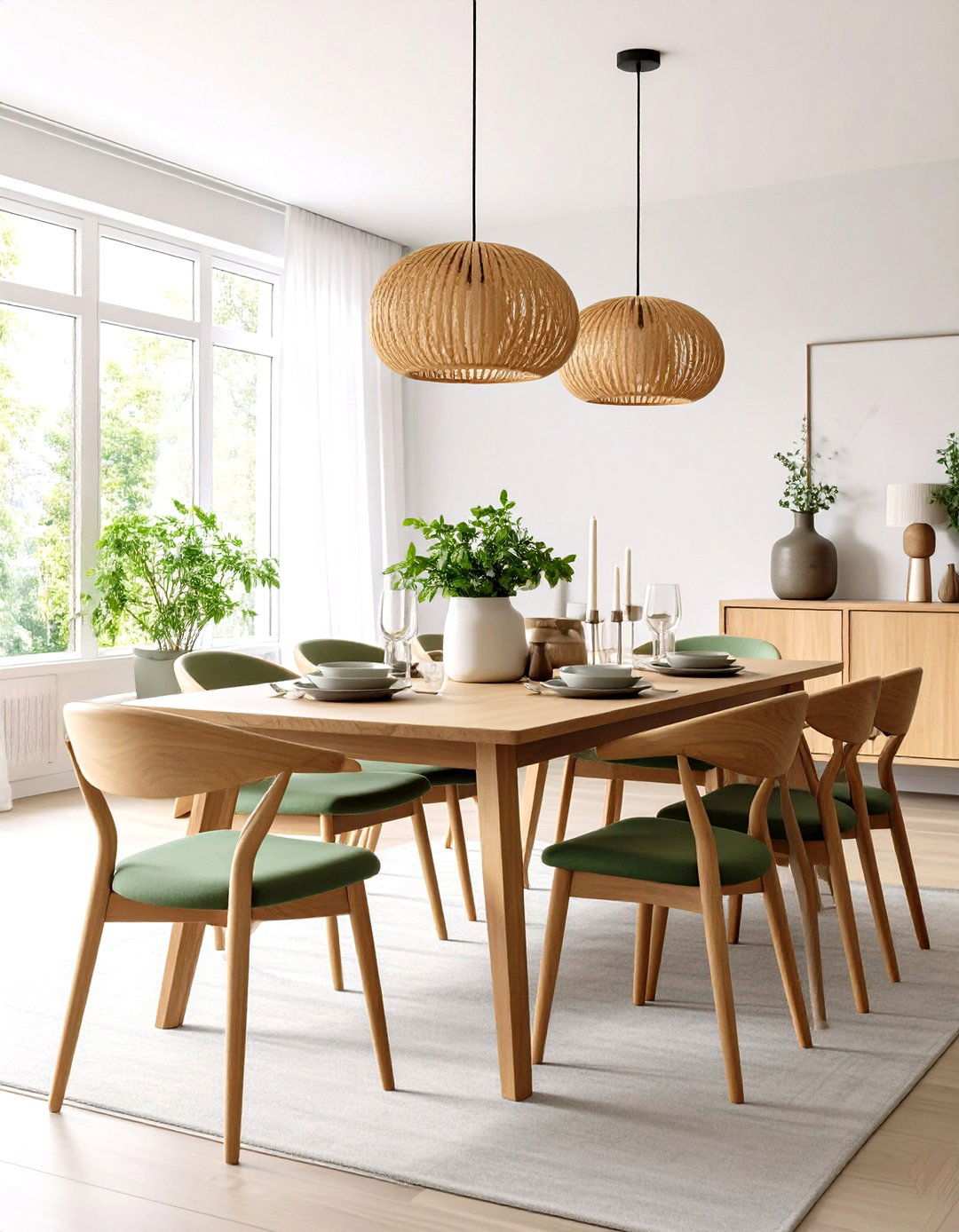
When blending Japanese simplicity with Scandinavian practicality, the result is a serene yet refined dining space that exudes warmth and sophistication. Select furniture pieces that thoughtfully combine light wood tones with soothing hues such as mossy green or weathered gray. A rectangular dining table with unadorned lines serves as the perfect anchor for the room, complemented by chairs featuring curved backs for enhanced comfort during extended meals. By incorporating natural textures through woven placemats, linen table runners, and handcrafted ceramic dishes with organic shapes, the space feels both organic and refined. Pendant lighting with warm-toned bulbs supplies the perfect amount of task illumination, maintaining the cozy atmosphere characteristic of Scandinavian design. A delicate Japanese touch can be added through a single orchid arrangement or a small, carefully curated zen garden centerpiece. This style celebrates the intersection of both cultures’ appreciation for natural beauty and intentional living.
4. Creating a Peaceful Zen Sanctuary
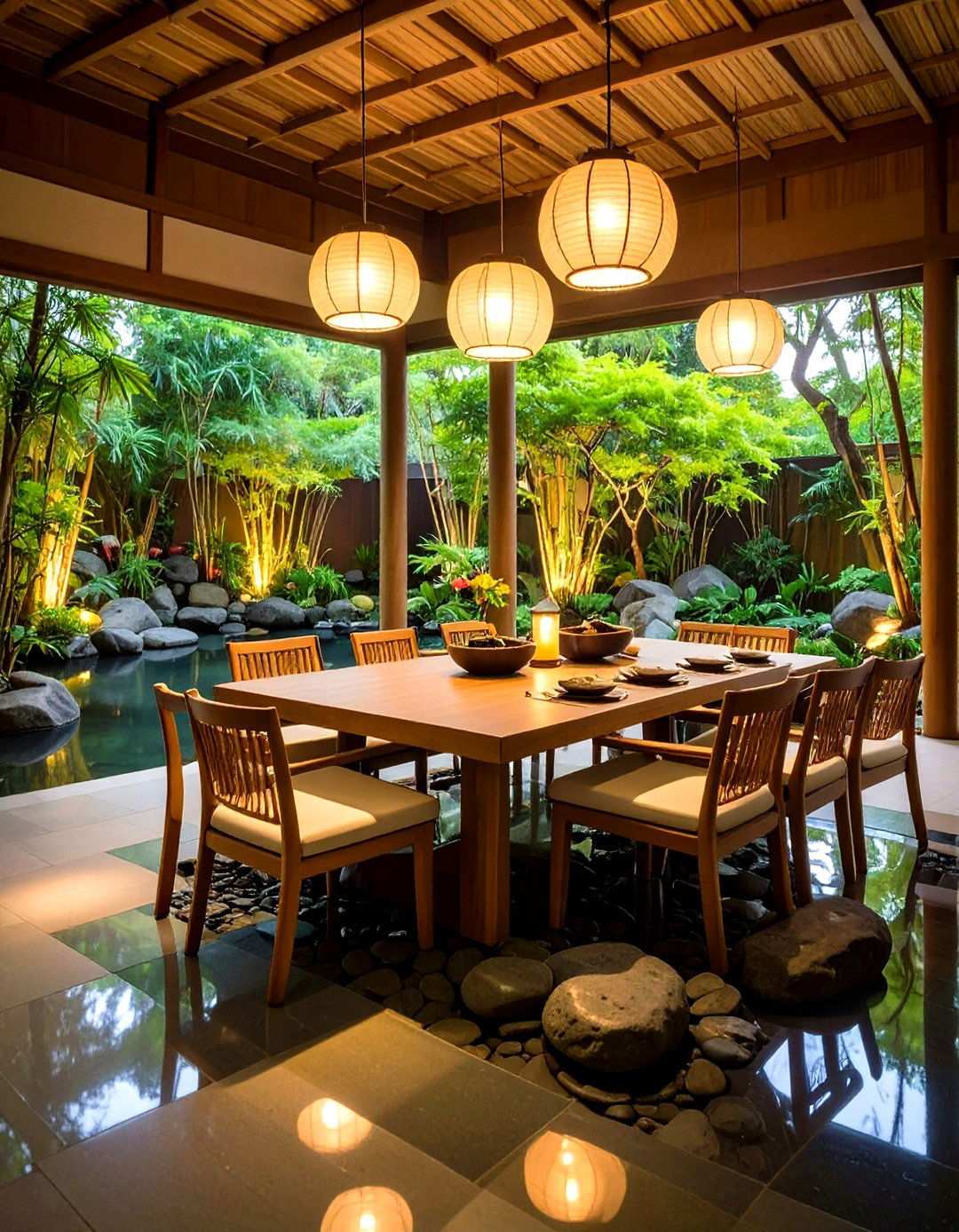
Transform your dining area into a tranquil retreat by incorporating elements reminiscent of Japanese zen gardens. An installed water feature along one wall creates a soothing, meditative ambiance during meals. Delicately arranged river stones and sand patterns displayed in shallow wooden trays make for visually striking table centerpieces. Opt for furniture with fluid, organic lines that echo the natural formations found in traditional gardens. Bamboo accents add a touch of vertical interest while maintaining the natural material palette. Soft, diffused lighting mimics the dappled sunlight found in temple gardens, creating a peaceful atmosphere. Incorporating living plants like bonsai trees or small succulents brings life and serenity to the space, encouraging mindful eating practices and helping family members relax and reconnect with nature’s rhythms.
5. Utilizing Shoji Screens for Versatility and Elegance
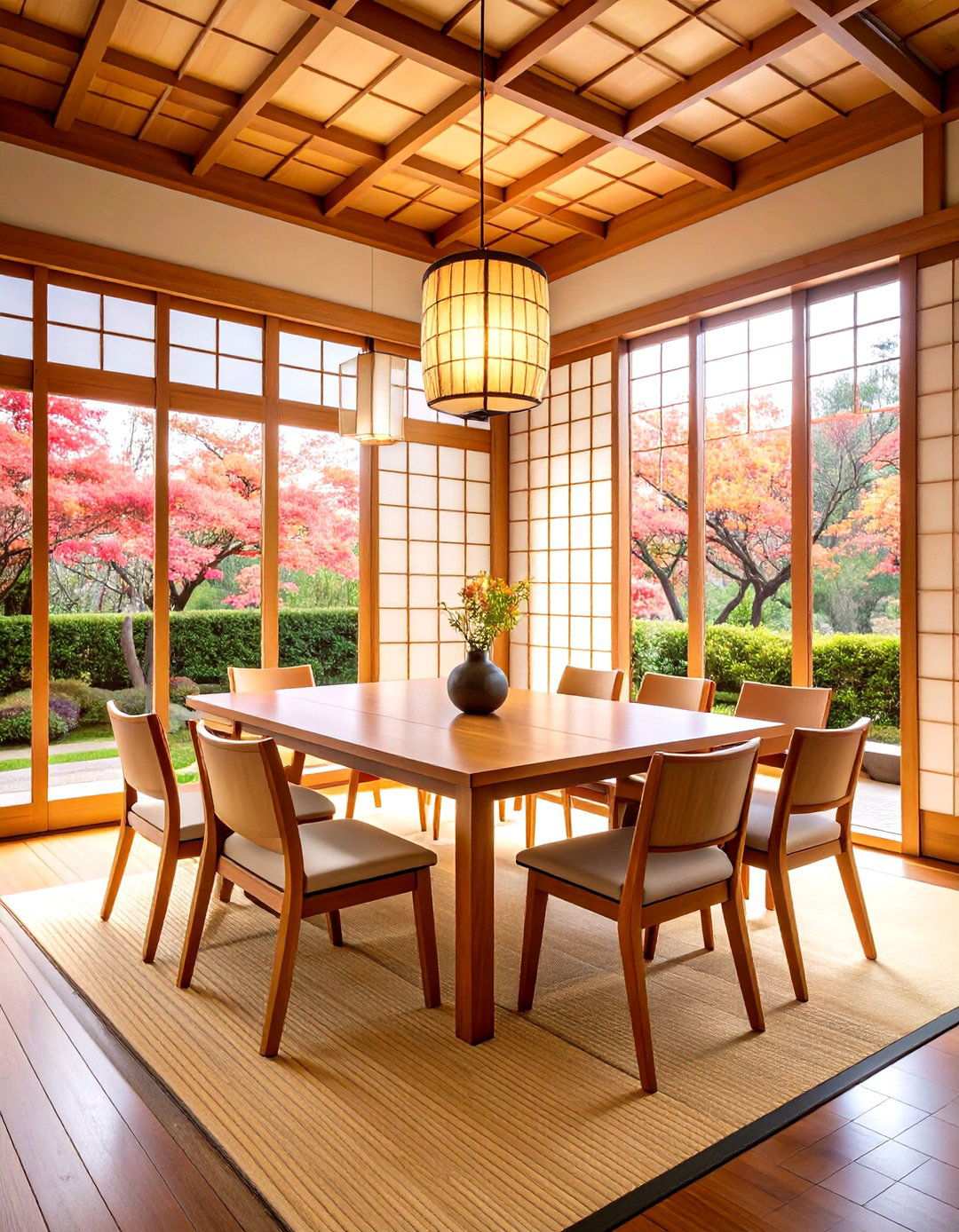
Shoji screens offer an elegant solution for creating flexible dining spaces that can seamlessly adapt to changing entertaining needs. These traditional rice paper and wood lattice panels beautifully filter natural light while providing the option for intimacy and privacy when desired. Sliding shoji screens can be installed to separate the dining area from adjacent living spaces, creating an intimate atmosphere during family meals while maintaining a visual connection to other rooms. The translucent quality of authentic washi paper creates a warm, diffused glow that enhances food presentation and conversation. Shoji screens can be chosen with geometric patterns that complement existing decor while adding authentic Japanese architectural elements. When screens are opened, the dining area flows effortlessly into other spaces, perfect for larger gatherings. This approach honors traditional Japanese flexibility while meeting contemporary open-plan living requirements.
6. Creating a Traditional Japanese Dining Sanctuary
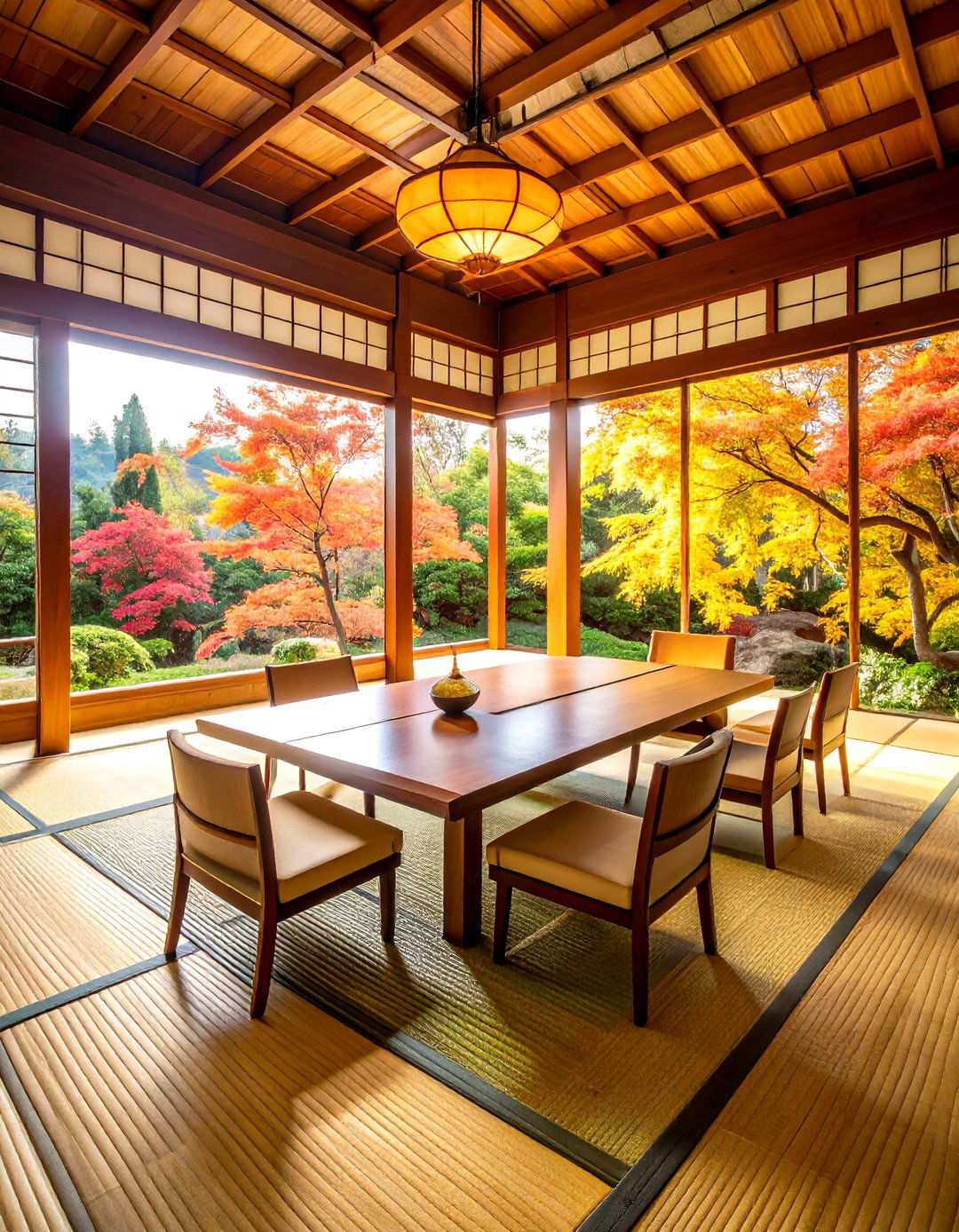
A traditional Japanese dining experience can be brought to life with the use of authentic tatami mats, which engage all the senses and transport diners to a bygone era. These intricately woven rush grass mats not only provide a natural, cushioned surface but also release a subtle, inviting fragrance that contributes to a serene ambiance. By arranging seating around a central low table placed on the tatami surface, individuals can gather in an intimate setting that fosters meaningful conversation and connection. The warm, honey-colored tones of the tatami mats blend harmoniously with wooden furniture, adding a touch of visual warmth to the space. By removing shoes before entering the dining area, diners can pay homage to Japanese customs while safeguarding the delicate surfaces of the mats. Portable zabuton cushions in natural fabrics can be added for extended comfort, creating a meditative atmosphere that encourages families to slow down and appreciate the simple pleasures in life.
7. Embracing the Beauty of Natural Wood in Dining Spaces
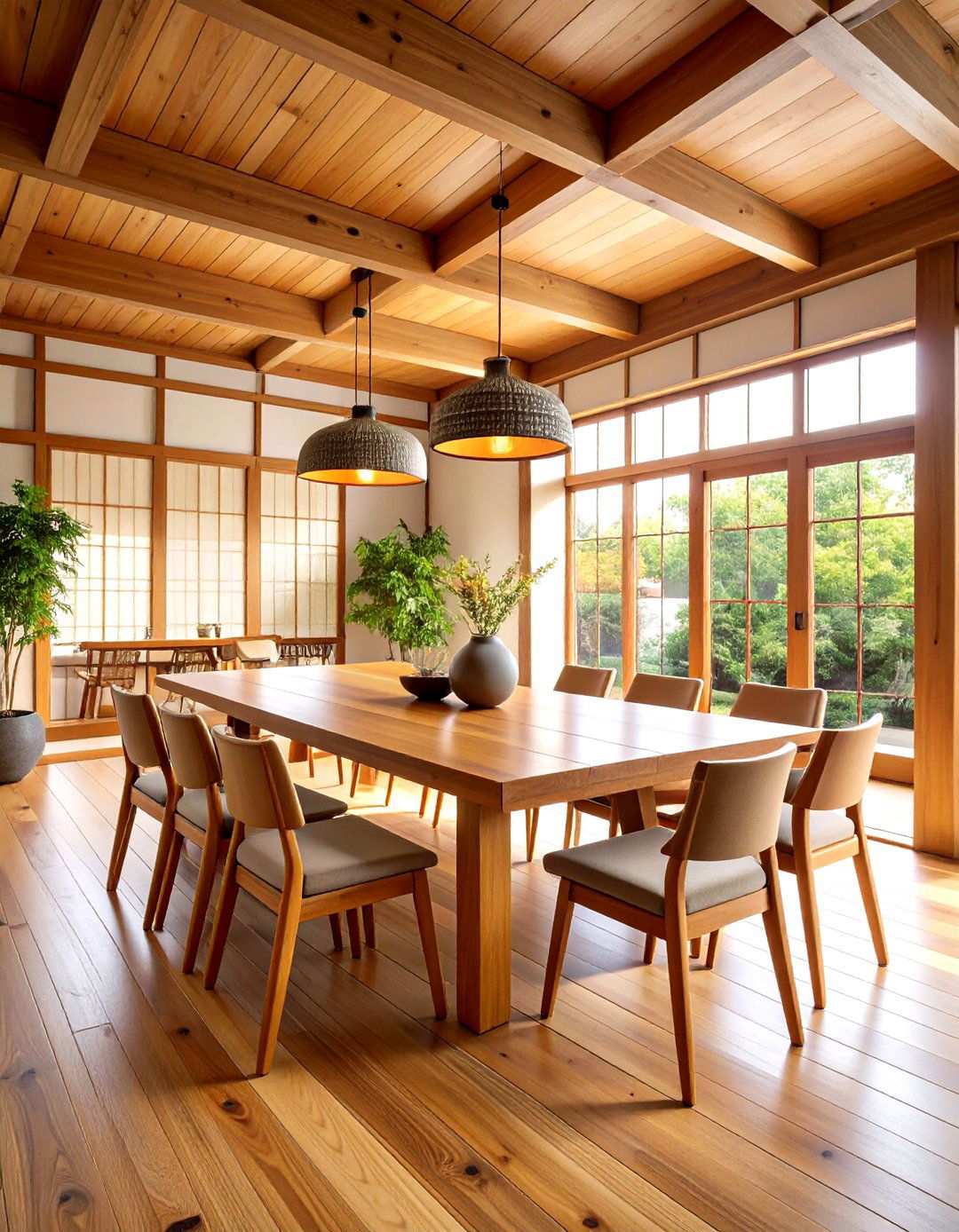
Celebrating the inherent beauty of natural wood can elevate a dining area into a true masterpiece. By incorporating furniture and architectural elements that showcase organic grain patterns and textures, individuals can create a space that honors the material’s origins and tells a unique story. A dining table featuring live-edge detailing, which preserves the natural contours of the tree, can serve as a striking focal point that sets the tone for the entire space. Complementing this centerpiece with chairs crafted from the same wood species can maintain visual harmony and create a sense of cohesion throughout the room. Exposed wooden ceiling beams not only add architectural interest but also emphasize the connection to natural materials, while wood wall paneling with vertical grain patterns creates a sense of height and maintains the warm, organic atmosphere. Finishing all surfaces with natural oils can enhance the wood’s character without overpowering it, resulting in a sophisticated and grounded dining environment that showcases craftsmanship and natural beauty.
8. Cozying Up to the Kotatsu Dining Experience
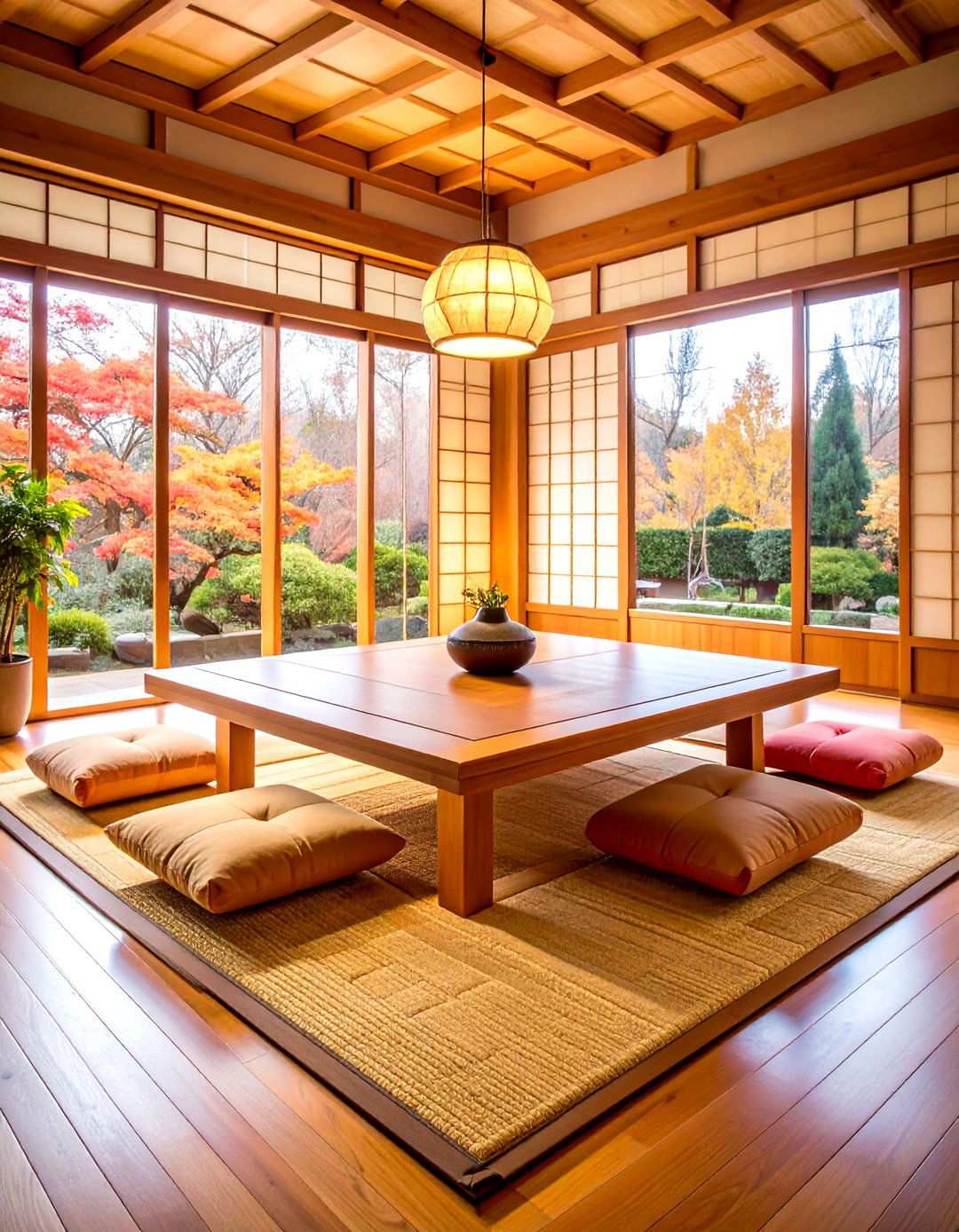
The kotatsu represents the epitome of cozy Japanese dining, combining a low table with built-in heating elements and blankets to create a warm and inviting space during the colder months. This ingenious furniture piece encourages family members to gather close together, sharing both heat and conversation, and transforming dining into a communal experience. When selecting a kotatsu, individuals can opt for traditional wooden construction and neutral-colored quilted covers that blend seamlessly with existing decor. Surrounding the table with comfortable floor cushions or low chairs allows for easy access to the warming interior, making it difficult to leave the table quickly. Modern versions of the kotatsu incorporate energy-efficient heating elements and safety features while maintaining the traditional aesthetic, creating the perfect environment for intimate family gatherings during winter months when outdoor activities are limited. By embracing the kotatsu dining experience, families can slow down and appreciate the simple joys of togetherness.
9. Unifying Elegance: Bamboo Accent Dining Room
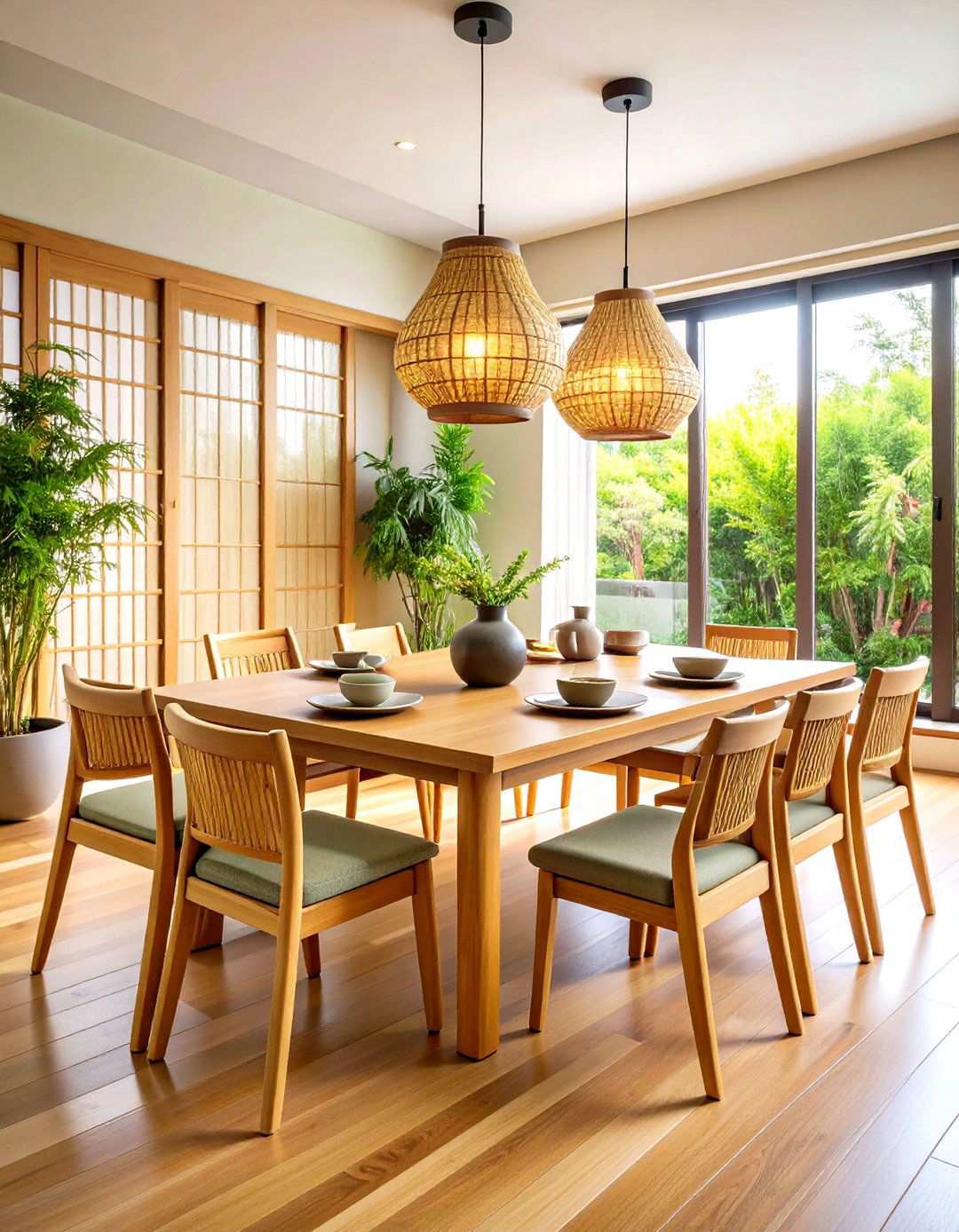
Elevate your dining space with the timeless elegance of bamboo, seamlessly integrating sustainable beauty and natural texture into a Japanese-inspired setting. This harmonious design approach honors the cultural significance of bamboo in Asian design, expertly balancing functionality with aesthetic appeal. By incorporating bamboo through furniture legs, decorative screens, or wall treatments, you can add vertical interest without overwhelming the space. For added comfort and style, opt for dining chairs with bamboo frames paired with neutral cushions. Complete the look with practical bamboo placemats and serving accessories, allowing the natural variations in color and grain pattern to create captivating visual interest. This serenely elegant approach aligns with Japanese values of harmony with nature, where bamboo’s rapid growth and minimal resource requirements make it an eco-friendly choice.
10. Blurring Boundaries: Indoor Garden Dining Room
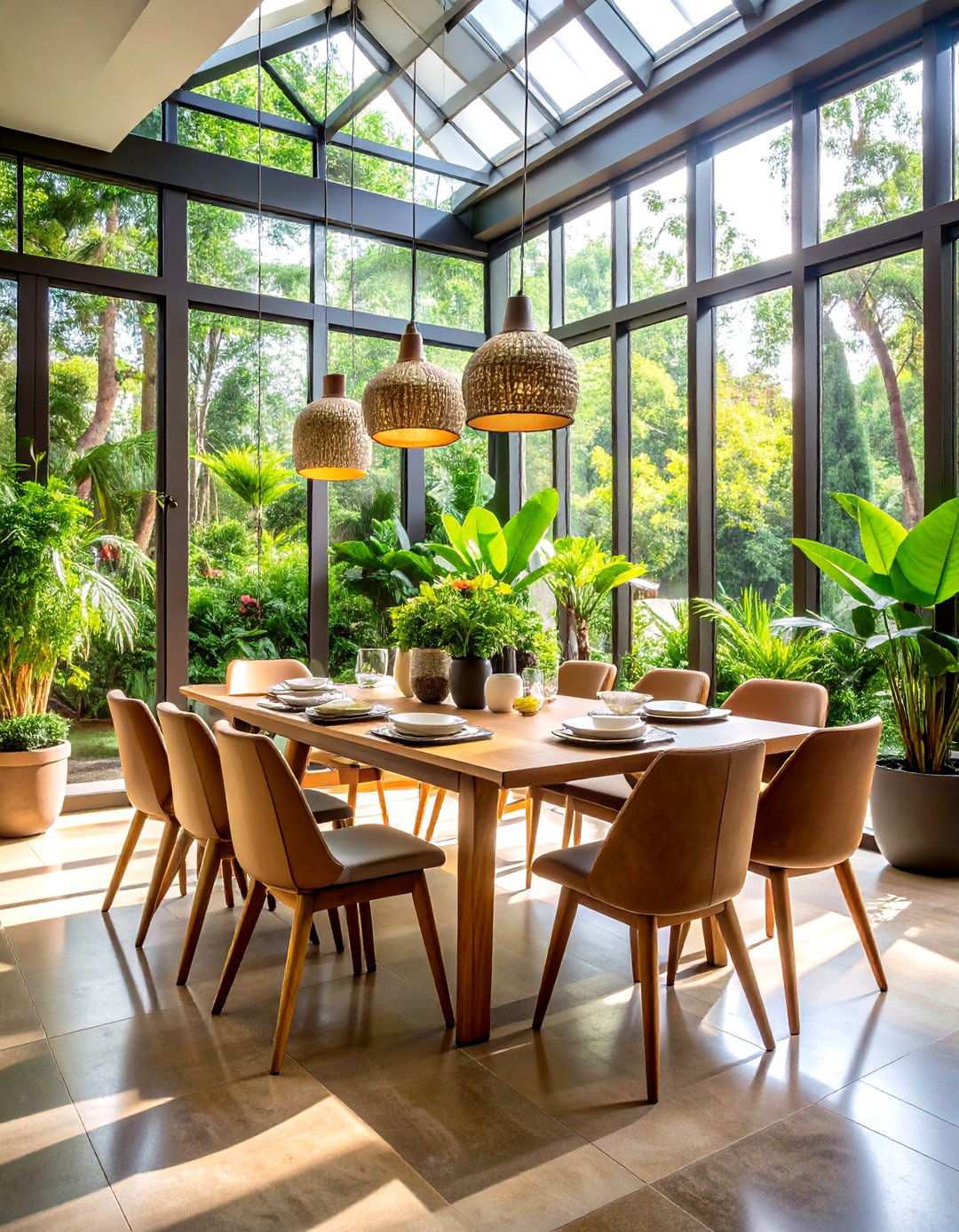
Imagine dining amidst a lush, living oasis, where the boundaries between interior and exterior spaces dissolve into a seamless fusion of natural beauty. To create this enchanting atmosphere, consider installing floor-to-ceiling windows that provide breathtaking views of outdoor gardens while maximizing natural light penetration. Bring the outdoors in by selecting planters in natural materials like stone or unglazed ceramic to house small trees, ferns, or bamboo arrangements that infuse life into the dining area. Take it to the next level by creating a living wall feature with trailing plants that not only add vertical interest but also purify the air during meals. Complete the look with furniture that echoes the organic shapes of plants, ensuring functionality and visual harmony. The pièce de résistance is the incorporation of natural stone accents and water features, skillfully blending texture and contrast to transport you to a serene garden atmosphere. This thoughtfully designed space embodies the Japanese principle of finding beauty in natural elements, creating a year-round connection to nature that elevates the dining experience.
5.1. Captivating Ambiance with Paper Lantern Illumination
Creating a captivating ambiance in the dining room is as simple as incorporating traditional Japanese paper lanterns. These lanterns, with their soft, diffused lighting, transport you to serene temple gardens and intimate restaurants. To add visual interest and ensure even illumination, hang lanterns at varying heights above the dining table. Opt for natural materials like rice paper and bamboo to complement the overall Japanese aesthetic, filtering harsh electric light into a gentle, flattering glow. The soft ambiance created by these lanterns makes for an ideal setting for family dinners or romantic meals. With a wide range of sizes and shapes available, you can customize the lanterns to suit your room’s proportions and personal style. Furthermore, LED bulbs offer energy efficiency and eliminate the fire hazards associated with traditional candles, making this lighting approach not only aesthetically pleasing but also practical.
5.2. Harmony through a Neutral Color Palette
Japanese design principles emphasize the beauty of subtle, neutral color schemes that create a sense of calm and serenity. A palette built around soft beiges, warm whites, and gentle grays provides a serene backdrop for family meals, allowing natural materials like wood and stone to take center stage. By introducing subtle variations through different textures rather than bold color contrasts, you can maintain the restful atmosphere essential to Japanese design philosophy. Natural light becomes a design element itself, accentuating the neutral colors and creating ever-changing visual interest throughout the day. This timeless approach offers economical and sustainable benefits, as it won’t require frequent updates. Moreover, the neutral palette provides flexibility for incorporating seasonal decorative elements without disrupting the overall aesthetic harmony, ensuring your dining room remains a peaceful and inviting space.
13. Multi-Functional Space Dining Room
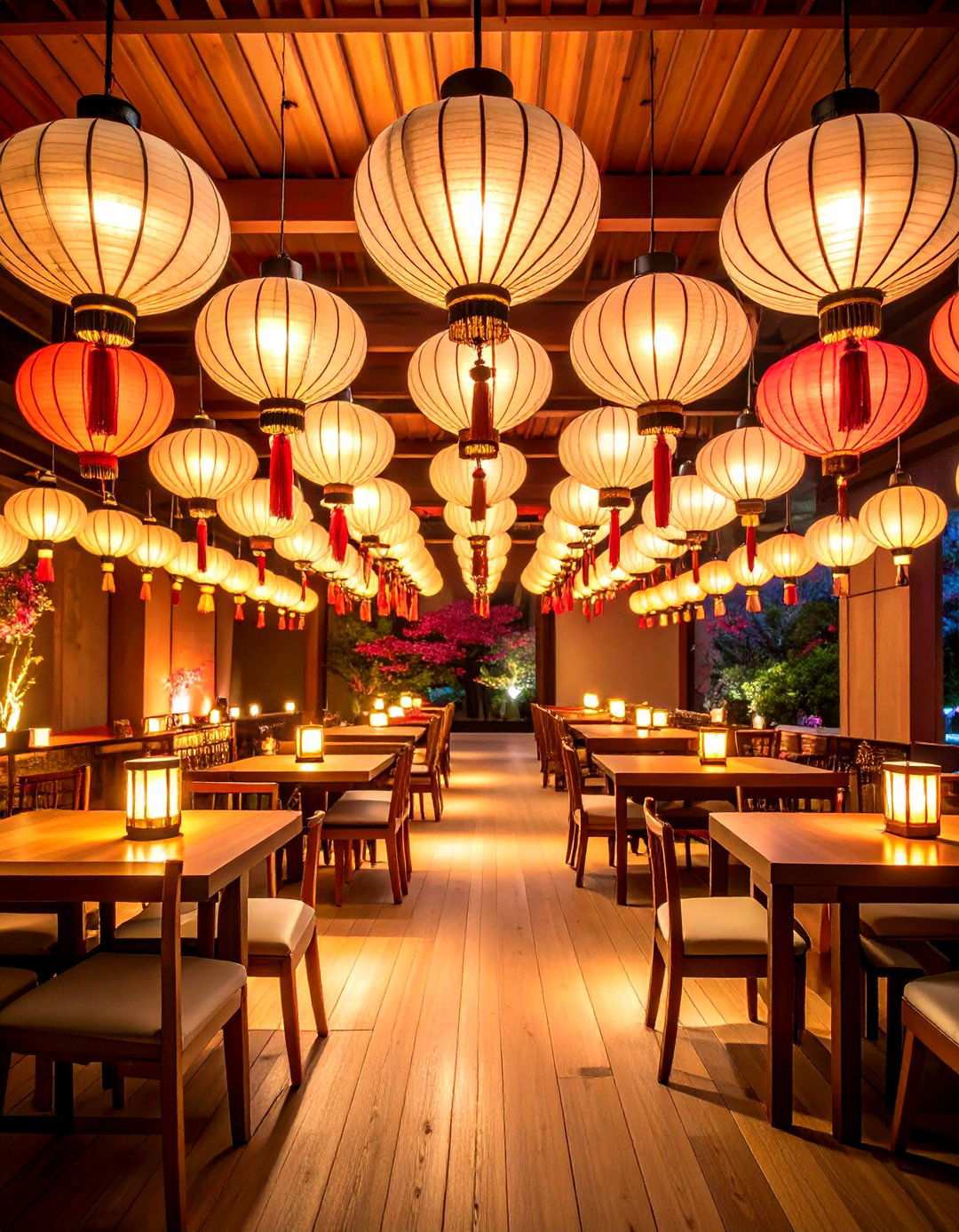
Efficient spaces are a hallmark of Japanese home design, and by embracing this approach, modern dining rooms can become truly versatile areas that adapt to changing needs. To achieve this, choose furniture that can be easily rearranged or stored away when not in use, making it simple to transform the space into a workspace, study area, or entertainment zone as required. A sleek, minimalist dining table with clean lines serves as an excellent multi-functional piece, doubling as a desk or craft surface during the day. Built-in storage benches offer a convenient solution, providing seating while housing essential items such as board games, work materials, or decorative objects. Modular seating allows for quick reconfiguration of the space to suit current needs, while wall-mounted shelving dispenses ample storage for frequently used items while showcasing decorative pieces.
14. Stone and Wood Dining Room
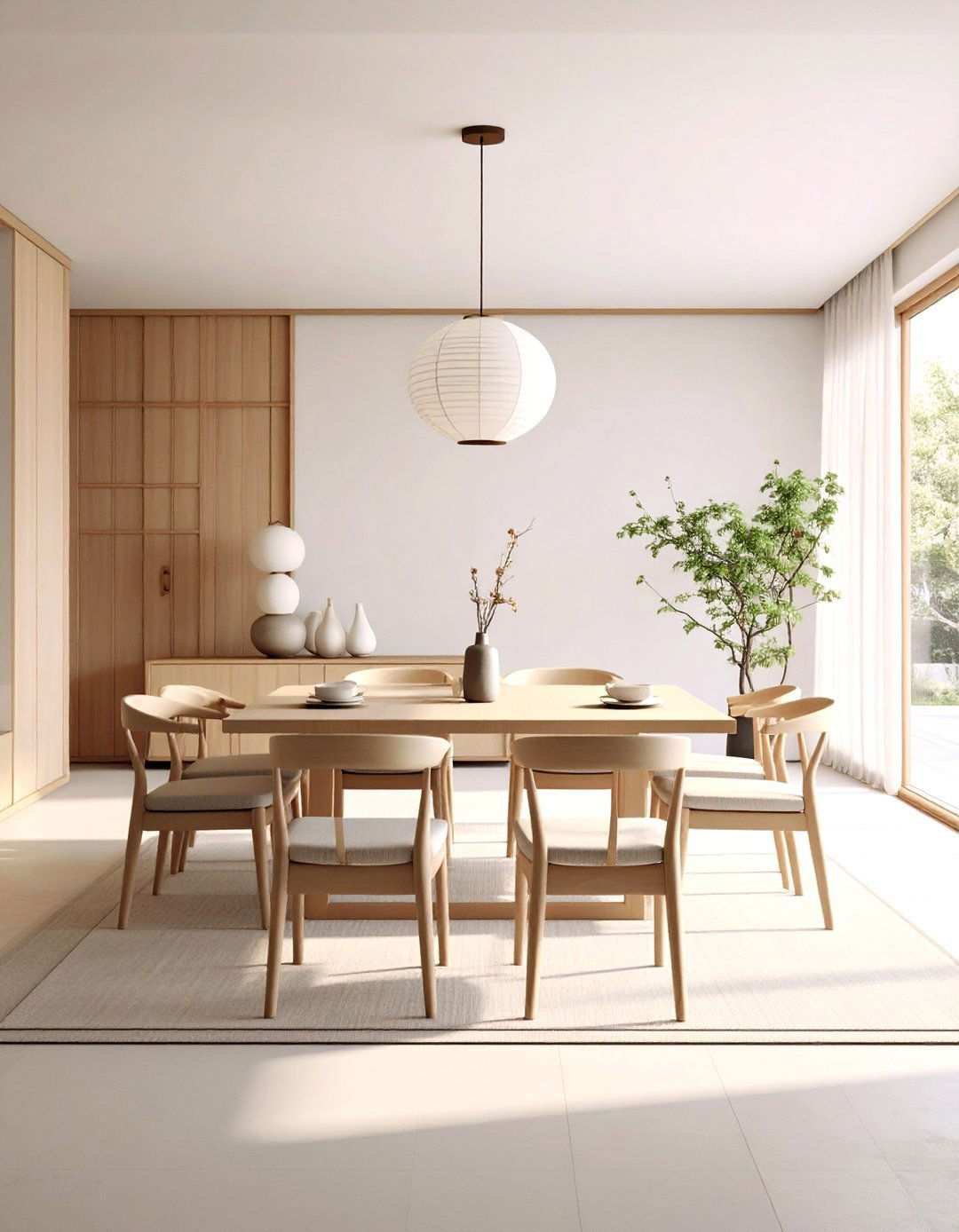
The fusion of natural stone and warm wood creates a captivating atmosphere in Japanese-inspired dining rooms, where raw materials take center stage. A statement stone accent wall featuring stacked slate or river rock injects a touch of textured interest, blending seamlessly into a neutral color palette. Pair this striking backdrop with a wooden dining table that showcases beautiful grain patterns and organic edges, allowing the beauty of the materials to shine. The use of stone serving dishes and decorative objects reinforces the theme, providing both form and function to the dining space. The juxtaposition of smooth stone surfaces and organic wood textures creates a visually appealing contrast, adding depth to the space without overwhelming the minimalist aesthetic. By selecting stones in muted tones that complement wood finishes, you can create a harmonious balance that celebrates the beauty of natural elements. This material combination not only reflects the Japanese appreciation for nature but also results in a sophisticated dining environment that exudes a sense of grounding and refinement, with the added benefit of low maintenance requirements.
Seasonal Decor Dining Room
The ever-changing seasons serve as a rich source of inspiration in Japanese culture, with each period’s unique characteristics influencing interior design elements. Design your dining room as a canvas for seasonal transformations by establishing a foundation of understated colors and straightforward furniture that provides a neutral backdrop for rotating decorations. Spring might bring the delicate beauty of cherry blossom branches and soft pink accents, while summer’s warmth is reflected in fresh green plants and lightweight textiles. Autumn introduces vibrant orange and red hues through leaves, gourds, and seasonal fruits, whereas winter emphasizes the enduring charm of evergreen arrangements and cozy textures. This approach allows the dining room to stay connected to nature’s cycles while embracing the Japanese spirit of finding beauty in seasonal renewal. By investing in high-quality storage solutions for off-season decorative items and selecting versatile pieces that can seamlessly transition between different themes, you’ll create an ever-evolving space that anticipates and celebrates the natural world’s rhythms.
Open Concept Japanese Dining
The open floor plans prevalent in modern homes can be successfully integrated with Japanese design principles, maintaining visual flow between spaces while still incorporating distinct functional areas. Instead of relying on physical barriers to define separate spaces, use subtle level changes, area rugs, or furniture placement to create distinct dining zones. Employ consistent materials and color palettes throughout the open space while varying textures to establish different functional areas. A low dining table with floor seating fosters intimacy within the larger space while maintaining visual connection to adjacent living areas. Incorporating storage solutions that cater to multiple spaces, such as room dividers that showcase decorative objects while providing practical organization, honors Japanese principles of harmony and flow while meeting contemporary preferences for connected living spaces that facilitate family interaction and entertainment.
17. Ceramic Art Display Dining Room
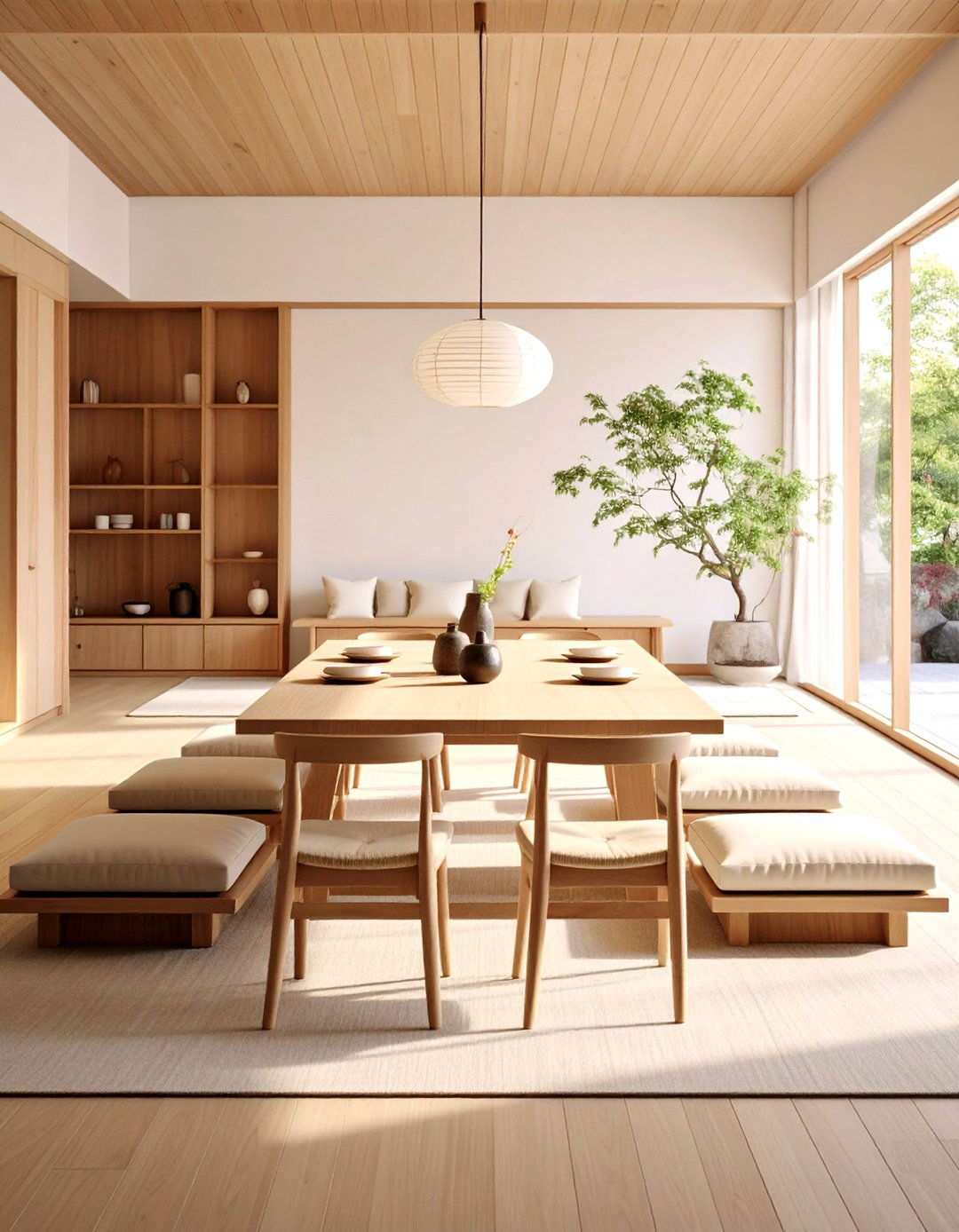
Japanese ceramic traditions provide a rich canvas for crafting dining rooms that exude artistic flair and elegance. To create a captivating space, consider installing wall-mounted shelves or built-in display alcoves that serve as a backdrop for exquisite ceramic pieces. Selecting serving dishes, vases, and decorative objects that reflect various Japanese pottery styles, from earthy folk ceramics to refined tea ceremony pieces, adds depth and visual interest to the room. The unique characteristics of handmade ceramics inject a personal touch, effortlessly balancing the space’s serene ambiance. Grouping pieces by color or style creates harmonious vignettes that adapt to changing moods and seasons. Effective lighting is crucial for showcasing ceramic collections, with adjustable spotlights or picture lights that can illuminate different pieces as the day unfolds. By embracing Japanese artistic traditions, this approach yields conversation-starting pieces that elevate the dining experience. Over time, exceptional ceramic pieces evolve into treasured family heirlooms, accumulating value and sentimental worth.
18. Low Seating Dining Room
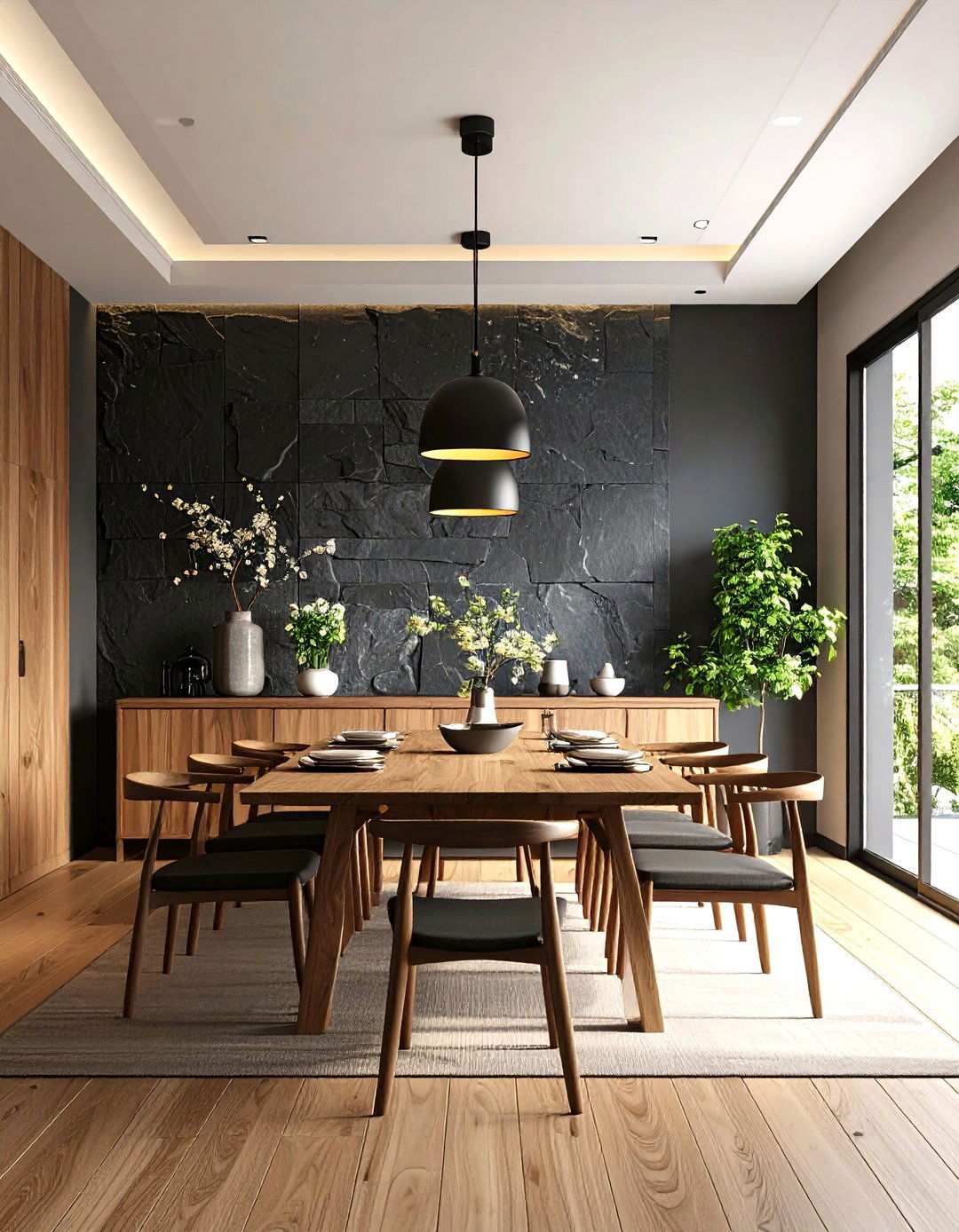
Japanese low seating arrangements foster an atmosphere of warmth and conviviality, promoting healthy posture during extended meals. Design your dining space around a low table height of 15 to 18 inches, paired with plush floor cushions or low-back chairs that maintain the horizontal emphasis. This seating style naturally creates a more relaxed ambiance, slowing the pace of meals and encouraging meaningful conversations. Choose cushions made from sturdy, easy-to-clean fabrics that can withstand daily use while retaining their appearance over time. Providing back support through wall-mounted cushions or low-profile chairs is essential for family members who value additional comfort. The low seating arrangement cleverly creates the illusion of a more spacious room while offering interesting sight lines throughout the space. This approach is particularly well-suited for families with children, as the informal seating style feels playful yet maintains the sophistication of Japanese design.
19. Harmonizing with the Japanese Spirit
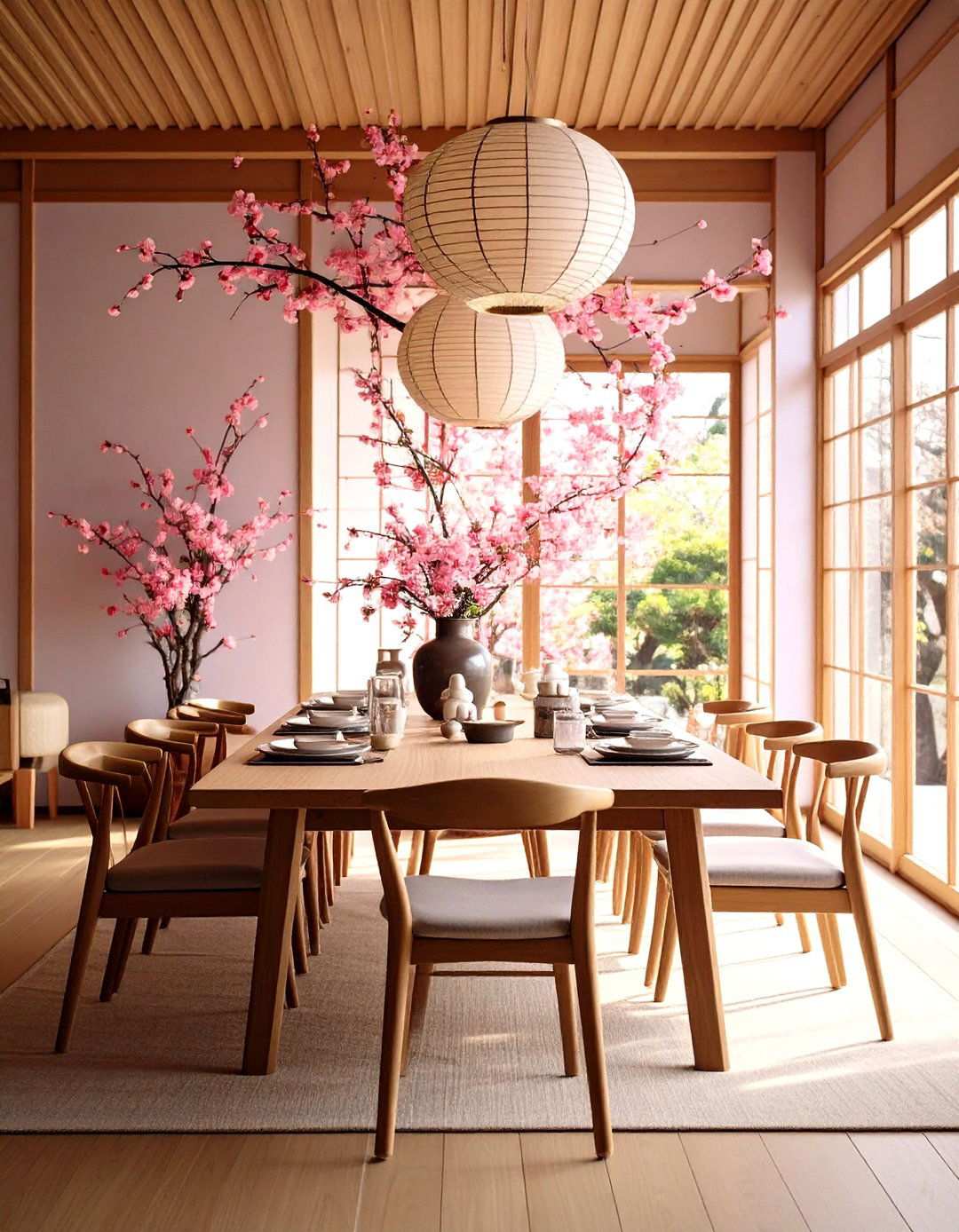
Inspired by the serene tranquility of the Japanese tea ceremony, diners can cultivate a sense of mindfulness and respect for beautiful objects in their everyday dining spaces. By creating a dedicated area for tea service, homeowners can bring a touch of Eastern elegance to their own homes. This can be achieved by incorporating a low table and traditional implements into a custom-built shelving unit, showcasing the beauty of Japan’s minimalist aesthetic. Carefully selecting furniture and accessories that reflect the simplicity and natural materials characteristic of the tea ceremony will further enhance the dining experience. A traditional tokonoma alcove for displaying seasonal flowers or scrolls adds an element of cultural authenticity, while also encouraging mindfulness and a deeper appreciation for the changing seasons. As diners slow down and savor each moment, they are reminded of the value of mindfulness, gratitude, and appreciation for life’s simple pleasures.
20. Elegant Storage Solutions
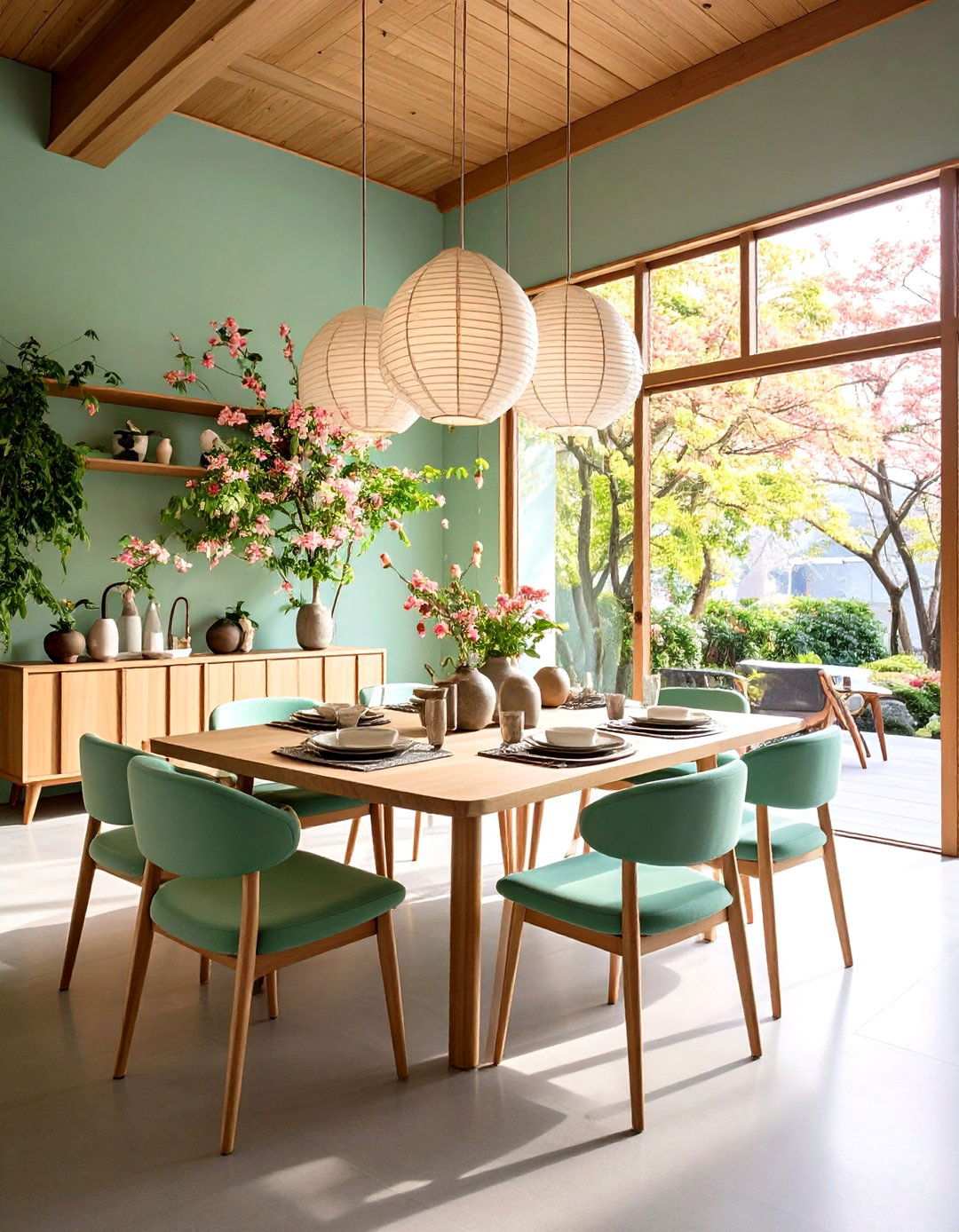
Japanese-inspired sliding doors bring a touch of modern sophistication to the dining room, while providing practical storage solutions that maintain a clean and minimalist aesthetic. By installing floor-to-ceiling sliding panels, homeowners can conceal dishes, serving pieces, and table linens behind smooth, unbroken surfaces, creating a sense of visual harmony. Traditional wood and paper construction or modern materials like frosted glass and aluminum frames can be chosen to suit a variety of interior styles. The sliding mechanism not only saves space but also offers flexibility in how storage areas are accessed and used, allowing homeowners to optimize their storage needs. Choosing hardware in matte finishes that complement the overall color scheme helps to maintain a seamless visual flow, while internal organization systems ensure that frequently used items are easily accessible. By eliminating visual clutter, this approach allows other design elements to take center stage, creating a beautiful and functional dining space that embodies the spirit of Japanese design philosophy.
21. Harnessing the Power of Natural Light in Dining Spaces
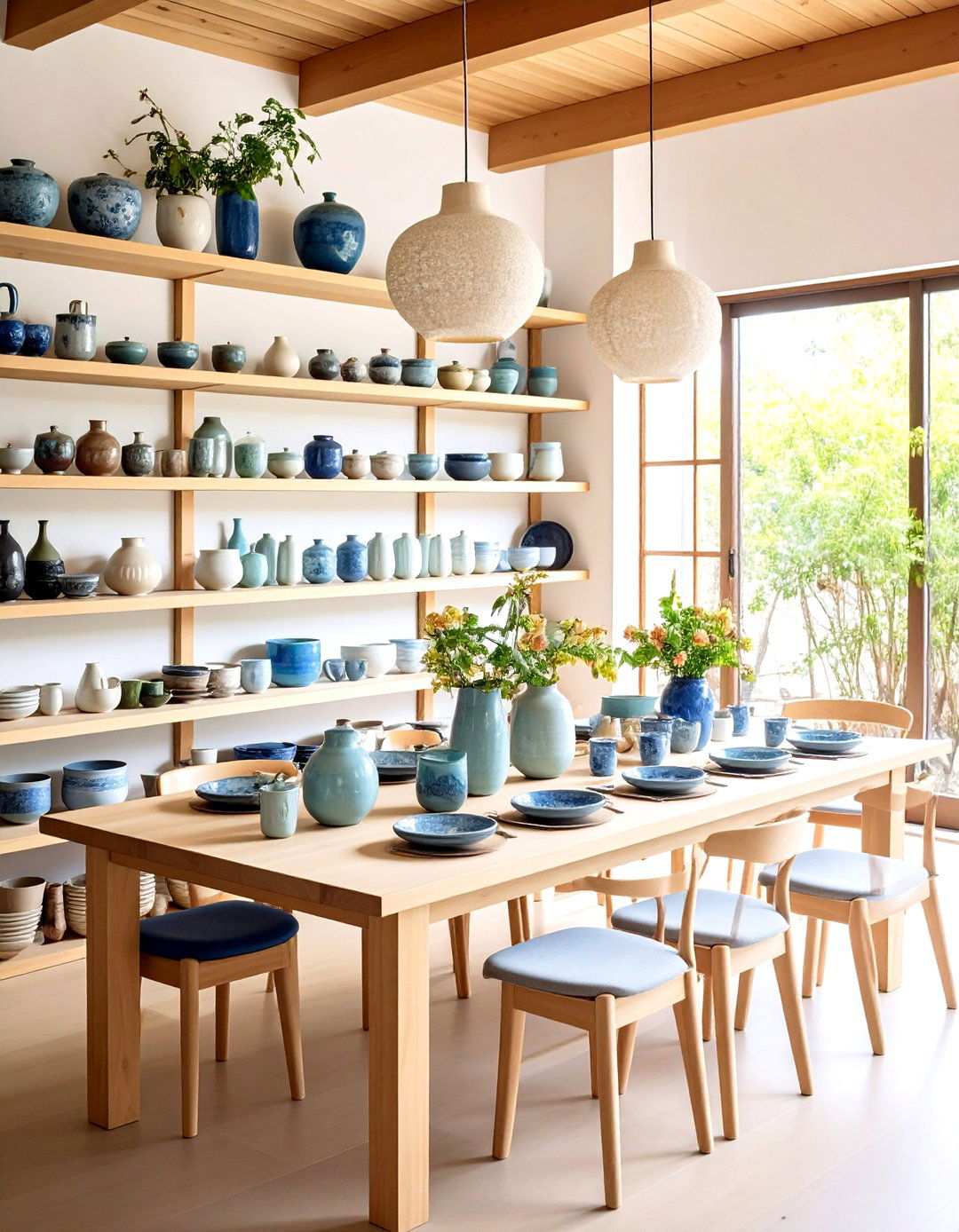
To create a harmonious connection between indoors and outdoors, Japanese design philosophy emphasizes the importance of natural light in dining spaces. By thoughtfully placing windows, incorporating light-colored surfaces, and utilizing reflective materials, you can amplify the available daylight and make your dining area feel larger and more inviting. Opt for minimalist window treatments, such as simple panels or shoji screens, which filter light while maintaining privacy. Choose furniture finishes and wall colors that skillfully reflect natural light, creating a sense of openness and airiness throughout the day. Strategically positioning mirrors to bounce light into darker corners can also help to create a brighter ambiance, but be mindful of potential glare during meal times. Consider installing skylights to provide additional illumination and add visual interest with changing shadow patterns throughout the day. By prioritizing natural light, you can reduce your reliance on artificial illumination and create a healthier, more pleasant dining environment that promotes circadian rhythms and overall well-being.
22. Integrating the Serenity of Bonsai Gardens into Dining Spaces
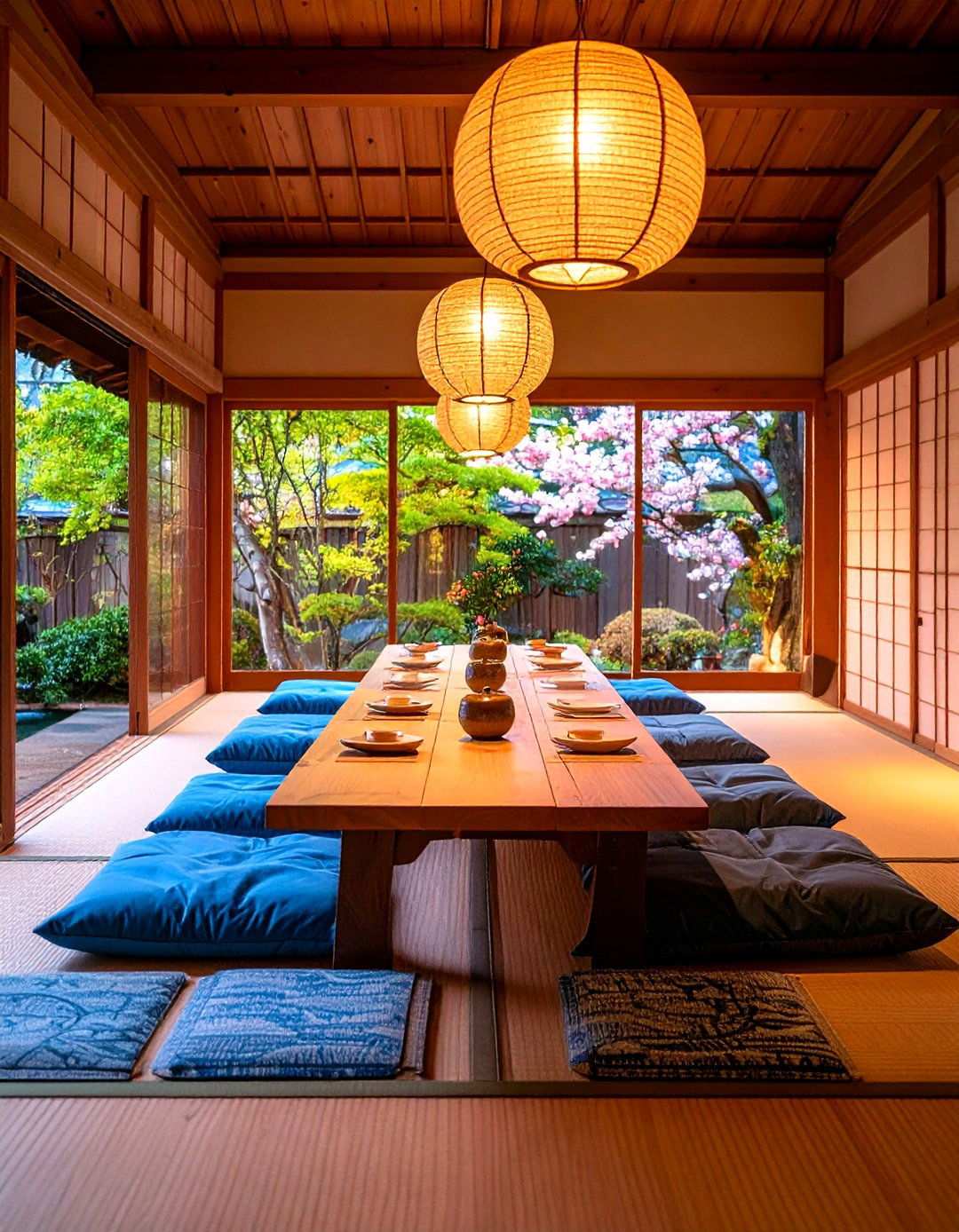
Bonsai cultivation, an ancient art form, can be beautifully integrated into your dining room design to create living, breathing sculptures that evolve with the seasons. Displaying bonsai trees on traditional wooden stands at varying heights can add visual interest to the space without overwhelming it. Select species that thrive in indoor conditions and offer diverse textures, flowers, or seasonal color changes to create a dynamic display. The meticulous care required to maintain bonsai trees encourages mindfulness and patience, values that can extend to the dining experience itself. Ensure that the lighting for your bonsai trees is adequate for their health while also considering how the displays will enhance or complement meal service. Designate specific areas for bonsai tools and supplies that maintain the overall aesthetic while supporting the hobby. By incorporating a living element like bonsai gardens, you can add personality to your dining space while honoring the Japanese tradition of finding profound beauty in miniature natural forms that reflect larger landscape elements.
23. Embracing Eco-Friendly Materials in the Dining Room
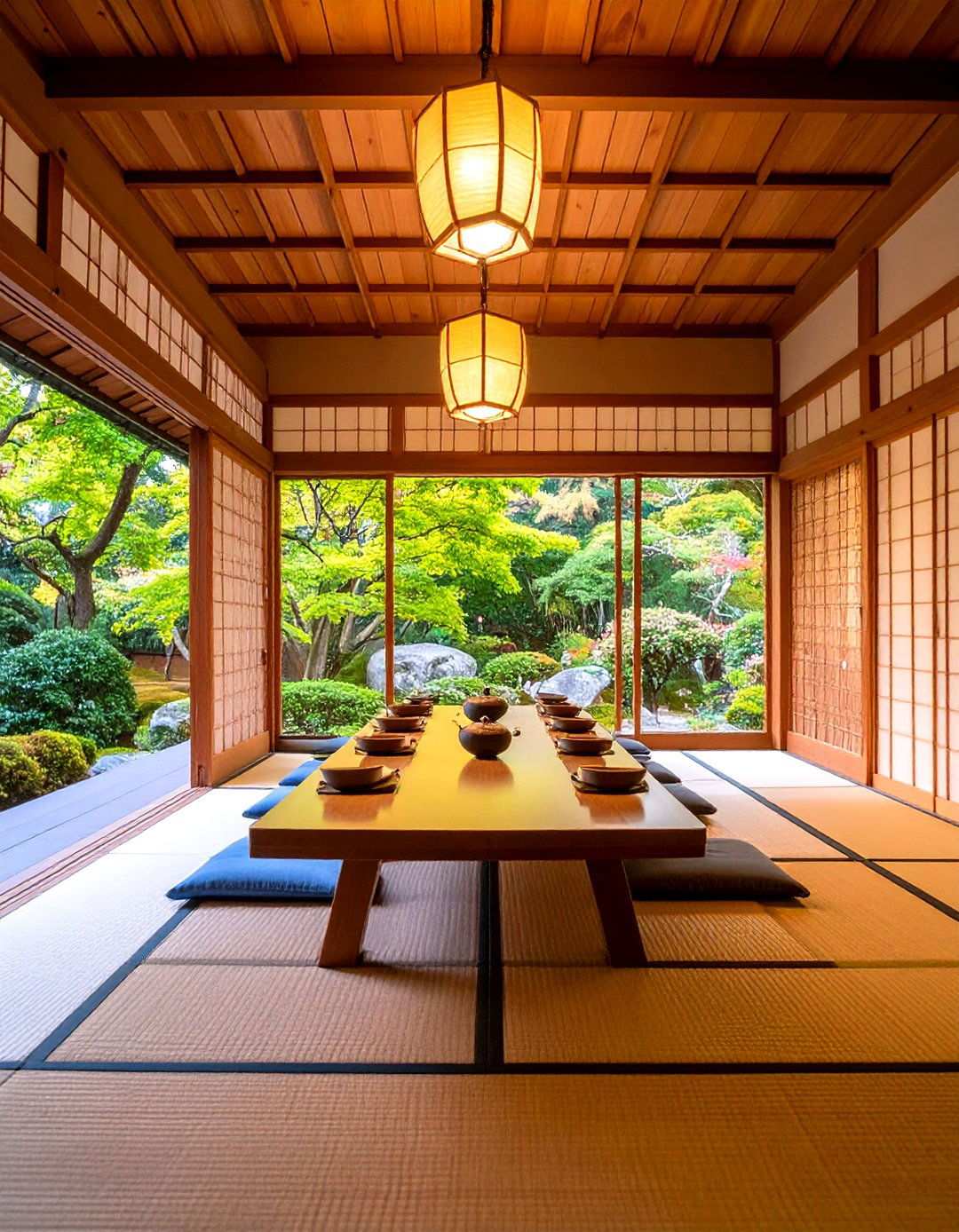
To cultivate a harmonious relationship with nature, many homeowners opt for furniture crafted from sustainably sourced woods, such as those bearing certifications that guarantee responsible forestry practices. The incorporation of bamboo elements not only adds visual interest but also contributes to a reduced environmental footprint. Bamboo grows rapidly, replenishing itself without depleting natural resources. Furthermore, textiles made from organic fibers like hemp, linen, or organic cotton offer a sustainable choice, as they biodegrade and are produced without the use of harsh chemicals. By repurposing vintage or antique pieces, homeowners can add character and history to the dining environment while reducing waste. The use of natural stone from local quarries supports regional businesses and significantly reduces transportation-related carbon emissions. This approach to dining room design not only reflects contemporary environmental awareness but also honors traditional Japanese values of living in harmony with the natural world.
24. Blending Tradition and Innovation in Modern Japanese Dining Rooms
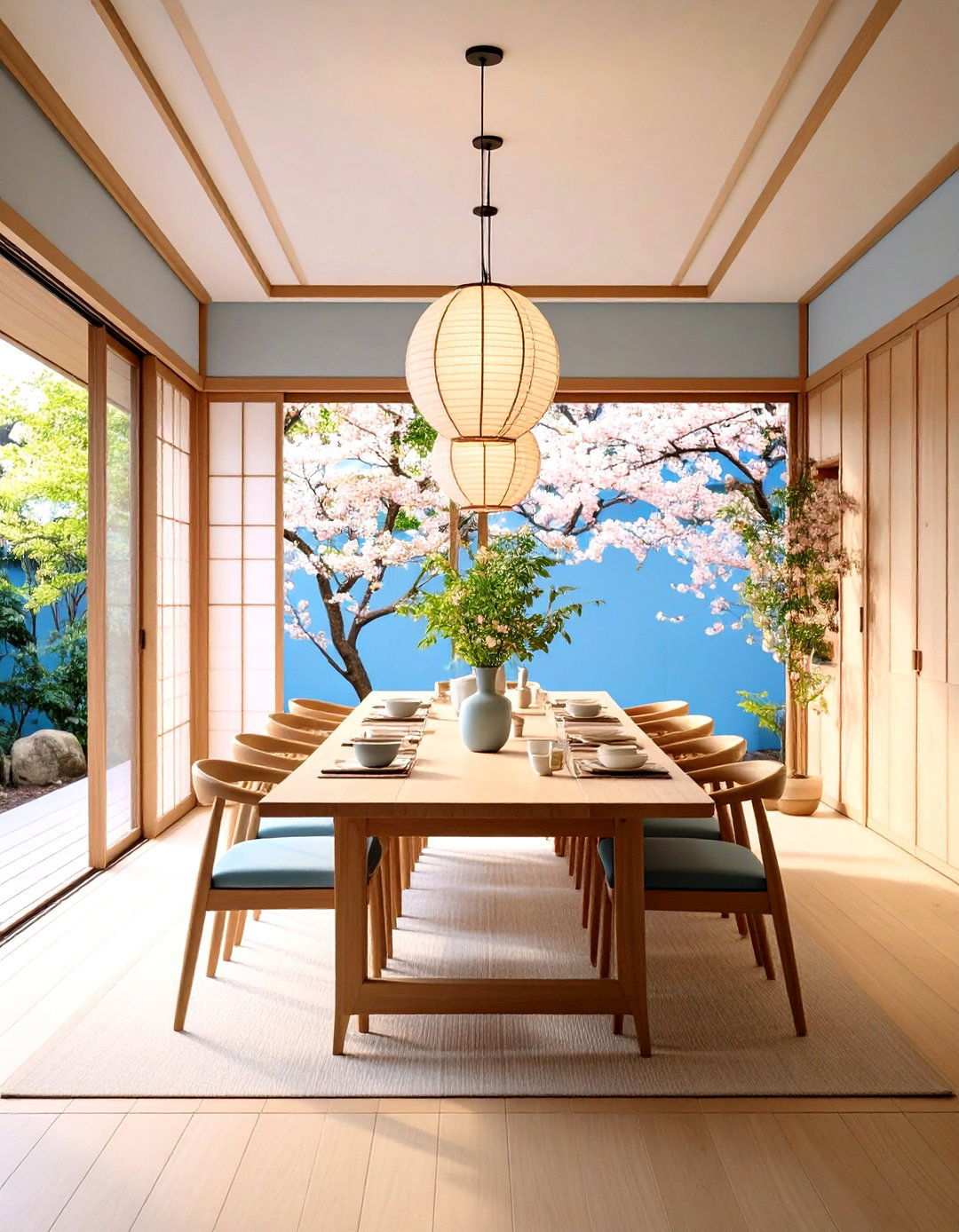
The modern interpretation of Japanese dining rooms seamlessly blends traditional principles with contemporary lifestyle needs, creating spaces that exude both timeless elegance and cutting-edge sophistication. To strike a balance between form and function, consider incorporating smart home technology to discreetly control lighting, temperature, and entertainment systems without compromising the minimalist aesthetic. Clean-lined furniture with traditional proportions, updated with materials like engineered wood products, offers improved durability and sustainability. Additionally, modern art pieces with Japanese themes or techniques provide a cultural connection while reflecting personal taste and contemporary artistic expression. By incorporating innovative storage solutions that conceal modern appliances and electronic devices, homeowners can maintain the uncluttered appearance essential to Japanese design. This fusion approach enables families to appreciate traditional Japanese design principles while embracing contemporary conveniences and lifestyle requirements, resulting in a sophisticated and comfortable dining space that honors the past while embracing the future of home design.