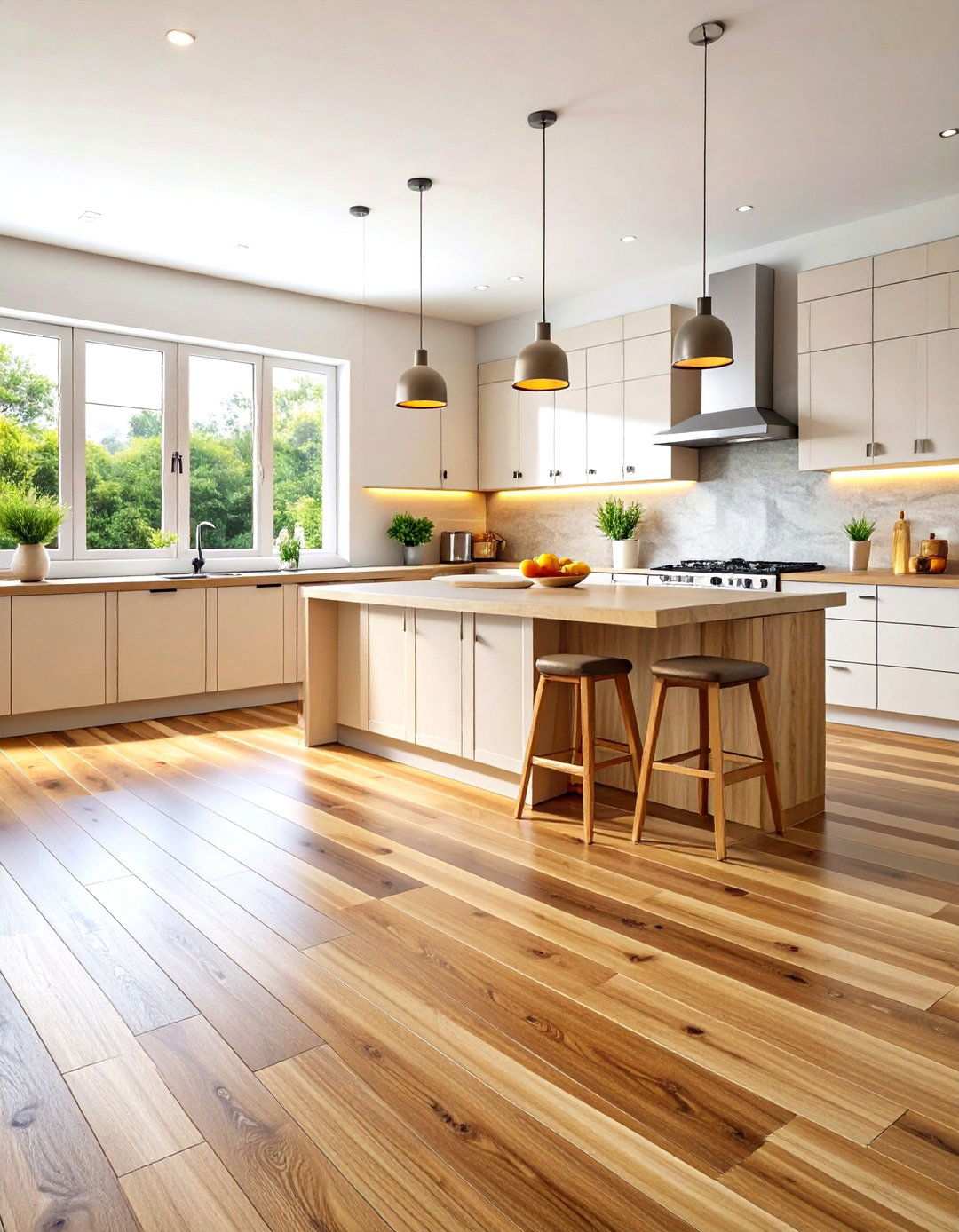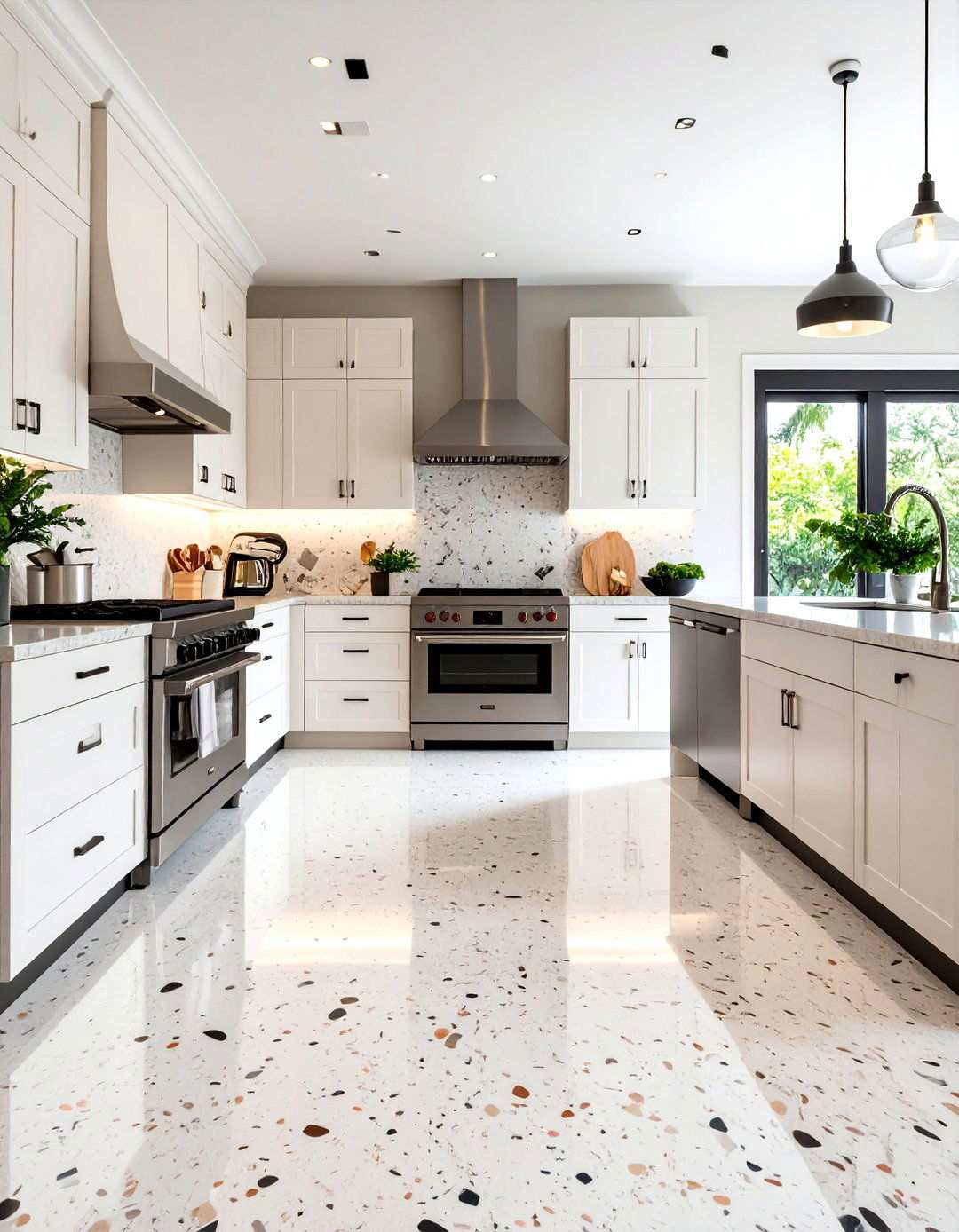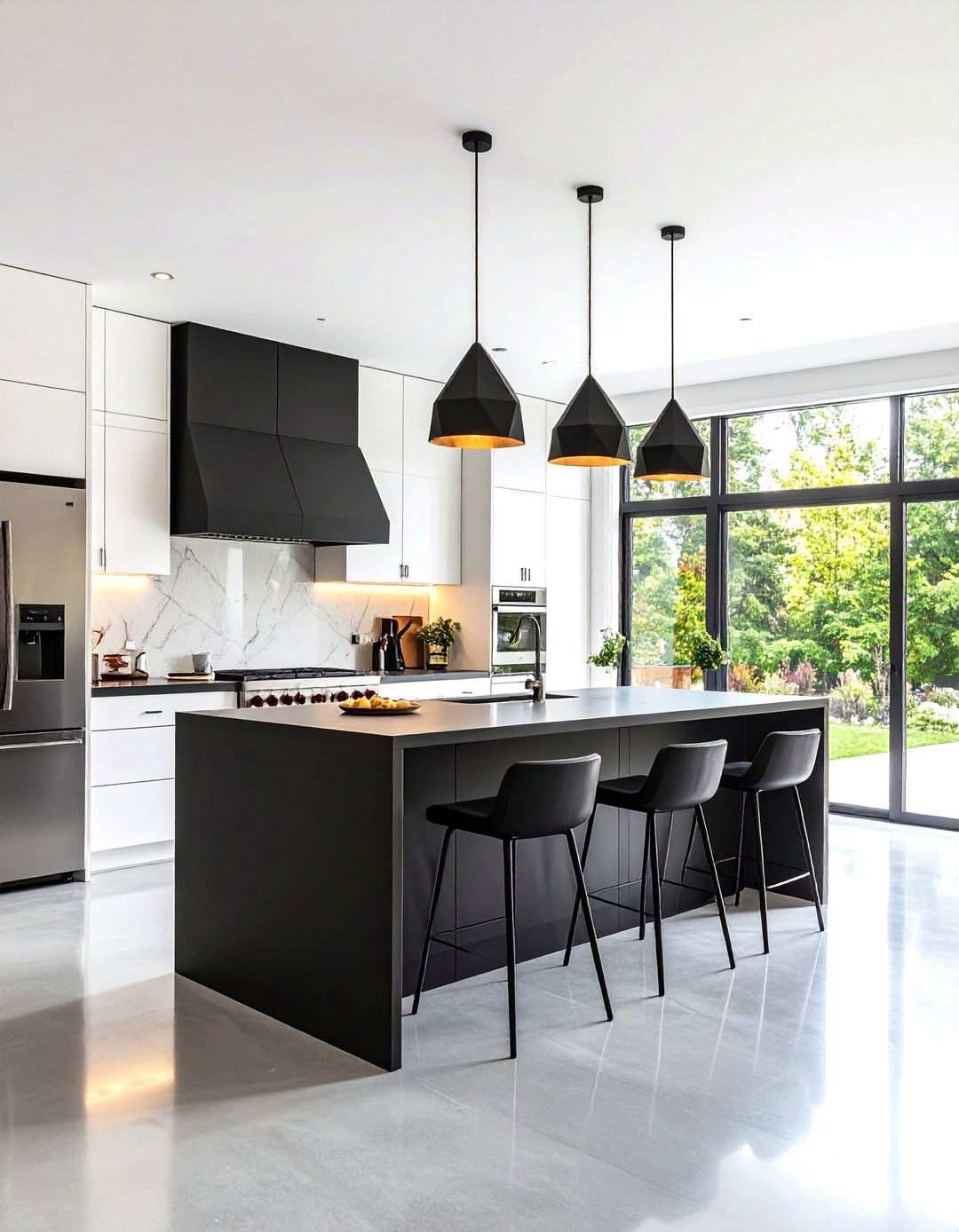
Dark kitchens are having a moment, offering a sophisticated alternative to traditional bright spaces. They can be surprisingly cozy and dramatic, making them a focal point in any home. The key is to balance the darkness with the right elements to create an inviting and functional space.

As an Amazon Associate I earn from qualifying purchases.
From strategic lighting to contrasting textures, there are numerous ways to make a dark kitchen feel both stylish and comfortable. Let’s dive into some inspiring ideas to transform your kitchen into a stunning dark haven.
Strategic Statement Lighting
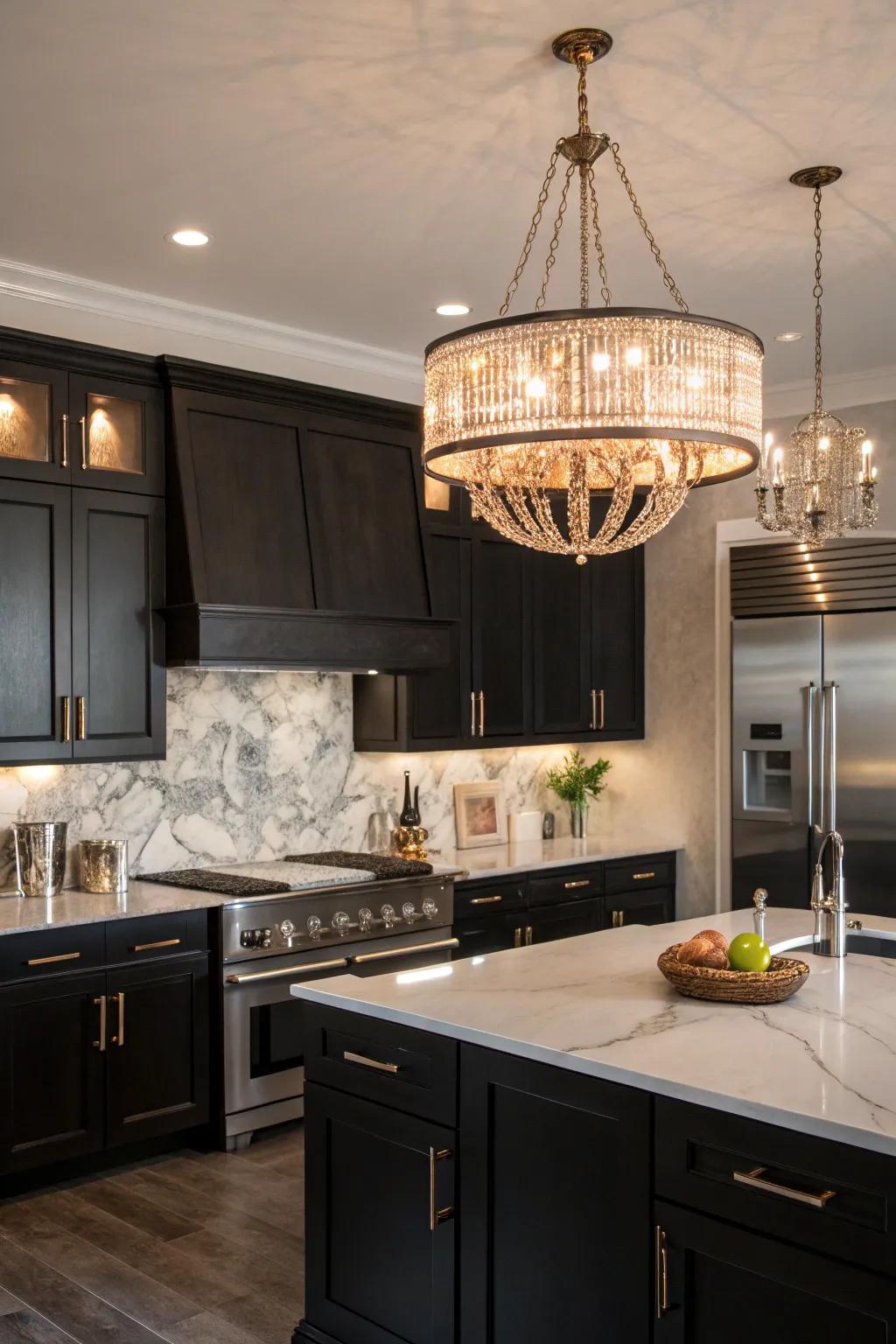
Incorporating statement lighting is an excellent way to bring both style and essential illumination to a dark kitchen. A carefully chosen chandelier, for instance, can act as a focal point, drawing the eye upward and preventing the space from feeling too enclosed. Beyond aesthetics, these fixtures provide much-needed light, ensuring that the kitchen remains functional and inviting, even with darker color schemes.
Warm Metallic Accents
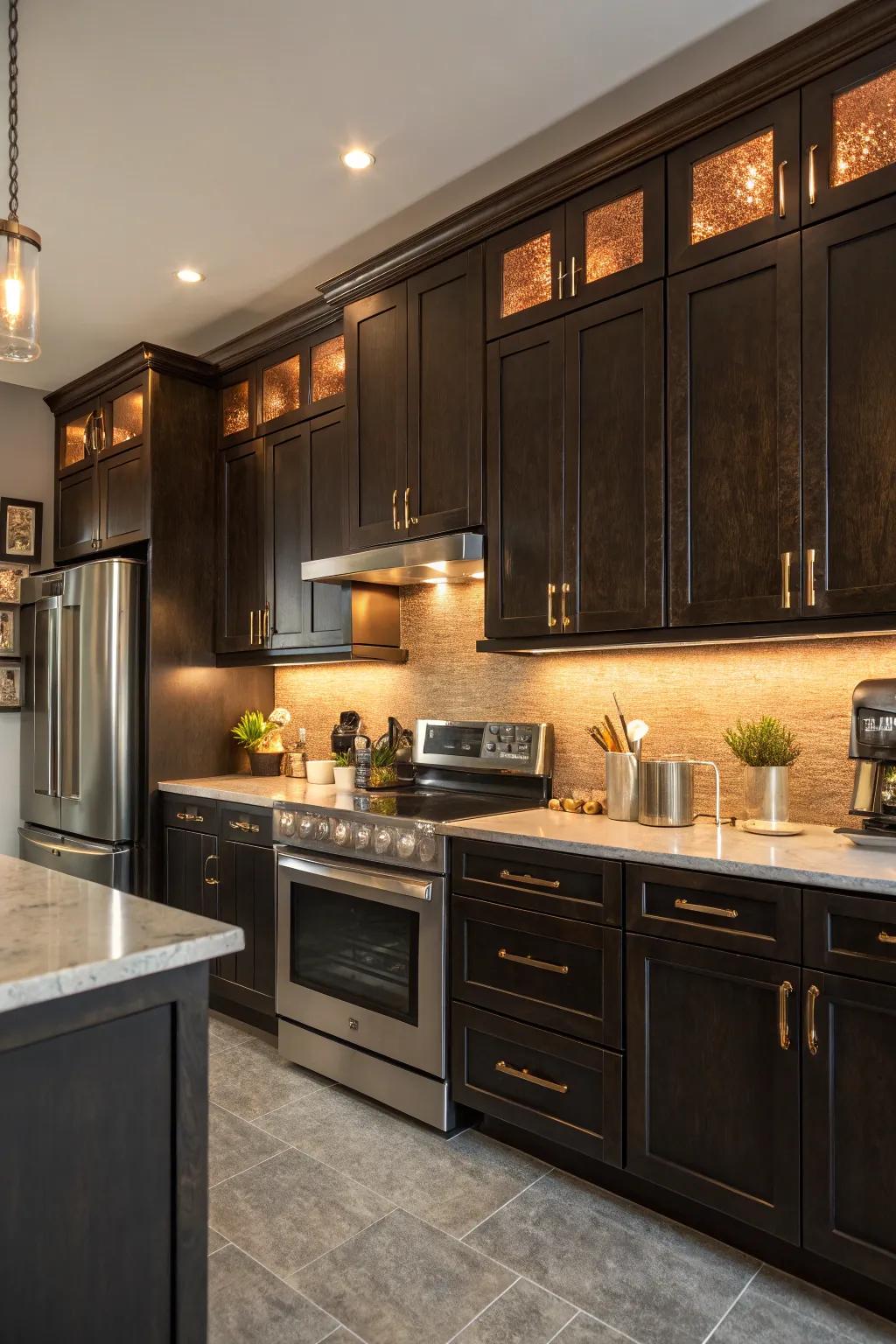
To infuse a dark kitchen with a touch of luxury and visual warmth, consider incorporating metallic accents like copper or brass. These materials have the remarkable ability to reflect light, thereby preventing the space from feeling too somber or cold. From cabinet hardware to pendant lights, touches of warm metallics can elevate the overall design, creating a welcoming and sophisticated ambiance.
Mixing Materials
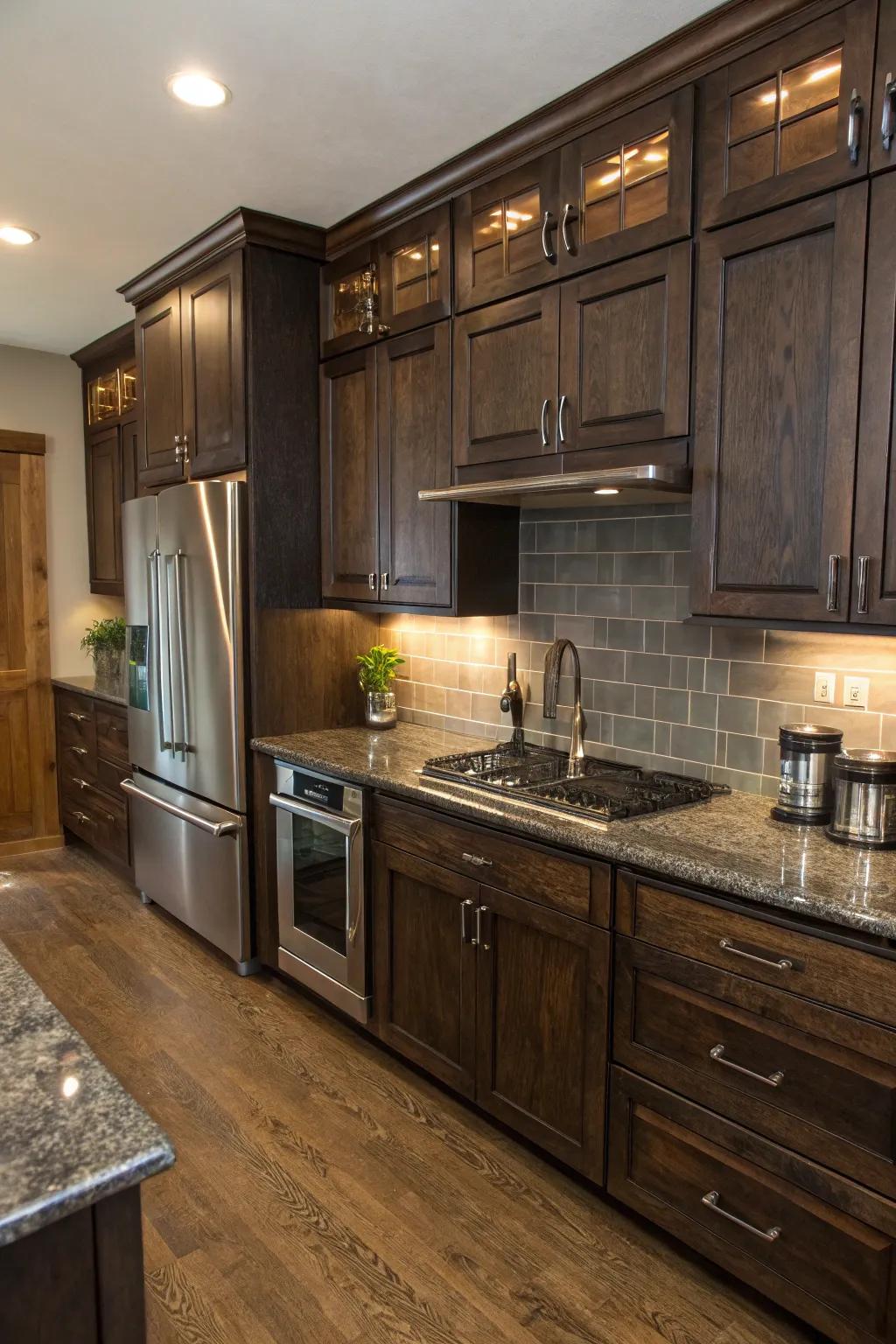
Creating a visually rich and layered look in a dark kitchen can be achieved by thoughtfully mixing different materials, such as metal and wood. This design strategy is an effective way to introduce texture and visual complexity, preventing the space from feeling one-dimensional. The contrast between the cool, sleekness of metal and the warm, natural feel of wood can add depth and interest to the overall aesthetic.
Maximize Natural Light
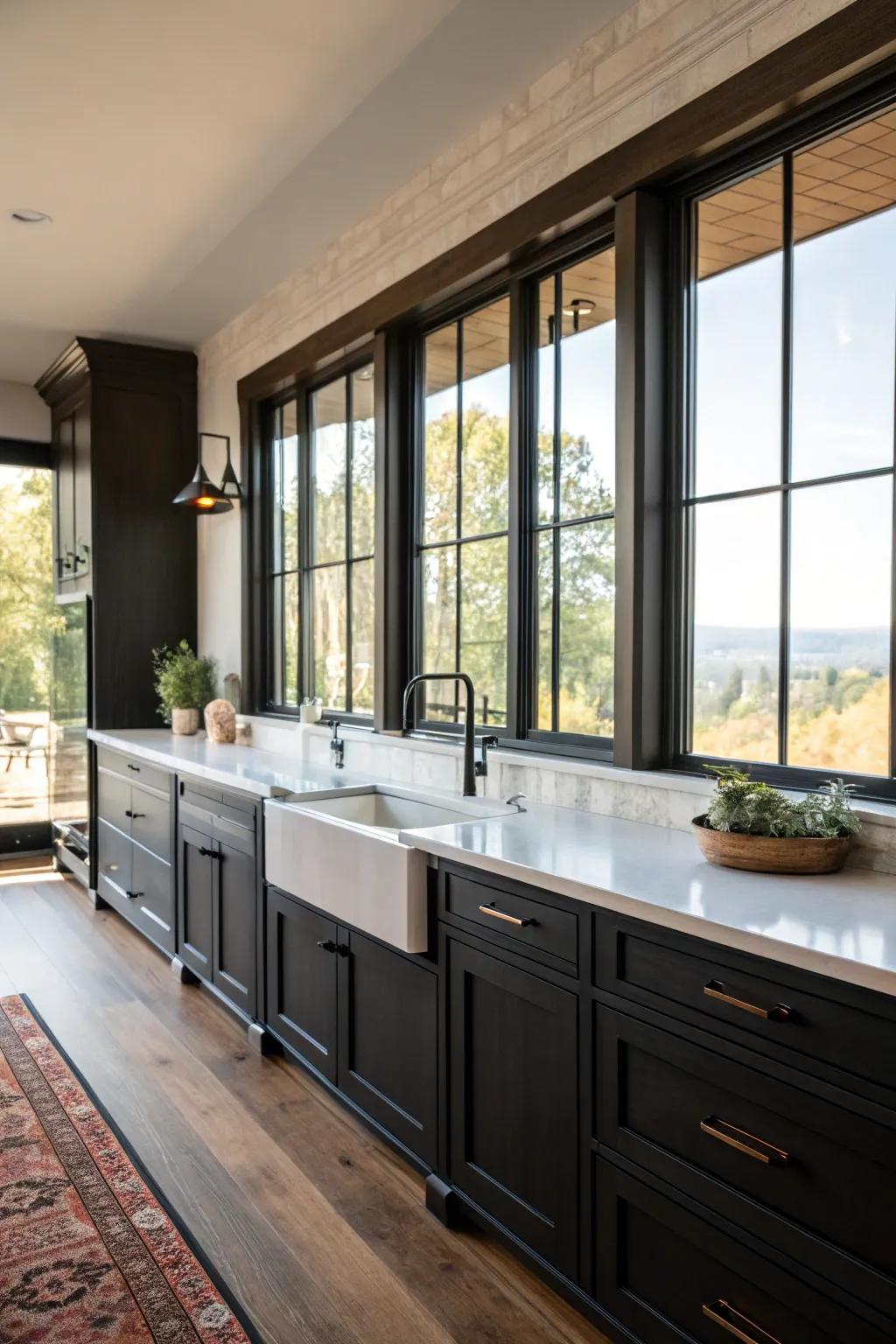
One of the most effective ways to balance dark tones in a kitchen is to maximize the amount of natural light that enters the space. Large windows or glass doors can flood the kitchen with sunlight, counteracting the potentially heavy feeling of dark cabinetry and walls. This design approach not only brightens the room but also helps to create an open and airy atmosphere.
Accent Lighting
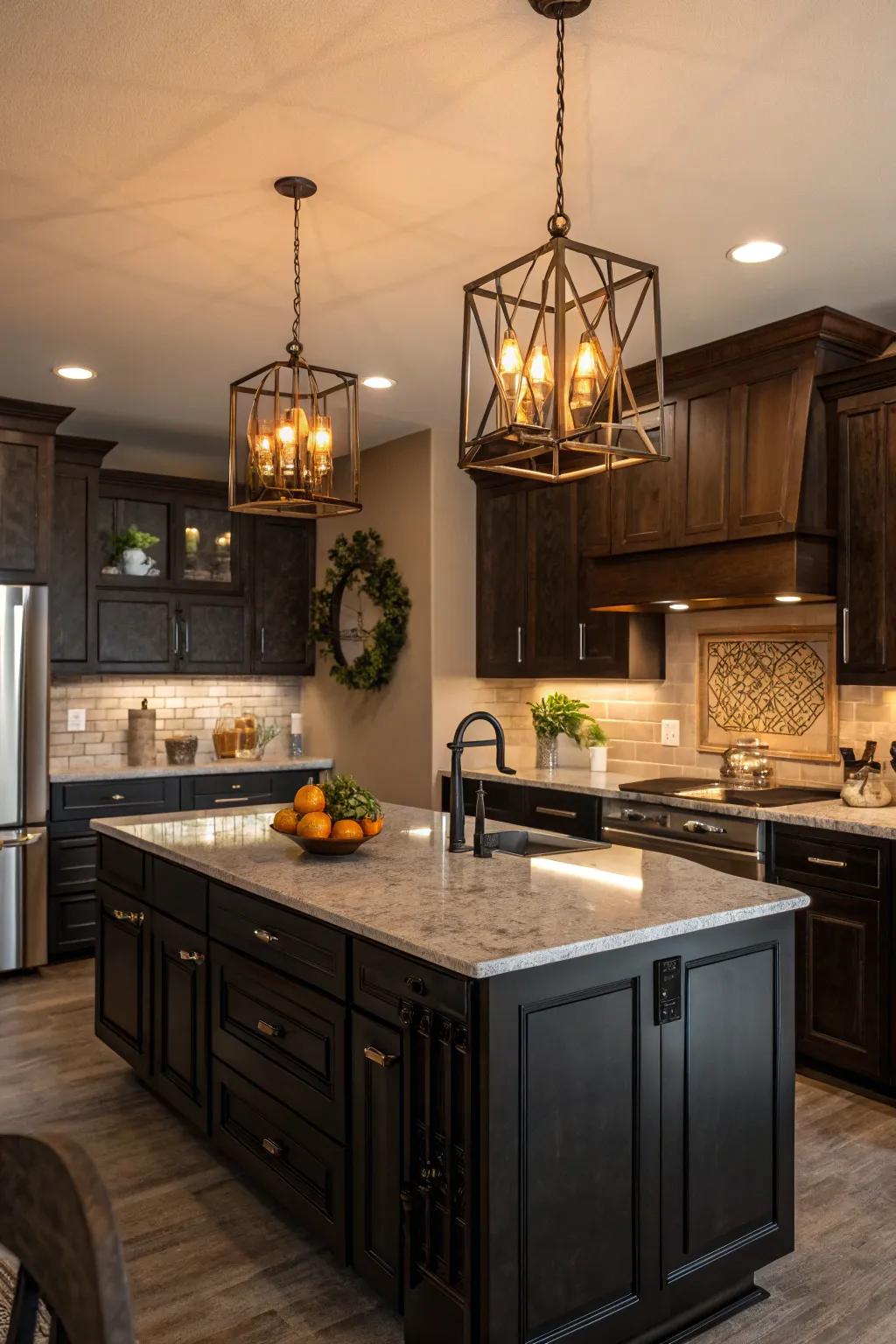
Accent lighting is an essential tool for enhancing the warmth and highlighting the best features of a dark kitchen. Strategic placement of pendant lights, for example, can draw attention to specific areas or architectural details, transforming the space into an inviting haven. This type of lighting not only adds a layer of visual interest but also provides targeted illumination for tasks and activities.
Bold Backsplash
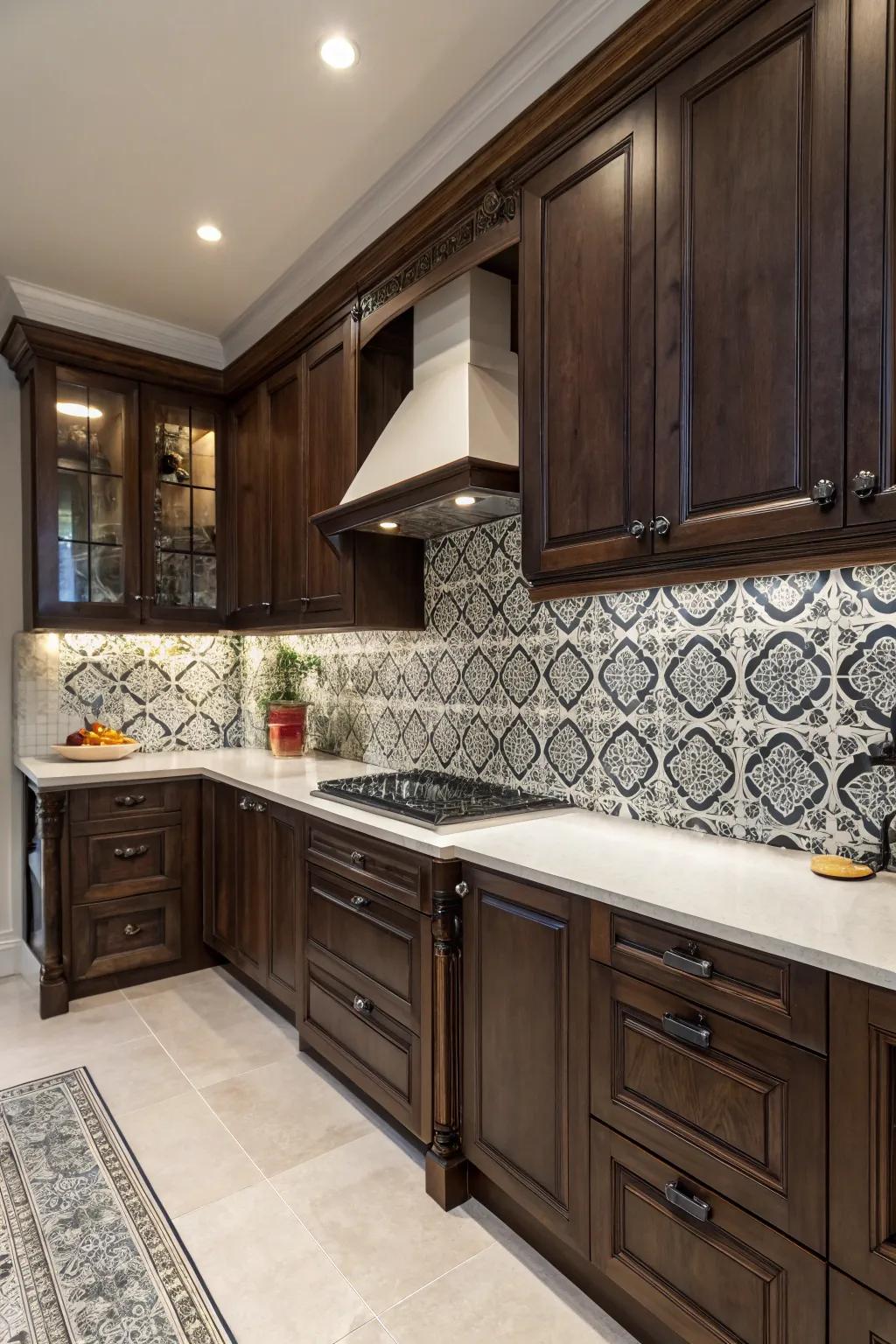
A bold backsplash can easily become the centerpiece of a dark kitchen, serving as a focal point that draws the eye and adds character to the space. Opting for deep-hued tiles or striking patterns can create a dramatic and eye-catching effect, particularly when contrasted against darker cabinetry or countertops. The backsplash provides an opportunity to inject personality and style into the overall design.
Natural Wood Accents
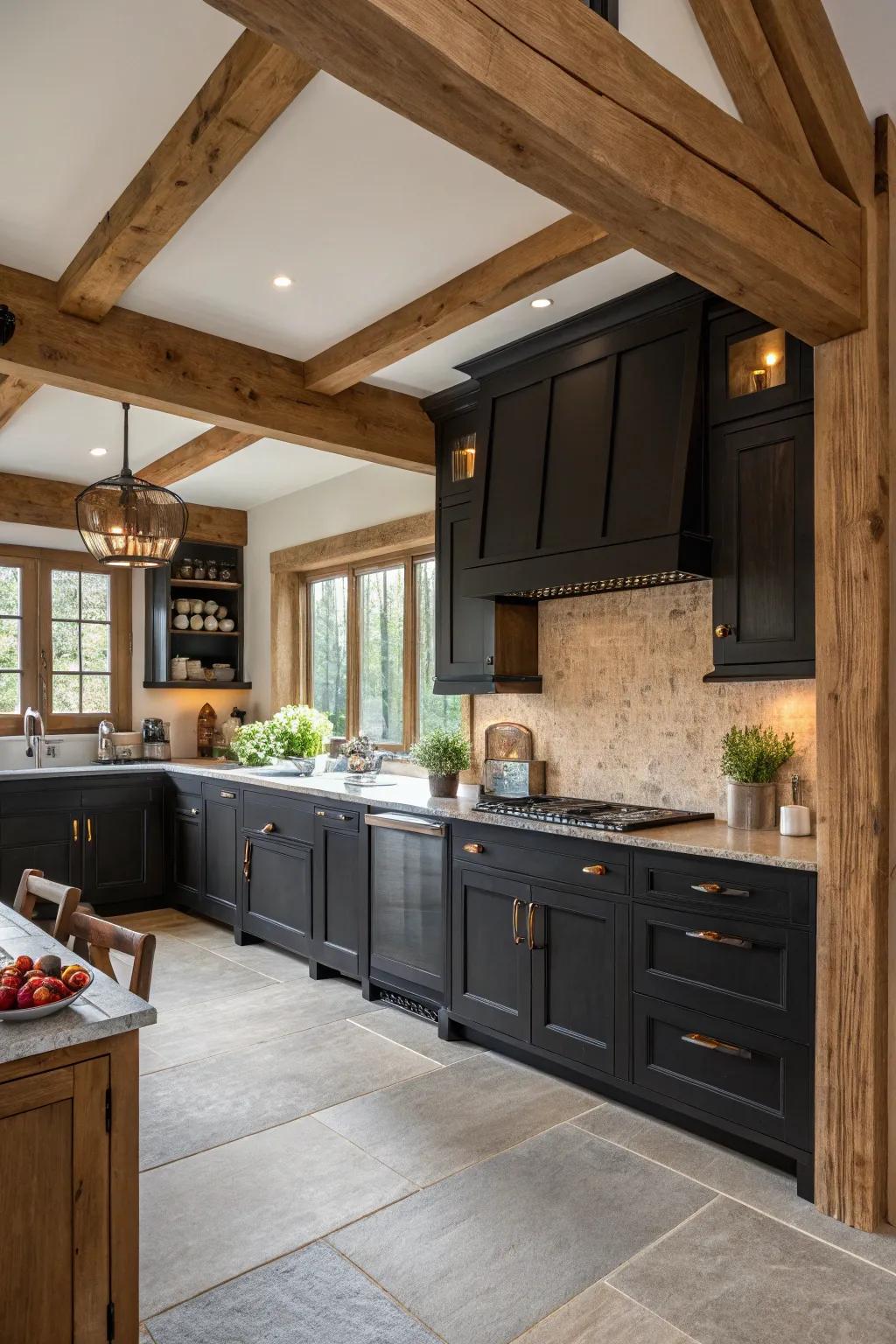
Bringing warmth and texture into a dark kitchen can be effectively achieved by incorporating natural wood accents. This design technique balances modern elements with the organic beauty of wood, creating a harmonious and inviting atmosphere. Whether through open shelving, countertops, or even decorative items, natural wood introduces a touch of nature into the space.
Two-Tone Cabinetry
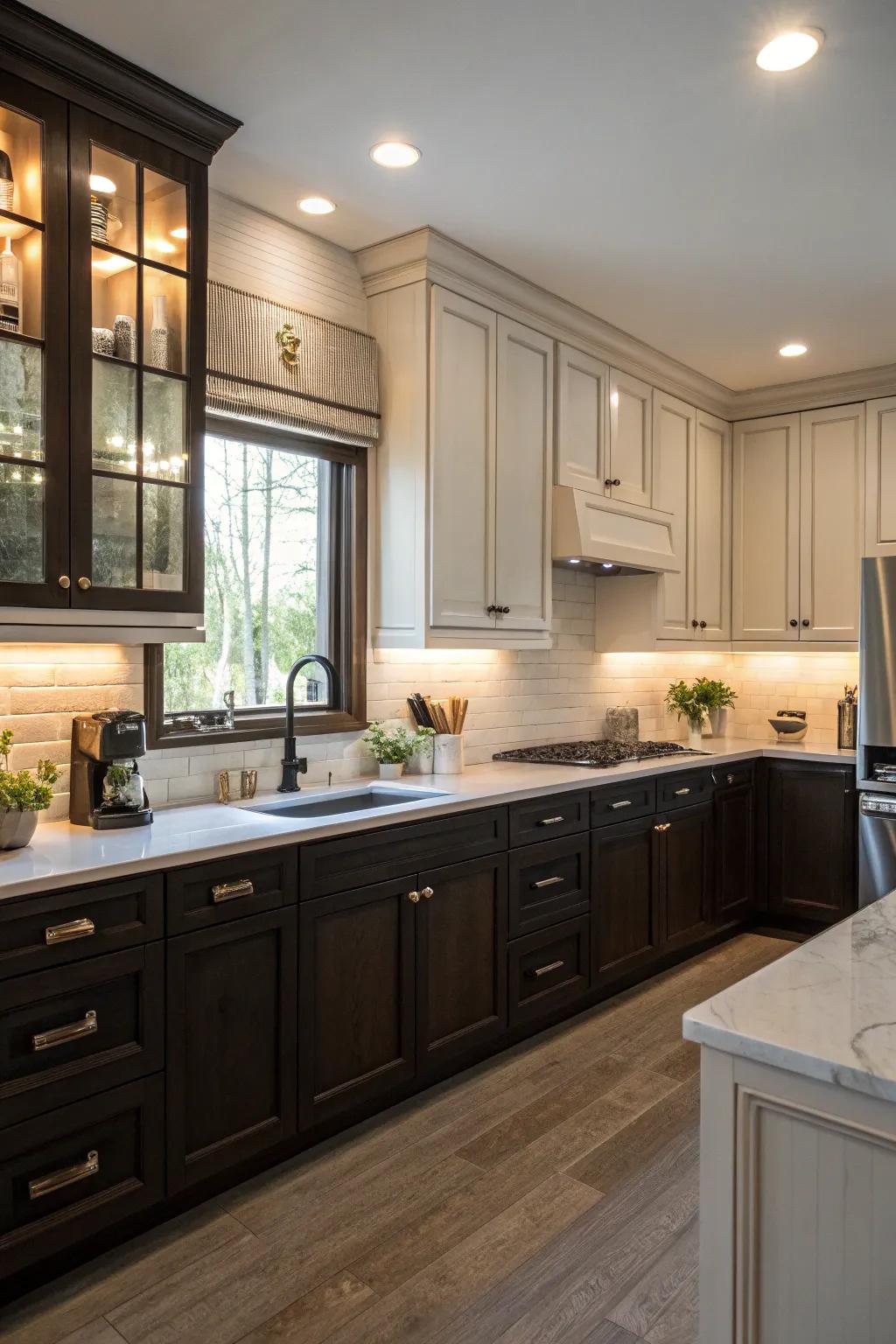
An effective way to open up a dark kitchen and add both contrast and dimension is by using two-tone cabinetry. Pairing dark lower cabinets with lighter uppers creates a visual break, preventing the space from feeling too heavy or enclosed. This approach not only brightens the kitchen but also adds an element of sophistication and style.
Dramatic Kitchen Island
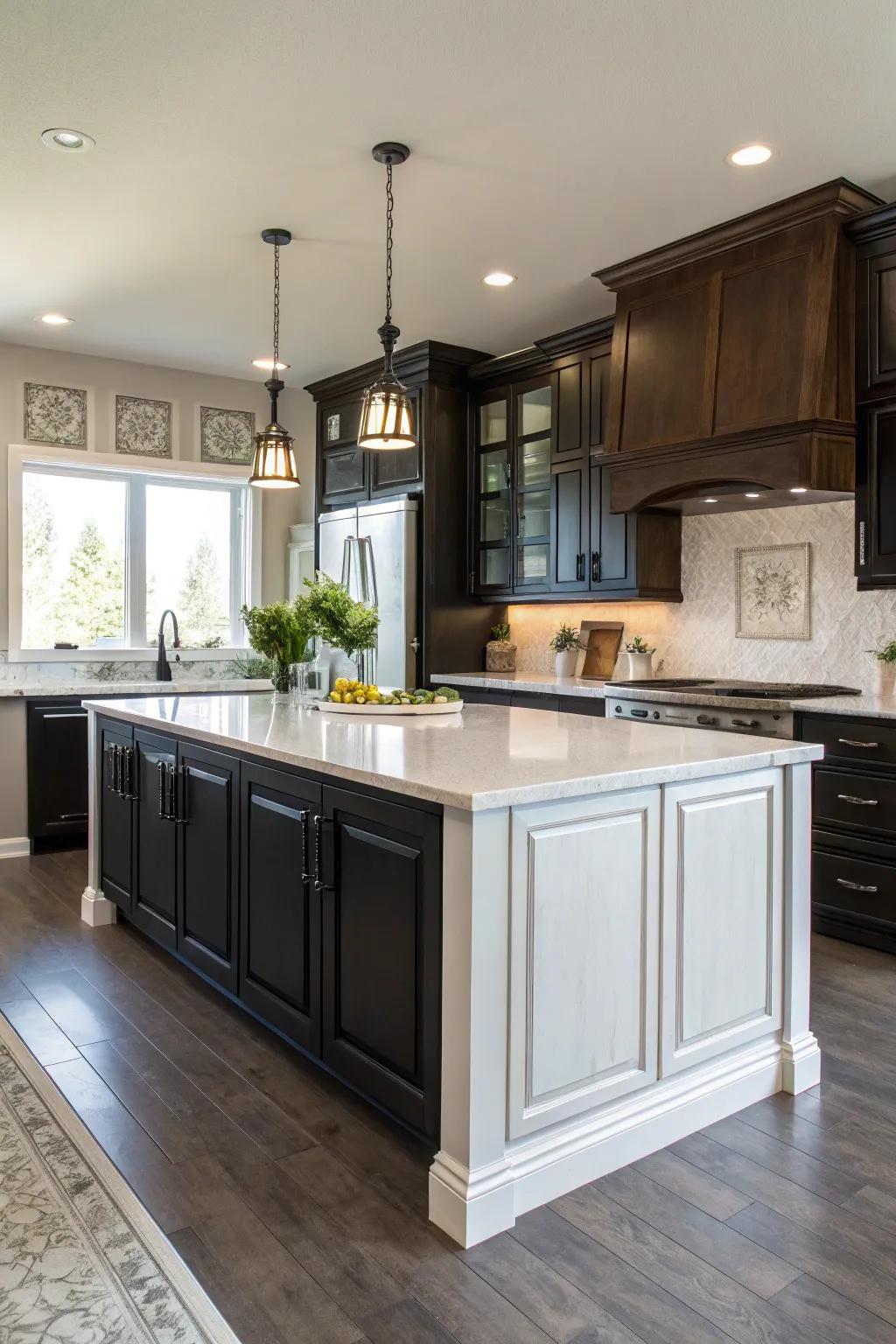
To add visual interest and functionality to a dark kitchen, consider incorporating a kitchen island in a contrasting color. This can serve as a stunning focal point, drawing the eye and adding depth to the space. Beyond its aesthetic appeal, a well-designed kitchen island also provides additional workspace and storage.
Textured Walls
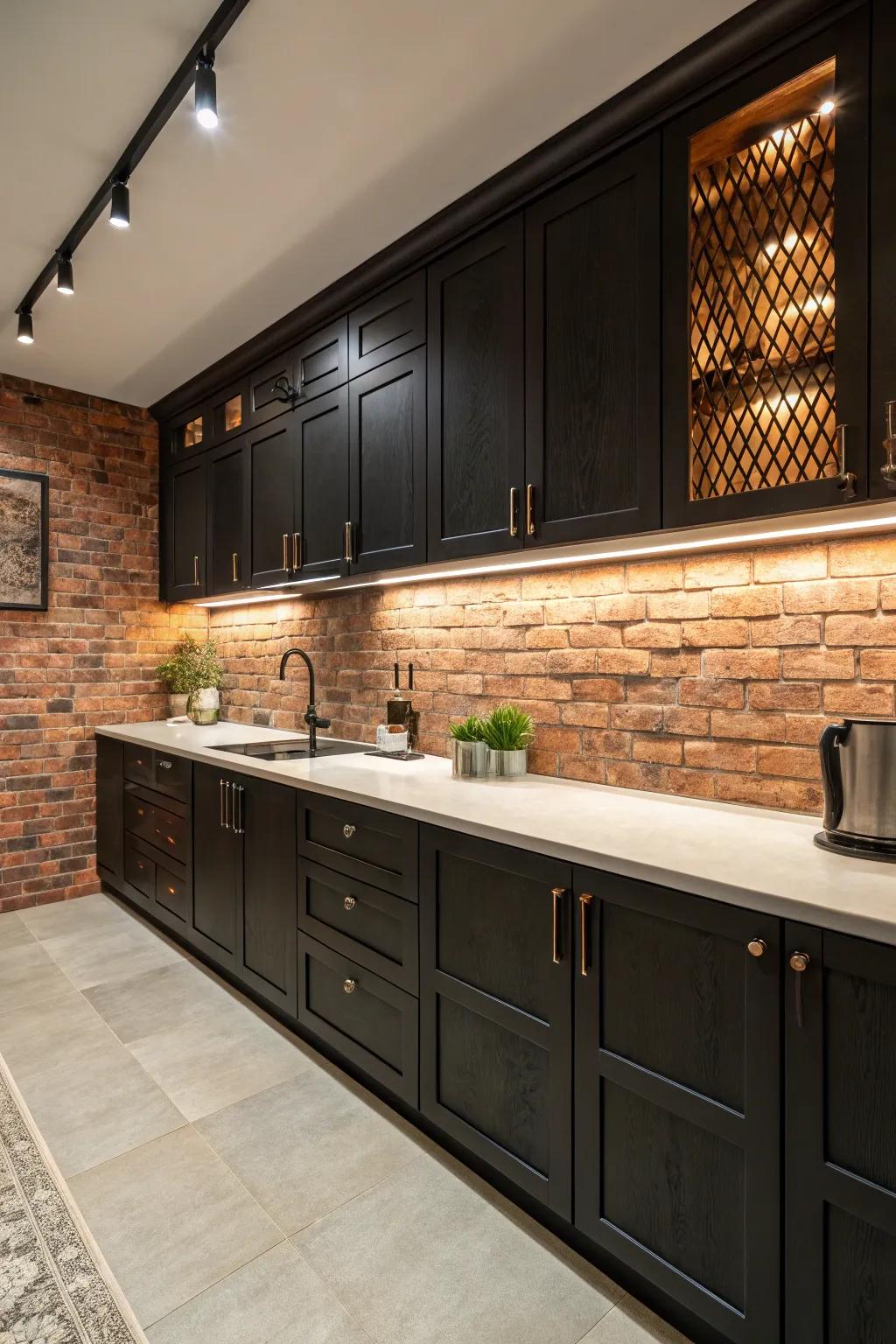
Adding visual interest and depth to a dark kitchen can be achieved through the use of textured walls or backsplashes. Materials like brick or patterned tiles can create a focal point, drawing the eye and adding character to the space. The texture not only enhances the aesthetic appeal but also adds a tactile element that can make the kitchen feel more inviting and engaging.
Incorporate Open Shelving
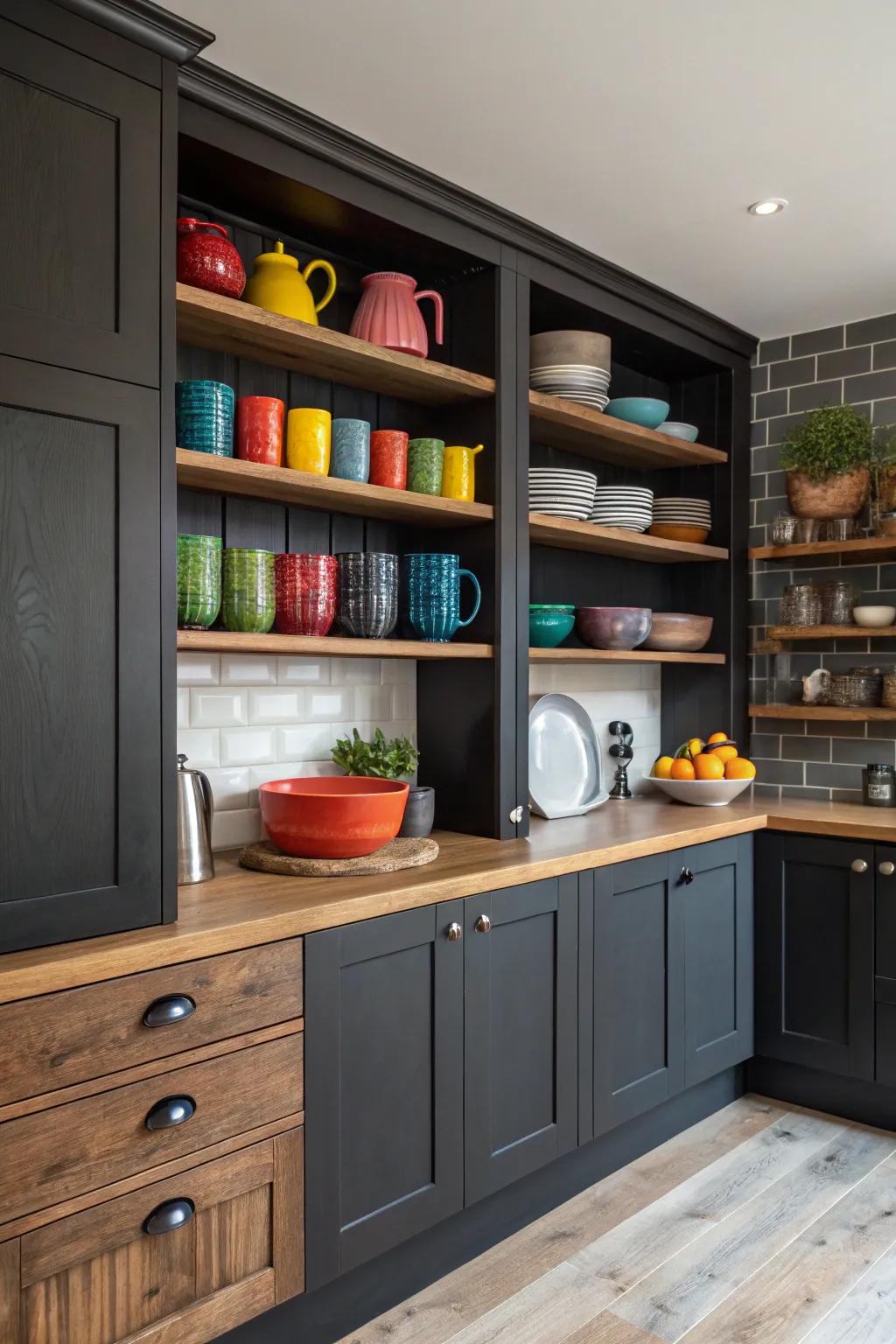
Breaking up the monotony of dark cabinetry and creating an airy feel can be achieved by incorporating open shelving into the kitchen design. This approach allows you to showcase favorite dishware and decorative items, adding personality and charm to the space. Open shelves also provide easy access to frequently used items, making the kitchen more functional.
Infuse Plant Accents
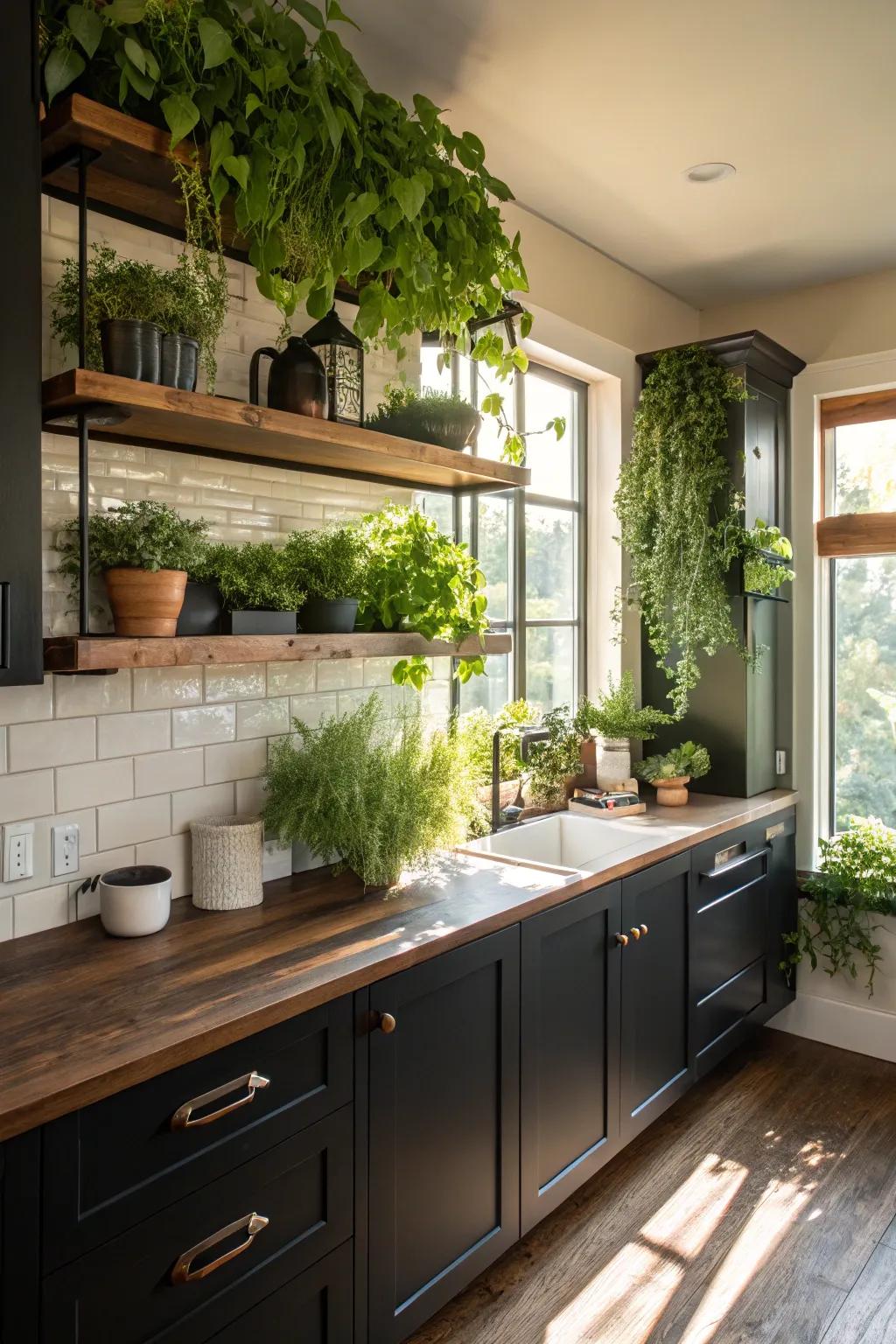
Bringing life and a pop of color to a dark kitchen can be effortlessly achieved by adding greenery in the form of plant accents. Whether through potted herbs on a windowsill or hanging plants from the ceiling, the refreshing and vibrant effect of greenery can brighten the space and create a more inviting atmosphere. Plants also add a natural element, connecting the kitchen to the outdoors.
Embrace Dark Cabinetry
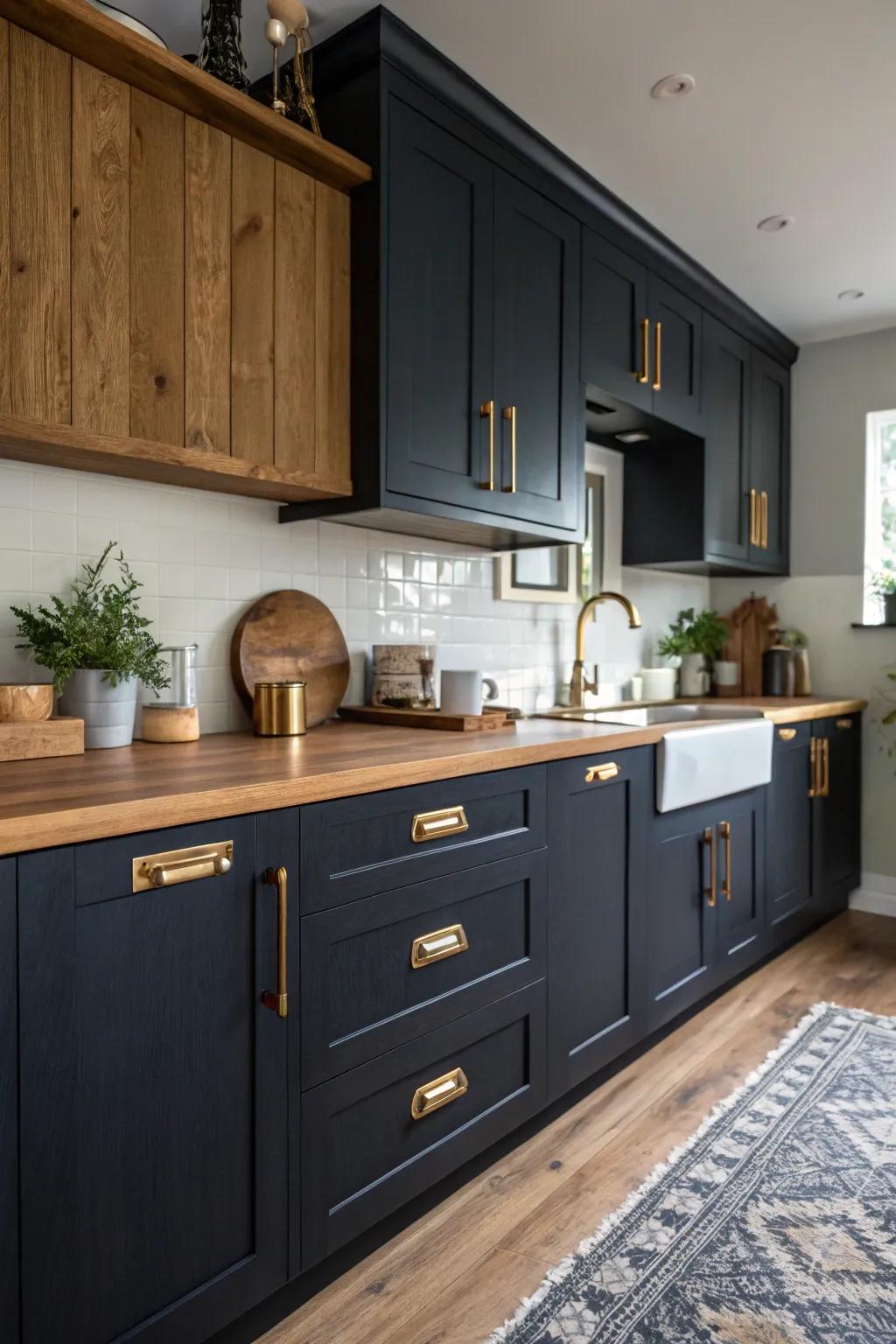
One of the most impactful ways to create a dark kitchen is by embracing dark cabinetry. This design choice can add a touch of elegance and depth to the space, making it feel luxurious and sophisticated. Pairing deep navy or charcoal cabinets with sleek brass handles can create a timeless look, while other dark hues can add a modern edge.
Eclectic Design Touches
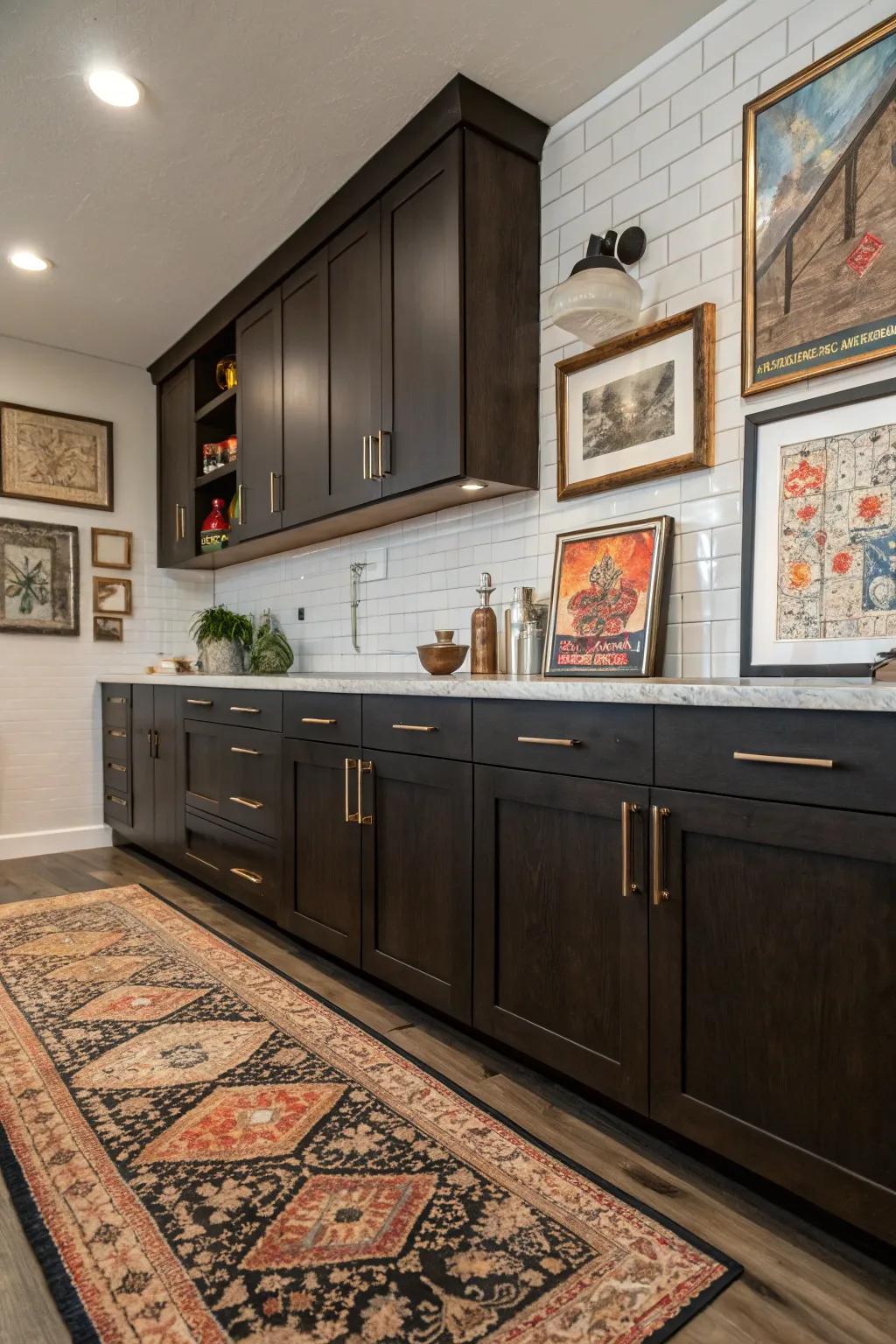
Making a dark kitchen truly stand out can be achieved by incorporating eclectic design touches that reflect personal style. Using unexpected elements like vintage rugs or art pieces can add character and create a unique atmosphere. These unexpected additions can spark conversation and make the kitchen feel more lived-in and inviting.
Minimalistic Decor
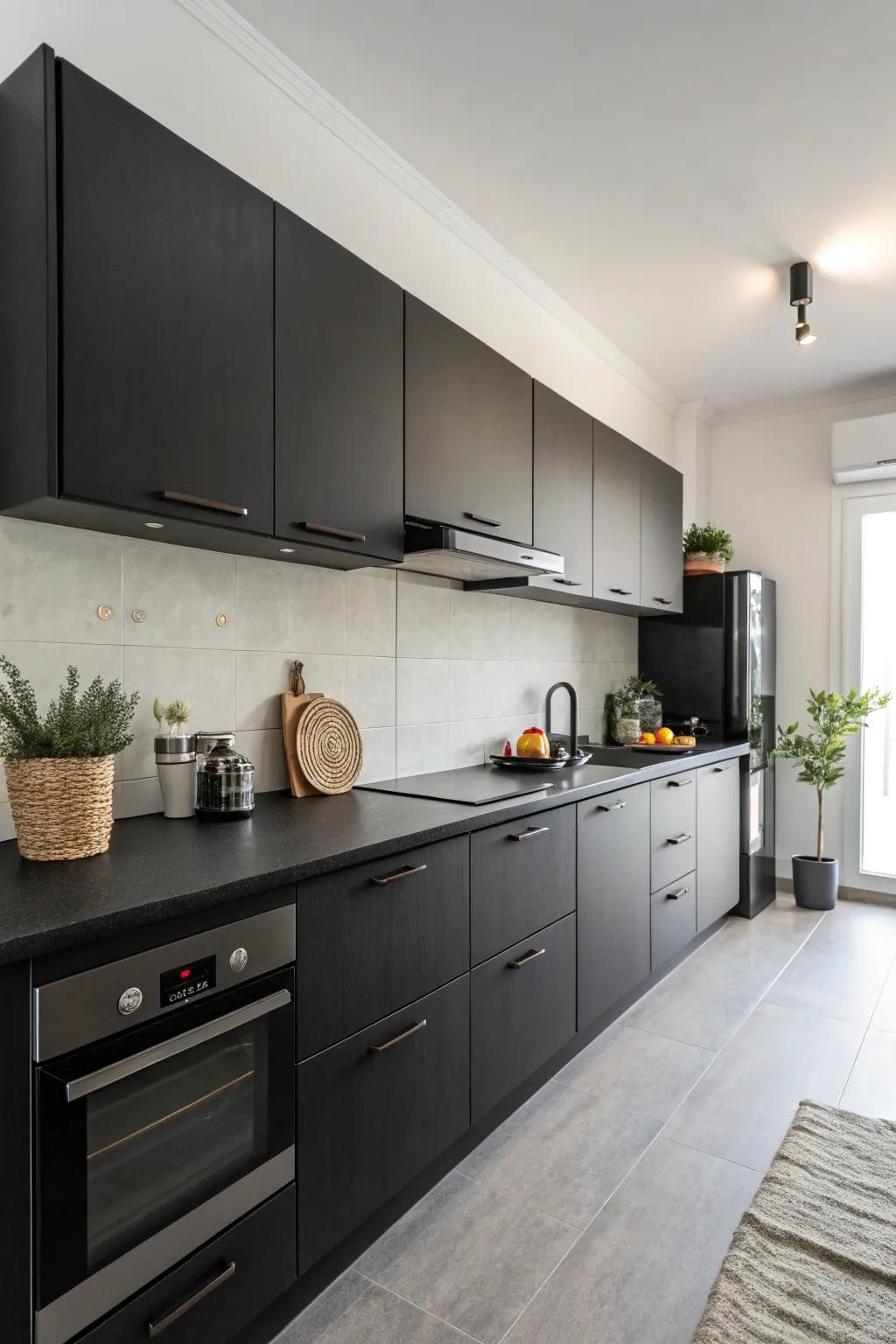
Enhancing both comfort and sophistication in a dark kitchen can be achieved through a minimalist approach. Keeping the space serene and uncluttered allows the dark elements to shine, creating a balanced and harmonious atmosphere. This design style emphasizes clean lines and essential items, reducing distractions and promoting a sense of calm.
Contrasting Countertops
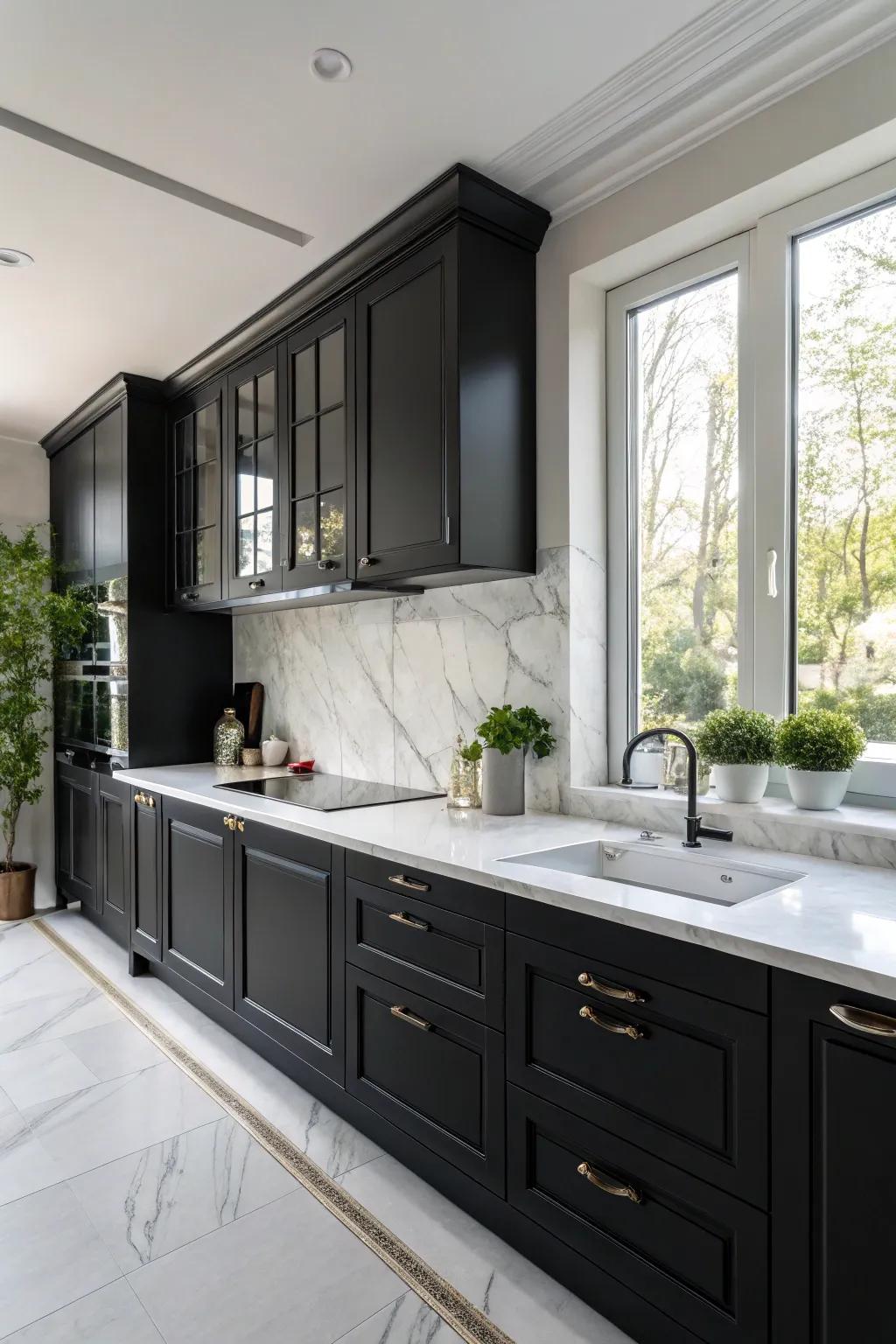
Creating a striking visual contrast in a dark kitchen can be achieved by pairing dark cabinets with light countertops, such as white marble. This balance is an effective design strategy for keeping the space open and inviting, preventing it from feeling too heavy or enclosed. The contrast between the dark and light elements adds depth and interest to the overall aesthetic.
Unique Architectural Features
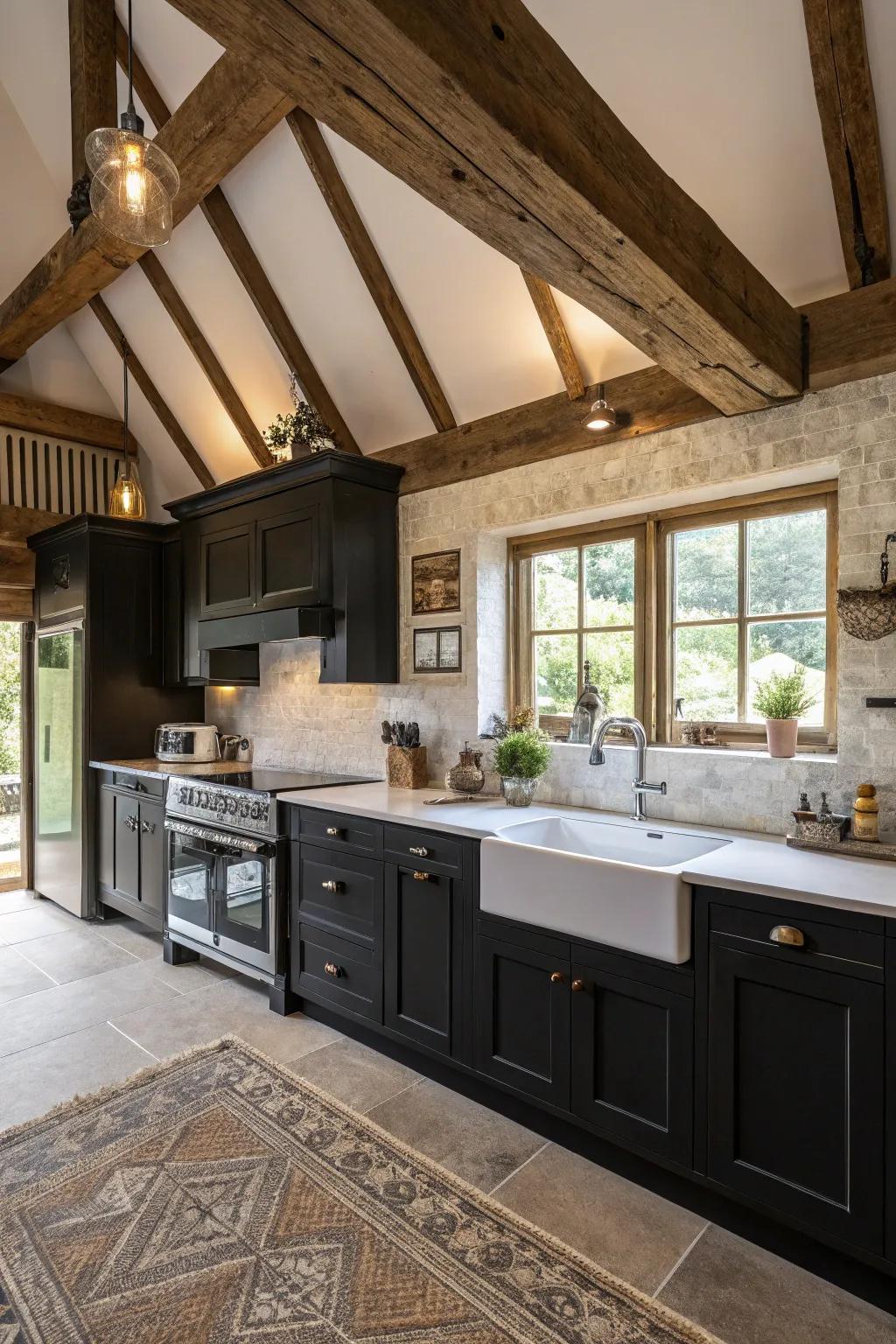
Adding character to a dark kitchen can be achieved by highlighting unique architectural features, such as exposed beams or archways. These elements can become focal points, drawing the eye and adding a sense of history and charm to the space. Emphasizing these features can create a more personalized and inviting atmosphere.
Modern Fixtures
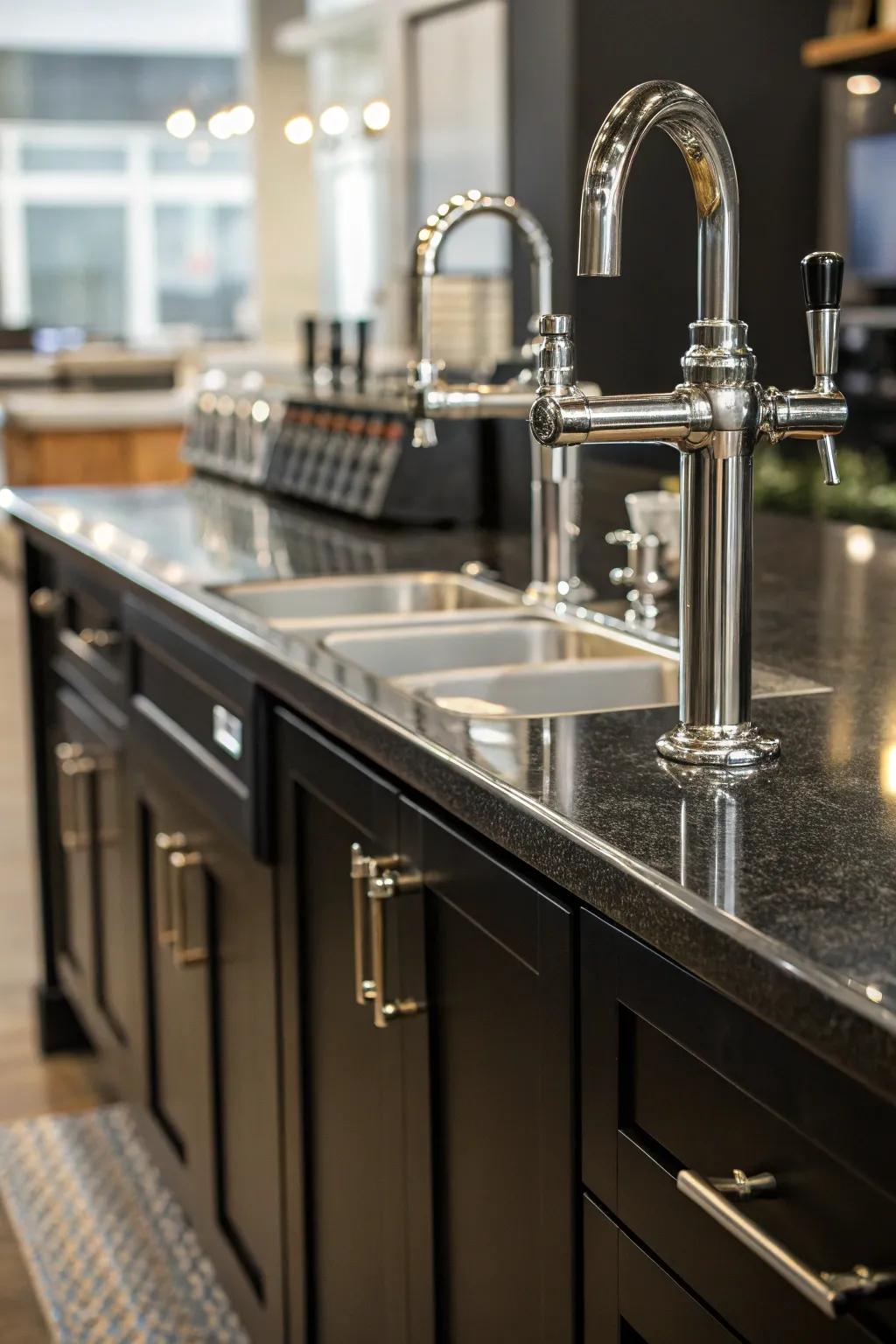
Elevating the contemporary feel of a dark kitchen can be achieved through the use of sleek, metallic fixtures. Experimenting with stainless steel or brushed gold can add a sophisticated touch, enhancing the overall design and creating a cohesive look. These fixtures not only add aesthetic appeal but also provide functionality and durability.
Dark Flooring
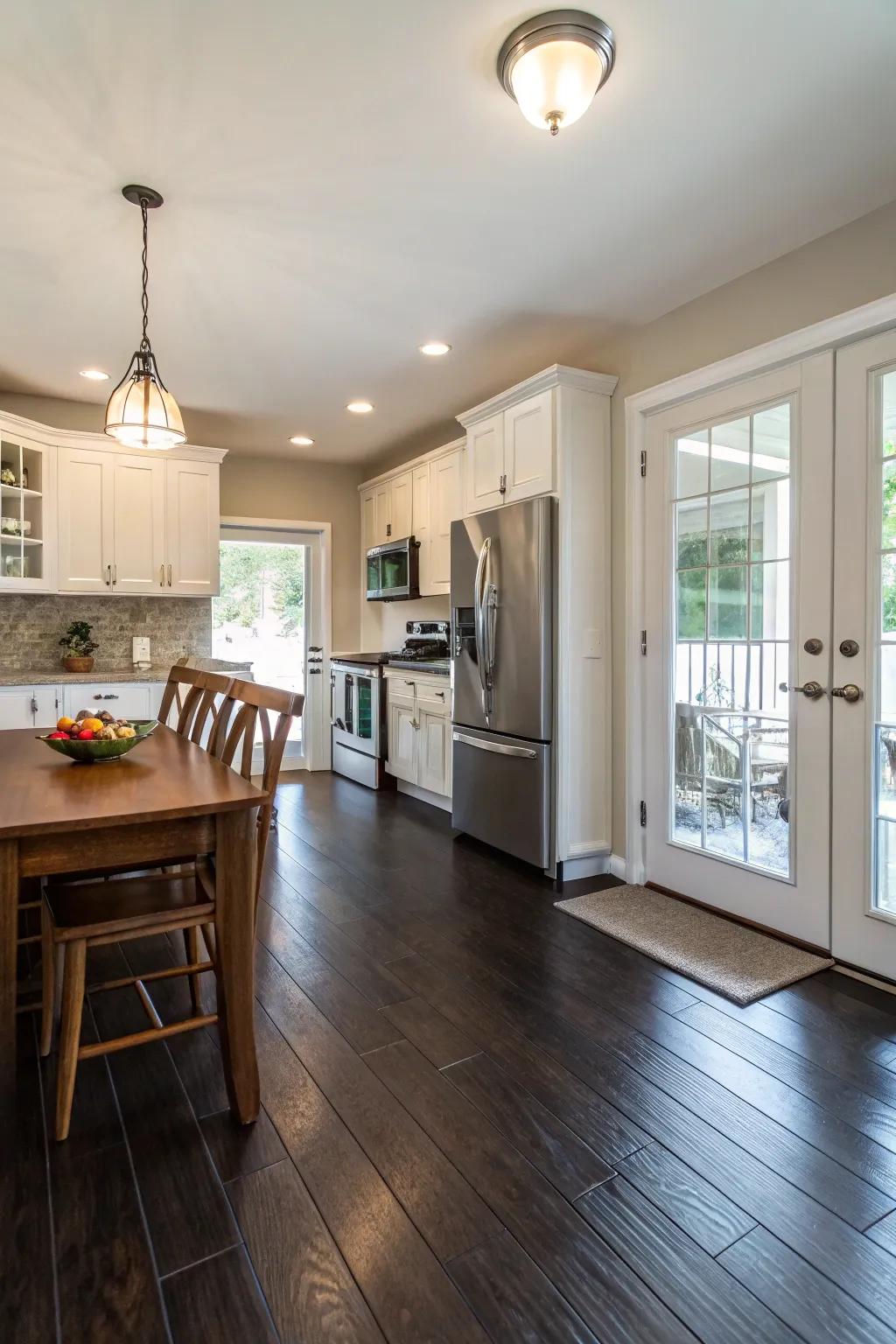
Creating a cohesive look in a dark kitchen can be achieved by using dark flooring, which grounds the design and adds depth to the space. Pairing dark flooring with lighter walls can create a balanced and harmonious atmosphere, preventing the kitchen from feeling too enclosed. This design choice adds a sense of sophistication and elegance to the overall aesthetic.