1. The Essence of Timeless Farmhouse Kitchens
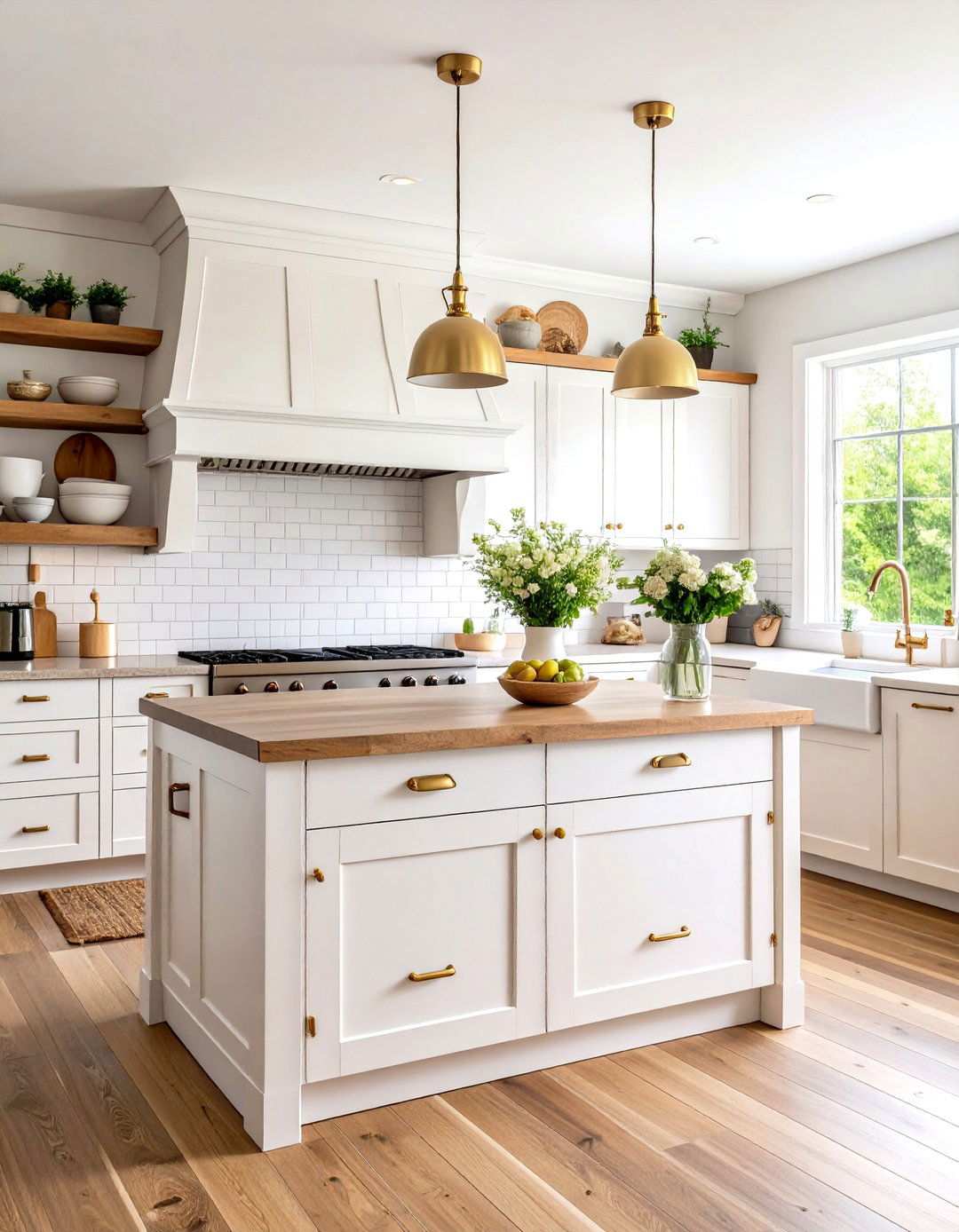
Farmhouse kitchens embody a unique blend of rustic charm and modern functionality, creating an inviting atmosphere that is both welcoming and sophisticated. This perfect marriage of traditional and contemporary elements gives homeowners a blank canvas to express their personal style while maintaining the essence of the farmhouse aesthetic. By incorporating natural textures, vintage-inspired elements, and practical design solutions, these kitchens seamlessly blend form and function. Whether it’s the rustic appeal of shiplap backsplashes or the warmth of butcher block countertops, each component works harmoniously to create a space that feels lived-in yet polished. Homeowners can opt for the classic simplicity of white shaker cabinets or the warmth of butcher block countertops, making farmhouse kitchens a versatile and enduring choice for the heart of the home.

As an Amazon Associate I earn from qualifying purchases.
2. Elevating the Farmhouse Aesthetic with Classic White Shaker Cabinets
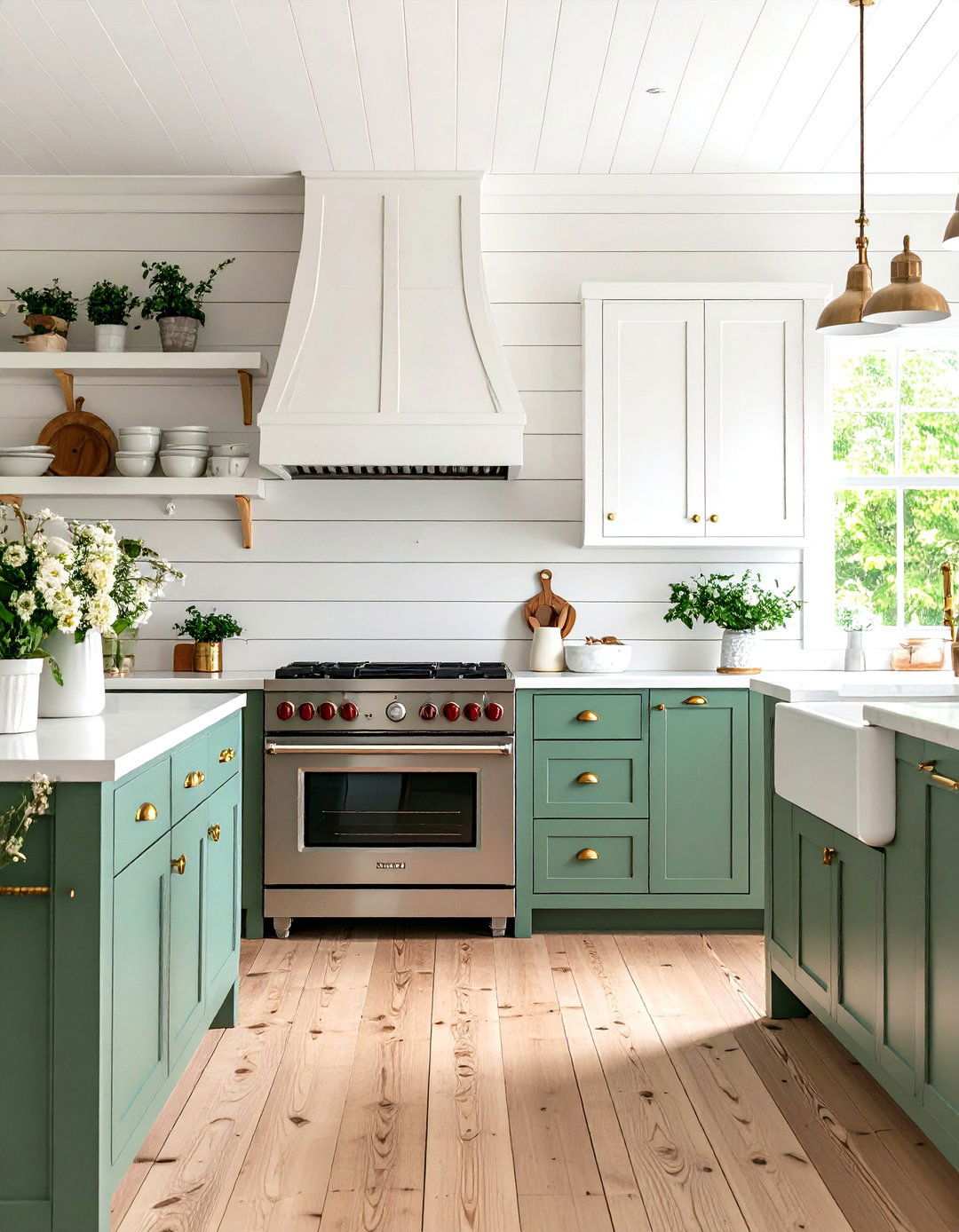
Crisp white shaker cabinets paired with traditional hardware embody the quintessential farmhouse aesthetic, creating a timeless and authentic design. The beauty of this look lies in the combination of clean-lined cabinetry with raised panel doors that add depth and visual interest to the space. To enhance the period character, homeowners can incorporate brass or black hardware, adding a touch of sophistication and elegance. Large farmhouse sinks serve as an anchor, while white subway tile backsplashes maintain the clean and uncluttered appearance. Butcher block or white quartz countertops offer both functionality and visual appeal, completing the look. Open shelving displays vintage dishware and adds practical storage, allowing homeowners to showcase their personal style while maintaining a timeless foundation. This approach creates a design that never goes out of style, inviting homeowners to add their own touches through decorative accessories and seasonal elements.
3. Exposed Apron Fronts Bring Elegance to the Kitchen
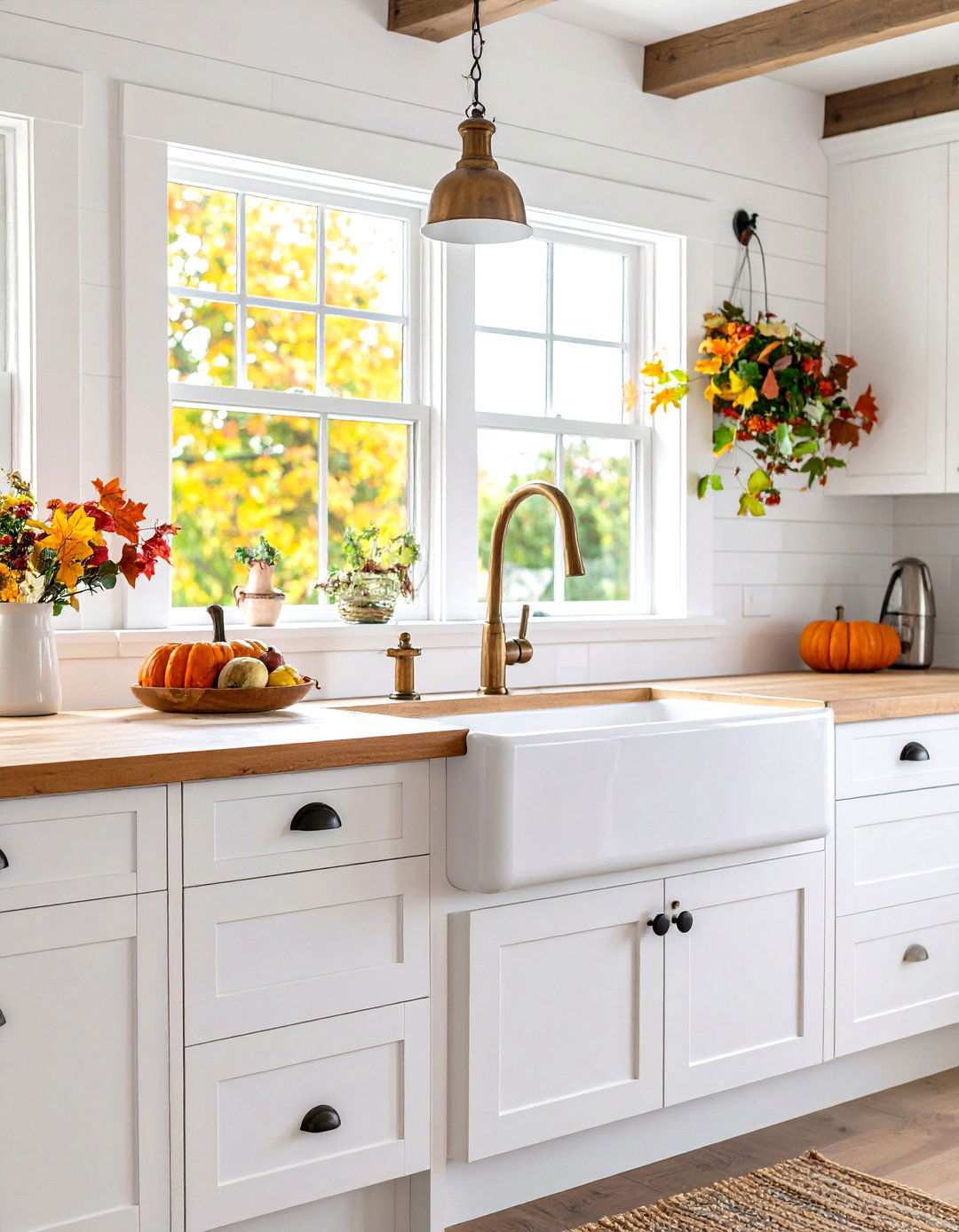
A kitchen sink can be so much more than just a functional element. By incorporating an exposed apron front in a white farmhouse sink, homeowners can create a stunning centerpiece that sets the tone for a beautiful and inviting space. These sinks, with their deep basins and sleek designs, are perfect for busy households where large pots and serving platters are a regular occurrence. The result is a kitchen that’s both stylish and practical. Pairing the sink with a classic bridge faucet in a finish like brushed brass or matte black adds a touch of sophistication and authenticity. Meanwhile, surrounding white cabinetry and butcher block countertops provide a warm and inviting contrast to the cold, sleek sink. To make the most of the generous cabinet space below, consider installing under-sink storage solutions that keep clutter at bay. Finally, placing a window above the apron sink allows natural light to pour in, creating a bright and airy atmosphere that’s perfect for daily tasks.
4. Beadboard Cabinet Doors Bring Timeless Charm to the Kitchen
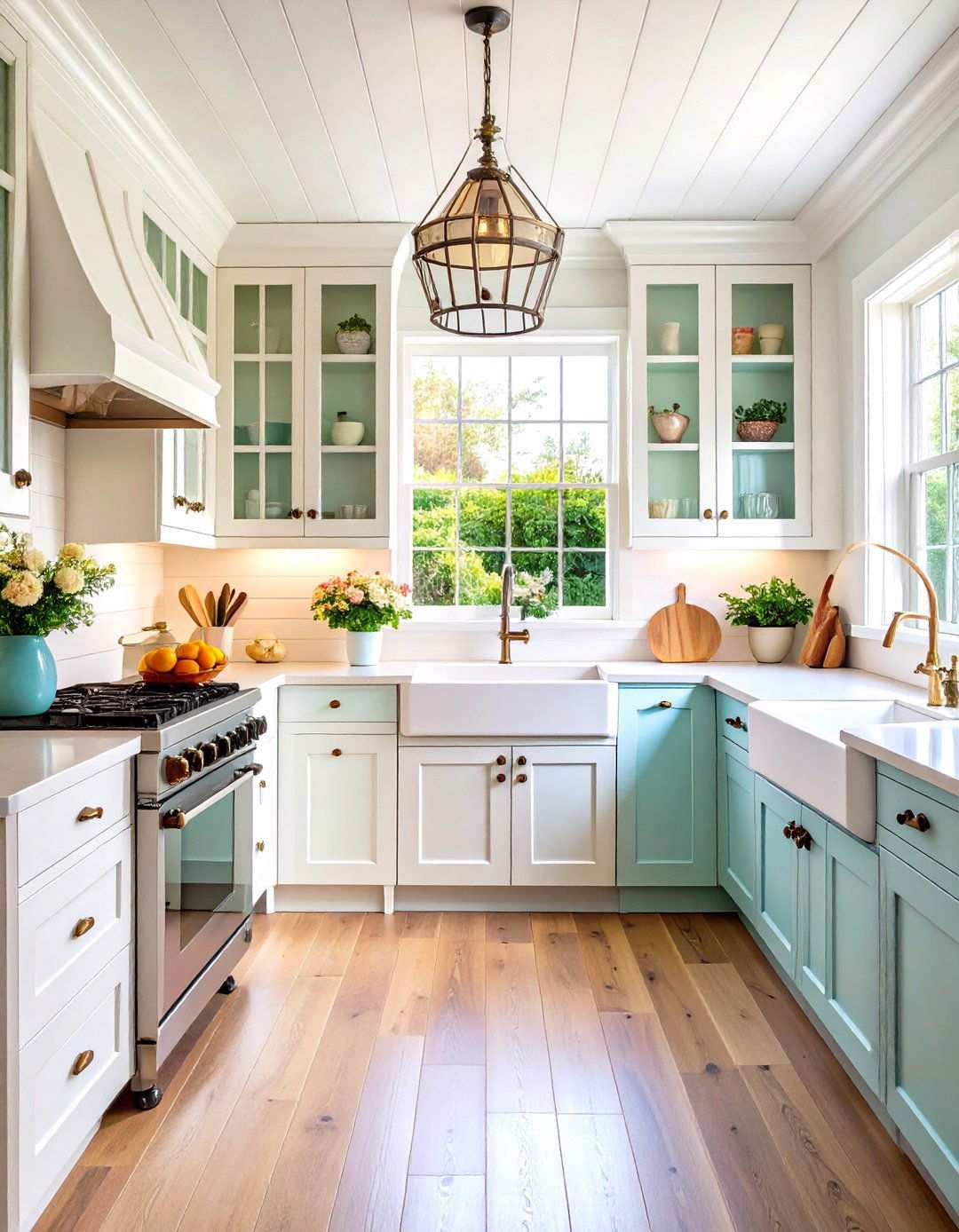
Modern farmhouse design can be elevated to new heights by incorporating traditional craftsmanship. Beadboard cabinet doors are a great way to add authentic cottage charm to a kitchen, thanks to their vertical groove detailing that echoes historical cabinetry construction methods. This approach works particularly well on kitchen islands or lower cabinets, where it creates visual interest without overwhelming the space. For upper cabinets, glass fronts can maintain openness and let in plenty of natural light, while lower beadboard doors ground the design with textural appeal. White paint is the perfect choice for these doors, as it allows the groove details to create subtle shadows that add depth and character. To complete the look, coordinate with beadboard backsplashes for a cohesive styling, or contrast with smooth subway tiles for a balanced visual weight. Finally, period-appropriate hardware in aged brass or pewter finishes adds a touch of authenticity and ensures long-lasting functionality.
5. Butcher Block Islands Bring Warmth and Texture to the Kitchen
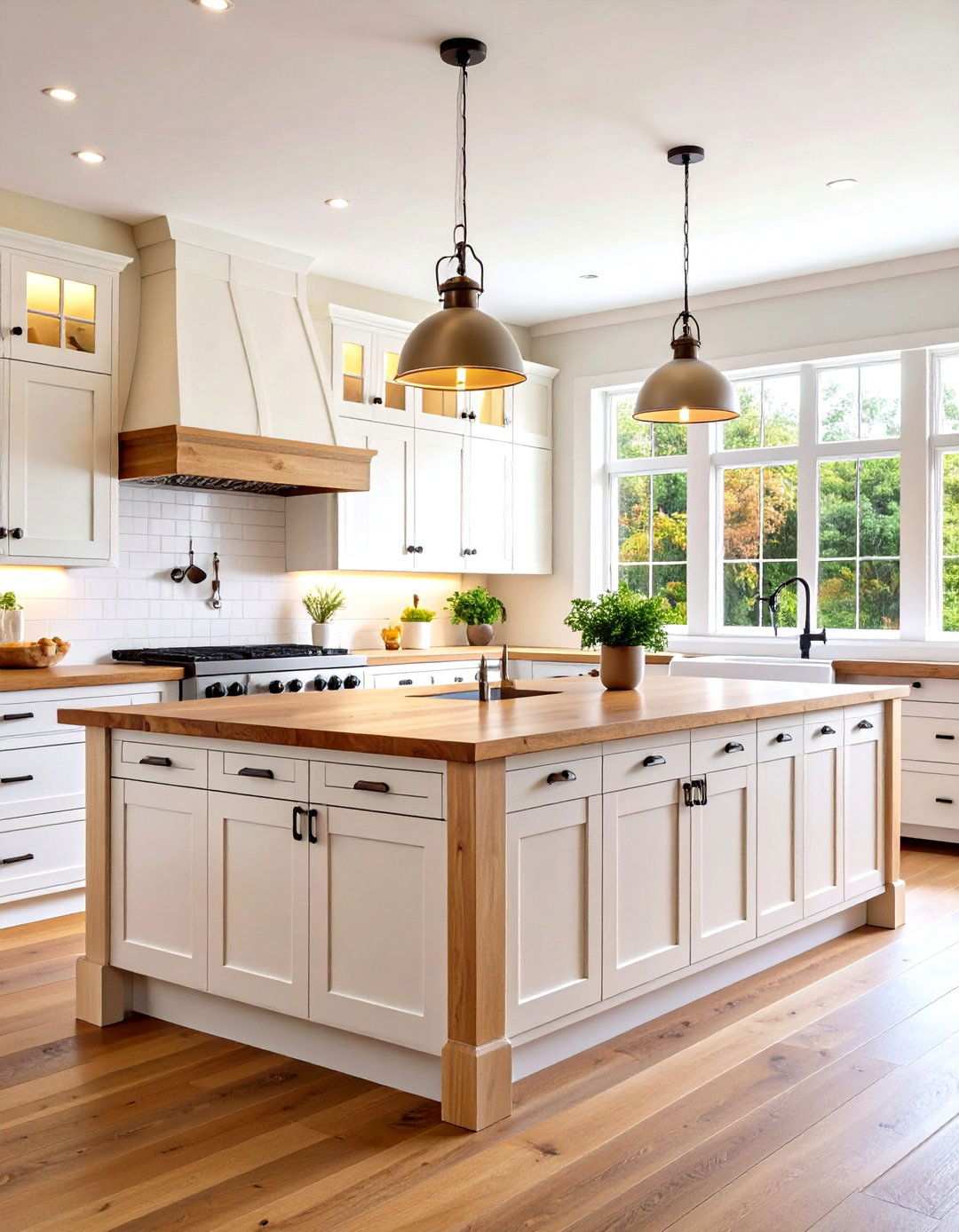
In an all-white kitchen, natural wood surfaces can add a much-needed touch of warmth and personality. Butcher block islands are a great way to provide both functional workspace and visual anchoring in a predominantly white farmhouse kitchen. The natural grain patterns and honey tones of the wood create inviting gathering spaces for family meals and entertaining. Choose from maple, oak, or walnut depending on the desired color depth and durability requirements. Regular maintenance with food-safe oils is essential to preserve the wood’s beauty and protect it against moisture and stains. To highlight the island’s natural beauty, surround it with white perimeter cabinetry and add pendant lighting above for task illumination and design impact. Finally, consider incorporating storage solutions like drawers and shelving to maximize functionality while maintaining the island’s role as the kitchen’s central gathering point.
6. Elevating Functionality in Farmhouse Kitchens
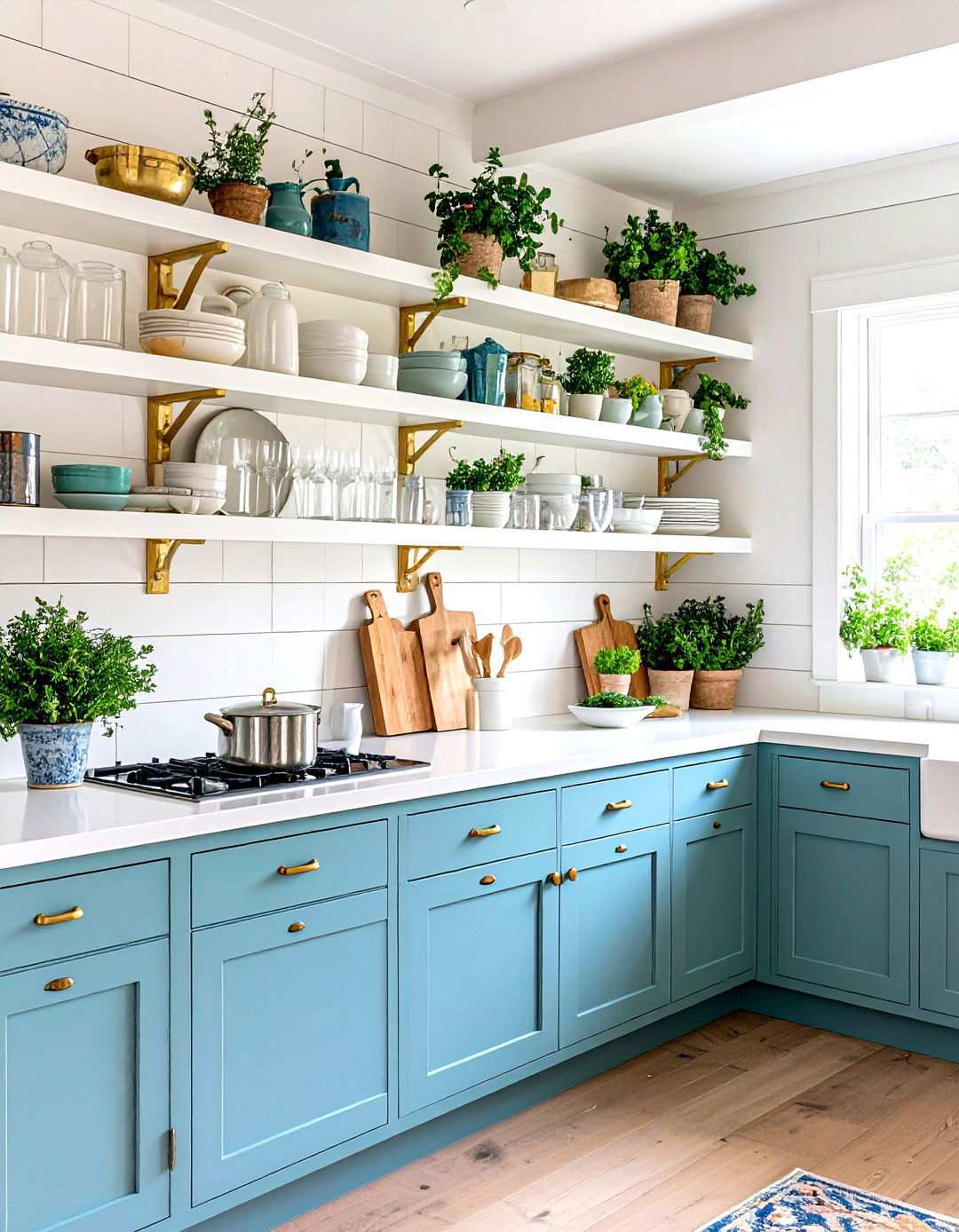
Storage solutions can seamlessly integrate with decorative elements in farmhouse kitchens, turning everyday items into visually appealing displays. Floating shelves in crisp white against a backdrop of shiplap or painted walls create a harmonious balance of clean lines and minimal visual weight, perfectly complementing the rustic aesthetic of farmhouse kitchens. The beauty of open shelving lies in its ability to adapt to various arrangements, effortlessly blending functional storage with the warmth of a lived-in space. By skillfully combining dishes, bowls, and decorative accents, homeowners can craft a welcoming atmosphere that exudes the essence of wholesome living. Incorporating small potted herbs or vintage cutting boards adds a touch of organic charm, while the subtle elegance of brass or black iron brackets provides sturdy support for heavier items. This approach is particularly effective when flanking windows or extending along backsplash areas, creating a seamless transition between form and function.
7. Timeless Elegance in Farmhouse Kitchens
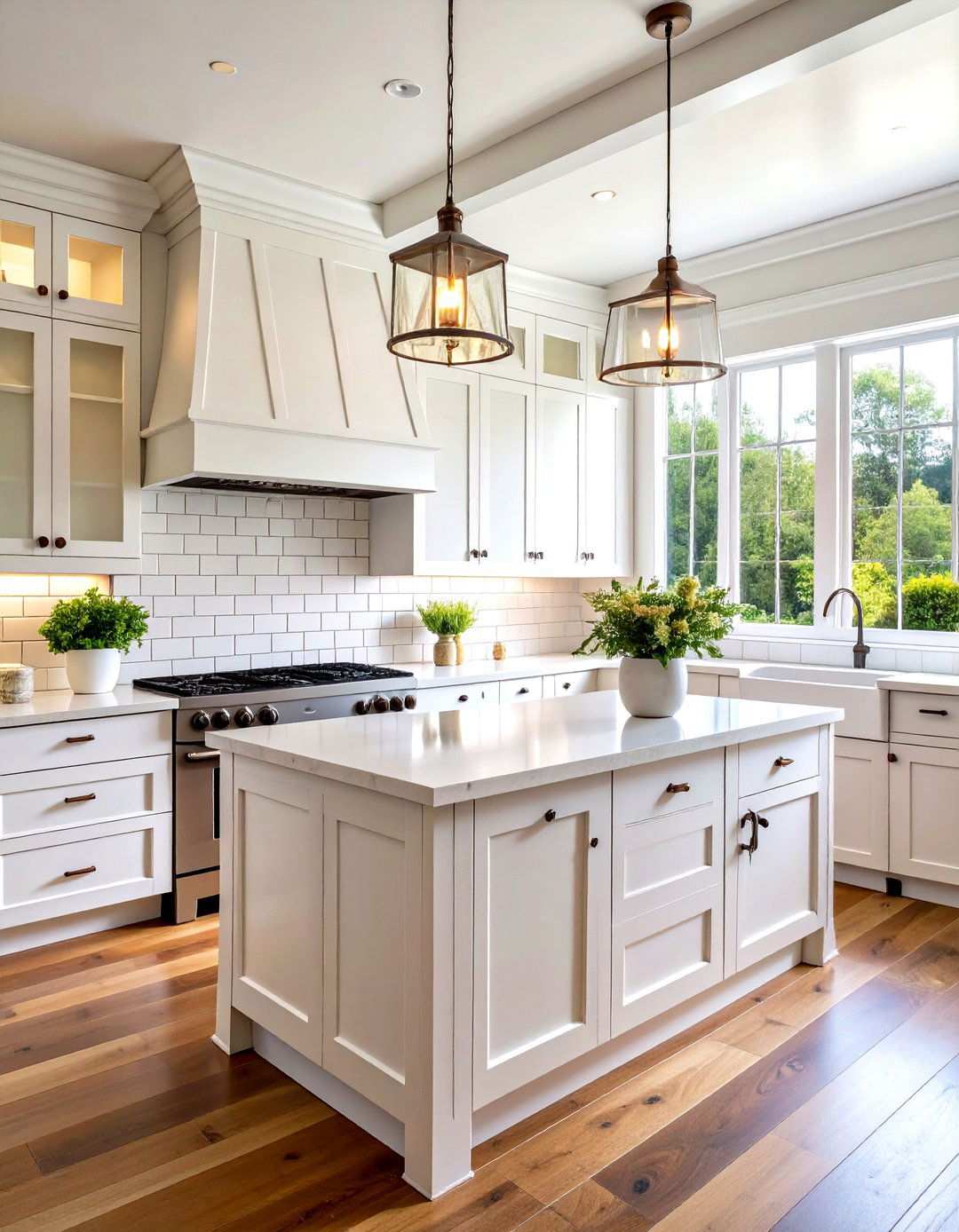
Enduring style and versatility can be found in classic white subway tiles, which effortlessly adapt to changing design trends while maintaining the distinctive charm of farmhouse kitchens. The clean, geometric lines of rectangular tiles provide a versatile backdrop for both traditional and modern elements, effortlessly blending into the rustic aesthetic. The choice of grout color significantly impacts the overall appearance of the tile, with white grout creating a seamless, bright surface and darker grout adding texture and depth. For a dramatic impact, consider extending subway tile from countertop to ceiling, or combine it with other materials like natural stone or wood to create visual interest. The variety of layout options, including running bond, herringbone, and vertical patterns, allows homeowners to personalize the classic subway tile approach while maintaining the clean, functional aesthetic that defines farmhouse kitchens.
8. Statement Lighting in Farmhouse Kitchens
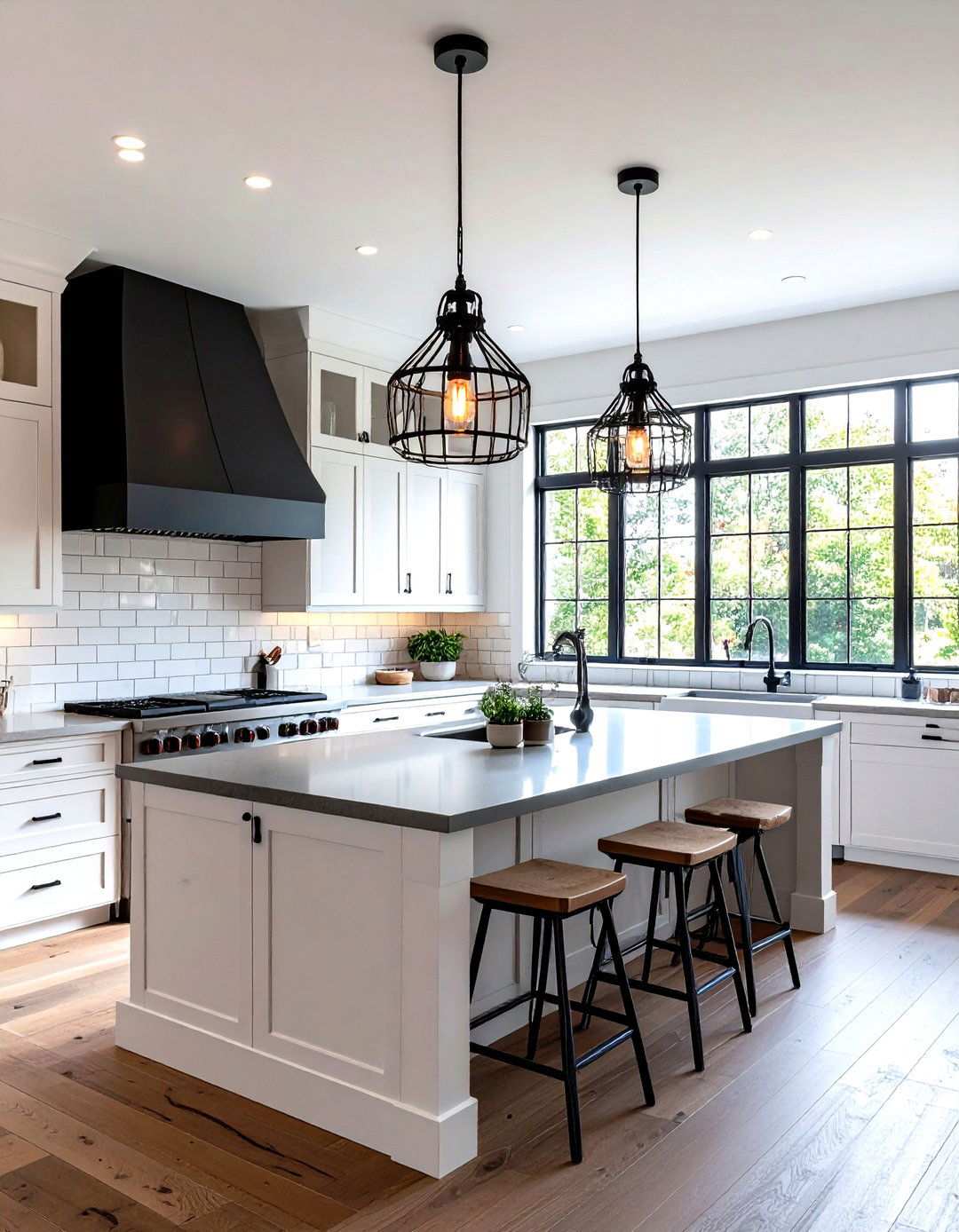
Overhead fixtures play a pivotal role in defining the character of a farmhouse kitchen, and statement pendant lights above kitchen islands are a prime example of this. Black metal farmhouse pendants create a striking contrast against white cabinetry while maintaining period authenticity, adding a touch of elegance to the space. The versatility of pendant lights lies in the range of styling options available, from glass globes and wire cages to galvanized metal shades, each offering a unique interpretation of the farmhouse aesthetic. When selecting pendant lights, consider the scale of the space and the island, ensuring that the fixtures are proportionate and provide adequate task lighting for food preparation and dining. By coordinating pendant lights with other fixtures throughout the kitchen, homeowners can create a cohesive design flow that enhances the farmhouse atmosphere while providing practical illumination.
9. Natural Stone Countertop Kitchen
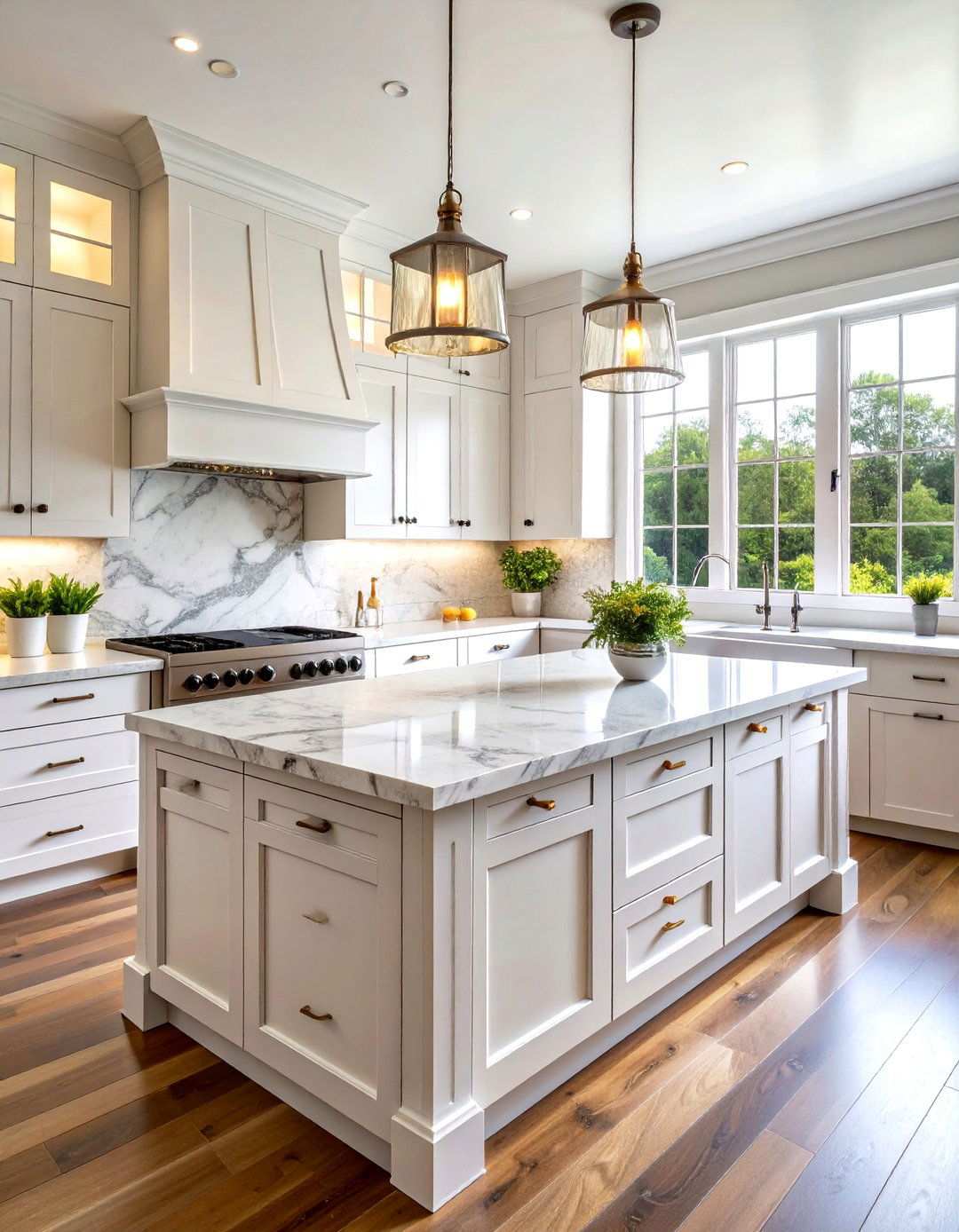
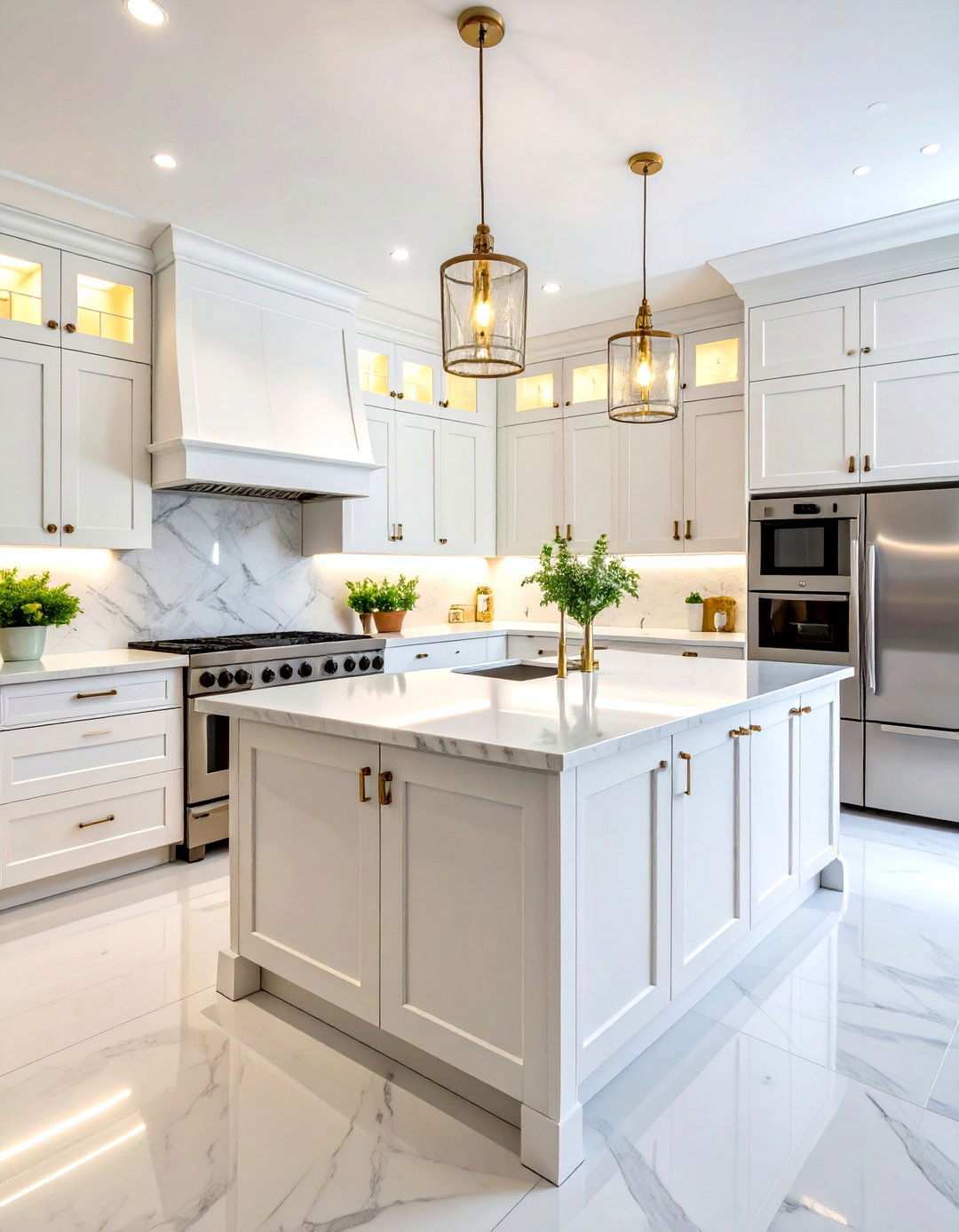
The essence of white farmhouse kitchens lies in their understated elegance, a trait perfectly captured by natural stone countertops. Materials like marble, granite, or quartzite provide a unique blend of durability and sophistication, effortlessly complementing rustic elements. For a classic look, consider pairing white marble with subtle gray veining, which maintains the airy feel essential to farmhouse design while introducing a touch of sophistication. To add a more casual vibe, opt for honed finishes that incorporate a hint of texture. Extending stone backsplashes seamlessly integrate with countertops or contrast beautifully with subway tiles, striking a perfect balance in visual weight. Proper sealing ensures the longevity and stain resistance of these countertops, ideal for busy family kitchens where functionality meets style. Personalize the stone’s appearance with a range of edge profiles, from simple straight cuts to more ornate ogee shapes, while maintaining the functionality required for daily food preparation and entertaining.
10. Vintage Hardware Accent Kitchen
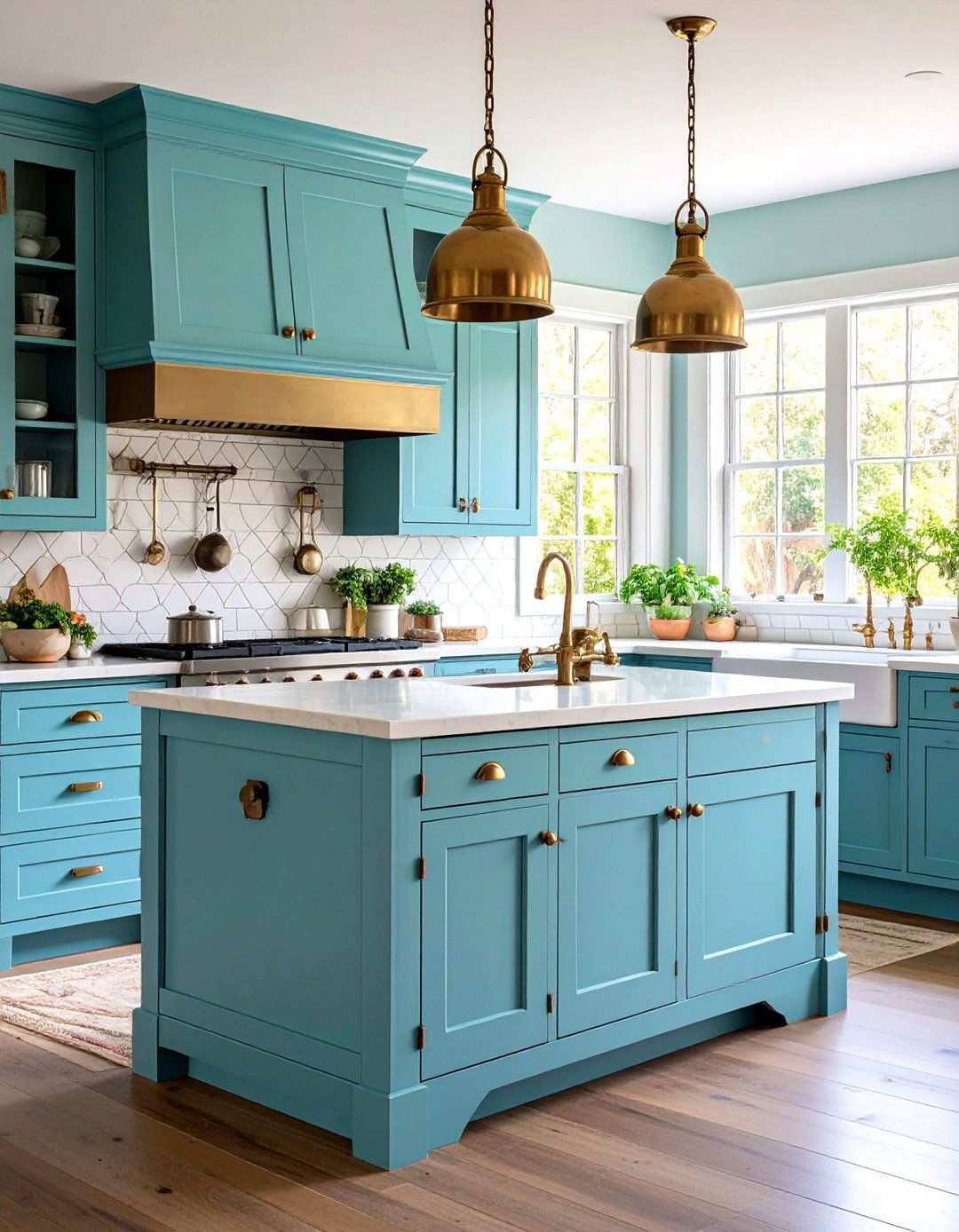
It’s the smallest details that can completely transform the character of a kitchen, and period-appropriate cabinet hardware is no exception. Carefully curated pulls, knobs, and hinges with a historical touch bring authentic farmhouse charm, creating a cohesive look that’s both stylish and functional. When selecting hardware, consider mixing finishes like brass and black iron to add visual interest and replicate the layered look of an authentic farmhouse kitchen. Vintage-inspired latches on glass-front cabinets enhance the collected-over-time aesthetic that makes farmhouse kitchens feel genuinely warm and inviting. Quality hardware not only ensures smooth operation but also adds substantial weight, a testament to the craftsmanship that goes into each piece. For those seeking authentic pieces, scour antique stores for one-of-a-kind finds, while those looking for a more modern take can opt for high-quality reproductions that capture the essence of historical charm.
11. Farmhouse Table Island Kitchen
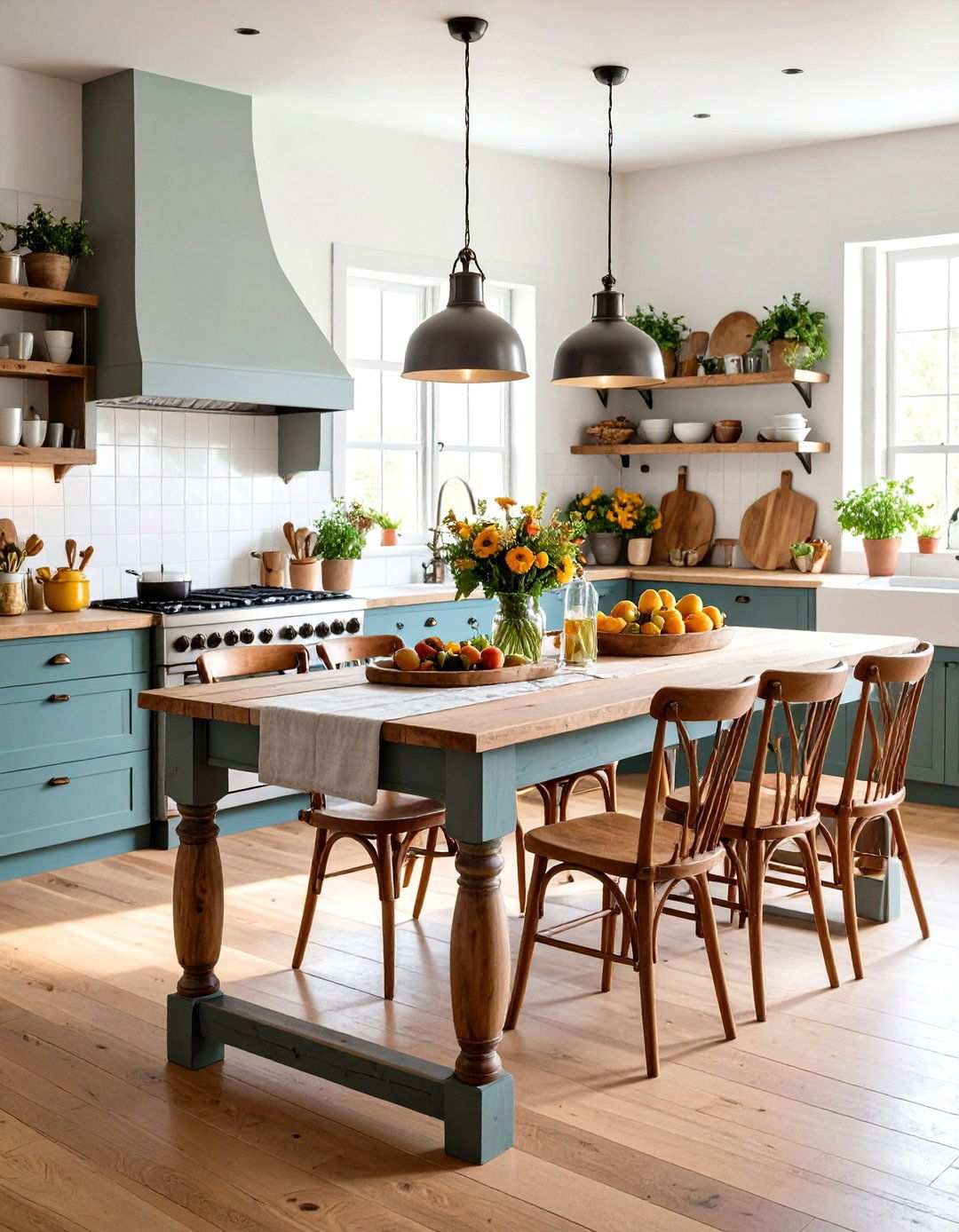
What sets farmhouse kitchens apart is the way they effortlessly combine functionality with warmth, creating spaces that feel like furniture. A farmhouse table island is the perfect solution, bringing the warmth of a dining room into the kitchen while providing a substantial workspace for food preparation and casual meals. These substantial pieces often feature turned legs, apron details, and distressed finishes, all of which enhance the collected-over-time aesthetic that’s central to farmhouse design. Choose from reclaimed wood for an authentic look or select new pieces with a distressed finish that captures the same appeal. The table approach also allows for chair placement around the perimeter, creating informal dining areas perfect for homework, crafts, or entertaining guests while cooking. To maintain design continuity, consider coordinating wood finishes with other kitchen elements like beams, shelving, or flooring, striking a natural balance that feels effortless throughout the farmhouse kitchen space.
12. Kitchen Showcase for Treasured Possessions
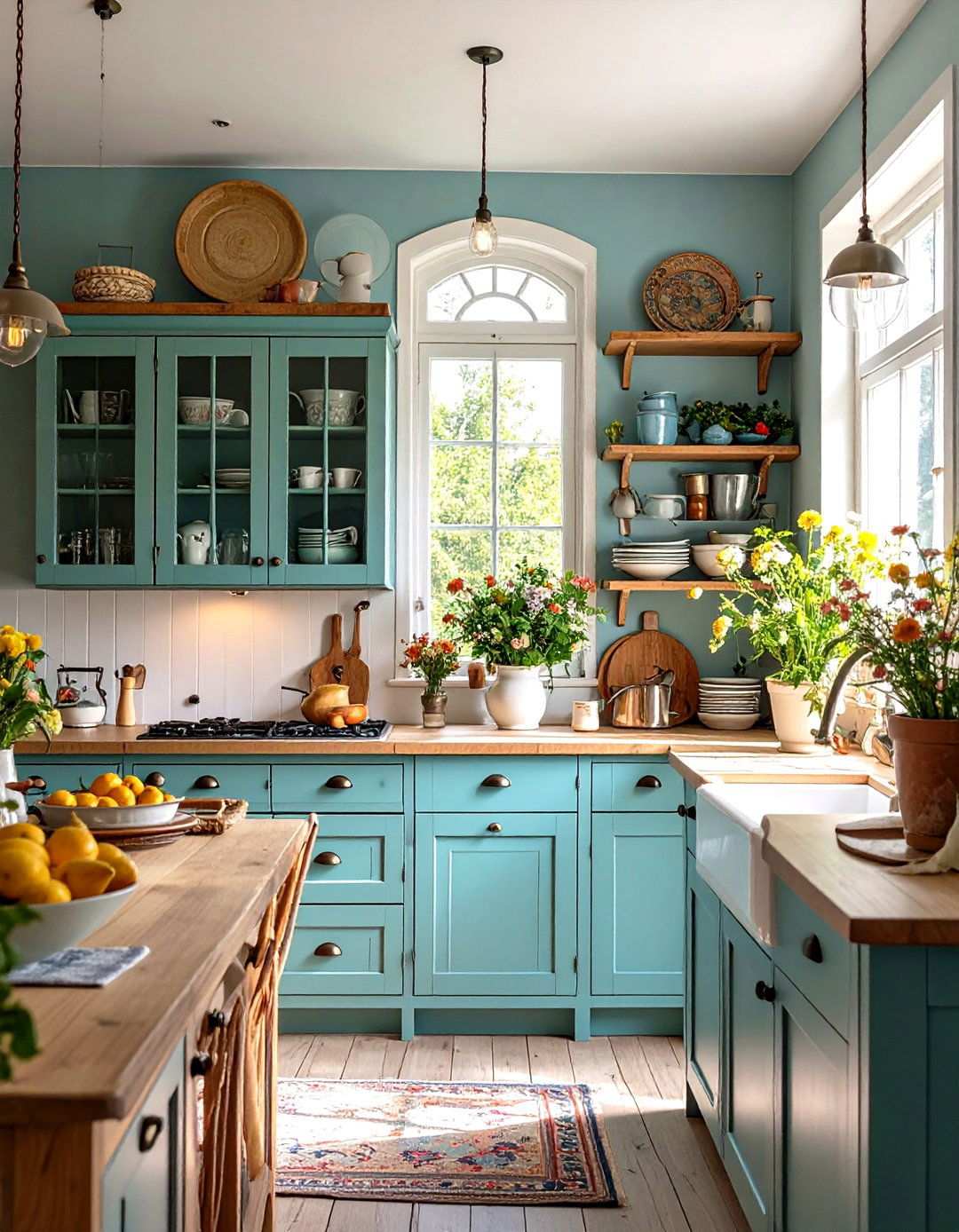
White farmhouse kitchens can seamlessly blend display and functionality by incorporating glass-front upper cabinets. These cabinets not only showcase beautiful dishware, glassware, and serving pieces but also protect them from kitchen moisture and grease. By opting for glass-front cabinets, homeowners can add a touch of sophistication and depth to their kitchen without compromising on storage needs. To achieve an authentic period look, consider mullioned glass doors, which draw inspiration from traditional farmhouse window designs. Strategically placing glass-front cabinets near kitchen focal points such as ranges or sinks creates a visually appealing display area. Additionally, interior cabinet lighting not only highlights the displayed items but also provides ambient room lighting during evening hours. Mixing glass-front cabinets with solid doors is an effective way to balance display areas with concealed storage for everyday items. Seeded or wavy glass adds a vintage touch while maintaining functionality, making it an excellent choice for farmhouse kitchen designs.
13. Architectural Drama through Exposed Ceiling Beams
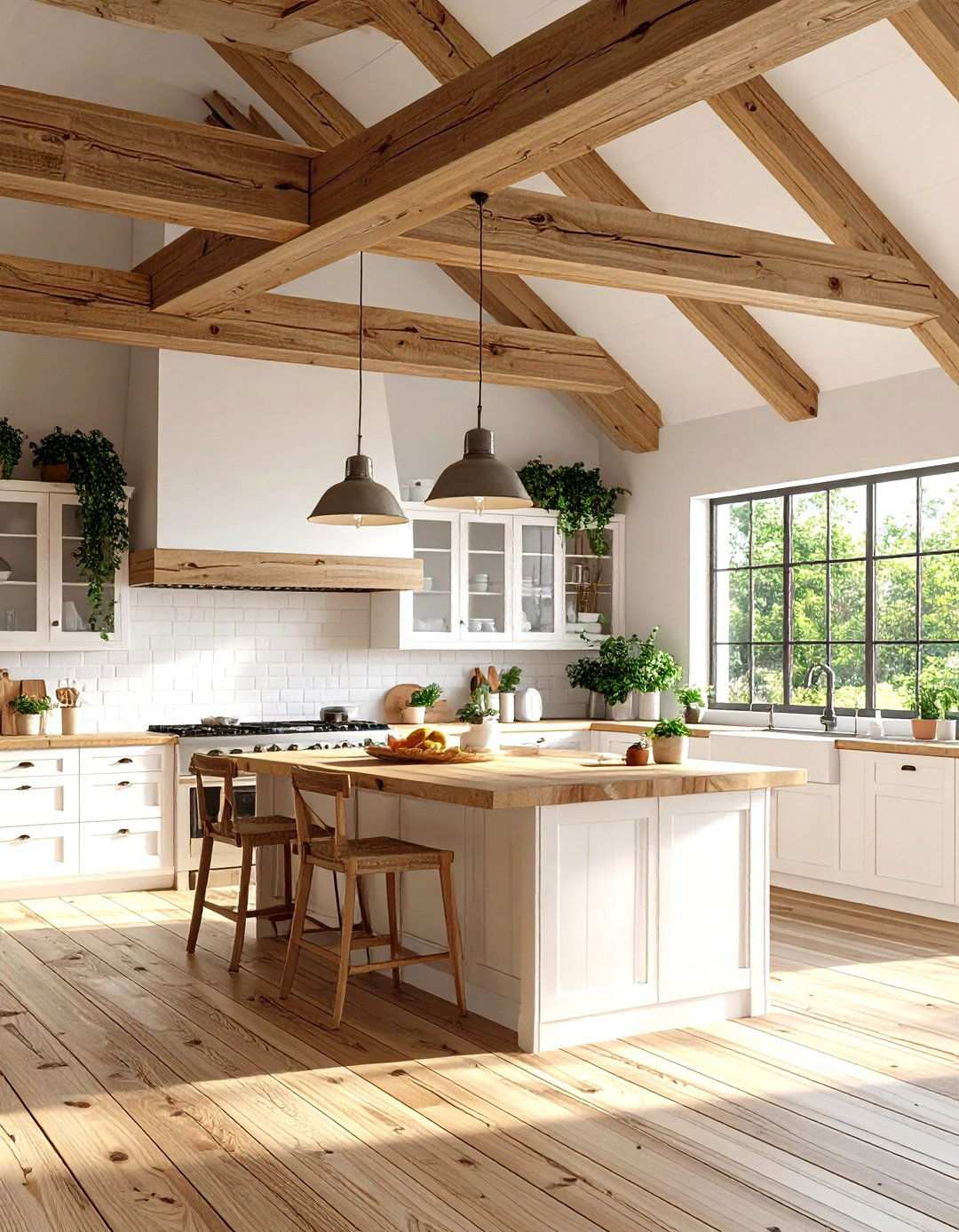
White farmhouse kitchens can benefit from a touch of architectural drama, and exposed ceiling beams are the perfect way to achieve this. By referencing traditional barn and farmhouse construction methods, exposed beams create a substantial visual impact while adding warmth and character to the kitchen. Whether original structural elements or decorative additions, beams complement white cabinetry beautifully and create a sense of continuity with the surrounding space. To create a harmonious balance, consider the natural wood finish of the beams in relation to the kitchen’s overall aesthetic. A lighter finish can create a sense of contrast, while a darker stain can add a touch of drama. When choosing beam spacing and size, ensure it is proportionate to the kitchen’s dimensions. Too many beams can overwhelm smaller spaces, while inadequate beams may get lost in larger kitchens. Integrating lighting between beams provides even illumination without competing with architectural elements. By coordinating beam finishes with other wood elements like islands, shelving, or flooring, homeowners can create a design continuity that feels authentic to farmhouse traditions.
14. Cozy Kitchen Nooks through Built-in Banquette Seating
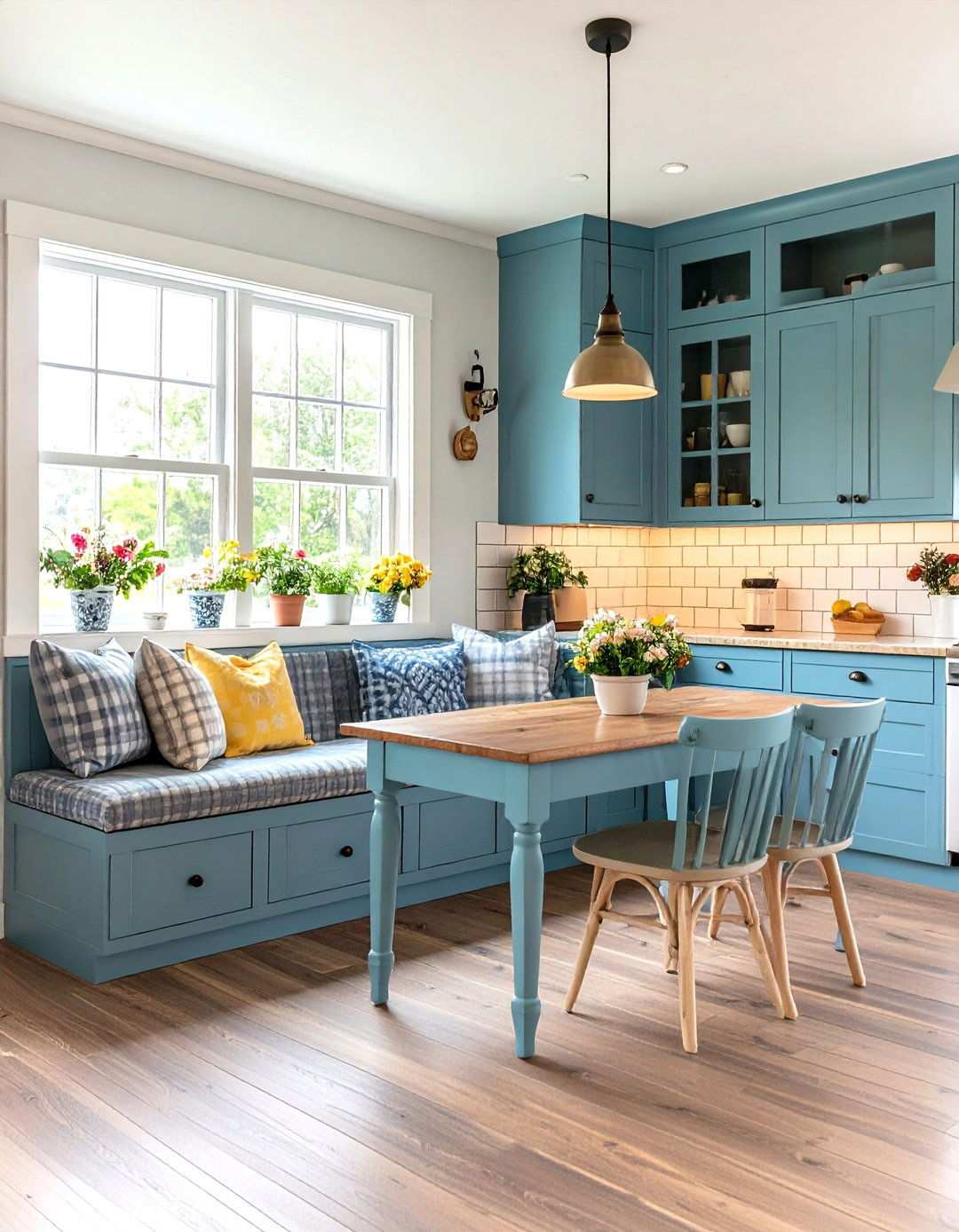
Farmhouse kitchens can benefit from cozy dining nooks that not only maximize space efficiency but also add a touch of charm. Built-in banquette seating transforms awkward corners or alcoves into inviting breakfast areas that can accommodate various group sizes. Upholstered cushions in classic patterns like gingham, ticking stripes, or floral prints enhance the cottage appeal while providing comfortable seating. Storage beneath bench seats is an excellent way to keep linens, serving pieces, or seasonal items within easy reach while maintaining clean lines. When positioning tables, consider the natural light and garden views that can be gained through strategically placed windows. By coordinating upholstery colors with kitchen elements like cabinet hardware or pendant lights, homeowners can create a cohesive design flow that reinforces the farmhouse connection to outdoor living.
15. Elevating Farmhouse Design with Two-Tone Cabinets
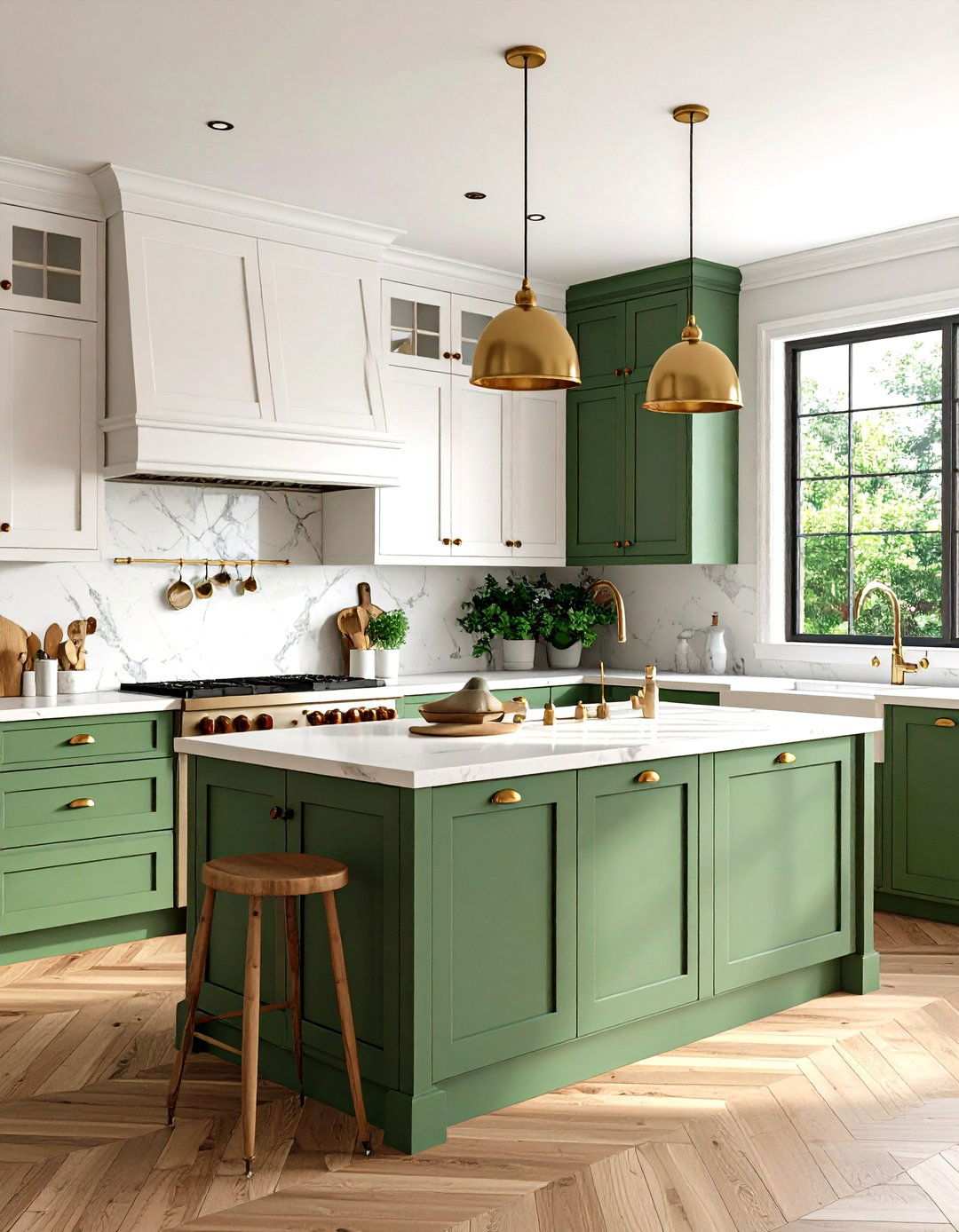
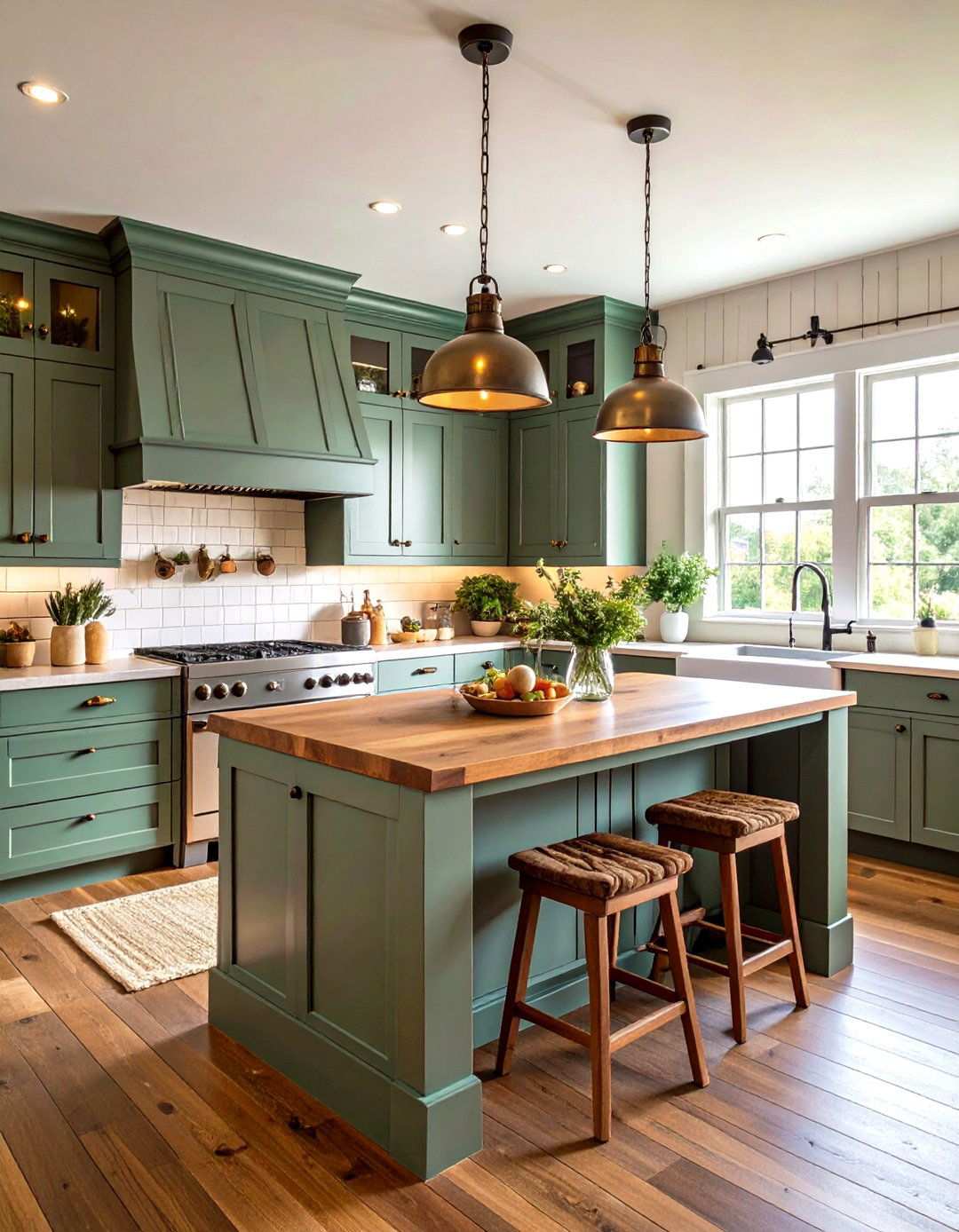
Farmhouse kitchens thrive on a balance of clean aesthetics and subtle personality. Incorporating two-tone cabinet treatments can elevate the design by introducing visual interest without compromising the style’s core essence. A popular approach involves pairing white upper cabinets with lower cabinets in tones like sage green, navy blue, or gray, which grounds the space while injecting character. To further enhance the look, experiment with unique hardware combinations – for instance, brass hardware with white cabinets and black iron hardware with colored lowers creates a rich, layered feel. Adding an island cabinet in a contrasting color can serve as an extra focal point. Natural wood butcher block countertops effectively bridge color divides, infusing warmth and texture into the space. The key to success lies in maintaining a delicate balance, often achieved by reserving lighter colors for upper areas and deeper tones for lower portions of the kitchen.
16. Adding Rustic Charm with Exposed Brick Backsplashes
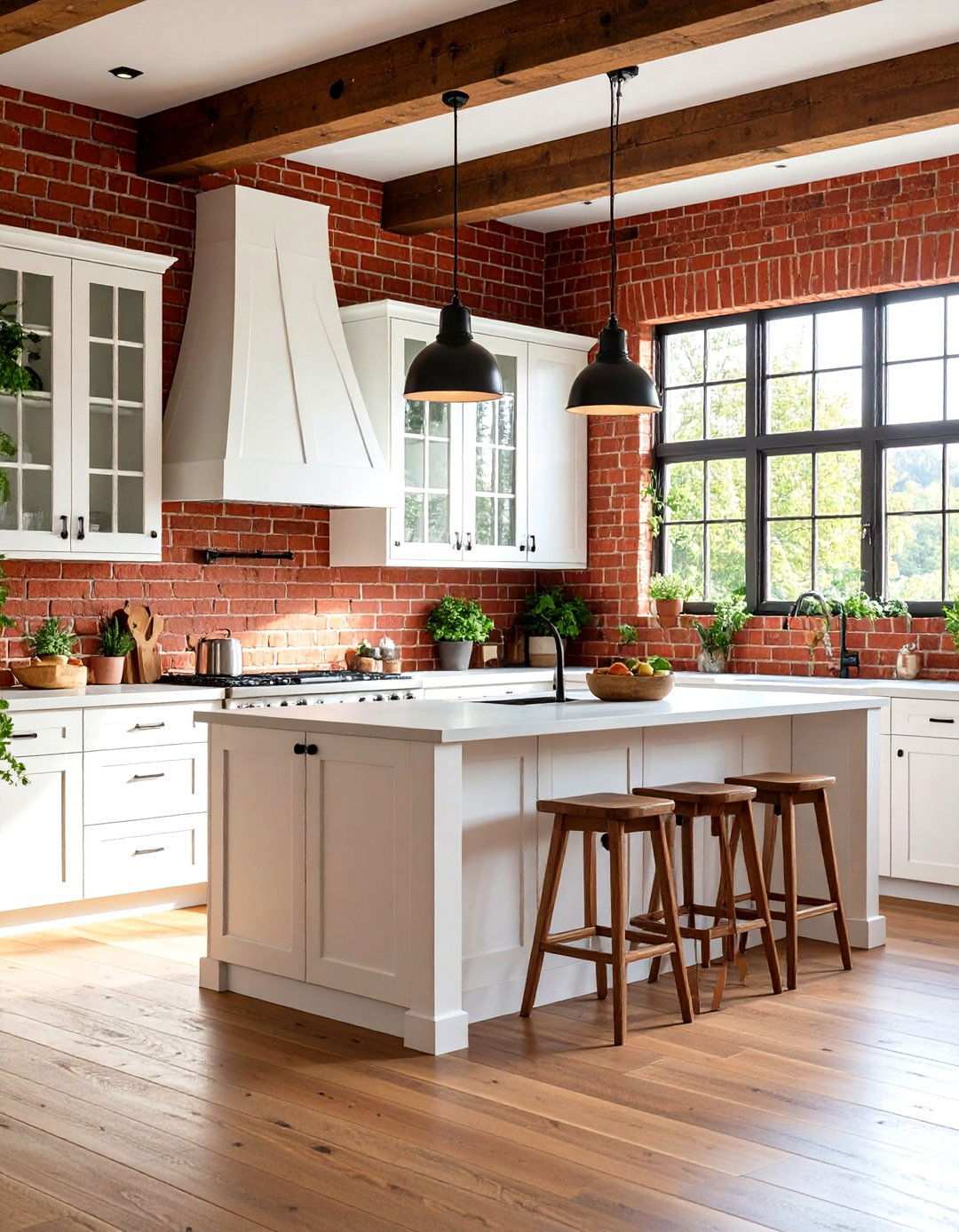
Exposed brick backsplashes inject authentic farmhouse character into kitchens through their natural material variations and aged patina, which pays homage to traditional construction methods. Whether it’s an original wall exposure or a thin brick veneer, this approach contributes substantial visual weight that harmonizes beautifully with white cabinetry. To ensure practical functionality, seal the bricks properly to prevent grease absorption and facilitate easy cleaning in cooking areas. For a softer appearance, consider whitewashing or painting the brick in light colors while maintaining the texture benefits. This design strategy works particularly well behind ranges, where heat resistance and ease of maintenance are paramount. To amplify the farmhouse feel, coordinate with other natural materials like wood countertops or stone flooring, which create a collected, timeless atmosphere.
17. Infusing Warmth and Luxury with Copper Farmhouse Sinks
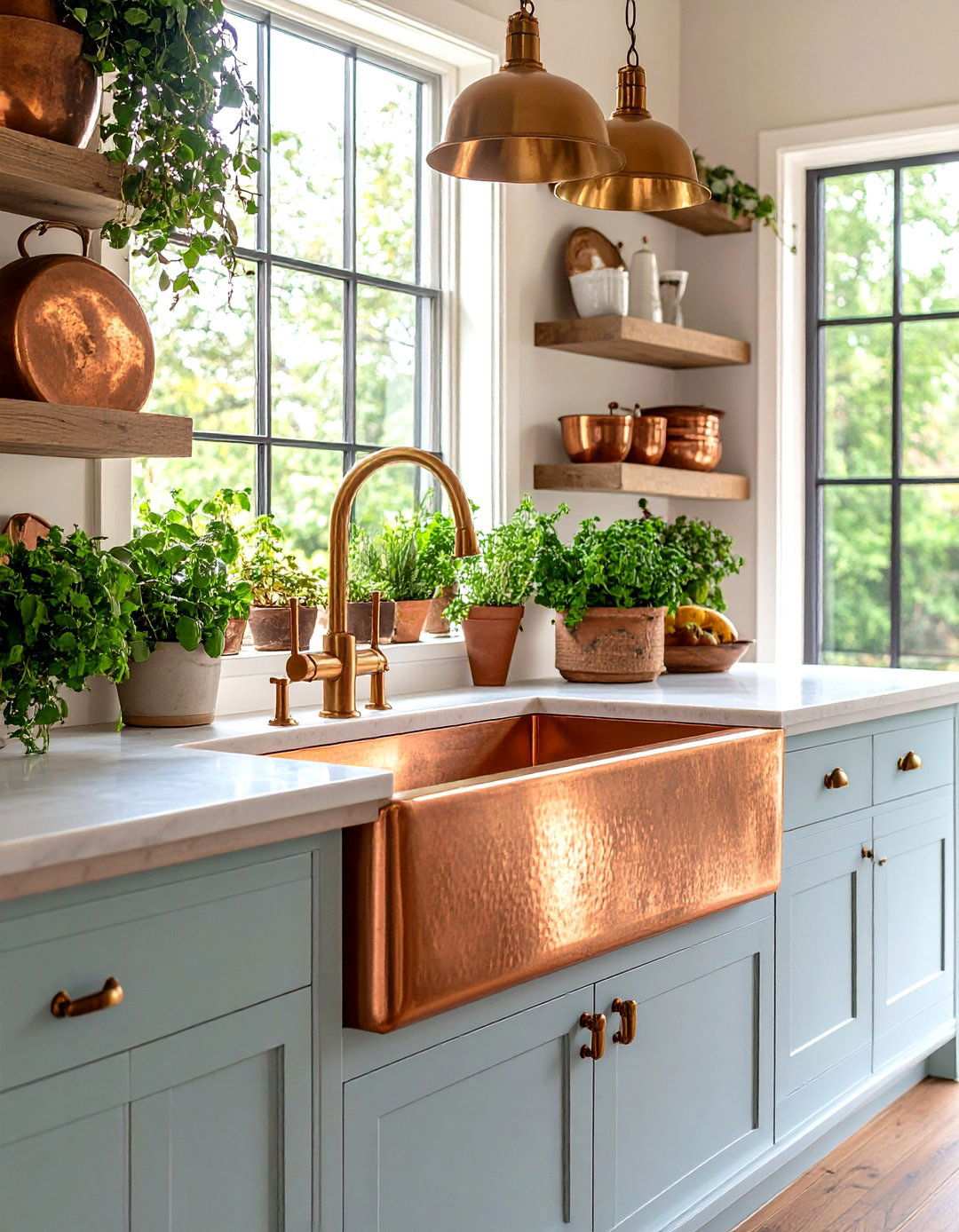
Copper farmhouse sinks offer a unique touch to farmhouse kitchens through their natural patina development, which yields living finishes that evolve over time. These substantial fixtures not only provide excellent heat retention and antimicrobial properties but also serve as stunning focal points in white kitchens. To reinforce the metallic warmth, pair the sink with brass or copper faucets, which complements natural wood elements beautifully. Regular maintenance preserves the copper’s appearance while allowing it to age naturally, enhancing the farmhouse authenticity. To add extra visual interest, consider hammered textures that reflect traditional metalworking craftsmanship. The warm metal tones effectively bridge the gap between white cabinetry and natural wood elements like butcher block countertops or exposed beams, creating a cohesive design flow throughout farmhouse kitchen spaces.
18. Weathered Materials Bring Character to Farmhouse Kitchens
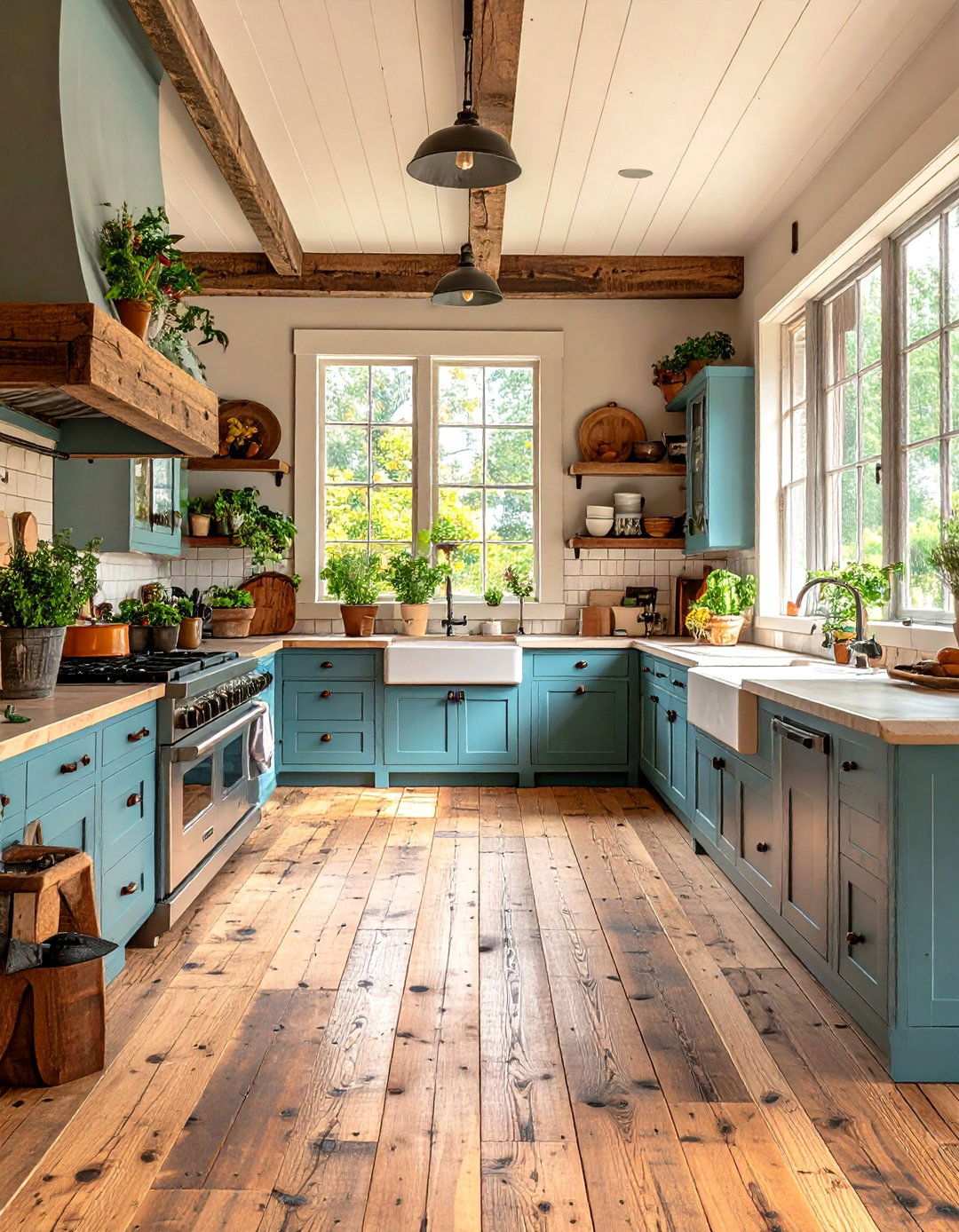
Weathered materials possess a unique ability to imbue farmhouse authenticity with a rich history. The distinctive patina and aging patterns found on reclaimed wide-plank hardwood floors cannot be replicated by new materials. These substantial planks, often measuring six inches or wider, create a visual impact that harmoniously complements the scale and proportions of a farmhouse kitchen. The natural finish variations and mixing of wood species evoke an authentic farmhouse flooring aesthetic, where materials were chosen based on availability rather than perfect matching. To further incorporate reclaimed wood, consider applying it floor-to-ceiling on accent walls. Proper installation and finishing ensure durability while preserving the authentic character of the material. The telltale signs of wear and tear on a piece of reclaimed wood serve as a testament to its history, contributing to the collected-over-time aesthetic that is central to successful farmhouse kitchen design.
19. Elevating Farmhouse Kitchens with Professional Functionality
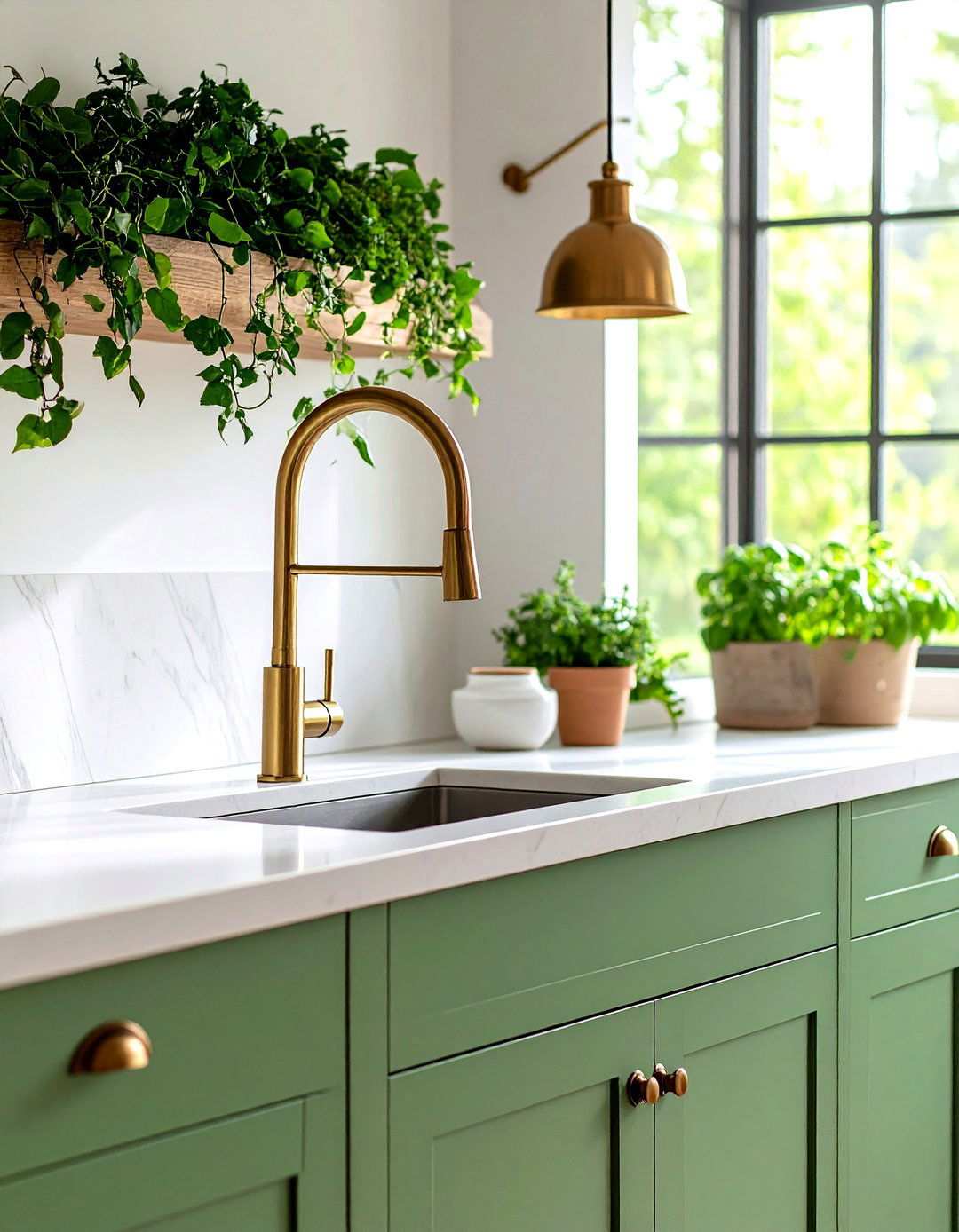
Farmhouse design stands to benefit from the incorporation of professional kitchen features. Wall-mounted pot fillers above ranges provide convenient access to water for large cookware, while also adding a touch of sophistication to traditional kitchens. These swing-arm fixtures are designed to extend when needed and fold against the wall when not in use, maintaining clean lines that are essential to farmhouse aesthetics. When selecting a finish for the pot filler, consider coordinating it with other kitchen hardware, such as brass, copper, or matte black options. Installation height is also crucial, as it must provide comfortable access without interfering with backsplash materials or range hoods. This thoughtful attention to detail is what elevates farmhouse kitchens from purely decorative spaces into functional areas designed for serious home cooking and entertaining activities.
20. Maximizing Spaces with Built-In Window Seats
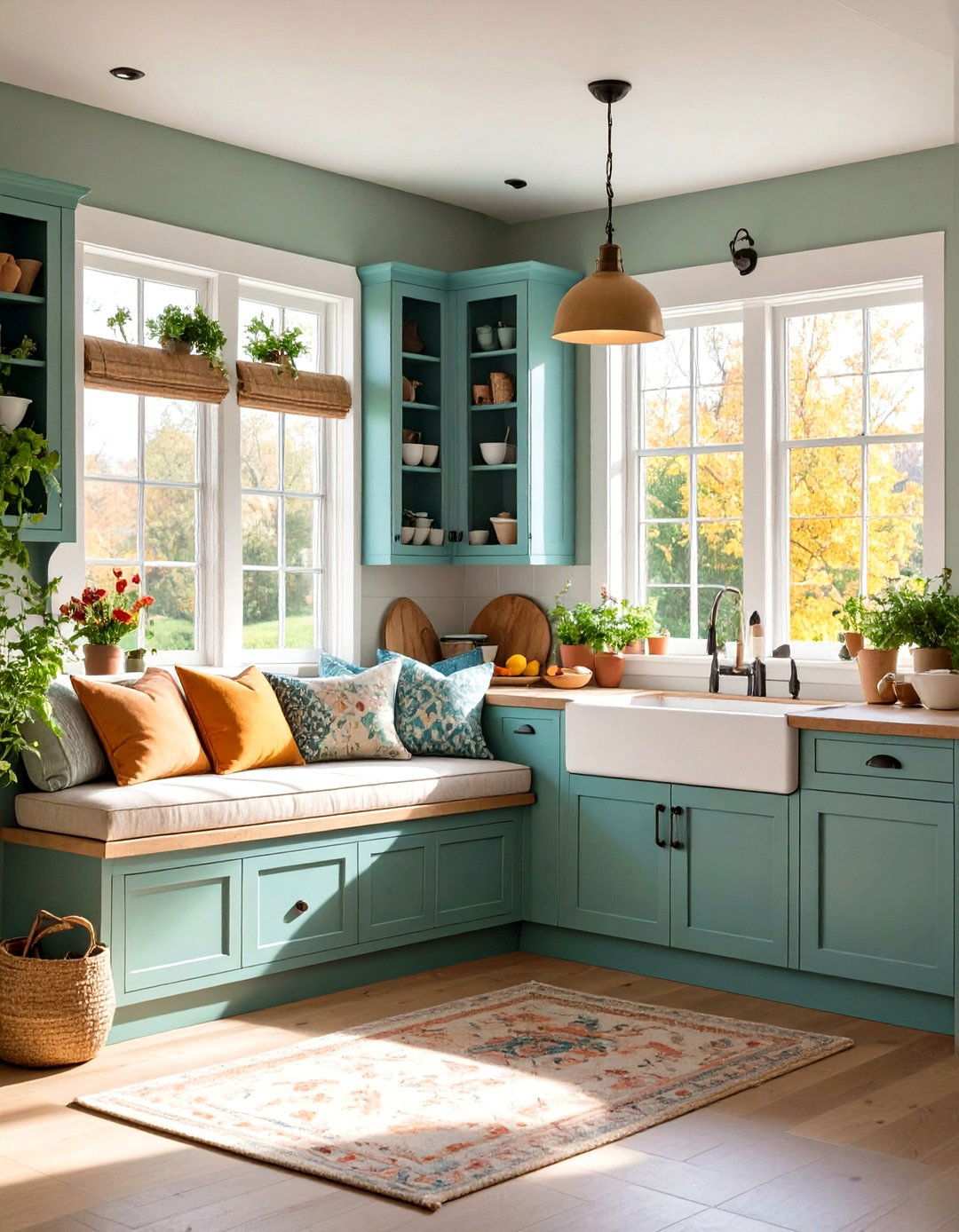
Farmhouse kitchens often feature awkward spaces that go unused, but why not transform them into functional areas that enhance the overall character of the room? Built-in window seats with hinged tops provide charming reading nooks while concealing linens, serving pieces, or seasonal decorations. These custom solutions not only optimize space but also evoke a sense of cottage-inspired styling that is quintessential to farmhouse design. To create a cohesive look, coordinate the cushion fabrics with other kitchen textiles. Consider complementing the window seat styling with window treatments, such as cafe curtains, roman shades, or plantation shutters, which not only enhance farmhouse appeal but also control light and privacy. Position the window seat near kitchen islands or dining areas for overflow seating during gatherings. Finally, add throw pillows in seasonal colors or patterns for easy decorating updates that refresh the farmhouse kitchen appearance throughout the year while maintaining timeless foundational elements.
21. Artistic Range Hood Elevations
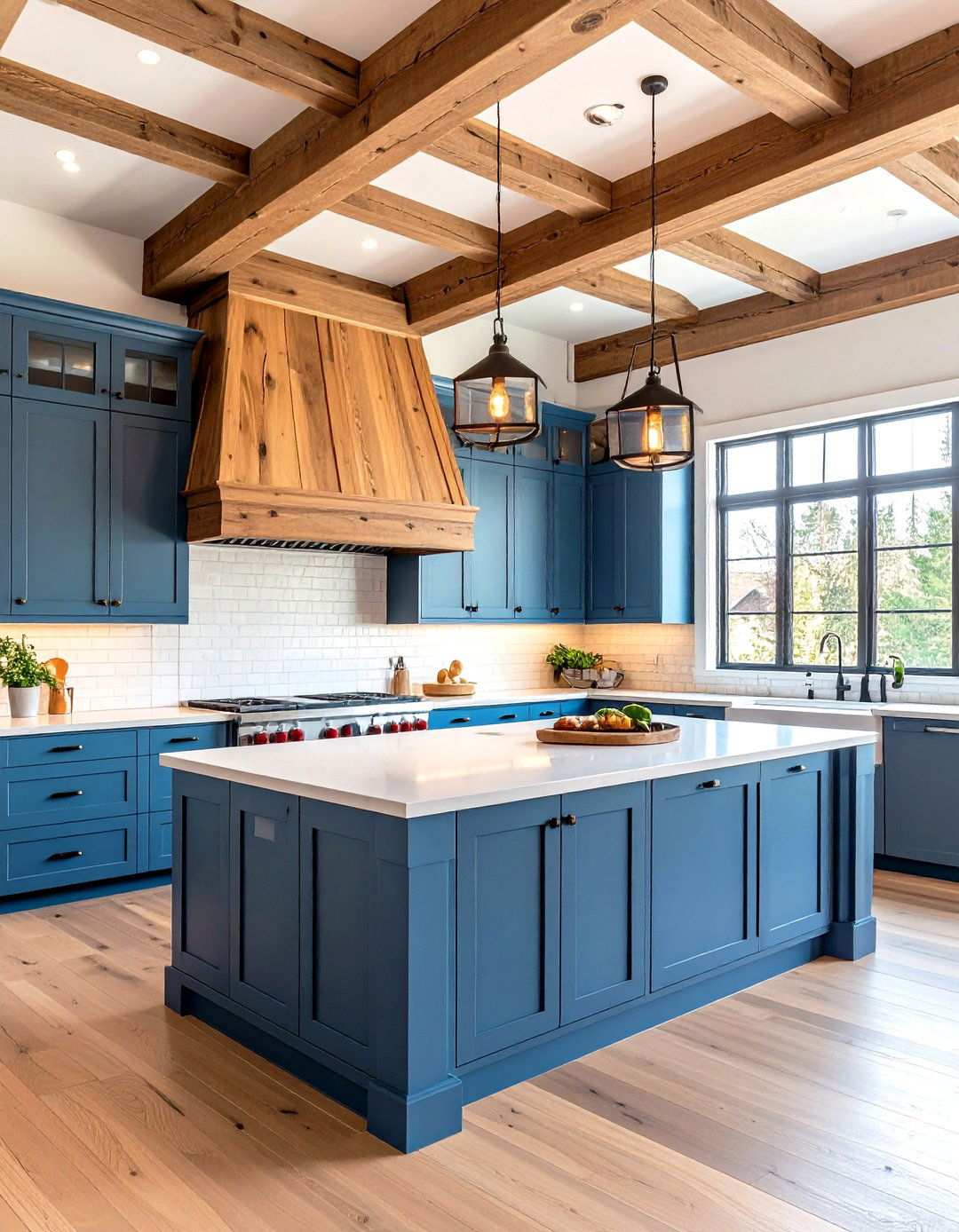
Custom range hoods crafted from wood, plaster, or metal are the perfect synthesis of form and function, transforming necessary ventilation into visually striking focal points that anchor kitchen designs. These bespoke creations not only provide essential cooking ventilation but also serve as substantial architectural elements that harmonize with the surrounding space. To achieve a cohesive look, coordinate the materials used for the range hood with other kitchen elements – for instance, reclaimed wood hoods can complement exposed beams, while painted plaster versions blend seamlessly with white cabinetry. When selecting a range hood, it’s essential to consider the proportions carefully, ensuring that it relates appropriately to the size of the range and the ceiling height for a balanced visual weight. Decorative brackets, corbels, or trim details can add a touch of farmhouse character while providing structural support, while interior lighting illuminates cooking surfaces and adds ambient room lighting during evening hours.
22. Expansive Butler's Pantry Design
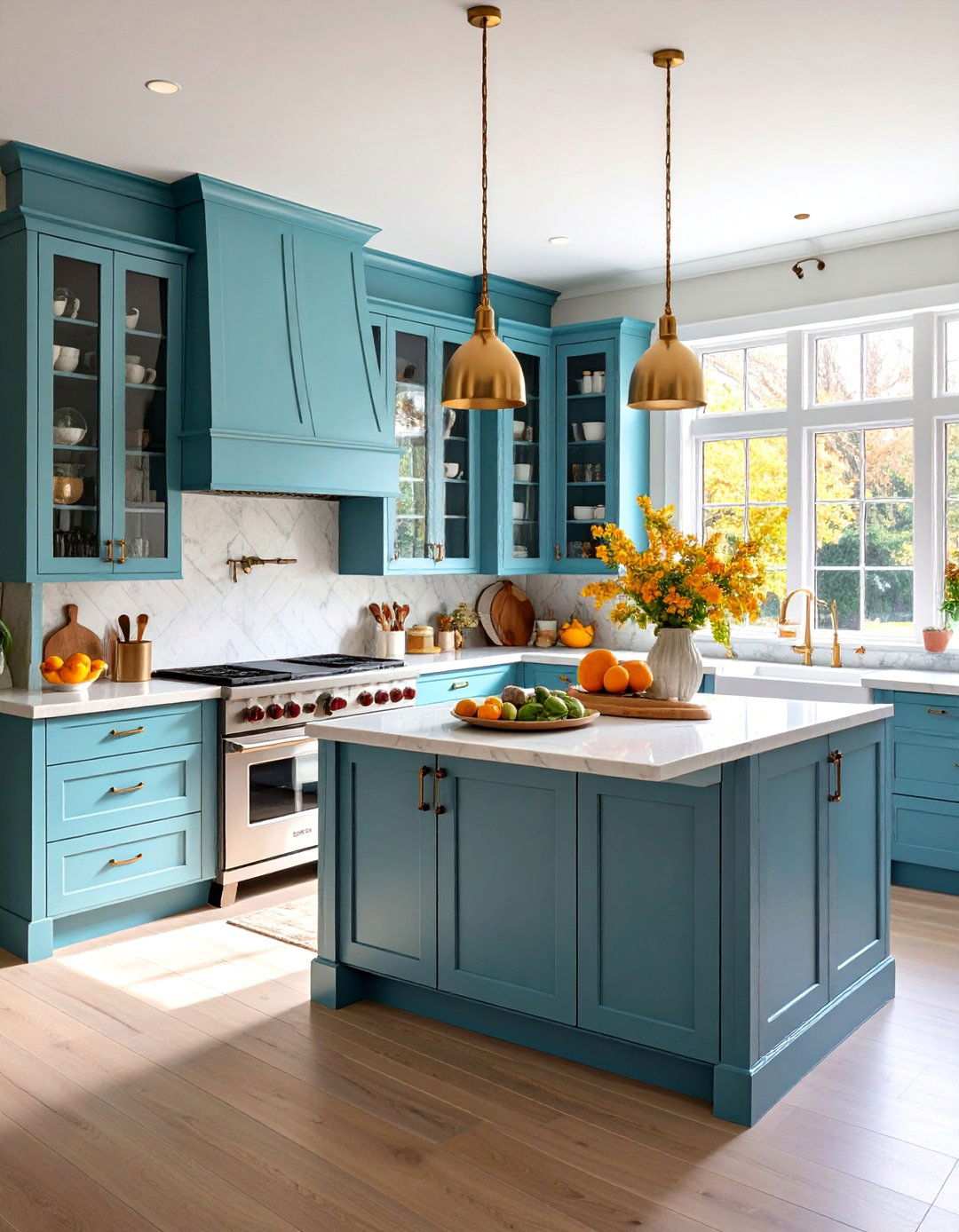
The adjacent spaces surrounding the kitchen can be repurposed to enhance its functionality, and one effective way to do this is by incorporating a butler’s pantry. These transitional spaces provide essential storage and prep areas, maintaining a clean and organized kitchen appearance during entertaining. To create a seamless flow between the butler’s pantry and the main kitchen, continue the farmhouse theme through similar cabinetry, hardware, and color choices. Consider counter materials that coordinate with the main kitchen selections, potentially offering different functionality – marble for pastry preparation or butcher block for bread making. The inclusion of a sink in the butler’s pantry can support entertaining activities, such as beverage preparation or flower arranging, while glass-front cabinets display serving pieces while concealing everyday storage needs, maintaining the farmhouse balance between practical functionality and decorative appeal.
23. Timeless Vintage Appliance Aesthetics
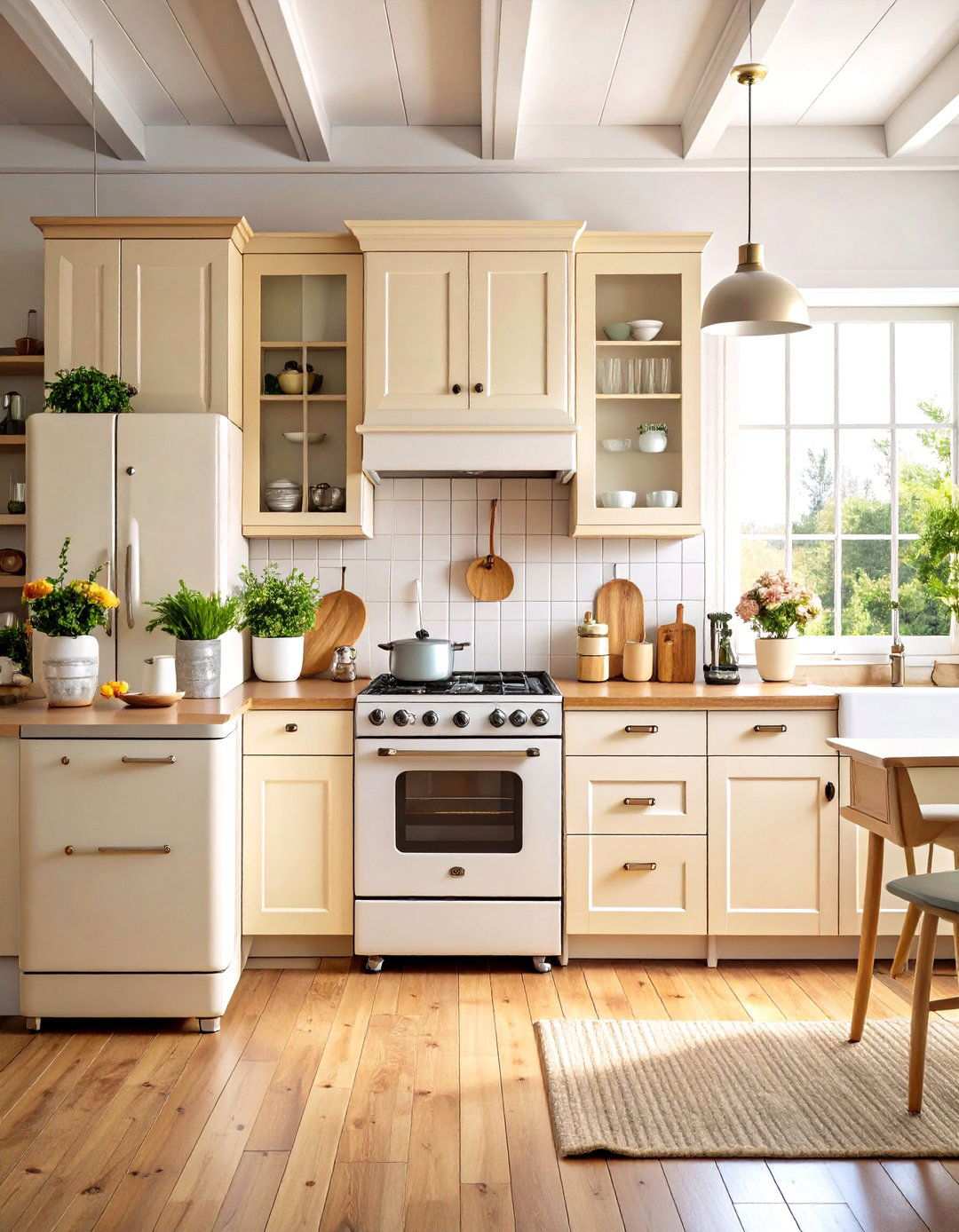
For those seeking to bring authentic period charm into their kitchen while meeting modern performance needs, vintage-inspired appliances are an excellent choice. These classic appliances in colors like cream, sage green, or soft blue create focal points while providing contemporary functionality for serious cooking. When selecting vintage-inspired appliances, choose ranges with traditional styling details like chrome trim, analog controls, and substantial proportions that complement the farmhouse scale. To achieve a cohesive design, coordinate the appliance colors with cabinet choices for intentional design flow rather than accidental matching. Consider refrigeration options that blend with cabinetry through panel-ready designs or opt for retro-inspired models that embody the vintage aesthetic. Small appliances like stand mixers, toasters, and coffee makers in coordinating colors can enhance the collected-over-time aesthetic while providing countertop functionality, ultimately balancing authentic styling with modern performance requirements.
24. Seasonal Decorating Displays Kitchen
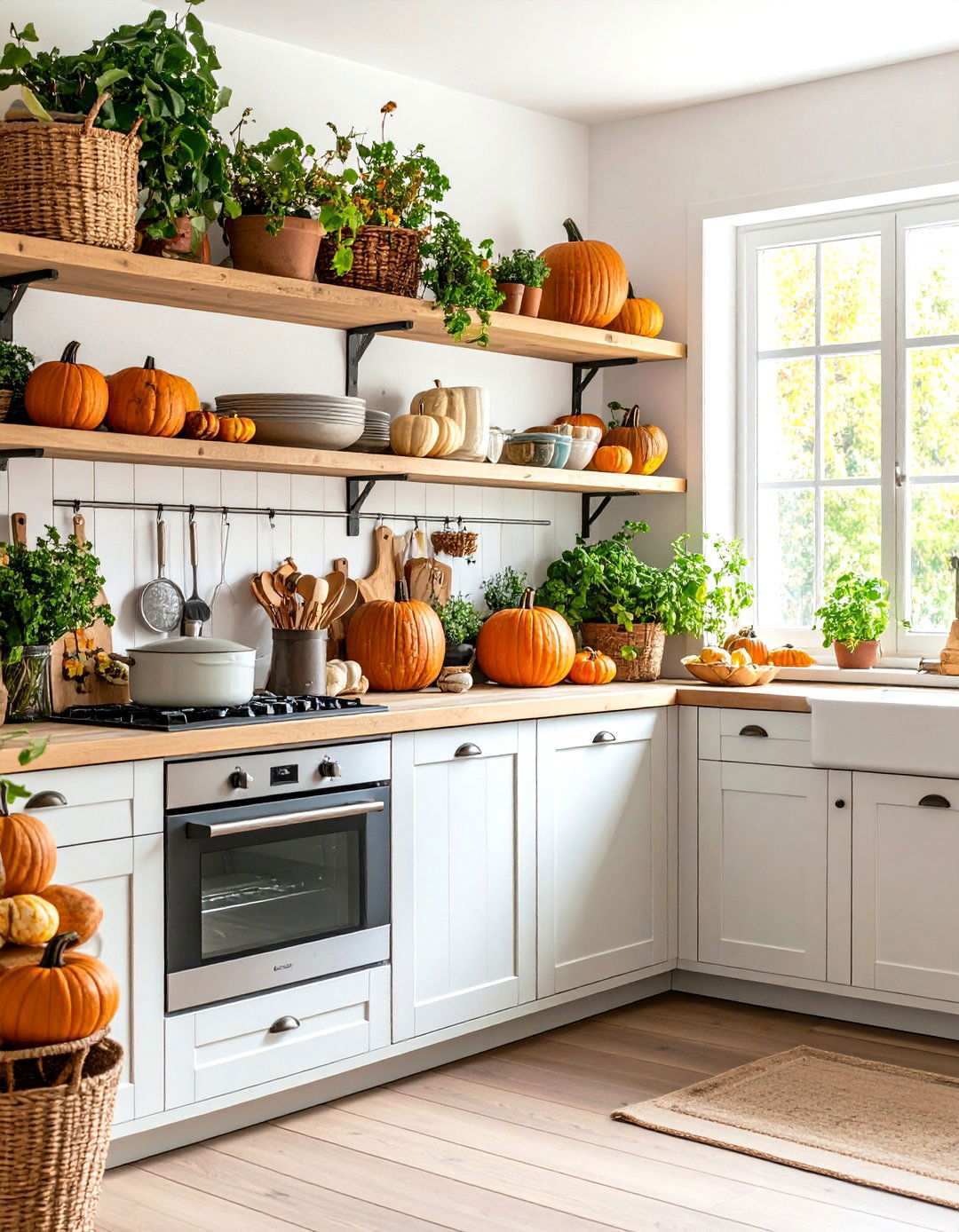
Farmhouse kitchens embody the essence of seasonal transition by embracing the ever-changing nature of the outdoors. The strategic placement of display areas allows homeowners to effortlessly adapt to shifting seasonal themes. By incorporating natural elements, vintage treasures, and festive decorations, these spaces become a true reflection of the surroundings. Open shelving units serve as versatile platforms for showcasing seasonal dishes, while mantels and ledges provide the perfect perch for garlands, pumpkins, and delicate flowering branches.
In designing a seasonal farmhouse kitchen, it’s essential to strike a balance between foundational elements and changing accents. Neutral backgrounds, such as natural wood bowls, woven baskets, and earthy pottery, offer a timeless canvas for seasonal rotations. By incorporating fresh fruits, vegetables, and flowers, these spaces are infused with the warmth and vitality of the garden. This thoughtful approach not only maintains the farmhouse connection to the land but also allows for personal expression through cherished collections and family traditions, making each space a true reflection of the homeowner’s heart and heritage.