1. Elevating Entryways with Timeless Elegance
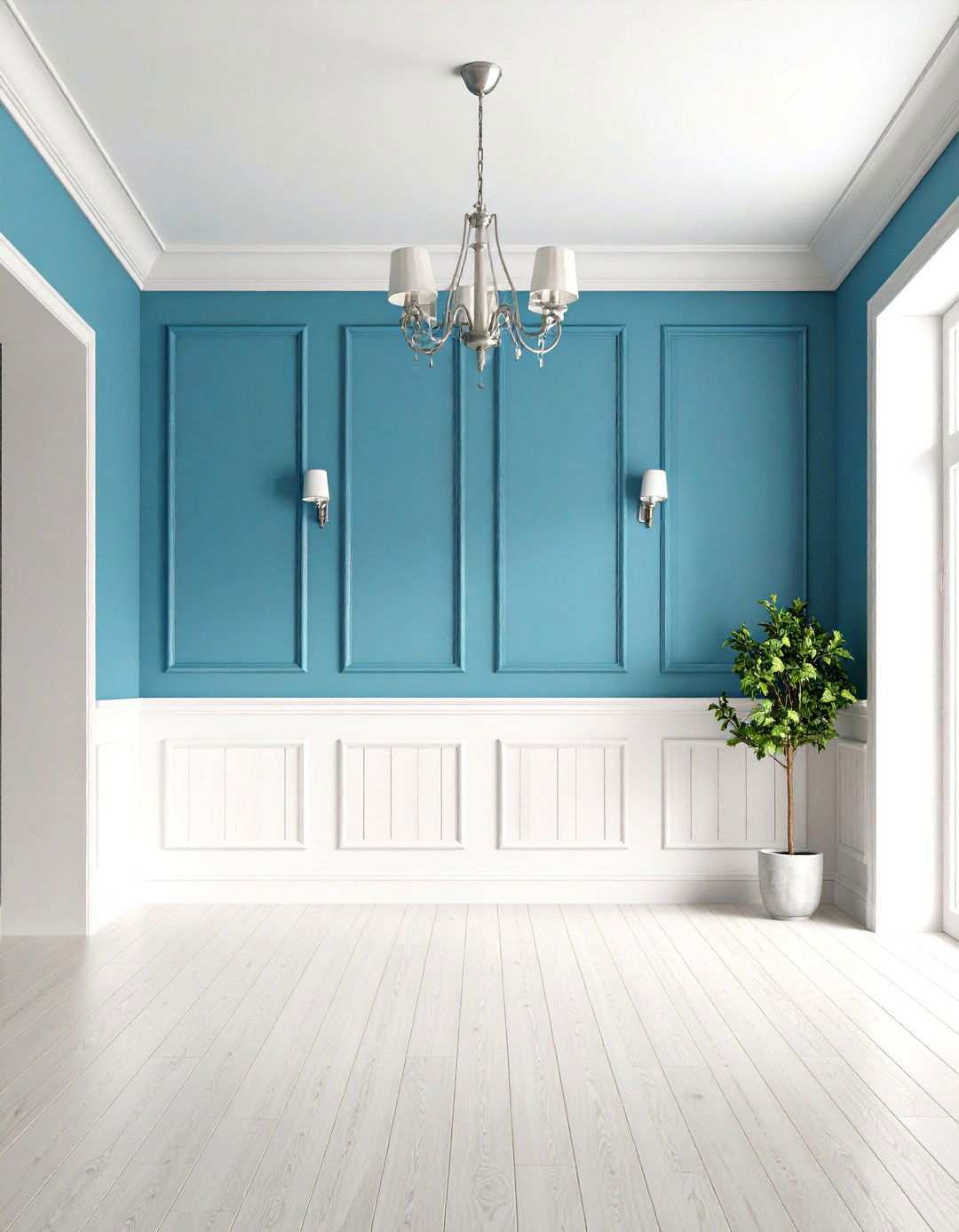
Revamp your entryway with the sophistication of wainscoting, an enduring architectural feature that instantly enhances your home’s curb appeal and interior charm. This versatile design element, available in a range of styles, provides both visual appeal and practical protection for high-traffic areas. From rustic, textured surfaces to sleek, modern profiles, wainscoting offers endless possibilities for customizing the look to match your unique aesthetic. By selecting the perfect wainscoting design, you can create a sense of spaciousness, add visual interest, and establish a welcoming atmosphere that sets the tone for the rest of your home while boosting property value through timeless design.

As an Amazon Associate I earn from qualifying purchases.
2. Farmhouse Chic: Board and Batten Wainscoting
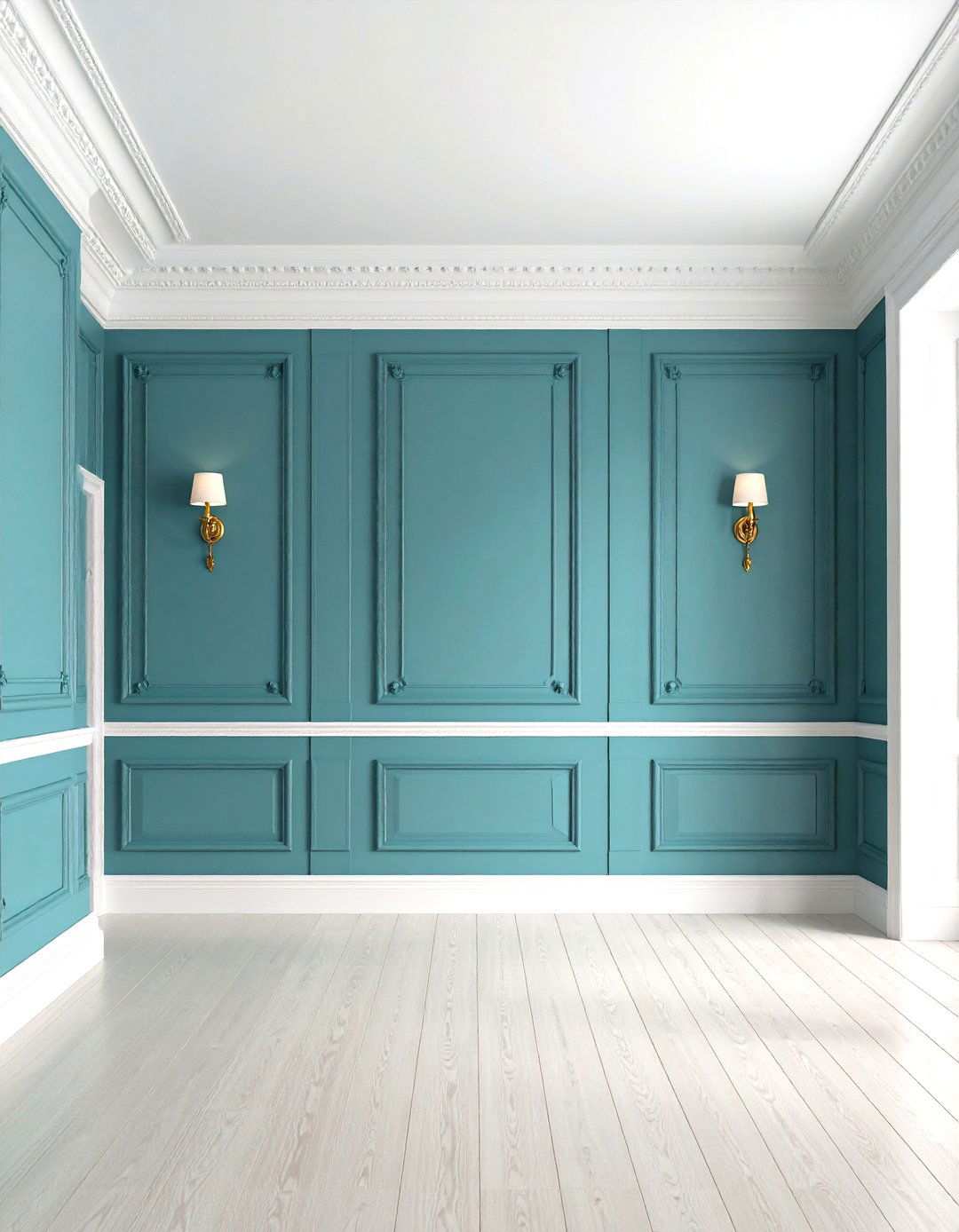
Farmhouse and transitional homeowners adore the crisp, clean look of board and batten wainscoting, which creates a striking foundation in any entryway space. This classic design features broad, vertical boards called battens above flat panel sections, typically extending 36 to 48 inches up the wall. The vertical lines cleverly draw the eye upward, making the ceiling appear taller while adding a touch of architectural sophistication to plain walls. When painted in contrasting colors between the upper and lower portions, this style works beautifully, providing an elegant, timeless appearance that complements both modern and traditional furnishings. The simple, geometric pattern also offers excellent protection against scuffs from daily foot traffic, luggage, and coat storage.
3. Infusing Warmth with Beadboard Accents
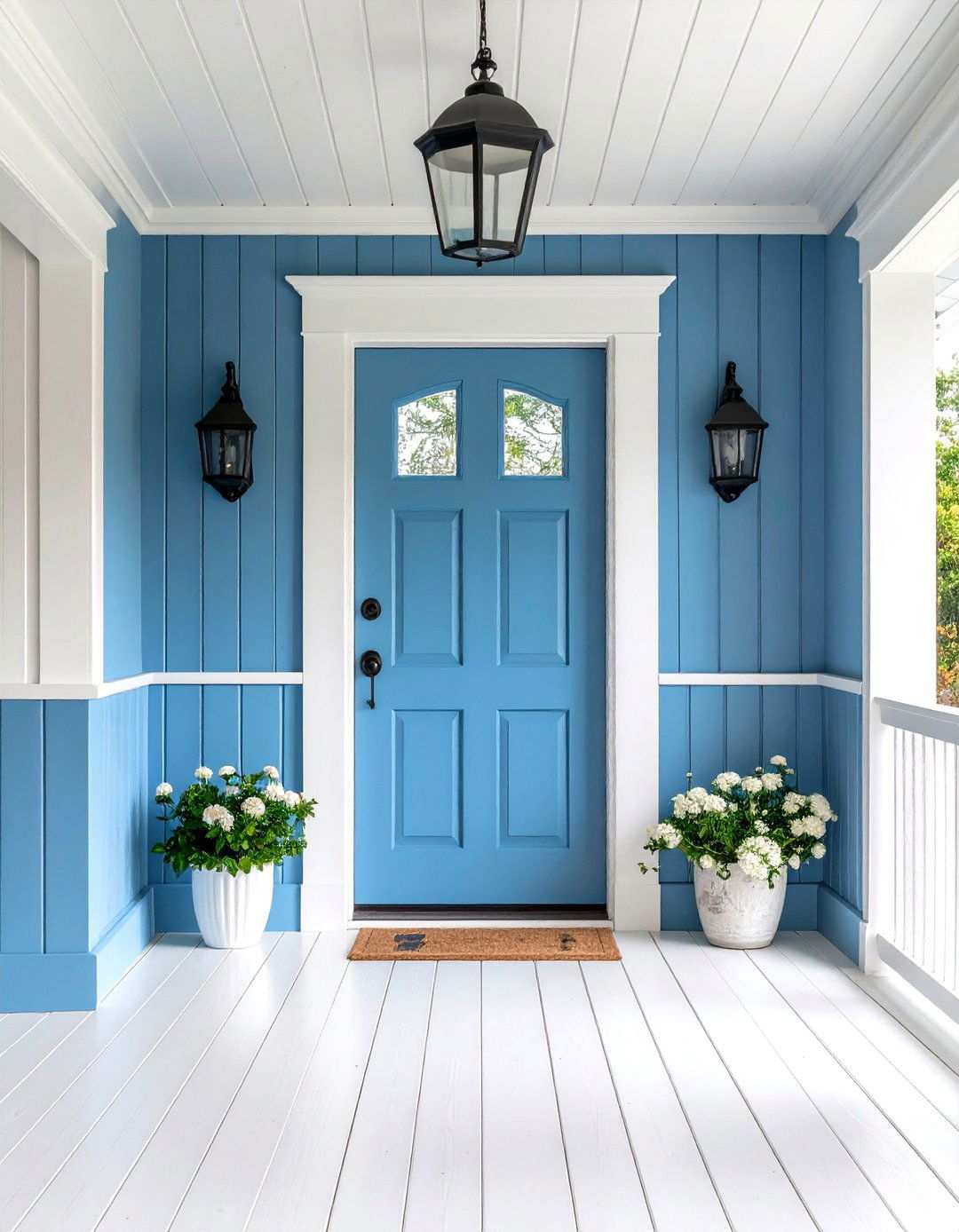
Beadboard wainscoting brings a unique blend of rustic charm and sophisticated elegance to entryway walls with its characteristic vertical groove pattern and narrow planks. Each plank features a subtle rounded detail running vertically, creating intricate texture and visual movement that adds depth to the space. This design style is particularly well-suited to coastal, farmhouse, or casual traditional homes where a relaxed atmosphere is desired. Beadboard panels come in a range of heights, from wainscoting applications to full wall treatments, making them versatile for different ceiling heights and design preferences. The narrow vertical lines help to create the illusion of a wider entryway, while the tactile surface adds a touch of character and warmth. When painted in soft whites, pale blues, or warm creams, beadboard creates a welcoming atmosphere that immediately puts guests at ease.
4. Contemporary Style with Shiplap Accents
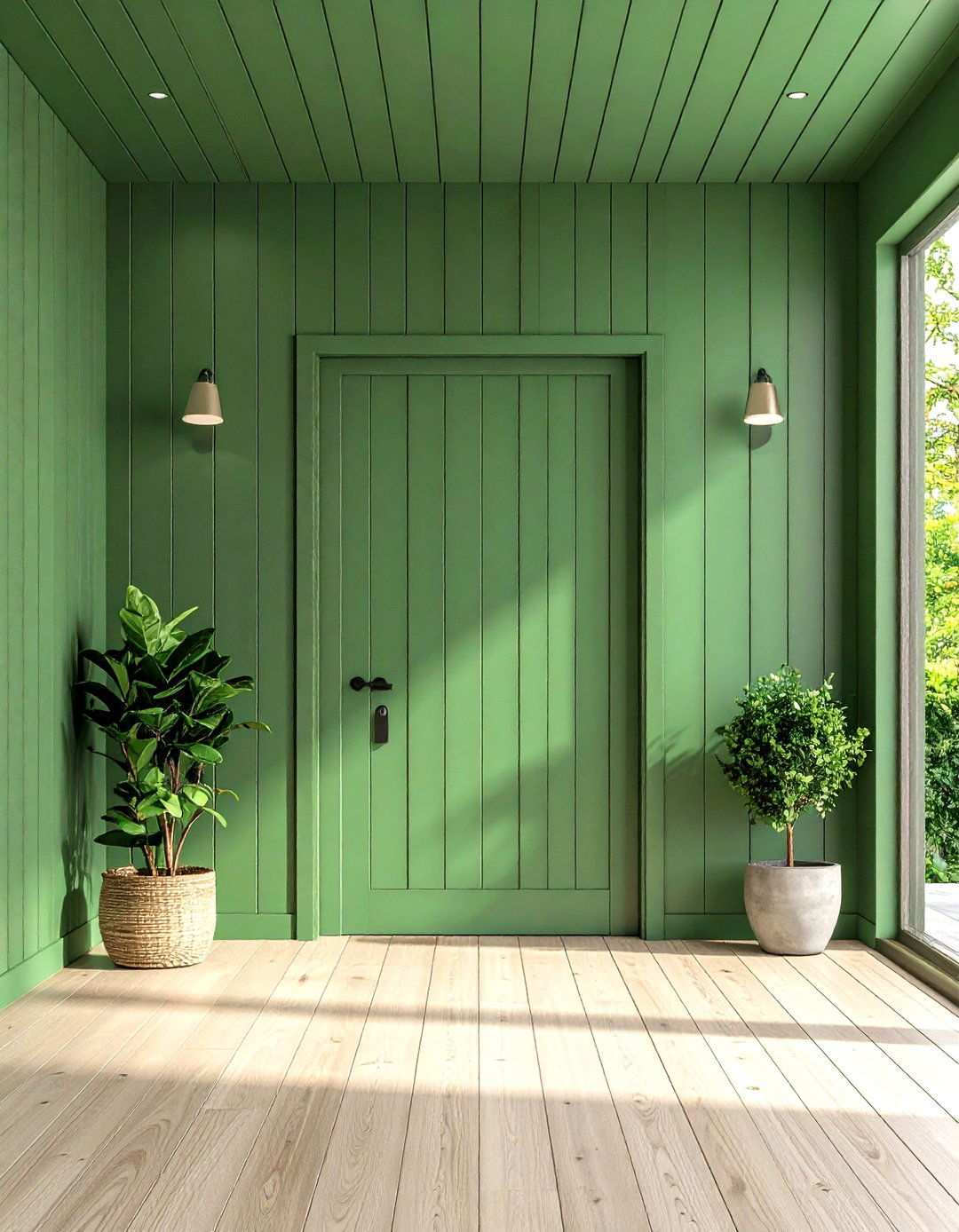
Shiplap wainscoting offers a modern and sleek alternative to traditional wainscoting, with its distinctive horizontal plank installation and subtle shadow gaps. Unlike its vertical counterpart, shiplap runs horizontally across the lower portion of entryway walls, creating clean lines that complement modern and transitional design styles. The boards overlap slightly, creating characteristic shadow lines that add depth and visual interest without overwhelming smaller spaces. This treatment works beautifully when extended to chair rail height or even full wall applications, adding a touch of sophistication to the space. Shiplap can be painted in bold accent colors to create dramatic contrast or kept neutral for versatility. The horizontal orientation makes entryways appear wider, while providing durable protection against everyday wear and tear from bags, umbrellas, and general household traffic.
5. Geometric Elegance with Picture Frame Molding
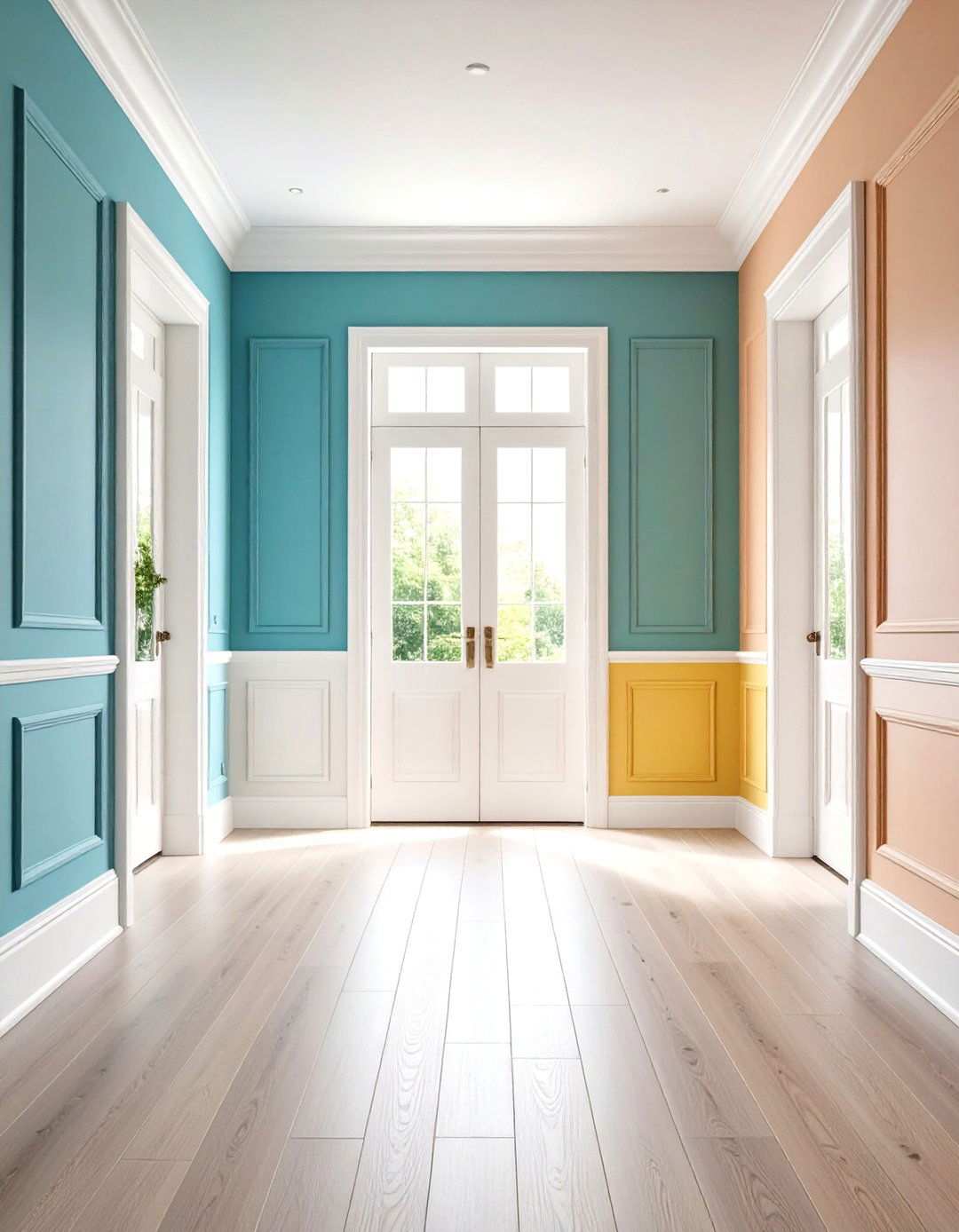
Picture frame molding wainscoting creates sophisticated rectangular frames on entryway walls using simple trim pieces arranged in geometric patterns. This design offers exceptional versatility, allowing you to customize frame sizes and spacing to suit your specific wall dimensions and aesthetic preferences. The rectangular frames can be painted to match the wall color for subtle texture or contrasted for dramatic impact, adding a touch of personality to the space. This treatment works beautifully in formal entryways, traditional homes, and spaces where you want architectural interest without overwhelming other design elements. Picture frame molding is also a budget-friendly and relatively easy to install option, making it accessible to DIY enthusiasts who want to add a touch of sophistication to their entryway. The clean geometric lines complement both antique and contemporary furnishings while adding visual structure to otherwise plain walls.
6. Harmonious Minimalism
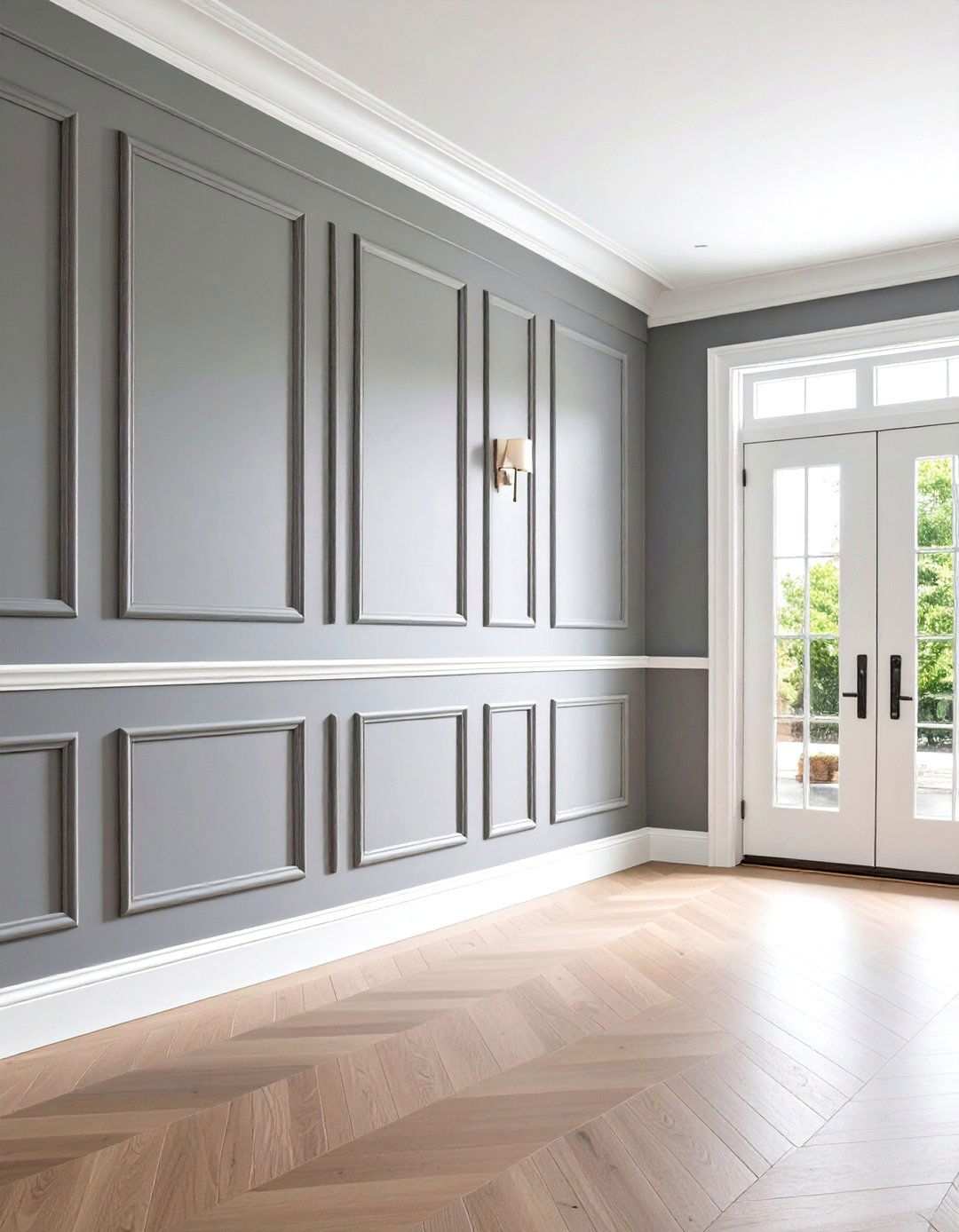
For a clean and modern aesthetic, flat panel wainscoting is an ideal choice for contemporary and modern entryway designs. This style boasts smooth, unadorned panels within a simple frame system, creating crisp lines devoid of raised details found in traditional styles. Its understated approach allows other design elements like lighting, artwork, or furniture to take center stage while still providing architectural interest and wall protection. When painted in monochromatic color schemes or bold accent hues that complement your overall design palette, flat panels work exceptionally well in urban lofts, mid-century modern homes, or transitional spaces where a subtle, sophisticated look is preferred over ornate detailing.
7. Artistic Contrast
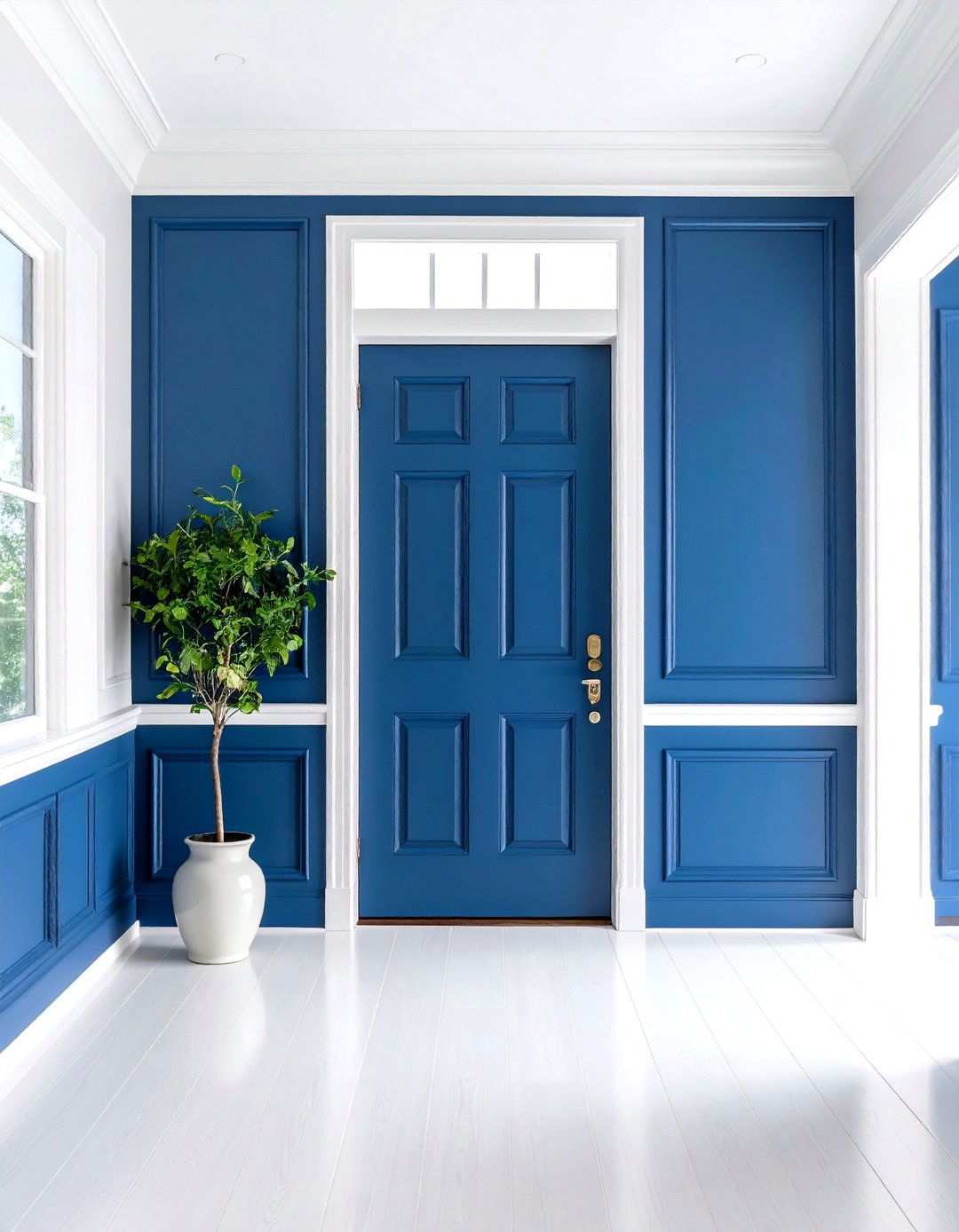
Two-tone wainscoting creates a striking visual effect by contrasting the lower panel section with the upper wall portion using different paint colors. This approach allows you to introduce bold hues or sophisticated neutrals while maintaining balance in your entryway design. Popular combinations include pairing navy blue wainscoting with crisp white upper walls, sage green panels with creamy white tops, or dramatic black lower sections with bright white above. The horizontal division created by contrasting colors can make your entryway appear wider while adding personality and style. Chair rail molding serves as a seamless transition between colors, adding a polished finish to your design. This versatile technique works beautifully with any wainscoting style and allows you to experiment with trending colors while keeping the overall design grounded and sophisticated.
8. Vertical Elegance
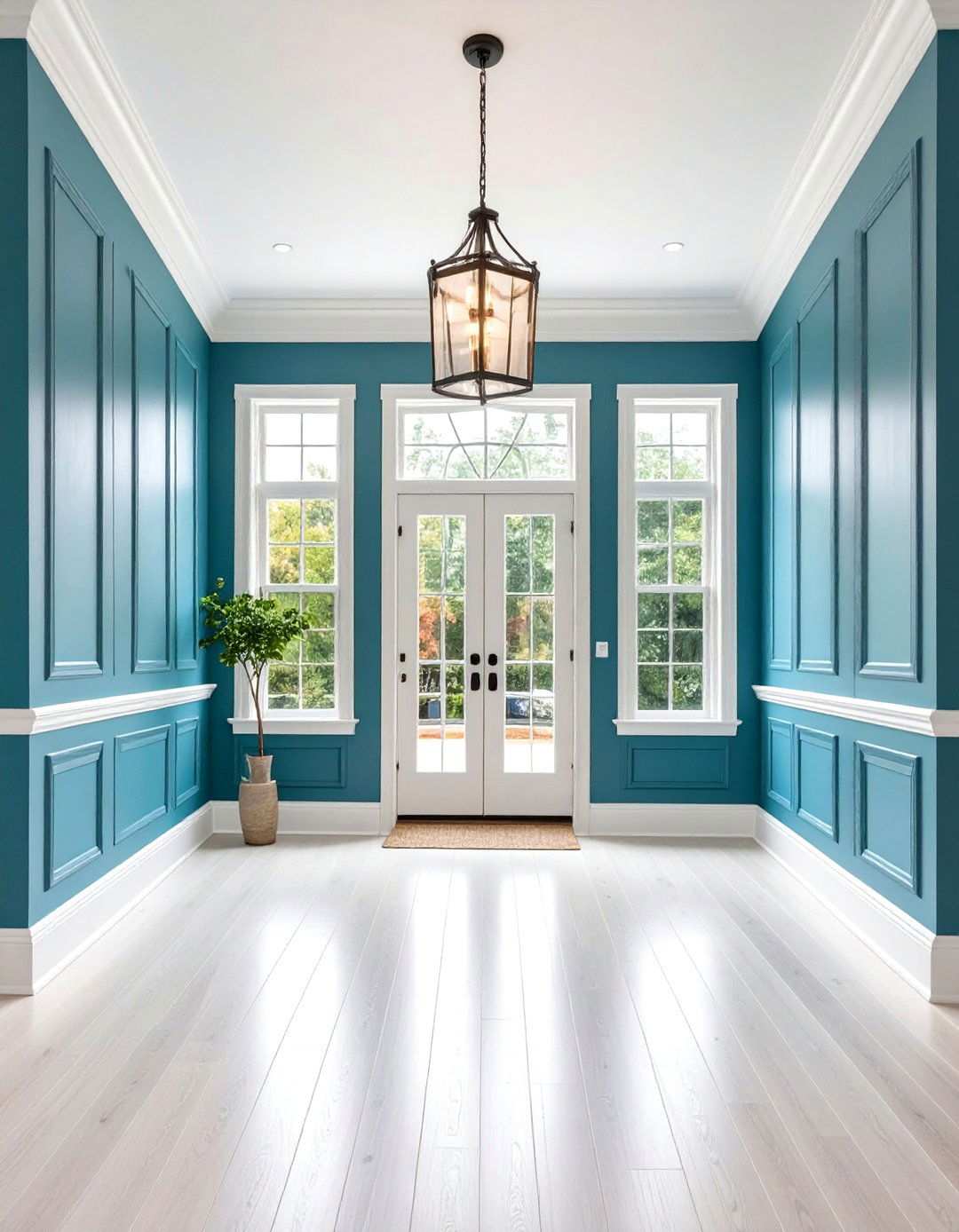
Full height wainscoting extends from floor to ceiling, creating maximum architectural impact in your entryway space. This dramatic approach works particularly well in homes with high ceilings where traditional wainscoting might appear inconspicuous. Board and batten, raised panels, or picture frame molding can all be adapted for full wall coverage, creating stunning visual interest throughout the vertical space. Full height treatment eliminates the need for chair rail molding while providing complete wall protection and sophisticated texture. This approach works beautifully in formal entryways, grand foyers, or spaces where you want to make a bold architectural statement. The continuous pattern draws the eye upward, emphasizing ceiling height while creating a cohesive, elegant backdrop for furniture and decorative elements.
9. Elegant Integration of Curved Staircases
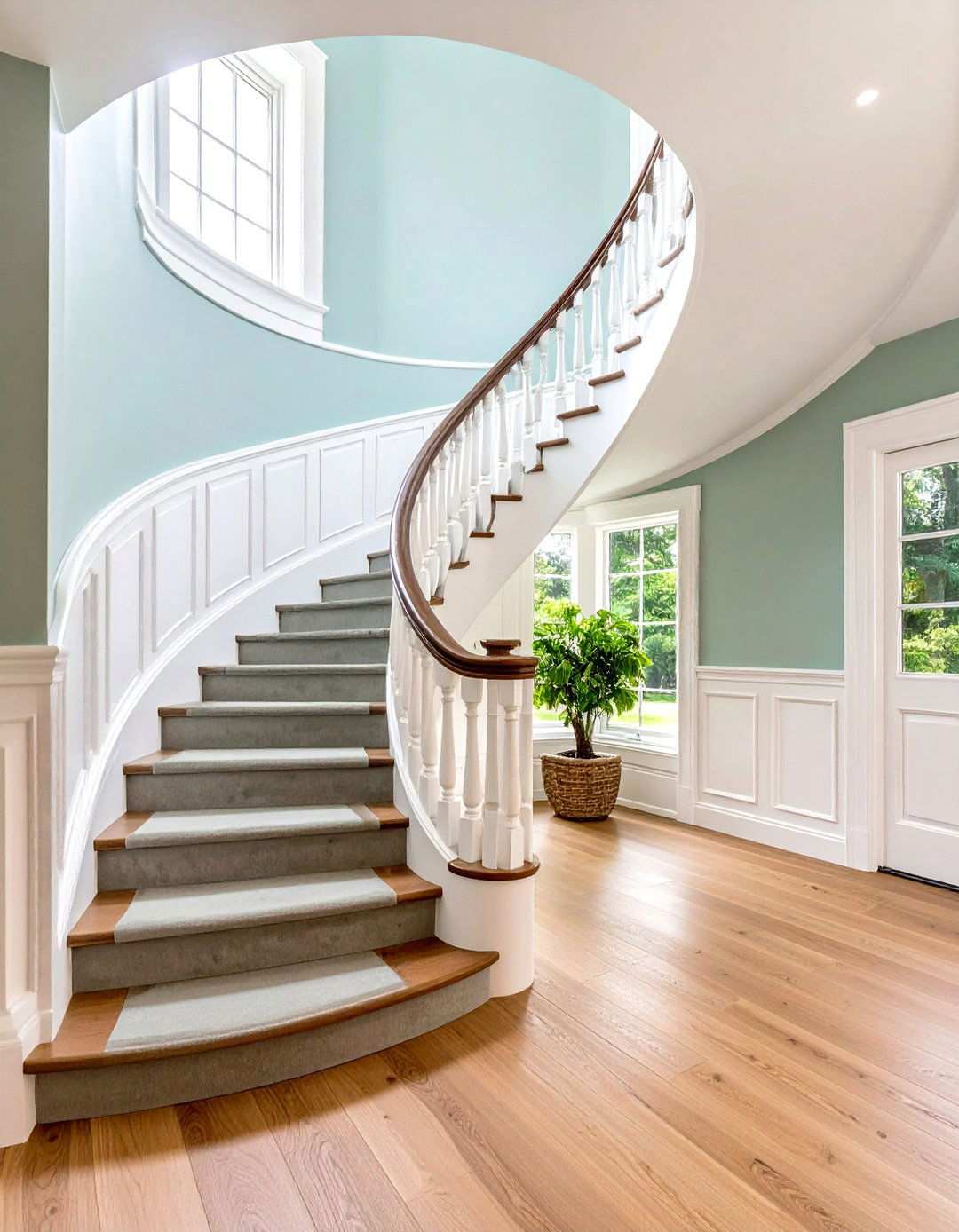
Achieving harmony between curved staircases and wainscoting requires meticulous planning and precision installation to create a seamless visual experience in entryway spaces. By extending the wainscoting treatment from flat walls onto curved surfaces, this sophisticated approach fosters a continuous flow of visual interest throughout the area. Each panel must be meticulously measured and cut to accommodate the varying angles, while maintaining consistent spacing and proportions to preserve the integrity of the design. This treatment is particularly versatile, as it works beautifully with a range of raised panel styles, including those adapted for curved applications. Due to the intricate measurements and cutting requirements, expert installation is usually recommended for curved wainscoting, yielding a bespoke, luxurious appearance that elevates the architectural beauty of curved staircases.
10. Harmonious Fusion of Function and Form
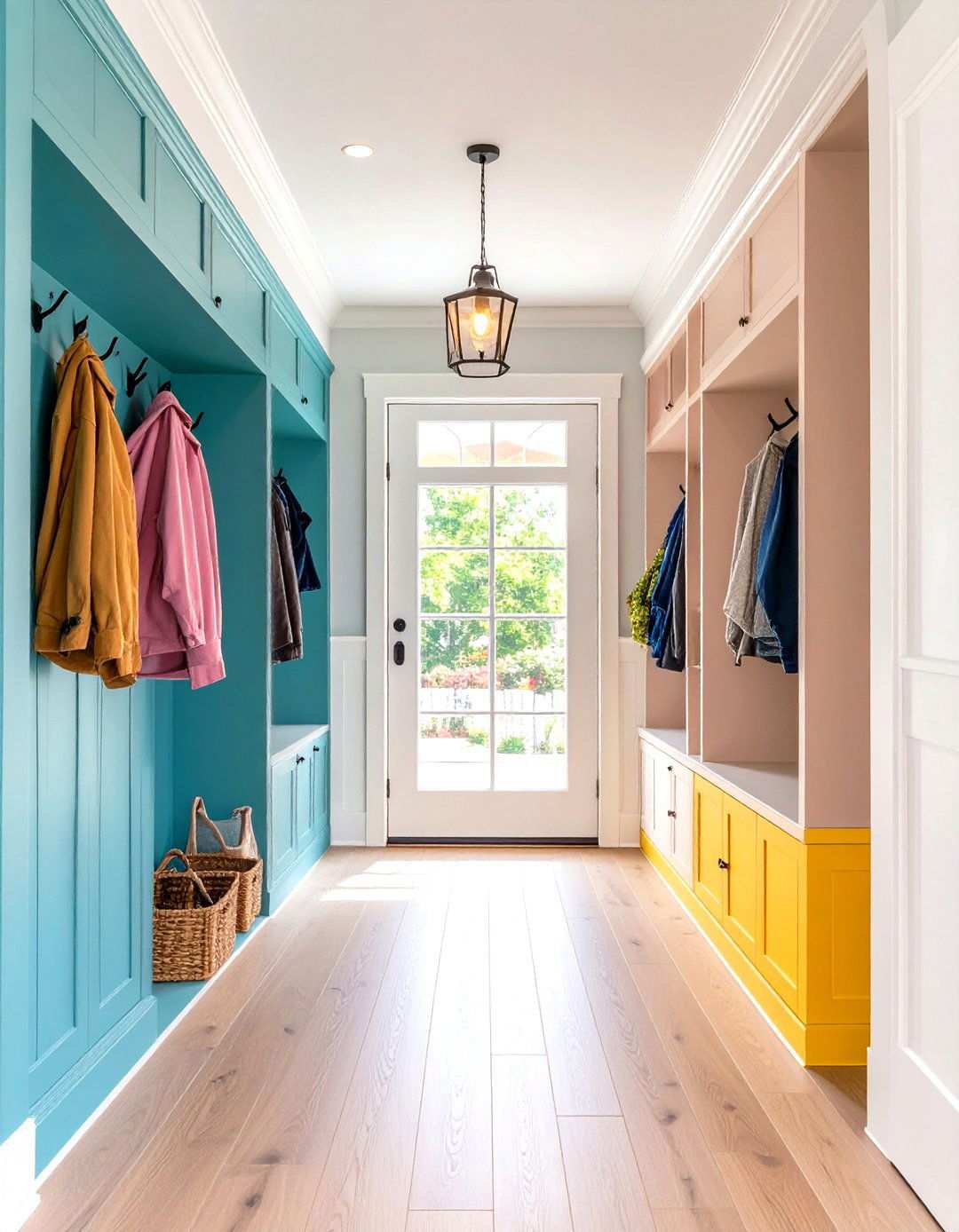
Incorporating built-in storage into wainscoting design maximizes both aesthetic appeal and practicality in entryway spaces. By seamlessly integrating cubbies, hooks, or shelving directly into the wainscoting, homeowners can create efficient storage solutions for everyday items, coats, bags, and shoes. Board and batten styles are well-suited for this application, as the battens extending upward create natural divisions for hooks or small shelves. To enhance the overall look, storage elements can be painted to match the wainscoting for a cohesive appearance or contrasted for added visual interest. This approach is particularly valuable in smaller entryways where every inch counts, as it provides organized storage while maintaining the elegance of traditional wainscoting. The result is a functional mudroom aesthetic that keeps entryways tidy and inviting.
11. Dramatic Use of Dark Wainscoting
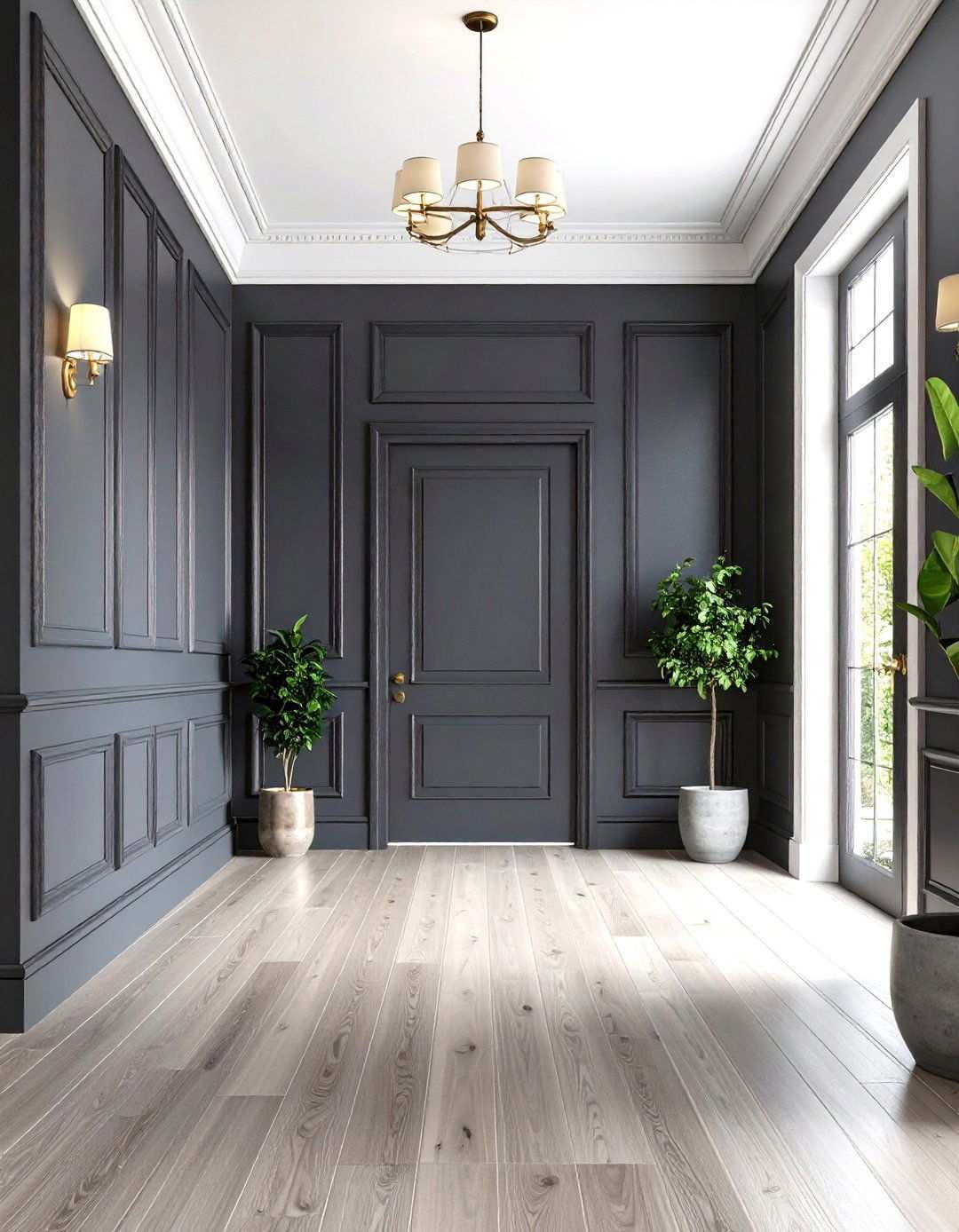
Employing dark moody wainscoting in entryway spaces creates a sophisticated ambiance using deep, rich colors like charcoal gray, navy blue, or forest green. This bold approach works beautifully when juxtaposed with lighter upper walls and crisp white trim, producing striking visual balance. Dark wainscoting adds depth and intimacy to larger entryways while making a powerful design statement. The rich colors provide an elegant backdrop for metallic accents, mirrors, and lighting fixtures while concealing scuffs and marks more effectively than lighter tones. This treatment is particularly well-suited for traditional, transitional, and modern farmhouse styles where homeowners want to create an immediate visual impact. The dramatic contrast between dark panels and light upper walls draws attention to architectural details while creating a lasting first impression.
12. Weathered Elegance with Whitewash
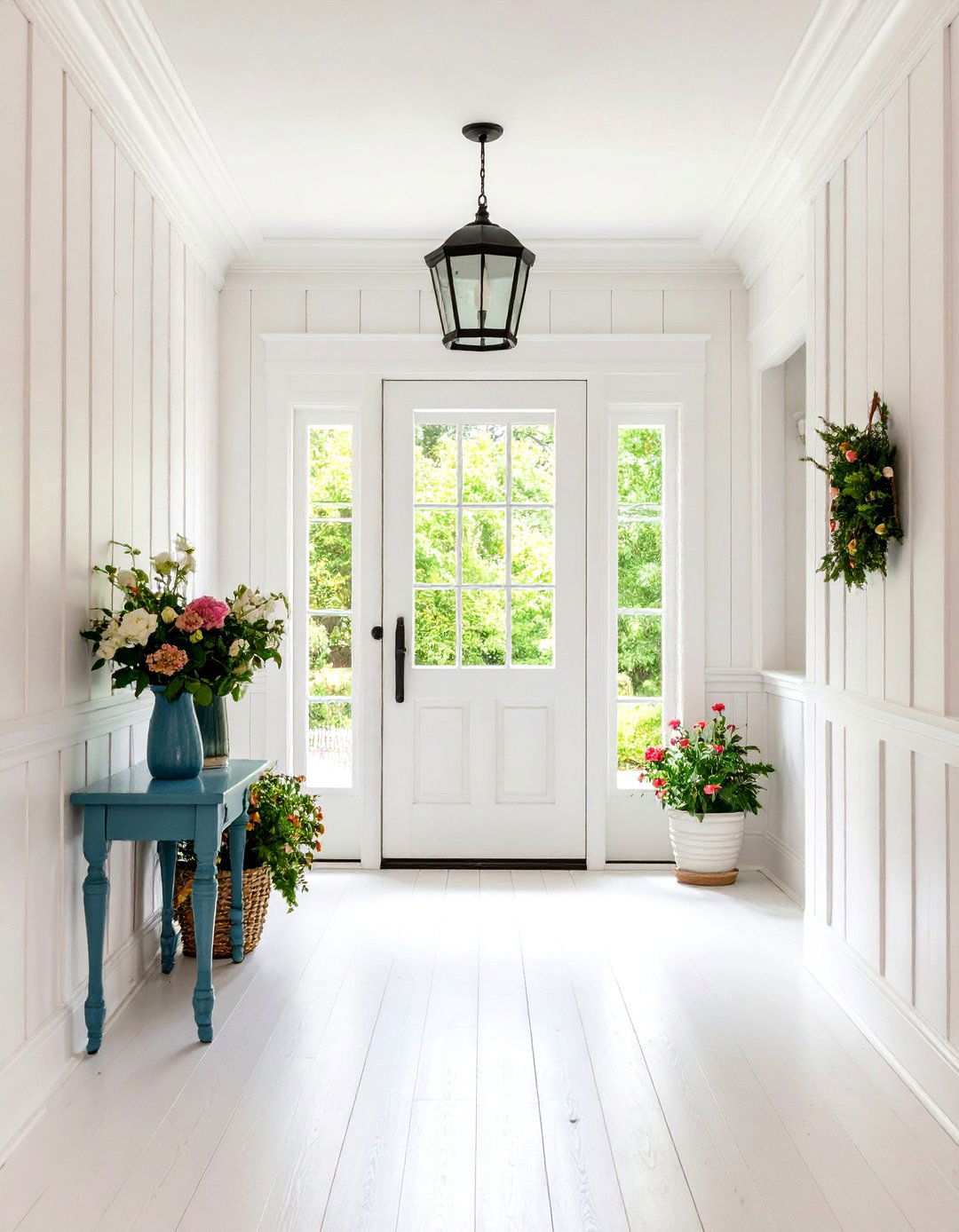
Elevate your home’s entryway with a whitewashed rustic wainscoting treatment, blending the beauty of weathered wood with a hint of brightness for a carefree, coastal-inspired aesthetic. This distinctive technique involves applying a layer of white paint over the natural wood grain, then selectively removing it to reveal the underlying texture. The result is a captivating visual depth that pairs perfectly with farmhouse, cottage, or casual traditional entryways. Board and batten or beadboard styles are particularly well-suited to whitewashed finishes, highlighting the natural wood texture while maintaining a crisp, clean appearance. This versatile treatment not only adds warmth and personality to entryway spaces but also boasts excellent durability and low-maintenance upkeep. The subtle variations in the finish create a subtle visual interest that complements other design elements in your space without overpowering them.
13. Bold Statements through Geometric Patterns
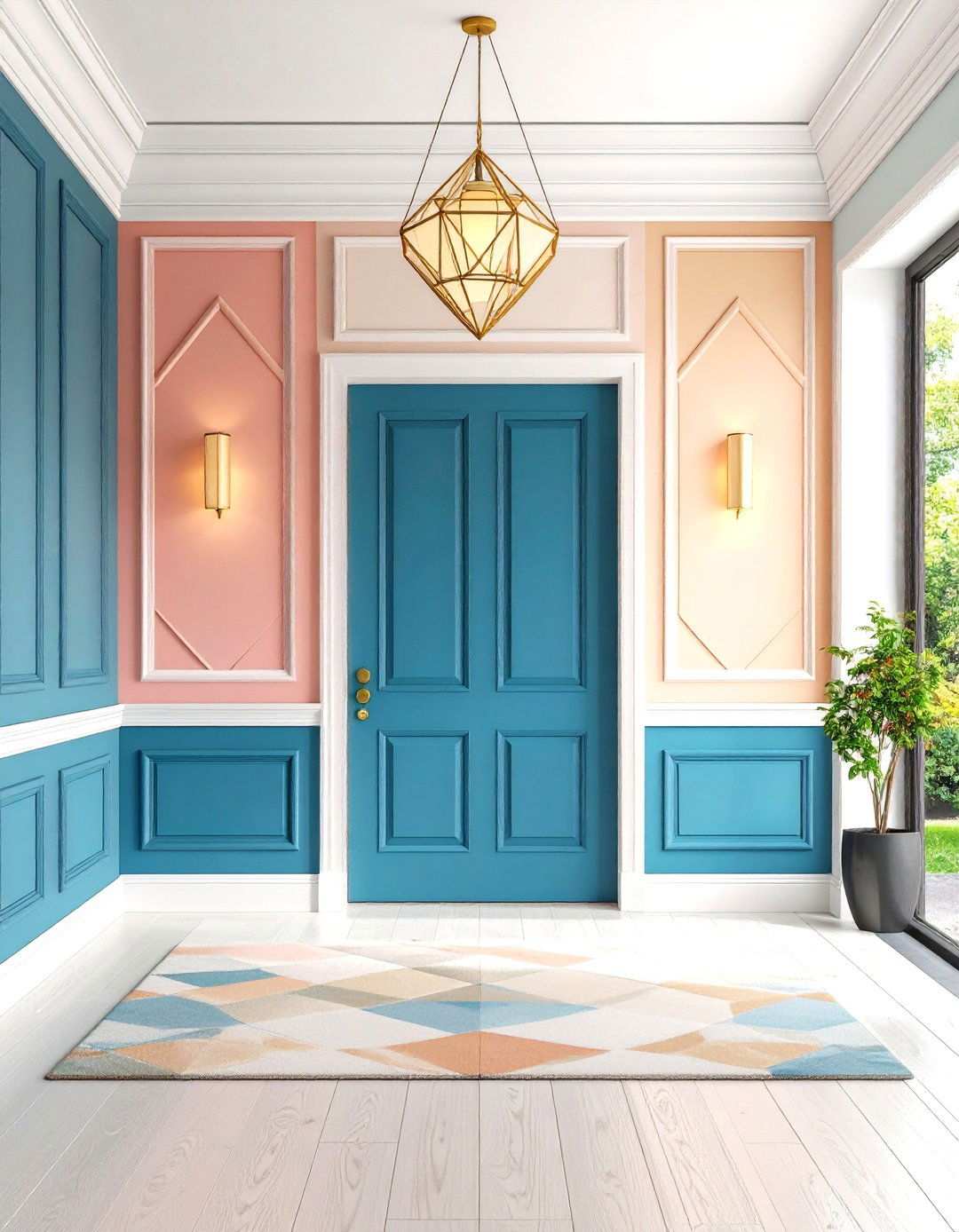
Geometric pattern wainscoting breaks free from conventional rectangular panels to create an eye-catching visual spectacle using diamonds, hexagons, or custom shapes. This forward-thinking approach works beautifully in modern and transitional entryways where you want to make a bold artistic statement. The intricate patterns can be crafted using picture frame molding techniques or custom millwork, depending on the complexity of your chosen design. Geometric wainscoting looks particularly striking when painted in monochromatic schemes that emphasize shape over color contrast. This sophisticated treatment creates a striking focal point that harmonizes with modern furniture and lighting while adding architectural interest. The unique patterns can be scaled to suit different wall sizes and proportions, making each installation a one-of-a-kind masterpiece that leaves a lasting impression on guests entering your home.
14. Layered Rhythm with Varying Wainscoting Heights
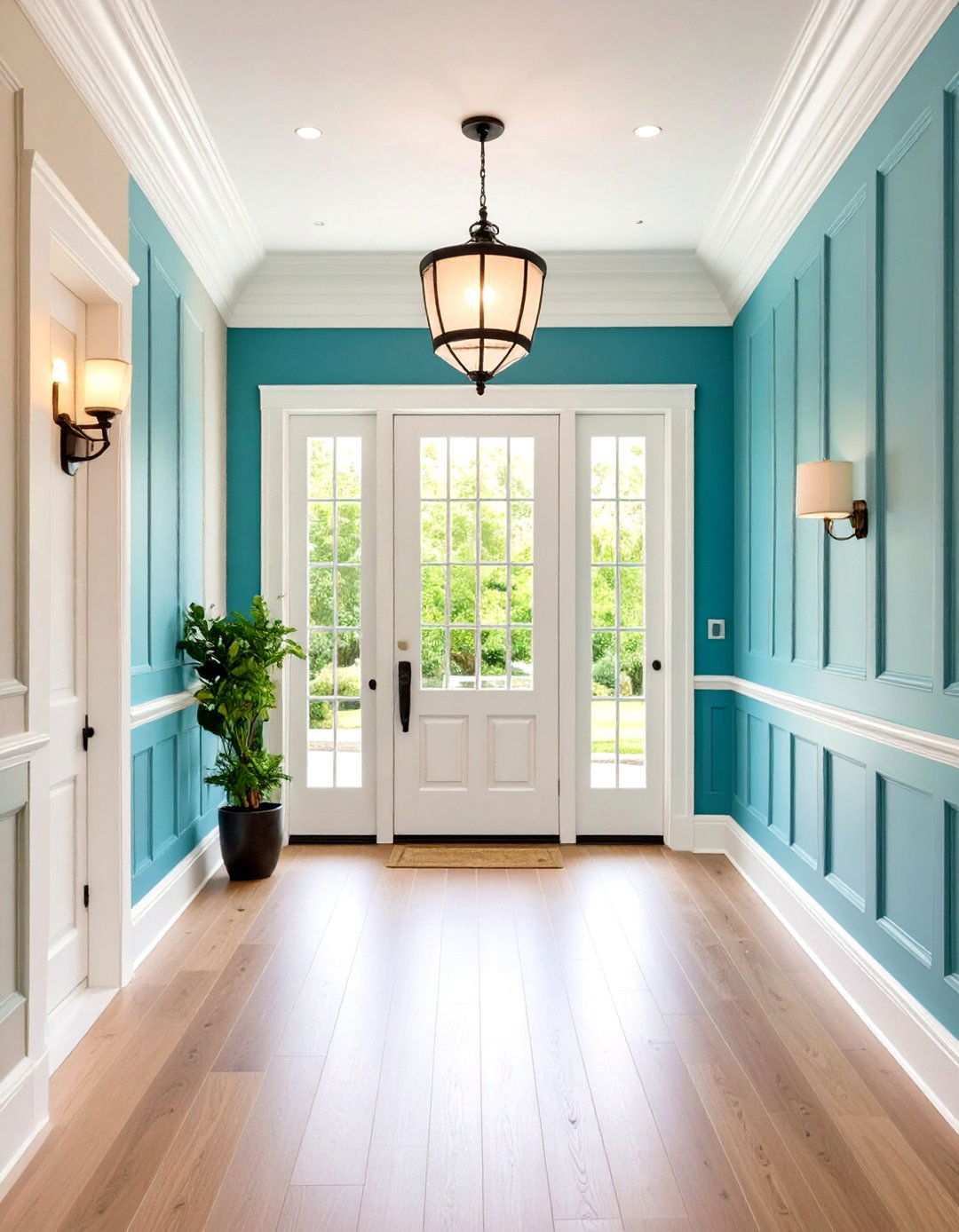
Wainscoting height variations create a dynamic visual narrative by alternating between different panel heights within the same entryway space. This versatile technique might combine traditional chair rail height panels with taller sections or create a stepped effect that follows architectural elements like windows or doors. The varying heights add kinetic movement to otherwise static wall surfaces while maintaining the protective and aesthetic benefits of wainscoting. This approach works particularly well in entryways with architectural challenges like off-center windows or doors, allowing you to work in harmony with existing elements rather than against them. Board and batten or picture frame molding styles adapt well to height variations, creating custom solutions that enhance your specific space while maintaining design cohesion throughout the area.
15. Elevating Entryways with Metallic Accents
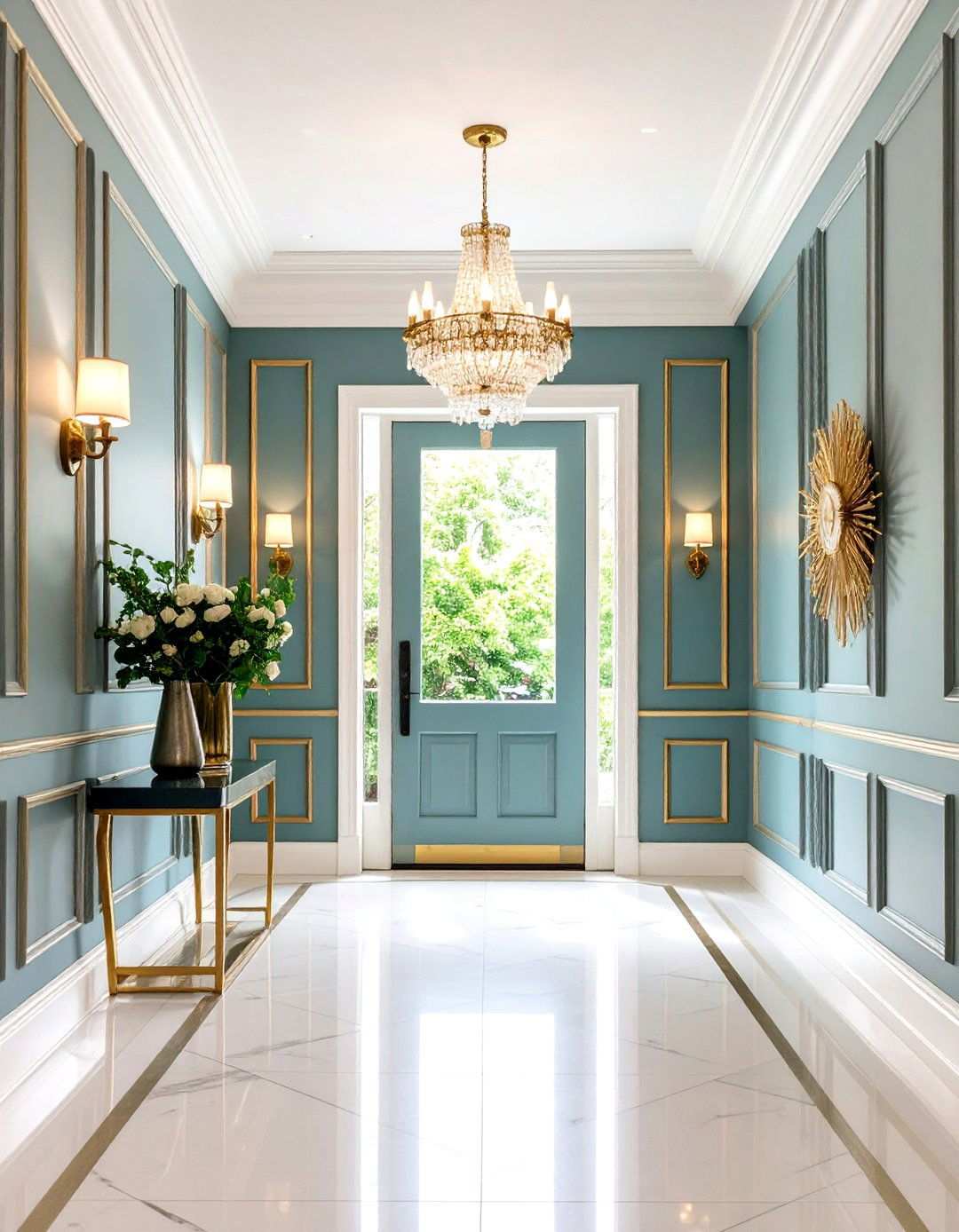
Bringing a touch of sophistication to your entryway involves incorporating metallic accents into wainscoting designs. This can be achieved by incorporating brass, bronze, or steel elements into the design. The possibilities include metal inlays within panel frames, decorative metal strips as chair rail alternatives, or hardware elements that perfectly complement the overall aesthetic. The metallic accents not only add a luxurious feel but also introduce visual interest while seamlessly integrating with both light and dark paint colors. This unique treatment works exceptionally well in modern and transitional entryways where a blend of traditional wainscoting and contemporary design elements is desired. The metal accents cleverly catch and reflect light, giving your entryway a custom, high-end appearance that’s sure to impress. For complex metallic installations, professional installation is often recommended, but the dramatic results justify the investment in creating a truly distinctive entryway feature.
16. Adding Texture and Depth with Panel Surfaces
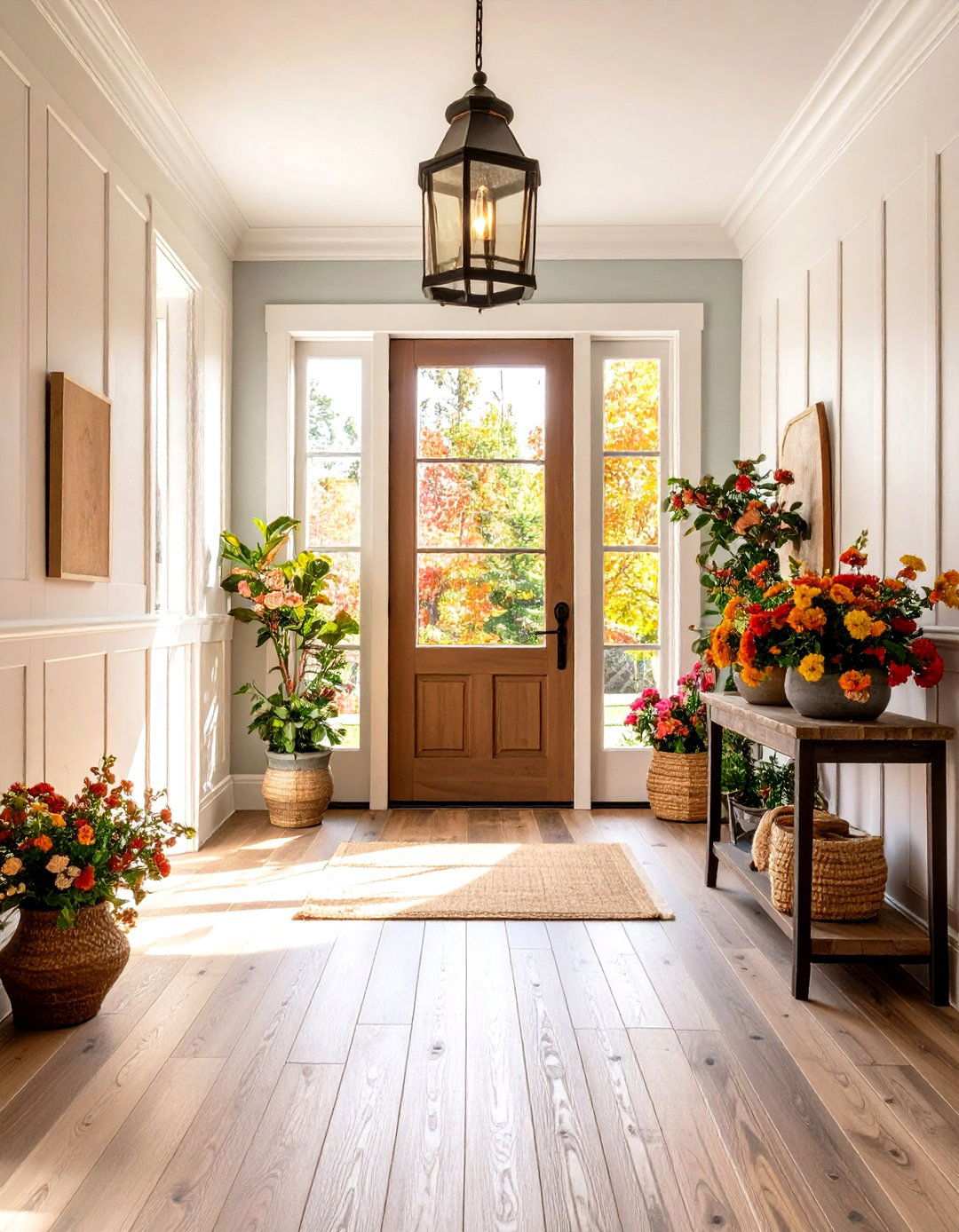
Elevating your wainscoting design involves incorporating textured panel surfaces that add a tactile element to the space. Techniques like tongue and groove boards, reclaimed wood, or specialty millwork can create three-dimensional patterns that catch the light in different ways throughout the day. This goes beyond the smooth painted finishes to introduce natural variations that add depth and character to your entryway. Beadboard, for instance, provides a subtle texture through its grooved pattern, while reclaimed wood offers authentic, weathered character that’s sure to captivate. More dramatic options might include panels with carved details or applied dimensional elements that create shadow and depth, adding a level of sophistication to your entryway. Textured surfaces are particularly well-suited to rustic, farmhouse, and traditional entryways where authentic character is highly valued. The varied surfaces not only hide minor imperfections but also add personality and warmth that smooth panels cannot achieve. This treatment creates an engaging visual and tactile experience for guests entering your home.
17. Mastering Corner Detail Treatment
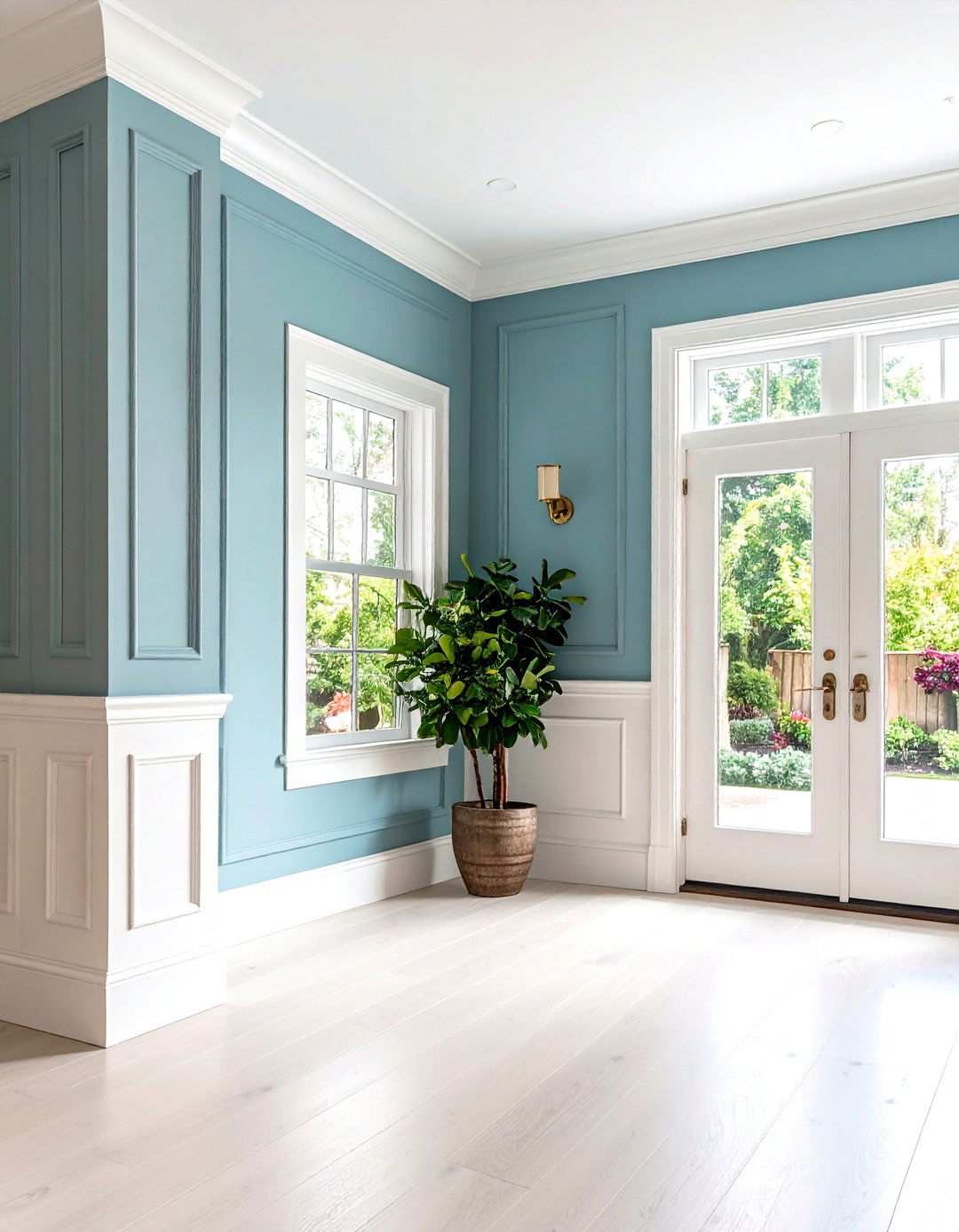
Corner detail treatment is a crucial aspect of wainscoting installation, as it addresses the intersection points where wainscoting meets corners, windows, doors, and other architectural elements. Attention to detail in corner detailing separates amateur installations from professional-looking results. Inside corners might feature coped joints or decorative corner blocks, while outside corners require precise mitering for a seamless appearance. Window and door casings need special consideration to maintain consistent reveal lines and proportional relationships. Professional corner treatment might include decorative elements like rosettes, corner blocks, or custom millwork that enhances the overall design. By paying attention to these details, you can create a polished, finished appearance that elevates the entire wainscoting installation, ensuring long-lasting durability and professional quality throughout your entryway space.
18. Crafted Elegance Through Hybrid Materials
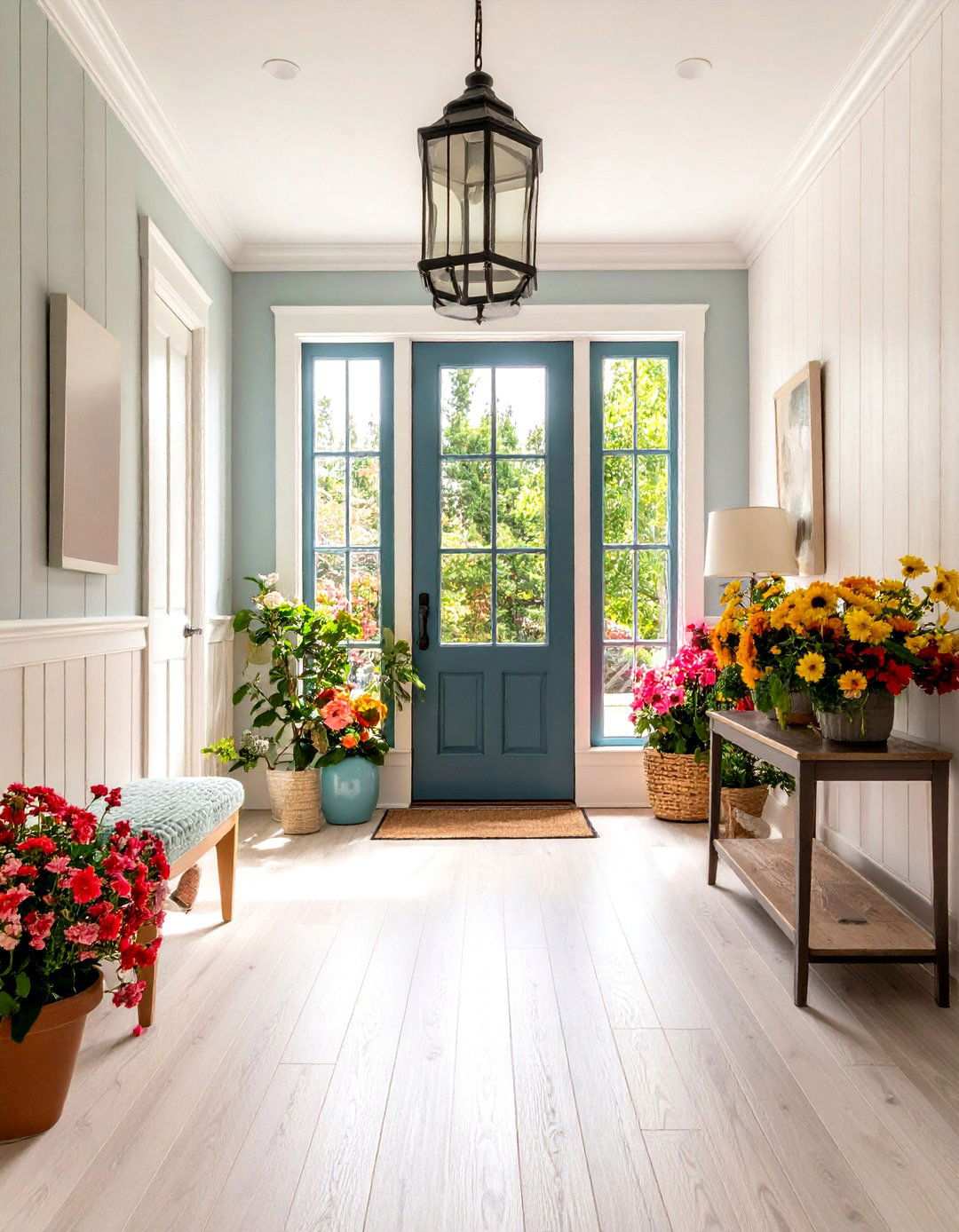
To create a distinctive entryway space, homeowners can opt for hybrid wainscoting designs that blend different styles or materials seamlessly. This innovative approach can combine board and batten with beadboard sections, raised panels with flat panels, or wood wainscoting with tile or stone elements, producing a one-of-a-kind visual effect. The crucial factor in achieving harmonious hybrid designs lies in striking a balance between proportion, color, and installation quality while deliberately introducing varied textures and patterns. By doing so, you can create visually appealing contrasts that not only add personality to the space but also solve practical issues associated with varying wall conditions. When executed thoughtfully, hybrid materials can yield sophisticated, designer-level results that beautifully reflect the homeowner’s taste while maintaining the protective and aesthetic benefits of traditional wainscoting throughout the entryway space.
19. Illuminating Design Elements
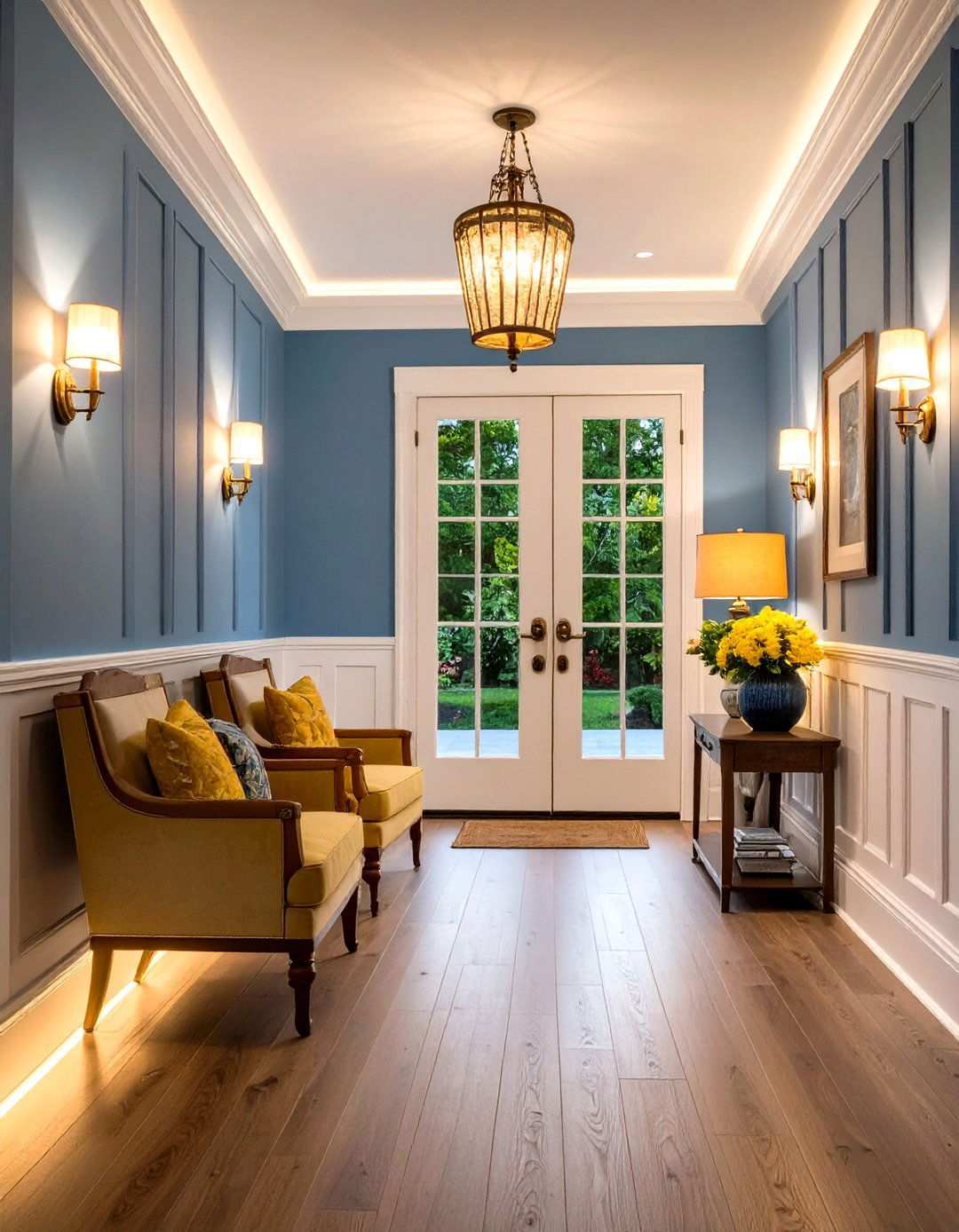
Integrating lighting into wainscoting designs can elevate the overall ambiance of your entryway space, creating a warm and inviting atmosphere that welcomes guests. This can be achieved through the strategic placement of LED strips, recessed fixtures, or decorative sconces that complement the panel system. By concealing LED strips behind chair rail molding, you can create a soft, ambient uplighting effect, while recessed fixtures within panels provide task lighting for mirrors or artwork. Wall sconces can be positioned to create a harmonious visual connection with the wainscoting’s proportions and spacing. To ensure seamless integration, careful planning during installation is essential to accommodate electrical requirements while preserving the integrity of the wainscoting design. The result is a thoughtfully illuminated entryway space that highlights architectural details while providing functional lighting for a truly modern and sophisticated environment.
20. Timeless Flexibility in Design
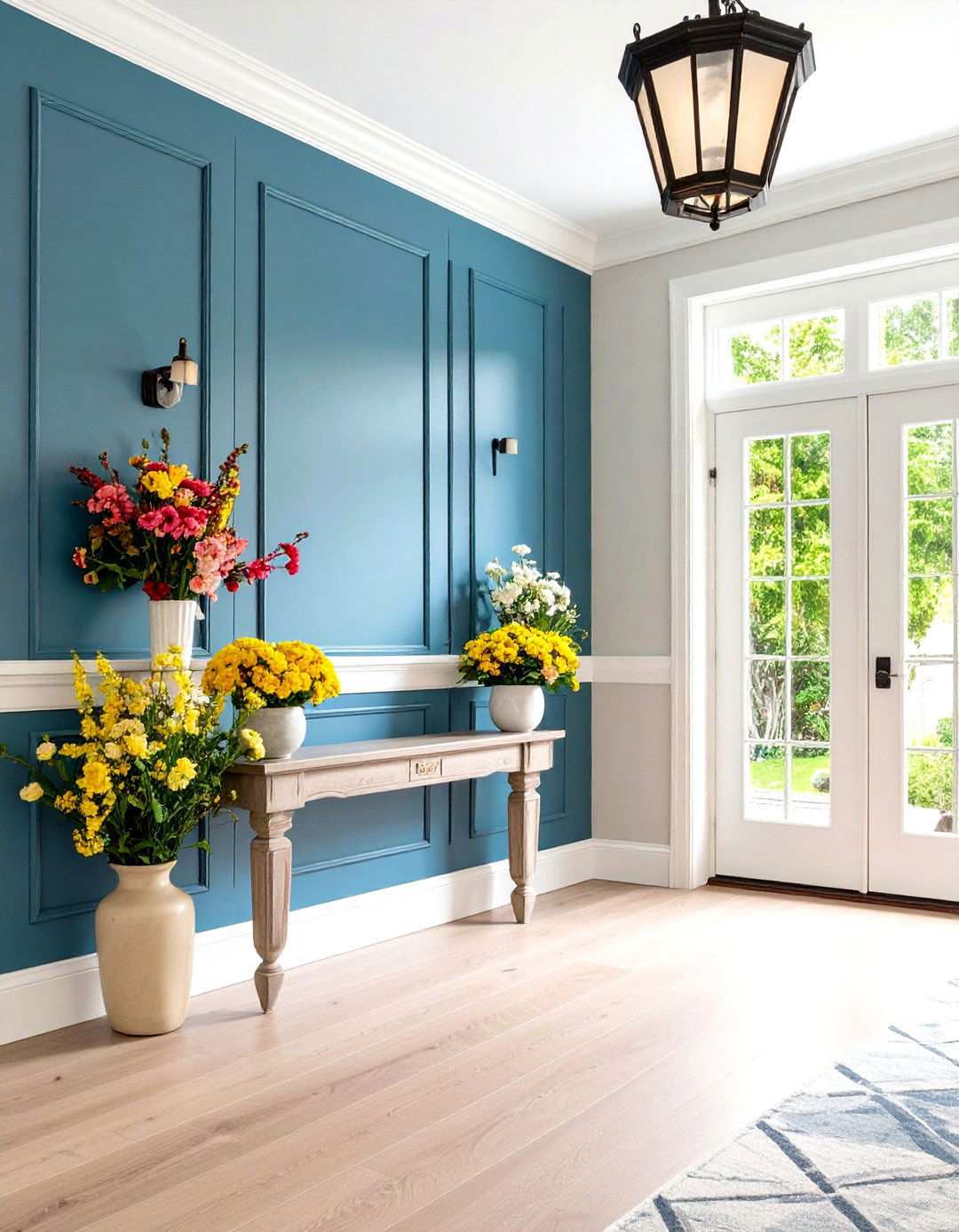
To create a versatile entryway space that adapts to changing decorative themes throughout the year, consider incorporating elements that allow your wainscoting to evolve with the seasons. This might involve picture rail systems for easily rotating artwork, integrated hooks for seasonal wreaths, or neutral color schemes that work in harmony with different seasonal accessories. By choosing a consistent, elegant backdrop in the form of wainscoting, you can create a foundation that seamlessly blends with a variety of seasonal elements, from holiday decorations to changing color palettes in textiles and accessories. This approach is particularly well-suited for families who enjoy celebrating different seasons and holidays with decorative changes. By selecting wainscoting styles and colors that complement rather than compete with seasonal elements, you can create a harmonious environment that enhances rather than limits your decorating options throughout the year while maintaining a sense of year-round sophistication and style.
21. Seamless Entryway Solutions
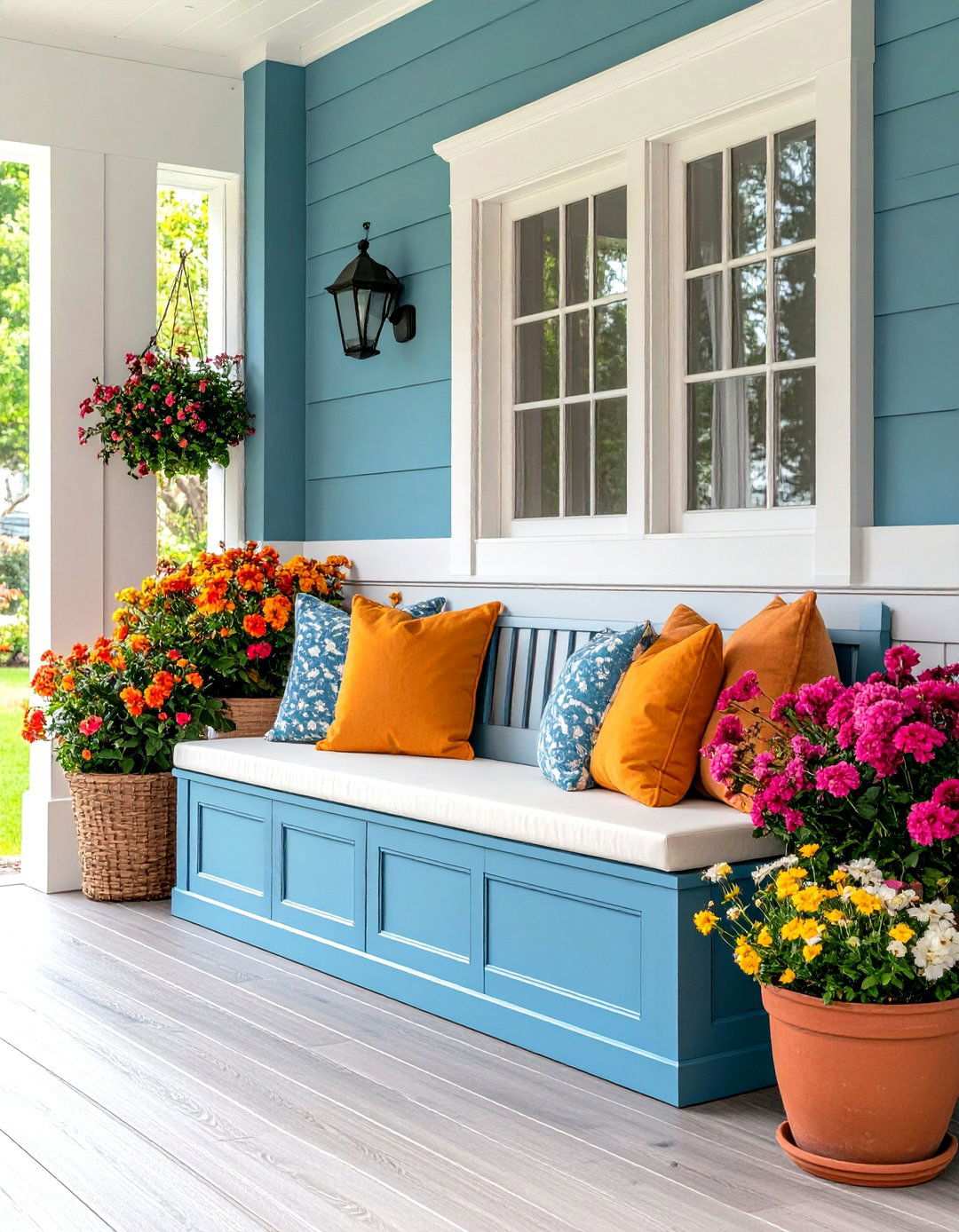
When combining wainscoting with built-in seating, the result is a functional and visually appealing entryway solution that optimizes space and provides a convenient spot for putting on shoes or setting down packages. To achieve seamless integration, the bench can be designed as an extension of the wainscoting system, mirroring panel details and proportions for a cohesive look. By aligning the bench height with the wainscoting chair rail height, visual continuity is created, while also serving practical functions. Beneath the bench seat, storage can be incorporated for shoes, umbrellas, or seasonal items, making the most of limited space. This approach works particularly well in smaller entryways, where separate furniture might feel crowded, resulting in custom solutions that enhance both form and function without sacrificing elegance.
22. Harmonious Window Integration
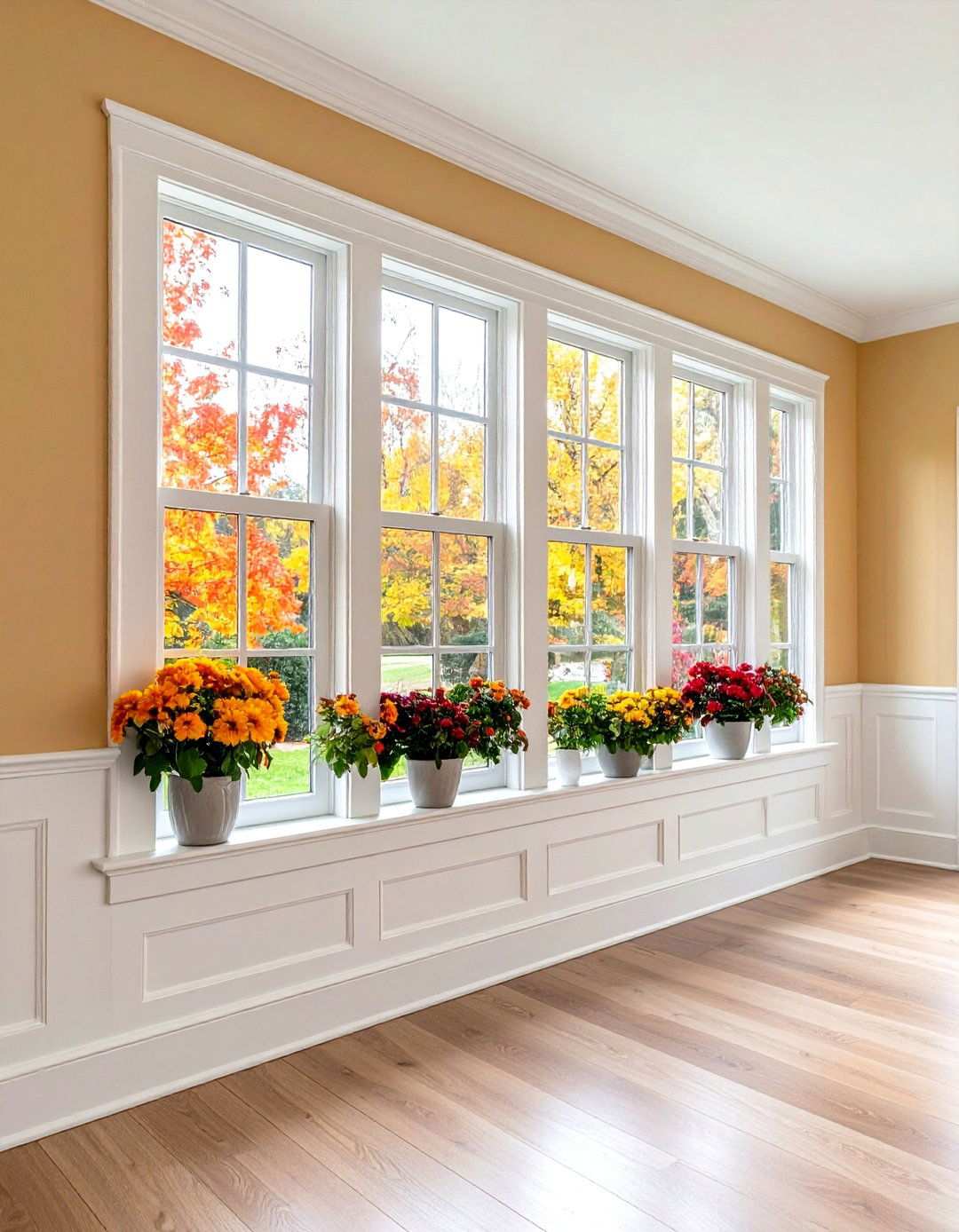
Effective wainscoting integration with existing or new window treatments in entryway spaces requires careful consideration of panel heights, molding profiles, and color choices in relation to window casings, sills, and surrounding trim. The goal is to create harmonious proportions and consistent finish quality that complements rather than competes with window elements. Attention to sight lines ensures that the wainscoting enhances rather than obscures natural light, maintaining proper scale relationships. Corner details where wainscoting meets window casings demand precise installation for a professional appearance. When necessary, custom millwork or adjusted panel sizes can be employed to accommodate specific window configurations while preserving the overall design integrity and aesthetic appeal of both the wainscoting system and window treatments throughout the entryway.
23. Artful Display and Balance
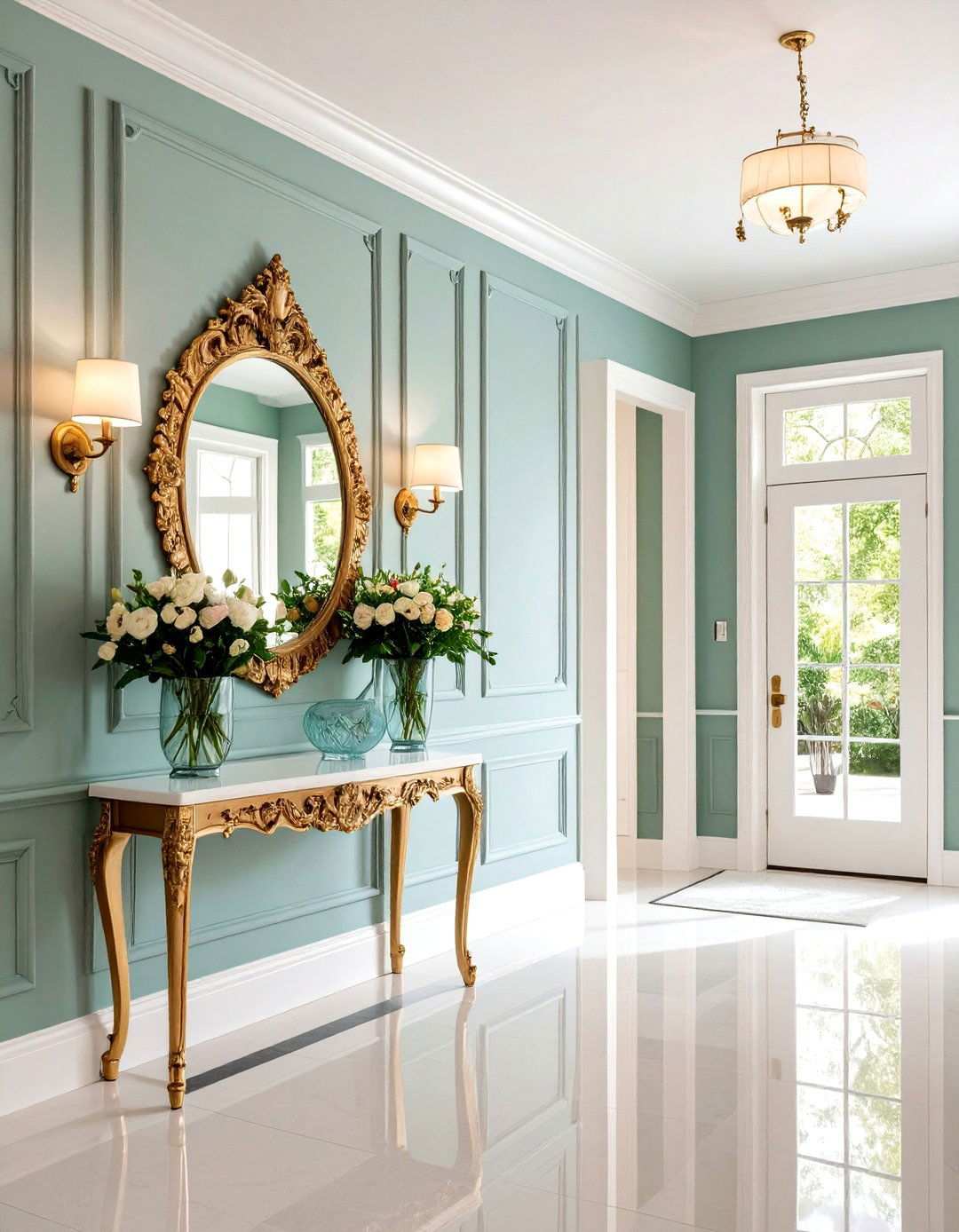
When considering mirror and art display in relation to wainscoting, the focus is on creating an elegant backdrop for decorative elements in the entryway. The panel proportions and spacing should work in harmony with mirrors, artwork, or other wall-mounted accessories, rather than competing with them. Picture frame molding styles are particularly well-suited for this application, providing natural frames that enhance hanging artwork. To maintain visual balance, the wainscoting height should allow for adequate wall space above for properly proportioned mirrors or art pieces. Lighting placement becomes crucial for illuminating displayed items effectively, while color choices should enhance rather than overwhelm artwork. By striking this balance, a gallery-like sophistication is achieved in the entryway, while protecting walls from damage and providing architectural structure that elevates the overall design aesthetic of the space.
24. Long-Term Performance Prowess
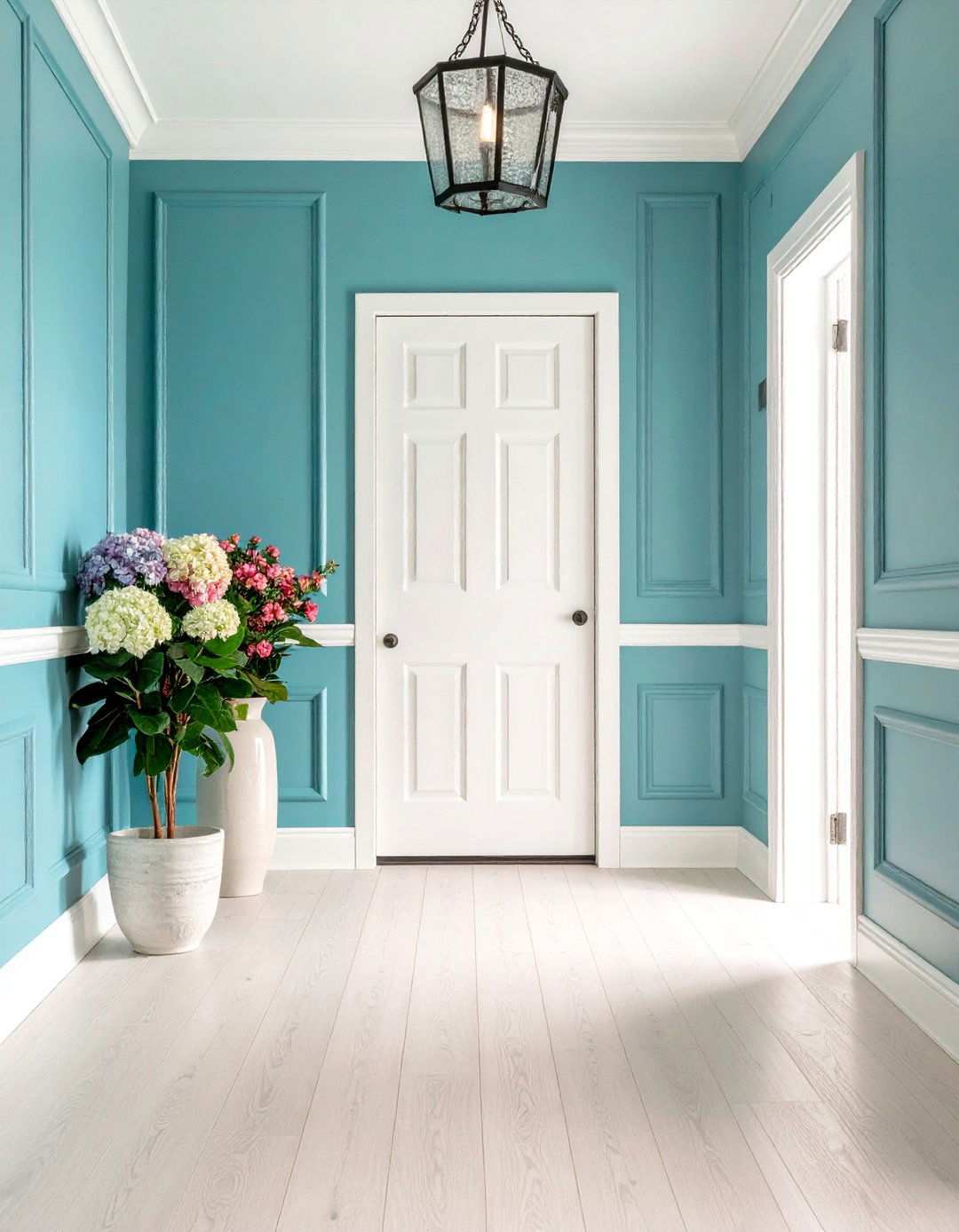
Wainscoting’s enduring presence in high-traffic entryways is largely attributed to its prioritization of long-term performance. When investing in wainscoting, it’s essential to weigh durability as an equally significant factor as aesthetic appeal. This means opting for materials that excel in resilience, such as MDF or properly sealed wood, which have a proven track record of withstanding the test of time. The finish you choose for your wainscoting also plays a crucial role in its durability, with semi-gloss or satin coatings offering superior resistance to wear and tear compared to flat paints. Moreover, a skilled installation process is vital in ensuring the long-term performance of your wainscoting system, as proper fastening, caulking, and sealing prevent the infiltration of moisture and subsequent movement issues. Regular upkeep involves gentle cleaning with appropriate products and periodic touch-up painting to maintain the wainscoting’s fresh appearance. By combining high-quality materials and expert installation, you can create a wainscoting system that not only protects your walls from damage but also continues to enhance your home’s value and aesthetic appeal throughout the years.