1. Captivating Fieldstone Retaining Walls
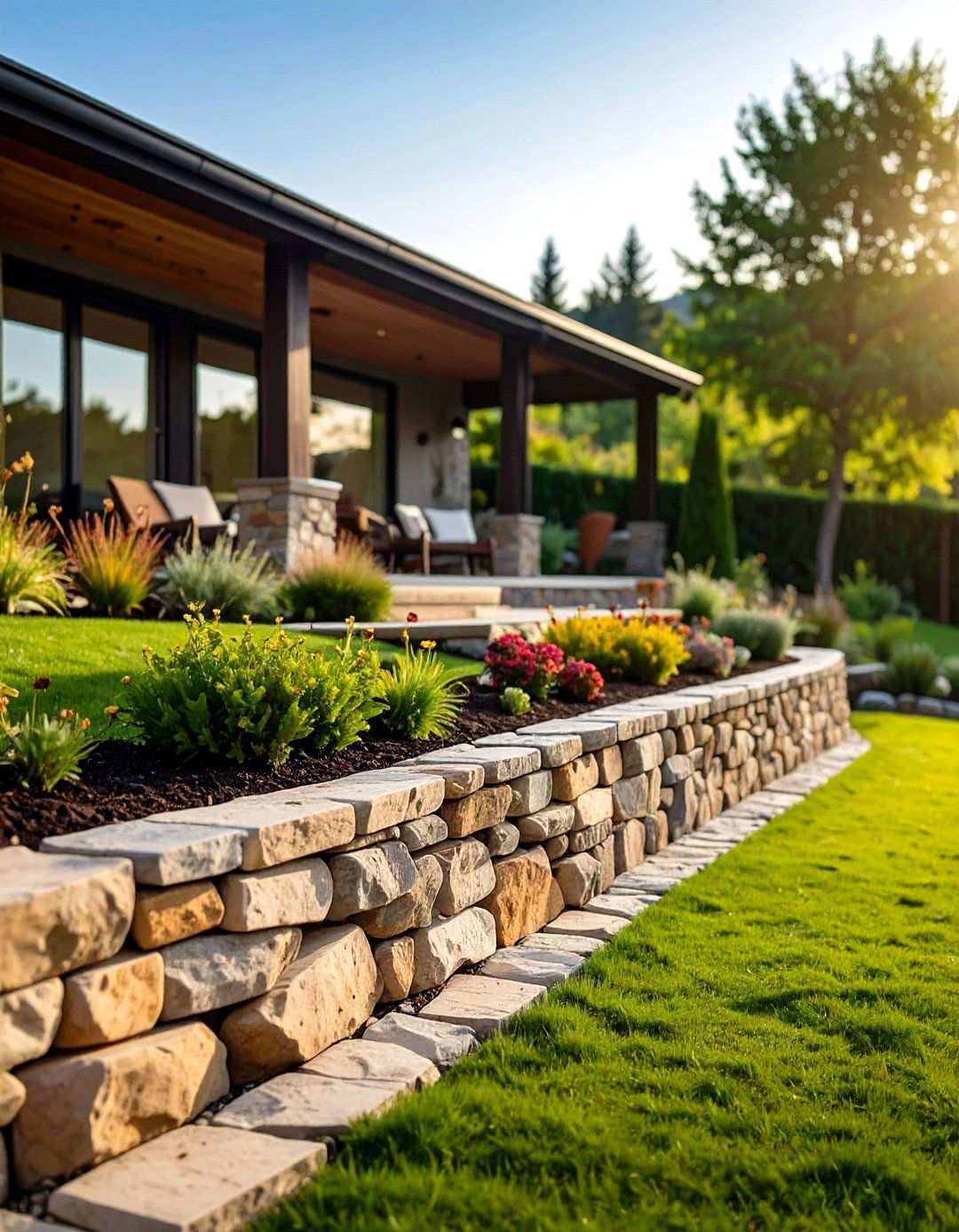
Discovering the perfect blend of form and function in your outdoor space is easier than you think. Fieldstone retaining walls offer an authentic, countryside-inspired solution for managing slopes with an undeniable charm. Harvested from local fields, these stones boast unique shapes and sizes that create a natural, organic appearance through their irregular textures and weathering patterns. Unlike manufactured materials, fieldstone walls exude an instantly recognizable character that’s hard to replicate. Their versatility makes them ideal for garden terracing, driveway borders, and hillside stabilization projects. With the dry-stacking method, stone walls ensure proper drainage while adapting to ground movement over time, providing flexibility and stability. For added stability in taller installations, strategically placing stones with mortar creates additional strength without compromising the rustic aesthetic.

As an Amazon Associate I earn from qualifying purchases.
2. Limestone Accent Walls: Elevating Contemporary Interiors
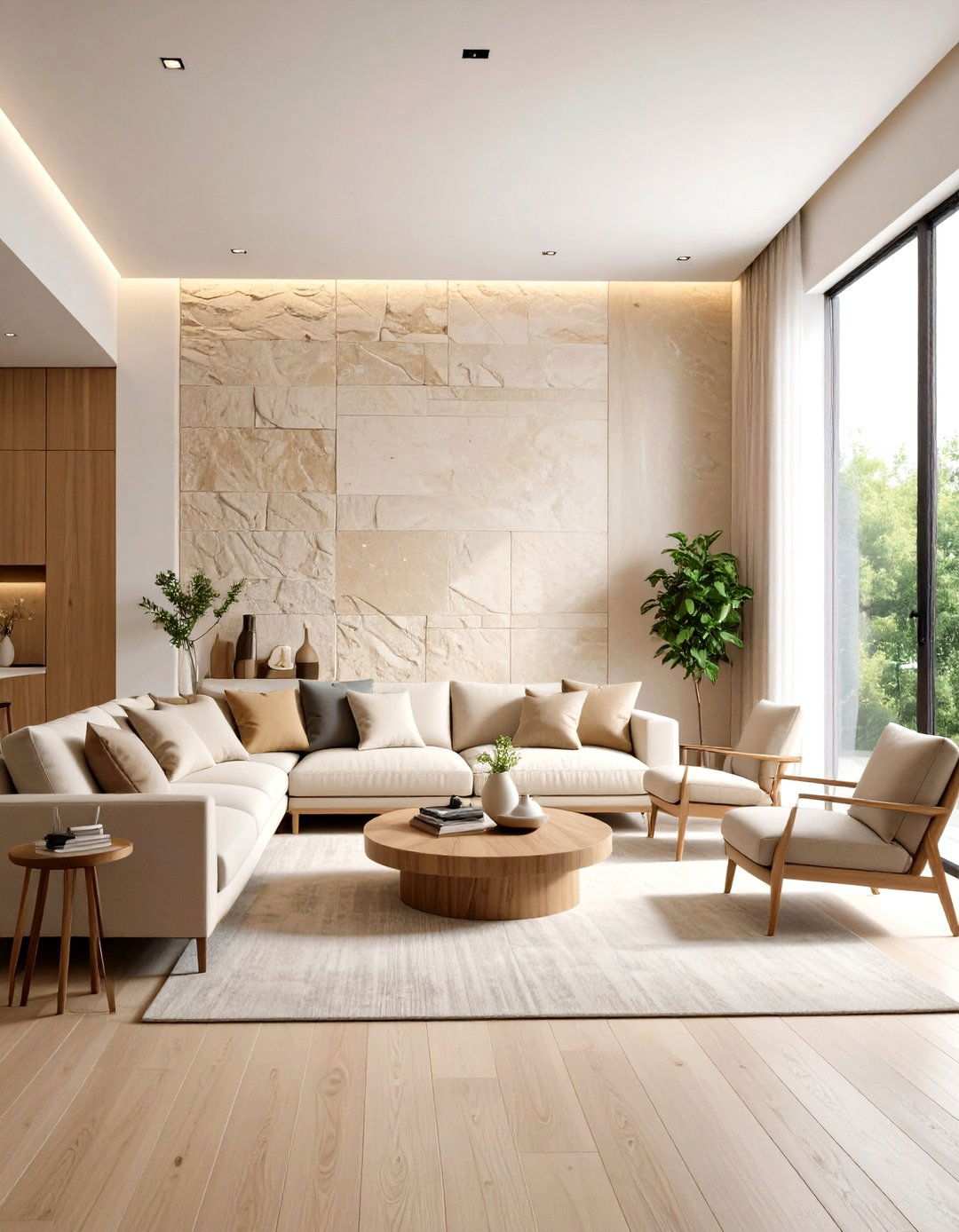
The elegant fusion of natural stone and modern design is a winning combination. Limestone accent walls showcase the versatility of this refined material in contemporary living spaces. Featuring smooth, cut limestone panels or tiles, these installations seamlessly integrate natural beauty with clean lines, adding depth and texture to modern rooms. The neutral color palette of limestone ranges from warm, inviting creams to cool, soothing grays, effortlessly complementing a wide range of interior design schemes. Limestone accent walls are perfect for creating focal points behind television areas, in dining rooms, or as striking feature walls in bathrooms. To ensure the longevity of these installations, proper sealing of the natural porosity is crucial, particularly in moisture-prone areas. By entrusting the installation to professionals, you’ll receive expert preparation and attachment methods that support the stone’s weight while delivering long-lasting beauty that significantly enhances property value.
3. Slate Veneer Panel Systems
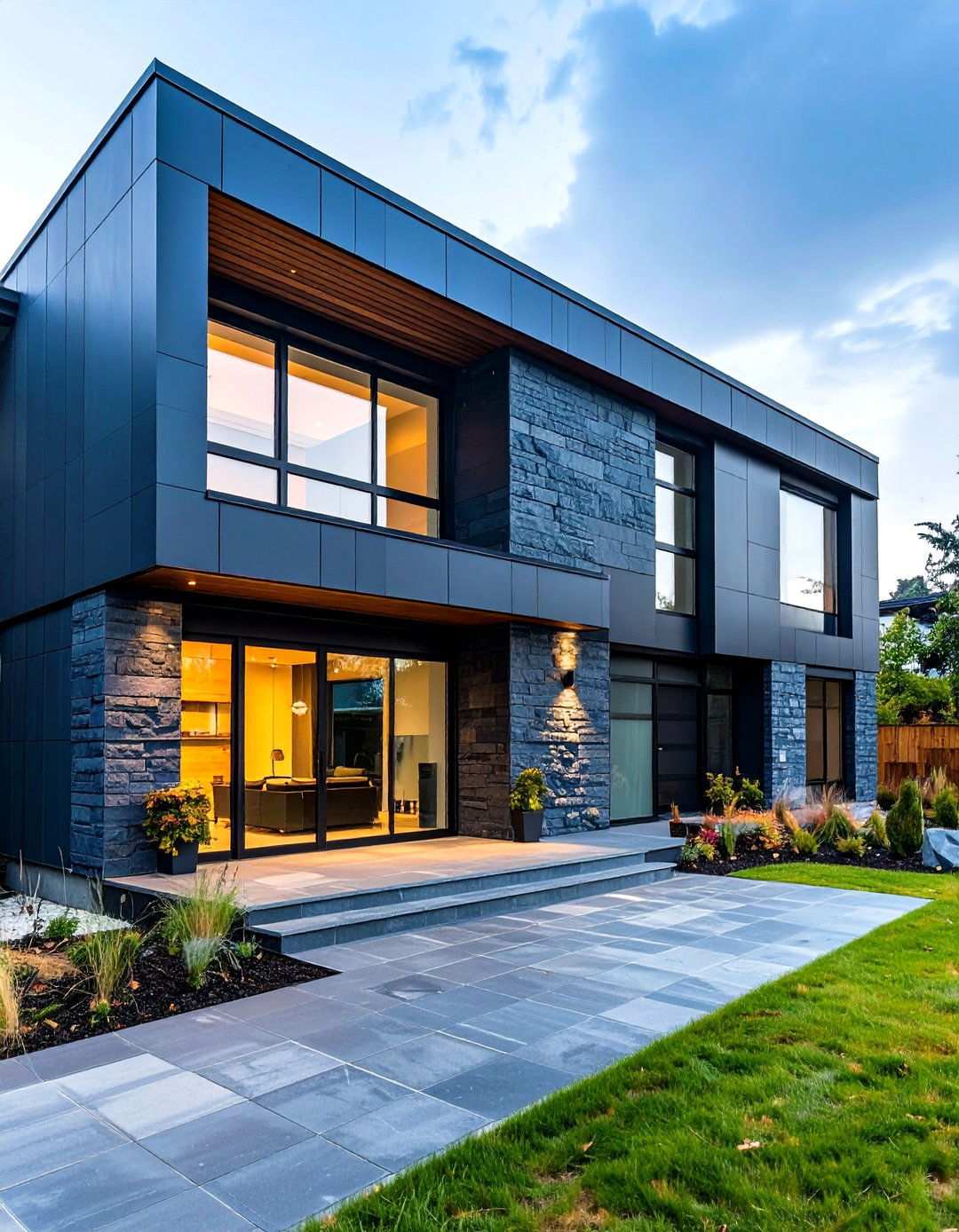
For modern homeowners seeking an elegant fusion of natural beauty and streamlined installation, slate veneer panel systems represent an ideal solution. By combining real slate with efficient manufacturing techniques, these pre-fabricated panels deliver authentic stone character while significantly reducing the building process’s complexity. The rich, charcoal, and blue-gray tones of slate panels create sophisticated color palettes that seamlessly integrate with both interior and exterior design applications. Furthermore, slate’s exceptional durability allows it to thrive in exterior environments, making it a popular choice for cladding, fireplaces, and accent walls. The panels’ lightweight construction enables installation on a variety of substrates, eliminating the need for extensive structural modifications. Moreover, the interlocking design ensures seamless transitions, reducing installation time by up to seventy percent compared to traditional stone placement methods.
4. Granite Dry Stack Garden Walls
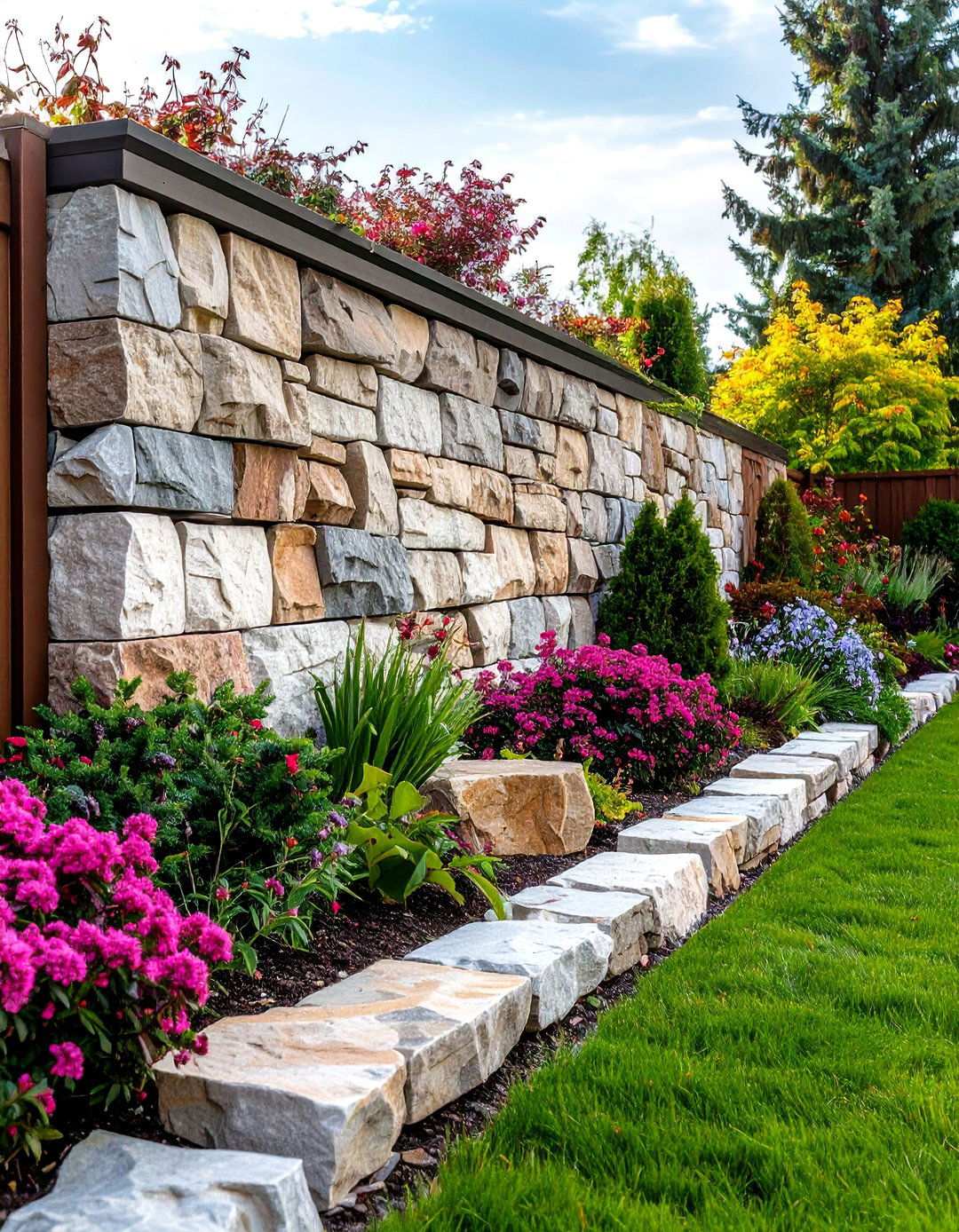
By harnessing the natural strength and beauty of massive stone materials, granite dry stack garden walls can create intimate outdoor spaces that harmonize with smaller landscapes. The dry stack method relies on the stone’s weight and precise fitting, eliminating the need for mortar and ensuring stability. The crystalline surface of the granite reflects light beautifully, generating visual interest throughout the seasons and weather conditions. These walls are particularly effective at defining outdoor rooms, creating raised planting beds, separating garden zones, or providing seating areas around patios. The natural color variations in granite, ranging from white to pink and deep gray, enable it to coordinate seamlessly with virtually any landscape design. Proper foundation preparation ensures long-term stability, while the mortarless construction allows for easy modifications as landscape needs evolve over time.
5. Sandstone Curved Feature Walls
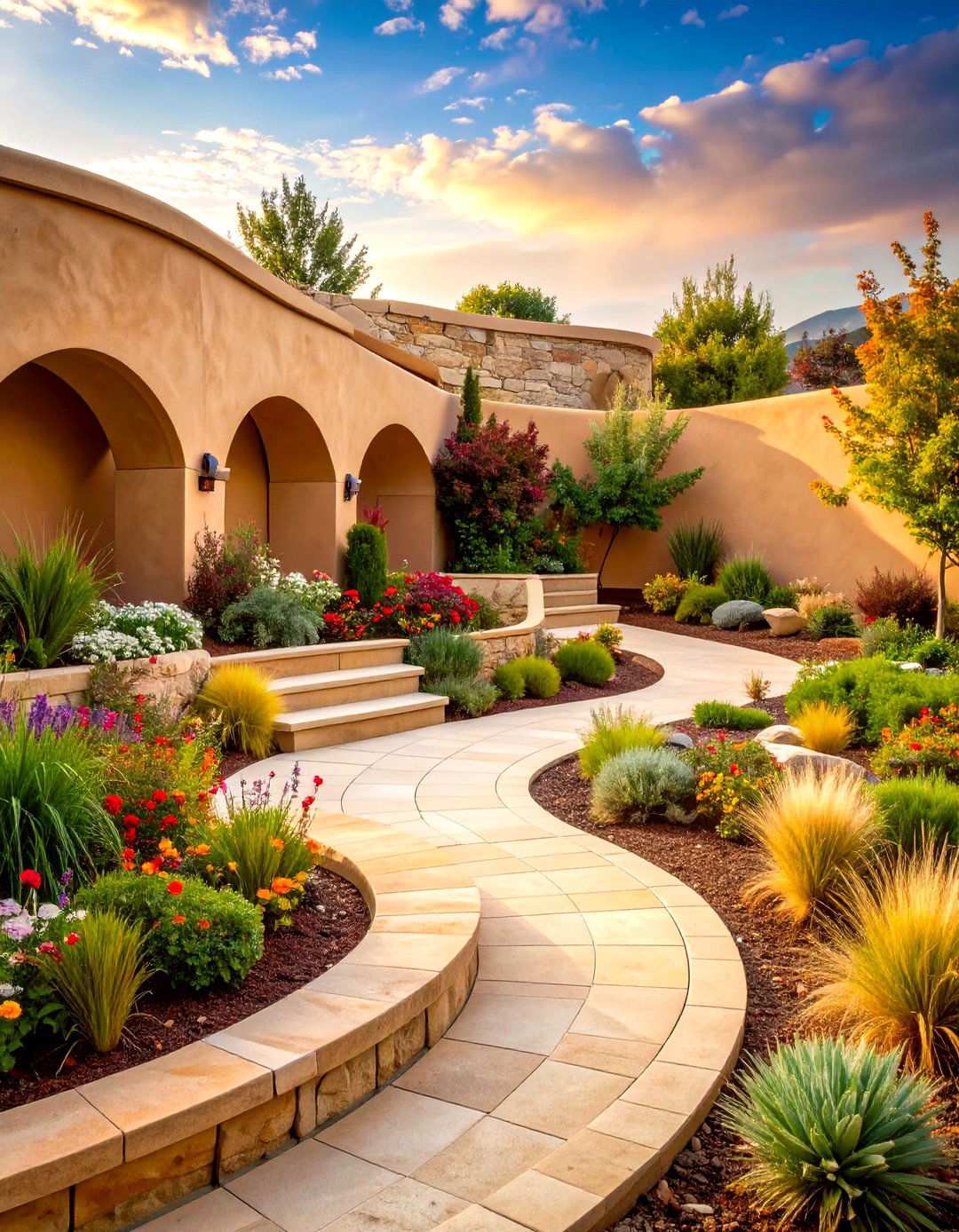
When combining flowing design principles with durable natural materials, the result is Sandstone curved feature walls, which effortlessly soften rigid outdoor spaces while providing functional boundaries. The workability of sandstone allows skilled craftsmen to cut and shape pieces that follow organic curves rather than straight lines, creating natural flow patterns that echo landscape contours and complement garden pathways beautifully. Sandstone’s warm color range, from beige to red to brown tones, harmonizes with outdoor environments while providing excellent weather resistance. Curved walls work exceptionally well for creating privacy screens, defining seating areas, or serving as dramatic backdrops for water features. By incorporating flowing design elements, smaller spaces can feel larger, and the sophisticated architectural interest increases property appeal.
6. Elevating Your Hearth with Stacked Stone Fireplace Surrounds
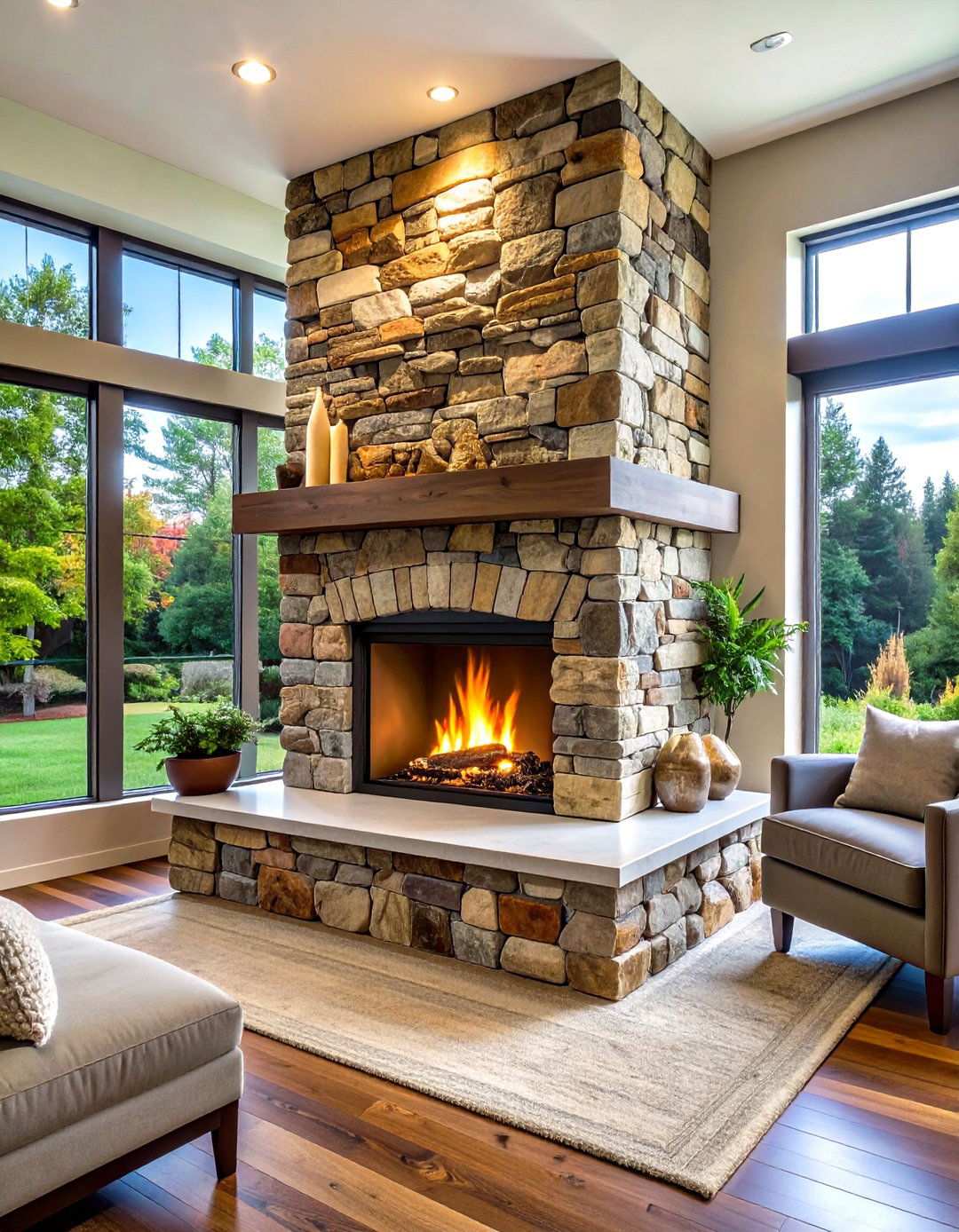
A striking focal point is essential in any living space, combining warmth and natural beauty to anchor room designs. Stacked stone fireplace surrounds take ordinary hearths and transform them into breathtaking architectural features. By arranging flat stone pieces in horizontal layers, this approach creates strong linear patterns that showcase the natural color variations of the stone. The versatility of this method allows it to work with various stone types, including slate, limestone, and quartzite, each offering unique texture and color characteristics that add depth to the design. Floor-to-ceiling installations make a powerful statement, while partial surrounds provide a more subtle yet effective enhancement. When installed by professionals, proper clearances from combustible materials and secure attachment methods ensure a safe and visually appealing installation. The natural insulation properties of stone also facilitate efficient heat radiation, while the timeless aesthetic of a stacked stone fireplace surround increases home value. Strategically integrated lighting behind or below stone elements can add ambient evening light, highlighting the intricate texture of the stone.
7. Embracing the Authenticity of Pennsylvania Colonial Wall Stone
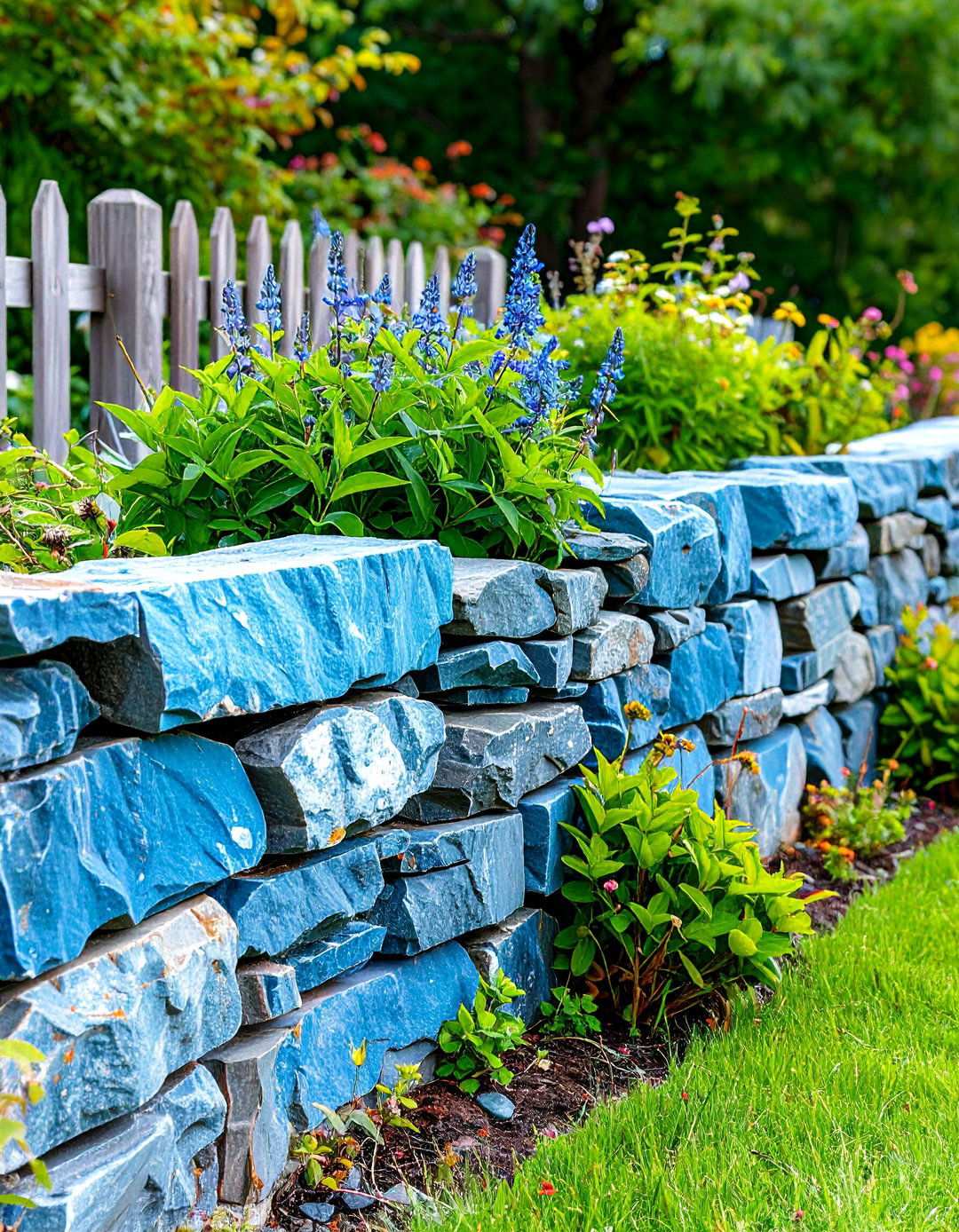
For those drawn to materials that evoke a sense of historical authenticity, Pennsylvania Colonial wall stone offers a time-tested beauty that is steeped in traditional craftsmanship. This quarried bluestone features naturally weathered surfaces that develop a unique, rustic texture over time. The blue-gray color palette of these stones ranges from subtle silver tones to deeper charcoal shades, which only deepen and enrich with age. Originally quarried for use in traditional American architecture, Pennsylvania Colonial stone works beautifully for a range of applications, including garden walls, property boundaries, and foundation treatments that complement period-style homes. The flat profile of these stones allows for both dry-stacking and mortared construction, depending on the height requirements and design preferences of the project. As one of America’s earliest building materials, Pennsylvania Colonial stone provides a genuinely authentic historical character that connects modern landscapes with the traditional construction methods used by early settlers.
8. Modern White Stone Veneer
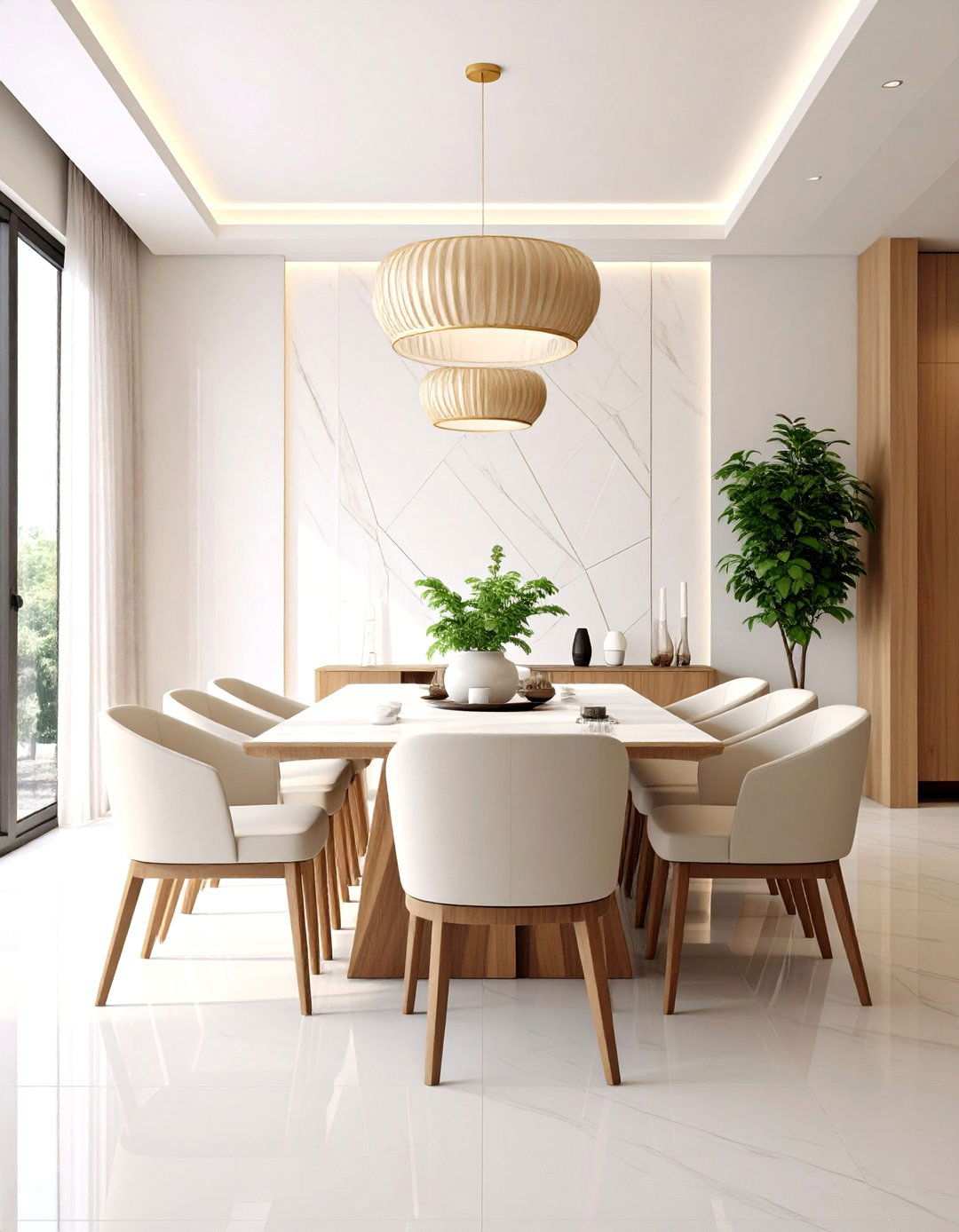
Modern design can elegantly intertwine natural elements with clean, minimalist styles, yielding spaces that showcase unique contrasts. By combining sophisticated colors and textures, modern white stone veneer installations create visually striking effects in contemporary settings. Geometric patterns formed with light-colored stones, arranged to emphasize horizontal or vertical lines, add a sense of fluidity and balance to spaces. The reflective properties of white stone veneer effectively amplify available light, making areas appear more expansive while incorporating organic textures that temper architectural lines. White stone veneer installations are particularly well-suited for modern bathrooms, kitchen backsplashes, and living room accent walls. The contemporary approach minimizes grout lines and highlights stone edges for a seamless appearance. By applying professional sealing, the light-colored stones are safeguarded from staining, preserving their pristine appearance. The synergy of natural materials with modern installation techniques fosters spaces that feel both current and enduring.
9. Mosaic Pattern Stone Walls
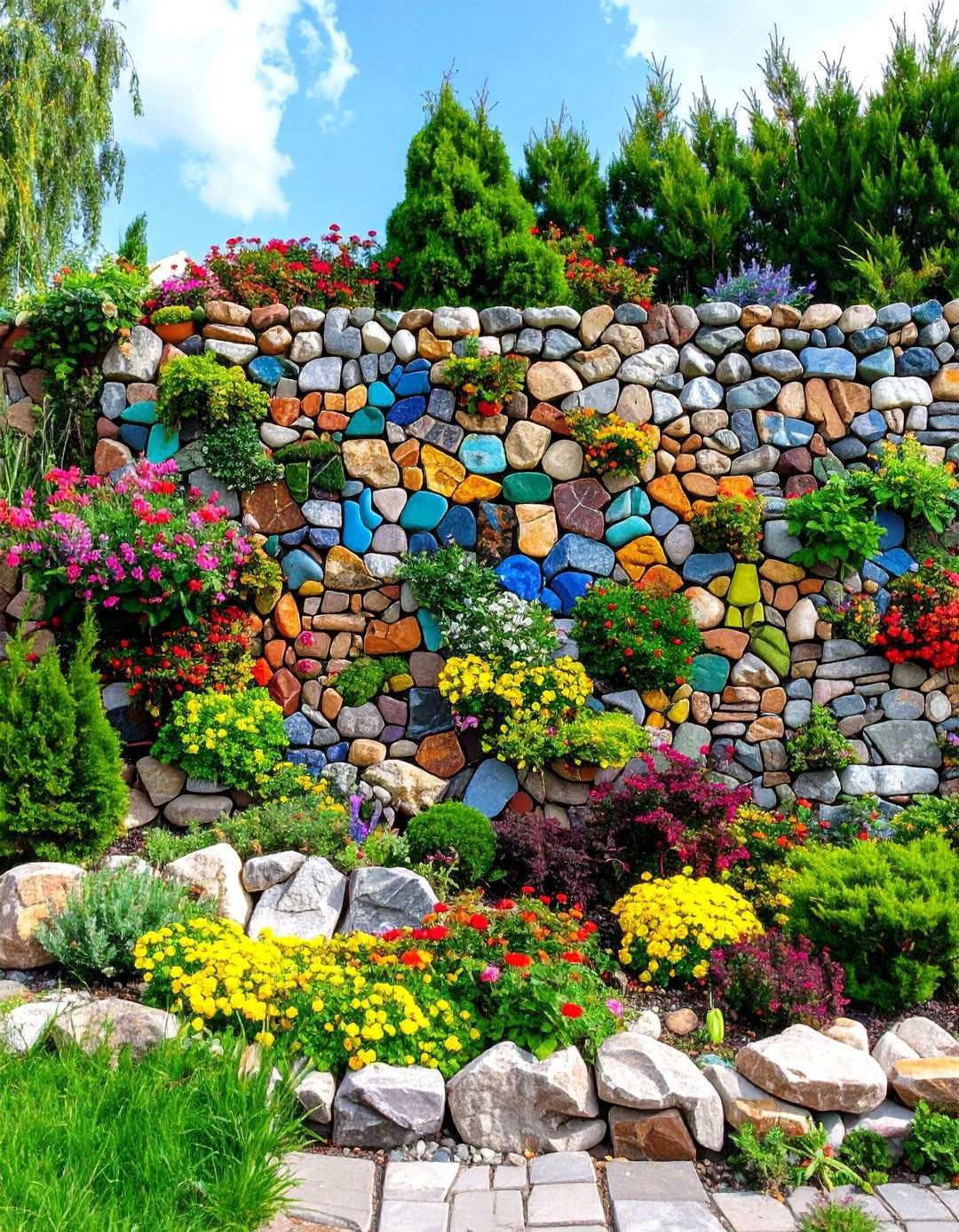
What if the traditional boundaries of construction could be transcended to create artistic expressions? Mosaic pattern stone walls merge functional building with creative design by thoughtfully planning stone arrangements. This approach leverages an assortment of stone sizes, shapes, and colors to craft intentional patterns or abstract compositions within wall surfaces. Skilled artisans meticulously select and place individual stones, much like puzzle pieces, to create visual rhythms that transform walls into outdoor art installations. The technique can be applied to various stone materials, such as fieldstone, flagstone, or cut stone, depending on the desired aesthetic effect. Mosaic walls excel as garden features, privacy screens, or artistic focal points that showcase craftsmanship. The design process requires deliberate consideration, yielding unique installations that cannot be replicated. Each mosaic wall becomes a singular creation that adds significant artistic value to properties.
10. Dramatizing Slope Challenges with Tiered Stone Retaining Systems
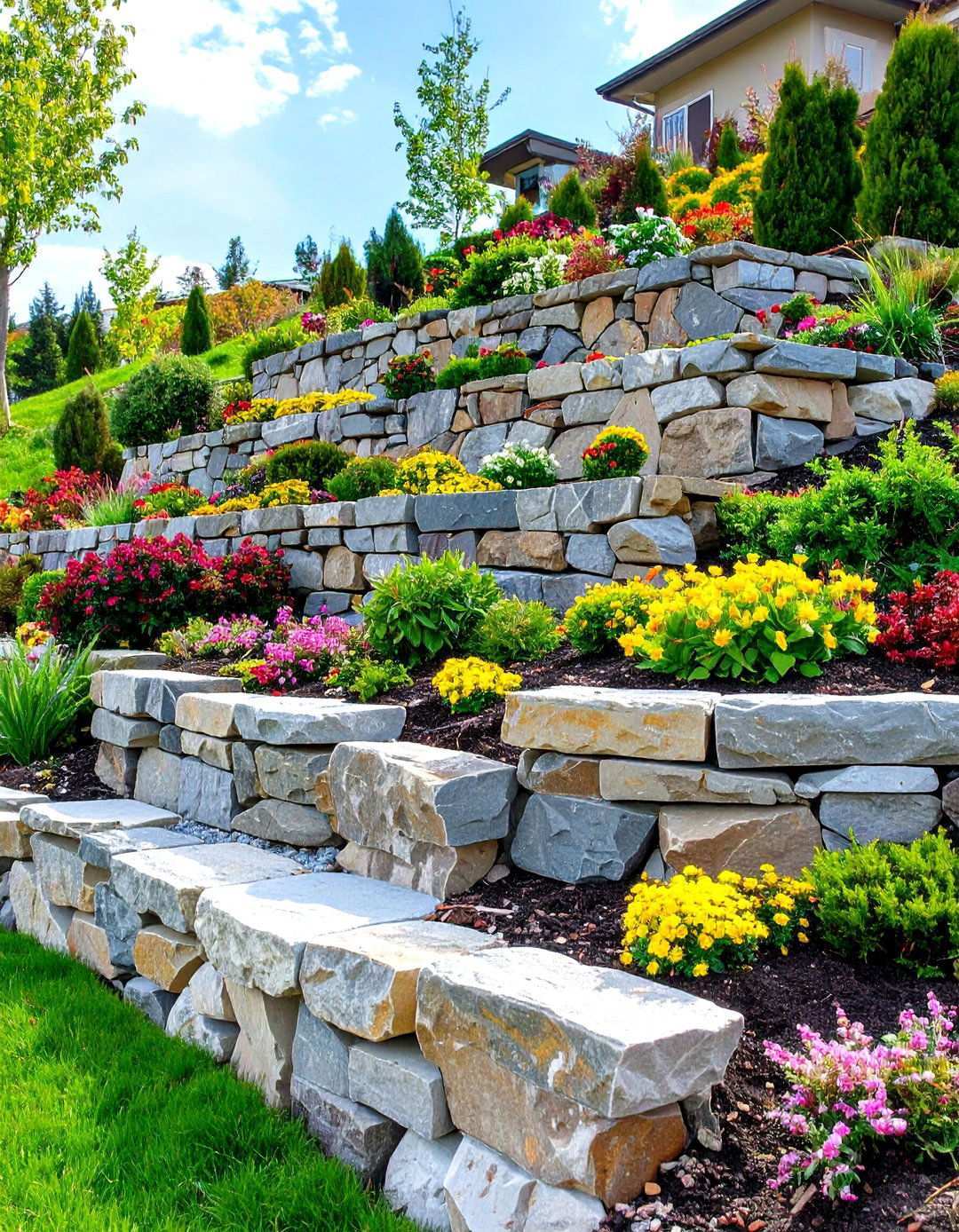
Transforming steep slopes into breathtaking landscapes is a design challenge waiting to be seized. By incorporating tiered stone retaining systems, troublesome terrain can be cleverly converted into a series of interconnected, terraced gardens. Each tier functions as an independent entity, working together to ensure slope stability and visual appeal. The consistent use of stone across multiple levels maintains design cohesion, while varying heights introduce a visually striking element. This terracing technique also facilitates diverse planting opportunities, which soften the harsh appearance of stone surfaces and provide essential erosion control. Moreover, the strategic placement of drainage systems between tiers prevents water pressure buildup that could compromise structural integrity. The result is a harmonious blend of functionality and aesthetics, maximizing outdoor space utilization while creating unique property features.
11. Elevating Bathroom Ambiance with Interior Stone Accent Walls
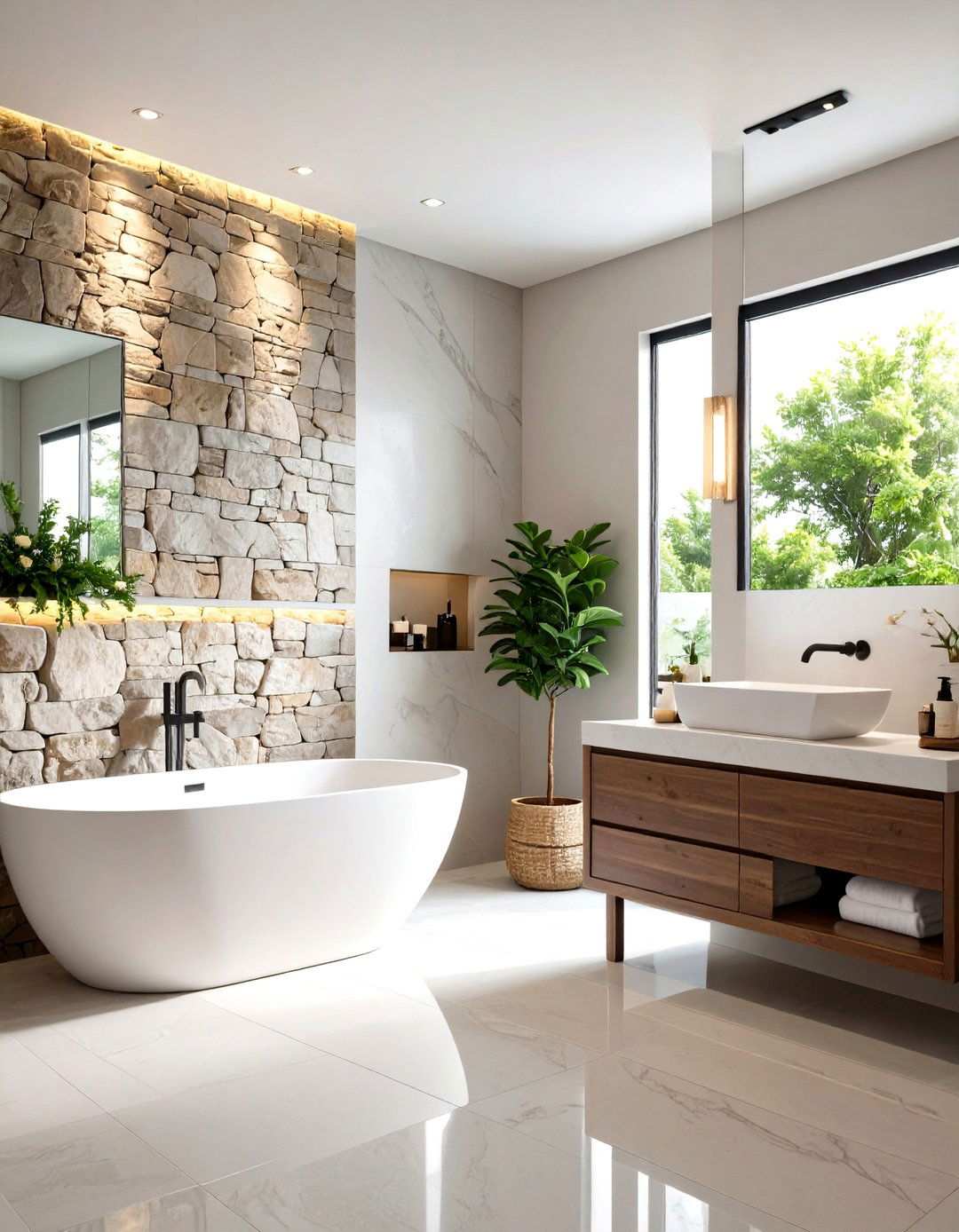
Can the incorporation of natural stone elevate everyday bathroom spaces to spa-like luxury? By thoughtfully integrating stone accent walls into bathroom design, ordinary rooms can be transformed into serene retreats. Natural stone’s inherent moisture resistance and organic texture seamlessly complement modern fixtures and finishes, creating a visually appealing contrast. Strategically placing stone accent walls behind vanities, in shower areas, or as partial feature walls effectively creates visual interest without overwhelming smaller spaces. When selecting stone for bathroom applications, designers often focus on materials with low porosity and stain resistance, such as slate, granite, or properly sealed limestone. To ensure durability in wet environments, professional installation includes thorough waterproofing measures and substrate preparation. The unique patterns and textures found in natural stone add depth and visual interest, while proper lighting highlights these features, creating a warm ambiance that enhances the overall bathroom experience.
12. Elevating Outdoor Cooking Spaces with Durable Materials
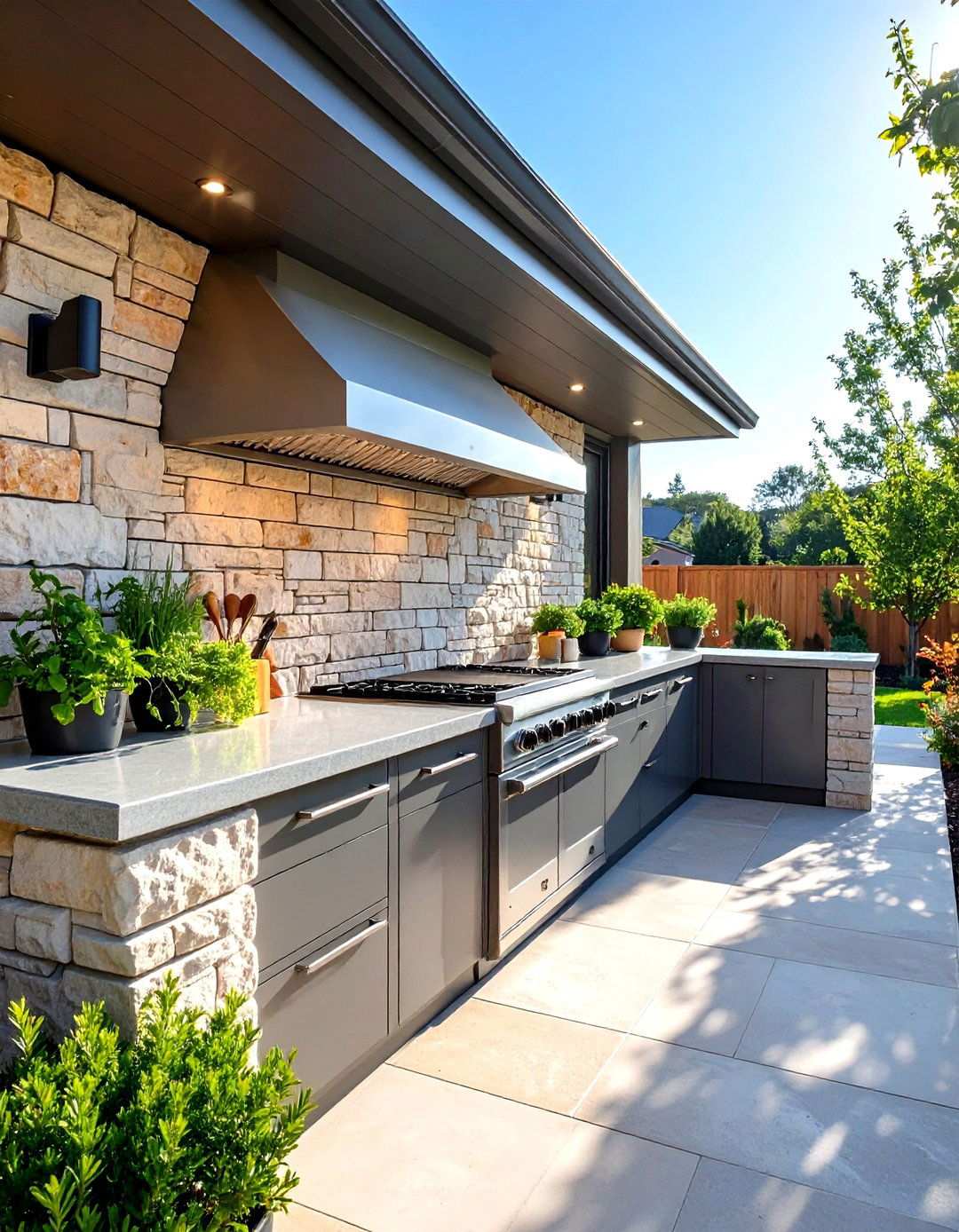
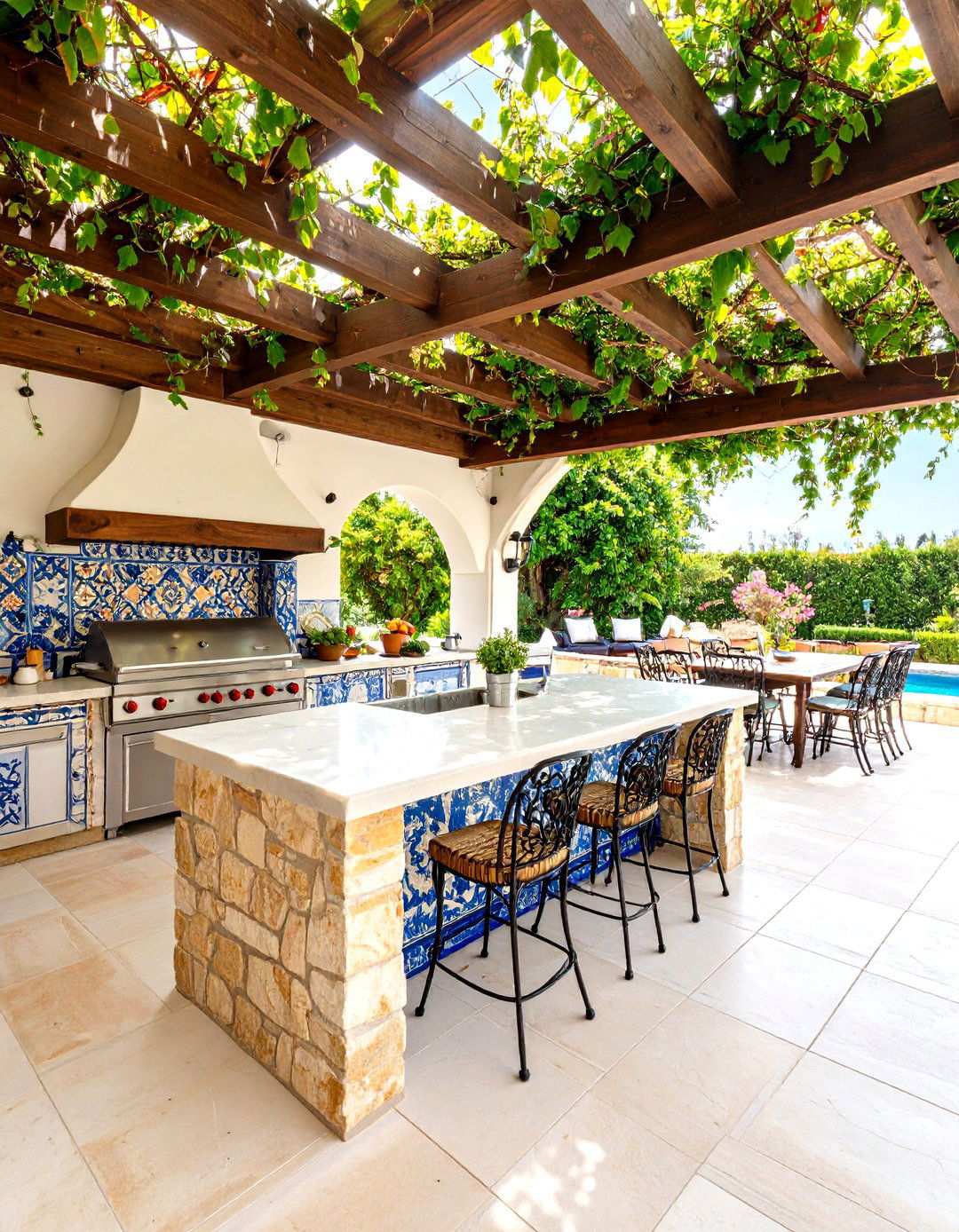
For outdoor cooking enthusiasts, a well-designed kitchen space that can withstand the elements is a top priority. Fortunately, exterior kitchen stone backsplashes offer a sophisticated solution that combines durability with style. Unlike traditional indoor materials, natural stone can resist heat, moisture, and temperature fluctuations, making it an ideal choice for outdoor kitchens. When selecting stone for your backsplash, consider options like granite, slate, or quartzite, which can handle direct heat from grills and fire features without compromising their integrity. To ensure long-term performance, proper substrate preparation and weatherproof attachment methods are crucial during the installation process. The benefits of stone backsplashes extend beyond functionality, as they also create a beautiful, low-maintenance surface that complements your countertop materials and resists staining from outdoor cooking activities. By selecting from various stone sizes and arrangements, you can create a custom design that reflects your unique style and enhances your outdoor entertaining experience.
13. Blending Boundaries with Natural Elegance
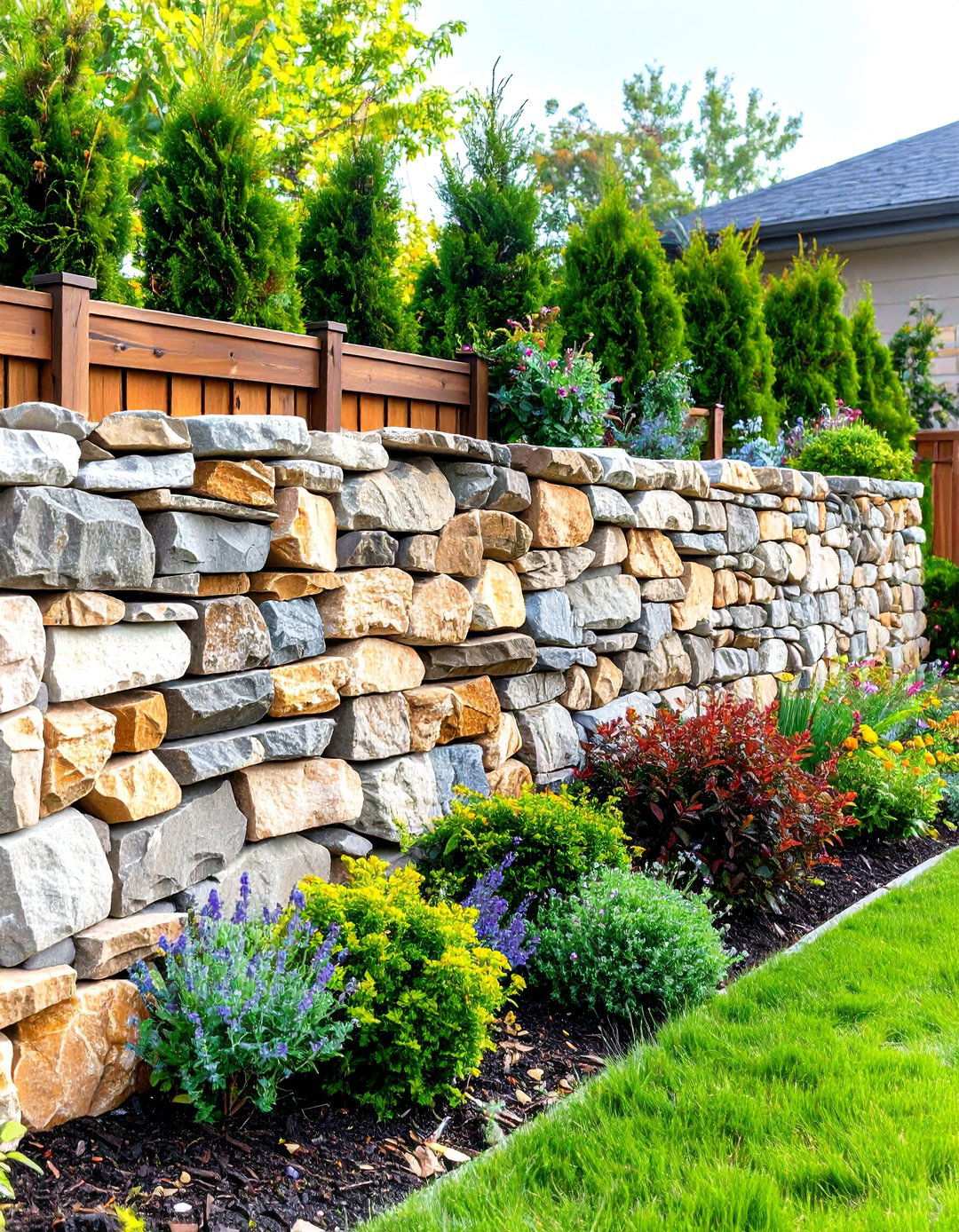
For those seeking a more subtle approach to creating private spaces, dry stack privacy screening walls offer an attractive alternative to traditional fencing. These installations strike a balance between height requirements and visual permeability, allowing you to maintain a connection to your surroundings while enjoying a sense of seclusion. When selecting stone for your dry stack wall, focus on consistent sizing for stable stacking, while also embracing natural color variation for visual interest. The mortarless construction of these walls provides flexibility for settling, while proper foundation work ensures structural integrity. Strategic height variations and partial openings prevent a monotonous appearance, while maintaining primary privacy functions. To further soften the look of your wall, consider incorporating planting pockets or shelves, which can blend the structure seamlessly into your landscape design. By working with a professional designer, you can ensure that your dry stack wall is proportioned perfectly, providing a sense of privacy without feeling oppressive. In the long run, the natural materials used in these installations will age beautifully, requiring minimal maintenance compared to traditional fencing materials.
14. Elevating Pathway Edges with Flagstone Border Walls
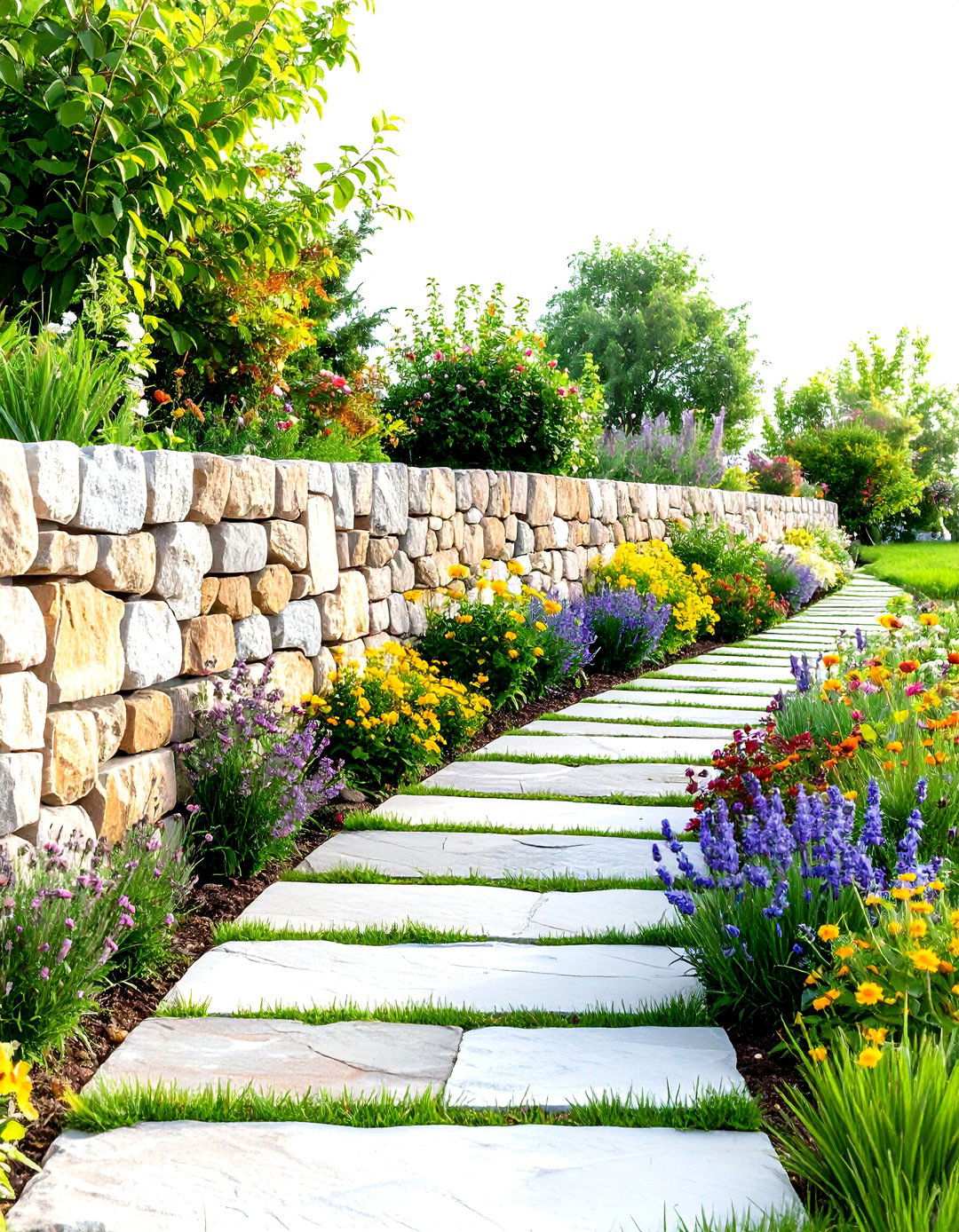
Transforming functional pathway edges into captivating landscape features that elevate garden design is a great goal. Flagstone pathway border walls serve as the perfect solution by defining walking surfaces and adding dimensionality to outdoor circulation routes. These low-profile installations employ flat stone pieces arranged vertically to enclose pathway materials, providing seating opportunities along the way. The installation process involves adhering to specific depth requirements for stability and incorporating drainage considerations for pathway materials. Flagstone selection prioritizes consistent thickness for a uniform appearance, allowing for color variation to highlight the natural beauty of the stone. Border walls effectively prevent pathway material migration, creating formal edges that clearly define landscape zones. The sitting height of these installations offers rest opportunities during garden tours, while adding functional elements that enhance property usability. Strategically incorporated lighting within borders defines pathways in the evening, while highlighting the attractive texture of the stone. These installations seamlessly integrate practical pathway management with attractive landscape architecture elements.
15. Harmonizing Modern Design with Stacked Stone Interior Features
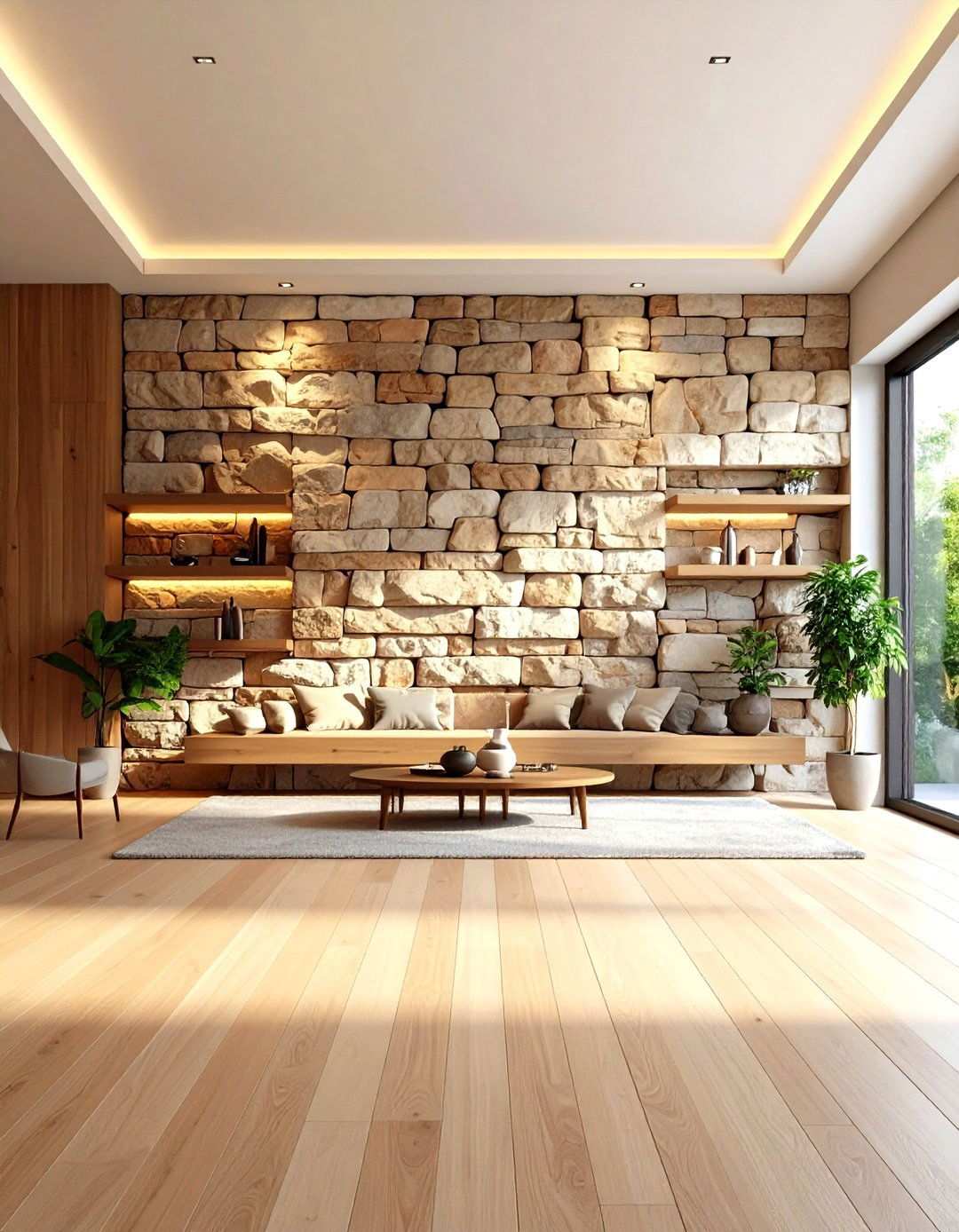
What happens when modern design principles converge with traditional natural materials in interior settings? Contemporary stacked stone interior features create sophisticated focal points through streamlined installation methods and geometric patterns. This approach emphasizes clean horizontal lines and consistent color palettes, allowing the natural stone texture to take center stage. Installation techniques minimize visible mortar joints for a seamless appearance that complements modern furniture and lighting. Stone selection focuses on consistent sizing and neutral color schemes, including grays, whites, and earth tones, which coordinate beautifully with contemporary interiors. Feature walls behind dining areas, in entryways, or around fireplaces create a dramatic impact without overwhelming room proportions. Professional installation ensures proper substrate preparation and secure attachment methods for vertical applications. The combination of natural material with contemporary aesthetics creates a timeless appeal that adapts to changing design trends while maintaining an organic warmth.
16. Harmonious Union of Water and Stone
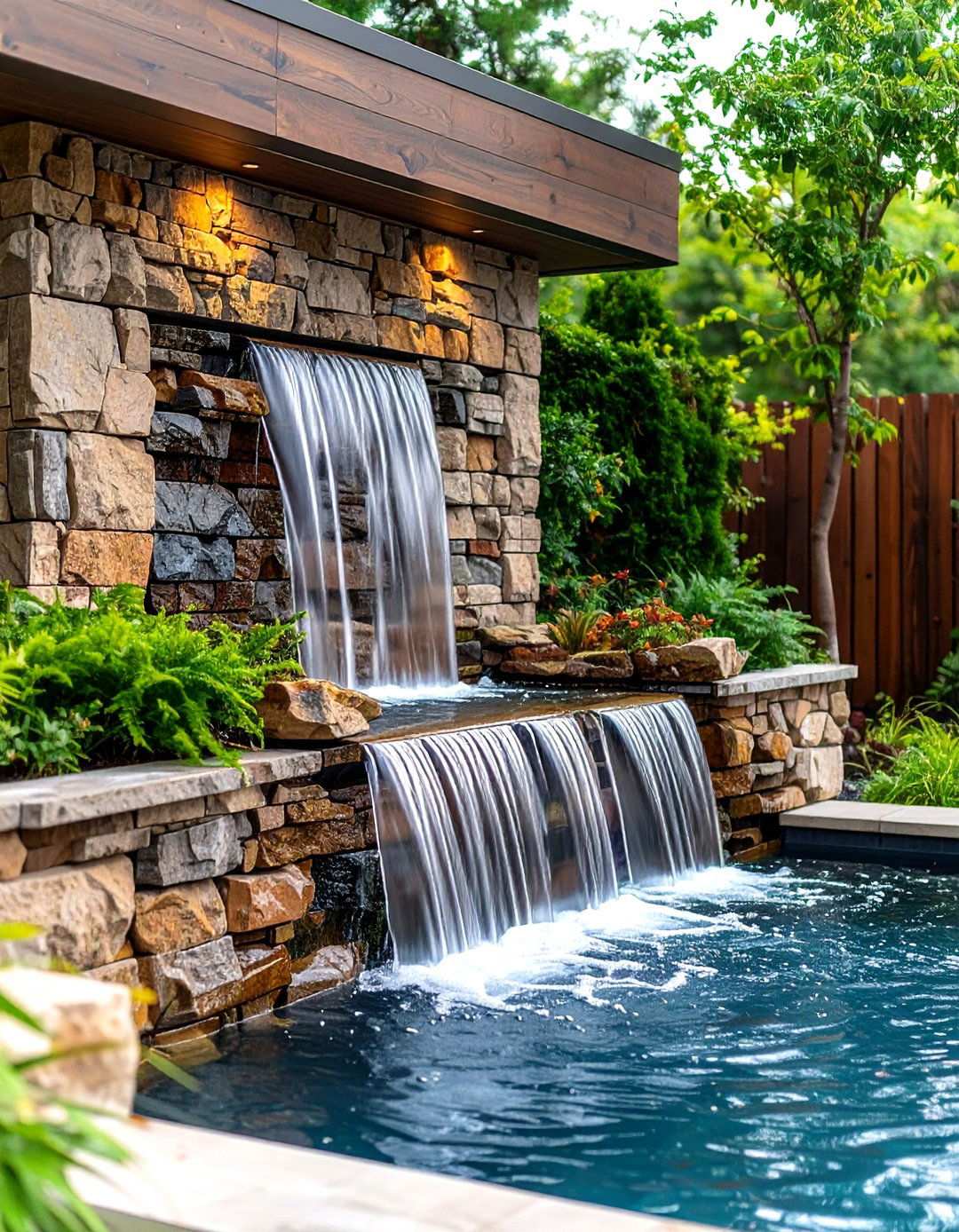
Water and stone elements can be skillfully combined to create serene focal points that elevate outdoor living spaces to new heights. Natural stone water feature walls seamlessly integrate flowing water with the tactile beauty of textured stone surfaces, resulting in breathtaking landscape installations. As the gentle flow of water interacts with the natural beauty of stone, it generates a captivating visual and auditory experience that profoundly enhances the ambiance of your garden. By selecting stones that develop an attractive patina when exposed to constant moisture, such as limestone, slate, or granite, these features become a masterpiece of natural beauty. Behind the scenes, professional installation ensures that water circulation systems, drainage management, and electrical components for pumps and lighting are properly integrated. This synergy creates a refreshing cooling effect during warm weather and provides year-round visual interest through the mesmerizing display of ice formations in colder climates. As the sun sets, integrated lighting highlights the intricate textures of the stone and the soothing movement of the water, inviting you to unwind and relax. These installations not only serve as striking property focal points but also provide a therapeutic escape from the stresses of urban life, as the soothing sounds of natural water effectively mask the cacophony of city noise.
17. The Art of Mixed Stone Material Garden Walls
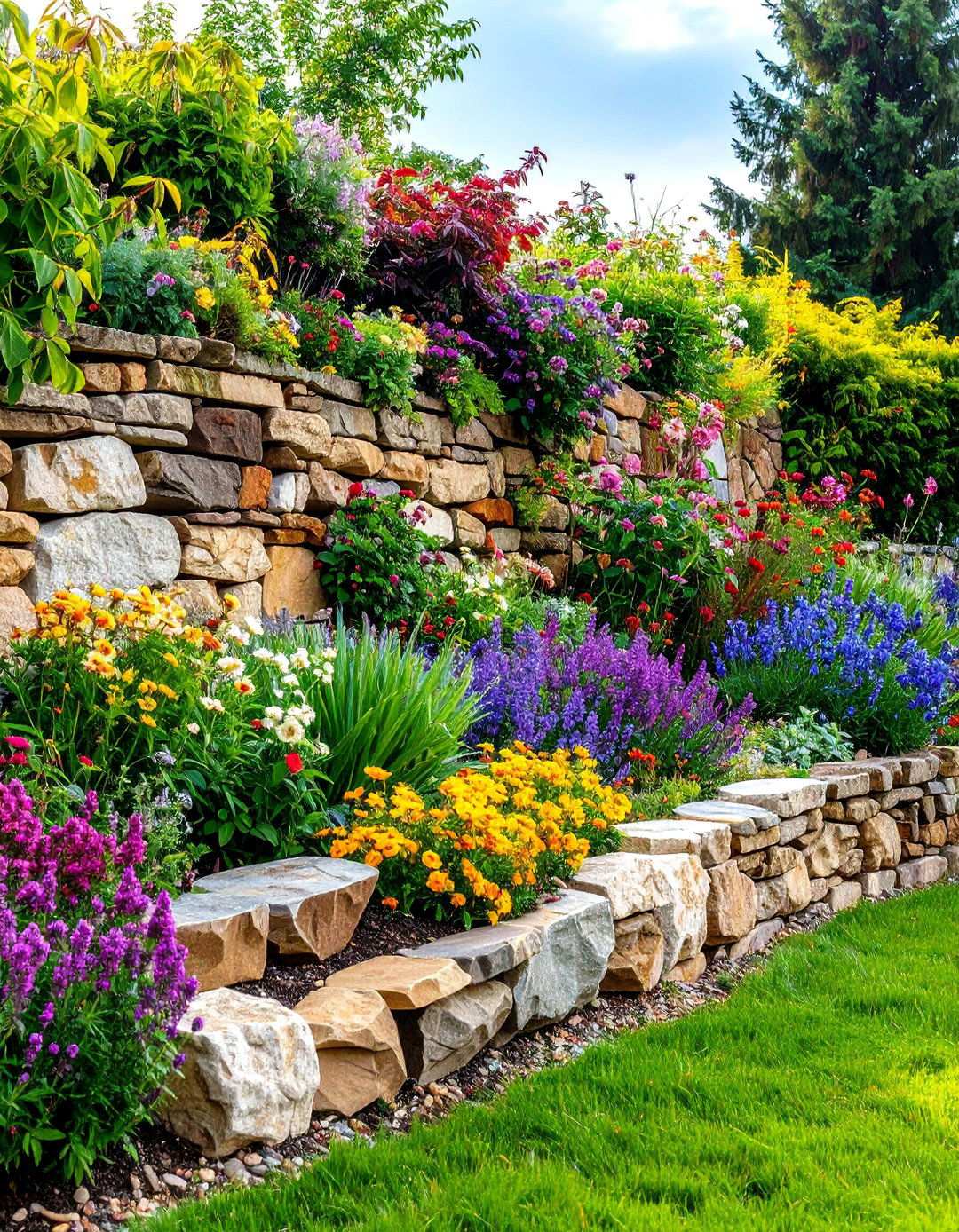
Can different stone types be blended together to create a harmonious and visually stunning landscape feature? Mixed stone material garden walls showcase the unique charm of combining various natural stones to craft rich color palettes and textured contrasts within a unified design. Imagine blending the rustic charm of fieldstone with the refined elegance of cut limestone, or combining the sleek sophistication of slate with the warm, earthy tones of sandstone. By understanding the intricacies of color compatibility and texture relationships between different stone types, you can create a masterpiece that transcends the limitations of single-stone installations. Professional design expertise ensures that the proportions of each stone type are carefully balanced, preventing any one material from overpowering the others while maintaining a cohesive overall appearance. The result is a visually dynamic feature that allows for creative patterns, accent bands, or transitional zones, adding an extra layer of sophistication to your landscape design. By incorporating locally available materials, these walls become a testament to the beauty of natural material diversity, showcasing the unique characteristics of each stone type. Installation requires a deep understanding of the properties and weights of different stones, making it essential to work with experienced professionals who can bring your vision to life.
18. Engineered Stone Walls for Diverse Applications
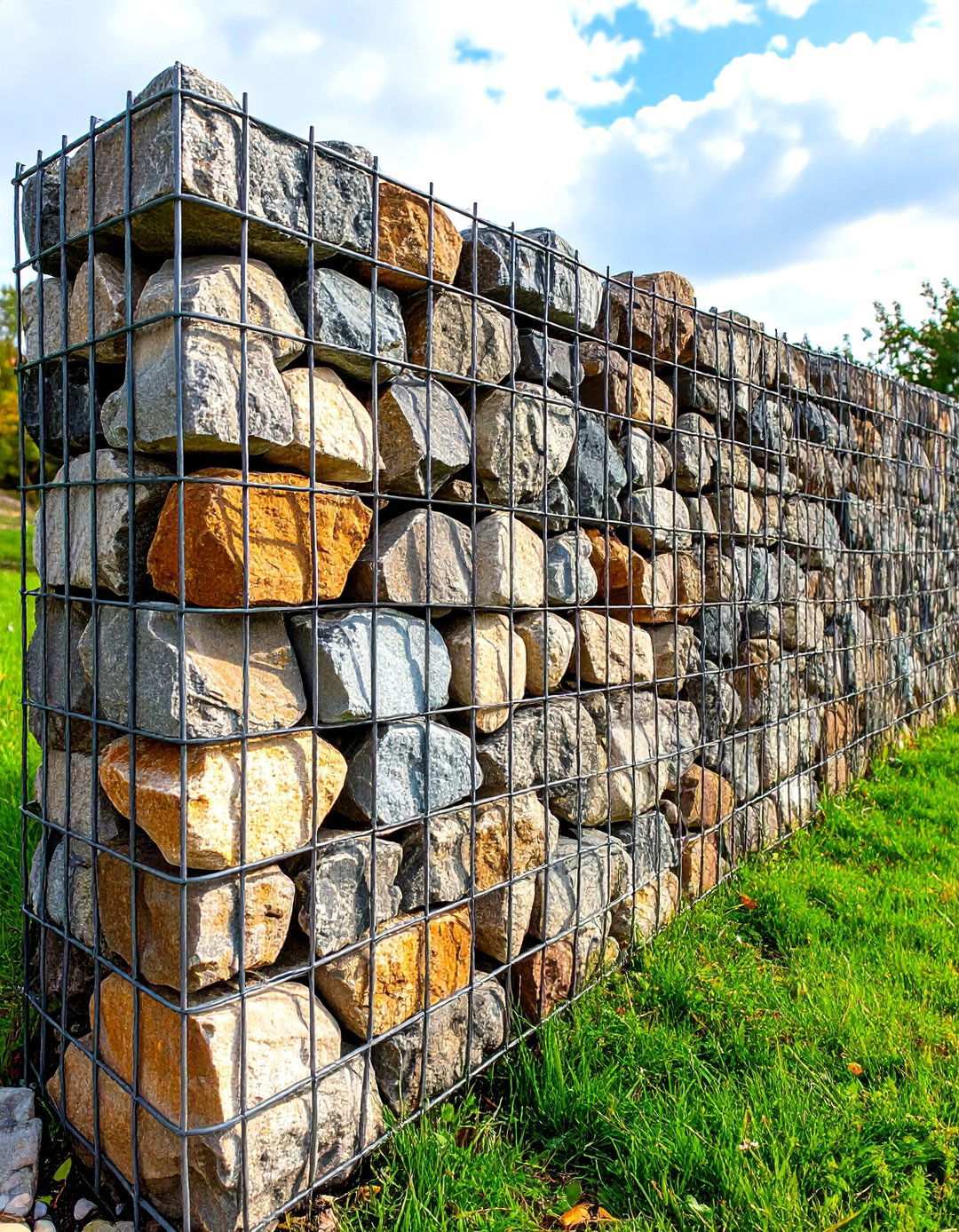
Are you looking for architectural solutions that seamlessly blend functionality and natural beauty? Engineered stone walls offer a perfect blend of structural performance and aesthetic appeal, making them an ideal choice for various applications. Built by packing stones into wire mesh containers, these walls provide flexibility, permeability, and durability. This innovative approach allows for the use of irregularly shaped stones, while the wire mesh constraints help maintain precise geometric forms. Engineered stone systems excel in retaining walls, erosion control, and architectural features that demand both strength and efficient water management. The choice of stone materials can range from locally sourced river rocks to quarried stones, depending on the desired appearance and availability. The modular nature of these systems enables the creation of complex shapes, including curves and steps, while maintaining structural stability. Installation is relatively straightforward, requiring minimal specialized equipment and yielding immediate stability and long-term performance. The permeable nature of these walls prevents water pressure buildup, allowing for natural drainage. As stones weather and vegetation fills the gaps, these systems develop a beautiful patina over time.
19. Timeless Dry Stone Boundary Walls
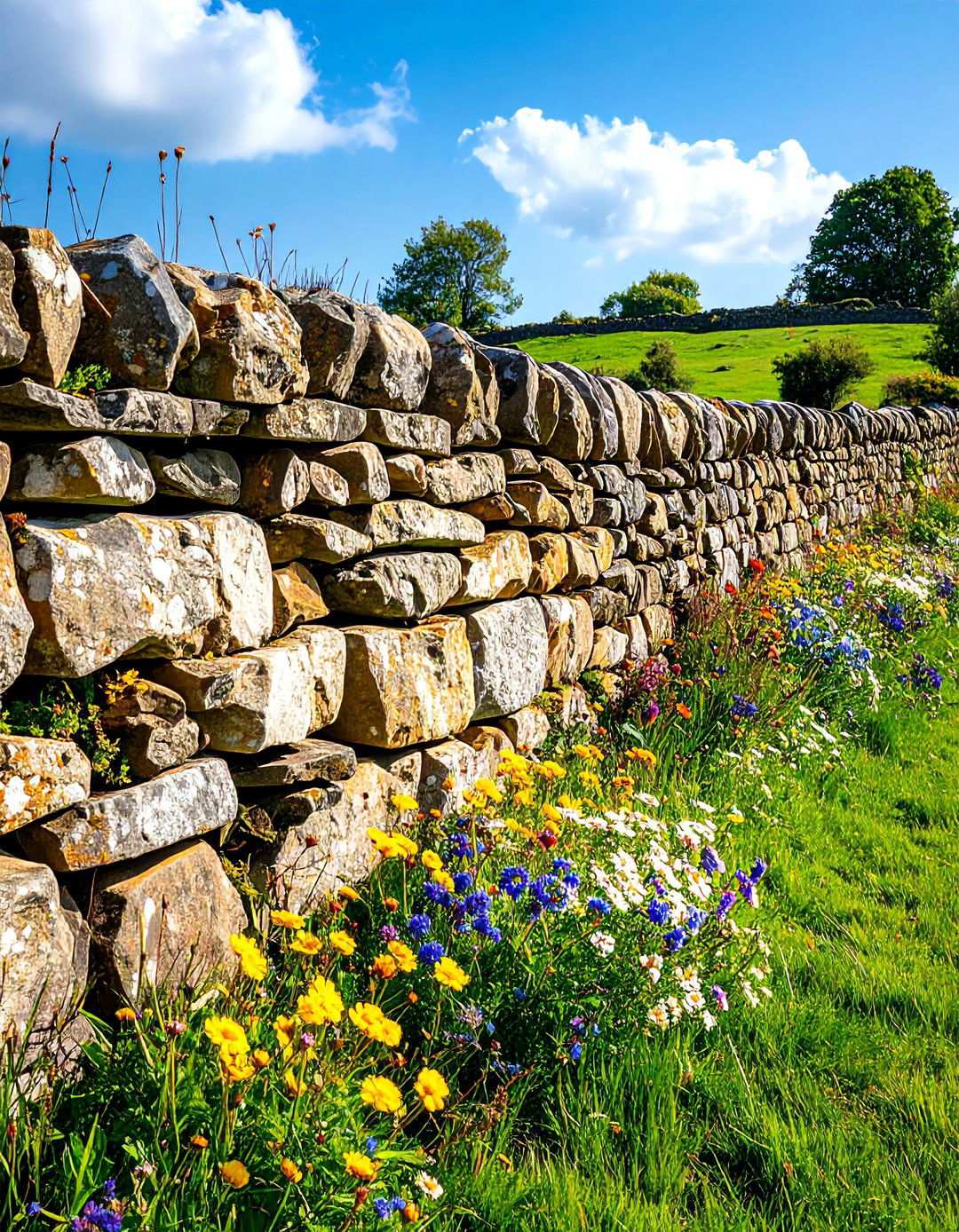
What can we learn from centuries-old construction techniques that create lasting landscape features without relying on modern materials? Traditional dry stone boundary walls represent a testament to the ingenuity and craftsmanship of the past, creating property divisions that harmonize with their surroundings. These installations rely solely on carefully fitted stones without mortar, depending on the expertise of skilled craftsmen for stability and longevity. Traditional techniques include laying a solid foundation, incorporating through-stones for added structural integrity, and using coping stones for weather protection. When selecting stones, local materials are often preferred, as they reflect the regional character while providing the necessary structural properties. Height limitations are implemented to ensure stability, while maintaining human-scale proportions suitable for residential applications. Constructing these walls requires a deep understanding of traditional proportions, batter angles, and fitting techniques passed down through generations. As a result, these walls age gracefully, demanding minimal maintenance, and can endure for centuries when built to last. They provide an authentic connection to the past, bridging the gap between modern properties and traditional land management practices.
20. Elevating Structural Columns with Stone Veneer
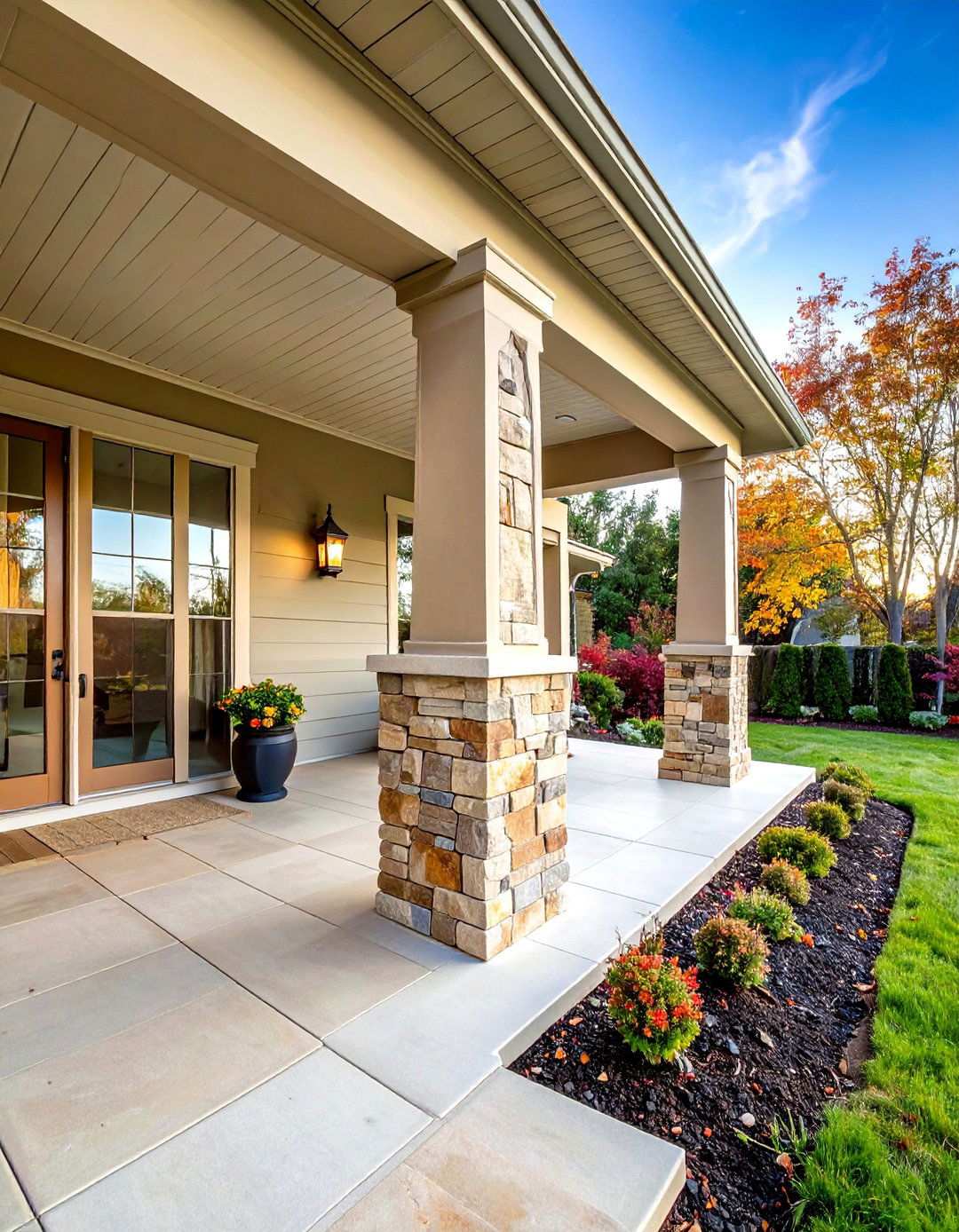
What if structural columns could transcend their functional purpose and become a stunning architectural element? Stone veneer column wrapping offers a clever solution by transforming the humble posts into elegant design features. By applying a thin layer of stone veneer to existing structural columns using lightweight attachment systems, this technique adds a touch of sophistication to any space. The selection of stone materials is crucial, as it should complement the surrounding architecture while ensuring the column’s proportions are balanced. A well-executed installation involves proper substrate preparation and secure attachment methods that account for seasonal movement, ensuring the wrapped columns blend seamlessly with stone walls and create a cohesive design theme throughout the property. This technique is versatile, suitable for both interior and exterior applications, including basement support posts, porch columns, and architectural features. While corner treatments require skilled installation to achieve a professional appearance, they also ensure weather resistance. Ultimately, stone veneer column wrapping transforms purely functional elements into attractive features that elevate the overall architectural character and increase property value through enhanced aesthetics.
21. Blending Functionality with Landscape Design – Curved Stone Seating Walls
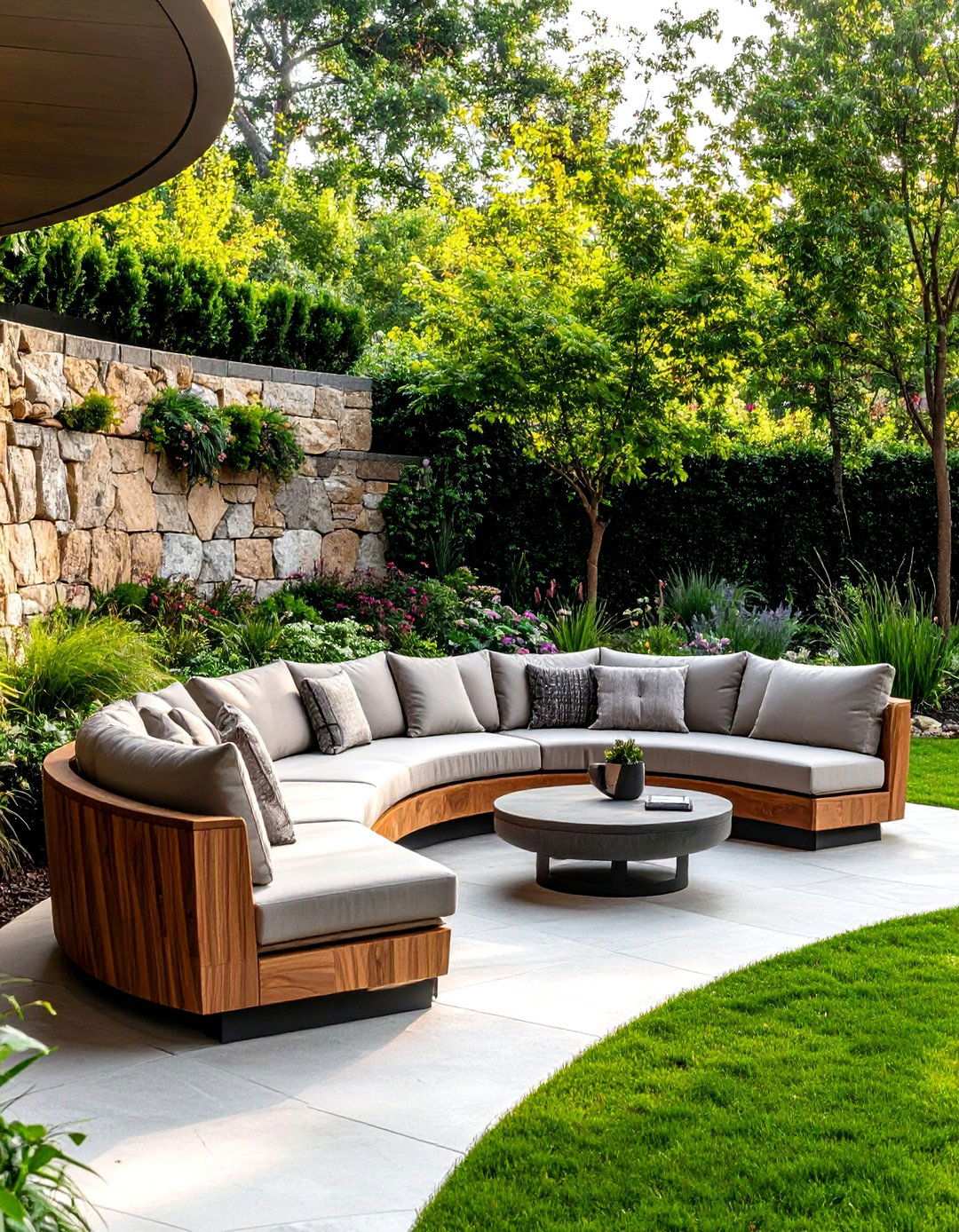
Can seating elements be integrated harmoniously into landscape design to create inviting gathering spaces? Curved stone seating walls offer a unique solution by combining functionality with artistic expression. By constructing stone walls that follow natural contours, these installations create comfortable and inviting outdoor furniture. Typically, curved stone seating walls measure sixteen to eighteen inches high and twelve to sixteen inches deep, ensuring a proportional relationship to the surrounding landscape. The selection of stone materials is critical, as it should provide a comfortable seating experience, such as smooth granite, finished limestone, or carefully selected sandstone. The curved design principle softens the harsh lines of landscape elements, creating intimate gathering spaces that foster conversation and relaxation. A professional construction approach ensures a solid foundation, consistent height, and proper back support through raised sections or planted areas behind the walls, enhancing comfort for extended use. These installations provide permanent seating that requires minimal maintenance and ages beautifully with the landscape, becoming an integral part of the overall design.
22. Elevating Kitchen Style with Natural Elements
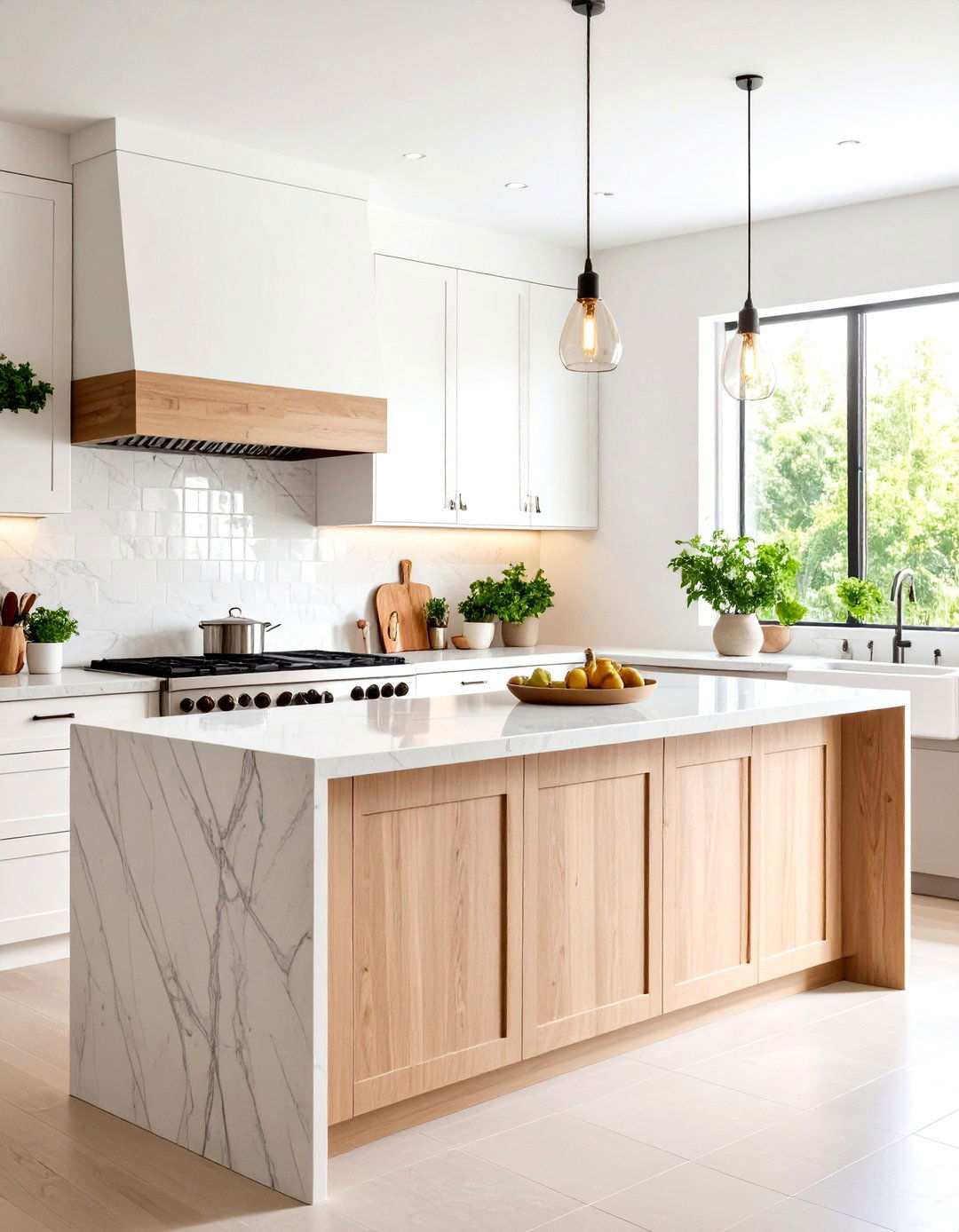
A kitchen’s aesthetic often hinges on its ability to balance functionality and sophistication. Natural stone backsplash features emerge as a solution that not only protects against heat and moisture but also contributes to a refined cooking environment. By opting for stone over traditional tile materials, homeowners can reap the benefits of superior performance and organic texture that seamlessly integrates with kitchens of varying styles. A diverse selection of stone types, including granite, slate, limestone, and marble, allows homeowners to tailor their design to their specific needs and preferences. To ensure long-term durability, professional installation involves meticulous preparation of the substrate, waterproofing measures, and secure attachment methods. Additionally, skilled craftsmen can precision-engineer edge treatments and integrate the backsplash with countertops for a seamless appearance. The inherent variation in natural stone patterns adds visual interest, while neutral color palettes expertly complement shifting cabinet and appliance trends. Effective sealing protects against stains while preserving the stone’s natural beauty, ultimately elevating property value and providing daily enjoyment through beautiful, functional surfaces.
23. Harnessing the Power of Split Face Stone Accent Installations
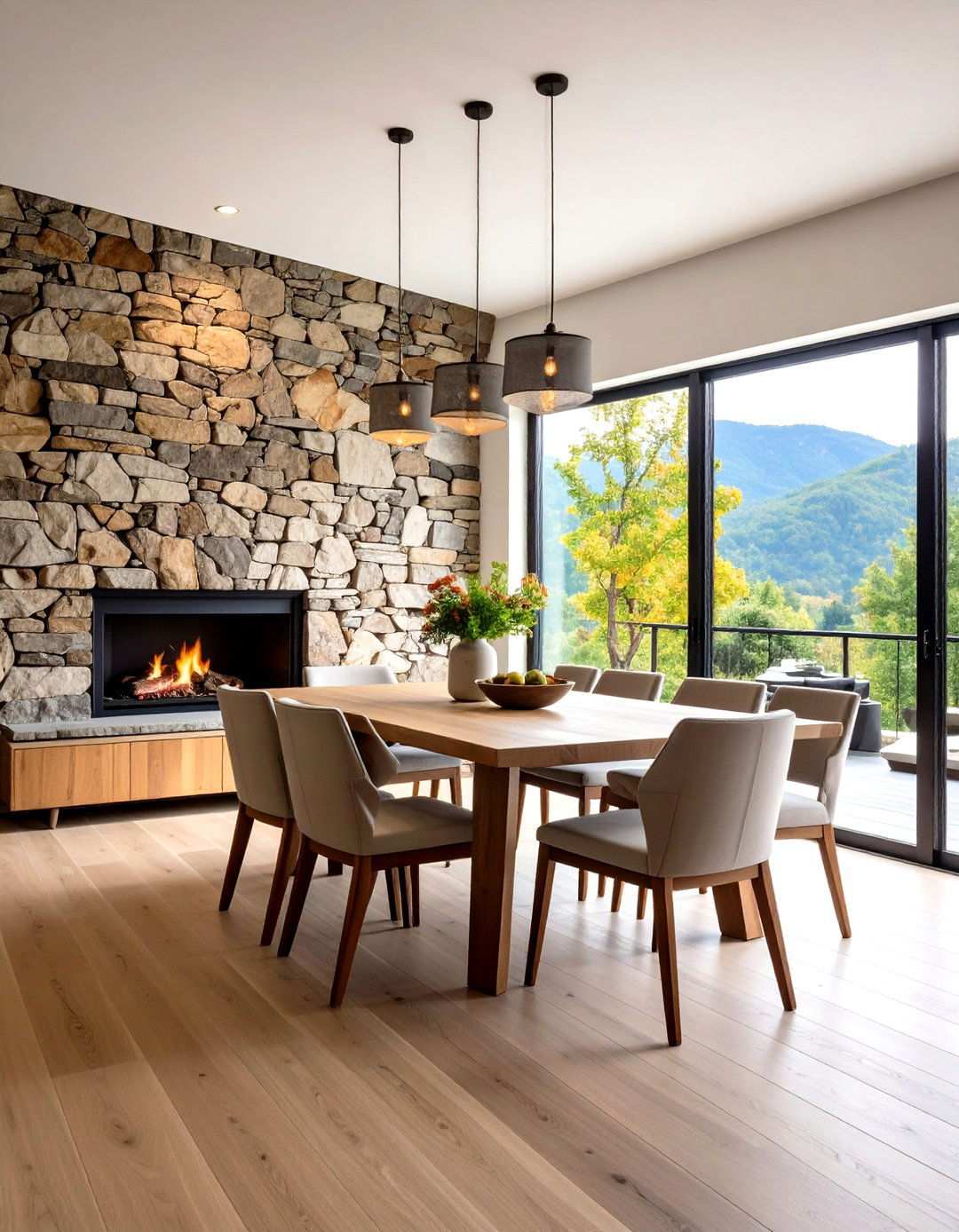
Dramatic texture contrasts can transform a space, imbuing it with bold architectural statements that set it apart. Split face stone accent installations showcase the raw, unbridled beauty of natural stone, revealing its authentic character through carefully controlled splitting techniques. This method exposes fresh stone faces, creating a consistent texture while preserving the natural irregularity that defines the material. Split face stone applications excel in feature walls, fireplace surrounds, or exterior cladding, where the dramatic texture amplifies the space’s architectural character. To successfully execute this technique, installers must possess a deep understanding of stone properties and employ proper attachment methods for the unique surfaces they create. The resulting installations highlight the natural color variation and crystalline structure of the stone, visible in the clean breaks. Professional installation ensures secure attachment while preserving the authentic appearance of hand-worked stone, effectively merging traditional craftsmanship with contemporary design sensibilities. With the strategic integration of lighting, the dramatic texture is further accentuated through shifting shadow patterns, creating a sophisticated rustic appeal that effortlessly bridges the gap between timeless stone work and cutting-edge design.
24. Harmonious Integration of Stone and Greenery
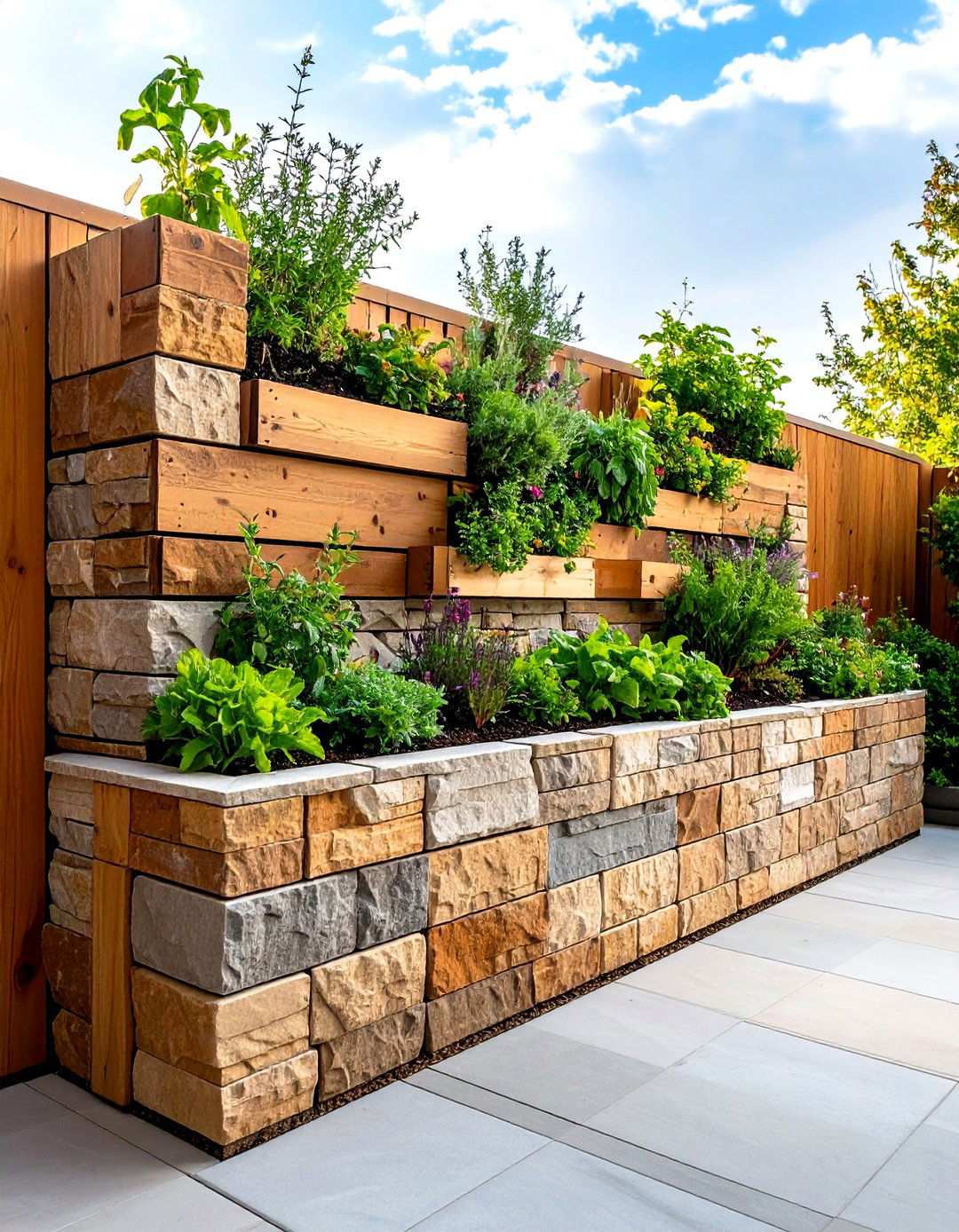
Landscape design can achieve remarkable feats of efficiency by repurposing traditional stone walls into multifunctional elements. One innovative approach is to integrate stone planter walls that double as retaining structures and thriving gardens, maximizing space potential in the process. By incorporating soil retention systems, drainage solutions, and carefully designed planting pockets within the stone framework, these installations create a seamless blend of functionality and beauty. The selection of stone materials is crucial, as it not only complements the planted materials but also provides the necessary structural support for the soil’s retention.
To guarantee the success of such installations, professional designers take a holistic approach, ensuring that the soil depths are tailored to the specific plantings while maintaining the wall’s stability through meticulous engineering. The integration of efficient irrigation systems allows for optimal water delivery without compromising the integrity of the stone, thereby creating a self-sustaining ecosystem. As the plantings mature and change with the seasons, the stone wall remains a constant source of structural elegance, underscoring the harmonious coexistence of stone and greenery. These installations embody the principles of sustainable design, successfully marrying functionality with aesthetics to produce comprehensive landscape solutions that enhance both the beauty and productivity of the space.