1. Timeless Appeal of Classic Stucco and Terracotta Roofing
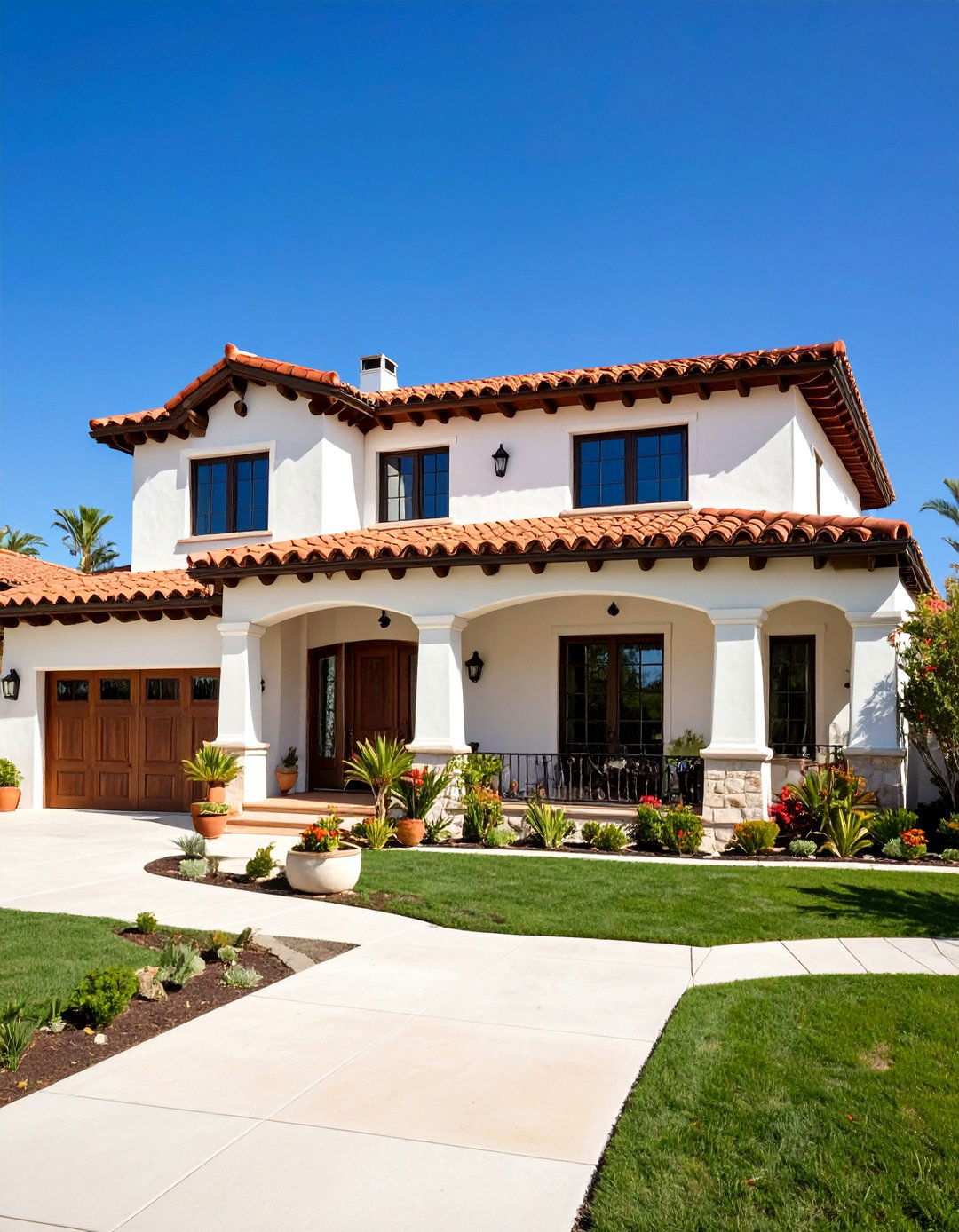
One of the defining characteristics of Spanish bungalow exteriors lies in their harmonious blend of classic elements, where white stucco walls and terracotta roof tiles come together in perfect sync. This iconic combination not only reflects the warm, sunny climate of the Mediterranean but also serves as a testament to the enduring charm of traditional architectural styles. The pristine white stucco façade provides a crisp backdrop for the vibrant terracotta roof tiles, which burst with warm, inviting colors reminiscent of Spain’s rich cultural heritage. Paired with dark wood window frames and doors, typically stained in rich, earthy tones, this classic design creates a striking visual impact that never fails to captivate. Wrought iron window grilles and decorative elements add a touch of authenticity and security, while carefully selected landscape elements like olive trees or lavender bushes bring a sense of serenity to the space. This classic approach to exterior design has stood the test of time, providing excellent curb appeal and a sense of continuity with the home’s Spanish heritage.

As an Amazon Associate I earn from qualifying purchases.
2. Desert Breeze Stucco with Mission Revival Influences
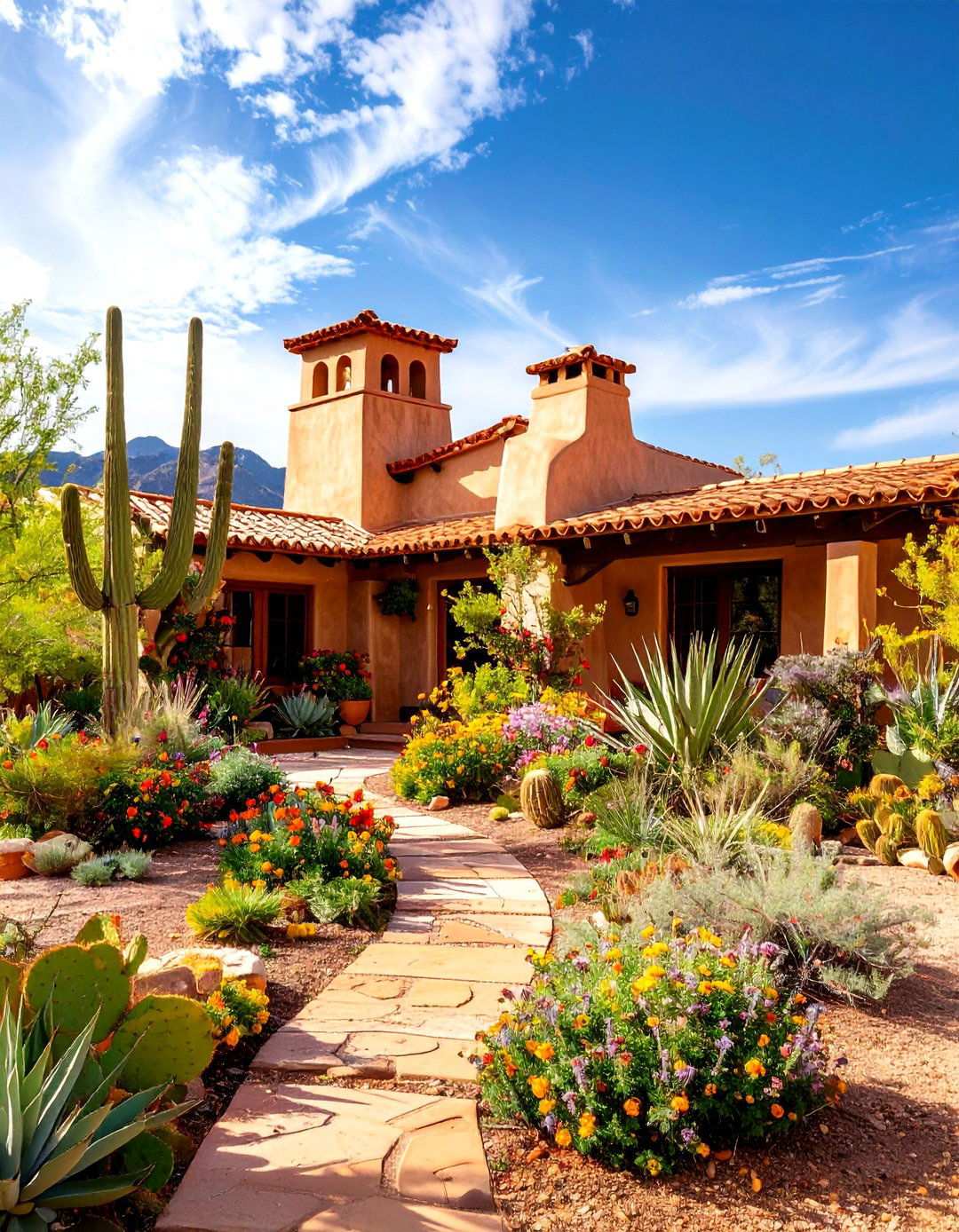
Warm-toned stucco finishes in earthy shades of sand or beige evoke a natural, desert-inspired aesthetic that harmonizes beautifully with arid landscapes. This soothing color palette draws inspiration from the southwestern influence of Spanish Colonial architecture, presenting a more subdued alternative to crisp white walls. The textured stucco finish adds a sense of depth and visual intrigue, subtly referencing aged adobe construction. Bell towers, arched doorways, and decorative parapets enhance the Mission Revival style, imbuing the design with a sense of history and tradition. Clay roof tiles in deeper terracotta or brown tones complement the warm wall colors, creating a cohesive look. Wooden vigas extending from the walls add structural authenticity and tactile texture, while native drought-resistant plants like agave, prickly pear, and desert marigolds create an attractive and low-maintenance landscaping solution. Stone or tile accents around doorways and windows add an extra layer of texture and visual interest, further connecting the home to its natural surroundings.
3. Moroccan Oasis Courtyard Entry Design
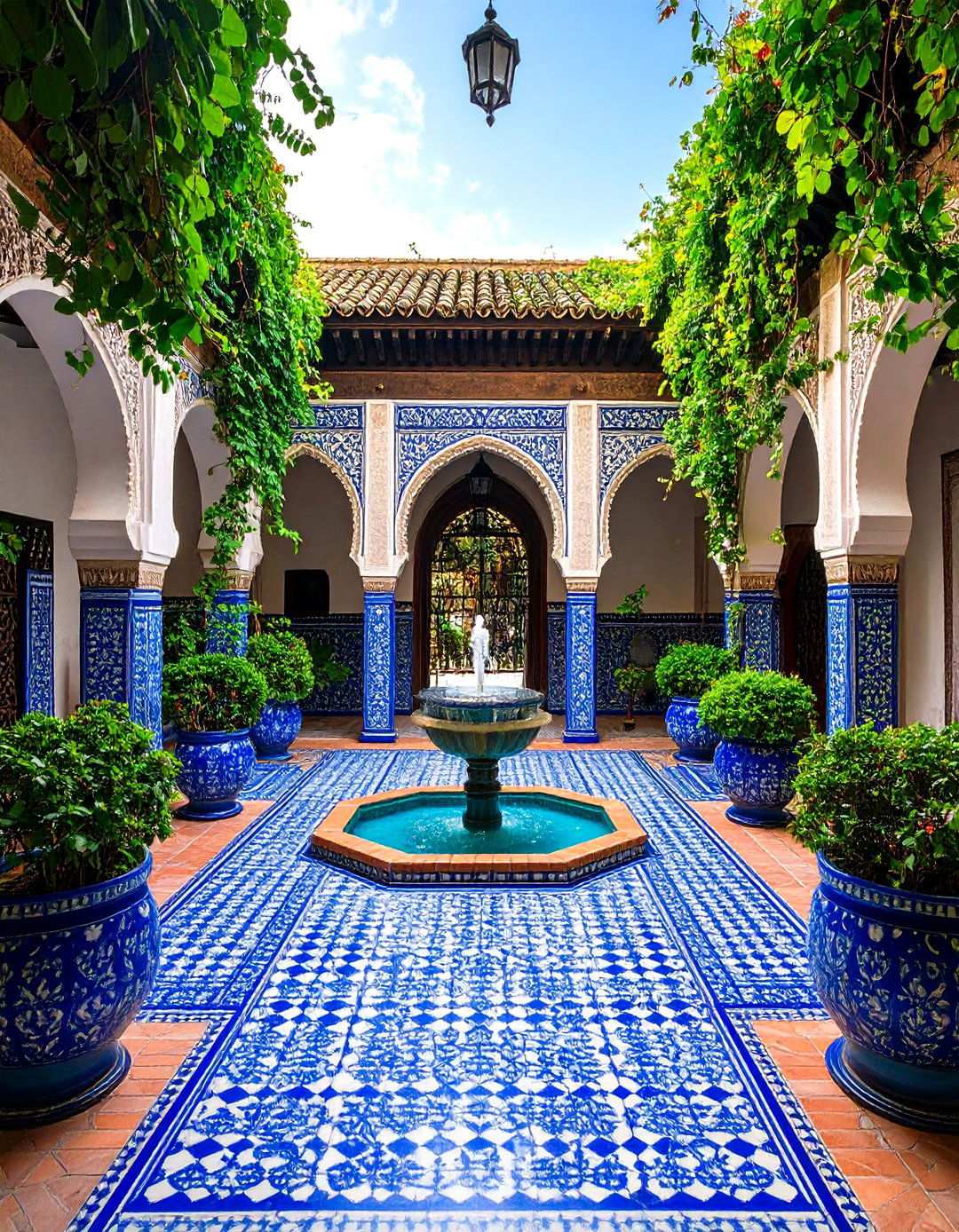
Creating a private courtyard entry can be just the thing to elevate the arrival experience and make a lasting impression on guests. If your current entrance feels lacking in wow factor, consider a Moroccan-inspired design that incorporates intricate tile work, elegant fountains, and lush plantings within a walled courtyard space. Hand-painted ceramic tiles in blue, green, and white patterns bring visual interest to fountain bases and planter edges, while wrought iron gates with geometric patterns strike a perfect balance between security and visual appeal. A central water feature serves as the focal point, creating soothing sounds and a cooling respite from the sun. Climbing vines on walls and overhead pergolas provide natural shade and intimacy, while comfortable seating areas with weather-resistant cushions invite lingering and relaxation. Decorative lanterns and sconces add a touch of enchanting evening ambiance, transforming a simple front yard into an inviting outdoor room that captures the essence of Mediterranean hospitality and creates a true retreat-like atmosphere.
4. Modern Minimalist Spanish Revival Design
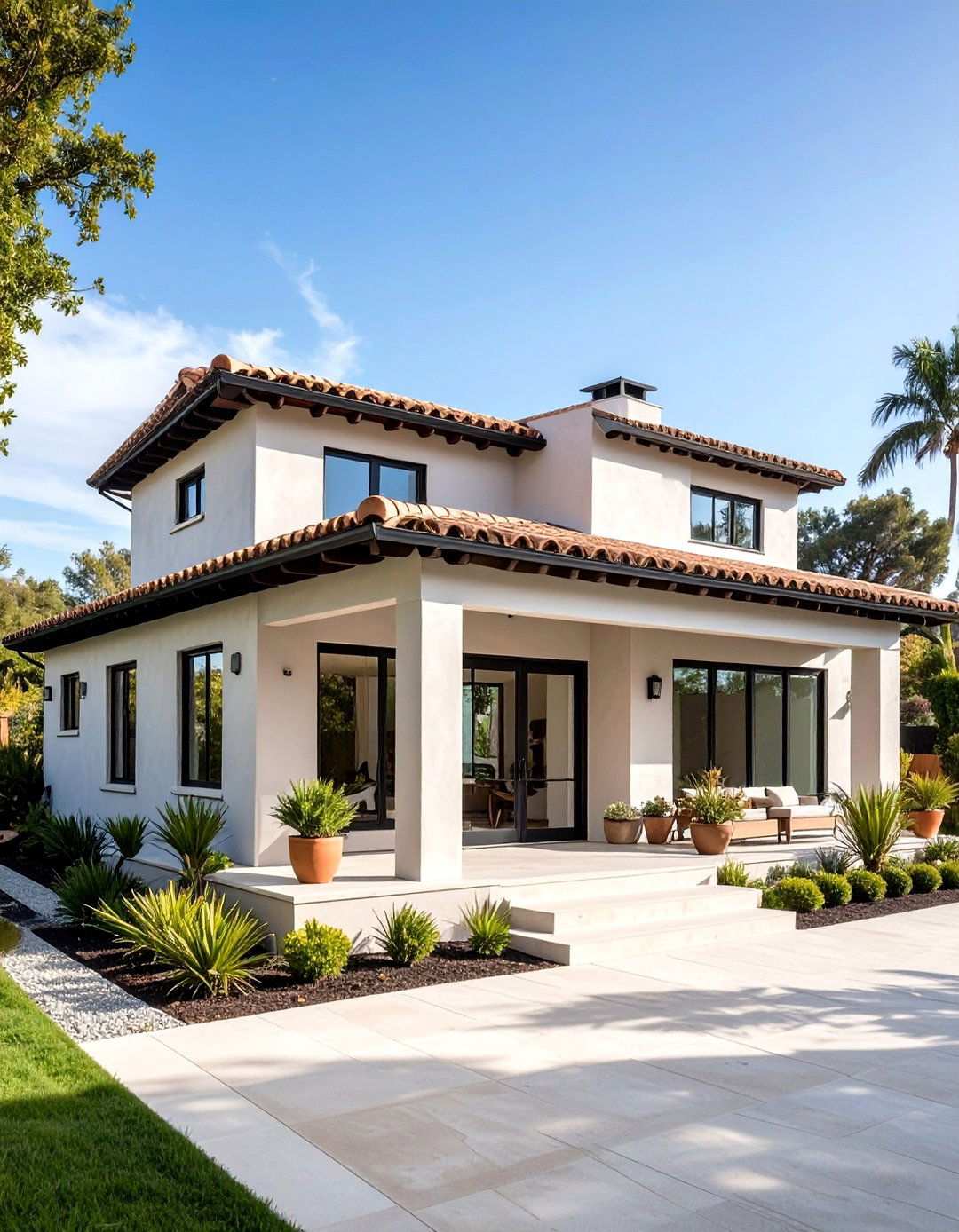
In contemporary Spanish bungalows, a seamless blend of traditional and modern elements creates a harmonious visual experience. By stripping away ornate details and focusing on clean lines, neutral color palettes, and simplified forms, these homes exude a sense of serenity and sophistication. The exterior façade is often characterized by smooth stucco walls in soft whites or light grays, which serve as a versatile backdrop for architectural details that are both modern and timeless. Large picture windows, which replace smaller traditional openings, flood the interior spaces with an abundance of natural light, further enhancing the sense of openness and airiness. The choice of materials for windows is also noteworthy, with steel or aluminum frames in black or bronze tones providing a sleek, contemporary contrast to the more traditional wooden frames. Geometric planters filled with succulents and modern outdoor furniture complete the updated aesthetic, while clean, linear lighting fixtures add a touch of modernity to the outdoor spaces.
The design approach behind these modern minimalist Spanish revival homes lies in striking a perfect balance between proportion, material authenticity, and decorative simplicity. By doing so, homeowners who appreciate Spanish architecture can enjoy a fresh, updated appearance that feels both timeless and current. The clean lines and minimal ornamentation create a sense of calm and serenity, making these homes perfect for those seeking a peaceful retreat from the chaos of everyday life.
5. Rustic Hacienda Style with Exposed Beams
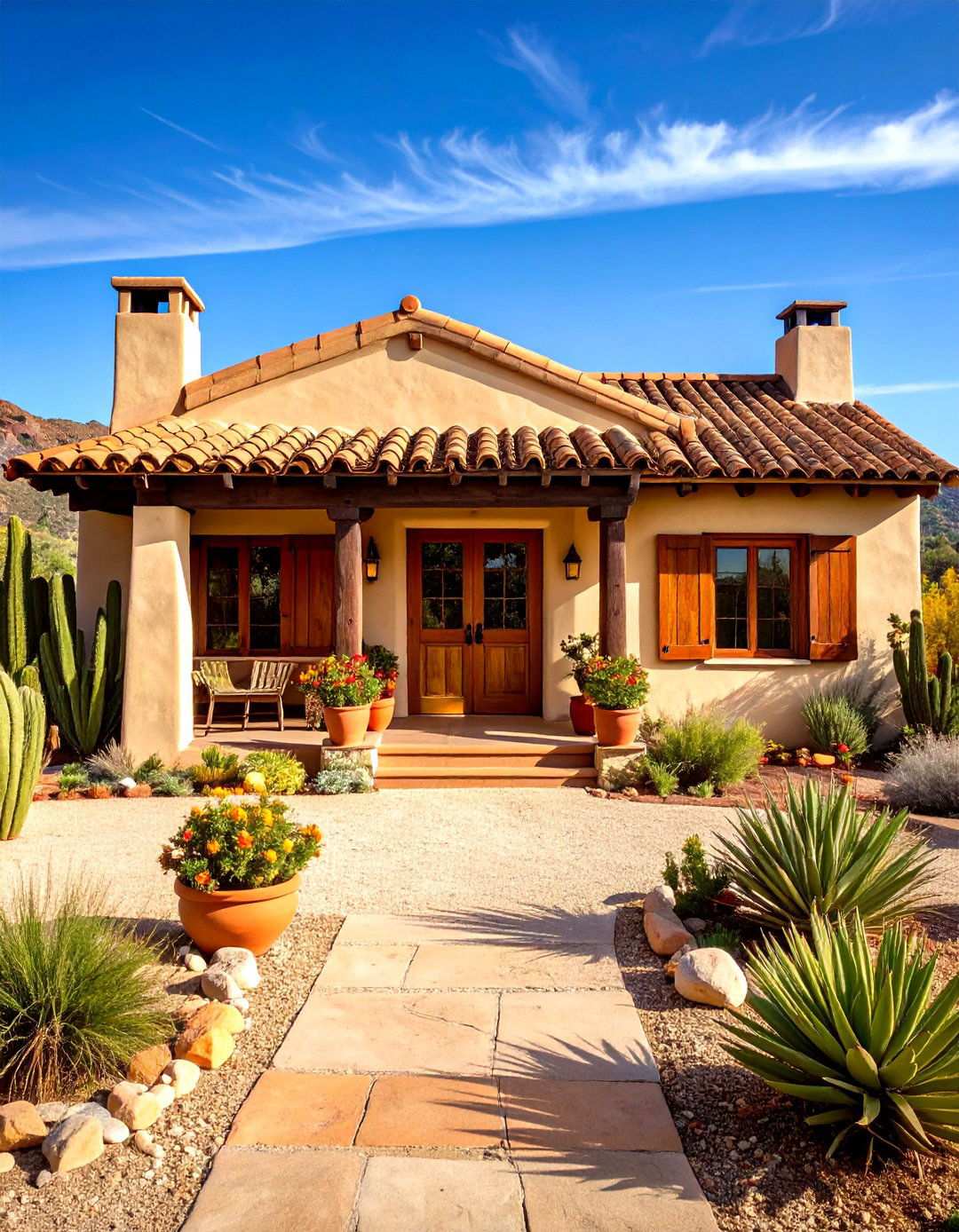
Rustic hacienda styling is all about embracing the raw, natural beauty of materials and craftsmanship. This design theme celebrates the imperfections and unique characteristics of natural materials, which gives the homes an authentic, aged appearance that seems to have evolved over time. The exterior walls are often finished with rough-textured stucco in cream or off-white tones, which provides an irregular, hand-applied finish that mimics the traditional construction methods of the past. Heavy wooden vigas and corbels that extend from the walls create dramatic shadows and authentic structural elements, adding depth and visual interest to the space. Dark wood shutters and doors with visible hardware not only add functional beauty and security but also contribute to the overall rustic charm of the home. Stone or brick accents around doorways and window openings provide a beautiful textural contrast, while a covered portal with an exposed beam ceiling creates a cozy, shaded outdoor living space.
6. Revitalizing the Coast: Andalusian Blue and White Color Scheme
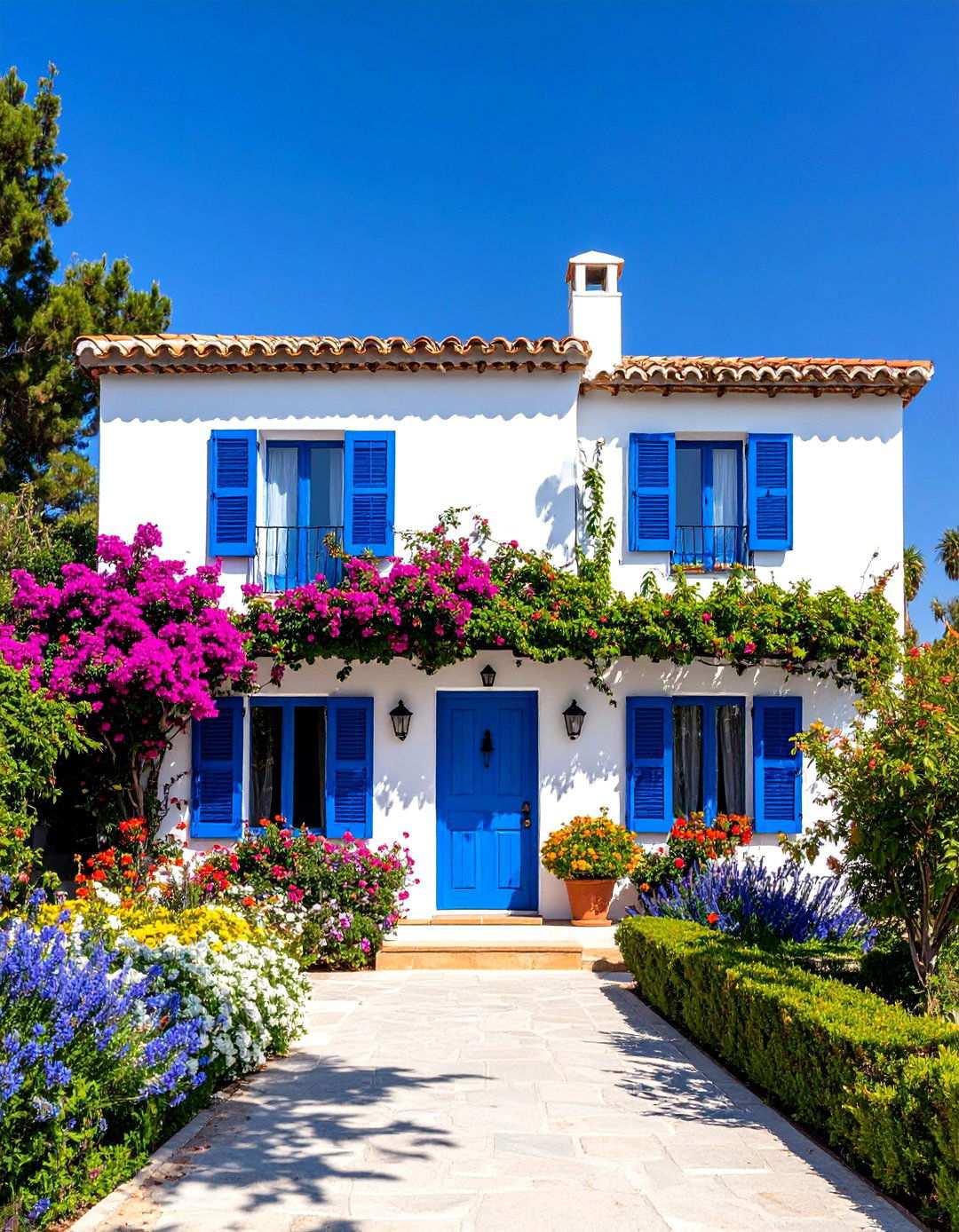
Drawing inspiration from the sun-kissed coastal towns of southern Spain, this captivating color palette fuses clean white stucco with bold blue accents, evoking a revitalizing Mediterranean coastal ambiance. White walls serve as the perfect backdrop, while blue makes its presence known through window shutters, doors, and ornate trim elements. The intensity of the blue hue can range from deep, rich cobalt to lighter, more serene sky tones, depending on the desired effect. Traditional terracotta roof tiles in natural earth tones add warmth and depth to the cool blue and white palette, creating a striking visual contrast. Wrought iron details, painted in matching blue tones, bring cohesion to the design elements, tying the entire look together seamlessly. Hand-painted ceramic tiles featuring blue and white patterns add a touch of elegance to fountain bases, stair risers, and architectural accents. Lush green landscaping with flowering plants in complementary colors further enhance the coastal Mediterranean atmosphere, making this color combination particularly well-suited to coastal climates where the blue hue echoes the ocean views. The result is a cheerful, inviting exterior that exudes sophistication and relaxation, perfect for outdoor entertaining and leisurely living.
7. Captivating Warmth: Peach and Salmon Stucco Design
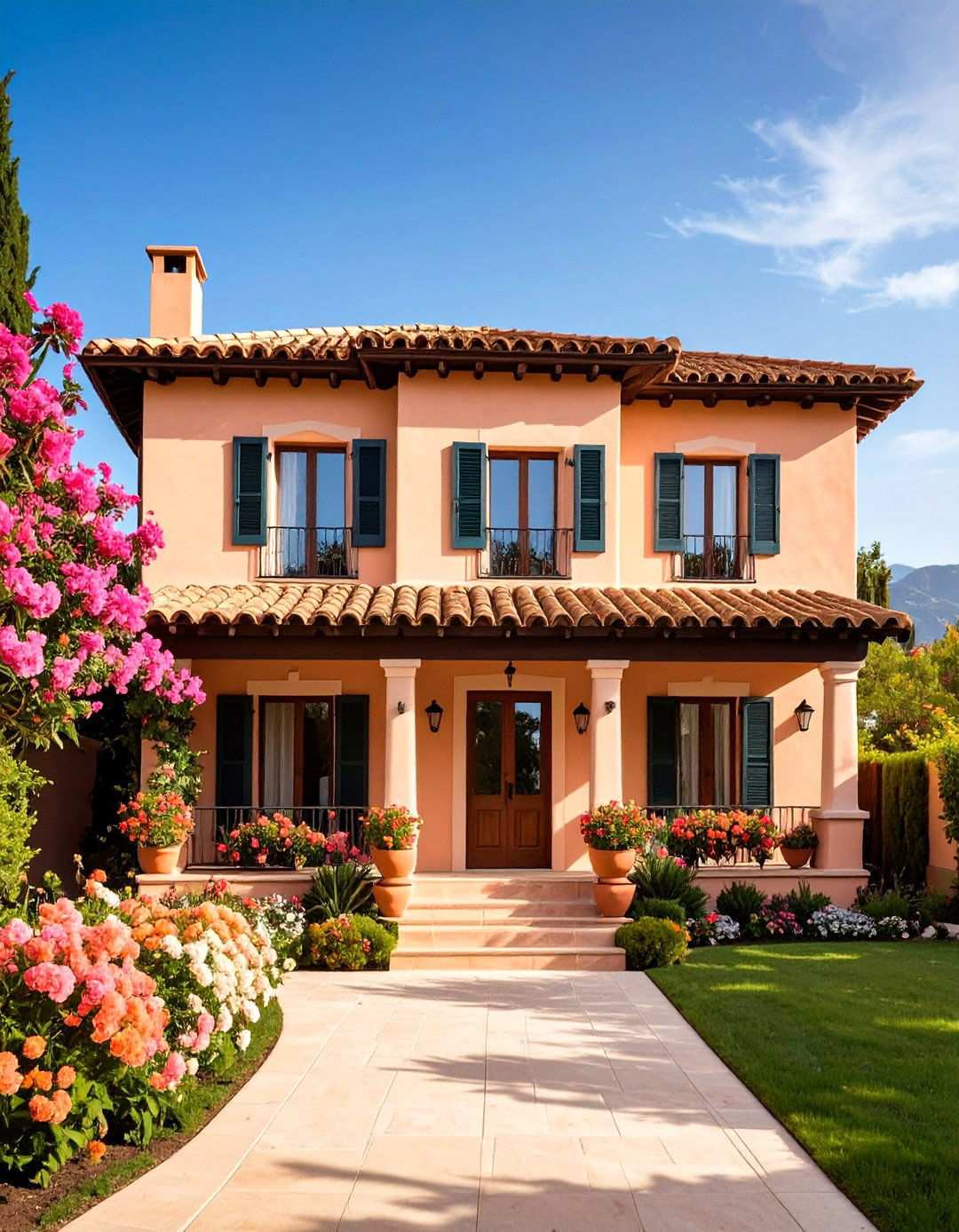
Warm and inviting, a peach, salmon, or soft coral stucco color palette captures the essence of Mediterranean sunsets, imbuing the exterior of a home with a sunny, welcoming ambiance. These colors not only work beautifully in both morning and evening light but also provide a soft, warm glow that enhances the home’s inviting appearance. Traditional terracotta roof tiles complement the warm wall tones perfectly, creating a harmonious color relationship that’s both soothing and visually appealing. Dark green or deep brown shutters and trim add a touch of sophistication while maintaining the warm overall palette, preventing the design from feeling too loud or overwhelming. Wrought iron details in black or dark bronze add a touch of elegance without competing with the soft wall colors, creating a perfect balance between style and subtlety. Landscape elements like bougainvillea, hibiscus, and other flowering plants further enhance the warm color scheme, while stone or brick pathways in complementary earth tones connect outdoor spaces seamlessly. This color approach works particularly well in sunny climates where the warm tones reflect abundant natural light, creating an exterior that feels romantic and serene, as if basking in perpetual golden hour lighting.
8. Elevating Outdoor Spaces with Dramatic Wrought Iron Pergolas
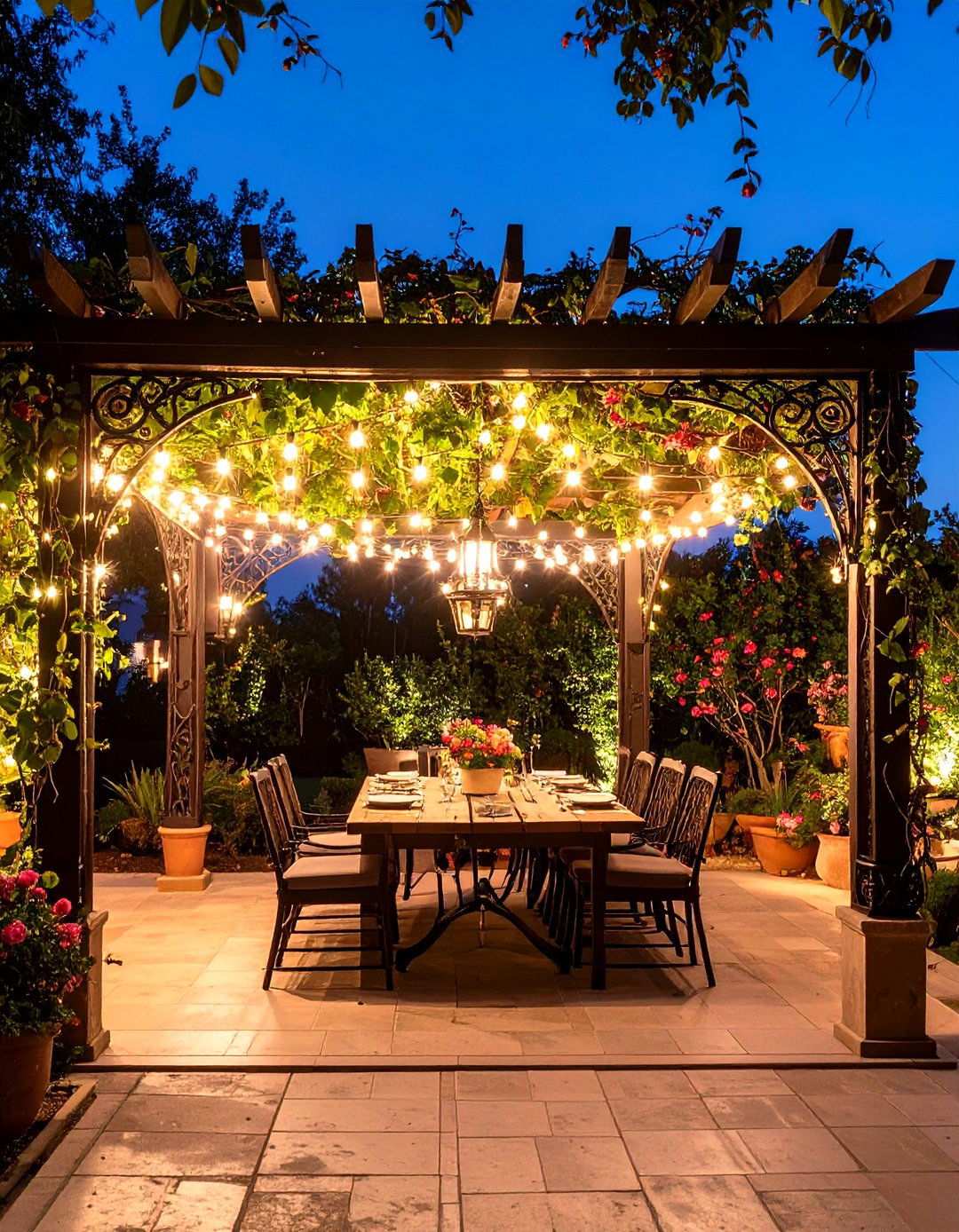
A well-designed wrought iron pergola can serve as the perfect anchor for your outdoor space, seamlessly blending with your home’s aesthetic to create a sophisticated extension. By incorporating intricate ironwork into your pergola, you can define distinct outdoor rooms for various activities, such as dining, relaxation, and entertainment. The hand-forged iron beams and decorative brackets not only provide support for climbing vines but also create natural shade and enhance privacy. To complete the look, consider coordinating wrought iron furniture, planters, and lighting fixtures that align with your design theme. A durable, weather-resistant stone or tile floor beneath the pergola creates a seamless transition between indoors and outdoors. Built-in seating areas with weather-resistant cushions invite comfortable gatherings, while outdoor kitchens or bar areas can be seamlessly integrated beneath larger pergola structures. With evening lighting integrated into the ironwork, you can create an enchanting ambiance perfect for nighttime entertaining. This thoughtful design element can transform even the simplest patio spaces into refined outdoor rooms that rival interior spaces in terms of comfort and style.
9. Cultivating Authentic Mediterranean Herb Gardens
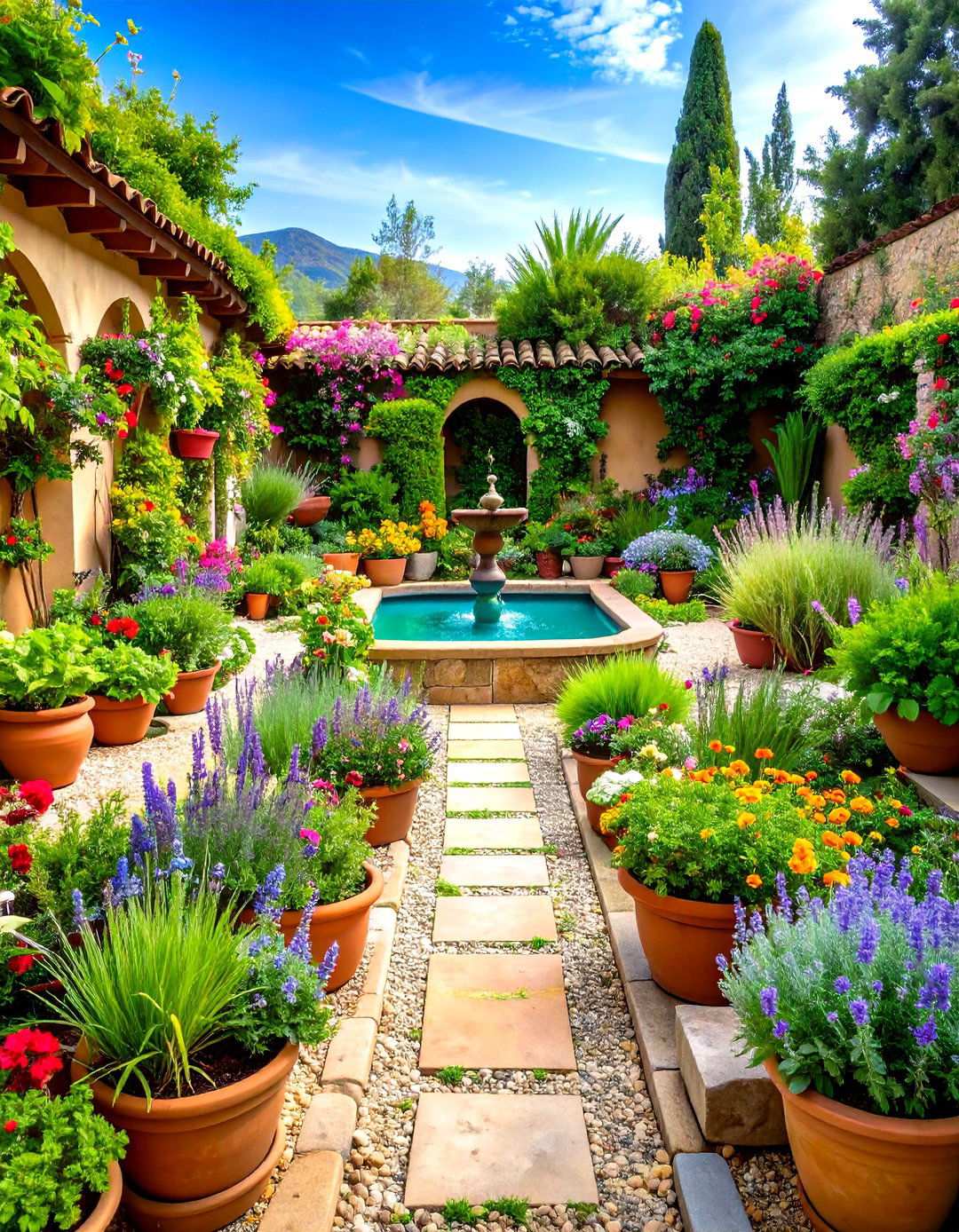
For those who appreciate the allure of Spanish bungalow landscaping, integrating functional herb gardens creates a unique opportunity to celebrate Mediterranean cooking traditions in your outdoor space. By utilizing raised planter beds constructed from natural stone or stucco, you can pay homage to the architectural style while ensuring the herbs receive the proper drainage they need to thrive. Traditional Mediterranean herbs such as rosemary, lavender, thyme, and oregano love to bask in sunny, well-drained conditions typical of Spanish-style landscapes. Gravel pathways between planting beds provide a clean circulation route and ensure efficient drainage. Decorative ceramic pots and traditional terracotta planters add authentic styling elements that evoke the charm of the Mediterranean. A central fountain or water feature not only provides irrigation access but also creates a soothing ambiance that invites relaxation. Wrought iron plant supports and small trellises allow for climbing herbs and vegetables to flourish, while covered seating areas nearby encourage garden enjoyment and harvest activities. This thoughtful landscaping approach creates a year-round display of beauty while providing fresh ingredients for Mediterranean-inspired cuisine. The aromatic plants naturally enhance outdoor living spaces, engaging sight, smell, and taste in an authentic Mediterranean experience.
10. Elevating Your Bungalow with Distinctive Accent Walls
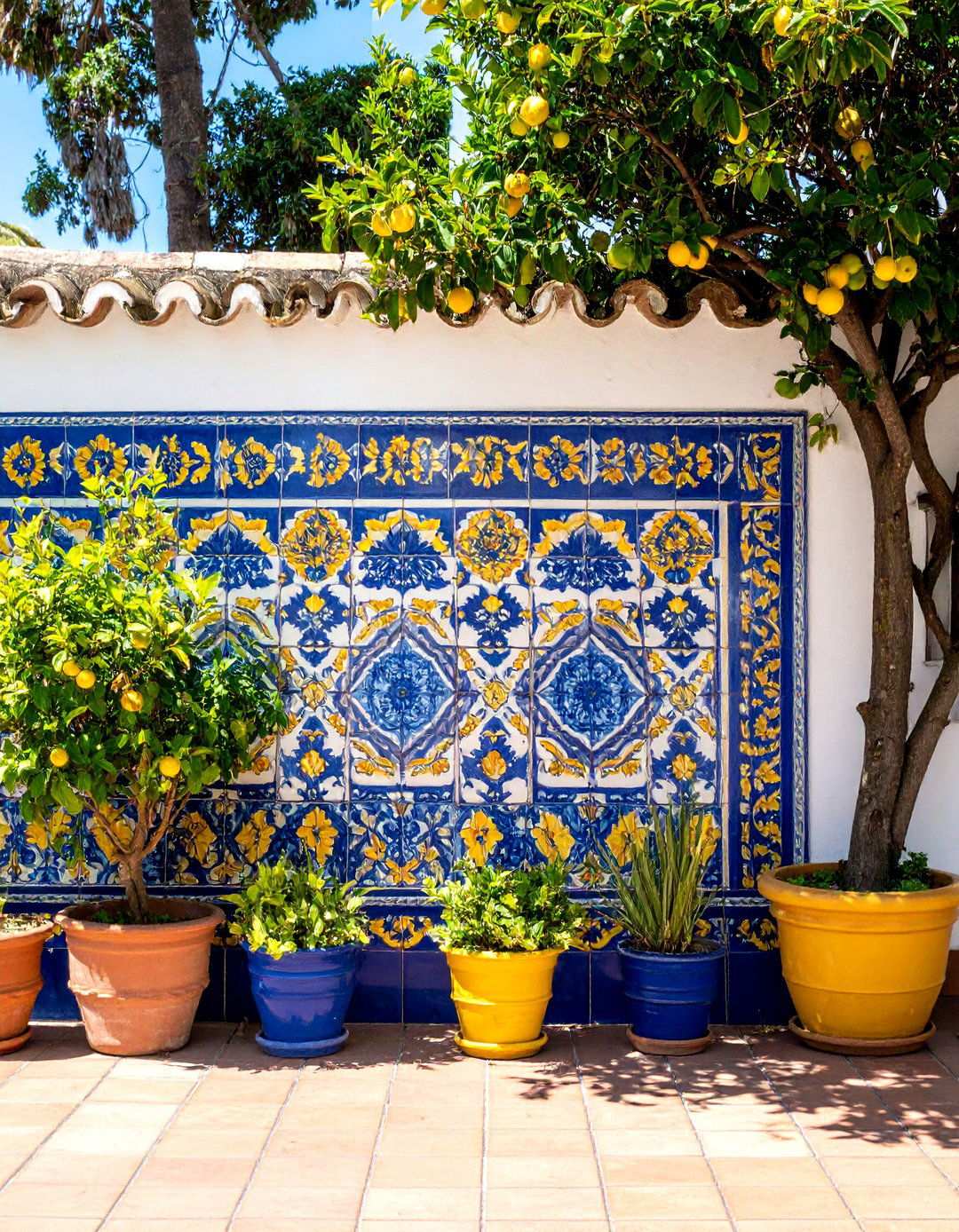
Incorporating Spanish tile accent walls into your exterior design creates a dramatic focal point, showcasing the artisanal craftsmanship and vibrant colors that are characteristic of this style. Hand-painted ceramic tiles in geometric patterns, floral motifs, or traditional Moorish designs become the central attraction on entry walls, fountain surrounds, or garden walls, adding an undeniable sense of authenticity. The palette of rich blues, emerald greens, sunny yellows, and terracotta oranges is quintessentially Spanish, imbuing your home with a unique cultural identity. By covering entire wall sections or creating decorative borders and medallions, these tile features can add subtle yet striking accents to your Spanish bungalow’s exterior. Complementing the decorated areas with plain tiles in coordinating colors provides visual balance and extends the design’s reach, drawing attention to the intricate details and textures of the handcrafted pieces. When incorporated around water features, outdoor kitchens, and seating areas, these tile features can be truly appreciated up close, adding a touch of elegance and refinement to your home’s Mediterranean-inspired design. With proper installation, these decorative elements can withstand the challenges of outdoor conditions while maintaining their artistic integrity, ensuring a durable and long-lasting design that celebrates the traditional Spanish decorative arts.
11. The Timeless Elegance of Natural Stone Foundations
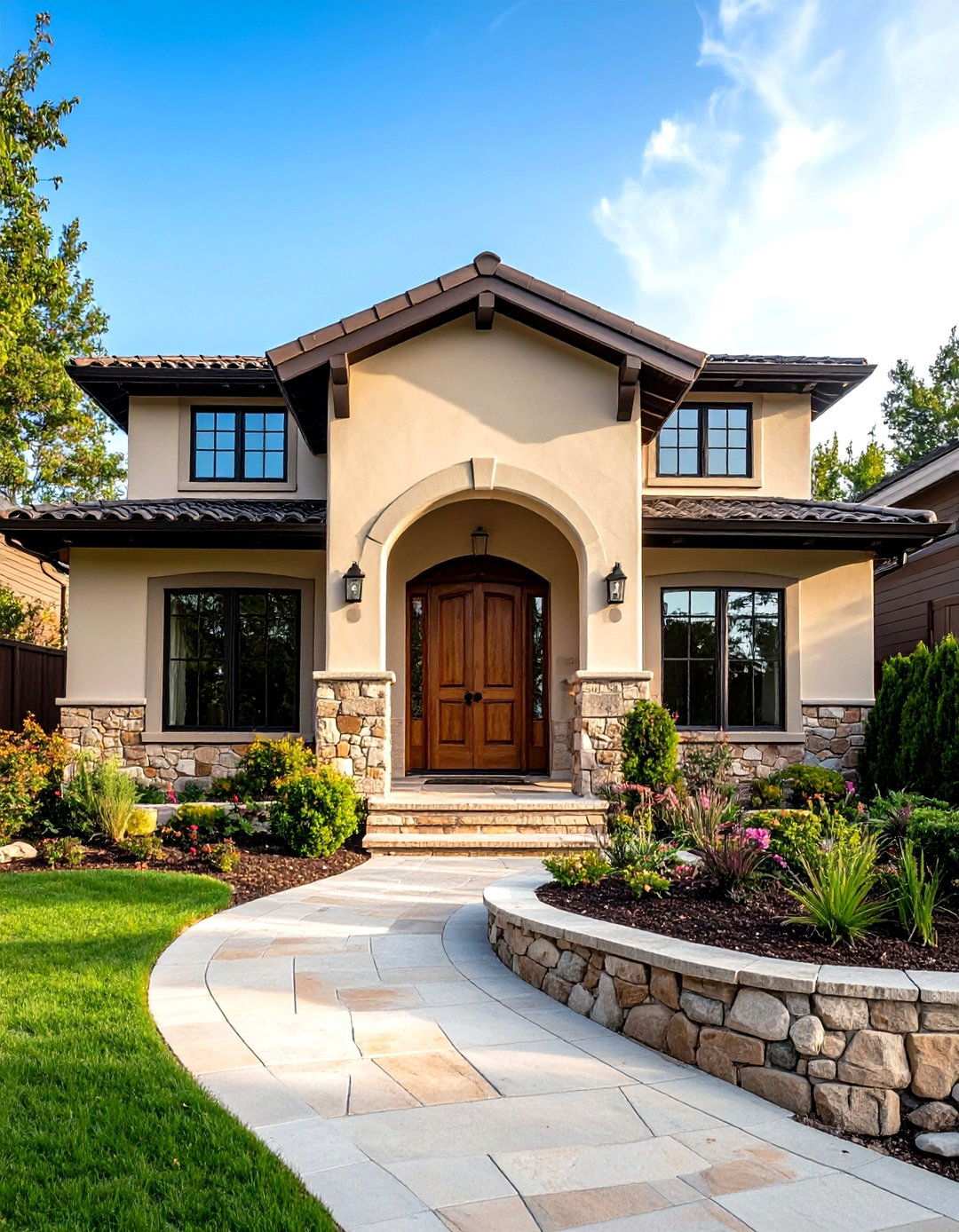
Natural stone foundations and accent walls bring a sense of authenticity and textural depth to Spanish bungalow exteriors, setting them apart from other architectural styles. The use of fieldstone, limestone, or sandstone in warm earth tones creates a solid base that grounds the architecture visually, providing a perfect foil for the flowing lines and curved shapes that characterize Spanish design. By extending the stone from the foundation up to window sill level or higher, you can create a striking two-tone exterior finish with stucco above, adding a touch of sophistication and elegance to your home’s exterior. Arched doorways and window surrounds in matching stone provide a beautiful frame for openings, drawing attention to the beauty of the surrounding landscape. Stone also works beautifully for outdoor fireplaces, planters, and retaining walls throughout the landscape, adding organic beauty and texture that complements the intricate details of Spanish architecture. By blending the irregular shapes and natural color variations of stone with stucco, you can create a seamless integration that adds substantial depth and visual interest to your home’s exterior. The result is a permanent-feeling exterior that suggests a home built to last for generations, while the stone elements also provide a cooling thermal mass in hot climates, making it an ideal choice for Spanish bungalow exteriors.
12. Crafting a Water-Wise Oasis
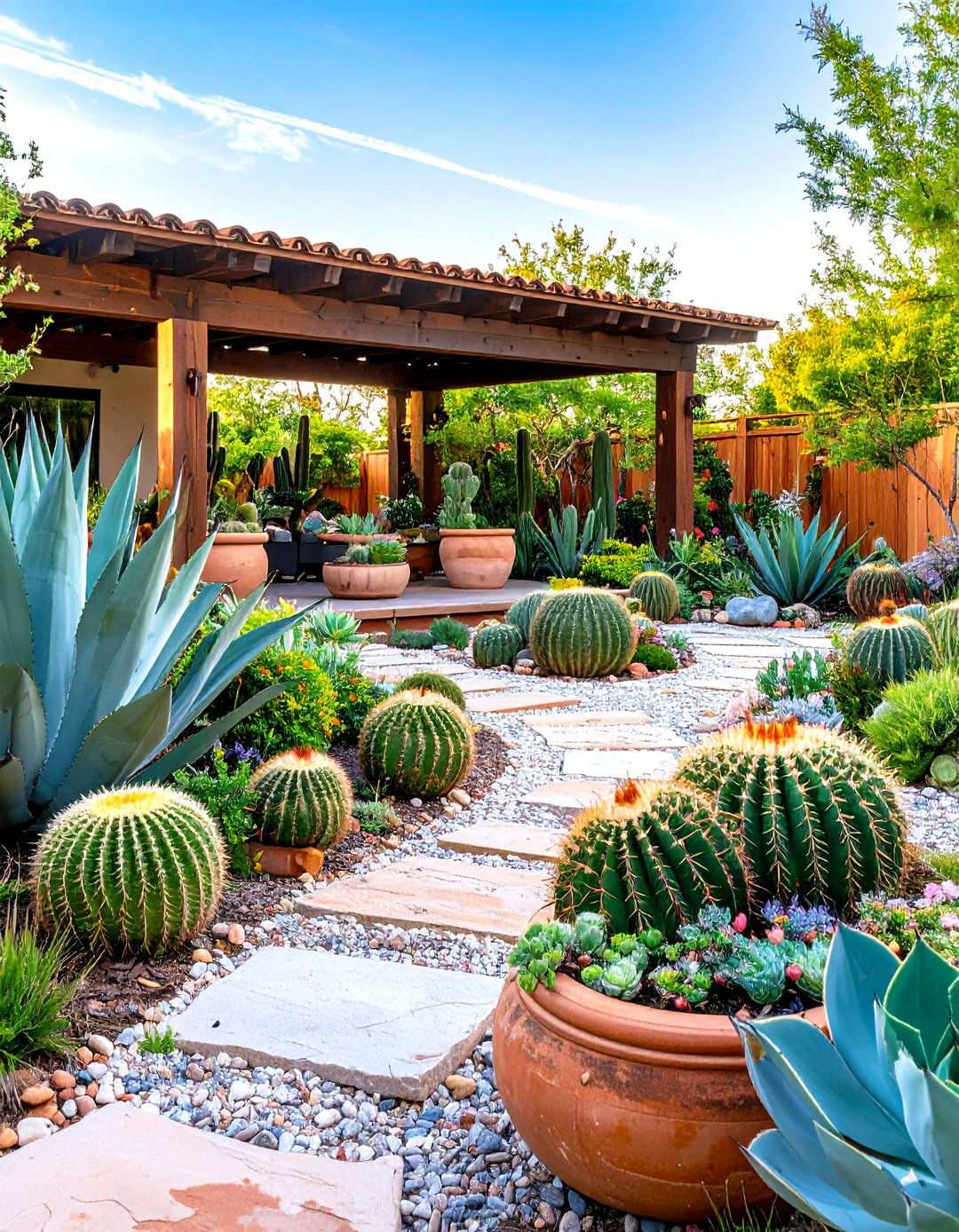
A harmonious blend of style and sustainability can be achieved in drought-resistant succulent landscapes that pay homage to the charm of Spanish bungalow architecture. By incorporating agave, aloe, jade plants, and barrel cacti, homeowners can create visually striking, low-maintenance gardens that thrive in the region’s climate. Meandering paths made from decomposed granite or gravel invite exploration, while large decorative pots and planters showcase statement succulents and add layers of depth to the landscape. Strategically placed stone or concrete planters provide a permanent home for larger specimens, their textures and forms adding visual interest. The judicious use of colorful succulents like echeveria and sedums injects seasonal vibrancy without the need for irrigation, while carefully chosen mulched areas with decorative stones mirror the home’s color palette. This thoughtful approach not only reduces water consumption but also fosters year-round beauty. As the sun sets, the sculptural qualities of the succulents are perfectly complemented by the clean lines of Spanish architecture, creating a dramatic nighttime landscape that celebrates both sustainability and style.
13. Elegant Entrances and Openings
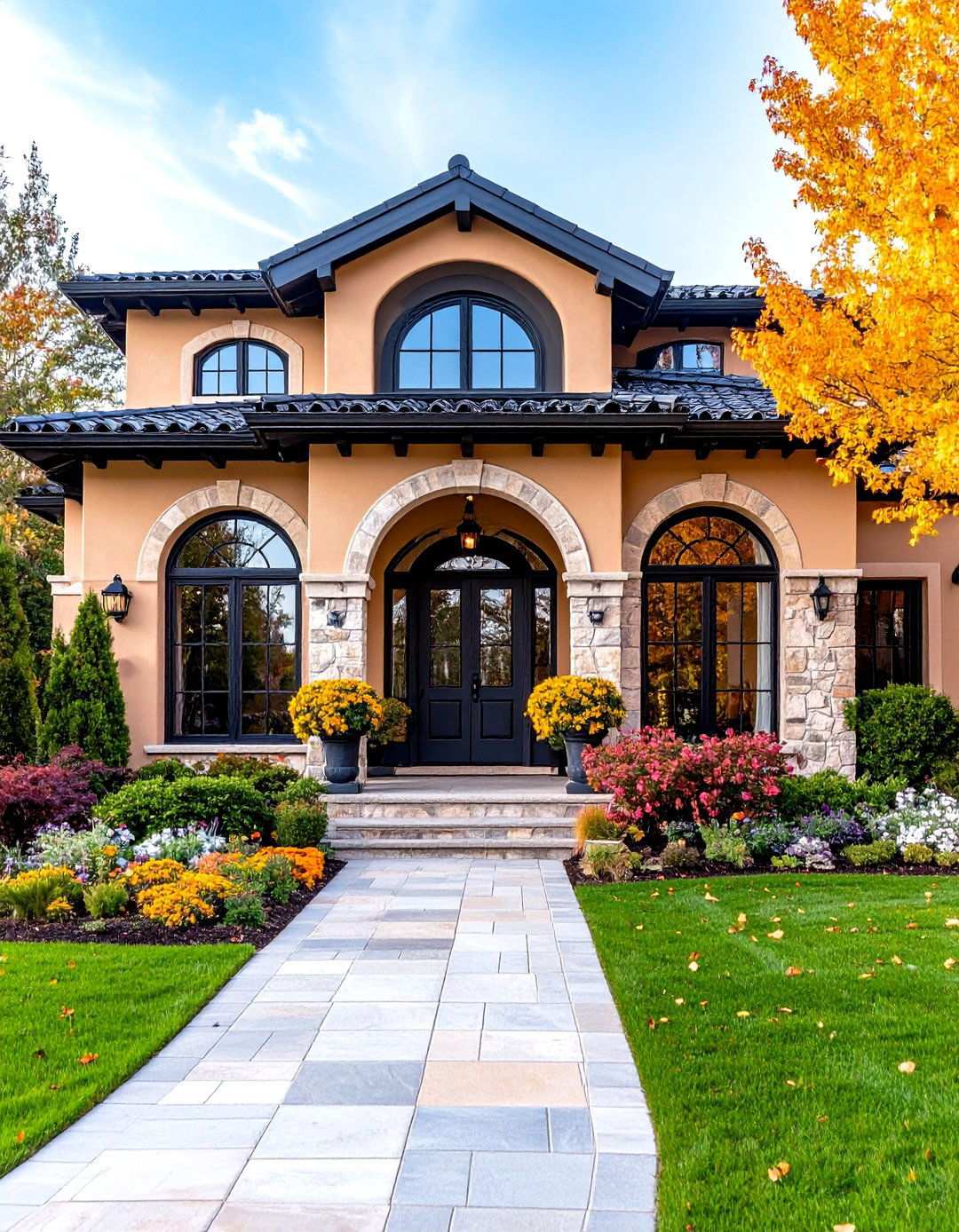
In Spanish architectural design, elegant arches play a pivotal role in defining character and elevating the aesthetic of simple openings into refined design features. Round-top or pointed arch windows cast a warm, inviting glow while providing a unique visual interest from both interior and exterior perspectives. Consistent design themes are established throughout the home’s exterior by matching arched doorways, creating a sense of cohesion and visual harmony. Decorative stone, brick, or tile surrounds emphasize the arch shapes and add a pop of color against the stucco walls, drawing the eye upwards. The interplay of light and shadow on the arches creates a captivating visual effect, particularly during the golden hours of the day. Wrought iron grilles with curved lines provide a touch of sophistication, while wooden shutters designed to follow the arch shapes offer the perfect balance of functionality and style, providing privacy and weather protection when needed. This thoughtful design element is particularly effective for main entries, living room windows, and outdoor room openings, where the dramatic arches can be fully appreciated. As the light changes, the arched forms cast intricate shadow patterns on the facade, adding a dynamic visual dimension to the architecture.
8.1. Harmonious Outdoor Kitchen Designs with Tile Backsplash
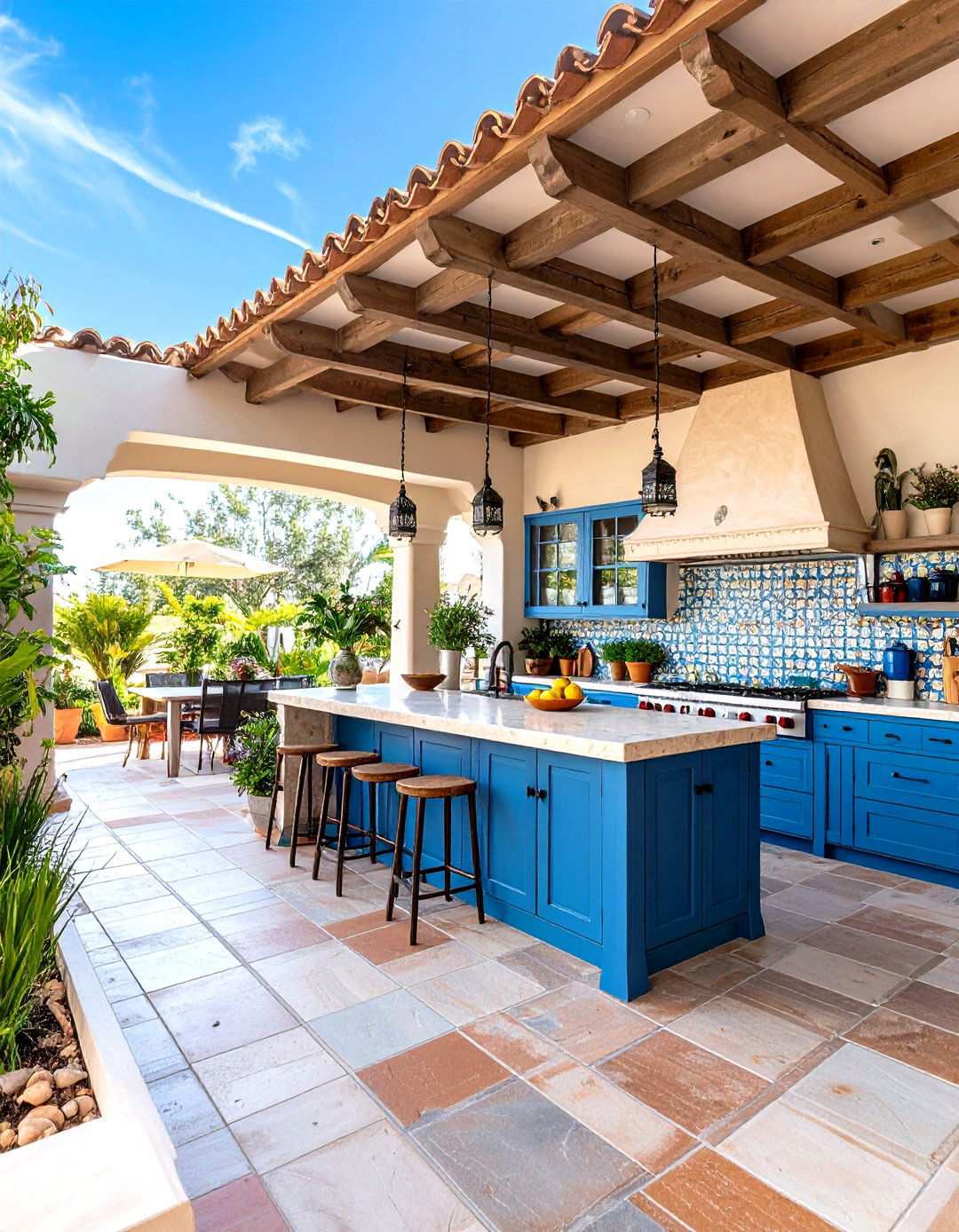
Sophisticated outdoor kitchens effortlessly blend Spanish bungalow aesthetics with functional landscape settings by incorporating authentic materials and stylish beauty. Stucco or stone base cabinets provide long-lasting storage solutions while maintaining the architectural integrity of the main house, thereby fostering a seamless indoor-outdoor connection. Intricate ceramic tile backsplashes featuring traditional Spanish motifs create captivating focal points behind cooking areas, adding a touch of elegance to the space. Hand-painted tiles in rich blues, yellows, and earthy terracotta tones bring artistic flair to the design while offering effortless cleaning surfaces. Coordinating countertops in natural stone or matching tile create cohesive work surfaces that harmonize with the rest of the outdoor kitchen. Durable, slip-resistant clay tile or stone flooring provides an ideal surface for food preparation areas, ensuring safety and convenience. Meanwhile, overhead pergolas or roof extensions offer protection from the elements for appliances and diners, creating a comfortable and inviting atmosphere. Wrought iron pot racks and decorative elements add an authentic touch of Spanish charm to the outdoor kitchen, making it the heart of the entertaining space. Built-in seating areas with tile accents create comfortable dining spaces adjacent to cooking areas, perfect for relaxed, social gatherings that embody the essence of Spanish-style living.
8.2. Timeless Mission Bell Tower Feature Designs
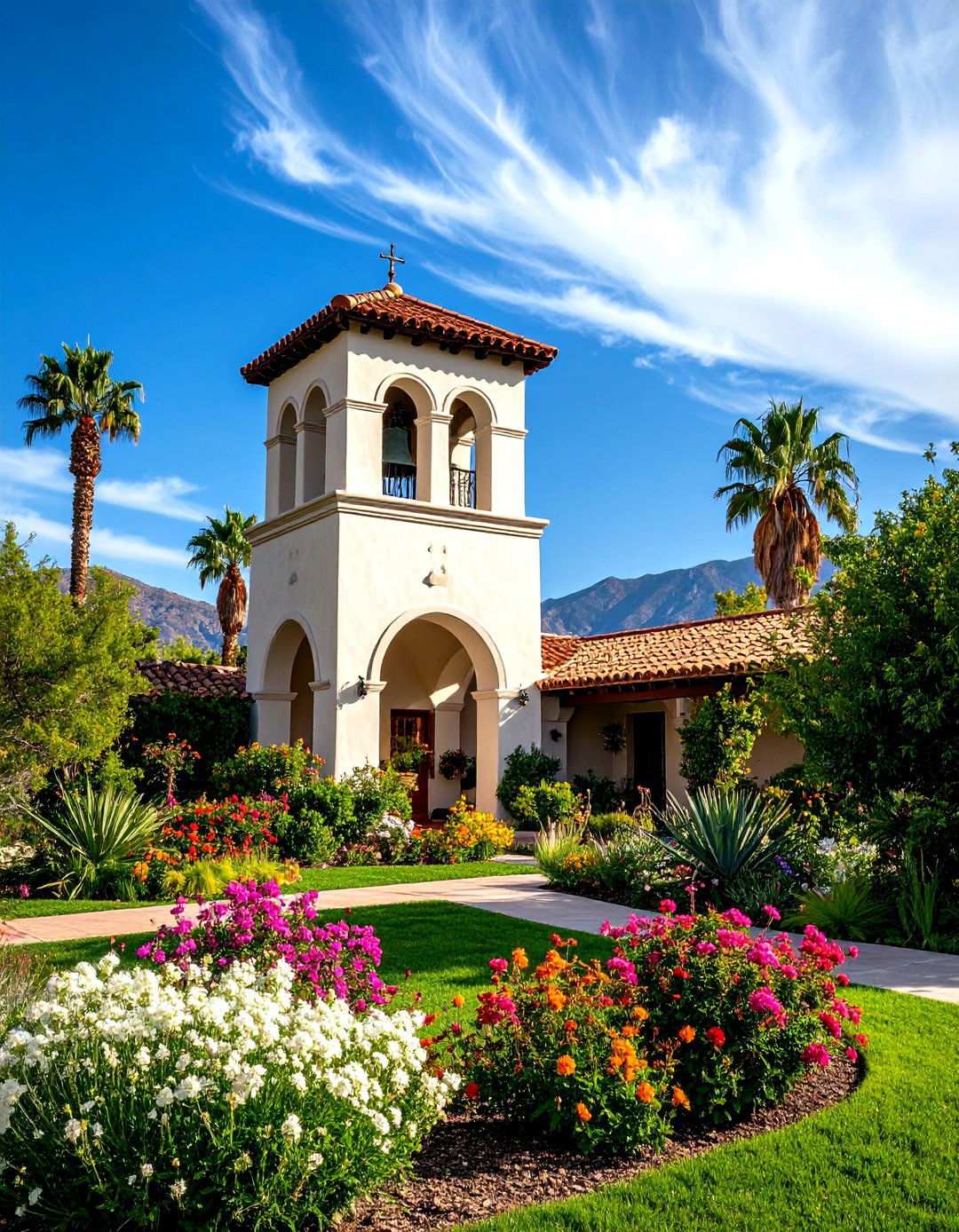
Distinctive bell towers inject vertical drama and authentic Mission Revival character into Spanish bungalow designs, elevating the architectural presence of the home. These striking features can serve multiple purposes – housing actual bells, showcasing decorative elements, or incorporating functional elements like lighting or ventilation. Stucco construction matching the main house walls ensures a cohesive visual identity, while the tower’s form creates a dramatic skyline interest that sets the home apart. Clay tile caps provide weather protection while maintaining traditional material authenticity, adding a touch of rustic charm to the design. Arched openings in the tower walls allow for air circulation and create dynamic shadow patterns that change throughout the day, adding an element of visual interest. The bell tower can be strategically positioned at an entry corner, over a garage, or as a freestanding landscape element, depending on site conditions and design goals. Coordinating smaller architectural elements like arched niches or decorative corbels tie the tower to the main house design, creating a sense of harmony and cohesion. Interior lighting can transform the tower into a dramatic evening focal point, making it a standout feature of the home. This design element is particularly well-suited for larger lots where the scale can accommodate substantial vertical features, creating a landmark quality that makes the home memorable and distinctive.
16. Vibrant Trellis Enclosures for Intimate Outdoor Spaces
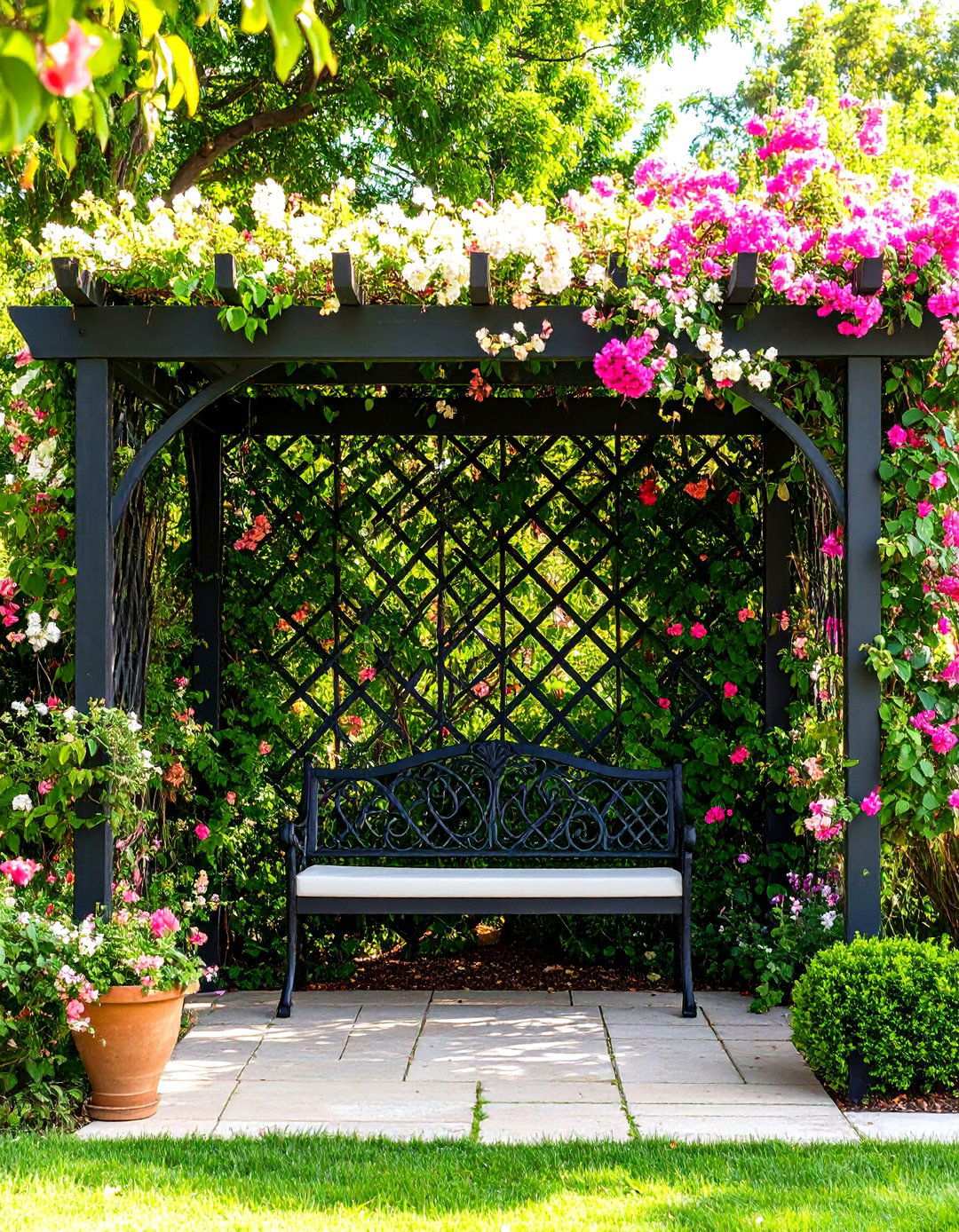
Elegant trellis structures, often adorned with lush vines, create stunning natural boundaries that seamlessly integrate beauty with functionality. Wrought iron or wooden frameworks provide the perfect support for vibrant climbing plants, such as grape vines, wisteria, or climbing roses, which burst forth with seasonal color and fragrance. As the plants grow, the trellis structures transform into dynamic, ever-changing barriers that effortlessly conceal outdoor spaces from prying eyes. Morning glory, jasmine, and bougainvillea add mesmerizing floral displays, further screening views from neighbors or streets. By incorporating seating areas within the trellis framework, private alcoves emerge, inviting relaxation within the larger garden landscape. Carefully selecting materials that harmonize with other architectural elements ensures a cohesive design aesthetic throughout the property. Strategically placing the trellis structures provides wind protection, noise buffering, and solar shading for outdoor living areas, resulting in a tranquil retreat that celebrates the beauty of Spanish outdoor living. The cyclical changes in plant growth provide year-round visual interest as vines leaf out, flower, and go dormant in harmony with nature’s rhythms.
17. The Heart of the Courtyard: A Central Fountain Oasis
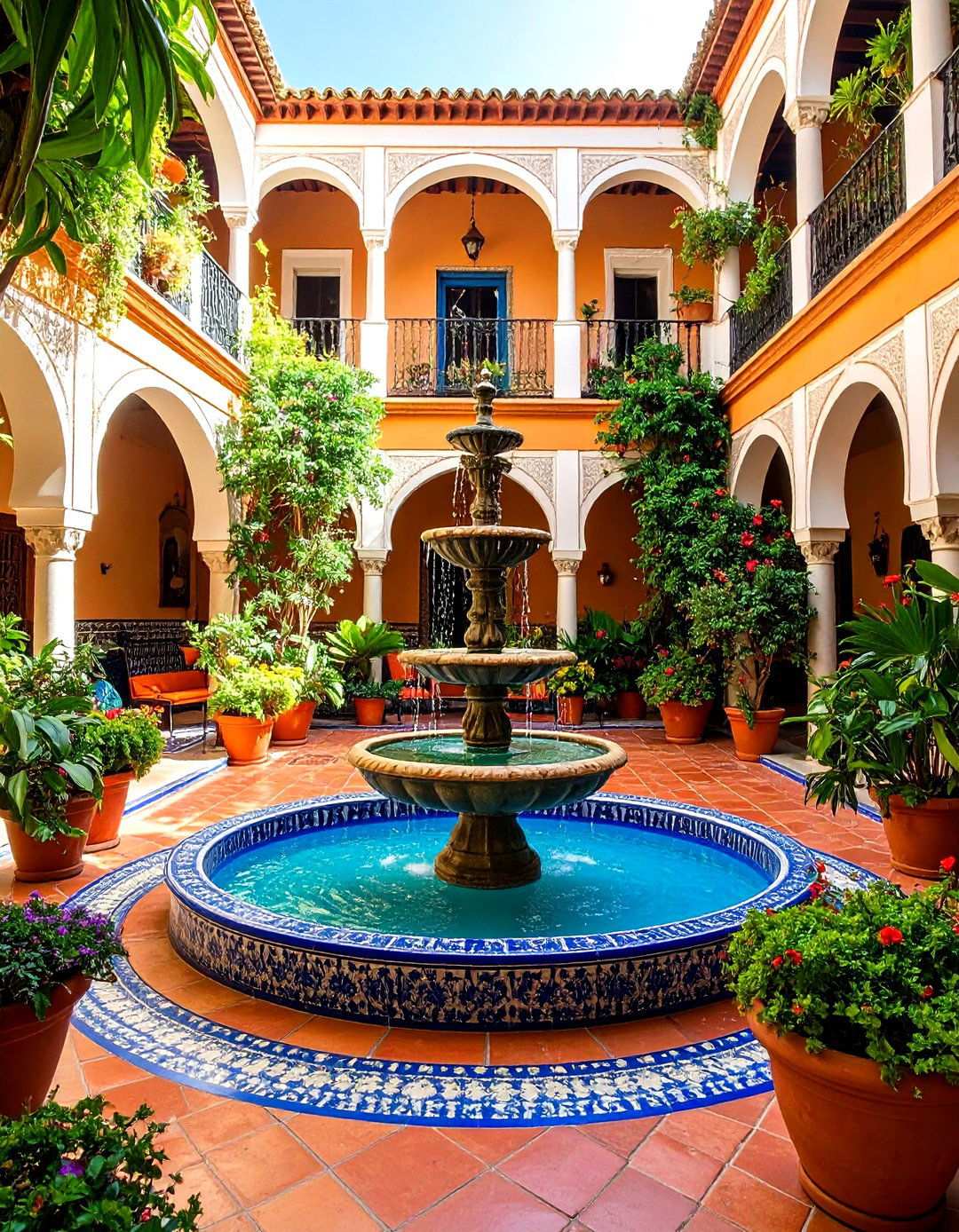
Transform your courtyard into a serene haven that engages all your senses with a striking central fountain as its focal point. Classic Spanish courtyards often center around water features, which not only provide cooling relief but also serve as a visual and auditory anchor for outdoor living spaces. Majestic tiered fountains, adorned with hand-painted ceramic basins, create stunning vertical elements while the soothing sound of falling water masks traffic noise and creates a peaceful ambiance. The surrounding stone or tile work, expertly coordinated with architectural materials, provides comfortable seating ledges and display areas for lush plantings. As the central feature, the fountain effortlessly orchestrates the arrangement of outdoor furniture, walking paths, and planted areas, fostering a sense of harmony and balance. The surrounding walls or plantings create an intimate, enclosed atmosphere, perfect for relaxation and conversation. As evening falls, the gentle lighting highlights the fountain’s movement, casting magical reflections on the surrounding surfaces. Seasonal plantings around the fountain base add a pop of color, ensuring a dynamic display of beauty throughout the year. This captivating central feature elevates functional outdoor spaces into romantic retreats, capturing the essence of traditional Spanish courtyard living while incorporating modern comfort and convenience.
18. Crafting Authentic Terra Cotta Patio Designs
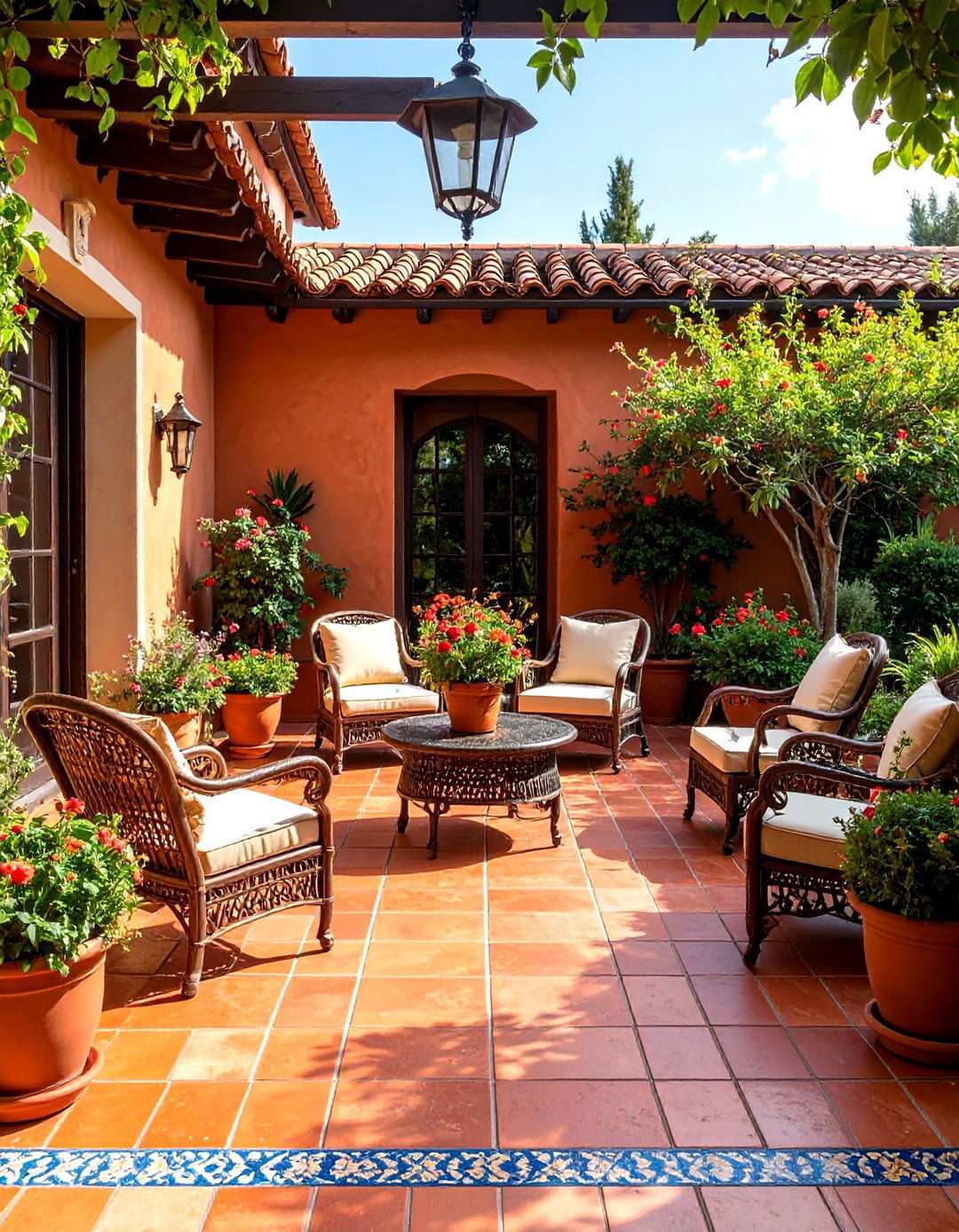
Timeless terra cotta floor tiles bring a sense of warmth and sophistication to outdoor spaces, perfectly complementing the rustic charm of Spanish bungalow architecture. These natural clay tiles boast exceptional slip-resistance, ensuring a secure footing even on the hottest of days. Traditional tile sizes and laying patterns create a visually appealing arrangement, paying homage to the classic design elements that define Spanish patios. To protect the tiles from the elements and maintain their earthy hues, a sealed finish is a must. Decorative border patterns, achieved through the strategic use of contrasting tile colors or sizes, can help define distinct areas within larger patio spaces, such as seating zones and pathways. The warm, reddish-brown tones of the tiles harmonize beautifully with stucco walls and natural stone accents, creating a seamless transition between indoor and outdoor spaces. Installation is key, with adequate drainage crucial for longevity in all weather conditions. By choosing terra cotta tiles, homeowners can infuse their outdoor spaces with the authentic, rustic charm of Spanish design, while also benefiting from low-maintenance, durable, and timeless beauty that only improves with age.
19. Balancing Warmth and Elegance with White Picket Fencing
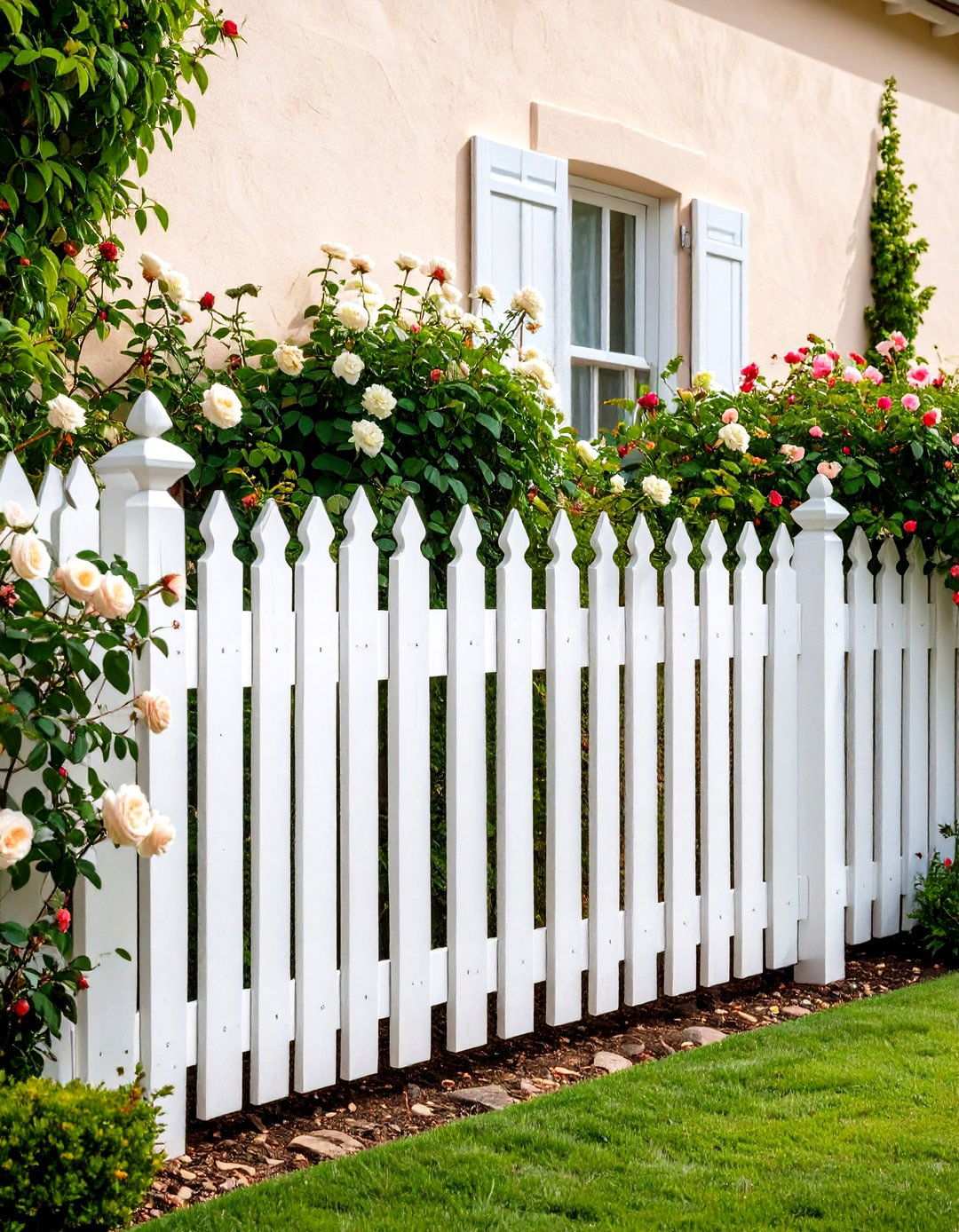
A crisp white picket fence provides an elegant counterpoint to the warm, earthy tones of stucco walls, while skillfully defining garden areas and creating a sense of intimacy in Spanish bungalow landscapes. The clean lines of painted wood fencing complement the flowing curves of Spanish architecture without overpowering them, striking a perfect balance between style and simplicity. Traditional picket styles in varying heights cater to diverse garden needs, from decorative borders to private screening. A fresh coat of white paint creates a bright, airy accent that harmonizes with white stucco walls and window trim. Decorative gate hardware adds a touch of personality, while maintaining the fence line’s visual continuity. Climbing roses, jasmine, or morning glories can soften the fence lines, introducing seasonal color and fragrance to the outdoor space. This innovative design approach combines the best of Spanish architectural elements with the charm of cottage garden styling, resulting in unique, personalized outdoor spaces that exude a relaxed, informal character. By incorporating white picket fencing, homeowners can achieve clean visual organization, while still embracing the carefree spirit of Spanish-style outdoor living.
20. Elevating Exterior Design with Hand-Carved Cantera Stone
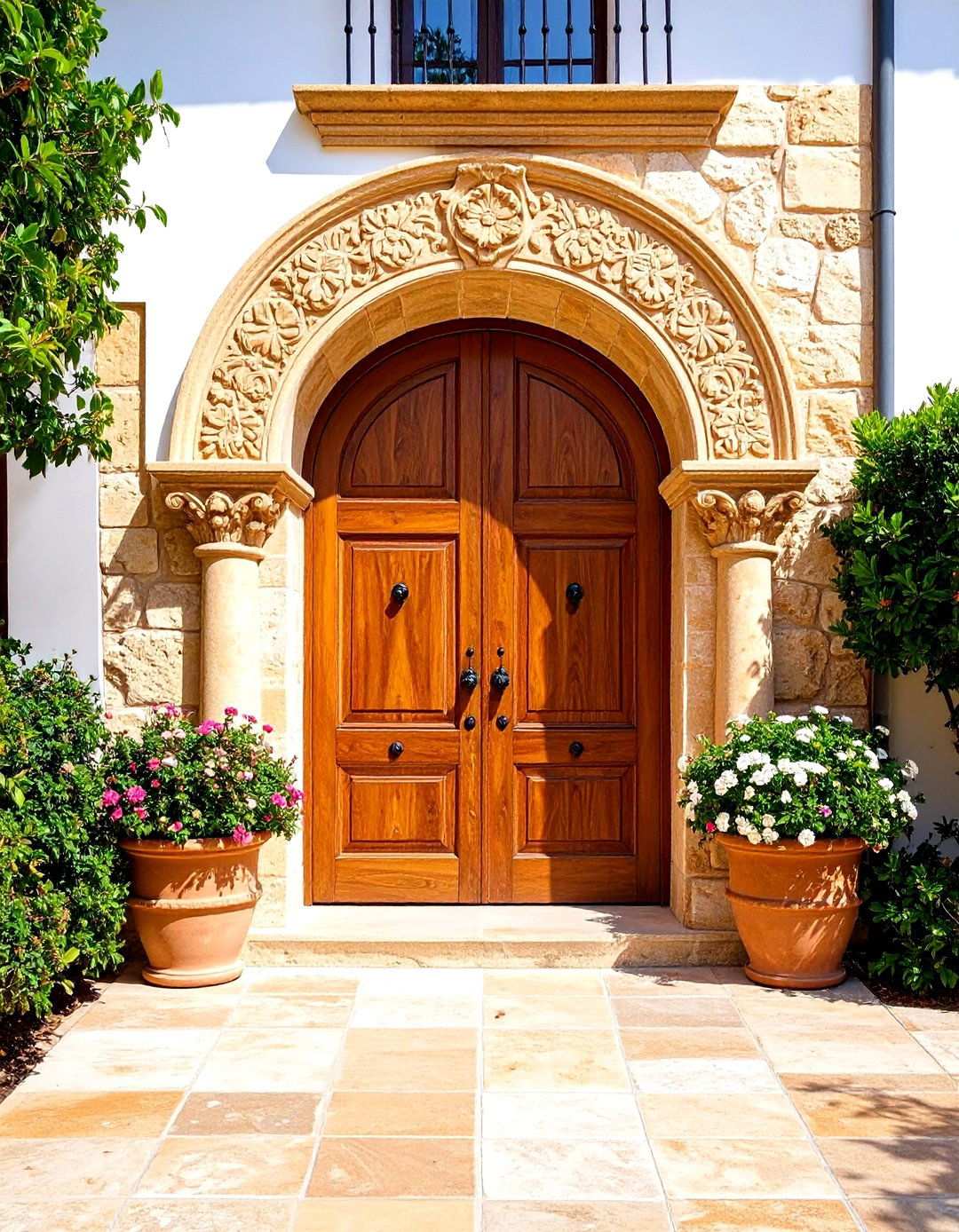
Hand-carved Cantera stone details bring an unparalleled level of sophistication and authenticity to bungalow exteriors, drawing inspiration from traditional Mexican Spanish Colonial architecture. This soft limestone material enables intricate carving of decorative elements such as window surrounds, door frames, and ornate panels, allowing homeowners to add unique architectural flair. The warm, earthy tones of Cantera stone seamlessly blend with terracotta roof tiles and earth-tone stucco walls, creating a harmonious visual balance. Traditional craftsmanship shines through in hand-carved details like floral motifs, geometric patterns, and scrollwork, while stone columns, arches, and corbels provide both structural and decorative elements that reinforce the home’s Mediterranean character. The material’s inherent variation in color and texture adds depth and visual interest, while maintaining overall design cohesion. Cantera stone is particularly well-suited for prominent features like entryways, outdoor fireplaces, and garden walls, where the intricate carving can be fully appreciated. As this natural material ages, it develops a beautiful patina that enhances its character over time. The investment in authentic carved stone details not only adds lasting architectural value but also establishes a meaningful connection to traditional Spanish Colonial building practices.
21. Blending Tradition with Desert Modern Landscaping
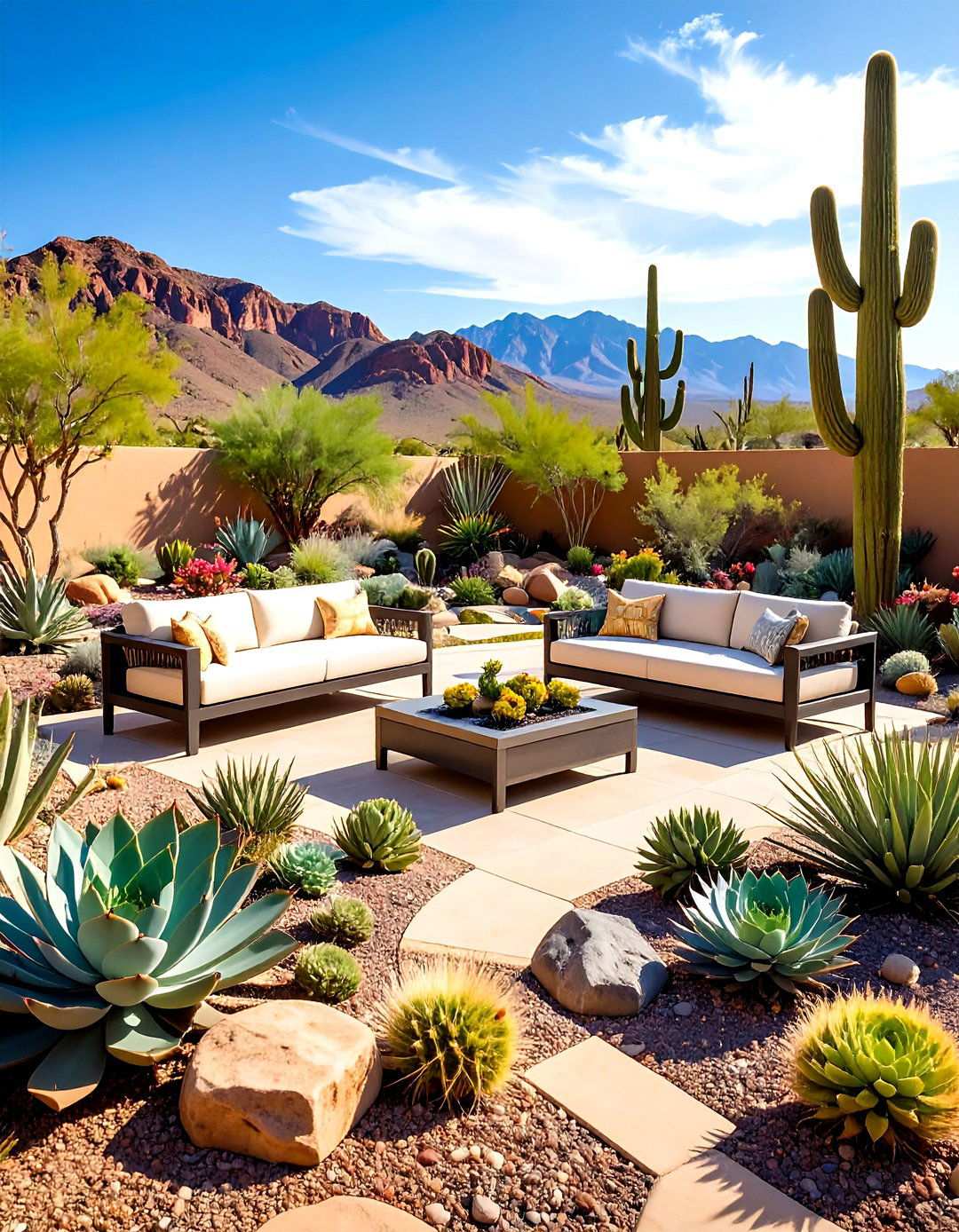
How can homeowners thoughtfully merge Spanish architectural traditions with contemporary desert landscaping that prioritizes water conservation and minimal maintenance? By combining clean, geometric plantings with traditional Spanish elements, desert modern design creates sophisticated, sustainable outdoor spaces that honor the past while embracing the future. Architectural plants such as century agave, barrel cacti, and desert palms serve as striking structural elements, while decomposed granite surfaces in warm tones complement stucco colors and provide permeable, low-maintenance ground cover. Geometric planter beds, defined by steel or concrete edging, create organized growing areas for succulents and drought-resistant plants. Large decorative pots showcase specimen plants, adding height and focal points to the landscape. Modern outdoor furniture in neutral tones offers comfortable seating without competing with architectural and landscape elements. This approach results in significantly reduced irrigation needs while creating stunning, year-round landscapes that showcase the beauty of desert gardening. In the evening, lighting highlights the sculptural qualities of desert plants, creating dramatic shadows on walls and ground surfaces. The end result beautifully harmonizes Spanish architectural warmth with contemporary environmental awareness.
22. Dynamic Stucco Accent Walls
When utilized with intention, colored stucco introduces a level of visual complexity and distinctiveness to an architectural composition without overpowering the overall aesthetic. Accent walls in inviting earthy hues, such as muted olive tones, dark sienna, or soft golden ochre, draw attention to focal points like entryways, outdoor fire pits, or garden boundaries. The colored stucco harmonizes with tile accents, hardscaping elements, and roofing materials while creating a striking contrast against neutral backgrounds. Textured finishes add depth and nuanced shadowing that elevates the three-dimensional quality of accent walls. These targeted color applications can define outdoor spaces, highlight architectural features, or provide backdrops for artwork and decorative elements. The key lies in applying color judiciously and thoughtfully to augment rather than overpower the design. High-quality stucco application ensures durability and color retention in outdoor settings. This approach enables homeowners to express their personal style while maintaining the timeless allure of Spanish architectural design. Seasonal decorations and plantings can respond to the accent colors, fostering dynamic relationships between built and natural elements throughout the seasons.
23. Captivating Pergola Dining Areas Under Starry Skies
Transforming everyday meals into memorable experiences is made possible by dedicating outdoor spaces under picturesque pergolas, which provide both aesthetic appeal and practical weather protection. Impressive wooden or metal pergola structures define dining areas and support climbing plants that offer natural shade and seclusion. Suspended string lights between pergola beams create enchanting evening ambiance for outdoor entertaining, imbuing the space with a sense of romance and intimacy. The combination of structural elements and soft lighting creates an idyllic setting perfect for family gatherings or hosting guests. Weather-resistant dining furniture coordinates with the pergola materials while providing comfortable seating for various group sizes. Stone or tile flooring beneath the pergola offers level, easy-to-clean surfaces suitable for dining activities. Outdoor heating elements like fire bowls or patio heaters extend the dining season in cooler climates. Built-in planters or large decorative pots add greenery and color to the dining environment, further enhancing the outdoor room’s ambiance. This design creates outdoor spaces that rival interior areas in terms of comfort and beauty, while celebrating the Spanish emphasis on outdoor living and socializing around shared meals.
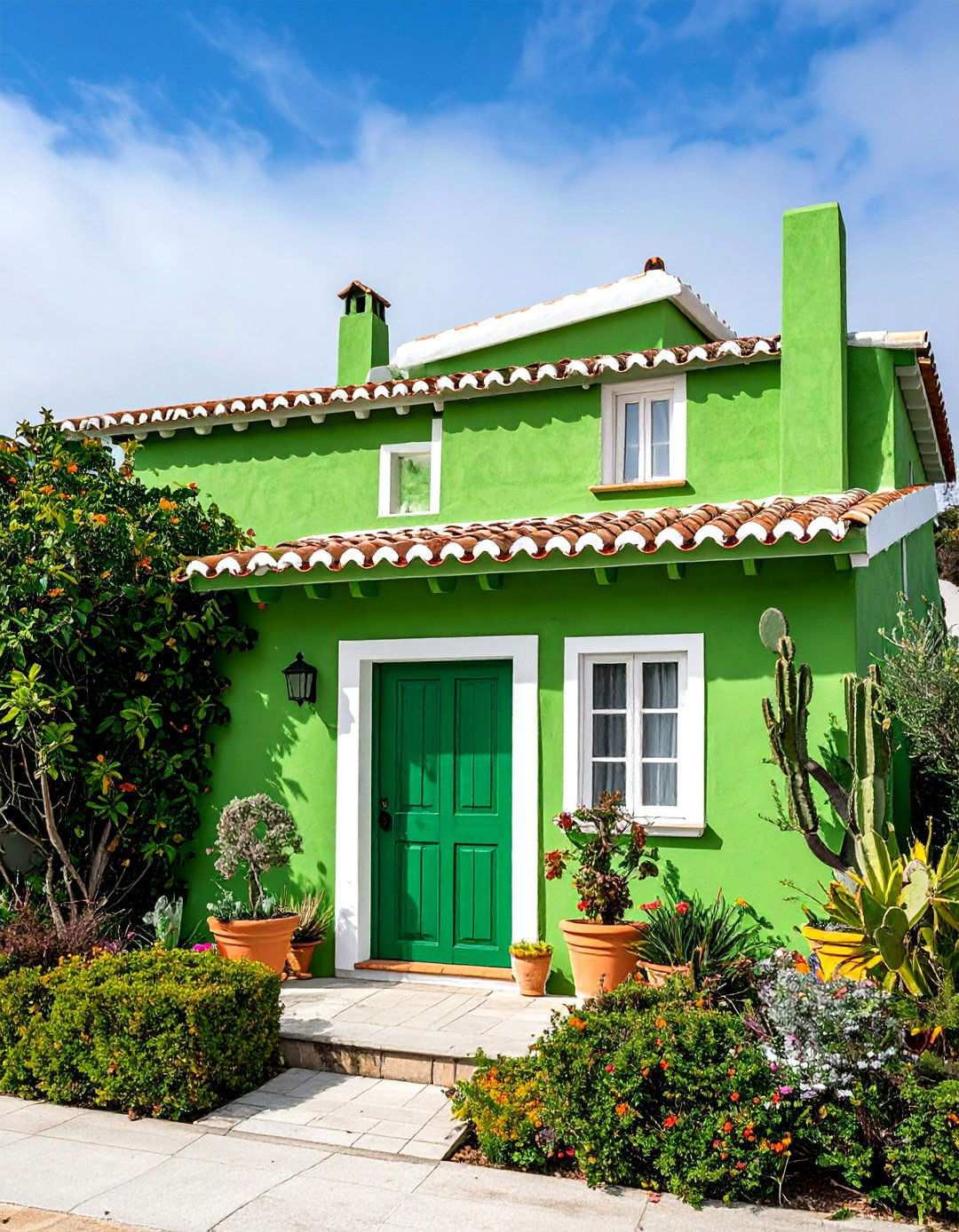
24. Gravel Courtyard Elegance with Statement Plants
Sophisticated outdoor spaces often rely on low-maintenance designs that showcase striking architectural elements and lush greenery. Gravel courtyards fit this bill perfectly, offering a serene ambiance that’s ideal for displaying statement plants and garden art. Harmonious color schemes can be achieved by incorporating decorative gravel in warm, earthy tones such as gray, tan, or gold, which complement stucco walls and stone accents beautifully. As a centerpiece, large specimen plants like olive trees, pomegranates, or citrus trees create visual interest and natural shade within the gravel expanse. The permeable surface of the gravel area eliminates the need for irrigation, while also promoting excellent drainage for the plant root systems, ensuring healthy growth. Meandering stepping stone paths invite exploration and create a sense of flow within the courtyard, adding an extra layer of visual interest. Strategically placed large decorative pots and planters showcase seasonal colors, maintaining the overall minimalist aesthetic of the space. Cozy seating areas, complete with comfortable outdoor furniture, foster conversation and create inviting spaces within the courtyard, making it an ideal spot for relaxation and socializing. This thoughtful design approach requires minimal upkeep while providing year-round beauty and a sophisticated outdoor living experience. By incorporating gravel as the primary surface material, weed suppression occurs naturally, providing a clean canvas that allows architectural elements and carefully chosen plants to take center stage in the overall composition.