1. Harmonizing Slopes with Innovative Walkway Designs
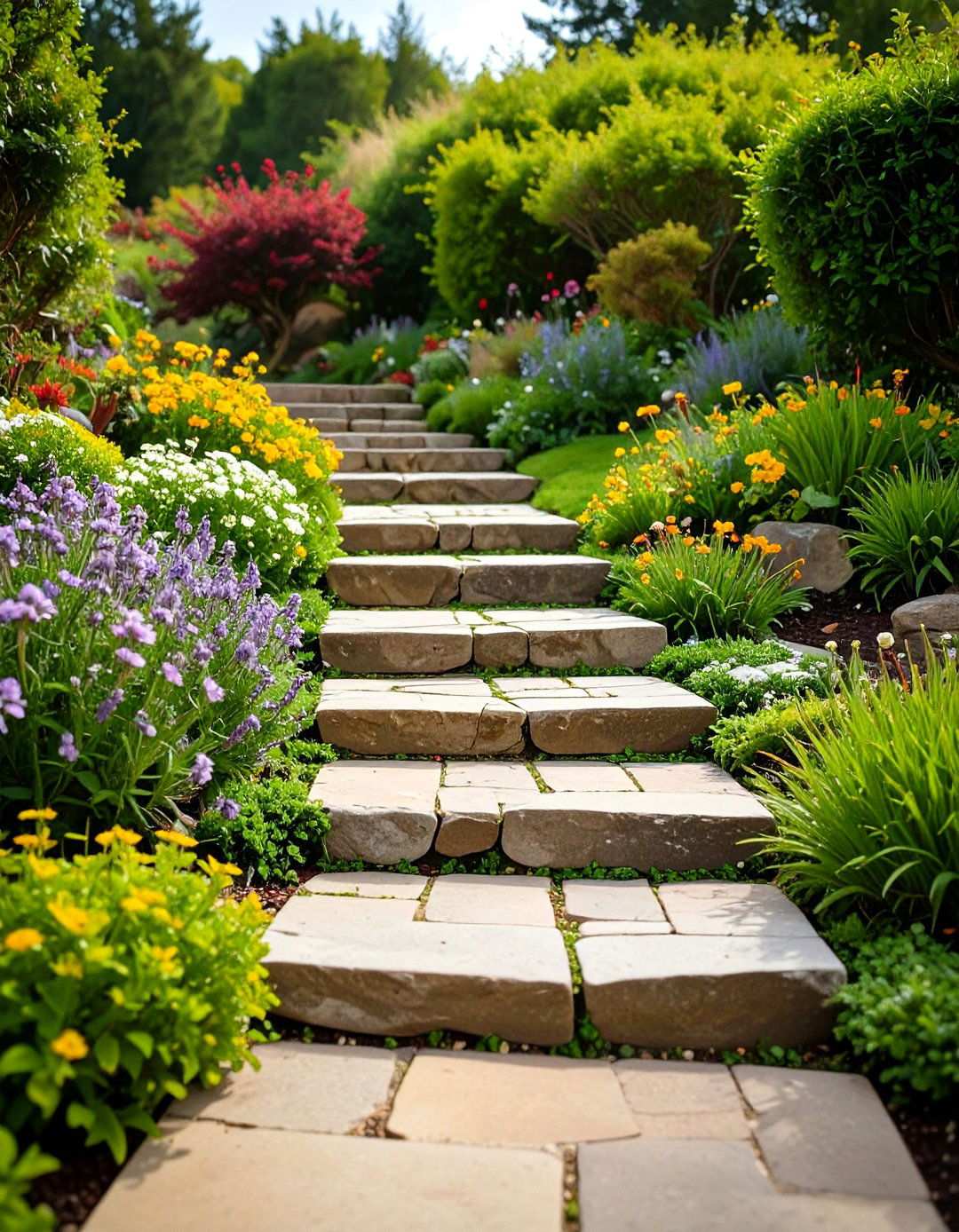
Transforming uneven terrain into breathtaking pathways is now possible with the introduction of sloped walkways. By integrating these pathways into your landscaping, you can not only address safety concerns but also create visually striking features that elevate the aesthetic appeal of your outdoor spaces. From subtle, earthy tones to bold, modern statements, sloped walkways offer a wide range of design possibilities that cater to diverse tastes and architectural styles.

As an Amazon Associate I earn from qualifying purchases.
2. Blending Elegance with Functionality: The Art of Sloped Walkway Design
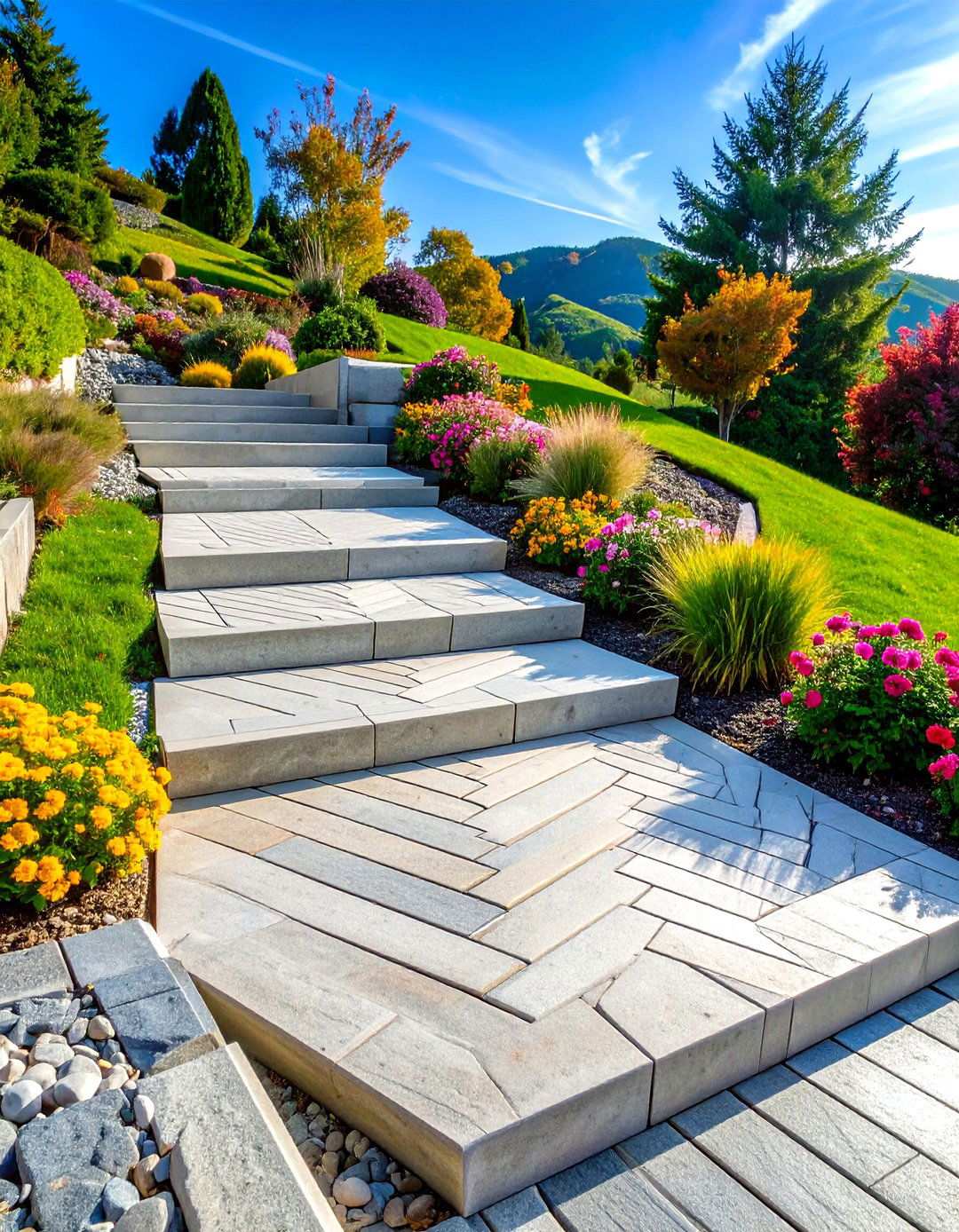
Sloped walkways are more than just functional pathways – they also serve as landscape architects’ canvases, waiting to be transformed into breathtaking works of art. By carefully selecting materials and designing the walkway to follow the natural contours of the slope, you can create a seamless transition between different levels of your landscape. Modern concrete pavers, for instance, can be arranged in intricate patterns to create a sleek, contemporary look that complements modern architecture. Meanwhile, natural stone steps can be crafted to blend harmoniously with the surrounding environment, adding a touch of rustic charm to your outdoor spaces.
3. Rustic Railroad Tie Steps Walkway
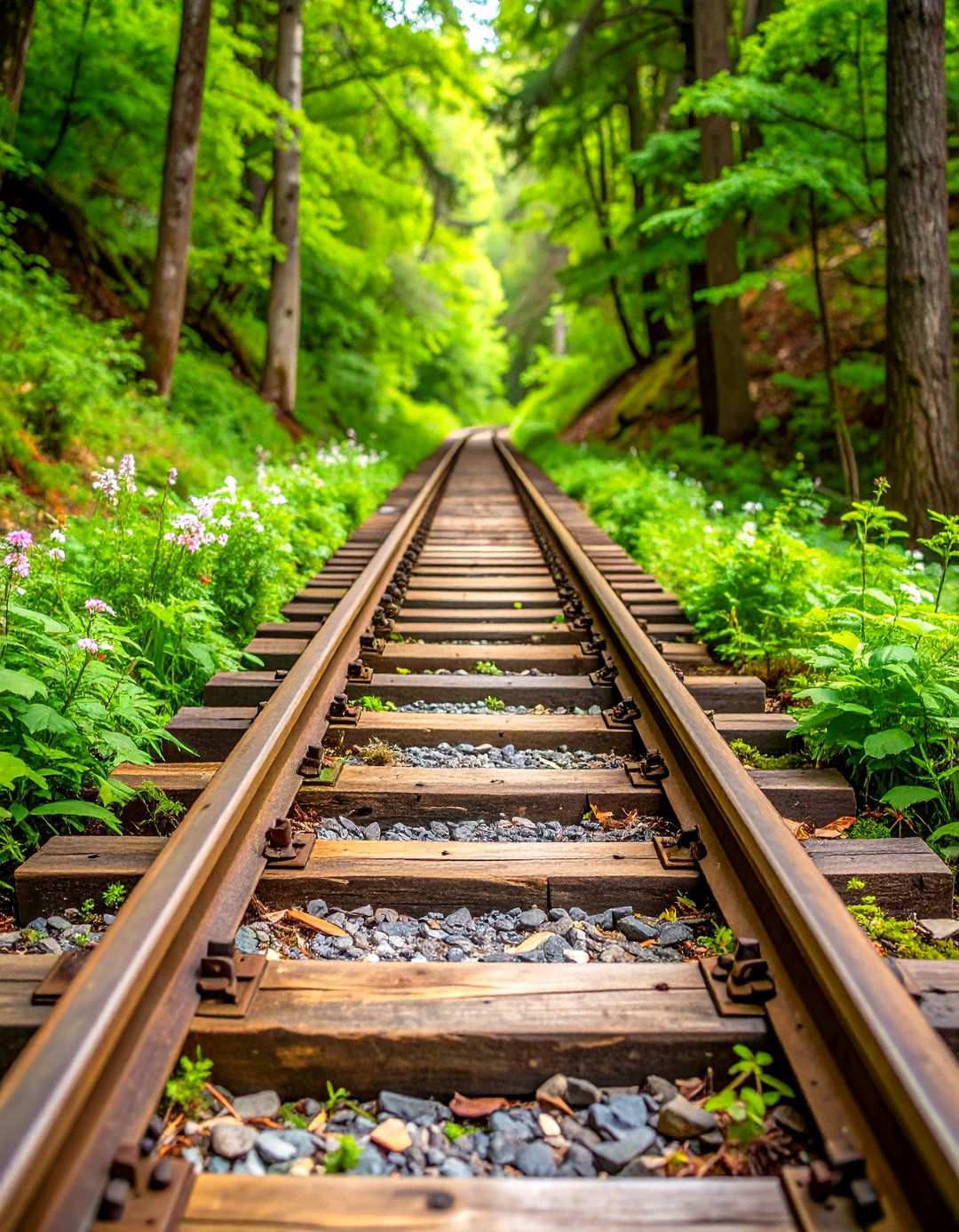
Transforming uneven terrain into a scenic pathway, railroad tie steps offer a versatile solution for managing steep slopes in natural environments. This design involves arranging horizontal wooden timbers across the slope, creating sturdy steps that can be filled with a variety of materials such as gravel, wood chips, or natural stone. The robust construction of these steps provides excellent stability and can handle significant elevation changes, all while maintaining a natural, outdoorsy aesthetic. Each step typically measures between 6-8 inches in height and features deep treads for comfortable walking. The dark, weathered appearance of railroad ties complements woodland settings perfectly and pairs well with native plantings along the pathway edges, creating a harmonious blend of nature and design.
4. Bluestone Stepping Stone Path
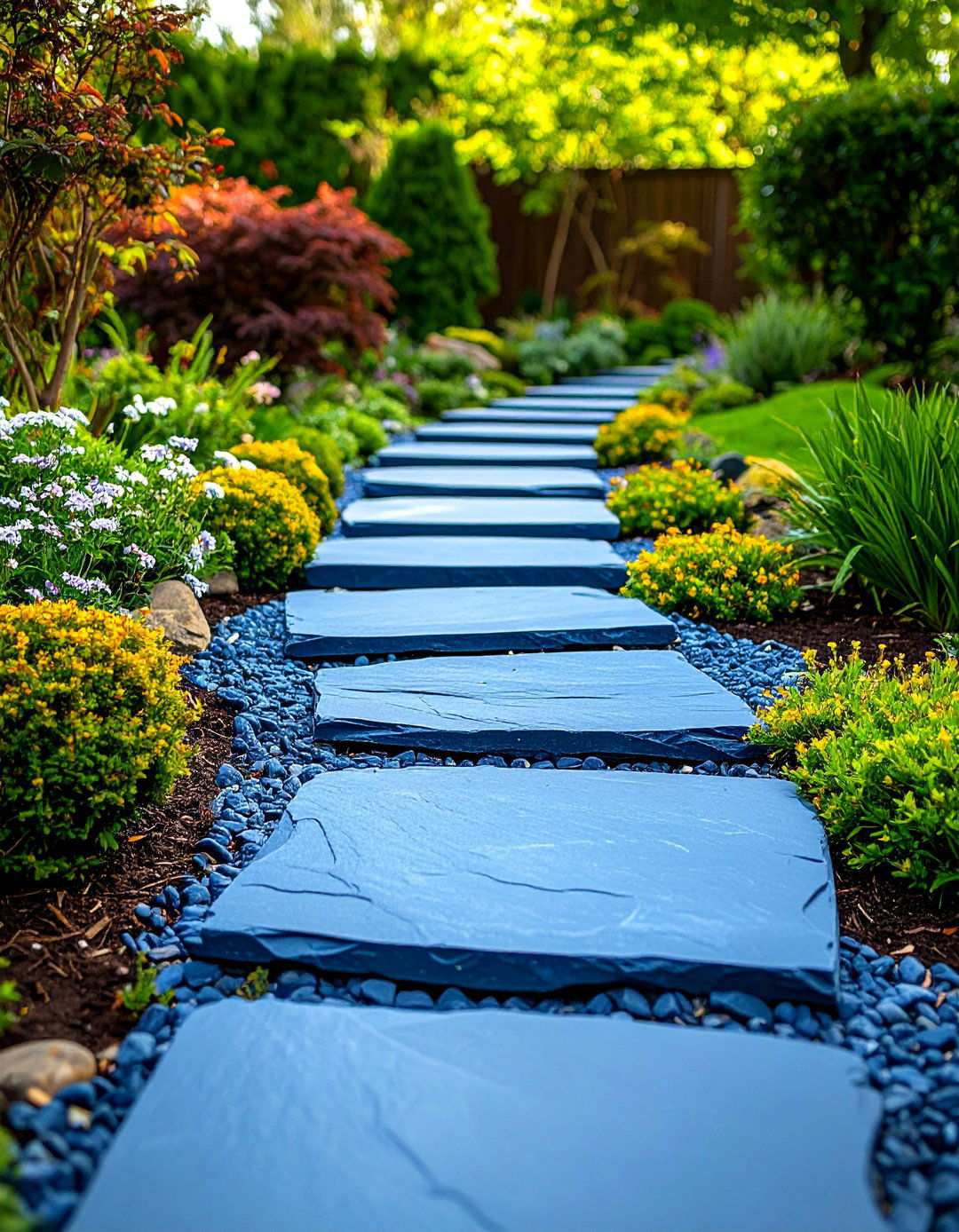
For a sophisticated and elegant walkway solution that navigates slopes with ease and timeless appeal, bluestone stepping stones are an excellent choice. These flat, durable stones boast beautiful blue-gray coloration and naturally cleaved surfaces that provide excellent traction, even when wet. Strategically placed to follow the slope’s natural rhythm, the stones are spaced consistently for comfortable walking. The spaces between the bluestone pieces can be used to plant attractive groundcover, decorative gravel, or natural grass, adding visual interest and softening the hardscape elements. This design excels in formal gardens and contemporary landscapes, offering a refined appearance that complements both traditional and modern architectural styles while providing a durable and low-maintenance pathway solution.
5. Timber Frame Gravel Steps
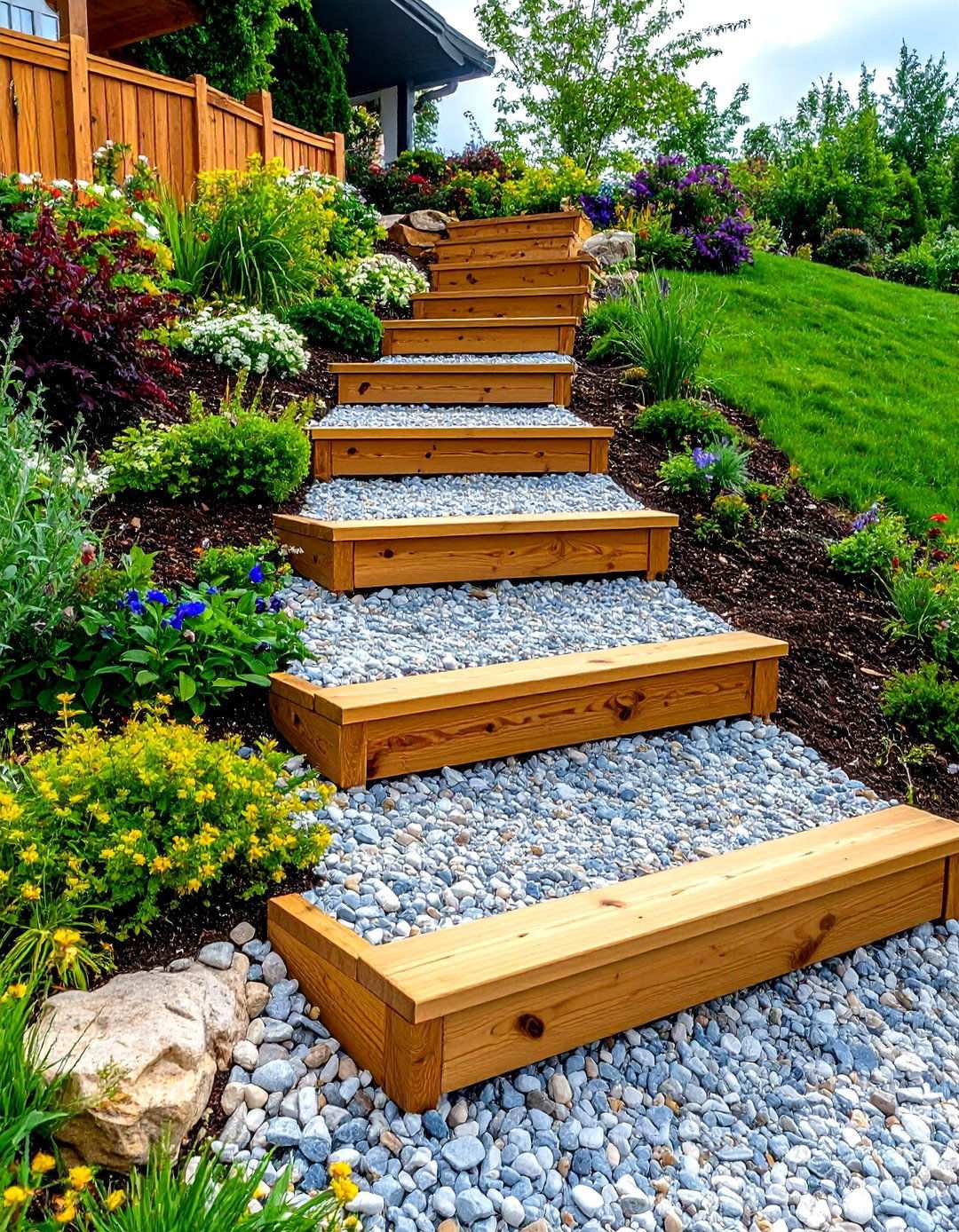
By combining the warmth of natural wood with the practicality of loose stone fill, timber frame gravel steps create functional and attractive slope management solutions. Pressure-treated lumber forms individual step frames that are filled with pea gravel, crushed stone, or decorative aggregate for walking surfaces. This design allows for excellent drainage while providing stable and comfortable footing on inclined terrain. As the natural wood frames weather over time, they develop a silvery patina that enhances the rustic character of the design. Each step can be customized in height and depth to accommodate specific slope requirements, making this an extremely versatile solution. The combination of materials creates textural interest while maintaining an organic, naturalistic appearance that integrates well with garden landscapes.
6. Artful Assemblage of Natural Stone Terracing
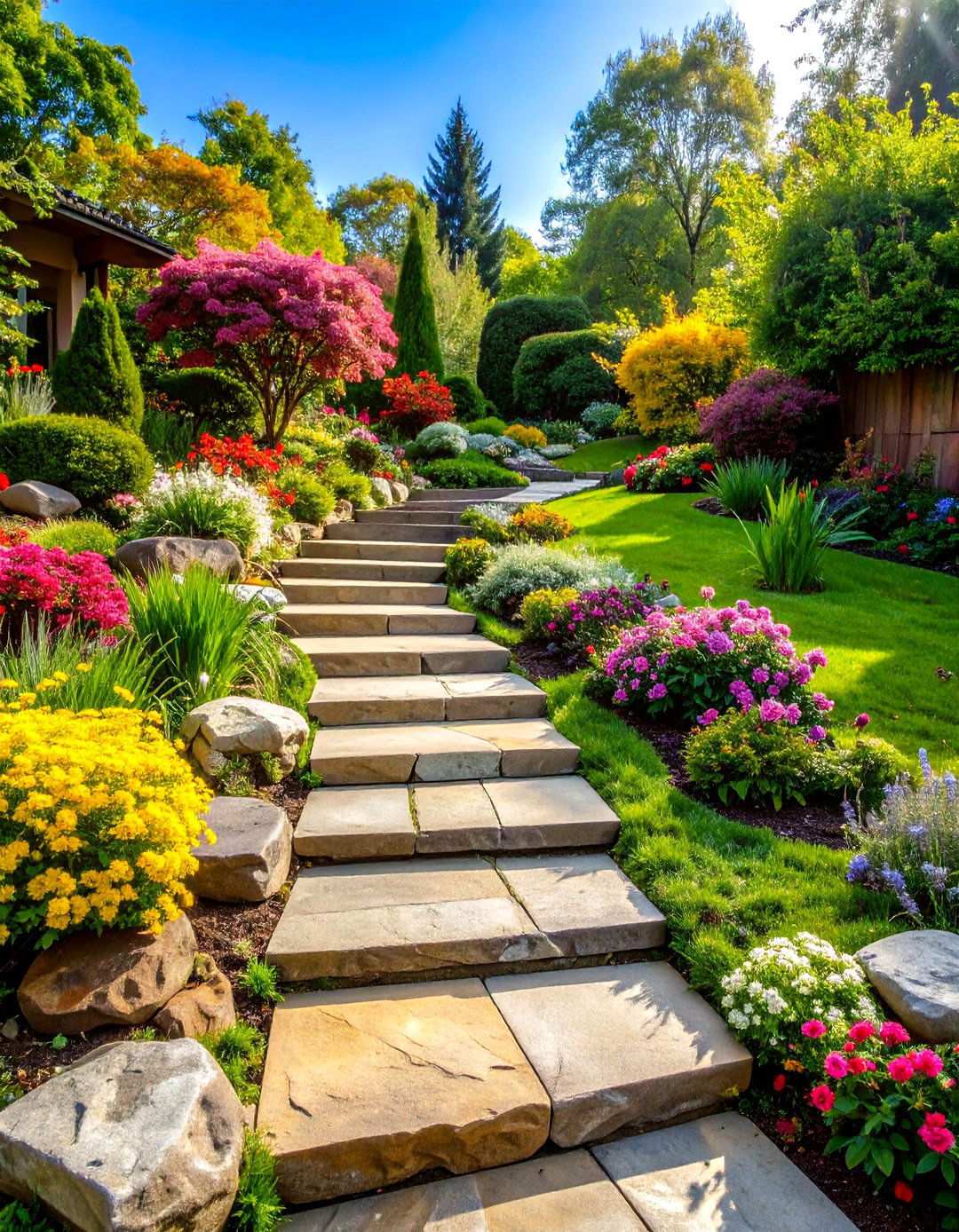
When crafting a sloped walkway, incorporating a mixed natural stone terracing design allows for endless creative possibilities by juxtaposing diverse stone types, sizes, and textures. This eclectic approach can combine flagstone treads with the rustic charm of fieldstone risers, or pair limestone blocks with the subtle elegance of slate accents. The resulting composition is a captivating, dynamic visual feast that appears organically grown rather than artificially constructed. Each stone type brings its unique characteristics – color palette, tactile experience, and durability – to the table, merging into a cohesive yet intricate design narrative. This walkway style is particularly well-suited for established gardens, where it can harmoniously blend with existing stone features throughout the landscape, allowing the path to become a natural focal point.
7. Modern Minimalism: Steel-Edged Gravel Pathways
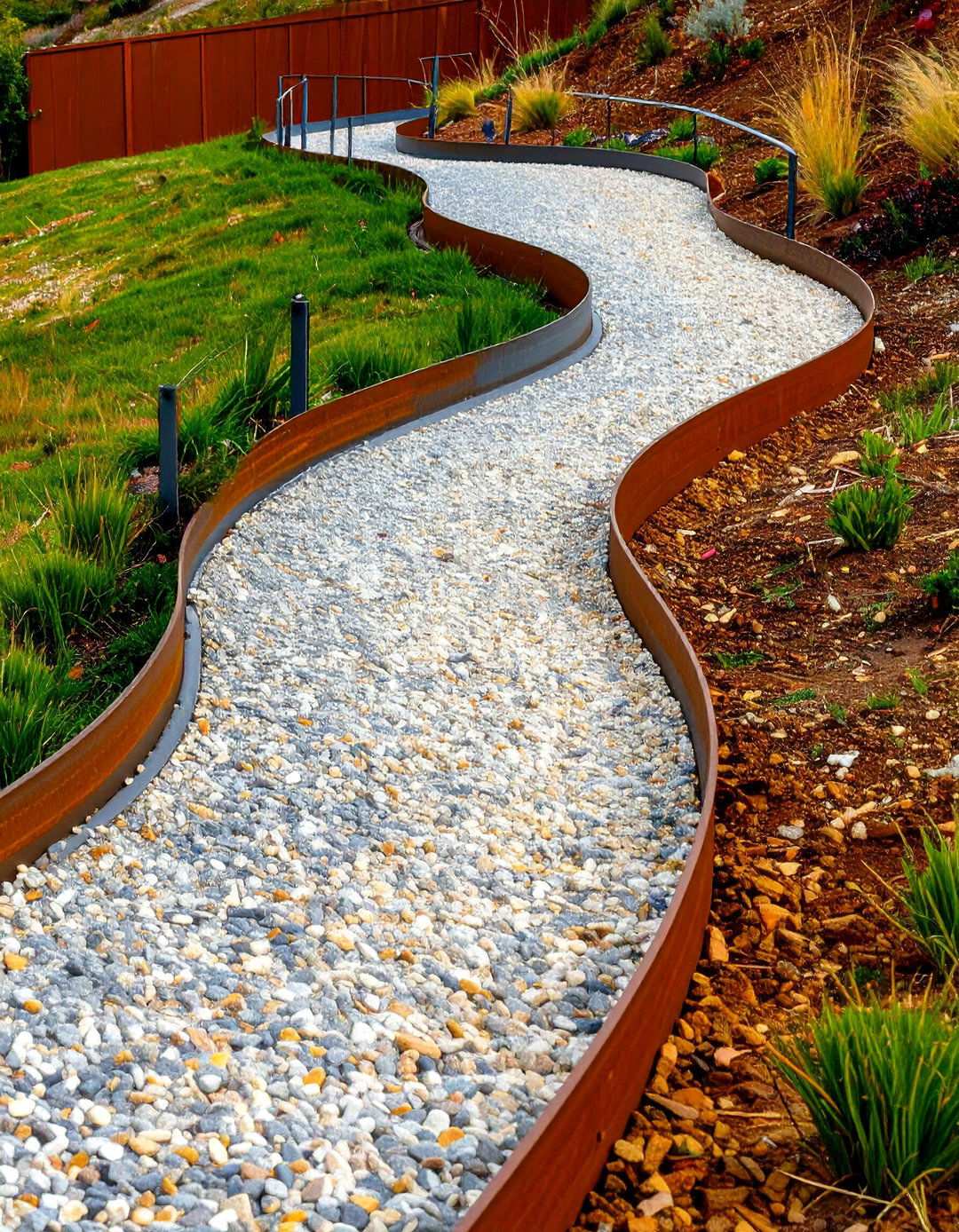
For those seeking a sleek, modern aesthetic, a contemporary steel-edged gravel path offers an ideal solution for navigating sloped terrain with ease and sophistication. Thin steel or aluminum edging creates clean, precise borders that contain decorative gravel or crushed stone, forming a crisp, geometric pathway that flows effortlessly down the slope. The metal edging can be tailored to suit various design preferences, from formal linear arrangements to more fluid, organic shapes. By incorporating diverse gravel colors and sizes, designers can create intricate patterns or distinct zones within the pathway, adding depth and visual interest to the design. This approach is particularly effective in modern landscapes and urban settings, where it provides excellent drainage while complementing contemporary home designs and minimalist garden styles with a touch of elegance.
8. Earthy Elegance: Sandstone Block Stairways
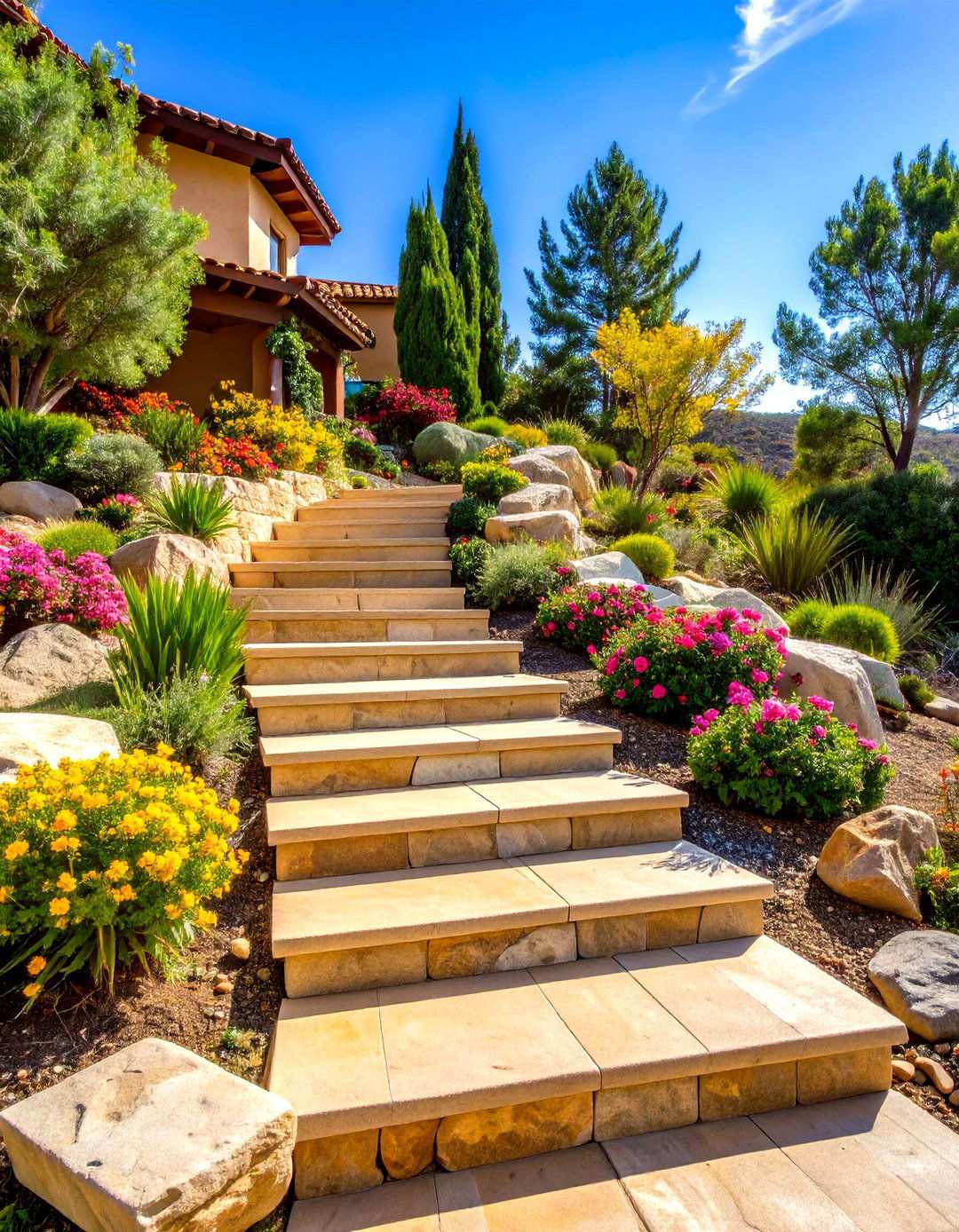
For a walkway solution that exudes warmth and inviting charm, sandstone block construction is an excellent choice. By carefully selecting and fitting together substantial stone blocks, designers can create stable, comfortable steps that can navigate significant elevation changes with ease. The natural variation in sandstone’s color and texture adds visual appeal while maintaining a cohesive appearance throughout the walkway, making it a perfect fit for Mediterranean, southwestern, or rustic garden settings. Each step is thoughtfully designed for comfortable walking, typically featuring 6-7 inch rises and 12-15 inch treads. The porous nature of sandstone provides natural drainage while offering excellent traction, making this design an excellent choice for creating a substantial pathway that feels permanent and well-integrated with natural landscape elements.
9. Artistic Pathway Solutions with Pebble Mosaic Stepping Stones
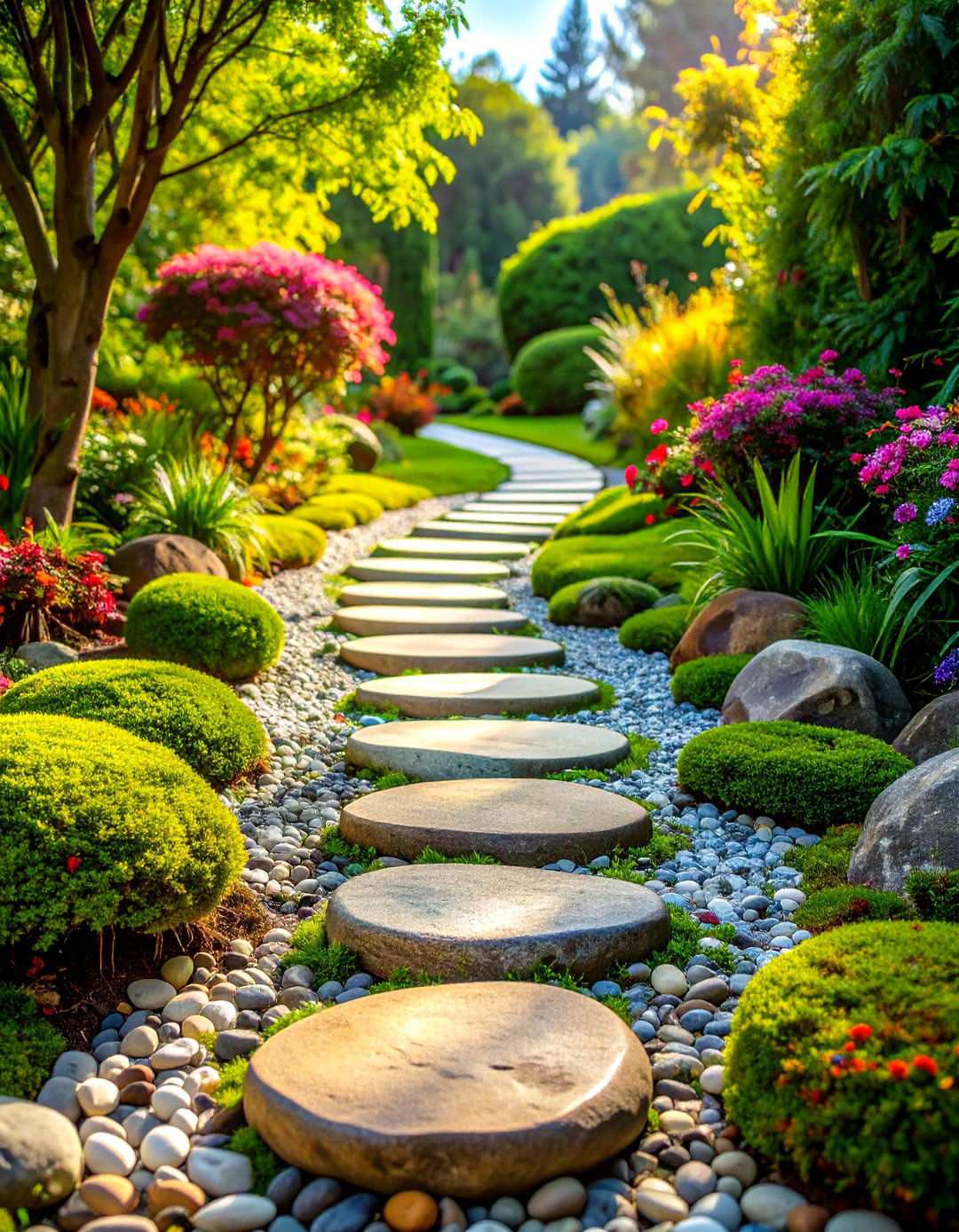
Pebble mosaic stepping stones have the power to transform functional pathways into stunning works of art that showcase creativity and personal style. By arranging different colored pebbles, river rocks, or beach stones in attractive patterns or abstract designs, each individual stone becomes a unique and captivating element. The textured surface of the pebbles provides excellent traction, while the varied colors and patterns create a visually engaging experience that draws the eye along the walkway. To create a seamless transition between stones, low-growing plants, moss, or additional pebbles can be used to fill in any gaps. This approach is particularly well-suited to gentle slopes, where the artistic elements can be fully appreciated and the overall visual impact is maximized.
10. Classic Elegance with Brick Herringbone Slope Pathways
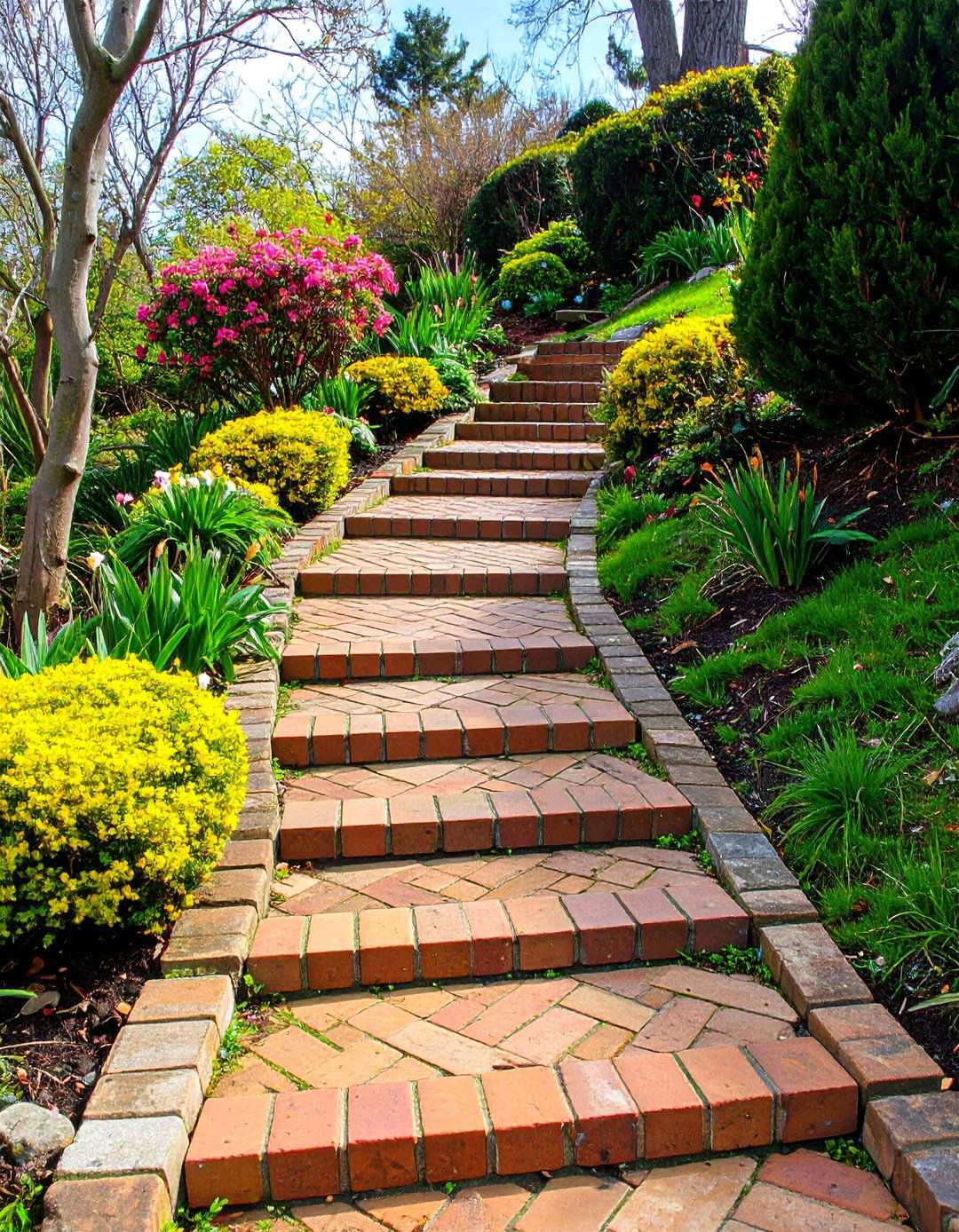
A brick herringbone slope pathway offers a timeless design solution that combines classic elegance with practical stability on inclined terrain. By arranging clay bricks in the distinctive herringbone pattern, the pathway not only provides excellent traction but also helps to prevent sliding and maintains structural integrity. The warm, earthy colors of the brick complement a wide range of landscape styles, from traditional colonial to modern contemporary settings. To add an extra layer of visual appeal, the joints between bricks can be filled with sand, mortar, or planted with low-growing herbs like thyme. This approach offers exceptional durability and can be adapted to various slope angles, creating a sophisticated pathway that enhances property value and aesthetic appeal.
11. Multi-Level Garden Spaces with Terraced Garden Steps and Retaining Walls
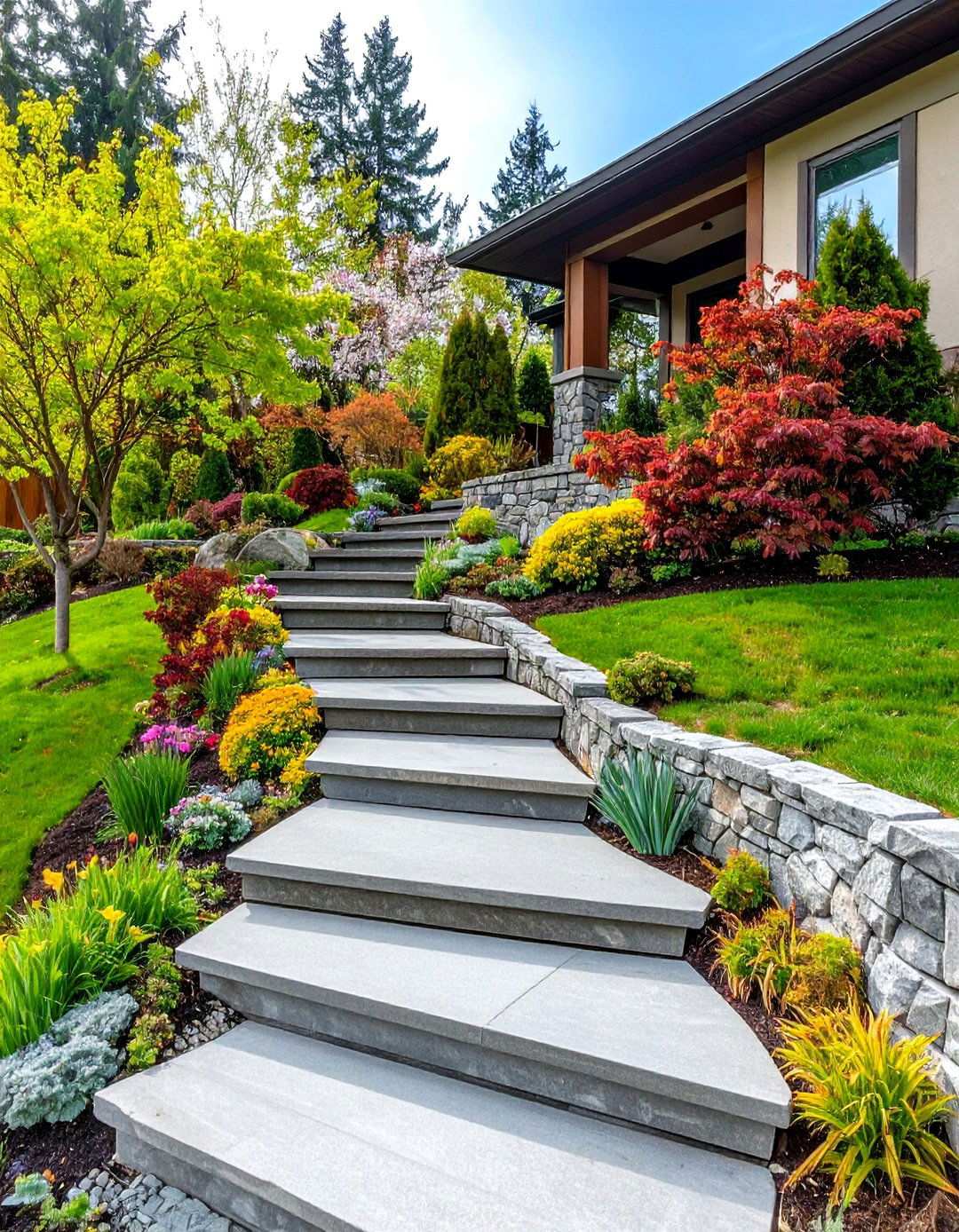
Terraced garden steps with retaining walls provide a functional and beautiful solution for managing steep slopes and creating usable garden space. By using stone or timber retaining walls to hold back soil and create level planting areas between stepped pathway sections, each terrace level can feature different plantings and create a diverse garden experience along the walkway journey. The steps themselves can be constructed from matching materials to create design continuity, or contrasting materials for added visual interest. This approach not only transforms challenging steep slopes into safe and attractive navigation but also helps with erosion control and water management, making it both beautiful and practical for long-term landscape sustainability and functionality.
12. Mastering the Art of Sloped Landscaping with Elevated Walkways
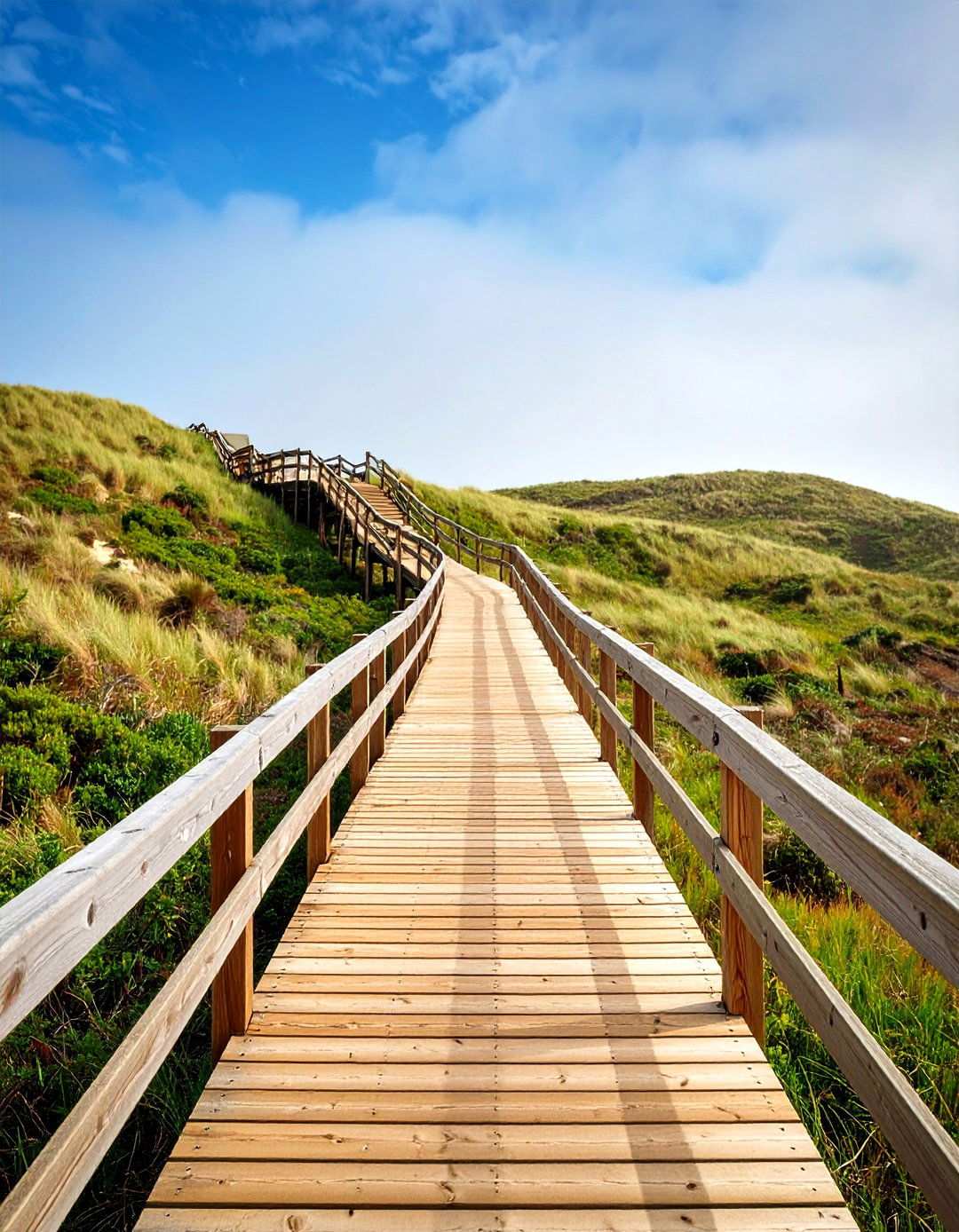
Elevated walkways offer a practical solution for navigating sloped landscapes while preserving the natural environment. By creating a raised walkway, you can minimize ground disturbance and protect underlying vegetation and soil. Pressure-treated lumber or naturally rot-resistant woods like cedar can be used to construct platform sections that are seamlessly connected by stairs or ramps. This approach is particularly beneficial in environmentally sensitive areas where maintaining minimal ground disturbance is crucial. The elevated design not only allows natural water flow and wildlife movement beneath but also provides safe, stable walking surfaces above. Furthermore, different decking patterns, railing styles, and stain colors can be used to customize the appearance of the walkway to suit architectural preferences. This walkway type offers excellent accessibility options and can incorporate features such as lighting, seating areas, or observation platforms, creating an engaging journey through the sloped landscape while prioritizing environmental responsibility.
13. Defining Modern Elegance with Granite Slab Minimalist Steps
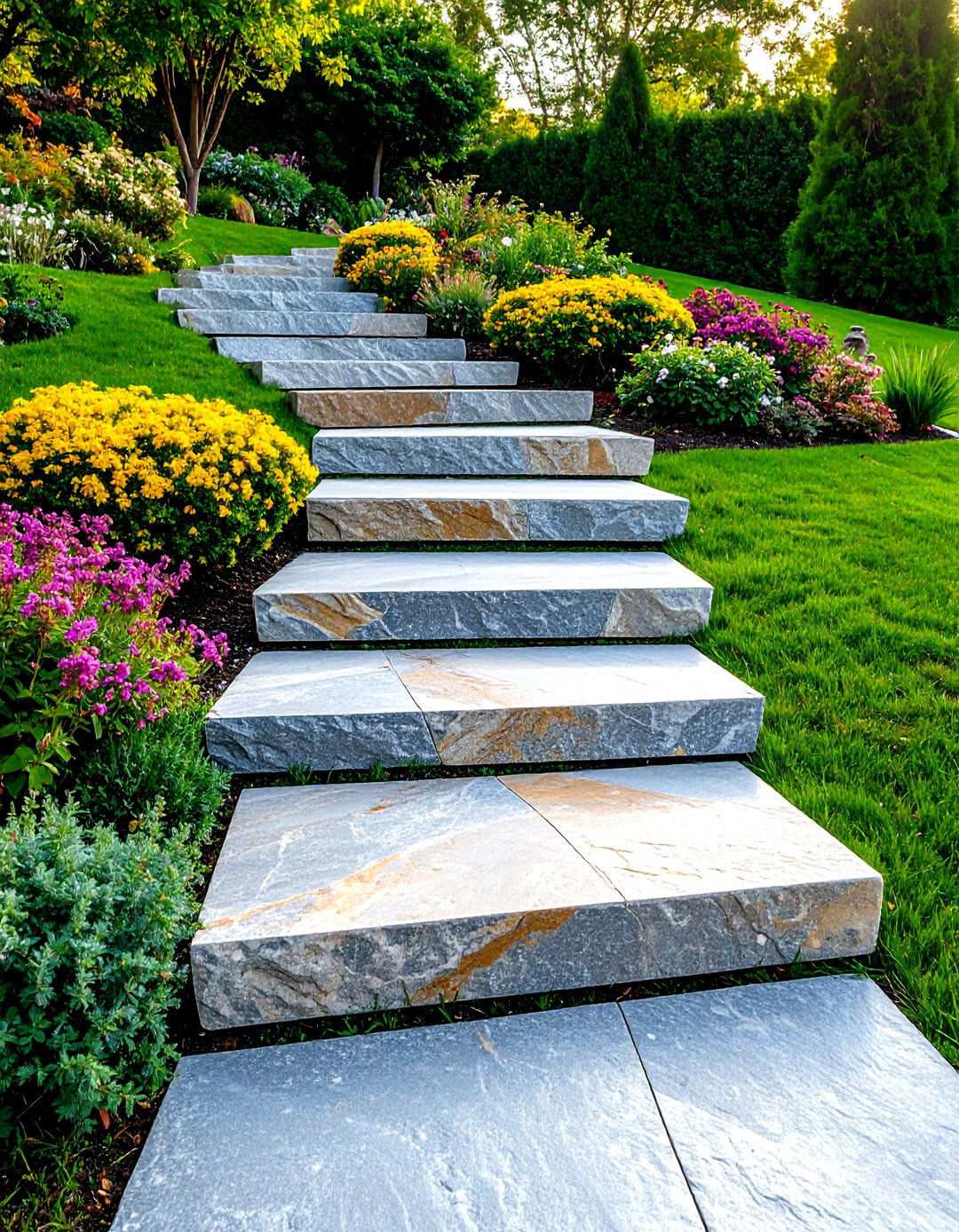
Granite slab minimalist steps embody a bold, contemporary design aesthetic that emphasizes clean lines and substantial materials. By utilizing large granite slabs that are precisely cut and positioned, you can create simple, geometric steps that make a strong architectural statement. The natural strength and durability of granite ensure long-lasting performance, while the polished or honed surfaces provide a sophisticated visual appeal. Each step typically features substantial proportions with clean edges and consistent spacing, resulting in a cohesive and elegant design. The neutral colors of granite complement both modern and traditional landscape designs, and with minimal maintenance required, this approach is particularly well-suited for contemporary gardens where the walkway becomes a sculptural element as well as a functional pathway. By emphasizing quality materials over ornate details, this design philosophy creates a sense of confidence and permanence.
14. Creating a Seamless Transition with Mulch Paths and Timber Edging
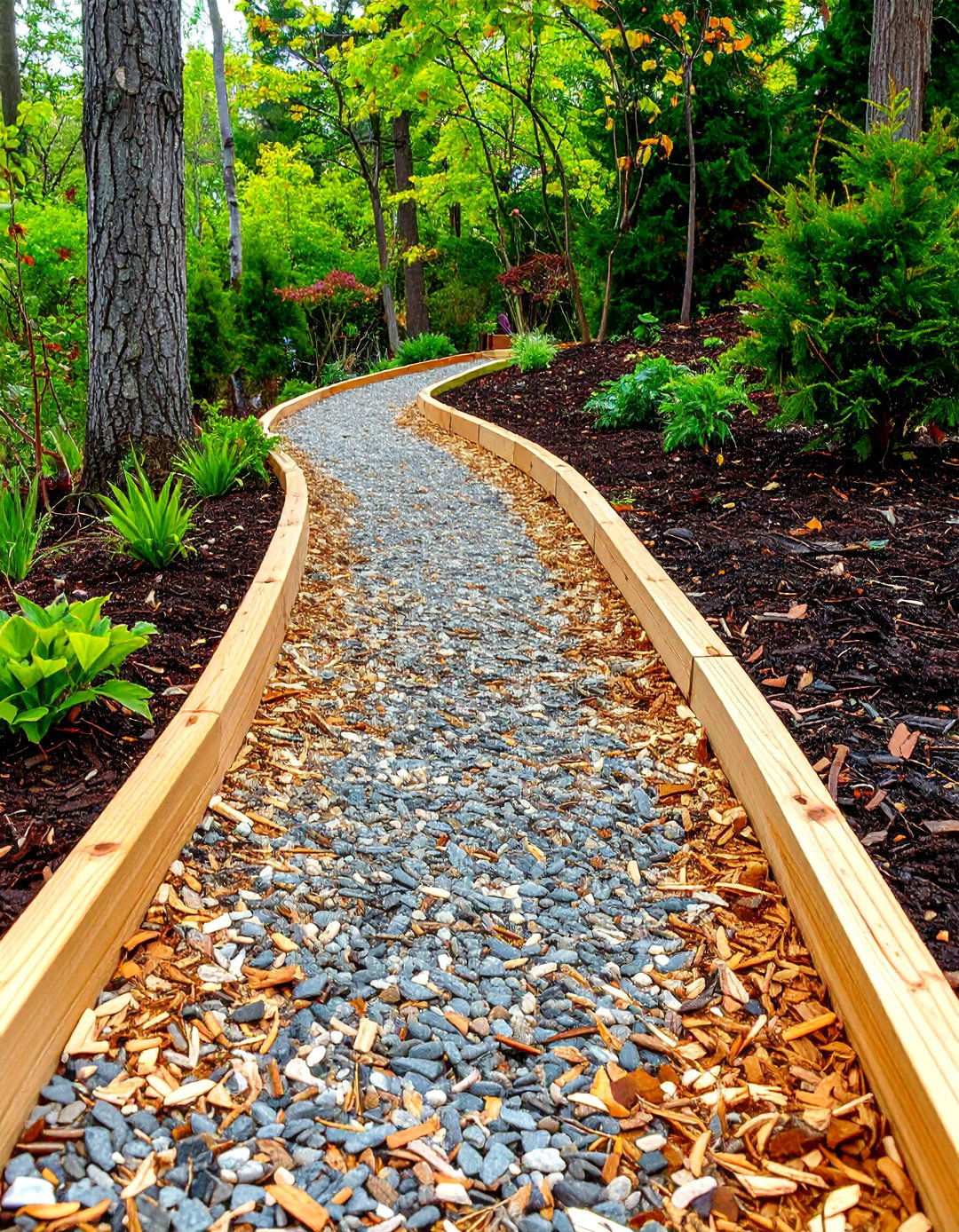
A mulch path with timber edging offers an organic, forest-like walkway solution that effectively manages slopes while maintaining natural character. By using natural wood chips, bark mulch, or recycled organic materials to form the walking surface, you can create a soft, comfortable footing that gradually decomposes and can be refreshed periodically, making this an environmentally sustainable option. The pressure-treated timber edging that defines the pathway boundaries provides a clear and defined navigation path through sloped terrain. This design works exceptionally well in woodland settings, naturalistic gardens, or areas where a softer, more informal pathway character is desired. By incorporating different mulch colors and textures, you can create visual variation along the pathway route, adding an extra layer of depth and interest to the walkway design.
15. Merging Form and Function in River Rock and Steel Step Designs
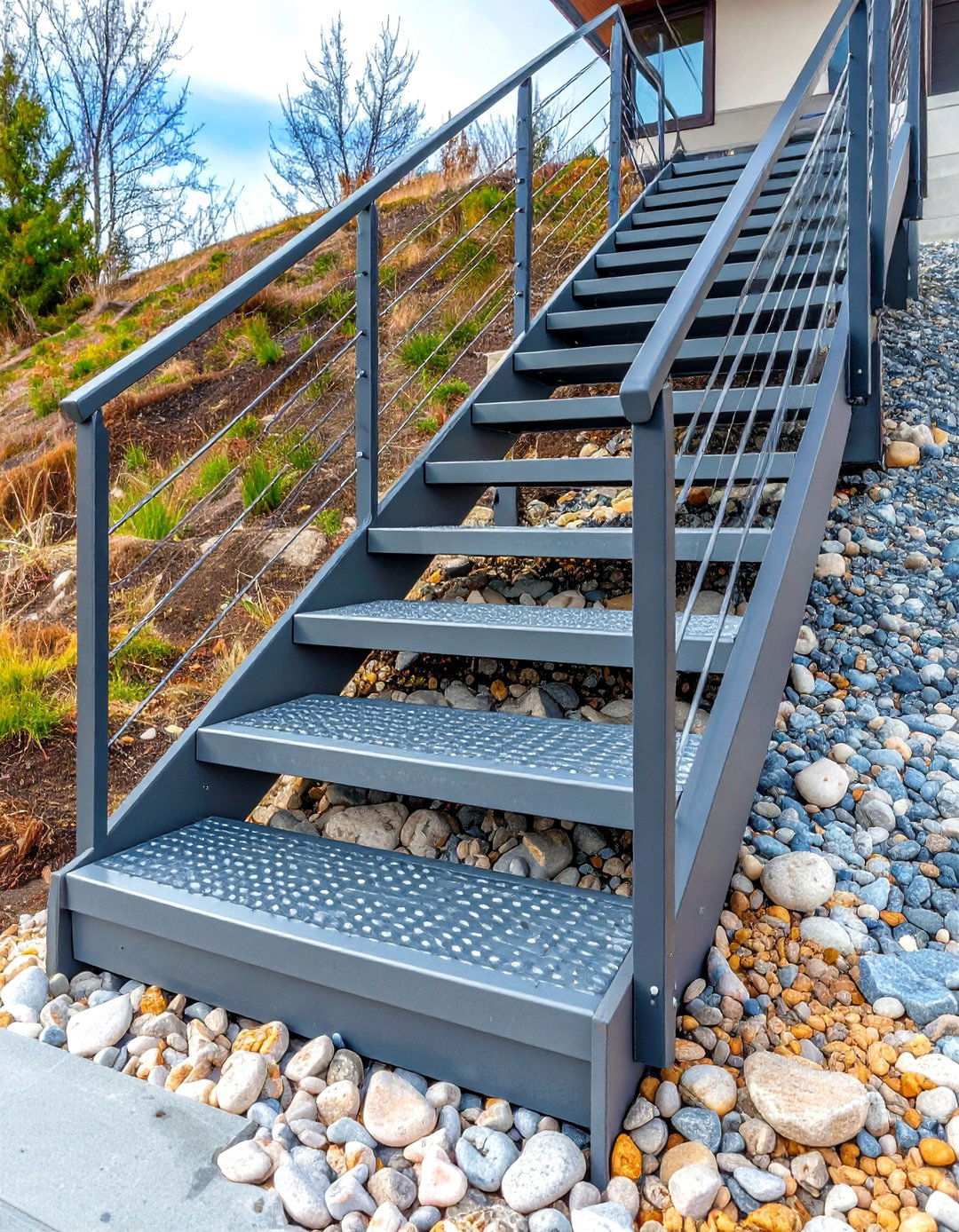
The fusion of river rock and steel components in walkway designs produces an industrial-meets-natural aesthetic that skillfully tackles slopes with a contemporary flair. Steel plates or frames serve as the primary step framework, while smooth river rocks fill in gaps and provide essential drainage areas. The juxtaposition of manufactured steel and natural stone generates captivating visual interest, as both materials boast exceptional durability. By powder-coating steel components in various hues, it’s possible to harmonize with architectural features, whereas river rocks offer a natural palette of colors and textures. This design approach thrives in modern landscapes where diverse materials are celebrated, resulting in a walkway that feels both refined and organically integrated. Furthermore, this combination offers practical benefits, including effective drainage, increased stability, and low maintenance requirements.
16. Elevating Landscapes with Limestone Terraces and Built-in Planters
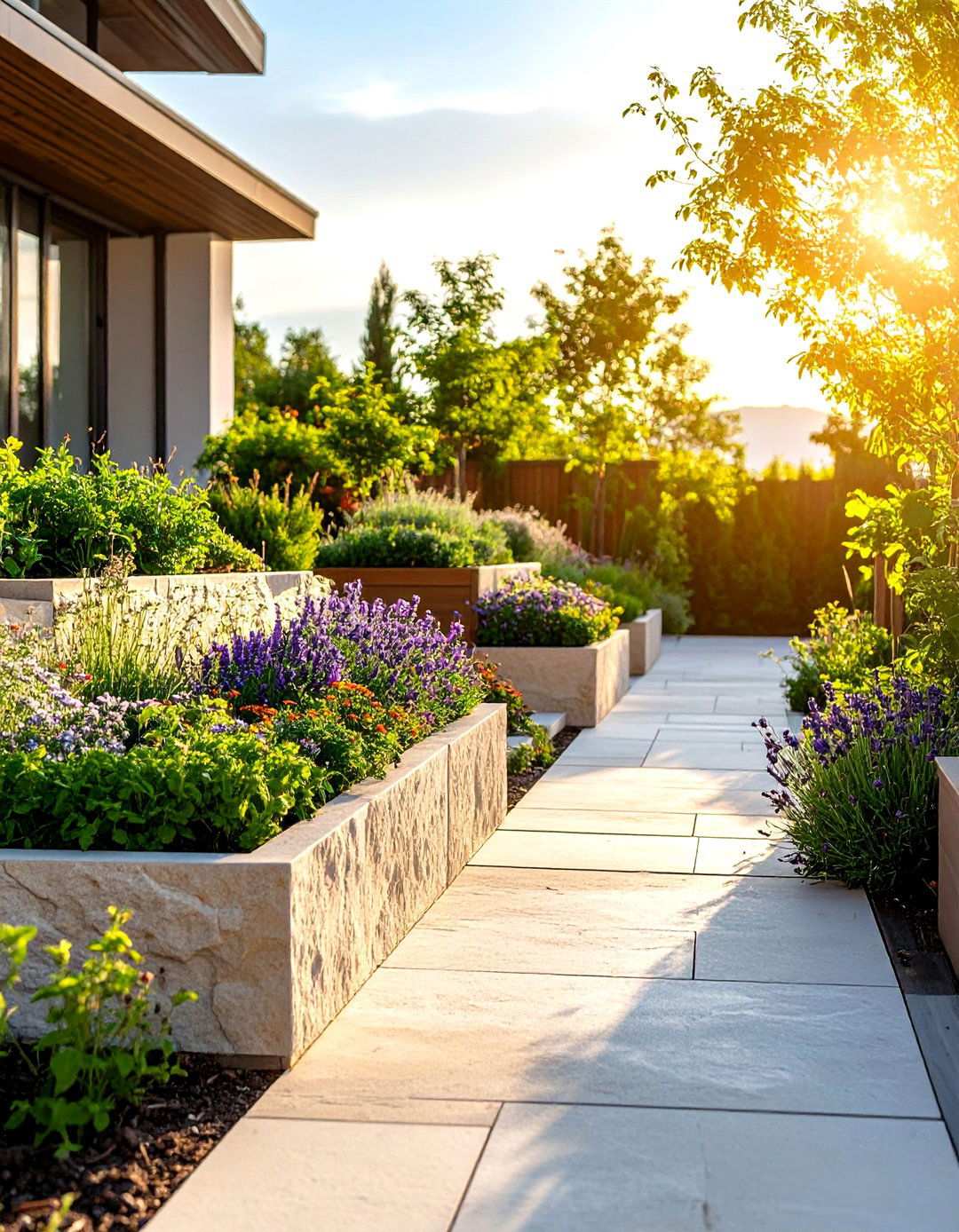
Limestone terraces with integrated planters bring functionality and beauty together by merging pathway navigation with ornamental gardening opportunities. Limestone blocks or slabs form the structural steps, while built-in planting pockets allow for a variety of flowers, herbs, or sculptural plants to line the walkway route. The neutral coloration of limestone provides an excellent canvas for plant displays, while the natural stone texture adds tactile interest. Each terrace level can feature distinct planting themes, creating seasonal variety and visual progression along the slope. This design approach transforms utilitarian steps into garden features that provide multiple layers of interest throughout the year. By seamlessly integrating hardscape and softscape elements, this design enhances both functionality and aesthetic appeal while effectively managing slope challenges.
17. Timeless Allure of Cobblestone Traditional Pathways
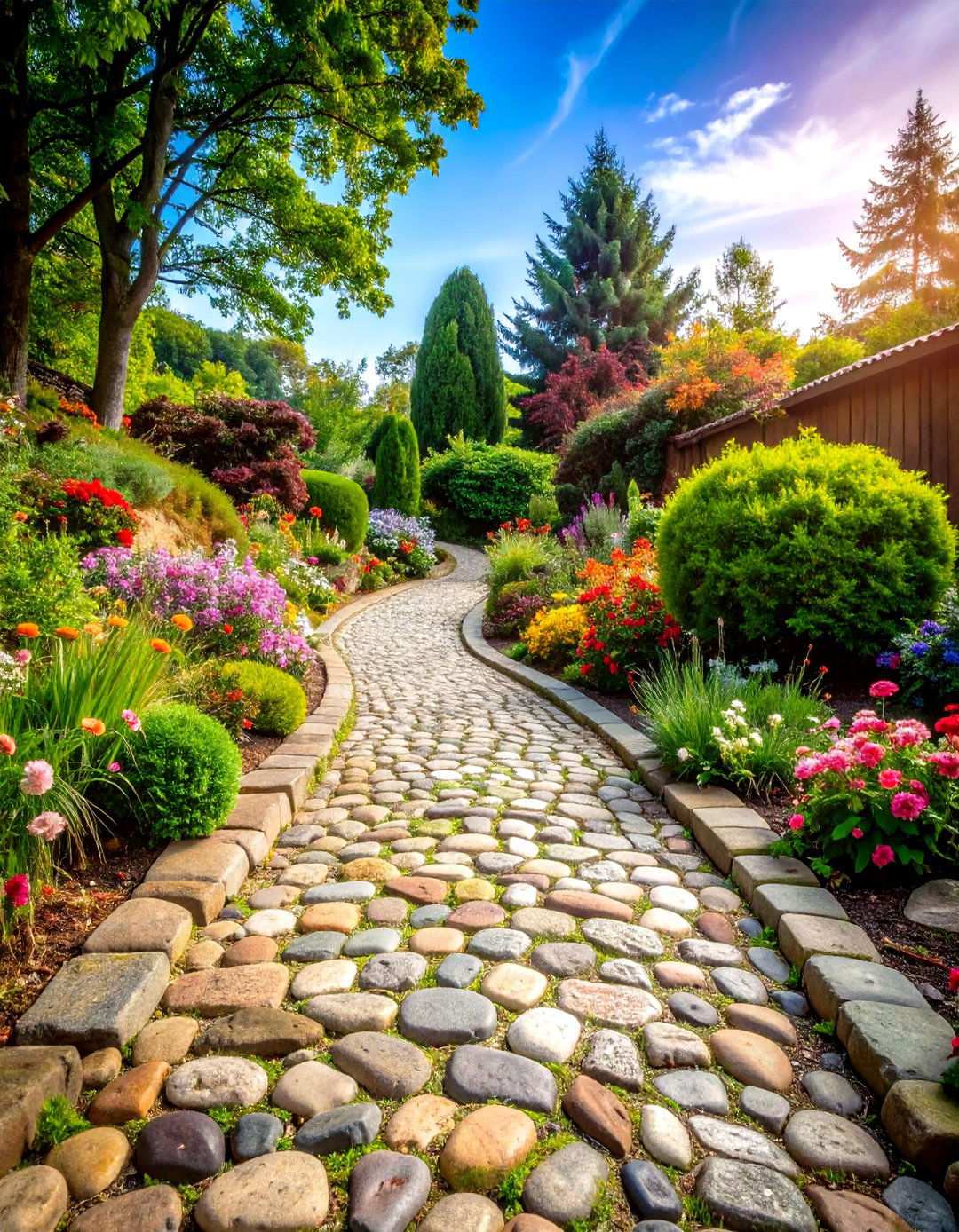
A cobblestone traditional pathway skillfully recreates historic charm while providing exceptional traction and durability on sloped terrain. Small, rounded stones are carefully fitted together to create a textured walking surface that has proven effective for centuries. The natural variation in cobblestone colors and sizes generates visual richness, while the irregular surface provides excellent grip even in wet conditions. Traditional installation methods using sand bedding allow for natural drainage while maintaining stability. This walkway style works exceptionally well in historic settings, formal gardens, or areas where Old World character is desired. The substantial construction requires skilled installation but provides virtually maintenance-free performance for decades. The enduring appeal of cobblestone not only enhances property value but also honors traditional craftsmanship and materials.
18. Uniting Style and Function with Composite Deck Steps
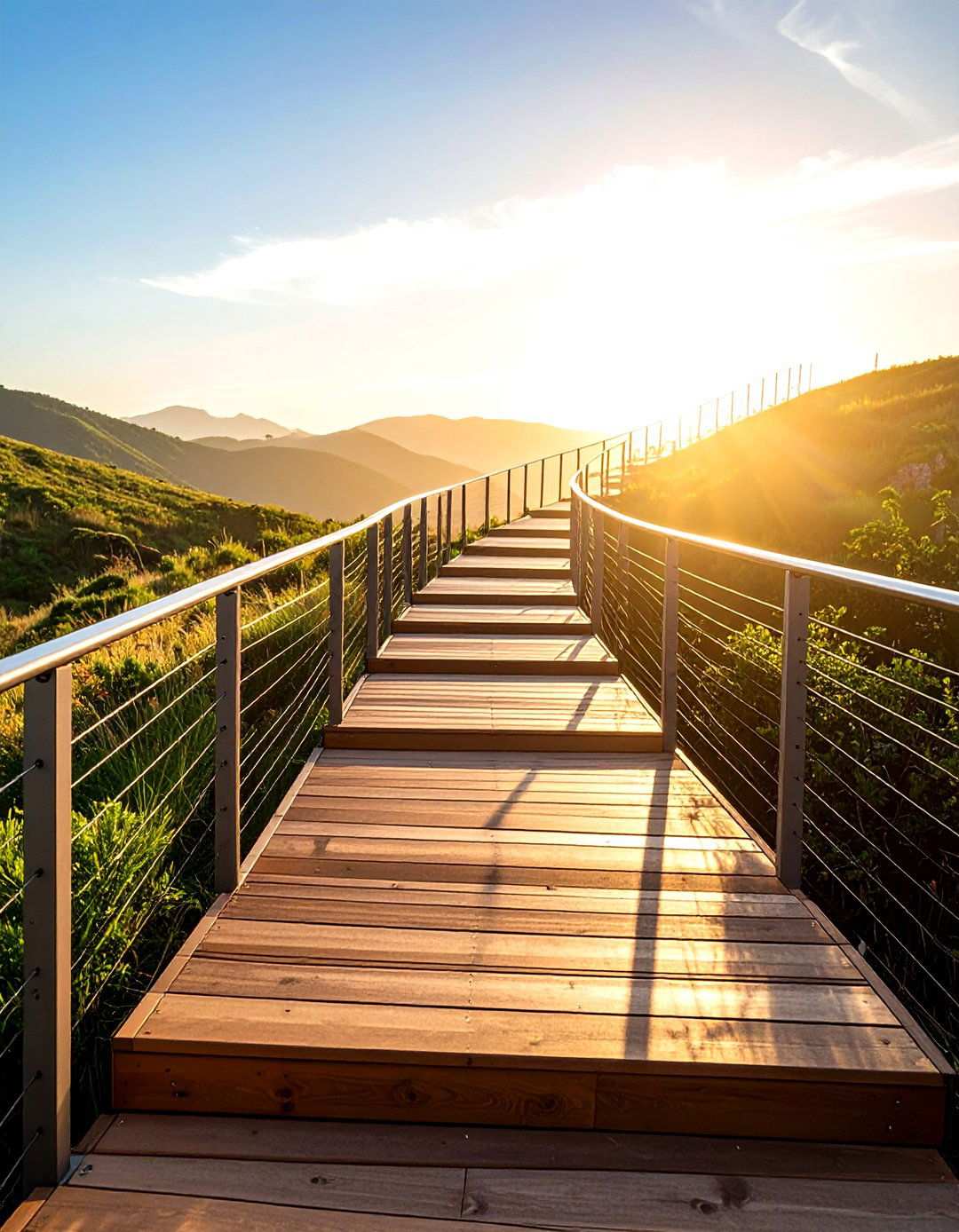
Pairing composite deck steps with cable railings offers a sleek, low-maintenance solution for navigating steep slopes with a contemporary twist. Composite decking materials replicate the appearance of natural wood without the upkeep, while stainless steel cable railings provide a safe barrier that doesn’t obstruct views. This marriage of design elements yields clean, linear aesthetics that harmonize with modern architecture while delivering practical functionality. The composite materials boast exceptional durability, resisting weathering, insects, and rot while maintaining a consistent appearance over time. By selecting from a range of color options, you can easily coordinate the composite deck steps with existing structures, and the cable railings can be configured in various patterns to suit your design preferences. This approach proves particularly effective in areas where building codes mandate railings or additional safety measures are desired without sacrificing modern aesthetic appeal.
19. The Timeless Beauty of Slate Pathways with Moss Integration
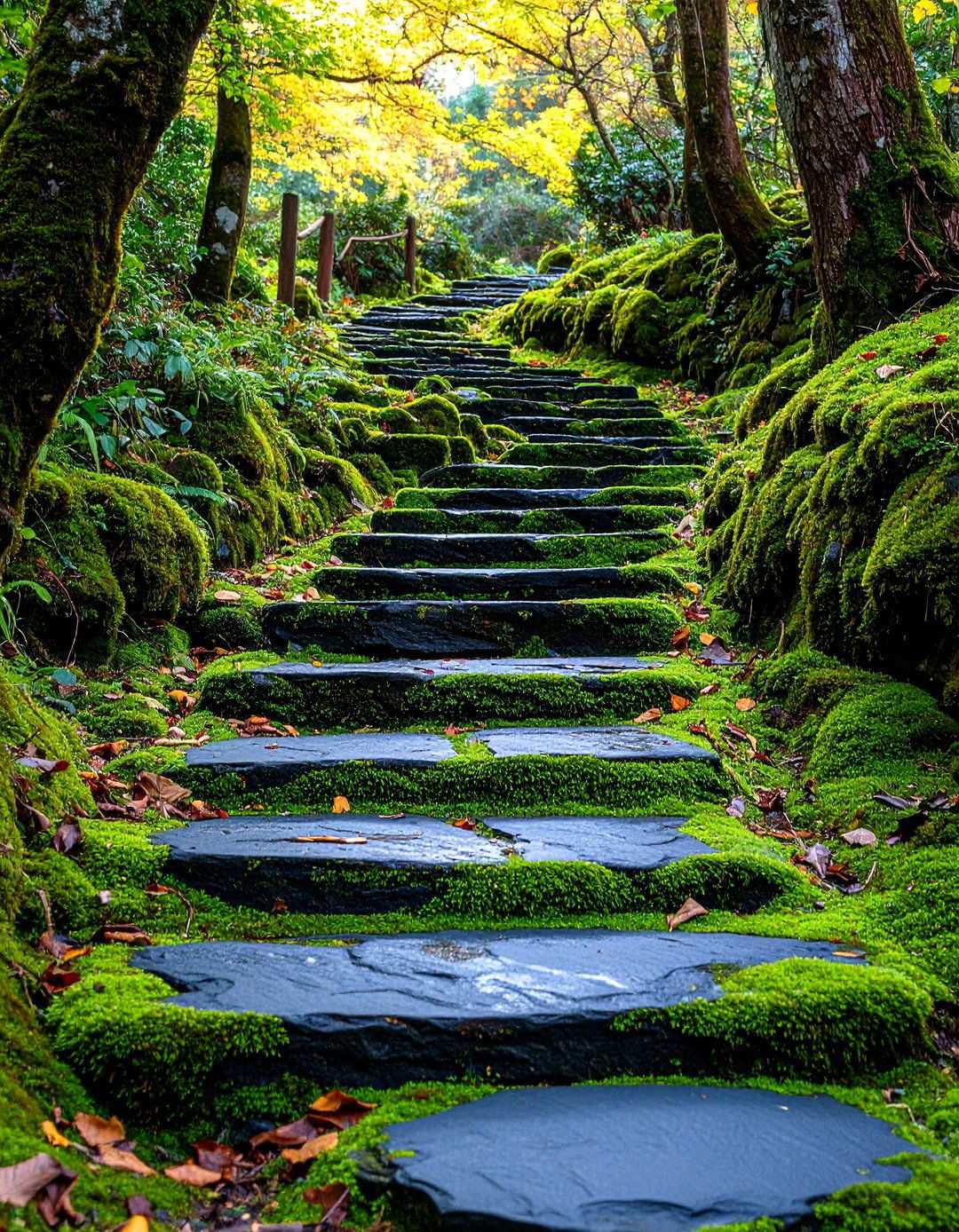
A slate pathway with moss integration creates a sophisticated walkway that celebrates the harmony between natural materials. By arranging flat slate pieces with intentional gaps, moss growth is encouraged, creating a lush, living carpet between the stone elements. The dark blue-gray hue of the slate provides a striking contrast to the vibrant green moss, while both materials offer natural slip resistance. This design approach thrives in shaded areas where moss naturally flourishes. The organic integration of stone and living elements gives the pathway an air of age and maturity, even when newly installed. Regular misting during dry periods helps establish moss colonies, eventually creating a self-sustaining system that requires minimal maintenance while showcasing exceptional natural beauty.
20. Taming Steep Slopes with Crushed Granite Switchback Trails
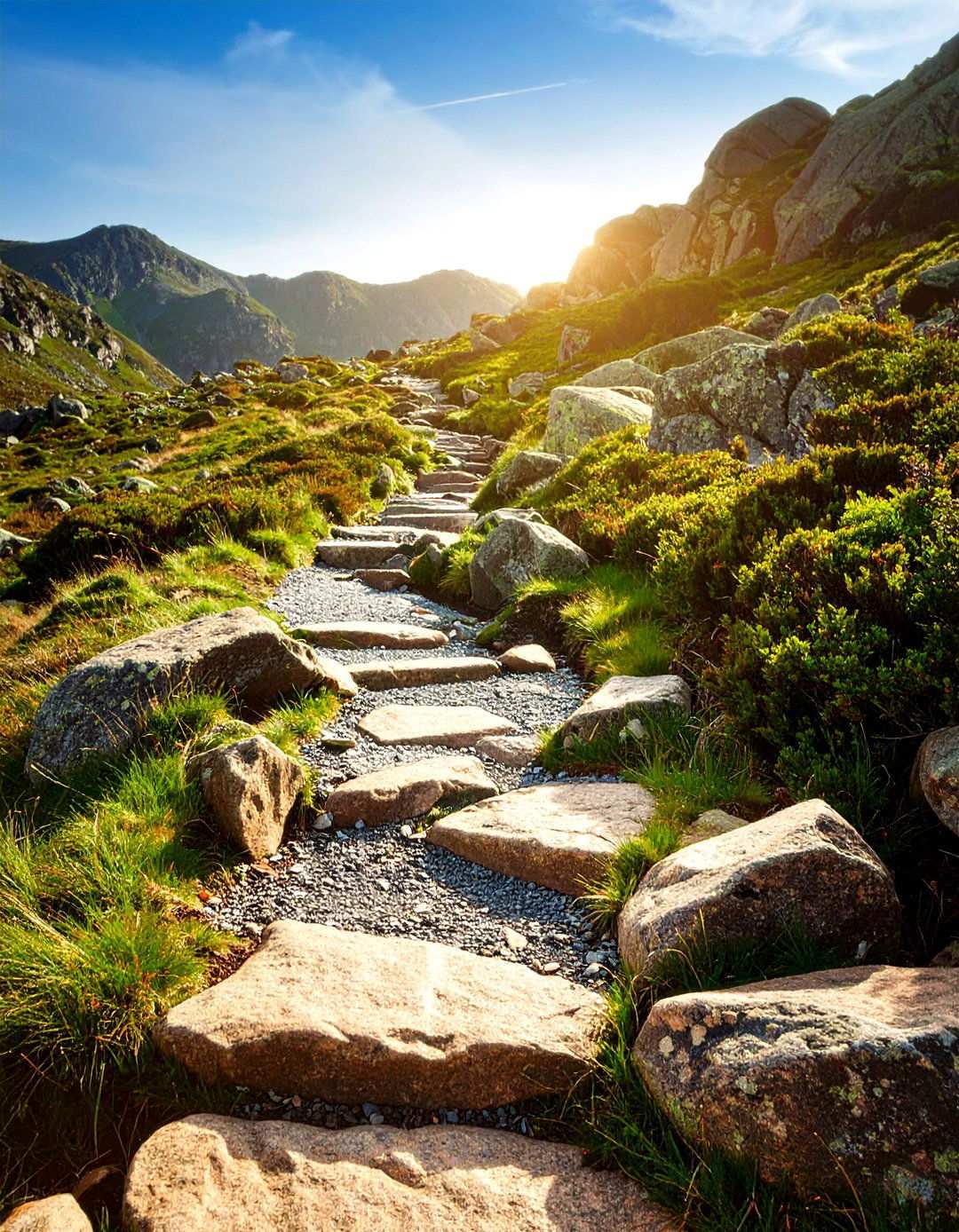
A crushed granite switchback trail cleverly manages steep slopes through a series of gentle zigzag turns, reducing the effective grade while creating an engaging journey. Compacted crushed granite provides a stable, permeable walking surface that drains well while offering good traction. The switchback design allows for manageable grades even on challenging terrain, making the walkway accessible to a wider range of users. Strategically placing larger boulders or plants at turn points provides visual anchors and rest opportunities. This approach mimics the natural beauty of hiking trails while delivering a more refined appearance suitable for residential landscapes. The neutral color of granite complements most plant materials and architectural styles while requiring minimal maintenance once properly established and compacted.
21. Stepping Up to Slope Management
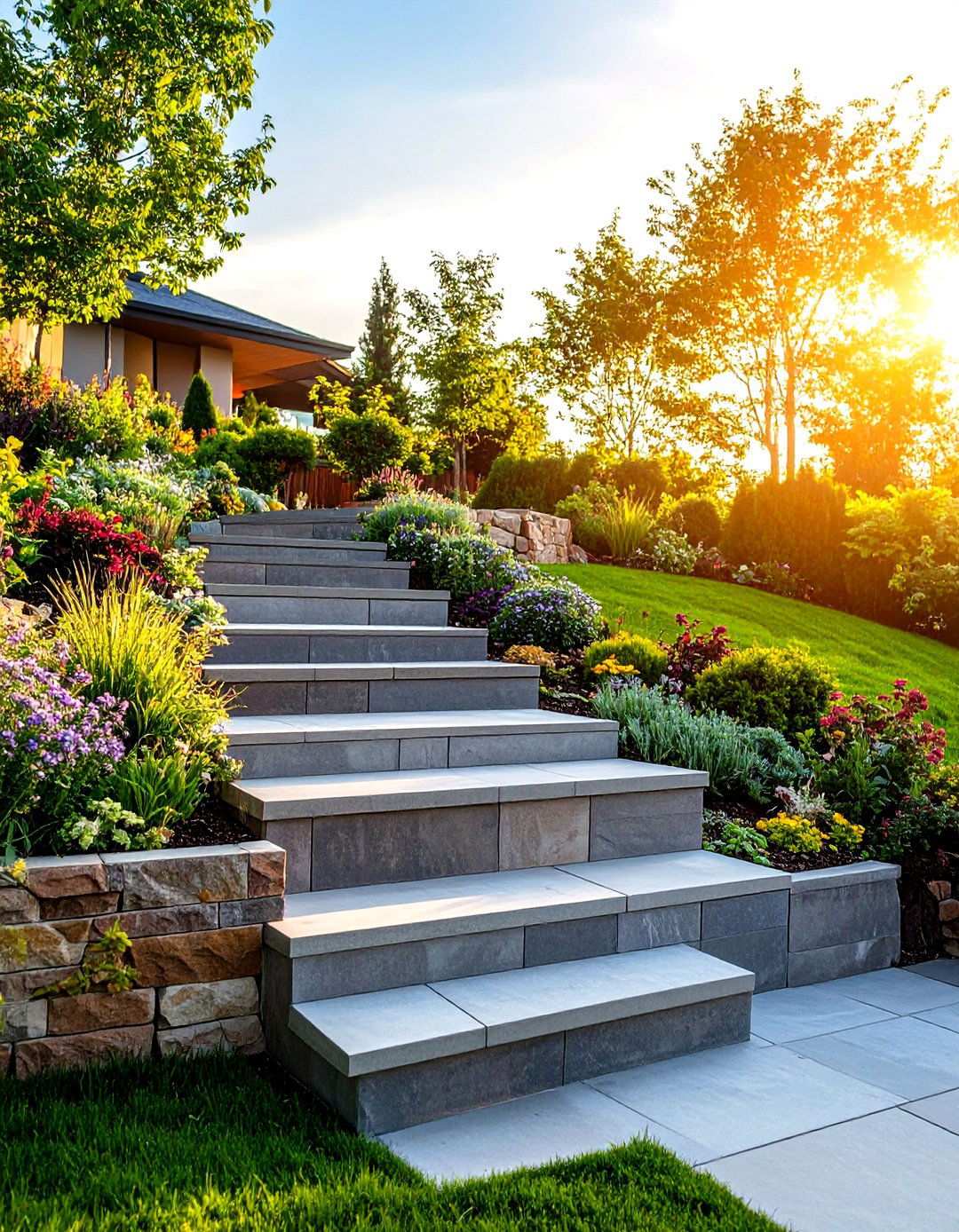
For those seeking a budget-friendly, hands-on approach to tackling slopes, precast concrete block terracing offers a versatile solution that combines functionality with aesthetic appeal. By leveraging manufactured concrete blocks specifically designed for landscaping, individuals can create retaining walls and step systems that not only provide stability but also add visual interest to their outdoor spaces. The blocks’ interlocking designs eliminate the need for mortar, making construction a breeze, and their various colors, textures, and sizes cater to diverse landscape styles. Moreover, the modular nature of these blocks allows for creative arrangements and effortless repairs, should they be needed. Strategically placed spaces between blocks can be optimized for drainage and planting opportunities, effectively softening the hardscape appearance. This approach yields professional-grade results at an accessible price point, backed by good durability and structural performance, making it an ideal choice for weekend DIY projects.
22. Harmonizing with the Landscape
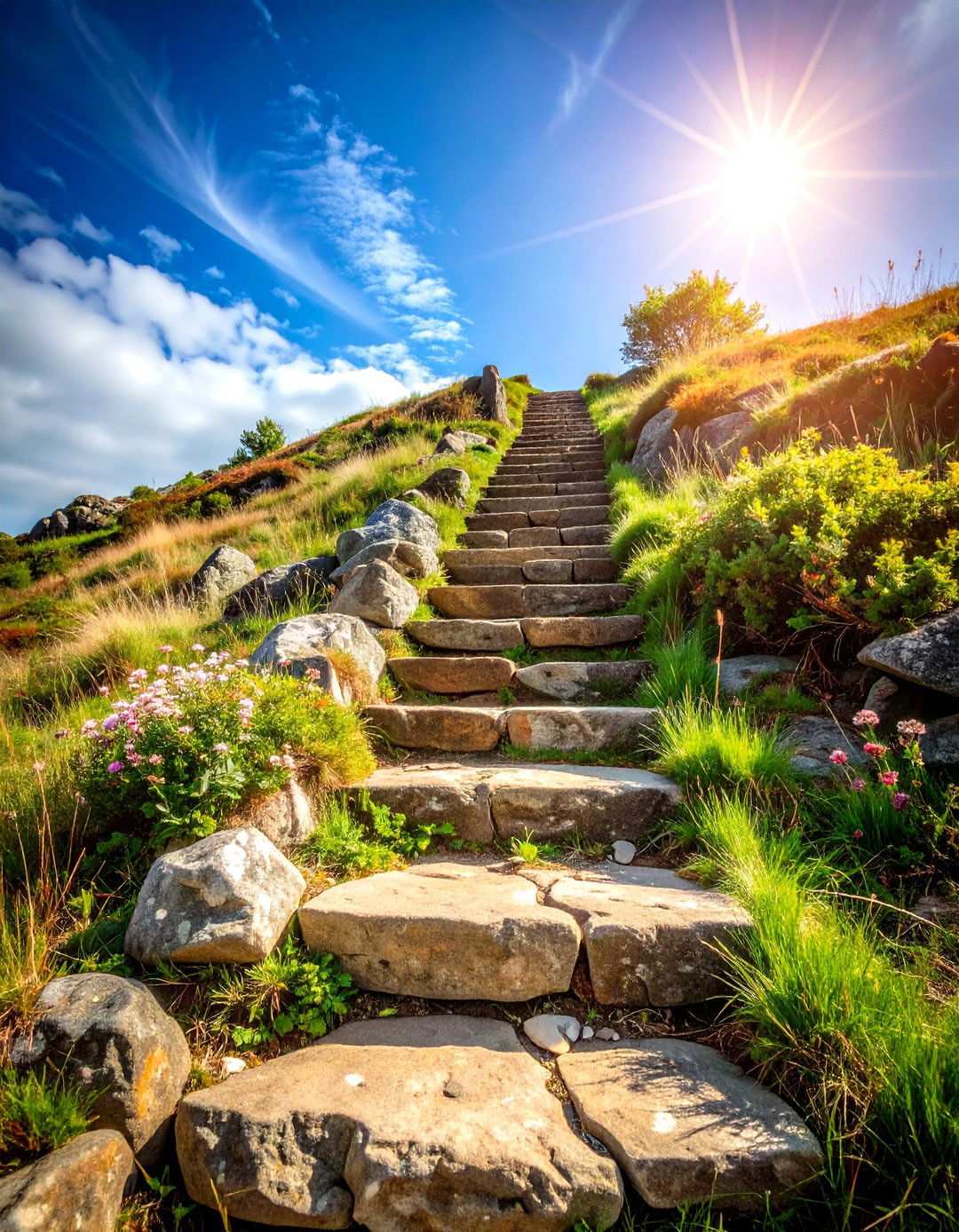
A fieldstone natural stairway creates a seamless connection between the walkway and its surroundings by utilizing locally sourced stones that reflect the area’s natural character. These weathered rocks, collected from local sources, boast unique shapes, colors, and textures that pay homage to the region’s geology. Skilled artisans carefully fit the irregular stones together to form stable steps that follow the natural slope contours, resulting in an organic, naturalistic appearance that seems to have evolved over time. This approach excels in rural settings or areas where maintaining a natural ambiance is essential. By leveraging local materials, individuals can reduce their environmental footprint while cultivating a strong sense of connection between the walkway and its immediate environment, ultimately achieving authentic landscape integration.
23. Building a Stable Foundation
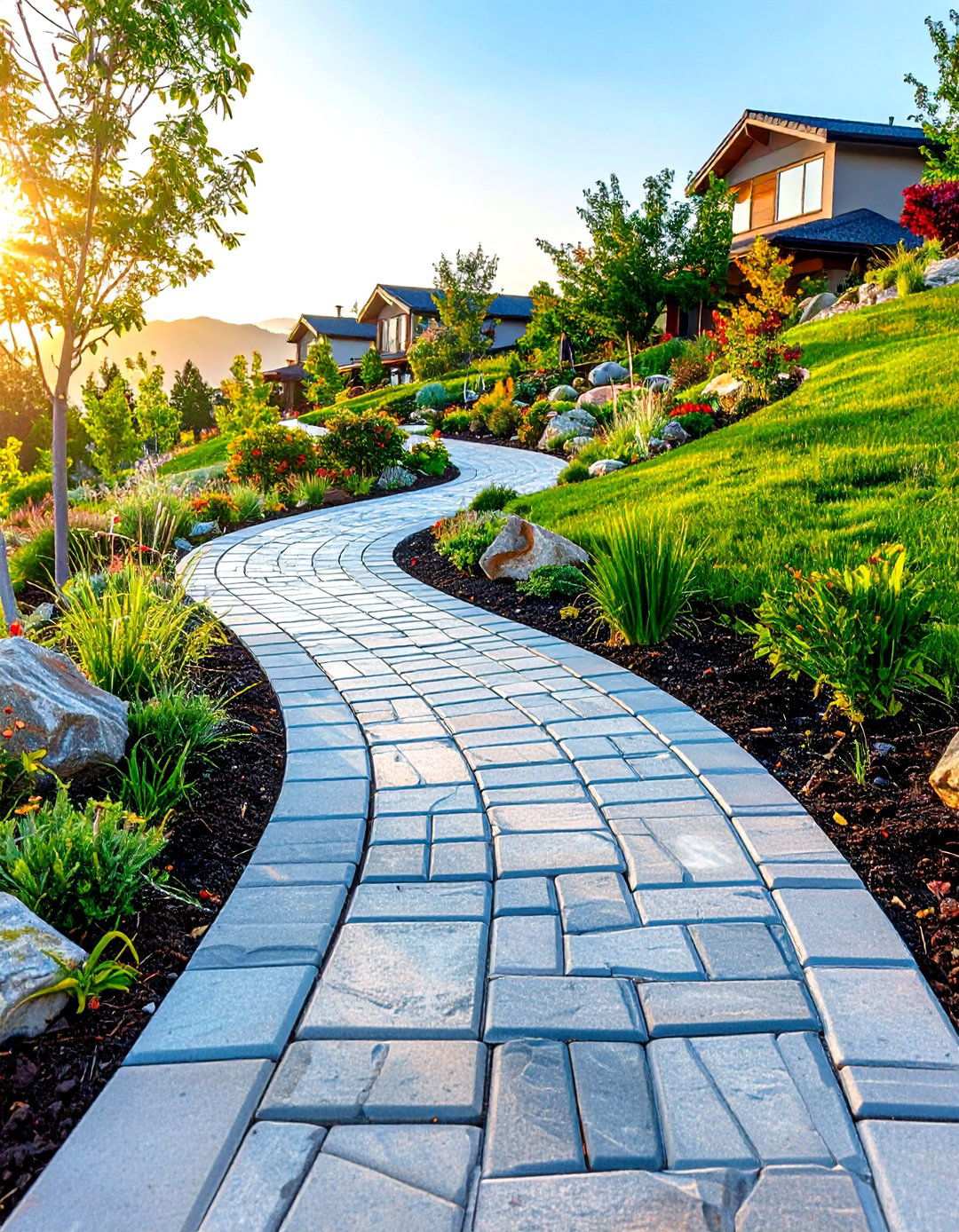
An interlocking paver grid system offers a reliable solution for managing slopes while allowing for creative pattern arrangements and effortless maintenance access. These specially designed pavers feature mechanical connections, such as tabs or grooves, that lock adjacent units together, creating a structurally sound surface across the walkway. By combining various patterns, including running bond, basket weave, or decorative layouts, individuals can achieve a professional appearance while maintaining the benefits of the interlocking system. The connected surface resists movement and settling that can occur on sloped installations, ensuring long-term performance with minimal maintenance requirements. Furthermore, the system’s flexibility allows for mixing different colors and textures to create visual patterns or zones within the walkway, providing an added layer of design customization and creativity.
24. Unifying Form and Function
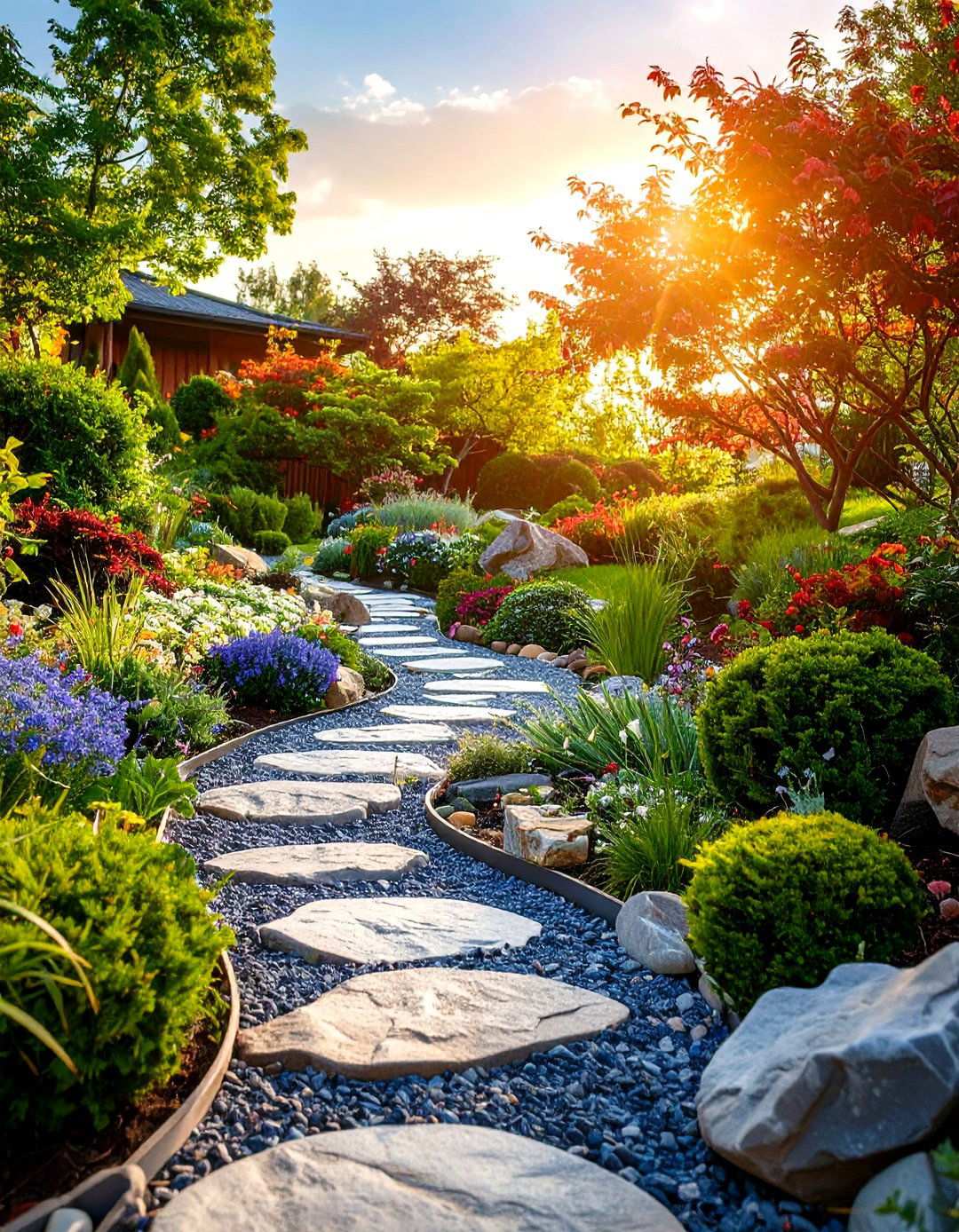
A bespoke pathway that harmoniously merges various stone materials and artistic flourishes can successfully navigate slopes while showcasing personal style. By thoughtfully combining diverse elements such as river rock, crushed glass, decorative pebbles, marble chips, and vibrant gravels in intricate patterns or compositions, homeowners can create a truly unique and captivating walkway. The strategic use of metal or stone edging adds an extra layer of sophistication, allowing for deliberate separations between different areas or smooth transitions between them. This creative approach not only unlocks limitless possibilities for self-expression but also ensures excellent drainage and traction, making it an ideal solution for walkways that require both aesthetic appeal and functionality. As the day unfolds and lighting conditions change, the varied textures and colors of the pathway come alive, casting a dynamic visual spell that draws the eye and sparks the imagination. Whether serving as a striking focal point or a functional path, this artistic pathway design successfully bridges the divide between form and function.