1. Sage Green Shaker Style Cabinets
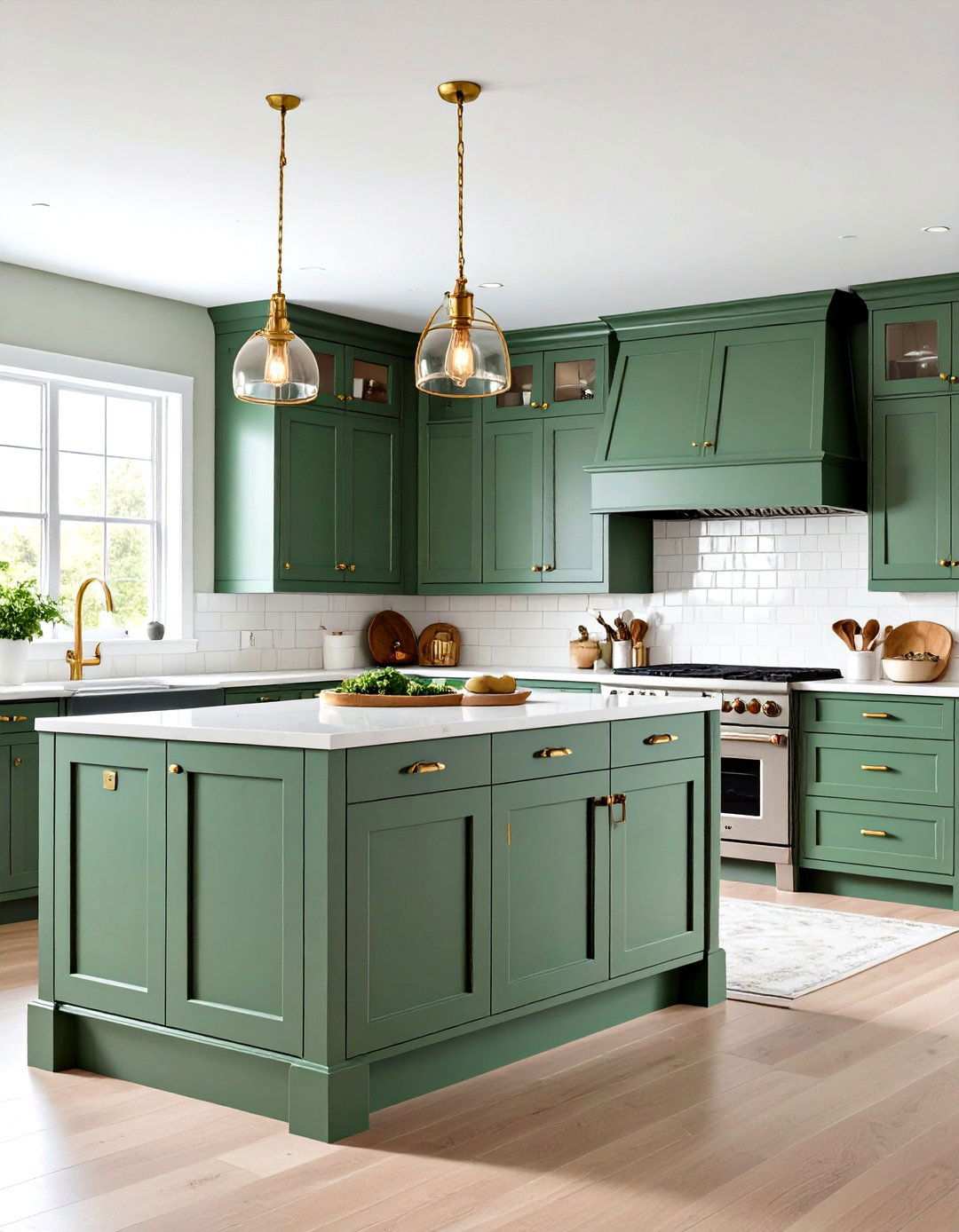
For a kitchen that effortlessly blends classic and modern elements, consider incorporating sage green shaker style cabinets into your design. The timeless appeal of these cabinets lies in their clean lines and traditional raised-panel design, which pairs perfectly with the soothing green hue. This harmonious pairing creates a sophisticated foundation that complements a wide range of home styles. To amplify the overall aesthetic, pair the sage green cabinets with crisp white countertops and subway tile backsplashes for a refreshing, modern look. Adding a touch of luxury with brass or matte black hardware will further enhance the design impact. Meanwhile, natural wood flooring harmoniously complements the earthy sage tones, while stainless steel appliances provide modern functionality. To create visual continuity throughout the space, consider incorporating open shelving in matching sage green and incorporating glass-front cabinet doors to break up solid surfaces and showcase beautiful dishware or glassware collections.

As an Amazon Associate I earn from qualifying purchases.
2. Sage Green Kitchen Island Centerpiece
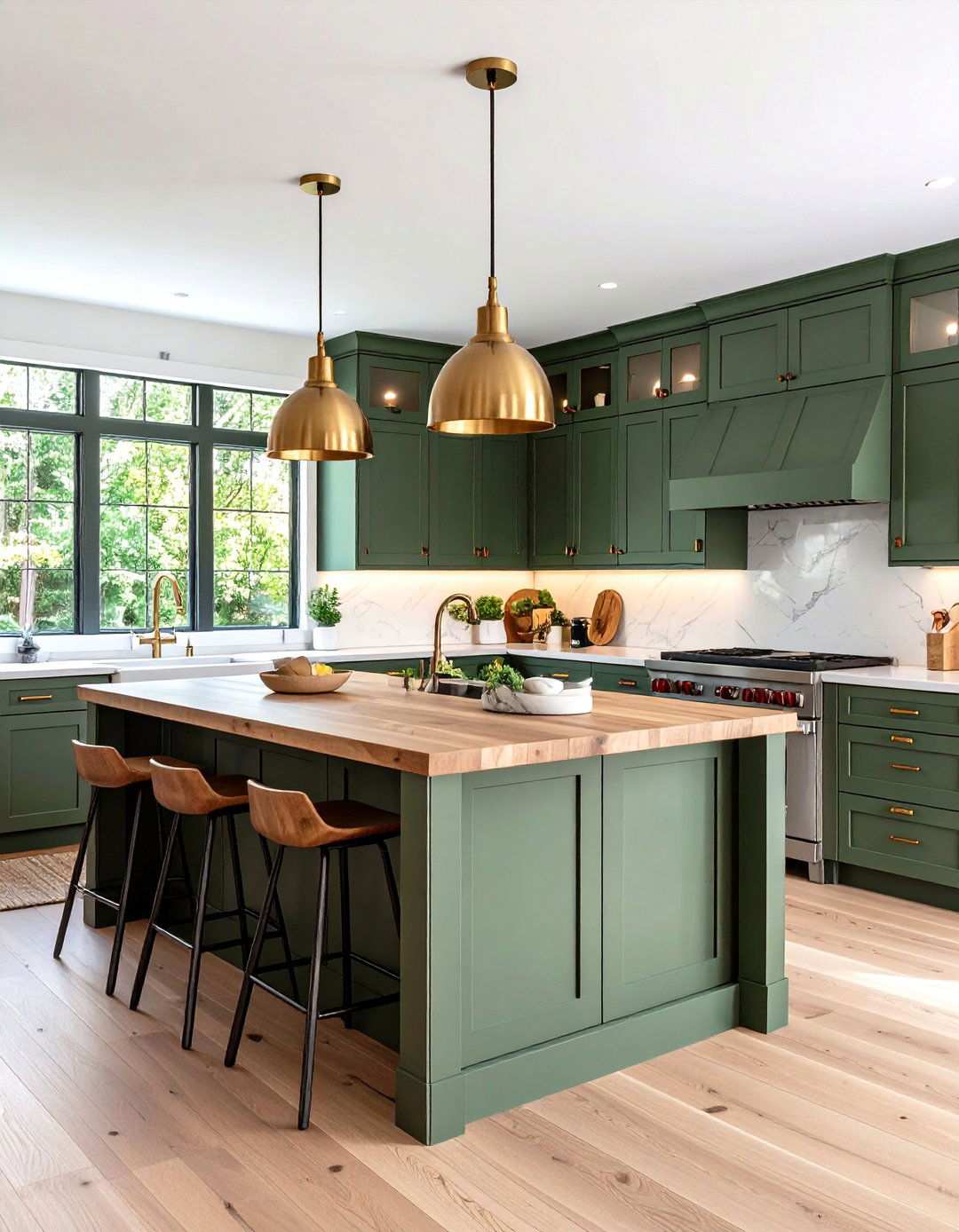
A kitchen island is the perfect opportunity to create a stunning focal point that not only provides extra workspace and storage but also elevates the overall design of the space. A sage green kitchen island can instantly transform any cooking area into a sophisticated culinary haven. Strategically positioning this statement piece against white or neutral perimeter cabinets creates beautiful contrast and visual interest. To add depth and texture, top the island with butcher block, white quartz, or marble, which not only provides durability but also makes a stylish statement. To further define the space and provide task illumination, consider adding pendant lighting above the island. Completing the look with bar stools in materials like natural wood or upholstered seats creates an inviting breakfast bar area. Thoughtfully incorporating built-in storage solutions, such as wine racks, deep drawers, or open shelving, will allow the sage green island to become the heart of your kitchen, fostering a sense of community and connection among family and friends during cooking, dining, and conversation.
3. Elevating the Ordinary with Sage Green Accents
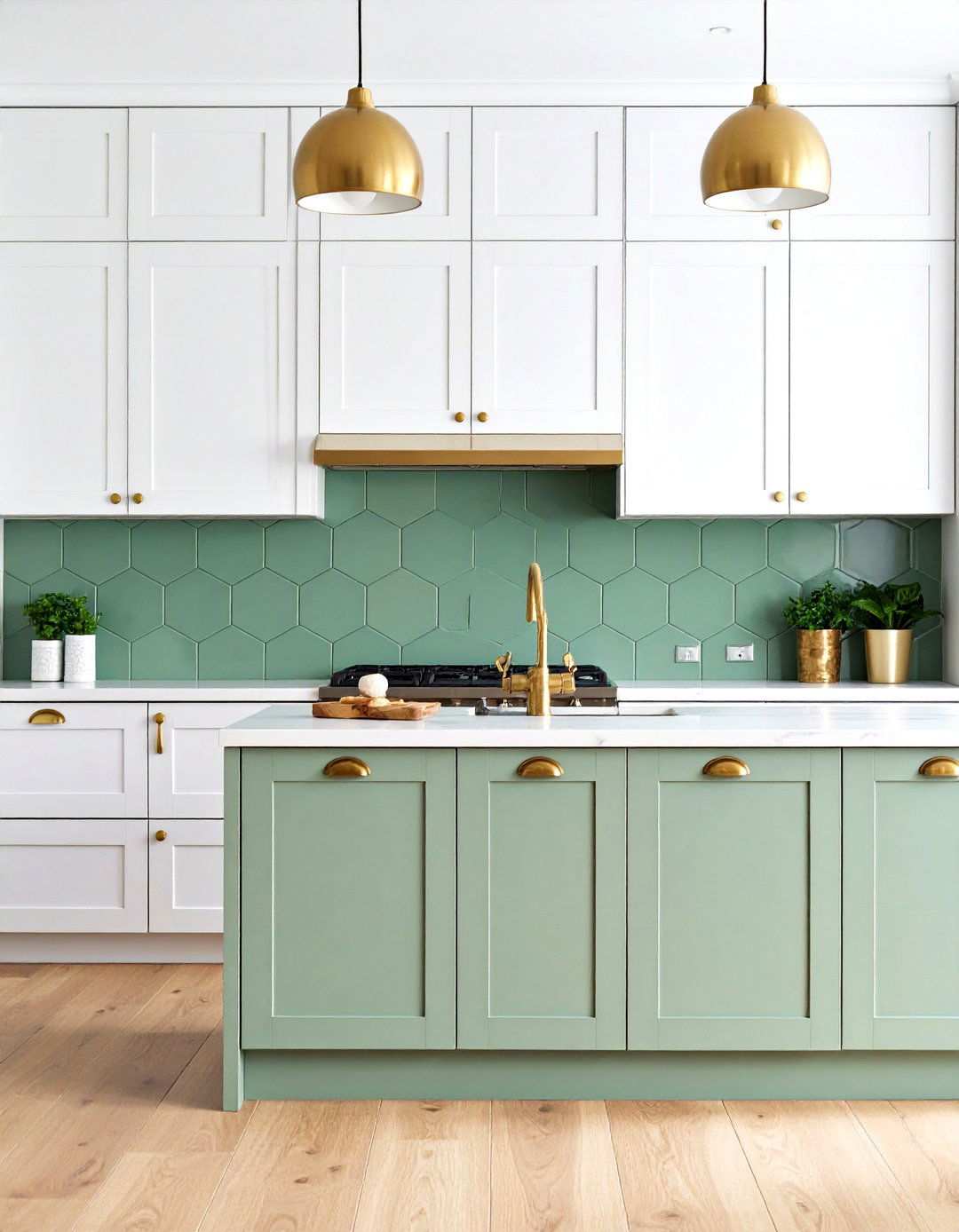
Imagine transforming your cooking area into a breathtaking space that showcases your personal style. By incorporating sage green backsplashes, you can inject a touch of sophistication and elegance without overwhelming the entire kitchen design. Ceramic tiles, glass mosaics, and natural stone in soothing sage tones provide the perfect canvas for creating a unique visual experience. Pair the green accents with crisp white or cream-colored cabinets to achieve a fresh, modern look that effortlessly balances trendiness with timeless appeal. For a classic look, consider subway tiles in sage green, or mix things up with hexagonal patterns to add geometric flair. The seamless color flow from countertop to upper cabinets creates a cohesive look that’s elevated by the addition of warm wood accents, brass fixtures, and natural materials. Under-cabinet lighting brings out the texture and color depth of the tiles, especially during those cozy evening cooking sessions.
4. Achieving Balance with Sage Green and White
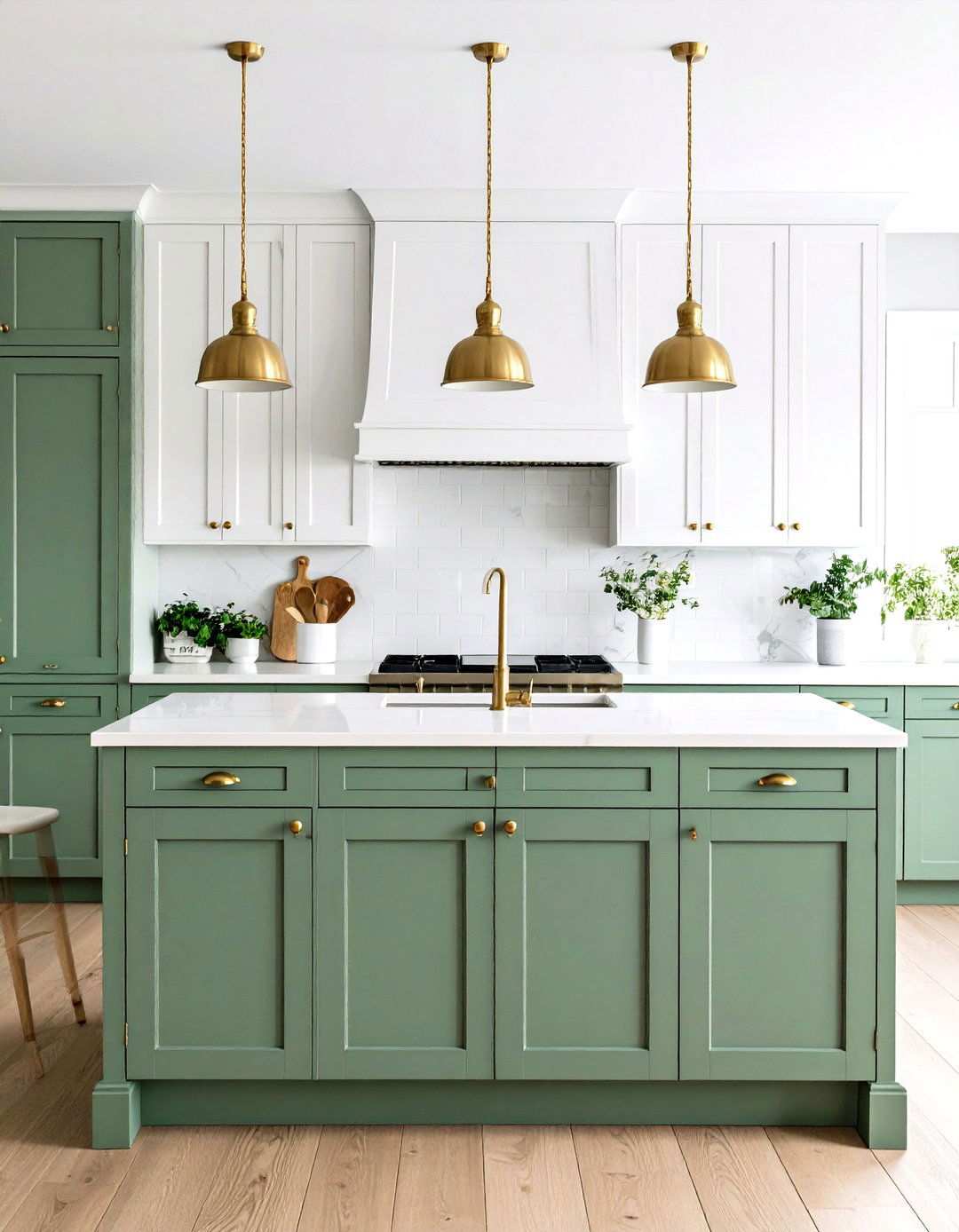
When it comes to kitchen design, finding the perfect balance between color and light can be a challenge. The sage green and white two-tone combination offers a harmonious solution that creates a sense of visual equilibrium. By installing sage green lower cabinets paired with crisp white upper cabinets, you can maintain an airy, open feeling that’s perfect for smaller kitchens. Adding white quartz or marble countertops bridges the two colors seamlessly, creating a cohesive look that’s both stylish and functional. Choose hardware in warm brass or matte black to complement both color tones, and incorporate white subway tiles or matching sage green tiles for the backsplash. Natural wood accents through open shelving, bar stools, or cutting boards add warmth and texture to this classic combination, making it a timeless choice for modern kitchens.
5. Capturing Farmhouse Charm with Sage Green Accents
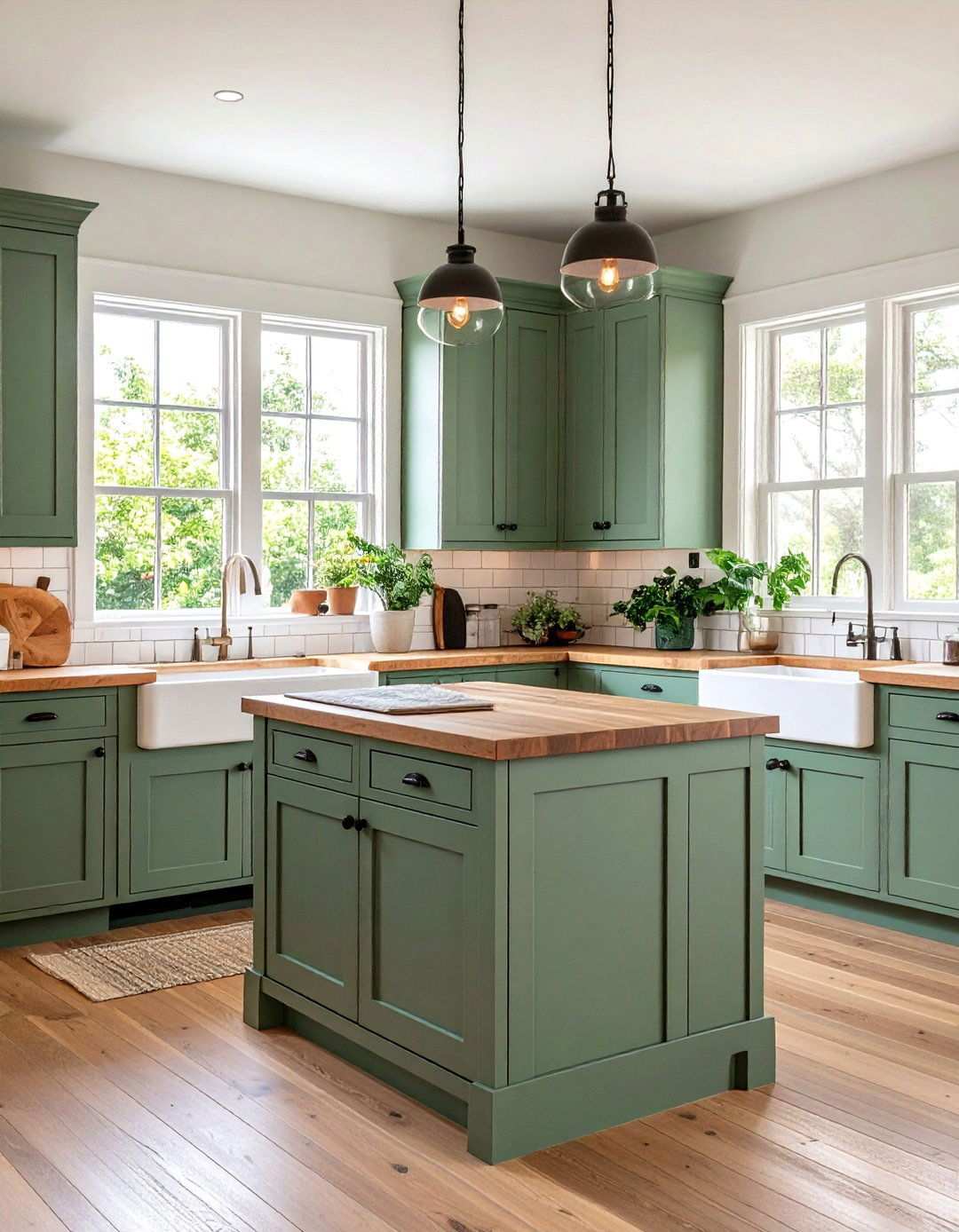
What makes a modern kitchen feel like a farmhouse retreat? Sage green cabinets combined with rustic farmhouse elements deliver authentic country charm with a touch of contemporary functionality. By installing shaker-style cabinets in soft sage green paired with white subway tile backsplashes and butcher block countertops, you can create a warm and inviting space that feels lived-in and perfectly styled. Add a farmhouse sink in white porcelain or natural stone for an authentic touch, and expose wooden ceiling beams to reveal the space’s rustic character. Choose vintage-inspired hardware in antique brass or oil-rubbed bronze finishes to add a touch of nostalgia, and display mason jars, vintage dishware, and fresh herbs in terracotta pots on open shelving. Wide-plank hardwood flooring in natural or distressed finishes completes this timeless farmhouse aesthetic, making it a perfect choice for those who love the charm of the countryside in the heart of the city.
6. Sage Green Modern Minimalist Kitchen
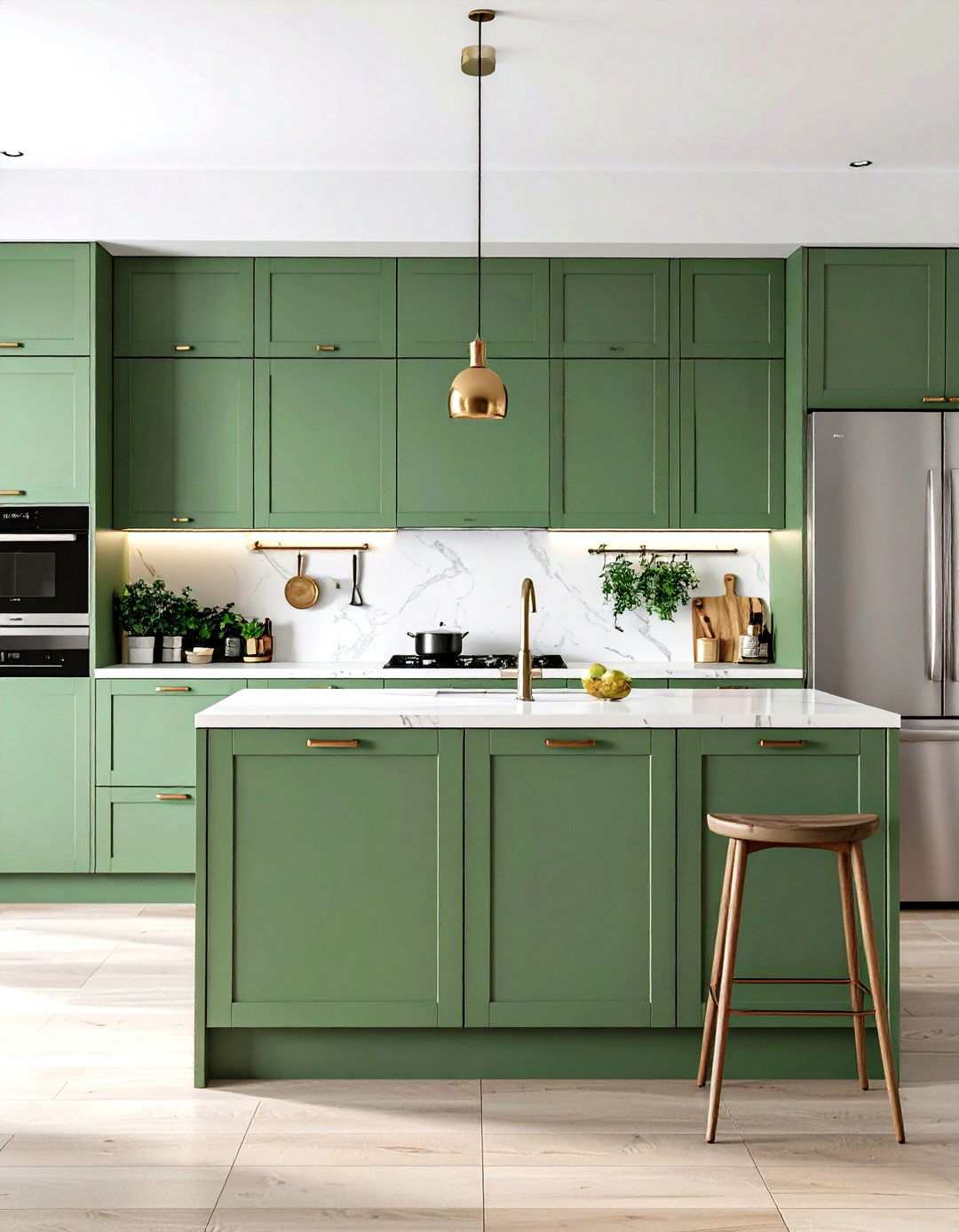
Incorporating sage green into sleek, contemporary kitchen designs is not only possible but also stunning when paired with clean lines and minimalist principles. By selecting flat-panel sage green cabinets with integrated handles, you can achieve a streamlined appearance that exudes modern sophistication. Pairing these cabinets with white or light gray quartz countertops featuring minimal veining patterns creates a harmonious balance of form and function. To maintain the clean aesthetic, consider installing handleless upper cabinets in matching sage green or crisp white for visual continuity. The addition of stainless steel appliances with concealed ventilation systems further enhances the sleek look, while under-cabinet LED lighting provides both functionality and ambiance. For a more polished finish, choose large-format tiles in neutral tones for backsplashes and flooring, reducing visual clutter and creating a sense of calm. Focused task lighting is achieved through pendant lighting in geometric shapes or sleek cylinders, resulting in a sophisticated and serene environment perfect for modern living.
7. Sage Green and Brass Hardware Combination
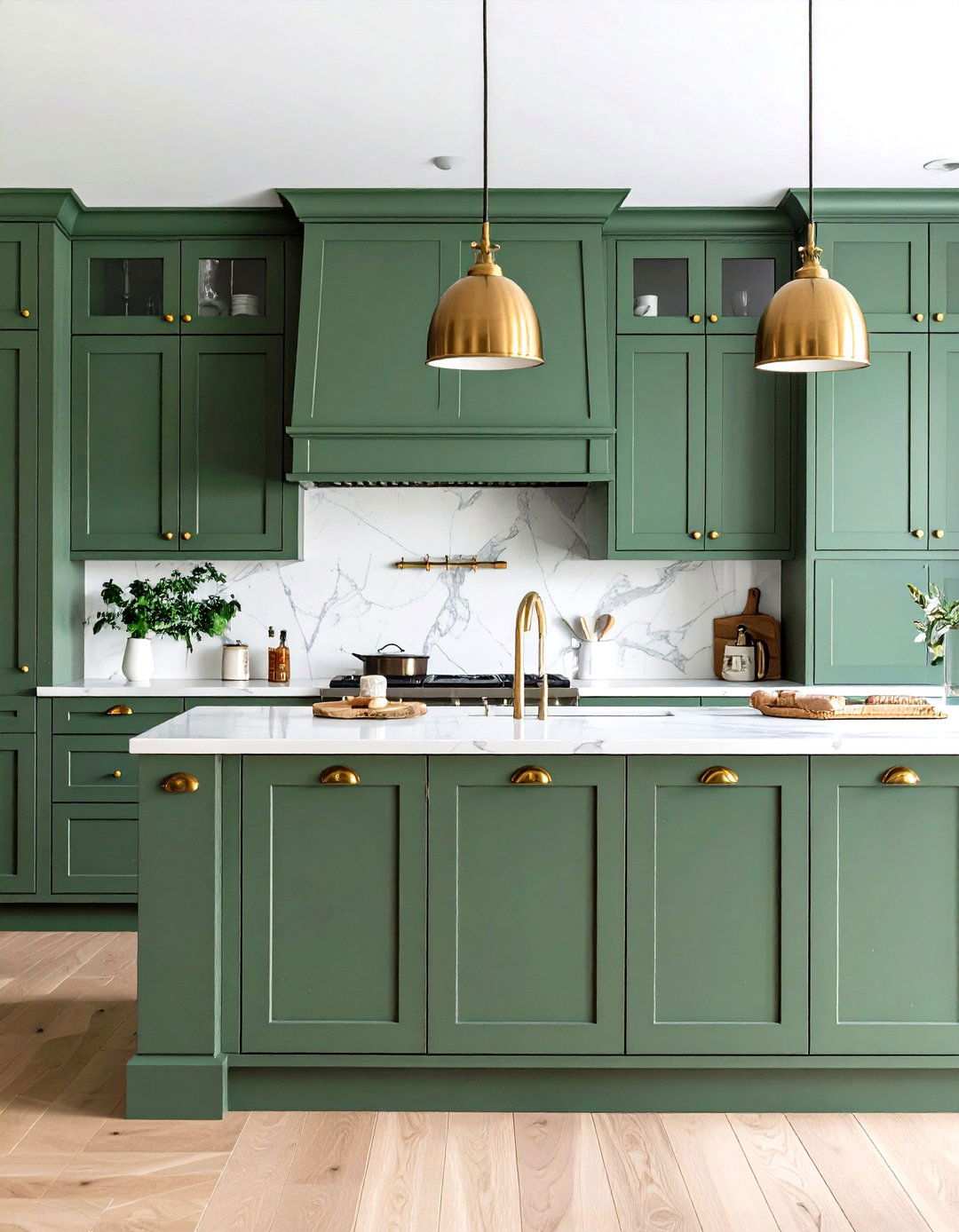
Bringing luxury and warmth to sage green kitchen cabinets is easier than you think. By incorporating brass hardware, you can create stunning contrast and elegant metallic accents throughout the space. Choose cabinet pulls, knobs, and hinges in warm brass tones that complement the earthy green hues, and extend the brass theme to light fixtures, faucets, and appliance handles for a cohesive design flow. This combination works particularly well with white or cream countertops and backsplashes, creating a timeless elegance that elevates any kitchen design from ordinary to extraordinary. Consider brass pendant lights above the kitchen island and matching sconces for ambient lighting, which will enhance the natural qualities of sage green and add sophisticated glamour. To reinforce the design theme, incorporate brass accessories like pot racks, bar tools, or decorative bowls, which will add a touch of sophistication and elevate the overall aesthetic.
8. Sage Green and Natural Wood Elements
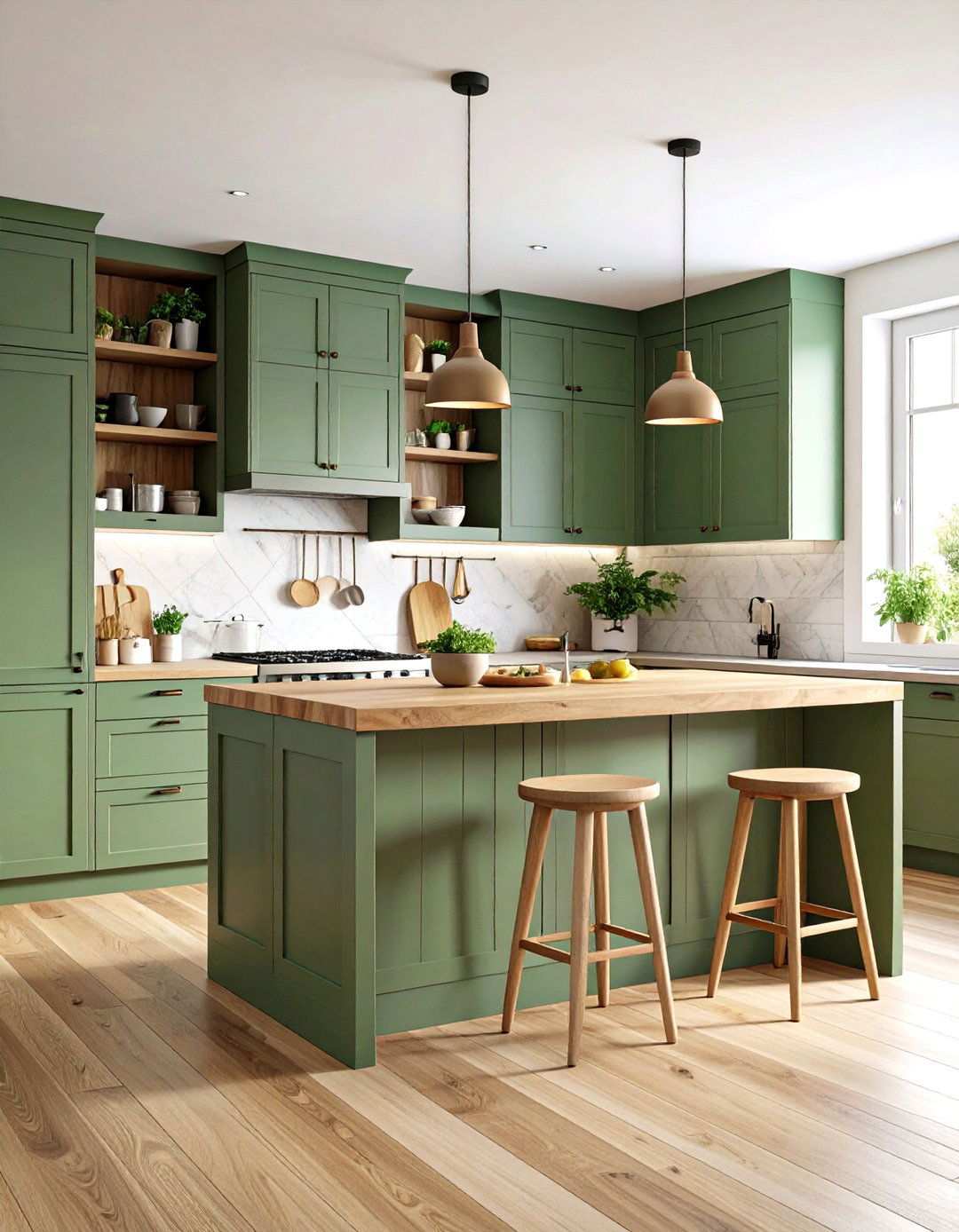
Combining sage green with warm wood tones throughout your kitchen creates a harmonious blend of nature-inspired elements that add incredible warmth and visual interest. By installing sage green cabinets alongside natural wood features like floating shelves, islands, or ceiling beams, you can create a welcoming environment that invites cooking and entertaining. Choose butcher block countertops or wood-grain porcelain tiles for flooring to enhance the organic appeal, and mix different wood tones thoughtfully, from light oak to rich walnut, for depth and character. Adding wooden bar stools, cutting boards, and serving pieces will reinforce the natural theme, while the sage green prevents the wood from feeling too rustic or overwhelming. Together, they create a balanced and inviting environment that is perfect for modern living.
9. Sage Green Glass Front Cabinets
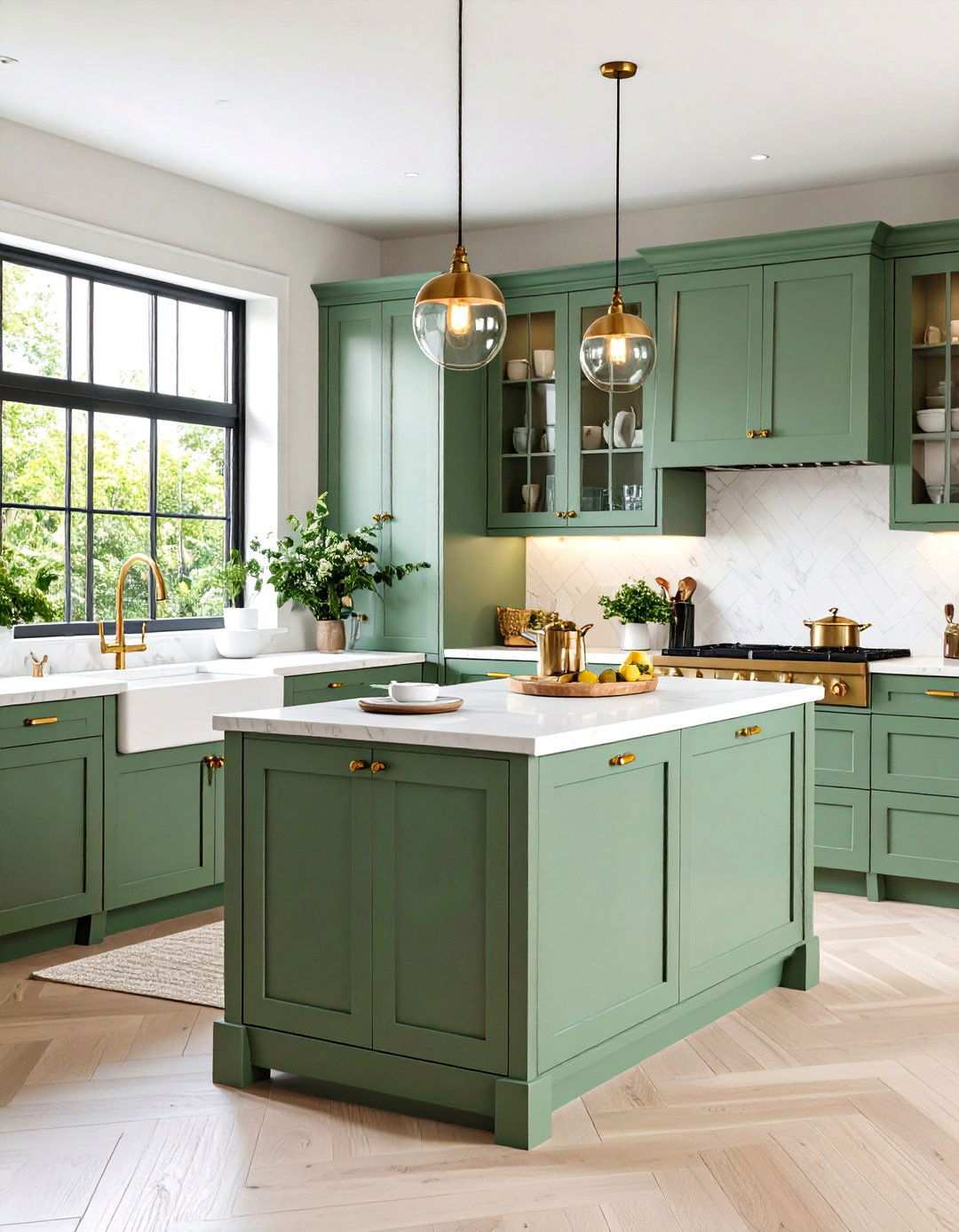
Designers often face the challenge of showcasing beautiful dishware while maintaining a cohesive kitchen aesthetic. Sage green glass front cabinets offer a thoughtful solution for displaying collections while adding a touch of visual lightness to your kitchen design. Strategically placing these cabinets near windows or as upper cabinets can help maximize natural light flow, creating a sense of brightness and airiness. To enhance the display, style the interior shelves with coordinating dishware, glassware, or decorative accessories. Consider adding interior cabinet lighting to highlight displayed items and create a warm ambiance, perfect for evening gatherings. Pairing glass front cabinets with solid sage green base cabinets can create a balanced and harmonious look. Select hardware that complements the overall design theme, whether brass for a touch of warmth or matte black for a striking contrast. By incorporating these elements, you can create depth and interest while maintaining the calming sage green palette throughout your kitchen space.
10. Sage Green Subway Tile Design
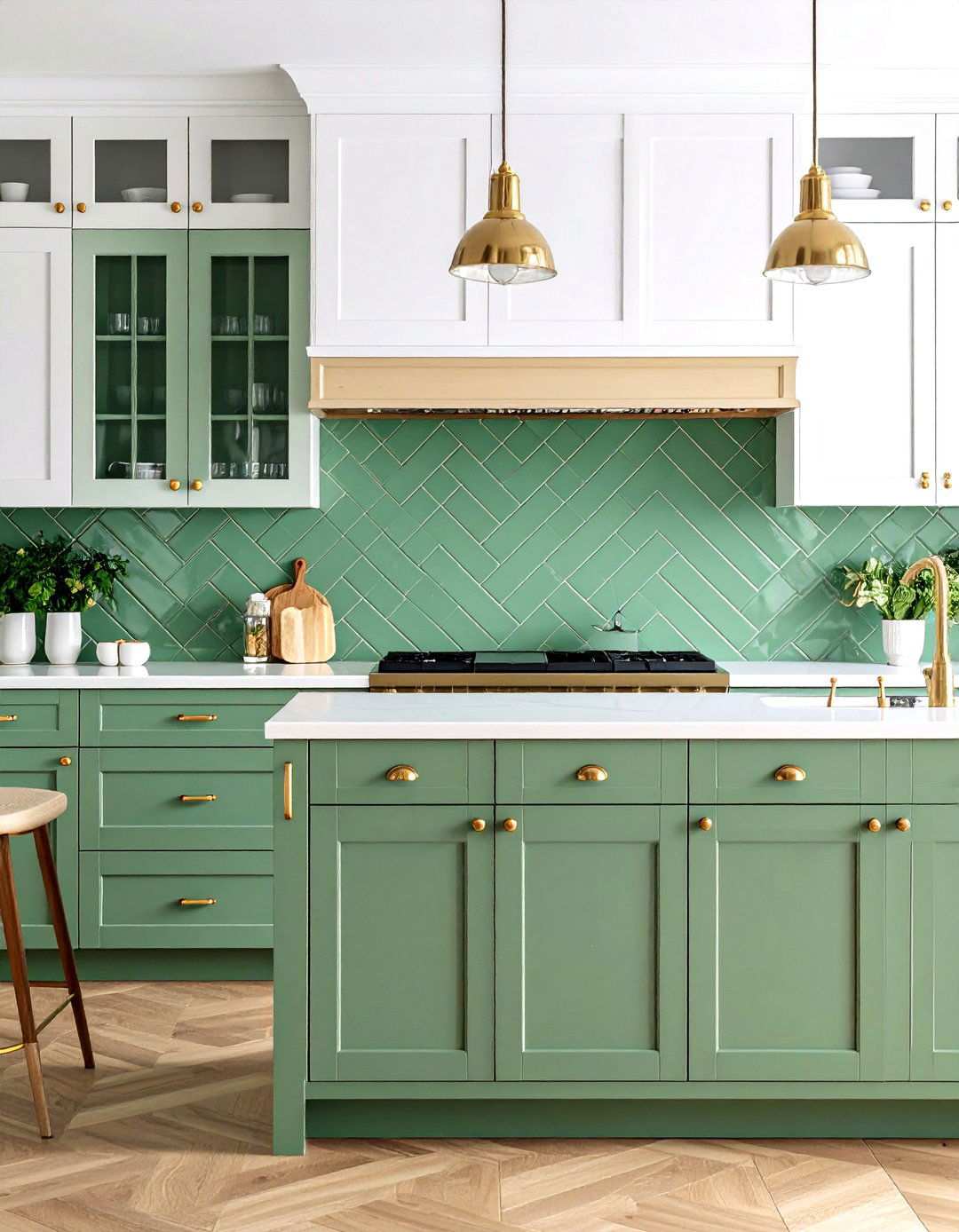
Subway tiles have long been a kitchen design favorite, and their timeless appeal is especially enhanced by the contemporary sophistication of sage green. The classic rectangular shape of these tiles provides a sense of continuity, while the sage green color adds a touch of modern flair to any kitchen space. To add visual interest, consider installing these tiles in traditional running bond patterns or experimenting with herringbone or vertical layouts. The smooth, glossy finish of the tiles reflects light beautifully, making kitchens feel brighter and more spacious. Pair sage green subway tiles with white or cream cabinets for a fresh contrast, or match them with sage green cabinets for a monochromatic approach. To maintain clean lines, choose white or light gray grout, or select matching green grout for seamless color flow. Finally, complement the tile color with brass or matte black fixtures to complete the look. This versatile backsplash option works equally well in a range of kitchen designs, from farmhouse to contemporary.
11. Sage Green Kitchen Peninsula Layout
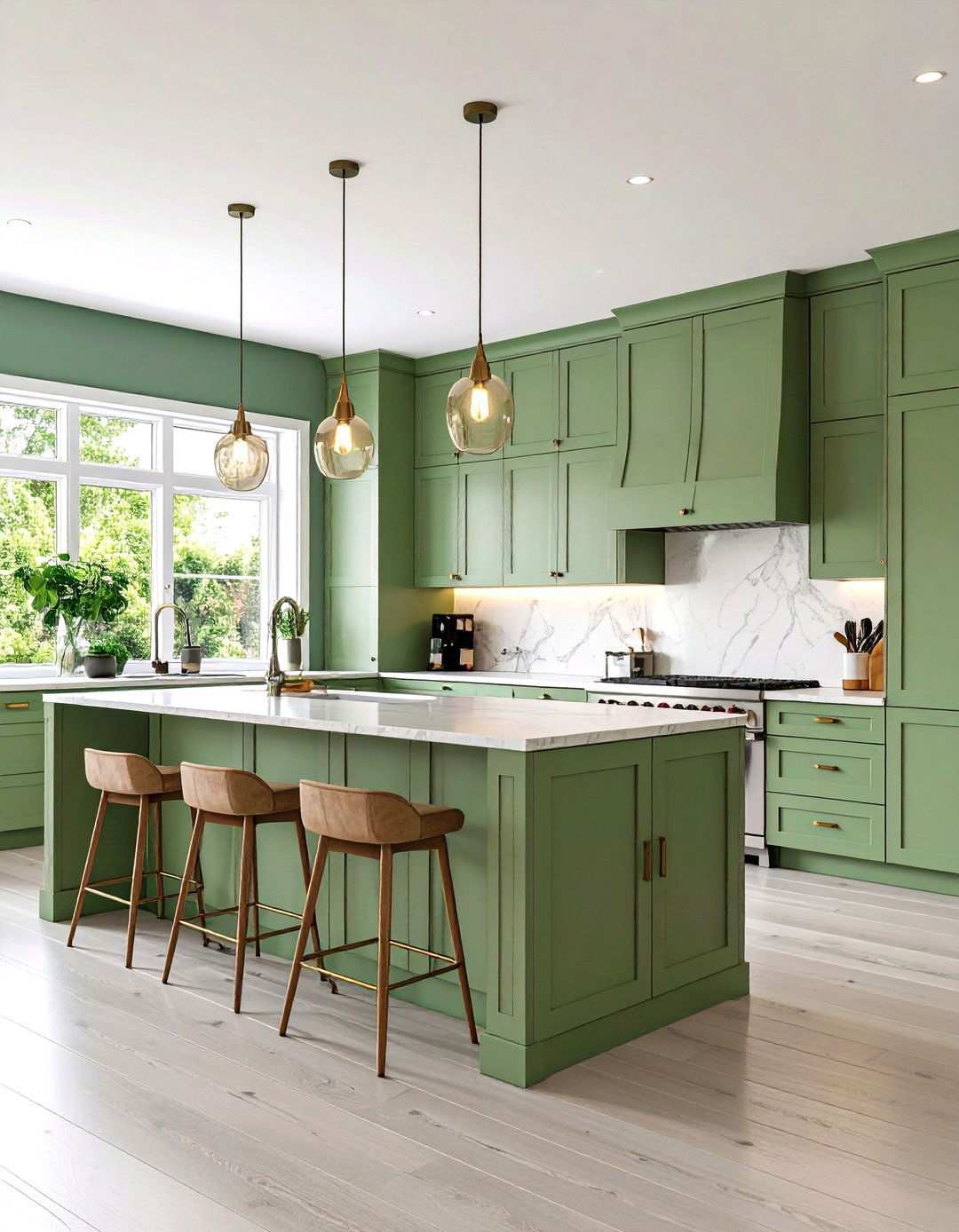
When maximizing kitchen functionality and visual impact, a sage green kitchen peninsula can be a game-changer. This design element provides additional workspace, storage, and seating while defining your cooking area within an open floor plan. To create a stunning focal point, design the peninsula with sage green base cabinets topped with your choice of countertop material. Add bar seating with stylish stools for casual dining and conversation, and consider including built-in appliances like wine refrigerators or microwave drawers for enhanced functionality. Install pendant lighting above the peninsula to create task lighting and visual separation. To maintain a cohesive look, choose complementary finishes for surrounding cabinets, whether matching sage green or contrasting white. The peninsula serves as a natural transition between kitchen and living areas, providing the perfect opportunity to showcase sage green’s versatility and appeal in larger kitchen layouts.
12. Sage Green Open Shelving Display
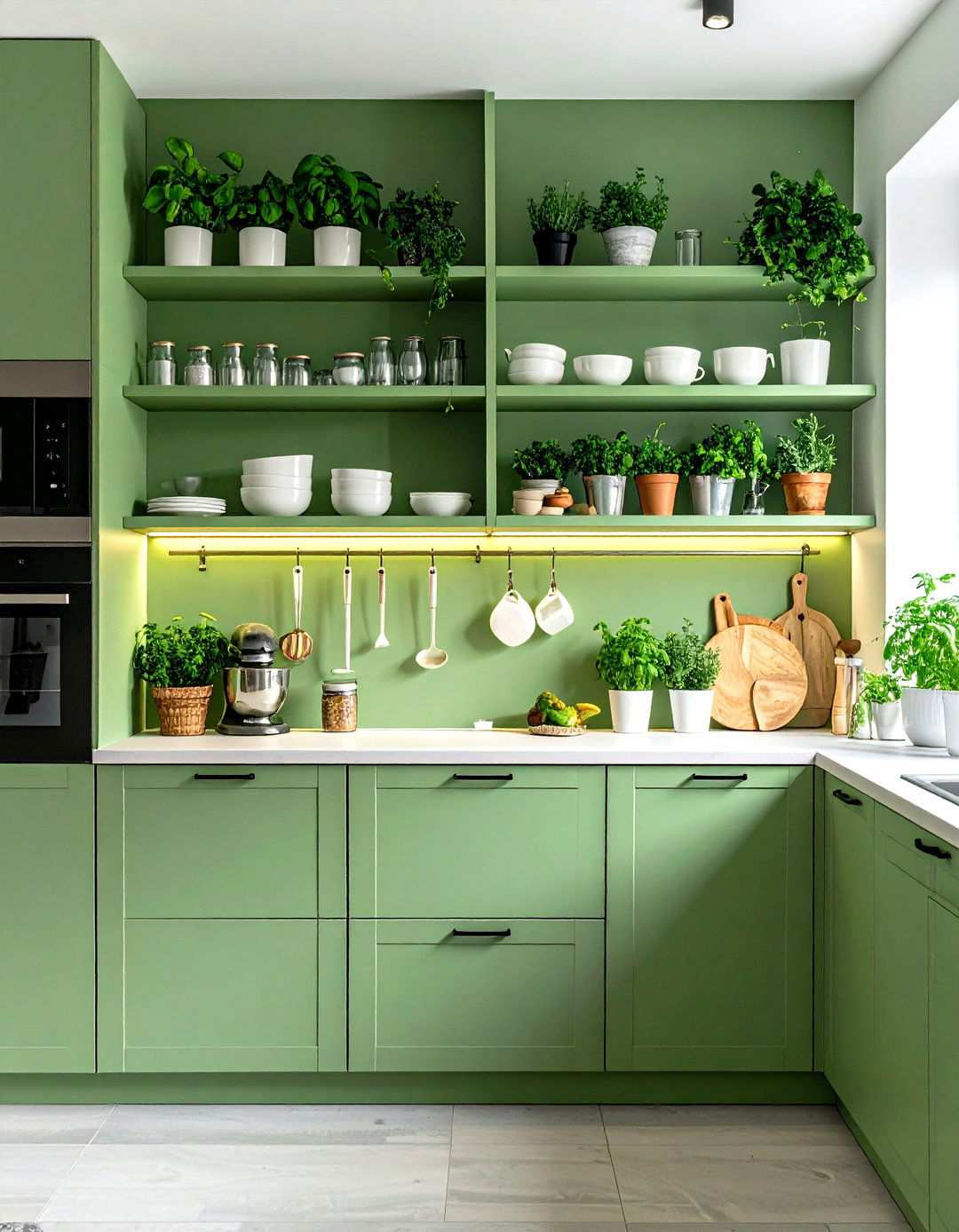
Achieving harmony between storage and style in sage green kitchens is all about strategic planning. Open shelving painted in a soothing sage green tone provides an ideal opportunity to showcase cherished collections while maintaining a cohesive aesthetic. To create a visually appealing display, install floating shelves or bracket-supported shelving in matching sage green paint and arrange them at varying heights and depths. Balance the look by combining white or cream dishware, glassware, and cookbooks with natural accessories such as potted herbs or wooden cutting boards. Placing the shelving near windows not only takes advantage of natural light but also adds a touch of serenity to the space. This effective approach is particularly well-suited when paired with sage green lower cabinets and white upper cabinets, creating an airy feel while providing easy access to frequently used items. For added ambiance, incorporate small LED strip lights under the shelves to illuminate the area during evening hours.
13. Sage Green Marble Countertop Pairing
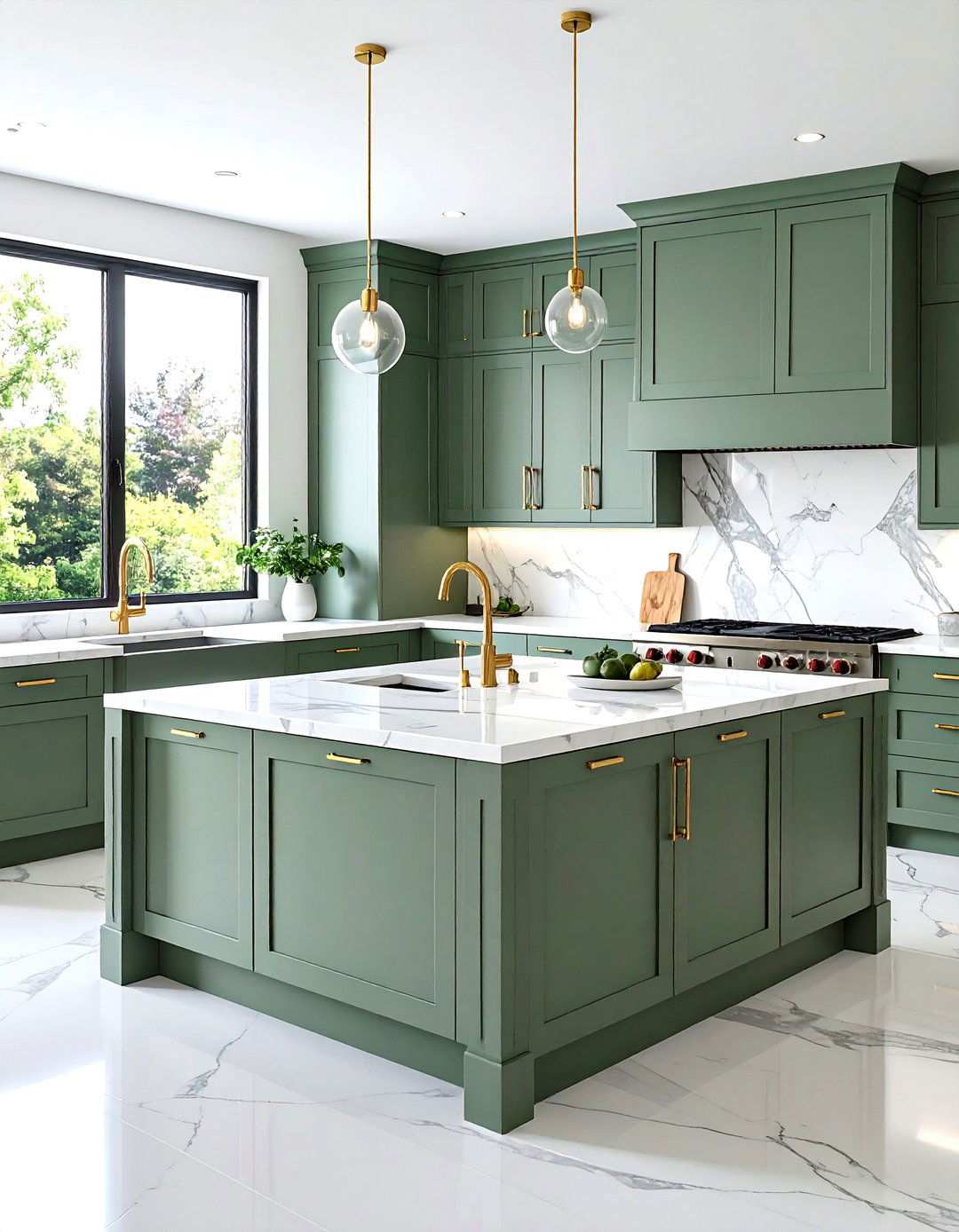
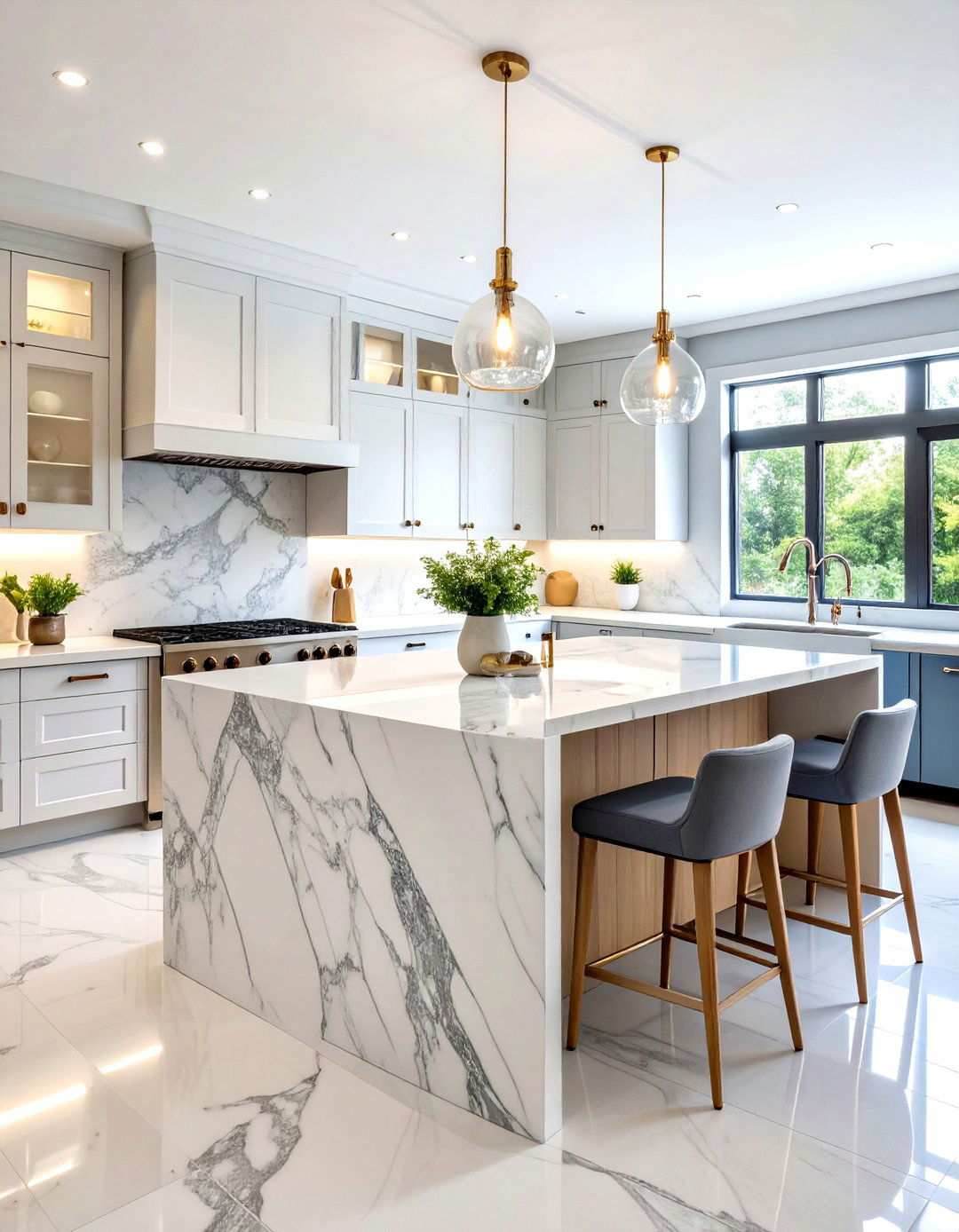
Elevate your sage green kitchen design with the timeless elegance of marble countertops. This sophisticated combination brings together the warmth of sage green cabinets and the natural beauty of marble, resulting in a space that exudes luxury and refinement. For a classic look, pair sage green cabinets with white marble featuring subtle gray veining, such as Carrara or Calacatta. The cool tones of marble provide a perfect counterbalance to the warmth of sage green, creating a visually appealing contrast. Extend the marble to the backsplashes for a seamless flow and easy maintenance. To add a touch of drama, consider installing waterfall edges on kitchen islands. Brass or gold hardware can be used to warm up the cool marble and green combination, while proper sealing and maintenance will ensure the marble’s natural beauty is preserved. This pairing works beautifully in both traditional and contemporary settings, adding a sophisticated, spa-like ambiance perfect for cooking and entertaining.
14. Sage Green Galley Kitchen Layout
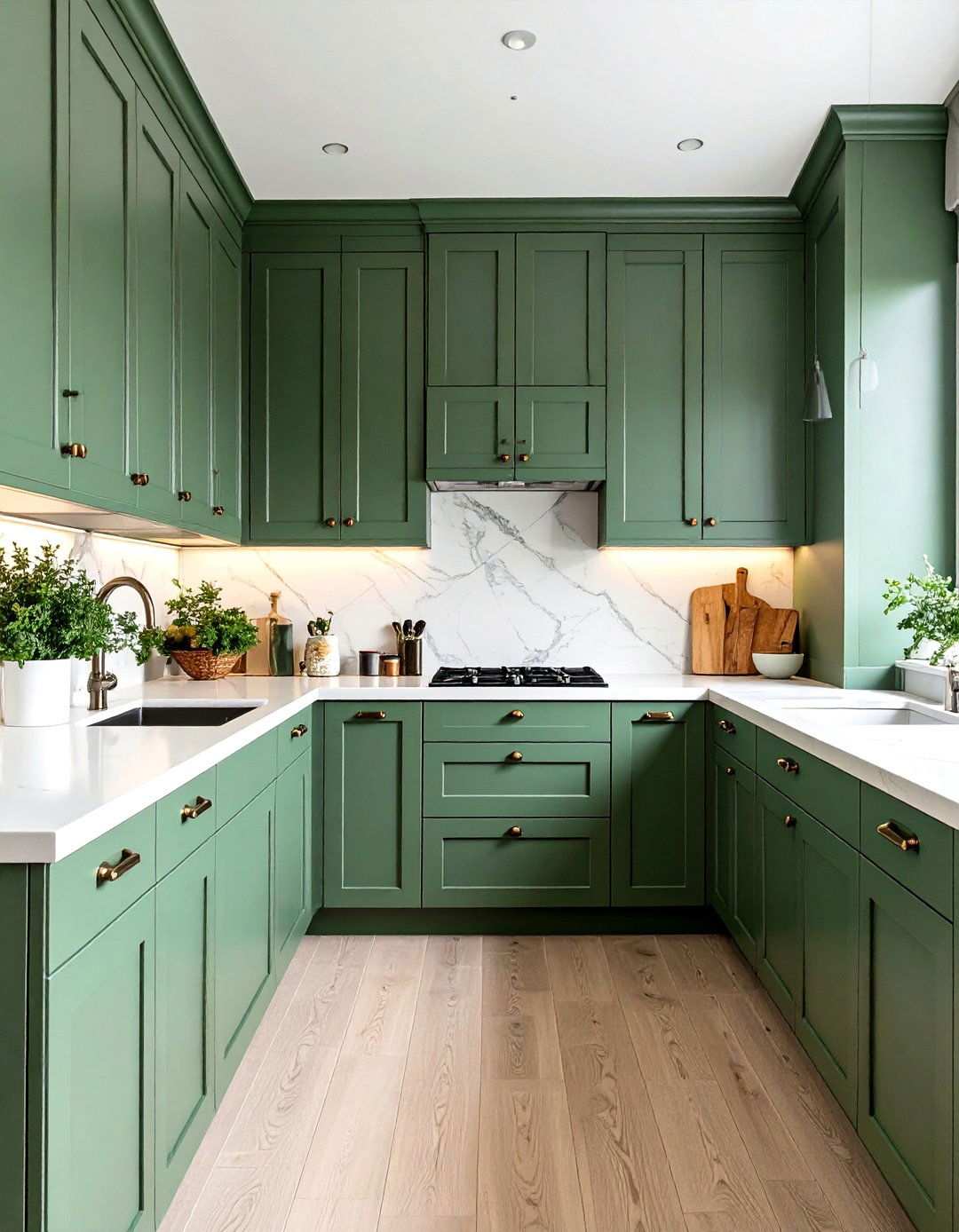
Sage green can be a game-changer in narrow galley kitchen designs, transforming potentially cramped spaces into charming, functional areas. To maximize style and functionality in compact spaces, install sage green lower cabinets with white upper cabinets, maintaining visual lightness and preventing the space from feeling closed-in. Add under-cabinet lighting to brighten work surfaces and enhance the green’s natural warmth, creating a welcoming atmosphere. Choose light-colored countertops and backsplashes to reflect light throughout the narrow space, making it feel more spacious. The strategic placement of mirrors or glass elements can create the illusion of width, while consistent hardware throughout adds visual continuity. A runner rug in complementary colors can define the workspace and add comfort underfoot, while windows or skylights can be used to enhance natural light. By implementing these strategies, narrow kitchens can be transformed into cozy, sophisticated spaces that feel both practical and inviting.
15. Sage Green Butler's Pantry
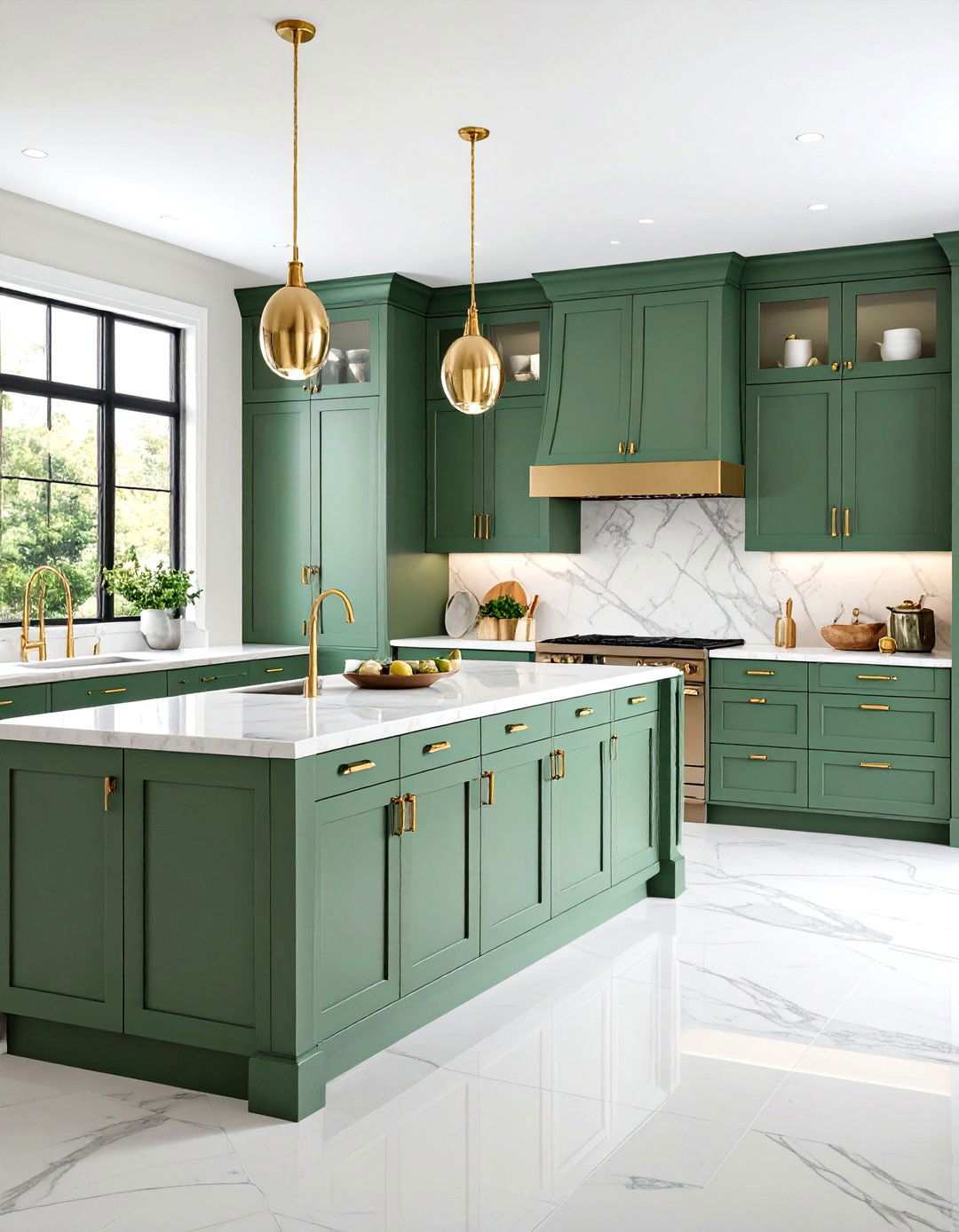
An integrated sage green butler’s pantry seamlessly connects with the main kitchen, offering ideal storage and prep space for both daily cooking and entertaining. Design floor-to-ceiling sage green cabinets with glass doors that display fine china or glassware, elevating the space’s visual appeal. The addition of marble or quartz countertops creates functional prep areas and serves as a beautiful backdrop for serving. A compact sink and wine storage area cater to the needs of both casual cooks and hosts. For a touch of sophistication, choose from an array of brass or copper hardware options. Hang pendant lighting or chandeliers to balance task and ambient lighting. Consider incorporating a coffee station or beverage center to streamline morning routines. By extending the sage green color palette into this adjacent space, the butler’s pantry becomes an organic extension of the main kitchen while maintaining its calming ambiance. This thoughtful design solution provides essential storage and display opportunities, ultimately enriching the overall kitchen design.
16. Sage Green Mixed Metal Finishes
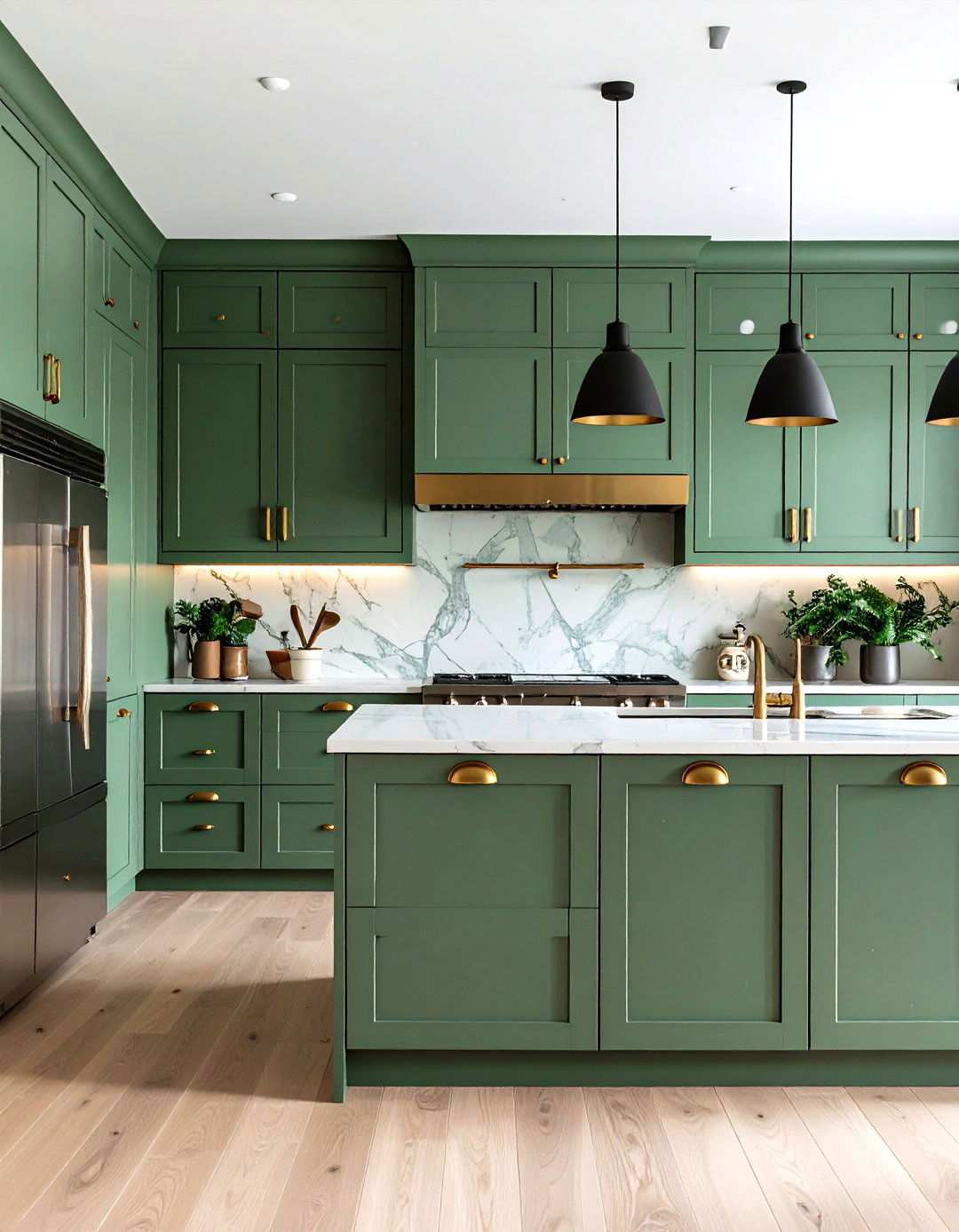
Combining disparate metal finishes with sage green kitchen elements yields a rich, layered design that skillfully balances contrast and harmony. A well-executed mix of warm brass, stainless steel, and matte black creates a dynamic visual effect, while the sage green remains a constant thread throughout the space. Copper accents, such as pot racks or accessories, add warmth and depth to the design. To maintain balance, choose one dominant metal finish and reserve others for accent roles, avoiding overwhelming the space. By leveraging the sage green as a unifying element, different metals can coexist in beautiful harmony. For added visual interest, incorporate brushed nickel or chrome faucets and fixtures to introduce a contemporary feel. This thought-provoking design approach creates a collected, intentional aesthetic that feels both serene and inviting. By striking a balance between warm and cool tones, the sage green provides a sense of continuity throughout the space.
17. Sage Green Kitchen Banquette Seating
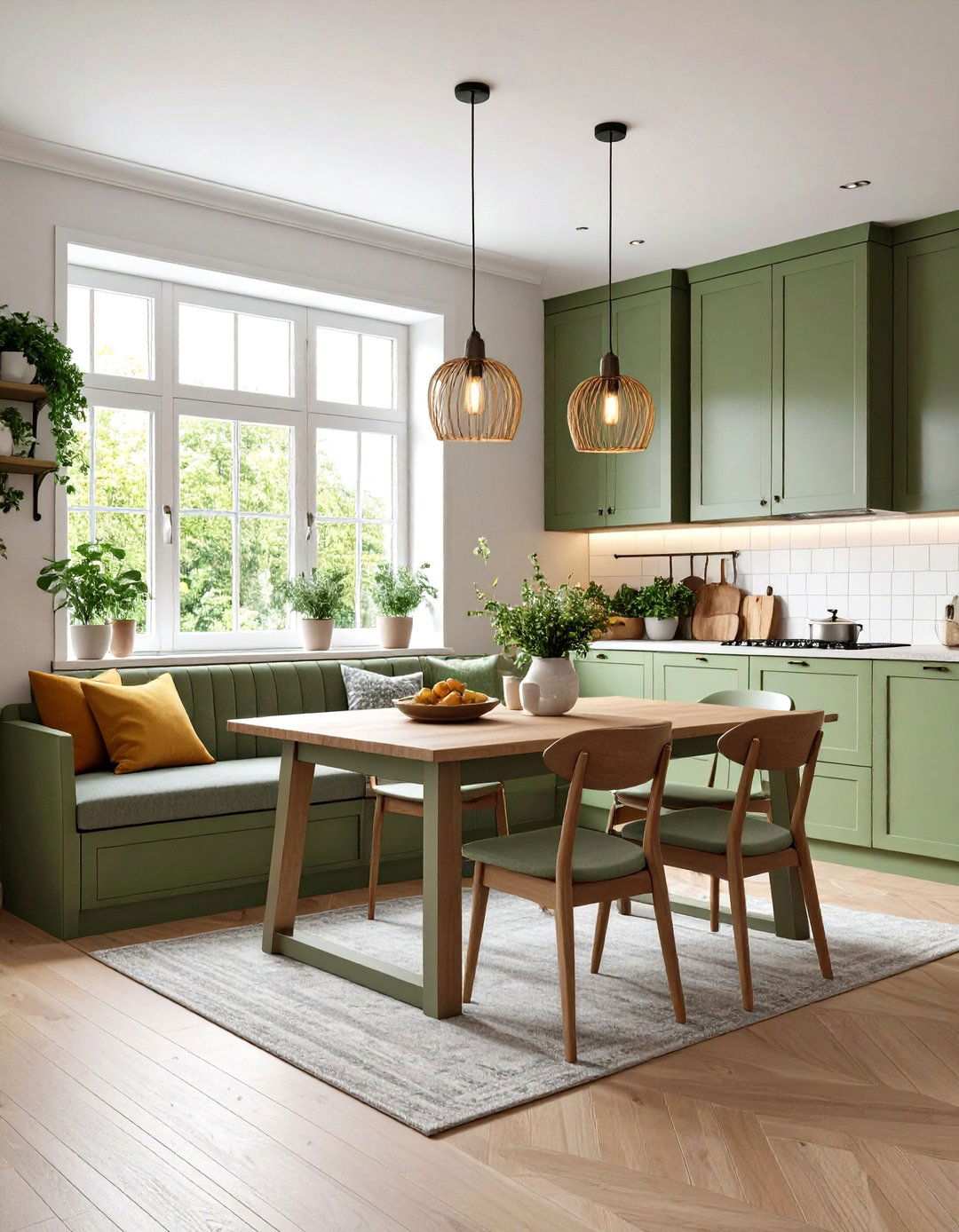
Incorporating sage green upholstered banquette seating into your kitchen design creates an inviting dining area that reinforces your color scheme throughout the space. Strategically position the banquette near windows to maximize natural light and take in the surrounding views. Add coordinating throw pillows in complementary colors like cream, soft pink, or white to enhance comfort and style. A dining table in natural wood or a matching painted finish adds a sense of continuity while the installed pendant lighting above the table provides task and ambient lighting. For added functionality, incorporate storage within the banquette base for linens, serving pieces, or seasonal items. This innovative approach to dining creates an intimate experience while optimizing space efficiency. The sage green upholstery ties in perfectly with the cabinet colors, providing a soft, comfortable seating option for family meals and casual gatherings.
18. Sage Green Concrete Countertops
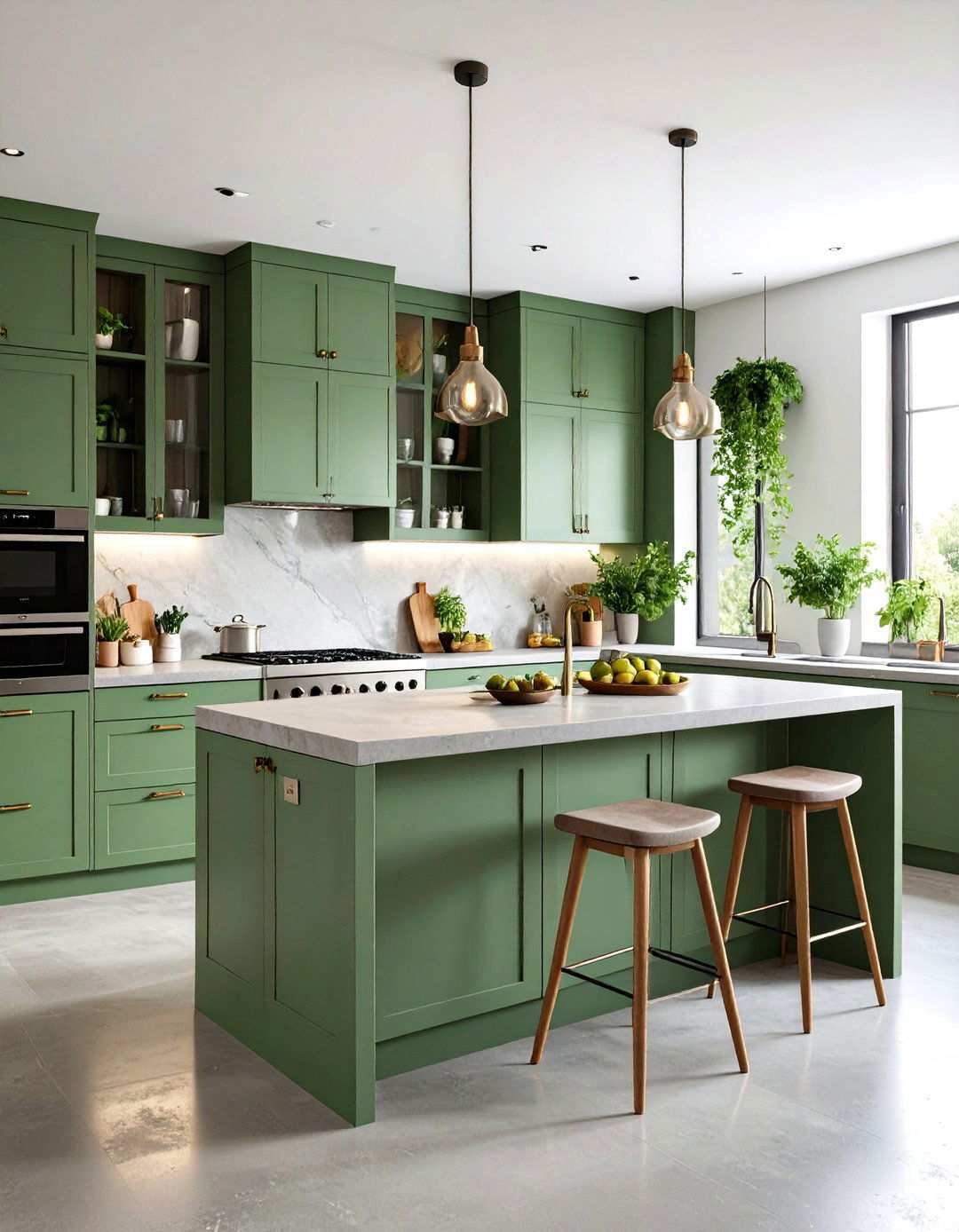
Concrete countertops are a masterful way to infuse industrial chic style into your kitchen, particularly when paired with sage green cabinets. This bold contrast creates a sleek, urban aesthetic that’s reminiscent of modern loft spaces. To achieve a smooth surface, opt for polished concrete, while textured finishes add an extra layer of character. The neutral gray tones of concrete beautifully complement sage green, providing durable and heat-resistant work surfaces that can withstand heavy use. Integrated sinks seamlessly blend with the concrete, creating a cohesive look, while steel or black hardware adds an industrial touch. Decorative aggregates or pigments can be added to customize the concrete’s appearance, allowing you to tailor it to your home’s unique style. This combination is a standout choice for contemporary or loft-style homes, where the concrete’s cool tones thoughtfully balance the warmth of sage green. To ensure longevity and stain resistance, proper sealing is essential.
19. Sage Green Vintage Inspired Design
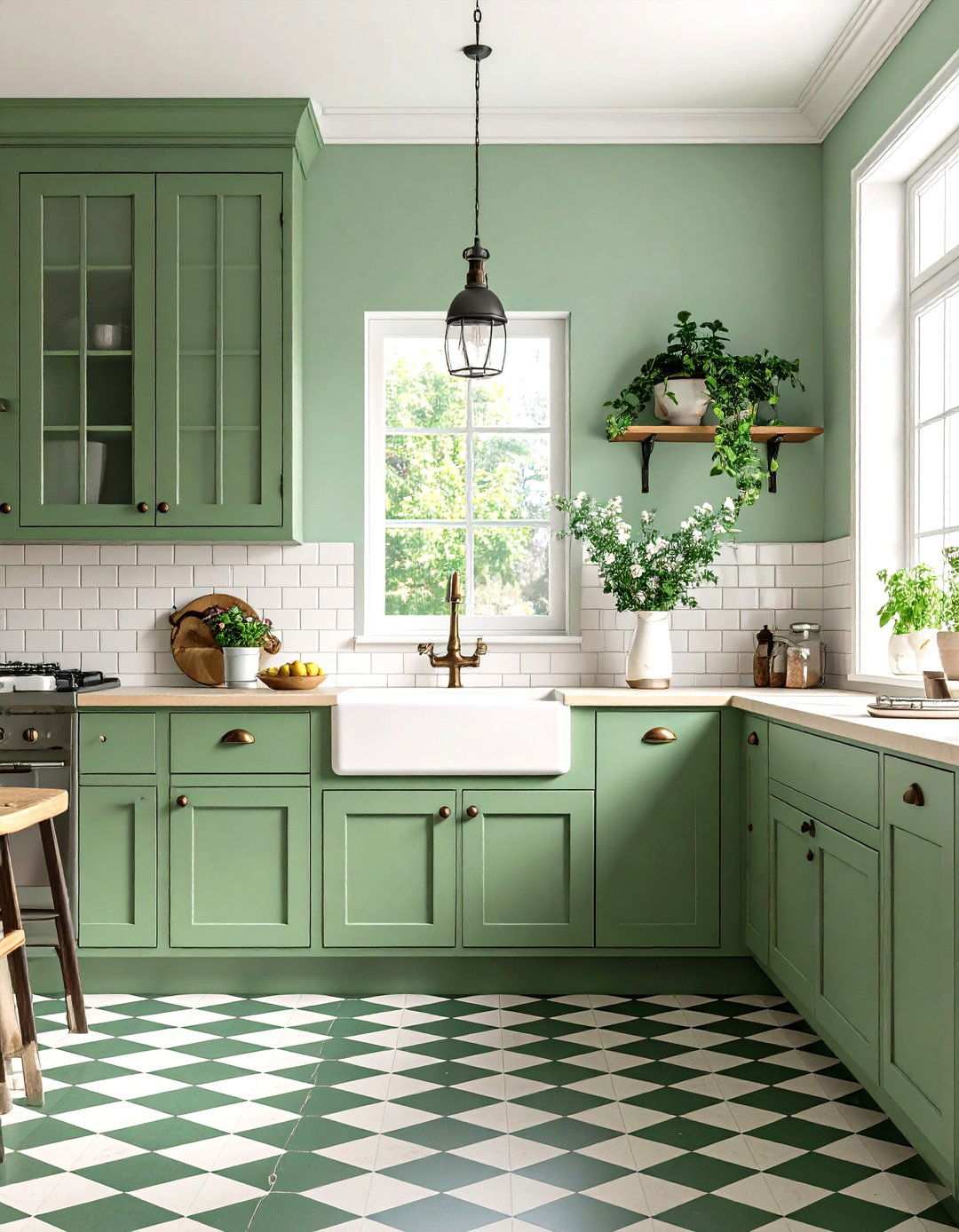
Creating authentic vintage charm in your kitchen is all about combining sage green cabinets with meticulously chosen period details. Beadboard backsplashes, farmhouse sinks, and vintage-style hardware evoke a timeless sense of nostalgia that’s hard to resist. Open shelving is a great way to display vintage dishware, glassware, and kitchen accessories, adding a touch of whimsy to your space. When it comes to countertops, butcher block or marble is a great choice, depending on the vintage era you’re aiming for. Vintage-inspired light fixtures like schoolhouse pendants or industrial-style sconces add an authentic touch, while details like bin pulls, cup hooks, and plate racks bring the space to life. Checkered or patterned floor tiles add a classic vintage flair, while warm wood tones for flooring and accents enhance the nostalgic atmosphere. By incorporating these elements, you can create a kitchen that feels like it’s evolved over time, while maintaining modern functionality.
20. Sage Green Breakfast Nook Corner
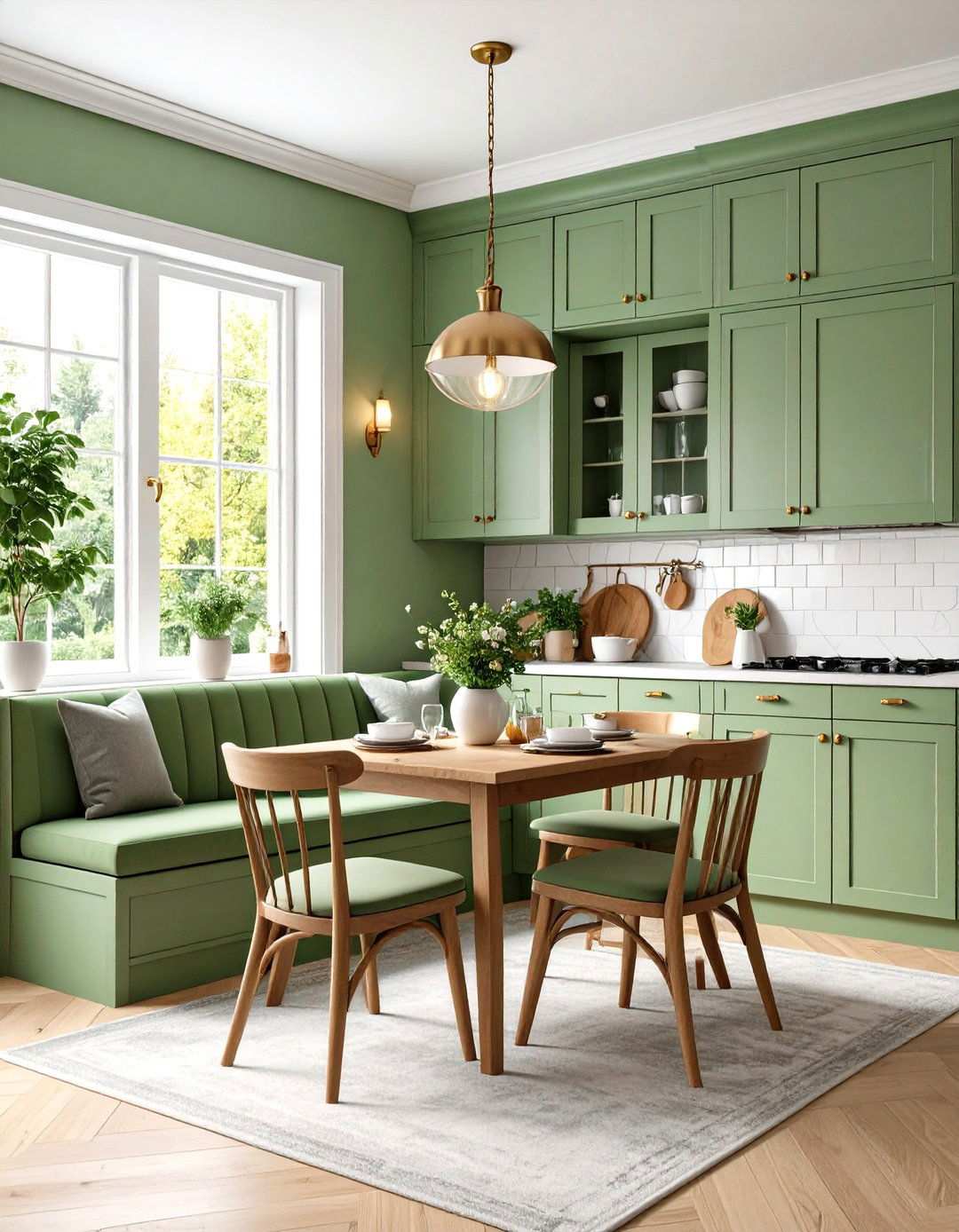
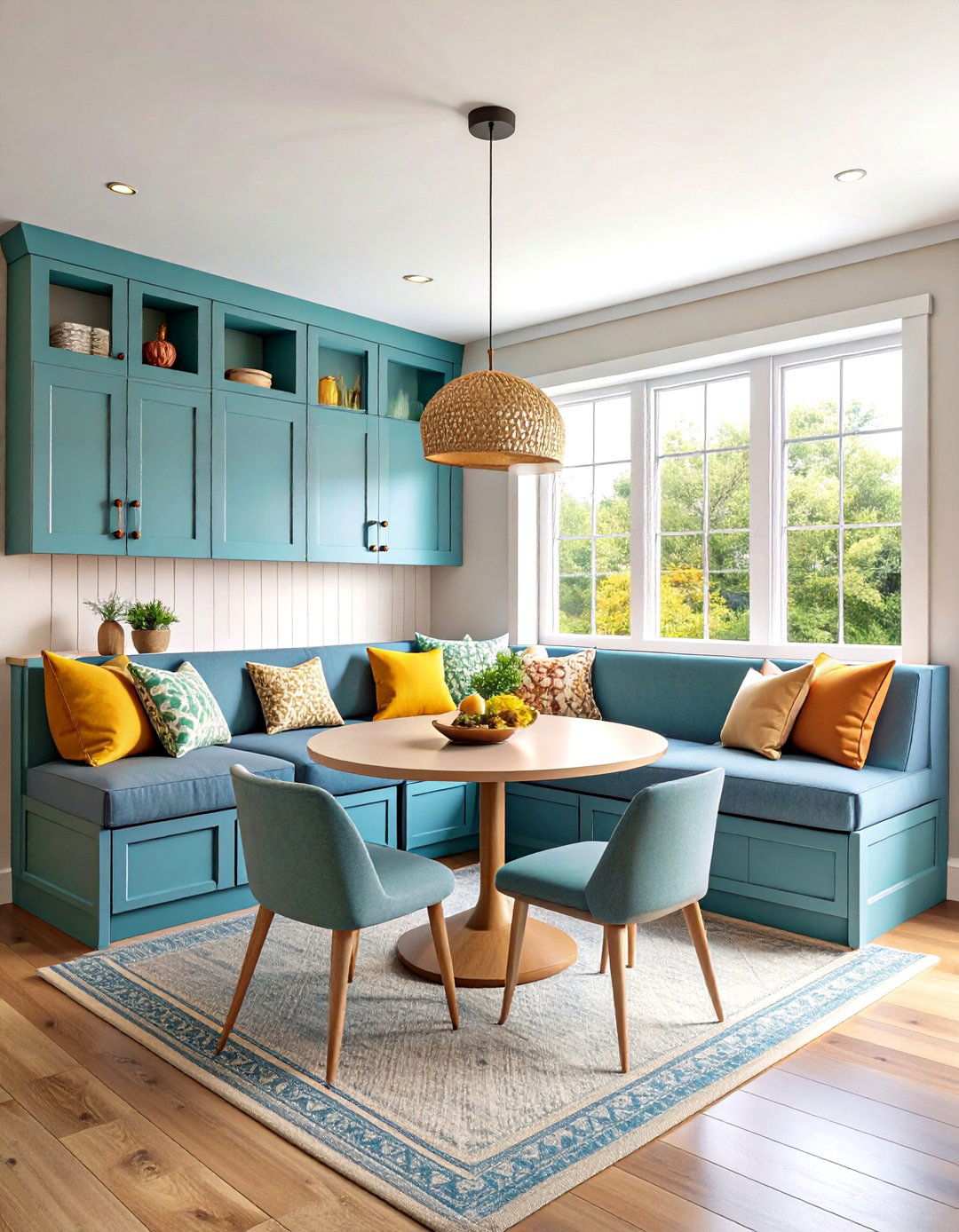
Designing the perfect morning coffee spot within your sage green kitchen is all about creating an inviting atmosphere that’s perfect for family gatherings. A dedicated breakfast nook with sage green built-in seating is an excellent way to extend your kitchen’s color palette while providing a comfortable and intimate dining area. L-shaped or curved banquette seating with sage green upholstery and coordinating throw pillows adds a cozy touch, while a round or rectangular table in natural wood or painted finishes completes the look. Pendant lighting or a small chandelier defines the space, drawing the eye to the nook. Positioning the nook near windows allows for natural light and stunning garden views. Adding storage within the seating base for linens, placemats, or children’s items keeps the space organized, while easy-to-clean fabrics ensure practical family use. This creates a dedicated dining area that feels separate from the main kitchen, while maintaining visual continuity through color and style choices.
21. Blending Appliance Aesthetics with Sage Green Kitchen Design
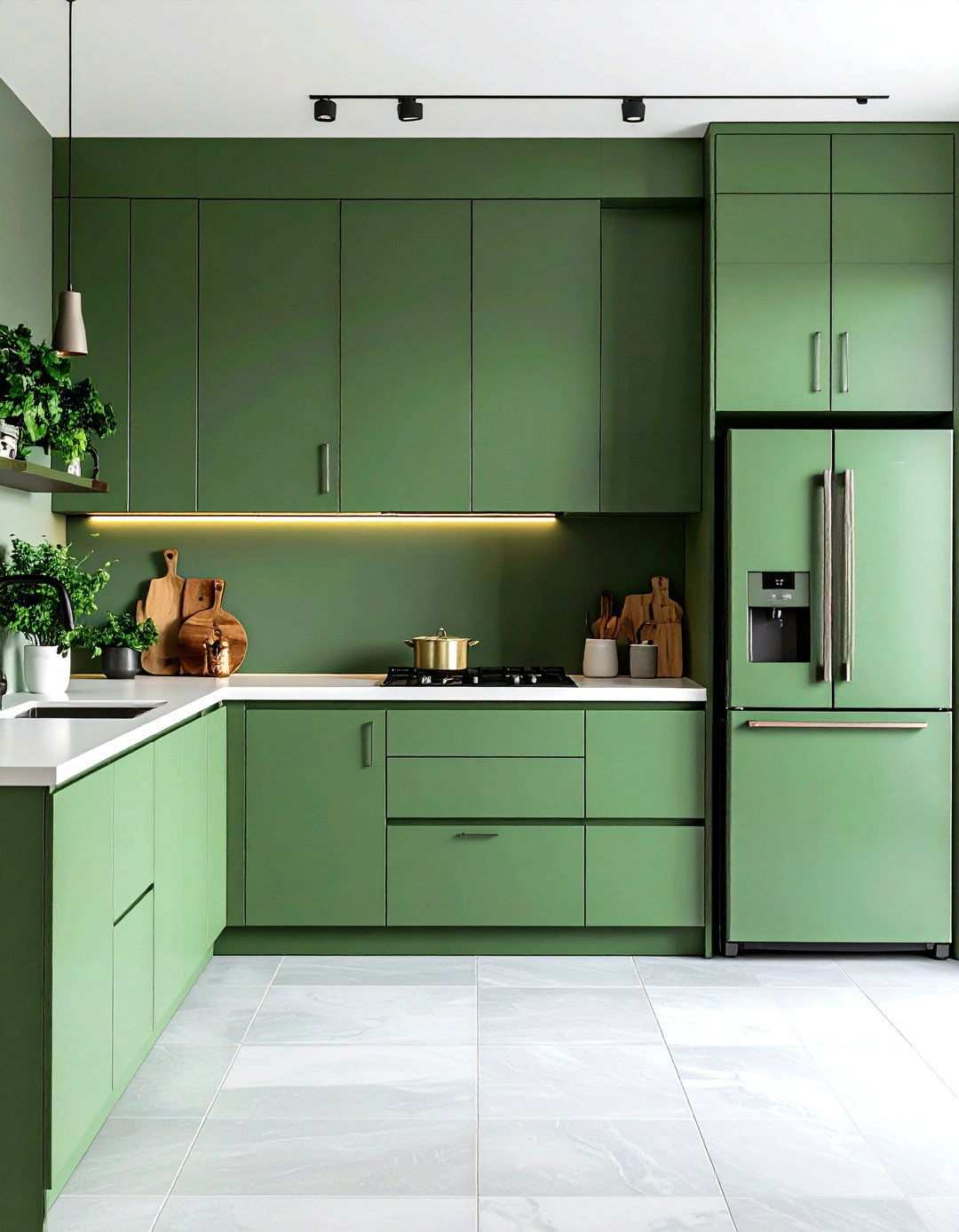
To seamlessly integrate appliances into a sage green kitchen, it’s essential to choose appliances that complement rather than compete with the color scheme. Select appliances in harmonious colors and finishes that enhance the space’s overall appeal. If you’re aiming for vintage charm, consider white or cream appliances that add warmth to the design. Alternatively, opt for black appliances to create striking contrast. Stainless steel remains a versatile choice that works well with various styles. By installing panel-ready appliances with sage green cabinet fronts, you can achieve a seamless integration look. To maintain a clean and clutter-free look, consider adding appliance garages to hide small appliances. When selecting a hood design, choose one that complements your overall aesthetic, whether it’s traditional, contemporary, or farmhouse-style. Incorporating under-counter refrigeration and wine storage will not only boost functionality but also create a cohesive design flow that prioritizes style and functionality.
22. Elevating Fresh Herb Gardens in Sage Green Kitchens
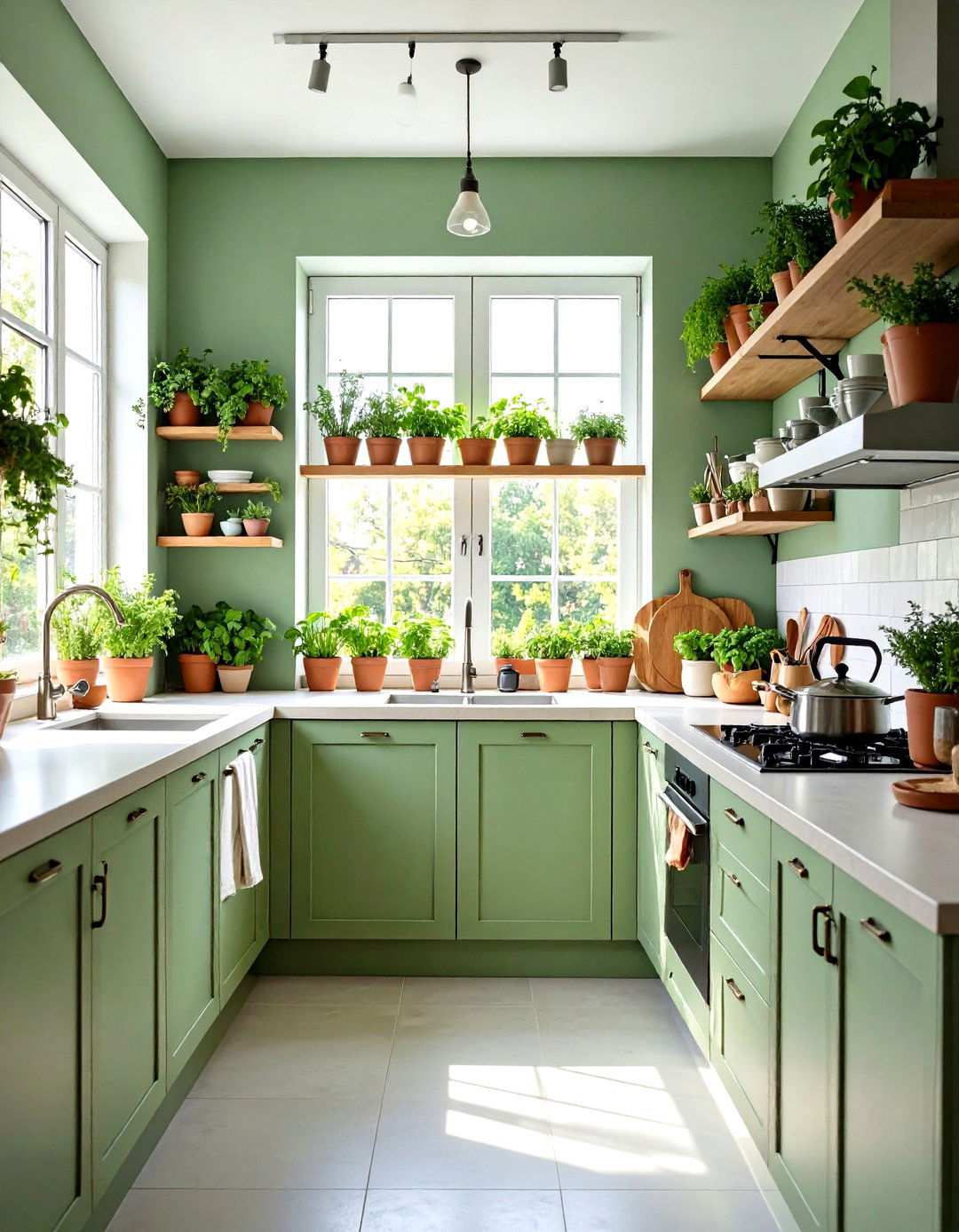
Incorporating a fresh herb garden into a sage green kitchen design is a great way to bring natural beauty and practical benefits to the space. To create a dedicated herb growing area that complements your color scheme, consider installing window shelving for potted herbs in terracotta or sage green containers. Adding a kitchen garden window will not only extend growing space but also provide ample natural light. For year-round fresh herbs, consider investing in a living wall or vertical garden system. When selecting containers and planters, choose ones that coordinate with your overall design aesthetic. Don’t forget to include proper drainage and lighting for healthy plant growth. Position your herb garden near the cooking area for easy access during meal preparation. To minimize maintenance, consider adding watering systems or reservoirs. The subtle blend of green foliage enhances the color scheme while adding life and freshness to the space.
23. Creating Visual Interest with Textures and Patterns in Sage Green Kitchens
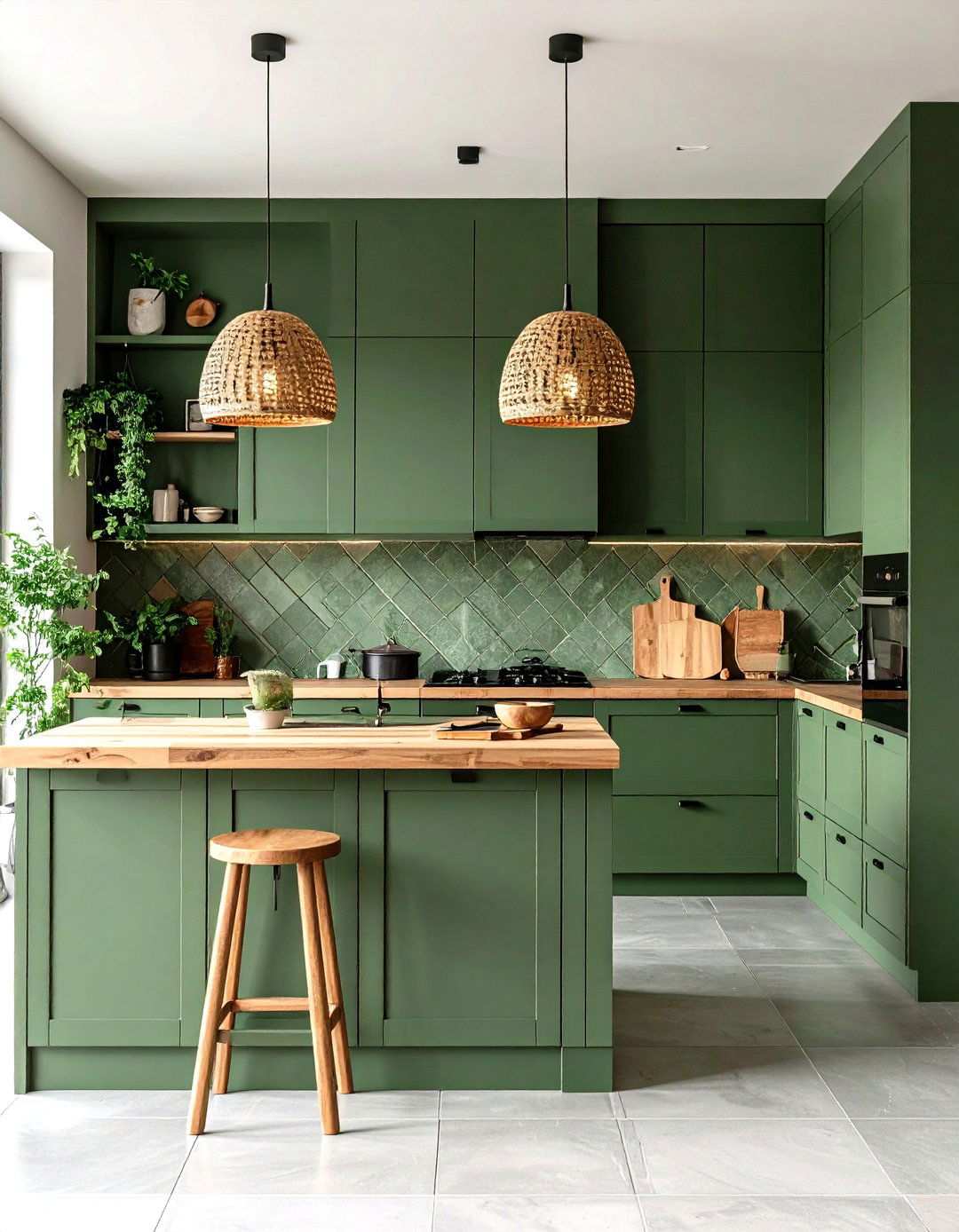
To add visual interest to a sage green kitchen without compromising its calming appeal, it’s essential to mix different textures and patterns within the color palette. Combine smooth sage green cabinets with textured backsplash tiles, woven pendant lights, and natural wood grains to create depth and character throughout the design. Add pattern through geometric floor tiles, fabric window treatments, or decorative accessories to prevent monotony. Incorporate various finishes like matte, gloss, and satin to create subtle contrast. Choose materials like rattan, jute, linen, and ceramic in complementary tones to add warmth and coziness to the space. To highlight different textures throughout the day, consider layered lighting. By striking the right balance between smooth and textured surfaces and keeping patterns subtle and sophisticated, you can create rich, inviting spaces that feel both comfortable and stylish.
24. Harmonious Extension of Sage Green Elegance to Outdoor Spaces
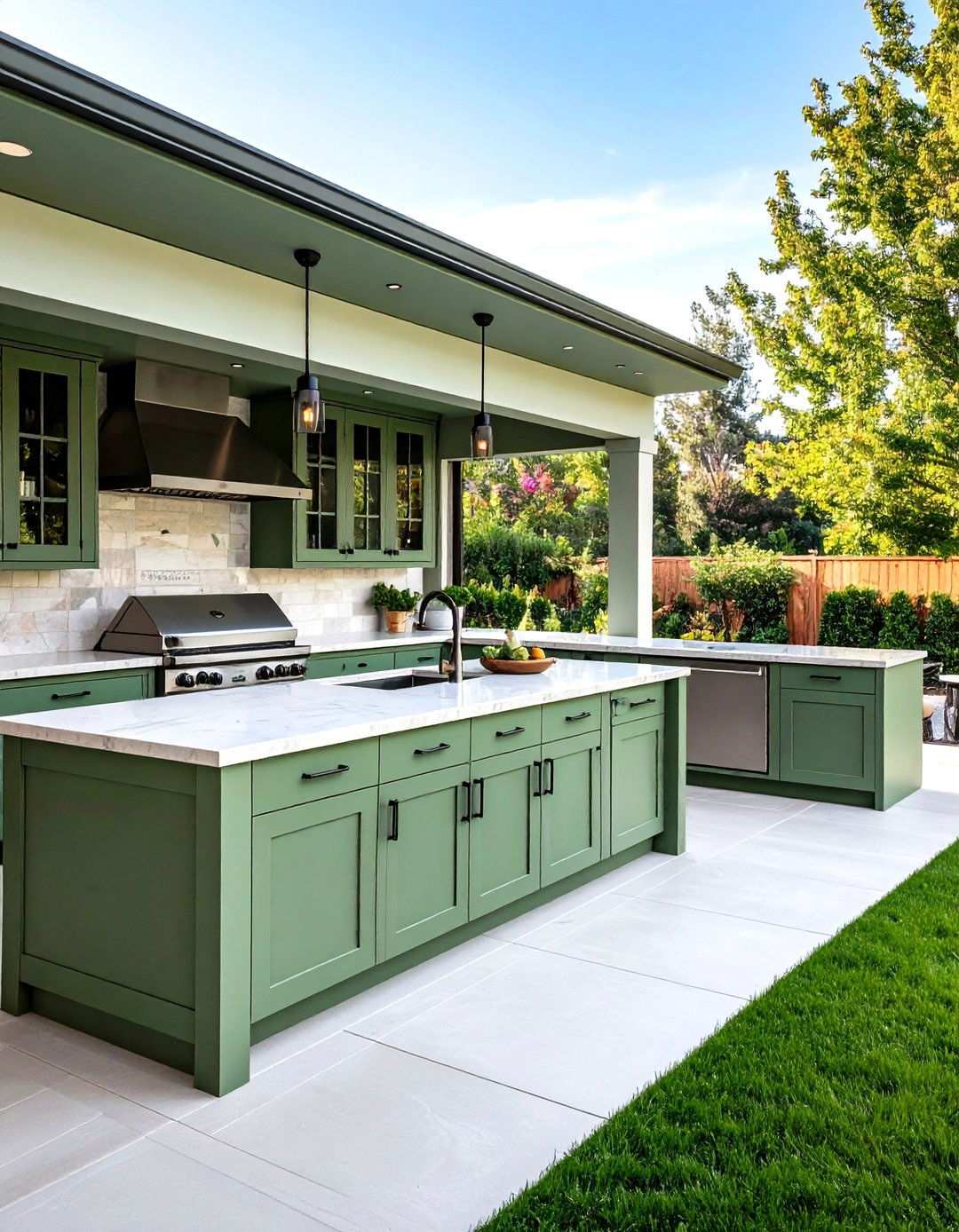
Consider elevating the sage green aesthetic to outdoor areas, fostering a seamless transition between indoor and outdoor living. By incorporating sage green elements into covered patios, porches, or dedicated outdoor kitchen spaces, you can create an inviting atmosphere that unifies indoor and outdoor entertaining.
To achieve this, incorporate weather-resistant cabinets with sage green finishes, specifically designed for outdoor use, to withstand the elements while maintaining their style. Choose durable stone or concrete countertops that can resist weather-related damage while adding a touch of sophistication. For full functionality, opt for outdoor-rated appliances, including grills, refrigeration units, and sinks. Select lighting fixtures designed for outdoor use in complementary finishes to create a cohesive look.
To enhance the outdoor space, choose dining furniture and accessories that harmonize with your indoor sage green palette. Pergolas or overhead structures can provide shade and add architectural interest. Incorporate weather-resistant fabrics in sage green and coordinating colors to offer comfort and style. By extending the sage green aesthetic to outdoor spaces, you’ll be able to create year-round entertaining opportunities while maintaining design continuity between indoor and outdoor living areas.