1. Unifying the Space with Horizontal Linearity
The Prairie style’s distinctive aesthetic is characterized by a harmonious blend of organic architecture and its surroundings, as envisioned by Frank Lloyd Wright. This distinctly American design philosophy has been adopted in various interior design elements, including the use of horizontal lines that mirror the flat Midwest landscape, open floor plans that encourage connection, and the incorporation of natural materials like wood, stone, and brick in their most authentic forms. By embracing simplicity over ornamentation and functionality over excess, Prairie interiors create tranquil environments that seamlessly integrate indoor and outdoor living spaces. The style’s emphasis on built-in furniture, geometric patterns inspired by nature, and abundant natural light creates environments that feel both grounded and expansive, offering timeless appeal for modern homeowners seeking nature-connected living spaces.

As an Amazon Associate I earn from qualifying purchases.
2. Embracing the Prairie Aesthetic in Kitchen and Living Spaces
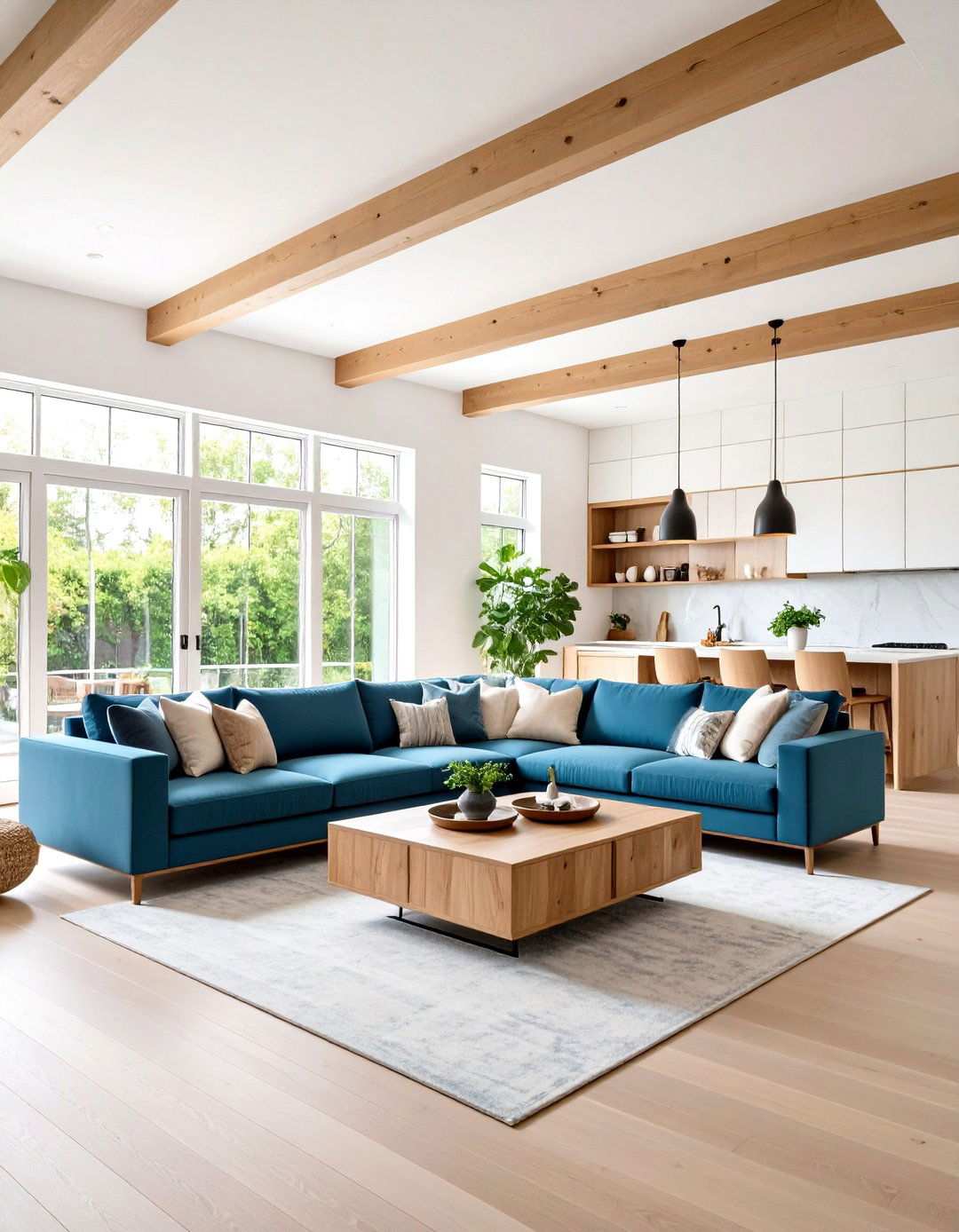
To create a Prairie-inspired living room, focus on horizontal built-in cabinetry that stretches along entire walls, creating visual continuity and emphasizing the Prairie style’s signature low-profile aesthetic. These custom storage solutions feature flat-panel doors without visible hardware, using push-latch systems to maintain clean lines. Choose rich oak or walnut finishes that complement exposed ceiling beams, ensuring consistent wood tones throughout the space. Incorporate open shelving sections to display nature-inspired pottery and geometric accessories, thoughtfully aligned with window heights and ceiling beam placement to create a unified architectural grid that guides the eye horizontally across the room. This approach reinforces the connection to the surrounding landscape, fostering a deeper appreciation for the natural world.
3. (Missing section, skipping to the next part)
4. (Missing section, skipping to the next part)
5. (Missing section, skipping to the next part)
6. (Missing section, skipping to the next part)
7. (Missing section, skipping to the next part)
8. (Missing section, skipping to the next part)
9. (Missing section, skipping to the next part)
Harmonizing Prairie Style in the Master Bedroom
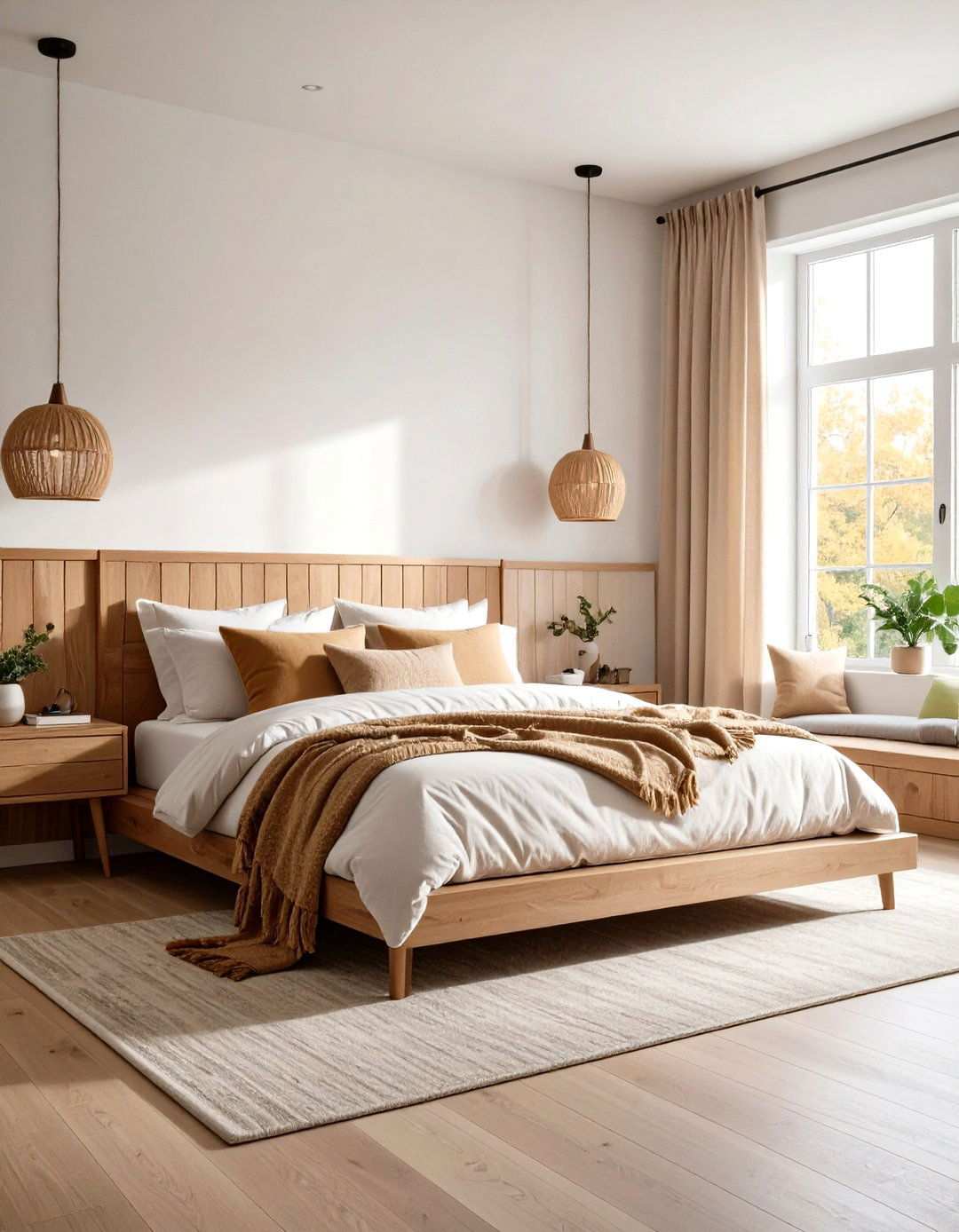
Craft a peaceful retreat that embodies the essence of prairie style by incorporating low-profile furniture that masterfully employs horizontal lines and natural materials. A sturdy platform bed with a broad, imposing headboard crafted from solid wood serves as a focal point, carefully positioned to align with window sills and maintain visual continuity. Pair this with nightstands and dressers boasting geometric shapes and minimal hardware, carefully crafted from matching wood species. To create inviting reading nooks that capitalize on natural light, consider adding built-in window seats with storage beneath. Balance the room’s ambiance by incorporating earth-toned textiles in natural fibers such as linen and wool, featuring subtle geometric patterns that evoke the serenity of prairie landscapes.
Prairie-Inspired Bathroom Oasis with Organic Elements
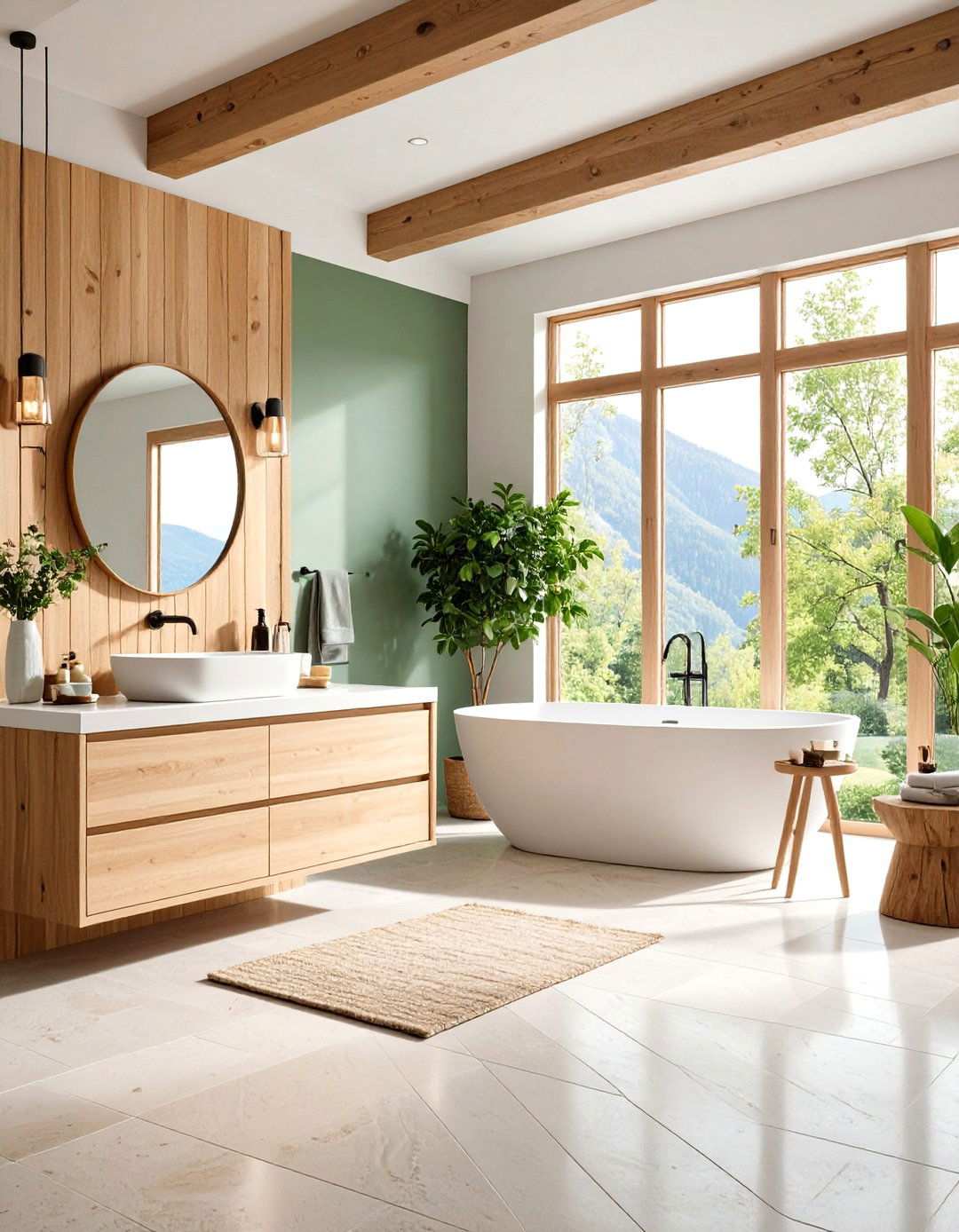
Transform your bathroom into a tranquil retreat that reflects the organic principles of prairie style by incorporating natural stone and geometric tile patterns. Install natural limestone or sandstone flooring with brushed finishes that add texture and warmth underfoot, creating a soothing atmosphere that invites relaxation. Create a striking focal point behind the vanity using handcrafted tiles in subtle geometric patterns inspired by prairie grass or wildflower motifs. A freestanding soaking tub situated near large windows emphasizes the connection with nature, while built-in vanity cabinetry featuring simple lines and natural wood finishes complements the space with a sense of serenity. Warm lighting through custom sconces with stained glass panels adds ambient illumination that enhances the room’s earth-toned palette and tranquil ambiance.
Flowing Prairie-Style Dining Room with Built-In Storage
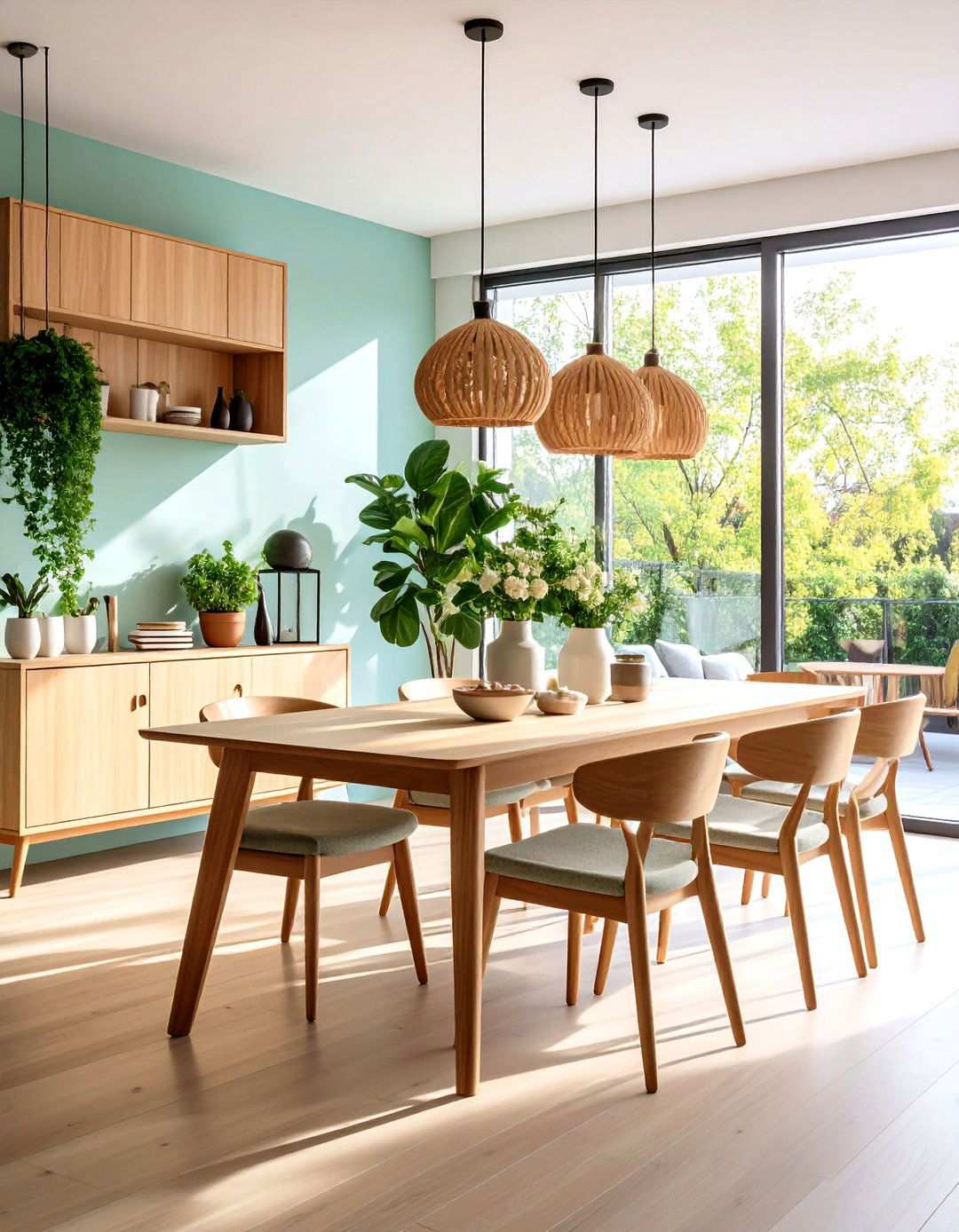
Design a prairie-style dining room that seamlessly integrates with adjacent living spaces while maintaining distinct functionality through built-in elements. A substantial built-in buffet along one wall, featuring horizontal proportions and natural wood construction with geometric panel details, serves as a functional anchor. The buffet should incorporate both closed storage and open display areas for handcrafted pottery and nature-inspired accessories. A solid wood dining table with clean geometric lines and substantial proportions echoes the room’s architectural elements, while dining chairs with vertical slat backs or geometric upholstery patterns add a touch of elegance. Large windows or French doors connect the dining area to outdoor spaces, emphasizing the prairie style’s integration of interior and exterior environments through uninterrupted sight lines.
Art Glass Windows that Enrich the Prairie-Inspired Aesthetic
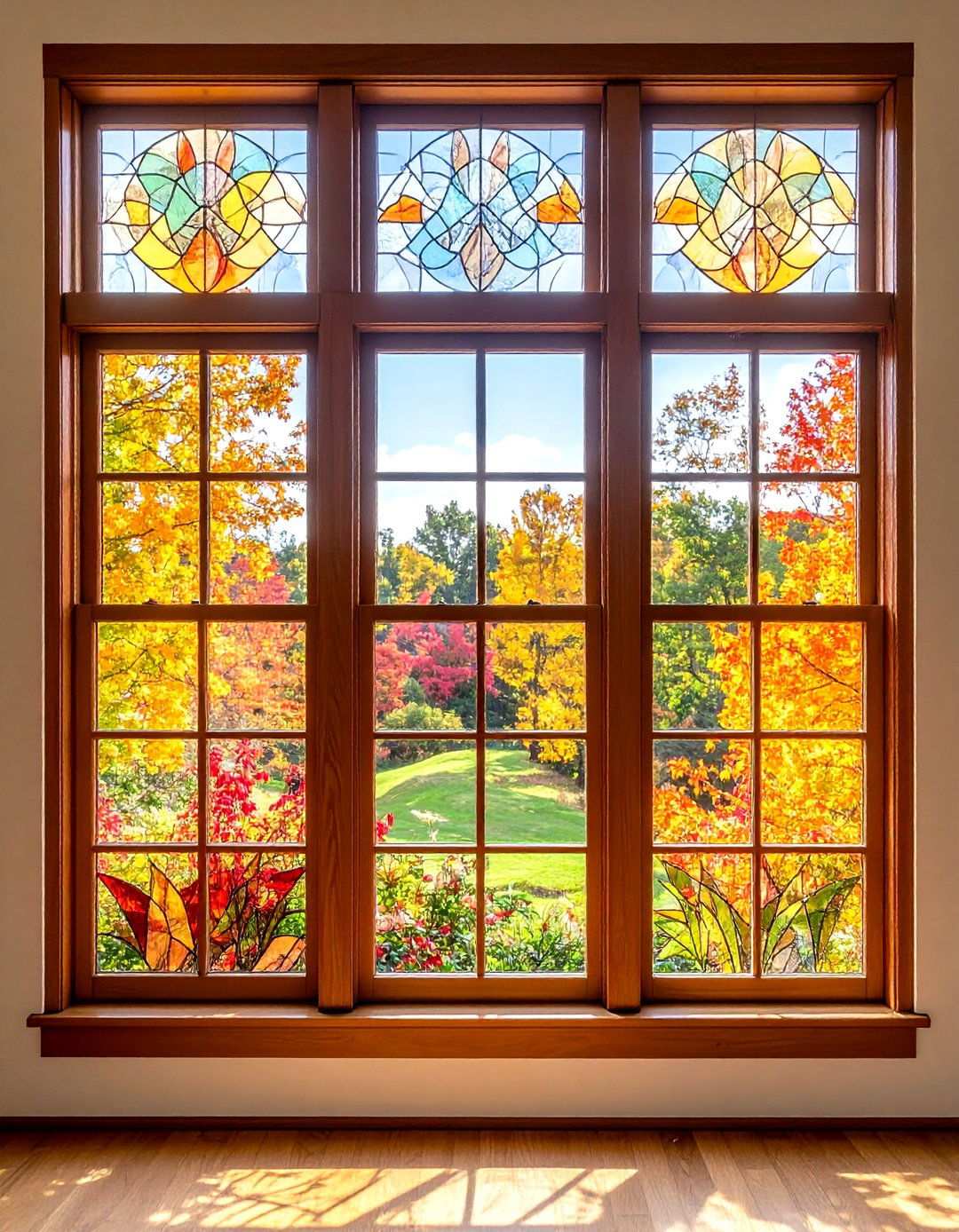
Frank Lloyd Wright’s architectural legacy lives on through art glass windows that not only provide natural light and privacy but also serve as functional works of art. By designing custom leaded glass panels featuring geometric interpretations of prairie plants, abstract landscape elements, or stylized natural forms, homeowners can create a unique visual experience. Warm amber, green, and earth-tone glass are ideal choices, filtering natural light beautifully throughout the day and adding depth to the room. Art glass windows work particularly well in dining rooms, entryways, and stairwells, where they can be appreciated as architectural focal points. To maintain visual continuity, the geometric patterns should relate to other design elements in the room, such as textile patterns or tile designs. Extending this design element throughout the interior via art glass cabinet doors, room dividers, and light fixtures reinforces the prairie style’s emphasis on unified, nature-inspired motifs.
Central Fireplace Design that Emphasizes Horizontal Lines
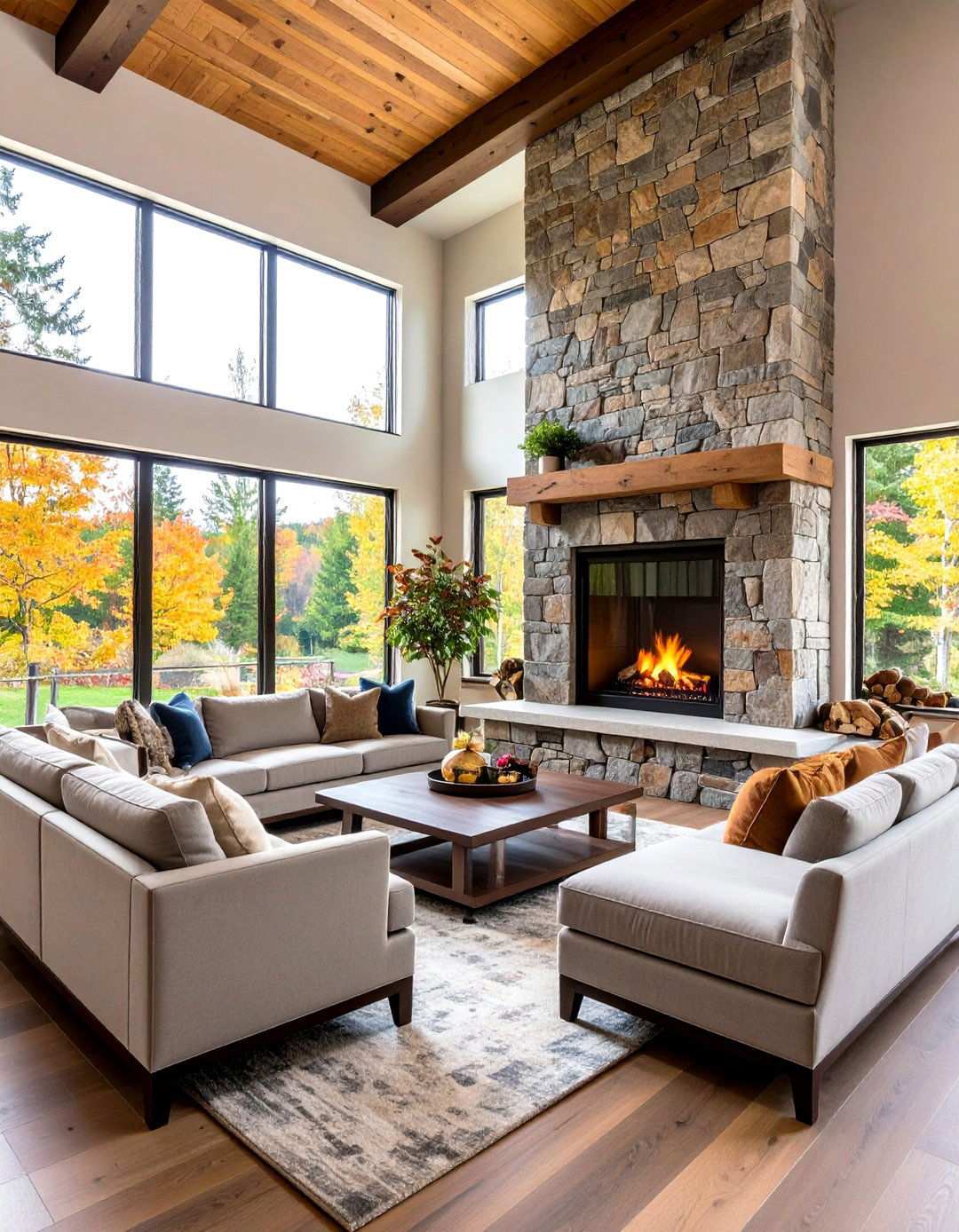
A prairie-style fireplace serves as the room’s central focal point, drawing the eye with horizontal stone construction that embodies the style’s signature low-profile aesthetic. By building an extended hearth that stretches beyond the firebox, homeowners can create additional seating and display space while reinforcing horizontal lines. Natural fieldstone, limestone, or brick in warm earth tones complement the room’s wood elements and add warmth to the space. The fireplace surround should integrate seamlessly with built-in seating, bookcases, or storage units on either side, creating a sense of cohesion. A simple, geometric mantel or its absence can add to the clean lines and minimalist feel of the prairie style. Positioning the fireplace to serve multiple rooms in open floor plans emphasizes the communal living philosophy that underpins the prairie style. Built-in wood storage that becomes part of the architectural composition maintains functionality while blending with the surrounding design.
Productive Prairie-Style Home Office with Integrated Furniture
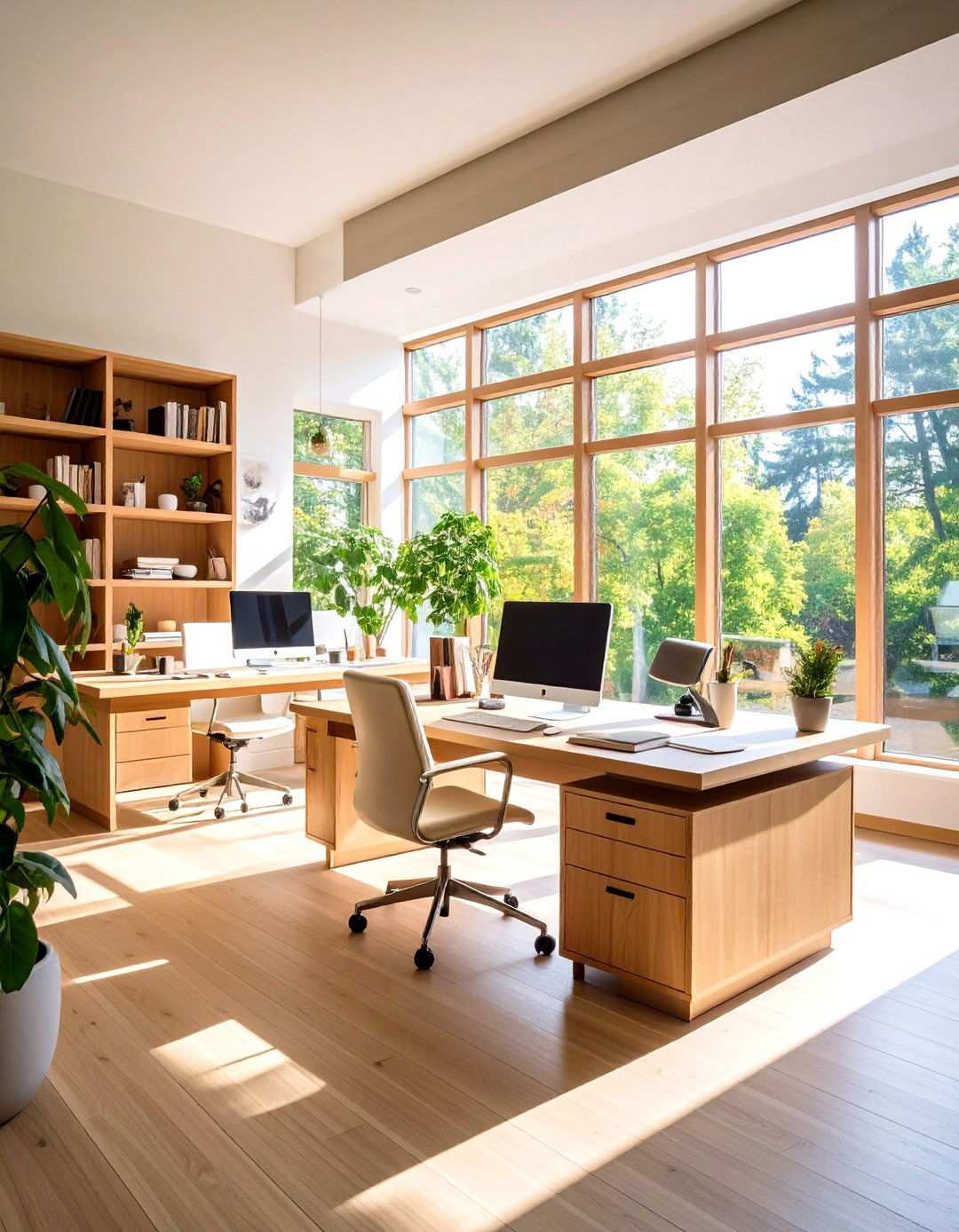
A prairie-inspired home office combines the benefits of natural materials and integrated furniture to create a productive workspace. By installing built-in desk surfaces that extend horizontally along windows, homeowners can maximize natural light and outdoor views during work hours. Constructing floor-to-ceiling bookshelf systems using solid wood with geometric proportions creates a sense of continuity with the surrounding space. The shelving should align with window heights and ceiling beams to maintain visual cohesion. Rich wood species like cherry or oak with prominent grain patterns add warmth and character to the space. Task lighting through custom fixtures with geometric metalwork or stained glass elements provides focused illumination. Built-in filing systems and equipment storage that blend seamlessly into the cabinetry maintain a clutter-free environment, promoting focus and tranquility. Large windows and earth-tone color schemes connect the office to nature, fostering a sense of calm and well-being.
Harmonious Wood Flooring and Area Rugs in Prairie-Style Interiors
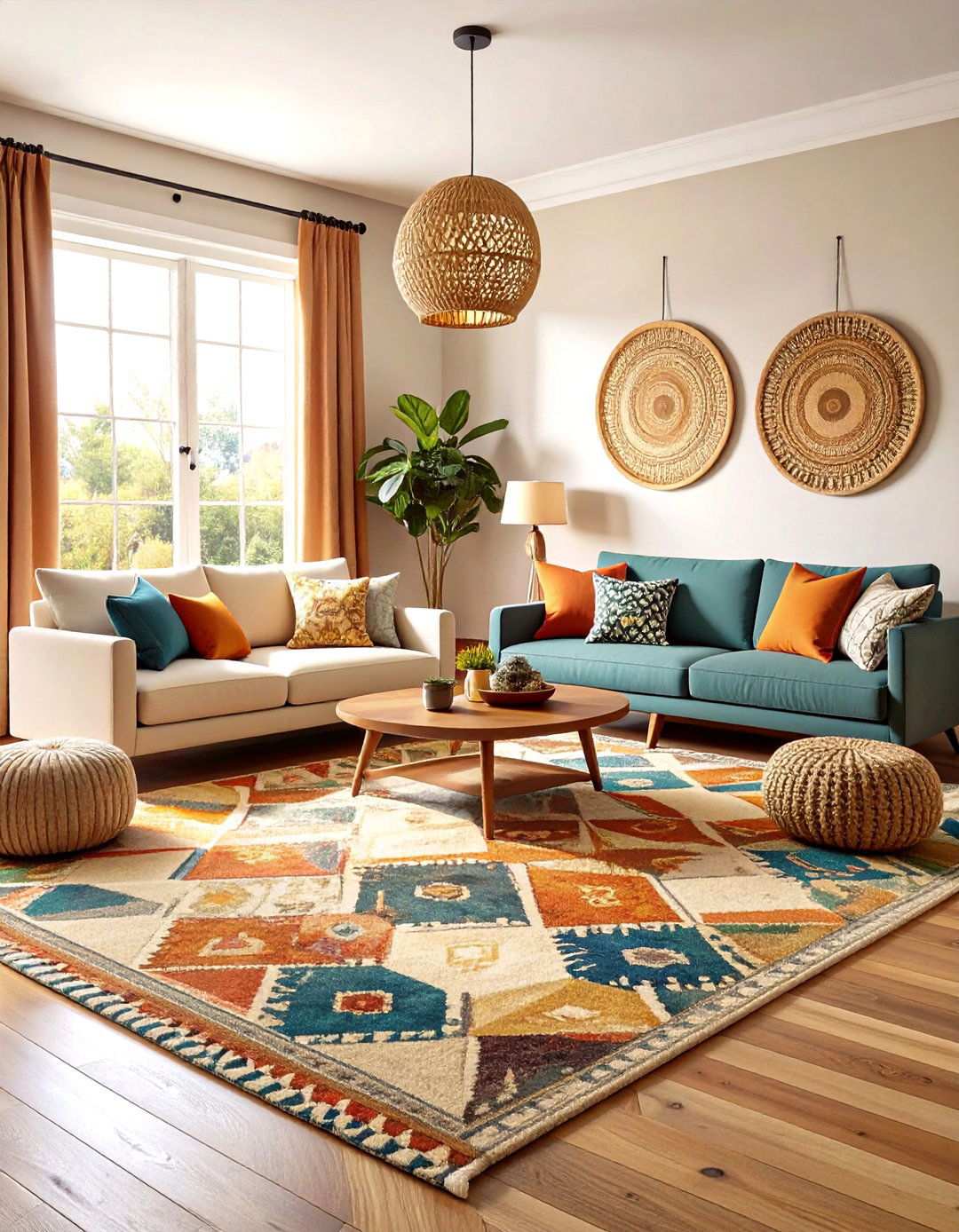
Opt for wide-plank hardwood flooring that showcases the beauty of quarter-sawn oak, cherry, or walnut, with prominent grain patterns that reflect the prairie style’s appreciation for organic materials. Pair the flooring with area rugs featuring geometric patterns inspired by prairie plants, abstract landscapes, or the iconic designs of Frank Lloyd Wright. The rugs should be crafted from natural fiber materials such as wool, and their earth-tone color palettes should include warm browns, sage greens, rust oranges, and golden yellows. Strategically position the rugs to define cozy conversation areas and inject visual warmth, while allowing the stunning wood flooring to remain the focal point around the perimeter. This thoughtful combination creates a harmonious balance of texture and comfort, while maintaining the clean, horizontal emphasis characteristic of prairie interiors.
10. Exposed Timber Beams and Ambient Lighting in Prairie Style
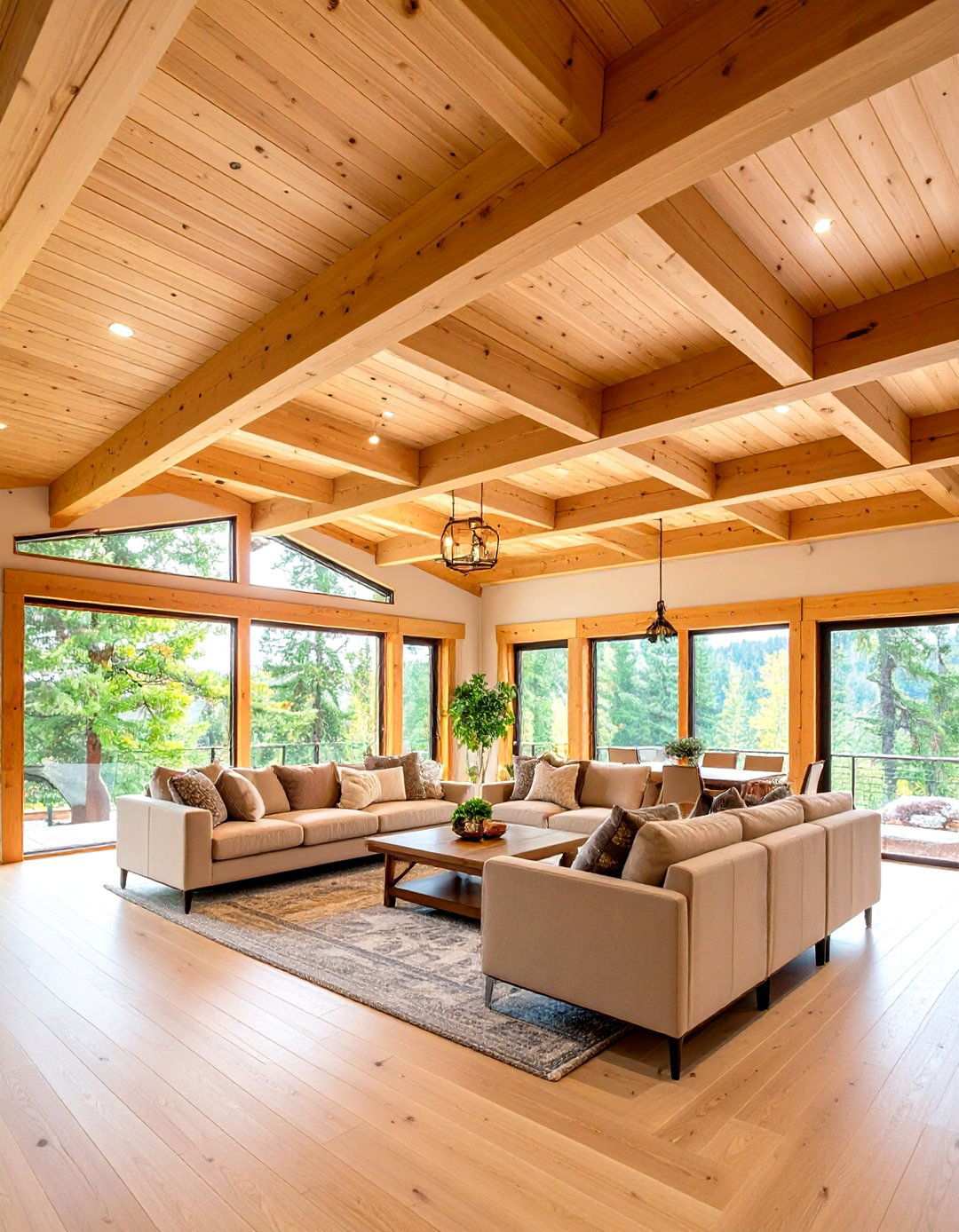
Bring the prairie style’s emphasis on horizontal lines and natural materials to life by installing exposed ceiling beams crafted from natural cedar, oak, or fir timber. The beams should run parallel to the longest wall dimension, creating a sense of visual flow and emphasizing the room’s width rather than its height. To add ambient lighting, integrate LED strip lighting within beam channels or suspend pendant fixtures from the beams at regular intervals. When selecting beam spacing, consider the relationship between the beams and other architectural elements, such as window mullions or built-in cabinetry divisions. Leave the wood in its natural state or stain it to complement other interior wood elements. In rooms with lower ceilings, opt for smaller dimensioned beams to maintain proportion and create a sense of balance. This thoughtful approach celebrates craftsmanship while providing practical lighting solutions that enhance the room’s warm, natural atmosphere.
11. Seamless Indoor-Outdoor Connection through Prairie-Style Porches
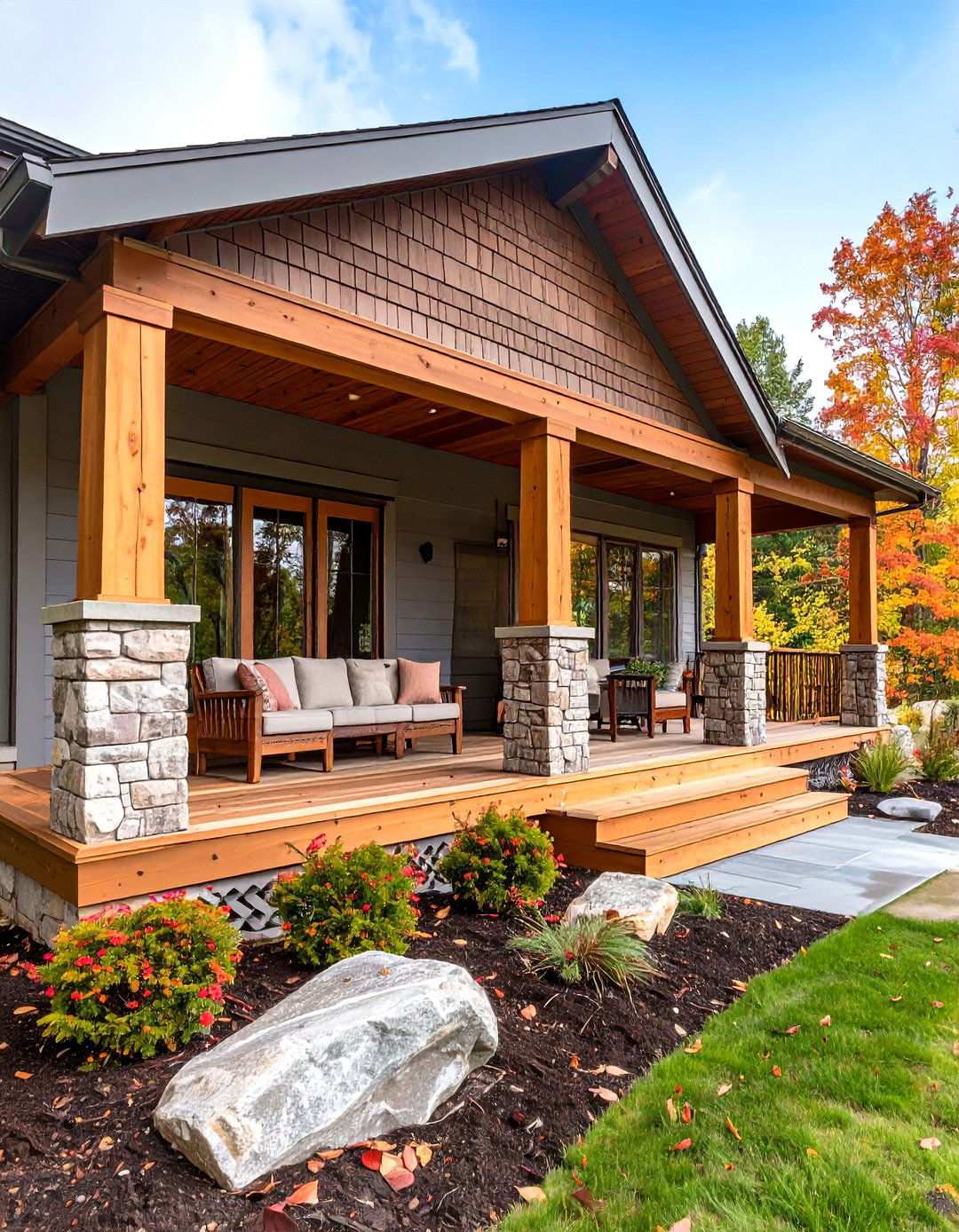
Design a three-season porch that embodies the prairie style’s seamless integration of indoor and outdoor living spaces. Use natural materials like cedar siding, stone columns, and exposed timber framing that echo the main house’s construction, creating a sense of continuity. Install large operable windows or sliding glass panels that can be opened to blur the boundary between interior and exterior spaces, allowing natural light and fresh air to flow freely. Choose furniture with clean lines and weather-resistant natural materials like teak or aluminum, featuring geometric forms that complement the prairie style’s aesthetic. Add built-in seating with storage underneath for outdoor cushions and accessories, and select flooring that uses natural stone, wood decking, or stained concrete to create a cohesive look. Include a simple fireplace or fire pit to extend the season, positioned to serve both the porch and indoor living areas through large openings, creating a seamless transition between indoors and outdoors.
12. Prairie-Style Bedroom Built-In Window Seat with Storage
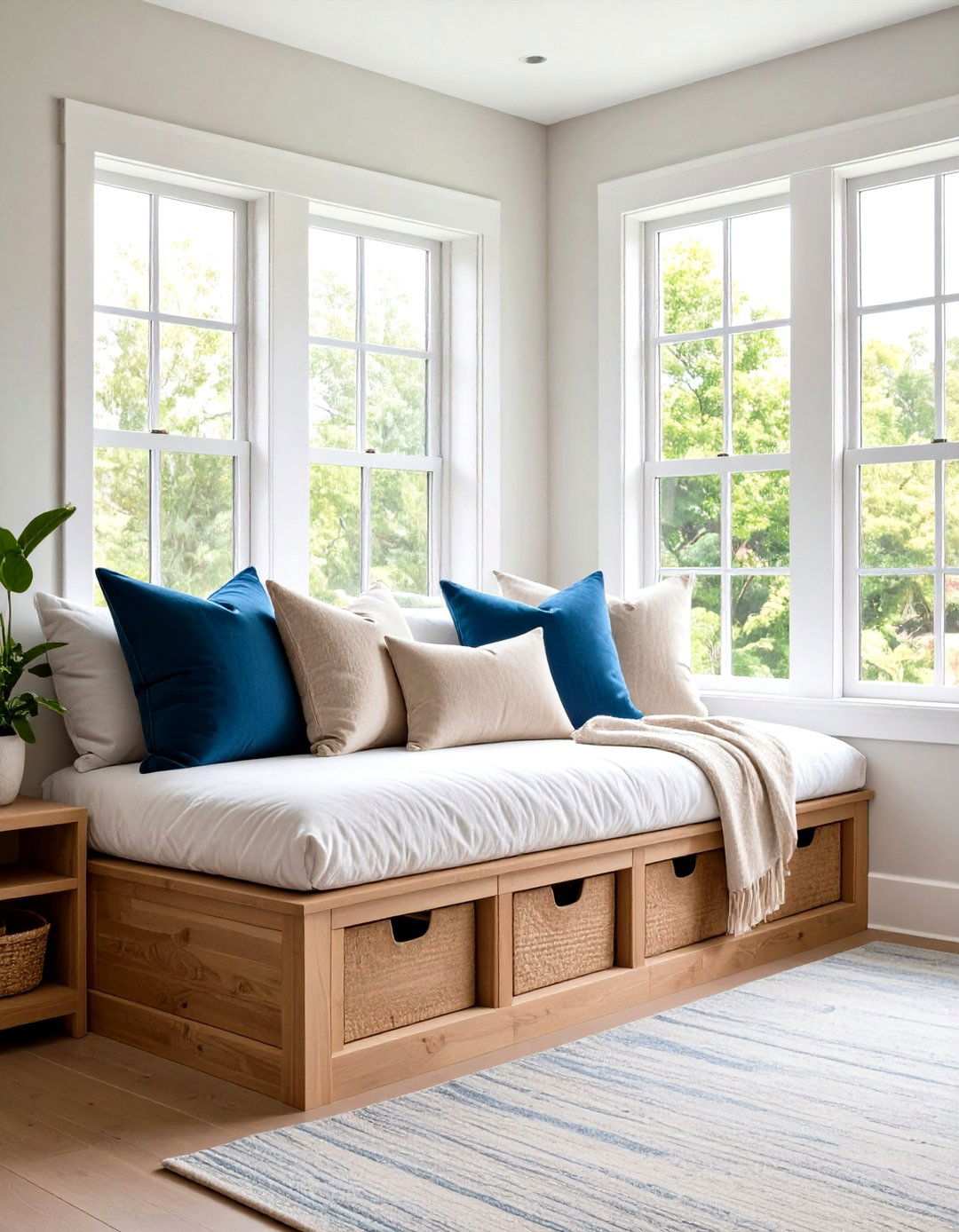
Transform your bedroom into a serene retreat by incorporating a built-in window seat that seamlessly blends functionality and aesthetics. By utilizing solid wood that harmonizes with your existing bedroom furniture, you can create a cozy reading nook that not only maximizes natural light but also provides a clever storage solution. The window seat’s design should span the entire width of the window and extend slightly beyond, creating a sense of horizontal grandeur. Choose custom cushions in natural fabrics like linen or cotton, opting for earthy tones and subtle geometric patterns to create a soothing ambiance. Flanking the window seat, consider installing side shelving or small cabinets to store books and personal treasures. To maintain a sense of cohesion, ensure the design aligns with the window sill height and complements other built-in elements in the room. This thoughtful feature not only creates a charming reading nook but also celebrates the prairie style’s emphasis on connection to nature and functional beauty.
13. Geometric Prairie-Style Staircase with Walnut Handrails
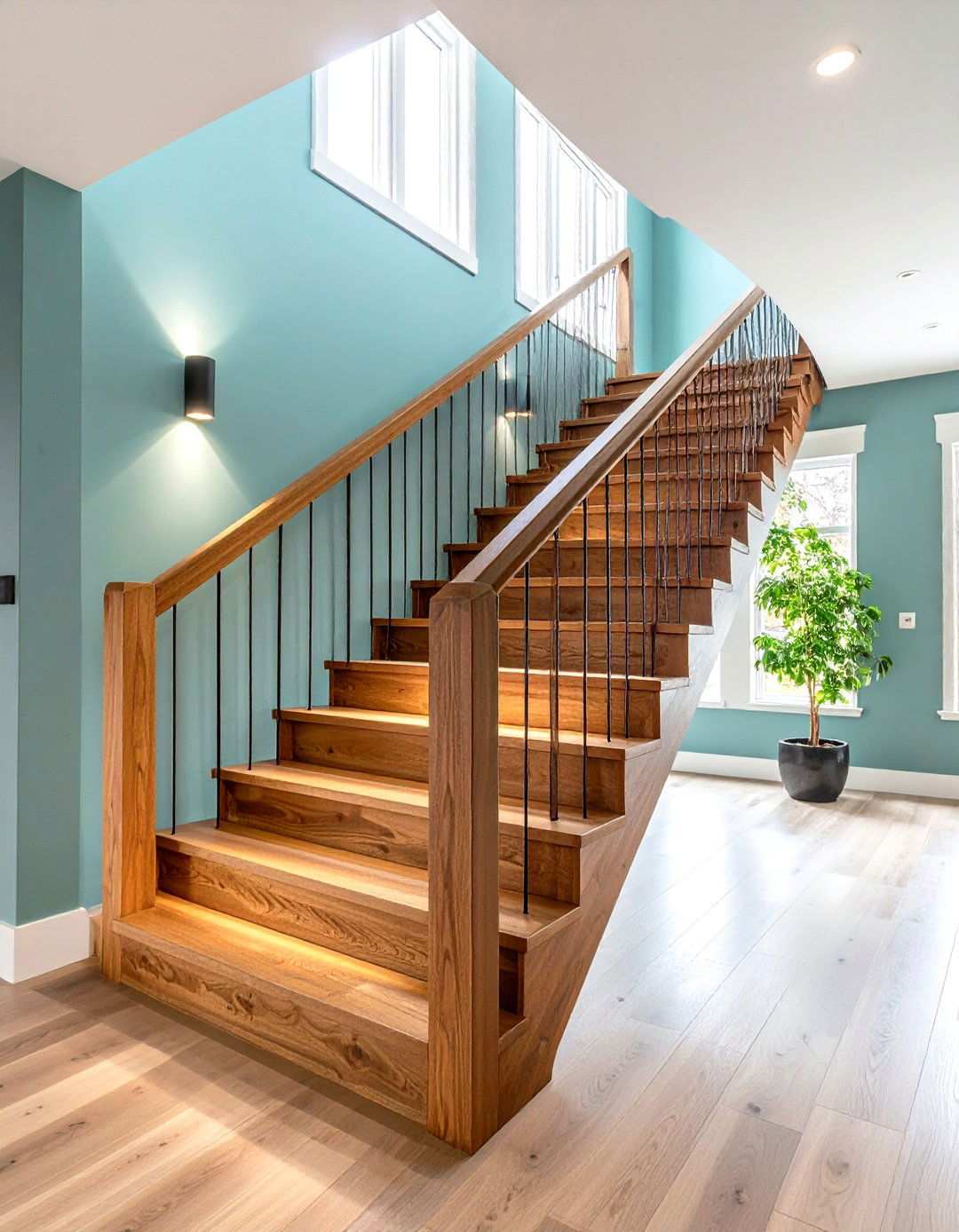
Elevate your home’s interior architecture with a staircase that embodies the prairie style’s essence through the use of geometric forms and natural materials. Construct the staircase using open risers with solid wood treads in walnut, oak, or cherry, supported by clean geometric balusters or metal framework. The handrail should be a statement piece, featuring substantial proportions and natural wood construction with simple, angular forms that pay homage to Wright’s furniture designs. To enhance safety and visual interest, consider adding integrated lighting within the handrail or beneath the treads. To maintain a sense of continuity, ensure the staircase aligns with other architectural elements in the home, utilizing consistent materials and proportions. Finally, incorporate built-in planters or display niches along the stair wall to showcase nature-inspired accessories, creating a sculptural element that serves as functional artwork within the home’s interior.
14. Prairie-Style Kitchen Island with Waterfall Stone Countertops
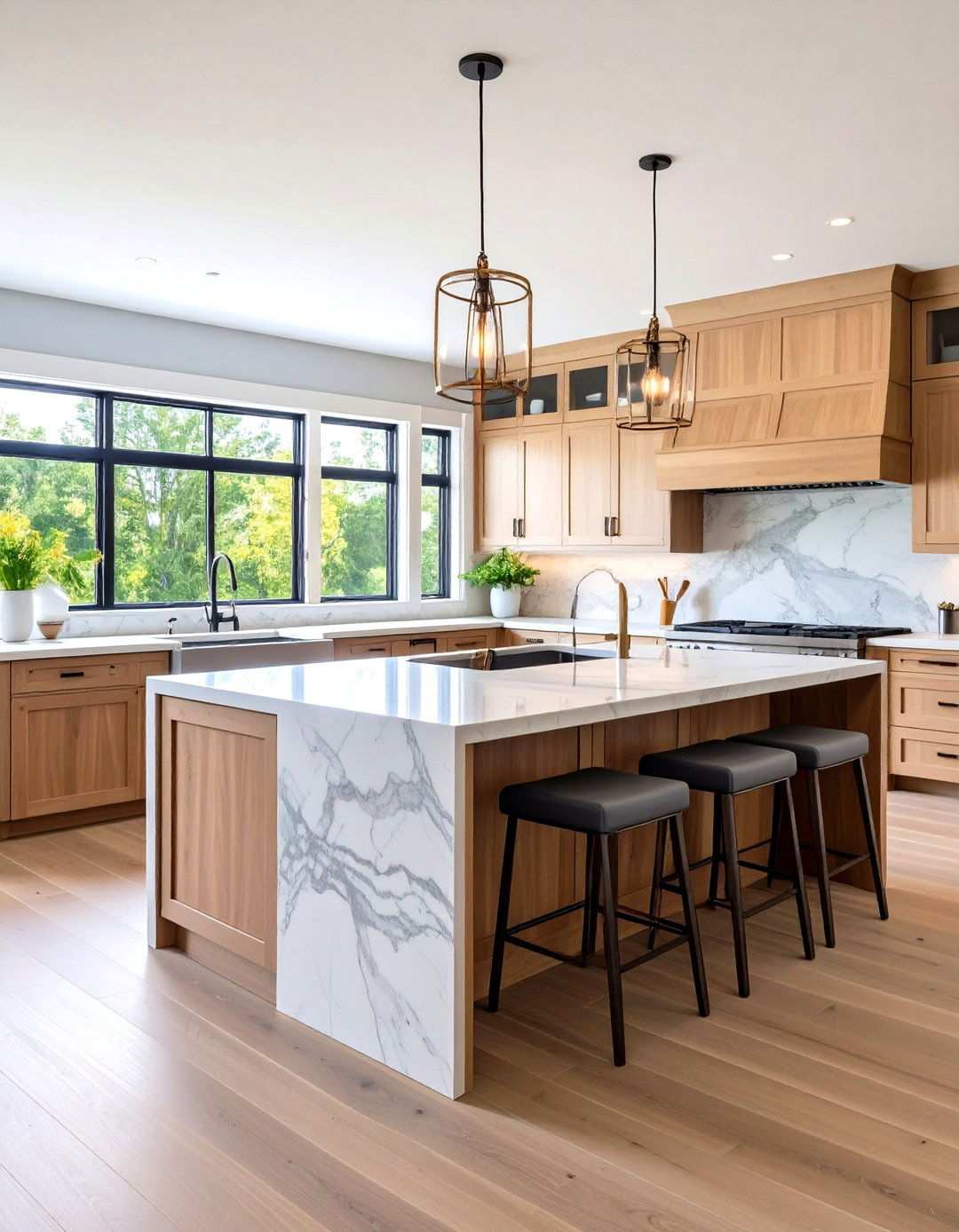
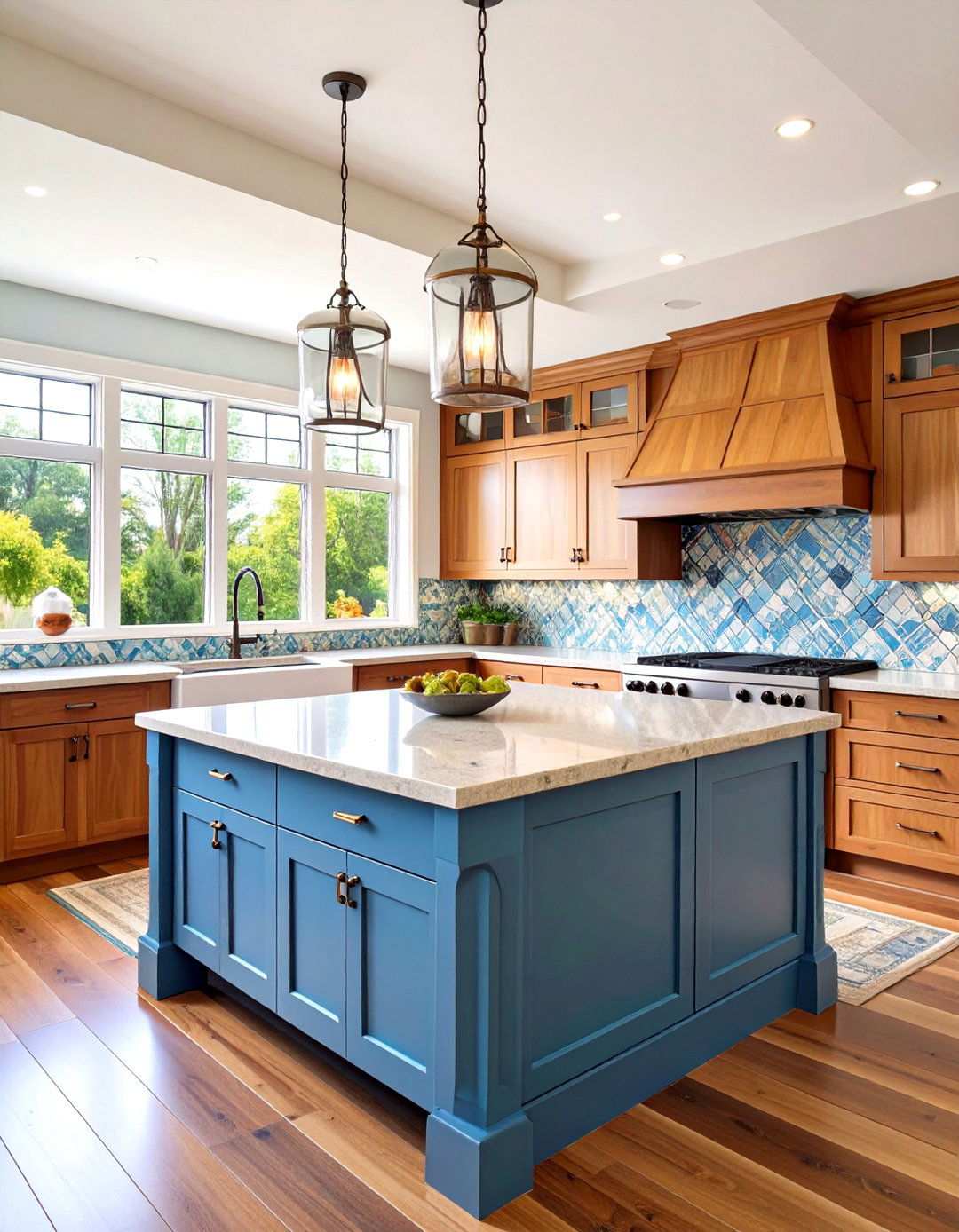
Create a kitchen island that serves as the heart of your home’s communal living space, featuring a substantial design that incorporates natural stone countertops with waterfall edges that emphasize horizontal flow. Choose materials like granite, limestone, or quartz with subtle veining that complements the prairie style’s earthy color palette. The island should offer both closed storage with flat-panel doors and open shelving for displaying handcrafted pottery or cookbooks. To create a seating area, incorporate natural wood stools with geometric forms on one side of the island. Complete the design with pendant lighting above the island, opting for fixtures that feature geometric metalwork or natural materials. To maintain visual balance, ensure the island’s proportions relate to the room’s ceiling height and other architectural elements, creating a harmonious and functional space that embodies the prairie style’s communal living philosophy.
15. Harmonious Natural Stone Feature Wall
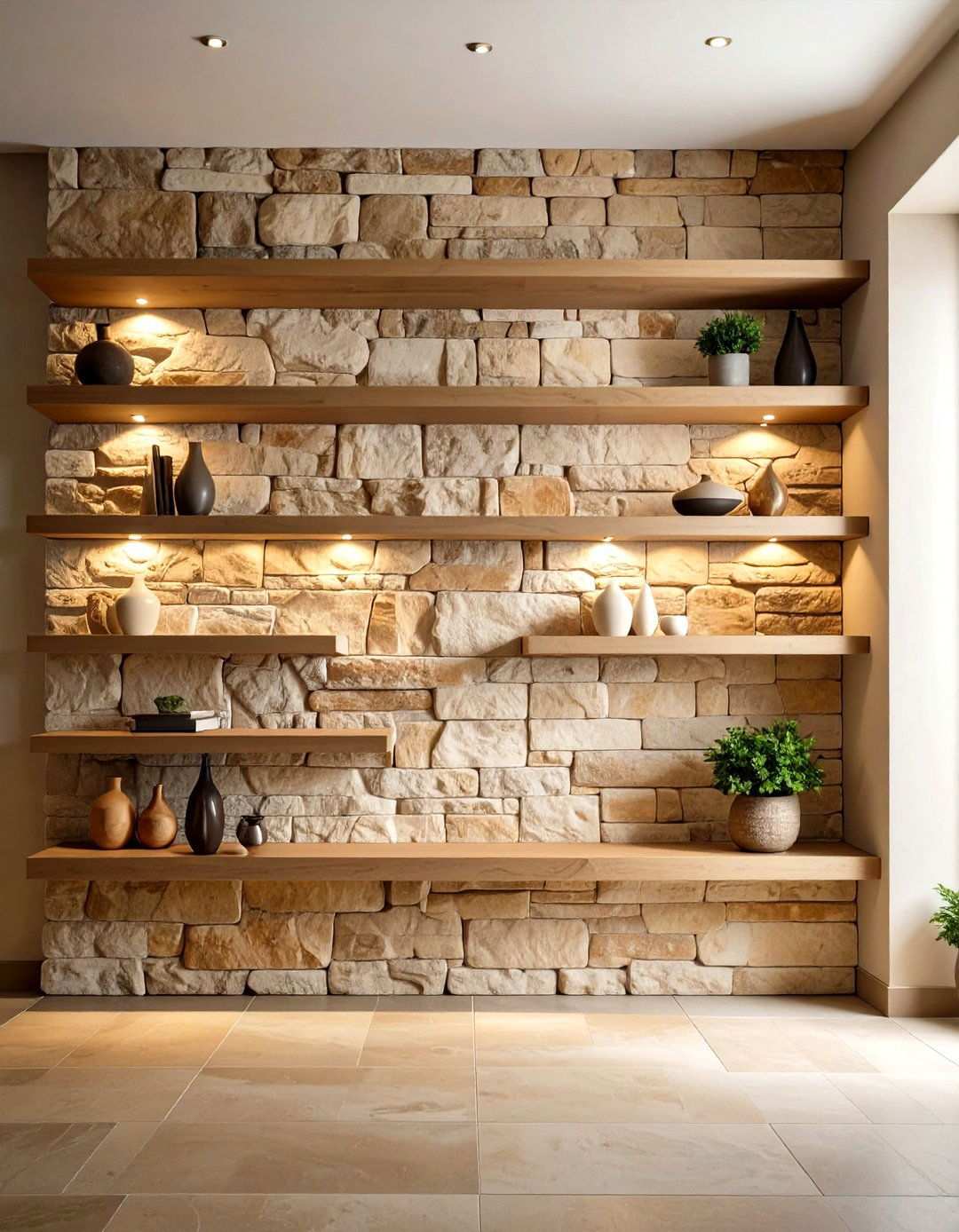
To evoke the essence of the prairie style, create a striking focal point with a natural stone feature wall that emphasizes horizontal lines. Opt for fieldstone, limestone, or sandstone in warm earth tones and arrange them to create a predominantly horizontal joint line pattern, contrasting with the random arrangements often seen in prairie-style architecture. As the wall extends beyond the typical dimensions of an accent wall, consider integrating it with adjacent rooms or outdoor spaces to emphasize continuity and flow. This seamless integration can be achieved by incorporating built-in elements like floating shelves, fireplace surrounds, or seating areas that blend harmoniously with the stone construction. For a captivating ambiance during evening hours, add subtle uplighting that highlights the stone’s natural texture, thereby creating warmth and coziness.
16. Inviting Prairie-Style Guest Bedroom
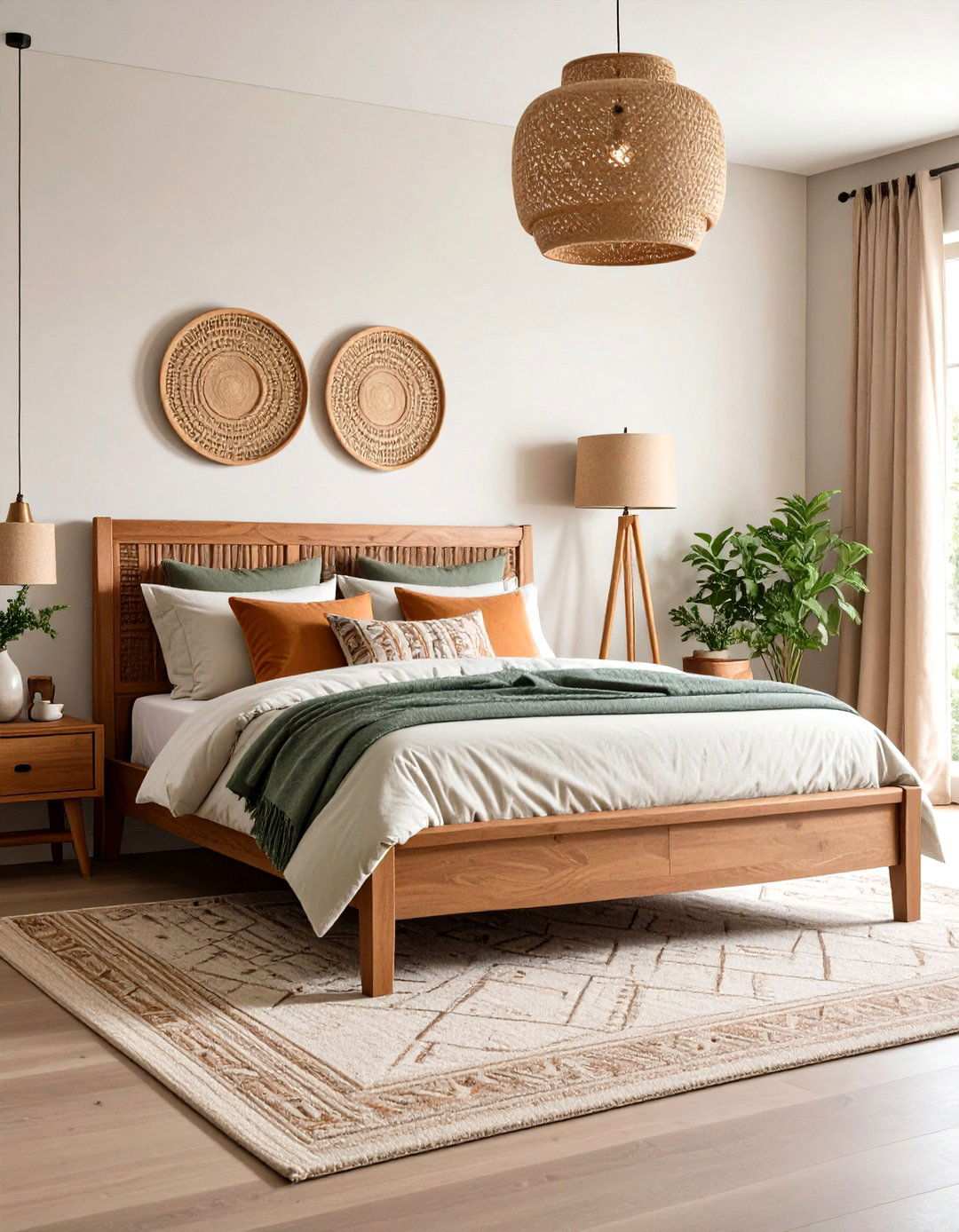
When designing a guest bedroom inspired by the prairie style, incorporate mission-style furniture that resonates with the shared roots of the Arts and Crafts movement. A substantial bed frame with a geometric headboard design, crafted from solid oak or cherry wood with visible joinery details, makes a striking centerpiece. Complement this with matching nightstands and a dresser featuring horizontal proportions and simple hardware. A wooden bench at the foot of the bed serves both as a seating area and storage solution. Choose textiles in natural fibers with earth-tone colors and subtle geometric patterns inspired by prairie plants or the textile designs of Frank Lloyd Wright. For a seamless look, install built-in closet storage with simple, flat-panel doors that maintain the room’s clean lines. A reading chair with geometric upholstery and side table near windows creates a cozy seating area that makes the most of natural light and outdoor views.
17. Modern Prairie-Style Built-In Entertainment Center
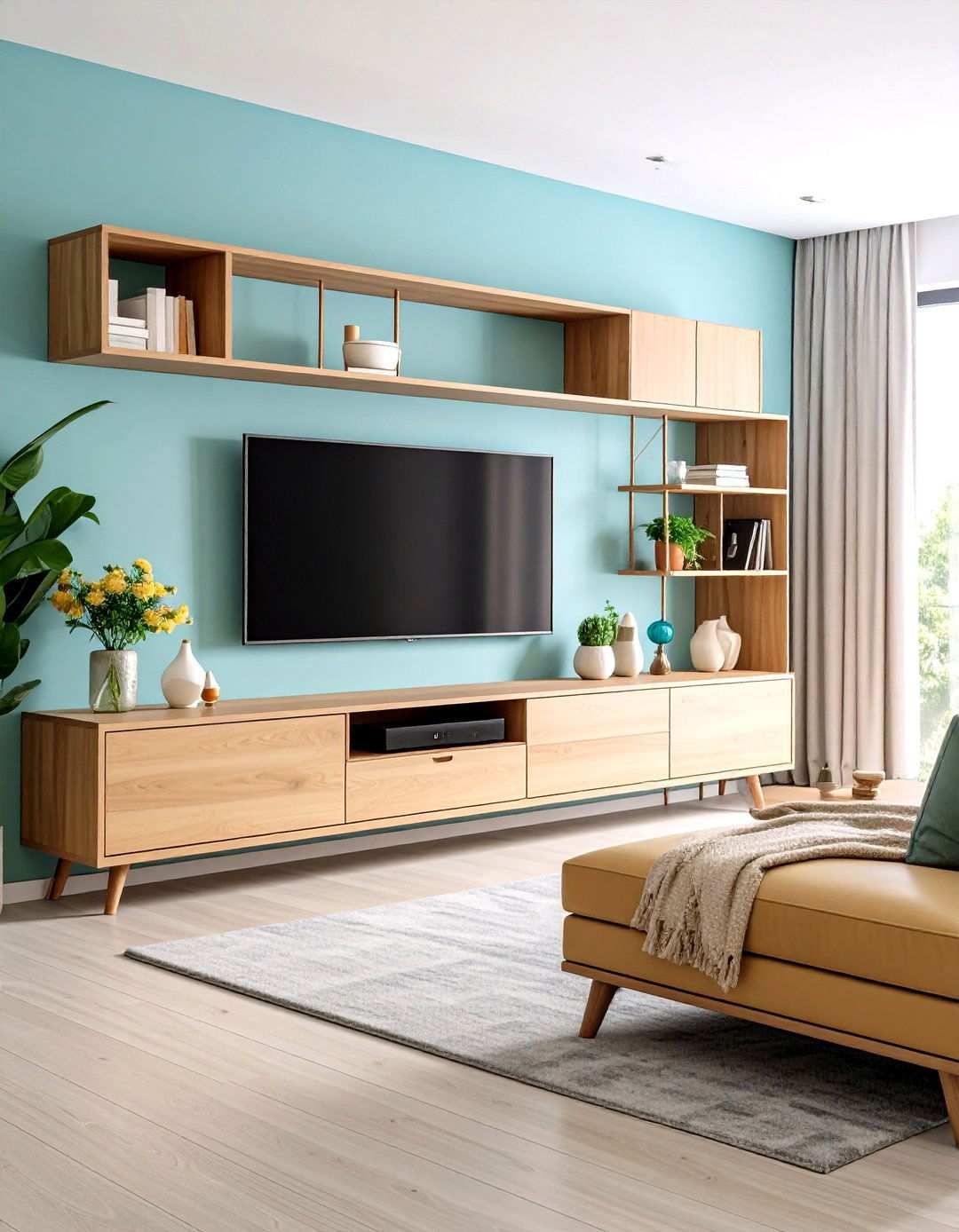
To create a built-in entertainment center that seamlessly blends modern technology with prairie style design principles, focus on constructing the unit using natural wood with horizontal proportions. Combine open and closed storage sections in geometric patterns that not only accommodate television and audio equipment but also maintain clean lines and minimal visual distraction. Include adjustable shelving for books, music, and decorative objects that reflect the style’s nature-inspired aesthetic. For added ambiance, integrate lighting within shelving units and behind glass doors to highlight displayed items. Moreover, conceal all wire management within the cabinetry construction for a clutter-free appearance. By spanning an entire wall or room section, this entertainment center creates a substantial horizontal presence while serving multiple functions in the prairie style’s efficient use of space and built-in furniture philosophy.
18. Timeless Prairie-Style Entryway with Functional Storage
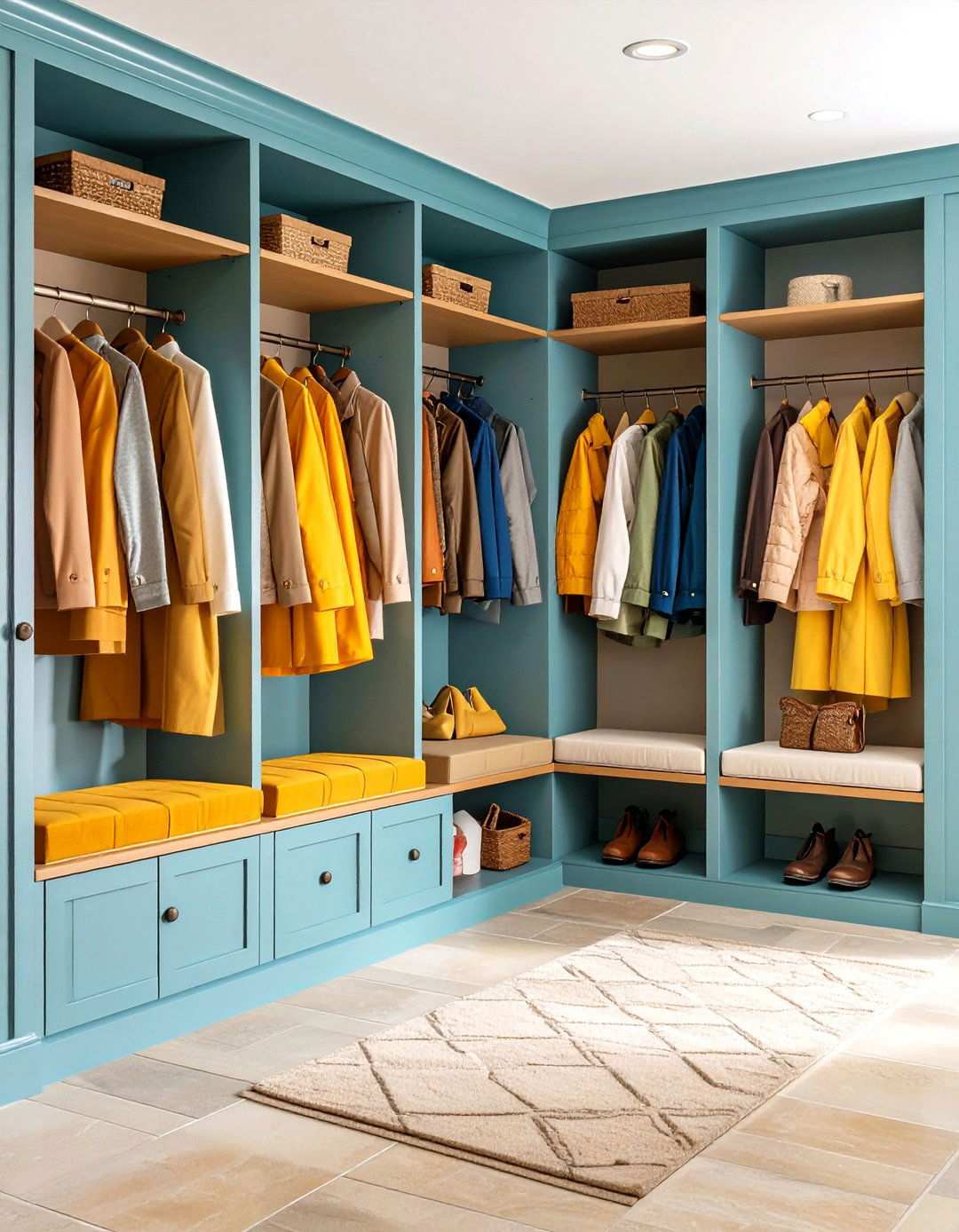
Craft a harmonious entryway that seamlessly blends prairie style organization and natural materials, serving as a serene transition between the outdoors and indoors. A built-in bench with generous proportions, constructed from solid wood with hidden storage compartments for shoes and outdoor gear, makes a thoughtful addition. Above the bench, incorporate wall-mounted cubbies or lockers, each tailored to fit family members’ coats and bags, promoting a sense of unity and cooperation. The cabinetry should feature flat-panel doors and natural wood finishes that harmonize with the surrounding interior elements. Strategically include hooks for daily essentials and umbrella storage, cleverly integrated into the design. Durable natural materials like stone tile or sealed wood flooring will withstand moisture and heavy foot traffic, while a large window or glass door maintains a connection to the outdoors, casting a warm glow over this practical area.
19. Luxurious Prairie-Style Master Bathroom Retreat
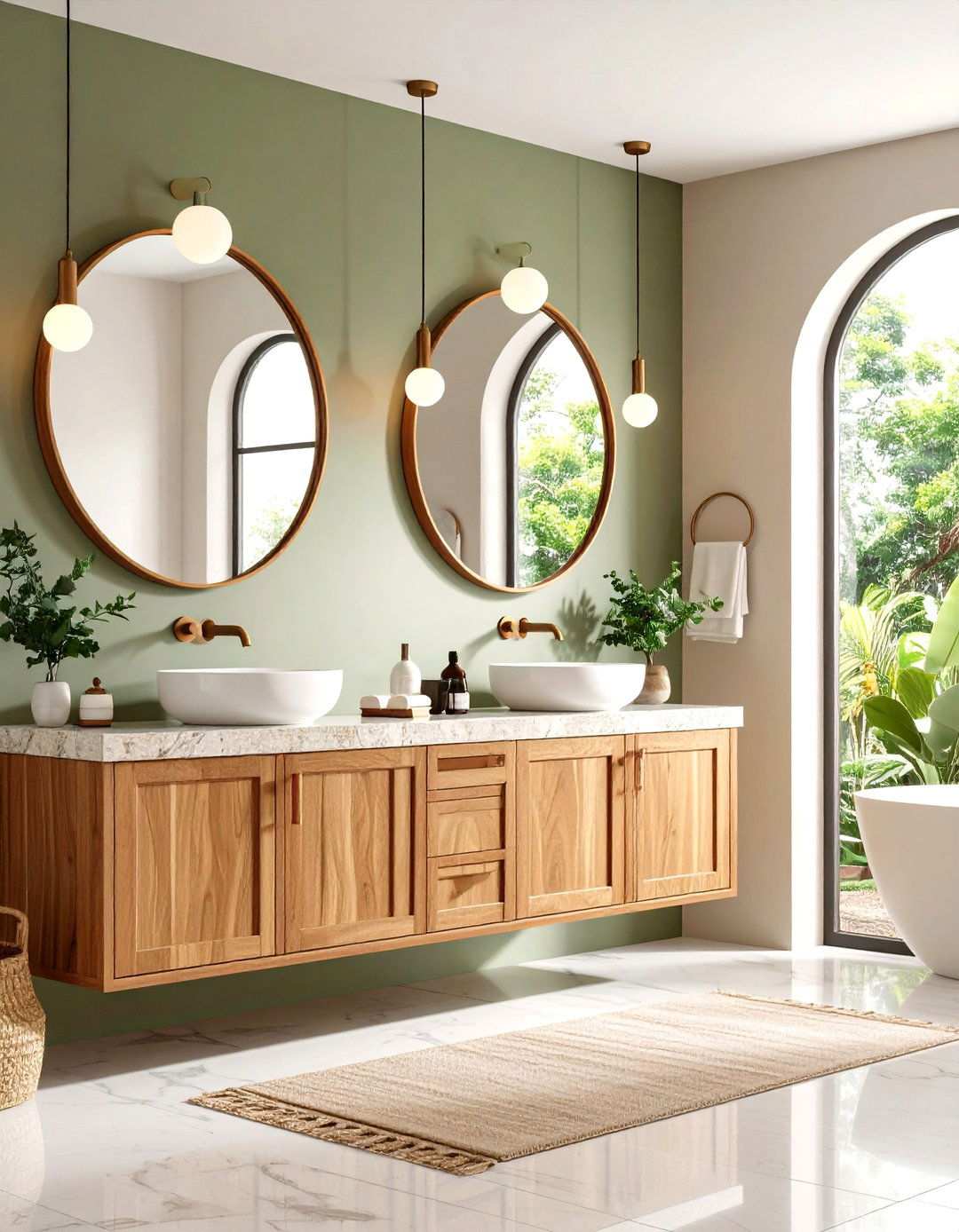
Envision a sumptuous master bathroom that embodies the essence of prairie style, with dual vanities that evoke a sense of horizontal elegance and natural refinement. Design substantial vanity cabinets using solid wood construction, adorned with geometric panel details and complemented by integrated countertop materials like natural stone or wood. Each vanity should provide ample storage, while maintaining uncluttered surfaces that exude a sense of calm. Choose vessel sinks or integrated stone basins that beautifully complement the prairie style’s organic aesthetic. Install large mirrors with simple geometric frames or backlit panels that create a flattering and inviting atmosphere. Add floating shelves between vanities for shared storage and display of natural accessories, fostering a sense of connection to the outdoors. A separate soaking area with natural stone or wood surrounds, positioned near windows for added privacy and a sense of connection to nature, completes the space. Lighting is carefully balanced, combining natural daylight with warm artificial sources through geometric fixtures or integrated LED systems.
20. Cozy Prairie-Style Breakfast Nook with Integrated Banquette Seating
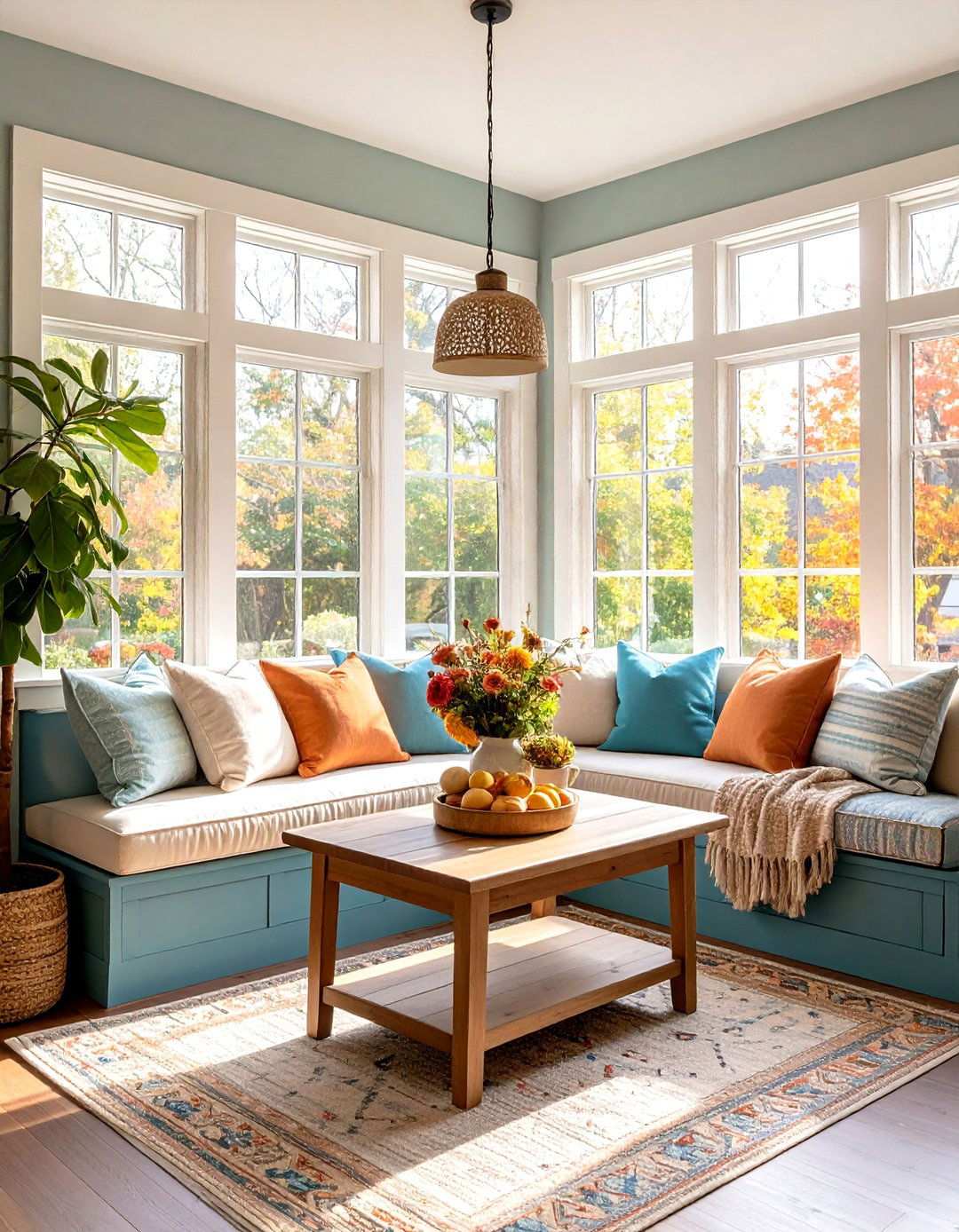
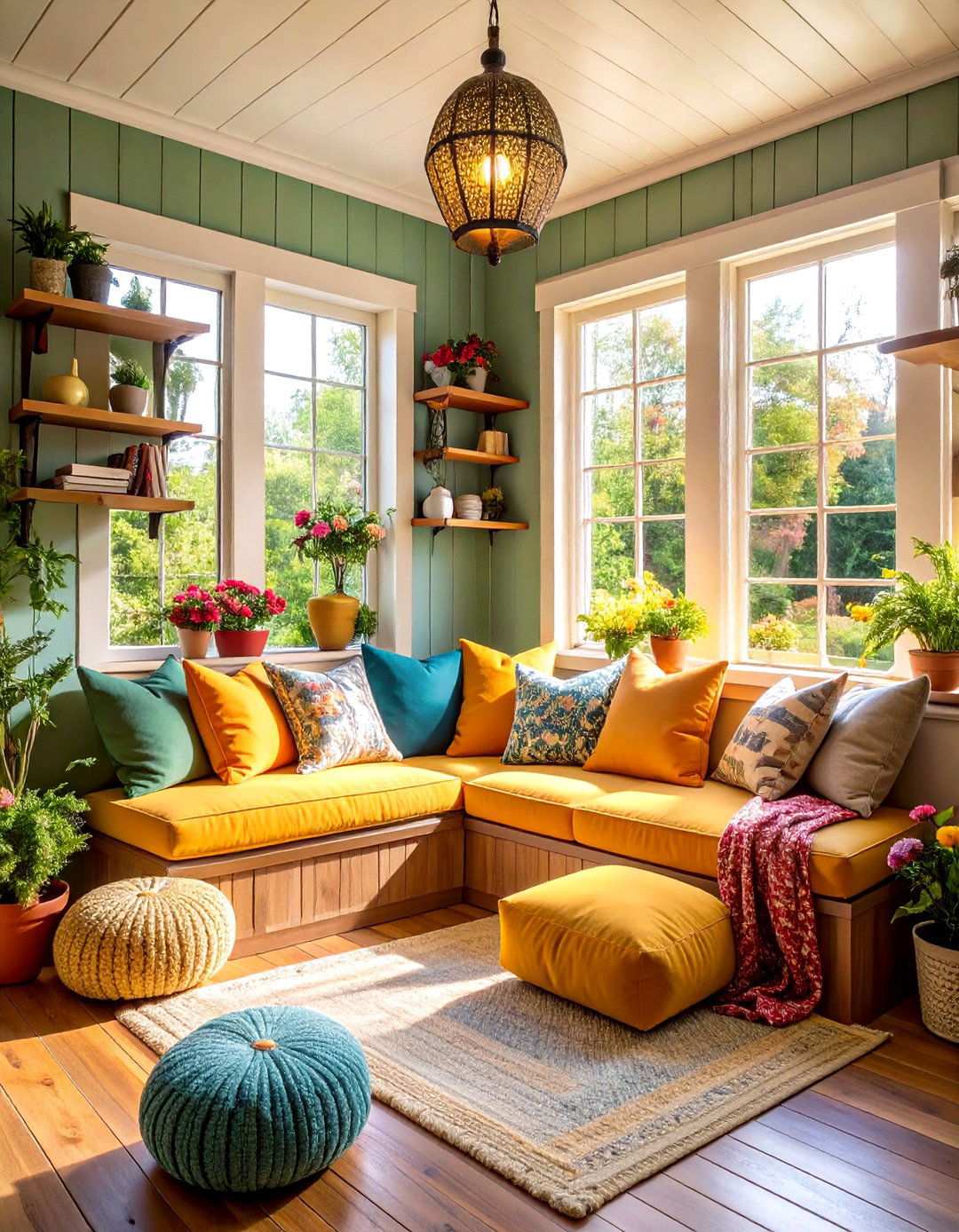
Design an inviting breakfast nook that seamlessly incorporates prairie style principles of integrated furniture and connection to nature. Construct the banquette seating using solid wood with geometric forms, thoughtfully incorporating storage compartments beneath cushioned seats. The banquette should wrap around a corner or extend along windows to maximize seating while maintaining horizontal emphasis, creating a sense of flow and connection to the outdoors. A substantial wood table with a simple geometric base complements the built-in elements, while cushions and pillows in natural fabrics with earth-tone colors and subtle patterns add a touch of warmth. Large windows on multiple sides flood the space with natural light, providing breathtaking views of outdoor gardens or landscapes. The nook feels intimate yet connected to adjacent kitchen and living areas, perfectly capturing the essence of the prairie style’s open floor plan philosophy and communal dining experience.
21. Elevating Library Design with Prairie-Inspired Built-Ins
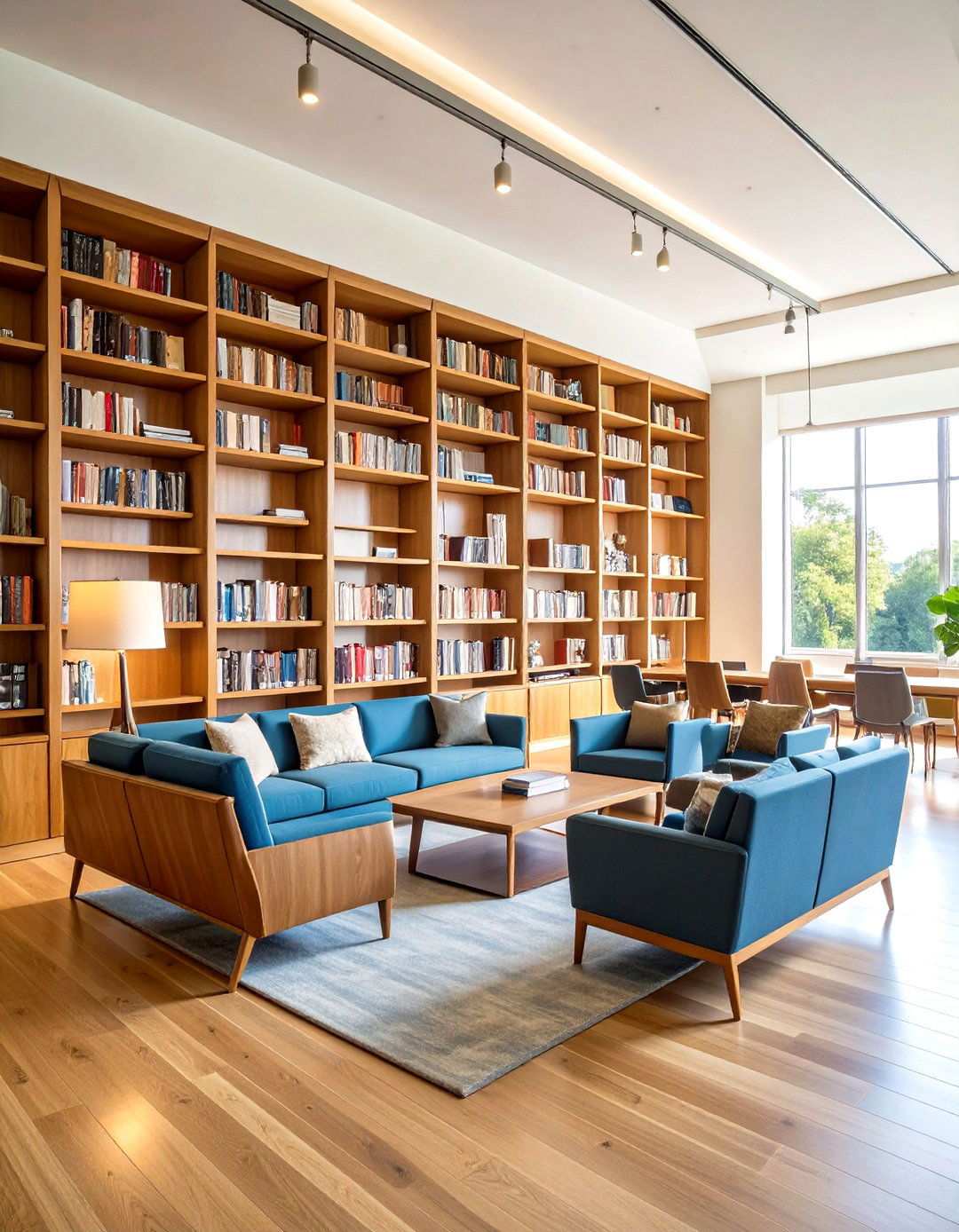
Craft a sophisticated library space that embodies the essence of prairie style by incorporating floor-to-ceiling built-in bookcases showcasing exceptional craftsmanship and natural materials. Design the shelving system using solid wood with geometric proportions, featuring adjustable shelves and fixed compartments for optimal book storage and display. Integrate LED strips or small fixtures within each shelf section to provide warm reading illumination without glare, while also adding a substantial reading table or desk area seamlessly integrated into the bookcase design. This unified furniture system creates a harmonious space for study and contemplation. To complete the library, position comfortable seating near windows to take advantage of natural light and the warmth it brings.
22. Harmonizing Prairie-Inspired Color Schemes Across Interiors
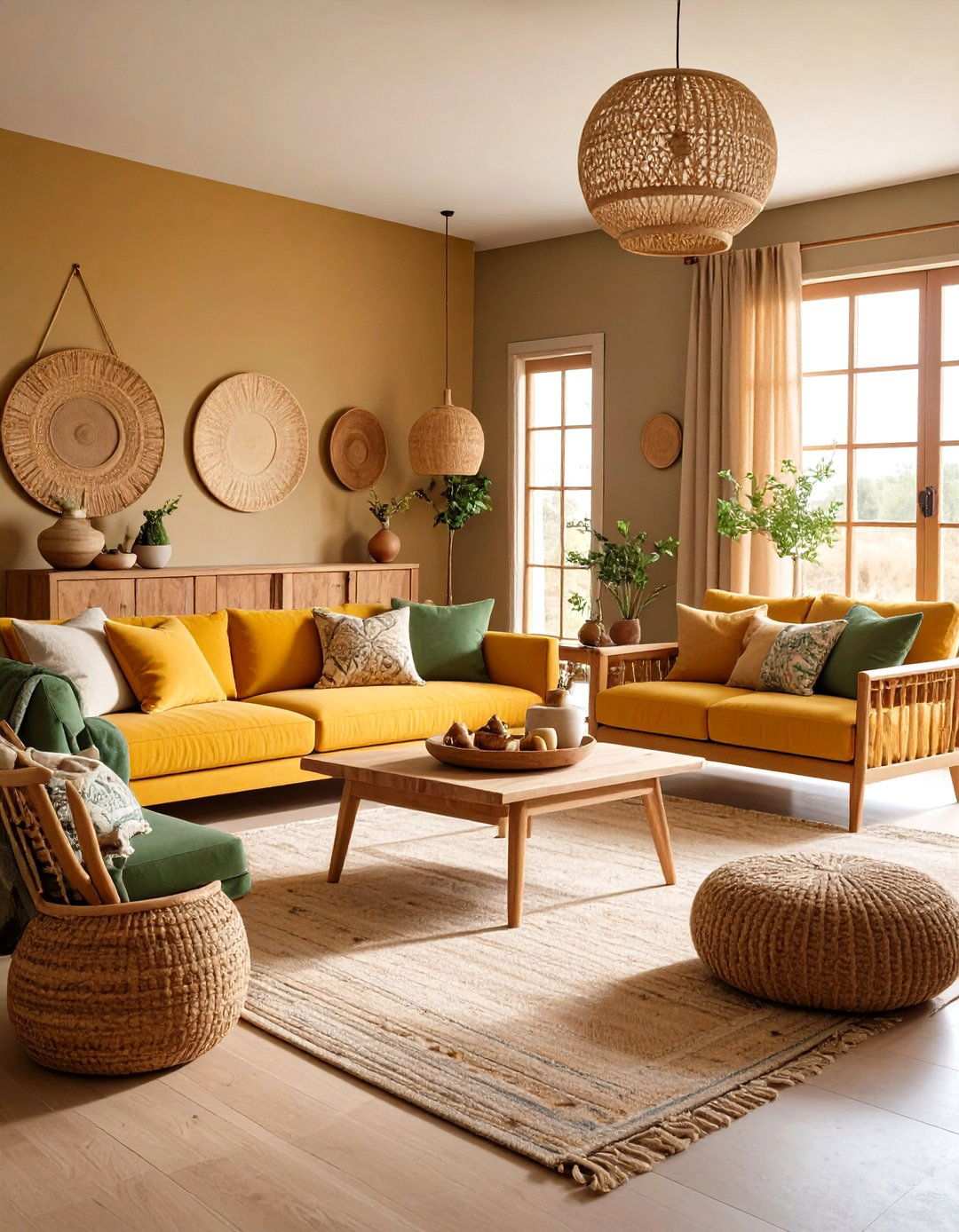
Develop a cohesive color palette that reflects the beauty of prairie landscapes, unifying interior spaces while celebrating the natural world. The base colors should be inspired by earth tones found in prairie grasses, wildflowers, and seasonal changes, including warm taupes, sage greens, golden yellows, rust oranges, and rich browns. Use lighter versions of these colors for wall treatments, allowing natural wood tones to provide contrast and visual interest. Introduce deeper accent colors through textiles, pottery, and artwork that evoke the warmth of sunset skies, the vibrancy of autumn foliage, and the rustic charm of stone formations. This palette should flow seamlessly from room to room, allowing for subtle variations that reflect each space’s function and natural light conditions. By avoiding pure whites and bright colors, the colors will enhance wood grains and stone textures throughout the home.
23. Extending Prairie Style Living to the Outdoors with Covered Patios
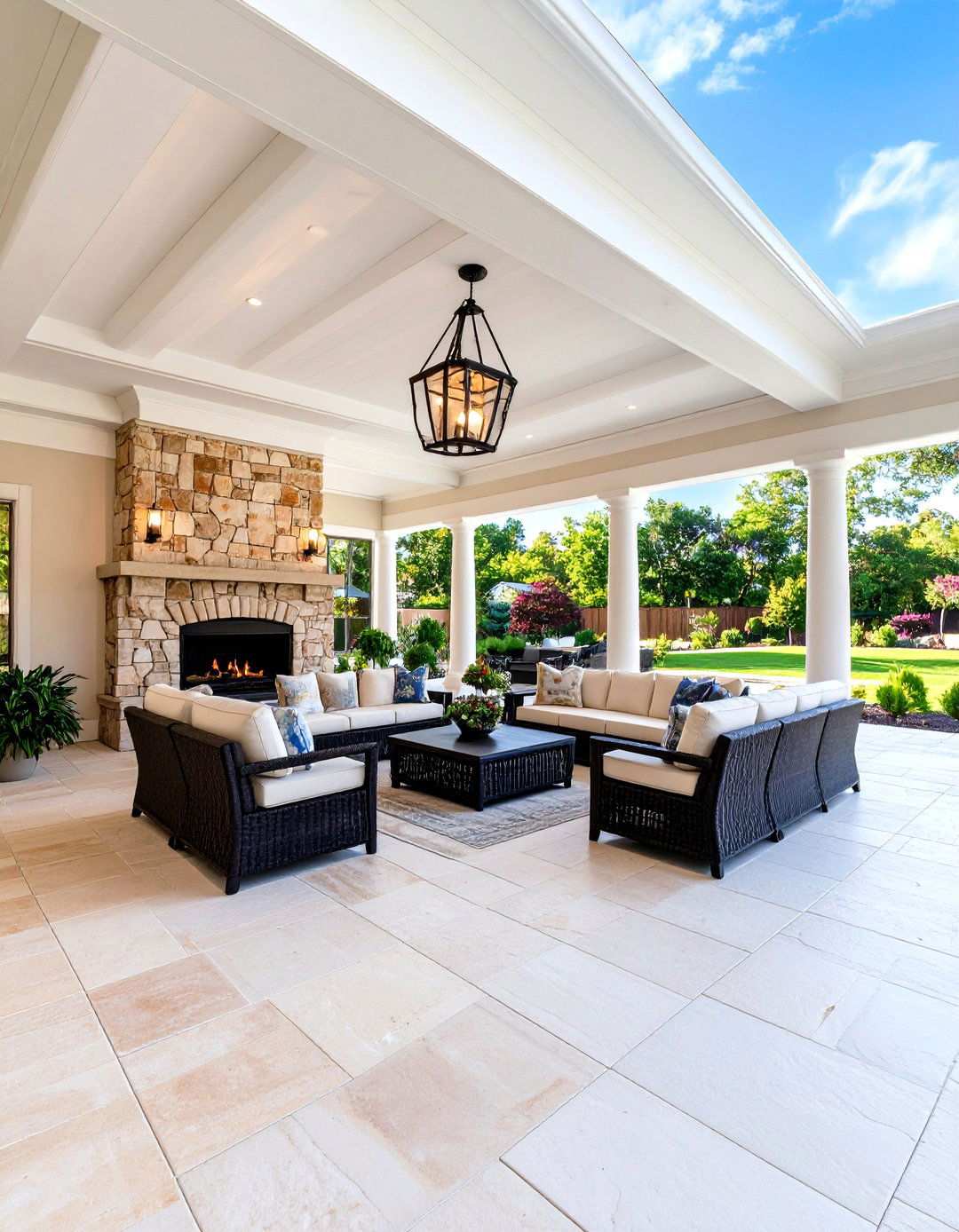
Take the essence of prairie style living outdoors by designing a covered patio featuring natural stone flooring and architectural elements that mirror interior design principles. Choose stone materials like limestone, sandstone, or slate in warm earth tones that complement the home’s foundation and exterior materials. Design substantial support columns using natural stone or timber construction that creates horizontal emphasis through extended roof lines and deep overhangs. Include built-in seating or planters that integrate with the architectural structure, creating a seamless transition between indoors and outdoors. Add an outdoor fireplace or fire pit positioned to serve both patio and interior spaces through large windows or sliding doors, fostering a sense of connection with the natural landscape year-round. The patio should feel like an extension of interior living areas through consistent materials, proportions, and design elements, providing a comfortable outdoor entertaining space that brings inhabitants closer to nature.
24. Elevating Prairie Style Aesthetics with Artisanal Lighting Fixtures
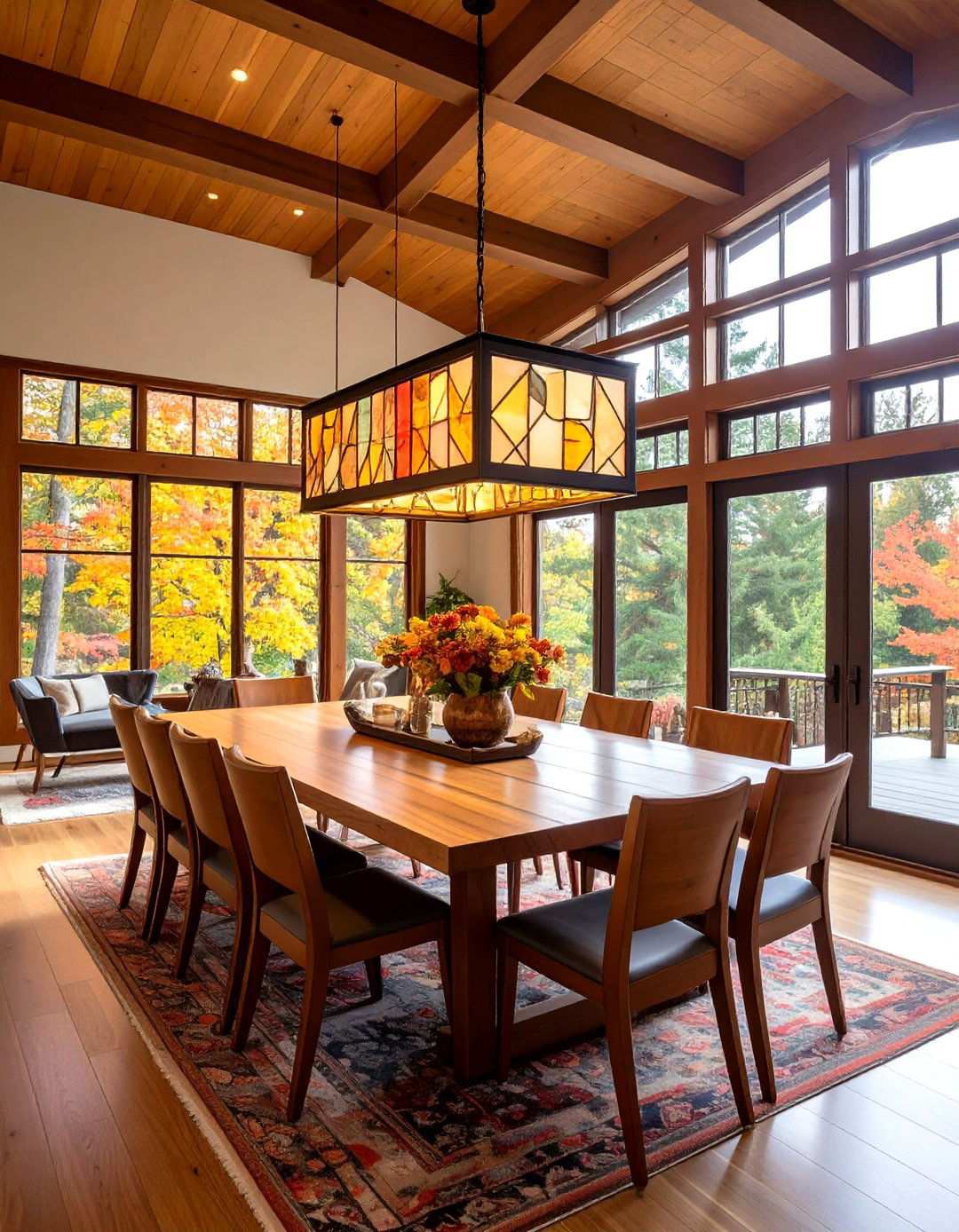
Infuse prairie-style homes with bespoke lighting fixtures that showcase geometric patterns and natural materials reminiscent of Frank Lloyd Wright’s timeless creations. Craft unique pendant lights, chandeliers, and wall sconces featuring stained glass panels in a palette of earthy hues – including rich amber, soothing greens, and warm, sun-kissed browns – arranged in intricate geometric patterns that evoke the essence of prairie plants or abstract landscape elements. Construct fixtures from natural materials such as sustainably sourced wood, bronze, or copper, ensuring substantial proportions that harmonize with the room’s architectural scale. Strategically place fixtures at varying heights to create visual interest while maintaining a horizontal emphasis through carefully curated groupings or linear configurations. The result is warm, ambient illumination that elevates the beauty of natural materials and fosters an inviting atmosphere as dusk approaches. These custom lighting elements serve as functional works of art that seamlessly integrate beauty and utility throughout the home.