1. Elevating Spaces with Geometric Patterned Ceilings
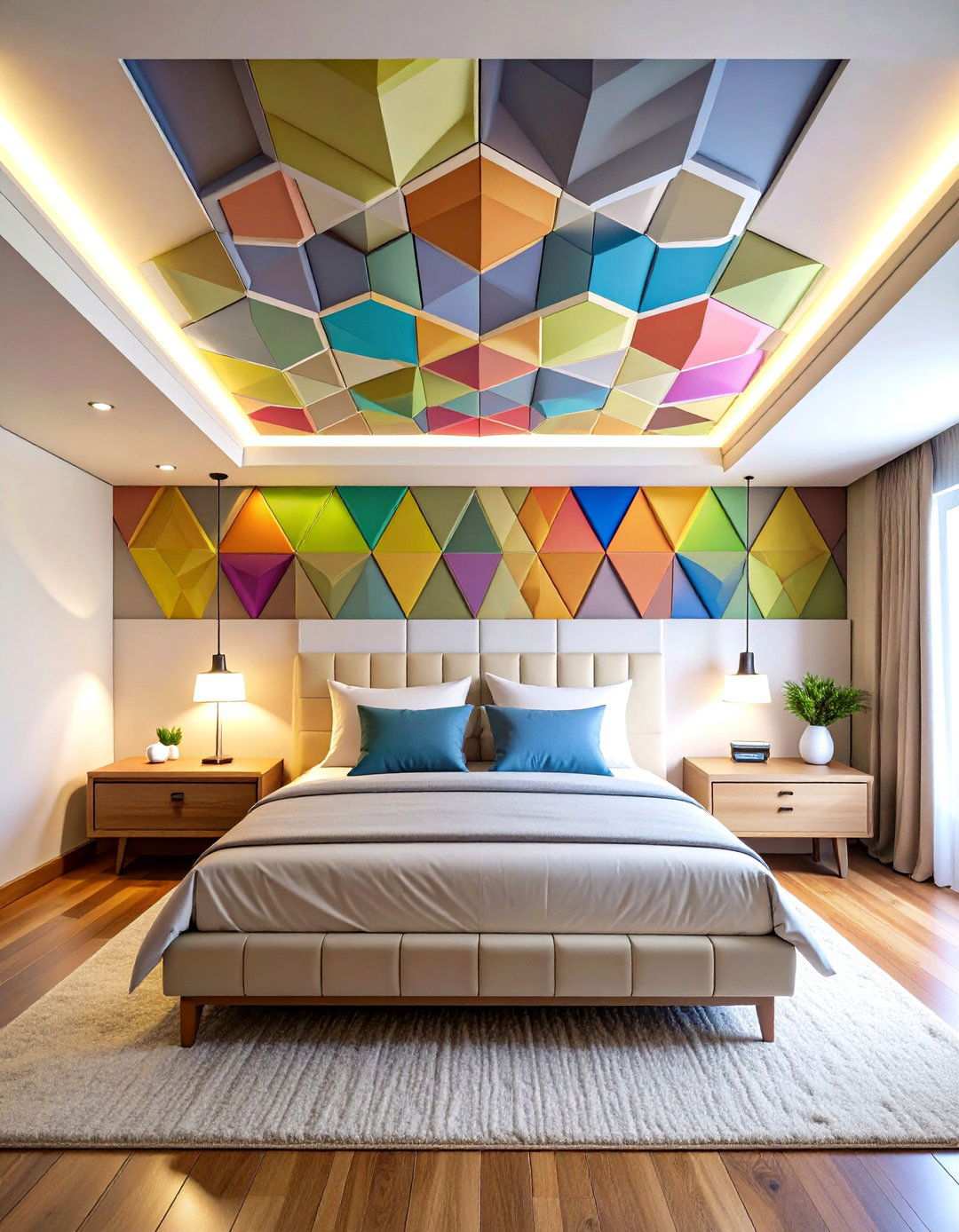
Imaginative spatial design has transformed the face of modern architecture, elevating everyday interiors into captivating environments. Advancements in Plaster of Paris technology have created a boundless realm of creative possibilities, allowing homeowners to integrate functionality with aesthetic appeal. Such designs adeptly conceal unsightly wiring, refine acoustics, and provide versatile platforms for innovative lighting solutions. The adaptability of POP material enables intricate detailing, smooth finishes, and long-lasting durability that can withstand various environmental conditions. From minimalist geometric patterns to elaborate traditional motifs, these ceiling designs cater to diverse style preferences while boosting property value. Whether you’re renovating a cozy bedroom or designing a grand living area, the right ceiling treatment can dramatically alter spatial perception and create focal points that captivate visitors while reflecting your personal design sensibilities.

As an Amazon Associate I earn from qualifying purchases.
2. Harmonious Balance in Coffered Ceilings
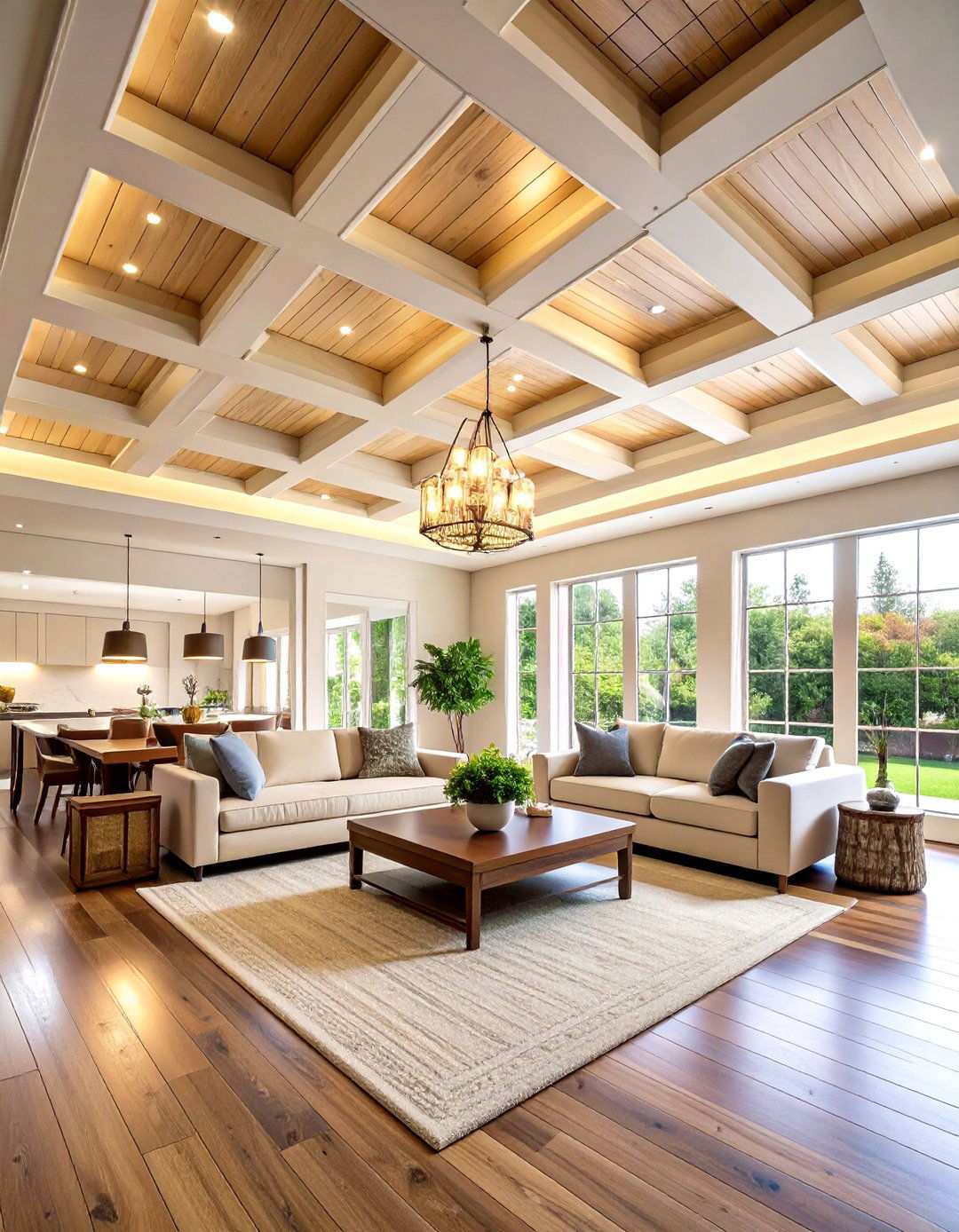
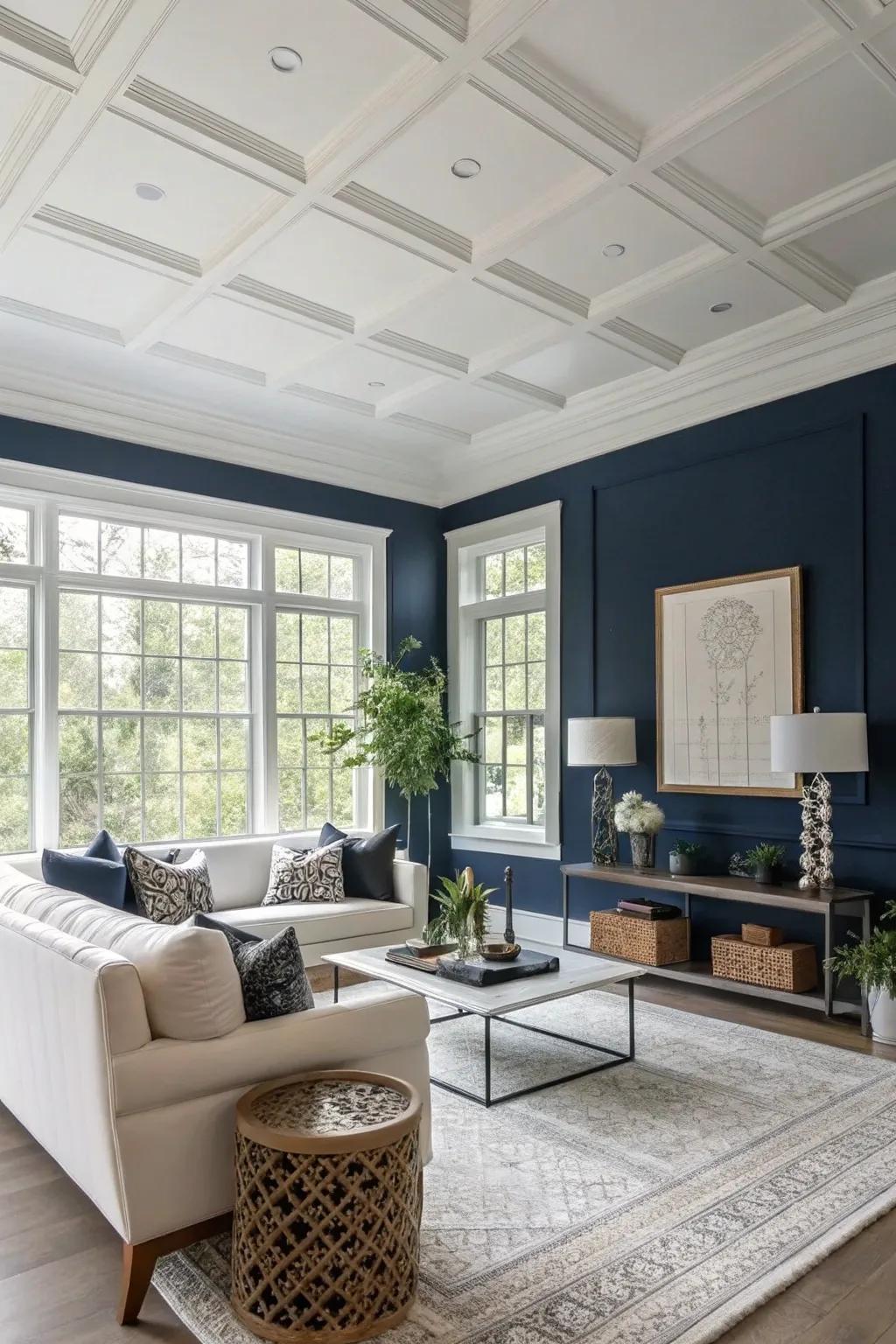
Coffered ceilings have long been a hallmark of traditional architecture, but can they also meet the demands of modern sensibilities in your living space? By introducing systematic grid patterns of recessed panels, coffered ceilings bring timeless elegance and sophistication to rooms. Each coffer creates depth and visual weight, effectively making spaces feel more intimate and refined. Modern interpretations of this design move away from heavy, ornate details toward cleaner lines and simplified proportions. The recessed panels provide an ideal opportunity for integrated lighting systems, creating ambient illumination that highlights the architectural features. This design particularly suits larger living rooms where the grid pattern helps break up expansive ceiling areas into manageable visual sections. Material choices range from classic white POP to contemporary colored finishes that complement your existing décor scheme, creating a harmonious balance throughout the space.
3. Unleashing Architectural Drama in Kitchen Ceilings
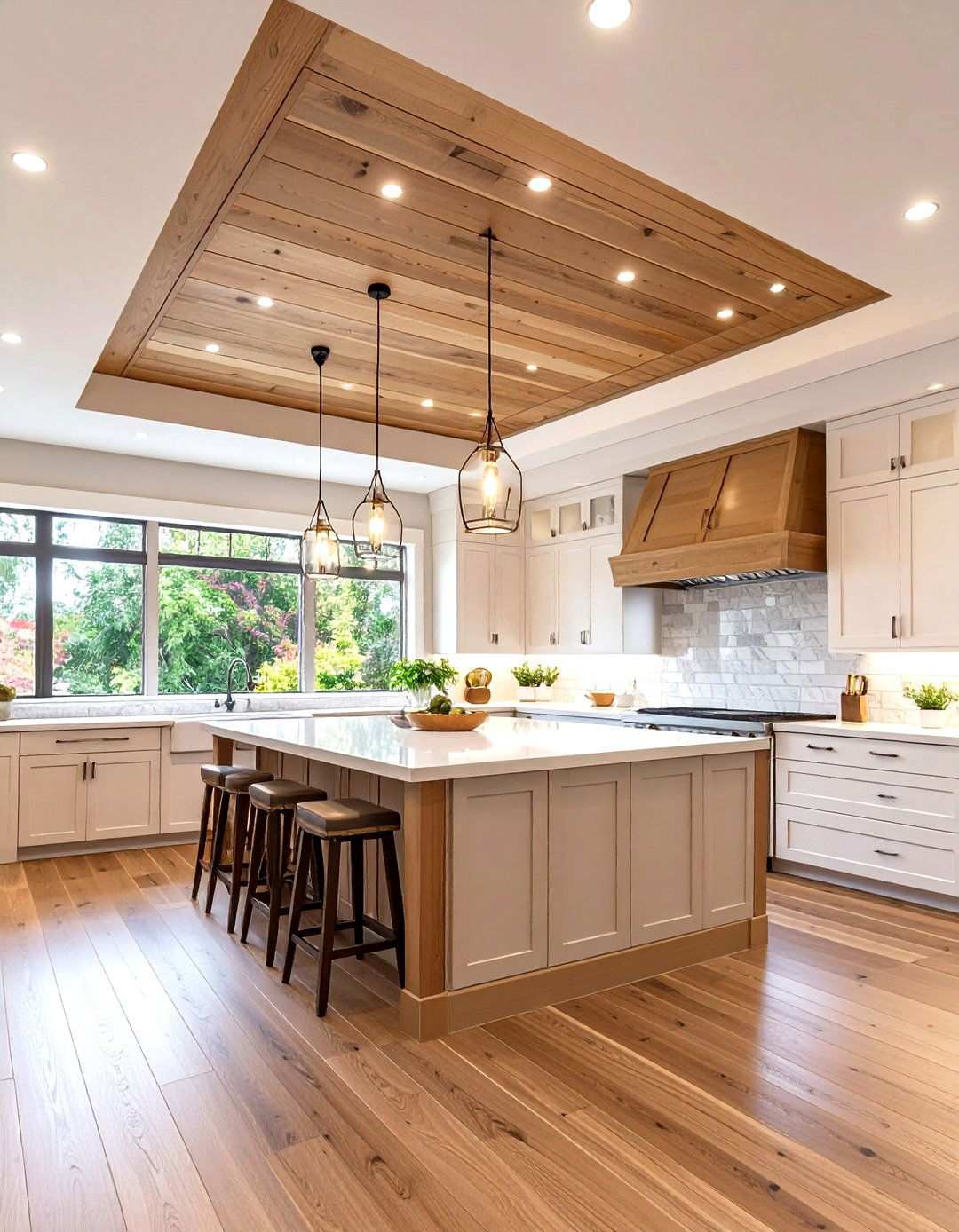
Transform your kitchen’s ambiance with tray ceiling designs that defy the ordinary. By incorporating stepped levels, tray ceilings create an optical illusion of height, while also adding an air of sophistication. The outer border, positioned lower than the central section, cleverly defines different lighting zones, which is particularly advantageous in open-plan kitchens where visual separation is key. This design enables you to establish the cooking area as a distinct space. The recessed center can be tailored to accommodate pendant lights over islands or breakfast bars, whereas the surrounding border houses recessed spotlights for focused task illumination. To ensure longevity in humid kitchen environments, moisture-resistant POP materials are used, allowing for both durability and style. The design can be tailored to suit your taste, with options to incorporate subtle color variations or maintain a monochromatic scheme.
4. Revolutionizing Dining Spaces with Curved Ceiling Designs
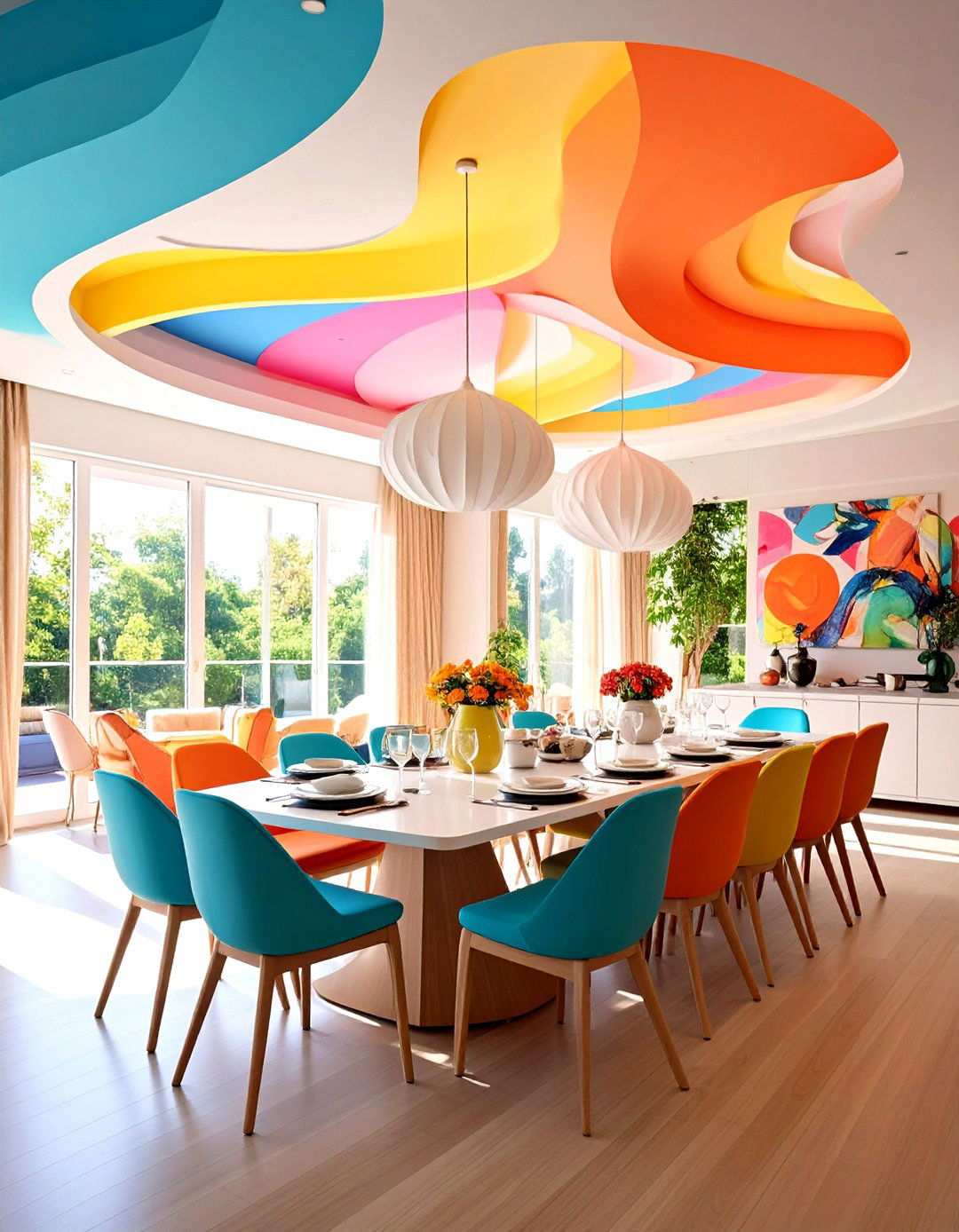
Imagine replacing rigid geometric patterns with organic shapes in your dining space. Curved ceiling designs bring a sense of fluidity and natural elegance, gently softening rectangular room boundaries. These sweeping forms create a sense of movement and relaxation, making dining experiences feel more inviting and welcoming. The curved sections can either follow the room’s perimeter or serve as focal points above dining tables, adding visual interest to the space. By leveraging advanced POP techniques, curved ceilings can now be achieved with seamless, smooth curves that were previously difficult to accomplish. The integration of lighting becomes particularly striking, as curves catch and reflect illumination in dynamic, constantly changing ways. This design approach harmoniously pairs with both traditional and contemporary furniture styles, creating a sophisticated ambiance that sparks conversation.
5. Creating Spa-Like Retreats with Plus Minus Bathroom Ceiling Designs
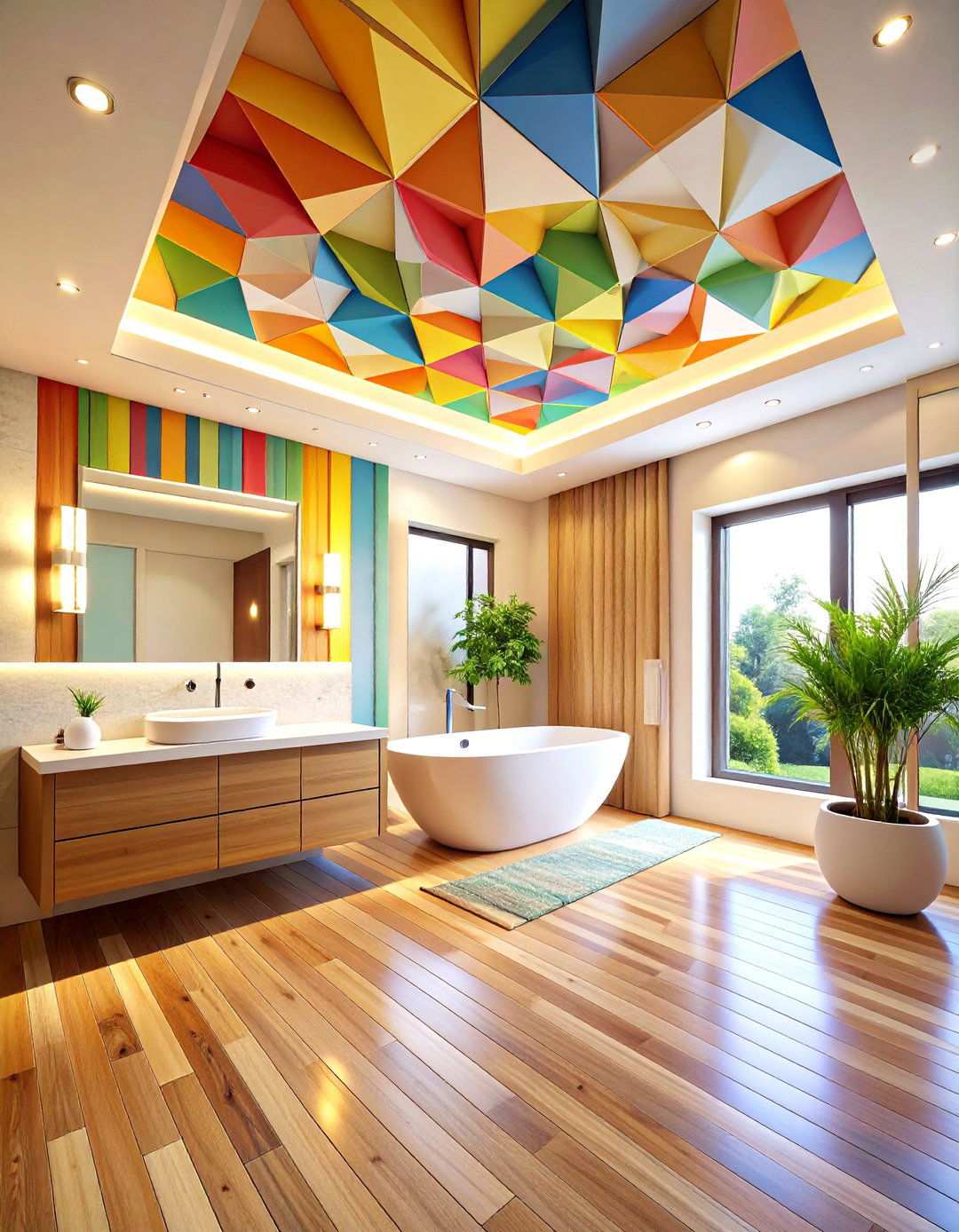
Mathematical concepts can be surprisingly effective in crafting spa-like retreats in your bathroom. Plus-minus designs utilize raised and recessed sections to create visually appealing three-dimensional patterns, adding depth and visual interest to the space. The contrasting levels not only enhance the aesthetic appeal but also provide practical benefits, such as improved acoustics and moisture management. Waterproof POP materials are used to ensure durability in high-humidity environments without compromising the design’s aesthetic appeal. The geometric precision of plus-minus patterns beautifully complements modern bathroom fixtures and clean lines. By strategically placing lighting within recessed sections, dramatic shadow play is created, accentuating the architectural features. This design is particularly well-suited for larger bathrooms, where the pattern can develop across the entire ceiling area. With proper material choices, maintenance remains straightforward, and color options remain versatile, ranging from classic whites to contemporary grays that coordinate with tile and fixture selections.
6. Elevating Workplace Ambiance with Suspended T-Bar Systems
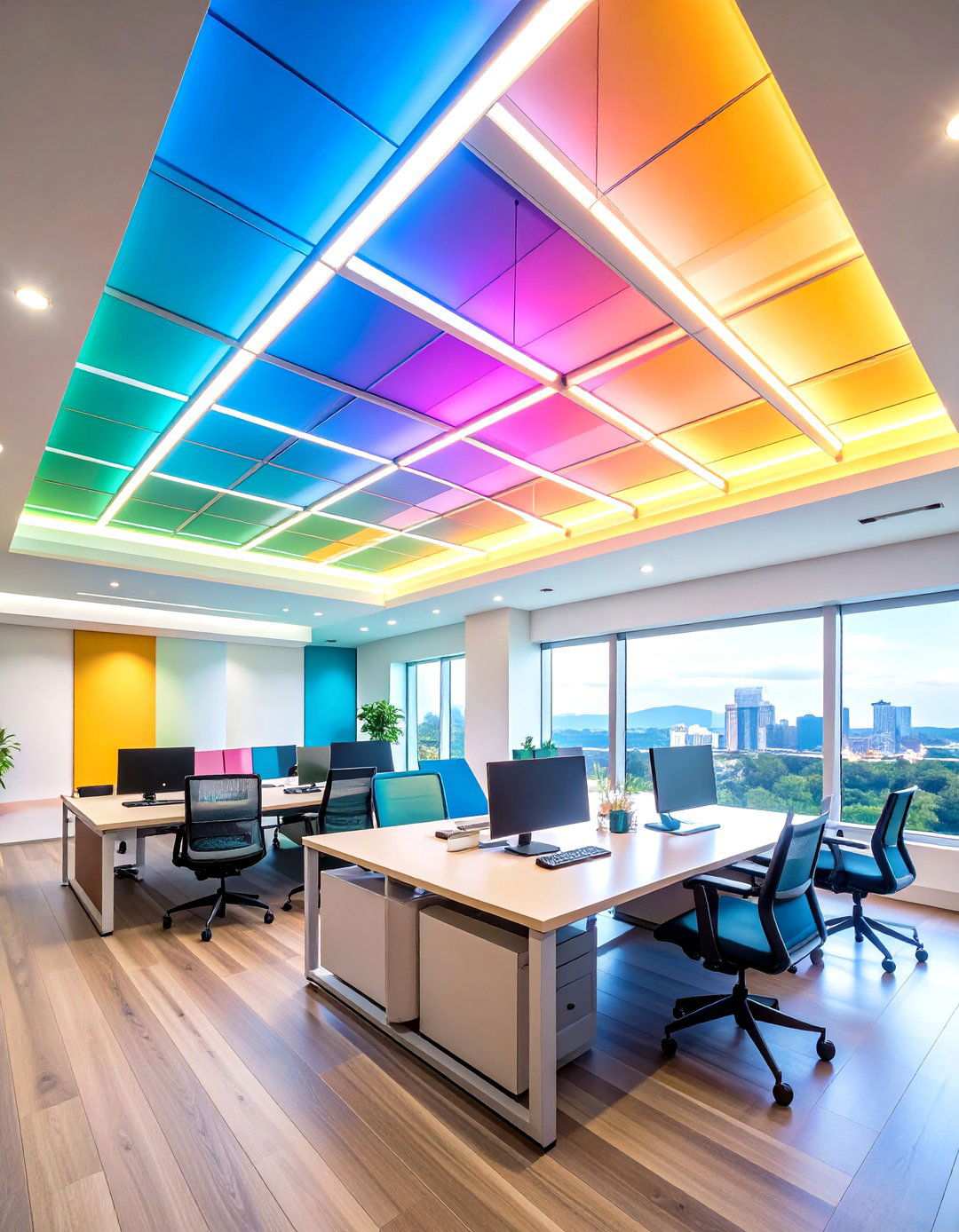
A well-designed workplace can benefit greatly from cutting-edge ceiling solutions that transcend conventional commercial offerings. Suspended T-bar systems expertly blend professionalism with ease of access to utilities above, fostering an environment that promotes productivity and focus. By adopting a linear grid pattern, these systems create a sense of order and rhythm, which can have a profound impact on employee engagement and motivation. Modern interpretations of suspended T-bar systems have moved beyond the mundane white tile, embracing customized POP panels that reflect a company’s unique branding or design ethos. The flexibility of this system allows for extensive lighting integration, including LED panels, pendant fixtures, and accent lighting, which can be strategically placed to optimize air circulation without compromising visual appeal. This approach is particularly well-suited to home offices where a professional appearance is paramount, yet residential comfort remains a priority. One of the key benefits of suspended T-bar systems is their installation flexibility, which enables future modifications without the need for major reconstruction. By adopting a systematic approach, businesses can create cohesive environments that seamlessly blend commercial functionality with residential aesthetics.
7. Architectural Integration: Cove Lighting Designs for Enhanced Ambiance
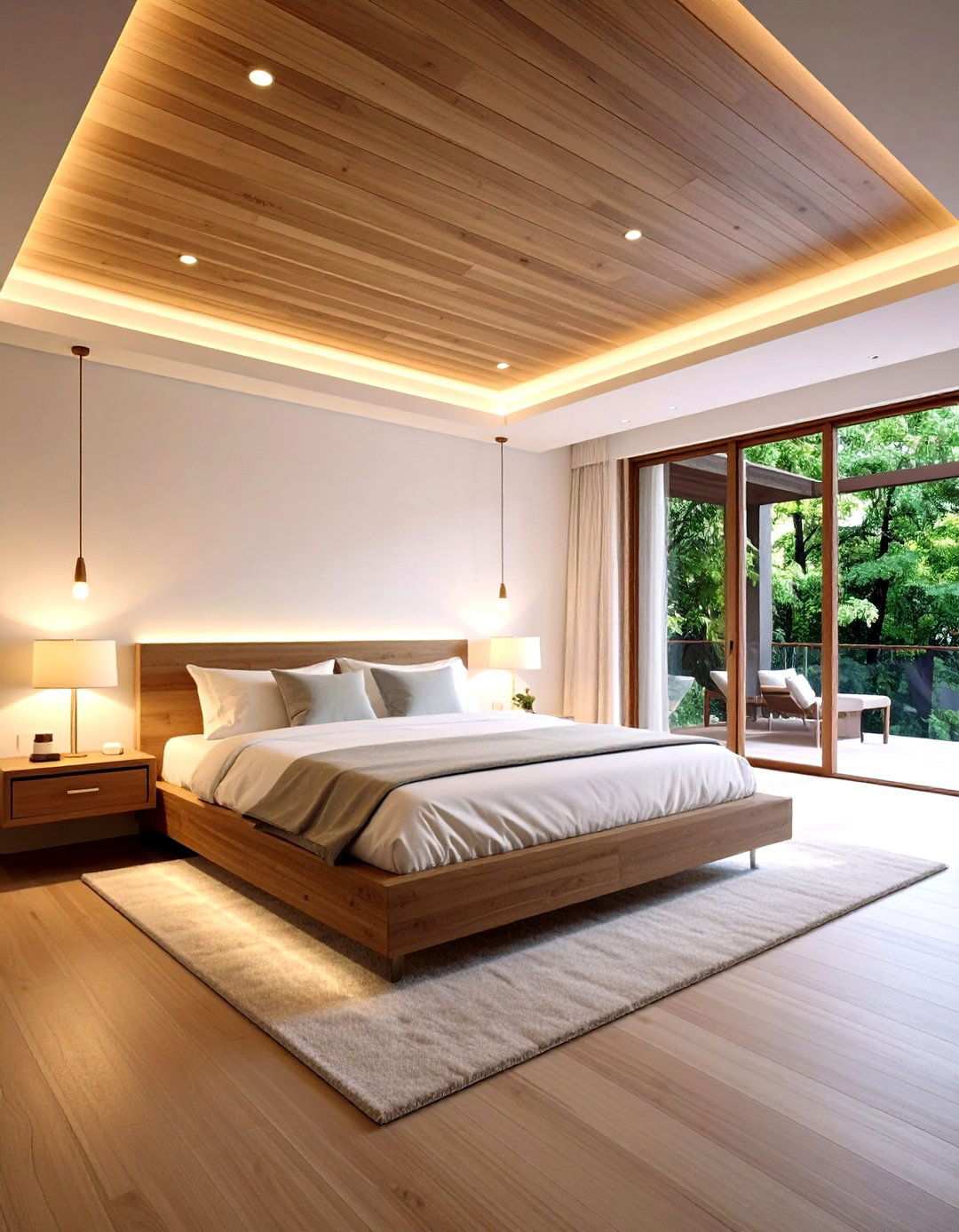
Why should lighting fixtures dominate your ceiling when illumination can become an integral part of the room’s design? Cove lighting designs cleverly conceal light sources within recessed channels around the room’s perimeter, creating a soft, even light distribution that eliminates harsh shadows and glare. The hidden nature of cove systems maintains clean ceiling surfaces while providing adjustable ambiance for different activities and moods. By integrating LED strips, cove lighting designs offer color-changing capabilities and energy efficiency that traditional fixtures cannot match. This design approach is particularly effective in bedrooms, where multiple lighting moods can enhance relaxation and functionality. While the installation process requires skilled craftsmanship to create precise channels, the end result is a professional-looking space that significantly enhances resale value while improving daily living experiences. The architectural integration of lighting means it becomes an integral part of the room’s structure rather than an added element, creating a seamless and harmonious living environment.
8. Waveform Kitchen Ceiling Design Inspiration
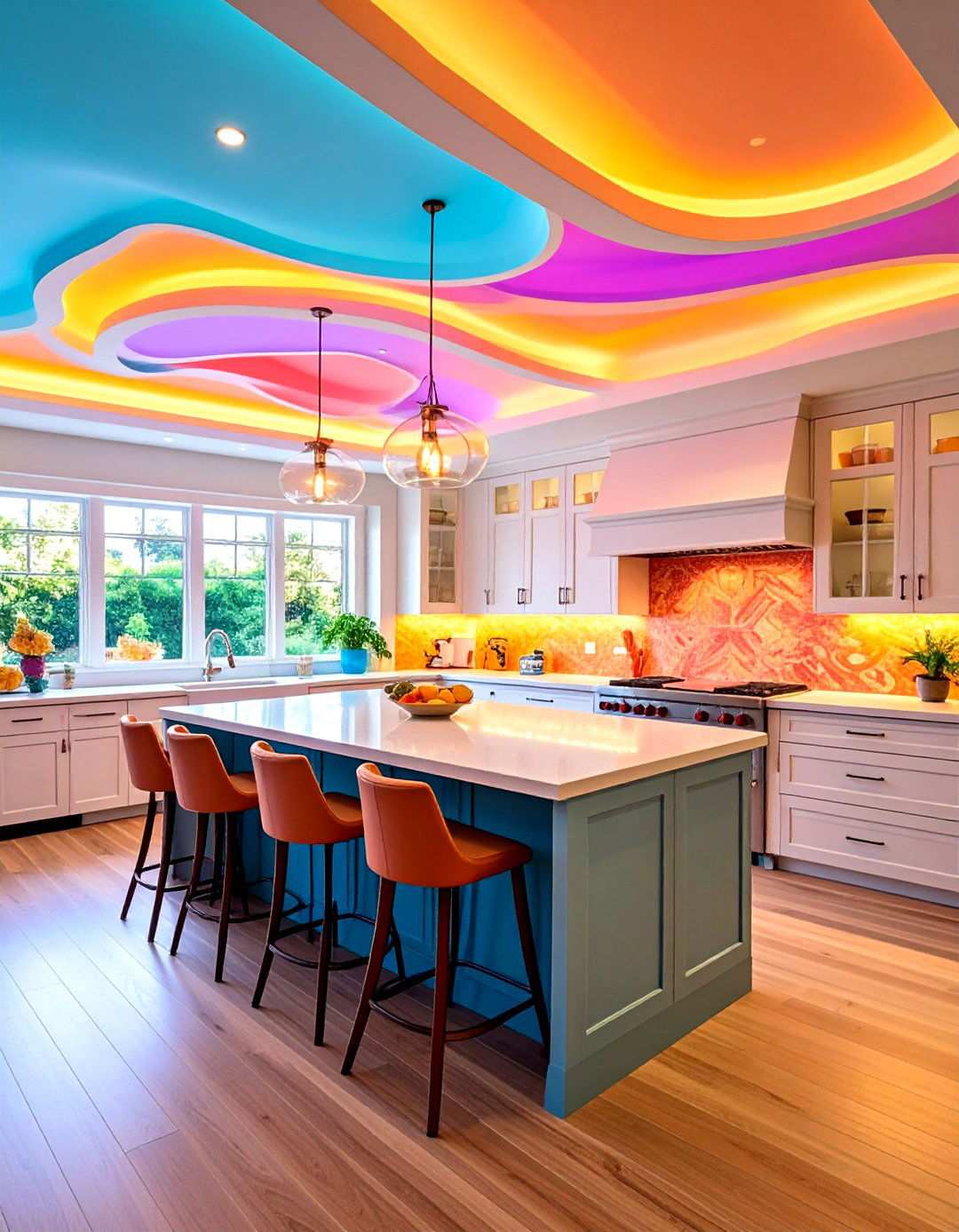
Envision a kitchen ceiling that echoes the soothing movement of waves against the shore. Textured wave patterns inject an organic vibe into the space, subtly softening the kitchen’s typical rigid lines. This captivating design element not only adds visual appeal but also enhances the room’s functionality. For instance, the undulating surfaces can boost acoustics and create unique opportunities for lighting, making them a versatile choice for homeowners seeking a distinctive look. With advanced POP techniques, the wave pattern can be crafted to resemble naturally formed curves, rather than manufactured ones. To maximize its impact, the wave design can be strategically integrated with kitchen islands or perimeter walls to define separate cooking zones. By incorporating LED strip lighting within the wave troughs, the kitchen ceiling becomes a dynamic focal point that changes its ambiance in response to the time of day. This design is particularly suited for homeowners who crave one-of-a-kind, conversation-starting elements in their kitchens. The organic wave pattern offers a refreshing contrast to the straight lines of cabinets and appliances. However, it’s essential to select materials that can withstand the demands of a kitchen environment while still maintaining their appearance.
9. Suspended Panel Living Room Ceiling Design
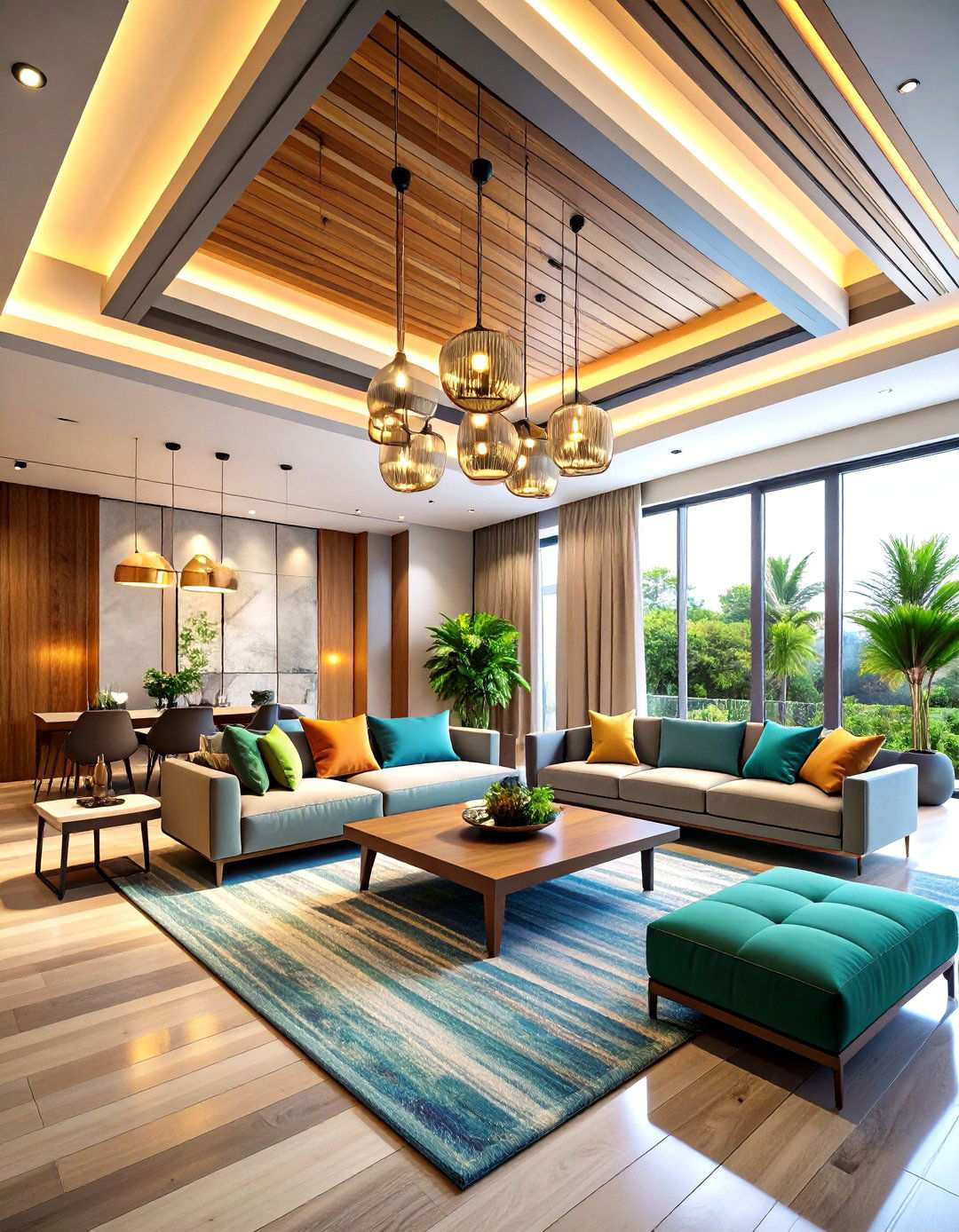
Imagine a ceiling where elements seem to float effortlessly, adding a touch of architectural sophistication to the space. Floating panel designs achieve this illusion by creating the appearance of suspended elements hovering above the main ceiling surface. By strategically placing lighting behind the panels, the floating effect is amplified, while providing a warm and inviting ambiance throughout the room. This design approach adds multiple layers, which enhance the room’s depth and visual complexity without overwhelming its proportions. What’s more, the arrangement of panels can be tailored to suit various styles, ranging from geometric patterns to organic compositions. This design trend is particularly well-suited for modern and contemporary interiors, where clean lines and innovative details define the aesthetic. Nevertheless, precise engineering is required to ensure the panels remain securely mounted while maintaining their floating appearance. To achieve a cohesive look, it’s essential to coordinate the color of the panels with the main ceiling, creating a harmonious visual flow. The resulting dramatic effect becomes an instant focal point that guests will notice and appreciate.
10. Elevating Dining Room Ceiling Design
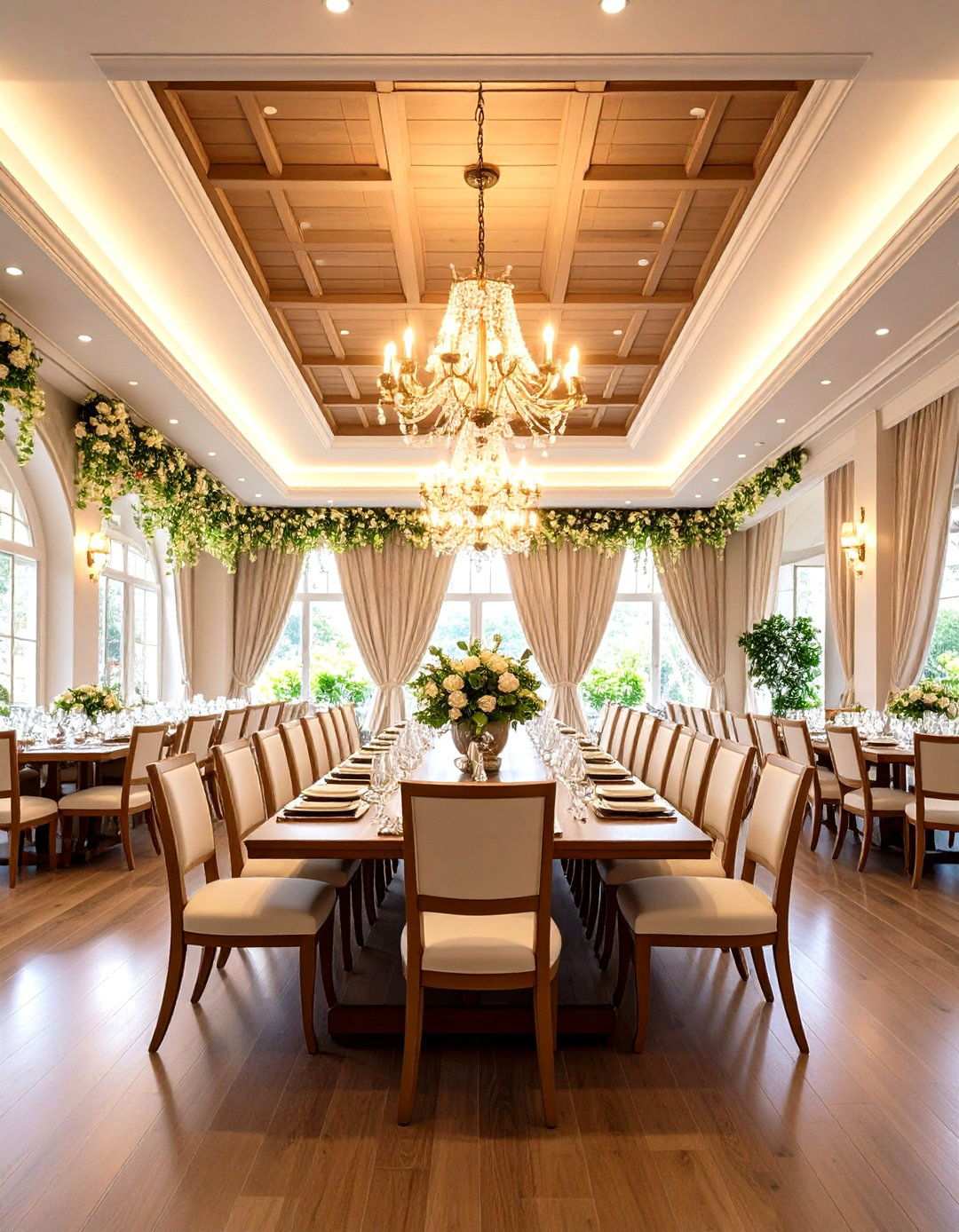
A simple yet striking perimeter detail can elevate an ordinary ceiling into a stunning architectural feature, capable of defining a dining space while adding an air of sophistication. By incorporating a raised or recessed perimeter band, individuals can create natural boundaries for strategic lighting placement and nuanced color variations. This particular approach is well-suited to formal dining rooms, where architectural details are especially valued during special occasions. Moreover, the border’s width and profile can be customized to complement the room’s proportions and existing trim details, ultimately enhancing the overall aesthetic. Installation complexity is manageable, but the resulting visual impact is substantial, making the investment worthwhile. Furthermore, seamless lighting integration within borders creates dramatic accent illumination that draws attention to the architectural features. Color options range from matching the main ceiling tone to creating a subtle contrast that adds depth, effectively bridging traditional and contemporary styles.
11. Bringing the Outdoors to Bedroom Ceiling Design
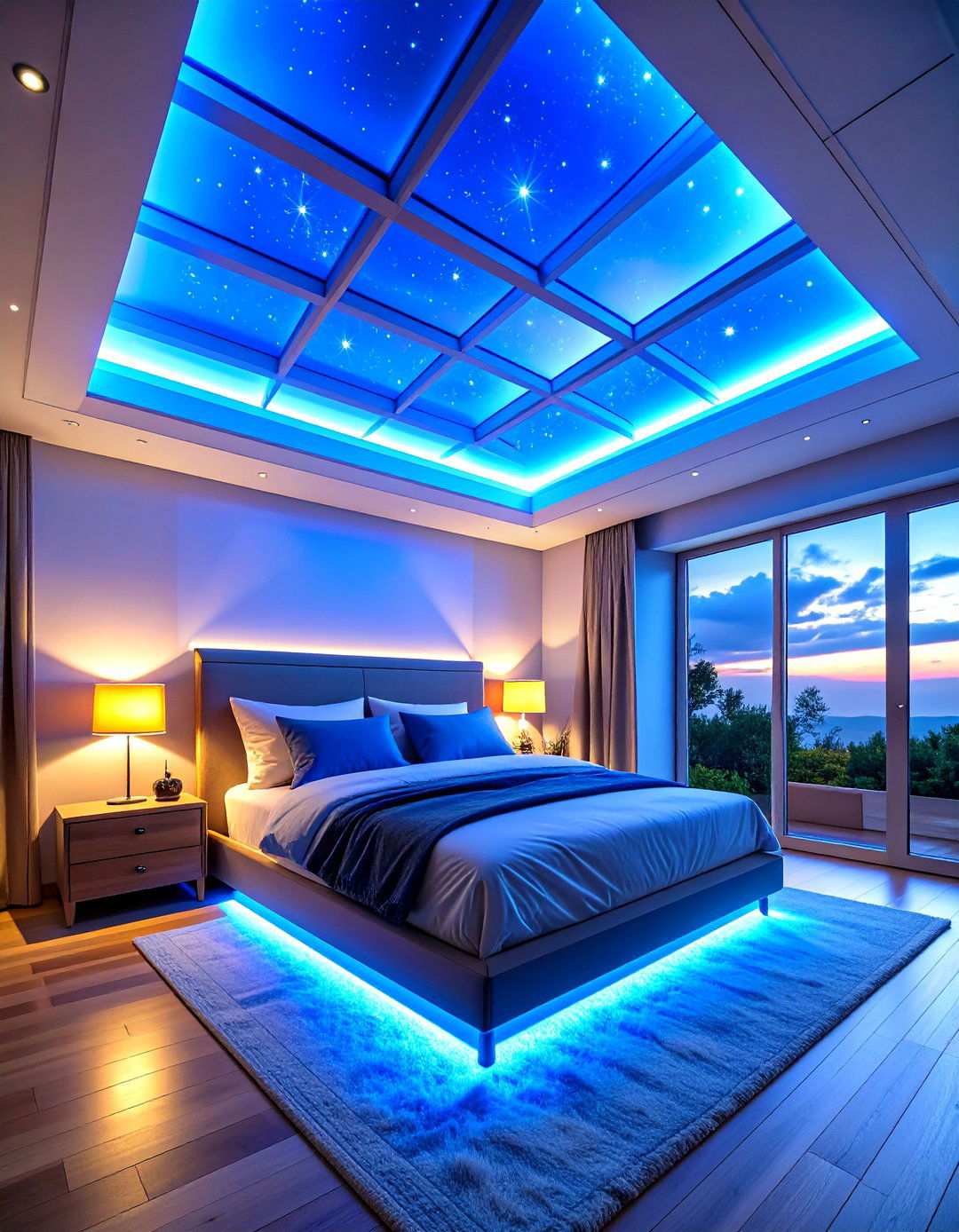
Imagine being able to bring a sense of the outdoors into windowless bedrooms, where the absence of natural light can often lead to a sense of confinement. Skylight simulation designs, utilizing backlit panels and blue-tinted lighting, can create a convincing sky effect that not only improves one’s mood but also perceived spaciousness. The innovative use of LED technology allows for programmable color changes that mimic natural daylight cycles throughout the day, lending an added layer of realism to the simulation. This approach is particularly effective in basement bedrooms or interior rooms where traditional skylights are not feasible, and the result is a unique architectural interest that addresses common problems with interior spaces. By carefully planning electrical installations, individuals can achieve a dramatic improvement in room atmosphere, justifying the additional complexity and cost involved in creating convincing simulations.
12. Elevating Industrial Aesthetic Ceilings
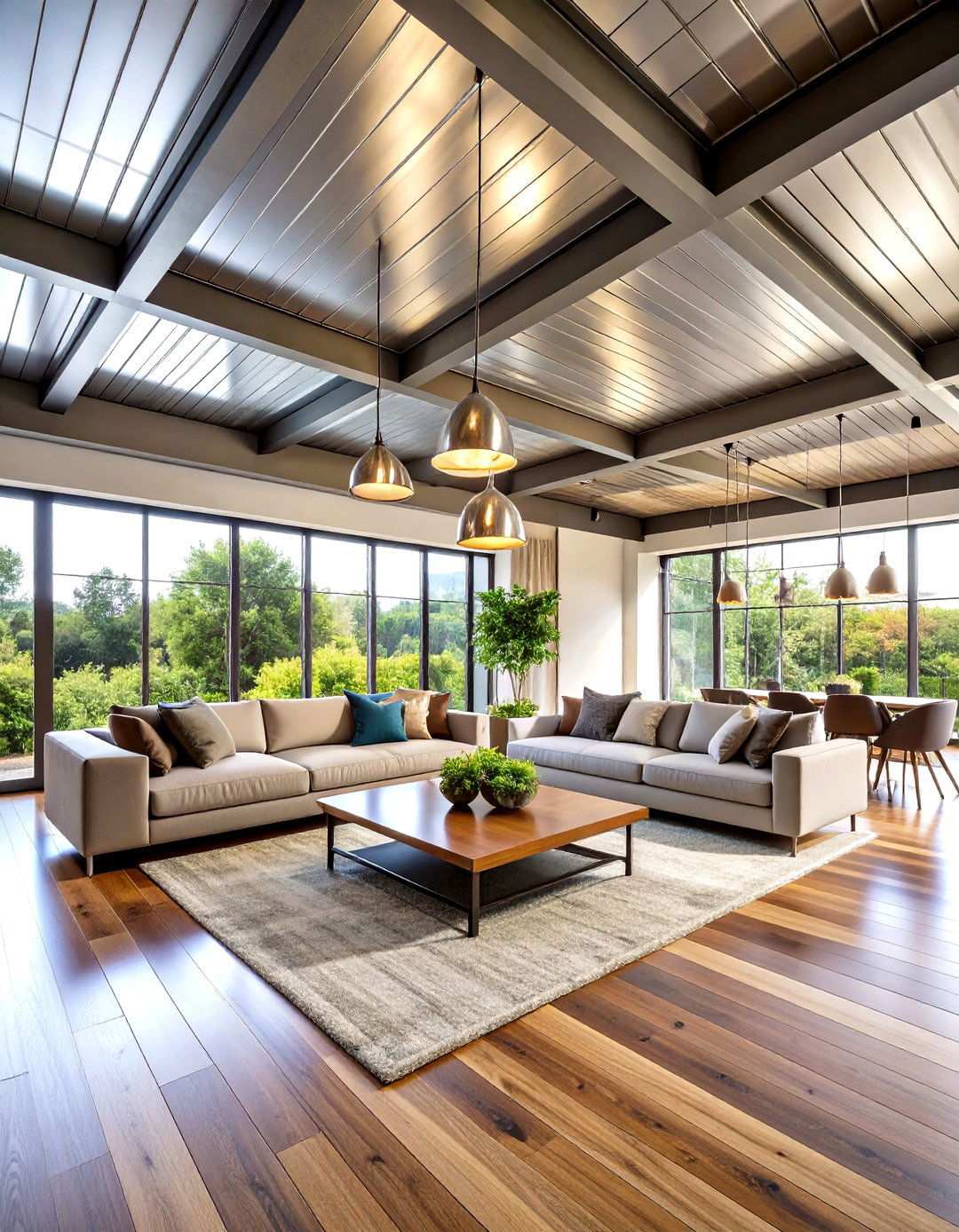
By skillfully incorporating raw industrial materials, homeowners can create sophisticated residential ceiling treatments that blend contemporary edge with warm comfort. The reflective surfaces of metal accent panels not only enhance natural and artificial lighting but also introduce a visually striking texture that contrasts beautifully with softer furnishings. To add an extra layer of style, brushed aluminum, copper, or steel panels can be seamlessly integrated with POP elements, resulting in hybrid designs that exude urban loft chic and modern industrial sophistication. This approach particularly resonates with those who appreciate the aesthetic of exposed brick and concrete, as it offers a unique opportunity to inject industrial flair into their interior spaces. The durability and low-maintenance requirements of metal components make them an attractive choice for busy homeowners, while the endless design possibilities ensure that each ceiling treatment is a true reflection of their personal style.
13. Harmonizing Sound and Style in Home Theaters
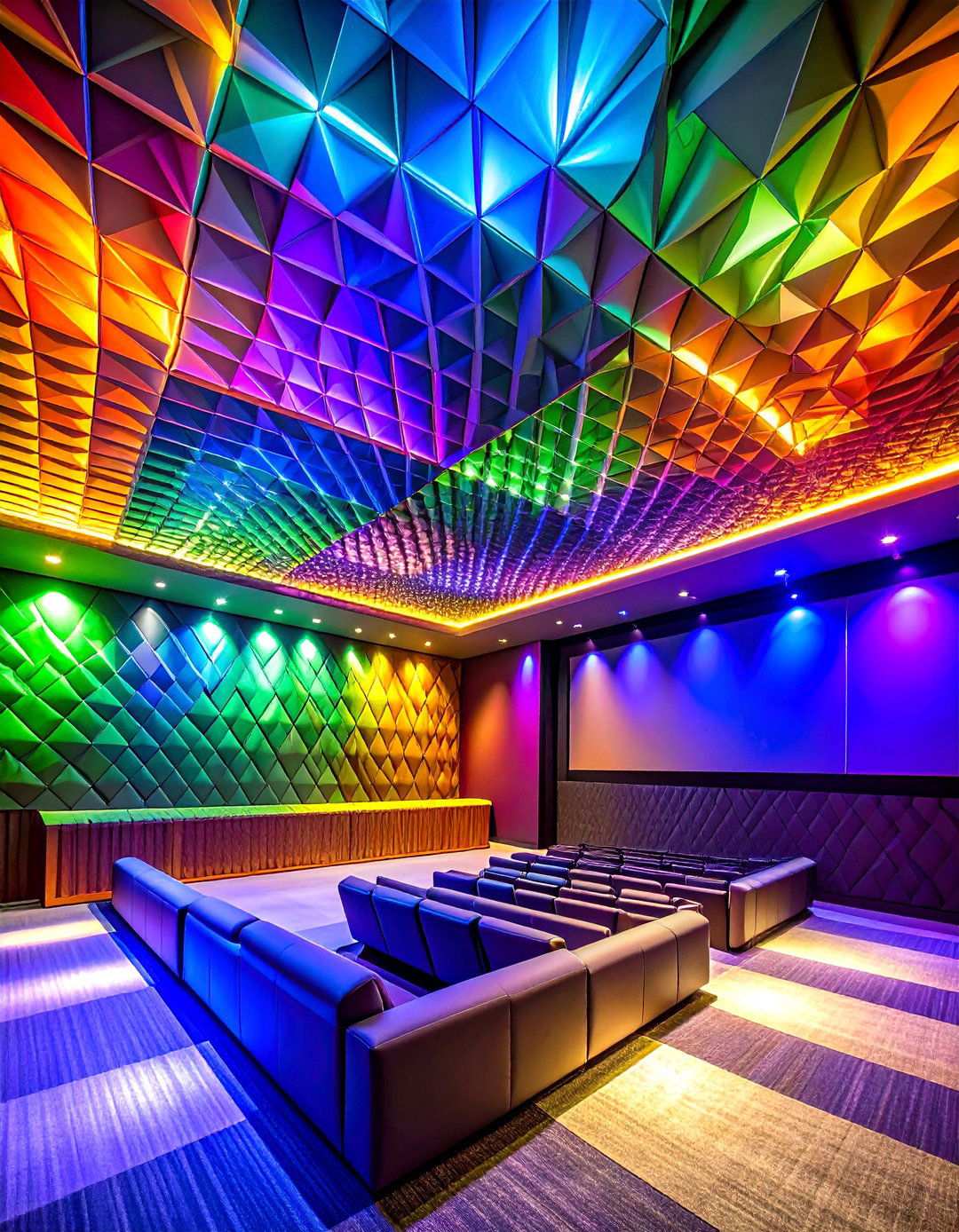
Can ceiling designs play a pivotal role in enhancing both sound quality and visual aesthetics in entertainment spaces? By employing strategic surface variations, acoustic ceiling patterns can transform a room into an immersive audio haven, complete with distinctive architectural features that elevate the overall viewing experience. The geometric arrangements of these patterns help distribute sound evenly, expertly minimizing unwanted echoes and reverberations that can detract from the cinematic experience. This approach is particularly beneficial for home theaters, where optimal acoustics can significantly enhance the overall viewing experience. To strike the perfect balance between form and function, POP materials can be carefully shaped to maximize acoustic benefits while maintaining a visually appealing profile. The density and depth of the pattern can be tailored to suit the room’s dimensions and audio equipment specifications, ensuring a truly bespoke solution. By integrating lighting that complements the entertainment atmosphere, homeowners can create a space that is both functional and visually stunning.
14. Turning the Ceiling into an Artistic Masterpiece
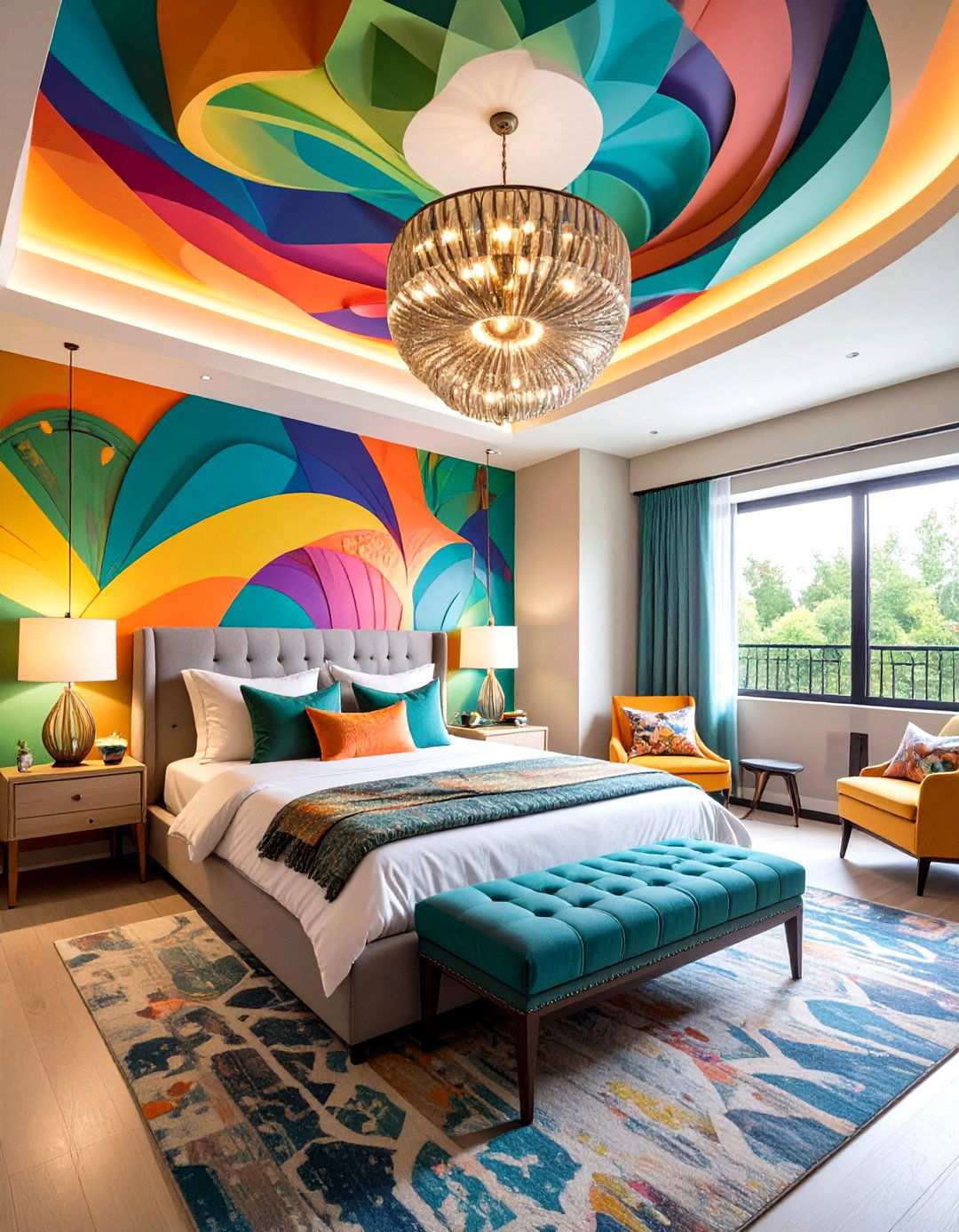
Bedrooms can be elevated to new heights with artistic mural ceiling designs, showcasing an individual’s unique personality and style. By extending creative expression beyond traditional walls, ceilings become the focal point of a room, inviting intimate experiences during relaxation and sleep preparation. With advanced Point of Purchase (POP) techniques, artists can create textured surfaces that elevate painted or applied elements, making for a truly immersive experience. This approach is particularly well-suited for master bedrooms, where personal expression takes precedence over broad appeal. Mural themes can range from abstract compositions to realistic landscapes, limited only by the artist’s imagination. When it comes to lighting, integration must strike a balance between complementing artistic elements and avoiding glare or unwanted reflections. Homeowners can opt for custom works from professional artists or choose high-quality reproductions for a more budget-friendly alternative. As a permanent fixture, it’s essential to plan carefully to ensure long-term satisfaction with artistic choices, resulting in truly unique spaces that cannot be replicated elsewhere.
15. Bringing Smart Technology to the Forefront
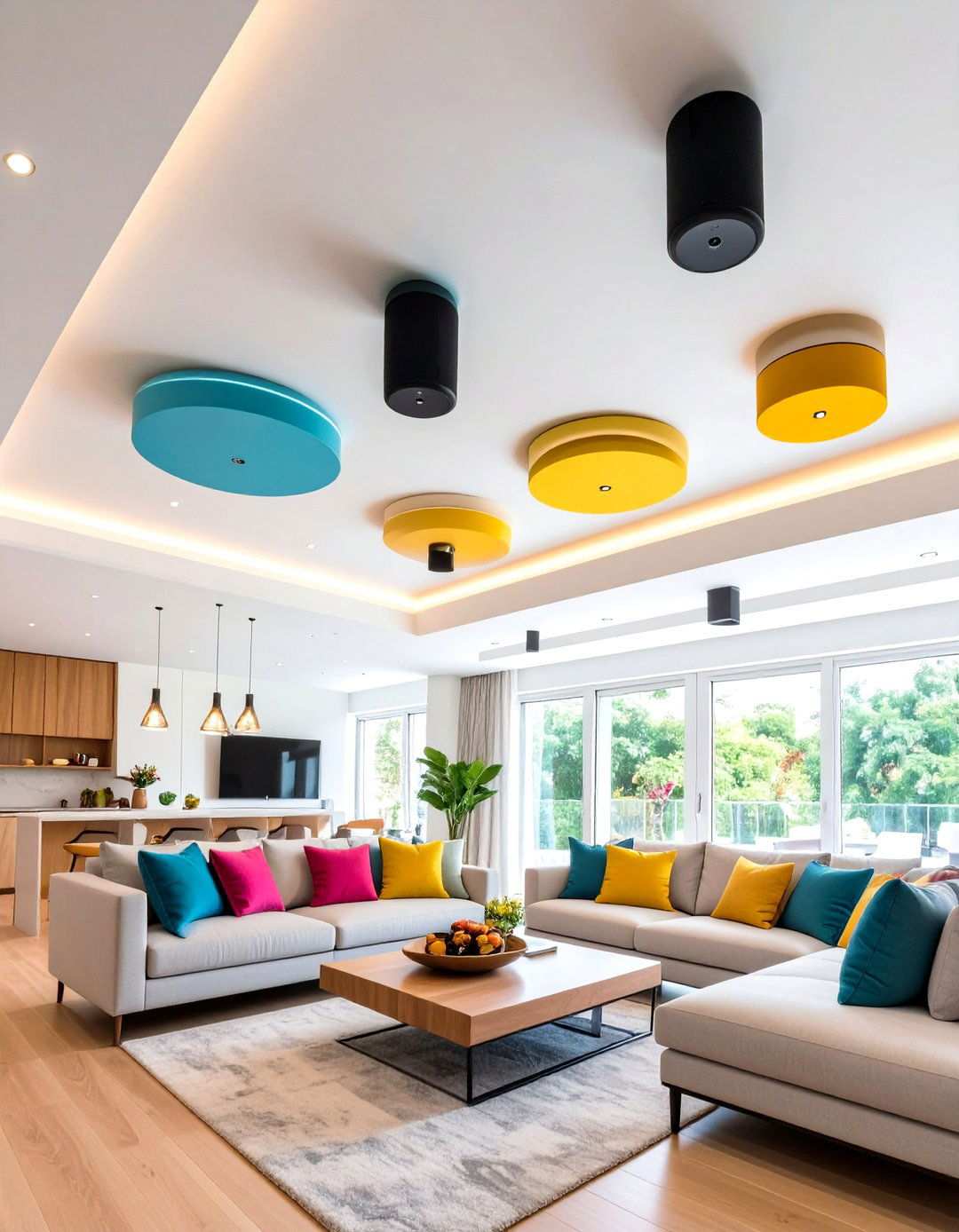
Modern ceilings can seamlessly incorporate advanced technology while maintaining a clean and sophisticated aesthetic. By concealing speakers, sensors, and control systems within POP elements, smart integration designs elevate functionality without compromising visual design integrity. Hidden technology paves the way for enhanced functionality, from whole-house audio systems with superior sound quality to motion sensors and automated lighting systems that respond to occupancy patterns for energy efficiency and convenience. Climate control integration allows for localized temperature management through ceiling-mounted systems, providing a high level of comfort and control. This approach resonates particularly with tech-savvy homeowners who value comprehensive smart home integration. Installation requires coordination between technology specialists and interior design professionals, but the end result is well worth the effort – an investment that significantly enhances daily living experiences and property values. What’s more, accessible design elements ensure that future technology upgrades can be accommodated without major reconstruction, allowing homeowners to stay at the forefront of innovation.
16. Harnessing the Power of Simple Geometry in Contemporary Living Room Design
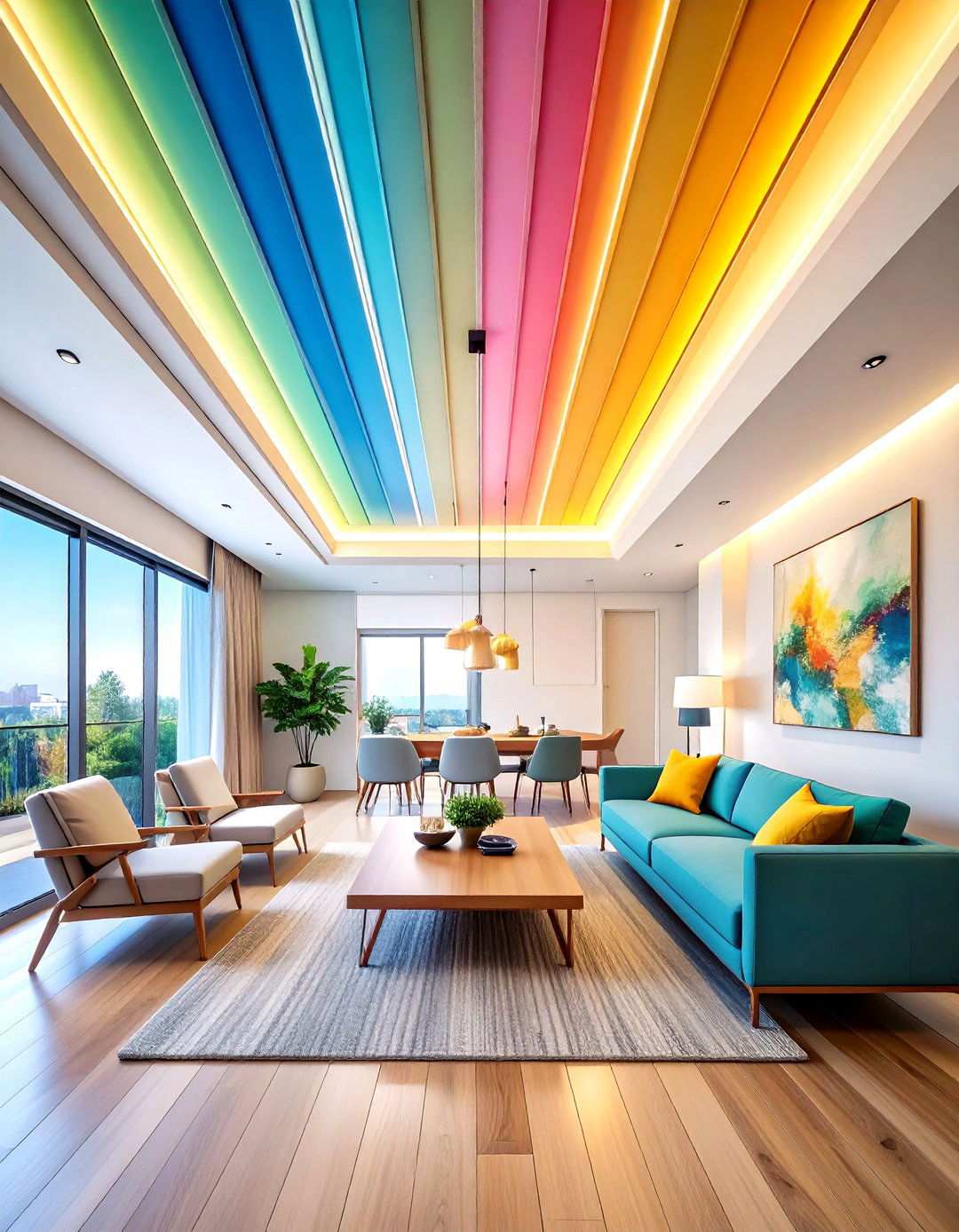
A minimalist approach to interior design leverages the potency of simple linear elements to create a sense of refined order. By strategically placing raised or recessed linear elements, designers can establish a clean and sophisticated visual language that harmoniously coexists with modern furniture and architectural features. This aesthetic solution is particularly well-suited for open-plan living areas where ceiling design plays a pivotal role in defining functional zones. The linear elements can be aligned with room proportions or deliberately used to create contrasting geometric relationships, depending on the design objectives. Furthermore, integrating lighting into linear channels offers the flexibility to provide both ambient and accent illumination options. Installation complexity remains moderate, but the visual impact is substantial, justifying the investment involved. To maintain a cohesive look, designers often opt for monochromatic color schemes or introduce subtle contrast to add depth without overwhelming the space. This enduring design approach ensures long-term satisfaction, as it creates calm and organized environments that enhance daily living experiences without succumbing to fleeting design trends.
17. Infusing Historical Elegance into Modern Master Bedroom Design
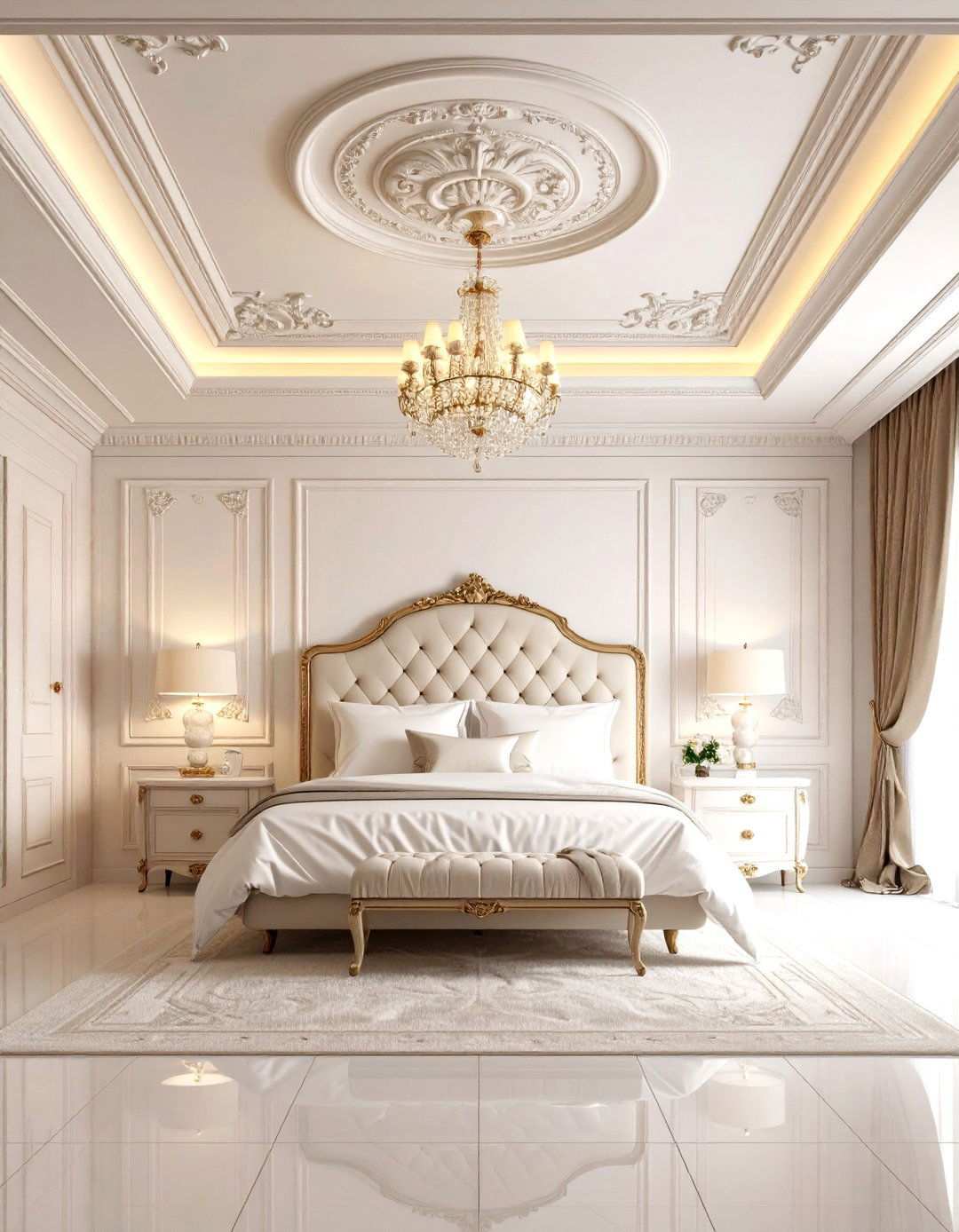
Classical design elements can indeed elevate the comfort and allure of master bedroom retreats by introducing a sense of historical sophistication. Traditional ornate patterns, characterized by carefully crafted decorative details and refined proportions, can imbue intimate bedroom environments with a sense of visual richness. By combining modern materials and construction techniques with traditional aesthetics, homeowners can now access and appreciate classical design traditions more easily and affordably than ever before. This design approach is particularly appealing to homeowners who value period architecture or appreciate the elegance of classical design. The ornate details provide an ideal backdrop for elegant lighting fixtures that complement the decorative scheme, while color options range from traditional whites and creams to contemporary interpretations that bridge historical and modern aesthetics. To execute this design vision, skilled craftsmen with expertise in traditional proportions and detailing techniques are essential. The resulting environment is not only a sophisticated retreat but also a significant contributor to property values, providing a lasting testament to the enduring appeal of timeless design.
18. Elevating Kitchen Dynamics with Suspended Circles
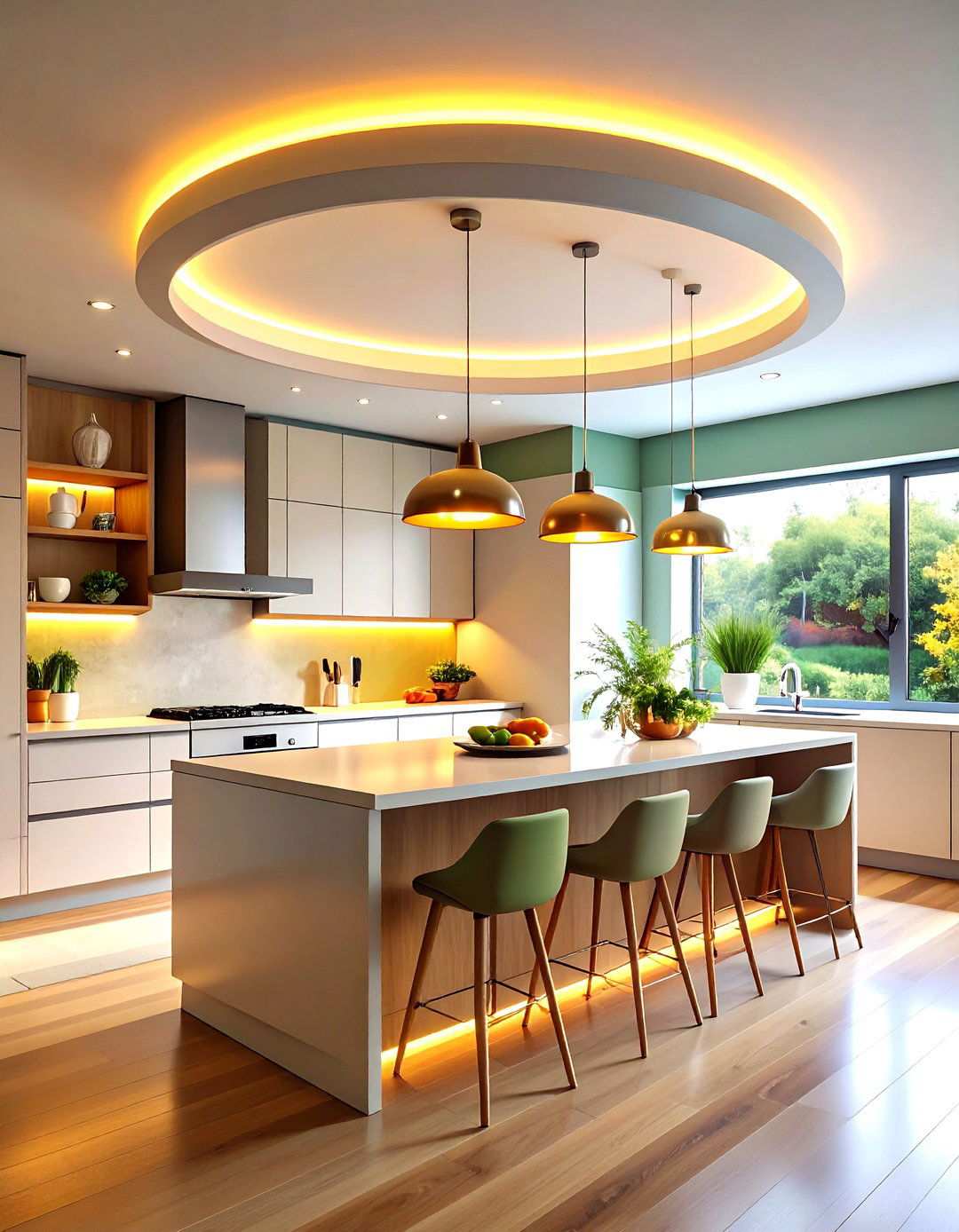
A suspended circle kitchen island ceiling design masterfully balances contrasts, combining the organic curves of circular elements with the angularity of traditional kitchen layouts. This unique approach effectively defines cooking zones, while also catering to larger kitchens where traffic flow and functionality are paramount concerns. Strategically placed lighting within and around the circular design creates a captivating visual effect, seamlessly merging task and ambient lighting needs. By introducing a floating circle design, homeowners can create a striking focal point that elevates the overall aesthetic of their kitchen, setting it apart from more conventional layouts.
The design’s engineering requires meticulous attention to detail to ensure secure mounting without compromising the illusion of weightlessness. Despite the complexity of installation, the end result is well worth the investment, yielding a dramatic visual impact that significantly enhances kitchen functionality and ambiance. To maintain a harmonious visual flow, color coordination between the circular elements and surrounding ceiling is crucial. By thoughtfully integrating these design elements, homeowners can create a sophisticated kitchen space that perfectly balances form and function.
19. Crafting Multi-Dimensional Dining Environments
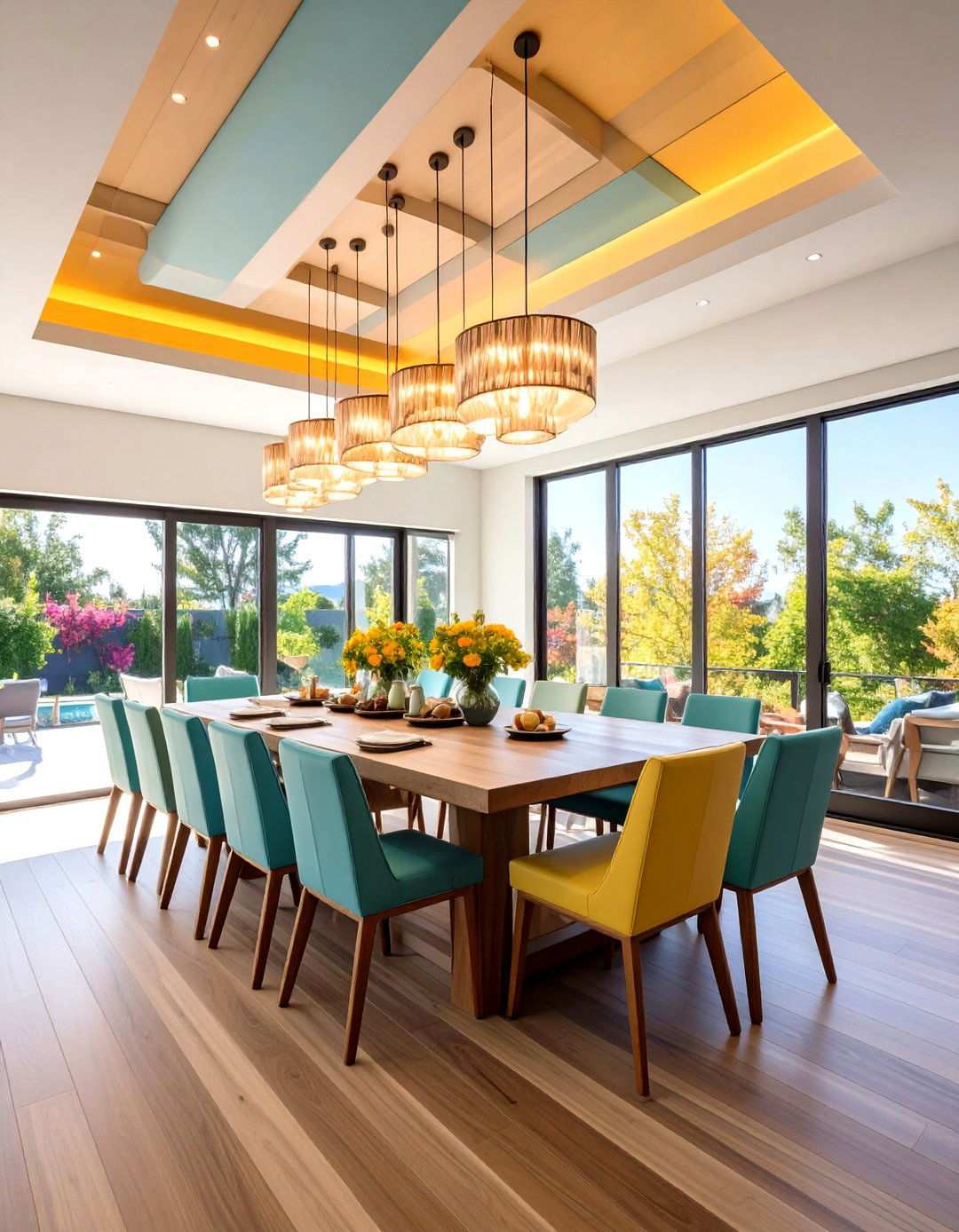
When ceiling planes are skillfully layered to create depth and visual complexity, the result is a sophisticated dining space that invites conversation and relaxation. This layered design approach allows for the incorporation of diverse lighting types, each tailored to specific occasions and enhancing the overall dining experience. By thoughtfully manipulating the dimensional quality of the space, homeowners can craft intimate environments that perfectly suit their style and preferences. For formal dining rooms, architectural sophistication is particularly valuable, as it elevates special occasion gatherings to new heights.
The layer transitions can be refined through subtle color variations or a unified monochromatic scheme, depending on personal style and design preferences. Careful planning is essential to ensure proper proportions and smooth transitions between different levels, as this directly impacts the overall aesthetic and functionality of the space. By investing in a layered ceiling design, homeowners can create distinctive environments that not only enhance property values but also provide personally satisfying gathering spaces. For optimal results, professional design consultation is often invaluable in achieving the perfect balance of proportions and lighting integration.
20. Elevating Bedroom Ambiance with Gradient Color Ceilings
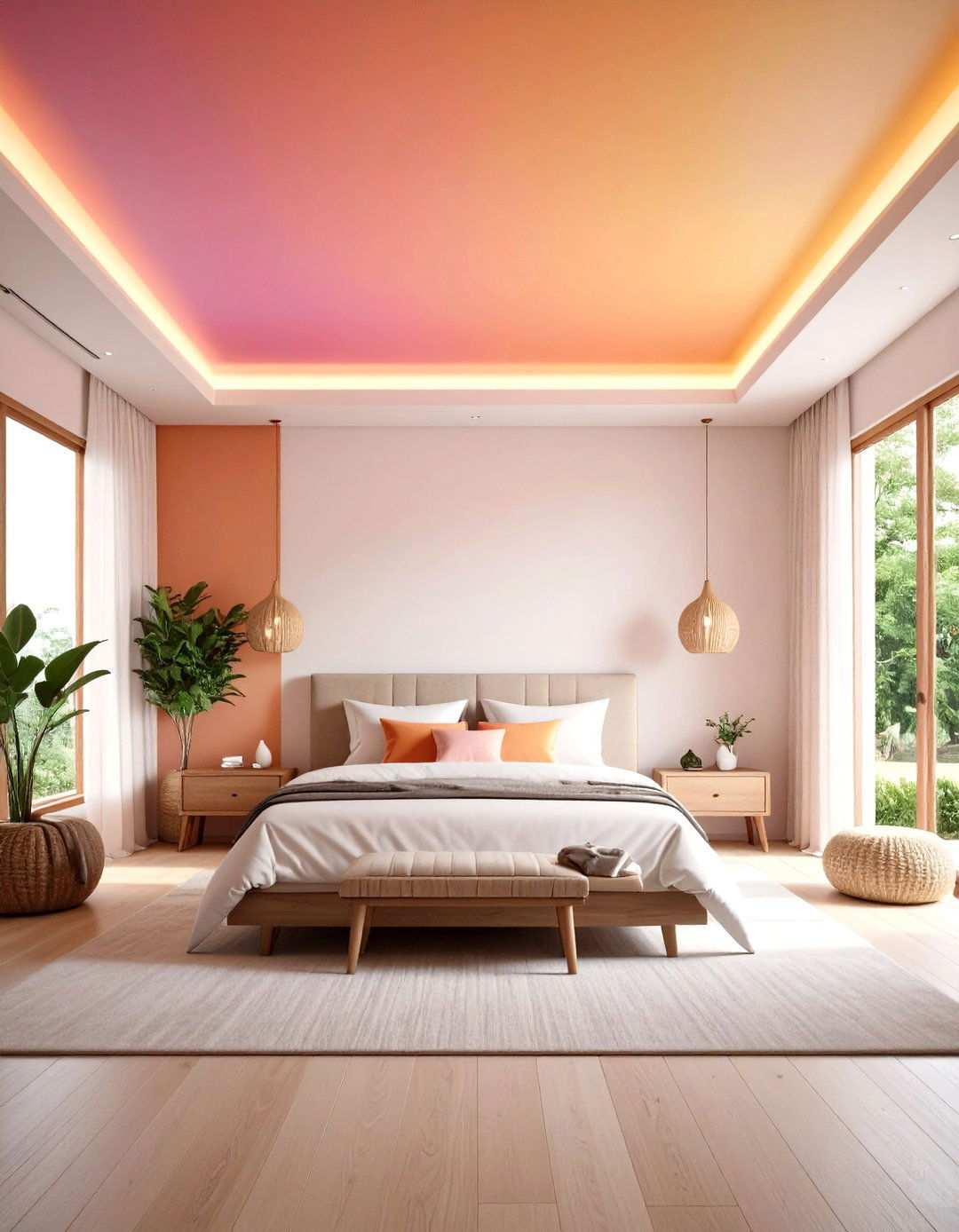
Gradient color transitions can indeed create dramatic ceiling effects that not only enhance bedroom atmosphere but also profoundly impact mood. By incorporating subtle color progressions, gradient designs add a captivating visual element to the space while maintaining a calming environment conducive to rest and relaxation. This unique approach creates movement and depth that standard single-color treatments often fail to achieve. Homeowners seeking distinctive features that reflect their personal style preferences find this design particularly appealing. The key to a stunning gradient effect lies in the proficiency of the painter, who must employ advanced techniques to ensure seamless gradations that appear expertly executed rather than amateurish attempts. To maximize the psychological impact of color on sleep quality and morning awakening experiences, consider carefully placing lighting fixtures to complement color effects without introducing unwanted reflections or color distortions. However, it’s essential to note that installation requires skilled painters familiar with gradient techniques and color theory applications. While the investment may seem substantial, it creates personally meaningful spaces that provide daily satisfaction and can potentially enhance property appeal. When selecting colors, prioritize long-term satisfaction, as changing gradient effects necessitates complete repainting rather than simple touch-ups.
21. Bringing Warmth and Character to Contemporary Living Spaces with Wooden Beam Ceilings
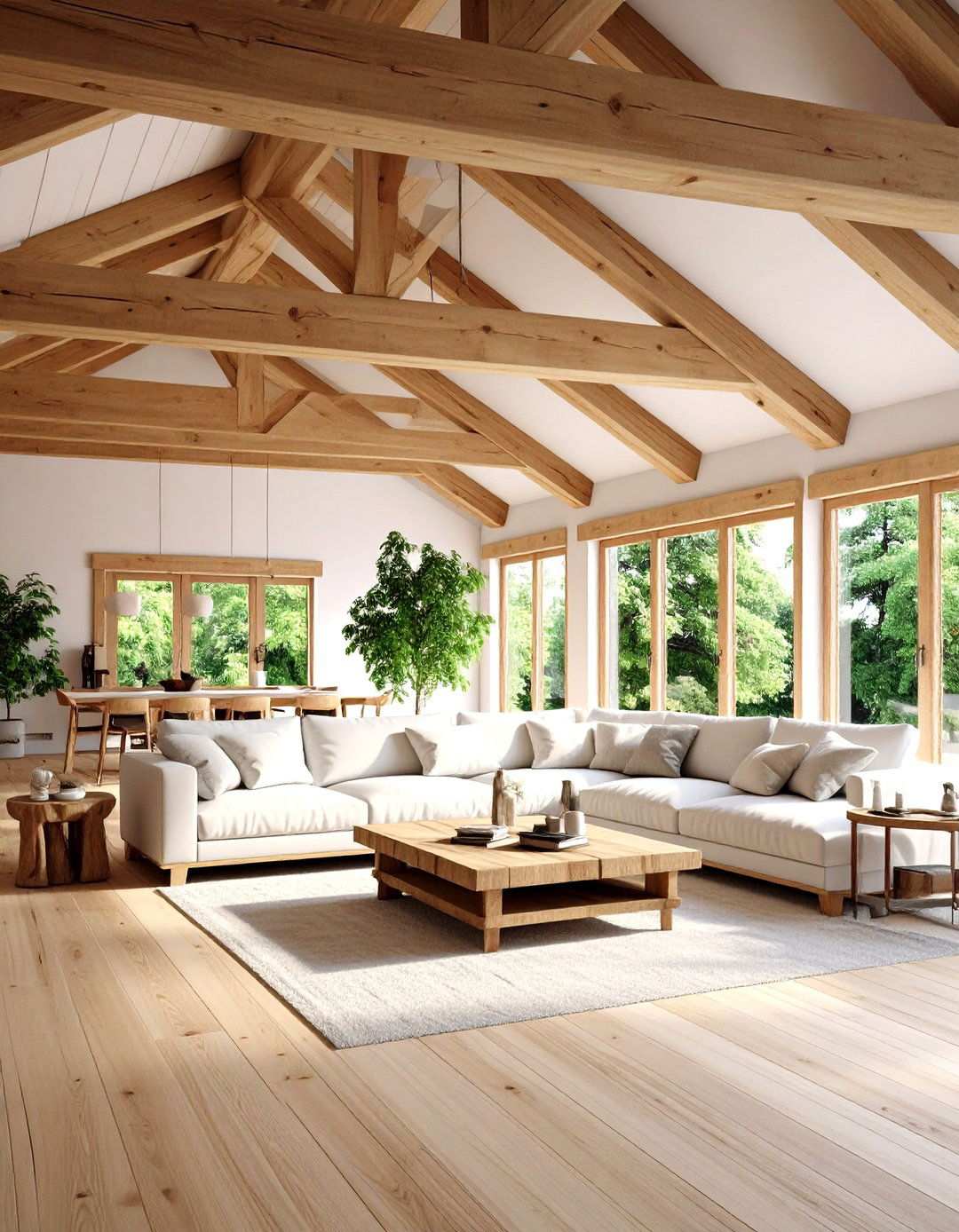
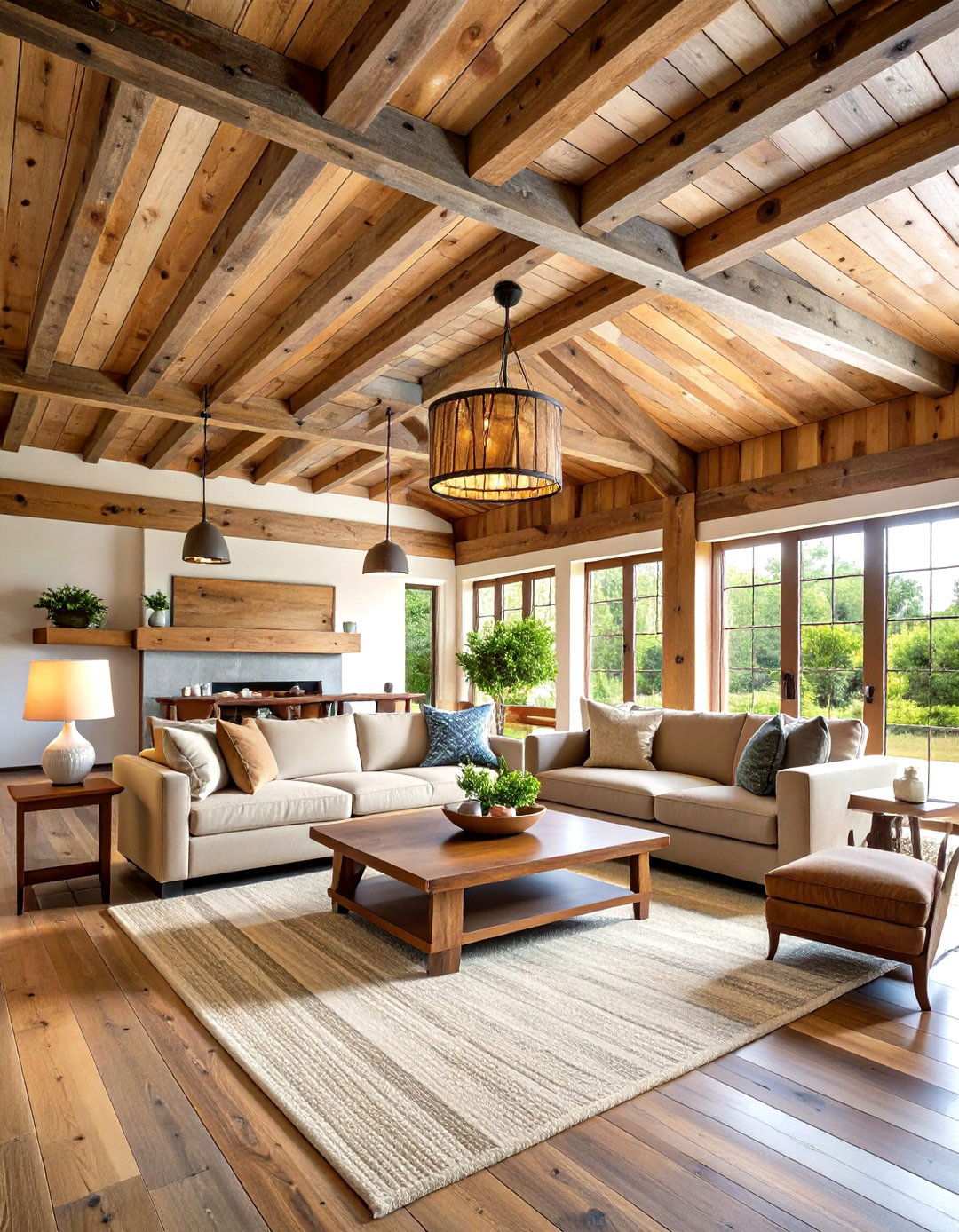
Natural wood elements can bring a sense of warmth and character to modern living spaces, creating welcoming and comfortable environments that perfectly balance modern convenience with traditional comfort and natural material connections. Wooden beam designs introduce organic textures and linear elements that add structural visual interest while providing mounting points for lighting and decorative elements. This approach is particularly suited to homes seeking to incorporate traditional comfort and natural material connections into their modern architecture. The versatility of wooden species and finish options allows for seamless coordination with existing furnishings and architectural elements throughout the home. To create a cohesive design scheme, consider pairing wooden components with POP elements that frame and support them while providing smooth transitions to wall surfaces. However, proper support structures are crucial to safely mount wooden elements while maintaining architectural integrity. The natural material variations in each installation ensure a unique and personally meaningful space. Effective color coordination between wood finishes and POP elements can further enhance overall interior harmony. Ultimately, this investment creates lasting environments that age gracefully, providing enduring satisfaction and increased property values.
22. Modern Bathroom Oasis with Integrated LED Lighting
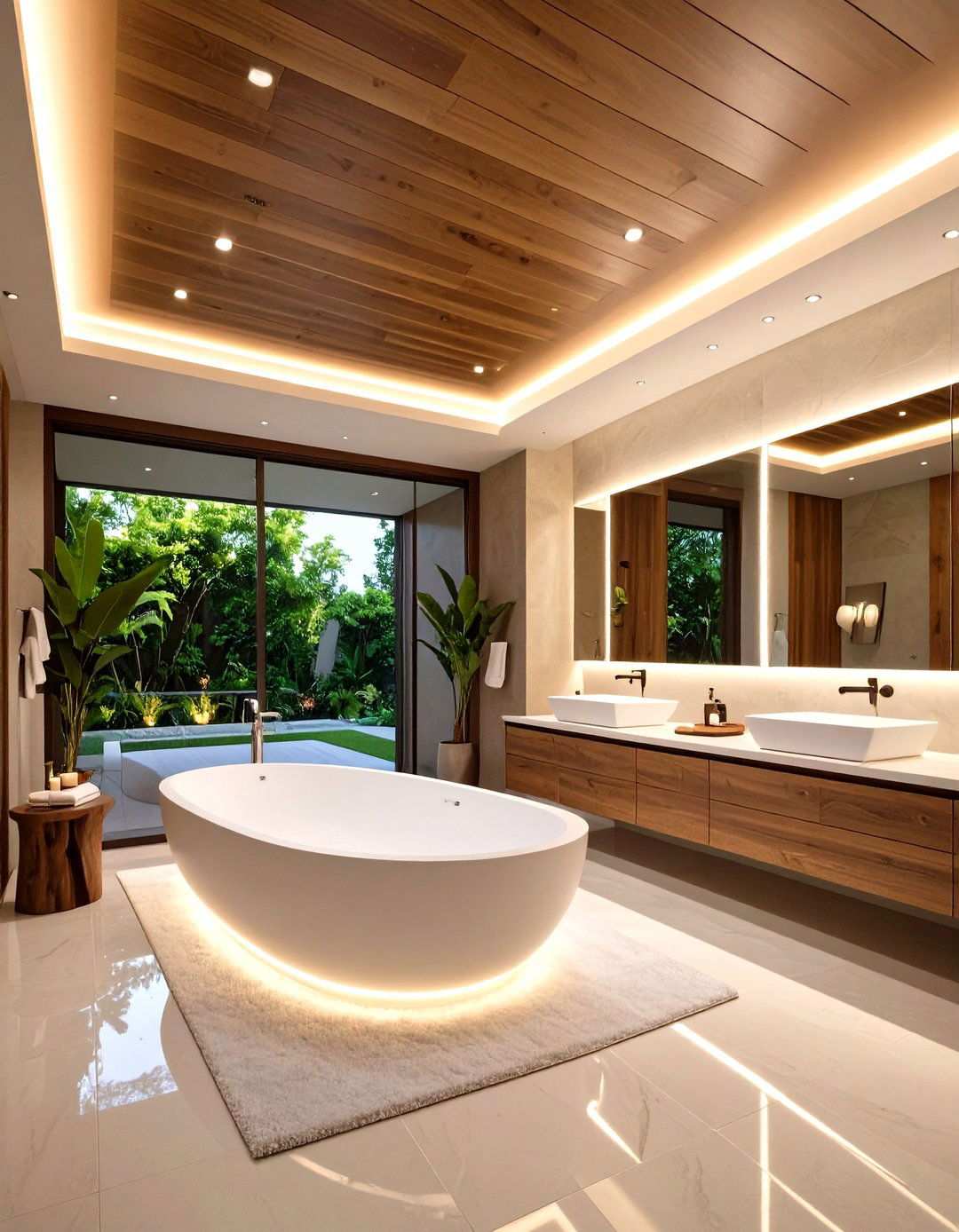
The strategic placement of LED lighting in bathrooms has become a hallmark of creating serene and rejuvenating spaces. By seamlessly integrating LED strips into ceiling designs, homeowners can achieve an even, adjustable illumination that not only enhances the ambiance but also maintains a sleek and minimalist look. The eco-friendly nature of LED technology, coupled with its remarkable longevity, makes this approach not only environmentally responsible but also cost-effective in the long run. Furthermore, the LED systems’ ability to change colors creates an immersive experience, tailoring the lighting to suit various bathroom activities – from energizing morning routines to relaxing evening baths. This design approach is particularly well-suited for modern bathrooms, where clean lines and a lack of visual clutter define the aesthetic goals. Ensuring the LED systems are waterproof ensures safety and durability in high-humidity environments, without compromising performance or appearance. To get the most out of this design, it’s essential to plan the electrical infrastructure, allowing for precise control systems and realistic lighting effects that elevate daily routines. The investment in integrated LED lighting significantly enhances bathroom functionality, creating sophisticated environments that rival luxury hotel accommodations. When done professionally, this design not only ensures safety compliance but also guarantees optimal performance and long-term satisfaction.
23. Geometric Ceiling Patterns for Enhanced Productivity in Home Offices
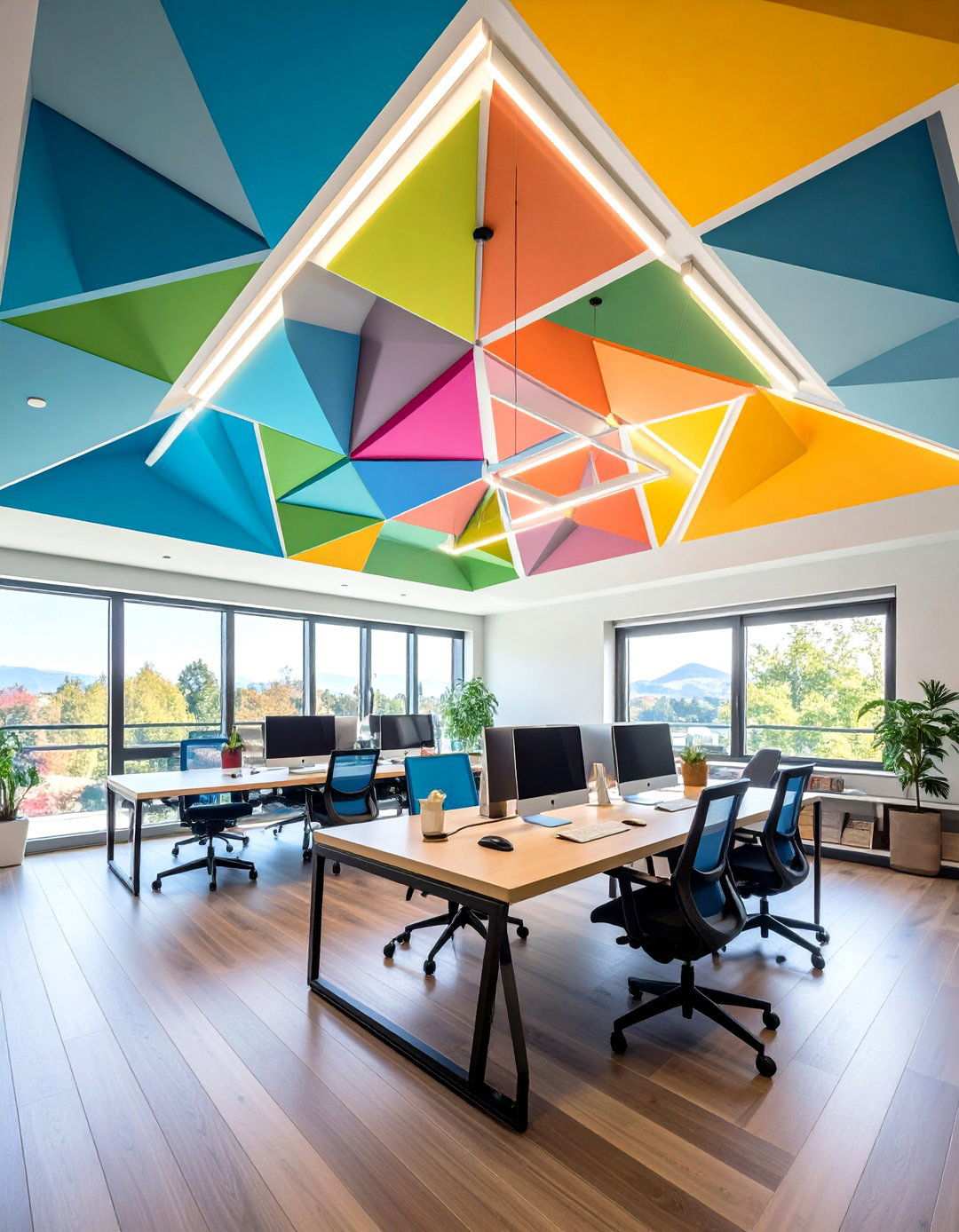
Angular geometric patterns have the potential to boost productivity and focus in home office environments by creating dynamic visual interest that maintains a professional aesthetic. Triangle patterns, in particular, convey a sense of organization and precision, reflecting the attention to detail that is essential for professional credibility. This design approach is well-suited for home offices, where impressive backdrops for video conferences can provide a competitive advantage. The angular elements in these patterns can be used to create natural boundaries for different lighting zones, accommodating various work activities. While the installation complexity may seem daunting, the end result is well worth the investment, delivering sophisticated results that justify the expense in professional home office environments. By adjusting the pattern density and scale, homeowners can tailor the design to suit their room dimensions and personal preferences, achieving a balance between visual stimulation and calm focus. This investment creates productive environments that enhance work performance while providing impressive spaces for client meetings and professional presentations.
24. Crafting a Dramatic Canvas: Ceiling Design Strategies for Statement Chandeliers
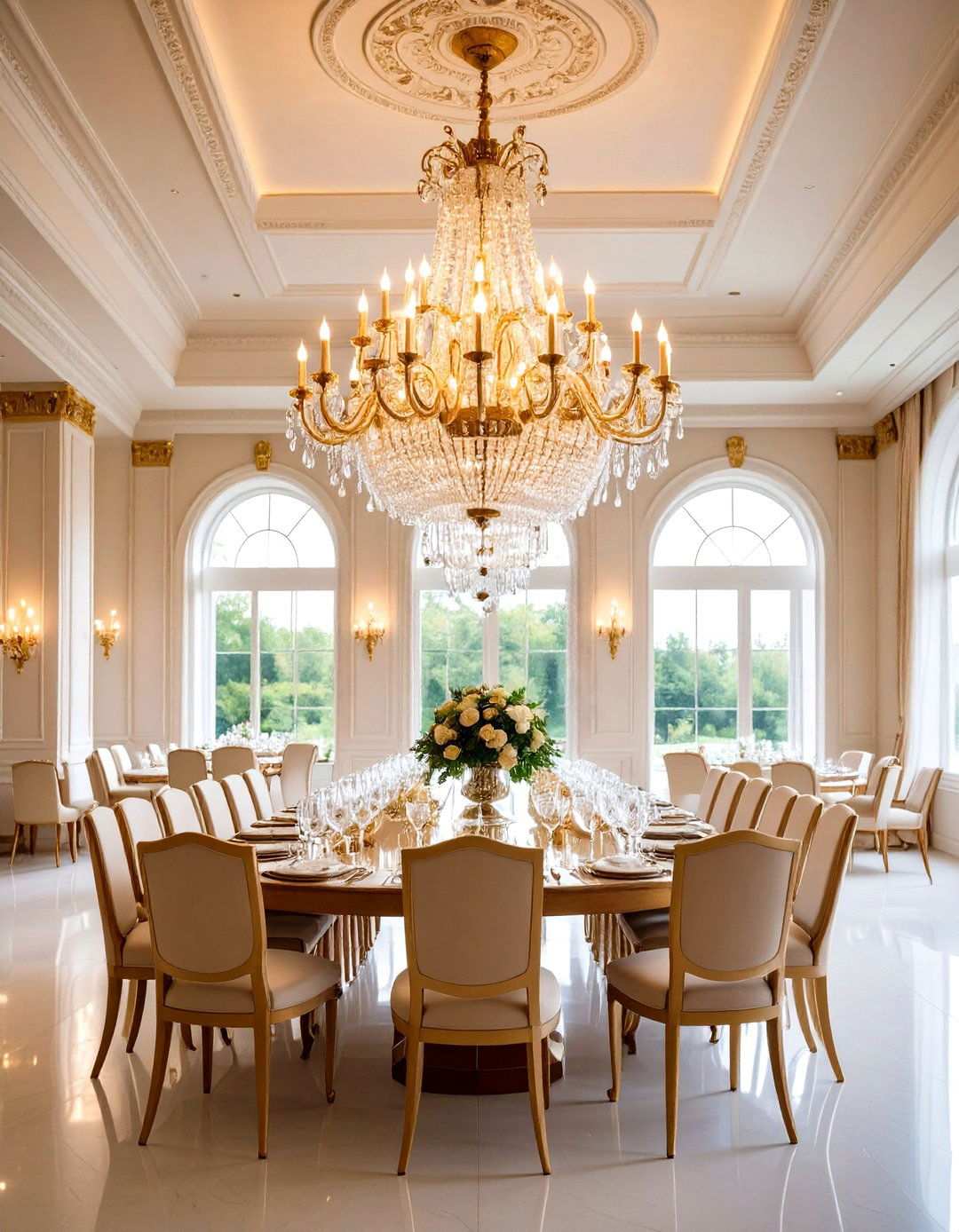
Elevating a room’s centerpiece, statement chandeliers demand a ceiling design that not only complements but amplifies their impact. Architectural frameworks are created through ceiling treatments, imbuing visual weight and importance that perfectly balances substantial installations. By incorporating recessed or raised elements around chandelier mounting points, natural boundaries emerge, defining distinct lighting zones while injecting architectural interest. This approach is particularly suited to formal spaces, where impressive lighting fixtures serve as a defining characteristic, establishing the room’s character and significance.
Ceiling designs must harmoniously coordinate with chandelier styles, providing adequate structural support for substantial fixtures. Installation requires meticulous electrical planning to ensure proper mounting and support systems, guaranteeing both safety and longevity. By synchronizing ceiling elements with chandelier finishes, cohesive design schemes are created, elevating the overall interior sophistication and refinement. In effect, this thoughtful investment yields focal points that make a lasting impression on guests while providing versatile illumination for various activities and occasions throughout daily life.