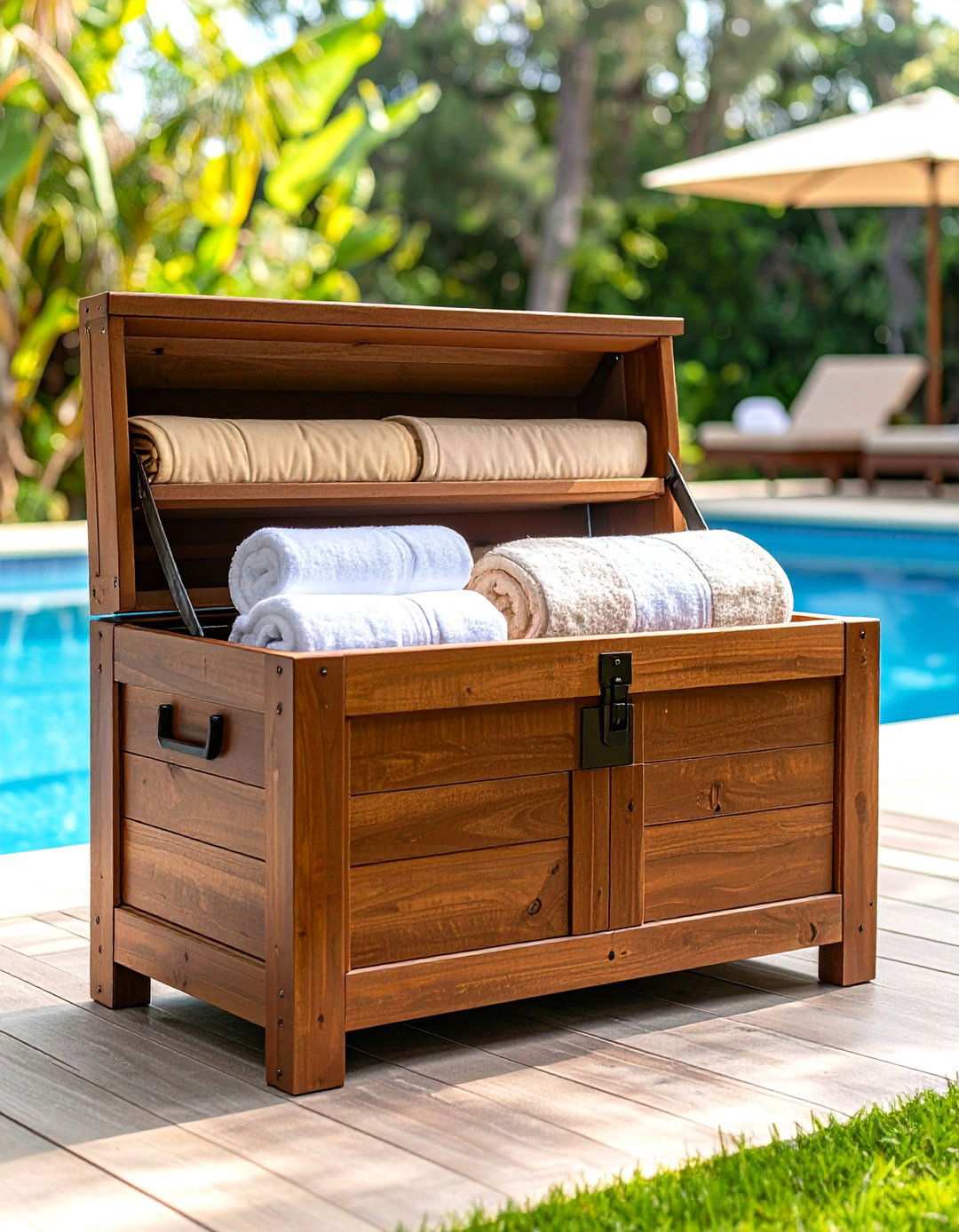
1. Adaptable Playroom Storage Systems
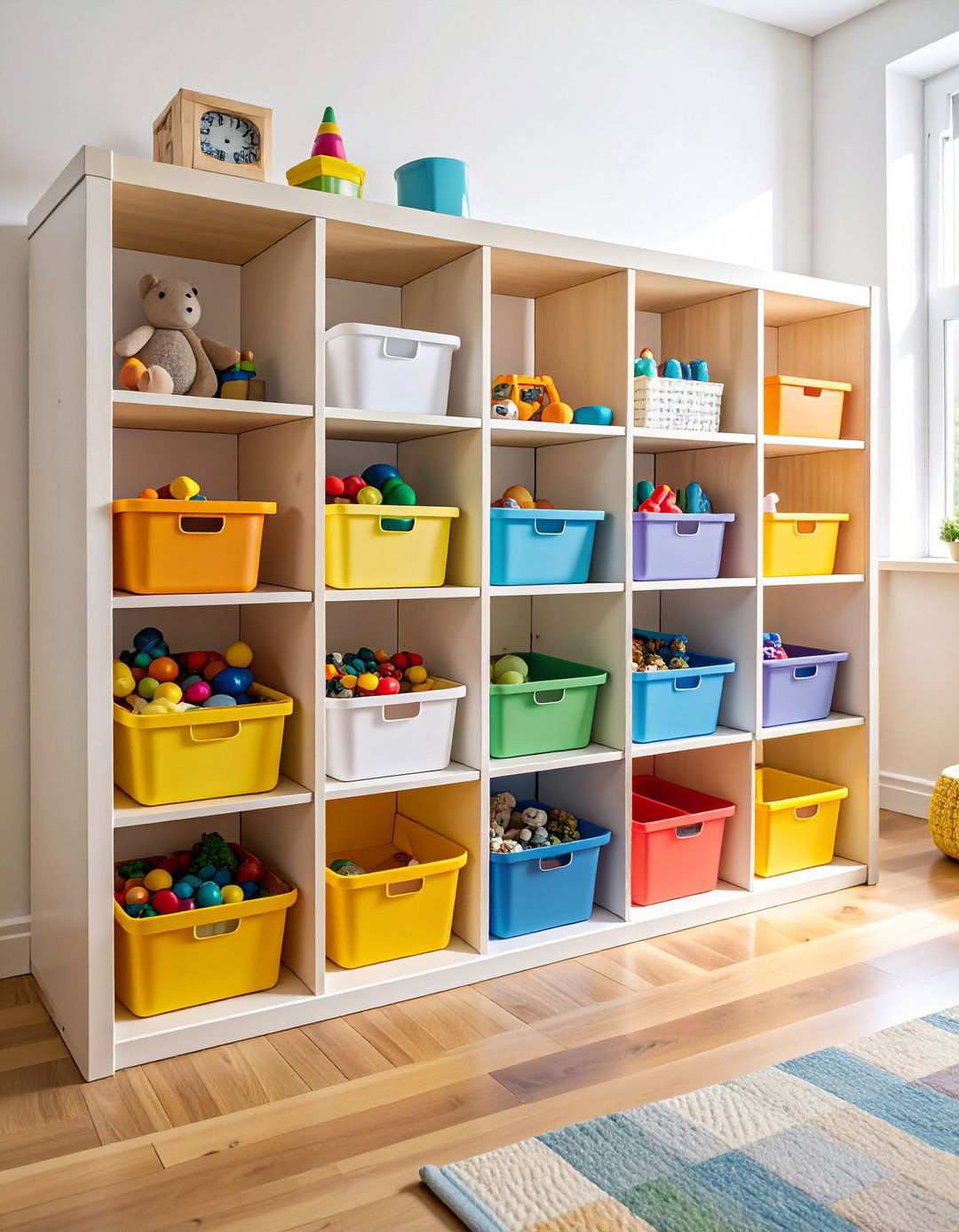
Developing a functional and well-organized playroom relies heavily on clever storage solutions that can grow alongside your children. When dealing with overflowing toy bins, scattered art supplies, or constrained square footage, a thoughtful approach to storage can transform chaotic play areas into peaceful, welcoming spaces. Modern playroom storage embodies a perfect blend of functionality and style, offering parents an array of creative ways to contain the seemingly endless stream of toys, books, games, and craft materials that accumulate over time. Effective storage solutions make cleanup easier for kids while keeping spaces visually appealing for the entire family. These 24 innovative storage ideas provide comprehensive solutions for playroom challenges, ensuring a harmonious balance between play and organization.

As an Amazon Associate I earn from qualifying purchases.
2. Elevating Storage with Wall-Mounted Shelves
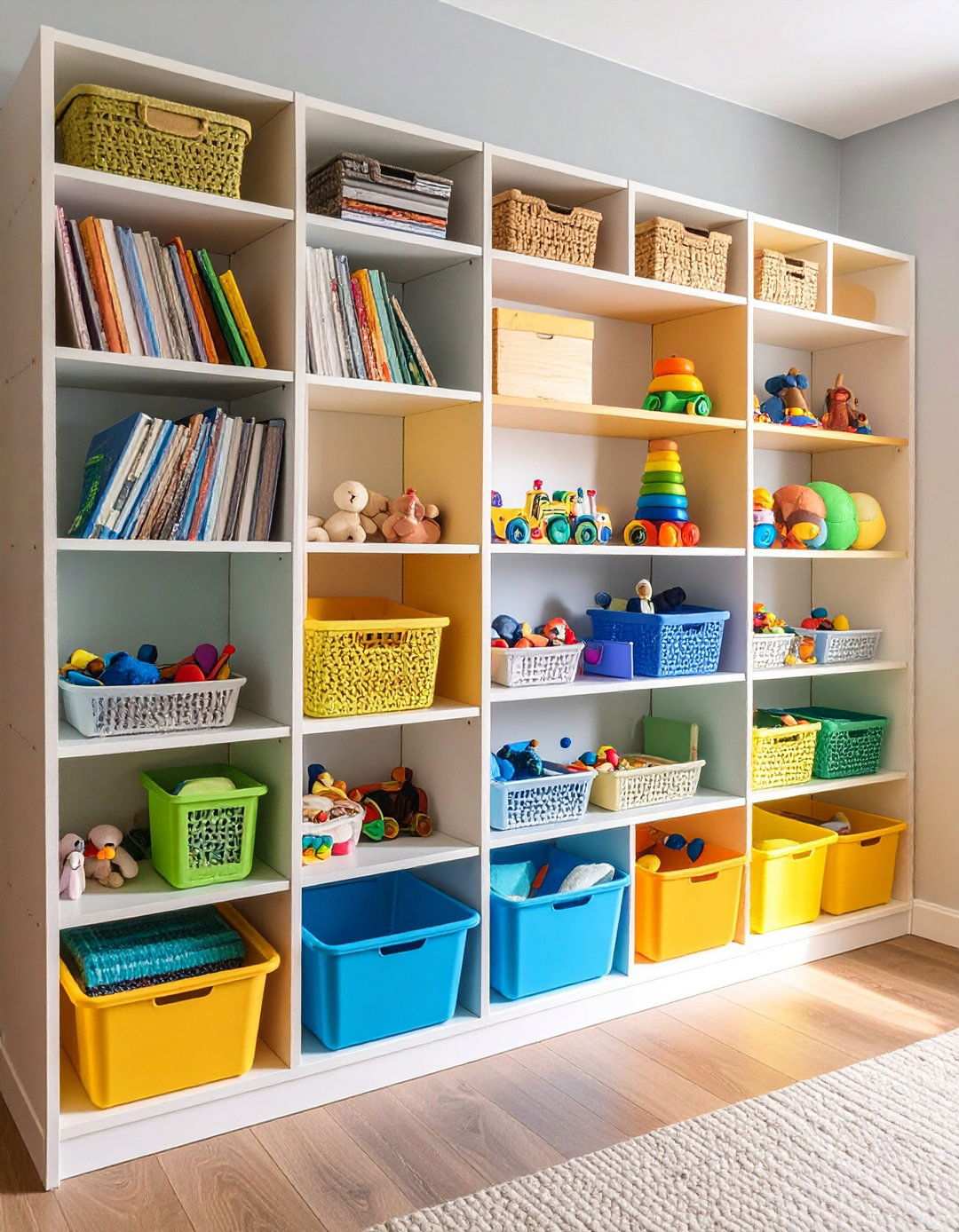
Maximizing vertical space is key to creating stunning displays and maintaining a clutter-free playroom environment. Wall-mounted floating shelves are an excellent option for storing books, small toys, and decorative items while preserving floor space for active play. Families often install shelves at varying heights to accommodate both accessible storage for children and higher display areas for special collections. This approach not only creates a visually appealing space but also provides ample storage capacity. Pairing floating shelves with clear containers or colorful bins adds personality to the space while maintaining organization. This storage method is particularly beneficial for small playrooms where floor space is limited, creating an illusion of larger, more open areas.
3. Versatile Storage Benches
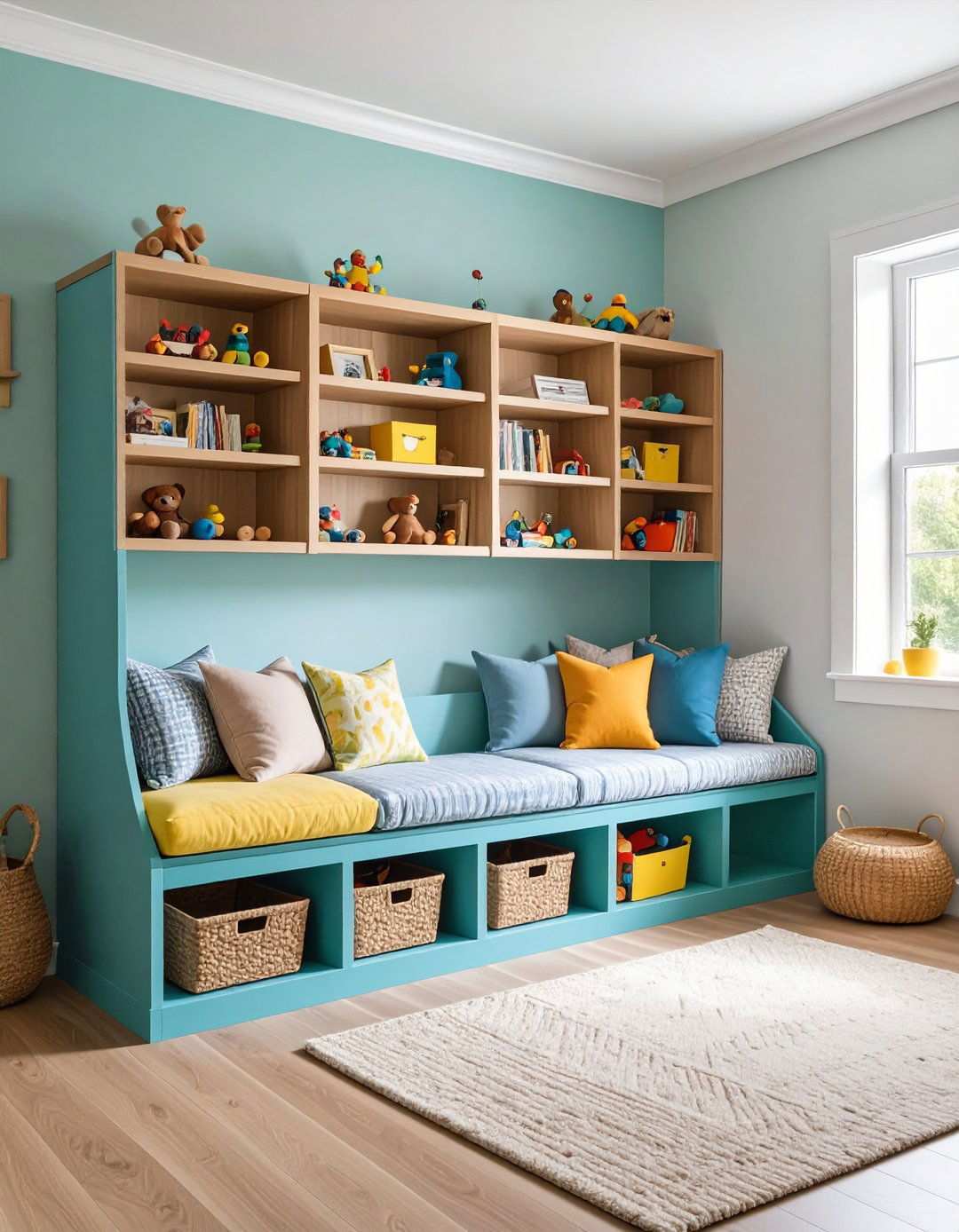
Combine functionality and comfort by incorporating custom built-in storage benches into your playroom design. These innovative solutions offer ample seating for reading or playtime while concealing spacious storage compartments ideal for large toys and seasonal items. To unlock their full potential, consider designing compartments with lift-top lids and child-safety hinges to prevent accidental pinching. By placing these benches beneath windows, you can create inviting reading nooks that also resolve storage challenges. For an added touch, incorporate cushions in durable, washable fabrics that harmonize with your room’s color scheme. In rooms with architectural features like bay windows or unique corner spaces, built-in benches can transform challenging areas into inviting focal points that naturally draw children to quiet activities.
4. Dynamic Pegboard Organization Systems
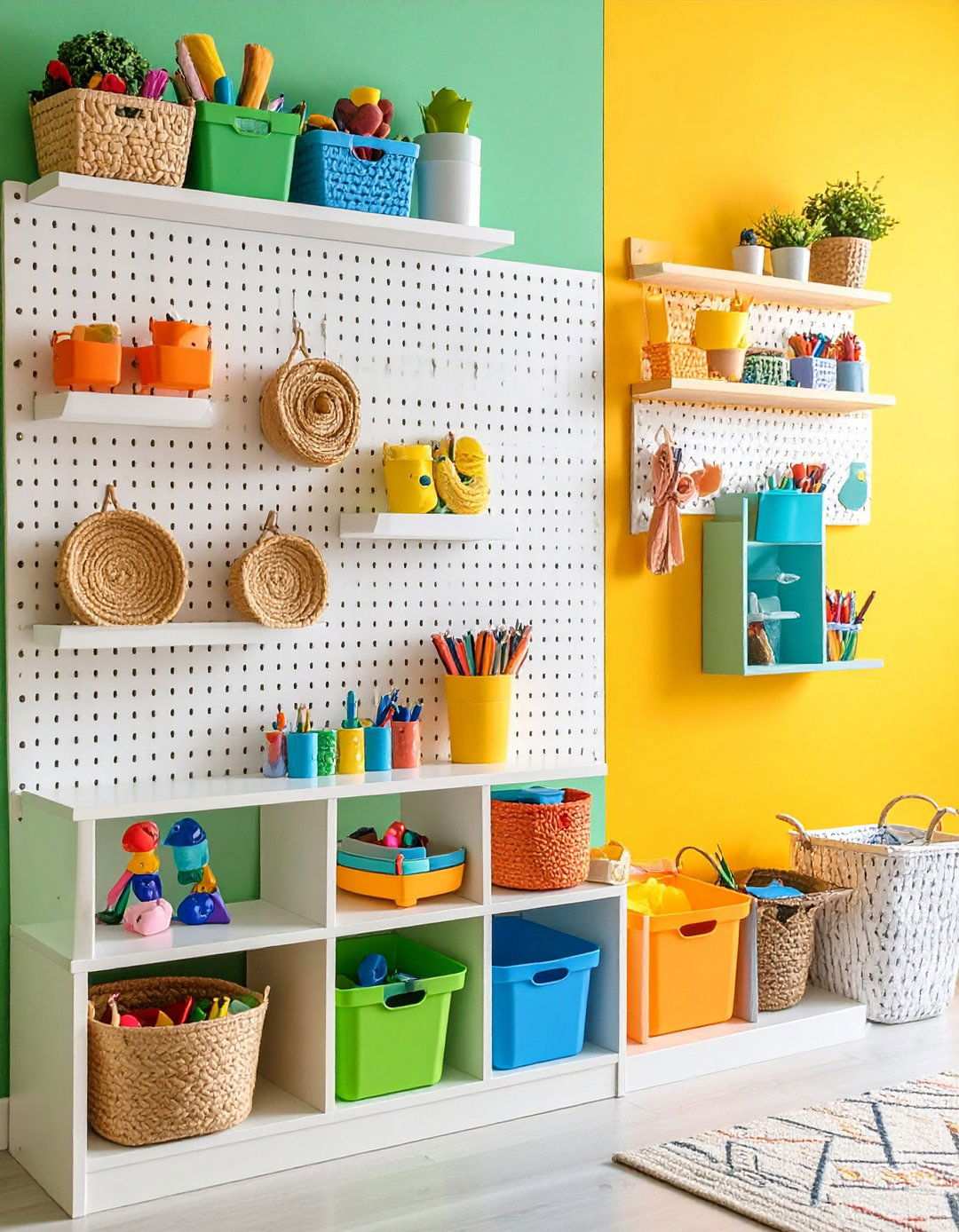
Implement pegboard walls to create adaptable art supply stations that maintain order and accessibility in your playroom. These customizable systems can be configured with various hooks, baskets, and containers that adjust as storage needs evolve over time. The secret to pegboards’ effectiveness lies in their flexibility, allowing you to swiftly rearrange storage components to accommodate new hobbies or seasonal craft projects. To foster independent cleanup and creativity, position pegboards at child-friendly heights. Consider painting pegboards in vibrant colors that complement your room’s palette, while also providing functional storage for essential art supplies like scissors, markers, and paintbrushes. This system is particularly beneficial for families who prioritize art and craft activities, turning wall space into an interactive organization hub that children can modify as they develop new interests and skills.
5. Mobile Storage Solutions
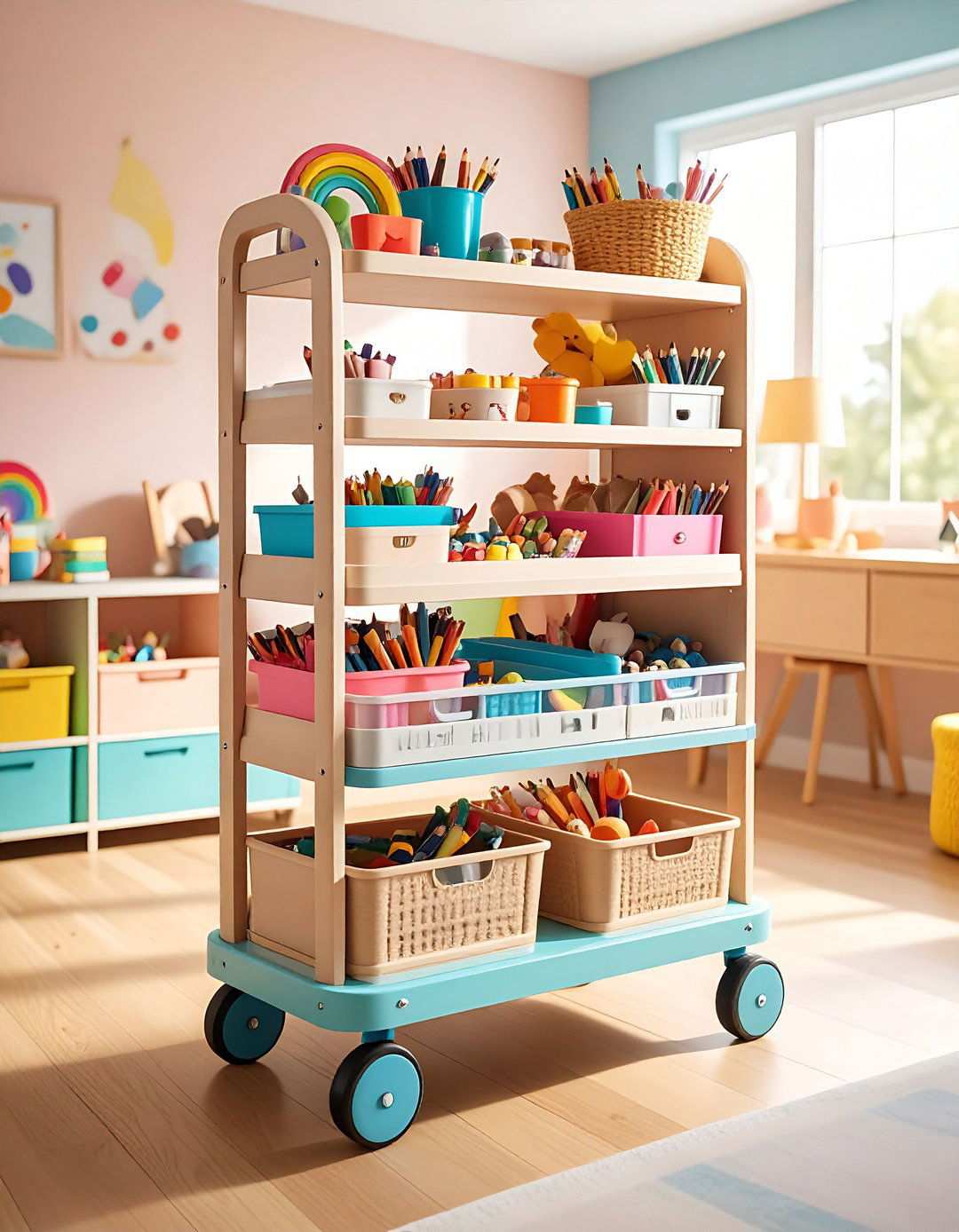
Introduce flexibility to your playroom organization with wheeled storage carts that can be easily maneuvered to supply-demand areas throughout the home. These mobile units excel at containing art supplies, building blocks, or dress-up accessories while seamlessly transitioning between spaces. The appeal of mobile storage lies in its ability to prevent toys from becoming permanently scattered throughout the house by relocating activities as needed. Choose carts with multiple tiers and varied compartment sizes to accommodate different toy categories. When selecting a model, look for locking wheels to prevent unwanted movement during active play sessions. Mobile carts are particularly well-suited for families without dedicated playrooms, allowing toy storage to travel from living rooms to bedrooms to outdoor spaces. To ensure long-lasting functionality, opt for sturdy construction that withstands frequent movement while maintaining organized compartments.
6. Unlocking Hidden Storage Potential
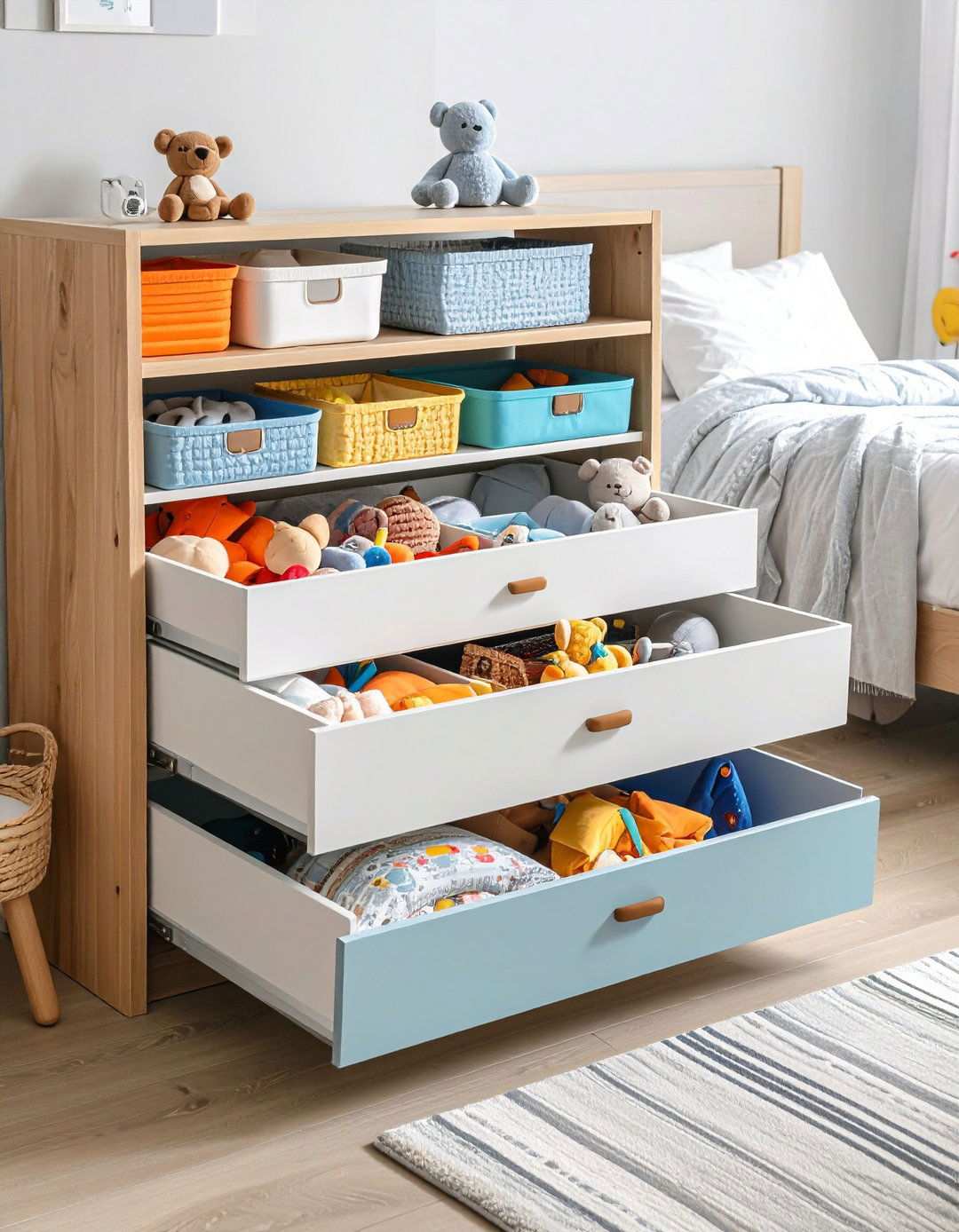
Tapping into the often-neglected space beneath beds is a fantastic way to create a wealth of hidden storage for toys that are only brought out occasionally. Convert this previously underutilized space into a valuable organizational resource with pull-out drawers and storage boxes, ideal for seasonal toys, dress-up clothes, or board games. To make the system child-friendly, opt for low-profile containers with smooth-rolling wheels or easy-grip handles that small hands can operate independently, perfect for smaller bedrooms where floor space is at a premium. Clear containers or labeled boxes can be used to encourage proper sorting, and regular rotation of stored items is essential. This approach is particularly beneficial for families with multiple children sharing rooms, providing each child with designated space for their belongings while maintaining tidy sleeping areas. By incorporating regular rotation, you can breathe new life into stored items and keep your child’s bedroom organized.
7. The Art of Toy Rotation
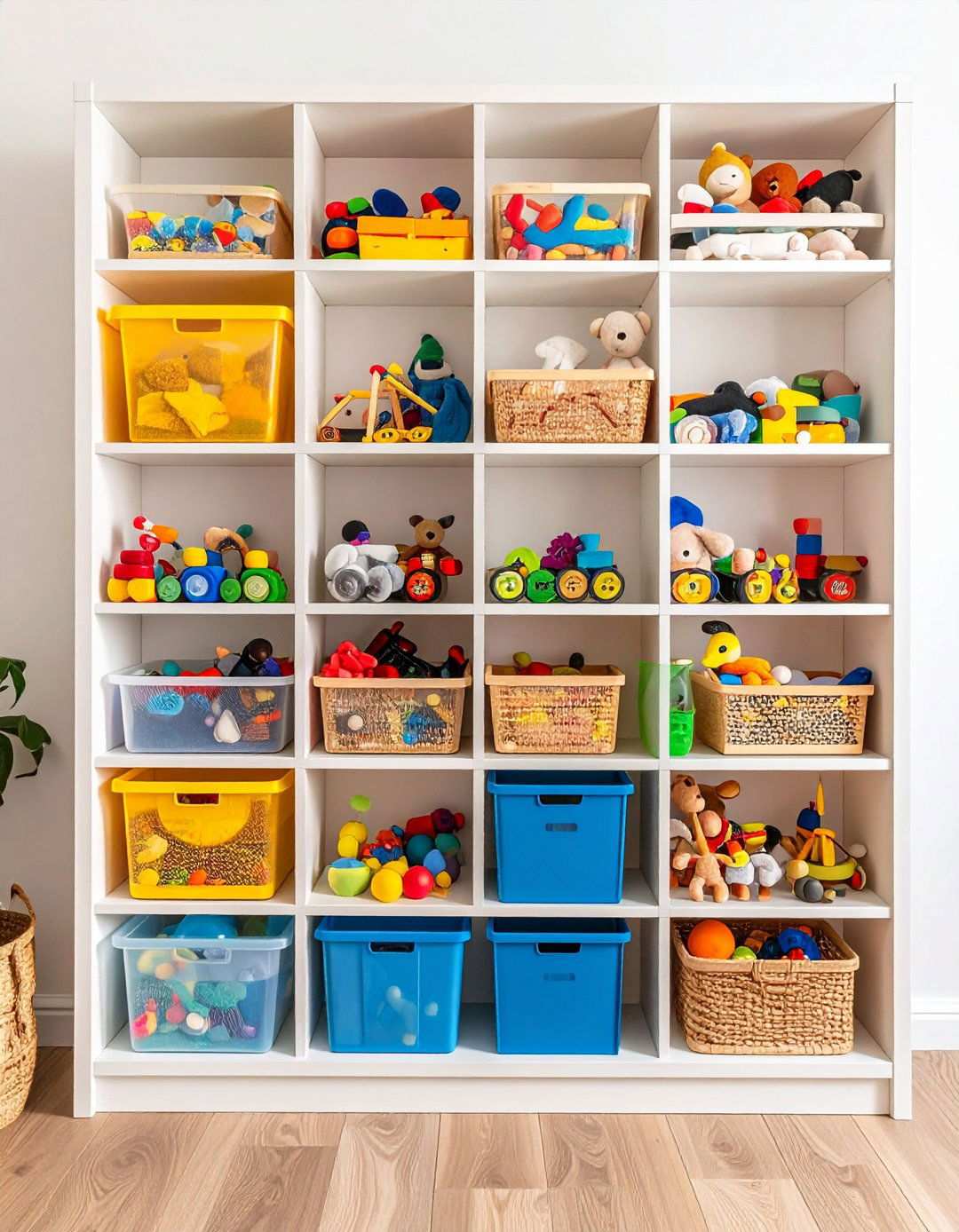
Implementing a toy library system using clear storage bins that rotate toys in and out of active play circulation can have a profound impact on reducing visual clutter while maintaining variety in available play options throughout the year. The psychological benefit of this approach is that children rediscover forgotten toys when they rotate back into circulation, creating excitement without the need for new purchases. Label each bin clearly with photos and words to encourage independent selection, and store inactive bins in closets, basements, or under beds while keeping only a manageable number of toys accessible. This system is particularly effective for families with large toy collections or small play spaces. By involving children in the rotation process, you can teach them to evaluate which toys they’re ready to put away temporarily, promoting a sense of responsibility and organization.
8. Corner Storage Solutions
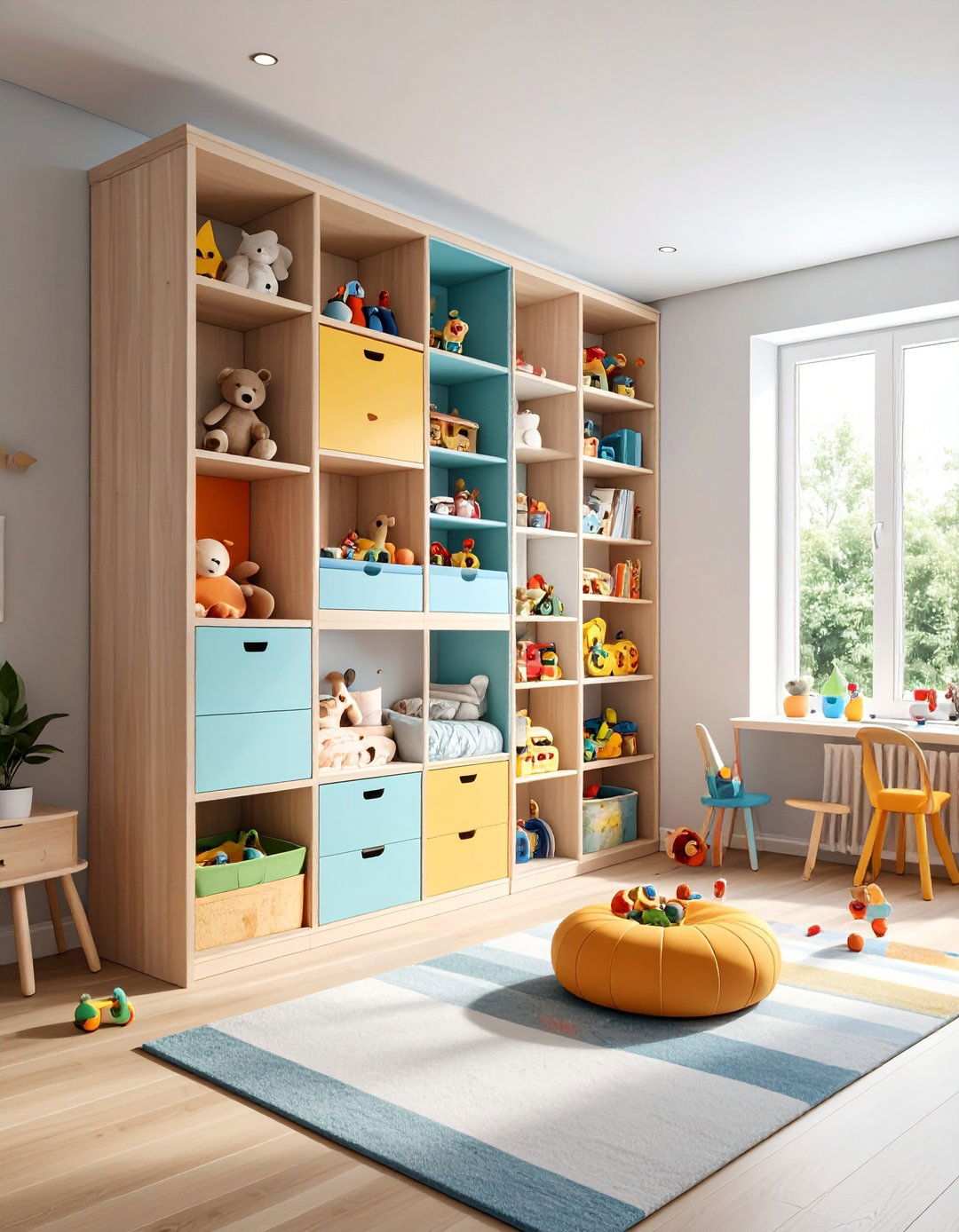
Maximize unused corner spaces with tall, narrow storage towers designed specifically for playroom organization, providing a vertical solution that utilizes space that’s often wasted. These clever storage solutions create visually interesting organizational displays while maintaining a small footprint perfect for rooms where floor space is precious. The reason corners work so well for storage is that they allow you to create multiple compartments while keeping a tidy appearance. Choose towers with varying compartment sizes to accommodate different toy categories from small figurines to larger building sets, and consider models with both open shelving and closed compartments to balance display and hidden storage. Corner towers are especially effective in bedrooms that double as play spaces, providing significant storage capacity without overwhelming the room’s primary function. By selecting appropriate heights, you can ensure that children can access most compartments independently, promoting a sense of autonomy and responsibility.
9. Enchanting Net Storage Solutions
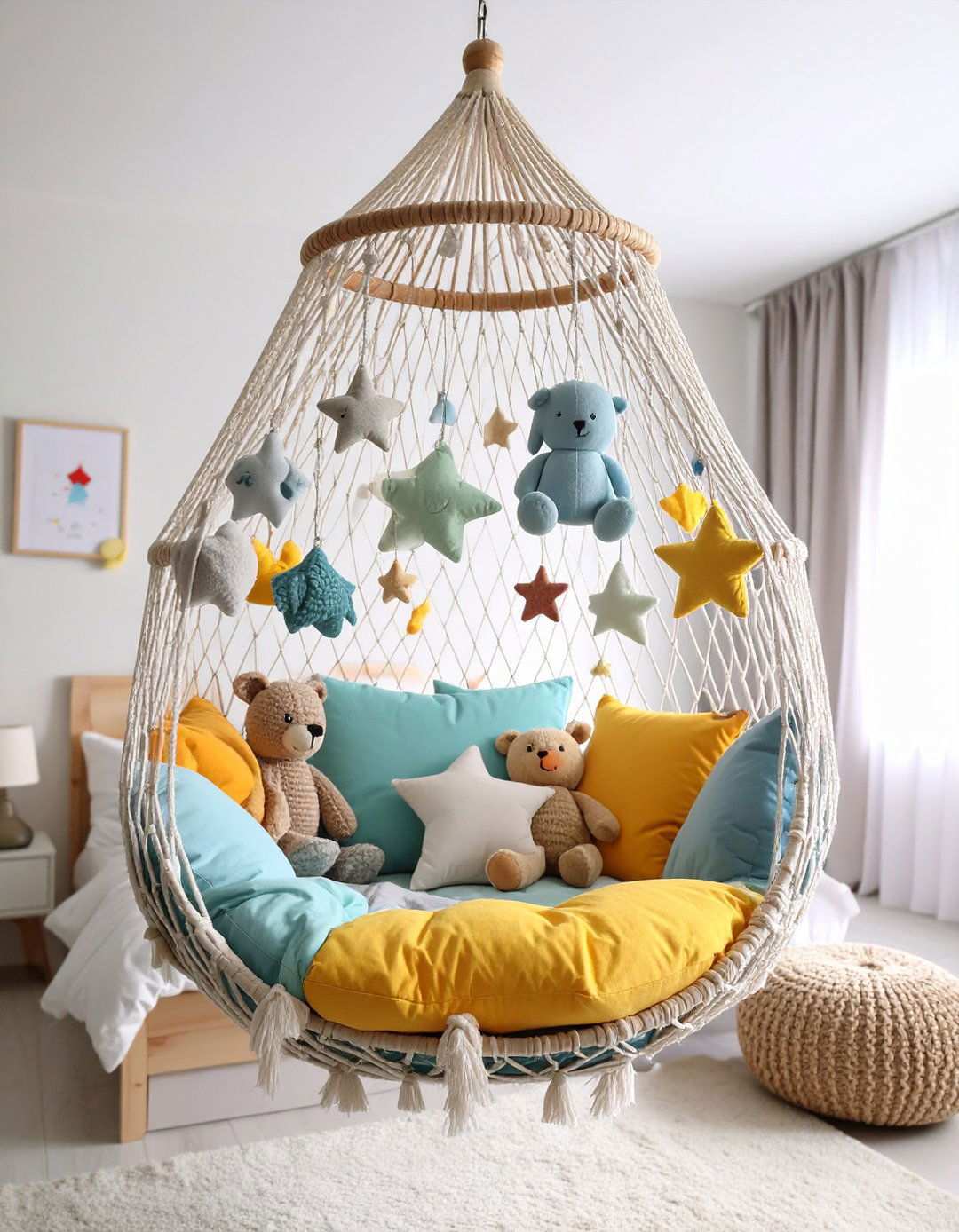
Create captivating storage spaces by installing ceiling-mounted or wall-attached nets that offer an innovative way to store lightweight toys and stuffed animals. These charming storage options not only add visual appeal but also cleverly address the common problem of overflowing toy collections. To make net storage both functional and safe, position them at heights where children can easily access them, but require adult supervision for removal, thereby preventing hazardous climbing. The transparent nature of nets allows children to see their entire collection while keeping items organized and off the floor, creating a delightful experience during cleanup. For added appeal, consider using decorative nets that complement your room’s theme, transforming storage into a harmonious part of the decor while maintaining efficient organization for items that tend to multiply rapidly.
10. Effective Labeled Bin Systems
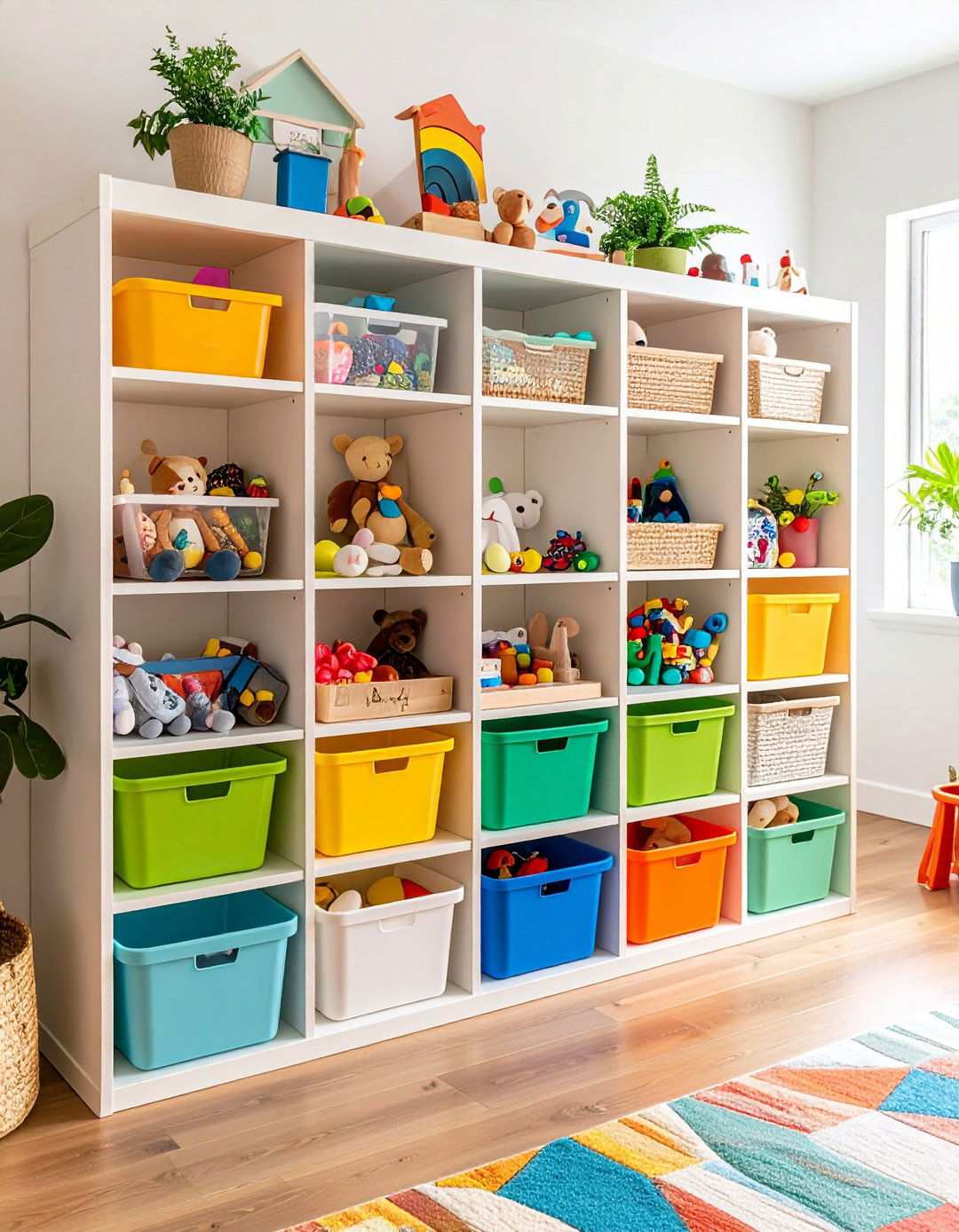
Establish a foolproof organization system using clearly labeled storage bins that empower children to learn independence while maintaining order. Combine images with words on labels to help non-readers identify where toys belong, making cleanup a valuable learning experience. The key to labeling’s effectiveness lies in its ability to eliminate guesswork and frustration during cleanup time, while also building early literacy skills. Choose bins in various sizes to accommodate different toy categories, while maintaining a cohesive color scheme that adds visual appeal. Position labeled bins at child-accessible heights on shelves or in cubbies to encourage independent use. This adaptable system works across all ages, from picture-only labels for toddlers to word-based organization for school-age children. Consistency is the secret to its success—maintain the labeling system even when toy categories change, involving children in creating new labels as their interests evolve throughout developmental stages.
11. Functional Bookcase Room Dividers
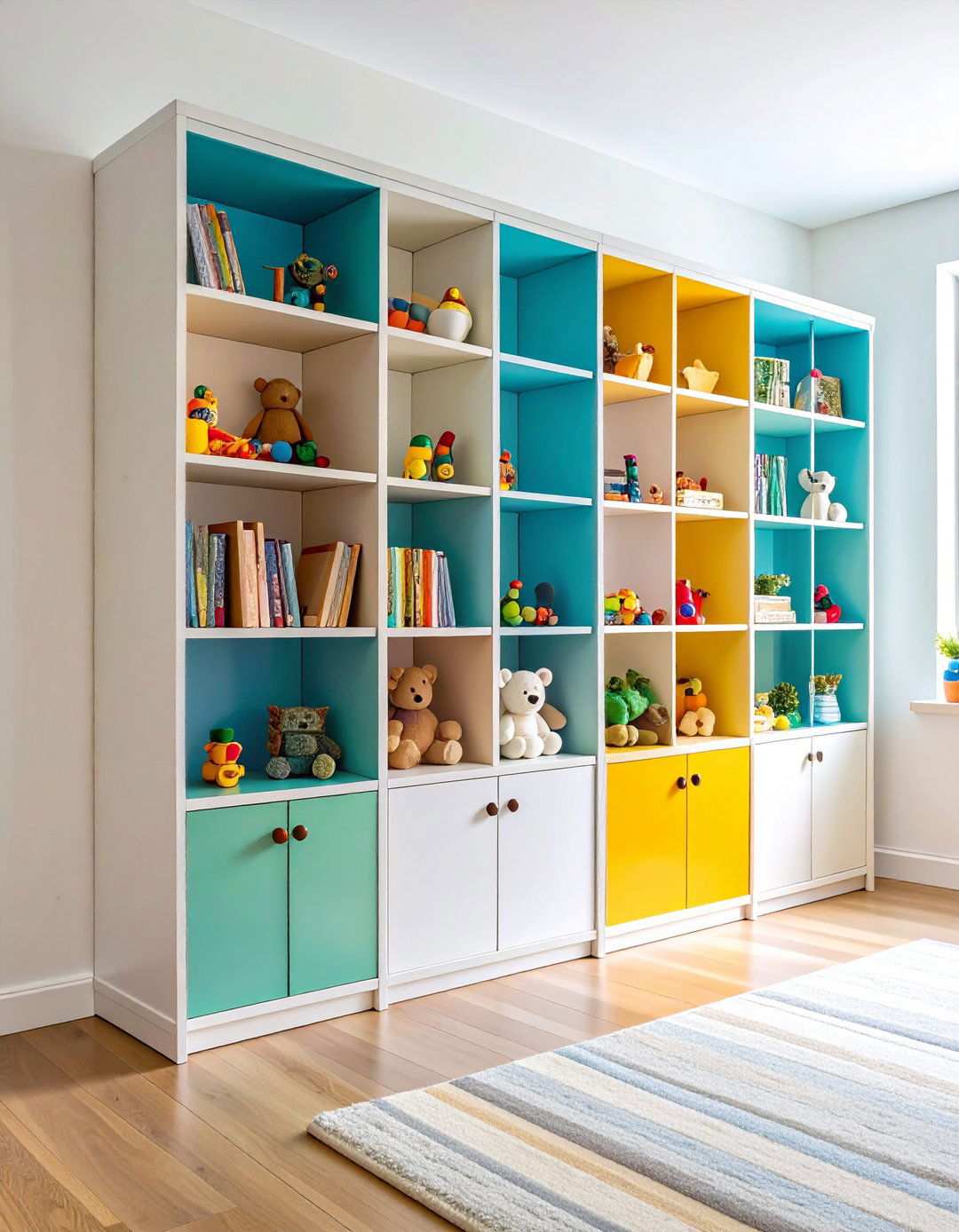
Define play areas while providing extensive storage using bookcase room dividers that create separate spaces without permanent walls. These versatile double-duty pieces offer storage on both sides, while creating distinct zones for different activities within larger playrooms. Room dividers enhance organization by naturally encouraging children to keep activities contained within designated areas, while providing accessible storage for each zone’s specific toys and supplies. Choose open-back bookcases that maintain visual flow while offering storage compartments at various heights. Consider units with both shelving and cabinet space to accommodate different storage needs. This approach works particularly well in multi-purpose rooms or open floor plans where play areas need definition. The key to success lies in selecting appropriately scaled pieces that provide separation without overwhelming the space, while ensuring stability for active play environments.
12. Wall-Mounted Cabinets
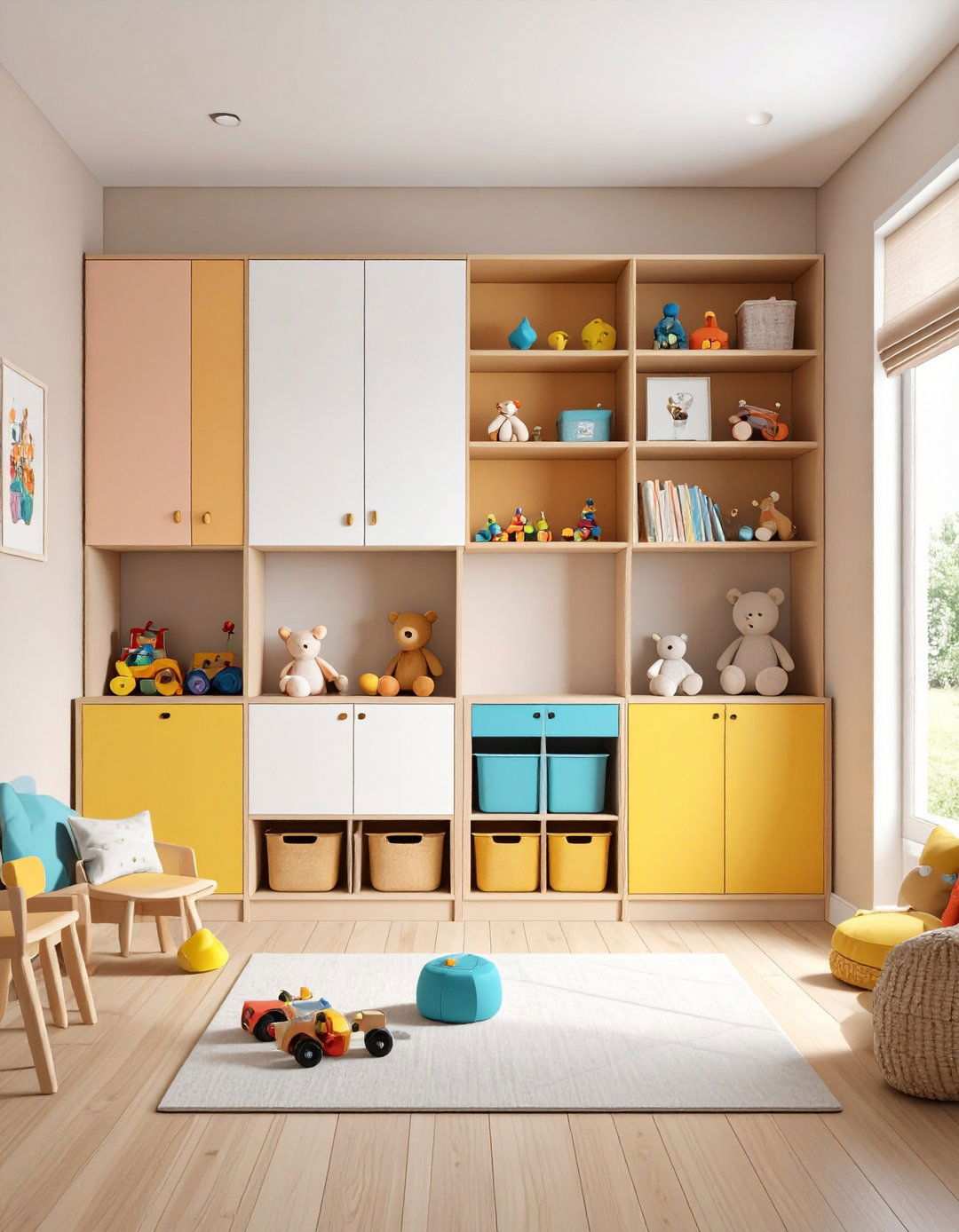
Wall-mounted cabinets offer the perfect blend of sleek design and practical storage solutions, ideal for playrooms where every inch counts. To strike the right balance between accessibility and safety, position cabinets at reachable heights for children while ensuring they’re securely anchored to the wall to prevent any potential tipping hazards. It’s essential to select cabinets that offer a mix of open shelving and closed compartments to meet both display and hidden storage needs. Consider opting for units featuring rounded corners and soft-close hinges, which can help prevent injuries during active play. By choosing wall-mounted storage, families can enjoy substantial storage capacity without sacrificing valuable floor space, creating an uncluttered environment that feels spacious and organized.
13. Ottoman Storage Cubes
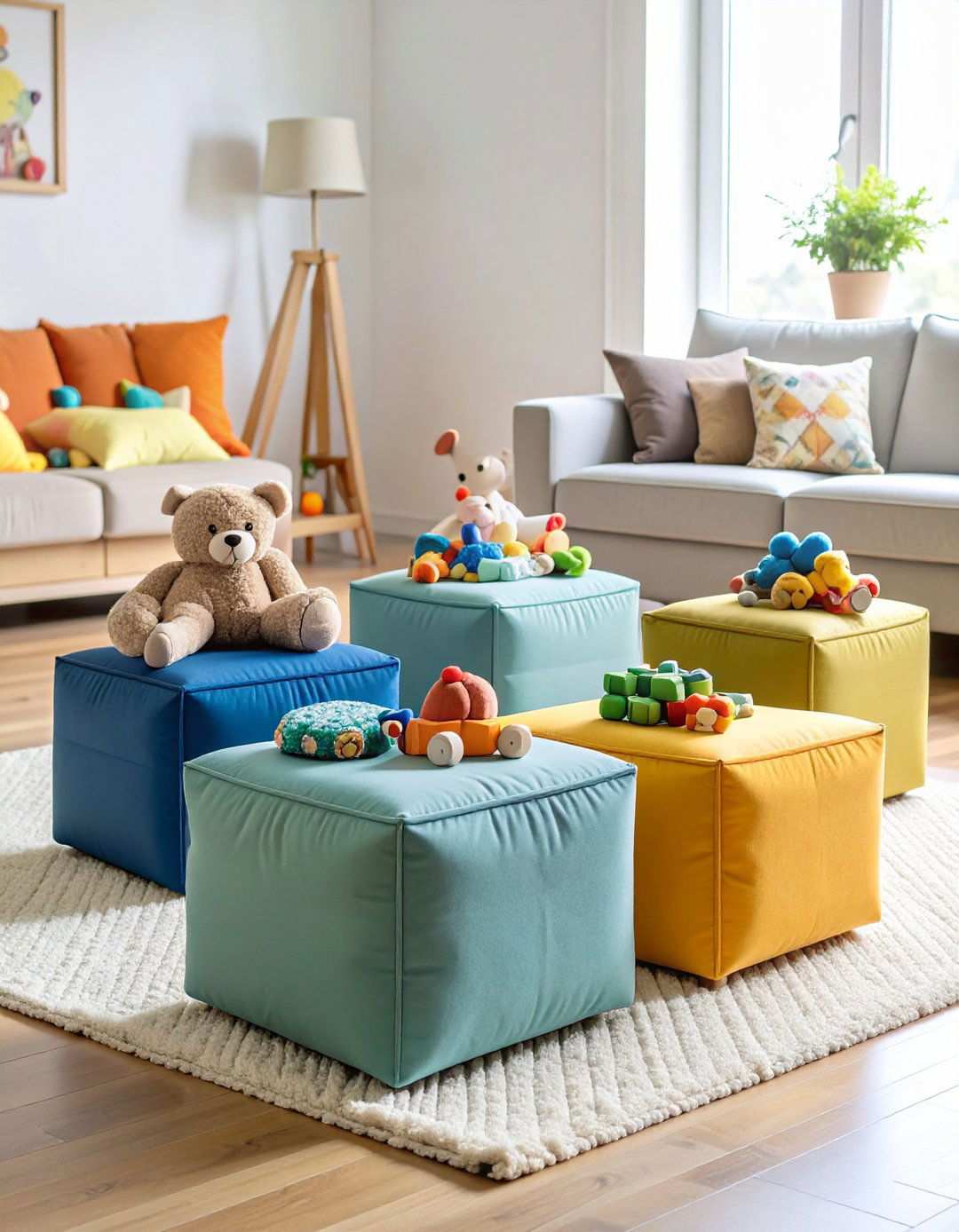
Incorporate versatile seating and storage solutions into your playroom with ottoman cubes that cater to multiple functions. These ingenious pieces provide comfortable seating for games, reading, and relaxation while concealing toys, books, and supplies within removable compartments. What sets ottomans apart as a child-friendly option is their soft surfaces and adjustable heights, which can withstand the rigors of active play while containing mess. When selecting ottomans, look for removable, washable covers to maintain hygiene in high-traffic play areas. To maximize their potential, consider purchasing multiple units that can be rearranged to suit different activities. This storage solution is particularly well-suited for living rooms that double as play spaces, offering a sophisticated aesthetic while maintaining kid-friendly functionality. By choosing sturdy construction, you can ensure that your ottoman storage cubes support active use while providing ample internal storage capacity.
14. Closet Organization Systems
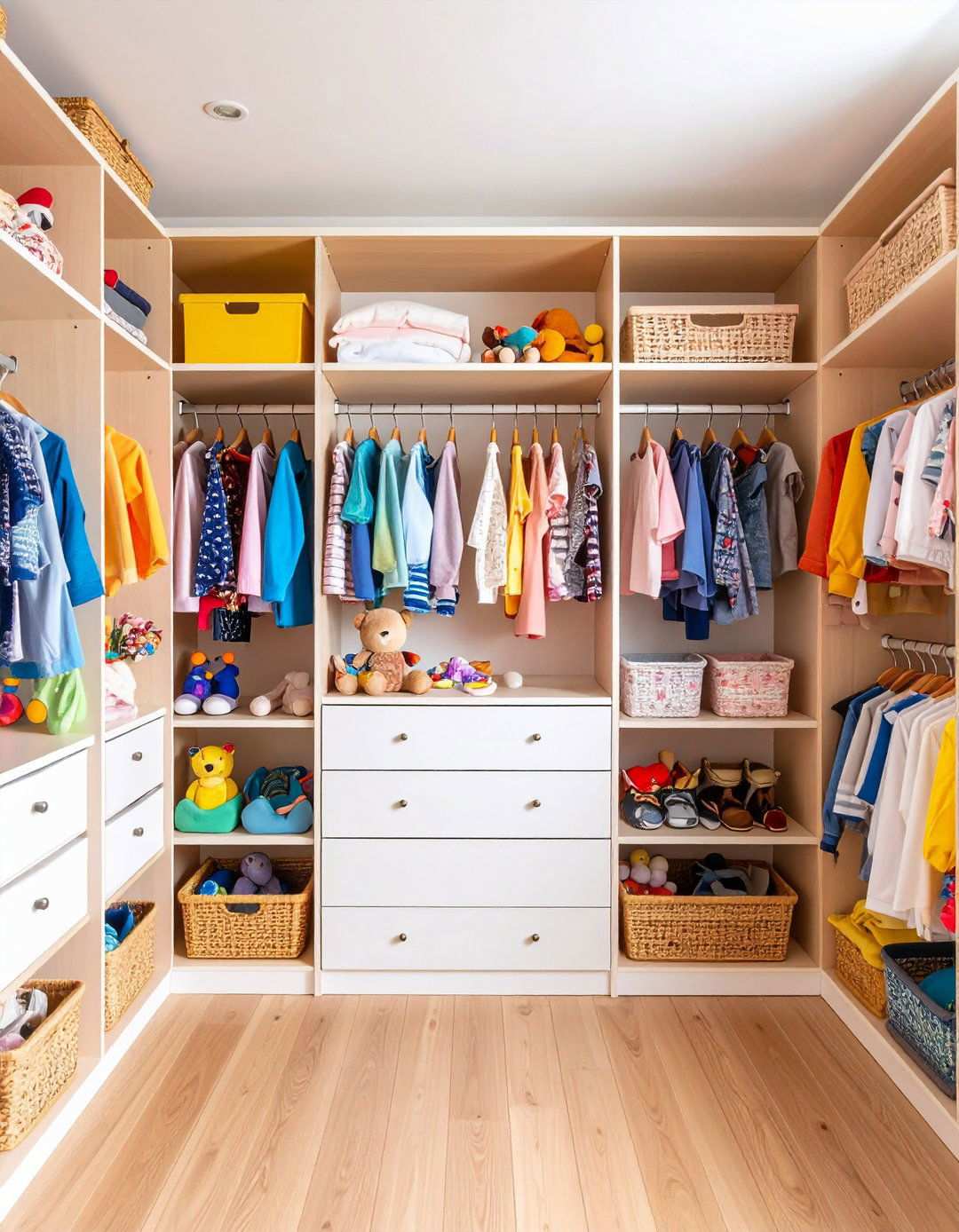
Transform your standard closet into a comprehensive toy storage center using adjustable shelving systems and hanging organizers designed specifically for children’s items. By maximizing vertical space and creating designated spots for everything from dress-up clothes to board games, you can contain visual clutter while providing extensive storage capacity that adapts as children’s needs change. To create a truly effective system, install double-hanging rods at child-friendly heights alongside shelving units and drawer systems. Consider incorporating clear containers and labeled sections to maintain organization over time. This approach works particularly well in bedrooms where playroom storage must coexist with clothing storage. By involving children in the design process, you can teach them valuable life skills while creating systems they’re motivated to maintain independently throughout their developmental years.
15. Organized Play Zones for Enhanced Engagement
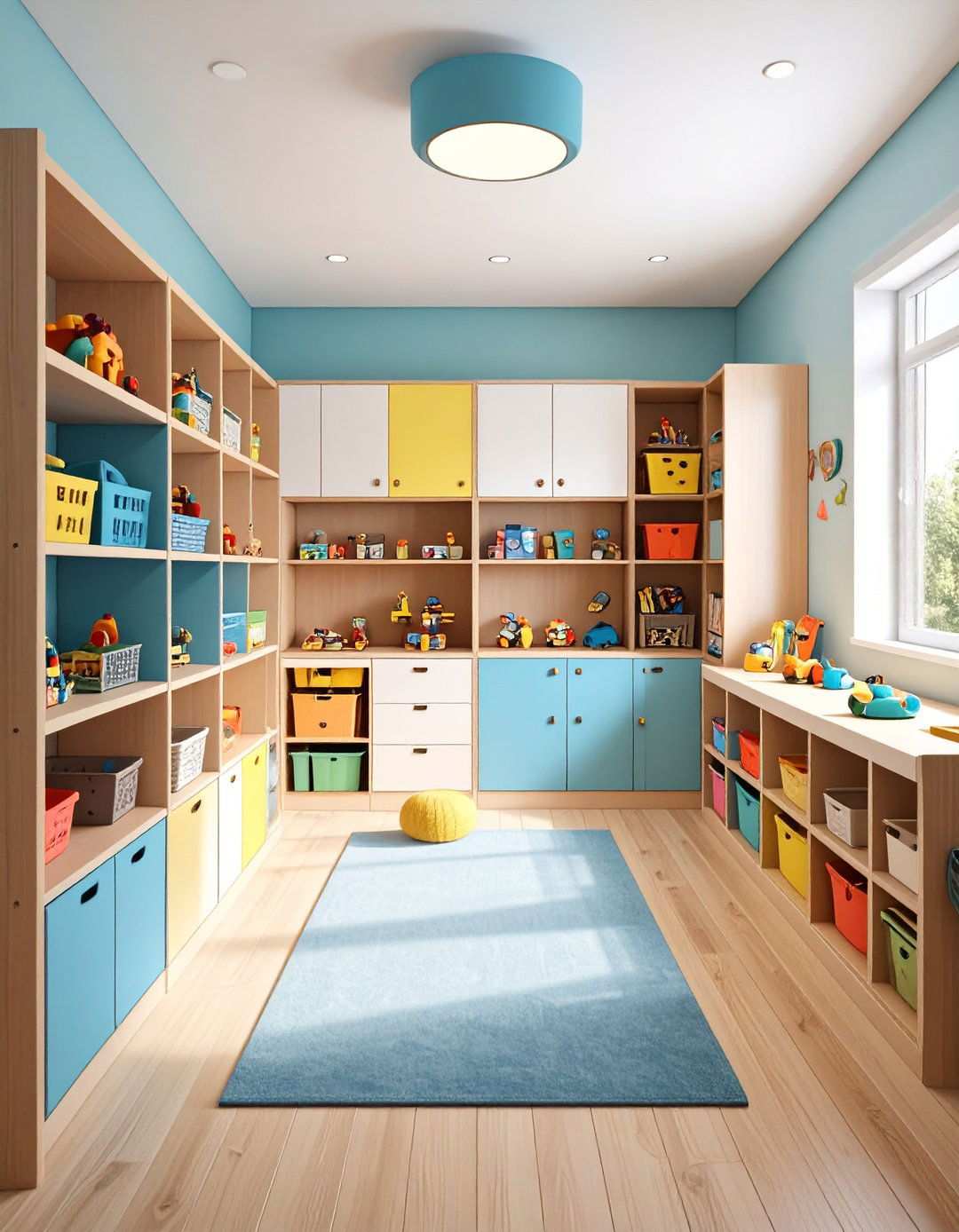
Creating dedicated storage areas for various play activities streamlines the process of finding and returning toys, fostering deeper focus in children. By categorizing play zones for art supplies, building toys, dress-up items, and quiet activities, families can simplify cleanup routines and encourage focused engagement. Design each zone with storage solutions that cater to the specific needs of the activity, such as wheeled carts for art supplies and large bins for building blocks. Portable storage options enable play zones to be reconfigured as interests evolve, providing structure that enhances creative play while teaching essential organizational skills that can be applied to other areas of life.
16. Maximizing Vertical Space with Ceiling-Mounted Storage Solutions
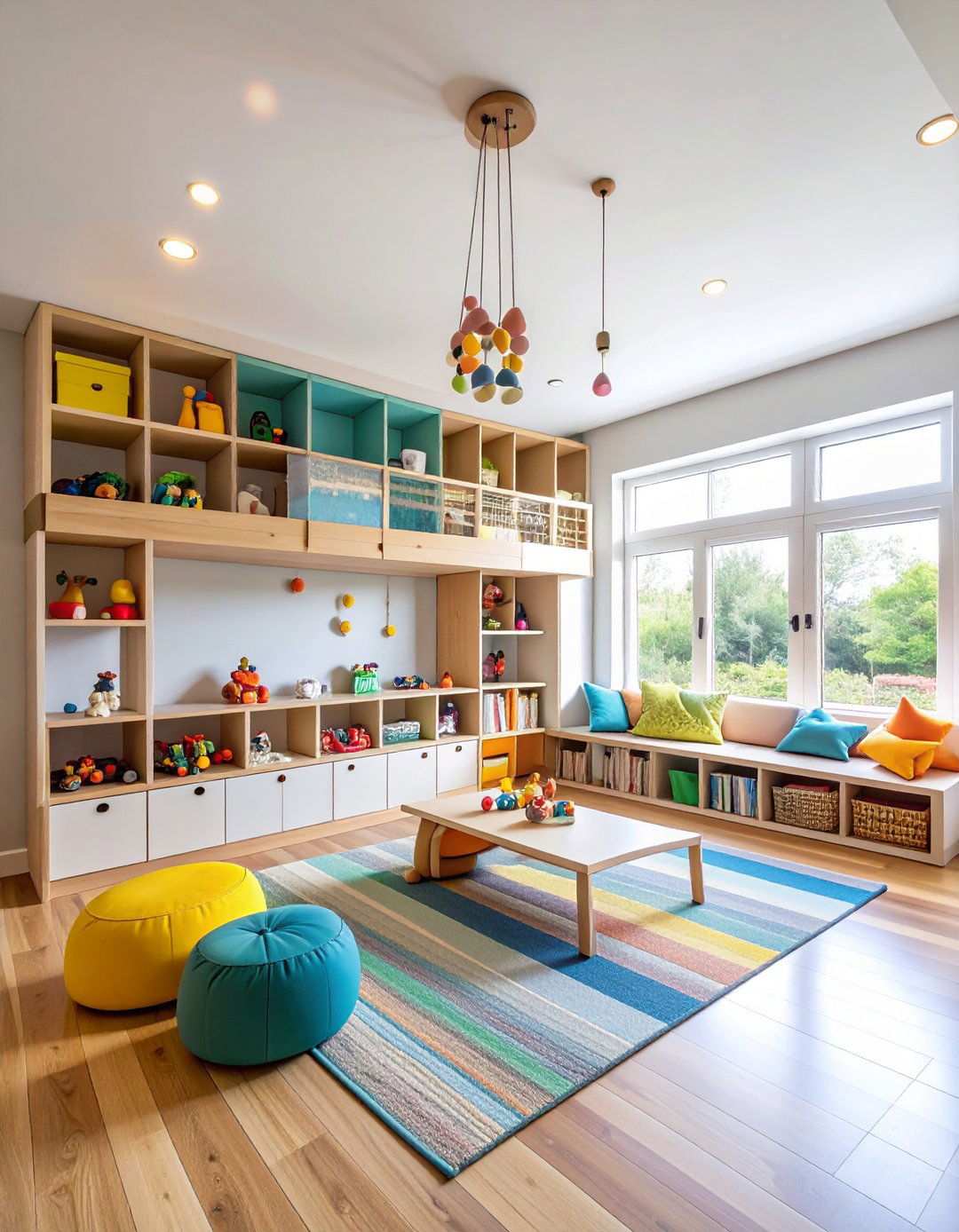
Ceiling-mounted storage is a space-saving solution that can be particularly effective for playrooms with high ceilings. By utilizing pulley systems or high-mounted shelving, families can store items that are not frequently accessed, such as seasonal toys, outgrown items, or bulky play equipment. To ensure safety, it is crucial to have professionally installed ceiling-mounted systems regularly inspected for stability. Lightweight, non-breakable items should be stored in overhead locations to prevent injury risks. Families can also consider decorative ceiling storage that adds visual interest while serving practical purposes. The key to successful ceiling-mounted storage lies in creating systems that allow safe adult access while keeping items completely out of children’s reach. Clear labeling of overhead storage is essential to maintain organization even when items are not regularly visible during daily activities.
17. Concealed Storage Furniture Solutions
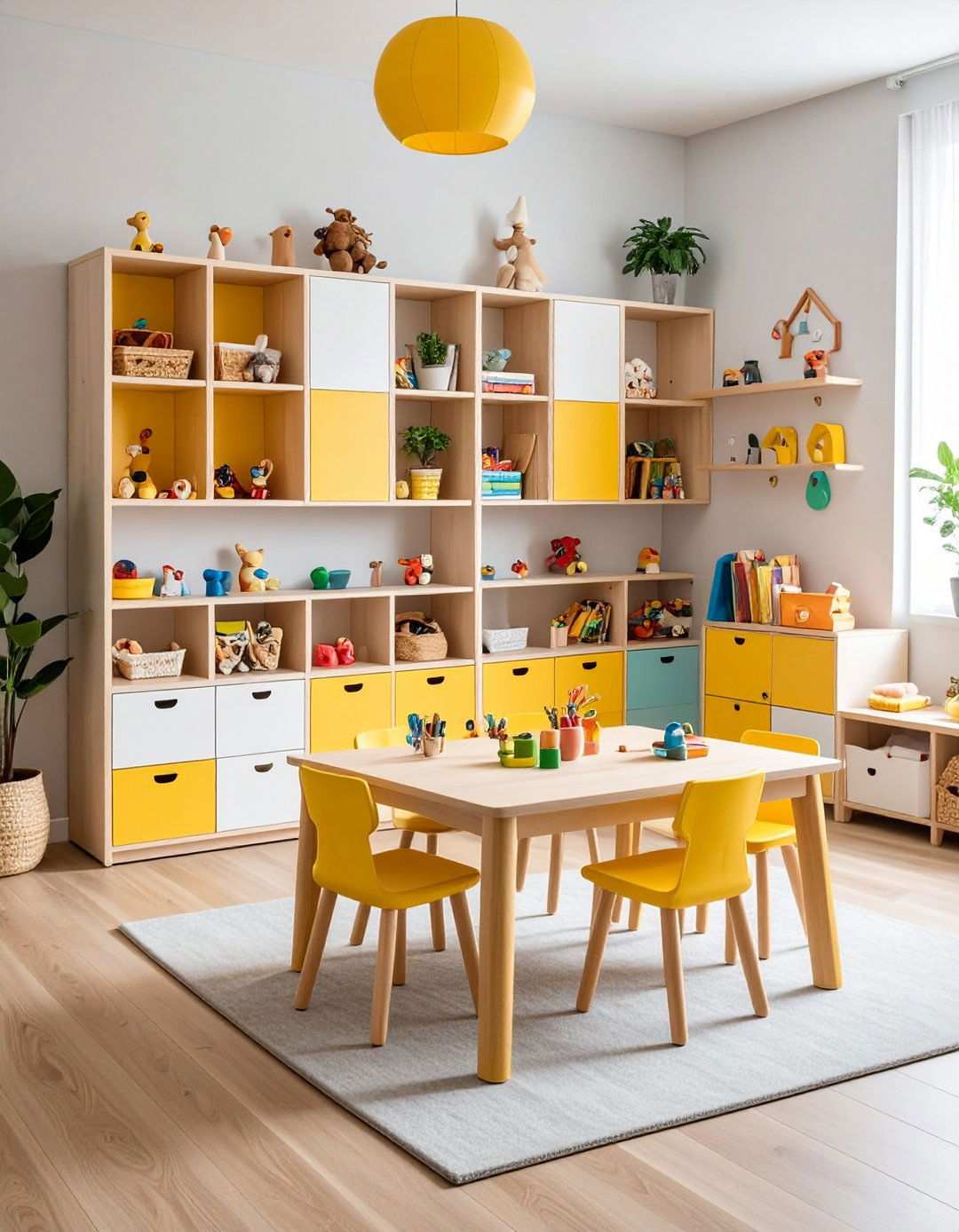
Opt for furniture pieces that cleverly conceal storage compartments, expertly balancing form and function to maintain a sleek, organized appearance. Ottomans with lift-up tops, coffee tables with built-in cabinets, and storage benches with hidden drawers offer versatile storage options that seamlessly blend into the room’s décor. What drives families to favor hidden storage? It enables the creation of sophisticated spaces that effortlessly adapt to children’s belongings, effectively bridging the gap between style and functionality. Look for pieces with intuitive mechanisms that allow children to access storage independently, while built-in safety features ensure a secure and injury-free experience. To maximize storage potential, consider coordinating multiple pieces to form cohesive, high-functioning systems that don’t compromise on aesthetics. This approach excels in formal areas where playtime and relaxation coexist, and the key to success lies in selecting robust, high-quality furniture that withstands frequent use while providing effortless organization.
18. Adhesive Wall Storage Systems
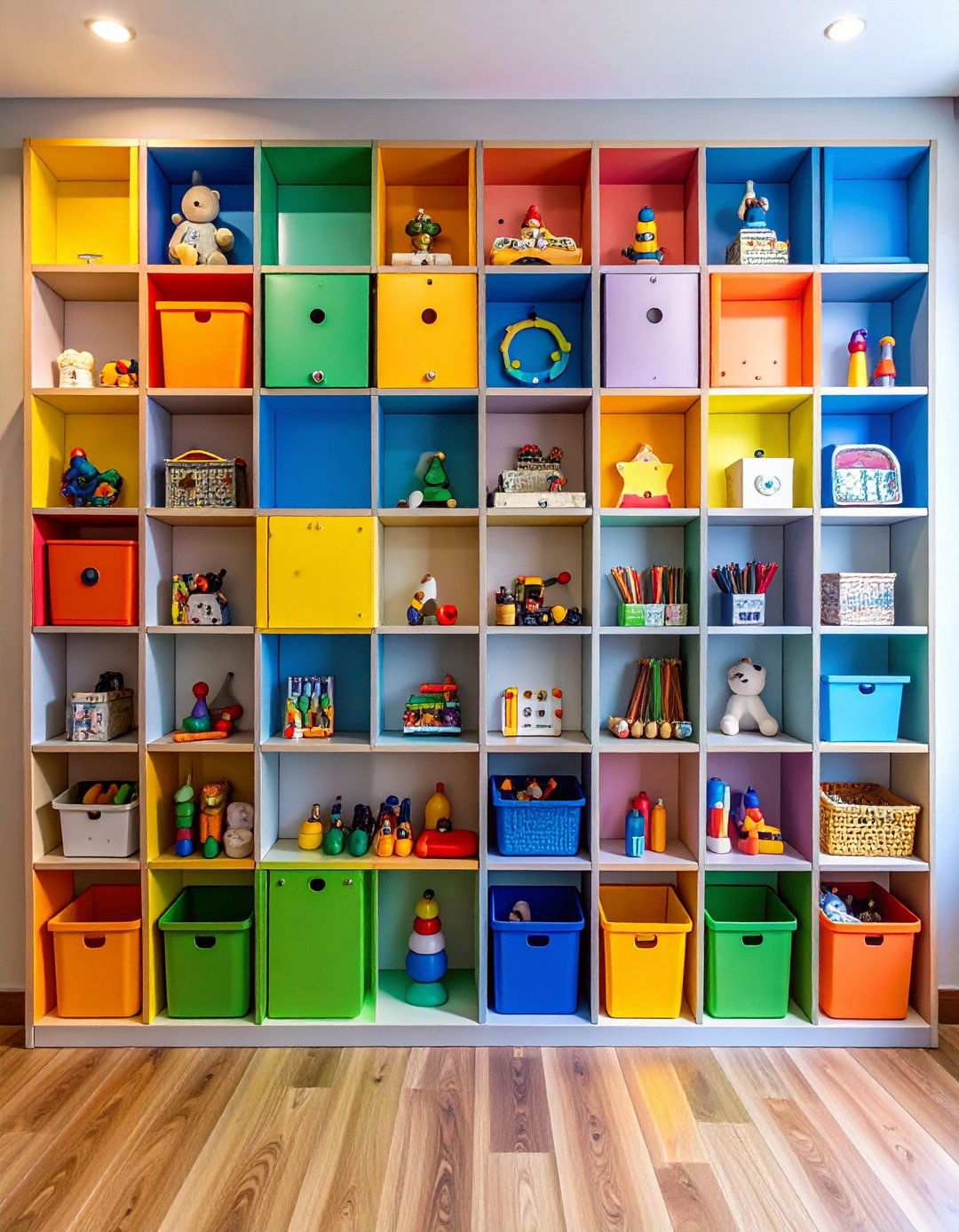
Harness the power of magnetic surfaces or strips to craft innovative storage solutions for small metal items, art supplies, and educational materials. These systems are particularly effective in craft areas where magnetic containers can hold tiny items like paper clips, safety scissors, or magnetic building pieces. What makes magnetic storage so captivating for children? The interactive nature of magnetic storage encourages organization while providing a tactile, sensory experience during cleanup activities. When selecting magnetic surfaces, prioritize food-safe options that withstand frequent cleaning while maintaining their grip. Consider combining magnetic storage with chalkboard or whiteboard surfaces for a dual-purpose storage solution. This method benefits visual learners who enjoy seeing organized collections while developing fine motor skills through the manipulation of magnetic components. As children discover they can create their own organizational patterns, they develop spatial reasoning skills while maintaining tidy play areas independently.
19. Adaptable Storage Solutions for Long-Term Value
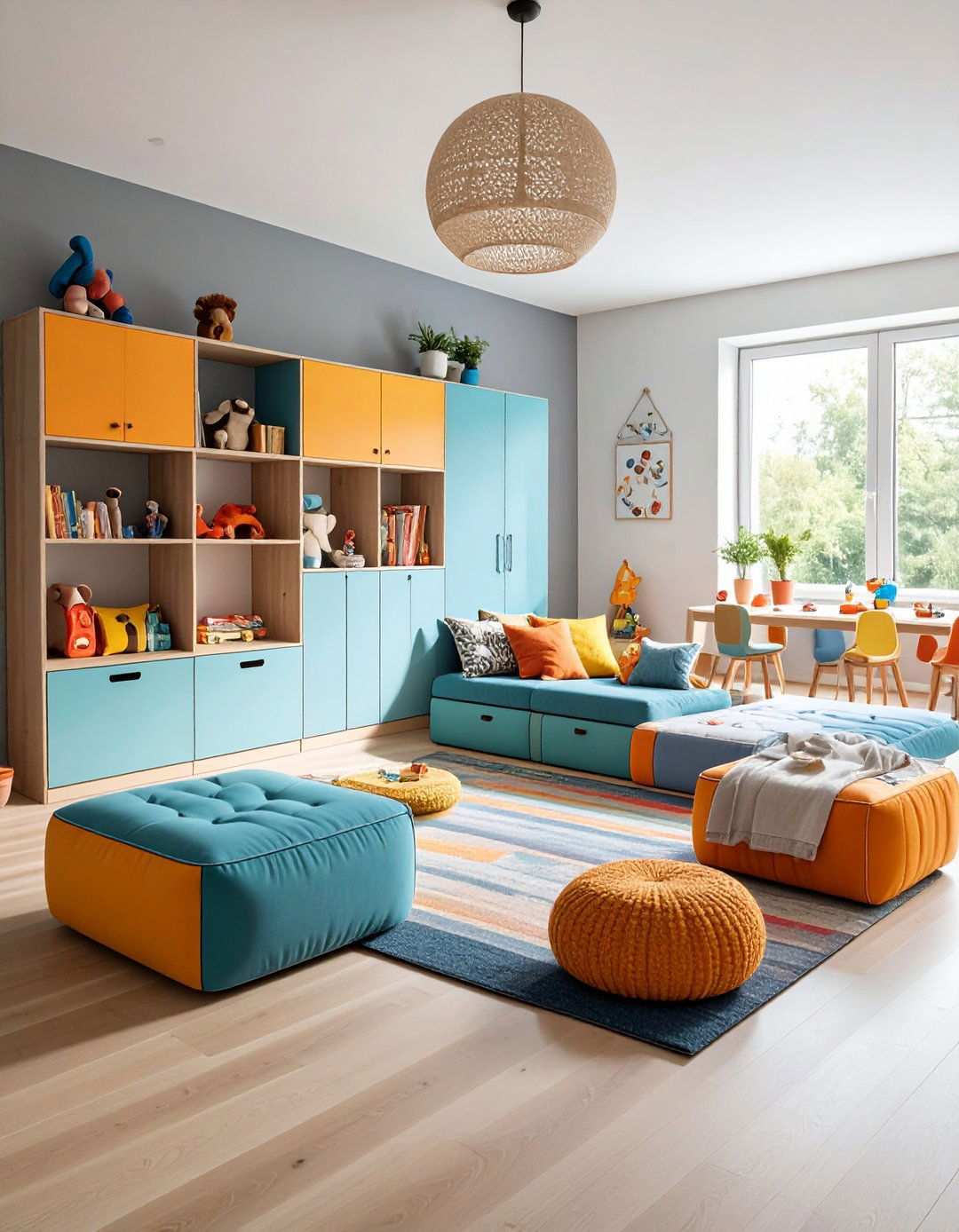
Investing in adaptable furniture that can transform to meet changing needs is a smart way to provide consistent storage solutions throughout childhood. These flexible pieces, like storage ottomans that convert into tables or benches with extendable desks, offer long-term value while adapting to developmental milestones. By choosing adaptable furniture, families can save money in the long run by eliminating the need to replace furniture as children grow. What’s more, these pieces provide consistent storage capacity while serving multiple functions, making them a practical choice for families with changing needs. When selecting adaptable pieces, look for well-constructed designs with smooth-operating mechanisms that can withstand years of use. Additionally, consider neutral finishes that work seamlessly with evolving room themes and color schemes. This approach is particularly beneficial for families planning to repurpose playrooms as children mature.
20. Upcycled Storage Solutions with Character
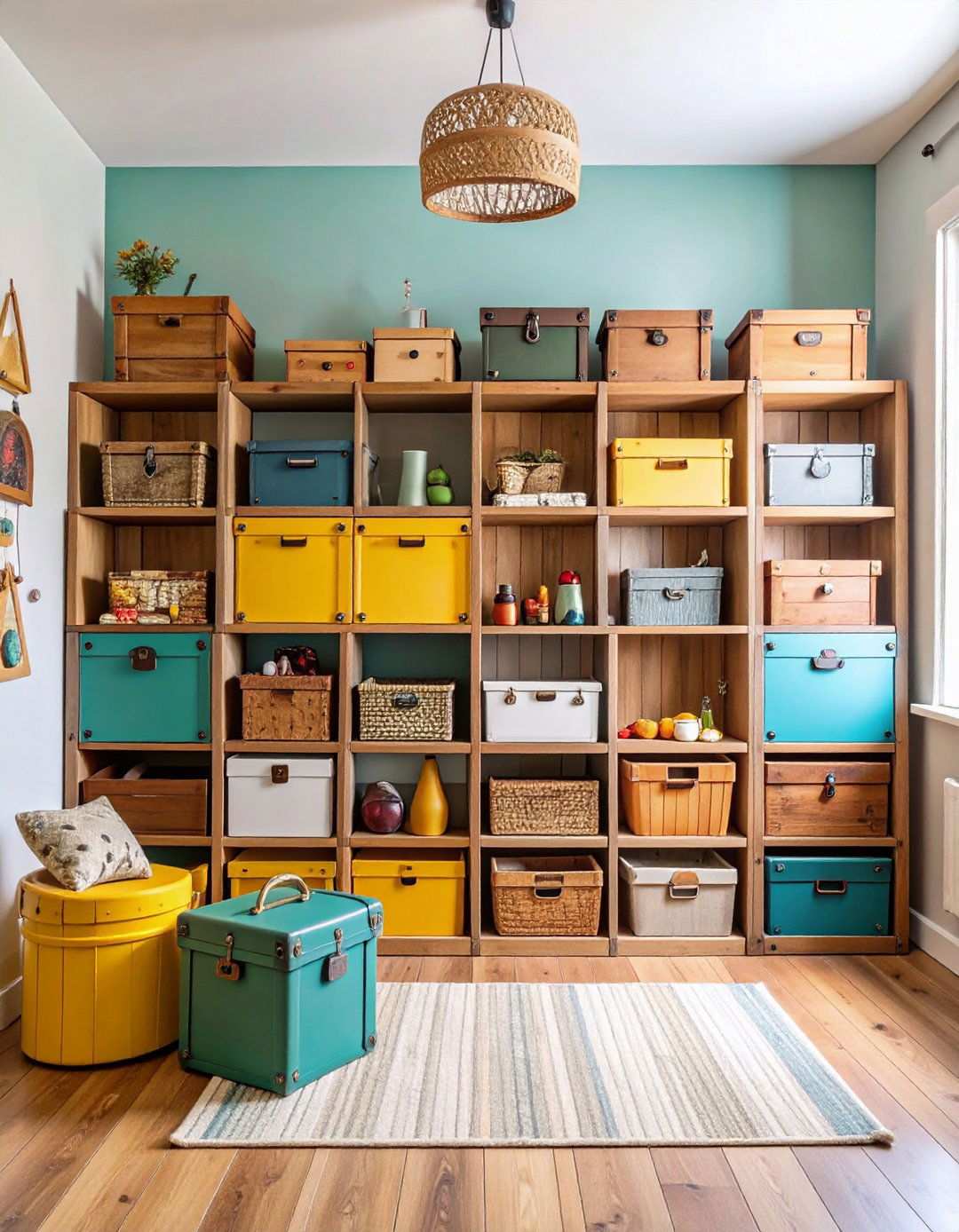
Give new life to vintage items like wooden crates, metal tins, or antique suitcases to create unique storage solutions with personality and history. Old wooden crates with handles can be repurposed as portable toy storage that children can easily carry to different play areas, fostering a sense of responsibility and independence. The charm of vintage storage lies in its ability to add character and story to playrooms, often with superior construction quality compared to modern alternatives. However, it’s essential to ensure that vintage items are properly cleaned and safe for children’s use, checking for any sharp edges or toxic finishes. To create a cohesive look, consider grouping vintage pieces and maintaining practical functionality. This approach particularly resonates with families who value sustainable decorating and teaching children about reusing and repurposing items. By involving children in selecting and arranging vintage storage pieces, families can create meaningful connections to family history while promoting appreciation for quality craftsmanship and environmental responsibility.
21. Drawer Divider Systems
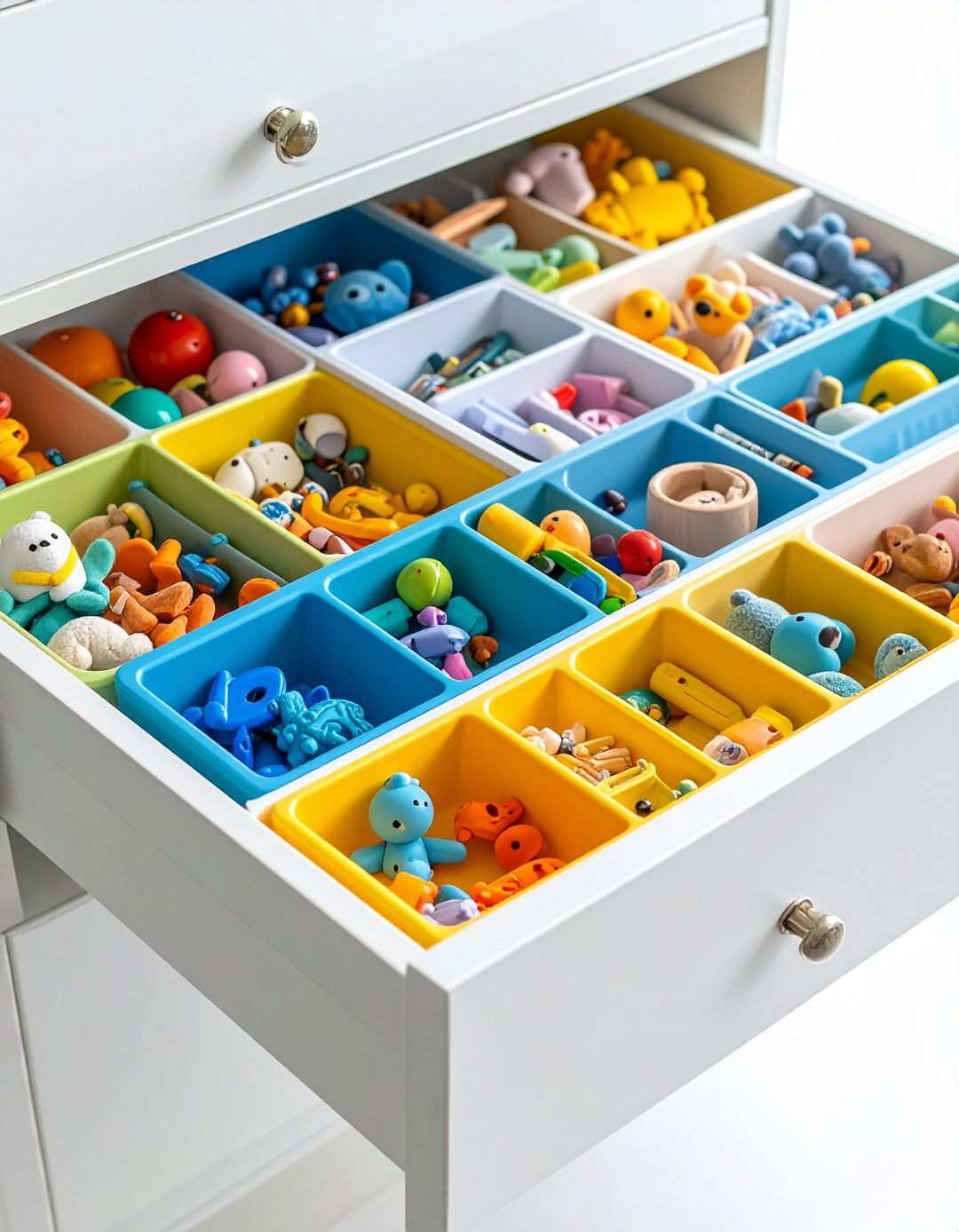
Customize storage spaces within drawers using adjustable divider systems that accommodate various collections, such as art supplies, small figurines, jewelry, or building pieces. These dividers prove particularly effective for containing small items that tend to get lost in larger containers. What makes dividers so beneficial? They prevent items from mixing together while allowing children to visualize entire collections at once. Opt for expandable dividers that adjust as collections grow or change focus. Brightly colored or clear dividers not only add visual appeal but also help maintain practical separation. This system excels in repurposed bedroom dressers or dedicated craft furniture. By involving children in designing their own divider arrangements, parents can teach categorization skills and create systems that children understand and can maintain. Regular reassessment ensures that divider configurations continue to meet changing organizational needs effectively.
22. Pocket Organizers
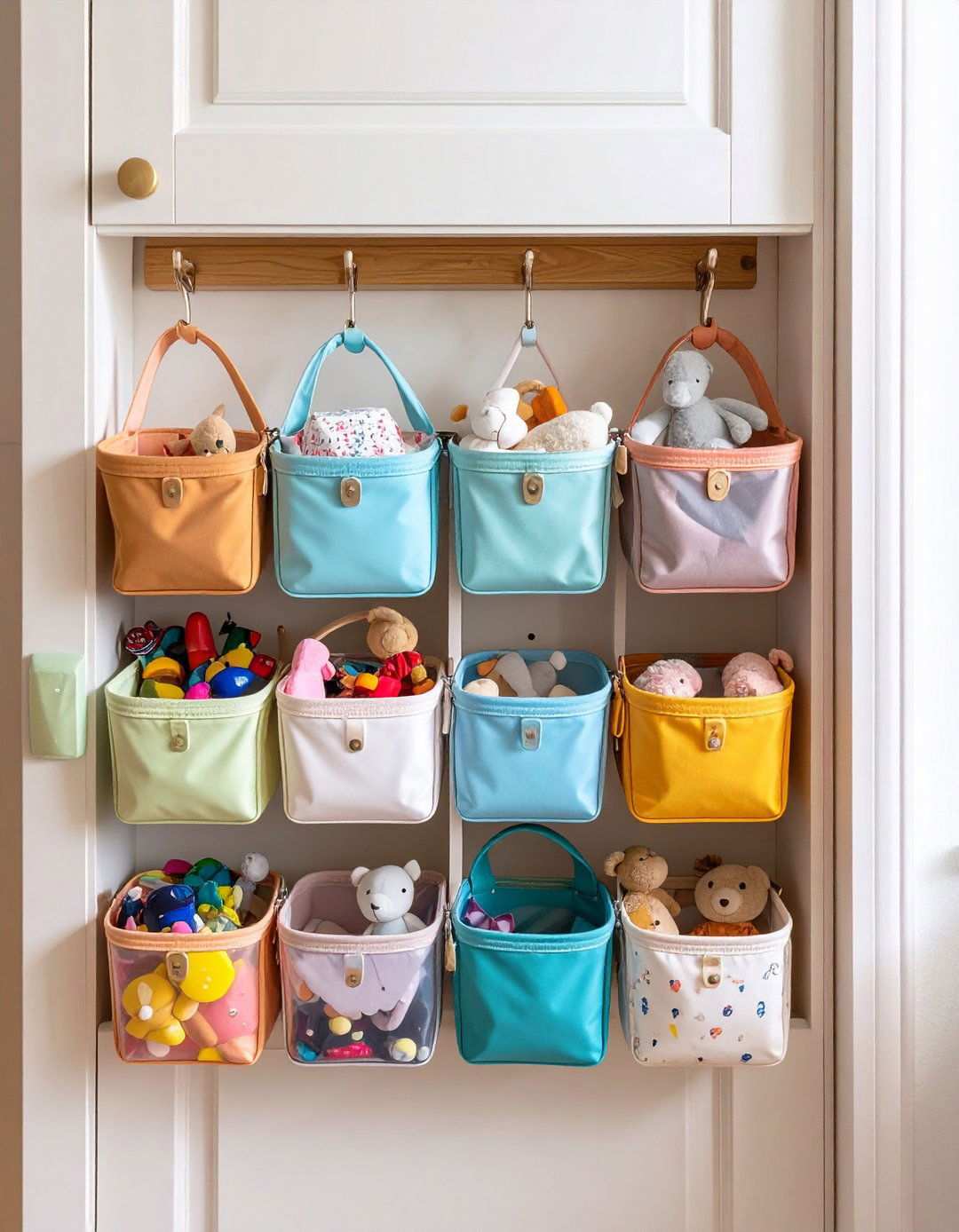
Maximize storage potential by utilizing over-the-door hanging organizers with multiple pockets to store small toys, art supplies, or collections. These space-saving solutions work exceptionally well for items that tend to get misplaced in larger storage containers while providing clear visibility of contents. What makes pocket organizers so practical? They transform unused door space into valuable storage real estate, allowing children to see everything at once and encouraging independent selection and cleanup. When selecting organizers, choose those with reinforced pockets that withstand frequent use and maintain their shape over time. Clear or mesh pockets can also facilitate easy identification of contents. This storage method benefits small bedrooms or playrooms where wall space is limited but door space is available. By granting children easy access and return capabilities, parents can build confidence and responsibility while maintaining organized storage systems.
23. Color-Coded Storage
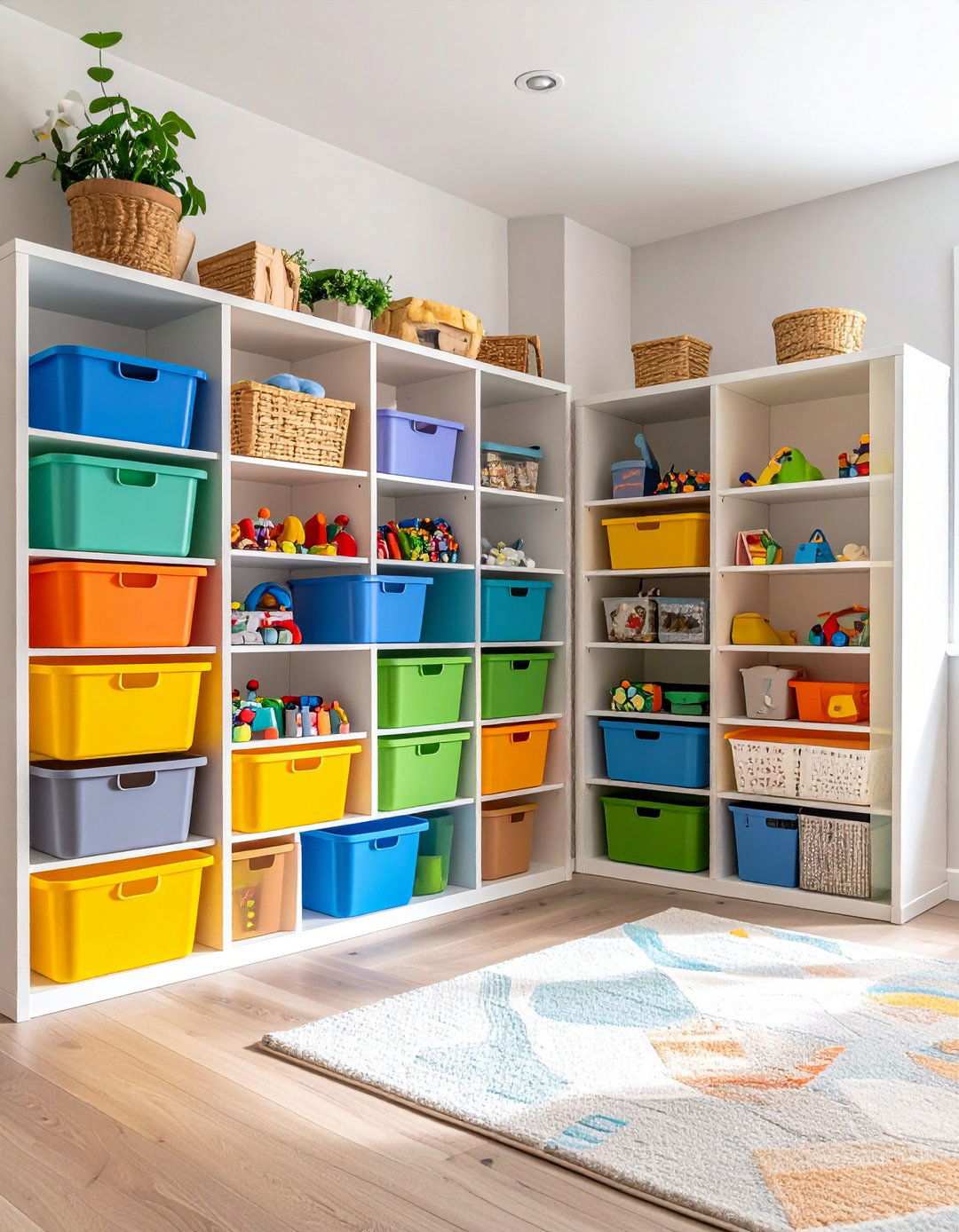
Developing intuitive storage systems for children involves leveraging their natural affinity for color. By assigning distinct hues to various toy types or family members, parents can create a visual framework that fosters effortless organization. Coordinating containers, labels, and storage accessories in harmonious colors enables children to swiftly identify where items belong, making cleanup a manageable task rather than a daunting chore. To establish a color-coded system, consider utilizing natural associations – for instance, green for outdoor toys, blue for literature, or red for artistic materials. Applying colored tape or stickers to storage locations can also simplify the process of integrating new containers into the existing system. This approach adapts seamlessly to different age groups, from toddlers’ basic color recognition to older children’s more complex categorization skills. By maintaining consistency and encouraging children’s participation in establishing the color code, parents can instill a sense of ownership and responsibility in the organization process.
24. Mobile Storage Stations
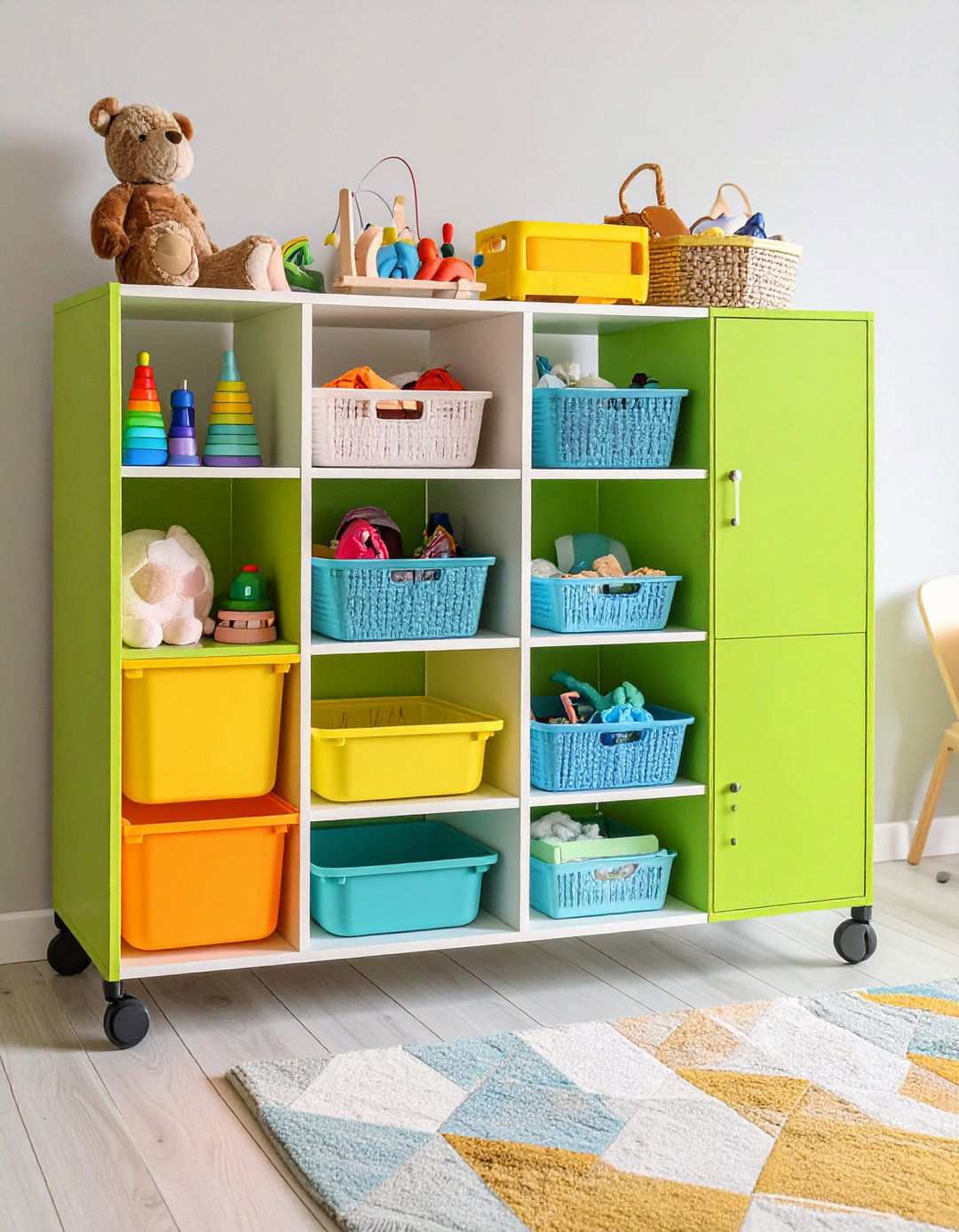
Portable organization centers can be created using wheeled carts or carriers that bring storage solutions directly to the heart of play activities. These mobile hubs work particularly well for items like art supplies, building materials, or outdoor toys that require frequent movement between spaces. By employing mobile solutions, parents can prevent items from becoming scattered throughout the house while ensuring immediate access to complete activity sets. When selecting carts, consider models with multiple tiers and varying compartment sizes to accommodate an array of supplies. Locking wheels can also be beneficial for preventing carts from moving during use while ensuring smooth rolling when transportation is necessary. This approach is especially advantageous for families with open floor plans or multiple play areas where stationary storage becomes impractical. By creating themed mobile stations – one for each major activity type – parents can provide children with everything required for complete play experiences while maintaining organized storage systems that travel efficiently throughout the home.