1. Timeless Elegance of the Mediterranean Coast
When designing a kitchen, many homeowners aspire to capture the essence of a sun-kissed European getaway. The Mediterranean style, inspired by the warm landscapes of Spain, Italy, Greece, and coastal France, has become a beloved choice for its ability to blend rustic charm with sophisticated elegance. Characterized by its use of natural materials, such as terracotta tiles, natural stone countertops, and rich wood cabinetry, Mediterranean kitchens develop a beautiful patina over time, imbuing the space with a sense of history and tradition. The color palette, reminiscent of the region’s breathtaking scenery, features a soothing blend of warm earth tones, ocean blues, and sun-kissed yellows that evoke a sense of relaxation and warmth. As a result, Mediterranean kitchens become the perfect setting for gathering, cooking, and sharing meals with loved ones.

As an Amazon Associate I earn from qualifying purchases.
From handmade ceramic tiles to intricately crafted wrought iron fixtures, every element in a Mediterranean kitchen tells a story of traditional craftsmanship and authentic living. The style celebrates the beauty of imperfection, embracing the unique characteristics of each material to create a space that feels truly one-of-a-kind.
2. Authenticity Redefined: Two Timeless Mediterranean Kitchen Designs
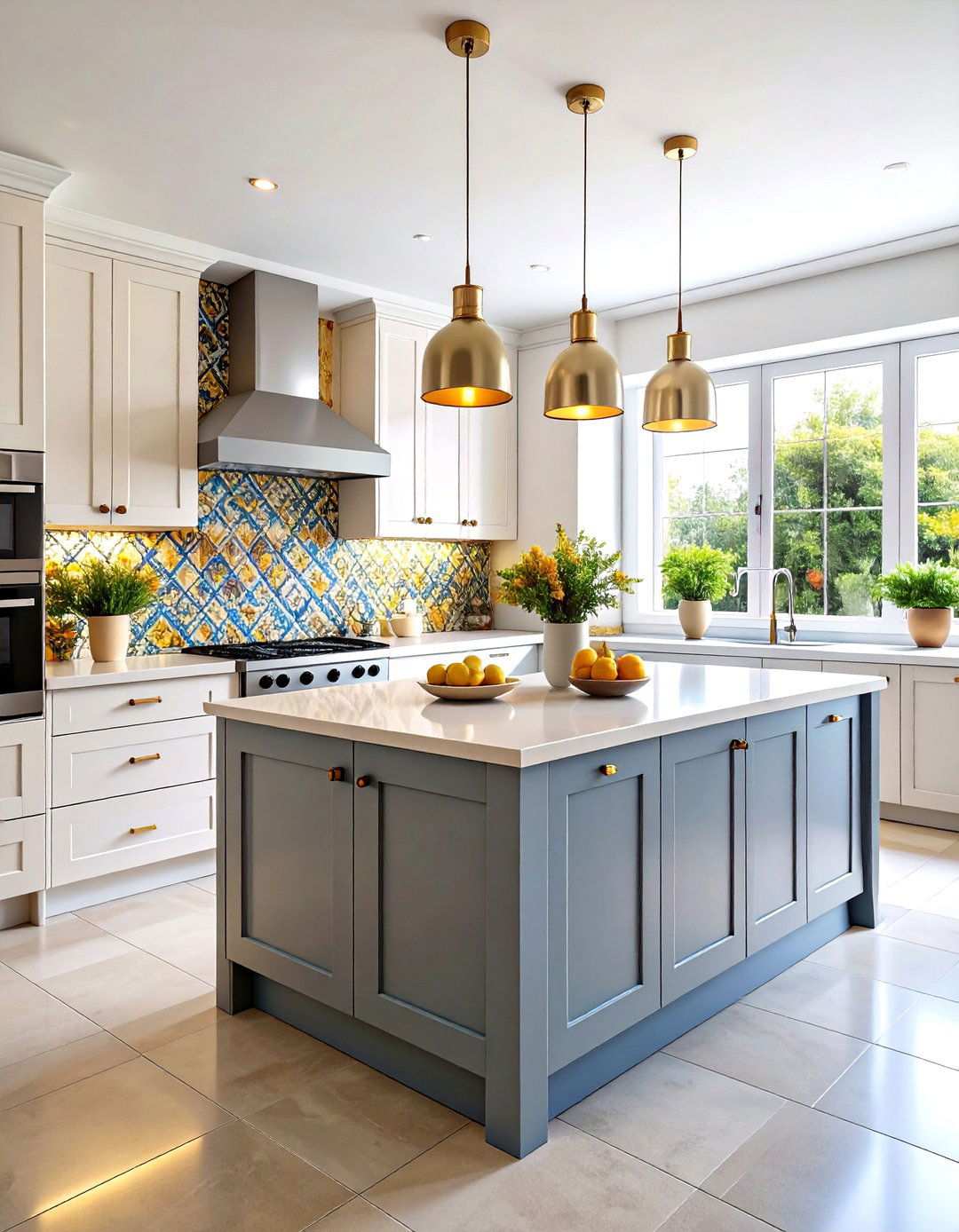
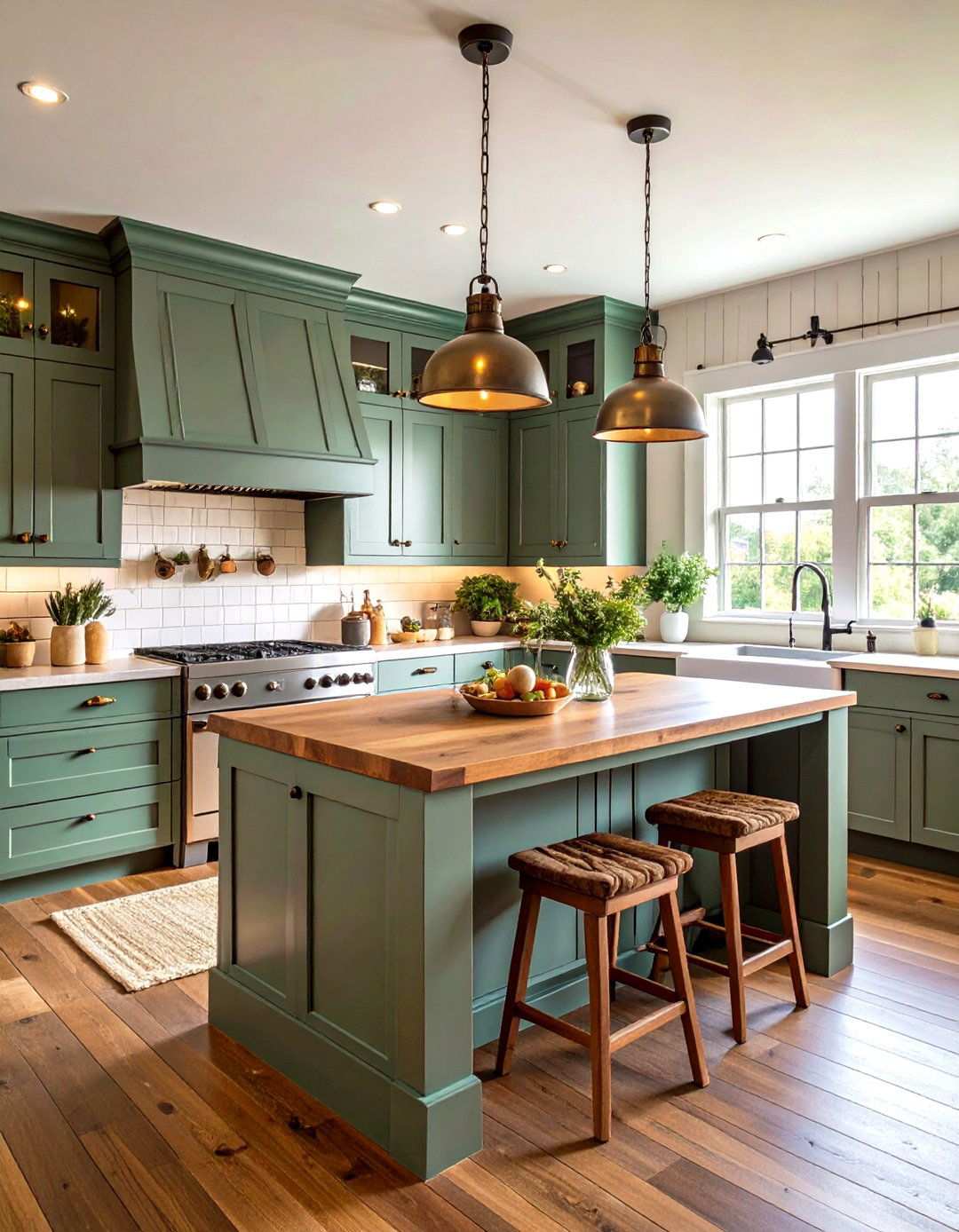
The Mediterranean style offers endless possibilities for creating a kitchen that feels like a countryside retreat or a seaside escape. Two distinct designs showcase the versatility of this beloved style, each with its own unique twist on traditional elements.
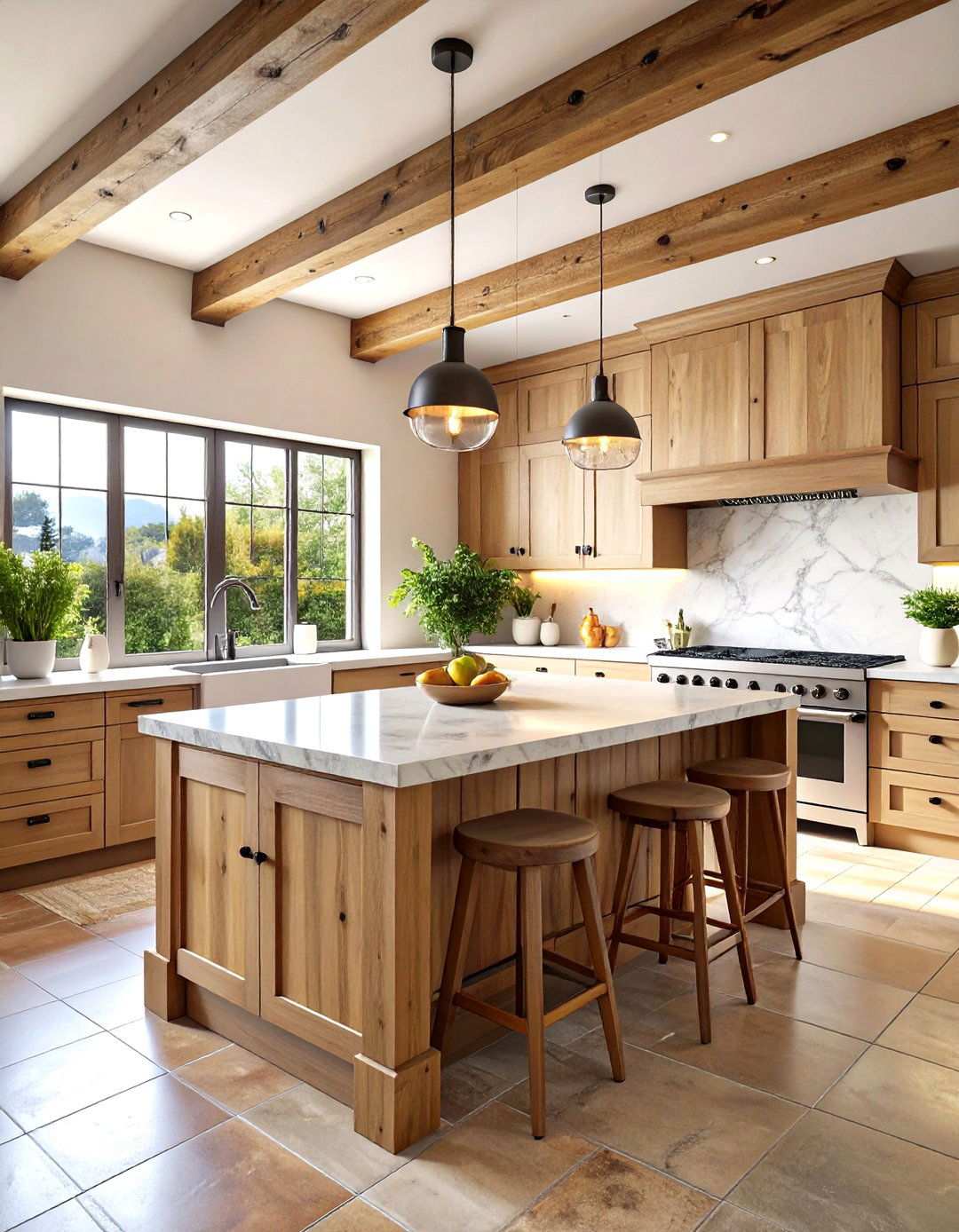
A Tuscan-inspired kitchen, for instance, can be recreated with distressed wood cabinetry featuring warm honey tones, paired with thick marble countertops that showcase their natural veining. Exposed wooden ceiling beams add a touch of architectural interest, while terra cotta floor tiles provide a sense of warmth and coziness underfoot. The color scheme, comprising creamy whites, soft golds, and muted greens, transports you to the rolling hills of Tuscany. Rustic furniture pieces, like a weathered wooden dining table, complete the authentic farmhouse atmosphere, while copper pots hanging from wrought iron racks add a touch of functional beauty to this timeless design approach.
Alternatively, a Spanish-inspired kitchen can be brought to life with handcrafted tiles featuring vibrant patterns and rich colors. These artisan-made pieces, with their traditional geometric designs in blues, yellows, and whites, instantly transport you to coastal Spain. Pair colorful tile backsplashes with neutral cabinetry to let the patterns shine without overwhelming the space. The glazed finish reflects light beautifully, making kitchens feel brighter and more spacious. Consider mixing different tile patterns within the same color family for added visual interest, each tile telling a story of centuries-old craftsmanship that brings authentic Mediterranean charm to modern homes.
3. Outdoor Mediterranean Oasis
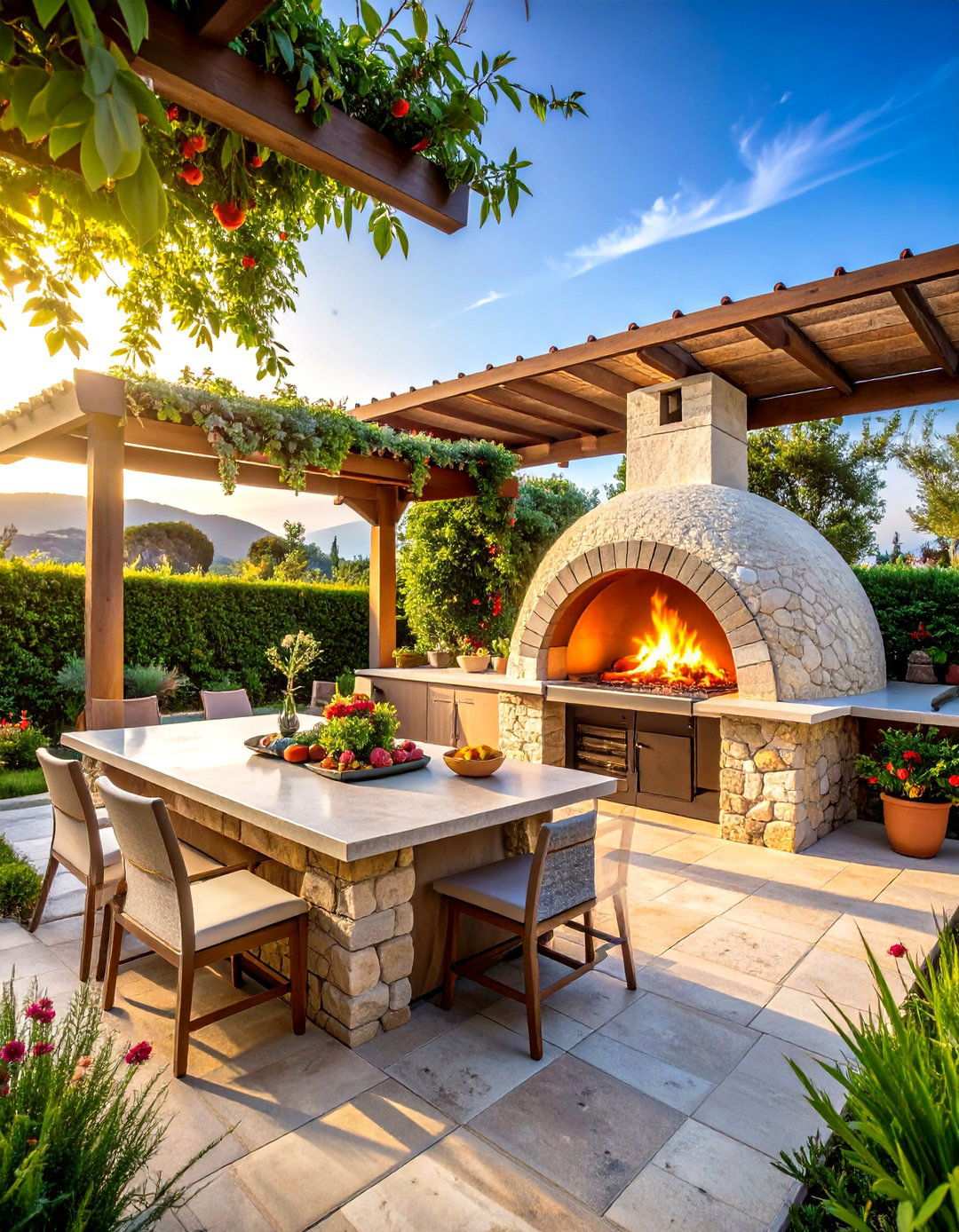
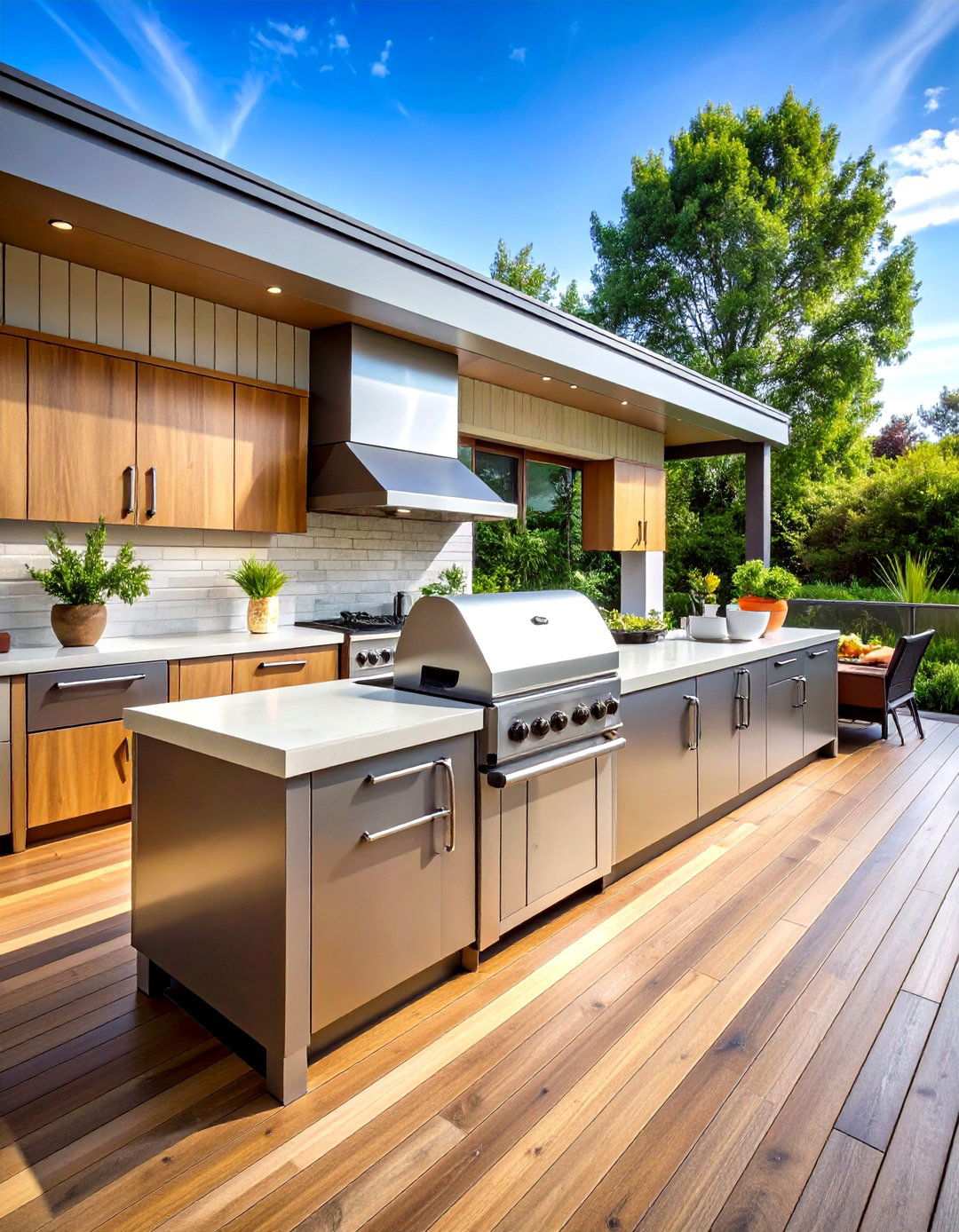
Create a culinary haven that embodies the essence of Mediterranean living by bringing the outdoors into your entertaining space. A wood-fired pizza oven takes center stage in an alfresco kitchen, perfectly blending with the surrounding landscape to create a seamless transition between indoors and outdoors. The natural beauty of stone construction stands the test of time, providing durability and a sense of permanence. The curved design of the oven becomes a striking architectural feature while serving as functional cooking equipment. Ample counter space for food preparation and casual dining allows for effortless gatherings and impromptu meals. Canopies or covered areas provide respite from the sun while maintaining the airy feeling, while nearby herb gardens supply an abundance of fresh ingredients for authentic Mediterranean cuisine. This design encourages socializing, sharing meals, and forging lasting memories under the open sky.
4. Terracotta Tile Kitchen Revival
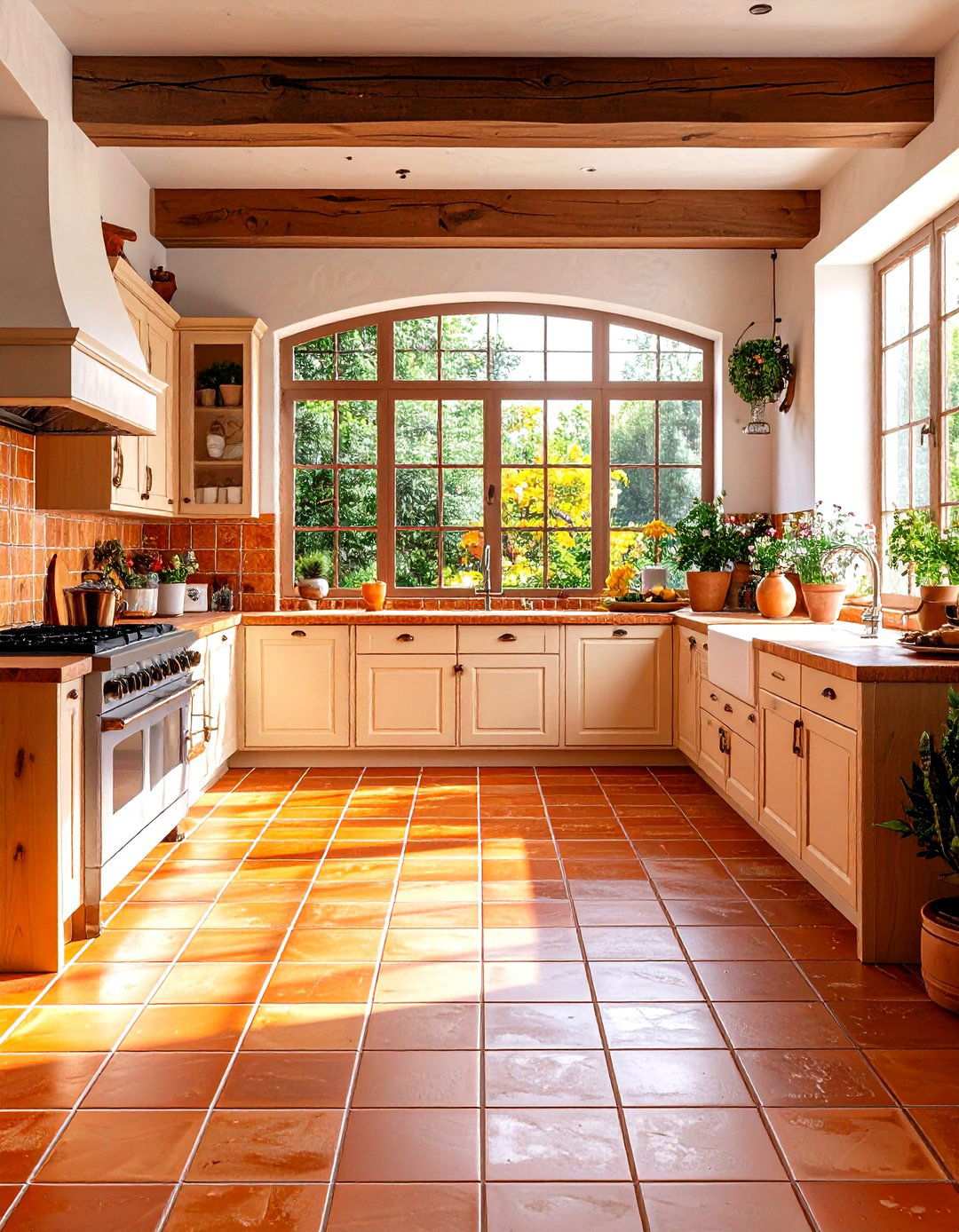
Bring the warmth and character of the Mediterranean into your kitchen with the rich, earthy tones of terracotta tiles. These handmade clay tiles exude a sense of history and tradition, each one boasting unique imperfections that add to their charm rather than detract from it. The natural material provides excellent thermal mass, regulating the temperature to keep the space comfortably cool in summer and warm in winter. Terracotta pairs exquisitely with cream-colored cabinetry and natural wood accents, creating a harmonious balance of textures and tones. The aged patina that develops over time only enhances the authentic Mediterranean ambiance, making each tile a treasured possession. To add visual interest, consider using a mix of tile sizes or patterns, all while maintaining a cohesive earthy aesthetic.
5. Rustic Iron Accents
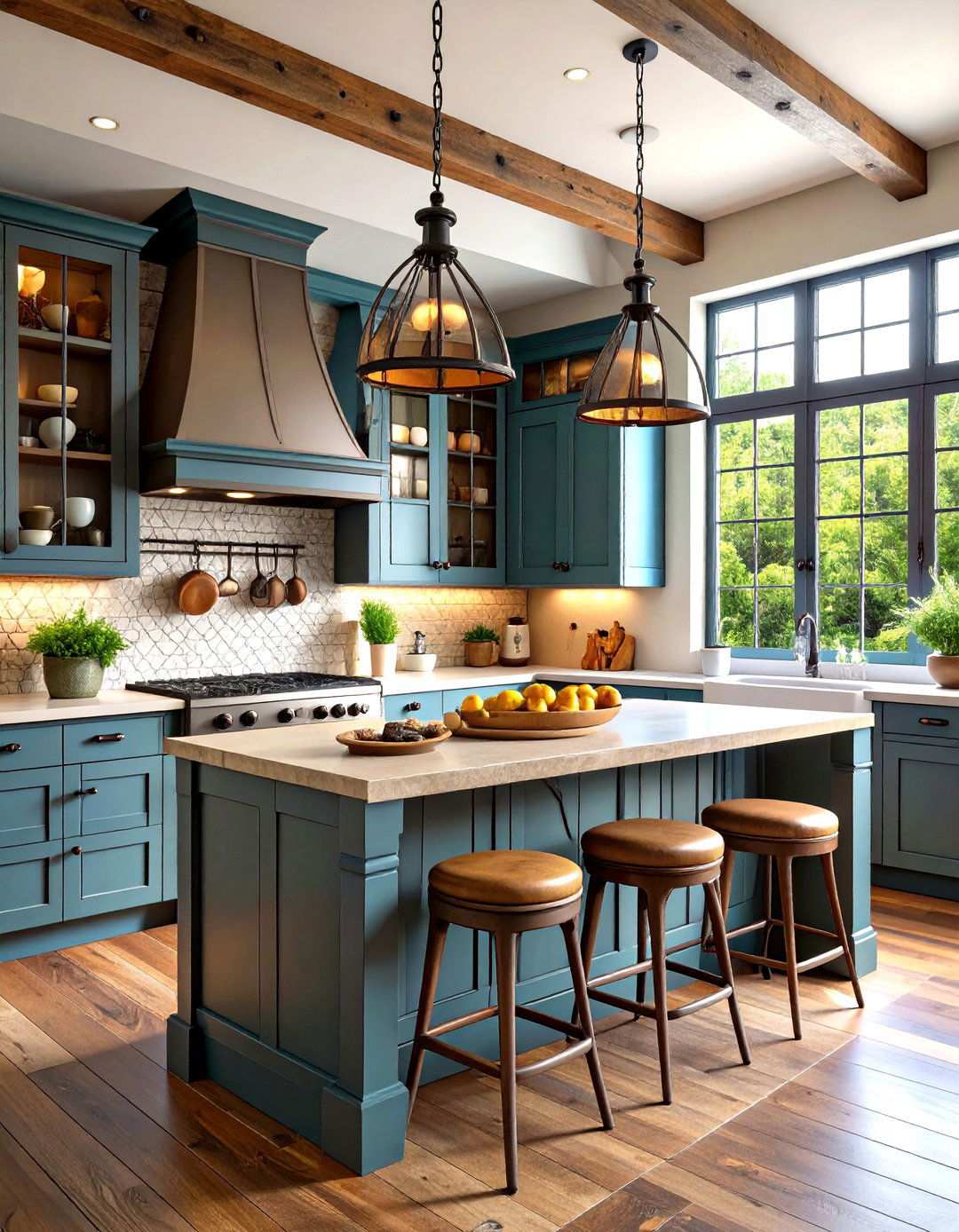
Mediterranean kitchens are renowned for their old-world charm, and wrought iron elements are the perfect way to capture that essence. Handcrafted with precision and care, these iron pieces bring a touch of sophistication and elegance to any kitchen. Iron pot racks suspended from the ceiling not only provide storage for copper cookware but also serve as a decorative feature. Dark wrought iron cabinet hardware creates striking contrast against lighter wood or painted surfaces, adding depth and visual interest. Pendant lighting fixtures with iron frames and warm glass shades illuminate work areas while adding a touch of drama. Bar stools with iron frames and woven rush seats provide comfortable seating, and as they age, they develop a rich patina that enhances rather than diminishes their beauty.
6. Capturing Mediterranean Elegance with Natural Stone Countertops
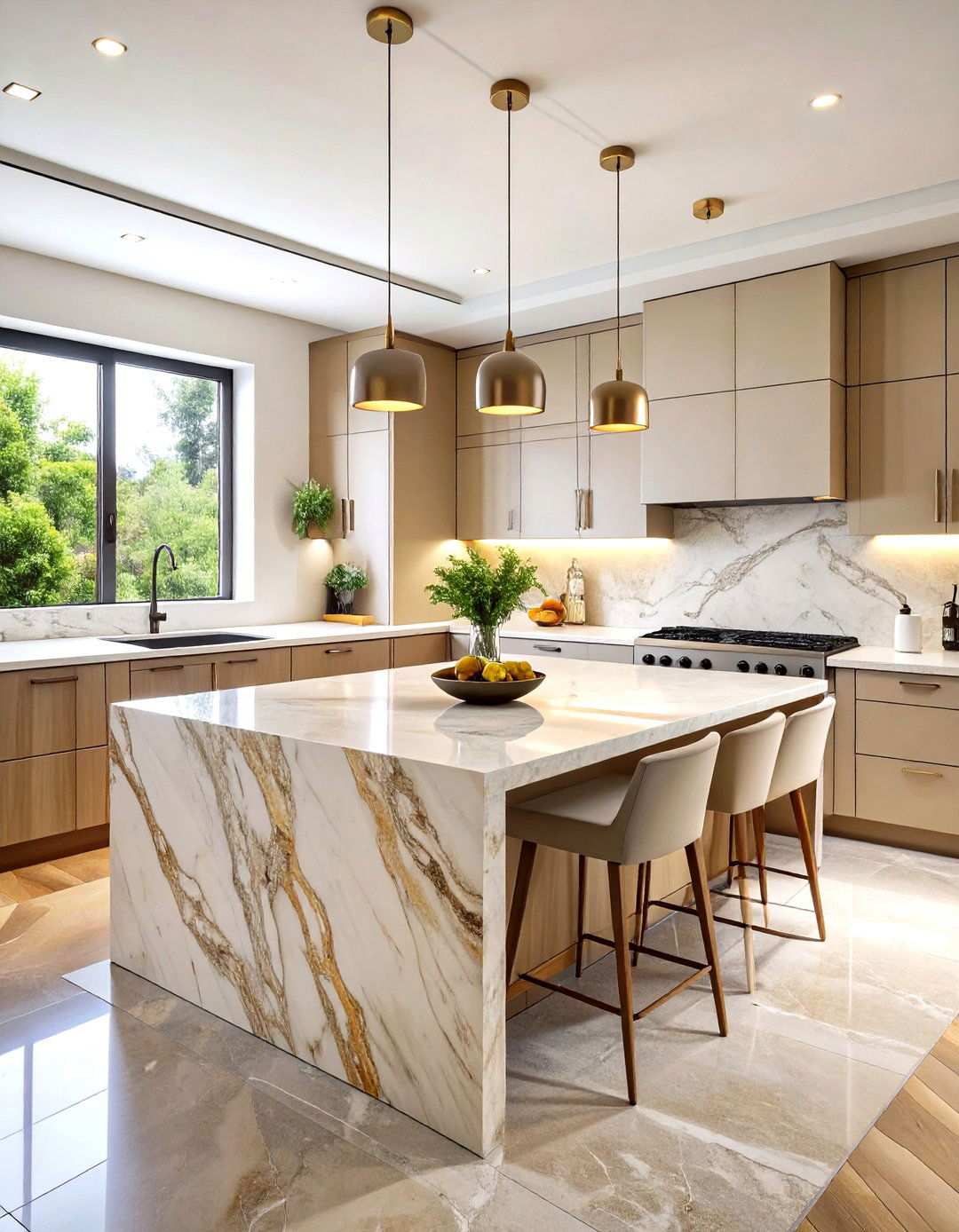
Natural stone surfaces embody the essence of Mediterranean kitchen style, don’t they? Materials such as marble, travertine, and limestone bring a unique, organic beauty with their intricate veining and color variations. Each slab is a testament to the passage of time, telling its own geological story through patterns that have formed over millions of years. The cool surface temperature creates ideal conditions for pastry making and bread preparation, while the beauty of natural stone develops and matures through daily use, becoming even more attractive with age. Honed finishes offer a subtle texture, while polished surfaces reflect light beautifully, adding a touch of sophistication to the space. These durable materials not only withstand the test of time but also maintain their inherent beauty, making them a perfect fit for Mediterranean-inspired kitchens. Proper sealing ensures longevity while preserving the stone’s natural characteristics and authentic Mediterranean appeal.
7. Architectural Elements that Transport You to a Mediterranean Villa
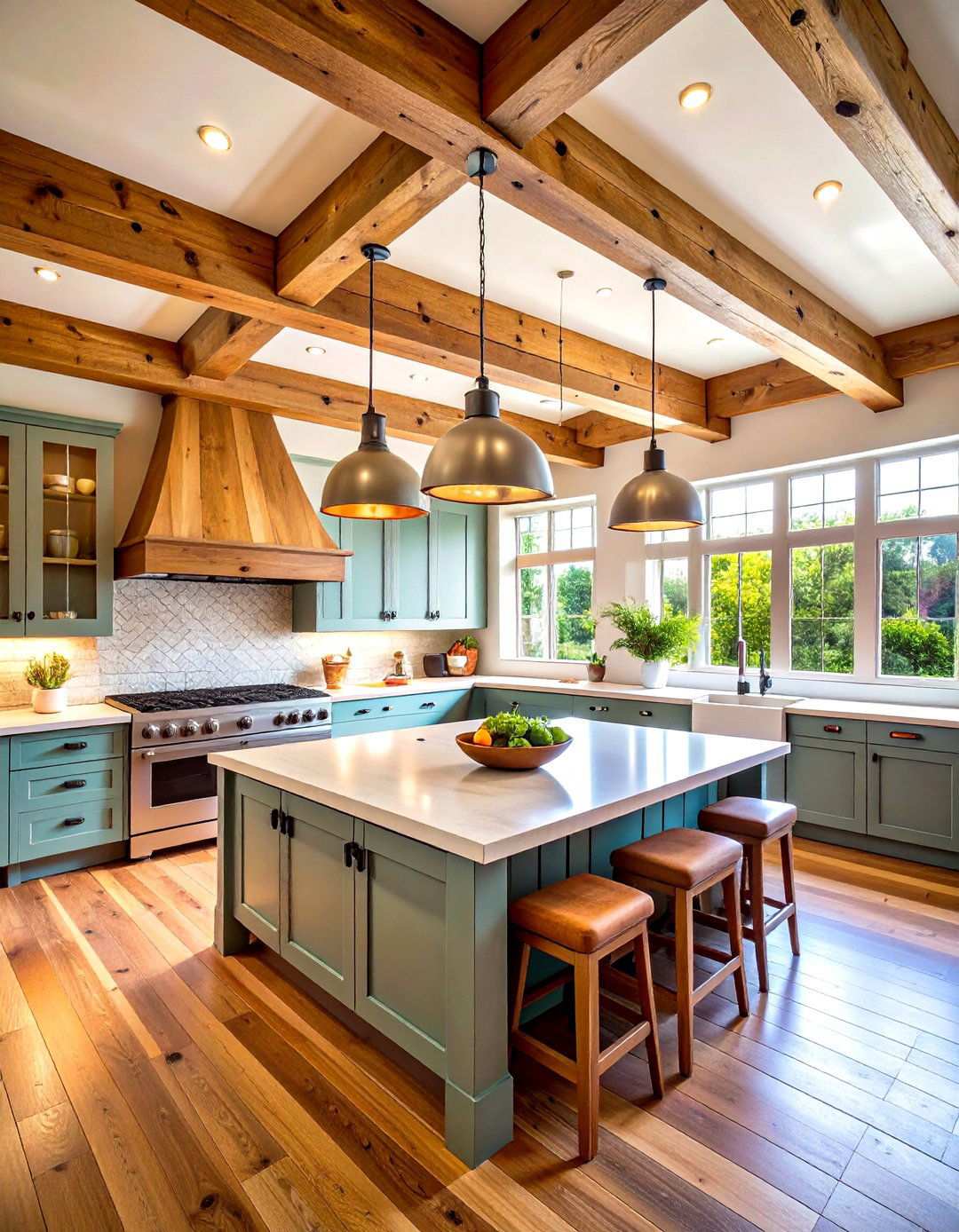
Exposing architectural elements can instantly transport you to a Mediterranean villa, can’t it? Exposed wooden ceiling beams create a dramatic visual impact while honoring traditional building methods. These structural elements add warmth and texture, making kitchens feel more intimate and welcoming. Natural wood species like oak, chestnut, or reclaimed timber bring authentic character with their grain patterns and weathered appearance. The beams provide opportunities for hanging pot racks, light fixtures, or decorative elements, adding a touch of personality to the space. High ceilings with exposed beams create a sense of grandeur while maintaining a cozy atmosphere, making them a versatile architectural feature that works equally well in traditional farmhouse settings or contemporary interpretations of Mediterranean style.
8. Fusing North African Influences with Mediterranean Kitchen Design
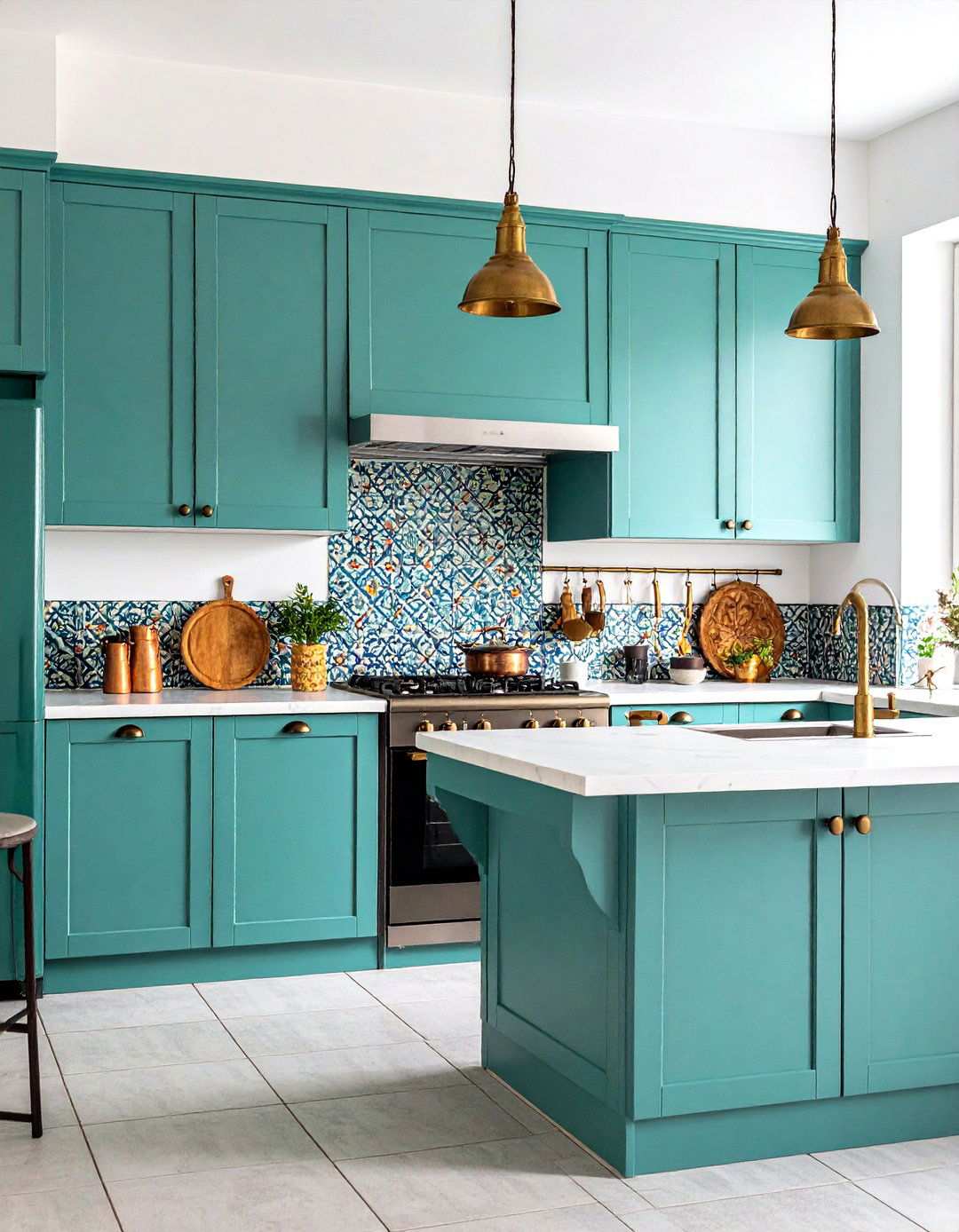
What happens when North African influences meet Mediterranean kitchen design, you ask? Moroccan elements bring exotic beauty through intricate tile work and rich color combinations. Zellige tiles in emerald green, cobalt blue, and warm terracotta create stunning backsplashes with their handmade imperfections and lustrous glazes. Geometric patterns inspired by traditional Islamic art add visual complexity without overwhelming the space. Brass fixtures and copper accessories provide warm metallic accents that complement the earthy color palette. Arched openings and niches recall traditional Moroccan architecture, while open shelving displays colorful ceramics and tagines, making functional items part of the decorative scheme while celebrating the culture’s rich culinary traditions.
9. Coastal Mediterranean Kitchen Style
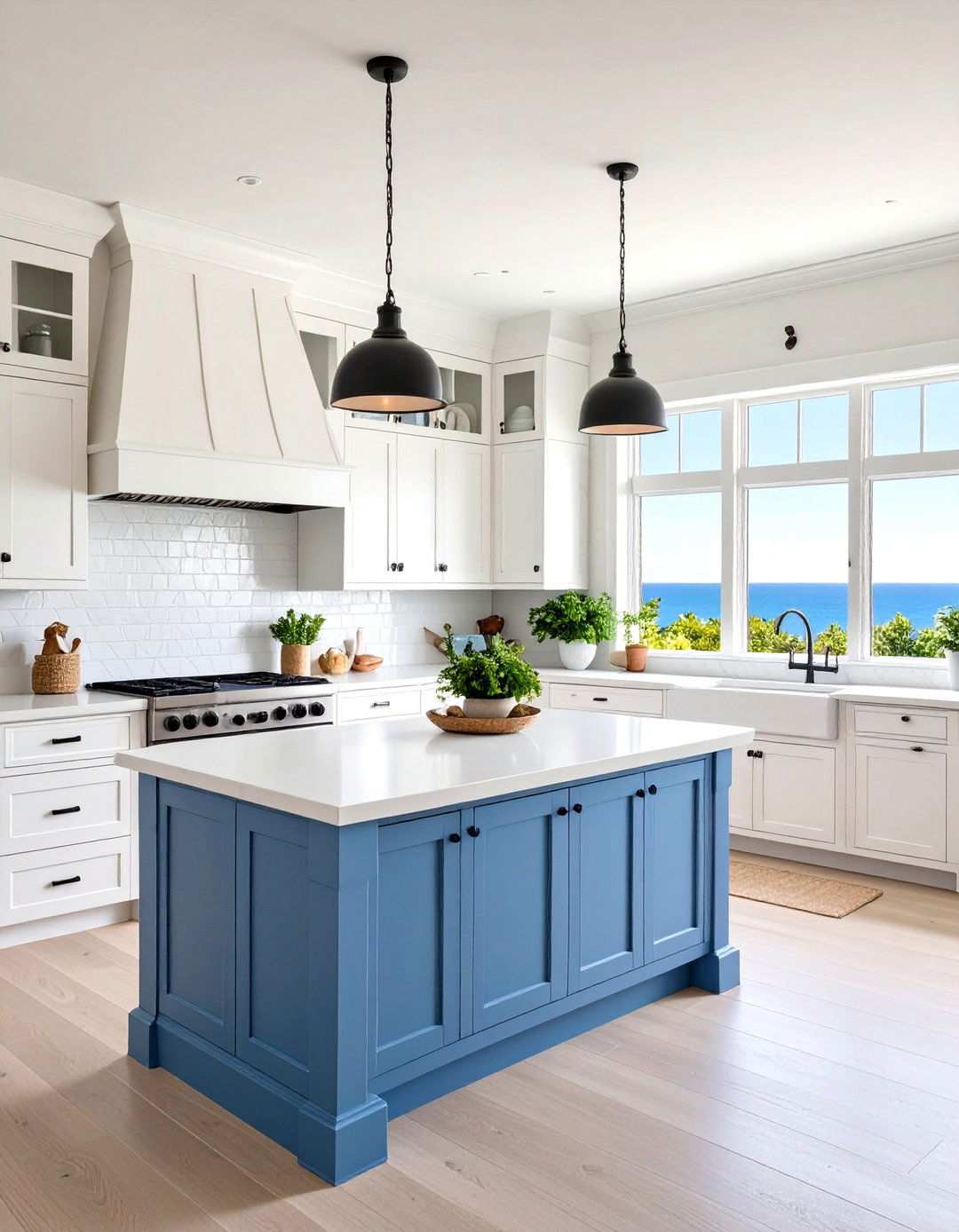
When Mediterranean kitchen design meets seaside influences, the result is a breezy, relaxed atmosphere that’s perfect for everyday life. Light color palettes and natural textures bring the calming essence of the ocean indoors, while whitewashed wood cabinetry echoes the timeless charm of Greek island architecture. The blue accents, reminiscent of the sparkling Mediterranean Sea, add a touch of serenity to the space. Natural rope details, driftwood elements, and sea glass accessories further reinforce the maritime connection, creating a cohesive look that’s both elegant and effortless. Large windows not only maximize natural light but also provide a seamless transition between indoors and outdoors, perfect for taking in the views of the surrounding landscape. Light-colored stone or ceramic tiles underfoot maintain the airy feeling, allowing the beauty of the space to shine through.
10. Rustic Wood Island Kitchen
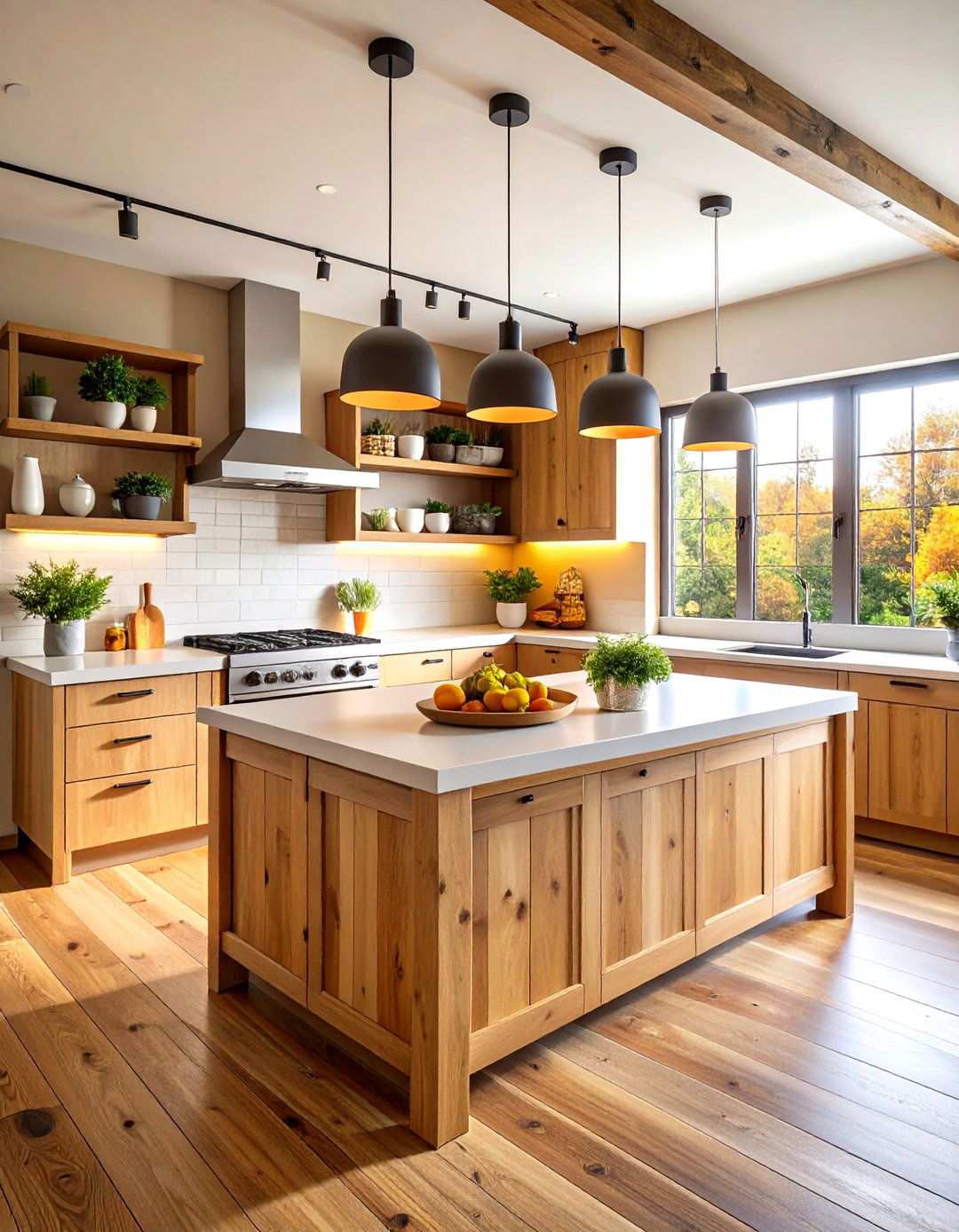
At the heart of Mediterranean kitchen design lies the handcrafted wooden island, a true showstopper that provides both functionality and warmth. This central feature serves as a gathering place for family and friends, where memories are made and laughter fills the air. Reclaimed wood brings an undeniable charm, its weathered surfaces, nail holes, and natural imperfections telling a story of previous use that adds character to the space. The substantial construction conveys a sense of permanence and craftsmanship, honoring the traditions passed down through generations. Multiple levels accommodate a variety of activities, from food preparation to casual dining, making the island a versatile addition to the kitchen. Built-in storage keeps essentials organized, while maintaining clean lines that prevent the space from feeling cluttered. The warm wood tone anchors the color scheme, providing a beautiful contrast to stone countertops and painted cabinetry that adds depth and visual interest.
11. Copper Sink Kitchen Design
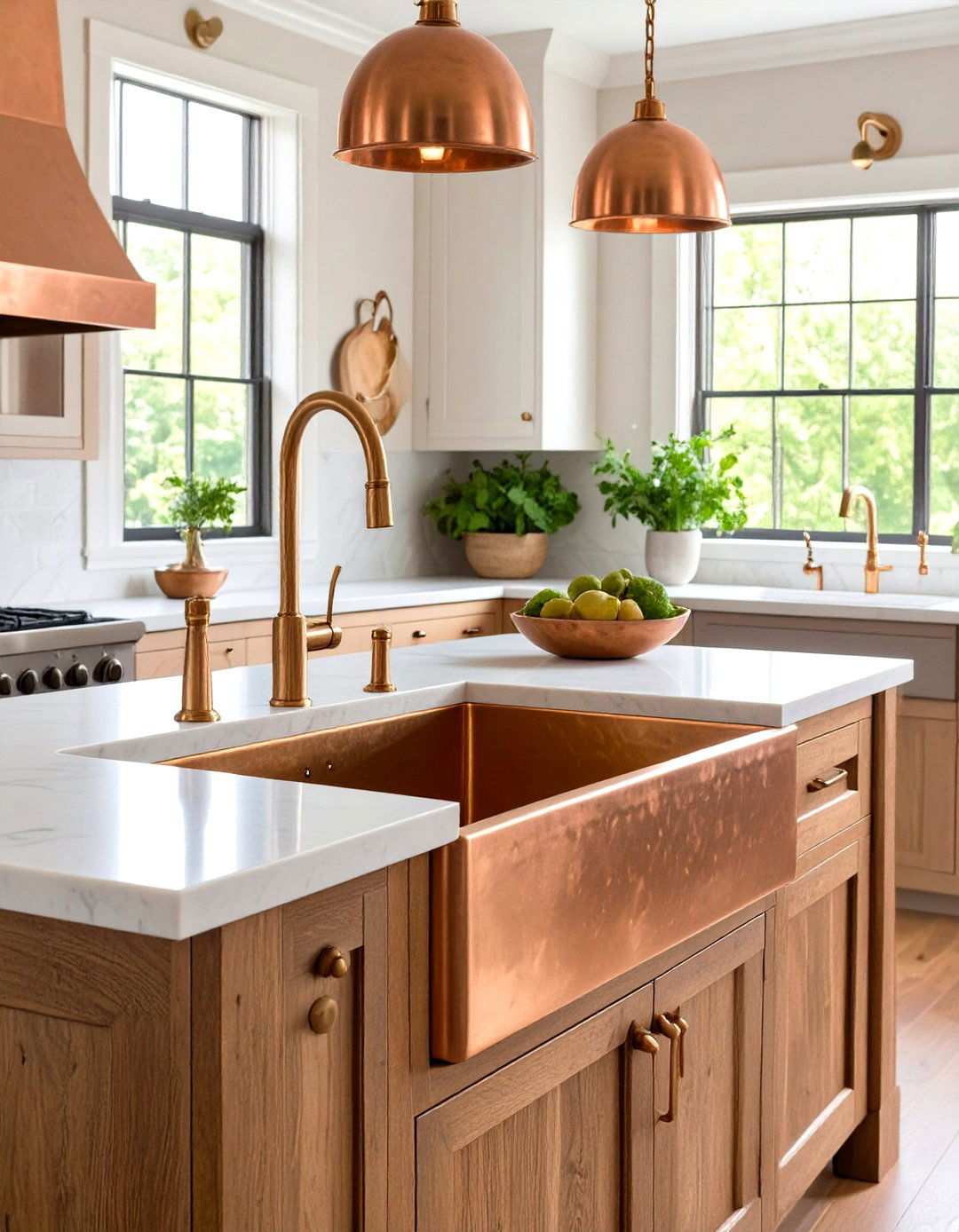
Copper sinks have become an integral part of Mediterranean kitchen style, and for good reason. This living metal develops a beautiful patina over time, transforming from a bright penny color to a rich bronze tone that adds a touch of sophistication to the space. Not only does copper possess antimicrobial properties, providing natural sanitation benefits, but its heat conductivity also helps maintain water temperature, making it a practical choice for kitchen sinks. Hammered finishes add textural interest that complements rustic Mediterranean elements, creating a visually appealing contrast that draws the eye. When paired with natural stone countertops or weathered wood surfaces, copper sinks create a striking focal point that’s sure to make a statement. The warm metallic tone harmonizes beautifully with terra cotta tiles, wrought iron fixtures, and brass hardware, adding a touch of elegance to the space. As each sink develops unique character through daily use, it embodies the Mediterranean celebration of materials that improve with age and handling, becoming a true treasure of the kitchen.
Elegant Curves in Kitchen Design
The integration of architectural curves is a pivotal aspect of contemporary kitchen design, effectively softening the stark edges often associated with traditional spaces. By incorporating arched openings, designers can create fluid transitions between kitchen areas while paying homage to the rich Mediterranean building traditions. These distinctive structural elements not only add an air of romance but also elevate ordinary doorways into unique architectural focal points. Materials such as stone or plaster, often used in Mediterranean construction, reinforce the authentic aesthetic, lending an air of timelessness to the space. The arched frames also facilitate visual connections between adjacent rooms, fostering a sense of cohesion and spaciousness. By contrasting curved lines with the angular lines of cabinetry and countertops, these designs create a visually appealing balance. Whether leading to pantries, dining rooms, or outdoor spaces, arched doorways instill a sense of anticipation and visual interest, rendering a classical element that remains eternally stylish.
Vibrant Mosaic Backsplashes in the Kitchen
Can the combination of tiny ceramic pieces truly transform kitchen spaces? Mosaic tiles offer an unparalleled realm of creative possibilities, allowing homeowners to explore a vast array of color combinations, intricate patterns, and artistic arrangements. Traditional Mediterranean mosaics showcase a palette of blues, whites, and earth tones that harmoniously reflect the region’s natural beauty. The hand-cut tiles boast subtle variations that set them apart from machine-made counterparts, allowing for a level of artistic nuance that is hard to replicate. The smaller scale of mosaic tiles also enables the creation of intricate patterns and gradual color transitions, thus adding depth to the design. Furthermore, iridescent glazes catch and reflect light, imbuing work areas with a captivating sparkle. These artistic installations not only protect walls but also become functional masterpieces that express the homeowner’s unique style, serving as a testament to the enduring power of Mediterranean craftsmanship and artistic heritage.
Blending Modernity and Tradition in Mediterranean Kitchen Design
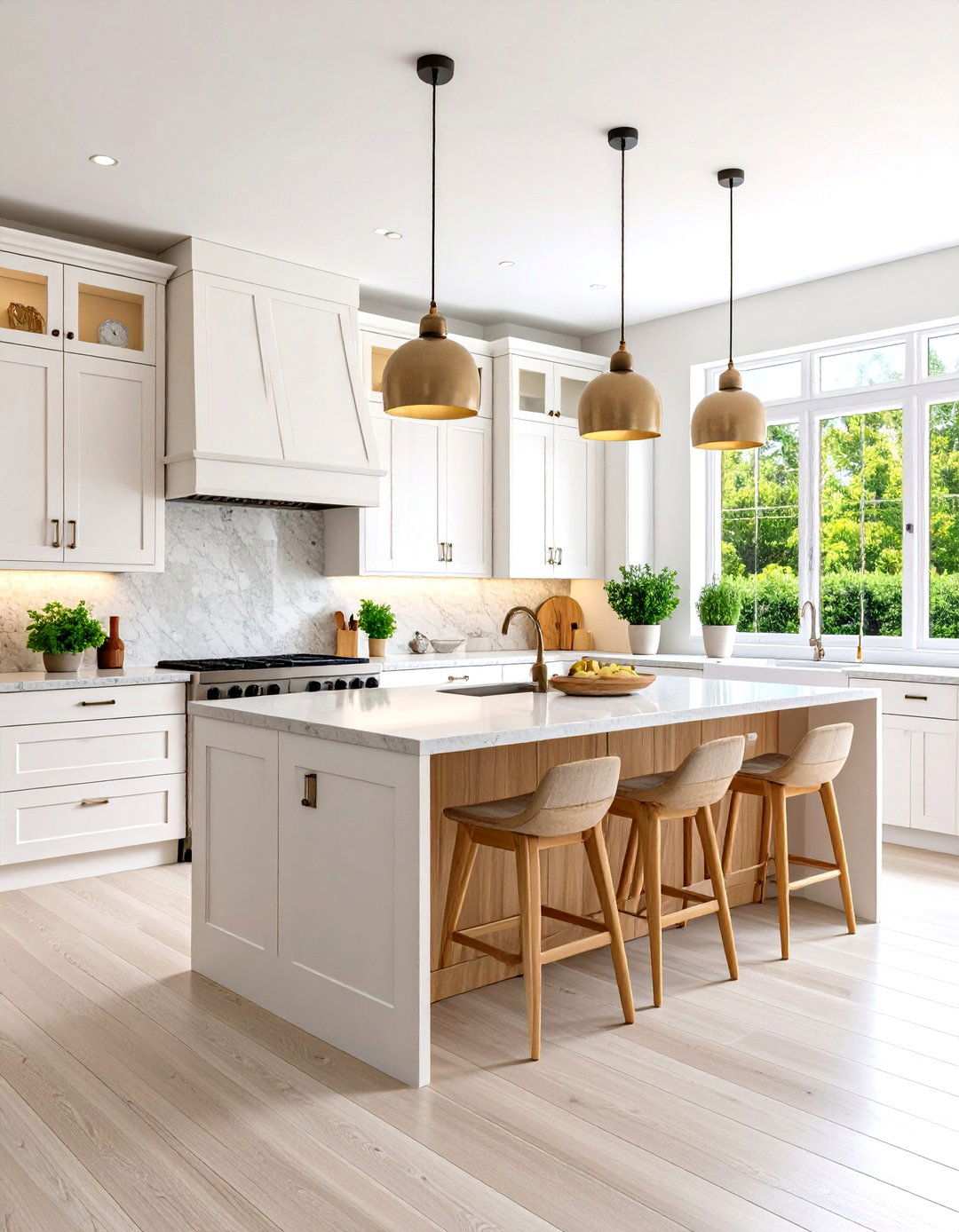
The fusion of contemporary design principles with traditional Mediterranean elements yields a captivating fusion that streamlines classic features for the demands of modern living while retaining the warmth and character that defines the Mediterranean style. By incorporating clean-lined cabinetry in warm white or soft gray, designers can balance modern functionality with the essence of Mediterranean sensibility. The use of natural stone surfaces offers a timeless beauty that can be paired with contemporary edge profiles and finishes, thus creating a harmonious blend of the old and the new. The adoption of simplified color palettes focuses on the quality of the materials rather than intricate patterns, allowing for a more nuanced and sophisticated aesthetic. Modern appliances are seamlessly integrated into the design while maintaining the emphasis on cooking and gathering, creating spaces that are both current and timeless. The expansive windows and open layouts that characterize this style reflect the contemporary preference for airy and connected living spaces, while honoring the time-honored Mediterranean tradition of merging indoor and outdoor environments.
15. Stucco Wall Kitchen Design
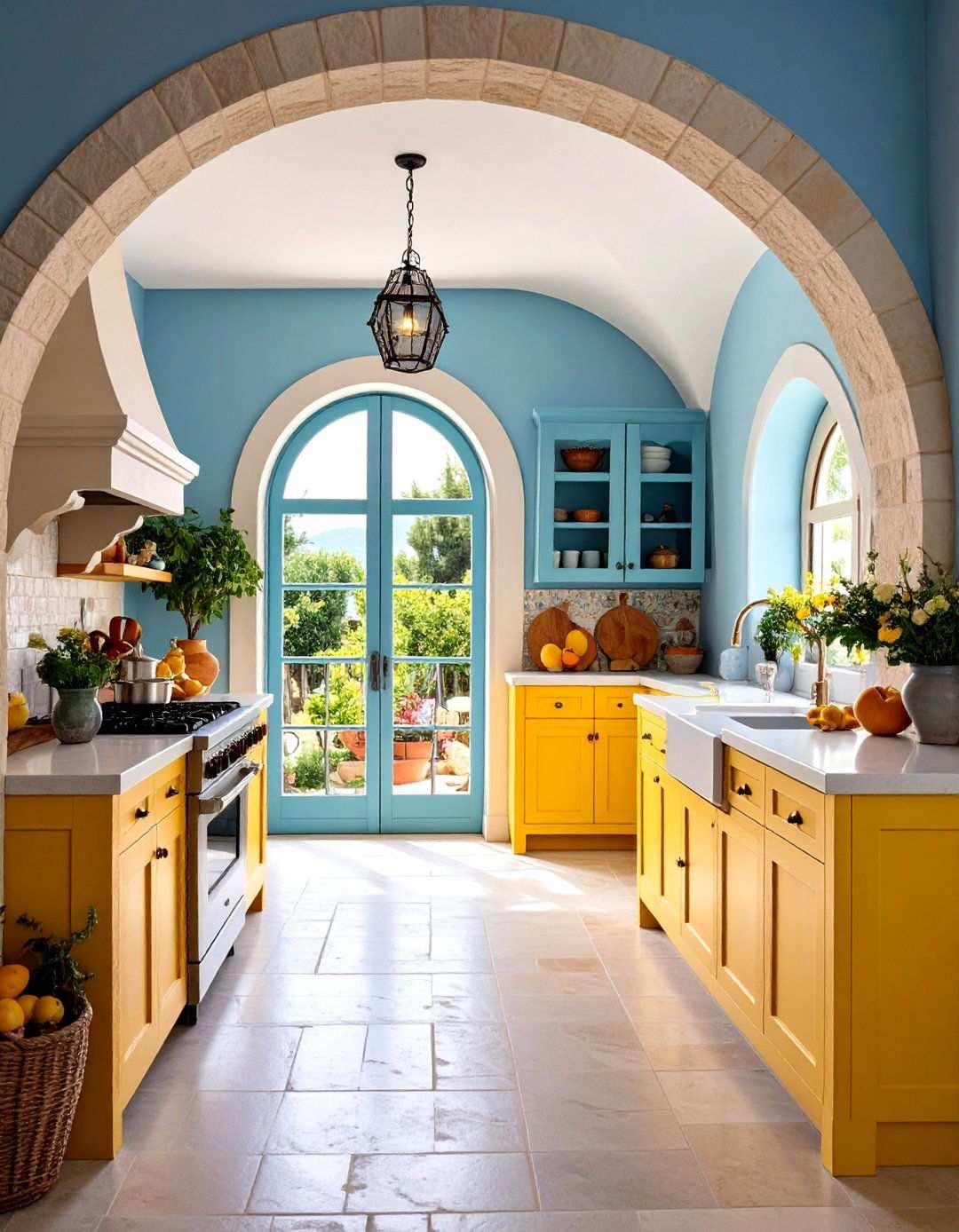
When designing a Mediterranean-inspired kitchen, incorporating textured plaster walls can add an authentic touch. Stucco’s organic irregularities create a beautiful contrast to the sleek surfaces of modern cabinets and polished countertops. The hand-applied technique behind stucco produces subtle variations that add visual interest without relying on repetitive patterns. The natural pigments mixed into the plaster create rich, saturated colors that seem to radiate from within, giving the space a warm and inviting ambiance. As stucco walls age, they develop character marks that enhance their beauty rather than detract from it. This material not only provides excellent insulation properties but also creates a cozy atmosphere, making it perfect for kitchens. Stucco can be used as an accent wall or throughout an entire space, connecting modern kitchens to the rich heritage of Mediterranean building traditions while offering practical benefits for contemporary living.
16. Herb Garden Kitchen Design
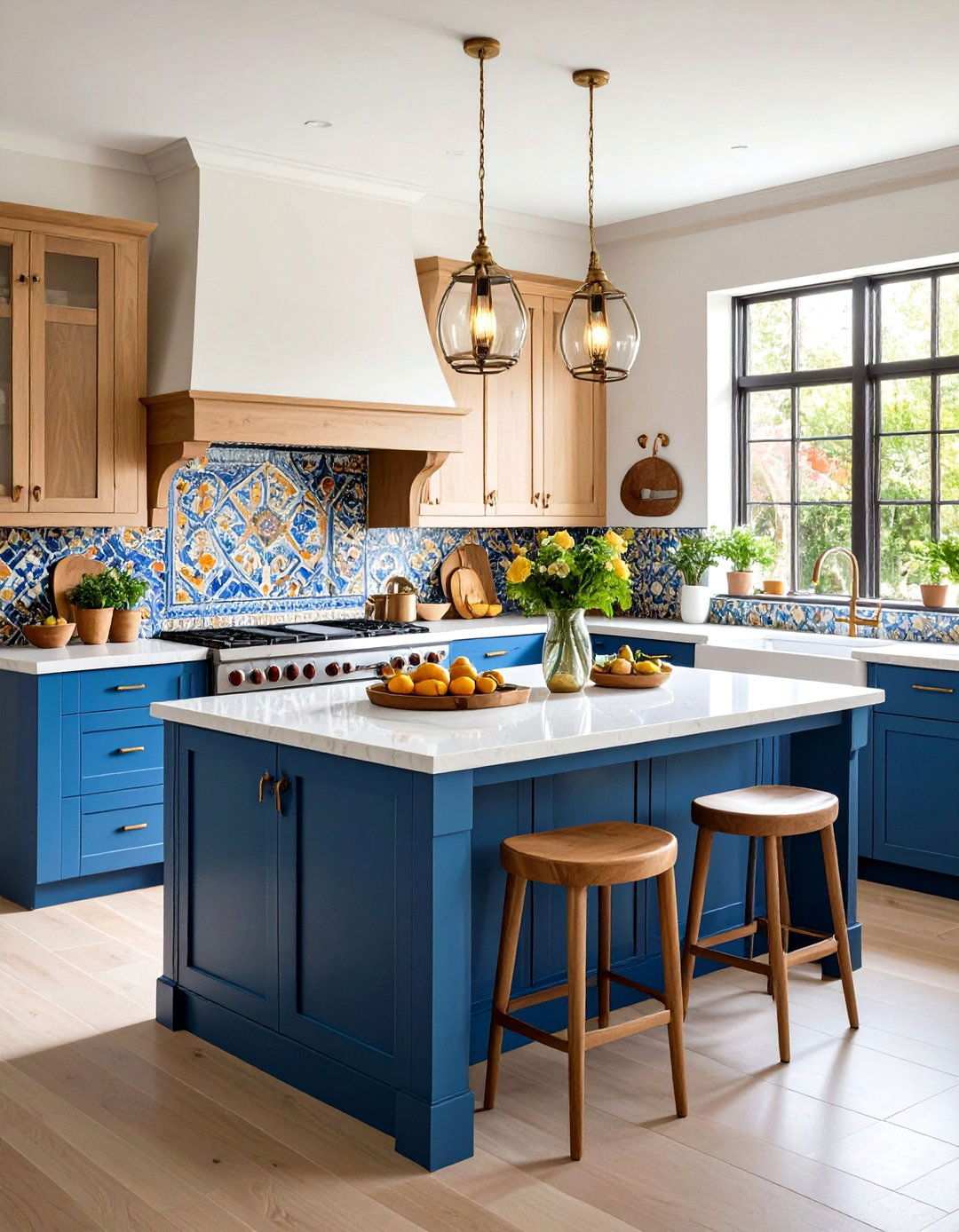
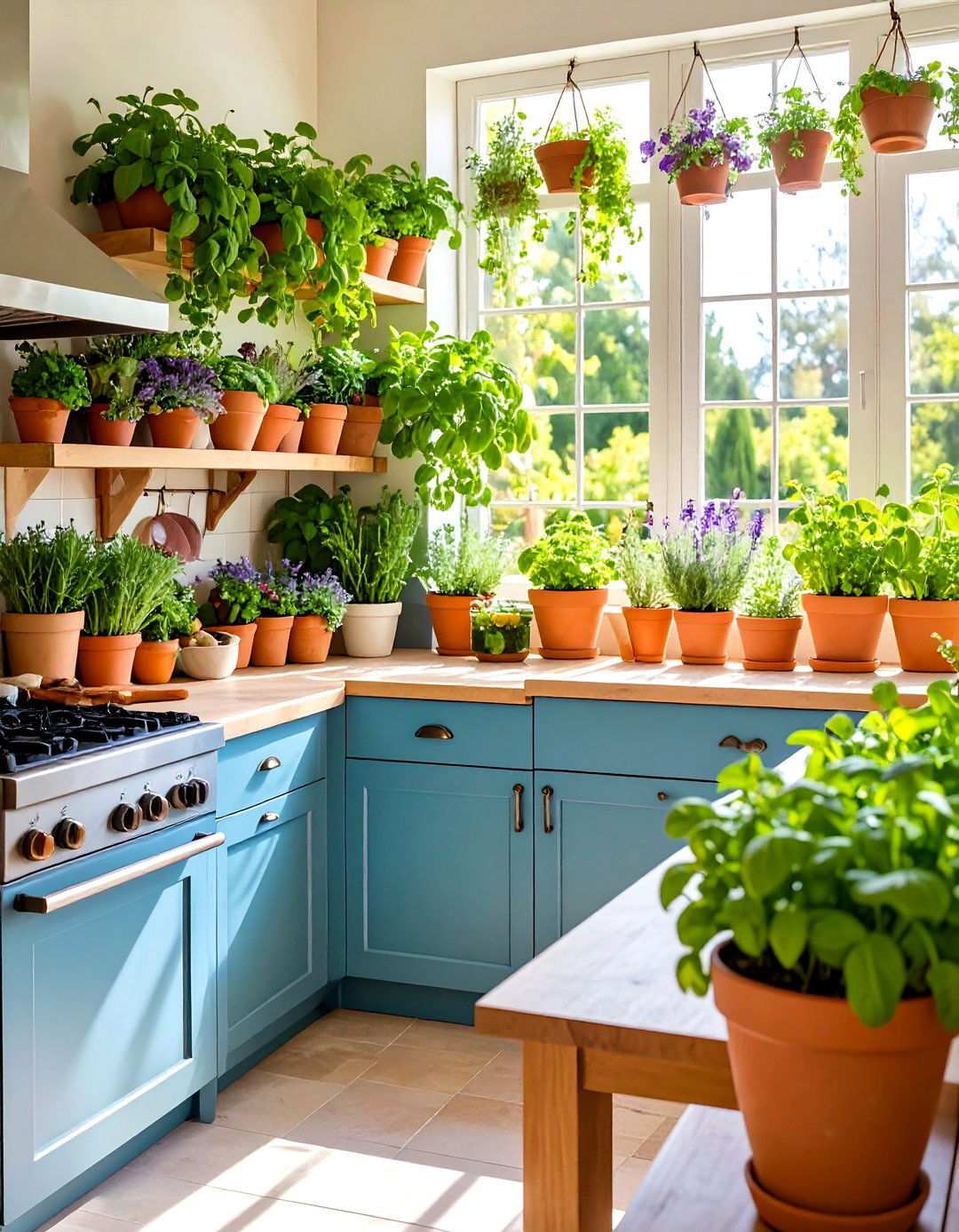
Incorporating a fresh herb garden into a Mediterranean kitchen design can elevate the cooking experience. By creating a dedicated growing space, you can bring the freshness of a garden directly into your kitchen environment. Window boxes filled with fragrant herbs like basil, rosemary, and thyme provide easy access to essential Mediterranean flavors. Terra cotta planters not only reinforce the regional aesthetic but also provide ideal growing conditions. Built-in planters integrated into backsplash areas combine functionality with decorative appeal, adding a touch of elegance to the space. The fresh green colors and varied textures of the herbs bring life to neutral color schemes, while the aromas they release perfume the air naturally, inspiring spontaneous cooking creativity. This element embodies the Mediterranean appreciation for fresh, seasonal ingredients and connects indoor cooking spaces with outdoor garden traditions.
17. Wine Storage Kitchen Design
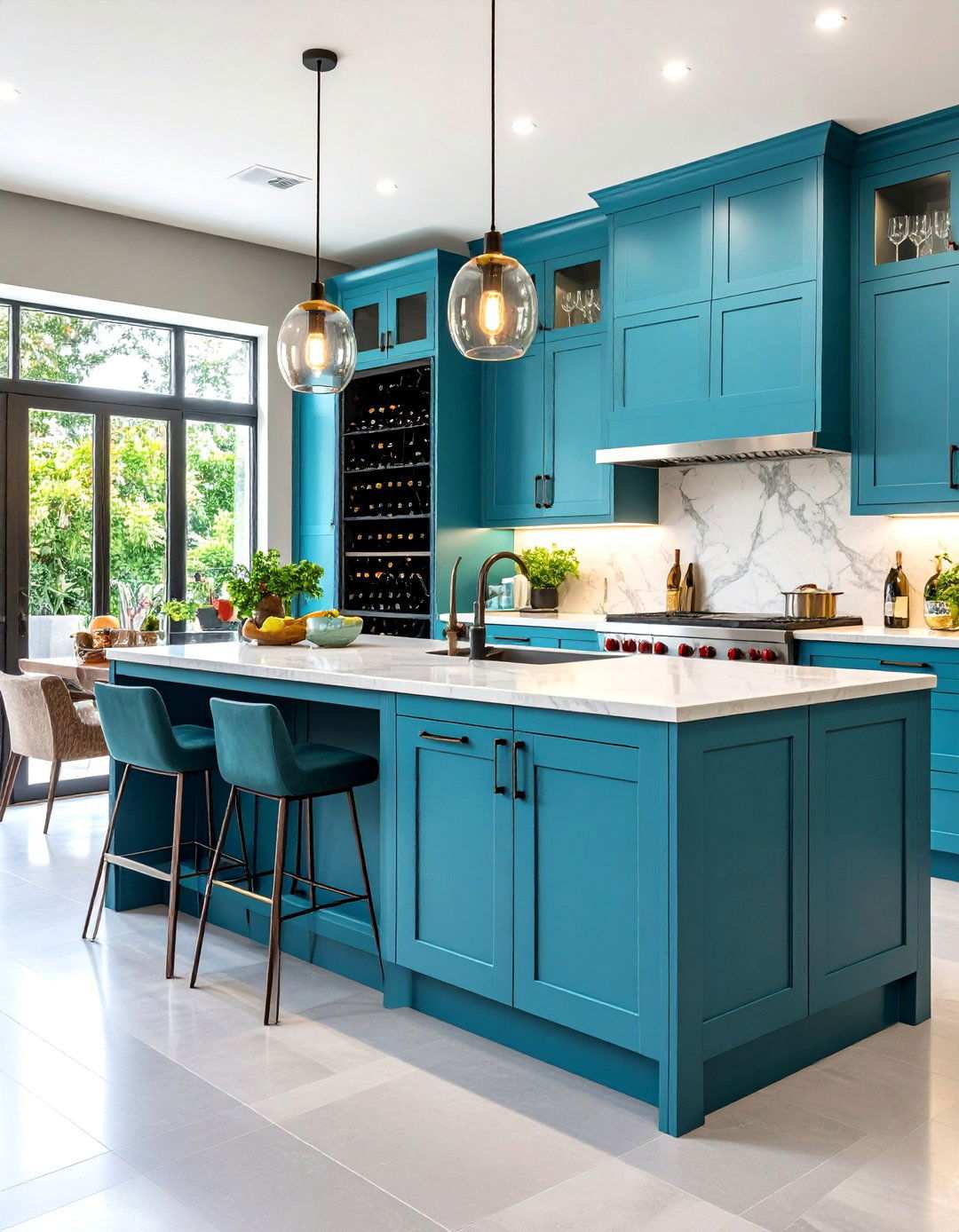
In Mediterranean kitchen design, wine storage is an essential element that acknowledges the significant role wine plays in the culture and cuisine. A built-in wine storage system preserves wine quality while showcasing collections in a beautiful manner. Open storage allows wines to become decorative elements that add color and visual interest to the space. Natural materials like wood and stone create suitable storage environments while maintaining design continuity. Wine storage areas often include space for serving accessories and glassware, encouraging entertaining and reflecting the Mediterranean approach to leisurely dining. Whether built into islands, walls, or dedicated alcoves, wine storage reinforces the cultural importance of sharing meals and celebrating life’s pleasures.
18. Artisanal Ceramic Accents in Mediterranean Kitchen Design
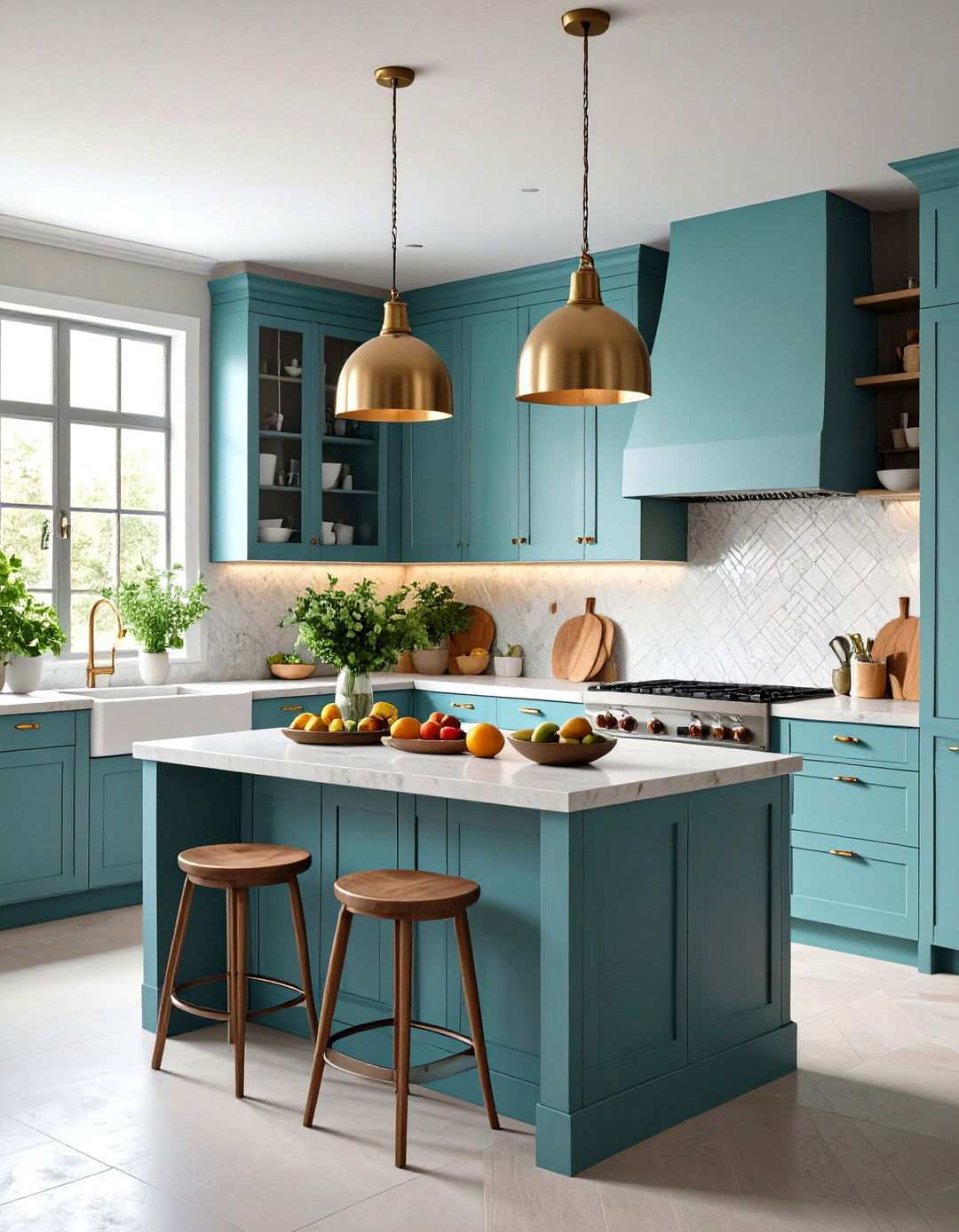
Mediterranean kitchen design achieves a distinct flair with artisan-crafted ceramics, which bring unparalleled uniqueness to the space. Handmade pottery and bespoke tiles, created with an eye for detail, infuse a human touch that mass-produced items cannot replicate. Characterized by irregular forms and nuanced color variations, these ceramics showcase the artisan’s skill and dedication to their craft. Local artisans often craft pieces specifically for kitchen environments, ensuring seamless integration with the overall design scheme. Displaying ceramic vessels on open shelving transforms them into functional art pieces that celebrate traditional craftsmanship. The durability of well-crafted ceramics ensures these elements will remain cherished family possessions for generations to come. Each piece tells a story of skill, tradition, and heritage, bridging modern kitchens to centuries of Mediterranean pottery traditions.
19. Harnessing the Power of Natural Light in Mediterranean Kitchen Design
Mediterranean living is deeply connected to the concept of natural light, which is beautifully captured in kitchen designs that maximize daylight exposure. Expansive windows and glass doors create a seamless transition between indoor and outdoor spaces, fostering a sense of connection to the natural world. Light-colored surfaces expertly reflect and amplify natural illumination throughout the day, while strategic window placement ensures cross-ventilation and reduces the reliance on artificial cooling systems. The breathtaking views of gardens, courtyards, or landscapes brought into cooking spaces by expansive windows and doors elevate the Mediterranean kitchen experience. By employing sheer curtains or no window treatments, homeowners can maintain their desired level of privacy while still allowing natural light to flow freely. The resulting ambiance not only enhances the beauty of stone surfaces, wood grains, and tile patterns but also reflects the Mediterranean appreciation for outdoor living and the notion that beautiful views enrich daily experiences.
20. Creating Warmth and Community in Mediterranean Kitchen Design with Stone Fireplaces
A stone fireplace is the catalyst that transforms a kitchen into a true gathering place, drawing family and friends together for warmth, conversation, and shared experiences. The natural stone material harmonizes perfectly with other Mediterranean elements, providing a cohesive look while also offering practical benefits. Cooking hearths allow for authentic wood-fired food preparation, which not only enhances flavors naturally but also adds an element of nostalgia and tradition to the cooking process. The rustic texture of natural stone adds visual weight that balances lighter cabinet and wall colors, creating a visually appealing contrast that is quintessentially Mediterranean. By extending the usefulness of kitchens into cooler months and evening hours, fireplaces embody the Mediterranean tradition of gathering around fire for sustenance, warmth, and community. This ancient cooking method connects modern families to generations of culinary heritage, fostering a deeper appreciation for the past while embracing the warmth and comfort of the present.
21. Mediterranean Pantry Kitchen Design
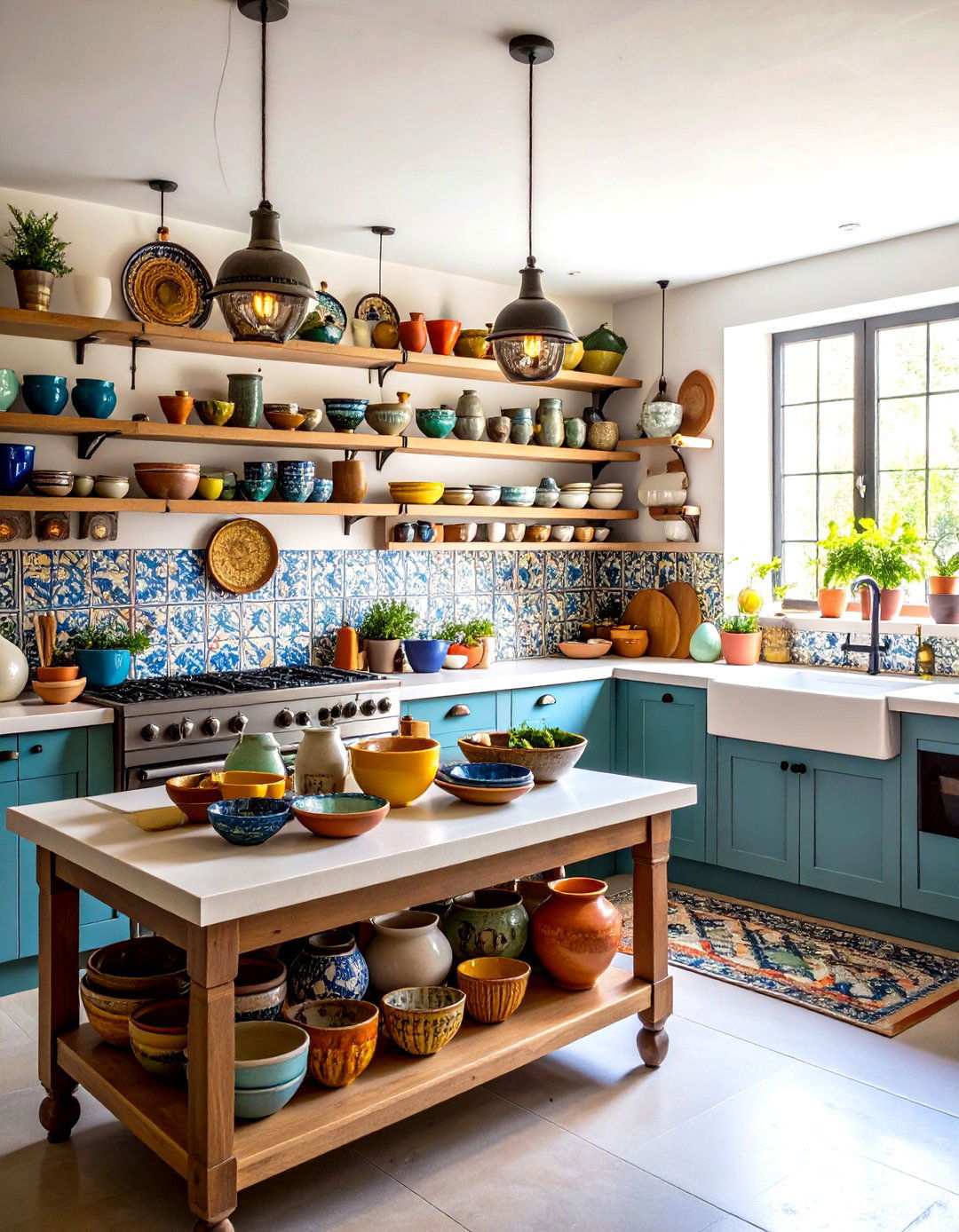
With a thoughtful approach to storage design, Mediterranean cooking traditions come alive in the kitchen. Pantries that are well-organized and visually appealing serve as the backbone of this culinary style, showcasing the essential ingredients and beautiful containers that define it. The use of natural materials such as wood and stone not only adds warmth and texture but also creates a seamless connection between functional storage solutions and the surrounding design elements. Furthermore, temperature-controlled areas allow for the preservation of specialty ingredients, which are a hallmark of Mediterranean flavors. Integrated wine storage solutions enable effortless access to an array of vintages, making it easier to incorporate the nuances of Mediterranean cuisine into everyday cooking. By embracing this approach to kitchen design, home cooks can unlock the full potential of Mediterranean cooking, exploring new recipes and techniques with confidence and creativity.
22. Vintage Furniture Kitchen Style
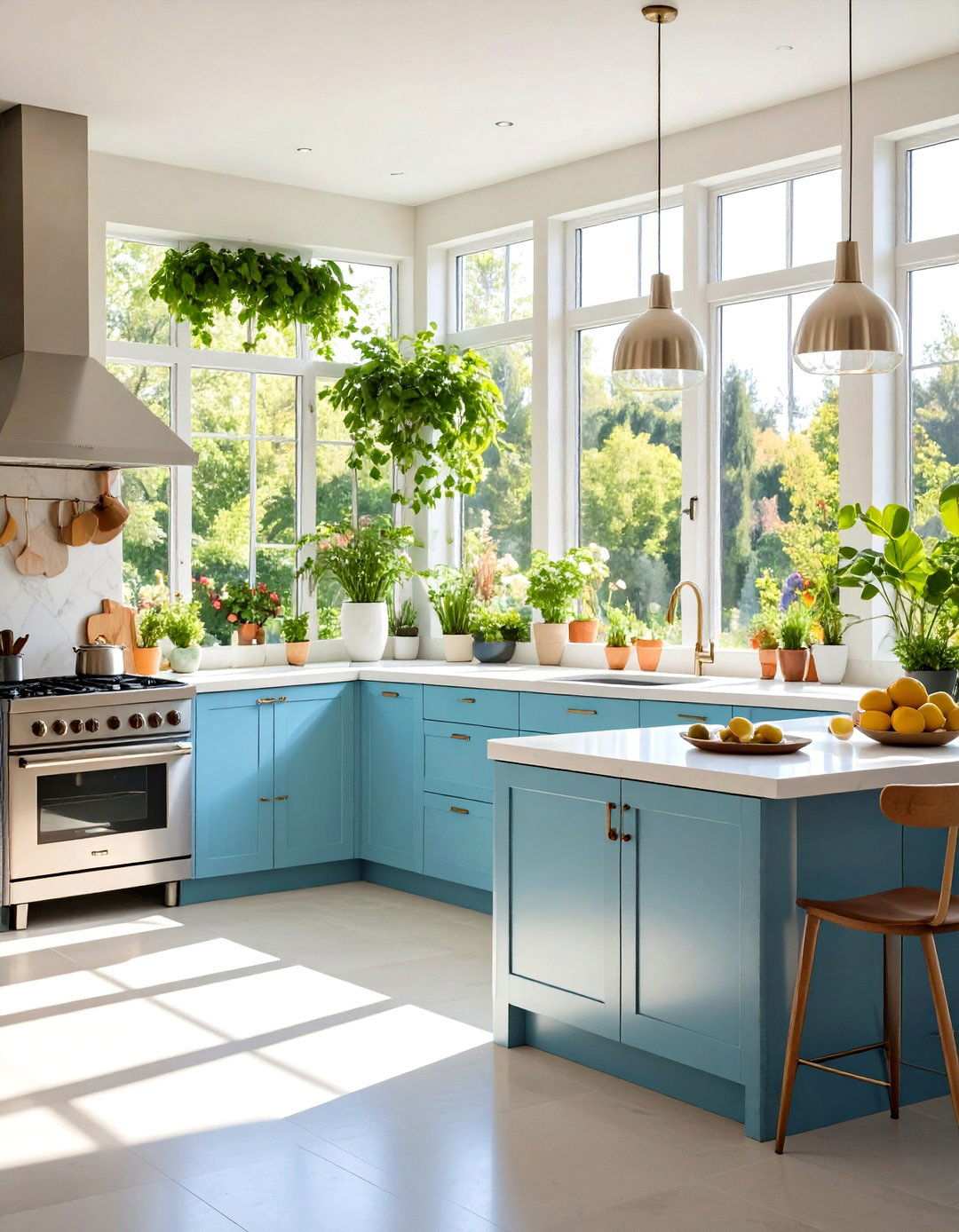
The allure of antique and vintage pieces lies in their ability to infuse Mediterranean kitchens with a sense of authenticity and history. By incorporating old wooden tables, chairs, and storage pieces, homeowners can bring a touch of the past into their cooking spaces, creating a narrative that transcends the present moment. The patina and wear patterns on these vintage items serve as a testament to the stories of previous owners and the daily rituals that have taken place within their walls. As a result, the eclectic mix of furniture styles and the imperfect beauty of aged wood create a welcoming atmosphere that feels lived-in, rather than sterile or show-perfect. By embracing the charm of vintage pieces, homeowners can craft kitchens that reflect their family’s history and cultural heritage.
23. Olive Tree Kitchen Design
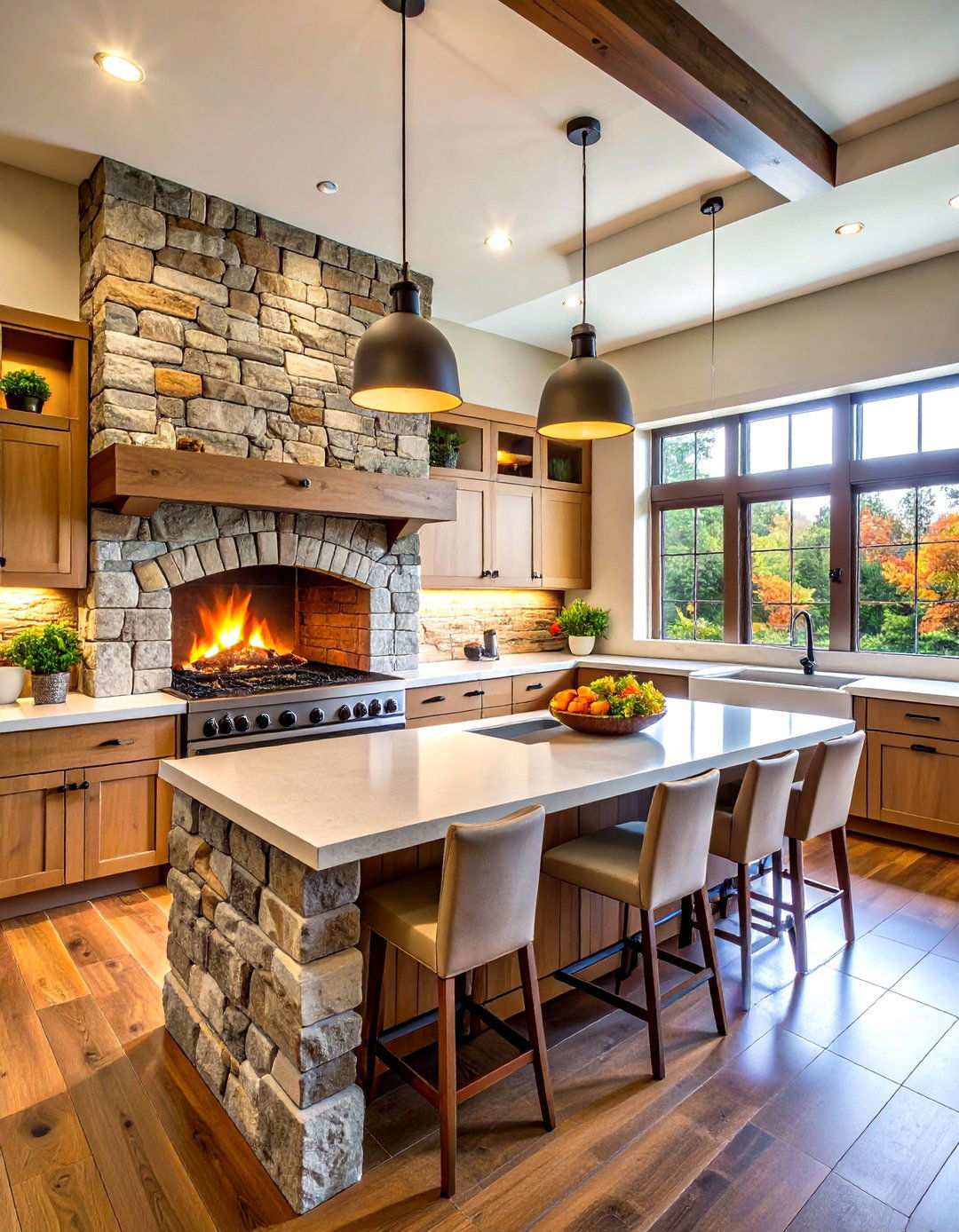
The Mediterranean landscape is not just a distant memory; it can be brought directly into kitchen environments through the incorporation of potted olive trees. These low-maintenance plants thrive in sunny kitchen locations, providing a year-round injection of greenery and a touch of the region’s iconic agricultural symbolism. The silvery-green foliage of ancient olive tree varieties adds a subtle yet striking contrast to neutral Mediterranean color palettes, while their drought-tolerant nature ensures they remain a low-maintenance addition to any kitchen. What’s more, some varieties of olive trees can even produce fruit that can be cured and used to add authentic Mediterranean flavor to a range of dishes. Large containers in terra cotta or natural stone provide ample room for the trees to grow, maintaining design consistency while showcasing the beauty of these living elements.
24. Capturing the Essence of the Mediterranean Kitchen
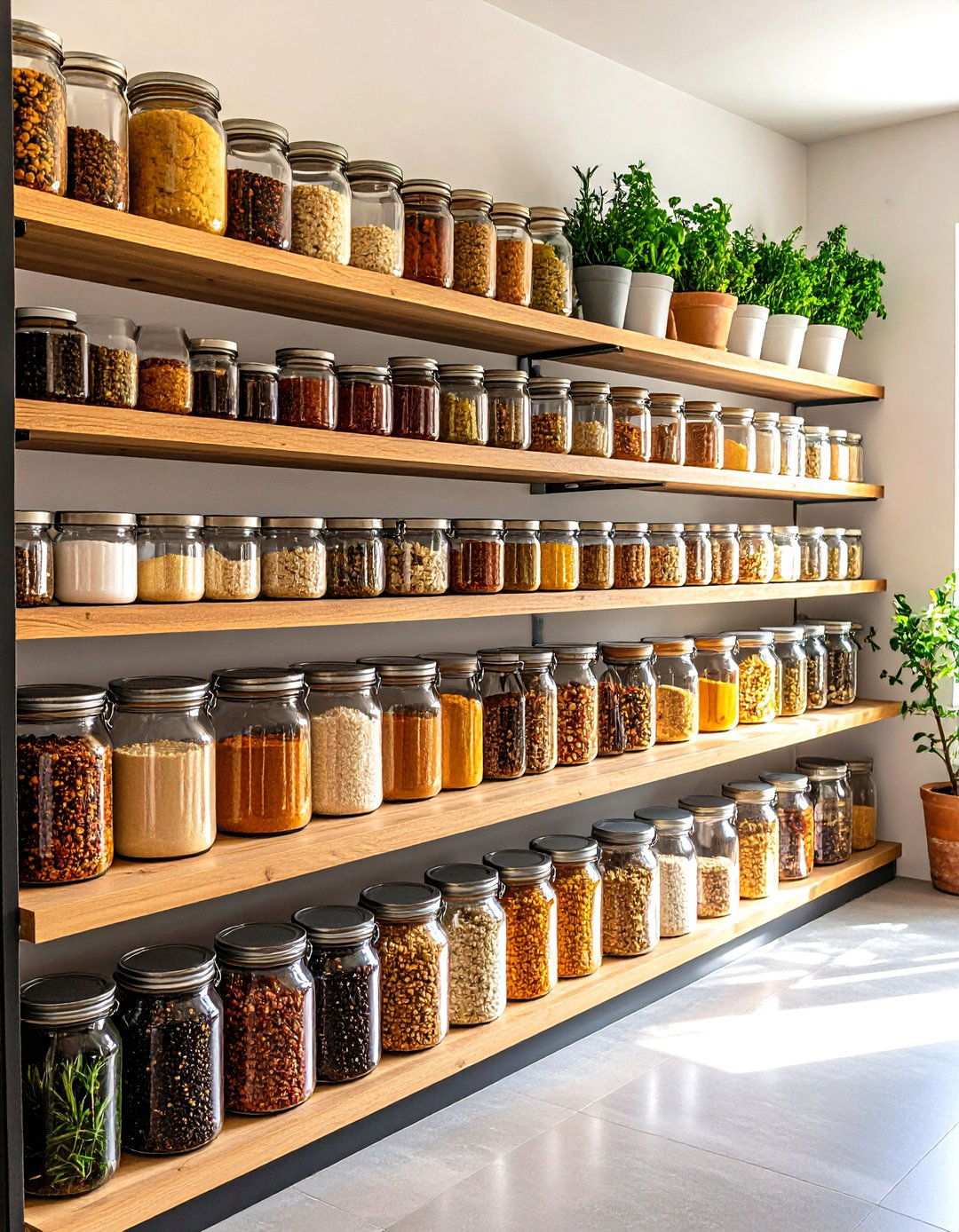
A Mediterranean kitchen’s authentic ambiance is intricately woven by the thoughtful selection of colors that mirror the region’s breathtaking landscapes. At the heart of this palette lies a foundation of warm, earthy tones reminiscent of sun-kissed terracotta, fields of golden wheat, and the weathered beauty of ancient stone. These organic hues establish a sense of continuity with the natural world, grounding the space and inviting a connection to the region’s rich history.
The strategic introduction of ocean blues and sea greens adds a refreshing splash of vibrancy, evoking the tranquil essence of coastal waters and creating a sense of calm within the kitchen. Creamy whites, meanwhile, expertly capture the region’s radiant sunlight, not only illuminating the space but also cleverly making it feel more expansive and airy. Muted golds and saffron yellows bring a subtle warmth to the palette, striking a delicate balance that prevents any single element from overpowering the others. As these colors harmonize in perfect synchrony, they evoke the very essence of the Mediterranean landscape, where subtle variations in hue and tone create an ever-changing tapestry of beauty.